
The Road to Now
475 episodes — Page 5 of 10

Journalism & Politics w/ Bill Plante & Olivier Knox
Bill Plante was a remarkable reporter. He spent four tours as a CBS correspondent in Vietnam, he interviewed Martin Luther King Jr in 1965, and he served as CBS' White House Correspondent from 1976 until his retirement in 2016. On September 28, 2022, Bill Plante passed away. To honor him and his work, we are reairing our 2018 conversation w/ Bill and The Washington Post's Olivier Knox. You can read Bill's CBS News obituary here and his Washington Post obituary by Emily Langer here. You can watch the video of this conversation on our YouTube channel here. This episode originally aired as episode #104 on August 22, 2018. This reair was edited by Ben Sawyer.
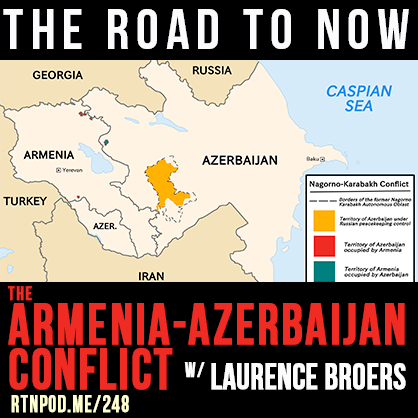
Ep 248#248 The Armenia-Azerbaijan Conflict w/ Laurence Broers
Armenia and Azerbaijan were once fellow Republics within the USSR, but in the Soviet Union's last days tension between them led to bloodshed and animosity that continues today. For decades, Russia played the role of peacekeeper in the region, but Putin's invasion of Ukraine has opened the door for a new wave of Azerbaijani attacks on Armenia and both sides say the other is to blame. Laurence Broers has spent the last twenty years working as a scholar and peacemaker in the region, and has built relationships with leaders in both countries. In this episode, Laurence joins Ben for a conversation about the history of the conflict, the state of affairs today, and the impact that the international community has (and can) have on the people and politics of the region. Dr. Laurence Broers is Associate Fellow at the Russia-Eurasia Program at Chatham House, and the author of the book Armenia and Azerbaijan: Anatomy of a Rivalry. You can follow him on twitter at @LaurenceBroers. This episode was edited by Ben Sawyer.

Ep 247#247 The FBI w/ Stephen Underhill
The FBI has been the subject of criticism and concern since it was founded in 1908, but it has nevertheless become one of the most powerful, stable, and mythologized branches of the Executive Branch of the US government. In this episode, Steve Underhill joins us to discuss the origins of the FBI, the role J. Edgar Hoover played in making the modern Brueau, and how that greater history of the FBI can help us understand how they've approached their seizure of documents from Mar-a-Lago and the subsequent attack from Donald Trump. Dr. Stephen M. Underhill is Professor and Chair of the Department of Communication Studies at Marshall University, where he studies the rhetoric of law enforcement. His book The Manufacture of Consent: J. Edgar Hoover and the Rhetorical Rise of the FBI was published in 2020. This episode was edited by Gary Fletcher. Looking for a new shirt that fits well, looks good, and feels fantastic? Go to Criquetshirts.com and use promo code RoadToNow for 20% off your first order from Criquet. Ben and Bob both love these shirts!

The Great Exception: The Rise and Fall of the New Deal w/ Jefferson Cowie
The New Deal policies of the 1930s never brought an end to the Great Depression, but by establishing Social Security, ending child labor, and establishing a federal minimum wage, Franklin Roosevelt's administration and their allies in Congress laid the framework for the widespread prosperity of the post-World War II-era. As the gap between the richest and poorest Americans continues to widen at remarkable speed, politicians on the left have called for a return to the New Deal. But it might be better to look elsewhere. In this episode we speak with Jefferson Cowie about his books Capital Moves: RCA's Seventy-Year Quest for Cheap Labor, (Cornell University Press, 1999) & The Great Exception: The New Deal & The Limits of American Politics, (Princeton University Press, 2016). Dr. Jefferson Cowie is James G. Stahlman Professor of History at Vanderbilt University. You can learn more about him and his work at his website, jeffersoncowie.info. This episode originally aired on October 17, 2016 as RTN #24 The New Deal and It's Legacy w/ Jefferson Cowie. This reair was edited by Ben Sawyer.

The French Revolution w/ Peter McPhee
On August 4, 1789, the National Assembly of France adopted the Declaration of the Rights of Man and of the Citizen, which asserted the Enlightenment ideals of universal rights and democracy. Though the French Declaration shared a common ideological lineage with the American Declaration of Independence, the French Revolution took a very different path: fifteen years after their founding revolutionary documents, the US had George Washington and France had Napoleon. In this episode of The Road to Now we talk to Dr. Peter McPhee, an expert on the history of the French Revolution at the University of Melbourne (Australia) to learn how geography, religion, and the French effort to fundamentally redefine society, shaped the complex course of the French Revolution. Peter explains how the French Revolution changed the world and left a legacy that is all around us today. (And for all you Hamilton fans- if you ever wondered what happened to the Marquis de Lafayette after Hamilton died, Dr. McPhee has the answer!) This is a rebroadcast of episode 78, which originally aired on November 9, 2017. This rebroadcast was edited by Ben Sawyer.

Ep 246#246 Rank Choice Voting w/ Scott Huffmon
Could the structure of elections in the US be feeding the polarization in modern politics? Currently only about twenty percent of voters show up to the polls for what are often closed primaries, meaning that the general election is often a showdown between candidates who have appealed to the most extreme elements of their party's base. This is far from an optimal outcome in a country where few voters identify with political extremes. Most voting experts believe that the way to reduce the influence of the most extreme voices in our political system would be through open primaries in which voters can choose any candidate regardless of party affiliation. This system would favor candidates who speak to a broader swath of the American public and give voters a more representative general election ballot. In this episode, Bob welcomes back to the show his former Political Statistics Professor, Dr. Scott Huffmon, to discuss Rank choice voting and the 2022 election primaries. Dr. Huffmon is a professor of political science as well as the founder and director of the Center for Public Opinion & Policy Research (CPOPR) at Winthrop. Dr. Huffmon also directs the Winthrop Poll initiative, which is the most important poll focusing on the south. You can follow him on twitter at @HuffmonPolitics. This episode was edited by Gary Fletcher.

Ep 245#245 Cryptocurrency: A Brief History w/ David Hollerith
When Bitcoin launched in January 2009, few people took it seriously and even fewer had the means to mine, buy or spend it. By the end of 2021, the Pew Research Center reported that 16% of Americans had held cryptocurrency and 86% had heard of it. Despite all of this, many of us remain perplexed by the topic, so Ben and Bob invited Yahoo! Finance's David Hollerith to join us for a conversation about the origins and potential of crypto. We hope this helps! David Hollerith is a senior reporter at Yahoo! Finance who covers cryptocurrency. To keep up on his reporting, make sure to follow him on twitter at @DsHollers. You can check out his suggested reading on the topic at the episode page on our website. If you enjoy this episode, check out #192 The History of Financial Bubbles w/ William Quinn. This episode was edited by Gary Fletcher.

Ep 244#244 Presidential Rhetoric: The last one hundred years w/ Bruce Carlson
Political rhetoric has become increasingly divisive in the 21st century, but many of the themes and rhetorical strategies we see today have deep roots in American history. In this episode, Ben and Bruce Carlson (My History Can Beat Up Your Politics) discuss the impact that technology, society and other factors have had on Presidential rhetoric from the 1932 contest between Herbert Hoover and Franklin Roosevelt to the election of 2020. A lot has changed since the Great Depression, but the similarities between then and now might surprise you. Bruce Carlson is the host of My History Can Beat Up Your Politics. For more on his podcast, follow @myhist on twitter, check out his website here and subscribe to MHCBUYP anywhere you get The Road to Now. This episode was edited by Gary Fletcher.

Ep 243#243 Out of the Trenches: What a World War I Truce Can Teach Us About Modern Politics w/ Curt Stedron
Partisanship in politics has become increasingly tense in the 21st century, and while many Americans lament this polarization, few seem convinced that a rapprochement is possible. Yet history is full of proclaimed enemies striking mutually beneficial deals even in the toughest conditions. In this episode, NCSL Director Curt Stedron explains how a deep examination of the Christmas truce struck between Entente and Allied powers during World War I can reveal some core lessons for finding common ground in even the most horrific conditions. Curt Stedron is Director on the Legislative Training Institute at the National Conference of State Legislatures, a non-partisan organization whose mission is "to advance the effectiveness, independence and integrity of legislatures and to foster interstate cooperation." He is a graduate of West Point and previously served as an Officer in the US Army. This conversation grew out of his talk "Lessons in Trust: The Christmas Truce of 1914," which he delivered at the 2022 NCSL Legislative Summit and can be viewed via NCSL's linkedIn page here. This episode was edited by Gary Fletcher.

The Ottoman Empire and the Creation of the Modern Middle East w/ Eugene Rogan
At the beginning of the 20th century, most of the territory that we call the Middle East- including Syria, Iraq, Israel and Turkey- were part of the Ottoman Empire. The Ottoman alliance w/ Germany and Austria-Hungary during World War I provided Britain and France w/ the opportunity to divide the once-great empire into many states based on European imperial ambitions. In this episode Bob and Ben speak w/ Eugene Rogan to learn more about why the Ottoman Empire was divided, how that process shaped the Middle East, and how this history helps us understand the world today. Dr. Eugene Rogan is a Professor of Modern Middle Eastern History at St Antony's College, University of Oxford. He is author of The Arabs: A History (Penguin, 2009, 3rd edition 2018), which has been translated in 18 languages and was named one of the best books of 2009 by The Economist, The Financial Times, and The Atlantic Monthly. His new book, The Fall of the Ottomans: The Great War in the Middle East, 1914-1920, was published in February 2015. This is a rebroadcast of episode 112 which originally aired on November 19th, 2018. This rebroadcast was edited by Ben Sawyer.

Ep 242#242 Why Bushwick Bill Matters w/ Charles Hughes
EYou might know Bushwick Bill as a member of the iconic Houston rap group The Geto Boys, but his contributions to rap music, his role in the debates over free speech in the 1990s, and his overall influence are far more substantial than you probably realize. In this episode, we welcome Charles Hughes back to the show to discuss his new book Why Bushwick Bill Matters (Univ. of Texas Press) and to get a better understanding of the challenges and triumphs that shaped one of rap history's most influential artists. Dr. Charles Hughes is the Director of the Lynne and Henry Turley Memphis Center at Rhodes College. His previous books include Country Soul: Making Music and Making Race in the American South which Rolling Stone named one of the Best Music Books of 2015. You can hear our previous conversation with Charles in episode #25 The History of Country and Soul Music in the American South w/ Charles Hughes. You can follow Charles on twitter at @CharlesLHughes2. This episode was edited by Gary Fletcher.

Ep 241#241 Basically Anybody Can Do It
Ben tells Bob how Thai food became so prominent in the US and shares the story of the bizarre origins and sudden demolition of the Georgia Guidestones. Ben also gives an update on Hillsdale College President Larry Arnn's (of 1776 Commission fame) recent comments that teachers come from "the dumbest parts of the dumbest colleges in the country" and that he wants to "demonstrate that you don't have to be an expert educate a child because basically anybody can do it" (all of which he said as Tennessee Governor Bill Lee sat quietly next to him.) Sources and Relevant Material Phil Williams, "REVEALED: Teachers come from 'dumbest parts of dumbest colleges,'' Tenn. Governor's education advisor tells him." News Channel 5 Nashville, June 30, 2022. The Goods from the Woods podcast #337 "Zagnut Factory w/ Ben Sawyer" (July 13, 2022). This episode was edited by Gary Fletcher.

Surrender in the American Civil War w/ David Silkenat
Robert E. Lee's surrender to General Ulysses S. Grant on April 9, 1865 marked the end of the American Civil War, but it was just one of many times that officers and soldiers faced the reality of surrender. Throughout the four years of the war, approximately one in four soldiers surrendered to the opposing army. In this episode, David Silkenat explains how looking at surrender as both an experience and a set of codes offers a new and insightful perspective on the Civil War and those who lived through it. Dr. David Silkenat is Senior Lecturer in American History at the University of Edinburgh and author of four books, including Waving the White Flag: How Surrender Defined the American Civil War (UNC Press, 2019). He is also the cohost of The Whiskey Rebellion podcast alongside Frank Cogliano. You can follow David on twitter at @davidsilkenat. This episode is a rebroadcast of RTN #135, which originally aired on July 8th 2019. This episode was originally edited by Gary Fletcher. This rebroadcast was edited by Ben Sawyer.

Ep 240#240 When the People Decide: A History of Ballot Initiatives w/ Jenna Spinelle
Jenna Spinelle joins Ben & Bob for a discussion about her new podcast, When the People Decide, which traces the origins of ballot initiatives in the United States and their impact on American politics in recent years. Jenna Spinelle is the Communications Specialist for the McCourtney Institute for Democracy at Penn State, where she also teaches classes in the college of communications. You can follow her on twitter at @JennaSpinelle. To learn more about the differences between initiatives and popular referenda and which states allow citizens to directly propose laws, visit The National Conference of State Legislatures' guide to the Initiative and Referendum Processes. This episode was edited by Gary Fletcher.

Ep 239#239 The Best History Stories You've Probably Never Heard w/ Greg Jackson
One episode. Two historians/podcasters. Four stories from American history that you've probably never heard. And an unknown number of listeners that we hope will find these stories as fascinating and surprising as we do. Greg Jackson is the creator of History That Doesn't Suck and a Professor at Utah Valley University. Ben Sawyer hosts this podcast and has been teaching history at the university level for over a decade and a half. You might think that at this point they've heard it all, but when you keep digging into history, it just keeps surprising you. In this episode, Greg and Ben each share two stories that they discovered in the last year that they found to be the most fascinating. Enjoy! This episode was edited by Gary Fletcher.
Ep 238#238 The Rock and Roll Hall of Fame w/ John Goehrke
Since 1995, the Rock and Roll Hall of Fame located in Cleveland, Ohio has worked to engage, inspire and teach people about the power of Rock music and the musicians. During a recent Avett Brothers tour stop in Cleveland, Bob dropped by the RRHF and spoke with Rock Hall director of guest experience John Goehrke about the history of hall and the broad definition of the term "Rock and Roll" the hall uses in the induction process. If you enjoy this episode, check out our patron-only bonus episode!: Bob and Avett Brother's tour manager, Dane Honeycutt, get a tour of the Hall of Fame's vault from Joe Wickens, Rock Hall's collections and exhibits manager. Get the episode (and more) while supporting our work at Patreon.com/TheRoadToNow. This episode was edited by Gary Fletcher.

Ep 237#237 George Carlin's American Dream w/ Michael Bonfiglio & Kliph Nesteroff
George Carlin had a comedy career that spanned half a century, and his take on the US remains relevant more than a decade after his death in 2008. The new HBO documentary George Carlin's American Dream tells Carlin's story as he evolved from a clean-cut comic in the 1950s into the edgy critic who remains one of the most influential comedians of all time. In this episode, Michael Bonfiglio, who directed the film (along with Judd Apatow) and Kliph Nesteroff, a historian of comedy who is featured in the film, join Bob & Ben for a conversation about the life and times of George Carlin. If you enjoy this episode, check out our previous conversation w/ Michael in episode #174 Direction w/ Michael Bonfiglio. This episode was edited by Gary Fletcher.

Ep 236#236 Catching Up w/ Doug Heye
Long-time friend of RTN Doug Heye returns to share his take on the state of politics in the US. Doug has served as communications director for the Republican National Committee, chief-of-staff to House majority leader Eric Cantor and has been active in national politics since the 1990s. Our conversation covers the recent primary elections, the prospects for the midterm elections this fall and, in a transition that's increasingly easy to make, professional wrestling. You can follow Doug on twitter at @DougHeye. This is Doug's fifth appearance on RTN, and if you haven't heard our episode w/ Doug, Rufus Edmiston & Molly Worthen recorded live at Cat's Cradle in January 2022 (RTN #158), we highly recommend you check that one out! This episode was edited by Gary Fletcher.
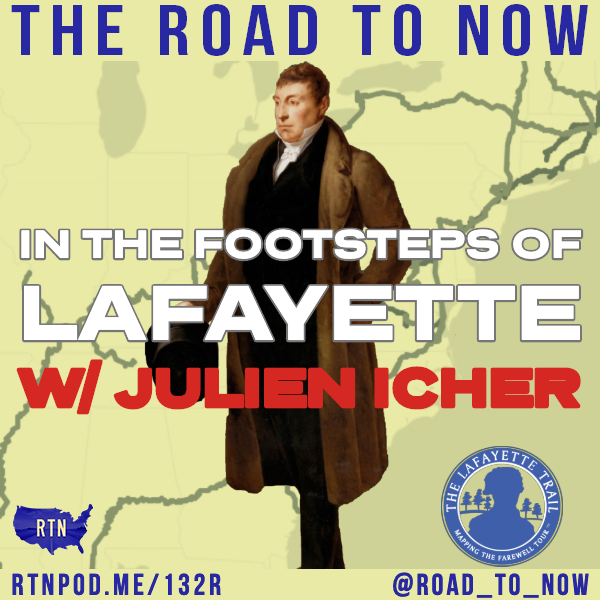
In the Footsteps of Lafayette w/ Julien Icher
On August 15, 1824, the Marquis de Lafayette arrived in the United States to say farewell to the country whose independence he helped secure more than four decades earlier. Over the next 15 months, Lafayette visited all 24 states, meeting with old friends and attending celebrations hosted by Americans who flocked to see the last-living Major General of the Revolutionary War whose close friendships with George Washington, Alexander Hamilton and Thomas Jefferson shaped both the American and French Revolutions. Since 2017, Julien Icher has been working to document the 5,000 mile journey that Lafayette took during his farewell visit. Icher, himself a Frenchman, has a remarkable skill set that combines the best of primary source-based research with the technical knowledge required for digital mapping. The result is The Lafayette Trail– a publicly accessible map that allows users to see Lafayette's physical route, as well as the people, places and events he encountered along the way. In this episode, Julien joins Ben to talk about Lafayette's contribution to American Independence, his life after returning to France, and the farewell tour that inspired Julien to create The Lafayette Trail. We also speak about the history of Franco-American friendship and why both countries are better when we work together. For more on The Lafayette Trail, check out their YouTube channel. Since April 2021, Julien has been posting episodes of his travels in the series "Follow the Frenchman." You can also follow the project on twitter at @LafayetteTrail. This is a rebroadcast of RTN #132, which originally aired on June 9, 2019. This rebroadcast was edited by Ben Sawyer.
Ep 235#235 Catching Up w/ Heather Cox Richardson
Heather Cox Richardson returns to the show to talk history, politics, and life in general. Heather shares her thoughts on what history has to teach us about navigating division and finding unity, the sources she thinks are critical in following US policy, and why she remains optimistic despite increasing polarization in American society. She also discusses what she's learned from her public engagement work on facebook and from "Letters From an American," where she has published her thoughts daily for over two years now. Dr. Heather Cox Richardson is Professor of History at Boston College and co-host of the Now & Then podcast (w/ Joanne Freeman). She is also the author of multiple books including West From Appomattox: The Reconstruction of America after the Civil War (Yale Univ. Press, 2008) and, most recently, How the South Won the Civil War (Oxford University Press, 2000). You can follow her on twitter at @HC_Richardson. If you enjoy this episode, check out our previous conversations w/ Heather Cox Richardson in RTN episode #177 How the South Won the Civil War and #38 The History of the Republican Party. This episode was edited by Gary Fletcher.
Ep 234#234 Primary Problems w/ Brian Rosenwald
Brian Rosenwald joins Bob and Ben to talk about the state of American political media, its impact on the divide between Democrats & Republicans, and how the party primary election process in most states exacerbates the problem. Brian also discusses his book Talk Radio's America: How an Industry Took over a Political Party that Took Over the United States, (Harvard University Press, 2019) and how his conclusions are holding up three years after publication. Dr. Brian Rosenwald is scholar in Residence at the Partnership for Effective Public Media Administration and Leadership Ethics at the University of Pennsylvania and senior editor of Made By History, a Washington Post history section. You can follow him on twitter at @brianros1. If you enjoy this episode, check out Brian's previous appearances on the Road to Now in episodes #30 The Origins of Conservative Talk Radio and #142 How Talk Radio Took Over the Republican Party. This episode was edited by Ben Sawyer.

The Origins of American Immigration Policy w/ Hidetaka Hirota
Hidetaka Hirota joins Bob and Ben for a conversation about the history of immigration law in the United States and the ways that government officials have decided who could and could not enter the United States. Hidetaka discusses the creation of Federal immigration law and the ways that looking at state immigration policies in the early to mid-19th century can help us understand the Immigration and Chinese Exclusion Acts of 1882. Dr. Hidetaka Hirota is Associate Professor of History at the University of California Berkeley who specializes in the history of US immigration. His book Expelling the Poor: Atlantic Seaboard States and the Nineteenth-Century Origins of American Immigration Policy (New York: Oxford University Press, 2017) has won multiple awards. Want to support The Road to Now and get extra episodes and other content? Join us on Patreon! This is a rebroadcast of RTN #126 which originally aired on April 8, 2019. This rebroadcast was edited by Ben Sawyer.

Ep 233#233 The 6th Anniversary Show w/ Matt Negrin
EThe Road to Now just celebrated its 6 year anniversary, so we invited our old friend (and all-time record holder for most RTN appearances) Matt Negrin to join us for a conversation about what's happening in the world and how to deal with it. Along the way, our Associate Producer, Gary Fletcher drops in for an update, and our friend (and long-time Patron) Fig White gets surprisingly brought into the conversation as well. Click here to watch the video of this episode on YouTube. Like a lot of anniversaries, this episode went to some surprising and unplanned places, but we'll be back to business as usual next week! This episode was edited by Gary Fletcher.

Ep 232#232 Attention
Bob and Ben catch up to talk about Jonathan Haidt's recent article in the May issue of The Atlantic, "Why the Past 10 Years of American Life Have Been Uniquely Stupid," and their take on the problems of social media and the solutions posed by Haidt and others. This episode was edited by Ben Sawyer

Ep 231#231 Freedom of Speech w/ Lynn Greenky
The first amendment right to the freedom of speech is a cornerstone of American liberty, but this broad principle becomes a bit narrower when put into practice. Why, for example, is burning an American flag in protest protected by the first amendment but burning your draft card is not? Lynn Greenky, whose new book When Freedom Speaks: The Boundaries and Boundlessness of our First Amendment Rights joins Ben and Bob to answer these questions and others in a master session on the freedom of speech. Lynn Greenky is a former lawyer and current teaching professor in Syracuse University's Department of Communication and Rhetorical Studies, where she teaches a course on the First Amendment. Her book, When Freedom Speaks, will be available on May 15th from Brandeis University Press and can be pre-ordered from her website, LynnGreenky.com. This episode was edited by Gary Fletcher.

The Armenian Genocide w/ Ron Suny
Ron Suny joins Ben for a conversation about the Armenian Genocide. Ron, one of the world's foremost experts on the history of the Armenian genocide, explains why the Ottoman government tunred on its Armenian subjects during World War I and the methods it used to carry out this atrocity. He also explains why, in spite of the evidence, recognizing this as genocide remains a political hotspot both internationally and within modern Turkey, and why it is important to remember tragedies even when doing so makes us uncomfortable. Dr. Ronald Grigor Suny is the William H. Sewell Jr. Distinguished University Professor of History at the University of Michigan and Emeritus Professor of Political Science and History at the University of Chicago. He is the author of numerous books, including "They Can Live in the Desert But Nowhere Else:" A History of the Armenian Genocide (Princeton University Press, 2015). This is a rebroadcast of RTN #92, which originally aired on April 23, 2018. In 2019, the both houses of US Congress recognized the Armenian Genocide. This episode was edited by Ben Sawyer.

Ep 230#230 1984: The Year the Music Changed Forever w/ Michaelangelo Matos
In this episode, music writer Michaelangelo Matos joins Bob and Ben to break down why he thinks 1984 was a crucial year for the music industry. Michaelangelo also shares why he loves books about a single year. Check out Michaelangelo Matos' book Can't Slow Down: How 1984 Became Pop's Blockbuster Year here.
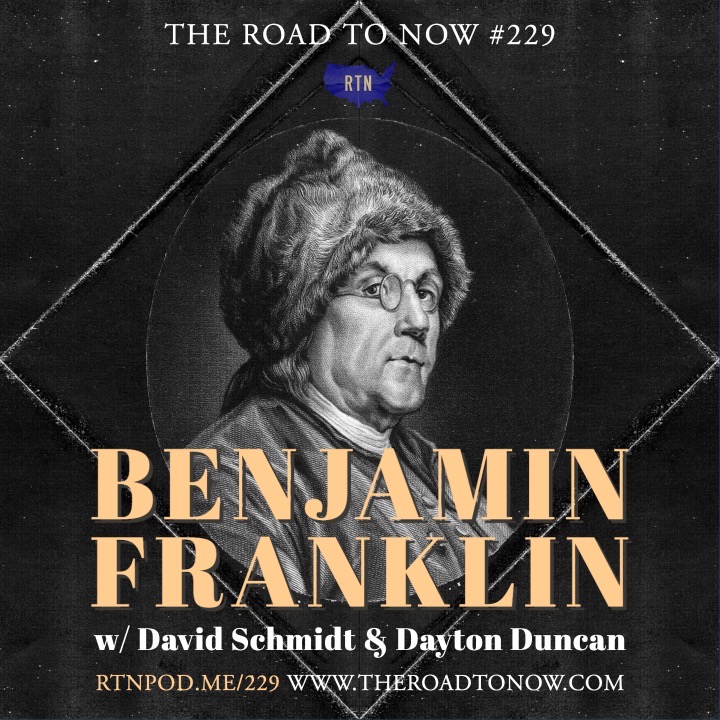
Ep 229#229 Benjamin Franklin w/ Dayton Duncan and David Schmidt
It's difficult to fathom how Benjamin Franklin accomplished so much in a single lifetime. It's equally difficult to imagine how to take such an incredible life and consolidate it into four hours of documentary film. In this episode, we cover both feats with writer Dayton Duncan and producer David Schmidt, two of the great minds behind Ken Burns' new documentary on Benjamin Franklin. Dayton and David discuss Franklin's life, the work that goes into creating a historical documentary film, and their process for deciding the best way to tell an American icon's story in a pair of two-hour episodes. Benjamin Franklin: A Film by Ken Burns premieres Monday, April 4th and Tuesday, April 5th on your local PBS station and we highly recommend it! If you enjoy this episode, check out Ben and Bob's conversation with Ken Burns in episode #191. This episode was edited by Gary Fletcher.
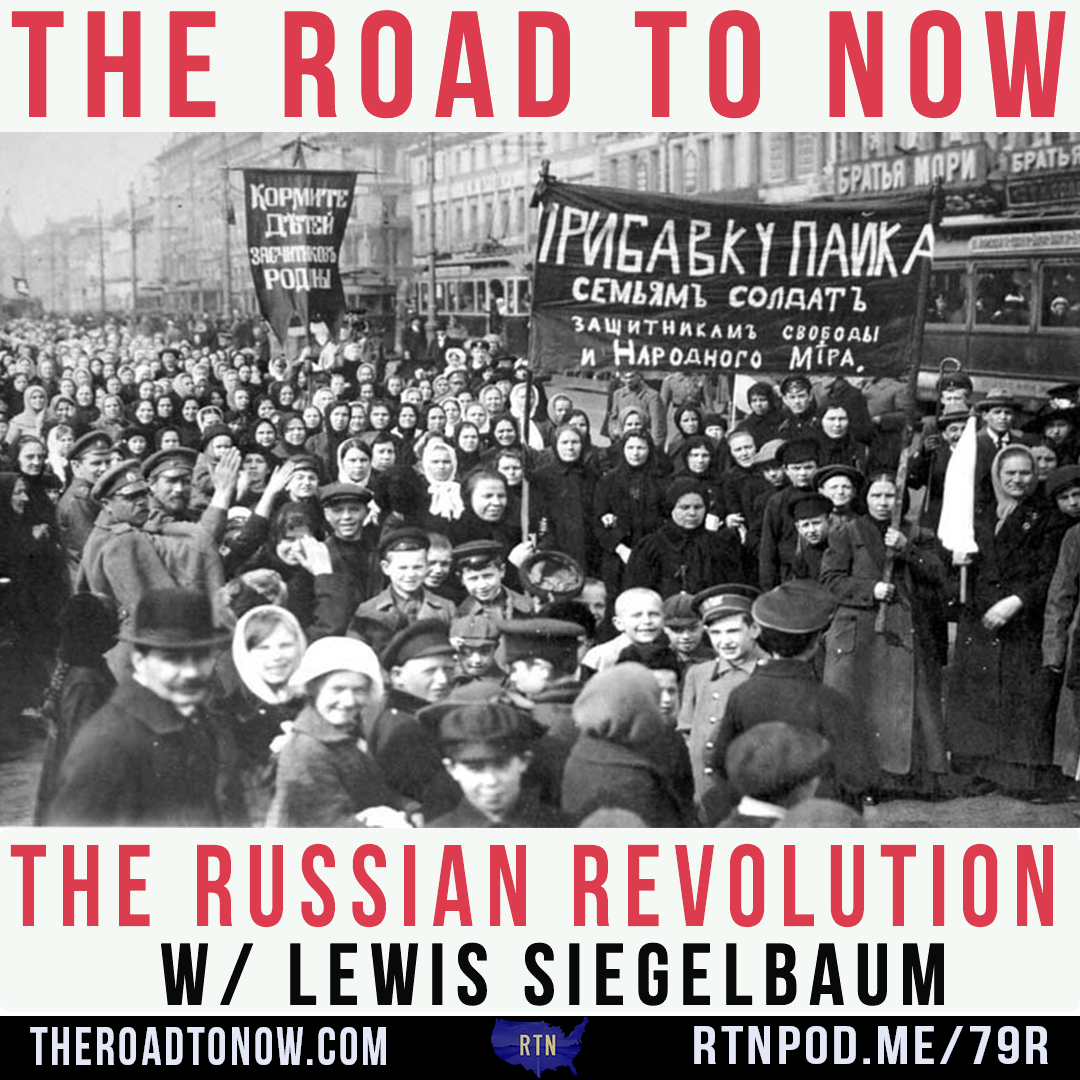
The Russian Revolution w/ Lewis Siegelbaum
The Russian Revolution that began with the fall of Tsar Nicholas II in February of 1917 and continued into a second revolution the following October, is unquestionably one of the most significant events in modern history. The October Revolution brought Vladimir Lenin and the Bolshevik Party from relative obscurity to the leaders of the first communist nation, later called the Union of Soviet Socialist Republics (USSR), and the economic and ideological system espoused by Soviet leaders transformed Russia from an underdeveloped nation on the periphery of Europe into a global super power in just a few decades. In this episode we speak with Russian history expert (and Ben's former dissertation advisor) Lewis Siegelbaum to discuss the series of events that led to the Russian Revolution and the establishment of the Soviet Union, and why he tells his students that ignoring the Soviet Union in 20th century is like "clapping with one hand." Dr. Lewis Siegelbaum is the Jack & Margaret Sweet Professor of History at Michigan State University, and one of the most prolific historians on the history of the Soviet era. He has published and edited twelve books, the most recent of which are Cars for Comrades: The Life of the Soviet Automobile (Cornell University Press, 2008) and Broad is My Native Land: Repertoires and Regimes of Migration in Russia's Twentieth Century (Cornell, 2014), which he co-wrote w Leslie Page Moch. His most recent book is Stuck on Communism: Memoir of a Russian Historian (NIU Press, 2019). This episode was edited by Ben Sawyer and is a rebroadcast of episode 79, which originally aired on November 16, 2017.

Ep 228#228 Concerts of Change: The Soundtrack of Human Rights
For the past year, Bob has been working on an audio docu-series that traces musicians' activism for human rights through benefit concerts from the 1970s to the 1990s. That series, Concerts of Change: The Soundtrack of Human Rights, airs Tuesday, March 22 on Siriux/XM's Volume Channel (106), so in this episode, Bob and Ben mark the occasion by discussion Bob's work on the series, how studying and speaking with musicians who inspired him helped Bob reflect upon his own role as a musician, and what he learned from his conversations with those involved in Live Aid, Band Aid, and other musicians' efforts to use their talents to help improve the lives of others. Concerts of Change: The Soundtrack of Human Rights begins on March 22 at 1 p.m. ET and will air bi-weekly on SiriusXM's Volume channel 106. Extended bonus content with longer interviews and outtakes will be available exclusively on the SiriusXM app beginning March 22. Click here to sign up for SiriusXM so you can keep up with Concerts of Change! This episode was edited by Gary Fletcher.

Ep 227#227 Russia's Long History of Nationalizing Foreign Property
The Russian government recently made moves to nationalize the property of foreign owned firms that ceased operation in response to Russia's attack on Ukraine. Ben's research is all about the history of foreign investment in Russia/the Soviet Union, so he and Bob sit down for a discussion about the very severe consequences that nationalization has had for Russia in the past and how this decision may do damage that far outlast sanctions. For more on Singer Sewing Machines in Russia, check out Ben's article "Manufacturing Germans: Singer Manufacturing Company and American Capitalism in the Russian Imagination during World War I.: (Enterprise & Society, Vol. 17, No. 2 (June 2016) pp 301-323.) This episode was edited by Ben Sawyer.

Ep 226#226 Russian Rubles, Western Sanctions w/ Kristy Ironside
Vladimir Putin's decision to launch a brutal invasion of Ukraine has sparked a coordinated wave of sanctions from the US and members of the European Union. This may be the most comprehensive set of sanctions that Moscow has seen, but it is certainly not the first. In this episode, Bob & Ben speak with Kristy Ironside, who specializes in the history of the Russian & Soviet economy, for a conversation about the long history of western sanctions against Russia, the Ruble's tenuous position in the global economy, and how Russia's long-term economic isolation has, and may continue to, impact people around the world. Although things remain uncertain, it is our hope that these sanctions help to bring an end to the tragedy that Vladimir Putin has unleashed against the people of Ukraine. Dr. Kristy Ironside is Assistant Professor of Russian, Soviet & International History at McGill University in Montreal, Canada and the author of A Full-Value Ruble: The Promise of Prosperity in the Postwar Soviet Union, 1945-1964 (Harvard University Press, 2021). You can follow her on twitter at @Kristy_Ironside. This episode was edited by Ben Sawyer.

Ep 225#225 Inside American Militias w/ Heath Druzin
Journalist Heath Druzin's new podcast Extremely American examines the American militia movement through first-hand interviews with militia members and their opponents. In this episode, Heath joins Bob and Ben for a discussion about what he learned while spending time with individuals in the movement, how the militia movement has changed in the last few years, and the way that these groups draw on historical events to shape their worldview. Heath Druzin is a journalist who covers the intersection of far-right movements and mainstream politics for Boise State Public Media and Postindustrial Media. He previously covered the wars in Iraq and Afghanistan for Stars & Stripes. You can follow him on twitter at @HDruzin. Extremely American (NPR/Postindustrial Media) is available anywhere you get The Road to Now. Click here to visit the podcast page on Postindustrial Media. If you enjoy this episode, check our episode on American militias with Vanderbilt Sociologist Dr. Amy Cooter. This episode was edited by Gary Fletcher.
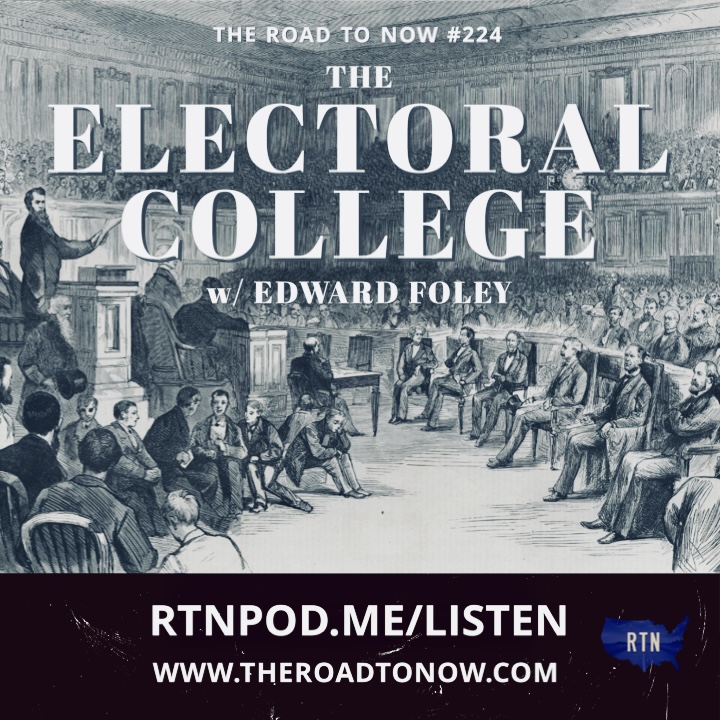
Ep 224#224 The Electoral College w/ Edward Foley
The Constitution empowers the electoral college to select the President, but the process for counting electors' votes remains in the hands of Congress. In this episode, Constitutional Law Professor Edward Foley explains the origins of the electoral college, how and why the 12th Amendment changed the process for electing Presidents, and the concerns that led Congress to codify the procedure for counting electors' votes in 1887. Edward also offers some specific ways that updating the Electoral Count Act of 1887 might help us avoid some of the potential problems that might arise in upcoming elections. Edward Foley holds the Ebersold Chair in Constitutional Law at The Ohio State University, where he also directs its election law program. He is a regular contributor to The Washington Post and the author of multiple books, including Ballot Battles: The History of Disputed Elections in the United States (Oxford University Press, 2016) and Presidential Elections and Majority Rule (Oxford University Press, 2020). You can follow him on twitter at @NedFoley. This episode was edited by Gary Fletcher.

Ep 223#223 Presidential Records & Other Controversies
EBob & Ben catch up to talk about the Presidential Records Act and how Trump's violations of the act stack up to other Presidents' handling of their records. They also discuss Neil Young and other artists' decision to pull their music from Spotify as a response to Joe Rogan's prominent position on the platform, as well as recent evidence that the 1776 report still matters. This episode was edited by Ben Sawyer. For more on The Road to Now: https://linktr.ee/RoadToNow

Ep 222#222 Was America Founded as a Christian Nation? w/ John Fea
Bob speaks with Messiah College's John Fea about Christianity in Early America and the ways that the founders viewed the relationship between faith and politics. Fea outlines the "5 Cs" of history, the importance of approaching history with an open mind, and explains why he thinks the title of his book Was America Founded as a Christian Nation? may not be the question in approaching Christianity's role in the establishment of the United States. John Fea is Professor of American History and Chair of the Department of History at Messiah College and host of the podcast The Way of Improvement Leads Home. He is the author or editor of four books, including Was America Founded as a Christian Nation: A Historical Introduction (Westminster/ John Knox Press, 2011) & Why Study History?: Reflecting on the Importance of the Past (Baker Academic, 2013) and his essays and reviews have appeared in a variety of scholarly and popular venues. This episode originally aired in February 2018 as part of RTN Theology #2. We are releasing it as RTN #222 because it's an important conversation that we think should be featured on both feeds. A full list of RTN Theology episodes are available anywhere you're listening to The Road to Now.

Ep 221#221 Ukraine w/ Kimberly St. Julian-Varnon
Ukraine has gotten a lot of intermittent attention in the US over the last few years, but the stories we hear are usually about the US and Russia. To counter that tendency, we offer you a story about Ukraine that is actually about Ukraine. In this episode, historian Kimberly St. Julian-Varnon joins Ben to talk about the key historical events that have shaped Ukraine and its place in the world today. Kimberly St. Julian-Varnon holds a MA in Russian, Eastern European and Central Asian Studies from Harvard University and is currently a doctoral student in history at the University of Pennsylvania. You can learn more about her at her website www.kstjulianvarnon.com and follow her on twitter at @KSVarnon. This episode was edited by Gary Fletcher.
Crossroads Special: History Daily - Two Stories from the Space Race
Today we've got a little something special for you- something we're calling "Crossroads." From time to time, on weekends, Bob and I will be sharing episodes of podcasts that we think our audience might enjoy, and our first ever featured podcast is History Daily. History Daily is hosted by our friend and podcaster extraordinaire, Lindsay Graham. You might know Lindsay from some of the biggest podcasts in the country, including American Scandal and American History Tellers. Lindsay's newest endeavor, History Daily, drops new episodes every weekday featuring stories of events that happened on that date in the past. The episodes run about 20 minutes and are well produced, so they're interesting gateways into bigger topics in history and they're pleasant listens. For today's episode, Ben picked wpisodes that work well together- the story of Laika the Soviet space dog's Nov. 3, 1957 launch into space and the story of Apollo 8- which sent the first crewed spacecraft to orbit the moon on Dec. 21, 1968. They're both great on their own, but together they illustrate the firm lead that the Soviets had early in the space race, and the incredible effort NASA put into surpassing the Soviets by the end of the 1960s. If you enjoy these episodes, you can follow History Daily anywhere you get the Road to Now.

Ep 220#220 Processing the Past w/ Jon Grinspan
Jon Grinspan is a curator of political history at the Smithsonian Museum of American History and a frequent contributor to The New York Times. In this episode, Jon explains how his work with historical objects has informed his understanding of the past, the reasons he thinks that American politics in recent years is less of an aberration than many of us would like to believe, and his thoughts on the many ways Americans might look back on the January 6th insurrection in the future. Jon also shares the process he and his colleagues at The Smithsonian follow in selecting objects from today that will be preserved for future generations. Dr. Jon Grinspan's newest book is The Age of Acrimony: How Americans Fought to Fix Their Democracy, 1865-1915 (Bloomsbury, 2021). For more on his work, visit his bio page at the Smithsonian or link directly to one of the articles listed below. Jon Grinspan & Peter Manseau, "It's 2086. This is What American History Could Look Like." The New York Times, Jan. 6, 2022. Jon Grinspan, "What We Did the Last Time We Broke America," The New York Times, Oct. 29, 2021. Jon Grinspan, "How to Steal An Election," The New York Times, Oct. 24, 2020. For Bob and Ben's conversation in the aftermath of the January 6, 2021 attack on the capitol, check out RTN #187 The Insurrection Episode. This episode was edited by Gary Fletcher.
Ep 219#219 Swept Away w/ John Logan and John Gallagher
On January 9, the new musical Swept Away, which is based on the music of Bob's band The Avett Brothers, premiered at the Berkeley Repertory Theater. In this episode, the musical's writer, John Logan (Any Given Sunday, Skyfall, Red) and lead actor, John Gallagher Jr. (American Idiot, The Newsroom) join Bob and Ben for a discussion about how the music became a musical, their sources of creativity, and why they decided to make such a deep investment in developing and performing Swept Away. Swept Away runs until March 6, 2022 at the Berkeley Repertory Theater in Berkeley, CA. For more information and tickets visit the Berkeley Rep's website. You can also follow Swept Away on Instagram by clicking here. Click here to hear John Gallagher Jr. performing "The Once and Future Carpenter" from Swept Away. This episode was edited by Gary Fletcher.

Ep 218#218 The History of Cigarettes w/ Louis Kyriakoudes
In 1998, as part of the Tobacco Master Settlement Agreement, the biggest US tobacco companies agreed to open their archives to the public. Inside company documents was a story of tobacco executives who understood that cigarettes killed smokers yet expended vast amounts of time and money to keep that information from the public. In this episode, Ben speaks with Louis Kyriakoudes, an expert who has applied his academic research on the history of cigarettes as an expert witness in tobacco cases and as a speaker to medical groups seeking to better understand the history of the industry. Dr. Louis Kyriakoudes is Professor of History and Director of the Albert Gore Research Center at Middle Tennessee State University. He has served as expert witness in tobacco litigation in multiple state and federal courts and served as an international consultant on the topic. For a list of sources, visit our episode page at RTNpod.me/218. This episode was edited by Gary Fletcher.

Ep 217#217 Forward
Bob & Ben catch up for a conversation about 2021 and what may await us in the New Year. They discuss free speech on college campuses, the state of the workforce, and little bit about a lot of other topics. Happy New Year! We're excited to announce that we've collaborated with Hark Audio to make Harklists of our favorite RTN moments from 2021! Hear Bob & Ben's clips and why they chose them at the following links: The Road to Now – Bob Crawford's 2021 Highlights The Road to Now – Ben Sawyer's 2021 Highlights Sources Mentioned in this episode: Harvard Youth Poll, 42nd edition, 2021. Michael Graber, Debt: The First 5,000 Years, Melville House, 2011.

America's First War on Christmas w/ Bruce Carlson
On December 25, 1776, George Washington and his men celebrated their first post-Declaration of Independence Christmas by crossing a freezing river to mount a surprise attack against their enemies. The plan worked, but almost 250 years later the story of Washington crossing the Delaware might surprise you too. In this episode, RTN favorite Bruce Carlson of My History Can Beat Up Your Politics joins Bob & Ben for a conversation about one of the US's most recognized, yet little-known battles and how it affected the course of the Revolutionary War. If you enjoy this episode, check out My History Can Beat Up Your Politics, available anywhere you get The Road to Now. You can also hear Bruce in RTN Episode 85: The History of US-Mexican Relations w/ Bruce Carlson, recorded live from Avetts at the Beach in 2018. This episode is an enhanced rebroadcast of episode #154 that includes additional primary source readings not included in the original episode. The rebroadcast was edited by Ben Sawyer.

Ep 216#216 Faith in Freedom w/ Andrew Polk
Faith has played an important role in American history, but not always in the ways we'd expect. In this episode, Andy Polk joins Bob and Ben to explain how politicians, advertising executives and public relations experts bypassed America's religious leaders, ignored theological debates, and dismissed historical evidence to fabricate and sell a story of America's religious origins that served their own political needs. That story remains with us today so, to quote the title of Andy's recent op-ed in The Tennessean: "When you hear 'In God We Trust', pay attention to what comes next." Dr. Andrew R. Polk is Associate Professor of History at Middle Tennessee State University and the author of the new book, Faith In Freedom: Propaganda, Presidential Politics, and the Making of an American Religion (Cornell University Press, December 2021). Get your hardback copy of Faith In Freedom directly from Cornell University Press and save 30% off the cover price with promo code 09Flyer! Click here for more information. This episode was edited by Gary Fletcher.

Ep 215#215 The Power of Story (Revisited) w/ Donna Washington
The stories we tell about ourselves help us make sense of the world. And while we all have stories as individuals, a set them within a shared narrative that is the foundation of our communities. In this episode, National Conference of State Legislatures (NCSL) CEO Tim Storey hosts Ben and storyteller Donna Washington in a conversation about the ways that stories work, why they have the power to unite us, and how they can also be used to divide us. They also reflect on the "American Story" and how new perspectives on our past help us to better understand who we are as a people and a country. A special thanks to Tim Storey and everyone at NCSL for inviting Ben and Donna to return to NCSL's Legislative Summit, and to Donna Washington for sharing her wisdom with us and the crowd. We're also grateful to all those who attended the panel and took the time to speak with us afterward. You can read Lesley Kennedy's writeup of the panel on NCSL's blog here. You can follow Donna Washington on twitter at @DLWStoryTeller, like her page on facebook, and find out more about her upcoming performances and work (including her new book Boo Stew) at her website- DonnaWashington.com. The National Conference of State Legislatures (NCSL) is a non-partisan organization that represents the legislatures in the states, territories and commonwealths of the U.S. Its mission is to advance the effectiveness, independence and integrity of legislatures and to foster interstate cooperation and facilitate the exchange of information among legislatures. To learn more about NCSL and access their incredible set of online resources covering a wide variety of topics relating to state legislatures and local governments, visit their website: NCSL.org. You can hear our first NCSL panel, recorded in 2019, featuring Ben, Donna and Bob in episode #138 by clicking here. Our conversation with NCSL's experts on legislative redistricting past and present, is also available in episode #212 Redistricting: A Primer w/ Wendy Underhill and Ben Williams. This episode was recorded at NCSL's Legislative Summit in Tampa, Florida on November 5th, 2021 and edited by Ben Sawyer.

The Wild West w/ Dick Kreck
During a trip to Denver, Bob and Ben were fortunate enough to sit down with journalist and historian Dick Kreck at the historic Brown Palace hotel for a conversation about the history of the Wild West and the city of Denver, Colorado in the late 19th and 20th centuries. Before retiring in 2009, Dick spent four decades working as a reporter for the San Francisco Examiner, The LA Times, and The Denver Post, and he has published numerous books on the history of Colorado and the west, including Murder at the Brown Palace: A True Story of Seduction and Betrayal (2003) and Hell on Wheels: Wicked Towns Along the Union Pacific Railway (2013). This episode is a rebroadcast of RTN episode #7, which originally launched on June 23rd 2016. This rebroadcast was edited by Ben Sawyer.

Ep 214#214 Woody Guthrie: Crafting Everyday Life w/ Nora Guthrie
Nora Guthrie, daughter of American icon Woody Guthrie, joins Ben & Bob to talk about her father's life and the many ways she's contributed to sharing his story. Nora discusses the inspiration for Woody's music, his connection to Bob Dylan, Pete Seeger, Leadbelly and other music icons, and why her new Woody Guthrie: Songs and Art • Words and Wisdom, which she co-curated with music historian Robert Santelli, presents her father as she'd like him to be remembered. Nora Guthrie is President of Woody Guthrie Publications and founder of the Woody Guthrie Archive (1994). Woody Guthrie: Songs and Art • Words and Wisdom (co-curated by Nora Guthrie & Robert Santelli) is a beautifully arranged "almanac" that features original handwritten lyrics, drawings, and photographs that document Woody Guthrie's life through his own words. The book also features insightful contributions by Douglas Brinkley, Roseann Cash, Chuck D, Jeff Daniels, Ani DiFranco and Arlo Guthrie. Click here to buy the book from the Guthrie Center and have your copy signed by Nora. Additional Resources The Woody Guthrie Center & Archives in Tulsa Oklahoma 18-May 22, 2022: "Woody Guthrie: People are the Song," and exhibition at The Morgan Library & Museum (New York, NY) This Episode Kills Fascists: Woody Guthrie's Life & Legacy w/ Deana McCloud (The Road to Now #94)

Ep 213#213 The 2020 Election: A First Draft w/ Robert Costa
The 2020 Presidential election was one of the most tumultuous in American history, and while Joe Biden's victory over Donald Trump is settled, Trump's refusal to accept defeat has had implications that transcend his time in the oval office. In this episode, Bob and Ben speak with Robert Costa, whose new book Peril draws on his and co-author Bob Woodward's extensive investigation of the Biden and Trump campaigns and Trump's handling of executive power during his time in office. Robert explains how he finds and vets sources, his method of "deep background" interviews, and how he maintains journalistic disinterest in the face of intense partisan conflict. He also discusses what he learned about Trump and Biden as candidates and individuals and why he believes that the peril that characterized the Trump-Biden transition remains a source of concern more than a year after the 2020 election. Robert Costa is a national political reporter at The Washington Post and political analyst for NBC News and MSNBC. You can follow him on twitter at @CostaReports. If you enjoyed this conversation, check out our previous conversation with Robert in RTN #130 Sources, Methods & Music w/ Robert Costa. This episode was edited by Gary Fletcher.
Ep 212#212 Redistricting: A Primer w/ Wendy Underhill & Ben Williams
There is a lot at stake when congressional districts are redrawn every ten years, and the complexity of redistricting can make it hard for even well-informed citizens to understand the process. In this episode, we get a primer on redistricting's past and present from the same experts that our state legislators turn to when it's time to redraw their districts: Wendy Underhill and Ben Williams of the National Conference of State Legislatures. Wendy and Ben take us through the history of redistricting, why it became mandatory only in the 1960s, and how new information and technology shape the way we're represented in our state and federal governments. To find out more about redistricting in your state, check out "Redistricting Systems: A 50 State Overview" from NCSL. Wendy Underhill is Director of NCSL's Elections and Redistricting Program. Ben Williams is a Policy Specialist in Elections and Redistricting at NCSL. You can follow him on twitter at @ElectionBen. A special thanks to Tim Story for helping to arrange this conversation. This episode was edited by Gary Fletcher
The American Empire w/ Daniel Immerwahr
Is the United States an empire? US citizens have struggled with this question for a long time. Though our historical narrative traces our origins to the war for independence against the British Empire, we often forget that the US has presided over territories since the very beginning. Today about 4 million people in the territories of American Samoa, the Northern Marinara Islands, Guam, Puerto Rico and the US Virgin Islands are subject to the US government, yet cannot vote for President and have only symbolic representation in congress. At the same time, the US maintains a global network of about 800 military bases in 80 countries. For these reasons and more, Daniel Immerwahr says the United States is definitely an empire. In this episode, Daniel explains how this happened, the ways that US citizens have debated their country's role in the world, and how a country born of an anti-imperialist revolution became the thing it professed (and still professes) to despise. He also shares some fascinating stories about how the US military helped make The Beatles, why some people claimed John McCain was not eligible to be President, and how citizens of the United States of America began referring to their country as simply "America." Daniel Immerwahr is Associate Professor of History at Northwestern University, and author of the book How To Hide An Empire: A History of the Greater United States (Farrar, Straus & Giroux, 2019). You can follow him on twitter at @dimmerwahr. How To Hide An Empire is available on audiobook from libro.fm. Click here and use promo code RTN at checkout to get this book and two more for just $15! This episode is a reair of RTN #134, which originally aired on July 1, 2019. The original conversation was edited by Gary Fletcher. This reair was edited by Ben Sawyer.