
The Right Chamber
Real NHS voices — from wards to workshops — sharing what makes a hospital a hospital
Ron Grimley Undergraduate Centre
Show overview
The Right Chamber has been publishing since 2024, and across the 2 years since has built a catalogue of 45 episodes. That works out to roughly 25 hours of audio in total. Releases follow a monthly cadence.
Episodes typically run twenty to thirty-five minutes — most land between 27 min and 35 min — and the run-time is fairly consistent across the catalogue. None of the episodes are flagged explicit by the publisher. It is catalogued as a EN-GB-language Education show.
The show is actively publishing — the most recent episode landed 1 weeks ago, with 17 episodes already out so far this year. The busiest year was 2025, with 22 episodes published. Published by Ron Grimley Undergraduate Centre.
From the publisher
The Right Chamber is our NHS Trust’s podcast that explores what really makes a hospital a hospital. We share authentic conversations with everyone who keeps the NHS running, from doctors, nurses, and students to facilities, admin, and corporate staff. Each episode is designed to be accessible to the public while meaningful for healthcare professionals, breaking down barriers and showing the NHS as a living, human community. It’s where the whole heartbeat of the hospital comes together, in one place. Produced by the Ron Grimley Undergraduate Centre. © The Dudley Group NHS Foundation Trust
Latest Episodes
View all 45 episodesWhat Is an Admiral Nurse? The Dementia Support You May Not Know Exists – Ep 44
Medical Student Mental Health: Breaking the Stigma Around Asking for Help – Ep 43
Ozempic & Mounjaro: The Truth About Weight Loss Injections – Ep 42
The NHS Role You Never Knew Existed | Keeping Emergency Equipment Ready Saves Lives – Ep 41
The NHS Doctor Explains What a DNACPR Really Means (It’s Not What Most People Think) – Ep 40
How to Get Into Medical School | What Admissions Tutors Really Look For – Ep 39
Alcohol Recovery, Hope and Support – Ep 38
What Most People Get Wrong About Alcohol – The Right Chamber Ep 37
Inside an NHS Charity | How Donations Transform Patient Care & Staff Wellbeing – The Right Chamber – Ep 36
Inside the Mind of an NHS Medical Director | What the Job REALLY Involves – The Right Chamber – Ep 35
The Hidden System Running your Hospital (and why it matters) – The Right Chamber – Ep 34

There’s more than one way in: Work Experience & Apprenticeships in the NHS | The Right Chamber Ep 33
NHS work experience and apprenticeships There is more than one way to build a career in the NHS. While many people assume university is the only route, work experience and apprenticeships offer powerful alternatives. These pathways help people gain insight, develop confidence, and take meaningful first steps into healthcare. In this episode of The Right Chamber, we explore how these opportunities open doors for students, career-changers, and existing staff alike. Discovering Where You Fit Work experience plays a vital role in helping people understand what working in the NHS actually involves. For some, it confirms an existing ambition. However, for others, it reveals new possibilities they had never considered. Through exposure to real environments and professionals, individuals can make informed decisions about their future. As a result, they avoid committing to paths that may not suit their strengths or interests. Apprenticeships as a Route to Progression Apprenticeships provide structured, hands-on learning alongside practical experience. Importantly, they create opportunities to enter the NHS at different levels and progress over time. Many people begin in entry-level roles and develop into highly skilled professionals. Furthermore, apprenticeships support career progression for existing staff who want to grow within the organisation. Opening Doors at Any Stage of Life Career journeys rarely follow a straight line. Instead, people often discover new ambitions through experience, exposure, and support. Whether you are leaving school, considering a career change, or looking to progress in your current role, these pathways offer accessible and flexible options. Ultimately, this conversation highlights the breadth of opportunity within the NHS and reinforces a simple message: there is a place for everyone. NHS work experience and apprenticeships. Spotify: https://open.spotify.com/show/6BMxswWTqa82B27ZAxJZcj?si=f773c28d0b3a4a8c Apple Podcasts: https://podcasts.apple.com/gb/podcast/the-right-chamber/id1754140706 Amazon Music: https://music.amazon.co.uk/podcasts/cfabe121-fc4c-4cc4-a4cd-423750cb1a85/the-right-chamber If you enjoyed this episode, please like, comment, share, and subscribe for more real stories from inside the NHS. Follow us: Instagram: https://www.instagram.com/rgucms/ TikTok: https://www.tiktok.com/@rgucms Also subscribe for exclusive content and updates. https://youtube.com/@RGUCmedia?si=rZFQUxZ_74RZI4e_ —————— Produced by the RGUC Digital Media Team – https://iclinical.co.uk/digital-media-links Music credit: Kalte Ohren (septahelix remix) by septahelix (c) copyright 2019 Licensed under a Creative Commons Attribution (3.0) license. http://dig.ccmixter.org/files/septahelix/59527 Ft: starfrosch
Sexual Safety in the NHS – How to Report Concerns & Create Safer Workplaces | The Right Chamber Ep 32
Driving a culture change for safer workplaces The final episode of our three-part sexual safety mini-series focuses on what happens after awareness and data. Attention shifts to reporting processes, accountability and the practical steps needed to support staff, driving a culture change for safer workplaces. Confidence in reporting Guests discuss why clear, transparent reporting pathways matter and how delays or lack of feedback can undermine trust. The episode explores how uncertainty about outcomes often discourages future reporting. Accountability at every level The conversation also addresses accountability, particularly when concerns involve senior staff. No one, regardless of role, should feel beyond challenge or consequence. Building safer workplaces Finally, the episode looks forward. Training, leadership responsibility and everyday behaviours all play a role in culture change. The series concludes by reinforcing that sexual safety is a shared responsibility, requiring sustained commitment across teams and organisations. If you enjoyed this episode, please like, comment, share, and subscribe for more real stories from inside the NHS. Follow us: Instagram: https://www.instagram.com/rgucms/ TikTok: https://www.tiktok.com/@rgucms Also subscribe for exclusive content and updates. https://youtube.com/@RGUCmedia?si=rZFQUxZ_74RZI4e_ #SAAM #SexualViolenceAwareness #SupportSurvivors #ConsentMatters #BreakTheSilence #NHS #speakup #ItsNotOk —————— Produced by the RGUC Digital Media Team – https://iclinical.co.uk/digital-media-links
Sexual Safety in the NHS – What the Data Reveals About Workplace Harassment | The Right Chamber Ep 31
Sexual Safety in the NHS and the data. Episode two of this three-part mini series focuses on staff survey findings exploring sexual harassment in the NHS. Rather than presenting numbers alone, the conversation explains what the data reveals about prevalence, experience and reporting. Looking beyond the headlines From there, the discussion moves beneath the surface. Guests explore why reporting rates remain low, including fears around power imbalance, lack of confidence in outcomes, and concerns about not being taken seriously. Silence does not mean safety Importantly, the episode challenges the idea that low reporting equals low harm. Instead, it highlights how silence often reflects fear, normalisation and uncertainty about what will happen next. Context matters Experiences involving patients are also discussed, adding depth to the findings and reinforcing the complexity of sexual safety in healthcare. Overall, this episode shows why data must be understood in context and used as a tool for improvement, not reassurance. If you enjoyed this episode, please like, comment, share, and subscribe for more real stories from inside the NHS. Follow us: Instagram: https://www.instagram.com/rgucms/ TikTok: https://www.tiktok.com/@rgucms Also subscribe for exclusive content and updates. https://youtube.com/@RGUCmedia?si=rZFQUxZ_74RZI4e_ #SAAM #SexualViolenceAwareness #SupportSurvivors #ConsentMatters #BreakTheSilence #NHS #speakup #ItsNotOk —————— Produced by the RGUC Digital Media Team – https://iclinical.co.uk/digital-media-links
Sexual Safety in the NHS – Real Experiences of Harassment at Work | The Right Chamber – Ep 30
Sexual Safety in the NHS. TRIGGER WARNING: This episode discusses topics related to sexual harassment and inappropriate behaviour in the workplace, which some listeners may find distressing. Please take care while listening, and feel free to skip this episode or take a break if you need to. This first episode of this three-part mini series on sexual safety in the NHS opens a necessary conversation about sexual safety in NHS workplaces. Drawing on lived experience and frontline insight, the discussion explores what sexual harassment can look like in hospital settings, from overt incidents to comments often dismissed as “just banter”. Power, culture and impact The conversation then turns to power dynamics and hierarchy, examining how seniority can influence behaviour and silence those affected. Dr Andrea Gait and Dr Maya Patel reflect on why intent is often used to minimise harm, and why the impact of behaviour matters more than how it was meant. Why speaking up is hard Attention also focuses on the emotional toll of harassment and the barriers staff face when considering whether to speak up. Experiences involving patients are explored, highlighting the additional complexity staff encounter in clinical environments. Setting the foundation By the end of the episode, listeners are encouraged to reflect on everyday language, behaviour and culture at work. This episode sets the foundation for the series by helping audiences recognise the problem and understand why it persists. If you enjoyed this episode, please like, comment, share, and subscribe for more real stories from inside the NHS. Follow us: Instagram: https://www.instagram.com/rgucms/ TikTok: https://www.tiktok.com/@rgucms Also subscribe for exclusive content and updates. https://youtube.com/@RGUCmedia?si=rZFQUxZ_74RZI4e_ #SAAM #SexualViolenceAwareness #SupportSurvivors #ConsentMatters #BreakTheSilence #NHS #speakup #ItsNotOk —————— Produced by the RGUC Digital Media Team – https://iclinical.co.uk/digital-media-links
Hospital-Run GP Practices in Dudley: What it Means for Patients – The Right Chamber – Ep 29
Episode overview In this episode, Jasprit and Victor look at General Practice at the centre of the NHS, and how it works quietly in the background. They speak with Dr Lucy Martin; a Dudley GP and Chief of Primary Care at Dudley Group NHS Foundation Trust, about what’s changing in primary care and why it matters to patients, hospital teams, and the wider community. What “Trust-run” general practice really means More hospital trusts now support and run GP practices, especially when partnerships struggle to recruit or when a surgery risks closure. Dr Martin explains how this model works day to day and, importantly, why patients should still expect a familiar experience: the same appointment journey, the same clinical teams, and the same focus on continuity and relationships. Why GP feels harder than many people realise Next, the conversation tackles the realities behind the headlines. Short appointments, constant uncertainty, limited immediate tests, and complex mental health needs all shape modern general practice. Dr Martin also highlights a core skill that rarely gets celebrated. Leadership, resilience, and imposter syndrome The episode then shifts to career development. Dr Martin shares how resilience research and leadership opportunities grew organically over time. Along the way, she offers a practical message for clinicians at any stage: accept imposter syndrome as part of the job, then keep showing up and putting your hand up for what interests you. Looking ahead Finally, we explore what GP could look like over the next 10–20 years. Dr Martin argues for a mixed model that strengthens collaboration between primary and secondary care, because when general practice thrives, the whole health system becomes more stable. General practice sits at the centre of the NHS. Links related to this episode: BJGP Interviews – Developing resilience – just another work task for GPs? – https://player.captivate.fm/episode/3… Deep Breath In podcast – The GP crisis with Gareth Lacobucci and Lucy Martin – https://deepbreathin.podbean.com/e/th… Spotify: https://open.spotify.com/show/6BMxswW… Apple Podcasts: https://podcasts.apple.com/gb/podcast… Amazon Music: https://music.amazon.co.uk/podcasts/c… If you enjoyed this episode, please like, comment, share, and subscribe for more real stories from inside the NHS. Follow us: Instagram: https://www.instagram.com/rgucms/ TikTok: https://www.tiktok.com/@rgucms Also subscribe for exclusive content and updates. https://youtube.com/@RGUCmedia?si=rZF… #nhs #podcast #conversationsthatmatter #generalpractice #healthcare #gp
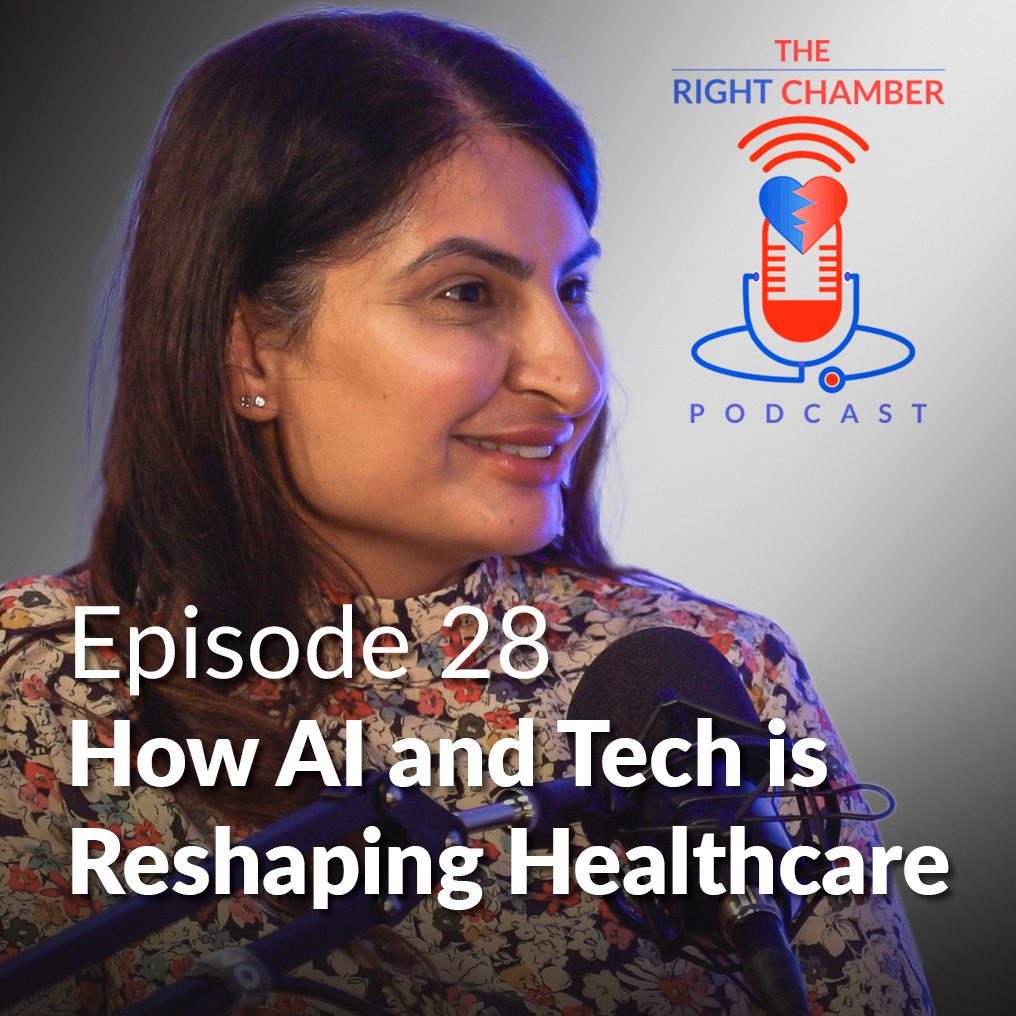
The Right Chamber E28 – How AI and Tech is Reshaping Healthcare
Healthcare technology is evolving fast, but progress brings responsibility. In this episode of The Right Chamber, we look beyond the headlines to explore how AI and digital systems are actually being used inside the NHS, and how AI technology must not be a substitute for professional judgement. Why This Conversation Matters. AI already supports clinical decision-making, data analysis, and patient flow. However, as adoption accelerates, new risks emerge. Throughout this episode, we examine where technology adds value and where over-reliance can quietly introduce harm. From Innovation to Impact. Next, the discussion moves from theory to practice. We unpack ambient voice technology, digital transformation, and the unseen infrastructure that keeps hospitals running. Along the way, we explore how good design can reduce administrative burden, improve patient experience, and support staff wellbeing. AI technology must not be a substitute for professional judgement. Crucially, this episode reinforces one key message: technology must remain a tool, not a substitute for professional judgement. AI can assist, streamline, and enhance, yet it still requires human oversight, ethical governance, and accountability. Behind the Screens of the NHS. Finally, the conversation highlights the digital and corporate teams working behind the scenes. Their work often goes unnoticed, but without it, frontline care simply cannot function. 00:00 Introduction to The Right Chamber Podcast 00:49 Meet Ravinder (Ravi) Sota 02:29 The Role of the Digital, Data, and Tech Teams 03:22 Ravi’s Journey: From Finance to the NHS 07:06 Current Projects and Ambient Voice Tech 08:14 How Ambient Voice Tech Works 15:30 AI in Medicine and Triage 16:18 Addressing Bias in AI 18:42 Misconceptions about IT and Digital Transformation 20:11 Governance, Safety, and National Guidelines 26:27 The Importance of Corporate Services in the NHS 30:00 Advice for Aspiring Tech Professionals 34:40 The Power of Innovation and Listening 35:52 Closing Remarks Discover how the NHS is navigating AI: carefully, collaboratively, and with people at the centre. Subscribe, watch and listen on other platforms: https://linktr.ee/rightchamber
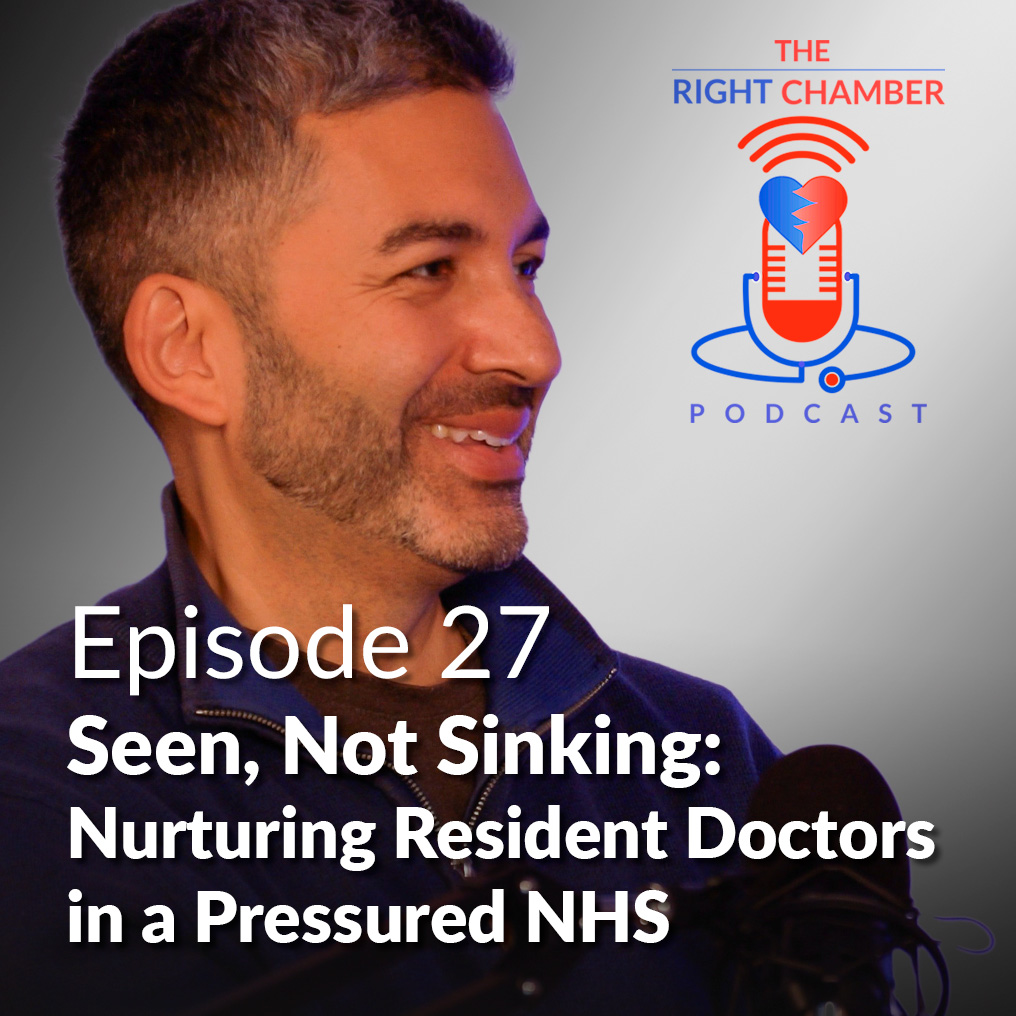
The Right Chamber Ep 27 – Seen, Not Sinking: Nurturing Resident Doctors
This episode of The Right Chamber dives into one of the most important challenges in modern healthcare: supporting resident doctors in a system under constant pressure. Dr Richard Alleyne, a palliative medicine consultant and Wellbeing Champion for resident doctors, joins Jasprit and Victor to share practical insights on how senior clinicians can create safer, healthier working environments. He explains why resident doctors often hide their struggles, and he describes how simple check-ins can prevent burnout. Throughout the conversation, Dr Alleyne highlights the enormous impact of small, intentional actions. For example, he shows how asking a second “Are you okay?” can reveal issues that often stay hidden. Moreover, he stresses that meaningful support does not require long meetings. Instead, it can begin with noticing a change, taking a moment to listen, and offering clear guidance. To help clinicians do this consistently, Dr Alleyne introduces the SHINE Toolkit. Each step—Spot, Hear, Inquire, Nurture, Escalate—offers a practical way to respond when a colleague seems overwhelmed. The framework gives senior staff a structure they can use even on busy wards. Consequently, teams can act early and reduce the risk of bigger problems. The episode also explores how small acts of kindness shape team culture. Dr Alleyne shares powerful stories showing how supportive behaviour boosts morale, strengthens trust, and improves patient care. Additionally, he reminds listeners that caring for one another is not optional; it is essential for a healthy workplace. By the end, listeners gain clear strategies for spotting distress, opening supportive conversations, offering encouragement, and signposting colleagues to the right help. These insights benefit consultants, trainees, nurses, and anyone working in fast-paced clinical environments. Ultimately, the discussion encourages every listener to help their colleagues shine—and to build a healthcare system grounded in compassion and awareness, ultimately supporting resident doctors in a system under constant pressure. Subscribe, watch and listen on other platforms: https://linktr.ee/rightchamber

The Right Chamber E26 – Hospital Pharmacy Explained
In this episode, hosts Victor and Jasprit sit down with Ruckie Kahlon to explore hospital pharmacy. Ruckie shares her 25-year journey with the Trust, from pre-registration pharmacist to Chief Pharmacist and Medicines Optimisation lead. She explains how pharmacy within the hospital underpins every patient pathway, from prescribing decisions to administration and monitoring of medicines. Moreover, she outlines her statutory responsibilities, directly delegated from the Chief Executive, for safe, effective medicines use across The Dudley Group. The conversation reveals the structure of the pharmacy directorate, with about 200 staff in 11 specialist teams. For example, Ruckie breaks down the roles of pharmacists, pharmacy technicians, assistants and apprentices, and how they collaborate daily. She highlights how pharmacists increasingly prescribe independently, while pharmacy technicians take on broader clinical duties at the bedside. Meanwhile, digital systems are reshaping practice, from electronic prescribing to robots that pick, store and dispense medicines with precision. These tools reduce errors, speed up supply and free staff to focus on complex, patient-facing clinical work. Additionally, Ruckie describes the challenge of medicine shortages and the careful planning needed to protect patient safety. Her teams track supply, secure alternatives, and work closely with clinicians to maintain continuity of essential treatments. On controlled drugs, she explains her role as Accountable Officer and the safeguards that prevent diversion and misuse. Robust policies, audits and ward-level checks ensure every dose is recorded, reviewed and used for genuine patient need. Furthermore, the episode celebrates the close relationships between pharmacists, doctors and nurses on wards and in clinics. Listeners hear how ward pharmacists join rounds, solve prescribing problems and support junior doctors with real-time advice. As a result, pharmacy becomes visible not just as a dispenser, but as a vital clinical partner in care. If you work in healthcare or simply care about patient safety, this conversation is essential listening. If you enjoyed this episode, please like, comment, share, and subscribe for more real stories from inside the NHS. Follow us on Instagram and TikTok, and subscribe to us on YouTube for more content and updates and to be notified of new episodes.
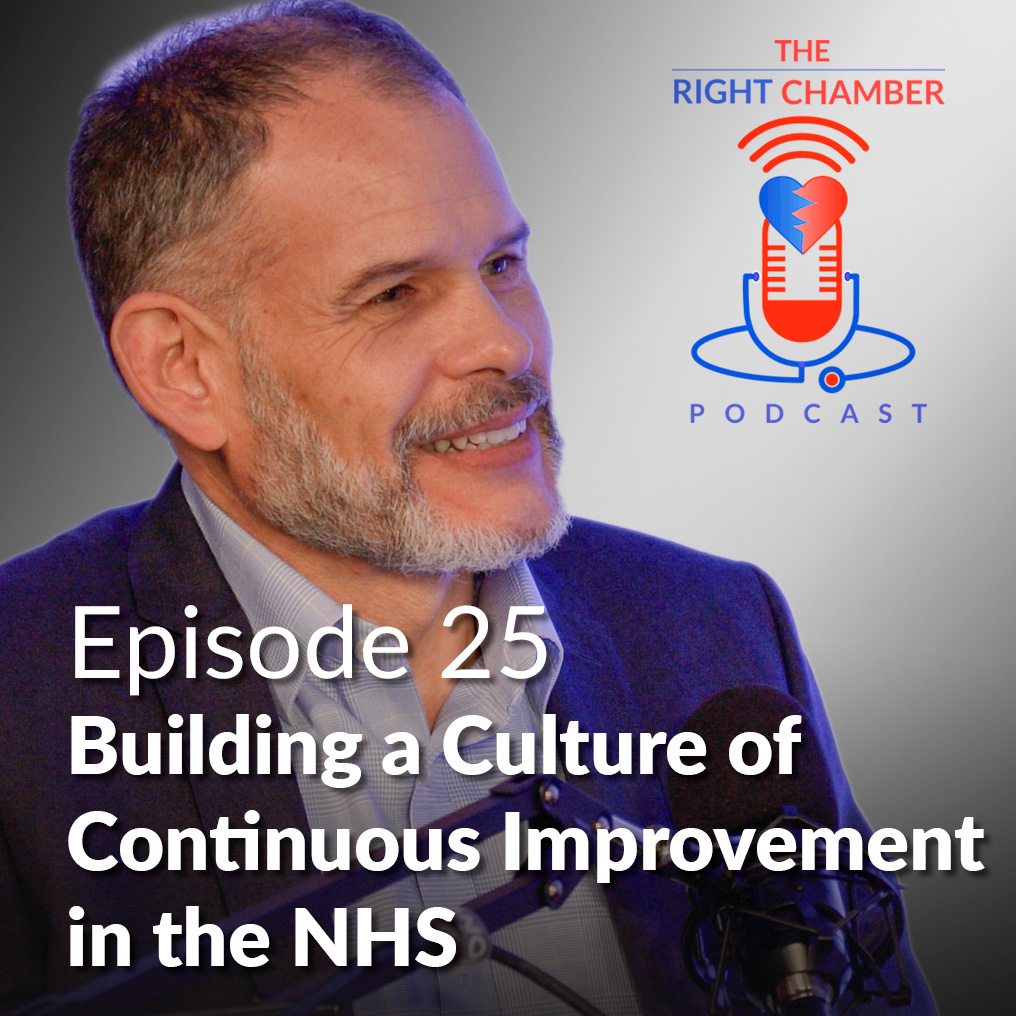
The Right Chamber E25 – Building a Culture of Continuous Improvement in the NHS
In this episode of The Right Chamber, hosts Jasprit and Victor sit down with Peter Lowe, Group Director of Improvement across Sandwell & West Birmingham (SWBH) and The Dudley Group. They explore what it really takes to build a culture where every NHS colleague can make care better. Peter traces his 25-year NHS journey from the service desk to Deputy CIO, where he led a £32m digital patient record programme. This involved rolling out bedside tablets for vital signs to speed sepsis recognition and improve outcomes. That experience became the springboard for his next challenge: creating a Trust-wide culture of continuous improvement. What does that look like in practice? Peter breaks it down with refreshing clarity: empowering staff to test ideas, learning visibly from what works (and what doesn’t), and using data to show measurable progress over time. Next, we dig into improvement leadership. The values, habits and day-to-day behaviours that help teams solve problems locally rather than passing everything up the line. Then, you’ll hear why psychological safety is non-negotiable, how to shift from autopilot reactions to scientific thinking, and why small, iterative changes beat big, intimidating plans. Peter shares practical examples of turning “firefighting” into focused improvement. He also covers how autonomy, mastery and purpose can unlock motivation across 14,000+ staff. Whether you work clinical or non-clinical areas, or you’re simply curious about the people behind the NHS, this conversation offers tools, mindset shifts, and stories you can start using tomorrow. Every NHS colleague can make care better. Get involved / training & support (CPD-accredited): • [email protected] • [email protected] If you enjoyed this episode, please like, comment, share, and subscribe for more real stories from inside the NHS. Follow us on Instagram and TikTok, and subscribe to us on YouTube for exclusive content and updates. #nhs #podcast #conversationsthatmatter #improvement #continuousimprovement #russellshallhospital #dudley #blackcountry #healthcare #NHSpodcasts