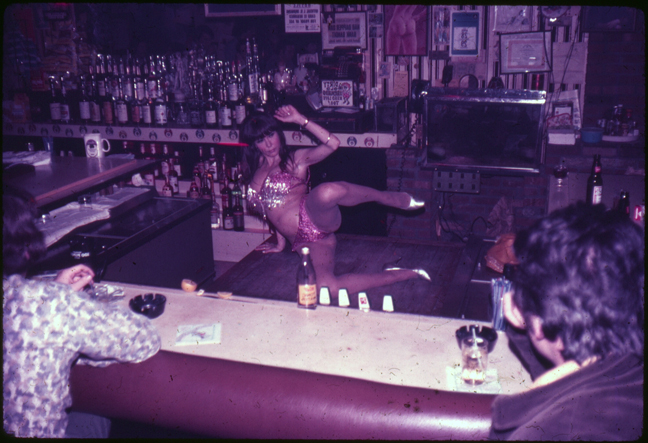
The Search for Pat Barrington: A Tale of Murder, Sex, and Dance – Podcast 94
Audio is streamed directly from the publisher (traffic.libsyn.com) as published in their RSS feed. Play Podcasts does not host this file. Rights-holders can request removal through the copyright & takedown page.
Show Notes
Ashley West of The Rialto Report writes:
I’ve always loved Pat Barrington. And if you know who she is, I’m pretty sure you do too.
If you’ve never heard of her, Pat was big in the 1960s, when she was a popular actress, model and stripper. She was a stunning and statuesque woman, a mess of high cheekbones, flashing dark eyes, and long limbs. And somehow she managed to look different every time you saw her. She could be dark haired, a redhead, or a bleach blonde. She could look seductive or matronly, playfully sexual or innocent. Actually not so much innocent. Pat Barrington looked like sin on fire. And she had a great screen presence too without even being a great actor.
So who was Pat Barrington? About the only thing anyone knew for certain was that Pat had a short film career in the 1960s. Over a five-year period, she made memorable appearances in films by cult filmmakers like Russ Meyer, Ed Wood, Bill Rotsler, Harry Novak and others. She also appeared on television in the series The Man From U.N.C.L.E. and got a part in a big budget film Marlowe (1969) starring James Garner.
And then in 1969, after her last appearance in front of a movie camera, she disappeared from public view, and became this mysterious and elusive figure. I tried tracking her down for over 20 years but had no success. No one seemed to even know much about her. Old movie friends remembered her beauty and professionalism, but they all drew a blank when I asked them the big, burning questions: where did Pat Barrington come from, and where did she go? Sure, I found a few details about her, but much of it seemed contradictory. For example, I stopped counting the number of different names she used, not to mention the conflicting birth dates she claimed.
And that was about it. I could never find out much more than that.
And then, in 2013, I made a breakthrough, and I was able to write a profile of her entire life for The Rialto Report website. It was a wild tale of sexploitation films, a serial killer, go-go dancing, sexual assault, Hollywood, nude modeling, Sam Fuller, Lenny Bruce, Robert Mitchum, and much more.
But a few weeks after I posted the story online, I withdrew it – amidst threats of violence, involving an aging mobster and a boyfriend who were both unhappy that Pat’s story had finally been told.
Now five years later, I want to tell what happened – not only the fascinating life of Pat Barrington herself, but also the story behind the search for her.
This is what happened.
This podcast is 71 miniutes.
The music playlist for this episode can be found on Spotify.
_______________________________________________________________________________________________
Pat Barrington: Prologue (2015)
In 2013, I got a call from someone I didn’t know. He said he was a fan of The Rialto Report, and he said he had a story idea for us. You see, he had a friend called Robert who was living with a lady called Camille, Camille Grant to give her her full name. Now Camille was in her late 70s, but she’d been a stripper for most of her life. This guy on the phone said she’d be a good subject for a profile.
I explained that at The Rialto Report we’re mainly interested in people who’d worked in the adult film industry during the 1960s, 70s or 80s.
But the voice at the other end of the line told me that in fact Camille had been a film star in the 1960s – except she’d used a different name – she used to be known as Pat Barrington. Pat, or rather Camille, was now retired and living in Florida. Was I still interested in contacting her?
There was only one problem, he said. And that was Camille herself. She’d had a wild life, and she wasn’t sure if she wanted anyone to know about it. In fact, she was pretty secretive.
I said that of course I was interested in speaking to her, but after that, the trail went completely cold and I didn’t hear back from the caller, or from Camille’s boyfriend Robert, or from Camille herself.
A year or so later, I tried to make contact with Camille again. This time I got a call back. It was Robert, Camille’s boyfriend, who had sad news to share. Camille had passed away just a couple of months before in September 2014.
Robert was still devastated by her loss, but something else was upsetting him too. He kept repeating that he didn’t think that he really ever knew her. Sure he’d lived with Camille for the last four decades of her life – but now he’d started questioning who she really was, and what she’d done before meeting him. Robert told me that Camille had always been secretive about her past ever since they’d first met. He paid little attention to it, and never pressed her.
But after Camille’s passing, Robert had to clear out Camille’s closet – and that’s where he came across boxes and boxes of items relating to her life. And it was life that he knew nothing about.
It was an overwhelming collection. Hundreds of photos, letters, calendars, address books, notes, contracts, business cards, legal documents, diaries and much more. The earliest items were from the 1930s, the most recent were from 2014. Many of the items were in poor condition, damaged by heat, humidity or rodents.
It’s unlikely that anyone had ever seen this collection – apart from Camille herself. The boxes had been sealed and stored for years. Robert himself had never even known of its existence.
And the life story these items revealed was remarkable. Way more than just the average story of an actress or a dancer.
I suggested to Robert that we try and piece together Camille’s life – from all these personal effects and possessions that she’d left behind. Robert liked the idea, and he invited me down to Florida to go through the material with him – so I did.
When I met Robert in person, I found him to be a friendly guy, and happy to have someone else interested in Camille’s life. He was in his mid 50s, so he’d been considerably younger than Camille, but his health was in bad shape. In fact, he could hardly walk because of the amputation of various toes as a result of diabetes, and he seemed to cough up a storm every few minutes. He’d had a colorful past too – which included several arrests for drink driving, and one more recent bust for threatening a stranger with a gun who’d done something to piss him off. I asked him what happened and he just said that he’d been depressed since Camille had passed, and that made him act irrationally.
It was a hot day in Florida when we got together. We sat in the yard, surrounded by the boxes that Robert had discovered, and we sweated bullets. Even the dogs were too hot to sit outside with us.
Sifting through it all isn’t easy for Robert. Looking through the photos brings back memories, and her absence is still painful.
I wondered if she ever talked about her past to anyone?
She told some people once, Robert admits. But their reaction ranged from incredulity to ridicule at the idea that she’d once starred in films. Camille was upset that people found the idea so unbelievable, so she didn’t bring it up after that. She just kept it to herself.
I ask Robert what Camille might think if she could see us leafing through these piles of her photos.
“She wouldn’t be too happy”, he smiles. “She was private, and there was a lot in her life she wanted to keep to herself.”
“So are we doing the right thing by telling her story?” I ask.
1. Beginnings (1939 – 1956)
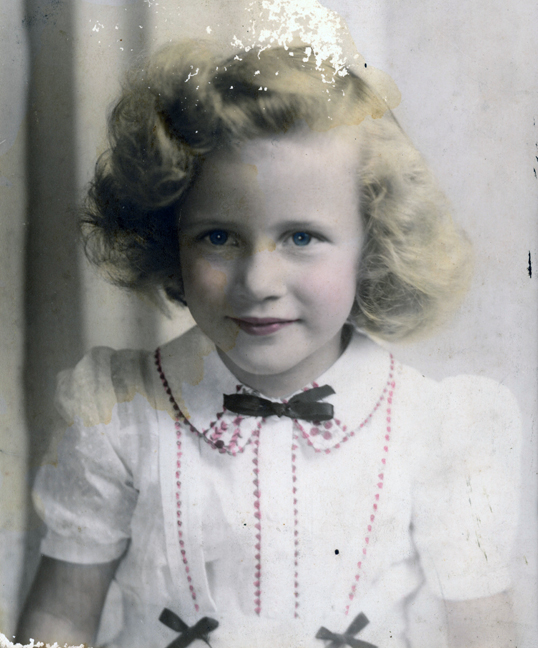 Camille was born Patricia Annette Bray in Charlotte, NC on October 16th 1939.
Her mother, Willie Jo Bray, fooled around with a local man, Claude Weidenhause, and became pregnant at 16. Claude was 29 and according to reports it was a scandal. By the time Patty was born, Claude was long gone. She never met her birth father but forever romanticized the idea of him. She never stopped asking people about him and followed his life as a horse trainer from a distance.
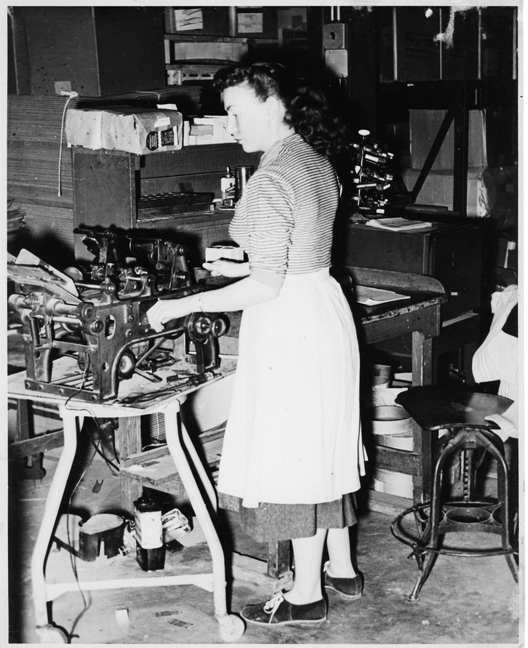 Predictably Willie Jo struggled to make ends meet. She worked as a machinist and when Patty was two, they moved to Richmond, Virginia, where she married Eugene Lee Barringer. For a time life was good, and Patty had the father she wanted. She took his name, was happy, and did well in school. But the marriage was short-lived, and by the time Patty was a teenager, Willie Jo and her had moved again and they were living in Hyattsville, Maryland. Patty’s 1956 school book from Northwestern High School shows a picture of her smiling shyly, bearing a new surname, Patty Gossett.
Willie Jo had married again – this time to an abusive, ex-marine with post traumatic stress syndrome and a steel plate in his head. Any hopes of a stable home life were gone as her new stepfather started abusing Patty. Her relationship with Willie Jo was already fraught, and this pushed it over the edge. Unable to share what was going on with her mother, Patty left home after her sophomore year in school and never went back.
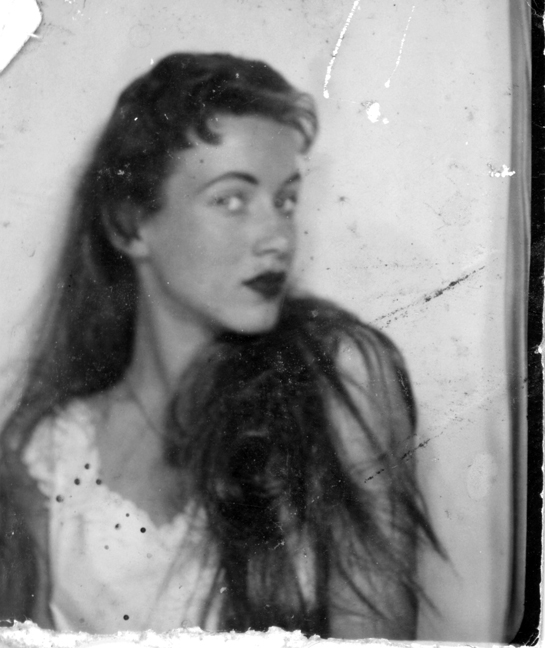
2. The Mobster and the Serial Killer (1957 – 1961)
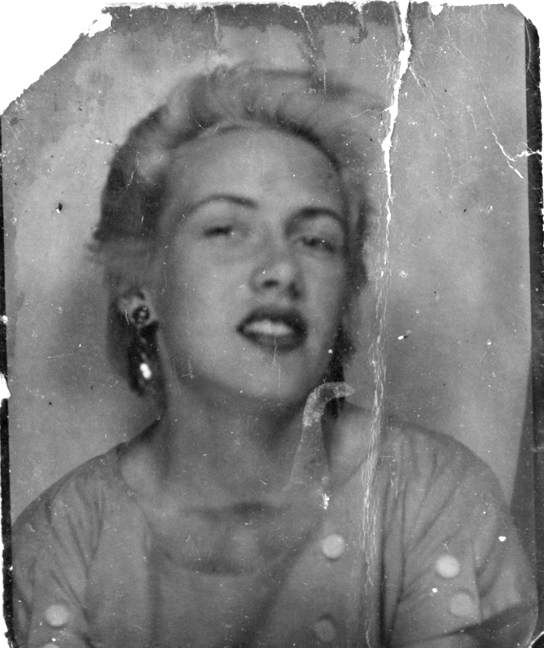 Patty had been popular in school, but had few friends outside. Her closest ally was an Italian American she hung out with called Bob. Bob had moved to Baltimore, and encouraged her to move there too, where they started dating. He was involved in the local numbers racket, an illegal inner-city lottery where a bettor attempts to pick three digits to match those drawn randomly the following day. Bob employed Patty as a runner, carrying the money and betting slips between the neighborhood bars where bets were placed and Bob’s headquarters.
Their romance didn’t last long but Bob remained in her life for the next 50 years. He was connected and this would prove useful to get Patty out of sticky situations in the future. Bob the mobster became her guardian angel, a quick phone call to him would fix problems with any nuisance that she had. She referred to him affectionately as ‘that guy’.
Keen to get some stability into her life, Patty got married for the first time in the late 1950s, but rather than make things better, it was a disaster from the start. Verbal abuse turned into physical violence. Bob wouldn’t help as he and his associates wouldn’t intervene in domestic conflict, so she packed up and moved out without leaving a forwarding address.
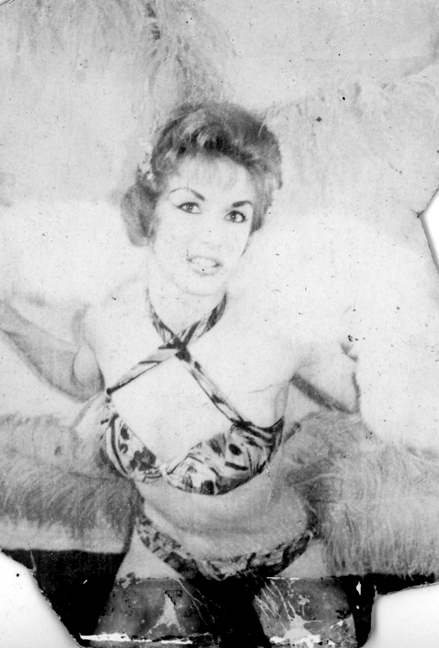 Patty needed a source of income, so Bob fixed her up as an exotic dancer in Baltimore. The money offered was good and would make her independent for the first time – but she was crippled by nerves at the idea of dancing in front of a crowd of men. She had few options though, so gave herself the stage name ‘Vivian Storm’ and went to work. The first time was tough, and it didn’t get any easier. The only way she could calm her nerves enough to perform was to drink beforehand.
Socially Patty was happier. She was gregarious, outgoing and happy go lucky, mixing with the new people she came across in her new life. As Vivian Storm she started dancing in Washington, D.C. too and became friends with celebrities, politicians, club owners, artists and musicians.
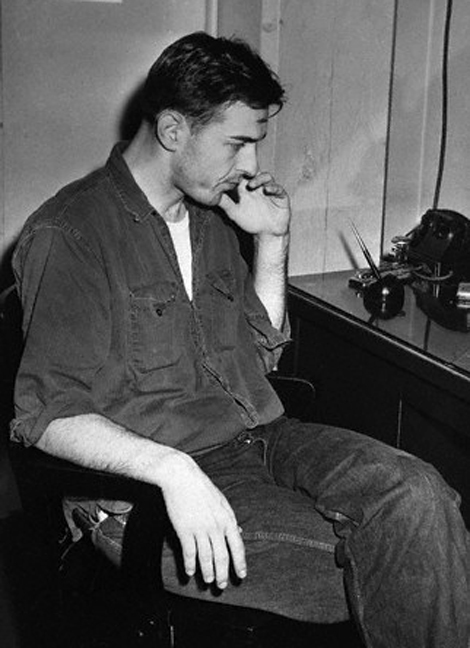 One jazz musician caught her eye; Melvin Rees was a good-looking and talented saxophone, piano, and clarinet player. He was well known around the D.C. area, playing at the most prestigious local jazz clubs. Patty and Melvin hit it off and she moved into his Hyattsville, Maryland pad in 1959. She was still married and carrying her husband’s name, Routt, so she adopted Melvin’s name and started to refer to herself as ‘Pat Rees’ to avoid unwanted gossip.
Their relationship worked well. They supported each other, working nights and meeting back at home in the early hours. Melvin was quiet and attentive, his only vice being the amphetamines he’d take to keep himself awake all night when playing in the clubs. After the abuse at the hands of her stepfather and in her failed marriage, Pat was finally in a good relationship with an equal and caring partner.
Or so she thought.
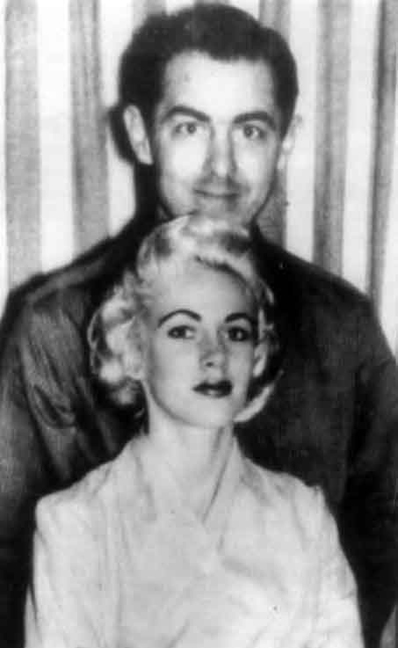 Melvin Rees and Pat
In 1960, Melvin took a temporary job working at a piano shop in West Memphis, Arkansas. Pat moved south with him dancing at local clubs in town there. Then one day they were woken by cops who arrested Melvin on suspicion of murder.
The charges related back to June 1957, when a woman called Margaret Harold had been shot and killed while out for a drive with her boyfriend near Annapolis, Maryland. The boyfriend had escaped on foot and called police, only to return to find Margaret’s body had been raped in death.
Then early in 1959, the Jacksons, a family of four, was driving home along a dirt road in Virginia, when they were forced to stop and abducted at gunpoint. Their bodies were found months later, the mother’s body had been brutally raped.
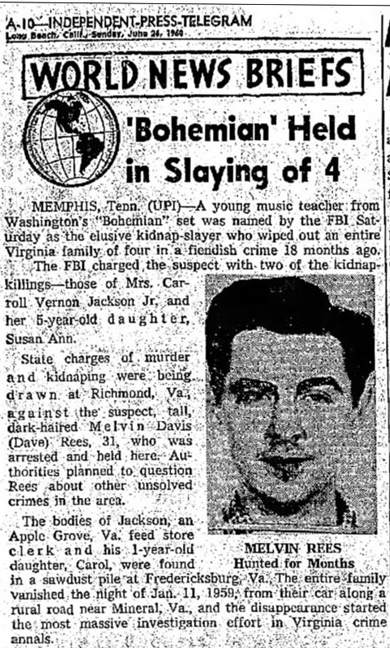 Investigators believed that the same killer had committed both sets of murders. Sensing a serial killer story, the media jumped on the story of the ‘The Sex Beast’. Tips began to pour in, and although most of them were worthless, one pointed authorities towards Melvin Rees. FBI agents searched Melvin and Pat’s Hyattsville home, and found a .38 gun inside Melvin’s instrument case.
More damning however was a newspaper article in amongst Norman’s affairs. It was about the murder of the Jacksons. Attached to it was a note in Melvin’s handwriting in which he described his crimes in detail. Detectives then found evidence that linked him to the sexually-motivated slayings of four other young women in the Maryland area as well.
Pat was in a tailspin. She refused to believe that Melvin had anything to do with the crimes. He was a gentle, loving man who’d never laid a finger on her. She was joined by Melvin’s parents, and together they mounted an impassioned public defense.
In February 1961, Melvin was tried and convicted for the murder of Margaret Harold. Pat was devastated. She had seen the evidence like everyone else, and despite his adamant denials, the case against him was a compelling one.
Seven months later, in September 1961, he stood trial for the murders of the Jackson family, and this time Pat was called to testify. Hearing Pat remember this experience in later years, it was clear that it was a life-changing event for her. Her faith in Melvin was beginning to crack. She was conflicted, exhausted, and bewildered. She still claimed she knew nothing about his crimes. There had been no tell-tale signs, no clues that he had a violent, murderous streak. Terrified of betraying him and condemning him to the electric chair, Pat collapsed mentally and had a nervous breakdown.
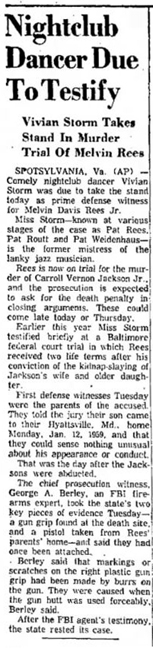
She did her best on the stand, but Melvin was convicted again and sentenced to death.
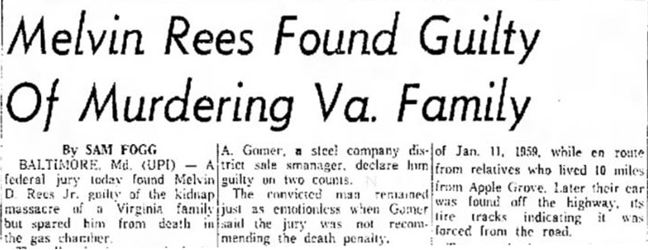
Devastated, Pat never saw him again. His sentence was commuted to life imprisonment in 1972, and he continued to protest his innocence until 1985 when he gave a tell-all interview finally admitting his crimes. He died in prison from heart failure in 1995.
As for Pat, the events of 1960/61 had changed her forever. She was now a frightened, nervous woman, unable to trust people in the same way again.
3. Hollywood (1962 – 1965)
For months after the trial, Pat’s nerves were frayed. She feared for her sanity if she stayed in Baltimore. Bob, her old mobster friend, suggested a fresh break and a move out to Los Angeles. He told her that dancing was more lucrative there. She’d make better money, and with her good looks, there was always the chance she could try out for movie parts.
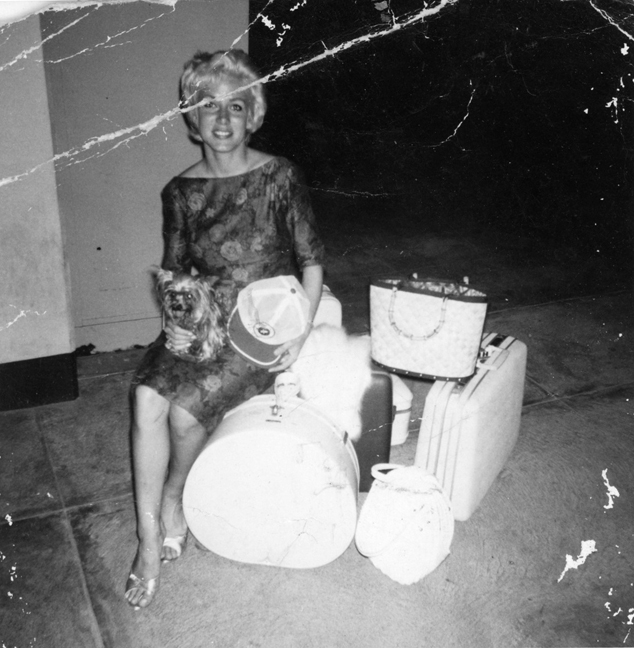 Pat, setting off for Hollywood (c. 1962)
So she headed for Hollywood, changed her name back to Pat Barringer after her first step father, got herself a dancing agent, and started getting gigs around town. She billed herself as ‘Tasha – the Topless Belly Dancer’ and was hired at The Classic Cat, the largest, most prestigious joint in town. The place was run by Alan Wells, a flamboyant and benevolent impresario, who’d turned it into a fashionable celebrity and musician hangout. The best dancers in L.A. all passed through there at one time, including future Russ Meyer favorites, Haji, Kitten Natividad and Sharon Kelly. Pat had breast enlargement surgery which made her even more voluptuous and arresting as a dancer.
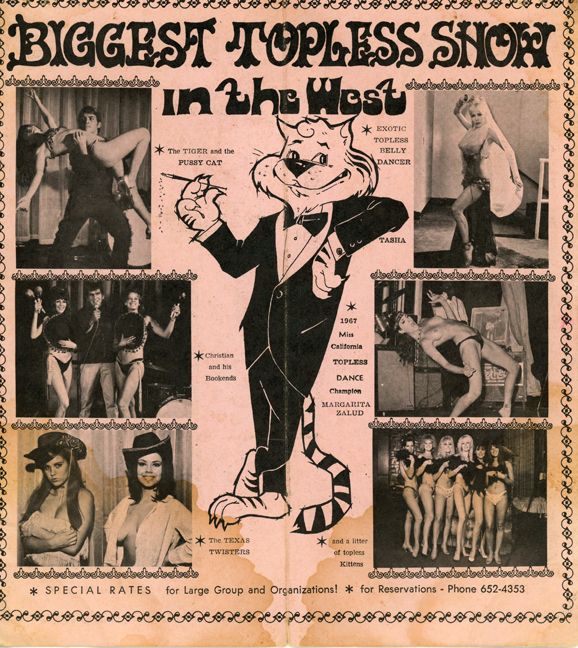 Flyer for the Classic Cat, with Pat featured top right
Alan worked the girls hard at the Cat, but that was fine with Pat who wanted to fill her time and avoid dealing emotionally with the events of Baltimore. She also knew she was young and wanted to make hay while the sun was shining, and so found time to do modeling work as well. She formed a productive relationship with photographer Pete Chiodo, who provided her with an extensive portfolio of headshots and full figure poses. She put together a resume which described her as being 5’2” and 102 pounds, and altered her birth year from 1939 to 1941 – the first of several times she’d change the date.
She shopped her resume around, and was soon as busy during the day as she was at night. She featured in many commercial layouts as well as men’s magazine spreads, often calling herself ‘Vivian Gregg’. In March 1964, she was the centerfold of the first issue of Millionaire magazine, launched to compete with Playboy. The various work paid well and Pat was making enough money to invest in land in northern California.
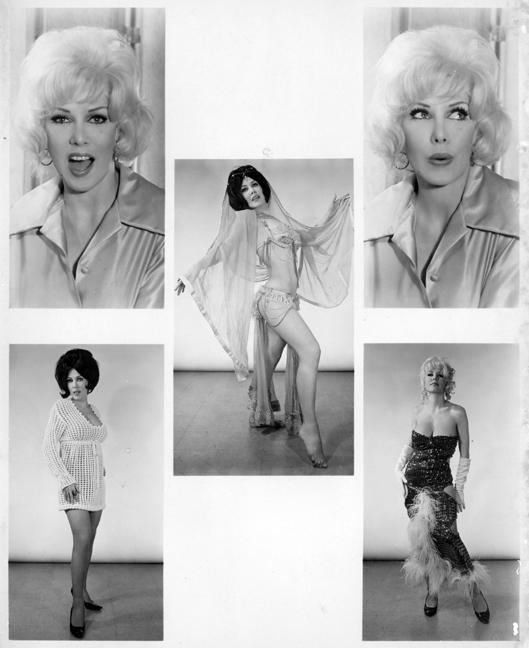
For a short time Pat tried dancing in Las Vegas – but with disastrous consequences. She later claimed that she was kidnapped with a group of other dancers. They’d been drugged with roofies after work one night, and then injected with heroin while they were unconscious. The intention was to make them dependent on smack and then force them into prostitution. She’d heard rumors about this from other girls, but she thought the tales were urban myths. Pat hightailed it back to Los Angeles and steered clear of Vegas after that.
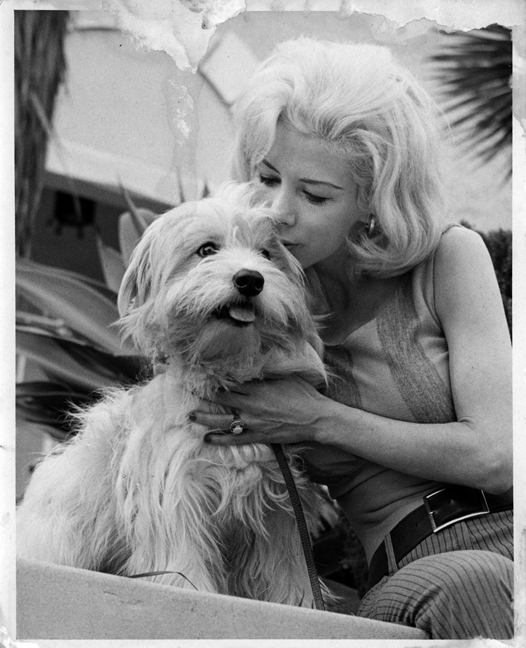 On the surface her personal life appeared settled when she returned to L.A. She loved animals and had a small dog to which she became devoted. She often took the dog along with her on modeling jobs, and many of her modeling photos feature the dog alongside her.
Inside though she battled with the demons from her past. She found it difficult to form lasting relationships, so she dated casually and avoided any meaningful attachments. She preferred to spend her evenings being hired to accompany celebrities to red carpet events, such as openings or premieres, providing some glamorous eye candy for the paparazzi. Partly because of the nocturnal lifestyle and partly because of her inner struggles, her drinking increased. She was more accustomed to being on stage now, but Pat still needed to drink before dancing each night to overcome her nerves.
Some of her short-lived relationships were with well-known figures. She dated Lenny Bruce on and off, his free speech views jiving with her increasingly libertarian views. She danced in Hawaii for a while where she became close to actor Robert Mitchum.
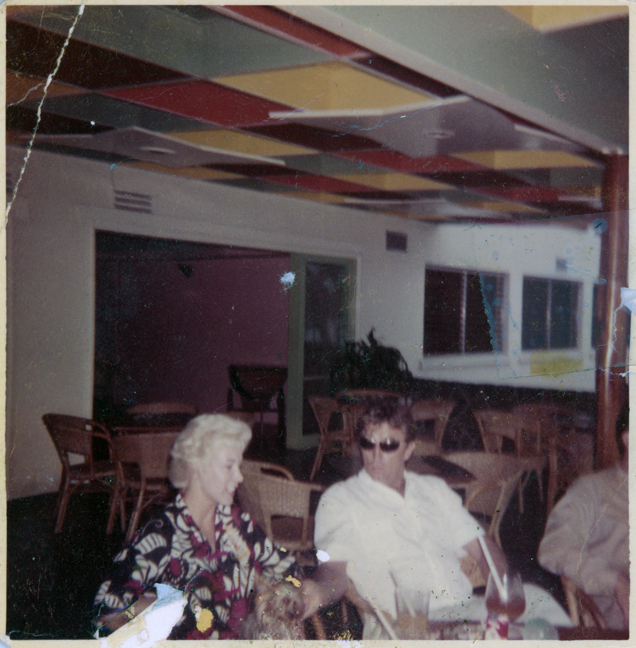 Pat, with Robert Mitchum, Hawaii (mid 1960s)
She had a longer relationship with film director Samuel Fuller. They met at a party – he was 27 years older and had been divorced for a few years. Pat was drawn to his strength and single-mindedness, and remembered his obsession with his wartime memories as an infantryman in Europe in World War Two. He spoke incessantly about his desire to bring this experience to the big screen, and he outlined ideas that would eventually form the basis of his film The Big Red One (1980).
Sam ignited her interest in film so she started to audition for parts wherever she could find them.
4. Films (1965 – 1969)
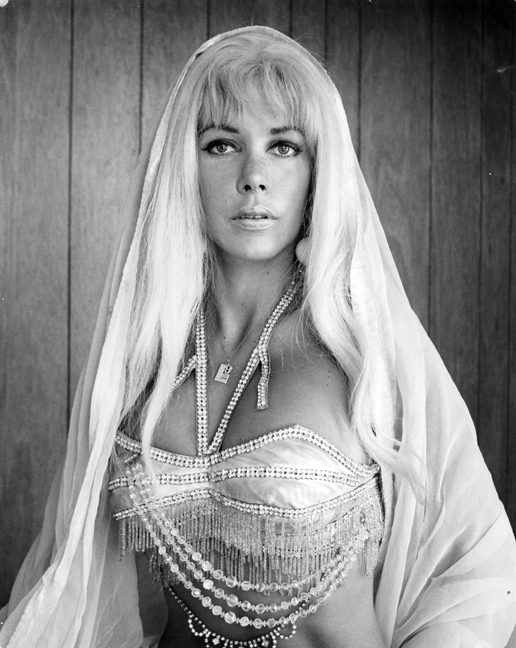
 In 1965, Classic Cat owner Alan Wells recommended that Pat speak to nudie film director Russ Meyer. Meyer was filming a series of color shorts of ‘buxotic’ strippers that he intended linking together into a feature length pseudo documentary to be called Mondo Topless (1966). Pat appeared in several sequences – including a memorable dance climbing up a telephone tower.
In later years, she remembered little of the experience, other than Meyer had got her a SAG card in return for her part in the film. Her SAG card remained one of her proudest possessions for the rest of her life. It also raised her hopes that she could make it as a serious actor.
 Pat, in ‘Mondo Topless’ (1966)
Around the same time, Pat went to a casting call for a low budget erotic horror film, Orgy of the Dead (1965). She was met by Ed Wood who was looking for an actress for the lead role. The fact that she had no acting experience was of little concern to Ed, who hired her immediately. The film was directed by Stephen C. Apostolof, under the alias A. C. Stephen, from a screenplay adapted by Wood himself. Not that there was much storyline; the film was five minutes of plot, and eighty-five minutes of striptease sequences.
Pat liked Ed Wood, though she felt pity for him at the same time. He seemed earnest and harmless, and it was clear that it was easy to take advantage of him. She saw first hand that he was incapable of standing up for himself, and as a result was often ripped off by those around him.
In Orgy of the Dead Pat played the role of a red-haired woman forced to watch dead spirits dance for the Emperor of the Night (played by Criswell from Ed Wood’s earlier Plan 9 From Outer Space (1959)). She was also one of the ten striptease performances – as a blond Gold Girl (inspired by Shirley Eaton in Goldfinger) – which her red-headed character watches dance.
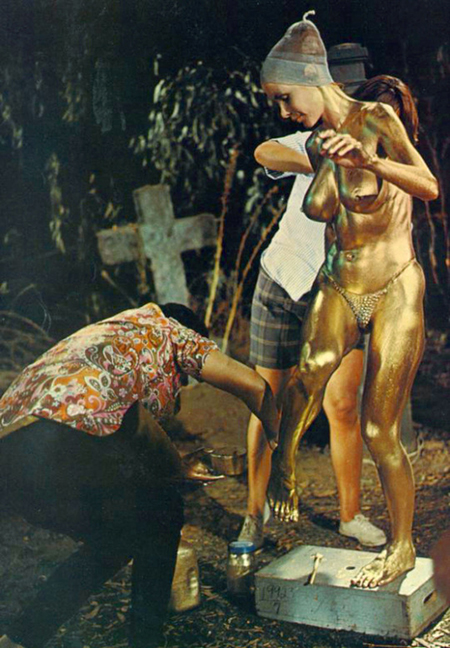 Pat, on set of ‘Orgy of the Dead’ (1965)
On the set of Orgy of the Dead, Pat met Bob Caramico, the film’s cinematographer. They had a whirlwind romance and were briefly married. Bob was well meaning and wanted someone he could take care of. Bob offered her a life of leisure but after the Melvin disaster the idea of losing the independence she’d built up in California frightened Pat. She’d become used to men showering her with gifts, offering her the world, but she wasn’t a gold digger and wasn’t interested in men for their money. She interpreted Bob’s care as being over-protective, and so she walked out and left him.
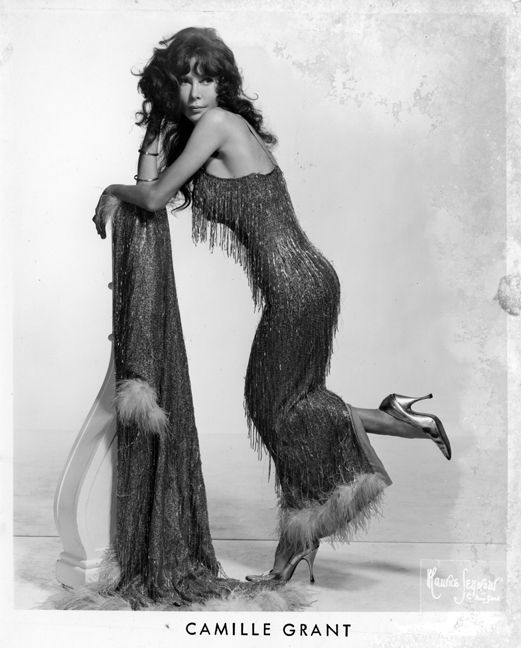
Pat continued to seek acting work to supplement her dancing and modeling. Sam Fuller encouraged her to create a new identity for her acting career and recommended that she change her name. ‘Pat Barringer’ didn’t sound like a star. He gave her the name ‘Camille Grant’ – after his favorite operetta ‘Camille’, and his military hero, Ulysses S. Grant. Pat liked the new name, and though she would sporadically use ‘Pat Barringer’ (or the variant ‘Pat Barrington’) for films, she eventually changed her name legally to Camille Grant.
By now she was getting different offers of film work, and in November 1966 she appeared on television in an episode of the TV series, The Man from U.N.C.L.E. where she performed her exotic dance act.
Camille’s next role was the lead in Bill Rotsler’s Agony of Love (1966), playing a neglected housewife who turns to prostitution, not for the money or the thrills, but just to feel loved and desired. It was the first time she worked with Rotsler and producer Harry Novak, and it proved to be one of her strongest performances.
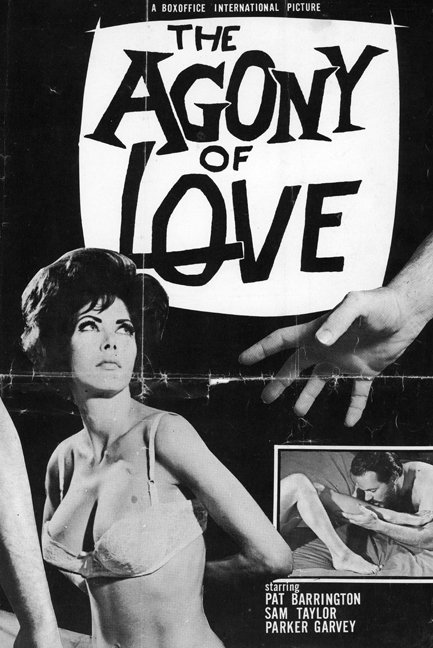
Camille would work for Bill Rotsler several more times, including the successful films The Girl with the Hungry Eyes (1967), Lila (1968), and Shannon’s Women (1969). Her relationship with both Bill and Harry Novak was cordial but not over-friendly. Though only a decade or so older than her, they felt like a completely different generation. Camille was caught up in the vibrant music and club scene of the time, and they seemed an anachronism. She liked acting and dancing, but the simulated sex scenes could make her feel uncomfortable. Being physically intimate in the years after Melvin, especially in front of a room of men filming her, was difficult. Worse still were the lesbian scenes that these guys were always pushing.
She felt more at home with filmmakers like Ed De Priest. Ed shot her in a large number of underground, avant-garde films with his partner Paul Hunt. He went on to work with her in the feature films All the Way Down (1968), Blow the Man Down (1968), and Hedonistic Pleasures (1969). Ed found her to be easy-going and professional, though he remembered a soundman who had a fling with her complained about the number of pets she kept in her apartment.
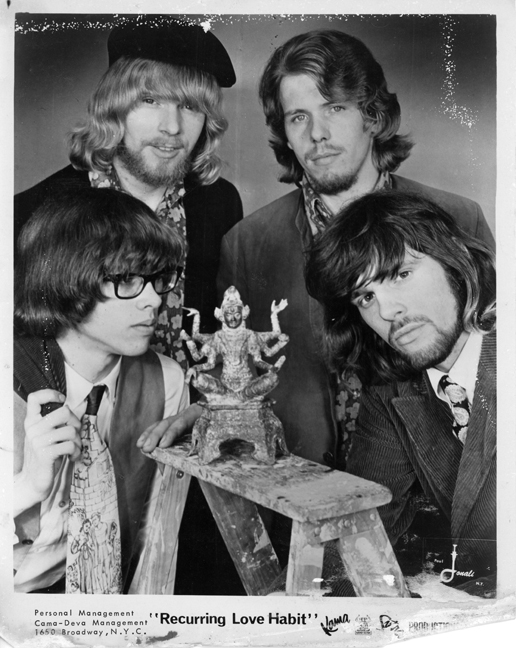 In the late 1960s, Camille met a singer named Romeo (top left in photo). He was in a hippy psychedelic band with his brother called Recurring Love Habit. They had a record contract with Buddah Records and big things were expected. It was an easy relationship for them both. Monogamy wasn’t required and neither demanded much of the other. They were a good-looking couple, and enjoyed living life in the nightclubs of L.A. Money wasn’t a problem either and Camille was doing well enough to buy more land – this time in Jamaica.
She continued to appear in low budget films, but she increasingly saw them as a way into the big time. She hawked her photos around every agency and went on hundreds of auditions to try and break into the mainstream, but with little success. She was too ethnic looking, too voluptuous, or had appeared in too many sexploitation films she was told. Worst of all, she was now older than the other actresses she was up against. Her confidence was rocked. Dancing, acting, and modeling were all she knew. All three depended on her looking young. She struggled with feelings of rejection, and it only got worse as she approached her 30th birthday.
In an effort to roll back the years and compete with the younger women, she opted for plastic surgery. She had money in the bank and this was the last roll of the dice. She found a surgeon in Beverley Hills who assured discretion, and she had a breast lift, lip injections, and an eye job. It was a high end place; once she saw Elvis Presley leaving quietly through the back door as she was going in.
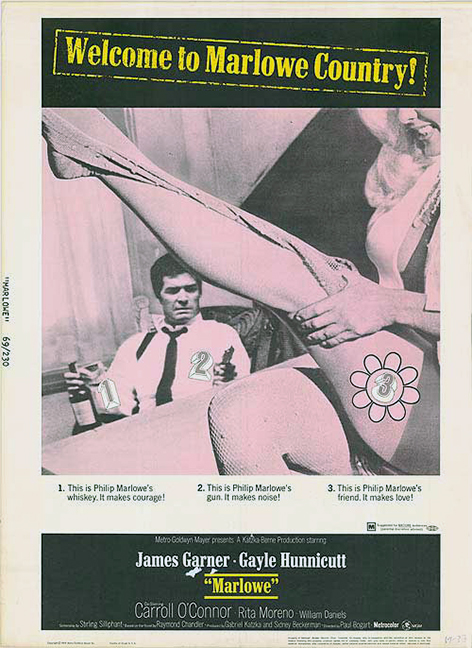 Then she had a break. She was given a part in Marlowe (1969), a big budget adaptation of the Raymond Chandler novel starring James Garner. Sure she was given the usual part of a dancer, but this time it was a character with dialogue that was integral to the story. Convinced it could be her breakthrough, Camille worked hard to make her part as memorable as possible – only to learn that her role was subsequently cut from the final edit.
Her disappointment was tempered by an offer from a French studio to go to Paris and star in a series of films under contract for them. It was exactly what she wanted – except that she wanted it in Hollywood. The fact that it was in France would take her away from Romeo. She’d fallen for him and didn’t want to be apart. She agonized over the decision, but eventually turned it down. She regretted it for the rest of her life.
She was disillusioned with the film industry. Auditions were yielding little, and she felt that her acting career was going nowhere. The only roles she was being offered were increasingly sexual parts in low budget films. Camille decided she’d had enough, and abruptly stopped acting.
Romeo’s music career hadn’t taken off either, so Camille was increasingly providing for him as well. At least she still had the lucrative dancing income. But with her dreams of Hollywood stardom dashed, the allure of Los Angeles was waning too. In 1970, Camille packed many of her belongings into storage in L.A. and together with Romeo, they left the City of Angels and moved to New Jersey.
5. Back on the East Coast (1970 – 1984)
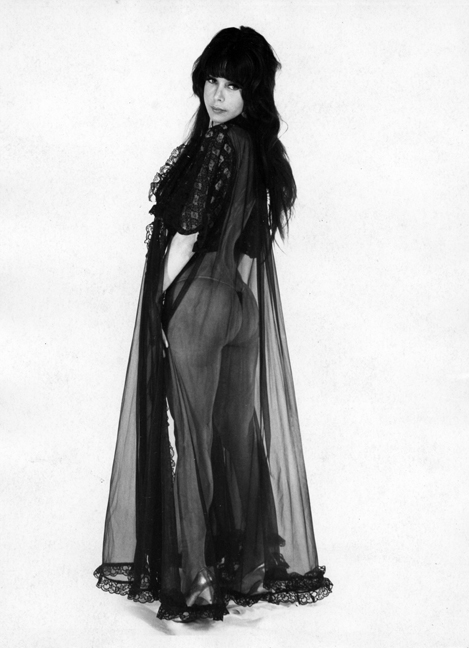
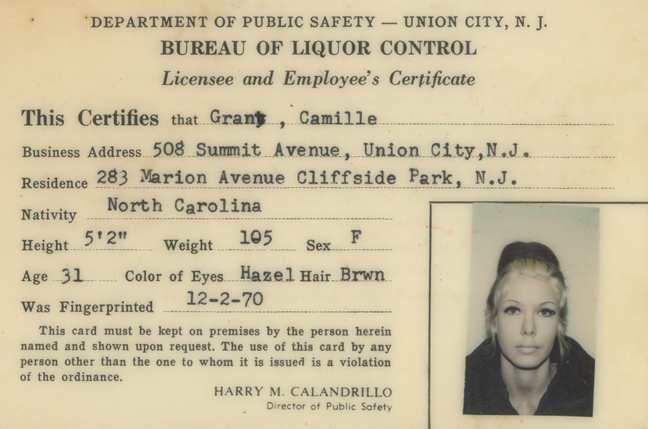 Camille and Romeo settled in Fairview, New Jersey. Initially the idea was for Romeo to pursue his music and for Camille to waitress. She got a bartending license in 1971 but money soon became an issue and they decided that Camille should return to exotic dancing in the clubs. She registered her act as ‘Princess Jajah’ with the American Guild of Variety Artists, and headed to New York to get an agent.
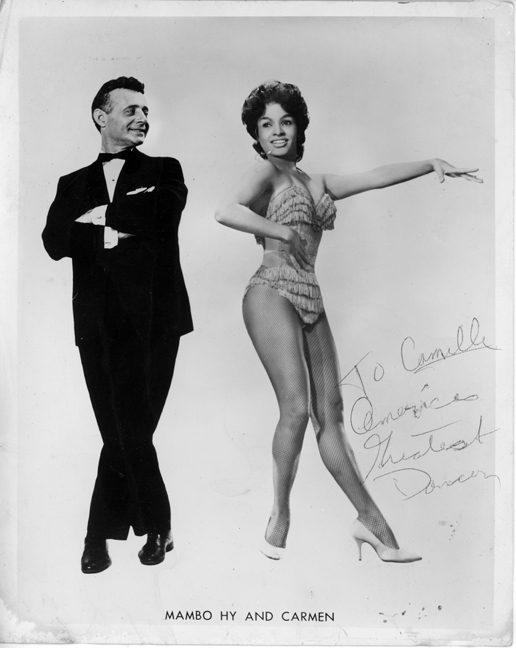 She hooked up with the Mambo-Hy agency, run by Mambo Hy himself – in reality Hyman Balick, an aging former dancer in the bungalow colonies of the old Jewish Catskills. He belonged to the old school, and believed that the dancing girls he represented were artists and should resist disrobing for modern audiences. Not that he was completely old-fashioned; away from the agency he was also a cross dresser, something that he admitted to very few people.
Mambo Hy got Camille work up and down the East Coast. Her act consisted of anything from a Middle Eastern belly dancing act to occasional topless go-go dancing. Her life had come full circle. She was back dancing in some of the same clubs in Washington, DC in which she’d started out over a decade before. Bob the mobster was still around, still helping her if she ever needed an introduction.
It wasn’t an easy life, and much of it was on the road. Occasionally she’d consider a desk job, but she had no formal training doing anything else so the dancing money was always more attractive. And that was important given that Romeo’s music career wasn’t paying the bills and they were both living off Camille’s earnings.