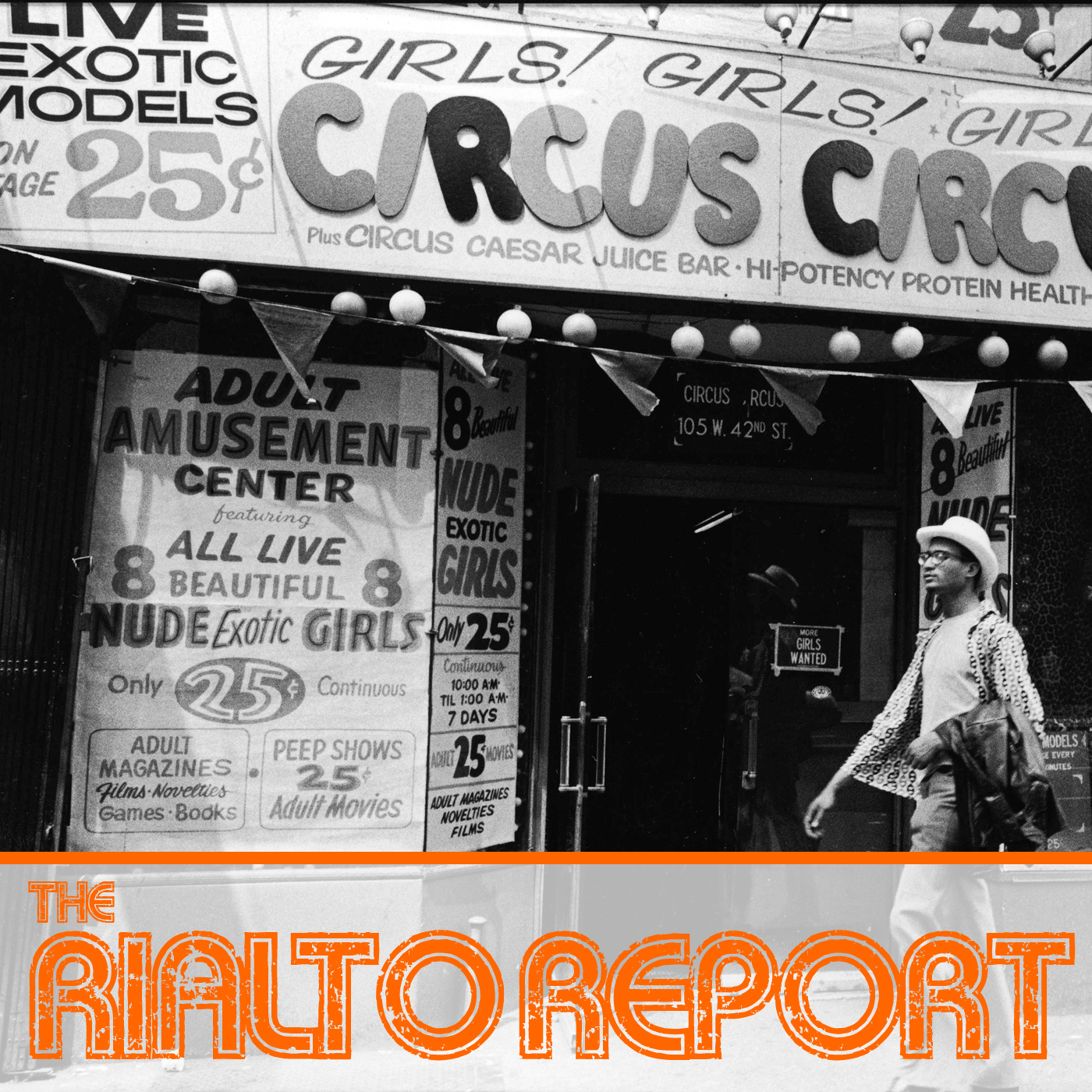
Punk and Porn in New York City – Part 2: Debbie Revenge, The Punk in the Photograph
Audio is streamed directly from the publisher (traffic.libsyn.com) as published in their RSS feed. Play Podcasts does not host this file. Rights-holders can request removal through the copyright & takedown page.
Show Notes
New York. Mid-1970s. A new counter-cultural scene emerged. Punk was marked by attitude, antagonism, and angry, anarchic music. It attracted a new breed of musician and fan. Non-conforming, anti-authoritarian. It expressed itself visually in provocative new ways. Ripped T-shirts, leather jackets, Dr. Martens boots, and spiked mohawks. Overnight, punk caused a jagged splash across mainstream America.
The media couldn’t get enough of the phenomenon. Snarling, monochromatic photos of the new bands and their followers were splashed across magazines. They looked like stills from a post-apocalyptic film noir. Pouting damaged subjects, a transgressive sexuality, and a seething resentment against the world. The Ramones resembled a feral wolf-pack. Patti Smith, a sullen, androgenous misfit. Richard Hell, a vacant, haunted ghost.
But my favorite photograph from the time didn’t feature anyone famous. It wasn’t even of a band. Just a couple of punk groupies sat on a staircase. The girl in the foreground stares at us. She’s wearing a ripped mini-skirt, fishnets, and a wife-beater with the writing: “Beat Me, Bite Me, Whip Me, Fuck Me.”
But it’s the girl behind her that always caught my attention: silver, skin-tight, spandex pants. Cropped blonde hair, and a leather jacket opened to show a bare chest. She expresses no interest in the camera, but looks at the other girl with a combination of arousal and sadness.

For years, I wondered about this girl: who was she? What was her story? I found more pictures of her, and learned that her name lived up to expectations: she was Debbie Revenge. Part of a gang called the Revenge Girls. They ran a legendary punk clothing shop called Revenge in the East Village. They claimed to be the first punks to have colored and shaved hair, they turned up to every punk show, and kept pet tarantulas in a fish tank.
I learned that Debbie was also an adult film performer. In fact, she had two separate adult film careers. The first, as a punk in New York, the second fifteen years later in Los Angeles. When I came across pictures from her west coast films, I noticed a big difference. Gone was the young, pouting girl in the photograph. Debbie looked much older, ill, and strung out. It was striking and disturbing. What had happened to the girl in the photograph?
I tracked Debbie down – and heard her story. A remarkable journey from being a heroin-addicted underage prostitute in Times Square to her role in New York’s punk music scene, and what happened after that.
This is the story of Debbie Revenge.
This episode running time is 91 minutes.
————————————————————————————————–
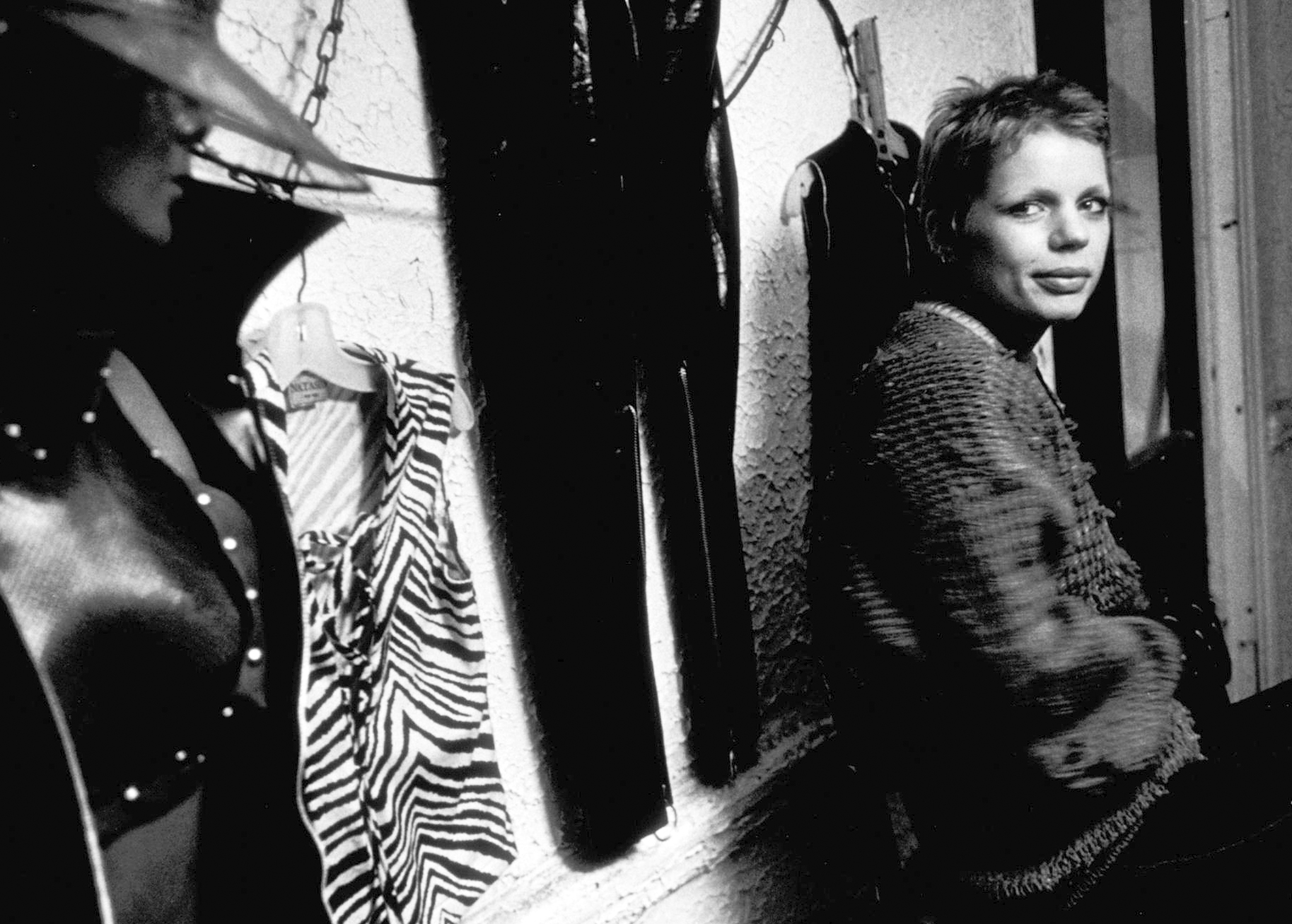
Debbie Revenge: Photos
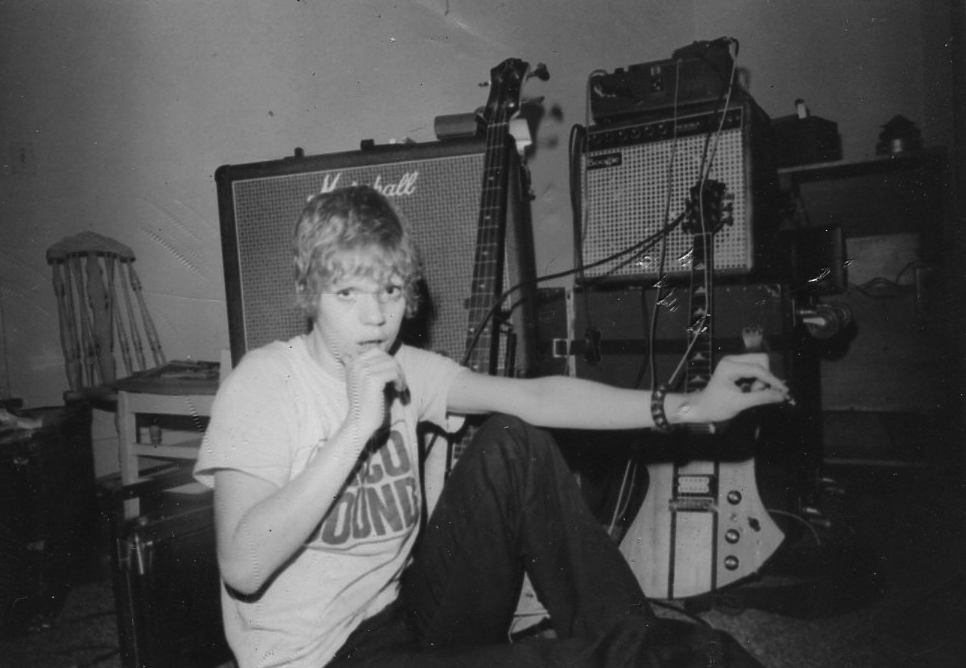
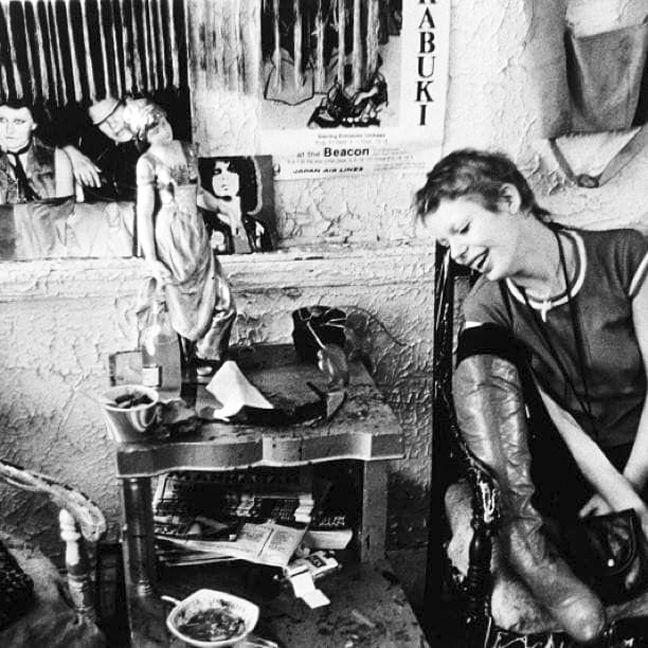
 photo by Rich Verdi
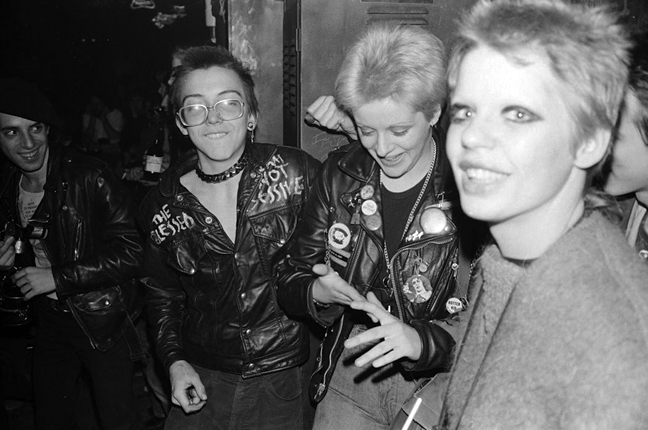 photos by Rich Verdi
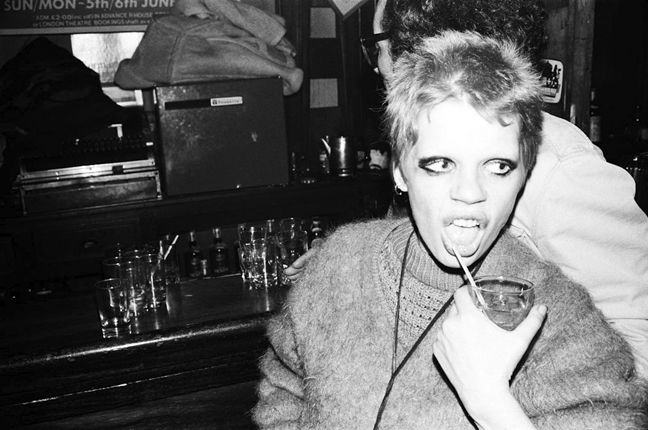
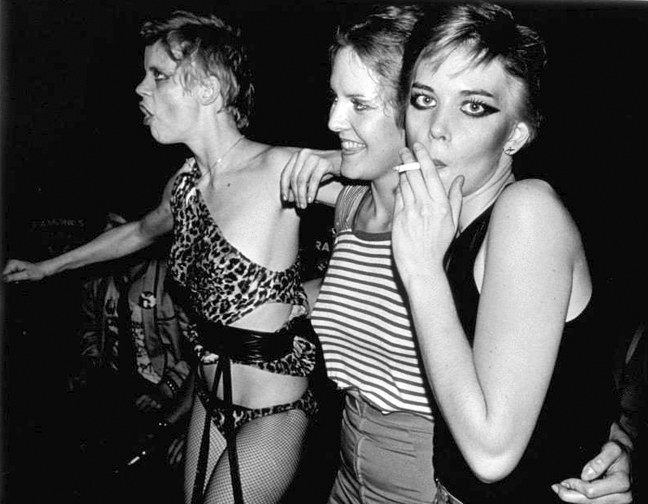

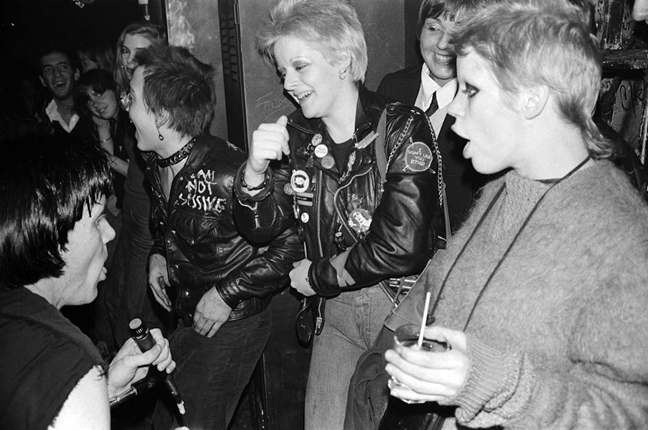


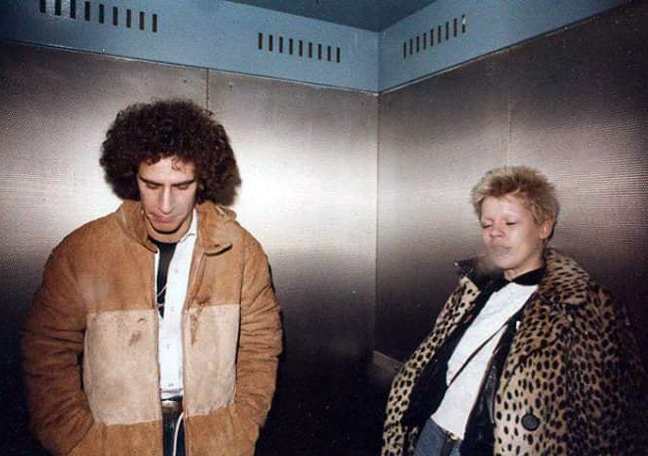
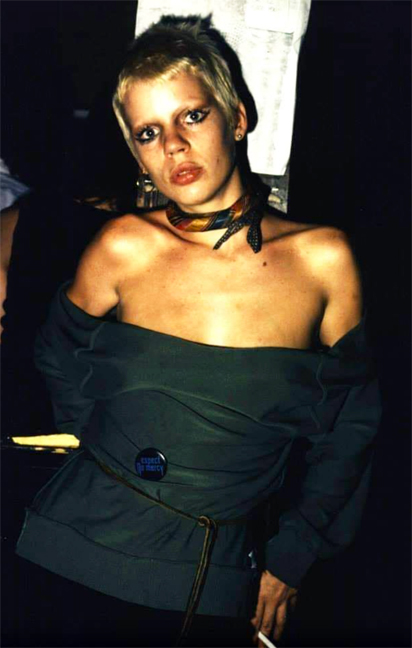
 Listening to Stiv Bator, photo by Eileen Polk
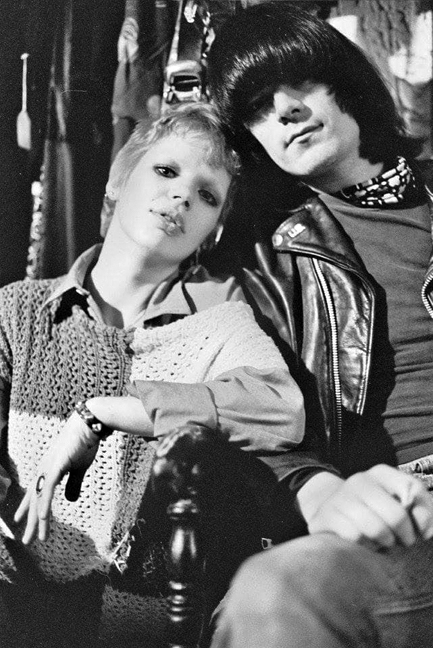 with Dee Dee Ramone
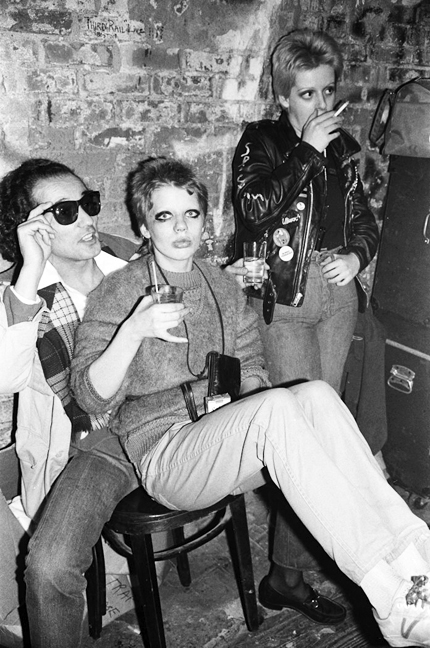 photos by Rich Verdi
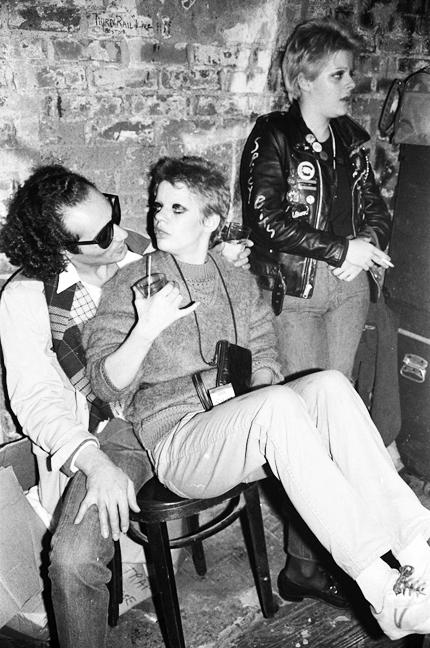

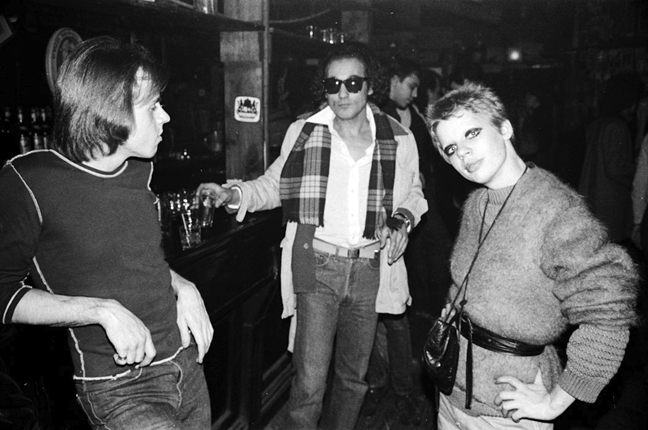 photos by Rich Verdi
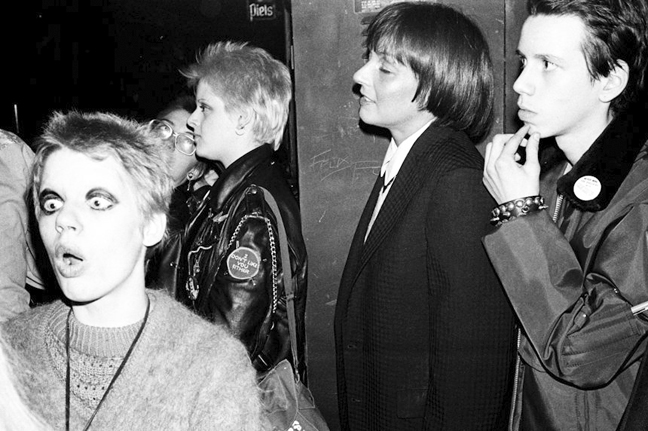

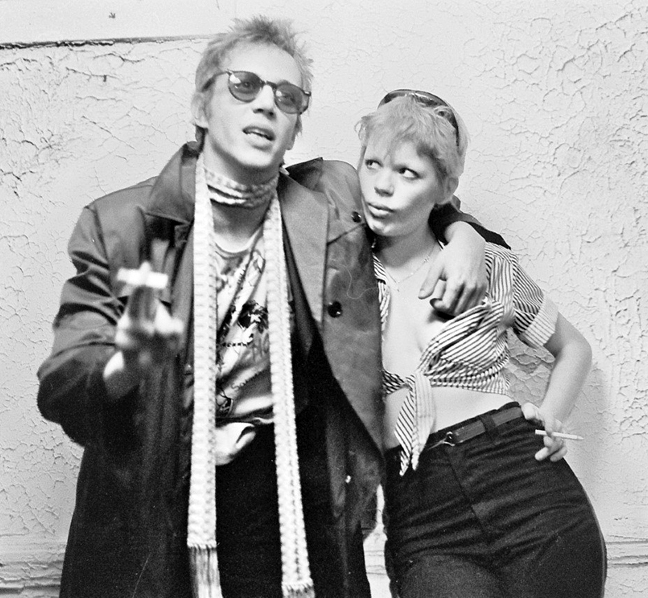 with Richard Hell, photo by Eileen Polk
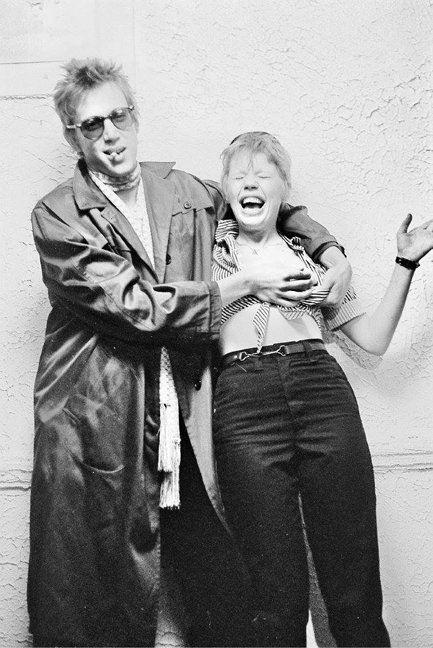
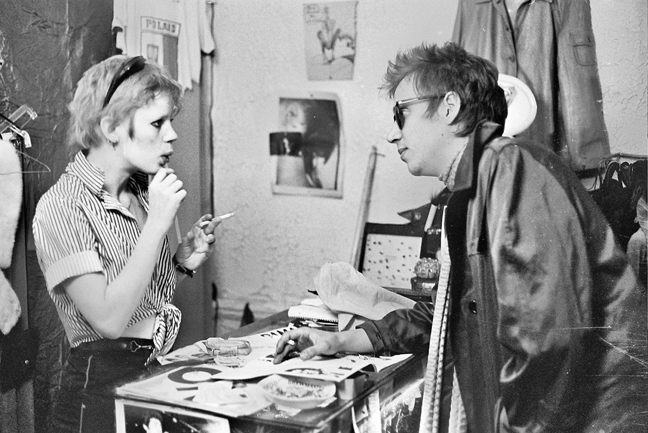
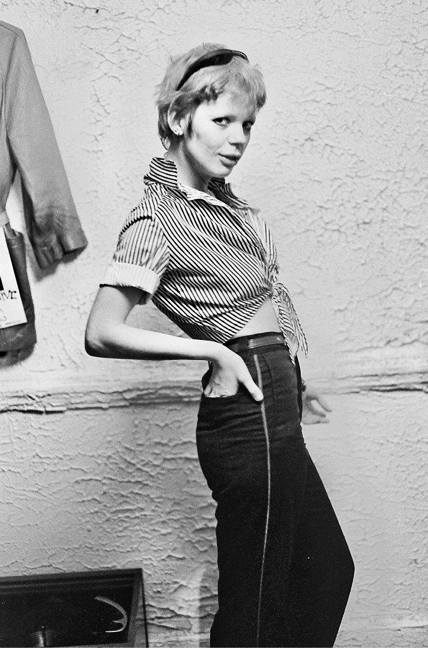 photo by Eileen Polk
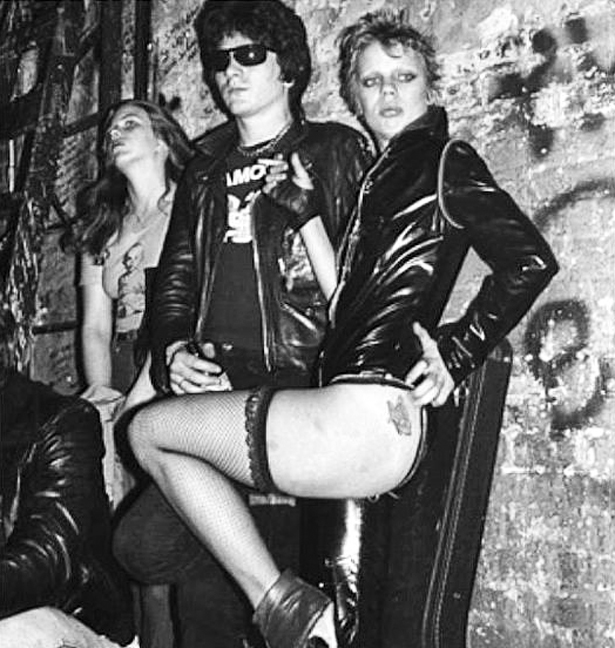
Revenge clothing store featured in Carter Steven’s film Punk Rock! (1977)
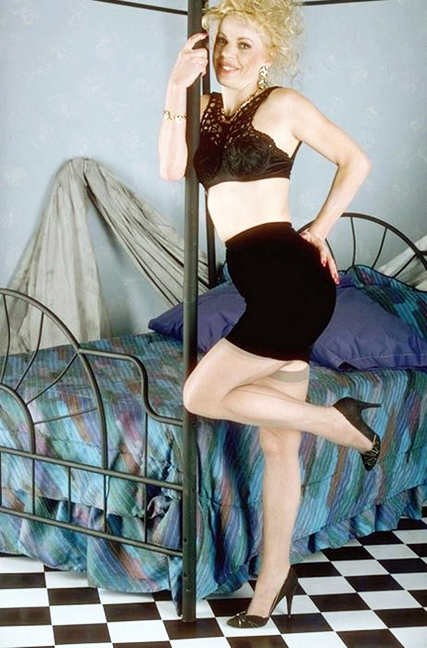 as Debette

*
The Fifth Season
In our exclusive interview podcast with Debbie Revenge, she talks about working at ‘The Fifth Season’, a legendary gentleman’s club / brothel operating in New York in the 1960s and 70s. Here is a bonus article about the venue, first published in the July 9, 1973 issue of New York Magazine.
An Evening in the Nude With Gay Talese
By Aaron Latham
Gay Talese and his party crowded into an old Ford and headed across town. The car bounced and rattled like the one in which Gay had first discovered sex long ago in high school. But this car was different in one crucial respect. His back seat was missing. No matter. Gay had long since outgrown back-seat grappling as well as many other small-town sexual practices. He now knew fancier places to undress in. We were on our way to one of them.
Love in this car would have been torture—just riding in back was bad enough. Three of us squatted side by side on the car floor, like the monkeys who were blind, deaf, and dumb to evil. I felt a high-school-dance nervousness. I wondered how I would look. I was not at all sure that I would know the right steps. When we reached The Fifth Season at 315 West 57th Street, we all staggered out of the car. As we walked toward the nudist health spa, my knees, which had been cramped during the ride, felt weak.
We squeezed into an elevator and rode it down to the basement, where we filed down a long Freudian corridor. There were six of us in all: Gay was there with a girl named Janet whom he had met at George Plimpton’s Paris Review party four days earlier. I was with Sally Keil, who has been my girlfriend for the past two years. Gay had also invited a massage parlor manager named Stephan Weisenberger and a masseuse named Amy. At the end of the hall, Gay used his membership key to open a door behind which lay a brave nude world.
We all marched into a coed locker room. Amy, whose profession was taking off her clothes, was the first one to get undressed. Talese was almost as fast. The son of a tailor, Gay loves clothes, but he also loves to take them off. He slipped out of his cut-in tweed jacket, his turtleneck, his tweed trousers, and his jockey shorts. His 41-year-old body was in good shape. The rest of us watched Gay and Amy closely, as if to learn how to disrobe; then we haltingly followed their example.
We all wrapped towels around our waists and Gay led the way to the swimming pool. Amy shed her towel almost immediately and—wearing only a cigarette—walked up to a huddle of toweled men and asked them for a light. They looked as startled as Humphrey Bogart did in To Have and Have Not when Lauren Bacall appeared in the doorway of his hotel room with a similar request. Bogie had called Bacall “Slim.” None of the men staring at Amy’s chest called her “Slim.”
After glasses of wine, we all dropped our towels and dived into the heated pool. We played a beach-ball game while overhead a giant mirror ball rotated, reflecting light in every direction, reminding me of my high school’s senior prom. When we got out of the pool, we did not put our towels back on.
Gay led the way into the weight room showing it off proudly to his visitors. I picked up a barbell and found that my knees still felt weak. Amy, not interested in weights, picked up a long phallic cue and joined a game of eightball. Stephan showed Janet, the girl who had come with Gay, how to stand on her head. She toppled over several times but eventually managed to stand erect, her breasts seemingly confused by the reversal of gravity’s demands.
Gay surveyed his upside-down “date” and decided to teach her something more useful than a headstand. When she had removed her clothes, he had discovered that she was getting fat. Gay put her down on a mat and started her doing sit-ups. Hard work had made him famous and hard work could make her thin. Gay Talese still believes in that much of the American Dream. He could shed his clothes and many old practices but he is no more likely to shed his habit of work and self-improvement than the nuns who had once taught him were likely to shed their habits.
Gay, who is genuinely generous, always wants to help people, wants them to better themselves, wants them to succeed. If he is not playing girls’ gym teacher, then he is coaching less polished writers on their craft. His advice to other journalists is similar to the advice he gave Janet: strain for leanness.
When Amy finished her pool game, I wanted to play her, but there was one problem. The game cost a quarter and I did not have any pockets.
Gay, pursuing a cheaper entertainment, took Amy in his arms and they started to two-step, their dance floor bordered by barbells. The puffing fat girl paused in her sit-ups to watch them. Gay pulled Amy very close as the mirror ball spun on its axis.
Gay said, “This is the way we used to do it in high school.”
Amy stopped dancing. She wanted to ask Gay something. The question went back to last summer when he had managed the massage parlor in which she was employed.
“All the time you worked at The Middle Earth, you never came on to me. Why not?” Amy demanded.
Gay said, “It would have been bad for business.”
Amy reached out and took hold of Gay’s penis as calmly as if it had been a pool cue. She was ready to play a new game.
“I’m going to tear it off,” she said.
“I love it. I love it,” he said. “Do it. I have dreams about it. I have fantasies about it.”
Amy continued to tug gently at Gay as if his appendage were thee knob of some reluctant bureau drawer.
Gay kidded, “Next time I work there you can chain me and then whip me.”
Amy said, “I’d hit you with a chair.”
Gay said, “I love chairs, especially Chippendale.”
Amy gave another pull and repeated her threat: “I’m going to tear it off.”
A less specific tug had drawn Gay into massage parlor culture a little over two years before. The initial discovery had come one night when he was walking home from P.J. Clarke’s with his wife, Nan. She had been the first to see the second-floor sign which advertised LIVE NUDE MODELS, and she had known her husband well enough to know that he would see it too and want to go up. She already half-suspected that he might someday write a book about the world he found at the top of the stairs.
Gay not only wanted to go up, he wanted his wife to accompany him. Nan demurred. Gay gave here the keys to their 61st Street brownstone. While she walked home alone, he mounted the steps. Talese came back time and again, and he began thinking more and more bout massage parlors and other embodiments of sexual ferment in the country. The idea of a book about an American Sexual Revolution gripped him and would not let go. It would be an ambitious book, but all Gay Talese’s writing life his ambitions had grown with each project. He had started out doing sports pieces and later features as a reporter for The New York Times. Then he had moved on to become a contributing editor at Esquire, where his profiles of people like Floyd Patterson (“The Loser”), George Plimpton (“Looking for Mr. Hemingway”), Alden Whitman (“Mr. Bad News”, Joe Louis (“The King as a Middle-Aged Man”), and Frank Sinatra (“Frank Sinatra Has a Cold”) may have changed American journalism more than any other work done by any other writer in the past decade. Tom Wolfe and Normal Mailer were more brilliant, more dazzling, more !!!!!!, but for that very reason they could not really be copied. Their techniques without their intelligence became ludicrous. But Talese was different. Other writers could read his Esquire pieces and actually learn from them. He taught hem to shadow their subjects for days or weeks (the way he did), so that in the end it read like a nonfiction short story rather than a newspaper story.
After writing a long series of nonfiction Esquire articles which read like fiction, Talese was ready, by the late sixties, to attempt a nonfiction “novel.” He chose as his subject The New York Times, where he had worked for a decade. The result was The Kingdom and the Power, which sold for 85,000 in hardcover and 250,000 in paperback. Then, searching for a topic even bigger than The Times, he settled on the Mafia. The result was Honor Thy Father—an ironic title since his father did not want him to write about Italians who broke the law—which sold 200,000 in hardcover, 736,000 in Literary Guild and bargain editions, and 2.2-million copies in paperback. Ever since Gay had finished Honor Thy Father, he had been looking for a subject even bigger than organized crime. There could be only one: sex.
Talese discussed the idea with Doubleday. He eventually signed a two-book contract with the company. The first book was to be about sex in America, both in and out of massage parlors; the second was to be about Frank Sinatra. The total price agreed upon for two books was $1.2 million. Talese was paid $200,000 on signing. Doubleday then sold the paperback rights to the sex book to Dell for $700,000. Talese has not yet written one word. (Talese does not know what the new Supreme Court obscenity ruling might do to his plans.)
To research his book on America’s sex change, Gay went to work managing not one but two massage parlors. He served as the day manager at one and as the night manager at the other. Gay defends massage parlors by saying, “It is obviously better to be masturbated by massage girls than to masturbate yourself.”
His day would start about noon, when he would walk over to The Middle Earth, at 51st Street and Third Avenue, and open up. The Middle Earth stands around the corner from the Random House building where Nan Talese works as an editor. While Nan sat her desk on the eleventh floor of a glass-and-steel skyscraper, Gay would sit at this desk on the second floor of a brownstone. While up above Nan flipped through the pages of manuscripts, down below Gay would flip through the pages of a photograph album displaying pictures of the girls he had available. When the customer selected a photo he liked, Gay would call the girl’s name and then ask for $18. The girl chosen would appear and lead the customer into a massage room. Half an hour later, she would say goodbye to the customer, stuff the sheet in a garbage can that served a laundry hamper, and go to the bathroom to wash her hands.
At 7 p.m., Gay would leave The Middle Earth and proceed to his second job at The Secret Life, at 26th Street and Lexington Avenue, where he not only took the customers’ money ($15), but frisked them before he let them have a girl. He twice removed guns from men who had come for massages (one was a policeman). Gay held the guns at the desk until the men were finished with the girls. He did not want his book to turn into an In Cold Blood.
Amy relaxed her grip on Gay. She had been only kidding about wanting to injure him. He had hurt her pride by not making a pass at her at The Middle Earth, but she still considered him a good manager.
Amy said, “I doubt I would have stayed there if it hadn’t been for you.”
Gay, flattered, told her, “I always said you were the star—an Everyman’s Myrna Loy.”
Stephan, the massage parlor manager, said, “Gay, of all the managers, you are the only one who was sincere.”
Gay said, “There is nothing wrong with being a massage parlor manager if you do it well.”
And he had tried to do it well, applying his belief in hard work to his job as massage parlor manager just as he had always applied it to his writing. He had wanted The Middle Earth to be a success the way he had wanted The Kingdom and the Power and Honor Thy Father to be best sellers. If a customer came in and found his favorite girl occupied, Gay would charm him into waiting. If a neophyte crept in but lost his nerve and was on the verge of bolting, Gay would try to put him at his ease. Since Gay had worked so hard at the business, he had expected the girls to work hard, too. He had once fired a girl who didn’t, who sent customers away early.
Stephan said, “The girls were in competition with Gay. He dressed nice. They had to look nice, too.”
Amy reminded Gay that he had told her to go to an orthodontist. He had reasoned that with better teeth she would make a better masseuse. Gay had wanted to straighten Amy’s teeth the way he wanted to straighten out his friend David Halberstam’s prose. Halberstam listens to Talese and says he has learned a lot. Amy didn’t listen. Gay could not understand people who did not make an effort to be better.
Gay, a fight fan, told Amy, “I wanted you to go for the record. The record was eight sessions. I wanted you to do nine. You coulda been a contender.”
Talese and the people with whom he had once worked reminisced at pool side about the business:
Gay said, “Remember the minor tycoon from the garment district who would come in and give you girls panties as a tip? He brought them in a paper bag.”
Amy said, “He always wore see-through red underwear. At the end of a session, he would show me pictures of his wife and children.”
Gay said, “One guy we had at The Secret Life would have fit right into the Nixon Administration. Gray suit, gray tie, white shirt, tall. He walked the way I have seen men walk at the U.N. He came into The Secret Life, took me and aside and told me, ‘I want your most lovely girl.’ It so happened that that same day I had had a high fashion model come in with her portfolio. She had done television commercials. I hired her. When this man asked for my best girl, I nodded with great pride at her. The man said, ‘I want a massage but I need time to set up my equipment.’ He opened a beautiful attaché case. He had a camera. He also had lovely, lovely handcuffs, like from Tiffany’s. There were jewels. He had a small whip made by a fine saddle-maker. Also a dildo, but not a mail order dildo, a lovely dildo, beautifully done. He wanted the fashion model and he offered a $75 tip. She said sure but she wanted the money first. He was her first customer. I put them in the room nearest the desk. But what would I have done if there had been trouble, big macho massage parlor manager? After half an hour, the man came out just as natty as ever. He came back many times.”
Gay suggested that we adjourn to the steam room. Inside, the vapor in the air gave everything an unearthly quality like a movie vision of the afterlife: we might have been on a Hollywood set for Don Juan in Hell. Amy, who was given to excesses, turned the steam up higher and higher until it was so hot that we could not stand it any more. We retired to the showers.
Gay shared a spigot with Sally and washed her back. He seemed to have practiced hands. He had been to Esalen and had studied their massage book. (Once a woman had come into one of the massage parlors where he worked and asked for a session. Gay had taken her into one of the massage rooms and given her a rubdown.) I wondered what I would do if Gay’s hands moved beyond Sally’s back. They didn’t.
We left the showers and returned to poolside, where were met by a girl named Carol. She wore a gold cross which swung to and fro between the Gothic arches of her bare breasts. Carol sat down beside Gay. He playfully pulled her over on top of him, her crucifix bouncing against his chest.
As a boy growing up in Ocean City, New Jersey, Gay had watched the gold crosses hung on the chests of nuns. Their breasts, like their ideas of right and wrong, never moved. Ocean City was a small town on a small island in the Atlantic Ocean. It was a Methodist town. The catholic minority, most of whom were Irish, composed a small island within the larger island. The Italian Catholics formed an even smaller island within the Catholic community itself. Born in 1932, Gaetano (Gay) Talese grew up an Italian Catholic in an Irish Catholic school in a Methodist town, an island within an island within an island. From the very beginning, Gay was an outsider with a vengeance.
Since Gay was the son of Joseph Talese, a flamboyant tailor, he was even more of an outsider than he need necessarily have been. Gay says: “My father dressed elegantly in a town that did not appreciate elegance. He wore white suits. He had a mustache in a town where there were no mustaches. For a long time, I was embarrassed by him. He was different and he demanded that I be different at a time when I didn’t want to be different.”
When Gay tried to fit in, however, he was usually disappointed. He became an altar boy in the church, but the Irish priests gave him the worst Mass, 6 a.m., leaving him feeling betrayed. Gay says, “The Catholic Church was foreign to me because it was Irish.” Still, the son was embarrassed when his father would stalk out of Mass because he did not like something an Irish priest said. It would also embarrass Gay when he would discover his father down on his knees in the hallway at home. Gay says, “Other children caught their parents screwing. I caught my father praying.”
Joe Talese often made Gay uncomfortable, but the father was also his son’s greatest strength and perhaps the single largest influence on his life. Gay did poorly in parochial school, but the father did not blame his son, he blamed the school. As the owner of a dry-cleaning business, Gay’s father and the fathers of the church had an understanding: so long as Joe Talese’s son was passed from grade to grade, there would be no charge for cleaning the priests’ dirty linen. The church was willing to be bribed but it was not willing to enjoy it. Six out of eight years, Gay was promoted to the next “on trial.”
The message that came through to Gay as he was growing up in Ocean City was, as he says, “The rules weren’t for me.” The town’s blue laws were made by the Methodists and therefore were not for him; the Catholic Church’s commandments were enforced by dictatorial Irish priests and nuns and so were not for him; later on, the rules of fidelity would not be for him, nor the New York laws which rapped the knuckles of massage parlor managers.
After he finished parochial school, Gay entered the public high school, where he continued to do poorly. The summer before his senior year, Gay met a girl from Penn State University who had come to Ocean City to spend her vacation working as a waitress in one of the resort town’s restaurants. She was much like the girls he would later know who would come to New York to spend their college vacations working in massage parlors. The year was 1948. Gay borrowed a 1946 Ford and drove the Penn State girl to the beach. The decade was the fumbling forties and Gay did fumble, but by the time he got home he was no longer a virgin.
The high school principal tried to convince Joe Talese that his son was not college material, but the father would not listen. When Gay was turned down by Rutgers and many other nearby schools, the Talese family doctor, who had attended the University of Alabama, helped the uncertain student get into his alma mater. In the fall of 1949, Gay Talese entered Alabama, where he was once again an outsider—a Northerner in a Southern school.
Gay liked Alabama. He majored in journalism and his grades improved. He also fell in love for the first time. Gay had a Chrysler which was big enough for him and his girl to make love in the front seat. Later they registered under pseudonyms in motels.
In the spring of 1950, Gay made love for the first time to an absolute stranger. He was in St. Petersburg, where had gone to watch the Yankees in spring training. A pretty girl came up to him on the street and said, “Jerry—Jerry Coleman—I saw you play yesterday.” Gay decided to be the Yankee star for the girl. That night they slept together. (Years later, when Gary told Jerry Coleman the story, the player was furious.)
After blue-law Ocean City, Gay found the South both sensuous and liberating. In the Confederacy, he enjoyed the beginnings of a sexual emancipation. And he stopped going to Mass forever.
When Gay graduated from the University of Alabama, he reluctantly left his girlfriend and came to New York hoping to land a job on The New York Herald Tribune. He had to settle for a job as a copy boy at The Times. His girlfriend in Alabama though that he was a reporter. One night, when Gay came in carrying a stack of newspapers which he was supposed to distribute around the city room, he saw his Alabama girlfriend sitting on a couch waiting for him. He dropped his papers. The love affair ended with a thud.
Gay Talese’s interest in the girl whom he had brought to The Fifth Season seemed to end with the dropping of a towel. It was shed by a tall girl who had just appeared at poolside. She made a graceful nude d