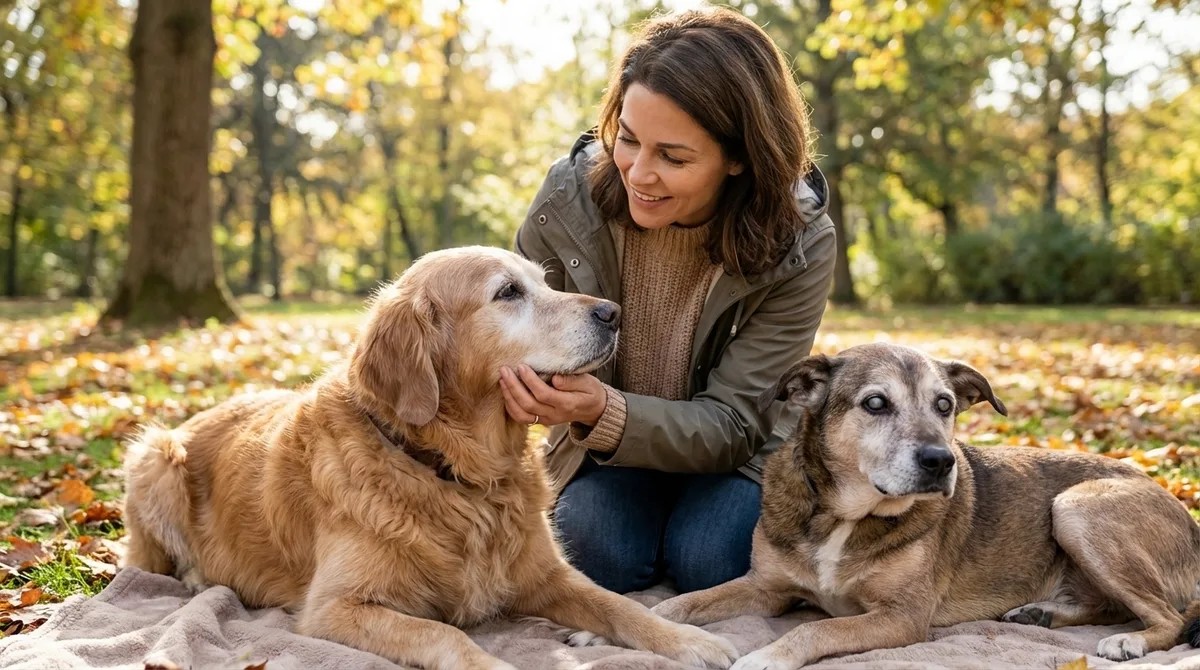
Understanding Geriatric Dogs: When Your Dog Becomes a Senior
The Pet Parent Podcast · Total Pet Parent
Audio is streamed directly from the publisher (content.rss.com) as published in their RSS feed. Play Podcasts does not host this file. Rights-holders can request removal through the copyright & takedown page.
Show Notes
One day you look at your dog and realize their muzzle has gone completely gray without you noticing. Professional pet groomer Jasmine Caldwell explores what it truly means when your dog enters the geriatric stage—and why it's about far more than just counting birthdays. This episode breaks down how aging works differently across breeds, what's happening inside your senior dog's body, and why recognizing these changes can extend your companion's happy, active years.
- There's no universal age when dogs become geriatric—giant breeds like Great Danes may reach this stage by eight or nine, while small breeds like Chihuahuas might not get there until thirteen or fourteen.
- The old "one dog year equals seven human years" formula is wrong; dogs age much faster early on, with a one-year-old dog being roughly equivalent to a thirty-year-old human, then aging slows and varies by size.
- About 80% of dogs over age eight develop osteoarthritis, and muscle mass naturally decreases even in dogs maintaining stable weight—making mobility changes one of the most visible signs of aging.
- Geriatric dogs often need fewer calories because their metabolism slows, yet their protein requirements may actually increase since they use dietary protein less efficiently.
- Canine cognitive dysfunction, essentially doggie dementia, causes previously familiar dogs to become confused about routines and spaces they've known for years.
- Many conditions that seem like inevitable aging are actually treatable problems, making early recognition and veterinary intervention crucial for preventing unnecessary suffering.
Read the full article: https://totalpetparent.com/understanding-geriatric-dogs