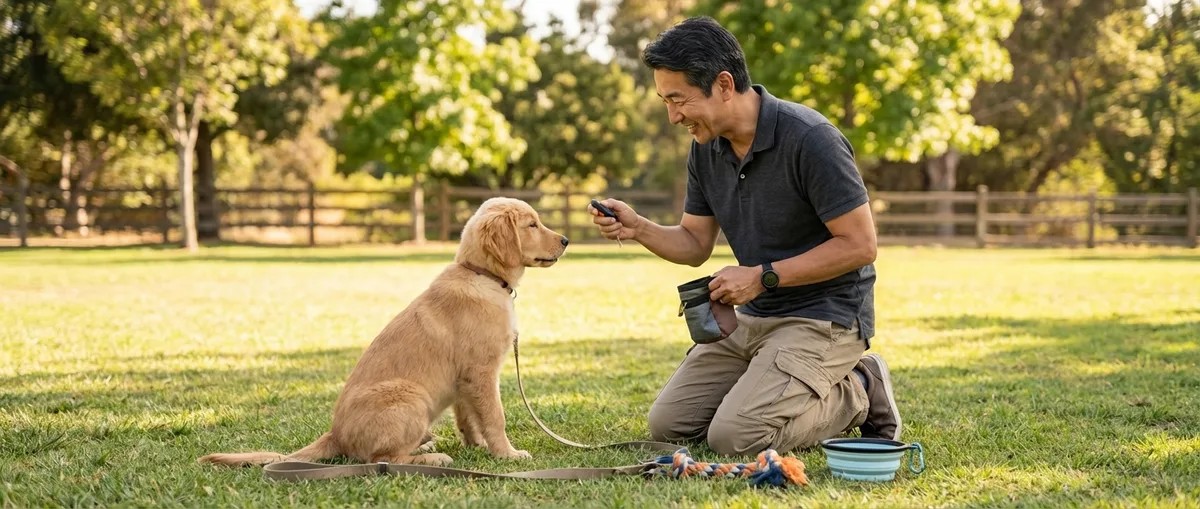
Puppy Training Aids Checklist: Essential Tools for Your First 90 Days
The Pet Parent Podcast · Total Pet Parent
Audio is streamed directly from the publisher (content.rss.com) as published in their RSS feed. Play Podcasts does not host this file. Rights-holders can request removal through the copyright & takedown page.
Show Notes
Those first weeks with a new puppy can feel like chaos—puddles on the carpet, chewed belongings, and a furry bundle of energy who has no idea what you're trying to communicate. In this episode, Kenji Takahashi draws on a decade of hands-on experience to break down the essential training tools you actually need for your puppy's first 90 days. Whether you're a first-time dog owner feeling overwhelmed or preparing to bring home a new addition, this guide cuts through the noise to help you avoid expensive mistakes and set your puppy up for success from day one.
- You only need five core training tools to get started: a well-fitted harness or collar, a clicker or marker, high-value treats, designated potty training aids, and a confinement solution—everything else is optional based on your specific challenges.
- Puppies grow remarkably fast, especially large breeds, so training equipment must be adjustable or sized for both current weight and anticipated growth to prevent escape risks or discomfort that creates negative associations with training.
- The American Kennel Club recommends avoiding retractable leashes for puppies still learning leash manners because they don't provide the consistent feedback needed to establish boundaries—a standard six-foot leash offers much better control.
- Training aids should support positive reinforcement methods, as behavioral science consistently shows this approach is most effective; the American Veterinary Society of Animal Behavior explicitly recommends against punishment-based tools like shock collars or prong collars, which can create anxiety and long-term behavioral issues.
- Breed and temperament matter more than most people realize—what works perfectly for a food-motivated Labrador may completely fail with an independent Husky or a toy breed who gets full after just a few treats.
- Durability and cleanability are essential since puppies are impressively messy; cheap training pads or fabric treat pouches that can't survive repeated washing will cost you more in the long run and potentially confuse your puppy's learning.
Read the full article: https://totalpetparent.com/puppy-training-aids-checklist