
The Pet Parent Podcast
119 episodes — Page 2 of 3
Best Dog Training Collars: Buyer's Guide for Every Training Need and Dog Size
Senior Dog Care: Complete Guide to Caring for Your Aging Dog
Complete Aquarium Setup Guide: Equipment, Cycles, and Species Selection for Freshwater and Saltwater Tanks
How to Recognize and Manage Cognitive Decline in Senior Dogs
Senior Dog Dental Care: Understanding Aging Teeth and Gum Health
How to Adjust Exercise Routines for Elderly Dogs
Everything You Need for Senior Dog Comfort: Home Modifications Checklist
Senior Dog Supplement Checklist: Vitamins, Joint Support and Cognitive Health
Senior Dog Mobility Issues Explained: Arthritis, Joint Pain and Movement
Senior Dog Health Checklist: Essential Veterinary Care and Monitoring
How to Help Your Senior Dog Lose Weight Safely
Best Dog Food for Senior Dogs: Top Nutrition for Aging Canines

Understanding Geriatric Dogs: When Your Dog Becomes a Senior
One day you look at your dog and realize their muzzle has gone completely gray without you noticing. Professional pet groomer Jasmine Caldwell explores what it truly means when your dog enters the geriatric stage—and why it's about far more than just counting birthdays. This episode breaks down how aging works differently across breeds, what's happening inside your senior dog's body, and why recognizing these changes can extend your companion's happy, active years. There's no universal age when dogs become geriatric—giant breeds like Great Danes may reach this stage by eight or nine, while small breeds like Chihuahuas might not get there until thirteen or fourteen. The old "one dog year equals seven human years" formula is wrong; dogs age much faster early on, with a one-year-old dog being roughly equivalent to a thirty-year-old human, then aging slows and varies by size. About 80% of dogs over age eight develop osteoarthritis, and muscle mass naturally decreases even in dogs maintaining stable weight—making mobility changes one of the most visible signs of aging. Geriatric dogs often need fewer calories because their metabolism slows, yet their protein requirements may actually increase since they use dietary protein less efficiently. Canine cognitive dysfunction, essentially doggie dementia, causes previously familiar dogs to become confused about routines and spaces they've known for years. Many conditions that seem like inevitable aging are actually treatable problems, making early recognition and veterinary intervention crucial for preventing unnecessary suffering. Read the full article: https://totalpetparent.com/understanding-geriatric-dogs

Aquarium Filter Types Explained: Canister vs Hang-On-Back vs Sponge Filters for Different Tank Sizes
Ever stood in front of a wall of aquarium filters, completely overwhelmed by GPH ratings and filtration jargon, only to buy something that turns your tank into a fish washing machine? In this episode, Kenji Takahashi draws on fifteen years of fishkeeping experience—from 5-gallon betta setups to 150-gallon community tanks—to break down exactly how canister, hang-on-back, and sponge filters compare. Whether you're setting up your first tank or upgrading an existing system, you'll learn how to match filter type to your tank size, fish species, and realistic maintenance schedule. The GPH rating on filter boxes is measured with empty, brand-new units—once you add media and biological growth accumulates, expect only 70-80% of that advertised flow, so buying one size up is smart planning. For most freshwater tanks, aim for 4-6x water turnover per hour, but species matter: bettas and fancy goldfish need gentler flow, while tetras and corydoras thrive with stronger circulation that keeps debris suspended. Never rinse filter media under tap water—chlorine kills the beneficial bacteria colonies responsible for converting ammonia, which explains those mysterious ammonia spikes many beginners experience after "cleaning" their filters. Canister filters offer the most customizable media capacity and longest maintenance intervals (2-3 months), but servicing them is a 20-30 minute project that can become a frustrating hassle with poorly designed models. Sponge filters are the easiest to maintain (two minutes every couple weeks) and excel at biological filtration, making them ideal for breeding tanks, hospital setups, or anyone who wants minimal fuss. The best filter isn't the most powerful one—it's the one that matches your realistic maintenance habits, because a neglected premium filter will always perform worse than a modest filter that actually gets serviced. Read the full article: https://totalpetparent.com/aquarium-filter-types-explained
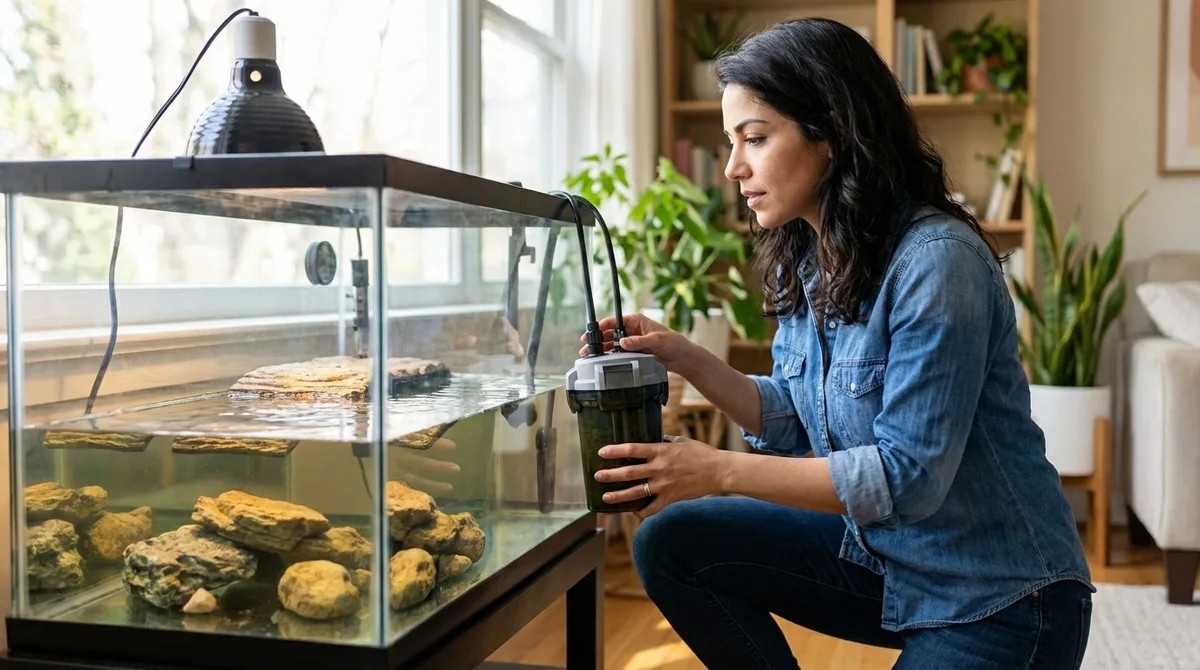
Turtle Tank Setup Checklist: Basking Platforms, UVB Lighting, Filtration, and Water Depth Requirements
Setting up a turtle tank is far more complex than most new owners expect—forget the cute little bowl with a plastic palm tree. This episode walks through every essential component of a proper turtle habitat, from tank sizing and water depth requirements to basking platforms, UVB lighting systems, and filtration that actually keeps up with these messy reptiles. Whether you're preparing for a red-eared slider hatchling or adopting an adult painted turtle, host Mariana Vasquez delivers the comprehensive checklist you need to avoid costly mistakes and keep your shelled friend healthy from day one. Tank length and width matter more than depth—turtles are horizontal swimmers who need floor space to move, not tall water columns, so always choose longer, wider tanks over taller ones. Water depth requirements vary dramatically by species: strong swimmers like red-eared sliders thrive in water 1.5 to 2 times their shell length, while musk and mud turtles prefer shallower setups equal to their shell length since they tire easily. Basking platforms must allow turtles to get completely dry—partial submersion defeats the purpose and leads to shell rot and fungal infections, so ensure the surface is textured, stable, and sized for your turtle's full body plus 30 percent extra room. UVB lighting rated at 10.0 or 12 percent is non-negotiable for calcium metabolism; without proper UVB exposure, turtles develop metabolic bone disease within months. Use the ten-gallon rule for adult tank sizing: ten gallons of water per inch of shell length, meaning a six-inch red-eared slider needs at least 60 gallons. For turtles exceeding ten inches, stock tanks or custom indoor ponds (100–300 gallons) often make more practical and financial sense than massive glass aquariums. Read the full article: https://totalpetparent.com/turtle-tank-setup-checklist

Aquarium Equipment Checklist: Everything You Need for a Successful Tank Setup
Setting up your first aquarium can quickly become an expensive lesson in what not to buy—or worse, what you forgot to buy entirely. In this episode, Kenji Takahashi draws on fifteen years of fishkeeping experience to walk you through every piece of equipment you actually need for a successful tank setup, organized by priority and function. Whether you're starting your first twenty-gallon freshwater tank or planning something more ambitious, you'll learn exactly why each item matters and what happens when you skip it or cheap out on the wrong things. Your filter should cycle your entire tank volume four to five times per hour, meaning a twenty-gallon tank needs a filter rated for at least eighty to one hundred gallons per hour—and slightly oversizing gives you breathing room as your bioload increases. The two to three watts per gallon rule helps you size your heater correctly, but you should bump up to the higher end if your home runs cold or the tank sits near a window. Lighting requirements depend entirely on your setup: fish-only tanks just need consistent day-night cycles, while planted tanks require specific PAR values ranging from thirty to over one hundred depending on plant species. Water conditioner isn't optional—municipal water treatment has become more aggressive, and untreated tap water will kill your beneficial bacteria and stress your fish. Liquid test kits are more accurate than strips for monitoring ammonia, nitrite, nitrate, and pH, and you'll use them constantly during the first month while the nitrogen cycle establishes. Substrate does more than look nice—beneficial bacteria need surface area to colonize, and bottom-dwelling fish like Corydoras require sand they can safely sift through. Read the full article: https://totalpetparent.com/aquarium-equipment-checklist
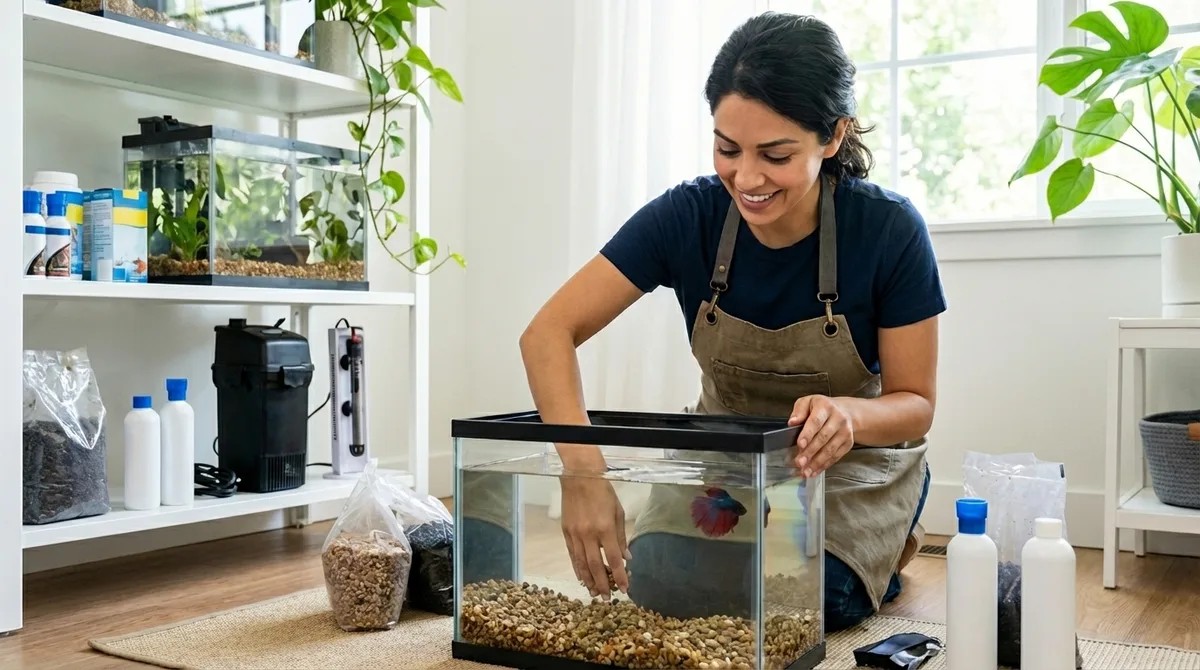
How to Set Up a Betta Fish Tank: Equipment, Water Conditions, and Habitat Requirements
Setting up a betta fish tank seems simple until you're standing in the aquarium aisle overwhelmed by equipment choices—or worse, watching your new fish struggle because you skipped a critical step. This episode breaks down exactly what your betta needs to thrive, from tank size and filtration to the patience-testing cycling process that most beginners try to rush. Whether you're working with limited space in a studio apartment or just want to avoid the common mistakes that lead to sick fish, Mariana Vasquez walks you through the equipment, water conditions, and habitat requirements that actually matter. The myth that bettas can live in tiny bowls needs to die—they survive in cups at pet stores but thrive in tanks of 5 gallons or larger, where water temperature and chemistry stay stable. Strong filtration can actually harm bettas because their flowing fins make them terrible swimmers in heavy currents; sponge filters or adjustable-flow options work best. Bettas are tropical fish requiring a consistent 76–82°F water temperature, and room temperature isn't enough even in warm apartments—an adjustable heater is non-negotiable. New tanks need 4–6 weeks of cycling to establish beneficial bacteria before adding fish; skipping this causes "new tank syndrome," where ammonia spikes kill fish quickly. Tank shape matters more than you'd think—bettas are labyrinth fish that breathe surface air and patrol horizontally, so a long, shallow tank beats a tall, narrow one every time. Essential water parameters to monitor include ammonia and nitrite (both should be 0 ppm), nitrates under 20 ppm, and pH between 6.5 and 7.5. Read the full article: https://totalpetparent.com/how-to-set-up-a-betta-fish-tank

Aquarium Nitrogen Cycle Explained: Understanding Beneficial Bacteria and Water Chemistry for New Tanks
If you've ever watched fish die in crystal-clear water and couldn't figure out why, you're not alone. This episode dives into the aquarium nitrogen cycle—the invisible biological process that determines whether your tank becomes a thriving ecosystem or a death trap. Host Kenji Takahashi shares how learning about beneficial bacteria transformed his fishkeeping after a devastating first month, and breaks down exactly what's happening chemically in your tank so you can avoid the same mistakes. Ammonia from fish waste, urine, and decomposing food is incredibly toxic—even concentrations as low as 0.5 parts per million can damage gills and suppress immune function, yet it won't cloud your water or give any visible warning signs. The nitrogen cycle involves two distinct bacterial groups working in sequence: Nitrosomonas bacteria convert ammonia to nitrite, then Nitrobacter and Nitrospira convert nitrite to the less harmful nitrate. Nitrite is called "the silent killer" because it binds to fish hemoglobin and essentially suffocates them from the inside, even in well-oxygenated water—testing for ammonia alone isn't enough. Cycling a new tank properly takes four to eight weeks, and the bacteria need three things to thrive: dissolved oxygen from good water circulation, surfaces to colonize like filter media and substrate, and a steady ammonia source as food. Water temperature and pH significantly impact cycling speed—warmer water accelerates bacterial reproduction, while pH below 6.5 causes bacteria to struggle. Unlike ammonia and nitrite, nitrate doesn't get processed by typical aquarium bacteria, meaning regular water changes of twenty to thirty percent weekly are essential for keeping levels safe. Read the full article: https://totalpetparent.com/aquarium-nitrogen-cycle-explained

How to Set Up an Axolotl Tank: Complete Setup Guide for Water Parameters, Filtration, and Tank Size
Those feathery gills and permanent smiles make axolotls look like fantasy creatures, but keeping one alive requires mastering something most fishkeepers never deal with: refrigerator-cold water. In this episode, Kenji Takahashi breaks down the complete setup process for an axolotl tank, covering everything from the four-to-six-week cycling timeline to why your tank placement near a sunny window could be a fatal mistake. Whether you're transitioning from tropical fish or starting fresh with aquatic pets, you'll learn exactly what equipment you need and why these Mexican salamanders demand a completely different approach than anything else in the hobby. Axolotls require water temperatures between 60–64°F year-round, which means most homes need an aquarium chiller ($200–600) or at minimum a clip-on cooling fan to prevent stress, immune suppression, and death from overheating. Tank dimensions matter more than volume—a 20-gallon long beats a 20-gallon high because axolotls are bottom-dwellers who spend 90% of their time walking along the substrate, making floor space more valuable than water depth. Your filter needs to be rated for 3–4 times your actual tank volume to handle their heavy waste output, but the flow must be gentle enough not to buffet their delicate gills—sponge filters or baffled canister outputs work best. Plan for 4–6 weeks of setup time before adding your axolotl; skipping the proper nitrogen cycling process leads to ammonia burns on those sensitive feathery gills. Substrate choice is critical: use only fine sand under 1mm grain size or go bare-bottom, as gravel poses a serious impaction risk when axolotls accidentally swallow it while feeding. A fully setup 40-gallon tank weighs 400–450 pounds, so you need a stand specifically rated for aquarium use—regular furniture won't cut it. Read the full article: https://totalpetparent.com/how-to-set-up-an-axolotl-tank

Best Aquarium Starter Kits for Beginners: Complete Tank Systems Reviewed
Standing in the aquarium aisle surrounded by filters, heaters, and tanks can leave any beginner completely overwhelmed—and missing essential equipment you didn't even know you needed. In this episode, longtime fishkeeper Kenji Takahashi breaks down everything you need to know about choosing a complete aquarium starter kit that actually sets you up for success. Whether you're setting up your first freshwater community tank or finally diving into the hobby, you'll learn which features matter most and which corners budget kits cut that'll cost you later. Bigger tanks are actually easier for beginners—a 20-gallon setup dilutes waste and buffers pH swings far better than a 5-gallon tank, giving you time to correct mistakes before they become disasters. The filter is where cheap kits cut corners most often; look for one rated at 1.5 to 2 times your tank volume with modular media you can rinse and reuse, rather than cartridges that crash your nitrogen cycle monthly. Most community fish like tetras, guppies, and corydoras are tropical and require a heater, but many starter kits don't include one—check the contents carefully before buying. Basic LED lighting included in starter kits works perfectly fine for fish-only setups and low-light plants like java fern and anubias; you can always upgrade later once you're comfortable with water parameters. Hoods and lids matter more than most beginners realize—they prevent fish from jumping out, reduce evaporation that concentrates dissolved solids, and keep dust and pet hair out of your tank. Read the fine print on "complete" kits—some don't include substrate, water conditioner, or even a net, all of which you'll need immediately. Read the full article: https://totalpetparent.com/best-aquarium-starter-kits-for-beginners

Bodhi Dog Potty Training Spray Setup: Everything You Need for Fast Results
Potty training sprays promise fast results, but most pet parents spray and pray without the supporting system that actually makes them work. In this episode, Kenji Takahashi breaks down the complete setup checklist he used to help house-train a Golden Retriever puppy in just nine days—revealing why the same Bodhi Dog spray that failed for one household succeeded spectacularly in another. If you've tried attractant sprays before with disappointing results, or you're about to start training a new puppy, this episode shows you exactly what needs to be in place before you ever press that spray nozzle. Size matters more than you'd think: the 16-ounce bottle is essential because running out during the critical first two weeks destroys the consistency that makes training work. Budget puppy pads can sabotage your efforts—when urine seeps through and pads feel wet, puppies avoid them entirely, which completely undermines the spray's attractant effect. Never use ammonia-based cleaners on accident spots; enzymatic cleaners are non-negotiable because they break down uric acid crystals that otherwise encourage re-marking in the wrong locations. Clean all previous accident sites with enzymatic cleaner at least 24 hours before starting—if your puppy can still smell old pee spots, the spray is fighting an uphill battle against established scent markers. Over-spraying is a real risk; following the manufacturer's specific application distance and frequency recommendations prevents creating an overwhelming scent that can actually repel puppies. The first 72 hours require near-constant supervision, so clear your schedule—starting during a busy week almost guarantees the inconsistency that extends training timelines significantly. Read the full article: https://totalpetparent.com/bodhi-dog-potty-training-spray-setup

NatureVet Potty Here Training Aid Spray Explained: Ingredients and Effectiveness
Can a simple spray really help house train your dog, or is it just another overhyped pet product? In this episode, host Mariana Vasquez puts aside her initial skepticism to investigate NatureVet Potty Here Training Aid Spray, breaking down the actual science behind scent-based training aids. Whether you're struggling with a new puppy, dealing with apartment living challenges, or helping an older dog with cognitive changes, this deep dive into ingredients, olfactory biology, and behavioral conditioning will help you decide if this tool belongs in your training routine. The spray works by using synthetic pheromone analogs that mimic chemical signatures in dog urine, creating a "scent anchor" that signals to your dog this is an appropriate elimination zone. Dogs have approximately 300 million olfactory receptors compared to humans' 6 million, which explains why scent-based training tools can be so effective when used properly. The ingredient list includes purified water, a proprietary pheromone blend, potassium sorbate, sodium benzoate, and undisclosed natural scent compounds—standard transparency for the training aid category, though not ideal. Application requires three to four sprays on the target area, with reapplication every six to eight hours during initial training since that's when the scent remains most potent. This spray is a behavioral modification tool, not a miracle solution—it only works effectively when combined with consistent schedules, positive reinforcement, and attention to your dog's pre-elimination cues. NatureVet has been formulating pet products since 1994 with a focus on natural ingredients and veterinary-backed formulations, setting their attractant apart from generic discount store options. Read the full article: https://totalpetparent.com/naturevet-potty-here-training-aid-spray-explained
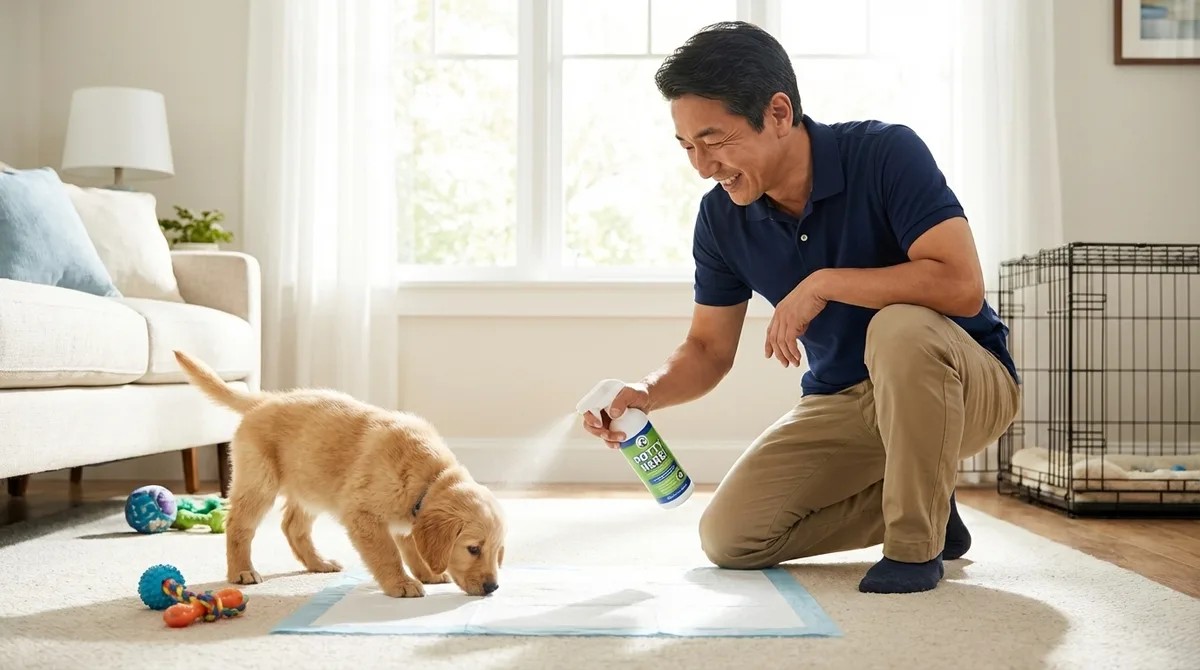
How to Choose the Right Potty Training Spray for Your Puppy
Potty training sprays sound like snake oil—until you watch one actually work. In this episode, Kenji Takahashi shares how his skepticism completely flipped after witnessing his sister's golden retriever puppy go from constant accidents to hitting the pad consistently within just two days. He breaks down the real science behind why these sprays work, explains the critical difference between pheromone-based and scented formulas, and helps you figure out which type matches your specific puppy's age, breed, and training situation. If you've been cleaning up messes for weeks and wondering whether these products are worth the money, this guide will save you from buying the wrong bottle. Pheromone-based sprays tap into hardwired canine behavior that puppies develop as early as three weeks old, making them faster and more effective than herbal-scented alternatives for most dogs. Flat-faced breeds like pugs and bulldogs may react poorly to synthetic pheromones—watch for repeated sneezing, nose rubbing, or avoidance of the treated area as signs you need a gentler formula. Avoid sprays listing alcohol as a primary ingredient, especially for puppies under sixteen weeks, since the harsh smell can repel dogs and irritate their sensitive paw pads and noses. Quality pheromone sprays list "proprietary pheromone blend" or specific stabilizer compounds like methyl p-hydroxybenzoate within the first three ingredients—vague labels saying "natural scents" usually indicate filler products. Small breeds under twenty pounds at adult weight have different bladder control timelines than large breeds, which affects how you should approach spray selection and training expectations. Plan to test your chosen formula for three to five days and get your pet store's return policy in writing, since finding the right match often requires trying more than one product. Read the full article: https://totalpetparent.com/how-to-choose-the-right-potty-training-spray-for-your-puppy

House Training Aid for Puppies: Complete Setup Checklist
Getting a new puppy home is exciting, but house training can quickly become overwhelming if you're not prepared with the right supplies from day one. In this episode, host Mariana Vasquez walks through a comprehensive setup checklist covering every physical item, space consideration, and backup supply you'll need to establish successful potty habits. Whether you're bringing home an eight-week-old puppy or preparing for a future furry family member, this guide answers the critical question: what exactly do I need on hand before accidents start happening? Potty training sprays with pheromone attractants help signal "bathroom spot" to puppies aged 8 weeks to 6 months, and should be applied to designated areas before each scheduled potty break. A properly sized crate—just big enough for your puppy to stand, turn, and lie down—activates their natural den instinct to avoid soiling their sleeping space, with adjustable dividers letting you expand as they grow. Enzymatic cleaners containing protease and amylase enzymes are essential because they break down uric acid crystals that regular cleaners leave behind—those invisible deposits are what draw puppies back to re-soil the same spot. Using a dedicated 6-foot leash exclusively for bathroom breaks creates a Pavlovian association that helps puppies understand potty trips aren't playtime. A black light UV flashlight reveals dried urine accidents on carpets, baseboards, and furniture that you'd otherwise miss, which is especially valuable in homes with previous pet owners. Rewarding your puppy within 3 seconds of successful elimination is crucial during the 8 to 12 week period when short-term memory is still developing, making a dedicated treat pouch essential for proper timing. Read the full article: https://totalpetparent.com/house-training-aid-for-puppies
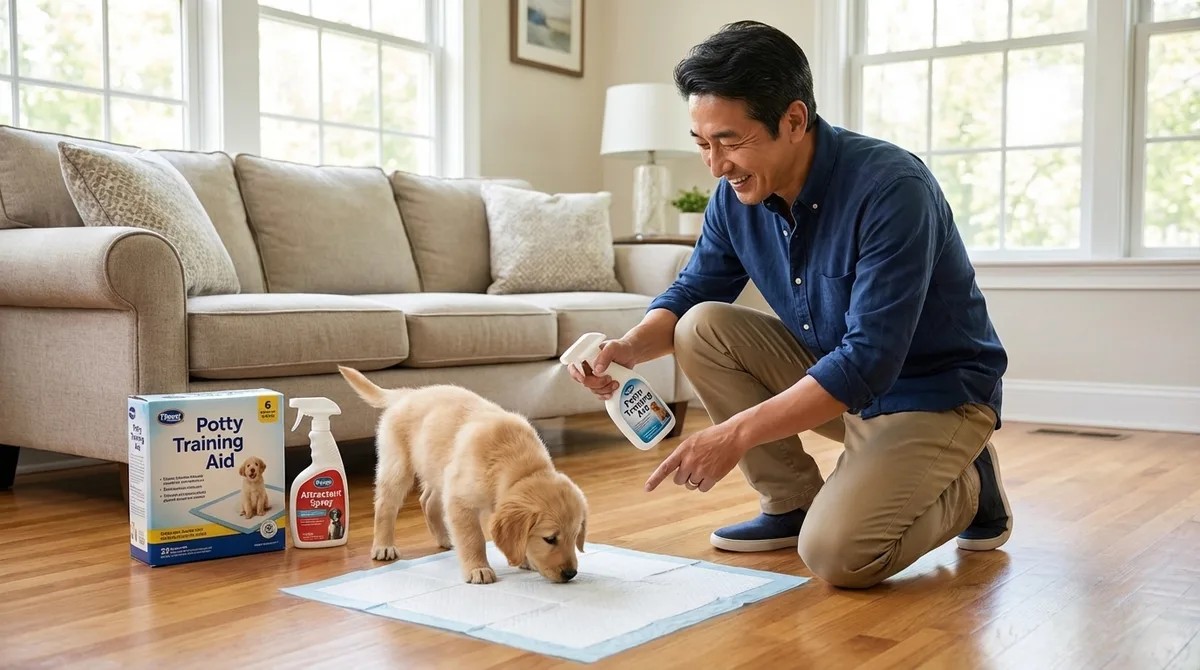
Dog Potty Training Aids Explained: Sprays, Pads, and Attractants That Work
Ever stood in the pet store aisle overwhelmed by dozens of potty training sprays and pads, wondering which ones actually work? In this episode, Kenji Takahashi shares hard-won lessons from helping his sister house-train a Golden Retriever puppy—despite his expertise being in fish tanks, not dogs. He breaks down exactly what separates effective training aids from expensive air fresheners and explains why matching products to your dog's age and training stage makes all the difference. Effective potty training sprays contain pheromone compounds or scent markers that trigger dogs' natural instincts—products listing only essential oils like lavender or eucalyptus without these attractants won't communicate "go here" to your puppy. Puppies under six months respond better to pheromone-based attractants because their scent-marking instincts aren't fully developed, while older dogs and rescues often need products with territorial scent markers. Quality training pads have at least five layers including a super-absorbent polymer core—cheap pads skip the distribution layer, causing liquid to pool and creating negative associations when puppies step in it. Pad size matters more than most people realize: puppies circle before squatting, so undersized pads lead to missed edges. Sizing up dramatically improved one Golden Retriever's success rate from inconsistent to 90 percent. Products that eliminate odors for humans don't necessarily remove the scent markers dogs use to identify potty spots, creating competing needs between removing wrong-spot smells and preserving attractant scents in designated areas. For outdoor spot training, buy attractant sprays in 16 to 32 ounce bottles—small four-ounce bottles run out after just one week of twice-daily applications. Read the full article: https://totalpetparent.com/dog-potty-training-aids-explained

How to Use Puppy Training Spray for Potty Training Success
If you're currently surrounded by puppy puddles and wondering whether there's a faster way to communicate where your dog should actually do their business, this episode is for you. Host Mariana Vasquez breaks down exactly how puppy training spray works and why it's not too good to be true. You'll learn the step-by-step process for using these scent-based tools effectively, from choosing the right potty spot to timing your applications for maximum success. Whether you're training outdoors or using pee pads, this beginner-friendly guide shows you how to see significant improvement within one to two weeks. Spraying multiple spots "just in case" actually confuses your puppy—choose one specific three-foot by three-foot area and commit to it completely. Application technique matters more than most people realize: hold the bottle six to eight inches away, apply three to five concentrated sprays, and do it two to three minutes before bringing your puppy to the area so the scent settles at ground level. The spray works by mimicking pheromones that trigger your puppy's natural instinct to eliminate where other dogs have gone, but it won't make a puppy with an empty bladder suddenly need to go. Pair the spray with smart scheduling around key trigger times: immediately after waking, within fifteen to twenty minutes of eating or drinking, after play sessions, and every two to three hours during the day. When your puppy is in the scented zone, resist the urge to hover or cheer them on—stand quietly, be boring, and let the training spray do its job of attracting them and triggering the elimination reflex. Clean any accident areas with enzymatic cleaner before applying training spray, since residual scents from wildlife, other dogs, or cleaning products can interfere with effectiveness. Read the full article: https://totalpetparent.com/how-to-use-puppy-training-spray-for-potty-training-success

Puppy Training Aids Checklist: Essential Tools for Your First 90 Days
Those first weeks with a new puppy can feel like chaos—puddles on the carpet, chewed belongings, and a furry bundle of energy who has no idea what you're trying to communicate. In this episode, Kenji Takahashi draws on a decade of hands-on experience to break down the essential training tools you actually need for your puppy's first 90 days. Whether you're a first-time dog owner feeling overwhelmed or preparing to bring home a new addition, this guide cuts through the noise to help you avoid expensive mistakes and set your puppy up for success from day one. You only need five core training tools to get started: a well-fitted harness or collar, a clicker or marker, high-value treats, designated potty training aids, and a confinement solution—everything else is optional based on your specific challenges. Puppies grow remarkably fast, especially large breeds, so training equipment must be adjustable or sized for both current weight and anticipated growth to prevent escape risks or discomfort that creates negative associations with training. The American Kennel Club recommends avoiding retractable leashes for puppies still learning leash manners because they don't provide the consistent feedback needed to establish boundaries—a standard six-foot leash offers much better control. Training aids should support positive reinforcement methods, as behavioral science consistently shows this approach is most effective; the American Veterinary Society of Animal Behavior explicitly recommends against punishment-based tools like shock collars or prong collars, which can create anxiety and long-term behavioral issues. Breed and temperament matter more than most people realize—what works perfectly for a food-motivated Labrador may completely fail with an independent Husky or a toy breed who gets full after just a few treats. Durability and cleanability are essential since puppies are impressively messy; cheap training pads or fabric treat pouches that can't survive repeated washing will cost you more in the long run and potentially confuse your puppy's learning. Read the full article: https://totalpetparent.com/puppy-training-aids-checklist

What Are Canine Training Aids? Understanding Modern Dog Training Equipment
Ever stood in the pet supply aisle completely overwhelmed by the sheer variety of dog training equipment? You're not alone. In this episode, host Mariana Vasquez brings her fresh perspective as a small-pet specialist to explore the surprisingly vast world of canine training aids—from basic clickers and treat pouches to sophisticated electronic devices. Whether you're a new dog owner or simply curious about modern training methods, this 15-minute guide breaks down what these tools actually do and how to choose the right ones for your specific situation. Canine training aids fall into four core categories: positive reinforcement tools (clickers, treats), management aids (crates, gates, leashes), communication devices (whistles, long lines), and behavior-specific aids (potty sprays, anxiety wraps)—and matching the right category to your specific challenge is essential. Puppies require age-appropriate equipment sized for developing bodies, including adjustable harnesses instead of collars to protect vulnerable necks and tracheas, plus pea-sized training treats to avoid overfeeding during frequent reward sessions. Your training philosophy determines which aids you'll actually use—positive reinforcement trainers rely heavily on markers, high-value treats, and target sticks, while management tools like long lines and front-clip harnesses work across different training approaches. Dog age categories matter when selecting equipment: puppy (8 weeks–6 months), adolescent (6–18 months), adult (18 months–7 years), and senior (7+ years), with each stage requiring different considerations for size, physical limitations, and cognitive needs. Training aids range dramatically in price from under five dollars to several hundred, so being realistic about your budget before shopping prevents impulse purchases that don't match your actual training goals. Senior dogs may need specialized equipment that accounts for physical changes like arthritis, which affects how they interact with place boards or platforms, plus clearer marker signals for potential cognitive changes. Read the full article: https://totalpetparent.com/what-are-canine-training-aids-understanding-modern-dog-training-equipment

Best Puppy Training Tools for New Dog Owners in 2026
Bringing home a new puppy is exciting—until you're standing in the pet store aisle overwhelmed by clickers, harnesses, treat pouches, and gadgets you can't even identify. In this episode, Mariana Vasquez breaks down exactly which training tools you actually need during those critical first 90 days, what to skip, and how to choose gear that supports positive reinforcement without wasting money on equipment your puppy will outgrow in weeks. Whether you're a first-time dog owner or just want to avoid the panic-call-to-a-friend scenario, this guide will give you the confidence to start training right. Puppies aren't miniature adult dogs—their fragile tracheas and developing joints require age-appropriate gear, so look for harnesses with at least four to five adjustment points and avoid aversive tools like choke chains or prong collars entirely before six months of age. The two-finger rule is essential for collar fit: you should be able to slip two fingers between the collar and your puppy's neck, but it shouldn't be loose enough for them to back out of it. Your clicker and treat pouch can make or break a training session—choose a clicker with a softer tone that won't startle sensitive puppies, and skip Velcro pouches in favor of silent-open designs that allow one-handed access within that critical half-second reward window. Puppies between three and seven months old will destroy flimsy gear, so invest in reinforced nylon webbing, marine-grade hardware, and natural rubber toys rated for aggressive chewers even if your pup seems gentle now. Breed differences matter more than generic sizing charts suggest—brachycephalic breeds like pugs need harnesses instead of collars due to compromised airways, while working breeds benefit from longer 15- to 30-foot training leashes for early recall practice. Buy tools that grow with your puppy to save money and reduce confusion, such as training leashes with multiple clip points and treat pouches with dividers for separating high-value rewards. Read the full article: https://totalpetparent.com/best-puppy-training-tools-for-new-dog-owners-in-2026

Dog Training Aids: Complete Guide to Tools That Help Puppies and Adult Dogs Learn Faster
Ever watched someone struggle for weeks to teach their dog a basic command, only to see another owner accomplish the same thing in days? The difference often comes down to using the right training aids at the right time. In this episode, Kenji Takahashi draws on his experience helping train a rescue puppy to break down the complete world of dog training tools—from clickers and treats to potty sprays and harnesses. Whether you're bringing home a new puppy or working with an adult dog who needs to unlearn some habits, you'll discover how these tools act as communication bridges between you and your dog, turning frustrating sessions into productive ones. Training aids aren't shortcuts or gimmicks—they're translators that help bridge the communication gap between humans and dogs, making it easier for your pet to understand exactly what you're asking. Timing is everything with positive reinforcement: rewards must come within one to two seconds of the desired behavior, which is why clickers are so effective—they mark the exact moment of success faster than you can reach for a treat. The category of training aids is broader than most people realize, spanning physical control tools like leashes and harnesses, communication markers like clickers, consumable rewards like training treats, and environmental aids like potty sprays and pads. Puppies under 12 months learn everything from scratch and typically respond faster to positive reinforcement, while adult dogs may need different tools or more patience when unlearning established patterns. Front-clip harnesses don't force compliance—they simply redirect pulling dogs toward you, making the correct behavior easier to choose than the incorrect one. Potty training sprays contain pheromone-like compounds that tap into your dog's natural instincts, essentially creating an olfactory map that says "this is the bathroom" while keeping other areas unmarked. Read the full article: https://totalpetparent.com/dog-training-aids

Cat Food Storage and Freshness Checklist: Maintaining Nutritional Quality
Even the highest-quality cat food can lose its nutritional value before your cat takes a single bite—and the culprit is often how you store it. In this episode, Steven Whitlow draws on twenty years of pet nutrition experience to reveal the storage mistakes that silently degrade your cat's food and exactly how to prevent them. Whether you're feeding a growing kitten or a senior cat who needs every nutrient they can get, you'll learn practical daily habits that protect freshness from purchase to last scoop. The container you choose matters more than you think—look for airtight seals with silicone gaskets, BPA-free or stainless steel materials, and opaque construction to block UV light that breaks down vitamins A, D, and E. Keep kibble in its original bag inside your storage container, since the inner lining provides an extra barrier against oxygen and moisture that pouring directly into a container eliminates. Temperature and humidity control are critical: store food in cool spaces (50–70°F) with humidity below 60 percent, and avoid garages, laundry rooms, or anywhere near heat sources like stoves and dishwashers. Once opened, dry cat food should be used within four to six weeks—those economy-sized bags may seem cost-effective, but the last third will likely go stale before a single cat can finish it. A rancid, paint-like smell is your warning sign that fats have oxidized and the food should be thrown out, even if it looks fine. Clean your storage container between bags by washing with mild soap and drying completely to prevent old oils from contaminating fresh food. Read the full article: https://totalpetparent.com/cat-food-storage-and-freshness-checklist
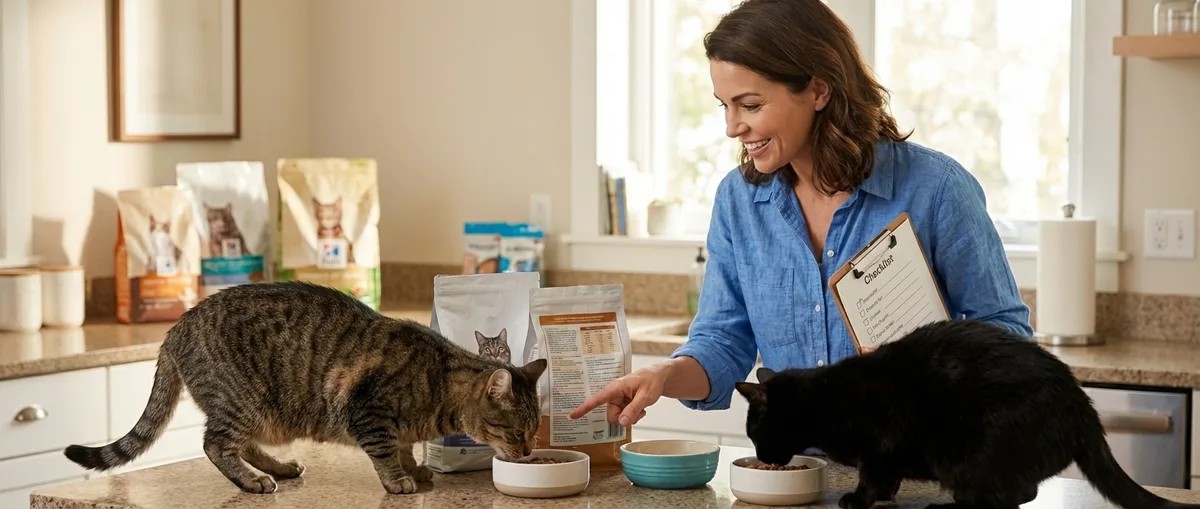
Complete Cat Food Transition Checklist: Switching Foods Safely
Switching your cat's food might seem straightforward, but rushing the process can lead to digestive disasters, hunger strikes, or destabilized health conditions. This episode delivers a complete, veterinarian-informed roadmap for transitioning your cat to new food safely—whether you're dealing with a picky eater, a senior cat with established preferences, or a kitten with a developing digestive system. If you've ever been stuck with a bulk bag of food your cat refuses to touch or cleaned up the aftermath of a too-fast diet change, this checklist approach will save you time, money, and stress. Always document your cat's baseline before switching foods—litter box habits, energy levels, coat condition, and weight give you objective markers to determine whether the new food is actually working or causing problems. The standard transition follows a 12-day protocol with 25% increments, but kittens, seniors, and cats with digestive sensitivities may need extended timelines of three to four weeks with smaller percentage jumps. Days seven through nine represent the danger zone where most picky cats reject the new food—the old formula no longer masks the new flavor profile, and some cats will refuse to eat rather than accept the change. Stool quality is your earliest warning system: normal means formed but not rock-hard, no mucus coating, no visible undigested food, and no sudden increase in litter box frequency. Buy small quantities first, even with a perfect transition plan—some cats simply won't accept certain proteins or formulas regardless of how gradually you introduce them. Delayed reactions like skin sensitivities to novel proteins can take two to three weeks to appear as increased scratching or coat dullness, so monitoring should continue well past the initial switch. Read the full article: https://totalpetparent.com/complete-cat-food-transition-checklist

Essential Nutrients in Cat Food: What Obligate Carnivores Need
Think filling your cat's bowl is as simple as grabbing any bag off the shelf? Think again. In this episode, Steven Whitlow draws on two decades of animal care experience to explain why cats have nutritional needs that are fundamentally different from dogs and humans. If you've ever wondered what "obligate carnivore" really means for your cat's diet—or why the wrong food can lead to serious health problems—this breakdown of essential nutrients will change how you think about feeding your feline. Cats lost the ability to produce certain critical nutrients over millions of years of evolution because they always obtained them from prey—meaning their survival depends entirely on getting these compounds from food. Unlike dogs and humans who run on carbohydrates, cats use protein as their primary energy source, requiring at least 26% protein in their diet compared to just 18% for dogs. Taurine deficiency is one of the most dangerous nutritional gaps for cats, leading to heart disease and blindness—conditions that develop silently over months or years before symptoms appear. Cats cannot convert plant-based beta-carotene into vitamin A the way humans can, so they must get pre-formed vitamin A directly from animal tissues like liver. The "AAFCO complete and balanced" label on cat food indicates the formula meets minimum requirements for over 40 essential nutrients, though not all foods deliver these nutrients with equal quality. Cats lack functional sweet taste receptors entirely, which explains why they're drawn to savory, umami-rich flavors found in animal proteins rather than the foods dogs might eagerly eat. Read the full article: https://totalpetparent.com/essential-nutrients-in-cat-food

What Is AAFCO Certification and Why It Matters for Cat Food
Ever picked up a bag of cat food, seen "meets AAFCO standards" on the label, and assumed that meant the product was tested, certified, and officially approved? You're not alone—but that assumption isn't quite accurate. In this episode, Steven Whitlow breaks down what AAFCO actually does (and doesn't do), how cat food nutritional standards really work, and why understanding the difference matters when you're choosing what to feed your cat. AAFCO doesn't certify, test, or approve any cat food products—they're a regulatory body that establishes nutritional standards and labeling guidelines, while manufacturers self-report whether their products meet those standards. There are two methods for claiming AAFCO compliance: the Formulation Method (theoretical calculations based on ingredients) and the Feeding Trial Method (actual cats fed the food for at least 26 weeks with monitored health outcomes)—and the feeding trial is far more reassuring. Life stage designations on cat food labels aren't marketing fluff—foods formulated for "Adult Maintenance" won't provide adequate nutrition for kittens, and kitten formulas can cause weight gain in sedentary adult cats. Cats have unique nutritional requirements as obligate carnivores, including preformed vitamin A, taurine for heart and eye health, arachidonic acid, and higher protein levels than dogs or humans need. AAFCO standards helped reduce serious health issues like taurine deficiency-related heart disease by establishing minimum requirements, but meeting these standards represents a baseline for survival—not a guarantee of ingredient quality or optimal nutrition. Two products can both meet AAFCO standards while using completely different ingredient quality, digestibility levels, and manufacturing processes, so compliance is a starting point for evaluation, not the finish line. Read the full article: https://totalpetparent.com/what-is-aafco-certification-and-why-it-matters-for-cat-food

How to Read Cat Food Labels: Understanding Ingredients and Nutritional Information
Think you're making informed choices about your cat's food? The marketing on the front of the bag—"premium," "natural," "grain-free"—often tells a completely different story than what's actually inside. In this episode, Jasmine Caldwell breaks down exactly how to decode cat food labels, from finding the one statement that determines whether a food is even nutritionally complete to understanding why the ingredient list might be misleading you. Whether you're a new cat owner or you've been feeding felines for years, this twenty-minute label literacy crash course will transform how you shop. The AAFCO nutritional adequacy statement is your first and most important quality filter—if a cat food doesn't have one, it shouldn't be your cat's primary diet, regardless of what the front of the bag claims. Ingredients are listed by weight before processing, which means fresh chicken (with its water content) will rank higher than chicken meal even though chicken meal contains roughly 300% more protein by weight after cooking. Watch for "ingredient splitting," where manufacturers list corn gluten meal, ground corn, and corn bran separately to disguise that corn is actually the primary ingredient in the food. Vague terms like "meat by-products" or "poultry meal" without a named species are red flags—quality protein sources should always specify the animal (chicken, turkey, salmon, beef). For adult cats, aim for at least 26% crude protein in dry food, though 35-40% is better for obligate carnivores who are biologically designed to derive nutrients from animal tissue. Life stage designations matter more than you might think—feeding kitten food to a senior cat risks weight gain and nutrient imbalances because the caloric density and nutrient ratios are calibrated differently. Read the full article: https://totalpetparent.com/how-to-read-cat-food-labels
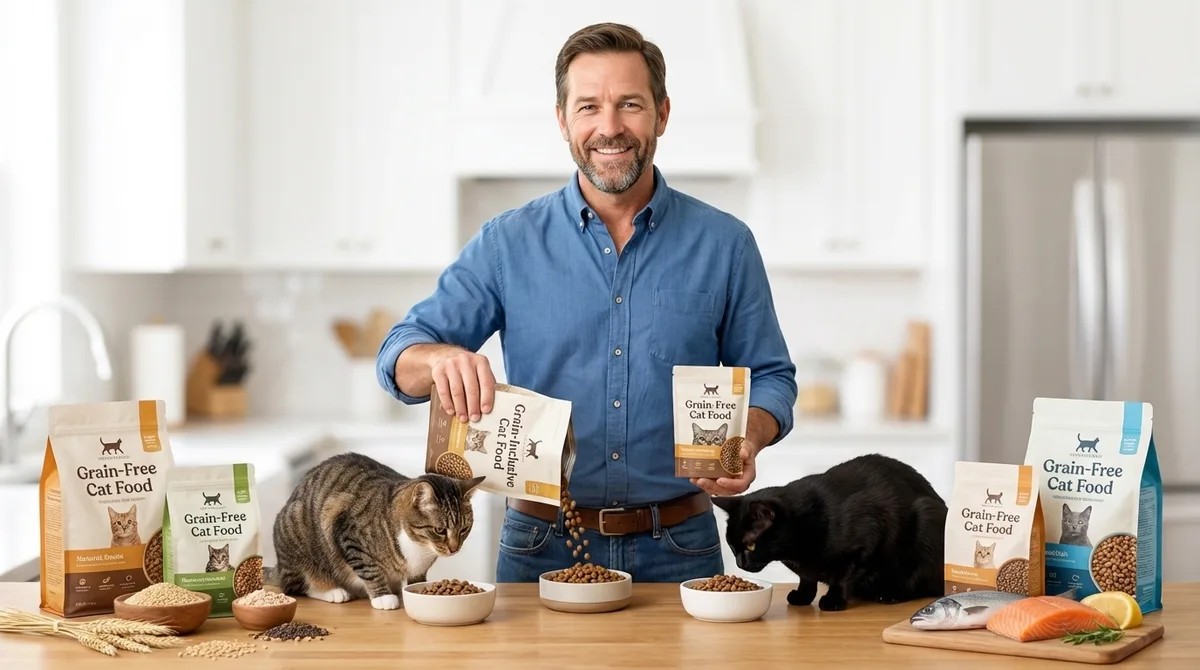
Grain-Free vs Grain-Inclusive Cat Food: Which Should You Choose?
Ever stood in the pet food aisle feeling guilty for not buying the expensive grain-free option? You're not alone—and you might be surprised to learn that premium label isn't necessarily better for your cat. In this episode, Steven Whitlow draws on over twenty years of animal experience to break down the grain-free versus grain-inclusive debate, revealing what veterinary science actually says about feline nutrition in 2026. Whether you're a new cat parent or questioning your current feeding choices, this episode cuts through the marketing noise to help you make the right decision for your individual cat. Most healthy cats do better on grain-inclusive food, and grain-free formulas are typically only necessary for cats with diagnosed grain allergies—which account for less than 5 percent of feline food sensitivities. Higher protein percentages on grain-free labels can be misleading because pea protein and other plant proteins count toward the total, yet cats can't utilize plant proteins as efficiently as animal-based proteins. The most common food allergens in cats are actually animal proteins like chicken, beef, and fish—not grains like rice or oats. Whole grains provide valuable soluble and insoluble fiber that supports digestive health and beneficial gut bacteria in cats without sensitivities. Grain-free cat food costs 30 to 50 percent more per pound than comparable grain-inclusive options, adding up significantly over a cat's 15 to 20 year lifespan. If switching between food types, transition gradually over 7 to 10 days to avoid digestive upset, especially since some grain-free formulas contain legumes that can cause gas and softer stools. Read the full article: https://totalpetparent.com/grain-free-vs-grain-inclusive-cat-food

Wet vs Dry Cat Food: Which Is Better for Your Cat's Health?
Ever wondered why some cats have luxurious coats while others seem perpetually dull and dehydrated? Professional cat groomer Jasmine Caldwell shares what nearly a decade of hands-on experience has taught her about how food format directly impacts everything from skin elasticity to vet visits. This episode breaks down the wet versus dry debate with practical insights for cat owners trying to make the best choice for their specific situation—whether you're managing a tight budget, caring for a senior cat, or juggling multiple felines at home. Wet food contains 75–80% moisture, mimicking natural prey and supporting cats' low thirst drive—even cats with water fountains rarely drink enough to compensate for dry-only diets. Chronic low-grade dehydration from dry food contributes to kidney disease and urinary tract issues, which are alarmingly common in older cats. Dry kibble requires starch binders to hold its shape, resulting in 30–40% carbohydrate content—far higher than what cats would naturally eat as obligate carnivores. Cost differences are significant: wet food runs $1–3 per day versus $0.50–1.50 for dry, making kibble more practical for multi-cat households on a budget. Despite marketing claims, dry food provides only limited plaque reduction—the dental benefits are largely overstated. A simple compromise for dry food feeders: adding a tablespoon or two of water to each serving helps boost hydration more than you'd expect. Read the full article: https://totalpetparent.com/wet-vs-dry-cat-food
Best Dry Cat Food: Premium Kibble Options for Adult Cats
If your cat has ever snubbed an expensive bag of kibble while you stood there questioning your life choices, you're not alone. In this episode, dog groomer Jasmine Caldwell shares what she's learned from years of conversations with her neighbor who runs a cat-only rescue—and explains how to cut through the marketing noise to find dry cat food that actually delivers quality nutrition. Whether you're tired of decoding confusing labels or watching your adult cat turn into a picky nightmare, this breakdown covers exactly what separates premium kibble from overpriced filler. Cats are obligate carnivores with zero biological need for carbohydrates, yet kibble requires carbs to hold its shape—look for formulas that keep carbohydrate content under 20-30% of total composition by doing the math yourself on the guaranteed analysis panel. The first ingredient should always be a specifically named animal protein like chicken, turkey, or salmon—not vague terms like "poultry meal" or "meat by-products" that mask lower-quality sources. AAFCO certification isn't just a marketing badge; it confirms the formula meets minimum levels of essential nutrients like taurine, arginine, and niacin that cats literally cannot produce on their own. Grain-free doesn't automatically mean healthier—some cats handle small amounts of rice or oats just fine, while grain-free alternatives like potatoes and tapioca can still spike carbohydrate levels. Named fats like chicken fat or salmon oil are superior to generic "animal fat" because they ensure consistency and traceability, plus omega-3s from fish oil create that unmistakable sleek coat quality. Aim for kibble with 30-45% crude protein on the guaranteed analysis, which better aligns with what cats would naturally consume hunting prey in the wild. Read the full article: https://totalpetparent.com/best-dry-cat-food

Best Wet Cat Food: Top Moisture-Rich Formulas for Felines
If your cat has ever sniffed their food bowl and walked away in disgust, you know that choosing wet cat food is about more than just nutrition labels—it's about finding something they'll actually eat. This episode breaks down what really matters when selecting moisture-rich formulas for your feline, from protein quality to texture preferences. Whether you're dealing with a picky eater, a senior cat with kidney concerns, or just trying to navigate the overwhelming pet food aisle, this guide covers the essential criteria for making a confident choice. The first ingredient should always be a named animal protein like chicken, turkey, or salmon—avoid vague terms like "meat by-products" or "animal digest" that obscure what your cat is actually eating. Moisture content above 75% is ideal since cats evolved getting hydration from prey, and chronic dehydration can lead to kidney disease and urinary tract issues even in cats who drink from their water bowl. AAFCO certification is your baseline standard—foods without it should only be used as treats or toppers, never as complete meals for your cat. Carrageenan, a common thickener in wet food, may cause inflammation in sensitive cats, so if your cat has digestive issues, carrageenan-free options are worth trying. Texture matters more than most owners realize—pâté works well for seniors with dental problems, while shredded or flaked formulas appeal to cats who like to "hunt" their food, and switching textures can solve apparent pickiness. Life stage formulas aren't just marketing—kittens need DHA for brain development, while senior cats benefit from lower phosphorus levels to protect kidney health and softer textures for aging teeth. Read the full article: https://totalpetparent.com/best-wet-cat-food
Best Cat Food: Complete Guide to Choosing Quality Nutrition for Your Feline
Are you unknowingly feeding your cat the nutritional equivalent of fast food? In this episode, Jasmine Caldwell breaks down everything cat parents need to know about choosing quality nutrition for their feline companions. From decoding ingredient labels to understanding why cats have drastically different dietary needs than dogs, this guide tackles the central question every cat owner faces: what actually makes cat food good versus just cleverly marketed? Cats are obligate carnivores with unique nutritional requirements—they need nutrients like taurine, preformed vitamin A, and arachidonic acid that can only come from animal tissue, not plant sources. AAFCO certification is your baseline for nutritional adequacy, not a gold standard for quality; you still need to evaluate ingredient sourcing, protein sources, and carbohydrate content on your own. Many commercial cat foods contain 30–40% carbohydrates from cheap fillers like corn and wheat, despite cats having no dietary requirement for carbs and limited ability to digest them—high-carb diets are linked to obesity, diabetes, and urinary issues. Moisture content is critical for cat health because cats evolved with weak thirst drives and are designed to get water from prey; dry kibble contains only 6–10% moisture while wet food provides 75–80%, meaning kibble-only cats often live in chronic mild dehydration. The quality of protein matters as much as the percentage—look for named meat sources like chicken, turkey, or salmon at the top of the ingredient list rather than generic by-products or grain fillers. Poor nutrition shows up visibly in coat quality first, with brittle fur, excessive shedding, and dandruff serving as early warning signs of deeper nutritional deficiencies. Read the full article: https://totalpetparent.com/best-cat-food

How to Transition Your Dog to New Dog Food Without Digestive Issues
Switching your dog's food sounds simple enough—until you're dealing with a week of digestive disasters and wondering where you went wrong. In this episode, Steven Whitlow breaks down the proven method for transitioning your dog to a new food without the stomach upset, accidents, and emergency vet visits that plague so many pet owners. Whether you're making the switch due to allergies, a new life stage, or simply better nutrition options, this step-by-step guide works for dogs of all ages and sizes. If you've ever dumped out the old kibble and poured in the new without a plan, this one's for you. Plan for seven to ten days for a standard food transition, or extend it to fourteen days if your dog has a sensitive stomach—rushing this process is the number one mistake pet owners make. Eyeballing food portions is where most transitions go wrong; use measuring cups or a kitchen scale to nail the ratios at each stage of the switch. Timing matters as much as technique—avoid starting a food transition during travel, holidays, moves, or any period of household stress that could compound digestive issues. Always mix the two foods together thoroughly rather than placing them side by side, since many dogs will pick out their preferred kibble and skip the rest entirely. Keep plain pumpkin puree (not pie filling) on hand as a natural remedy if mild digestive upset occurs during the transition. Large breed puppies shouldn't switch to adult food until eighteen to twenty-four months of age, while most other breeds can transition around twelve months—and senior formulas typically become appropriate around age seven. Read the full article: https://totalpetparent.com/how-to-transition-your-dog-to-new-dog-food-without-digestive-issues

Understanding AAFCO Dog Food Standards and Nutrition Labels
Ever stared at a dog food label and felt like you needed a chemistry degree to understand it? In this episode, host Jasmine Caldwell breaks down the AAFCO standards that govern what "complete and balanced" actually means on your dog's food. Drawing from her nearly decade-long experience as a groomer and lessons learned from her own senior shepherd's digestive struggles, she explains how to decode those cryptic nutrition labels and make genuinely informed feeding decisions for dogs at every life stage. AAFCO doesn't actually approve, certify, or regulate dog food directly—they write the nutritional rulebook, but your state's Department of Agriculture enforces it. There are two ways manufacturers can claim their food is "complete and balanced": formulation (meeting requirements on paper) or feeding trials (actual dogs eating the food for six months under veterinary supervision), and you can find which method was used in the nutritional adequacy statement on every compliant package. The growth and reproduction profile requires significantly more protein (22.5%) and fat (8.5%) than the adult maintenance profile (18% protein, 5.5% fat), which matters when matching food to your dog's life stage and energy needs. "Crude protein" is a laboratory measurement of nitrogen content, not a measure of quality or digestibility—meaning 28% protein from chicken is not equivalent to 28% protein from by-products and corn gluten, even though both technically meet AAFCO standards. Foods labeled "all life stages" meet the more demanding growth profile, making them safe for both puppies and adults, though large breed puppies have unique calcium and phosphorus requirements that warrant more specific formulas. The nutritional adequacy statement tucked on the back or side of every compliant dog food package tells you exactly which life stage the food targets and how it was validated. Read the full article: https://totalpetparent.com/understanding-aafco-dog-food-standards-and-nutrition-labels

How to Choose the Right Dog Food for Your Dog's Needs
Ever found yourself overwhelmed in the pet food aisle, surrounded by dozens of bags all claiming to be the best choice for your furry friend? You're definitely not alone—it's the most common question veterinary professionals hear from dog owners. In this episode, Steven Whitlow draws on over twenty years of experience working with dogs and their families to break down exactly how to evaluate dog food based on your specific dog's age, size, and health needs. Whether you have a growing puppy, an active adult, or a senior dog with special requirements, you'll walk away knowing how to read labels with confidence and make choices that can genuinely transform your dog's health. Your dog's age and size are the two most important factors in determining nutritional needs—puppies, adults, and seniors all require different calorie levels, protein amounts, and specific nutrients to thrive. Large and giant breed puppies actually need controlled calcium and calorie intake; too much of either can cause serious developmental joint problems, which is why breed-specific formulas matter. The first five ingredients on a dog food label make up the bulk of what's in the bag, and you want to see specific named proteins like chicken, beef, or salmon rather than vague terms like "meat meal" or "animal by-product." Ingredient splitting is a common manufacturer tactic where the same ingredient appears multiple times under different names (like corn, corn gluten meal, and ground corn) to disguise how much of it is actually in the food. "Chicken meal" is actually a quality ingredient—it's concentrated protein with water removed—while "poultry meal" is vague and typically lower quality. Specific fats like chicken fat or salmon oil are preferable to generic "animal fat," and omega-3 fatty acids from fish oils provide benefits ranging from coat health to brain development in puppies and anti-inflammatory support for seniors. Read the full article: https://totalpetparent.com/how-to-choose-the-right-dog-food-for-your-dog-s-needs

Dog Food Ingredients to Avoid: Complete Checklist for Pet Parents
Ever found yourself squinting at a dog food label, completely baffled by ingredients that sound more like chemistry experiments than nutrition? In this episode, professional dog groomer Jasmine Caldwell draws on nearly a decade of hands-on experience with dogs of every size and breed to decode exactly what those confusing labels mean for your pet's health. She breaks down the specific ingredients that have no place in your dog's bowl—from mystery meat by-products to chemical preservatives—and explains how making smarter choices can transform your dog's coat, skin, energy, and overall wellbeing. Unspecified "meat by-products" or generic "meat and bone meal" on a label means you're gambling on slaughterhouse leftovers from unknown animals—always look for named protein sources like "chicken meal" or "lamb meal" instead. BHA, BHT, and ethoxyquin are synthetic preservatives banned in human food in some countries but still legal in US pet food, with studies linking them to potential carcinogenic effects and organ damage. When plant proteins like corn gluten meal or soy protein isolate appear in the top five ingredients, manufacturers are using cheap fillers to inflate protein percentages while skimping on the animal protein dogs actually need. Artificial colors like Blue 2, Red 40, and Yellow 5 serve zero nutritional purpose—they exist purely for human appeal and have been linked to hyperactivity and allergic reactions in sensitive dogs. Look for foods preserved with natural alternatives like mixed tocopherols (vitamin E) or rosemary extract rather than chemical preservatives, and seek out brands that specify USDA-inspected or human-grade ingredients. The quality of your dog's food shows up visibly in their coat, skin, and energy levels—switching away from low-quality protein sources can produce noticeable improvements in as little as three weeks. Read the full article: https://totalpetparent.com/dog-food-ingredients-to-avoid

What Is Human-Grade Dog Food? Understanding Premium Dog Food Standards
Ever stood in the pet food aisle wondering if "human-grade" is just clever marketing or something that actually matters for your dog? In this episode, Steven Whitlow draws on twenty years of working with dogs to break down exactly what human-grade dog food means, how it differs from conventional feed-grade options, and whether the higher price tag is worth it for your pet. If you've been confused by premium dog food labels, this episode gives you the clarity you need to make an informed choice. Human-grade dog food isn't just a marketing term—AAFCO has specific guidelines requiring every single ingredient to meet FDA human food standards, and if even one ingredient is feed-grade, the product can't legally claim human-grade status. The difference goes beyond ingredients to include where the food is made: human-grade products must be manufactured in facilities certified for human food production, following the same Hazard Analysis and Critical Control Points protocols used by restaurants and grocery suppliers. Feed-grade ingredients aren't necessarily unsafe, but they're held to different, less stringent rules—feed-grade chicken, for example, might include parts or processing methods that wouldn't be allowed in chicken sold for human consumption. Human-grade doesn't automatically mean nutritionally complete—you still need to check for AAFCO certification to confirm the food meets your dog's nutritional requirements at their specific life stage. Dogs with digestive issues, skin problems, or sensitive stomachs often show improvement when switched to human-grade foods, likely due to higher-quality proteins and gentler processing methods that improve digestibility. Brands making genuinely human-grade food will openly share details about their facilities, certifications, and ingredient sourcing—transparency is a hallmark of legitimate human-grade manufacturers. Read the full article: https://totalpetparent.com/what-is-human-grade-dog-food-understanding-premium-dog-food-standards

Best Senior Dog Food for Older Dogs
Is your senior dog slowing down, losing that coat shine, or struggling with stiff joints in the morning? This episode dives into the best senior dog food options for aging dogs, helping you navigate the overwhelming choices to find the right formula for your companion's changing nutritional needs. Host Jasmine Caldwell shares her personal experience transitioning her shepherd Max to senior food and breaks down top picks across different categories—from sensitive stomach solutions to high-protein formulas for active older dogs. Senior dog food isn't just about fewer calories—it's about joint-supporting ingredients like glucosamine and chondroitin at therapeutic levels, improved digestibility, and higher-quality protein sources that aging bodies can actually utilize. Hill's Science Diet Adult 7+ is a solid starting point for most senior dogs, but expect a 7-10 day gradual transition period since the chicken meal formula can cause digestive upset initially. Blue Buffalo's cold-formed LifeSource Bits preserve nutritional value better than standard kibble processing, though picky eaters may leave these antioxidant-packed pieces behind in the bowl. Purina Pro Plan Bright Mind uses medium-chain triglycerides from coconut oil to support cognitive function—a real consideration if your dog shows signs of mental decline like circling, disorientation, or sleep pattern changes. Grain-free options like Wellness CORE can help dogs with inflammatory conditions or grain sensitivities, but the potential link to dilated cardiomyopathy means you should consult your vet first, especially for breeds predisposed to heart disease. Orijen Senior packs 38 percent crude protein with whole prey ingredients, making it ideal for active seniors or working dogs, but that higher protein level isn't appropriate for dogs with kidney issues. Read the full article: https://totalpetparent.com/best-senior-dog-food-for-older-dogs
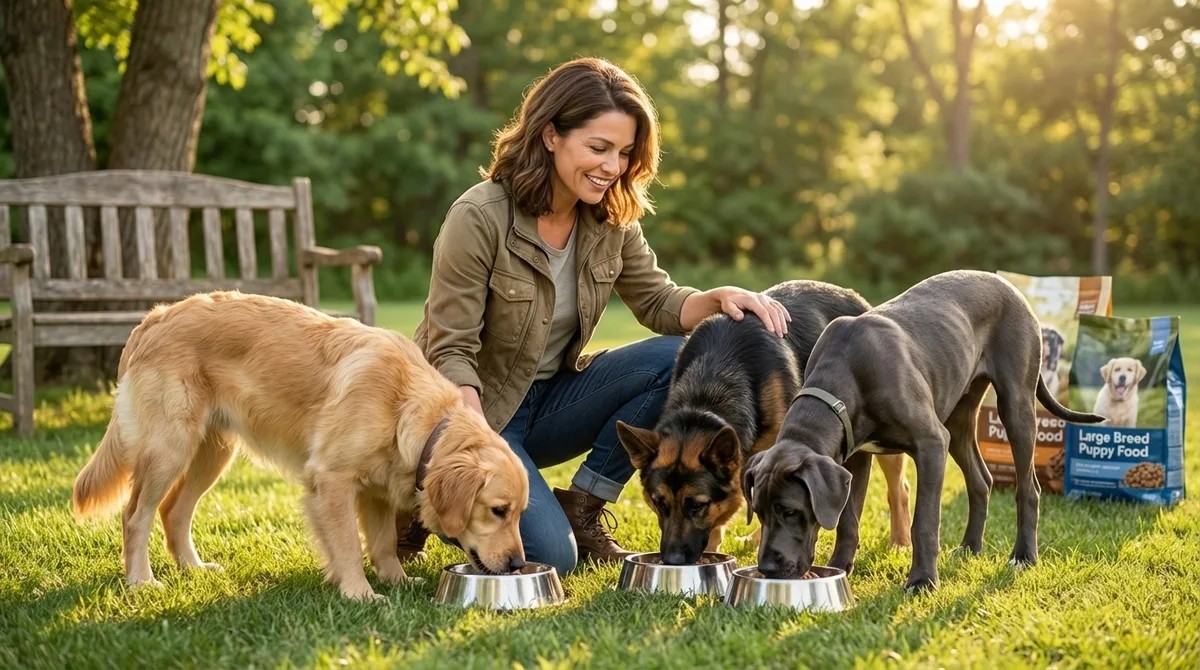
Best Puppy Food for Large Breed Puppies
That adorable Great Dane puppy growing at lightning speed needs very different nutrition than your neighbor's beagle, and getting it wrong during those critical first months can mean a lifetime of joint problems. In this episode, professional groomer Jasmine Caldwell shares nearly a decade of observations about how early nutrition shows up in everything from coat quality to mobility, explaining exactly what to look for when choosing food for puppies expected to exceed 50 pounds at adulthood. Whether you're bringing home a Labrador, German Shepherd, or any other large breed, this episode breaks down the science behind proper growth rates and gives you specific numbers to look for on food labels. Excess calcium actually accelerates bone growth faster than surrounding tissues can support, leading to developmental orthopedic diseases—look for calcium levels between 0.9% and 1.5% on a dry matter basis with a calcium-to-phosphorus ratio between 1:1 and 1.5:1. Protein quality matters more than percentage; a puppy can thrive on 26% protein from named meat sources while struggling on 32% protein from low-quality by-products, so prioritize named animal proteins like chicken, lamb, or salmon in the first three ingredients. Target foods with moderate calorie density around 340 to 380 kilocalories per cup to prevent rapid weight gain that stresses developing joints, and reduce meal portions by about 10% when actively using training treats. Dogs convert plant-based omega-3s poorly, so look for EPA and DHA from fish oil or fish meal rather than flaxseed for meaningful joint support during development. Always verify the label specifically states the food is "formulated to meet AAFCO nutrient profiles for growth in large breed puppies"—generic "all life stages" formulas don't necessarily address large breed requirements. You should be able to feel your puppy's ribs with light pressure but not see them prominently; overweight puppies carry extra load on developing joints that sets the stage for arthritis later in life. Read the full article: https://totalpetparent.com/best-puppy-food-for-large-breed-puppies

Dry Dog Food vs Wet Dog Food: Which Is Better for Your Dog?
Think you know which type of dog food is better? Most pet owners assume there's a clear winner between kibble and canned food, but the truth is far more nuanced. In this episode, Steven Whitlow draws on two decades of hands-on experience with hundreds of dogs to break down the real differences between dry and wet food—and why the right choice depends entirely on your dog's age, health, dental condition, and your lifestyle. Whether you're feeding a senior with kidney concerns or a puppy with a developing digestive system, this guide will help you make an informed decision. The moisture gap is massive: dry kibble contains just 6–10% water while wet food sits at 75–85%, directly affecting how much your dog needs to drink and impacting kidney function, digestion, and overall hydration. Calorie density differs dramatically—a cup of dry food delivers 300–500 calories compared to 150–200 in the same volume of wet food, making kibble easier for precise portion control and weight management. Wet food's higher moisture content makes it especially valuable for senior dogs over seven years, dogs with kidney disease, and those recovering from illness who struggle to drink enough water on their own. The protein percentages on labels can be misleading; when you remove moisture and compare on a dry matter basis, quality wet and dry foods often deliver similar actual protein and fat levels. Dry food offers practical advantages including longer shelf life (4–6 weeks opened versus 2–3 days for wet), lower cost per serving, and mild dental benefits through abrasive action on teeth. You don't have to choose one or the other—many dogs thrive on a combination of both food types, balancing hydration benefits with cost efficiency and dental support. Read the full article: https://totalpetparent.com/dry-dog-food-vs-wet-dog-food

Best Grain-Free Dog Food for Dogs with Allergies
If your dog is dealing with constant itching, ear infections, or digestive issues, the culprit might be hiding in their food bowl. In this episode, professional groomer Jasmine Caldwell shares what she's learned from years of working with allergic dogs—including her own—and breaks down exactly what makes a grain-free formula actually work for sensitive pups. Whether you're overwhelmed by ingredient labels or confused about the DCM controversy, this guide will help you make a confident choice for your dog. Novel proteins like venison, duck, bison, or rabbit are often better choices than chicken or beef for allergic dogs, since most sensitivities develop to proteins a dog has eaten repeatedly over time. Not all grain-free foods are created equal—some rely heavily on legumes like peas and lentils as primary ingredients, which has raised questions about a potential link to heart disease in dogs, so look for formulas using sweet potatoes or tapioca as carb sources instead. Omega fatty acids from fish oil or flaxseed are essential for skin health, and you can check the guaranteed analysis for omega-6 levels around 2.5–4% and omega-3 at 0.3–0.5% minimum. Probiotics and prebiotics in dog food support gut health, which directly influences immune function and can actually help reduce allergic responses over time. AAFCO feeding trial statements carry more weight than simple formulation claims—look for language confirming the food was tested on real dogs for at least six months with health monitoring. Limited-ingredient formulas with fewer than ten core components make it much easier to identify triggers when you're working through an elimination diet with your vet. Read the full article: https://totalpetparent.com/best-grain-free-dog-food-for-dogs-with-allergies

Best Dog Food: Complete Guide to Choosing the Right Nutrition for Your Dog
Ever wonder why some dogs have that unmistakable healthy glow while others seem perpetually dull-coated and low-energy? Professional groomer Jasmine Caldwell has spent nearly a decade reading the signs of nutrition—or lack thereof—in the thousands of dogs that come through her shop. In this episode, she breaks down exactly how to choose dog food that actually works for your specific dog, cutting through marketing hype to focus on what genuinely matters for your pet's health and longevity. There's no universal "best" dog food—what works perfectly for a high-energy terrier would be wrong for a senior shepherd with mobility issues, so you need to match nutrition to your dog's life stage, breed size, activity level, and health conditions. AAFCO compliance is your non-negotiable baseline; look for the statement confirming the food meets Association of American Feed Control Officials standards for complete and balanced nutrition before considering anything else. Named meat sources like chicken, beef, or salmon should appear in the first few ingredients—vague terms like "meat meal" or "animal byproducts" are red flags worth avoiding. Fats are essential for coat health and brain development, with minimums of 5.5 percent for adult dogs and 8.5 percent for puppies; the difference shows up immediately in coat texture and sheen. Grain-free isn't automatically better—what matters more is whether carbohydrate sources are digestible and functional rather than just cheap filler. Higher-quality foods often require smaller serving sizes because better digestibility means your dog extracts more nutrition per cup, which can offset the higher price point. Read the full article: https://totalpetparent.com/best-dog-food