Show 1464: Can Vaccines Protect the Brain from Dementia?
According to the Alzheimer’s Association, nearly seven million Americans currently suffer from that type of dementia. Experts expect that more will be burdened with it in the future, as baby boomers continue to reach advanced ages.
Audio is streamed directly from the publisher (pscrb.fm) as published in their RSS feed. Play Podcasts does not host this file. Rights-holders can request removal through the copyright & takedown page.
Show Notes
According to the Alzheimer’s Association, nearly seven million Americans currently suffer from that type of dementia. Experts expect that more will be burdened with it in the future, as baby boomers continue to reach advanced ages. Many people are eager to protect the brain from deterioration. In this episode, we discuss an unexpected approach to lowering your risk for Alzheimer disease (AD) and other dementias–get a shingles shot!
At The People’s Pharmacy, we strive to bring you up‑to‑date, rigorously researched insights and conversations about health, medicine, wellness and health policies and health systems. While these conversations intend to offer insight and perspective, the content is provided solely for informational and educational purposes. Please consult your healthcare provider before making any changes to your medical care or treatment.
How You Can Listen
You could listen through your local public radio station or get the live stream at 7 am EST on Saturday, March 7, 2026, through your computer or smart phone (wunc.org). Here is a link so you can find which stations carry our broadcast. If you can’t listen to the broadcast, you may wish to hear the podcast later. You can subscribe through your favorite podcast provider, download the mp3 using the link at the bottom of the page, or listen to the stream on this post starting on March 9, 2026.
How to Protect the Brain with Vaccination
Our guest, Dr. Pascal Geldsetzer, has led three impressive studies that took advantage of natural experiments to see if vaccination against shingles could protect the brain from dementia. The results were remarkably consistent and encouraging.
What Is a Natural Experiment?
In Wales, when the Zostavax shot against shingles first became available, public health authorities established eligibility criteria to get it through the national health system. Welsh citizens had to be born on or after September 2, 1933, to get the shot. This created a situation in which two groups of people differed only by birth date and by whether or not they were immunized. (Most people who were eligible for the shot got it.) This mimics a randomized clinical trial in which the only difference between two groups is the intervention. The absolute risk reduction over 7 years was 3.5%, which means that people who got the shot were 20% less likely (relative risk) to be diagnosed with dementia. That big difference is statistically significant (Nature, April 2, 2025).
Wales is not the only country that set up eligibility requirements. Australia did, too. In Australia, everyone between 70 and 79 years old as of Nov. 1, 2016, could get a free shingles shot and many people did. Here, too, you have a group of senior citizens who differ from each other only by whether they got vaccinated and whether their birthdays were slightly earlier or later. In this case, the absolute reduction in risk of dementia over 7 years was 1.8% (JAMA, April 23, 2025). This difference was also significant.
One More Experiment Suggests Vaccination Can Protect the Brain
Another natural experiment comes not from a nation, but from a province of our norther neighbor, Canada. The province of Ontario decided that people born on or after Jan. 1, 1946, could get a shingles vaccination. People just slightly older were not eligible. Do you recognize a pattern? When the investigators analyzed health records from 1990 to 2022, they found that people eligible for the vaccine based on their date of birth were 2% less likely to get a dementia diagnosis. In other provinces of Canada that had different rules for vaccination eligibility, people don’t show a significant difference in dementia risk based on their birthday. (Lancet Neurology, Feb. 2026).
Which Vaccine Were Scientists Studying?
The original shingles vaccine, Zostavax, was the one available for all these natural experiments. For the most part it has now been replaced by a newer version called Shingrix, which uses different technology. Studies show that Shingrix is better at preventing shingles outbreaks and post-herpetic neuralgia, the lingering pain after shingles (Vaccines, April 28, 2025). It is unclear whether it would also work better to protect the brain from Alzheimer disease. At least one study suggests it works quite well in reducing the risk of dementia (Vaccine, Feb. 5, 2025).
Was the Single-Minded Pursuit of Amyloid Misguided?
For decades, the pharmaceutical industry has focused its anti-Alzheimer efforts on amyloid plaques that are a pathological feature of brains afflicted with Alzheimer disease. They were apparent in the very first brain described by Alois Alzheimer at the turn of the 20th century. But the assumption that getting rid of amyloid plaque would solve the problem has not borne fruit. The FDA has approved three compounds that are quite effective at reducing amyloid plaque in the brain. Two, lecanemab (Leqembi) and donanemab (Kisunla), are still on the market. Their impact on cognitive decline and functionality of AD patients is unimpressive.
Other Infections That May Harm the Brain
It seems odd that neurologists might be resistant to the idea of an infection such as chickenpox (the virus behind shingles) or herpes (which causes cold sores and genital lesions) changing brain function. More than a hundred years ago, before the development of effective antibiotics, doctors were quite aware that tertiary syphilis could lead to dementia. Other infections such as Chlamydia pneumoniae may also interfere with brain function. The COVID pandemic demonstrated that the SARS CoV-2 virus can cause brain fog, and we worry that people with long COVID may be at higher risk for dementia.
Can the Shingles Vaccine Help with Treatment?
One immunization outcome that Dr. Geldsetzer’s team uncovered may help with treatment. In Wales, people with dementia who got the shingles vaccine had a slower progression of their cognitive decline. (Cell, Dec. 11, 2025). This suggests that whatever it is doing to protect the brain may extend into the disease process itself. This definitely deserves more research. Dr. Geldsetzer would like to conduct a true randomized clinical trial to explore this possibility and to tease the differences, if any, between Zostavax and Shingrix with respect to their effects on dementia prevention.
This Week’s Guest:
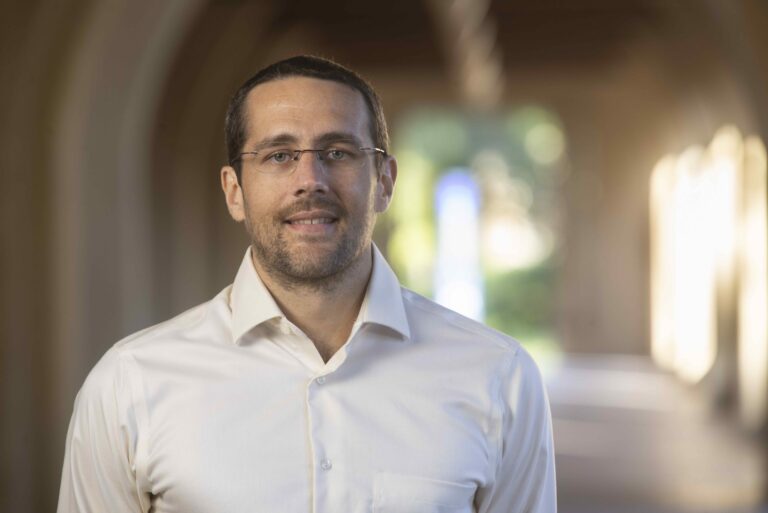
Pascal Geldsetzer, MD, PhD, MPH is an Assistant Professor of Medicine at Stanford University and a Biohub Investigator. His research focuses on identifying and evaluating the most effective interventions for improving health at older ages. In 2026, he was named one of the 100 most influential people in health and medicine globally by TIME Magazine (The TIME100 Health list) for his work on the link between shingles vaccination and dementia. He is currently trying to raise funds from philanthropy for a large-scale clinical trial of shingles vaccination for dementia prevention. You can contact him by email: [email protected]
Pascal Geldsetzer, MD
Courtesy Stanford Medicine
Listen to the Podcast:
The podcast of this program will be available Monday, March 9, 2026, after broadcast on March 7. You can stream the show from this site and download the podcast for free.
You can also listen to our previous interview with Dr. Geldsetzer. It is Show 1394: Viruses, Vaccines and Alzheimer Disease.
Download the mp3 of this show, or listen to the podcast on Apple Podcasts or Spotify.
Transcript of Show 1464:
A transcript of this show was created using automated speech-to-text software (AI-powered transcription), then carefully reviewed and edited for clarity. While we’ve done our best to ensure both readability and accuracy, please keep in mind that some mistakes may remain. If you have any questions regarding the content of this show, we encourage you to review the original audio recording. This transcript is copyrighted material, all rights reserved. No part of this transcript may be reproduced, distributed, or transmitted in any form without prior written permission.
Joe
00:00-00:01
I’m Joe Graedon.
Terry
00:01-00:05
And I’m Terry Graedon. Welcome to this podcast of The People’s Pharmacy.
Joe
00:06-00:25
You can find previous podcasts and more information on a range of health topics at peoplespharmacy.com. Alzheimer disease is one of the cruelest conditions. It robs people of their memories and their personalities. This is The People’s Pharmacy with Terry and Joe Graedon.
Terry
00:34-00:42
For decades, drug companies have focused almost exclusively on removing amyloid plaque from the brain. That hasn’t worked very well.
Joe
00:43-00:55
Research has been accumulating that pathogens might be contributing to dementia. There’s growing evidence that the shingles vaccine might be able to reduce the risk of developing dementia.
Terry
00:55-01:03
Today, we’ll speak with Dr. Pascal Geldsetzer, the lead investigator behind that research. He’ll explain these natural experiments.
Joe
01:03-01:09
Coming up on The People’s Pharmacy, can vaccines protect the brain from dementia?
Terry
01:14-02:05
In The People’s Pharmacy Health Headlines: Measles cases continue to climb.
The CDC reported 160 new cases during the last week of February. The total in just two months is 1,136 confirmed cases from 27 states. That’s way more than last year at this time, and it may be an underestimate.
According to the Johns Hopkins University Center for Outbreak Response, the total is actually 1,189. Many measles cases go unreported. We are likely to beat last year’s record of 2,281 cases by spring and shoot way past it. States that have been hardest hit include South Carolina, Florida, and Texas. Utah, Arizona, and Ohio are also reporting new cases.
Joe
02:06-02:46
Many older adults maintain that measles is not that big a deal because they remember catching this highly infectious disease as children. But the CDC points out that one in five unvaccinated youngsters will be hospitalized. One out of every 10 children with measles will get an ear infection. One in 20 will develop pneumonia and one in a thousand will develop brain encephalitis.
Because measles is considered the most contagious virus known to man, it’s likely that this disease will continue to accelerate unless people begin to follow Dr. Mehmet Oz’s advice from last month: “Take the vaccine, please.”
Terry
02:48-03:45
GLP-1 drugs such as Ozempic and Wegovy have clear benefits in that they help control blood sugar and enable people to lose weight. Other possible outcomes include reduced cravings for alcohol, improved kidney and heart health, and reduced fatty liver disease.
But there are a number of gastrointestinal side effects that can be quite distressing. Now, two new studies suggest that GLP-1 drugs may also increase the risk for osteoporosis or bone fracture. An Israeli study included records for more than 46,000 older adults with type 2 diabetes.
Those on GLP-1 drugs were 11% more likely to experience a fragility fracture. Whether it’s caused indirectly by weight loss or directly from the medicines remains to be determined. Previous research has shown that exercise can help moderate the risk of bone loss.
Joe
03:46-04:28
Just as GLP-1 drugs have some unexpected side effects, such as osteoporosis, they may also have some unanticipated benefits. Researchers from Thomas Jefferson University in Philadelphia conducted an analysis of medical records.
People with chronic migraine were 10% less likely to visit the ER if they started taking a prescribed GLP-1 medication. The comparison group was people with chronic migraine taking topiramate, an anticonvulsant used to prevent migraine. In addition, those on GLP-1 medicines were 14% less likely to be hospitalized and 13% less likely to get a new triptan prescription for treating migraine.
Terry
04:28-05:16
A research letter in JAMA this week reports that American teenagers are not getting enough sleep. The study looked at trends from 2007 to 2023. The percentage of students reporting insufficient sleep increased from 68.9% in 2007 to 76.8% in 2023, the investigators write. The number of adolescents who sleep five hours or less a night increased dramatically.
An accompanying editorial notes that inadequate sleep is linked to academic struggles, cognitive difficulties, and depression. It recommends changes in school start times and reduced use of phones and tablets in the evening.
Joe
05:17-06:03
People have been paying increasing attention to the microbiome of their digestive tracts. To find out what bacteria and other microorganisms they’re hosting, some people turn to testing laboratories. How reliable are the results?
A study recently found a serious lack of quality control among direct-to-consumer testing services. The authors conclude that their rigorous assessment of seven microbiome testing companies has spotlighted the systemic issue of poor comparability that plagues the industry. They blame methodological variability.
Until this problem can be rectified, health care providers and patients can’t trust stool testing data to give them reliable results.
And that’s the health news from the People’s Pharmacy this week.
Terry
06:14-06:17
Welcome to the People’s Pharmacy. I’m Terry Graedon.
Joe
06:17-06:25
And I’m Joe Graedon. The Alzheimer’s Association states that there are more than 7 million Americans currently dealing with dementia.
Terry
06:26-06:38
The problem is likely to get worse, as the baby boomers age. The impact on families and society is daunting. Is there anything we can do to reduce the likelihood of developing dementia?
Joe
06:39-07:10
To help us answer that question, we turn to Dr. Pascal Geldsetzer. He’s an assistant professor of medicine at Stanford University and a Biohub investigator.
His research focuses on identifying and evaluating the most effective interventions for improving health at older ages.
In 2026, Time magazine named him one of the 100 most influential people in health and medicine globally for his work on the link between shingles vaccination and dementia.
Terry
07:12-07:15
Welcome back to The People’s Pharmacy, Dr. Pascal Geldsetzer.
Dr. Pascal Geldsetzer
07:16-07:17
Thanks a lot for having me.
Joe
07:18-07:51
Dr. Geldsetzer, it’s great to have you back. And since we last talked with you, you are now in the realm of superstardom because of your third study. We’ll get to your studies in a moment with vaccines against dementia.
But first, I’d really like to find out, how did you come up with this idea in the first place? The notion that there was a natural experiment just waiting to be tested. How did that get hatched?
Dr. Pascal Geldsetzer
07:52-08:30
Yeah, well, I had this NIH New Innovator Award to look at using this method that we’re using here in our natural experiments. And we came upon the Shingles vaccination program in the UK as this beautiful textbook example of this approach that we could use.
And then, of course, we knew about this growing literature around herpes viruses that preferentially target your nervous system and a potential link to dementia.
And in this older age group, we thought the natural outcome to look at for us would be dementia. And that’s really how it all started.
Terry
08:31-08:41
Dr. Geldsetzer, do explain to us the natural experiment. You mentioned the UK. I think it was in Wales. What constitutes a natural experiment?
Dr. Pascal Geldsetzer
08:42-11:33
So it’s essentially a different approach than we usually use in epidemiology and analyses of electronic health record data sets, medical claims data. Usually what we do in these studies is that we compare those who get a certain medication or a vaccine to those who don’t.
And the basic problem and why often these studies are only considered to be at best hypothesis generating or suggestive but can’t get at cause and effect is that these individuals, those who decide to get vaccinated to those who don’t get vaccinated, are often very different in terms of their health motivations, health behaviors. And we have very little information on these variables, right? Like your dietary behavior, your physical activity levels.
So it’s very hard to adjust for all of these differences. And we never really know whether what we’re looking at is an actual cause and effect or just that those who happen to live a healthier lifestyle of some sort or be healthier in general are the ones who decide to get vaccinated as well and therefore have a lower risk of dementia or other health outcomes.
What we do in this natural experiment is that we’re using different comparison groups where we don’t rely on having perfect information on your diet and physical activity levels. Instead, we’re trying to find comparison groups that must be similar to each other in all respects.
And here we have this beautiful situation in the UK and in some other countries as well in the way in which they rolled out the shingles vaccine. So specifically, for example, in the UK, they said, you are ineligible if you had your 80th birthday just prior to the start date of the shingles vaccination program, which happened to be September 1st, 2013. And you were eligible if you had it just after. So we have these beautiful comparison groups where all that’s different about them is whether they were born just a week earlier or a week later.
And we know if I take a thousand people born one week, a thousand people born a week later, there shouldn’t be anything different about them in their physical activity levels, diets, etc. So we have beautiful comparison groups. And all that’s different about them is this massive difference in their probability of ever getting the shingles vaccine.
And then we can look at health outcomes very similar to a situation in a clinical trial where you throw a coin and you assign people to control or intervention.
And here, essentially, by random chance, just like the coin, people are born just a little bit earlier or a little bit later. So that’s why we are so excited about this research and why we really think we’re much more plausibly able to get at cause and effect rather than just correlation.
Terry
11:35-11:43
And what you found was that there was a difference in the likelihood that people would develop dementia after they were 80, right?
Dr. Pascal Geldsetzer
11:44-13:05
Absolutely. So we see these strong protective signals. So that was our first paper published in Nature last year, where we show that shingles vaccination appears to avert one in five new dementia diagnoses over seven years. Then we show a similarly large protective effect in Australia using primary care data from Australia. That was published just a few weeks after in JAMA.
And most recently, we show this also in Canada, where Ontario was the one Canadian province that rolled out the vaccine using these date-of-birth cut-offs. Other Canadian provinces didn’t, and we only see this effect as expected in Ontario. We have got many other analyses, publications in the works.
We seem to be seeing these strong protective patterns in data set after data set from different countries that rolled out the vaccine using these specific date of birth cutoffs. And it just together provides, I think, a uniquely compelling body of evidence that we’ve never had really for an intervention from observational data because we usually never have these beautiful natural experiments that we can exploit like we’re doing here with shingles vaccination.
Joe
13:05-13:32
So Dr. Geldsetzer, you are three for three. You’re batting a thousand. It’s an amazing accomplishment. And you have other studies in the works. So can you just give us some sense of how they compare to one another? Are the results similar or substantially different?
Dr. Pascal Geldsetzer
13:33-13:54
No, they are similar. Of course, the data sources are always a bit different. There are advantages and disadvantages. So what exactly we can look at and how [it] differs a little bit between data sets. But generally speaking, they all show the same strong protective signals that we have shown in our published studies so far.
Joe
13:54-14:07
Now, one of the things that’s sort of fascinating about your research is that it used what we’ll call an old shingles vaccine. I think it was called Zostavax?
Dr. Pascal Geldsetzer
14:08-14:09
Yes, correct.
Joe
14:10-14:22
And that has now disappeared. We now have a, quote unquote, new and more effective shingles vaccine called Shingrix. It requires two shots.
Terry
14:23-14:30
We know it’s more effective against shingles. We don’t know if it would be more effective against dementia.
Joe
14:30-14:57
Well, we don’t know if it’ll even work against dementia. So that’s the big question. But we know that the old shingles vaccine was surprisingly effective at preventing an onset of dementia after several years.
What is your thinking when it comes to the new, high-powered, more effective shingles vaccine called Shingrix?
Dr. Pascal Geldsetzer
14:58-16:29
Yeah, that’s a very important question. I think it really comes down to what we think the effect mechanism is. If we think what links shingles vaccination to dementia is a reduction in reactivations of the chickenpox virus.
So we know the chickenpox virus remains with you for life, hibernated in your nervous system after you contract chickenpox, usually in childhood. And it’s in this constant interplay with the immune system.
It presumably causes some inflammatory processes. We know inflammation is a key process, a bad thing in many chronic diseases. So reducing these reactivations through shingles vaccination may well have benefits.
If that is the mechanism, then we would think the newer vaccine should have at least the same protective effects for dementia because it’s more efficacious at reducing these reactivations than the old shingles vaccine.
However, if we think that the effect mechanism might be through a potentially virus-independent, broader effect on the immune system, a boost to the immune system, if you like, which we know exists for many vaccines and particularly for these live-attenuated vaccines, which is the Zostavax, the old shingles vaccine, is a live-attenuated vaccine, while the newer one is not, then it’s an open question whether the newer vaccine has similar benefits or larger or smaller benefits.
Terry
16:31-16:36
Dr. Geldsetzer, how have your colleagues responded to your research?
Joe
16:36-16:52
And I’d like to follow up on that question because for decades, we have put all our chips on the anti-amyloid approach. This is completely new, and you have about a minute to finish that before the break.
Dr. Pascal Geldsetzer
16:53-17:35
Yeah, so it’s actually been a very positive and encouraging reaction. People really, I think, understand that what we are generating here is a body of evidence from observational data that is very different and much more compelling than what we usually have for vaccines, other interventions when we do these observational data analyses.
People understand this basic intuition that our comparison groups here are virtually perfect comparison groups because all that’s different about them is this tiny difference in each. And so there’s a lot of excitement now in the dementia research community around this.
Terry
17:37-17:50
You’re listening to Dr. Pascal Geldsetzer, Assistant Professor of Medicine at Stanford University and a Biohub investigator. His research focuses on evaluating interventions for improving the health of older individuals.
Joe
17:51-17:54
After the break, we’ll find out about the reaction to Dr. Geldsetzer’s research.
Terry
17:55-18:04
Has it spurred a new way of thinking about the development of Alzheimer’s disease? It certainly is a different path from the pharmaceutical focus on amyloid plaques.
Joe
18:04-18:11
The infection connection with dementia is not as new as it might seem. A hundred years ago, doctors knew syphilis caused dementia.
Terry
18:11-18:18
It seems that a range of microbes might be making trouble in the brain, from herpes and chickenpox to Chlamydia pneumoniae.
Joe
18:18-18:23
Will anti-vaccination sentiment have an impact on Dr. Geldsetzer’s work?
Terry
18:39-18:42
You’re listening to The People’s Pharmacy with Joe and Terry Graedon.
Joe
20:51-20:54
Welcome back to The People’s Pharmacy. I’m Joe Graedon.
Terry
20:54-21:09
And I’m Terry Graedon.
Terry
21:23-21:51
Today, we’re talking about novel natural experiments that unexpectedly revealed a connection between infection and dementia. Policies that set arbitrary cutoffs on eligibility for vaccination with the first shingles vaccine, Zostavax, allowed researchers to compare people who were vaccinated with those who were not. This situation resembled a gold standard randomized controlled trial.
Joe
21:51-22:24
This natural experiment was conducted in at least three different countries, Wales, Australia, and Canada. In all of them, vaccinated individuals did better than unvaccinated people when it came to developing dementia. Would the newer Shingrix vaccine be even more effective? Research just published in Nature Communications suggests that people who received this recombinant shingles vaccine were 51% less likely to be diagnosed with dementia.
Terry
22:24-22:42
Our guest today is Dr. Pascal Geldsetzer, an assistant professor of medicine at Stanford University and a biohub investigator. His research focuses on identifying and evaluating the most effective interventions for improving health at older ages.
Joe
22:43-23:42
Dr. Geldsetzer, I would assume that the pharmaceutical industry would be incredibly excited about your research because up until now, they’ve spent billions, perhaps tens of billions of dollars down the anti-amyloid… I won’t say exactly what I think, but down that path that has not led to much in the way of real improvement or prevention of Alzheimer’s or dementia.
So along comes Dr. Geldsetzer and his colleagues, and they show that a vaccine might be effective and it might be some sort of infectious process. I mean, we’re talking about the virus that causes chickenpox. So how has the pharmaceutical industry responded to your research? And is it spurring a whole new way of thinking about Alzheimer’s disease and dementia?
Dr. Pascal Geldsetzer
23:43-25:47
I do think that it is playing into, but I think generally in the dementia research community, including in the pharmaceutical industry, there’s increasing openness, I think, to other hypotheses of dementia, of Alzheimer’s disease, than the amyloid cascade. Because so far, as you’re saying, some of the large investments really have provided relatively modest output.
And there’s increasing evidence that other pathways seem to also play an important role. And this year, of course, is one of these. There’s also increasing awareness of chronic disease consequences of infectious diseases more generally, for example, due to the COVID pandemic and some of the links between the SARS-CoV-2 virus and neurological consequences. So it’s certainly, I think, further opening up the openness to these possibilities.
And I think, you know, for us, the next step is really trying to generate funds to run a true clinical trial on this question to be able to more conclusively test this research question. But of course, we want to use the old live-attenuated vaccine, which is off-patent, because that is the vaccine for which we have all this evidence from our natural experiments.
But I think if we can provide this proof of concept that what we’re seeing in our natural experiments are true cause and effect relationships, it would be of such important implications for population health, for dementia research, that we must run this trial. And because it’s an off-patent vaccine, we are really hoping for philanthropy, private foundations to support us in getting this done.
Terry
25:50-26:38
I would like to point out that the infection connection with dementia is actually not quite as new as we are imagining. A hundred years ago, or more than a hundred years ago, doctors treating patients with dementia knew that one of the possible causes of dementia was tertiary syphilis.
Now, we think of syphilis as a sexually transmitted disease, which it is. It was, and it still is. But back in those days, before antibiotics, it could get to a state where it gets into the brain and actually causes pretty severe dementia. How did we forget that?
Dr. Pascal Geldsetzer
26:39-27:52
Well, I think it’s always been a hypothesis in the field. But generally, it’s always been very niche because we haven’t, well, the focus was on other hypotheses, particularly the amyloid cascade. And the evidence around infectious diseases and dementia was always just in the correlational realm.
So it was always comparing individuals who [were], you know, who fell sick from a certain infection or contracted a certain pathogen versus those who didn’t. And as I was saying earlier, these are always very different, usually, comparison groups, right? People who get a certain condition may have other differences to those who don’t in the immune system, in their exposure to other things in life.
So we’ve never had the evidence that we have now where we have natural experiment evidence and beautiful comparison groups to show this link potentially between here an infectious agent and dementia.
Joe
27:54-30:02
Dr. Geldsetzer, I’m fascinated by the idea that infections, a variety of infections, might in some way be causing dementia. So Terry mentioned neurosyphilis going way back over 100 years. But not that long ago, 30, 40 years ago, there was some suggestion that herpes simplex virus, HSV-1 and 2, might somehow get into the brain. And, you know, we know that cold sores, for example, it’s the virus traveling down the nerve to manifest itself. And, of course, sexually transmitted disease, herpes, too, can also do that. But it can also maybe go up into the brain.
And so this idea that there were herpes infections, and by the way, chickenpox, varicella zoster, that causes shingles is also a herpes virus. So there were these viral infections. And more recently, there have been some studies suggesting that bacterial infections, something called C. pneumoniae, Chlamydia pneumoniae, which is not a sexually transmitted disease. It’s a respiratory disease that affects the nasal passages in the lungs.
So you have C. pneumoniae, which is also easily transmitted. And then you have some other bacterial infections. I think there may be some other germs that are bad for our brains. And Dr. Geldsetzer may have a better sense of what they are. But the idea that there are a bunch of, we’ll call them pathogens, that might trigger inflammatory reactions in the brain, the neuroscience community has been somewhat resistant to that, even though it’s been out there for decades. Your thoughts?
Dr. Pascal Geldsetzer
30:05-31:52
True, but in the neuroscience community’s defense as well, um we’ve never had really strong evidence on the link between these infectious agents and dementia. But you can argue easily that we should have this evidence. We should have invested by now in clinical trials for example, that treat some of these pathogens that you’re mentioning and see whether it reduces your risk of dementia.
I will say, though, as well, that for the virus that causes shingles, we have a special pathogen, I think, in the sense that we know it preferentially targets your nervous system. And we know that it is in this constant interplay with the immune system and that these reactivations of the virus become more common with age.
And so the idea that it may sort of act as a chronic stressor to the immune system over life and accelerate some of these chronic inflammatory pathways, the weakening of the immune system with old age, and that this may be bad for dementia disease development, maybe potentially other conditions in the nervous system, is, I think, not far-fetched. It’s highly biologically plausible. And that is a case that we don’t have for many other pathogens.
So, yeah, I do think there’s something special to be said about the biological plausibility of the virus that causes shingles.
Terry
31:52-32:31
Dr. Geldsetzer, we have seen over the last five or six years or perhaps a little bit longer, the development of a great deal of polarization. We have political polarization, and it’s spilled over into public health so that we have some individuals with a fair amount of prominence who have become anti-vaccination.
How do you think this will affect both your research and any potential intervention that we might develop from your research?
Dr. Pascal Geldsetzer
32:33-33:23
It’s hard to say. So for me really, you know I’m focused on generating the most rigorous research evidence that I can. That is everything that that I’m focused on. And I, as I was saying I’m turning particularly to to private foundations and philanthropy to hopefully be able to get a true clinical trial on this question of shingles vaccination and dementia off the ground.
Because I think this would be such an important finding that we need this trial. And that’s really what I’m focused on. And I don’t think it’s my place to comment on broader societal and political issues.
Joe
33:23-34:25
One of the things that distresses me is that the pharmaceutical industry has poured, as I mentioned, billions of dollars into the development of anti-amyloid drugs. And we had the great honor to interview Dr. Moir at Harvard, who had come up with the idea that amyloid might be an immune reaction to infection.
In other words, it was the body’s natural immune system trying to fight off some kind of infectious agent. And unfortunately, he has died. But there are some researchers who sort of agree with him that maybe the amyloid hypothesis that if we could just get rid of amyloid, we could solve the problem, which doesn’t seem to have been the case, may have been somewhat counterproductive.
Your thoughts about that original research and where it stands today?
Dr. Pascal Geldsetzer
34:26-35:28
Yeah, I think it’s a very exciting line of research. And there has been more evidence generated in that line since Dr. Moir’s pioneering work on that front.
So, for example, recently, there has been a team around William Eimer and Rudy Tanzi at Harvard who have shown that P-tau, so the other hallmark of Alzheimer’s disease, are these tau protein tangles. That they also appear to be produced or generated at least partially in response to herpes virus infection.
So I think there is an increasing body of evidence that this antimicrobial hypothesis, as it’s called, of dementia, of Alzheimer’s disease, may well be an important line of evidence.
Joe
35:28-36:23
So as I’ve mentioned, billions of dollars have been spent to try and get rid of amyloid in the body. And you would think, I mean, I would think that the pharmaceutical industry would be knocking down your door saying, Dr. Geldsetzer, please take our money. We want you to do this extraordinarily important research on vaccinations.
So we’d like you to go back and look at that old vaccine that we have seen disappear from the marketplace. And, oh, by the way, we’d like you to test the new vaccine, the Shingrix vaccine, not so new anymore. But, you know, here’s $50 billion. Do this research immediately and gather your colleagues together. Why aren’t they knocking down your door?
Dr. Pascal Geldsetzer
36:24-37:22
Well, it is a large investment to run a clinical trial. And in fairness, we don’t fully understand the mechanism that links Shingles vaccination to dementia or Alzheimer’s disease. That’s, of course, important. It could lead to many new insights that could lead to other potential treatments, therapeutics, preventative tools.
And of course, one obstacle as well here is that the evidence from our natural experiments is for this old live-attenuated vaccine, which is an off-patent vaccine. It’s not used very widely anymore in most countries. And yeah, that’s really the main reason, I think, why I’m turning to hoping for philanthropy and private foundations to support the clinical trial.
Joe
37:22-37:48
You know, there is an old vaccine, a really old vaccine called BCG. It’s a vaccine that was developed primarily against tuberculosis. There’s a little bit of data that suggests that maybe BCG would have some, we’ll call it anti-dementia benefits.
In the minute we have before the break, your thoughts about BCG and the data that’s been created?
Dr. Pascal Geldsetzer
37:49-38:21
Yeah, so BCG is known. It’s also a live-attenuated vaccine, just like the old shingles vaccine. And it’s known to have strong indirect effects on the immune system that appear to be important for a variety of health outcomes.
So I don’t think it’s, you know, far-fetched to think that BCG may have effects on dementia disease development as well, particularly in older age.
Terry
38:22-38:40
You’re listening to Dr. Pascal Geldsetzer, an assistant professor of medicine at Stanford University and a biohub investigator. His research focuses on identifying and evaluating the most effective interventions for improving health at older ages.
Joe
38:41-38:48
After the break, we’ll consider whether antibiotics could play a role in reducing the risk of dementia.
Terry
38:49-38:57
Given Dr. Geldsetzer’s research, it seems that the shingles vaccine might be a therapeutic tool in addition to helping with prevention.
Joe
38:58-39:09
Scientists once thought that the brain was sterile, no bacteria, no viruses. But now it seems that it has a distinct microbiome of its own.
Terry
39:09-39:17
Well, one thing we worry about is the possibility that COVID could increase the risk for dementia. How will we find out?
Joe
39:17-39:24
What can we all do to reduce our chances of developing dementia? We’ll get Dr. Geldsetzer’s recommendations.
Terry
39:24-39:28
He’ll also tell us about the research he hopes to conduct going forward.
Joe
39:28-39:33
How does he plan to study the infection connection with Alzheimer’s disease?
Terry
39:38-39:42
You’re listening to The People’s Pharmacy with Joe and Terry Graedon.
Joe
39:50-39:53
Welcome back to The People’s Pharmacy. I’m Joe Graedon.
Terry
39:53-40:07
And I’m Terry Graedon.
Terry
40:22-40:56
Our topic today is the infection connection with dementia. If vaccines could help delay or prevent the onset of Alzheimer’s disease or other dementias, might other anti-infective approaches also be valuable? Could vaccines help fight off dementia even after cognitive decline has begun? Dr. Geldsetzer’s research focused on the first-generation shingles vaccine called Zostavax. A new study suggests that the Shingrix vaccination might also provide protection. What about antibiotics?
Joe
40:57-41:16
If bacteria like Chlamydia pneumoniae are contributing to brain problems,