The Peace Corner Podcast
92 episodes — Page 1 of 2
How Peacebuilders Reclaim Connection From Colonial Religion (S10 E08)
How peacebuilders learn by doing: The power of non-formal education (S10 E07)
How Peacebuilders Survive: Rethinking Care, Wellbeing and Resilience (S10 E06)
How Peacebuilders can Respond to State-Led Conflict (S10 E05)
How queer peacebuilders in the Global Majority (re)-claim spaces (S10 E04)
How are military conceiving peace: moving beyond the battlefield (S10 E03)
How Do Peacebuilders Raise Money? (S10 E02)
How Peacebuilders Resist and Adapt: War, Resilience, and Youth in the SWANA Region (S10 E01)
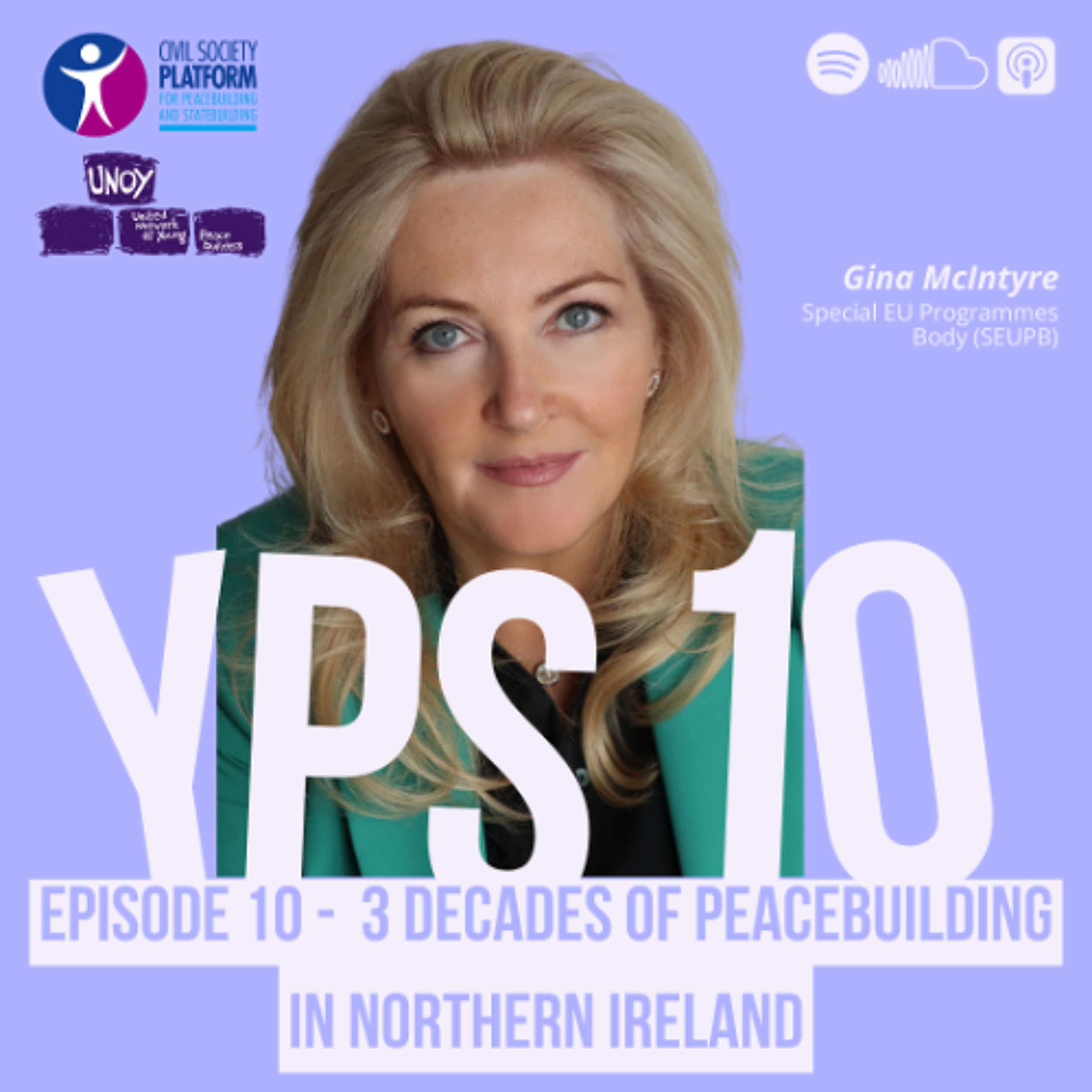
3 decades of peacebuilding: Young people as the ‘right now’ for long lasting peace in Northern Ireland (S09 E10)
In this 10th - and last - episode of the Peace Corner Podcast season 9, our host Eugénie Hirsch, intern at CSPPS, discusses with Gina McIntyre, chief executive of the Special EU Programmes Body. Together, they explore the question of peacebuilding in Northern Ireland, and the effects the peace programmes have on young people. Drawing from her experience, Gina offers her insights on different issues such as mental health, trauma and healing but also on management of the peace fund and the necessity of youth involvement in the peace programmes. This episode dives into the question of resolution 2250, whether it has had an impact for the people working in the field, and what could be concrete ways to improve the way forward. Highlighting the vital role of youth in peace processes, this episode sheds light on the reality of peacebuilding in Northern Ireland, and the difficulties the population is still facing. Don’t miss out on this insightful conversation, tune in now! The 9th season of the Peace Corner Podcast is an initiative of CSPPS & UNOY Peacebuilders.
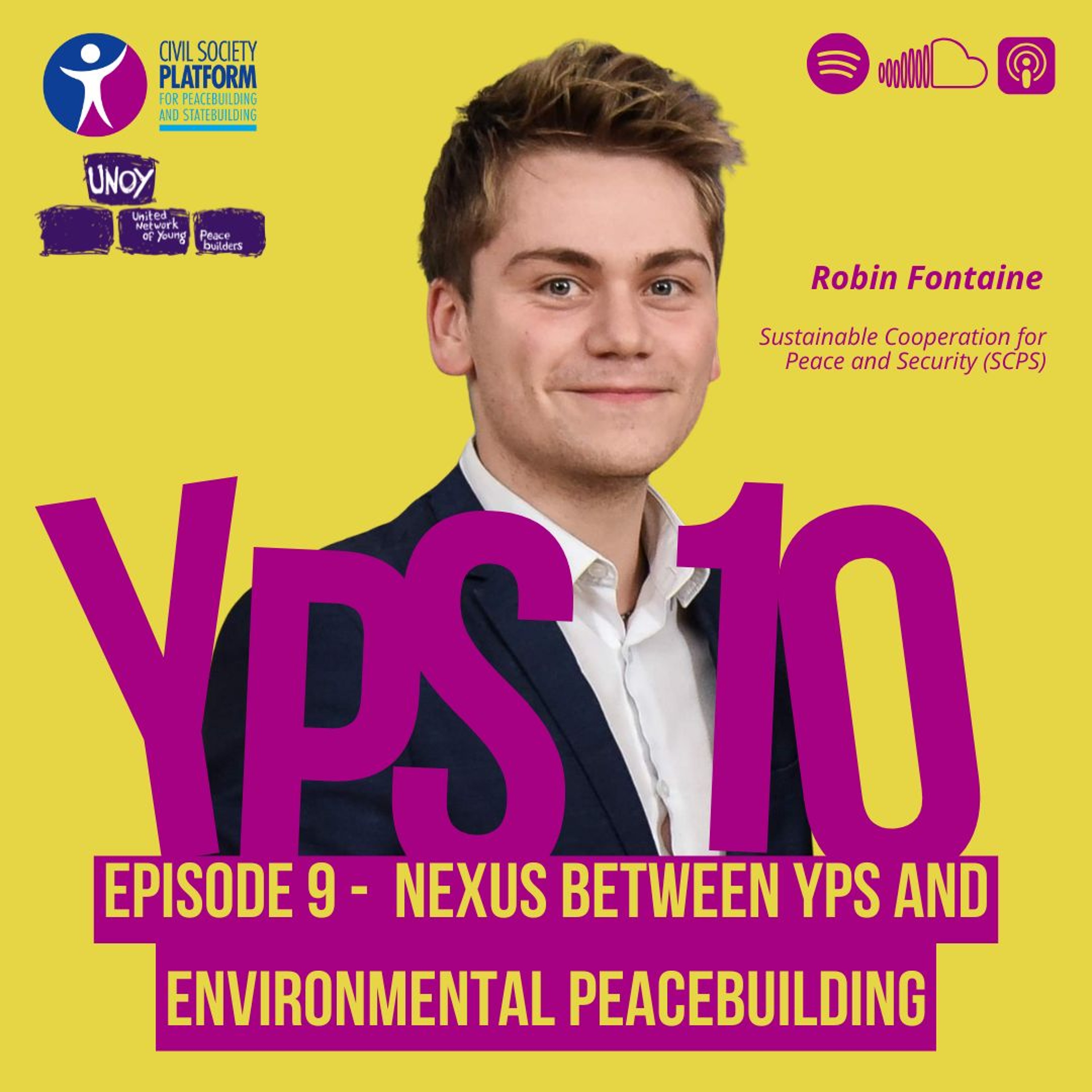
Connecting the Dots: Nexus between YPS and Environmental Peacebuilding (S09 E09)
In this 9th episode of the Peace Corner Podcast, our host Mariam Tinikashvili, Advocacy Officer at UNOY Peacebuilders, is joined by Robin Fontaine, Climate and YPS Advisor at Sustainable Cooperation for Peace & Security (SCPS), to explore how youth-led environmental peacebuilding is not only responding to the climate-conflict nexus, but actively reshaping the Youth, Peace and Security (YPS) agenda. Drawing from fieldwork in the Sahel and Latin America and policy engagement through initiatives like Peace@COP, Robin offers powerful insights into how young people are restoring ecosystems, protecting indigenous land, and building social cohesion in fragile and conflict-affected areas. This episode also dives into the differences and overlaps between the YPS and Climate, Peace and Security (CPS) agendas, highlighting the value, and challenges, of bridging these frameworks from the ground up. Whether it’s grassroots reforestation projects, youth activism against extractive industries, or efforts to bring local voices into multilateral spaces, this conversation sheds light on the urgent need to recognize, resource, and protect youth-led environmental peacebuilding around the world. Don’t miss out on this timely and insightful episode, tune in now! The 9th season of the Peace Corner Podcast is an initiative of CSPPS & UNOY Peacebuilders.
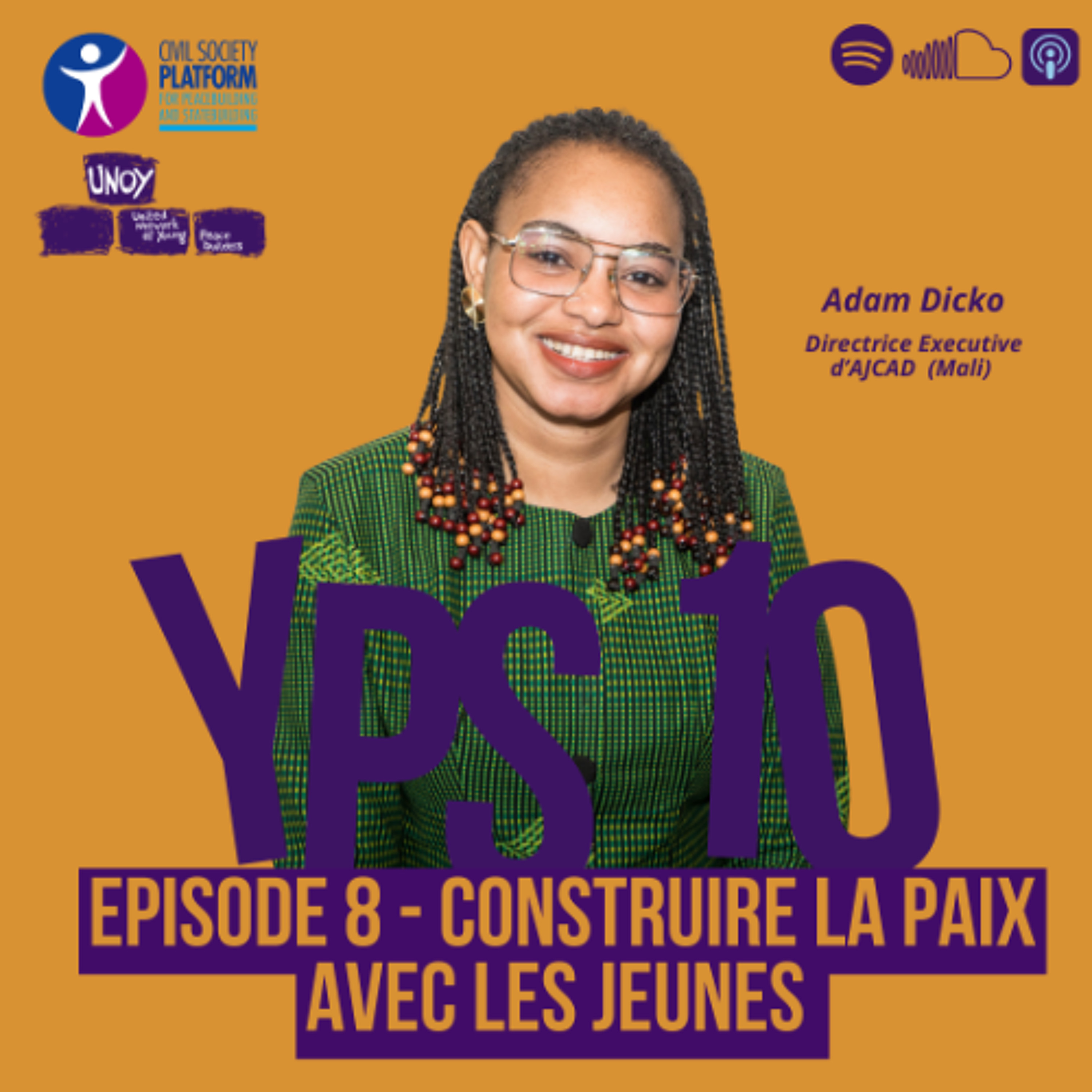
Construire la paix avec les jeunes (S09 E08)
Dans le 8ème épisode du Peace Corner Podcast, Oliver Gyori (CSPPS) s’entretient avec Adam Dicko, Directrice Exécutive de l’AJCAD – l’Association des Jeunes pour la Citoyenneté Active et la Démocratie. À travers cette conversation approfondie, ils explorent les enjeux clés de la participation des jeunes et des communautés marginalisées au Mali, ainsi que dans l’ensemble de la région du Sahel. AJCAD est une organisation malienne engagée à renforcer la citoyenneté active, défendre les droits des jeunes et promouvoir leur inclusion dans les processus de gouvernance. Adam Dicko y partage son expérience de terrain, les défis rencontrés par la jeunesse dans des contextes de fragilité, ainsi que les réponses concrètes portées par son organisation pour leur donner une voix et une place dans la société. Cet épisode met en lumière le rôle central des jeunes en tant qu’acteurs du changement pour bâtir un avenir plus juste, démocratique et pacifique dans la région. Ne manquez pas cette conversation enrichissante et engageante. La neuvième saison du Peace Corner Podcast est une initiative conjointe du CSPPS et de UNOY Peacebuilders. - In the 8th episode of the Peace Corner Podcast, Oliver Gyori (CSPPS) speaks with Adam Dicko, Executive Director of AJCAD – the Association of Youth for Active Citizenship and Democracy. In this in-depth conversation, they explore the key issues surrounding youth participation and the inclusion of marginalised communities in Mali and across the broader Sahel region. AJCAD is a Malian organization dedicated to strengthening youth civic engagement, defending their rights, and promoting their meaningful involvement in governance processes. Adam Dicko shares her field experience, the challenges facing young people in fragile contexts, and the concrete actions her organisation is taking to amplify their voices and secure their place in society. This episode highlights the vital role young people play as changemakers in building a more just, democratic, and peaceful future in the region. Don’t miss this insightful and thought-provoking conversation. The ninth season of the Peace Corner Podcast is a joint initiative by CSPPS and UNOY Peacebuilders.
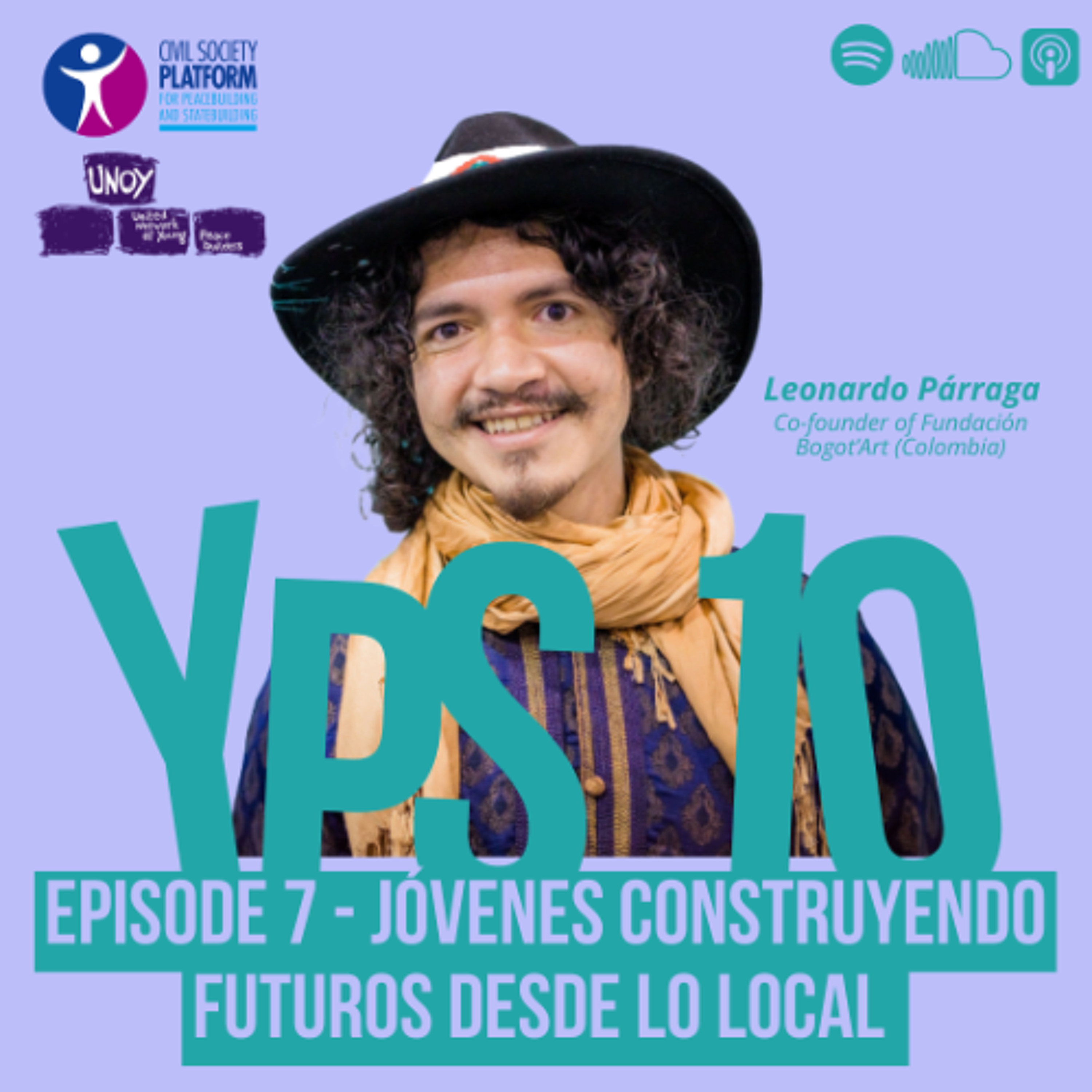
Jóvenes construyendo futuros desde lo local (S09 E07)
En este séptimo episodio del Peace Corner Podcast, nuestro anfitrión, Ian Puis Farrés de UNOY, y su invitado, el constructor de paz colombiano y cofundador de la Fundación Bogot’Art, Leonardo Párraga, reflexionan sobre el poder transformador del trabajo de construcción de paz liderado localmente para avanzar en la Agenda de Juventud, Paz y Seguridad (JPS). La conversacion es en castellano. También está disponible una transcripción en inglés. En contextos afectados por conflictos como Colombia, donde las políticas no alcanzan, constructores de paz como Leonardo están creando nuevos caminos hacia la paz. Esta conversación se basa en su experiencia e historias para profundizar en el verdadero potencial de las perspectivas juveniles, tanto para evidenciar las limitaciones de la Agenda JPS como para contribuir a su fortalecimiento a nivel local. ¡No te pierdas esta conversación que invita a la reflexión y sintonízala ya! La novena temporada del Peace Corner Podcast es una iniciativa de CSPPS y UNOY Peacebuilders. - In this 7th episode of the Peace Corner Podcast, our host, Ian Puis Farrés from UNOY, and his guest, Colombian peacebuilder and co-founder of Fundación Bogot’Art Leonardo Párraga, reflected on the transformative power of locally-led peacebuilding work in advancing the Youth, Peace and Security (YPS) Agenda. The conversation is in Spanish. A transcript in English is available here: https://unoy.org/podcast/ In conflict-affected contexts such as Colombia, where policies fall short, peacebuilders like Leonardo are creating new pathways for peace. This discussion builds on their experience and stories, to then delve into the true potential of youth perspectives to both expose the limitations of the YPS Agenda and contribute to strengthening it at the local level. Don’t miss out on this thought-provoking conversation, and tune in now! The 9th season of the Peace Corner Podcast is an initiative of CSPPS & UNOY Peacebuilders.
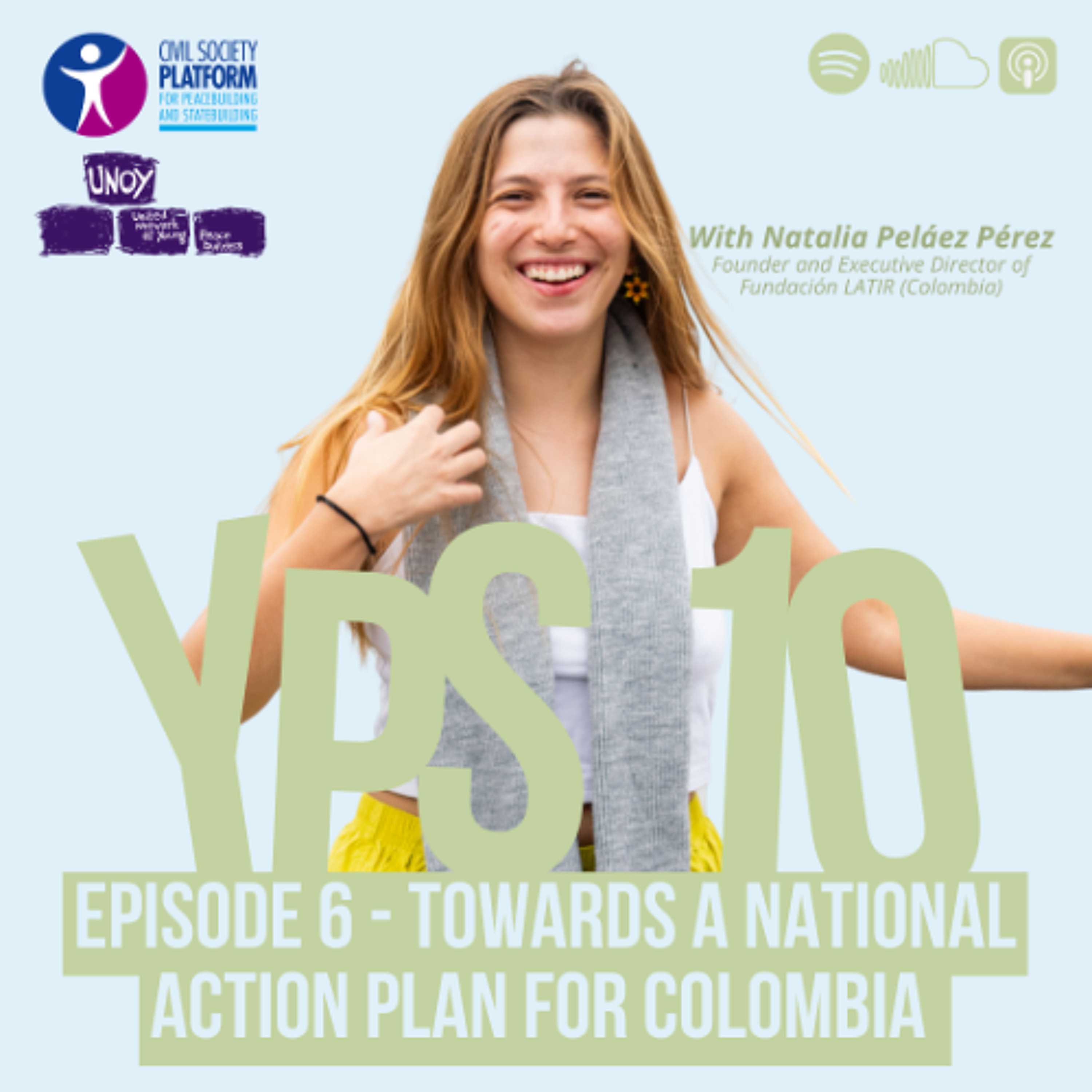
Youth at the Heart of Peace: towards a National Action Plan for Colombia (S09 E06)
In this 6th episode of the Peace Corner Podcast, our host Maïa Flamme is joined by Natalia Peláez Pérez, Executive Director and Founder of Fundacion LATIR, to explore how young people are shaping peacebuilding in Colombia. Natalia shares the story behind Fundación Latir and its mission to promote quality education for peace and how the global Youth, Peace and Security (YPS) Agenda informs their work. Reflecting on Latir’s major upcoming research mapping youth inclusion in Colombia’s peace efforts, Natalia emphasises the need for a National Action Plan on YPS in Colombia, the barriers young people face, and the key recommendations for more inclusive, youth-led peacebuilding. Don't miss out on this thought-provoking conversation, and tune in now! The 9th season of the Peace Corner Podcast is an initiative of CSPPS and UNOY Peacebuilders.
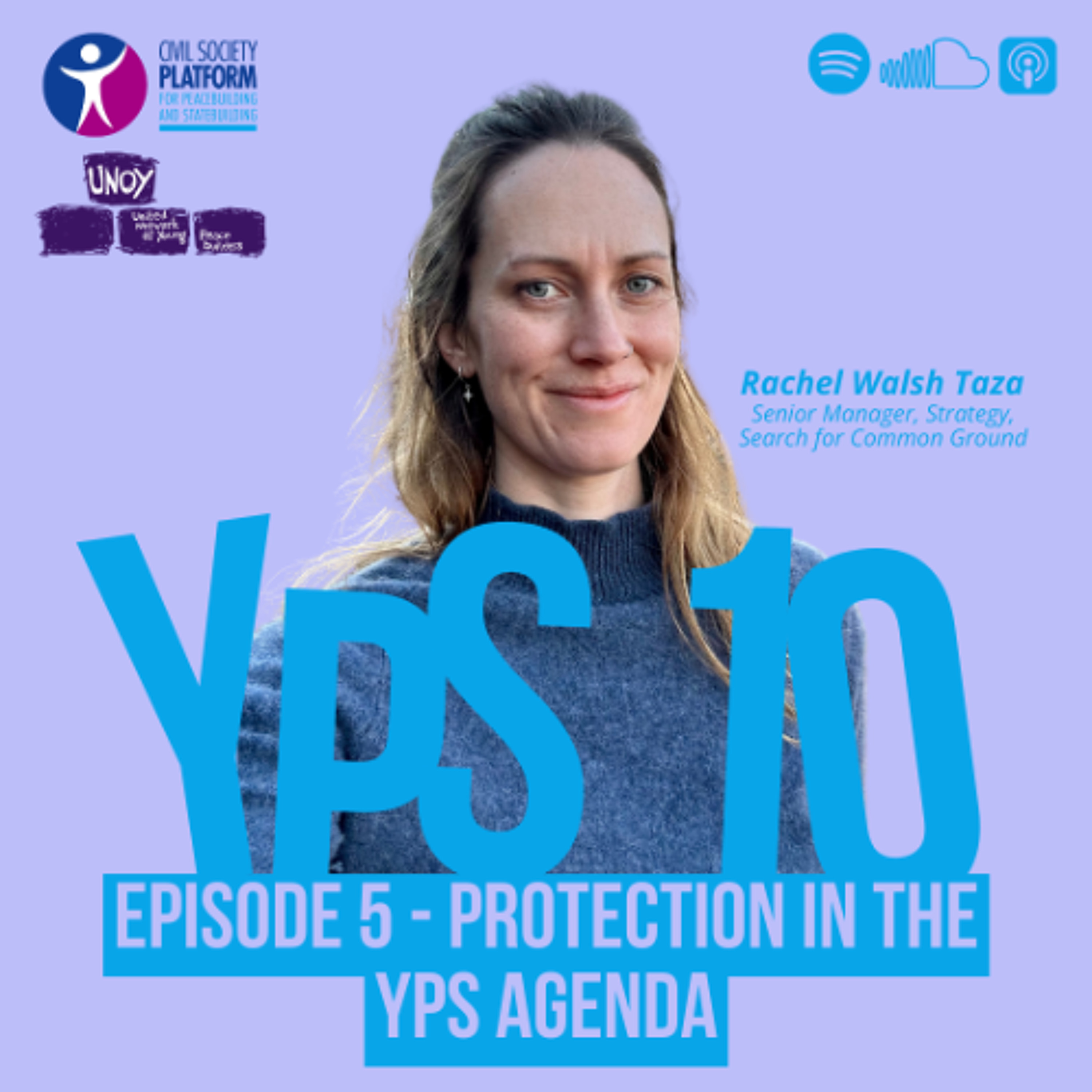
Beyond Safeguarding: A Holistic Lens on Protection in the YPS Agenda (S09 E05)
In this 5th episode of the Peace Corner Podcast, our host Laura Goubran speaks with Rachel Walsh Taza, Senior Manager for Strategy at Search for Common Ground, to unpack what protection truly means within the Youth, Peace and Security (YPS) agenda. Young peacebuilders—especially those from marginalised communities or conflict-affected regions—face complex, multi-layered threats. Rachel and Laura explore how traditional safeguarding mechanisms often fall short, and why protection must be redefined through a rights-based, youth-led, and inclusive lens. From systemic exclusion and physical insecurity to financial and socio-cultural risks, this episode brings forward a holistic understanding of protection rooted in lived experience. Don't miss out on this thought-provoking conversation, and tune in now! The 9th season of the Peace Corner Podcast is an initiative of CSPPS and UNOY Peacebuilders.
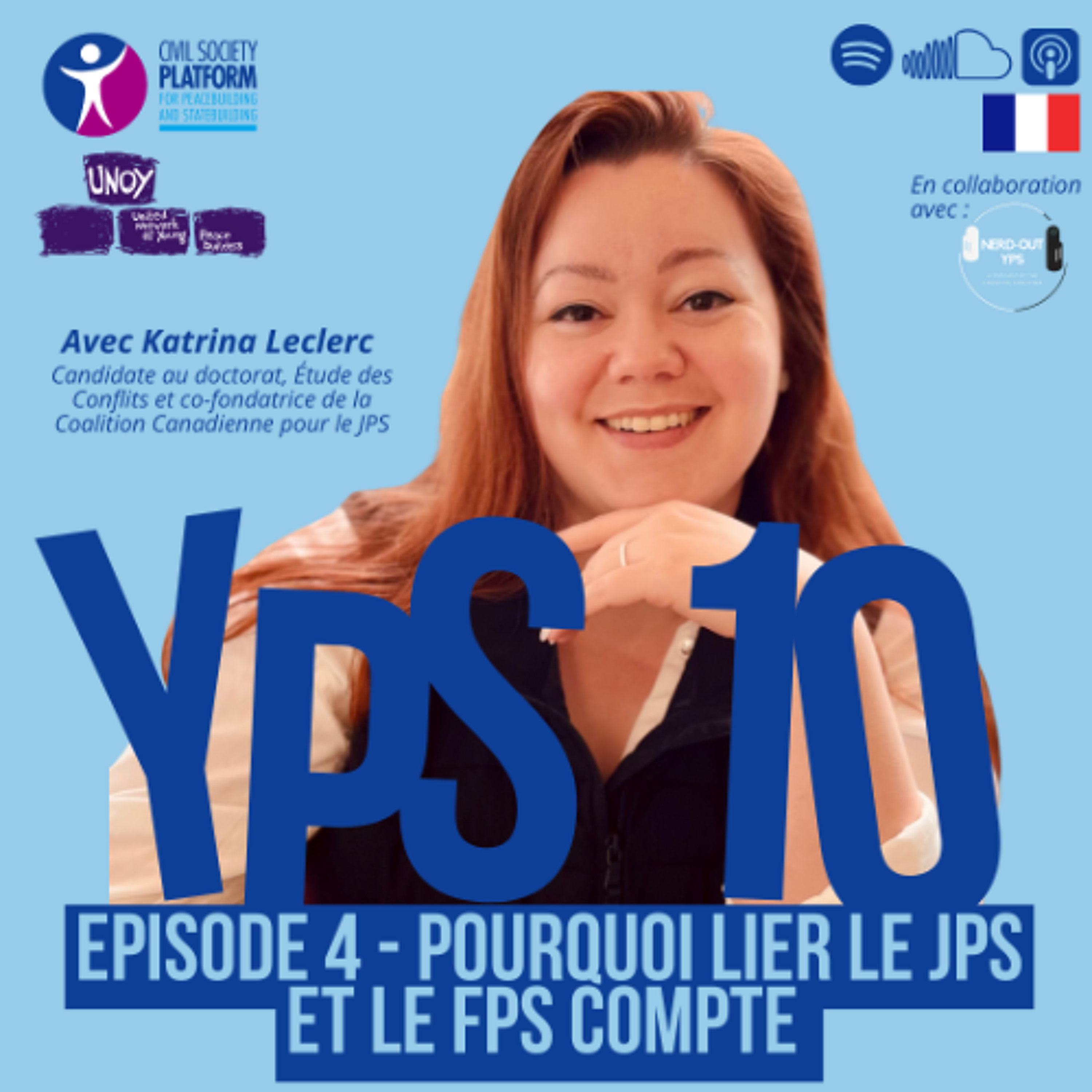
Pourquoi la liaison entre les agendas JPS et FPS est importante (S09 E04)
Et… surprise pour nos amis francophones ! Une version en français de cet épisode est également disponible ! Dans cet épisode, Agathe Mainaud (UNOY) et Katrina Leclerc de la Coalition canadienne JPS (CCYPS) décortiquent l'intersection entre l'agenda Jeunesse, paix, et sécurité (JPS) et l'agenda Femmes, paix et sécurité (FPS) – deux agendas mondiaux visant à lutter contre l'exclusion des groupes historiquement marginalisés des processus de consolidation de la paix. Bien que souvent traités séparément, leur intersection est essentielle pour comprendre et surmonter les barrières systémiques – en particulier pour les jeunes femmes – qui continuent d'entraver les efforts de paix. Cet épisode est unele fruit d’une collaboration avec le podcast Nerd-Out YPS, hébergé par CCYPS. La 9ème saison du podcast Peace Corner est une initiative de la u CSPPS et d'UNOY Peacebuilders.
Why Linking YPS and WPS Matters (S09 E04)
In this episode, Agathe Mainaud (UNOY) and Katrina Leclerc from the Canadian Coalition for YPS (CCYPS) unpack the intersection of Youth, Peace and Security (YPS) and Women, Peace and Security (WPS) – two global agendas aimed at addressing the exclusion of historically marginalised groups from peacebuilding processes. While often treated separately, their intersection is key to understanding and addressing systemic barriers — particularly for young women — that continue to impede peace efforts. This episode is a collaboration with the Nerd-Out YPS Podcast, hosted by the CCYPS. The 9th season of the Peace Corner Podcast is an initiative of the CSPPS and UNOY Peacebuilders.
Displaced and Agents for change, the role of young peacebuilders from the diaspora (S09 E03)
In this 3rd episode of the Peace Corner Podcast season 9, our host, Camille Panis-Boudin and her guest, Ajmal Ramyar, discussed the role of young peacebuilders from the Diaspora in the Afghan context. Their conversation underscores how young displaced peacebuilders can be powerful actors in amplifying the voices of Afghan youth and advocating for their rights. The discussion emphasises the diaspora's role as a bridge, connecting young peacebuilders in Afghanistan with the international community. It also highlights the significance of initiatives like the YPS Agenda in legitimising youth advocacy and creating opportunities in restricted civic spaces. Finally, the episode addresses the challenges young peacebuilders face and explores future opportunities for change. Don't miss out on this thought-provoking conversation, and tune in now! The 9th season of the Peace Corner Podcast is an initiative of CSPPS & UNOY Peacebuilders.
Demanding Freedom Through Art (S09 E02)
In this episode, host Sara from UNOY speaks with Shataakshi Verma, peacebuilder and founder of Art of Freedom, to explore the transformative role of art in advancing the Youth, Peace and Security (YPS) Agenda. Their conversation highlights how creative expression can be a powerful tool for demanding freedom, fostering resilience, and supporting youth participation and reintegration in peacebuilding processes. Shataakshi shares her personal journey and experience, emphasising how art gives voice to marginalised women, serves as a form of resistance and empowerment in repressive contexts such as Afghanistan, and holds the potential to be formally integrated into peacebuilding spaces such as schools and refugee centres. This episode offers insights into how art can bridge gaps where policies fall short and create new pathways for peace.
Why Youth, Peace & Security? (S09 E01)
In this 1st episode of the Peace Corner Podcast Season 9, our host Virginia Noacco and Assistant Secretary General for Youth Affairs Felipe Paullier reflected on the challenges which surrounded the creation of the Youth Peace and Security Agenda 10 years ago, its successes and three recommendations for the future centering prevention through meaningful inclusion of youth leadership in security discussions, holistic approaches and connections between the local and global level, and working to enable government’s accountability to their commitments. Don't miss out on this thought-provoking conversation, and tune in now! The 9th season of the Peace Corner Podcast is an initiative of CSPPS & UNOY Peacebuilders.
Dual nature of technology; Challenges of E-Waste in Peacebuilding (S08 E11)
We are exited to share with you the final episode of The Peace Corner podcast's 8th season, "Ctrl + Peace." This season, hosted by Charlotte Le Faucheur, will dive into the intersection of technology and peacebuilding, exploring both the benefits and challenges of our digital age. In today's episode, we tackle the critical issue of e-waste with Mr. Jonah Nobleza from Cordaid, Philippines. We'll discuss the environmental and human impacts of electronic waste, its implications for peacebuilding, and explore practical solutions for a more sustainable digital future. Join us for this insightful conversation as we uncover how to balance technological advancements with responsible practices to promote lasting peace. The 8th season of the Peace Corner Podcast is an initiative of CSPPS & UNOY Peacebuilders.
Bytes for Peace: Harnessing Technology for Diplomatic Peacebuilding (S08 E10)
In this 10th episode of the Peace Corner Podcast, our host, Tifaine Amiotte-Suchet, and her guest, Pr. Joseph Rudigi Rukema, reflected on the interaction between Cyber Diplomacy and Peacebuilding. Living in an interconnected world where conflicts increasingly spill into cyberspace, the role of cyber diplomacy in resolving disputes and promoting peace appears to be compelling. This discussion delves into this topic, presenting concrete examples, discussing the evolving international frameworks on it, or again exploring future worrying and or hoping trends. Don't miss out on this thought-provoking conversation, and tune in now! The 8th season of the Peace Corner Podcast is an initiative of CSPPS & UNOY Peacebuilders.
Utilising technology for peace at a local level (S08 E09)
In this 9th episode of The Peace Corner Podcast, our host Viktória, in conversation with Mpagi Dawn Martha, is exploring the dangers and opportunities that digital technology poses on communities at a local level. Dawn Martha is currently working with the MIGHT Foundation in Uganda on addressing online violence against women and girls, and the inaccessibility of healthcare through community dialogues and the development of an app. They aim to strengthen health partnerships locally and globally, facilitate access to free health care services, combat misinformation and provide a fundraising platform for health initiatives. Tune in to find out more about their work and how localised digital solutions can be used for peacebuilding. The 8th season of the Peace Corner Podcast is an initiative of CSPPS & UNOY Peacebuilders.
cyberpeace for greater peace: les outils numériques pour une justice plus accessible (S08 E08)
In this episode of The Peace Corner podcast, we look at the use of cyber tools to overcome the obstacles faced by users and justice professionals with Jean-Marie Chenou, cybersecurity expert, and Steve-Alek Nininahazwe, manager of the ‘Access to digital legal information’ project at Cordaid in Burundi. Find out how cyberjustice is being used in Burundi and Colombia to promote peace, and learn about the limits of using technology in the justice system. The 8th season of the Peace Corner Podcast is an initiative of CSPPS & UNOY Peacebuilders.
Building Peace in Cyberspace: Navigating Disinformation and Harmful Narratives (S08 E07)
Join us for a compelling exploration of the modern information landscape in episode 7 of The Peace Corner Podcast. With disinformation proliferating online, discerning truth from falsehood has never been more challenging. Our guest, Fabio from Sustainable Cooperation for Peace & Security, provides invaluable insights into navigating this complex terrain. In an age where anyone can be a publisher, understanding how disinformation spreads and its impact on society is paramount. We delve into the tactics used to manipulate public perception and sow discord, shedding light on the consequences for global stability and community cohesion. From discussing the role of state actors in disinformation campaigns to exploring strategies for countering harmful narratives, we uncover practical approaches for promoting media literacy and fostering informed cyber citizenship. Tune in to learn how you can navigate digital content with confidence! The 8th season of the Peace Corner Podcast is an initiative of CSPPS & UNOY Peacebuilders.
Filmmaking for Change: How Can We Empower Voices through Storytelling? (S08 E06)
In this episode of The Peace Corner Podcast, we will be delving into the world of filmmaking and storytelling. Tune into this cinematic conversation with our host, Jasmine Zahra, and our guest, Katarina Jazbec. Katarina is a visual artist working in film & photography from Slovenia, and is currently undergoing a two-year international residency at the Rijksakademie in Amsterdam. Films, documentaries and meaningful photographies have been a common and upcoming form of peacebuilding work in the current digital age. As they do not only capture visually aesthetic scenes but also reveals the reality of today's world. They are no longer perceived as passive experience that are made solely for informal learning or entertainment, and are now becoming part of a larger effort to spark debates, influence public opinions and even shape policies. In this episode, we will explore the beauty of storytelling and how it can become a powerful and accessible peacebuilding tool for all. As Katarina says, we are all storytelling animals, with stories that are worth to share. The 8th season of the Peace Corner Podcast is an initiative of CSPPS and UNOY Peacebuilders.
The Cost of Technology: Unveiling the Shadows of the Digital Age in DRC (S08 E05)
TRIGGER WARNING: this episode includes mention of rape. In Episode 5 of the Peace Corner Podcast, Larissa, our host, and Guillaume Kalonji, a passionate young climate activist from Youth For Peace DRC, a platform dedicated to promoting peace, security, and development, delve into the complexities of the digital age, shining a spotlight on the Democratic Republic of Congo (DRC). Guillaume provides direct insights into the experiences and realities faced by communities in the DRC due to mineral exploitation by tech giants like Samsung, Apple, and Tesla. With a significant portion of the world's cobalt and coltan supply sourced from the DRC, the impact on local communities is profound. As we navigate the interlinkages between justice, mineral exploitation, gender, and conflict, we discuss the role of young people and the international community in advocating for change and raising awareness about the situation. Join us as Guillaume shares actionable steps towards ethical mineral sourcing, prevention of gender-based violence, and empowerment of affected communities in the DRC. The 8th season of the Peace Corner Podcast is an initiative of CSPPS and UNOY Peacebuilders.
Kickflips for Peace: The Role of Digital Platforms for Social Skateboarding Initiatives (S08 E04)
In this episode of The Peace Corner Podcast, we dive into the unexpected intersection of skateboarding, technology and peacebuilding with Safen Muhammad of Suli Skatepark and Rhianon Bader from The Goodpush Alliance. Discover how they're using skateboarding and technology to foster peace, teach life skills, and build inclusive communities. Through their stories, you will learn how digital tools and social media are being used to amplify the impact of skateboarding initiatives, connecting diverse groups across the globe and empowering youth with leadership, resilience, and a sense of belonging. The 8th season of the Peace Corner Podcast is an initiative of CSPPS & UNOY Peacebuilders.

'Killer Robots' : Navigating the Risks of Autonomous Weapons (S08 E03)
In Episode 3 of The Peace Corner Podcast, Ines Doumandji engages in a discussion with Charlotte Akin, an activist from Canada with a passion for disarmament, human rights, and gender justice. As the Projects & Logistics Officer at Stop Killer Robots, Charlotte is deeply involved in the global coalition, consisting of over 250 civil society organizations across 70 countries. The episode explores the challenges and risks associated with autonomous weapons, shedding light on ongoing efforts to ensure human control in the use of force by calling for new international law on autonomy in weapons systems. Gain valuable insights into the concerns surrounding autonomous weapons and learn about how it impacts you and what you can do about it. For monitoring and research related to autonomous weapons systems, visit Automated Decision Research at automatedresearch.org. The 8th season of the Peace Corner Podcast is an initiative of CSPPS & UNOY Peacebuilders.
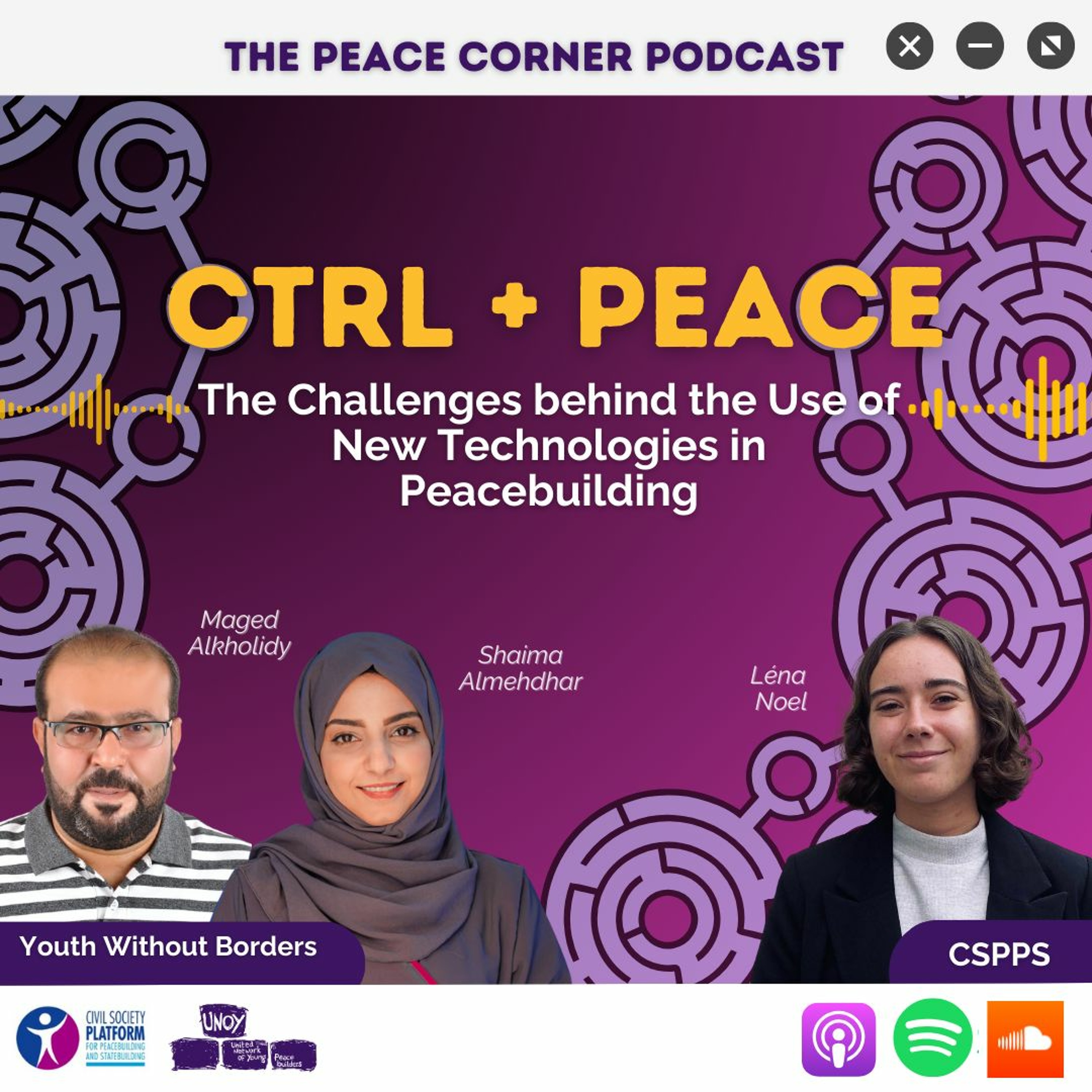
The Challenges behind the Use of New Technologies in Peacebuilding (S08 E02)
New technologies have the potential to be powerful tools to connect peacebuilders actors across the world, as well as to advocate for sustainable peace at all levels. However, do all peacebuilders have the same access to these resources ? Our second episode will highlight both the opportunities and challenges when it comes to relying on new technologies to work in the field peacebuilding, with a focus on the context of Yemen. Joins us in an insightful discussion with two peacebuilders from Yemen, Maged Alkholidy, chairman of Youth Without Borders Organisation (YWBOD), and Shaima Almehdhar, co-founder of a digital platform focusing on peacebuilding, inclusion and social cohesion. The 8th season of the Peace Corner Podcast is an initiative of CSPPS and UNOY Peacebuilders.
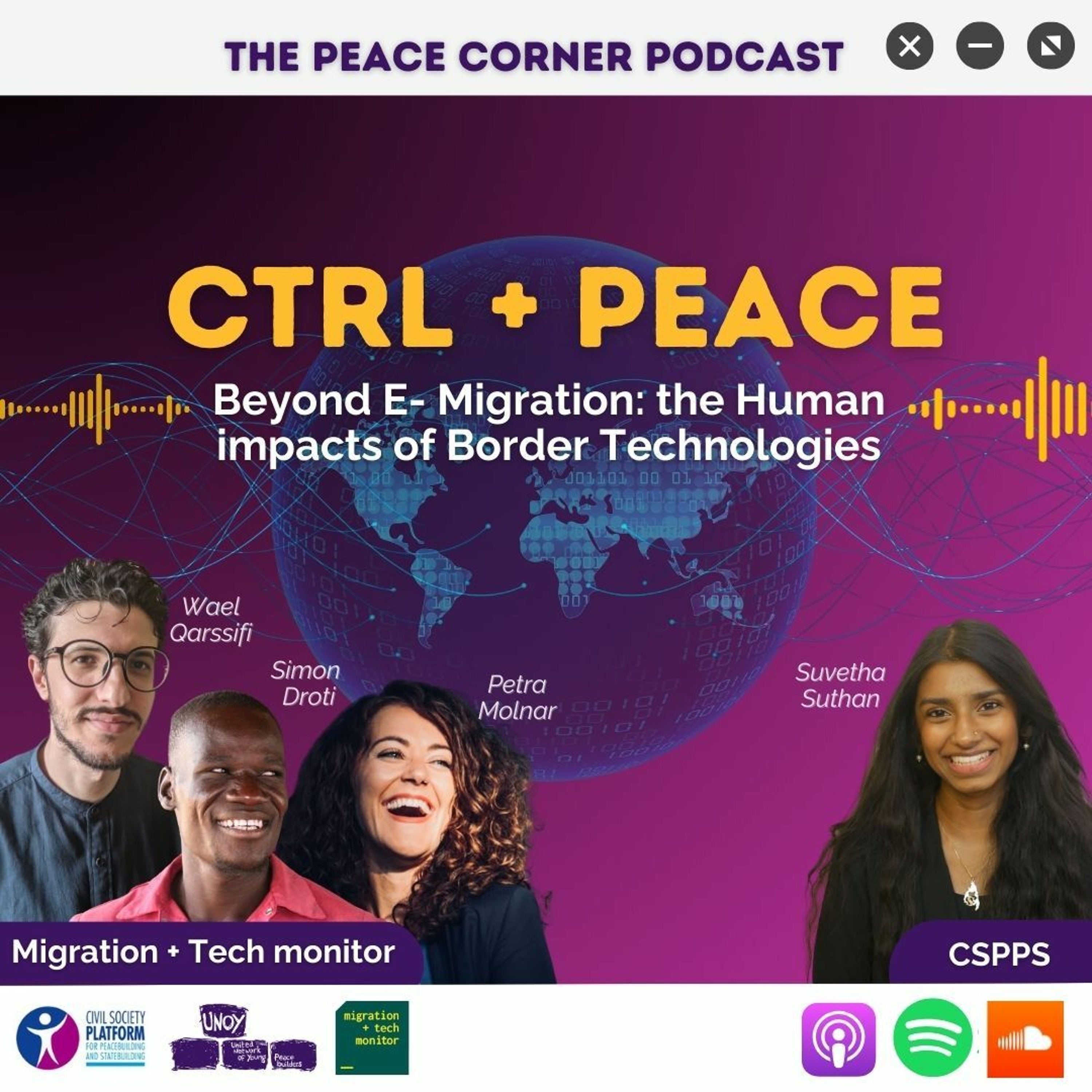
Beyond E-Migration: The Human impacts of Border Technologies (S08 E01)
As borders evolve into testing grounds for tech experiments, what impact do they have on human lives and rights? Our first episode not only dives into these challenges but is committed to exploring solutions. Join us in an insightful discussion with lawyer and anthropologist Petra Molnar, data analysis, graphics, and UX designer Simon Droti, and journalist Wael Qarssifi from the Migration +Tech Monitor to explore the dual nature of new technologies on people on the move. The 8th season of the Peace Corner Podcast is an initiative of CSPPS & UNOY Peacebuilders.
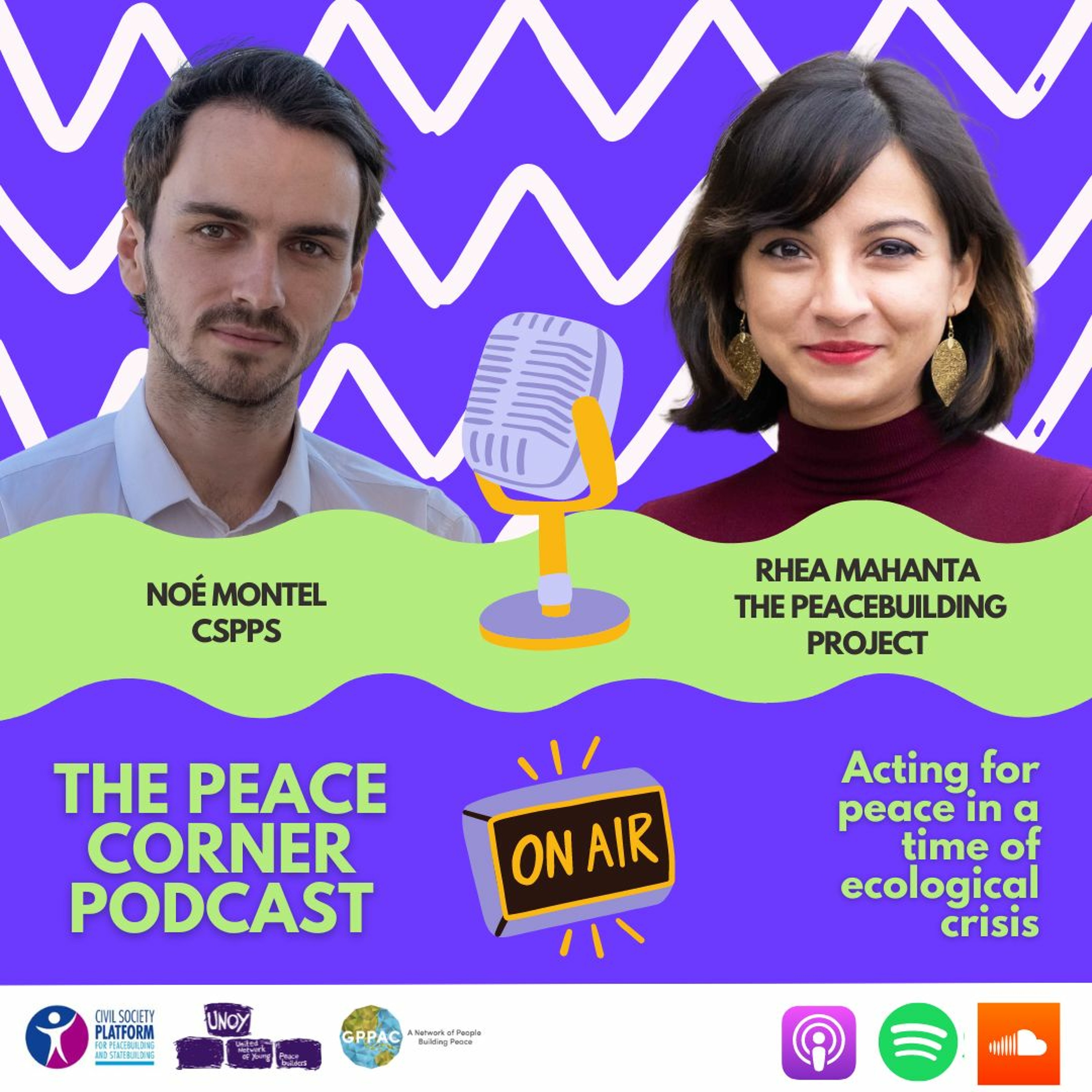
Acting for peace in a time of ecological crisis (S07 E11)
In this final episode of Season 7, Rhea Mahanta, founder of The Peacebuilding Project, shares her story. She describes how climate change affects her work as a peace activist and reflects on new multidisciplinary strategies to address the climate-peace nexus. "I feel that not only should issues of economic growth, political and social inequality be dealt with simultaneously, but we also need a radical change in strategy of our current models of growth." The Peace Corner Podcast is a joint initiative of interns at GPPAC, UNOY & CSPPS
ウアイヌコㇿ: アイヌ視点からの環境保全活動 (S07 E10)
私たちのアイデンティティとコミュニティが、活動家としてどのような意味を形作るのでしょうか?創造的な手段や日常生活の中でどのように平和構築者となれるのでしょうか?環境悪化の影響を不均衡に受けながらも、世界中の若い先住民族は、創造的な実践を通じて自らの文化再生と環境保護のために指導的役割を果たしています。 このエピソードでは、日本と世界中でアイヌ文化普及に取り組むアイヌの活動家である関根摩耶(まや)さんと、ハワイパシフィック大学社会福祉学科助教授であり、このエピソードの翻訳をサポートしたヴィンス岡田博士が参加します。摩耶さんの活動のいきさつやアイヌ文化教育者としての考え、地元知識の共有と伝承を通じた世代間のパートナーシップ、そしてアイヌにおける相互尊重である「ウアイヌコㇿ」の重要性について探求します。このエピソードは英語または日本語でお楽しみいただけます。Peace Corner Podcastは、GPPAC、CSPPS、UNOY Peacebuildersのイニシアチブです。 日本語でお聞きの皆様に向けての注釈となりますが、このエピソードではまず、摩耶さんに、アイヌの実践と知識を広めるための有用なツールとしてのYouTubeチャンネルとオンラインプラットフォームの役割についてお聞きします。次に、アイヌのアイデンティティが彼女の活動のアプローチにどのように影響を与えたか、世代間の対話の役割や地域レベルでの知識保護と気候変動への対処、先住民族と地域の活動の役割について探求します。また、歴史的な同化政策がアイヌのコミュニティにどのように影響を与えたか、それらの不正義がどう解決されるべきかについても議論します。最後に、摩耶さんが、気候変動活動に取り組みたい若者やアイヌ文化を学びたい人々に対して、活動を始めるためのアドバイスを提供します。
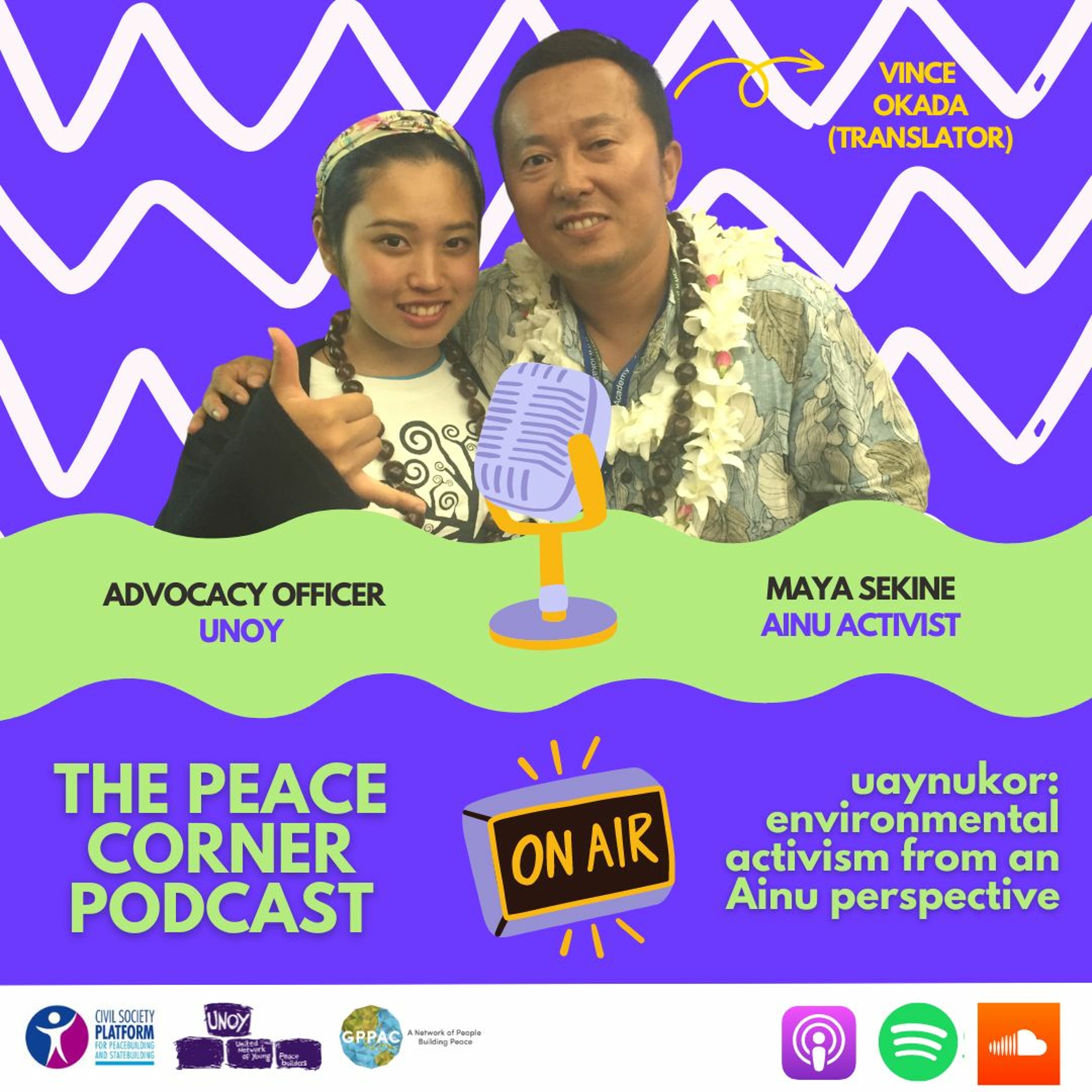
uaynukor: environmental activism from an Ainu perspective (S07 E10)
How do our identity and community shape what it means to be an activist? How can we be peacebuilders in creative ways and in daily life? Despite disproportionately facing the effects of environmental degradation, young indigenous people from across the world are leading the way in advocating for the revitalisation of their heritage and environmental protection through creative practices. In this episode, we are joined by Maya Sekine, an activist of Ainu heritage who works to promote Ainu culture in Japan and around the world, as well as Dr. Vince Okada, Assistant Professor of Social Work at the Hawai’i Pacific University, who assisted with translation for the episode. We explore Maya’s journey to becoming an advocate and teacher of Ainu culture, her reflections on her identity, intergenerational partnership through sharing and passing down local knowledge, as well as the importance of mutual respect, or uaynukor in Ainu. You can tune in to this episode either in English or in Japanese. 🔗 You can find Maya on YouTube: https://www.youtube.com/@userhttps://www.youtube.com/@user-sg7qz4sh8p/featured The Peace Corner Podcast is an initiative of GPPAC, CSPPS and UNOY Peacebuilders
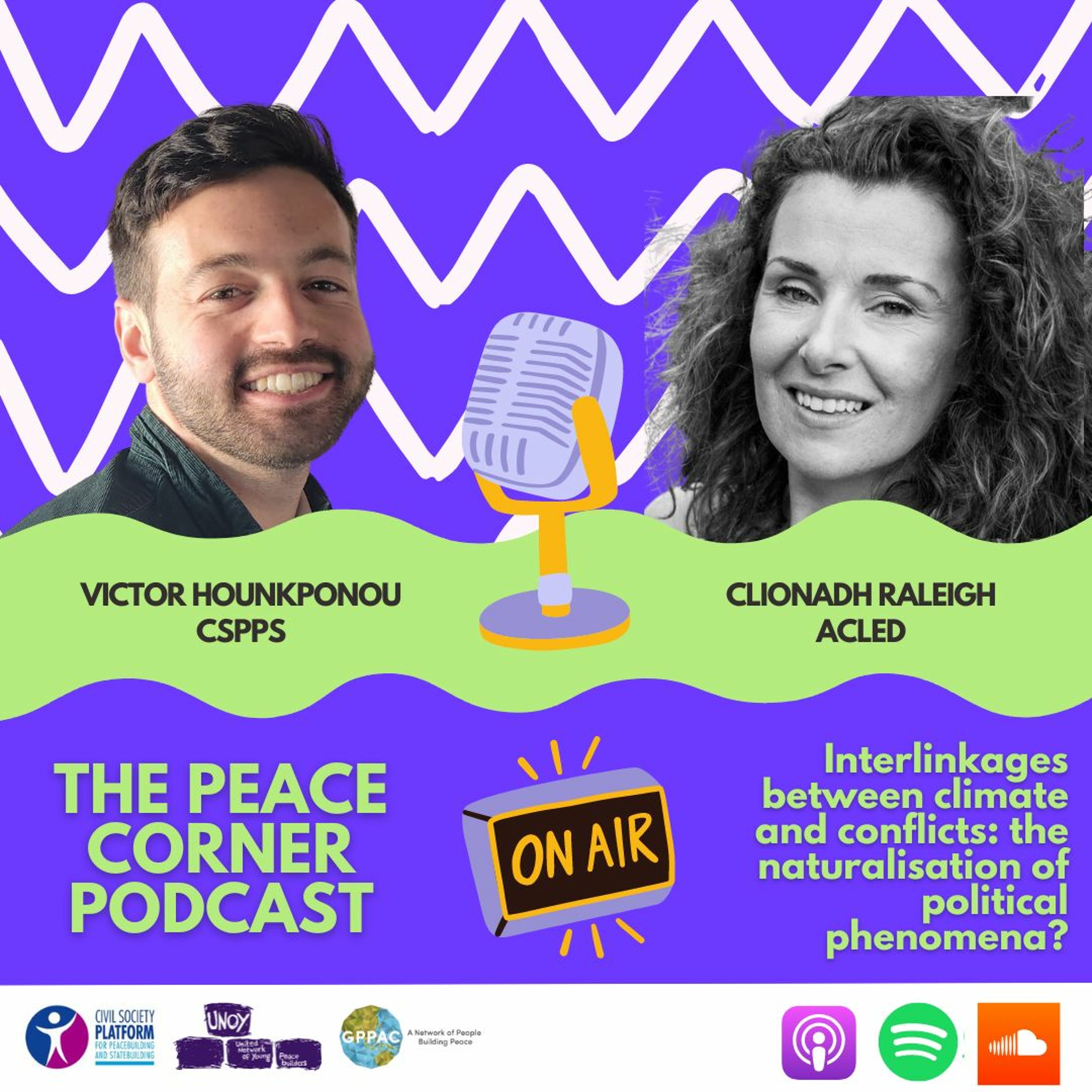
Interlinkages between climate and conflicts: the naturalisation of political phenomena (S07 E09)
What do we know about interlinkages between Climate Change and conflicts? Surprisingly, academic research shows that proving that Climate Change triggers conflicts is often challenging. In the newest episode of the #PeaceCornerPodcast, CSPPS intern Victor interviews Clionadh Raleigh, political violence and geography professor and president of the Armed Conflict Location & Event Data Project (ACLED) Project. They discuss the necessity of considering political factors when thinking about conflicts in the Global South. Tune in to learn more about the deep roots of the herder-farmer conflicts in the Sahel - including land property issues - and how to deal with climate change in conflict-affected settings. The Peace Corner Podcast is an initiative of UNOY, CSPPS & GPPAC
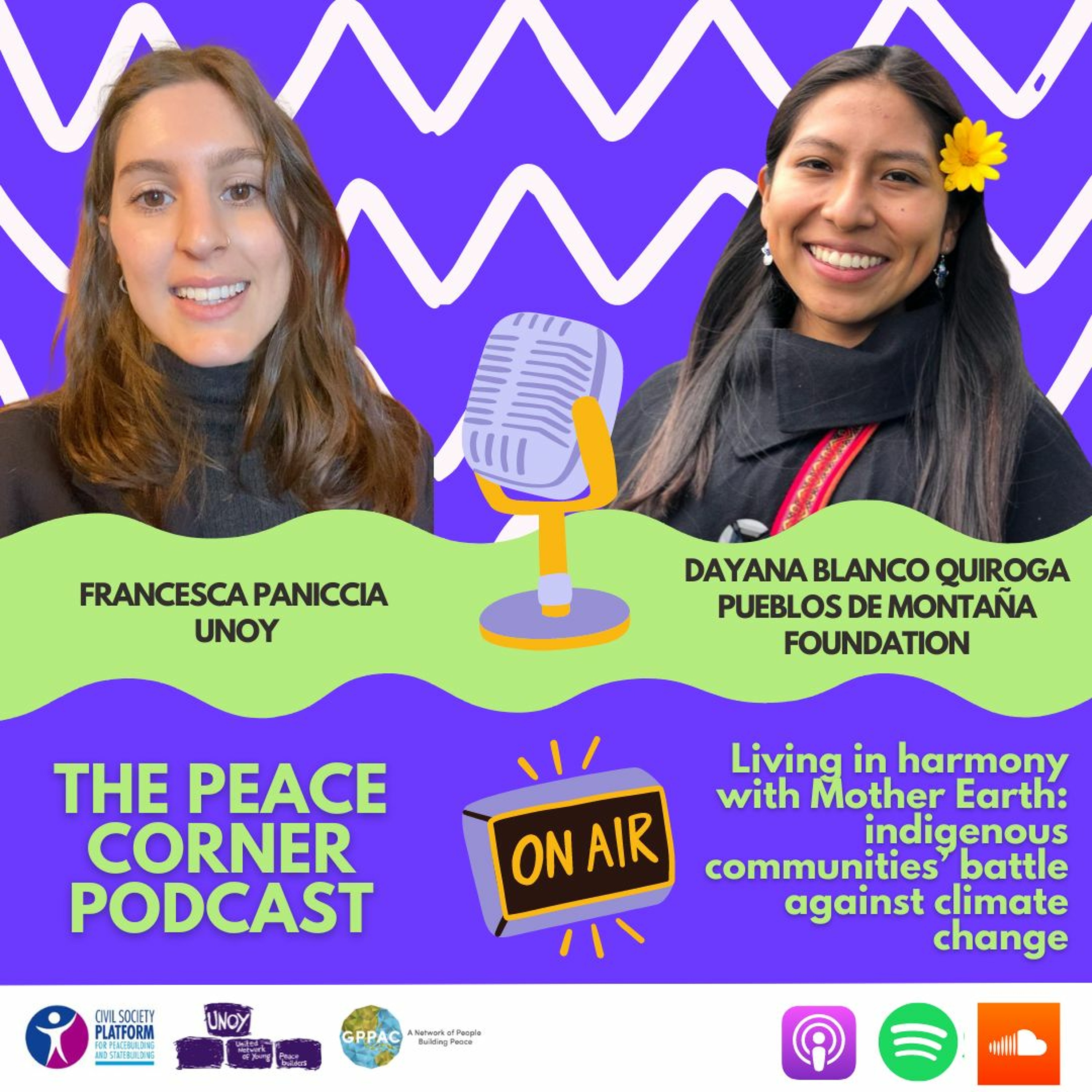
Living in harmony with Mother Earth: indigenous communities’ battle against climate change (S07 E08)
The climate crisis is impacting the whole world, but not everyone is affected in the same way. Indigenous communities are at the forefront of the battle against climate change, trying to make their voices heard by institutions and decision-making bodies. In this new episode of The Peace Corner Podcast, UNOY Communications Officer Francesca Paniccia talks to Dayana Blanco Quiroga, Project Coordinator at Pueblos de Montaña Foundation, Aymara indigenous organisation about their efforts to find sustainable solutions to mitigate the effects of climate change. Based in Oruro, Bolivia, the organisation combines indigenous and scientific knowledge to help the community overcome the consequences of climate events. The Peace Corner Podcast is an initiative of GPPAC, CSPPS & UNOY Peacebuilders
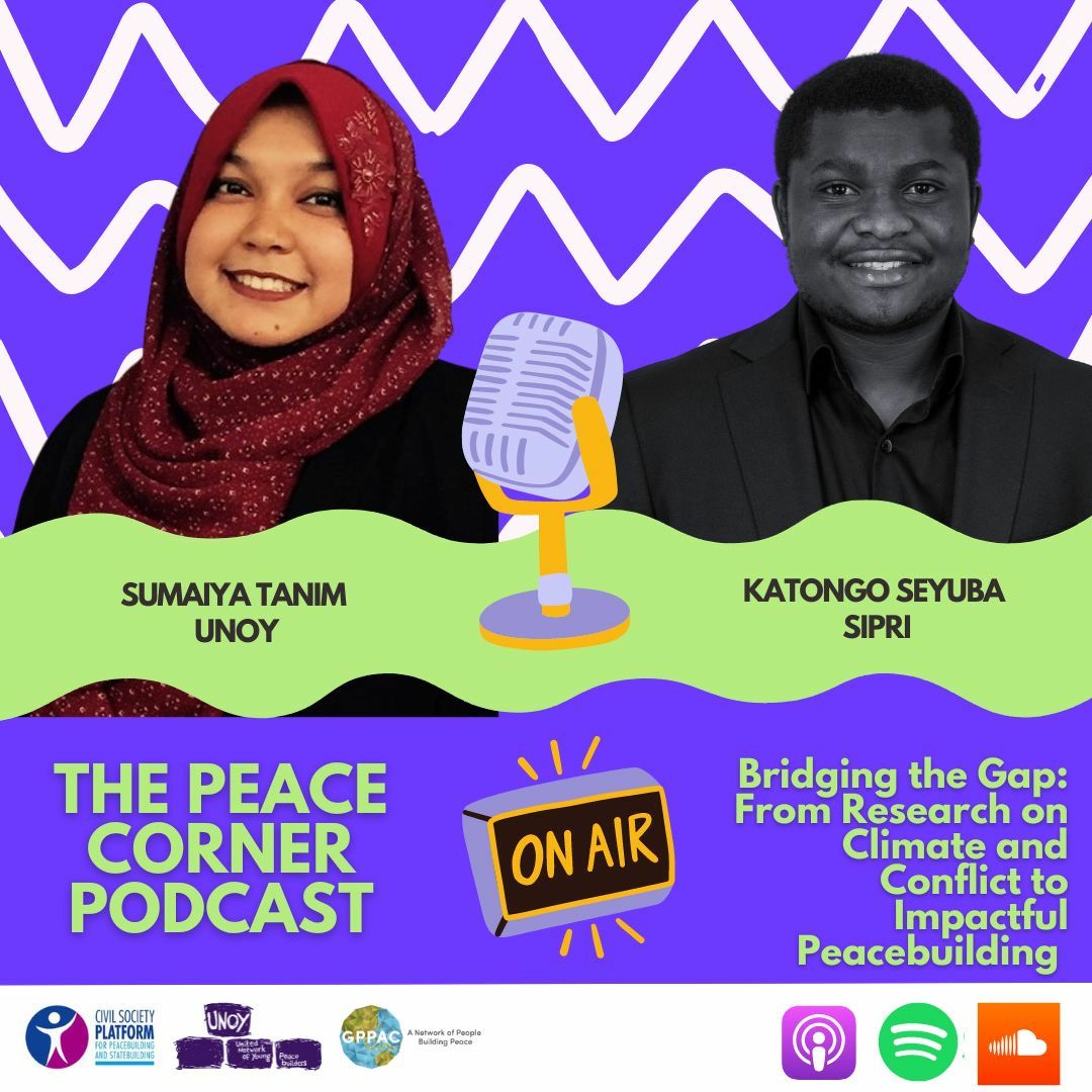
Bridging the Gap: From Research on Climate and Conflict to Impactful Peacebuilding(S07 E07)
From the Sahel to the Arctic, the impact of climate change is being felt around the world. But how is it linked to violent conflict? Understanding the connection between the two is more important now than ever. Join UNOY Fundraising Officer Sumaiya Tanim as she chats with Katongo Seyuba, a young researcher on Climate Change, Development & Sustainability on the latest episode of Peace Corner Podcast to learn about his research on the link between climate change and conflict, and the policy implications for peacebuilding efforts. Katongo Seyuba is currently working as a Research Assistant with the Climate Change and Risk Program at the Stockholm International Peace Research Institute (SIPRI). The Peace Corner Podcast is an initiative of GPPAC, CSPPS & UNOY Peacebuilders
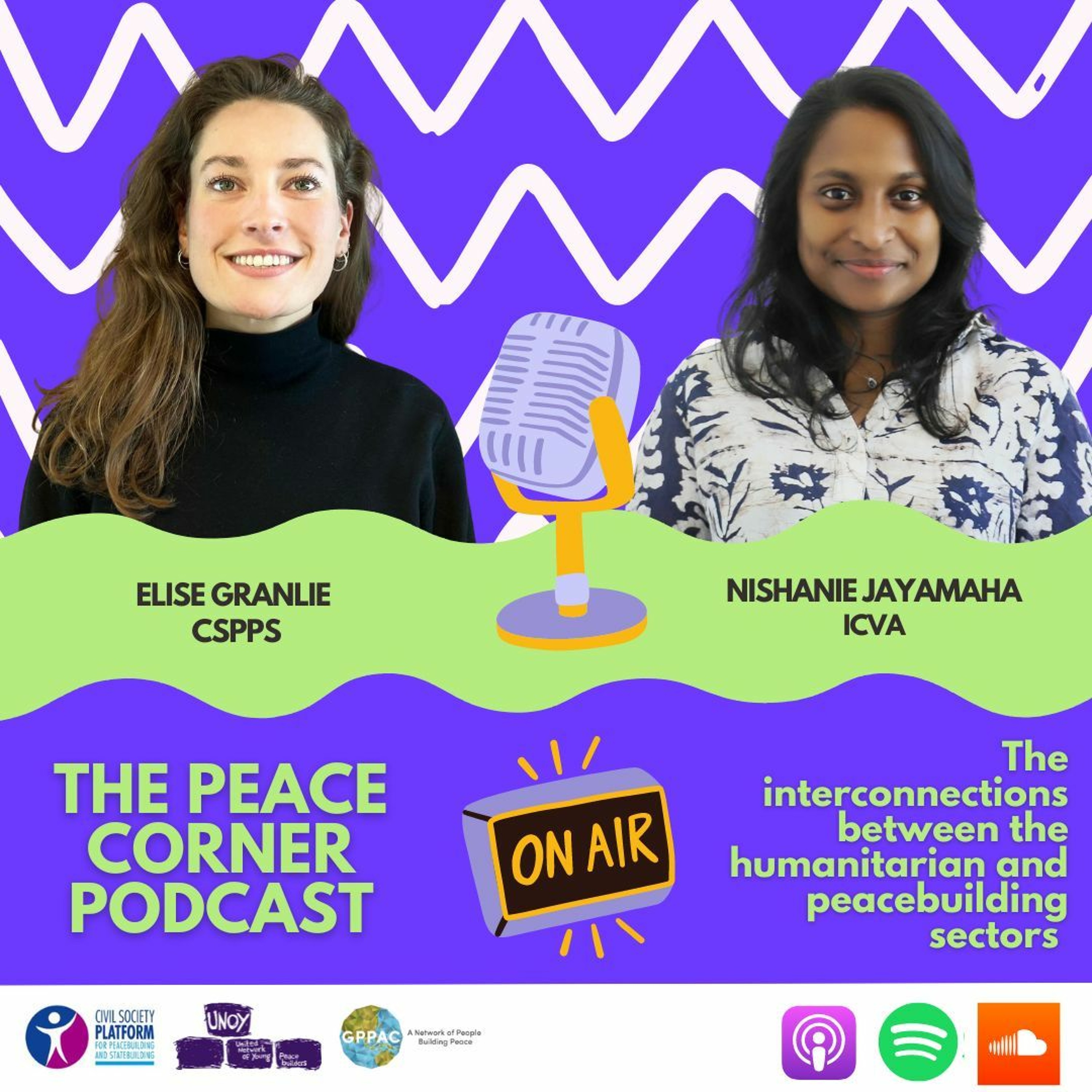
The interconnections between the humanitarian and peacebuilding sectors (S07 E06)
In this new episode, we learn from Nishanie Jayamaha, who brings a humanitarian perspective to the discussion. Are you curious to hear about how the different sectors are inter-connected? Are you interested in learning more about the implications of connecting climate change as a direct driver to conflict? Tune in to hear more ! Nishanie Jayamaha is the Learning and Climate Change Coordinator at ICVA and has over 20 years of experience working in the humanitarian and conflict fields in complex emergency contexts. Bringing into light the challenges of conflict, climate change, displacement, food insecurity, she highlights the need for a change and working together across sectors. The Peace Corner Podcast is an initiative of GPPAC, CSPPS & UNOY Peacebuilders
When you see the bees migrating - local indicators of climate change in Uganda (S07 E05)
In this episode, Beatrice talks to Marion Akiteng from CECORE Uganda, who shares her experience in developing and piloting the GPPAC Step-by-Step Guide to document, assess, and address climate security challenges at the local level. What for? To design strategies for mitigating and adapting to climate risks. Hear from Marion how communities develop local indicators and find out more about their value in addressing climate risks. Marion also talks about the crucial role local women and young people play in driving local climate action. Tune in for more! The Peace Corner Podcast is an initiative of GPPAC, CSPPS & UNOY Peacebuilders
Can managing our natural water resources stop climate change? (S07 E04)
Join Aziza and Ali Joma in the latest episode of the #PeaceCorner Podcast to explore the impacts of climate change on the community in Afghanistan, and how young climate activists are contributing to climate action and change. Ali Joma Raeesi is a young climate activist who has been working on climate change issues since his university days. He is the CEO of Avisar organization for research and water resource management in Afghanistan. In this episode, he discusses how climate change has affected Afghanistan's vulnerable community; 80% of the country's population depends on subsistence agriculture and the country's population is also currently facing a dire economic and political situation. Don't miss this insightful conversation on the intersection of water resource management, climate change, and youth activism. Tune in to the #PeaceCorner Podcast now! The Peace Corner Podcast is an initiative of GPPAC, CSPPS & UNOY Peacebuilders
Generation climate: Youth at the forefront of change (S07E03)
Generation climate: What is the impact of conflict and climate change on vulnerable communities in Yemen? What is the role of youth in building community resilience to changing climate patterns? Tune in to join the discussion of Charis and Olla Alsakkaf and deep dive into the role of youth mediators as valuable contributors to climate-action. Olla Alsakkaf is a peace and climate activist from Yemen, and chairperson of Peace Environment organisation. Having witnessed first-hand the implications of the on-going crisis in Yemen, she describes the importance of adequately addressing the intersection between conflict and climate change, while giving young people the opportunity to take the lead and be at the forefront of change.
Shifting the Power: Sharon Bhagwan-Rolls on feminist climate justice (S07E02)
Climate action must be channelled through feminist and civil society networks who have the local expertise on climate peace and security. Sharon Bhagwan-Rolls has over 30 years of experience in feminist movements. She is part of the #ShiftingThePowerCoalition - a feminist alliance of pacific women-led organisations driving climate justice and humanitarian action. Peacebuilding should not just be regarded as a project of development partners. To sustain their support they have to ensure localised peacebuilding and ask: “How do we get more money to our partners on the ground?” Tune into this episode to learn from Sharon about the shared vision of feminist grassroots peacebuilders for climate justice in the Pacific Island Countries. The Peace Corner Podcast is an initiative of GPPAC, CSPPS & UNOY Peacebuilders
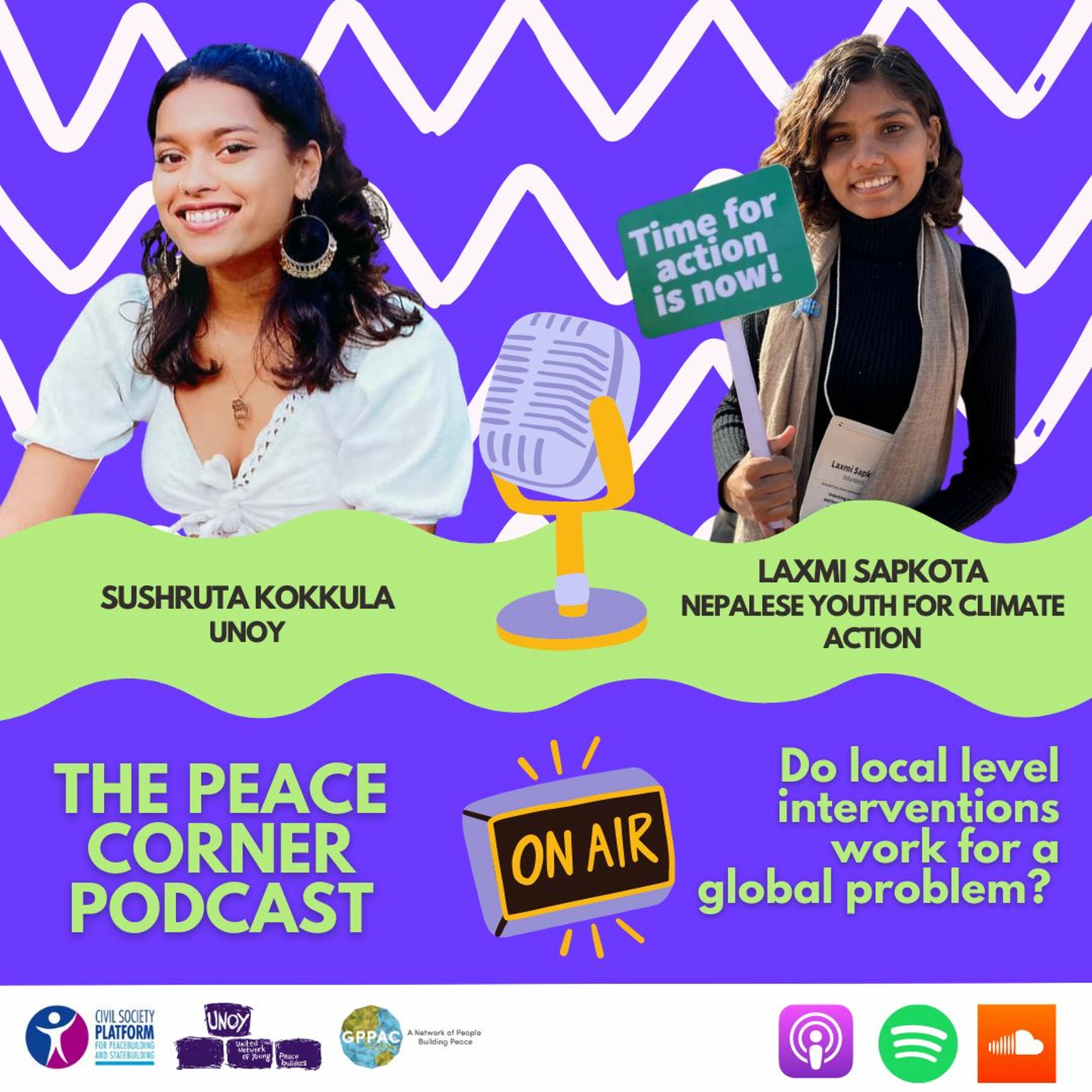
Climate Change: Do local level solutions work for a global problem? (S07E01)
It is quite evident that climate change is very much a global issue. How we live and work together in communities and cities can have a huge impact in tackling climate change. Some believe that small scale projects do not positively combat the effects of climate change, others believe that solutions suited to the local context is one of the best ways forward. Join us in discussing this topic with Nepalese climate youth activist Lakshmi Sapkota, where we delve deeper into the role of community level interventions in Nepal and how climate change is conceptualised and understood within the South Asian region. The Peace Corner Podcast is an initiative of GPPAC, CSPPS & UNOY Peacebuilders
La Force des Communautés Contre les Violences Sexistes: L’exemple d’ALDEPA au Cameroun (S06E12)
La région de l’Extrême Nord du Cameroun est la région plus touchée par le changement climatique, la plus pauvre et la moins scolarisée du pays. C’est aussi la région dans laquelle Marthe Wandou a concentré ses efforts depuis les années 1990 avec son association ALDEPA (Action locale pour un développement participatif et autogéré). Les activités de l'association ont évolué avec le contexte sécuritaire, en raison de l’expansion de Boko Haram dans la région du lac Tchad depuis 2013 et du conflit anglophone qui a débuté il y a plus de cinq ans. Dans cet épisode, Marthe nous raconte comment elle lutte chaque jour depuis plus de 20 ans pour faire évoluer les mentalités sur les questions de genre en adoptant une vision holistique qui intègre tous les pans de la société camerounaise: les victimes de violences basées sur le genre, les familles, les leaders communautaires et religieux, les jeunes… ALDEPA a ainsi développé des outils innovants et basés sur la communauté dans laquelle ils sont implantés, afin de créer des mécanismes communautaires de prévention de l’extrémisme violent et de protection contre les violences faites aux femmes et filles qui vivent en situations de conflit. Écoutez cet épisode pour en savoir plus sur le contexte camerounais et les activités de Marthe, lauréate 2021 du Right Livelihood Award! *** Community Strength Against Gender-Based Violence: The Example of ALDEPA in Cameroon The Far North region of Cameroon is the region with the highest levels of poverty and the lowest levels of education in the country. It is also the region in which Marthe Wandou has concentrated her efforts since the 1990s with her association ALDEPA (Action locale pour un développement participatif et autogéré). The association's activities have evolved with the security context, due to the expansion of Boko Haram in the Lake Chad region since 2013 and the Anglophone conflict that started more than five years ago. In this episode, Marthe tells us how she has been fighting every day for more than 20 years to change mentalities on gender issues by adopting a holistic vision that integrates all parts of Cameroonian society: victims of gender-based violence, families, community and religious leaders, young people... ALDEPA has thus developed innovative tools based on the community in which they are implemented, in order to create community mechanisms for the prevention of violent extremism and protection from violence against women and girls living in conflict-affected settings. Listen to this episode to learn more about the Cameroonian context and the activities of Marthe, the 2021 Right Livelihood Award winner! Music credit: 'Coffee Shopping' by Bruno Freitas, licensed under hooksounds.com.
Peace is Personal: Moving Beyond Binary Gender Identities & Stereotypes in Peacebuilding (S06E11)
Peace is personal; part of demystifying peacebuilding is recognising the agency of young people who are building and sustaining peace in their communities, and speaking up against injustices and acknowledging their role as peacebuilders. In this episode of the Peace Corner, Freya from UNOY Peacebuilders sat down with Anbid Zaman, LGBTQIA+ human rights activist, and discussed intersectionality, stereotypes and moving beyond binary gender identities in peacebuilding. Peace, just like conflict, is highly gendered. Assumptions about who is peaceful and who is violent rely on stereotypes. Young peacebuilders come from different backgrounds, work on different issues, and have intersectional identities. Stereotypical assumptions about young people lead to the exclusion and discrimination of youth. In order to ensure their participation, we need to be aware of the structures that lead to their exclusion, open up spaces, and unite in solidarity with young people who cannot be in the room. Music credit: 'Coffee Shopping' by Bruno Freitas, licensed under hooksounds.com.
Youth Entitled to a Peaceful Future: Women In and Against War in Ukraine (S06E10)
After years of confrontation and diplomatic tensions, Ukraine was invaded by Russia on 24 February 2022. The war has severely impacted social cohesion, community security, and the resilience of local communities, especially women and girls. This episode is structured in two interrelated parts: the first part is designed to highlight the role of women in peacebuilding, while the second part, more intimate, focuses on women's daily lives and perceptions during the current crisis. The podcast traces the life of a woman peacebuilder, who is committed to youth in Ukraine through local and international projects. The promotion of democratic and human rights, which was at the heart of her daily work in 2011; from 2014 onwards, due to the deteriorating security situation in Ukraine, Yuliya's work turned to conflict transformation and the better inclusion of young people in peacebuilding initiatives. The episode addresses the harsh psychological reality of war and the place of women as well as mothers in the Russian-Ukrainian conflict. In sum, Yuliya describes the suffering of women and children from the violence of the conflict and the taboo of sexual violences as a weapon of war. Music credit: 'Coffee Shopping' by Bruno Freitas, licensed under hooksounds.com. * Après des années de confrontation et de tensions diplomatiques, l'Ukraine a été envahie par la Russie le 24 février 2022. La guerre a donc gravement affecté la cohésion sociale, la sécurité des communautés et la résilience des communautés locales, en particulier des femmes et des filles. Cet épisode est structuré en deux parties interdépendantes : la première partie vise à mettre en lumière le rôle des femmes dans la consolidation de la paix, tandis que la seconde partie, plus intime, se concentre sur le quotidien et les perceptions des femmes durant la crise actuelle. En effet, le podcast retrace la vie d'une femme bâtisseuse de paix qui a décidé de s'engager auprès des jeunes en Ukraine à travers des projets locaux et internationaux. La promotion des droits démocratiques et humains, qui était au cœur de son travail quotidien en 2011, s'est soudainement tournée vers la transformation des conflits et la meilleure inclusion des jeunes dans les initiatives de construction de la paix à partir de 2014, en raison de la détérioration de la situation sécuritaire en Ukraine. Enfin, l'entretien aborde la dure réalité psychologique de la guerre et la place des femmes, ainsi que des mères, dans le conflit russo-ukrainien. Globalement, elle décrit la souffrance des femmes et des enfants face à la violence des combats et le tabou des violences sexuelles comme arme de guerre.

Peace as Process, not Product: Decoding & Decolonising Peace Psychology (S06E09)
Part of demystifying peacebuilding is recognising the agency of young people, who are building and sustaining peace in their communities, and speaking up against injustices. In this episode, Shreya from UNOY Peacebuilders sat down with Ufra Mir, a peace psychologist from Kashmir, to discuss the nexus between mental health, decolonising peacebuilding, and Ufra’s experiences as a woman peacebuilder in Kashmir. Kashmir has increasingly come to be a militarised and patriarchal conflict zone, where the word ‘peace’ has become a privilege given the context. In such situations, peacebuilding often needs to start from scratch, rebuilding communities socially, economically, as well as mentally and physically, and where a gender-inclusive mental health lens is crucial. Moreover, especially in the context of South Asia, it is important to understand that decolonising peacebuilding spaces is also equally important to consider when we talk about peace psychology. Peace is a process, not a product, and narratives should be centred around bringing to light the importance of doing psycho-social conflict resolution and peacebuilding work in places such as Kashmir. Music credit: 'Coffee Shopping' by Bruno Freitas, licensed under hooksounds.com.
Gender- and Youth-Responsive Financing for Peacebuilding (S06E08)
Despite the wealth of evidence highlighting the benefits that investing in women and youth can bring in terms of conflict prevention, crisis response, and peace, the failure to allocate sufficient resources and funds has been perhaps the most serious and persistent obstacle to the implementation of the WPS and YPS agendas. Moreover, research shows a consistent, striking disparity between policy commitments to gender equality and women’s empowerment, and the financial allocations to achieve them. Saumya is the co-founder and CEO of Youth for Peace International, a youth-led peacebuilding organisation in India. As a social entrepreneur, peacebuilder, and international trainer, Saumya has been working towards building a peaceful world by empowering young individuals and creating a sustainable society. In this episode, we discuss Saumya’s experiences accessing resources as a young peacebuilder; she shares what needs to change in the donor community to ensure an enabling environment for young women peacebuilders, and an ideal future where all members of society have equal opportunities to achieve and sustain peace. Music credit: 'Coffee Shopping' by Bruno Freitas, licensed under hooksounds.com.
Revolutionary Aspects of Feminist Foreign Policy & Women, Peace & Security in Mexico (S06E07)
In January 2020, the Mexican government announced that it would implement a Feminist Foreign Policy and in January 2021 Mexico presented its first National Action Plan (NAP) on Women, Peace and Security (WPS). Both documents claim to put women and marginalised communities at the centre of their approach to international affairs and security. In this episode, Dinorah sat down with Ana and Daniela—all Mexican women—to discuss the implications and contradictions of these first attempts of Mexico to implement the WPS Agenda in a country where more than 10 women are lethally killed every day and with extreme levels of violence against journalists, LGBTQ+, afro descendants, and other marginalised identities. Music credit: 'Coffee Shopping' by Bruno Freitas, licensed under hooksounds.com.
Gender Roles Revised: The Upside of (Post)-Conflict Societies (S06E06)
Rwanda leads the world with the largest share of women in the national legislature; it's arguably the number one country for women in politics. This has led me to wonder whether and how traditional gender roles are challenged and/or transformed in times of (post-)conflict. This is a relevant question as times are changing, and with that, there is also a need for the transformation of traditional and outdated roles that have been imposed on us by generations that do not exist anymore. The expectations of gender roles are not limited to the experiences of women, but also to men and gender diverse people, who are often overlooked in the gender discourse. Can gender roles transform and how? In this episode, Sara Sadrizadeh sits down with Dorsa Babaei—Co-Director of PeaceMentors, a youth-led initiative that raises awareness and trains young people in peacebuilding, intercultural and interfaith dialogue, social inclusion, and conflict resolution—to explore how she got into peacebuilding, and how her gender has influenced her career. Moreover, she shares her experience working with people in a post-conflict society and sheds light on the traditional expectations set out for all genders. This episode shows that even though traditional gender roles can remain intact, there is also space for change and transformation, which individuals can shape to their own liking. Tune in to hear Dorsa and I share our thoughts on today’s topic. For more on the Ted Talk mentioned throughout this episode, visit: https://www.ted.com/talks/deepa_narayan_7_beliefs_that_can_silence_women_and_how_to_unlearn_them. Music credit: 'Coffee Shopping' by Bruno Freitas, licensed under hooksounds.com.
“Everybody is a Gender Expert in Their Own Right” (S06E05)
We see gender relations play out everyday in our own contexts and societies: how the military is considered masculine; how care jobs are considered feminine; how we expect something else from fathers than we do from mothers; how positions of power are often held by men, but the consequences are often felt by women and gender diverse people. Every day we learn about gender relations and how they form us and our society. We become gender experts by looking at those gender relations we have always considered to be natural or logical, and to scrutinise them. In this episode of the Peace Corner Podcast, Yvet Voppen and Henri Myrttinen talk about how local peacebuilders are those gender experts that we need to listen to if we want to create meaningful and sustainable peace, for everyone, regardless of gender. And while gender is often associated with girls and women, in this episode we shine a light on masculinity and diverse sexual orientations and gender identities in relation to peacebuilding. Learn how to listen to your own expertise on gender in your own context and how this relates to the bigger peacebuilding sector. Music credit: 'Coffee Shopping' by Bruno Freitas, licensed under hooksounds.com.