
The Cossus Controversy
The 430s BCE are a challenging time for Rome. Aulus Cornelius Cossus is a perfect example of the issues of historical chronology!
The Partial Historians · The Partial Historians
Audio is streamed directly from the publisher (sphinx.acast.com) as published in their RSS feed. Play Podcasts does not host this file. Rights-holders can request removal through the copyright & takedown page.
Show Notes
We return to the year 437 BCE and the exploits of Aulus Cornelius Cossus. Cossus came to our attention in the aftermath of the colony of Fidenae’s decision to switch their allegiances from Rome to the Etruscans. In this stressful time, the Romans had appointed Mamercus Aemilius as dictator. He led the Roman forces into battle, and it was here that the military tribune of the hour, Cossus, distinguished himself.
Episode 130 – The Cossus Controversy
Controversial Cossus
In the course of the conflict, Cossus single-handedly defeated the commander of the Etruscan forces, King Lars Tolumnius. Cossus stripped his corpse and was allowed to dedicate the spolia opima in the temple of Jupiter Feretrius. Last episode, we discussed the possible confusion over when this duel took place. Welcome to the Cossus Controversy!
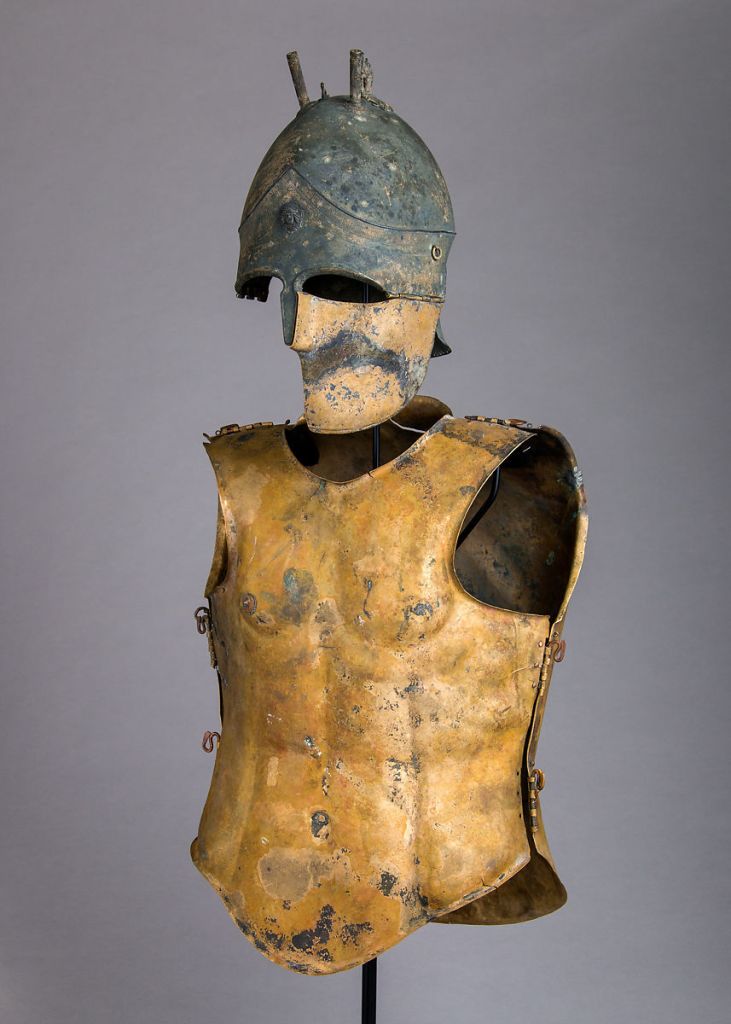
Helmet of the Italo-Chalcidian Type, Anatomical Cuirass, and Left Greavelate 5th–4th century BCE Etruscan, possible Vulci.
Image courtesy of the Metropolitan Museum of Art.
It turns out that Livy was aware of the problems with this story. Uncharacteristically, he provides some insight into these issues in a controversial passage:
“Following all previous historians, I have stated that Aulus Cornelius Cossus was a military tribune when he brought the second spoils of honour to the temple of Jupiter Feretrius. But besides that only those are properly held to be “spoils of honour” which one commander has taken from another commander, and that we know no “commander” but him under whose auspices the war is waged, the very words inscribed upon the spoils disprove their account and mine, and show that it was as consul that Cossus captured them.
Having heard from the lips of Augustus Caesar, the founder or renewer of all the temples, that he had entered the shrine of Jupiter Feretrius, which he repaired when it had crumbled with age, and had himself read the inscription on the linen breast-plate, I have thought it would be almost sacrilege to rob Cossus of such a witness to his spoils as Caesar, the restorer of that very temple.
Where the error in regard to this matter lies, in consequence of which such ancient annals and also the books of the magistrates, written on linen and deposited in the temple of Moneta, which Licinius Macer cites from time to time as his authority, only give Aulus Cornelius Cossus as consul (with Titus Quinctius Poenus) seven years later, is a matter on which everybody is entitled to his opinion. For there is this further reason why so famous a battle could not be transferred to the later year, that the consulship of Cossus fell within a period of about three years when there were no wars, owing to a pestilence and a dearth of crops, so that certain annals, as though death-registers, offer nothing but the names of the consuls. The third year after Cossus's consulship saw him military tribune with consular powers, and in the same year he was master of the horse, in which office he fought another famous cavalry-engagement.
Here is freedom for conjecture, but in my opinion it is idle; for one may brush aside all theories when the man who fought the battle, after placing the newly-won spoils in their sacred resting-place, testified in the presence of Jupiter himself, to whom he had vowed them, and of Romulus —witnesses not to be held lightly by a forger —that he was Aulus Cornelius Cossus, consul.”
Livy, 4.20 – translation courtesy of Perseus Digital Library.
What should we make of all this? Augustus himself being cited as a source? Dr G is beside herself with excitement.
Quaking with Fear
The Romans try to continue their campaign against the Etruscans, but a plague interferes with their plans. The gods must be furious because the outbreak is accompanied by terrifying prodigies like earthquakes. What state will the Romans be in after so many trials and tribulations?
Things to Look Out For
- Spurius Maelius possibly coming back from the dead
- Consultation of the famous Sibylline books
- Augustus possibly trying to control Livy’s historical narrative
- Raiding galore
Want to hear more about the original Spurius Maelius? Check out our previous episode on his assassination.
Our Players 437 BCE
Consuls
- M. Geganius M. f. – n. Macerinus (Pat) Cos 447, 443
- L. Sergius C. f. C. n. Fidenas (Pat)
Consul Suffectus
- M. Valerius M. f. M’. n. Lactuca (M’ = Manius) (or Lanctucinus) Maximus (Pat)
Dictator
- Mam. Aemilius M. f. – n. Mamercinus (Pat)
Master of the Horse
- L. Quinctius L. f. L. n. Cincinnatus (Pat) – son of the famous Cincinnatus
Legates
- M. Fabius Vibulanus (Pat) Cos 442
- (T.) Quinctius Capitolinus (Barbartus) (Pat)
Tribune of the Soldiers
- A. Cornelius Cossus (Pat)
Our Players 436 BCE
Consuls
L. Papirius – f. – n. Crassus (Pat) Cos 430?
M. Cornelius (M. f. L. n) Maluginensis (Pat)
Tribune of the Plebs
Sp. Maelius
Our Sources
- Dr G reads Diodorus Siculus, 12.46; Cicero, de Re Publica, 1.6; Cicero, de Doma Sua, 86; Valerius Maximus, 5.3.2f-g.
- Dr Rad reads Livy ab Urbe Condita 4.17-21.
- Broughton, T. R. S., Patterson, M. L. 1951. The Magistrates of the Roman Republic Volume 1: 509 B.C. – 100 B.C. (The American Philological Association)
- Cornell, T. J. 1995. The Beginnings of Rome: Italy and Rome from the Bronze Age to the Punic Wars (c. 1000-264 BC) (Taylor & Francis)
- Cornell, T. 2005 ‘The Value of the Literary Tradition Concerning Archaic Rome’ in Raaflaub, K. A. (ed) Social Struggles in Archaic Rome: New Perspectives on the Conflict of the Orders (Expanded and Updated Edition) (Blackwell), pp 47-74
- Forsythe, G. 2006. A Critical History of Early Rome: From Prehistory to the First Punic War(University of California Press)
- Lintott, A. W. 1970. ‘The Tradition of Violence in the Annals of the Early Republic’ Historia: Zeitschrift für Alte Geschichte, 19.1 (Jan., 1970), pp. 12-29
- Raaflaub, K. A. 2005 ‘The Conflict of the Orders in Archaic Rome: A Comprehensive and Comparative Approach’ in Raaflaub, K. A. (ed) Social Struggles in Archaic Rome: New Perspectives on the Conflict of the Orders (Expanded and Updated Edition) (Blackwell), pp 1-46
- Sailor, D. 2006. ‘Dirty Linen, Fabrication, and the Authorities of Livy and Augustus’, Transactions of the American Philological Association (Vol 136), 329-388
- Wilson, M. 2021. Dictator: The Evolution of the Roman Dictatorship (University of Michigan Press).
Sound Credits
Thanks to BBC Sounds, Fesliyan Studios, Orange Free Sounds and Sound Bible for sound effects, and the gifted Bettina Joy de Guzman for our theme music.
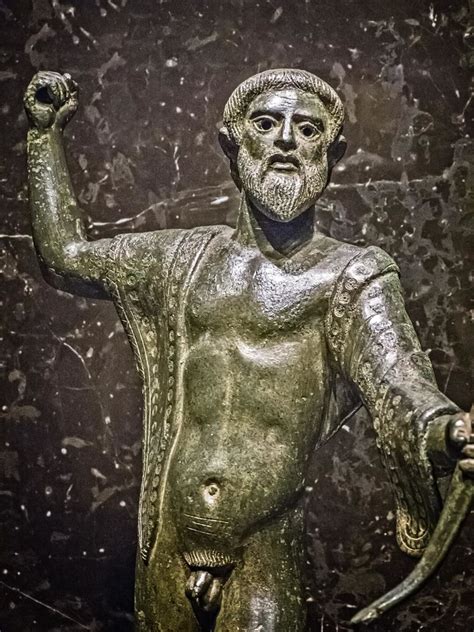
Etruscan Statuette from Apiro, Italy 460-450 BCE. Photo credit to Mary Harrsch on Flickr
Automated Transcript
Provided by Otter AI. As always apologies in advance as the AI technology attempts to navigate our Australian accents and Latin!
Dr Rad 00:16
Welcome to the partial historians,
Dr G 00:20
we explore all the details of ancient Rome.
Dr Rad 00:23
Everything from the political scandals, the love of ours, the battles waged, and when citizens turn against each other. I'm Dr. Rad.
Dr G 00:34
And I'm Dr. G. We consider Rome as the Roman Sword by reading different authors from the ancient past and comparing their stories.
Dr Rad 00:43
Join us as we trace the journey of Rome from the founding of the city. Hello, and welcome to another episode of the partial historians. I am one of your hosts, Dr. Rad. And I'm Dr. G. Looking very glamorous with a sort of almost iridescent eyeliner today.
Dr G 01:20
Thank you, I crunched up beetle shells myself.
Dr Rad 01:24
How very antiquity of you. I feel very Egyptian thing. I like it. I like it. So we are an ancient Roman History podcast. we're delving through the Roman Republic at this point in time, aren't we Dr. G?
Dr G 01:39
We are we've been tracing room's history from its foundation. And here we are in a roundabout for 36 BCE.
Dr Rad 01:47
Well, you just hold on to your horses mercy, because I have a little bit more to say about 437. I'm afraid. I know. So let's do a little bit of a recap of
Dr G 01:56
Allah. Wasn't that the you were too long years got stabbed in the groyne? Was it?
Dr Rad 02:03
This is the question that we're asking. We ask the big questions on the partial historians was a man stabbed in the groyne.
Dr G 02:12
There was a story about that.
Dr Rad 02:14
All right. It definitely was a question of when it happened, I suppose. Oh, yeah. And if indeed Yeah, exactly. So what we were dealing with was Rome has been as usual in conflict with some neighbouring areas. That's what was happening in fourth
Dr G 02:29
era bully, they don't know how to get along with anybody.
Dr Rad 02:31
Well, to be fair, to be fair, this whole affair that we've been dealing with recently was sparked by someone else's actions. And they were just responding in kind with a snap to the ground. So what happened was we have one of their colonies FedUni, which had decided to treacherously switches. Can you imagine not wanting to be part of room? Yes. So they had changed their allegiances over to the address guns lever move? Yeah, absolutely. Who is still here, it is something of a force in the north in particular. And this led to a battle in which the actually not the Roman commander. I think I said the Roman commander, but actually not the dictator, but a young man by the name of cosas,
Dr G 03:24
who becomes super famous for killing Tulum news on the field of battle. Yes, so famous that he's compared to Romulus himself. Yes,
Dr Rad 03:32
exactly. So this guy's a big deal. We did raise some questions last time about exactly when the slang of the Etruscan King to lameness
Dr G 03:43
actually happened. We're in a very hazy period of American history in terms of the chronology as it were. And I think this is going to not be cleared up for another 10 years or so.
Dr Rad 03:51
Yeah, basically, we have accounts that place it in 437. But certainly there are questions raised about maybe it happened in 426. Because this is a very on again, off again, kind of issue that the Romans have.
Dr G 04:07
Can't hold on to LIS who knew?
Dr Rad 04:09
Yeah, so because there is this on again, off again, nature, it's possible that the exact chronology is a bit confused. And I must admit, I was pretty convinced by the idea that to lameness as the king and therefore the leader of these interesting forces that the Romans were fighting, I was kind of convinced by the idea that it would make sense for him to be killed in the final year of the conflict. And that to be like a signal of Right, yeah, done. Yeah. Over Yeah, rather than in the very first year, but nonetheless, it does crop up and forth. The
Dr G 04:42
tragedies happen and the Etruscans have 12 kings, so maybe they can find another one from somewhere else to die later.
Dr Rad 04:47
Exactly. Anyway, so we've got this whole idea of cosas, managing to defeat to laminators in battle, mano a mano, and being able to strip him him of his spoils. So his armour, his weapons, that kind of jazz, you know, and then getting to take part in this very special dedication ceremony where he dedicates this Bollier Optima, which is all that stuff. All that stuff is nicked off the guy's body. Yeah, exactly in the temple of Jupiter Farah treatise. Hmm. Which is you highlighted it's very, very special thing to do. It is super special. And not many people do it. Yeah. The only person to do it before cosas was apparently Romulus, which is saying something because as we've highlighted, he's probably fictional.
Dr G 05:37
It was a long time ago, and nobody's sure anymore if he was real.
Dr Rad 05:41
Yeah, exactly. Now, before we move on into the next year, I wanted to highlight a particular passage of Livy, which is connected to these events. So last episode, we talked about what the scholars think about this event and the potential haziness around the reporting of it. And I thought, I'm actually going to read out this entire passage of live events, very controversial passage. And so I think it bears repeating in full. So you ready? Oh, yeah, I'm excited. Yeah. So living himself actually acknowledged that there was debate over exactly what happened. Good man. He's done his research. He kind of has Okay, and I think you're gonna be very excited when you find out exactly how he's doing his research sorry. For my living voice, following all previous historians, because of course, we all know the Romans British, stated that all this Cornelius Corsas was a military Tribune when he brought the second spoils of honour to the Temple of Jupiter trees. But besides that, only those are properly held to be spoils of honour, which one commander takes from another commander, and that we know no commander but him, under whose auspices the war is waged, the very words inscribed upon the spoils, disprove their account and mine, and show that it was as console that cosas captured them.
Dr G 07:17
This makes sense, actually. It's like, it's very bizarre to have a moment where you're like, ah, an enemy commander has killed another enemy commander in battle and like, and his name's costless, and he's not on the controller list for this year. You're like, Oh, awkward.
Dr Rad 07:32
Exactly, exactly. So it's exactly what he's highlighting that hang on a second. There was a dictator. And because this actually wasn't the commander, this is just some
Dr G 07:41
dude. Yeah.
Dr Rad 07:42
Okay, now, this is the power you're going to get really excited. So okay, here we go. Having heard from the lips of Augustus Caesar, the founder or renewer of all the temples that he had entered the shrine of Jupiter Farah trees, which he repaired when it had crumbled with age, and had himself read the inscription on the linen breastplate. I have thought it would be almost sacrilege to rob casus of such a witness to his spoils as Caesar, the restore of that very temple, where the era in regard to this matter lies in consequence of which such ancient annals and also the book of the magistrates, written on linen, and deposited in the temple of manita, which lies Kenya's may or may serve you prefer sites from time to time as his authority only gives all US Cornelius courses as console with Titus quinti is pointless. Seven years later, is a matter on which everybody is entitled to his opinion. For there is this further reason why so famous a battle could not be transferred to the later year that the consulship of courses fell within a period of about three years, when there were no wars, owing to a pestilence and dearth of crops, so that certain animals as though death registers offer nothing but the names of the consoles. The third year after Costas is consulship, saw him military Tribune with consular powers, and in the same year, he was master of the horse, in which office, he fought another famous cavalry engagement. Here is freedom for conjecture, but in my opinion, it is idle, for one may brush aside all theories when the man who fought the battle after placing the newly won spoils in their sacred resting place, testified in the presence of Trooper tar himself, to whom he had out them and do Romulus witnesses not to be held lightly by a forger that he was all us. Cornelius Costas console. Microphone drop. All right. So let's unpack this a little. Yeah,
Dr G 10:18
there's a lot going on here.
Dr Rad 10:19
There is a lot going on. But this is actually probably one of the most controversial passages of Livi.
Dr G 10:25
Oh, no, it's why he has done his best work. How can this be controversial? Yes, exactly. It's gone and talked to people. And he's looked at some evidence and, you know, some reliable sources, nobody's going to distrust or Gustus? Surely not. Well, it's
Dr Rad 10:37
just so fascinating, because he is highlighting all the things we've highlighted that there's so much confusion in this period. And it's partly because we've got some similar names that keep coming up in a very short period of time. And there do seem to be like multiple battles, which maybe events from those battles have been slightly confused. He has sources, these unfortunately, basically non existent earlier records, which we only now have, like very,
Dr G 11:05
like he's working on, like scholars that we don't have access to ourselves, like yours may. So we don't have a lot of, and he's going to console a list. So he's going to fastI. Yeah, they're a little bit more reliable, but they're also a bit gappy. Well, yeah, depending on what the time period is. I like this idea that there's pestilence, maybe one of the things that needs to be kept in mind. Absolutely. I haven't come across any pestilence in the last few years. But I'm wondering if that some are about to hit us.
Dr Rad 11:38
I think I think that we can we can feel the plague, that skins ability. But definitely I love this questioning. But also, I mean, the reference to
Dr G 11:48
Yeah, well, I Okay. So I guess has kind of been the only person who went into that try. And it's not like he by hand himself is restoring the temple. Like, that's just not even on, but he might be one of the few people who had entered into the interior shrine itself in a very long time. So part of what happens with temples and structures like this is that you do have an interior chamber for the most sacred things, which is under the purview of whichever priesthood is looking after that particular temple. Yes. So but their job is not to go in there and sort of like, look at that stuff and hang out is just to make sure that things are intact. So they're not really going to be spending a lot of time necessarily studying the items that are in there, like sort of shrine or archive as it were. Yeah, that's not necessarily part of their job. So it's quite possible that that has been maintained, but needed to be opened. Yes, as part of the restoration process to make sure everything's okay. And Augustus might have wanted to have been part of that it's plausible that he would have a sneak peek in there because he's that kind of guy sticks his nose into everywhere where it doesn't belong.
Dr Rad 13:00
Lexa Alexander's grey? Yeah,
Dr G 13:02
exactly. It's like, I just need to see Alexander for myself. And I was like, that's gross. He's been dead for ages.
Dr Rad 13:09
Well see, okay. I was intrigued by this at first, because it's unusual for any ancient historian to go into this kind of detail about their source material and their process. It's significant depth. Yeah, it is. It is really interesting. But obviously, the reference to Augustus Well, there's a whole nother spin on things strategy. And I was very mean. I'm not gonna say that he's alive, but he's alive. So shock, Augustus has been known to, you know, spinner through things. He's a bit of a master manipulator. You know, I think this is him. But there's this, I do think there is also the element which Livy is quite right to point out that if this breastplate is actually there, and crosses did actually dedicate this breastplate swearing that he was console to Jupiter. I mean, that's a big lie to tell, dude. So there are lots of different things going
Dr G 14:06
on here. I mean, we could just check by opening up the shrine and having a look for ourselves.
Dr Rad 14:12
Patrons get on to it, we need some money
Dr G 14:15
to Jones hat.
Dr Rad 14:18
Yeah, so I was very fortunate to stumble across this really in depth article which went through so many layers of this one passage. So it's by Dylan sailor, it's called dirty linen fabrication and the authorities of living Augustus, which I think is an amazing title, dirty linen, I know, which is obviously like a reference to the fact that we're dealing with a linen breast fillet we're also dealing with potentially this source called the linen rolls.
Dr G 14:45
I'll be honest, a linen breastplate at first blush doesn't sound like it's going to be much use for defensive purposes.
Dr Rad 14:50
Like it's no wonder he got set to the point. It has a lot of questions, but he goes into each detail now I'm not gonna go through Through all of this, this very amazing academic article, but there were some interesting elements which he highlighted, which I thought bear mentioning. So his point of view is that the way that Livy very carefully records this passage, and what happens is that he is kind of linking the evidence that Augustus has offered to him with some early events from Roman history that he's already reported on, which involve supernatural elements coming into play. Okay, and like possible embellishment, or aspects of like fabrication and that kind of thing. So for example, when the king NUMA would go for a stroll with a goddess.
Dr G 15:44
Yeah, very plausible. Definitely happen. Yeah,
Dr Rad 15:46
exactly. Those sorts of things where it's like,
Dr G 15:48
did Augustus look into that archive as well? Like she's real. They found her in the forest myself.
Dr Rad 15:54
Exactly, exactly. And there also have been questions raised about when Livy put this passage in, like, did he did he originally publish it with this passage? Or was it a later edition? Because you spoke to Augustus those sorts of things?
Dr G 16:07
I wonder if it yes, the kind of thing where it's like Augustus is like, boy, Livy, come here.
Dr Rad 16:12
Exactly. Yeah. Let me tell you a thing about a breastplate.
Dr G 16:16
Well, Second Edition, you'll you'll need to do some reworking.
Dr Rad 16:19
Exactly, exactly. So there's been a debate about that, to be honest, I kind of agree with saying that in that it actually doesn't really matter for what I'm about to say next. This is more about contextualising. This particular event, it would seem that it around the time that Libby is writing this passage, we're talking about, you know, sort of like 27 to 25 BC Oh, a very prime political time for Augustus, isn't it? Just do you want to tell us about a WG?
Dr G 16:48
So 27 is the traditional year in which we have the moment where we it's called like the settlement? Yes. And there's this kind of agreement reached that Augustus will get this additional title, this is the moment he becomes Augustus. And the way that the power will be divvied up is kind of resolved after this sort of lengthy tail period after the end of the Civil Wars, where it's not really clear what what Augustus position really is. And they need to sort of firm up something because it's clear that whatever has happened as a consequence of the Civil War, Rome is now different, and its politics functions differently, and they need to figure out how to make that formalise so they can keep going. Yes. And the settlement is partly about that. And so it's a bit of a, an honour gesture to Augustus. But he's also, you know, gotten to this position because he's killed so many of his enemies. So who's left people on his side? Potentially? Yeah, so it's this interesting moment for Rome where it's consciously shifting, and it seems that Augustus is also shaping that shift. Oh, yeah. So he's one who? master manipulator, perhaps, or political strategist, with no enemies left on the floor. So you know, the last chess player remaining,
Dr Rad 18:06
don't think they don't be just
Dr G 18:08
beaten by a teenager, for those following chess controversies. But well, Costas is the kind of the only one left the clear leader. And he has this moment where they also allow him to choose the name that he's going to take for himself. And they did mention that Romulus for a bit didn't they did and he did, and you know, weigh up the pros and cons with like being Romulus as his like, order rific title and was like, and then decided maybe that was a little bit too on the nose, and decided to want to something that was just his Yes, but there is a sense in which Augustus is super interested in the history of Rome and how he fits into it. So it's not at all surprising that he's also very interested in courses because courses is the next figure in Roman history that has this call back to Romulus. And it's like, somewhere in there, or Gustus, who's going to want to sort of line himself up with all of the significant figures that have
Dr Rad 19:04
come before. Yeah, definitely. And that's why he's doing things like restoring temples like it's you know, harkening back because Romulus supposedly is the person who founded this temple. Oh, yes. So you know, it's all these kinds of connections. But if we put it in a bit of context of what specifically was happening just before this, so in 29 BCE, there was a train that was allowed to be held, because I'm gonna say aloud because this is around at this point in time by permitted a minute by markers like Kenya's crisis. No, not the famous one. I mean, like, nothing like the money grubbing crashes. Yeah, but not the one that I think is the most famous one because he was always a reference to Spartacus. But anyway, so this guy, he had been cancelled in the previous year. He was now serving as a pro console. And in that capacity, he ended up fighting people called the bustani Hmm. And during that battle, he killed and stripped the chieftain Dell though.
Dr G 20:08
Did you just say the judge didn't do though? Where's Dell though? Wherever still,
Dr Rad 20:16
he's the guy wearing the red and white stripes. Yeah, so he defeated this guy. And for this reason not only does he get to try out for there's also granted to him the right to deposit the spoils in the temple of Jupiter Farah tres
Dr G 20:32
awkward. I can only imagine Augustus being slightly jealous slash angry about that. Well, this is
Dr Rad 20:37
the kind of the context we need to keep in mind. Obviously, he's not actually he's not August as yet. He is, by the time that live, he is writing, but he's just come off having his own trounce, which is obviously very impressive. But it's really essentially no matter how much he tries to spin it or manipulated to appear otherwise a civil war that he has been fighting. Yeah, but he succeeded in the Civil War did but let's face it,
Dr G 21:04
that's a triumph.
Dr Rad 21:05
I'm not saying it's not a triumph. I'm just saying it's over. Okay. Yes, technically, Cleopatra, but also Mark Antony,
Dr G 21:13
it's awkward. That's what it is awkward.
Dr Rad 21:14
It's all shades of. Okay, so there's this whole thing going on here that we have to sort of, you know, keep in mind as well. Okay. So that's happening. Then on top of that, if we return to how Levine records this particular issue, isn't even clear. Exactly how live you feels about Augustus in his work. Certainly, I think we've mentioned previously that he's obviously writing and it's very interesting time period, where he's literally writing as Rome is changing dramatically. How much he appreciated it at the time. Exactly. Obviously, he didn't have a crystal ball to know like, where this is all heading.
Dr G 21:57
Yeah, but he might be consonant enough to be like we're living in interesting until
Dr Rad 22:01
I think that's certainly true. Like, he might not have gone like, well, there's gonna be an empire for the next 500 years, you know, with Emperor's and whatnot. But certainly, I think I think people appreciated how significant Augustus was, it's a bit unclear about exactly where he stands. Now, you could read that passage as being August has told you to do something, and he did it. But
Dr G 22:24
he might have just been really impressed.
Dr Rad 22:25
But the thing is, it's interesting, given that by the time he's writing this, Augustus is just getting more and more powerful. He doesn't hand over authority unquestioningly, to Augustus his events, he phrases it very carefully. And that's what I think is really interesting. He technically leaves the choice up to the reader, but he doesn't take himself like out of the accounts, he kind of walks you through the fact that Okay, so this is my way of doing things I've looked, you know, I've considered the sources. I've looked at the, you know, the older source material, this is what I've found. These are the issues. However, this is the version that Augustus says,
Dr G 23:15
Make of that what you will
Dr Rad 23:16
Derrida Yeah, and the way that he phrases it, that idea of it being sacrilege, you know, like this idea of sacrilege like not to report this and to include it. In sailors opinion, this is somewhat connecting this episode to those episodes, which he had talked about previously, like kings going out with goddesses and having a rite of time in the forest, where Livi reports these things. But there's always that notion of look, if you're open to accepting there's like a certain like supernatural aspect or like embellishment going on here. Cool. But I'm just signalling to you that I'm not sure I entirely buy into this. There's clearly an agenda here. And he and he can buy into that agenda. If he sees it as being something like for the public good, or, you know, like, there's a purpose there. But I don't know if he feels that Augustus falls into that category. And so by hinting at the fact that Augustus has version isn't entirely true, he's kind of going I clock you, Augustus. I see what you think.
Dr G 24:31
I don't think he said it's not entirely true. He said, I'll leave it up to the reader. That's a very fine distinction.
Dr Rad 24:38
I'm just saying this is what say like, this is what Taylor is saying. Okay, he's saying that by hinting at the fact that there's like a certain embellishment potentially going on here Livi is subtly very subtly indicating, I am not part of the rabble, okay, and my readers potentially, like I've opened the door for them to Oh, also not be part of this rabble who are being easily fooled by these stories that you're feeding us to show how powerful you are and promote your version of things and establish that dynamic with us. None of
Dr G 25:15
that. Look, I think you might be reading a little bit too far across most of our editor, I'm gonna give Libby props for being a good historian in this moment, because he's doing his due diligence in both reporting the facts as far as he understands them, these like these are the pieces of evidence I've been able to encounter. So these things have been witnessed, and we can say something about them. And he's also doing his due diligence and in reporting the stories that people tell about these things. Absolutely. Because historians are well aware that it's not just what may or may not have happened and what we can absolutely establish, it's also about how people talk about them and how they feel about them. And so, being able to position or Gustus is a piece of storytelling in there is useful, because it allows him to highlight that there are some, you know, Contemporary Perspectives on this situation, which might very well be of interest to you. And also catcher in like, but here's everything else you need to consider. So there is that sense in which it's not, he's not just reporting or Gustus. So I think you're quite right to say that, you know, he's not he's not buying everything hook, line and sinker that Augustus is selling. And he's also encouraging that critical thinking from his readers as well. Yeah, saying like, you know, we're in a situation where we all we all kind of have to listen to this guy. And there's some stories to be told about that. Yeah. But we also shouldn't forget that. That's not the only source of evidence that we could rely upon for our understanding of any particular situation, including this one. And it's a good story.
Dr Rad 26:56
I just thought it was interesting perspective from Sailor because he actually goes through this article, like all these different instances. So you can really like if you're interested in seeing learning more about that connection with the supernatural storytelling and livie. And those sorts of things. You can actually go through and look at all these instances from the reigns of Romulus and NUMA and tourists and all those sorts of people from the Regal period. Certainly, though, what I did like about this article, was this idea that it is kind of a bit of a battle of alternatives, in terms of Liddy is the historian in this situation, he's the one that's doing the research, or Gustus is a politician. And at this point in time, essentially, a ruler. It is is interesting, like, well, who you gonna believe sort of thing. Some people have seen this passage as being kind of evidence, I suppose Livi being confused and maybe undermining his own authority, that he can't make sense of this, you know, or whatever. But I have to admit, I do see it more as being a way of dealing with the fact that a source material is problematic, but also be Augustus is now problematic in this situation, so I agree, I don't think it actually makes Libby appear worse historian or someone who we shouldn't trust.
Dr G 28:12
No, I think this is actually evidence that he's probably quite a robust historian, and he's doing the best that he can Yes, with the evidence that he's has. And he's also willing to provide that to the reader, definitely. So that they can get a sense of just how complex this situation is. Yeah, absolutely. It doesn't make it any more clear about what actually happened. But that's the clarity. That's what good historians often do.
Dr Rad 28:36
So that was a fascinating passage, which I couldn't, I couldn't let it pass without delving into the complexities particularly when it's got your favourite room and of all the time.
Dr G 28:47
My controversial favourite.
Dr Rad 28:50
I love how you are a fan of Augustus and Tom, how you always come off as worse as me who's a fan of Tiberius, who apparently is a paedophile.
Dr G 28:59
I mean, it's in the source material.
Dr Rad 29:02
We all know it's a lie. Anyway. Alright. So or do we do I think, all right, so that's enough, I think before 37 And the controversy over courses,
Dr G 29:12
courses. Yeah, that's maybe that's what we should call this episode.
Dr Rad 29:18
This is our episodes. So with that, I think I'm ready now to pause and then move into our 36 species.
Dr G 29:46
For 36 BC, it's all happening. Well, I've got some great news and some terrible news. The bad news or the terrible news is Dionysius of Halicarnassus my major source that I've been reading is still missing. And we'll be missing for quite some time. Look, I
Dr Rad 30:03
gotta admit it's getting easier every time I hear.
Dr G 30:06
I'm so sad. On the plus side. Lots of things happen in 436. And I know about them because I read other sources.
Dr Rad 30:12
Excellent. Well, shall we start with you our major streets?
Dr G 30:17
We have some consoles this year do we do? Apparently Lucia is purpureus sort of no one grandson of no one rasas who is a patrician? Yes. And will become will have roles in the future as well. Sure. And then we have Marcus Cornelius, son of Marcus grandson of Lucius mag Gulen insists.
Dr Rad 30:44
Also patrician. Yeah, big surprise. Yeah, I think we've had that tongue twister name before.
Dr G 30:50
Yeah, look, I mean, it feels familiar. But then Latin often does.
Dr Rad 30:55
This mean given that we have a bit of his heritage there. I think they think they've crept up before I think
Dr G 30:59
the most controversial character in my list for 436 is spirits. Melee is returned from the dead.
Dr Rad 31:06
I was really confused. I was like, Am I free reading?
Dr G 31:11
Spirits Melee is as far as we know, was murdered publicly. For 39
Dr Rad 31:18
must be relative. Thanks very much naming convention,
Dr G 31:21
maybe a relative but I mean, some question marks this spurious may alias apparently. I mean, if not back from the dead, obviously on the family agenda because proposes a bill to confiscate the property of a hauler. Yeah, the assassin in question. And accusing Manoukian is the former prefect of the grain supply of falsely accusing spirits Malea sort of aiming towards kingship?
Dr Rad 31:51
Yeah, well, I mean, this is this is all going back to the the controversies that we really spoke about at the time, he was really trying to be serving a stripping of the clamps, presumably, you know, kind of got in there because of the similarity of his name. And he certainly is playing Majan if he's no
Dr G 32:07
relation, like not.
Dr Rad 32:11
Yeah, he just he knows he's got this popular name. And he believes that just through the power of the name, given that the other speakers Malleus was only murdered a few years ago, that this power is going to allow him to cause all sorts of havoc for Manoukian and a holla. Now a holla. In case we don't remember, pretty sure he's actually selinexor I thought he'd run away. Yeah. But I mean, obviously, yeah, it obviously still like sticks the knife into confiscate the property.
Dr G 32:41
Well, yeah. confiscating the property is not necessarily intrinsically connected to exile. Yeah. And a hollow may have just fled for his own safety. So he might not have been formally exiled because often a formal case of being exiled does result in confiscation of property as well. So there's a little there's some confusing things about this story.
Dr Rad 33:02
Yeah, definitely. And so even though he's got this very popular name, and seemingly, he's doing things, which I think people would kind of be on board with, because everyone was super into Malleus. In his green at
Dr G 33:14
the time, this is true. I imagined he would have the people on site, but he doesn't. Oh, yeah. Levy's sources don't go into that. But
Dr Rad 33:22
no, this is a thing. Like, I think he's quite right, in the sense that Sebelius did kill someone who hadn't officially been found guilty of anything. So he's right about that. I mean, nucleus the false accusation? Well, I guess that's a bit he said. He said kind of situation. But anyway, what Livi tells me is that the people really weren't impressed by these charges. They seemingly are not strongly behind him interested in his accusations. bit weird. I do also have a bit of other detail about what's happening externally. Oh, yeah. Yeah. So when we've got our consoles, obviously, the Roman armies apparently invaded the territory of vai and the Phyllis skins who were their allies, lest we forget, captured some booty in the form of people and also animals. And the Romans didn't have any big set piece battles at this point in time, because they didn't really encounter their enemies much. And they didn't end up engaging in like a long siege or anything, because a plague arrived. Oh, yeah. So that's how things kind of play out in my account.
Dr G 34:33
They play go in your
Dr Rad 34:36
Yeah, so I've got a pestilence breaking out, which I think kind of not only does it detract from the military campaigns that are going on, which is obviously a continuation of the issues that have been going on with the whole feeding a colony controversy, but also, I think, probably distracts a little bit from what this tribune of the plan this is trying to achieve. Yeah, there's
Dr G 34:56
nothing to really put a dampener on political change then be like I can't get out of bed and I'm possibly going to die.
Dr Rad 35:02
Yeah. And on top of that, as often happens with pestilence, the people are worried and they get even more worried because prodigies start to appear. Oh god. Yeah. Now I like these particular prodigies because they're not like a woman gave birth to a snake with three heads, those kinds of things. It's this guy prodigy where farm buildings are, quote, often thrown down by earthquakes, which I assumed to mean, disappeared into chasms that opened up in the ground, which is something we can totally see happening. Like, I mean, it's in it's believable that that happens.
Dr G 35:36
Well, certainly. Yeah. I mean, Italy is on is on a whole bunch of plates, isn't it? That's why it's got a whole volcanic sort of rain. So serious. Hey. Yeah, that's great, should be part and parcel of what's going on. Yeah. So that
Dr Rad 35:49
kind of made sense to me. And as a result of these things happening, the Dewan viri in instructed to offer up a supplication to the gods. Now, I believe this
Dr G 36:00
is a group of two men. Yeah, I believe with a Jesus, Chris.
Dr Rad 36:07
I believe this
Dr G 36:07
is a reference. This is what happens, but I don't have
Dr Rad 36:12
I think it's the reference to the doin Riri sacral. Can I say this word? Do a very sacral room? Oh, yeah. Yeah. Who are in charge of the civil line books at this point. So they are, I think, basically consulting the civil line books. And this would be where this application that they're offering up to guys would come from? I think this is when
Dr G 36:35
they'll find the answer to what kind of supplication they need to make. Yeah,
Dr Rad 36:38