The Official SaaStr Podcast: SaaS | Founders | Investors
479 episodes — Page 2 of 10

B2B at Scale: Hard-Won Lessons from Cliff Obrecht on Building Canva from $0 to $4B ARR
This week Canva Co-Founder and COO Cliff Obrecht joined Harry Stebbings, Rory O’Driscoll and Jason with honest, unfiltered insights on scaling to 240 million users, navigating AI transformation, and preparing for public markets.Canva’s CoFounder Joins 20VC + SaaStr on The Coming IPO, Where AI Works Today, Employee Liquidity, Figma’s IPO, and Much More!After 13 years building Canva into a $4 billion ARR juggernaut, Cliff Obrecht’s key insight is deceptively simple: “In the end, the thing that bails out our incompetence is your growth rate.” Whether facing 50x valuations in 2021 or 10x today, the fundamentals remain constant — compound growth covers a multitude of sins, while everything else is just noise.The $4B ARR Reality Check: What Actually Drives Growth at Scale — 90% is OrganicCanva will close 2025 “very close if not at $4 billion” in revenue, growing nearly 40% and reaccelerating after a post-2021 adjustment period. For Obrecht, this trajectory validates a contrarian approach to scaling that most B2B companies get wrong.“One thing you need to buck the trend of as you become a larger company is insular thinking and treating your user base like a wet tea towel that you need to ring out,” Obrecht explains. “90% of our user acquisition is organic.”The reacceleration story breaks down to three core drivers, with AI playing a surprisingly modest role:1. Core Flywheel Optimization (70%) “We just needed to reaccelerate all our core flywheels. We spoke about paying up for the team.”2. International Expansion (10%) “Going really heavy on international enhanced that.”3. AI Integration (20%) “I would probably say 20% [of reacceleration comes from AI].”This distribution challenges the narrative that AI is the primary growth driver for established SaaS companies. Instead, Obrecht’s thesis is that AI amplifies existing strengths rather than creating new ones.The AI Integration Playbook: Workhorses, Not GimmicksCanva runs billions of AI inferences monthly, but Obrecht’s approach differs markedly from AI-first companies. The philosophy: “We’re all about creating workhorses, not gimmicks. AI is just accelerating [our mission] massively, making it quicker, faster, and better for customers to achieve their goals.”The 10% GPU Tax Is RealLike Notion, Canva is paying the “GPU tax” — roughly 10% of revenue going to AI infrastructure and model providers. “100% yes, it already is [10% of revenue],” Obrecht confirms. “If you look at Lovable, their pass-through to Anthropic or model providers will be way more than 10%.”But this isn’t sustainable at current levels. Canva’s optimization strategy reveals how smart SaaS companies should think about AI costs:Near-term Reality:* Heavy compute costs for new AI products* Pass-through pricing to OpenAI, Anthropic, others* Unified credit model for usage managementLong-term Optimization:* “We’re betting on distilling these models down, understanding user queries and where I need the frontier model versus where I can deploy the model that’s on-device or self-hosted”* “Companies will get better at picking the right model for the right job”* “We view some of those upfront costs as more of a marketing cost than a long-term enduring cost of goods”The Credit Model SolutionFacing 240 million users and October’s “whole slew of new AI products,” Canva solved the margin problem with usage-based pricing layered onto subscriptions:* Free users: Limited AI credits* Premium subscribers: Expanded credit allocation* Heavy users: Usage-based pricing beyond thresholds“We need to maintain that margin,” Obrecht notes. This hybrid approach lets Canva capture AI value without destroying unit economics.The Billion-Dollar Balance Sheet StrategyPerhaps Canva’s most contrarian move: maintaining a billion-dollar cash position while profitable. “We’ve had a billion sitting on our balance sheet for ages — that’s a flex, people,” Obrecht says with characteristic directness.This wasn’t accident but strategy, informed by hard experience:The 2021-2022 Lesson:* 2021: $40 billion valuation at 50x revenue* 2022: Crashed to $26 billion as markets corrected* Lesson: “The markets will do what they’re going to do, but as a company, we can compound growth, compound margins, and deliver value to customers”The Insurance Policy Approach: “The truth is it’s a rocky journey. There’s probably some bumps ahead. I think most founders will be happier with a bigger balance sheet. The really great ones are the guys who can take the capital and then have the discipline not to use it foolishly.”For Canva, cash isn’t just defensive — it’s offensive optionality for when markets inevitably shake out competitors who “pissed it all away in performance marketing.”IPO Strategy: Employee Liquidity Trumps EverythingAfter 13 years and eight years of profitability, Canva doesn’t need public market capital. But employees need liquidity, and secondary markets aren’t cutting it.“We’re 13 years old as a company. Our employees should have liquidity. They’ve

The Latest 20VC+SaaStr: Benioff Joins — And Delivers $1B+ AI Revenue; Anthropic Demand is Insatiable; AI Following Up With 1,000,000+ Leads at Salesforce
We had a great one this week — Marc Benioff joined Harry, Rory, and Jason on 20VC+SaaStr this week to deliver one of the most grounded and passionate takes on AI we’ve heard from any enterprise leader. In a market fueled by AGI promises and $10 billion funding rounds, Salesforce CEO’s cut through the hype while revealing his company is quietly building a billion-dollar AI business — by focusing on practical applications over futuristic fantasies.And Marc shared for the first time how AI is letting them follow up on 1,000,000+ leads their human sales team … never followed up on.Bottom Line Up FrontAI is working at enterprise scale, but not always in the way the hype machine suggests. Benioff’s Salesforce has achieved over $1 billion in AI and data cloud revenue—their fastest-growing product ever—by deploying agentic systems that actually solve customer problems today. Meanwhile, the venture ecosystem continues pouring unprecedented capital into AI infrastructure plays that may struggle to justify their valuations without dramatic changes in enterprise spending patterns.The Bottom Line Up Front:* Benioff’s Reality: “I don’t think that there will be a piece of software that we sell that will not be agentic.” Salesforce achieved $1B+ AI revenue faster than any product in their history by focusing on practical applications rather than AGI promises, while redeploying 4,000 support agents to higher-value roles.* Harry’s Concern: “I don’t feel like we’ve ever had the concentration of value tied to AI in seven companies as we have today.” The MAG-7’s unprecedented market concentration around AI creates systemic risk, while traditional growth metrics become meaningless when 10% growth at $40B scale adds an entire Palantir annually.* Rory’s Math: “You actually need these things to take vast chunks out of the labor budget and be worth 20, 30, $40,000 almost a head to the enterprise for the math to work.” Foundation model valuations require AI agents to capture massive enterprise labor budgets—a scale that current use cases haven’t yet reached.* Jason’s Evolution: “The fundamental architecture of an enterprise software company in the future is not exactly as it was in the past.” Companies must redesign organizational structures around AI capabilities, with 80% of VCs now refusing meetings with non-AI founders regardless of fundamentals.The Reality Check We NeededBenioff opened with a direct challenge to the AGI narrative: “You’re talking to somebody who is extremely suspect of anybody who uses those initials, AGI. I think that we have all been sold a lot of hypnosis around what’s about to happen with AI.”This isn’t technological pessimism—it’s operational realism. Benioff acknowledged AI’s power while stripping away the mysticism: “Large language models are two things. They are a finite set of algorithms… and a relatively finite set of data that has come off the internet. Those two things together really provide kind of the state of the art of large language models today.”The warning about over-reliance resonated particularly strongly. Benioff cited articles about doctors becoming “intellectually lazy” due to over-dependence on inaccurate AI, calling it “a huge warning sign for all of us around AI.”The $1 Billion Proof Point and the 100 Million Lead RevolutionWhile others chase AGI dreams, Salesforce is monetizing AI reality. Their data cloud and AI combination has exceeded $1 billion in revenue and represents their “fastest growing cloud product ever in 26 years.” This isn’t incremental feature revenue—it’s a fundamental platform shift.The numbers tell the story of practical AI deployment:* Reduced support agents from 9,000 to 5,000 through agentic systems* 100+ million historical leads now being contacted through AI-powered sales agents* AgentForce handling as many customer interactions as human support agents“This is a product that a year ago we hadn’t even announced. This is a product that wasn’t even shipped until November of last year,” Benioff noted, highlighting the unprecedented speed of enterprise AI adoption when the use cases actually work.The 100 Million Lead Follow-Up ChallengeThe most striking example of AI’s practical impact came from Benioff’s revelation about Salesforce’s own massive lead management problem. “Over the last 26 years, Salesforce has had more than 100 million people contact us that we’ve not been able to call back. We just have not had the people. That’s just all there is to it.”This wasn’t a technology problem—it was a human capacity constraint that plagued even one of the world’s most successful software companies. Despite having “like 15,000 sales people,” Salesforce simply didn’t have enough SDRs to handle the volume of inbound interest. The math was brutal: 100 million leads over 26 years represents nearly 4 million leads annually that went completely uncontacted.Think about the revenue implications. If even 1% of those 100 million leads could have converted to customers at Salesforc
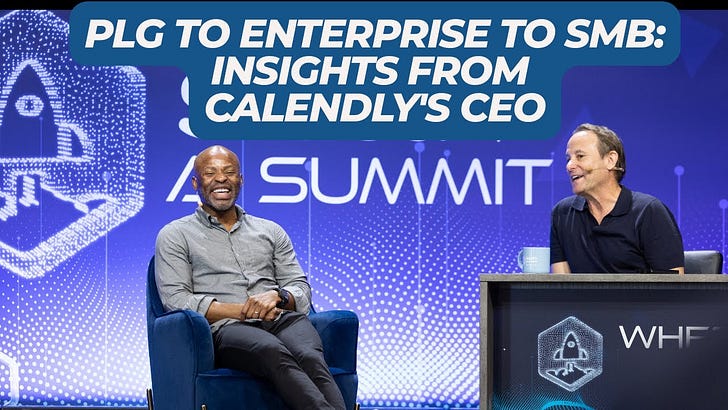
From 100M+ Free Users to $1M Enterprise Deals: The Calendly Playbook for Hybrid PLG Success - Insights from CEO Tope Awotona
When you think about Product-Led Growth (PLG) success stories, few companies exemplify the model better than Calendly. Founded in 2013 by Tope Awotona, Calendly has grown from a simple scheduling tool to a scheduling powerhouse that's touched "double digits" of the world's billion knowledge workers - meaning over 100 million people have used the platform at some point.At SaaStr Annual + AI Summit, Awotona shared the hard-won lessons from building one of the most successful PLG companies of the last decade. What makes his insights particularly valuable is his transparency about the mistakes Calendly made along the way - and how they course-corrected.Today, Calendly maintains a fascinating 90/10 revenue split between self-serve and sales-led motions, with customers ranging from individual contributors to million-dollar enterprise accounts. But getting that balance right took years of experimentation, data analysis, and some painful lessons about when PLG and enterprise motions can cannibalize each other.Top 5 Key Learnings from Calendly's Journey1. The Free Plan Is Your Marketing Engine - Protect It at All CostsPerhaps the most counterintuitive insight from Awotona: Calendly spends "almost zero dollars on marketing campaigns." Their growth is entirely driven by user activity on the platform. Free users aren't just prospects - they're active marketing assets with measurable LTV."We're happy for people to use the product for free," Awotona explained. "Even free users have an LTV associated with them because we spend almost zero dollars on marketing campaigns."The pressure to tighten free plans is constant. Sales teams consistently identify the free version as their #1 competitor, not any external product. But since putting up their first paywall in 2014, Calendly has never removed features from the free plan - they've only made it more generous.The Takeaway: If your free plan drives viral growth, resist the short-term temptation to squeeze it. Instead, add more value to paid tiers rather than removing value from free ones.2. Viral Loops Get Harder at Scale - But Scale CompensatesCalendly closely tracks two critical metrics: meetings-to-signups conversion rates and signups-to-activation rates (defined as five people scheduling with a new user). As expected, these conversion rates decline at scale - the viral coefficient naturally decreases as you reach market saturation.But here's the key insight: "The good thing is the top line - the denominator - is getting bigger. That compensates a little bit for that degradation in conversion rate."The Takeaway: Don't panic when viral coefficients decline at scale. Focus on optimizing the absolute numbers while understanding that percentage-based metrics will naturally compress as you approach market saturation.3. Hybrid PLG + Enterprise Is Incredibly Hard to Get RightThis might be Awotona's most valuable insight for SaaS leaders. Calendly made both classic mistakes in balancing PLG and enterprise motions:Mistake #1: Under-investing in enterprise and leaving seven-figure deals on the table Mistake #2: Over-investing in enterprise and having the sales team cannibalize PLG revenue"What we found was the growth in our customer acquisition cost outpaced the incremental revenue growth. The enterprise business was really cannibalizing the PLG business," Awotona shared. By relaxing qualification rules to feed the sales team, they were simply converting self-serve prospects into sales-assisted deals - same revenue, higher cost, longer sales cycles.The Takeaway: Be "incredibly analytical" with holdout groups and rigorous testing. The superficial metrics might look good while you're actually damaging your more efficient channel.4. External-Facing Roles Are the Wedge Into EnterpriseCalendly's ideal customer profile focuses on external-facing roles: sales, customer success, recruiting. This represents about 25% of headcount in most organizations globally. But here's the strategic insight: these users become the wedge for enterprise expansion.Their largest customer - a financial services company doing $1M+ in annual revenue - started with "a few people in the company using it. They loved it and then decided to expand." The expansion took 6-8 months from a sub-$20K footprint to seven figures.The Takeaway: Identify the roles that get the most value from your product and use them as your enterprise wedge. Let the product prove itself with end users before enterprise sales gets involved.5. Product Development Resource Allocation Must Match Business Model EvolutionWith a 90/10 revenue split (PLG/Enterprise), how do you allocate product and engineering resources? Awotona's answer has evolved significantly:* Initially: 90/10 allocation matching revenue* 2020 Growth-at-all-costs era: Asymmetric allocation heavily favoring enterprise* Today: "The pendulum has swung back" based on product maturity and diminishing returns analysis"We look at the maturity of the product for different cohorts and ana
How Gusto Built “Gus” – Their AI Assistant Serving 400K+ Small Businesses: Lessons from the Trenches
Gusto co-founders Josh Reeves (CEO) and Eddie Kim (CTO) came to SaaStr AI Summit to share their journey building “Gus,” an AI assistant now used by hundreds of thousands of small businesses.Rather than chasing AI trends, they focused on solving real compliance pain points for small business owners navigating complex regulatory requirements across 50+ different state and local jurisdictions.Their approach involved two key tracks: conversational interfaces that make software more intuitive, and automation that eliminates time-consuming tasks entirely. The result is an AI system that generates reports, executes actions like approving time-off requests, navigates complex compliance requirements, and creates optimal shift schedules. Gusto’s “startup within a startup” methodology, 90-day roadmap horizons, and hybrid interface philosophy offer practical lessons for any SaaS company serious about AI implementation.Top 3 Takeaways from Gusto Co-Founders Josh Reeves & Eddie Kim:* Create a “Startup Within a Startup” for AI Projects – Gusto built Gus by creating an independent team that operated outside normal engineering processes, shipped weekly, and didn’t even use project tracking tools initially. This allowed for the rapid experimentation needed in the fast-moving AI landscape.* Focus on Problems Only You Can Solve – Be disciplined about which AI problems to tackle versus which ones the broader AI ecosystem will solve naturally. Gusto focused on Gusto-specific challenges while betting that general AI capabilities would improve on their own.* The Future is Hybrid Interfaces, Not Just Conversational – While conversational AI is powerful for many tasks, the best user experience combines conversational and graphical interfaces at the right moments. Not everything is better done conversationally.The Mission: Making Small Business Compliance Suck LessBefore diving into the technical details, Reeves made something crystal clear: “Companies don’t exist for the sake of it. We exist to go fix something, to go serve our customer and solve a pain point in their life.” For Gusto, that pain point is compliance hell.Small business owners navigate a maze of local, state, and federal regulations. “The US in particular is more like 50 countries than one when it comes to all the different rules and requirements a business owner has to navigate,” Reeves explained. This isn’t about using AI because it’s trendy – it’s about using AI to solve a very real, very expensive problem.Two Tracks: Conversational Interface + AutomationGusto approached their AI strategy along two clear tracks that every SaaS company should consider:Track 1: The Conversational Interface Revolution“We are navigating a pretty massive paradigm shift in how software gets used,” Reeves noted. The conversational interface paradigm shift means customers can simply talk to software instead of figuring out which buttons to click or pages to navigate.But here’s the key insight: this doesn’t replace traditional interfaces entirely. “We’re investing a lot of time in the Gusto web app, in our mobile app,” Reeves clarified. “We think they work in conjunction with each other.”Track 2: Pure AutomationThe second track focuses on literally automating tasks – both for internal team members (“Gusties”) and customers. “Think about something you spend 5, 10 minutes on. If it could just be done automatically for you, time savings is cost savings for a business owner.”What Gus Actually Does (Beyond Just Answering Questions)Kim broke down Gus’s capabilities, and they go far beyond typical chatbot functionality:Advanced Reporting & Analysis: Gus generates reports and provides critical business insights, not just raw data dumps.Action Execution: Tell Gus “I’d like to approve Sally’s time off request” and it will look up the request, show you details, and execute the approval upon confirmation.Compliance Navigation: With tens of thousands of compliance rules affecting small businesses, Gus tells you exactly which ones apply to your specific business based on Gusto’s deep knowledge of your company.Complex Scheduling: Gus can set up ideal shift schedules that automatically comply with break requirements, maximum daily hours, weekly limits, and other labor regulations.The result? Gus is “generally available to every single one of our customers on Gusto’s platform” as of last week, actively being used by hundreds of thousands of small businesses.The “Startup Within a Startup” PlaybookHere’s where Kim shared the tactical gold. Building AI products requires a fundamentally different approach than traditional SaaS development:Start Fresh: “We started with a brand new codebase from scratch” and “politely excused ourselves from many of our engineering team’s rituals and processes.”Move Fast, Track Later: “It wasn’t even until recently that we actually started to track our work in things like Jira and Asana.” Instead, they’d sit together, decide on priorities, and ship by week’s end.Embrace Uncertaint

The Latest 20VC+SaaStr: Databricks Hits $100B, CoreWeave’s $11B Debt Gamble, and Why We’re All Living in the AI Bubble
The latest 20VC x SaaStr episode with Harry Stebbings, Jason Lemkin, and Rory O’Driscoll is here! The team is discussing Databricks’ $100B valuation, the coming IPO tsunami, CoreWeave’s massive debt raise, AI infrastructure spending that could hit trillions, the return of SPACs as a bubble signal, and why AI tool consolidation will happen faster than anyone expectsBottom Line Up FrontHarry Stebbings: “We’re seeing the biggest wealth transfer in tech history unfolding before our eyes. When Databricks hits $100B and Andreessen could make $30B on a single deal, we’re not just in a bubble—we’re in a generational moment where the next wave of IPOs could make 2021 look like the appetizer.”Jason Lemkin: “I think we’re all going to live in AI 24/7 and use 10 times the tokens and 10 times the compute in 24 months. The math is staggering—if we need 200x more infrastructure, how do we even finance that? But here’s the thing: we’ve already automated 5 humans with 10 AI agents at our small team. This isn’t theoretical anymore.”Rory O’Driscoll: “All this depends on 3-5 more years of continued AI capex expansion. If that’s the case, everything works. If not, all bets are off. We’re way out on the risk curve, and the only thing between us and Armageddon is AI adoption continuing at this pace.”Databricks Hits $100B: The New Normal for Private ValuationsWhen Databricks crossed the $100 billion valuation threshold this week, the most telling reaction wasn’t celebration—it was a collective shrug. As Jason noted, “If you’d said 5 years ago there’s going to be a hundred billion dollar market cap private company, you’d be like no way. Now you’ve got Anthropic at $170B, SpaceX at $360B, OpenAI at $500B. The correct response is yeah, whatever.”But beneath this seemingly blasé attitude lies a fundamental shift in how we value AI infrastructure companies. Databricks is now worth ~50% more than Snowflake while growing 2x as fast—crossing $4 billion ARR at 50% growth versus Snowflake’s $4 billion at 26% growth. At 25x revenue, it actually feels undervalued given the growth trajectory and AI positioning.The real story here isn’t just another unicorn—it’s about generational wealth creation concentrated in private markets. If Andreessen Horowitz led Databricks’ seed round in 2013 with follow-on investments across multiple funds, they could own 15% of a company heading toward a $200B IPO. That’s potentially $30 billion in returns from a single deal.“If A16Z invested out of a $650 million fund at the time and they’ve turned a billion and a half into $30 billion, you’re going to feel good in the morning,” Rory observed. “The one thing we don’t take enough into account is just how many people make money when these go out. There are so many LPs in SPVs, SPVs on SPVs. There are dentists who are going to make 5x.”The Coming IPO Tsunami: Why This Is Just the BeginningWhat makes this moment particularly significant is that we haven’t seen the epic IPOs yet. CoreWeave, Circle, Hinge Health, even Figma—these are still “niche plays” compared to what’s coming. As Harry pointed out, “The mega ones are still to come. We might get the next wave of IPOs that are even better very quickly, and the amount of froth that could create in the ecosystem could create a bubble on top of a bubble.”Consider the pipeline: If Canva IPOs next year at $4 billion ARR growing 40% (versus Figma at $1 billion growing 48%), and if Databricks goes public at an implied $200B valuation, we’re looking at a wealth creation event that dwarfs anything we’ve seen before.“There’s a significant absolute sum locked up in private markets that at some point is going to seek a public market where a number of them will be worth $50 billion, which is unprecedented. A few will be worth $100 billion and maybe one will be worth a trillion dollars in the private markets,” Rory noted. That trillion-dollar private company prediction isn’t hyperbole—it’s math.CoreWeave’s $11B Debt Bet: Canary in the Coal Mine or Smart Capital Allocation?While everyone celebrates Databricks’ equity valuation, CoreWeave’s $11.2 billion debt raise tells a different story about AI infrastructure financing. The company spent $22 billion in capex this year while generating $1 billion in quarterly revenue—a capital intensity that would make even utilities blush.“Once you decide to spend $22 billion in capex, you’re going to have $11 billion in debt,” Rory explained. “The way you think about CoreWeave is they’re the guys doing the pointy end of the bet that Meta, OpenAI, Anthropic are talking about—we want to deploy a ton of GPUs and data centers. CoreWeave is stepping up as the financing vehicle.”But this creates a fascinating risk dynamic. CoreWeave becomes the canary in the coal mine for AI demand. “You’re not going to see it in Microsoft. OpenAI isn’t public. You’re not going to see it in Google—they’re too big. But you could see that canary in the coal mine in this public one due to exposure,” Jason observed.The compa
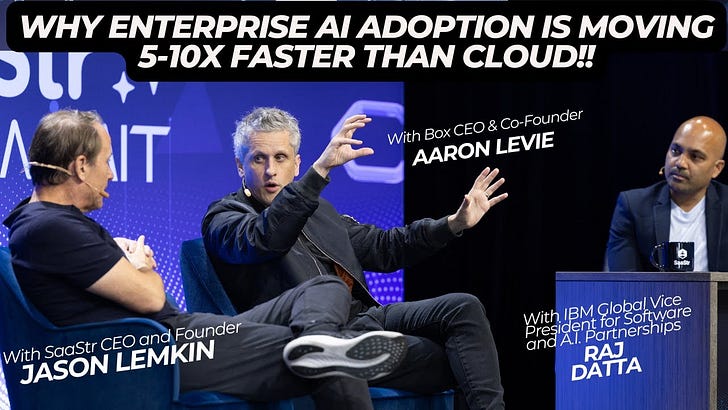
AI Agents in B2B: Top 10 Learnings from Aaron Levie, CEO of Box and IBM's VP of AI
At SaaStr's packed AI Summit 2025, Box CEO Aaron Levie and IBM VP of AI Raj Datta did a deep dive together with SaaStr's Jason Lemkin on how B2B companies should think about AI agents. With 10,000 attendees—a massive jump from last year—the energy around AI agents was electric.Here are the top 10 learnings from their convo:1. AI Agents Represent a Fundamental Shift from Software to Digital LaborThe Key Insight: We've moved beyond chat interfaces to AI that actually performs work autonomously.Levie explained the evolution: "We've had AI models for five-plus years. Then we had assistants like ChatGPT. But now we're seeing agents that fundamentally go do work for you—and that work could take a minute, an hour, or 100 hours for the agent."For B2B companies, this changes everything. Instead of selling software to 10 lawyers in a company, you're now selling "infinite legal capacity." IBM proved this works at scale, saving $3.5 billion internally through AI agents handling HR and procurement functions.Takeaway: Start thinking about your software as digital labor, not just tools. What work can your AI agents do autonomously for customers?2. Your Customer Data Is Your Biggest Competitive AdvantageThe Key Insight: The companies with the richest, most proprietary datasets will win in the AI agent era."What data are you sitting on that is proprietary to you?" Levie asked. "Very quickly you realize more companies are actually in the data business than they initially thought."Box exemplifies this perfectly. Customers who've stored documents for years can now ask complex queries like "Tell me everything where I have the wrong indemnity provision" or "What contracts I shouldn't have signed." This transforms static data into dynamic business intelligence.Takeaway: Audit your proprietary data assets. What unique insights could AI agents extract that your competitors can't replicate?3. Enterprise AI Adoption Is Happening 1000x Faster Than CloudThe Key Insight: Unlike cloud adoption, which took over a decade, AI is being embraced immediately by enterprises."It's going 1000x faster than cloud adoption because everyone's using it," Datta noted. While pitching cloud to banks in 2008-2009 was a "non-starter," today there isn't an enterprise that doesn't already have an AI strategy in development.The speed difference is staggering: ChatGPT reached 500 million users in roughly two years—faster than any technology in history.Takeaway: Your enterprise customers are ready to buy AI solutions now. The question isn't if they'll adopt AI, but which vendor they'll choose.4. IBM's Agent Catalog Could Revolutionize B2B DistributionThe Key Insight: Even small B2B startups can now access enterprise sales channels through IBM's new agent marketplace."Even if you're a five-person shop, you submit your AI agent to our catalog, and IBM sellers are able to sell it for you," Datta explained. This democratizes enterprise sales in unprecedented ways.IBM's massive sales force essentially becomes the distribution channel for thousands of specialized AI agents, potentially creating the "App Store moment" for enterprise software.Takeaway: Explore partnerships with larger platforms that could distribute your AI agents. Distribution partnerships may be more valuable than ever.5. The Next Generation Will Completely Reshape B2B WorkThe Key Insight: AI-native workers entering the workforce will challenge every existing business process.A Stanford student approached the moderator saying "20% of my class has already dropped out to do AI" after building an AI sales agent that reached $2 million ARR in months.Levie predicted: "They're going to come into our enterprises and say, 'You take 2 weeks to come up with a marketing plan? That was just generated by Claude in 5 seconds. Why would you meet about that?'"Takeaway: Prepare for a workforce that expects AI-first processes. Your internal tools and customer solutions need to match this expectation.6. Data Assets May Soon Appear on Corporate Balance SheetsThe Key Insight: We're heading toward a fundamental revaluation of what makes B2B companies valuable."Right now there's nothing on a company's balance sheet that approximates the value of their data," Levie observed. "In 10 years, will we see 'how good is your data?' emerge as a measurable business asset?"This suggests enterprise valuation models will need to account for data quality, uniqueness, and AI-readiness.Takeaway: Start thinking about your data as a balance sheet asset. Clean, organized, proprietary data will become increasingly valuable.7. You Have a 2-Year Window to Win or Lose EverythingThe Key Insight: The AI transition window is much shorter than cloud, creating extreme risk and opportunity."You could lose your entire position probably in a 2-year period," Levie warned, "but it's also where you could cement your leadership position in a very unique way."Unlike cloud, where companies had years to decide, AI advantages will compound quickly. The winners
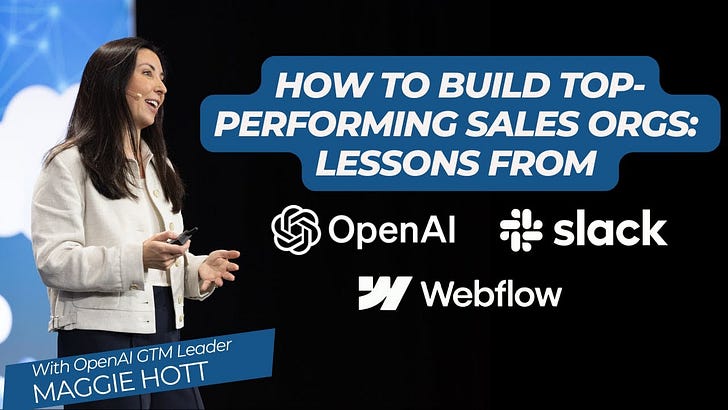
How We Built ChatGPT Enterprise's Sales Team from Absolute Zero: The Complete Playbook with Maggie Holt, Head of GTM
How We Built ChatGPT Enterprise's Sales Team from Absolute Zero: The Complete Playbook with Maggie Hott, GTM Leadership at OpenAIAbout Maggie: Maggie Hott has spent 15 years building go-to-market teams at four unicorns that collectively represent over $50B in market value. She started as the 2nd SDR at Eventbrite, became the first sales hire at Slack (helping scale from $50M to $1B ARR and a $27B Salesforce acquisition), served as Director of Sales at Webflow (scaling from $40M to $140M ARR), and now leads go-to-market at OpenAI where she built ChatGPT Enterprise from scratch. She also runs a venture fund with seven other women investors, backing 30+ founders. These are her personal views, not those of OpenAI.It was early 2023. OpenAI had just launched ChatGPT, the fastest-growing consumer app the world had ever seen. We were riding an incredible wave, but we had a critical hypothesis: ChatGPT Enterprise would require a fundamentally different go-to-market motion than our API business.When OpenAI hired me to build ChatGPT Enterprise from scratch, I walked into what can only be described as a beautiful blank slate—and a terrifying challenge.Our entire sales and go-to-market organization was less than 10 people. No SDRs. No solution consultants. No customer success managers. No sales operations. No RevOps. No marketing enablement. We didn't even have a working Salesforce instance.What we did have: six incredibly talented account directors and one technical success partner, all laser-focused on selling our API to developers and technical teams.Here's the complete playbook for how we built what we believe became the fastest-growing enterprise application in history.The Build vs. Adapt Strategic DecisionMost companies in our position would have taken the "efficient" approach: enable the existing team to sell both products, maybe hire a few specialists, and gradually expand capabilities.We chose the opposite path: build a dedicated ChatGPT Enterprise team from absolute zero.This wasn't just about headcount. It was about creating an entirely separate organizational DNA optimized for enterprise selling.Why We Built Separate vs. Adapted ExistingProduct Complexity Was Fundamentally Different* API sales required deep technical conversations about integrations, rate limits, and model parameters* ChatGPT Enterprise needed business impact discussions about productivity, compliance, and organizational change management* The buyer personas didn't overlap—CTOs vs. CHROs, CFOs, and business unit leadersSales Cycles Had Different Rhythms* API deals often moved quickly with technical evaluation periods* Enterprise required lengthy security reviews, compliance discussions, and change management planning* Different stakeholders, different timelines, different objection patternsGo-to-Market Motions Required Different Muscles* API was largely product-led with sales-assist for larger accounts* Enterprise needed traditional enterprise selling: demos, pilots, RFP responses, and executive alignmentSpeed Trumped Efficiency in This Moment The market window was massive but narrow. Every week mattered. Having a dedicated team meant:* No competing priorities or split focus* Ability to move at startup speed even within a scaling company* Clear ownership and accountability for outcomesPhase 1: Foundation Building (Months 1-3)The First Three Critical HiresEnterprise Account Executive #1: Financial Services Specialist* 8+ years selling enterprise software to banks and insurance companies* Deep understanding of compliance requirements (SOX, PCI, etc.)* Existing relationships with CISOs and risk management teams* Experience with 12+ month sales cycles and complex procurement processesEnterprise Account Executive #2: Technology Sector Specialist* Background selling to high-growth tech companies* Understanding of developer tools and technical infrastructure* Experience with both startup buyers and enterprise technology teams* Ability to bridge technical and business conversationsEnterprise Account Executive #3: Healthcare/Life Sciences Specialist* Healthcare technology sales background* HIPAA compliance expertise* Relationships with healthcare CIOs and innovation teams* Understanding of clinical workflow integration challengesWhy Vertical Specialists First? Enterprise buyers expect deep industry knowledge. They want to know you understand their specific compliance requirements, regulatory challenges, and business context. Hiring generalists would have slowed our credibility-building process by months.Building the Foundational SystemsCustomer Qualification Framework We couldn't use our API qualification criteria. Enterprise buyers had different needs:* Company Size: 1,000+ employees (later expanded down to 500+)* Budget Authority: Direct access to decision-makers with budget* Use Case Clarity: Specific productivity or efficiency goals* Security Readiness: Existing enterprise software deployment experience* Timeline: Willingness to run pilots and st

The Latest 20VC + SaaStr: Was $3B Really Left on the Table, Broken CEO Comp, and Why VCs Are Worse Than Public Markets
The latest 20VC + SaaStr: The Figma IPO Breakdown: $3B Left on the Table, Broken CEO Comp, and Why VCs Are Worse Than Public MarketsThis week, Brian Halligan (Co-Founder & Executive Chairman of HubSpot) joins the regular crew of Harry Stebbings, Rory O’Driscoll, and Jason Calacanis for an inside look at IPO dynamics, CEO compensation, and the current state of public markets.The Bottom Line Up FrontOn IPO Pricing Reality: “The people who said, ‘Oh, Figma left $3 billion on the table.’ The $98 price only happened because the IPO happened at $38. Had someone walked in and said, I know this IPO is going to price at $100 bucks a share to open tomorrow morning. Let’s raise at $80. They wouldn’t have had a book becayse no one has bid at that thing. So that money wasn’t accessible.” — Rory O’DriscollOn Going Public vs. Staying Private: “I think VCs are a much bigger pain in the ass than public investors. VCs are a much bigger pain in the ass than the typical public investor and slightly less of a pain in the ass than the public activist investor.” — Brian Halligan, Co-Founder & Executive Chairman, HubSpotOn CEO Compensation: “CEO comp is pretty broken at the moment. Everyone really relies heavily on RSUs. When I grew up in the industry, it was mostly ISOs, it was options until 2006 and regulations changed. It just creates sort of a risk averse behavior in the CEO.” — Brian HalliganThe Figma IPO might be the most misunderstood public offering in tech history. With a 250% first-day pop — pricing at $38 and opening at $85 and trading up to a day 1 high of $124— everyone from X pundits to Bill Gurley called it catastrophic mispricing. But the real story, told by those who’ve been in the room where it happens, reveals a much more nuanced truth about how IPOs actually work.The Night Before: When Exhaustion Meets High-Stakes PokerBrian Halligan, who took HubSpot public in 2014, pulls back the curtain on what actually happens in those final 24 hours. “You’ve never been as tired in your entire life as you are when you’re making this decision,” he explains. “You’ve been on the road for the last two weeks. You hit 12 countries. You had six pitches a day. Your battery is on red.”Then comes the moment that defines everything: the pricing committee meeting the night before trading begins. “The investment bankers sit you down and say you got two big decisions to make. One is who are the investors going to be… and then what’s the price.”The founders and bankers, perfectly aligned throughout the entire road show, suddenly find themselves “across the table from each other” in that final hour.The Fidelity Gambit: A $1 Decision Worth BillionsThe most revealing part of Halligan’s account centers on what he calls “the Fidelity discussion.” At HubSpot, Morgan Stanley pushed for a $24 pricing because “Fidelity has told us that they’re in at 24, they’re out at 25.”“You really want Fidelity because Fidelity has trillions of dollars and they could own, you know, they could be a massive banker,” Halligan explains. But HubSpot pushed back, pricing at $25. The result? A 32% first-day pop to around $33.Rory O’Driscoll, who’s been through this multiple times, confirms this is standard operating procedure: “They clearly give the same speech every time… It’s always Fidelity or one of the other two. It’s like ‘you want Fidelity, it’s only another dollar,’ right?”The Real Story Behind Figma’s “Mispricing”So what actually happened with Figma? O’Driscoll delivers the most important insight: the astronomical pricing wasn’t accessible at IPO time.“The $98 price only happened because the IPO happened at $38,” he explains. “The discussion they were having on the day was… do I go two bucks more and exclude Fidelity or two bucks less and take Fidelity… Had someone walked in and said, I know this IPO is going to price at $100 bucks a share to open tomorrow morning. Let’s raise at 80. They wouldn’t have had a book cuz no one has bid at that thing.”This is crucial for understanding IPO dynamics. The massive first-day pop wasn’t money “left on the table” — it was euphoria-driven demand that materialized only after the stock started trading.The Unintended Consequences of Mega-PopsBut here’s where it gets problematic. O’Driscoll reveals a counterintuitive truth: “All those big buyers who came in at Figma $38 before they buy they have an internal process with a price target to exit. None of those price targets are going to be more than $110 bucks a share.”The result? “Most of them are selling those shares right now… If you’re running money as one of these institutions and you bought at 35 and you built a business case that says, ‘We think this will be worth 50 bucks a share in two years and suddenly it’s worth $100 a share in two days.’ At least half those mutual funds have to say should we lose our position.”This creates the exact opposite of what founders want — instead of long-term institutional holders, you get a trading-oriented shareholder base.The CEO Compen
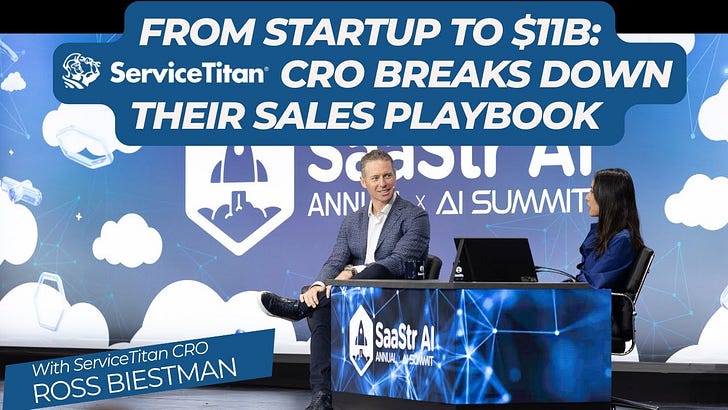
From $30M to $11B: The ServiceTitan Playbook - CRO Ross Biestman's Masterclass on Vertical SaaS
Ross Biestman joined ServiceTitan in 2018 as employee #354 when the company was doing less than $30M ARR. As Head of Sales, he helped scale the vertical SaaS platform from Series B to IPO, growing revenue to over $860M ARR and achieving an $11B market cap. Before ServiceTitan, Ross spent nearly a decade in enterprise software sales, serving companies like Bloomberg, United Airlines, and Sprint. A Cal Bears rugby player turned sales leader, Ross has become one of the most respected voices in vertical SaaS go-to-market strategy.Christina Shen is Managing Partner and Co-founder of Chemistry, a $350M early-stage fund investing in seed and Series A companies. Previously a Partner at Bessemer Venture Partners, Christina led ServiceTitan's Series A investment and has been tracking the company's remarkable journey for nearly a decade. She and Ross were undergraduate classmates at UC Berkeley - she in political science (destined for sales, as she jokes), he in business school (destined for venture capital).This SaaStr Annual deep-dive represents a full-circle moment between two Cal Bears who took different paths but remained connected through one of the most successful vertical SaaS stories ever told.Ross' Top 5 Learnings to Transform Your Go-to-Market Strategy* ICP Discipline Creates Exponential Returns: ServiceTitan's laser focus on ideal customer profile (ICP) drove their ability to scale from $30M to $770M ARR in 7 years. Ross's key insight: "Everything we do is intentional" - they put blinders on and refused to chase dollars outside their ICP, even when it meant turning down revenue.* Merit-Based Lead Distribution Beats Traditional Territory Models: ServiceTitan revolutionized sales by using AI to route leads to the AE with the highest propensity to close that specific deal type, not round-robin or named accounts. This merit-based system includes monthly scoring and relegation/promotion like English Premier League soccer.* Industry Immersion Unlocks Multi-Vertical Expansion: To expand beyond plumbing into all trades, ServiceTitan hired industry professionals directly into R&D, spent countless hours in the field with customers, and methodically tested new verticals with their top performers before opening floodgates.* Customer Site Visits Are Your Secret Weapon: In an age of Zoom and AI efficiency tools, Ross mandates that every new hire - from SDRs to C-suite - must learn the product, industry, and customer by spending time on-site. The founders still spend 95% of their time with customers.* Vertical SaaS Creates Unprecedented Value When Done Right: By serving an ignored $1T+ industry (trades) with true dedication, ServiceTitan achieved what seemed impossible - 11x revenue growth in 7 years and an $11B market cap, proving vertical software's massive potential.The Making of a Vertical SaaS Giant: Inside ServiceTitan's JourneyWhen Ross Beastman joined ServiceTitan in 2018 as employee #354, venture capitalists were telling him he was "crazy" to sell software to plumbers. Today, that crazy decision has paid off to the tune of an $11 billion market cap and over $770 million in ARR. But this wasn't luck - it was the result of methodical execution, unwavering discipline, and a deep understanding of what makes vertical SaaS work.The Unlikely Beginning: Why Plumbers?Ross's initial reaction to ServiceTitan was skepticism. Coming from enterprise software, serving companies like Bloomberg and United Airlines, the idea of "software for plumbers" in Los Angeles seemed like a step backward. But the founders, Ara and Vahe Kuroghlian, had a different vision."Their parents worked really hard as trades people, plumbers and HVAC contractors in Southern California," Ross explains. "Instead of going into their parents' garage to create Apple, they went into their dad's plumbing shop in Los Angeles and said this is an industry that has been ignored and trapped in the past."The breakthrough came during customer due diligence. Walking into HVAC shops in places like Fresno, California - where it's 110 degrees outside - Ross witnessed something remarkable: "Every single person in this business was deeply embedded and committed to using this technology as their operating system, whether the person answering calls at the front desk, the CFO, the owner, the person in the warehouse checking inventory, or the technician in the field."When he sized the industry at over a trillion dollars in domestic gross transaction volume, the opportunity became clear. The phone call to his wife was simple: "I'm going to Los Angeles to sell software to plumbers."The $30M to $860M Playbook: Execution ExcellenceYear One Reality CheckServiceTitan in 2018 was "organized chaos in the best possible way." As a Series B company doing less than $30M ARR, they were laser-focused on new logo acquisition with a single product serving just plumbing, heating, and electrical businesses. The challenge was clear: identify the path to $50M, then $100M, then $500M.The ICP Disc
AI in GTM Efficiency: The Playbooks from Databricks, Monday.com and Benchling
How three high-growth companies are actually implementing AI across their revenue operations — and what it means for your AI-informed GTM strategy today.The AI transformation in go-to-market isn't coming — it's here. But unlike the broad promises we've been hearing, the real story is in the specifics. How are actual revenue leaders at scale implementing AI today? What's working, what isn't, and where should you focus your limited budget?SaaStr Annual's AI Summit brought together three top GTM leaders who are pushing the envelope on AI implementation across their organizations, together with one a great VC to guide the convo:* Sahana Sarma, Global VP GTM Strategy and Operations at Databricks, brings deep expertise in scaling revenue operations at one of the fastest-growing data and AI companies. She's been instrumental in building Databricks' "Ask Mo" internal agent and driving AI adoption across their field teams.* Rob Schmeltzer, Head of Strategic Customer Success at Monday.com, oversees customer success operations for the work management platform serving over 180,000 customers. He's leading Monday.com's implementation of AI-powered deal desk assistance and automated engagement mapping.* Uri Ouziel, Global Head of Deal Management at Benchling, manages complex deal processes for the life sciences R&D platform. His team has been pioneering automated CSM engagement tracking and customer intelligence aggregation at scale.* Itamar Novick, Founder & General Partner at Recursive Ventures, provides the investor perspective, having backed multiple AI-enabled GTM tools and witnessed the evolution from early promise to practical implementation across his portfolio companies.What emerged was a practical blueprint for how leaders are really using AI to drive efficiency gains.The Foundation: Why Point Solutions Aren't EnoughThe first major insight that emerged was the limitation of point AI solutions. As Databricks’ Global VP GTM Strategy noted: "I feel like a lot of the point solutions you see in AI are great, but that's where they are. There are point solutions."The companies seeing the biggest wins are those building on platforms they already have — leveraging Gemini's integration with G Suite or ChatGPT's API capabilities to create customizable, wide-ranging tools rather than adding another vendor to their stack.The Monday.com Approach: Building Your Deal Desk Co-PilotMonday.com's revenue operations team spent two quarters training Gemini to become what they call a "deal desk assistant." Here's how it works:* Deal Intelligence: They feed Gemini their deals, playbooks, and connect it with their CPQ system* Optimization Engine: The AI suggests optimal deal structures and pricing* Efficiency Gains: Significant reduction in clicks and time-to-close for complex dealsThe key insight? They didn't buy a new tool. They used an existing, already-adopted platform to solve a specific workflow problem. "When you can do it yourself using an existing tool that is already adopted and already integrated, it's a great win," the Monday.com leader explained.Customer Intelligence: The New Competitive AdvantageAll three companies have made customer research and intelligence a core AI use case, but their approaches vary significantly.Databricks: The "Ask Mo" Internal AgentDatabricks built their own tool called "Ask Mo" that serves as an entry point into Salesforce, allowing their field teams to:* Research customer organizational changes and triggers* Identify next-best-product opportunities by analyzing similar customer patterns* Generate executive briefing documents by pulling data across their entire stack* Access consistent information quickly as they scale their teamThe tool aggregates information across their entire tech stack and serves it to field teams in a conversational interface. This isn't just about efficiency — it's about consistency and quality of customer interactions at scale.The Research Stack EvolutionBeyond internal tools, field teams are using a combination of:* Gemini and ChatGPT for content creation and analysis* Perplexity for deep customer research* Gong for deal intelligence, pipeline forecasting, and coaching insightsBut here's what's interesting: they're not just using these tools individually. The real value comes from synthesizing insights across multiple platforms.Operations Efficiency: Where AI Shows Immediate ROIThe operations use cases are where AI is delivering immediate, measurable value.Benchling's Automated Engagement MappingBenchling implemented Salesforce's Agent Force to automatically categorize and log CSM engagements. Previously, customer success managers had to manually log every interaction. Now:* Automatic Detection: The system identifies calls, emails, and activities across all systems* Smart Categorization: Engagements are automatically categorized by type* Time Savings: CSMs focus on high-value activities instead of data entry"Really just an example of trying to take manual repetitive thing
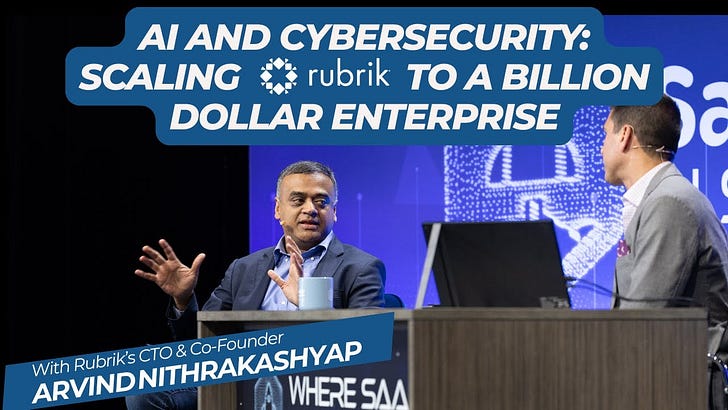
AI and Cybersecurity: How Rubrik’s Co-Founder Built a $1B+ ARR Platform While Joining the AI Revolution
Lessons from Arvind Nithrakashyap, Co-Founder and CTO of Rubrik, on scaling cyber resilience platforms, building multiple product curves, and implementing AI across both products and operations.Company Snapshot:* Founded: January 2014 (11 years)* Current ARR: $1.09B+ (Q1 FY2025)* Growth Rate: 39% YoY ARR growth, 47% revenue growth* NPS Score: 80 (exceptionally high for enterprise software)* Net Revenue Retention: 133% (as of Jan 2024)* Customers: 2,246 customers with $100K+ ARR contracts* IPO: April 2024 on NYSE (RBRK) at $5.6B valuation* What Rubrik Does: • Zero Trust Data Security platform for cyber resilience • Data protection, backup & recovery across hybrid cloud environments • Data security posture management and threat detection • AI-powered data governance and compliance solutions • Ransomware recovery with $10M warranty programAfter 11 years of relentless execution, Rubrik has achieved what many B2B companies only dream of: crossing the $1 billion ARR milestone with 39% year-over-year growth and an extraordinary 80 NPS score. But perhaps more impressive than these numbers is how Co-Founder and CTO Arvind Nithrakashyap has positioned the company at the intersection of two of enterprise software’s most critical trends: cybersecurity and artificial intelligence.In a recent deep dive at SaaStr Annual + AI Summit 2025, Arvind shared the tactical playbook behind Rubrik’s scale, revealing counterintuitive strategies for product development, customer success, and AI adoption that challenge conventional SaaS wisdom.The Multi-Product Growth Engine: Why “Say No to 95%” Doesn’t Work at Enterprise ScaleMost SaaS advice tells founders to focus ruthlessly and say no to 95% of requests. Arvind fundamentally disagrees—at least when it comes to large enterprise customers.“I don’t believe in saying no to 95% of requests. You have to say yes to everything with large Fortune 500 customers. If you miss a $100K deal today, you’re potentially walking away from a 20-30x lifetime value down the road.”This philosophy has driven Rubrik’s expansion from a core data protection platform to multiple product pillars spanning data protection, data security, and AI enablement. But saying yes to everything requires a systematic approach to innovation and go-to-market execution.The Hackathon-to-Product PipelineRubrik’s new product development follows a surprisingly grassroots approach. Almost every product in their current portfolio started as a 24-hour hackathon project:* 10 hackathons over 11 years with consistent execution since year two* 130 submissions in their most recent hackathon* Top 10 projects get formal review and consideration* Systematic evaluation process to identify commercial potential“It all starts with a few engineers spending 24 hours hacking up something and saying, ‘hey, here’s an interesting idea,'” Arvind explains. This bottom-up innovation model ensures product ideas come from technical feasibility rather than market research alone.The Three-Stage Go-to-Market Conveyor BeltOnce a product shows promise, Rubrik deploys what they call their “RX” process—a systematic go-to-market incubation engine:Stage 1: Go-to-Market Incubation (0 to $10M)* Dedicated team that only gets paid for selling the new product* Cross-functional squad: engineers, product managers, sales, marketing* Rapid iteration on both product and messaging* Deep customer discovery and market validationStage 2: Product Line Sales (10 to $100M)* Scale the successful formula to 10-20 dedicated sellers* Continued focus on the specific product line* Refinement of sales processes and customer success playbooksStage 3: Core Sales Integration ($100M+)* Integration with the main sales organization* Mature product with proven market fit* Established messaging and sales processesThis approach solves a critical challenge most SaaS companies face: how do you enable a large sales team to sell new products without disrupting their core business performance?Customer Success at Scale: The Transparency AdvantageAchieving an 80 NPS score while scaling to $1B+ ARR seems almost impossible. Arvind attributes this to two core principles that were established from day one.Founder-Level Customer ObsessionBoth Arvind and his co-founder were literally the first support team members, taking calls directly from beta customers. This wasn’t just a startup necessity—it was a cultural decision that permeated the entire organization.“There was an early-stage customer—a law firm at 4 PM—that had an email system issue. I literally booked a flight that night, took the red eye, was with them for two days sitting there until it was resolved, then flew back.”This level of commitment created a “customer-first” DNA that scaled throughout the organization. Today, when any customer has a problem, engineers still drop everything to help resolve it.Radical Transparency in Customer RelationshipsPerhaps counterintuitively, Rubrik’s approach to customer challenges is radical honesty, even when it m
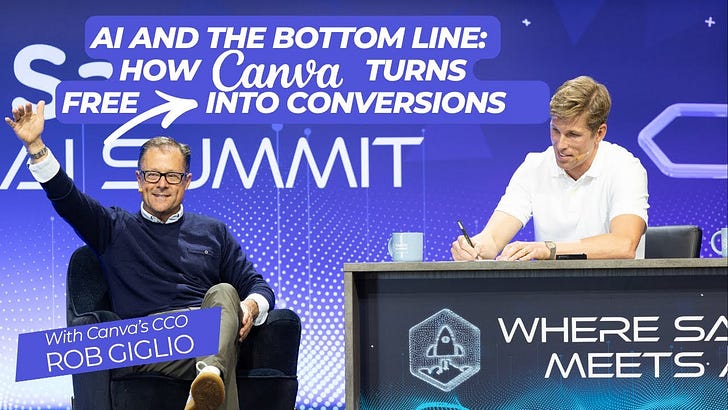
AI and the Bottom Line with Canva's CCO: How They Built a $7B Enterprise Motion on 16 Billion AI Interactions
Rob Giglio, Canva's Chief Customer Officer, shares the playbook for scaling from 170M to 230M monthly active users while building enterprise sales without compromising company culture.Top 5 Takeaways1. PLG-to-SLG is Far Easier Than SLG-to-PLG Going from product-led growth to sales-led growth is significantly easier than the reverse. Companies with strong PLG foundations have rich product usage data and customer engagement signals that can be leveraged for enterprise sales. The data infrastructure is already there—it just needs to be redirected toward sales motions.2. Don't Build Two Cultures—Extend One Canva deliberately avoided creating a separate "enterprise culture" with traditional deal-making behaviors. Instead, they extended their existing customer-first culture into enterprise sales, maintaining their philosophy of "give value first, get value second" even in complex B2B transactions.3. Treat All Customers Like Gold, Regardless of Revenue Don't segment customer success based on how much customers pay. A free user helping their kid with homework might be the CCO of a Fortune 500 company. Canva focuses on helping customers solve problems and move through their journey, knowing that value creation leads to revenue growth.4. Post-Sale Orchestration Should Match Pre-Sale Excellence SaaS companies excel at customer acquisition funnels but often neglect post-sale orchestration. Since most SaaS businesses have larger install bases than new customer acquisition, the real value lies in orchestrating exceptional post-sale experiences with the same rigor applied to marketing funnels.5. Data → Signals → Actions Framework Effective enterprise sales in a PLG environment requires a systematic approach: collect product usage data, transform it into actionable signals, and create specific actions for sales teams. This isn't cold outbound—it's warm outreach to companies already using your product.AI at Canva: 16 Billion Interactions and CountingBefore diving into enterprise strategy, it's worth understanding the scale of AI adoption at Canva. The company has generated 16 billion instances of AI usage, ranking among the top AI use cases globally alongside industry leaders.Canva approaches AI through two distinct lenses:Customer-Facing AI: Making Design AccessibleThe majority of Canva's AI focus goes toward customer-facing features that help users scale imagery, ads, and content creation. This isn't about flashy AI demonstrations—it's about solving real design problems for millions of users who lack professional design skills.The philosophy mirrors Canva's original mission: take complex things (professional design) and make them simple (accessible to everyone). AI becomes another tool in this democratization effort.Internal AI: Augmenting Rep PerformanceFor internal operations, Canva focuses on identifying complex workflows and experiences for sales and customer success reps, then "stitching AI next to those to make them easier."The Framework: Data → Signals → Actions* Data: Rich product usage information from PLG motion* Signals: AI-powered insights about customer behavior and needs* Actions: Specific next steps for reps based on AI analysisBuild vs. Buy Strategy: Rather than building custom AI tools, Canva starts with existing market solutions and implements them into workflows. They're "willing to try almost anything if it's a reasonable investment."Scaling Philosophy: The same customer-first approach that built their PLG motion now guides AI implementation. Get it right for customers first, then optimize for internal teams.This AI foundation becomes crucial for the enterprise motion, where the ability to process signals from hundreds of thousands of users and turn them into actionable sales intelligence makes warm outbound possible at scale.The Journey from 170M to 230M Monthly Active UsersWhen Rob Giglio joined Canva as Chief Customer Officer, the company had already built one of the most successful PLG motions in SaaS history. But to fulfill their mission of "empowering the world to design," they needed to reach users inside enterprises—environments where IT administrators control software access.The challenge wasn't just building enterprise sales; it was doing so without compromising the culture that made Canva special.Green Flags: The PLG AdvantageCanva entered enterprise sales with several advantages that pure-play enterprise companies lack:Rich Product Usage Data: Years of PLG operation had generated massive amounts of user behavior data. While this data wasn't initially configured for sales use, the foundation was solid.Enterprise Product Intent: Rather than trying to force-fit a consumer product into enterprise environments, Canva was intentionally building enterprise-specific features and capabilities.Proven Product-Market Fit: With 170M monthly active users (now 230M) completing designs—not just opening the app—Canva had demonstrated real value creation at scale.Red Flags: The Cultural ChallengeThe transiti
SaaStr Live: How Wiz's CMO Built a $32B Marketing Machine (Without Any Marketing Experience)
The Most Unconventional CMO Story in B2BRaaz Herzberg joined Wiz as employee #5. She led product for 2.5 years. Then their CEO asked her to take over marketing.Her response? "No. What are you talking about?"Today, Wiz is in the process of being acquired for a stunninga $32 billion by Google. And Raaz just shared exactly how she built their marketing engine from zero marketing experience to hyper-growth success.Here are the key lessons every founder and marketer needs to know:The Core Problem That Changes Everything"Nobody had heard of Wiz."That was it. That was Raaz's entire marketing strategy in the beginning. Not MQLs, not pipeline attribution, not brand awareness metrics. Just: people need to know we exist.The pain was real: "We would meet a customer, have a great first meeting, and they would say 'I wish I heard about you three months ago when I just signed with one of your competitors.'"The lesson: Sometimes the most sophisticated marketing strategy is solving the most obvious problem first.How to Stand Out When You Know Nothing About MarketingRoz's advantage wasn't marketing expertise—it was domain expertise. She knew cybersecurity inside and out. She knew how everything else in the space looked and sounded.Her strategy: Be different on purpose."Security products were typically black and red, scaring people about bad things that could happen. As a technical practitioner, I never wanted to hear that. My job is hard enough."So Wiz went the opposite direction:* Made security fun and approachable* Used inside jokes the community would get* Created content that practitioners actually wanted to consumeExample: They released a meditation app for cyber practitioners on April Fool's Day—with guided meditation sessions full of deep cyber jokes. It went viral in their exact target audience.The lesson: Your biggest competitive advantage might be knowing your audience better than traditional marketers do.The Hiring Philosophy That Built a $23B Company"Every single person you hire should be your best hire ever. Unless you leave an interview very excited—like 'I wish this person was here right now'—don't hire them."Raaz is obsessed with hiring. She spends at least a couple hours per week on it, even as CMO of a $23B company.Her test for identifying "doers" vs "strategists": When asking about problems they've solved, doers can talk about every tiny detail. People who just designed the process stop at a high level.Her first hires: Not cyber experts. She already knew cyber. She hired people who knew how to make things go viral and could execute end-to-end.The lesson: Hire for curiosity and execution ability over domain expertise when you already have the domain covered.The Untraditional Marketing Org Structure That Actually WorksA year ago, Raaz did something radical: She moved field marketing out of her org and into sales."I found that being a successful field marketer has more to do with tight alignment with your regional sales director. That's the KPI—are they happy with the field marketer?"She kept brand, content, and demand gen. Sales got field marketing, events, and regional activation.The result: Better alignment, clearer ownership, and field marketing that actually works for sales.The lesson: Don't be afraid to break traditional org structures if it serves the business better.How AI is Changing Marketing (According to Someone Actually Using It)"Every single person on my team has dramatically transformed how they work. In team meetings, every person has to show what they're doing with AI."Raaz's take: AI doesn't replace superstars—it makes superstars 100x more effective."I've definitely slowed hiring. Amazing people are now 100 times more effective. But I still need amazing people."Example: They built a "Wiz spell checker" GPT that every employee uses for customer communications. It ensures technical accuracy, brand compliance, and the right tone (humble, never arrogant).The lesson: Don't try to reskill average performers for AI. Hire curious people who will figure it out themselves.The Content Strategy That Actually Builds PipelineRaaz tracks two key audiences differently:* CISOs (budget approvers): LinkedIn growth, exponential quarter-over-quarter growth* Users (practitioners): Twitter, InfoSec communities, technical content engagementContent philosophy: "How interested are you in hearing about a tool you don't use? Not very. But if I know your domain and bring truly the best content, you'll subscribe."Examples that work:* CTFs (Capture The Flag challenges) - complex security riddles that teach hands-on skills* Deep technical content from actual security researchers* Industry insights that make practitioners better at their jobsThe lesson: Content marketing works when you give real value to people who aren't your customers yet.Measuring Brand When You Can't Really Measure Brand"I track exponential growth. I want 20%+ quarter over quarter growth in key indicators. I don't care about attribution models—I want ex
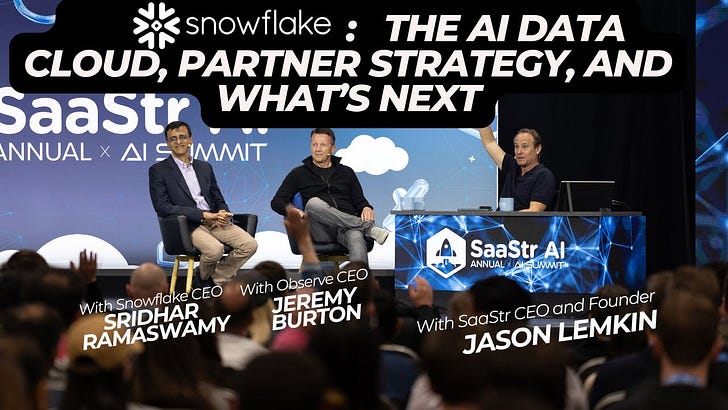
The $4.5B Board Meeting: Inside Snowflake’s AI Transformation and the CEO Who Bet His Company on Their Platform
Inside Snowflake’s Board Meetings: How AI is Reshaping Enterprise Data and the Future of B2B PartnershipsWe had a lot of fun at SaaStr AI Summit 2025 with a rare look inside Snowflake’s boardroom! We featured an unprecedented dynamic: Jeremy Burton sits on Snowflake’s board while simultaneously running Observe, a company built 100% on Snowflake’s platform. Together with Snowflake’s CEO, Sridhar Ramaswamy, they joined us live on stage.This unique relationship reveals how the $4.5B ARR data cloud leader is adapting to AI disruption, the evolution of technical sales, and what it really takes to build strategic partnerships that scale.Top 5 Takeaways* Consumption Revenue Recognition Changes Everything: Unlike traditional SaaS, Snowflake can’t recognize revenue ratably—they only book revenue when customers actually consume credits, even with multi-year contracts. This creates hyper-aligned incentives where sales success is measured by use case creation, not deal size.* Technical Sales is Now Table Stakes: Enterprise sales reps must understand technology applications deeply enough to have credible conversations with both business executives and technical teams. The days of relationship-only selling are over in AI-adjacent markets.* Separate Teams for Land vs. Expand: Snowflake completely separates new customer acquisition from account growth teams. Growing a $50M account requires managing 20+ people and knowing customer architecture better than the customer—a fundamentally different skill than closing new deals.* Strategic Partnerships Need Internal Champions: Real partnerships only exist when someone’s career depends on your success. Without an internal champion whose future is tied to yours, you’re just a vendor getting lip service.* AI Will Reshape Technical Roles in 18 Months (or Less): Data engineers will become orchestrators rather than code writers. Data analysts will shift from writing SQL to providing semantic context. The next 18 months will bring more change than the previous four years.At SaaStr, we’ve seen everything from scaling revenue to product-market fit. But this year, attendees wanted something different: a real board meeting. And we delivered something unprecedented—a live board meeting discussion featuring Snowflake’s leadership and Jeremy Burton, CEO of Observe, who sits on Snowflake’s board and runs a company 100% built on Snowflake’s platform.The conversation revealed fascinating insights about how AI is transforming enterprise data, the future of technical sales, and the mechanics of truly strategic partnerships in the age of consumption-based pricing.The AI Data Cloud Vision: Beyond Traditional AnalyticsSnowflake’s vision is clear: become “the AI data cloud”—a platform where any business user can interact with their enterprise data using natural language, just like ChatGPT but with access to every dataset in their organization.“Imagine being able to do that on every data set that your company has,” explained Snowflake’s Ramaswamy during the session. “The pieces to do that are already there. We have internal examples of agents that are pretty magical when you bring it all together.”But customer expectations are evolving rapidly. The CMO of a major mobile carrier told Snowflake: “I have all this information in Snowflake. I want to build a better churn detection engine. How do I automate this process and make it much easier?”Meanwhile, companies formed through acquisitions face different challenges. One enterprise customer managing 60 different SAP instances asked: “If you were to ask me how much money am I making with this one particular customer, honestly I can’t tell you. What can you do to help me bring it all into a single pane of glass?”The key insight: AI isn’t just about better analytics—it’s about making data accessible to business users who previously needed data scientists and engineers to get answers.4 Learnings on Snowflake’s Future Direction* The CFO Test is Coming: As Snowflake bills become the “second largest after AWS” for many enterprises, the pressure to prove ROI will intensify dramatically. Success will be measured not just by data storage and processing, but by demonstrable business value creation from that data.* Business Users Will Drive Consumption Growth: The biggest unlock isn’t more data engineers—it’s enabling any business user to query data like ChatGPT. When marketing managers can ask natural language questions of customer data without SQL, consumption explodes geometrically.* Agent AI Will Create the Next Platform Layer: Snowflake is building internal agent examples that can automatically stitch together data flows, recommend use cases, and provide real-time business intelligence. This isn’t just analytics—it’s autonomous business intelligence that acts on data insights.* The Backlog Problem Becomes the Opportunity: Most enterprises have an “insatiable demand” for data insights but limited technical resources. AI that makes data 10x more accessible means 10x
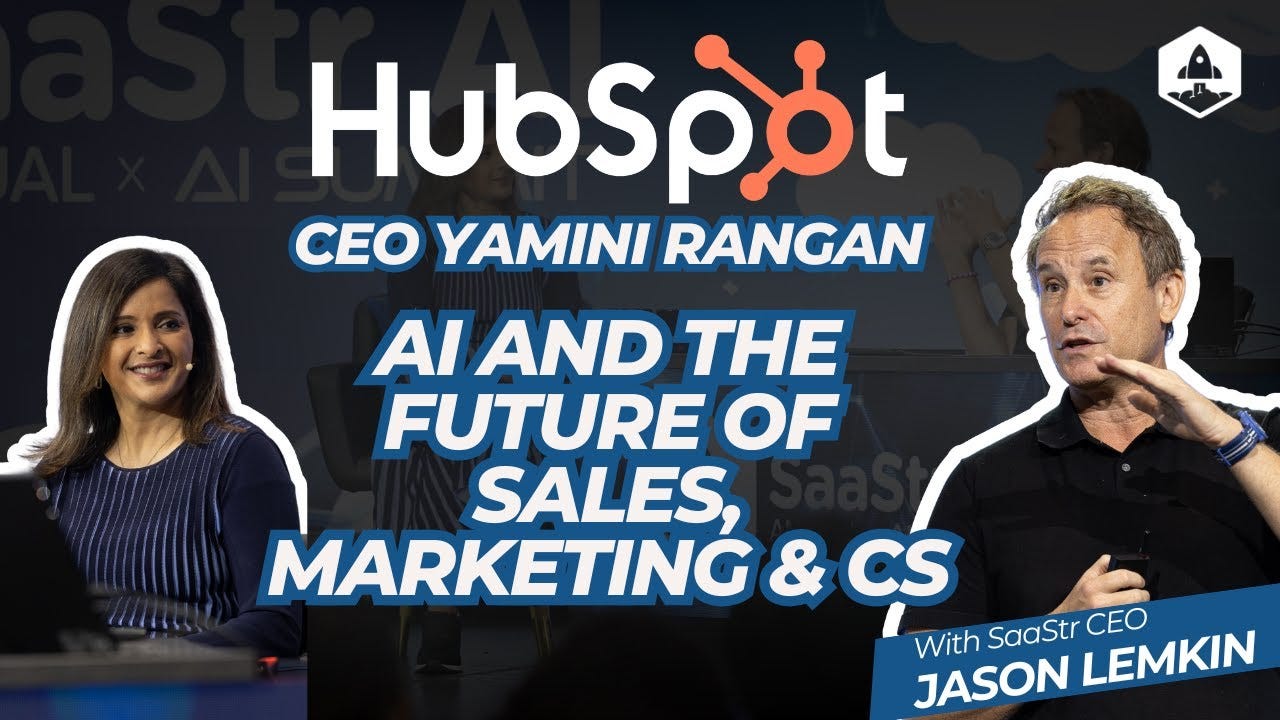
The HubSpot AI Playbook: How Yamini Rangan Is Leading the Most Aggressive AI Transformation in B2B
The HubSpot AI Playbook: How Yamini Rangan Is Leading the Most Aggressive B2B AI TransformationHubSpot's CEO came to SaaStr + AI Summit to do a deep and honest dive on how she's transforming the company into an AI-first $2.75B+ ARR B2B leader. And what it means for the future of B2B software.The January 2023 Pivot That Changed EverythingHubSpot had spent four months meticulously planning your 2023 roadmap. Every feature mapped out, every sprint planned, every resource allocated. Then ChatGPT happens in November 2022, and by January 2023, you make a decision that would reshape your entire company."We came into January 2023 and we said, pivot," HubSpot CEO Yamini Rangan told the SaaStr audience. "That entire roadmap that we just planned for the last three to four months is not going to be what we are building in 2023."This wasn't a gradual shift or a cautious experiment. This was a complete organizational bet on AI that would see HubSpot ship their first AI features by March 2023 – just two months after the pivot decision.The result? HubSpot now has 95% of their engineering team using AI tools daily, customers seeing 70-80% ticket resolution rates with AI agents, and a fundamental reimagining of what B2B software can be.The "Kid in the Candy Store" TestBefore diving into the tactical details, Rangan shared what might be the most important hiring and team-building insight for the AI era:"If they're not saying this is the kid in the candy store age, you have the wrong team. They should be excited. They should be going home at night and screwing around and coming up. They should be doing internal hackathons, even though you haven't had one in five years."This isn't just about enthusiasm – it's about recognizing that the last five years of B2B software development were, in Rangan's words, "boring." The same playbooks, the same incremental improvements, the same compliance features."If you're not seeing that [excitement], it's brutal, but you got the wrong team," she emphasized.The Two AI Use Cases That Actually WorkWhile the industry debates AI's potential, Rangan is clear about what's already proven: "Coding and support – these two use cases have found product market fit with AI. No question. We're not going back."Support: The 70-80% Resolution RealityHubSpot's internal support AI now resolves 45% of tickets, but their customers using HubSpot's customer agent are seeing even better results:* Average 52% resolution rate across 2,500+ customers* Top performers hitting 70-80% resolution rates* The difference? Knowledge base quality and completeness"It comes down to knowledge and knowledge-based articles," Rangan explained. The companies seeing 80% resolution rates versus 40% have invested in comprehensive documentation and knowledge bases.The setup time? "A few hours" if you have your knowledge base, support history, website data, and community answers ready to sync.Coding: The 95% Daily Usage RevolutionWithin HubSpot's engineering organization, 95% of developers use AI-powered code generation daily. The impact goes beyond just faster coding:"We have to be even more careful about what we ship. It's not just the velocity of shipping something as new features. It is what is the value."This abundance of development capacity is forcing a fundamental shift from feature velocity to value measurement – a change that's rippling through their entire product strategy.The Death of Volume-Based Go-to-MarketOne of the most striking insights from Rangan was how AI is forcing a complete rethink of traditional B2B sales metrics:"We've gotten used to in the old playbook, increase the volume of leads, increase the amount of pipeline, increase everything. And it's been this focus on volume. It really needs to be focused on conversion because the volume is exploding."The old playbook is dead. Rangan shared a perfect example – receiving an SDR email that morning asking to meet "next week" at SaaStr. The conference was happening that week."That is egregious," she said. "If you have like egregiously wrong information, like 'Oh, your conference is next week,' then you're out."Personal vs. Personalized: The New StandardThe shift isn't just from volume to quality – it's from personalized to personal."We've been talking about personalization for a very long time, which is you segment your customers, you take your customers and you personalize your data and send it to everybody in that segment. That doesn't cut it anymore. It needs to be personal."Personal means: "Jason, here are the four posts that you did. Here is why I can help you with this single problem that you have. And let me get 10 minutes with you."Rangan recently received two personal videos from salespeople referencing specific points from HubSpot's earnings call two weeks prior and how they could specifically help. "That caught my attention."The Handoff Problem: Where AI Breaks DownEven as AI improves the first touch, Rangan identified a critical weak point: the handoff to human
Perplexity's CBO: Speed is The New Moat in AI Sales
Perplexity's CBO Dmitry Shevelenko joined Sam Blond ex-CEO of Brex at 2025 SaaStr + AI Summit for a deep dive on AI and Sales. More on the full session coming soon but this deep dive on being prepared for meeting prospects in the Age of AI was super interesting.The 90-Minute Meeting Prep is DeadHere's a hard truth every CRO, VP of Sales, AE and founder needs to hear: You have no excuse to not be moving faster.While you're spending 2+ hours researching prospects, reading through LinkedIn profiles, and manually preparing for sales calls, your competitors are using AI to compress that same preparation into minutes. The result? They're having more conversations, closing deals faster, and scaling their businesses while you're still stuck in research mode.Perplexity's CBO shared how AI is revolutionizing meeting preparation—and it's not just about efficiency. It's about unlocking what he calls "superpowers" that transform how founders approach every customer interaction.The AI Meeting Prep Framework That Changed EverythingThe framework is deceptively simple but devastatingly effective:Step 1: Front-load Your Intelligence Gathering Every question you would typically ask during a discovery call should be asked of AI before the meeting. Think about it—why are you learning basic information about a company's challenges, their industry, or their recent moves in real-time during a precious 30-minute slot with a decision-maker?Step 2: Use the Time You Save to Go Deeper Here's where most founders get it wrong. They think AI prep is about asking fewer questions. It's actually about asking better questions. When you're not burning meeting time on basic discovery, you can dig into the nuanced challenges, explore specific pain points, and have the kind of strategic conversation that actually moves deals forward.Step 3: Show Your Work in Real-Time This is the power move that separates great founders from good ones. During the actual meeting, share your screen and ask AI questions about the prospect's company live. "What are the biggest challenges Company X is facing right now? How have they tried to solve them?"Why This Approach is Pure Gold for B2B SalesAuthenticity Through Transparency: When you're using AI to research their challenges in real-time, and your solution naturally emerges as a fit, that's not scripted—that's authentic. The prospect sees the discovery happening organically.Credibility Through Intelligence: You're not just another vendor with a pitch deck. You're a strategic partner who comes prepared with deep insights about their business, industry, and specific challenges.Efficiency Through Preparation: You're maximizing every minute of face-time with prospects by focusing on high-value strategic discussions rather than basic fact-finding.The Timing Lesson Every Founder Must LearnPerplexity's success story offers a crucial lesson about market timing and execution speed. Their CBO revealed something fascinating: if they had started six months earlier, GPT-3 wouldn't have been good enough to create their magical AI + internet experience. Six months later, and someone else would be on stage talking about their success.The window for competitive advantage is narrower than ever. In today's market, timing isn't just about having the right product at the right moment—it's about executing at the right speed when that moment arrives.Beyond Meeting Prep: The Acceleration MindsetThe meeting prep framework is just the beginning. The real transformation happens when you apply this acceleration mindset to every aspect of your startup:Prototyping and Concept Development: The rate at which you can prototype, test concepts, and gather feedback has been "dramatically accelerated." What used to take weeks now takes hours.Product Validation: Instead of spending months building something you think the market wants, you can rapidly test and iterate on concepts before committing significant resources.Strategic Planning: Tools like Cursor for rapid development and emerging AI-powered project visualization tools mean you can explore multiple strategic directions simultaneously rather than sequentially.The Mental Model That Changes EverythingHere's the framework every founder should be running through their head constantly:* How can I do in one hour what used to take a day?* How can I do in one day what used to take a week?* How can I do in one week what used to take a month?This isn't about working more hours—it's about leveraging AI to compress time-to-insight and time-to-action across every business function.The Competitive Reality CheckYour competitors are already doing this. While you're debating whether AI tools are worth the investment or learning curve, founders who embrace these superpowers are:* Having more qualified conversations per week* Closing deals faster with better preparation* Iterating on product concepts at unprecedented speed* Building deeper relationships through more strategic interactionsThe question isn't whet
AI Adoption: 5 Hard Truths About the Fastest Technology Transformation in History With Aaron Levie, CEO Box
We’ll do deep dives on all the SaaStr + AI Summit 2025 speakers soon! We wanted to kick it off with some of the key insights with Box CEO Aaron Levie and IBM VP AI Raj Datta:The Numbers Don’t Lie – ChatGPT Hit 500M Users in Just ~2 YearsLet’s start with the cold, hard metrics that SaaS leaders seem to underestimate: AI adoption is happening at an unprecedented velocity.As Aaron Levie, CEO of Box, points out, ChatGPT alone amassed approximately 500 million active users in just over two years. No technology in history has scaled this rapidly – not even close.Why? For the first time, we have billions of people already connected to the internet, creating a ready-made distribution platform. This isn’t just marginally faster than cloud adoption – it’s an entirely different magnitude.Your New Workforce Is Wired Completely DifferentlyPer Levie, college graduates entering your workforce operate fundamentally differently than previous generations. They’re:* Drastically more efficient* Skipping time-intensive processes that were once standard* Questioning why organizations spend weeks on tasks AI can do in secondsAs Levie observed while visiting a college class: “These kids don’t work like us. They’re much more efficient.” While there might be tradeoffs in deep knowledge retention, their AI-enhanced productivity is undeniable.When these graduates join your enterprise and see teams spending two weeks creating a marketing plan that Claude can generate in seconds, they’ll fundamentally question your operating model. Levie notes they’ll wonder: “Why would you spend time reinventing the wheel of a marketing plan? Literally, it’s in the model.” This generational shift will accelerate transformation far beyond what we saw with cloud adoption.Enterprise AI Adoption Is Moving 5-10X Faster Than CloudThe contrast with cloud adoption is striking, according to Levie:* Cloud in 2008-2009: “Try pitching the cloud to a bank. That was a non-starter. That was not a conversation you would have. They had to keep all the data on premise… Get out of my office.” Many financial institutions didn’t deploy initial cloud use cases until the mid-2010s.* AI in 2024-2025: “There’s not an enterprise that you could meet with today where they have not already basically said ‘here’s our AI first strategy’ or ‘here’s the AI first strategy we’re working on’ or ‘here are our AI principles.'”Unlike the decade-long cloud adoption curve, enterprise AI adoption is happening in hyper-accelerated timeframes. What took 10 years with cloud may take just 1-2 years with AI.Even Leading Tech Companies Feel Behind on AIPerhaps most telling: even recognized AI-forward companies feel they’re falling behind. Lemkin referenced a conversation from the day before at SaaStr with Yamini Rangan from HubSpot – a company that’s “crushing it” in AI by most standards:“She’s like, ‘I feel like I’m behind.’ And they’re pretty far ahead if you look at all the peer groups… I’m going to be stressed then.”When market leaders feel they’re struggling to keep pace, it signals the extraordinary speed of this transformation. The most successful executives admit their stress about staying ahead in the AI race.The AI Moat Problem: 1,000 Better Competitors vs. 2 Mediocre OnesThe final hard truth from Levie: AI is fundamentally changing competitive dynamics in SaaS. As one top Cloud executive noted at SaaStr 2025:“Our core is strong and gets stronger… but the thousand small competitors are better than ever.”In the pre-AI era, established SaaS companies might face a handful of competitors with limited feature sets. Levie explains today’s reality:“In the old days, you might have two small competitors. Now you have a thousand and the thousand aren’t like one cool feature but the rest does almost nothing … Now the thousand are kind of cool because you can talk to them and they can talk to your data and they can MCP into Box. So now you have a thousand really good competitors, not two mediocre ones.”What This Means For SaaS LeadersThe velocity of AI transformation demands immediate action. If your organization is taking a wait-and-see approach or treating AI like previous technology waves, you’re already behind. The winners will be those who embrace AI as the core operating system of their business – not just another feature or module.The cost of waiting isn’t just missed efficiency; it’s existential risk in a market where a thousand AI-powered upstarts are coming for your lunch.Thanks for reading The Secrets To Scaling -- from SaaStr! Subscribe for free to receive new posts and support my work. This is a public episode. If you would like to discuss this with other subscribers or get access to bonus episodes, visit cloud.substack.com
AI and the Future of Enterprise: A SaaStr Deep Dive with Marc Benioff
"The Last Generation of Human-Only CEOs: Marc Benioff's Bold Vision for the AI-Augmented Enterprise"Marc Benioff was kind enough to join SaaStr for the first time to do a truly deep dive on what AI means in business software today. From how quickly humans will be replaced in some functions ... to how slow some traditional enterprises will be to change.It's a good one.Top 5 Unexpected Learnings:1. Human + AI + Executive Teams Are The New NormalMarc Benioff revealed he's been working with AI agents for nearly three years, particularly when creating his V2MOM documents (Vision, Values, Methods, Obstacles, Measures). For these important strategic documents, he now has a three-party approach: himself, a Salesforce executive, and an AI agent working together. The AI asks critical questions about competitive positioning, distribution expansion, and ecosystem impact – often providing insights Benioff hadn't considered. This collaborative approach is delivering superior strategic thinking beyond what either humans or AI could produce independently.2. The Last Generation of "Humans-Only" LeadershipBenioff believes current leaders represent "the last generation of CEOs that only had human employees." This isn't just a catchphrase – Benioff actively works with AI agents daily to improve Salesforce and trains his employees to do the same. He sees the human+agent partnership as consciousness-expanding, providing deeper insights and a form of "enlightenment" for executives. The fundamental concept of agent-augmented executive teams is completely reshaping how decisions are made.3. AI Budgets Are a Red FlagWhere are AI budgets are coming from? Benioff shared a surprising perspective: having a separate "AI budget" might indicate you're heading in the wrong direction. He believes AI investments should come directly from line-of-business budgets, with business unit leaders held accountable for efficiency, productivity, and employee augmentation through AI. Organizations with isolated AI teams and budgets aren't properly integrating AI into core business operations.4. The Four-Layer Enterprise StackBenioff vision’s for the enterprise stack of the future: four integrated layers: 1) Apps (still critically important), 2) Data (more important than ever), 3) Agents (the AI layer), and 4) Robotics (the emerging physical manifestation layer). This four-layer vision is becoming the architectural blueprint for Salesforce's entire platform direction, with remarkable convergence in real-world implementation.5. Agent-First Companies Will DominateBenioff sees both an entirely new class of "agent-first" companies that will fundamentally differ from today's organizations. And existing leaders being radically remade that will look much different from how they do today. He expresses a hint of envy toward founders who are starting companies today because they can build agent-first organizations from the ground up rather than transforming existing ones. This suggests a profound competitive advantage for new entrants who design their entire business model around AI augmentation from day one.The Practical AI Transformation at Salesforce"Agents can only go so far without the data and apps. And this is where Salesforce wins with AI. The data is more important than ever. Or your agents just can't perform at the level of accuracy We need them to."The Real Impact of Salesforce's Agent Force AIBenioff is particularly excited about Agent Force, which began as a concept a year ago and is now deployed by about 5,000 companies. What's unique is how quickly customers are seeing value – far faster than traditional enterprise software implementation cycles.One standout example is Singapore Airlines, whose CEO is building an agentic layer over the entire airline. This was particularly motivating for Benioff, seeing how rapidly customers can deploy high-value AI implementations in relatively short timeframes.Salesforce itself has deployed AI agents extensively, with 9,000 support agents already conducting over half a million AI-augmented customer interactions. Contact Center Transformation Is Leading the Way in AIThe contact center is at the bleeding edge of AI transformation. When asked about reports of 30% headcount reductions in many contact centers within just one year due to AI replacing human headcount, Benioff confirmed he's exploring similar efficiencies at Salesforce. However, he cautions that large-scale workforce changes take time at many older enterprises and at true enterprise scale. For every early adopter they are seeing at Salesforce, many enterprises are still taking their time to watch and learn.Benioff references the famous phrase that "people overestimate what will happen in a year and underestimate what will happen in a decade" with respect to AI workforce transformation. He sees the contact center transformation as just beginning, with early pioneers showing the way but mainstream adoption still in process.AI Without Data and Apps is of Lim
The Real Data on What it Takes to Go Big and Eventually IPO with Meritech Capital
Want to know what it really takes to go public today? Let’s dive into the fascinating data and insights from Meritech Capital’s Alex Clayton and Cathy Choi, who have helped guide dozens of companies through successful IPOs over the past 25 years.First, let’s address a common misconception: while many founders dream of going public, the reality is that only about 20 SaaS companies manage to IPO each year. That’s a pretty exclusive club! But what makes these companies special enough to make the cut?The Bar is Higher Than Ever – Here’s What You NeedIf you’re thinking about an IPO in 2025/2026, you’ll need some serious metrics. The days of going public with $50-100M in ARR are long gone. Today’s successful IPO candidates typically show up with:* At least $400M in ARR – that’s right, nearly half a billion in recurring revenue* Growth of 30% or higher year-over-year (though 50-60% is even better)* A valuation between $3-5B* Net revenue retention of 110-120% (and trending up)* Strong SaaS gross margins* A clear path to profitability (though you don’t need to be FCF positive yet)But here’s what’s really interesting – the time from founding to IPO hasn’t changed much.It still takes about 10 years on average to build a company ready for public markets. What has changed dramatically is the scale required.The Truth About Multiples and ValuationsLet’s talk about a crucial reality check: no matter what your private market valuation might be, public market investors aren’t likely to value you at more than 8-12x ARR in today’s interest rate environment. This is a hard pill to swallow for some founders, but it’s the new normal.Recent successful IPOs tell the story. Take Cavo, which went public last September at a $7.6B valuation and trades at 10x ARR. Or look at Rubrik, with its April IPO at $5.6B, trading at 7x ARR. Different growth profiles, similar multiple ranges.The Secret to Long-Term Success: It’s Not What You ThinkHere’s where it gets really interesting. After analyzing 139 software companies, Meritech found something surprising: there’s almost no correlation between company size and valuation multiples (R-squared of just 0.09). What really matters? Durable growth.The data shows a strong correlation (R-squared of 0.74) between share price appreciation and revenue growth from IPO to present. But here’s the kicker – it’s not about growing as fast as possible. It’s about consistent, predictable growth that compounds over time.Take two contrasting examples:* CrowdStrike: Went public in 2019 with $500M ARR, growing at nearly 100%. They’ve maintained 50% growth and are now approaching $4B ARR. Result? 8x return since IPO.* SPS Commerce: Went public in 2010 with just $50M ARR and has grown at a steady 20% CAGR for 15 years. The result? A remarkable 17x return.The Predictability PremiumHere’s something that might surprise you: about 80% of successful public SaaS companies consistently beat and raise their quarterly guidance. This isn’t just about good numbers – it’s about being predictable enough that public market investors can trust your forecasts.How to Build Durable GrowthThe most successful public companies have found ways to maintain growth through:* Multi-product expansion (like HubSpot growing from $100M to $2.5B ARR)* Increasing wallet share with existing customers* Strong net dollar retention that improves over timeThe Bottom LineIf you’re thinking about going public, focus on building a business that can grow predictably for years, not just quarters. The math is simple: durable growth + strong unit economics + predictability = public market success.Remember, a down-round IPO isn’t the end of the world. Companies like SPS Commerce prove that consistent execution over time matters far more than your initial public market valuation.And always keep in mind – the public markets can only absorb about 20 new SaaS companies each year. Make sure you have a compelling reason why investors should choose your stock over the 100+ other great SaaS companies already trading.Recent Examples:* Klaviyo (September 2023)* $7.6B valuation* 10x ARR multiple* Only $16M burned pre-IPO* Strong unit economics* Rubrik (April 2024)* $5.6B valuation* 7x ARR multiple* $700M+ burned pre-IPO* Enterprise-focused model* OneStream* $4.6B valuation* 11x ARR multiple* Strong financial operations focusThe Science Behind Long-Term Success: What Really MattersMeritech’s analysis of 139 software companies revealed several surprising insights:Company Size Impact:* R-squared value of 0.09 between valuation multiples and company size* Size alone doesn’t drive valuations* Market opportunity and execution matter moreGrowth Correlation:* R-squared value of 0.74 between share price appreciation and revenue growth* Strong correlation indicates growth sustainability is key* Consistent growth beats sporadic high growthCase Studies in Durable Growth* HubSpot’s Evolution:* Started: $100M ARR (2014)* Current: $2.5B+ ARR* Initial Valuation: $900M* Current Valuation:
The Playbook for Going Upmarket with Stripe’s CBO and Checkr’s COO
Want to know when to move upmarket and how to actually pull it off?Jeanne Dewitt Grosser (Chief Business Officer at Stripe) and Lindsey Scrase (COO at Checkr) have done it multiple times at companies like Google Cloud, Stripe, and Checkr. They came to SaaStr Annual to share what they’ve learned about making the move to go more enterprise actually work.A Bit About Our Enterprise LeadersJeanne Dewitt Grosser* Currently Chief Business Officer at Stripe, running all technology and financial partnerships, plus corporate strategy* Scaled Stripe’s sales team from 10 to hundreds of reps across the Americas* Former leader at Dialpad (SaaS communications)* Built out Google Enterprise (now Google Cloud) SMB sales teams across APAC and Americas* Started at Google working on Gmail post-launch in operations* Known for analytical rigor and building teams from scratchLindsey Scrase* Current COO at Checkr (formerly CRO)* Runs bulk of Checkr’s operations after joining 2 years ago* Previously led Google Cloud for SMB, midmarket, and startups* Built and scaled multiple functions within Google Workplace* Started career at A.P. Moller-Maersk in global operating roles* Deep expertise in operational scaling and go-to-market strategy'The 5 Key Things To Know About Moving Upmarket:1. You Need Real Signals – Not Just Board PressureMost founders get the timing wrong on moving upmarket. Just because your board member wants a bigger TAM doesn’t mean you’re ready.What you actually need:* Your existing customer base is literally pulling you upmarket. Think Shopify, Lyft, and Square bringing in grown-up CFOs and prepping for IPO – that’s what happened at Stripe.* You’re winning true enterprise workloads, not just “fins” (side projects or experimental business lines that don’t represent real adoption).* You have enough product maturity to actually serve enterprise needs – not just feature requests you can handle “soon.”2. Going Enterprise Is a Company-Wide DecisionThe #1 mistake? Thinking enterprise is just a go-to-market play. It’s not. You need:* A dedicated lighthouse engineering team building enterprise features* Solution architects and integration engineers (but be thoughtful about which roles you actually need)* Product and engineering in every major sales call* Aligned compensation across teams* Multi-year patience from leadership and boardAs Lindsey puts it: “You can’t just dip your toe in enterprise. You have to go all in.”3. The Enterprise Pricing Journey Is All About UnbundlingStripe learned this the hard way. Their famous 2.9% + $0.30 pricing was brilliant for SMBs but completely wrong for enterprise. Why? Enterprise buyers:* Need predictability in pricing* Want to buy solutions, not features* Require modularity and customization* Have completely different procurement processesThe key is to repackage your components into enterprise-ready solutions. But watch out – this is a major undertaking that touches product, engineering, sales, and finance.4. The Metrics That Matter Have Changed DramaticallyThe “growth at all costs” era is dead. In 2019, top SaaS companies spent 50-55% of revenue on sales and marketing. In 2024? It’s down to 30%.What you need to track obsessively:* Payback period (top quartile SaaS companies have 3x faster payback)* Gross margin* LTV:CAC by segment* Revenue ramp time* Win rates by industryBreak these down by segment and channel. Make them visible to everyone. Your teams need to act like owners.5. Your Operating Model Must Be Bottom-UpThe most successful enterprise moves are built on granular operating models that show exactly what needs to be true to hit targets. You need:* Detailed funnel math (leads → opportunities → wins)* Conversion rates by stage* Average opportunity size assumptions* Revenue ramp time models* Cost breakdowns by functionBuild this model by segment. Use it as a diagnostic tool. Update it constantly.Real World Examples: How Stripe and Checkr Did ItStripe’s Enterprise Evolution:* Started with signals from growing customers (Shopify, Lyft, Square)* Won Amazon in Singapore as first major enterprise logo* Rebuilt pricing from scratch for enterprise needs* Now sees enterprise customers buying 2+ products on average* Focused heavily on financial automation products (Billing, Tax) to drive up ACVsCheckr’s Playbook:* Targeted specific verticals: staffing, retail, manufacturing, hospitality* Built dedicated enterprise capacity across SE, product, and engineering* Created two distinct product lines (initial screening, ongoing Trust product)* Actually paused their first enterprise push when they realized their product wasn’t readyThe 5 Signs You’re Actually Ready for Enterprise:* Your existing customers are growing into enterprise needs* You’re winning real workloads, not side projects* Your product can handle enterprise requirements today (not soon)* You can dedicate real engineering resources* Your board understands this is a multi-year journeyWhat To Do Next:* Build your bottom-up operating mode
How Tooey Courtemanche Built a $1B+ ARR Construction SaaS Empire Over 23 Years
What does it take to build and scale a vertical SaaS giant over two decades? According to Tooey Courtemanche, CEO and Founder of Procore, it’s about focus, perseverance, and a relentless commitment to customer success.In a recent conversation with SaaStr CEO and Founder Jason Lemkin, Tooey shared insights into his 23-year journey as CEO of Procore, the leading SaaS platform for construction management. From surviving economic downturns to scaling into a multi-product enterprise serving millions, Procore’s story is a masterclass in vertical SaaS excellence.5 Unexpected Learnings from Procore’s 23-Year Journey to $1B+ in ARR:* The Great Financial Crisis Was Actually a Massive Competitive Advantage. Most SaaS founders think economic downturns are purely negative, but for Procore, the 2008 crisis was an “extinction level event” that wiped out 20+ competitors. While painful (the founders went without salary for 2 years), emerging as one of the few survivors gave them an almost unbeatable market position. Sometimes survival = massive opportunity.* Industry Veterans Often Make Terrible Sales Hires. Surprisingly, Procore learned that hiring people directly from construction to do sales usually fails. Instead, they found success doing the opposite: hiring great salespeople and teaching them construction. The domain experts are brought in as sales engineers instead. A key insight for vertical SaaS companies trying to crack industry-specific sales.* Brand Building Has to Start from Zero in Every New Market. Even at $1.2B+ ARR. Procore discovered that their dominant U.S. brand meant nothing when entering new markets like the UK or UAE. There are no shortcuts – they have to rebuild their brand from scratch in each new region, even with huge resources behind them. A humbling lesson in global expansion.* The Multi-Product Journey Took Way Longer Than You’d Think. While multi-product is all the rage in SaaS today, Procore didn’t start seriously implementing their multi-product strategy until years 14-15. And this was intentional – they waited until customers specifically asked for new products. Today their average customer uses 3-4 products, but it was a 15-year journey to get there.* Enterprise Features Don’t Drive Out The Small Features Even at $1.2B+ ARR. and hundreds of millions in R&D spend, Procore still ships 3-4 “lighthouse features” in every release – just like they did as a small startup. They didn’t abandon small, focused improvements even while building massive enterprise functionality. A surprising insight into how to maintain product momentum at scale.AI & The Future of Construction SaaSThe construction industry is infamous for being labor-constrained. With AI, Procore is poised to help its customers do more with fewer resources. “There just aren’t enough people who know how to build data centers, bridges, and skyscrapers,” Tooey explains. AI can help by automating repetitive tasks and improving decision-making through predictive analytics.Procore isn’t looking to monetize AI separately—at least, not yet. “Our industry will unlock more budget for AI-driven insights once they see the impact on their bottom line.”The company’s vision for the future centers on the strategic application of AI and automation. They’re focusing particularly on automating repetitive tasks through AI agents, freeing up human resources for more complex and valuable work. Their massive dataset, accumulated over years of industry leadership, provides a unique foundation for improving decision-making across all aspects of construction management. This data advantage could prove particularly valuable in mega-projects, where the potential to reduce errors through AI-driven insights could save millions of dollars and months of delays. The combination of their deep industry knowledge with cutting-edge AI capabilities positions Procore to potentially transform how construction projects are planned, executed, and managed in the coming years.A SaaS MarathonTooey has been the founder and the helm of Procore for over two decades, a rare feat in an industry where leadership transitions are common. What’s kept him going? “When the thing that you do is part of who you are, it’s different,” he says. But balance is key: “When I get home, I’m not the CEO of Procore—I’m just Tooey.”“ I will say this to all of the founders out there too, that as much as you want to be the face of the business, you don’t want to be the totality of the business. You can’t scale to a billion dollars in revenue without having an amazing team under you that is doing just that. Some founders conflate themselves as being the business and Procore has gotten so much bigger than me over the years that I’m just the I’m just the conductor.”‘Duck Diving’ the Global Financial CrisisProcore first started as a niche tool for high-net-worth residential builders in places like Aspen and Beverly Hills. “Our first customers were building homes for Eddie Murphy, Barbara Streisand, and Ben Sti
The Future of AI in SaaS Sales with Henry Schuck, CEO of ZoomInfo and SaaStr CEO Jason Lemkin
SaaStr CEO Jason Lemkin joined ZoomInfo’s as its opening guest alongside ZoomInfo CEO Henry Schuck.Along with co-host Ben Salzman, Jason and Henry discuss the transformative power of AI within SaaS and the evolving dynamics that are reshaping the landscape of software as a service.There’s recruiting and there’s people building.On the topic of building SaaS companies, Henry kicks off the conversation with: “I think a lot of bootstrapped founders who are less capital infused have to actually be great at developing their people. Almost equally to their ability to recruit great people. I bootstrapped ZoomInfo to 25 million in revenue. And then when I brought in private equity, it wasn’t like, ‘Go spend everything you can to grow.’ They’re like, ‘This thing looks good. Spend a little more and make it twice as big.'”Without a big budget to get the best people, Henry believes part of the ZoomInfo difference has been recruiting good people that he then fostered and developed into great people.“The best hack,” Jason adds, “is not recruiting one management team. It’s recruiting five or six.”Founders should spend 20-30 percent of their time soft recruiting execs. Nothing else matters, right? You can talk about the roadmap or sales strategy until you’re blue in the face, but if you don’t have the team to do it at scale, there’s no point in talking a ‘big game.’Henry adds: “The other side of it is. You need to be evaluating your team 100 percent of the time. And that’s probably the most tiring part because you want to feel really good about your team. But if you’re trying to build, you’re constantly evaluating if they’re the right people.”The best sales leaders are the ones that are even better recruiters than the CEO. The best VP of sales or CRO is a constant recruiter because they need a bench of leaders, and they need managers and directors, and VPs and SVPs to come and go in the mix because the sales reps who might be good at $1m won’t scale to 10-20 M. So founders need to steal this playbook and get better at this.Otherwise, if you get tired on building your second management team, you’ll decelerate just when it’s getting good and you will stall out.It’s mission-critical to go multiproduct on time — too early is bad but too late is bad tooWe’ve written this up already a few times recently on SaaStr already as Jason did a deep dive on this just last week and Parker Conrad’s theory of the compound startup from SaaStr Europa is a masterclass on the matter. But the next point related to not building a second management team early enough is not going multiproduct soon enough.On going multi-product Henry adds, “I think the foundational point is if you want high net retention, you get high net retention in two ways. Either a high net renewal rate or a high upsell into the customer base. And particularly during the last two years, if teams are shrinking then you don’t have the users to expand to. And so then you end up with no lever to offset scrutiny on net renewal rate or reduction in seats with another product to improve net retention.”For example, when you hit a $100M, you just can’t sell enough to drive 40 points of new growth. Even if your net retention is a hundred, itt’s much more difficult to sell $40 million of net new logos. So eventually you’ll get to a point where regardless of how good your team is at new sales, if you’re not driving upsell in your customer base through new products, you will get stuck.Don’t Hire B Players, Only Hire A PlayersBen Salzman, co-host of the ZI labs podcast and EVP & GM Strategy at ZoomInfo asks Jason:‘(At Echosign) What was the one thing that allowed you all to punch above your weight from a go-to-market perspective?’“The answer is so simple, but it really is that the best leaders do attract the most ambitious people under them.”If you hire a magnet, then the talent just flocks to it. Don’t hire B players, just hire A players.And sure, founders know that, but the point is that you have to internalize being OK with it taking way longer than you wanted to get the next great person in seat.We give up too early Henry explains. “You’re hiring a new VP of sales and you’re on your 20th interview. And then you’re just like, ‘Forget it. That guy’s the best of everybody I’ve seen.’ But he’s not the best, he just the best of everybody you’ve seen. So you just get this guy who’s the best of the group you’ve met and bring him in, and that never ever works. And the real test, if you are going to be committed to hiring an A team is in that moment saying, ‘We’re still going. We just got to keep bringing people in until we find somebody that we really believe is an A player.”What Will AI Change in Go-to-Market“It will lead to a next level of transparency for leadership,” Jason answers. It will be a big change and a lot of friction.Everything in post-sales is ahead of sales when it comes to AI, far ahead. For years there’s been a QA space where businesses were manually grading thousands of custome
How to Hire a Great VP of Sales Today: The New, Latest Edition with Jason Lemkin (Video + Pod)
What are the top 10 mistakes founders are still making today when hiring their VP of Sales? SaaStr CEO and Founder, Jason Lemkin, has done numerous surveys now that confirm that a startling 70% of first VPS hires still don’t make it.In this post, we’ll delve into the common pitfalls founders encounter when hiring a VP of Sales. Reflecting on twelve years of SaaStr’s hiring lessons, we’ll take a deep dive into Jason’s critical insights into why sales leaders fail and how founders can avoid these mistakes. The discussion will cover the importance of due diligence, understanding the product, embracing sales involvement post-hire, and recognizing the signs of jaded or broken candidates. Use this practical advice to ensure your next critical hire drives success.#1: You Can’t Stay Founder-Led Sales Forever.This one is newer. Being in founder mode doesn’t work for sales. Elements of it do, but you need a sales team to scale sales. Once you do make your first sales hire, the biggest mistake you can make is exiting sales. Maybe you’re tired, and you’ve been doing founder-led sales for some time. But you can’t leave, or sales will go down the toilet.You have to spend as much time in sales after hiring a VP of Sales as you did before. You become a great middler, and they pull you into ten deals every month, but you don’t get that time back.Another new trend is people reverting to founder-led sales because of mishires and getting burned. When you get big, it’s too much. You can do it for a month or a quarter, but you need to start recruiting the next day or week when it doesn’t work out.Too much human capital is required, and sales have no efficiencies whatsoever. You will need to hire headcount infinitely and linearly with revenue. So, by $2M in ARR, you need to hire your first Head of Sales. If it doesn’t work out, hire another. Don’t stay in founder-led sales.#2: You Can’t Hire the Jaded, the Broken, and the Done.Over the last four years, so much change has happened, leaving us with many jaded, broken, and done people. They need a job, and their side hustle as a fractional CRO didn’t work out, but should you hire them? Many great companies are out there turning over VPs of Sales, but you have to be careful.Don’t hire the jaded. Four minutes into an interview, they’ll say how the CEO or VC screwed them over, or the startup didn’t make it, and it wasn’t their fault. Don’t hire these people. Maybe you raised $500M and sold for $50M, and they claim to have crushed it single-handedly. No one makes any money in that scenario. You don’t get participation points in SaaS.The related cousins are the broken and the done. They don’t want to sell anymore. Yes, they can make beautiful powerpoints, endlessly discuss process, and they might have done great things in their career, but do they want to sell? You have to ask them, “What do you want to do the first two weeks on the job?” If it’s not about meeting customers, don’t hire them.#3: You Can’t Hire a VP of Sales that Won’t Do Sales Themselves.80% of the VP of Sales candidates founders invest in and work with won’t do sales themselves. When making the hire, you have to listen. Just because they talk about how great they were at Datadog doesn’t mean they’ll do it themselves.Once you’re at $200M ARR, they can get out of deals a little, but maybe not. A classic story is when Groupon was a customer at AdobeSign/EchoSign. Jason flew to Chicago in the middle of a terrible winter to pitch a 7-figure deal. And next door, Salesforce CEO Marc Benioff was making his own pitch.He’s still doing it. Every year he meets with 200 prospects. We can’t all fly in our private jets, but the point is, even at $200M ARR, you still have to meet customers. Marc is doing it, and Salesforce is coming up on $30B.#4: You Can’t Hire a VP of Sales that Can’t Be a Product Expert.You might have hired a great “people person” as your VP of Sales, but if they’re not an expert on your product, it won’t work. Before you make the hire, do reference checks and have them do a demo. If you hire without them knowing the product, they likely never will.It’s a tough market; if you can’t answer customer questions, the competition will. Every year, we become smarter buyers up and down the stack, so you can’t hire a VP of Sales who isn’t willing to learn the product cold before starting.If they’re great, give them the offer, agree on the comp and equity, and give them a month to learn the product before they start. They can’t start learning the product on day one.#5: You Can’t Hire a VP of Sales You Don’t 100% Believe In.This seems obvious and might be the most important point on this list. If you don’t believe in your heart and soul that a candidate will be successful, it won’t work. When Jason hired Brendon Cassidy, the first Head of Sales at LinkedIn, a VC wanted someone more senior. But he knew 100% he was the guy.Your job as a leader isn’t to tell the VP of Sales what to do but to backfill them. Not everyone can be grea
5 Interesting Learnings from Monday at $1 Billion in ARR
So Monday is just a freight train right now. It just keeps scaling and scaling. It’s now crossed $1B in ARR, still growing a stunning 34% … with 22% Free Cash Flow margins!That’s as good as it gets in SaaS, folks. Jaw dropped.What are the secrets? A few, but 2 stand out:* Going multiproduct early* 70% of their customers are outside of tech. So they’ve been immune from most “macro” impacts.5 Interesting Learnings:#1. Still Growing Net New Customers +26%This is the key to scaling. You have to keep the net new customer count over 20%, even at $100m-$200m+. And over 50% at $50m ARR to keep growing going.#2. 110% NRR from SMBs, 114% From $50k+ CustomersIt’s just so hard to scale at the SMB without 100%+ NRR. 110% is magical with SMBs. And Monday’s consistently hit it. NRR peaked in Q2’22 when the Crazy Good Times were ending. But it’s still stayed at 110%+ every since, and in fact, is higher than it was in 2020.#3. $50k+ and $100k+ Customers Growing the FastestThis isn’t unique to Monday. Eventually, most of us have to go upmarket to keep the engine going. But Monday didn’t rush there. And the vast majority of its customers and revenue are still SMB. 78% of its accounts are 10+ seats, but that’s still not huge. And 22% are still tiny.#4, Massively More Profitable and Efficient Than 24-36 Months AgoMonday, like almost every Cloud and SaaS leader, has gotten incredibly more profitable and efficient the past 24+ months. Even as it’s resumed faster hiring.#5. Only 30% of Customers in “Tech”, and Customers Broadly Span 200+ IndustriesPerhaps the opposite of vertical SaaS here.Wow, breathtaking. Few in 2024 are firing on all cylinders as well as Monday.Find your Monday.Thanks for reading Scaling SaaS -- from SaaStr! Subscribe for free to receive new posts and support my work. This is a public episode. If you would like to discuss this with other subscribers or get access to bonus episodes, visit cloud.substack.com
Top 10 Go-To-Market Mistakes Founders Make Today with SaaStr CEO Jason Lemkin
If you’ve read SaaStr or have been around for the last decade, you might be familiar with some of the repeated GTM mistakes founders tend to make, but the world of hiring, people, scaling, and workplace expectations are significantly different today than they were before March 2020.SaaStr Founder and CEO, Jason Lemkin, shares the top GTM mistakes founders make today and some cheat codes to avoid them. Some are mistakes we make again and again, and others are newer territory as we evolve.Mistake #1: A VP of Sales that Can’t Sell or Demo the Product“Whatever you do, do not hire a Head of Sales who can’t demo the product before day one,” Jason says. The same is true for your first 5-10 reps. If they can’t demo the product before they sign the offer letter, don’t make the hire. If the VP of Sales needs someone to do the demo for them, or they won’t carry a bag… you guessed it. Don’t make the hire.A huge mistake founders make is hiring someone who hasn’t sold in your space before. Maybe you’re doing vertical SaaS, selling to governments, or it’s a more complicated product than they’ve sold before.You don’t want someone who talks only about processes, people, hiring philosophies, quota, and their views on revenue attainment because they’ll never learn the product. If they don’t learn the product before they start, they never will in most cases.Likely, 80-90% of founders never force the VP of Sales to demo the product before starting the job, and that’s a mistake. You don’t have the resources or the brand to carry you, so your VP of Sales needs to know the product and how to sell it.Mistake #2: A VP of Marketing that Can’t Do Demand GenerationDon’t hire a product marketer, a corporate marketer, or a strategist. Find out if your potential hire held a commit at their last role. Jason was talking to a founder at $14M-$15M, and they weren’t sure if their Head of Marketing was working out. They weren’t getting any leads.What was this Head of Marketing’s previous role? A junior product marketer at Gitlab. Do you know what product marketers do at big tech companies? They don’t get you leads. They likely don’t even know who is on the sales team.What this hire was doing was building out different landing pages. Should you fire someone like that if they’re smart and doing a good job at something they weren’t hired for? Not necessarily.Jason suggested leveraging this person’s talents and having them build landing pages and host a weekly webinar explaining the product. It won’t be demand gen, so finding someone who can generate leads is important.If you’re looking for someone good at demand gen, don’t hire someone on LinkedIn whose first line is labeled “strategist,” “corporate marketer,” or communications anything. Those people, especially strategists, won’t execute on anything or aren’t needed until your company is more mature. To find someone who knows their stuff, ask them what their commit was at their last role.A real growth marketer will say $5M in pipeline per quarter or 300 MQLs or 2,000 signups. More from Jason about hiring the wrong type of VP of Marketing here. Mistake #3: Stepping Out of SalesThe number three mistake Jason sees founders make is exiting sales as things start to take off. It’s truer today because even though fundraising is harder, folks raise bigger rounds. They’ll raise $10M or $20M and say, “Thank god, I don’t have to do sales or Zoom calls anymore. I have to get back to product.”There’s a lot of truth in that, which is why you should hire a great VP of Product far earlier than most founders are, but stepping away from sales isn’t how things work.You have to do more in product and do the same amount of time in sales. When you hire a great sales leader, your job will be different. Instead of opening and closing every conversation, you’ll get pulled into the middle more often.But never step out of sales. No one will ever know as much about your product’s nuances or whys, so you have to support sales that way.Mistake #4: Cutting Marketing Too DeeplyIf growth is down and cash is tight, you have to do something. But cutting marketing to zero isn’t the answer. You’ll be cutting your future potential. This one is new and didn’t happen in ‘08 or ‘09. Even then, marketing wasn’t cut to zero.All struggling startups today are cutting marketing to zero, and it’s your job as founders and executives to find the balance here. If cash is tight, the first thing you look at are variable costs and the bottom 10%. Layoffs are tough, but everyone does better the next day when you cut the bottom 5-10% because they no longer consume time, energy, and resources.Then, you look at variable costs, and you cut marketing. So many founders have seen slow growth, and when asked how pipeline is, they say it’s really slow, too. “How much are you spending on marketing?” Jason asks. What do you think they say? Zero. They’re spending nothing on marketing.Instead, they say they’re doing all the free stuff, like spending three months
The Top 16 Rookie Errors Pitching VCs
Pitching VCs is like anything. You’ll get better at it over time. Later, you’ll even get great at it. Once you know how it works, it’s not even that hard to knock it out of the park.But until then, so many founders make unforced errors. Rookie errors. Here are 16 that you can easily avoid / fix right now today. Before your next pitch:* Cold emails work. But they need to be truly awesome. Every part of them. At the recent New New in Venture SaaStr event, we asked many of the top VCs, from Aileen Lee to Keith Rabois and more, if they read cold emails. They almost all say that they do, and in fact read almost all of them. So don’t listen to anyone that tells you cold emails don’t work. VCs are in sales themselves, and they are hunting for that next great deal. But a cold email especially has to be awesome. The email subject line. The email itself. The deck. It has to stand alone. A cold email has to be so awesome, anyone would want to invest. Or at least instantly want to learn more. More here.* Being cagey with answers. Just answer the question. How much are you raising? Where are you in the process? Being direct (and honest) builds trust. With VCs, you want to build trust quickly, if you can. Especially over Zooms.* Bringing the wrong people with you. Do not bring “consultants” to a VC pitch. Do not bring anyone with you that isn’t part of the senior team. As soon as you bring a “consultant” with you — most folks are out. It makes the team look weak and incomplete.* Not sending the deck ahead of time. Just send it. You are wasting both a lot of time, and an opportunity, by not letting VCs do basically homework ahead of time. Make it easy on them. And send it as a PDF. Build trust. Make it easy. If you are the one selling, don’t put hurdles in front of getting a check. Remove objections. Send the deck. Even if they might email it to someone you’d prefer they didn’t.* Not doing at least basic homework on the VC firm. You should know their other investments in the space. VCs may be fungible, but no one wants to feel that way. Share why your start-up may be of interest to them based on other investments. That’s, again, Sales 101. And you are selling shares of stock. It’s still sales.* Spending more than 2 slides on “the industry”. Do not do this, unless asked. Assume VCs understand what is “happening in the cloud”. This not only is a waste of precious time … I’ll fade away.* Going in too strong. If you have 2 signed term sheets, for sure, go in strong. It saves everyone time. But being too aggressive, too take-it-or-leave-it, if you don’t have options — is a big mistake. Creating urgency is part of sales, for sure. But you don’t want to push it too hard. When in doubt, just be transparent with timing and expectations.* Going in too weak. Telling me you could succeed “if only you could raise $____” is just the wrong message. Winners always find a way to win. No matter how hard it is.* Asking for coffee to “share notes”. Some VCs may want to do this, but most don’t. I personally don’t have time. Show me a product I want to invest in — I’m in. But coffee? I already drink 4 cups a day. I don’t need a 5th.* Hearing about how the founders met in elementary school. Even if this is true, I don’t want to hear it, at least not as a part of the core pitch. That’s not a positive for me. I want to hear why the founders are amazing.* Not answering the questions. If I ask a question, there’s a good reason. Some VCs like to hear themselves talk. I don’t. Just answer it. If you don’t know the answer, tell me. Don’t tell me “you’ll get to that later”. Because if you do, that may well be too late.* Not speaking with data. Always speak with data, if data is there. Even if it isn’t great. I don’t want some qualitative answer, once you have even just 10 customers.* Claiming pilots, unpaid users, and anything similar are “customers”. They aren’t. And don’t claim they are MRR/ARR. They aren’t. Be clear what is a pilot, what is paid, and what isn’t. Otherwise, this blows up on you in diligence.* Hiding anything. It will come back to bite you. Some things may be more appropriate for a second meeting, but make sure whatever top level issues there are, come up in the beginning.* Poor understanding of competitive landscape. You have to get this right. You have to. First, always have a competition slide. Second, know it cold. Third, be respectful of any competitor larger than you. If you don’t understand the competitive landscape cold, then you don’t really understand the market — or what you are going after.* Not having the >first. Just like every email pitch should stand on its own, so should the very first slide of your pitch deck. If the first slide is the only slide you need, if it sells the whole deal … then your odds go up. Elevator pitches are important. So is a “1-slide” pitch. Make that first slide count. Metrics, team, product, financial goals. Put it all on Slide 1. Position the company, and answer all my questions right then and
What I Learned Selling My Company for $130M with Harry Glaser Founder of Periscope Data and ModelBit
A little while back, Harry Glaser sold his SaaS analytics startup, Periscope Data, for $130M. It was a difficult, punishing, and rewarding experience. At a recent SaaStr Workshop Wednesday, he shared a behind-the-scenes look into what this process looks like and five key takeaways for other founders who want an inside look into the process. The Journey of Selling Your StartupHarry was the co-founder and CEO of Periscope Data, which raised a seed round before finding customers, yet didn’t run out of money before becoming an overnight success 3-4 years later. They grew like crazy when they found product-market-fit and raised a big Series A and B. When you’re growing fast, everything can feel like it’s breaking constantly, and you’re hiring and rehiring people fast. During those rapid growth years, someone would reach out every once in a while and ask if Harry would consider selling. He always said no.But then growth flatlined for a couple of years, and it was time to talk about selling. From the start of the company to a couple of years after being acquired, it was about a ten-year journey altogether. How Does the Classic Bread-and-Butter Startup Exit HappenThis learning isn’t about multi-billion dollar mergers or acqui-hiring. It’s about the $50-$500M bread-and-butter, classic startup exit. A lot happens quickly, and there’s a big information imbalance between you and an acquirer. How do these exits happen? Where do they come from? The adage is true that tech companies aren’t sold. They’re bought. You’re positioning the company to grow for the long term and could potentially have a great IPO someday. Or, if you get a great offer and can consider it because it’s not too late. Lesson 1: Offers Come When They ComeYou should grow your company for the long run. If you build a company with the intention of getting acquired and you call up an acquirer, you lose your leverage. You want people to call you because you have a great business. Who does the acquiring? Most often, you get a call from a function called corporate development. They execute deals, and part of that is having relationships with companies in the space. It’s not a bad relationship to have, but understand that they’re deal executors, not deal creators.At places like Google or Meta, they’re organized into business units. The VP or SVP of the business unit will be the relationship you want. At a pre- or post-IPO tech company, it’ll likely be the CEO or CPO. These people initiate the big offers. Yes, this is a longer-term strategic play to build relationships with these people, but it could be worth it in the end. Why Do Offers Come?If it’s a CEO of a small-compared-to-Google but larger tech company, they’re coming to you because something happened to them internally that put them on their back foot. They may feel behind in where the industry is headed, and they need to make a splashy move to reset the narrative. Or, maybe they missed a couple of quarters in a row, and stock prices are threatened, so they make a move.It’s important to understand these humans and what’s happening that is making them reach out. By having a relationship with them, you:* Stay top of mind. They’ll already be thinking of you. * Build trust, which is essential during an acquisition. * Your Fundraising Valuations MatterThe last thing you want to do as a company is put yourself in a position where you can’t get the offer you want. In general, your valuation is a hard floor on a good acquisition price. Why? Often, acquirers won’t make an offer below your post-money valuation because they understand the complexities for the board to accept it; offering VCs less than a dollar on their investment is a good way to upset them, and they want relationships with these VCs. If the offer is below your number, it’s bad news for somebody. If you’re growing like crazy and earn that valuation, and it’s a reasonable multiple on your ARR, take it. Otherwise, you need to stop and think about it. What if a $100M outcome was great for you, but you’re being offered a $200M valuation? You’d essentially be walking away from a $100M acquisition in that moment. The ProcessThey’ve decided they need to make the splashy move and put this offer down. What happens now? Here’s the timeline from initial interest to closing for Harry: about six months for the entire process. The Letter of Intent was in late March or early April, toward the end of the process. Initially, you’ll get lunch and get to know each other. Then, you may hear what the offer might look like. It’s much like a term sheet in a fundraiser, but with an LOI, the process becomes exclusive. Once you sign an LOI, you aren’t engaging in acquisition talks with anyone else, which means they have all the leverage. You want all negotiations done that you care about before you sign the Letter of Intent. Don’t Give It All Up in the First MeetingWhat’s going to happen first is they’ll say something vague, and you’ll say, “I see your point, but we’re gro
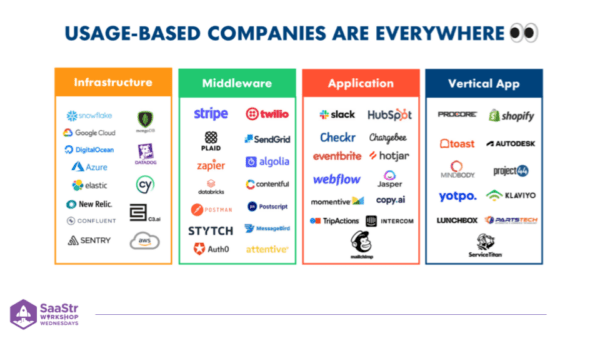
Four Sales Compensation Tactics for Consumption-Based GTM with MongoDB’s SVP of Sales Ops
A Story About A CobraMeghan shared a fable.Once upon a time, there was a village with a cobra problem. There were too many cobras, and they were a menace. So, the mayor told the village he would pay them a dollar for every cobra killed to get things under control. It didn’t work. Instead, people started breeding cobras and killing them in order to collect their bounty.The moral of the story?You have to think about what behavior you’re trying to drive. Compensation will drive it and have unexpected results. If you want to get rid of the cobras, paying for every cobra killed clearly wasn’t the right behavior to compensate.What Is A “Consumption” BusinessIn the old days of software, you had a company like Oracle that popularized the perpetual license where customers own the software and vendors own the market. Then, we moved to a more customer-friendly model with SaaS and subscription-based pricing. There are still some complexities around SaaS-based approaches. So, it’s more customer-friendly, but it also has its pros and cons.What’s evolved over the years and is driven by hyper-scalers like Google Azure, AWS, Twilio, and Stripe is the consumption-based model. It’s a very customer-oriented approach — you pay for what you use, and closing a deal is the start of a journey. This is MongoDB’s approach. They reoriented their sales team and de-incentivized reps from making deals upfront.It was creating friction in the sales cycle. MongoDB wanted customers up and running quickly and to see the time to value so they could upsell future workloads. This is the idea behind a consumption-based business.A Usage-Based Approach Is More Than Just Changing CompensationA usage-based approach puts more of the onus on companies to constantly deliver value as a vendor. It’s unlike the old world, where you can sell a deal and walk away. You always have to stay engaged.A usage-based approach is more than just changing compensation. It turns your GTM on its head. The VP of Strategy at Snowflake doesn’t have a Customer Success org. Their sales are playing that role, and they change what that role is within a consumption-oriented company. At MongoDB, they took a different approach and do have a customer success org.Back to that original story that compensation drives behavior. Instead of the first thought being how to incentivize the sales team… You should think about who’s doing what within an org with a consumption-based approach. Who’s playing the role of Customer Success?Measure Sales Impact Before Incentivizing ItBefore getting into all the ways to incentivize, you need to think about being able to measure sales impact. This is something MongoDB puts a lot of work into internally and built into the product. They wanted to differentiate organic consumption from growth being driven by sales. Customers may be growing because their application is growing, but they don’t want to focus a rep on maintaining existing customers. Instead, the goal is to go out and find new workloads.At MongoDB, they have a self-serve channel where they run a control group — a subset of accounts that they never touch, just to see what happens naturally. That way, they know what growth to expect and what incremental uplift they’re getting from having sales involved so they can continue to make better investments.Compensate On What Reps Can ControlCompensation drives behavior, and you really want to compensate reps on what they can control. It’s frustrating as a sales rep to be compensated on something where you don’t think you can move the needle. In a consumption-oriented product, customers can fluctuate. Sometimes, that’s because of a sales rep’s involvement. Other times, it’s just macroeconomic conditions.Imagine the made-up usage curve example above.There’s a crypto company using the platform, and the past several years saw a large uptick because the market was booming. Then what happens? The crypto market stopped doing as well, so usage was down. It’s quite challenging to think through this in a consumption-based model. But we do know that incentives drive behavior. So, start with the behavior you want to drive.Driving Market AcquisitionWhen designing a compensation plan, you have to decide what behaviors you want to drive. The first might be market acquisition. You want to land as many logos as possible. MongoDB initially took this approach — the logo team passed it to the expansion team. Rather than compensating based on ARR, it’s based on a volume and quality-based metric.How do you incentivize this?On a growth team, it’s overall ARR and on a unit basis (the number of new workloads of a certain quality). That means that a part of the ARR target is from organic growth coming anyway, and then you have to land a certain amount of new workloads. What are the pros and cons of measuring on a unit basis?Pros:* Dead simple comp plan* Reps are laser-focused* Drives high velocity and activityCons:* It is harder for reps to overachieve on a unit-based plan* Nee
Hitting Hypergrowth: How To Take Your SaaS Company from $25M to $100M and Beyond with Amplitude’s CEO, Spenser Skates
As you grow from nothing to $100M and beyond, you will run into a unique set of challenges at every stage. Spenser Skates, CEO and co-founder at Amplitude took the stage at SaaStr Annual 2023 to share four key lessons he learned building a great organization and a long-lasting sustainable business. Amplitude is a digital analytics platform that started out of another failed startup with three co-founders. They have customers like Intuit, DoorDash, Atlassian, Walmart, Disney, NBC, and more. In 2021, Amplitude was listed on the NASDAQ, but that was just the beginning. Going public isn’t the end goal, and founders must see beyond that to build a generational tech company. The four critical learnings of going from nothing to $100M+ in revenue are: * Maintain a culture of product innovation* Treat new products like a mini startup* Understand the three stages of executive hires* Make the early-stage to large organization mental switchLet’s start with lesson one. Lesson 1: Maintain a Culture of Product InnovationThis is super important, particularly in a tech business. Customers expect you to have the latest and greatest. The SaaS model means you can continue to iterate and make the product better for them. The core challenge? How to keep this up over time as you continue to grow and scale. It’s the hardest thing to achieve by far. A fallacy many people have is that your ability to innovate grows linearly with your number of employees. For example, as you continue to add engineers and folks to your product development team, your rate to ship stuff and innovate goes up. A team of 100 people will be 10x more innovative than ten people, right? Wrong. What happens in practice is the opposite. The three graphs above show what people expect to get as they grow their team, what they actually get, and then what your ideal is. Why would you grow your team if the ability to innovate goes down with a larger organization by default? Why wouldn’t you keep it small forever? This is a natural occurrence because, as your code base gets larger, there are more people, so the ownership of great products and product success get diluted. Every individual’s ability to coordinate gets harder. The trick is to get the curve to look more like the third graph. But how do you actually get there? One of the most overlooked parts of building and scaling great product development teams is setting the right structure and organization. Setting the Right Structure and OrganizationThere’s an old saying where you ship your org chart. This is the root cause of why your ability to innovate slows down as you grow and scale. You want to build functional teams that drive innovation. As a founder, you need to shift from thinking about how to drive all the innovation yourself. Instead, think about structure and how to create an organization with really clear guardrails and goals for each individual. This sounds basic, but every CEO who passes 50 engineers runs into this problem. At Amplitude, they have a model where deep functional experts are the single responsible person for each of these areas. They’ve spent a lot of time on the executive level defining each area and giving responsibility across engineering, product management, and design. You want to replicate the conditions of a startup team and manage the entire portfolio of “mini startups” as a leader, which you’ll learn more about in the next section. There’s a second part to maintaining a culture of product innovation beyond structure and organization. And that’s culture itself. You Have to Set The Tone of What You Value as an OrganizationIt’s not enough to set the org chart and give responsibilities out and go. You have to set the tone of what you value as an organization. In the early days as a small team, it’s a you against the world mentality. It’s a natural feeling because you have to keep swimming. Otherwise, you’re dead. As you grow, you have to be explicit about setting this culture. How does Amplitude do this? * “All hands” once a week. At every meeting, there is a product demo showing what they shipped that week. You have to constantly talk about and beat the drum of innovation — celebrating, rewarding, and highlighting innovation to create a culture around it. * #Feature-release Slack channel. Anytime a new feature goes out, it’s featured on this Slack channel. The product manager posts it with a GIF of how it works and which customers are using it. Amplitude looks at how much stuff is going through that channel each week. If there isn’t much, it’s a signal of a problem. * Week-long internal hackathons. Twice a year, the entire product development team takes a week off of whatever project they’re working on to work on exciting things that could provide customer value. They present it to the company, and cool things come from it. Early on, executives thought it was crazy for people to take a week off. But again, back to that culture of innovation. You have to provide opportunities for pe
CRO Confidential: How to Sell in a Hyper-Competitive Space with Apollo CRO Leandra Fishman
How do you sell against the competition or become a market leader in a very crowded space? SaaStr’s CRO Confidential podcast host Sam Blond chats with the CRO of Apollo, Leandra Fishman, about just that. Leandra has over 30 years of experience leading large sales and revenue teams. This hypergrowth platform raised $100M at a $1.6B valuation in a challenging fundraising environment. Apollo is a next-gen sales tool that combines sales intelligence and execution workflows with AI. When Sam was at Brex in 2018, the tech stack usually consisted of Salesforce, ZoomInfo, Gong, and Outreach. Today, that tech stack would be different because of AI-enabled companies like Apollo. How did Apollo become a market leader in a hypercompetitive space? How to Differentiate from the Competition in a Crowded SpaceWhen you think of companies like Hubspot and what they did with inbound marketing in a crowded space, they offered a better in-house solution that wasn’t cobbled together. What they did for marketers, Apollo is trying to do for sales. To sell against the competition, you have to differentiate yourself. How do you do that? For Apollo, Leandra’s sales model is built around a Product-Led Growth (PLG) motion. They were the first to get to millions of users at scale and found that their key differentiators in selling to sellers were:* Sales leaders and reps needed to see value quicker. They want to know how quickly they can book a meeting or generate pipeline, not waste 3 weeks onboarding to a new sales tool. * It needed to be accessible and easy for end users, and for Apollo, that meant a hyperfocus on accessibility for SMBs. So Apollo users can be free forever at the SMB scale and still gain value from the platform. Apollo’s product actually gets better with scale, so they have a community with millions of free users unlocking that network effect. In a way, how they scale their GTM has created a virtuous cycle that helps them keep offering the best data set, and therefore bringing in new people to buy it. When you create a “must-have” product, it fosters a community around it, bringing in more and more of the type of users you’re after. They also actively encourage users to trial competitive apps either alongside or directly against their product and have found success in winning these trails. Highlighting Your Product vs. Selling Too Aggressively — How to Handle Buyer PerceptionWhen you target companies, should you call out the competition? That depends on how you do it. Leandra says she isn’t the type of leader to call out competition. When you know the value you have to offer, that’s how you win. Apollo tries to be a trusted advisor with a consultative mindset. But sometimes, you do encourage prospective customers to compare products competitively, or you highlight why your product is better than the competition. So, how do you do this without being perceived as selling too aggressively? It’s easy to do a feature functionality comparison across competing products, but the magic happens when you understand the problem the customer is having and whether you’re the best solution to solve that problem. In a PLG model, if you aren’t getting what you came for, you take your money elsewhere. But if people want to talk to salespeople, you can ask them a question that makes talking about competitors better received, and it goes something like this…”I understand you’re evaluating us vs. XYZ competitor. I’d love to learn more about your environment and tailor our product demo to what you’re using today. There are some big differences between us and other vendors. Would you like me to highlight those differences to compare and contrast?” Ninety-nine times out of 100, the buyer will want you to highlight the product differences. If you ask how they want the conversation to go, and they want to hear about the differences, you’re not being too aggressive. You’re just doing what they asked. How to Deal with Pricing in a Hyper-Competitive EnvironmentIf you’re in a crowded space, it can feel like a race to the bottom on pricing, but it doesn’t have to be. Do you need to discount to match competitors or buy them out of contracts to compete in this space? No, you don’t. Apollo is affordable, but that doesn’t mean they’re setting prices based on everyone else in the space. Instead, they’re pricing based on the value they provide. What most companies try to figure out as growth slows is how to cut costs and save money on the tech stack. Apollo can replace 5-7 tools with one solution, which can be more effective and less expensive. So, cost is one thing, but when you look at your overall tech spend and tech stack, that’s another. Apollo can offer lower prices because of their PLG machine, while others need an SDR, AE, etc, to grow their business. When you have transparency and a hyper-efficient GTM strategy, you don’t have to take the same stance as everyone else on pricing. What Leandra has found is that legacy competitors are slashing pri
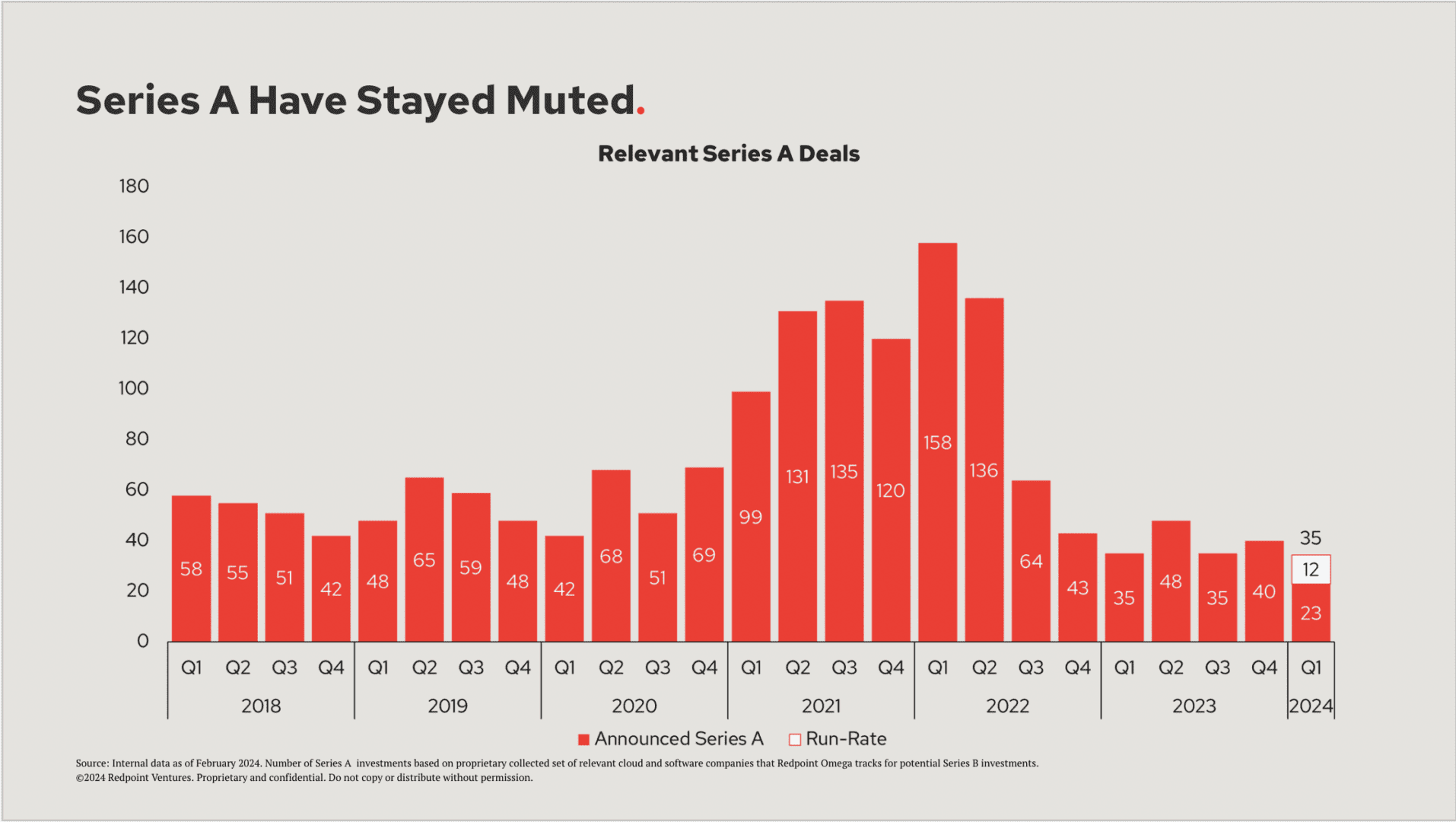
Seed May Still Be Strong, But There's No Bounce Back at Series A: Redpoint's Data and More
So Redpoint Ventures published some of the slides they recently presented to their Limited Partners (their own investors) here.There's a ton of good data there, but this one slide stood out to me, because it was put together in a really clear fashion, better than other data sources I've seen.And what it says is that even though Seed stage investing remains arguably as strong as ever ... Series A hasn't bounced back. Not at all:Per there data, there is some modest pick-up at Series B and C, but that's less relevant to most founders. What's most important is after a seed round ... how hard is it to raise another round?Raising a Series A is as hard as it's been since 2018 is the answer. And it hasn't gotten any easier since last year.This just makes sense. The public markets are up overall, but multiples aren't, and overall growth in public SaaS companies has slowed.It shouldn't be any easier to raise a Series A, outside of AI Hype deals. And per Redpoint's data -- it isn't. Although Redpoint suggests that historical data suggests we may be bouncing off lows in terms of funding rates.And on a related note, Redpoint data shows that the hottest late-stage "AI" deals are getting done at 3x the price of non-AI deals. We knew that, too, but helpful to see it clearly here:But, while AI deals are priced at 3x "normal" growth rounds -- investors are looking for 2.5x the growth. There's no free lunch.Thanks for reading Scaling SaaS -- from SaaStr! Subscribe for free to receive new posts and support my work. This is a public episode. If you would like to discuss this with other subscribers or get access to bonus episodes, visit cloud.substack.com

How to Take Care of Yourself as a Founder
Dear SaaStr: How Do You Take Care of Yourself As a Founder?Quiet quitting, feeling sorry for yourself, working 30 hours a week, etc. — that doesn’t really work for a founder. It may feel good in the short term, but it doesn’t work. It doesn’t get you to success.But you do need to take care of yourself, at least as much as possible.What works:* Go hire one great VP. A VP of Sales, Marketing, Product, Engineering, Customer Success. It almost doesn’t matter. But if you hire one truly great one, they will take some of the load off your shoulders. Their first week.* Take one real vacation a year, and a bigger one every few years. Take a 2+2 vacation if you are truly burnt. More on that here.* Find a “late” co-founder. You don’t need to always have a great co-founder on Day 0. You can also find them later.* Drop one thing. Not everything. But drop one thing that you know matters — but that won’t move the needle.* Ship a game-changing feature. This always makes everyone feel better. Like they’ve finally moved the ball down the field.* Hang out with some other founders at your stage or later. This may not immediately make you feel better. But it may kick you in the arse a bit. And get you out of a pity hole.A related post here:Thanks for reading Scaling SaaS -- from SaaStr! Subscribe for free to receive new posts and support my work. This is a public episode. If you would like to discuss this with other subscribers or get access to bonus episodes, visit cloud.substack.com
A Checklist: 10 Signs You Shouldn’t Hire a Sales Rep -- or VP of Sales
So you’re hiring your first few sales reps in the early days? Before you have a great VP of Sales? It’s an interesting time. Leads are precious, everyone is a team. So you need a very certain type of sales rep.Let me give you a checklist of a few signs they won’t work out:#1. They’re LateMany will challenge me here, but if they’re late to the interview, they’ll be late to customer calls, too. Don’t make the hire. If they send you a professional message ahead of time, that they need to push? That’s fine. If they just show up at 2:05 onto the Zoom though, don’t make the hire.#2. You Wouldn’t Buy From ThemA classic SaaStr theme, as true today as it ever was. If you honestly wouldn’t buy from them — well neither will your prospects. At least not in the early days. Not during founder-led sales#3. They Can’t Sell You This PenI don’t know if these days, a sales rep has to come to the first interview being able to do a strong sales demo of your sales product. But at least make sure they can do it before you send over an offer.#4. They Don’t Do Any Research Before The First ZoomToo many folks phone it in and do zero research before a “Learn More” meeting. They’ll phone it in before they meet, prospects too. Or worse.#5. They Struggle With Your TechIf they can’t get your Calendly or Mixmax link to work, if they struggle to get Zoom to work … well … I get it. But they’re gonna struggle to understand and sell your product, too.#6. They’ve Also Got Another JobI know a lot of folks want to work 2 jobs at the same time today, or 2-3 additional big side hustles. But I’ve just never seen early sales rep excel that do this. It’s too intense, you have to be a product guru as an early rep. You don’t get there if your mind is also focused on all your other jobs and businesses. Can you still “sell”? Sure — if it’s very transactional. But it’s never that simple or easy in the early days. If ever.#7. They’re Really Angry About Their Last RoleAlmost every great sales exec I’ve ever worked with has had one tough role. Many of the best have been fired once. But if they are too bitter in the interview? They’ll be just too sour once they start.#8. They’re Constantly on LinkedIn. Like Posting Multiple Times Every Day, Constantly.A little of this is OK. But if they are spending tons of time promoting themselves, their experience, their courses, etc. on LinkedIn — be wary. You want a hunter. Someone that wants to close deals and make coin. Not be an influencer. Hunters don’t have interest or time in being LinkedIn influencers.#9. Your Product is Just Much More Complex Than The Other Ones They’ve SoldThere are rare exceptions here, but in general, sales execs just struggle to sell much more complicated product than they’ve sold before. By contrast, they can fly if you put them in an environment where the product is simpler and easier to sell. Be way if you’re in vertical SaaS or complex fintech or developer-focused tools hiring folks that have only sold, basically, to folks like themselves. They can wing that. They can’t wing environmental compliance sales to a Chief Compliance Officer.#10. They Aren’t Focused On MoneySales is about a lot of things, but making money is one of them. If they’re not focused on making money, they may be good at something. But it’s likely not sales.Ok that’s my checklist. Many will challenge parts, or disagree. And a great VP of Sales can take more liberties here. They have time to manage folks more than founders do. But in the founder-led sales days, pass on these folks. Just keep interviewing.A related post here:Thanks for reading Scaling SaaS -- from SaaStr! Subscribe for free to receive new posts and support my work. This is a public episode. If you would like to discuss this with other subscribers or get access to bonus episodes, visit cloud.substack.com
5 Interesting Learnings from Okta at $2.5 Billion in ARR
So Okta is one of our favorite SaaS and Cloud leaders.The story is super inspiring. Founder CEO Todd McKinnon was VP of Engineering at Salesforce and left to start Okta in the depths of the last downturn. Salesforce and Marc Benioff at first said the core market, security identity, was too small of a market. Then, they brought out a competing product :). That mostly failed.Today, Okta is at ~$2,500,000,000 in ARR! More on that story here:Okta is also interesting today, in today’s world. because it straddles two segments. On the one hand, it’s a leader in security — a hot space that is still growing less a weed. Cloudflare, Zscaler, Wiz, and so many more are on fire today. But it’s also tied to B2B seat models and tech. So as tech companies tighter their belts, and decrease seats, the same headwinds that have impacted ZoomInfo, Zoom, and many B2B leaders from Outreach to Gong and more also impact Okta.Net net? It’s growing 19% a year at $2.5 Billion, ARR, so at the edge of still being in growth mode. But that’s way down from 37% at just $2 Billion in ARR.5 Interesting Learnings:#1. Seat Contractions Have Brought NRR Down From 120% to 111%While 111% NRR is still quite an engine at this scale, the drop in NRR from seat contractions explains a good chunk of the headwinds Okta has seen.#2. Much, Much, Much More Efficient Than 12-24 Months AgoThe story of almost every Cloud leader. In just 12 months, Okta has gone from -1% non-GAAP operating margins to +13.7%. Free cash flow is even more impressive. It’s rocketed to +21.6%. That’s radically more efficient. That’s 2024.#3. Customer Count Up 8% Year-over-Year to 18,950It’s hard to find net net customers after $1B ARR. At some point, it can feel like everyone already is a customer. But Okta keeps going there even after $2.5B ARR. 8% new customers + 111% NRR = their +19% yearly growth now.#4. $100k Customers Growing Faster, at +12% a Year, and $1m+ Customers Up 30%Okta’s bigger customers, at $100k+, aren’t growing radically faster than the rest. But like many SaaS and Cloud leaders today, the bigger ones are still growing faster. They are overall benefitting here from the growth in Cloud and security budgets, even if smaller companies and startups and scaleups are struggling more. Their multi-million dollar contracts are up 30%.#5. Split Sales Team Managing SMB Accounts Into 2 Teams, One on New Business and One on UpsellIt’s interesting to see Okta do this a bit later in life than some, but it makes a ton of sense given the current macro environment. While many tech SMBs are struggling, finding the gems in the SMB base that can grow into large accounts is still critical. So it makes sense, where practical, to split the teams here.And a few other interesting learnings:#6. 8 Out of 10 of Top Deals Were Sourced or Influenced by PartnersAnd more than 40% of their total business is invoiced via channel partners. AWS alone generated $175m of contract value for Okta, growing 130%. Way, way too many startups focus 100% on direct sales. You usually have to start here, but as time goes on, you need to bring in partners in most cases.#7. GRR / Logo Retention in Mid 90% Range.Strong, and what we’d expect.Wow, what an engine at $2.5 Billion in ARR! Go Okta!And another great SaaStr Okta session here, this one with co-founder and COO Frederic Kerrest:Thanks for reading Scaling SaaS -- from SaaStr! Subscribe for free to receive new posts and support my work. This is a public episode. If you would like to discuss this with other subscribers or get access to bonus episodes, visit cloud.substack.com
6 Questions Founders Should Ask Themselves to Drive Value from Generative AI with Base10 Partners
Generative AI is a platform shift where models can take inputs such as text, image, audio, video, and code and generate new content into any of the modalities mentioned. TJ Nahigian, co-founder and Managing Partner of Base10 Partners, and Luci Fonseca, Partner, deep dive into the current GenAI landscape, incumbents vs. startups, and the six questions founders should ask themselves to drive value from GenAI.For some context, Base10 is a research-driven investment firm focusing on companies automating the largest sectors of the real economy. They’re trying to figure out what will happen with GenAI and share what they’re observing today so startups and incumbents can take advantage of it to build significant value.Base10 is interested in mega-trends that change how people live and work in the next ten years. We’re at the beginning of a platform shift, and for the first time, GenAI has become accessible to more than just the mega businesses of the world.The Pace of AI is Increasing Dramatically Something ground-shifting has been happening over the last five years — the pace of innovation. The number of patents filed in 2021 in Artificial Intelligence was 30x the number published six years earlier. If we project out and keep the pace of innovation, think about what will happen in the next five years.We’re on the cusp of a golden age in AI, and the lesson learned from Cloud was that Cloud sped up the pace of development by a lot. At Base10, they expect to see the speed of development and deployment accelerate so dramatically that it will make our heads spin. Another way to look at this is by how much venture funding goes into the sector. As founders, you know the last 18-24 months haven’t been the most fun time to fundraise, but with one exception — AI businesses. Last year, over $4B was raised in the first half. This year, it’s already 5x more than last year, which was 5x more than the year before that. Incumbents vs. Startups — A Framework to Understand Where You’re BuildingIt’s helpful to have a framework to understand the universe and who’s building where from incumbents to startups. By observing these segments, you can glean lessons if you’re building in the same category.Within these categories, you have platforms, infrastructure, and applications.* Platforms are the model layer, the Googles, Metas, and incumbents. Startup platforms are OpenAI, Hugging Face, and Cohere. * Infrastructure is the layer where anyone allows you to use these largely generalizable models to create something with a more specific use case. * The last bucket is applications, both horizontal and vertical. For the incumbents, you have Notion and Gorgias, and the startups are Jasper, Copy, and Harvey. Now, let’s walk through startups at the platform layer. New Startups: Platform LayerThe platform layer, or model layer, sees OpenAI as the clear giant in the room. Many others are also creating new LLMs and other models that folks use to get value out of GenAI. How are they doing this? By building their own tooling but leveraging third-party tooling as well. New Startups: Infrastructure LayerThe infrastructure layer is exciting and is tooling that enables you to tweak different models, integrate them, and scale them in cost-effective ways. LangChain is a popular framework to integrate and get value out of GenAI, for example. There is a whole host of companies innovating at the infrastructure layer to get more value, more control, and cut down costs as they scale GenAI for specific applications. New Startups: Applications LayerThere’s a lot of fascinating innovation happening at the applications layer — changing mediums with text, writing, images, and audio. Businesses are changing the way you create music, recreating how films are made or dubbed, and disrupting the way programmers code. On the startup side, these businesses have scaled incredibly fast by taking large foundational models and wrapping them in a magical experience for the end user. In the application layer for startups, many face challenges that boil down to retention. It’s been tough for a few reasons. * For those of you selling to Enterprise, they have experimental budgets that run out. * For those selling to the prosumer base, they can be very churny. * There are a lot of copycats, making it difficult to tell a differentiated story. If you’re a startup building in this space, retention is a challenge, and you’ll need to be more strategic. Incumbents: Platform LayerAt the platform layer, you can study these three large incumbents. * Microsoft* Google* MetaEach is playing a different strategy. Google came out with the transformer model and then open-sourced it. That enabled LLMs built to leverage GenAI. Google was caught on its heels when it saw how fast OpenAI commercialized its offering. Since then, Google has rethought itself as an AI company, coming out with Bard. Meta has leveraged incredible tech, primarily for their ad model and monetizing in a material way over the l
5 Interesting Learnings from Braze at $500,000,000 in ARR
So Braze is one of the quiet winners in today’s SaaS and Cloud world. At $500m in ARR, they’re growing a strong 33% and trading at about $6 Billion, so they’re in the 10x ARR Club.When the average public SaaS company is still stuck at 6x.Braze is a top leader in enterprise mobile marketing and communications. The logos are strong, and the NRR is good. They sent a stunning 37 Billion messages between Black Friday and Cyber Monday!Let’s dig in.5 Interesting Learnings:#1. $500k+ Customers Fuel Growth, Up 28% — And NRR is 121% ThereA story of many SaaS and Cloud leaders today. The big enterprise customers are fueling growth at Cloudflare, at Blackline, at Smartsheet, and more. The $500k+ deals are now 56% of revenue for Braze.#2. NRR Remains Strong at 118%, Albeit Down From 126% at $250m in ARR.So roughly, half of Blaze’s path is from new customers, and half from account growth. A solid and healthy ratio.#3. Close to the Customer to Close Big Deals. Blaze Now Has Offices Across the Globe. And 44% of Revenue Outside U.S.At SaaStr Europa 2023, CEO Bill Magnuson shared a great story. They were able to break into France and other countries in Europe by selling over Zoom — so long as they sold to tech customers and earlier adopters. But they couldn’t break into top French brands until they opened a local office with an in-person sales and success team. That’s the enterprise.#4. Customers Sign 2-Year Deals on Average. Not a surprise given the focus on $500k+ deals, but helpful to know#5. 2,011 Total Customers, Up 17% Year Over Year. That’s strong new logo growth for an enterprise product at $500m in ARR. Combined with 121% NRR from its bigger customers, Braze should have years of strong growth ahead of them.And a few other interesting learnings:#6. 4,000 Customers and Attendees at their annual customer conferenceThis stuff works, folks. Especially in the enterprise.#7. More Efficient, But Not Hyper Efficient YetThis is a theme of others growing at 30%+ at scale. They are getting much more efficient, but not everyone is marching toward +20% operating margins if they’re still growing like a weed. Braze is still hiring and expanding. Still, they are just about free-cash flow positive now. Operating margins have improved, but are still around -6%, but they are on pace to go positive in FY’25. So Braze is getting more efficient, but not swinging too far, too quickly. They’re managing expenses, and growing them more slowly than revenue. But still hiring and spending.Braze. The quiet but mighty leader in enterprise messaging. It’s what the markets, and $500k+ customers, want.* Thanks for reading Scaling SaaS -- from SaaStr! Subscribe for free to receive new posts and support my work. This is a public episode. If you would like to discuss this with other subscribers or get access to bonus episodes, visit cloud.substack.com
A Look Back: The Top 10 Learnings From Ben Chestnut, CEO of Mailchimp
As we gear up for SaaStr Europa 2024 in London on 4-5 June and SaaStr Annual 2024 in the SF Bay Area on September 10-12, we wanted to take a look back at some of our most iconic speakers and sessions.Ben Chestnut CEO of Mailchimp joined us for a very open and honest discussion of the top challenges really building the #1 100% bootstrapped SaaS of all time. At least so far. Just after this, Mailchimp was acquired by Intuit for a stunning $12 Billion. It seemed a good time to revisit my Top 10 Learnings from my chat with Ben, with a few updates:My top 10 learnings from Ben Chestnut:1. Yes, bootstrapping really does take 3-4 years longer. We've talked about and written about this many times before, but Ben vigorously agreed. Mailchimp took years to transition from an agency to a software business, and then years until it finally took off when they added freemium. In fact, really, it took 2 years to get going and 4 years to hit Initial Traction. Bootstrapping is less a lifestyle than something we just do when it's the only or best option. More here.2. You may not need a moat. Maybe let them go if they aren't happy. Happiness is a moat. I've had a lot of discussions over the years on what constitutes a "moat" for many SaaS products. Ben confirmed there is no moat at Mailchimp. He said in fact, he doesn't want moats. If a customer wants to leave, he wants them to leave. And hopefully earn them back later. "Customer happiness is a moat". You don't get that if you make it hard to leave.3. Phase 2 might take 12 years to get to. It's OK. Talk to more customers to know when you are ready. Mailchimp in the past 2 years has grown from an email company to a marketing automation company. That's a big change, and their own version of finally going upmarket. But boy -- they waited! Almost 20 years. They waited until $1b in ARR to go upmarket more, to add a much richer and broader product suite that took them out of "just" email. So go at the right pace. A bit more here.4. It can take 24+ months to get to real Product Market Fit. Mailchimp didn't really have product-market fit until it went Freemium a full 2 years in. We've talked for years on SaaStr on how you have to budget 24 months to really get something off the ground in SaaS. Here's another case study. It also took Mailchimp 24 months, and a tilt to freemium (which they initially resisted), to even get to $1m in ARR. A bit more here.5. Existential threats never end. Even today, a GDPR-type or ChatGPT-type business model threat (or global pandemic) happens regularly. Ben clearly even at $1b in ARR feels like things are always a bit fragile. He agreed Mailchimp can't be killed now -- it's way too big. But it regularly encounters huge threats. He likened it a bit to "doom". Doom looms, even at $1b+ ARR. Not sure this made me feel better, but it was real. It never gets easier. You just get better. And perhaps, only the paranoid survive, even in SaaS.6. Brand matters, even very early. Be true to it. For Mailchimp, it was being fun. Many of us are slow to learn the power of brand, even dismissive of it in the early days. But Ben came from a brand marketing background and strongly believed in brand from Day 1. Being "fun" was an important part of their brand. I do remember it, in part, attracting me to Mailchimp as an early-ish customer. Ben relayed a story of when he briefly considered taking an edgier approach to a competitor and taking out a taunting billboard across from their offices. His marketing team nixxed it. It wasn't fun, and it wasn't true to their brand. A related post here.7. Bootstrapping isn't a magical choice. No one would fund them. We hit this point above, but Ben wasn't dogmatic about bootstrapping. They just had no choice. A bit more here.8. Went from agency -> software company only once they had enough cashflow to support it. It took them years. We again hit this above, but it was interesting to hear just how conservative they were switching from running an agency to a software company. They took years, and didn't fully switch over until they could pay their 3 salaries. Perhaps that still works today. But things also move faster today.9. They begged their happy agency customers to buy software. The customers were mad about the change, but it worked, because their customers stayed with them during the tilt. This was an interesting point. Their agency customers didn't really want to buy email software from them. They wanted the design agency to keep doing what they had been doing. But because trust had been built up for years, they still bought the new product from the team.10. Thinks we'll be back to where we were, not soon, but sooner than we realize. Back in the office, back building together IRL. With a distributed flavor. This was right, it just took a bit longer than we expected!And fast forward 2.5 years later, Ben came back to SaaStr Annual to reflect, in a calmer mood, on the deal, the journey that got them there, and what metrics do and don't r
CRO Confidential: Bringing Product-Led and Sales-Led Growth Together For Go-To-Market Success with Giancarlo Lionetti, CRO of Zapier
In this latest episode of CRO Confidential, Sam Blond, Partner at Founders Fund and former CRO at Brex, sits down with the CRO of Zapier, Giancarlo Lionetti (GC), to chat about Product-Led Growth (PLG) and Go-To-Market (GTM). Everything from hiring on the GTM side to layering in a sales-led motion into PLG. Before joining Zapier, Giancarlo was at Atlassian as a technical sales lead before moving to DropBox as a Senior Director of Growth and Monetization, and was CMO at Confluent – so he has a wealth of knowledge from Zapier’s Go-To-Market history as well as these successful SaaS companies to pull from. While we use Zapier here at SaaStr and are super familiar with it, for those who don’t use the tool, it’s a workflow automation platform that connects your data sources and apps to help maximize the efficiency of your teams, tools, and processes without relying on a developer team. From a Go-To-Market perspective, Zapier uses a hybrid model that involves a combination of freemium offerings, subscription plans, and partnerships. Let’s dive into what’s making that hybrid model successful: PLG and Sales Led? At the same time?We’re in an era defined by interconnectivity and digital transformation, and Product-Led Growth (PLG) has become an increasingly pivotal approach for achieving scalable company success. In a product-led growth strategy, the product serves as the focal point of your company’s marketing and strategies. It is often the first point of interaction between potential customers and your company. Given this, you must understand the role that each facet of the business plays in promoting that product, from marketing and sales to customer service.First, we’ve talked about this a lot at SaaStr: product-led or sales-led, which is right? Some say sales if you don’t have a product that lends itself to being self-service. Others say PLG because it provides you a more natural path to up-sell and expand from people who are already interested and familiar with your product. Zapier says for them, the right answer is actually a mix of both. ZoomInfo also says both, and so does Grammarly, for what it’s worth.Either way, the foundation for success in Go-To-Market starts with the right team. GC thinks about building out your Go-To-Market team in 3 ways:* Short vs. long-term needs* Product maturity * Experimental vs. scaleShort-term vs. long-term needs. Often, when debating a role, especially on the GTM side, you’re balancing short and long-term needs. For example, a key goal of the company might be to drive top-line growth by 20% percent. The first role that comes to mind is driving revenue and it’s probably within sales. So, you might hire someone for inbound or outbound sales to meet that growth. That’s a potential short-term way of thinking. A long-term way of thinking would be hiring on the demand gen side since you might not hit that top-line growth unless you create demand coming in.Product Maturity. Next, think about product maturity. When Giancarlo started at Zapier, its product maturity at the time on the upmarket side was still new for them. They had been building toward an SMB audience, so hiring 50 people in sales against a product that wasn’t ready for a specific audience would’ve been a mistake. You have to think about where your product maturity is before making the hire. Experimental vs. Scale. The last thing to consider when hiring on the GTM side is whether the role is more experimental or intended to help you scale. In a startup, you might have a strong hypothesis, but it might not work out. For Zapier, sales was a new function two years ago. They had two salespeople and one customer success person. They were still trying to prove that model, which wasn’t ready to scale. So, they were hiring a more experimental role vs. one ready to scale. New hires in your GTM team will usually fall within one of four categories:* Distribution* Revenue* Storytelling or messaging* Some form of operationsMost of the time, it’s distribution or revenue, qualify people as in or out for those two areas. You have to figure out how to prioritize against these categories and use the three areas above to help scale your go-to-market team. Going-To-Market With Budget Constraints Giancarlo joined Zapier as CRO when it was a more mature business, and admittedly, later than many hire their first CRO. So when’s the right time to invest more in sales and marketing when we’re all trying to become radically efficient? GC says we’re universally underinvesting in sales and marketing for a few reasons: * Your heads down focused on the product. At some point, you need to get that product out to the world, drive some level of demand, and close that demand into dollars. * You’re not clear on the actual needs your business has. There’s no silver bullet. When under-resourced, you try to find a temporary solution that causes a mismatch. Instead, hire based on an understanding of what the business needs and where the bottlenecks and constr
SaaStr 393: 3 Secrets to Selling Up-Market with the Leaders of Stripe, DocuSign and Lever
The journey for a company to move upmarket can be daunting and varies widely depending on the internal and external factors that inspire a shift in go-to-market strategy. Join these incredible sales leaders are they share their experiences in the evolution from SMB to Enterprise. This is a public episode. If you would like to discuss this with other subscribers or get access to bonus episodes, visit cloud.substack.com
SaaStr 392: 10 Simple Steps To Help Any Sales Exec Close More with SaaStr CEO and Founder Jason Lemkin
In today's SaaStr insider episode SaaStr CEO Jason Lemkin shares 10 Simple Steps To Help Any Sales Exec Close More. This is a public episode. If you would like to discuss this with other subscribers or get access to bonus episodes, visit cloud.substack.com
SaaStr 391: The Secrets to Bootstrapping to $5M ARR in Less than a Year with Martha Bitar, CEO @ Flodesk
Learn how Flodesk bootstrapped to $5M in ARR by focusing on customer-driven growth: from kickstarting growth by empowering new customers to share, to creating product viral loops that amplify and optimize these customer-led funnels. This is a public episode. If you would like to discuss this with other subscribers or get access to bonus episodes, visit cloud.substack.com
SaaStr 390: How To Crush It With Interactive Content, What Type, Where and When To Use It Most Efficiently and Where Many People Make Mistakes with Randy Rayess, Founder @ Outgrow
Randy Rayess is the Co-Founder @ Outgrow, a growth marketing platform that enables marketers to build interactive content/tools to increase customer engagement and boost demand generation. Prior to founding Outgrow, Randy co-founded VenturePact, an invite-only marketplace that connects companies with trusted software development firms. Before VenturePact Randy held roles at Ampush and then on the investor side at SilverLake. If that was not enough, Randy is also an investor having invested in the likes of SmartyPal, Nooch, Alie and AirCare Labs to name a few. In Today’s Episode We Discuss: How Randy made his way from the world of PE with SilverLake to changing the game of digital marketing with Outgrow? What does interactive content mean? What are the most common forms? When should one start to use interactive content What resources and team does one need to engage with an interactive content strategy? Where do many people make mistakes with using interactive content? How should one think about idea generation for interactive content? How does one know what interactive content works best? How should we test it’s effectiveness? How should interactive content be promoted? Where should it be placed? How many text inputs is it optimal to request for? How does it convert more leads? How does Randy think about using interactive content to maximise sales rep efficiency? How should customer success engage with interactive content? What can be done to make the sales and customer success teamwork so well together? Randy’s 60 Second SaaStr: The hardest element of Randy’s role with Outgrow today? Hardest role to hire for today? Why? What would Randy most like to change about the world of SaaS? If you would like to find out more about the show and the guests presented, you can follow us on Twitter here: Jason Lemkin Harry Stebbings SaaStr Randy Rayess This is a public episode. If you would like to discuss this with other subscribers or get access to bonus episodes, visit cloud.substack.com
SaaStr 389: How To Really Disrupt the Big Guys With Free with Mikael Cho, CEO @ Unsplash and Kinsey Grant, Business Editor and Podcast Host @ Morning Brew
Mikael Cho, CEO of Unsplash shares his lessons learned from starting Unsplash as a side project and growing it to a market leader, and disrupting an industry of giants like Shutterstock, Getty, and Adobe Stock with a free business model. This is a public episode. If you would like to discuss this with other subscribers or get access to bonus episodes, visit cloud.substack.com
SaaStr 388: Okta CMO, Ryan Carlson on How To Measure Marketing Attribution Effectively, Why People Think About Category Creation Incorrectly Today & How You Have To Think Through The Product vs The Company Story
Ryan Carlson is the CMO @ Okta, the leading independent provider of identity for the enterprise. Prior to their incredibly successful IPO in April of 2017, they raised funding from some of the best in the business including Sequoia, a16z, Greylock, Khosla and Floodgate to name a few. As for Ryan, he has spent an incredible 9 years at Okta in numerous different roles starting with running the product marketing team before moving to run the marketing team, leading to his promotion to CMO close to 5 years ago now. Before Okta, Ryan was the Co-Founder and CEO @ Sproost, a bootstrapped online expert recommendation system. In Today’s Episode We Discuss: How Ryan made his way into the world of enterprise SaaS? Why was joining Okta the most challenging interview process he has experienced? How did it impact how he assesses candidates today? How does Ryan distinguish between the company story vs the product story? When do they align and when do they separate? How should your strategy change as they move apart? How does the structure of your marketing team need to change with the evolution? What should the first marketing hire look like? What experience should they have? Why does Ryan believe you should hire two in marketing to start? How do you want them to work together? How does Ryan ensure cross-function working seamlessly from the very beginning with marketing? How does Ryan think about measuring success when it comes to product marketing? How does Ryan think about marketing attribution today? How should we think through SAL vs closed revenue as indicator of marketing success? Where does Ryan believe many go wrong with regards to marketing funnels? Ryan’s 60 Second SaaStr: What does Ryan know now that he wishes he had known at the beginning? What makes Frederic Kerrest the special leader he is? What is the most challenging element of Ryan’s role with Okta? If you would like to find out more about the show and the guests presented, you can follow us on Twitter here: Jason Lemkin Harry Stebbings SaaStr Ryan Carlson This is a public episode. If you would like to discuss this with other subscribers or get access to bonus episodes, visit cloud.substack.com
SaaStr 387: Where Product Development is Going in 2021 with Nick Mehta, CEO @ Gainsight and Jason Lemkin, CEO @ SaaStr
In this CEO to CEO catch up, Nick Mehta and Jason Lemkin discuss how to do product extensions, how to sell a second product, and where product development overall is heading. This is a public episode. If you would like to discuss this with other subscribers or get access to bonus episodes, visit cloud.substack.com
SaaStr 386: How to Win When There are 1000 Players in Your Market with Adam Blitzer, EVP & GM @ Salesforce Digital Marketing Cloud
How do you compete in a tough marketplace with thousands of other competitors? Join Adam Blitzer as he shares insights from launching a company in an already crowded marketing automation space and zig-zagged the way to market leadership. This is a public episode. If you would like to discuss this with other subscribers or get access to bonus episodes, visit cloud.substack.com
SaaStr 385: How To Approach Core Product Decisions in SaaS, Why Storytelling is a Lost Art in SaaS & How Product and Marketing Can Work Together Most Efficiently with Paul Rosania, Founder & CEO @ Balsa
Paul Rosania is the Founder & CEO @ Balsa, the company that recognises that builders move the world forward and so they are building the best second screen for builders, integrating tools you already use like Jira, GitHub, and Figma. Coming out of stealth today with their seed round being led by Andrew Chen @ a16z and joined by former CPO @ Slack, April Underwood, Chapter One’s Jeff Morris Jr and then of course, 20VC Fund. Prior to founding Balsa, Paul was Senior Director of Product @ Slack and before Slack was a Group Product Manager @ Twitter where he was responsible for the home timeline, including timeline ranking. In Today’s Episode We Discuss: How Paul made his way into the world of startups with Twitter and Slack and how that led to his founding SaaS company, Balsa? Paul was central in the decision-making around changing the Twitter timeline from chronological to ranked, how did he think about that decision? How does Paul approach such large product decisions today? What were his biggest operating takeaways from seeing the internal mechanics of Twitter & Slack? What does really effective product marketing mean to Paul? How does Paul think about driving really effective change management? When engaging with bottoms up sales models, where does Paul identify the tipping points of going from bottoms up to top down? Why does Paul believe that the builders are the new pro athletes? How will the structure of orgs change around them? How will the support they receive change? How will their training change? How will their comp change? How does on do this and not discourage other functions in the org? Paul’s 60 Second SaaStr: What does Paul believe is the hardest role to hire for today? What would Paul most like to change about the world of SaaS today? What do the next 5 years hold for Paul and for Balsa? If you would like to find out more about the show and the guests presented, you can follow us on Twitter here: Jason Lemkin Harry Stebbings SaaStr Paul Rosania This is a public episode. If you would like to discuss this with other subscribers or get access to bonus episodes, visit cloud.substack.com
SaaStr 384: When to Launch a Second Product with Dharmesh Shah CTO and Co-Founder @ Hubspot and Jason Lemkin, CEO @ SaaStr
We caught up with one of the SaaStr community’s favorite speakers, Dharmesh Shah CTO and co-founder of Hubspot on lessons learnings launching a second product. Hubspot recently expanded its Sales products and the learnings were top of mind. This is a public episode. If you would like to discuss this with other subscribers or get access to bonus episodes, visit cloud.substack.com
SaaStr 383: Growing Product and Engineering Orgs from Zero to IPO with Nick Caldwell, VP of Engineering @ Twitter, and Tomasz Tunguz, Managing Director @ Redpoint Ventures
Nick Caldwell has built and grown product and engineering organizations at PowerBI (0 to 300 engineers), Reddit (500M MAU) and Looker ($2.7B sale to Google). Nick will share 5 big lessons he's learned along the way that you can use as you build your company's product and engineering functions from its earliest days to its largest successes. This is a public episode. If you would like to discuss this with other subscribers or get access to bonus episodes, visit cloud.substack.com
SaaStr 382: What's Next For B2B and Cloud Events in 2021 with Amelia Ibarra, SVP & GM @ SaaStr, and Alon Alroy, Co-Founder & CMO @ Bizzabo
In today's SaaStr Insider, SaaStr SVP & GM, Amelia Ibarra, sits down with Alon Alroy, Co-Founder & CMO at Bizzabo on What's Next For the Future of B2B Events. This is a public episode. If you would like to discuss this with other subscribers or get access to bonus episodes, visit cloud.substack.com