Show overview
The Music Interval Theory Podcast has been publishing since 2021, and across the 5 years since has built a catalogue of 215 episodes. That works out to roughly 40 hours of audio in total. Releases follow a weekly cadence.
Episodes typically run under ten minutes — most land between 6 min and 12 min — though episode length varies meaningfully from one episode to the next. None of the episodes are flagged explicit by the publisher. It is catalogued as a EN-language Education show.
The show is actively publishing — the most recent episode landed yesterday, with 61 episodes already out so far this year. The busiest year was 2026, with 61 episodes published.
From the publisher
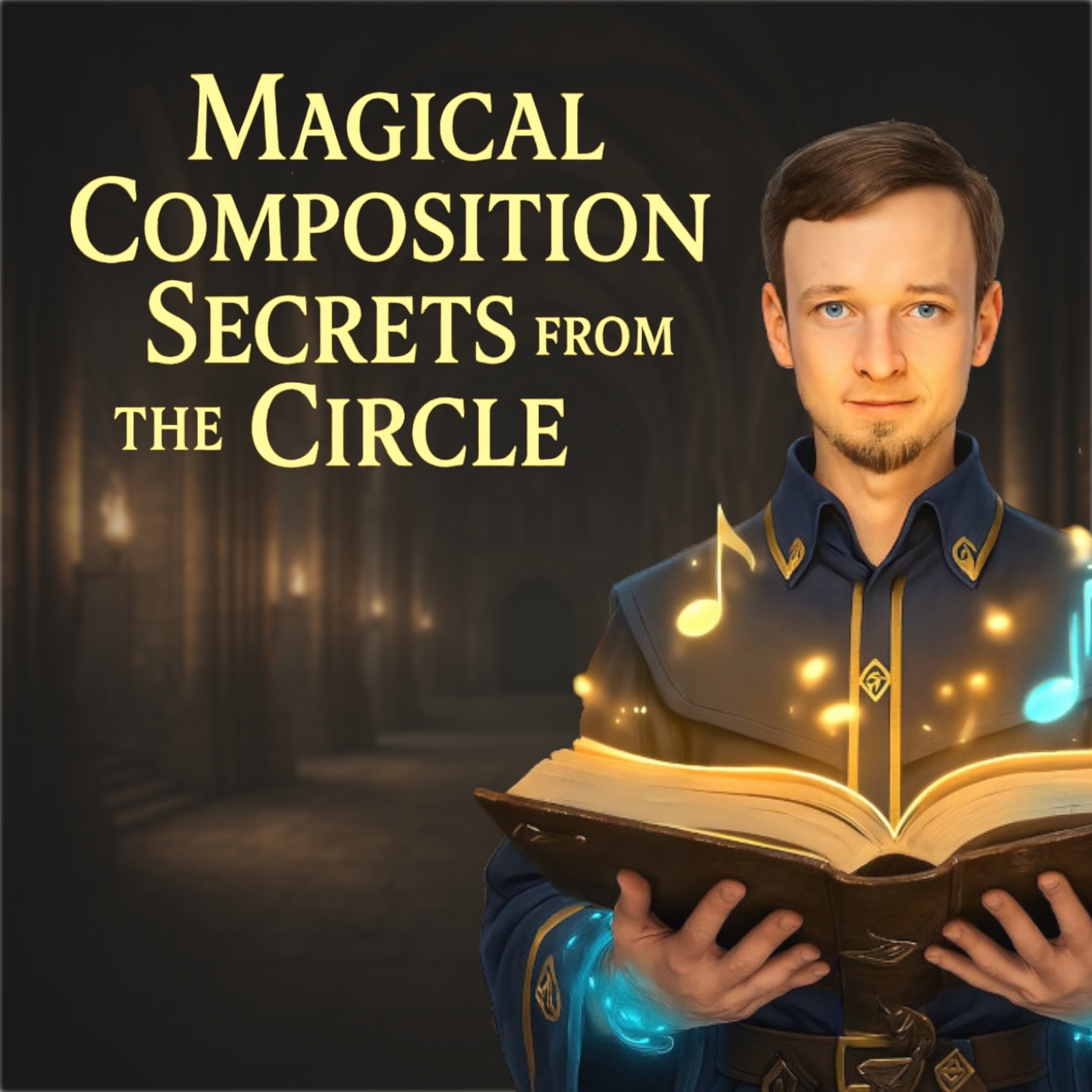
Many composers feel stuck writing the same old ideas, wondering why their music doesn’t sound as original as they want. Inside the Music Interval Theory Academy (MITA) and our community (The Circle of Interval Magicians), we reveal the deeper architecture behind music, the interval magic that helps you break free from the generic sound and step into your own creative power. The truth is, the composers you admire weren’t born with secret gifts. They learned "spells." They trained their ears, sharpened their instincts, and discovered the hidden structures that shape emotional storytelling. And you can learn them, too. If you’re the kind of composer who wants to tell powerful musical stories, confidently, clearly, and with your own unmistakable voice, then you already belong here. You just need the right tools, the right guidance, and a way to finally see how music truly works beneath the surface. Conventional theory often leaves composers confused or boxed in, and that’s why so many feel overwhelmed or stuck. But inside our world, we approach music differently. We teach you the language of intervals: a transparent, proven methodology that gives you control, clarity, and creative freedom. You’re not just learning theory. You’re stepping into a circle — a circle of composers who believe music is both craft and magic, structure and intuition. And this knowledge belongs to you just as much as it belongs to anyone else. Welcome to the Music Interval Theory Podcast. Welcome to the Circle.
Latest Episodes
View all 215 episodesMomentum Over Perfection
When Simple Is Strong
The Power of A Story
Stop Composing Alone
Why Basics Unlock Magic
Find Your Musical Edge (With Interval Theory)
Balancing Complexity and Simplicity
Making Notes and Clusters Belong
Musicians Love Patterns
The Art of Singable Lines
Hearing Intervals Differently
Bridging from Diatonic Writing to the Intervals
Protecting the Actor's Moment
The Pedal Tone Reset
Groove Without More Notes
Start With Energy, And The Notes Will Follow
When Birds Become Bassoons

S1 Ep 197Pattern Education And Sounding Generic
Explore the Circle of Interval Magicians: https://www.skool.com/circle-of-interval-magicians/about/ In this episode, Frank explores the double-edged nature of pattern education. While learning common musical patterns is essential, relying on them without reshaping leads to generic results. Composers are encouraged to mutate patterns through changes in rhythm, orchestration, articulation, harmony, and emotional intent. Patterns are public property—but personal creative decisions transform them into original music.

S1 Ep 196The Secret to Motion Without Changing Harmony
Download the free guide “5 Spells Every Composer Needs” and learn interval-based composition techniques that create motion and emotional growth: https://musicintervaltheory.academy/spells/ In this episode, Frank explores how music can feel alive even when harmony remains static. Using examples like Bolero, he explains how motion comes from shaping intensity through dynamics, register shifts, density, and interval tension. Instead of adding more chords to fix boredom, composers can design the energy arc and let emotional growth unfold within a single harmonic space.

S1 Ep 195Seamless Storytelling In Your Music
Download the free guide “5 Spells Every Composer Needs” and start using interval-based techniques that create flow and motion in your music: https://musicintervaltheory.academy/spells/ In this episode, Frank explores why leaving patterns exposed can make music feel mechanical and predictable. He shares practical techniques to hide loops, blur transitions, and create seamless motion between sections. You’ll learn how to stretch ideas across bar lines, use fills and countermelodies as camouflage, write transitions backward, and dissolve the grid so listeners feel story instead of structure.