The Murder Tape Khronicles | True Crime Secrets Unveiled
476 episodes — Page 4 of 10
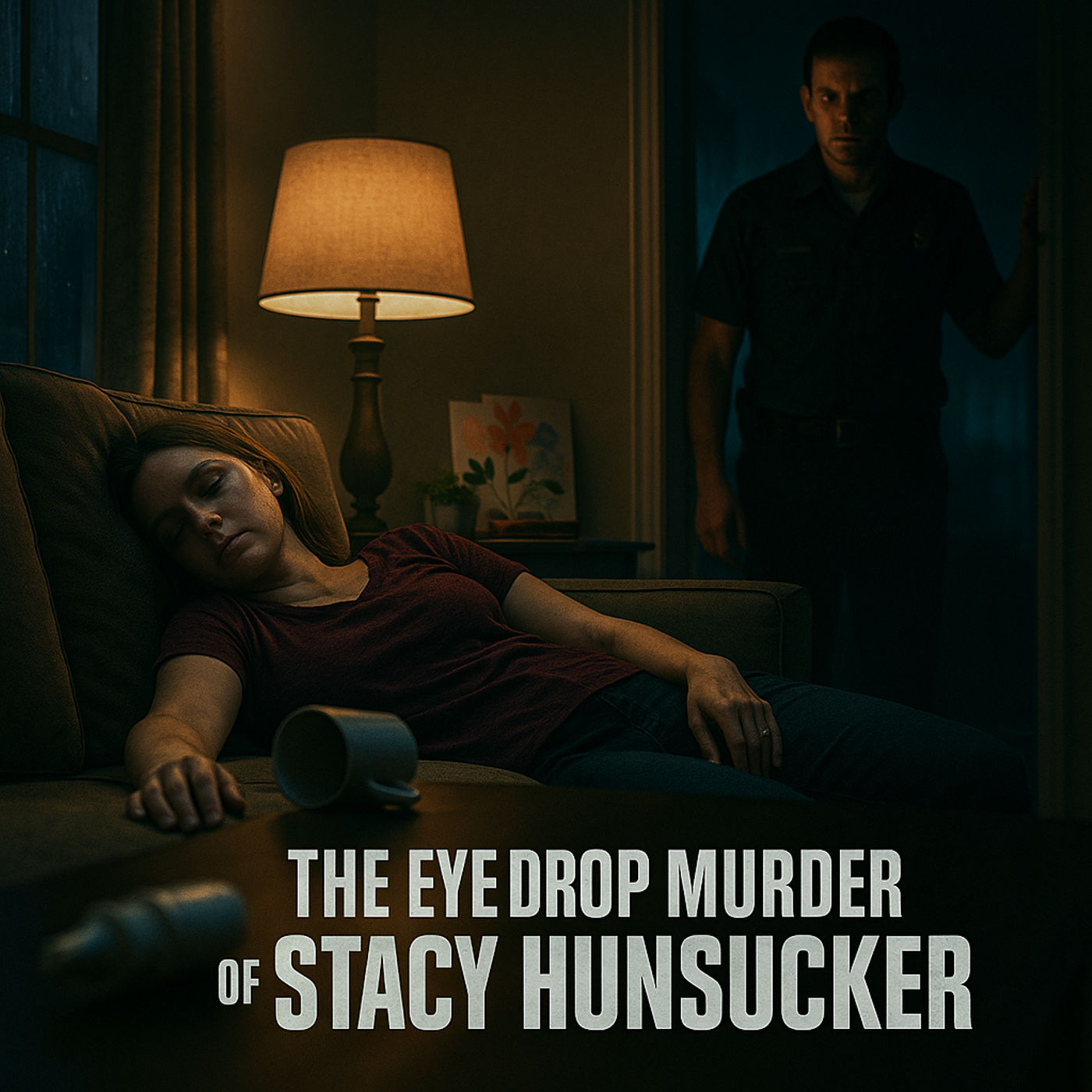
Ep 329The Eye Drop Murder of Stacy Hunsucker
Stacey Hunsucker was a young mother whose life seemed wrapped in warmth, creativity, and gentle routine. In her Mount Holly home, she filled the space with love—her laughter drifting through sunlit rooms as her daughters, Piper and Willow, played nearby. Stacey found joy in crafting, turning ordinary moments into memories. Yet behind her smile lay years of unexplained health struggles. After Piper’s birth, she faced a series of debilitating symptoms, eventually leading to a pacemaker implant. Though fragile, she fought daily to be present for her family. Her husband, Joshua Hunsucker—a flight paramedic—appeared supportive on the surface. But quietly, subtle fractures ran through their relationship. Stacey sensed distant shadows behind his steady gaze, small hints of a man wrestling with private thoughts. The façade shattered on September 23, 2018, when Stacey was found unresponsive on the couch. Joshua’s demeanor shifted unnervingly fast. He refused an autopsy, rushed her cremation, and filed for more than $250,000 in life insurance days later. His swift pivot into luxury spending, a new girlfriend, and an extravagant lifestyle raised alarms among those who loved Stacey. Her mother, Susie Robinson, followed her instincts. The pieces didn’t fit—Joshua’s evasive answers, the sudden cremation, the emotional detachment. She filed fraud claims, igniting an investigation that would peel back a horrifying truth. Detectives uncovered a pattern of financial desperation, inconsistent statements, and preserved blood samples revealing lethal levels of tetrahydrozoline—the active chemical in eye drops. Hidden poisoning had caused Stacey’s decline. As Joshua maintained a calm, calculated exterior, investigators intensified their focus. A search warrant uncovered eye drop bottles and receipts. Witness accounts further tied him to suspicious behavior. The case’s emotional core rested with Susie, who relived her daughter’s life through memories—the crafts, the laughter, the small moments with her grandchildren—while confronting the betrayal that ended it. The trial became the battlefield where truth finally surfaced. Susie’s testimony painted the picture of Stacey’s love and innocence. The prosecution detailed Joshua’s motive: insurance money, lifestyle upgrades, and a path to start over. A key witness placed eye drops in Joshua’s possession near the time of Stacey’s death. After tense deliberations, the jury found him guilty of second-degree murder. In the aftermath, Susie stepped into the role Stacey once held—nurturing Piper and Willow, guiding them through grief, and keeping their mother’s memory alive through stories and crafts. Her fight for justice brought closure, but the loss remained profound. Through resilience, love, and the truth finally revealed, Stacey’s legacy lived on in the family she adored.

Ep 328The Doorbell Footage Murder: The Case of Sheylla Cabrera
The story of Sheylla Cabrera unfolds like a chilling true-crime drama rooted in love, desperation, and a mother’s final attempt to protect her children. Sheylla, a devoted mother of three young boys, had built a quiet life in California after leaving Peru—enduring years of emotional and physical abuse at the hands of her husband, Josimar. Behind the warm walls of their modest apartment, hidden beneath the laughter of her sons, Sheylla lived in fear. For years she concealed bruises, excuses, and terror, always hoping Josimar would change. But in August 2025, she reached her breaking point. She confided in her parents that she intended to leave him, take the boys, and file a report with authorities. Her voice trembled with the weight of the decision, yet held a quiet resolve. She was ready to fight for her life and her children’s safety. But her courage ignited Josimar’s rage. On August 10, before dawn, the unthinkable occurred. What happened in that apartment remains sealed behind investigative files, but the aftermath revealed everything: Sheylla never made it to the police. Her three sons witnessed something no child should ever see. Neighbors later recalled screams, arguments, and then an eerie silence—followed by the sight of Josimar cleaning the trunk of his car under the cover of night. Surveillance footage would later capture him dragging a heavy bundle across the ground, footage that transformed a missing-person case into a homicide. Two days later, Sheylla was reported missing. Detectives quickly locked onto inconsistencies in Josimar’s story. He fled with the children, slipping across borders back to Peru. Meanwhile, investigators uncovered a harrowing trail: evidence of a struggle, digital footprints of Sheylla seeking help, and Josimar’s prior violent history in Peru. Their search ended in the Angeles National Forest, where Sheylla’s body was discovered—hidden but not forgotten. Public outrage grew. Vigils illuminated her name. Advocates for domestic violence victims invoked her story as a painful reminder of unspoken fear inside too many homes. Her family—grieving, hollowed, but determined—fought to protect her boys from further trauma. On August 27, Josimar was arrested at Interpol headquarters in Lima after international pressure mounted. Extradition, legal battles, and the full weight of evidence brought him into a California courtroom months later. The trial revealed a pattern of escalating abuse, threats, and jealousy. Witnesses described years of fear. Prosecutors laid out a timeline of premeditation and rage. Sheylla’s parents took the stand, their testimony laced with love and heartbreak. After three agonizing weeks, the jury delivered a guilty verdict. Josimar was sentenced to life, ending his ability to harm anyone again. In the aftermath, Sheylla’s family became guardians of her legacy. They embraced her sons, giving them a home filled with warmth, stability, and reminders of their mother’s love. Communities rallied to support them. Advocacy groups expanded resources for thousands of silent victims. Scholarships, foundations, and educational programs were created in Sheylla’s honor. Her story became a call to action. Pain turned into purpose. Grief became a voice for change. And Sheylla’s memory lived on—in the lives she touched, the protections she inspired, and the children she left behind, now growing in safety and hope.
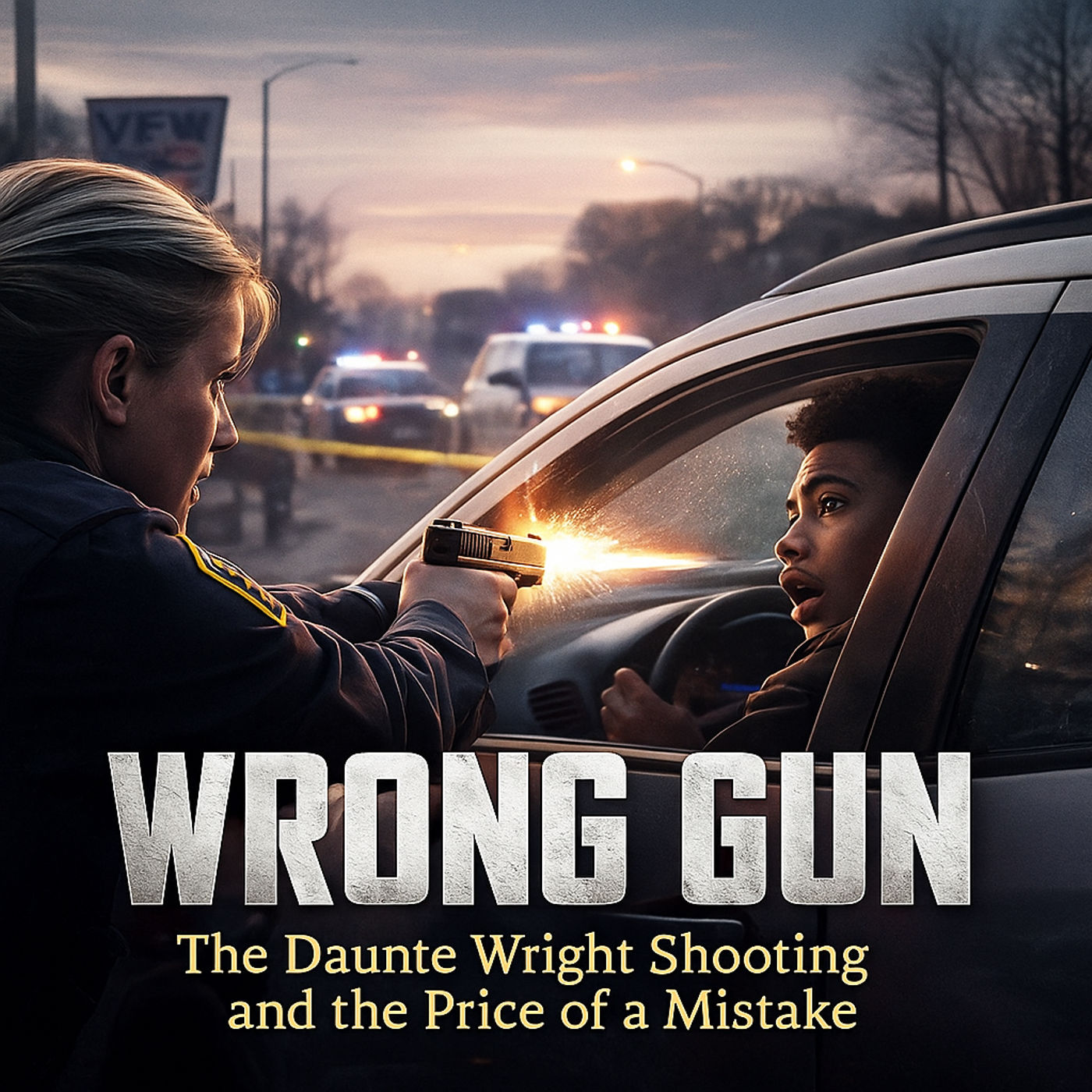
Ep 327Wrong Gun: The Daunte Wright Shooting and the Price of a Mistake
The story unfolds with stark clarity on a cold April afternoon in Brooklyn Center, Minnesota, where a routine traffic stop spirals into one of the most consequential police shootings of the decade. It begins calmly, almost mundanely: a loose license plate, expired registration tabs, a trainee officer taking the lead, a veteran supervising. Officer Kimberly Potter, with twenty-six years of experience, is there as backup—steady, procedural, seasoned. Daunte Wright, just twenty years old, sits at the wheel of his white Buick Encore, unaware of the fatal chain of events already in motion. His girlfriend is beside him, his air freshener swaying gently from the mirror, the cold air turning every breath into fog. In the space of seconds, tension escalates as officers learn of an outstanding warrant. The attempted arrest becomes a struggle, and the struggle becomes a tragedy. Potter reaches for her Taser—or believes she does. Instead, she draws her Glock 17, cross-draw muscle memory overridden by adrenaline, chaos, and fear. Her warning cry, “Taser! Taser! Taser!” is followed by a single gunshot that rips into the cold air. The Buick lurches away and crashes. Potter’s camera captures her horror: “I grabbed the wrong fucking gun.” What follows is a cascade of institutional shockwaves. Crowds gather within minutes, protests erupt by nightfall, political leaders scramble, and the city’s top officials resign. Smoke grenades, National Guard lines, burning businesses, and grieving communities fill the days that follow. The story traces the meticulous forensic investigation—body cameras, weapon placement, frame-by-frame analysis that reveals how two weapons separated by mere inches can lead to life-and-death confusion. The narrative proceeds into the courtroom, where prosecutors build a case around recklessness, negligence, and accountability. Defense argues panic, human error, and Wright’s resistance. Jurors weigh weight differences, holster positions, training records, expert testimony, and a mother’s pain. After four days of deliberation, Potter is found guilty of first- and second-degree manslaughter. Sentencing emphasizes a painful paradox: a mistake of profound consequence still warrants punishment. Potter receives sixteen months in prison. The city later pays Daunte Wright’s family a multi-million-dollar settlement and reforms its policing policies, ultimately contributing to Minnesota’s statewide legislation restricting pretextual traffic stops—the law now informally known as “Daunte’s Law.” The story closes not in a courtroom but back at the intersection where it began. A commemorative plaque marks the spot, a small marker for a large tragedy. Flowers return each spring, as if nature insists on reminding the city that accountability, reform, and memory all have long cycles of renewal. This is a story of a moment—half a second in which intention and action diverged—and the vast moral, legal, and social consequences that followed.

Ep 326Shocking murder of a Long Island millionaire
The story unfolds in the upscale serenity of Long Island, where wealth, prestige, and power often live behind iron gates and manicured hedges. The victim, a well-known millionaire with a sprawling estate and a reputation for success, appeared to embody the American dream. But behind the façade of privilege lay a world riddled with secrets, emotional entanglements, and hidden rivalries. On a quiet evening in 2001, everything shattered. The millionaire was discovered dead under suspicious circumstances on his own property. Panic rippled through the community as police swarmed the estate, their flashing lights washing over the luxury cars, towering brick columns, and polished stone driveway. What initially looked like a tragic accident quickly unraveled into something far darker. Detectives soon learned that the victim’s personal life was far more complicated than anyone knew. He was entangled in romantic conflicts, strained relationships, and growing resentments among those closest to him. Friends, partners, and associates—many of them financially dependent on him or emotionally tied to his decisions—suddenly became suspects. The investigation exposed a labyrinth of jealousy, betrayal, and greed. Witness testimonies conflicted, alibis crumbled, and hidden motives surfaced. Behind every polished smile was a potential threat. As detectives dug deeper, they reconstructed the final hours leading to the murder—a sequence shaped by emotional volatility, manipulation, and a calculated act fueled by personal gain. The story is not only a murder mystery, but also a cautionary tale about the dangers that lurk behind immense wealth. It reveals the fragility of trust, the corrosive power of envy, and the thin line between love and hatred when money and status are involved.

Ep 325Derby Family Massacre: It Made Detectives Cry
The tragedy known today as the Derby Family Massacre unfolded in the quiet early hours of May 11, 2012, on Victory Road in Allenton, Derby, England. In a modest brick semi-detached council house, the Philpott family slept unaware of the horror about to engulf their home. The street was calm, the neighborhood silent — the kind of ordinary British suburb where nothing dramatic ever seemed to happen. Then, sometime after 3 a.m., the stillness shattered. A sudden bloom of orange flame erupted from behind the home’s front door as petrol ignited in an instant. Fire roared through the hallway, fed by accelerant poured through the letterbox. Within seconds, the house transformed into an inferno. Flames licked the ceilings, smoke filled the stairwell, and the oxygen-starved air turned toxic. Upstairs, six children — Duwayne, Jade, John, Jack, Jesse, and Jayden — slept in their rooms as the deadly fumes crept toward them. Outside, neighbors awoke to the sight of an entire doorway engulfed in fire, black smoke billowing upward like a volcanic eruption. The glow illuminated the terraced street, revealing frantic silhouettes — parents Mick and Mairead Philpott, screaming, crying, begging for help as firefighters arrived within minutes. Hoses uncoiled across the wet pavement, water exploding toward the blaze, steam hissing as the structure crackled and groaned. Fire crews broke into the upstairs rooms, pulling out lifeless bodies one by one, carrying them into the cold night. The street filled with the sound of sirens, radios, shouting — and a father’s wails that cut through the air like a knife. The flames were extinguished, but the damage was irreversible. By dawn, it became clear that five children had died, and a sixth passed away two days later in hospital. As smoke drifted above Victory Road, detectives began piecing together an unsettling truth. The fire was not an accident, nor an outside attack. It was a planned arson, orchestrated from within the family itself. Mick Philpott, along with his wife Mairead and their friend Paul Mosley, had set the blaze — a manipulation scheme gone catastrophically wrong. What was intended as a staged “rescue scenario” to frame another woman and regain custody of children ended in unimaginable loss. The quiet Derby street had become the epicenter of one of the most disturbing cases of domestic homicide in modern British history.
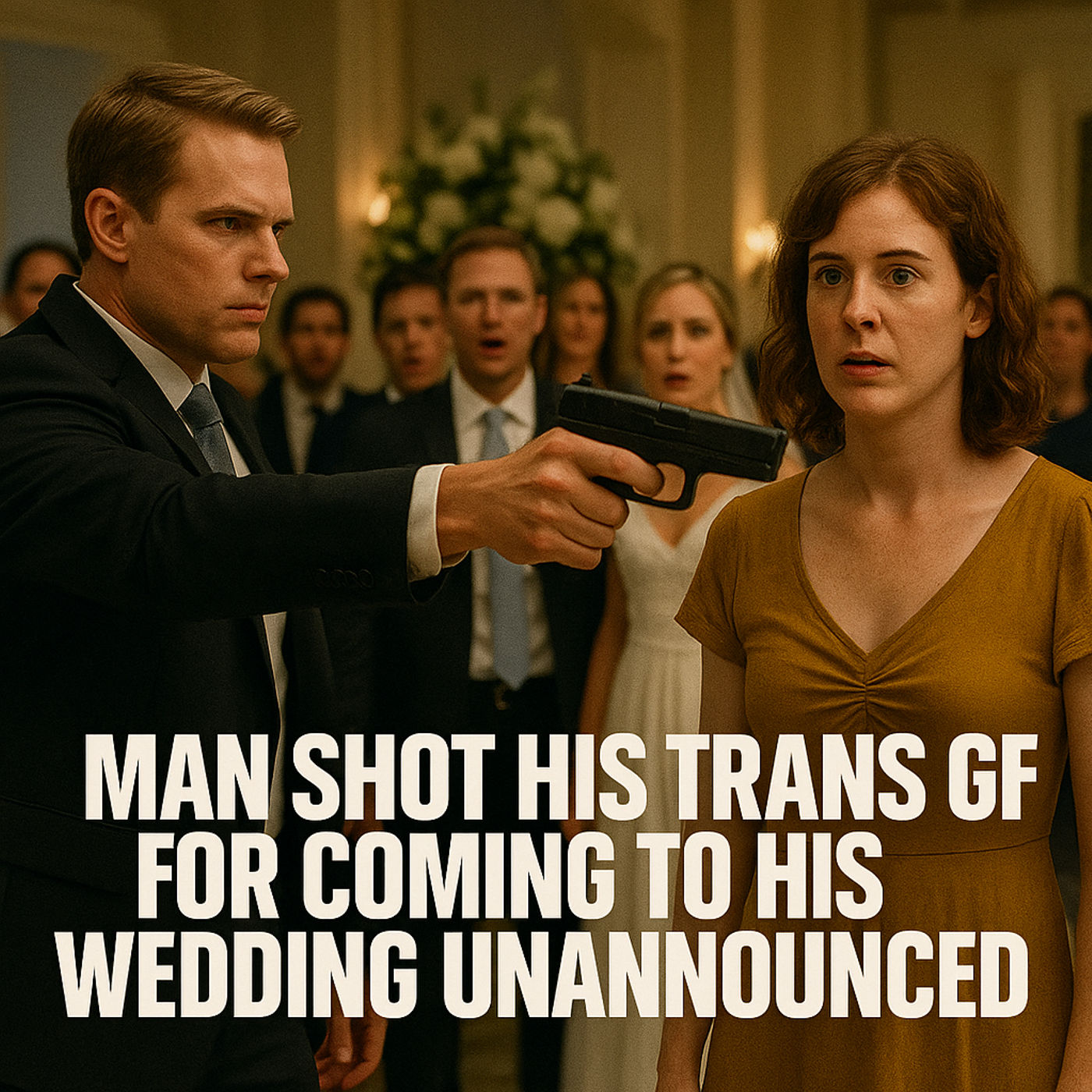
Ep 324Man Shot His Trans GF For Coming To His Wedding Unannounced
The climatic moment of the story unfolds inside a lavish Atlanta wedding venue. Soft golden lighting spills from crystal chandeliers, illuminating rows of elegantly dressed white guests whose cheerful anticipation has suddenly dissolved into horrified silence. Floral arches, white roses, and champagne-colored drapery frame the room, their beauty at odds with the rising tension. At the center stands Darius Cole, the groom. He is a sharply dressed white man in a tailored black tuxedo, his jaw tight and his posture rigid. As he faces the mirror earlier, he appears calm, but now his emotional world is collapsing. His secret—an intimate, complicated relationship with Maya—has arrived in the worst possible way. Maya Kingston, a white transgender woman with soft features and expressive eyes, steps into the wedding hall wearing a simple but elegant dress. The way the light hits her makes her stand out—a mixture of vulnerability and determination. She doesn’t appear vindictive; instead, she’s filled with emotional urgency. She needs Darius to hear her truth before he walks into a life built on lies. The tension rises as an uninvited confrontation begins. Maya’s voice trembles but remains steady, pleading for just a moment of honesty. But before Darius can comprehend what is happening, a tall white man from the crowd—someone who knows about Darius’s double life—pushes forward, anger burning in his expression. Guests gasp and exchange panicked glances. Lauren, the bride, watches the scene unfold from a short distance, her wedding dress shimmering softly under the lights. Confusion and heartbreak wash over her in waves as she realizes something is terribly wrong. Her face tightens with dread as Darius begins to confess that he has been living a lie. The moment captured is suffocatingly intense—public exposure, emotional betrayal, shattered trust, and the eruption of a secret Darius has spent years burying. The wedding hall, once a symbol of love and new beginnings, is now a stage for devastation, disbelief, and a truth that can no longer be contained. This is the exact emotional landscape your cover art is built on: a groom confronted by his secret lover at his wedding, the entire room frozen in shock as everything collapses.
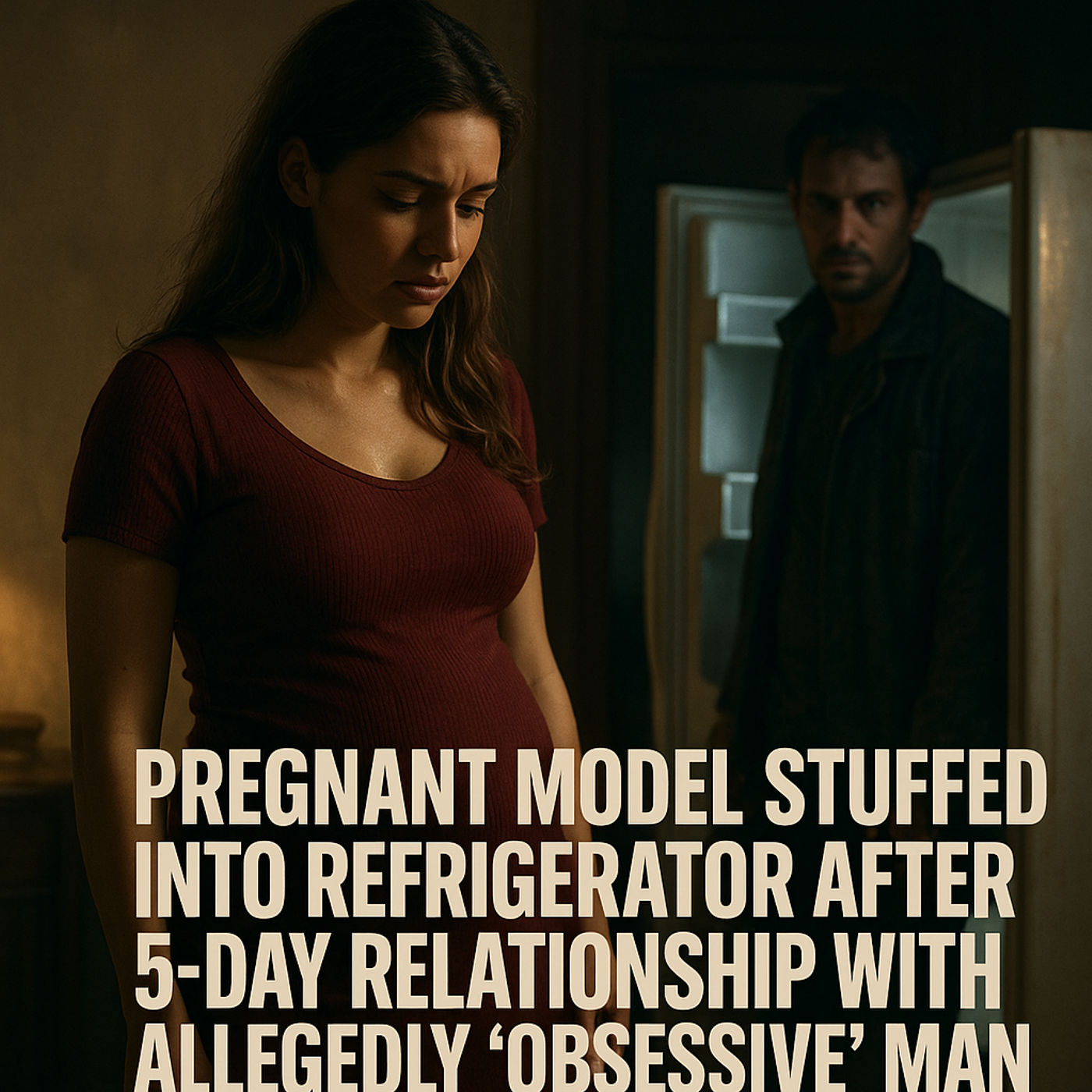
Ep 323You Broke My Heart: The Murder of Pastor Brodes Perry
Set against the urban backdrop of Santa Monica, the narrative situates Melissa within a dual reality: one defined by ambition and aspiration, and the other by precarity and exposure to risk. The story opens with the polished environment of Anna Garcia’s “True Crime News” podcast studio, establishing a journalistic frame through which the audience receives both factual detail and interpretive analysis. The storytelling then transitions into vivid dramatizations of Melissa’s final days, depicting her emotional landscape, living conditions, interpersonal interactions, and the atmospheric tension that permeated her short-lived relationship with Mangus. The narrative constructs an escalating psychological portrait of Mangus: initially charismatic, quickly possessive, and ultimately destabilized by insecurity and control-driven impulses. What begins as a whirlwind romantic connection rapidly devolves into a pattern of coercive dominance. Melissa’s request for basic household items—pots and pans—becomes a symbolic catalyst for conflict, revealing the fragile and dangerous emotional terrain beneath Mangus’s outward charm. Surveillance footage serves as both a narrative turning point and a forensic anchor. The imagery of Mangus entering Melissa’s apartment with large plastic bags and later disposing of a substantial black bag creates a haunting visual implication of premeditation and concealment. As Melissa disappears, the resulting police welfare checks, familial distress, and gaps in investigative urgency illustrate systemic challenges frequently observed in missing-person cases involving adult women. Anna Garcia’s dialogue with attorney and social justice advocate Gerald Griggs introduces broader societal reflections. Their discussion interrogates themes such as victim-blaming, the stigmatization of women in the sex trade, police desensitization to domestic violence indicators, and the alarming normalization of possessiveness in contemporary romantic discourse. The commentary positions Melissa not merely as a victim of an individual’s violence, but as an example of the structural vulnerabilities disproportionately affecting women navigating precarious relationships.
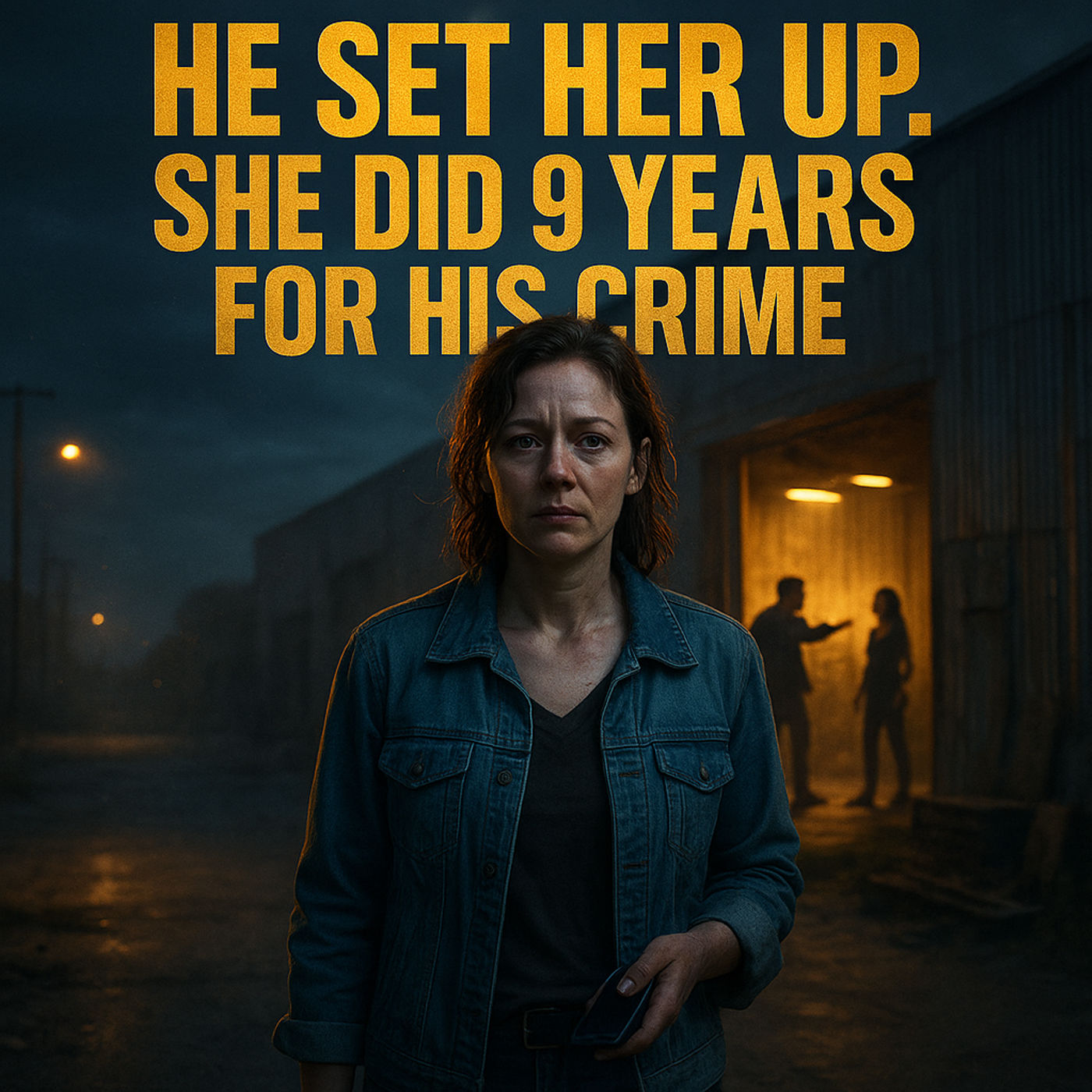
Ep 322He Set HER Up
This narrative presents a psychologically driven crime-drama centered on Janet Miles, a woman whose life becomes defined by trauma, coercion, and ultimately, the pursuit of self-redemption. Set primarily in East Baltimore and Glen Burnie, Maryland, the story traces Janet’s evolution from a hopeful young woman raised by a morally grounded grandmother to an adult ensnared in a destructive criminal partnership. The story opens with a highly charged moment: Janet stands outside her former home at dusk, holding both a bottle of sleeping pills and a gun. Her emotional distress is palpable, shaped by years of regret, guilt, and internal conflict. Yet the memory of her young daughter interrupts her despair, igniting a small but crucial spark of hope. This juxtaposition of suicidal ideation and maternal instinct becomes the emotional axis of the story. Janet’s backstory reveals a childhood shaped by hardship and loss. After her mother’s overdose, she was raised by Miss Ruby, a grandmother who instilled discipline, compassion, and the dream of becoming a nurse. Her early aspirations demonstrate strong moral grounding and a desire to escape generational cycles of instability. These formative qualities later heighten the tragedy of her descent. Janet’s relationship with Dave Miles marks the turning point of her life. Initially charismatic, supportive, and ambitious, Dave embodies the illusion of stability and passion Janet longed for. Over several years, they build what appears to be a promising life together. However, beneath the surface, he gradually manipulates her into participating in petty crimes—first through fraudulent returns and later through more serious financial schemes. His emotional influence over her, combined with her desire to sustain their relationship, blinds her to the growing danger of their lifestyle. The arrival of Nikki Stevens, Dave’s friend, intensifies Janet’s internal struggles. Nikki’s confidence and moral detachment both intimidate and intrigue Janet. Nikki’s presence not only fuels Janet’s insecurities but also normalizes the escalation of criminal behavior, leaving Janet increasingly conflicted between her love for Dave and her own ethical discomfort. The narrative reaches critical intensity with the introduction of Big Mike, a dealer who offers Dave and his associates the opportunity to transport narcotics. This proposal marks the threshold between small-scale fraud and fully entrenched criminal enterprise. Janet’s instincts recoil, but emotional manipulation and fear of losing Dave paralyze her. Her moral conflict becomes the central tension of the story. The pivotal climax occurs inside a grim warehouse where Big Mike details the drug-running operation. In this crucial moment, Janet experiences a profound internal shift. The pressures, betrayals, and the memory of her daughter converge, enabling her to reject the operation outright. Her refusal, delivered courageously despite Dave’s anger and Big Mike’s intimidation, signifies her awakening. It represents the first moment in which she chooses instinct, ethics, and motherhood over manipulation and adrenaline-fueled escape fantasies. Her decision fractures the trio’s unity. Dave interprets her defiance as betrayal, revealing the depth of his self-interest. Nikki is caught between disbelief and resentment. Big Mike issues sinister warnings. Yet despite the danger, Janet chooses autonomy. She walks out of the warehouse—symbolically and literally stepping out of darkness—toward an uncertain but morally grounded future. The final scenes depict her arrival at a local shelter, where she receives compassionate support. This setting represents both refuge and rebirth. As she explains her circumstances, the staff member reassures her that she can rebuild her life. The narrative closes not with triumph but with hard-won clarity. Janet envisions a better future for herself and her daughter, recognizing that...

Ep 321Oklahoma Bride KILLED At Altar By Groom’s Mother
The story centers on Kira LaJoy, a young woman preparing for what should be the most significant and joyful day of her life—her wedding to Darius Collins. The narrative unfolds within the confines of her childhood home and the Holy Cross Baptist Church, juxtaposing the outward celebration of marriage with the internal turmoil that Kira carries. At the core of Kira’s distress is a decade-old secret: a past affair with Darius’s late father, Terrence Collins. Although the relationship is long over, the emotional and moral repercussions remain unresolved. This private history resurfaces on the morning of the wedding when Evelina Collins, Darius’s mother, confronts Kira with her personal diary—evidence of the past affair and a weapon capable of destroying her future. The tension escalates from quiet, internal anxiety to a public crisis. Evelina’s accusations build toward a climactic moment during the ceremony, where she stands before the assembled congregation and exposes Kira’s secret. The narrative dramatizes the psychological and relational consequences of hidden histories, intergenerational conflict, and the fragile nature of trust. The confrontation is marked by emotional rupture, humiliation, and betrayal. Despite the gravity of her exposure, Kira attempts to reclaim agency through honesty and emotional vulnerability. She acknowledges her past in front of Darius and the congregation, affirming her love and commitment to him. The story ends in a state of precarious reconciliation as Darius chooses to stand beside her, though wounded and uncertain. Together, they face a deeply fractured moment, symbolizing a potential path toward healing but also foreshadowing the complexity that lies ahead.
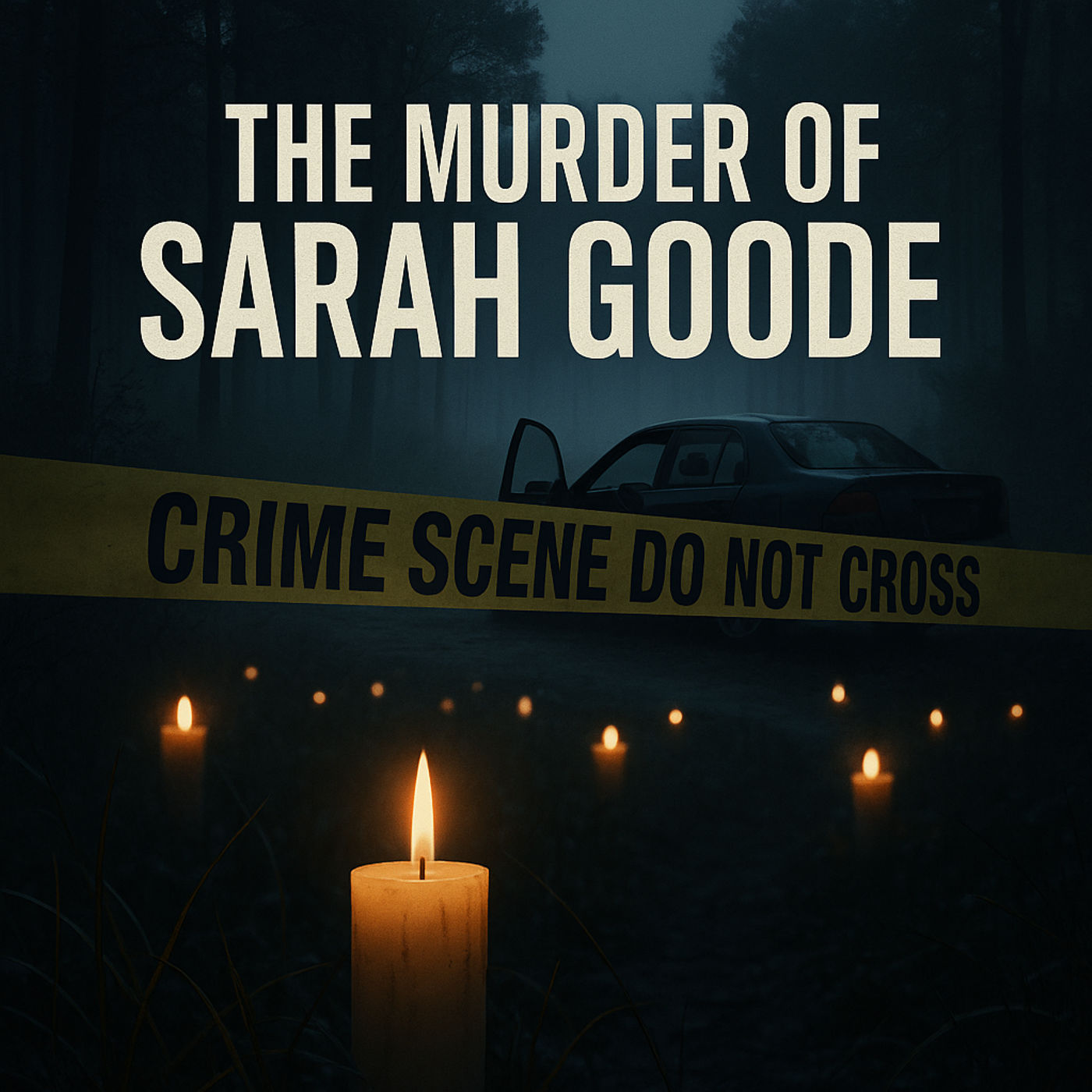
Ep 320The Murder of Sarah Goode
The narrative of Sarah Goode’s disappearance and murder unfolds as a complex intersection of personal vulnerability, community mobilization, and criminal investigation. Sarah Goode, a twenty-one-year-old medical technician and single mother, is introduced as a figure whose daily life is defined by responsibility, familial devotion, and emotional warmth. Her rare night out on June 6, 2014, represents a temporary reprieve from her demanding routine, yet it becomes the point of departure for a tragedy that ripples through her family and local community. Her failure to return home—an abrupt deviation from her established behavioral patterns—immediately provokes concern among her relatives. Their prompt report to law enforcement underscores the seriousness of the situation and establishes the emotional stakes of the unfolding investigation. The discovery of Sarah’s abandoned vehicle on the outskirts of town introduces a stark tonal shift in the narrative. Physical evidence of a violent encounter, including bloodstains and personal traces, transforms the case from a missing-person inquiry into a grave criminal matter. The subsequent recovery of her body in a wooded area confirms the community’s worst fears and marks the emotional nadir of the story. The investigative dimension centers on Dante Taylor, whose presence at the same social gathering Sarah attended and whose subsequent behavior position him as a significant person of interest. Though an initial arrest falters due to procedural missteps—namely, the failure to administer Miranda rights—accumulating forensic and digital evidence constructs a compelling trajectory of suspicion. DNA recovered from Sarah’s vehicle and cell-site data indicating Taylor’s proximity to the crime scene establish a crucial evidentiary foundation. The extent of Sarah’s injuries, marked by more than forty wounds, conveys the brutality of the attack and suggests an emotionally charged, rather than opportunistic, crime. Taylor’s flight to Florida following the murder adds a further dimension of culpability, reinforcing investigative assumptions and prompting a multi-jurisdictional pursuit. His eventual arrest on unrelated charges enables authorities to bring him back to New York, where the interrogation scene becomes the narrative’s pivotal moment. The dialogue-driven exchange between Taylor and the detectives demonstrates a psychological unraveling under the weight of evidence. His eventual admission—framed as a loss of control—serves both as narrative climax and moral indictment. The community’s reaction to the tragedy, including vigils and collective mourning, illustrates the broad emotional and social impact of violent loss. Sarah’s mother and daughter symbolize the enduring personal ramifications, while public gatherings underscore the communal need for healing and justice. The courtroom sequence formalizes this pursuit of accountability, culminating in Taylor’s conviction. Yet the verdict, while offering structural resolution, does not erase the emotional and existential void left by Sarah’s absence. The story concludes with a meditation on grief, resilience, and memory. Sarah’s family’s efforts to preserve her legacy, particularly through remembrance rituals and narratives shared among loved ones, affirm a collective commitment to sustaining her presence despite her physical loss. The closing image—her young daughter celebrating a birthday amidst a climate of sorrow—embodies the coexistence of tragedy and hope, underscoring the profound human cost that anchors this case.

Ep 319The Doorbell Footage Murder: The Case of Sheylla Cabrera
The narrative of The Doorbell Footage Murder: The Case of Sheylla Cabrera centers on the complex intersections of migration, domestic abuse, maternal sacrifice, and international criminal pursuit. At its core is Sheila (Sheylla) Cabrera, a Peruvian immigrant who settles in Lancaster, California, determined to build a safe and promising life for her three young sons. Despite her outward devotion to parenting and her attempts to build a nurturing home environment, Sheila’s private world is dominated by years of escalating domestic violence inflicted by her husband, Josimar Cabrera Cornejo. His psychological manipulation—particularly the threat to take away her children if she ever left the marriage—functions as a coercive mechanism that confines her to a dangerous and deteriorating household. By mid-2025, Sheila reaches a turning point. Bolstered by her family’s support in Peru, she begins planning a divorce and a relocation with her children. Her decision introduces new tension into the home, with Josimar sensing her emotional withdrawal and responding with increased paranoia and hostility. On August 11, 2025, these tensions culminate in premeditated violence: he murders Sheila inside their apartment, wraps her body in fabric, and drags the bundle through the residence. This act—captured on surveillance footage—later becomes the central piece of evidence in the criminal investigation. The days following the killing are defined by confusion and concern among Sheila’s friends, who—familiar with her history of abuse—react quickly when she does not return home. Josimar’s contradictory explanations further destabilize his credibility, prompting heightened suspicion. When investigators retrieve video showing him struggling with a large, concealed object, the missing-person inquiry rapidly escalates into a homicide case. The search for Sheila’s remains extends into the Angeles National Forest, prompting widespread community mobilization. As vigils form and awareness campaigns spread, Josimar flees to Peru with their children, initiating an international manhunt. Law enforcement agencies—including Interpol—become involved, but jurisdictional complications delay immediate apprehension. During his time abroad, Josimar attempts to craft the appearance of normalcy while simultaneously exhibiting signs of fear and psychological collapse. Ultimately, on August 27, he surrenders to Peruvian authorities, claiming to prioritize his children's safety. However, mounting evidence and witness testimonies contradict any narrative of self-defense or accidental harm. The ensuing legal proceedings, held under significant public scrutiny, reveal a consistent pattern of coercive control, escalating violence, and deliberate concealment. The prosecution emphasizes Sheila’s vulnerability, her attempts to escape, and the systematic nature of Josimar’s actions. The trial concludes with a guilty verdict, delivering a measure of justice to Sheila’s family and the Lancaster community. In the aftermath, advocacy groups amplify her story to highlight gaps in domestic violence protections and the need for cross-border accountability. Initiatives—such as community-funded scholarships and support networks—are created in her memory, illustrating how her life and death become catalysts for broader social awareness. Though her absence casts a long shadow, her children are cared for by a supportive community determined to shield them from further harm and to preserve the legacy of their mother’s resilience.
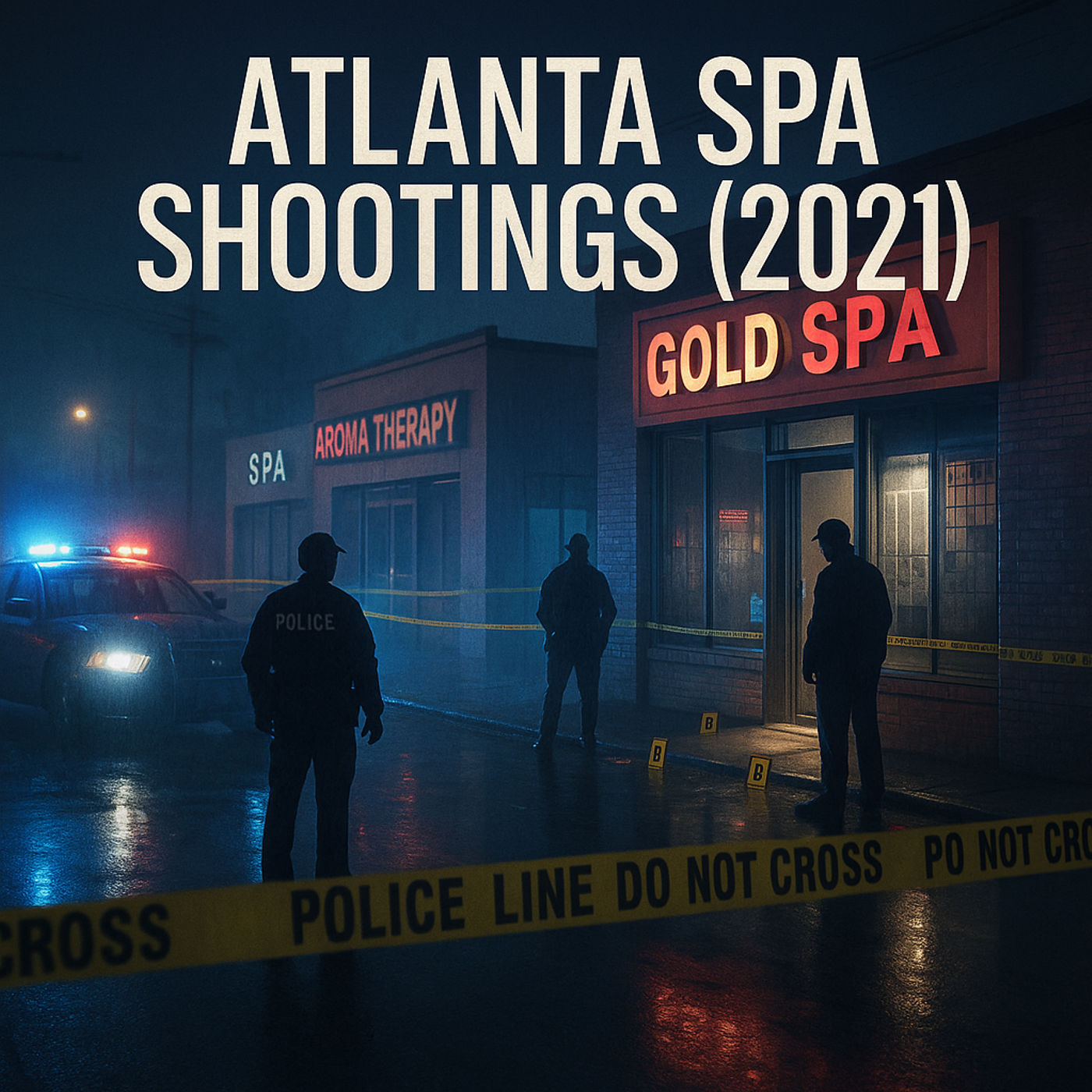
Ep 318ATLANTA SPA SHOOTINGS (2021)
The Atlanta Spa Shootings of March 16, 2021 constitute a critical event in the contemporary history of racialized and gendered violence in the United States. Over the span of less than one hour, a twenty-one-year-old man carried out coordinated attacks across three spas in Cherokee and Fulton Counties, leading to the deaths of eight individuals, six of whom were women of Asian descent. The shootings unfolded sequentially—first in Cherokee County, then at two Atlanta spas—forming a multi-site crime scene that required rapid inter-county coordination, immediate emergency responses, and an unusually complex investigative reconstruction. The initial chapter of the narrative situates the event within its real-time emergency context. It details the first 911 calls, the rapid entry of police into the spas, and the recognition that three locations had been attacked in succession. The chapter emphasizes the logistical complexity of multiple overlapping scenes, the early eyewitness accounts, and the foundational forensic work that established the timeline. The second chapter shifts to the deeper investigative layer. It provides biographical profiles of the victims, illustrating lives shaped by migration, labor precarity, and community ties. It outlines the critical evidence that allowed investigators to identify and apprehend the suspect: surveillance footage, traffic-camera analysis, digital forensics, ballistic confirmation, and eyewitness statements. This chapter also examines early public debate, including concerns that law-enforcement framing risked overshadowing racial and gendered dimensions of the violence. It highlights how investigators distinguished between the suspect’s self-described rationale and the broader sociocultural context of racialized misogyny that scholars and advocates immediately identified. The final chapter centers on legal interpretation and structural meaning. Cherokee County accepted a guilty plea and imposed life sentences without parole. Fulton County pursued the death penalty alongside hate-crime enhancements, arguing that the killings reflected racial and gender-based targeting. The chapter explores scholarly debates about hate-crime statutes, the limitations of proving bias intent, and the difference between individual motivation and structural harm. It also documents community mobilization, memorial practices, public education, and advocacy efforts that arose in response to the shootings. Ultimately, the chapter frames the event within national conversations about anti-Asian violence, immigrant labor, gendered vulnerability, and the responsibilities of legal and civic institutions. Across all three chapters, the narrative demonstrates how a single evening of violence revealed deeply rooted systemic issues. It underscores the need for analyses that integrate forensic detail, legal reasoning, and sociostructural interpretation in order to understand how violence occurs, how it is classified, and how communities respond.
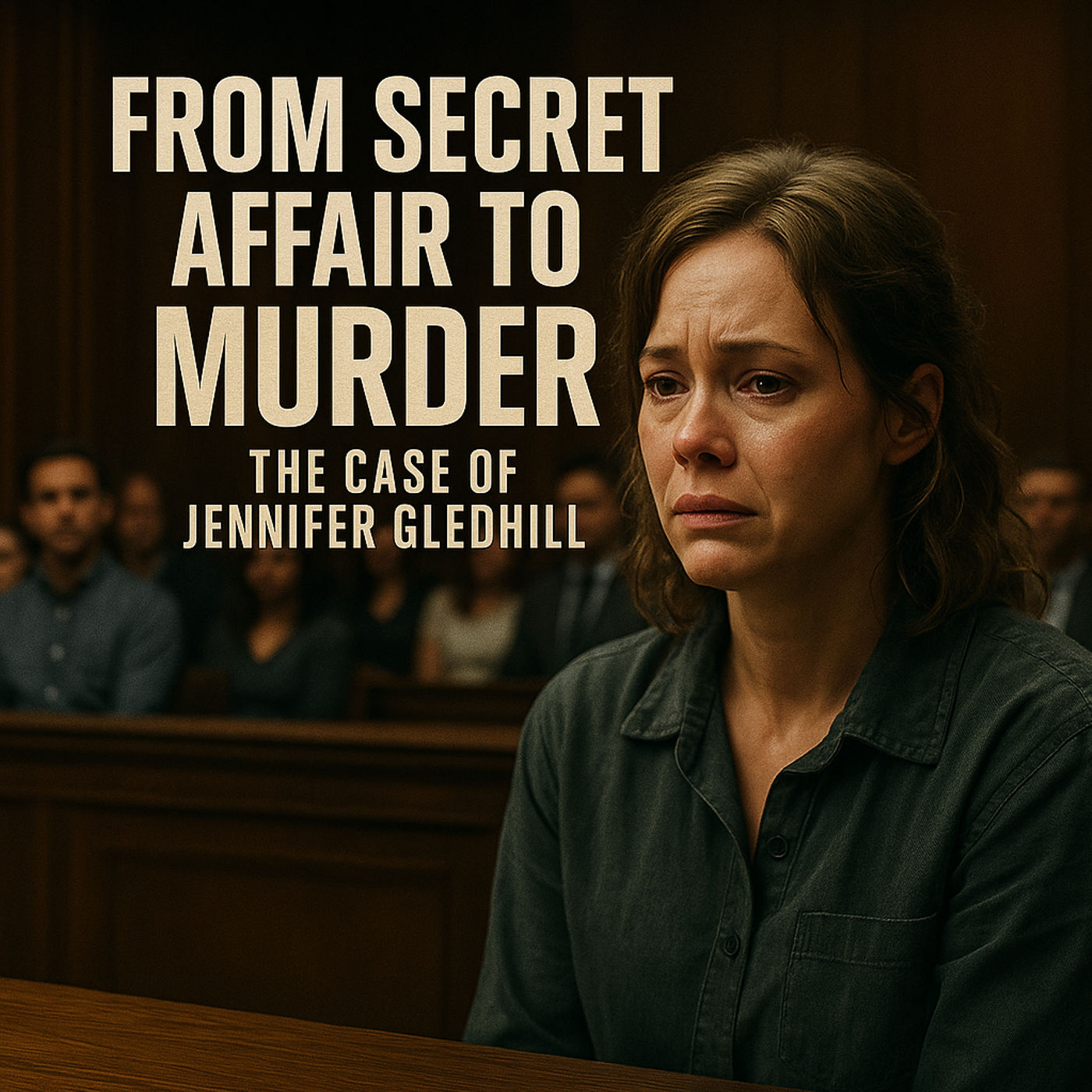
Ep 317From Secret Affair to Murder: The Case of Jennifer Gledhill
This narrative explores the psychological, relational, and social pressures culminating in the disappearance of Matthew Johnson and the criminal prosecution of his wife, Jennifer Gledhill. Set primarily in Utah in 2024, the story adopts a cinematic and investigatory tone, tracing the breakdown of a marriage built on public stability but collapsing under private turmoil. The narrative follows multiple vantage points: Jennifer’s internal descent; the procedural rigor of Detective Lisa Harrow; the strategic posturing of attorneys; the emotional testimonies of friends and family; and the community’s collective unraveling in response to shocking revelations. The story blends elements of domestic tragedy, courtroom drama, and investigative thriller. It highlights persistent themes such as marital dysfunction, unaddressed domestic violence, extramarital entanglement, psychological deterioration, and the consequences of secrecy. A central feature of the narrative is the interplay between perceived truth and emerging evidence. The dramatic arc intensifies through an unexpected plot reversal: the possibility that Matthew—presumed dead following Jennifer’s confession—may in fact be alive. Atmospherically, the narrative is driven by tension, moral ambiguity, and the emotional claustrophobia of a woman confronting the consequences of her actions. The legal proceedings, community reaction, and media frenzy underscore the sociological dimensions of public outrage, gendered blame, and the spectacle of marital collapse. Ultimately, the narrative invites reflection on trauma, agency, guilt, and the fragile boundaries between victimhood and culpability.

Ep 316The young killer woman
This story follows the turbulent journey of sixteen-year-old Sarah Johnson, whose life collapses after the tragic murder of her parents, Diane and Alan Johnson, on September 2, 2003. Set in a quiet suburban community, the narrative traces the emotional, psychological, and legal turmoil that unfolds as Sarah becomes the prime suspect. The story blends courtroom drama, psychological tension, and community unrest as detectives uncover conflicting evidence, public opinion shifts, and Sarah’s world unravels under intense scrutiny. As Detective Reynolds investigates the crime scene, subtle inconsistencies in Sarah’s behavior begin to shape the prosecution’s case. Yet as the trial progresses, the narrative slowly destabilizes the assumption of guilt, exploring Sarah’s emotional isolation, her struggle with adolescent pressure, and the community’s susceptibility to sensationalized rumors. Through testimonies, expert witnesses, and Sarah’s own emotional breakdown on the stand, the legal system becomes a battleground for truth, perception, and moral ambiguity. The story undergoes a major shift after Sarah is acquitted. The post-trial section explores the long-term impact of trauma, stigma, and grief. Sarah grapples with loss and public suspicion while rebuilding her identity through art, writing, and community engagement. Her eventual transformation into a mental-health advocate reflects themes of resilience, personal healing, and the societal need for empathy toward misunderstood youth. The arc concludes with Sarah reclaiming agency over her narrative, using her experience to help others and redefine her future.
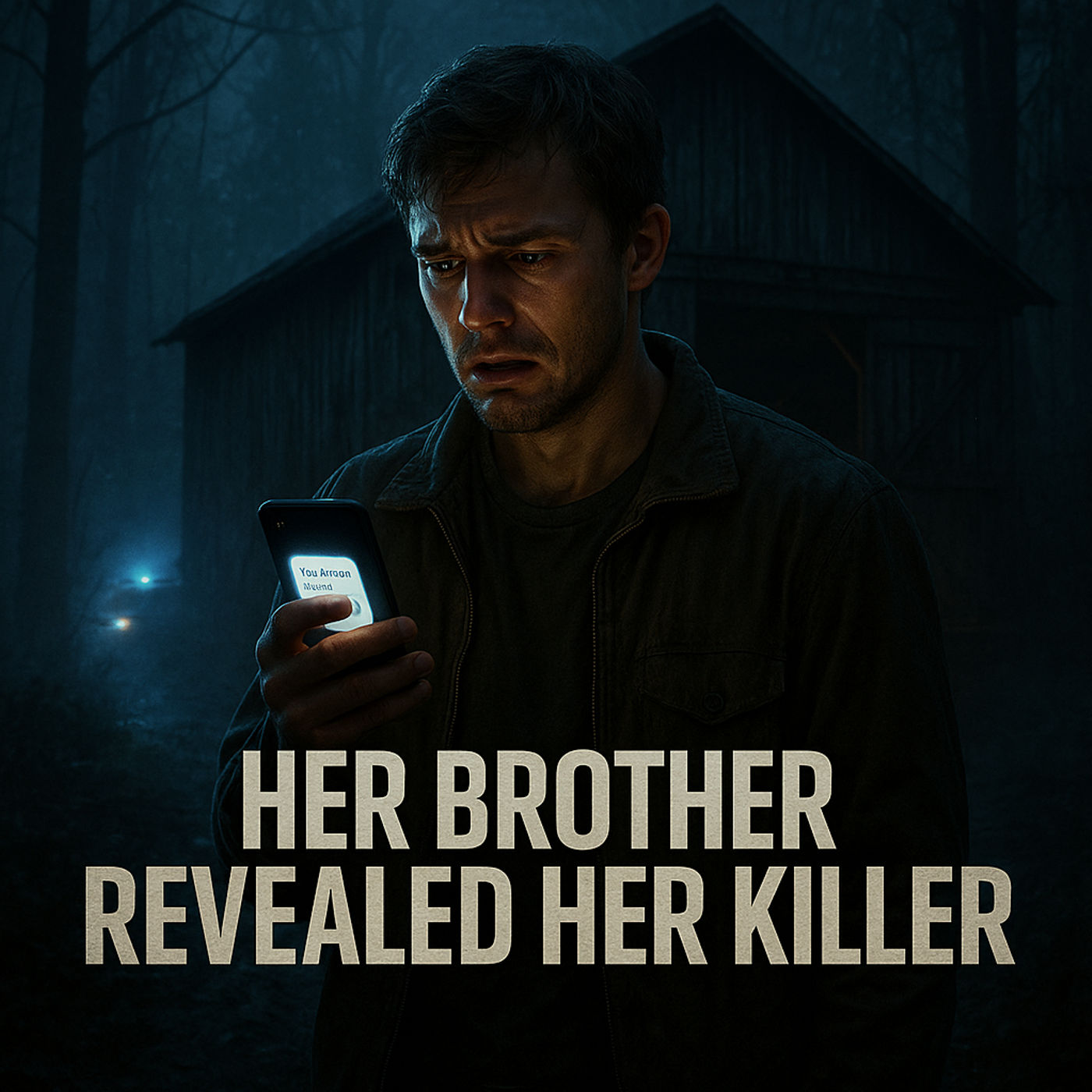
Ep 315Her Brother Revealed Her Killer
This narrative presents a psychologically driven true-crime drama centered on the disappearance and presumed murder of Holly Bobo, a twenty-year-old woman from rural Tennessee, and the subsequent emotional and moral unraveling of her brother, Clint. The work blends elements of suspense, small-town social dynamics, and the complexities of guilt, complicity, and truth-telling in traumatic contexts. The story examines how rumor, fear, and community suspicion shape the psychological landscape of individuals directly connected to a crime. Clint, positioned at the crossroads of grief and suspicion, becomes the focal point of the town’s anxieties. His interactions with Zack Adams—an acquaintance with a troubling reputation—further complicate the narrative, introducing themes of coercion, moral failure, and the hidden social networks that often accompany criminal subcultures in rural settings. Through a tripartite chapter structure, the story follows Clint’s deteriorating mental state as he confronts community judgment, internal guilt, and the haunting memory of his sister’s final moments. The plot culminates in a climactic reckoning at an abandoned barn—symbolically and literally the site of Holly’s fate—where Clint receives a message urging him to reveal the truth. His eventual confession becomes a catalyst for reopening the investigation, leading to further arrests and clarifications about the crime. Yet his personal redemption remains incomplete, illustrating the lasting, irreversible scars of violence and silence. The narrative ultimately interrogates the moral responsibility of bystanders, the destructive power of secrecy, and the complex interplay between personal trauma and communal narratives of blame, justice, and redemption.
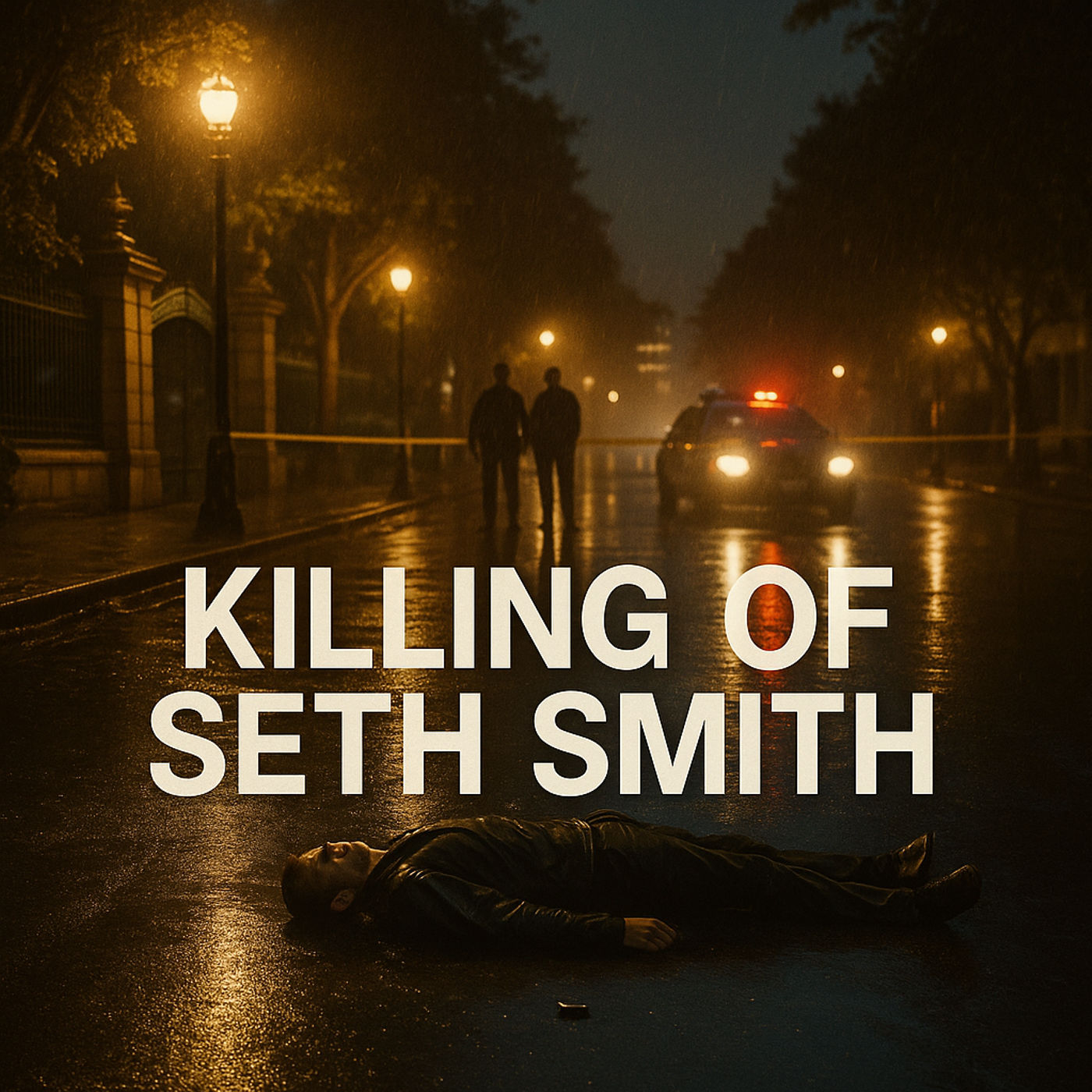
Ep 314Killing of Seth Smith (2020)
Killing of Seth Smith (2020) is a three-chapter forensic true-crime limited series that reconstructs the quiet, unsettling killing of a nineteen-year-old Berkeley student who was shot at point-blank range on a familiar neighborhood street. The story opens on Dwight Way at seven thirty p.m., with first responders stepping into a scene defined by silence, precision, and the absence of any clear motive. From the shell casing to the untouched belongings, every detail forces investigators to confront an act that looks deliberate yet offers no immediate explanation. The series follows detectives as they rebuild the victim’s final movements, gather witness statements, comb through surveillance gaps, and track the faint digital and behavioral clues surrounding a man who becomes a person of interest through inconsistencies rather than confession. When a forensic break connects a recovered handgun to the casing on the street, the case shifts. The investigation moves from uncertainty toward a prosecutable path grounded in lab work, timeline reconstruction, and persistent questioning. The final chapter explores the courtroom outcome, the campus response, and the difficult truth that motive remains unknown. The result is a grounded, respectful forensic narrative about a sudden loss, a community left shaken, and an investigation built on quiet, methodical steps rather than dramatic revelation.
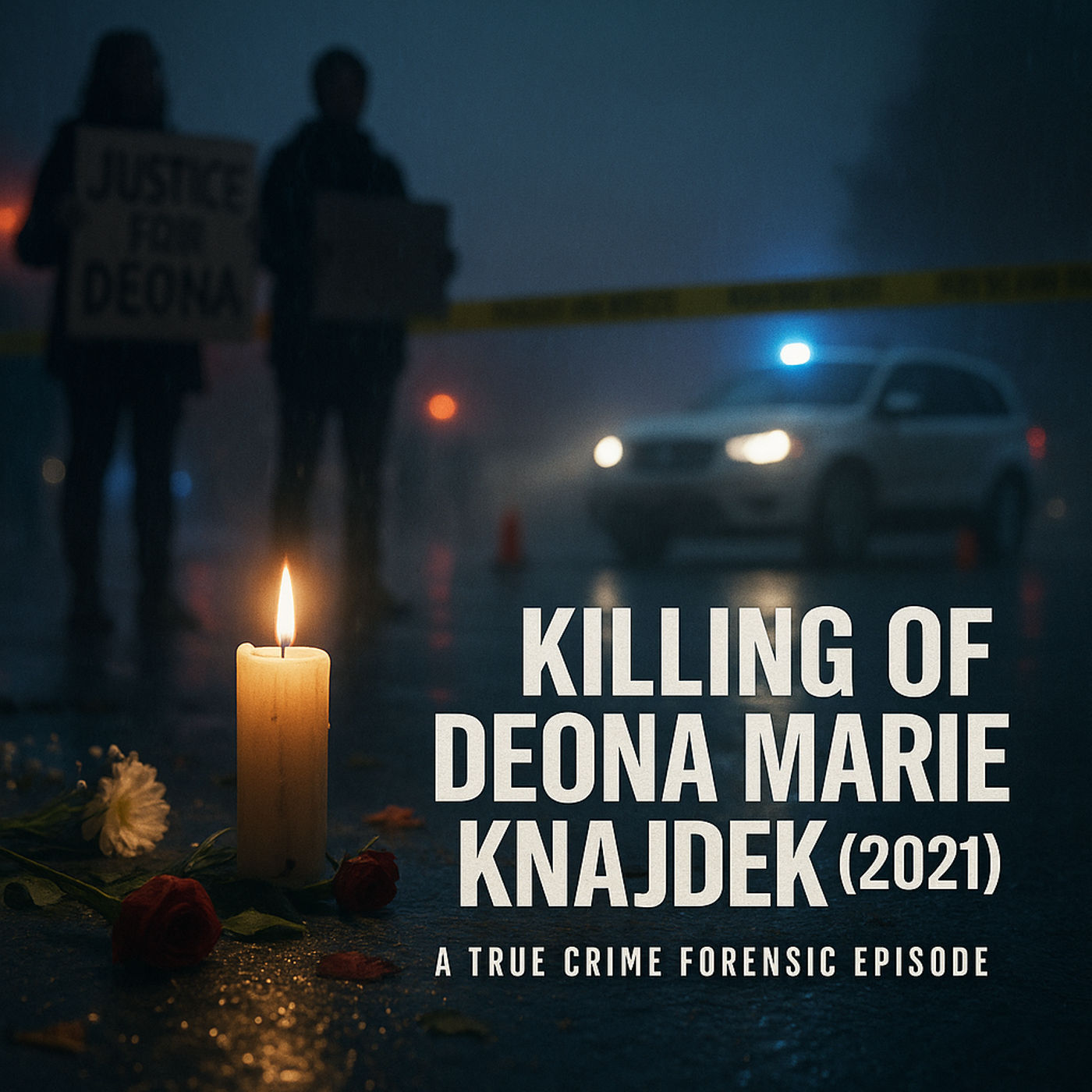
Ep 313Killing of Deona Marie Knajdek (2021)
“Killing of Deona Marie Knajdek (2021)” is a somber true-crime account set during a turbulent moment in Minneapolis, where grief, activism, and public tension were already running high. On the night of June twentieth, twenty twenty-one, a peaceful protest gathered on Lake Street to honor victims of police violence and to keep the city’s ongoing calls for justice alive. Among them was thirty-one-year-old mother and volunteer Deona Marie Knajdek, a steady presence at local community actions and vigils. What began as a quiet night of remembrance turned into horror when a speeding SUV broke through the makeshift barricades and slammed into the crowd. The impact was sudden, violent, and captured on livestream. By the time lights from police cars cut across the wet asphalt, Deona was unresponsive, later pronounced dead at the hospital. The driver, heavily intoxicated and previously convicted of impaired driving, was detained at the scene. The story unfolds through the lens of investigators, witnesses, family members, and the larger Minneapolis community as they confront the immediate chaos, the forensic reconstruction of the crash, and the difficult legal path that follows. Beyond the courtroom, the case becomes part of a broader conversation about protest safety, civic responsibility, and the lingering wounds of a city still shaped by unrest. The tone is grounded, respectful, and cinematic—focused on truth, human loss, and the weight carried by those left behind.
Ep 312Murder of Alexis Sharkey (2020)
Murder of Alexis Sharkey (2020) is a cinematic true-crime narrative told in a forensic documentary style, exploring the tragic death of a young social-media influencer whose life of apparent perfection concealed deep personal turmoil. Set in Houston, Texas, the story traces the final hours of twenty-six-year-old Alexis Sharkey — a rising online personality whose disappearance over Thanksgiving weekend led to the shocking discovery of her body on a quiet roadside. The series unfolds in three gripping chapters: The Discovery, The Dual Life, and The Break and Aftermath. Each segment blends police procedure, forensic precision, and emotional realism to reveal how a life broadcast in light was ended in silence. Through detailed investigation scenes, digital evidence, and human accounts, the story uncovers the truth about emotional manipulation, image pressure, and hidden abuse behind closed doors. This is not just a crime story — it is a mirror reflecting the danger of appearances and the unseen cost of control in relationships that look perfect from the outside.
Ep 311Murder of Kevin Jiang (2021)
“Murder of Kevin Jiang (2021)” unfolds like a prestige true-crime film grounded in reality — tense, visual, and deeply emotional. The story takes place across two worlds: the serene, intellectual backdrop of Yale University and the shadowed streets of New Haven where a promising life is cut short. The tone is cold and atmospheric, built around contrasts — light against darkness, potential against loss. Rain-slicked roads, the flash of blue and red lights, and the quiet hum of a city at night form the visual canvas. Kevin Jiang is portrayed not as a victim first, but as a man of faith and ambition: a Yale scholar, Army veteran, and devoted fiancé whose ordinary drive home becomes the tragic center of a national manhunt. Through precise, forensic storytelling, the film retraces the chain of events: a minor collision, a sudden confrontation, and gunfire that echoes through the quiet neighborhood. Each frame is steeped in realism — the hiss of tires on wet pavement, the flicker of security cameras, the procedural rhythm of investigators working through evidence. As the story widens, the investigation reveals unsettling intersections of academia, identity, and obsession. The suspect, Qinxuan Pan, an MIT researcher, embodies the haunting duality of intellect turned inward — a man who vanishes into the fabric of America’s cities before federal agents finally close in. The film’s final moments are quiet, reflective, and humane: Kevin’s family standing under candlelight, his fiancée speaking words of forgiveness, and a city pausing to remember a life full of promise. The visual and emotional language blends documentary realism with cinematic intensity — a story about how ambition and obsession can cross a line from brilliance to tragedy.

Ep 310Murder of Anna Moriah Wilson (2022)
The Murder of Anna Moriah Wilson (2022) is a cinematic, forensic-style retelling of one of the most haunting homicide cases in modern American sports. Told in three precise chapters — The Last Ride, The Trail of Suspicion, and Flight and Capture — the narrative reconstructs the final days of a young professional cyclist whose life and career were cut short in Austin, Texas. Set against the backdrop of elite endurance racing, the story unfolds through investigative realism. It opens with the shocking discovery of Wilson’s body inside a friend’s apartment and follows the meticulous forensic process that unraveled the mystery. Through timestamps, interviews, and evidence mapping, the investigation traces the intersection of passion, jealousy, and control that led to a calculated act of violence. The second act builds intensity as digital forensics, ballistics, and surveillance footage converge to identify a suspect — yoga instructor Kaitlin Armstrong — whose swift disappearance turns the local case into an international manhunt. The chapter captures the methodical pursuit by detectives and U.S. Marshals as they piece together her route from Texas to Costa Rica, revealing how modern technology closed in on an increasingly desperate fugitive. The final chapter resolves the arc with Armstrong’s capture, extradition, and eventual conviction. Beyond the procedural details, it reflects on the human cost — a life of extraordinary promise lost, a community shaken, and a justice system stretched across continents. Rendered in forensic neutrality but with cinematic pacing, the piece mirrors the structure of a high-end true-crime documentary: clear facts, ethical storytelling, and emotional restraint. Each scene is driven by verified details and chronological precision, maintaining dignity for the victim while capturing the moral weight of obsession turned deadly.

Ep 309Atlanta Spa Shootings (March 2021, Georgia)
In March twenty twenty-one, a young man drove across Georgia and opened fire inside three spas, killing eight people — six of them Asian-American women. Within seventy minutes, Atlanta became the center of a national reckoning on race, gender, faith, and violence. Atlanta Spa Shootings retraces the events of that day with forensic clarity and human focus. From the first 911 call in Cherokee County to the late-night arrest two hundred miles away, the story unfolds through verified timelines, police records, and the voices of those left behind. Across three chapters, listeners witness how grief turns to movement, how silence becomes voice, and how a single night of hate reshaped a nation’s understanding of who it chooses to see — and who it forgets.
Ep 308Killing of Winston Boogie Smith (June 2021, Minneapolis)
In the summer of 2021, just a year after Minneapolis became the center of a global reckoning over policing, another fatal encounter unfolded in a city still healing. The Killing of Winston Boogie Smith follows the events of June 3, 2021, when a U.S. Marshals task force attempted to arrest a 32-year-old man in a public parking ramp — and ended his life within seconds. What happened in that brief exchange remains one of the most disputed police shootings of the decade. Told through forensic reconstruction and eyewitness memory, this three-chapter documentary retraces the pursuit, the absence of body-camera footage, and the storm of mistrust that followed. It’s a story about silence — what wasn’t seen, what wasn’t recorded, and how the lack of proof reshaped a community’s belief in justice. From the ramp in Uptown Minneapolis to the offices of federal investigators, the series examines the system that allowed an arrest without cameras in a city still haunted by George Floyd’s death — and asks how truth survives when evidence doesn’t.
Ep 307Murders of Kylen Schulte & Crystal Turner (August 2021, Utah)
Murders of Kylen Schulte & Crystal Turner (August 2021, Utah) is a true-crime documentary story set against the haunting beauty of Moab’s red rock canyons and the La Sal Mountains. It follows the real-life double homicide of newlyweds Kylen Schulte and Crystal Turner, whose disappearance in August 2021 shocked a close-knit desert community. Told in a cinematic, forensic tone, the narrative moves from the moment their friends realize something is wrong to the slow, methodical investigation that exposes fear, loss, and the fragile line between freedom and danger in America’s wilderness. Through police records, search efforts, and the memories of those who loved them, the story examines how two lives rooted in kindness and simplicity became the focus of one of Utah’s most tragic modern cases. Each chapter reveals new layers — the desperate search, the community’s grief, and finally, the confirmation that the killer was someone they once knew. With restraint and realism, the story captures not only the investigation’s tension but also the emotional cost left behind. The tone is human, cinematic, and investigative — blending forensic detail with quiet moments of reflection.

Ep 306Murder of Kevin Jiang (February 2021, Connecticut)
A quiet New Haven street. A silver Hyundai idling under a streetlamp. Gunshots in the cold night air. On February 6, 2021, Yale graduate student Kevin Jiang — a U.S. Army veteran and environmental researcher — was found dead beside his car after what first appeared to be a minor traffic collision. But within hours, investigators uncovered a deeper and far darker story: one that reached across academic corridors, emotional obsessions, and the fragile line between brilliance and breakdown. Told in the style of Forensic Files and Mindhunter, this three-part narrative reconstructs the case from the ground up — from the frozen crime scene on Lawrence Street to the interstate manhunt that ended months later in Alabama. Each chapter follows the investigative turns, digital evidence, and human decisions that revealed a chilling portrait of fixation and flight. This is not a story about violence alone — it’s about intellect, identity, and the cost of emotional silence within the world of high achievement.
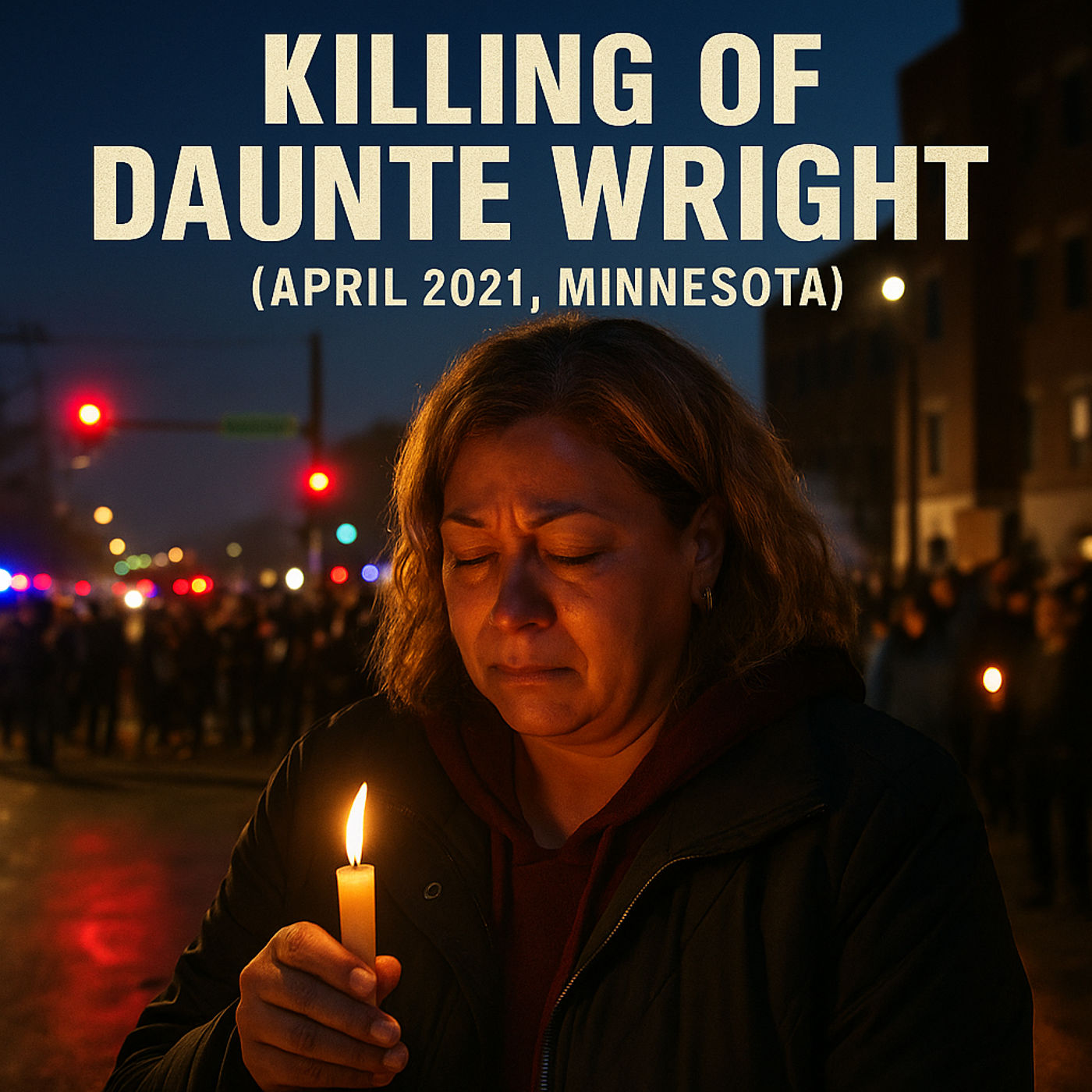
Ep 305Killing of Daunte Wright (April 2021, Minnesota)
The story unfolds like a film set against the gray skies of suburban Minnesota, beginning on a quiet April afternoon that will change everything. The tone is intimate and cinematic — the viewer moves from the stillness of a young man’s routine day into the chaos of flashing red and blue lights, the tense dialogue of a traffic stop, and the irreversible split-second decision that shocks the nation. The camera lingers on faces: the nervousness in Daunte Wright’s eyes, the stern but uncertain focus of the officer, the confusion between training and instinct. As the shot echoes, the film’s palette shifts — cool daylight fading into the warm, chaotic glow of protest fires and candlelight vigils. Crowds fill the streets, chanting, holding signs, and lifting candles in trembling hands. The lens captures the city as both battleground and memorial — raw emotion set against civic grief. By the final act, courtroom scenes mirror confessionals: sterile walls, flickering lights, trembling voices. The camera settles on Daunte’s mother at the vigil, candlelight reflecting in her tears — a closing image that burns like memory.

Ep 304Killing of Gabby Petito (August 2021, Wyoming & Florida)
“Killing of Gabby Petito” is a three-chapter cinematic true-crime narrative that reconstructs one of the most haunting modern cases of love, control, and tragedy in the age of social media. Told with forensic accuracy and film-like pacing, it traces the young traveler’s disappearance across America — from joyful road-trip vlogs to a national manhunt that exposed the private collapse behind public perfection. The story opens under a Wyoming sunset, where a white van sits silent in the desert — the last known trace of Gabby Petito. Through interviews, digital footprints, and investigative records, the narrative follows the unraveling timeline that began as a dream of freedom and ended in national heartbreak. Each chapter deepens the emotional gravity: the rising pressure inside a fragile relationship, the frenzy of an internet-powered search, and finally, the quiet aftermath that forced a reckoning with how society consumes tragedy. The tone remains cinematic yet human, preserving dignity while laying bare the truth of obsession, control, and the cost of silence. “Killing of Gabby Petito” is not just about a crime — it is about the echo left behind when a life lived online meets a reality that can’t be edited.
Ep 3032023 Internet Crime Report (USA, 2022–23)
“2023 Internet Crime Report (USA, 2022–23)” unfolds like a modern digital thriller—rooted in the emotional weight of The Shawshank Redemption and the forensic precision of The First 48. The story follows Daniel Kearns, an ordinary man whose search for connection and financial security leads him into the crosshairs of a global online fraud network. When a woman he trusts lures him into a fake cryptocurrency platform, Daniel loses everything—his savings, his faith, his sense of control. Parallel to his unraveling, the FBI’s Cyber Division—led by Agents Nora Bradley and Thomas Reed—works tirelessly to trace an invisible chain of deception stretching across borders and servers. Through digital forensics, human psychology, and unrelenting persistence, they uncover Project Midas, a vast transnational operation trading in stolen trust and digital manipulation. Cinematic in tone and deeply human at its core, the story bridges the world of screens and emotions—showing that crime in the twenty-first century isn’t just about money lost, but about people broken and rebuilt by belief itself.
Ep 302Major Case / Unsolved Homicides 2023 (DC)
In the heart of Washington D.C., the hum of the city hides a quiet truth — dozens of lives ended without answers. Major Case / Unsolved Homicides 2023 (DC) follows one such file through the weary eyes of Detective Joseph Carter, a veteran investigator fighting the silence that settles after the sirens fade. Told like a cinematic true-crime drama, the story opens on a cold January morning when a young man, Marcus Ward, is found dead on a dim Southeast block. What begins as a routine homicide scene unfolds into a haunting portrait of a system strained by limited resources and lost leads. Across three chapters — The Call on a Sleeping Block, The Vanishing Lead, and Echoes in the File — the narrative traces the tireless pursuit of truth, the toll of uncertainty on those left behind, and the detective’s stubborn refusal to give up on six missing minutes that could solve it all. Every frame feels real: the frost on asphalt, the hum of streetlights, the ache behind a mother’s silence. This isn’t just a crime story — it’s a meditation on justice delayed, human persistence, and the ghosts that linger in the city’s dark corners.

Ep 301Consumers Lost $10 Billion to Fraud in 2023
Consumers Lost $10 Billion to Fraud in 2023 is a cinematic, Shawshank-style true-crime drama inspired by real events. Told through the quiet humanity of its characters, it explores America’s largest financial deception of the digital age — the year when ordinary trust became a global currency for exploitation. The story follows Agent Lena Cruz, a determined FBI investigator unraveling the invisible web of international cyber-fraud; Harold Benton, a retired man who loses his savings to a phishing scam; Erica, a young woman deceived by an online romance investor; and Sophea, a trafficked worker trapped inside the scam network overseas. Across three chapters — The Promise of Easy Money, The Web and the Wolves, and The Reckoning — their lives intertwine in a relentless pursuit of truth and redemption. From suburban kitchens to global fraud compounds, the story moves like a film: intimate, visual, and deeply human. It’s not just about money lost, but about trust betrayed and reclaimed, as America confronts the dark cost of belief in the digital age.

Ep 3002023 Cryptocurrency Fraud Report Released
Told like a tense, human-driven film in the spirit of The Shawshank Redemption, this story follows the real-world rise of cryptocurrency fraud through the lives it consumed. It opens in 2023, a year when digital wealth looked effortless and trust was a commodity. The hook begins in the flicker of a laptop screen as a man named Robert Hensley watches his fortune dissolve before his eyes — the moment America realizes how fragile its digital dream has become. Through shifting perspectives — victims, investigators, and the unseen scammers held in overseas compounds — the series exposes how technology, loneliness, and greed combined to form a perfect modern con. Agent Clara Mendez leads the fight to trace money that never really existed, uncovering human trafficking and deception on an industrial scale. By the final chapter, Robert reclaims dignity by helping others, while Mendez confronts the sobering truth that justice can slow crime but never fully stop it. The film’s emotional core isn’t just loss; it’s reckoning — how faith in something unreal can destroy, and how truth, however late, can rebuild.
Ep 299The Long Chase
The Long Chase is a sweeping, cinematic true-crime thriller told through the lens of those who fought to expose one of the largest and most emotionally devastating cyber-fraud schemes in modern history. Inspired by real events between 2021 and 2025, it chronicles a North Korea–linked criminal network that preyed on human loneliness and digital vulnerability—grooming victims through fake online relationships before stealing billions through crypto “pig-butchering” scams. Told in the restrained, emotionally rich tone of The Shawshank Redemption, the film captures both sides of the crime: the quiet devastation of victims who believed in love, and the relentless determination of agents who refused to look away. Each scene is anchored in realism—flickering monitors, long nights in FBI cyber war rooms, and the moral fog of international finance and manipulation. At its core, The Long Chase is about people—those who lost everything, those who profited from their pain, and those who chose to fight back in the unseen war for trust in the digital age.
Ep 298Calif. Con Artist Bilked $18 Million by Peddling Fake Cannabis Businesses
The Circle Tightens is a gripping, human-centered true crime dramatization inspired by the real California fraud case in which a smooth-talking con artist built a fake cannabis empire that defrauded investors of over eighteen million dollars. Told in the reflective, steady tone of a Shawshank Redemption-style narrative, the story unfolds across three haunting chapters—rising from ambition and illusion to collapse and reckoning. Visually, it plays like a slow-burn thriller drenched in realism: morning light washing over Los Angeles rooftops, spreadsheets glowing in dim apartments, hopeful investors shaking hands in diners, and finally, the stark symmetry of a courtroom where promises turn to paper. Every frame feels both intimate and vast, showing how a single lie—told with confidence and calm—can spread like wildfire across lives and years. Through its cinematic structure, the story captures more than crime; it explores the psychology of belief, the quiet hunger for opportunity, and the human cost of broken trust.

Ep 297U.S. Arrests Two Chinese Nationals in $73 Million Crypto Scam
This limited true-crime series delivers a gripping, forensic-level reconstruction of a modern financial crime that spanned continents and exposed the dark side of online trust. Through cinematic tension and real investigative detail, it traces how a romance-based “pig-butchering” crypto scam grew into a $73 million laundering empire—until a web of digital forensics and international cooperation brought it down. The story unfolds through the eyes of federal agents, forensic analysts, and the victims who unknowingly fed the machine. Each chapter reveals a new layer: from the first desperate complaint about a vanished investment, to the blockchain analysts following invisible trails across borders, to the final coordinated arrest that signaled the end of the scheme. Shot in the narrative tone of Forensic Files with the visual weight of a Netflix docudrama, the story explores not only the pursuit of justice but the emotional wreckage left behind when affection becomes a financial weapon. Every scene feels grounded, procedural, and tense—mirroring the precision of real-world cybercrime investigations and the slow, methodical rhythm of law enforcement building a case brick by brick. It’s a story about people—both the ones who engineered deception and those who refused to let it stand.
Ep 296The Digital Paper Trail
The Digital Paper Trail is a tense, forensic-style true crime narrative following a California man who transformed dating apps into his personal financial machine. Between 2021 and 2024, he built a network of fraudulent relationships through Tinder, Hinge, and Bumble — presenting himself as a wealthy investor looking for partners in both life and business. Beneath the surface charm was a calculated wire-fraud operation worth more than two million dollars. The story unfolds in three acts, mirroring the anatomy of a modern con. The first chapter, Swipe, Match, Disappear, opens with a cinematic arrest in Los Angeles before rewinding to show how the scheme began — a man selling affection disguised as opportunity. The second, The Pattern Behind the Profiles, reveals the chilling precision of his methods through FBI casework: recycled messages, digital fingerprints, and psychological scripts. The final act, The Digital Paper Trail, exposes the inner workings of his criminal archive — a detailed ledger tracking victims by name, amount, and “emotional readiness.” With realism and restraint, the series moves from romantic illusion to forensic revelation. It captures not only the crime’s mechanics but also its human wreckage — victims who lost not just money but trust, investigators who learned how technology can manipulate intimacy, and a con man who confused affection with acquisition. The Digital Paper Trail isn’t just about one arrest. It’s a study in how love and data intersect in the twenty-first century — where the same algorithms that connect hearts can also engineer heartbreak for profit.
Ep 295The Killing of Naomi Irion
Before sunrise in a quiet Nevada town, an ordinary morning turned into an unthinkable crime. On March 12, 2022, eighteen-year-old Naomi Irion sat waiting in her car at a Fernley Walmart parking lot, expecting a routine shuttle ride to work. Surveillance cameras captured her final moments — a stranger approaching, a door opening, and a vehicle disappearing into the dark. Within days, the small desert town of Fernley became the center of a statewide search that gripped Nevada and the nation. This three-part forensic narrative follows the investigation from the first missing-person call to the chilling discovery that ended the search, tracing every lead, timestamp, and piece of evidence that exposed a single suspect: Troy Driver. Through meticulous police work, digital forensics, and the perseverance of a devastated family, The Killing of Naomi Irion reconstructs the investigation in precise detail — from the cold glow of the Walmart parking lot to the barren desert where truth finally surfaced. Told in a restrained, cinematic voice inspired by Forensic Files and The First 48, this story explores not only what happened, but what remained unanswered: the motive that died with the suspect.
Ep 294Murders Of Kylen Schulte And Crystal Turner
The La Sal Campsite Murders unfolds with cinematic realism against the vast, haunting backdrop of the Utah desert. In August 2021, newly married couple Kylen Schulte and Crystal Turner vanished from their mountain campsite near Moab. When searchers found their bodies days later, both shot multiple times, a ripple of fear swept through the small tourist town. This immersive, true-crime account retraces the investigation through precise forensic detail, from the tense discovery scene beside a creek in the La Sal Mountains to the digital hunt that led detectives across state lines. Drawing on verified reports, official briefings, and on-record sources, this story rebuilds the case piece by piece — the shell casings, the “creeper” sighting, the security-camera footage, and the single firearm that would finally name a suspect. With careful restraint and respect for the victims, the narrative captures both the science of detection and the human cost of uncertainty in a case that ended without a trial, leaving behind a question no lab could answer: Why?

Ep 292Blood on Canal Street
An off-duty detective discovers the body of a rising jazz trumpeter behind Preservation Hall. The case pulls him into the dark rhythm of New Orleans nightlife—where stolen master tapes, mob-linked clubs, and one rival’s desperate hunger for immortality twist together in deadly harmony. The city that lives for its music now hides a murder played in one fatal note.

Ep 291Killer’s Carnival
The story unfolds under neon streetlights and tropical rain. Carnival costumes glimmer like weapons—bright blues, golds, and reds streaked with shadow. Detective Rao moves through mas camps lit by single bulbs, feathers trembling above sewing tables, puddles reflecting police lights. Outside, the parade surges—a moving ocean of color masking a single predator. The killer’s workshop contrasts with the joy outside: metallic needles, dyed feathers, half-finished crowns, sketches pinned in spirals that echo the parade map. The visual rhythm shifts between the heat of the celebration and the chill of investigation—steelpan echoing over forensic silence. Every stitch, bead, and drumbeat becomes a heartbeat counting down to the final day, “Last Lap.”

Ep 290The Double Life of Alex Murdaugh
The Double Life of Alex Murdaugh follows the extraordinary collapse of one of South Carolina’s most powerful legal dynasties. For nearly a century, the Murdaugh family reigned over the Lowcountry’s courts and politics — three generations of prosecutors shaping the region’s sense of law and order. Alex Murdaugh was heir to that legacy: a respected attorney, community figure, and family man. But behind the polite Southern façade lay decades of deception, theft, and addiction. The story begins with the 2019 boat crash that killed 19-year-old Mallory Beach — a tragedy that first cracked the Murdaugh shield. As the criminal and civil cases built pressure, investigators uncovered missing money, secret accounts, and a dangerous dependency on opioids. Then came the shocking night of June 7, 2021, when Alex’s wife Maggie and son Paul were found shot to death on the family’s Moselle estate. From that moment, the investigation spiraled into one of the most gripping true-crime sagas in American history. Through interviews, courtroom footage, and forensic reporting, this series tracks how a man once trusted to defend the innocent manipulated his own system of justice. From the staged roadside shooting meant to secure an insurance payout, to the courtroom where he finally faced judgment, the story exposes how privilege and power can conceal corruption — until the truth breaks through. In the end, Alex Murdaugh’s fall reveals the human cost of deception and the quiet reckoning of a community forced to confront the empire it once revered.

Ep 289The Sinister Philadelphia Poisoning Ring — True Crime Investigation
A precise, Investigation Discovery-style reconstruction of the 1930s Philadelphia arsenic murder-for-profit ring. This series follows the paper trail of small policies, double-indemnity riders, brokers at kitchen tables, and the lab work that proved homicide. Built for listeners who want true crime stories told with dates, clean methods, and tension without gore. A measured, courtroom-ready narrative that delivers chilling accounts and investigative storytelling while honoring the dignity of everyone involved. Keywords: true crime stories, chilling accounts, murder narratives, investigative storytelling.
Ep 7Natalia Grace: Unraveling the Adopted Girl Case
Dive into the Natalia Grace court case in this gripping true crime documentary. Our series presents a clear, story-driven analysis of the adopted girl case, detailing court records, rulings, and on-camera claims without sensationalism. We focus on what is proven versus what is disputed—grounding our findings in factual analysis. Join us for an insightful exploration of this compelling true crime story that promises clarity and depth. Perfect for true crime enthusiasts eager for reliable information.
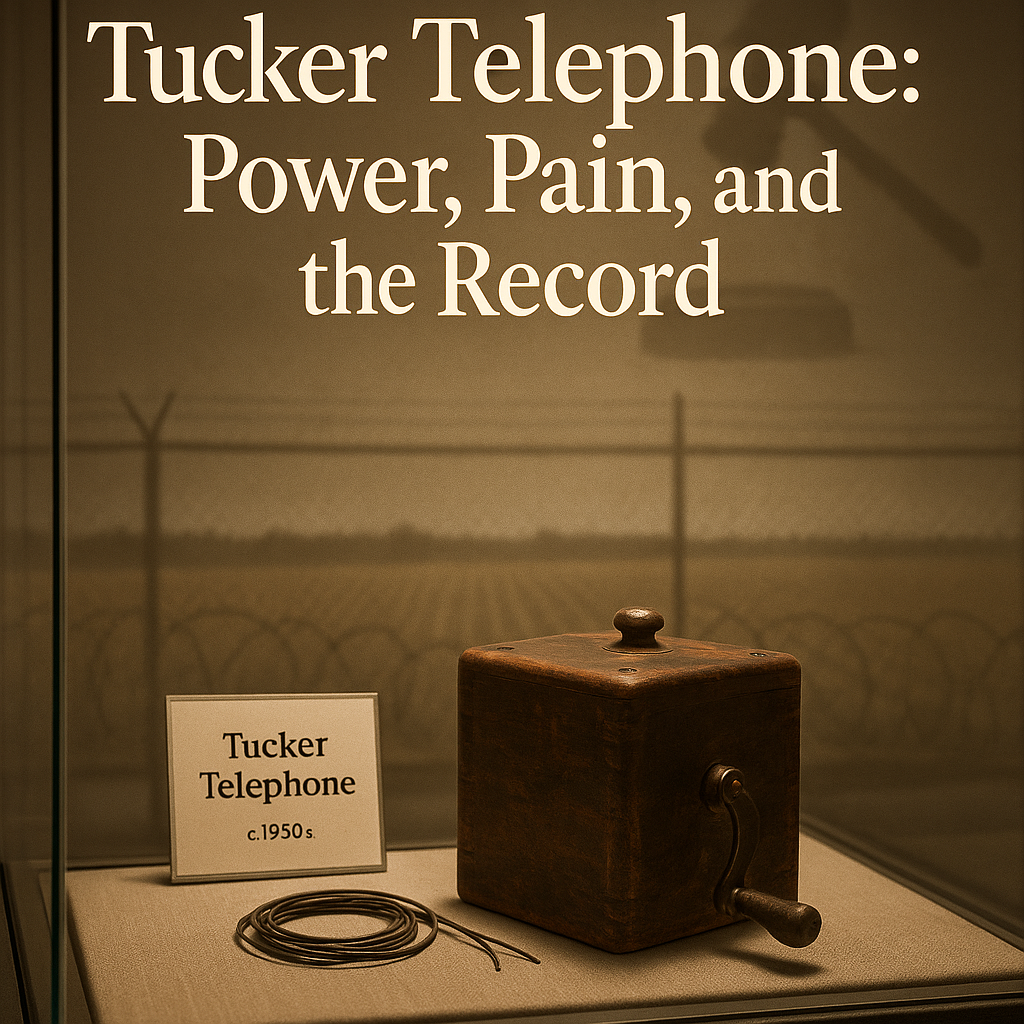
Ep 6The Dark History of the Arkansas Prison and the Tucker Telephone — true crime documentary
Inside Arkansas’s farm prisons, a simple hand-crank box carried a quiet kind of power. This documentary traces how the “Tucker Telephone” moved from a back room to the center of a statewide reckoning. We follow the workdays at Tucker, the trusty system, and the hospital corridor where pain was framed as routine. Then the story widens: a governor releases findings, cameras arrive at Cummins in January nineteen sixty-eight, and a reformer writes it all down. From Jackson v. Bishop in December nineteen sixty-eight to Holt v. Sarver in February nineteen seventy, courts set a floor for dignity and safety. The rulings ended whipping, challenged open barracks and armed trusties, and forced written plans. Change showed up on paper first, then in training rooms, medical charts, and audits. The device faded into a file photo. Memory and oversight took its place. This is a true crime story told as documentary. It leans on dates, lived voices, and plain facts. It asks what protects people when routine starts to drift. It closes with a charge that fits any system under pressure: keep records, keep names, keep watch. Keywords: true crime stories, investigative storytelling, prison history, Arkansas prisons, documentary narratives, human dignity, Eighth Amendment.
Ep 1The Donna Adelson Case: Unveiling True Crime Forensics
Explore the chilling details of the Donna Adelson case, a true crime forensic investigation that unveils the darkness behind this captivating court case. Presented in a clear, third-person documentary style, we dissect the sworn records of the trial day by day. Delve into the separation of allegations from proven facts, and discover the jury's insights during the charge and deliberations. This episode promises a deep dive into the complexities of crime investigation and the pursuit of justice in a world filled with hidden narratives and shadowy conspiracies.
Justice Unveiled: The Mystery of Barbara Schreiber and Darlene Zetterower’s 50-Year Wait
In this episode of The Murder Tape Khronicles, we delve into the chilling double homicide mystery of Barbara Schreiber and Darlene Zetterower, which has haunted Hollywood, Florida since 1975. Two best friends vanished one summer afternoon, leaving a community in shock. The next day, forensic evidence at a canal bank revealed a crime scene that would remain cold for decades. This episode retells their story through a lens of investigative journalism, detailing how advancements in DNA technology finally named two suspects and brought justice to the families after years of unanswered questions. Join Joe and Ryan as they explore the dark history of this case, highlighting the themes of corruption and unsolved mysteries that play a significant role in true crime narratives. Hosted on Acast. See acast.com/privacy for more information.
Ep 4Names and Aftermath — Episode 4 Unveiling the Aftermath of a True Crime
In this episode, we unveil the aftermath of a true crime scandal involving two names that haunted a community. As we dissect the dark history behind this case, families were left grappling with unanswered questions long after the case was closed on paper. What lies beneath the surface of this crime investigation? We explore the lingering mysteries and tension that surrounded these unsolved cases, where justice seemed elusive. Our storytelling uncovers the hidden narratives of pain and betrayal, shedding light on the impact of corruption and conspiracy on everyday lives. Unveiling these harsh realities forces us to confront not only the results of this case but also the complexities of human nature and the unyielding quest for truth. Hosted on Acast. See acast.com/privacy for more information.
Ep 3From Memory to Match — Episode 3 From Memory to Match Unveiling a Cold Case
In this gripping episode of The Murder Tape Khronicles, we delve into an unsolved case that has haunted our community for years. Years of quiet custody met modern DNA advancements, leading us to reopen old paths and expose dark histories. As we revisit the shadows of corruption and conspiracy, fresh interviews yield startling new names in the investigation. Join hosts Joe and Ryan as they explore not only the chilling details of this crime story, but also the criminal justice system's response to similar cases of wrongdoing. Tune in to uncover the hidden narratives and unravel the mysteries that demand justice—after all, every story deserves to be told. Hosted on Acast. See acast.com/privacy for more information.
Ep 2Fear and Evidence — Episode 2 Unveiling the Fear and Evidence Behind 1975’s Darkest True Crime Cases
The summer of 1975 marks a pivotal moment in criminal investigations, unveiling evidence that shaped true crime stories for years to come. This episode delves into the chilling crime investigation surrounding the unsolved murders and scandals that haunted a generation. Detectives worked tirelessly to uncover hidden narratives as rumors spread and fear gripped communities. Join us as we explore these mystery stories and examine how forensic evidence and investigative journalism came together to shine a light on darkness. True crime enthusiasts will find a captivating mix of storytelling, gripping accounts, and a deep dive into the dark history of crime in 1975—revealing what happens when justice is obscured. Hosted on Acast. See acast.com/privacy for more information.
Ep 1Edge of Water — Episode 1 Unveiling a Dark True Crime Mystery
In this gripping episode of The Murder Tape Khronicles, we unveil a dark true crime mystery surrounding a shocking canal-bank discovery that ignited a half-century quest for justice. Two teens vanished from Hollywood, Florida, unraveling a chilling tale that began by the Everglades. The discovery led to a record that ultimately allowed modern DNA technology to speak, shedding light on a long-dormant cold case. Tune in as we explore this haunting investigation, diving deep into the unsolved murders and hidden narratives that have haunted this community for decades. Expect investigative storytelling that’s both chilling and engaging as we dissect the complexities of human nature, corruption, and the relentless pursuit of closure in true crime stories. Hosted on Acast. See acast.com/privacy for more information.
The Lady of the Dunes: A Ruth Marie Terry True Crime Story
Dive into the gripping true crime story of Ruth Marie Terry, known as the Lady of the Dunes, as we unveil the layers of this chilling case. For decades, her identity remained a mystery, shrouded in a dark history that investigators have finally begun to unravel. This investigative storytelling focuses on the meticulous crime investigation, exploring the evidence, identity, and travel that paint a picture of her life and tragic end. With an emphasis on justice and the pursuit of truth, we stay true to the record — no rumors, no filler. Tune in for a fascinating exploration of cold cases and unsolved mysteries, where every detail matters and the truth will be revealed. Hosted on Acast. See acast.com/privacy for more information.

Fingerprints Across Continents: Rita Roberts’ Belgian Murder — True Crime Investigative Cold Case
In this gripping episode, we unveil the 1992 Antwerp homicide of Rita Roberts, tracing the chilling path from initial discovery to recognition and beyond. Our neutral narrator leads listeners through this true crime cold case with a captivating pace reminiscent of Netflix documentaries. Experience a unique crime investigation that reveals how memory, ink, and fingerprints converge on the pursuit of justice. Join us as we explore how cross-border methods and family connections play a pivotal role in this cold case. As layers unfold, the story dives deep into the dark history surrounding the murder, revealing hidden narratives and the enduring impact of crime stories on human nature. Hosted on Acast. See acast.com/privacy for more information.