
The Murder Tape Khronicles | True Crime Secrets Unveiled
476 episodes — Page 3 of 10

Ep 382Murder of Mesha Caldwell
The murder of Mesha Caldwell unfolds as a case defined by absence. Found shot along a quiet Mississippi roadway, her death immediately drew national attention and intense scrutiny, shaped as much by public narrative as by evidence. This three chapter forensic account traces the investigation from the first response through years of unanswered questions, examining how pressure, symbolism, and limited proof collided. It is a story about what happens when a crime becomes a mirror for larger social fears while remaining stubbornly unresolved. At its core, it confronts the gap between justice demanded and justice proven.

Ep 381Murder of Keeshanna Anderson
This three chapter nonfiction forensic series examines the killing of Keeshanna Anderson inside her Ohio home in twenty twenty two. The story follows the investigation from the first police response through the tightening focus on domestic access and responsibility. Told in a neutral but gritty tone, it centers the facts, the timelines, and the pressure investigators faced while four children were left without their mother. The narrative avoids speculation, separates allegation from proof, and keeps dignity at the core. It is a case about violence that did not arrive from outside, but emerged from within a trusted circle.
Ep 380Murder of Aiden Fucci – Killing of Tristyn Bailey
This three-chapter nonfiction forensic series examines the killing of Tristyn Bailey and the prosecution of Aiden Fucci with a hard-edged, factual lens. It traces the case from the moment a teenage girl failed to come home, through the rapid escalation of a homicide investigation, to the legal reckoning that followed. The narrative focuses on verified evidence, investigative pressure, and courtroom outcomes, avoiding speculation and sensationalism. Particular attention is given to the tension between youth and accountability, and to how intent is evaluated when the offender is also a child. The series concludes with the sentencing and the lasting impact on the family, the community, and the broader juvenile justice system.

Ep 379Murder of Siandria Davis
This true-crime account examines the murder of Siandria Davis, an Illinois mother killed inside her own apartment by her intimate partner in two thousand twenty three. Told in a forensic, hard-edged style, the story follows investigators from the first quiet police response through the slow uncovering of a hidden pattern of abuse. Rather than relying on shock, the narrative focuses on evidence, timelines, and the subtle warning signs that were overlooked until it was too late. The case exposes how domestic violence can remain invisible to friends, family, and systems designed to intervene, only revealing itself in its final and most irreversible form.

Ep 378Murder of Isaiah Norman
This three-chapter nonfiction forensic series examines the death of Isaiah Norman following a late-night traffic stop in Tennessee in twenty twenty three. Using synchronized dash camera, body camera, and surveillance footage, the story reconstructs the encounter second by second, separating what is visible and provable from what remains disputed. The narrative follows the escalation from routine stop to physical restraint, the medical findings that explain how life was lost, and the investigative process that shaped the legal outcome. Told in a neutral but gritty forensic voice, the series focuses on evidence, procedure, and consequence rather than speculation or sensationalism. It ends with the unresolved tension between recorded facts, prosecutorial standards, and the lasting cost of a death captured on camera.
Ep 370Murder of Rachel Morin (Maryland, 2023)
A quiet Maryland hiking trail becomes the center of an international homicide investigation after thirty seven year old Rachel Morin is found murdered in broad daylight. What begins as a local crime scene quickly expands into a forensic pursuit that crosses state lines and national borders, driven by DNA evidence linking the killer to violent crimes in multiple countries. Told in a hardline forensic style, this series tracks the investigation from first response to global manhunt, exposing how randomness, mobility, and systemic gaps collide with ordinary life.

Ep 377Murder of Elite Star Barber Tyre Sampson
This three-chapter true-crime series examines the death of fourteen-year-old Tyre Sampson, who fell from the Orlando FreeFall amusement ride in March of twenty twenty two. Through a forensic, fact-driven narrative, the story traces the event from the moment Tyre boarded the ride to the investigations, lawsuits, and criminal charges that followed. The series focuses on how safety systems were altered, how established limits were ignored, and how multiple layers of oversight failed. It avoids speculation and graphic detail, instead exposing the institutional decisions that allowed a preventable death to occur. The narrative centers on accountability, corporate responsibility, and the human cost of negligence in high-risk entertainment.

Ep 376Murder of Rebecca Bliefnick
This true crime account examines the two thousand twenty three murder of Rebecca Bliefnick, a nurse and mother found shot inside her Illinois home during an active divorce and custody dispute. Told in a forensic, chronological style, the story follows the investigation from the first hour at the crime scene through mounting domestic context, evidence pressure, arrest, and trial. The narrative avoids speculation, separating allegation from proven fact, and focuses on access, routine, and documented evidence. At its core, the case explores how private conflict escalated into lethal violence within a familiar space. The outcome delivers legal resolution, but leaves lasting personal and communal damage in its wake.
Ep 375Murder of Irvo Otieno
This three-chapter limited series examines the death of Irvo Otieno inside a Virginia state hospital in twenty twenty three, where a man in mental health crisis died after being restrained by seven deputies during intake. Told in a forensic, documentary style, the story follows the event from the moment Otieno enters the intake room through the evidence review and into the legal and public fallout. The series relies on verified records, video timelines, autopsy findings, and court actions, separating proven facts from allegations at every stage. It focuses on restraint, time, and decision-making under pressure inside an institution meant to provide care. The narrative avoids speculation and centers accountability, systems, and consequences. The tone remains gritty, controlled, and grounded throughout.

Ep 374Murder of Christina Powell Texas, twenty twenty two
This three-chapter nonfiction forensic series examines the murder of Christina Powell in Texas, twenty twenty two, tracing her disappearance, the discovery of her body inside her vehicle, and the investigation that followed. Told in a hardline, fact-driven voice, the story focuses on timelines, evidence, and investigative pressure rather than spectacle. The narrative exposes how routine days, quiet stress, and subtle control can mask escalating danger. Each chapter builds without overlap, moving from uncertainty to confirmation, and ending with the lasting impact on family, investigators, and community. The series emphasizes dignity, clarity, and the cost of distress that goes unnoticed.
Ep 369Murder of Manuel Esteban Páez Terán – “Cop City” Shooting
This series follows the death of Manuel Esteban Páez Terán during a police clearing operation in the South River Forest of Georgia. The story moves through the tense moments of the raid, the chaotic exchange that left one person dead and an officer wounded, the forensic battle over what happened inside a closed tent, and the national fallout that erupted when evidence failed to produce a single clear truth. Each chapter escalates the pressure between state power, protest resistance, and the limits of forensic certainty.
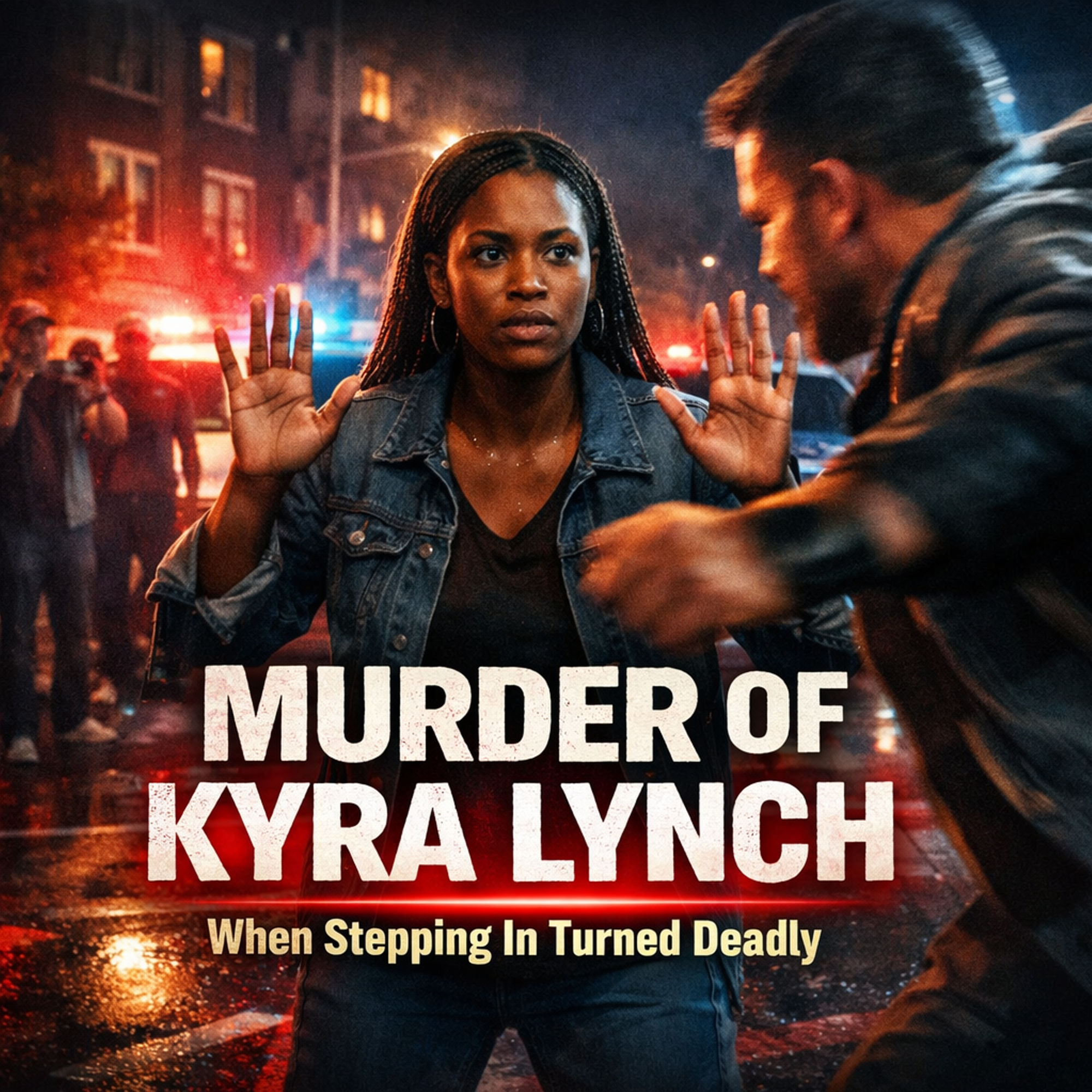
Ep 368Murder of Kyra Lynch (Illinois, 2023)
In twenty twenty three in Illinois, Kyra Lynch was killed after stepping into a street fight she did not start and did not belong to. Her attempt to calm a volatile situation lasted only seconds, but the consequences were permanent. This nonfiction forensic account follows the investigation from the chaotic first response through the legal decisions that followed, examining how bystander intervention can turn deadly and how the justice system weighs intent, chaos, and responsibility when a third party is killed trying to stop violence.
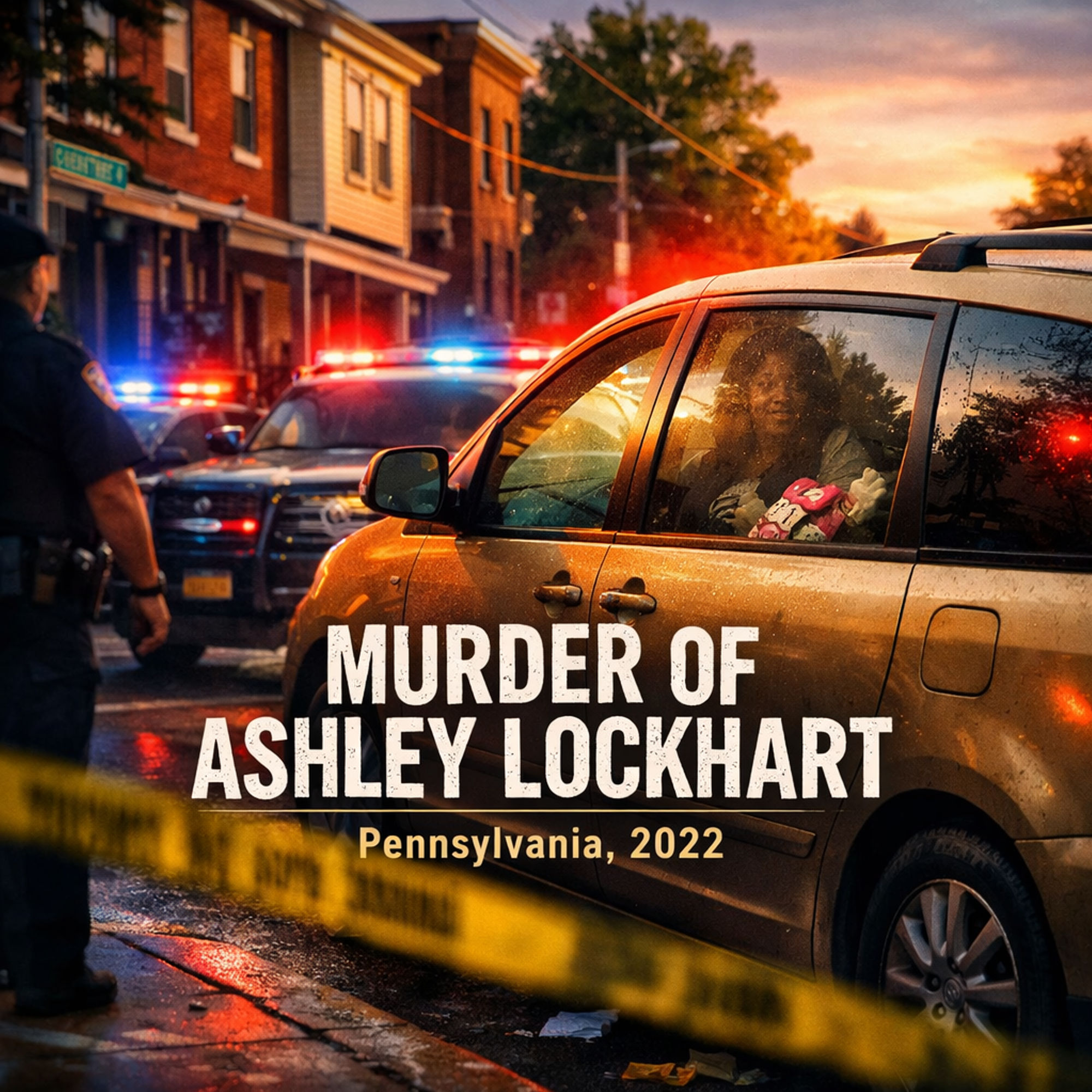
Ep 367MURDER OF ASHLEY LOCKHART
Ashley Lockhart was a mother of six trying to navigate separation, fear, and daily life when her story ended in broad daylight on a West Philadelphia street. In August twenty twenty two, she was found stabbed inside her minivan despite having a protection from abuse order against her partner. The case moved quickly from discovery to arrest, exposing the gap between legal safeguards and real world safety. Told in a forensic, pressure driven style, this three chapter series examines the investigation, the plea that avoided a jury trial, and the lasting cost left behind for Ashley’s children and community.
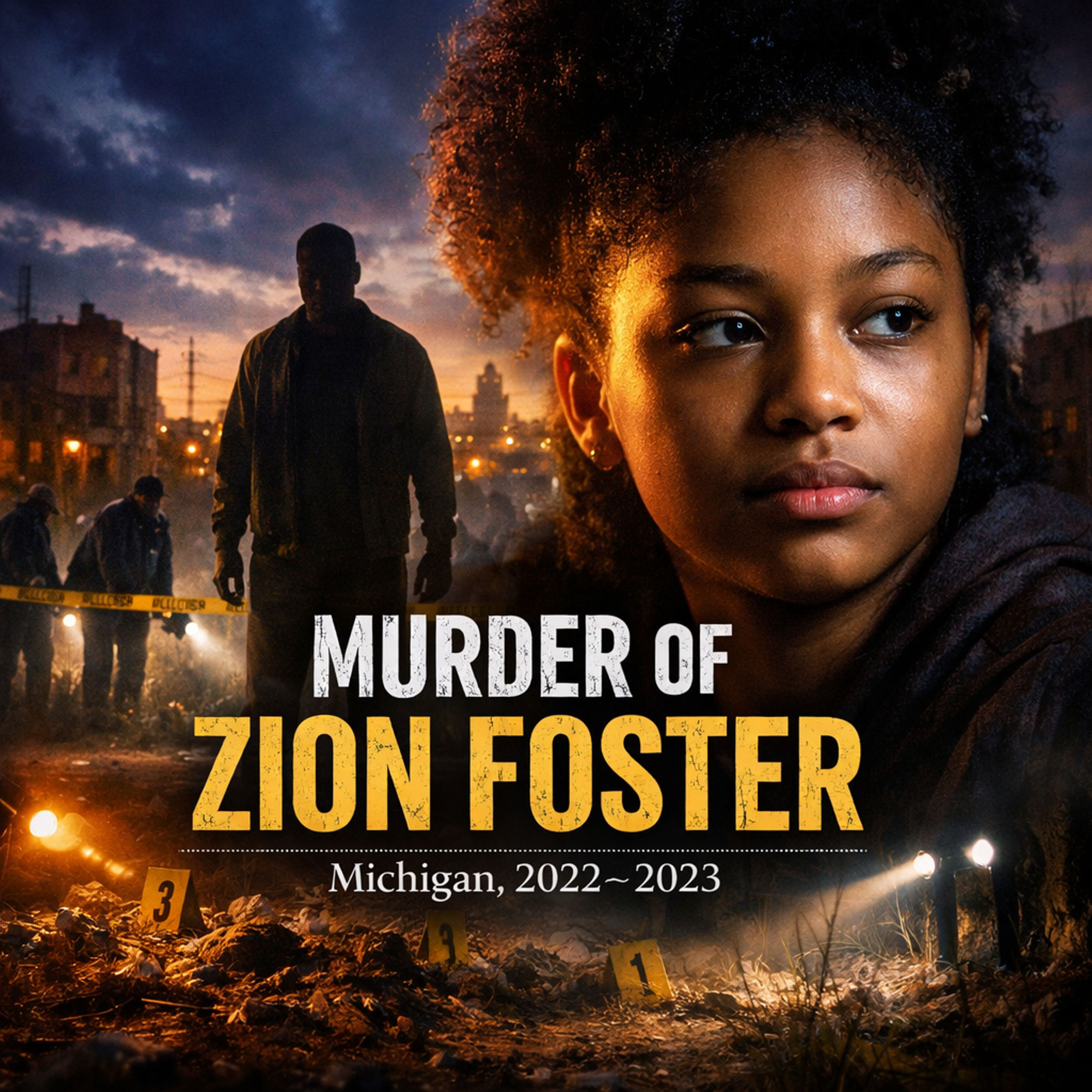
Ep 366Murder of Zion Foster
This three-chapter true crime series examines the disappearance and murder of seventeen-year-old Zion Foster in Michigan, tracing how an early runaway assumption delayed urgency and shaped the outcome of the case. Told in a forensic, grit-driven style, the story follows the investigation from Zion’s sudden silence to the discovery of her remains and the controversial plea deal that closed the case. It focuses on pressure, power imbalance, institutional limits, and the cost of decisions made too late.

Ep 365MURDER OF ELLA GOODIE
A routine rideshare shift turns fatal when Ella Goodie vanishes during her final trip, triggering a multi state investigation that exposes how quickly ordinary work can become lethal. As digital records replace eyewitnesses and a suspect moves across borders, investigators race against time to determine what happened inside a car that left almost no physical trace. This case follows the forensic reconstruction of Ella’s last hours, the pursuit of the man tied to her disappearance, and the hard reality of justice that arrives too late to save her.
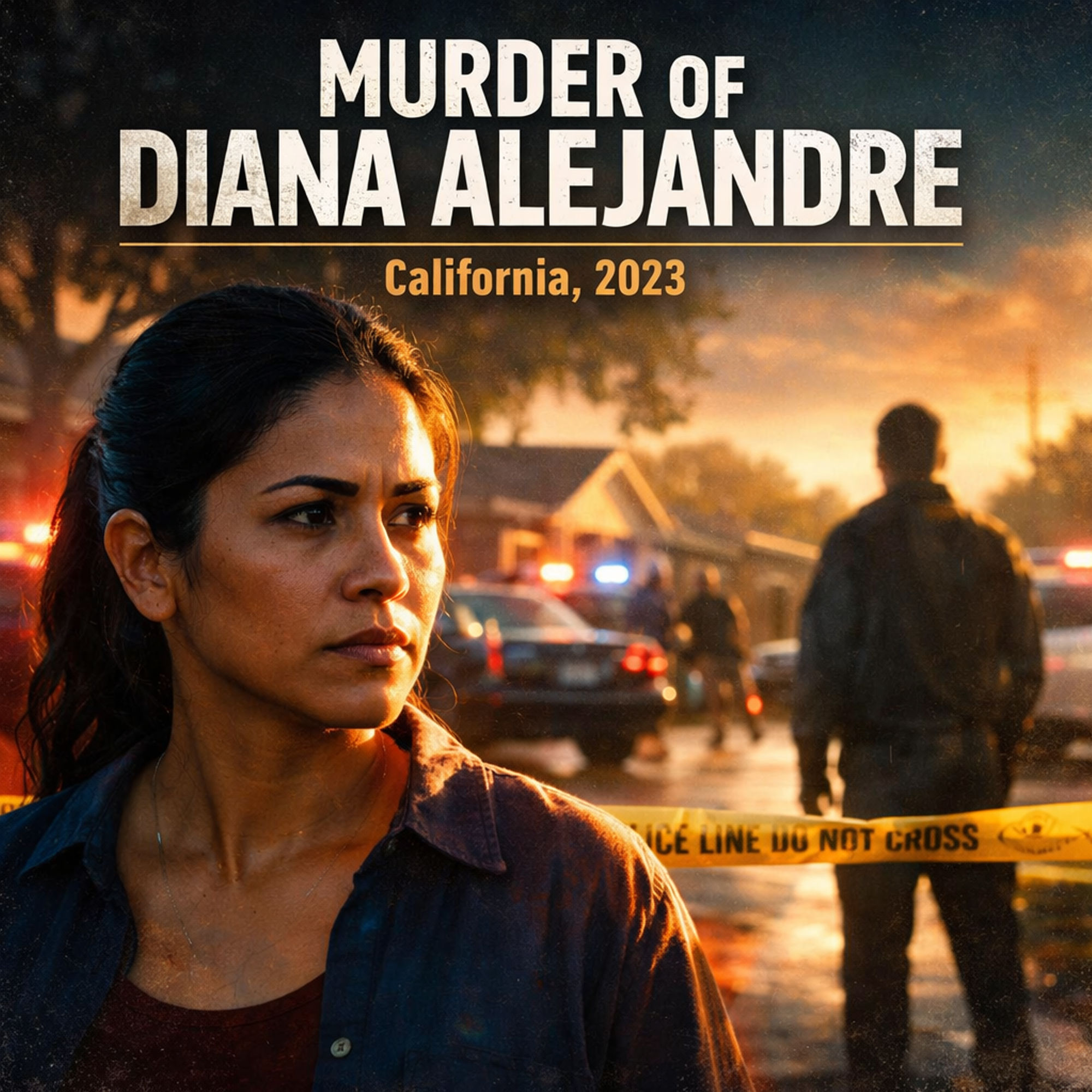
Ep 364MURDER OF DIANA ALEJANDRE California, 2023
The Murder of Diana Alejandre examines how a routine custody dispute in California escalated into lethal violence. Told in a gritty, forensic style, the story follows investigators as they piece together the final days of a mother whose growing fear went largely unseen by the systems meant to protect her. Through digital evidence, witness accounts, and methodical police work, the case exposes how pressure, control, and unresolved conflict can turn deadly without warning.
Ep 363MURDER OF BRANDON SMOTHERS
The Murder of Brandon Smothers is a gritty, forensic true-crime narrative that examines the fatal shooting of a high school athlete at a crowded party in Louisiana in two thousand twenty one. Told with restraint and urgency, the story traces the night violence erupted, the investigation that followed, and the lasting impact on a family and community left without clear answers. It focuses on evidence, silence, and the cost of a moment that changed everything.
Ep 362Murder of Mark Garrity (Oregon, twenty twenty three)
This three chapter limited series reconstructs the killing of Mark Garrity in an Oregon grocery store parking lot after a road rage confrontation spiraled beyond control. Told in a hardline forensic style, the story follows the incident from the first raised voices through the rapid police response, arrest, and legal aftermath. Ordinary routines, split second decisions, and access to a firearm converge, showing how quickly everyday conflict can turn irreversible when anger is carried forward instead of contained.

Ep 361Murder of James Scurlock
This hardline true-crime forensic series reconstructs the killing of James Scurlock during a night of protest unrest in Omaha, Nebraska, in May twenty twenty. Told in a neutral, grounded voice, the narrative traces the incident from the chaotic street encounter through the investigation, legal decisions, and lasting civic fallout. The case became a dividing line for the city, raising unresolved questions about self defense, armed civilians, protest dynamics, and the gap between legal closure and public acceptance.
Ep 360Murder of Maria Beltran
In the early morning darkness of a quiet Texas neighborhood, nurse Maria Beltran steps outside for her routine walk and is fatally shot near her driveway. What initially appears as a sudden act of violence quickly reveals signs of planning, precision, and familiarity. This nonfiction forensic narrative follows investigators as they move from a silent crime scene to an increasingly narrow field of possibilities, confronting the limits of evidence, time, and certainty while a community struggles to understand how such violence reached their street.
Ep 359MURDER OF KATIE BAUNACH
The Murder of Katie Baunach examines the final hours of a Florida woman who vanished after visiting her ex-husband in twenty twenty two. What began as a routine welfare check quickly exposed a violent crime rooted in jealousy, control, and unresolved conflict. Through forensic evidence, digital timelines, and investigative pressure, the case traces how a private visit turned fatal and how proof, not speculation, ultimately determined accountability.
Ep 358Murder of Abby Choi
A restrained, forensic account of the twenty twenty three killing of Abby Choi, a Hong Kong model whose disappearance revealed a carefully planned crime rooted in family access and financial control. The story follows investigators as a routine missing persons report turns into a homicide case involving an ex husband and his relatives. Told with a gritty but factual tone, it focuses on evidence, timelines, and betrayal rather than spectacle.
Ep 357Killing of Ty’Relle Lumen
This forensic true crime account examines the killing of three year old Ty’Relle Lumen in Florida in twenty twenty three, after he was left strapped in a hot car and died from hyperthermia. Told in a neutral, gritty documentary tone, the story reconstructs the final hours, the investigative timeline, and the legal reasoning that transformed neglect into a homicide ruling. It focuses on responsibility, preventability, and the irreversible cost of routine failures in child care.

Ep 356Murder of Eric Richins
This three-part true crime series examines the death of Eric Richins, a Utah husband who died from fentanyl poisoning in March twenty two, twenty twenty two. What first appeared to be a sudden and tragic loss inside a quiet family home evolved into a high-stakes homicide investigation centered on his wife, Kouri Richins. Told in a forensic, grounded voice, the series traces the final night of Eric’s life, the hidden pressures inside the marriage, and the evidence that led prosecutors to allege a calculated act of murder, made more disturbing by the public image presented afterward.

Ep 355The Case of Kasia Rivera
A forensic investigation unfolds after a six-month-old infant arrives at a New Jersey hospital with fatal injuries that do not match any accidental cause. As medical evidence builds, detectives track the narrow timeline of care inside the home and confront the caregiver whose statements cannot hold against the autopsy findings. The case moves from confusion to criminal certainty, ending in charges, a plea, and a sentence that confirms the weight of the facts.
Ep 354Murder of Yusef Wakil
Murder of Yusef Wakil examines the fatal stabbing of a New York City taxi driver during a routine late night fare in twenty twenty three. Told in a forensic, documentary style, the story follows the final moments of an ordinary shift that turned deadly, the investigation that followed, and the wider danger faced by drivers who work alone after dark. It is a grounded account of sudden violence, investigative pressure, and the cost of keeping a city moving while most people sleep.

Ep 353The Murder of Daniel Saldana
A California homicide case once labeled solved unravels decades later, exposing how speed, pressure, and institutional self-protection can destroy lives. The murder of Daniel Saldana leads to a swift arrest, a thin case, and a conviction that stands for thirty three years. When the real shooter finally confesses in twenty twenty three, the truth forces the system to confront a failure it resisted for generations. This is a forensic account of how justice can lock in error, how innocence can be buried by procedure, and how truth often arrives long after the damage is done.

Ep 352Murder of Brianna Kupfer
A young UCLA graduate student is killed while working alone in a Los Angeles furniture store, stabbed by a stranger in the middle of an ordinary afternoon. Built from surveillance footage, text messages, police records, and court filings, this three-chapter forensic narrative reconstructs how the crime unfolded, how the suspect was identified and arrested, and how the case ignited a wider public reckoning over safety, homelessness, and system failures. The story stays grounded in verified facts while capturing the tension, vulnerability, and unanswered questions left behind.
Ep 351Murder of Lauren Heike
A woman sets out on a familiar Arizona hiking trail and never returns. The murder of Lauren Heike in twenty twenty three turns a routine afternoon into a citywide emergency, forcing investigators to hunt for a killer who vanished in plain sight. This forensic narrative follows the attack, the urgent manhunt, and the evidence trail that led to an arrest, revealing how sudden violence can erupt in ordinary public spaces.

Ep 350Murder of Philadelphia Journalist Josh Kruger
A Philadelphia journalist is shot inside his own home before dawn, triggering immediate fear of targeted violence and political retaliation. As the city reacts and speculation spreads, investigators follow a quieter trail inside the house itself. What begins as a story about public risk and press freedom turns into a forensic examination of proximity, evidence, and how fast narratives can outrun facts. The case forces a reckoning with assumption, credibility, and the cost of being wrong in the first hours after violence.
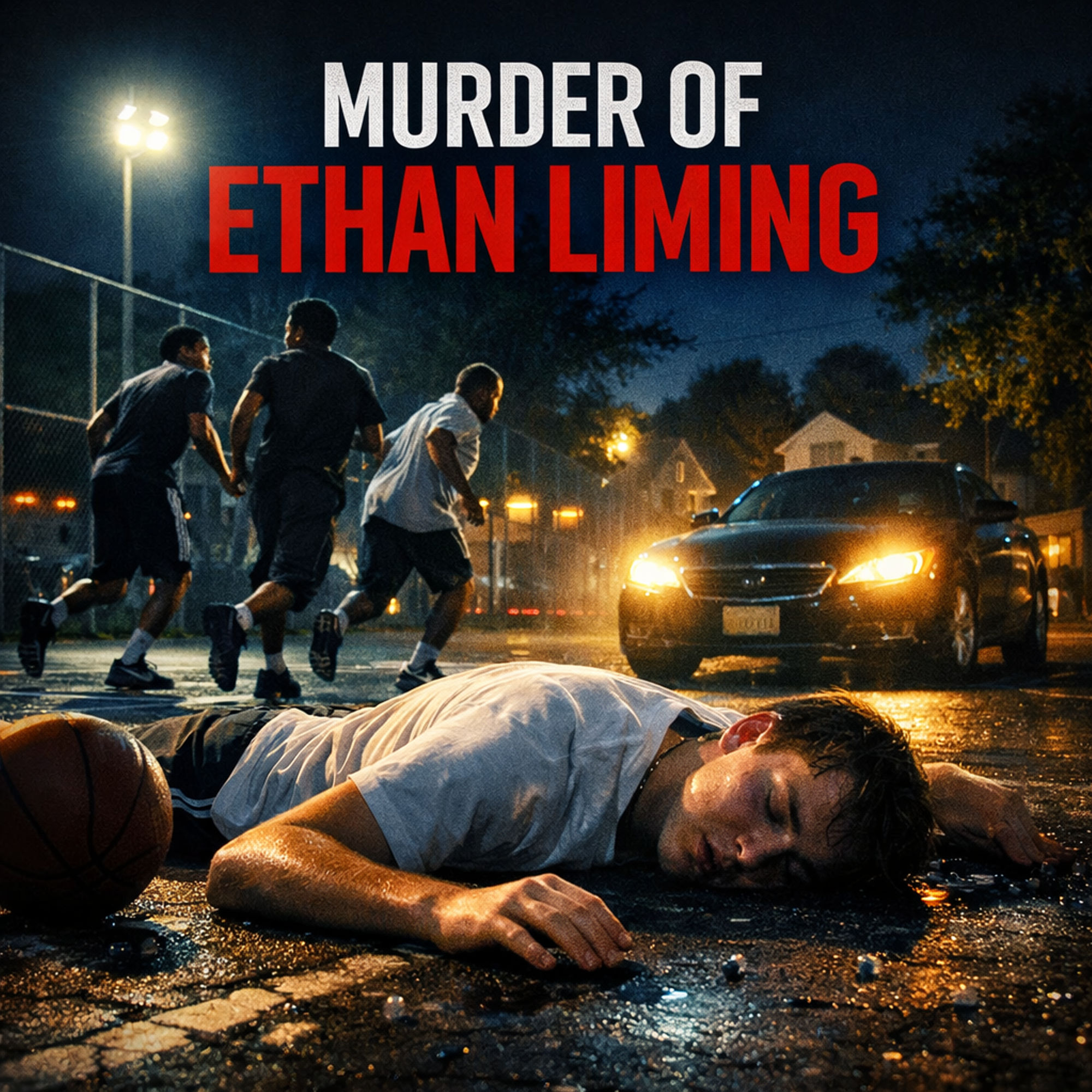
Ep 349Murder of Ethan Liming
The Murder of Ethan Liming examines how a late night basketball game in Akron, Ohio turned deadly after a group of teenagers fired toy gel blasters as a prank. What followed was a fast moving confrontation that escalated into a group assault, leaving a young man dead on the pavement. Told in a restrained forensic style, the story tracks the incident from the first provocation through the investigation and court outcomes, focusing on how minor choices and unchecked escalation can produce irreversible consequences.
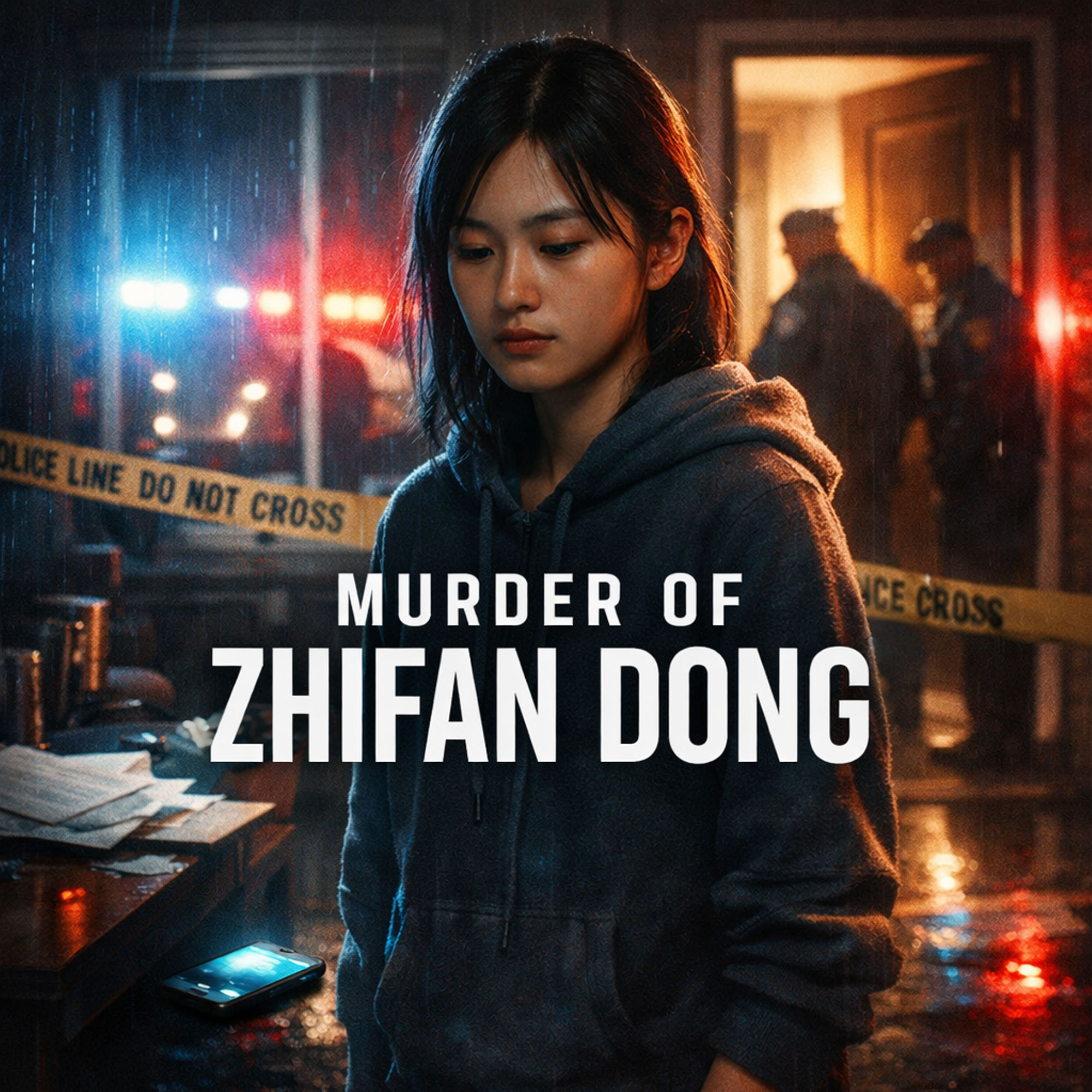
Ep 348Murder of Zhifan Dong
This three-chapter true crime forensic series examines the murder of Zhifan Dong, a Utah college student killed in twenty twenty two by her boyfriend after multiple reports of domestic abuse failed to trigger effective intervention. Told in a neutral, investigative voice, the story traces the final days, the warning signs that were documented but fragmented across systems, and the aftermath that followed her death. It is not a mystery about who committed the crime, but a case study in how institutional gaps, procedural limits, and isolated decision-making allowed a visible risk to escalate unchecked.
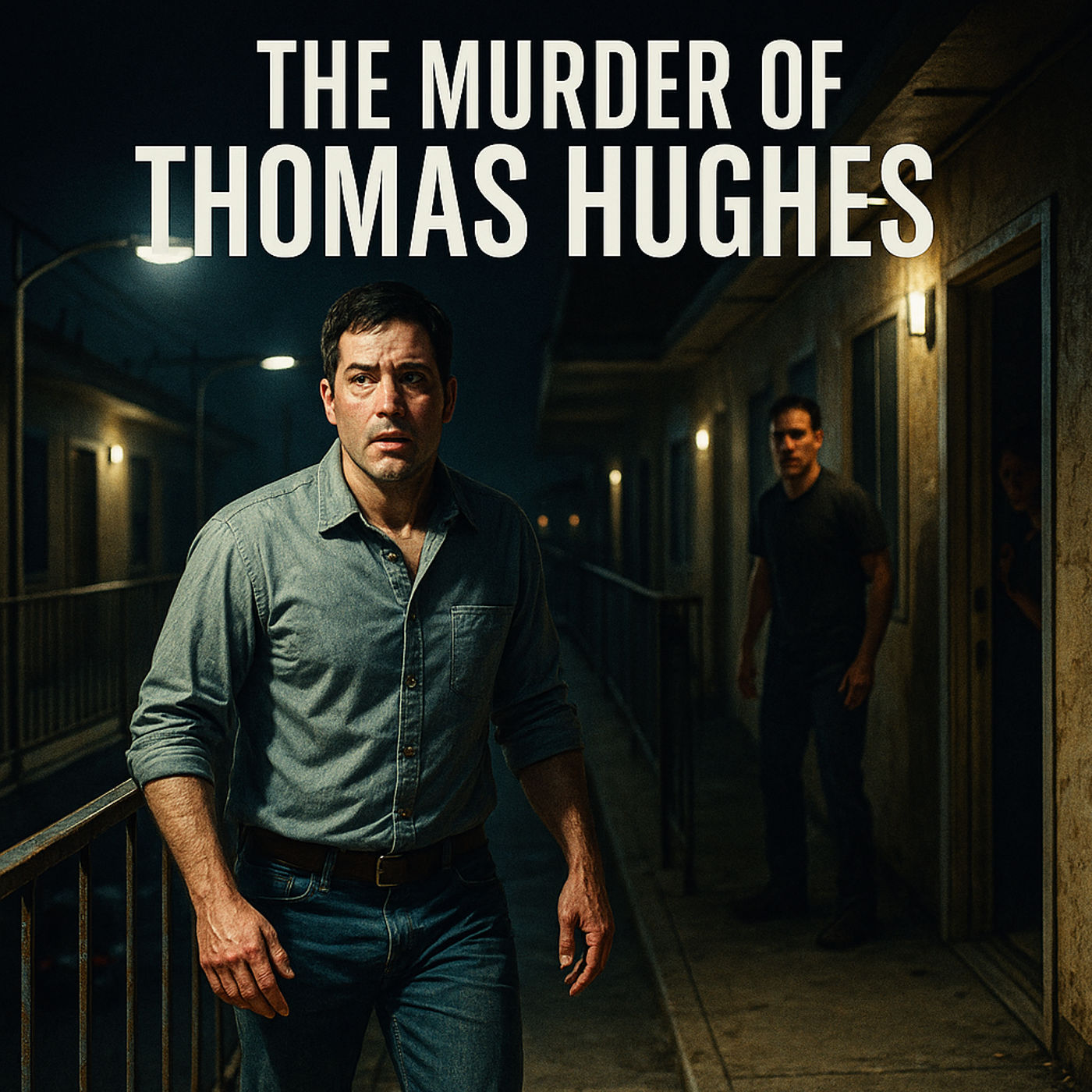
Ep 346Murder of Thomas Hughes (Nevada, 2023)
Murder of Thomas Hughes (Nevada, 2023) is a nonfiction forensic true-crime series examining a fatal confrontation inside a crowded Nevada apartment complex. When thirty-four-year-old Thomas Hughes is found gravely injured near the stairwell, detectives step into a world shaped by thin walls, rising tensions, and conflicting accounts from frightened residents. As evidence is collected, early claims of self-defense collide with forensic inconsistencies. Camera blind spots, muffled audio, and fast-moving events leave investigators with only fragments of the truth. The case exposes how community friction, noise disputes, and fear inside close-quarters living can escalate far faster than anyone expects. The series follows detectives as they rebuild the final minutes of Thomas’s life, searching for clarity in a place where almost nothing is seen clearly, and where justice depends on the fine details left behind.

Ep 345The San Jacinto Mall Homicide – Killing of Jada Spain (Texas, 2022)
A sixteen-year-old girl disappears on a quiet Friday night in Baytown, Texas, only to be found dead inside the abandoned San Jacinto Mall. What begins as a missing-teen case quickly unravels into a chilling web of jealousy, fake accounts, and secret meetings orchestrated by the very people she once trusted. As detectives trace footprints through the dust-filled corridors, a hidden circle of lies begins to crack open. Every friend has a story. Only one of them has the truth.
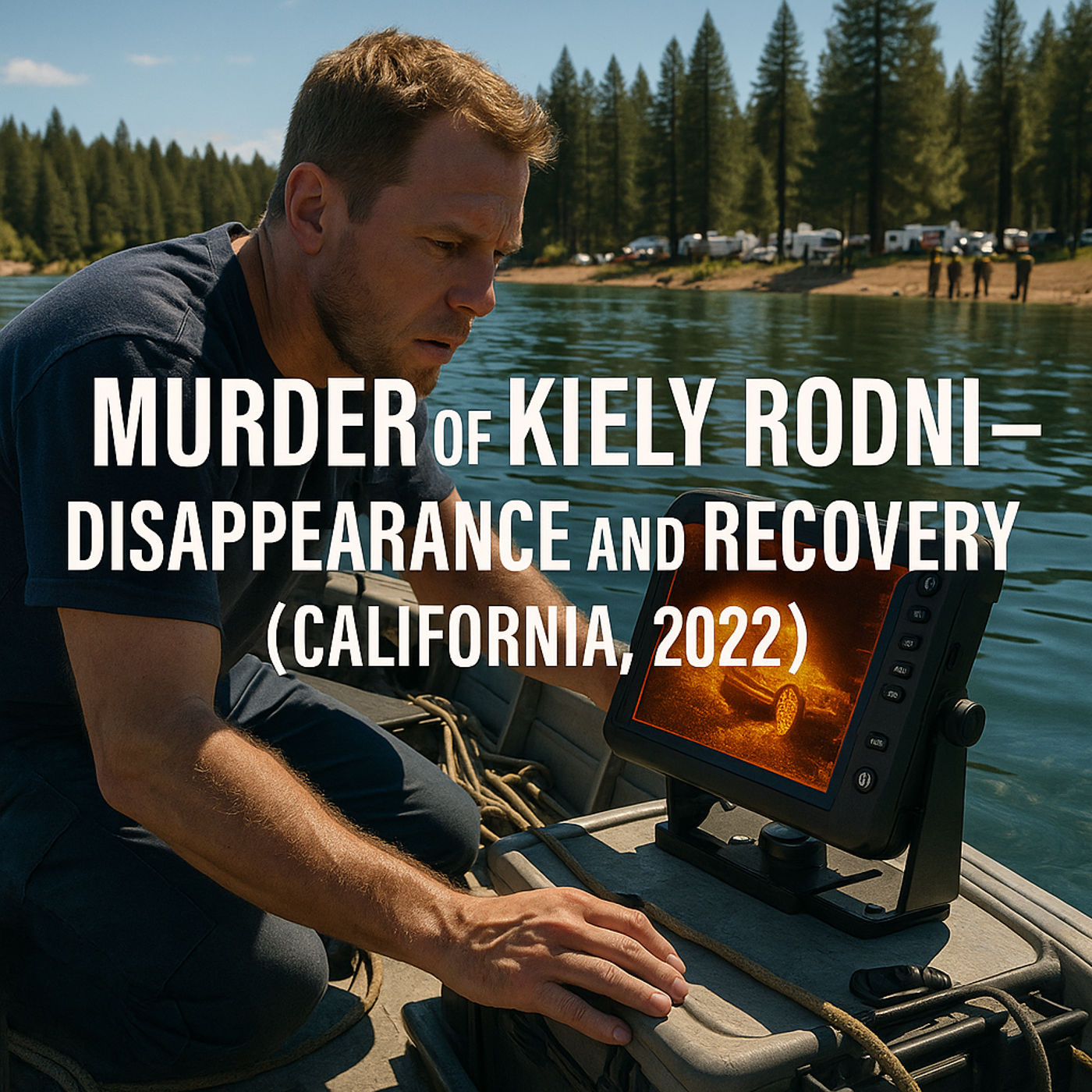
Ep 342Murder of Kiely Rodni – Disappearance and Recovery (California, 2022)
A quiet campground sits beneath the early morning sky, the water of Prosser Creek Reservoir still and dark beside it. Search crews walk the shoreline while helicopters sweep overhead, their light skimming across empty water that hides what no one can yet see. Volunteers move through trees marked by tape. Maps spread across makeshift tables show circles, arrows, and widening zones that reveal how quickly the case has grown beyond its starting point. Days pass. Rumors spread. The reservoir that should have produced answers remains silent. Sonar boats trace the water in slow arcs, each scan returning the same result: nothing. Pressure builds as media vans line the dirt road and community groups fan out into deeper terrain. The search expands in every direction except the one that holds the truth. Then, in the third week, a volunteer dive team launches quietly into the reservoir. Their sonar captures a shape that earlier sweeps missed. A vehicle sits nose-down in the shallow water, only yards from where the search began. Its recovery shifts the entire investigation. The discovery reveals the truth, but it also raises new questions about how such a large object remained unseen for so long.

Ep 344Murder of Zhifan Dong (Utah, 2022)
“Shadows Over Salt Lake” follows the final months of Zhifan Dong, a young international student trying to build a new life in Utah. What begins as a quiet campus romance quickly darkens into a pattern of control, fear, and escalating danger. Despite multiple reports, warnings from friends, and her own attempts to create distance, the systems meant to protect her stall under paperwork, policy gaps, and miscommunication. As winter closes in around the university, Zhifan makes one last attempt to end the relationship clearly, unaware that her decision will spark a desperate and tragic chain of events. Told in a cinematic, scene-driven style, this story exposes how small administrative failures can grow into fatal outcomes, and how a young woman’s quiet warnings were lost until it was too late.
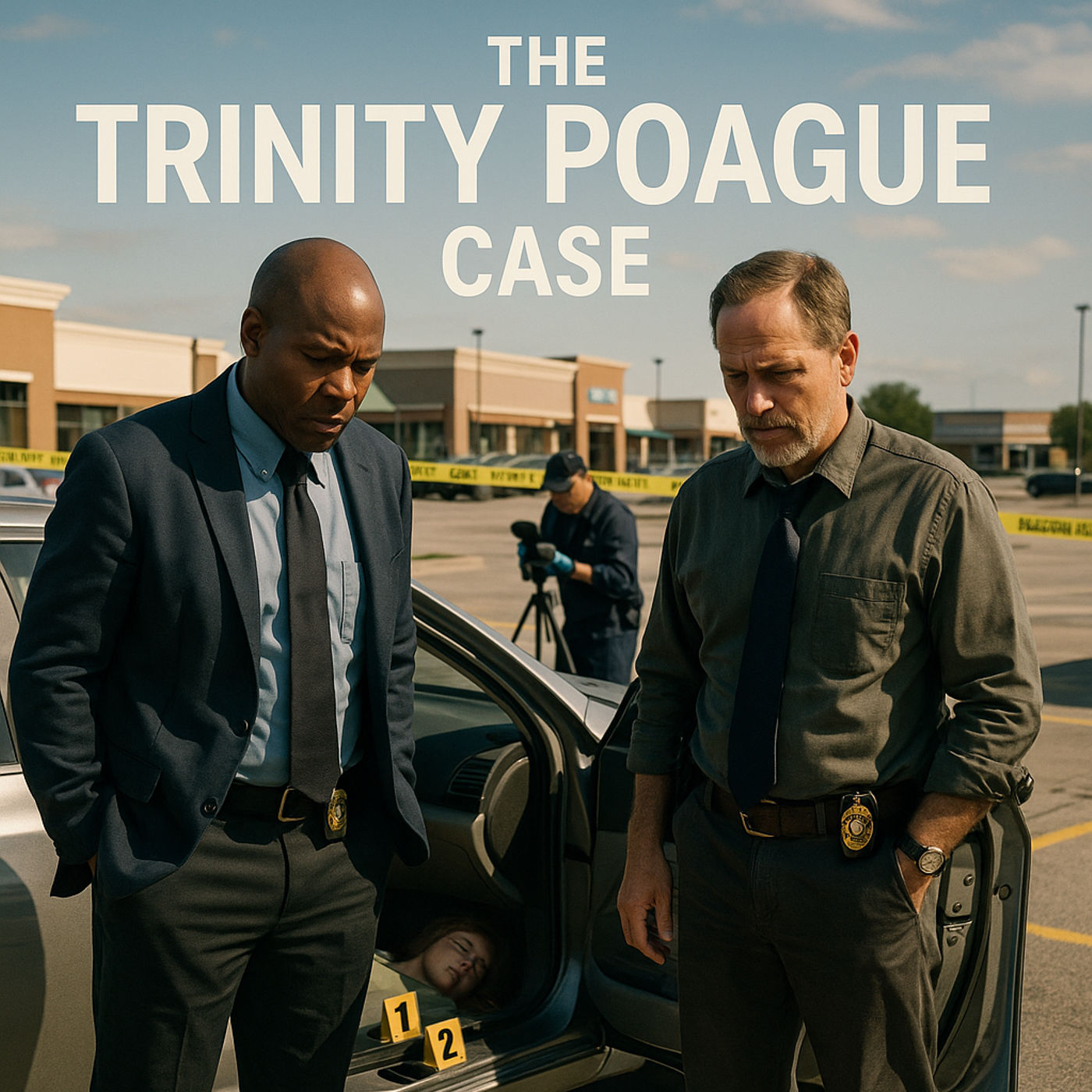
Ep 347The Trinity Poague Case
Trinity Poague’s final hours began without warning. Her day was normal. Her conversations were routine. Nothing pointed toward danger. But the next morning, officers found her unresponsive inside a parked car on the edge of a quiet shopping lot. There were no injuries. No signs of struggle. No indication of violence. The scene gave detectives almost nothing to work with. What followed was a methodical investigation that stretched from family interviews to surveillance pulls, digital data, and weeks of forensic testing. Detectives rebuilt the timeline minute by minute. They tracked her last messages. They spoke with friends and reviewed every location she might have visited. The blank hours in the night carried the weight of the case. Lab work and medical examination provided the break that the scene never revealed. Toxicology showed a fatal level of substances consistent with an accidental overdose. No evidence pointed to another person. No digital trail suggested coercion. No physical sign contradicted the medical findings. In the end, the case showed a quiet tragedy unfolding in private moments. The story follows the detectives who carried the weight of bringing clarity to a loss that left a community grieving and searching for understanding.
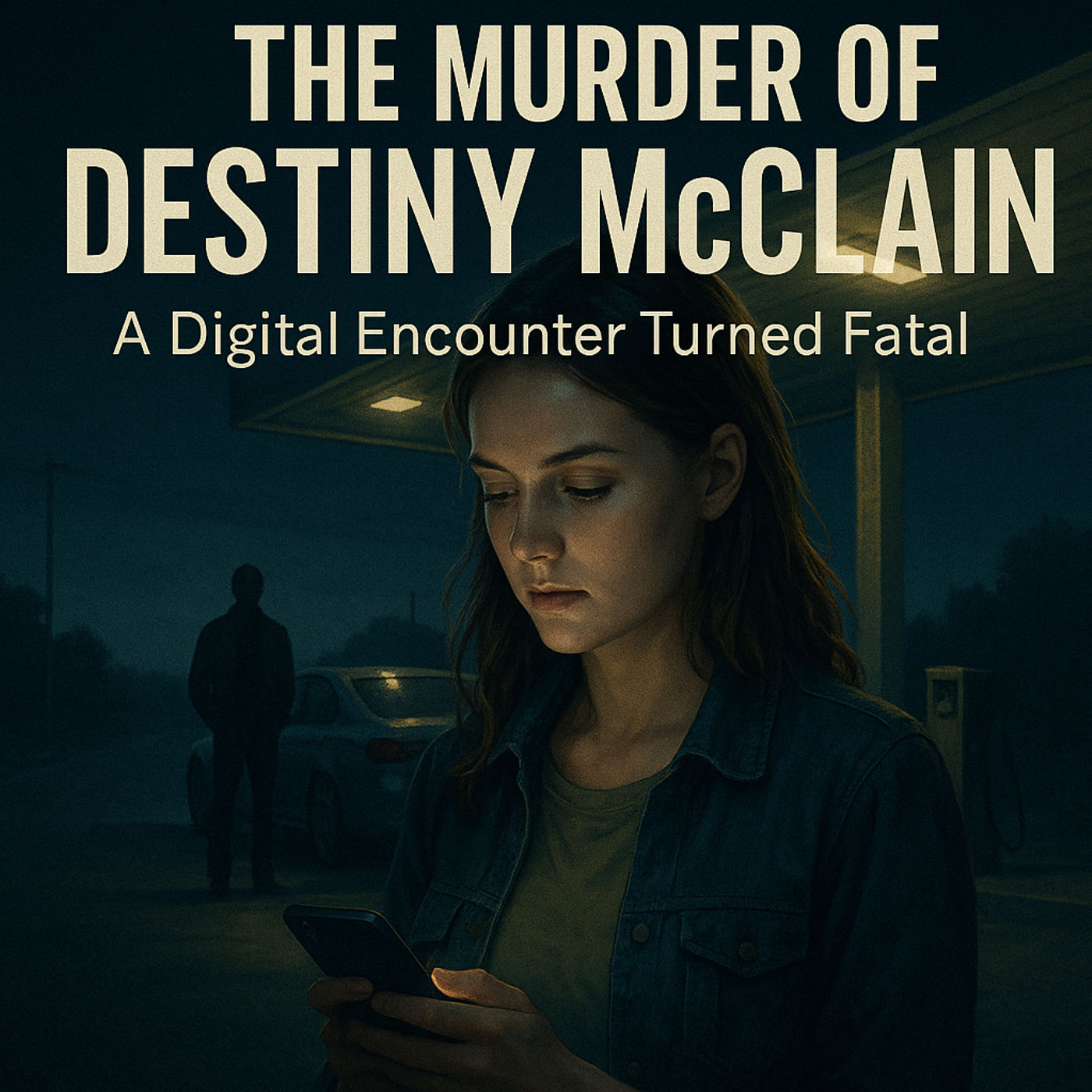
Ep 341Murder of Destiny McClain (Texas, 2023)
A young Texas mother, Destiny McClain, steps out one quiet evening in late twenty twenty three for a hopeful first meeting with a man she connected with online. By morning, she is found dead in a rural pull-off, and the investigation sparks a race against the clock. Detectives trace her final movements through gas-station footage, a silent phone, a mysterious silver sedan, and a dating profile built on a fabricated identity. As digital forensics collide with physical evidence, a hidden pattern forms: a prepaid phone tied to an alias, a location beacon near a quiet neighborhood, and fibers matching the inside of a single car. What begins as a missing-person search becomes a chilling portrait of how quickly trust can be manipulated in the digital world. The story follows investigators as they break through layers of secrecy, match fragments of data, and confront the man whose online mask stood at the center of Destiny’s final hours. Her case exposes the unseen dangers of online meetups and the brutal cost that unfolded when hope crossed paths with deception.
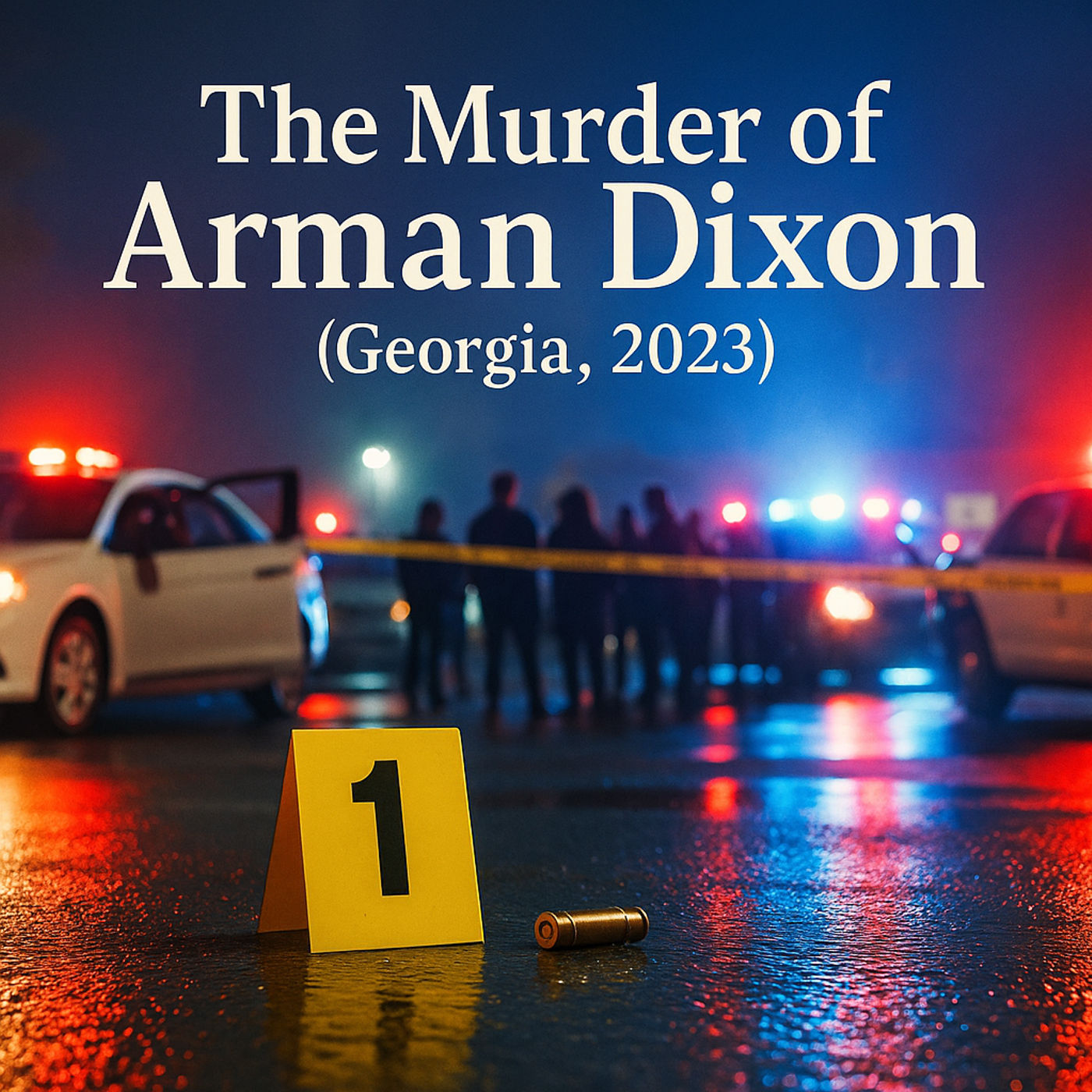
Ep 343The Murder of Arman Dixon (Georgia, 2023)
The night was supposed to be quiet. A simple Friday gathering in a Georgia school parking lot, where teenagers talked, laughed, and lingered around their cars. But within minutes, the entire lot transformed into a crime scene. Flashing lights washed over the pavement as officers found seventeen-year-old Arman Dixon on the ground while shaken students hovered nearby. Detectives pieced together a timeline filled with digital clues, witness contradictions, and rising tension hidden inside group chats. Phone videos revealed movement, surveillance footage showed a shadowed figure in a hoodie, and lab work tied casings to a single nine millimeter handgun. The gun had passed through several young hands during the week, each step undocumented and unnoticed. A digital break finally exposed the truth. A message promising to “bring something tonight,” a hoodie holding residue, footprints leading away from the lot, and a teen’s shifting story pulled the investigation into focus. The final confrontation at the station cracked the case open. By the end, charges were filed and Georgia found itself thrust into a statewide debate about teen gun access, accountability, and the systems that failed to prevent a tragedy.
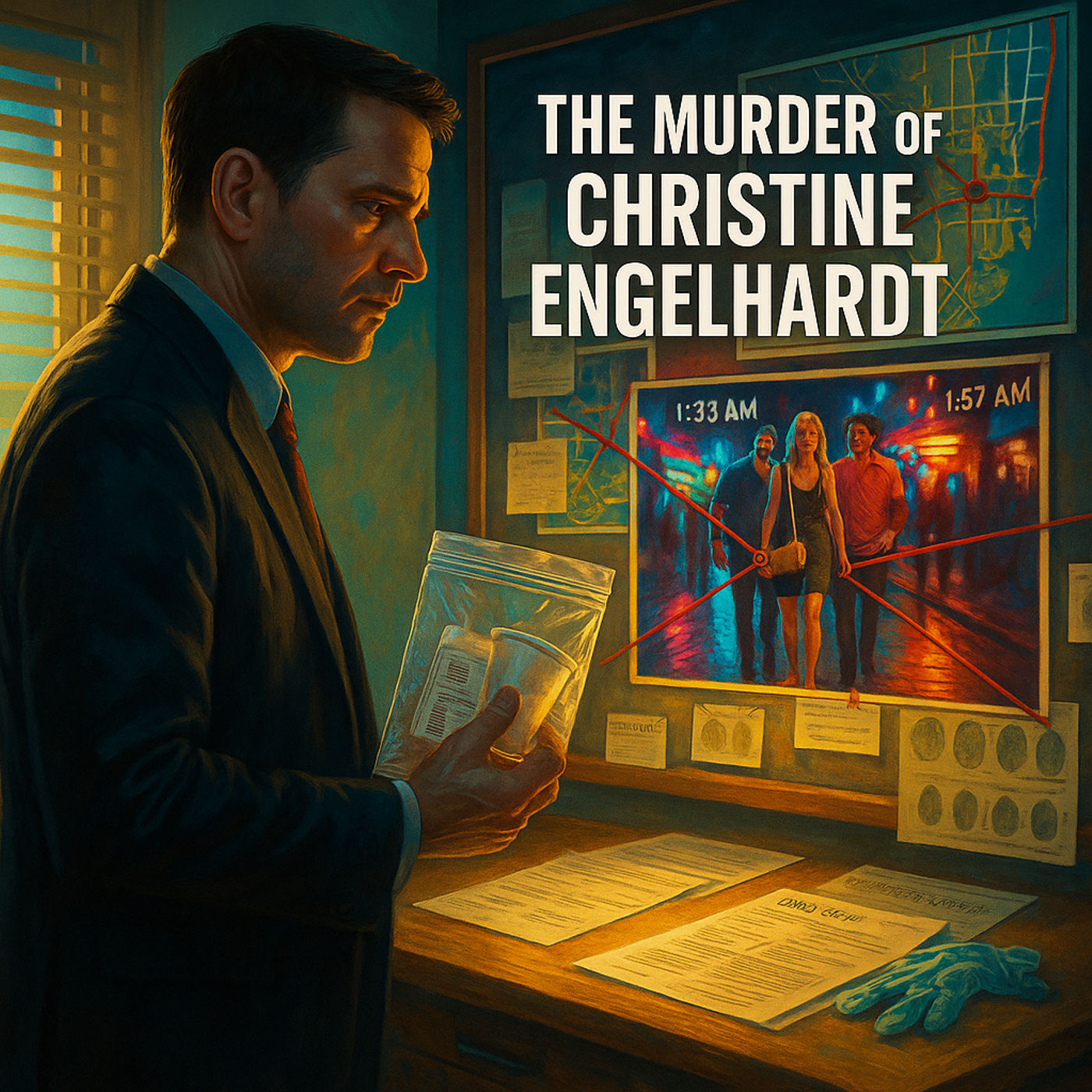
Ep 340The Murder of Christine Engelhardt
Christine Engelhardt traveled to Miami Beach for a short spring-break getaway, expecting warm nights and calm days in the sun. Instead, her final hours unfolded along crowded bars on Ocean Drive, where she met two men who stayed close to her as she became steadily impaired. Surveillance cameras captured the group moving through the night, then returning to her hotel room in the early hours of March eighteen. By morning, Christine was found unresponsive. The investigation that followed moved piece by piece: footage that filled in her movements, toxicology results showing a sedative, forensic tests linking the men to the room, and interviews marked by shifting stories. Detectives built a timeline from the ground up until the evidence revealed a clear pattern of vulnerability, opportunity, and failure to seek help. The case raised national questions about tourist safety, nightlife risks, and the gaps that can turn a simple vacation into a tragedy that sends shockwaves far beyond one hotel room.
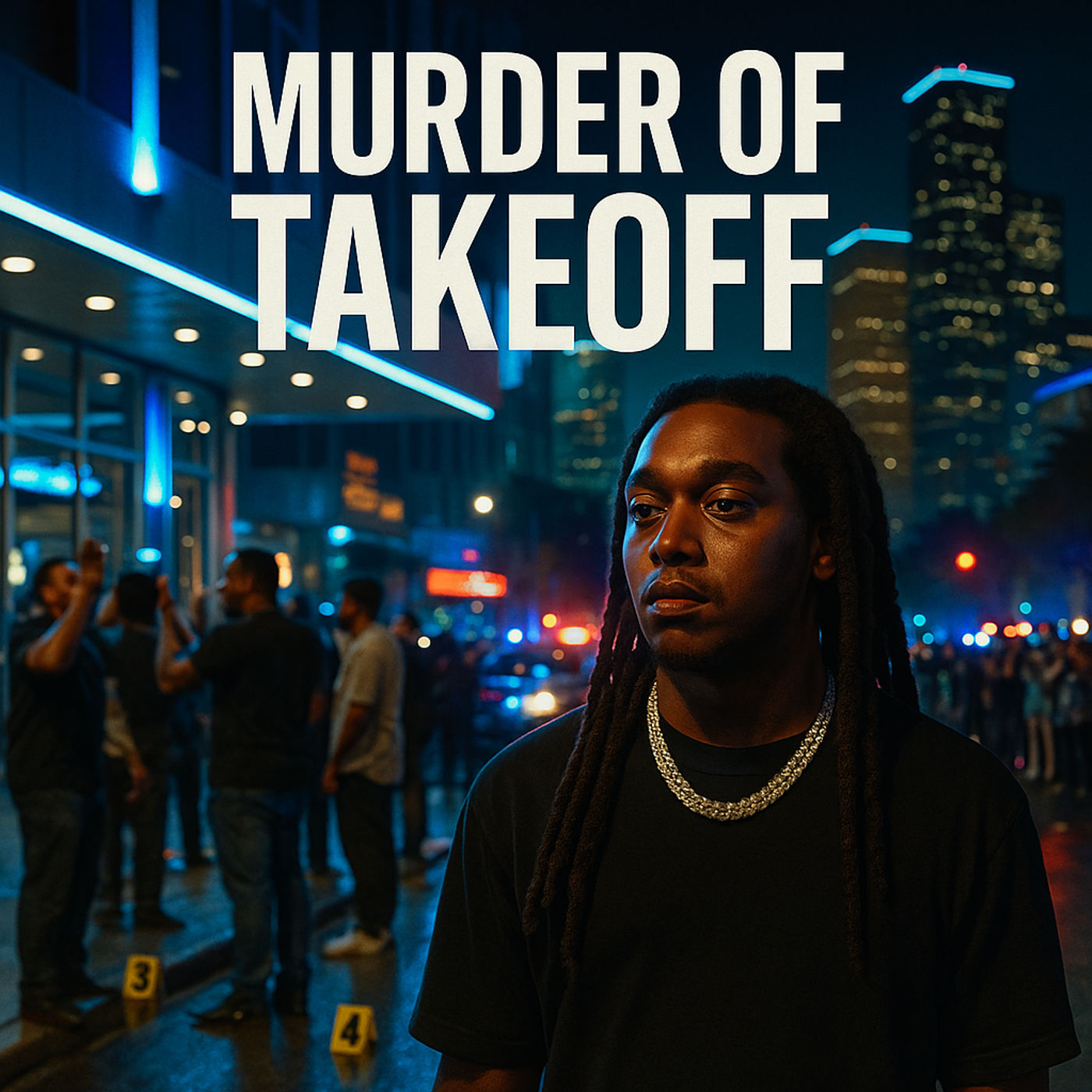
Ep 339Murder of Takeoff (Texas, 2022)
A quiet early morning outside a downtown Houston bowling venue becomes the center of a national tragedy. Under the glow of high-rise lights, a crowd stands frozen as detectives move steadily through the scene. At the center lies the still form of Kirshnik Khari “Takeoff” Ball, an innocent bystander caught in the middle of a brief dispute that never involved him. Shell casings line the pavement, marked in tight rows beside the curb. Witnesses speak in uneven bursts. Footage from phones and security cameras is pulled frame by frame. Detectives map angles, trajectories, and movement patterns until a single figure emerges from the chaos. The case shifts when ballistics match and digital evidence isolate a suspect, leading to a December arrest. The music world mourns. The city searches for answers. The investigation confirms the core truth: Takeoff was calm, quiet, and standing away from the argument when gunfire broke out. His death leaves a lasting shock across culture and community.
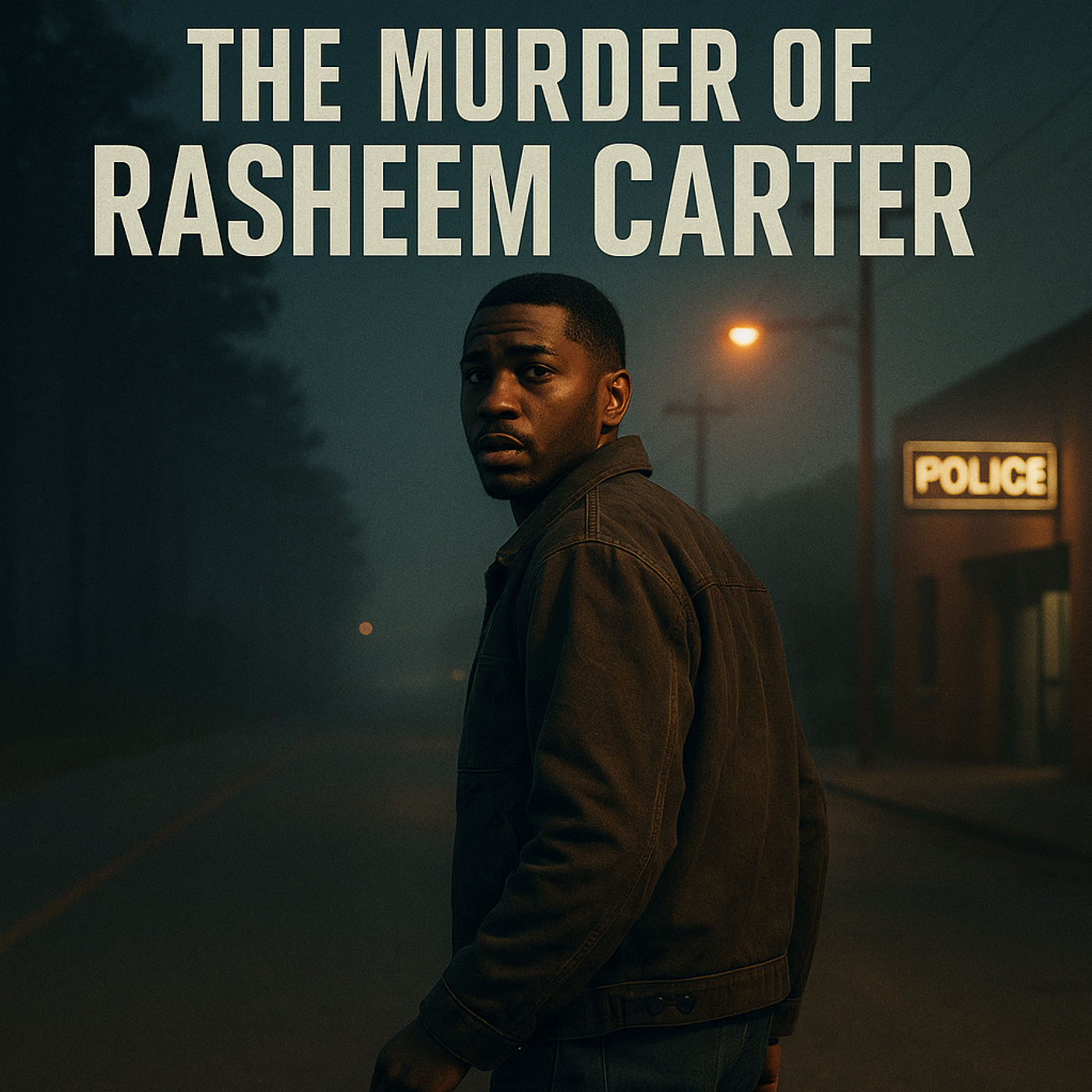
Ep 338Murder of Rasheem Carter
The story follows the final known hours of twenty five year old Rasheem Carter, a young Mississippi man who sought help after reporting that men were chasing him. On October first, twenty twenty two, he entered the Taylorsville Police Department and told officers he feared for his life. Hours later, he made a final call to his mother, describing the same pursuit. Then he disappeared into rural land on the edge of town. One month later, his remains were discovered in a wooded area. The condition of the discovery raised immediate concern, yet early statements from local authorities suggested no evidence of foul play. The autopsy listed the cause of death as undetermined. The family challenged every part of the official explanation. They said the findings did not match the state of the remains. They called for federal involvement. Civil rights advocates, forensic specialists, and the national media soon turned their attention to the growing contradictions. The case became a struggle for truth, shaped by conflicting interpretations of evidence, gaps in the timeline, and unanswered questions about the response he received when he first asked for help. The search for accountability continues.
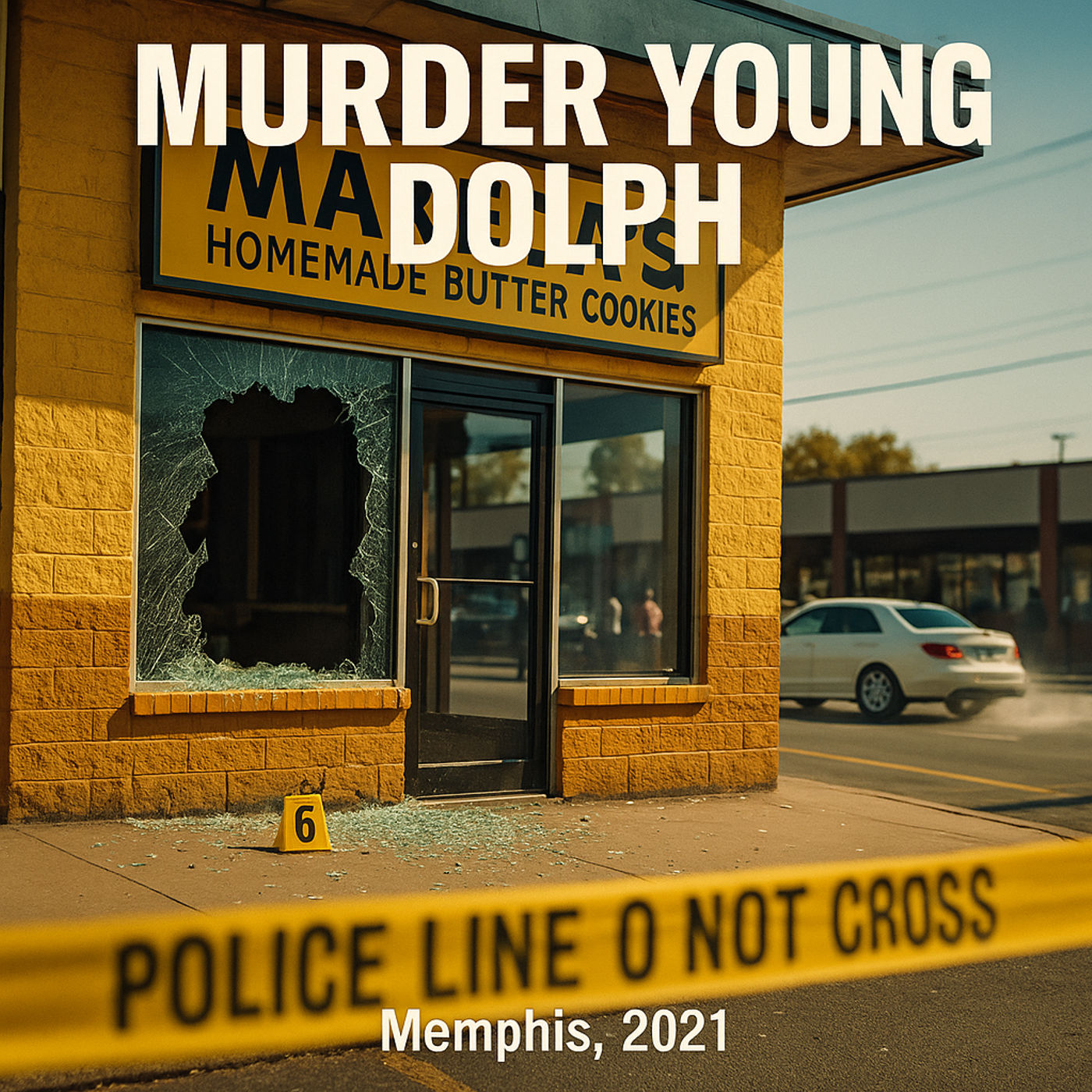
Ep 337Murder of Young Dolph — Memphis, 2021
The killing of Young Dolph sent a shock through Memphis, unfolding in broad daylight at a small neighborhood bakery he supported for years. On November seventeen, twenty twenty one, two masked men stepped from a stolen white Mercedes and opened fire through the glass storefront of Makeda’s Homemade Butter Cookies. The attack lasted seconds, but the impact rippled across the entire city. Witnesses froze. Shattered glass covered the walkway. A bright afternoon turned chaotic as the getaway car sped from the scene. Detectives immediately launched one of the most intense investigations Memphis had seen. Surveillance footage, vehicle forensics, and digital records revealed a coordinated strike carried out with precision. The recovery of the white Mercedes exposed fingerprints, clothing, and shell casings that matched what was found at the bakery. Leads pointed toward Justin Johnson and Cornelius Smith, whose movements aligned with every stage of the attack. Allegations of a possible organizer added a new layer of tension as prosecutors examined messages and timelines. The case became more than a murder investigation. It became a portrait of a city grieving one of its most influential voices, a rapper who built his legacy through independence, resilience, and a commitment to his community. Memphis responded with vigils, murals, and quiet reflection while detectives pieced together the evidence that would lead to charges, convictions, and unanswered questions that still linger.

Ep 336THE CHICAGO PORCH SHOOTERS – The Killing of Aaren O’Malley
A quiet Chicago block becomes the center of a rapid and deadly mystery when thirty-year-old Aaren O’Malley is found unresponsive on his own porch late one warm night in twenty twenty three. Neighbors heard a handful of sharp cracks but saw no argument, no car speeding off, no warning. Police arrive within minutes, discovering shell casings on the walkway, faint shoe impressions on the steps, and a porch light flickering over a scene with no clear motive and no obvious suspect. As detectives reconstruct the night, fragments begin to align. A shadowy figure captured on a doorbell camera. Two individuals moving quickly through the alleys. A pattern of quiet footsteps, hurried whispers, and a narrow escape route threaded between fences and backyards. Each new detail tightens the timeline and reveals the presence of more than one person on the block during those crucial minutes. What begins as a senseless act of violence sharpens into a focused hunt for the individuals captured on grainy recordings. Through careful interviews, digital records, and synchronized footage, investigators uncover the truth buried in those last movements through the dark. The killing of Aaren O’Malley becomes a case defined by silence, shadows, and one hard question: who walked onto that porch and why did they open fire without reason.
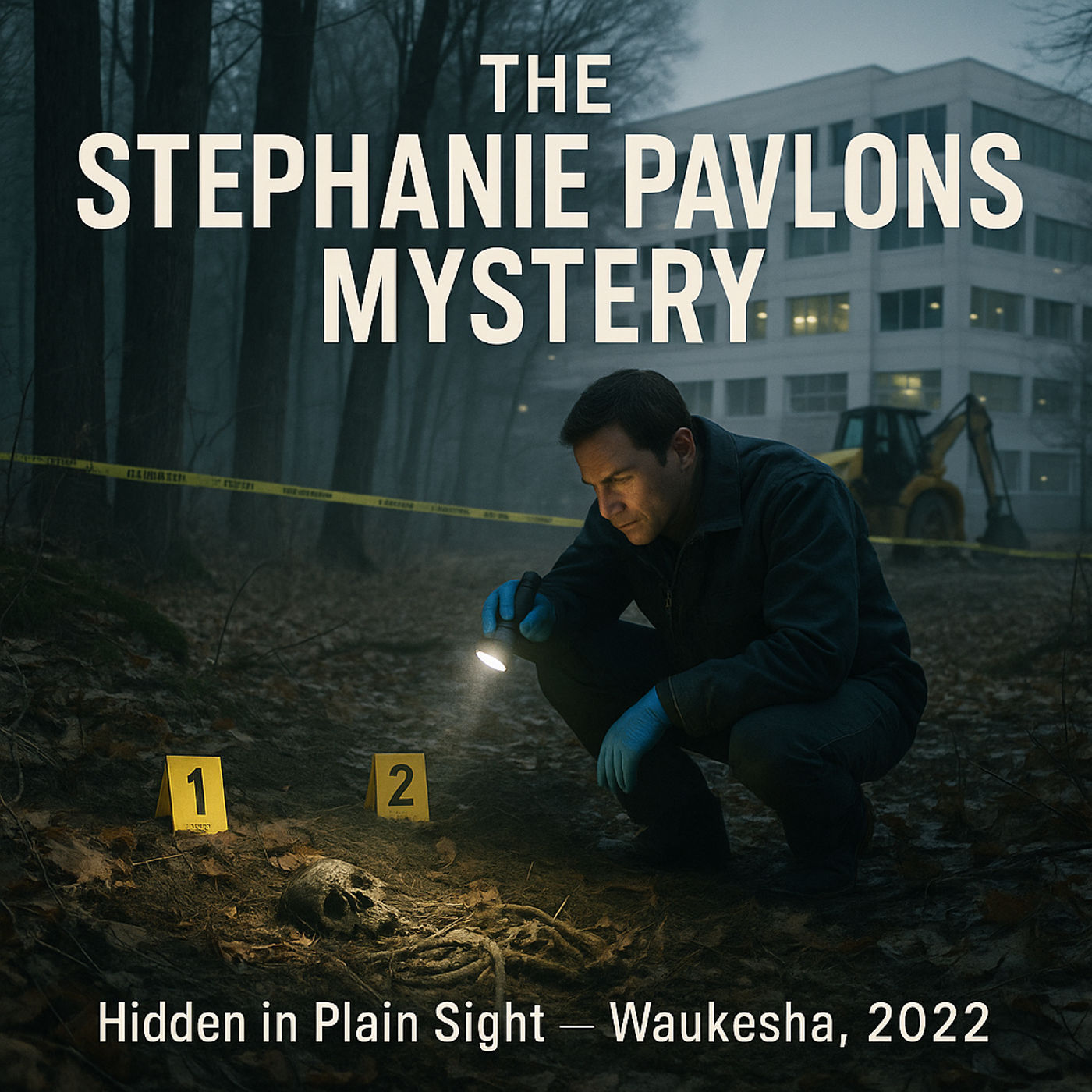
Ep 335The Murder of Stephanie Pavlons
The discovery of Stephanie Pavlons’ remains in September 2022 stunned the community of Waukesha, Wisconsin. For weeks, the 44-year-old woman had been missing, her disappearance unnoticed by most, her final whereabouts a complete mystery. Then, in a quiet strip of woods beside a bustling medical center, construction workers uncovered her skeletal remains — hidden under layers of leaves, branches, and time. Investigators arrived to a scene filled with contradictions. Stephanie had been found only steps away from one of the busiest areas in the city, yet no one had seen or heard anything. Her body showed no obvious signs of trauma. The environment offered no clear clues about how she had died or why she was there. With decomposition far advanced, forensic answers were limited. What remained were questions that pointed toward a chilling possibility: someone may have placed her there deliberately. The case became a haunting puzzle. Stephanie had no reason to be in that location. She had no medical appointments, no connection to the area, and no history that explained her presence in the woods. Detectives pieced together what little they could, tracing her movements, talking to those who knew her, and exploring every possible scenario — from an accidental death to a concealed homicide. As weeks turned into months, the investigation stalled, overshadowed by uncertainty and the unsettling realization that a woman could vanish, die, and lie unnoticed beside a major public building. Stephanie’s story is a stark reminder of the fragility of life, the gaps in our systems, and the disturbing truth that some mysteries remain hidden even in the most visible places.

Ep 334Murder of Elijah De La Cruz
This story examines the tragic death of five-year-old Elijah De La Cruz, a Colorado child whose final morning revealed the devastating consequences of missed warnings and unconnected alerts within the child-protection system. The narrative follows the real events of January 2023, beginning with the tense 911 call and the paramedics’ discovery that Elijah’s injuries did not match the explanation they were given. As investigators traced backward through the months leading up to his death, they uncovered scattered signs—bruises explained away, school observations noted but not escalated, a prior welfare check that found no visible danger, and a home environment marked by conflict. Through verified facts, interviews, medical findings, and agency records, the story reveals how isolated warnings failed to trigger meaningful intervention. The chapter climaxes with the medical examiner’s report, the arrest of the mother’s boyfriend, and the public reckoning that followed. This is a sober, factual, and human-focused documentary that explores not only how Elijah died but how the system meant to protect him lost sight of the danger gathering around him.
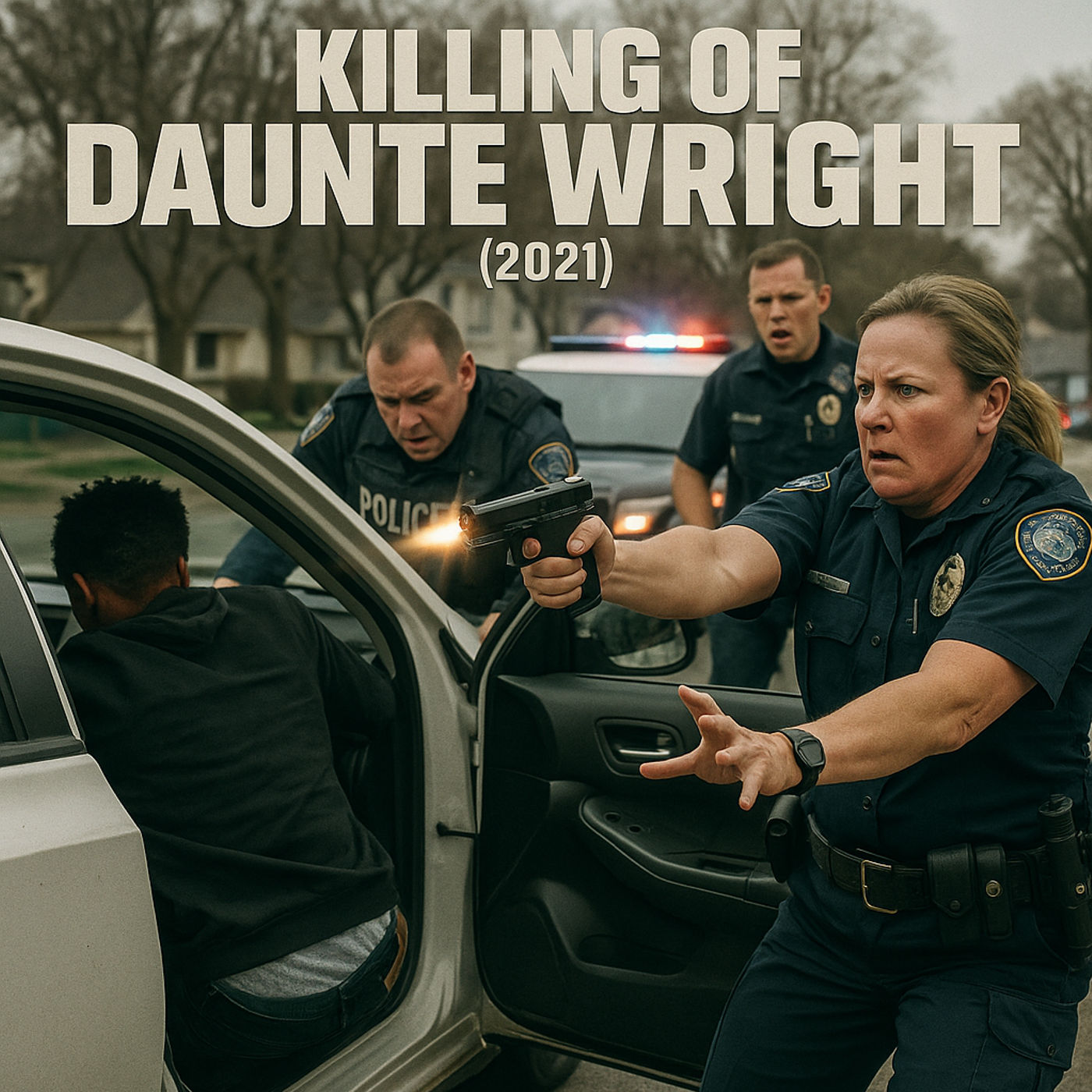
Ep 333Killing of Daunte Wright (2021)
This documentary-style narrative reconstructs the fatal April 11, 2021 shooting of twenty-year-old Daunte Wright during a routine traffic stop in Brooklyn Center, Minnesota. Through calm, detailed storytelling, it follows the encounter from its ordinary beginning—expired tags, a brief conversation, standard procedures—to the sudden escalation at the driver’s door where Officer Kim Potter drew her handgun instead of her Taser and fired a single deadly shot. The story widens beyond the moment of the shooting, portraying Wright as a young father and son, Potter as a veteran officer with decades of service, and investigators as they piece together every second of the event through footage, evidence, and expert analysis. Their findings set the stage for a high-stakes manslaughter trial that placed questions of training, negligence, race, accountability, and police reform at the center of national attention. By following the decision to charge Potter, the court proceedings, the jury’s verdict, and the community’s response, the narrative reveals how one traffic stop grew into a defining case—an event that pushed forward debates about policing and sparked new efforts to prevent everyday encounters from becoming deadly.

Ep 332Boyfriend's Horrifying 48 Hour Cover Up After Murdering His Girlfriend
This case is as haunting as it is heartbreaking. At the center is Phoenix “Phe” Spencer-Horn, a 21-year-old woman whose compassion made her a lifeline for others. Friends described her as someone who radiated warmth, someone who always rose above hardship and carried people through their darkest moments. She was young, full of potential, and loved deeply by the community around her. But behind closed doors, Phoenix’s marriage was collapsing under hidden tensions. On November 16th, she was murdered inside her home. For two days, her husband lived with the reality of what he had done. On November 18th, he finally dialed 999 and told the operator, with chilling calmness, “I had a psychotic break and killed my wife.” This episode unravels the timeline of those two days, the psychological fracture that led to the killing, and the disturbing behavior that followed the crime. We explore who Phoenix was—her friendships, her kindness, her dreams—and the devastating impact her loss had on everyone who knew her. Through witness accounts, statements from close friends like Miss Scotland finalist Grace McCabe, and expert insight into impulsive domestic violence homicides, we examine how love can twist into fear, control, and deadly desperation. It is one of the darkest stories we’ve ever covered, not only because of the brutality of the act, but because Phoenix’s life was defined by hope, resilience, and a future she never got the chance to reach.

Ep 331Texas Teacher Found Brutally Murdered After Visiting Boyfriend in New Mexico
A 30-year-old Texas teacher, Emily Lambert, vanished during what should have been a simple weekend getaway. She had traveled to New Mexico to spend time with her new boyfriend, Robert Earley. According to Earley, the couple shared drinks at a local bar before an argument broke out, sending Emily storming out into the night. She was never seen alive again. Two days later, her body was discovered on a remote ranch in Loving, raising chilling questions about what really happened during those missing hours. In this episode of Crimetastic, we investigate the timeline, the shifting stories, the forensic clues, and the truth behind Emily Lambert’s tragic final night.

Ep 330The Brutal and Disturbing Murder of Ariana Wolk
This is the deeply unsettling true story of Ariana Wolk, a Colorado mother whose life ended in a brutal and unexpected act of violence that eerily echoed her family’s tragic past. At forty years old, Ariana was found stabbed to death in her Denver apartment in July 2020. The scene detectives encountered revealed a violent struggle — blood trails through the living room, a disturbed kitchen, and a knife left on the counter. What appeared at first to be a chaotic altercation soon unfolded into a heartbreaking account of vulnerability, addiction, and misplaced trust. Ariana, the granddaughter of Rosemary LaBianca, one of the victims of the infamous 1969 Manson family murders, had lived a life shadowed by pain and instability. She battled addiction, sometimes invited strangers into her home, and struggled through a tumultuous on-and-off relationship with a partner named Patrick — a man who was immediately considered a suspect. Yet his alibi, verified by an ankle monitor, cleared him, forcing detectives to follow a different and more disturbing trail. Surveillance footage and witness accounts led investigators to Jose Sandoval Romero, a twenty-four-year-old man Ariana met only hours before her death. Security cameras captured them together near a Walgreens, where Ariana appeared intoxicated but calm. A Starbucks cup discarded near the crime scene carried Jose’s DNA. Under interrogation, he shifted his story repeatedly — from claiming he was helping her, to stating she became unstable, to finally admitting that he stabbed her multiple times. His explanations conflicted with the physical evidence and the brutality of the attack. As detectives pieced together the final hours of Ariana’s life, they uncovered the volatile combination of vulnerability and danger that surrounded her. Friends described a woman desperate for connection but often drawn to risky situations. Neighbors recalled loud arguments and unfamiliar men visiting her apartment. Forensic evidence left no doubt of Jose’s guilt. The courtroom became a place of grief and reckoning. Family members shared memories of Ariana’s warmth, her struggles, and her love for her young son — who was thankfully not home during the attack. The tragic parallels to her grandmother’s murder intensified the emotional weight of the case. On May 27th, 2021, a jury found Jose Sandoval Romero guilty of second-degree murder, sentencing him to twenty-five years to life. Ariana’s story does not end with her death. Her friends and family used their grief to advocate for domestic violence awareness, mental health support, and addiction resources. The case remains a haunting example of how fragile life can be — and how echoes of past trauma can shape the course of generations.