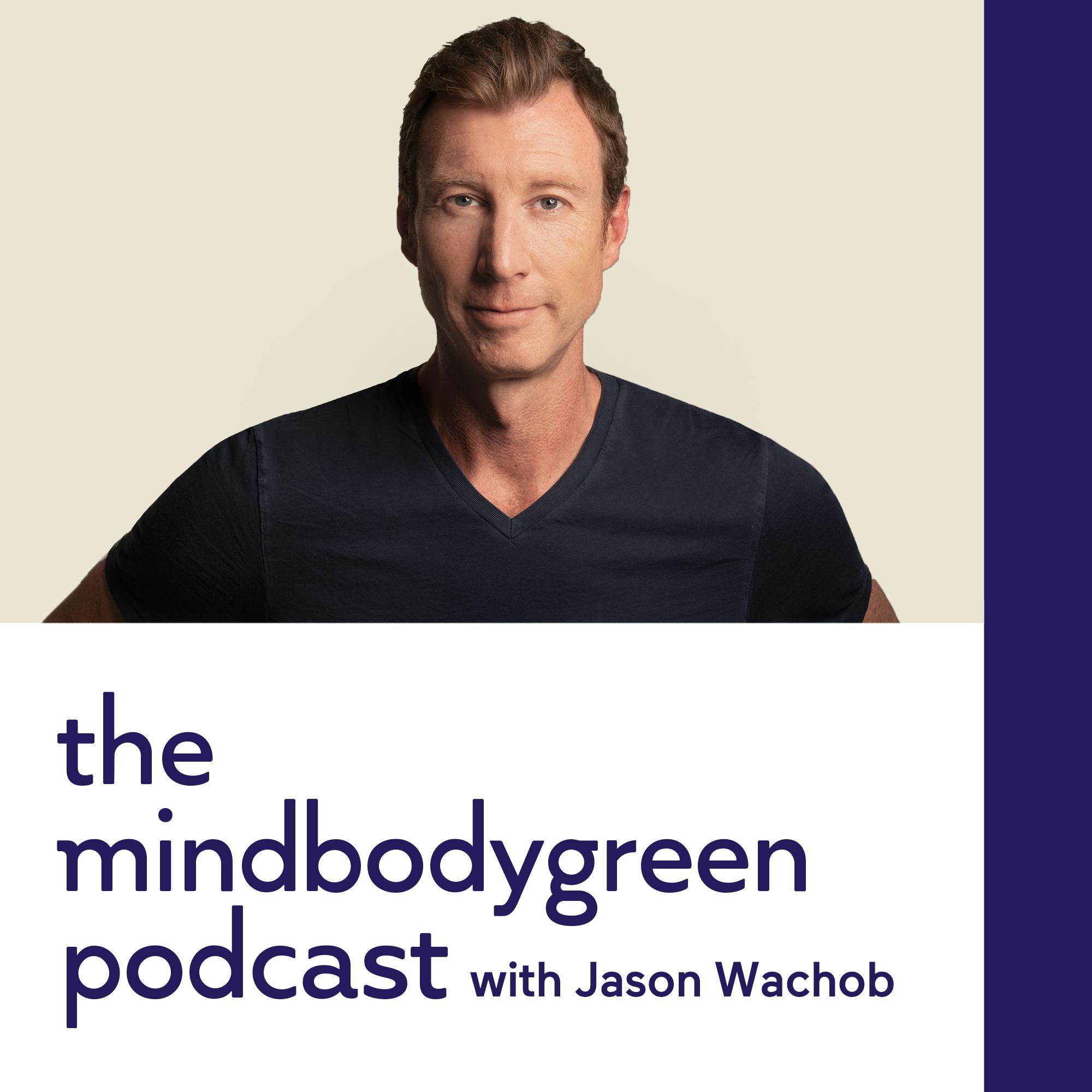
The mindbodygreen Podcast
Interviews covering health, nutrition, self-development and more with your host Jason Wachob
mindbodygreen
Show overview
The mindbodygreen Podcast has been publishing since 2017, and across the 9 years since has built a catalogue of 591 episodes, alongside 3 trailers or bonus episodes. That works out to roughly 510 hours of audio in total. Releases follow a weekly cadence.
Episodes typically run thirty-five to sixty minutes — most land between 44 min and 59 min — and the run-time is fairly consistent across the catalogue. It is catalogued as a EN-US-language Health & Fitness show.
The show is actively publishing — the most recent episode landed 4 days ago, with 23 episodes already out so far this year. The busiest year was 2022, with 97 episodes published. Published by mindbodygreen.
From the publisher
The mindbodygreen podcast explores the infinite possibilities of health & well-being. Hosted by founder and co-CEO Jason Wachob, each episode features a thought-provoking interview with a leader in the health space. Whether you’re thinking about changing what’s on your plate, how you move, or how you think, these conversations are sure to offer solutions in whole-body health.
Latest Episodes
View all 591 episodes649: Why “in range” lab results aren’t the solution to longevity | Florence Comite, M.D.
648: How to walk to optimize your health | Courtney Conley, D.C.
647: The new rules of heart health | Giovanni Campanile, MD & Sandra Cammarata, MD
646: The gut is the missing link to women’s longevity | Cynthia Thurlow, NP
645: The truth about cognitive decline and what you can do about it | Tommy Wood, M.D., Ph.D.
This small town's secret to longevity had nothing to do with diet
644: Why the ovary is key to women’s longevity | Natalie Crawford M.D.
643: Healing inner-child wounds you didn’t know you had | Nicole LePera, Ph.D. (The Holistic Psychologist)
"Trauma isn't just what happened to us. It's more so about the support we may or may not have had to navigate the emotional fallout of what happened." Nicole LePera, Ph.D., is the creator of the worldwide @theholisticpsychologist movement, and the author of multiple bestselling books including How to Do the Work and her newest, Reparenting the Inner Child. She was trained in clinical psychology at Cornell University and the New School for Social Research and studied at the Philadelphia School of Psychoanalysis. Her work has reached tens of millions of people on social media, who are waking up to the idea that healing doesn't happen in a therapist's office alone. 00:00 — How to recognize your inner child 04:05 — Redefining childhood trauma 06:09 — How parenting has shifted over time 10:00 — Safety as a foundation 14:30 — Why children internalize a parent’s anger 18:10 — How ownership & awareness can lead to reparenting 20:21 — Epigenetics: when the trauma didn’t start with you 22:55 — Why insight alone doesn’t create change 24:19 — Embracing discomfort & developing resilience 26:01 — Navigating difficult relationships 29:53 — What acceptance actually looks like 37:03 –– Emotional dysregulation & numbness 40:16 — What you can do to start healing right now Find Nicole LePera on Instagram here: https://www.instagram.com/the.holistic.psychologist/ Buy her book here: https://a.co/d/04SVp4tW We hope you enjoy this episode, and feel free to watch the full video on YouTube! Whether it's an article or podcast, we want to know what we can do to help here at mindbodygreen. Let us know at: [email protected]. Learn more about your ad choices. Visit megaphone.fm/adchoices
642: The science of sweat, saunas & stress | best-selling author Bill Gifford
“Sweating is our superpower," explains Bill Gifford. Gifford, a veteran science journalist and author of Spring Chicken, a New York Times bestseller on longevity. His latest book, Hotwired: How the Hidden Power of Heat Makes Us Stronger, dives deep into the emerging science of heat, sweating, and what happens when we stop running from discomfort. 00:00 — Sweating as an evolutionary superpower 03:00 — The science of ancient heat rituals 05:45 — How long & how hot? 07:55 — The dehydration trap 09:52 — All about Finnish sauna culture 12:50 — Heat acclimation training 16:41 — Elite athletes & what they can teach us 18:50 — The science on hot-cold contrast 21:49 — The case against cold plunging 29:08 — Sauna as a social ritual 33:20 — Heat as a mental health tool 36:34 — A beginner's guide to safe heat exposure Referenced in the episode: Find Bill Gifford on Instagram: https://www.instagram.com/billgifford/ Get his book here: https://a.co/d/01osyyRH Learn more about The Culture of Bathing here: https://www.instagram.com/thehighlineguy/?hl=en Mayo Clinic review of the effects of Finnish sauna bathing (2018): https://www.mayoclinicproceedings.org/article/S0025-6196(18)30275-1/fulltext Journal of Exercise Science & Fitness study on the effects of hot yoga (2011): https://www.sciencedirect.com/science/article/pii/S1728869X12600033 We hope you enjoy this episode, and feel free to watch the full video on YouTube! Whether it's an article or podcast, we want to know what we can do to help here at mindbodygreen. Let us know at: [email protected]. Learn more about your ad choices. Visit megaphone.fm/adchoices
641: The science of real optimism & why positivity is holding you back | Deepika Chopra, Ph.D.
This podcast was created in sponsorship with Toyota. Find a vehicle that makes memorable moments happen, from the 2026 RAV4 and Sienna to the Highlander and Grand Highlander. Plan the trip, pack the trunk, gather your crew, and go places—together. Toyota: People are the destination. "Emotional flexibility is literally the skill that we all should be sharpening like a muscle," explained Deepika Chopra, Ph.D. Chopra (widely known as The Optimism Doctor) is a clinical health psychologist, visual imagery expert, and author of the upcoming book The Power of Real Optimism. But here's what makes Deepika's work so different: she's not selling you positivity. In this episode, we get into the real science of optimism—and why it has far more to do with resilience and curiosity than with good vibes. Optimism vs. positivity: what we're getting wrong (0:00) Why affirmations don't always work (6:58) The seven-tenths rule for effective affirmations (10:00) Manifestation and getting what you expect (10:50) Emotional flexibility: the skill to sharpen like a muscle (17:46) Why the nervous system has to feel safe before growth can happen (23:11) Deepika's son's rare diagnosis (23:40) A Holocaust survivor with real optimism in practice (36:58) Letting go of control vs. reclaiming agency (40:52) Healthy hope vs. delusion—the dark room metaphor (42:45) Referenced in the episode: Find Deepika Chopra on her website: https://www.drdeepikachopra.com Get her book here: https://a.co/d/0dG1VFwX Find her viral article from 2018 here: https://www.mindbodygreen.com/articles/what-to-do-if-positive-affirmations-dont-work-for-you Gallup National Health and Well-Being Index (2026): https://news.gallup.com/poll/702125/american-optimism-slumps-record-low.aspx We hope you enjoy this episode, and feel free to watch the full video on YouTube! Whether it's an article or podcast, we want to know what we can do to help here at mindbodygreen. Let us know at: [email protected]. Learn more about your ad choices. Visit megaphone.fm/adchoices
640: How to unlock your body’s innate healing system | Victoria Maizes, M.D.
"Your body heals better when it feels safe, when your nervous system is quiet,’ explains Victoria Maizes, M.D. Maizes is the Executive Director of the Andrew Weil Center for Integrative Medicine and co-host of the Body of Wonder podcast. She's a leading voice in integrative medicine and author of the new book Heal Faster, which makes the case that modern medicine has been so focused on treating disease that it's largely overlooked the body's most powerful asset: its innate capacity to heal. In this episode, we discuss: What is the recovery reflex? (1:10) Why two people can have completely different health outcomes (3:26) Protein, the catabolic state, & tests to run before major surgery (6:11) The difference between managing disease & actually healing (18:21) The power of language (19:00) Trauma & how to activate your vagus nerve (29:00) Mindset, guided imagery, & letting go of outcomes (35:42) The mystery of long COVID (41:46) Circadian medicine & red light therapy (48:50) Referenced in the episode: You can find Dr. Maizes website here: www.drvictoriamaizes.com And her latest book, Heal Faster, here: https://a.co/d/0i0OT4KJ We hope you enjoy this episode, and feel free to watch the full video on YouTube! Whether it's an article or podcast, we want to know what we can do to help here at mindbodygreen. Let us know at: [email protected]. Learn more about your ad choices. Visit megaphone.fm/adchoices
639: How to lower your Alzheimer’s risk at any age | Majid Fotuhi, M.D., Ph.D.
"You are in control of your brain health, just the same way you're in control of your heart health." Today's guest is Majid Fotuhi, M.D., a Harvard and Johns Hopkins-trained neurologist, brain health researcher, and author of Invincible Brain. Dr. Fotuhi has spent his career studying one of the most pressing questions of our time: why do some people's brains deteriorate with age, while others stay sharp well into their eighties and nineties? His answer might surprise you. Why 45% of dementia is preventable (00:00) The biomarkers worth testing for cognitive decline (1:53) Why you should never test tau in isolation (2:50) How COVID can spike your tau levels (10:54) How to grow your hippocampus in 12 weeks (16:00) The 5 pillars of brain health (18:16) Slow breathing can reduce amyloid in the brain (24:00) Chronic stress is silently shrinking your brain (30:13) Why your IQ doesn't define your intelligence (33:19) Lifestyle outperforms Alzheimer's drugs by 200-400% (43:02) Referenced in the episode: Learn more about Dr. Fotuhi on his website: https://drfotuhi.com/about-dr-fotuhi/ You can find Dr. Fotuhi’s book here: https://a.co/d/00qJcyuE We hope you enjoy this episode, and feel free to watch the full video on YouTube! Whether it's an article or podcast, we want to know what we can do to help here at mindbodygreen. Let us know at: [email protected]. Learn more about your ad choices. Visit megaphone.fm/adchoices
638: The science of flourishing & how to give life meaning | Daniel Coyle
“When we really look at the definition of flourishing, it's joyful, meaningful growth shared,” explains Daniel Coyle. Coyle is the bestselling author of The Culture Code and The Talent Code, who just released his latest book, Flourish: The Art of Building Meaning, Joy, and Fulfillment. After spending decades studying elite performers, Navy SEALs, championship sports teams, and top business leaders, Coyle had climbed to the mountaintop of success research only to realize it wasn’t what he thought it would be. Now, he focuses his work trying to answer the question: What actually makes a life worth living? Here's a glance at our conversation: What makes a life meaningful? (00:24) Why you can’t flourish alone (00:45) Shifting your focus (04:43) Rituals vs habits (09:12) The value of small, frequent connections (12:49) The 33 miners & bottom-up rituals (15:51) A tiny Vermont town that produces Olympians (19:14) Rebuilding community in Paris (25:30) How to design vulnerability (30:53) Why connection creates health & safety (31:38) Cleveland Guardians case study (33:25) Joy vs fear as fuel (40:13) Referenced in the episode: Find more on Daniel Coyle and his books at his website, danielcoyle.com We hope you enjoy this episode, and feel free to watch the full video on YouTube! Whether it's an article or podcast, we want to know what we can do to help here at mindbodygreen. Let us know at: [email protected]. Learn more about your ad choices. Visit megaphone.fm/adchoices
What the Amish can teach us about health
Are your kids too clean for their own good? Amish children experience 90% less asthma than the national average—not despite getting dirty, but because of it. When scientists analyzed the dust in their farmhouses, they discovered an invisible ecosystem that was training immune systems to be resilient instead of reactive. In his episode, host Jason Wachob explores the groundbreaking research behind the "hygiene hypothesis" and its implications for modern parents raising kids in an increasingly sanitized world. This discovery is forcing us to rethink everything about dirt, bacteria, and health. And it's already led to treatments used by 100+ million people worldwide. Are we too clean for our own good? Study Link: https://pubmed.ncbi.nlm.nih.gov/37210851/ Chapters: [00:18] The Amish morning: A scene from another era [02:23] The asthma epidemic vs. farm kids' secret weapon [04:30] What's really in farm dust? (It's not what you think) [05:46] Bacterial lysates: Recreating farm protection in a lab [08:22] The hygiene hypothesis: Why clean might be too clean 🎙️ This new format episode, hosted by founder and co-CEO Jason Wachob, is from the mindbodygreen podcast, where science meets meaning—and small shifts lead to big health changes. If this story resonated with you: 👍 Like this video 🔔 Subscribe for more science-backed stories on longevity, nutrition, and whole-body health Read more here: https://www.mindbodygreen.com/ Shop our supplements: https://shop.mindbodygreen.com/ Join 1M+ subscribers on their journey towards strong and healthy: https://www.mindbodygreen.com/newsletters Follow us: Instagram: @mindbodygreen TikTok: @mindbodygreen Learn more about your ad choices. Visit megaphone.fm/adchoices
637: How to identify what really matters & reverse engineer your life | Sahil Bloom
"I define wealth as being able to take my son in the pool at 1:00 PM on a Tuesday," explains Sahil Bloom. Bloom is a NYT bestselling author of The 5 Types of Wealth: A Transformative Guide to Design Your Dream Life. He’s also an entrepreneur, investor and a proud, son, husband, and father who believes the greatest things in life come not from finding the right answers, but from asking the right questions. The math that changed Sahil’s life (0:18) Redefining success & happiness (2:03) The truth about time with kids (6:11) Can you be a present parent & still pursue a career? (8:37) The “last time” principle (13:30) The arrival fallacy we all fall into (19:18) Avoiding the pyrrhic victory (23:33) Light switches vs. dimmer switches (30:00) His anti-goals framework (32:49) Referenced in the episode: You can check out Bloom’s book here: The 5 Types of Wealth Learn more on his website, here You can read the stats of the American Time Use Survey mentioned, here We hope you enjoy this episode, and feel free to watch the full video on YouTube! Whether it's an article or podcast, we want to know what we can do to help here at mindbodygreen. Let us know at: [email protected]. Learn more about your ad choices. Visit megaphone.fm/adchoices
636: The ultimate guide to peptides | Elizabeth Yurth, M.D.
"They look magical on Instagram, but they're not magic. Micronutrients have to be in place, your hormones have to be in place," explains Elizabeth Yurth, M.D., Elizabeth Yurth, M.D., a double board-certified physician in Physical Medicine & Rehabilitation and Anti-Aging/Regenerative Medicine, joins us on the podcast to discuss why peptides are much more than an Instagram trend, what forms of peptides might be most beneficial, and how to be mindful of safety and quality if you’re trying to incorporate them into your own protocol. Show Notes (00:00) Introduction to peptides (02:31 ) Endogenous vs. exogenous peptides (03:15) Growth hormone (05:25) Peptides for muscle & immune health (07:19) The peptide explosion & safety concerns (08:11) BPC 157: A remarkable peptide? (10:38) Quality & sourcing of peptides (16:54) Anti-aging & HRT (20:54) Peptides for cognitive health (24:27) COVID-19 & neuroinflammation (27:12) Addressing chronic inflammation & resilience (39:12) The importance of nutrition & lifestyle Referenced in this episode: Follow Dr. Yurth on Instagram (@dryurth) Find out more about her work (https://boulderlongevity.com/about/dr-elizabeth-yurth) We hope you enjoy this episode, and feel free to watch the full video on YouTube! Whether it's an article or podcast, we want to know what we can do to help here at mindbodygreen. Let us know at: [email protected] in the episode: Learn more about your ad choices. Visit megaphone.fm/adchoices
635: Functional strength & metabolic flexibility for women | Gabrielle Lyon, D.O.
“Strength is not for sale. It's one hundred percent earned,” explains Gabrielle Lyon, D.O. Lyon, a fellowship-trained physician, a bestselling author, and a pioneer of muscle-centric medicine, joins us today to dive into the science of muscle as the organ of longevity, from resistance training and protein intake to building strength that lasts. - Muscle is the organ of longevity (~1:18) - Muscle for longevity vs. muscle for aesthetics (~2:11) - Does lifting weights make you bulky? (~4:00) - Building functional strength (~5:35) - Muscle & metabolic flexibility (~8:45) - Building strength for independence (~10:00) - Progressive overload (~12:20) - Do you have to lift heavier? (~13:35) - How much should you be training? (~15:40) - Establishing healthy habits in children (~17:30) - Purposeful friction (~19:35) - Muscle & mindset (~23:30) - Don’t waste your time on this (~24:55) - Protein, leucine, & amino acids (~28:15) - GLP-1s & muscle mass (~33:55) - How to make the most of your time (~41:30) - Navigating social media & extreme views (~44:15) - 2 aspects of health Dr. Lyon is focusing on (~49:55) Referenced in the episode: - Follow Dr. Lyon on Instagram (@drgabriellelyon) - Pick up her book, The Forever Strong Playbook (https://www.amazon.com/Forever-Strong-PLAYBOOK-Science-Based-Strengthen/dp/1668085623/) - Check out her website (https://drgabriellelyon.com/) - Work with her at Strong Medical (https://strongmedical.com/) We hope you enjoy this episode, and feel free to watch the full video on YouTube! Whether it's an article or podcast, we want to know what we can do to help here at mindbodygreen. Let us know at: [email protected]. Learn more about your ad choices. Visit megaphone.fm/adchoices
I’m 51, but my WHOOP biological age is 37—here’s how I did it
bonusWhat does it really take to get healthier with age? In this deeply personal solo episode, mindbodygreen co-founder and co-CEO Jason Wachob shares his N-of-1 longevity experiment—and all the data behind it. At 51 years old, Jason’s biological age clocks in at 37.9, with elite cardiovascular and recovery metrics to match: a VO₂ max of 52, resting heart rate as low as 35, and record-high HRV. This isn’t about extreme biohacking or million-dollar longevity protocols. Jason breaks down the exact lifestyle choices, training approach, and precision nutrition strategies that helped him reverse key aging markers—while balancing life as a CEO, husband, and father of two. He also opens up about the emotional weight of outliving multiple generations of men in his family—and why, for him, longevity is ultimately about presence, strength, and showing up fully for the people he loves. Whether you’re curious about VO₂ max training, heart rate variability, diet personalization, or how to build sustainable habits without burning out, this episode offers a rare, data-backed look at what’s possible with consistency and intention. Chapters [00:00] Introduction: Biological Age 37 at 51 [00:42] Why This Matters: My Family History [01:45] My Why: Being the Dad Who Keeps Up [02:22] The Reality: CEO, Husband, Father [03:20] The Data Story: HRV, VO₂ Max, and Resting Heart Rate [04:00] Why I Row the Way I Row [06:05] Strength Training: 45 Minutes, Maximum Efficiency [06:45] Diet and Testing: The Boston Heart Labs Game-Changer [07:10] My Daily Nutrition Protocol [08:40] Morning Routine and Supplementation [10:07] Sleep and Recovery Rituals [10:55] Final Thoughts: What Longevity Really Means 🎙️ This new format episode, hosted by founder and co-CEO Jason Wachob, is from the mindbodygreen podcast, where science meets meaning—and small shifts lead to big health changes. If this story resonated with you: 👍 Like this video 💬 Share your thoughts in the comments 🔔 Subscribe for more science-backed stories on longevity, nutrition, and whole-body health Read more here: https://www.mindbodygreen.com/ Shop our supplements: https://shop.mindbodygreen.com/ Join 1M+ subscribers on their journey towards strong and healthy: https://www.mindbodygreen.com/newsletters Follow us: Instagram: @mindbodygreen TikTok: @mindbodygreen Learn more about your ad choices. Visit megaphone.fm/adchoices
634: A cardiologist’s guide to mind-body medicine | Tara Narula, M.D.
“Never give up hope. Never give up your vision. Never give up your purpose,” explains Tara Narula, M.D. Tara Narula, M.D., a board-certified cardiologist, Assistant Professor of Cardiovascular Medicine, and author of The Healing Power of Resilience, joins us today to explore how resilience, stress, and mindset profoundly shape heart health—and how we can build these skills to improve both recovery and long-term wellbeing. - The power of resilience (~1:45) - The role of stress (~2:55) - Handling the stress of a diagnosis (~6:10) - Patient stories (~7:25) - The eight tools to resilience (~9:20) - The role of spirituality (~12:12) - Findings flexibility in our life path (~15:00) - Hope & purpose (~16:45) - Doctors providing a diagnosis (~17:30) - How to improve your physical health to improve resilience (~18:40) - The real driver of health (~25:40) - The negative impact of stress on our health (~29:00) - You can develop resilience (~31:40) - The importance of connection & social support (~35:15) - Gender-specific differences in heart health (~36:20) - How Narula prioritizes her health (~42:40) Referenced in the episode: - Follow Narula on Instagram (@drtaranarula) - Read her book, The Healing Power of Resilience (https://www.amazon.com/exec/obidos/ASIN/1982198842) We hope you enjoy this episode, and feel free to watch the full video on YouTube! Whether it's an article or podcast, we want to know what we can do to help here at mindbodygreen. Let us know at: [email protected]. Learn more about your ad choices. Visit megaphone.fm/adchoices
633: The psychology of uncertainty, growth & hope | Maya Shankar, Ph.D.
“We are constantly a work in progress,” explains Maya Shankar, Ph.D. Shankar, a cognitive scientist, creator and host of the award-winning podcast A Slight Change of Plans, and author, joins us today to explore what science and lived experience reveal about navigating life's most difficult transitions, and how unexpected change can become a powerful form of revelation. - Change can be revelatory (~1:20) - Confronting all aspects of who you are (~3:15) - The illusion of control (~6:30) - How to navigate change (~9:30) - Cultivating faith without religion (~15:15) - Does everything happen for a reason? (~17:40) - Strategies to handle rumination & denial (~19:10) - Rethinking our beliefs (~26:45) - Ask yourself these questions (~30:40) - What is moral elevation (~32:50) - Generate new possible selves (~36:10) - How to do hard things (& make it easier) (~37:40) Referenced in the episode: - Follow her on Instagram (@drmayashankar) - Pick up her book, The Other Side of Change - Check out her website (https://mayashankar.com/) - Listen to her podcast, A Slight Change of Plans We hope you enjoy this episode, and feel free to watch the full video on YouTube! Whether it's an article or podcast, we want to know what we can do to help here at mindbodygreen. Let us know at: [email protected]. Learn more about your ad choices. Visit megaphone.fm/adchoices