
The Meaningful Money Personal Finance Podcast
373 episodes — Page 1 of 8
Too Expensive? Whole of Life Insurance explored
The Problem of Money, with Tim Malnick and Shabbar Kassam
QA60 - Listener Questions, Episode 60
QA59 - Listener Questions, Episode 59
QA58 - Listener Questions, Episode 58
QA57 - Listener Questions, Episode 57
Your Money & Your Mind - Adam Cockerham
QA56 - Listener Questions, Episode 56
QA55 - Listener Questions, Episode 55
QA54 - Listener Questions, Episode 54
Life Search: Protection for Middle Age
QA53 - Listener Questions Episode 53
QA52 - Listener Questions Episode 52
QA51 - Listener Questions, Episode 51
Can you oversimplify your pensions? Part 2
Can you oversimplify your pensions? Part 1
QA50 - Listener Questions, Episode 50
QA49 - Listener Questions, Episode 49
QA48 - Listener Questions, Episode 48
QA47 - Listener Questions, Episode 47
QA46 - Listener Questions, Episode 46
QA45 - Listener Questions, Episode 45
Planning for Pensions and IHT

Ep 615QA44 - Listener Questions, Episode 44
In this Meaningful Money Q&A episode, Pete Matthew and Roger Weeks answer six listener questions on UK personal finance, pensions and investing. We cover inheritance tax (IHT) and who actually pays it, a defined benefit pension "state pension deduction" before State Pension age, and whether salary sacrifice affects higher-rate tax relief. We also discuss whether global tracker funds are too concentrated in the US, how offshore investment bonds compare to a general investment account (GIA), and how IHT taper relief works for gifts and the nil-rate band. Shownotes: https://meaningfulmoney.tv/QA44 03:40 Question 1 Hi Pete and Roger, I have been really enjoying your podcast and have learned so much about finance, tax and investments that I did not know before. I enjoyed your episode on inheritance tax. I have a question regarding inheritance tax and what happens if beneficiaries are unable to afford to pay it. My parents are wealthy with three properties (mortgages all paid off) and a large private pension, my parents also had a limited company which they used to maximise their earnings by minimising tax. However, me and my brother are average in the financial sense, where we have "normal salaried jobs", as my father would say. We earn far less than him and hence have much less assets. I own a house but have most of the mortgage left to pay because I only bought it last year. I am also single and live alone on my single income. My brother rents a flat and spends most of what he earns and has no concept of saving/future plans or investments, he does not even have a pension. I am under the assumption that the IHT has to paid first before the inherence is released, rather than IHT simply being deducted from the actual inherence itself before distribution? When I look at the total of my parents assets, me and my brother have no where near enough money to be able to pay it, due to the large gap in wealth between us and my parents. I tried to discuss this with them a few times but was fobbed off. They don't have any plan in place, all they have is life insurance to cover each other should one party die, and a simple one page will including just each other and us, no extended family. My brother and mum have no clue about money, and my dad who is in charge of the finances has multiple health problems of late. I am anxious of the day when I will be asked to pay tons of IHT which I might not be able to able to afford, especially because I am single and have my own bills and mortgage, I can't afford another loan. Is there a way to get around this or reduce the burden? If I cannot afford to pay the tax, can I simple "run away" from the situation and decline being a beneficiary, hence shoving the responsibility of IHT onto other family members? I don't really understand the process of probate, and whether my parents life insurance would pay it, but it seems to be that it pays out to the spouse should the other die, so I assume this would be added to the total assets and hence increase the tax burden should the other die? My parents don't seem to be bothered and are reluctant to discuss this so I am unsure what to do. How do "average/mediocre" kids like me and my brother usually deal with the tax from being born into a wealthy family? Sorry if this is a silly question, but I would appreciate any words of financial wisdom. Many thanks, Lava 13:08 Question 2 Hi Pete and Roger, I hope this message finds you well. As an avid listener of your podcast for the past couple of years, I want to express my gratitude for the way you break down financial and pension topics that can often seem overwhelming. Your insights have been invaluable to me. I wanted to share a personal experience and seek your views on it. After dedicating 42 years working at M&S, I am now approaching 60 and preparing to take my pension later this year. While I am proud of my long service, I've encountered an unexpected surprise in my pension arrangement. I have a Defined Benefit (DB) pension valued at around £9,000. Per year. However, upon receiving my pension quotation, I discovered that the scheme is structured to pay me this amount only until I reach 65 years of age, after which it reduces by approximately £2,200, a 24% reduction. This reduction is based on the assumption that the State Pension will compensate for the difference. However, with the State Pension age being pushed back, I will experience a reduction in my income before the State Pension begins when I turn 67. This situation feels particularly unfair, especially given that at M&S, there are a significant number of women who are lower-paid workers. The unfairness is further accentuated by the fact that the reduction is a fixed sum, irrespective of one's earnings. This fixed sum reduction impacts lower-paid and part-time workers disproportionately. I would greatly appreciate any insights or advice you might have on how to navigate this issue. Thank you once again for the fantastic work you do. Your
Ep 614QA43 - Listener Questions, Episode 43
If you're a UK beginner and you're not sure where to start investing in 2026, Pete and Roger talk you through a calm, step-by-step investing order to follow. They cover when to build a buffer, tackle expensive debt and use employer pension matching, plus how to choose between a Stocks and Shares ISA and a pension. You'll also hear the key beginner mistakes to avoid so you can invest with confidence and stay the course. Shownotes: https://meaningfulmoney.tv/QA43 02:00 Question 1 Hi Pete and Roger I'm late to investing but thanks to your informative and entertaining podcasts and books - I feel on track to at least a decent retirement. I'm on a £60K salary and currently manage to contribute around £25K annually via salary sacrifice - which keeps me happily and comfortably within the 20% Income Tax bracket. However, with the Salary Sacrifice Cap coming in April 2029, I will end up in the higher-rate tax bracket. I was thinking about using my employer's Car Benefit Salary Sacrifice Scheme to help bring down my taxable income – whilst still maintaining the maximum salary sacrifice and utilising Relief at Source my AVC. I'm fully aware of the saying "don't let the tax tail wag the investment dog" but I was planning on getting a car in 2029 – when my mortgage is completed – so this might be a good alignment. My question's are: Can you confirm whether the Salary Sacrifice Cap applies to pensions only — and does using the car salary sacrifice scheme seem like a sensible idea in this context? Is there anyway that paying into my AVC via Relief at Source and claiming the higher-rate relief via Self-Assessment would result in HMRC issuing me a new tax code for the following tax year. Keep up the good work – and all the best to you and your families for the festive season. Thanks, Cris 06:43 Question 2 Hi, I recently came across your podcast and have not stopped listening to all the older episodes, and look forward to the new ones each week. Keep up the great work! I'm a 53 year old business owner looking to exit my business within the next 3 years via a sale and hope to receive around £1.5 - £1.8m from my share of the proceeds after tax. My wife is 8 yrs younger than me and will probably still be working doing some consultancy work. She has her own pension and savings in ISA's (currently a combined pot of around £250k which will hopefully grow over the next 10+ years) but we wouldn't need to access that till much later as required. My 2 questions are: 1. What would be the best way to invest the lump sum from the sale of my business to provide an income to support my retirement without having to necessarily eat into the capital or touch too much of my savings / pension early on as it will need to provide for my wife and I for quite a few years if we retire / semi retire in our mid 50's. Having looked at our living costs we would need around £60k p.a - albeit to live comfortably. Any holidays / large purchases etc could be funded through savings. 2. How would you prioritise what pot of funds you use first to make it the most tax efficient, enable growth and ensure that the pots do not run out. Given the new IHT rules on pensions is it now wise to use those first including the 25% tax free lump sum or use the ISA's / savings first leaving the pensions to continue growing in their tax wrapper. Thanks, Jeremy Meaningful Academy Retirement Planning: https://meaningfulacademy.com/retirementplanning 14:53 Question 3 Hello Peter and Roger You answered a previous question for me on the podcast so thank you for that, and I hope you don't mind me asking another one! We're in the very fortunate position of being able to pay the full £60,000 annual allowance into my pension scheme this tax year and are considering making additional contributions using unused allowance from previous years. I understand that the total contribution we could make would still be limited by my annual salary this tax year - my question relates to how that is defined. The contributions are made using a combination of salary sacrifice into my work scheme and lump sum contributions to my SIPP which is separate from the work scheme. So, would my "salary" that would be the limit for total contributions be the salary before salary sacrifice or after? And is the "salary" further reduced by the contributions to the SIPP, as I believe my adjusted net income for calculating tax bands is? Perhaps some hypothetical numbers would help. Let's say my gross salary before salary sacrifice is £125,000 and I salary sacrifice £25,000, and my employers' contribution is £5,000. Let's say I also pay £24,000 by bank transfer into my SIPP, so I'd receive £6,000 of tax relief into the SIPP. If I've understood it correctly, my adjusted net income for tax purposes would be £70,000 (which is £100,00 salary after salary sacrifice minus £30,000 gross contribution to SIPP). In total, £60,000 has been paid into my pensions which is the full annual allowance for this year. If I had £120,000

Ep 613QA42 - Listener Questions, Episode 42
Pete Matthew and Roger Weeks cover self-employed saving rates, inheritance tax and estate planning, and how dividends are treated inside pension drawdown (including SIPPs). They also discuss salary sacrifice and contribution limits, the pros and cons of recycling tax-free cash, and whether to overpay your mortgage or invest via a Stocks & Shares ISA. Shownotes: https://meaningfulmoney.tv/QA42 01:07 Question 1 Hi Pete and Roger, Thank you for your amazing podcast! My question is about budgeting & savings percentages: Should you aim for a % of your gross pay or your net pay when it comes to aiming for a savings percentage? e.g. Invest 20% of gross or net? I'm self employed and work contract to contract. From each contract payment I have to give 25% to agents and lawyers. Then I get paid the rest and have to put aside some of the money ready for the Tax man. When planning for how much I should save / invest from each contract payment should I be putting aside: 20% of the original contract amount? (which would be prior to the agents taking their cut and prior to the tax man taking his cut?) 20% of the amount left after the agents but prior to the tax man? Or 20% after both the agent cut and tax man cut? Thank you! Isabel 05:50 Question 2 I am a 70 year old widow with no children. My current net worth is about £2 million. This is made of of a house (£500,000), savings and investments (£1,150,000) and a drawdown pension pot of £350,000 which I inherited from my husband. My husband died aged 68 so the pension pot is currently tax free. I plan to leave our inheritance tax free allowances of £650,000 to family, mostly nephews and nieces and the reminder to charities. The drawdown pension will also go to named family members until the rules change in 2027 after which this will also go to charity. I understand that this would mean my estate wouldn't be subject to inheritance tax. Am I right about this? Is there anything I might not have thought about or any flaws in my thinking? Thank you for your very informative podcast, Susan 08:24 Question 3 Hi Pete and Roger, I'm still catching up on the back catalogue and am still loving the show, the listener questions are a great alternative, absolutely brilliant :) My mind has been wandering as it usually does, and this time thinking about my retirement plan and what dividends will look like at retirement. I have some queries I would love you to clarify please if possible. As it stands I have a combination of SIPP and stocks & shares ISAs all globally diversified with various stocks and ETFs etc and also a NHS DB pension. I'm about to turn 49 and planning on a retirement at around 60. I'm trying to plan in the most tax efficient way (obviously this may change with future governments). For now though I am trying to max out my ISAs regularly for the tax free benefits and in particular focussing on a goal of using global ETF high yield dividends as income annually at retirement. I have a Vanguard SIPP with 3 ETFs. I plan to take the 25% tax free amount from this when I retire. The rest (75%) I plan to leave as is, in the same ETFs and as they will hopefully still be paying dividends, I am a little confused as to how these will be regarded, such as for tax purposes? My assumption is the dividends will be added as cash to my now 75% remaining pot and then if I start to drawdown on this then I guess I will be taxed as normal depending on my tax status at the time only on what I drawdown as income. However when the dividends are added to my drawdown (75%) portfolio will this be part of my annual tax free (currently £500) dividend allowance OR will they not count as they are in my "pension pot" (and not classed as income) as is the case currently pre-retirement? At the present should I actually be adding the dividends that I currently receive in my pension pot to my annual tax free allowance (£500 for me)? (I assumed dividends in a SIPP don't need declaring/adding up towards your annual tax free dividend allowance). I hope that all makes sense? Thanks for all your work with the podcasts and Listener Questions too, you guys are awesome! Cheers lads, Jon 13:22 Question 4 Dear Pete and Roger, I've just turned off lifestyling on my pension thanks to your excellent podcast and videos. You may have saved me thousands so many thanks! I now have a cunning plan! I work for a university and have a hybrid pension with the Universities Superannuation Scheme (USS). Payments for my regular defined benefit (DB) pension are made via salary sacrifice. I'm also making additional voluntary contributions to the defined contribution (DC) part of USS, also by salary sacrifice. I've increased these DC payments to a level where my reduced effective pay is just above the level of the National Living Wage. As all my USS contributions, DB and DC, are made by salary sacrifice, they count as employer contributions. As I understand it, I am also allowed to make employee pension contributions to an entirely separa

Ep 612QA41 - Listener Questions, Episode 41
In this Meaningful Money Q&A, Pete Matthew and Roger Weeks answer listener questions on UK personal finance, focusing on pensions, tax, and planning ahead. Topics include SIPP vs Lifetime ISA, retirement drawdown and which accounts to spend from first, Junior SIPPs, gifting company shares (IHT and CGT), and UFPLS vs drawdown. Shownotes: https://meaningfulmoney.tv/QA41 01:47 Question 1 Hello Pete, Roger and team. I'd first like to say thank you for all the wonderful information you provide, it has been a great aid for increasing my financial intelligence and helping me secure my family's financial future. My question is regarding the benefits of a SIPP vs a LISA in terms of retirement. My understanding is they both benefit loosely from the same boost. 25% Boost for LISA and in effect 25% boost to a SIPP due to the 20% tax relief as a basic rate tax payer? They are both locked away for a long period and are both released early if I was to suffer from any serious ill health or death? Due to this is there any benefit I am overlooking in terms of a SIPP over a LISA invested in a world wide fund? Other than age of access? I am currently 36 and due to the increasing demands of public finances it would be logical to assume a possibility of the state pension age being raised above 70 (above 60 if taken early) or becoming restricted to who can collect (means tested) before I am to reach pension age. Whereas I would be able to claim a LISA at 60 regardless with the added benefit of it not being subject to tax? I have a generous company pension of 6% personal and 13.7% company contributions with an additional 1% matched salary sacrifice. I also put in an additional unmatched personal 3% contribution. As well as a small military pension. so I would not be without a pension at retirement. Due to this is it worth hedging my bets by maxing my LISA contributions rather than a SIPP to cover potential future scenarios? Apologies for the long winded question and I hope it makes sense. Thank you, Adam 08:42 Question 2 Hello Pete and Roger! Thank you for your wonderful podcast, I started listening several years ago and have found your advice incredibly useful. I am here to ask a question about planning a future for a disabled child. My husband and I are in are late 30s and we have a 5 year old daughter who is autistic and has profound learning difficulties. The challenge we have is how to plan for her future care and our future careers with so much unknown. We both work full time and are currently both basic rate taxpayers (although we are both getting close to that boundary). We receive child benefit and some DLA for our daughter. When our daughter was born we started saving small amounts regularly into a JISA for her, but as her disabilities became clear we switched and started saving money for her within our own S&S ISAs. We still put money into her JISA when she gets gifts from grandparents etc as it seems disingenuous to keep that money under our names. We have an emergency fund, workplace pensions and are saving regularly into S&S ISAs, as well as mortgage that will last until we are about 60. Is there anything we should be thinking about or trying to plan for our daughter's future. At this stage, it is difficult to determine how much she will understand about money and investing or whether she would have the capability to work or live independently. It may be that she will be under our care for the rest of our lives. It is also possible that one of us may need to reduce working hours or stop working when she turns 18 and needs care after she leaves school. Is there anything you think we should consider or advice on how to navigate the unknown? We are in the process of putting together a will and in the event of something happening to both of us, the care of our daughter would be covered by my husband's sister, but unsure how to navigate the financials. I appreciate that there are several questions within this question but any advice or areas that we can research on ourselves would be appreciated. Thank you so much, Laura Centurion (specialist IFA for people with children with special needs) https://centurioncfp.co.uk/special-needs/ Scope https://www.scope.org.uk/advice-and-support 16:34 Question 3 Hello First of all, thank you both for your wonderful podcast. I have learned so much. I have a question about the order in which to spend in retirement and how to hold our various investments. We have worked out a cashflow ladder using cash, short-term money markets funds, a defensive mixed asset fund, a 60:40 mixed asset fund and a 100% equity fund. But we also need to think about our various wrappers- about half of our investments are in DC pensions (mine and my husband's), a quarter in ISAs and a quarter unwrapped (which we can gradually move into ISAs). Is there a rule of thumb for how much of each investment should be in each wrapper? I'm also not sure about what we should be spending first- assuming no disasters we are ho

Ep 611No Bullsh*t Money with Andy Hart
Pete is joined by Andy Hart to cut through the noise and talk about Andy's new book No Bullsh*t Money Advice, sharing straight-talking, practical personal finance insights for UK savers and investors. Shownotes: https://meaningfulmoney.tv/session611 Book: No Bullsh*t Money Advice Ebook: No Bullsh*t Money Advice - Kindle Podcast: The Ten Financial Commandments Website: TRAP - The Real Adviser Podcast

Ep 610QA40 - Listener Questions, Episode 40
In this episode we answer listener questions covering emergency funds for higher and additional rate taxpayers, and inheritance tax considerations around beneficiary SIPPs. We also discuss whether couples should rebalance pension contributions, the key steps to take before retiring abroad, and what to know about DB pension transfers. Finally, we look at cross-border pension taxation using the UK–Denmark double taxation treaty as an example. Shownotes: https://meaningfulmoney.tv/QA40 01:20 Question 1 Hi Pete & Roger, Thanks for all your helpful and easy to understand information. I have only been on my financial wellbeing journey for a year. I work in the NHS and am in a higher tax bracket. I am fully enrolled in the NHS pension, more out of previous disinterest than any actual action on my part. I am single and currently saving up for a down payment on a house in about 4/5yrs. I maxed out my ISA last year and expect to do the same this year; this includes money for the down payment. I also took out a SIPP which I only recalled last year; I took it out 20+ years ago. However I am still waiting for a statement from the pension office before my accountant can work out how much more I can add to the SIPP. In the interim I have my emergency fund in a premium bond (20k) but am worried it's being eroded by inflation. I expect to be an additional tax payer in the next few years. Where should I keep my excess cash? More in premium bonds with no tax but erosion by inflation; or open GIA or more in high interest savings account and pay the tax? Or is there another option you would recommend? Btw I have £600 in crypto (Coinbase and Etherium) but don't plan to put more than £400 more in then plan to forget about it. It's a tiny fraction of what I put in my ISA. Thanks, Joy 04:46 Question 2 Dear Pete and Roger. Love the podcast. I think it is essential listening for those wanting to elevate their knowledge of the incredibly important subject of financial planning and it also highlights the value add that financial professionals can provide. My mother is 79 and has a comfortable guaranteed inflation linked income via state and civil service pension, which is supplemented by savings (maxed premium bonds & healthy cash savings) and investments held in ISAs and a beneficiary SIPP from my late father who passed before 75yrs old (therefore the assets are income and CGT free). My mother is keen to minimise the IHT on the estate both her and my father worked so hard to create. Despite her comfortable situation, I still have to encourage her to spend and use your very helpful '40% off sticker' analogy on a regular basis. It is my understanding that SIPPs will be subject to IHT and income tax from 2027. As my sister and I are both additional rate taxpayers, we will potentially be subject to 67% tax on any assets remaining in the SIPP if the estate is above £1m IHT threshold. While the '67% off sticker' analogy is even more helpful to encourage her spending, it has triggered some planning. We are drawing down the beneficiary SIPP to fund ISA each year for my mum – keeping the income and CGT tax benefits for my mum while removing it from the double income and IHT tax on death. As part of the IHT planning we are now considering regular gifts from surplus income. When combined with her guaranteed income, the assets in the beneficiary SIPP are more than sufficient so sustain her lifestyle until her age would be well into three figures. Based on my reading, it appears any drawdown from SIPPs are considered 'income' for gifting purposes, regardless of if they come from capital or income. Therefore she could start to draw more 'income' from the SIPP and gift this surplus which could be considered IHT free. Are there any limits to how much or how quickly she could reasonably drawdown from a SIPP so that it would no longer be considered 'income' by HMRC for IHT purposes? i.e could she empty the SIPP over a 5 yr period, gift that as excess income, then reduce the gifts to reflect a different income and or expenditure? While all the drawdown from SIPPs is considered 'income' for IHT purposes, the treatment of withdrawals from ISAs or other investments are distinguished between whether they are actually capital or income. Therefore, we have the added complication of needing to balance the 'income' drawdown from the beneficiary SIPP to make sure she doesn't eat into 'capital' of the ISAs and savings which would then mean the gifts from regular surplus income would then be considered part of the estate again. Our circumstances mean my mum feels slightly trapped between keeping the SIPP (so it is considered income for gifts from regular income but gets IHT taxed at 67%), continuing to use the beneficiary SIPP to fund ISAs (reduce IHT liability but lose flexibility to gift it as income), maybe change the investment engine of the ISAs from a lower yielding balanced solution to something with a higher natural yield, or do something else altogether (

Ep 609How to Spot a Good or Bad Financial Adviser
Pete and Roger reveal how to spot a good financial adviser from a bad one. Learn the red and green flags—from transparent fees to pressure tactics—and the key questions to ask before committing. Essential listening for anyone considering financial advice. Shownotes: https://meaningfulmoney.tv/session609 Everything You Need To Know 04:00 - life vs product 05:18 - listens vs talks 06:40 - behaviour vs numbers 08:25 - clear vs vague 09:38 - plain English vs jargon 11:21 - transparent fees vs evasive costs 13:12 - probabilities vs certainties 14:48 - evidence based vs secret 'sauce' 16:15 - calm vs urgent 17:46 - facts first vs opinions first 19:50 - "I don't know" vs blagging 20:44 - written rationale vs 'trust me' 21:41 - respects advisers vs criticises advisers 23:40 - growth & protections vs chasing returns 25:31 - professional vs sloppy Cheatsheet: https://meaningfulmoney.tv/adviser-checklist Everything You Need To Do 29:18 - ignore unsolicited approaches 31:58 - verify they're legit 33:48 - get fees and scope in writing before committing 36:36 - first meeting questions 43:40 - pressure test

Ep 608QA39 Listener Questions, Episode 39
Pete and Roger answer six listener questions covering Coast FIRE strategies with GIAs, US 401(k) tax implications in the UK, record keeping for IHT-exempt gifts, Australian pension taxation for UK residents, pension contributions to avoid the £100k tax trap, and managing a £2M portfolio as Power of Attorney. Shownotes: https://meaningfulmoney.tv/QA39 01:17 Question 1 Hi Pete and Roger, I'm 29 and working towards Coast FIRE within the next 2–3 years so I can begin a digital nomad lifestyle — working remotely while knowing my long-term retirement is taken care of. Right now, I've got: - £45k in a Stocks & Shares ISA - £25k in a workplace pension (via salary sacrifice) - A Lifetime ISA for a future house deposit (or later retirement) - A fully funded emergency fund I've already maxed out my ISA for this tax year and plan to continue doing that every year. But I have more money to invest now, and I know that to reach Coast FIRE on my timeline, I need to start using a General Investment Account (GIA). Here's where I'm stuck: I want to keep things simple and tax-efficient, but I feel a bit nervous about GIAs. I keep hearing about the "bed and ISA" strategy but don't really understand how it works in practice or how to implement it over time. Could you explain: - How best to use a GIA alongside an ISA when working towards FIRE? - How to manage capital gains and dividend tax efficiently? - And how the bed and ISA approach actually works — especially for someone trying to keep things simple? Thank you both so much — your podcast has been an incredible resource and a big part of why I've been able to take control of my finances. Warmly, Pauline 12:22 Question 2 Hello Pete & Roger I am very late convert to the podcast but have been ploughing through the Q&A for a few days now. I think I only have another 592 episodes to get through so should be up to date by the end of the week !! I am not sure whether this has been covered or not. I have a 401K plan that has been hibernating in the USA for 20 years. I have only recently started looking at it and now need to understand the tax implications. I have tried to read HMRC guidelines on tax treaties etc but get even more confused than before. My current belief is that the provider will pay this money out by means of US issued cheque (not a problem) but withhold 30% tax (a problem). How will HMRC treat this? The usual sources http://unbiased.co.uk for one run for the hills on finding information about this, is this an area you can provide guidance, but obviously not advice as I know you cannot through the podcast. Regards, Stephen 16:10 Question 3 Hi Pete & Roger, Like so many people I am really impressed, not just with your knowledge and great communication skills, but that you put out such life changing content. You're providing us with the means to help ourselves in this financial world as well as letting us know when to seek professional help. On to my question: we're (wife and I) retired (late-60s) and are lucky enough to have more than enough to comfortably live on, thanks to DB & state pensions, house price inflation etc. Not really through any financial planning but just having been born at the right time! So we do now have an IHT liability. We have a joint second death Whole Of Life policy (in trust) in place for potential IHT and have given help with house deposits for our children. We also are gifting to the kids out of our excess income and would like your thoughts on the type of record keeping needed for this. We have letters stating the intention to give the gifts, recording who to etc. We keep completed IHT403 forms which we update annually. We also have a monthly/annual spreadsheet of income/expenses which demonstrates our surplus and keep track of expenses with the MeMo transaction tracker (thanks for that). These are all in our 'WID' file (again thanks to you for that). What we're not sure about is any documentation that might be needed to evidence the figures. Income is straightforward with P60s, statements of interest/dividends. However, what is required for expenses? Can't really keep all supermarket receipts etc and even bank/credit card statements would be quite bulky over several years. Not sure if we're overthinking but don't want to leave a difficult task for our kids when we're gone. Thank you both again for all the good you are doing Simon 20:33 Question 4 Brian (in Australia) Thank you for all your podcasts and videos but I think I may have to sign up to the academy to fully get my head around all the UK rules. We are looking to move to the UK from Australia - we have no UK govt pension entitlements but are retired with personal Australian private superannuation account pensions. The pension income payments and withdrawals are all tax free in Australia but will the UK government apply a tax on these pension payments once we are UK residents? Thanks again for all your useful information. Regards, Brian 22:55 Question 5 Hi Roger (and Pete), I had a
Ep 607Becoming A Financial Adviser - Part Two: The SOFT Stuff
This week we finish off our two-parter on how to become a financial adviser. In this session, we cover the 'softer' part of the job, the human side which is arguably MUCH more important than the hard numbers… Shownotes: https://meaningfulmoney.tv/session607 02:18 - Why Financial Planning Is Not About Money 05:30 - Planning vs Product 14:38 - The Core Human Skills of Great Advisers 25:50 - Behavioural Coaching (The Real Job) 33:15 - Judgement, Responsibility, and Pressure 38:31 - Ethics and Integrity in the Real World 47:57 - Who Thrives on the SOFT Side 50:05 - Bringing the Hard and Soft Together
Ep 606How To Become A Financial Adviser, Part 1
This week, Roger and I discuss the answer to a frequently-asked question - how does one become a financial adviser? Clearly Roger and I make it look like a sexy profession, but as you can imagine, we have lots to say on the subject… Shownotes: https://meaningfulmoney.tv/session606 01:47 - What People Think Financial Advisers Do (and Why That's Incomplete) 07:25 - The Structure of a Modern Advice Firm 17:29 - Career Progression 22:31 - Qualifications and Regulation (The Reality, Not the Myth) 29:14 - Routes Into the Profession 37:20 - The Economics of Advice (High-Level) 46:39 - Who the HARD Side Will Appeal To
Ep 605Listener Questions, Episode 38
It's another Meaningful Money Q&A, taking in the £100k tax trap, splitting pensions on divorce, safely switching investment platforms and much more! Shownotes: https://meaningfulmoney.tv/QA38 01:59 Question 1 Hi Roger and Pete, Long time listener, first time questioner. My wife and I have both earned in excess of £100k for a few years now, meaning I am acquiring a peculiar set of skills on the various ways to use pension contributions, rollover allowances, gift aids, etc to keep us both below the (entirely bananas) £100k cliff-edge each year. My question is on the £60k pension annual allowance. Does it only apply to the amount of pension savings in a given year which can be made without paying a tax charge, or does it also count as the maximum amount of pension deduction which can be taken to calculate net adjusted income as part of completing our tax returns? The (slightly over-simplified) situation in my mind is that if I earned £160,500 in a given year, I would prefer to pay £61k into a pension, thereby reducing my net adjusted income to £99,500 to stay below the cliff-edge, even if I had to pay 40% tax on the extra £1000 above the pension annual allowance. As a fun aside, I asked this to my preferred AI - and I leave a link to see if you agree with it's answer or not - https://g.co/gemini/share/8c23e91cb658 Stephen 07:58 Question 2 Hello Pete & Roger Listen and enjoy all your podcasts regularly but every now and again you get one that addresses specific points to the individual listener. For me it was Podcast QA18. A really great podcast. 1. The 2015 changes to pensions made significant differences to pensions and most financial experts have rightly advised using your pension as one of the best places to put savings. It does seem unfair that you plan your savings and pensions well in advance for retirement based on government rules. and then you you find you are likely to have a sizeable IHT bill. At 78 it is difficult to turn the ship around quickly. Many more people will be affected by this over the next decade. The main reason however for my question relates to ways to reducing the effects of this IHT change. The general allowances and the 7 year rule are all clear. However the main exemption that could help is the little used Gifts form Excess Income. I have read up as much as I can and the whole system seems rather vague and many things open to interpretation, even by financial experts. There is no clear and precise set of rules whereby you can be certain something is capital or income. Your executor will have to understand all this and have all the back up documentation to convince HMRC that the gifts are justified. I do have excess income and spent significant time over the past weeks analysing all our expenditure and income sources ending up totally confused and with a severe migraine. Any advice on how best to handle this can of worms would be appreciated. 2) So many of us these days have children living in different countries with their families. All with different citizenship and residency situations in different countries. There seems to be very little information about IHT and general tax issues in relation to gifts and inheritance of money and pensions for children and grandchildren in this situation. Best regards, Peter 16:52 Question 3 Hello Roger and Pete, Thanks for a great series of podcasts. Some of them confirm what I already know and some give me insights, ideas and an understanding I didn't have. You provide a great service. My wife and I are 54 and 55. We are getting divorced. The divorce is amicable and we want to share everything evenly. I take home £5k/month and she takes home £2.3k. We will split this evenly as long as we both work. Our pension funds are not of equal value. I have DCs and SIPPs worth £800k and ISAs worth £100k. I also have a small DB pension that will pay out about £3k/year in today's money at age 67. My wife has a DC pension worth £210k and ISAs worth £220k. She has a DC pension that will pay about £2.5k/year in today's money at age 67. As you can see, the majority is in my name. This makes sense as I have worked whereas she has taken time off to raise our children. We have equal claim to the money in my mind. I think the ISAs are straight forward. We can balance the value by selling some of hers and investing more in my name. The DC pensions are more difficult. By right I should give her £295k to make them of equal value but how do we do this? We want to avoid expensive solicitors and accountants but are not sure if we can DIY this. Please share any advice you can give. Regards, Jay 25:43 Question 4 Hi Pete and Roger, Thanks so much for what you do with the podcast. It's completely changed my approach to my finances, especially over the last year which has felt even more important after the birth of my son. I have a question about investment platforms. I currently have about £70,000 invested in passive world index trackers via a platform. I estimate my tota
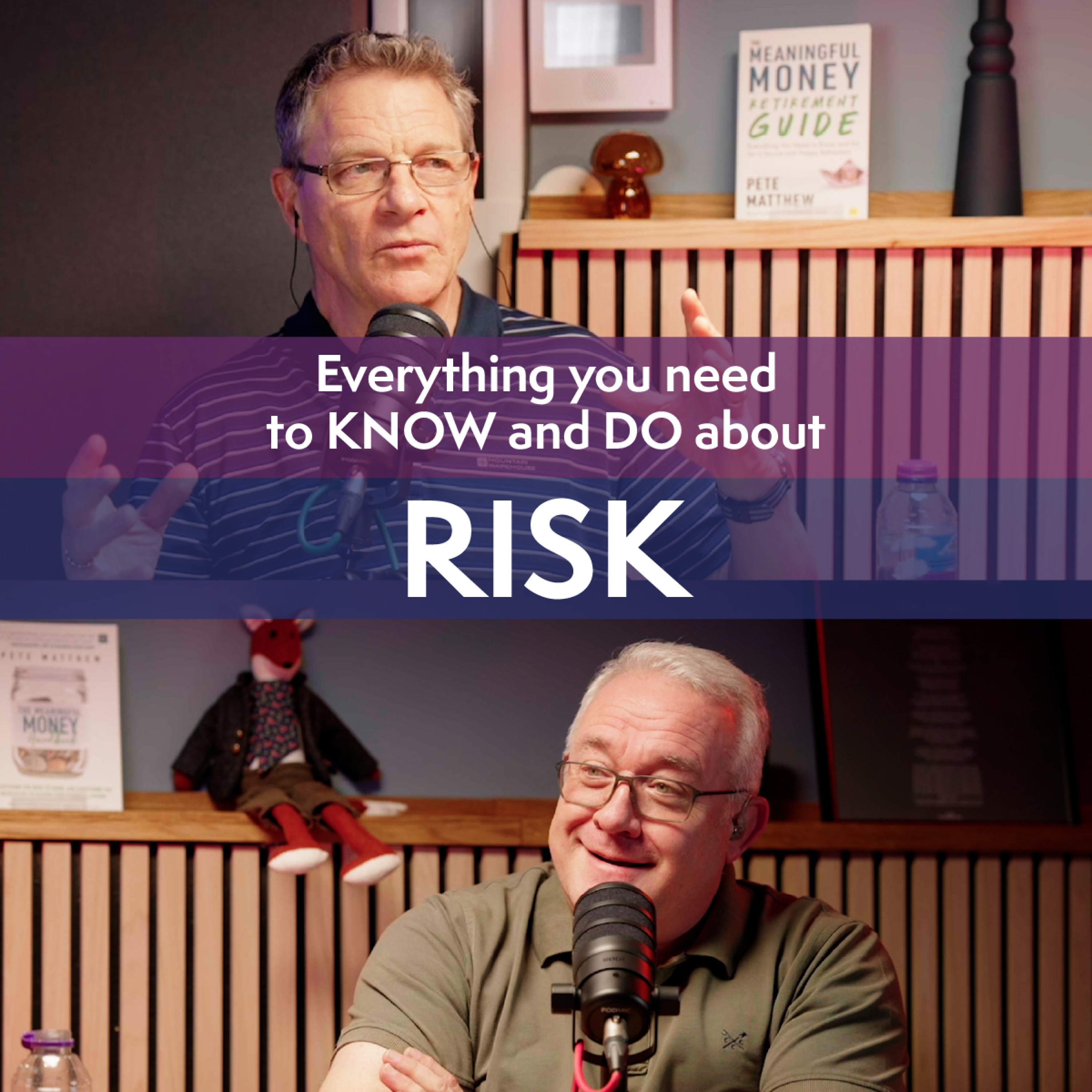
Ep 604Understanding RISK
This is an important episode. Here, Roger and Pete dive deep into one of the most important subjects for anyone looking to improve their finances to understand - RISK. It's misunderstood and it's misrepresented, but risk can be your friend if you treat it right. Shownotes: https://meaningfulmoney.tv/session604 Get the PDF emailed to you - Risk Lens Guide: https://meaningfulmoney.tv/risklens 02:18 Everything you need to KNOW 04:17 - Market & investment risks (the ones everyone worries about) 08:37 - Inflation & purchasing power risk (the silent wealth killer) 13:35 - Behavioural risk (where most damage is actually done) 18:31 - Planning risks – when the structure is wrong 23:31 - Life risks that derail even the best plans 26:06 - The risk nobody talks about: building the wrong life 29:35 Everything you need to DO 29:42 - Get clear what the money is for 32:28 - Match risk to time, not emotion 33:43 - Build shock absorbers before chasing returns 35:56 - Diversify like you mean it 38:03 - Design for behaviour, not brilliance 40:27 - Protect the foundations 42:32 - Review — don't react 44:49 - Spend intentionally — now and later 47:25 The Meaningful Money Risk Lens 51:15 Summary 52:42 This week's reviews

Ep 603Listener Questions, Episode 37
Welcome to the first podcast of 2026 where Roger and Pete answer more of your varied and interesting questions, covering everything from what to do when you've maxed out your pension and ISA, to whether you should borrow on your mortgage to invest! Shownotes: https://meaningfulmoney.tv/QA37 01:30 Question 1 Hello to Roger and his trusty sidekick Pete, Only kidding Pete, but it will make Roger feel good briefly. I must credit the pair of you for your continued dedication and commitment to educating the wider population on all things financial. I have gone from strength to strength in planning my retirement with the guidance and abundance of free information you have provided, the books you have written Pete, as well as signing up to the Meaningful Academy Retirement Planning and now planning to retire several years earlier than originally intended. Using the information provided and learnt, I have got my finances in order but more importantly, that decision is to align my future life (and that of my wife) to the finances we need and when our needs are likely to be met, hence the realisation retirement is not as far away as we had originally perceived, so I really appreciate what you have done for me and my family. My question maybe very simple, but it was sparked during a previous Q&A session Listener Question – episode 20 - 30th July – Question 2 – The question surrounded company Shares. I am employed by BAE and I purchase company shares each month, partially as a sensible Tax saving being a higher rate tax payer (purchase them pre Tax) but also for the first £75 worth each month I buy each month, the company will match, so effectively £150 worth of shares which technically costs less than £50 in real money each month. Now whilst I do sell some shares along the way (after the 5-year maturity to avoid tax payment), I continue to have a reasonable amount invested (£35k subject to tax relief period on some). A statement you made during the above session was "as a sideline issue we tend to say to people that investing in shares for the company you work for is a bad idea at any scale, thus to avoid backing one horse and it's not a good idea to hold onto shares for a company you work for." Now I thought I was onto a winner and being tax efficient and building an amount of money which I tap into on an occasional basis as well as additional source of income once retired, but are you implying, as you did to that listener, I might consider cashing some in and transferring the money else where? Perhaps in this instance it is suffice leaving it there, as the examples you gave were for smaller companies (in comparison) that folded, whereas BAE one of the larger Defence industry companies, doesn't appear to be going anywhere soon? I do have a Royal Naval DB pension already paying out, as well as a part DB and part DC pension with BAE (continuing to build), so I'm not reliant upon the money, which is another factor why I've not considered moving them away or am I doing myself a bad deal, id value your opinions (not advice ha ha)? Thank you for your time Regards, John 08:02 Question 2 I'm 39, a basic rate taxpayer and I have a Lifetime ISA and a SIPP with HL. Can I save for retirement in my Lifetime ISA and invest in the same funds as my Pension after receiving the 25% bonus to achieve similar growth. Then at age 60, withdraw all that money tax free and pay it into my pension (up to my allowances and possibly using previous years) to gain the 20% tax relief just before I draw the pension? I would also save some money on platform fees as the LISA is 0.25% vs the SIPP at 0.45%. I know I can get cheaper platforms elsewhere but I find HL easy, intuitive, and feel like I can trust them with my money, which really encourages me to save in the first place. Thanks, Robert 13:40 Question 3 Hi Pete and Roger, Longtime fan and listener, thanks for all the great work you do! I'm 40 years old and a member of the LGPS DB pension scheme, which I've been paying into since my early 20s. My partner is also in a DB scheme (Central Government). We have no debt other than our mortgage. We currently live in a modest home we bought for £89k, but are thinking about upgrading to a bigger property for more space and comfort (no plans to have children). That said, we've enjoyed the low cost of living here. We've built up around £160k in savings, split roughly 40% in a Stocks & Shares ISA and 60% in Premium Bonds and cash. I've tried to keep the ISA intact as a form of flexibility/security around retirement, potentially to retire early or reduce hours in the future. The dilemma is: 1. Do we spend most of the savings on a better house and accept working longer? 2. Or do we stay where we are, keep our financial flexibility, and potentially one of us works less or retires earlier? 3. Or is there a sensible middle ground, spending some of the cash to improve our living situation while still preserving part of our financial cushion for future flexibility?

Ep 603Christmas Episode 2025
Join Roger and Pete for a 2025 retrospective where we look into the kind of year it's been and a little bit ahead to 2026. MERRY CHRISTMAS! Shownotes: https://meaningfulmoney.tv/session602 02:04 Meaningful Money - Podcast, YouTube, Academy 12:05 Antidote to the noise. 16:40 Bank of Dad 22:39 Jacksons 31:18 Personal Reflection 45:18 Thanks To... Meaningful Money Podcast on YouTube: https://www.youtube.com/@MeaningfulMoneyPodcast Meaningful Money Youtube Channel: https://www.youtube.com/@meaningfulmoney Meaningful Academy: https://meaningfulacademy.com Jacksons: https://jacksons.life
Ep 602Listener Questions, Episode 36
Welcome to the last Q&A session of 2025. In this show we cover selling properties to invest in pensions instead, starting to invest for the first time, UFPLS vs FAD and SO MUCH MORE! Shownotes: https://meaningfulmoney.tv/QA36 02:05 Question 1 Big thanks to Pete and Roger for all the excellent advice. This question is for some of the 2.8 million UK landlords. Even those with just one property in their own name—not through a limited company—are increasingly affected by fiscal drag. Looking ahead, I plan to sell down much of my property portfolio in later life (because who wants to be a landlord at 70?). Plus, mortgage finance becomes trickier in your 70s. That said, even if I retain one or two of the best properties, the rental income alone may push me into the higher-rate tax bracket. I'm 49 and don't currently have a SIPP, but I can invest up to the £60k annual allowance via my limited company. Would it make sense to start building a modest pension over the next 10 years as a risk mitigation strategy? If so, how should I think about the opportunity cost? I'd save 25% corporation tax going in, but pay higher-rate income tax on the way out (less the 25% tax-free lump sum)—so is the net tax cost around 5%? Or am I overlooking other factors, like the benefit of CGT and income tax exemptions on growth within the pension? Appreciate your thoughts—and keep up the great work. Regards, Cameron. 07:29 Question 2 Hi Pete, Roger and Nick, I've recently discovered your YouTube channel and podcast, and it's been a real eye-opener - thanks so much for all the great content! I'm 45 and currently have £74,000 in a Fidelity SIPP, but it's all sitting in cash. I know that's far from ideal, especially with 15–20 years until I plan to retire. I also realise it's a relatively modest pot for my age, and it's not earning anything while it just sits there. How would you typically advise someone in my situation to begin investing some or all of that cash? I'm keen to make up for lost time but want to do so wisely. Thanks again, and keep up the brilliant work! Joanne 15:15 Question 3 Hi Pete & Roger, Firstly thanks so much for all your hard work - I devour your podcasts, videos & books - so much hard work on your behalf & I hope you realise how appreciated they are. I am just at the stage of life where in the next few years I need to start thinking about drawing money out of mine & my husband's pensions and I am considering the most tax efficient way of doing this. I have been reading all about UFPLS and FAD. As background, it is unlikely that either my husband or I will ever have much Personal Allowance unused in the years up to receiving our State Pensions due to rental income we receive; it is also unlikely that either of us will ever become higher rate taxpayers. I also understand that to get the most out of ones PCLS it is best to only crystallise the funds actually needed from an uncrystallised pension so the rest of the pot can hopefully grow and therefore the 25% tax free sum also grows. So, my question is, what am I missing, in what situations would it be more beneficial to take an UFPLS payment v making a partial crystallisation into a FAD pot (I am with ii who offer this). I feel like an UFPLS payment would give me 25% tax free and 75% taxed right away, whilst a FAD would give me the same 25% tax free and 75% could be taken straight away or drawn down over time as desired and could also be left invested to hopefully grow? Thanks so much, Tracy 21:12 Question 4 Hi Pete and Roger, thanks for hosting such a great podcast! I've recently been searching for a new job and was lucky enough to receive an offer with some interesting compensation features that I thought I would ask your opinions on. I actually turned down this role in favour of something else, but wanted to ask nonetheless as the offer came with an interesting feature that I have not come across before. Firstly, and probably most straightforward to answer – The salary on offer was £50,500 per year, which seems a weird figure – suspiciously only slightly above the threshold to tip me into the higher tax bracket, which got me thinking – are there any benefits (to the employer or employee) of being only just into the next tax bracket up? Why not £50k, or £51k? Secondly, in addition to a very generous DC pension scheme (they would pay in 12% if I pay in 5%) they offer a "Savings Scheme" whereby 5% of my salary would be deducted (and paid into this scheme) each month and at the end of 12 months the company would then top up these savings with another 5% of my annual salary – (actually 6% to "account for the extra tax"). My real question is this – what are these "savings schemes" in a nutshell, and are there any benefits of them over trying to negotiate for increased employer pension contributions instead? Interested to hear your thoughts on these. Thanks so much! Jamie 29:09 Question 5 Hello Pete and Roger I've recently found your podcast and wanted to say thanks for all

Ep 601Listener Questions Episode 35
It's episode 600 of the podcast, not that we're doing much to mark that milestone! We have some excellent questions today, taking in retirement planning, getting a mortgage if you have a new business and how flexible ISAs work! Shownotes: https://meaningfulmoney.tv/QA35 02:43 Question 1 Hi Pete, I'm a single household, due to pay my mortgage off in my early 50's….I have very little savings and pensions are everywhere and been 'balanced fund choices' as I either do self employed work or fixed term contracts. I'm really concerned I won't have 'enough' to retire. Where do I start to know how much I need? I don't have an extreme fancy lifestyle but want to live comfortably with running a car, having a nice home and having a holiday every few years. I would also like to help my siblings out if possible when they need it. Also for your business…..have you thought of making it an 'employee owned trust' in the future? This could be a good option if you don't want it swallowed up by larger organisations and want to keep a people focussed culture. Thanks, Anna 12:57 Question 2 Hi Pete and Roger Recently discovered the podcast and it's been really helpful in getting my thoughts straight about future planning - thank you! My job gives me a DB pension that as it stands will give me £4617 per year at 67 - for every year I work that will go up by one 54th of my salary, (£57k) so £1055 annually if I stay at the same grade. Increased by cpi plus 1.5% annually at the moment; and by CPI only once in payment. I can exchange part of this for a lump sum when I take it but that's a decision for another day! I'm projected for full SP at 67 after another 2 years contributing. I have £30k in a pensionbee that I'm adding to £100 a month, and after listening to the podcast I have started an AJ Bell SIPP (vanguard lifestrategy 60% equity) which I'm adding £200 a month to. Also working on the cash ladder/emergency fund - currently just £5k in a cash ISA I am hoping to get this up as much as possible. After overpaying mortgage and contributing to PensionBee/SIPP I can save £200 in a good month. I am aiming to retire as soon as I possibly can after 60, when the kids will all be in their 20s. I am sure this seems impossible but might as well aim high!!! So my priority is to build for the years between 60 and 67. And leave something for the kids, eventually! So…my question!! I have an old tiny deferred DB pension that I can take at 60, £3461 lump plus £1153 per annum (no option to take either a smaller or larger lump sum). I can't trivially commute this due to the rules of the scheme. As it's deferred there are no other benefits eg death in service. Or, I can take this now (age 53) with a reduction for early payment so it would be worth £3076 lump and £869 per annum. The pension increases each year by CPI while deferred and also when it's in payment. Does it make sense to take now, and put lump and monthly payment into either mortgage, or SIPP, or cash ISA? And if so which - SIPP gets me extra 25% from the gov as it's under pension recycling amount? But £3k off my mortgage now might be better. Cant get my head around the maths of this...but my gut feel is it would be working harder for me in my hand despite the fact I'd be taxed on the annual amount? I'd make sure that with my work and personal contributions I stay in 20% tax band and reclaim from HMRC when I do my tax return. Sarah 19:39 Question 3 Hi Pete and Roger, great show and love the new format to allow listeners to ask lots of questions. My question is around pension inheritance. When a person dies and passes a DC pension to a spouse or child, does the inheritance remain in the pension wrapper when it passes on or does it lose its pension wrapper status which allows the person inheriting to use the cash as they want without the pension restrictions? Many thanks, Kavi 26:04 Question 4 Hi Pete I've been watching your videos and listening to your podcasts for about two years now and I'll start by thanking you (and the youthful Mr Weeks) for the public service you provide outside your paying work. I have what I think is a simple question, but I don't seem to be able to find a definitive answer on-line. I retired about this time two years ago at the age of 62 so I'm 64 now. I have a DC pension in the form of a SIPP which is currently worth a little more than £600k. I also have a similar amount in savings (some in cash, some in an S&S ISA). I live on a combination of the income provided by the cash and the S&S ISA, plus a series of small UFPLSs taken roughly quarterly from my SIPP throughout the tax year. At this stage the SIPP withdrawals are relatively modest (totalling maybe 12k a year, of which of course 3k is tax free). My intention is to continue doing the UFPLSs at roughly the same rate, possibly increasing a little as a result of inflation. State pension will add another 12k or so to my annual income in 3 years so that will likely reduce the need to increase my SIPP withdrawals f
Ep 600Listener Questions Episode 34
We're getting into the groove of doing video podcasts now, and today we have another mixed bag of questions. They include the tax implications of moving abroad, whether to start a pension in your 60's, whether it's possible for a pension fund to be too big and lots more besides! Shownotes: https://meaningfulmoney.tv/QA34 01:24 Question 1 Hi Pete and Roger Thanks for the fantastic podcast, YouTube videos (and book) I have learnt so much. My question is essentially about whether to overpay my mortgage or invest. I have watched Pete's videos on this subject but just wanted to check if my situation changes anything. I'm a 41 year old Firefighter and I am in the Firefighters Pension Scheme. I am recently divorced and as such have had to start again with a 25 year mortgage currently fixed for 5 years at 4.1%. Essentially should I focus on overpaying this mortgage so that it is definitely paid off by the time I am 60 (When I can retire from the Fire service) as I already have the DB Firefighters Pension. Or would I still be better to invest this money in a stocks and shares ISA and use it to pay off the mortgage at a later date? My disposable income for whichever option would be around £200 a month. Lastly I will probably continue working past 60 yrs old but it may be in a different profession as by that age I may not feel like dragging hose and climbing ladders anymore! Thanks again, James 05:33 Question 2 Hi Pete and Roger, I've been listening to your brilliant podcast since COVID, so around 5 years now and always look forward to the new episode coming out. I don't really have a financial related question for you, more some advice... I've tried to educate my daughter on personal finance and I think she now has a good grasp and is interested in becoming a financial advisor. She is now 19, has decent A levels and has just completed an Art foundation course. She has University offers for September which she has deferred as she really doesn't want to go! We live in West Kent (nr Tunbridge Wells) and I've been looking for trainee, bottom of the rung, Financial advisor jobs for her but I can't seem to find anything. She could commute to London, if required but would rather stay local if possible. Do either of you have any suggestions about how she might be able to get into the industry? We're happy to pay for courses of that helps her but not sure what would be best. Sorry for the long email, any advice would be very gratefully received. All the best and keep up the great work Matt and Belle Hart 13:23 Question 3 Hello to Pete and Rog, Thanks for the podcast so far, my family is in a much sounder financial footing since I've started putting into action some of the basics you've spoken about previously. ISAs, pensions and insurance all ticking along nicely now - thanks to you! I have a question about my pension, is it possible to add too much? My thoughts are, if my pension pot in today's money is worth £1.25m when I retire, I can take the 250k tax free and £40k a year thereafter, anymore than this and I would be paying 40% tax on my drawings. Are there benefits I'm missing of having a larger pot (say £2m)? Not one I need to worry about yet, if at all, but it's always puzzled me! Many thanks for the content, keep up the good work and enjoy the sunshine this weekend! Adam 18:30 Question 4 Hi Pete & Rog, Have been a long time listener and have loved your double act with the self effacing banter alongside sound, sensible guidance on the minefield that personal finance can often seem to be. Listening whilst walking the dog is like chewing the fat down the pub with a couple of great friends, So my situation is this... 47 years old, married with two kids (11/14). Myself and my wife both have good jobs, own jointly (own names) 8 x BTL properties generating a profit. Equity in Portfolio is about £400k Portfolio was built to provide additional income and to support us in retirement (either the income or by selling) We have our own home (mortgaged) and are in the process of moving to a bigger place as we're growing out of where we are. This will come with a bigger mortgage as we're scaling up so to minimise the increase in monthly payments we're increasing the term back to our state retirement ages (which is a bit depressing!). So our ideal plan is to have the "choice" to semi retire / work as much or little as we want by age 57 - so around 10 years from now but we are not sure whether this is realistic and the best way to set things up to achieve it if it is. We would probably still work part-time beyond 57 but would want to have other sources of income that could support a comfortable lifestyle. To add to the complexity, but in a good way, I'm also in the process of changing jobs and the new job comes with a £20k pa pay rise and a matched pension at 6%. This is obviously lower than my current employers scheme but I plan to at least match what currently goes into my current employer pension one way or the other. So after what m
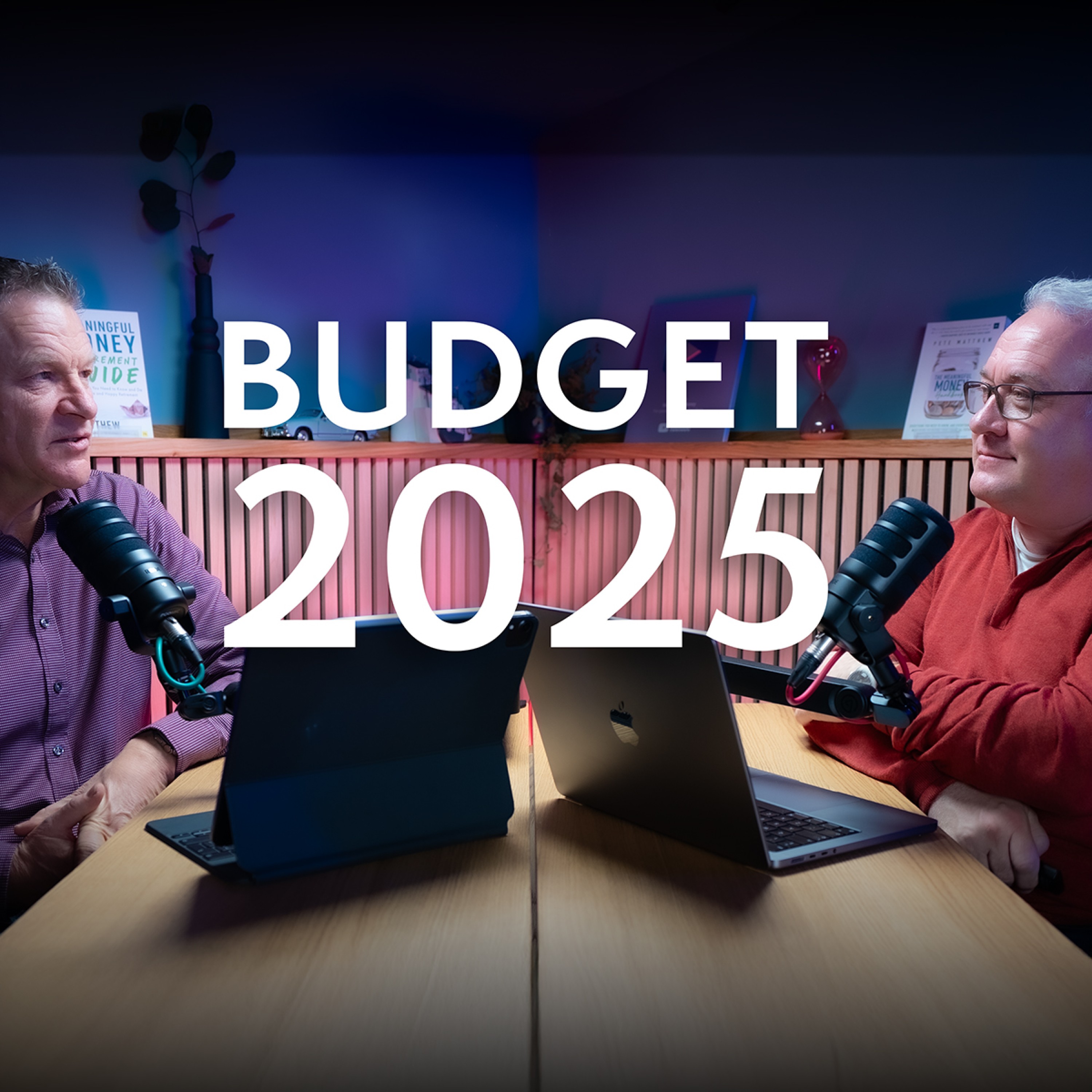
Ep 599Budget 2025 - Roger and Pete respond!
Roger and Pete discuss the November 2025 Budget, 24 hours after it was announced by Chancellor Rachel Reeves. We cover the salient points from a financial planning standpoint and try to avoid politics if we can! Shownotes: https://meaningfulmoney.tv/session598b 02:37 Income Tax 09:27 Capital Gains Tax 12:35 IHT 17:32 State Pension 19:48 Salary Sacrifice 25:32 What was NOT announced 30:02 VCTs 30:53 High-Value Council Tax Surcharge 34:00 EV and Plug-in Hybrid mileage scheme - eVED 37:55 Student Loans 38:44 Opinions 41:37 A Podcast Review

Ep 598Listener Questions, Episode 33
Welcome to another show full of questions form you, the audience and hopefully some meaningful questions from Pete & Roger. This week we have questions about paying school fees, becoming a financial adviser, how to invest an inheritance and lots more! Shownotes: https://meaningfulmoney.tv/QA33 01:15 Question 1 Good morning Pete & Roger, Thank you for a great podcast, been really enjoying it over the years and it's been no end of help for me. My question concerns my grandchild. She was born in America but now lives in the UK, is duel nationality. As grandparents we were hoping to put money aside into a savings account for her. Now obviously we thought the JISA but as she is born in America we can't do that. Is there any advice for how we can save for her in the most tax efficient way for her, conscious that she is quite young. If we can put some money away now regularly, it could build up into a nice little nest egg for her. Also hoping to do this for other grandchildren, not necessarily born in America. Any advice gratefully received. Mike. 05:48 Question 2 Hello Pete & Rog Wow these Q&As just keep delivering incredible value -keep up the great work! I'm 52 and my wife is 43. We're both higher-rate taxpayers contributing to a DB-DC hybrid via salary sacrifice. We'd like to retire together in 12 years (me at 64, my wife at 55—she has a protected pension age). We both have a DB pension and a DC pension. Combined we have emergency fund of £30k in Cash ISA, no S&S ISA. Observations: - Once both DB & State Pension are in payment pay, planned spending of £60k p.a. is fully covered. - My ability to draw DC within the basic-rate band post-State Pension is limited, as DB 33k p.a. - My wife has much more scope to use her DC tax-efficiently before her DB/State Pension start. - Likely outcome: large residual DC balances if we only withdraw what's needed to spend. Question: Would it be sensible to draw more from DCs early (using UFPLS at ~15% effective tax) and reinvest the surplus in S&S ISAs? This could: - Lock in withdrawals at basic-rate tax before DB/State Pension restrict allowances - Reduce the chance of paying higher-rate tax later - Diversify across ISAs (which we intentionally lack currently) Am I letting the "tax tail wag the investment dog," or is this just pragmatic tax-efficient planning? Cheers, Dunc 09:05 Question 3 Hi, Thank you both for your financial wisdom! It has definitely lit a fire under me! My husband and I (41) would like financial independence at 50. We have received £120k early inheritance gift and also plan to sell 2 rental properties over the next 5 years to reduce commitments (a further approximate £250k post CGT) We are mortgage free and I have since filled our stocks and shares LISA and ISA, investing in 100% equity low cost global trackers. Other than investing the remaining in a GIA and transferring to ISAs each year are there any other options to help money grow over the next 9 years. We may continue to work at 50 but under our terms. We need sufficient to tide us over from 50-57 when we can consider access to Pensions and the LISA at 60. Thanks Amy 12:18 Question 4 Dear Pete & Roger, Thank you so much for all the work you do on YouTube, on the Website and on the Podcast, it really does make a difference to people's lives and long may it continue! I'm 36 years of age, and I currently work as an Aircraft Technician, which I somewhat enjoy. However I find the older I get, the harder it is to keep up with the physically demanding nature of the job, and fear this may become more of an issue further down the line. This has prompted me to think about my future employment. Engineering has been my whole life, and my curiosity for learning and my persistent quest for personal development has resulted in me becoming a fully qualified Car Mechanic and Aircraft Technician. I have also achieved a BSc (Hons) in Motorsport Engineering & Design! However, my race car days are over, and in a way I feel like I have "completed engineering" to the best of my ability, and I am eager to take on a new challenge! I have always been interested in finance (some would say I talk about nothing else!). I've always kept on top of my own personal finance (thanks to yourselves), and try to encourage/empower others to take control of theirs. The past few months I have been thinking of self-studying (whilst remaining in my current employment) for the AAT Level 2+3 in Accountancy, however the more I think about it perhaps Financial Planning is more my cup of tea? I love working with numbers, working with and helping people, planning for the future etc, however I worry I lack the necessary confidence and people skills to become a successful advisor. So I guess my questions are: 1. How do you become a Regulated Financial Planner? 2. Is it possible to self-study for the CII Level 4 in Regulated Financial Planning whilst remaining in employment? Or would you advise against this? 3. Are there any pre-requisites to studying f
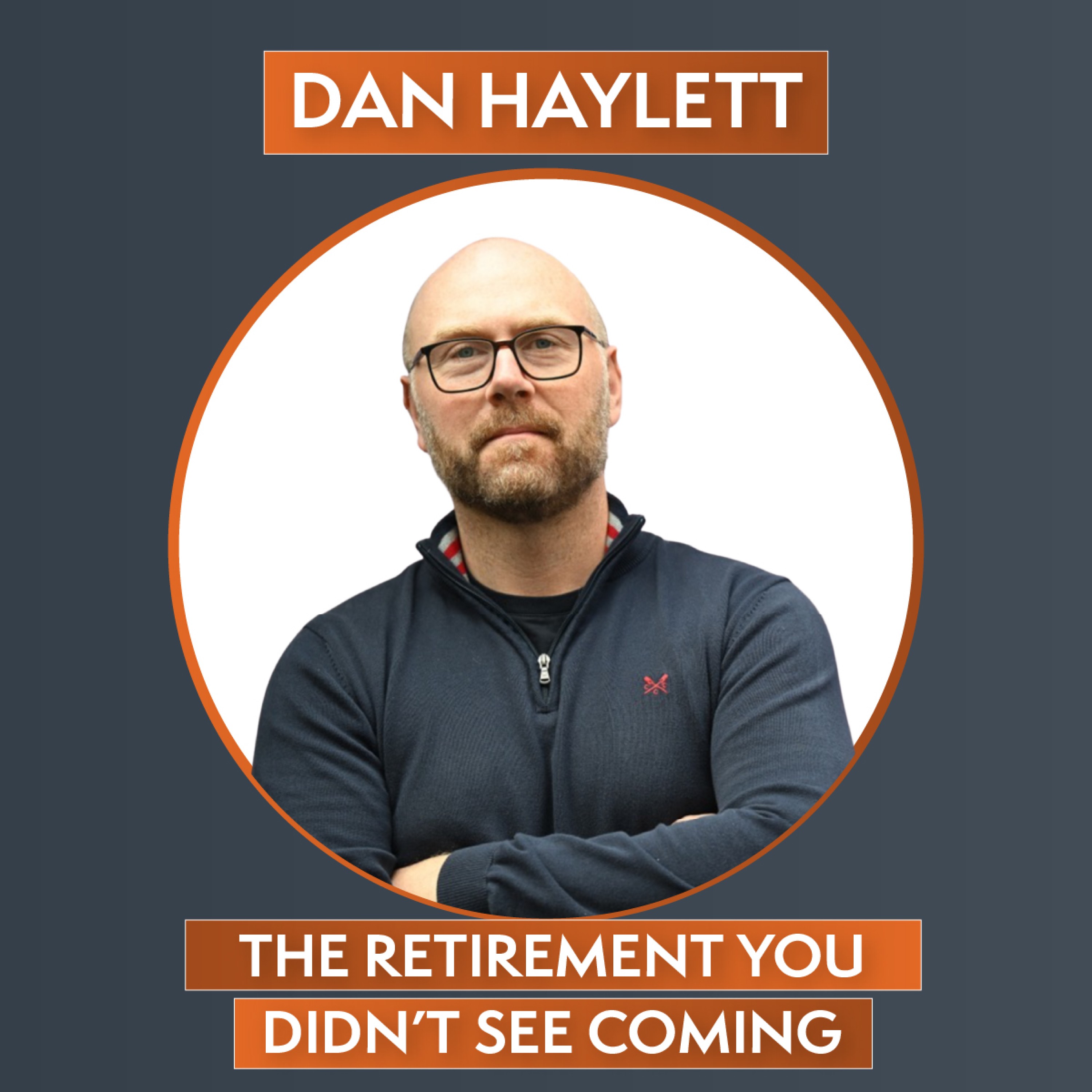
Ep 597The Retirement You Didn't See Coming, with Dan Haylett
This week I enjoy a brilliant conversation with Dan Haylett, a fellow financial planner and podcaster, and author of The Retirement You Didn't See Coming, a book I highly recommend. Dan Haylett on LinkedIn https://www.linkedin.com/in/dan-haylett-retirement-coach/ Humans vs Retirement Podcast https://www.humansvsretirement.com/ The Retirement You Didn't See Coming - Book on Amazon https://amzn.to/4o0UhYB The Retirement You Didn't See Coming - Book on TGBB https://www.thegreatbritishbookshop.co.uk/products/the-retirement-you-didn-t-see-coming The above links can also be found on the Meaningful Money website, at https://meaningfulmoney.tv/session597
Ep 596Listener Questions Episode 32
Some excellent questions this week, as always, and with the added bonus of moving the podcast onto YouTube! Join Pete and Rog as they answer questions about finance management apps, investment platform selection and transitional tax-free allowance certificates! Shownotes: https://meaningfulmoney.tv/QA32 01:39 Question 1 Hi Pete and Roger Thanks so much for all the work you do, I've only found the podcast recently but already enjoying learning more and thinking about things differently. My question relates to saving for retirement and specifically the period leading up to retiring. Nearly all of our (mine and my husband's) pensions are in SIPPs where we have been happy to be 100% equity, in global index funds. We are now maybe 7-10 years from the point where we could retire, and I've been able to research withdrawal strategies to the point where I'm confident managing that when we get there. We have determined our target asset allocation split between equities / bond funds / individual gilts and money market funds for the start point of retirement. I haven't been able to find much information about the period of transition from 100% equity to the asset allocation we want in place for the start of retirement. Obviously it's a balance between reducing exposure to volatility as we approach retirement and accepting a drag on the portfolio caused by the increasing allocation to cash and bonds and my instinctive (but not evidence-based!) approach would be to gradually move from one to the other over a number of years. So my question is this - is there a better approach than just a straightline shift from one to the other? How far out from retirement is it appropriate to start making the transition? The best advice I can find online is just to pick whatever makes you feel comfortable and do that but surely there must be some more robust guidance out there? I appreciate it might not be a one size fits all answer but would appreciate your thoughts on how to approach this. The one piece of advice I do seem to have found is that however we decide to do it, to stick to a predetermined schedule to avoid temptation to try to time the market - does that sound sensible or have I missed the mark on that? Thanks so much for any help you can give. Fran 08:28 Question 2 Hello I listen to your show when out on walks and find it helpful for somebody who struggles at times with pension planning I am 55 and myself and colleagues were told we had to leave the Final Salary pension scheme in 2019, the flipside being we would still have employment and our final salary pension would be triggered at reduced age of 50, although we would only get the years paid into rather than the magic 40 years which would give 40/80ths of your final salary. So, for me , mine was triggered in 2020 and it was around 32/80ths (paid in since age 17), and I still remain in employment. At this time I received a statement saying my pension had triggered, I had opted for the smaller lump sum (we had two options and some took the larger sum). There was no option to not take a tax free lump sum. I received a statement from the pension provider and it stated I was using 57% of the LTA Now, since 2024 the P60 I receive from the pension provider annually now shows how much of the LSA I have used, this shows an amount of £153k , which equates to the same 57% , this time of the tax free lump sum allowance of £268k (I have rounded the figures). However, the actual lump sum I received was £80k - so should I not have £199k left to use up ? As I got my lump sum prior to 2024 and it is far lower than the standard calculation used to generate £153k used figure , do I not have any protected rights and able to dispute this ? It seems unfair that others who opted for double the tax free lump sum I received will be treat the same as myself regarding what tax free lump sum they can get in future (We all pay into a company DC scheme these past 6 year, with a different provider). I have read about Transitional Tax Certificates but unsure if they are relevant to my scenario. I was unsure if the onus is on myself to take some action, or if the above is correct and that is how it works. Any advice would be appreciated and may help others in a similar scenario also. Many thanks, Jason 13:15 Question 3 Hi both, Thank you for all the great content, my question relates to financial planning as a couple. My partner and I are getting married next year and plan to combine finances at that time. We will also be looking to buy our first home in the next few years. Aside from some lifestyle creep, we are both 'good' with money and have worked with monthly budget systems before. We are looking for a system to help us manage our *total wealth/finances* on a larger scale as opposed to the majority of online finance spreadsheets which focus more on monthly budgeting. Do you have any recommendations for spreadsheets or software to help us keep track of the 'big picture' i.e. emergency fund, pension
Ep 595Listener Questions Episode 31
A couple of questions this week about having too big a pension fund, plus a great question on platform choice where Rog and Pete discuss their own experiences. Shownotes: https://meaningfulmoney.tv/QA31 01:58 Question 1 Hi, really enjoying the podcast. Started by watching your YouTube videos and still like getting the notifications of your new content. I have a question regarding early retirement, before pensions are available. I'm 50 and my wife is 52 and we would like to retire now. We have a mix of DB and DC pensions that will be sufficient for our retirement. She can start taking her pensions at 55 and I'll start at 57. We have a savings pot outside of pensions of £700k in a mixture of investment funds (ISA being maxed yearly) that we would like to live on between now and our pensions becoming available. Based on £5000 per month to live on, we would need to withdraw £60000 in year 1, year 2 and year 3. After that, we would need to withdraw £32500 in year 4, year 5, year 6 and year 7. Based on these figures and your experience of the expected interest we should gain over the period if our pot is sensibly invested, what are your thoughts on how low the pot will drop to over the first 7 years and how long would the amount we spent take to recover to the original value of the pot? Many thanks, Adam 10:39 Question 2 Hi Pete and Roger, Thank you both for all of the content and guidance – it has really helped me build my confidence in planning my finances. How much is too much in a pension? I'm 42 years old and have always prioritised pensions as a relatively high earner. I'm now in a position where I have a fairly healthy £530k in my pension, and wondering if I need to throttle back the contributions soon? If I take an assumed 5% growth rate, I'm on target for a £1m pot by age 55 without any more contributions (my access age is protected at 55). Should I just pay in enough to get employer match - I get 7% employer contributions for my 5%? My employer offers salary sacrifice, so as an additional rate taxpayer, I benefit from 47% relief (the employer savings are not shared unfortunately). I do already manage to fill my S&S ISA every year and have an adequate emergency fund, so really it's a question of pension vs GIA at this point. My concern is that I may have to pay 40% tax on withdrawals on the way out, so I might be better to keep the money accessible and support an early retirement before pension access age. What is the maximum pension pot size to target at age 55? – what do you think? Many thanks and keep up the good work, Steve 15:55 Question 3 Hi Pete and Roger, Thank you for all you do! My mum is 63 and retired a few years ago. She has a DC pension, which she won't need to take until she's around 68 as they currently live off my dad's income. Her pension has been in the default fund, which automatically de-risks as she approaches retirement age. We only recently learned that this default fund probably isn't ideal for her circumstances, when I discovered your podcast and forwarded some episodes to her! She doesn't intend to buy an annuity, so what can she do with her pension pot at this late stage to stop it being entirely de-risked and losing value as she gets older? She plans to start taking an income from it in around 5 years time. Many thanks in advance! Kathryn 22:23 Question 4 Hi Roger and Pete, Listening to your podcast has me feeling like a money ninja - ready to conquer my finances one episode at a time! Here`s my question: My workplace pension match is 3% and I also I contribute 3% - it`s auto enrolment and a DC pension. I would like to put 15% in my retirement, but can`t find any advice on how to best do that – do I just up my contribution into my workplace pension to 15% and that`s that, or do I also open a SIPP and GIA and split between all three? What do people usually do? :D Thanks so much – Leah 27:22 Question 5 Hi Pete and Roger Been a fan of your podcast for a long time and have put some of the lessons from yourself and others into practice since I was 19, now 46 . Regularly saving and investing as much as possible by way of ISA , high interest accounts etc I have been able to build a decent portfolio over the years My question is regarding the most efficient platform for Stock and Shares ISA regarding fees. In the past I had an FA and the ongoing fees I always felt eroded investment gains and switched to Hargreaves Lansdown. I have a mix between individual shares/funds and trackers totalling £210k with Hargreaves Lansdown. I have heard about other cheaper platforms such as AJ Bell Trading 212 and wondered if your opinion would be to move over to something cheaper with an in specie transfer. I remember well the financial crisis and Lost money with the bank ICESAVE, only saved by the then PM Gordon browns decision to reimburse. So although I am attracted , once bitten twice shy for lesser know companies. My end goal is to scale back or stop work mid 50's For fullness of info , Pension D
Ep 594Listener Questions, Episode 30
It's another varied mix of questions, with a couple on catching up after a late start, avoiding the 60% tax trap and lots more. Shownotes: https://meaningfulmoney.tv/QA30 01:03 Question 1 Hi, I'm curious if you have advice, best practice or tools to advise people who have a reasonable rental property portfolio on how to plan for retirement? I am 55, have taken 50k tax free cash, and 13k a year drawdown, approx 40k left. I have 11 rental properties, but I am still remortgaging and buying more properties. Currently have about 450k available to reinvest into a few more properties, and then probably stop buying. I'm really struggling to understand how much I can/should have available to spend each month, especially as I'm still reinvesting into properties. I'm sure I should be spending way more than I am, but can't work out how best to put a retirement plan together to show how much I truly afford to spend each month. Love your content, and thanks for any advice you may be able to give. Thanks, Paul 09:49 Question 2 Hi Pete and Rog. Big fan of the podcast, keep up the good work. I am looking at ways to stay under 100k income each year to remain eligible for childcare benefits. I know if I were to make AVC into my work pension this would help to remain below that figure. I would prefer to put this money into a SIPP. My question is if I got paid the money and deposited it into a SIPP instead of my work pension will this reduce my income tax and prevent me from going over 100k and losing childcare benefits. Kind regards, Joshua 12:33 Question 3 Hello Pete and Roger, Firstly, thank you so much for such an informative podcast. I don't think I listen to a single episode without taking away something valuable! My question relates to what I should do to with money as I accumulate it for the next financial year's ISA and SIPP allowance. For context- I am 39, an NHS doctor with an NHS pension, have a paid off mortgage and have started making SIPP contributions to bring my adjusted net income below the 60% tax threshold. I am in the privileged position to be able to contribute maximum S&S ISA contributions at the beginning of each tax year and already have filled premium bonds allowance as my emergency fund. Should I put my accumulating savings in a high interest savings account until April, or am I missing out on growth each year and should I be using a GIA with a bed and ISA approach? I appreciate there may be tax on savings interest above £500 or CGT on anything over £3k gains. I just don't want to be missing out on the best approach for the next 20+ years as I hopefully continue to max out ISA and pension contributions. Thank you so much in advance and keep up the fantastic work! Paddy 16:36 Question 4 Dear Pete and Rodge, I am relatively young (36) and have started listening to your podcast relatively recently (in the last year). What I like about it best is the calming relaxed attitude that money matters are discussed in and the comforting belief that life is more important than money I think shines through. Comparison is the thief of joy I know but I find it hard to situate myself in relation to where I 'should' be financially. I stayed at university a long time (10years) and so always perceived of myself as 'in debt' and living to the brink of my means, I didn't have a credit card but I would spent all my money and save nothing. When I did eventually get a job it didn't pay much and again it was paycheck to paycheck for many years. Then came three big changes almost at once. First me and my wife had a baby daughter come along, next the company I worked for went bust and third I found your podcast! Something about the mix of these three made me sit up, take notice and want to engage with my finances where previously my head had been in the sand. I did very much feel like I was way behind the running. I managed to find a job which paid almost a third as much take home pay again and decided to set up savings for my daughter, set up an emergency fund, increase pensions contributions, open a stocks and shares ISA, all of the good stuff that you guys continually discuss. However, I still am very much of the opinion that I am way behind the game and starting late which is a shame seeing as time is such a valuable component in investing. My question to you guys is, were you in my position, where would be the first places you would look to educate yourselves on the right things to do next? I feel like I don't know what I don't know and things continually surprise me (for instance I didn't realise that having a car on finance was considered bad debt until the other day). I have this constant nagging doubt that I will be missing something because I haven't started from the beginning. I did consider going back to the start of the podcast when I found it, but Rodge wasn't even around in the first few so I didn't enjoy it as much and also felt like maybe some advice would have gone out of date? Is there a key place for me to st
Ep 593Listener Questions Episode 29 - Retire Soon
In today's Q&A episode, we're answering a bunch of questions from those on the threshold of retirement, getting into the nitty-gritty of age-difference planning, DB scheme reductions and all sorts! Shownotes: https://meaningfulmoney.tv/QA29 01:04 Question 1 Hi Pete I am really enjoying listening to the podcast, thank you. They make what can sometimes be a complicated subject much easier to understand. I have a question which I have asked my SIPP provider but even they don't appear to know the answer so here goes: If someone has a SIPP valued at say £1.2m and a DB pension valued at say £300k, in order to maximise the favourable annuity provided by the DB pension, is it possible to draw the full LSA (25% tax free cash) from the SIPP? Or is there a requirement to draw the LSA on a pro rata basis from both the SIPP and the DB pension? Thank you, AJ 07:07 Question 2 Hi Pete and Roger, Thanks to The Meaningful Money Handbook, The Meaningful Money Retirement Guide and listening to all of your podcasts, I'm now in the fortunate position to retire in three years at the age of 55. However, I have a couple of questions about building a Cash Flow Ladder: Q1 - Should I be moving my investments into the various rungs of the ladder now, or just wait until I retire? Q2 - Most of my investments are in a pension, but I also have an ISA for a bit of flexibility. Would it make sense to use the same ladder structure in both the pension and the ISA? Thanks for all your good work. Tim 11:17 Question 3 Hi guys Loving the podcast - helped me through the COVID years and it's been a staple ever since so thank you for that. My question is around investing in older age. At what point, if any, is it worth cashing out GIA investments if other sources of income such as state pension and DB pensions are more than enough to live off and I have sufficient other capital (cash isas) for those big things still ahead? I'm not planning to leave any sort of inheritance (unless I pop my clogs early !) so is there some rule of (age) thumb of when to cash out and spend investments? I sort of don't see the point of continuing to invest after a certain age and to spend the money. But I guess it's not easy switching from investing to spending. Thanks, Chris 16:33 Question 4 Hi Pete & Roger, Great show gents, always interesting and informative. I've been an avid listener for a couple of years now and have been encouraged to write in on the off-chance that my question may have relevance to others with a similar dilemma. I fear you may feel it's too niche but here goes: I'm 59yrs old and for all intents and purposes retired, in as much as I quit my career in business 18months ago to take on the full-time parental care role of my 6yr old twins which enables my wife (15yrs my junior) to continue in the career she loves. We are fortunate that my wife is an additional higher rate tax payer (as was I before I quit), we live mortgage free in a ~£1.5m family house - all of which means I have no plans to draw a pension until my wife is also ready to retire, which despite her occasional gripe, is not likely to be until our children leave school (by which time we will be ~ 72 and 57 respectively). I have a small index-linked Public Sector DB pension that kicks in in a few months time when I hit 60 (£7k per year) and expect to get a full State Pension which should provide me with around £20k p.a. at todays values as a base income when I reach state pension age in 7 years time. I also have a Pension pot currently valued at around £1.2m, made up from £1m SIPP and £200k S&S ISA) and my wife's Pension pot is currently valued at around £520k (£400k SIPP & £120K S&S ISA). I no longer contribute to my SIPP but my wife invests around £30k Gross in to her SIPP annually and we plan on continuing to fill both ISA allowances each year until she retires. We are both 100% invested in equities using low-cost Global trackers to maximise their growth potential. Here's my question, I was burnt a few years back (before I started listening to podcast like yours to educate myself on how to manage my finances) when I was persuaded to join SJP and combine all my old workplace pensions into a single pot managed with them. I even persuaded my wife to join and I opened Junior SIPPs for my twins when they were born (not their advice, my own) which we continue to pay the full amount into monthly to hopefully secure their future retirement. Long and the short of it, the more I learned about investing, the more I regretted my decision to tie myself into SJP and the more I begrudged paying their relatively high fees (for what turned out to be a lower return than much lower cost tracker options could / would have produced over that same time period). I eventually sucked up the exit fees and bailed out a few years back, taking my wife and children's accounts with me and whilst I haven't looked back, it has made me reluctant to spend money on financial advisors, given the perceived poor advice I felt
Ep 592Listener Questions Episode 28
It's another mixed-bag of questions this week, covering income protection, the local government pension scheme, avoiding the 60% tax trap and much more besides! Shownotes: https://meaningfulmoney.tv/2025/10/08/listener-questions-episode-28/ 01:33 Question 1 Hello Pete & Rog I like to think of you as a couple of great mates offering me life changing information in a relaxed & entertaining fashion. When putting income protection in place, how do people/planners typically frame a target? Just replacing essential income? Or also replacing large contribution to pensions (including lost employer contributions) and S&S ISAs for long term wealth building? Thoughts on how I should frame these questions are very welcome! Many thanks, Duncan 11:27 Question 2 Dear Pete and Roger, Firstly thank you so much for all the free resources you put out there to try and help make the world more financially literate and astute. I myself started a journey of self awareness a few years ago thanks in no small part to your content. I have a question about pension recycling and what is allowable. I've read the rules on the criteria, all of which I think have to be met in order to fall foul of the rules, but am not clear on my wife and my specific situation. My wife and I met later in life and have been married for 13 years in a happy and stable relationship. I've just turned 50 but my wife is eight years older. In summary when we came together I brought earning potential but no assets (previous divorce wiped me out!) and she brought assets (house, SIPP pension built up, inheritance) but, through mutual agreement, no earning potential. Fortunately we have a healthy open discussion about money. I am an additional rate tax payer and use my £60,000 limit of pension contributions every year. We have paid off our mortgage and we have always lived using my salary for all our outgoings and live within our means with little consumer debt. I max out my ISA allowance too. Essentially I have no more tax breaks we could take advantage of by her giving me money, save for CGT or dividend allowances. After thinking about her tax implications I have encouraged my wife in the last couple of years to start to withdraw from her DC pension the maximum amount that would result in no income tax being paid (currently £16,760 of which 25% is tax free). Since we don't need the money for living expenses she tops it up with her savings to £20K and puts it in a S&S ISA so really is just moving investments from a less flexible tax free wrapper to a more flexible one while she pays no income tax. We will do this for the next ten years until she reaches state pension age and I retire myself. She'll still have a sizeable SIPP at this point as this strategy won't deplete all her pension. She still has significant other assets that attract tax as she earns more interest than the starter rate for savings allows tax free. She's fully paid up all her NI through additional contributions, has the maximum in premium bonds and I also have started to get her to put £2,880 into a new SIPP in her name every year to get 20% tax relief. My question (sorry it took so long to get here) is that now she is drawing an income of sorts from her DC pension could she recycle more than £2,880 into a SIPP? Clearly it fails on the intention front, on the >30% of the tax free cash and the fact she has actually taken tax free cash. But she's not taking in excess of £7,500 of tax free cash in a 12 month period (another one of the criteria) and I'm also not sure if her taxable DC withdrawals (on which she pays no income tax as Any advice gratefully received, Tom 15:56 Question 3 Dear Pete and the lovely Roger Weeks, Hope you are well. Thanks for all the amazing work you are doing to support people to have a better understanding of their personal finances. I have recently bought and read your new book, it's fantastic. Plus, I have bought several copies of your first book and given them to family and friends as presents. I love a practical gift haha; not sure the recipients feel the same but it's a gift that will keep giving if they follow your advice. Anyway, my question is related to a defined benefits pension. Background info, I am 49 (50 in a few weeks) and my husband is 64. From 1996 to 2000 I built up benefits within Merseyside Local Government Pension Scheme. I transferred this along with a DC pension from the voluntary sector (at the time I heard this was a good idea, I literally didn't have a clue about pensions but can't change that decision now) into my Wiltshire LGPS, which I was in from 2006 until mid 2012. After listening to your podcast on the Bill Perkins book Die With Zero, I started to run the numbers on accessing my DB pension scheme at 55, as this would enable me to pay off mortgage earlier and maybe work part time. This is a big consideration for me as my husband is almost 15 years older than me and I want to be able to spend some quality retirement/semi-retirement years with h
Ep 591Listener Questions - Episode 27
This week, we have questions about planning property purchases together as a soon-to-be-married couple, investing an inheritance, balancing an age gap between spouses and much more besides! Shownotes: https://meaningfulmoney.tv/QA27 00:52 Question 1 Hi Pete and Rog, I've been listening to the show since 2020, and I absolutely love it. It keeps me grounded in a generation that frivolously spends for the sake of Instagram. Thank you for offering such helpful advice for free. I'm in my early 30s, I have no bad debt, regularly contribute to my workplace pension, and have been saving for a 2–3 bedroom house over the past three years. In 2 months I'll have the 10% deposit (the minimum I want to put down) saved in my LISA. I'm currently renting a really affordable flat with a great landlord. I started saving when I was single, but I met my lovely boyfriend almost two years ago. We're serious and are planning to get married and move in together in the next 12 to 18 months. Here's my question: Should I delay buying a house for a year or so until I'm married, or should I buy now and plan to keep it for at least five years—even if, during that time, my boyfriend and I buy a different house and I end up renting this one out? Many thanks, Leah 07:50 Question 2 Love the Podcast guys My Question is about what to do with an unexpected inheritance (likely to be around £150,000 from the sale of my late parents' house) a year before remortgaging. For context; both my Wife and I have recently become Additional Rate tax payers with a defined benefit NHS pension. We can max out ISA contributions for a few years (including LISA for the next 6yrs) but with no personal saving allowance and only being able to effectively get savings rates of 4%). Would welcome your thoughts on this Gareth + Helen 12:27 Question 3 Hi Pete and Roger, I've been following your channel for over a year now, and I'm really grateful for the practical insights—wish I'd discovered you years ago! Your guidance has helped me make some much-needed improvements to my financial planning. My question is: Could you provide any guidance for couples with an age gap on balancing pension contributions and withdrawals, as well as utilising ISAs, to effectively phase-in their retirements together? My Civil Partner and I have an 8-year age gap, which didn't matter in our 20s and 30s, but 20 years later, with some middle-aged aches and pains! We want to align our plans better to enjoy more time together, rather than one of us retiring much later or sooner than the other. We underutilised pensions, unfortunately, but hold equity in two properties and decent cash savings. We are now mortgage free and plan to boost our pensions. Within 10 years, we might buy a small flat in Malaysia (his home country) and downsize our UK home from Manchester to Scotland (my 'home country'!). We hope to split time between the UK and Malaysia or possibly settle over there, drawn by the affordable living and our fondness for the country. Best wishes, James 18:53 Question 4 Love the show, you guys accompany me on walks when I have a break from work. I have two questions but this may be a bit much so I have broken them down I have possibly an easy question for you but one that I can't find the answer to online. My wife is a teacher with a final salary pension estimate of £23.5k p/a. We're unsure whether or not this will provide for a comfortable retirement, so we are considering making additional savings for retirement. My wife is a basic rate taxpayer and currently 39 so my question is whether it is better to invest the money in a lifetime ISA and effectively get the tax relief through government top up, as when she comes to retirement the additional income that would come from the LISA would be tax-free and not subject to income tax, or invest in a SIPP but this would incur income tax when accessed? To me it seems a no brainer as the tax benefit on the way in is effectively the same but there is no tax burden on the way out of LISA versus a pension am I being dim or is this the right way to go? I am a higher rate taxpayer so I know that to get the most tax efficiency it should go in my pension but there's a possibility I would be a higher rate taxpayer in retirement too so not sure it's sensible to have it all in my name (also mindful of lifetime allowance being reinstated) Other question is more complicated and around planning for me. I'm 38, a higher rate TP recently earning £90k p/a, I currently have c.£215k in a few employer pensions. My current employer pension scheme is based on qualifying earnings only. My employer pays 3% (so I live a fairly modest lifestyle with my wife and two primary school aged kids with 1 week holiday p/a, I'm worried that I might be scrimping now and over saving rather than enjoying my time with my kids by having more disposable income. Fully understand that you can't give advice now but is there any fairly standard target for the comfortable pension age and reliabl
Ep 590Listener Questions - Episode 26
Some great questions this week about planning for the loss of the personal allowance, investing in GIAs, persuading an aunt to write a will, and much more besides! Shownotes: https://meaningfulmoney.tv/QA26 01:11 Question 1 Dear Roger and Pete, I enjoy listening to your show driving to work. You are both down to earth and humble with your opinions. I read a lot on finance and have been investing in stocks and share ISA since 2004 and VCTs since 2017. I have built a healthy portfolio of nearly 300k in VCT, 400k in Stocks and share ISA. I also have a healthy DC pension of roughly 700k and DB pension worth around 10k per year from age 60. I am approaching 50th birthday this year and so decided to use up some of my cash savings which is in excess of my target investment of 20k in ISA and 50 k in VCT(as unable to go over 10k in pension (due to annual allowance threshold). I know I am fortunate and I also live frugally as that's my nature and don't have too many wants. The question is if I have roughly 80k in mortgage and I have the ability to clear it, should I invest that 80k in VCT on top of my regular VCT allocation of 50k and get the 30% tax benefit(as I am unable to get much tax benefit from my pension) or clear my mortgage as the mortgage is coming up for renewal and likely interest rate will be 4-4.5%. I am torn as I understand in my head that 80 k invested is better than clearing the mortgage over a 20-30 year time frame, but as I am going to be 50 and would like to clear the mortgage and have freedom to decide if I want to enter a life of FIRE or have the ability to FIRE if I get bored. However, I have kids in school and so unlikely I will FIRE until they go to university. Sorry about the long question. Thank you, Fred. 06:25 Question 2 Hello Pete / Roger, Great podcast! I hope karma holds true and all the good you give out back comes back to you both! Question: I am a higher rate taxpayer who maximises their pension, stocks & shares ISA and other best tax sheltered places so need to also build wealth in a taxable GIA. What is best strategy for a higher rate tax payer to do this... dividend / income generating stocks or accumulating (non dividend paying) investments and pay CGT at some stage (regularly)? Thanks, appreciated as ever and hope may help others Ivana 10:43 Question 3 Hi, Nick (who I assume will read this first), Pete and Roger, I'm not sure if this is a suitable question for the podcast but here goes. How can we persuade an aged aunt that she needs to write a will, as us knowing what her wishes are is not sufficient. I have an aunt who has no children but she has said she wants her estate split equally between her 8 nieces and nephews but she refuses to make a will. The problem is that if she dies intestate there is an estranged brother who would be a beneficiary as far as we understand and so what she wants to happen won't happen. Richard J 15:50 Question 4 Hi Pete and Rog My husband and I have been MM diehards for many years. We think It's a sad reflection of the state of nation when David Beckham gets considered for a gong before Pete does! I wanted to ask you about UK T-Bills because they are rarely (if ever) mentioned in your discussion of financial instruments. We are at retirement age I have a few DB pensions and a SIPP with Interactive Investor of approx. £300k. About ½ is sitting in Cash (including short term money market funds) because we want to draw out our 25% tax free allowance within the next 2 years and we want to minimise risk until that time arrives. I still want to diversify my low risk investments as much as possible into bonds but my experience of bond funds is that they can also drop significantly with economic conditions whereas we want something to deliver us a (near as possible) guaranteed return. Our platform (ii) allows us to purchase bonds on the primary market however they are too long-term for us to see them through to maturity given our timescales. The platform has started to release UK T-Bills which seem typically much shorter term (3 or 6 months) and therefore appear to give us what we are looking for (guaranteed rate at a decent %) and very low risk. I know the % return is determined by the 'auction' but it currently looks to be around 4.5% on average (especially the 3-month ones). We plan to apply the bond ladder concept and buy these T-bills over the next few years on a rolling basis. As they are very short term, if rates drop we can change our strategy mid-plan so I think it also gives us a degree of flexibility too. Have we overlooked something obvious as it seems to fit our needs perfectly for the next couple of years? We are very hands-on on the platform so we don't mind getting stuck into the action process (which looks straightforward). I'd be interested if you had any additional insight / comment on T-Bills being used for this or other strategies. Regards, Gilly 22:55 Question 5 Hi Pete, Roger, Thank you for the podcast, I always look fw to listenin