
The Meaningful Money Personal Finance Podcast
373 episodes — Page 2 of 8
Ep 589Listener Questions - Episode 25
It's another packed and mixed bag of questions here on Meaningful Money. Today we deal with Seafarer's pension contributions, tax-free cash on DB pension schemes and annual allowance calculations. Plus we give some thought to the evolution of the show… Shownotes: https://meaningfulmoney.tv/QA25 01:10 Question 1 Hi Pete and Roger Many thanks for all that you do. I am a long time podcast listener and happy client of Jacksons. I am currently playing catch up on the current series and have a couple of thoughts on points raised in two episodes. In episode 3 - there was a question on pensions and the answer included the point that when making contributions to a scheme they are generally paid net and the scheme reclaims basic rate tax from HMRC. Just to say that this is not always the case. My employer recently moved its scheme to an Aviva master trust. I wanted to make a lump sum co tribute. Ahead of the tax year end. However I found that the scheme could only accept gross contributions and I would have to reclaim the tax myself. As it was quite a decent sum and I preferred not to wait for the tax I made the contribution into a different scheme. In episode 7 you had a question about moving abroad. The point we made that you can't continue to contribute to UK tax favoured schemes when abroad which is correct. However there is another watch out in that ISAs in particular may be subject to income tax in the new country of residence - as they were when j lived in the US. It is therefore critical to get advice so you can make the right choices when moving abroad All the best, Richard 05:06 Question 2 I have been listening to your podcast for the last 5 or 6 months. Like so many of your listeners, I have spent many hours catching up on your early episodes, no longer do I watch movies or drama series or wildlife programmes. I listen to Pete. Your advice has been priceless. However, I do have a question that I seemingly cannot find the answer to. Perhaps, I already know the answer, but am putting my head in the sand because I do not like it. I know that the pension tax free lump sum is limited to £268,275 and I believe that this applies to the total taken from multiple pensions. I retired from the police in 2013 as a chief inspector. I took the maximum lump sum available at the time which was £206,000. I started a new job with the NHS and am paying into the NHS 2015 scheme. My projection on retirement from the NHS at age 67 suggests that I can expect a lump sum that combined with my police pension lump sum will take me well beyond £268,275. I have seen some articles on line about lump sum protected allowances, but do not know if this is something I can access. Clearly, if all I can take from my NHS pension is £62,275 I will be paying 40% on a greater proportion of my pension in payment. I suspect there may be others like me that maxed our their lump sum when first retiring and have gone on to further employment and have built up a tidy pension that has the potential to pay out another handsome lump sum. Your advice is gratefully appreciated. Kind regards, John 11:25 Question 3 Hi Pete and Rog Always a delight when a new episode comes out – I hope Rog is getting fairly compensated for his efforts! I have been a keen listener for a number of years though until recently had lived outside of the UK, so while not everything was applicable (ISAs or pension contribution limits etc), the podcast has always been a valuable tool as I improve my personal finances I have a question I was hoping you could clarify for me which relates to questions you answered on previous podcast Q&A. Trying to keep it short but failing: On a couple of occasions when talking about pensions there seems to be an assumption that your income will fall in retirement and so income tax on the way out of the pension is less relevant. You recently had a question around moving money from a Lifetime ISA to a SIPP for a higher rate tax payer who was moving abroad and the calculation / discussion went something like: Invested 4k, got the extra 1k but have to take a 25% penalty when taking the money out so down to 3.75k. Then when investing that back into a SIPP you get tax relief so back up to 4.7k or even 6.25 with higher rate relief. Then the discussion seemed to suggest in such a case you might even be better off than if you had left it in the LISA. However, doesn't this depend on what your tax rate is on retirement / withdrawal? Now on to my question: Similarly, you had someone who had maxed out their annual pension contribution limit and they were trying to decide whether to pay more in to their pension (foregoing the tax relief) or to put it in to a GIA. This is a situation I find myself in and the Q&A discussion seemed to suggest it doesn't make much difference. There were comments that an ISA would be better than a GIA but assuming the ISA allowance was already fully used then there was little difference. This confused me and brings me to my question. If I
Ep 588Listener Questions - Episode 24
This week, Pete is rested after his holiday and may even be more tanned than Roger, for once! We answer a mixed bag of questions ranging from financial planning if you're on benefits to tax-free cash recycling and lots besides! Shownotes: https://meaningfulmoney.tv/QA24 01:38 Question 1 Hi there! I'm one of the very many people who look set to lose disability benefits (PIP and ESA) at the end of next year. I was disabled following an industrial injury 15 years ago and have a lifetime award of Industrial Injuries Disablement Benefit assessed as 70% disabled which currently brings £155/week. It's definitely not enough to live on let alone pay the additional costs of being disabled. (there's no chance of recovery enough to work as I can't access healthcare but that's a long story) I am 50 and conventional life plans involve maintaining saving/investing through midlife on the expectation of reduced income on retirement. But I'm now facing acute poverty for 15 years until I hit the relative luxury of state pension. (Assuming I can find the cash to buy the missing NI years!) I have some assets that are pretty badly managed on account of my being unwell, and in particular a second flat which has £7000pa post-grenfell service charges and so can neither be mortgaged, sold nor rented out until those repairs finally complete-if they ever do! I think I can afford to cover costs from cash savings/investments for maybe 5 years. But after that... Can you speak to the general point of financial planning for people with unconventional life trajectories, particularly disability, and especially what sort of financial information/support resources are available? I'm unsure if you've any specific suggestions for my situation to get me through a decade of sub-living income/cashable assets against potentially sustained high costs? Obvs I love what I can manage to get from the pod and was particularly interested when you've spoken of financial coaching. Cheers! Sam 10:06 Question 2 Hi Pete & Roger Loving the Q&A sessions. Even when topics aren't relevant to me it's still insightful to hear from other people and always educational to listen to your response. I suspect the answer to my question is simple but have yet to see an answer to it anywhere online! I have a cash ISA with T212 from 24/25 tax year and will have a new £20,000 to invest come April (cash ISA's are my preferred vehicle - long story!). Can I just add the new 20 to the existing ISA or do I need to take out a new one? And also, do I benefit from compound interest if I leave it all alone? Regards Maxi 13:06 Question 3 Hello I am loving the podcast and finding out about situations I would not have considered before listening. I don't know if you can help on this one, it's a bit of a tax question on CGT. We are a couple both with dual citizenship (Aus/British) and are planning a sabbatical break from working in 2026 for a minimum of 3 months, but this may turn into years. We have a house purchased in 2003 with no mortgage and want to know our CGT obligations if we were to be non residents when we sell our house? Also is this CGT obligation a tapering obligation like IHT when moving abroad? Kind regards, Sam 19:42 Question 4 Hello gents, Enjoying the podcast as always. Especially the Q&E episodes as I like to test myself to see if I would answer the questions the same as yourselves! My question, I am 20 years old and have recently got my Level 4 diploma with the CISI, and now looking to take the next steps in becoming a planner myself. The obvious route is to stick with the CISI, competing their Level 6 Advanced Financial Planning then the Level 7 Case Study to become CFP. However, just because it's obvious doesn't mean it's right! I seen that the CII's set up is completely different, lots a smaller exams, with the outcome being Chartered (not CFP). Am I overthinking this or are there pros and cons for each exam board. Also what is the different between CFP and Chartered? Many thanks, Lewis 27:28 Question 5 Hi Pete and Roger, Firstly, thanks for a great podcast - I've been listening for many years and often catch up with the latest episode whilst on the rowing machine at my local gym! I have a question regarding the pension recycling rules. In Feb 2024, I initiated a DB pension, taking £108,000 lump sum and a yearly amount of £15800. This was to pay off my partners property that we are both about to move into mortgage free. My total contribution was £200k and the remainder of the balance was from my savings. I currently earn £80k salary and have additional rental income from two properties I own of approx 10k net per annum. I am in the process of selling one of my properties and want to use the proceeds (after CG) to maximise my pension contributions in tax year 25/26. So in total it would be about £66K contributions (as I have carry over allowance from the past three years). Over the past 3 years my pension contributions on average have been approx. 35k per year. I'm li
Ep 587Listener Questions Episode 23 - Inheritance Tax
This week we have a bunch of questions on the subject of inheritance tax, trusts and estate planning. Fair to say, these stretched us quite a bit and we had some surprises as we researched the answers! Shownotes: https://meaningfulmoney.tv/QA23 01:45 Question 1 Hi Pete & Rodger Love the podcast as it has loads of useful information and you make it very simple (as it can be) and clear. Love how you bounce off each other and make it easy to listen to. My question is - I have a reasonably large SIPP that will if added to my house value push me well over the 1 million level. I see a lot of press articles about how it would be good to start reducing estates that are in this position to mitigate possible IHT. My stance is that I am only 60 married and feel that - 1. It's too early to know what the new rules will look like 2. If I die before 75 and my SIPP goes to my wife she can pull whatever out tax free (currently) and gift some IHT free, as long as she lasts 7 years. 3. If my wife dies first I can do some gifting at that stage to reduce estate / possible house downsize to give large gift again with the 7 year IHT rule. Why do anything at this stage that would incur a tax charge? Your thoughts on this approach would be very much appreciated. Kind regards, Jules 07:08 Question 2 Gents, Outstanding podcast which I have listened to for years from overseas in the Middle East. The thing I like most is your consistent message about simplicity, being intentional and using low cost funds. Every season reinforces financial education and I never tire of listening to you. Thank you. I have a general question that I thought might possibly apply to other listeners regarding income drawdown ie should I use my pension pot or ISA money first? My situation is slightly complicated as my personal allowance will be used up by a DB pension. I will have a DB pension at age 55 (approx £30k) plus I have a DC pension pot plus an ISA. If I would like a retirement income (pre-tax) of say £60K (ie over the current 40% tax rate threshold), what is the most tax efficient way of drawing the income? I'm aware that in future my pension will be liable to IHT so in essence could take a 40% hit on death. Should I take all additional income from my ISA until that runs out or take money from the pension pot up to the 40% tax rate band (approx £50k) and use the ISA thereafter to save me paying 40% tax on any pension pot money? Are there any online calculators that can help as I guess it's partly just maths? Many thanks, Ian 13:48 Question 3 Dear Pete and Roger, My mum passed away over a decade ago and since then my dad has met a new partner. They live together and own their own home, split 60% (my dad), 40% (his partner). He has said a "trust" has been set up so that should one of them die, the other can live it for as long as they want before it is sold and the money passed to their children. With some research, I think he might just mean a "declaration of trust" but I am unsure. I just want to know if there is anything I should be aware in terms of inheritance tax to make sure his (and my mum's) residence nil rate bands are still in place, as I remember you saying on a previous episode of the podcast that if a house is left "in trust", it would wipe out the residents nil rate bands. The house is valued at approximately £725k and my dad's assets (including his share of the house) would be about £850k. Thanks for sharing all your knowledge, really enjoy the podcast. Steven 21:40 Question 4 Hello Pete & Roger Listening to you both has completely turned my future retirement around! My trajectory is now very positive as I'm building a decent DC pot to supplement my DB pension several years before I qualify for state pension. That's not just great financial progress, it's the life enhancement of 4 additional years of retirement at a time when im most likely able to make the most of it! Complete game changer with some knowledge and commitment to build a better future. Now, a query on the definition of income from the perspective of the gifts from surplus income exemption from IHT…….. Does regular (quarterly) UFPLS withdrawals count as income for these purposes? I know these gifts need to be from income-they can't be from capital withdrawals. However, when I take regular UFPLS withdrawals, am I taking capital withdrawals? I'm effectively selling down assets to get the UFPLS payments so really don't know if this is income or capital withdrawal for gifting purposes. Keep up the fabulous work. Thanks, Duncan 24:20 Question 5 Hi There Pete and Rodger, Long time listener, first time caller - been listening to and recommending your podcast to friends, family and colleagues for some time now! Keep up the great work! My question relates to Inheritance tax and is a question my mother has been wrestling with for some time. Long story short, my parents emigrated to south Africa from Scotland in the 80's where I was born - sadly my father past away when I was an infa
Ep 586Listener Questions Episode 22: Financial Planning for Children
This week, Pete and Roger answer your questions about investing and planning for children, including trusts, life insurance and how to keep tax low. Shownotes: https://meaningfulmoney.tv/QA22 01:35 Question 1 Hi, A friend recommended your podcast in mid-Dec and have already listened to the Financial Advice Process and Combining Pensions episodes (which were both 100% relevant) and working my way through the Q&A episodes. I have a question about share trading accounts for my children (14, 13 and 11). They are in a fortunate position where they all have JISA's (held at Hargreaves Lansdown) which I contribute to (max amount) and manage, without their knowledge. My wife and I also hold ISA's at HL as well, which we max out. I was taught to be a saver as a child, not an investor, and this is something I have learnt more about as I get older. Your recent Q&A podcasts mentioned a couple of times about looking forward and not back - there is nothing I can do about my historic saving, and wish this was invested rather than saved!! However, my children are a lot more savvy about investing, than I ever was at their age. The two oldest children play a game called Business Empire and are multi trillionaires, I'd like to teach them the benefits of investing in the real world, but that it might not be quite as easy as Business Empire! We have discussed setting up a separate trading accounts for the children, putting some money in (poss £3k / £5k) and the children then managing the investment decisions. I want to keep the accounts separate from their JISA, so they don't get visibility of their JISA. Preferably I own the account and login, and the children can then ask me the value or ask me to execute trades on their behalf, which they request. They will make all the investment decisions. I recognise that they could turn £3k / £5k into zero quite quickly! Let's hope that Business Empire teaches them something. The only way I have found to be able to set up trading accounts for the children is that I set up a Bear Trust for the children, which seems overly complicated for what I'm trying to achieve. Or I create an account at AJ Bell for one of the children in my name and find 2 other companies to set up trading accounts for the other children in my name. Or I create a SIPP for the children. So the question is, where / how can I set up a trading account for children, so they can get experience of investing and making their own investment decisions. Love the podcast, keep up the good work Thanks, Stuart 10:00 Question 2 Hello Pete and Roger, Really enjoying the podcast. The Q&A shows have been fantastic for hearing about other people's financial conundrums and thinking about how to apply those lessons in my own situation. I have some questions about children's savings that I hope will help others too. For context, my wife and I have a 12 year old daughter and 8 year old son. My son has a severe learning disability meaning he is unlikely to ever be able to manage his finances independently. I get a good salary from full time employment and pay additional rate tax, while my wife stopped working several years ago to care full time for our son. Question 1: Can you please interpret the rule: "if, in the tax year, the child gets more than £100 in interest from money given by a parent. The parent will have to pay tax on all the interest if it's above their own Personal Savings Allowance? Both children get £60 a month paid into children's cash savings accounts since they were babies - half from us and half from grandparents. Last year, my daughter got £300 of interest. My hope/assumption is that the rule applies per parent. Otherwise, given my personal savings allowance is £0 I would potentially owe £135 of tax on my daughter's earnings having only contributed a quarter of the funds over 12 years. We've now moved the bulk of her savings into a stocks and shares JISA to avoid any tax hassle, but this wouldn't be suitable for my son who will be unable to manage the account when he turns 18. Does it make a difference if the payments come from my wife's solo bank account vs our joint account? Question 2: Related to the above, where do you start with financial planning for a child with learning disabilities? What are the big things we should consider? Will savings in my son's name affect his entitlement to the benefits and care he will need as an adult? Any advice on finding and vetting a good financial advisor with expertise in this area, as I appreciate specific personal circumstances will have a big effect here? Thanks, David, in Leeds 19:52 Question 3 Hi Pete and Roger Thanks for all the content over the years, so glad I found your podcast in my late twenties so hopefully I can look back in years to come and thank you for helping set me on the right track financially. My question is a little general in the sense that I don't know what I don't know, but I'm wondering what things I may need to do differently now that my wife and I have
Ep 585Listener Questions, Episode 21
This week, we're covering redundancy sacrifice into a pension, cash ISA allowance reductions, evening up finances between spouses and much more - it's another MM Q&A! Shownotes: https://meaningfulmoney.tv/QA21 00:55 Question 1 Dear Pete & Roger, My question regards Redundancy Sacrifice into a personal pension (SIPP). In tax year 2024/25, I had "relevant UK earnings" of £44,000. I contributed the full amount (inclusive of tax relief) to my SIPP; as a Personal Contribution this used up 100% of my Annual Allowance. In addition, I received a £20,000 tax-free lump sum Redundancy Payment. Because it was below £30,000, it did not constitute "relevant UK earnings", as such, I requested it be paid directly into my SIPP via "Redundancy Sacrifice". (My understanding is that it would be treated as an Employer Contribution, not benefit from tax relief and, therefore, not limited by my Annual Allowance - please correct me if wrong). However, due to an administrative error, it was paid to me. Subsequently, I transferred it to my pension provider, together with the necessary paperwork (completed Employer Contribution form and Settlement Agreement detailing the source of funds). My pension provider has rejected the transfer designating it as a Personal Contribution because it was made from my personal bank account. Q. Does HMRC require Redundancy Payments be paid from business bank accounts? My understanding is that the rules are different from normal Salary / Bonus Sacrifice. (Disclaimer: I understand that in answering my question you are not providing financial advice). Kind regards, Ross 07:00 Question 2 Hi, There's increasing headlines that Rachel Reeves might be planning reforms to reduce cash ISA allowances from 20k to 4k. My understanding is that this will only affect new ISA's so for me and my wife we can continue to invest 20k per year maximum. Is this assumption correct? My main question though is planning for my kids. If they don't yet have any ISA open - what is the best way to start them off to hold onto the 20k annual allowance for potentially accessing cash They both have money put away for when they're 18 but our plan was to encourage them use some of this for a LISA then put some away in the best cash ISA available for short term requirements. Eldest son will be 18 in 1year whilst youngest is 18 in just over 3yrs. Thanks for considering my question. Stuart 11:43 Question 3 Hi Pete, I found you from the podcast you did with Damien on Making Money. I really enjoyed listing to your view on money. My question is: I'm a stay at home Mum (age 42) to my children (12 & 14). I have 20 years NI contributions but have no plans to restart work. I aim to pay volunteer contributions to help build up to a full state pension. I do not have any pension myself. My husband is a 40% tax payer and has been paying into his pension for the past 20 years. We want to start saving extra to either have my own pension pot (perhaps save in a S&S isa for the next 20-25yrs) or would we be better off putting more money into my husbands pension? We're happy to share the pot as it were. Or is there another option I haven't thought about? Many thanks, Louise 15:13 Question 4 Hi both, Loving the podcast, only recently came across it but have been an avid watcher of Pete's YouTube videos for years now. I am 33 and a higher rate tax payer. I have spent the last 3 years getting my house in order with my finances and wanted to get your thoughts on what else you think I could be doing to maximise my tax efficient savings. I contribute £1600 to my stocks and shares ISA each month, which I have fortunately been able to max out for the past two years (currently valued at £47k). I have £40k tied up in premium bonds, this is mainly to avoid going over my PSA allowance and also where I am keeping money for a house deposit that I am planning to use in the next 2/3 years. I have combined my workplace pensions and contribute 5% through salary sacrifice, with my employer paying in 7%. The pot currently sits at £31k (roughly adding £750 per month), but I feel I could be adding to this more aggressively whilst I don't have commitments of a mortgage or children. Also if I wanted to consider retiring at 55, realistically how much more do you think I will have to contribute to my pension each month? Cheers Ryan 19:10 Question 5 Hi Pete & Roger, Firstly, thank you for all of your fantastic work over the years. It has completely transformed my financial life. I've been investigating trusts and have discovered what a wonderful mind-boggling world they are. I have a number of questions in relation to discretionary trusts and hope that this doesn't cause other listeners to glaze over. Question 1: let's assume you make an initial transfer into a trust, for say £325k. If you then survive 7 years, is the full nil-rate band available to your beneficiaries on death (assuming no other PETs during that time)? Question 2: If the trust receives dividends from investments (for
Ep 584Listener Questions - Episode 20
It's another full show of questions, ranging from assumed growth rates for investments, to Save As You Earn schemes to retirement cash buffers, and much more besides! Shownotes: https://meaningfulmoney.tv/QA20 01:21 Question 1 Hi to you both. Absolutely love the podcast and Pete's book. The information in both has made a huge difference to my understanding of what to do with my finances. My question is about expected returns when investing in equities. If often hear people use 5% growth as a estimate to use when predicting possible future values of an investment. But from what I can see (and I could be wrong!) The global stock market has averaged around 8-9% over the last 20 years. This obviously makes a huge difference to the total expected value when compared to 5%. I currently have a DB scheme pension through the fire service, so I do my 'extra' investing through a S+S ISA global index fund with 100% equities which has averaged 8.5% over the last 8 years. I am happy with a higher risk level as I have the DB pension from the Fire Service. Am I missing something with my numbers? Thanks again for all the great information. I have recommended you to many of my friends. Kind Regards James W 08:22 Question 2 Hi Pete and Roger, Thank you so much for your contribution to making the world a better place. Your passion for sharing and educating everyone is inspiring. I have a question about our Save As You Earn Scheme maturing this year. I'm lucky enough that (at the current price) I'll get a total return of > £20k at maturity in November. Not counting my chickens, but I'd like to plan the most tax efficient way of receiving these funds. The SAYE provider offers a flexible ISA to receive the shares. Could I transfer enough shares for £20k into the ISA, sell and withdraw enough cash to make space to then transfer the rest of the shares to avoid any CGT? Alternatively, could I exercise the option in March and partially transfer into an ISA across the tax year end? Are there any other mechanisms I could use to minimise tax? Thank you again for all of your hard work. Priten 15:01 Question 3 Hi Team Long time listener and YouTube viewer, heck I even watched a video when Pete wore a tie! Your podcasts have made me change my pension default funds, increase my salary sacrifice (really affects take home pay a lot less than people think!) and generally have confidence in my future. Thank you! Question: When I do finally decide to retire I'm planning a 1-2 year cash buffer for any market disasters that may happen. But when would you say to use this? The markets always move up and down a bit but should I use the cash buffer if they drop 3%, 5%, 10%? And then if I've taken 1 years worth of income from the buffer how do I rebuild the buffer? For example I'm targeting a pension drawdown of around £45K per year to keep below 40% tax. But if I've just used up the buffer then I'll be taxed 40% on taking out extra to rebuild it, so why bother as any downturn is very likely to be smaller than 40%! Wouldn't it just make sense to take out less in a downturn than get taxed 40% to rebuild a buffer? Thanks for all the podcasts! Simon Doig Halifax (but was in Cornwall!) 213:33 Question 4 Hi guys Podcast question for you please: "I've been a listener for ages, and so I have started to do the good things you suggest. I had a workplace pension (local gov DB) but now I have AVC's, a SIPP, and an S&S ISA, as well as a savings account and life insurance/ critical illness cover. Thank you. I am making contributions monthly to my pension and ISA but the gist of my question is, is it worth it if I'm only saving small amounts? This is the most I feel I can save without compromising my lifestyle, but it feels small. I'm 31 and so I'm prioritizing available cash in savings accounts for things like, new cars, boiler breakdowns and hopefully having a baby. I'm saving £80 a month into my ISA & £60 a month into my pension. Occasionally I did in extra bits when I feel I can afford it. Is this worth it, is it enough? Is it not worth bothering if I'm not saving in bigger chunks? Thanks so much - from Bianca 25:33 Question 5 Hi Pete & Roger, I have been listening to your podcast for some time and love your chat and sensible and pragmatic "advice" especially when walking my dog. I feel I'm quite knowledgeable but always pick up pearls of wisdom from you both. My wife and I have over £300k in GIAs having maximised our ISAs since around 2009. This is all in Scottish Mortgage (I'm sure you appreciate any withdrawals are 80% gains as we bought around £2). We sold all our Scottish Mortgage in ISAs near the £15 peak which was lucky and allows us to sleep at night as we are more diversified- mainly vanguard index funds. You have mentioned taking the CGT hit each year and moving money to ISAs however I'm not convinced that would make sense for us. Assuming we sold around £24k each of our Scottish Mortgage GIA each year that would give us around £20k each to move into o

Ep 583Family Protection Trusts and the McClure Solicitors Scandal with Lee Jackson
Today I'm joined by my friend Lee Jackson who came to me with a thorny financial/legal problem a few months ago pertaining to Family Protection Trusts. I was able to help him answer one specific question, but the issue he faced is shared by tens of thousands of other people up and down the UK. So, I asked him to come on to the show to discuss it, just in case it would help other in a similar situation. Shownotes: https://meaningfulmoney.tv/session583
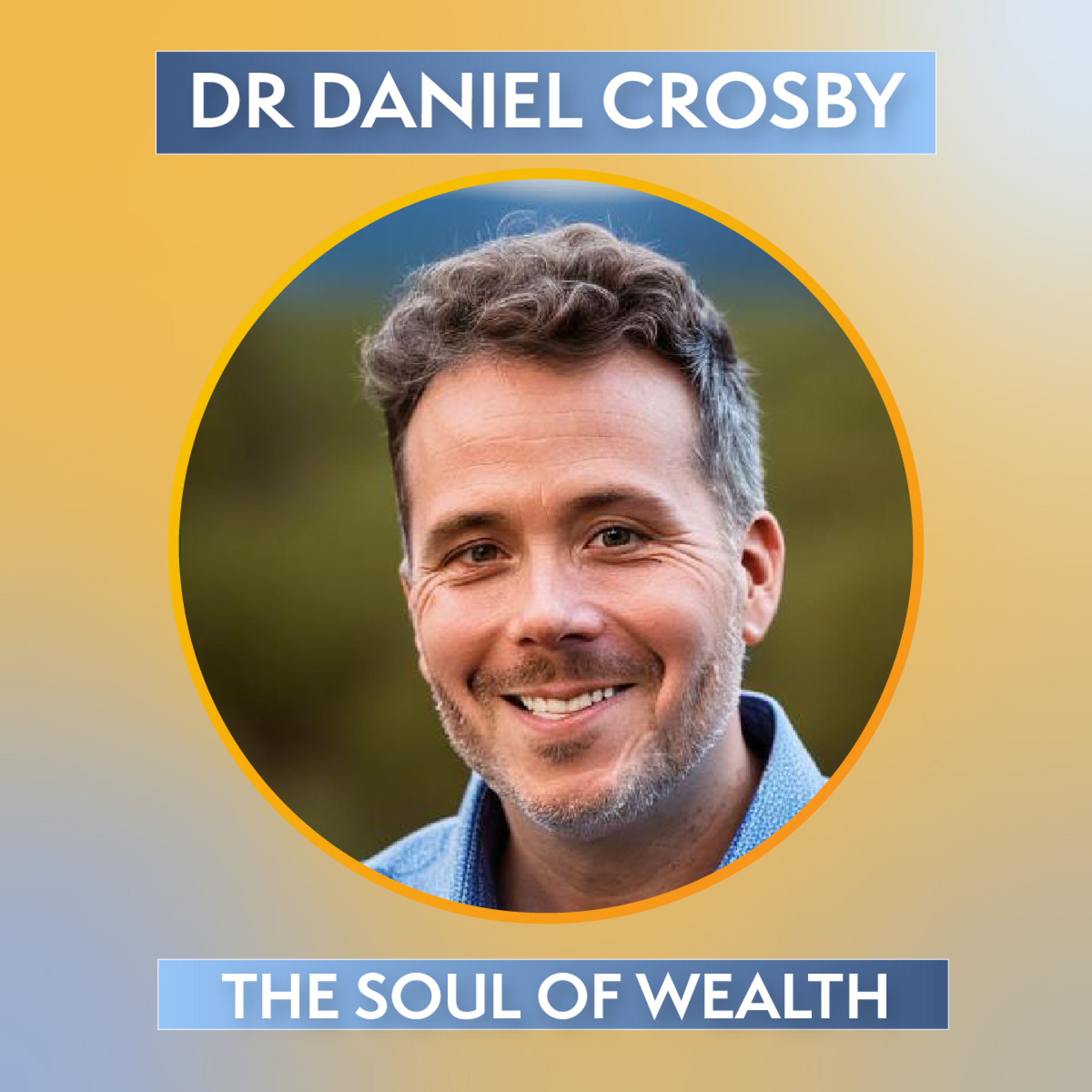
Ep 582The Soul of Wealth with Dr Daniel Crosby
I'm delighted to welcome back repeat guest, and one of the worlds leading lights in the field of behavioural finance - Dr Daniel Crosby. Daniel has a new book out, which I highly recommend, called The Soul of Wealth, and having read and enjoyed it, I asked Daniel to come and talk about it. It's a deeply practical book - not just theory or stats - and today I'm going to chat to Daniel to walk us through just a few of the concepts he covers. Shownotes: https://meaningfulmoney.tv/session582 Book: The Soul Of Wealth - Amazon *Affiliate Formats: Paperback, Kindle, Audiobook
Ep 581Listener Questions - Episode 19
It's another mixed bag of your questions, taking everything from investing in offshore funds to evening up pension funds between spouses and lots more besides! Shownotes: https://meaningfulmoney.tv/QA19 00:57 Question 1 Hello Pete & Roger I am a regular listener to you show, love it and keep up the good work. My question is… I have a full 6 months emergency fund, I have no credit card debt or personal loans, I have a mortgage and I have just started investing 5% of my wages every time I get paid into the Vanguard all world tracker fund (keeping it simple) I have a new car every 4 years on PCP (so I basically lease it) as I always chop in for a new car and never pay the balloon payment at the end, this PCP is at 8%. I would like to hear your thoughts on weather investing is still okay to do along side this, the reason for having a new car is that I use it until the warranty expires and then change due to rising repair costs and hassle free motoring. I have brought older cars outright in the past and always ended up costing me more in repairs over the years. I am planning on leasing my cars for the permanent future so if I do not start investing now I will never have a chance to invest, and I do not see leasing at car as a loan as such, more of a permanent lease. Feel free to shorten my message to suit and excited to hear your thoughts, all the best. Adam 10:10 Question 2 Hello Pete and Rog! First of all, a huge thank you for all the valuable content you share – I really appreciate it! Keep up the fantastic work! I had a quick question that's a bit technical (apologies in advance!), but I was wondering if you might be able to cover the topic of UK-registered funds when investing in a GIA on the podcast? I've heard that non-UK registered funds are taxed at the income tax rate rather than the capital gains tax rate. Is the best approach to check the ISIN against the list of UK-registered funds, even if the investment is made through a non-UK exchange (e.g., Amsterdam or Ireland)? Also, when a new client comes to you with non-UK registered funds, how do you typically address this issue? Thanks again for all that you do – really appreciate it! Best, your #1 Fan! 14:00 Question 3 Hi Pete / Roger Thank you for your great work with your Q&As. Your cashflow ladder idea is great advice but when I look at graphs of cautious, balanced, growth funds they all go up and down at the same time. Over the last 10 yrs every time there has been a big market fall all the funds I looked at (at all risk levels) recovered with 32 months max. If 2-3 years cash is held on the 1st rung of the ladder why shouldn't I hold the rest in growth/agg funds? The cash rung will ride out the fall / recovery so I may as well put my money in a fund with the most growth potential? What am I missing? Stephen 19:57 Question 4 Hi Pete and Roger, Thanks for all you do. Your Podcasts and YouTube content has helped me get to retirement early. I have a number of investments in my Pension which are there to continue to grow hopefully over time. I have a well diversified portfolio mainly using trackers. I want to try to drop a particular individual investment from my portfolio that forms part of the Magnificent Seven, and is therefore part of a lot of the trackers I have. Unless I buy the FTSE Global index as individual shares can you see a way I cannot be in this one companies shares? Not sure there is an answer. Much appreciated, Chris 24:11 Question 5 Hello Love your podcast, I thought I was fairly clued up on pensions/finances but I have learnt so much more from your podcast. I recommend it to everyone! Especially my husband, who has so far failed to do so, he leaves the finances to me (which is probably why we are in this position as he has not addressed his pension). My question is: Our pension pots are very unequal, we're both 47. I have 2 DB pots (combined are due to pay out circa 14k from age 65). I am also on track to have around 750k in a private pension by the time I am 57, and am planning to retire at this point. My husband currently only has around 18k in a private pension, and is retraining as a teacher so he will only have a small DB pension not accessible until 68. He will therefore need to continue working for a few years after I retire. I will need around a 2k a month in retirement, but I am thinking I can take up to £67k per year from my pension (so to remain in the 20% tax band). Use 24k for myself, and then we pay the remaining 43k into husbands private pension (or however much his earnings allow). If he is a higher rate tax payer by then, he would gain a 40% uplift on this or if not he will still get the 20% uplift back so we aren't losing out. One of the main reasons for doing it would be to even the pensions out so that we can both withdraw tax efficiently in future, rather than me having to withdraw from my pension for both of us and so paying more tax. It seems like a no brainer but please let me know if I have missed something rea

Ep 580Listener Questions 18 - IHT, Trusts and Care
We've managed to cobble together another themed Q&A episode, this week dealing with questions around Inheritance Tax, Trusts and Care planning. Lots for Roger and Pete to get stuck into! Shownotes: https://meaningfulmoney.tv/QA18 00:48 Question 1 Hi Pete, Hi Rog, Thanks for your ongoing work on the Podcast, I've been listening for many years and have learned a great deal from you both. Keep up the good work! My question is in relation to trusts. My parents, both aged 70, have recently got round to updating their wills, putting POA in place for finance and health and have been in discussion with a solicitor about putting a trust in place, primarily to safeguard their assets from being used up in the event of them having to go into care in later life. At present I believe their estate to be approximately £600,000 including their house which I would imagine is worth approximately £250,000. The rest is made up of savings. I don't believe their estate would be subject to inheritance tax so I don't believe this is the reason for setting up a trust. I have listened back to your previous episodes on trusts but I was wondering, firstly whether much has changed since these podcasts in relation to the general setting up and management of a trust? Secondly I wondered if you could explain the negatives to my parents putting the majority of their assets into trust, namely are there any ongoing fees, can my parents take assets out of the trust should they need to and what are the tax implications for the beneficiaries when my parents pass away? Would any of these things change in the period where only one of them has passed away? I appreciate this is a huge topic and you may not be able to address all of these queries but it appears they have been advised of the positive parts of this process but I would like to ensure we are aware of the potential pitfalls. Thanks once again! Jon 11:10 Question 2 Hi Pete and Roger, Still loving the show and I'm enjoying the current variation in format - keep up the fantastic work! My question relates to estate planning: My wife and I own our home (mortgage free) 50/50 as tenants in common. We have up-to-date wills, LPAs, expressions of wishes and "Dead Files" set up. Each half of the house will be left to our daughter as and when, with the appropriate "right to reside" wording in place for the remaining partner. We are both in our late fifties, so hopefully not needed for many years yet. The IHT side is fine as it's just numbers - allowances and values etc. What I can't quite get my head around is any potential CGT liability for our daughter following the second death. Not so much for the financial impact, as she is already comfortable in her own right (with my and - via the podcast - your encouragement over the years) and will inherit further monies when we pass, but more from a planning perspective. I have looked online and disappeared down several rabbit holes, but from what I can gather although she inherits half the house on the first death, essentially because the surviving partner continues to live in it and therefore any actual money can't be realised, CGT is only calculated from the date of the second death (assuming she sells the house at that point). Is this correct, or will her CGT liability on half of the value start on the first death and be based on (half of) the house valuation at that time, as obtained for that probate? Maybe I'm taking the planning a little too far, but I like to be prepared. These circumstances will be more and more relevant to families over time, I'm sure. Your usual wisdom and common-sense views would be very much appreciated (even if the answer is "...it depends!"). Thank you again for the information and humour the two of you provide each week - long may you continue! Best wishes, Glen 16:11 Question 3 Hi guys Thank you both for a great podcast, big shout-out to Rog because he gets missed off sometimes in these testimonials – genuinely wish I had found this podcast years ago. Have made so many past mistakes but now correcting them one by one! I have a question about care costs which I hope you could answer. My mum is suffering from late stage dementia and my dad who is her 24/7 carer is struggling to cope (they are both 80yo). I have PoA for my mum and am trying to involve myself more in her care plan going forwards. Care (in the home initially) is going to be required and I was wondering how this is paid for. My parents worked hard and have reasonably large savings and investments in both their individual names and in joint names and the extent of these means they would have to pay for care. What we are not clear on is whether money or investments in my mum's name would ONLY be used to pay for her care or whether jointly held money or investments would be used or whether anything in my father's name would also be used to pay for care? I've tried to find the answer to this online but cannot find a clear answer so remain confused! Also are there thi

Ep 579Listener Questions Episode 17 - In Our 30's
A bit of a themed Q&A this week, with some great questions from folks in their 30's. We cover share save schemes at work, large inheritances and retirement planning - yes, even in your 30's! Shownotes: https://meaningfulmoney.tv/QA17 01:29 Question 1 Hi Pete and Roger, First of all I wanted to say I'm a new but avid listener to the MM Podcast, I'm so glad I found it while I'm still (relatively) young, I'm 39 and after years of making bad financial decisions the MM podcast has turned my attitude to money/investing and pensions on its head. I now relish the challenge of taking care of my finances rather than what felt like years of fighting against it. I wanted to ask a question regarding selling Investments vs taking a short term loan. I work for a large pharmaceutical company and as a perk of being an employee I pay into 2 share schemes through work. The one I'm thinking of selling is a plan whereby I'm limited to a certain amount a month I can pay in and whatever I pay in is matched by my employer, so half the shares in this scheme are free. Needles to say I pay the maximum into this to benefit from the BOGOF offer. I've recently had a large unexpected bill that even my emergency fund can't cover! And I wanted to know if selling the shares would be advisable over getting a 12 month loan? If I sell the shares the money will be paid to me through my next pay so it will be subject to tax and NI contributions, after a bit of number crunching I've worked out that what I'll pay back on the loan is a lot less than the tax and NI I'll pay on the shares, however it does mean being in debt for 12 months, but I'm reluctant to sell the shares as I'd earmarked it as a supplement to my pension. If this was cash sitting in an account then it'd be a no brainer but I'm sure that I've heard people advise against selling investments. Please could you help and offer some advice as I'm really not sure what's best as I do what to avoid debt too. Thanks in advance, Anthony 05:30 Question 2 Hi Pete and Roger Thank you so much for the podcast and content you put out - for free! - it's incredibly generous and has helped thousands of people including myself. I appreciate this is not a typical situation, but I am 30 years old and am due to inherit £500,000 (yes, really, though due to unhappy circumstances). Up until now (in no small part due to your content!) I've been confident managing my finances. I am single, and am just approaching becoming a higher-rate tax-payer as an NHS doctor. It is a stable job with a great pension and guaranteed pay progression. I have a £200,000 mortgage on my house which I am comfortably paying out of my salary. I also have a £10,000 cash emergency fund in place, and no other debt apart from my student loan. Due to the NHS pension (and the complexity of avoiding annual allowance breaches with a SIPP alongside a DB pension), I have favoured directing all my personal savings into my stocks and shares ISA rather than a SIPP, all in a 100% equities passive global tracker (currently about £60,000). I don't know what to do with this inheritance. I will put the first £50,000 in Premium Bonds. After that, I like the simplicity of £20,000 per year into the stocks and shares ISA in a passive global tracker. But in the short-term this still leaves a vast sum in cash. Even if I paid off the mortgage (which I'm unsure about, as I've had plans to spend on house renovations fairly soon), there is still a vast amount of cash left unsheltered. (First-world problems, granted.) I could pay for advice, but I would rather self-manage as I feel I don't want to do anything too complicated if someone could explain a simple strategy using a GIA. Option 1: GIA Is it easy to calculate the dividends on an accumulation global tracker fund? Should I ditch the simplicity of global trackers to find dividend-paying funds/investment trusts to try and pay less tax? Option 2: Cash Option 3: Holding gilts to maturity Have I missed anything? Does it really matter whether I do Option 1 or 2 in the grand scheme of things? Any thoughts would be much appreciated! Kind regards, James 14:30 Question 3 Hi Pete (and Roge) Thanks for all you have done and continue to do on the podcast. I've now read both your books which I would warmly recommend to anyone. I've tried to keep this brief but tricky not missing out key details! My wife and I are in our mid 30s and have SIPPs invested in passive, 100% global equity, accumulation funds. With a reasonable time horizon, and stomach for volatility, we're very happy with this approach. We would like the option to retire as soon as we reach the Normal Pension Age minus 10years which we assume will be 60 by then if we assume the state pension age will rise to 70. Given this background, how do I pivot away from 100% equities to a cash flow ladder? My current thinking is to do the following: - 10 year prior to retirement buy a Gilt with a 10 year maturity - do this for following years working my way up the cashf

Ep 578Listener Questions Episode 16
It's time for another Listener Questions session! This week we cover commercial property in pensions, ethical investing, inherited pensions and so much more. Shownotes: https://meaningfulmoney.tv/QA16 01:02 Question 1 Hi Peter / Roger, Many thanks for all the wisdom plus superb book, you two really make my week with the banter. I always hear about DB and DC pensions but wondered if you'd ever cover the following: Many business owners like myself own buildings outright (as a pension) within a Commercial Sipp and then loop back into this rental payments. Also, within this using a GIA for diversified investments including cash lump sums for tax relief when possible. I'm heading North of sixty soon and feel its time to start thinking of the exit plus implications. It would be fantastic to hear your advice on these in the future. Best Regards, Steve 05:47 Question 2 Hello Pete Can ethical investing beat inflation? Myself and my husband are both 63. We retired at the end of last year, having sold the business we have run for the majority of our working lives. We have some small DC pensions and a SSAS which includes a commercial property. We both have cash ISAs. I've done some research, helped massively by your podcasts and YouTube videos, so thank you so much for these. From what I have learned I understand that we need to invest the cash from the business sale in Global Equities. We also need to look at the investments within the SSAS which, up to now, the SSAS provider has managed. Cash in the SSAS also needs to be invested. Is there a way of picking a Global Index Tracker which is ethical and will beat inflation and that requires minimal management to keep fees low? I realise that we need to look at our cash accounts too with this in mind. Many thanks for all your excellent resources and advice, the fog of financial planning is starting to clear and I'm feeling less panicked about being able to manage the money for our future. Kind regards, Rachel 12:52 Question 3 Dear Pete and Rog, Your podcasts have been a real source of steadiness for me over the past few years - a pair of reliable voices amidst the wider financial chaos. I'm writing with a question about nominee (beneficiary) pensions. Sadly, my father passed away recently, and I've inherited half of his private pension pot - around £70k from a total of £140k. It's been set up as a nominee pension, which I understand allows the money to remain invested and grow tax-free, with flexible access at any age. This has been a significant and unexpected legacy, and it's opened up the possibility of scaling back to part-time work well before the official retirement age. (I'm in my late 30s, so there's still a way to go, but it's a big deal for me and brings more options for me) I don't plan to draw from the pot for many years. My intention is to let it grow. The catch, however, is that the provider, without naming names, (let's just say three letters, last one P), is expensive compared to what I'm used to (I invest monthly in a Vanguard LifeStrategy ISA). When I've done some projections I can see that if leave the money where it is indefinitely, the fees will quietly erode a decent chunk of the long-term gains. There's a 6-year early exit charge, so for now I'm content to leave it be. I'm still dealing with bereavement and all the admin of being an executor, so pressing pause on any big financial decisions feels like the right call at this early stage. But when that 6-year period ends, I'll be weighing up whether to stick or twist. My question is: can nominee pensions be transferred to another provider without losing the key benefits, like the tax-free growth and the ability to access the funds flexibly before retirement age? I've looked into alternatives- transferring into my ISA would take years due to the annual limit; a general investment account loses the tax perks; and a conventional pension would lock the funds away until age 55+, which undermines the very flexibility that makes this pot so helpful for future semi-retirement plans. I'd be really grateful for any ideas or thoughts you might have on this. All the best, Alan 19:29 Question 4 Hi guys, I am 31 years old and currently investing 15% of my gross income into my retirement. 6.8% via my employer's DB CARE scheme, and the other 8.2% into my SIPP. My wife and I also contribute £200pm into a S&S ISA for our son. We hope by the time he is 18 (3 months old now) this fund could pay for university, travel, driving - whatever he wants to do (within reason!). By age 60, I would like to be in a position to retire, whether I do that or not is another question, but I would at least like the option to. I often see YouTube videos titled "SIPP vs ISA which is better?" but I don't see much about how to use them in tandem. Do you have any advice on the optimal weighting between an ISA and SIPP given I'd like to retire before State/DB pension age and therefore, should I be splitting the 8.2% with a S&S ISA too? Thank yo
Ep 577Listener Questions Episode 15
Another mixed bag of questions this week, including pension tax free cash, salary sacrifice for electric cars, de-risking a pension and buying gilts! Join us as we answer your most pressing questions! Shownotes: https://meaningfulmoney.tv/QA15 01:05 Question 1 Love the show, and whilst not all relevant to my own circumstances, find it all very interesting and enjoyable. Question :-You regularly discuss taking the 25% tax free and what to do with the rest (annuity or drawdown) but need advice as I have 4 different pension pots, 3 frozen and 1 existing employer. I am looking to take the 25% from one of the frozen ones to pay off mortgage but not clear on the below: - Can I keep the remaining 75% in the pension scheme and not take either drawdown or annuity until a later date (when I take early retirement)? - More importantly, I am sure I have read that once you start to take your pension, the amount you can contribute is capped. How does this work if it is a frozen pension I am taking the 25% out of and would this impact on my current employer pension contributions? Thanks as always Paul 05:19 Question 2 Hi Pete and Roger, Absolutely love the show, after listening to yourself for a number of years, I'm 30 and would even go to say I'm financially savvy as a result of everything I've learned over the years I'm wondering if you could help me with a question? My retired dad was looking for an electric car and as I've got a salary sacrifice scheme with work it seemed the best way to get an electric car for him. My father said that he would give me the equivalent of the total rental amount in cash as I pay for the car via Salary sacrifice on a monthly basis. I'm obviously the policy holder, with the responsibility for it but my father would be named as a driver (unsure if this is relevant). This amount is around £35k, and I'm wondering if the worst was to happen (father kicking the bucket under 7 years) how would this be treated for tax purposes? As the money is in effect to pay for a good or service, would drawing up a contract or something of the like allow it to not be treated as a gift and exempt from the estate upon death, the same as if you send a family member money for a holiday or other purchases? Thanks so much for your help! Ruben 10:37 Question 3 Hi guys, love the podcast! I have a workplace pension that's currently invested in a fairly basic fund, and I'm looking to take more control over it by choosing my own investments. I'm 38, so I still have time before I need to think about de-risking. My plan is to allocate 80% to a global equity fund, 10% to the S&P 500, and 10% to global bonds. I don't have a huge amount invested, but it's enough to make me consider whether I should be a bit tactical with my approach. With global index funds near all-time highs, should I wait for a slight market dip before making these changes, or just go ahead and make the move now? Steve. 13:59 Question 4 Hi Pete, Great idea to pause the "new material" and focus on questions. I was thinking that there are only so many ways to skin a cat/re-frame a concept! I would very much like to hear a little more around the concept of a bond or gilt ladders as one approaches/reaches retirement. Despite being a Chartered Accountant and working in financial services, I'm embarrassed to admit that I become flummoxed when thinking about how to set such up. I understand gilts can be purchased individually and held to maturity (as opposed to gilt or bond funds), but where and how do we buy them if our retirement savings are tied up in our employer's pension scheme - and they certainly don't offer such! I dare say that the demographic of your listeners/viewers are "of a certain age" where this sort of subject would be of interest. Thanks and all the best Avid listener Peter Coleman 22:22 Question 5 Love your podcast, it's been really helpful since setting up our business. Got a question for you, my wife and I set up the business 3 years ago and it's gone incredibly well so far. After pension contributions at £60k each and paying ourselves a salary/dividend equal to £100k each per year, the business continues to accumulate money. We currently have £750k spread across multiple business savings accounts. However, is there a better way to manage this money? We have considered setting up a housing rental company but we have not looked into this in detail. We have a financial advisor who seems to focus heavily on pensions rather than what we can do with the surplus money. Thanks, Mark C 28:25 Question 6 Hi there, I've invested in vanguard index funds for over a decade and have recently begun to actually think what goes on behind the scenes? When we invest in passive funds, like S&P 500, does that money blindly go into the businesses that make up that fund - ie just giving money to them, not knowing how good they are as companies, just because they happen to be part of an index, they get the investor's cash? I read somewhere, for example, there's bill

Ep 576Listener Questions, Episode 14
Welcome to another MM Q&A, taking in budgeting rules of thumb, pension tax relief and offshore worker pension contributions, and lots more besides! Shownotes: https://meaningfulmoney.tv/QA14 01:57 Question 1 Hi Pete, I've been a long-time follower of your podcast and hope to be retiring or entering my 'renaissance' in the next five years or so. I'd like to know if you think the 50, 30, 20 rule is still a good rule of thumb, or is there a better one? About a year ago, I decided to give a presentation on pensions to the new starters at my workplace. As I prepared, I realised that while I could explain the mechanics and importance of pensions, the bigger challenge would be addressing the feeling many have that they "can't afford" to contribute due to financial pressures—especially for younger people. Reflecting on my own experiences during university and early work life, I noticed a pattern: no matter how much I earned, I always seemed to end up with zero by the end of the term or month. Earning more didn't make me happier, and I was going out less compared to when I had very little. A detailed review of my spending revealed I was wasting money on unnecessary things—like buying three CDs instead of two, upgrading to a large coffee when a medium would do, or adding extras to my car that weren't needed. It was only when I learnt to pay myself first that everything changed overnight. Recently, I've been listening to podcasts about retirement that emphasise health, purpose, and happiness. One by Dr. Chatterjee introduced the concept of core happiness versus junk happiness. Core happiness comes from meaningful, lasting fulfilment, while junk happiness provides short-term pleasure through things like sugar, smoking, alcohol, social media, or shopping. Looking back, much of my unnecessary spending was driven by junk happiness. While paying myself first helped control this, understanding the why behind it made a big difference. This led me to realise that my presentation shouldn't just focus on the mechanics of finance—it also needed to explore the psychology behind spending. Understanding why we buy the things we do is important to becoming more financially secure while staying happy. It was something in one of Nischa's videos that seemed to tie everything together at a high level: the 50-30-20 rule —50% for fundamentals, 30% for fun, and 20% for the future. So my question is ( I know I've gone around the houses so sorry about that) given today's financial turbulence, do you think this is still a good rule to follow? Kind regards, Steve 09:16 Question 2 Hi Pete and Roger, Thanks for all the content you've put our over years, it really has been so helpful. I am 54 and have a work place pension with Fidelity where my employer matches my contributions to a certain level and I make additional through my monthly pay to the tune of £2.400 p.m. This summer I am due to inherit around £130,000 and will look to add around 20k of it into my pension fund. My question relates specifically to tax relief. I understand that when I make the contribution in the summer I will get 20pc tax relief automatically, but how will this show itself, will my contribution of 20k actually show on my pension balance a 24k? Also as a 40pc high rate tax payer I understand I will need to to complete a tax return to claim the additional 20%. This being the case, would I still be able to do this if I had left my employment later in the same tax year as I may be looking to retire in Autumn 2025. Would it be the case that as I was no longer a higher rate tax payer as at 4 April 2026 I would not be able to claim the extra 20pc on the 20k contribution the previous summer kind regards Gary 16:09 Question 3 Hi Pete & Roger, Firstly, I am absolutely addicted to your podcast. What you're doing is nothing short of heroic and am waiting to see your names on the New Year Honours List. Sir Pete and Sir Roger has a nice ring to it, don't you think? I am 34 and work in a career that gives me the opportunity to go on expat assignments (typically 3-year stints). This results in me becoming a non-tax resident in the UK meaning I can no longer contribute to the UK DC workplace pension and no longer able to contribute to my S&S ISA. My company do have an Offshore version of the DC pension but contributions to this are made after hypothetical tax so effectively there is no tax relief and to be honest I have really struggled to understand how I would access this pension come retirement and the UK tax implications so will likely avoid contributing to it this time around. When I go on an expat assignment, although I do get significant uplifts to my income, it interrupts my flow of regular pension and ISA contributions. The income I earn on assignment just mounts up and gets eaten up by inflation until I return to the UK and continue investing again. My question is what advice would you give to people like me? Should I speak to a financial planner before I go on assignment, or

Ep 575Listener Questions - Episode 13
This week's MMQ&A covered questions on whether you need an emergency fund in retirement, starting late and the mechanics of the residence nil rate band, among other things! Shownotes: https://meaningfulmoney.tv/QA13 Questions Asked 01:03 Question 1 Hello Pete n Rog Thank you for the brilliant podcast which has turned my money management around in four months. I love your banter as much as your expertise. My question is: Do people need an emergency fund in retirement, and if so how big should it be? With DB pensions coming my way I'll have a guaranteed income so how important is it? Many thanks and keep up the great work Caroline 04:21 Question 2 Hi guys, I'm probably not your usual demographic so I'm not sure if this will be of enough use to your listeners but… Having grown up in what may be classed as modern day poverty (raised on state benefits, single parent family) I had zero financial literacy. This meant that when I started my career as a teacher I opted out of the pension because I "couldn't afford" to pay into it… yes I know now that was a bad move! I eventually opted back in, but then took big chunks [of time?] out to travel and have children. I divorced and had to leave my career to raise my own children. I'm now 47 and staring into a huge financial hole (as I suspect are many mothers/divorcees). Now it's not all doom and gloom as I have made a few intuitive moves. I own a large family home and a second property (these are mortgaged), but my worry is actual cash. State pension won't touch the sides of what I'll need. What would be your suggestion on how to start accumulating at this late stage? I've opened a vanguard pension and make personal and company contributions (I have a tuition business now) but it feels like too little too late as I've missed the opportunity for exponential compounding. I can't work out how to figure out what I'll need and then reverse engineer the numbers to see if I'll make it! I have a high tolerance to risk, but Is it just pour as much as possible into the pension and pray? Keep doing this amazing podcast please as you have no idea who you are reaching and helping each week. Jenny 11:51 Question 3 Hi Pete & Roger, Love the pod, keep up the good work! My mum is in her eighties and has been asking me about inheritance tax and in-particular "passing on her home". We both take an interest in finance, so I said I'd read up on it online. I understand you can inherit up to £325,000 tax free. My Dad passed away 9 years ago and I believe that his threshold would be taken into account as well, to make the total tax free amount £650,000. I then read that If you give away your home to your children or grandchildren, your threshold can increase to £500,000. I believe this would mean that the total threshold (with my late Dad in mind) would be £1,000,000? Her house is worth just under a million and she has approximately £100k in a Vanguard stocks and shares ISA. My main question is, if she were to make a change in her will to "pass on her home", would this be an inheritance tax saving to her children in the future, as there would be less of a total amount to pay tax on? I'm, also unsure if the home has to be passed on to an individual, or if stating "her children in equal splits" would suffice. In reality, we would probably sell her home when the time comes, so I don't know if there are additional rules around how long you would have to keep it for etc. Any clarity on this subject would be much appreciated. PS: There's nothing dodgy going on here and we're not wishing her away! Many thanks! John 17:19 Question 4 Dear Pete and Roger, Thank you for an excellent podcast and your contribution to allowing people to self improve their finances. I am 33 and think I was already on the more competent end of the financial spectrum before I found your podcast. I.e. I had no 'bad debt', had an emergency fund, had cleared my full student loan and overpayed our mortgage to clear 60% in 6 years (just in time for the rate rise!). That said, I now definitely have a better understanding of the fundamentals of financial stability and have started to invest in the last year since listening to you. I listen to a few other podcasts more directly targeting doctors to see if anything specific applies to me / the NHS pension, but still enjoy yours the most. Anyway, my question (regardless of whether you want to include the above compliment or not) is … why is more weight not given to S&S LISA's for later life (alongside a normal S&S ISA)? My understanding is the 'negatives' would be … (1) loss of invested money if withdrawn early by way of the reverse 25% deduction (2) fees being slightly higher That said, if not withdrawn early, when comparing £4000 / year in a normal S&S ISA, the 25% bonus is surely a significant bonus even with slightly higher fees? What am I missing? Best wishes, Ben 21:23 Question 5 Great podcast My wife and I are both additional rate tax payers and hence our ability to put money into

Ep 574The Meaningful Money Retirement Guide - Launch episode!
Join Roger as he interviews Pete to celebrate the launch of The Meaningful Money Retirement Guide, asking the questions you want answered! Order The Meaningful Money Retirement Guide: https://meaningfulmoney.tv/meaningful-money-retirement-guide/ Shownotes: https://meaningfulmoney.tv/session574 02:10 Congrats on the new book, Pete - how was it writing this one, compared with the first? 05:39 Why write this book NOW? 07:10 What isn't in the book that you wish you'd included? Or probably more difficult to answer, is there something that (having completed the audiobook after writing) that you felt it didn't need? 10:00 How difficult did you find setting out concepts without going too in depth to potentially "lose people" or too simple to make the book not interesting enough? 13:07 How different do you find it writing "evergreen" content in your books vs more topical content for YouTube, and to a lesser degree for the podcast? 16:20 After reading the New retirement book, will it provide knowledge to go alone in retirement without seeking expensive financial advice? 20:05 Does the book help with a 'soft' retirement or is it just for those that want to completely stop work on a particular date? 25:00 What will the book offer the reader that I can't get elsewhere? Is it worth paying for the Academy if I read the book? 28:38 What's the best thing you would tell your 20yo self? 31:03 Would you lobby government to have PROPER financial teaching delivered to kids in school? How would you package your knowledge for teenagers? 33:22 Pete talks about a new podcast - Bank of Dad - which daughter Kate will host. 35:25 A few people asked: What are Pete's plans for retirement? Did 'die with zero' change them? 38:00 Pete talks about Dave Ramsey and how he brought in different personalities. 41:35 Pete talks about practicing what he preaches.

Ep 573Listener Questions Episode 12 - PENSIONS!
This week we devote an episode of the MMQ&A to pensions of all flavours, answering questions on public sector schemes, partial transfers, fund choices and much more! Shownotes: https://meaningfulmoney.tv/QA12 00:52 Question 1 Hi Chaps! I only recently got into podcasts and am frantically trying to listen to as many pension ones as I can. Yours are the most useful I've come across and now I can't stop listening to them all! A small question I hope you can clarify for me please: I am 48 and a few years away from possibly an early retirement (hopefully 58) but trying to plan ahead. I have both a DB pension through work (NHS) and a personal Vanguard SIPP pension I also add to monthly and am of the understanding that you can take 25% tax free (up to the set limit) from your pensions overall and therefore my question is- could I take all the 25% tax free amount from my SIPP and leave the rest of my SIPP and all my DB pension pot to pay me a pension from. In example (arbitrary figures): my DB and SIPP are each worth £100000, totalling £200000. Therefore, under current rules, could I take £50000 tax free from the SIPP (the overall 25%) and the other £100000 in DB and £50000 left in my SIPP to pay me a pension monthly. Or is this not possible at all as they are different schemes, ie DB and DC? Many thanks Jon, from Norfolk 05:30 Question 2 Hi Guys, Firstly, a massive thank you for all the information you provide, it really has completely transformed my personal finances. I still have a long way to go until retirement (I've just turned 30) but thanks to you, I'm confident it won't have to be the state pension age! My question is – I work in Local Government and, whilst the salary is distinctly average (37k) it does come with the benefit of a DB pension scheme. I'm now considering making some additional contributions but there are two options available and I'm struggling to find any useful information online… – Make AVCs into what I understand to be a separate pension scheme more akin to a DC pension – Make APCs whereby I effectively buy more DB pension. It works out at approx an additional £10 guaranteed yearly income for every £80 (£100 if including tax relief) I contribute. In my head, this sounds good as long as I make it 10 years into retirement! Is there an obvious answer to this question? Only obvious downside to the DB option is, if I were to pass away before retirement, the additional pension is effectively lost and not paid to my next of kin! But then again, I don't intend to go anywhere anytime soon! Any thoughts appreciated and thanks again! Jack 12:03 Question 3 I have a question relating to the upcoming change in minimum pension age and how it affects those of us in the 55 bracket before the 6 April 2028 change. I don't know if there is any clarity from government yet but if I am 55 in September 2027 and take a PCLS 25% tax free from an AVC DC running alongside my DB pension scheme, then want to retire fully and start taking the DB in September 2028 when I am 56 is that possible? There seems to be a grey area about what happens after the April 2028 cut off to those of us in this age range. It doesn't even appear clear if someone taking early retirement at 55 would then stop being eligible for monthly payments after April 2028 until they were 57. So they think they have retired fully, then when April comes around their payments stop! Appreciate that sounds a dramatic scenario but I haven't been able to find anything comprehensive on it so hope you can help. I also have a question on DBs with AVCs which might be useful for others. If I have a DB pension valued at £300k and saved £75k in AVCs over the years, can I take the full £75k at 55/57 without it a) affecting the DB monthly amount which can be taken from age 60 in my case, and b) without it being classed as a pension event, so I can continue to contribute over £10k a year into a DC scheme as I plan to continue working until 60. Appreciate they are specific to me but thought there must be others in a similar position. Sorry for more long questions. Thanks for all the great podcasts, look forward to the next. Thanks, Don 19:34 Question 4 Hi Pete! Hi Rog! I've been a long time listener to your dulcet tones and concise advise for a long time and love what you guys do, so please keep doing it! Another pension Question I'm afraid! A while ago I consolidated a few old workplace pensions in to a SIPP, but I still have my current workplace DC pension ticking away. Its not great, being the bare legal minimum (2.5% contribution from my employer) and the fees seem higher than they should be. If I close that pension and transfer to my better performing and cheaper SIPP, I effectively opt-out of the employer contributions scheme. My question is what should I do to be most efficient with my pensions to ensure I am getting the benefit of employer contributions without paying over the odds for an underperforming scheme? I'm 34, and (thanks in no small part to you) fee

Ep 572Listener Questions 11 - Capital Gains
This week we answer questions on the loose theme of capital gains tax and investing via General Investment Accounts (GIAs). Spoiler alert - nothing's as simple as it might seem! Shownotes: https://meaningfulmoney.tv/QA11 01:06 Question 1 Whenever a question comes up in our Facebook group about Capital Gains and GIAs (General Investment Accounts) I get a sinking feeling as I do not know much about that type of account, and I don't have one myself. I am not alone. I have gathered questions from our listeners about capital gains, so in this episode Pete & Roger can tell us all about Capital Gains, Dividends, and anything else we need to know about using a GIA, and other situations which involve capital gains tax. 19:03 Question 2 Hi both, I've recently discovered your podcast and have thoroughly enjoyed my commutes listening to you. Personable and informative. I have a question about selling my buy-to-let property that is in my personal name. My mortgage term is ending in June 2026 and I'd like to sell it for one of better quality that has less issues. I'm currently a higher-rate taxpayer but we're planning to start a family in the next year, meaning I'll be on maternity leave for 12 months which will push my salary down to basic-rate. Impossible to plan when I'll get pregnant but it would be useful to know how HMRC calculates my salary (and over what time period) so that I pay basic-rate CGT when selling my buy-to-let? Apologies for a very wordy question! Thanks a lot and best wishes, Winnie 22:17 Question 3 Hi Pete, I hope you're doing well! I've been really enjoying the Meaningful Money podcast and had a question I'd love to hear your thoughts on the show: In a general investment account (GIA), is it's better to use an income fund to avoid triggering CGT if income is needed (assuming the dividends covers the needs in the short term)? Thanks so much for your wisdom! And keep up the great work on the podcast! :) Best regards, Chloe 26:53 Question 4 Hi Pete, Roger (and Nick who I assume is reading this :-)) I have a question I'd be grateful if you could answer which is around capital gains tax on any shares or funds held outside an ISA/pension. To use an example with higher numbers so that the allowance is used for simplicity: - You have £100k in a GIA - it increases by £10k a year for the first two years; - it's then down £2k in the third - the total value is now £118k - You then want to draw out £10k - How do you work out what capital gains the tax is to be paid on i.e. is the full £10k considered a gain? - Is the withdrawal from the original £100k or from the increase in value i.e. gain? - Would you be better to withdraw up the annual allowance every year and then put it back in to reduce the gain, considering there's no allowance for the impact of inflation? Love the show, keep up the good work in whatever format you decide going forwards - you've made real differences to the way I've managed my investments over the years, especially at scary times like Covid and your book and courses have given my kids the education they need for their long investing lives. Thanks, Dino 36:39 Question 5 Hi Pete & Rodger, I started a deep dive into our overall finances over the Christmas period, to set the picture I am 47, my wife's 42 and we have two children a boy 5 & a girl 3. I received a diagnosis last year which will have a long term impact on my ability to sustain my current level of income & type of work I do. We have a 154k mortgage with 19 years left on the term, with the uncertainty around my health I have decided to target maximum overpayments on the mortgage, this year we can pay 18k extra. My questions are: 1. I plan to save circa 1k per month salary to put into the overpayment pot, I am hopeful that the HL shares will meet past highs and I can use some of that money to top up the salary savings and hit our target. Do I pay tax on the profit I make from selling shares? If it's no more than 3k? I was hopeful I could sell shares annually and withdraw the gains annually, then reinvest in same stock when they dip. I realise that past performance isn't always guaranteed but monitoring since covid the stocks I am invested in are fluctuating from a £15 low to £20 high annually. So looking to sell at £19.5. Is this the best way to use the extra cash at present given the plan to access quickly at times. I have maxed out isa allowance for current FY (2024/25) but will probably pay the 1k per month into an isa in new FY. 2. I am planning to do lump sum overpayment rather than setup monthly, just to give easy access to funds should they be required. I plan to cash in some company SIPPS annually when they aren't taxable (after 5 years) that sum will be on average 1k per year. Will the SIPPS cashed in and gains from HL sales leave me vulnerable to paying capital gains tax? If all goes to plan we could be mortgage free by 2033 approximately and there would be less of a dependency on my salary. Deep down I just want us to be

Ep 571What (not) to do when markets are volatile
We really hesitated to put anything out regarding the current market volatility as we didn't want to add to the noise. But now that we're a couple of weeks in, hopefully the hysteria is starting to abate, and we can take something of a measured of things. We want to reassure you that discomfort is normal, but also provide some context that things are not as unprecedented as they might seem… Shownotes: https://meaningfulmoney.tv/session571 02:20 This time it's different. 11:30 The US market is too concentrated. 15:26 I don't have time to make it back. 20:50 Time IN the markets beats timING the markets. 25:48 Action (or inaction!) – What you need NOT to do?

Ep 570Listener Questions Episode 10
As usual, we cover lots of ground in this week's Q&A, including tax-free cash recycling, private medical insurance and Lifetime ISAs. Shownotes: https://meaningfulmoney.tv/QA10 00:57 Question 1 Dear Pete & Roger. I'm a long-time listener and love the podcast, especially more so since Roger joined back in season 21. I'm an additional rate taxpayer with income below the threshold for the tapered annual allowance. I have been contributing £45k to my workplace defined contribution pension via salary sacrifice for the last couple of years, and my effective tax relief rate on contributions is 47%. This coming April (2025) I will turn 55 and will be able to access my pension. I am considering increasing my salary sacrifice contributions by £14,000 per year and funding this by taking just under £7,500 PCLS (i.e. tax-free cash) from my pension. Having watched the MeaningfulMoney video on Tax-Free Cash Recycling and checked the HMRC web site, I know this is not considered tax-free cash recycling because the PCLS withdrawals will be below £7,500 per year. However, I don't know if sacrificing £7,500 of tax-free cash in return for £14,000 of new contributions will have any unintended consequences. In retirement I plan to withdraw money via UFPLS and use tax-free cash to minimise my effective tax rate and have no plans to use it to fund large purchases. Have I missed anything? Simon. 04:01 Question 2 Hi Pete, I hope you're doing well! I've been really enjoying the Meaningful Money podcast and had a question I'd love to hear your thoughts on the show: With the long waiting times on the NHS, is having private health insurance a new 'must have' protection or still a 'nice to have'? Thanks so much for your wisdom! And keep up the great work on the podcast! :) Best regards, Chloe 07:05 Question 3 Hi guys - thanks for all you do with this podcast. I've been incredibly fortunate to find you in my 20's and absorb so much useful knowledge. My question is surrounding LISA's. My fiancé and I currently live separately but we're looking to move in together ahead of our wedding this summer. She owns her own home and I currently rent so we'll be moving into her house. Our plan is to live for a couple of years in her (or soon to be our) house as she managed to secure a favourable rate that will help us to save together for our next home. The majority of my current house deposit (around £35k) is in a LISA, however in the last year or so I've quickly realised that our next home together will probably sit above the £450k limit that LISA's allow. Given that we live in a pretty expensive area and want to stay here, is there anything you would suggest? We've thought about me 'buying in' to her current house but we don't want to remortgage and lose the favourable fixed term. Any ideas? Cheers, Joe 11:38 Question 4 Hi Butch & Sundance, my question is about SIPPs & ISAs and tax implications when used with State Pension and a Defined Benefit Pension. I'm planning to retire 7 years before state retirement age (67) and plan to use a DB pension and SIPP in those 7 years. The annual income from the DB pension will exceed the current basic rate income tax annual allowance (£12,570) and withdrawals from the SIPP outside of the tax-free lump-sum, would all incur basic rate income tax. I would like to keep investments that continue to grow, but with the removal of some IHT benefits within a SIPP, is it now worth withdrawing more than I need each year and moving the SIPP investments to a Stocks & Shares ISA over the next 7 years and therefore reduce tax paid over the following 20-30 years from the age of 67? Or am I making more of minor issue than is needed? Keep up the excellent work, Jack 16:36 Question 5 Hi both, Love the podcast! I have a question regarding pensions. I have an employer (defined contribution) pension that had been with one provider (chosen by my employer) for the last 11 years. My Company has recently terminated the agreement and mine and my employers contributions are now all going to the new provider and fund. I chose not to transfer my original pension from the original provider to the new provider, as the existing fund had been performing so well. Following a review of both pensions over the last 6 months, I discovered that my existing pension had continued to be perform very well - over double the return compared to the new pension provider and fund). Whilst I understand I could switch funds with the new provider, my preference would be to do an annual transfer from my new pension fund & provider to the original provider and fund. I cannot seem to find any information on how to do this (all the information online is focused around transferring and shutting the new account - I don't want to do as my employer and personal contributions will continue to be directed to the new provider and fund. Thanks for your help, Matt 21:25 Question 6 Hi Pete and Roger I have a question about pensions for low earners. I have been listening to your

Ep 569Listener Questions, Episode 9
Welcome to another Q&A show - this week we cover tax free cash from DB pensions, annuities vs drawdown and whether you should pay down a buy to let mortgage or invest. Plus quite a bit more! Shownotes: https://meaningfulmoney.tv/QA9 Questions 00:41 Question 1 Hi Pete and Roger. Thanks for your wisdom over the years. My question came about from an answer you gave on a previous Q&A about AVCs and tax free cash. You mentioned it was possible (sometimes) to use AVCs as tax free cash to preserve the maximum DB benefit. I have some follow up questions that relate to - A small DB pension that doesn't appear to offer tax free cash. - A small DB pension that does offer tax free cash, but I have left that job so can no longer contribute to that pension (AVCs or otherwise) I don't have AVCs in these pensions, but I do have a DC pot separately. Would I be able to use take tax free money from my DC pension if I took it at the same time I took the DB pension sort of in lieu of the tax free component of my overall pension? I suspect this is clutching at straws, but thought it worth checking. Many thanks. Loyal listener, Mark 03:11 Question 2 Hi Pete & Roger! I hail from Northern Ireland and enjoy your Podcast to keep my mind active and up to date in all things financial - Top job. I have been looking at having a go at Voyant after various spreadsheets of my own as a way to play with the numbers so was considering a meaningful academy course - question is which course is right for me? I am in mid 40's and financially secure so in theory wealth all ready built? Mortgage paid, multiple residential and commercial properties owned debt free and an sizeable equity portfolio and so should I be looking at the retirement or wealth course? John 05:30 Question 3 Great podcast and been an avid listener for the last year. I have a question which, I think I know the answer but I'd be curious on your perspective. Background: - I divorced in 2021 and as part of that agreed to transfer the house over to my ex-wife and a charge put on the deeds so that when it's sold I'm owed a percentage of the sale. - The house going on the market will be (or should be) triggered when my youngest son reaches 18 or leaves full-time education. This will be either 2028 or 2031. - Since the divorce I've been able to purchase another house and this is my permanent residence. I'm a higher rate tax payer, and when that ex-marital home is sold I'd expect to get somewhere around £200k. However I won't actually need that to hit my retirement goals and would prefer to pass that onto my 3 kids. Could you please discuss options on how I might do that in the most tax efficient way. Best Regards, Dave 10:38 Question 4 Hello Pete & Rog, I stumbled across the show a month ago and have been "binge listening" since then, its amazing, where have you been all my life, keep it up guys. I am actively preaching the Gospel according to Pete to all and sundry. I am a 61 years old Veteran in receipt of a Military (DB) pension to the amount of £18k per annum, which is index linked to CPI. Additional to this, I have a moderate private pension to the amount of £150k which I contribute £500 per month, it has an approx growth of circa 15% I also have a small Stocks and Shares ISA, valued at £15k which I contribute a minimum of £250 per month, this is also growing at approx 14% pa. I am currently working and contributing the minimum amount into a work placed pension with NEST. I am planning to look at retirement at either my next birthday in October 25 (62yrs old) or continue until 65 as I am enjoying work. I have deliberately avoiding factoring in my wife as she is a senior manager within the public sector and has a good DB scheme Final/Average earnings Pension. My question is pension related and I have a dilemma as to decide between either an Annuity to boost my Mil Pension or veer towards a form of drawdown option at a higher rate until SPA and then look to reduce down withdrawals in order to be tax efficient and make it last longer? I am debt free with mortgage paid off and only real major expense is a holiday account which we both contribute to as we like luxury holidays, I hear Rog saying "spend it now". No plans to put anything towards estate planning as both sons are very successful and they will probably inherit our home in time. Just looking for some guidance on what feels may be the right decision under the circumstances, keep up the great work guys, love the show. Michael 16:34 Question 5 Dear Pete & Rog, I have a pensions Annual Allowance query, the answer to which might be of interest to the MeMo community. A relative uses salary sacrifice for her occupational DC pension scheme, and the employer contributes £40k, annually, into her plan. Normally, she doesn't make any personal contributions into any pension schemes, but after receiving a windfall, she is minded to do so via a newly opened SIPP — she has rejected the option of increasing her salary sacrifice amount, and wis
Ep 568Listener Questions, Episode 8
It's another Q&A, and this week' we're talking Lifetime ISA withdrawals, whether you need life insurance and the NHS pensions scheme, among other things! Shownotes: https://meaningfulmoney.tv/QA8 01:08 Question 1 I just wanted to start by thanking you so much for your podcast. I'm probably one of your younger listeners, having started listening to you when I was 26. I feel very fortunate to have discovered your podcast at such a young age, as it means I will hopefully have years, if not decades, to put your excellent advice into practice. I have a quick question that I was hoping you could help me with. I currently have a LISA that I was planning to use as a deposit for a house. However, I am now planning to move to Australia permanently with my Aussie fiancée. I have separate savings that I can use for a deposit now, but since ISAs are not recognised in Australia while UK SIPPs are, would it be wise to take the 25% hit by withdrawing the money from my LISA and transferring it into a SIPP to benefit from higher rate tax relief and continued tax advantages? I understand you cannot offer specific advice, but I would be interested to hear if there are any general pitfalls or advantages in this plan that I should be aware of. Many thanks! Simon 04:40 Question 2 Will try to keep this brief but is challenging. Do we need life insurance? If I die whilst employed my wife gets a lump sum which will cover our only debt the mortgage through my DB pension scheme. If I retire aged 60-65 my lump sum will cover any mortgage remaining if still have one. My wife has no such pension / cover if she were to die (currently between jobs). I have emergency fund / Overpay into pension for tax relief & child benefit purposes / and recently opened stocks and shares ISA for myself and 2 children. Age 39 trying to build for future but started late :) Many thanks Lee 09:55 Question 3 Many thanks for all the ongoing information and discussion, I've been listening for years, but still learning and trying to put into practice all positive behaviours (just like with diet and exercise, knowing and doing are rather different!). A question and a thought. Question; (apologies, after I typed it, it turned out to be very long and NHS specific so feel free to ignore, but I think the point about revising tax returns after submission when new info comes is more generally applicable). I'm in the NHS pension scheme and am awaiting my RPSS after McCloud judgement. They were due by October. It's November and I haven't had mine (many others say the same). I believe they are prioritising those with who have definite AA charges and I doubt my NHS figures trigger that as I was part time for much of the relevant period. However, I also contributed to a private pension every year, the amounts varied, but were usually calculated quite closely using the AAPSS that I had at the time to maximise residual allowances - so basically I think I may now have Annual Allowance issues that I didn't at the time, but am not being prioritised by the NHS pension scheme for a new statement because they don't know about my extra contributions. Added to this I have already submitted my 23-24 tax return before I realised there might be a problem. Others have added a comment to theirs essentially saying 'watch this space for more information' and apparently have 12 months to amend them once their RPSS arrives. So, the question is, can I still change my tax return (submitted on behalf by my accountant if that's relevant) if new information becomes available after Jan 31st (or even in the new tax year)? Do you have any advice for those waiting documents from the NHS pension scheme or insider knowledge re. Timescales for remaining documents? Anja 13:28 Question 4 Thank you so much for an amazing podcast! My question… After 7 years of a long distance relationship, I'm talking to my partner about moving in together. Apart from checking your significant other listens to the podcast (mine does - phew) what are the most important areas to cover when thinking about joint finances, particularly if you haven't talked much about money before? Thank you! Elizabeth 19:07 Question 5 Hi Pete and Roger! Thank you so much for the show. I've been listening for the past 6 years and have gone from saving for a house to learning about pensions and now actively pursuing building my pension and ISA pots so that I can be 'work optional' as soon as possible (hoping to be there in 5 years and would not have known where to even start if it wasn't for your podcast). My question is how does the actual mechanics of drawing down from a pension work? Is there an equivalent of PAYE for pension draw downs? How is income tax calculated and collected? Would a tax return need to be done? Thanks so much!! Gavin 24:07 Question 6 I am approaching the Lifetime Allowance (used 91.43%) but my Armed Forces Pension tax-free amount I received was less than the 25% for the amount of LTA used ( 58.96%). I have a Transitional Ta

Ep 567Listener Questions, Episode 7
Welcome to another Q&A show. This week we cover moving abroad, inheritance tax and paying into a pension while drawing from another, and lots more besides! Shownotes: https://meaningfulmoney.tv/QA7 01:16 Question 1 I've been a long time listener for my entire working career and your podcast has been invaluable to getting me to the great position I'm in now. I have recently been offered a very exciting job opportunity abroad (specifically Luxembourg) and I'm thinking about financial issues I might want to cover. I am 29 and have a mid-five figure sum in each of my ISA, LISA, and DC pension in the UK. I hope to save and invest heavily abroad with a FIRE sort of philosophy. I wonder if there are any big things to think about in preparation for a move, or things to do while in the EU that will make a move back easier. I realise this is probably a complex question, and maybe too niche for a podcast episode. I've considered getting a one-off consultation with a financial advisor before my move, do you think this would be worthwhile, and if so what sort of service or green flags should I be looking for? (Assuming Jackson's is not a specialist in this area!) Thank you again! Stuart 06:24 Question 2 Hi Pete, Hi Roger, May I ask a question about pensions now being subject to IHT. My father in law's strategy for passing on his wealth was to pass on an unused pension, previously protected from IHT, and he had also invested in AIM shares, again also previously exempt from IHT but now subject to 20% tax. He is nearly 82. What options might you suggest for him to consider on either of those points, but in particular the pension point. Draw the pension and gift it? Thank you very much. Love the pod and religious listener! Jo 13:00 Question 3 Hi Pete and Roger, A great many thanks for all that you do towards simplifying personal finance principles. It is with thanks to your guidance that I am living within my means and on a budget with clear financial objectives. My question today is on behalf of a family member, let's call her Glynda. Glynda is 58 years old and intends to continue working until she can claim her full state pension. She currently has two private pension pots, one is a SIPP on the Vanguard platform and one is her workplace scheme with a smaller provider I've never heard of called Creative Trust. A few years ago, she chose to withdraw her 25% tax free cash allowance from her SIPP with a view to investing this in rental property. For one reason or another this didn't actually happen so she is now saving this aside as her 18 month cash buffer. To withdraw the 25% tax free cash, she had to "crystallise" the entire SIPP pot. The remainder is still invested in 100% equities - the growth engine as you say, but it is now in a flexi access drawdown account, not a pre-retirement pot. Meanwhile, the workplace scheme is growing nicely with contributions of around £3500/yr, which is not insignificant on her modest salary. This pension is not yet "crystallised" and is also aggressively invested through the limited fund selection on that platform. You have spoken at length about pensions but my question has not yet come up, though I appreciate it may be niche. If the SIPP has been crystallised and the Workplace scheme has not, can they still be combined? Does Glynda need to take her tax free cash from her workplace scheme BEFORE transferring/combining this scheme into her SIPP for ease of management? If she opts NOT to take the tax free cash before transferring, does she lose that option? What is the point of "crystallisation"? Why is it even a thing in a world of flexi access drawdown, it seems irrelevant to me. Do platforms charge different levels of fees post-crystallisation? If so, can Glynda transfer her crystallised SIPP to a new provider if savings can be made on fees. Many Thanks, Sam 19:48 Question 4 Hi Pete and Roger, I have been an avid listener to the podcast for a long time now, probably 5 years, what a journey! Thank you for all the content you put out. Pete; I think I read your book first which put me on to the podcast, or perhaps it was the other way around, I can't remember. I'm pleased to say that when I read your book, I then went through it with a fine toothcomb and ticked off everything I needed to do! Needless to say I've been in a good situation for a while now, thanks to you, your book and this podcast. I still use a Meaningful Money Budget Spreadsheet to plan my monthly finances! I did leave a review a good while ago on the app store letting you know how Meaningful Money has helped me! I have attached a picture of my copy of your book, hope you don't mind all the post it notes! My question is surrounding Emergency Funds and what criteria we should apply as to whether something is an "emergency?" Classic things such as a broken down car, a leak in the house or the boiler breaking down are all perfect scenarios for an emergency fund. But what about other more vague scenarios? This question has come a

Ep 566Listener Questions - Episode 6
In this episode we answer questions about RSU's, the Cashflow Ladder, Pension vs LISA and a whole lot more! Shownotes: https://meaningfulmoney.tv/QA6 01:42 Question 1 Hello Pete and Roger. Recently discovered this and am listening to every single episode. Brilliant. I've read a fair amount about the % balance of Equities, Bonds/Gilts and Cash I should have in my retirement pot, based on my age (61). Somewhere in the 40%s for Equities, perhaps. What I am not finding advice on is whether I should include my DB pension in this equation and, if so, how? Do I consider it to be cash? And if so do I use the transfer value or use the predicted annual pension pay-out in some kind of calculation? Thanks for any clues! Best wishes, Phil 11:14 Question 2 I enjoy listening to your podcasts whilst running and I read your book, recommended to me by a financial advisor friend. I'm 37, and early next year I am likely to get around £220k from some shares I hold in the company I work at. If capital gains tax rises, I guess I'll see, at best, £150k. Any advice on the best place to keep it / invest it for up to 5 years? We plan to then use it to relocate abroad and perhaps set up a lifestyle business such as a B&B. I read about setting up a 'dividend-paying company' which could be useful as it's often accepted as 'passive income' when moving to another country (potentially Portugal or Cyprus). This holding company could pay out whilst growing the savings through managed investing. Is this a potential option for my money? Many thanks, Faye. 19:14 Question 3 Your recent podcast on Helpful Basics: Self-employment and Side Hustles got me thinking about retirement saving vehicles. Specifically, what is the best investment vehicle for a self-employed basic rate taxpayer; a pension or a stocks & shares LISA for retirement purposes? Personally, I am 44 years old and started a LISA from its inception. I am a homeowner. Is it best to maximise LISA contributions until I am 50 years old, then focus on pension contributions? I have a pension pot of £250k which I am minimally contributing to, preferring to prioritise LISA (and ISA) contributions. I like the idea of the 25% bonus on contributions and tax-free withdrawals, which should complement future pension withdrawals from the pension pot in a tax efficient manner. Any guidance would be greatly appreciated. Best wishes, Adam 23:06 Question 4 Where someone has had a number of jobs over their career then consolidating multiple DC pension pots can seem attractive (to reduce admin and costs etc). However, what sort of benefits/ guarantees can be lost by transferring pensions, in particular are there specific things to be aware of with regard to older stakeholder / with profits pensions? It would be handy to know what to look for and what sensible questions to ask when talking to existing pension providers. Thank you G Locke 32:05 Question 5 Hi Pete and Roger, Loving your podcasts, great content as always. A question to do with retirement cashflow forecast planning. I have been reading an article by an American financial planner named Ty Bernicke. In his article, he asserts that retirees voluntarily spend less as they get older, referencing statistics from US government departments. Is there any equivalent recent research in the UK? Should I use his approach and figures when attempting my own forecast? With very best wishes and thanks again, James Cotterill 37:40 Question 6 Hi both, Stumbled across your podcast recently and have been binging on the episodes ever since. Very insightful information for an early 30 something year old trying to make better financial decisions, so thank you! My questions is: You often talk about paying off credit card debt before investing, but what if the credit card debt is not excessive and can be managed? What are your thoughts on paying off small amounts off your credit card monthly but also investing monthly, especially if returns on investing is potentially greater than the interest on the debt? Thank you Nathaniel
S30 Ep 4YOU CAN Set And Stick To A Budget
Today we're talking about budgeting and encouraging that you CAN set and stick to a budget. It's not easy, but it isn't complicated either, so we're here to make it as easy as possible. Shownotes: https://meaningfulmoney.tv/YC4 Everything You Need To Know 01:22 Budgeting is a baseline skill – spend less, earn more. 07:55 Budgeting should be forward-looking – be proactive not reactive. 09:30 Keep it flexible – Emergency fund for surprises. Everything You Need To Do 12:27 Track – Establish your income, Identify what you spend your money on currently. 19:31 Plan – Pay yourself first, Know your triggers for (over)spending. 24:50 Do – Two account system, Bills and spending. 32:34 Review – Review weekly and at the end of the month. It'll take time to bed in, so don't beat yourself up if you don't get it right first time. 40:44 Podcast Review. 42:17 News about the podcast.

Ep 564Seven Myths About Money, with Rob Dix
This week, I chat to long-term friend of the show, Rob Dix, co-host of the Property Podcast, author of The Price of Money and now a new book Seven Myths About Money, which I highly recommend. Shownotes: https://meaningfulmoney.tv/session564 02:10 - Remind us about who you are and what you do. 03:47 - What was the trigger for writing this book hard on the heels of The Price of Money? 08:53 - Can you summarise the Ashvin Chhabra money motivations and why we need a new paradigm for risk management? 16:44 - I imagine some people will be surprised to read your challenge about home ownership. Can you tell us your views on home-ownership as a kind of default goal for so many people? 21:30 - I found myself nodding along as I was reading all of the book, and especially the sections around compounding and diversification - both of which are part of the accepted doctrine of investing. Is it fair to say that you think we're in for a lower and slower investing world going forward? 26:15 - If you had to give a single piece of advice to anyone looking to take their finances seriously, perhaps for the first time? 29:45 - Where's the best place to get the book and find out more about what you're up to? https://robdix.com/myths/

Ep 563Listener Questions - Episode 5
We're back with another Q&A show, with a bit of a DB Pension tilt this time, though we even get into a question on equity release. We cover lots of ground, as always - hope it's useful! Shownotes: https://meaningfulmoney.tv/QA5 00:55 As you made a request for questions I thought I'd pose this (apologies in advance for the length, feel free to trim as required): I am single, mid-forties, with no dependents (I do have some family I plan to pass wealth on to, but when they need it rather than leaving it in my estate). I'm aiming for the mystical die with zero. As a home owner, and given I'm not worried about passing it on, would it be a good idea to start drawing on the capital locked up in my home via drawdown equity release (using say home reversion) before the investments in my pension and ISAs given this is the most illiquid and concentrated of my assets? Downsizing isn't really an option to release capital (it's a two-bed semi so property doesn't get much smaller). That said equity release looks to offer rates well below the market value (apparently they want to make a profit), certainly if you're on the younger end of the eligibility spectrum. It's far from the case of selling 50% of the house and getting that amount, even spread over a number of years. I could sell the house myself and rent instead, using the released money to pay the rent (and if the money is invested, provided my rent doesn't rise egregiously, it might even stay ahead of that cost). Though there are potential issues with that approach, certainly over the long term. Are there any other ways to unlock the capital tied up in my property? Regards, Lee 10:20 Hello Pete and Roger. I work in public sector and have a decent DB pension, larger part being final salary and lesser part CARE. I will be able to commute up to 25% with a commutation factor of about 24:1. Which will give me about £180,000 depending on when I leave. Upon retirement I will seek to move most into a 100% equities investment wrapper, I'm fairly happy with proportionate risk, as my DB pension will provide a life long index linked safety net, and I will also build a bit of cash ladder of declining risk. I have recently watched your ISA v Pension comparison with keen interest. It was fascinating to see that even though a pension is taxed, the tax relief going in, offset the tax going out, and the option of having both works particularly well in terms of tax efficiency and retirement planning. I had been putting a modest amount into a S&S ISA each month for the last few years, but recently opened a SIPP and am now sending the spare cash that way for the extra tax relief. It's very satisfying seeing the "free money" coming in each month.. I can potentially retire in 2 years at 55 with an actuarial reduction or continue working until 60, or retire sometime in between. I also have a preserved DB pension that I can take at 60 from a previous employer. In the mean time I want to keep saving and investing, and will try to ramp it up for next few years. My question is – It was pretty clear from your numbers that those with a DC pot are best with both ISA & SIPP in terms of tax efficiency and flexibility, but given that my DB pension will use up all my personal tax allowance, does that swing the momentum on where to invest back in favour of an ISA over a SIPP, as other than the 25% tax free element, I would pay basic rate tax on all my SIPP drawdown. I'm sure other people with either a modest DB pension or secondary passive income could find themselves in similar quandary. ( I'm aware all could change after the next budget. ) I live up north, houses are cheap as chips, therefore IHT unlikely to be a major concern in terms of decedents. Chris 16:47 Loving the sultry combination of the north and south tones! I've been listening to the podcast for several years now, and you've given me loads of practical tips that I've been able to take forward. However, I've recently received an ADHD diagnosis, and while I earn a good salary, my impulsivity often leads to overspending, and I'm finding it difficult to maintain control over my finances. I have a monthly planner that I check regularly with the bills, so they are ok, but on spending it is always difficult, and I often dip into credit card usage. I would really appreciate any advice or practical tips you could offer for someone like me, who struggles with impulsive spending with a disability. Things like "just don't spend money" just don't work! Are there any specific strategies, tools, or approaches that can help someone with neurodiversity, particularly ADHD, to manage their money more effectively? Thanks again for the amazing content you put out. Looking forward to any guidance you can provide. Best regards, Ian 22:53 My question / suggestion relates to listeners with Defined Benefit (DB) pensions. Although they're becoming rarer, there is still a sizeable minority of people who have DB pensions. I suspect the majority of them are (or hav

S30 Ep 3YOU CAN be financially prepared for life events
Today we're going to be taking about being financially prepared for life events. This is important because it's so easy to make progress with your finances, only to have the rug pulled out from under your feet by something unexpected. Or even something that IS expected… Shownotes: https://meaningfulmoney.tv/YC3 Everything You Need To Know 03:00 Life events – like what? 03:55 Marriage 04:43 Having a Child 05:09 Buying a Home 05:24 Career Advancement 06:02 Starting a Business 07:47 Receiving an Inheritance 08:44 Job Loss or Career Change 09:10 Divorce or Separation 10:04 Serious Illness or Disability 10:41 Death of a Family Member 11:36 Caring for Aging Parents 12:25 Children's Education Costs 12:53 Relocation 13:45 Retirement 14:14 Unexpected Large Expenses 15:15 Being prepared means mastering the 3F's – Foundation, Forward-looking, Flexibility. Everything You Need To Do 17:03 Foundation – Emergency fund, workplace benefits and personal insurance. LifeSearch - affiliate agreement. 28:38 Forward-looking – consider what may happen and what is likely to happen. 43:02 Flexible – keep things flexible so that we can be able to make changes as needed. 51:47 If big events happen – take your time, seek help. 53:35 Podcast Review
S30 Ep 2YOU CAN Learn To Invest
In today's episode, we show you how YOU CAN learn to invest. Honestly, it's easier than you think! Shownotes: https://meaningfulmoney.tv/YC2 Everything You Need To Know 01:21 What is investing? Swapping your money for assets that grow in value, produce an income, or ideally both. 05:46 Why do people think it's hard? 08:14 What you really need to know? Asset classes that matter - equities, bonds and property. Everything You Need To Do 29:48 Build a foundation first. 32:58 Start with money you're probably already investing. 42:27 Open an ISA/LISA/Pension 48:40 Choose a fund - You want a global multi-asset fund. 52:25 Watch and learn - Commit to doing NOTHING for at least a year. 56:02 Don't… 58:05 Podcast Review 59:20 The Meaningful Money Retirement Guide is due out on 6th May 2025

S30 Ep 1YOU CAN Be Good With Money
Today we kick off a brand new season designed to empower you to take control of your finances. We're excited for this one as we hope to show you that you CAN be good with money! Shownotes: https://meaningfulmoney.tv/YC1 00:01 - Intro 03:27 - Everything You Need To Know 23:29 - Everything You Need To Do 49:08 - A Review From A Listener
Ep 559Questions & Answers, Episode 4
It's another Q&A show, and this week we cover managing finances under an LPA, Maternity pay, and what to do with a big windfall, plus lots more besides! Shownotes: https://meaningfulmoney.tv/QA4 00:58 Big fan of the show. Really appreciate your work. Dad is 92 with rapidly declining health (Dementia and mobility issues). He is still living at home with Mum (80) who is caring for him with family help. At the moment, it is about manageable. I am managing their finances. We have moved the majority of savings into my mum's accounts. I have used up mum's entire ISA allowance for this year. There is still around £38k of savings sitting in a no interest paying Barclays account. Due to their ages, I do not want to tie up the cash for too long, though at this point in time, they do not need to use this money as they are still able to live off my Dad's pension. Can you suggest how I might manage this chunk of cash? Possibly a simple savings account, but I am aware that the interest rates are not exactly brilliant, and I wonder about moving into a GIA instead (I have moderate experience buying/selling shares in my own SIPP and ISA, though I am personally high on the risk curve with investments heavily in MSTR and TSLA). Any advice would be appreciated. Cheers, Rich 05:08 Love the podcast (obviously!), it's genuinely very helpful and has really helped me get my stuff together!!! Not sure if this is something you'd know about but, do you think you would be able to explain to me in your very listenable way, how to work out maternity pay, as in how it's actually calculated and how to plan to make up the difference etc plus anything else that might be helpful that I don't even know that I don't know!! I can't really find what I'm looking for anywhere else so just thought I'd ask as I find your explanations of things easy to understand (and could listen to you chat about anything tbh)!! Thank you! Jess 12:16 Thanks so much for your brilliant podcasts. I love the idea of the question and answer ones! I have a fun question I have been meaning to ask for ages. I keep my contingency fund in premium bonds, and I periodically enjoy a thought experiment, around what I would do if I were to win the big prize of £1 million. (I fully realise this will never happen, but it is a helpful thought experiment to get me thinking about where my priorities lie in case I do receive a much smaller lump sum in the future). I have no bad debts, I have a contingency pot and I contribute to a pension and ISA. My hypothesis is that I would give some to charity (maybe 10%?), might retain 5% for fun – a nice holiday or an upgrade to my car, would max out my ISA and pension, and then would split the rest between a world index tracker and one or two investment properties. I'm curious to hear your thoughts on this and how you would allocate. Thanks! Justyn 17:52 The mantra is that the most important time to take advice is when nearing retirement. That's certainly true for us now, and my other half sought some regulated advice recently in respect to tax free cash and pension recycling rules. The advice was provided (that it was not tax free cash recycling) & so we are continuing with the plan as discussed / agreed with the regulated IFA that we contracted the discussion with (we checked the company and the individuals credentials out on the FSA website .. All good). The question is (call me paranoid, but quite a lot of money – for us, is involved) what happens if in due course HMRC come to us and effectively look to impose penalties for us acting in accordance with the regulated advice provided / paid for (ie, they dont agree with it / decide it has broken the recycling rules)? I have no (sane) reason to suggest this will happen, but paranoia is a terrible thing!! Keep up the good work (oh, and Roger as well) Regards, Kevin Milsom 23:02 With UK inflation now only 1.7% (from 16 Oct 24), are we in a very unusual phase were inflation is less than half of the rate you can easily get on savings? This leads onto thinking about investing versus savings – we all invest to try and beat inflation, but we can currently do this easily with no risks via savings accounts. It is a conversation my wife and I are having at the moment! She is 'saver' and I am an 'investor'. Of course we have a good mix of both from all the guidance you have provided. Cheers. Dave Hicklin 27:40 Hello gents! Big fan of the podcast and the YouTube channel. Thanks for everything you do! Question for you – which I realise is pretty niche so you may not want to cover it. I am in the fortunate position of reaching max pension taper threshold (due to a great salary, some even greater RSU awards and an increasing company share-price!). I have some pension contribution carry-forward but will have used this all up by FY26. My employer do a 7% pension contribution if employee contributes 4%. But for those reaching taper threshold, you can opt out and the company will instead just give the 7% on top of

Ep 558Questions & Answers, Episode 3
Good to be back with another Q&A show to kick off the new year. This week we cover, ETFs, Pension contributions for high earners, tax relief for non-earners and lots more besides. Shownotes: https://meaningfulmoney.tv/QA3 02:21 First of all I have to thank you for the many years of enlightening listening that I have enjoyed. I thought it was excellent when Pete created the content, however it only improved with the addition of Rog. Yours is by far the best personal finance podcast that I listen to, and long may it continue. My question revolves around index funds & ETF's. Many of the American podcasts cite the advantages of ETF's over traditional index funds (unit trusts) however from what I understand this is due to tax considerations which apply in the US & not here. Please could you confirm if this is the case. I use a Vanguard index fund (unit trust) and wish to continue doing so, however am I missing out on not using ETF's? Thanks again for all that you do for us, your listeners. Best wishes, Steve Horton 07:32 Love the podcast! I'm trying to understand what I can pay into my workplace pension. I'm close to £180k on my P60 & have no other income. My firm pay 6% into my pension, I then pay 6% which they also match. In addition I contribute another 2% so 20% in total, approx. £27k for a Pension Input Period. Feels like I have a relatively simple setup but I'm worried about breaching any limits around the £60k. Do I really need advice as I feel like I should be able to work this out myself! Thanks Steve D 11:26 I am 38 and 4 years ago came into a large sum of money (£600k). My wife and I were in decent shape with a manageable mortgage, life/CI insurance, decent pension balances. I opted to not employ a financial advisor, mainly because I was wary of fees. I am now questioning my decision. I have slowly been putting the money into my SIPP and ISA, keeping the rest in a GIA (invested in global index - Vanguard), paying the tax on dividends and, with time, capital gains. Also been using my wife's allowances. My question is this, was I silly to not employ a FA? Would there have been an obvious non-risky way of protecting the GIA balance from the tax-man, which would have paid for the FA many times over? We're still saving into the GIA with regular monthly direct debits, although modest amounts. Love your podcast/YouTube output, which I feel have made me a better citizen - more relaxed because I am sure that my finances are unlikely to have any nasty surprises! Keep up the good work. Stuart 16:32 I've been listening to your great podcast for years and have a simply question for you both. If I am retired with no earnings and taking money from my drawdown pot, can I still contribute £2880 into a pension and get the £720 tax relief off the government? Can I do this even if I might not even be paying tax? Nigel 19:33 I'm 57, self employed (so no employer contribution for me!) and have a SIPP and Stocks and shares ISA. Basic rate taxpayer. I plan to start drawing from these in a few years time. I'm wondering ( as there aren't going to be many years for the compounding ) whether it's still worth adding to my SIPP? I'll get the tax uplift if I put money into my SIPP but then 3/4 will then become taxable but I don't think there will be enough time to make a gain large enough to offset the tax I will then pay. Should I just bung everything into my ISA? Have I missed something? Thanks very much if you're able to answer my question! Best LC 25:23 I made a mistake when starting my investment journey by choosing platform recommended funds which are currently not performing well. I have had them for 3 years, is it best to cut my losses and invest in to my choice of global multi asset fund which I've had for 2 years that has been performing well? Thanks, Marc 30:08 Matthew asks: 1. My wife and I are selling both our homes (bought before together) and moving into a rental for 1-2years in a new area before we buy. We will have £500k in cash for 1-2years. Are we best investing in government bonds? Premium bonds? High interest savings accounts? We're both top rate tax payers and have no other assets. 2. My NHS salary will soon go over £100k and we are starting a family. You speak a lot about overpaying pension for tax reasons and it also helps keep the £20k childcare allowance. I don't think I can overpay an NHS pension, or can I? Others seem to be getting cars on lease to avoid it. Any ideas?
S29 Ep 10Helpful Basics -Combining Pensions
Today we're going to look at combining or consolidating pensions - a big subject which we'll try to do some justice… Shownotes: https://meaningfulmoney.tv/HB10 What You Need To Know 02:15 Why transfer? 04:47 How the process works. 07:47 Things to watch out for. 14:39 About Defined Benefit transfers. Everything You Need To Do 26:44 Get up to date with your existing plans. Pension Transfer Checklist (PDF) 28:27 Decide if there's any reason to leave the pension where it is. 29:44 Request the transfer. 31:07 Chase to completion. 35:07 Podcast Review.
S29 Ep 9Helpful Basics: The Financial Advice Process
In this episode, we want to look at the financial advice process, and give you the helpful basics that you need to think about if you are considering getting professional financial advice. Shownotes: https://meaningfulmoney.tv/HB9 What You Need To Know 02:24 Advice vs planning - Advice is product-led, Planning is outcome-led. 08:11 The Financial Planning process. 08:50 Establish and define the relationship. 11:50 Collect client information to have context for advice. 15:04 Analyse and assess the current position. 16:45 Develop the plan and make recommendations. 22:32 Implementation. 23:33 Ongoing review. 28:05 Costs and value. 35:00 Qualifications and designations. What You Need To Know 39:03 Begin with the end in mind. 41:30 Contact several advisers. 45:47 Get costs and scope in writing. 48:25 Be prepared to be vulnerable. 53:50 Podcast Review
Ep 555Listener Questions - Episode 2
It's time for another listener Q&A! This time we cover paying off student loans, old pensions, alternative to pensions and ISAs and much more. Shownotes: https://meaningfulmoney.tv/QA2 00:40 Sophie - My question is that I am about to start earning a lot more than I thought I was as a graduate. I have always been told to ignore my student loans by my parents as it's essentially a tax, but looking at some calculators I would pay it all off in 25 years before it gets cleared and pay more than double the £45,600 in interest. I'm thinking of trying to overpay it off more quickly than that as it seems very big to have especially with 7.3% interest rate. I'm not sure if I should prioritize this, as I could start now, but as I'm starting work I'm still very uncertain of what to save and how I should treat this debt. Or should I not worry about it this early on? 06:55 Ellie - My partner recently traced a pension from an old employer. When he contacted the company they told him the pension was all paid out to him when he left the company, 9 years ago. He was 28 at the time. Is that possible? I believed it wasn't possible to access pensions until 10 years before state pension age. The exceptions I'm aware of (certain types of job/illness) aren't relevant here. I can't believe this pension would have had particularly special properties. It was while he was working for Experian. He doesn't remember receiving a lump sum, and is checking with his bank (it's too far back to see online). Did the person he spoke to just make a mistake? He is reluctant to go back to them without anything concrete, and it is hard to trust what they say. Any advice on what to do next? 12:15 Joanne - I am a higher rate tax payer and contribute to a SIPP on top of my employer pension (very generous DB scheme) to keep my earnings underneath £100k so that I can benefit from free childcare hours and about the 60% tax trap bracket between £100-£125k. However, I am now breaching the annual £60k pension allowance and so end up paying significant tax on the additional pension contributions in my self assessment. I am so aware that this is a privileged position to be in and want to contribute my fair share of tax but I wondered what other channels I should be exploring to be as tax efficient as possible please (I have never dabbled in VCTs!) 18:44 James - How do I weigh up the relative value of AVC on my DB pension rather than investing in a LISA or S&S ISA where I retain my capital? 22:25 Giles - I have fallen into the 60% tax trap on a number of occasions, to mitigate this I have tried to top up my pension to get my earnings below 100k to reduce my tax bill. Being the main earner and with 2 very expensive teenagers I don't have enough spare cash to do this easily so have taken the money out of a S+S ISA in the past. I know this shifts the balance of my assets massively into pensions but it seems worth it to reduce tax. My question being is this a reasonable plan? Is it a good idea to do this or am I better keeping retirement options more flexible with a larger ISA pot?
S29 Ep 8Helpful Basics: How to be intentional
Today we're going to focus on a subject that we often allude to, but which we want to take a bit further and deeper. We're always talking about the need to be intentional, but what does that actually mean, in practice? Shownotes: https://meaningfulmoney.tv/HB8 Everything you need to Know 02:03 The definition of being intentional . 02:59 About goals . 06:48 Consistency . Everything you need to Do 07:50 The Two Spheres . 08:58 Be intentional with our personal finances . 18:38 Be intentional with our investments . 37:37 Rinse and repeat. 38:49 Podcast review. Meaningful Academy Financial Foundations https://meaningfulacademy.com/financialfoundations

S29 Ep 7Helpful Basics: Pension vs ISA
In today's episode of our Helpful Basics season, we're going to be talking about Pensions and ISA, explaining how they work, comparing them and helping you to know which ones to use and when. Shownotes: https://meaningfulmoney.tv/HB7 Everything you need to Know 02:07 Paying money IN. 13:50 Taking money OUT. 22:40 What happens when you die. Everything you need to Do 33:07 Join your employer's pension, or stay in it, or open one if self employed. 36:50 Use ISAs for medium term savings. 38:17 Use LISAs for first-time house purchase or to supplement retirement savings. 40:17 Blend 41:15 Be intentional, review regularly. 43:56 Podcast review.
S29 Ep 6Helpful Basics: Self-employment and side hustles
Today we're going to be covering Helpful Basics in the area of self employment and side hustles. We'll be talking about what you need to know and what you need to do if you're planning on going it alone in business or supplementing your income in some way… Shownotes: https://meaningfulmoney.tv/HB6 What You Need To Know 01:55 What is self-employment? 04:08 What is a side-hustle? 09:18 How tax works as a self-employed person. Everything You Need To Do 20:37 Start as you mean to go on. 26:44 Register for self employment. 29:22 Start a pension. 31:07 Think about insurance. 34:03 Plan for the future. 39:25 E-myth Revisited book. 40:40 Review of the podcast

S29 Ep 5Helpful Basics: Credit Files and Credit Scores explained
We have a slightly different episode because today I am speaking with the good people from a company called CheckMyFile all about credit files and credit scores - why they are important and how we can optimise them to our benefit. CheckMyFile: https://meaningfulmoney.tv/checkmyfile Shownotes: https://meaningfulmoney.tv/HB5 01:33 - Pete chats with Beth. 04:15 - What is a credit record / credit report / credit score 06:50 - Purpose of a credit record. 08:52 - What makes a good / bad credit file 12:00 - Credit card to increase your score before buying a house - is that true? 13:26 - Important to be on Electoral Role. 14:28 - Bad debts, using debt responsibly. 18:15 - What can be done to improve your credit score? 21:24 - Credit is attached to person, not address. Financially linked people. 23:40 - Check your credit file. 26:35 - Is there a business equivalent? 27:43 - What is CheckMyFile and why should people use it. 32:00 - Pete and Roger chat and a podcast review.

S29 Ep 4Helpful Basics: Behaviour Is Everything
In this episode we want to cover the helpful basics of a subject that underpins EVERYTHING to do with personal financial success - behaviour. Shownotes: https://meaningfulmoney.tv/HB4 Everything You Need To Know 02:06 We are really bad at making good decisions. 07:18 Many things are objective. 13:40 Our higher functions allow us to pre-think decisions. 15:56 Our goal is to be intentional. Everything Your Need To Do 19:05 Know yourself. 27:35 Set clear goals to keep you on the path. 32:33 Use all the tools at your disposal. 42:55 Pursue higher thinking. 52:40 This week's reviews

Ep 549Listener Questions - Episode 1
It's our first dedicated Q&A show! Roger and Pete answer six great questions from YOU - the listening audience. Shownotes: https://meaningfulmoney.tv/QA1

S29 Ep 3Helpful Basics: The State Pension
In this episode we're going to do our best to give a decent run down of the State Pension - something that will form the backbone of most people's retirement income. We need to understand how it works, how to check what we're due and how to maximise it. Shownotes: https://meaningfulmoney.tv/HB3

S29 Ep 2Helpful Basics: Choosing Your First Investment
Today in our Helpful Basics season, we're going to talk about choosing your first investment. Lots to cover, but should be fun! Shownotes: https://meaningfulmoney.tv/HB2

S29 Ep 1Helpful Basics: What you need to know when you start work
This new season is called Helpful Basics. Each week, Roger and Pete will pick a subject each week which might seem like a fundamental or basic subject, but we'll try to go pretty deep so that everyone learns something. For the first episode of the Helpful Basics season, we're going to cover what you need to know when you first start working. Shownotes: https://meaningfulmoney.tv/HB1

Bridging the Advice Gap, with Alastair Ford
Today I'm chatting with my friend Alastair Ford about a project we've been working on together, but also about our rationale for it and why we think it's a timely addition to the Meaningful family of services. Meaningful Coaching: https://meaningfulcoaching.co.uk Shownotes: https://meaningfulmoney.tv/session545

Health, Wealth and Happiness with Dave Algeo
Today I'm joined by my friend Dave Algeo a mid-life health coach to talk about the link between health and wealth and lots more besides. Shownotes: https://meaningfulmoney.tv/session544 Dave's Daily Sprout email: https://midlifereshape.com/MM24

S28 Ep 10Big Mistakes: Worrying About Care Fees
Today we want to talk about the last Big Mistake, one which we come across all the time with our older clients, and that is worrying about care fees. This is an important one that we want to cover to give you some reassurance. Shownotes: https://meaningfulmoney.tv/BM10

S28 Ep 9Big MIstakes: Not Spending Enough
Today, in the penultimate episode of this series, we're talking about the Big Mistake of Not Spending Enough, which might surprise some people! Shownotes: https://meaningfulmoney.tv/BM9

S28 Ep 8Big Mistakes: Neglecting Reviews
We're on the home straight of a season covering the big mistakes we can all make with our finances, and today we're talking about neglecting our financial reviews. It's easy to put things off, but keeping a regular eye on our financial situation is so, SO important. We're going to talk about why that's the case and how to make it as easy as possible to make sure they happen every time. Shownotes: https://meaningfulmoney.tv/BM8

S28 Ep 7Big Mistakes: Waiting Until...
Today we're going to be talking about the big mistake of waiting until… Until what? Well, we mean putting off making decisions until some arbitrary point the future, or until some self-determined set of circumstances come to pass - all will become clear, we hope! Shownotes: https://meaningfulmoney.tv/BM7