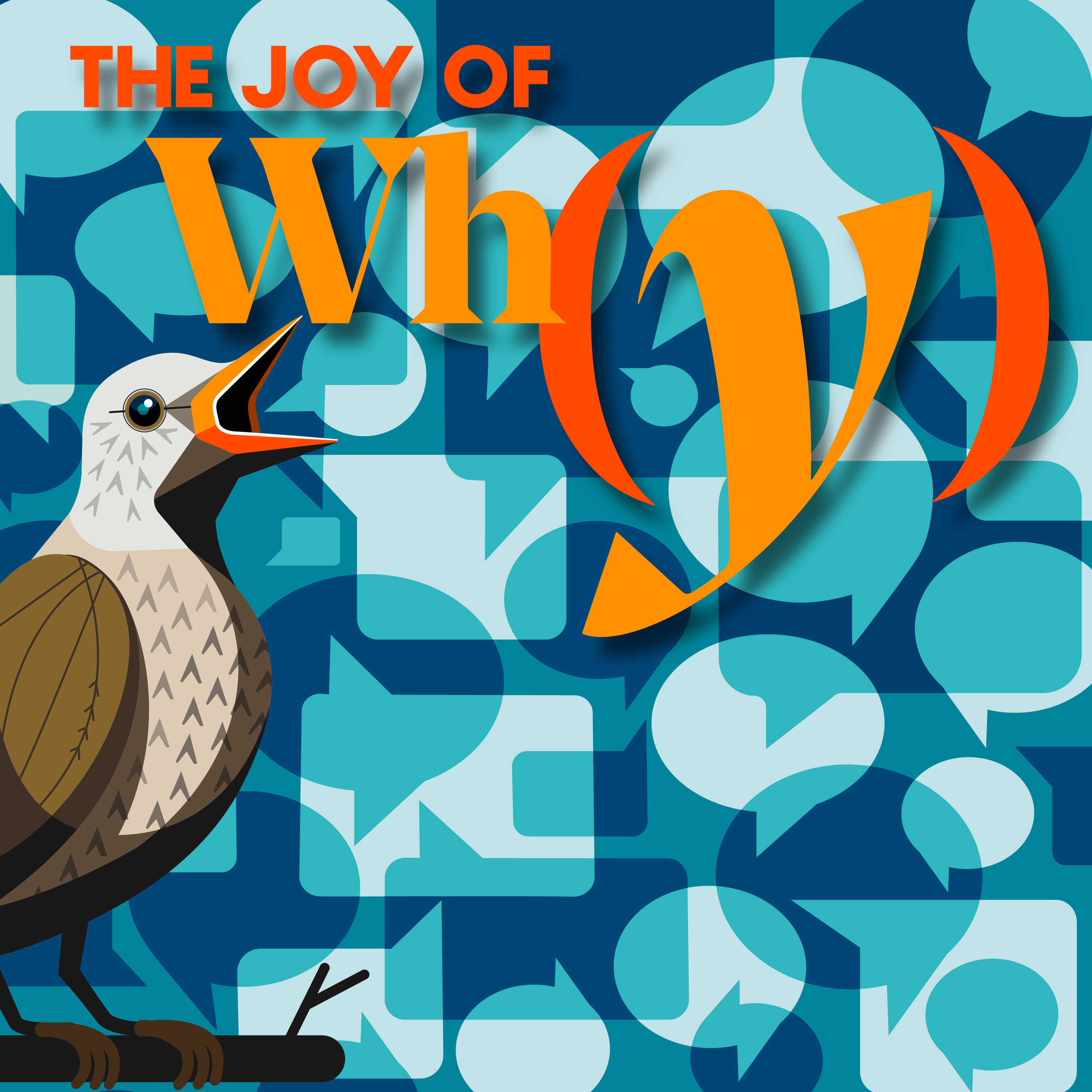
What Can Birdsong Teach Us About Human Language?
We often consider spoken language to be a feature that distinguishes humans from other forms of animal life. Brain research, however, suggests that other creatures — including certain birds — share some of our neural circuitry related to language. In this episode, co-host Janna Levin explores the origins and underlying mechanisms of human speech and birdsong with neurobiologist and geneticist Erich Jarvis.
The Joy of Why · Steven Strogatz, Janna Levin and Quanta Magazine
Audio is streamed directly from the publisher (dts.podtrac.com) as published in their RSS feed. Play Podcasts does not host this file. Rights-holders can request removal through the copyright & takedown page.
Show Notes
It’s fair to say that enjoyment of a podcast would be severely limited without the human capacity to create and understand speech. That capacity has often been cited as a defining characteristic of our species, and one that sets us apart in the long history of life on Earth. Yet we know that other species communicate in complex ways. Studies of the neurological foundations of language suggest that birdsong, or communication among bats or elephants, originates with brain structures similar to our own. So why do some species vocalize while others don’t?
In this episode, Erich Jarvis, who studies behavior and neurogenetics at the Rockefeller University, chats with Janna Levin about the surprising connections between human speech, birdsong and dance.