
The Josh Lafazan Show
288 episodes — Page 4 of 6

Ep 126The Josh Lafazan Show on YouTube - Episode 127
Trump Wants Congress to Make DOGE Cuts PERMANENT - $9.4 Billion in Programs Could Be SlashedThe Josh Lafazan Show on YouTube - Episode 127Welcome back to The Josh Lafazan Show. Today’s episode dives deep into what might be the most consequential spending battle of the year — Congress is on the verge of voting to make the controversial DOGE cuts permanent, a move that could eliminate billions in funding for critical global and domestic programs. At the same time, Trump’s highly touted “big, beautiful” budget bill is advancing in the Senate. And the two efforts — though officially separate — are increasingly entangled in a political mess that could blow up both.Let’s start with DOGE. While Elon Musk may have left the Trump administration, his old initiative — the Department of Government Efficiency (DOGE) — is trying to leave behind a legacy. The White House has sent Congress a $9.4 billion rescissions package, asking lawmakers to claw back funds from programs they already approved. This includes $8.3 billion in foreign aid — targeting climate initiatives, gender equity programs, and LGBTQ+ human rights abroad — and another $1.1 billion cut from the Corporation for Public Broadcasting, which helps fund NPR and PBS.These cuts are more than just symbolic. They strike at the heart of America’s global leadership efforts and the independence of public media — and both NPR and PBS are already suing the administration over a May executive order aimed at shutting off their federal funding.The White House insists this is necessary belt-tightening. They claim it aligns with Republican priorities and offers a concrete demonstration that the party is serious about reining in spending. But they’re also reportedly considering a second, more aggressive route — impoundment, a controversial maneuver that would allow the executive branch to withhold funds without Congressional approval. That would almost certainly spark a legal battle with the legislative branch.And this is all happening at the same time as the Senate is trying to move forward with Trump’s “big, beautiful” budget bill — a sprawling tax and spending overhaul that has drawn sharp criticism from both moderates and conservatives.Senate Majority Leader John Thune is now juggling two volatile pieces of legislation. One group of Republican senators — like Joni Ernst — is encouraging the party to move quickly on both packages. But critics warn that advancing the DOGE cuts while debating a separate budget bill will only deepen internal fractures.Making matters worse, Stephen Miller posted on social media to “clarify” that the budget bill and the DOGE cuts are separate — stating that the “big, beautiful” bill focuses on welfare reform and tax cuts and is not a traditional budget bill. But his comments only added to the confusion, especially after Senator Rand Paul went public accusing the bill of adding $5 trillion to the national debt. Paul, a fiscal hawk, says he won’t vote for any package that increases the deficit — and he’s not alone. Senator Ron Johnson has echoed these concerns, warning that the GOP is losing credibility on fiscal responsibility.And then came the curveball: Elon Musk, the man who created DOGE, is now opposing Trump’s budget bill. Musk argues the bill’s massive spending undercuts everything DOGE was trying to achieve. This is especially awkward since Republicans are relying on Musk’s legacy to justify the cuts — yet Musk himself is blasting the broader fiscal plan as wasteful and hypocritical.This leaves GOP leadership with an impossible puzzle:How do you sell the DOGE cuts as principled spending reductions when the broader Trump budget increases the deficit? Can you defend Elon Musk’s cost-cutting legacy while ignoring his current criticisms? And how do you keep your caucus unified when moderates, fiscal hawks, and MAGA loyalists are pulling in completely different directions? With Trump’s base growing restless, Elon Musk off the reservation, and Democrats lining up to fight the cuts to public broadcasting and foreign aid, this legislative gamble could easily implode. If either the DOGE cuts or the budget bill falters, it would deal a serious blow to the GOP’s credibility heading into the midterms.Today’s episode breaks it all down — the details of the proposed cuts, the political landmines in both the House and Senate, and the broader question: Are Republicans capable of governing once they take power? The early signs aren’t encouraging. So far, Trump has signed just five bills into law — the fewest in modern presidential history.Tune in for a full breakdown of the chaos in Washington, and what it means for the future of public funding, foreign aid, the deficit, and the power struggles defining this GOP majority.#politics #news #congress #politicalnews #newsupdate #usa #america #trump #donaldtrump #newsheadlines #newstoday #fyp #election

Ep 125The Josh Lafazan Show on YouTube - Episode 126
Trump’s “Big, Beautiful” Bill Could FAIL in the Senate — GOP Civil War EruptsThe Josh Lafazan Show on YouTube - Episode 126Welcome to The Josh Lafazan Show! In today’s episode, we unpack the growing chaos surrounding President Trump’s so-called "big, beautiful bill" — and how the Senate may be about to tear it apart.The House barely passed the bill with just one vote to spare, a major accomplishment for Speaker Mike Johnson who somehow rallied the fractured GOP caucus. But now, the real challenge lies ahead in the Senate, where Majority Leader John Thune faces an uphill battle. Thune, who recently took over for Mitch McConnell, must now prove he can command the same control over the Senate GOP. But can he bridge the divide between moderate Republicans and fiscal conservatives? Or will this bill collapse under its own contradictions?As Politico reports, Thune’s greatest challenge may come from a group dubbed the "Medicaid Moderates" — including Senators Josh Hawley (MO), Lisa Murkowski (AK), and Susan Collins (ME). These three Senators are pushing back hard against the House's proposed Medicaid cuts, which would impact tens of millions of Americans. If Thune loses just three votes, the bill dies. Plain and simple.Josh Hawley has emerged as the loudest voice among the moderates, penning a scathing New York Times op-ed titled "Don’t Cut Medicaid." In it, he writes: “If Republicans want to be a working-class party — if we want to be a majority party — we must ignore calls to cut Medicaid and start delivering on America’s promise for America’s working people.” On CNN, he made it even clearer: he won’t support a bill that includes those cuts.Meanwhile, Iowa Senator Joni Ernst made headlines for all the wrong reasons. At a recent town hall, Ernst responded to questions about Medicaid by saying, "We’re all going to die," and then doubled down on the remarks. The backlash was swift. Democrats seized on the comment, generating viral clips, negative coverage, and political ammunition that could resurface in 2026.Thune's problems don't stop with the moderates. On the other end of the spectrum are conservative Senators like Ron Johnson and Rand Paul, who are sounding alarms over the bill’s impact on the national debt. The bill adds $5 trillion to the deficit — a staggering figure for a party that claims to champion fiscal responsibility. Johnson says it's not nearly aggressive enough on spending cuts, while Paul slammed Trump and the bill for pushing the national debt past $36 trillion.So let’s get this straight: moderates oppose the bill for cutting too much. Conservatives oppose it for not cutting enough. And Trump is caught in the middle.This is what dysfunction looks like. The GOP has the House, Senate, and White House, and yet, cannot pass its flagship legislation. If Republicans can’t govern now, when will they? And more importantly, what does this mean for voters heading into 2026?We’ll break down the internal war happening inside the GOP, the media fallout from Joni Ernst’s Medicaid comments, and whether John Thune can pull off a miracle in the Senate — or if Trump’s big, beautiful bill is destined for the shredder.Tune in for all that and more on today’s episode of The Josh Lafazan Show.#politics #news #congress #politicalnews #newsupdate #usa #america #trump #donaldtrump #newsheadlines #newstoday #fyp #election
Ep 124The Josh Lafazan Show on YouTube - Episode 125
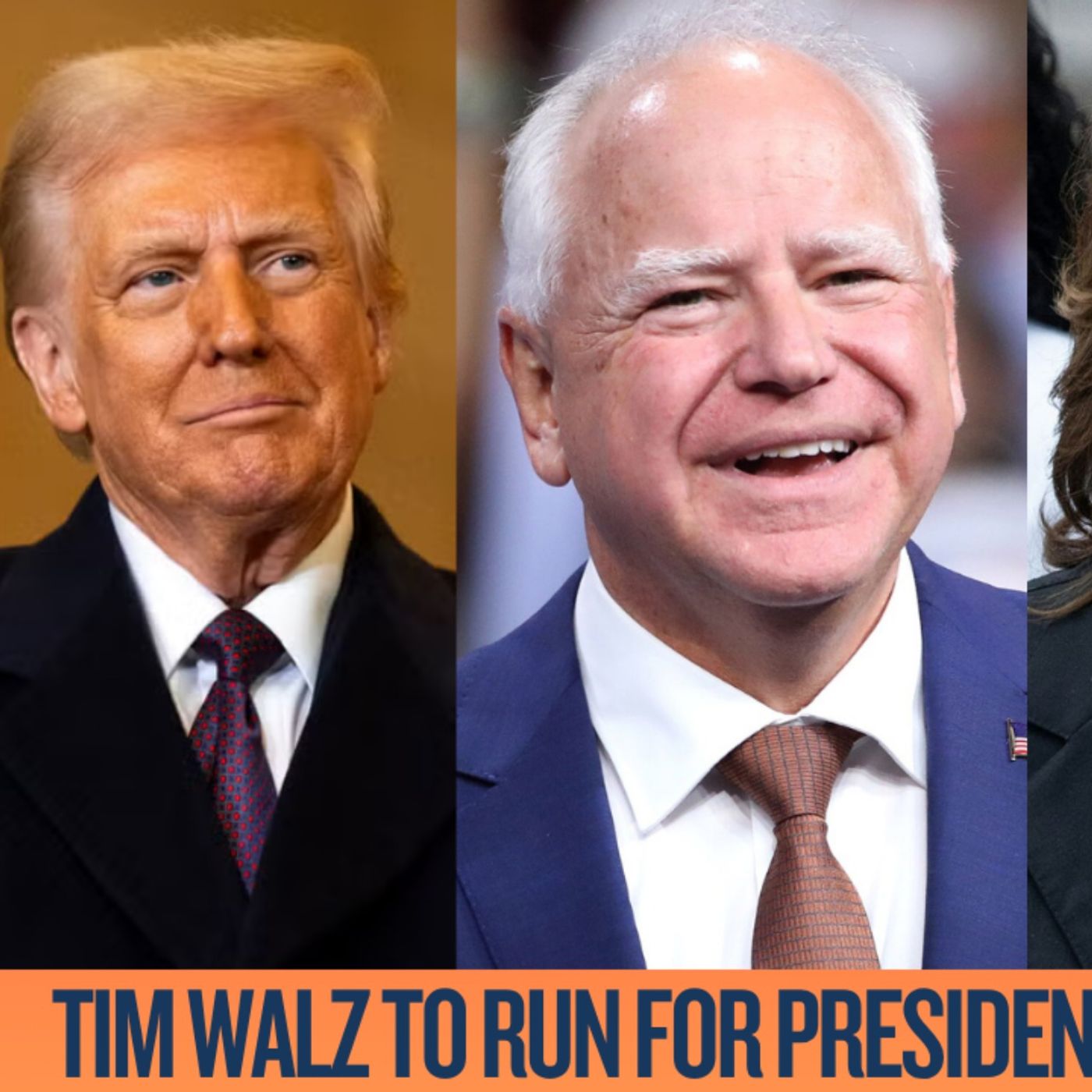
Tim Walz for PRESIDENT? 2028 Democratic Primary Heats UpThe Josh Lafazan Show on YouTube - Episode 125Welcome to The Josh Lafazan Show. In this episode, we dive deep into the growing speculation around Minnesota Governor Tim Walz and his likely entry into the 2028 presidential race—not as someone’s running mate, but as a top-of-the-ticket contender. Could Tim Walz be the first Democrat to officially launch a campaign for president in 2028? All signs seem to suggest that’s exactly where this is heading.Walz has been making serious political moves ever since he and Vice President Kamala Harris lost their reelection bid last November. Instead of retreating into political obscurity, Walz has leaned in—hard. Earlier this year, he kicked off a national “listening tour,” beginning with stops in red states like Ohio. While he framed the trip as an effort to reconnect with disaffected Democratic voters in non-swing states, it was also a clear indication that he’s testing the waters for a national campaign of his own. As Andrew Tobias reported, Walz has made it his mission to figure out what went wrong for Democrats and how to reverse the party’s recent setbacks in Middle America.But it’s not just listening sessions and small talk. Walz has been sharply critical of how the Biden administration handled the economy—particularly inflation. In a revealing interview with Vox, Walz said President Biden failed to acknowledge the economic pain felt by working-class Americans in 2023. He suggested that direct action—like stimulus checks—should have been on the table. “It was a change election,” Walz said, pointing to global political trends. “We needed to be the change.” While careful not to throw Kamala Harris under the bus, his comments make it clear he’s trying to carve out a lane distinct from the prior Democratic leadership.His recent trip to South Carolina—the state that resurrected Joe Biden’s 2020 campaign—is being interpreted by many as a major political signal. Walz spoke at a high-profile event hosted by Rep. Jim Clyburn, one of the most influential Democrats in the country. There, he positioned himself as a fighter against Trump-era policies and emphasized the importance of gubernatorial leadership in standing up to federal overreach. But this wasn’t just about policy—it was about presence. Walz is making sure Democratic insiders and primary voters alike know he’s still on the national stage.However, Walz’s path hasn’t been without controversy. At a recent talk at Harvard’s Kennedy School of Government, Walz made a widely criticized remark, admitting that he was picked as Kamala Harris’s running mate in 2024 “to talk to white guys.” The comment sparked backlash from both sides of the aisle and became a talking point on conservative media. While some chalked it up to awkward honesty, others saw it as political tone-deafness—a misstep he’ll have to answer for if he runs.So, is there an appetite for a Tim Walz candidacy in 2028? The good news: polling shows that the Democratic base does not blame Walz—or even Harris—for the loss in 2024. Instead, most Democrats point to President Biden’s declining approval ratings and his late decision to stay in the race as the root cause of the defeat. That gives Walz a potential opening to reintroduce himself to voters without the baggage of the prior campaign.The bad news? Kamala Harris remains a formidable presence in the party. Early 2028 polling from FiveThirtyEight shows Harris leading the Democratic field with 30% support, while Walz remains in the low single digits. Breaking out of the shadow of his former running mate won’t be easy, especially if she decides to run as well.Still, the moves Walz is making—national appearances, message testing, soft contrasts with Biden, and strategic silence on Harris—are textbook steps for someone planning a run. With his moderate Midwestern background, executive experience, and growing national name recognition, Walz could appeal to a broad coalition of voters. Whether that’s enough to make him a real contender remains to be seen.In this episode, we break down Tim Walz’s emerging 2028 strategy, analyze the risks and opportunities ahead of him, and discuss what his candidacy could mean for the future of the Democratic Party. Don’t miss it—and let us know in the comments: Do you think Tim Walz has what it takes to win in 2028?#politics #news #congress #politicalnews #newsupdate #usa #america #trump #donaldtrump #newsheadlines #newstoday #fyp #election

Ep 123The Josh Lafazan Show on YouTube - Episode 124
Kamala Harris COMEBACK? VP Weighs Run for 2028 President or California GovThe Josh Lafazan Show on YouTube - Episode 124In today’s episode of The Josh Lafazan Show, we’re diving into the political crossroads facing Vice President Kamala Harris — a pivotal decision that could shape the Democratic Party’s future: Will she run for Governor of California in 2026 or take the national stage once again with a Presidential bid in 2028?Kamala Harris isn’t planning to fade into the background after her time as Vice President. Far from it. The question isn’t if she’ll run for office again — it’s which office she’ll run for. And according to insiders, that decision could come any day now. As Isaac Dovere from CNN recently reported, Harris has been carefully weighing both options, knowing that either path comes with significant risks — and huge potential rewards. (VIDEO)Technically, Harris could run for governor in 2026 and then run for president in 2028. But as one of her senior advisors told Yahoo News, the optics of jumping from one high-stakes race to another could be politically perilous. “If you’re thinking of running for president in 2028, the worst thing you can do is run for governor in 2026,” they warned.Let’s examine why both options are firmly on the table:First, Harris still enjoys significant support within the Democratic Party. Polling consistently shows she maintains a strong favorability rating among Democrats, despite broader national headwinds. In fact, Democratic voters largely don’t blame Harris for the party’s loss in 2024 — instead pointing the finger at President Biden’s declining approval ratings and his decision to stay in the race.If she runs for Governor of California, she would immediately become the frontrunner. A recent LA Times poll shows 72% of Democrats in the state support a Harris bid, far outpacing other contenders like Congresswoman Katie Porter and Republican businessman Steve Garvey. With near-universal name recognition and deep ties to California politics, she’d be a formidable opponent — but governing California means taking on monumental challenges like homelessness, crime, and economic inequality. If she fails to show results, her record could be a liability in 2028 or beyond.On the other hand, a 2028 Presidential campaign offers its own advantages. Harris would likely start the race as the frontrunner, polling well ahead of other potential candidates such as Gavin Newsom, Pete Buttigieg, Gretchen Whitmer, and Josh Shapiro. Her national fundraising network, loyal base, and extensive experience would give her a strong launchpad. But the downsides are real — her current national unfavorability rating is 4.4% higher than her favorables, and she would face an uphill climb to win over independent and swing voters.As Democratic strategist James Carville bluntly put it, nominating Harris in 2028 would be like “starting a seventh-string quarterback in the Super Bowl.” (VIDEO) Yet others like former DNC Chair Jamie Harrison argue Harris is the party’s best hope for the future — a proven leader with unmatched experience and a story that resonates with millions. (VIDEO)What’s also clear is that both paths come with high stakes. Running for governor gives her an immediate platform but also potential baggage. Running for president means a longer wait, but fewer short-term risks. Either choice could define her legacy — or end her political career.So what should Kamala Harris do?Should she stay rooted in California and prove she can govern America’s largest, most complex state? Or should she keep her eyes on the White House and prepare for a presidential rematch four years from now?In this episode, we break down:Harris’ polling strength within the Democratic base Why California’s governorship would be both a blessing and a burden How her 2028 frontrunner status could shift over time What history tells us about politicians who staged comebacks And why this decision is a now or never moment for her political brand Drop a comment below and let me know what YOU think Kamala Harris should do next. Should she take on Sacramento — or make her way back to Pennsylvania Avenue?Don’t forget to like, subscribe, and share for more deep dives on the biggest stories shaping American politics.#politics #news #congress #politicalnews #newsupdate #usa #america #trump #donaldtrump #newsheadlines #newstoday #fyp #election
Ep 122The Josh Lafazan Show on YouTube - Episode 123
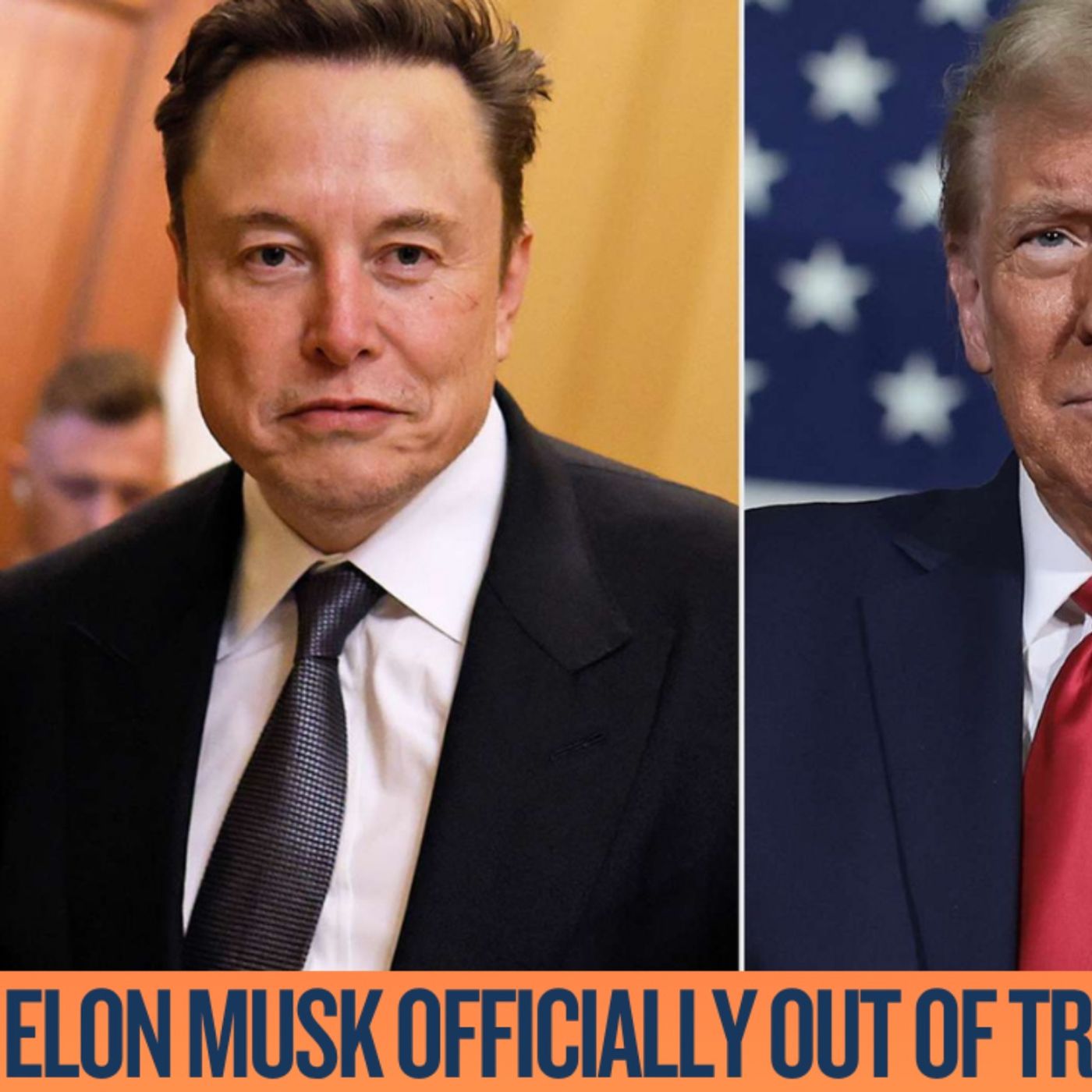
Elon Musk Officially OUT of White House — The Real Story Behind the BreakupThe Josh Lafazan Show on YouTube - Episode 123Welcome to The Josh Lafazan Show — and today’s episode is all about one of the most stunning fallouts in modern American political-business relations: Elon Musk’s dramatic exit from the Trump administration and the collapse of his much-hyped government cost-cutting mission, DOGE.It’s official: Elon Musk is OUT. After 130 days as a Special Government Employee under President Trump, Musk has confirmed his departure in a flurry of social media posts. Many speculated that Trump — who counted Musk as one of his largest donors and highest-profile supporters — would find a way to keep the world’s richest man in the administration. But that didn’t happen.Musk’s exit caps off what began as a high-profile alliance between two powerful egos — a self-proclaimed “first buddy” status with the president that has now soured into disillusionment. The White House had grown increasingly frustrated with Musk, especially after he publicly criticized Trump’s signature “big, beautiful bill” as fiscally reckless, saying it would add trillions to the deficit. His remarks reportedly infuriated senior administration officials, many of whom worked for months to corral Republican support for the legislation.Then there was Musk’s gripe about losing a multi-billion-dollar federal AI data center contract to a rival firm. Though he lobbied intensely to redirect the deal to his company, xAI, the administration refused — adding fuel to the fire. Meanwhile, the $100 million Musk had pledged to Trump’s re-election super PAC still hasn’t materialized, further straining the relationship.But perhaps most important was Musk’s failure to make good on his core policy promise: transforming the federal bureaucracy and slashing wasteful spending through DOGE — the Department of Government Efficiency. When Musk first joined the administration, he promised to cut $2 trillion from the budget. Within weeks, that goal was revised to $1 trillion. Then it dropped to $150 billion. And now? According to internal audits reviewed by the New York Post, DOGE has only confirmed about $2 billion in verified savings — a measly 0.03% of the total federal budget.As economist Justin Wolfers explained, Musk was more interested in political theatrics than policy results. “He was chasing headlines,” Wolfers said, “not doing the boring, behind-the-scenes work needed for real reform.” Even some conservatives now admit the program was a PR stunt. Musk's chainsaw stunt at CPAC — where he literally waved a running saw onstage and claimed he could “cut billions in an hour” — has become symbolic of the hollow spectacle.DOGE also became entangled in culture war distractions. Instead of focusing on contracting reform or procurement efficiencies, Musk zeroed in on high-profile universities and the National Endowment for the Arts — politically convenient targets that made for viral moments but offered little in terms of actual savings.Now, the consequences of Musk’s exit remain to be seen. Will Tesla’s board re-evaluate his leadership? Will xAI face federal scrutiny under a potential Democratic administration? Will Musk continue to fund Republican campaigns, or retreat from politics entirely?In the end, Musk’s short-lived government stint may serve as a cautionary tale: being rich, loud, and famous does not automatically make you effective in the most complex bureaucracy on Earth. Real reform requires patience, diligence, and institutional knowledge — not viral posts and flame wars.So today’s episode isn’t just about Musk — it’s about what happens when personal ambition collides with public responsibility. Stick around as we unpack the rise and fall of Elon Musk’s Washington experiment — and what lessons we should take from it moving forward.Subscribe for more breakdowns on politics, power, and policy. New episodes daily right here on The Josh Lafazan Show.#politics #news #congress #politicalnews #newsupdate #usa #america #trump #donaldtrump #newsheadlines #newstoday #fyp #election

Ep 121The Josh Lafazan Show on YouTube - Episode 122
Trump Gives Putin 2-Week ULTIMATUM — Does Russia Take Him Seriously?The Josh Lafazan Show on YouTube - Episode 122Welcome to The Josh Lafazan Show. In today’s episode, we dive into one of the most perplexing foreign policy dynamics in recent memory: Donald Trump’s increasingly tense and confused relationship with Vladimir Putin, and what it means for the war in Ukraine and the broader global order.President Trump appears to have finally had enough of Putin’s evasiveness and gamesmanship. In a fiery Truth Social post, Trump declared that the Russian leader is “playing with fire,” warning ominously that if it weren’t for him, “really bad things” would have already happened to Russia—“and I mean REALLY BAD.” Trump’s threat, though vague, marks a significant shift in tone after months of a relatively soft approach toward Moscow.Trump’s rising frustration comes after a reported phone call between the two leaders, during which Putin promised to send a draft “memorandum of peace” outlining a ceasefire proposal. But more than a week later, the U.S. still hasn’t received that document. The delay has left Trump fuming—and also exposed. In a recent press exchange in the Oval Office, Trump gave Putin a two-week ultimatum to come to the table or face “different tactics,” yet declined to specify what that actually means.Here’s the problem: Trump’s credibility is in tatters. Not just with our allies, but even with Russia. Kremlin-backed news outlet RT openly mocked Trump’s warning, suggesting that he’ll just contradict himself tomorrow. And frankly, that’s not an unreasonable assumption—Trump has built a reputation for shifting stances and confusing messaging. From “ending the war in 24 hours,” to blaming Zelensky for blocking peace, to now warning Putin? It’s impossible to know where Trump truly stands, and that unpredictability is destabilizing global diplomacy.Let’s not forget: while Trump has been lambasting Ukrainian President Volodymyr Zelensky—accusing him of stalling peace talks—Zelensky has reportedly offered major concessions, including a ceasefire, land compromises, and even his own resignation. Putin, on the other hand, has offered absolutely nothing. No ceasefire. No drawdown. No diplomatic framework. And yet Trump continues to act like Zelensky is the problem.This fits a now-familiar pattern with Trump’s foreign policy: erratic behavior, unclear goals, and public posturing with no follow-through. We saw this with his on-again, off-again tariffs with China and Europe. One day there’s a deal. The next day, the deal’s off. Then it’s back on. And now, he’s applying the same chaos to the war in Ukraine.The consequences are serious. Allies no longer know whether to trust U.S. leadership. Ukraine is left in limbo. Russia is emboldened by American inconsistency. And U.S. credibility, painstakingly built over decades of diplomatic engagement, is crumbling under the weight of Trump’s ego and unpredictability.One especially troubling moment came during a recent media appearance when Trump was asked what “doing things differently” meant if Putin didn’t come to the table. He refused to answer. That’s not strength—it’s ambiguity. And ambiguity in the face of authoritarian aggression is a dangerous game.Trump’s own words offer the most revealing insight into his confusion. He said of Putin: “He’s killing a lot of people. I don’t know what’s wrong with him. What the hell happened to him?” That statement is stunning not just because of its bluntness, but because it suggests that Trump expected something different. But why? Putin has always been consistent—consistently brutal, consistently lawless, consistently imperialist. The only thing that’s changed is Trump’s realization that his friendly overtures have led nowhere.So now the big question becomes: will Trump actually take a harder line on Russia, or is this just another moment of performative outrage?At this critical juncture, America must choose: continue enabling an incoherent foreign policy dictated by whim and ego, or return to the steady leadership that supports our allies, holds our adversaries accountable, and speaks with moral clarity on the world stage.Thanks for tuning in to The Josh Lafazan Show. Let’s talk about this and more—because these decisions aren’t just headlines, they shape the future of global security.#politics #news #congress #politicalnews #newsupdate #usa #america #trump #donaldtrump #newsheadlines #newstoday #fyp #election
Ep 120The Josh Lafazan Show on YouTube - Episode 121
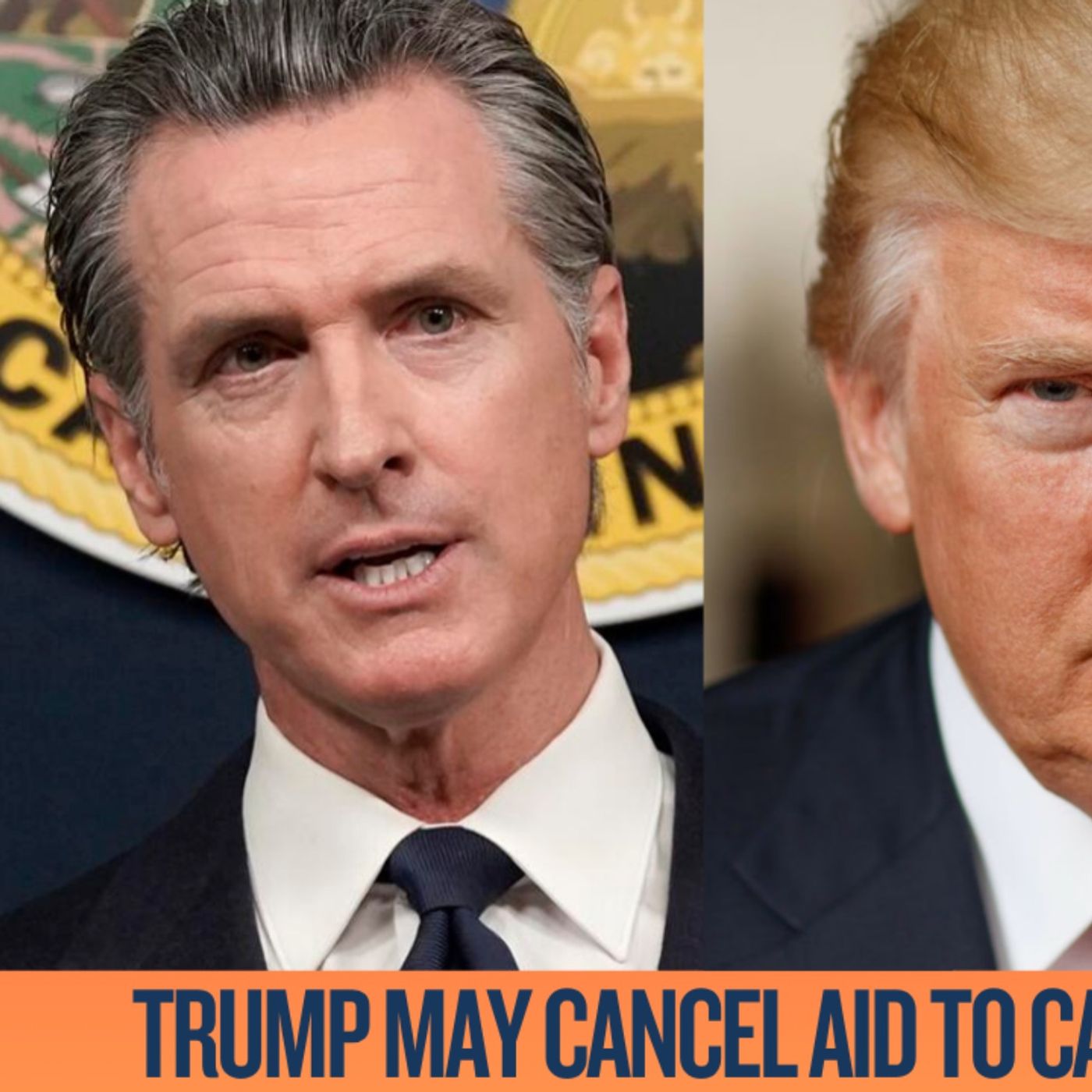
White House Threatens to Cut BILLIONS in Aid to California — Showdown Between Trump & NewsomThe Josh Lafazan Show on YouTube - Episode 121Welcome back to the Josh Lafazan Show. In today’s episode, we’re breaking down President Trump’s latest threat against the state of California and the broader implications for state’s rights in America. Trump has once again made headlines by threatening to withhold federal aid from California, reigniting tensions between the federal government and individual states in a way that should concern every American.As reported by Politico, Trump took direct aim at California Governor Gavin Newsom, claiming that the state is violating his administration’s executive order banning transgender athletes from participating in girls' school sports. This latest controversy stems from the case of AB Hernandez, a 16-year-old athlete competing in high school championships across California. The president has pointed to this case as evidence that California is openly defying his February executive order, which demands that federal education funds be stripped from programs not aligned with the order's provisions.Trump took to Truth Social to post: “THIS IS NOT FAIR, AND TOTALLY DEMEANING TO WOMEN AND GIRLS…Please be hereby advised that large scale Federal Funding will be held back, maybe permanently, if the Executive Order on this subject matter is not adhered to.” Oddly, Governor Newsom himself has reversed his prior stance on the issue, acknowledging the fairness concerns raised. Trump capitalized on this, posting: “The Governor, himself, said it is ‘UNFAIR.’ I will speak to him today to find out which way he wants to go???”But this isn’t Trump’s first attack on California via federal funds. Just days into his second term, Trump demanded California implement voter ID laws and redirect Northern California water resources, threatening to withhold disaster aid meant to help victims of Los Angeles wildfires. That playbook has returned with a vengeance.And it’s not just California in the crosshairs. States like Maine have already experienced federal pressure and lawsuits, with the Trump administration probing their education systems and cutting various forms of aid. Amanda Friedman reports that federal funding cuts now extend to USDA programs, Department of Justice lawsuits, and more.To be clear, this episode is not about the contentious policy of transgender athlete participation — though I personally believe it’s unfair for trans girls to compete in girls' sports. This episode is about state sovereignty. Republicans have long claimed to be the party of state’s rights. They hailed the overturning of Roe v. Wade as a monumental victory for states to set their own laws. Yet those same lawmakers are now conspicuously silent as Trump tramples over state autonomy to enforce his political will.This is weaponizing federal funding to punish political disagreement. Imagine a Democratic president withholding wildfire aid from Texas unless they changed their gun laws. There would be mass outrage. The precedent Trump is setting is dangerous. Federal aid, which comes from all taxpayers, should never be used as a political bargaining chip.Let’s be clear: Trump’s executive order is not law. Congress has not passed legislation banning trans athletes from girls' sports. And yet, the president is acting unilaterally to impose his will on all 50 states. This is not just unconstitutional — it’s authoritarian.Congress must act. If Republicans truly believe in limited government and state’s rights, now is the time to speak up. The longer they enable Trump’s abuses, the more they risk losing their credibility — and possibly the 2026 midterms. This isn't about athletics. It's about preserving the very fabric of American federalism.Thanks for tuning in to the Josh Lafazan Show. Don’t forget to like, subscribe, and share this episode if you believe in protecting states’ rights and stopping the politicization of disaster relief and federal aid.#politics #news #congress #politicalnews #newsupdate #usa #america #trump #donaldtrump #newsheadlines #newstoday #fyp #election
Ep 119The Josh Lafazan Show on YouTube - Episode 120
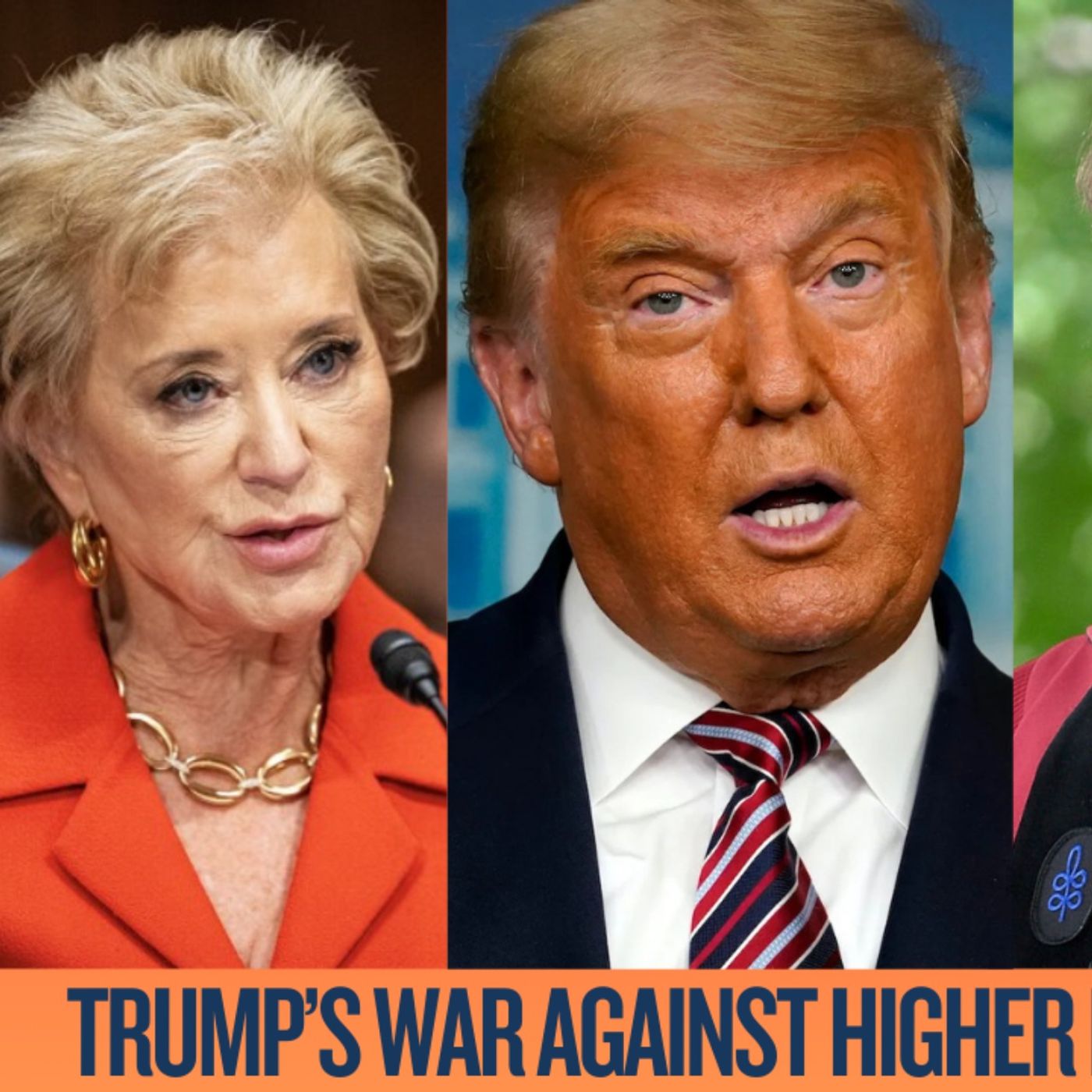
Trump's WAR on Higher Education — Why It’s a National Crisis, from Public Schools to Harvard The Josh Lafazan Show on YouTube - Episode 120Welcome to The Josh Lafazan Show. In today’s important episode, we unpack President Donald Trump’s escalating war on education in the United States — a sweeping, ideologically driven campaign that now includes the total elimination of the Department of Education, targeted attacks on America’s most prestigious universities, and drastic funding cuts that threaten the country’s global leadership in science, innovation, and opportunity.This is not a drill. Trump has gone from rhetoric to action.On the campaign trail, Trump often floated the idea of eliminating the Department of Education. That idea has floated in conservative circles for years — from Rick Perry’s infamous debate flub to policy papers tied to Project 2025. But in March, Trump took the unprecedented step of signing an executive order to dismantle the Department of Education. If you missed his announcement, take a look:(VIDEO)This reckless decision is not just symbolic. The Department of Education plays a vital role in our nation’s development and equality. It sets national policy, manages federal aid, and enforces key laws to protect students. It ensures students with disabilities receive resources, upholds civil rights, collects vital school data, and manages Pell Grants and student loans. It provides Title I funding to high-poverty districts and supports early childhood education through Head Start.According to TIME, eliminating Title I alone — a proposal outlined in Project 2025 — would strip nearly $18 billion in funding from schools that serve the most vulnerable communities. That means 180,000 educators could lose their jobs. Classrooms would become overcrowded. Literacy programs would vanish. Low-income children would be left further behind.The student loan program would be handed over to private lenders — a return to a system riddled with high interest rates and profit motives. States, not independent accreditation boards, would get to decide which colleges are valid. That could open the door to politicized, inconsistent standards across the country.It doesn’t stop there. Trump has turned his fury toward higher education, especially elite universities. Harvard is now the poster child for his crusade. The president has targeted it with funding freezes, threats to revoke its tax-exempt status, and even a ban on accepting foreign students.It’s not just Harvard. Columbia, Princeton, Cornell, Northwestern, Brown, and the University of Pennsylvania are all under fire. More than $2.2 billion in grants from the National Institutes of Health are being pulled. The National Science Foundation has ended nearly $150 million in research funding. Grants from the Departments of Defense, Agriculture, and HUD are vanishing too.Harvard, for instance, receives about 11% of its annual $6.4 billion budget from the federal government. That money supports breakthroughs in medicine, engineering, social sciences, and beyond. Without it, critical research will be halted. Labs will close. Faculty and students will leave. America will fall behind.And while many have rightly criticized elite schools for failing to address antisemitism and other serious issues on campus, this is not a scalpel. It is a sledgehammer. The result? America’s best and brightest will go elsewhere. Our ability to lead the world in innovation and intellectual capital will shrink.Remember: the U.S. is home to just 5% of the world’s population, but it drives the largest economy because it attracts the best minds. Immigrants and their children founded nearly half of all Fortune 500 companies. More than a third of U.S. Nobel laureates are immigrants. Over 44% of billion-dollar startups in the U.S. were founded by immigrants.Trump’s immigration crackdown and his war on higher education are guaranteeing a brain drain. While China invests in research and higher education, we are defunding ours. While other nations incentivize innovation, we punish it.And while this may please Trump’s political base, it will cost the country dearly. Our children, our economy, our global standing — all hang in the balance.It’s time for Congress to act. The Constitution clearly gives Congress the power to regulate spending and taxation. If lawmakers do not intervene, they will have surrendered one of their most fundamental responsibilities as a co-equal branch of government.This is a pivotal moment. If we care about education, about opportunity, and about America's future, we cannot stay silent.Tune in, subscribe, and share this episode if you believe in defending America’s students, teachers, and innovators from this unprecedented assault.#politics #news #congress #politicalnews #newsupdate #usa #america #trump #donaldtrump #newsheadlines #newstoday #fyp #election

Ep 118The Josh Lafazan Show on YouTube - Episode 119
Freedom Is NEVER Free — Honoring America’s Fallen Heroes This Memorial DayThe Josh Lafazan Show on YouTube - Episode 119On today’s special episode of The Josh Lafazan Show, we pause from the daily news cycle to reflect on one of the most solemn and significant days on the American calendar: Memorial Day. While for many, the holiday may signal the unofficial start of summer, it is far more than a long weekend. It is a day to honor the brave men and women who gave their lives in service to the United States of America.In this heartfelt episode, Josh explores the origins, evolution, and importance of Memorial Day — and reminds us all why it must remain a day of reverence and gratitude.🔹 What is Memorial Day?Memorial Day, originally known as Decoration Day, began in the aftermath of the Civil War — the deadliest conflict in U.S. history. Americans began organizing local tributes to fallen soldiers by decorating their graves and holding ceremonies. In 1868, General John A. Logan called for a nationwide day of remembrance, and on the first Decoration Day, thousands gathered at Arlington National Cemetery to honor the 20,000 soldiers buried there.By the time of World War I, Memorial Day had expanded to commemorate all U.S. military personnel who died in service. In 1971, it became an official federal holiday through the Uniform Monday Holiday Act, designating the last Monday in May as the day of observance.🔹 The Meaning Behind the TraditionJosh reminds viewers that while backyard barbecues, family gatherings, and the start of summer are all part of American culture, we must never forget the reason for the holiday: to remember the sacrifices of the fallen. Memorial Day should be a time for national reflection — a moment to acknowledge that our freedoms were bought with the lives of those who believed America was worth dying for.🔹 A Tribute to Hometown HeroesThis episode includes a moving tribute to local heroes from Josh’s home on Long Island, New York:– Gus Scutari, a World War II Navy veteran who narrowly survived a kamikaze attack on his ship. After the war, Gus became a pillar of the veteran community in Syosset, organizing Memorial Day parades well into his late 90s. His commitment to honoring his fallen comrades was unwavering.– Sgt. Robert Hendriks, a young Marine from Locust Valley who was killed in action during combat operations in Afghanistan. He was just 25 years old. His legacy lives on through the Sgt. Hendriks Memorial Scholarship, which supports graduating seniors who are entering the armed forces from his hometown high school.Their stories serve as a poignant reminder that the heroes we honor on Memorial Day are not abstract figures from history books — they are sons and daughters from our own neighborhoods, who made the ultimate sacrifice for our freedom.🔹 Presidential Reflections on Memorial DayJosh revisits the powerful words of both Presidents - both Republicans and Democrats - have marked this somber day. President Ronald Reagan from his 1988 Memorial Day speech. Reagan spoke of how Americans have always found their heroes in everyday life — not just on the battlefield, but in the quiet courage of those who chose to serve. He said:“We find them where we've always found them. They are the product of the freest society man has ever known… because the birthright we share as Americans is worth defending.”🔹 A Call to GratitudeJosh ends this episode with a call to action: thank a veteran today. Express gratitude to those who’ve served, and honor those who have fallen by remembering what they fought to protect. Freedom is never free — and on Memorial Day, we recognize that the price of liberty is paid by those willing to give their lives for it.💬 “The greatest nation on Earth exists today because of the men and women who believed that the ideals of democracy, freedom, and justice were worth defending — even at the cost of their own lives.”🙏 Let’s honor their memory. Let’s teach the next generation what Memorial Day is truly about. And let’s never forget those who gave all.#politics #news #congress #politicalnews #newsupdate #usa #america #trump #donaldtrump #newsheadlines #newstoday #fyp #election

Ep 117The Josh Lafazan Show on YouTube - Episode 118
Trump’s TRADE WAR With Europe Is BACK — 50% Tariffs Threatened on E.U. ImportsThe Josh Lafazan Show on YouTube - Episode 118Today’s episode covers one of the most consequential economic stories of the year: Donald Trump has just proposed a stunning 50% tariff on all imports from the European Union, along with a 25% tariff on smartphones that aren’t manufactured in the United States.This move — announced on Trump’s Truth Social — has reignited fears of a full-blown trade war between the U.S. and our European allies. Trump declared:“Our discussions with the E.U. are going nowhere! Therefore, I am recommending a straight 50% Tariff on the European Union, starting on June 1, 2025. There is no Tariff if the product is built or manufactured in the United States.”Sound familiar? It should. Trump has been antagonizing the EU for months, making baseless claims that the Union was created to “screw the United States,” and issuing escalating tariff threats throughout 2024. In February, he floated a 25% tariff on EU goods. In April, he doubled down with vague threats that tanked the stock market during what he called "Liberation Day."Now, just nine days before the EU’s temporary tariff pause expires, Trump is ratcheting up the pressure to its highest level yet — 50% on all EU imports. That’s a higher tariff than we’re applying to China, a known adversary. And remember — China’s tariffs were just lowered to 30% this month to pave the way for fresh negotiations. Meanwhile, we’re punishing our allies more harshly.📉 So what’s the fallout?It’s not just Democrats raising alarm bells. Some of Trump’s most notable conservative allies are sounding the alarm:Tim Chapman, president of Advancing American Freedom (founded by former VP Mike Pence), blasted the chaotic and unpredictable tariff threats, asking:“How is any American business supposed to plan in this environment?” Economist Patrick De Haan, known for his analysis on CNBC and CNN, wrote:“The bad ideas are coming back… you’d think they would have learned something from the huge market drop in early April.” Senator Rand Paul, a vocal free-market conservative, has long opposed Trump’s tariff policies. On this latest escalation, Paul said:“Tariffs raise prices, and they’re a bad idea for the economy. Trade is proportional to wealth — and history shows that the last 70 years of trade growth has mirrored the rise of global prosperity.” In today’s episode, we break down:✅ What’s in Trump’s proposed tariffs — and how they’ll hurt American consumers✅ The difference between tariffs on allies vs. adversaries, and why this move is baffling economists✅ How Trump’s economic nationalism could derail decades of international trade progress✅ Why American companies, farmers, and small businesses could suffer the most✅ The mounting bipartisan effort to rein in presidential power over tariffs — and how Trump is already threatening to veto a new bill📜 Let’s also talk about the Constitution. Article I, Section 8 is clear:Only Congress has the power to "lay and collect Taxes, Duties, Imposts and Excises.”Translation? Tariffs are taxes — and the Constitution gives that authority to Congress, not the president. And yet, for years, Congress has allowed presidents to wield this power with almost no oversight.That may be about to change. A bipartisan bill, co-sponsored by Senator Maria Cantwell (D-WA) and Senator Chuck Grassley (R-IA), would require any president to notify Congress within 48 hours of proposing a new tariff, and get formal approval within 60 days. Trump opposes the bill and has vowed to veto it — even though it hasn’t yet made it out of committee.🔍 We’ll also explore:What this new trade war means for the U.S.-EU relationship Whether Congress will finally act as a co-equal branch of government or continue rubber-stamping economic chaos And how these escalating tariffs could impact your wallet, your job, and the global economy This episode pulls back the curtain on one of the most dangerous and misunderstood aspects of economic policy. Trump’s new tariff plan may sound tough — but it’s economically reckless, diplomatically destructive, and constitutionally questionable.🎙️ Don’t miss today’s full breakdown on The Josh Lafazan Show.Like, subscribe, and share if you believe in economic sanity, constitutional checks and balances, and a trade policy that puts the American people — not chaos — first.#politics #news #congress #politicalnews #newsupdate #usa #america #trump #donaldtrump #newsheadlines #newstoday #fyp #election
Ep 116The Josh Lafazan Show on YouTube - Episode 117
House Passes Trump’s “Big, Beautiful” Budget by ONE VOTE — Will it Survive the Senate?The Josh Lafazan Show on YouTube - Episode 117Welcome back to The Josh Lafazan Show, where today we dive into a high-stakes political showdown on Capitol Hill:The House just narrowly passed Donald Trump’s so-called “Big, Beautiful” Budget — a sweeping and controversial megabill that cuts across taxes, energy, healthcare, and immigration — by just a single vote. And now it heads to the Senate, where its future is very uncertain.Let’s break down what just happened, what’s in this bill, and why this moment could define the next phase of Trump’s political power — and raise serious questions about whether our government is functioning at all.🏛️ HOUSE PASSES BUDGET — BY A THREADThe House passed the bill just after midnight, in a dramatic late-night vote that saw two Republicans break with their party, one vote “present,” and two GOP members miss the vote entirely — including Rep. Andrew Garbarino, who admitted he literally fell asleep during the roll call.House Speaker Mike Johnson, backed by former President Donald Trump, pulled off the narrowest of victories — and we’ve got the clip of him announcing the final tally.Despite Republican cheers, Democratic leader Hakeem Jeffries slammed the bill, warning that it guts protections for working and middle-class Americans, especially those relying on Medicaid, Affordable Care Act subsidies, and green energy programs. We show his forceful remarks and break down the economic and moral arguments behind the opposition. 🧾 WHAT’S IN TRUMP’S “BIG, BEAUTIFUL” BUDGET?This wasn’t just a tax or spending bill — it was a full-scale rewrite of American priorities, packed with last-minute changes in a 42-page “manager’s amendment” designed to get just enough GOP votes. Let’s look at some of the most controversial provisions:🔹 Trump Accounts (aka MAGA Accounts) — A rebranded tax-sheltered savings plan that’s part policy, part campaign gimmick.🔹 Cuts to Medicaid — A flashpoint between GOP moderates and Freedom Caucus hardliners.🔹 Gun Silencers — Eliminates the $200 federal transfer tax and removes them from the National Firearms Act entirely.🔹 Public Land Sales — Initially allowed sales in Utah and Nevada, but struck after backlash.🔹 Nuclear Energy Credits — Softened rollback of green energy incentives for advanced reactors.🔹 Tanning Tax — Initially scrapped, but reinstated after Democrats mocked the move.🔹 Remittance Tax — Scaled back from 5% to 3.5%, still expected to raise billions.🔹 Federal Pensions — Proposed changes to retirement calculations were removed.🔹 Abortion Restrictions — New limits on ACA plans that offer abortion coverage outside cases of rape, incest, or life endangerment.It’s a bill that tries to please both the far-right and the moderates — but whether that compromise holds in the Senate is a big, open question. ⚖️ WHAT HAPPENS NEXT IN THE SENATE?This bill now goes to the Senate, where things get even messier. As Politico and Axios report, several GOP Senators are already signaling the bill is dead on arrival unless changes are made.Here’s the breakdown:Fiscal hawks like Rand Paul are demanding even deeper cuts. Moderates want to protect Medicaid and clean energy incentives. The bill needs 51 votes — and GOP leaders like John Thune can only afford to lose 3 senators. Even if the Senate passes a different version, it will have to go to a conference committee, where House and Senate negotiators must strike a compromise — all while a September debt ceiling crisis looms over their heads. 📉 A GOVERNMENT RUN BY NAPPERS? A CASE FOR AGE LIMITSOne more point that deserves attention: Three Democratic House members have died since March, and now a Republican congressman is literally sleeping through votes.It’s another stark reminder that America’s leadership is alarmingly old.Right now:The average U.S. legislator is 60 years old 45% of Congress is over 60 (vs. 19% OECD average) The U.S. ranks #1 for oldest elected officials in the developed world And we just elected Donald Trump (78) to follow Joe Biden (82) — the two oldest presidents in U.S. history.It’s time to reignite the conversation around age limits for elected officials — something 79% of Americans support.After all, we already have age limits for:🧑⚖️ NYS Judges (70) ✈️ Pilots (65) 🛫 Air Traffic Controllers (61) 🔍 FBI Special Agents (57) Why not Congress?As our world evolves faster than ever, we need leaders who are in touch with the future — not stuck in the past.🧠 IN THIS EPISODE✅ Inside the razor-thin House vote✅ What’s actually in Trump’s budget✅ Why the Senate may reject the bill✅ The growing crisis of gerontocracy✅ The case for national age limits🎥 Tune in now for full analysis, exclusive clips, and bold commentary you won’t get anywhere else.📣 Drop your thoughts in the comments:Do you support or oppose Trump’s budget?Is it time for age limits in Congress?🔔 Subscribe and hit the bell for more honest, unfilte
Ep 115The Josh Lafazan Show on YouTube - Episode 116
Was There a "COVER-UP" of Biden’s Decline? Inside Jake Tapper’s Explosive New BookThe Josh Lafazan Show on YouTube - Episode 116Welcome back to the Josh Lafazan Show — and today’s episode tackles one of the most talked-about controversies in American politics right now. We’re breaking down Jake Tapper’s explosive new book “Original Sin,” and the firestorm it has ignited in Washington — specifically around President Joe Biden’s cognitive health, the alleged cover-up by his inner circle, and the urgent national debate about age limits in government.Tapper’s book, co-authored with Alex Thompson, lifts the veil on what appears to be a carefully constructed public image of President Biden — one that sharply contrasts with what was happening behind closed doors. According to Tapper, there are “two Joe Bidens”:1️⃣ The Biden the American public got to know during his vice presidency — experienced, articulate, and politically sharp.2️⃣ A “non-functioning” version of Biden who emerged in 2019 and 2020 — and whose decline reportedly accelerated once in office.🔥 According to Rolling Stone, Original Sin alleges that Biden’s cognitive decline was not only visible, but far more severe behind the scenes — and that a coordinated effort was made by senior White House officials to hide it. Tapper says this “cover-up” began subtly: by accommodating Biden’s preference for note cards, teleprompters, and mid-day events. But over time, these crutches reportedly evolved into systematic shielding, even scripting internal Cabinet meetings and eliminating unscripted appearances.📉 As Axios reports, the Biden campaign encountered serious problems filming even simple campaign videos. When they needed to record standard remarks for fundraisers or events, Biden often struggled — botching lines and losing his place. To cover this, two-camera setups were used to make jump-cut edits — a method more common in influencer content than presidential messaging. In one disturbing example, a closed-to-press “town hall” was staged with a friendly audience in April 2024, but the footage was ultimately deemed unusable because Biden appeared so visibly unwell.💥 Perhaps most damning: Members of Congress who attended the White House Christmas party in December 2022 reportedly didn’t see the President again — in the flesh — until December 2023, and many were shocked by what they saw.But this isn’t just a story about Biden — it’s a story about Jake Tapper himself. Tapper is now under fire for aggressively discrediting these very concerns during the 2024 campaign. In fact, he went so far as to publicly attack Lara Trump for raising them — a moment he now regrets so deeply that he called her personally to apologize. We show the viral clip from that interview — and Tapper’s public admission that he mishandled the story.🎙️ We also feature an incredible takedown from Megyn Kelly, who blasts Tapper for enabling the “cover-up” and illustrates why trust in mainstream media is at an all-time low. Whether you agree with her or not, her critique reflects the public’s growing skepticism of legacy news outlets who seem to prioritize partisan narratives over transparency.And while the Biden team is furiously pushing back — with Biden’s granddaughter Naomi calling the book “political fairy smut” — the revelations come at a time when Americans are already grappling with a much larger issue:🧓 America’s leadership is old. Historically old. Dangerously old.Joe Biden, at 82, was the oldest sitting U.S. president in history. Donald Trump, at 78, will soon break that record. Nearly half of Congress is over the age of 60. And the U.S. holds the global record for oldest average age of elected officials — far surpassing any other developed nation. 🔍 By contrast, the average head of state in major OECD countries is under 50, and legislative bodies around the world are getting younger — while ours continues to age. America’s elected leaders are, on average, two decades older than their global peers.And yet, we already enforce age limits in countless other professions:Judges in New York State must retire at 70 Airline pilots must retire at 65 Air traffic controllers are mandated to retire by 61 FBI agents must retire by 57 So why do we allow our most powerful elected leaders — those making decisions about war, national security, climate, and the economy — to serve well into their 70s, 80s, and beyond?🇺🇸 The answer is clear: It’s time to pass the torch.This isn't about disrespecting age — it’s about recognizing the speed and complexity of the 21st century and demanding leaders who are equipped to meet its challenges head-on.💬 In today’s episode, we explore:The most explosive allegations from Original Sin Whether Tapper’s reversal reflects genuine accountability or career rehabilitation Why the media's role in shaping political perception must be re-examined And why Americans — across the political spectrum — overwhelmingly support age limits for elected officials (with recent p
Ep 114The Josh Lafazan Show on YouTube - Episode 115
Why Trump’s Budget Bill Could FAIL in Congress – Medicaid, SALT & GOP Fights | The Josh Lafazan ShowThe Josh Lafazan Show on YouTube - Episode 115Welcome back to The Josh Lafazan Show!In this episode, we unpack President Trump’s dramatic return to Capitol Hill — where he’s trying to force through his “big, beautiful” budget bill — and ask the fundamental question: Can Trump still unify the Republican Party?The stakes couldn't be higher.Trump’s sweeping budget proposal — which couples massive tax cuts with sweeping immigration reforms, defense increases, and controversial spending changes — is the centerpiece of his second-term agenda. But the bill is in serious jeopardy as Trump faces stiff resistance from both wings of the GOP. Moderate Republicans are demanding relief on SALT (state and local tax deductions), while conservative hardliners want deeper cuts to programs like Medicaid.The result? A Republican Party locked in civil war.🎯 In today’s deep dive, we break down:Trump’s high-pressure closed-door meeting with GOP lawmakers The behind-the-scenes drama and private threats he issued to skeptical Republicans The on-camera moments where Trump openly stated his primary goal is helping the Republican Party — not the nation as a whole Why Trump’s Medicaid stance is enraging conservatives How his unwillingness to budge on SALT is alienating moderates The CBO’s projection that over 8.6 million Americans could lose insurance under the current proposal And what it all means for Speaker Mike Johnson and the GOP’s ability to actually govern 💥 Things got tense on the Hill.Trump reportedly told conservatives: “Don’t F around with Medicaid,” effectively rejecting further cuts to the popular safety net program — a red line for far-right members like Rep. Thomas Massie. Trump also called out Massie by name, accusing him of undermining the MAGA agenda and even suggesting he should be primaried.Meanwhile, Trump’s message to SALT-focused moderates like Rep. Mike Lawler? “Leave it alone.” Lawler didn’t take kindly to the pressure. “While I respect the president, I’m not going to budge,” he said — even after being directly named by Trump in the meeting.So where does this leave the GOP?🧩 The House Budget Committee narrowly advanced the bill, but it’s unclear whether Speaker Mike Johnson can get it across the finish line. He can only afford to lose three Republican votes — and as of now, there are more than enough defectors to tank it. Johnson had hoped for a floor vote this week, but as Trump’s visit shows, the factions are still far apart.Even worse for Trump: his usual strategy of bullying lawmakers into submission doesn’t appear to be working. In fact, some members left the meeting less inclined to support the bill.🔍 We explore:Why Trump’s approach — which once made him the ultimate GOP kingmaker — is starting to show cracks Whether this legislative failure could define the early phase of his second term And why this moment may be proof that while Republicans are good at campaigning, Democrats are better at governing We also discuss the long-term implications:📉 What message does this send to swing voters watching GOP dysfunction?🧨 Is Trump putting his own political agenda ahead of working-class Americans by trying to ram through unpopular policies?🪙 Will Trump’s refusal to restore the SALT deduction cost Republicans key suburban seats in 2026?💊 And how will cuts to Medicaid and social programs play in a country still recovering from the pandemic’s effects?This is a defining moment not only for Trump’s second term but for the Republican Party’s future. Can they pass this bill — or will the internal divisions stall Trump’s momentum indefinitely?🎥 We’ve got exclusive clips, expert breakdowns, and analysis of what’s really happening behind closed doors on Capitol Hill.👇 Drop your thoughts in the comments:Should Trump compromise with moderates or stick to his base? Would YOU support this budget bill if you were in Congress? And what do you think it says about Trump’s leadership that so many Republicans are standing firm against him?—Timestamps:0:00 – Trump returns to Capitol Hill2:30 – Breaking down the budget bill6:15 – The fight over Medicaid cuts9:40 – SALT deduction standoff13:20 – Why Trump’s tactics aren’t working18:00 – Will the bill pass?22:10 – Final thoughts & what's next for the GOP—📲 Don’t forget to like, comment, and subscribe for weekly insights into the biggest political stories from Washington and beyond. Whether you’re Team Trump or Team Sanity — we’re here to break it all down, no spin, no nonsense.#politics #news #congress #politicalnews #newsupdate #usa #america #trump #donaldtrump #newsheadlines #newstoday #fyp #election

Ep 113The Josh Lafazan Show on YouTube - Episode 114
Trump’s Call with PUTIN – Peace in Ukraine or Betrayal of an Ally?The Josh Lafazan Show on YouTube - Episode 114Welcome back to The Josh Lafazan Show — where we separate fact from fiction, expose the spin, and dive deep into the political stories shaping our future. In today’s episode, we’re breaking down a dramatic and high-stakes phone call between President Donald Trump and Russian President Vladimir Putin — and what it could mean for the future of the Russia-Ukraine war, U.S. foreign policy, and America’s role as a global leader.This call wasn’t just symbolic — it was a direct resumption of U.S.-Russia diplomacy, with major consequences on the table. But is it really a step toward peace? Or is Trump once again showing dangerous deference to a dictator?📞 Trump once bragged he’d end the Russia-Ukraine war in just 24 hours. But here we are — 124 days into his second presidency, and not only is the war still raging, but there’s no real progress toward a just or lasting peace. So what happened on that call with Putin? Why has Trump effectively cut Ukrainian President Volodymyr Zelensky out of the process? And is this the latest example of Trump undermining our allies and empowering autocrats?We cover it all — including the latest polling, firsthand statements from U.S. officials and European leaders, and deep analysis on what this call means moving forward.🚨 Here's what you'll learn in this episode:The real story behind the Trump-Putin call: What was said, what was promised, and why it has leaders across Europe raising red flags. How Trump’s approach contrasts sharply with President Biden’s prior refusal to engage Putin directly following Russia’s full-scale invasion in 2022. Why critics — including former U.S. officials — say Trump is dangerously sidelining Ukraine and offering concessions to Russia that could reshape the global order. The damning polling numbers showing a clear lack of public confidence in Trump’s Ukraine policy: 55% of Americans disapprove of his handling of the war, 59% say his approach won’t bring peace, and 56% believe he’s too cozy with Moscow. How Vice President JD Vance’s recent comments suggest the U.S. has no coherent strategy — just vague promises and soft ultimatums. The embarrassing Oval Office moment when Vance berated Zelensky on live TV, asking if he “owned a suit” and telling him to be “humble.” 📊 Beyond the rhetoric, we get into what’s actually on the table in these so-called peace negotiations — and it’s alarming:U.S. proposals have reportedly included allowing Russia to keep 20% of Ukrainian territory, denying Ukraine NATO membership, and lifting sanctions. The White House is even considering recognizing Russia’s illegal annexation of Crimea, reversing more than a decade of bipartisan U.S. policy. These offers would effectively reward Russian aggression, weaken NATO, and send a chilling message to our allies around the world. 📝 Former U.S. Ambassador to Ukraine Bridget Brink didn’t hold back in a recent op-ed explaining why she resigned. She wrote:“Peace at any price is not peace at all — it is appeasement... We must show leadership in the face of aggression, not weakness or complicity.”She’s absolutely right. And we go even deeper, showing how Trump’s so-called peace plan is really just a lifeline to Putin, whose regime is in crisis:Russia’s economy is collapsing, The ruble is plummeting, They’re running out of soldiers and weapons, And they’re turning to North Korea for military support. Instead of leveraging that desperation, Trump seems determined to bail Putin out, effectively giving him everything he wants in exchange for a temporary “peace” that benefits Russia — not Ukraine, not the U.S., and not global democracy.🇬🇧 We also examine how Trump’s actions are straining our relationships with key allies in Europe. Leaders in Britain, France, Germany, and Italy have all warned against rewarding Putin, pushing instead for a 30-day unconditional ceasefire backed by Ukraine and European nations. French President Emmanuel Macron said it best:“President Putin must show he wants peace — not just propaganda.”💥 But instead of pressuring Putin, Trump is pressuring Zelensky, publicly insulting him and suggesting he has “no cards to play.” We take a look at the outrageous social media posts where Trump lashes out at our ally and makes veiled threats — language that undermines our credibility on the world stage.We also remind viewers of what this conflict is really about: Ukrainians fighting and dying to defend their sovereignty, their democracy, and their right to exist. And we expose the false choice Trump presents — that a bad peace now is better than a continued war. History tells us otherwise. Just ask Neville Chamberlain.🛡️ The United States used to stand for something:For democracy over dictatorship, For our allies over aggressors, For justice, not just deals. Trump’s foreign policy is a betrayal of those values — a reckless, short-sighted approach that strengthens

Ep 112The Josh Lafazan Show on YouTube - Episode 113
Trump’s Tariffs Are Making Prices Soar — Here's the Truth Behind the Numbers | The Josh Lafazan ShowThe Josh Lafazan Show on YouTube - Episode 113Welcome to The Josh Lafazan Show, where we break down the biggest political headlines and what they actually mean for your life. Today, we’re diving deep into a topic that’s hitting your wallet hard: President Trump’s tariffs — and how they’re driving up prices across the board.Trump promised voters in 2024 that if he returned to office, prices would fall starting on “Day One.” But it’s now Day 115 of his second term — and not only are prices not falling, they’re climbing fast. Why? Because of the very policy Trump has touted as a cornerstone of his economic agenda: his blanket tariffs on imports.In today’s episode, we cover:🔍 Why Trump’s tariffs are functioning as a hidden tax on American consumers📈 How Walmart, the world’s largest retailer, is raising prices and warning of more hikes📉 What Federal Reserve Chair Jerome Powell says about the real cost of Trump’s tariff plan💵 Why everyday Americans — especially the poor and working class — are bearing the brunt of the damageLet’s cut through the noise. You’ve likely seen influencers on social media saying inflation is down, or that gas and groceries are cheaper. That’s misinformation. Here’s what the data actually says:🛒 Food Prices:Trump promised to cut grocery costs. But egg prices alone are up more than $1 from last year. The USDA reports a 2.4% annual increase in food-at-home prices (grocery store purchases), and a 3.8% increase in food-away-from-home (restaurant purchases). These increases are directly tied to Trump’s tariffs, which are driving up input costs across agriculture and distribution. ⛽ Gas Prices:Yes, gas is cheaper than it was a year ago — but Presidents don’t control gas prices. The National Association of Convenience Stores (NACS) explains that gas prices are determined by oil markets, not executive orders or tariff policies. So while Trump takes credit, the reality is far more complicated. 📊 Tariff Data from Yale:Trump’s tariffs have resulted in the highest effective tariff rate (17.8%) since 1934. Even after adjustments, tariffs will remain at 16.4% — the highest since 1937. These tariffs amount to a $2,800 annual cost per household, driven by increased consumer prices. 💼 Economic Growth & Jobs:Trump’s tariffs are expected to reduce U.S. GDP growth by 0.7 percentage points in 2025. Long-term, the economy could be 0.4% smaller per year, costing $110 billion annually. These policies are already slowing hiring, reducing investment, and leading to job losses. 🏬 Even Walmart Can’t Absorb the Cost:Walmart — which operates on razor-thin 3% profit margins — is now raising prices due to tariffs. This isn’t a story about corporate greed. In fact, Walmart’s costs are up so significantly, they literally can’t absorb the tariffs without incurring massive losses — something public companies are obligated to avoid. 💸 Who Pays the Price? You Do:Whether you shop at Walmart, Target, or a local small business, the cost of tariffs gets passed on to you — the consumer. From everyday goods to electronics, clothing, and food, Trump’s tariffs are quietly increasing the price tag of nearly everything you buy.📉 Impact on Income Equality:According to a study by the Wharton School at the University of Pennsylvania:The working class loses an average of $700/year in income. Low-income households lose about $1,000/year. Meanwhile, the top 0.1% gains $389,000.These tariffs are not just bad economics — they’re regressive and unfair. 🔥 And here’s the real kicker: Trump himself has admitted that it will be "hard" to bring prices down — even after months of selling voters on the promise of relief.So what’s the solution?✅ The only corrective course of action is to reverse the tariffs. If Trump won’t do it on his own, it may take a Democratic House in 2027 to force a vote, and compel the Senate to explain to the American people why they’re letting this massive price hike persist.🎧 In this episode, you’ll see:Key video clips from Fed Chair Powell and retail leaders A clear breakdown of economic indicators, with no partisan spin Analysis of why tariffs are bad for business, bad for consumers, and bad for growth 📌 If you’ve been wondering why your grocery bill feels heavier, your paycheck feels smaller, and your favorite stores are raising prices — this episode gives you the receipts.🔔 Don’t forget to like, comment, and subscribe for in-depth, honest political analysis every week.#politics #news #congress #politicalnews #newsupdate #usa #america #trump #donaldtrump #newsheadlines #newstoday #fyp #election
Ep 111The Josh Lafazan Show on YouTube - Episode 112
House Republicans Just REJECTED Trump's Budget | GOP Chaos & Deep Divides | Josh Lafazan ShowThe Josh Lafazan Show on YouTube - Episode 112House Republicans Just REJECTED Trump's Budget | GOP Chaos & Deep Divides | Josh Lafazan ShowWelcome back to The Josh Lafazan Show — where we cut through the noise and break down the biggest stories in American politics. Today’s episode covers a jaw-dropping development out of Washington that few saw coming: House Republicans have just voted to reject President Trump’s budget proposal in a major and public embarrassment for both the Trump administration and House GOP leadership.For a party that holds power in the House, Senate, and White House, this was a stunning defeat. The House Budget Committee voted 21-16 against advancing the GOP’s own tax and spending package, with five Republicans joining every Democrat in opposition. It’s not just a policy loss — it’s a glaring signal of just how fractured the Republican Party truly is in 2025.📉 In today’s episode, we break down:The reasons behind the GOP infighting Why Trump’s own party tanked his bill The ideological split between fiscal hardliners and populist conservatives And why I believe this budget — or any compromise version — is dead on arrival As Politico reports, this vote represents one of the most significant internal rebukes of President Trump’s second term. Hardline conservatives were furious about the bill’s failure to cut spending fast enough and its addition of $4 trillion to the deficit. Meanwhile, moderate Republicans — especially those in swing districts — feared that gutting Medicaid and slashing popular tax credits would hurt their reelection chances.And then there’s the populist conservative faction — led by Senator Josh Hawley — who have drawn a red line around Medicaid, refusing to support any budget that cuts healthcare for the working poor.🧠 Here’s what you’ll see in today’s show:📺 A breakdown of the final vote count in committee and how each member voted 🎥 Clips of Senator Ron Johnson criticizing the budget’s impact on the national debt 🎥 Josh Hawley’s sharp rebuke, saying cutting Medicaid is both morally wrong and political suicide 🧾 Excerpts from Hawley’s powerful New York Times op-ed: “Don’t Cut Medicaid” 🎤 Chip Roy’s blunt assessment: “This bill falls profoundly short” 📈 What this all means for Trump’s legislative agenda and the future of GOP governance There’s no clearer example of the ideological civil war inside the Republican Party:On one side, you have the hardliners — like Chip Roy and Ron Johnson — demanding faster cuts to social safety-net programs, earlier Medicaid work requirements, and immediate repeal of green energy tax credits. On the other, Hawley and populist conservatives are trying to redefine the party as pro-worker and are drawing the line at cutting vital healthcare programs. 🎯 The result? A party that can’t govern, even with full control of Congress.Even if this bill had somehow made it out of committee, its fate on the House floor — and especially in the Senate — is incredibly shaky. The GOP’s Senate majority stands at 53-47, and just two dissenters sink the deal. In the House, Speaker Mike Johnson is dealing with a razor-thin margin and at least 20 unresolved issues according to Rep. Chip Roy.As the Wall Street Journal reports, hardliners see this as a once-in-a-generation opportunity to roll back entitlements, restructure government, and slash the deficit. But that vision simply doesn’t align with others in the party who are pushing for a more populist, pro-working-class approach.And that’s the real takeaway here: there may not be any version of this budget that can satisfy all factions of the GOP. The gap between these groups is not just a disagreement — it’s an unbridgeable ideological divide.📉 Meanwhile, Speaker Mike Johnson and House leaders are scrambling to reconvene the Budget Committee for a second attempt, continuing backroom talks with both the White House and reluctant members. But based on everything we’re seeing, this appears more like political theater than real legislative progress.💡 Here’s what I believe: This budget — or any version of it — won’t pass. Not this month. Not this year. And likely not at all. The chaos we’re witnessing is a symptom of a deeper dysfunction: a party that campaigns well, but governs poorly.Even Chip Roy said it himself last November: “We’re not doing a damn thing.” And here in May 2025, the same is true.President Trump has signed just five bills into law — the lowest of any president since the 1950s. Despite their dominance, Republicans have been unable to deliver meaningful legislation. And this failed budget vote may be the most glaring proof yet that they can’t agree on what they even stand for.🔥 Don’t miss this breakdown of a monumental political moment. This episode is full of insights, analysis, and exclusive video highlights you won’t find anywhere else.👇 Watch now, leave a comment, and subscribe to stay upd
Ep 110The Josh Lafazan Show on YouTube - Episode 111
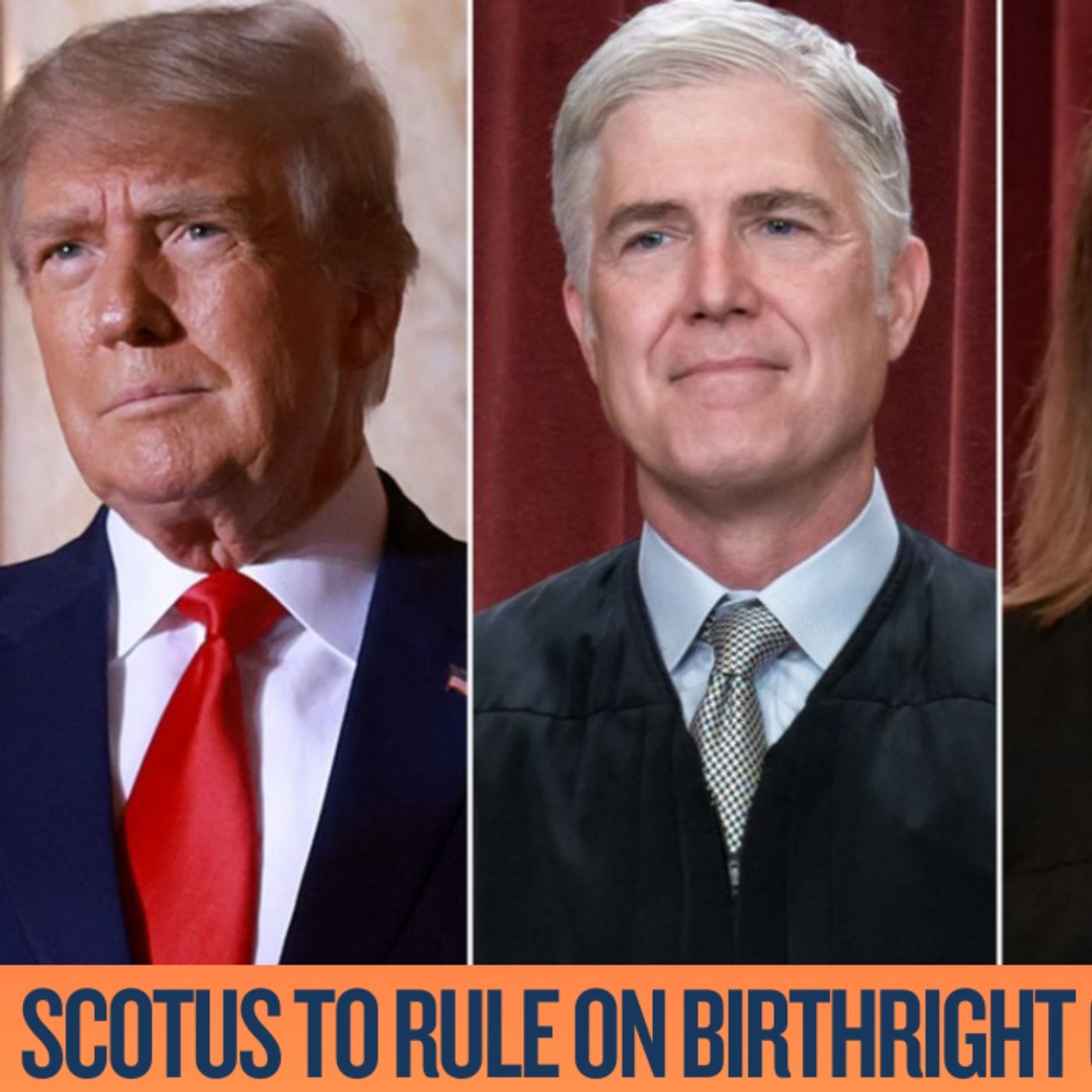
Trump’s Birthright Citizenship Order Faces DEFEAT — But SCOTUS Targets Nationwide Judicial BlocksThe Josh Lafazan Show on YouTube - Episode 111Welcome to The Josh Lafazan Show — where we break down the most important political and legal issues shaping America today. In this episode, we’re taking a deep dive into the blockbuster Supreme Court case that could change the way citizenship — and the Constitution — are interpreted in this country.This week, the Supreme Court heard oral arguments on Donald Trump’s executive order to end birthright citizenship, and the implications couldn’t be bigger. While the justices appeared unconvinced by the Trump administration’s legal arguments, there’s another major development that may give the former president a partial legal victory.Let’s start with the obvious: Trump’s executive order targeting birthright citizenship is almost certainly unconstitutional.The 14th Amendment to the U.S. Constitution is crystal clear: “All persons born or naturalized in the United States, and subject to the jurisdiction thereof, are citizens.” That clause has guaranteed automatic citizenship to anyone born on U.S. soil — regardless of their parents’ immigration status — for over 150 years.So how can a president override that with a single executive order?Spoiler: He can’t.As New Jersey Attorney General Matt Platkin put it, Trump can’t simply sign away a constitutional amendment. If he wanted to repeal birthright citizenship, he would need Congress to propose and ratify a new amendment — just like when the country overturned Prohibition. That’s how constitutional law works.But it wasn’t just constitutional scholars who were skeptical — the justices themselves were unimpressed.Even Trump’s solicitor general, John Sauer, had a hard time defending the policy. In a striking moment, he admitted to Justice Brett Kavanaugh that the Trump administration has no clear way to enforce the order. That’s a pretty glaring problem when you're asking the highest court in the land to uphold an executive action of this magnitude.Then came the devastating questions from Justice Elena Kagan, who grilled Trump’s team for admitting they’d ignored lower court rulings — a move she called legally outrageous. The suggestion that the executive branch could simply refuse to follow federal court orders raised serious alarm bells about the rule of law and the separation of powers.So yes — Trump’s birthright citizenship order looks like it’s going down in flames.But here’s the twist: while the executive order itself might fail, the Court’s conservative majority seems poised to make a broader ruling that could fundamentally change how federal courts operate — particularly the use of nationwide injunctions.Currently, federal judges can block federal policies not just for the plaintiffs in a case, but for the entire country. This tool has been used repeatedly to stop Trump-era initiatives in their tracks. And that’s exactly what’s happened here — three federal judges issued nationwide injunctions blocking Trump’s birthright citizenship order.But conservative justices, especially Samuel Alito and Neil Gorsuch, want to change that. Alito criticized what he called “the occupational disease” of judges believing they can override executive power with a single ruling. He argued that allowing 680 district court judges to issue sweeping orders creates chaos — and oversteps their authority.Instead, they suggested that broad policy disputes should be handled through class-action lawsuits, which are much more difficult to initiate and take longer to resolve. That shift could make it significantly harder to challenge illegal or unconstitutional federal policies in the future — especially for marginalized communities.But the Court isn’t unanimous on this. The liberal justices pushed back forcefully, arguing that eliminating nationwide injunctions would turn the legal system into a “catch me if you can” game. Justice Ketanji Brown Jackson warned that without the ability to block harmful policies broadly, people’s rights could be trampled — and only those with the money, time, and legal expertise to sue would get protection.So what does it all mean?Trump’s executive order is likely to be struck down. But Trump could still win — if the Court limits the power of judges to block future policies through nationwide injunctions. And that could dramatically change the balance of power between the courts and the executive branch. In this episode, we unpack the constitutional arguments, the politics at play, and what this decision could mean for immigration, civil rights, and the very foundation of American democracy. We also break down the key moments from the oral arguments — including clips of Trump’s legal team getting roasted in real time.🔥 Will the Supreme Court rule to protect birthright citizenship?⚖️ Will the conservative justices gut nationwide injunctions?📜 And what will this ruling mean for the future of presidential power?Join the con
Ep 109The Josh Lafazan Show on YouTube - Episode 110
Republican CIVIL WAR? Party Splits Over Trump’s "Big, Beautiful" Budget PlanThe Josh Lafazan Show on YouTube - Episode 110Welcome back to The Josh Lafazan Show — today we’re digging into the Republicans’ latest high-stakes gamble: their so-called “big, beautiful” budget bill. It’s being marked up in Congress right now, and the outcome could dramatically reshape the economy, healthcare, taxes, immigration, and more. But will it actually pass? Or is it already teetering on collapse?This week, House and Senate Republicans launched a full-scale push to finalize the details of a sweeping new budget proposal before the end of the month. The bill is being framed as a cornerstone of Donald Trump’s 2025 agenda, aimed at reversing major portions of President Biden’s legislative accomplishments — and replacing them with the most aggressive policy overhaul in a generation.But here’s the problem: Republicans are battling each other just as fiercely as they’re fighting Democrats.Speaker Mike Johnson may have shepherded a budget blueprint through the House, but turning that outline into binding law is proving to be far more difficult. This week alone saw a grueling 31-hour marathon debate in the powerful House Ways & Means Committee, and that’s just the beginning.The bill’s goals? According to NPR, it would extend Trump’s 2017 tax cuts (many of which benefit corporations and the wealthy), impose dramatic changes to Medicaid, shift costs for food assistance to the states, funnel $140 billion into border enforcement, build new detention centers, and even introduce new taxes on college endowments. The proposal also includes new campaign-style promises, like ending taxes on tips and overtime pay, and creating a $1,000 “MAGA account” for every newborn child.🧾 Here’s what’s actually inside the bill:Extending the 2017 Trump Tax Cuts: Set to expire at the end of 2025, these cuts would become permanent — costing trillions if not offset by cuts elsewhere. No Tax on Tips and Overtime: A campaign promise from Trump turned into policy. The bill would exempt these earnings from federal taxes, though economists warn the benefits skew toward higher earners. Massive Immigration and Border Enforcement Funding: Over $50 billion to complete the border wall, plus tens of billions more for detention centers, deportation logistics, and increased patrols. Medicaid Overhaul: Structural changes to the program that covers 72 million Americans. Critics warn these “reforms” could slash coverage and increase out-of-pocket costs. SNAP (Food Assistance) Cuts: Shifting costs to states, a move many warn will reduce access for vulnerable families — even some Republicans in swing districts are objecting. Tax Hikes on Universities: Endowment income taxes would increase dramatically for certain colleges, depending on how much they spend per student. “MAGA Accounts” for Babies: Newborns would get $1,000 in a government-established investment account, with families allowed to contribute $5,000 annually tax-free. Adds $4 Trillion to the Deficit: Despite claims of fiscal responsibility, the bill is projected to balloon the national debt without matching revenue increases. But while the bill is packed with policy, it’s also packed with political tension.🚨 The GOP’s internal divide is on full display:Sen. Ron Johnson says he won’t support the bill because it adds too much to the deficit. Sen. Josh Hawley says he’ll vote no unless Medicaid cuts are reversed. Rep. Chip Roy warns there are still “20+ unresolved issues” within the House GOP conference. Swing-district Republicans fear the cuts will alienate voters, while hardliners demand even deeper cuts to slash government spending. With only a four-seat GOP margin in the House and a 53-47 majority in the Senate, Republicans can’t afford more than a few defections — and they’re already bleeding support from both moderates and conservatives.📉 Josh breaks down why this bill, if passed, could be economically devastating:Adds trillions to the national deficit Slashes safety-net programs for low-income and elderly Americans Deepens income inequality Cuts services while expanding tax breaks for the wealthy Undermines public education and healthcare systems Risks political blowback that could shift control of Congress This isn’t just a budget — it’s a war over America’s future. Will we double down on trickle-down economics and border walls? Or protect working families, healthcare, and education?Josh argues that this “big, beautiful” bill is not only deeply flawed—it’s politically unworkable. With infighting already unraveling GOP unity, this legislation may collapse under the weight of its own contradictions.Tune in for Josh’s fiery analysis, policy breakdown, and predictions on what happens next in Washington. Is this a real governing document—or political theater? And what happens if it fails?🎙️ Watch now to get the full story, exclusive insights, and everything you need to know about the most consequential budget figh
Ep 108The Josh Lafazan Show on YouTube - Episode 109
12 States SUE Trump Over Tariffs – Legal Showdown Begins | The Josh Lafazan ShowThe Josh Lafazan Show on YouTube - Episode 109Today on The Josh Lafazan Show, we’re diving into one of the most consequential legal battles playing out in America right now: the state of Oregon suing the Trump administration over its sweeping and controversial new tariff policy—and they just might win.Oregon Attorney General Dan Rayfield is leading a 12-state coalition in a lawsuit challenging President Trump’s move to impose massive new tariffs on imports from around the globe—without any congressional approval. The other states backing the lawsuit include Arizona, Colorado, Connecticut, Delaware, Illinois, Maine, Minnesota, Nevada, New Mexico, New York, and Vermont.So why Oregon?As Rayfield explains, the Pacific Northwest's economy is heavily dependent on international trade. “Right now, in Canada, they’re literally pulling Oregon products off shelves,” he said, illustrating just how quickly and severely the tariffs are already impacting Oregon’s businesses and workers.The lawsuit was filed in the U.S. Court of International Trade and targets four executive orders from Trump that authorize sweeping tariff increases. The legal argument centers on Trump’s use of the International Emergency Economic Powers Act (IEEPA) of 1977—a law designed to give the president special powers during a genuine national emergency. But critics argue Trump is misusing it as a political shortcut to bypass Congress on trade policy.The IEEPA was never meant to be used this way.Historically, Congress has had the authority to regulate tariffs, and for good reason. The Constitution explicitly grants this power to the legislative branch. But Trump has declared a national economic emergency, citing long-standing trade deficits and illegal drug imports, particularly fentanyl from China, to justify his actions. Legal experts and state officials say this rationale is weak and constitutionally dubious.California is also taking action. Governor Gavin Newsom and Attorney General Rob Bonta filed a parallel lawsuit—this one in federal court in California—challenging Trump’s authority to impose tariffs without congressional approval. Like Oregon, California is invoking the IEEPA and the “major questions” doctrine, arguing that such sweeping policy changes require clear and specific authorization from Congress.Bonta called Trump’s moves “illegal,” adding, “The president’s chaotic and haphazard implementation of tariffs is not only deeply troubling—it’s illegal.” Newsom added that the tariffs are “wreaking chaos on California families, businesses, and our economy—driving up prices and threatening jobs.”These legal fights are not just procedural—they're about the economic well-being of millions of Americans. Tariffs are essentially a tax on imported goods, and those costs are passed directly to consumers. Everyday Americans end up paying more for cars, electronics, groceries, and countless other items.The economic data is alarming:📉 The stock market has taken a massive hit.📈 Gold, a traditional hedge against instability, has surged to record highs.💵 The U.S. dollar has weakened significantly.🛍️ Consumer spending and confidence have dropped.🧾 Small businesses say they can’t keep up with the rising costs.It’s not just the short-term chaos that’s worrying—it’s the long-term precedent. If the courts allow the executive branch to impose tariffs on this scale without congressional approval, it could change the structure of U.S. economic governance for decades to come.And let’s not forget history: This isn’t the first time America has experimented with high tariffs. The Smoot-Hawley Tariff Act of the 1930s famously worsened the Great Depression. Today’s version is even more extreme—just as poorly timed—and just as damaging.California, the world’s 5th largest economy and America’s #1 importer, has enormous skin in the game. With Mexico, Canada, and China as its top trading partners, the state’s farmers, exporters, and consumers are all feeling the pain. That’s why legal experts and economic analysts alike are closely watching the Oregon-led suit, which may be the first to reach a courtroom decision.And it’s not just state governments fighting back.National legal advocacy groups are also taking action. The Liberty Justice Center filed a lawsuit on behalf of five small businesses, and the conservative New Civil Liberties Alliance has also sued, arguing that Trump grossly overstepped his legal authority.The White House is expected to vigorously defend its actions. But if the courts rule against Trump, the case could restore critical checks and balances on executive power—and rein in the use of emergency declarations for sweeping policy changes. And that would be a win not just for Oregon, not just for California, but for the integrity of American democracy and the long-term health of the global economy.So here’s the big question: Will Oregon stop Trump’s tariff war in its tr
Ep 107The Josh Lafazan Show on YouTube - Episode 108
U.S. & China SIGN Major Trade Deal – Smart Move or Short-Lived Peace? The Josh Lafazan Show on YouTube - Episode 108The U.S. and China — the globe’s two largest economies — have agreed to a 90-day trade truce. The question is: Is this a path to lasting stability, or just a temporary timeout before the next trade war escalation?According to the New York Times, after months of tit-for-tat tariffs that pushed global trade to the brink, the U.S. and China have reached a short-term agreement to reduce and suspend major tariff hikes. Both countries took a step back from the edge — but only for 90 days, until May 14th.Here’s what’s in the deal, per the BBC:🔹 The U.S. will reduce recent tariff increases on Chinese imports — from 145% to 30%.🔹 China will slash its retaliatory tariffs on American goods from 125% to just 10%.🔹 China has also suspended several non-tariff responses — including halting critical mineral exports to the U.S.🔹 A key 20% U.S. tariff remains, aimed at pressing China on its role in the U.S. fentanyl crisis.The talks that produced this agreement were held in Switzerland — the first major dialogue between the two nations since Trump reignited the tariff war. U.S. Treasury Secretary Scott Bessent said both sides agreed that “neither wants a decoupling,” while China’s Commerce Ministry described the deal as a step toward deeper cooperation.And Wall Street? It’s loving the news — for now.📈 The Nasdaq jumped 4.3%, entering a new bull market.📈 The Dow Jones surged more than 1,100 points — erasing the losses from Trump’s “Liberation Day” tariff hike.📉 Meanwhile, gold prices — a traditional safe haven — dropped 3.4%, signaling reduced market panic.But let’s not lose sight of why this all happened in the first place:This trade war was entirely Trump’s doing. In April, Trump launched an aggressive tariff blitz that sent economic shockwaves around the globe. Per Politico, those tariffs were so punishing they nearly halted all Chinese exports to the U.S., creating the most serious trade disruption since the COVID pandemic.And no — despite what Trump’s loyalists say — he did NOT “win” the trade war.Here’s what actually happened:❌ Consumer confidence cratered❌ Retail spending slumped❌ Tourism plummeted❌ Business investment dried up❌ Markets shed trillions in value❌ Recession risk is now pegged at 60%All of this was entirely avoidable — had Trump not reignited a crisis for no clear strategic gain.Contrast this chaos with where we were under President Biden:✔️ Sub-4% unemployment✔️ Strong GDP growth✔️ Record-breaking COVID recoveryThe economy was on fire — and Trump came in swinging with a gas can.Even now, the Trump administration continues to make headlines for all the wrong reasons. While the U.S. economy is still licking its wounds from his trade tantrum, Trump is making moves like accepting a $400 million luxury jet from Qatar — raising serious questions about corruption, foreign influence, and the Emoluments Clause. More on that in another episode — but it perfectly highlights the chaos Trump brings to the global stage.And while this 90-day truce is welcome news, it doesn’t address the deeper problems at the heart of the U.S.-China relationship. As Reuters reports, the trade deficit, the fentanyl crisis, and national security concerns still loom large.So what happens after May 14th? Do the tariffs come roaring back? Will Beijing hold up its end of the bargain? Can we trust the Trump White House to lead with stability — or will this be another case of policy whiplash?Today’s episode breaks it all down:🧠 What’s really in this new U.S.-China trade deal💰 How the market is reacting — and why it matters📉 What Trump’s trade war has already cost Americans⚠️ Why tariffs almost never work — and what 50 years of economic data tells us🧨 The risks still looming after the 90-day truce ends🏛️ And why America can’t afford another self-inflicted economic crisisThis episode is a must-watch for anyone trying to make sense of the global economy, American leadership, and what’s at stake in the months ahead. Don’t forget to subscribe, leave a comment, and share your thoughts: Will this deal hold — or are we just kicking the can down the road?#politics #news #congress #politicalnews #newsupdate #usa #america #trump #donaldtrump #newsheadlines #newstoday #fyp #election

Ep 106The Josh Lafazan Show on YouTube - Episode 107
Qatar to GIFT TRUMP a $400 Million Plane? Would be Largest Foreign Gift in U.S. HistoryThe Josh Lafazan Show on YouTube - Episode 107In this episode of The Josh Lafazan Show, we break down what could be the most egregious act of presidential impropriety in modern history — reports that President Trump is preparing to accept a $400 MILLION luxury jumbo jet from the Qatari royal family to serve as the new Air Force One. And yes, it’s every bit as outrageous as it sounds.🚨 Bombshell Report from ABC NewsAccording to journalist Jonathan Karl, the Trump administration is planning to accept a Boeing 747-8 “flying palace” from Qatar, valued at around $400 million — potentially the most valuable gift ever given to the U.S. by a foreign government. The plane is expected to be outfitted to serve as Air Force One during Trump’s second term, and will later be handed over to the Trump Presidential Library Foundation.Trump reportedly toured the opulent aircraft — described by aviation insiders as "a flying palace" — at West Palm Beach Airport earlier this year. Sources claim the official announcement will come next week when Trump visits Qatar during his first foreign trip of the new term.But here's the problem: this is wrong on every conceivable level — presidential, legal, ethical, constitutional, and national security. 💥 Let's unpack just how many red flags this raises:🔹 Violation of the Emoluments ClauseThe U.S. Constitution is crystal clear: under Article I, Section 9, Clause 8 — the Emoluments Clause — “no person holding any Office of Profit or Trust” can accept gifts, titles, or payments from foreign governments without the consent of Congress. In this case, Congress wasn’t consulted. Period.This clause exists specifically to prevent foreign influence over U.S. officials. And yet, we are expected to believe that a $400 million jet — gifted by a nation with active business ties to Trump — is somehow okay? It’s not just inappropriate. It’s dangerous.🔹 Conflict of Interest and “Pay-to-Play” ConcernsThe timing couldn’t be more suspect. Just weeks before news of this plane emerged, Trump announced a $5.5 billion beachside Trump golf resort in Qatar. Are we really to believe this is a coincidence? This is blatant pay-to-play corruption — the kind we’d expect from a failing dictatorship, not the president of the United States.🔹 Laughable Legal JustificationsA memo by Pam Bondi, Trump’s White House lawyer, claimed the gift is legal. But Bondi was also a registered foreign agent for Qatar, receiving over $100,000 a month from them. She should have recused herself immediately — her involvement makes the entire process ethically bankrupt.The DOJ also ruled the gift doesn’t qualify as bribery because it isn’t tied to a specific act. This is legally illiterate. The intent and perception of undue influence should be enough to reject it. At minimum, it deserved rigorous Congressional scrutiny.🔹 Security and Intelligence RisksCybersecurity and aviation experts are sounding the alarm. Accepting a used aircraft from a foreign nation — especially one with sophisticated surveillance capabilities — presents massive espionage risks. Bugs. Listening devices. Trojan Horse-style traps. You name it.One expert compared the situation to the Trojan Horse of Greek mythology — except instead of wooden horses, we’re talking multimillion-dollar aircraft capable of carrying the U.S. president.🔹 Un-American OpticsLet’s put this in perspective:— Federal employees can’t accept gifts worth more than $480/year.— Members of Congress can only accept unreported gifts under $50.— Federal judges are capped at $100 per year.But Trump is set to accept a $400 MILLION plane — and pass it off as normal?It sends a horrific message: that the richest, most powerful country in the world is dependent on foreign handouts. Are we broke? Why are we acting like Qatar is our sugar daddy? The United States has a GDP of $27 TRILLION. Qatar’s is less than $213 billion. This is insulting.🔹 The GOP’s Deafening SilenceWhere is the outcry from the same Republicans who screamed about Hunter Biden’s laptop for four years? Where’s the principled stand from the same leaders who claimed to care about corruption, influence peddling, and transparency?This is a glaring case of selective outrage, and it’s exactly why Americans are losing faith in our institutions. 🎯 Bottom line: This isn’t about partisanship. This is about protecting the presidency from foreign influence, preserving our Constitution, and reaffirming basic standards of ethics in government. If this deal goes through, it sets a catastrophic precedent for future leaders — Democrat or Republican.🚨 Congress must act immediately to investigate this deal, block the plane’s transfer, and implement stronger anti-corruption laws that prohibit presidents — current or former — from accepting extravagant gifts from foreign powers.✊ Enough is enough. We must restore integrity to the Oval Office. 📢 Subscribe to The Josh Lafaz

Ep 105The Josh Lafazan Show on YouTube - Episode 106
Biden Claims He Could've WON in 2024 – Here's Why That's FalseThe Josh Lafazan Show on YouTube - Episode 106Joe Biden just made his first major post-presidency media appearance — and the internet is on fire.In a headline-making interview on The View, Biden claimed that if he had stayed in the 2024 race, he would have defeated Donald Trump. Bold claim. But is it even remotely true?Welcome back to The Josh Lafazan Show. In this episode, we take a deep dive into Biden’s comments — what he said, why it’s sparking backlash, and why this kind of historical revisionism could be dangerous for the future of the Democratic Party.Let’s be clear: many of us who proudly voted for Joe Biden in 2020 are now watching with frustration as the former president attempts to rewrite the history of the 2024 election. His suggestion that he could have beaten Donald Trump isn’t just wishful thinking — it’s a complete rejection of the political reality he was facing at the time he stepped aside.Here’s what Biden seems to be ignoring:His disastrous debate performance against Trump in June 2024, which even loyal Democrats admitted was deeply concerning. His cratering approval ratings, which hit historic lows in the final year of his presidency. Internal polling from his own campaign that reportedly showed him losing to Trump in a potential Electoral College blowout — by over 400 electoral votes. Widespread voter frustration over his handling of inflation, the economy, and a perceived disconnect from the issues everyday Americans cared about most. Not only that, but Biden was unable to finish even one debate against Trump — how exactly was he planning to make it through five more months on the campaign trail? This was not a one-off performance. It was the culmination of growing concerns about his cognitive and physical fitness — concerns his team spent years downplaying or outright denying.But here’s what makes his claim even more maddening: the facts don’t lie. Once Biden dropped out, Democratic enthusiasm surged. Kamala Harris, despite facing intense GOP attacks, was more popular among key demographics, especially young voters and voters of color. And when she finally took the stage against Trump, she won the first debate — something Biden failed to do in both 2020 and 2024.So why does this matter now?Because if we allow Biden’s narrative to go unchallenged, we risk repeating the exact same mistakes in 2028.The American people lost trust — not because Biden aged, but because his team refused to be honest about it. They gaslit the public for four years, insisting he was “sharp behind closed doors” while millions watched him visibly struggle in public appearances. The secrecy, the denial, and now the revisionist spin are damaging not just to Biden’s legacy, but to the Democratic Party as a whole.Biden’s refusal to accept responsibility for how 2024 unfolded — and for how his presence in the race hurt Democratic chances — could shape how voters view the party moving forward. And if Democrats want to rebuild trust, they need to start by owning the truth.In today’s episode, we break down:The real story behind Biden’s decision to leave the race Why Kamala Harris outperformed expectations (and Biden) The danger of allowing political figures to rewrite recent history What Democrats must do to avoid disaster in 2028 Joe Biden served this country for decades. But his legacy — and the future of the Democratic Party — depend on truth, not ego. The 2024 election wasn’t stolen from him. He was not the best candidate to take on Trump. And pretending otherwise does a disservice to everyone who put their faith in the Democratic ticket.It’s time to move forward — with clarity, honesty, and accountability.📺 Watch now for the full breakdown, and don’t forget to like, subscribe, and turn on notifications for more sharp political analysis every week on The Josh Lafazan Show.#politics #news #congress #politicalnews #newsupdate #usa #america #trump #donaldtrump #newsheadlines #newstoday #fyp #election
Ep 104The Josh Lafazan Show on YouTube - Episode 105
Trump’s Surgeon General Pick Has INACTIVE Medical License? Why Doctors Are OutragedThe Josh Lafazan Show on YouTube - Episode 105Trump’s Surgeon General Pick Isn’t a Licensed Doctor?! | The Josh Lafazan ShowWelcome to The Josh Lafazan Show! Today’s episode dives into one of the most baffling and dangerous nominations in recent political memory: Donald Trump’s new pick for Surgeon General — Dr. Casey Means — a wellness influencer who, despite holding a medical degree, isn’t licensed to practice medicine, never completed a residency, and has no background in public health. Yes, you read that correctly. This is the person Trump wants to appoint as America’s Doctor.This isn’t partisan hysteria — it's about qualifications, competence, and protecting the public health of 330 million Americans. Dr. Means’ nomination is being widely criticized from both sides of the aisle and across media outlets including The Independent, Mediaite, and Yahoo News. This is not just another Trump pick stirring controversy. It’s arguably his least qualified nominee yet, in a role that could literally save — or cost — lives.In this episode, I break down:How Dr. Means dropped out of medical residency, meaning she cannot be board certified or legally practice medicine Why her medical license is currently inactive Her history of promoting alternative medicine and wellness products to non-diabetics despite lacking a relevant clinical background Her anti-vaccine rhetoric, including statements that vaccine mandates are “criminal” and praise for RFK Jr.’s conspiratorial attacks on the FDA Her disturbing claims that “there is no benefit” to children receiving the Hepatitis B vaccine — a basic public health safeguard backed by decades of science Let’s be clear: past Surgeons General — whether appointed by Democrats or Republicans — have almost always had extensive experience in infectious disease research, community health leadership, or medical education.Compare Dr. Means to recent Surgeons General:✅ Dr. Vivek Murthy (Biden) — A Yale-trained internal medicine physician and former vice admiral in the U.S. Public Health Service Commissioned Corps, with years of experience navigating national health crises✅ Dr. Jerome Adams (Trump’s first term) — An anesthesiologist and former Indiana State Health Commissioner, with expertise in combating the opioid crisis✅ Dr. Regina Benjamin (Obama) — A rural physician with over $11M in research support, former president of the Alabama Medical Association, and a trailblazer in Black women’s leadership in medicineNow compare that to Dr. Means — a person who walked away from clinical medicine because she was “disillusioned” with basic science, and who built a brand around wellness tech products, controversial takes, and conspiracy-adjacent views.But the absurdity doesn’t stop there.Trump’s first pick for Surgeon General was Dr. Janette Nesheiwat, a Fox News contributor with actual medical credentials. So why didn’t she get the nod? Because she was torpedoed by far-right activist Laura Loomer, who launched a smear campaign against her. That’s right: Loomer — the same person who pushes conspiracies like 9/11 being an inside job and Haitian immigrants eating pets — has somehow gained veto power in Trump’s circle.Even Sen. Thom Tillis, a Republican, blasted Loomer as a “crazy conspiracy theorist” who’s harming Trump’s chances in 2024. And even Marjorie Taylor Greene — no stranger to extremism herself — publicly rebuked Loomer for going too far. When MTG thinks you’ve crossed the line, maybe it’s time to rethink your life choices.This isn’t about ideology. It’s about the fundamental competence of people who are being handed immense power. If a nominee for Surgeon General — the nation’s top public health spokesperson — lacks even the legal ability to practice medicine, that should be disqualifying on its face.And yet, here we are.📺 In this episode, I break down:How the far-right is influencing cabinet-level nominations Why Dr. Means’ record is not just underwhelming but dangerously unqualified What this means for the future of public health if she’s confirmed What Democrats — and more importantly, principled Republicans — must do to stop this nomination in the Senate We must stop normalizing unqualified, ideological loyalists in positions that demand scientific literacy, medical judgment, and the public’s trust. This isn't about partisanship — it's about survival. In an age of pandemics, misinformation, and public skepticism, we can’t afford to have an influencer posing as Surgeon General.💬 Drop a comment: Do you think Dr. Means should be confirmed? Is it fair to compare her to past Surgeons General? Or are we witnessing a dangerous new low in American public health policy?👍 Don’t forget to like, subscribe, and turn on notifications for future breakdowns and political deep dives every week.#politics #news #congress #politicalnews #newsupdate #usa #america #trump #donaldtrump #newsheadlines #newstoday #fyp #election
Ep 103The Josh Lafazan Show on YouTube - Episode 104
Trump’s U.S. Attorney Pick Has NEVER Tried a Case - Meet "Eagle" Ed MartinThe Josh Lafazan Show on YouTube - Episode 104🚨 Trump’s U.S. Attorney Pick is Crumbling — Even Republicans Are Saying “No” | The Josh Lafazan ShowWelcome to The Josh Lafazan Show — and today we’re taking a deep dive into a controversial nomination that’s sparking outrage across party lines. President Trump’s pick for U.S. Attorney in the District of Columbia, Ed Martin, is under fire — and his confirmation may be permanently derailed.Even with a Republican Senate majority (53-47), the backlash to Martin’s nomination is growing. Republican Senator Thom Tillis has now publicly opposed the nomination, sending a strong signal that Martin may not even have enough support within Trump’s own party. Why? Because Ed Martin’s record is so extreme, so incompetent, and so toxic, it’s even giving Trump allies pause.👇 Watch now as we break down:Why Martin’s nomination is such a threat to the justice system The shocking actions he’s already taken as interim U.S. Attorney His support of the “Stop the Steal” movement His attempts to dismiss January 6th cases and investigate DOJ prosecutors His zero experience as a trial lawyer And yes—his appalling, racist, and sexist public comments ⚖️ What Does a U.S. Attorney Actually Do?Before we dig in, it’s important to understand the power and responsibility that comes with this position. U.S. Attorneys are the top federal law enforcement officials in their districts. They prosecute federal crimes, represent the U.S. in civil litigation, and direct federal law enforcement like the FBI.There are 93 U.S. Attorneys serving 94 judicial districts. The one for Washington, D.C., is arguably one of the most influential in the entire country. And Trump’s nominee for this key role is, simply put, a disaster. 🚩 Ed Martin: A Nominee Too Extreme for the GOP?You’d expect controversy from some of Trump’s appointments — but Ed Martin crosses every line.Columnist and former U.S. Attorney Joyce Vance highlights just how unqualified and dangerous Martin is:🟥 He supported the “Stop the Steal” movement and immediately moved to dismiss January 6th-related cases upon becoming interim U.S. Attorney.🟥 He fired prosecutors working those cases and began investigating DOJ officials who brought charges against Capitol rioters — even those convicted of seditious conspiracy.🟥 He has no experience trying a single case in court. That’s not an exaggeration — he literally has never argued a case before a jury.🟥 He falsely claimed that 40% of his legal work was litigation. When pressed, he admitted under oath he’s never gone to trial.🟥 He cited an active case from his interim office as part of his “experience”—a clear ethical violation.If this weren’t troubling enough, Martin has made public statements that could directly jeopardize open cases—comments that fly in the face of DOJ policy and the foundational legal principle of presumption of innocence. 📣 Unfit and UnhingedLet’s be blunt: Ed Martin’s behavior and public record aren’t just controversial — they’re disqualifying.🎙️ In leaked audio from CNN, Martin makes repugnant comments about abortion, and doubles down with racist, misogynistic remarks, including a claim that he was fired because of “crazy Black ladies on CNN.”This is who Trump wants as the face of federal justice in the nation’s capital? 🧠 Remember What Leadership Looks LikeFormer President Barack Obama once reminded U.S. Attorneys that while they may have been appointed by him, they serve the American people, not the President.Trump’s nomination of Ed Martin is the complete opposite of that ethos. It’s not about justice. It’s about loyalty, retribution, and undermining accountability—especially for January 6th rioters and Trump allies under federal scrutiny. ✊ A Rare GOP RejectionSenator Thom Tillis deserves credit for standing up and saying enough is enough. But one senator isn’t enough. It’s time for others—on both sides of the aisle—to speak up and vote this nomination down.America’s justice system deserves better. The integrity of our courts, prosecutors, and legal processes depend on competence and impartiality — not partisan loyalty or blind allegiance to Trump. 🗣 Join the Conversation:Should Ed Martin be disqualified for his role in undermining January 6 prosecutions? Is the GOP finally showing signs of distancing itself from Trump’s worst impulses? What precedent does this set for future Justice Department leadership? 👇 Drop your thoughts in the comments — I read every single one.👍 Like if you believe in a justice system rooted in integrity🔔 Subscribe for daily deep dives into politics, policy, and accountability📢 Share this video to stand up for truth, experience, and the rule of law#politics #news #congress #politicalnews #newsupdate #usa #america #trump #donaldtrump #newsheadlines #newstoday #fyp #election
Ep 102The Josh Lafazan Show on YouTube - Episode 103
"Canada is NOT For Sale" - Trump Meets New Canadian P.M. Mark Carney | Josh Lafazan ShowThe Josh Lafazan Show on YouTube - Episode 103Welcome to The Josh Lafazan Show — and today, we’re diving into what might be the most pivotal meeting between the U.S. and Canada in a generation. President Donald Trump just met face-to-face with Canada’s new Prime Minister, Mark Carney, and the stakes couldn’t have been higher. After years of strained relations, economic tariffs, and offensive rhetoric, this historic meeting signals a possible new chapter in North American diplomacy—or a continuation of the chaos.👉 Make sure to subscribe and turn on notifications for daily political commentary, news breakdowns, and in-depth analysis that holds the powerful accountable.🔎 A Deep Dive into the Meeting Heard Around the World:The United States and Canada have long shared more than just a border — we’ve shared values, trade, and a strong bilateral friendship that has endured wars, recessions, and political transitions. But the arrival of Donald Trump in the Oval Office disrupted that harmony in unprecedented ways.From calling former Prime Minister Justin Trudeau “Governor Trudeau,” to openly suggesting that Canada should consider becoming the “51st state,” Trump has insulted and antagonized our northern allies with reckless abandon. His trade policies, most notably the tariffs that triggered a damaging trade war, created ripple effects throughout both nations’ economies — affecting workers, businesses, and diplomatic ties.Now, following a political upset that few saw coming, Mark Carney—a former central banker turned liberal champion—has taken office, largely propelled by his fierce defense of Canadian sovereignty and strong rebuke of Trump’s aggressive tactics. In a surprise twist, Trump’s own attacks on Canada helped Carney win.Yesterday’s meeting between Trump and Carney was more than a formal handshake—it was a collision of ideologies, a test of diplomatic strength, and a referendum on how both countries want to define their future together.🔥 Highlights from the Summit:🔹 “Canada is not for sale.”Carney made global headlines when, standing beside Trump in the Oval Office, he unequivocally rejected the U.S. President’s recurring notion that Canada would benefit from statehood.“It’s not for sale. It won’t be for sale ever... but the opportunity is in the partnership and what we can build together.”That one line sent a powerful message: Canada values its sovereignty and won’t be bullied into submission.🔹 Trump’s Surprise Claim on the Houthis:In an unexpected moment, Trump announced that the Houthi rebels had informed his administration that they no longer want to fight, and that the U.S. would stop airstrikes in the region. While unrelated to Canada, it raised significant questions about Trump’s foreign policy communication and intelligence vetting process.🔹 The Future of USMCA in Question:Trump downplayed the significance of the U.S.-Mexico-Canada Agreement, stating it may not even be necessary moving forward.“It was a transitional step… it terminates fairly shortly.”Is Trump laying the groundwork to abandon one of his own signature trade deals? What does that mean for North American trade moving forward?🔹 Tariffs Remain Unmoved:Despite Carney’s efforts to find common ground, Trump doubled down on his protectionist stance, refusing to lift tariffs and claiming Canada is “subsidized by the U.S.” He offered no signs of changing course.“No,” he flatly responded when asked if Carney could do anything to change the current policy.🔹 A Softer Tone Toward Carney… For Now:Interestingly, Trump refrained from insulting Carney personally—instead praising him as “very talented” and joking that his own unpopularity may have helped Carney win.“He won a very big election in Canada. I think I was probably the greatest thing that happened to him, but I can’t take full credit,” Trump said with a grin.💬 Josh’s Take:To our Canadian friends: you deserve better.The idea that your country should be absorbed into the United States is offensive, arrogant, and beneath the dignity of both our nations. You’ve stood by the U.S. as a trusted ally for centuries — through world wars, economic crises, and political upheaval. You’ve earned not only our respect, but our unwavering partnership. The current U.S. administration’s posture toward you is not representative of the millions of Americans who value our alliance.Carney’s performance during this meeting was strong, composed, and principled. He made it clear that Canada is a nation that stands on equal footing—not as a subsidiary of the U.S., but as a global leader and sovereign force. He spoke truth to power, and in doing so, reminded the world what true diplomacy looks like.#politics #news #congress #politicalnews #newsupdate #usa #america #trump #donaldtrump #newsheadlines #newstoday #fyp #election
Ep 101The Josh Lafazan Show on YouTube - Episode 102
Airport Chaos OUT OF CONTROL — Should Trump Fire Transportation Secretary Duffy? | Josh Lafazan ShowThe Josh Lafazan Show on YouTube - Episode 102Welcome to The Josh Lafazan Show, where we shine a light on the issues that truly impact the lives of everyday Americans — and hold those in power accountable. In this episode, we tackle the growing crisis in U.S. air travel and ask the question: Should President Trump fire Transportation Secretary Sean Duffy?For millions of Americans, flying has become a nightmare — delays, cancellations, unsafe conditions, and a government that seems asleep at the wheel. But while travel has never been perfect, the recent meltdown at airports across the country is unprecedented — and many are pointing directly to decisions made by Trump’s administration and his newly appointed team.🛑 From the East Coast to the West Coast, airport chaos is reaching dangerous levels. And the data doesn’t lie: from massive FAA layoffs to alarming near-miss incidents, the U.S. aviation system is under severe strain — much of it self-inflicted by policy failures and reckless management decisions.📉 In this episode, we break down:🔹 The Root of the Crisis – Since taking office, the Trump administration has overseen:A hiring freeze on new air traffic controllers Layoffs of 400 FAA workers in February alone The firing of key safety personnel, engineers, and even legal staff who prevent unsafe pilots from flying The termination of the Aviation Security Advisory Committee And the ousting of respected TSA administrator David Pekoske 🔹 The Fallout – These actions have left America’s air travel system in chaos:Newark Airport, one of the nation’s busiest hubs, has seen United Airlines cancel 35 daily flights Air traffic controllers reportedly lost radio and radar contact at a Newark-area facility, with five taking trauma leave after the incident Fatal near-misses and even tragic collisions have occurred from D.C. to the West Coast TSA’s workforce of 50,000 is under threat after the Trump administration gutted their collective bargaining rights, risking a mass exodus of essential screeners 🔹 Aviation in Free Fall – It’s not just Newark. Across the country:Air traffic controller staffing is at crisis levels Only 10% of public airports have manned towers, leaving the majority dangerously under-supervised Gold-standard aviation safety has been replaced with corner-cutting, chaos, and corporate boycotts of American airspace 🔹 The Bigger Picture – This crisis is also being fueled by Trump’s ongoing trade war. As the American Airlines CEO recently warned, travel demand has dropped sharply since Trump took office — with international travelers turning away from the U.S. due to tariffs and retaliation against American products and tourism.🚨 And while the flying public faces real danger, Secretary Sean Duffy has been completely missing in action. No concrete plans, no visible action, and no leadership at a time of national urgency.So where’s the accountability?We remember when Republicans dragged Transportation Secretary Pete Buttigieg before Congress again and again for every airline delay and weather issue — yet Secretary Duffy presides over far worse conditions, and not a single hearing? Not a single tough question?It’s political hypocrisy at its worst — and it's the American people who are paying the price in delays, danger, and diminished trust in the skies.🗣 In this episode, Josh breaks down:How we got here The real risks travelers face today Why this isn’t just a policy failure — it’s a failure of leadership And why Trump must act now if he truly believes in “hiring the best people” 💥 The bottom line: Secretary Duffy is not up to the job. If Trump is serious about restoring order and ensuring passenger safety, he needs to fire Duffy — immediately. 📣 Sound off in the comments:Have you experienced air travel chaos recently? Should Congress investigate these FAA and TSA failures? Is it time for Trump to replace Secretary Duffy? 💬 We want to hear from you.👍 Like this video if you believe aviation safety matters.🔔 Subscribe for more truth-driven political commentary.📢 Share this episode if you think it’s time to hold leadership accountable.#politics #news #congress #politicalnews #newsupdate #usa #america #trump #donaldtrump #newsheadlines #newstoday #fyp #election
Ep 100The Josh Lafazan Show on YouTube - Episode 101
🚨 Trump Admits a RECESSION Is Coming?! Full Breakdown | The Josh Lafazan ShowThe Josh Lafazan Show on YouTube - Episode 101Welcome to The Josh Lafazan Show, where we dive deep into today’s biggest political headlines and hold leaders accountable. In this episode, we break down a truly stunning development — former President Donald Trump has essentially admitted that the U.S. is heading toward a recession during his interview on Meet the Press. This isn't speculation anymore — Trump himself is now warning Americans that they’ll need to “live with less” going forward.📺 We’ve been warning for weeks that Trump’s reckless trade war and economic mismanagement have the U.S. teetering on the edge. But now, the former president is outright signaling what economists and business leaders have feared: the damage is already done.🧨 Today’s Highlights Include:🔹 Trump’s Stunning Admission – In a sit-down with Kristen Welker, Trump tells Americans they must prepare to scale back their standard of living — a shocking reversal from his usual bravado on the economy.🔹 GDP Contraction Confirmed – The economy shrank in Q1, a classic indicator that recession is imminent. We break down what this means and why it could signal the recession arriving even earlier than predicted.🔹 From Prosperity to Austerity – How did Trump go from promising to “fix inflation in 24 hours” to pushing a message of “get used to less”? What happened to the land of abundance?🔹 The Economic Red Flags Are Everywhere:Consumer spending is downInvestment and tourism are plummetingConfidence is at its lowest point since 2011Gold is hitting all-time highsGlobal concerns about the U.S. dollar’s future role as the reserve currency are mounting🔹 The Real Job Market Story – While jobs numbers look fine on paper, we dig into the troubling reality: many of these jobs are part of the gig economy, offering little pay, no benefits, and no security. Meanwhile, wages still aren’t keeping up with inflation.🔹 Largest Peacetime Tax Increase in U.S. History – Trump’s tariffs aren’t just policy—they’re an economic gut punch. We examine how they’re functionally raising costs for everyday Americans and destabilizing global trade relationships.🔹 Wall Street Sounds the Alarm – Even JPMorgan Chase CEO Jamie Dimon is warning that a recession could become the “worst-case scenario.” So why is Trump telling Americans to simply accept it?🧵 And perhaps most damning of all — the GOP’s stunning silence in the face of all this chaos. Not a peep from Republican leaders in Congress. Where’s the outrage now? The same party that once blasted Biden over inflation is now completely silent as Trump admits defeat on the economy.💬 “This is economic malpractice of the highest order,” Josh says, and the numbers back it up:Wages rose just 0.2% last month — below forecasts and well behind inflationConsumer confidence is below the threshold that has historically signaled recessionsJob quality is declining — gig roles replacing full-time employmentThe U.S. stock market has seen trillions in value erasedWe also ask the important questions:– Is Trump setting the stage to blame others when the recession fully hits?– Will the GOP continue to stay quiet and complicit?– Can America afford more economic chaos at the hands of a president who admits failure, but offers no plan forward?This is about more than politics — it’s about people’s lives, livelihoods, and future. And as Josh emphasizes, every Republican in Congress who fails to speak up is making a choice: to side with political convenience over the well-being of the American people.📣 Enough is enough.If the GOP won’t challenge Trump’s catastrophic leadership, voters absolutely must. The 2026 midterms are fast approaching, and this economic mismanagement should be top of mind for every American when they head to the ballot box.🔔 Don’t forget to subscribe for weekly political breakdowns that go beyond the headlines.👍 Like the video if you think Americans deserve better.📢 Drop a comment and let us know:— Should Trump be held accountable for the state of the economy?— Will Republicans finally speak out, or will they go down with this sinking ship?
Ep 99The Josh Lafazan Show on YouTube - Episode 100
Mike Waltz FIRED? Trump’s National Security Shake-Up EXPLAINED | Josh Lafazan ShowThe Josh Lafazan Show on YouTube - Episode 100🚨 BREAKING: Mike Waltz is OUT as National Security Advisor — and the story behind it is wild. Was this a firing? A forced resignation? Or part of a larger MAGA shake-up inside Trump’s White House?In today’s episode, Josh Lafazan breaks down everything you need to know about this high-stakes reshuffle at the top of the national security chain — including:🔹 Why Waltz was removed just months into Trump’s second term🔹 The Signal chat scandal involving a journalist and a secret military op🔹 Marco Rubio’s surprise appointment as Acting NSA🔹 Laura Loomer’s behind-the-scenes role in pushing out "non-MAGA" staff🔹 Why Trump loyalists are purging the national security team🔹 Growing tension between hawks like Waltz and restraint-first officials🔹 Whether Waltz’s new UN Ambassador nomination will survive Senate scrutiny🔹 Is Defense Secretary Pete Hegseth next to go?This isn’t just a personnel move — it could redefine how Trump handles foreign policy, military power, and loyalty within his administration. We explore whether this signals a broader purge led by insiders like Susie Wiles and what it means for the future of Trump’s Cabinet.📝 KEY CONTEXT:– Waltz was under fire for adding journalist Jeffrey Goldberg to a private Signal thread planning a classified military strike on the Houthis– Trump’s allies insist no classified info was shared, but the scandal fueled calls for Waltz’s removal– Far-right influencer Laura Loomer urged Trump to remove “neocon” voices like Waltz and his deputy, Alex Wong– Multiple NSC officials have already been fired following Loomer’s Oval Office visit– Axios reports Waltz clashed with VP Vance and Trump’s inner circle, including Susie Wiles– Loomer and MAGA influencers want a loyalist-first security apparatus — Waltz didn’t fit that mold📌 Big Questions We Dive Into:1️⃣ Is the UN Ambassador post a “soft landing” or political cover?2️⃣ Will the Senate confirm Waltz — or will hearings expose deeper security failures?3️⃣ Is Trump cleaning house to recover from a messy first 100 days?4️⃣ Who else might be on the chopping block next?🔥 With Trump facing falling approval ratings and early-term backlash on key issues like the economy, inflation, immigration, and the DOGE policy flop — reshaping his team may be more than strategy. It may be survival.📣 Join the conversation and let us know:– Was Waltz pushed out fairly?– Is this the right move for national security?– Who should replace him long-term?🧠 Stay informed. Stay sharp. Subscribe for real, unfiltered political analysis.
Ep 98The Josh Lafazan Show on YouTube - Episode 99
Will Congress PASS the Republican Budget? A Deep Dive Into What’s at StakeThe Josh Lafazan Show on YouTube - Episode 99Welcome to The Josh Lafazan Show! Today, we're diving into the biggest political and economic story in the country: the Republican budget bill and what it means for the future of taxes, public programs, and our national priorities.This week, House Republicans narrowly passed a sweeping budget framework—217 to 215—that proposes $1.4 trillion in cuts to critical services like Medicaid, public education, and food assistance, while also delivering $4.5 trillion in tax cuts, half of which go directly to the top 1%. It's a bill that dramatically reshapes government spending, and today we ask: Will this bill pass? And should it?We break down the major components:$880 billion in cuts to Energy and Commerce, primarily targeting Medicaid $330 billion slashed from Education, hitting public schools hard $230 billion cut from Agriculture, threatening food assistance programs And a staggering $150 billion increase in military spending, contradicting claims of "small government" This bill is being pushed through via a process called budget reconciliation, which allows Republicans to bypass the Senate filibuster. But don't be fooled: the framework is just step one. Each committee in Congress must now figure out exactly how to make those cuts—something far easier said than done. As we unpack, some of the options on the table are politically toxic and mathematically implausible.Republicans will soon face painful decisions, including:Whether to gut Medicare or Medicaid, or both Whether to eliminate the Children's Health Insurance Program Whether to cancel key environmental regulations or deregulate car emissions And how far they’re willing to go to fast-track Trump’s deregulatory agenda, including a provision that would grant him broad power to erase existing federal rules unless Congress explicitly re-approves them We also explore a lesser-known but dangerous provision that would strip antitrust enforcement from the Federal Trade Commission, consolidating power under the DOJ and undermining the independence of regulatory bodies. It’s all part of what Politico calls a “supercharged deregulatory agenda.”But the GOP’s own voters may not be on board. Across the country, raucous town halls and grassroots organizing are putting enormous pressure on members of Congress. Even Republican lawmakers are uneasy—many of the proposed cuts directly hurt their constituents, and key Senators, including some conservatives, have called these plans non-starters.Not to mention, the plan fails its own economic goals. Experts warn that cutting services for the middle and working class while slashing taxes for the wealthy will shrink the economy, worsen inequality, and exacerbate the deficit.The big question: Will it pass?It only takes three Republican defections to kill the bill in the House, and the Senate remains a major hurdle. With pressure building from all sides, this bill—at least in its current form—is far from becoming law.Join us as we break it all down, cut through the noise, and explain what this budget battle means for you, your community, and the future of America.
Ep 97The Josh Lafazan Show on YouTube - Episode 98
DOGE Has Been a FAILURE – How a Good Idea Completely FloppedThe Josh Lafazan Show on YouTube - Episode 98In this episode of The Josh Lafazan Show, Josh breaks down the chaotic first 100 days of Elon Musk's controversial role leading Trump’s much-hyped Department of Government Efficiency—better known as DOGE—and exposes how it has not only failed to deliver on its promise of cutting federal spending but has actually overseen a $200 billion increase in government expenditures.Here’s what we cover:🔹 A Grand Promise, A Brutal RealityElon Musk, tapped by Trump to eliminate “waste” and slash $2 trillion in annual federal spending, promised a Silicon Valley-style overhaul of Washington bureaucracy. Instead, the actual savings verified by DOGE amount to just $2 billion, or 1/35 of 1% of the federal budget. And with the federal budget rising by nearly $278 billion, it's hard to call this anything but a failure.🔹 Miscalculations, Mayhem, and Mass LayoffsDOGE has been riddled with errors—from confusing millions for billions to triple-counting old contract cancellations. According to Futurism, the chaos has been palpable: reckless mass layoffs have forced agencies to rehire employees, and DOGE’s leadership has ignored the legal boundaries between executive and legislative powers, creating tension inside the White House. Secretaries Duffy, Bessent, and Rubio have reportedly clashed with Musk over his erratic methods.🔹 No Real Cuts Where It CountsDespite all the noise about “draining the swamp,” DOGE has refused to touch the bloated Defense Department, even as it racks up billions in procurement overruns. Meanwhile, Trump’s proposed budget increases Pentagon funding to over $1 trillion and includes $4.5 trillion in tax cuts—most benefiting the wealthiest Americans—while slashing $2 trillion in services for the poor and middle class. This isn't efficiency. It’s fiscal malpractice.🔹 Gutting IRS, Growing the DeficitInstead of closing loopholes or increasing enforcement, DOGE has threatened to cripple the IRS, likely increasing tax evasion and expanding deficits. As NY Post and other conservative outlets now openly admit, DOGE is not working, and worse—it’s actively harming America’s fiscal future.🔹 The Bigger Economic PictureBeyond DOGE’s dysfunction, Trump’s broader economic policies are also under fire:Jamie Dimon warns that the best-case scenario now is a recession. Trump’s trade wars are rattling markets and undermining global confidence. His approval on the economy is negative for the first time in his political career. Josh puts it plainly: “Trump inherited an economy on strong footing, but his partnership with Musk and embrace of gimmick governance has steered us off a cliff.” Even conservative commentators acknowledge that the combination of skyrocketing deficits, failed spending cuts, and looming recession risks is a recipe for disaster.🔹 Time to Disband DOGEWith Musk’s 130-day term ending and no serious effort to retain him, even the White House seems to recognize it’s time to move on. As Vox reports, there’s mutual agreement that the Musk experiment has run its course. Josh argues it’s time to replace Musk’s flashy but hollow strategy with serious economic leadership—a Mnuchin-like figure who can work with Congress, stabilize markets, and pursue meaningful reform.🔹 What Was It All For?Josh ends the episode with a sobering reflection: Was the point of DOGE ever to fix government? Or was it, as The Atlantic’s Adam Serwer once wrote, about the “cruelty itself”? From cutting grants to targeting workers, the Musk-Trump approach seems less about results and more about spectacle—and it’s the American people who are paying the price.
Ep 96The Josh Lafazan Show on YouTube - Episode 97
America Headed for RECESSION? What It Means for U.S. Economy The Josh Lafazan Show on YouTube - Episode 97On this episode of The Josh Lafazan Show, Josh dives deep into the warning signs flashing across the U.S. economy—and why some of the sharpest financial minds in the country are sounding the alarm. With Trump’s economic approval ratings slipping fast, Josh asks the critical question: Is America barreling toward a recession?Here’s what you need to know:🔹 The Experts Are Warning—and They're Not Partisan.From Jamie Dimon to Larry Summers, Bill Ackman, Stan Druckenmiller, and Ray Dalio, top business leaders and investors—many of them lifelong conservatives—are in rare agreement: Trump’s reckless tariff policies are putting the U.S. economy on a dangerous path.Jamie Dimon called a recession the “best case” outcome. Larry Summers warned of 2 million Americans potentially losing their jobs. Bill Ackman cautioned we’re facing an “economic nuclear winter.” Stan Druckenmiller and Ray Dalio both fear a deeper, more catastrophic downturn if Trump stays the course. 🔹 The Tariffs Are Backfiring.As Josh explains, Trump’s sweeping tariffs are hurting business sentiment, raising costs for American consumers, and jeopardizing global trade relationships. A Reuters poll found that 92% of economists said the tariffs are having a negative effect—none said they were positive.🔹 Trump's Economic Standing Is Crumbling.Trump’s overall approval rating is now underwater, with 53% disapproving of his job performance. Voters overwhelmingly believe Trump’s tariffs are hurting the economy—by a margin of more than 3 to 1, according to Quinnipiac. Crucially, Trump is hemorrhaging support among young voters, with a stunning 34-point drop in approval among those under 30 since he took office. 🔹 The Recession Risks Are Real.Josh breaks down what a recession actually means—two consecutive quarters of falling GDP—and shows how the fundamentals are weakening:Consumer debt delinquencies are climbing to levels not seen since the 2008 crisis. A stock market correction could erase the wealth effect that has kept consumer spending afloat. Higher costs from tariffs are squeezing households already strained by years of inflation. Global instability is growing, with Europe bracing for its own trade wars. 🔹 Context Matters: The Economy Was Strong Before.Under Biden, the U.S. economy saw historic strength:30 of the past 38 months had unemployment at or below 4%. Household wealth hit record highs relative to income. The U.S. led the world in productivity even during a global slowdown. Trump inherited an economic boom—and now he’s putting it all at risk with a trade war that economists say is a dangerous echo of the disastrous Smoot-Hawley tariffs that helped trigger the Great Depression.🔹 Trump’s Choices Could Worsen the Pain.Trump’s threats to reimpose tariffs on the EU—and the potential collapse of global trade—could magnify the economic pain just as Americans are struggling most with inflation and rising costs.Josh wraps the episode with a clear message:“The warnings are real. The risks are mounting. And the consequences of ignoring them could be devastating—not just politically, but for millions of American families trying to get by.”
Ep 95The Josh Lafazan Show on YouTube - Episode 96
Trump's PARDONS On Pace For Presidential Record: Who’s Received One?The Josh Lafazan Show on YouTube - Episode 96On this episode of The Josh Lafazan Show, Josh unpacks one of the most alarming trends of the Trump era: the rampant and corrupt abuse of presidential pardons. While every president issues pardons, Trump’s record is not just about numbers—it’s about the staggering misuse of this constitutional power to reward loyalty, protect his allies, and undermine the very idea of justice in America.Here’s the reality:🔹 Trump is issuing pardons at a historic rate.With over 1,600 pardons already, Trump now ranks third all-time in number of pardons—surpassing almost every other president and on track to break FDR’s all-time record before 2028.🔹 The pardons started early—and for all the wrong reasons.Unlike past presidents who issued pardons at the end of their terms as acts of mercy or reconciliation, Trump started pardoning aggressively from the beginning—kicking off with 1,500 January 6th rioters, many of whom engaged in violent insurrection against the U.S. Capitol. Pardoning those who stormed our democracy—and those who encouraged or excused it—is an absolute betrayal of the rule of law.🔹 It’s all about loyalty and money.Trump’s pardons overwhelmingly go to people who:Supported his political ambitions Helped shield him from investigations Donated massive sums to his campaign From Paul Manafort to Roger Stone, Michael Flynn, Steve Bannon, and even right-wing figures like Dinesh D’Souza—Trump’s clemency has been less about justice and more about rewarding personal and political loyalty. Even billionaire donors like Michael Milken and bribery convict Ted Suhl found themselves back in favor, often after lobbying from Trump’s biggest campaign contributors.As Josh explains, this is pay-to-play corruption at the highest levels, and it completely shatters the original purpose of the pardon power—which the Founders envisioned as a narrow tool for mercy, not a political weapon.🔹 The Fiore pardon shows just how low this can go.Trump’s recent pardon of Michele Fiore—convicted of scamming a memorial fund for fallen police officers to pay for her plastic surgery—perfectly captures the moral rot at the center of his pardon spree. It’s not about justice. It’s about rewarding loyalty and headlines.🔹 It’s not just pardons—it’s an attack on constitutional norms.Trump isn’t content with abusing his own pardon power. He’s now trying to undo the pardons issued by President Biden, including those for patriots like Adam Schiff, Liz Cheney, and Adam Kinzinger. This move is not just unprecedented—it’s blatantly unconstitutional. In this episode, Josh lays out:Why presidential pardon power exists—and why the Founders hesitated to grant it How Trump’s use of pardons is unprecedented, dangerous, and corrupt The web of money, influence, and self-interest fueling Trump’s clemency decisions Why pardon reform is urgently needed to protect our democracy—including banning self-pardons, pardons for family and close aides, and introducing a congressional override Why normalizing this behavior would be a disaster for American democracy “If you have money or loyalty to Trump, you get a second chance. If you have neither, good luck. That’s not the rule of law. That’s the rule of corruption.”Josh reminds listeners: we cannot normalize this. We must call it out, demand reform, and fight to protect the integrity of our justice system before it’s too late.

Ep 94The Josh Lafazan Show on YouTube - Episode 95
RFK Creates AUTISM REGISTRY - Why Parents Are Rightly ConcernedThe Josh Lafazan Show on YouTube - Episode 95On this episode of The Josh Lafazan Show, Josh dives into one of the most disturbing health policy announcements in recent memory: Robert F. Kennedy Jr.’s proposed autism registry. With Autism Acceptance Month still underway, RFK has sparked outrage by rolling out a plan that is offensive, invasive, and deeply dangerous to the autism community.Here’s what’s happening:RFK, now serving as Health and Human Services Secretary, is launching a so-called “disease registry” to collect private medical data on autistic individuals—all under the guise of identifying the “cause” of autism by this September. The plan includes:Compiling private medical records from federal and commercial databasesBuilding a “real-world data platform” that pulls from electronic health records, smartwatches, pharmacies, fitness trackers, and even federal agencies like the Department of Veterans AffairsGiving access to this data to up to 20 handpicked research groups, hand-selected by RFK himselfJosh doesn’t mince words. This is an Orwellian overreach into the lives of some of America’s most vulnerable children—done without their consent, without proper protections, and based on junk science and dangerous rhetoric.RFK recently stated that people with autism “will never pay taxes, hold a job, write a poem, or go on a date.” Not only are these remarks wildly offensive, they are provably false and deeply dehumanizing. Autism advocates and parents are furious—and rightfully so.“When autism is framed only through the lens of hardship or loss, it can unintentionally overlook the joy, growth, and fulfillment that many autistic people and their families experience.”But the rhetoric is just the beginning. Josh breaks down the many serious risks this registry poses:Privacy breaches: With 11 major federal agencies experiencing data breaches last year, who can guarantee the security of these children's sensitive medical records?Loss of consent: Families are already canceling evaluations out of fear their data will be used against them.Ethical collapse: RFK dismantled the Office for Human Research Protections, which once safeguarded the rights of individuals involved in federal research.Even more troubling: RFK has openly dismissed genetics as a meaningful factor in autism, calling it a “dead end,” and instead is focusing his research on so-called “environmental toxins”—a thinly veiled reference to his long-debunked claim that vaccines cause autism. As Josh explains, this is a recycled conspiracy theory rooted in the fraudulent Wakefield study—one that has been repeatedly and thoroughly disproven by decades of science.So let’s be clear: this registry isn’t about science, it’s about agenda. It’s about control. And it’s a reckless use of taxpayer money for a personal crusade that stigmatizes people with autism instead of supporting them.Josh emphasizes that scientific research should never come at the cost of people’s dignity, privacy, and humanity. RFK’s plan ignores the real needs of autistic individuals—support, services, education, and inclusion—and replaces it with surveillance and shame.“RFK used to be just a conspiracy theorist. Now he’s a conspiracy theorist in charge of our health system—and that’s terrifying.”In this must-watch episode, Josh unpacks:The real-world impact RFK’s rhetoric is having on familiesThe massive overreach of government surveillance in the name of scienceThe history of fear-mongering around autism, and why we must fight backHow RFK’s appointment is actively harming the very people he claims to be helpingThis episode is a full-throated defense of: ✅ Autistic voices and dignity✅ Parent and patient privacy✅ Science, not pseudoscience✅ The right to exist without being labeled as a “problem” to fixIf you care about inclusion, ethics, and the future of public health, you cannot miss this episode.
Ep 93The Josh Lafazan Show on YouTube - Episode 94
Trump's ULTIMATUM to Zelensky: What It Means for Ukraine/Russia WarThe Josh Lafazan Show on YouTube - Episode 94In this powerful and provocative episode of The Josh Lafazan Show, Josh takes on one of the most explosive foreign policy controversies yet: President Trump’s public attack on Ukrainian President Volodymyr Zelensky after Zelensky rejected a U.S.-backed “peace proposal” that would effectively hand over chunks of Ukraine to Russia.Trump’s statement?“He can have peace, or he can fight for another three years before losing the whole country.”A jaw-dropping quote directed at an ally fighting for survival—a country we promised to protect when they gave up their nuclear arsenal.Josh doesn’t hold back. He breaks down how Trump’s so-called peace plan isn’t a path to diplomacy—it’s a capitulation to Putin that:Grants Russia 20% of Ukrainian territory it currently occupies Recognizes the illegal annexation of Crimea Denies Ukraine NATO membership and security guarantees Lifts sanctions on Russia—with zero guarantees that Moscow will stop attacking And Trump isn’t alone. Vice President JD Vance is backing the deal too, echoing Russian demands while brushing aside Ukraine’s security concerns. According to Axios, Trump’s “final offer” requires Ukraine to accept permanent occupation of its sovereign land. And when Zelensky rightly pushed back, Trump blamed him for prolonging the war—not Vladimir Putin, the aggressor who started it.Josh asks the hard questions:Why are American leaders blaming our ally instead of our enemy? Why would we reward a dictator who has lied, cheated, and continued attacks during a supposed Easter ceasefire? Why are we demanding Ukraine surrender without Russia offering real peace? Josh explores how recent events—like deadly Russian drone strikes on Ukrainian civilians and infrastructure—prove Ukraine is right to reject any “deal” without verified ceasefires and genuine security guarantees. Putin can’t be trusted. And Josh argues that legitimizing Russia’s land grabs would undo decades of U.S. foreign policy across both parties.“This isn’t about war vs. peace. It’s about justice vs. surrender.”Josh also exposes the dangerous illusion of Trump’s foreign policy:The idea that appeasing Putin avoids war is deeply flawed—Josh draws a stark historical parallel to Neville Chamberlain and the disastrous consequences of appeasing dictators. A weak U.S. stance doesn’t prevent WWIII—it invites it by signaling to aggressors like Putin that democracies can be bullied into submission. And what kind of message does this send to our NATO allies? That if they're ever attacked, we’ll side with the invader if it’s politically convenient?“This isn’t peace—it’s abandonment. And if we let Ukraine fall, it won’t stop there.”Josh calls out the hypocrisy of Trump’s “Art of the Deal” image—what’s on display isn’t tough negotiation. It’s a betrayal of allies and a white flag to autocrats. And for the millions of Americans who supported Trump, Josh poses a direct question:“Is this really the foreign policy you voted for?”This episode is a searing defense of: ✅ Ukraine’s right to self-determination✅ The principle that borders can’t be redrawn by force✅ America’s historic role as a defender of democracy and global stabilityIf you care about U.S. credibility, international law, and standing up to tyranny—don’t miss this one.
Ep 92The Josh Lafazan Show on YouTube - Episode 93
Harvard SUES Trump - The Lawsuit That Could Redefine College in AmericaThe Josh Lafazan Show on YouTube - Episode 93In this episode of The Josh Lafazan Show, Josh dives into the blockbuster legal battle now brewing between Harvard University and the Trump administration—a fight that could reshape the future of higher education in the United States.Harvard just became the first university this year to sue the White House, filing a major lawsuit challenging Trump’s unprecedented move to slash more than $2 billion in federal funding. The reason? The administration’s attempts to control who Harvard hires and what it teaches—an intrusion Harvard President Alan Garber slammed as a direct threat to academic freedom.“These demands would impose unprecedented and improper control over the university,” Garber declared, calling the funding cuts an abuse of federal power.But this isn’t just about Harvard.This lawsuit has sent shockwaves through academia, galvanizing public and private universities across the country—especially in the Midwest, where the Big Ten Academic Alliance is stepping up. Schools like Rutgers, Michigan State, and others are forming a mutual defense compact to collectively push back against what they call the administration’s “legal, financial, and political attacks” on the mission of American universities.Josh breaks down how the Trump administration is weaponizing federal funding—not just against Harvard, but also cutting or suspending grants to schools like Cornell and Brown—while threatening core research areas that affect all Americans, like pediatric cancer, Alzheimer’s, and Parkinson’s disease.“This doesn’t make our country safer. It weakens us—technologically, economically, and militarily,” Josh says.The episode explores the broader danger of politicizing academia:If one administration can punish a school for its values or curriculum, what happens when the next one does the same—but in reverse? Today it’s Harvard. Tomorrow it could be a university in a red state. In Josh’s view, colleges shouldn’t become political pawns. They should be centers of learning, discovery, and truth—not targets.But Josh doesn’t stop at outrage—he offers real solutions.He argues that while federal pressure should be applied to reduce tuition costs, it should never be used to manipulate university agendas. Instead, he lays out a two-part plan he believes Americans across the political spectrum can rally behind:End the illusion of nonprofit status for wealthy private universities:Strip tax-exempt status from institutions like Harvard with multi-billion dollar endowments, lavish administrative salaries, and tuition that tops $100,000 per year.“What part of forcing an 18-year-old to pay six figures makes you a nonprofit?” Josh asks. Invest in accessible, affordable education for all:Make community college free for the first two years Fully fund public college for years 3 and 4 Expand support for trade schools as a viable and valuable path Josh also highlights the college cost crisis, pulling eye-popping stats from the Education Data Initiative:College tuition at public 4-year schools has risen 141% over 20 years Tuition growth has outpaced inflation by 104% on average Student debt now surpasses credit card debt, crippling the economy and the next generation This episode is a must-listen for anyone worried about: ✅ Academic freedom✅ The cost of college✅ How political power is being used to reshape education✅ And what comes next for America’s students, universities, and democracyAs the Harvard lawsuit plays out in court, its outcome could set the tone for federal-university relations for decades to come.Josh’s message is clear: Universities should be held accountable—but not coerced. And the solution to our broken higher ed system isn’t political revenge—it’s structural reform.
Ep 91The Josh Lafazan Show on YouTube - Episode 92
Trump THIRD TERM in 2028? Steve Bannon Laying Groundwork to Nullify 22nd AmendmentThe Josh Lafazan Show on YouTube - Episode 92In this episode of The Josh Lafazan Show, Josh tackles one of the most explosive stories shaking up Washington: the revelation that Donald Trump’s inner circle is actively exploring ways for him to run for a third term as President of the United States in 2028.Yes, you heard that right.Despite the crystal-clear language of the 22nd Amendment, which limits any U.S. president to two terms in office, Trump and his allies—including Steve Bannon—are reportedly floating ideas to circumvent the Constitution. In a recent appearance on Real Time with Bill Maher, Bannon boldly stated:“President Trump is going to run for a third term… and be elected again on the afternoon of January 20th, 2029.”When pressed on how that could possibly happen, Bannon admitted Trump has a "team" working on it.It would be laughable—if it weren’t so dangerous.Josh walks listeners through the disturbing pattern behind Trump’s comments, which have been dismissed by some as “jokes” but reveal a consistent desire to erode democratic norms:In 2018, Trump praised China for eliminating term limits and said, “Maybe we’ll give that a shot someday.” In 2020, he mused at a rally, “We’ll negotiate [another term], right?” Just last year, he told Christian conservatives they “won’t have to vote anymore” if he wins again. Combine that with his refusal to leave office peacefully in 2021—and the violent insurrection that followed—and this is no longer hypothetical. It’s a real threat to American democracy.Josh outlines how Trump and his enablers may try to test legal boundaries, pressure Republican-led state legislatures, or challenge ballot eligibility. But ultimately, the law is on our side:➡️ The 22nd Amendment is unambiguous:“No person shall be elected to the office of the President more than twice…”➡️ All 50 states would be legally barred from placing Trump on the ballot in 2028, making this not just improbable—but outright impossible without an amendment to the Constitution.And repealing an amendment? That’s no small feat. It would require:A two-thirds vote in both chambers of Congress or two-thirds of state legislatures calling a constitutional convention (which has never happened), and Ratification by three-quarters of the states. To date, only one constitutional amendment—the 18th (Prohibition)—has ever been repealed.Josh also points to a new resolution by Congressman Dan Goldman, reinforcing that Trump is ineligible to run again. Meanwhile, a YouGov poll shows 68% of Americans oppose the idea of Trump running for a third term—including majorities of both Democrats and Independents.But here’s the kicker: even though Americans overwhelmingly reject the idea, many still believe Trump will try. And that, says Josh, speaks volumes.In a democracy, laws matter. Norms matter. And the peaceful transfer of power isn’t optional—it’s the foundation of who we are.Josh’s message to Trump is clear: Knock it off.And to the Republicans in Congress: Remember who you work for—it’s the American people, not Donald Trump.Tune in to this critical episode as Josh breaks down what’s real, what’s bluster, and why now—more than ever—defending the Constitution has to come before party loyalty.
Ep 90The Josh Lafazan Show on YouTube - Episode 91
CHAOS at The Pentagon – Will Trump Fire Pete Hegseth?The Josh Lafazan Show on YouTube - Episode 91On this episode of The Josh Lafazan Show, Josh dives into the mounting turmoil inside the Pentagon—and whether embattled Defense Secretary Pete Hegseth could be the first major cabinet casualty of the Trump administration’s second term.From day one, Hegseth’s appointment raised eyebrows. He was the only cabinet nominee to require a tiebreaker from Vice President J.D. Vance in the Senate, with Democrats voicing serious concerns about his qualifications and a troubling list of past allegations. Unlike his predecessor, General Lloyd Austin, who held top posts like Commander of CENTCOM and Vice Chief of Staff of the Army, Hegseth’s resume didn’t remotely measure up—despite his honorable military service. As Rep. Jason Crow and other veterans have made clear: service does not equal readiness to lead the Pentagon.And now, those concerns appear to have come to a head.The Department of Defense is in meltdown mode. From “Signalgate”—an intelligence leak scandal that’s shaken our credibility with allies—to Elon Musk being briefed inside the Pentagon about U.S. plans for potential conflict with China, chaos is the new normal under Hegseth’s leadership.This week, the wheels came off entirely. In an extraordinary shakeup, Hegseth’s core team—his Chief of Staff, Senior Adviser, Deputy Chief of Staff, and the Deputy Secretary’s Chief of Staff—were either fired or placed on leave, allegedly tied to an ongoing leak investigation. The departures have left Hegseth without his closest aides less than 100 days into the job.Politico reports senior officials are calling it a “complete meltdown.” Others warn more chaos is likely in the coming days. One source put it bluntly: “Pete Hegseth has surrounded himself with some people who don’t have his interests at heart.”And while Hegseth may not be solely to blame—some are also pointing fingers at Rep. Mike Waltz and former VP candidate Tulsi Gabbard—a recent New York Times report suggests a fractured administration. It revealed that internal divisions led Trump to wave off a potential Israeli military strike, raising further concerns about the president’s national security team.All of this begs the question: Will Trump fire Pete Hegseth?It’s a real possibility. Trump’s approval numbers on foreign policy and the military are slipping. And with no cabinet members ousted yet this term, Hegseth may be the first domino to fall.But let’s not forget how we got here. GOP senators who may have had doubts about Hegseth were reportedly intimidated into voting yes—particularly amid fears of primary threats from Musk-aligned influencers. It only took one vote to block the confirmation. Instead, 50 Republican senators looked the other way.And that’s despite the disturbing list of allegations against Hegseth, some of which were compiled by Mother Jones:Allegedly racking up over $400,000 in debt while leading two veterans organizations. Accusations of sexual misconduct, including a 2017 police report in which a woman claimed she was raped by Hegseth. Reports of drunken behavior at work events, including an incident involving a strip club. A whistleblower claim that he and other male managers at a veterans group sexually pursued female colleagues. And a leaked letter from his own mother accusing him of abusing his ex-wife. To be clear, Hegseth has vehemently denied all allegations and, like any American, is innocent until proven guilty. But the volume and seriousness of these claims should’ve given senators serious pause.Now, the consequences of confirming someone unfit for such a critical role are playing out in real time—with national security hanging in the balance.Josh breaks it all down in this must-listen episode. From Capitol Hill cowardice to Pentagon dysfunction, it’s clear: this is a leadership crisis we cannot ignore.Tune in now to hear why it’s not just about Hegseth—but about the integrity and stability of America’s defense institutions.
Ep 89The Josh Lafazan Show on YouTube - Episode 90
Congress To TAKE BACK Tariff Power From Trump? New Bipartisan Bill Introduced in CongressThe Josh Lafazan Show on YouTube - Episode 89Welcome to The Josh Lafazan Show — today’s episode tackles one of the most important but under-discussed issues in American economic and constitutional policy: Congress is finally working to take back its power over tariffs from the president — and it’s about time.For too long, Congress has ceded its authority to the executive branch when it comes to imposing tariffs — a power originally reserved for the legislative branch under Article I, Section 8 of the U.S. Constitution. But now, with President Trump’s latest aggressive and unilateral tariff actions sparking market instability and inflaming global trade tensions, lawmakers from both parties are saying enough is enough.We break down the bipartisan bill introduced by Senators Maria Cantwell (D-WA) and Chuck Grassley (R-IA), which would require the president to notify Congress within 48 hours of any new tariff imposition, followed by a 60-day window in which Congress must vote to approve it. Trump has already threatened a veto, but the mere fact that there is growing bipartisan consensus signals a potential turning point.Why is this so important? Because this isn’t just a policy debate — this is about restoring checks and balances. Tariffs are essentially taxes, and historically, only Congress had the authority to levy them. So how did we get here?We walk through the history of how presidential tariff power evolved — starting with the disastrous Smoot-Hawley Tariff Act of 1930, which triggered a global trade war and deepened the Great Depression. That disaster paved the way for the Reciprocal Trade Agreements Act of 1934, where Congress first gave the president limited tariff negotiation powers. Over the years, that delegation expanded, through the Trade Expansion Act of 1962, the Trade Act of 1974, and later Section 232 and Section 301 authorities, which Trump has used — and Biden has continued using — to justify sweeping tariff actions without Congressional input.We dig deep into how these trade acts, and laws like the International Emergency Economic Powers Act (IEEPA) of 1977, allowed modern presidents to justify tariffs as responses to so-called “national emergencies.” And this is what California’s lawsuit is now directly challenging, using the Supreme Court’s “major questions doctrine”, which requires clear congressional approval for executive actions with major economic or political consequences.As the Brookings Institution notes, the issue isn’t necessarily with tariffs themselves — it’s about how they are implemented. Unlike other forms of regulation, presidentially imposed tariffs often escape administrative review, public comment, cost-benefit analysis, and judicial oversight. That means one person — the president — can levy taxes on entire industries without accountability, transparency, or process. And those harmed by these tariffs? They’re often left without recourse.That’s why this push from Congress is long overdue. We explore several reform proposals, from revoking presidential tariff authority outright to introducing sunset provisions, mandatory reporting, and judicial review mechanisms. Some bills, like one proposed by Senator Rand Paul, would require every presidential tariff action to be approved by a joint resolution of Congress. Others aim to tighten the definitions of “national security” or impose stricter standards for emergency economic declarations.These reforms wouldn’t just restore balance — they’d reflect the very vision of the Founders, who intended for Congress to be the most powerful branch of government. Tariff authority was never supposed to be wielded like a sword by the president — it was meant to be debated, analyzed, and legislated by Congress on behalf of the American people.Even if this particular bill doesn’t pass, the fact that bipartisan voices are stepping up to reassert congressional authority should give us hope. This is a debate worth having — in Congress and across the country — because when tariff policy goes unchecked, it doesn’t just disrupt trade. It threatens jobs, raises prices, destabilizes markets, and undermines America’s credibility abroad.And as we’ve seen over the last few years, when one president uses these powers expansively, the next one often doesn’t reverse course. It becomes the new normal — which is exactly what the Constitution was designed to prevent.So, let’s give credit where it’s due. This is a moment where lawmakers have the opportunity to reclaim their role, re-establish constitutional boundaries, and defend economic stability. Whether you’re on the left, right, or center, this conversation matters.Thanks for tuning in to The Josh Lafazan Show. We’ll keep covering the critical issues others ignore — with honesty, history, and the perspective that puts people over politics. Be sure to like, subscribe, and share the episode. Let’s keep this conversatio
Ep 88The Josh Lafazan Show on YouTube - Episode 89
Ep 87The Josh Lafazan Show on YouTube - Episode 88
Constitutional CRISIS? Trump Defies 9-0 Supreme Court Ruling on Deportation CaseThe Josh Lafazan Show on YouTube - Episode 88On today’s episode of The Josh Lafazan Show, we examine one of the most explosive and under-discussed legal stories of the year: Donald Trump and his administration are now openly defying a 9-0 Supreme Court ruling — yes, unanimous — and we’re asking the question every American should be: are we now in a full-blown constitutional crisis?The case at the center of this firestorm involves Abrego Garcia, a Maryland man deported by the Trump administration to El Salvador after being accused of MS-13 gang affiliation — despite the fact that he was never convicted of any gang-related crimes. The deportation sent Garcia to a supermax prison in El Salvador, and the Supreme Court has now ruled 9-0 that the U.S. government must facilitate his return. Yet Trump has made it abundantly clear: he has zero interest in bringing him back. And his Department of Justice is now arguing that they don’t have the ability to comply — that only El Salvador can bring him back.But let’s be real: Trump and El Salvador’s President Nayib Bukele have an extremely cozy relationship, and Bukele was literally just at the White House. If Trump wanted Garcia returned to the U.S., he would be. This isn’t a logistical issue — it’s a willful decision to ignore the highest court in the land. And that puts us in unprecedented and extremely dangerous legal territory.This episode isn’t about defending Abrego Garcia or taking a soft stance on immigration — and I say that as a Democrat who has been consistently tough on border security. I’ve called out Biden for failing to secure the border and have applauded Trump in the past for bringing border crossings down to near zero. This isn’t about immigration. It’s about the rule of law. And when the executive branch can ignore a direct order from the Supreme Court — and do so openly and proudly — we are watching the foundations of our democracy start to shake.Democratic lawmakers are taking action. Representative Ritchie Torres (D-NY) has introduced the RESCUE Act, which would require the United States to suspend diplomatic relations, foreign aid, bilateral agreements, and visas for government officials of any country that refuses to comply with a U.S. court order involving wrongfully deported individuals. I strongly support this legislation. If we’re going to claim to be a nation of laws, that has to mean something — even when it’s inconvenient.Some Democrats are also beginning to float articles of impeachment — and if you’re keeping score, yes, that would be Trump’s third. And if he wins in November, this could be a battle the next Congress is forced to reckon with. Because if a President can deport people unilaterally and then ignore court orders to reverse those deportations — what can’t he do?But just as much blame lies with the Supreme Court itself — specifically, Chief Justice John Roberts. Let’s not forget that just last year, SCOTUS granted Trump presidential immunity for all “official acts” taken in office. So, if ignoring the Supreme Court is now framed as an “official act,” we’ve created a legal loophole wide enough to drive authoritarianism through. Even in this 9-0 ruling, Roberts’ language was vague, deferential, and toothless — when it should’ve been a swift, unmistakable rebuke of executive overreach.And yet, most of the mainstream media isn’t treating this as a constitutional crisis. Instead, they’ve flattened the issue into a tired left-vs-right debate about immigration. But it’s not about open borders vs closed borders. It’s not about Democrats vs Republicans. Most Americans — like me — want tough border security and a government that abides by the Constitution. Why is that so hard for legacy media to grasp?The truth is, our institutions are failing in multiple directions. The courts refuse to assert their authority. The executive branch is acting like it's above the law. The media is chasing ratings instead of doing real journalism. And the American people — especially younger generations — are growing dangerously disillusioned with our system altogether. That’s why this show exists. To rise above the noise, and call it like it is.So let me be clear: if you care about the Constitution, this case should terrify you. If a President can ignore the judiciary without consequences, then we’ve crossed a line that endangers our democracy. And if Democrats take back the House in 2026, they have a duty to bring forward articles of impeachment and hold this administration accountable.This episode is for anyone who believes no one — not even a President — is above the law.
Ep 86The Josh Lafazan Show on YouTube - Episode 87
America’s Political Violence PROBLEM: Gov. Shapiro, Luigi Mangione, & A Dangerous New NormalThe Josh Lafazan Show on YouTube - Episode 87Today's top stories in U.S. news, politics, government, and world affairs:On today’s powerful episode of The Josh Lafazan Show, we dive deep into a chilling moment in American politics: an attempted assassination attempt against Pennsylvania Governor Josh Shapiro. A 38-year-old man, Cody Balmer, allegedly launched a violent, politically motivated attack on the Governor’s mansion, armed with Molotov cocktails and a hammer, with the intent to kill the sitting governor. Thankfully, Governor Shapiro and his family were evacuated safely thanks to the quick and courageous response of first responders. But this was not just a close call — it was a direct assault on American democracy.Josh breaks down the details of the attack, the charges Balmer now faces — including attempted murder, aggravated arson, and terrorism — and why this moment should be a wake-up call for the entire country. This isn’t just about one man with a twisted mission; it’s part of a larger and deeply disturbing trend of rising political violence in America — from both the far right and far left.Josh explores the tragic pattern we’ve seen unfolding in recent years: the brutal hammer attack on 84-year-old Paul Pelosi in his San Francisco home, which some on the right mockingly dismissed; the shocking assassination attempt on former President Donald Trump during a Pennsylvania rally, where some voices on the left openly joked it was a “near miss”; and the chilling murder of United Healthcare CEO Brian Thompson by 26-year-old Luigi Mangione — a killing that has disturbingly morphed into an internet fandom.Yes, you read that right: a murder carried out as an act of vigilante “justice” has become something of an online phenomenon. TikTok and Twitter (now X) are flooded with content glorifying Mangione, praising him as a hero of the people, despite his brutal killing of a father of two. Josh dissects this warped moral compass and the real-world consequences of turning violent individuals into viral celebrities. When CNN’s Taylor Lorenz described Mangione as “handsome,” “smart,” and “morally good,” it raised a critical question: What is happening to our values?Josh cites new polling data from Emerson College showing just how far this rot may have spread: 68% of Americans overall say Mangione’s actions were unacceptable — but among Americans aged 18 to 29, it’s a statistical dead heat. 41% of young voters say Mangione’s actions were “acceptable.” That’s not just troubling. That’s terrifying. What does it say about our civic fabric when nearly half of the youngest voting bloc in America is comfortable with murder as a political tool?Josh gets raw and real about why this cannot continue. He points to a growing cocktail of cultural decay: social media addiction, political polarization, moral relativism, anti-American indoctrination in academia, and the effects of COVID-era isolation — all contributing to a radicalization of young people who seem more willing than ever to justify violence in the name of ideology.He also debunks the dangerous narrative being pushed online — that people like Brian Thompson, because they represent large institutions like health insurers, are somehow “fair game.” Josh firmly states: This is the United States of America. We are a nation of laws. We are a democracy, not a mobocracy. The entire foundation of our system is built on due process, not vigilante justice. If someone is guilty of wrongdoing, we have criminal and civil courts to pursue justice. But we do not execute people in the streets based on vibes and viral outrage.Josh challenges listeners to reject this trend from both political extremes — to call out the lunacy when they see it, no matter who it comes from. He asks: Why have we become so numb to these acts? Why are some people more upset about who gets platformed on social media than the fact that elected officials are being burned out of their homes or bludgeoned in their sleep?And perhaps most importantly, he issues a call to action: It’s time for the adults in the room to take the mic back. The vocal minority that condones political violence must be drowned out by a national chorus of sanity, civility, and conscience. No more memes about hammer attacks. No more romanticizing vigilantes. No more pretending that murdering your political enemies is brave or justifiable. It is not. It is barbaric.In this sobering yet urgent episode, Josh makes it clear: the stakes have never been higher. If we allow violence to become an accepted part of our political discourse — cheered on by keyboard warriors and egged on by influencers who confuse rage for righteousness — then we are in danger of losing the very essence of what makes this country worth fighting for in the first place.Don’t miss this episode. Share it with friends. And make sure you’re subscribed to The Josh Lafazan Show for re
Ep 85The Josh Lafazan Show on YouTube - Episode 86
Trump Approvals DOWN - Can Democrats Ride the Wave to Midterm Victory in 2026?The Josh Lafazan Show on YouTube - Episode 86Today's top stories in U.S. news, politics, government, and world affairs:Welcome back to The Josh Lafazan Show — and today, we’re unpacking what might be the biggest political pivot since Trump’s second inauguration. In just a few short months, President Trump’s approval ratings have taken a dramatic tumble — and for the first time in a long time, Democrats seem to be waking up, organizing, and possibly even… winning?This episode dives deep into the forces that are reshaping the 2026 political battlefield. We break down three major drivers behind the shifting tides — and what they mean for the future of both parties:1. Elon Musk’s Government FaceplantElon Musk’s surprise appointment as head of the Department of Government Efficiency may go down as one of the strangest (and shortest-lived) political experiments in American history. Armed with executive power and an ideological mandate to slash government spending, Musk has turned into an electoral liability faster than anyone expected.After personally pouring $20 million into a failed referendum in Wisconsin, Musk is now facing widespread disapproval across the political spectrum. A Marquette Law School survey found that 58% of Americans disapprove of Musk’s performance, and only 41% have a favorable view of him overall. His aggressive cuts to Medicaid and other social programs have sparked national outrage, with massive town hall protests erupting across key swing states. In a country already on edge, Musk’s budget axe may have become a gift-wrapped campaign ad for the Democrats. 2. Foreign Policy Fumbles — and Voter FalloutTrump’s second-term foreign policy isn’t just unpopular — it’s being seen as actively dangerous. According to CNN polling, 59% of Americans disapprove of Trump’s handling of U.S.–Russia relations, and 55% disapprove of his approach to Ukraine. Even more striking: Half of all Americans believe his strategy is bad for the United States.This isn’t just partisan posturing. Trump’s chaotic approach to global affairs is rattling confidence at home and abroad, and Democrats are capitalizing on the uncertainty. Whether it’s the lack of a clear strategy, the abandonment of long-term allies, or the perception of cozying up to authoritarian regimes, Trump’s foreign policy may be dragging down his entire presidency — and boosting Democratic credibility on the world stage. 3. The Economy: From Strength to Sinking ShipFor years, the economy was Trump’s safe haven. It’s what allowed many voters to look past his chaos and controversies. But now? Not so much. A Quinnipiac poll shows that Americans now disapprove of his economic performance by a wide margin — particularly due to his aggressive (and widely criticized) tariff policies.Despite a recent 90-day tariff pause, voters remain skeptical. More than three to one say Trump’s tariffs are hurting the U.S. economy in the short term. And the polling is following suit: Trump’s net approval rating has dropped by 11 points since February, with a particularly brutal collapse among young voters. He’s now at -29 among voters under 30 — a full 34-point swing from his post-inauguration high.And while Gen X remains relatively stable, millennials and boomers are also showing signs of erosion. In a country where economic pain is tangible — from higher consumer prices to shaky job numbers — Trump’s once-reliable economic edge is now slipping through his fingers. So… Are Democrats Finally Back?That’s the real question.For years, the Democratic Party has struggled to define itself in opposition to Trump 2.0. But the tide may finally be turning. Viral moments like Senator Cory Booker’s 25-hour speech — which racked up over 350 million views on TikTok — have shown Dems a roadmap to fighting back with energy, clarity, and style. It wasn’t just a filibuster — it was a moment.Even more telling: 1,400 “Hands Off!” protests erupted across the country in a coordinated response to Republican cuts, mobilizing millions of Americans at state capitols, congressional offices, and city halls. This is the kind of grassroots movement we haven’t seen since the Women’s March or the protests against Trump’s Muslim ban.And the results are starting to show. Democrats overperformed in Florida. They won big in Wisconsin. Kalshi betting markets now give Dems an 80% chance of retaking the House — and serious analysts are starting to whisper about the Senate, too.With strong candidate recruitment efforts, improved messaging, and a revived sense of purpose, the Democrats may be doing something they haven’t done in years: building momentum.In this episode, we dig into it all — the numbers, the strategy, the rallies, and the rhetoric. What’s real and what’s spin? What’s working for the Democrats — and what still needs fixing? Can Trump turn things around before the 2026 midterms? Or is this the beginning of the end?
Ep 84The Josh Lafazan Show on YouTube - Episode 85
Trump PAUSES Tariffs (Except China) - Claims It Was His Plan All AlongThe Josh Lafazan Show on YouTube - Episode 85Today's top stories in U.S. news, politics, government, and world affairs:🎙️ Trump Freezes Tariffs, Markets Explode: Trade Chaos or Strategic Genius?On this episode of The Josh Lafazan Show, we dive into President Trump’s sudden 90-day pause on global tariffs — and the massive market rally that followed. While Wall Street celebrates and investors breathe a sigh of relief, the big question remains: Was this all part of the plan, or just damage control after economic chaos?📉 Tariff Whiplash: From Economic Spiral to Strategic PauseIn classic Trump fashion, the administration did a dramatic about-face this week, announcing a temporary pause on reciprocal tariffs for all U.S. trading partners — except China.Markets reacted immediately. The S&P 500 jumped 6%, the Dow rose 5%, and the Nasdaq soared 8%, rebounding from steep declines triggered by Trump’s initial tariff rollout. Treasury yields, which had been signaling financial distress, began to settle — but the damage to confidence lingers.This isn’t the first time Trump’s tariff policies have reversed course. First it was tariffs on everyone, then just autos, then just the USMCA countries — now a global pause, minus China. The constant volatility has left businesses and world leaders spinning. 🌎 A World Reacts — and a Strategy QuestionedAccording to the Wall Street Journal, over 75 countries began engaging with Trump’s administration to negotiate trade terms, currency issues, and barriers. Trump’s team insists the pause is part of a long-term strategy — not a reaction to global market panic.Treasury Secretary Scott Bessent echoed that claim, saying the pause was about “maximum negotiating leverage.” But critics across the spectrum — from Jamie Dimon to Bill Ackman, Ben Shapiro, and even the editorial board of the WSJ — are calling foul.Let’s be real: This wasn’t some 4D chess move. It was a response to economic torpedoing, global condemnation, and mounting donor pressure. And if anyone deserves credit, it might just be the still-missing-in-action voice of reason from Trump’s first term — Steve Mnuchin.🇨🇳 China Gets No ReprieveWhile most countries got a break, China was hit even harder. Trump raised tariffs on Chinese goods to 125%, up from 104%. China responded by increasing their tariffs on U.S. imports to 84%, escalating an already heated trade battle.Trump’s reasoning? He claimed China has shown a “lack of respect” throughout the negotiations. Bessent doubled down, saying China will suffer far more than the U.S. under the new levies. Whether that’s true — or whether American consumers and businesses will continue to bear the brunt — is up for debate

Ep 83The Josh Lafazan Show on YouTube - Episode 84
SCOTUS Sides With President Trump (For Now): Alien Enemies Act, Mistaken Deportation, & Mass FiringsThe Josh Lafazan Show on YouTube - Episode 84Today's top stories in U.S. news, politics, government, and world affairs:Welcome back to The Josh Lafazan Show. In this episode, we dive deep into a series of blockbuster Supreme Court rulings—all tied to Donald Trump’s presidency—and explore what they reveal about the growing power of the Court, the fragility of due process, and the ongoing tug-of-war between the executive branch and the judiciary.🧑⚖️ 1. The Alien Enemies Act Returns — and SCOTUS Backs Trump (for Now)In a surprising and controversial decision, the Supreme Court has temporarily allowed the Trump administration to invoke the Alien Enemies Act of 1798, a law originally designed for wartime enemies, to accelerate deportations of undocumented migrants—in this case, Venezuelans alleged to be affiliated with violent gangs.Trump framed the case as a fight against judicial overreach. The Supreme Court agreed to lift a lower court’s block, allowing enforcement of the policy while litigation continues—but it came with a clear caveat: any person subject to the Act must be notified and given a fair opportunity to challenge their removal. In other words: due process still matters.The ruling was not unanimous. All three liberal justices dissented, and even Justice Amy Coney Barrett broke with the majority in part, highlighting internal divisions within the Court’s conservative bloc. Some conservatives have attacked Barrett for her position—evidence that the Court is still functioning with some independence.Legal experts and civil rights groups like the ACLU see a mixed bag here. While the immediate decision goes in Trump’s favor, the Court reaffirmed that constitutional protections don’t disappear under emergency immigration orders. Expect this case to be refiled and fought again—likely in Texas, as the justices ruled the original challenge was brought in the wrong jurisdiction. 🇸🇻 2. A Mistaken Deportation to El Salvador — and a Prison CellThen, we turn to an absolutely jaw-dropping case: the U.S. government admits it mistakenly deported a Maryland father of three, Abrego Garcia, to El Salvador—despite a prior immigration judge’s order that he remain in the U.S. due to credible threats from gangs.Now Garcia is sitting in a notorious Salvadoran prison, while the Trump administration argues it cannot be forced to bring him back—even though it was their own admitted administrative error that put him there.The Justice Department is using national security arguments to keep him out of the country, claiming Garcia is a “ranking member” of MS-13, which Trump designated a foreign terrorist organization. Under this classification, they say the courts have no power to mandate a return. But the fact remains: the courts had previously ruled he should not be deported, and the DOJ knew it.This case raises urgent questions about the limits of executive power, the scope of due process, and whether a government can simply deport someone unlawfully and then walk away. Human rights advocates are calling it a moral and legal failure. 👷 3. SCOTUS Sides With Trump on Firing Probationary Federal Workers—Sort OfFinally, the Court weighed in on a Trump-era initiative to purge the federal workforce by firing thousands of probationary employees. A federal judge had previously ordered the administration to rehire those workers. But SCOTUS just blocked that ruling, handing Trump another short-term win.The twist? The Court didn’t actually weigh in on the legality of the firings. Instead, they ruled the unions who filed the case lacked standing—a procedural technicality. Legal experts like Steve Vladeck emphasize that this doesn’t end the debate. Other challenges to the mass firings are still active in lower courts, and some have already ruled against the administration.So while the White House is calling this a green light for their so-called DOGE (Department of Government Efficiency) agenda, the legal fight is far from over. The implications of this case—on government structure, civil service protections, and executive overreach—are massive. ⚖️ The Bigger Picture: Why the Supreme Court Is Now America’s DeciderEach of these cases illustrates a broader truth: America doesn’t legislate anymore—so the Supreme Court has become the final arbiter on everything from immigration policy to government employment. The Founders never intended for nine justices to wield this much power, yet here we are.It’s why there are growing calls for reform—from term limits, to age limits, to a binding code of ethics, and a structured appointment system that prevents partisan stacking. That’s a debate for another day—but today’s rulings make it clear that the stakes are real, and they’re rising fast.In this episode, we unpack:How an 18th-century law became Trump’s 21st-century immigration weapon What happens when the government deports someone illegally… and
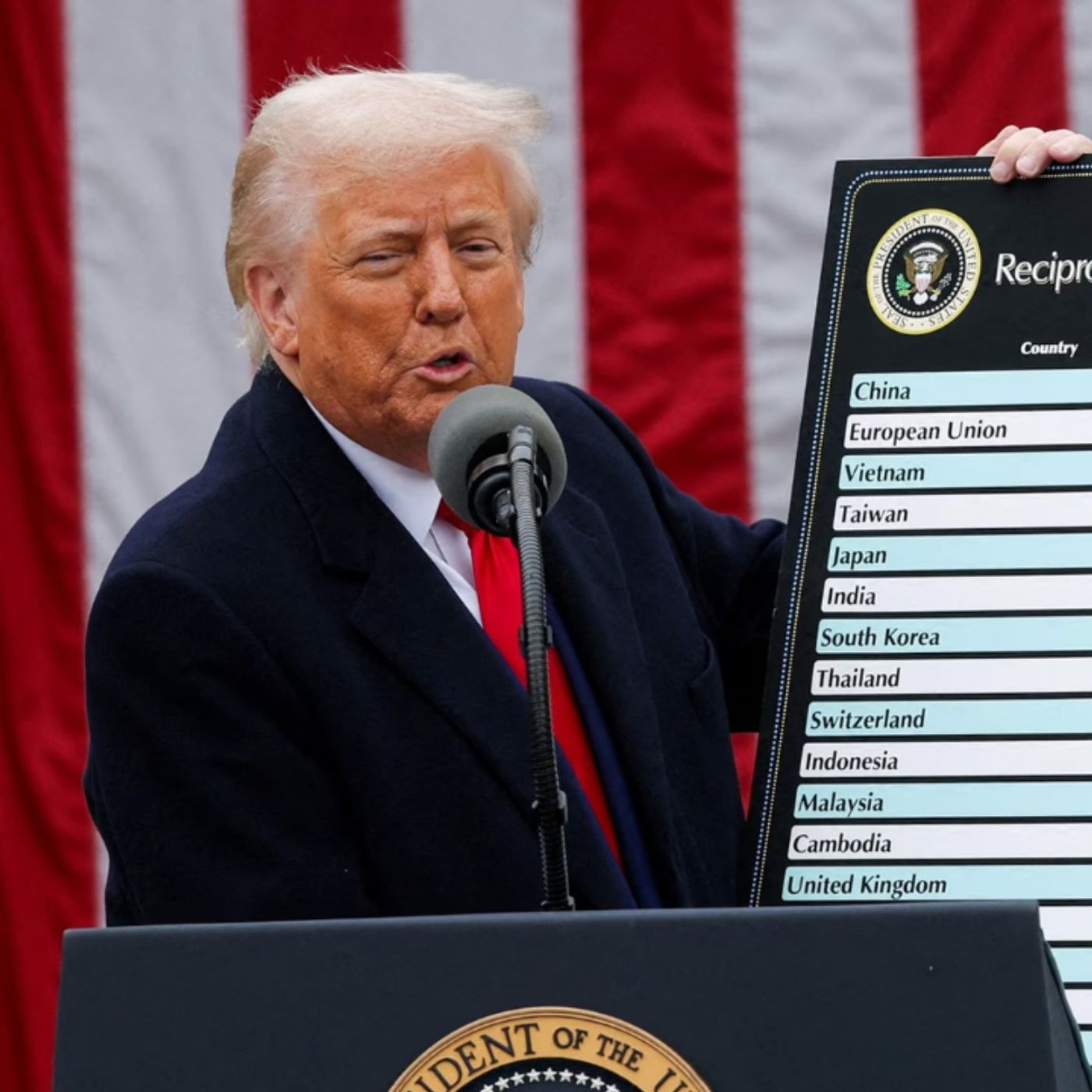
Ep 82The Josh Lafazan Show on YouTube - Episode 83
Tariff CHAOS: Trump’s Trade War Tanks Economy; Feud Between Musk & White House GrowsThe Josh Lafazan Show on YouTube - Episode 83Today's top stories in U.S. news, politics, government, and world affairs:Segment 1: Market Mayhem & Trump’s Tariff GambleThe markets are in free fall after President Trump’s shocking decision to double down on tariffs. With threats of a 50% tariff hike on Chinese imports and no signs of a pause, the S&P teeters near bear-market territory and the Nasdaq has already plunged into one. In just two days, U.S. stocks lost a staggering $6.6 trillion in value—surpassing COVID-era crashes and marking the worst three-day slide since the Great Depression.Top economists and conservatives alike are sounding the alarm:Jamie Dimon warns of major global disruption.Bill Ackman begs for a 90-day tariff pause.Sen. Rand Paul predicts a Democratic landslide if this continues.Trump's team calls critics “panicans,” but history is not on his side—economists say this is the largest tax increase since 1968 and the biggest tariff surge since Smoot-Hawley in 1930. We break down how this affects everyone—from retirees to teachers to everyday consumers—and ask the key question: Is Trump’s bet on bringing back U.S. manufacturing doomed to fail—again?Segment 2: Trump vs. Musk – The Rift DeepensThe bromance is breaking. Elon Musk, once the crown jewel of Trump’s innovation push, is publicly clashing with the White House over tariffs and economic policy.Musk’s viral post featuring Milton Friedman was a clear swipe at Trump’s protectionist approach.He’s called out Peter Navarro, questioned the wisdom of the administration’s economic team, and is increasingly being seen by GOP insiders as a political liability.Meanwhile, Trump appears to be quietly pushing Musk out of his inner circle, as ethics concerns and backchannel meetings with the Pentagon stir fears about conflicts of interest with China.Will the GOP stick with Musk—or is the tech mogul becoming too controversial, even for Trump’s MAGA machine?Segment 3: Democrats Roar Back with Nationwide ProtestsAre Democrats finally regaining their momentum? This week, more than 1,400 “Hands Off!” protests erupted nationwide—from federal buildings to city parks.Their message? End the Trump administration’s corruption, protect Social Security and Medicaid, and stand up for vulnerable communities.This new energy recalls the resistance of Trump’s early presidency—echoes of the Women’s March, the Muslim Ban protests, and the post-Jan 6th mobilization.And it’s showing results:Big wins in Wisconsin and FloridaBoosted recruitment in battleground districtsDems riding a wave of public backlash against Trump’s policies, Musk’s DOGE cuts, and proposed social service rollbacks.Is this a realignment moment for 2026—and can Dems win back the House from Republicans?Segment 4: Colorado’s Trans Bill Sparks National FirestormA bill in Colorado is drawing intense backlash for going further than ever before. It proposes that “misgendering” or “deadnaming” a child could be considered a form of child abuse or “coercive control”—potentially allowing the state to strip parents of custody if they don’t affirm a child’s chosen gender identity.Critics say the bill is anti-parent, anti-free speech, and a massive political mistake.Even those who support trans rights are calling this a bridge too far. Democrats risk alienating the political middle and energizing the right if they continue to embrace positions seen as extreme by the broader public.Josh breaks down how this kind of overreach could cost the left big—especially in key swing states—and why parental rights may become a defining issue of the next election cycle.
Ep 81The Josh Lafazan Show on YouTube - Episode 82
Senate Committee To INVESTIGATE Leaked Signal Texts; Trump Pulls Stefanik Nom as U.N. AmbassadorThe Josh Lafazan Show on YouTube - Episode 82Today's top stories in U.S. news, politics, government, and world affairs:🚨 Congress Opens Investigation into Leaked Signal Group ChatIn a stunning turn of events, Congress has launched a formal investigation into the controversial Signal group chat, where high-ranking officials—including members of the National Security Council—allegedly discussed classified military operations regarding U.S. airstrikes in Yemen. The group chat reportedly included individuals such as Waltz, Hegseth, Vance, and Gabbard, and even a senior American journalist, raising major concerns about breaches of national security protocols. The Senate Armed Services Committee is demanding answers: Was classified intelligence improperly shared on an unsecured network? Did this breach federal transparency and espionage laws? And most importantly—how dangerous could this kind of reckless communication be? The use of Signal, an encrypted app, to discuss such sensitive matters raises serious concerns about government accountability, especially in an era where leaks, hacks, and transparency issues are at the center of public distrust in leadership. Could this result in criminal charges, and will those responsible be held accountable?⚖️ White House Withdraws Elise Stefanik’s UN Ambassador Nomination—What’s Next for Her?Elise Stefanik’s political trajectory has taken yet another dramatic turn. Once considered a moderate Republican, Stefanik made a sharp pivot to align herself with the MAGA movement in hopes of securing a high-ranking position in Trump’s administration. But after giving up her leadership role in the House GOP, the White House has now decided to pull her nomination for UN ambassador, leaving her political future uncertain. Why did the administration backtrack? The answer lies in the razor-thin Republican majority in the House, where every single vote matters. With Congress struggling to pass key legislation, Stefanik’s absence could have proven costly. But this decision leaves many questions: Will she regain her seniority in the House? Could she be eyeing a gubernatorial run in New York? Or will she still land a high-profile role post-midterms? Stefanik is no stranger to political reinvention, but this latest setback raises questions about whether her gamble on Trumpism has paid off.🏥 RFK Slashes 10,000 Jobs at HHS—What This Means for Public HealthRFK’s sweeping cuts at the Department of Health and Human Services have sparked outrage among health advocates and experts alike. With a quarter of the workforce being eliminated, the department that oversees Medicare, Medicaid, the FDA, and the CDC is facing a drastic transformation. Key agencies that Americans rely on for drug approvals, disease outbreak responses, and public health initiatives are being gutted. ⚔️ Did the UK Really Ban Ninja Swords to Combat Crime?Yes, you read that right. The UK has moved to ban ninja swords following a surge in knife crime, including a tragic case involving the fatal stabbing of a 16-year-old. But does banning swords actually address the root causes of violent crime? The UK is facing a crime wave:More than 100 people per week were threatened with a knife last year.Robbery cases have nearly doubled from the previous year.Shoplifting offenses hit an all-time high, with nearly 470,000 incidents recorded in one year.While some argue that tighter regulations are necessary, others point out that banning swords won’t fix the deeper issues of poverty, social unrest, and unchecked immigration, which have contributed to rising crime rates. The immigration debate in the UK is heating up, as over 150,000 people have arrived in small boats since 2018. Are these policy moves a real solution or just political theatrics?📜 Trivia Time: Which U.S. President Created the New Deal?If you guessed Franklin D. Roosevelt, you’re right. Today, we take a look at how FDR’s policies reshaped America during the Great Depression and laid the foundation for the modern economy. From the Social Security Act to massive infrastructure projects like the Hoover Dam and Lincoln Tunnel, FDR’s legacy continues to impact millions of Americans. What can we learn from his leadership in times of crisis, and how does it compare to today’s economic challenges?
Ep 80The Josh Lafazan Show on YouTube - Episode 81
Trump’s Team CAUGHT Sharing Classified Intel - Fallout Begins; Vance’s Greenland Trip Sparks OutrageThe Josh Lafazan Show on YouTube - Episode 80Today's top stories in U.S. news, politics, government, and world affairs:The Josh Lafazan Show on YouTube - Episode 81Today's top stories in U.S. news, politics, government, and world affairs:🚨 A National Security Crisis: Signal Texts and the Trump Administration’s Reckless LeakNew reporting from The Atlantic uncovers a shocking security breach within the Trump administration. Top officials, including Secretary of Defense Pete Hegseth and National Security Adviser Michael Waltz, discussed classified military plans—including an imminent strike in Yemen—on an unsecured Signal group chat. Even more damning, these messages were inadvertently sent to journalist Jeffrey Goldberg, exposing mission details just before U.S. warplanes took off.While officials like Hegseth, Tulsi Gabbard, and John Ratcliffe deny wrongdoing, the content of the leaked texts tells a different story—one that experts say could constitute an impeachable offense. Why were top military officials using an insecure messaging app? Could this have put American lives at risk? And will anyone be held accountable? The White House’s cleanup effort is in full force, but the damage is already done.🇬🇱 JD Vance’s Controversial Greenland Trip: Unwelcome and Unnecessary?Vice President JD Vance is heading to Greenland, but there’s one problem: Greenland and Denmark don’t want him there. The Trump administration’s long-standing interest in acquiring Greenland—once dismissed as a joke—has now turned into what many see as an aggressive foreign policy move. Danish and Greenlandic officials have openly condemned the visit, calling it provocative and unnecessary, with some even comparing it to Russian tactics in Crimea.The Biden administration worked to repair alliances, but Trump and Vance are reigniting tensions. With Greenland’s government currently in a fragile political state following elections, why is the U.S. pushing ahead with this visit now? And with Trump refusing to rule out military action, could this escalate into something far more dangerous?🗳 Trump’s Executive Order: A Massive Overhaul of America’s ElectionsPresident Trump has signed a sweeping executive order on election laws, requiring proof of U.S. citizenship to register to vote and directing states to purge noncitizens from voter rolls. The order also calls for increased data sharing between federal and state agencies to track election crimes and enforce voter eligibility laws.While voter ID laws have widespread support—polls show 81% of Americans back them—critics argue that these new restrictions could disproportionately impact marginalized voters. The executive order is almost certainly headed for legal challenges, as states have historically held control over their own election laws. Could this be another instance of Trump overreaching his executive authority?At the same time, we explore the broader debate over election integrity: Should America implement a national voter ID system if IDs are made universally accessible and free? And why aren’t both parties pushing harder for reforms like expanding early voting and making Election Day a federal holiday?🔵 Democrats Flip a Key Pennsylvania SeatIn a major political upset, Democrat Dan Goughnour has won a special election in Pennsylvania, flipping a state House seat that Trump and Republicans carried by over 15 points. This gives Democrats control of the Pennsylvania House—just months after a tied 101-101 split.📚 Host’s Picks: Bill Maher’s Brutal Take on PoliticsBill Maher remains one of the few high-profile Democrats willing to call out his own party, and his latest commentary does just that. While I don’t always agree with Maher—especially when it comes to his views on religion—his criticisms of extreme positions on both sides of the aisle are worth discussing.🤔 Trivia Time!Which U.S. president was responsible for the Louisiana Purchase? If you guessed Thomas Jefferson, you’re right. Jefferson’s historic deal in 1803 doubled the size of the United States for just four cents an acre. But did you know he initially only wanted New Orleans? Napoleon’s financial troubles led to a deal Jefferson never expected.🎱 Future Prediction: Mike Waltz Will ResignWith growing scrutiny over the leaked Signal messages, I believe National Security Adviser Mike Waltz will be forced to resign. The exposure of classified military operations, possible violations of the Espionage Act, and attempts to erase federal records make his position increasingly untenable.
Ep 79The Josh Lafazan Show on YouTube - Episode 80
Trump/Musk LOSE In Court Over Social Security; Hegseth Denies Sharing Classified InformationThe Josh Lafazan Show on YouTube - Episode 80Today's top stories in U.S. news, politics, government, and world affairs:We start with the latest court ruling against Musk’s controversial Department of Government Efficiency (DOGE), which was found to have violated privacy laws by gaining unrestricted access to Social Security records. A federal judge ruled that DOGE was engaging in an unlawful “fishing expedition”, searching for fraud without legal authority, and ordered an immediate halt to the practice. The lawsuit—brought by labor unions, retirees, and Democracy Forward—argues that DOGE’s unchecked access to private data poses serious security risks and is a clear overreach of government power. And this is just the beginning.DOGE has now been targeted by nearly two dozen lawsuits challenging its role in dismantling federal agencies and overstepping legal boundaries. The courts have already blocked parts of Trump’s second administration from carrying out some of these efforts, but the fight is far from over. Among the major concerns:Musk’s appointment may violate the Appointments Clause DOGE is taking direct actions that go beyond “advisory” The group is wading into areas controlled by Congress, including foreign affairs A small group at DOGE has near-unlimited access to classified information The need for congressional oversight has never been greater But that’s not even the biggest scandal of the week.In what may be the most reckless breach of national security in recent history, a bombshell report from The Atlantic’s Jeffrey Goldberg has revealed that Trump officials leaked detailed war plans in a group text chat. According to Goldberg, he was accidentally included in a Signal chat where Trump’s Secretary of Defense and other high-ranking officials discussed upcoming military strikes in Yemen.This wasn’t just a casual conversation—it was a full-on discussion of classified war plans, including weapons details, targets, and timing. Goldberg himself says he didn’t think it could be real—until the bombs actually started falling two hours later.Experts are already arguing that this could be a serious violation of the Espionage Act, which governs how national defense information is handled. There are also massive concerns over federal records laws, since some of the messages in the Signal chat were set to disappear after a week, raising obstruction of justice questions. And let’s not forget: Signal is not allowed on government devices due to security risks—meaning these officials broke government rules to use an app that foreign adversaries could potentially hack.Yet, instead of accountability, the Trump administration is on full defense mode, denying the allegations despite overwhelming evidence. Officials like Pete Hegseth, John Ratcliffe, and Tulsi Gabbard have all pushed back on the claims, insisting no classified material was shared. But here’s the reality—if this had happened under any other administration, there would be impeachment hearings already. The GOP would be holding emergency committees, just like they did for Benghazi, Clinton’s emails, and Afghanistan. Yet now? Silence.And speaking of unforced errors, Jasmine Crockett is once again giving Republicans exactly what they want. The Democratic Congresswoman made headlines this week after calling Texas Governor Greg Abbott—who is in a wheelchair—“Governor Hot Wheels.” Abbott may be one of the most controversial and criticized governors in the country, but mocking a physical disability is the lowest form of political discourse.Instead of apologizing, Crockett doubled down, refusing to walk back her words. But this is just the latest in a series of inflammatory statements from her that are politically harmful to Democrats.She once referred to people with learning disabilities as "slow" She dismissed opposition to DEI as just coming from "mediocre white boys" She falsely claimed that entering the U.S. illegally is "not a crime" This is the kind of rhetoric that hands Republicans easy attack ads on a silver platter. If Democrats want to win elections, they need to recognize that Twitter applause does not translate to votes.Also on today’s show:How the Espionage Act applies to Trump’s leaked Signal chat and why officials involved should be fired—or worse. North Korea’s economic collapse compared to South Korea’s $1.7 trillion GDP. The Triangle Shirtwaist Factory fire and why labor protections matter—a stark reminder of the hard-fought rights workers have today. Greenland’s surprising views on U.S. citizenship—did you know the majority prefer staying with Denmark rather than joining America?
Ep 78The Josh Lafazan Show on YouTube - Episode 79
U.S. War Plans LEAKED in Text Chat - Hegseth, Vance, Waltz Facing Calls to ResignThe Josh Lafazan Show on YouTube - Episode 79Today's top stories in U.S. news, politics, government, and world affairs:1) INSANE National Security Breach – A Journalist Accidentally Gets War PlansOne of the craziest stories of the year just broke, and it should be an earthquake in Washington. The Atlantic’s Jeffrey Goldberg revealed that top U.S. national-security officials accidentally included him in a high-level Signal chat about a military strike on Houthi targets in Yemen. He initially thought it was fake—until the bombs actually started falling.To put it bluntly: this is an absolute disaster. The chat included Trump’s Secretary of Defense, Pete Hegseth, and National Security Adviser Michael Waltz, who were casually coordinating a military attack over an encrypted messaging app—and they didn’t even realize a journalist was in the group! Even more shocking, Vice President JD Vance weighed in, expressing doubts about the operation, questioning whether the U.S. should be “bailing out Europe again.”Here’s why this story is an absolute scandal:Possible Violation of the Espionage Act – National-security lawyers say discussing military strikes on an unsecured channel could be criminally reckless.Federal Records Law Violations – Some of the messages were set to auto-delete, raising serious legal questions about whether officials were illegally destroying government records.Pure Incompetence – This level of carelessness exposes just how chaotic and unprofessional Trump’s second administration has become.At best, this is shocking negligence. At worst? It’s impeachable.2) Democrats Are In Trouble – New Polls Show Their Own Voters Have Turned On ThemIn a historic first, congressional Democrats are now underwater with their own base. According to Quinnipiac’s latest poll, just 40% of Democrats approve of congressional Democrats, while 49% disapprove. This is completely unprecedented. Even after losing to Trump in 2016, Democratic voters still rallied behind their leadership. But after 2024? The frustration is boiling over.Some key takeaways:Democratic grassroots activists are furious at their party’s handling of the 2024 election. Many feel they were shut out of the decision-making process.The Democratic Party’s “party of democracy” message rings hollow after Kamala Harris was anointed the nominee without winning a single primary vote.The situation is eerily similar to the anger that led to Trump’s takeover of the Republican Party in 2016.Could this internal revolt reshape the Democratic Party? And will it cost them their shot at flipping Congress in 2026?3) HUGE Economic Win – UAE to Invest $1.4 Trillion in the U.S.While the headlines have been dominated by political chaos, there’s actually some major good news for the U.S. economy. The United Arab Emirates has committed to a $1.4 trillion investment in America over the next decade. This deal focuses on AI, semiconductors, energy, and manufacturing, strengthening the U.S. economy and solidifying American influence in the Middle East.Some highlights of the deal:$25 billion invested in U.S. energy infrastructure and data centers.Major funding for AI and semiconductor production, giving the U.S. a critical advantage in the tech race.A new aluminum smelter in the U.S., nearly doubling domestic aluminum production.This is a huge win for the U.S. economy—regardless of how you feel about Trump, this is objectively good news. The U.S. is maintaining its economic dominance, strengthening alliances in the Middle East, and countering China and Iran’s influence.4) “Swatting” Is Getting Out of Control – And It Needs to StopA deeply disturbing trend is escalating—politically motivated swatting attacks targeting conservative figures. Swatting is not a joke. It’s a life-threatening tactic where someone calls 911 with a fake emergency, triggering an armed police response to an innocent person’s home. It has already resulted in innocent people being killed.5) Trivia – Which U.S. President Was the First to Use Twitter?If you think the answer is Donald Trump… you’d be wrong! It was actually Barack Obama, who started using Twitter during his 2008 campaign.Obama was also the first president to go live on Facebook, use Snapchat filters, and post on Instagram.6) Winners & Losers – Andrew Cuomo’s Comeback?This week’s big winner: Andrew Cuomo. The former governor of New York has raised a staggering $1.5 million in just 13 days for his New York City mayoral campaign. This puts him miles ahead of incumbent Eric Adams in fundraising—and could set the stage for a major political comeback.7) Media Watch – A Reporter Just Helped Astronauts Get PaidIn a bizarre but heartwarming story, a Washington Times reporter just helped two stranded astronauts get their overdue paychecks. NASA astronauts Suni Williamson and Butch Wilmore were supposed to spend just 8 days in space—but instead, they’ve been stuck on the Boeing Sta
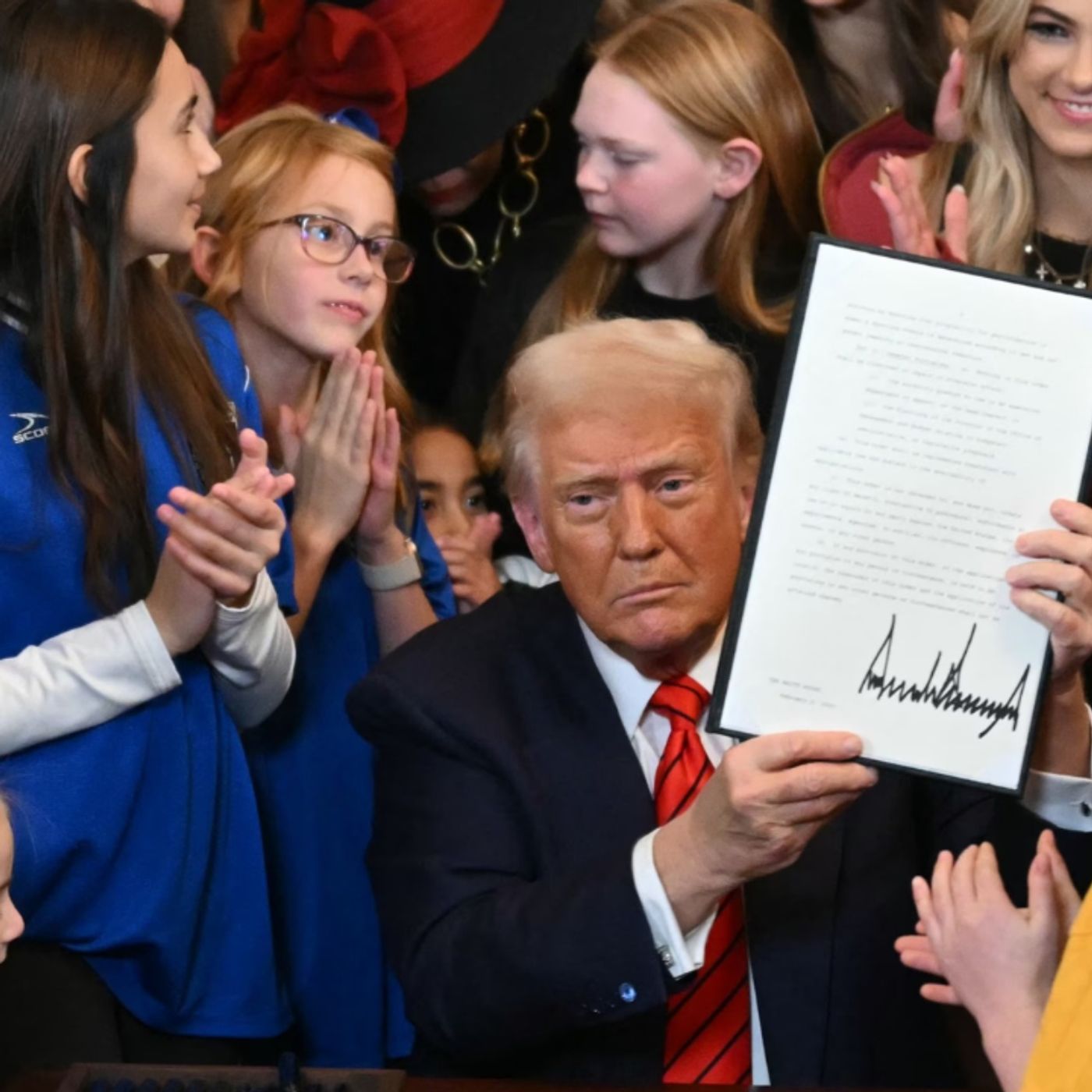
Ep 77The Josh Lafazan Show on YouTube - Episode 78
Trump ABOLISHES Dept of Education - Inside His Executive Order; Key Insights From JFK FilesThe Josh Lafazan Show on YouTube - Episode 78Today's top stories in U.S. news, politics, government, and world affairs:In today's episode of The Josh Lafazan Show, we delve into significant political developments impacting the nation:This week, we’re diving into some of the most important political stories shaping the country—starting with Trump’s executive order to dismantle the Department of Education. The administration is moving forward with a plan to eliminate federal oversight in education, shifting all authority back to the states. But what does that actually mean for students, teachers, and families?The Department of Education (DOE) plays a critical role in setting national education standards, enforcing civil rights protections, and funding essential programs like Title I for low-income schools, Pell Grants for college students, Head Start for early childhood education, and disability support services. Trump’s executive order could wipe out nearly $18 billion in funding for disadvantaged students, leaving millions of children without critical educational resources. In fact, students in red states would be hit hardest, since states like Mississippi, South Dakota, and Arkansas receive a disproportionately high amount of federal education funding. Meanwhile, wealthier states like New York, which relies less on federal dollars, would be less affected.And it’s not just K-12 students at risk. The administration’s broader Project 2025 agenda includes eliminating federal student loans and shifting back to private lending, which historically came with higher interest rates and more predatory lending practices. The plan also proposes handing university accreditation over to the states, a move that could allow political interference in what schools can teach and who gets funding. While there’s no doubt the education system needs serious reform, is completely dismantling the DOE really the answer? We break down why this move is not about fixing education, but about a political agenda that could hurt millions of students and teachers.Next, we turn to the latest in voting rights: New York’s controversial non-citizen voting law has been struck down by the state’s highest court. The law, which would have allowed over 800,000 non-citizens to vote in local elections, was ruled unconstitutional in a 6-to-1 decision. At the heart of the ruling is a fundamental question: Should voting rights be extended beyond U.S. citizens?Supporters of the law argue that legal residents who live, work, and pay taxes in their communities deserve a voice in local elections, especially when those decisions affect schools, policing, and housing. But opponents—including Republicans and some moderate Democrats—warned that expanding voting rights beyond citizens could set a dangerous precedent and dilute the power of citizen voters. The court ruled that under the New York State Constitution, voting is explicitly reserved for U.S. citizens, and that any change to this would require a constitutional amendment, not just a city law. This decision is a major victory for those advocating for strict voter integrity laws, but it also highlights the growing tension between progressives and moderates within the Democratic Party on election issues.Then, we shift to history with newly declassified JFK assassination files. If you were hoping for a bombshell revelation about who really killed JFK, these documents probably won’t change your mind—they confirm, yet again, that Lee Harvey Oswald acted alone. But the files do expose some fascinating details about Cold War intelligence operations, including:The CIA’s long-running probe into Fidel Castro’s potential involvement in JFK’s murder, despite never finding any direct evidence.A secret, close relationship between the CIA and Mexican President Adolfo López Mateos, who was so close to U.S. intelligence operatives that he served as best man at the wedding of a CIA station chief.The CIA bugging meetings that Robert F. Kennedy was likely to attend, part of broader surveillance efforts.The agency’s reluctance to reveal audio recordings of Oswald’s time in Mexico City, where he visited the Cuban and Soviet embassies just weeks before the assassination.While these files don’t rewrite history, they do reveal just how deeply the CIA was involved in global espionage and political maneuvering, and why the intelligence community fought so hard to keep these documents classified for decades.Moving to the 2028 election, is Minnesota Governor Tim Walz quietly positioning himself for a presidential run? His recent national tour has fueled speculation, and while he may not be a top-tier candidate yet, he does have a large constituency of support. However, is he really the right candidate for Democrats in 2028? We break down his strengths and weaknesses, as well as why his brand of leadership might not resonate beyond Minnesota.