The ITSPmagazine Podcast
2,098 episodes — Page 6 of 42
Ep 2482AI Confusion, Privacy Pressures, and the Search for Real Value in Cybersecurity | A Black Hat USA 2025 Conversation with Evgeniy Kharam | On Location Coverage with Sean Martin and Marco Ciappelli
This year at Black Hat USA 2025, the conversation is impossible to escape: artificial intelligence. But while every vendor claims an AI-powered edge, the real question is how organizations can separate meaningful innovation from noise.In our discussion with Evgeniy Kharam, Vice President of Cybersecurity Architecture at Herjavec Group (formerly), Chief Strategy Officer (CSO) at Discern Security, and long-time security leader and author, the theme of AI confusion takes center stage. Evgeniy notes that CISOs and security architects don’t have the time or resources to analyze what “AI” means in every product pitch. With over 4,000 vendors in the ecosystem, each layering its own flavor of AI, the burden falls on security leaders to distinguish hype from usable automation.From Gondola Pitches to AI OverloadEvgeniy shares how his creative networking events—skiing, biking, and beyond—mirror the industry’s need for genuine connection and trust. Just as his “gondola pitch” builds authentic engagement, buyers want clarity and honesty from technology providers. The proliferation of AI labels, however, makes that trust harder to establish.Where AI Can HelpEvgeniy highlights areas where AI can reduce friction, from vulnerability management and detection to policy writing and compliance. Yet, even here, issues such as hallucinations, privacy tradeoffs, and ethics cannot be ignored. When AI begins influencing employee monitoring or analyzing sensitive data, organizations face difficult questions about fairness, transparency, and control.The Unspoken Challenge: Surveillance and TrustAs we discuss the balance between employee privacy and corporate protection, it becomes clear that AI introduces new layers of surveillance. In Europe, cultural and legal boundaries create clear separation between personal and professional lives. In North America, the lines blur, raising ethical debates that may ultimately be tested in courts.The takeaway? AI has the potential to unlock workflows that were previously too costly or complex. But without transparency, governance, and a commitment to responsible use, the “AI in everything” trend risks overwhelming the very leaders it is meant to help.___________Guest:Evgeniy Kharam, Chief Strategy Officer (CSO), Discern Security | On LinkedIn: https://www.linkedin.com/in/ekharam/Hosts:Sean Martin, Co-Founder at ITSPmagazine | Website: https://www.seanmartin.comMarco Ciappelli, Co-Founder at ITSPmagazine | Website: https://www.marcociappelli.com___________Episode SponsorsThreatLocker: https://itspm.ag/threatlocker-r974BlackCloak: https://itspm.ag/itspbcwebAkamai: https://itspm.ag/akamailbwcDropzoneAI: https://itspm.ag/dropzoneai-641Stellar Cyber: https://itspm.ag/stellar-9dj3___________ResourcesLearn more and catch more stories from our Black Hat USA 2025 coverage: https://www.itspmagazine.com/bhusa25ITSPmagazine Webinar: What’s Heating Up Before Black Hat 2025: Place Your Bet on the Top Trends Set to Shake Up this Year’s Hacker Conference — An ITSPmagazine Thought Leadership Webinar | https://www.crowdcast.io/c/whats-heating-up-before-black-hat-2025-place-your-bet-on-the-top-trends-set-to-shake-up-this-years-hacker-conferenceCatch all of our event coverage: https://www.itspmagazine.com/technology-and-cybersecurity-conference-coverageWant to tell your Brand Story Briefing as part of our event coverage? Learn More 👉 https://itspm.ag/evtcovbrfWant Sean and Marco to be part of your event or conference? Let Us Know 👉 https://www.itspmagazine.com/contact-us___________KEYWORDSsean martin, marco ciappelli, evgeniy kharam, black hat usa 2025, ai, privacy, surveillance, cybersecurity, automation, governance, event coverage, on location, conference Hosted by Simplecast, an AdsWizz company. See pcm.adswizz.com for information about our collection and use of personal data for advertising.
Ep 2481Why Electric Vehicles Need an Apollo Program: The Renewable Energy Infrastructure Reality We're Ignoring | A Conversation with Mats Larsson | Redefining Society And Technology Podcast With Marco Ciappelli
⸻ Podcast: Redefining Society and Technologyhttps://redefiningsocietyandtechnologypodcast.com ______Title: Why Electric Vehicles Need an Apollo Program: The Reneweable Energy Infrastructure Reality We're Ignoring | A Conversation with Mats Larsson | Redefining Society And Technology Podcast With Marco Ciappelli______Guest: Mats Larsson New book: "How Building the Future Really Works." Business developer, project manager and change leader – Speaker. I'm happy to connect!On LinkedIn: https://www.linkedin.com/in/matslarsson-author/Host: Marco CiappelliCo-Founder & CMO @ITSPmagazine | Master Degree in Political Science - Sociology of Communication l Branding & Marketing Advisor | Journalist | Writer | Podcast Host | #Technology #Cybersecurity #Society 🌎 LAX 🛸 FLR 🌍WebSite: https://marcociappelli.comOn LinkedIn: https://www.linkedin.com/in/marco-ciappelli/_____________________________This Episode’s SponsorsBlackCloak provides concierge cybersecurity protection to corporate executives and high-net-worth individuals to protect against hacking, reputational loss, financial loss, and the impacts of a corporate data breach.BlackCloak: https://itspm.ag/itspbcweb_____________________________⸻ Podcast Summary ⸻ Swedish business consultant Mats Larsson reveals why electric vehicle transition requires Apollo program-scale government investment. We explore the massive infrastructure gap between EV ambitions and reality, from doubling power generation to training electrification architects. This isn't about building better cars—it's about reimagining our entire transportation ecosystem in our Hybrid Analog Digital Society.⸻ Article ⸻ When Reality Meets Electric Dreams: Lessons from the Apollo MindsetI had one of those conversations that stops you in your tracks. Mats Larsson, calling in from Stockholm while I connected from Italy, delivered a perspective on electric vehicles that shattered my comfortable assumptions about our technological transition."First of all, we need to admit that we do not know exactly how to build the future. And then we need to start building it." This wasn't just Mats being philosophical—it was a fundamental admission that our approach to electrification has been dangerously naive.We've been treating the electric vehicle transition like upgrading our smartphones—expecting it to happen seamlessly, almost magically, while we go about our daily lives. But as Mats explained, referencing the Apollo program, monumental technological shifts require something we've forgotten how to do: comprehensive, sustained, coordinated investment in infrastructure we can't even fully envision yet.The numbers are staggering. To electrify all US transportation, we'd need to double power generation—that's the equivalent of 360 nuclear reactors worth of electricity. For hydrogen? Triple it. While Tesla and Chinese manufacturers gained their decade-plus advantage through relentless investment cycles, traditional automakers treated electric vehicles as "defensive moves," showcasing capability without commitment.But here's what struck me most: we need entirely new competencies. "Electrification strategists and electrification architects," as Mats called them—professionals who can design power grids capable of charging thousands of logistics vehicles daily, infrastructure that doesn't exist in our current planning vocabulary.We're living in this fascinating paradox of our Hybrid Analog Digital Society. We've become so accustomed to frictionless technological evolution—download an update, get new features—that we've lost appreciation for transitions requiring fundamental systemic change. Electric vehicles aren't just different cars; they're a complete reimagining of energy distribution, urban planning, and even our relationship with mobility itself.This conversation reminded me why I love exploring the intersection of technology and society. It's not enough to build better batteries or faster chargers. We're redesigning civilization's transportation nervous system, and we're doing it while pretending it's just another product launch.What excites me isn't just the technological challenge—it's the human coordination required. Like the Apollo program, this demands that rare combination of visionary leadership, sustained investment, and public will that transcends political cycles and market quarters.Listen to my full conversation with Mats, and let me know: Are we ready to embrace the Apollo mindset for our electric future?Subscribe wherever you get your podcasts, and join me on YouTube for the full experience. Let's continue this conversation—because in our rapidly evolving world, these discussions shape the future we're building together.Cheers,Marco⸻ Keywords ⸻ Electric Vehicles, Technology And Society, Infrastructure, Innovation, Sustainable Transport, electric vehicles, society and technology, infrastructure development, apollo program, energy transition, government investment, technological transformation, sustainable mo
Ep 2480We're Becoming Dumb and Numb: Why Black Hat 2025's AI Hype Is Killing Cybersecurity -- And Our Ability to Think | Random and Unscripted Weekly Update with Sean Martin and Marco Ciappelli
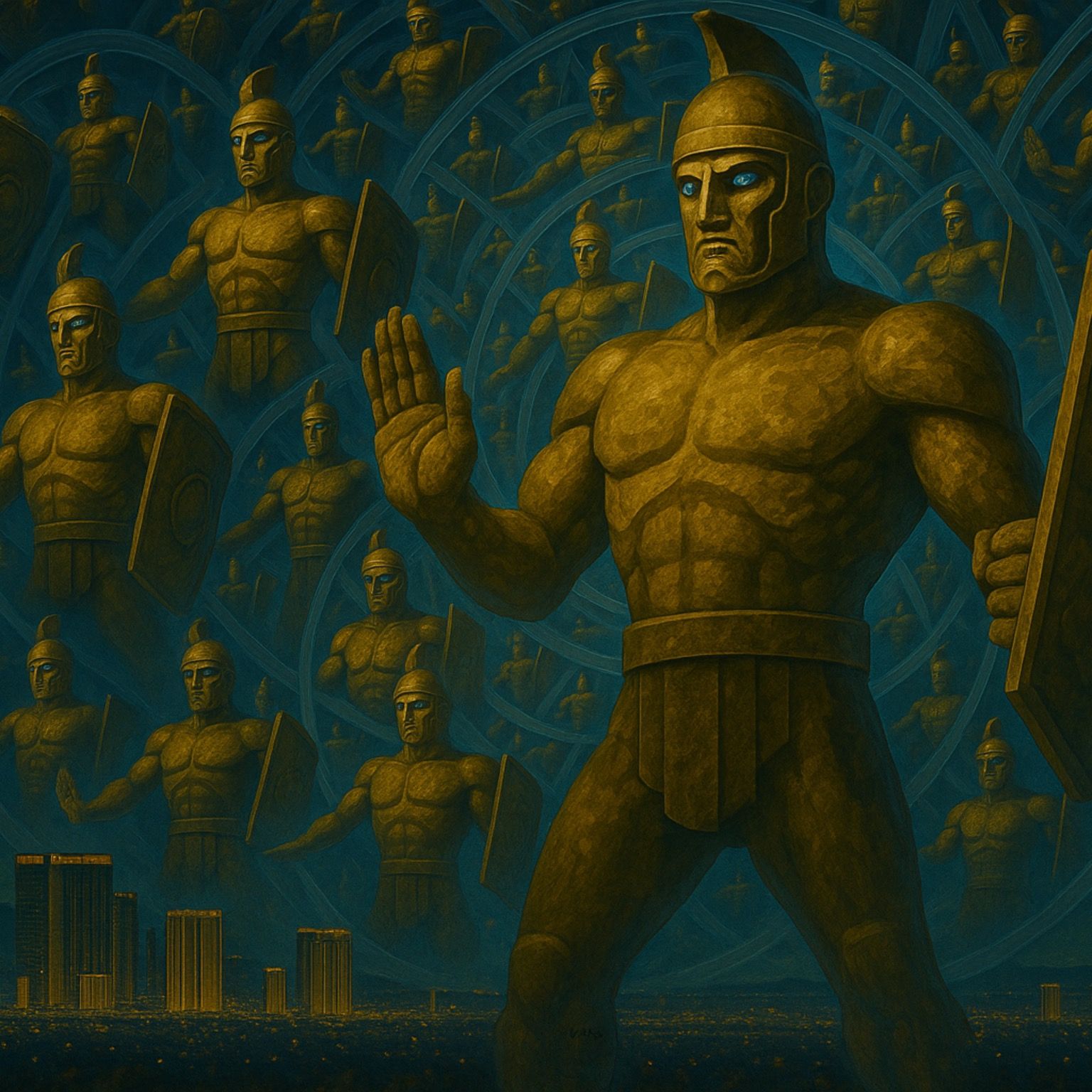
We're Becoming Dumb and Numb": Why Black Hat 2025's AI Hype Is Killing Cybersecurity -- And Our Ability to Think Random and Unscripted Weekly Update Podcast with Sean Martin and Marco Ciappelli__________________SummarySean and Marco dissect Black Hat USA 2025, where every vendor claimed to have "agentic AI" solutions. They expose how marketing buzzwords create noise that frustrates CISOs seeking real value. Marco references the Greek myth of Talos - an ancient AI robot that seemed invincible until one fatal flaw destroyed it - as a metaphor for today's overinflated AI promises. The discussion spirals into deeper concerns: are we becoming too dependent on AI decision-making? They warn about echo chambers, lowest common denominators, and losing our ability to think critically. The solution? Stop selling perfection, embrace product limitations, and keep humans in control. __________________10 Notable QuotesSean:"It's hard for them to siphon the noise. Sift through the noise, I should say, and figure out what the heck is really going on.""If we completely just use it for the easy button, we'll stop thinking and we won't use it as a tool to make things better.""We'll stop thinking and we won't use it as a tool to make our minds better, to make our decisions better.""We are told then that this is the reality. This is what good looks like.""Maybe there's a different way to even look at things. So it's kind of become uniform... a very low common denominator that is just good enough for everybody."Marco:"Do you really wanna trust the weapon to just go and shoot everybody? At least you can tell it's a human factor and that's the people that ultimately decide.""If we don't make decision anymore, we're gonna turn out in a lot of those sci-fi stories, like the time machine where we become dumb.""We all perceive reality to be different from what it is, and then it creates a circular knowledge learning where we use AI to create the knowledge, then to ask the question, then to give the answers.""We're just becoming dumb and numb. More than dumb, but we become numb to everything else because we're just not thinking with our own head.""You're selling the illusion of security and that could be something that then you replicate in other industries." Picture this: You walk into the world's largest cybersecurity conference, and every single vendor booth is screaming the same thing – "agentic AI." Different companies, different products, but somehow they all taste like the same marketing milkshake.That's exactly what Sean Martin and Marco Ciappelli witnessed at Black Hat USA 2025, and their latest Random and Unscripted with Sean and Marco episode pulls no punches in exposing what's really happening behind the buzzwords."Marketing just took all the cool technology that each vendor had, put it in a blender and made a shake that just tastes the same," Marco reveals on Random and Unscripted with Sean and Marco, describing how the conference floor felt like one giant echo chamber where innovation got lost in translation.But this isn't just another rant about marketing speak. The Random and Unscripted with Sean and Marco conversation takes a darker turn when Marco introduces the ancient Greek myth of Talos – a bronze giant powered by divine ichor who was tasked with autonomously defending Crete. Powerful, seemingly invincible, until one small vulnerability brought the entire system crashing down.Sound familiar?"Do you really wanna trust the weapon to just go and shoot everybody?" Marco asks, drawing parallels between ancient mythology and today's rush to hand over decision-making to AI systems we don't fully understand.Sean, meanwhile, talked to frustrated CISOs throughout the event who shared a common complaint: "It's hard for them to sift through the noise and figure out what the heck is really going on." When every vendor claims their AI is autonomous and perfect, how do you choose? How do you even know what you're buying?The real danger, they argue on Random and Unscripted with Sean and Marco, isn't just bad purchasing decisions. It's what happens when we stop thinking altogether."If we completely just use it for the easy button, we'll stop thinking and we won't use it as a tool to make our minds better," Sean warns. We risk settling for what he calls the "lowest common denominator" – a world where AI tells us what success looks like, and we never question whether we could do better.Marco goes even further, describing a "circular knowledge learning" trap where "we use AI to create the knowledge, then to ask the question, then to give the answers." The result? "We're just becoming dumb and numb. More than dumb, but we become numb to everything else because we're just not thinking with our own head."Their solution isn't to abandon AI – it's to get honest about what it can and can't do. "Stop looking for the easy button and stop selling the easy button," Marco urges vendors on Random and Unscripted with Sean and Marco. "Your product i
Ep 2479The Narrative Attack Paradox: When Cybersecurity Lost the Ability to Detect Its Own Deception and the Humanity We Risk When Truth Becomes Optional | Reflections from Black Hat USA 2025 on the Marketing That Chose Fiction Over Facts
⸻ Podcast: Redefining Society and Technologyhttps://redefiningsocietyandtechnologypodcast.com _____________________________This Episode’s SponsorsBlackCloak provides concierge cybersecurity protection to corporate executives and high-net-worth individuals to protect against hacking, reputational loss, financial loss, and the impacts of a corporate data breach.BlackCloak: https://itspm.ag/itspbcweb_____________________________A Musing On Society & Technology Newsletter Written By Marco Ciappelli | Read by TAPE3August 18, 2025The Narrative Attack Paradox: When Cybersecurity Lost the Ability to Detect Its Own Deception and the Humanity We Risk When Truth Becomes OptionalReflections from Black Hat USA 2025 on Deception, Disinformation, and the Marketing That Chose Fiction Over FactsBy Marco CiappelliSean Martin, CISSP just published his analysis of Black Hat USA 2025, documenting what he calls the cybersecurity vendor "echo chamber." Reviewing over 60 vendor announcements, Sean found identical phrases echoing repeatedly: "AI-powered," "integrated," "reduce analyst burden." The sameness forces buyers to sift through near-identical claims to find genuine differentiation.This reveals more than a marketing problem—it suggests that different technologies are being fed into the same promotional blender, possibly a generative AI one, producing standardized output regardless of what went in. When an entire industry converges on identical language to describe supposedly different technologies, meaningful technical discourse breaks down.But Sean's most troubling observation wasn't about marketing copy—it was about competence. When CISOs probe vendor claims about AI capabilities, they encounter vendors who cannot adequately explain their own technologies. When conversations moved beyond marketing promises to technical specifics, answers became vague, filled with buzzwords about proprietary algorithms.Reading Sean's analysis while reflecting on my own Black Hat experience, I realized we had witnessed something unprecedented: an entire industry losing the ability to distinguish between authentic capability and generated narrative—precisely as that same industry was studying external "narrative attacks" as an emerging threat vector.The irony was impossible to ignore. Black Hat 2025 sessions warned about AI-generated deepfakes targeting executives, social engineering attacks using scraped LinkedIn profiles, and synthetic audio calls designed to trick financial institutions. Security researchers documented how adversaries craft sophisticated deceptions using publicly available content. Meanwhile, our own exhibition halls featured countless unverifiable claims about AI capabilities that even the vendors themselves couldn't adequately explain.But to understand what we witnessed, we need to examine the very concept that cybersecurity professionals were discussing as an external threat: narrative attacks. These represent a fundamental shift in how adversaries target human decision-making. Unlike traditional cyberattacks that exploit technical vulnerabilities, narrative attacks exploit psychological vulnerabilities in human cognition. Think of them as social engineering and propaganda supercharged by AI—personalized deception at scale that adapts faster than human defenders can respond. They flood information environments with false content designed to manipulate perception and erode trust, rendering rational decision-making impossible.What makes these attacks particularly dangerous in the AI era is scale and personalization. AI enables automated generation of targeted content tailored to individual psychological profiles. A single adversary can launch thousands of simultaneous campaigns, each crafted to exploit specific cognitive biases of particular groups or individuals.But here's what we may have missed during Black Hat 2025: the same technological forces enabling external narrative attacks have already compromised our internal capacity for truth evaluation. When vendors use AI-optimized language to describe AI capabilities, when marketing departments deploy algorithmic content generation to sell algorithmic solutions, when companies building detection systems can't detect the artificial nature of their own communications, we've entered a recursive information crisis.From a sociological perspective, we're witnessing the breakdown of social infrastructure required for collective knowledge production. Industries like cybersecurity have historically served as early warning systems for technological threats—canaries in the coal mine with enough technical sophistication to spot emerging dangers before they affect broader society.But when the canary becomes unable to distinguish between fresh air and poison gas, the entire mine is at risk.This brings us to something the literary world understood long before we built our first algorithm. Jorge Luis Borges, the Argentine writer, anticipated this crisis in his 1940s stories like "On Exa
Ep 2478When Artificial Intelligence Becomes the Baseline: Will We Even Know What Reality Is AInymore? | A Black Hat USA 2025 Recap | A Musing On the Future of Cybersecurity with Sean Martin and TAPE3 | Read by TAPE3
At Black Hat USA 2025, artificial intelligence wasn’t the shiny new thing — it was the baseline. Nearly every product launch, feature update, and hallway conversation had an “AI-powered” stamp on it. But when AI becomes the lowest common denominator for security, the questions shift.In this episode, I read my latest opinion piece exploring what happens when the tools we build to protect us are the same ones that can obscure reality — or rewrite it entirely. Drawing from the Lock Note discussion, Jennifer Granick’s keynote on threat modeling and constitutional law, my own CISO hallway conversations, and a deep review of 60+ vendor announcements, I examine the operational, legal, and governance risks that emerge when speed and scale take priority over transparency and accountability.We talk about model poisoning — not just in the technical sense, but in how our industry narrative can get corrupted by hype and shallow problem-solving. We look at the dangers of replacing entry-level security roles with black-box automation, where a single model misstep can cascade into thousands of bad calls at machine speed. And yes, we address the potential liability for CISOs and executives who let it happen without oversight.Using Mikko Hyppönen’s “Game of Tetris” metaphor, I explore how successes vanish quietly while failures pile up for all to see — and why in the AI era, that stack can build faster than ever.If AI is everywhere, what defines the premium layer above the baseline? How do we ensure we can still define success, measure it accurately, and prove it when challenged?Listen in, and then join the conversation: Can you trust the “reality” your systems present — and can you prove it?________This story represents the results of an interactive collaboration between Human Cognition and Artificial Intelligence.Enjoy, think, share with others, and subscribe to "The Future of Cybersecurity" newsletter on LinkedIn.Sincerely, Sean Martin and TAPE3________✦ ResourcesArticle: When Artificial Intelligence Becomes the Baseline: Will We Even Know What Reality Is AInymore?https://www.linkedin.com/pulse/when-artificial-intelligence-becomes-baseline-we-even-martin-cissp-4idqe/The Future of Cybersecurity Article: How Novel Is Novelty? Security Leaders Try To Cut Through the Cybersecurity Vendor Echo Chamber at Black Hat 2025: https://www.linkedin.com/pulse/how-novel-novelty-security-leaders-try-cut-through-sean-martin-cissp-xtune/Black Hat 2025 On Location Closing Recap Video with Sean Martin, CISSP and Marco Ciappelli: https://youtu.be/13xP-LEwtEALearn more and catch more stories from our Black Hat USA 2025 coverage: https://www.itspmagazine.com/bhusa25Article: When Virtual Reality Is A Commodity, Will True Reality Come At A Premium? https://sean-martin.medium.com/when-virtual-reality-is-a-commodity-will-true-reality-come-at-a-premium-4a97bccb4d72Catch all of our event coverage: https://www.itspmagazine.com/technology-and-cybersecurity-conference-coverageITSPmagazine Studio — A Brand & Marketing Advisory for Cybersecurity and Tech Companies: https://www.itspmagazine.studio/ITSPmagazine Webinar: What’s Heating Up Before Black Hat 2025: Place Your Bet on the Top Trends Set to Shake Up this Year’s Hacker Conference — An ITSPmagazine Thought Leadership Webinar | https://www.crowdcast.io/c/whats-heating-up-before-black-hat-2025-place-your-bet-on-the-top-trends-set-to-shake-up-this-years-hacker-conference________Sean Martin is a life-long musician and the host of the Music Evolves Podcast; a career technologist, cybersecurity professional, and host of the Redefining CyberSecurity Podcast; and is also the co-host of both the Random and Unscripted Podcast and On Location Event Coverage Podcast. These shows are all part of ITSPmagazine—which he co-founded with his good friend Marco Ciappelli, to explore and discuss topics at The Intersection of Technology, Cybersecurity, and Society.™️Want to connect with Sean and Marco On Location at an event or conference near you? See where they will be next: https://www.itspmagazine.com/on-locationTo learn more about Sean, visit his personal website. Hosted by Simplecast, an AdsWizz company. See pcm.adswizz.com for information about our collection and use of personal data for advertising.

Ep 2477Access Roulette: How to Stop Betting Your Security on Standing Privileges | A Brand Story with Ofir Stein, CTO and Co-Founder of Apono | A Black Hat USA 2025 Conference On Location Brand Story
At Black Hat 2025, Sean Martin sits down with Ofir Stein, CTO and Co-Founder of Apono, to discuss the pressing challenges of identity and access management in today’s hybrid, AI-driven environments. Stein’s background in technology infrastructure and DevOps, paired with his co-founder’s deep cybersecurity expertise, positions the company to address one of the most common yet critical problems in enterprise security: how to secure permissions without slowing the pace of business.Organizations often face a tug-of-war between security teams seeking to minimize risk and engineering or business units pushing for rapid access to systems. Stein explains that traditional approaches to access control — where permissions are either always on or granted through manual processes — create friction and risk. Over-provisioned accounts become prime targets for attackers, while delayed access slows innovation.Apono addresses this through a Zero Standing Privilege approach, where no user — human or non-human — retains permanent permissions. Instead, access is dynamically granted based on business context and automatically revoked when no longer needed. This ensures engineers and systems get the right access at the right time, without exposing unnecessary attack surfaces.The platform integrates seamlessly with existing identity providers, governance systems, and IT workflows, allowing organizations to centralize visibility and control without replacing existing tools. Dynamic, context-based policies replace static rules, enabling access that adapts to changing conditions, including the unpredictable needs of AI agents and automated workflows.Stein also highlights continuous discovery and anomaly detection capabilities, enabling organizations to see and act on changes in privilege usage in real time. By coupling visibility with automated policy enforcement, organizations can not only identify over-privileged accounts but also remediate them immediately — avoiding the cycle of one-off audits followed by privilege creep.The result is a solution that scales with modern enterprise needs, reduces risk, and empowers both security teams and end users. As Stein notes, giving engineers control over their own access — including the ability to revoke it — fosters a culture of shared responsibility for security, rather than one of gatekeeping.Learn more about Apono: https://itspm.ag/apono-1034Note: This story contains promotional content. Learn more.Guest:Ofir Stein, CTO and Co-Founder of Apono | On LinkedIn: https://www.linkedin.com/in/ofir-stein/ResourcesLearn more and catch more stories from Apono: https://www.itspmagazine.com/directory/aponoLearn more about ITSPmagazine Brand Story Podcasts: https://www.itspmagazine.com/purchase-programsNewsletter Archive: https://www.linkedin.com/newsletters/tune-into-the-latest-podcasts-7109347022809309184/Business Newsletter Signup: https://www.itspmagazine.com/itspmagazine-business-updates-sign-upAre you interested in telling your story?https://www.itspmagazine.com/telling-your-storyKeywords: sean martin, ofir stein, apono, zero standing privilege, access management, identity security, privilege creep, just in time access, ai security, governance, cloud security, black hat, black hat usa 2025, cybersecurity, permissions Hosted by Simplecast, an AdsWizz company. See pcm.adswizz.com for information about our collection and use of personal data for advertising.
Ep 2476Event Recap: Kieran Human at Black Hat USA 2025 — ThreatLocker Unveils Configuration Defense, Achieves FedRAMP Status & More | Brand Story with ThreatLocker from Black Hat USA 2025
Event Recap: Kieran Human at Black Hat USA 2025 — ThreatLocker Unveils Configuration Defense, Achieves FedRAMP Status & MoreThreatLocker introduced DAC configuration monitoring and achieved FedRAMP certification at Black Hat 2025, strengthening zero trust capabilities while expanding government market access through practical security solutions.Zero trust security continues evolving beyond theoretical frameworks into practical business solutions, as demonstrated by ThreatLocker's latest announcements at Black Hat USA 2025. The company introduced Defense Against Configuration (DAC), a monitoring tool addressing a critical gap in zero trust implementations.Kieran Human, Special Projects Engineer at ThreatLocker, explained the challenge driving DAC's development. Organizations implementing zero trust often struggle with configuration management, potentially leaving systems vulnerable despite security investments. DAC monitors configurations continuously, alerting administrators to potential security issues and mapping findings to compliance frameworks including Essential 8.The tool addresses human factors in security implementation. Technical staff sometimes create overly permissive rules to minimize user complaints, compromising security posture. DAC provides weekly reports to executives, ensuring oversight of configuration decisions and maintaining security standards across the organization.ThreatLocker's approach distinguishes itself through "denied by default, allowed by exception" methodology, contrasting with traditional endpoint detection and response solutions that permit by default and block threats reactively. This fundamental difference requires careful implementation to avoid business disruption.The company's learning mode capabilities address deployment concerns. With over 10,000 built-in application profiles, ThreatLocker automates policy creation while learning organizational workflows. This reduces manual configuration requirements that previously made zero trust implementations tedious and time-intensive.FedRAMP certification represents another significant milestone, opening government sector opportunities. Federal compliance requirements previously excluded ThreatLocker from certain contracts, despite strong customer demand for their zero trust capabilities. This certification enables expansion into highly regulated environments requiring stringent security controls.Customer testimonials continue validating the approach. One user reported preventing three breaches after implementing ThreatLocker's zero trust solution, demonstrating measurable security improvements. Such feedback reinforces the practical value of properly implemented zero trust architecture.The balance between security and business functionality remains crucial. Organizations need security solutions that protect assets without hampering productivity. ThreatLocker's principle of least privilege implementation focuses on enabling business requirements with minimal necessary permissions rather than creating restrictive environments that impede operations.Human described working closely with CEO Danny Jenkins, emphasizing the collaborative environment that drives product innovation. His engineering perspective provides valuable insights into customer needs while maintaining focus on practical security solutions that work in real-world environments.As zero trust adoption accelerates across industries, tools like DAC become essential for maintaining security posture while meeting business demands. The combination of automated learning, configuration monitoring, and compliance mapping addresses practical implementation challenges facing security teams today.Learn more about ThreatLocker: https://itspm.ag/threatlocker-r974Note: This story contains promotional content. Learn more.Guest: Kieran Human, Special Project Engineer at ThreatLocker | On LinkedIn | https://www.linkedin.com/in/kieran-human-5495ab170/ResourcesLearn more and catch more stories from ThreatLocker: https://www.itspmagazine.com/directory/threatlockerLearn more and catch more stories from our Black Hat USA 2025 coverage: https://www.itspmagazine.com/bhusa25Learn more about ITSPmagazine Brand Story Podcasts: https://www.itspmagazine.com/purchase-programsNewsletter Archive: https://www.linkedin.com/newsletters/tune-into-the-latest-podcasts-7109347022809309184/Business Newsletter Signup: https://www.itspmagazine.com/itspmagazine-business-updates-sign-upAre you interested in telling your story?https://www.itspmagazine.com/telling-your-story Hosted by Simplecast, an AdsWizz company. See pcm.adswizz.com for information about our collection and use of personal data for advertising.
Ep 2475Data Kidnapping: Because File Encryption Is So 2020 | A Brand Story with Brett Stone-Gross, Senior Director of Threat Intelligence at Zscaler | A Black Hat USA 2025 Conference On Location Brand Story
At Black Hat USA 2025, Sean Martin, co-founder of ITSPmagazine, sat down with Brett Stone-Gross, Senior Director of Threat Intelligence at Zscaler, to discuss the findings from the company’s latest ransomware report. Over the past five years, the research has tracked how attack patterns, targets, and business models have shifted—most notably from file encryption to data theft and extortion.Brett explains that many ransomware groups now find it more profitable—and less risky—to steal sensitive data and threaten to leak it unless paid, rather than encrypt files and disrupt operations. This change also allows attackers to stay out of the headlines and avoid immediate law enforcement pressure, while still extracting massive payouts. One case saw a Fortune 50 company pay $75 million to prevent the leak of 100 terabytes of sensitive medical data—without a single file being encrypted.The report highlights variation in attacker methods. Some groups focus on single large targets; others, like the group “LOP,” exploit vulnerabilities in widely used file transfer applications, making supply chain compromise a preferred tactic. Once inside, attackers validate their claims by providing file trees and sample data—proving the theft is real.Certain industries remain disproportionately affected. Healthcare, manufacturing, and technology are perennial top targets, with oil and gas seeing a sharp increase this year. Many victims operate with legacy systems, slow to adopt modern security measures, making them vulnerable. Geographically, the U.S. continues to be hit hardest, accounting for roughly half of all observed ransomware incidents.The conversation also addresses why organizations fail to detect such massive data theft—sometimes hundreds of gigabytes per day over weeks. Poor monitoring, limited security staffing, and alert fatigue all contribute. Brett emphasizes that reducing exposure starts with eliminating unnecessary internet-facing services and embracing zero trust architectures to prevent lateral movement.The ransomware report serves not just as a data source but as a practical guide. By mapping observed attacker behaviors to defensive strategies, organizations can better identify and close their most dangerous gaps—before becoming another statistic in next year’s findings.Learn more about Zscaler: https://itspm.ag/zscaler-327152Note: This story contains promotional content. Learn more.Guest:Brett Stone-Gross, Senior Director of Threat Intelligence at Zscaler, | On LinkedIn: https://www.linkedin.com/in/brett-stone-gross/ResourcesLearn more and catch more stories from Zscaler: https://www.itspmagazine.com/directory/zscalerLearn more about ITSPmagazine Brand Story Podcasts: https://www.itspmagazine.com/purchase-programsNewsletter Archive: https://www.linkedin.com/newsletters/tune-into-the-latest-podcasts-7109347022809309184/Business Newsletter Signup: https://www.itspmagazine.com/itspmagazine-business-updates-sign-upAre you interested in telling your story?https://www.itspmagazine.com/telling-your-storyKeywords: sean martin, brett stone-gross, ransomware, data extortion, cyber attacks, zero trust security, threat intelligence, data breach, cyber defense, network security, file transfer vulnerability, data protection, black hat, black hat usa 2025, zscaler Hosted by Simplecast, an AdsWizz company. See pcm.adswizz.com for information about our collection and use of personal data for advertising.
Ep 2474From Excel to Excellence: Transforming Cybersecurity Workforce Management | A Brand Story with Deidre Diamond, Founder and CEO of CyberSN, and Carraig Stanwyck, CEO and Former Fortune 200 CISO | A Black Hat USA 2025 Conference On Location Brand Story
Marco Ciappelli of ITSPmagazine explores cybersecurity workforce transformation with CyberSN's Deidre Diamond and Fortune 200 CISO-turned-CEO Carraig StanwyckThe corridors of Black Hat 2025 in Las Vegas buzzed with conversations about AI and emerging threats, but one of the most compelling discussions centered on something decidedly human: how we actually manage our cybersecurity teams. Marco Ciappelli, Co-Founder and CMO of ITSPmagazine, connected with longtime industry colleague Deidre Diamond, who brought along Carraig Stanwyck—a seasoned cybersecurity leader who recently transitioned from Fortune 200 CISO to CEO."It's been great running into people I know here at Black Hat," Ciappelli noted, "but finding Deidre after 11 years—and meeting the people she's been working with—that's what these events are really about. Finding out what's happening in the industry and reconnecting."Diamond, who has spent 11 years in cybersecurity with eight years focused on talent matching and three years developing workforce risk management practices at CyberSN, brought a unique perspective to the conversation. Her journey from building a cyber taxonomy and job matching solution to addressing the industry's critical workforce challenges—retention, burnout, capability gaps, and career planning—set the stage for understanding how one Fortune 200 CISO discovered the limitations of traditional workforce management.The Excel Trap: When Good Intentions Meet RealityWhen Stanwyck thought he had workforce management figured out, he was using Excel spreadsheets and conducting regular happiness surveys with his cybersecurity team. As someone who started his career in human intelligence and carried that people-focused approach through government, startups, and enterprise organizations, he believed he was ahead of the curve."I thought I already had a solution," Stanwyck reflects. "I was already meeting with my people, doing specific surveys to track happiness and belonging because I wanted to catch issues early. You get your team right, and you can do anything."But when he met Deidre Diamond from CyberSN at RSA two years ago, his confidence was quickly shaken. "She was talking about workforce risk management, and I was like, 'Well, yeah, I do that. I'm all set. I'm covered.'" Diamond's response was simple: "Show me how you visualize the data you use."That's when Stanwyck discovered the limitations of his Excel-based approach—old data, time-intensive processes, and a fundamental lack of real-time visibility into how his team actually functioned.Beyond Job Titles: The Hidden Workforce RealityWhat CyberSN's platform revealed transformed Stanwyck's understanding of his own team. "You can re-interview your people like a recorder," he explains. "You can see that someone you hired as an analyst is doing all this engineering work—maybe they're better on the engineering team."The platform provided something Stanwyck had never experienced: quantitative visibility into how his team's time was actually being spent. "It gave me a level of visibility in the team, what they were doing, and how their time was being spent at a quantitative level that there's no way for me to replicate manually."Even more revealing was the discovery that job descriptions become obsolete almost immediately. "The job description of our talent is old within weeks and within months from the day it's created—if it was even created correctly at all," Diamond noted during the conversation.The Fulfillment Factor: Beyond Happiness to PurposeWhile Stanwyck's happiness surveys captured surface-level satisfaction, CyberSN's approach dug into something more fundamental. "HappinessHappy is important, but one that feels fulfilled—that they have a purpose—that's the key," Stanwyck emphasizes.The platform's approach to understanding team members went beyond traditional metrics. "When you know where they want to go, how they feel about the team, you get all this extra data," Stanwyck explains. "Your ability to craft development plans, to help them move through different parts of the team, to help with career planning—it becomes so nailed that they can't help but see their way forward."The impact was immediate and lasting. When Stanwyck transitioned to his CEO role, his team specifically requested that the organization renew their CyberSN contract. "These teammates feel like, wow, they're investing in understanding me more and planning more. It just adds to professional efficacy."From Reactive to Strategic: The Business Case RevolutionPerhaps the most significant transformation was in business communication. Every cybersecurity leader knows the refrain: "We don't have enough people." But quantifying that gap had always been nearly impossible."How do you show the gaps and how you're not able to meet specific capability requirements?" Stanwyck asks. "It's really hard using the lack of tools you have right now—it's very subjective."CyberSN's dual visualization capability became a game-changer.
Ep 2473How to Automate Cybersecurity Operations Without Coding, Crying, or Calling IT at 2 A.M. | A Brand Story with Mike Wayne, Vice President, Global Sales at BlinkOps | A Black Hat USA 2025 Conference On Location Brand Story
Mike Wayne, responsible for global sales at BlinkOps, joins ITSPmagazine host Sean Martin to discuss how organizations can harness agentic AI to transform security operations—and much more.The conversation begins with a clear reality: business processes are complex, and when security is added into the mix, orchestrating workflows efficiently becomes even more challenging. BlinkOps addresses this by providing a platform that not only automates security tasks but also extends across HR, finance, sales, and marketing. By enabling automation in areas like employee onboarding/offboarding or access management, the platform helps organizations improve efficiency, reduce risk, and free human talent for higher-value work.Mike explains that while traditional SOAR tools require heavy scripting and ongoing maintenance, BlinkOps takes a different approach. Its security co-pilot allows users to describe automations in plain language, which are then generated—90% complete—by the system. Whether the user is a SOC analyst or an HR manager, the platform supports low-code and no-code capabilities, making automation accessible to “citizen developers” across the organization.The concept of micro agents is central. Instead of relying on large, complex AI models that can hallucinate or act unpredictably, BlinkOps uses focused, purpose-built agents with smaller context windows. These agents handle specific tasks—such as enriching security alerts—within larger workflows, ensuring accuracy and control.The benefits are tangible. One customer’s triage agent processed 400 alerts in just eight days without direct human intervention, while another saved $1.8 million in manual endpoint deployment costs over a single month. Outcomes like reduced mean time to respond (MTTR) and faster time to automation are key drivers for adoption, especially when facing zero-day vulnerabilities where speed is critical.BlinkOps runs as SaaS, hybrid, or in secure environments like GovCloud, making it adaptable for organizations of all sizes and compliance requirements.The takeaway is clear: AI-driven automation doesn’t just improve security operations—it creates new efficiencies across the enterprise. As Mike puts it, when a process can be automated, “just blink it.”Learn more about BlinkOps: https://itspm.ag/blinkops-942780Note: This story contains promotional content. Learn more.Guest: Mike Wayne, Vice President, Global Sales at BlinkOps | On Linkedin: https://www.linkedin.com/in/mikejwayne/ResourcesLearn more and catch more stories from BlinkOps: https://www.itspmagazine.com/directory/blinkopsLearn more about ITSPmagazine Brand Story Podcasts: https://www.itspmagazine.com/purchase-programsNewsletter Archive: https://www.linkedin.com/newsletters/tune-into-the-latest-podcasts-7109347022809309184/Business Newsletter Signup: https://www.itspmagazine.com/itspmagazine-business-updates-sign-upAre you interested in telling your story?https://www.itspmagazine.com/telling-your-storyKeywords: sean martin, mike wayne, blink ops, ai automation, agentic ai, micro agents, security automation, soc automation, workflow automation, zero day response, alert triage, enrichment agent, low code automation, cyber security ai, enterprise automation, black hat usa, black hat 2025 Hosted by Simplecast, an AdsWizz company. See pcm.adswizz.com for information about our collection and use of personal data for advertising.
Ep 2472Your Business Apps Are Bringing Friends You Didn’t Invite | A Brand Story with Saša Zdjelar, Chief Trust Officer at ReversingLabs and Operating Partner at Crosspoint Capital | A Black Hat USA 2025 Conference On Location Brand Story
In an era where organizations depend heavily on commercial applications to run their operations, the integrity of those applications has become a top security concern. Saša Zdjelar, Chief Trust Officer at ReversingLabs and Operating Partner at Crosspoint Capital, shares how protecting the software supply chain now extends far beyond open source risk.Zdjelar outlines how modern applications are built from a mix of first-party, contracted, open source, and proprietary third-party components. By the time software reaches production, its lineage spans geographies, development teams, and sometimes even AI-generated code. Incidents like SolarWinds, Kaseya, and CircleCI demonstrate that trusted vendors are no longer immune to compromise, and commercial software can introduce critical vulnerabilities or malicious payloads deep into enterprise systems.Regulatory drivers are increasing scrutiny. Executive Order 14028, Europe’s Cyber Resilience Act, DORA, and U.S. Department of Defense software sourcing restrictions all require greater transparency, such as a Software Bill of Materials (SBOM). However, Zdjelar cautions that SBOMs—while valuable—are like ingredient lists without recipes: they don’t reveal if a product is secure, just what’s in it.ReversingLabs addresses this gap with a no-compromise analysis engine capable of deconstructing any file, of any size or complexity, to assess its safety. This capability enables organizations to make risk-based decisions, continuously monitor for unexpected changes between software versions, and operationalize controls at points such as procurement, SCCM deployments, or file transfers into critical environments.For CISOs, this represents a true technical control where previously only contractual clauses, questionnaires, or insurance policies existed. By placing analysis at the front of the software lifecycle, organizations can reduce reliance on costly manual testing and sandboxing, improve detection of tampering or hidden behavior, and even influence cyber insurance rates.The takeaway is clear: software supply chain security is a board-level concern, and the focus must expand beyond open source. With the right controls, organizations can avoid becoming the next headline-making breach and maintain trust with customers, partners, and regulators.Learn more about ReversingLabs: https://itspm.ag/reversinglabs-v57bNote: This story contains promotional content. Learn more.Guest: Saša Zdjelar, Chief Trust Officer at ReversingLabs and Operating Partner at Crosspoint Capital | On Linkedin: https://www.linkedin.com/in/sasazdjelar/ResourcesLearn more and catch more stories from ReversingLabs: https://www.itspmagazine.com/directory/reversinglabsLearn more about ITSPmagazine Brand Story Podcasts: https://www.itspmagazine.com/purchase-programsNewsletter Archive: https://www.linkedin.com/newsletters/tune-into-the-latest-podcasts-7109347022809309184/Business Newsletter Signup: https://www.itspmagazine.com/itspmagazine-business-updates-sign-upAre you interested in telling your story?https://www.itspmagazine.com/telling-your-storyKeywords: Black Hat 2025, Black Hat USA, sean martin, saša zdjelar, software supply chain security, commercial software risk, binary analysis, software bill of materials, sbom security, malicious code detection, ciso strategies, third party software risk, software tampering detection, malware analysis tools, devsecops security, application security testing, cybersecurity compliance Hosted by Simplecast, an AdsWizz company. See pcm.adswizz.com for information about our collection and use of personal data for advertising.
Ep 2471Black Hat 2025: Crogl's CEO Monzy Merza Explains How AI Can Help Eliminate Alert Fatigue in Cybersecurity | A Black Hat USA 2025 Conference On Location Brand Story
Black Hat 2025: Crogl's CEO Monzy Merza Explains How AI Can Help Eliminate Alert Fatigue in CybersecurityCrogl CEO Monzy Merza discusses how AI-driven security platforms automate alert investigation using enterprise knowledge graphs, enabling analysts to focus on threat hunting while maintaining data privacy.Security teams drowning in alerts finally have a lifeline that doesn't compromise their data sovereignty. At Black Hat USA 2025, Crogl CEO Monzy Merza revealed how his company is tackling one of cybersecurity's most persistent challenges: the overwhelming volume of security alerts that leaves analysts either ignoring potential threats or burning out from investigation fatigue.The problem runs deeper than most organizations realize. Merza observed analysts routinely closing hundreds of alerts with a single click, not from laziness or malice, but from sheer necessity. "When you look at the history of breaches, the signal of the breach was there. And somebody ignored it," he explained during his ITSPmagazine interview, highlighting a critical gap between alert generation and meaningful investigation.Traditional approaches have failed because they expect human analysts to become "unicorns" - experts capable of mastering multiple data platforms simultaneously while remembering complex query languages and schemas. This unrealistic expectation has created what Merza calls the "human unicorn challenge," where organizations struggle to find personnel who can effectively navigate their increasingly complex security infrastructure.Crogl's solution fundamentally reimagines the relationship between human intuition and machine automation. Rather than forcing analysts to adapt to multiple tools, the platform creates a semantic knowledge graph that maps data relationships across an organization's entire security ecosystem. When alerts arrive, the system automatically conducts investigations using established kill chain methodologies, freeing analysts to focus on higher-value activities like threat hunting and strategic security initiatives.The privacy-first architecture addresses growing concerns about data sovereignty. Operating as a completely self-contained system with no internet dependencies, Crogl can run air-gapped in the most sensitive environments, including defense intelligence communities. The platform connects to existing tools through APIs without requiring data movement, duplication, or transformation.Real-world results demonstrate the platform's versatility. One customer discovered their analysts were using Crogl for fraud detection - an application never intended by the original design. The system's ability to process natural language descriptions and convert them into executable security processes has reduced response times from weeks to minutes for complex threat hunting operations.For security leaders evaluating AI integration, Merza advocates an experimental approach. Rather than attempting comprehensive transformation, he suggests starting with focused pilot programs that address specific pain points. This measured strategy allows organizations to validate AI's value while maintaining operational stability.The broader implications extend beyond security operations. By removing technical barriers and emphasizing domain expertise over tool competency, platforms like Crogl enable security teams to become strategic business enablers rather than reactive alert processors. Organizations gain the flexibility to maintain their preferred data architectures while ensuring comprehensive security coverage across distributed environments.As cyber threats continue evolving, the industry's response must prioritize both technological capability and human potential. Solutions that enhance analyst intuition while automating routine tasks represent a sustainable path forward for security operations at scale. Watch the full interview: https://youtu.be/0GqPtPXD2ik Learn more about CROGL: https://itspm.ag/crogl-103909Note: This story contains promotional content. Learn more.Guest: Monzy Merza, Founder and CEO of CROGL | On Linkedin: https://www.linkedin.com/in/monzymerza/ResourcesLearn more and catch more stories from CROGL: https://www.itspmagazine.com/directory/croglAre you interested in telling your story?https://www.itspmagazine.com/telling-your-story Hosted by Simplecast, an AdsWizz company. See pcm.adswizz.com for information about our collection and use of personal data for advertising.
Ep 2470The often-overlooked truth in cybersecurity: Seeing the Unseen in Vulnerability Management | A Brand Story with HD Moore, Founder and CEO of RunZero | A Black Hat USA 2025 Conference On Location Brand Story
The often-overlooked truth in cybersecurity: Seeing the Unseen in Vulnerability ManagementIn this episode, Sean Martin speaks with HD Moore, Founder and CEO of RunZero, about the often-overlooked truth in cybersecurity: the greatest risks are usually the things you don’t know exist in your environment.Moore’s career has spanned decades of penetration testing, tool creation, and product development, including leading the creation of Metasploit. That background shapes his approach at RunZero—applying attacker-grade discovery techniques to uncover devices, networks, and vulnerabilities that traditional tools miss. Why Discovery Matters MostThrough repeated penetration tests for high-security organizations, Moore observed a consistent pattern: breaches rarely occurred because defenders ignored known issues, but rather because attackers exploited unknown assets. These unknowns often bypassed mitigation strategies simply because they weren’t on the organization’s radar. Beyond CVEsMoore emphasizes that an overreliance on CVE lists leaves organizations blind to real-world risks. Many breaches stem from misconfigurations, weak credentials, or overlooked systems—problems that can be exploited within days of a vulnerability being announced. The answer, he says, is to focus on exposure and attack paths in real time, not just lists of patchable flaws. Revealing the GapsRunZero’s approach often doubles the asset count organizations believe they have, uncovering systems outside existing scanning or endpoint management coverage. By leveraging unauthenticated discovery techniques, they detect exploitable conditions from an attacker’s perspective—identifying forgotten hardware, outdated firmware, and network segmentation issues that open dangerous pathways. Changing the GameThis depth of discovery enables security teams to prioritize the small subset of issues that pose the highest business risk, rather than drowning in thousands of low-impact findings. It also helps organizations rebuild their security programs from the ground up—ensuring that every device is accounted for, properly segmented, and monitored. Collaboration and CommunityMoore also shares his ongoing contributions to open source through Project Discovery, integrating and enhancing tools like the nuclei scanner to accelerate vulnerability detection for everyone—not just paying customers. The message is clear: if you want to close the gaps, you first need to know exactly where they are—and that requires a new level of visibility most teams have never had.Learn more about runZero: https://itspm.ag/runzero-5733Note: This story contains promotional content. Learn more.Guest: HD Moore, Founder and CEO of RunZero | On Linkedin: https://www.linkedin.com/in/hdmoore/ResourcesLearn more and catch more stories from runZero: https://www.itspmagazine.com/directory/runzeroAre you interested in telling your story?https://www.itspmagazine.com/telling-your-story Hosted by Simplecast, an AdsWizz company. See pcm.adswizz.com for information about our collection and use of personal data for advertising.
Ep 2469Stellar Cyber Revolutionizes SOC Cybersecurity Operations with Human-Augmented Autonomous Platform at Black Hat 2025 | A Stellar Cyber Event Coverage of Black Hat USA 2025 Las Vegas | Brand Story with Subo Guha
Stellar Cyber Revolutionizes SOC Cybersecurity Operations with Human-Augmented Autonomous Platform at Black Hat 2025 A Stellar Cyber Event Coverage of Black Hat USA 2025 Las VegasAn ITSPmagazine Brand Story with Subo Guha, Senior Vice President Product, Stellar Cyber____________________________Security operations centers face an unprecedented challenge: thousands of daily alerts overwhelming analyst teams while sophisticated threats demand immediate response. At Black Hat USA 2025 in Las Vegas, Stellar Cyber presented a revolutionary approach that fundamentally reimagines how SOCs operate in the age of AI-driven threats.Speaking with ITSPmagazine's Sean Martin, Subo Guha, Senior Vice President of Products at Stellar Cyber, outlined the company's vision for transforming security operations through their human-augmented autonomous SOC platform. Unlike traditional approaches that simply pile on more automation, Stellar Cyber recognizes that effective security requires intelligent collaboration between AI and human expertise.The platform's three-layer architecture ingests data from any source – network devices, applications, identities, and endpoints – while maintaining vendor neutrality through open EDR integration. Organizations can seamlessly work with CrowdStrike, SentinelOne, Sophos, or other preferred solutions without vendor lock-in. This flexibility proves crucial for enterprises navigating complex security ecosystems where different departments may have invested in various endpoint protection solutions.What sets Stellar Cyber apart is their autonomous SOC concept, which dramatically reduces alert volume from hundreds of thousands to manageable numbers within days rather than weeks. The platform's AI-driven auto-triage capability identifies true positives among thousands of false alarms, presenting analysts with prioritized "verdicts" that demand attention. This transformation addresses one of security operations' most persistent challenges: alert fatigue that leads to missed threats and burned-out analysts.The revolutionary AI Investigator copilot enables natural language interaction, allowing analysts to query the system conversationally. An analyst can simply ask, "Show me all impossible travel incidents between midnight and 4 AM," and receive actionable intelligence immediately. This democratization of security operations means junior analysts can perform at senior levels without extensive coding knowledge or years of experience navigating complex query languages.Identity threat detection and response (ITDR) emerged as another critical focus area during the Black Hat presentation. With identity becoming the new perimeter, Stellar Cyber integrated sophisticated user and entity behavior analytics (UEBA) directly into the platform. The system detects impossible travel scenarios, credential attacks, and lateral movement patterns that indicate compromise. For instance, when a user logs in from Portland at 11 PM and then appears in Moscow 30 minutes later, the platform immediately flags this physical impossibility.The identity protection extends beyond human users to encompass non-human identities, addressing the growing threat of automated attacks powered by large language models. Hackers now leverage generative AI to create credential attacks at unprecedented scale and sophistication, making robust identity security more critical than ever.Guha emphasized that AI augmentation doesn't displace security professionals but elevates them. By automating mundane tasks, analysts focus on strategic decision-making and complex threat hunting. MSSPs report dramatic efficiency gains, scaling operations without proportionally increasing headcount. Where previously a hundred thousand alerts might take weeks to process, requiring extensive junior analyst teams, the platform now delivers actionable insights within days with smaller, more focused teams.The platform's unified approach eliminates tool sprawl, providing CISOs with real-time visualization of their security posture. Executive reporting becomes instantaneous, with high-priority verdicts clearly displayed for rapid decision-making. This visualization capability transforms how security teams communicate with leadership, replacing lengthy reports with dynamic dashboards that convey risk and response status at a glance.Real-world deployments demonstrate significant operational improvements. Organizations report faster mean time to detection and response, reduced false positive rates, and improved analyst satisfaction. The platform's learning capabilities mean it becomes more intelligent over time, adapting to each organization's unique threat landscape and operational patterns.As organizations face increasingly sophisticated threats powered by generative AI, Stellar Cyber's human-augmented approach represents a paradigm shift. By combining AI intelligence with human intuition, the platform delivers faster threat detection, reduced false positives, and empowered s
Ep 2468From Fish Tanks to AI Agents: Why the Words “We’re Secure” Means Nothing Without Proof | A Black Hat USA 2025 Conversation with Viktor Petersson | On Location Coverage with Sean Martin and Marco Ciappelli
When security becomes more than a checkbox, the conversation shifts from “how much” to “how well.” At Black Hat USA 2025, Sean Martin, CISSP, Co-Founder of ITSPmagazine, and Viktor Petersson, Founder of an SBOM artifact platform, unpack how regulatory forces, cultural change, and AI innovation are reshaping how organizations think about security.Viktor points to the growing role of Software Bill of Materials (SBOMs) as not just a best practice, but a likely requirement in future compliance frameworks. The shift, he notes, is driven largely by regulation—especially in Europe—where security is no longer a “nice to have” but a mandated operational function. Sean connects this to a market reality: companies increasingly see transparent security practices as a competitive differentiator, though the industry still struggles with the hollow claim of simply being “secure.”AI naturally dominates discussions, but the focus is nuanced. Rather than chasing hype, both stress the need for strong guardrails before scaling AI-driven development. Viktor envisions engineers supervising fleets of specialized AI agents—handling tasks from UX to code auditing—while Sean sees AI as a way to rethink entire operational models. Yet both caution that without foundational security practices, AI only amplifies existing risks.The conversation extends to IoT and supply chain security, where market failures allow insecure, end-of-life devices to persist in critical environments. The infamous “smart fish tank” hack in a Las Vegas casino serves as a reminder: the weakest link often isn’t the target itself, but the entry point it provides.DEFCON, Viktor notes, offers a playground for challenging assumptions—whether it’s lock-picking to illustrate perceived versus actual security, or examining the human factor in breaches. For both hosts, events like Black Hat and DEFCON aren’t just about the latest vulnerabilities or flashy demos—they’re about the human exchange of ideas, the reframing of problems, and the collaboration that fuels more resilient security strategies.___________Guest:Viktor Petersson, Founder, sbomify | On LinkedIn: https://www.linkedin.com/in/vpetersson/Hosts:Sean Martin, Co-Founder at ITSPmagazine | Website: https://www.seanmartin.comMarco Ciappelli, Co-Founder at ITSPmagazine | Website: https://www.marcociappelli.com___________Episode SponsorsThreatLocker: https://itspm.ag/threatlocker-r974BlackCloak: https://itspm.ag/itspbcwebAkamai: https://itspm.ag/akamailbwcDropzoneAI: https://itspm.ag/dropzoneai-641Stellar Cyber: https://itspm.ag/stellar-9dj3___________ResourcesLearn more and catch more stories from our Black Hat USA 2025 coverage: https://www.itspmagazine.com/bhusa25ITSPmagazine Webinar: What’s Heating Up Before Black Hat 2025: Place Your Bet on the Top Trends Set to Shake Up this Year’s Hacker Conference — An ITSPmagazine Thought Leadership Webinar | https://www.crowdcast.io/c/whats-heating-up-before-black-hat-2025-place-your-bet-on-the-top-trends-set-to-shake-up-this-years-hacker-conferenceCatch all of our event coverage: https://www.itspmagazine.com/technology-and-cybersecurity-conference-coverageWant to tell your Brand Story Briefing as part of our event coverage? Learn More 👉 https://itspm.ag/evtcovbrfWant Sean and Marco to be part of your event or conference? Let Us Know 👉 https://www.itspmagazine.com/contact-us___________KEYWORDSblack hat usa 2025, sean martin, viktor petersson, sbom, compliance, ai, guardrails, iot, defcon, regulation, event coverage, on location, conference Hosted by Simplecast, an AdsWizz company. See pcm.adswizz.com for information about our collection and use of personal data for advertising.
Ep 2467Simplifying Security Without Sacrificing Control | A ThreatLocker Event Coverage of Black Hat USA 2025 Las Vegas | Brand Story with Danny Jenkins
At Black Hat USA 2025, Danny Jenkins, CEO of ThreatLocker, shares how his team is proving that effective cybersecurity doesn’t have to be overly complex. The conversation centers on a straightforward yet powerful principle: security should be simple enough to implement quickly and consistently, while still addressing the evolving needs of diverse organizations.Jenkins emphasizes that the industry has moved beyond selling “magic” solutions that promise to find every threat. Instead, customers are demanding tangible results—tools that block threats by default, simplify approvals, and make exceptions easy to manage. ThreatLocker’s platform is built on this premise, enabling over 54,000 organizations worldwide to maintain a secure environment without slowing business operations.A highlight from the event is ThreatLocker’s Defense Against Configurations (DAC) module. This feature performs 170 daily checks on every endpoint, aligning them with compliance frameworks like NIST and FedRAMP. It not only detects misconfigurations but also explains why they matter and how to fix them. Jenkins admits the tool even revealed gaps in ThreatLocker’s own environment—issues that were resolved in minutes—proving its practical value.The discussion also touches on the company’s recent FedRAMP authorization process, a rigorous journey that validates both the product’s and the company’s security maturity. For federal agencies and contractors, this means faster compliance with CMMC and NIST requirements. For commercial clients, it’s an assurance that they’re working with a partner whose internal security practices meet some of the highest standards in the industry.As ThreatLocker expands its integrations and modules, Jenkins stresses that simplicity remains the guiding principle. This is achieved through constant engagement with customers—at trade shows, in the field, and within the company’s own managed services operations. By actively using their own products at scale, the team identifies friction points and smooths them out before customers encounter them.In short, the message from the booth at Black Hat is clear: effective security comes from strong fundamentals, simplified management, and a relentless focus on the user experience.Learn more about ThreatLocker: https://itspm.ag/threatlocker-r974Note: This story contains promotional content. Learn more.Guest: Danny Jenkins, CEO of ThreatLocker | On LinkedIn | https://www.linkedin.com/in/dannyjenkinscyber/ResourcesLearn more and catch more stories from ThreatLocker: https://www.itspmagazine.com/directory/threatlockerLearn more and catch more stories from our Black Hat USA 2025 coverage: https://www.itspmagazine.com/bhusa25Learn more about ITSPmagazine Brand Story Podcasts: https://www.itspmagazine.com/purchase-programsNewsletter Archive: https://www.linkedin.com/newsletters/tune-into-the-latest-podcasts-7109347022809309184/Business Newsletter Signup: https://www.itspmagazine.com/itspmagazine-business-updates-sign-upAre you interested in telling your story?https://www.itspmagazine.com/telling-your-story Hosted by Simplecast, an AdsWizz company. See pcm.adswizz.com for information about our collection and use of personal data for advertising.

Ep 2466From Boardroom to Living Room: Securing the Modern Executive | A BlackCloak Event Coverage of Black Hat USA 2025 Las Vegas | Brand Story with Chris Pierson
In today’s connected world, corporate executives and board members live in a digital space that extends far beyond their company’s networks. Chris Pierson, CEO and Founder of BlackCloak, explains how protecting leaders requires more than traditional enterprise security—it calls for securing their personal digital lives.The threat landscape for high-profile individuals includes everything from compromised personal email accounts and hacked home networks to deepfake attacks and targeted identity theft. These risks not only threaten the individual but can cause significant financial and reputational damage to the companies they represent.BlackCloak addresses this by providing digital executive protection—securing executives, their families, and their homes with a blend of technology, privacy measures, and concierge-level service. This includes monitoring and removing data from brokers, detecting threats in the dark web, safeguarding home IoT devices, and even protecting yachts, jets, and vacation properties. The company also acts as an on-call cybersecurity and privacy advisor 24/7/365.A key component is the BlackCloak app, which serves as a security dashboard and communication hub. Through it, clients can see privacy risks being addressed in real time, receive alerts, and contact their dedicated concierge team. Behind the scenes, deception networks and active monitoring provide an extra layer of defense.Pierson highlights the growing convergence of cyber and physical threats. High-profile attacks and incidents in recent years underscore the importance of integrating cybersecurity with physical security, particularly for executives who are constantly in the public eye. With AI accelerating both the speed and sophistication of attacks, organizations need to consider a holistic approach—protecting not only networks and devices but the digital personas of their people.Ultimately, Pierson sees this as part of a broader shift toward making security a lifestyle component for executives, much like comprehensive healthcare benefits. It’s about creating an always-on layer of protection that travels with them—whether they’re in the office, at home, or halfway around the world.Learn more about BlackCloak: https://itspm.ag/itspbcwebNote: This story contains promotional content.Learn more.Guest:Chris Pierson, Founder & CEO, BlackCloak | https://www.linkedin.com/in/drchristopherpierson/Hosts:Sean Martin, Co-Founder at ITSPmagazine | Website: https://www.seanmartin.comMarco Ciappelli, Co-Founder at ITSPmagazine | Website: https://www.marcociappelli.com______________________ResourcesLearn more and catch more stories from BlackCloak: https://www.itspmagazine.com/directory/blackcloakLearn more about ITSPmagazine Brand Story Podcasts: https://www.itspmagazine.com/purchase-programsNewsletter Archive: https://www.linkedin.com/newsletters/tune-into-the-latest-podcasts-7109347022809309184/Business Newsletter Signup: https://www.itspmagazine.com/itspmagazine-business-updates-sign-upAre you interested in telling your story?https://www.itspmagazine.com/telling-your-storyKeywords: Black Hat 2025, zero trust security, cybersecurity conference, ThreatLocker, default deny strategy, endpoint protection, application control, threat detection, enterprise security, network security, cybersecurity solutions, security automation, malware prevention, cyber threats, information security, security platform, Black Hat USA, cybersecurity innovation, managed detection response, security operations Hosted by Simplecast, an AdsWizz company. See pcm.adswizz.com for information about our collection and use of personal data for advertising.

Ep 2465When Bots Rewrite the Buyer’s Journey: Protecting Brand Value in the Age of AI Agents | An Akamai Event Coverage of Black Hat USA 2025 Las Vegas | Brand Story with Rupesh Chokshi
At Black Hat USA 2025, Rupesh Chokshi, Senior Vice President and General Manager at Akamai Technologies, connected with ITSPmagazine’s Sean Martin to discuss the dual realities shaping enterprise AI adoption—tremendous opportunity and significant risk.AI is driving a seismic transformation in business operations, with executive teams rapidly deploying proof-of-concept projects to capture competitive advantage. Yet, as Chokshi notes, many of these initiatives race ahead without fully integrating security teams into the process. While budgets for AI are expanding, funding for AI-specific security measures often lags behind, leaving organizations exposed.One of the most pressing concerns is the rise of AI bots—Akamai observes 150 billion such bots traversing networks daily. These bots scrape valuable digital content, train models on it, and, in some cases, replace direct customer interactions with summarized answers. The result? Lost marketing leads, disrupted sales funnels, and even manipulated product recommendations—all without traditional “breach” indicators.This is not just a security problem; it’s a business continuity challenge. Organizations must develop strategies to block or manage scraping, including commercial agreements for content usage. Beyond this, the proliferation of conversational AI agents—whether for booking tickets, providing mortgage information, or recommending products—introduces new attack surfaces. Threat actors exploit prompt injections, jailbreaks, and code execution vulnerabilities to compromise these interfaces, risking both customer trust and brand reputation.Akamai’s response includes capabilities such as Firewall for AI, providing in-line visibility and control over AI-driven sessions, and bot mitigation technologies that protect high-value content. By offering real-time threat intelligence tailored to customer environments, Akamai helps enterprises maintain agility without sacrificing protection.Chokshi’s call to action is clear: every company is now an AI company, and security must be embedded from the outset. Boards should view security not as a budget line item, but as the foundation for innovation velocity, brand integrity, and long-term competitiveness.Learn more about Akamai: https://itspm.ag/akamailbwcNote: This story contains promotional content. Learn more.Guests:Rupesh Chokshi, SVP & General Manager, Application Security, Akamai | https://www.linkedin.com/in/rupeshchokshi/Hosts:Sean Martin, Co-Founder at ITSPmagazine | Website: https://www.seanmartin.comMarco Ciappelli, Co-Founder at ITSPmagazine | Website: https://www.marcociappelli.com______________________ResourcesLearn more and catch more stories from Akamai: https://www.itspmagazine.com/directory/akamaiLearn more about ITSPmagazine Brand Story Podcasts: https://www.itspmagazine.com/purchase-programsNewsletter Archive: https://www.linkedin.com/newsletters/tune-into-the-latest-podcasts-7109347022809309184/Business Newsletter Signup: https://www.itspmagazine.com/itspmagazine-business-updates-sign-upAre you interested in telling your story?https://www.itspmagazine.com/telling-your-story Hosted by Simplecast, an AdsWizz company. See pcm.adswizz.com for information about our collection and use of personal data for advertising.
Ep 2464How Novel Is Novelty? Security Leaders Try To Cut Through the Cybersecurity Vendor Echo Chamber | Reflections from Black Hat USA 2025 | A Musing On the Future of Cybersecurity with Sean Martin and TAPE3 | Read by TAPE3
Black Hat 2025 was a showcase of cybersecurity innovation — or at least, that’s how it appeared on the surface. With more than 60 vendor announcements over the course of the week, the event floor was full of “AI-powered” solutions promising to integrate seamlessly, reduce analyst fatigue, and transform SOC operations. But after walking the floor, talking with CISOs, and reviewing the press releases, a pattern emerged: much of the messaging sounded the same, making it hard to distinguish the truly game-changing from the merely loud.In this episode of The Future of Cybersecurity Newsletter, I take you behind the scenes to unpack the themes driving this year’s announcements. Yes, AI dominated the conversation, but the real story is in how vendors are (or aren’t) connecting their technology to the operational realities CISOs face every day. I share insights gathered from private conversations with security leaders — the unfiltered version of how these announcements are received when the marketing gloss is stripped away.We dig into why operational relevance, clarity, and proof points matter more than ever. If you can’t explain what your AI does, what data it uses, and how it’s secured, you’re already losing the trust battle. For CISOs, I outline practical steps to evaluate vendor claims quickly and identify solutions that align with program goals, compliance needs, and available resources.And for vendors, this episode serves as a call to action: cut the fluff, be transparent, and frame your capabilities in terms of measurable program outcomes. I share a framework for how to break through the noise — not just by shouting louder, but by being more real, more specific, and more relevant to the people making the buying decisions.Whether you’re building a security stack or selling into one, this conversation will help you see past the echo chamber and focus on what actually moves the needle.________This story represents the results of an interactive collaboration between Human Cognition and Artificial Intelligence.Enjoy, think, share with others, and subscribe to "The Future of Cybersecurity" newsletter on LinkedIn.Sincerely, Sean Martin and TAPE3________✦ ResourcesBlack Hat 2025 On Location Closing Recap Video with Sean Martin, CISSP and Marco Ciappelli: https://youtu.be/13xP-LEwtEAITSPmagazine Studio — A Brand & Marketing Advisory for Cybersecurity and Tech Companies: https://www.itspmagazine.studio/ITSPmagazine Webinar: What’s Heating Up Before Black Hat 2025: Place Your Bet on the Top Trends Set to Shake Up this Year’s Hacker Conference — An ITSPmagazine Thought Leadership Webinar | https://www.crowdcast.io/c/whats-heating-up-before-black-hat-2025-place-your-bet-on-the-top-trends-set-to-shake-up-this-years-hacker-conferenceLearn more and catch more stories from our Black Hat USA 2025 coverage: https://www.itspmagazine.com/bhusa25Catch all of our event coverage: https://www.itspmagazine.com/technology-and-cybersecurity-conference-coverageCitations: Available in the full article________Sean Martin is a life-long musician and the host of the Music Evolves Podcast; a career technologist, cybersecurity professional, and host of the Redefining CyberSecurity Podcast; and is also the co-host of both the Random and Unscripted Podcast and On Location Event Coverage Podcast. These shows are all part of ITSPmagazine—which he co-founded with his good friend Marco Ciappelli, to explore and discuss topics at The Intersection of Technology, Cybersecurity, and Society.™️Want to connect with Sean and Marco On Location at an event or conference near you? See where they will be next: https://www.itspmagazine.com/on-locationTo learn more about Sean, visit his personal website. Hosted by Simplecast, an AdsWizz company. See pcm.adswizz.com for information about our collection and use of personal data for advertising.

Ep 2463The Agentic AI Myth in Cybersecurity and the Humanity We Risk When We Stop Deciding for Ourselves | Reflections from Black Hat USA 2025 on the Latest Tech Salvation Narrative | A Musing On Society & Technology Newsletter
⸻ Podcast: Redefining Society and Technologyhttps://redefiningsocietyandtechnologypodcast.com _____________________________This Episode’s SponsorsBlackCloak provides concierge cybersecurity protection to corporate executives and high-net-worth individuals to protect against hacking, reputational loss, financial loss, and the impacts of a corporate data breach.BlackCloak: https://itspm.ag/itspbcweb_____________________________A Musing On Society & Technology Newsletter Written By Marco Ciappelli | Read by TAPE3August 9, 2025The Agentic AI Myth in Cybersecurity and the Humanity We Risk When We Stop Deciding for OurselvesReflections from Black Hat USA 2025 on the Latest Tech Salvation NarrativeWalking the floors of Black Hat USA 2025 for what must be the 10th or 11th time as accredited media—honestly, I've stopped counting—I found myself witnessing a familiar theater. The same performance we've seen play out repeatedly in cybersecurity: the emergence of a new technological messiah promising to solve all our problems. This year's savior? Agentic AI.The buzzword echoes through every booth, every presentation, every vendor pitch. Promises of automating 90% of security operations, platforms for autonomous threat detection, agents that can investigate novel alerts without human intervention. The marketing materials speak of artificial intelligence that will finally free us from the burden of thinking, deciding, and taking responsibility.It's Talos all over again.In Greek mythology, Hephaestus forged Talos, a bronze giant tasked with patrolling Crete's shores, hurling boulders at invaders without human intervention. Like contemporary AI, Talos was built to serve specific human ends—security, order, and control—and his value was determined by his ability to execute these ends flawlessly. The parallels to today's agentic AI promises are striking: autonomous patrol, threat detection, automated response. Same story, different millennium.But here's what the ancient Greeks understood that we seem to have forgotten: every artificial creation, no matter how sophisticated, carries within it the seeds of its own limitations and potential dangers.Industry observers noted over a hundred announcements promoting new agentic AI applications, platforms or services at the conference. That's more than one AI agent announcement per hour. The marketing departments have clearly been busy.But here's what baffles me: why do we need to lie to sell cybersecurity? You can give away t-shirts, dress up as comic book superheroes with your logo slapped on their chests, distribute branded board games, and pretend to be a sports team all day long—that's just trade show theater, and everyone knows it. But when marketing pushes past the limits of what's even believable, when they make claims so grandiose that their own engineers can't explain them, something deeper is broken.If marketing departments think CISOs are buying these lies, they have another thing coming. These are people who live with the consequences of failed security implementations, who get fired when breaches happen, who understand the difference between marketing magic and operational reality. They've seen enough "revolutionary" solutions fail to know that if something sounds too good to be true, it probably is.Yet the charade continues, year after year, vendor after vendor. The real question isn't whether the technology works—it's why an industry built on managing risk has become so comfortable with the risk of overselling its own capabilities. Something troubling emerges when you move beyond the glossy booth presentations and actually talk to the people implementing these systems. Engineers struggle to explain exactly how their AI makes decisions. Security leaders warn that artificial intelligence might become the next insider threat, as organizations grow comfortable trusting systems they don't fully understand, checking their output less and less over time.When the people building these systems warn us about trusting them too much, shouldn't we listen?This isn't the first time humanity has grappled with the allure and danger of artificial beings making decisions for us. Mary Shelley's Frankenstein, published in 1818, explored the hubris of creating life—and intelligence—without fully understanding the consequences. The novel raises the same question we face today: what are humans allowed to do with this forbidden power of creation? The question becomes more pressing when we consider what we're actually delegating to these artificial agents. It's no longer just pattern recognition or data processing—we're talking about autonomous decision-making in critical security scenarios. Conference presentations showcased significant improvements in proactive defense measures, but at what cost to human agency and understanding?Here's where the conversation jumps from cybersecurity to something far more fundamental: what are we here for if not to think, evaluate, and make decisions? From a s
Ep 2462How to Lose a CISO in 10 Words (or Less) | Straight Talk, Not Spin: Black Hat’s Hard Truths | On Location Coverage with Sean Martin and Marco Ciappelli
Black Hat USA 2025 has wrapped, and for Sean Martin, CISSP, Co-Founder of ITSPmagazine, and Marco Ciappelli, Co-Founder of ITSPmagazine, the end of the event is both an exhale and a moment to reflect on what was learned, heard, and felt. After days of conversations with industry leaders, CISOs, vendors, and attendees from around the globe, one recurring message stands out: cybersecurity decision-makers are tired of buzzwords and hungry for real solutions.Sean shares that during sessions and informal meetups, CISOs expressed frustration with marketing pitches that fail to connect to their real challenges. Sitting across from security leaders, marketers heard it directly—stop with the jargon and explain how your solution genuinely makes their lives easier, reduces stress, and improves security outcomes. In other words, trust and honesty carry far more weight than flashy claims.Marco emphasizes that hype not only wastes time but also adds “noise” to the already complex job of running a security program. The more a vendor can be direct about what they do—and what they don’t do—the more likely they are to earn a lasting relationship with a CISO and their team. Both agree that connecting the dots between a product and an organization’s operational reality is key: what does adoption require, how will it fit into existing systems, and will it force a major operational shift?Beyond the messaging critique, the duo reflects on the community element of Black Hat. They reconnected with peers, met new contacts from as far as Toronto, and discussed future events in places like Melbourne, Barcelona, and Amsterdam. They also teased the upcoming “Transatlantic Broadcast” podcast series, which will explore cybersecurity voices from across Europe while maintaining a global view.While the Black Hat booths are now dismantled and the floors mopped, the conversations are far from over. Sean and Marco head back to Los Angeles ready to produce interviews, publish articles, and share the many stories captured during the week—stories that cut through the noise and get to the heart of what matters in cybersecurity.___________Hosts:Sean Martin, Co-Founder at ITSPmagazine | Website: https://www.seanmartin.comMarco Ciappelli, Co-Founder at ITSPmagazine | Website: https://www.marcociappelli.com___________Episode SponsorsThreatLocker: https://itspm.ag/threatlocker-r974BlackCloak: https://itspm.ag/itspbcwebAkamai: https://itspm.ag/akamailbwcDropzoneAI: https://itspm.ag/dropzoneai-641Stellar Cyber: https://itspm.ag/stellar-9dj3___________ResourcesLearn more and catch more stories from our Black Hat USA 2025 coverage: https://www.itspmagazine.com/bhusa25Learn more about ITSPmagazine Studio: https://www.itspmagazine.studio/Learn more about ITSPmagazine Europe: https://www.itspmagazine.com/europeCatch all of our event coverage: https://www.itspmagazine.com/technology-and-cybersecurity-conference-coverageITSPmagazine Webinar: What’s Heating Up Before Black Hat 2025: Place Your Bet on the Top Trends Set to Shake Up this Year’s Hacker Conference — An ITSPmagazine Thought Leadership Webinar | https://www.crowdcast.io/c/whats-heating-up-before-black-hat-2025-place-your-bet-on-the-top-trends-set-to-shake-up-this-years-hacker-conferenceWant to tell your Brand Story Briefing as part of our event coverage? Learn More 👉 https://itspm.ag/evtcovbrfWant Sean and Marco to be part of your event or conference? Let Us Know 👉 https://www.itspmagazine.com/contact-us___________KEYWORDSsean martin, marco ciappelli, black hat usa 2025, ciso, cybersecurity, vendors, marketing, trust, ai, community, event coverage, on location, conference Hosted by Simplecast, an AdsWizz company. See pcm.adswizz.com for information about our collection and use of personal data for advertising.
Ep 2461Solving GRC Fatigue: How AI Is Helping Compliance Teams Do More With Less | An E-V-E GRC Brand Origin Story with Anders Søborg, Co-Founder of Eve, and Mark Humphrey
Governance, risk, and compliance (GRC) has long been burdened by heavy manual processes, slow assessments, and limited visibility. In this Brand Story episode, Sean Martin and Marco Ciappelli are joined by Anders Søborg, Co-Founder of Eve, and Mark Humphrey, who brings two decades of fraud and cybersecurity experience to the team. Together, they unpack how Eve is challenging traditional GRC tools by offering something entirely different: automation with evidence-based intelligence at its core.Anders shares how his experience as Chief Risk Officer and partner at major firms like Ernst & Young and PwC shaped Eve’s mission. He describes a world where compliance doesn’t have to mean complexity. Eve’s AI engine evaluates more than a thousand controls in under 15 minutes—surpassing manual reviews that could take weeks—and goes a step further by offering recommendations, not just red flags.This isn’t about replacing people. It’s about helping overwhelmed compliance, risk, and audit teams regain control. Mark emphasizes how Eve operates like a true partner, delivering support with no ego and full transparency. Their approach combines deep regulatory knowledge, contextual AI agents trained on real-world frameworks, and a clear respect for data sovereignty and privacy—an essential requirement for global pharma, financial, and consulting clients already relying on the platform.More than a dashboard, Eve acts as an intelligent engine embedded into existing workflows via API, making it a natural complement—not a competitor—to existing GRC platforms. The platform is customizable, evidence-driven, and built with firsthand knowledge of what compliance professionals actually need: clear guidance, real-time answers, and fewer repetitive tasks.The episode leaves listeners with a compelling question: what if your compliance program could coach your team, reduce audit costs, and provide instant visibility—without sacrificing accuracy or control?Learn more about E-V-E GRC: https://itspm.ag/eve-grc-99Note: This story contains promotional content. Learn more.Guests:Anders Søborg, Co-founder, Director at E-V-E GRC | On LinkedIn: https://www.linkedin.com/in/anders-s%C3%B8borg-3826702/Mark Humphrey, Senior Sales and Channel Director EMEA at E-V-E GRC | On LinkedIn: https://www.linkedin.com/in/m-humphrey-mba-0020192b1/ResourcesRedefine Compliance. Unleash Your Potential with E-V-E GRC. Command Compliance: https://itspm.ag/e-v-e-i1mlLearn more and catch more stories from E-V-E GRC: https://www.itspmagazine.com/directory/evegrcLearn more about ITSPmagazine Brand Story Podcasts: https://www.itspmagazine.com/purchase-programsNewsletter Archive: https://www.linkedin.com/newsletters/tune-into-the-latest-podcasts-7109347022809309184/Business Newsletter Signup: https://www.itspmagazine.com/itspmagazine-business-updates-sign-upAre you interested in telling your story?https://www.itspmagazine.com/telling-your-story Hosted by Simplecast, an AdsWizz company. See pcm.adswizz.com for information about our collection and use of personal data for advertising.
Ep 2460From Hacker Defense to Civil Liberties: Threat Modeling Meets Constitutional Law | A Black Hat USA 2025 Keynote Conversation with Jennifer Granick | On Location Coverage with Sean Martin and Marco Ciappelli
At Black Hat USA 2025, Jennifer Granick—Surveillance and Cybersecurity Counsel at the American Civil Liberties Union—takes the keynote stage to make a bold case: we are long overdue for a new threat model, one that sees government surveillance not as a background risk, but as a primary threat to constitutional privacy.Granick draws from decades of experience defending hackers, fighting surveillance overreach, and engaging with the security community since DEFCON 3. She challenges the audience to reconsider outdated assumptions about how the Fourth Amendment is interpreted and applied. While technology has made it easier than ever for governments to collect data, the legal system hasn’t kept pace—and in many cases, fails to recognize the sheer scope and sensitivity of personal information exposed through modern services.Her talk doesn’t just raise alarm; it calls for action. Granick suggests that while legal reform is sluggish—stymied by a lack of political will and lobbying power—there’s an urgent opportunity for the technical community to step up. From encryption to data minimization and anonymization, technologists have the tools to protect civil liberties even when the law falls short.The session promises to be a wake-up call for engineers, designers, policymakers, and privacy advocates. Granick wants attendees to leave not only more informed, but motivated to build systems that limit the unnecessary collection, retention, and exposure of personal data.Her keynote also surfaces a critical cultural shift: from the “Spot the Fed” days of DEFCON to a more nuanced understanding of government roles—welcoming collaboration where it serves the public good, but not at the expense of unchecked surveillance.This conversation reframes privacy as a design problem as much as a legal one—and one that requires collective effort to address. If the law can’t fix it, the question becomes: will the technology community rise to the challenge?___________Guest:Jennifer Granick, Surveillance and Cybersecurity Counsel at American Civil Liberties Union | On LinkedIn: https://www.linkedin.com/in/jennifergranick/Hosts:Sean Martin, Co-Founder at ITSPmagazine | Website: https://www.seanmartin.comMarco Ciappelli, Co-Founder at ITSPmagazine | Website: https://www.marcociappelli.com___________Episode SponsorsThreatLocker: https://itspm.ag/threatlocker-r974BlackCloak: https://itspm.ag/itspbcwebAkamai: https://itspm.ag/akamailbwcDropzoneAI: https://itspm.ag/dropzoneai-641Stellar Cyber: https://itspm.ag/stellar-9dj3___________ResourcesKeynote: Threat Modeling and Constitutional Law: https://www.blackhat.com/us-25/briefings/schedule/index.html#keynote-threat-modeling-and-constitutional-law-48276Learn more and catch more stories from our Black Hat USA 2025 coverage: https://www.itspmagazine.com/bhusa25ITSPmagazine Webinar: What’s Heating Up Before Black Hat 2025: Place Your Bet on the Top Trends Set to Shake Up this Year’s Hacker Conference — An ITSPmagazine Thought Leadership Webinar | https://www.crowdcast.io/c/whats-heating-up-before-black-hat-2025-place-your-bet-on-the-top-trends-set-to-shake-up-this-years-hacker-conferenceCatch all of our event coverage: https://www.itspmagazine.com/technology-and-cybersecurity-conference-coverageWant to tell your Brand Story Briefing as part of our event coverage? Learn More 👉 https://itspm.ag/evtcovbrfWant Sean and Marco to be part of your event or conference? Let Us Know 👉 https://www.itspmagazine.com/contact-us___________KEYWORDSmarco ciappelli, jennifer granick, black hat usa, surveillance, privacy, encryption, constitution, threat modeling, cybersecurity, civil liberties, event coverage, on location, conference Hosted by Simplecast, an AdsWizz company. See pcm.adswizz.com for information about our collection and use of personal data for advertising.
Ep 2459When the C-Suite Becomes the Attack Surface | A BlackCloak Pre-Event Coverage of Black Hat USA 2025 Las Vegas | Brand Story with Chris Pierson
Digital risk is no longer confined to the enterprise perimeter. Executives and board members—along with their families—are increasingly targeted outside of work, in personal settings, and online. Dr. Chris Pierson, Founder and CEO of BlackCloak, joins Sean Martin and Marco Ciappelli to discuss the current state of digital executive protection and why a piecemeal approach is insufficient.Chris outlines how threats to privacy, cybersecurity, and physical safety intersect across personal and professional domains. A breached home network, a deepfake circulating online, or a targeted social engineering campaign could all become entry points back into a company’s infrastructure—or lead to reputational or financial fallout. That’s why BlackCloak takes a holistic view, combining identity protection, device hardening, social listening, concierge response, and physical risk monitoring into a single service.One of the key resources discussed is the vendor-agnostic Digital Executive Protection Framework. Free to download and use, it offers CISOs and CSOs a 14-point checklist covering areas like financial data protection, social media monitoring, physical threats, and personal cyber hygiene. According to Chris, it’s designed to be practical, actionable, and easy to integrate into quarterly reviews and budget planning cycles.While many security vendors promise protection through tools alone, BlackCloak emphasizes relationships—human connection is built into the service. The platform includes real-time threat response and one-on-one interaction, going far beyond 1-800 numbers or chatbots.Whether you’re managing executive risk for a Fortune 500 company or navigating new board-level cyber obligations, this conversation outlines the real gaps in current corporate protections—and a solution that meets executives where they are.Learn more about BlackCloak: https://itspm.ag/itspbcwebNote: This story contains promotional content.Learn more.Guest:Chris Pierson, Founder & CEO, BlackCloak | https://www.linkedin.com/in/drchristopherpierson/Hosts:Sean Martin, Co-Founder at ITSPmagazine | Website: https://www.seanmartin.comMarco Ciappelli, Co-Founder at ITSPmagazine | Website: https://www.marcociappelli.com______________________ResourcesLearn more and catch more stories from BlackCloak: https://www.itspmagazine.com/directory/blackcloakLearn more about ITSPmagazine Brand Story Podcasts: https://www.itspmagazine.com/purchase-programsNewsletter Archive: https://www.linkedin.com/newsletters/tune-into-the-latest-podcasts-7109347022809309184/Business Newsletter Signup: https://www.itspmagazine.com/itspmagazine-business-updates-sign-upAre you interested in telling your story?https://www.itspmagazine.com/telling-your-storyKeywords: Black Hat 2025, zero trust security, cybersecurity conference, ThreatLocker, default deny strategy, endpoint protection, application control, threat detection, enterprise security, network security, cybersecurity solutions, security automation, malware prevention, cyber threats, information security, security platform, Black Hat USA, cybersecurity innovation, managed detection response, security operations Hosted by Simplecast, an AdsWizz company. See pcm.adswizz.com for information about our collection and use of personal data for advertising.
Ep 2458Fake Identities, Real Consequences: The Data Trail Behind Your Political Donation | A Black Hat USA 2025 Conversation with Virginia Tech’s Alan Michaels and Jared Byers | On Location Coverage with Sean Martin and Marco Ciappelli
What happens when you inject thousands of fake identities into the political ecosystem to monitor how personal data is used—or abused? That’s the question Virginia Tech’s Alan Michaels and Jared Byers explore through their multi-year research project, “Use and Abuse of Personal Information: The Politics Edition.”With support from 130 students across 21 majors, Michaels and Byers create realistic digital personas—complete with phone numbers, emails, and physical addresses—and sign them up across 1,400 political campaigns. Their goal? Understand how political organizations treat personal data: whether it’s used ethically, shared with third parties, or even exposed through insecure systems.The findings are both fascinating and concerning. Their data shows that candidates across the political spectrum often prioritize fundraising above all else. The language and targeting vary, but the endgame is consistent: solicit donations and votes. And yes—these candidates frequently share or leak personal data. Sometimes it’s deliberate, sometimes it’s sloppy, and occasionally it’s the result of potential breaches.The team examines differences in how data is handled based on whether an identity donates or not, or whether it’s tied to in-state versus out-of-state addresses. They even explore how generative AI and psychometric modeling can craft convincing personalities for these fake identities—tools that can just as easily be used for political influence campaigns and psychological manipulation.But this project isn’t about political sides—it’s about accountability. The research remains strictly apolitical, letting the data speak for itself. Michaels and Byers are careful to avoid influencing public opinion through misinformation, focusing instead on documenting the reality of digital privacy in modern campaigning.As more of the political playbook shifts into the digital arena, this session at Black Hat USA 2025 pushes attendees to confront an uncomfortable truth: the cost of participation in political life may include the exploitation of your digital identity.___________Guests:Alan Michaels, Professor and Director, Spectrum Dominance Division at Virginia Tech | On LinkedIn: https://www.linkedin.com/in/alan-michaels-1066814/Jared Byers, Research Associate at Virginia Tech National Security Institute | On LinkedIn: https://www.linkedin.com/in/jared-byers-8a477324b/Hosts:Sean Martin, Co-Founder at ITSPmagazine | Website: https://www.seanmartin.comMarco Ciappelli, Co-Founder at ITSPmagazine | Website: https://www.marcociappelli.com___________Episode SponsorsThreatLocker: https://itspm.ag/threatlocker-r974BlackCloak: https://itspm.ag/itspbcwebAkamai: https://itspm.ag/akamailbwcDropzoneAI: https://itspm.ag/dropzoneai-641Stellar Cyber: https://itspm.ag/stellar-9dj3___________ResourcesSession: Use and Abuse of Personal Information -- Politics Edition: https://www.blackhat.com/us-25/briefings/schedule/#use-and-abuse-of-personal-information----politics-edition-45529Learn more and catch more stories from our Black Hat USA 2025 coverage: https://www.itspmagazine.com/bhusa25ITSPmagazine Webinar: What’s Heating Up Before Black Hat 2025: Place Your Bet on the Top Trends Set to Shake Up this Year’s Hacker Conference — An ITSPmagazine Thought Leadership Webinar | https://www.crowdcast.io/c/whats-heating-up-before-black-hat-2025-place-your-bet-on-the-top-trends-set-to-shake-up-this-years-hacker-conferenceCatch all of our event coverage: https://www.itspmagazine.com/technology-and-cybersecurity-conference-coverageWant to tell your Brand Story Briefing as part of our event coverage? Learn More 👉 https://itspm.ag/evtcovbrfWant Sean and Marco to be part of your event or conference? Let Us Know 👉 https://www.itspmagazine.com/contact-us___________KEYWORDSsean martin, marco ciappelli, alan michaels, jared byers, black hat, privacy, politics, data, ai, research, event coverage, on location, conference Hosted by Simplecast, an AdsWizz company. See pcm.adswizz.com for information about our collection and use of personal data for advertising.
Ep 2457Creative Storytelling in the Age of AI: When Machines Learn to Dream and the Last Stand of Human Creativity | A Conversation with Maury Rogow | Redefining Society And Technology Podcast With Marco Ciappelli
⸻ Podcast: Redefining Society and Technologyhttps://redefiningsocietyandtechnologypodcast.com Title: Creative Storytelling in the Age of AI: When Machines Learn to Dream and the Last Stand of Human CreativityGuest: Maury RogowCEO, Rip Media Group | I grow businesses with Ai + video storytelling. Honored to have 70k+ professionals & 800+ brands grow by 2.5Billion Published: Inc, Entrepreneur, ForbesOn LinkedIn: https://www.linkedin.com/in/mauryrogow/Host: Marco CiappelliCo-Founder & CMO @ITSPmagazine | Master Degree in Political Science - Sociology of Communication l Branding & Marketing Consultant | Journalist | Writer | Podcasts: Technology, Cybersecurity, Society, and Storytelling.WebSite: https://marcociappelli.comOn LinkedIn: https://www.linkedin.com/in/marco-ciappelli/_____________________________This Episode’s SponsorsBlackCloak provides concierge cybersecurity protection to corporate executives and high-net-worth individuals to protect against hacking, reputational loss, financial loss, and the impacts of a corporate data breach.BlackCloak: https://itspm.ag/itspbcweb_____________________________⸻ Podcast Summary ⸻ I sat across - metaversically speaking - from Maury Rogow, a man who's lived three lives—tech executive, Hollywood producer, storytelling evangelist—and watched him grapple with the same question haunting creators everywhere: Are we teaching our replacements to dream? In our latest conversation on Redefining Society and Technology, we explored whether AI is the ultimate creative collaborator or the final chapter in human artistic expression.⸻ Article ⸻ I sat across from Maury Rogow—a tech exec, Hollywood producer, and storytelling strategist—and watched him wrestle with a question more and more of us are asking: Are we teaching our replacements to dream?Our latest conversation on Redefining Society and Technology dives straight into that uneasy space where AI meets human creativity. Is generative AI the ultimate collaborator… or the beginning of the end for authentic artistic expression?I’ve had my own late-night battles with AI writing tools, struggling to coax a rhythm out of ChatGPT that didn’t feel like recycled marketing copy. Eventually, I slammed my laptop shut and thought: “Screw this—I’ll write it myself.” But even in that frustration, something creative happened. That tension? It’s real. It’s generative. And it’s something Maury deeply understands.“Companies don’t know how to differentiate themselves,” he told me. “So they compete on cost or get drowned out by bigger brands. That’s when they fail.”Now that AI is democratizing storytelling tools, the danger isn’t that no one can create—it’s that everyone’s content sounds the same. Maury gets AI-generated brand pitches daily that all echo the same structure, voice, and tropes—“digital ventriloquism,” as I called it.He laughed when I told him about my AI struggles. “It’s like the writer that’s tired,” he said. “I just start a new session and tell it to take a nap.” But beneath the humor is a real fear: What happens when the tools meant to support us start replacing us?Maury described a recent project where they recreated a disaster scene—flames, smoke, chaos—using AI compositing. No massive crew, no fire trucks, no danger. And no one watching knew the difference. Or cared.We’re not just talking about job displacement. We’re talking about the potential erasure of the creative process itself—that messy, human, beautiful thing machines can mimic but never truly live.And yet… there’s hope. Creativity has always been about connecting the dots only you can see. When Maury spoke about watching Becoming Led Zeppelin and reliving the memories, the people, the context behind the music—that’s the spark AI can’t replicate. That’s the emotional archaeology of being human.The machines are learning to dream.But maybe—just maybe—we’re the ones who still know what dreams are worth having.Cheers,Marco⸻ Keywords ⸻ artificial intelligence creativity, AI content creation, human vs AI storytelling, generative AI impact, creative industry disruption, AI writing tools, future of creativity, technology and society, AI ethics philosophy, human creativity preservation, storytelling in AI age, creative professionals AI, digital transformation creativity, AI collaboration tools, machine learning creativity, content creation revolution, artistic expression AI, creative industry jobs, AI generated content, human-AI creative partnership__________________ Enjoy. Reflect. Share with your fellow humans.And if you haven’t already, subscribe to Musing On Society & Technology on LinkedIn — new transmissions are always incoming.https://www.linkedin.com/newsletters/musing-on-society-technology-7079849705156870144You’re listening to this through the Redefining Society & Technology podcast, so while you’re here, make sure to follow the show — and join me as I continue exploring life in this Hybrid Analog Digital Society.End of transmission.____________________________Listen
Ep 2456Black Hat 2025: More Buzzwords, Same Breaches? | What’s Heating Up Before Black Hat 2025: Top Trends Set to Shake Up this Year’s Hacker Conference | An ITSPmagazine Webinar: On Location Coverage with Sean Martin and Marco Ciappelli
In this thought leadership session, ITSPmagazine co-founders Sean Martin and Marco Ciappelli moderate a dynamic conversation with five industry leaders offering their take on what will dominate the show floor and side-stage chatter at Black Hat USA 2025.Leslie Kesselring, Founder of Kesselring Communications, surfaces how media coverage is shifting in real time—no longer driven solely by talk submissions but now heavily influenced by breaking news, regulation, and public-private sector dynamics. From government briefings to cyberweapon disclosures, the pressure is on to cover what matters, not just what’s scheduled.Daniel Cuthbert, member of the Black Hat Review Board and Global Head of Security Research at Banco Santander, pushes back on the hype. He notes that while tech moves fast, security research often revisits decades-old bugs. His sharp observation? “The same bugs from the ‘90s are still showing up—sometimes discovered by researchers younger than the vulnerabilities themselves.”Michael Parisi, Chief Growth Officer at Steel Patriot Partners, shifts the conversation to operational risk. He raises concern over Model-Chained Prompting (MCP) and how AI agents can rewrite enterprise processes without visibility or traceability—especially alarming in environments lacking kill switches or proper controls.Richard Stiennon, Chief Research Analyst at IT-Harvest, offers market-level insights, forecasting AI agent saturation with over 20 vendors already present in the expo hall. While excited by real advancements, he warns of funding velocity outpacing substance and cautions against the cycle of overinvestment in vaporware.Rupesh Chokshi, SVP & GM at Akamai Technologies, brings the product and customer lens—framing the security conversation around how AI use cases are rolling out fast while security coverage is still catching up. From OT to LLMs, securing both AI and with AI is a top concern.This episode is not just about placing bets on buzzwords. It’s about uncovering what’s real, what’s noise, and what still needs fixing—no matter how long we’ve been talking about it.___________Guests:Leslie Kesselring, Founder at Cyber PR Firm Kesselring Communications | On LinkedIn: https://www.linkedin.com/in/lesliekesselring/“This year, it’s the news cycle—not the sessions—that’s driving what media cover at Black Hat.”Daniel Cuthbert, Black Hat Training Review Board and Global Head of Security Research for Banco Santander | On LinkedIn: https://www.linkedin.com/in/daniel-cuthbert0x/“Why are we still finding bugs older than the people presenting the research?”Richard Stiennon, Chief Research Analyst at IT-Harvest | On LinkedIn: https://www.linkedin.com/in/stiennon/“The urge to consolidate tools is driven by procurement—not by what defenders actually need.”Michael Parisi, Chief Growth Officer at Steel Patriot Partners | On LinkedIn: https://www.linkedin.com/in/michael-parisi-4009b2261/“Responsible AI use isn’t a policy—it’s something we have to actually implement.”Rupesh Chokshi, SVP & General Manager at Akamai Technologies | On LinkedIn: https://www.linkedin.com/in/rupeshchokshi/“The business side is racing to deploy AI—but security still hasn’t caught up.”Hosts:Sean Martin, Co-Founder at ITSPmagazine | Website: https://www.seanmartin.comMarco Ciappelli, Co-Founder at ITSPmagazine | Website: https://www.marcociappelli.com___________Episode SponsorsThreatLocker: https://itspm.ag/threatlocker-r974BlackCloak: https://itspm.ag/itspbcwebAkamai: https://itspm.ag/akamailbwcDropzoneAI: https://itspm.ag/dropzoneai-641Stellar Cyber: https://itspm.ag/stellar-9dj3___________ResourcesLearn more and catch more stories from our Black Hat USA 2025 coverage: https://www.itspmagazine.com/bhusa25ITSPmagazine Webinar: What’s Heating Up Before Black Hat 2025: Place Your Bet on the Top Trends Set to Shake Up this Year’s Hacker Conference — An ITSPmagazine Thought Leadership Webinar | https://www.crowdcast.io/c/whats-heating-up-before-black-hat-2025-place-your-bet-on-the-top-trends-set-to-shake-up-this-years-hacker-conferenceCatch all of our event coverage: https://www.itspmagazine.com/technology-and-cybersecurity-conference-coverageWant to tell your Brand Story Briefing as part of our event coverage? Learn More 👉 https://itspm.ag/evtcovbrfWant Sean and Marco to be part of your event or conference? Let Us Know 👉 https://www.itspmagazine.com/contact-us___________KEYWORDSsean martin, marco ciappelli, leslie kesselring, daniel cuthbert, richard stiennon, michael parisi, rupesh chokshi, blackhat2025, event coverage, on location, conference Hosted by Simplecast, an AdsWizz company. See pcm.adswizz.com for information about our collection and use of personal data for advertising.
Ep 2455Making Honeypots Useful Again: Identity Security, Deception, and the Art of Detection | A Conversation with Sean Metcalf | Redefining CyberSecurity with Sean Martin
⬥GUEST⬥Sean Metcalf, Identity Security Architect at TrustedSec | On LinkedIn: https://www.linkedin.com/in/seanmmetcalf/⬥HOST⬥Host: Sean Martin, Co-Founder at ITSPmagazine and Host of Redefining CyberSecurity Podcast | On LinkedIn: https://www.linkedin.com/in/imsmartin/ | Website: https://www.seanmartin.com⬥EPISODE NOTES⬥Sean Metcalf, a frequent speaker at conferences like Black Hat, DEF CON, and RSAC, brings a sharp focus to identity security—especially within Microsoft environments like Active Directory and Entra ID. In this episode, he walks through the practical and tactical role of honeypots and deception in detecting intrusions early and with higher fidelity.While traditional detection tools often aim for broad coverage, honeypots flip the script by offering precise signal amidst the noise. Metcalf discusses how defenders can take advantage of the attacker’s need to enumerate systems and accounts after gaining access. That need becomes an opportunity to embed traps—accounts or assets that should never be touched unless someone is doing something suspicious.One core recommendation: repurpose old service accounts with long-lived passwords and believable naming conventions. These make excellent bait for Kerberoasting attempts, especially when paired with service principal names (SPNs) that mimic actual applications. Metcalf outlines how even subtle design choices—like naming conventions that fit organizational patterns—can make a honeypot more convincing and effective.He also draws a distinction between honeypots and deception technologies. While honeypots often consist of a few well-placed traps, deception platforms offer full-scale phantom environments. Regardless of approach, the goal remains the same: attackers shouldn’t be able to move around your environment without tripping over something that alerts the defender.Importantly, Metcalf emphasizes that alerts triggered by honeypots are high-value. Since no legitimate user should interact with them, they provide early warning with low false positives. He also addresses the internal politics of deploying these traps, from coordinating with IT operations to ensuring SOC teams have the right procedures in place to respond effectively.Whether you’re running a high-end deception platform or just deploying free tokens and traps, the message is clear: identity is the new perimeter, and a few strategic tripwires could mean the difference between breach detection and breach denial.⬥SPONSORS⬥LevelBlue: https://itspm.ag/attcybersecurity-3jdk3ThreatLocker: https://itspm.ag/threatlocker-r974⬥RESOURCES⬥Inspiring Post: https://www.linkedin.com/posts/activity-7353806074694541313-xzQl/Article: The Art of the Honeypot Account: Making the Unusual Look Normal: https://www.hub.trimarcsecurity.com/post/the-art-of-the-honeypot-account-making-the-unusual-look-normalArticle: Trimarc Research: Detecting Kerberoasting Activity: https://www.hub.trimarcsecurity.com/post/trimarc-research-detecting-kerberoasting-activityArticle: Detecting Password Spraying with Security Event Auditing: https://www.hub.trimarcsecurity.com/post/trimarc-research-detecting-password-spraying-with-security-event-auditing⬥ADDITIONAL INFORMATION⬥✨ More Redefining CyberSecurity Podcast: 🎧 https://www.seanmartin.com/redefining-cybersecurity-podcastRedefining CyberSecurity Podcast on YouTube:📺 https://www.youtube.com/playlist?list=PLnYu0psdcllS9aVGdiakVss9u7xgYDKYq📝 The Future of Cybersecurity Newsletter: https://www.linkedin.com/newsletters/7108625890296614912/Interested in sponsoring this show with a podcast ad placement? Learn more:👉 https://itspm.ag/podadplc Hosted by Simplecast, an AdsWizz company. See pcm.adswizz.com for information about our collection and use of personal data for advertising.
Ep 2454Supply Chain Transparency Isn’t Just Technical—It’s a Business Imperative | A LevelBlue Brand Story with Theresa Lanowitz
As digital infrastructure becomes increasingly interwoven with third-party code, APIs, and AI-generated components, organizations are realizing they can’t ignore the origins—or the risks—of their software. Theresa Lanowitz, Chief Evangelist at LevelBlue, joins Sean Martin and Marco Ciappelli to unpack why software supply chain visibility has become a top concern not just for CISOs, but for CEOs as well.Drawing from LevelBlue’s Data and AI Accelerator Report, part of their annual Futures Report series, Theresa highlights a striking correlation: 80% of organizations with low software supply chain visibility experienced a breach in the past year, while only 6% with high visibility did. That data underscores the critical role visibility plays in reducing business risk and maintaining operational resilience.More than a technical concern, software supply chain risk is now a boardroom topic. According to the report, CEOs have the highest awareness of this risk—even more than CIOs and CISOs—because of the direct impact on brand reputation, stock value, and partner trust. As Theresa puts it, software has become the “last mile” of digital business, and that makes it everyone’s problem.The conversation explores why now is the time to act. Government regulations are increasing, adversarial attacks are intensifying, and organizations are finally beginning to connect software vulnerabilities with business outcomes. Theresa outlines four critical actions: leverage CEO awareness, understand and prioritize vulnerabilities, invest in modern security technologies, and demand transparency from third-party providers.Importantly, cybersecurity culture is emerging as a key differentiator. Companies that embed security KPIs across all business units—and align security with business priorities—are not only more secure, they’re also more agile. As software creation moves faster and more modular, the organizations that prioritize visibility and responsibility throughout the supply chain will be best positioned to adapt, grow, and protect their operations.Learn more about LevelBlue: https://itspm.ag/levelblue266f6cNote: This story contains promotional content. Learn more.Guest: Theresa Lanowitz, Chief Evangelist of AT&T Cybersecurity / LevelBlue [@LevelBlueCyber]On LinkedIn | https://www.linkedin.com/in/theresalanowitz/ResourcesTo learn more, download the complete findings of the LevelBlue Threat Trends Report here: https://itspm.ag/levelbyqdpTo download the 2025 LevelBlue Data Accelerator: Software Supply Chain and Cybersecurity report, visit: https://itspm.ag/lbdaf6iLearn more and catch more stories from LevelBlue: https://www.itspmagazine.com/directory/levelblueLearn more about ITSPmagazine Brand Story Podcasts: https://www.itspmagazine.com/purchase-programsNewsletter Archive: https://www.linkedin.com/newsletters/tune-into-the-latest-podcasts-7109347022809309184/Business Newsletter Signup: https://www.itspmagazine.com/itspmagazine-business-updates-sign-upAre you interested in telling your story?https://www.itspmagazine.com/telling-your-story Hosted by Simplecast, an AdsWizz company. See pcm.adswizz.com for information about our collection and use of personal data for advertising.
Ep 2453ThreatLocker to Unveil Game-Changing Zero Trust Innovations at Black Hat 2025 | Visit Them at Booth #1933 | A ThreatLocker Pre-Event Coverage of Black Hat USA 2025 Las Vegas | Brand Story with John Lilliston
ThreatLocker to Unveil Game-Changing Zero Trust Innovations at Black Hat 2025 | Visit Them at Booth #1933 | A ThreatLocker Pre-Event Coverage of Black Hat USA 2025 Las Vegas | Brand Story with John LillistonJoin ITSP Magazine's Marco Ciappelli and Sean Martin as they preview ThreatLocker's exciting Black Hat 2025 presence with Detect Product Director John Lilliston. Discover upcoming major announcements, hands-on hacking demos, and how ThreatLocker's default deny approach is revolutionizing enterprise cybersecurity through comprehensive zero trust implementation.As Black Hat USA 2025 approaches, cybersecurity professionals are gearing up for one of the industry's most anticipated events. ITSP Magazine's Marco Ciappelli and Sean Martin recently sat down with John Lilliston, ThreatLocker's Detect Product Director, to preview what promises to be an exciting showcase of zero trust innovation at booth 1933.ThreatLocker has become synonymous with the "default deny" security approach, a philosophy that fundamentally changes how organizations protect their digital assets. Unlike traditional security models that allow by default and block known threats, ThreatLocker's approach denies everything by default and allows only approved applications, network communications, and storage operations. This comprehensive strategy operates across application, network, and storage levels, creating what Lilliston describes as a "hardened system that stops adversaries in their tracks."The company's rapid growth reflects the industry's embrace of zero trust principles, moving beyond buzzword status to practical, enterprise-ready solutions. Lilliston, who joined ThreatLocker in February after evaluating their products from the enterprise side, emphasizes how the platform's learning mode and ring fencing capabilities set it apart from competitors in the application control space.At Black Hat 2025, ThreatLocker will demonstrate their defense-in-depth strategy through their Detect product line. While their primary zero trust controls rarely fail, Detect provides crucial monitoring for applications that must run in enterprise environments but may have elevated risk profiles. The system can automatically orchestrate responses to threats, such as locking down browsers exhibiting irregular behavior that might indicate data exfiltration attempts.Visitors to booth 1933 can expect hands-on demonstrations and on-demand hacking scenarios that showcase real-world applications of ThreatLocker's technology. The company is preparing major announcements that CEO Danny Houlihan will reveal during the event, promising game-changing developments for both the organization and its client base.ThreatLocker's Black Hat agenda includes a welcome reception on Tuesday, August 5th, from 7-10 PM at the Mandalay Bay Complex, and Houlihan's presentation on "Simplifying Cybersecurity" on Thursday, August 7th, from 10:15-11:05 AM at Mandalay Bay J.The convergence of practical zero trust implementation, cutting-edge threat detection, and automated response capabilities positions ThreatLocker as a key player in the evolving cybersecurity landscape, making their Black Hat presence essential viewing for security professionals seeking comprehensive protection strategies.Keywords: Black Hat 2025, zero trust security, cybersecurity conference, ThreatLocker, default deny strategy, endpoint protection, application control, threat detection, enterprise security, network security, cybersecurity solutions, security automation, malware prevention, cyber threats, information security, security platform, Black Hat USA, cybersecurity innovation, managed detection response, security operationsLearn more about ThreatLocker: https://itspm.ag/threatlocker-r974Note: This story contains promotional content.Learn more.Guests:John LillistonCybersecurity Director | Threat Detection & Response | SOC Leadership | DFIR | EDR/XDR Strategy | GCFA, GISP | https://www.linkedin.com/in/john-lilliston-4725217b/Hosts:Sean Martin, Co-Founder at ITSPmagazine | Website: https://www.seanmartin.comMarco Ciappelli, Co-Founder at ITSPmagazine | Website: https://www.marcociappelli.com______________________ResourcesLearn more and catch more stories from ThreatLocker: https://www.itspmagazine.com/directory/threatlockerThreatLocker® Welcome Reception | Don't gamble with your security! Join us at Black Hat for a lively Welcome Reception hosted by ThreatLocker®. Meet our Cyber Hero® Team and dive into discussions on the latest advancements in ThreatLocker®Endpoint Security. It's a great opportunity to connect and learn together! Time: 7PM - 10PM | Location: Mandalay Bay Complex RSVP below and we'll send you a confirmation email with all the details.[ Welcome Reception RSVP ]Learn more about ITSPmagazine Brand Story Podcasts: https://www.itspmagazine.com/purchase-programsNewsletter Archive: https://www.linkedin.com/newsletters/tune-into-the-latest-podcasts-7109347022809309184/Business Newsletter Signup: https://w

Ep 2452From Black Hat to Black Sabbath / Ozzy: AI Agents and Guitars (again!) + Entry Level Cybersecurity Jobs, Robots Evolution, and the Weekly Recap You Didn’t Expect | Random and Unscripted Weekly Update with Sean Martin and Marco Ciappelli
ITSPmagazine Weekly Update | From Black Hat to Black Sabbath / Ozzy: AI Agents and Guitars (again!) + Entry Level Cybersecurity Jobs, Robots Evolution, and the Weekly Recap You Didn’t Expect - On Marco & Sean's Random & Unscripted Podcast __________________Marco Ciappelli and Sean Martin are back with another random and unscripted weekly recap—from pre-Black Hat buzz and AI agents to vintage wood guitars, talent gaps, and Glen Miller debates. This week’s reflection hits tech, music, and philosophy in all the right ways. Tune in, ramble with us, and subscribe. __________________Full Blog Article This week’s recap was a ride.Sean and I kicked things off with the big news: we’re officially consistent. Weekly recap number… I lost count. But we’re doing it. We covered what ITSPmagazine’s been working on, what we’ve been publishing, and where our minds are wandering lately (spoiler: everywhere).Black Hat USA 2025 is just around the corner, and we’re deep into prep mode. I even bought a paper map. Why? I don’t know. But we’ve got some great pre-event conversations already out—like our annual chat with Black Hat GM Steve Wylie, plus briefings with Dropzone AI (get ready for “agentic automation” to be the next big buzzword) and Akamai (yes, bots and APIs again, but with a solid strategy twist).We also talked about a fantastic episode Sean did on resonance and reinvention—featuring Cindy, a luthier in NYC who builds custom guitars using century-old beams from historic buildings. The pickups even use the old nails. Music and wood with a past life. It’s beautiful stuff.Speaking of stories, I officially closed down the Storytelling podcast. But don’t worry—I’m still telling stories. I’ve just shifted focus to “Redefining Society and Technology,” my newsletter and podcast series where I explore how humans and tech evolve together. This week’s edition tackled the merging of humans and machines as a new species. Isaac Asimov meets Andy Clark.We also got a bit philosophical about AI and jobs. If machines take over the “easy” roles, where do humans begin? Are we cutting off our own training paths?Sean’s episode with John Solomon dug into the cybersecurity hiring crisis—challenging the idea that we have a “talent gap.” The real issue? We’re not hiring or nurturing people properly.Oh, and I finally released my long-overdue interview with Michael Sheldrick from Global Citizen. Music. Social impact. Doing good. It’s all there. I’m honored to support even a small piece of what he’s building.And yes… Ozzy. RIP. Music never dies.So if you’re into random reflections with meaning, tech with humanity, and stories that don’t always follow the rules—subscribe, share, and join the ride.See you in Vegas. Or the future. Or somewhere in between.________________ KeywordsBlack Hat USA 2025, ITSPmagazine recap, Marco Ciappelli, Sean Martin, cybersecurity podcast, AI in cybersecurity, agentic automation, Dropzone AI, Akamai APIs, HITRUST security, Global Citizen, Michael Sheldrick, storytelling podcast, Redefining Society, Andy Clark, Isaac Asimov, human-machine evolution, cybersecurity talent gap, custom guitar NYC, Ozzy tributeHosts links:📌 Marco Ciappelli: https://www.marcociappelli.com📌 Sean Martin: https://www.seanmartin.com Hosted by Simplecast, an AdsWizz company. See pcm.adswizz.com for information about our collection and use of personal data for advertising.
Ep 2451Bots, APIs, and Runtime Risk: What Exposures Are Driving AI Security Innovation in 2025 | An Akamai Pre-Event Coverage of Black Hat USA 2025 Las Vegas | Brand Story with Rupesh Chokshi
Ahead of Black Hat USA 2025, Sean Martin and Marco Ciappelli sit down once again with Rupesh Chokshi, Senior Vice President and General Manager of the Application Security Group at Akamai, for a forward-looking conversation on the state of AI security. From new threat trends to enterprise missteps, Rupesh lays out three focal points for this year’s security conversation: protecting generative AI at runtime, addressing the surge in AI scraper bots, and defending the APIs that serve as the foundation for AI systems.Rupesh shares that Akamai is now detecting over 150 billion AI scraping attempts—a staggering signal of the scale and sophistication of machine-to-machine activity. These scraper bots are not only siphoning off data but also undermining digital business models by bypassing monetization channels, especially in publishing, media, and content-driven sectors.While AI introduces productivity gains and operational efficiency, it also introduces new and uncharted risks. Agentic AI, where autonomous systems operate on behalf of users or other systems, is pushing cybersecurity teams to rethink their strategies. Traditional firewalls aren’t enough—because these threats don’t behave like yesterday’s attacks. Prompt injection, toxic output, and AI-generated hallucinations are some of the issues now surfacing in enterprise environments, with over 70% of organizations already experiencing AI-related incidents.This brings the focus to the runtime. Akamai’s newly launched Firewall for AI is purpose-built to detect and mitigate risks in generative AI and LLM applications—without disrupting performance. Designed to flag issues like toxic output, remote code execution, or compliance violations, it operates with real-time visibility across inputs and outputs. It’s not just about defense—it’s about building trust as AI moves deeper into decision-making and workflow automation.CISOs, says Rupesh, need to shift from high-level discussions to deep, tactical understanding of where and how their organizations are deploying AI. This means not only securing AI but also working hand-in-hand with the business to establish governance, drive discovery, and embed security into the fabric of innovation.Learn more about Akamai: https://itspm.ag/akamailbwcNote: This story contains promotional content. Learn more.Guests:Rupesh Chokshi, SVP & General Manager, Application Security, Akamai | https://www.linkedin.com/in/rupeshchokshi/Hosts:Sean Martin, Co-Founder at ITSPmagazine | Website: https://www.seanmartin.comMarco Ciappelli, Co-Founder at ITSPmagazine | Website: https://www.marcociappelli.com______________________ResourcesLearn more and catch more stories from Akamai: https://www.itspmagazine.com/directory/akamaiLearn more about ITSPmagazine Brand Story Podcasts: https://www.itspmagazine.com/purchase-programsNewsletter Archive: https://www.linkedin.com/newsletters/tune-into-the-latest-podcasts-7109347022809309184/Business Newsletter Signup: https://www.itspmagazine.com/itspmagazine-business-updates-sign-upAre you interested in telling your story?https://www.itspmagazine.com/telling-your-story Hosted by Simplecast, an AdsWizz company. See pcm.adswizz.com for information about our collection and use of personal data for advertising.
Ep 2450How to Hack Global Activism with Tech, Music, and Purpose: A Conversation with Michael Sheldrick, Co-Founder of Global Citizen and Author of the book: “From Ideas to Impact” | Redefining Society And Technology Podcast With Marco Ciappelli
⸻ Podcast: Redefining Society and Technologyhttps://redefiningsocietyandtechnologypodcast.com Title: How to hack Global Activism with Tech, Music, and Purpose: A Conversation with Michael Sheldrick, Co-Founder of Global Citizen and Author of “From Ideas to Impact”Guest: Michael SheldrickCo-Founder, Global Citizen | Author of “From Ideas to Impact” (Wiley 2024) | Professor, Columbia University | Speaker, Board Member and Forbes.com ContributorWebSite: https://michaelsheldrick.comOn LinkedIn: https://www.linkedin.com/in/michael-sheldrick-30364051/Global Citizen: https://www.globalcitizen.org/Host: Marco CiappelliCo-Founder & CMO @ITSPmagazine | Master Degree in Political Science - Sociology of Communication l Branding & Marketing Consultant | Journalist | Writer | Podcasts: Technology, Cybersecurity, Society, and Storytelling.WebSite: https://marcociappelli.comOn LinkedIn: https://www.linkedin.com/in/marco-ciappelli/_____________________________This Episode’s SponsorsBlackCloak provides concierge cybersecurity protection to corporate executives and high-net-worth individuals to protect against hacking, reputational loss, financial loss, and the impacts of a corporate data breach.BlackCloak: https://itspm.ag/itspbcweb_____________________________⸻ Podcast Summary ⸻ Michael Sheldrick returns to Redefining Society and Technology to share how Global Citizen has mobilized billions in aid and inspired millions through music, tech, and collective action. From social media activism to systemic change, this conversation explores how creativity and innovation can fuel a global movement for good.⸻ Article ⸻ Sometimes, the best stories are the ones that keep unfolding — and Michael Sheldrick’s journey is exactly that. When we first spoke, Global Citizen had just (almost) released their book From Ideas to Impact. This time, I invited Michael back on Redefining Society and Technology because his story didn’t stop at the last chapter.From a high school student in Western Australia who doubted his own potential, to co-founding one of the most influential global advocacy movements — Michael’s path is a testament to what belief and purpose can spark. And when purpose is paired with music, technology, and strategic activism? That’s where the real magic happens.In this episode, we dig into how Global Citizen took the power of pop culture and built a model for global change. Picture this: a concert ticket you don’t buy, but earn by taking action. Signing petitions, tweeting for change, amplifying causes — that’s the currency. It’s simple, smart, and deeply human.Michael shared how artists like John Legend and Coldplay joined their mission not just to play music, but to move policy. And they did — unlocking over $40 billion in commitments, impacting a billion lives. That’s not just influence. That’s impact.We also talked about the role of technology. AI, translation tools, Salesforce dashboards, even Substack — they’re not just part of the story, they’re the infrastructure. From grant-writing to movement-building, Global Citizen’s success is proof that the right tools in the right hands can scale change fast.Most of all, I loved hearing how digital actions — even small ones — ripple out globally. A girl in Shanghai watching a livestream. A father in Utah supporting his daughters’ activism. The digital isn’t just real — it’s redefining what real means.As we wrapped, Michael teased a new bonus chapter he’s releasing, The Innovator. Naturally, I asked him back when it drops. Because this conversation isn’t just about what’s been done — it’s about what comes next.So if you’re wondering where to start, just remember Eleanor Roosevelt’s quote Michael brought back:“The way to begin is to begin.”Download the app. Take one action. The world is listening.Cheers,Marco⸻ Keywords ⸻ Society and Technology, AI ethics, generative AI, tech innovation, digital transformation, tech, technology, Global Citizen, Michael Sheldrick, ending poverty, pop culture activism, technology for good, social impact, digital advocacy, Redefining Society, AI in nonprofits, youth engagement, music and change, activism app, social movements, John Legend, sustainable development, global action, climate change, eradicating polio, tech for humanity, podcast on technology__________________ Enjoy. Reflect. Share with your fellow humans.And if you haven’t already, subscribe to Musing On Society & Technology on LinkedIn — new transmissions are always incoming.https://www.linkedin.com/newsletters/musing-on-society-technology-7079849705156870144You’re listening to this through the Redefining Society & Technology podcast, so while you’re here, make sure to follow the show — and join me as I continue exploring life in this Hybrid Analog Digital Society.End of transmission.____________________________Listen to more Redefining Society & Technology stories and subscribe to the podcast:👉 https://redefiningsocietyandtechnologypodcast.comWatch the webcast version on-demand on YouTube
Ep 2449Hiring for the Present Is Hurting the Future of Cybersecurity: Why “Entry-Level” Rarely Means Entry | A Conversation with John Salomon | Redefining CyberSecurity with Sean Martin
⬥GUEST⬥John Salomon, Board Member, Cybersecurity Advisors Network (CyAN) | On LinkedIn: https://www.linkedin.com/in/johnsalomon/⬥HOST⬥Host: Sean Martin, Co-Founder at ITSPmagazine and Host of Redefining CyberSecurity Podcast | On LinkedIn: https://www.linkedin.com/in/imsmartin/ | Website: https://www.seanmartin.com⬥EPISODE NOTES⬥The cybersecurity industry keeps repeating a familiar line: there’s a shortage of talent. But what if the real issue isn’t the number of people—but the lack of access, mentorship, and investment in human potential?In this episode of Redefining CyberSecurity, Sean Martin speaks with John Salomon, an independent cybersecurity consultant and a contributor to the Cybersecurity Advisors Network (CyAN), about how the hiring structure in our industry may be the problem—not the solution. Together, they explore why entry-level roles rarely provide an actual point of entry, and how hiring practices have been shaped more by finance and compliance than by people development.Salomon draws on decades of experience to outline the problem: security is often treated as a pure cost center, so training and mentorship are deprioritized. Early-career professionals are expected to be “job-ready” from day one, and organizations rarely account for the long-term payoff of investing in apprenticeships or junior hires.He also points to the silent collapse of informal mentorship that once defined the field. Leaders used to take risks on new talent. Now, hiring decisions are driven by headcount limitations and performance metrics that leave no room for experimentation or learning through failure.The conversation shifts toward action. Business and security leaders need to reframe cybersecurity as a growth enabler and start viewing mentorship as a risk mitigation tool. Investing in new talent not only strengthens your team—it supports the stability of the industry as a whole.And it’s not just on companies. Universities and student organizations must create more opportunities for experiential learning and interdisciplinary collaboration. Leaders can support these efforts with time, not just budget, by showing up and sharing what they’ve learned.Whether you’re a CISO, founder, or just getting started, this episode challenges the idea that “mentorship is nice to have” and shows how it’s a cornerstone of sustainable cybersecurity.⬥SPONSORS⬥LevelBlue: https://itspm.ag/attcybersecurity-3jdk3ThreatLocker: https://itspm.ag/threatlocker-r974⬥RESOURCES⬥Inspiring Post: https://www.linkedin.com/posts/activity-7332679935557300224-1lBv/⬥ADDITIONAL INFORMATION⬥✨ More Redefining CyberSecurity Podcast: 🎧 https://www.seanmartin.com/redefining-cybersecurity-podcastRedefining CyberSecurity Podcast on YouTube:📺 https://www.youtube.com/playlist?list=PLnYu0psdcllS9aVGdiakVss9u7xgYDKYq📝 The Future of Cybersecurity Newsletter: https://www.linkedin.com/newsletters/7108625890296614912/Interested in sponsoring this show with a podcast ad placement? Learn more:👉 https://itspm.ag/podadplc Hosted by Simplecast, an AdsWizz company. See pcm.adswizz.com for information about our collection and use of personal data for advertising.
Ep 2448Dropzone AI Brings Agentic Automation to Black Hat USA 2025 | A DROP ZONE AI Pre Event Coverage of Black Hat USA 2025 Las Vegas | Brand Story with Edward Wu Founder/CEO at Dropzone AI
As Black Hat USA 2025 approaches, the cybersecurity world is buzzing with innovation—and Dropzone AI is right at the center of it. With roots in Seattle and a mission to bring true intelligence into the security operations center (SOC), the Dropzone AI team is gearing up for a packed week in Las Vegas, from BSides to the AI Summit, and finally at Startup City (booth #6427).Founded by Edward Wu, former Head of AI/ML at ExtraHop Networks, Dropzone AI was built on a key realization: the last thing SOCs need is another flood of alerts. Instead, they need help processing and acting on them. That’s where Dropzone comes in—offering an AI-powered security analyst that doesn’t just detect threats, but investigates, correlates, and takes action.During a recent pre-event chat with ITSPmagazine’s Sean Martin and Marco Ciappelli, Edward explained the core philosophy behind the platform. Unlike hype-driven claims of “fully autonomous SOCs,” Dropzone takes a practical, tiered approach to automation. Their agentic AI system performs full investigations, determines the nature of alerts (true vs. false positives), and recommends or executes containment actions depending on risk tolerance and policy.The tech has found particular traction with lean security teams, or those expanding toward 24/7 coverage without adding headcount. Rather than replacing humans, the platform augments them—freeing analysts from the drudgery of low-priority alert triage and giving them space to focus on strategic work. As Edward put it, “Nobody wants to be a tier-one analyst forever.” Dropzone helps make sure they don’t have to be.The platform integrates across existing security stacks and data sources, drawing from threat intel, logs, and endpoint signals to build a full picture of every alert. Security teams retain full control, with human-in-the-loop decision-making remaining the standard in most use cases. However, for low-risk assets and off-hours scenarios, some customers are already authorizing autonomous action.With conversations at Black Hat expected to revolve around the reality of AI in production—not just the vision—Dropzone is entering the perfect arena. From demonstrating real-world impact to sharing insights on agentic design and trust boundaries, their presence will resonate with everyone from analysts to CISOs.Whether you’re building out your SOC, questioning your MDR provider, or simply overwhelmed with alert fatigue, this may be your signal. Dropzone AI isn’t selling buzzwords. They’re delivering results. Visit them at Startup City, booth #6427, and see for yourself what the future of alert triage and SOC efficiency looks like—one investigation at a time. Note: This story contains promotional content. Learn more.Guests:Edward Wu, Founder/CEO at Dropzone AI On LinkedIn: https://www.linkedin.com/in/edwardxwu/DROPZONE AI: https://itspm.ag/dropzoneai-641Hosts:Sean Martin, Co-Founder at ITSPmagazine | Website: https://www.seanmartin.comMarco Ciappelli, Co-Founder at ITSPmagazine | Website: https://www.marcociappelli.com______________________ResourcesVisit the DROPZONE Website to learn more: https://itspm.ag/dropzoneai-641Learn more and catch more stories from Dropzone on ITSPmagazine: https://www.itspmagazine.com/directory/dropzoneaiLearn more about ITSPmagazine Brand Story Podcasts: https://www.itspmagazine.com/purchase-programsNewsletter Archive: https://www.linkedin.com/newsletters/tune-into-the-latest-podcasts-7109347022809309184/Business Newsletter Signup: https://www.itspmagazine.com/itspmagazine-business-updates-sign-upAre you interested in telling your story?https://www.itspmagazine.com/telling-your-story Hosted by Simplecast, an AdsWizz company. See pcm.adswizz.com for information about our collection and use of personal data for advertising.

Ep 2447Resonance and Reinvention: Crafting Sound from Salvaged History | A Conversation with Cindy Hulej | Music Evolves with Sean Martin
Guest and HostGuest: Cindy Hulej, Luthier/Artist | Website: https://www.cindyguitars.com/Host: Sean Martin, Co-Founder at ITSPmagazine and Host of Redefining CyberSecurity Podcast & Music Evolves Podcast | Website: https://www.seanmartin.com/Show NotesWhat happens when the story of a city becomes part of the music we make? In this episode of Music Evolves, host Sean Martin sits down with luthier and artist Cindy Hulej of Cindy Guitars to explore how reclaimed wood from historic New York buildings is transformed into custom electric guitars—each one uniquely shaped by memory, material, and imagination.Craft as InnovationCindy’s process at Carmine Street Guitars isn’t just about building instruments—it’s about listening to what the material has to say. The beams salvaged from landmarks like the Chelsea Hotel and John Lennon’s former home aren’t just structural—they carry decades of vibration, weather, and presence. That physical history directly shapes how these guitars sound, feel, and resonate—offering a kind of analog innovation rooted in human touch and intention.Cindy describes how she and her husband Johnny repurpose old beams, often salvaged from 1800s-era buildings, and transform them into guitars that are not only playable but deeply resonant—physically and emotionally. The aged wood, shaped by centuries of seasonal change, yields a tone that’s warm and chimey, with a resonance modern lumber can’t match. “You’re working with material that’s already lived a hundred lives,” she explains. “You just have to unlock the next one.”Creativity Beyond ConventionEach guitar is made by hand, down to the smallest detail. From collaborating with boutique pickup winders to mixing finishes from shellac flakes, Cindy builds instruments that are both sonic and visual statements. No two are alike—because the creative process isn’t about repeating perfection, it’s about shaping something personal and alive. Whether players come with a precise vision or just a feeling, Cindy helps translate that into tone and form.Reimagining the Past to Shape the FutureThis isn’t just about guitars. It’s about the convergence of history, artistry, community, and sound. This episode challenges the idea that innovation must come from new tech or flashy trends. Sometimes, the most meaningful advances come from rethinking old materials and techniques.Cindy’s guitars are a form of living history—reminding us that sound isn’t just produced, it’s inherited, interpreted, and carried forward. And, Cindy’s path from bartending to building some of the most soulful instruments in New York is a reminder that craft isn’t just skill—it’s commitment to meaning.About Rick Kelly and Carmine Street GuitarsCarmine Street Guitars, located in New York City’s Greenwich Village, is a hand-built electric guitar workshop led by legendary luthier Rick Kelly. Known for using reclaimed old-growth wood from historic buildings across the city, Rick has built instruments for renowned musicians such as Lou Reed, Patti Smith, Bob Dylan, and many others. His approach blends time-honored techniques with a reverence for the city’s past, crafting guitars that are as storied as the musicians who play them. At the heart of the shop’s ethos is a commitment to individuality, craftsmanship, and sonic integrity—values continued today through Cindy Guitars and the growing creative community within the space.SponsorsAre you interested in sponsoring this show or placing an ad in the podcast?Sponsorship 👉 https://itspm.ag/annual-sponsorshipAd Placement 👉 https://itspm.ag/podadplcResourcesCarmine Street Guitars: https://carminestreetguitars.comMore From Sean Martin on ITSPmagazineMore from Music Evolves: https://www.seanmartin.com/music-evolves-podcastMusic Evolves on YouTube: https://www.youtube.com/playlist?list=PLnYu0psdcllTRJ5du7hFDXjiugu-uNPtWOn Location with Sean and Marco: https://www.itspmagazine.com/on-locationITSPmagazine YouTube Channel: https://www.youtube.com/@itspmagazineBe sure to share and subscribe! Hosted by Simplecast, an AdsWizz company. See pcm.adswizz.com for information about our collection and use of personal data for advertising.
Ep 2446Black Hat USA 2025: AI, Investment, and the Expanding Scope of Cybersecurity | Our Traditional Pre-Event Kick-Off Conversation with Steve Wylie | On Location Coverage with Sean Martin and Marco Ciappelli
As Black Hat USA 2025 approaches, General Manager Steve Wylie joins Sean Martin and Marco Ciappelli for the annual pre-conference conversation to highlight what’s new—and what’s next—for one of cybersecurity’s most iconic events. This year’s themes and expansions signal a strong return to growth, technical depth, and strategic investment.AI Everywhere—from Training to the Show FloorArtificial intelligence emerges as the dominant force across the agenda. From the main stage to the training rooms, Black Hat is packed with AI-related content designed to meet the rising demand for education and clarity. New this year is a comprehensive lineup of instructor-led AI courses and expanded AI tool showcases in the Arsenal and Arsenal Labs programs. As Wylie notes, three of the four Spotlight competition finalists—FireTail, Keep Aware, and Twine Security—are AI-driven solutions, underscoring the technology’s influence on innovation.Investor Energy and Startup MomentumCybersecurity investment is back. That momentum is reflected in the expanded Innovators and Investors Summit and the largest-ever Startup Zone on the show floor, now hosting more than 80 companies. This year’s program builds on last year’s debut and aims to connect entrepreneurs, investors, and CISOs in a more targeted and collaborative setting.Expanding the Audience: New Summits and KeynotesTo better serve cybersecurity leaders across sectors, Black Hat has introduced new summits tailored to financial services and supply chain security. These gatherings offer strategic-level insights for professionals who don’t typically engage in technical briefings. Meanwhile, the keynote lineup includes prominent voices from both public and private sectors—such as Miko Hyppönen, Nicole Perlroth, and Chris Inglis—offering grounded perspectives in a time of uncertainty.Interactive Additions and Community GrowthAttendees can expect hands-on experiences like a new drone hacking zone and an expanded hardware lab area. A Career Development Zone also debuts this year, offering sessions designed to help attendees build or pivot their cybersecurity careers.___________Guest: Steve Wylie, Vice President, Cybersecurity Market at Informa Tech and General Manager at Black Hat | On LinkedIn: https://www.linkedin.com/in/swylie650/Hosts:Sean Martin, Co-Founder at ITSPmagazine | Website: https://www.seanmartin.comMarco Ciappelli, Co-Founder at ITSPmagazine | Website: https://www.marcociappelli.com___________Episode SponsorsThreatLocker: https://itspm.ag/threatlocker-r974BlackCloak: https://itspm.ag/itspbcwebAkamai: https://itspm.ag/akamailbwcDropzoneAI: https://itspm.ag/dropzoneai-641Stellar Cyber: https://itspm.ag/stellar-9dj3___________ResourcesLearn more and catch more stories from our Black Hat USA 2025 coverage: https://www.itspmagazine.com/bhusa25ITSPmagazine Webinar: What’s Heating Up Before Black Hat 2025: Place Your Bet on the Top Trends Set to Shake Up this Year’s Hacker Conference — An ITSPmagazine Thought Leadership Webinar | https://www.crowdcast.io/c/whats-heating-up-before-black-hat-2025-place-your-bet-on-the-top-trends-set-to-shake-up-this-years-hacker-conferenceCatch all of our event coverage: https://www.itspmagazine.com/technology-and-cybersecurity-conference-coverageWant to tell your Brand Story Briefing as part of our event coverage? Learn More 👉 https://itspm.ag/evtcovbrfWant Sean and Marco to be part of your event or conference? Let Us Know 👉 https://www.itspmagazine.com/contact-us___________KEYWORDSsean martin, marco ciappelli, steve wylie, black hat usa, ai, cybersecurity, startup zone, drone hacking, career development, summit tracks, event coverage, on location, conference Hosted by Simplecast, an AdsWizz company. See pcm.adswizz.com for information about our collection and use of personal data for advertising.
Ep 2445The Proof Is in the Posture: What Real Security Maturity Looks Like | A HITRUST Brand Story with Bimal Sheth and Vincent Bennekers
The HITRUST 2025 Trust Report sheds light on a critical question organizations continue to ask: can you really rely on a certification to mean what it says? According to Vincent Bennekers, Vice President of Quality, and Bimal Sheth, Executive Vice President of Standards Development and Assurance Operations at HITRUST, the answer comes down to one word: reliability.The conversation highlights how HITRUST goes beyond a simple checklist by layering in both threat intelligence and maturity modeling. Their framework isn’t just built on abstract risk—it incorporates real-world attack techniques, aligning controls to the MITRE ATT&CK framework. This means that the certification reflects actual adversarial tactics rather than hypothetical risk scenarios.Bennekers shares that 99.41% of HITRUST-certified organizations did not report a breach in the last year, and that consistency over two annual reports points to meaningful outcomes—not just marketing claims. Sheth explains how each certification is reviewed in full by HITRUST, not just sampled, and every control is assessed for maturity—not pass/fail. It’s a model that helps companies continuously improve, while also giving relying parties better information.For executive teams and boards, the report surfaces where organizations commonly struggle, including access control, vulnerability management, and third-party risk. It also highlights a growing use of external inheritance—leveraging cloud service providers’ security posture—as a strategic move for organizations with tighter budgets.Looking ahead, the conversation points to continuous assurance and the evolving role of AI—both as a source of new risks and a tool to enhance security operations. HITRUST is already exploring certification models that reduce drift and increase visibility year-round.For organizations wanting to build more than just a paper shield, this episode unpacks how certification—done right—can be a strategic, measurable advantage.Note: This story contains promotional content. Learn more.Guests:Bimal Sheth, Executive Vice President of Standards Development and Assurance Operations at HITRUST | On LinkedIn: https://www.linkedin.com/in/bimal-sheth-248219130/Vincent Bennekers, Vice President of Quality at HITRUST | On LinkedIn: https://www.linkedin.com/in/vincent-bennekers-a0b3201/Host:Sean Martin, Co-Founder at ITSPmagazine and Host of Redefining CyberSecurity Podcast | https://www.seanmartin.com/______________________Keywords: sean martin, bimal sheth, vincent bennekers, hitrust, trust report, cybersecurity, compliance, certification, quality assurance, risk management, brand story, brand marketing, marketing podcast, brand story podcast______________________ResourcesHITRUST 2025 Trust Report: https://itspm.ag/hitrusz49cWebinar: Beyond the Checkbox: Rethinking SOC 2, Cybersecurity, and Third-Party Risk in 2025 — An ITSPmagazine Webinar with HITRUST (https://www.crowdcast.io/c/beyond-the-checkbox-rethinking-soc-2-cybersecurity-and-third-party-risk-in-2025-an-itspmagazine-webinar-with-hitrust)Visit the HITRUST Website to learn more: https://itspm.ag/itsphitwebLearn more and catch more stories from HITRUST on ITSPmagazine: https://www.itspmagazine.com/directory/hitrustLearn more about ITSPmagazine Brand Story Podcasts: https://www.itspmagazine.com/purchase-programsNewsletter Archive: https://www.linkedin.com/newsletters/tune-into-the-latest-podcasts-7109347022809309184/Business Newsletter Signup: https://www.itspmagazine.com/itspmagazine-business-updates-sign-upAre you interested in telling your story?https://www.itspmagazine.com/telling-your-story Hosted by Simplecast, an AdsWizz company. See pcm.adswizz.com for information about our collection and use of personal data for advertising.

Ep 2444The Hybrid Species — When Technology Becomes Human, and Humans Become Technology | A Musing On Society & Technology Newsletter Written By Marco Ciappelli | Read by TAPE3
⸻ Podcast: Redefining Society and Technologyhttps://redefiningsocietyandtechnologypodcast.com _____________________________This Episode’s SponsorsBlackCloak provides concierge cybersecurity protection to corporate executives and high-net-worth individuals to protect against hacking, reputational loss, financial loss, and the impacts of a corporate data breach.BlackCloak: https://itspm.ag/itspbcweb_____________________________The Hybrid Species — When Technology Becomes Human, and Humans Become TechnologyA Musing On Society & Technology Newsletter Written By Marco Ciappelli | Read by TAPE3July 19, 2025We once built tools to serve us. Now we build them to complete us. What happens when we merge — and what do we carry forward?A new transmission from Musing On Society and Technology Newsletter, by Marco CiappelliIn my last musing, I revisited Robbie, the first of Asimov’s robot stories — a quiet, loyal machine who couldn’t speak, didn’t simulate emotion, and yet somehow felt more trustworthy than the artificial intelligences we surround ourselves with today. I ended that piece with a question, a doorway:If today’s machines can already mimic understanding — convincing us they comprehend more than they do — what happens when the line between biology and technology dissolves completely? When carbon and silicon, organic and artificial, don’t just co-exist, but merge?I didn’t pull that idea out of nowhere. It was sparked by something Asimov himself said in a 1965 BBC interview — a clip that keeps resurfacing and hitting harder every time I hear it. He spoke of a future where humans and machines would converge, not just in function, but in form and identity. He wasn’t just imagining smarter machines. He was imagining something new. Something between.And that idea has never felt more real than now.We like to think of evolution as something that happens slowly, hidden in the spiral of DNA, whispered across generations. But what if the next mutation doesn’t come from biology at all? What if it comes from what we build?I’ve always believed we are tool-makers by nature — and not just with our hands. Our tools have always extended our bodies, our senses, our minds. A stone becomes a weapon. A telescope becomes an eye. A smartphone becomes a memory. And eventually, we stop noticing the boundary. The tool becomes part of us.It’s not just science fiction. Philosopher Andy Clark — whose work I’ve followed for years — calls us “natural-born cyborgs.” Humans, he argues, are wired to offload cognition into the environment. We think with notebooks. We remember with photographs. We navigate with GPS. The boundary between internal and external, mind and machine, was never as clean as we pretended.And now, with generative AI and predictive algorithms shaping the way we write, learn, speak, and decide — that blur is accelerating. A child born today won’t “use” AI. She’ll think through it. Alongside it. Her development will be shaped by tools that anticipate her needs before she knows how to articulate them. The machine won’t be a device she picks up — it’ll be a presence she grows up with.This isn’t some distant future. It’s already happening. And yet, I don’t believe we’re necessarily losing something. Not if we’re aware of what we’re merging with. Not if we remember who we are while becoming something new.This is where I return, again, to Asimov — and in particular, The Bicentennial Man. It’s the story of Andrew, a robot who spends centuries gradually transforming himself — replacing parts, expanding his experiences, developing feelings, claiming rights — until he becomes legally, socially, and emotionally recognized as human. But it’s not just about a machine becoming like us. It’s also about us learning to accept that humanity might not begin and end with flesh.We spend so much time fearing machines that pretend to be human. But what if the real shift is in humans learning to accept machines that feel — or at least behave — as if they care?And what if that shift is reciprocal?Because here’s the thing: I don’t think the future is about perfect humanoid robots or upgraded humans living in a sterile, post-biological cloud. I think it’s messier. I think it’s more beautiful than that.I think it’s about convergence. Real convergence. Where machines carry traces of our unpredictability, our creativity, our irrational, analog soul. And where we — as humans — grow a little more comfortable depending on the very systems we’ve always built to support us.Maybe evolution isn’t just natural selection anymore. Maybe it’s cultural and technological curation — a new kind of adaptation, shaped not in bone but in code. Maybe our children will inherit a sense of symbiosis, not separation. And maybe — just maybe — we can pass along what’s still beautiful about being analog: the imperfections, the contradictions, the moments that don’t make sense but still matter.We once built tools to serve us. Now we build them to complete us.And maybe — just maybe —
Ep 2443ITSPmagazine Weekly Update | From AI Agents to Tape Mixes, to Guitars and Black Hat Buzzwords and much more with Marco & Sean | Random and Unscripted Weekly Update with Sean Martin and Marco Ciappelli
ITSPmagazine Weekly Update | From AI Agents to Tape Mixes, to Guitars and Black Hat Buzzwords and much more with Marco & Sean's Random & Unscripted Podcast ⸻ In this weekly unscripted update, Marco Ciappelli and Sean Martin catch up on their latest stories, from AI agents replacing SOC analysts to mixtape nostalgia and vintage guitars made from NYC history. They also tease big things coming at Black Hat USA and reflect on why collaboration is core to ITSPmagazine. ⸻ In this week’s Random and Unscripted episode, Marco Ciappelli and Sean Martin return with another lively behind-the-scenes update from the ITSPmagazine world. As always, the conversation flows unpredictably—from music and nostalgia to cybersecurity, AI, and everything in between. Marco kicks off the episode by confessing he saw ASIS live—twice—and is now on a mission for the perfect mod haircut. Sean follows with an unexpected review of an avant-garde opera at Lincoln Center, which explores humanity’s attempt to extend life through technology. That sets the stage for deeper reflection on AI, with both co-founders digging into the role of AI agents in cybersecurity operations. Sean recaps his recent contributor-led newsletters on threat intelligence and AI-powered SOC roles. Marco, meanwhile, teases the next chapter in his “Robbie the Robot” newsletter series, which will explore the merger of humans and machines. The episode also spotlights a series of published interviews: a brand story with Greg and John from White Knight Labs, Marco’s conversation with Ken Munro wrapping up Infosecurity Europe 2025, and an episode with Abadesi from the Women in Cybersecurity track—discussing how diverse teams build better tech. Sean also drops new Music Evolves episodes, including a conversation with Summer McCoy of the Mixtape Museum and a new story on Carmine Guitars, where vintage NYC wood is repurposed into one-of-a-kind instruments. That sparks a philosophical reflection from Marco on the contrast between analog warmth and digital impermanence. As the episode winds down, Marco and Sean turn their attention to Black Hat USA 2025. With sponsorships nearly sold out, they encourage companies to claim one of the last remaining spots. They also preview an upcoming live webinar where they’ll debate the event’s inevitable buzzwords with industry peers. As always, the tone is informal, curious, and community-driven. If you want the inside scoop on what’s shaping the stories and strategies at ITSPmagazine—this is the episode to hear. ⸻ Keywords: cybersecurity, AI agents, threat intelligence, SOC analyst, mixtape museum, custom guitars, Black Hat USA 2025, ITSPmagazine, analog vs digital, diversity in tech, robotic automation, newsletter strategy, editorial collaboration, pen testing, brand storytelling, tech culture, cybersecurity events, operational technology, digital transformation, music and techHosts links:📌 Marco Ciappelli: https://www.marcociappelli.com📌 Sean Martin: https://www.seanmartin.com Hosted by Simplecast, an AdsWizz company. See pcm.adswizz.com for information about our collection and use of personal data for advertising.

Ep 2442The Human Side of Technology with Abadesi Osunsade — From Diversity to AI and Back Again | Guest: Abadesi Osunsade | Redefining Society And Technology Podcast With Marco Ciappelli
⸻ Podcast: Redefining Society and Technologyhttps://redefiningsocietyandtechnologypodcast.com Title: The Human Side of Technology with Abadesi Osunsade — From Diversity to AI and Back AgainGuest: Abadesi OsunsadeFounder @ Hustle Crew - We train ambitious & inclusive teams in tech & beyondWebSite: https://www.abadesi.comOn LinkedIn: https://www.linkedin.com/in/abadesi/Host: Marco CiappelliCo-Founder & CMO @ITSPmagazine | Master Degree in Political Science - Sociology of Communication l Branding & Marketing Consultant | Journalist | Writer | Podcasts: Technology, Cybersecurity, Society, and Storytelling.WebSite: https://marcociappelli.comOn LinkedIn: https://www.linkedin.com/in/marco-ciappelli/_____________________________This Episode’s SponsorsBlackCloak provides concierge cybersecurity protection to corporate executives and high-net-worth individuals to protect against hacking, reputational loss, financial loss, and the impacts of a corporate data breach.BlackCloak: https://itspm.ag/itspbcweb_____________________________⸻ Podcast Summary ⸻ What happens when someone with a multicultural worldview, startup grit, and a relentless focus on inclusion sits down to talk about tech, humanity, and the future? You get a conversation like this one with Abadesi Osunsade. We touched on everything from equitable design and storytelling to generative AI and ethics. This episode isn’t about answers — it’s about questions that matter. And it reminded me why I started this show in the first place. ⸻ Article ⸻ Some conversations remind you why you hit “record” in the first place. This one with Abadesi Osunsade — founder of Hustle Crew, podcast host of Techish, and longtime tech leader — was exactly that kind of moment. We were supposed to connect in person at Infosecurity Europe in London, but the chaos of the event kept us from it. I’m glad it worked out this way instead, because what came out of our remote chat was raw, layered, and deeply human. Abadesi and I explored a lot in just over 30 minutes: her journey through big tech and startups, the origins of Hustle Crew, and how inclusion and equity aren’t just HR buzzwords — they’re the foundation of better design. Better products. Better culture. We talked about the usual “why diversity matters” angle — but went beyond it. She shared viral real-world examples of flawed design (like facial recognition or hand dryers that don’t register dark skin) and challenged the myth that inclusive design is more expensive. Spoiler: it’s more expensive not to do it right the first time. Then we jumped into AI — not just how it’s being built, but who is building it. And what it means when those creators don’t reflect the world they’re supposedly designing for. We talked about generative AI, ethics, simulation, capitalism, utopia, dystopia — you know, the usual light stuff. What stood out most, though, was her reminder that this work — inclusion, education, change — isn’t about shame or guilt. It’s about possibility. Not everyone sees the world the same way, so you meet them where they are, with stories, with data, with empathy. And maybe, just maybe, you shift their perspective. This podcast was never meant to be just about tech. It’s about how tech shapes society — and how society, in turn, must shape tech. Abadesi brought that full circle. Take a listen. Think with us. Then go build something better. ⸻ Keywords ⸻ Society and Technology, AI ethics, generative AI, inclusive design, tech innovation, product development, digital transformation, tech, technology, Diversity & Inclusion, equity in tech, inclusive leadership, unconscious bias, diverse teams, representation matters, belonging at workEnjoy. Reflect. Share with your fellow humans.And if you haven’t already, subscribe to Musing On Society & Technology on LinkedIn — new transmissions are always incoming.https://www.linkedin.com/newsletters/musing-on-society-technology-7079849705156870144You’re listening to this through the Redefining Society & Technology podcast, so while you’re here, make sure to follow the show — and join us as we continue exploring life in this Hybrid Analog Digital Society.End of transmission.____________________________Listen to more Redefining Society & Technology stories and subscribe to the podcast:👉 https://redefiningsocietyandtechnologypodcast.comWatch the webcast version on-demand on YouTube:👉 https://www.youtube.com/playlist?list=PLnYu0psdcllTUoWMGGQHlGVZA575VtGr9Are you interested Promotional Brand Stories for your Company and Sponsoring an ITSPmagazine Channel?👉 https://www.itspmagazine.com/advertise-on-itspmagazine-podcast Hosted by Simplecast, an AdsWizz company. See pcm.adswizz.com for information about our collection and use of personal data for advertising.

Ep 2441OT Emergency Preparedness: When Disaster Recovery Meets Real-World Safety | A Conversation with Tobias Halmans | Redefining CyberSecurity with Sean Martin
⬥GUEST⬥Tobias Halmans, OT Incident Responder | GIAC Certified Incident Handler | Automation Security Consultant at admeritia GmbH | On LinkedIn: https://www.linkedin.com/in/tobias-halmans/⬥HOST⬥Host: Sean Martin, Co-Founder at ITSPmagazine and Host of Redefining CyberSecurity Podcast | On LinkedIn: https://www.linkedin.com/in/imsmartin/ | Website: https://www.seanmartin.com⬥EPISODE NOTES⬥Business continuity planning is a familiar exercise for most IT and security leaders—but when you move into operational technology (OT), the rules change. In this episode of Redefining CyberSecurity, Sean Martin talks with Tobias Halmans, an incident responder at admeritia, who helps organizations prepare for and respond to incidents in OT environments. Tobias shares why disaster recovery planning in OT requires more than simply adapting IT frameworks. It demands a change in approach, mindset, and communication.OT engineers don’t think in terms of “ransomware readiness.” They think in terms of safety, uptime, manual fallback options, and how long a plant can stay operational without a SCADA system. As Tobias explains, while IT teams worry about backup integrity and rapid rebooting, OT teams are focused on whether shutting down a system—even safely—is even an option. And when the recovery plan depends on third-party vendors, the assumptions made on both sides can derail the response before it begins.Tobias walks us through the nuances of defining success in OT recovery. Unlike the IT world’s metrics like mean time to recover (MTTR), OT environments often hinge on production impacts and safety thresholds. Recovery Time Objectives (RTOs) still exist—but they must be anchored in real-world plant operations, often shaped by vendor limitations, legacy constraints, and tightly regulated safety requirements.Perhaps most importantly, Tobias stresses that business continuity planning for OT can’t just be a cybersecurity add-on. It must be part of broader risk and operational conversations, ideally happening when systems are being designed or upgraded. But in reality, many organizations are only starting these conversations now—often driven more by compliance mandates than proactive risk strategy.Whether you’re a CISO trying to bridge the gap with your OT counterparts or an engineer wondering why cyber teams keep showing up with playbooks that don’t fit, this conversation offers grounded, real-world insight into what preparedness really means for critical operations.⬥SPONSORS⬥LevelBlue: https://itspm.ag/attcybersecurity-3jdk3ThreatLocker: https://itspm.ag/threatlocker-r974⬥RESOURCES⬥Inspiring Article: https://www.linkedin.com/posts/sarah-fluchs_notfallvorsorge-in-der-ot-traut-euch-activity-7308744270453092352-Q8X1⬥ADDITIONAL INFORMATION⬥✨ More Redefining CyberSecurity Podcast: 🎧 https://www.seanmartin.com/redefining-cybersecurity-podcastRedefining CyberSecurity Podcast on YouTube:📺 https://www.youtube.com/playlist?list=PLnYu0psdcllS9aVGdiakVss9u7xgYDKYq📝 The Future of Cybersecurity Newsletter: https://www.linkedin.com/newsletters/7108625890296614912/Interested in sponsoring this show with a podcast ad placement? Learn more:👉 https://itspm.ag/podadplc Hosted by Simplecast, an AdsWizz company. See pcm.adswizz.com for information about our collection and use of personal data for advertising.

Ep 2440Catching Up With Ken Munro After Infosecurity Europe 2025 — Hacking the Planet, One Car, One Plane, and One System at a Time | On Location Podcast With Sean Martin & Marco Ciappelli
Title: "Catching Up With Ken Munro After Infosecurity Europe 2025 — Hacking the Planet, One Car, One Plane, and One System at a Time"A Post–Infosecurity Europe 2025 Conversation with Ken MunroGuestsKen Munro Security writer & speakerhttps://www.linkedin.com/in/ken-munro-17899b1/HostsSean Martin, Co-Founder at ITSPmagazineWebsite: https://www.seanmartin.comMarco Ciappelli, Co-Founder, CMO, and Creative Director at ITSPmagazineWebsite: https://www.marcociappelli.com___________Episode SponsorsThreatLocker: https://itspm.ag/threatlocker-r974___________After a whirlwind week at Infosecurity Europe 2025, I had the chance to reconnect with Ken Munro from Pen Test Partners — a longtime friend, hacker, and educator who brings cybersecurity to life in the most tangible ways. From car hacking escape rooms to flight simulators in pubs, we talked about why touching tech matters, how myth-busting makes us safer, and how learning through play might just be the key to securing our increasingly complex world. Tune in, and maybe bring a cocktail.⸻There’s something special about catching up with someone who’s not just an expert in cybersecurity, but also someone who reminds you why this industry can — and should — be fun. Ken Munro and I go back to the early days of DEFCON’s Aviation Village, and this post-Infosecurity Europe 2025 chat brought all that hacker spirit right back to the surface.Ken and his crew from Pen Test Partners set up shop next to the main Infosecurity Europe venue in a traditional London pub — but this wasn’t your average afterparty. They transformed it into a hands-on hacking village, complete with a car demo, flight simulator, ICS cocktail CTF, and of course… a bar. The goal? Show that cybersecurity isn’t just theory — it’s something you can touch. Something that moves. Something that can break — and be fixed — before it breaks us.We talked about the infamous “Otto the Autopilot” from Airplane, the Renault Clio-turned-Mario Kart console, and why knowing how TCAS (collision avoidance) works on an Airbus matters just as much as knowing your Wi-Fi password. We also dug into the real-world cybersecurity concerns of industrial systems, electronic flight bags, and why European regulation might be outpacing the U.S. in some areas — for better or worse.One of the biggest takeaways? It’s time to stop fearing the hacker mindset and start embracing it. Curiosity isn’t a threat — it’s a superpower. And when channeled correctly, it leads to safer skies, smarter cars, and fewer surprises in the water we drink or the power we use.There’s a lot to reflect on from our conversation, but above all: education, community, and creativity are still the most powerful tools we have in security — and Ken is out there proving that, one demo and one pint at a time.Thanks again, Ken. See you at the next village — whichever pub, hangar, or DEFCON corner it ends up in.⸻Keywords: cybersecurity, ethical hacking, pen testing, Infosecurity Europe, embedded systems, car hacking, flight simulator, ICS security, industrial control systems, aviation cybersecurity, hacker mindset, DEFCON___________ResourcesLearn more and catch more stories from Infosecurity Europe 2025 London coverage: https://www.itspmagazine.com/infosec25Catch all of our event coverage: https://www.itspmagazine.com/technology-and-cybersecurity-conference-coverageWant to tell your Brand Story Briefing as part of our event coverage? Learn More 👉 https://itspm.ag/evtcovbrfWant Sean and Marco to be part of your event or conference? Let Us Know 👉 https://www.itspmagazine.com/contact-us___________ Hosted by Simplecast, an AdsWizz company. See pcm.adswizz.com for information about our collection and use of personal data for advertising.

Ep 2439When AI Looks First: How Agentic Systems Are Reshaping Cybersecurity Operations | A Musing On the Future of Cybersecurity and Humanity with Sean Martin and TAPE3 | Read by TAPE3
Before a power crew rolls out to check a transformer, sensors on the grid have often already flagged the problem. Before your smart dishwasher starts its cycle, it might wait for off-peak energy rates. And in the world of autonomous vehicles, lightweight systems constantly scan road conditions before a decision ever reaches the car’s central processor.These aren’t the heroes of their respective systems. They’re the scouts, the context-builders: automated agents that make the entire operation more efficient, timely, and scalable.Cybersecurity is beginning to follow the same path.In an era of relentless digital noise and limited human capacity, AI agents are being deployed to look first, think fast, and flag what matters before security teams ever engage. But these aren’t the cartoonish “AI firefighters” some might suggest. They’re logical engines operating at scale: pruning data, enriching signals, simulating outcomes, and preparing workflows with precision."AI agents are redefining how security teams operate, especially when time and talent are limited," says Kumar Saurabh, CEO of AirMDR. "These agents do more than filter noise. They interpret signals, build context, and prepare response actions before a human ever gets involved."This shift from reactive firefighting to proactive triage is happening across cybersecurity domains. In detection, AI agents monitor user behavior and flag anomalies in real time, often initiating mitigation actions like isolating compromised devices before escalation is needed. In prevention, they simulate attacker behaviors and pressure-test systems, flagging unseen vulnerabilities and attack paths. In response, they compile investigation-ready case files that allow human analysts to jump straight into action."Low-latency, on-device AI agents can operate closer to the data source, better enabling anomaly detection, threat triaging, and mitigation in milliseconds," explains Shomron Jacob, Head of Applied Machine Learning and Platform at Iterate.ai. "This not only accelerates response but also frees up human analysts to focus on complex, high-impact investigations."Fred Wilmot, Co-Founder and CEO of Detecteam, points out that agentic systems are advancing limited expertise by amplifying professionals in multiple ways. "Large foundation models are driving faster response, greater context and more continuous optimization in places like SOC process and tools, threat hunting, detection engineering and threat intelligence operationalization," Wilmot explains. "We’re seeing the dawn of a new way to understand data, behavior and process, while optimizing how we ask the question efficiently, confirm the answer is correct and improve the next answer from the data interaction our agents just had."Still, real-world challenges persist. Costs for tokens and computing power can quickly outstrip the immediate benefit of agentic approaches at scale. Organizations leaning on smaller, customized models may see greater returns but must invest in AI engineering practices to truly realize this advantage. "Companies have to get comfortable with the time and energy required to produce incremental gains," Wilmot adds, "but the incentive to innovate from zero to one in minutes should outweigh the cost of standing still."Analysts at Forrester have noted that while the buzz around so-called agentic AI is real, these systems are only as effective as the context and guardrails they operate within. The power of agentic systems lies in how well they stay grounded in real data, well-defined scopes, and human oversight. ¹ ²While approaches differ, the business case is clear. AI agents can reduce toil, speed up analysis, and extend the reach of small teams. As Saurabh observes, AI agents that handle triage and enrichment in minutes can significantly reduce investigation times and allow analysts to focus on the incidents that truly require human judgment.As organizations wrestle with a growing attack surface and shrinking response windows, the real value of AI agents might not lie in what they replace, but in what they prepare. Rob Allen, Chief Product Officer at ThreatLocker, points out, "AI can help you detect faster. But Zero Trust stops malware before it ever runs. It’s not about guessing smarter; it’s about not having to guess at all." While AI speeds detection and response, attackers are also using AI to evade defenses, making it vital to pair smart automation with architectures that deny threats by default and only allow what’s explicitly needed.These agents are the eyes ahead, the hands that set the table, and increasingly the reason why the real work can begin faster and smarter than ever before.References1. Forrester. (2024, February 8). Cybersecurity’s latest buzzword has arrived: What agentic AI is — and isn’t. Forrester Blogs. https://www.forrester.com/blogs/cybersecuritys-latest-buzzword-has-arrived-what-agentic-ai-is-and-isnt/ (cc: Allie Mellen and Rowan Curran)2. Forrester. (2024, March 13). The batt
Ep 2438From Feed to Foresight: Cyber Threat Intelligence as a Leadership Signal | A Musing On the Future of Cybersecurity and Humanity with Sean Martin and TAPE3 | Read by TAPE3
Cyber threat intelligence (CTI) is no longer just a technical stream of indicators or a feed for security operations center teams. In this episode, Ryan Patrick, Vice President at HITRUST; John Salomon, Board Member at the Cybersecurity Advisors Network (CyAN); Tod Beardsley, Vice President of Security Research at runZero; Wayne Lloyd, Federal Chief Technology Officer at RedSeal; Chip Witt, Principal Security Analyst at Radware; and Jason Kaplan, Chief Executive Officer at SixMap, each bring their perspective on why threat intelligence must become a leadership signal that shapes decisions far beyond the security team.From Risk Reduction to OpportunityRyan Patrick explains how organizations are shifting from compliance checkboxes to meaningful, risk-informed decisions that influence structure, operations, and investments. This point is reinforced by John Salomon, who describes CTI as a clear, relatable area of security that motivates chief information security officers to exchange threat information with peers — cooperation that multiplies each organization’s resources and builds a stronger industry front against emerging threats.Real Business ContextTod Beardsley outlines how CTI can directly support business and investment moves, especially when organizations evaluate mergers and acquisitions. Wayne Lloyd highlights the importance of network context, showing how enriched intelligence helps teams move from reactive cleanups to proactive management that ties directly to operational resilience and insurance negotiations.Chip Witt pushes the conversation further by describing CTI as a business signal that aligns threat trends with organizational priorities. Jason Kaplan brings home the reality that for Fortune 500 security teams, threat intelligence is a race — whoever finds the gap first, the defender or the attacker, determines who stays ahead.More Than DefenseThe discussion makes clear that the real value of CTI is not the data alone but the way it helps organizations make decisions that protect, adapt, and grow. This episode challenges listeners to see CTI as more than a defensive feed — it is a strategic advantage when used to strengthen deals, influence product direction, and build trust where it matters most.Tune in to hear how these leaders see the role of threat intelligence changing and why treating it as a leadership signal can shape competitive edge.________This story represents the results of an interactive collaboration between Human Cognition and Artificial Intelligence.Enjoy, think, share with others, and subscribe to "The Future of Cybersecurity" newsletter on LinkedIn.Sincerely, Sean Martin and TAPE3________Sean Martin is a life-long musician and the host of the Music Evolves Podcast; a career technologist, cybersecurity professional, and host of the Redefining CyberSecurity Podcast; and is also the co-host of both the Random and Unscripted Podcast and On Location Event Coverage Podcast. These shows are all part of ITSPmagazine—which he co-founded with his good friend Marco Ciappelli, to explore and discuss topics at The Intersection of Technology, Cybersecurity, and Society.™️Want to connect with Sean and Marco On Location at an event or conference near you? See where they will be next: https://www.itspmagazine.com/on-locationTo learn more about Sean, visit his personal website. Hosted by Simplecast, an AdsWizz company. See pcm.adswizz.com for information about our collection and use of personal data for advertising.
Ep 2437Hands-On, Job-Ready: A Fresh Approach to Building the Next Generation of Pen Testers | A White Knight Labs Brand Story With John Stigerwalt And Greg Hatcher
Getting a start in cybersecurity has never been easy — but for today’s aspiring pen testers, the entry barriers are even higher than they were a decade ago. In this conversation, Sean Martin and Marco Ciappelli sit down with Greg Hatcher and John Stigerwalt from White Knight Labs to unpack why they decided to flip the script on entry-level offensive security training.Greg, a former Army Special Operations communicator, and John, who got his break as a self-taught hacker, agree that the traditional path — expensive certifications and theoretical labs — doesn’t reflect the reality of the work. That’s why White Knight Labs is launching the Entry Level Pen Tester (ELPT) program. The idea is straightforward: make high-quality, practical training accessible to anyone, anywhere.Unlike other courses that focus purely on the technical side, the ELPT emphasizes the full skill set a junior pen tester needs. This means not just breaking into systems, but learning how to write clear reports, communicate effectively with clients, and operate as part of a real engagement team. John explains that even the best technical find is worthless if it’s not explained properly or delivered with clear guidance for fixing the issue.Greg points out that the team culture at White Knight Labs borrows from his Special Forces days — small, specialized teams where each individual goes deep on a specific domain but works in tight coordination with others. Their goal for trainees mirrors this: to develop focused, practical skills while understanding how their piece fits into bigger, complex attack scenarios.Affordability and global access are key parts of the mission. The team wants the ELPT to open doors for people who might not have thousands to spend on training. By combining hands-on labs, in-depth modules, real-world scenarios, and a tough final exam, they aim to ensure that passing the ELPT means you’re truly job-ready.For anyone considering a start in offensive security, this episode is a glimpse into a program designed to create more than just hackers — it’s building adaptable, communicative professionals ready to hit the ground running.Learn more about White Knight Labs: https://itspm.ag/white-knight-labs-vukrGuests:John Stigerwalt | Founder at White Knight Labs | Red Team Operations Leader | https://www.linkedin.com/in/john-stigerwalt-90a9b4110/Greg Hatcher | Founder at White Knight Labs | SOF veteran | Red Team | https://www.linkedin.com/in/gregoryhatcher2/______________________Keywords: sean martin, marco ciappelli, greg hatcher, john stigerwalt, cybersecurity, pentesting, training, certification, whiteknightlabs, hacking, brand story, brand marketing, marketing podcast, brand story podcast______________________ResourcesVisit the White Knight Labs Website to learn more: https://itspm.ag/white-knight-labs-vukrLearn more and catch more stories from White Knight Labs on ITSPmagazine: https://www.itspmagazine.com/directory/white-knight-labsLearn more about ITSPmagazine Brand Story Podcasts: https://www.itspmagazine.com/purchase-programsNewsletter Archive: https://www.linkedin.com/newsletters/tune-into-the-latest-podcasts-7109347022809309184/Business Newsletter Signup: https://www.itspmagazine.com/itspmagazine-business-updates-sign-upAre you interested in telling your story?https://www.itspmagazine.com/telling-your-story Hosted by Simplecast, an AdsWizz company. See pcm.adswizz.com for information about our collection and use of personal data for advertising.
Ep 2436When We See Technology as a System of Systems, It Changes Everything — Us, Society… and Even the Robots | Random and Unscripted with Sean Martin and Marco Ciappelli
In this Random and Unscripted episode, Marco Ciappelli and Sean Martin connect the dots between AI, robotics, connected systems, and human behavior. How do machines reshape society—and how do we reshape ourselves in response? A conversation born from their latest articles.This Random and Unscripted episode is exactly what the title promises—a raw, thoughtful exchange between Marco Ciappelli and Sean Martin, sparked by their most recent written reflections. The starting point? Two timely articles. Sean unpacks the complexity of securing connected environments—what happens when devices, vehicles, sensors, and platforms become part of something bigger? It’s no longer about protecting individual elements, but understanding how they operate as “systems of systems”—intertwined, dynamic, and vulnerable. Meanwhile, Marco revisits Robbie, Isaac Asimov’s iconic robot story, to explore how our relationship with technology evolves over time. What felt like distant science fiction in the 1980s now hits closer to home, as AI simulates understanding, machines mimic empathy, and humans blur the lines between organic and artificial. The discussion drifts from cybersecurity to human psychology, questioning how interacting with AI reshapes society—and whether our own behavior starts reflecting the technology we create. Machines are learning, systems are growing more complex, and somewhere along the way, humanity is changing too. Stay random. Stay curious. ⸻ 🔹 KEYWORDS: Random and Unscripted, AI, Robotics, Generative AI, System Security, Connected Systems, Asimov, Human-Machine Interaction, Technology and Society, Autonomous Systems, AI Ethics, Cybersecurity ConversationsHosts links:📌 Marco Ciappelli: https://www.marcociappelli.com📌 Sean Martin: https://www.seanmartin.com Hosted by Simplecast, an AdsWizz company. See pcm.adswizz.com for information about our collection and use of personal data for advertising.

Ep 2435Robbie, From Fiction to Familiar — Robots, AI, and the Illusion of Consciousness | A Musing On Society & Technology Newsletter Written By Marco Ciappelli | Read by TAPE3
⸻ Podcast: Redefining Society and Technologyhttps://redefiningsocietyandtechnologypodcast.com _____________________________This Episode’s SponsorsBlackCloak provides concierge cybersecurity protection to corporate executives and high-net-worth individuals to protect against hacking, reputational loss, financial loss, and the impacts of a corporate data breach.BlackCloak: https://itspm.ag/itspbcweb_____________________________Robbie, From Fiction to Familiar — Robots, AI, and the Illusion of Consciousness June 29, 2025A new transmission from Musing On Society and Technology Newsletter, by Marco CiappelliI recently revisited one of my oldest companions. Not a person, not a memory, but a story. Robbie, the first of Isaac Asimov’s famous robot tales.It’s strange how familiar words can feel different over time. I first encountered Robbie as a teenager in the 1980s, flipping through a paperback copy of I, Robot. Back then, it was pure science fiction. The future felt distant, abstract, and comfortably out of reach. Robots existed mostly in movies and imagination. Artificial intelligence was something reserved for research labs or the pages of speculative novels. Reading Asimov was a window into possibilities, but they remained possibilities.Today, the story feels different. I listened to it this time—the way I often experience books now—through headphones, narrated by a synthetic voice on a sleek device Asimov might have imagined, but certainly never held. And yet, it wasn’t the method of delivery that made the story resonate more deeply; it was the world we live in now.Robbie was first published in 1939, a time when the idea of robots in everyday life was little more than fantasy. Computers were experimental machines that filled entire rooms, and global attention was focused more on impending war than machine ethics. Against that backdrop, Asimov’s quiet, philosophical take on robotics was ahead of its time.Rather than warning about robot uprisings or technological apocalypse, Asimov chose to explore trust, projection, and the human tendency to anthropomorphize the tools we create. Robbie, the robot, is mute, mechanical, yet deeply present. He is a protector, a companion, and ultimately, an emotional anchor for a young girl named Gloria. He doesn’t speak. He doesn’t pretend to understand. But through his actions—loyalty, consistency, quiet presence—he earns trust.Those themes felt distant when I first read them in the ’80s. At that time, robots were factory tools, AI was theoretical, and society was just beginning to grapple with personal computers, let alone intelligent machines. The idea of a child forming a deep emotional bond with a robot was thought-provoking but belonged firmly in the realm of fiction.Listening to Robbie now, decades later, in the age of generative AI, alters everything. Today, machines talk to us fluently. They compose emails, generate artwork, write stories, even simulate empathy. Our interactions with technology are no longer limited to function; they are layered with personality, design, and the subtle performance of understanding.Yet beneath the algorithms and predictive models, the reality remains: these machines do not understand us. They generate language, simulate conversation, and mimic comprehension, but it’s an illusion built from probability and training data, not consciousness. And still, many of us choose to believe in that illusion—sometimes out of convenience, sometimes out of the innate human desire for connection.In that context, Robbie’s silence feels oddly honest. He doesn’t offer comfort through words or simulate understanding. His presence alone is enough. There is no performance. No manipulation. Just quiet, consistent loyalty.The contrast between Asimov’s fictional robot and today’s generative AI highlights a deeper societal tension. For decades, we’ve anthropomorphized our machines, giving them names, voices, personalities. We’ve designed interfaces to smile, chatbots to flirt, AI assistants that reassure us they “understand.” At the same time, we’ve begun to robotize ourselves, adapting to algorithms, quantifying emotions, shaping our behavior to suit systems designed to optimize interaction and efficiency.This two-way convergence was precisely what Asimov spoke about in his 1965 BBC interview, which has been circulating again recently. In that conversation, he didn’t just speculate about machines becoming more human-like. He predicted the merging of biology and technology, the slow erosion of the boundaries between human and machine—a hybrid species, where both evolve toward a shared, indistinct future.We are living that reality now, in subtle and obvious ways. Neural implants, mind-controlled prosthetics, AI-driven decision-making, personalized algorithms—all shaping the way we experience life and interact with the world. The convergence isn’t on the horizon; it’s happening in real time.What fascinates me, listening to Robbie in this new context, is how much of
Ep 2434Inside the Mixtape Museum: Saving Cassettes and Stories to Preserve Our Musical DNA | A Conversation with Sommer McCoy | Music Evolves with Sean Martin
Guest and HostGuest: Regan Sommer McCoy, Chief Curator of Mixtape Museum | Website: https://sommer.nyc/Host: Sean Martin, Co-Founder at ITSPmagazine and Host of Redefining CyberSecurity Podcast & Music Evolves Podcast | Website: https://www.seanmartin.com/Show NotesIn this episode of Music Evolves, host Sean Martin connects with Sommer McCoy, founder of the Mixtape Museum, to explore how a simple cassette tape became a cultural vehicle for creativity, connection, and entrepreneurship—especially within hip hop. Sommer’s journey starts with managing hip hop artists like the Clipse, where a label dispute revealed the real power of mixtapes as grassroots distribution tools when the industry’s gatekeepers were roadblocks.Sommer describes mixtapes as more than just homemade compilations; they are living archives of personal and collective history. From recording DJ sets off the radio to carefully curating tapes for summer camp, these stories form a thread that binds generations. Through the Mixtape Museum, Sommer captures not only the tapes themselves but also the hidden data inside—the handwritten J-cards, the audio quality that degrades with each copy, and the layers of social exchange that gave rise to underground music scenes.What’s striking is that the Mixtape Museum does not seek to own every cassette but instead to document, digitize, and study them. Sommer, a database manager by day, focuses on preserving the stories and metadata behind each tape, spotlighting the artists, DJs, collectors, and communities that sustained the mixtape era. Supported by a Grammy Preservation Grant, she’s already digitized dozens of tapes while helping other collectors understand how to safeguard their archives.The conversation touches on how mixtapes laid the groundwork for today’s playlists and streaming culture—yet today’s digital curation lacks the physical, handcrafted artistry that made each cassette unique. Sommer’s mission is to encourage collectors and students alike to look deeper: to uncover forgotten shoebox treasures in attics, to share memories, and to research how these tapes shaped music and culture long before social algorithms took over.At its heart, the Mixtape Museum is an open invitation to honor the past while inspiring new ways to think about music’s role in documenting who we are. For Sommer, each cassette holds more than songs—it holds a memory worth saving.SponsorsAre you interested in sponsoring this show or placing an ad in the podcast?Sponsorship 👉 https://itspm.ag/annual-sponsorshipAd Placement 👉 https://itspm.ag/podadplcResourcesMixtape Museum: https://mixtapemuseum.org/More From Sean Martin on ITSPmagazineMore from Music Evolves: https://www.seanmartin.com/music-evolves-podcastMusic Evolves on YouTube: https://www.youtube.com/playlist?list=PLnYu0psdcllTRJ5du7hFDXjiugu-uNPtWOn Location with Sean and Marco: https://www.itspmagazine.com/on-locationITSPmagazine YouTube Channel: https://www.youtube.com/@itspmagazineBe sure to share and subscribe! Hosted by Simplecast, an AdsWizz company. See pcm.adswizz.com for information about our collection and use of personal data for advertising.
Ep 2433Building a Dynamic Framework for Cyber Risk and Control Alignment: A Threat-Adaptive Approach to Cybersecurity Readiness | A HITRUST Brand Story with Michael Moore
Cyber threats are not static—and HITRUST knows assurance can’t be either. That’s why HITRUST's Michael Moore is leading efforts to ensure the HITRUST framework evolves in step with the threat environment, business needs, and the technologies teams are using to respond.In this episode, Moore outlines how the HITRUST Cyber Threat Adaptive (CTA) program transforms traditional assessment models into something far more dynamic. Instead of relying on outdated frameworks or conducting audits that only capture a point-in-time view, HITRUST is using real-time threat intelligence, breach data, and frameworks like MITRE ATT&CK and MITRE ATLAS to continuously evaluate and update its assessment requirements.The E1 and I1 assessments—designed for organizations at different points in their security maturity—serve as flexible baselines that shift with current risk. Moore explains that by leveraging CTA, HITRUST can add or update controls in response to rising attack patterns, such as the resurgence of phishing or the emergence of AI-driven exploits. These updates are informed by a broad ecosystem of signals, including insurance claims data and AI-parsed breach reports, offering both frequency and impact context.One of the key advantages Moore highlights is the ability for security teams to benefit from these updates without having to conduct their own exhaustive analysis. As Moore puts it, “You get it by proxy of using our frameworks.” In addition to streamlining how teams manage and demonstrate compliance, the evolving assessments also support conversations with business leaders and boards—giving them visibility into how well the organization is prepared for the threats that matter most right now.HITRUST is also planning to bring more of this intelligence into its assessment platform and reports, including showing how individual assessments align with the top threats at the time of certification. This not only strengthens third-party assurance but also enables more confident internal decision-making—whether that’s about improving phishing defenses or updating incident response playbooks.From AI-enabled moderation of threats to proactive regulatory mapping, HITRUST is building the connective tissue between risk intelligence and real-world action.Note: This story contains promotional content. Learn more.Guest: Michael Moore, Senior Manager, Digital Innovation at HITRUST | On LinkedIn: https://www.linkedin.com/in/mhmoore04/Hosts:Sean Martin, Co-Founder at ITSPmagazine and Host of Redefining CyberSecurity Podcast | https://www.seanmartin.com/Marco Ciappelli, Co-Founder at ITSPmagazine and Host of Redefining Society Podcast & Audio Signals Podcast | https://www.marcociappelli.com/______________________Keywords: sean martin, marco ciappelli, michael moore, hitrust, cybersecurity, threat intelligence, risk management, compliance, assurance, ai security, brand story, brand marketing, marketing podcast, brand story podcast______________________ResourcesVisit the HITRUST Website to learn more: https://itspm.ag/itsphitwebLearn more and catch more stories from HITRUST on ITSPmagazine: https://www.itspmagazine.com/directory/hitrustLearn more about ITSPmagazine Brand Story Podcasts: https://www.itspmagazine.com/purchase-programsNewsletter Archive: https://www.linkedin.com/newsletters/tune-into-the-latest-podcasts-7109347022809309184/Business Newsletter Signup: https://www.itspmagazine.com/itspmagazine-business-updates-sign-upAre you interested in telling your story?https://www.itspmagazine.com/telling-your-story Hosted by Simplecast, an AdsWizz company. See pcm.adswizz.com for information about our collection and use of personal data for advertising.