
The Intercept Briefing
416 episodes — Page 5 of 9
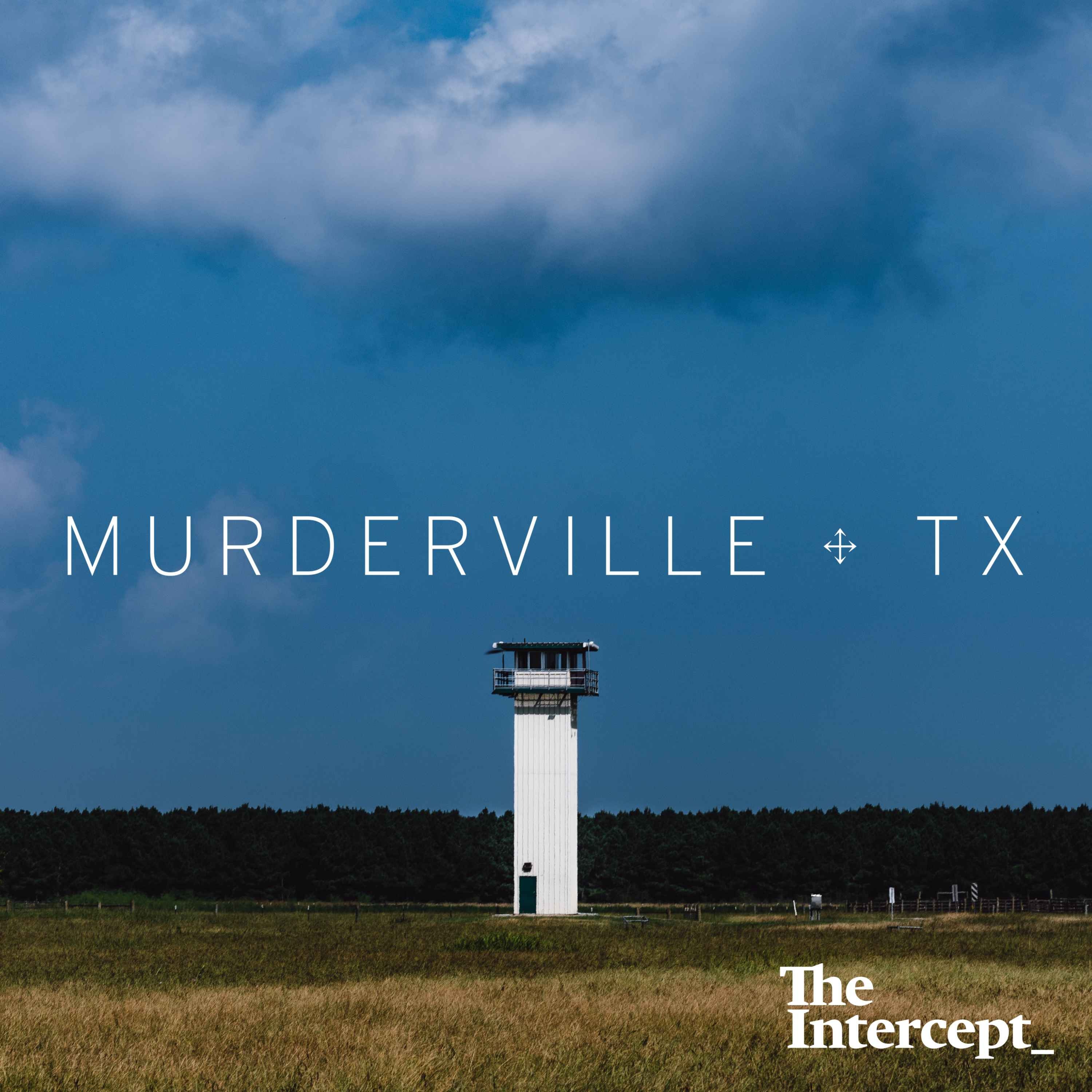
Introducing Murderville, Texas
Murderville, an investigative podcast hosted by senior Intercept reporters Liliana Segura and Jordan Smith, examines the systemic failures that lead to wrongful convictions. Season Two takes Segura and Smith to the death penalty capital of the country, Harris County, Texas, where they investigate a disturbing crime, a startling confession, and a story that doesn’t add up. To follow the series, subscribe to Murderville at Apple Podcasts or wherever you get your podcasts. Learn more at https://theintercept.com/podcasts/murderville/If you’d like to support our work, go to theintercept.com/donate — your donation, no matter what the amount, makes a real difference. Hosted on Acast. See acast.com/privacy for more information.
Little Rock’s Black Police Chief and the Campaign Against Reform
Just how strong are the forces arrayed against police reform — and how far are they willing to go? In April 2019, Keith Humphrey was appointed police chief in Little Rock, Arkansas, a Southern city with a fraught history of racial division. Among the growing number of Black police chiefs, Humphrey came in with a mandate from the new mayor to implement reforms and curtail abuses. Almost as quickly as he set about to do that work, the city’s “old guard,” the police union, and even cops under Humphrey’s own command struck back. The aim, to many observers, was simple: to oust Humphrey.This week on Intercepted: Radley Balko joins The Intercept's Ali Gharib to talk about Humphrey’s ordeal. Then Balko speaks to Little Rock civil rights attorney Mike Laux and former LRPD Lieut. Johnny Gilbert Jr. Balko, an award-winning journalist and columnist at the Washington Post, is the author of “Rise of the Warrior Cop: The Militarization of America's Police Forces” and co-author, with Tucker Carrington, of “The Cadaver King and the Country Dentist: A True Story of Injustice in the American South.”If you’d like to support our work, go to theintercept.com/join — your donation, no matter what the amount, makes a real difference. Hosted on Acast. See acast.com/privacy for more information.
“Don’t Look Up” and Fighting Capitalism With Naomi Klein
As 2022 begins, the world continues to see the effects of the climate crisis — from the severe drought in East Africa to the odd snowfall in British Columbia. But since December 5, a new film has been sounding the alarm. In Adam McKay’s “Don’t Look Up,” an allegory about the impending climate disaster, scientists discover an approaching comet that will destroy Earth. But the media, politicians, and elite in the U.S. fail at every opportunity to prevent the impending doom. The Intercept’s senior correspondent Naomi Klein joins senior writer Jon Schwarz to discuss the film, how present-day elites are failing to address the climate crisis, and the future of the climate justice movement. Klein is a professor of climate justice at the University of British Columbia and the author of many books on climate change, including her latest, “How to Change Everything: The Young Human's Guide to Protecting the Planet and Each Other.” join.theintercept.com/donate/now Hosted on Acast. See acast.com/privacy for more information.
Life After Guantánamo: “It Doesn’t Leave You”
On Tuesday, with 39 men remaining at Guantánamo Bay, the Senate Judiciary Committee held a hearing on closing the infamous military prison. This week on Intercepted: Intercept photo editor Elise Swain breaks down the horrifying story of one Yemeni man after being released from Guantánamo. After 20 years in arbitrary detention, former Guantánamo detainee Abdulqadir al Madhfari was released from a United Arab Emirates prison to his family’s care in Yemen. His freedom lasted less than a week. Suffering the mental impact of long-term detention and torture, al Madhfari fled from his own family and was captured and detained by Houthi rebels in Yemen. Swain discusses the consequences of life after Guantanamo with Mansoor Adayfi, a former detainee and author of the memoir “Don't Forget Us Here.” Mansoor calls for accountability and reparations to the men detained and tortured, describing how his life and those of others now resemble "Guantánamo 2.0." join.theintercept.com/donate/now Hosted on Acast. See acast.com/privacy for more information.
The Intercept’s Work Has Never Been More Urgent
Over the past year, Intercepted has been bringing you more stories from the people behind The Intercept’s reporting. For Giving Tuesday, we’re asking you to contribute to The Intercept so that we can continue to provide hard-hitting investigative journalism. Your help allows us to report on abuses of power and serve as an independent source of news. Please visit theintercept.com/join. Thank you for listening. Hosted on Acast. See acast.com/privacy for more information.
Kyle Rittenhouse, Ahmaud Arbery, and the Future of Right-Wing Vigilantism
EJurors in the trial of three men accused of killing Ahmaud Arbery began deliberations Tuesday. Last week, a jury acquitted Kyle Rittenhouse of all charges, including two counts of homicide. This week on Intercepted: We discuss the details of these two cases, how they differ, and the questions they raise about the normalization of violence in the U.S. On Friday, Rittenhouse, the teenager who killed two protesters and injured a third at a Black Lives Matter protest, was found not guilty on all charges. Meanwhile, the trial for three men charged with the murder of Ahmaud Arbery — Gregory McMichael, Travis McMichael, and William Bryan — was wrapping up. The Intercept's Washington Editor Nausicaa Renner is joined by George Chidi, a writer for the Atlanta Objective and contributor to The Intercept, and Robert Mackey, a senior writer for The Intercept. Renner, Chidi, and Mackey break down the Rittenhouse verdict, the video evidence presented during the trial, and bigger questions about what this means for the future of protesting, the far right, and racism in the U.S. join.theintercept.com/donate/now Hosted on Acast. See acast.com/privacy for more information.
Strike Wave: Workers Flex Their Muscle in Tight Labor Market
Since January, there have been nearly 300 strikes throughout the U.S. This week on Intercepted: a look at the labor movement in 2021. Last week, tens of thousands of Kaiser Permanente health care workers announced that they will go on strike on November 15 if a collective bargaining agreement is not reached. If they take to the picket line, they will join hundreds of thousands of other workers nationwide who have used their labor power to demand better wages and working conditions in the aftermath of the Covid-19 pandemic. We hear from Kaiser Permanente workers, and then Labor Notes’ Jonah Furman joins The Intercept’s Washington Editor Nausicaa Renner to discuss this year’s strike wave, the continued strike at John Deere, and the political implications of 2021’s rise in labor activism. join.theintercept.com/donate/now Hosted on Acast. See acast.com/privacy for more information.
Making a Killing: The Business of War Profiteering
Last month, the Democratic-controlled House voted in favor of appropriating $768 billion for the 2022 defense budget. This week on Intercepted: Senior writer for The Intercept Jon Schwarz talks with Andrew Cockburn, Washington editor of Harper’s Magazine, longtime national security journalist, and author of “The Spoils of War: Power, Profit and the American War Machine.” Cockburn and Schwarz discuss the legacy of former Secretary of State Colin Powell and how private defense companies have historically maximized profits from horrific wars. join.theintercept.com/donate/now Hosted on Acast. See acast.com/privacy for more information.
Far-Right Health Care Companies Made Millions Prescribing Unproven Covid Remedies
As the national push to vaccinate people against Covid-19 continues, hundreds of thousands of hacked documents show how a group of doctors is explicitly pushing unproven and potentially dangerous alternatives on people hesitant to follow public health authorities’ recommendations to get vaccinated, wear a mask, and socially distance. This week on Intercepted: Nausicaa Renner, The Intercept’s Washington editor, and Micah Lee, director of information security for The Intercept, discuss how a network of right-wing health care companies have been charging millions from people around the U.S. by promoting, prescribing, and selling unproven and ineffective medications for Covid-19. Lee, who received a trove of records from an anonymous hacker, was able to break down the complex network of organizations and companies involved in the operation. At the heart of it is America’s Frontline Doctors, a group of far-right doctors led anti-vaccine physician Simone Gold that promotes and prescribes unproven medications like hydroxychloroquine and ivermectin. The data Lee received not only shows how profitable the operation is, but also how wide the falsehoods pushed by this organization have spread. join.theintercept.com/donate/now Hosted on Acast. See acast.com/privacy for more information.
The Quest for Covid’s Origins
In late September, the World Health Organization announced that it had assembled a new team of scientists to revive its investigation into the origins of the virus that causes Covid-19. The new group will be tasked with examining whether the virus could have originated in a lab, months after its predecessor deemed the possibility too unlikely for serious consideration.This week on Intercepted: Intercept investigative reporters Sharon Lerner and Mara Hvistendahl join editor Maia Hibbett to discuss the competing theories on the origins of Covid-19. The Intercept obtained documents that shed new light on controversial lab experiments, raising questions about the origins of the coronavirus pandemic. With neither of the main theories -- natural spillover versus a lab leak -- yet proved true, the Intercept is seeking answers as to how much officials knew about proposed behind-the-scenes experiments. As Georgetown virologist Angela Rasmussen, a staunch critic of the lab-leak theory, said after the first WHO investigation, “There are still major stones that need to be unturned.” join.theintercept.com/donate/now Hosted on Acast. See acast.com/privacy for more information.
A Legacy of Corruption and Abuse: The Post-9/11 Immigration Megabureaucracy
More than 4,600 Haitian migrants were expelled by the U.S. government in little over a week. This week on Intercepted: Recent images of Border Patrol agents on horseback pushing back Haitians along the U.S.-Mexico border led to renewed anger at the United States’ immigration enforcement methods. Investigative reporter Ryan Devereaux explains how the U.S. immigration enforcement apparatus grew to the scale that it is today, stemming from the war on terror. Since the Department of Homeland Security’s messy beginnings, the number of Border Patrol agents has more than doubled; immigrants detained in Immigration and Customs Enforcement jails have denounced mistreatment and unsafe conditions; and the number of deportations has dramatically risen. As Devereaux outlines, since Homeland Security’s creation, this trend has continued throughout the Bush, Obama, Trump, and now Biden administrations. join.theintercept.com/donate/now Hosted on Acast. See acast.com/privacy for more information.
No Accountability for War on Terror Atrocities
The war on terror has killed nearly 1 million people and cost more than $8 trillion, according to a report by Brown University’s Costs of War Project. This week on Intercepted: Journalists Murtaza Hussain and Rozina Ali break down how the 9/11 attacks reshaped U.S. foreign and domestic policies. In the last two decades, the U.S. launched two wars, leading to millions dead and wounded. There was also a rise in unmanned drones killing innocent civilians, the use of widespread domestic and international surveillance, innocent people imprisoned, and perpetual human rights abuses and war crimes. And recently, there was a turning point in the war in Afghanistan, with the Taliban retaking the country. Hussain and Ali walk through the systematic failures across institutions — whether it be the government, military leadership, or the press — and the lack of accountability. Hosted on Acast. See acast.com/privacy for more information.
The Long-Lasting Consequences of the War on Terror
The United States flew its last military flight out of Afghanistan, ending the 20-year war in the country — the longest in U.S. history. This week on Intercepted: Journalist Spencer Ackerman discusses his new book, "Reign of Terror: How the 9/11 Era Destabilized America and Produced Trump." In 2001, the George W. Bush administration used the 9/11 attacks to launch the war on terror — an era that led to two massive wars, countless lives lost, mass domestic surveillance, the rounding up of immigrants and people of color, a strengthened security state, drone assassinations, and human rights abuses. And it's far from over, says Ackerman. Hosted on Acast. See acast.com/privacy for more information.
Afghans Try to Flee U.S.-Caused Crisis
The Taliban have taken over Afghanistan, forcing the U.S.-backed Afghan government out. This week on Intercepted: Intercept reporter Murtaza Hussain guides us through how the two-decade-long U.S. War in Afghanistan has concluded. With the U.S. having suffered what appears to be a stunning defeat, national security editor for The Intercept Vanessa Gezari, who also reported from Afghanistan for years after the U.S. war began, breaks down the historical trajectory that led to this moment. In the weeks leading up to the Taliban takeover, lines at the country's only passport office grew longer as fears of instability and violence increased. Andrew Quilty, a photographer and journalist based in Kabul, talked to people at the passport office who were trying to leave. He later describes scenes from the country, only a day after it fell to the Taliban. Hosted on Acast. See acast.com/privacy for more information.
EPA Whistleblowers Say Managers Bullied Them to Approve Dangerous Chemicals
Leaked audio reveals how chemicals hazardous to human health and the environment are fast-tracked and approved at the Environmental Protection Agency. This week on Intercepted, investigative journalist Sharon Lerner reports on how the chemical industry pressures the EPA to approve chemicals and pesticides that are dangerous to public health. Lerner speaks with whistleblowers from the agency, scientists who say their research has been manipulated by EPA managers to downplay the dangers of chemicals, including extreme cases that fall under the category of "hair on fire." Lerner also discusses how the agency has approved chemicals and pesticides — at the behest of companies — without proper research into their toxicity, or worse, even though scientists point to the chemicals’ dangers. But this is not new; it follows the long, historical trajectory of the EPA, including the “revolving door” between the agency and the chemical industry. Hosted on Acast. See acast.com/privacy for more information.
American ISIS Offers a Firsthand Look Inside the Caliphate
For more than six months, The Intercept’s Trevor Aaronson communicated with Russell Dennison, an American man who traveled to Syria and joined the Islamic State. This week on Intercepted: Aaronson, an investigative reporter, discusses American ISIS, the newest Audible Original podcast documentary from The Intercept and Topic Studios, in which he chronicles the story of Russell Dennison, one of the first American citizens to join ISIS and fight with the group in Syria. Almost daily, Dennison communicated with Aaronson, sending him hours of audio chronicling his conversion to Islam, his turn to extremism, and his journey to Syria. Aaronson talks with Intercept reporter Murtaza Hussain about his reporting and what he learned from Dennison. Hosted on Acast. See acast.com/privacy for more information.
Corporate Counterinsurgency Against Line 3 Pipeline Resistance
Water protectors are traveling in growing numbers to stand with the Anishinaabe-led movement to stop the construction of Line 3, a tar sands oil pipeline.This week on Intercepted: Intercept reporter Alleen Brown takes us to northern Minnesota, a flashpoint in the fight to halt the expansion of the fossil fuel industry as the climate crisis deepens. Direct actions and other protests against Line 3 are just heating up and more than 500 people have already been arrested or issued citations. Opponents of the Line 3 pipeline are urging the Biden administration to intervene to stop construction, but his administration recently moved to defend the pipeline. Water protectors are being greeted by an intensifying police response and what scholars are calling a corporate counterinsurgency campaign led by the pipeline company, Enbridge. Hosted on Acast. See acast.com/privacy for more information.
The Crisis of Care
Domestic workers — nannies, house cleaners, and care workers — are one of the fastest-growing labor groups in the U.S. They are also some of the most undervalued and least-protected workers, a factor further exacerbated by the coronavirus pandemic.This week on Intercepted: Vanessa Bee and Murtaza Hussain interview Ai-jen Poo, co-founder and executive director of the National Domestic Workers Alliance, about the impact of Covid-19 on these vulnerable yet essential workers. They also discuss how the exclusion of labor protections for domestic workers has roots in slavery and how President Joe Biden’s jobs plan could ensure historically denied rights. And we hear stories from domestic workers themselves as they organize for their rights on International Domestic Workers Day in New York City. Hosted on Acast. See acast.com/privacy for more information.
Stealing Children to Steal the Land
ELast month, the Tk’emlúps te Secwépemc First Nation uncovered a mass grave of 215 children on the grounds of a former residential school in British Columbia, Canada. This week on Intercepted: Naomi Klein speaks with residential school survivor Doreen Manuel and her niece Kanahus Manuel about the horrors of residential schools and the relationship between stolen children and stolen land. Doreen’s father, George Manuel, was a survivor of the Kamloops Indian Residential School, where unmarked graves of children as young as 3 years old were found. Kanahus’s father, Arthur Manuel, was also a survivor of the Kamloops residential school. This intergenerational conversation goes deep on how the evils of the Kamloops school, and others like it, have reverberated through a century of Manuels, an experience shared by so many Indigenous families, and the Manuel family’s decades long fight to reclaim stolen land.Warning: This episode contains highly distressing details about the killing, rape, and torture of children. If you are a survivor and need to talk, there is contact information in the show notes. If you are a former residential school student in distress, or have been affected by the residential school system and need help, you can contact the 24-hour Indian Residential Schools Crisis Line: 1-866-925-4419Additional mental-health support and resources for Indigenous people are available here. Show notes:Doreen Manuel can be found @DoreenManuel1 and www.runningwolf.ca Kanahus can be found at @kanahusfreedom and www.tinyhousewarriors.com“Unsettling Canada: A National Wake Up Call,” by Arthur Manuel“The Reconciliation Manifesto: Recovering the Land, Rebuilding the Economy,” by Arthur Manuel“From Brotherhood to Nationhood: George Manuel and the Making of the Modern Indian Movement,” by Peter McFarlane with Doreen Manuel, afterword by Kanahus Manuel“The Fourth World: An Indian Reality,” by George Manuel and Michael Posluns“These Walls” directed by Doreen Manuel Hosted on Acast. See acast.com/privacy for more information.
Killed in the Darkness
EWhen a police officer shoots and kills someone — and there aren’t any witnesses — can we trust the police to investigate themselves?This week on Intercepted: Antoine and Tammy Bufford's son, Cortez, was shot and killed by a St. Louis police officer in 2019. Nearly two years later, the city is still investigating Cortez’s case. No charges have been filed. And the Bufford family is still looking for answers. The police kill more people per capita in St. Louis than in any other American city. Seventy-two percent of these people are Black, like Cortez.The Chicago-based Invisible Institute recently partnered with The Intercept to examine the circumstances of Cortez’s death. Their resulting investigation, reported by Alison Flowers and Sam Stecklow, sheds new light in the search for truth about this police killing. Hosted on Acast. See acast.com/privacy for more information.
Understanding the History of Black Rebellion
In the year since the murder of George Floyd in Minneapolis and the mass mobilization of protest that followed — the largest collective gesture against police violence in this country’s history — there’s been a constant and energized call to defund or outright abolish policing as we know it in the U.S. This week on Intercepted: The U.S. has been grappling with this same cycle of violence for more than nearly a century: A Black person is killed by police, and protests follow. In 1968, the U.S. tried to find out why this kept happening in cities and small towns across the country with an unprecedented frequency. President Lyndon B. Johnson assembled the Kerner Commission to study the extraordinary violence and destruction of uprisings in cities like Newark, New Jersey, and Detroit the year prior. Their findings should surprise no one. Systemic and institutionalized racism was to blame. Structural white supremacy maintained two societies: “One Black, one white. Separate and unequal.”Historian Elizabeth Hinton, author of “America on Fire: The Untold History of Police Violence and Black Rebellion since the 1960s,” argues that protestors were not rioters but rather political participants in rebellion against their own poverty, inequality, and constant surveillance and brutality by the police. Hosted on Acast. See acast.com/privacy for more information.
Big Pharma’s Deadly Covid Vaccine Monopoly
A week ago, the Biden administration announced support for waiving intellectual property protection for Covid-19 vaccines. In response, Bio, a trade association representing biotechnology companies, issued a statement saying, "The United States has unfortunately chosen to set a dangerous precedent with these actions.” This week on Intercepted: Intercept investigative journalists Sharon Lerner and Lee Fang discuss how the pharmaceutical industry has ruthlessly fought to maintain IP protection from the beginning of the pandemic despite global calls to share knowledge and know-how to end the crisis as quickly as possible. By claiming the same monopoly IP rights on Covid-19 therapeutics and vaccines as other drugs, the industry has perpetuated a market of scarcity and profiteering when a collaborative global response is needed. Hosted on Acast. See acast.com/privacy for more information.
Joe Biden's War Powers
If you went back and looked at every foreign policy decision Joe Biden made — every single one — would you be any closer to understanding him? This week on Intercepted: Our editor-at-large and senior correspondent Jeremy Scahill and reporter Murtaza Hussain examined the past 50 years of Biden’s decisions, poring over hundreds of pages of archival copies of the congressional record and reviewing declassified CIA documents for mentions of Biden. The investigation is called “Empire Politician,” and it’s the result of this painstaking research into Biden’s historical record. Jeremy and Murtaza also analyze Biden’s recent pledge to withdraw forces from Afghanistan by September this year. Hosted on Acast. See acast.com/privacy for more information.
The Border Patrol’s Abdication in the Sonoran Desert
While much of the public’s attention has been focused on the thousands of unaccompanied minors currently in U.S. custody, U.S. Customs and Border Protection has quietly begun a policy of dropping off asylum-seekers in remote border towns along the deadliest stretches of the U.S.-Mexico divide.This week on Intercepted: Intercept reporter Ryan Devereaux travels to the Arizona cities of Ajo and Tucson, speaking to migrants and local volunteers about the dangers and uncertainty people are facing. Devereaux investigates how the Biden administration’s continuation of Trump-era policies like Title 42, which has been used to expel more than half a million migrants in the past year, jeopardizes the safety of asylum-seekers and exacerbates the humanitarian crisis at the border. Hosted on Acast. See acast.com/privacy for more information.
Trump's EPA Helped Erase Records of Almost 270,000 Pounds of Carcinogenic Pollution
The Environmental Protection Agency under the Trump administration invited companies to retroactively amend emissions records of a deadly carcinogenic chemical. This week on Intercepted: Investigative reporter Sharon Lerner explains how 270,000 pounds of the chemical ethylene oxide vanished from the public record right after the EPA determined that it was more toxic than previously known. Ethylene oxide is a colorless and odorless gas used to produce many consumer goods and used extensively as an agent in the sterilization of medical equipment.Despite the EPA’s transition to new leadership under the Biden administration, regulatory capture is a persistent obstacle in the agency’s ability to protect public health and the environment. And as Lerner reports, a disproportionate number of poor communities and communities of color have yet to be alerted to the fact that elevated levels of cancer-causing ethylene oxide permeate the air they breathe. We also hear from a group of Texas women that believes their breast cancer diagnoses are linked to exposure to the chemical. Hosted on Acast. See acast.com/privacy for more information.
Hope Is a Discipline: Mariame Kaba on Dismantling the Carceral State
Jury selection for the murder trial of Minneapolis police officer Derek Chauvin continues after the city announced a $27 million settlement with George Floyd’s family. This week on Intercepted: Organizer and educator Mariame Kaba talks to lead producer Jack D’Isidoro about the case, efforts born out of the uprisings of this past summer, and the role hope plays in building a long-term abolitionist movement. Whether she’s breaking down the historical foundations of the carceral state or laying out a framework for mutual aid, Kaba works tirelessly to reimagine and create a system not rooted in punishment and oppression. They also discuss her new book “We Do This ’Til We Free Us: Abolitionist Organizing and Transforming Justice.” Hosted on Acast. See acast.com/privacy for more information.
The Life and Death of an Anti-Fascist
EFew anti-fascists were as influential on Portland’s recent protest scene as Sean Kealiher. He rarely missed a protest, and he would have been front and center last summer when the insurrectionary activism he had long advocated for became a staple on Portland streets. But he wasn’t. In October 2019, at 23, he was killed in front of the state Democratic Party building, which protesters vandalized on Inauguration Day this year. Kealiher’s death, which was ruled a homicide, shocked Portland’s activist community. But no arrests were ever made, and no persons of interest were ever named. Those in Kealiher’s circle saw his unsolved murder as further confirmation of the police’s double standards and antagonism toward the left.This week on Intercepted: While it was largely former President Donald Trump who elevated antifa, short for anti-fascists, to a household name, generations of Portland anti-fascists have for decades opposed far-right, racist extremists as well as police. Reporter Alice Speri dives into Kealiher’s ideology and murder, Portland’s legacy of anti-fascist activism and its deeply intertwined history of white supremacist violence, and how law enforcement’s obsession with antifa led to intelligence failures like U.S. Capitol riot. Hosted on Acast. See acast.com/privacy for more information.
The Democrats’ Long War on Immigrants
As Joe Biden took the oath of office this January, Guatemalan security forces at the Honduran border thwarted thousands of U.S.-bound migrants. While decades-long American imperialism has facilitated displacement throughout the region, the U.S. is increasingly outsourcing its deadly immigration policy. This week on Intercepted: The Biden administration announced it will begin to process the 25,000 asylum seekers stuck in squalid border town camps as part of Trump’s “Remain in Mexico” policy. But immigration advocates fear President Biden will not reverse the bipartisan trend of his predecessors to further militarize the southern border and expand the reaches of immigration enforcement — policies that have led to more migrant deaths and detention in recent decades. Despite Biden’s executive actions to reverse the Muslim ban, initiate migrant family reunification, and fortify DACA, his administration has indicated that it will continue to support Mexican and Guatemalan armed enforcement of their borders on behalf of the U.S.TThe activist and writer Harsha Walia joins Intercepted to discuss the Democratic Party’s fundamental role in shaping the long arc of U.S. border policy and why the practice of “prevention through deterrence” will continue to incur more suffering and preventable deaths. She also presents an abolitionist view of a world without borders. Walia’s most recent book is “Border and Rule: Global Migration, Capitalism, and the Rise of Racist Nationalism.” Hosted on Acast. See acast.com/privacy for more information.
Inside China’s Police State Tactics Against Muslims
A massive police database obtained by The Intercept provides groundbreaking insight into the pervasive surveillance state operated by the Chinese government to repress Uyghurs and other ethnic minorities. This week on Intercepted: A new report from The Intercept provides a raw glimpse into the persecution and sweeping internment of Muslims in the city of Ürümqi, the largest city in northwest China’s Xinjiang region.The report also confirms many of the anti-democratic systems already in place: child separation and carceral re-education, installation of surveillance cameras inside private homes and mosques, immense detention centers, constant police checkpoints, widespread collection of electronic and biometric data, demolition of Uyghur cemeteries, and the forced abortion and sterilization of women.Although the United States has surveilled, abused, rendered, and imprisoned Muslims for decades, former Secretary of State Mike Pompeo declared that China is committing “ongoing” genocide. His successor, Antony Blinken, agreed with that characterization during his confirmation hearing in January.The Intercept’s Ryan Tate, technology reporter Yael Grauer, and anthropologist Darren Byler analyze the unprecedented scale and sophistication of the surveillance campaign detailed in the database. We also hear Uyghur linguist and poet Abduweli Ayup tell the story of his 15-month detainment for operating a Uyghur-language kindergarten in Xinjiang. Hosted on Acast. See acast.com/privacy for more information.
Joe Biden Is President, but Donald Trump’s Legacy of Violence Looms
Now that Donald Trump is gone from office, what’s next? This week on Intercepted: There are a slew of unanswered questions about the siege of the Capitol. Americans are being asked to believe that the national security apparatus — the same one that charged nearly 200 people en masse, including journalists and observers, with felony rioting when Trump was inaugurated in 2017, and has leveled federal charges including terrorism charges on Black Lives Matter protesters — failed to see the threat to the U.S. Congress posed by right-wing extremists, even as people organized across social media platforms in plain sight.In response to the Capitol siege, Joe Biden and some members of Congress are looking to expand new domestic terrorism laws. They are using the exact same playbook deployed by the Bush-Cheney White House after 9/11 and embraced across the aisles in Congress. This is a dangerous moment where policies with very serious implications could be rushed through in the heat of the moment.The Intercept’s Ryan Devereaux, Ken Klippenstein, Alice Speri, Natasha Lennard, Sam Biddle, Mara Hvistendahl, and Murtaza Hussain share their thoughts on the transition of power from Trump to Biden that is happening today. Hosted on Acast. See acast.com/privacy for more information.
BONUS: Universal Enemy — Scholar Daryl Li on the Relationship Between Transnational Jihadists and U.S. Empire
In this special bonus episode of Intercepted, we take an in-depth look at one of the most consequential eras of modern history, the late 1980s and early 1990s. The Berlin Wall fell in 1989, as the Soviet Union crumbled. The Russian occupation of Afghanistan came to an end, thanks in no small part to the covert and overt involvement of the United States. Bill Clinton brought an end to 12 years of Republican rule, defeating the former CIA director George HW Bush. And with Clinton’s two terms in office came a new spin on US militarism across the world, the notion of liberal so-called humanitarian intervention. The propaganda pitch was that the United States would use its military force as a sort of global police officer whose violent actions were wrapped in the justification that US missiles and bombs and troop deployments were serving a greater good. Nowhere was this more boldly asserted than in the wars in Yugoslavia, which stretched from the early 1990s all the way through 2008 when the US officially recognized the independence of the Serbian province of Kosovo. The years that ushered in the declaration of the end of the Cold War would have a significant impact on global relations and warmaking to this day. University of Chicago scholar Daryl Li has written a meticulously documented book that seeks to understand the trends that emerged from this era, with a focus on putting into context the movement of foreign fighters from country to country. The book is called “The Universal Enemy: Jihad, Empire, and the Challenge of Solidarity.” Li highlights the parallels between transnational jihadists, UN peacekeeping missions and socialist non-alignment and he examines the relationship between jihad and US empire. Hosted on Acast. See acast.com/privacy for more information.
The CIA’s Afghan Death Squads
A U.S.-backed militia that kills children may be America’s exit strategy from its longest war reported by journalist Andrew Quilty. Hosted on Acast. See acast.com/privacy for more information.
AOC on Ending the Pelosi Era, Biden’s Corporate Cabinet, and the Battle for Medicare for All
President-elect Joe Biden’s Cabinet is being constructed in significant part from corporate Democrats and Obama-era national security hawks with a small side order of more progressive figures. This week on Intercepted: As Nancy Pelosi runs unopposed in her party for another term as speaker of the House, Congress has failed for many months to deliver meaningful aid to millions of Americans suffering through the Covid-19 pandemic. But lawmakers moved swiftly to approve the National Defense Authorization Act, an overwhelmingly bipartisan military and war spending bill. New York Rep. Alexandria Ocasio-Cortez was one of just 37 Democrats to vote against the NDAA, and she is increasingly vocal in her criticism of her party’s leadership. In a wide-ranging interview with Intercepted, Ocasio-Cortez discusses the fight for Medicare for All, the battle for the future of the Democratic Party, red-baiting and the 2020 election, Biden’s emerging Cabinet, disaster profiteering in Puerto Rico, the weaponizing of the Espionage Act, and more. Then, The American Prospect’s Executive Editor David Dayen breaks down the negotiations over another round of Covid-19-related “stimulus” legislation, explains the failures of the Democrats and the viciousness of the Republicans on Capitol Hill, and discusses the battle over Biden Cabinet appointments. Hosted on Acast. See acast.com/privacy for more information.
State-Sanctioned Killers: As Trump Expedites Executions at Home, Biden Builds Team for Wars Abroad
EDonald Trump is now in the dying days of his presidency and is spending those days promoting the myth that he actually won the November election in a landslide. This week on Intercepted: As the clock ticks toward Joe Biden’s inauguration, Trump and Attorney General William Barr have been on a grotesque killing spree, green-lighting executions of federal prisoners at breakneck pace. The Intercept’s Senior Reporter Liliana Segura reports on how Trump is on pace to authorize more federal executions than in the past 67 years combined. She discusses several specific cases, including that of Brandon Bernard who is scheduled to die on Thursday.As Biden builds his Cabinet, his national security team is looking a lot like a replay of the Obama-Biden militarist coterie. Biden’s nominees include notorious hawks who were central to the genocidal war in Yemen, the weapons sales to Saudi Arabia, the regime-change war in Libya, the war in Syria, the assassination and drone programs, and the use of economic sanctions as a deadly weapon. Several of Biden’s nominees, including his pick for defense secretary, have spent years on boards of defense corporations, profiting from military contractors and peddling influence in Washington, D.C. on behalf of the war industry. Kelley Vlahos of the American Conservative and the transpartisan Quincy Institute discusses Biden’s national security team and the largely continuous arc of U.S. policy through Republican and Democratic administrations. Hosted on Acast. See acast.com/privacy for more information.
BONUS: Naomi Klein on Fighting Trump’s Tin Pot Coup; Peace Activists Face Federal Prison
The Intercept’s Senior Correspondent Naomi Klein argues why Democrats should forcefully defend the integrity of votes and condemn coup-plotting for what it is, and stop from blowing a mandate they’ve won Associate Producer Elise Swain follows the sentencing hearings for peace activists, known as Kings Bay Plowshares 7, who face federal prison for nonviolent protest. Associate Producer Elise Swain follows the sentencing hearings for three of the Kings Bay Plowshares Seven peace activists. Despite a lethal pandemic ravaging prison populations, Carmen Trotta and Martha Hennessy are among those due to report to prison within the next few months for their nonviolent protest against nuclear weapons. Hosted on Acast. See acast.com/privacy for more information.
American Mythology: The Presidency of Donald Trump (Part Seven: Climate Carnage)
In his denial of science, Donald Trump has guided the U.S. far past the tipping point of mitigating the unfolding existential threat of the climate crisis. Under both Democratic and Republican administrations over decades, U.S. climate policy has fallen far short of the urgent action scientists have demanded. In crucial ways, Donald Trump has been far more dangerous than his deeply-flawed predecessors. Trump seems to actually revel in his dangerous denial of fundamental and scientifically indisputable realities. In part seven of “American Mythology,” we examine how the Trump administration has catapulted the corporate-fueled deregulation crusade dramatically forward. In the past four years, Trump has undone or weakened up to 70 rules and regulations aimed at protecting the environment, while another 30 policy changes are still underway. The majority of these 100 changes are being done at the Environmental Protection Agency, which is currently headed by a former lobbyist for the coal industry who fought the Obama administration’s attempts at environmental regulations. Trump has overseen the largest rollback of federal land protection in U.S. history, opening environmentally-sensitive areas for corporate and industrial development and has portrayed himself as opening up “God’s great creation” to mining and extraction, freeing it from government protections. We analyze the corporate and industry executives and lobbyists Trump has placed in key environmental positions, his withdrawal from the Paris Climate Accord, and hear from environmentalists and scholars on how to proceed if the earth is to remain inhabitable. Hosted on Acast. See acast.com/privacy for more information.
American Mythology: The Presidency of Donald Trump (Part Six: The Looting of the Nation)
Donald Trump has run the White House like his family business with one primary aim: to enrich his brand, his family and his cronies. In part six of American Mythology, we examine how Trump and the GOP — at times with help from the Democrats — have opened the gates to the federal feeding trough for corporate greed and unaccountability. Throughout the 2016 campaign Trump claimed that, unlike Hillary Clinton, he was not beholden to corporate or special interests and that he would uplift the working class. Once in power, he appointed record numbers of Goldman Sachs veterans to his administration, passed sweeping tax cuts for the wealthiest Americans, attacked organized labor, and chiseled away at an already abysmal health care system. Unprecedented inequality and stagnant wages have persisted. Fewer Americans currently have health insurance than when Trump was sworn into office. These sharp economic injustices have come into clear focus during the Coronavirus pandemic: Corporate robber barons like Jeff Bezos have increased their wealth by billions while 40 percent of Americans say they couldn’t withdraw $400 in the event of an unexpected emergency. In America, eight million more people have descended into poverty in recent months, as the wealth of billionaires grew by $845 billion dollars. Hosted on Acast. See acast.com/privacy for more information.
American Mythology: The Presidency of Donald Trump (Part Five: Courting Corporate Theocracy)
While all eyes remain on the presidential election in November, Donald Trump has already secured a multi-generational victory with his radical reshaping of the judicial branch of government. In part five of “American Mythology,” we look at how the Trump administration has outsourced hundreds of federal judicial appointments to the right-wing Federalist Society and Heritage Foundation. The appointments made during the past four years will impact almost every aspect of life in the U.S.: health care, marriage equality, worker’s rights, freedom of speech and press, guns, racism, women’s rights, war powers, and others. We dig into the ideologies and organizations at the center of Trump’s judicial strategy, the influence of the Koch brothers, and the corporate and social agenda the GOP wants their new judges to impose. The stakes go well beyond the 2020 election: The impact of an extreme right-wing Supreme Court majority not only threatens reproductive rights, it could shut down any progressive attempts at lawmaking for decades to come. In some ways, confirming Judge Amy Coney Barrett is more important to the GOP than Trump winning reelection. Hosted on Acast. See acast.com/privacy for more information.
American Mythology: The Presidency of Donald Trump (Part Four: "You Think Our Country's So Innocent?")
On matters of war, Donald Trump has consistently spoken and acted in contradictory and unorthodox ways. He campaigned in 2016 with a mixed message of attacking the legacy of the Iraq war and U.S. military adventurism, while simultaneously pledging to commit war crimes and promote imperialism as a matter of policy. On part four of American Mythology, we take an in-depth look at Trump’s war and national security policies. He escalated drone strikes in Somalia and Afghanistan, authorized troop surges and massive bombings in Iraq, launched cruise missile strikes in Syria, and threatened to “totally destroy North Korea.” On the other hand, he signed a deal with the Taliban to withdraw U.S. forces, attempted to end the Korean War, and claims to have fired John Bolton to avoid being in “World War 6.” In assessing Trump’s war policies, we seek to navigate past the rhetoric from Trump and his critics and examine his place in the history of U.S. presidents. In many ways, Trump has represented a continuity of U.S. policy with largely tactical differences from his predecessors. Overall, Trump built on some of the worst excesses of the Bush/Cheney administration and took advantage of the weak guardrails left behind by the Obama administration. Hosted on Acast. See acast.com/privacy for more information.
American Mythology: The Presidency of Donald Trump (Part Three: The Neo-Confederate in Chief)
EOn the campaign and as president, Donald Trump has worked hard to resurrect the George Wallace strand of U.S. politics: He has consistently used racist and bigoted language to accompany his policy onslaughts. In part three of American Mythology, we examine the ways Trump has used racialized fear-mongering and incitement in both word and deed; from his Muslim ban, to his denigration of immigrants, to his attacks on the Black Lives Matter Movement. Trump has openly encouraged police to act extrajudicially, brutally, and with impunity, while simultaneously emboldening violent white nationalists and militias. He has even defended a young man accused of shooting and killing BLM protesters. As he campaigns for reelection, Trump is hedging on many of his 2016 tactics, but now is backed by the extraordinary power of the executive branch. The Justice Department, virtually privatized by Trump, appears to be coordinating its official functions with his reelection effort. Trump is intensifying his voter disenfranchisement operation and he has threatened to remain in office regardless of the election results. We dig deep into Trump, race, and the wars at home. Hosted on Acast. See acast.com/privacy for more information.
American Mythology: The Presidency of Donald Trump (Part Two: Administration of Xenophobia)
In the nearly four years that Trump has been in office, his administration has transformed U.S. immigration at a breakneck pace and governed with an overtly xenophobic posture toward immigrants. In episode two of our audio documentary series “American Mythology,” we chronicle the Trump administration’s war against immigrants from the southern border to the Muslim ban and beyond. Trump has already implemented more than 400 changes to immigration rules and regulations, changes that will impact millions of people. But to portray the extremism of this administration on immigration as an entirely radical departure from decades of policy under Democrats and Republicans is inaccurate. While Trump has wielded his signature cruelty in implementing new policy and has made some far-reaching changes, significant aspects of his policy are rooted in the agendas of his predecessors, from Bill Clinton to George W. Bush and Barack Obama. Trump inherited an already punitive and authoritarian deportation machine constructed by both his Democratic and Republican predecessors and has taken it to new extremes. This episode offers an overview of what has changed and what has remained the same, featuring the voices of lawyers, immigrants, activists, journalists, and others who are on the front lines of the battle over immigrant rights. Hosted on Acast. See acast.com/privacy for more information.
American Mythology: The Presidency of Donald Trump (Part One: Manufacturing the Carnage)
EDonald Trump is often portrayed as an aberration of U.S. history, an outsider who seized power and is intent on destroying democracy as we know it. In the premiere episode of American Mythology, we examine the ways that Trump has proven to be a particularly dangerous autocrat who doesn’t believe in any semblance of a democratic process. But that story cannot be told without also exploring how various U.S. systems and the policies of Trump’s predecessors carved the way for many of his most dangerous actions. Featuring interviews with lawmakers, journalists, activists and dissidents, world renowned historians, and constitutional scholars and lawyers on the front lines of scores of battles against the Trump administration, this episode offers an overview of how the Republican Party has embraced Trump as a Trojan horse to ram through its most extreme — and long-standing — policy agendas. It also probes the role of Democratic Party leaders in facilitating some of Trump and the GOP’s most dangerous policies and lays out the stakes of the 2020 presidential election, which Trump is already calling illegitimate. Hosted on Acast. See acast.com/privacy for more information.
BONUS: A Story of Asylum, and Musician Lido Pimienta on Her New Album "Miss Colombia"
On this bonus episode of Intercepted, journalist John Washington, whose latest reporting for The Intercept expanded on an explosive new whistleblower complaint alleging that mass hysterectomies occurred at an ICE detention facility, reads an excerpt from his new book, “The Dispossessed: A Story of Asylum and the US-Mexican Border and Beyond.” And the Colombian-Canadian musician Lido Pimienta talks about her latest album, Miss Colombia, and how the 2015 Miss Universe Pageant inspired her to look critically at anti-blackness in Colombia. She’s currently organizing a relief fund for Colombian families affected by Covid-19, which you can learn more about here.A very special thanks to our friend Francisco Bravo for his help with this episode. Hosted on Acast. See acast.com/privacy for more information.
Escape From the Nuclear Family: Covid-19 Should Provoke a Re-Think of How We Live
As Washington cuts off desperately needed aid to the unemployed, millions of families face the reality that many K-12 schools likely aren’t reopening, and young adults look ahead to a bleak future, reality is setting in that the Covid 19 crisis was not a blip. This week on Intercepted: guest host Naomi Klein argues that it’s time for some big bold thinking about how we can safely live, work, and learn with the virus — and maybe even enjoy ourselves. She takes us to visit friends in Oakland, California who have been living in a multi-family housing compound for years. Longtime environmental justice organizer and co-founder of Movement Generation Gopal Dayeneni explains that living in a democratic community with friends, rather than a single-family home, has meant far more capacity to deal with the labor of lockdown, and far less isolation for everyone. Klein is also joined by Rutgers University- Newark historian Neil Maher to discuss how a reboot of the New Deal-era Civilian Conservation Corps could provide opportunities for young adults to find work, battle climate disruption, and live in their own communities of peers. Hosted on Acast. See acast.com/privacy for more information.
Weak State: How the Coronavirus Pandemic Exposed America’s Dysfunctional Democracy
As Donald Trump promises the pandemic will “disappear,” the U.S. simultaneously grapples with a public health disaster, economic collapse, and a social crisis. This week on Intercepted: The Intercept’s Murtaza Hussain is joined by military expert and anthropologist David Kilcullen. He discusses the global national security implications unleashed by the coronavirus and the decline in U.S. dominance and the liberal international system. Kilcullen also examines the catastrophic consequences that could come from rising tensions within the country and between the U.S. and China. Hussain is also joined by Indian writer Pankaj Mishra, author of many books, including,“From the Ruins of Empire: The Intellectuals Who Remade Asia.” Mishra lays out how the rise of free market ideology in the U.S. and Britain has undermined democracy and diminished social protections for ordinary people. He dismisses the idea of a Joe Biden administration as any departure from the status quo and describes how hope lies in the power of nonviolent social movements. Hosted on Acast. See acast.com/privacy for more information.
The Revolutionary Life of Paul Robeson: Scholar Gerald Horne on the Great Antifascist Singer, Artist and Rebel
As Trump vows to smash leftist movements, we take a comprehensive look at the life of the revolutionary Black socialist, antifascist, and artist Paul Robeson. University of Houston historian Dr. Gerald Horne, author of “Paul Robeson: The Artist as Revolutionary,” discusses Robeson’s life from his early years to his time in Europe on the brink of a fascist war. The son of an escaped slave, Robeson rose to international fame as a singer and actor, but committed himself to the liberation of oppressed people across the globe and was a tenacious fighter for the freedom of Black people in the U.S. Robeson was heavily surveilled by the FBI and CIA, dragged before the House Un-American Activities Committee and was stripped of his passport by a U.S. government afraid that he would become a “Black Stalin.” Hosted on Acast. See acast.com/privacy for more information.
An Interview with Nancy Pelosi Challenger Shahid Buttar and a Look at the History of Fascist Movements in the U.S.
A bipartisan coalition of lawmakers led by Rep. Liz Cheney, daughter of Dick Cheney, is trying to stop Trump from withdrawing troops from Afghanistan. This week on Intercepted: As the longest continuous war in U.S. history enters its 19th year, Congressional Democrats and Republicans are joining together in an effort to keep the war going. Constitutional lawyer and activist Shahid Buttar, who is challenging House Speaker Nancy Pelosi for her Congressional seat in San Francisco, alleges that Pelosi’s leadership during the Trump era has amounted to enabling Trump at his worst while simultaneously working to block the potential good that could come from ending the Afghanistan war. Buttar also discusses his views on surveillance, the climate crisis, the role of large tech companies in violating human rights, and he assesses the state of the Democratic Party ahead of the November elections.In a spate of recent speeches, Donald Trump has portrayed himself as a noble warrior in the battle to protect America’s heritage. He is consistently railing against a long list of perceived enemies, including anarchists, Marxists, immigrants, while preemptively casting doubts on the validity of the 2020 election. And as he campaigns, Trump is increasingly operating — whether intentional or not — from a playbook that is eerily reminiscent of the America First movement in the United States that operated in the 1930s. These were allies of Germany’s Nazi Party, the most famous amongst them was famed pilot Charles Lindbergh. California State University historian Bradley W. Hart, author of “Hitler's American Friends: The Third Reich's Supporters in the United States,” discusses the history of the movements and figures in U.S. history who supported Hitler and the Third Reich in the years before and during World War II. Hart also discusses Hitler’s affection for Henry Ford and details the rise and fall of radical rightwing radio host Fr. Charles Coughlin whose broadcasts into tens of millions of homes built support for fascism in the U.S. Hosted on Acast. See acast.com/privacy for more information.
Confederacy Inc.: Donald Trump, Racist Police, and the Whitewashing of History
As cases of Covid-19 skyrocket across the U.S., Trump passionately focuses on defending the legacy of the Confederacy and white supremacist monuments. Native American historian Nick Estes explains the crimes against Indigenous people committed by the four presidents whose faces are carved into Mount Rushmore.Black Lives Matter demonstrations against police brutality and systemic racism continue across the U.S. as calls to defund the police intensify. University of Iowa historian Simon Balto, author of the new book “Occupied Territory: Policing Black Chicago from Red Summer to Black Power,” lays out the origins of the Chicago Police Department as a moralistic enforcement agency in the late 1800s and its transformation into a militarized terror force deployed to control Black people in Chicago while simultaneously crushing movements for workers rights, tenant rights, and basic human rights. Hosted on Acast. See acast.com/privacy for more information.
The Rebellion Against Racial Capitalism
Dr. Robin D.G. Kelley, a distinguished history professor at UCLA, explains why he believes the current abolitionist movement has the potential to fundamentally change the country and offers a historical analysis of the weaponization of racial capitalism throughout U.S. history. He also tells the story of the Black-led communist party of Alabama in the aftermath of the Great Depression and the racist roots of U.S.-style policing.As Attorney General William Barr continues to preside over a Justice Department being wielded as a political and legal weapon to defend Trump, Hina Shamsi of the ACLU explains the dangerous use of military and intelligence surveillance systems to spy on activists, the characterizations of activists as terrorists, and discusses the ongoing drone strikes overseas. Hosted on Acast. See acast.com/privacy for more information.
Ruth Wilson Gilmore Makes the Case for Abolition (Part 2)
Chenjerai Kumanyika, assistant professor of journalism and media studies at Rutgers University, hosts a special two part discussion. Kumanyika is co-host of the podcasts Uncivil and Scene on Radio. He is an organizer with 215 People’s Alliance, and the Debt Collective. He is joined for this special episode of Intercepted by the iconic geographer and abolitionist Ruth Wilson Gilmore, author of "Golden Gulag: Prisons, Surplus, Crisis, and Opposition in Globalizing California." Gilmore is one of the world’s preeminent scholars on prisons and the machinery of carceral punishment and policing. In this discussion, she offers a sweeping and detailed analysis of the relentless expansion and funding of police and prisons, and how locking people in cages has become central to the American project. Gilmore offers a comprehensive road map for understanding how we have arrived at the present political moment of brutality and rebellion, and she lays out the need for prison abolition and defunding police forces. Hosted on Acast. See acast.com/privacy for more information.