
The Innovation Show
771 episodes — Page 1 of 16
Eric von Hippel on Systems of Use and Why Users Out-Innovate Firms
EP 673 Genius at Scale: Linda Hill on Architects, Bridgers and Catalysts of Innovation
Henry Mintzberg: Who Ever Measured Management? | Bust Those Management Myths
AI Value Gap | Why AI Investments Fail to Pay Off | David Rogers
EP 670 Alexander Osterwalder on the Value Stack: 6 Patterns of Value Creation
EP 669 Alex Osterwalder: How to Use AI to Augment Value Proposition Design (Without Creating AI Slop)
How to Get Leadership to Back Your Idea Robert Burgelman on Intel
EP 667: David Bland on DuPont, Qnity and the Power of Assumptions Mapping
Ep 666: Shuo Chen — Fractional Founders, Frontier Firms and Why Enterprise Data Is AI's Gold
EP 665 Paul Nunes — Motorola, Combinatorial Innovation and the Treasure in the Trash
Dov Baron — The Art of Belonging and Identity Addiction
Ep 663: Alex Osterwalder — Why the Core Business Kills Innovation (Explore vs Exploit, Part 3)
Alex Osterwalder — Value Proposition Design in the Age of AI (Part 2)
Alex Osterwalder — Which Projects to Fund and Which to Kill
Antonio Nieto-Rodriguez — Powered by Projects and the Project-Driven Organization
Rita McGrath & Sangeet Paul Choudary — Rule Makers, Rule Takers and Structural Uncertainty
Keith McCandless — The Surprising Power of Liberating Structures
Usman Sheikh — How AI Will Reshape Consulting: The End of the Pyramid
Carla Johnson — RE:Think Innovation and the Wheel of Innovation
Carliss Baldwin & Kim Clark — Design Rules: How IBM Created Ecosystems (and Competitors)
Jennifer Chatman — Transformational Leader or Narcissist?
Geoffrey Cain — Steve Jobs in Exile, Part 2: NeXT's Failures, Pixar's Lifeline and the Road Back to Apple
Geoffrey Cain — Steve Jobs in Exile: NeXT, Failure, Revenge and the Remaking of a Visionary
AI Is Rewiring Organizations — McGrath, Osterwalder, Amla & Sheikh
Eric Ries — How to Build an Incorruptible Organisation
Bruce Vojak — Identifying, Developing and Managing Serial Innovators (Part 3 of 3)
Bruce Vojak — Navigating the Politics of Breakthrough Innovation (Part 2 of 3)
Bruce Vojak — The Hourglass Model of Breakthrough Innovation
Bruce Vojak — Serial Innovators: The Hidden Power Inside Mature Firms (Part 1)
Jeff & Staney DeGraff — The Art of Change (DeGraff Trilogy Finale)
Creativity Is a Skill: Jeff & Staney DeGraff on the C.R.E.A.T.E. Method (Clarify to Evaluate)
Innovation Isn't Harmony—It's Conflict | The Innovation Code Explained

S33 Ep 642AI and the Octopus Organization: Autonomy, Distributed Intelligence, and Faster Decision-Making
AI is triggering a "big bang" in how organizations operate—and those that adapt fastest will win. In this episode, Stephen Wunker and Jonathan Brill explore the concept of the Octopus Organization, where intelligence is distributed, decisions happen at the edge, and workflows—not jobs—are automated. Drawing on biology, they explain how autonomy, governance, and visibility can coexist to unlock speed, resilience, and innovation. The discussion dives into overcoming organizational debt, avoiding groupthink and analysis paralysis, and shifting from rigid hierarchies to adaptive "kill web" structures. Real-world examples—from L'Oréal's rapid product cycles to AI-powered patent creation at Deep Invent—highlight how companies are already transforming. This episode is essential listening for leaders looking to redesign their organizations for the AI era.

S33 Ep 641Split the Pie: Barry Nalebuff on Fair Negotiation, Game Theory, and Better Deals
How do you negotiate firmly, fairly, and effectively — without becoming a jerk? In this episode of The Innovation Show, Aidan McCullen speaks with Barry Nalebuff — Yale professor, entrepreneur, and author of Split the Pie — about a principled approach to negotiation built around one simple idea: identify the pie, the extra value created only when both sides reach agreement, and split it equally. Rather than relying on pressure, posturing, or arbitrary bargaining, Barry shows how negotiation can become a logical, ethical, and data-driven process. Drawing on cooperative game theory and real-world business experience, he explains why most people misunderstand what is actually being negotiated — and how that confusion leads to bad deals and bad relationships. The conversation includes examples from: Barry's mother buying her rented home, Coca-Cola's acquisition of Honest Tea, a negotiation with a domain-name squatter, grant funding and workload-sharing examples, lease-breaking, tax-loss mergers, and everyday fairness disputes. This is a practical episode for founders, executives, investors, academics, negotiators, and anyone who wants to create better outcomes through principle instead of power plays. What you'll learn in this episode: What Barry Nalebuff means by "the pie" Why fairness starts with understanding the real source of value How to negotiate without aggression or manipulation Why principles beat arbitrary numbers How game theory can improve business and life decisions How to avoid accepting less than your fair share Timestamps 00:00 Sponsor Message 00:28 Negotiation Without Jerk 01:50 Split The Pie Idea 03:29 Dollar Bill Example 05:15 Mom House Deal 11:49 Talmud Cloth Principle 14:22 Honest Tea Coke Bottles 17:16 Coke Buyout Terms 22:02 Domain Troll Negotiation 27:33 Holding Firm on Fairness 28:36 Principles Over Arbitrary Numbers 31:17 Anju and Bharat Interest Puzzle 35:35 Power and Hidden Pie Ethics 37:23 Game Theory and Spock Logic 42:09 Sisyphus Grant Split Example 48:46 Breaking the Lease Loss Pie 52:01 Mergers Tax Losses and Equality 53:12 Fairness Equity and Negotiation Ethics 56:28 Where to Find Barry 57:29 Sponsor and Sign Off

S33 Ep 640Nokia Saw iPhone Coming - So What Went Wrong?
What if Nokia saw the iPhone coming and still couldn't stop it? In this episode, strategy professor Timo Partanen, former Nokia market intelligence leader (2001–2009), reveals what was really inside Nokia's internal iPhone threat briefing presented to senior leadership. Nokia had tracked Apple for years. They saw the signals like touchscreen innovation, strategic hires, and shifting user expectations. The iPhone's hardware wasn't the surprise. The real shock was Apple's ecosystem. From its exclusive partnership with Cingular (AT&T) to alliances with Google and Yahoo, Apple didn't just launch a product, it launched a new business model. One that exposed Nokia's blind spot: a hardware-first culture in a platform-driven world. We explore why clear warnings didn't lead to action, how strategy broke down between leadership and execution, and what today's companies can learn about disruption, partnerships, and transformation. This is a story about missed shifts, internal friction, and the difficulty of turning insight into impact.

S33 Ep 639Nokia's Comeback Explained: Emotion, Strategy & Boardroom Decisions
How did Nokia survive one of the most dramatic collapses in business history? In this episode, we explore the hidden driver of strategy under pressure: emotion. Drawing on research based on 100+ interviews inside Nokia between 2007 and 2013 , INSEAD's Quy Huy and Aalto University's Timo Vuori join Aidan McCullen to explain how large organizations can execute radical pivots—not just through analysis, but through structured emotion regulation. We unpack how Nokia moved from denial, fear, and rigid thinking to a disciplined, data-driven, and emotionally aware strategy process that enabled it to exit mobile phones and rebuild around networks and 5G. You'll learn: Why strategy fails when emotions go unmanaged How boards can shape better decisions by regulating—not suppressing—emotion The role of consultants, teams, and partners in expanding strategic thinking Why discussing failure systematically leads to better outcomes How to design strategy processes that work under uncertainty This is not just a story about Nokia—it's a blueprint for any organization navigating disruption, uncertainty, and high-stakes decisions. Sponsored by Kyndryl – helping the world's leading organizations modernize and run mission-critical systems for smarter decisions and lasting competitive advantage.
S33 Ep 638Everyone Thinks the iPhone Killed Nokia. They're Wrong!
Most people believe the iPhone killed Nokia. But the real story behind Nokia's collapse is far more complex — and much more human. At its peak Nokia controlled nearly 50% of the global mobile phone market and had over one billion customers. Yet within a few years the company lost the smartphone war as Apple and Google reshaped the industry. In this episode we continue our deep dive into the research of Quy Huy and Timo Vuori, whose study reveals how fear inside Nokia distorted communication and decision-making. Senior leaders felt intense pressure from competitors and investors, while middle managers feared delivering bad news. The result was silence, denial, and what the researchers call "collective lies." We explore how Nokia became trapped by its Symbian platform, how short-term financial pressures undermined long-term innovation, and why leadership dynamics and organizational culture can determine the fate of even the most dominant companies. The lesson: strategy often fails not because of technology — but because leaders stop hearing the truth.

S33 Ep 637Who Killed Nokia? How Fear and Emotion Derail Strategy, Innovation, and Truth-Telling.
Nokia didn't lose the smartphone battle because it lacked smart people or a strategy deck. It lost because fear and shared emotions quietly reshaped attention, filtered information, and weakened truth-telling. Quy Huy (INSEAD) and Timo Vuori (Aalto University)—authors of the 2016 research on Nokia's collapse—explain how leaders hid emotions behind "technology and finance talk," how dissent was punished, and how misaligned fearformed: executives feared competitors and shareholders while middle managers feared their bosses. We connect the dots to psychological safety, power traps, poker-face leadership, burnout, and what this teaches leaders facing AI disruption today. Find Quy https://www.insead.edu/faculty-personal-site/quy-huy https://knowledge.insead.edu/strategy/nokias-reinvention-was-emotionally-driven Find Timo https://research.aalto.fi/en/persons/timo-vuori/ https://adaptivevolcano.com/about

S33 Ep 636The Spectacular Rise and Fall of BlackBerry with Jacquie McNish
BlackBerry once ruled the business world. Presidents, CEOs, and Wall Street relied on its encrypted devices. Then the iPhone arrived — and everything changed. In this episode, Jacquie McNish, co-author of Losing the Signal, unpacks the untold story behind: • The improbable rise of Research In Motion • The 2011 global outage crisis • The NTP patent war • 9/11 and encrypted messaging dominance • The internal fracture between Mike Lazaridis and Jim Balsillie • The Storm failure • The QNX pivot and BlackBerry's second act A fascinating case study in leadership psychology, technological disruption, and strategic inflection points. This is a masterclass in: Innovation Leadership Disruption Scaling culture Strategic blindness Corporate inflection points 📘 Book: Losing the Signal by Jacquie McNish & Sean Silcoff https://amzn.to/4tVBHWk 🎙 Hosted by Aidan McCullen Aidan McCullen is a Thinkers50 Innovation Award winner, recognised for his contribution to global innovation practice through The Innovation Show. Aidan is a Global and Irish Keynote speaker recognized for his engaging storytelling style and his bestselling book Undisruptable: A Mindset of Permanent Reinvention. The Innovation Show remains the only podcast ever to receive a Thinkers50 award, and Aidan is only the second Irish person—after Charles Handy—to be honoured. #BlackBerry #Innovation #BusinessStrategy #TechHistory #Leadership #StartupLessons #iPhone #Apple #Entrepreneurship #Disruption
S33 Ep 635Corporate Innovation Strategy: Return Maps, Managing Up & Forecasting with Chuck House
Why does corporate innovation fail so often — even with talented teams and strong ideas? In this episode of The Innovation Show with Aidan McCullen, intrapreneur and innovation veteran Chuck House returns to explain why innovation dies when projects, programs, and strategy aren't clearly connected — and why executives often misjudge innovation timelines because they're optimizing established businesses. Chuck breaks down the 4 intrapreneur traits (curiosity, perspective, resilience, and comfort with data) and the overlooked career skill that makes or breaks intrapreneurs: managing down AND managing up. Learn how to build team trust, navigate organizational politics, make "invisible work" visible, and persuade decision-makers to keep the right bets alive. He also challenges traditional project review approaches (IRR, cost/schedule targets, early sales projections) and introduces his practical alignment tool: the Return Map — a living, cross-functional view that integrates investment, revenue, and profit over time, assigns accountability across functions, and forces iterative re-forecasting as reality changes (slips, market windows, manufacturing costs, and sales forecasts). In this episode Why innovation feels like "snakes and ladders" inside large organisations Steve Jobs as a blueprint: iPod → iTunes → iPhone as a strategic cycle Managing up: credibility, trust, and navigating corporate politics Why HQ metrics can kill risky projects too early Brunnergrams vs strategy: what engineering tracking misses How Return Maps improve alignment, accountability, and forecasting Teaser: a future conversation with Kodak digital camera inventor Steve Sasson Sponsor: Kyndryl
S34 Ep 634Digital Transformation Playbook (10 Years On) AI, Disruption & Platform Strategy with David Rogers
This week's guest is David Rogers, Columbia Business School professor and author of Digital Transformation Playbook. We discuss digital transformation strategy, AI in business, disruptive innovation, platform business models, network effects, and leadership in the age of AI. If you're navigating digital transformation or AI strategy, this episode is essential listening. 00:00 Introduction and Sponsor Message 00:35 Meet the Digital Transformation Expert 01:38 Impact of the Digital Transformation Playbook 05:40 Evolution of Digital Transformation 07:24 The Role of AI in Digital Transformation 09:21 Frameworks and Theories of Disruption 09:38 The Story of Encyclopedia Britannica 16:59 Understanding Business Disruption 24:44 Disruptive Business Model Map 33:12 Understanding Network Effects 34:41 Same Side vs. Cross Side Network Effects 38:01 The Challenge of Competition in Platform Businesses 42:21 The Importance of Platform Business Models 46:13 Four Types of Platform Businesses 49:19 Platform Business Model Map 54:28 Value Train Analysis 01:02:22 The Evolution of Digital Transformation Find David: https://davidrogers.digital/about/
S33 Ep 633Behind the Music: The Strategic Genius of Taylor Swift Part 2 with Kevin Evers
In this episode, we explore the strategic brilliance of Taylor Swift with Kevin Evers, author of There's Nothing Like This. From genre-shifting reinventions to billion-dollar tours, Taylor's evolution isn't just musical—it's a masterclass in brand, resilience, and audience engagement. 🎯 We cover: The pivot from country to global pop dominance How Taylor handled public backlash & the Kanye/Kardashian controversy Her savvy response to the streaming revolution Ownership battles over her masters and how it reshaped the industry Building the Eras Tour as a pinnacle of fan-first strategy What businesses can learn from Taylor's "anti-fragile" mindset Whether you're a fan, a founder, or fascinated by the music business, this is a powerful look at how strategy meets stardom. 🔗 Learn more about Kevin's book: nothinglikethisbook.com 🎧 Subscribe and leave a review to support the show! https://thethursdaythought.substack.com
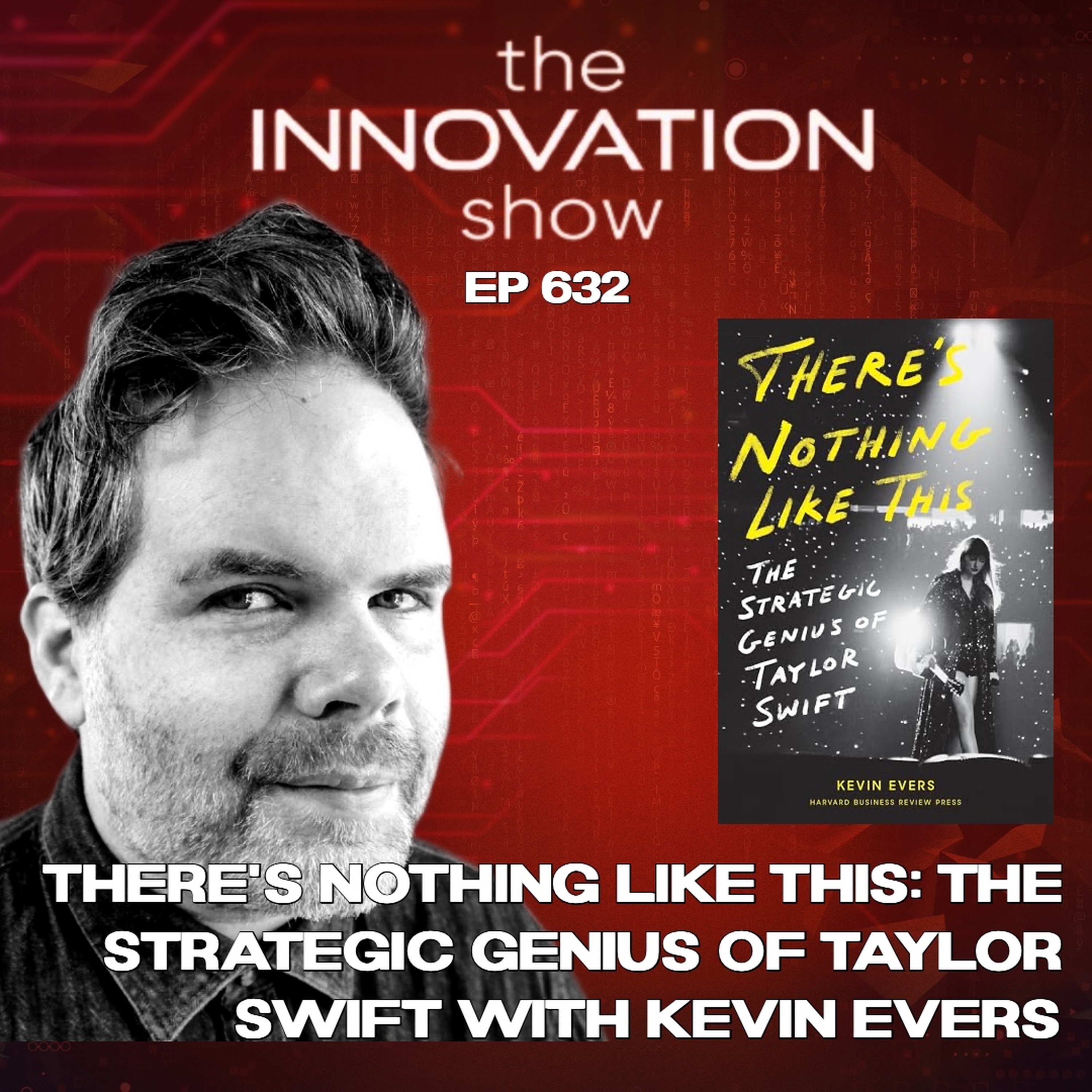
S33 Ep 632The Strategic Genius of Taylor Swift with Kevin Evers-esv2-96p-bg-10p
In this episode, Aidan McCullen welcomes Kevin Evers, editor at Harvard Business Review Press and author of There's Nothing Like This: The Strategic Genius of Taylor Swift. Together, they explore how Taylor Swift built not just a music career—but a global business empire. From fearless reinvention and blue ocean strategy to her mastery of fan engagement and brand evolution, Taylor Swift's rise is a masterclass in innovation, leadership, and vision. Learn how her career mirrors the strategic moves of top businesses, and what leaders, entrepreneurs, and creators can take away from her story. Tune in for: The psychology and strategy behind Swift's career decisions How she shaped fan culture and digital engagement Lessons in brand authenticity, creative growth, and leadership What businesses can learn from Swift's reinvention and market disruption Whether you're a Swiftie, strategist, or business leader, this episode offers sharp insights into how to turn art into lasting impact. Find Kevin: https://www.nothinglikethisbook.com
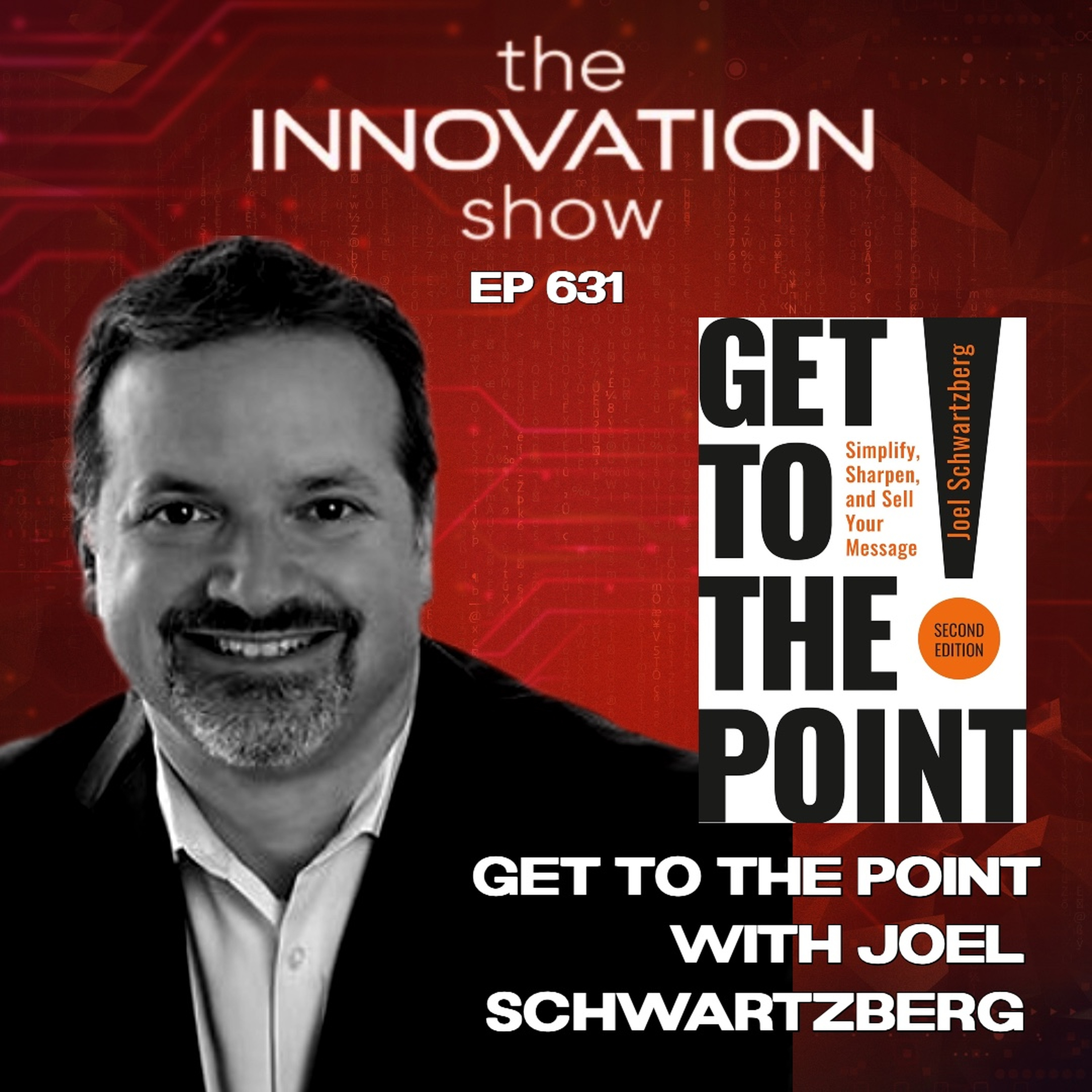
S33 Ep 631From Rambling to Impact The Power of Making a Point
📘 Guest: Joel Schwartzberg, author of Get to the Point & The Language of Leadership In this episode, we cut through the noise and get straight to the point—literally. Communication expert and author Joel Schwartzberg returns to discuss the art and science of clarity in communication. Whether you're a leader, innovator, speaker, or simply want to stop rambling and start resonating, this episode is packed with practical, game-changing advice. We explore: Why having a clear point is the cornerstone of influence How to sharpen your message with Joel's "I believe" and "XY" tests The power of pausing, volume, and emotional contagion in speech How to handle interruptions with grace and still deliver your message Real-life analysis of effective speeches (including a powerful moment from Demi Moore) The role of AI in crafting and questioning your communication Sticking the landing: how to end your message with lasting impact 💡 If you've ever struggled to communicate a big idea or felt your message wasn't landing—this episode is your ultimate toolkit. 🔗 Show Notes & Resources: Joel's website: joelschwartzberg.net Book: Get to the Point (Updated 10-Year Anniversary Edition) Sponsored by: Kyndryl.com Innovation Show https://thethursdaythought.substack.com
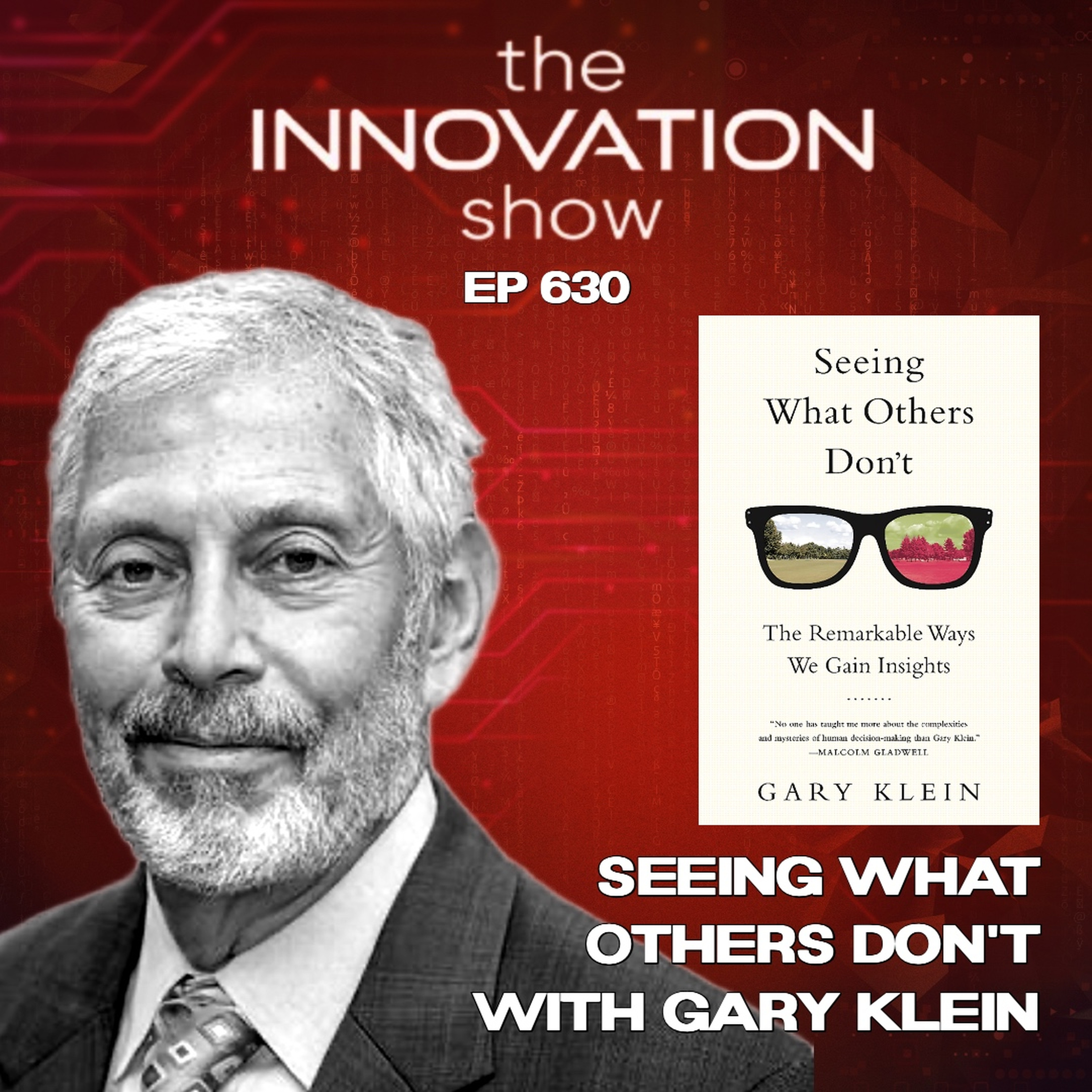
S33 Ep 630Unlocking the Power of Insights with Gary Klein | Insights and Innovation
In this episode, we sit down with Gary Klein, author of Seeing What Others Don't, to explore the fascinating science behind insights and how organizations can foster smarter thinking and innovation. Klein dives deep into over 120 real-world stories he's collected—ranging from Daniel Boone to Napoleon—and explains the two powerful triggers behind most breakthroughs: connections and anomalies. Discover how organizations often suppress insights, and why a focus on predictability and perfection can kill innovation. Learn about his new concept of Insight Audits and how leaders can shift their environments to better capture the power of spontaneous insight. 00:00 Introduction and Sponsor Message 00:27 Guest Introduction: Gary Klein 00:59 Collecting Stories of Success 02:19 The Down Arrow vs. The Up Arrow 04:43 Investigating Insights 05:38 Themes of Insight: Connections and Discrepancies 07:10 Historical Models of Insight 09:16 Organizational Barriers to Insight 11:17 The Perfection and Predictability Traps 15:06 Case Studies: Missed Discoveries 25:14 The Garden Path Phenomenon 32:30 Insight Audits in Organizations 36:48 Ideas That Escape: Case Studies and Suppression 37:27 The Battle of Midway: Intelligence and Strategy 41:38 The 1973 Yom Kippur War: Ignored Warnings 47:23 Napoleon's Tactical Genius at Toulon 50:58 Creative Desperation: The Mann Gulch Fire 58:42 Yellow Fever: The Mosquito Hypothesis 01:06:46 Daniel Boone: Abandoning the Project Plan 01:10:47 Conclusion and Resources Find Gary here: https://www.shadowboxtraining.com/our-team/people/gklein/ Find Seeing What Others Don't: The Remarkable Ways We Gain Insights here: https://amzn.to/4qNlekq Don't forget to subscribe, share, and leave a review if you enjoy these deep dives into cognitive science, decision-making, and innovation. More at theinnovationshow.io Gary Klein, insight generation, organizational innovation, decision making, cognitive psychology, seeing what others don't, leadership, business strategy, Aidan McCullen, the innovation show
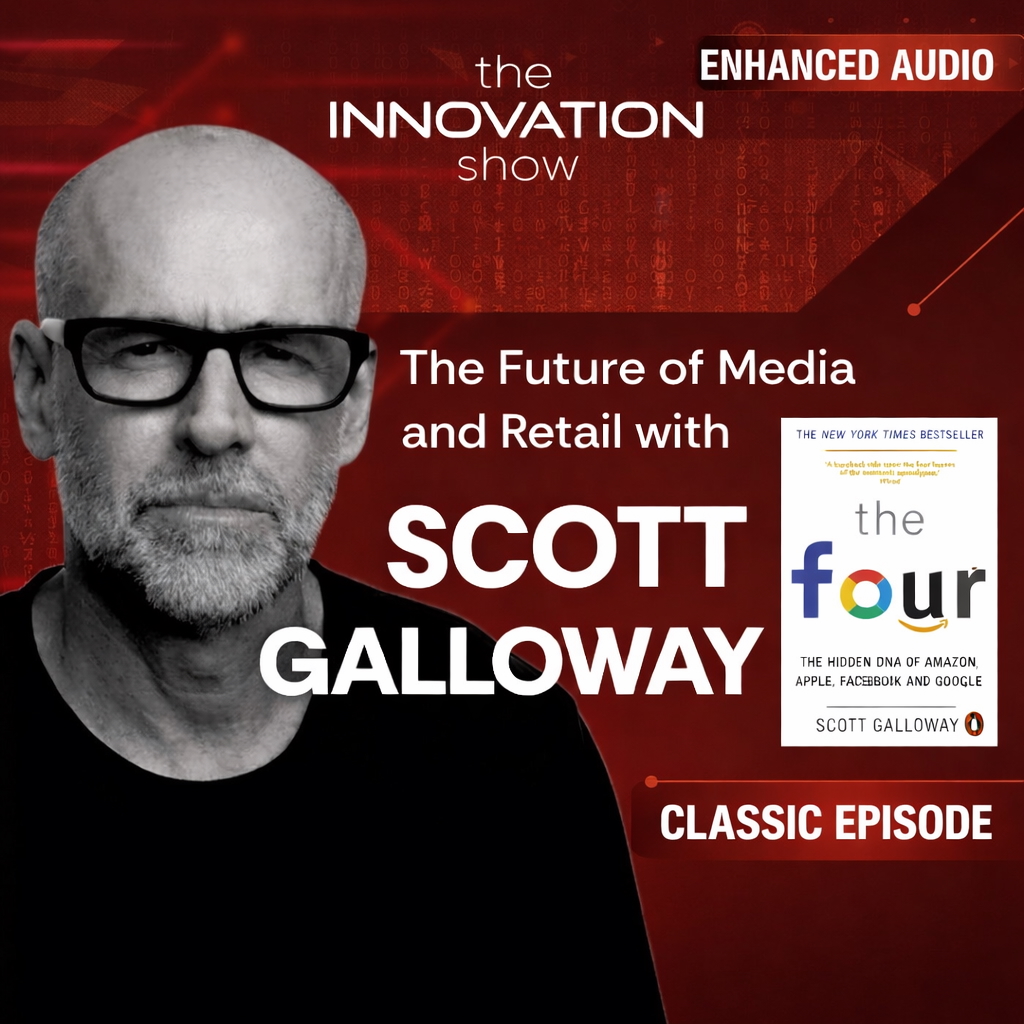
Classic Enhanced Audio Episode: Scott Galloway on Algorithms, Tech Giants, and the Retail Apocalypse
bonusIn this timeless episode of The Innovation Show, Aidan McCullen sits down with Scott Galloway, Clinical Professor of Marketing at NYU Stern, for a prescient conversation that remains highly relevant today. Recorded nearly a decade ago, this episode dives deep into: The rise of the algorithm-driven economy How tech giants like Amazon and Facebook dominate using data and intelligence The decline of traditional media and the shift to subscription-based models The retail apocalypse and how Amazon continues to reshape consumer behavior The emerging power of voice technology and screenless interaction Scott also offers strategic insights into the future of media, marketing, and retail, with takeaways that still resonate in today's digital landscape. This episode is brought to you with thanks to our sponsor, Kyndryl, helping global enterprises harness the power of AI and digital infrastructure for competitive advantage. Timestamps: 00:00 Introduction 01:15 Algorithm-Driven Economy 08:46 Subscription Models 12:48 Traditional Media Challenges 24:40 Retail Apocalypse & Amazon 29:02 Rise of Voice Technology 33:01 Conclusion and Sponsor Message Learn more at: https://www.kyndryl.com Subscribe to The Innovation Show for weekly insights into innovation, transformation, and leadership.
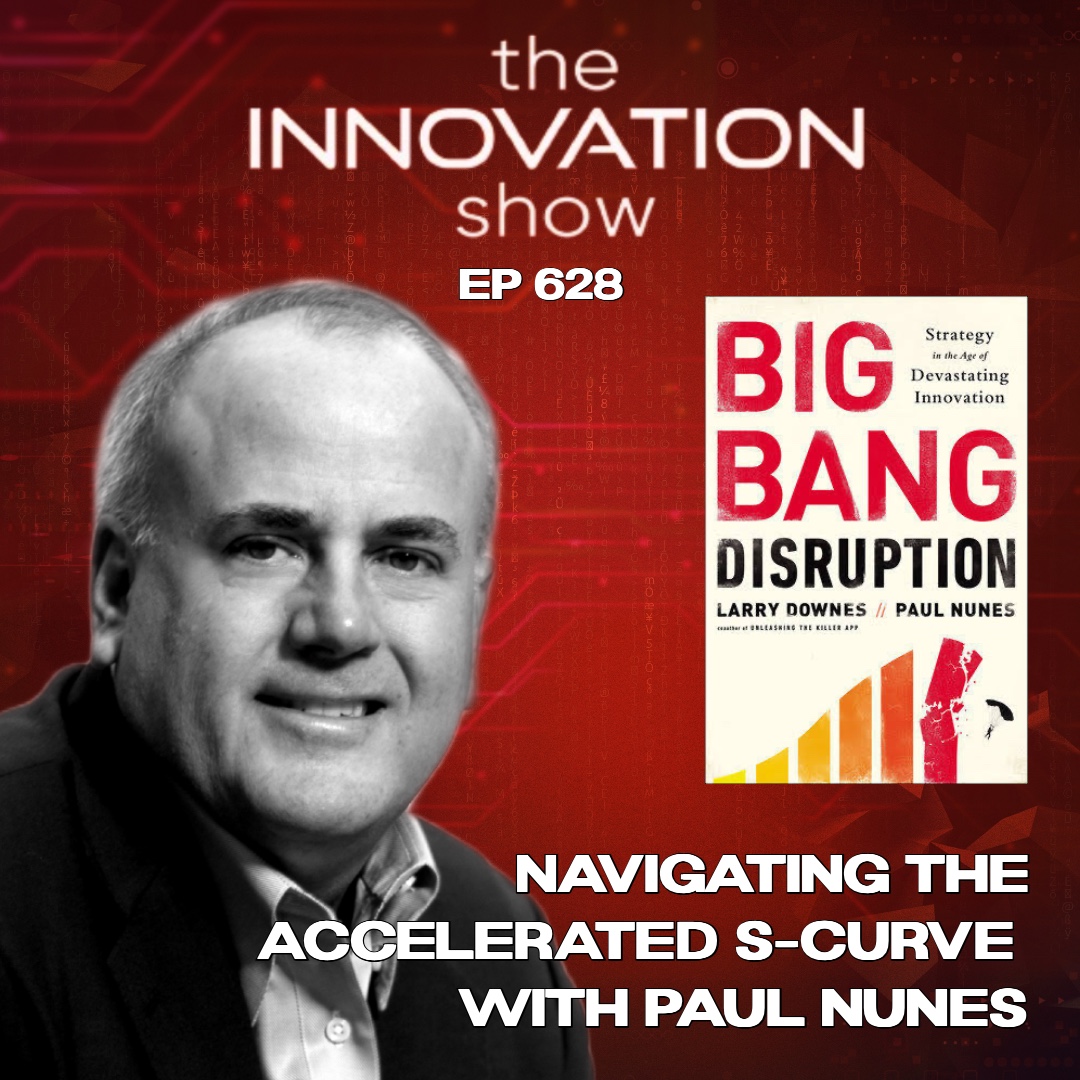
S33 Ep 628Navigating the Accelerated S-Curve with Paul Nunes
🔮 Navigating the Accelerated S-Curve with Paul Nunes | Big Bang Disruption & Shark Fin Strategy Welcome to episode 2 of our exclusive Harvard Business School series! 🎓 Join host Aidan McCullen as he interviews Paul Nunes, renowned as the King of the S-Curve, in a masterclass on navigating today's fast-evolving business cycles. 📈 Discover how exponential technology change is collapsing traditional life cycles and creating "Shark Fin" business models—where sudden success can be catastrophic and strategic timing is everything. Paul explains how companies like Netflix, Apple, Peloton, and Intel navigated (or missed) these cycles and what it means for your business. 🔥 Learn about Big Bang Disruption, the death of early adopters, managing multiple S-curves, the rise of orchestrator firms, and how strategy must evolve for verticalized industries, fleeting advantage, and supply chain complexity. ⏰ Timestamps for Key Topics: 00:00 - Introduction and Welcome 00:26 - The Evolution of S-Curves 01:43 - What is the Shark Fin Strategy? 03:52 - Managing Multiple S-Curves 05:29 - Rapid Market Change & Business Lifecycle 07:42 - Case Studies: American Giant & Peloton 10:30 - The New Supply Chain Realities 18:01 - Is Vertical Integration Still Viable? 24:13 - Strategy in the Age of Compression 24:34 - Industry Diversification & Component Thinking 25:17 - Nvidia, Intel, and Strategic Orchestration 27:02 - Innovation vs. Manufacturing Models 33:15 - Capital Investment, Risk & Timing 39:06 - Why the Chief Strategy Officer Role is More Crucial Than Ever 47:55 - Final Reflections & Thank Yous 💡 Whether you're a strategist, innovator, entrepreneur, or business leader, this episode is a must-watch to future-proof your thinking and strategy. 📚 Based on Paul's seminal works: Jumping the S-Curve, Big Bang Disruption, and Pivot to the Future 🔗 Watch, learn, and subscribe for more expert-led strategy content! #SCurve #BigBangDisruption #PaulNunes #SharkFinStrategy #BusinessStrategy #Innovation #ChiefStrategyOfficer #AidanMcCullen #HBS #Nvidia #Intel #Netflix #Apple #Peloton #ExponentialChange #FutureOfBusiness
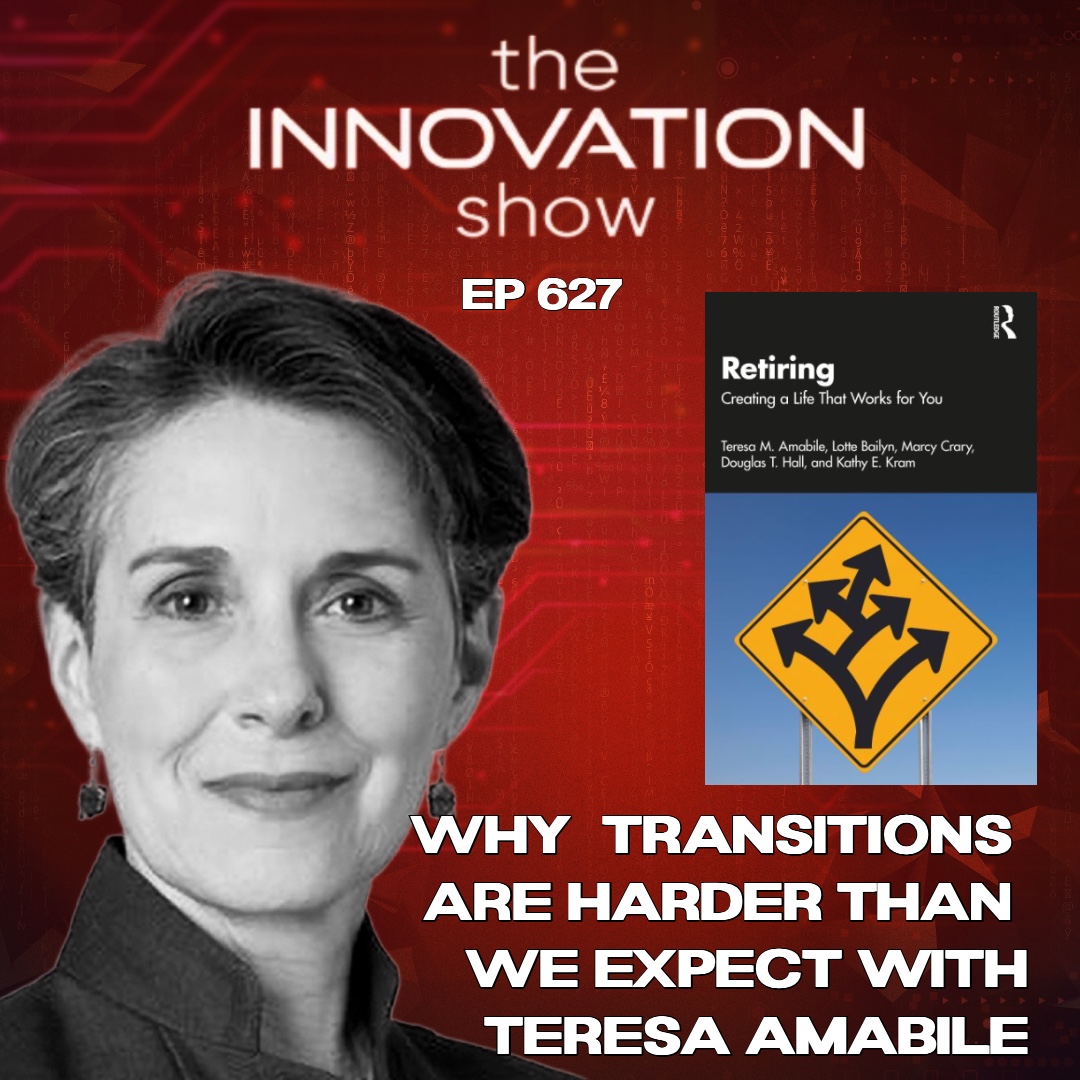
S33 Ep 627Why Transitions Are Harder Than We Expect | Teresa Amabile on Reinvention & Life Phases
Based on a ten-year study, Teresa Amabile reveals why retirement—and any major life transition—requires far more psychological work than we expect. In this special episode of The Innovation Show, recorded at Klarman Hall at Harvard Business School, Aidan McCullen sits down with renowned psychologist and researcher Teresa Amabile to explore one of the most underestimated transitions we face: the move out of a long-held role and into what comes next. Drawing on a ten-year study of 120 professionals—many healthy, financially secure, and highly accomplished—Amabile reveals a striking insight: when people hear the word retirement, their dominant associations are fear, uncertainty, and loss of identity. And that fear has little to do with money or health. This conversation reframes retirement as a broader human challenge: how we navigate endings, detach from identities that once defined us, and rebuild a life structure that still allows for progress, meaning, and contribution. Amabile outlines the four core tasks people must work through when leaving a career, why these tasks rarely happen in a neat sequence, and why "it takes work to stop working." The discussion also examines the role organisations play—often poorly—in this transition. From sidelining experienced contributors to missing opportunities for knowledge transfer, Aidan and Teresa explore how meaningful final assignments, creative work, rituals, and continued post-retirement connection can dramatically improve outcomes for both individuals and institutions. Along the way, Amabile introduces the Four A's framework—Alignment, Awareness, Agency, and Adaptability—as a practical lens for navigating not only retirement, but any major life or career transition. The episode closes with a nuanced exploration of purpose, showing how meaning in later life often shifts away from grand missions toward day-to-day quality, relationships, and contribution. This is not an episode about "retiring early" or financial planning. It's about renewal, identity, and preparing—psychologically, relationally, and structurally—for the transitions we all know are coming, but rarely prepare for. Episode Chapters 00:00 Introduction and Special Guest Welcome 00:13 The Concept of Preparing for the Future 00:37 Introducing Theresa Am Abate 00:43 Gifts and Gratitude 01:47 Sponsor Acknowledgment 02:04 The Word 'Retirement' and Initial Reactions 02:39 Research Findings on Retirement Perceptions 05:21 The Four Tasks of Retirement 07:01 Framework for Renewal and Organizational Change 13:16 The Role of Organizations in Supporting Retirees 18:50 The Importance of Rituals and Celebrations 24:37 Life Structure and Retirement 31:24 Practical Actions and The Four A's Framework 37:17 Finding Purpose in Retirement 40:45 Final Thoughts and Messages Recorded live at Harvard Business School with thanks to the production team Dave, Ellie and Simona and sponsor Kyndryl.
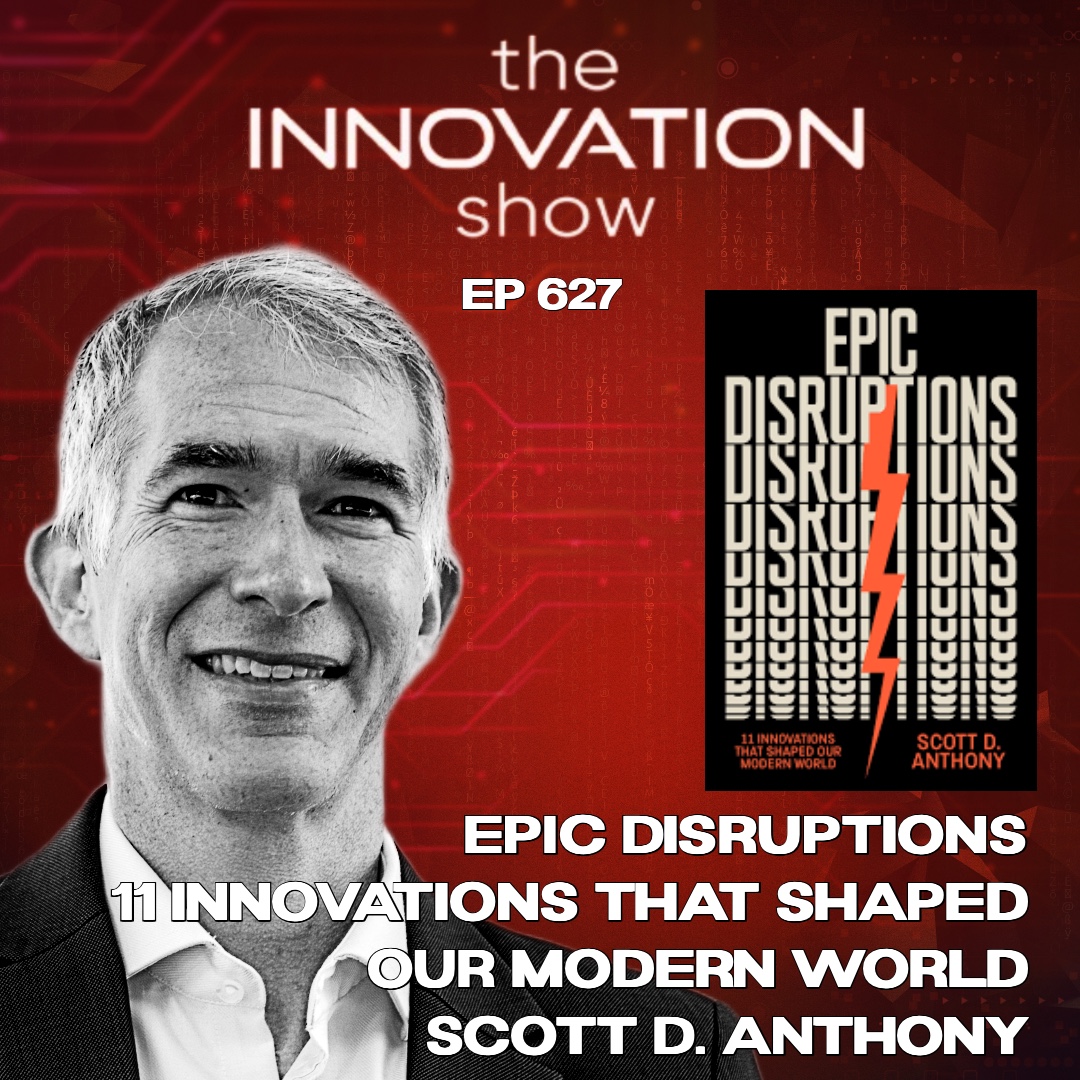
S33 Ep 627Epic Disruptions with Scott D. Anthony | The Innovation Show @ HBS
Join us for a special edition of The Innovation Show, recorded at Harvard Business School, featuring Scott D. Anthony, Clinical Professor at the Tuck School of Business and co-author of Seeing What's Next with the late Clay Christensen. Scott joins us to discuss his latest book, "Epic Disruptions: 11 Innovations That Shaped Our Modern World." In this episode, Scott shares insights from his groundbreaking book, Epic Disruptions: 11 Innovations That Shaped Our Modern World. Through compelling historical parallels and modern business cases, he uncovers the hidden patterns that define true disruptive innovation and how leaders can respond with resilience and creativity. From Henry Ford and the Model T to the fall of Constantinople, from Netflix vs. Blockbuster to the scientific revolution, Scott connects past transformations to today's urgent innovation challenges. He unpacks powerful concepts like emergent strategy, value networks, and the critical role of business models in enabling — or blocking — change. Whether you're a startup founder, corporate leader, or curious learner, this episode delivers practical, thought-provoking guidance on navigating disruption in real time. Special thanks to the Harvard Business School Publishing team for hosting us, and to our sponsor Kyndryl for their continued support of forward-thinking conversations on The Innovation Show. What You'll Learn: The difference between sustaining vs. disruptive innovation Why innovation diffusion is often slower than we think Lessons from the Honda Super Cub and Kodak's collapse How McDonald's, the printing press, and scientific revolutions disrupted systems — not just products Actionable frameworks like the ABCs of Dual Transformation Episode Chapters & Highlights 00:00 Introduction and Acknowledgements 00:22 Introducing Today's Guest: Scott D. Anthony 01:38 Defining Innovation and Disruption 04:10 Sustaining vs. Disruptive Innovation 07:03 Netflix vs. Blockbuster: A Case Study 07:47 The Value Network and Market Dynamics 16:50 Emergent Strategy and the Honda Super Cub 18:37 Gunpowder and the Innovator's Dilemma 23:03 The Fall of Constantinople: A Lesson in Disruption 32:42 The Printing Press: Collaboration and Consequences 35:50 The Slow Diffusion of Innovations 38:24 The Kodak Story: A Tale of Missed Opportunities 44:17 The ABCs of Dual Transformation 50:10 The Historical Impact of the Scientific Revolution 56:04 McDonald's: Revolutionizing the Fast Food Industry 01:05:07 The Persistence of Henry Ford and the Model T 01:09:25 Concluding Thoughts and Reflections Quotes from the Episode: "Innovation is something different that creates value... Disruption takes things that were complicated and expensive, makes them simple and affordable, and changes market dynamics." — Scott D. Anthony "History doesn't repeat, but it often rhymes... The walls that stood for a thousand years collapsed in 47 days. What is your equivalent to the Theodosian Walls?" — Scott D. Anthony Links & Resources: Book: Epic Disruptions by Scott D. Anthony Website: EpicDisruptions.com Connect with Scott: LinkedIn Connect with The Innovation Sho Connect with Aidan: LinkedIn Tags/Keywords: Disruptive Innovation, Scott D. Anthony, Clayton Christensen, Business Strategy, Corporate Transformation, History of Innovation, Dual Transformation, McDonald's Case Study, Kodak, Artificial Intelligence, The Innovation Show, Aidan McCullen.
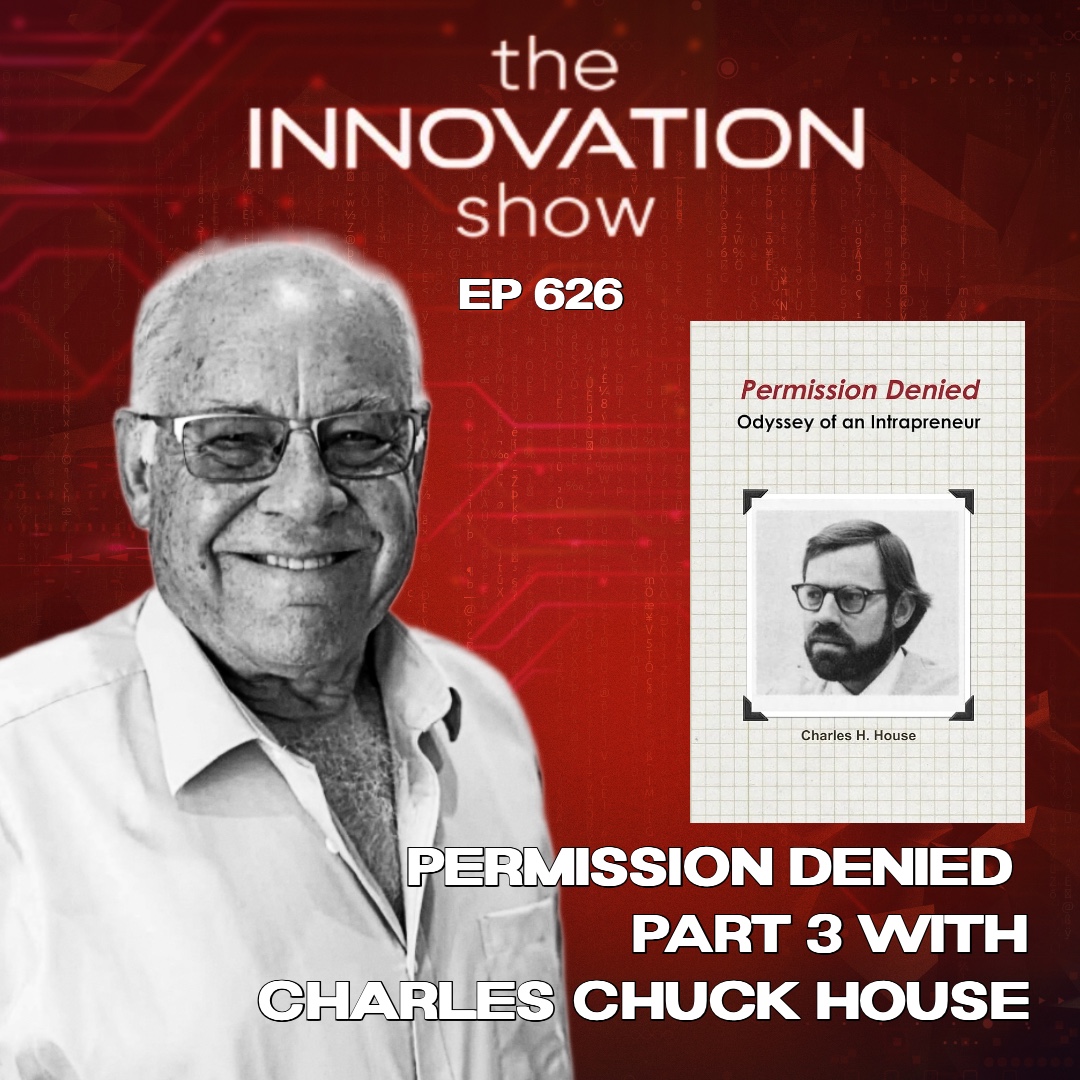
S33 Ep 626The Intrapreneurs Rulebook with Chuck House
The Innovation Show with Aidan McCullen | Guest: Chuck House How do you drive real innovation inside a large organisation—without getting shut down by hierarchy, process, or short-term thinking? In this episode of The Innovation Show, host Aidan McCullen is joined by legendary Hewlett-Packard intrapreneur Chuck House, author of Permission Denied, for a deep dive into intrapreneurship, corporate innovation, and innovation leadership. Drawing on decades of experience building breakthrough technologies at HP, Chuck shares the 7 rules of intrapreneurship, explains why most organisations unintentionally kill innovation, and reveals what both intrapreneurs and leaders must do differently to succeed. In this episode, you'll learn: The key differences between entrepreneurs and intrapreneurs Why intrapreneurs need air cover, not permission The 7 rules every intrapreneur must follow Why doing your own market research is non-negotiable How asking "why" relentlessly leads to breakthrough innovation Why great intrapreneurs often look like troublemakers How leaders can identify, fund, and empower intrapreneurs Why traditional KPIs and program reviews fail exploratory innovation Lessons from Hewlett-Packard, Apple, and major corporate innovation efforts The conversation also explores the rarely discussed discipline of managing intrapreneurs, including how executives can create the conditions for innovation without smothering it with metrics, timelines, or control systems designed for incremental work. This episode is essential listening for: Innovation leaders and executives Transformation and strategy teams Corporate intrapreneurs Product leaders and change agents Anyone trying to innovate inside a complex organisation About the Host Aidan McCullen is a Thinkers50 Global Innovation Award winner (2025), founder of the Reinvention Summit, and host of the globally acclaimed Innovation Show. A bestselling author and former international rugby player, Aidan advises global organisations on innovation, transformation, and leadership. About the Guest Chuck House is a pioneering intrapreneur whose work at Hewlett-Packard helped shape modern computing and systems innovation. His book Permission Denied is widely regarded as essential reading for corporate innovators. 🔔 Subscribe to The Innovation Show for conversations with the world's leading thinkers on innovation, transformation, leadership, and the future of work.