The InfoQ Podcast
393 episodes — Page 8 of 8

Nora Jones on Establishing, Growing, and Maturing a Chaos Engineering Practice
Nora Jones, a senior software engineer on Netflix’ Chaos Team, talks with Wesley Reisz about what Chaos Engineering means today. She covers what it takes to build a practice, how to establish a strategy, defines cost of impact, and covers key technical considerations when leveraging chaos engineering. Why listen to this podcast: - Chaos engineering is a discipline where you formulate hypotheses, perform experiments, and evaluate the results afterwards. - Injecting a bit of failure over time is going to make your system more resilient in the end. - Start with Tier 2 or non-critical services first, and build up success stories to grow chaos further. - As systems become more and more distributed, there becomes a higher need for chaos engineering. - If you’re running your first experiment, get your service owners in a war room and get them to monitor the results of the test as it is running. More on this: Quick scan our curated show notes on InfoQ http://bit.ly/2vJoimw You can also subscribe to the InfoQ newsletter to receive weekly updates on the hottest topics from professional software development. bit.ly/24x3IVq Subscribe: www.youtube.com/infoq Like InfoQ on Facebook: bit.ly/2jmlyG8 Follow on Twitter: twitter.com/InfoQ Follow on LinkedIn: www.linkedin.com/company/infoq Want to see extended shownotes? Check the landing page on InfoQ: http://bit.ly/2vJoimw
Shubha Nabar Discusses Einstein, the Machine Learning System in Salesforce
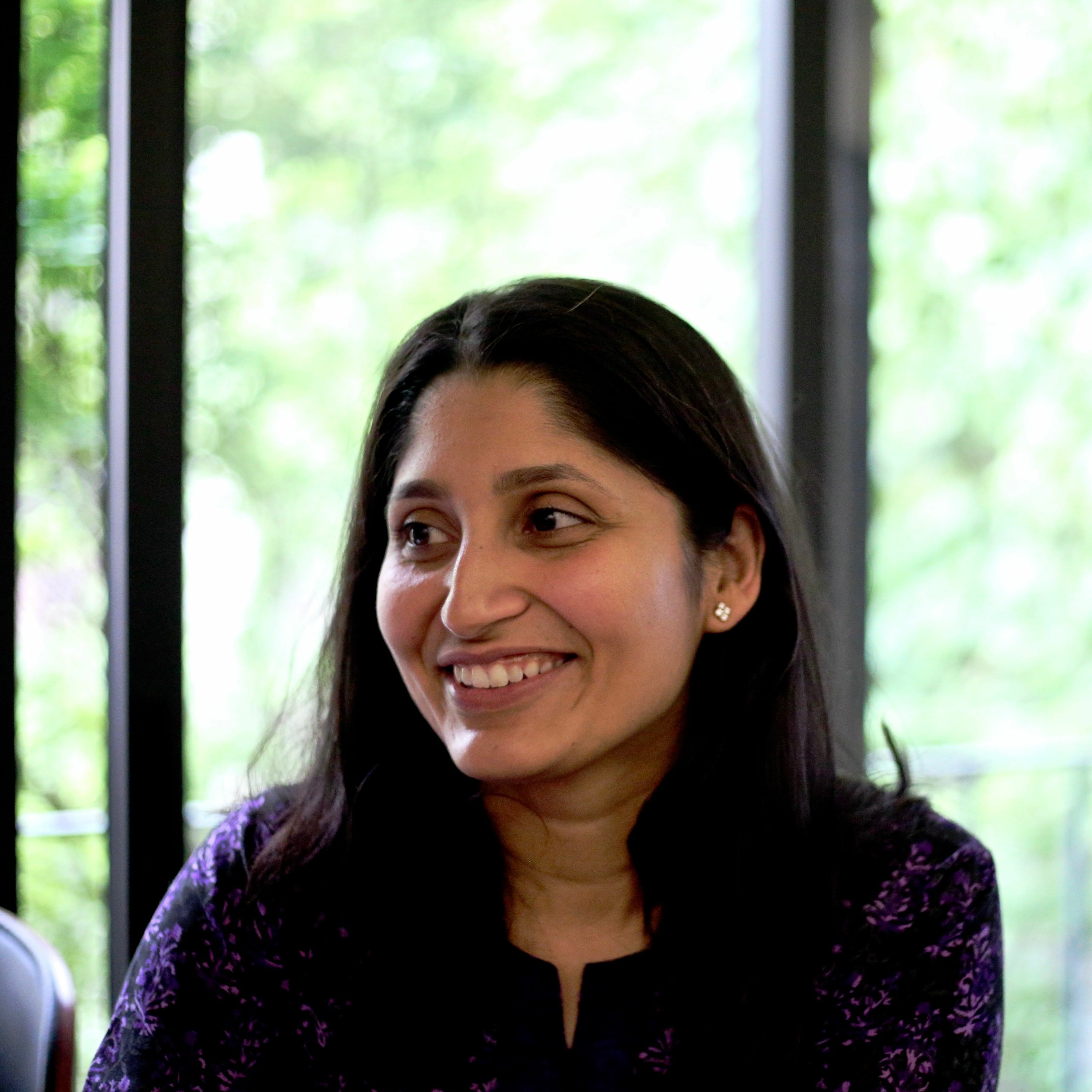
Shubha Nabar is a senior director of data science for Salesforce Einstein. Prior to working for Salesforce, she was a data scientist at LinkedIn and Microsoft. In the podcast she discusses Salesforce Einstein and the problem space that they are trying to solve, explores the differences between enterprise and consumer for machine learning, and then talks about the Optimus Prime Scala library that they use in Salesforce. Why listen to this podcast: * The volume of data, and hardware advances have made it possible to do machine learning to do them a lot faster. * AI is a science of building intelligent software, encompassing many aspects of intelligence that we tend to think of as human. * If you can’t measure something, you can’t fix it. * You have to think about what you can automate, rather than having a human to try and engineer out all those features. * Get feedback on design. Nora Jones, a senior software engineer on Netflix’ Chaos Team, talks with Wesley Reisz about what Chaos Engineering means today. She covers what it takes to build a practice, how to establish a strategy, defines cost of impact, and covers key technical considerations when leveraging chaos engineering. Why listen to this podcast: - Chaos engineering is a discipline where you formulate hypotheses, perform experiments, and evaluate the results afterwards. - Injecting a bit of failure over time is going to make your system more resilient in the end. - Start with Tier 2 or non-critical services first, and build up success stories to grow chaos further. - As systems become more and more distributed, there becomes a higher need for chaos engineering. - If you’re running your first experiment, get your service owners in a war room and get them to monitor the results of the test as it is running. More on this: Quick scan our curated show notes on InfoQ http://bit.ly/2vJoimw You can also subscribe to the InfoQ newsletter to receive weekly updates on the hottest topics from professional software development. bit.ly/24x3IVq Subscribe: www.youtube.com/infoq Like InfoQ on Facebook: bit.ly/2jmlyG8 Follow on Twitter: twitter.com/InfoQ Follow on LinkedIn: www.linkedin.com/company/infoq Want to see extended shownotes? Check the landing page on InfoQ: http://bit.ly/2xK7OxR

Simon Brown on the Role of the Software Architect in a Continuous Delivery Environment
This week's podcast features Simon Brown well known for his work training software architects. Topics include the differences between a tech lead and an architect, how much documentation is enough and what that looks like in a continuous delivery environment. What you'll learn on this podcast: • As an industry we seem to have lost our knowledge of how to do architecture well in the context of modern agile software teams. • Architecture is about the expensive decisions; things that are costly to change later. • Ideally architects should code in the production code base. If you are not able to do this at least be involved in quality reviews and peer reviews in the production code so you can get feedback on your designs. • It is often said the the code is the only documentation you need but the code can’t tell you everything. You do need to document the things you can’t get from the code such as the architectural drivers, they key quality attributes and so on along with some high level diagrams and how you operate the system. • As you step into the role of architect go and find a mentor or a local meet-up. The major change is that you have to influence and lead people. This podcast is sponsored by AppDynamics. Software architects play a critical role in designi¬¬¬ng, executing, and migrating large infrastructures to the cloud. Download AppDynamic’s FREE eBook “10 Tips for Enterprise Cloud Migration” and launch your migration project with a proven plan. Download the eBook now at http://infoq.link/web_sndcld_appdynamics Subscribe: www.youtube.com/infoq Like InfoQ on Facebook: bit.ly/2jmlyG8 Follow on Twitter: twitter.com/InfoQ Follow on LinkedIn: www.linkedin.com/company/infoq Want to see extented shownotes? Check the landing page on InfoQ: http://bit.ly/2xvq7qM

Twitter's Yao Yue on Latency, Performance Monitoring, & Caching at Scale
This week's podcasts features Yao Yue of Twitter. Yao spent the majority of her career working on caching systems at Twitter. She has since created a performance team that deals with edge performance outliers often exposed by the enormous scale of Twitter. In this podcast, she discusses standing up the performance team, thoughts on instrumenting applications, and interesting performance issues (and strategies for solving them) they’ve seen at Twitter. Why listen to this podcast: * Performance problems can be caused by a few machines running slowly causing cascading failure * Aggregating stats on a minute-by-minute basis can be an effective way of monitoring thousands of servers * Being able to record second-by-second is often too expensive to centrally aggregate, but can be stored locally * Distinguishing between request timeout and connection/network timeouts is important to prevent thundering herds * With larger scale organisations, having dedicated performance teams helps centralise skills to solve performance problems More on this: Quick scan our curated show notes on InfoQ http://bit.ly/2wnBemB You can also subscribe to the InfoQ newsletter to receive weekly updates on the hottest topics from professional software development. bit.ly/24x3IVq Subscribe: www.youtube.com/infoq Like InfoQ on Facebook: bit.ly/2jmlyG8 Follow on Twitter: twitter.com/InfoQ Follow on LinkedIn: www.linkedin.com/company/infoq Want to see extented shownotes? Check the landing page on InfoQ: http://bit.ly/2wnBemB

Linda Rising on the Importance of Patterns, Her Journey, & Patterns for Driving Change/Innovation
On the InfoQ Podcast this week, Wes Reisz talks with the Queen of Patterns, Linda Rising. Linda discusses her thoughts on the importance of patterns, she answers questions about what really is a pattern, and how she became involved in working with them. Throughout the podcast she discusses a variety of organizational and personal patterns and finally wraps with patterns to apply when driving change and innovation. Why listen to this podcast: - You have to realise that there’s nothing you can do about other people. The only person you can affect is yourself. - A pattern is not a band-aid that you use once. You use it in a context where you use it in conjunctions with other patterns. - Take baby steps when driving change in an organisation, and seek out a pocket of receptive people to drive it. - Slack is an important part to have in life, so that if something comes along you can absorb it without having to stop doing something else. - Listen, Listen, Listen. More on this: Quick scan our curated show notes on InfoQ http://bit.ly/2vLIsMC You can also subscribe to the InfoQ newsletter to receive weekly updates on the hottest topics from professional software development. bit.ly/24x3IVq Subscribe: www.youtube.com/infoq Like InfoQ on Facebook: bit.ly/2jmlyG8 Follow on Twitter: twitter.com/InfoQ Follow on LinkedIn: www.linkedin.com/company/infoq Want to see extented shownotes? Check the landing page on InfoQ: http://bit.ly/2vLIsMC

Security Considerations and the State of Microservices with Sam Newman
Wesley Reisz talks with Sam Newman about microservices. They explore the current state of the art with regards the architectural style and corresponding tooling and deployment platforms. They then discuss how microservices increase the surface area of where sensitive information can be read or manipulated, but also have the potential to create systems that are more secure. Why listen to this podcast: - Different organisations have different risk appetites for new technology, so what may be appropriate for one organisation may not be appropriate technology choices for another. - If you are deploying micro services then you need to know why you are doing it and what benefits you expect to get from deploying them. - Micro services are defined by their independently deployable units rather than their size. - Using a cryptographic token that is verifiable off line is a common pattern for passing authentication contexts around to different services. - Serverless architectures redeuce the need to monitor server patching but does not diminish the need for monitoring application runtime or library dependencies from security patching. More on this: Quick scan our curated show notes on InfoQ http://bit.ly/2v8NJg6 You can also subscribe to the InfoQ newsletter to receive weekly updates on the hottest topics from professional software development. bit.ly/24x3IVq Subscribe: www.youtube.com/infoq Like InfoQ on Facebook: bit.ly/2jmlyG8 Follow on Twitter: twitter.com/InfoQ Follow on LinkedIn: www.linkedin.com/company/infoq Want to see extented shownotes? Check the landing page on InfoQ: http://bit.ly/2v8NJg6

Jessica Kerr on Productivity, Slack Chatbots, Yak Shaving, & Why Diversity Matters for Innovation
Wesley Reisz talks with Jessica Kerr about her focus on developer productivity. Topics include her work at Atomist building Slack Chatbots, an approach to categorizing Yak Shaving (in an effort to prioritize and automate development dependencies), how an innovation culture drives diversity, and, finally, the role of 10x developers in the lifecycle of a company or product. Why listen to this podcast: - There are five kinds of Yak to shave - Atomist uses a Slack chatbot to automate and track commits, builds, push requests etc. - Agile retrospectives are a great way to encourage an innovation culture - Diverse teams flourish in innovation cultures - 10x developers are great for launching products, but teams are needed as products scale up More on this: Quick scan our curated show notes on InfoQ http://bit.ly/2uO60PR You can also subscribe to the InfoQ newsletter to receive weekly updates on the hottest topics from professional software development. bit.ly/24x3IVq Subscribe: www.youtube.com/infoq Like InfoQ on Facebook: bit.ly/2jmlyG8 Follow on Twitter: twitter.com/InfoQ Follow on LinkedIn: www.linkedin.com/company/infoq Want to see extented shownotes? Check the landing page on InfoQ: http://bit.ly/2uO60PR

Martin Hadley on R and the modern R ecosystem
Werner Schuster talks to Martin Hadley, data scientist at University of Oxford. They discuss the state of the R language, the rich R ecosystem that covers development (RStudio), notebooks for publication (R Notebooks, RPubs), writing web apps (Shiny), and the pros/cons of the different data frames implementations. Why listen to this podcast: - R is the tool for working with rectangular data - Modern data frame implementations are Tibble and data.table (for large amounts of data) - RMarkdown and R Notebooks allow to explore data and then publish it the results and (interactive) visualization - Use Shinyapps to publish server side R applications - Tidyverse is the place to look for modern R packages More on this: Quick scan our curated show notes on InfoQ http://bit.ly/2twOXWJ You can also subscribe to the InfoQ newsletter to receive weekly updates on the hotest topics from professional software development. bit.ly/24x3IVq Subscribe: www.youtube.com/infoq Like InfoQ on Facebook: bit.ly/2jmlyG8 Follow on Twitter: twitter.com/InfoQ Follow on LinkedIn: www.linkedin.com/company/infoq Want to see extented shownotes? Check the landing page on InfoQ: http://bit.ly/2twOXWJ

Pony Language Designer Sylvan Clebsch on Pony’s Design, Garbage Collection, and Formal Verification
In this podcast Charles Humble talks to Sylvan Clebsch, who is the designer of the actor-model language Pony programming and now works at Microsoft Research in Cambridge in the Programming Language Principles group. They talk about the inspirations behind Pony, how the garbage collector avoids stop-the-world pauses, the queuing systems, work scheduler, and formal verification. Why listen to this podcast: * Pony scales from a Raspberry Pi through a 64 core half terabyte machine to a 4096 core SGI beast * An actor has a 256-byte overhead, so creating hundreds of thousands of actors is possible * Actors have unbounded queues to prevent deadlock * Each actor garbage collects its own heap, so global stop-the-world pauses are not needed * Because the type system is data-race free, it’s impossible to have concurrency problems in Pony More on this: Quick scan our curated show notes on InfoQ http://bit.ly/2tZXcKE You can also subscribe to the InfoQ newsletter to receive weekly updates on the hottest topics from professional software development. bit.ly/24x3IVq Subscribe: www.youtube.com/infoq Like InfoQ on Facebook: bit.ly/2jmlyG8 Follow on Twitter: twitter.com/InfoQ Follow on LinkedIn: www.linkedin.com/company/infoq Want to see extented shownotes? Check the landing page on InfoQ: http://bit.ly/2tZXcKE

Kotlin Lead Language Designer Andrey Breslav on Android Support, Language Features and Future Plans
Why listen to this podcast: - Kotlin is an officially supported language on Google Android platforms - Kotlin Native and Kotlin JS will allow code reuse between server, client and mobile devices - Type safety means that references can be checked for nullability Great tooling is a driver in what kind of language features are (and aren’t) adopted - Coroutines provide a way of creating maintainable asynchronous systems More on this: Quick scan our curated show notes on InfoQ http://bit.ly/2sHyxqQ You can also subscribe to the InfoQ newsletter to receive weekly updates on the hottest topics from professional software development. bit.ly/24x3IVq Subscribe: www.youtube.com/infoq Like InfoQ on Facebook: bit.ly/2jmlyG8 Follow on Twitter: twitter.com/InfoQ Follow on LinkedIn: www.linkedin.com/company/infoq Want to see extented shownotes? Check the landing page on InfoQ: http://bit.ly/2sHyxqQ
Sid Anand on Building Agari’s Cloud-native Data Pipelines with AWS Kinesis and Serverless
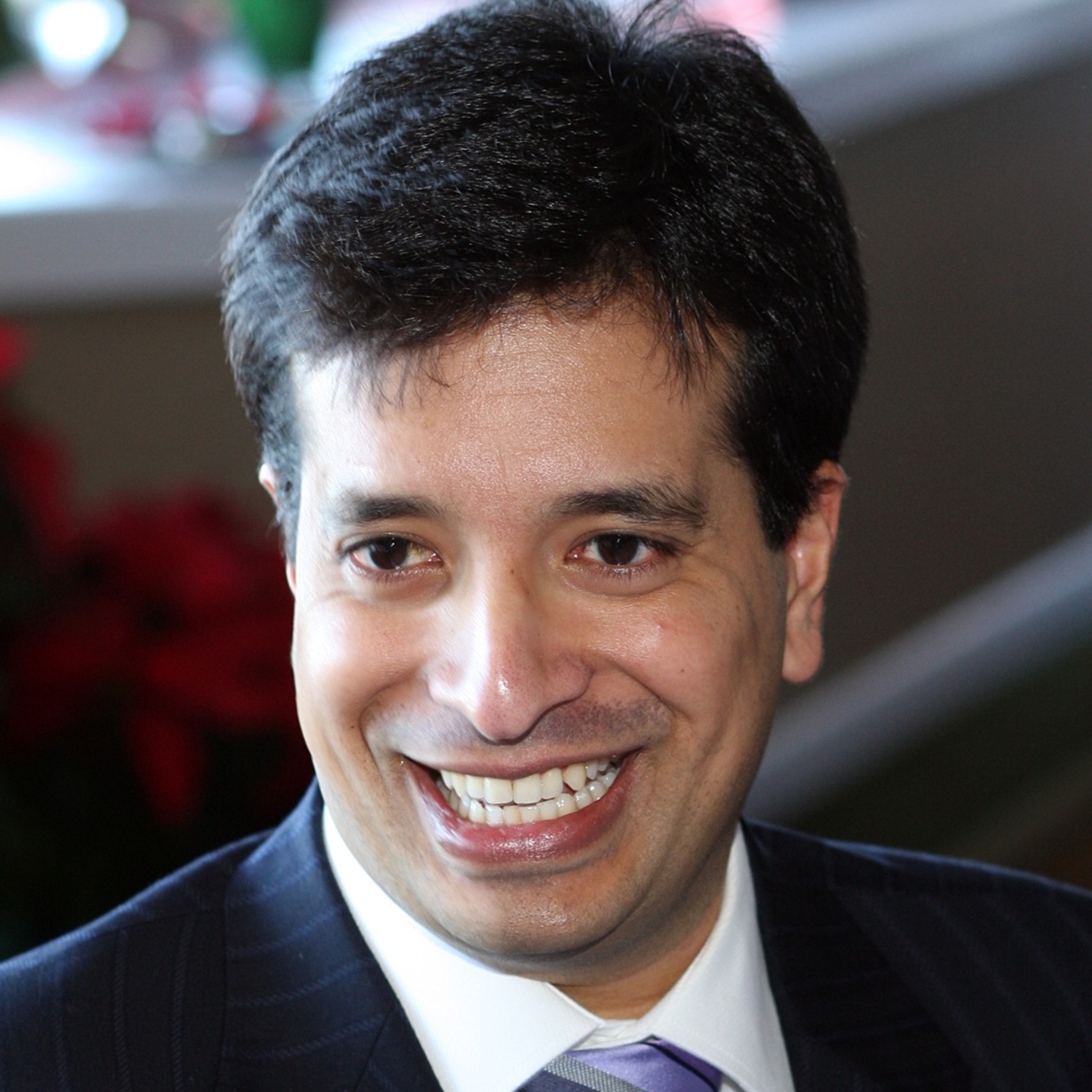
Wesley Reisz talks to Sid Anand, a data architect at cybersecurity company Agari, about building cloud-native data pipelines. The focus of their discussion is around a solution Agari uses that is built from Amazon Kinesis Streams, serverless functions, and auto scaling groups. Sid Anand is an architect at Agari, and a former technical architect at eBay, Netflix, and LinkedIn. He has 15 years of data infrastructure experience at scale, is a PMC for Apache Airflow, and is also a program committee chair for QCon San Francisco and QCon London. Why listen to this podcast - Real-time data pipeline processing is very latency sensitive - Micro-batching allows much smaller amounts of data to be processed - Use the appropriate data store (or stores) to support the use of the dataIngesting data quickly into a clean database with minimal indexes can be fast - Communicate using a messaging system that supports schema evolution More on this: Quick scan our curated show notes on InfoQ http://bit.ly/2rJU9nB You can also subscribe to the InfoQ newsletter to receive weekly updates on the hottest topics from professional software development. bit.ly/24x3IVq Subscribe: www.youtube.com/infoq Like InfoQ on Facebook: bit.ly/2jmlyG8 Follow on Twitter: twitter.com/InfoQ Follow on LinkedIn: www.linkedin.com/company/infoq Want to see extented shownotes? Check the landing page on InfoQ: http://bit.ly/2rJU9nB

Sachin Kulkarni Describes the Architecture Behind Facebook Live
Wesley Reisz talks to Sachin Kulkarni, Director of Engineering at Facebook, about the engineering challenges for Facebook live, and how it compares to the video upload platform at Facebook. Why listen to this podcast: - Facebook Infrastructure powers the board family of apps including the Facebook app, Messenger and Instagram. It is largely a C++ shop. There is some Java and Python, and the business logic is all done in PHP. The iOS apps are written in Objective C and the Android apps are in Java. - The video infra team at Facebook builds the video infrastructure across the whole company. Projects include a distributed video encoding platform which results in low latency video encoding, video upload and ingest. - Facebook Live does encoding on both the client and the server. The trade-off between encoding on the client side and the server side is mostly around the quality of the video vs. latency and reliability. - Facebook gets around 10x speed-up by encoding data in parallel compared to serial. - They also have an AI-based encoding system which resulted in 20% smaller files than raw H.264. You can also subscribe to the InfoQ newsletter to receive weekly updates on the hottest topics from professional software development. bit.ly/24x3IVq More on this: Quick scan our curated show notes on InfoQ http://bit.ly/2qrseG5 You can also subscribe to the InfoQ newsletter to receive weekly updates on the hottest topics from professional software development. bit.ly/24x3IVq Subscribe: www.youtube.com/infoq Like InfoQ on Facebook: bit.ly/2jmlyG8 Follow on Twitter: twitter.com/InfoQ Follow on LinkedIn: www.linkedin.com/company/infoq Want to see extented shownotes? Check the landing page on InfoQ: http://bit.ly/2qrseG5 Want more? Read InfoQ: http://bit.ly/2dcHmpu

Martijn Verburg on the JCP EC “No” Vote for the Java Modules
Wesley Reisz talks to Martijn Verburg, co-founder of the London Java Community and CEO of jClarity, about the JCP EC “no” vote on the Java Platform Module System (JPMS), which is due to be shipped as part of Java 9. The talk about what JPMS offers, how it works, what the no vote means and what happens next. Why listen to this podcast: - Jigsaw isn’t dead - The “no” vote was based on the submission being a bit early, and without expert group consensus that it should be submitted - Since the vote started, several amendments have been made which addressed some of the concerns listed by those who voted “no” - Daily calls with the expert group and interested parties will work to resolve the outstanding issues promptly - A resubmission is due within 30 days with a future vote expected to go through More on this: Quick scan our curated show notes on InfoQ http://bit.ly/2q20esc You can also subscribe to the InfoQ newsletter to receive weekly updates on the hottest topics from professional software development. bit.ly/24x3IVq Subscribe: www.youtube.com/infoq Like InfoQ on Facebook: bit.ly/2jmlyG8 Follow on Twitter: twitter.com/InfoQ Follow on LinkedIn: www.linkedin.com/company/infoq Want to see extended shownotes? Check the landing page on InfoQ: http://bit.ly/2q20esc

Daniel Bryant on Microservices and Domain Driven Design
Wesley Reisz talks to Daniel Bryant on moving from monoliths to micro-services, covering bounded contexts, when to break up micro-services, event storming, practices like observability and tracing, and more. Why listen to this podcast: - Migrating a monolith to micro-services is best done by breaking off a valuable but not critical part first. - Designing a greenfield application as micro-services requires a strong understanding of the domain. - When a request enters the system, it needs to be tagged with a correlation id that flows down to all fan-out service requests. - Observability and metrics are essential parts to include when moving micro-services to production. - A service mesh allows you to scale services and permit binary transports without losing observability. More on this: Quick scan our curated show notes on InfoQ http://bit.ly/2pFYBiT You can also subscribe to the InfoQ newsletter to receive weekly updates on the hottest topics from professional software development. bit.ly/24x3IVq Subscribe: www.youtube.com/infoq Like InfoQ on Facebook: bit.ly/2jmlyG8 Follow on Twitter: twitter.com/InfoQ Follow on LinkedIn: www.linkedin.com/company/infoq Want to see extented shownotes? Check the landing page on InfoQ: http://bit.ly/2pFYBiT
Rossen Stoyanchev on Reactive Programming with Spring 5 and Spring WebFlux
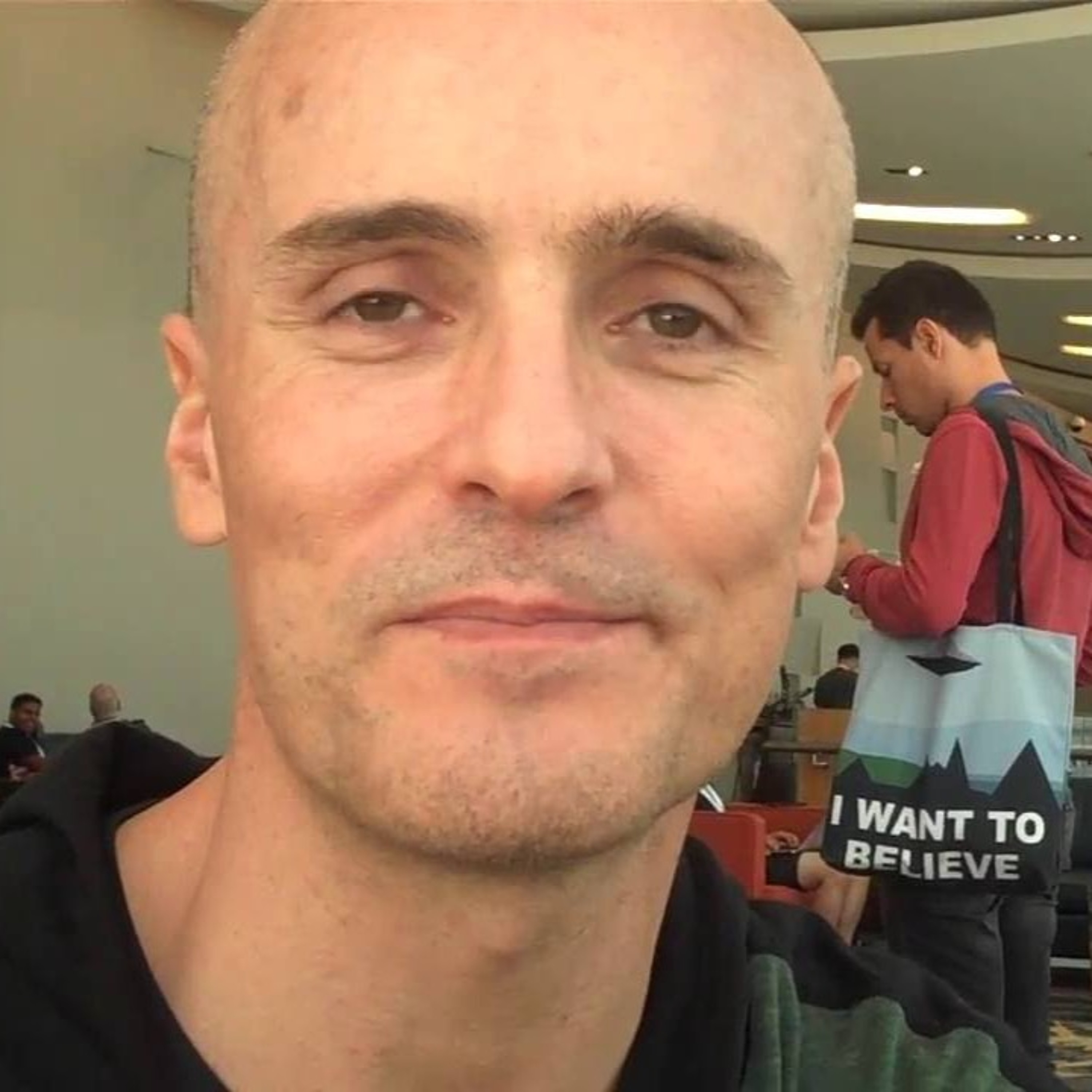
Rossen Stoyanchev talks to Wesley Reisz about blocking and non-blocking architectures, upcoming changes in Spring including Spring WebFlux, the reactive web stack in Spring framework 5, due this summer. He also discusses the differences between rxJava and Reactor. Why listen to this podcast: - Spring Framework 5 is due to be released June 25 2017 - Spring Web Flux provides a web programming model designed for asynchronous APIs - Back-pressure is important in a server environment; less so within a UI environment - It’s possible to use a Spring Web Flux client within a Spring MVC applciation - Managing sets of thread pools is more complicated than having a scalable asynchronous system More on this: Quick scan our curated show notes on InfoQ http://bit.ly/2pPgq0G You can subscribe to the InfoQ newsletter to receive weekly updates on the hottest topics from professional software development. bit.ly/24x3IVq Subscribe: www.youtube.com/infoq Like InfoQ on Facebook: bit.ly/2jmlyG8 Follow on Twitter: twitter.com/InfoQ Follow on LinkedIn: www.linkedin.com/company/infoq Want to see extented shownotes? Check the landing page on InfoQ: http://bit.ly/2pPgq0G

Richard Feldman Discusses Elm and How It Compares to React.js for Front-end Programming
Why listen to this podcast: - Using a compiler to catch errors at compile time instead of at runtime means much easier refactoring of code. - Incrementally replacing small parts of an existing JavaScript application with Elm is a safer strategy than trying to write an entirely new application in Elm - Elm packages are semantically versioned and gated by the publishing process, so minor versions cannot remove functionality without bumping the major version. - The UI in an Elm application results in messages that transform the immutable state of the application; this allows a debugger to view the state transitions and the messages that triggered them, including record and replay of those messages. - Elm has been benchmarked as being faster than Angular and React whilst being smaller code, which is attributed to the immutable state and pure functional elements. More on this: Quick scan our curated show notes on InfoQ http://bit.ly/2qmS2CT You can also subscribe to the InfoQ newsletter to receive weekly updates on the hottest topics from professional software development. bit.ly/24x3IVq Subscribe: www.youtube.com/infoq Like InfoQ on Facebook: bit.ly/2jmlyG8 Follow on Twitter: twitter.com/InfoQ Follow on LinkedIn: www.linkedin.com/company/infoq Want to see extented shownotes? Check the landing page on InfoQ: http://bit.ly/2qmS2CT

Jean Barmash on Inter-Service RPC with gRPC/Thrift, Designing Public APIs, & Lean/Constraint Theory
Jean Barmash is Director of Engineering at Compass, Founder & Co-Organizer, NYC CTO School Meetup. Live in New York City. He has over 15 years of experience in software industry, and has been part of 4 startups over the last seven years, 3 as CTO / VPE and one of which he co-founded. Prior to his entrepreneurial adventures, Jean held a variety of progressively senior roles in development, integration consulting, training, and team leadership. He worked for such companies as Trilogy, Symantec, Infusion and Alfresco, consulting to Fortune 100 companies like Ford, Toyota, Microsoft, Adobe, IHG, Citi, BofA, NBC, and Booz Allen Hamilton. Jean will speak at QCon New York 2017: http://bit.ly/2nN7KKo Why listen to this podcast: - The Compass backend is mostly written in Java and Python, with Go increasingly a first class language. The main reason for Go being added was developer productivity. - The app is based on a Microservices architecture with around 40-50 services in total. - Binary RPC, originally Thrift and Finagle, is used as the communication protocol, but the company is gradually moving to gRPC still with Thrift. One advantage that gRPC offers is better Python support than Finagle. - The company has built a code generation framework which takes Thrift and converts it to a RESTful API for clients to consume. - Constraint theory is about how you manage the one constraint in a system or team that prevent you increasing throughput; for example if your software engineering team only has one front end engineer do you ask back-end engineers to pick off some front-end tasks, or bring in a contractor. Subscribe: www.youtube.com/infoq Like InfoQ on Facebook: bit.ly/2jmlyG8 Follow on Twitter: twitter.com/InfoQ Follow on LinkedIn: www.linkedin.com/company/infoq You can also subscribe to the InfoQ newsletter to receive weekly updates on the hottest topics from professional software development. bit.ly/24x3IVq

Eric Horesnyi on High Frequency Trading and how Hedge Funds are Applying Deep Learning to Markets
Eric Horesnyi, CEO @streamdata.io, talks to Charles Humble about how hedge funds are applying deep learning as an alternative to the raw speed favoured by HFT to try and curve the market. Why listen to this podcast: - Streamdata.io was originally built for banks and brokers, but more recently hedge funds have begun using the service. - Whilst Hedge Funds like Renaissance Technologies have been using mathematical approaches for some time deep learning is now being applied to markets. Common techniques such as gradient descent and back propagation apply equally well to market analysis. - The data sources used are very broad. As well as market data the network might be using, sentiment analysis from social networks, social trading data, as well as more unusual data such as retail data, and IoT sensors from farms and factories. - By way of contrast High Frequency Trading focusses on latency. From an infrastructure stand-point you can play with propagation time, Serilization (the thickness of the pipe), and Processing time for any active component in chain. - One current battleground in HFT is around using FPGA to build circuits dedicated to feed handlers. Companies such as Novasparks are specialists in this area. More on this: Quick scan our curated show notes on InfoQ http://bit.ly/2nv71M8 Subscribe: www.youtube.com/infoq Like InfoQ on Facebook: bit.ly/2jmlyG8 Follow on Twitter: twitter.com/InfoQ Follow on LinkedIn: www.linkedin.com/company/infoq Want to see extented shownotes? Check the landing page on InfoQ: http://bit.ly/2nv71M8 You can also subscribe to the InfoQ newsletter to receive weekly updates on the hottest topics from professional software development. bit.ly/24x3IVq

Greg Murphy on Gamesparks, Game Tuning and Orchestrating Deployment Across Three Cloud Providers
Greg Murphy is the COO of Gamesparks, a cloud-based platform providing and a rich mobile back-end service for game developers to engage with their users. Greg takes us inside Gamesparks discussing the architecture, machine learning and what it’s like to launch in the China market. Why listen to this podcast: Gamesparks Engagement Engine Tuning the Gaming Experience The Architecture SDK’s and Real-time Data Transfers Server-side Scripts Managing Noisy neighbours and Security The Developer Experience Deploying Across Three Cloud Providers Machine Learning The China Market Notes and links can be found on: http://bit.ly/2neCjEV You can also subscribe to the InfoQ newsletter to receive weekly updates on the hottest topics from professional software development. bit.ly/24x3IVq

Architecting SQL Server on Linux: Slava Oks on Drawbridge, LibOS, & Addressing Between Windows/Linux
Wesley Reisz talks to Slava Oks, who has worked at Microsoft for over 20 years on flagship products, including SQL Server. He also led the kernel team who worked on the Midori operating system. More recently, he has worked on bringing SQL Server to Linux. Why listen to this podcast: - Microsoft SQL Server runs on Linux through a containerised approach called Drawbridge - Drawbridge implements a Linux loader and a minimal set of ABI calls to allow an in-process NT user mode kernel to run - SQL Server runs on top of a SQL platform layer (called SQL OS) that could be ported to run on Drawbridge - SQL Server had supportability commands added to allow the state of the system to be measured with SQL calls - A number of efficiency gains were applied to both the Drawbridge components and the SQL Server code to bring performance to within 20% of the equivalent process running on Windows Notes and links can be found on: http://bit.ly/2kVfatX Drawbridge ABIs Security LibOS Linux SQL OS Supportability Some assembly required Addressing Performance More on this: Quick scan our curated show notes on InfoQ http://bit.ly/2kVfatX You can also subscribe to the InfoQ newsletter to receive weekly updates on the hottest topics from professional software development. bit.ly/24x3IVq

Jonas Bonér on the Actor Model, Akka, Reactive Programming, Microservices and Distributed Systems
Jonas Bonér, CTO of LightBend and creator Akka, discusses using Akka when developing distributed systems. He talks about the Actor Model, and how every Microservice needs to be viewed as a system to be successful. Why listen to this podcast: - Akka is JVM-based framework design for developing distributed systems leveraging the Actor Model - an approach for writing concurrent systems that treat actors as universal primitives and the most successful model with abstraction has been streaming - Circuit breakers in Akka are a backup and retry policy; they protect you by capturing failure data and allow you to roll back - Every Microservice needs to be viewed as a system, it needs to have multiple parts that run on different machines in order to function and be fully resilient - thus is a Microsystem - Two different trends have emerged when it comes to hardware and environments: one is the trend toward Multi-core, the is a movement toward virtualized environments and the cloud - Saga pattern of managing long running transactions in a distributed system fits very well with messaging style architectures Notes and links can be found on: http://bit.ly/2kwB2eB Akka The Actor Model When Akka and the Actor Model is the perfect choice Circuit breakers patterns in distributed systems Two trends toward Multi-core Reactive Manifesto Event Driven vs. Message Driven Reactive Programming and Streams Microliths to Microsystems What do you have to get right before you start trying to deploy a distributed systems? Working with ML / AI at Lightbend to understand tracing through distributed system Saga Pattern More on this: Quick scan our curated show notes on InfoQ http://bit.ly/2kwB2eB You can also subscribe to the InfoQ newsletter to receive weekly updates on the hottest topics from professional software development. bit.ly/24x3IVq

Peter Bourgon on Gossip, Paxos, Microservices in Go, and CRDTs at SoundCloud
Peter Bourgon discusses his work at Weaveworks, discovering and imlemeting CRDTs for time-stamped events at Soundcloud, Microservices in Go with Go Kit and the state of package management in Go. Why listen to this podcast: - We’ve hit the limits of Moore’s law so when we want to scale we have to think about how we do communication across unreliable links between unreliable machines. - In an AP algorithm like Gossip you still make forward progress in case of a failure. In Paxos you stop and return failures. - CRDTs give us a rigours set of rules to accommodate failures for maps, sets etc. in communication that result in am eventually consistent system. - Go is optimised to readers/maintainers vs. making the programmers’ life easier. Go is closer to C than Java in that it allows you to layout memory very precisely, allowing you to, for example, optimise cache lines in your CPU. - Bourgon started a project called Go Kit, which is designed for building microservices in Go. It takes inspiration from Tiwtter’s Scala-based Finagle which solved a lot of Micoservice concerns. - Go has a number of community-maintained package managers but no good solution; work in ongoing to try and resolve this. Notes and links can be found on: http://bit.ly/2kaHC9k Work at Weaveworks Gossip vs. Paxos CRDTs at SoundCloud Go Go in large teams Go and Java package management Microservices in Go with Go Kit Logging and tracing in a distributed environment More on this: Quick scan our curated show notes on InfoQ. http://bit.ly/2kaHC9k You can also subscribe to the InfoQ newsletter to receive weekly updates on the hottest topics from professional software development. bit.ly/24x3IVq

Neha Batra - Pivotal Labs Pair Programming
In this week’s podcast Wes Reisz talks to Neha Batra, a software engineer at Pivotal Labs. Neha spoke about pair programming in her recent QCon San Francisco 2016 presentation, and has taken time to discuss techniques to get started with the practice as well as tips for implementing it on your team. Neha also touches on vulnerability based trust and how it can help effectively build a trusting team environment. Why listen to this podcast: - If you successfully start with pair programming, other tenants of XP are pulled along with you - Ways to get creative with remote pairing to make it work - The daily retro - Overcoming hesitance with managers when trying to implement pair programming full time - Vulnerability based trust building Notes and links can be found on: http://bit.ly/2i2a0sJ How has Pair Programming Evolved Over the Years? 6m:17s - A lot of the fundamentals are the same, but with XP we take it to the extreme to be able to do it eight hours a day. 6m:24s - To pair for eight hours a day we adapt to a lot of other process to create a simpler way of working, giving us an easier level to default to. 6m:44s - We use phrases in the team to make sure we agree on a test, that there are no false positives, when to refactor etc. This helps us avoid accruing code debt since we don’t do code reviews. More on this: Quick scan our curated show notes on InfoQ. http://bit.ly/2i2a0sJ You can also subscribe to the InfoQ newsletter to receive weekly updates on the hottest topics from professional software development. bit.ly/24x3IVq

Oliver Gould About Architecting to Avoid and Recover from Failure
In this week’s podcast, Robert Blumen talks to Oliver Gould at QCon San Francsico 2016. Oliver is the CTO of Buoyant where he leads open source development efforts. Prior to Buoyant he was a Staff Infrastructure Engineer at Twitter where he was technical lead on Observability, Traffic, Configuration and Co-ordination teams. Why listen to this podcast: - Stratification allows applications to own their logic while libraries take care of the different mechanisms, such as service discovery and load balancing - Cascading failures can’t be tested or protected against, so having a fast time to recovery is important - Having developers own their services with on-call mechanisms improves the reliability of the service; it’s best to optimise automatic restarts so problems can be addressed during normal working hours - Post mortem analysis of failures are important to improve run books or checklists and to share learning between teams - Incremental roll out of features with feature flags or weighted routing provides agility while testing with production load, which highlights issues that aren’t seen during limited developer testing Notes and links can be found on: http://bit.ly/2ivoz9w 4m:05s - Each domain has different failure and operating modes, and the layered approach to resiliency means that the layer handles this automatically 4m:30s - Large systems may fail in unexpected ways 4m:35s - Twitter originally had the “Fail Whale” but this has been phased out as the system has become more stable 4m:50s - As Twitter grew, it needed to move quicker, with more engineers and less whale time 5m:10s - Automation and social tools were needed to improve the situation More on this - Quick scan our curated show notes on InfoQ: http://bit.ly/2ivoz9w You can also subscribe to the InfoQ newsletter to receive weekly updates on the hottest topics from professional software development. bit.ly/24x3IVq

Chris Richardson on Domain-Driven Microservices Design
In this week’s podcast, Thomas Betts talks with Chris Richardson, a developer, architect, Java Champion and author of POJOs in Action. Before his workshop on Microservices w/ Spring Boot and Docker at QCon San Francisco 2016, Richardson took time to discuss his ideas on how to use DDD and CQRS concepts as a guide for implementing a robust microservices architecture. Why listen to this podcast: - "Microservice architecture" is a better term than "microservices". The latter suggests that a single microservice is somehow interesting - The concepts discussed in Domain-Driven Design are an excellent guide for how to implement a microservices architecture - Bounded Contexts correspond well to individual microservices - Event sourcing and CQRS provide patterns for how to implement loosely coupled services - When converting a monolith to microservices, avoid a big bang rewrite, in favor of an iterative approach Notes and links can be found on: http://bit.ly/2hZ8TM1 11m:51s - Microservices must be loosely coupled, usually creating a model with one database per service. 12m:45s - There is a business requirement to maintain data consistency across services, and using an event driven architecture is a good way to achieve that. 13m:38s - Event sourcing is specific technique for persisting domain objects as a series of events. 14m:11s - Just as transactions don’t like to be split across microservices, queries cannot simply join across multiple data sources. CQRS provides a solution that accommodates querying via microservices and materialized views. More on this: Quick scan our curated show notes on InfoQ. http://bit.ly/2hZ8TM1 You can also subscribe to the InfoQ newsletter to receive weekly updates on the hottest topics from professional software development. bit.ly/24x3IVq

Keith Adams on the Architecture of Slack, using MySql, Edge Caching, & the backend Messaging Server
In this week’s podcast, QCon chair Wesley Reisz talks to Keith Adams, chief architect at Slack. Prior he was an engineer at Facebook where he worked on the search type live backend, and is well-known for the HipHop VM [hhvm.com]. Adams presented How Slack Works at QCon SanFrancisco 2016. Why listen to this podcast: - Group messaging succeeds when it feels like a place for members to gather, rather than just a tool - Having opt-in group membership scales better than having to define a group on the fly, like a mailing list instead of individually adding people to a mail - Choosing availability over consistency is sometimes the right choice for particular use cases - Consistency can be recovered after the fact with custom conflict resolution tools - Latency is important and can be solved by having proxies or edge applications closer to the user Notes and links can be found on: http://bit.ly/keith-adams 3m:30s Voice and video interactions are impacted by latency; the same is true of messaging clients 4m:00s The user interface can provide indications of presence, through avatars indicating availability and typing indicators 4m:15s Latency is important; sometimes the difference is between 100ms and 200ms so the message channel monitors ping timeout between server and client 4m:40s 99th percentile is less than 100ms ping time 5m:15s If the 99th percentile is more than 100ms then it may be server based, such as needing to tune the Java GC 5m:25s Network conditions of the mobile clients are highly variable  6m:20s Mobile clients can suffer intermittent connectivity More on this: Quick scan our curated show notes on InfoQ. http://bit.ly/keith-adams You can also subscribe to the InfoQ newsletter to receive weekly updates on the hottest topics from professional software development. bit.ly/24x3IVq

Haley Tucker on Responding to Failures in Playback Features at Netflix
In this week’s podcast, Thomas Betts talks with Haley Tucker, a Senior Software Engineer on the Playback Features team at Netflix. While at QCon San Francisco 2016, Tucker told some production war stories about trying to deliver content to 65 million members. Why listen to this podcast: - Distributed systems fail regularly, often due to unexpected reasons - Data canaries can identify invalid metadata before it can enter and corrupt the production environment - ChAP, the Chaos Automation Platform, can test failure conditions alongside the success conditions - Fallbacks are an important component of system stability, but the fallbacks must be fast and light to not cause secondary failures - Distributed systems are fundamentally social systems, and require a blameless culture to be successful Notes and links can be found on: http://bit.ly/2hqzQ6K 2m:05s - The Video Metadata Service aggregates several sources into a consistent API consumed by other Netflix services. 2m:43s - Several checks and validations were in place within the video metadata service, but it is impossible to predict every way consumers will be using the data. 3m:30s - The access pattern used by the playback service was different than that used in the checks, and led to unexpected results in production. 3m:58s - Now, the services consuming the data are also responsible for testing and verifying the data before it rolls out to production. The Video Metadata Service can orchestrate the testing process. More on this: Quick scan our curated show notes on InfoQ. http://bit.ly/2hqzQ6K You can also subscribe to the InfoQ newsletter to receive weekly updates on the hottest topics from professional software development. bit.ly/24x3IVq

Kolton Andrus on Lessons Learnt From Failure Testing at Amazon and Netflix and New Venture Gremlin
In this week's podcast, QCon chair Wesley Reisz talks to Kolton Andrus. Andrus is the founder of Gremlin Inc. He was a Chaos Engineer at Netflix, focused on the resilience of the Edge services. He designed and built FIT: Netflix’s failure injection service. Prior, he improved the performance and reliability of the Amazon Retail website. Why listen to this podcast: - Gremlin, Kolton Andrus' new start-up, is focused on providing failure testing as a service. Version 1, currently in closed beta, is focused on infrastructure failures. - Lineage-driven Fault Injection (LDFI) allowed Netflix to dramatically reduce the number of tests they needed to run in order to explore a problem space. - You generally want to run failure tests in production, but you can't start there. Start in developemnt and build up. - Having failure testing at an application level, as Netflix does, so you can have request level fault injection for a specific user or a specific device. - Being able to trace infrastructure with something like Dapper or Zipkin offers tremendous value. At Netflix, the failure injection system is integrated into the tracing system, which meant that when they caused a failure they could see all the points in the system that it touched. More on this: Quick scan our curated show notes on InfoQ. http://bit.ly/2fT9YiM You can also subscribe to the InfoQ newsletter to receive weekly updates on the hottest topics from professional software development. bit.ly/24x3IVq

Preslav Le on How Dropbox Moved off AWS and What They Have Been Able to Do Since
As InfoQ previously reported in March 2016, Dropbox announced that they had migrated away from Amazon Web Services (AWS). In this week's podcast Robert Bluman talks to Preslav Le. Preslav has been a software engineer at Dropbox for the past three years, contributing to various aspects of Dropbox’s infrastructure including traffic, performance and storage. He was part of the core oncall and storage oncall rotations, dealing with high emergency real world issues, from bad code pushes to complete datacenter outages. Why listen to this podcast: - Dropbox migrated away from Amazon S3 to their own data centres to allow them to optimise for their specific use case. - They are experimenting with Shingled Magnetic Recording (SMR) drives for primary storage to increase storage density. All writes go to an SSD cache and then get pushed asynchronously to the SMR disk. - Their average block size is 1.6MB with a maximum block size of 4MB. Knowing this allows the team to tune their storage system. - Three languages are used for the backend infrastructure. Python is used mainly for business logic, Go is the primary language used for heavy infrastructure services, and in some cases, for example where more direct control over memory is needed, Rust is also used. - Dropbox invest very heavily in verification and automation. A verifier scans every byte on disk and checks that it matches the checksum in the index. - Verification is also used to check that each box has the block keys it should have. Notes and links can be found on http://bit.ly/preslav-le Dropbox’s motivation for moving off the cloud 2:40 - Dropbox used Amazon S3 and other services where it made sense, but they stored all the metadata in their own data centres. 3:30 - Initially this was done because Amazon had poor support for persistent storage at the time. This has since improved but it didn’t make sense for dropbox to move the metadata back. 4:01 - By that time the dropbox team was ready to tackle the storage problem and built their own in-house replacement for S3, called Magic Pocket. Magic Pocket allowed Dropbox to move away from Amazon altogether. 4:30 - The move saved money, but also allowed DropBox to optimise for their specific use case and be faster. More on this: Quick scan our curated show notes on InfoQ. http://bit.ly/preslav-le You can also subscribe to the InfoQ newsletter to receive weekly updates on the hottest topics from professional software development. bit.ly/24x3IVq

Randy Shoup on Stitch Fix's Technology Stack, Data Science and Microservices
In this week's podcast QCon chair Wesley Reisz talks to Randy Shoup. Shoup is the vice president of engineering at Stitch Fix. Prior to Stitch Fix, he worked for Google as the director of engineering and cloud computing, CTO and co-founder of Shopilly, and chief engineer at Ebay. Why listen to this podcast: - Stitch Fix's business is a combination of art and science. Humans are much better with the machines, and the machines are much better with the humans. - Stitch Fix has 60 engineers, with 80 data scientists and algorithm developers. This ratio of data science to engineering is unique. - With Ruby-on-Rails on top of Postgres, the company maintains about 30 different applications on the same stack. - The practice of Test Driven Development makes Continuous Delivery work, and the practice of having the same people build the code as those who operate the code makes both of these things much more powerful. - Microservices gives feature velocity, the ability for individual teams to move quickly and independently of each other, and independent deployments. - Microservices solve a scaling problem. They solve an organisational scaling problem, and a technological scaling problem. These are not the problems that you have early on in the startup. - In the monolithic world, if you're not able to continue to vertically scale the application or the database or whatever your monolith is. And so for scaling reasons alone you might consider breaking it up into what we call microservices. Notes and links can be found on http://bit.ly/randy-shoup-podcast Data Science and Stitch Fix 1m:57s - Stitch Fix re-imagines retail, particularly for clothing. When you sign up, you fill out survey of the kinds of things that you like and you don't like, and we choose what we think you're going to enjoy based on the millions of customers that we have already. And we use a ton of data science in that process. 3m:00s - That goes into our algorithms and then our algorithms make personalised recommendations based on all the things we know about our other customers... there's a human element as well: we have 3,200 human stylists that are all around the United States and they choose the five items that go into the box [of clothing]. 3m:29s - What we like is that this is a combination of art and science. Modern companies combine what machines are really good at, such as chugging through the 60 to 70 questions times the millions of customers, and combining that with the human element of the stylists, figuring out what things go together, what things are trending, what things are appropriate... Humans are much better with the machines, and the machines are much better with the humans. [...] More on this: Quick scan our curated show notes on InfoQ. http://bit.ly/randy-shoup-podcast You can also subscribe to the InfoQ newsletter to receive weekly updates on the hottest topics from professional software development. bit.ly/24x3IVq

Tal Weiss on Observability, Instrumentation and Bytecode Manipulation on the JVM
In this week's podcast, QCon chair Wesley Reisz talks to Tal Weiss, CEO of OverOps, recently re-branded from Takipi. The conversation covers how the OverOps product works, explores the difference between instrumentation and observability, discusses bytecode manipulation approaches and common errors in Java based applications. A keen blogger, Weiss has been designing scalable, real-time Java and C++ applications for the past 15 years. He was co-founder and CEO at VisualTao which was acquired by Autodesk in 2009, and also worked as a software architect at IAI Space Industries focusing on distributed, real-time satellite tracking and control systems. Why listen to this podcast: - OverOps uses a mixture of machine code instrumentation and static code analysis at deployment time to build up an index of the code - Observability is how you architect your code to be able to capture information from its outputs. Instrumentation is where you come in from the outside and use bytecode or machine code manipulation techniques to capture information after the system has been designed and built. - Bytecode instrumentation is a technique that most companies can benefit from learning a bit more about. Bytecode isn’t machine code - it is a high-level programming language. Being able to read it really helps you understand how the JVM works. - There are a number of bytecode manipulation tools you can use to work with bytecode - ASM is probably the most well known. - A fairly small number of events within an application’s life-cycle generate the majority of the log volume. A good practice is to regularly review your log files to consider if what is being logged is the right thing. Notes and links can be found on http://bit.ly/2fInGsW SaaS vs On-Premise 5:43 - OverOps started as a SaaS product, but given that a lot of the data it collects is potentially sensitive, they introduced a new product called Hybrid. Hybrid separates the data into two independent streams: data and metadata. 6:42 - The data stream is the raw data that is captured which is then privately encrypted using 256 bit AES encryption keys which are only stored on the production machine and by the user when they need to decrypt it. The metadata stream is not sensitive since it is just an abstract mathematical graph. 7:18 - Because the data stream is already privately encrypted, that stream can be stored behind a firewall and never needs to leave a company’s network. More on this: Quick scan our curated show notes on InfoQ. http://bit.ly/2fInGsW You can also subscribe to the InfoQ newsletter to receive weekly updates on the hottest topics from professional software development. bit.ly/24x3IVq

Cathy O'Neil on Pernicious Machine Learning Algorithms and How to Audit Them
In this week's podcast InfoQ’s editor-in-chief Charles Humble talks to Data Scientist Cathy O’Neil. O'Neil is the author of the blog mathbabe.org. She was the former Director of the Lede Program in Data Practices at Columbia University Graduate School of Journalism, Tow Center and was employed as Data Science Consultant at Johnson Research Labs. O'Neil earned a mathematics Ph.D. from Harvard University. Topics discussed include her book “Weapons of Math Destruction,” predictive policing models, the teacher value added model, approaches to auditing algorithms and whether government regulation of the field is needed. Why listen to this podcast: - There is a class of pernicious big data algorithms that are increasingly controlling society but are not open to scrutiny. - Flawed data can result in an algorithm that is, for instance, racist and sexist. For example, the data used in predictive policing models is racist. But people tend to be overly trusting of algorithms because they are mathematical. - Data scientists have to make ethical decisions even if they don’t acknowledge it. Often problems stem from an abdication of responsibility. - Auditing for algorithms is still a very young field with ongoing academic research exploring approaches. - Government regulation of the industry may well be required. Notes and links can be found on http://bit.ly/2eYVb9q Weapons of math destruction 0m:43s - The central thesis of the book is that whilst not all algorithms are bad, there is a class of pernicious big data algorithms that are increasingly controlling society. 1m:32s - The classes of algorithm that O'Neil is concerned about - the weapons of math destruction - have three characteristics: they are widespread and impact on important decisions like whether someone can go to college or get a job, they are somehow secret so that the people who are being targeted don’t know they are being scored or don’t understand how their score is computed; and the third characteristic is they are destructive - they ruin lives. 2m:51s - These characteristics undermine the original intention of the algorithm, which is often trying to solve big society problems with the help of data. More on this: Quick scan our curated show notes on InfoQ. http://bit.ly/2eYVb9q You can also subscribe to the InfoQ newsletter to receive weekly updates on the hottest topics from professional software development. bit.ly/24x3IVq
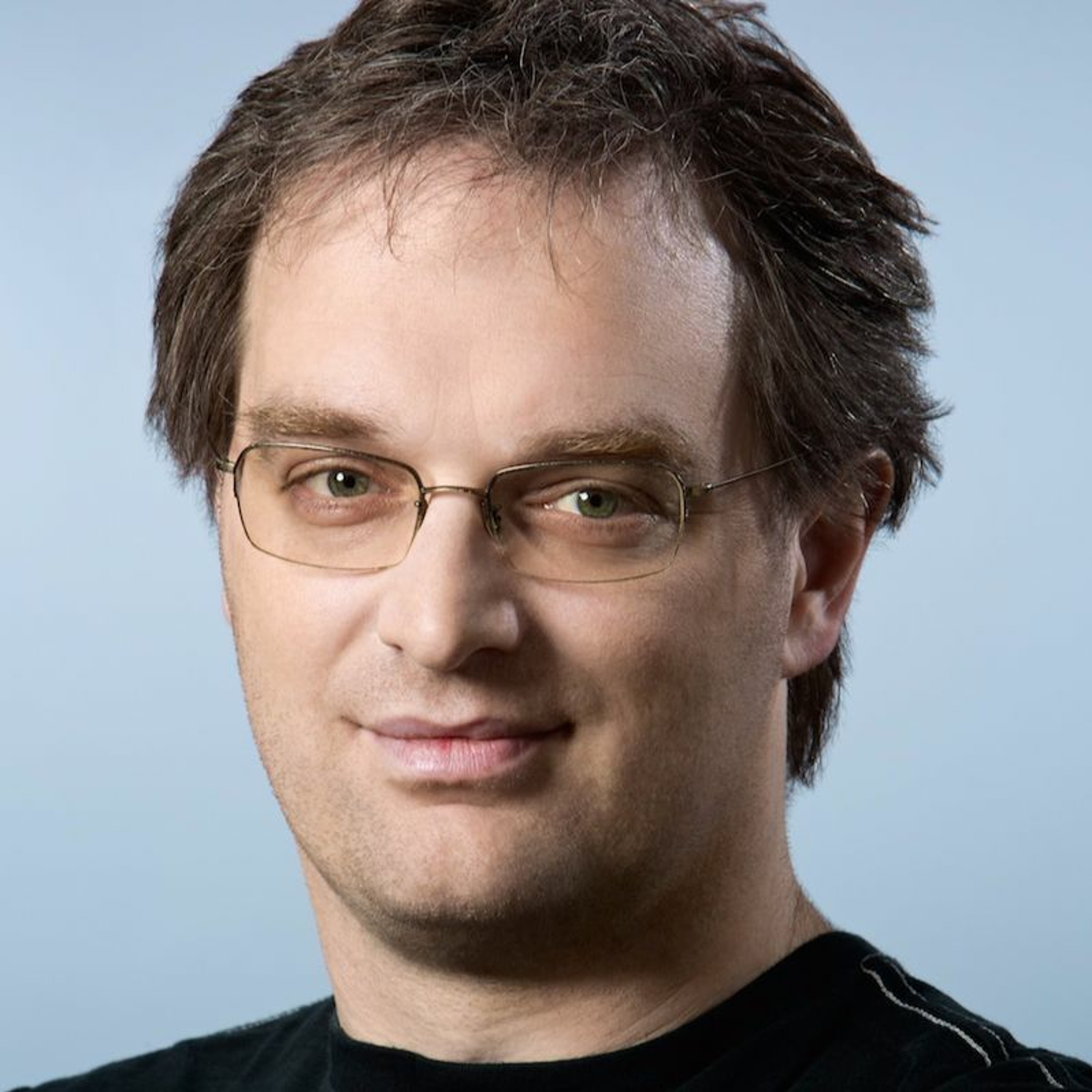
John Langford on Vowpal Wabbit, Used by MSN, and Machine Learning in Industry
In this week's podcast QCon chair Wesley Reisz talks to Machine learning research scientist John Langford. Topics include his Machine Learning system Vowpal Wabbit, designed to be very efficient and incorporating some of the latest algorithms in the space. Vowpal Wabbit is used for news personalisation on MSN. They also discuss how to get started in the field and it’s shift from academic research to industry use. Why listen to this podcast: - Vowpal Wabbit is a ML system that attempts to incorporate some of the latest machine learning algorithms. - How to learn ML: take a class or two, get accustomed with learning theory and practice. - ML has moved from the research field into the industry, 4 out of 9 ICML tutorials coming from the industry. - It’s hard to predict when you have enough data. - AlphaGo is a milestone in artificial intelligence. It uses reinforcement learning, deep learning and existing moves played by Go masters. - Deep Learning is currently a disruptive technology in areas such a vision or speech recognition. - What’s trendy: Neural Networks, Reinforcement and Contextual Learning. - Machine Learning is being commoditized. Notes and links can be found on http://bit.ly/2b4YNqQ How to Approach Machine Learning 6m:12s To start learning Machine Learning, Langford recommends taking a class or two, mentioning the course by Andrew Ng and another course by Yaser S. Abu-Mostafa. 6m:50s It is recommended to get accustomed with learning theory to avoid some of the rookie's mistakes. Quick scan our curated show notes on InfoQ. http://bit.ly/2atBFgk You can also subscribe to the InfoQ newsletter to receive weekly updates on the hottest topics from professional software development. http://bit.ly/24x3IVq
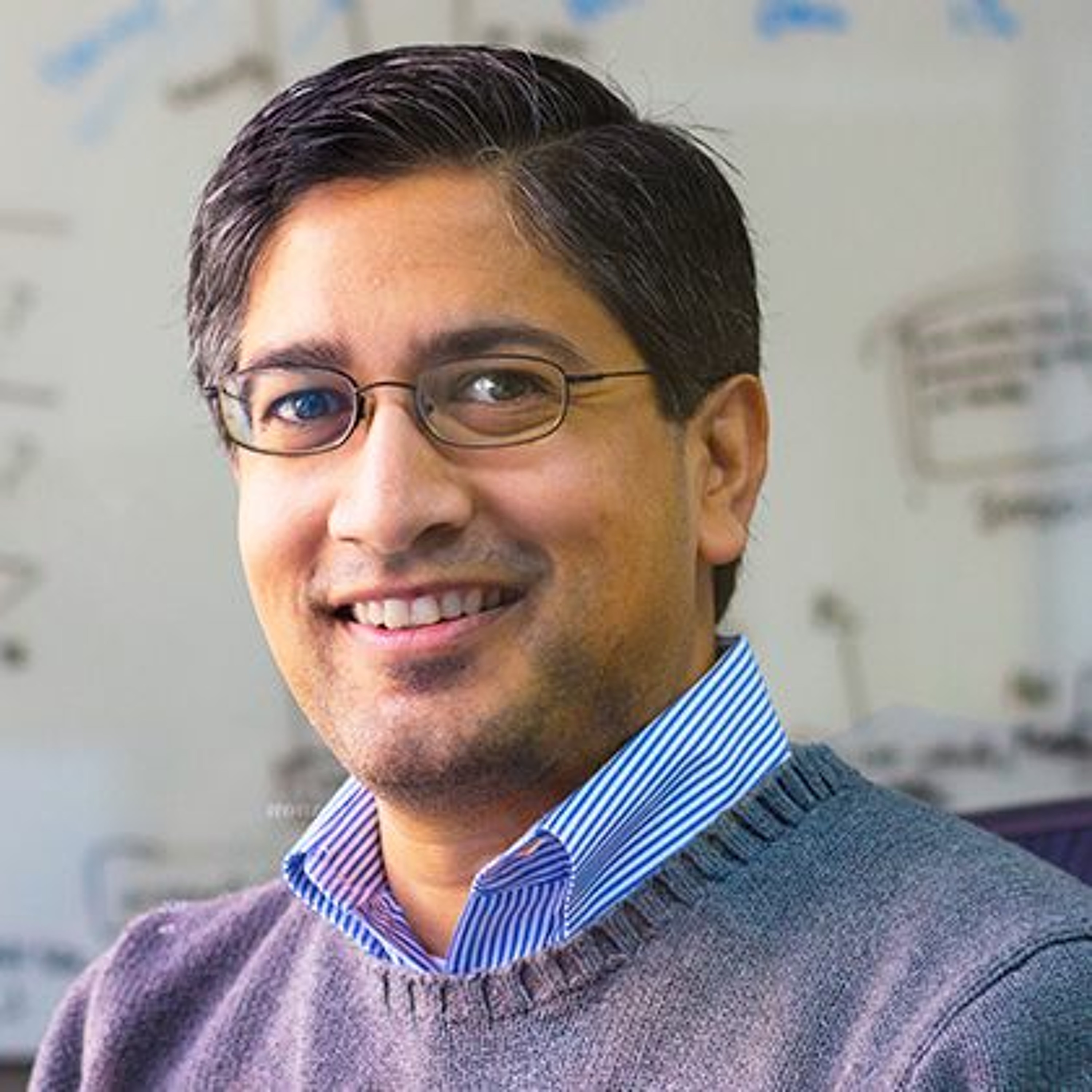
Shuman Ghosemajumder on Security and Cyber-Crime
In this week's podcast, professor Barry Burd talks to Shuman Ghosemajumder. Ghosemajumder is VP of product management at Shape Security and former click fraud czar for Google. Ghosemajumder is also the co-author of the book CGI Programming Unleashed, and was a keynote speaker at QCon New York 2016 presenting Security War Stories. Why listen to this podcast: With more of our lives conducted online through technology and information retrieval systems, the use of advanced technology gives criminals the opportunity to be able to do things that they weren't able to do. - Cyber-criminals come from all over the world and every socioeconomic background, so long as there's some level of access to computers and technology. - You see organised cyber-crime focusing on large companies because of the fact that they get a much greater sense of efficiency for their attacks. - Cyber-criminals are getting creative, and coming up with ways to interact with websites we haven't thought of before. - You can have very large scale attacks that are completely invisible from the point of view of the application that's being attacked. - The context of what are you are using software for is more important than just going through an understanding of the code level vulnerability. Notes and links can be found on http://bit.ly/2atBFgk The People Behind Cyber-Crime 5:28 - There are all kinds of different personalities and demographics involved. Cyber-criminals come from all over the world and every socioeconomic background, so long as there's some level of access to computers and technology. Even in cases where a cyber criminal doesn't know how to use technology directly, or how to create something like a piece of malware, they can still be involved in a cyber-criminal's scheme. 6:29 - A scheme which uses large groups of individuals and which doesn’t necessarily need to have skills itself, is stealing money from bank accounts. Being able to transfer money using malware on people’s machines from one account to another account that the cyber-criminal controls still involves getting that money out. That last step can involve a set of bank accounts that are assigned to real individuals. More on this: Quick scan our curated show notes on InfoQ. http://bit.ly/2atBFgk You can also subscribe to the InfoQ newsletter to receive weekly updates on the hottest topics from professional software development. http://bit.ly/24x3IVq

Caitie McCaffrey on Engineering Effectiveness, Diversity, & Verification of Distributed Systems
In this week's podcast, QCon chair Wes Reisz and Werner Schuster talk to Caitie McCaffrey. McCaffrey works on distributed systems with the engineering effectiveness team at Twitter, and has experience building the large scale services and systems that power the entertainment industry at 343 Industries, Microsoft Game Studios, and HBO. McCaffrey's presentation at QCon New York was called The Verification of a Distributed System. Why listen to this podcast: - Twitter's engineering effectiveness team aims to help make dev tools better, and make developers happier and more efficient. - Asking someone to speak at your conference or join your team solely because of their gender does more harm than people think. - There is not one prescriptive way to make good, successful technology. - Even when we don't have time for testing, there are options to increase your confidence in your system. - The biggest problem when running a unit test is that it is only testing the input you hard code into the unit test. Notes and links can be found on http://bit.ly/2al6BRp Engineering Effectiveness 1:24 - The purpose of the engineering effectiveness team is to help make dev tools better, and to make Twitter's developers happier and more efficient. 2:44 - The team is trying to make infrastructure so that not every team has to solve the distributed problem on their own, and give developers some APIs and tools so that they can build systems easily. More on this: Quick scan our curated show notes on InfoQ. http://bit.ly/2al6BRp You can also subscribe to the InfoQ newsletter to receive weekly updates on the hottest topics from professional software development. http://bit.ly/24x3IVq

Wendy Closson on Mindfulness and Algorithmic Approaches to Communicating
In this week's podcast, Barry Burd talks with Wendy Closson. With over a decade of experience immersed in development and championing agile practices, Closson coaches technology leaders to manage effectively, respond reasonably, and navigate the choppy waters of business. Closson's presentation at QCon New York was entitled Syntactic Sugar for English: Pragmatic Eloquence. Why listen to this podcast: - Software is a very abstract experience, so it can be difficult to communicate ideas about software to people outside. - The majority of people in teams want to remain in their comfort zone, so don't want to change. - Many problems that may seem technical in nature have to do with outside experiences. - The algorithmic approach to communicating has to do with creating new habits around our speaking. - With a single word you can elevate a population or destroy a friendship. - Simplicity is divinity, where someone can look at your code and understand your intentions, and the same in real-life communication. - Compromise isn't always the best thing. If no one's really feeling passionate about it, that's not going to create the best code. Notes and links can be found on http://bit.ly/29Co4X2 How Understanding Developers Helps Coaching 1:20 - Software is a very abstract experience. It doesn't really live in the physical word, so it can be difficult to communicate ideas about software - using it or creating it - to people outside the software world. 1:58 - It's possible to manage without direct experience... When you think of your job as a service leadership job. It's your job to facilitate, to trust, to understand what people are saying. But without the background, that trust can be hard to keep; a lot of things can get lost in translation. More on this: Quick scan our curated show notes on InfoQ. http://bit.ly/29Co4X2 You can also subscribe to the InfoQ newsletter to receive weekly updates on the hottest topics from professional software development. http://bit.ly/24x3IVq

Courtney Hemphill on VR, Augmented Reality, and the Importance of Animation in UX
In this week's podcast, Barry Bird talks to Courtney Hemphill, a partner and tech lead at Carbon Five. With over ten years of experience in software development, Hemphill has done full stack development for both startup and enterprise companies. Hemphill's presentation at QCon New York was entitled Algorithms for Animation. Why listen to this podcast: - Why developers in startups or enterprise firms should care about creating animations - The interfaces we interact with in software are becoming more dynamic - If you don't know what's wrong, you don't know how to fix it - The most common code smells, according to Llewellyn Falco: Clutter, long lines, long methods, duplication, and inconsistency - How do we make- in an agile way- the architectural work visible, and not ignore it? - How do you have an incremental architecture and get measurements? If you say you're going to go away for six months and figure it out, that's not very measurable. Notes and links can be found on InfoQ: http://bit.ly/29kq2ds Why Developers Should Care About Creating Animations 1m:05s - The interfaces we interact with in software are becoming more dynamic. 1m:30s - We are moving closer to natural user interfaces, and this is something software engineers across the board need to consider when they are developing programs. You don't just have a pointer and a mouse and a keyboard- you can squish and stretch things, using your fingers and your hands. 1m:55s - Animations need to feel real, and that is all based in Math and Physics. 2m:15s - The animations you see on websites have always been an opportunity for us to have a more fundamental learning about what the program does without needing a lot of instruction. 2m:38s - Animation functions almost as a way for people to discover and explore an interface so they can interact and engage with it more easily. The Importance of Animation Resembling Reality 3m:00s - If you've ever put on an Oculus Rift and experienced "judder" and felt immediately sick, that's the most extreme version. 3m:31s - If a computer is running slowly and you see frames dropped, you are sensing something underlying that is not right, and you immediately distrust it. 3m:42s - The further away you get from something that is smooth, the more you start to mistrust the platform and the data behind it. Natural Textures vs Cartoon-Like Textures [...] Quick scan our curated show notes on InfoQ. http://bit.ly/29kq2ds You can also subscribe to the InfoQ newsletter to receive weekly updates on the hottest topics from professional software development. http://bit.ly/24x3IVq
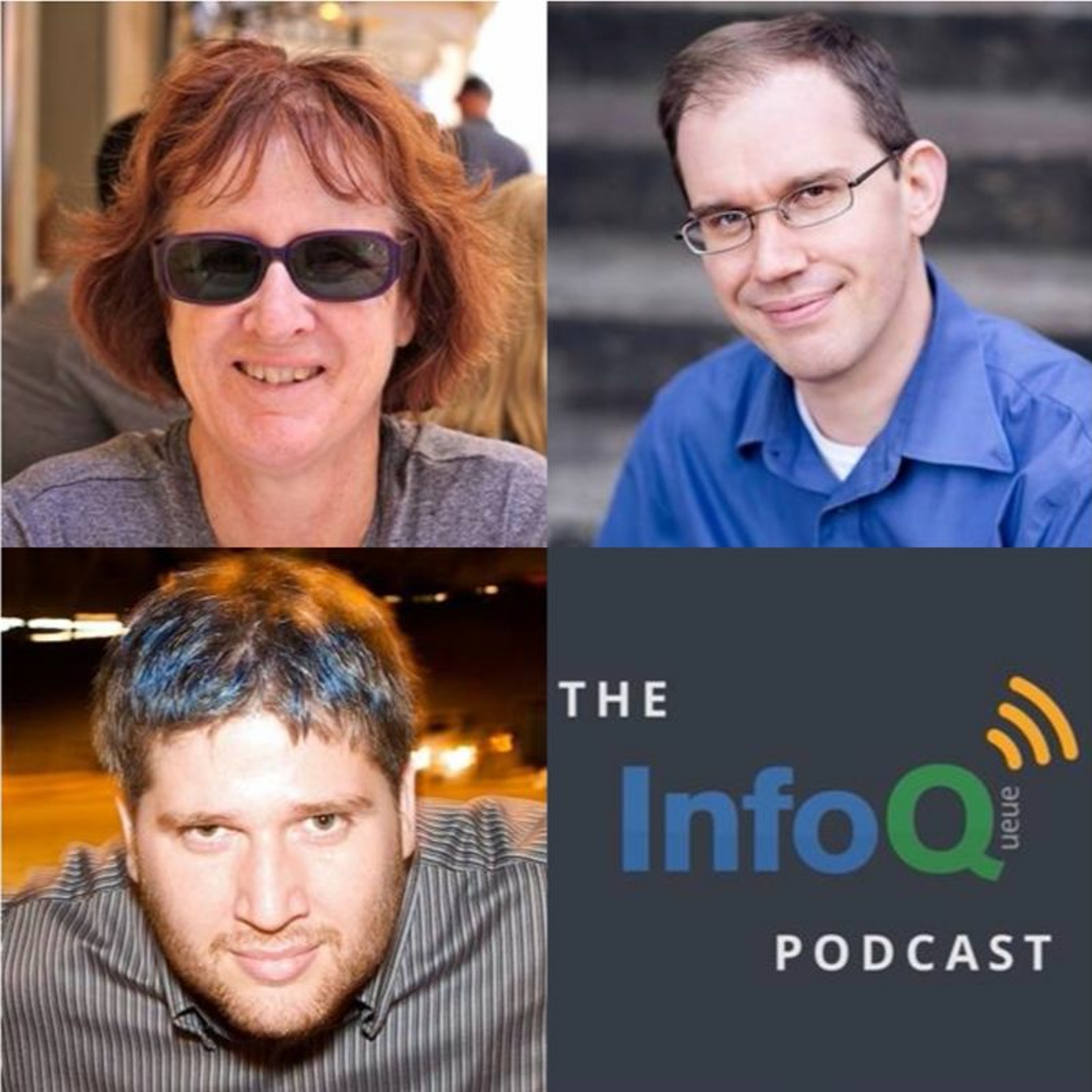
James Shore, Llewellyn Falco, and Rebecca Wirfs-Brock on TDD and Architecture
In this week's podcast Richard Seroter talks to James Shore, author of The Art of Agile Development and one of the original signatories of the Agile Manifesto. Also on the podcast are Llewellyn Falco, creator of the open source testing tool ApprovalTests and co-founder of Teaching Kids Programming, and Rebecca Wirfs-Brock, inventor of Responsibility-Driven Design, as well as the author of books including Designing Object: Oriented Software and Object Design: Roles, Responsibilities and Collaborations. Why listen to this podcast: - A lot of people know how to do TDD and refactoring for the back end, but not for the font, but the basics are the same. - The basics of Test-Driven Development are the same for the front or back end. - If you don't know what's wrong, you don't know how to fix it. - The most common code smells, according to Llewellyn Falco: Clutter, long lines, long methods, duplication, and inconsistency. - How do we make, in an agile way, the architectural work visible, and not ignore it? - How do you have an incremental architecture and get measurements? If I say to you I'm going to go away for six months and figure it out, that's not very measurable. Notes and links can be found on InfoQ: http://bit.ly/1Pse2r1 1m:10s - The talk 'Agile Engineering for the Web' was about how do you bring typical Agile engineering ideas like TDD and refactoring to the front-end languages. 1m:33s - A lot of people know how to do these things on the back-end, but when you get to the front end a lot of people just throw up their hands. 2m:24s - I see CSS bugs all the time, because it's very hard to refactor CSS without breaking something. Quick scan our curated show notes on InfoQ. http://bit.ly/1Pse2r1 You can also subscribe to the InfoQ newsletter to receive weekly updates on the hottest topics from professional software development. http://bit.ly/24x3IVq

Lisa Crispin and Justin Searls on Testing and Innovation in Front End Technology
In this week's podcast Richard Seroter talks to Lisa Crispin who works on the tracker team at Pivotal Labs, and is an organiser of the Agile Alliance Technical Conference. Lisa is the co-author of several books on Agile Testing, and is also the 2012 recipient of the Agile Testing Days award for Most Influential Agile Testing Professional Person. Richard also talks to Justin Searls, software craftsman, presenter of "How to Stop Hating Your Tests" and co-founder of Test Double, a company whose goal is to "improve how the world writes software." Why listen to this podcast: - Agile is mainstream, and being adopted by big enterprises, but there's a place to help small companies and startups. - Cloud Foundry pair testers to write production code with the programmers. - Developers have to be focused on right now, testers have freedom to look at more of the big picture - People know testing is good and there a lot of tools for it, but some tools are ill-conceived. - We need a better language for talking about good QA and full stack testing. Notes and links can be found on InfoQ: http://bit.ly/1U0ip8Q 2m:00s - The first XP universe conferences were mainly about XP practices, values and principles, and were attended by developers 2m:17s - Over time, topics moved towards processes and frameworks, and the number of developers who attend Agile conferences has gone down dramatically. 3m:51s - Now Agile is mainstream, it's being adopted by big enterprises, but there's a place to help small companies and startups. That's usually where the innovation comes from, and the Agile Alliance wants to encourage innovation. Quick scan our curated show notes on InfoQ. http://bit.ly/1U0ip8Q You can also subscribe to the InfoQ newsletter to receive weekly updates on the hottest topics from professional software development. http://bit.ly/24x3IVq

GILT VP Heather Fleming on Unlocking the "Secret Sauce" of Great Teams
In this week's podcast QCon chair Wesley Reisz talks to Heather Fleming, who is the VP of product and program management at GILT, where she is responsible for not only the customer-facing website, but also back office things from distribution to order processing. Why listen to this podcast: - GILT treats every person as an individual, with a skillset that is outside their responsibilities. - You should be able to be your authentic self wherever you are. - Google found creating a psychologically safe work environment was key to high performing teams. - You can kill a great team by taking away their autonomy and empowerment. - Great engineers that want to be managers are fearful of losing their skill, and great engineers that don't want to be managers are put in those roles and are terrible managers. Notes and links can be found on InfoQ: http://bit.ly/1U2Wgq9 1m 49s - One of the things that makes the culture at GILT so special is the "ingredients framework" that considers every person an individual, with a skillset that is outside what their title might say and what their role and responsibilities might be. 3m 29s - One of the team ingredients is called "motivator" - the ability to make sure that the team understands what they're working on, and more importantly the "why" and how it's driving business or customer value. 4m 35s - The relationship you have with your co-workers should be deeper than many of us are allowing them to be, because they are like your second family. Quick scan our curated show notes on InfoQ. http://bit.ly/1U2Wgq9 You can also subscribe to the InfoQ newsletter to receive weekly updates on the hottest topics from professional software development. http://bit.ly/24x3IVq Attend Heather Fleming's session at QCon New York 2016, Jun 13-17: http://bit.ly/1U2f3og

Uber's Chief Systems Architect on their Architecture and Rapid Growth
In this week's podcast QCon chair Wesley Reisz talks to Matt Ranney who is the Chief Systems Architect at Uber, where he's helping build and scale everything he can. Why listen to this podcast: - Expanding a company and team at this rate is genuinely hard. Lots of mistakes have been made along the way. - Microservices allow companies to grow rapidly but have a cost in terms of aggregate velocity. - Uber is gradually moving its marketplace development from Node.js to Go and Java. Java is used for the map services. - Aggressive failure testing is used extensively in Uber. - Some early design choices - like using JSON over HTTP - make formal verification basically impossible. Notes and links can be found on InfoQ: http://bit.ly/1TH8app You can also subscribe to the InfoQ newsletter to receive weekly updates on the hottest topics from professional software development. http://bit.ly/24x3IVq Attend Matt Ranney's session at QCon New York 2016, Jun 13-17: http://bit.ly/1TH75ht
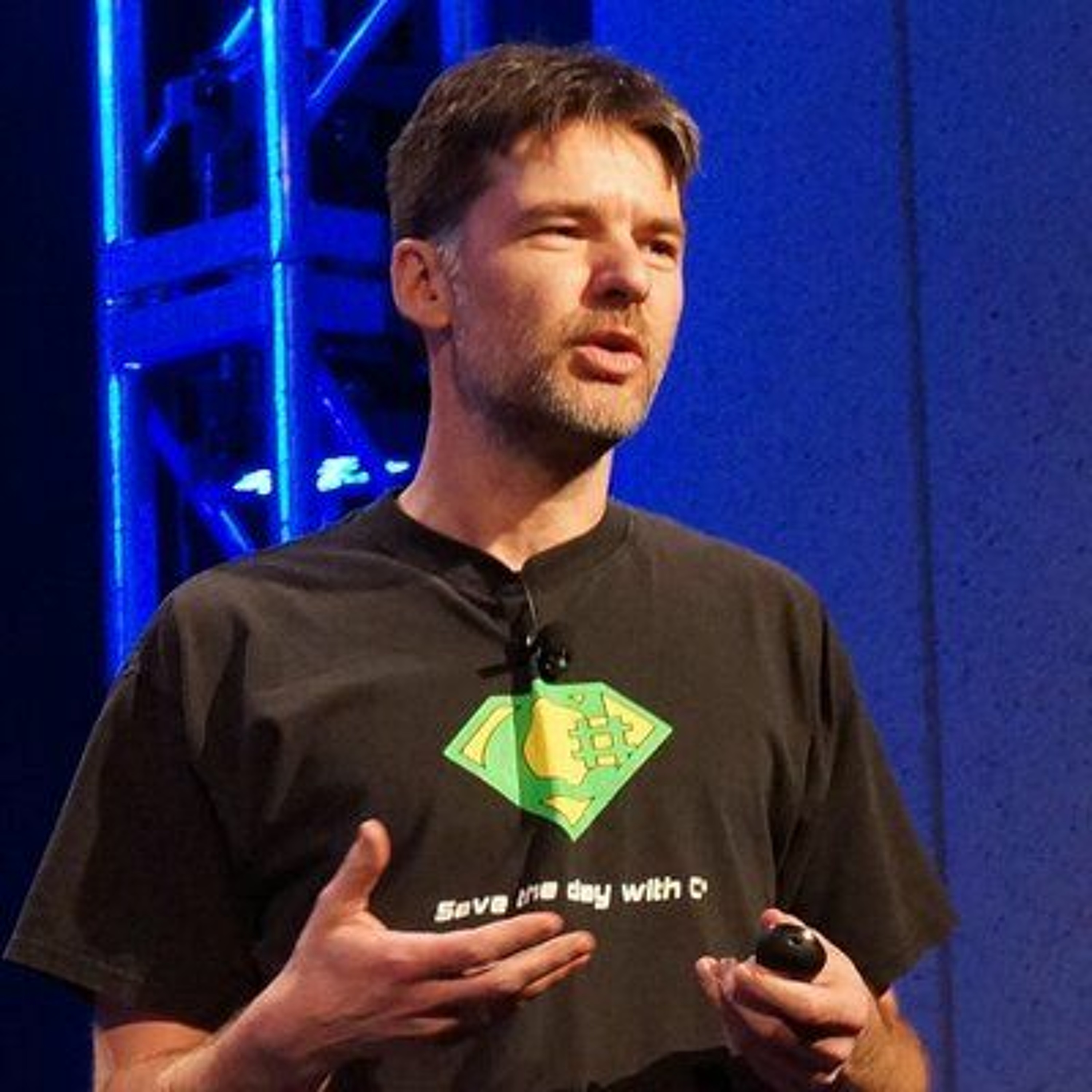
Mads Torgersen on C# 7 and Beyond
Summary: In this week's podcast QCon chair Wesley Reisz talks to Mads Torgersen who leads the C# language design process at Microsoft, where he has been involved in five versions of C#, and also contributed to TypeScript, Visual Basic, Roslyn and LINQ. Before he joined Microsoft a decade ago, he worked as a university professor in Aarhus, Denmark, doing research into programming language design and contributing to Java generics. Why listen to this podcast • The overall theme for C# 7 will be features that make it easier to work with data, including language level support for tuples. Roslyn, the compiler and API, allows a much more agile evolution of the language. • The Omnisharp initiative aims to facilitate easier editing of C# code in other editors, including VS Code. • IoT and Artificial Intelligence are emerging as key disruptive trends. • The release may also include pattern matching for type switching. • C# 7 is the first new release of the language to be completely built in the open. More on this • You can access our whole coverage on C#7 http://bit.ly/1ZlM4NI or have an overview on what's new on C# in general http://bit.ly/1rx6SGM. • You can also subscribe to the InfoQ newsletter to receive weekly updates on the hottest topics from professional software development. http://bit.ly/24x3IVq • Attend Mads Torgersen's session at QCon New York 2016, Jun 13-17. http://bit.ly/1YcBgAY

Adrian Cockcroft on Microservices, Terraservices and Serverless Computing
Summary: For our inaugural podcast QCon chair Wesley Reisz talks to Adrian Cockcroft, who works for Battery Ventures where he advises the firm and its portfolio companies about technology issues and also assists with deal sourcing and due diligence. Why listen to this podcast • Over the last year a large number of frameworks and libraries for building microservices have emerged and we're seeing a lot of rapid change. • The stack you choose will often be based on the main language you use, so for example Netflix’s stack is language agnostic but the tooling is very Java-centric. • Architectural choices can have a profound impact on success, so some-thing as simple as an overly long timeout with retries can cause your system to suffer from a congestion collapse problem. Have a large timeout at the edge, and progressively smaller and smaller timeouts as you get deeper into the system. • Start with a monolith and move to a distributed architecture when you need to because of team size or to get better separation of concerns. • Other disruptive trends include “serverless architecture” like AWS Lambda, and open source itself which is perhaps the true definition of disruptive. More on this • You can access our in-depth coverage on microservices http://bit.ly/1SRnFz3. • You can also subscribe to our newsletter to receive weekly updates on the hottest topics from professional software development. http://bit.ly/24x3IVq • Attend Adrian Cockcroft 's session at QCon New York 2016, Jun 13-17. http://bit.ly/1TvzlDQ