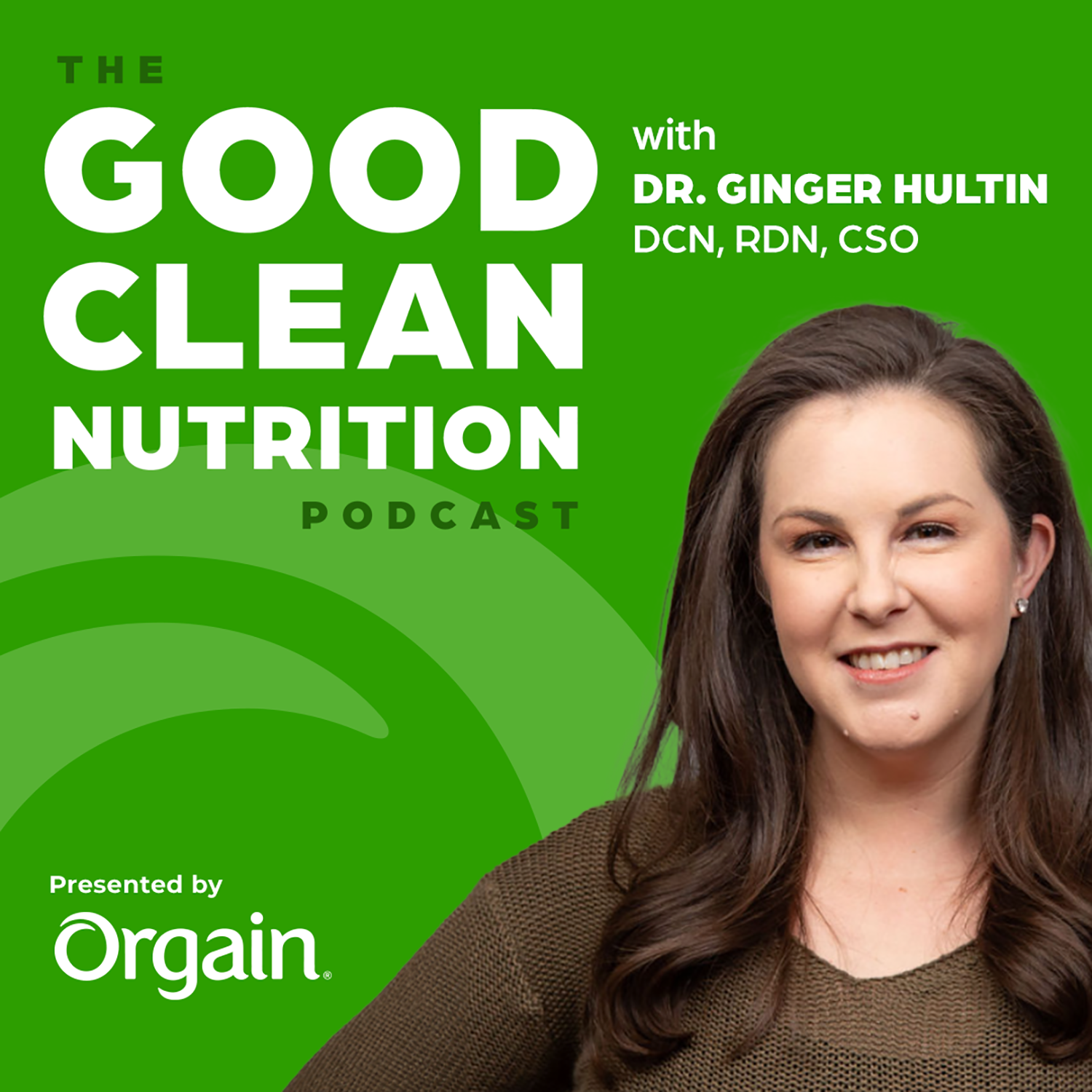
The Good Clean Nutrition Podcast
Presented by Orgain · Presented by Orgain
Show overview
The Good Clean Nutrition Podcast has been publishing since 2021, and across the 5 years since has built a catalogue of 88 episodes, alongside 1 trailer or bonus episode. That works out to roughly 45 hours of audio in total. Releases follow a monthly cadence, with the show now in its 4th season.
Episodes typically run twenty to thirty-five minutes — most land between 26 min and 39 min — though episode length varies meaningfully from one episode to the next. None of the episodes are flagged explicit by the publisher. It is catalogued as a EN-language Health & Fitness show.
The show is actively publishing — the most recent episode landed 1 weeks ago, with 10 episodes already out so far this year. The busiest year was 2025, with 23 episodes published. Published by Presented by Orgain.
From the publisher
Stay in-the-know on the hottest trending topics in health and nutrition with The Good Clean Nutrition Podcast, presented by Orgain. Join Dr. Ginger Hultin, DCN, RDN, CSO, an integrative dietitian nutritionist, as she speaks with some of the most inspiring and passionate subject-matter experts in nutrition, health, and wellness. Each episode explores the science behind popular trends in nutrition and health, debunks common myths, and provides healthcare professionals and health-minded consumers with practical insights from trusted experts. Ginger Hultin is an integrative, clinical dietitian and cancer nutrition specialist who received her Doctorate in Clinical Nutrition from the University of North Florida. She received her master's degree from Bastyr University, where she currently serves as adjunct faculty teaching clinical nutrition. She has been in practice for over 10 years using a personalized, holistic nutrition approach. She runs a full-time virtual private practice, Ginger Hultin Nutrition where she helps clients with complex health problems improve their health thought nutrition. In addition to being the host of The Good Clean Nutrition Podcast, she is an author of two books, Anti-inflammatory Diet Meal Prep and the How to Eat to Beat Disease Cookbook. For show notes, transcripts, and more resources, visit http://healthcare.orgain.com/podcast. This podcast is for informational purposes only and is not intended to be medical advice. The material presented in this podcast, is not intended to be a substitute for professional medical advice, diagnosis, or treatment. You should seek the recommendation of a medical professional regarding a medical condition or treatment or before starting a new nutrition and/or health regimen. Orgain, LLC is providing these episodes on an "as is" basis and makes no representations or warranties of any kind with respect to the podcast episodes. Orgain, LLC nor any of its directors, employees or other representatives will be liable for damages arising out of or in connection with the use of this document. This is a comprehensive limitation of liability that applies to all damages of any kind, including (without limitation) compensatory, direct, indirect or consequential damages, loss of data, income or profit, loss of or damage to property and claims of third parties.
Latest Episodes
View all 88 episodesHow to Support Your Body Through Menopause with Dr. Wendy Ellis, ND (ep – 85)
Fueling Active Adults: Training, Recovery, and Real Life with Beth McCall, MS, RD, CSSD (ep – 84)
Simple & Smart Nutrition Strategies for Growing Teens with Beth McCall MS, RD, CSSD (ep – 83)
S4 Ep 4How Movement Impacts Neuroplasticity, Mood, and Brain Health with Dr. Austin Perlmutter, MD (ep – 82)
Need one more reason to go on your walk today? What if it was for your brain health?In this episode, Dr. Austin Perlmutter is back to share why moving your body is one of the most powerful things you can do, not just for overall wellness, but specifically for your brain. Together, Dr. Ginger Hultin and Dr. Perlmutter explore the science behind the mind-body connection and how exercise directly supports neuroplasticity, cognitive function, metabolic health, and even long-term dementia risk reduction.From what actually happens in your brain during movement to the types of exercise that matter most, this conversation breaks down how to move your body in a way that truly supports mental clarity, resilience, and energy.So if you’re ready to learn how to support your brain with your body, hit play! In this episode, we’ll cover: [00:00:01] Walk-with-me: movement as brain medicine[00:02:33] Why exercise tops the list for brain + mood[00:03:20] What’s happening in your brain: blood flow + muscle signals[00:04:45] Neuroplasticity and the BDNF boost[00:06:36] Exercise, depression support, and dementia prevention[00:08:57] “Exercise snacks”: tiny bursts that add up[00:13:37] Cardio vs strength: why strong legs matter[00:20:41] Recovery basics: sleep, consistency, and sustainabilityFind Dr. Ginger’s wild blueberry vanilla matcha smoothie recipe here. Connect with Dr. Ginger Hultin on Instagram, LinkedIn or her website. Connect with Dr. Austin Perlmutter on Instagram, LinkedIn or Website. Disclaimer: The material presented in this podcast, is not intended to be a substitute for professional medical advice, diagnosis, or treatment. You should seek the recommendation of a medical professional regarding a medical condition or treatment or before starting a new nutrition and/or health regimen. Orgain, LLC is providing these episodes on an "as is" basis and makes no representations or warranties of any kind with respect to the podcast episodes. Orgain, LLC nor any of its directors, employees or other representatives will be liable for damages arising out of or in connection with the use of this document. This is a comprehensive limitation of liability that applies to all damages of any kind, including (without limitation) compensatory, direct, indirect or consequential damages, loss of data, income or profit, loss of or damage to property and claims of third parties.
S4 Ep 3Nutrition Strategies to Support Cognitive Function and Brain Health with Dr. Austin Perlmutter, MD (ep – 81)
If your brain were a car, what would you put in the gas tank? The brain is one of the body’s most energy-hungry organs, and what fuels it plays a major role in how it functions in the years to come.Dr. Ginger Hultin sits down with Dr. Austin Perlmutter, physician, researcher, and bestselling author, to shed light on how daily inputs can meaningfully support brain health. Together, they explore the powerful link between brain function and metabolic health, explaining why the foods and macronutrients that benefit your body also benefit your brain. From added sugars to ultra-processed foods, they trace how dietary patterns influence neuroinflammation and the body’s broader systems. They also discuss when supplements may play a supportive role if nutrition alone isn’t quite enough. For Dr. Perlmutter, it all comes down to small, everyday actions — and if you’re curious what those are, the play button is close by.In this episode, we’ll cover: [00:00:01] The secret to brain health: consistency over time[00:02:42] Why blood sugar and metabolism shape how your brain functions[00:06:03] Playing the long game: daily habits that protect your brain[00:09:04] Ultra-processed foods—what the research suggests[00:11:47] Brain-friendly macros: fats, fiber-rich carbs, and protein priorities[00:18:40] Ginger’s Plate: choosing great olive oil + an easy vinaigrette[00:20:47] Neuroinflammation: the link to mood, cognition, and dementia risk[00:26:10] Evidence-backed supplements: omega-3s, magnesium, and creatineFind Dr. Ginger’s grapefruit vinaigrette recipe here. Connect with Dr. Ginger Hultin on Instagram, LinkedIn or her website. Connect with Dr. Austin Perlmutter on Instagram, LinkedIn or Website. Disclaimer: The material presented in this podcast, is not intended to be a substitute for professional medical advice, diagnosis, or treatment. You should seek the recommendation of a medical professional regarding a medical condition or treatment or before starting a new nutrition and/or health regimen. Orgain, LLC is providing these episodes on an "as is" basis and makes no representations or warranties of any kind with respect to the podcast episodes. Orgain, LLC nor any of its directors, employees or other representatives will be liable for damages arising out of or in connection with the use of this document. This is a comprehensive limitation of liability that applies to all damages of any kind, including (without limitation) compensatory, direct, indirect or consequential damages, loss of data, income or profit, loss of or damage to property and claims of third parties.
S4 Ep 2Making Health Goals Your Own: Letting Go of Outside Voices and Self-Criticism with Psychotherapist Megan Rafuse, MSW, RSW (ep – 80)
What does healthy really mean to you? If you haven’t checked in with your definition lately, let this episode be your sign that it might be time to reevaluate.In this episode, psychotherapist and CEO of Shift Collab, Megan Rafuse, returns for an important conversation about understanding health in 2026 from beyond the scale, trends, and external voices. Together, Megan and Ginger start by exploring our roots and how health messaging has shaped our relationship with food over decades, from the diet culture of the early 2000s to the perfectionism on today's social media feeds. Megan and Ginger dive into why so much of this work comes down to reframing our internal dialogue, from the clothes we wear to the comparison traps we get caught in, to the language we use when talking about our bodies and the bodies of others. If your day could use a little less comparison and a whole lot more understanding, this episode is a great place to start.In this episode, we’ll cover: [00:00:03] How our definition of “healthy” is shaped[00:02:35] The lasting impact of diet culture and generational body messaging[00:08:24] When “healthy” behaviors become harmful[00:11:21] Body image, comparison culture, and the pressure to bounce back[00:13:14] Releasing shame tied to body changes[00:20:05] Social media and how comparison affects self-worth[00:23:07] How core beliefs shape the way we see ourselves and others[00:32:14] A grounding first step for body image and healthConnect with Dr. Ginger Hultin on Instagram, LinkedIn or her website. Connect with Megan Rafuse on Instagram, LinkedIn or website. Disclaimer: The material presented in this podcast, is not intended to be a substitute for professional medical advice, diagnosis, or treatment. You should seek the recommendation of a medical professional regarding a medical condition or treatment or before starting a new nutrition and/or health regimen. Orgain, LLC is providing these episodes on an "as is" basis and makes no representations or warranties of any kind with respect to the podcast episodes. Orgain, LLC nor any of its directors, employees or other representatives will be liable for damages arising out of or in connection with the use of this document. This is a comprehensive limitation of liability that applies to all damages of any kind, including (without limitation) compensatory, direct, indirect or consequential damages, loss of data, income or profit, loss of or damage to property and claims of third parties.
S4 Ep 1How to Set Health Goals That Fit Your Real Life, with Megan Rafuse, MSW, RSW (ep – 79)
How are those New Year’s resolutions going? Have you started working toward everything you hoped for this year? If those questions bring up a little discomfort, take a breath — you’re not alone. In this episode, Dr. Ginger Hultin dives into realistic, compassionate goal-setting with psychotherapist and CEO of Shift Collab, Megan Rafuse. When it comes to health goals, it’s easy to slip into cycles of self-criticism, perfectionism, and shame, especially for high-achieving, motivated people. Together, Ginger and Megan unpack why this happens and, more importantly, what actually helps. From shrinking goals into manageable steps, to evaluating the season of life you’re in, to building the right support systems, this conversation offers a practical framework for change.In this episode, we’ll cover: [00:00] Why health goals feel overwhelming in the new year[03:44] How to set realistic health goals that actually fit your real life[06:25] Why most health goals fail[08:20] Perfectionism, high achievers, and the pressure of “doing health right”[10:46] Behavioral activation, micro-goals, and taking tiny steps[15:19] Season-of-life goal setting and sustainable, supportive tradeoffs[18:40] Creating a support system for health goals[21:23] Why being human is part of successful behavior changeConnect with Dr. Ginger Hultin on Instagram, LinkedIn or her website. Connect with Megan Rafuse on Instagram, LinkedIn or website. Disclaimer: The material presented in this podcast, is not intended to be a substitute for professional medical advice, diagnosis, or treatment. You should seek the recommendation of a medical professional regarding a medical condition or treatment or before starting a new nutrition and/or health regimen. Orgain, LLC is providing these episodes on an "as is" basis and makes no representations or warranties of any kind with respect to the podcast episodes. Orgain, LLC nor any of its directors, employees or other representatives will be liable for damages arising out of or in connection with the use of this document. This is a comprehensive limitation of liability that applies to all damages of any kind, including (without limitation) compensatory, direct, indirect or consequential damages, loss of data, income or profit, loss of or damage to property and claims of third parties.
Check Out the New Approach to The Good Clean Nutrition Podcast!
Nutrition advice is everywhere, but trustworthy, evidence-based guidance can be hard to find. That’s where season four of The Good Clean Nutrition Podcast comes in! Host Dr. Ginger Hultin returns alongside an incredible lineup of experts to help you make sense of the latest in nutrition science. This season, you’ll hear more from Ginger throughout each episode as she shares reflections and insights along the way, translating research into realistic, meaningful steps. If you’re looking for grounded guidance, thoughtful conversations, and realistic wellness strategies you can actually use, this season is for you! Connect with Dr. Ginger Hultin on Instagram, LinkedIn or her website. Disclaimer: The material presented in this podcast, is not intended to be a substitute for professional medical advice, diagnosis, or treatment. You should seek the recommendation of a medical professional regarding a medical condition or treatment or before starting a new nutrition and/or health regimen. Orgain, LLC is providing these episodes on an "as is" basis and makes no representations or warranties of any kind with respect to the podcast episodes. Orgain, LLC nor any of its directors, employees or other representatives will be liable for damages arising out of or in connection with the use of this document. This is a comprehensive limitation of liability that applies to all damages of any kind, including (without limitation) compensatory, direct, indirect or consequential damages, loss of data, income or profit, loss of or damage to property and claims of third parties.
S3 Ep 20A Dietitian’s Guide to Unpacking the Processed Food Panic with Elizabeth Ward, MS, RD (ep – 78)
If you follow health and nutrition conversations online, you’ve likely seen the debates about “processed” and “ultra-processed” foods. But what’s grounded in science, and what’s simply clickbait?In this episode, Dr. Ginger Hultin is joined by fellow myth-buster, registered dietitian, and nutrition communicator Elizabeth (Liz) Ward to bring essential nuance back into the processed-food conversation. Together, they break down what these terms really mean, where modern classification systems like NOVA fall short, and why saying “no” to all processed foods can actually limit accessibility and overlook major public-health wins. From long ingredient lists to hard-to-pronounce additives, Liz and Ginger unpack the facts versus fear, and walk through everyday foods that are often labeled “good,” “bad,” or somewhere in between. In this episode, we’ll cover: [00:00:00] What ultra-processed food research really shows [00:01:50] Defining processed foods: from whole to ultra-processed[00:02:52] The NOVA classification system explained[00:05:46] How processing improves nutrition: fortification and public health[00:08:35] Why some ultra-processed foods can still be nutritious[00:11:29] Common food label myths and how to read ingredients wisely[00:13:45] Access, convenience, and the role of processed foods in real life[00:22:03] Final takeaways: moving beyond fearConnect with Dr. Ginger Hultin on Instagram, LinkedIn or her website. Connect with Elizabeth Ward on Instagram, LinkedIn or website. Disclaimer: The material presented in this podcast, is not intended to be a substitute for professional medical advice, diagnosis, or treatment. You should seek the recommendation of a medical professional regarding a medical condition or treatment or before starting a new nutrition and/or health regimen. Orgain, LLC is providing these episodes on an "as is" basis and makes no representations or warranties of any kind with respect to the podcast episodes. Orgain, LLC nor any of its directors, employees or other representatives will be liable for damages arising out of or in connection with the use of this document. This is a comprehensive limitation of liability that applies to all damages of any kind, including (without limitation) compensatory, direct, indirect or consequential damages, loss of data, income or profit, loss of or damage to property and claims of third parties.
S3 Ep 19How Ultra-Processed Foods and Added Sugars Influence Mental Health with Dr. David Wiss, PhD (ep – 77)
If counting calories and cutting out “bad” foods haven’t led to lasting change, it may be because nutrition is far more complex than simple math. In this episode, Dr. David Wiss returns for an eye-opening conversation with host Dr. Ginger Hultin that challenges mainstream narratives about weight, willpower, and what “healthy eating” really means.Together, they unpack why the calorie model continues to dominate despite its limitations, and how it overlooks the roles of neurobiology and lived experience. From the science and controversy of ultra-processed foods to the connection between added sugars, fiber, and mood, this episode offers a refreshingly compassionate and systems-focused approach. If you’re ready to shift away from reductive nutrition advice and gain a better understanding of the social forces that shape eating behaviors, this conversation will leave you feeling informed, empowered, and deeply understood.In this episode, we’ll cover: [00:00:00] Count fiber, not calories[00:00:31] Setting up the calorie + ultra processed food conversation[00:02:48] Why the calorie model falls short[00:05:35] What “ultra-processed” really means[00:08:59] Values-based eating approach[00:10:54] Added sugar, fiber & mental health link[00:13:17] When nutrition advice becomes triggering[00:14:14] Trauma-informed nutrition care[00:15:41] Final takeaway: let your nutrition evolveConnect with Dr. Ginger Hultin on Instagram, LinkedIn or her website. Connect with Dr. David Wiss on Instagram, LinkedIn or Website. Disclaimer: The material presented in this podcast, is not intended to be a substitute for professional medical advice, diagnosis, or treatment. You should seek the recommendation of a medical professional regarding a medical condition or treatment or before starting a new nutrition and/or health regimen. Orgain, LLC is providing these episodes on an "as is" basis and makes no representations or warranties of any kind with respect to the podcast episodes. Orgain, LLC nor any of its directors, employees or other representatives will be liable for damages arising out of or in connection with the use of this document. This is a comprehensive limitation of liability that applies to all damages of any kind, including (without limitation) compensatory, direct, indirect or consequential damages, loss of data, income or profit, loss of or damage to property and claims of third parties.
S3 Ep 18Why the Stories We Carry Influence our Eating Behaviors with Dr. David Wiss, PHD (ep – 76)
If the gut and brain are as interconnected as emerging research suggests, it’s no surprise that our mental health, early life experiences, and eating patterns are deeply intertwined. In this episode, Dr. David Wiss joins Ginger for a powerful conversation about how early adversity, trauma, and mental health conditions like anxiety, depression, and ADHD influence nutrition and our relationship with food. Dr. Wiss breaks down each of the most common mental health disorders and explains how they intersect to shape behaviors like emotional eating, impulsive eating, and addiction-like patterns. Together, he and Ginger unpack the complexity of restriction and explore how burnout, the gut–brain axis, and inflammation drive eating behaviors in ways that have nothing to do with willpower. If you’re looking to better understand the deep ties between your mind, body, and personal history, this episode offers the clarity and compassion you’ve been searching for.In this episode, we’ll cover: [00:00:00] How early-life trauma affects biology and mental health[00:02:24] How adversity increases addiction risk and shapes food behaviors[00:04:48] Food addiction, hedonic eating, and the spectrum of eating patterns[00:05:52] Depression, inflammation, and how nutrition impacts mood[00:11:59] How ultra-processed foods are engineered to boost reward[00:13:38] Why adding fiber and plants helps more than restrictive diets[00:15:41] How stress and burnout drive emotional and convenience eating[00:18:47] First steps to uncover emotional roots of eating habitsConnect with Dr. Ginger Hultin on Instagram, LinkedIn or her website. Connect with Dr. David Wiss on Instagram, LinkedIn or Website. Mentioned in Episode Twice-Baked Protein Sweet Potatoes RecipeDisclaimer: The material presented in this podcast, is not intended to be a substitute for professional medical advice, diagnosis, or treatment. You should seek the recommendation of a medical professional regarding a medical condition or treatment or before starting a new nutrition and/or health regimen. Orgain, LLC is providing these episodes on an "as is" basis and makes no representations or warranties of any kind with respect to the podcast episodes. Orgain, LLC nor any of its directors, employees or other representatives will be liable for damages arising out of or in connection with the use of this document. This is a comprehensive limitation of liability that applies to all damages of any kind, including (without limitation) compensatory, direct, indirect or consequential damages, loss of data, income or profit, loss of or damage to property and claims of third parties.
S3 Ep 17Making Sense of the Next Steps to Heal Your Gut with Dr. Vivian Asamoah, MD (ep – 75)
Sometimes finding the right solution means turning to more than one source for a solution, and the same is true for our bodies! In this episode, Dr. Vivian Asamoah returns to continue the conversation on the evolving science of gut-brain health, from the complexities of microbiome testing to how medications, nutrition, and integrative care work together to support true healing. Ginger and Dr. Asamoah unpack what patients really need to know about functional testing, why results can be confusing, and how to take practical steps without getting lost in the data. They also explore the important role of medications within integrative practice and how collaboration between dietitians, physicians, and other specialists helps patients feel heard, supported, and empowered on their gut-healing journey.In this episode, we’ll cover: [00:00:00] How quickly the microbiome changes and why food drives gut health[00:00:20] A food-first approach to healing the gut and the critical role of fiber[00:02:05] What microbiome testing can, and can’t, tell us[00:04:30] Biohacking, oversimplification, and the real science of gut health[00:05:42] When medications like SSRIs or TCAs can support gut-brain disorders[00:07:34] Integrative care: antibiotics, teamwork, and knowing when to refer[00:09:40] Validating symptoms and key steps to start healing the gut-brain connectionConnect with Dr. Ginger Hultin on Instagram, LinkedIn or her website. Connect with Dr. Vivian Asamoah on Instagram, LinkedIn or her website. Disclaimer: The material presented in this podcast, is not intended to be a substitute for professional medical advice, diagnosis, or treatment. You should seek the recommendation of a medical professional regarding a medical condition or treatment or before starting a new nutrition and/or health regimen. Orgain, LLC is providing these episodes on an "as is" basis and makes no representations or warranties of any kind with respect to the podcast episodes. Orgain, LLC nor any of its directors, employees or other representatives will be liable for damages arising out of or in connection with the use of this document. This is a comprehensive limitation of liability that applies to all damages of any kind, including (without limitation) compensatory, direct, indirect or consequential damages, loss of data, income or profit, loss of or damage to property and claims of third parties.
S3 Ep 16How Your Microbiome Talks to Your Brain with Dr. Vivian Asamoah, MD (ep – 74)
It’s easy to think of digestion as a one-way process, but the conversation between your gut and your brain is far more complex. From mood to memory to overall well-being, this “gut-brain axis” plays a critical role in how we feel and function every day.In this episode, Dr. Ginger Hultin sits down with Dr. Vivian Asamoah, a board-certified gastroenterologist and internal medicine physician, to explore the fascinating science of how your microbiome communicates with your brain. They break down what the gut-brain connection really means, the role of the microbiome and vagus nerve in mood regulation, and why paying attention to digestive health can have ripple effects on mental clarity and emotional balance. Dr. Asamoah also shares practical advice for recognizing gut signals that shouldn’t be ignored, and what they might be trying to tell you.If you’ve ever wondered how food, stress, and microbes shape your mindset, this episode will change the way you think about your gut.In this episode, we’ll cover: [00:00:00] What the gut-brain axis is and how your gut “talks” to your brain[00:02:25] How neuroscience and gastroenterology intersect[00:03:40] Common gut issues, why women experience them most[00:04:49] Disorders of gut-brain interaction[00:06:12] The vagus nerve connection, how your gut signals your brain[00:08:11] How gut bacteria influence mood, stress, and mental health[00:13:11] Nutrition and lifestyle habits that support a healthy microbiome[00:20:07] Prebiotics, probiotics & postbiotics[00:21:53] Key takeaways for overall wellness Connect with Dr. Ginger Hultin on Instagram, LinkedIn or her website. Connect with Dr. Vivian Asamoah on Instagram or LinkedIn.Disclaimer: The material presented in this podcast, is not intended to be a substitute for professional medical advice, diagnosis, or treatment. You should seek the recommendation of a medical professional regarding a medical condition or treatment or before starting a new nutrition and/or health regimen. Orgain, LLC is providing these episodes on an "as is" basis and makes no representations or warranties of any kind with respect to the podcast episodes. Orgain, LLC nor any of its directors, employees or other representatives will be liable for damages arising out of or in connection with the use of this document. This is a comprehensive limitation of liability that applies to all damages of any kind, including (without limitation) compensatory, direct, indirect or consequential damages, loss of data, income or profit, loss of or damage to property and claims of third parties.
S3 Ep 15Testing, Nutrient Gaps & Smarter Supplement Choices with Dr. Douglas Kalman, PhD, RD (ep – 73)
When it comes to deciding if and when to supplement, the answer isn’t one-size-fits-all. To do things right, it's important to know how nutrient needs vary across life stages, lifestyles, and health conditions. In this episode, Dr. Ginger Hultin sits down once again with Dr. Douglas Kalman, an expert in nutritional neuroscience and supplements, to explore the practical side of supplementation. From athletes and young professionals to pregnant women and older adults, they discuss who can benefit most, what nutrients often fall short, and how testing can personalize your approach. Dr. Kalman also explains why supplement quality matters, from the forms of vitamins and minerals on the label to third-party certifications that help ensure safety. If you’ve ever wondered whether supplements could support your long-term health, or how to choose the right ones with confidence, this conversation offers insights you can trust.In this episode, we’ll cover: [00:00:00] Why vitamin D is more than a vitamin, it’s a hormone[00:00:19] Who benefits most from supplements and how to fill nutrient gaps[00:05:52] Iron, choline & key nutrients for women’s health[00:08:14] What supplement labels don’t tell you about quality and absorption[00:09:37] Personalized testing and how to know what your body really needs[00:12:48] Vitamin D, sunlight & the link to mental and physical health[00:14:20] Supplements in cancer care & the importance of protein[00:15:47] Everyday applications—from family nutrition to long-term wellness[00:16:24] Final takeaways: credible resources & smarter supplement choicesConnect with Dr. Ginger Hultin on Instagram, LinkedIn or her website. Connect with Dr. Douglas Kalman on Instagram or LinkedIn.Mentioned in This Episode: International Society of Sports Nutrition position standsMemorial Sloan Kettering Cancer Center Integrative Health LibraryClinicalTrials.gov Disclaimer: This podcast is for informational purposes only and is not intended to be medical advice. The material presented in this podcast is not intended to be a substitute for professional medical advice, diagnosis, or treatment. Orgain, LLC is providing these episodes on an "as is" basis and makes no representations or warranties of any kind with respect to the podcast episodes. Orgain, LLC nor any of its directors, employees or other representatives will be liable for damages arising out of or in connection with the use of this document. This is a comprehensive limitation of liability that applies to all damages of any kind, including (without limitation) compensatory, direct, indirect or consequential damages, loss of data, income or profit, loss of or damage to property and claims of third parties.
S3 Ep 14Quality, Safety & Supplement Red Flags with Dr. Douglas Kalman, PhD, RDN (ep – 72)
When it comes to understanding the wide world of supplements, it can feel like information overload. New products launch constantly, messaging often conflicts, and it’s hard to know what will truly help versus hinder. If you’ve been thinking about adding supplements to your daily routine but want to boost your confidence and knowledge first, this episode is for you.Joining Dr. Ginger Hultin in conversation is Dr. Douglas Kalman, a globally recognized expert in nutritional neuroscience and supplements. Together, they break down what supplementation can look like in its many forms, how the industry is regulated, and what labels and packaging really reveal, from trusted third-party certifications to red flags you should avoid. Dr. Kalman also shares his take on the top supplements worth considering for general health. If you’re ready to approach supplements in a way that’s safe, evidence-based, and right for you, tune in!In this episode, we’ll cover: [00:00:00] Red flags when buying supplements online[00:00:18] Myth-busting: supplements are biologically active[00:02:13] Dr. Kalman’s journey into nutrition & supplements[00:06:13] Food vs. supplement labels explained[00:07:01] The truth about supplement regulation & FDA oversight[00:10:11] Third-party testing & how to spot quality products[00:12:42] Marketing red flags and risky supplement claims[00:15:02] Top supplements & emerging ingredients to watchConnect with Dr. Ginger Hultin on Instagram, LinkedIn or her website. Connect with Dr. Douglas Kalman on Instagram or LinkedIn.Disclaimer: The material presented in this podcast, is not intended to be a substitute for professional medical advice, diagnosis, or treatment. You should seek the recommendation of a medical professional regarding a medical condition or treatment or before starting a new nutrition and/or health regimen. Orgain, LLC is providing these episodes on an "as is" basis and makes no representations or warranties of any kind with respect to the podcast episodes. Orgain, LLC nor any of its directors, employees or other representatives will be liable for damages arising out of or in connection with the use of this document. This is a comprehensive limitation of liability that applies to all damages of any kind, including (without limitation) compensatory, direct, indirect or consequential damages, loss of data, income or profit, loss of or damage to property and claims of third parties.
S3 Ep 13 Creatine Demystified: The Benefits, the Research, the Reality with Dr. Scott Forbes (ep – 71)
Creatine has been around for nearly two centuries, but only recently has it become one of the hottest supplements in health and fitness. From supporting muscle strength to enhancing cognition and even showing promise in recovery from injury, creatine is generating more buzz than ever. But with popularity comes confusion; is it safe, who should take it, and what’s fact versus myth?In this episode, Ginger sits down with Dr. Scott Forbes, a leading researcher in sports nutrition and one of the foremost experts on creatine, to dive deep into the science. Together, they engage in a tell-all, from how creatine works in the body to the misconceptions that range from water retention to kidney health and even hair loss. So if creatine and its benefits are something you have been meaning to learn more about, press play. In this episode, we’ll cover: [00:01] What creatine is and how it works[02:13] Why creatine became popular + strength benefits[03:22] Recovery, hydration, and cramp myths[05:00] Brain health, memory, and sleep support[08:15] Hair, skin, nails & bone health: fact vs. hype[09:42] How much creatine to take + best timing[12:52] Busting myths: water, kidneys, fat & caffeine[19:30] Best forms, safety, and who should use itConnect with Dr. Ginger Hultin on Instagram, LinkedIn or her website. Connect with Dr. Scott Forbes on Instagram, or LinkedIn. Mentioned in This Episode: Randomized Controlled Trial on Creatine Supplementation during Exercise for Postmenopausal Bone HealthCommon questions and misconceptions about creatine supplementation: what does the scientific evidence really show?Part II. Common questions and misconceptions about creatine supplementation: what does the scientific evidence really show?Disclaimer: This podcast is for informational purposes only and is not intended to be medical advice. The material presented in this podcast is not intended to be a substitute for professional medical advice, diagnosis, or treatment. Orgain, LLC is providing these episodes on an "as is" basis and makes no representations or warranties of any kind with respect to the podcast episodes. Orgain, LLC nor any of its directors, employees or other representatives will be liable for damages arising out of or in connection with the use of this document. This is a comprehensive limitation of liability that applies to all damages of any kind, including (without limitation) compensatory, direct, indirect or consequential damages, loss of data, income or profit, loss of or damage to property and claims of third parties.
S3 Ep 12Creating a Positive Relationship with Food and Self with Rachel Harvest, MS, RDN (ep – 70)
More often than not, the relationship we have with food stems from the relationship we have with ourselves. In part two of this important conversation on how emotions shape nutrition, registered dietitian and behavioral health specialist Rachel Harvest joins Ginger to take a closer look at the relationship to self, how it influences the spectrum of restrictive eating, and the process of listening to your body to rewrite old habits. Together they explore food as an emotional tool, the importance of tuning into the body’s signals, and practical ways to break free from rigid food rules. Rachel also comments on the pressures of social media and the comparisons that can distort our self-image, along with strategies to quiet the noise. Rooted in kindness and self-compassion, this conversation highlights the real steps to healing one's relationship with food, a journey that requires bravery. While the work can be challenging, the rewards are waiting on the other side.In this episode, we’ll cover: 00:00 Building a Lasting Relationship with Food02:19 Understanding Restriction, Bingeing & Emotional Triggers05:28 Reframing Clothing, Body Image & Self-Expression08:06 Managing Outside Influences & Social Media Detox09:20 Rebuilding Trust with Your Body After Food Rules09:33 Breaking Down “Shallow” Food Rules with Humor10:55 Doing the Hard Work: Bravery, Fear & Lasting ChangeConnect with Dr. Ginger Hultin on Instagram, LinkedIn or her website. Connect with Rachel Harvest on Instagram, LinkedIn or Website. Mentioned in This Episode: Beet Bar Recipe Disclaimer: This podcast is for informational purposes only and is not intended to be medical advice. The material presented in this podcast is not intended to be a substitute for professional medical advice, diagnosis, or treatment. Orgain, LLC is providing these episodes on an "as is" basis and makes no representations or warranties of any kind with respect to the podcast episodes. Orgain, LLC nor any of its directors, employees or other representatives will be liable for damages arising out of or in connection with the use of this document. This is a comprehensive limitation of liability that applies to all damages of any kind, including (without limitation) compensatory, direct, indirect or consequential damages, loss of data, income or profit, loss of or damage to property and claims of third parties.
S3 Ep 11Restrictive Eating, Disordered Behaviors & Healing with Rachel Harvest, MS, RDN (ep –69)
Restrictive eating isn’t always obvious, and it doesn’t always fit neatly into a diagnosis. From skipping meals in the name of “health” to counting calories until food feels like math instead of nourishment, disordered behaviors can show up in many ways.In this episode, Dr. Ginger Hultin sits down with Rachel Harvest, registered dietitian, behavioral health specialist, and founder of The Harvest Method. Drawing on her experiences as a professional ballerina and her clinical work, Rachel shares how diet culture, family history, and social pressures shape restrictive eating, and how healing happens when we address both behavior and mindset. In this episode, we’ll cover: 00:00 What Restrictive Eating Really Means02:17 Rachel’s Journey from Ballet to Nutrition03:05 Functional vs. Integrative Nutrition Explained04:37 How Restrictive Eating Shows Up in Daily Life07:35 Diet Trends and the Spectrum of Disordered Eating08:10 The Harvest Method: Four Pillars for Healing11:15 Eating Disorders in Men and People in Larger Bodies14:54 Signs You May Be on the Spectrum of Disordered EatingConnect with Dr. Ginger Hultin on Instagram, LinkedIn or her website. Connect with Rachel Harvest on Instagram, LinkedIn or her website. Disclaimer: This podcast is for informational purposes only and is not intended to be medical advice. The material presented in this podcast is not intended to be a substitute for professional medical advice, diagnosis, or treatment. Orgain, LLC is providing these episodes on an "as is" basis and makes no representations or warranties of any kind with respect to the podcast episodes. Orgain, LLC nor any of its directors, employees or other representatives will be liable for damages arising out of or in connection with the use of this document. This is a comprehensive limitation of liability that applies to all damages of any kind, including (without limitation) compensatory, direct, indirect or consequential damages, loss of data, income or profit, loss of or damage to property and claims of third parties.
S3 Ep 10Plant-Based Protein Truths and Kitchen Tips with Rhyan Geiger, RDN (ep – 68)
When it comes to plant-based eating, the critics are loud, but how much of the skepticism actually holds up to science? In this episode, plant-based expert, The Phoenix Dietitian Rhyan Geiger, returns to dive deeper into the world of plant proteins. Alongside host Dr. Ginger Hultin, Rhyan brings the research to the table, breaking down everything from protein digestibility and bioavailability to simple ways you can boost the nutritional value of plant-based foods through soaking, sprouting, and fermenting. The conversation gets candid around fiber, they clear up any confusion surrounding anti-nutrients, and set the record straight on soy and the misunderstood topic of phytoestrogens. If you are looking for some creative kitchen inspiration or the cold, hard truth about plant-based protein, it’s time to tune in! In this episode, we’ll cover: 00:00 Plant-Based Protein vs. Animal Protein: Bioavailability Explained02:33 Top Plant-Based Protein Sources with the Highest Scores03:59 How Soaking and Sprouting Improve Protein Absorption04:38 Tips for Managing Fiber and Digestion on a Vegan Diet07:45 Debunking “Anti-Nutrient” Myths in Plant Proteins09:02 Processed Plant-Based Proteins: When They Fit into a Healthy Diet10:19 Clearing Up Soy Misconceptions and Health Benefits11:41 Cooking with Tempeh and Tofu: Practical Kitchen Tips12:44 Future Trends: Mushrooms, Algae, and Vegan Collagen14:38 What Are Fortified Foods and Why They MatterConnect with Dr. Ginger Hultin on Instagram, LinkedIn or her website. Connect with Rhyan on Instagram, LinkedIn or Website. Mentioned in This Episode: Chocolate Avocado Ice Cream Recipe Disclaimer: This podcast is for informational purposes only and is not intended to be medical advice. The material presented in this podcast is not intended to be a substitute for professional medical advice, diagnosis, or treatment. Orgain, LLC is providing these episodes on an "as is" basis and makes no representations or warranties of any kind with respect to the podcast episodes. Orgain, LLC nor any of its directors, employees or other representatives will be liable for damages arising out of or in connection with the use of this document. This is a comprehensive limitation of liability that applies to all damages of any kind, including (without limitation) compensatory, direct, indirect or consequential damages, loss of data, income or profit, loss of or damage to property and claims of third parties.
S3 Ep 9Beans, Greens, and Protein Needs: Going Plant-based with Rhyan Geiger, RDN (ep – 67)
When most people think of protein, they picture meat, eggs, or dairy. But for those choosing a plant-based path, learning how to meet your protein needs with foods grown from the ground can be exciting as much as it is nerve-wracking. In this episode, Dr. Ginger Hultin sits down with plant-based registered dietitian Rhyan Geiger to explore what it really takes to thrive on a plant-based diet. Rhyan shares her own story of going vegan overnight and how that experience inspired her to help others avoid common pitfalls and potential nutritional deficiencies. Together, Ginger and Rhyan break down the science behind plant-based protein, explain the difference between complete and incomplete proteins, and discuss how to calculate your needs. They share when supplementation might be helpful and what top nutrients are best to keep an eye on. Finally, Rhyan shares her go-to cooking hacks, including a tofu trick that just might transform the way you prep your meals. If you're thinking about going plant-based and doing it in the right way, this episode is a must-listen! In this episode, we’ll cover: 00:00 The Many Roles of Protein in the Body00:23 Rhyan’s Journey to Veganism and Starting Her Practice02:51 Health Benefits of a Plant-Based Diet03:27 Top Plant-Based Protein Sources and How to Use Them05:02 Complete vs. Incomplete Proteins Explained06:32 Overcoming Common Plant-Based Eating Challenges08:05 Key Nutrients to Watch on a Vegan Diet11:40 Final Advice for Making Plant-Based Eating EnjoyableConnect with Dr. Ginger Hultin on Instagram, LinkedIn or her website. Connect with Rhyan Gieger on Instagram LinkedIn or Website. Disclaimer: This podcast is for informational purposes only and is not intended to be medical advice. The material presented in this podcast is not intended to be a substitute for professional medical advice, diagnosis, or treatment. Orgain, LLC is providing these episodes on an "as is" basis and makes no representations or warranties of any kind with respect to the podcast episodes. Orgain, LLC nor any of its directors, employees or other representatives will be liable for damages arising out of or in connection with the use of this document. This is a comprehensive limitation of liability that applies to all damages of any kind, including (without limitation) compensatory, direct, indirect or consequential damages, loss of data, income or profit, loss of or damage to property and claims of third parties.