
The Friday Habit
234 episodes — Page 4 of 5
Ep 83Scale Your Company & Protect Your Culture with Kayvan Kian - Part 1
Kayvan Kian wrote the bestselling book What is Water: How Young Leaders Can Thrive in an Uncertain World. Kayvan’s book and his work as a consultant with Mckinsey seeks to show young leaders how to grow, how to thrive, and how to contribute in any situation.Recap / TakeawaysCreation is a magical thing that's always happening all around usYoung leaders often have more overwhelm, doubts, and insecuritiesWhat is Water book: Fish don't know what water isYou need to become better aware of your context (what's around you)He who has a why to live for can bear almost any how. (Nietzsche)You can transform many difficult situations to a positive if you find the why behind itYou must know yourself (what are you good at, not good at)Making better choices Ask yourself questions to narrow down your criteria:Which one makes more money?What aligns with my values?What do I personally want?What things do you want prevent?Scaling + Growing companiesHow do you make sure founder isn't a bottleneck?Come up with criteria for decision makingHow to best utilize the talent you currently have?People might have been hired for a unique skill, but people have more than that one skillHow to protect the culture that you have? You don't notice what your culture isGet an outside perspective - get input from new team members, customers, outside consultantsHow to take things to the next levelDon't just look back and measure things that have already happened. Instead find indicators that are forward-looking that you have control over and can measureAsk yourself: What does success look like? Given that picture of success, if we keep doing what we're doing, how confident are we that we have a good shot at this?Action ItemThink about what you're contributing to in the bigger sense (for yourself, friends, family, team, and society)Connect with Kayvanhttps://nl.linkedin.com/in/kayvan"What is Water"Connect with usGo to TheFridayHabit.com to find show notes for this episode. There you can also find links to our websites and ways to get in touch. At the bottom of the page you can download our guide to the Friday Habit system that will show you how to set aside one full day each week dedicated to working on your business instead of in your business.If you enjoyed this episode please subscribe and leave us a review in the Apple podcasts app.If you have a question or a topic you’d like us to cover don’t forget to record us a quick voice memo and send it to [email protected] for listening to The Friday Habit.Until next time. Live every day like it’s Friday.
Ep 82Why Helping Your Competitors is a Great Business Strategy with Shawn Khorrami - Part 2
Shawn is a serial entrepreneur, having started and managed more than a dozen businesses, up to $100 million in revenue, involving products and services across a wide range of verticals. In the process, he has managed thousands of employees servicing tens of thousands of customers, large and small, from consumers to small to medium-sized businesses and even governmental entities.Main Topic NotesIt sounds like you've had a lot of jobs in your life, what was your first one and what was one lesson you carried on with you. Being an entrepreneur is different from being a business owner what do you think the pros and cons are of each one? I read somewhere where you said Have a Fearless Approach to Stand Up for Yourself & Your Business. what do you mean by that? We recently had Michelle Seller on the show talking about building your business to sell, you've said The Product is NOT the Business, But the Business IS the Product what do you mean by that? Recap / TakeawaysWhen people are against you because of where you're from, you have to bust through those things and work hard to succeed anywayIdentify problems in your industry, do it better than your competitors, and then box it up and sell your solution to othersIf your new tool helps your competitors become better than you, then your product must be much more valuable than your original businessWhat you're really worried about is that you won't be able to market that tool that you createCreate a chart of who would benefit from the tool or product you're creatingYou will need to make tweaks as you market it to each vertical, so count the up front investment and consider the riskYour product is not your business, every aspect of your business is your real productConnect with Shawnwww.connectwithshawn.comwww.eplaybooks.comConnect With UsGo to TheFridayHabit.com to find show notes for this episode. There you can also find links to our websites and ways to get in touch. At the bottom of the page you can download our guide to the Friday Habit system that will show you how to set aside one full day each week dedicated to working on your business instead of in your business.If you enjoyed this episode please subscribe and leave us a review in the Apple podcasts app.If you have a question or a topic you’d like us to cover don’t forget to record us a quick voice memo and send it to [email protected] for listening to The Friday Habit.Until next time. Live every day like it’s Friday
Ep 81Why Helping Your Competitors is a Great Business Strategy with Shawn Khorrami - Part 1
Shawn is a serial entrepreneur, having started and managed more than a dozen businesses, up to $100 million in revenue, involving products and services across a wide range of verticals. In the process, he has managed thousands of employees servicing tens of thousands of customers, large and small, from consumers to small to medium-sized businesses and even governmental entities.Main Topic NotesIt sounds like you've had a lot of jobs in your life, what was your first one and what was one lesson you carried on with you. Being an entrepreneur is different from being a business owner what do you think the pros and cons are of each one? I read somewhere where you said Have a Fearless Approach to Stand Up for Yourself & Your Business. what do you mean by that? We recently had Michelle Seller on the show talking about building your business to sell, you've said The Product is NOT the Business, But the Business IS the Product what do you mean by that? Recap / TakeawaysWhen people are against you because of where you're from, you have to bust through those things and work hard to succeed anywayIdentify problems in your industry, do it better than your competitors, and then box it up and sell your solution to othersIf your new tool helps your competitors become better than you, then your product must be much more valuable than your original businessWhat you're really worried about is that you won't be able to market that tool that you createCreate a chart of who would benefit from the tool or product you're creatingYou will need to make tweaks as you market it to each vertical, so count the up front investment and consider the riskYour product is not your business, every aspect of your business is your real productConnect with Shawnwww.connectwithshawn.comwww.eplaybooks.comConnect With UsGo to TheFridayHabit.com to find show notes for this episode. There you can also find links to our websites and ways to get in touch. At the bottom of the page you can download our guide to the Friday Habit system that will show you how to set aside one full day each week dedicated to working on your business instead of in your business.If you enjoyed this episode please subscribe and leave us a review in the Apple podcasts app.If you have a question or a topic you’d like us to cover don’t forget to record us a quick voice memo and send it to [email protected] for listening to The Friday Habit.Until next time. Live every day like it’s Friday
Ep 80How to Build a Business You Can Sell with Michelle Seiler Tucker - Part 2
Hey everyone, Ben here. Mark is out today, but I have an excellent guest to talk with.Michelle Seiler Tucker is the Founder and CEO of Seiler Tucker Incorporated. She holds the M&AMI (Mergers & Acquisitions Master Intermediary) title, as well as Certified Mergers and Acquisitions Professional (CM&AP) and Certified Senior Business Analyst (CSBA). Michelle also owns many other businesses in several different industries. As a 20-year veteran in the M&A industry, she is regarded as the leading authority on buying, selling, fixing, and growing businesses. Her and her firm have sold over a thousand businesses in almost every vertical and have a remarkable track record of success.Main Topic NotesCan you tell us a little bit about your background?If someone is starting a business right now, today, how should they structure it to be sellable?What are the 6 Ps?How can you build a business that is sellable?What are some tips to get the best valuation for your business?Recap / TakeawaysTake the time to figure out your destinationFigure out where you are nowGet an annual valuation checkup from an M&A expertIdentify who your buyers are (need to have more than one)6 P's (foundation of business you can sell)People (the right people in the right places)Product (always innovate and market your product) Processes (what do you want your clients to experience? (3 things) Proprietary (brandingTM, databases, celebrity endorsements, patents, digital positioning, content) Patrons (80% of revenue comes from 20% of clients) Profits (a symptom of a problem) Connect with Michellehttps://seilertucker.comhttps://exitrichbook.comEmail: [email protected] with UsGo to TheFridayHabit.com to find show notes for this episode. There you can also find links to our websites and ways to get in touch. At the bottom of the page you can download our guide to the Friday Habit system that will show you how to set aside one full day each week dedicated to working on your business instead of in your business.If you enjoyed this episode please subscribe and leave us a review in the Apple podcasts app.If you have a question or a topic you’d like us to cover don’t forget to record us a quick voice memo and send it to [email protected] for listening to The Friday Habit.Until next time. Live every day like it’s Friday.
Ep 79How to Build a Business You Can Sell with Michelle Seiler Tucker - Part 1
Hey everyone, Ben here. Mark is out today, but I have an excellent guest to talk with.Michelle Seiler Tucker is the Founder and CEO of Seiler Tucker Incorporated. She holds the M&AMI (Mergers & Acquisitions Master Intermediary) title, as well as Certified Mergers and Acquisitions Professional (CM&AP) and Certified Senior Business Analyst (CSBA). Michelle also owns many other businesses in several different industries. As a 20-year veteran in the M&A industry, she is regarded as the leading authority on buying, selling, fixing, and growing businesses. Her and her firm have sold over a thousand businesses in almost every vertical and have a remarkable track record of success.Main Topic NotesCan you tell us a little bit about your background?If someone is starting a business right now, today, how should they structure it to be sellable?What are the 6 Ps?How can you build a business that is sellable?What are some tips to get the best valuation for your business?Recap / TakeawaysTake the time to figure out your destinationFigure out where you are nowGet an annual valuation checkup from an M&A expertIdentify who your buyers are (need to have more than one)6 P's (foundation of business you can sell)People (the right people in the right places)Product (always innovate and market your product) Processes (what do you want your clients to experience? (3 things) Proprietary (brandingTM, databases, celebrity endorsements, patents, digital positioning, content) Patrons (80% of revenue comes from 20% of clients) Profits (a symptom of a problem) Connect with Michellehttps://seilertucker.comhttps://exitrichbook.comEmail: [email protected] with UsGo to TheFridayHabit.com to find show notes for this episode. There you can also find links to our websites and ways to get in touch. At the bottom of the page you can download our guide to the Friday Habit system that will show you how to set aside one full day each week dedicated to working on your business instead of in your business.If you enjoyed this episode please subscribe and leave us a review in the Apple podcasts app.If you have a question or a topic you’d like us to cover don’t forget to record us a quick voice memo and send it to [email protected] for listening to The Friday Habit.Until next time. Live every day like it’s Friday.
Ep 78What Pages Should I Include on My Website?
Four Steps to Decide What Pages to Include on Your Website:Define the purpose of your site (legitimizer, converter, attractor, salesperson, educator)Create a list of pagesStructure your site for SEOMake it easy to navigateAction ItemThink about what purpose your website should be serving. Take out your phone, pull up your website and take a look to see if it's achieving that purpose.Go to TheFridayHabit.com to find show notes for this episode. There you can also find links to our websites and ways to get in touch. At the bottom of the page you can download our guide to the Friday Habit system that will show you how to set aside one full day each week dedicated to working on your business instead of in your business.If you enjoyed this episode please subscribe and leave us a review in the Apple podcasts app.If you have a question or a topic you’d like us to cover don’t forget to record us a quick voice memo and send it to [email protected] for listening to The Friday Habit.Until next time. Live every day like it’s Friday.
Ep 77Five Benefits of Hosting a Virtual Event
Due to the COVID-19 pandemic, virtual and online experiences have transitioned into the new norm over the past year. Converting events online may have initially seemed temporary. However, 93% of event marketers will continue to invest in virtual events in the future—but why is that? Despite losing the value of in-person attendance, virtual events offer benefits that can generate long-term ROI and provide improved experiences for your attendees.1. Expand Audience ReachIn-person events often involve more planning, time, and effort from attendees. When you transition your event into an online experience, your team and organization create more opportunities for welcoming new attendees. Virtual events eliminate limitations such as geographical location, enabling new people to attend and discover the value your organization has to offer. Bonus Tip: If your event is pre-recorded and released on-demand, you can include subtitles in other languages to increase your reach. 2. Create More FlexibilityVirtual events allow your team to be more intentional in the planning process and how you want the experience to unfold. Virtual events empower you to plan with more innovative approaches—this can range from interactive segments, brain breaks, guest speakers, and subject matter experts. Virtual events can be live, on-demand, or a mix of both. For optimal results and engagement, choose the user experience that will best suit your audience. Bonus Tip: If your organization is interested in measuring the differing performance between in-person and online, host a hybrid event. Implement a plan to measure how your audience responds and engages in both settings. 3. Enhance Attendee Engagement & NetworkingDepending on the type of sessions you provide, participants are more likely to interact with others since they lack in-person engagement. Since online events are more likely to host new attendees, your typical audience will have opportunities to connect with new faces and network with a broader audience. Your organization can optimize engagement by incorporating polls, videos, short presentations, and opportunities to interact with other attendees. Bonus Tip: Gather feedback from your attendees about the engagement aspect of the virtual experience. Utilize their inputs and insights for your next online event!4. Save Time & MoneyWhen you convert your event online, you will eliminate standard fees, such as travel, hotel, venue, and meals. Removing these aspects from your planning will not only save your organization money but will save time and allow you and your team to put more effort into the overall event structure and planning process. Your attendees will also reap the benefits of eliminating travel from their agendas, allowing more focus and energy towards the event itself. 5. Measure Data & FeedbackOne of the challenging aspects of hosting an event is gathering adequate metrics such as feedback and activity from your attendees. Hosting 100% online enables your team to track your attendees more thoroughly—when they sign on, how much they engage, and which sessions appeal most to your attendees. Whether you host an event in-person or online, the feedback method is often the same for both—gathering data online. Providing online surveys to gather feedback from attendees comes with more ease in virtual settings since participants will already be accustomed to an online environment. Attendees will not view this as an extra step but will perceive this as part of participating in the event.Bonus Tip: Once your team has gathered your attendees’ overall event feedback, release the full recap/playback of the conference for a limited time so your attendees can review the content. Recap / TakeawaysHaving a virtual event helps you reach an all-new demographic that you might not be able to reach with an in person eventVirtual events are more scalable (you can reach more people at once)Virtual events can make it easier for people who are less social or more introverted to connect and network with other or ask questionsDon't let your kids eat ice cream and big macs at midnightAction ItemCheck out a few online platforms outside of zoom. Hopin, Brandlive are two that I am very interested in and think will work well. Go to TheFridayHabit.com to find show notes for this episode. There you can also find links to our websites and ways to get in touch. At the bottom of the page you can download our guide to the Friday Habit system that will show you how to set aside one full day each week dedicated to working on your business instead of in your business.If you enjoyed this episode please subscribe and leave us a review in the Apple podcasts app.If you have a question or a topic you’d like us to cover don’t forget to record us a quick voice memo and send it to [email protected] for listening to The Friday Habit.Until next time. Live every day like it’s Friday.
Ep 76How to Become a Professional Copywriter with Jacob McMillen Part 2
Main Topic NotesDo you find that most business owners understand the value of copywriting?What do you say to business owners who don't value copywriting?What would you recommend to someone interested in getting started with copywriting?How can they learn the skill?How can they get their first clients?What should they do to increase prices and profits?Recap / TakeawaysIf you buy a website with high traffic you can turn that into revenue with an affiliate model or selling products to a small percentage of those people.Embrace who you are. Don't feel the pressure to hire a team if it's not right for your personality. It's more important to enjoy your life and have the lifestyle you want.Don't overcomplicate creating a business. It's literally just sales and fulfillment.Being confident in sales requires repetition. There is no shortcut.If you're selling your services as a copywriter, don't spend time convincing people that copywriting has value. There is so much demand out there already from people who DO understand the value of copy.Connect with Jason Onlinehttps://jacobmcmillen.com We invite you to go to TheFridayHabit.com to find show notes for this episode. There you can also find links to our websites and ways to get in touch. At the bottom of the page you can download our guide to the Friday Habit system that will show you how to set aside one full day each week dedicated to working on your business instead of in your business.If you enjoyed this episode please subscribe and leave us a review in the Apple podcasts app.If you have a question or a topic you’d like us to cover don’t forget to record us a quick voice memo and send it to [email protected] for listening to The Friday Habit.Until next time. Live every day like it’s Friday.
Ep 75How to Become a Professional Copywriter with Jacob McMillen Part 1
Main Topic NotesDo you find that most business owners understand the value of copywriting?What do you say to business owners who don't value copywriting?What would you recommend to someone interested in getting started with copywriting?How can they learn the skill?How can they get their first clients?What should they do to increase prices and profits?Recap / TakeawaysIf you buy a website with high traffic you can turn that into revenue with an affiliate model or selling products to a small percentage of those people.Embrace who you are. Don't feel the pressure to hire a team if it's not right for your personality. It's more important to enjoy your life and have the lifestyle you want.Don't overcomplicate creating a business. It's literally just sales and fulfillment.Being confident in sales requires repetition. There is no shortcut.If you're selling your services as a copywriter, don't spend time convincing people that copywriting has value. There is so much demand out there already from people who DO understand the value of copy.Connect with Jason Onlinehttps://jacobmcmillen.com We invite you to go to TheFridayHabit.com to find show notes for this episode. There you can also find links to our websites and ways to get in touch. At the bottom of the page you can download our guide to the Friday Habit system that will show you how to set aside one full day each week dedicated to working on your business instead of in your business.If you enjoyed this episode please subscribe and leave us a review in the Apple podcasts app.If you have a question or a topic you’d like us to cover don’t forget to record us a quick voice memo and send it to [email protected] for listening to The Friday Habit.Until next time. Live every day like it’s Friday.
Ep 74Seven Keys to Building a Thriving Company Culture
Main Topic Notes1. Have a mission that matters2. Put your team first3. Give feedback often4. Be emotionally in touch5. Trust your people6. Welcome feedback7. Correct problems quicklyAction ItemLook over these principles and see which one you need to work on most. Spend 15 minutes with a notebook and think about 1 practical way you could do better. Then do it!We invite you to go to TheFridayHabit.com to find show notes for this episode. There you can also find links to our websites and ways to get in touch. At the bottom of the page you can download our guide to the Friday Habit system that will show you how to set aside one full day each week dedicated to working on your business instead of in your business.If you enjoyed this episode please subscribe and leave us a review in the Apple podcasts app.If you have a question or a topic you’d like us to cover don’t forget to record us a quick voice memo and send it to [email protected] for listening to The Friday Habit.Until next time. Live every day like it’s Friday.

Ep 73Building Systems Around Your Faults with Benjamin Manley - Part 2
Happy Friday everyone! This is the second part of a two-part episode recorded on Ben’s birthday, where we dive deep into his backstory to learn more about why he ticks the way he does. If you're looking for a fun, relaxing listen—this is it! Main TopicsHow Ben won over his wife by joining a Jewish dance team. Lessons learned from previous jobsThe transition to becoming an entrepreneurHow to build systems around your faultsTakeaways from episodes 72 & 73:Make space for creativitySet appropriate expectationsBuild systems around your faultsAction Item(s): Be intentional — think about where you want to beRead The Road Less StupidConnect with Ben:Ben’s WebsiteBen’s InstagramKnapsack Creative – Ben's Company Connect with us:Email usDownload The Friday Habit GuideBrand Viva WebsiteMark’s FacebookMark’s LinkedIn
Ep 72Creating Space For Creativity With Benjamin Manley - Part 1
Happy Friday everyone! This episode was recorded on Ben’s birthday, so naturally, we dive deep into his backstory to learn more about why he ticks the way he does. If you're looking for a fun, relaxing listen. This is it! Main TopicsIce breaker question, where you get weird insights into our guest & host’s minds. This week’s question, “Is a hotdog a sandwich?”We learn a little about Ben’s childhoodGrowing up with space for creativityLearning sales strategies from the Boy ScoutsImportance of talking about emotionsConnect with Ben:Ben’s WebsiteBen’s InstagramKnapsack Creative – Ben's Company Connect with us:Email usDownload The Friday Habit GuideBrand Viva WebsiteMark’s FacebookMark’s LinkedIn
Ep 71Building an App to Revolutionize an Industry with Andy Mathisen
Happy Friday everyone! Unfortunately, we don't have Ben with us today, he is off gallivanting the beaches of Maui, but we do have my friend And Mathisen who is the co-founder and CMO of GloveBox App. Andy welcome to the show! Andy has done everything from working at a startup to joining the family business, to starting a business of his own designed to revolutionize the insurance industry, one glovebox at a time.Main TopicsAndy, did you always want to go into the insurance industry?Tell us about your first job out of college?How did you come to work for the family business?Where did the idea for GloveBox come from?What’s it like working with family?How do you balance a family with starting your own company?Recap/Takeaways:Andy shares a little about what it was like growing up in the insurance industry and how much that has shaped his career. Failure is easy to learn from.Andy and his brother, Ryan, noticed there was a lot of time wasted on calls that didn't bring revenue and they sought a solution.Their app, GloveBox, allows customers to have access to the information they need the most. Their solution has reduced wasted call time for the company and increased customer retention because customers have quick, easy access to the information they need through their phones. Action Item: If you have a cool idea to change the way things are done, pursue it!Connect with Andy:Follow Andy on LinkedinConnect with us:Email usDownload The Friday Habit GuideKnapsack Creative Ben’s InstagramBen’s WebsiteBrand Viva WebsiteMark’s FacebookMark’s LinkedInThanks for listening to The Friday Habit.Until next time. Live every day like it’s Friday.
Ep 70Enhancing Company Culture with Laura Treonze - Part 2
Laura Treonze is an executive coach who specializes in behavioral understanding to enhance company culture, maximize executive talent and boost employee engagement. She combines psychology with experiential coaching methods to help individuals and teams break through limiting beliefs to increase productivity and profit. Main Topic NotesHow did you get into executive coaching?So how do you enhance company culture and boost employee engagement with behavioral understanding.?Speaking about employee engagement, what are your thoughts about hiring and how do we do it right?Whats the secret to attracting abundance into your life.Recap / TakeawaysTop 3 rules for navigating life:Define and create your experienceStay resourceful (don't get stuck on one path)Be grateful for where you areHire based on culture fit first (most skills can be trained)Ask your employees:How can I show you how much I appreciate you?How can I support you?Often when hiring we're not asking enough questionsWhen hiring or looking for feedback in your organization ask: If you could change one thing about the organization, what would it be?Don't create goals in a vacuum. Close the gap between goals of the individuals on your team and the goals of the companyIn a review, ask first where they think they are before you telling them what you thinkIf you can match your people with the correct work then they will be more engagedWhen things go wrong don't stay with just how and why I got here, spend more time on what needs to happen next, who do I need to talk to move forward?Action ItemDefine the experience you wantConnect With LauraPurposeful-Life.coGo to TheFridayHabit.com to find show notes for this episode. There you can also find links to our websites and ways to get in touch. At the bottom of the page you can download our guide to the Friday Habit system that will show you how to set aside one full day each week dedicated to working on your business instead of in your business.If you enjoyed this episode please subscribe and leave us a review in the Apple podcasts app. If you have a question or a topic you’d like us to cover don’t forget to record us a quick voice memo and send it to [email protected] for listening to The Friday Habit.Until next time. Live every day like it’s Friday.
Ep 69Enhancing Company Culture with Laura Treonze - Part 1
Laura Treonze is an executive coach who specializes in behavioral understanding to enhance company culture, maximize executive talent and boost employee engagement. She combines psychology with experiential coaching methods to help individuals and teams break through limiting beliefs to increase productivity and profit. Main Topic NotesHow did you get into executive coaching?So how do you enhance company culture and boost employee engagement with behavioral understanding.?Speaking about employee engagement, what are your thoughts about hiring and how do we do it right?Whats the secret to attracting abundance into your life.Recap / TakeawaysTop 3 rules for navigating life:Define and create your experienceStay resourceful (don't get stuck on one path)Be grateful for where you areHire based on culture fit first (most skills can be trained)Ask your employees:How can I show you how much I appreciate you?How can I support you?Often when hiring we're not asking enough questionsWhen hiring or looking for feedback in your organization ask: If you could change one thing about the organization, what would it be?Don't create goals in a vacuum. Close the gap between goals of the individuals on your team and the goals of the companyIn a review, ask first where they think they are before you telling them what you thinkIf you can match your people with the correct work then they will be more engagedWhen things go wrong don't stay with just how and why I got here, spend more time on what needs to happen next, who do I need to talk to move forward?Action ItemDefine the experience you wantConnect With LauraPurposeful-Life.coGo to TheFridayHabit.com to find show notes for this episode. There you can also find links to our websites and ways to get in touch. At the bottom of the page you can download our guide to the Friday Habit system that will show you how to set aside one full day each week dedicated to working on your business instead of in your business.If you enjoyed this episode please subscribe and leave us a review in the Apple podcasts app. If you have a question or a topic you’d like us to cover don’t forget to record us a quick voice memo and send it to [email protected] for listening to The Friday Habit.Until next time. Live every day like it’s Friday.
Ep 68Social Media & Influencer Marketing with Mae Karwowski - Part 2
Mae Karwowski is the founder and CEO of Obviously, a leading global influencer marketing agency and technology platform.Recap / TakeawaysIf you’re pivoting your business, you don’t have to pivot hard. You can taper off one service and grow the other simultaneouslyIt’s important to know what you’re good at, and what you’re not good at. Identify which things that you need to get better at, and which things you need to outsource.If you’re looking to promote your brand on social media, a great way is to create helpful tip or DIY videos on TikTok and a longer form version on YouTube.If you want to be an influencer, make sure you own your audience. Get a website and a way to sign people up to your newsletter so you can own that audience.If you need to spend time thinking about big picture vision, then block it off on your calendar like it’s a meeting.Action ItemWrite out your priorities for the following quarter and even the next 3 upcoming quartersConnect with Maewww.obvious.lylinkedin.com/in/maekarwowski/twitter.com/maewowinstagram.com/maewowGo to TheFridayHabit.com to find show notes for this episode. There you can also find links to our websites and ways to get in touch. At the bottom of the page you can download our guide to the Friday Habit system that will show you how to set aside one full day each week dedicated to working on your business instead of in your business.If you enjoyed this episode please subscribe and leave us a review in the Apple podcasts app.If you have a question or a topic you’d like us to cover don’t forget to record us a quick voice memo and send it to [email protected] for listening to The Friday Habit.Until next time. Live every day like it’s Friday.
Ep 67Social Media & Influencer Marketing with Mae Karwowski - Part 1
Mae Karwowski is the founder and CEO of Obviously, a leading global influencer marketing agency and technology platform.Recap / TakeawaysIf you’re pivoting your business, you don’t have to pivot hard. You can taper off one service and grow the other simultaneouslyIt’s important to know what you’re good at, and what you’re not good at. Identify which things that you need to get better at, and which things you need to outsource.If you’re looking to promote your brand on social media, a great way is to create helpful tip or DIY videos on TikTok and a longer form version on YouTube.If you want to be an influencer, make sure you own your audience. Get a website and a way to sign people up to your newsletter so you can own that audience.If you need to spend time thinking about big picture vision, then block it off on your calendar like it’s a meeting.Action ItemWrite out your priorities for the following quarter and even the next 3 upcoming quartersConnect with Maewww.obvious.lylinkedin.com/in/maekarwowski/twitter.com/maewowinstagram.com/maewowGo to TheFridayHabit.com to find show notes for this episode. There you can also find links to our websites and ways to get in touch. At the bottom of the page you can download our guide to the Friday Habit system that will show you how to set aside one full day each week dedicated to working on your business instead of in your business.If you enjoyed this episode please subscribe and leave us a review in the Apple podcasts app.If you have a question or a topic you’d like us to cover don’t forget to record us a quick voice memo and send it to [email protected] for listening to The Friday Habit.Until next time. Live every day like it’s Friday.
Ep 66Should I grow my agency? with Tyler Pigott - Part 2
Main Topic NotesWhat kind of culture do you want to have in your company?What do you do to intentionally affect culture?What does your leadership/team structure look like?What differences do you notice between having a 5 person team and a 18 person team?Were there any unexpected effects?How do you keep communication efficient between team members?Do you still have all-hands meetings?How do you handle remote work?What mistakes have you made that we could learn from?Recap / TakeawaysBe transparent with your team and give them authority instead of just responsibility (let them see the impact)Hiring a new employee can 10x your productivity in ways you don’t expect once they start using their superpowersThink of your employees as an investment, not a costAt first you hire when you’re swamped, but eventually you need to identify opportunities and invest in employees to solve those problemsSpend time in your sweet spot and hire people that balance out your weaknessesYour ability to grow is dependent on how much trust you are willing to put into the people you hireHow to decide whether to grow or not: What are you good at, and what do you WANT to do?Go to TheFridayHabit.com to find show notes for this episode. There you can also find links to our websites and ways to get in touch. At the bottom of the page you can download our guide to the Friday Habit system that will show you how to set aside one full day each week dedicated to working on your business instead of in your business.If you enjoyed this episode please subscribe and leave us a review in the Apple podcasts app.If you have a question or a topic you’d like us to cover don’t forget to record us a quick voice memo and send it to [email protected] for listening to The Friday Habit.Until next time. Live every day like it’s Friday.
Ep 65Should I grow my agency? with Tyler Pigott - Part 1
Main Topic NotesWhat kind of culture do you want to have in your company?What do you do to intentionally affect culture?What does your leadership/team structure look like?What differences do you notice between having a 5 person team and a 18 person team?Were there any unexpected effects?How do you keep communication efficient between team members?Do you still have all-hands meetings?How do you handle remote work?What mistakes have you made that we could learn from?Recap / TakeawaysBe transparent with your team and give them authority instead of just responsibility (let them see the impact)Hiring a new employee can 10x your productivity in ways you don’t expect once they start using their superpowersThink of your employees as an investment, not a costAt first you hire when you’re swamped, but eventually you need to identify opportunities and invest in employees to solve those problemsSpend time in your sweet spot and hire people that balance out your weaknessesYour ability to grow is dependent on how much trust you are willing to put into the people you hireHow to decide whether to grow or not: What are you good at, and what do you WANT to do?Go to TheFridayHabit.com to find show notes for this episode. There you can also find links to our websites and ways to get in touch. At the bottom of the page you can download our guide to the Friday Habit system that will show you how to set aside one full day each week dedicated to working on your business instead of in your business.If you enjoyed this episode please subscribe and leave us a review in the Apple podcasts app.If you have a question or a topic you’d like us to cover don’t forget to record us a quick voice memo and send it to [email protected] for listening to The Friday Habit.Until next time. Live every day like it’s Friday.
Ep 64Episode 64: Five Jobs Your Website Can Do for Your Business
1. Build legitimacyHow to build legitimacy with your website:Create a great impression with a professional designShow examples or case studies of your workShare your knowledge through blog postsDisplay quotes from happy customersFeature logos of respected companies you’ve worked withShow photos of your team with relevant biosInclude a press section with places you’ve been featured2. Help people discover youHow to help new people find your website:Strategically use keywords in your page titles and URLsWrite long-form blog posts than answer customer questionsUse alt text for your images so people can find themSet up a Google My Business profileList your company website in online directoriesGet respected websites to link to youFollow other SEO best practices3. Build your email listHow to build your email list through your website:Include a sign-up box in the footer of every pageAllow people to subscribe and get blog posts deliveredOffer a valuable lead magnet in exchange for an email4. Make sales for youHow to make sales through your website:Set up a store on your site (it’s easy with Squarespace)Add digital products like guides, videos, or coursesSell workshops as a service productUse Calendly or Acuity to charge for time on your scheduleSell physical products and ship them to your customersOr open a merch shop and let Printful do the fulfillmentInclude FAQs to help customers take the leap5. Increase quality of leadsHere’s how to increase the quality of leads from your site:Be clear about your niche (only those that fit will reach out)Publish your pricing (this will disqualify some leads)List the types of problems you don’t solve on your siteChange your contact form to a detailed application (only the most interested leads will make it through)Action ItemIdentify your top priority for your website, then make one small improvement to help it meet your goal better.Go to TheFridayHabit.com to find show notes for this episode. There you can also find links to our websites and ways to get in touch. At the bottom of the page you can download our guide to the Friday Habit system that will show you how to set aside one full day each week dedicated to working on your business instead of in your business.Subscribe & ReviewIf you enjoyed this episode please subscribe and leave us a review in the Apple podcasts app.Voice MemoIf you have a question or a topic you’d like us to cover don’t forget to record us a quick voice memo and send it to [email protected] for listening to The Friday Habit.Until next time. Live every day like it’s Friday.
Ep 63Episode 63: How to Live Every Day Like It's Friday with Mark Labriola II - Part 2
Main Topic NotesWhat are some of your first memories?Where did you grow up?What were you like as a kidWhat was your education like?What was your first job?What has your career looked like?How has your background informed who you are now?Where do you hope to go from here?Go to TheFridayHabit.com to find show notes for this episode. There you can also find links to our websites and ways to get in touch. At the bottom of the page you can download our guide to the Friday Habit system that will show you how to set aside one full day each week dedicated to working on your business instead of in your business.Subscribe & ReviewIf you enjoyed this episode please subscribe and leave us a review in the Apple podcasts app.Voice MemoIf you have a question or a topic you’d like us to cover don’t forget to record us a quick voice memo and send it to [email protected] for listening to The Friday Habit.Until next time. Live every day like it’s Friday.
Ep 62Episode 62: How to Live Every Day Like It's Friday with Mark Labriola II - Part 1
Icebreaker QuestionWould You Rather Live One Life That Lasts 1,000 Years Or Live 10 Lives That Last 100 Years Each?Would You Rather Be Without Elbows Or Be Without Knees?Main Topic NotesWhat are some of your first memories?Where did you grow up?What were you like as a kidWhat was your education like?What was your first job?What has your career looked like?How has your background informed who you are now?Where do you hope to go from here?Go to TheFridayHabit.com to find show notes for this episode. There you can also find links to our websites and ways to get in touch. At the bottom of the page you can download our guide to the Friday Habit system that will show you how to set aside one full day each week dedicated to working on your business instead of in your business.Subscribe & ReviewIf you enjoyed this episode please subscribe and leave us a review in the Apple podcasts app.Voice MemoIf you have a question or a topic you’d like us to cover don’t forget to record us a quick voice memo and send it to [email protected] for listening to The Friday Habit.Until next time. Live every day like it’s Friday.
Ep 61Make it Hard for Your Team to Fail with Sam & Josh Ovett - Part 2
Main Topic NotesProfessional Whitewater Kayaking Athlete?You work with a family member, how is that going? What is business process mapping and how do you incorporate marketing?Please tell us more about your tagline “Be Human otherwise Automate!” Why is this your tagline?What made you realize that “the Human” aspect was so important in automation? How do you apply this to your business?What do you think is coming up in the field of automation for sales and marketing?Recap / TakeawaysWhatever you're doing in life, pay attention and you'll find parallels to running a businessSaying "we've always done it that way" kills businessesIt may be worth it to bring in a consultant (a fresh pair of eyes) to identify wasteImplement something in your business for continuous improvement (Kai zen)Goal with creating processes is to make it hard for people to fail at their job (not just to save time or money)Keep asking how you can eliminate yourselfLead generationConversionDelivery of promiseDelighting afterwardAsk for referralsIf you have a company that requires your time do this:Ask people what you're doing for peopleCharge more for your timeCreate some type of digital knowledge product that will scale without youWhen you're trying to accomplish something, don't ask how to do it, ask who can do it for meAction ItemRecord what you do every 15 minutes for 3 daysConnect with Sam:https://mobilepocketoffice.comhttps://www.linkedin.com/in/samovett/Connect with us:To submit questions/comments, including voice memos: [email protected] https://www.thefridayhabit.com/[email protected] https://www.instagram.com/benjaminmanleyhttp://www.benjaminmanley.com/https://www.brandvivamedia.com/https://www.facebook.com/Marklab2https://www.linkedin.com/in/marklab2/
Ep 60Make it Hard for Your Team to Fail with Sam & Josh Ovett - Part 1
Main Topic NotesProfessional Whitewater Kayaking Athlete?You work with a family member, how is that going? What is business process mapping and how do you incorporate marketing?Please tell us more about your tagline “Be Human otherwise Automate!” Why is this your tagline?What made you realize that “the Human” aspect was so important in automation? How do you apply this to your business?What do you think is coming up in the field of automation for sales and marketing?Recap / TakeawaysWhatever you're doing in life, pay attention and you'll find parallels to running a businessSaying "we've always done it that way" kills businessesIt may be worth it to bring in a consultant (a fresh pair of eyes) to identify wasteImplement something in your business for continuous improvement (Kai zen)Goal with creating processes is to make it hard for people to fail at their job (not just to save time or money)Keep asking how you can eliminate yourselfLead generationConversionDelivery of promiseDelighting afterwardAsk for referralsIf you have a company that requires your time do this:Ask people what you're doing for peopleCharge more for your timeCreate some type of digital knowledge product that will scale without youWhen you're trying to accomplish something, don't ask how to do it, ask who can do it for meAction ItemRecord what you do every 15 minutes for 3 daysConnect with Sam:https://mobilepocketoffice.comhttps://www.linkedin.com/in/samovett/Connect with us:To submit questions/comments, including voice memos: [email protected] https://www.thefridayhabit.com/[email protected] https://www.instagram.com/benjaminmanleyhttp://www.benjaminmanley.com/https://www.brandvivamedia.com/https://www.facebook.com/Marklab2https://www.linkedin.com/in/marklab2/
Ep 59Leading as an Entrepreneur with Jason Reichl - Part 2
EThis is the second part of Mark and Ben’s interview with Go Nimbly cofounder, Jason Reichl, so if you haven’t listened to the first part, go back to Episode 58 and get caught up! Jason says that there are two key questions you should ask yourself when it comes to setting goals:How do I enact change that sticks?How do I communicate about that change implementation? And why?He says that if you do not communicate goals and the changes that will be a part of reaching those goals in a way that is recognizable to your team, your aims will not be effective. People need to understand specifically what you are proposing in order to jump on board. Part of this process is making your organization’s mission very visible and apparent and then having your team cast visions for themselves in a way that aligns with your mission framework. Once you are all on the same page regarding organizational mission and goals, Jason recommends encouraging your team to pursue innovation and have the freedom to collaborate and brainstorm in unconventional ways like Patrick Condon taught him. This incubator model is a great one for avoiding the silo syndrome of departments being afraid of change and becoming territorial. Jason talks about tracking momentum KPIs instead of some of the more traditional KPIs that put too much emphasis on the wrong targets and metrics which could contribute to silos circling their wagons. Another practice that Jason has implemented at Go Nimbly is culture squads, groups that come together and meet on certain issues in order to create best practices. Systems and processes like this are one of Jason’s passions in the organization because they set up the guardrails for projects and allow the team space to be proactive and innovative. The action item after this episode is to think about and write out a vision for yourself one year out. Be very specific – what you want to see, hear, taste, smell, do, etc.Connect with Jason:https://gonimbly.com/ https://www.linkedin.com/in/betterjasonhttps://twitter.com/betterjason?lang=enConnect with us:To submit questions/comments, including voice memos: [email protected] https://www.thefridayhabit.com/[email protected] https://www.instagram.com/benjaminmanleyhttp://www.benjaminmanley.com/https://www.brandvivamedia.com/https://www.facebook.com/Marklab2https://www.linkedin.com/in/marklab2/
Ep 58Leading as an Entrepreneur with Jason Reichl - Part 1
ECome on in and take a seat for part one of Mark and Ben’s conversation with Jason Reichl, cofounder of Go Nimbly, lover of design thinking, master of optimizing revenue operations, and a guy who has a love/hate relationship with the Eisenhower Matrix. If you have marketing, sales, or customer service staff in your business, Jason’s insights could be gamechangers. Jason came from a creative background but he always had a firm grasp of the business aspects of every endeavor, so even his mediocre projects became successful. Through his early work experiences, Jason realized that he had a knack for creating the framework and disciplines needed to fill in the gaps that the customer might experience through the marketing, sales, and customer services processes and with Go Nimbly he wants to provide a product that makes all of those aspects of the customer experience more effective and efficient. During this episode, Jason also talks about how he prioritizes the important over the urgent, perhaps reclassifying important things as urgent as well to ensure that they take precedence. He goes a level deeper than the Eisenhower Matrix does by asking himself if the urgent thing in front of him is a reverberation of a previous decision that could have been mitigated by taking a different course of action earlier. Every strategy decision, Jason says, has a dark underside and it is important to recognize and comprehend the effects early on and to remain committed to the strategy so that your people will follow suit and continue to trust in your strategic capabilities. “Even over” statements also help Jason provide clarity as a leader because they establish the core principles and values at Go Nimbly that will never be relinquished. Tune in next week for the conclusion of the interview with Jason Reichl!Connect with Jason:https://gonimbly.com/ https://www.linkedin.com/in/betterjasonhttps://twitter.com/betterjason?lang=enConnect with us:To submit questions/comments, including voice memos: [email protected] https://www.thefridayhabit.com/[email protected] https://www.instagram.com/benjaminmanleyhttp://www.benjaminmanley.com/https://www.brandvivamedia.com/https://www.facebook.com/Marklab2https://www.linkedin.com/in/marklab2/
Ep 57How to Bootstrap a Sci-Fi Film with Joel Guelzo Part 2
When Joel started the creation process for Norman in 2012, he didn’t have many resources besides an idea and a dream. He thought at the time that he was working on a short film, but after the first few weeks of shooting it became apparent to him and the actor who played Norman that the film had the potential to be feature-length, so they shifted their mindset to fleshing out the story more. Most Saturday mornings for about 3 years, they could be found at another friend’s house, which was the main filming location, working on various scenes until Joel’s vision had been brought to fruition.Along the way, Joel was met with a lot of push back from people who wanted to know why he wasn’t doing things a certain way, but he was committed to his process and he is very pleased with the end result. He attributes the film’s success to the collaboration and buy-in from everyone involved in the film, from the actors to the musician who wrote the score to the other members of the crew (like Ben, who did some design work) that each contributed their own parts. Joel ran the film with an open-door policy, constantly showing the actors and crew the footage from various cuts for feedback. Joel worked very closely with his brother Jonah who is an audio engineer during post-production to make sure that every sound heard during the film was exactly right. Joel’s wife Joy, who works for Ben at Knapsack Creative, has always been extremely supportive of Joel’s ideas, which Joel says is such a blessing.Looking back, Joel affirms his decisions to make everything as high-quality as possible along the way – not cutting any corners – because the cumulative effect of all of those decisions increased the overall quality of Norman by 15% at least. Now that the film has been released, Joel anticipates several more months (if not longer) of promoting the film and he hopes to use any proceeds to help fund a future film. For listeners who are working towards their own goals, Joel encourages you to announce what you are doing and surround yourself with accountability, to learn what you are bad at and ask for help with those things, and to carefully consider the details because they really do matter.Connect with Joel:https://www.normanthefilm.com/https://www.projectvolare.com/ [email protected]://www.facebook.com/Normanthefilm/https://www.instagram.com/normanthefilm/ https://vimeo.com/channels/647286https://www.youtube.com/user/NormanTheFilm Connect with us:To submit questions/comments, including voice memos: [email protected] https://www.thefridayhabit.com/[email protected] https://www.instagram.com/benjaminmanleyhttp://www.benjaminmanley.com/https://www.brandvivamedia.com/https://www.facebook.com/Marklab2https://www.linkedin.com/in/marklab2/
Ep 56How to Bootstrap a Sci-Fi Film with Joel Guelzo Part 1
On this episode of The Friday Habit, Ben and Mark talk with Joel Guelzo about how he bootstrapped a sci-fi film of such high quality that people are shocked to hear that it only cost $40,000 plus countless volunteer hours from Joel’s family and friends. Joel came up with the idea for a story about a time-traveling scientist who used his invention for his own selfish purposes, to escape his life circumstances, and goes through a journey of self-realization before he is faced with the need to return back to the present time before the world as he knows it ceases to exist.Joel had such a specific vision for the movie that he wanted to be responsible for every single aspect, from the videography to the music to the visual effects to the audio engineering to the set design and costumes. But since he has a full-time job, Joel had to prioritize the film on nights and weekends. All told, Norman took 9 years of those night and weekends to complete, but as of February 2021, the film has been released to the world through streaming services and on DVD/Blu-ray and Joel feels such a sense of relief that there is no more tinkering to be done.Joel’s journey to becoming a filmmaker was quite organic, starting as a child borrowing the family camcorder to shoot scenes that he wrote for his action figures and then being asked as a young adult to film family events and occasions before he embraced his role as a videographer and began shooting weddings. As a kid, his motivations for shooting those short films was to gain the attention of his family members and gain credibility. That desire to be believable still motivates him today, and since Norman was his first feature-film, he felt like he was continually having to prove himself for people to take him seriously.Be sure to come back next week for the conclusion of our conversation with Joel!Connect with Joel:https://www.normanthefilm.com/[email protected]://www.facebook.com/Normanthefilm/https://www.instagram.com/normanthefilm/ https://vimeo.com/channels/647286https://www.youtube.com/user/NormanTheFilm Connect with us:To submit questions/comments, including voice memos: [email protected] https://www.thefridayhabit.com/[email protected] https://www.instagram.com/benjaminmanleyhttp://www.benjaminmanley.com/https://www.brandvivamedia.com/https://www.facebook.com/Marklab2https://www.linkedin.com/in/marklab2/
Ep 55Fearlessly Build Your Business with Jeremy Parker Part 2
Now that listeners have a pretty good understanding of where Jeremy has come from and what motivates him to keep innovating, the rest of the interview drills down more into business operations. Considering their rapid growth, Swag.com has had to be very adaptable and creative while ensuring that new employees are trained to catch the vision of the business and stay in touch with what consumers want. Over the years, this quest to the most beneficial user experience has taken many iterations and requires an understanding that it is always being tweaked and improved. Swag.com had to adapt during 2020 as every business did, branching out into sourcing and selling face masks to clients in lieu of their traditional promotional items orders. Another quick pivot they implemented was offering to hold inventory for clients to be shipped at a future date to one address or multiple addresses. This added yet another layer of complexity to the business, but one that they feel is worth it to keep providing solutions to clients’ problems. Jeremy spends most of his time working with the user experience and technology aspects of the business, but he is very involved with operations as whole since clients’ needs and wants are always changing. Jeremy has been intentional about seeking out mentors to support and push him throughout his entrepreneurial journey, from his dad to the CEO of Envy Sport to Jesse Itzler. He says that each of these men helped him learn various aspects of business and entrepreneurship that have benefitted him in various ways, always being receptive to his questions and suggestions and giving credence to his ideas. In order to keep sharp, Jeremy typically spends an hour and a half per day working out and walking, which he feels like gives him the mental space he needs to sort his day out and set priorities. The action item after listening to this interview is to put a deadline on the things you keep saying you’re going to do. You will never be “ready” to jump in with both feet, but if you set a deadline, you won’t have any option but to give it a shot.Connect with Jeremy:[email protected]://swag.com Connect with us:To submit questions/comments, including voice memos: [email protected] https://www.thefridayhabit.com/[email protected] https://www.instagram.com/benjaminmanleyhttp://www.benjaminmanley.com/https://www.brandvivamedia.com/https://www.facebook.com/Marklab2https://www.linkedin.com/in/marklab2/
Ep 54Fearlessly Build Your Business with Jeremy Parker Part 1
Jeremy Parker is the son of an entrepreneur, so that creative and daring spirit was engrained in him from an early age. So when he found himself winning a film festival with his documentary in college and still feeling unfulfilled, his logical next step was to finish his degree and then start his own business. He jumped into the high-end t-shirt industry with very few concrete plans, but through a very innovative marketing strategy, he caught the eye of Mark Cuban and got an immediate sales bump that allowed him to remain in the business long enough to get a good handle on the various aspects of the business: production, distribution, marketing, and customer service. Also early in his career, Jeremy was given the opportunity to spearhead a new division of Envy Sport that ended up facilitating design contests for over 100 colleges and universities that created new licensed designs that were sold in the schools’ bookstores. After this, he went into business with his brother essentially serving as agents for the first YouTube influencers. They would secure sponsorships from big name companies and sign YouTube stars to product placement deals. This eventually expanded to the same type of advertising deals with celebrities on Twitter before anyone else had thought of leveraging their platforms in this way. Jeremy’s current business endeavor, along with his partner Josh, is Swag.com. Jeremy and Josh noticed a gap in the market for promotional apparel and items and decided to do something about it. They acquired the domain name and set out to be traveling salesmen in order to determine what types of products customers wanted and how they should structure the business to accommodate customer needs. They went after Facebook to be their first customer because they figured that if they had Facebook on board, they could get basically anyone else: big or small. Their pitch was successful, and the rest is history. In 5 years, their revenue went from $350,000 in 2016 to $15.5 million in 2020. For the rest of the conversation, come back next week!Connect with Jeremy:[email protected]://swag.com Connect with us:To submit questions/comments, including voice memos: [email protected] https://www.thefridayhabit.com/[email protected] https://www.instagram.com/benjaminmanleyhttp://www.benjaminmanley.com/https://www.brandvivamedia.com/https://www.facebook.com/Marklab2https://www.linkedin.com/in/marklab2/
Ep 53How to Build Culture on a Remote Team With David Burkus: Part 2
Welcome back to The Friday Habit podcast for the conclusion of the interview with David Burkus, author of Leading from Anywhere. He explains that the source of a lot of confusion and contention regarding managing a remote workforce is misaligned expectations. Specifically, expecting that presence and responsiveness equal productivity, as is the common belief for managers of in-person teams. However, productivity both inside and outside of the office should be defined by outcomes and the progress being made to reach those outcomes. It is important that leaders set up systems to support this outcomes-focus as well as hold team members accountable for their assigned objectives rather than monitoring their daily work. Whether your team has been working remotely for several months or several days, it is a good idea to establish a team working agreement which spells out norms, platforms for different types of requests or questions, and how your team feedback loop is going to work. Instituting a daily standup meeting for the team to share their answers to scrum-type questions is a great way to keep folks on track and engaged with their work and other team members who are collaborating on the same projects. This makes one of David’s other recommendations more attainable: work sprints. Work sprints are dedicated segments of time that are intended to take one task or project from start to finish in a very efficient manner. Once your team starts working in sprints, you have set up a natural evaluation timeframe that could be an avenue to provide a real-time feedback loop to all team members should you choose to integrate this into your framework. It has long been known that annual performance evaluations are not ideal for spurring on continuous improvement and addressing any concerns or issues.While video conferencing has become the new normal for internal and client meetings alike, there are some times when it is better to revert back to audio-only meetings. “Zoom fatigue” is very real and it can be tiring and distracting to be on yet another video call where you feel like you have to be “on”, able to read and react to the nonverbals of your team members. Even if your team decides to stay remote or move to a hybrid schedule, do not neglect in-person meetings when it is appropriate to be together. One idea that David provided on this episode was to spend the money that you’ve saved by not having to rent office space on sending everyone to a conference or a team retreat to build rapport and interconnectedness. David’s action item after this episode is for you to brainstorm and work up a team working agreement with and for your team.Connect with David:https://davidburkus.com/https://twitter.com/davidburkus?ref_src=twsrc%5Egoogle%7Ctwcamp%5Eserp%7Ctwgr%5Eauthor https://www.linkedin.com/in/davidburkushttps://www.ted.com/speakers/david_burkushttps://www.amazon.com/David-Burkus/e/B0091L00NG%3Fref=dbs_a_mng_rwt_scns_share Connect with us:To submit questions/comments, including voice memos: [email protected] https://www.thefridayhabit.com/[email protected] https://www.instagram.com/benjaminmanleyhttp://www.benjaminmanley.com/https://www.brandvivamedia.com/https://www.facebook.com/Marklab2https://www.linkedin.com/in/marklab2/
Ep 52How to Build Culture on a Remote Team With David Burkus: Part 1
David Burkus started out his career as a business school professor who was inspired and intrigued by the narrative nonfiction books being written by people like Malcolm Gladwell. On this episode of The Friday Habit, David tells Mark and Ben about how that inspiration became action when he realized that he wanted to help people work and lead more effectively by using storytelling techniques combined with science. He decided to advance his education by earning a Master’s in Organizational Psychology and a Doctorate in Strategic Leadership, providing him with the foundation to embark on his writing journey.Now, David has written 4 or 5 books (depending on how you classify his Audible project) on the intersection of psychology and business to help teams do their best work. He has written on the misconceptions of the creative process, setting up an effective work climate and culture, networking and its integration with science, declaring your company’s purpose and motivating people to join your cause, and leading from anywhere. David also provides some insight into the nonfiction writing industry, which he says starts with having a platform of your own. David started his podcast in 2010, back before there was adequate technology to support podcasting, and he was later approached by an agent based on the content and following he had built up there. Once he had an agent, they worked together to create a proposal which was sent to various publishers and the bidding/offer process began. If you do not get any publisher offers the first time around, you can tweak your proposal and try, try again. Once he had signed with a publisher, the bulk of the writing began, with lots of input and feedback from his editor. We will pick back up in the conversation next week!Connect with David:https://davidburkus.com/https://twitter.com/davidburkus?ref_src=twsrc%5Egoogle%7Ctwcamp%5Eserp%7Ctwgr%5Eauthor https://www.linkedin.com/in/davidburkushttps://www.ted.com/speakers/david_burkushttps://www.amazon.com/David-Burkus/e/B0091L00NG%3Fref=dbs_a_mng_rwt_scns_share Connect with us:To submit questions/comments, including voice memos: [email protected] https://www.thefridayhabit.com/[email protected] https://www.instagram.com/benjaminmanleyhttp://www.benjaminmanley.com/https://www.brandvivamedia.com/https://www.facebook.com/Marklab2https://www.linkedin.com/in/marklab2/
Ep 515 Mistakes That Undermine Your Business Goals
Whether you have created 2021 business goals yet or not, Ben and Mark have some great pointers on this episode of The Friday Habit for you to keep in mind as you try to crush your goals. Here are 5 common mistakes that may undermine your business goals and how you can shift the equation to point you in the right direction.Setting the wrong goals – If your goals are unclear or vague, you will lack direction. Instead, make sure that your goals are specific, measurable, and achievable.Forgetting your goals – If your goals are not top of mind, you will forget why they are important to you and what your desired end results are. Document your goals and make them impossible to ignore.Under-planning for your goals – If you don’t have a plan in place, you will likely never start on your goals or you will never get where you want to go. Consider using time blocking (as discussed on Episode 47 of the podcast) and setting recurring events on your calendar to allow the adequate time for you to work towards your goal. Choose your tools and location ahead of time and have a back-up plan for if something makes you deviate from your plan.Doing it alone – If you do not have anyone in your corner to keep you accountable, you will likely stop working towards your goals. In fact, studies have shown that having accountability increases the likelihood of success by 95%. Schedule check-ins with a like-minded peer, coach, or mentor ahead of time and stick to the plan. One great resource is Motivated Mornings (link below).Giving up with it’s not working – If you give up at the first obstacle or challenge along your path to reach your goal, you will never get there. Instead, expect to face challenges and experience failures along the way. Use those speedbumps to reevaluate your methods and then get back on the path.Your action item after this episode is to create new 2021 goals and set up back up plans and accountability check-ins to keep you on track.Links mentioned:https://www.motivatedmornings.work/ Connect with us:To submit questions/comments, including voice memos: [email protected] https://www.thefridayhabit.com/[email protected] https://www.instagram.com/benjaminmanleyhttp://www.benjaminmanley.com/https://www.brandvivamedia.com/https://www.facebook.com/Marklab2https://www.linkedin.com/in/marklab2/
Ep 50Building an Authority Brand with Curt Mercadante (Part 2)
EWe dive a bit deeper into the four pillars of building an authority brand with Curt Mercadante during this episode of The Friday Habit. When it comes to the right ways to gain attention for your business or brand, Curt says that it is important to have a LinkedIn presence and consistently publish content there. But this will not be effective unless you have a concrete understanding of who your ideal client is. The accuracy pillar addresses this, nudging you towards creating those personas that you will keep in mind as you go about every brainstorming and strategy conversation. Be confident enough to cast a small net into that small pond, making the message relevant to your niche and talking directly to them. Curt calls every person who engages with his LinkedIn posts to make that connection.This flows right into the next pillar, which is alignment. The right message conveyed to the right audience should draw people to you rather than you feeling like you have to lure them in with pitches or sales techniques. Your impact story will resonate with them and you will be able to speak to their wants without forcing or manipulating them because you are genuinely trying to provide them with something of value that will improve their lives. Finally, authenticity means providing a quality product or service consistently. When people see and hear you through avenues like video content, they will feel like they know you long before they reach out to you about your services and these types of clients are more likely to be loyal and tell others about you. Don’t try to be someone you are not and play to your strengths in every scenario. Your action item after this episode is to call at least one potential client tomorrow. Curt says that talking with people is the best way to hone your message. Connect with Curt:https://www.curtmercadante.com/https://podcasts.apple.com/us/podcast/freedom-mindset-radio/id1352804152 https://www.amazon.com/Five-Pillars-Freedom-Lifestyle-Comfort-ebook/dp/B07WLLBGRD https://twitter.com/curtmercadantehttps://www.linkedin.com/in/curtmercadantehttps://www.facebook.com/curtmercadante/ Connect with us:To submit questions/comments: [email protected] https://www.thefridayhabit.com/[email protected] https://www.instagram.com/benjaminmanleyhttp://www.benjaminmanley.com/https://www.brandvivamedia.com/https://www.facebook.com/Marklab2https://www.linkedin.com/in/marklab2/
Ep 49Building an Authority Brand with Curt Mercadante (Part 1)
Our guest on this episode of The Friday Habit podcast is Curt Mercadante, Founder of Merc Enterprises, author, certified Gallup Strengths trainer, certified human behavior specialist, and host of The Freedom Mindset Podcast Radio show. Curt shares his insights about creating an authority brand rather than just a commodity brand, providing value, attracting customers, and cultivating loyalty. Every business, he points out, started as a thought which led to an idea which manifested in a business which comes with inherent authority, but many people are not tapping into this authority to improve the lives of other people. The four pillars of building an authority brand are: Attention – Gaining followers, likes, views, and shares is just the beginning.Accuracy – Creating a client persona based on demographics, behaviors, and attitudes is essential to understanding and relating to your audience.Alignment – Your audience wants to know what is in it for them, so don’t bombard them with your accomplishments and accolades. Create your impact story in the form of one simple sentence.Authenticity – Consistently communicating to your audience will establish the know, like, and trust factor.Many businesses focus their strategies on social media because this his how they think they can reach the most people, but social media is just a tool and it is not reliable for gaining leads or loyal customers. It is crucial to consistently communicate your message, being aware of your niche and the best ways to reach the personas you have established. Rather than focusing on results, dial into the process and reverse engineer your long-term goals to determine your outcomes. Come back next week for the conclusion of Mark and Ben’s conversation with Curt! Connect with Curt:https://www.curtmercadante.com/https://podcasts.apple.com/us/podcast/freedom-mindset-radio/id1352804152 https://www.amazon.com/Five-Pillars-Freedom-Lifestyle-Comfort-ebook/dp/B07WLLBGRD https://twitter.com/curtmercadantehttps://www.linkedin.com/in/curtmercadantehttps://www.facebook.com/curtmercadante/ Connect with us:To submit questions/comments: [email protected] https://www.thefridayhabit.com/[email protected] https://www.instagram.com/benjaminmanleyhttp://www.benjaminmanley.com/https://www.brandvivamedia.com/https://www.facebook.com/Marklab2https://www.linkedin.com/in/marklab2/
Ep 48Merry Christmas!
Merry Christmas, everyone! Ben and Mark take a break from their previously scheduled programming to bring you reminiscences from Christmases past and some great ideas for bonding as a family or as a work team. Mark paints a picturesque scene from Christmas mornings spent at his grandmother’s house as a big, happy, Italian family and the laser tag set that brought him such joy. Ben remembers the surprising happiness that came from receiving his first pocket-sized “video game” as well as the electric train set and race cars that every young boy looks for under the tree. As a native Ohioan, Ben talks of strange delicacies called buckeyes and scotcheroos – if you know, you know. While Mark’s favorite treats of molasses cookies and no bake cookies are more universally known. In the days leading up to Christmas, the Labriola family can be seen walking around Target in their Christmas jammies so the kids can shop for each other, while the Manley family opts for quiet nights by the fire sipping egg nog. Ben’s family has donned the moniker of “The Christmas Ninjas” this year, hoping to deliver surprise gifts to families in need. Both Mark and Ben have been known to pull a prank or two in their day, and if you’re looking for some unique ideas, you’ll have to listen in for all the details. Since there is no action item this week, you might just have the time to prank someone in your life. Connect with us:To submit questions/comments: [email protected] https://www.thefridayhabit.com/[email protected] https://www.instagram.com/benjaminmanleyhttp://www.benjaminmanley.com/https://www.brandvivamedia.com/https://www.facebook.com/Marklab2https://www.linkedin.com/in/marklab2/
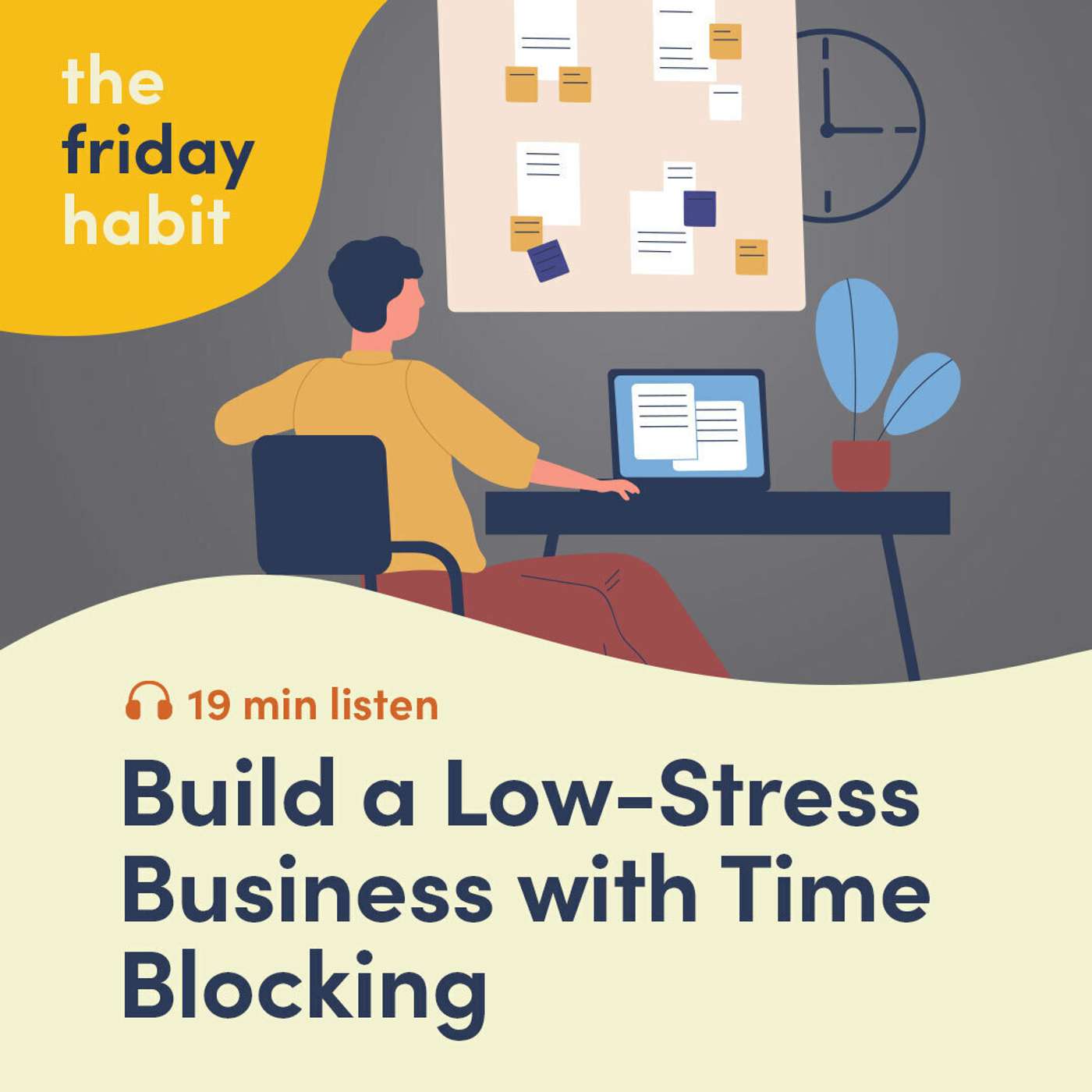
Ep 47Build A Low-Stress Business With Time Blocking
Time blocking is the topic on this episode of The Friday Habit, and Ben’s insights could be beneficial to you whether you currently use time blocking in your business or not. Time blocking is helpful in a business because it keeps you away from overcommitting, it makes you better at estimating how long things will take you, and you can have foresight in working with your clients to ensure that you are providing them with adequate time for their project. At Knapsack, Ben and his team rely on time blocking because of their structure of creating websites for clients in one day. They have a very well-established framework for each project, so they know the 4 different client sessions involved in each website build, how long they will each take, and when/if they can fit them in within the client’s timeframe. They aim to walk away from each project without any homework because they have accounted for every possible contingency within their time blocking system. During any given week, Ben has meetings scheduled on Mondays and Wednesdays (including 3 hours on Wednesday mornings that are set aside for support requests), he commits Tuesdays and Thursdays to client work, and Fridays are reserved for working on the business rather than in the business (The Friday Habit).While not every business has the ability to structure and schedule things out to the same extent as Knapsack, most service-based companies could employ time blocking to some degree. When you get a new order, instead of just putting it on a to-do list, go ahead and place a time block for it on your calendar and then stick to it when that time comes around. The more you do this, the better you will be at estimating how much time certain tasks take you, and you may find that this will help you adjust your pricing models to be more realistic and/or be more detailed about what is included in your different services. Even when it comes to your life outside of work, you could block off thinking time, gym time, time for various errands, or anything else that you may have trouble prioritizing.Your action item this week is to put every step of your next project into your schedule and then stick to those tasks when the times come. Ben also recommends that you time block at least 2 hours of your Friday to work on your business, and you can find more information about what this looks like at TheFridayHabit.com.Connect with us:To submit questions/comments: [email protected] https://www.thefridayhabit.com/[email protected] https://www.instagram.com/benjaminmanleyhttp://www.benjaminmanley.com/https://www.brandvivamedia.com/https://www.facebook.com/Marklab2https://www.linkedin.com/in/marklab2/

Ep 46What Kind Of Business Do You Want To Build
With the end of the year quickly approaching, it is a good idea to recalibrate your business, looking inward to determine where you are, how you got here, and where you want to be. This episode of The Friday Habit is all about this topic and integrating this introspection into your process occasionally. Here are the four questions and where Mark and Ben currently find themselves on their answers:Why do you have your own business? Mark was unexpectedly laid off a few years ago and immediately decided to ramp up his side hustle into a full-time gig. Now that he has been working for himself for so long, he couldn’t see himself going back to working for someone else. Ben knew that he wanted to leave his full-time job to build his own thing, so he tested the waters in order to know whether his business would be viable. He loves the security, control, and freedom of having his own business and he is greatly fulfilled by helping his clients be successful.What kind of business do you want to build? Mark’s long-term vision for Brand Viva Media fluctuates in size and scope, but his overall mission of leaving things better than he found them remains constant. He wants to be intentional with the culture his business has, the services they provide, and work-life balance for himself and his employees. Ben aims to have the optimal sized team to accomplish Knapsack’s mission, working smarter and making lives better along the way. He has enough previous work experience to know what he doesn’t want to do, so he tries to swing the door the other way and serve as an incubator for innovative concepts and business ideas in his community.What kind of boss do you want to be? Mark wants to be the kind of boss that he would like to have, motivated by empathy and able to relate to his team. He wants to be self-aware and generous, lifting people up and providing value in every interaction. Ben wants to leave space for fun and productivity to coexist. He emphasizes the importance of hiring the right people who are motivated and coachable and then trusting them to do their jobs.What kind of life do you want to have? How does your business support that? Mark wants to have autonomy and freedom, providing an environment that allows him and his employees to pay their bills while still having plenty of time with their loved ones. Ben finds freedom in systematizing his business, being innovative within a set of boundaries and enriching the lives of his team members and clients every day. Your action item after this episode is to think about these questions and plot a course forward.Connect with us:To submit questions/comments: [email protected] https://www.thefridayhabit.com/[email protected] https://www.instagram.com/benjaminmanleyhttp://www.benjaminmanley.com/https://www.brandvivamedia.com/https://www.facebook.com/Marklab2https://www.linkedin.com/in/marklab2/
Ep 45Staying Fit as an Entrepreneur with Jeremy Slate
Our guest on this episode of The Friday Habit podcast is Jeremy Slate, host of the Create Your Own Life podcast and co-founder along with his wife of the Command Your Brand agency. As we discussed in our last episode, Jeremy built his success on a series of hard-earned lessons. He found his passion in helping others grow and evolve their businesses, but none of it would work without a few core principles that drive his days – the first one being, without fail, getting to his exercise routine first thing. Jeremy follows his morning cup of bulletproof coffee with a trip to the gym for a very specific weightlifting workout (links below), something he tracks consistently in a notebook. Other key ingredients in his routine include a 10-minute cold shower and deferring calls and outside communication until after 10a, which gives him time to clear his decks mentally and practically before diving into the day. In terms of nutrition, Jeremy believes everyone needs to determine the balance of foods that best optimizes their individual metabolism. Ultimately the thing that creates balance and harmony elsewhere in his life is a commitment to family first. His wife (and business partner) helps Jeremy keep perspective and together they organize their business around life -- not the other way around. It’s all about small linear progressions. Anyone can get started today by trying one or all of the health and fitness practices Jeremy recommends. Links:https://blog.hubspot.com/marketing/press-release-template-ht Connect with Jeremy:https://www.commandyourbrand.com/7reasons www.jeremyryanslate.comJeremy’s preferred workout:https://ast-ss.com/max-ot/toc/About bullet proof coffee:https://www.nytimes.com/2014/12/14/style/the-cult-of-the-bulletproof-coffee-diet.htmlAbout Frank Zane - Mr. Olympia https://www.frankzane.comConnect with us:https://www.thefridayhabit.com/[email protected] https://www.instagram.com/benjaminmanleyhttp://www.benjaminmanley.com/https://www.brandvivamedia.com/https://www.facebook.com/Marklab2https://www.linkedin.com/in/marklab2/

Ep 44Gift Ideas for Entrepreneurs
On this special holiday edition of The Friday Habit, Ben and Mark bring listeners their very timely gift guide for entrepreneurs and clients. These are things that Ben and Mark have either received, given, or purchased for themselves and they are now self-proclaimed unofficial brand ambassadors. Here are the gifts they recommend and why:Miir water bottles – These water bottles are vacuum-insulated and feature a very minimal design as well as helping to fund clean water projects worldwide.Link: miir.comShure MV7 podcast microphone – This would be more of splurge purchase for friends or clients who are looking to launch a podcast or improve the quality of their existing show. It is easily the best mid-level microphone out there, featuring XLR and USB inputs, a headphone output, and compatible software.Link: https://www.amazon.com/gp/product/B08G7JN6J7/ref=ppx_yo_dt_b_asin_title_o01_s00?ie=UTF8&psc=1 CRKT Techliner pen – A good pen is something that will have a daily impact on your life, but most people would never buy a good pen for themselves. This pen is minimal in design and has a handy magnetic lid. Link: crkt.com/williams-tactical-pen.htmlBluetooth speaker sleep mask – Mark uses this sleep mask every night to block out light and to fall asleep listening to music, a podcast, an audiobook, or the Portal app.Link: https://www.amazon.com/gp/product/B07T6FNLQV/ref=ppx_yo_dt_b_asin_title_o04_s00?ie=UTF8&psc=1 Ember mug – This is the ultimate mug for hot beverages and most likely a mug that people would not buy for themselves, so you can knock their socks off with this gift. The Ember mug is connected by Bluetooth to an app on your phone which will allow you to control and maintain a specific temperature for your drink.Link: ember.comPersonalized leather field notes sleeve – No matter how advanced technology becomes, you can’t replace good ol’ pen and paper, and this personalized leather field notes sleeve is the perfect addition to that small moleskin your entrepreneur friend carries around in their pocket.Link: https://www.amazon.com/gp/product/B085YF2Y2N/ref=ppx_yo_dt_b_asin_title_o00_s00?ie=UTF8&psc=1 Apple gift card for the Soulver 3 app – If your gift recipient is constantly looking for a way to solve the word problems that come up in business without having to try to make everything fit into an Excel formula, Soulver is just what they need but they don’t know it yet. Give them a gift card to Apple and let them find out what they have been missing.Link: https://soulver.app/Connect with us:To submit reviews: [email protected] https://www.thefridayhabit.com/[email protected] https://www.instagram.com/benjaminmanleyhttp://www.benjaminmanley.com/https://www.brandvivamedia.com/https://www.facebook.com/Marklab2https://www.linkedin.com/in/marklab2/

Ep 43The Basics of PR That Anyone Can Use with Jeremy Slate
Our guest on this episode of The Friday Habit podcast is Jeremy Slate, host of the Create Your Own Life podcast and co-founder of the Command Your Brand agency with his wife. Jeremy went to college with the hopes of becoming a college professor one day, but after he finished his Masters’ degree and entered the job market, he realized that he was either overqualified or underqualified for every job he was interested in. Jeremy had bad break after bad break before he taught himself how to build websites and he launched his first (unsuccessful) podcast before landing on the Create Your Own Life podcast that has served him well and turned his career around. Things started to click for Jeremy when he realized that he could be a successful lifelong learner, and he launched Command Your Brand with his wife as a way of combining his love for learning with passing along his acquired knowledge to businesses looking to get more involved in their public relations. Public relations is the avenue for making good works known, literally spotlighting the organization’s relationship with the public. Jeremy’s 3 main tips for people wanting integrate more PR into their operations are: (1) Know what is news worthy or interesting, (2) Employ the small pond strategy, and (3) Have a plan for what you will do with the PR. He also recommends learning how to write a great press release, making a list of the “small ponds” you are a part of, and learn the terminology so you can get the word out.Links:https://blog.hubspot.com/marketing/press-release-template-ht Connect with Jeremy:https://www.commandyourbrand.com/7reasons Connect with us:https://www.thefridayhabit.com/[email protected] https://www.instagram.com/benjaminmanleyhttp://www.benjaminmanley.com/

Ep 42Thinking Time: Your New Secret Weapon
On this episode of The Friday Habit, Ben and Mark discuss the idea of making time and space for thinking, planning, and reflection, as inspired by the book “The Road Less Stupid” by Keith Cunningham. What if you were to spend the same amount of time thinking as you do mindlessly scrolling through social media? You may be surprised by how much clarity you can gain from setting aside this intentional thinking time, even if it is only 15 minutes a day.In his book, Cunningham outlines the 5 core disciplines of thinking time:Find the unasked question – Ask better and better questions of yourself until you nail down the core problem. Separate the problem from the symptom – Don’t stop at just diagnosing the symptom; there is always a root issue that needs to be uncovered and addressed.Check your assumptions – Don’t rely on your feelings or perceptions about how things are going; rely on facts and try to be objective.Consider second-order consequences – Think about the long-term implications and the potential domino effects of your actions.Create the machine – Design the process, execute, and surround yourself with the adequate resources.Also within the book, Cunningham offers self-reflection questions for further discovery. You may also find it helpful to set a timer during your thinking time, have specific materials and a dedicated space for thinking, and to bake thinking time into your schedule and then commit to doing it even if you have other things come up. Your action item after this episode is to block off 2 hours of dedicated thinking time for next week.Links:“The Road Less Stupid” by Keith Cunningham: https://www.amazon.com/Road-Less-Stupid-Keith-Cunningham/dp/0984659269 Connect with us:https://www.thefridayhabit.com/[email protected] https://www.instagram.com/benjaminmanleyhttp://www.benjaminmanley.com/ https://www.brandvivamedia.com/https://www.facebook.com/Marklab2https://www.linkedin.com/in/marklab2/

Ep 41Are You Emotionally Intelligent?
Our topic on this episode of The Friday Habit is emotional intelligence. Mark and Ben start out the episode by posing a couple of hypothetical scenarios and talking through the emotional intelligence implications of the typical responses to the situations. Emotional intelligence is your ability to understand and manage your own emotions and recognize the emotions of others, which are key components of being a good manager and leader.The four competencies of emotional intelligence are:Self-awareness – This is knowing the effect of your emotions on yourself and others. Studies have shown that while 95% of people think they are self-aware, only 10-15% truly are. The quarterly team check-ins discussed in Episode 26 and participating in a 360-degree feedback loop are great ways to gauge your self-awareness.Self-management – How do you handle stressful situations? Do you overcome setbacks easily? What are your coping mechanisms? The answers to these questions are a good indication of your self-management.Social awareness – Social awareness is your ability to “read a room” and be perceptive of others, recognizing the dynamics and emotions that are at play on your team at any given time. Another way to describe your social awareness is as your level of empathy and understanding of those around you and how those things affect the way you communicate and collaborate.Relationship management – Are you coaching or mentoring others? Do you properly address issues, or do you tend to avoid conflict? These are key indicators of your relationship management, but if you are self-aware and socially aware, you likely already know the state of your relationship management.Your action items after listening to this episode are to go back and listen to Episode 26 about quarterly team check-ins and to take the Psychology Today Emotional Intelligence test (link below).Links:https://www.psychologytoday.com/us/tests/personality/emotional-intelligence-test Connect with us:https://www.thefridayhabit.com/[email protected] https://www.instagram.com/benjaminmanleyhttp://www.benjaminmanley.com/https://www.brandvivamedia.com/https://www.facebook.com/Marklab2https://www.linkedin.com/in/marklab2/
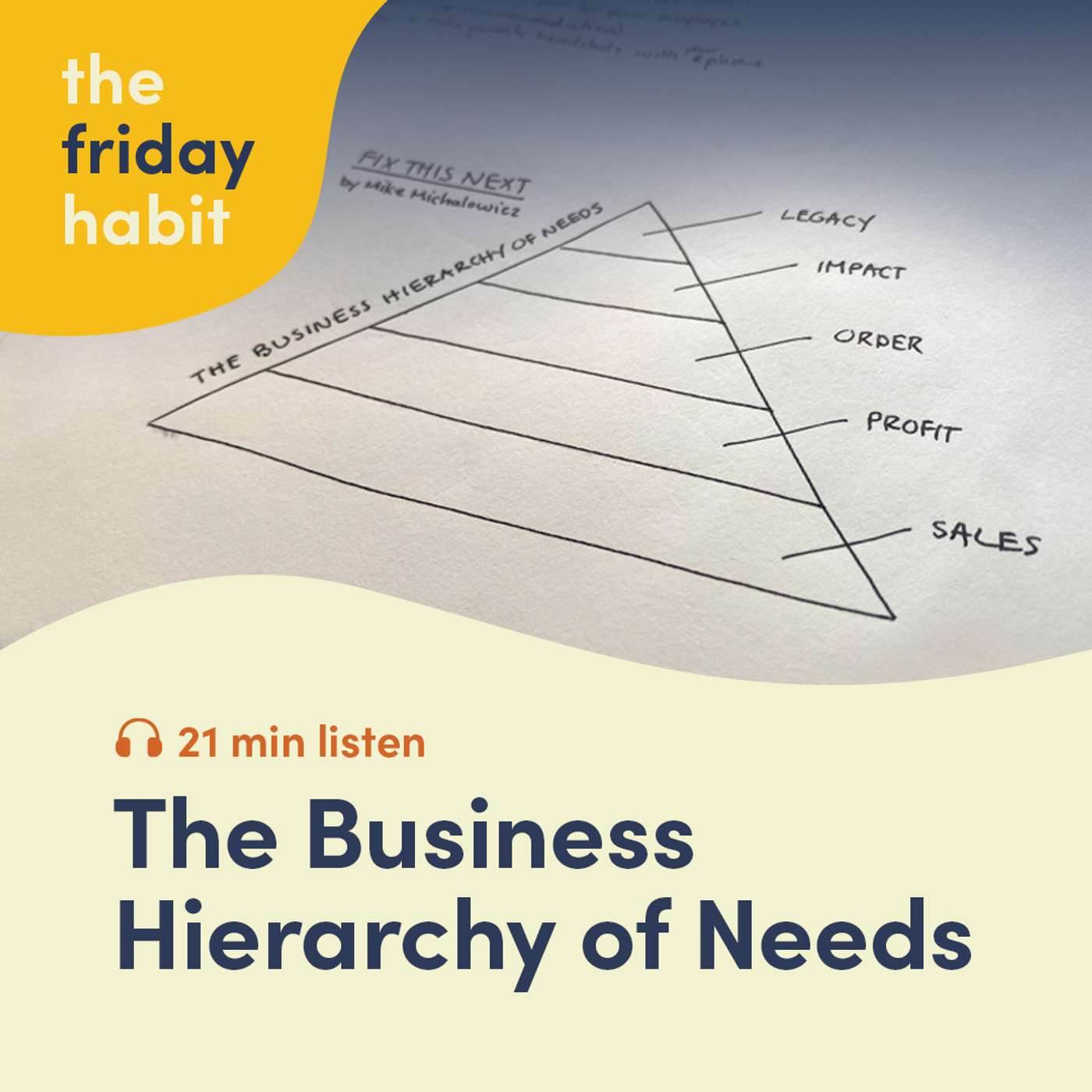
Ep 40The Business Hierarchy of Needs
On this episode of The Friday Habit, Ben summarizes the main points of one of his favorite books: “Fix This Next” by Mike Michalowicz. As we all learned in that one college psychology class, humans have needs in life that fall into 5 basic categories as defined by Maslow, from most basic to most complex: physiological, safety, love and belonging, esteem, and self-actualization. Maslow explained that certain needs must take priority over others as we go through life and it is important to prioritize the most basic before moving up the hierarchy.Michalowicz believes that a similar concept can be applied to businesses, and while two hierarchies might seem like a lot to place into the already-full hands of entrepreneurs, hopefully you will find that understanding the different levels will simplify things for you. He defines the business hierarchy of needs, from most basic to most complex as: sales – creation of cash, profit – creation of stability, order – creation of efficiency, impact – creation of transformation, and legacy – creation of permanence. In “Fix This Next”, Michalowicz outlines 5 questions for entrepreneurs to ask themselves about their businesses pertaining to each level of the hierarchy, providing a framework for areas to focus on before moving on to the next level. By asking yourself these 25 questions, you should be able to easily identify gaps and problems that need to be addressed and establish principles that will guide your actions moving forward. This is a great read for anyone who has built their own business or brand and anyone who wants to in the future, but this book does not fully serve its purpose if you don’t take action after reading it. Links:“Fix This Next” book: https://www.amazon.com/Fix-This-Next-Change-Business/dp/0593084411“Fix This Next” Book Website: https://fixthisnext.com/Free Resources mentioned: https://s3.amazonaws.com/MikeMichalowicz/FTN/FTN-Graphics-Charts.pdf Connect with us:https://www.thefridayhabit.com/[email protected] https://www.instagram.com/benjaminmanleyhttp://www.benjaminmanley.com/ https://www.brandvivamedia.com/https://www.facebook.com/Marklab2https://www.linkedin.com/in/marklab2/

Ep 39The Secret to Great Company Culture with Claire Chandler Part 2
This episode of The Friday Habit podcast is this second part of our interview with Claire Chandler, author of “The Whirlpool Effect” and thought leader on great company culture. She begins by offering an exercise that founders can do in order to gain clarity and make decisions more easily. Claire suggests writing down and drawing a circle around the core principles your company started with. Then, draw another circle that includes what’s currently working well. The third and last circle should describe goals for the future. Once you have all three circles, move them together to create a venn diagram and see which ideas overlap. This exercise not only helps get things out of your head and onto paper, but finding that sweet spot of the overlap also helps create clarity for decisions that need to be made. Claire explains that this focus and clarity can be hard for founders who tend to have “shiny object syndrome.” She talks about how to confront this tendency and also goes over the FOMO (fear of missing out) that many founders feel when making an important decision. Being a founder involves uncertainty, risk, and unknown, but Claire reminds listeners that most barriers to success are mental. Her advice in this episode will help founders fight what’s holding them back from making their business everything they dreamed of. Connect with Claire: https://www.amazon.com/Whirlpool-Effect-Claire-R-Chandler/dp/B07DP4T39Jhttps://www.linkedin.com/in/clairechandlersphr/https://www.clairechandler.net/https://www.talentboost.net/https://twitter.com/claire_talenthttps://twitter.com/TalentBoost Connect with us:https://www.thefridayhabit.com/[email protected] https://www.instagram.com/benjaminmanleyhttp://www.benjaminmanley.com/ https://www.brandvivamedia.com/https://www.facebook.com/Marklab2https://www.linkedin.com/in/marklab2/

Ep 38The Secret to Great Company Culture with Claire Chandler Part 1
Our guest on this episode of The Friday Habit is Claire Chandler, author of “The Whirlpool Effect” and thought leader on great company culture. During Claire’s career, she has noticed that startups and small companies tend to have really good collaboration and culture, but as the companies begin to scale, they fall apart. There is a disconnect, she explains, between the people and the culture once a second generation of employees are brought on board because they do not have the context of the culture that has been laid out by the founder from the beginning.Her biggest recommendation for leaders before and after they notice this culture disconnect is to be crystal clear about the mission of the business, employing self-awareness and authenticity as you are communicating with your employees and stakeholders. Until this clarity is achieved and communicated, it will be impossible to replicate the culture and mission for new employees and receive their buy-in to the organization. After building this foundation, it is time for the founder to approach the “Founder’s Dilemma” of being hands-on in the business while training your people and trusting them enough to delegate tasks to them with your full confidence. Claire wraps up this first part of the interview with the concept of “telling them why” when it comes to giving directives and making decisions, which will help your employees understand your reasoning and learn for next time. Connect with Claire: https://www.amazon.com/Whirlpool-Effect-Claire-R-Chandler/dp/B07DP4T39Jhttps://www.linkedin.com/in/clairechandlersphr/https://www.clairechandler.net/https://www.talentboost.net/https://twitter.com/claire_talenthttps://twitter.com/TalentBoost Connect with us:https://www.thefridayhabit.com/[email protected]
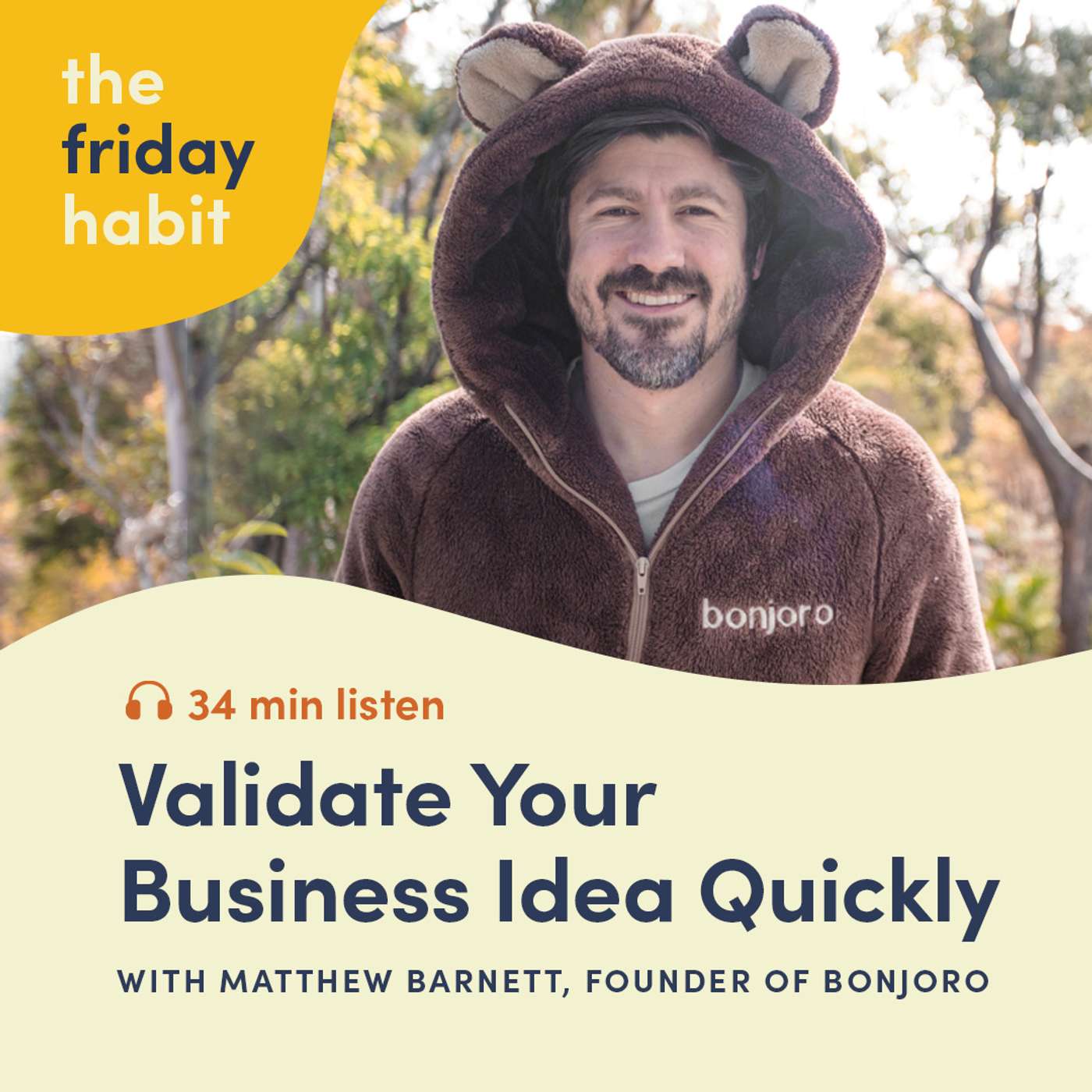
Ep 37Validate Your Business Idea Quickly with Matthew Barnett
We are picking right back with Mark and Ben’s interview with Matthew Barnett on this episode of The Friday Habit. Matthew continues to expand on his vision for customer service, being accessible and hospitable to every customer (or potential customer) who contacts your team. His approach is data-driven, recognizing that satisfied customers come back and buy more or new products and they also recommend your products or services to others. A great next step in improving your customer experience is visually mapping out their journey with you, taking note of the touchpoints, typical conversion points, and any gaps that you could look into filling. You can also reach out to advocates of yours or loyal customers for their feedback on the customer experience. Matthew recognizes that many people are hesitant or unsure about starting a business because of the unknowns, but he says that the best way to get into the market is just to do it. Start a website, post a few products, and see what happens. If you have a good idea, you will know pretty quickly based on the demand, but if you don’t attract customers after a little while, you might need to have an honest conversation with yourself about the feasibility of the type of company you want to have. You might need to take a step back and offer people what they really want or need as a milestone along the path to where you eventually want to end up. Finally, Matthew emphasizes the importance of setting up a culture and having scheduled team meeting, especially for global teams. Outside of work, he tries to read a book per week and he is a part of a founders group that serves as a mastermind of sorts, which is a great resource and source of accountability for him and the other members.Links:https://www.bonjoro.com/videofunnelplaybook “The Lost and Founder”: https://www.amazon.com/Lost-Founder-Painfully-Honest-Startup/dp/0735213321 “The Hard Thing About Hard Things”: https://www.amazon.com/Hard-Thing-About-Things-Building/dp/0062273205“Traction”: https://www.amazon.com/Traction-Get-Grip-Your-Business/dp/1936661837 “Viral Loop”: https://www.amazon.com/Viral-Loop-Facebook-Businesses-Themselves/dp/1401323499 Connect with Matthew:https://www.verbate.com/https://www.bonjoro.com/https://au.linkedin.com/in/mbjbarnettConnect with us:https://www.thefridayhabit.com/[email protected] https://www.instagram.com/benjaminmanleyhttp://www.benjaminmanley.com/https://www.brandvivamedia.com/https://www.facebook.com/Marklab2https://www.linkedin.com/in/marklab2/
Ep 36How To Delight Your Customers with Matthew Barnett
On this episode of The Friday Habit podcast, our guest is Matthew Barnett, founder of Verbate, a company using video data for qualitative research, and Bonjouro, an app that makes it simple to integrate video into your business operations and connections with your audience. After growing up in the U.K., Matthew decided to take the leap across the huge pond and start his adult life in Australia. He found this entrepreneurial spirit was beneficial in getting out in his new community and meeting new people who were on similar journeys. Before long, he had launched Verbate, a consulting firm that helps clients curate and analyze video feedback. Matthew started recording videos to send to clients and prospects as a conversion tactic and realized that this software was something that a lot of his current clients wanted to be able to use as well.Within 12 months, Bonjouro had outpaced Verbate and Matthew has never looked back. He and his team have found that businesses use Bonjouro for 4 main purposes: (1) leads – in response to inquiries, (2) activation – welcoming new customers, (3) reactivation – following up with lapsed clients, and (4) to ask for reviews and referrals – customer service follow up after delivery. The feedback they have received from the users of the app underlines the importance of that personal touch that can be achieved through video. Matthew is a huge advocate of automating processes but never relationships as evidenced by his passion for effective customer support teams. He believes that support is a growth channel and you should always go above and beyond for your clients because they will become your biggest fans and advocates if you surprise them. Connect with Matthew:https://www.verbate.com/https://www.bonjoro.com/https://au.linkedin.com/in/mbjbarnettConnect with us:https://www.thefridayhabit.com/[email protected] https://www.instagram.com/benjaminmanleyhttp://www.benjaminmanley.com/https://www.brandvivamedia.com/https://www.facebook.com/Marklab2https://www.linkedin.com/in/marklab2/
Ep 35Growing & Scaling Businesses with Kevin Urrutia - Part 2
On this episode of The Friday Habit, successful entrepreneur Kevin Urrutia continues his conversation with Mark and Ben from the previous episode, so go back and listen to that episode if you missed it! Kevin describes the thought process that led him to get into e-commerce after the cleaning company he was running got to a certain sustainable point and he wanted to gain some new experience in a different field. He started out selling outdoor gear but realized that the barriers to entry were so low that he was facing a lot of competition, so he recruited the help of his architect brother to design a luggage line called Chester Travels. This business had a much higher barrier to entry and requires more capital to be tied up in inventory, but he has found that the profit margin is higher than his cleaning company which only requires payment when there is a job but relies entirely on people, who are unpredictable.Kevin and his friend Wilson have worked on business ideas together for their whole adult life, but Voy Media was their first partnership. They launched it to connect with other founders and open up conversations about all of their combined knowledge and experience to package up content that people would want. They are still working out the details of how to make this an educational company that will provide value to current and aspiring founders. Kevin says that one of the biggest pitfalls that leaders fall into is wanting everyone around them to be like them, when there is incredible value in surrounding yourself with team members that bring different perspectives and strengths to the table. So rather than looking for people who think and act like he does, Kevin focuses on hiring people with raw intelligence and good problem-solving skills because if they have both of these skills, they will be able to handle anything thrown their way. He emphasizes the importance of curiosity in all of life, having that drive to figure out what you don’t know or don’t know how to do yet. Finally, he encourages entrepreneurs to remember that your passion for the end result should drive you and that you don’t have to love everything you do as long as you have that passion. Links: “Measure What Matters” by John Doerr: https://www.amazon.com/Measure-What-Matters-Google-Foundation/dp/0525536221“The Great CEO Within” by Matt Mochary: https://www.amazon.com/Great-CEO-Within-Tactical-Building-ebook/dp/B07ZLGQZYC Connect with Kevin:https://chestertravels.com/https://voymedia.com/https://www.linkedin.com/in/urrutiahttps://twitter.com/danest?ref_src=twsrc%5Egoogle%7Ctwcamp%5Eserp%7Ctwgr%5Eauthor Connect with us:https://www.thefridayhabit.com/[email protected] https://www.instagram.com/benjaminmanleyhttp://www.benjaminmanley.com/ https://www.brandvivamedia.com/https://www.facebook.com/Marklab2https://www.linkedin.com/in/marklab2/

Ep 34Growing & Scaling Businesses with Kevin Urrutia - Part 1
On this episode of The Friday Habit, Ben and Mark talk with Kevin Urrutia, co-founder of Voy Media in NYC and many startups along the way. Kevin went to school for computer science and started a web development consulting business by generating leads through Craigslist. When he graduated, he got a job in Silicon Valley working for Mint.com, but he knew within a month that this 9-5 structured work culture was not what he wanted, so he jumped ship to work for a startup called Zaarly. This was the perfect situation for him and he was even able to continue working remotely when he moved back to New York until he realized that his heart wasn’t in it anymore. All this time, he had been building startups with varying levels of success and now that he was back in New York City, he and his buddy decided to put all of their experience to work building a cleaning company organized by online scheduling. They hired their own maids from Craigslist and paid them only when they had work for them, and this model has worked great for them over the past 5 years. They have expanded to several different areas of NYC as well as Chicago and Boston. Kevin explains that their keys to success were having a phone number, having local web pages, and optimizing their SEO. They have also acquired smaller companies to give them more market share.Be sure to come back next week for the conclusion of our conversation with Kevin! Connect with Kevin:https://voymedia.com/https://www.linkedin.com/in/urrutiahttps://twitter.com/danest Connect with us:https://www.thefridayhabit.com/[email protected] https://www.instagram.com/benjaminmanleyhttp://www.benjaminmanley.com/ https://www.brandvivamedia.com/https://www.facebook.com/Marklab2https://www.linkedin.com/in/marklab2/