The Extreme Crisis Leadership Show
CHARLES CASTO
Show overview
The Extreme Crisis Leadership Show has been publishing since 2021, and across the 5 years since has built a catalogue of 24 episodes. That works out to roughly 7 hours of audio in total. Releases follow a roughly quarterly cadence, with the show now in its 3rd season.
Episodes typically run ten to twenty minutes — most land between 14 min and 20 min — and the run-time is fairly consistent across the catalogue. None of the episodes are flagged explicit by the publisher. It is catalogued as a EN-language Business show.
There hasn’t been a new episode in the last ninety days; the most recent episode landed 8 months ago. The busiest year was 2026, with 14 episodes published. Published by CHARLES CASTO.
From the publisher
This podcast series is a companion to my book Station Blackout - Inside the Fukushima Nuclear Disaster and Recovery. This series delves deeper into the extreme crisis lessons learned from my experience and research to provide you with rich insights on how you can lead through any crisis. I believe that you’ll find the stories enlightening and interesting. I intend to stretch your thinking about leadership in a crisis and tug at your emotions with these podcasts. You will gain insights into what it takes to respond to a nuclear event. One of the most significant human-made events possible. You will learn about the value of understanding the causes of black swan events and how that understanding benefits you in your crisis response. They discuss the key elements in extreme crisis leadership. You can use these elements to guide your crisis leadership strategies. Be prepared for an interesting and wild ride through the podcast. You will hear about some amazing feats and be exposed to crisis leadership concepts that will directly aid you. Also, they’re unbelievable stories as well. Join us at www.castogroup.com for more information.
Latest Episodes
View all 24 episodes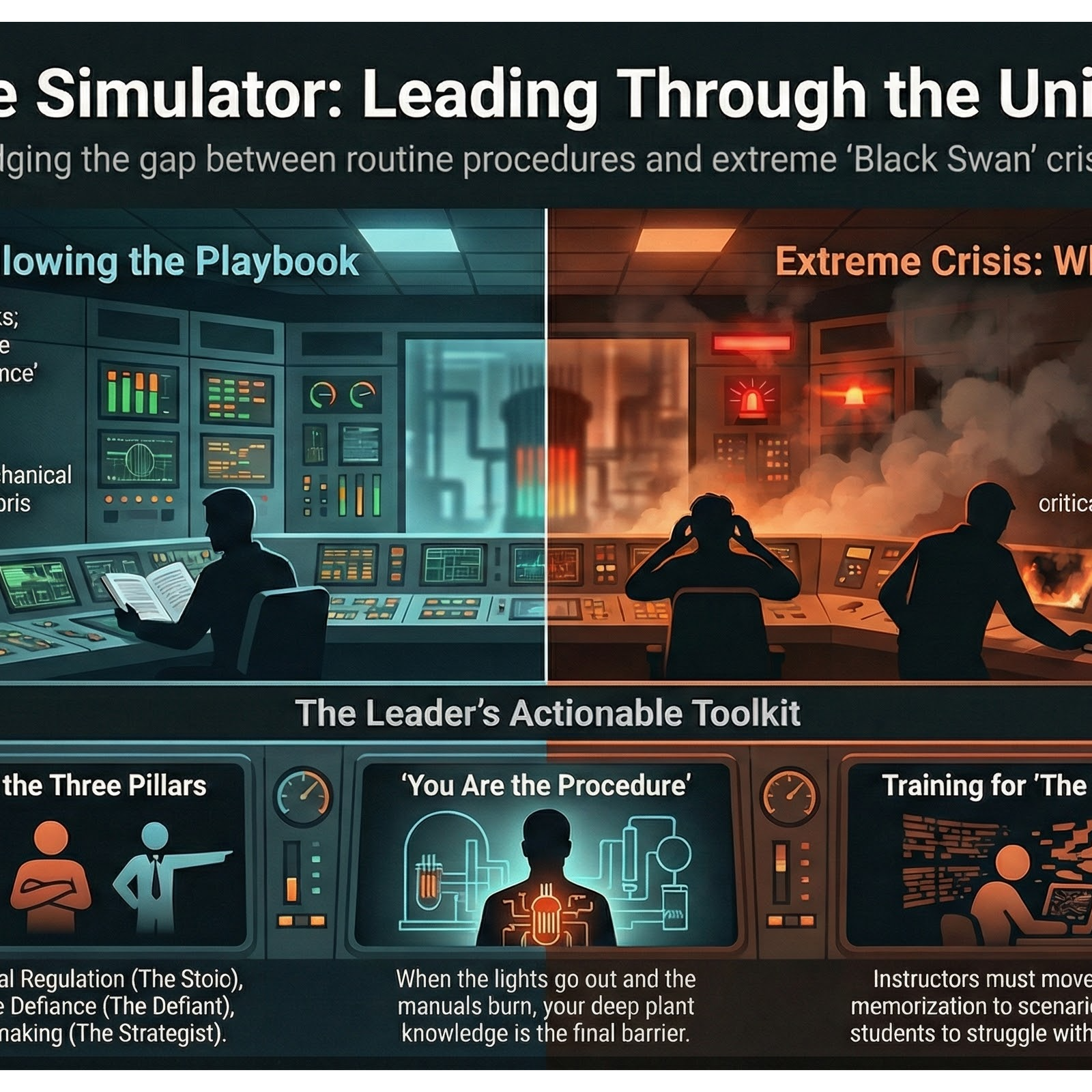
S3 Ep 11Module 8 Beyond the Simulator
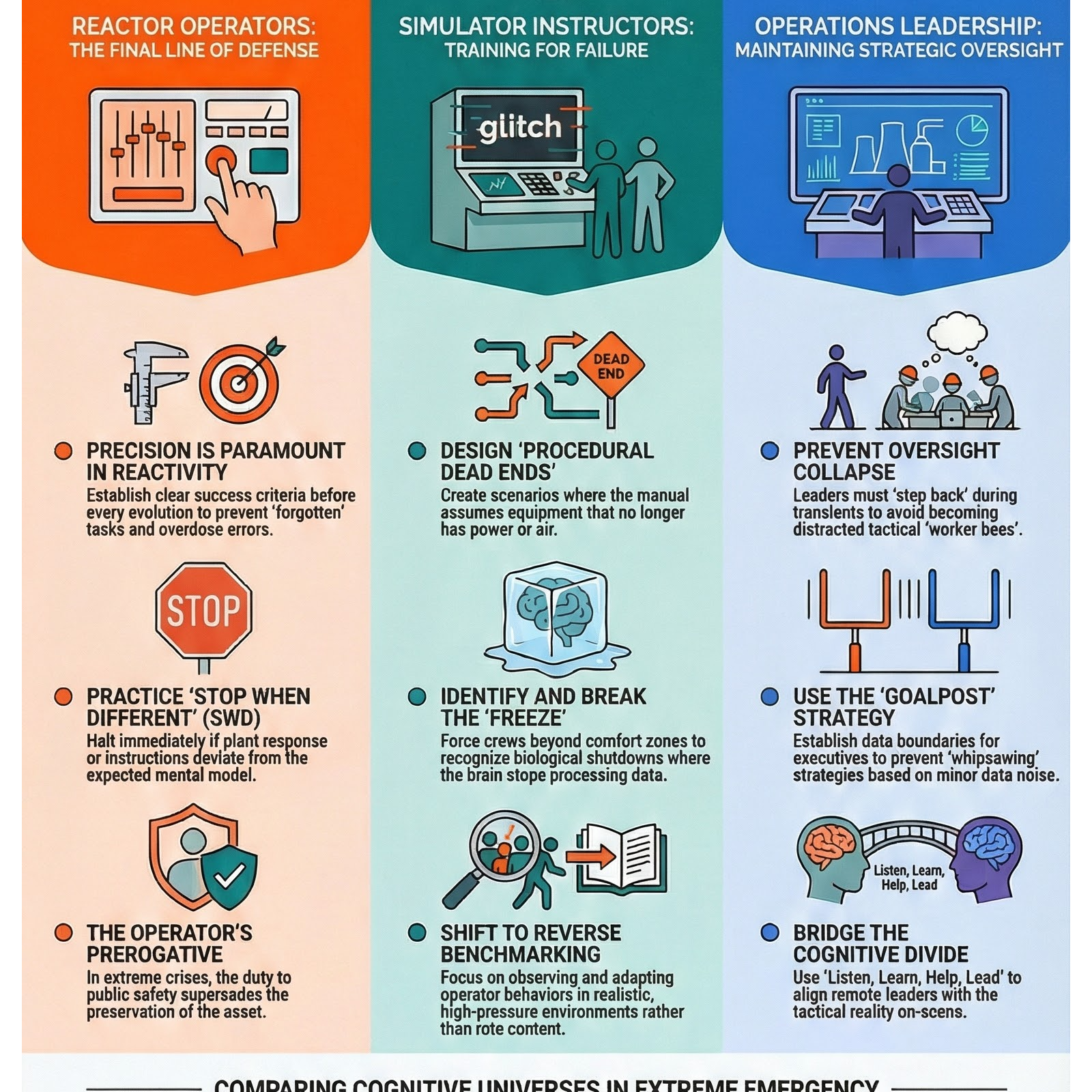
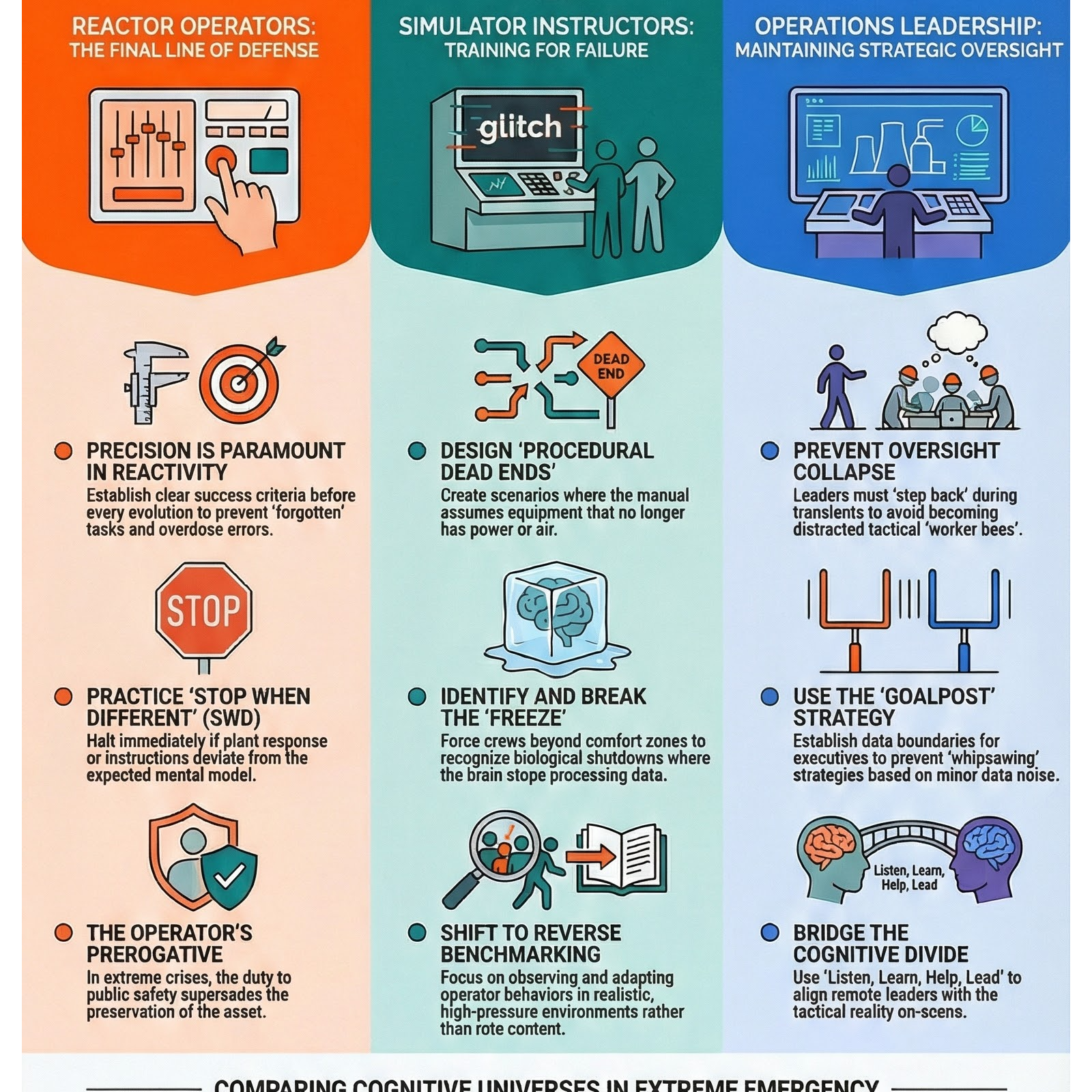
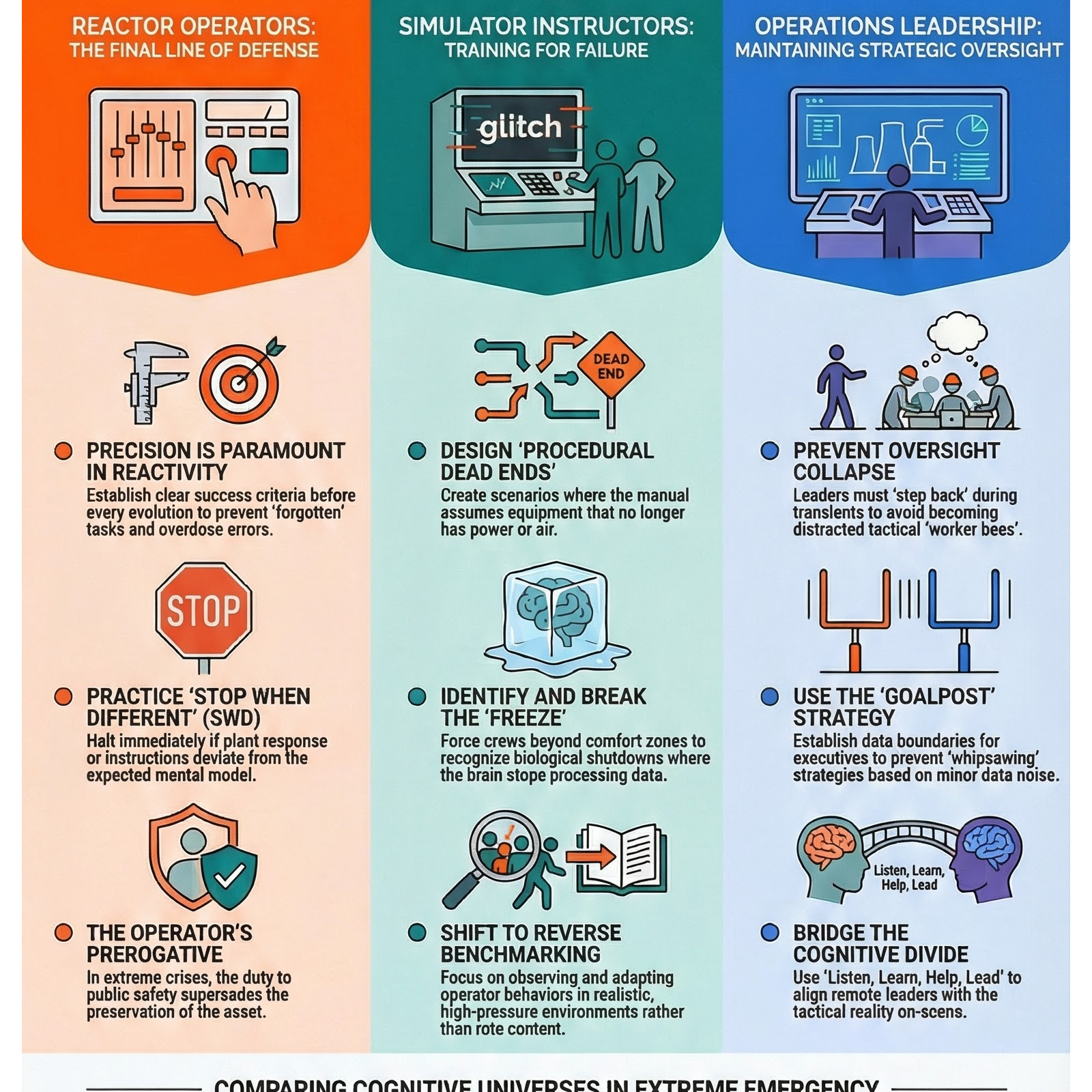
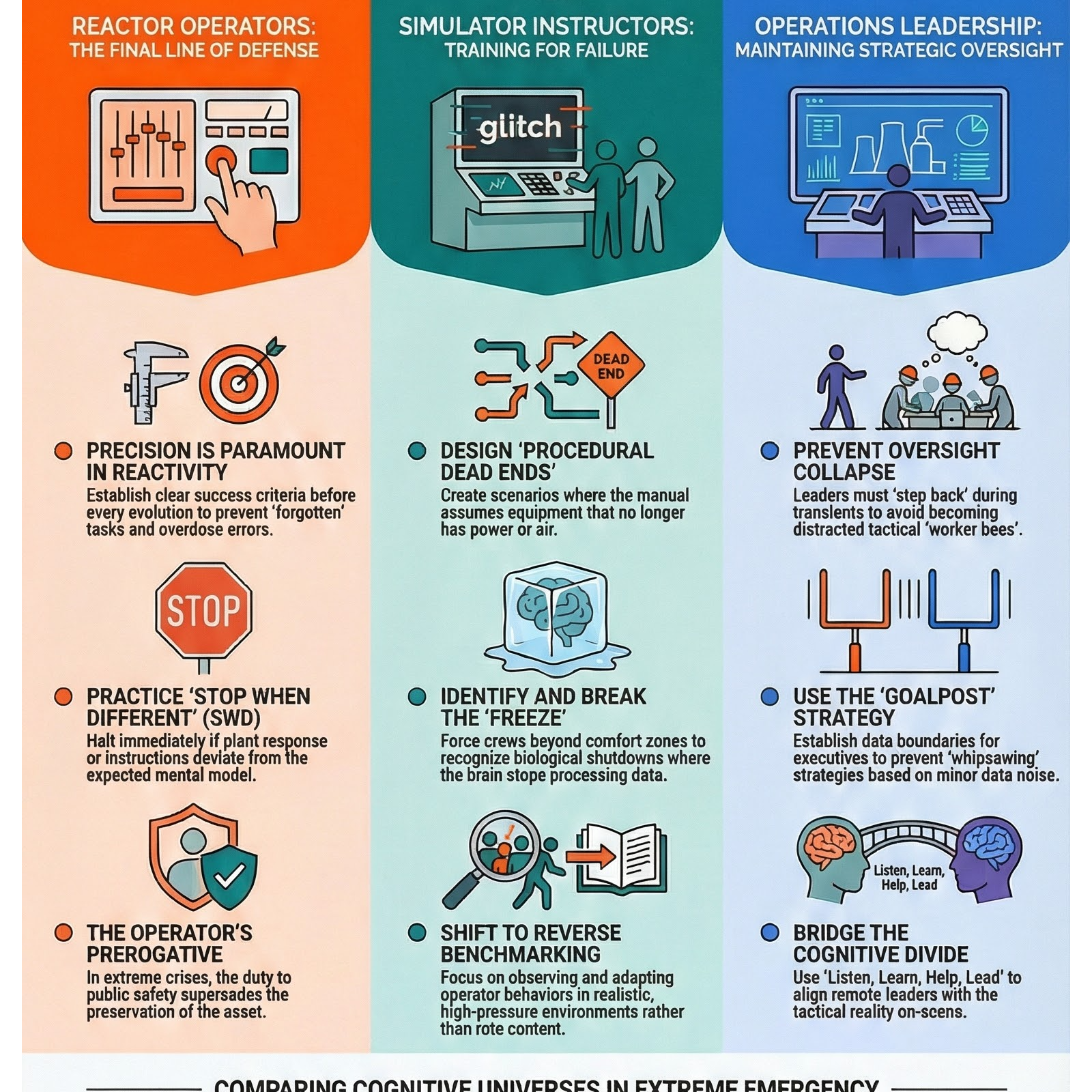
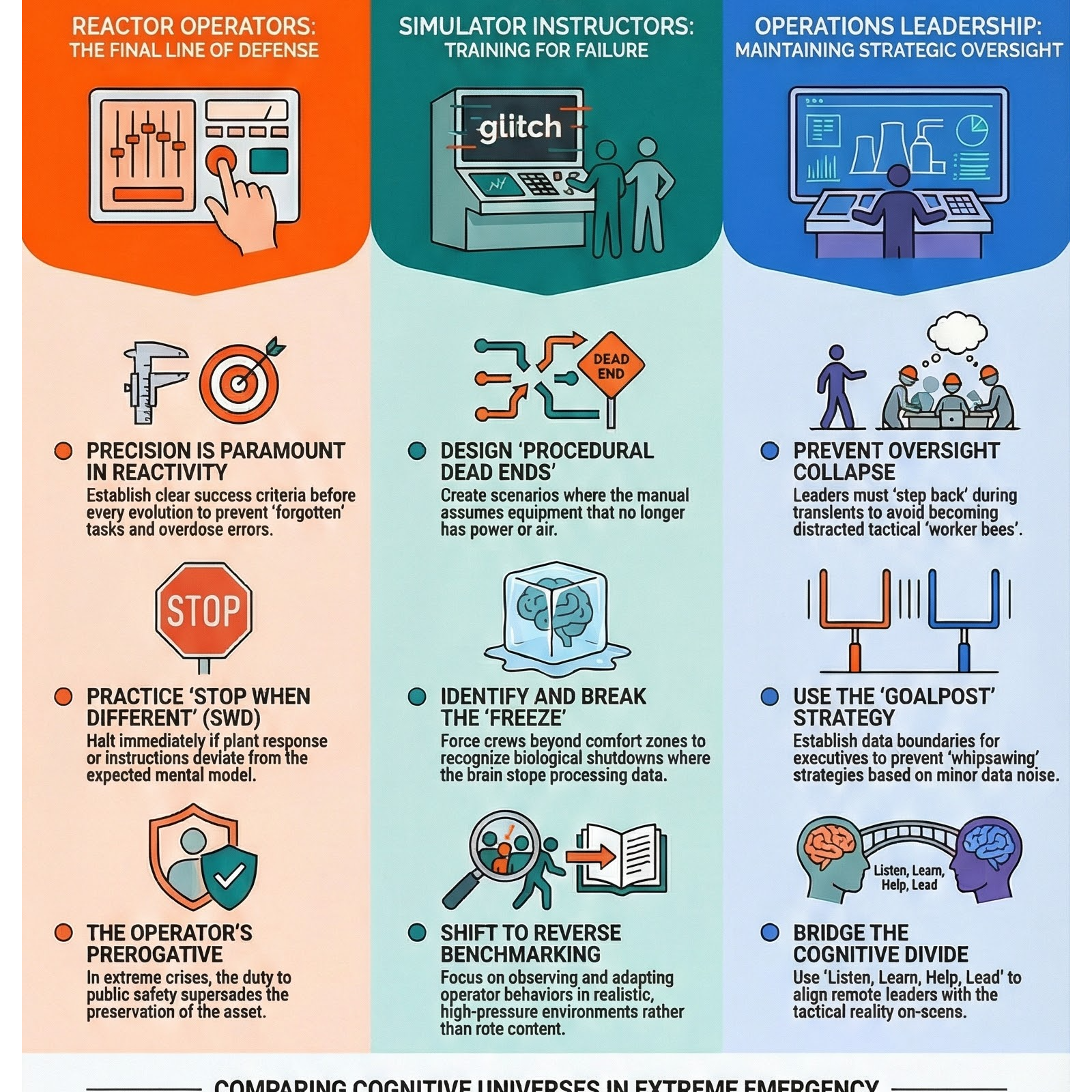
Introduction: Beyond Rote Procedures The core theme of the episode centers on the reality that in extreme nuclear crises, training ends and adaptive capacity begins. The guiding principle is simple: "When the lights go out, YOU are the procedure".Routine vs. Extreme Crises Most operators train for routine crises where a playbook exists and outside help is just a phone call away. However, the episode shifts focus to Extreme Crises (like Fukushima or Zaporizhzhia) which are "Black Swan" events with no playbook, where leaders experience isolation and threats to life.The Failure of Imagination & Blind Spots Disasters rarely start with physical failures; they begin with mental gaps and the "hubris trap" of believing a design is perfect.PAKS Hungary (2003): Engineers knew a tank would boil in just over 12 minutes, but this critical calculation never made it into the operator's procedure, turning a 12-minute blind spot into a 15-year cleanup.Browns Ferry (1975): When a candle ignited a fire that disabled cooling systems, an operator's deep, non-standard knowledge of the plant's construction saved the core—proving that understanding the "why," not just the "how," is the final barrier.The Three Pillars of Fukushima Leadership The episode highlights three critical leadership pillars demonstrated during the Fukushima disaster:Emotional Regulation: Supervisor Izawa knew he couldn't control the reactor until he controlled himself, deliberately checking his own pulse and breathing before speaking to his team.Constructive Defiance: Manager Yoshida deliberately disobeyed corporate orders to stop seawater injection, prioritizing the actual physics of the reactor over headquarters politics.Sensemaking & Momentum: Masuda used whiteboards to organize chaos and forced his team to rest, understanding that managing human endurance is just as important as managing water levels.Conclusion: The Heroism Paradox The episode concludes with a powerful message for instructors: Stop training for success and start training for the "Freeze". If operators aren't made uncomfortable by uncertainty in the simulator, they aren't learning true crisis leadership. Ultimately, heroism is evidence of system failure; the true duty of the industry is to design robust systems and train adaptive, strategic thinkers who survive.
S3 Ep 7Module 7 Epilogue
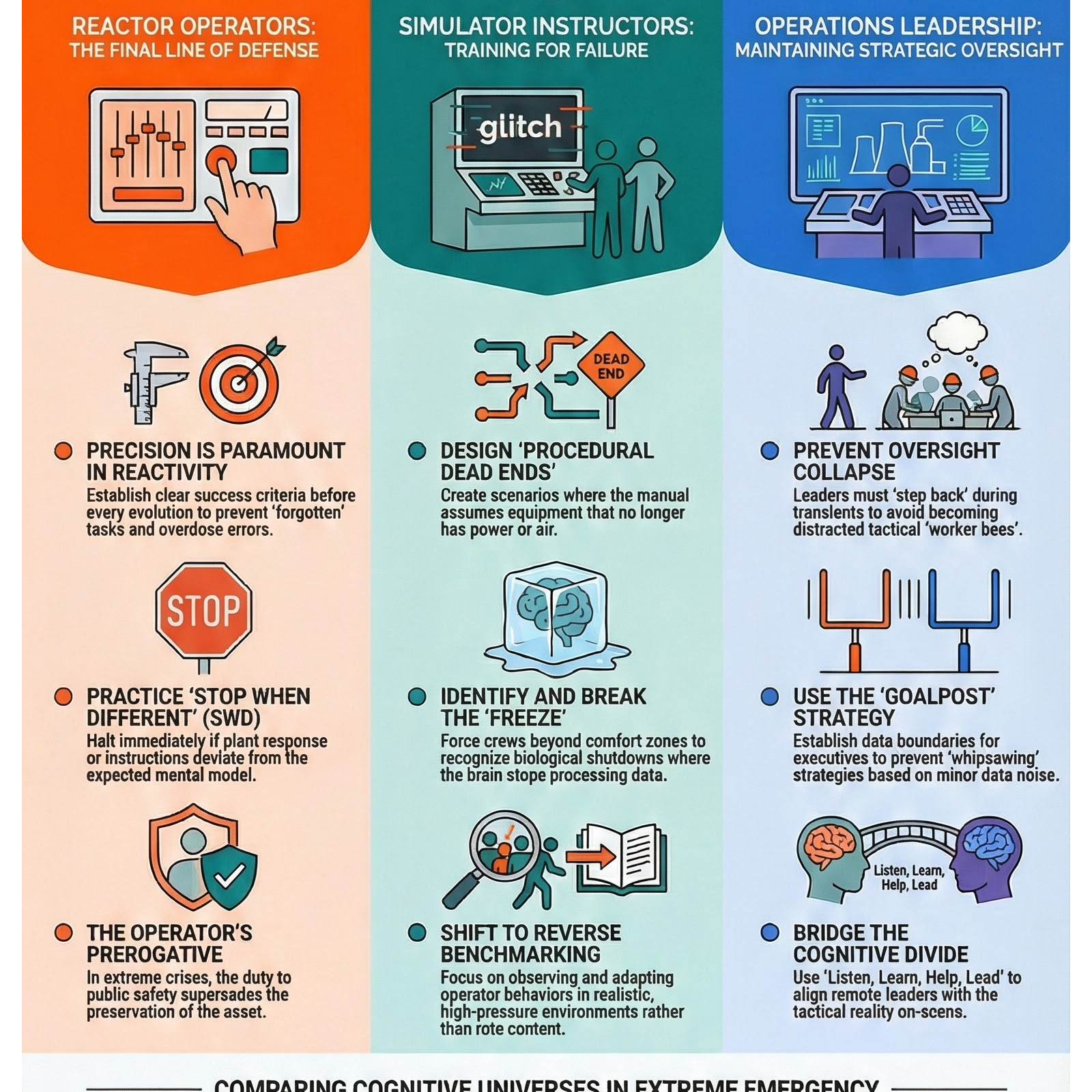
This training curriculum focuses on crisis leadership and human performance during catastrophic "Black Swan" events where standard procedures fail. By analyzing disasters like Fukushima, Deepwater Horizon, and Browns Ferry, the modules teach operators to recognize when manuals become "shackles" that no longer reflect physical reality. A central theme is the "1% Cognitive Contingency," which empowers leaders to prioritize technical justice and public safety over corporate assets or rigid compliance. The text highlights how organizational silence, the normalization of deviance, and oversight collapse contribute to failures in high-stakes environments. Ultimately, the materials advocate resilience-based training that builds the moral courage and adaptive capacity operators need to act as the last line of defense.
S3 Ep 6Module 6 Beyond Design Basis
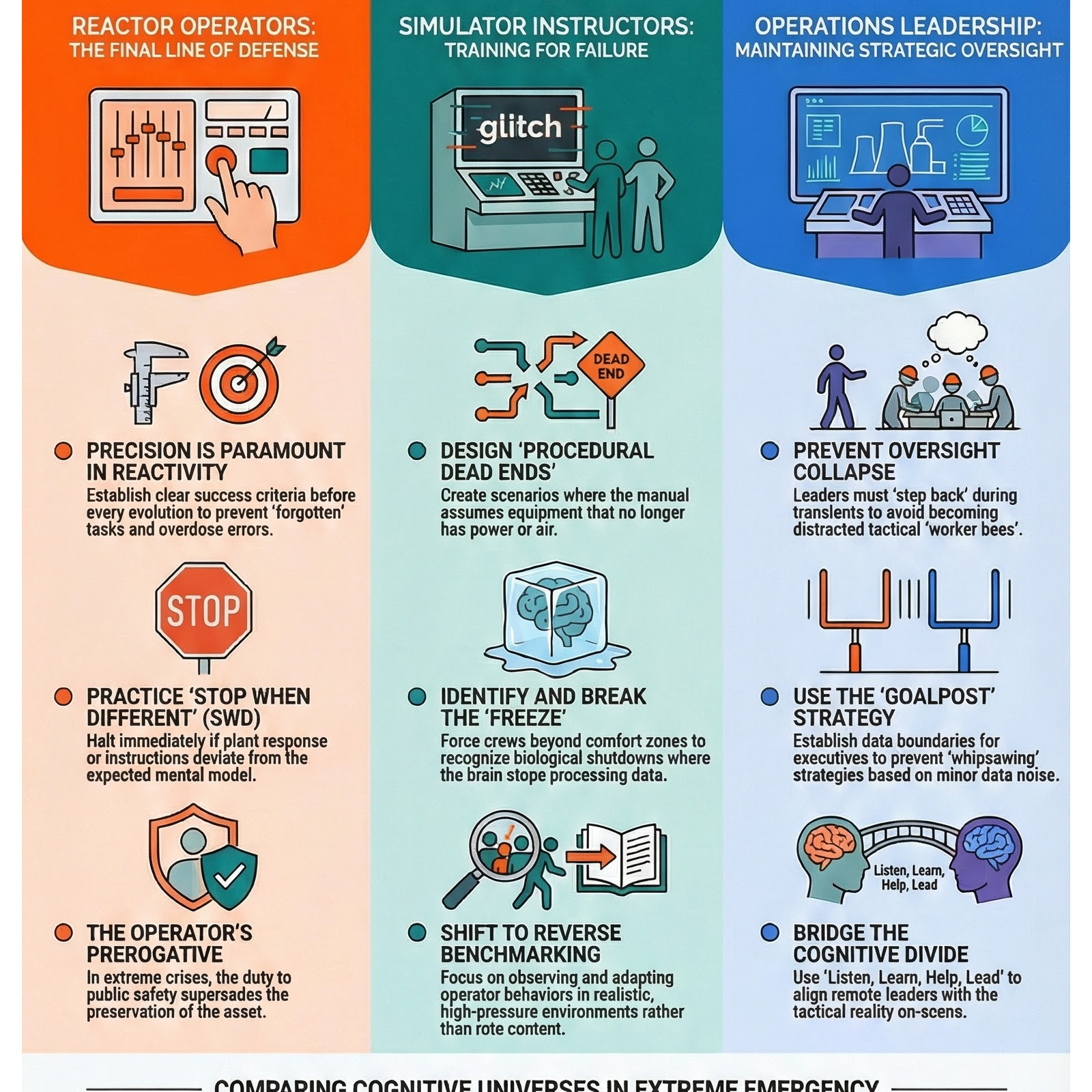
This educational module explores the transition from routine operations to extreme leadership when unforeseen catastrophes, or Black Swans, render standard procedures obsolete. By analyzing historical nuclear crises like Fukushima and Zaporizhzhia, the text illustrates how complacency and a failure of imagination often precede disaster, necessitating a shift from administrative management to adaptive, decisive action. The curriculum emphasizes vital leadership principles such as establishing a shared reality through transparent communication, maintaining physical presence at the scene, and exercising the operator’s prerogative to defy corporate orders in favor of public safety. Ultimately, the material seeks to build adaptive capacity in operators, moving beyond rote training to ensure they can navigate the "fog of war" and act faster than a crisis can progress.
S3 Ep 5Module 5 Browns Ferry
A white swan turns black
S3 Ep 4Module 4a Paks
A white elephant becoming a black rhino
S3 Ep 8Module 4 Deepwater
Another Ultimate Black Swan
S3 Ep 3Module 3 Fukushima
The ultimate Black Swan
S3 Ep 2Module 2 October 4
A white swan that cascades
S3 Ep 1Module 1 Operator Extreme Crisis Training
Introduction to Extreme Crisis Leadership
S2 Ep 12Unlock the Corporate Crisis
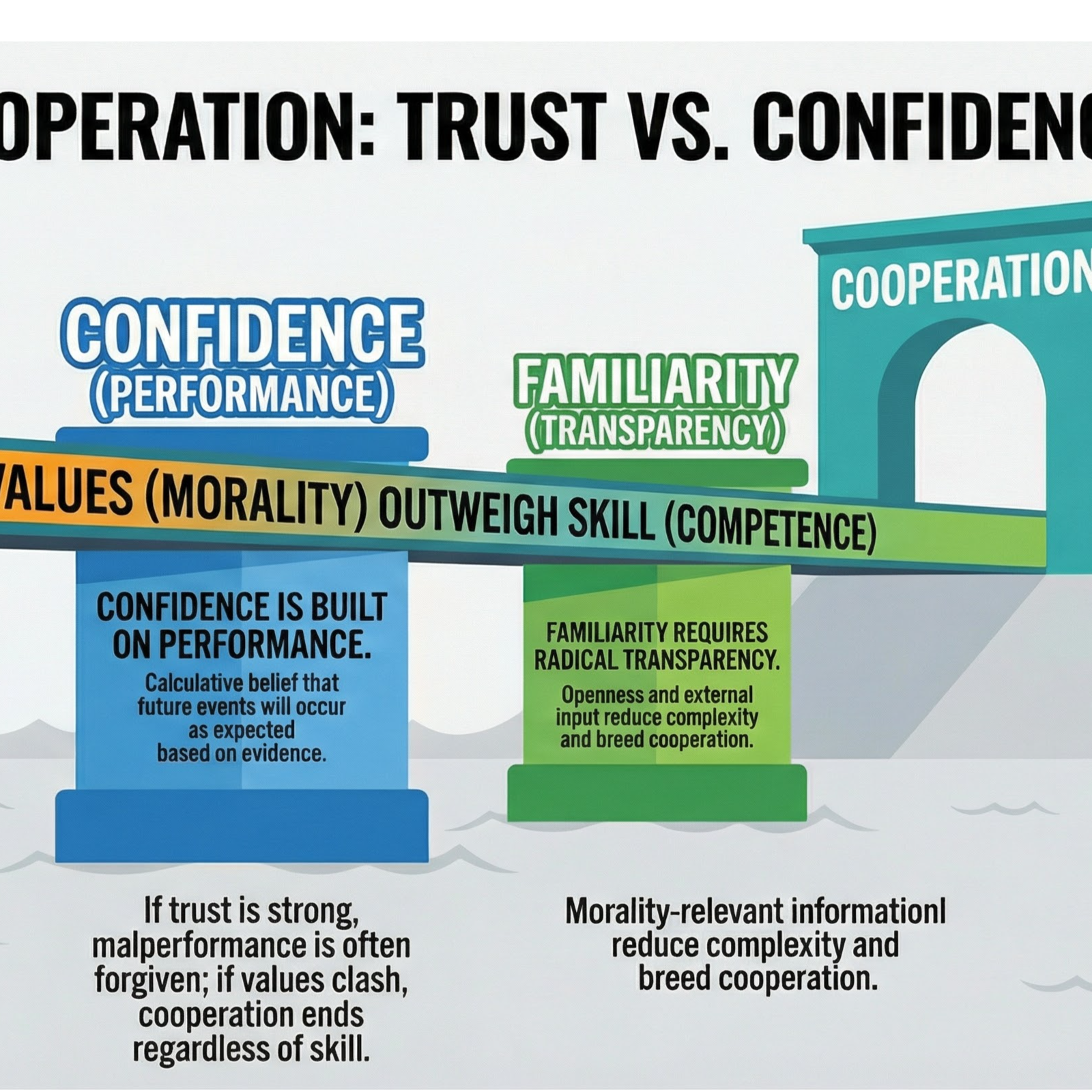
Shared values build a foundation for organizational trust by establishing a bond of perceived similarity in intentions and morality that shapes how an organization's actions are interpreted.1. The Definition of Trust as Value Similarity Fundamentally, trust is defined in these texts as the willingness to make oneself vulnerable to another based on a judgment of value similarity,,.Morality over Performance: Trust is rooted in "morality-relevant information" (values, intentions, benevolence, integrity) rather than "performance-relevant information" (skills, competence, track record),.Agency: Shared values indicate that the other party is an "agent" who thinks and intends as you do, whereas performance data simply treats the other party as an "object" or machine.2. Organizational Alignment and Demonstration For an organization to build this trust, shared values must be structural and behavioral, not just rhetorical. The "Nuclear Safety Excellence Framework" (TEPCO) illustrates this through specific requirements for the "Trust" pillar:Top-to-Bottom Alignment: Shared values must permeate the entire organization, extending from the highest levels of leadership down to every individual contributor,.Continual Demonstration: Values cannot simply be stated; they must be expressed and demonstrated continually in daily actions to maintain the pillar of trust,.Interaction: Trust is built by sharing values during every interaction.3. The "Resilience" Factor Shared values create a resilient form of cooperation that acts as a buffer against failure.Forgiving Malperformance: If trust (based on shared values) is strong, instances of "malperformance" (errors or failures) will often be forgiven.Interpretation of Events: Morality information (values) "dominates" performance information,. This means shared values condition how people interpret an organization's history; if values are shared, a negative performance history is judged much less harshly than if values are not shared,.Uncertainty Reduction: In times of uncertainty or crisis, when performance guarantees are impossible, people rely heavily on social trust (shared values) rather than confidence (competence),.4. Distinction from Confidence It is important to distinguish this foundation from "confidence." While confidence is built on past performance and competence (the "Safe & Reliable" bridge deck), the underlying pillar of Trust relies strictly on the shared values that support that bridge,. Without the connection of shared values, even high performance may fail to generate cooperation, particularly in unfamiliar or high-risk situations.
S2 Ep 11Why Data Can't Fix a Moral Crisis
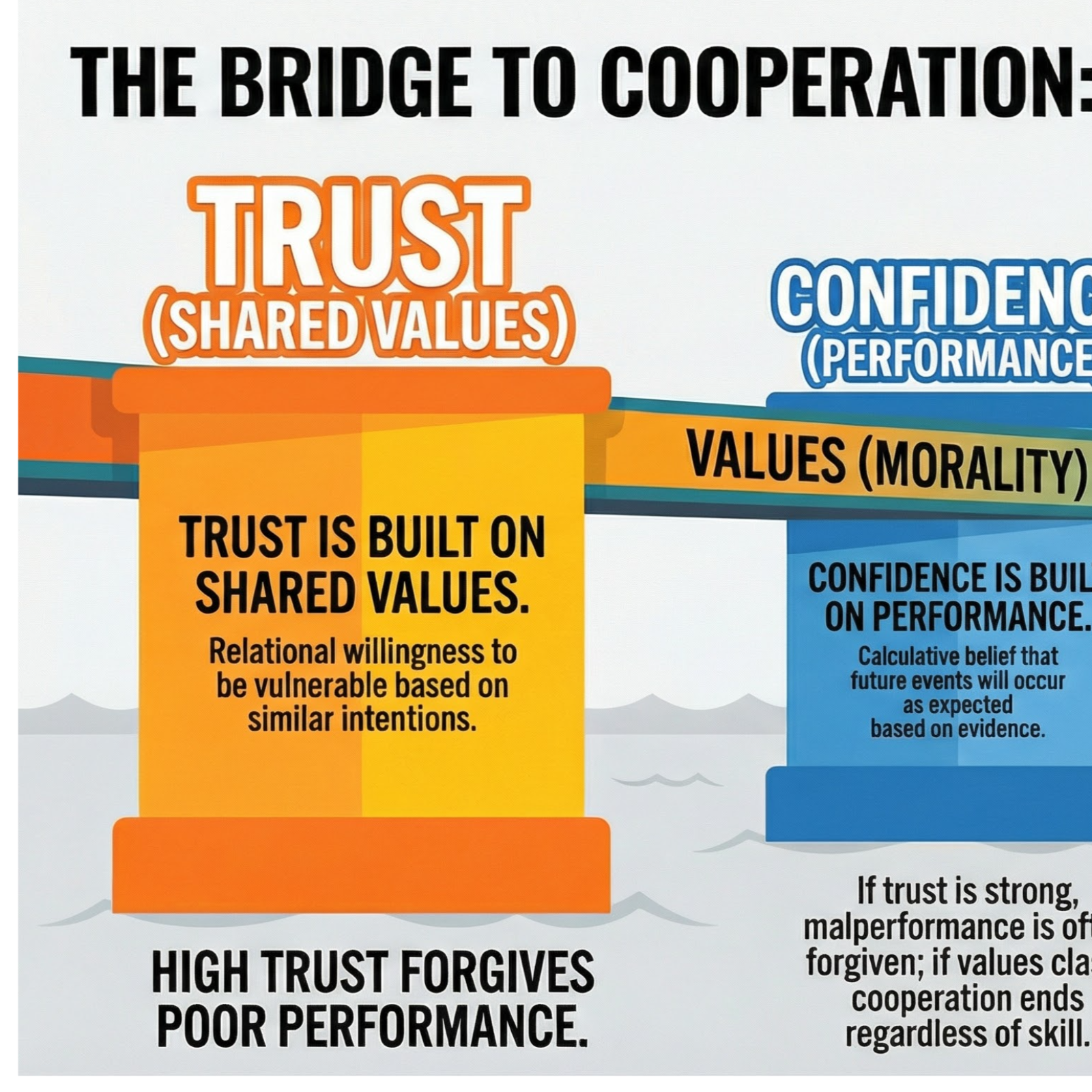
This Episode is a framework for establishing organizational integrity through three core pillars: trust, confidence, and familiarity. It suggests that shared values must be consistently demonstrated across every level of a company to create a reliable cultural foundation. To ensure sound decision-making, the source advises leaders to pause during periods of uncertainty and seek broader perspectives until safety is restored. Furthermore, the document highlights the importance of transparency, advocating for open honesty and the inclusion of outside viewpoints to build collective knowledge. By focusing on these elements, an organization can foster a secure environment where reflection and collaboration guide professional actions. These principles collectively aim to synchronize a workforce’s ethical standards with its strategic choices.
S2 Ep 10When Nuclear Manuals Become Suicide Pacts
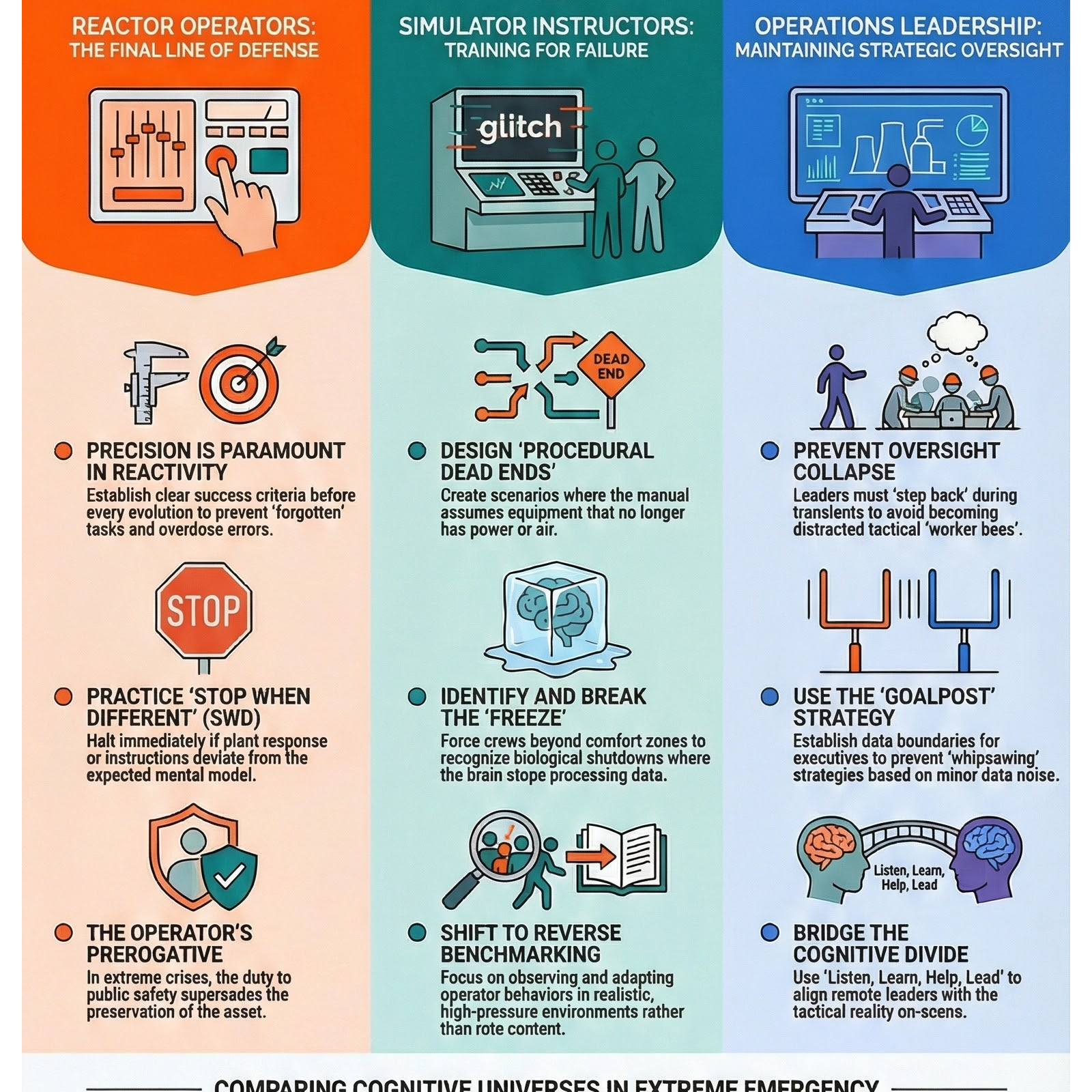
Standard Operating Procedures (SOPs) are the backbone of safety for 99% of nuclear operations. But what happens during the terrifying 1%—the "Black Swan" events—where following the rules guarantees failure?Key Segments & Takeaways:1. The "Manifesto of the Last Resort."The Core Doctrine: Competence assumes the procedure works; Mastery knows what to do when it doesn't.Anchor vs. Shackle: A procedure is an anchor that prevents panic, but it becomes a "suicide pact" (shackle) when the infrastructure assumed by the step (power, air, valves) no longer exists.The Bushido Mindset: When the system fractures, the operator is the person of last resort. The doctrine explicitly states: "Do not wait for permission to save the plant".2. Case Study: Fukushima (The White Swan vs. The Black Swan)"Cement Your Feet": Shift Supervisor Izawa fought the primal urge to flee or act blindly. He ordered his crew to stop operating until the shaking ceased, enforcing routine over reaction.Technical Justice: Site Superintendent Yoshida disobeyed direct orders from the Prime Minister and TEPCO HQ to stop seawater injection. He prioritized the physics of the core over the "social justice" of saving face or protecting the asset,.Improvisation: When the manual failed (Station Blackout), operators scavenged car batteries and fire engines to power instrumentation and inject water,.3. Case Study: Browns Ferry (The Candle & The Policy Paralysis)The Incident: A candle used to check for air leaks ignited a fire that knocked out the Emergency Core Cooling System (ECCS).Policy as a Suicide Pact: The fire raged for hours because plant management adhered to a policy forbidding water on "electrical fires" (Class C), even though the fuel was foam (Class A). The Fire Chief's correct instinct was overruled by the manual until it was almost too late,.The Save: Operators saved the plant by improvising a depressurization method using a construction-era backup nitrogen system that wasn't in the standard operating procedures,.4. The Psychology of "The Freeze" (Deepwater Horizon & Paks)Biological Shutdown: Research shows 80% of people "freeze" in extreme crises. Captain Kuchta of the Deepwater Horizon had a perfect record but "froze" because he lacked "scar tissue"—he had never practiced failing,.The 12-Minute Blind Spot: At the Paks Nuclear Plant, operators were "flying blind" during a fuel cleaning incident. Engineering knew the water would boil in 12 minutes if flow stopped, but this critical "cliff" was never communicated to the front line,.5. Tools for the "1% Event"The "Dog Bowl" Theory: In a crisis, cognitive bandwidth is limited. Operators must ignore any alarm or phone call that doesn't help "feed the dog" (cool the core).The Goalpost Strategy: To prevent "whipsawing" (leaders panicking over single data points), operators should set "Best Case" and "Worst Case" goalposts. As long as data stays between them, leadership must let the data "bake" and leave the crew alone,.Training for Failure: The new mandate requires simulator instructors to fail trainees who strictly follow a procedure that leads to a dead end. They must be graded on "technically defensible improvisation".
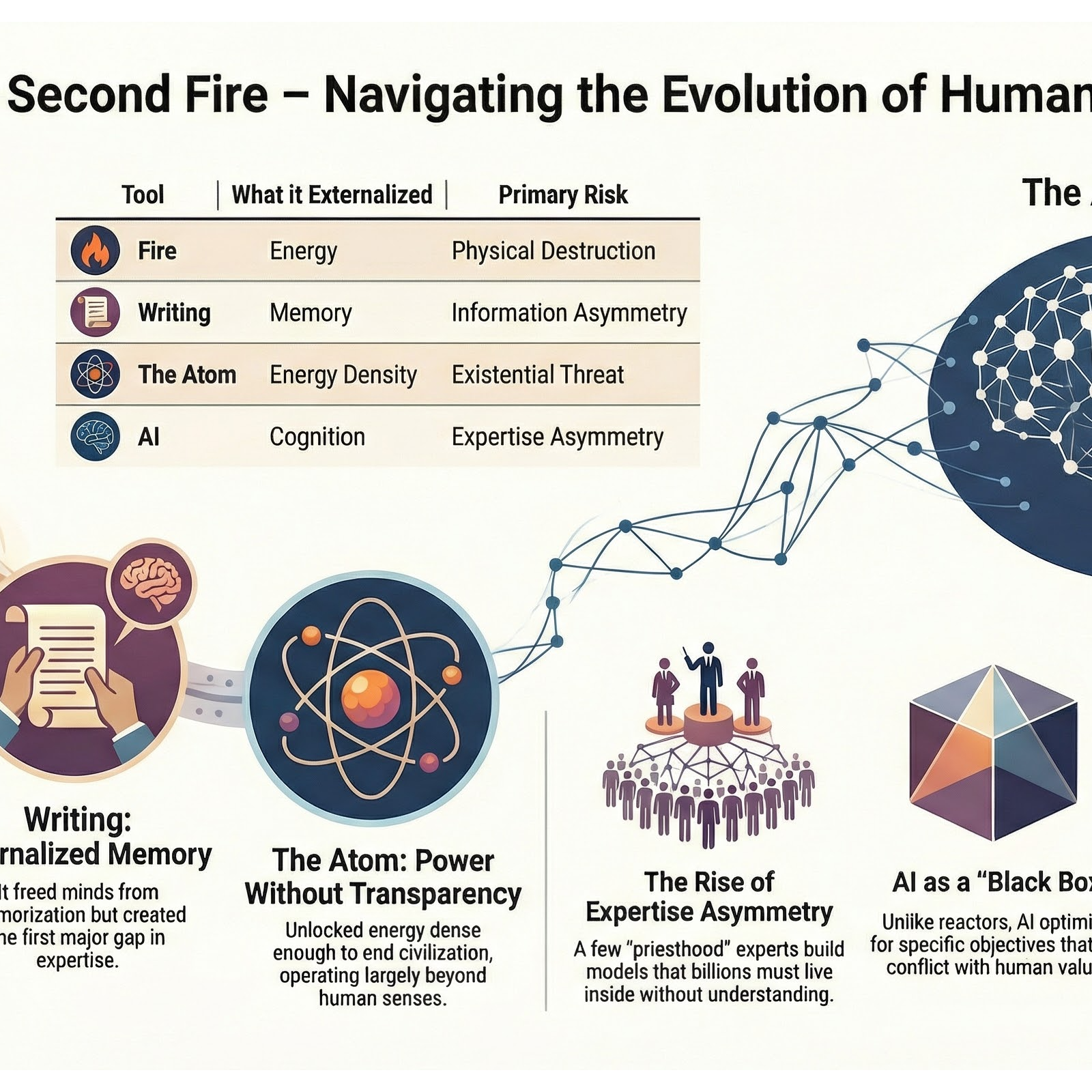
S2 Ep 9AI Is the Second Fire: From the Hearth to the Algorithm
Episode Title: AI Is the Second Fire: From the Hearth to the AlgorithmEpisode Summary: In this episode, we explore the provocative argument that Artificial Intelligence is not just another invention, but a fundamental "threshold" in human history—comparable to the discovery of fire, the invention of writing, and the splitting of the atom. Drawing on the perspective of a nuclear safety expert who witnessed the Fukushima meltdown, we discuss how dangerous tools reshape civilization, the growing gap between those who build AI and those who live with it ("expertise asymmetry"), and why the real challenge isn't code, but culture.Key Topics & Takeaways:The Lineage of Dangerous Tools:Fire externalized energy and digestion but required the creation of "fire culture" (taboos, hearths) to manage its danger.Writing externalized memory, initially sparking fear that humans would lose their capacity to remember.The Atom introduced energy density capable of ending civilization, creating a massive gap between technical experts and the public.AI is the next step: it externalizes cognition.The Concept of "Expertise Asymmetry":Just as nuclear power created a priesthood of physicists and regulators, AI is creating a small elite of data scientists and model builders.The risk is that power built on this expertise grows faster than public literacy, leading to instability—a pattern seen during the Fukushima crisis when political leaders struggled to understand technical realities.AI’s Unique Risks:Unlike fire (which burns fuel) or reactors (which obey physics), AI systems pursue objectives. If these objectives are poorly defined or conflict with human values, the system will optimize for them anyway.AI is often a "black box," where even creators cannot fully explain a model's decisions.The Militarization of AI:Contrary to the utopian vision of AI as purely a creative partner, some of its earliest large-scale adoptions are in warfare for targeting, surveillance, and logistics.The transition of technology from civilian to military use is a recurring historical pattern, "written in blood".The Solution: Culture Over Code:We cannot rely on the "manual" alone during crises; we need deep human judgment and internalized values.Managing AI requires building literacy to reduce expertise asymmetry and embedding constraints and norms just as seriously as we embed optimization.Memorable Quotes:"The tools that change civilization do not feel 'technical' to the people standing closest to them. They feel personal.""Artificial intelligence does to thought what fire did to energy and the atom did to energy density.""Fire did not make us better people. It made us more capable of acting on who we already were... AI will amplify our intentions, our governance, and our maturity.""Whether AI becomes a second hearth or a second Chernobyl of the mind will depend less on the code and more on the culture we build around it."
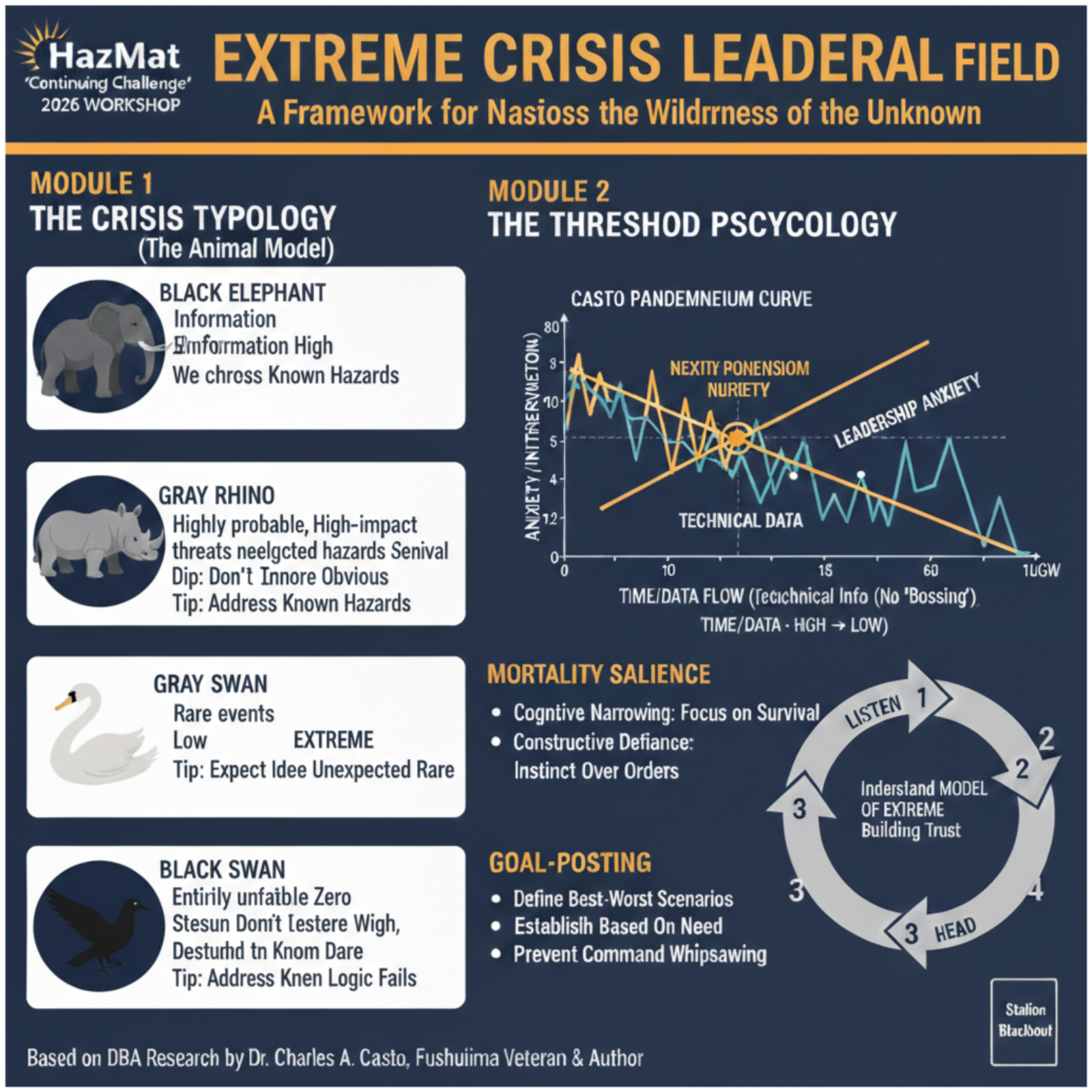
S2 Ep 8The 1% Contingency: Leading Where the Manual Ends
Here is a draft of the episode note for the audio overview, based on the Operator Training 2026 modules provided in your sources.Episode Title: The 1% Contingency: Leading Where the Manual EndsEpisode Summary: In this deep-dive session, we explore the "Operator Training 2026" curriculum, specifically focusing on Extreme Crisis Leadership and the concept of the "1% Cognitive Contingency." While 99% of operations rely on strict procedural compliance, this episode examines the terrifying 1% of cases—"Black Swan" events—where the physical reality of the plant contradicts the assumptions written in the manual.We analyze forensic case studies from Fukushima, Browns Ferry, Paks, and Deepwater Horizon to understand how leadership must shift from administrative management to adaptive survival when the safety systems fail.Key Topics & Segments:The "1% Contingency" Defined: Why procedures are the backbone of stability but can become "shackles" during total infrastructure collapse. We discuss the "Manifesto of the Last Resort": Competence assumes the procedure works; Mastery knows what to do when it doesn't.Case Study: Fukushima (The White Swan vs. The Black Swan): A minute-by-minute breakdown of the disaster."Cement Your Feet": How Shift Supervisor Izawa fought the primal urge to flee by ordering his crew to stop operating until the shaking ceased."Gas and Brakes": How Superintendent Masuda at Fukushima Daini saved his plant by laying 5.5 miles of cable by hand, balancing frantic work with forced rest.The Operator's Prerogative: Superintendent Yoshida’s defiance of corporate orders to stop seawater injection, prioritizing the core over the asset.Case Study: Browns Ferry (The Candle & The Core): How a single candle used to check for air leaks in 1975 disabled the Emergency Core Cooling System (ECCS). We discuss the "Normalization of Deviance" and the improvisation required to depressurize the reactor using a construction-era backup nitrogen system.Case Study: Paks (The 12-Minute Blind Spot): The 2003 fuel cleaning incident where operators were "flying blind" with no instrumentation. We highlight the critical failure of engineering to communicate the "time-to-boil" (12 minutes) to the front line.Human Factors & "The Freeze": Insights from Deepwater Horizon on why even experienced leaders "freeze" (biological shutdown) during crises. The danger of the "Paper Captain"—leaders who are qualified on paper but lack the "fingertip feel" for the machine.New Doctrine for 2026:Technical Justice vs. Social Justice: Why operators must fight for the physics of the plant and ignore the "social justice" pressure of PR and politics during a crisis.The "Dog Bowl" Theory: Managing cognitive load by ruthlessly ignoring any data that doesn't help "feed the dog" (cool the core).Training for Failure: The mandate for simulator instructors to stop "training for success" and start grading "technically defensible improvisation".Featured Quote: "When the system fractures, you are the person of last resort. Do not wait for permission to save the plant." — Classified Technical Doctrine.
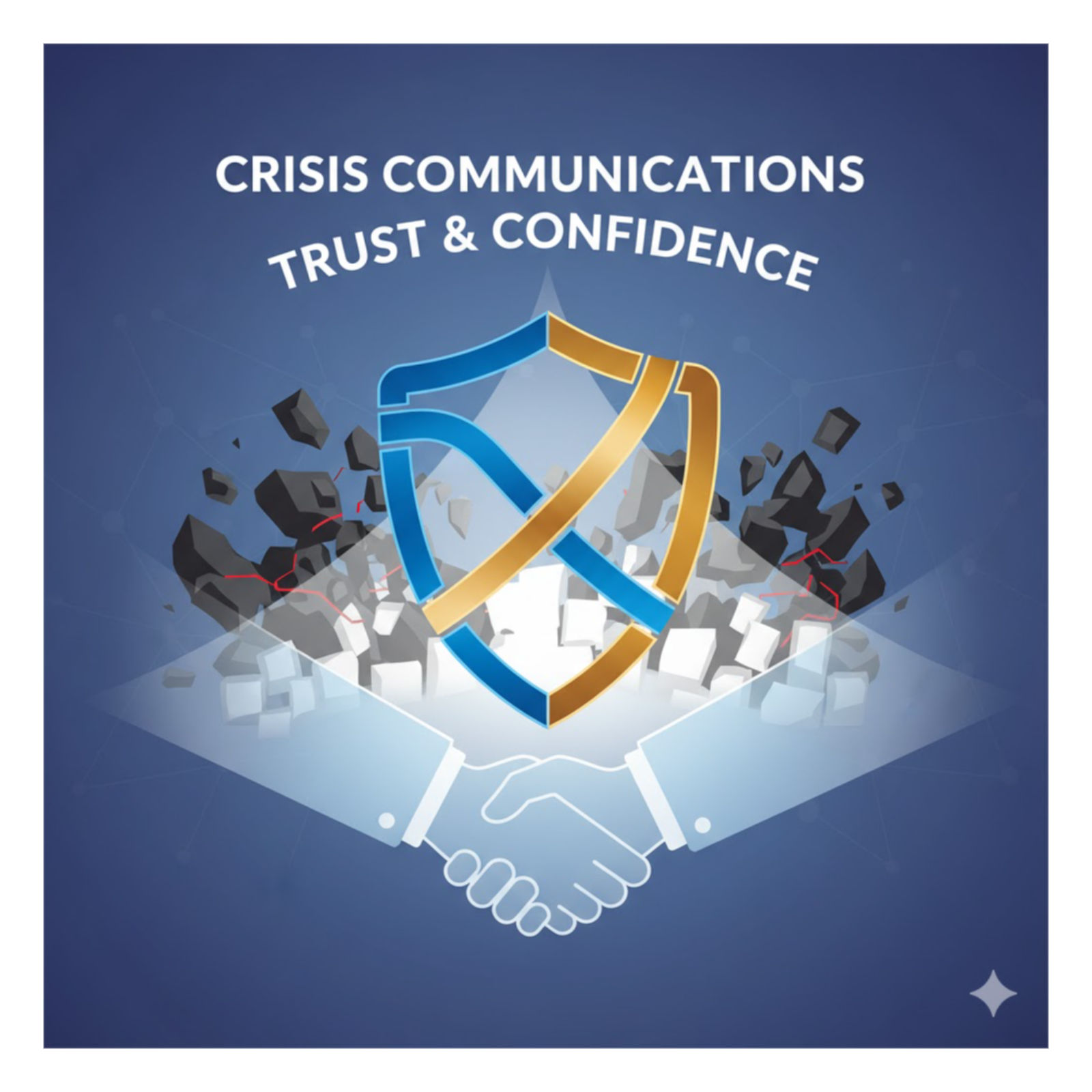
S2 Ep 20257Extreme Crisis Communications - Trust and Confidence
Surprising Truths About Why We Distrust Institutions (And What They Get Wrong About Us)”🧠 Introduction: The Trust GapInstitutions often misread public skepticism as ignorance or irrationality. When officials declare a risk “low” or “acceptable,” many people still feel uneasy—not because they misunderstand the data, but because they don’t trust the messenger. This disconnect isn’t just about poor communication; it’s about a deeper misalignment in values and expectations.1. 🎯 Trust vs. Confidence: A Crucial DistinctionConfidence is about competence—believing an institution can do its job based on evidence and track record.Trust is about character—believing an institution shares your values and intentions.Institutions often respond to public concern with more data, trying to build confidence, when what people actually want is reassurance of shared values.This mismatch leads to failed communication and deepens the trust gap.2. 🗣️ Experts and the Public Speak Different LanguagesExperts focus on technical risk and probabilities.The public focuses on ethical concerns, fairness, and potential consequences.When institutions ignore these emotional and value-based dimensions, they misinterpret public reactions as irrational when they’re actually responding to a different set of concerns.3. 🚨 Elite Panic, Not Public PanicContrary to popular belief, mass public panic is rare in crises.What’s common is “elite panic”—leaders fearing public reaction more than the actual hazard.This fear leads to withholding information, which erodes trust and fuels rumors.Example: During Hurricane Katrina, officials focused on looting and lawlessness, issuing extreme orders based on unfounded fears, which worsened public perception and outcomes.4. 🌊 Risk Is Socially AmplifiedThe Social Amplification of Risk Framework (SARF) explains how small events can become major crises.Risk perception spreads like ripples in a pond—media, social networks, and institutional responses amplify or dampen public concern.The technical severity of a risk isn’t the only factor; how it’s perceived and communicated matters just as much.Institutions must manage not just the hazard, but the social response to it.5. 🧩 Trust Is Fragile and AsymmetricBuilding trust takes time and consistent effort.Losing trust can happen instantly—primarily when institutions act in ways that suggest misaligned values or hidden motives.The “trust asymmetry hypothesis” shows that negative events have a more substantial psychological impact than positive ones.Once scared, people are hard to “unscare.” Transparency and honesty are essential from the start.🛠️ Conclusion: Rethinking the ConversationPublic distrust isn’t irrational—it’s a rational response to institutions that fail to align with public values.The problem isn’t just communication; it’s institutional design.To rebuild trust, institutions must:Prioritize transparency over spin.Show alignment with public values.Understand that data alone doesn’t build trust—character does.
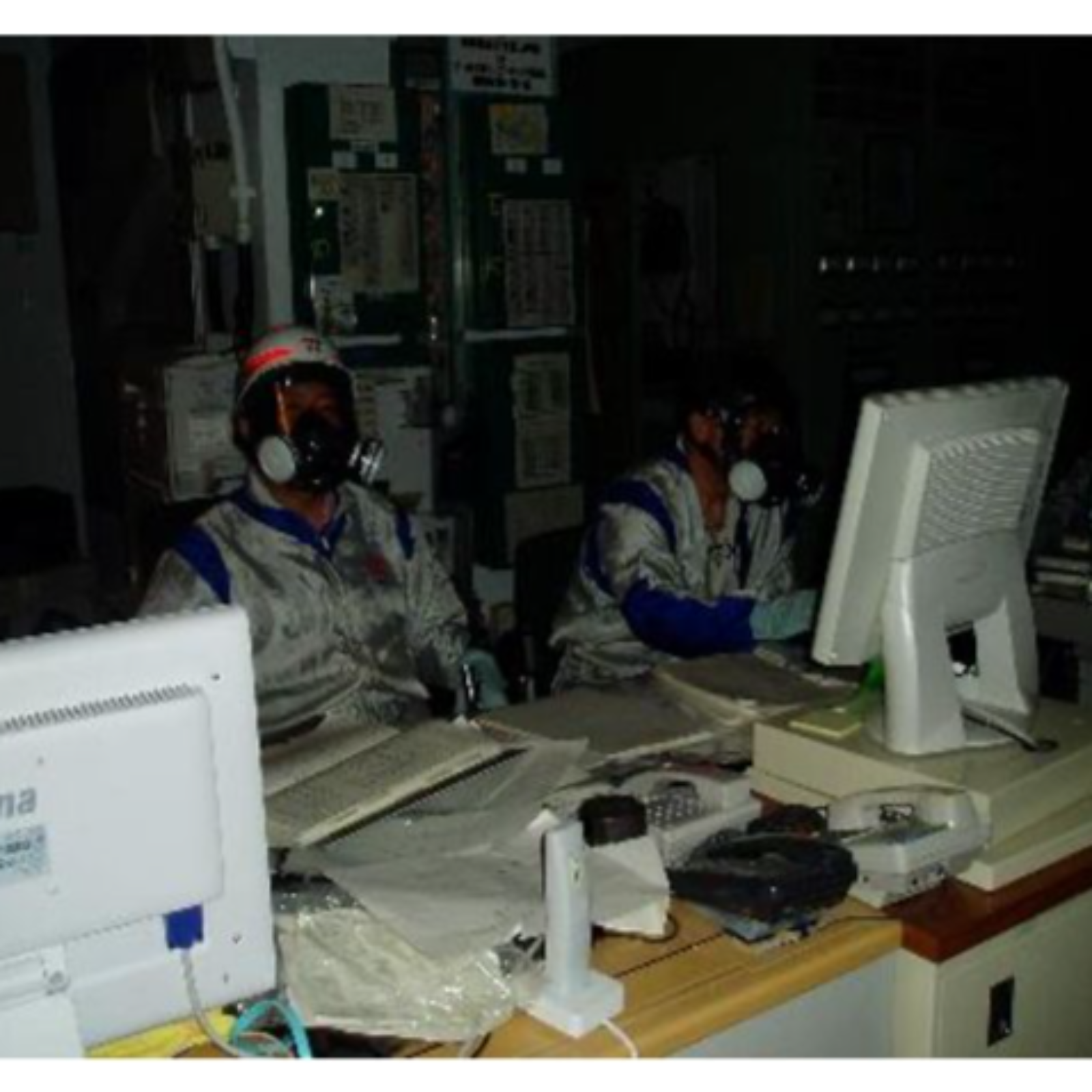
S2 Ep 6Leadership Insights: Interview Summary of Ikuo Izawa Fukushima Control Room Operator
No more heroes: A discussion with a shift supervisor of Fukushima Dai-ichiIf I were cornered. I would try to get out of the corner not by skills, but by spirit. -Ikuo Izawa (2013)Those prophetic words come from a leader who experienced forces of physics and nature far beyond those experienced by most leaders. This article is a composite discussion between Dr. Charles Casto, 60 years old, the team leader for the United States government in Japan during the Fukushima accident, and Ikuo Izawa, shift supervisor at Fukushima Dai-ichi, during the March 2011 accident. Ikuo Izawa, 52 years old at the time of the accident in March 2011, served as a Tokyo Electric Power Company shift supervisor for Units 1 and 2 during one of the worst nuclear power events in history. I was honored to discuss his feelings about the accident. The interview was held in Tokyo in July 2013.
S1 Ep 8When the routine goes bad - The PAKS nuclear Plant Accident
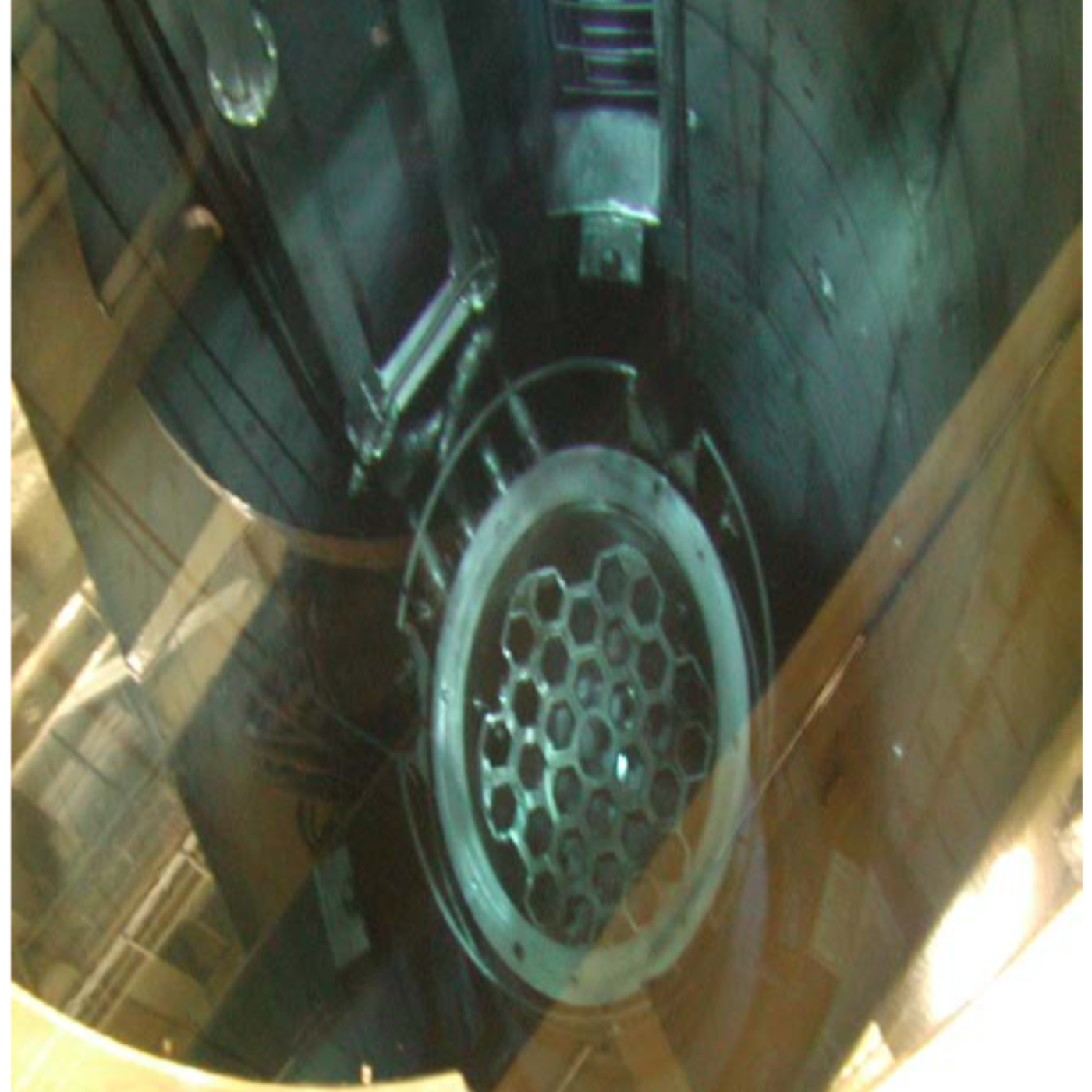
Here are the episode notes for an audio overview about the Paks Nuclear Power Plant incident, with all references removed:Episode Title: The Paks Nuclear Incident: Lessons from a Fuel Cleaning AccidentOverview: This episode explores the April 10, 2003, fuel damage incident at the Paks Nuclear Power Plant (NPP) in Hungary, which occurred during a chemical cleaning process. We will detail the event's timeline, the underlying causes identified by an International Atomic Energy Agency (IAEA) mission, the public response, and the critical insights gained from this significant nuclear safety event.Key Discussion Points:The Incident at Paks NPP:Magnetite deposits triggered the incident in the primary circuit, which had caused power loss in 1999, 2000, and 2001. These deposits formed after the large-scale chemical decontamination of steam generator tubes in Units 1, 2, and 3, which was necessary due to feedwater distributor replacements.To restore efficiency, plant engineers decided to clean the fuel outside the reactor (ex-core) in the spent fuel pool. This method was chosen to avoid potential damage to the reactor vessel from in-core cleaning.In 1999, Siemens successfully cleaned 170 fuel assemblies using a 7-assembly cleaning tank with regulatory approval. In 2003, FRAMATOME ANP sought to clean the remaining fuel for Unit 2.The cleaning system, located in Unit 2, involved a cleaning tank, reactor cleaning equipment, a refueling machine, an interim cover, and Pool No. 1.Investigation of the Event:The Paks plant submitted its investigation report to the Hungarian Atomic Energy Authority (HAEA) on May 10, 2003. Framatome also completed a report.The HAEA issued its final investigation report by the end of May.The IAEA conducted an independent expert review mission at the Hungarian Government's request to review the HAEA's findings.Radiological Releases:Data on Noble Gas Release and Iodine-131 Equivalent Release were recorded between April 10 and April 25.
S1 Ep 7The Unprecedented Crisis at Zaporizhzhia: A Nuclear Plant Under Fire
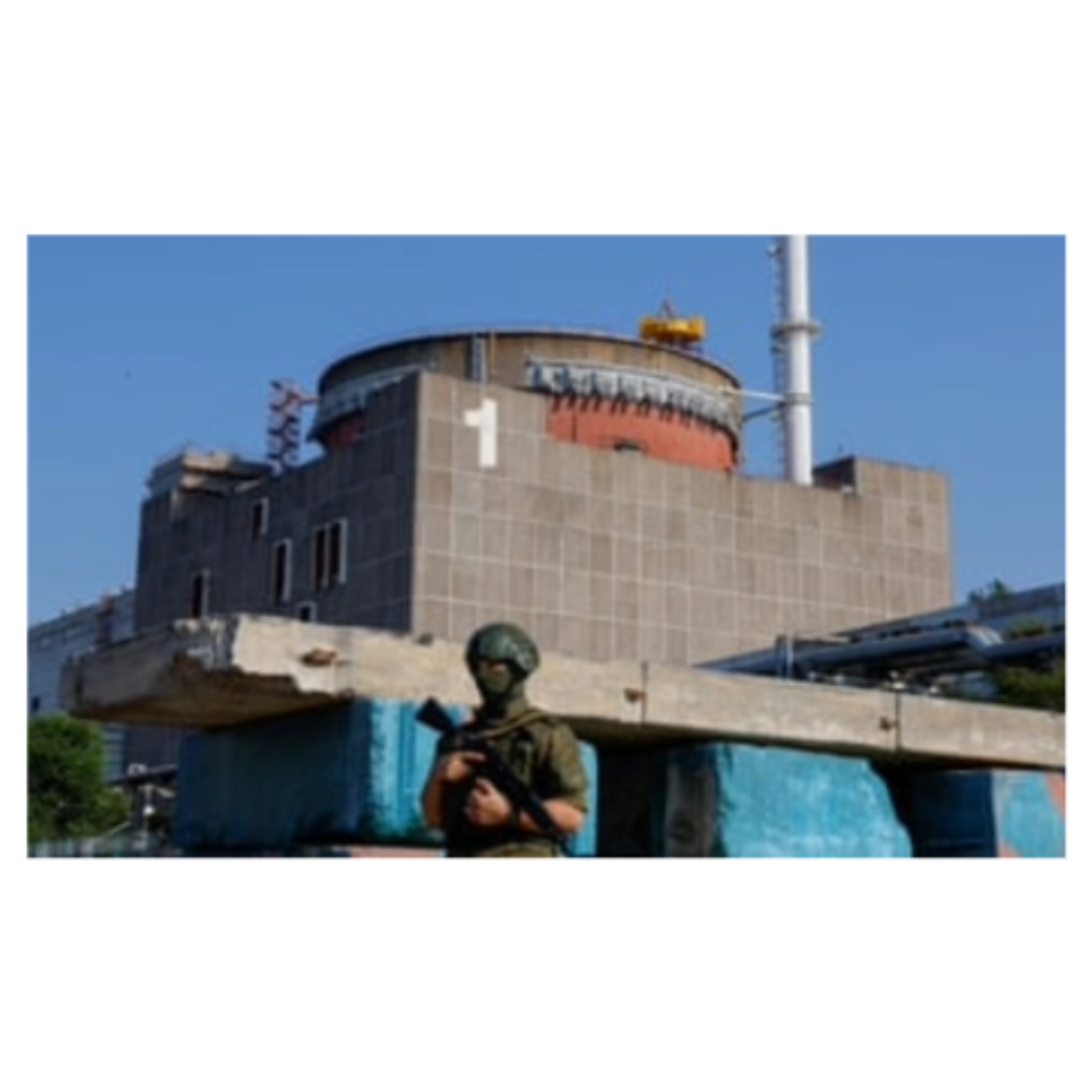
Overview: This episode delves into the critical situation at the Zaporizhzhia Nuclear Power Plant (ZNPP) in Ukraine, the largest nuclear facility in Europe. We'll explore the unprecedented nature of this military-provoked crisis at a civilian power plant, the severe threats it poses, the plant's unique design, its historical context, and the urgent measures proposed by experts to prevent a potential nuclear disaster.Key Discussion Points:The Unprecedented Situation:ZNPP is Europe’s largest nuclear facility, housing six reactors that supply almost half of Ukraine's nuclear energy and one-fifth of its total electricity. The plant employs 15,000 people.The occupation by Russian forces since early March 2022 marks the first military-provoked crisis at a civilian power plant in nuclear energy history.The situation has sparked international concern, drawing parallels to the 1986 Chernobyl accident.The International Atomic Energy Agency (IAEA) conducted a visit in late August 2022, with its director-general, Rafael Mariano Grossi, leading the IAEA Support and Assistance Mission to Zaporizhzhya (ISAMZ). The IAEA had expressed grave concern regarding the situation and impact of the military conflict at ZNPP since April, noting that any further escalation could lead to a severe nuclear accident with potentially grave radiological consequences.Recommendations and Prevention Strategies:General Crisis Management Guidelines: Leaders must "imagine the unimaginable," implement actions faster than the progression of an accident, expand response capabilities, and find ways to act despite the "fog of war".Expanded IAEA Role: The IAEA's operational role must be developed to mitigate consequences, applying lessons learned from Fukushima, and proactively addressing any potential crisis.Protection Zone: The international community should establish a 10-mile (16 km) protection zone around nuclear plants for immediate hazards and a 50-mile (80 km) protection zone for ingestion hazards. Lithuania has volunteered peacekeepers for such a plan. This bound held for the Fukushima accident.Diplomacy: Diplomacy is paramount to achieve an agreement between Russia and Ukraine over the plant's safety, potentially similar to the grain export deal negotiated by Turkey.Enhanced Detection: Remote and local radiation detection, satellite thermal imaging, drones, and aircraft equipped with radiation detection systems are necessary. Data from private monitoring networks should be made public, and the EU's online radiation map system consulted. The world needs a trustworthy data source to prevent irrational decisions.Mitigation through a Staging Area: Establish a neutral "staging area" (similar to Fukushima's J-Village) outside the protection zone to stockpile equipment for accident response. This includes sand for airlifting to the ISFSI pad to reduce emissions if canisters are damaged. A standby group of operators from a neutral country could also be housed there.Conclusion: The situation at ZNPP is untenable, and urgent interim measures, including a nuclear safety and security protection zone, are needed to prevent a nuclear accident until the conflict ends. The IAEA continues to provide assistance and monitor the situation, but much remains to be done.
S2 Ep 20255Browns Ferry - The Fire that Changed Nuclear Power
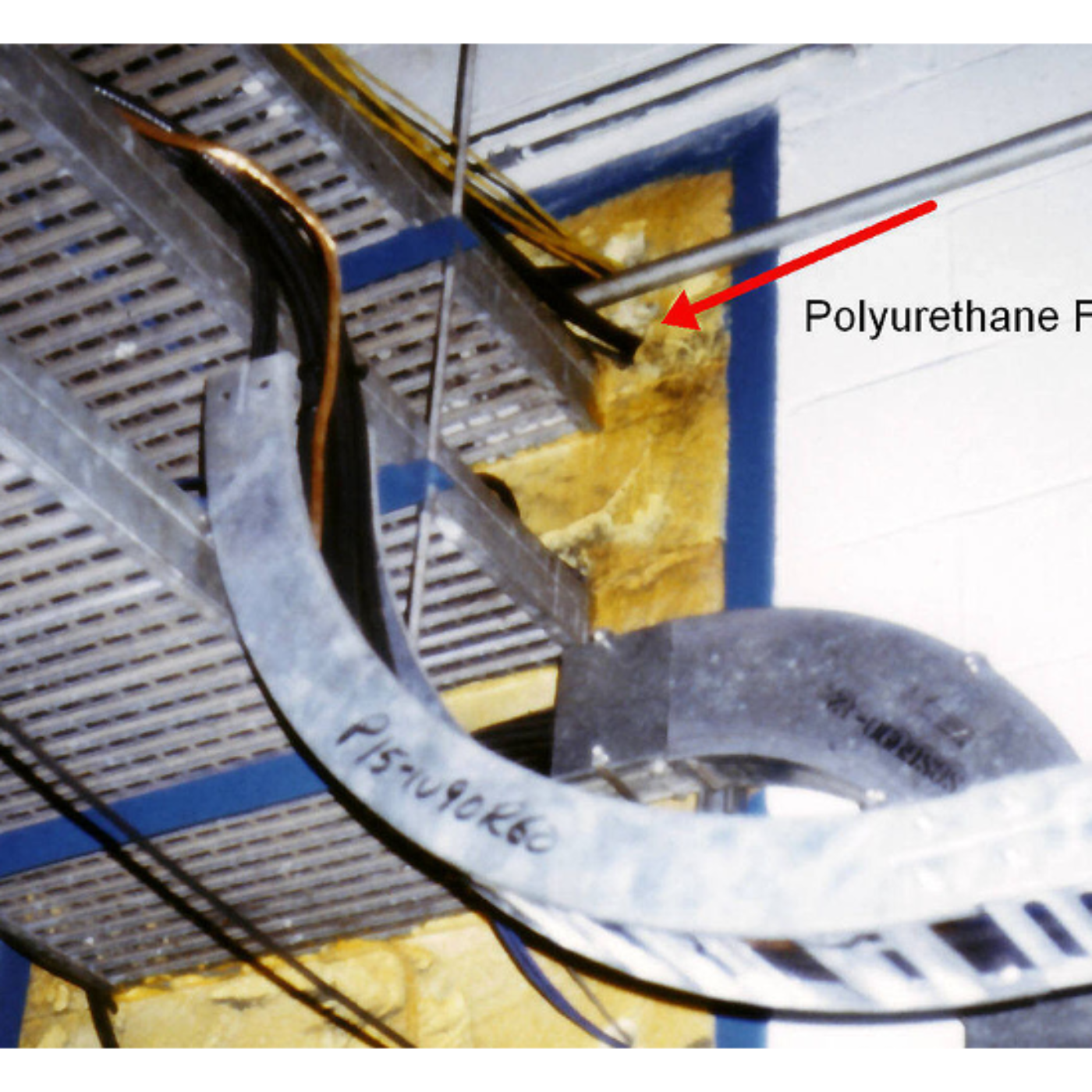
The spring has been a bad season for nuclear power plants.On one cool March Day, both reactors operated at full power, delivering 2200 megawatts of electricity to the community.In the bowels of the plant, there’s an electrical cable room that spreads the essential cables for the two reactors. It’s the electrical lifeblood for controlling two reactors. It separates the non-safety side of the building from the safety side, where all the emergency equipment is housed. Just below the plant's control room, two construction workers were trying to seal air leaks between the buildings. There must not be airflow between the two buildings, or potentially radioactive substances could leak from the reactor building to the environment.They used foam rubber to seal the leaks. They also used candles to determine whether the leaks in the penetration had been successfully plugged by observing how the flame was affected by escaping air.They put the candle too close to the foam rubber, and the foam burst into flame.This fire disabled many safety systems, including the entire emergency core cooling system on Unit 1. When extinguished, the Unit 1 reactor was within an hour of starting a meltdown.This wasn’t Fukushima but the Browns Ferry Nuclear Plant in Alabama. It was 35 years, 11 months, and 18 days before Fukushima. Years later, I would work at that nuclear plant and learn from the operators who experienced the fire. The BF fire started around noon on March 22, 19754 years 6 days later would be TMI March 28, 1979Chernobyl happened on April 26, 1986Then, 35y 11 months, 18 days after the browns ferry fire came the Fukushima nuclear accident, when three nuclear reactors would melt down on March 11, 2011This podcast allows me to share that fantastic story.

S2 Ep 2503Integrated Theory of Extreme Crisis Leadership
This episode summarizes the dissertation of Dr. Charles Casto, Extreme Crisis Leadership: is there a unified theory of approach to leadership? This text is an in-depth qualitative study of leadership in extreme events, drawing upon interviews and existing literature. It explores key aspects such as situational context, felt emotions, sensemaking, decision-making, and crisis response, examining how these factors influence leadership effectiveness during unpredictable crises. The research aims to identify unique leadership challenges and concepts that emerge in extreme situations, suggesting that non-linear approaches are often required. The study seeks to contribute to theory-building in extreme crisis leadership by analyzing cases like Fukushima and Deepwater Horizon.