The Essay
1,128 episodes — Page 17 of 23
Minds at War: "O' Connell Street"
Poet and academic Gerald Dawe explores Francis Ledwidge's poem "O'Connell Street".
Minds at War: "The Last September"
Dr Heather Jones of the LSE explores Elizabeth Bowen's novel "The Last September"
Minds at War: "Ulysses"
EThe writer Fintan O'Toole reflects on James Joyce's novel "Ulysses"
Lucy Hughes Hallett
Daybreak... and five writers set off on foot - and report back: Finally, the biographer Lucy Hughes Hallett, strolling amongst headstones in a local cemetery. Accompanying her, a hairy pointer called Kilburn, who has his own reasons for trotting out early.Producer: Duncan Minshull
Ian Sansom
Daybreak... and five writers set off on foot - and report back: This time, the novelist Ian Sansom starts out, using as inspiration ideas of Benjamin Franklin and his faith in 'powerful goodness'. Powerful goodness will power him along, towards the sea at the edge of his town.Producer: Duncan Minshull
Kamila Shamsie
Daybreak... and five writers set off on foot - and report back: This time, novelist Kamila Shamsie observes the wonderful light at a time called 'dusk-dawn', first from the ice of the Antarctic, then from the deck of her ship. Funnily enough, the experience makes her think of a Greek Island.Producer: Duncan Minshull
Nicola Barker
Daybreak... and five writers set off on foot - and report back: This time, novelist Nicola Barker negotiates the slopes of her back garden at 5am, wintertime. It's a mini-walk, full of massive muddy challenges and includes a vigil of her 'benighted goldfish'.Producer: Duncan Minshull
Nicholas Shakespeare
Daybreak... and five writers set off on foot - and report back:First out, Nicholas Shakespeare and his sons walk their local beach in Tasmania, a spit of white sand, which offers up stories about sea creatures and ships in distress. Producer: Duncan Minshull
Inspiring Women in Music: Zoe Martlew
In the week of International Women's Day, five women tell us about their lives in music including what, and who, inspires them. Today, we hear from cellist, performer, composer, blogger, broadcaster and educator Zoë Martlew.
Inspiring Women in Music: Alice Farnham
A week of Essays in which five women tell us about their lives in music including what, and who, inspires them. Alice Farnham is one of Britain's leading female conductors. As well as enjoying a growing international reputation, particularly in the field of opera conducting, she is Co-Founder and Artistic Director of Women Conductors @ Morley - a programme to encourage women into the conducting profession.
Inspiring Women in Music: Kathryn McAdam
In the week of International Women's Day, five women tell us about their lives in music including what, and who, inspires them. Today, Kathryn McAdam – AKA ‘Soprano on sabbatical’
Inspiring Women in Music: Nicola LeFanu
The composer Nicola LeFanu tells us about her life in music as part of this series celebrating inspiring women. When she was growing up it didn't occur to her that composition was an unusual thing for a woman to do; it seemed completely natural, surrounded as she was by women who wrote music: her mother, the composer Elizabeth Maconchy, and her friends including the Welsh composer Grace Williams and the Irish composer Ina Boyle. It was only when Nicola went on to study music herself that she realised how few women had been included in the books which told the history of Western Classical music. In this edition of The Essay, Nicola shares her story of what, and who, has inspired her own career spanning over half a century and how things have changed for women in music during her lifetime.
Inspiring Women in Music: Sarah Connolly
A week of Essays in which five women tell us about their lives in music including what, and who, inspires them. Today, the mezzo-soprano Sarah Connolly talks about her career, her family, and the inspirational characters she has played.
Handel: Music for the Royal Fireworks
Stephen Johnson studies the audience's reaction to Handel's Music for the Royal Fireworks
Beethoven: Piano Concerto No 4
Stephen Johnson considers how Beethoven's Piano Concerto No 4 thrilled the first audience
Shostakovich: Symphony No 5
Stephen Johnson considers how Shostakovich's Symphony No 5 surprised it's first audience
Byrd: Mass for Four Voices
Stephen Johnson considers how Byrd's Mass for 4 voices was received by its first audience
Mahler's Symphony No 8
Stephen Johnson considers how Mahler's Symphony no 8 was received by its first audience.
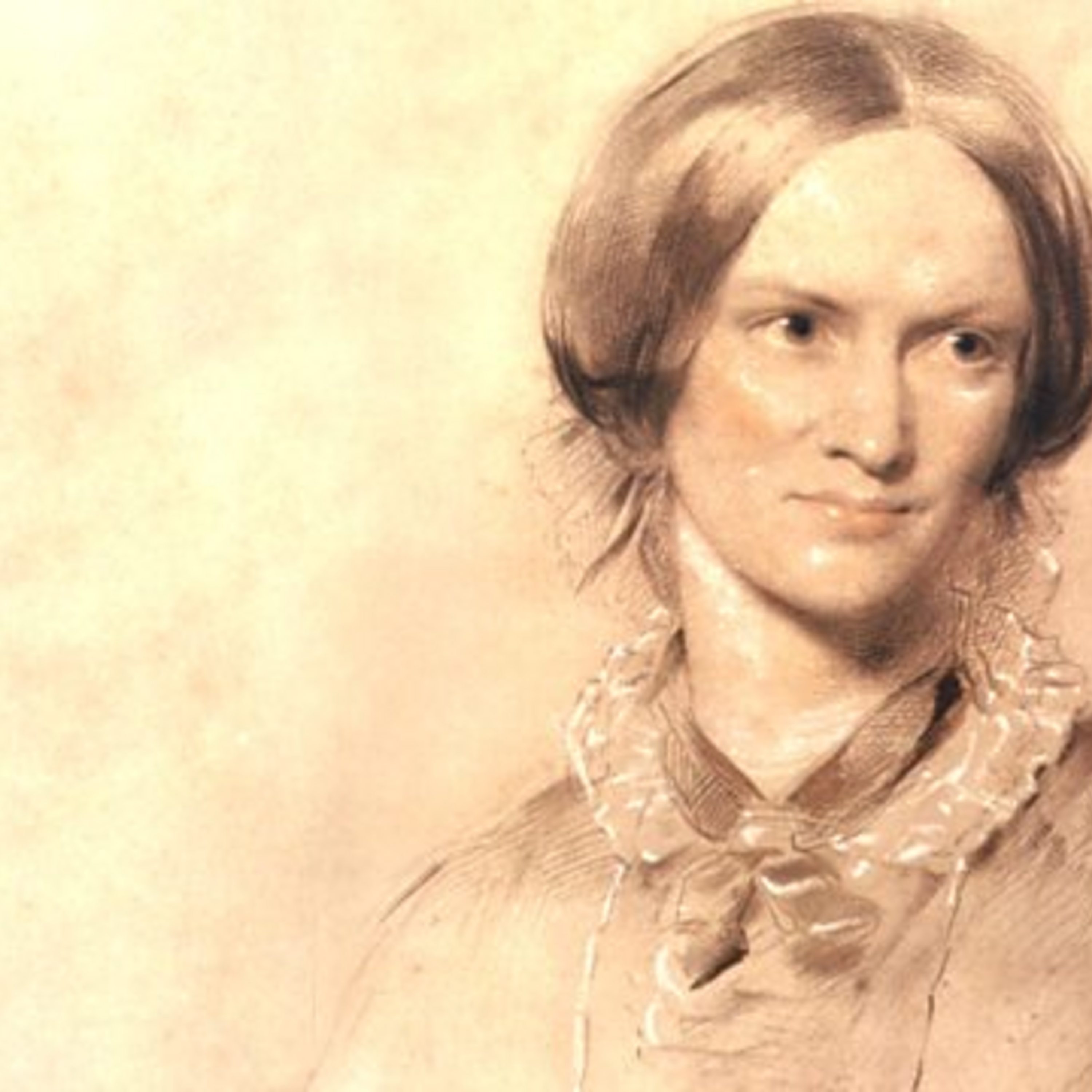
Rachel Joyce on Bronte as a Literary Star
Charlotte Bronte's true identity revealed through five powerful, poignant letters.5.Marking the 200th anniversary of Charlotte Bronte's birth, Rachel Joyce - a best-selling author herself - considers how, on the publication of Jane Eyre, Bronte reacted to becoming a literary sensation.When Jane Eyre was published in 1847, it was a literary sensation. Rachel Joyce reflects both on Bronte's modest excitement that her book was being read by "such men as Mr Thackeray", and her absolute confidence in her own writing and literary judgement.Rachel Joyce is the best-selling author of The Lonely Pilgrimage of Harold Fry, and recently wrote a new adaptation of Jane Eyre for BBC Radio 4.Producer: Beaty Rubens.
Jane Shilling on I Shall Soon Be Thirty
Charlotte Bronte's true identity explored through her powerful and poignant letters - letters which are often particularly revealing when read with the beneift of hindsight.The journalist Jane Shilling has reflected on women, ageing and creativity in her book, The Woman in the Mirror. Two hundred years after Charlotte Bronte's birth, Jane Shilling wonders about her feelings as she wrote to her dear friend, Ellen Nussey, "I shall soon be 30 and have done nothing yet", shortly before embarking on her greatest work, Jane Eyre.Producer: Beaty Rubens.
I Am, Yours Sincerely, C Bronte: Lyndall Gordon on Charlotte Bronte and Robert Southey
In the 200th anniversary of her birth, Charlotte Bronte's true identity revealed through five powerful, poignant letters.The poet laureate Robert Southey's letter to Charlotte Bronte is now infamous: "Literature cannot be the business of a woman's life, and it ought not to be. The more she is engaged in her proper duties, the less leisure will she have for it even as an accomplishment and a recreation."The scholar and Bronte biographer Lyndall Gordon, explores Bronte's response to this letter, in all its ambiguity: "In the evenings, I confess, I do think, but never trouble anyone else with my thoughts."Producer: Beaty Rubens.
Claire Harman on Charlotte Bronte in Belgium
Charlotte Bronte's true identity revealed through five powerful and poigant letters2.Biographer Claire Harman on the two years Charlotte Bronte spent as a mature student in Belgium, at a school run by Zoe and Constantin Heger, and its turbulent epistolary aftermath.When Charlotte Bronte's passionate letters to Constantin Heger were published in 1913, they caused a sensation. Today, they are more likely to provoke a sympathetic response.Marking the 200th anniversary of her birth, Claire Harman unfolds the story of Bronte's time in Brussels. She explores the letters she wrote to Heger after her return to Haworth and his stoney refusal to correspond with her, in spite of her pleas and her wish to write a book and dedicate it to him: "I would write a book and I would dedicate it to my literature master - to the only master I have ever had - to you Monsieur".It's amongst the most painful incidents in Bronte's life-story, but Claire Harman goes on to discuss how Bronte eventually used the experience in The Professor, Villette, and, of course, in her masterpiece, Jane Eyre.Producer: Beaty Rubens.
Claire Harman on Charlotte Bronte, Governess
Charlotte Bronte's true identity revealed through her powerful and poignant letters.1.Bronte's biographer, Claire Harman, on her experience as a governess.Among the 900 surviving letters of Charlotte Bronte, the ones written while she was a governess most vivdly reveal her characteristic blend, as a young woman, of unhappiness and frustration mingled with hope and ambition. Claire Harman sets out the drab, demeaning details of Bronte's career as a governess, and her passionate longing for a more fulfilling life. In her letter to her old school-friend, Ellen Nussey, Bronte writes enviously of another friend who has been travelling in Belgium: "I hardly know what swelled to my throat as I read her letter - such a vehement impatience of restraint and steady work - such a strong wish for wings - wings such as wealth can furnish - such an urgent thirst to see - to know - to learn - something internal seemed to expand boldly for a minute - I was tantalised with the consciousness of faculties unexercised.....". Producer: Beaty Rubens.
Lovers
Acclaimed writer A L Kennedy muses on the hell that is other people.As someone so unable to deal with other people that she works at home, making up imaginary friends, who even then don't always behave, A L Kennedy admits to not necessarily being the best person to dish out advice on relationships. However, in this series she wonders whether she's perhaps been a little harsh when it comes to 'other people'. Today she tackles fullscale, walking on sunshine, singing in the rain love - surely the most terrifying word of all that we associate with 'other people'.Written and read by A L Kennedy, the award-winning novelist, dramatist and broadcaster. Producer: Justine Willett.
Family
Acclaimed writer A L Kennedy muses on the hell that is other people, today looking at family.As someone so unable to deal with other people that she works at home, making up imaginary friends, who even then don't always behave, A L Kennedy admits to not necessarily being the best person to dish out advice on relationships. However, in this series she wonders whether she's perhaps been a little harsh when it comes to 'other people'.Written and read by A L Kennedy, the award-winning novelist, dramatist and broadcaster. Producer: Justine Willett.
Friends
Acclaimed writer A L Kennedy muses on the hell that is other people, today looking at friends.As someone so unable to deal with other people that she works at home, making up imaginary friends, who even then don't always behave, A L Kennedy admits to not necessarily being the best person to dish out advice on relationships. However, in this series she wonders whether she's perhaps been a little harsh when it comes to 'other people'.Today, she ponders friendship, which, as a happily solitary only child, was something she managed to put off for as long as was decently possible...Written and read by A L Kennedy, the award-winning novelist, dramatist and broadcaster. Producer: Justine Willett.
My Generation
Acclaimed writer A L Kennedy muses on the hell that is other people, today looking at 'other generations'. As someone so unable to deal with other people that she works at home, making up imaginary friends, who even then don't always behave, A L Kennedy admits to not necessarily being the best person to dish out advice on relationships. However, in this series she wonders whether she's perhaps been a little harsh when it comes to 'other people'.Today, she contemplates the pitfalls of being old, young or something in between, and wonders why we're perhaps uneasiest of all with those of our own age.Written and read by A L Kennedy, the award-winning novelist, dramatist and broadcaster. Producer: Justine Willett.
Strangers
Acclaimed writer A L Kennedy muses on the hell that is other people, kicking off with strangers. In Jean Paul Sartre's Play 'No Exit' one character declares, 'L'Enfer - c'est les autres' - hell is other people, and A L Kennedy has found herself very much behind this idea. As someone so unable to deal with other people that she works at home, making up imaginary friends, who even then don't always behave, she admits to not necessarily being the best person to dish out advice on relationships. However, in this series she wonders whether she's perhaps been a little harsh when it comes to 'other people'.Today, she reveals why, despite being a solitary novelist with an existential fear of strangers, she has found herself hugging the odd one in the street. Written and read by A L Kennedy, the award-winning novelist, dramatist and broadcaster. Producer: Justine Willett.
Ray Bradbury's The Wonderful Ice Cream Suit
Five writers recall clothes and accessories that resonate vividly in works of art: The series started with a white dress and ends with a pristine white suit ... Author and journalist John Walsh describes the transformative powers of a 'two-piece', worn in turn by a motley bunch of blokes in Los Angeles and celebrated in Ray Bradbury's story 'The Wonderful Ice Cream Suit'.Producer Duncan Minshull
F Scott Fitzgerald's Tender Is the Night
Five writers recall clothes and accessories that resonate vividly in works of art:Justine Picardie, author and editor of Harper's Bazaar, considers a whole pile of dresses and jewellery worn by Nicole Diver in Scott Fitzgerald's novel Tender Is The Night. And how Nicole's passion for clothes is mirrored by the author's wife, Zelda. Producer Duncan Minshull
Federico Fellini's 8 1/2
Five writers recall clothes and accessories that resonate vividly in works of art:Author and critic Stephen Bayley on a pair of glasses sported brilliantly in the film 8 1/2 by Marcello Mastroianni. So classic and cool are the frames, that we desire them today. Producer Duncan Minshull
Francoise Sagan's Bonjour Tristesse
Five writers recall clothes and accessories that resonate vividly in works of art: Journalist Rachel Cooke remembers reading the best-seller Bonjour Tristesse as a teenager, in which a character's memorable slacks, or 'pedal pushers', said everything about French chic. Or so she thought.
James Whistler's Symphony in White, No 1
Five writers recall clothes and accessories that resonate vividly in works of art:Art historian James Fox describes 'Symphony in White' No. 1, the painting by James Whistler that had everyone guessing about the wearer and the story behind her.Producer Duncan Minshull
Tom Service - Where Have All the Seismic Moments Gone?
Tom Service explores musical creativity and seismic shock in the twenty-first century. By the time the 20th century was 16 years old, music like Stravinsky's The Rite of Spring, Strauss's Salome, and Schoenberg's Five Orchestral Pieces had sent shockwaves through the tectonic plates of musical and cultural convention. In ripping up the musical rule-book, these pieces were heard to threaten social and even moral stability as well. So where are the seismic moments of the first 16 years of the 21st century? Why haven't composers been able to write another Rite? Is it because new music has lost its cultural capital? Or is it, rather, that seismic activity is happening even more today than it was in 1916- an endless series of mini-earthquakes rather than a single musical volcano, biding its time until all that creative energy breaks through?The story of new music is peppered with events that have altered the course of musical history. For our New Year New Music season, we asked five Radio 3 presenters to each tell the story of one of these "seismic moments". From silence and ambient sounds to riot and revolution, these intriguing events have, in different ways, changed the progress of sound and culture - or, as one of our five suggests, have they?Written and read by Tom Service Producer: John Goudie.
Sarah Walker on Steve Reich's Four Organs
Sarah Walker's chosen seismic moment in new music describes the notorious 1973 concert when Carnegie Hall played host to the radically minimalist Four Organs by Steve Reich. She also looks at how minimalism together with the idea of the composer-performer ensemble, changed the history of 20th century music.The story of new music is peppered with events that have altered the course of musical history. For our New Year New Music season, we asked five Radio 3 presenters to each tell the story of one of these "seismic moments". From silence and ambient sounds to riot and revolution, these intriguing events have, in different ways, changed the progress of sound and culture - or, as one of our five suggests, have they?Written and read by Sarah Walker Producer: John Goudie.
Ivan Hewett on Brian Eno's Music for Airports
In his 1978 album Music for Airports Brian Eno created a new genre of music he named 'ambient music'. The album was designed to ease the tedium of waiting in airports, but ambient music, which Eno said was 'as ignorable as it is interesting', had an influence way beyond that. Ivan Hewett looks into the genesis and subsequent history of ambient music, and explains why Eno's description is not as self-contradictory as it appears to be.The story of new music is peppered with events that have altered the course of musical history. For our New Year New Music season, we asked five Radio 3 presenters to each tell the story of one of these "seismic moments". From silence and ambient sounds to riot and revolution, these intriguing events have, in different ways, changed the progress of sound and culture - or, as one of our five suggests, have they?Written and read by Ivan Hewett. Produced by Elizabeth Allard.
Sara Mohr Pietsch on the Fall of the Berlin Wall
Sara Mohr-Pietsch's chosen seismic moment in new music looks to the fall of the Berlin Wall. She reflects on the accompanying rise in the popularity of Eastern European composers as a simplicity in musical language emerged from behind the Iron Curtain.The story of new music is peppered with events that have altered the course of musical history. For our New Year New Music season, we asked five Radio 3 presenters to each tell the story of one of these "seismic moments". From silence and ambient sounds to riot and revolution, these intriguing events have, in different ways, changed the progress of sound and culture - or, as one of our five suggests, have they?Written and read by Sara Mohr-Pietsch. Producer: Nicola Holloway.
Robert Worby on John Cage's 4'33"
Robert Worby's selected seismic moment in new music is the first performance of John Cage's controversial 4'33" and its impact on performers and audiences ever since.The story of new music is peppered with events that have altered the course of musical history. For our New Year New Music season, we asked five Radio 3 presenters to each tell the story of one of these "seismic moments". From silence and ambient sounds to riot and revolution, these intriguing events have, in different ways, changed the progress of sound and culture - or, as one of our five suggests, have they?Written and read by Robert Worby Produced by Elizabeth Allard.
Art in a Cold Climate: Thomas Hylland Eriksen on the Holmenkollen Ski-Jumping Hill
Many people would not consider a ski-jump to be a work of art. But for anthropologist and novelist Professor Thomas Hylland Eriksen, Oslo's Holmenkollen ski-jumping hill was the most important art work in Norway."The Holmenkollen Hill, white, elegant and majestic, hovered above the city like a large bird about to take flight," says Eriksen. "It was a work of art enjoyed by tens, perhaps hundreds of thousands of people every day". Eriksen employs the past tense because the structure - built for the 1952 Winter Olympics in Oslo - was pulled down and replaced with a more "flashy, hi-tech and efficient" ski jump in 2008. The architects of the original - Olav Tveten and Frode Rinnan - had created much more than a sporting facility, he says. It was a frugal, elegant structure, which spoke to the Norwegian love of the mountains and the outdoors. "Looking towards Holmenkollen made people more Norwegian." It lives on, he says, as a memory of how architecture can transform a practical structure into a sublime work of art. This edition of The Essay is one of a series in which five writers each consider the significance of a work of art to their nation, as part of Radio 3's Northern Lights season.Producer: Andy Denwood.
Art in a Cold Climate: Ray Hudson on Touching Fire by Carolyn Reed
Writer and historian Ray Hudson considers how one drawing shows Alaskans caught between the fire and the sea: between the state's turbulent natural beauty and the race to exploit its wealth in raw materials. In Carolyn Reed's "Touching Fire", two women stand on the shores of a great sea, their faces lit by a pile of blazing logs. "This fire for me suggests the commercial exploitation that has historically consumed much of the region," says Hudson, who witnessed a massive expansion in commercial fishing during nearly three decades living in Alaska's remote Aleutian Islands. Yet he takes heart from the dignity and determination of the women caught between fire and water. "I know that despite its violent dominance the fire will go out and the women will turn to face the sea," he says. This edition of The Essay is one of a series in which five writers each consider the significance of a work of art to their homelands, as part of Radio 3's Northern Lights season.Producer: Andy Denwood.
Art in a Cold Climate: Elizabeth Hay on Painting Place III by David Milne
The Canadian novelist Elizabeth Hay considers the significance of a painting which symbolises much about her country, once famously described having "too much geography". The great achievement of Canadian painter David Milne, says Hay, was to take the impersonal vastness of the nation's landscape, and make it personal. Milne, who died in 1953, was a modernist painter who lived in a cabin in northern Ontario and eked out a frugal lifestyle while producing paintings "full of immense space and airiness", says Hay. His work, "Painting Place III" was created when he awoke from an afternoon nap in a hollow and saw the landscape framed by spruce trees. It was his management of the scene that made it personal, she observes. "He nestled a painting box, a quart jar, and tubes of paint in the foreground, turning the picture into a self-portrait of sorts, a portrait of someone imbued with a sense of landscape."Like Milne, Hay's own writing has reflected the immensity of Canada's vast northern landscape. "What we have in common, in differing degrees...is not just a feeling for landscape, but a need for it," she says.This edition of The Essay is one of a series in which five writers each consider the significance of a work of art to their nation, as part of Radio 3's Northern Lights season.Producer: Andy Denwood.
Art in a Cold Climate: Mette Moestrup on Pia Arke's Camera Obscura
Danish writer Mette Moestrup praises the way artist Pia Arke explored the difficult relationship between Denmark and Greenland, its former colony. Arke was the child of a Danish father and a Greenlandic mother. "My pictoral work deals almost exclusively with the silence that surrounds the bonds between Greenland and Denmark," she wrote. "I was myself born into that silence."One of Arke's projects involved the construction of a giant Camera Obscura on the site of her long demolished childhood home at Cape Nuugaarsuk in Greenland. The camera looked like "a big ice-cube among the barren mountains", says Moestrup. The artist was able to sit inside the camera as she took landscape and portrait shots. "Here," says Moestrup, "she created beautiful, haunting, hazy photographs of the bare rocky formations, the water and the ice. A lost home, and a lost view recreated via the nomadic camera house."This edition of The Essay is one of a series in which five writers each consider the significance of a work of art to their nation, as part of Radio 3's Northern Lights season.Producer: Andy Denwood.
Art in a Cold Climate: Hallgrimur Helgason on Fish Processing in Eyjafjord by Kristin Jonsdottir
Artist and writer Hallgrimur Helgason asks what one Icelandic painting can say in a culture that is primarily verbal. The visual arts got off to a slow start in Iceland, he observes. "Our first ever exhibition of paintings opened in the year 1900. The history of Icelandic art reads like a short story." For a thousand years Icelandic culture had been dominated by the Sagas. When paintbrushes and oil paints finally arrived in the 19th century, early artists focused on the country's stunning scenery. But in 1914 a bright new talent emerged blinking in the northern light."Fish Processing in Eyjafjord'" captures a lively group of women in the bright morning sunshine, preparing salted cod for export. "Here everything is a first", says Helgason. "We're at the dawn of our art history, at the dawn of the twentieth century, at the dawn of a beautiful day by the beautiful fjord." And the artist represents another first, as one of the very earliest women painters in Iceland: Kristin Jonsdottir, who had returned from Denmark, inspired by Cezanne and Van Gogh. "It's all fresh and new, painting ordinary people at work, with strong and stylized brushwork," says Helgason. This edition of The Essay is one of a series in which five writers each consider the significance of a work of art to their nation, as part of Radio 3's Northern Lights season.Producer: Andy Denwood.
Northern Lights - Cornerstones: Alaska
Environmental journalist Jason Mark visits Alaska's remote northern rim, and on the shores of the Arctic Ocean at a barbecue with Inuits, he reflects on the impact of our lust for hydrocarbons. Whilst the ice melts beneath them, so the search goes on for oil in these northern parts. He tries to grasp what he sees as the bitter ironies of climate change, confirmed by his encounters with Inuit hunters and others who describe how much the weather is warming. Producer: Mark Smalley.
Cornerstones: Siberia
Daniel Kalder conjures up the vast landscapes east of the Urals, where taiga becomes tundra. Siberia is more a state of mind than a place, given how the term encompasses not only the endless forests of the taiga but also that which lies beyond them, where the trees dwindle, diminish and finally give way to the tundra's ceaseless realms of permafrost. As part of Radio 3's Northern Lights season Kalder, a travel writer who's lived in and travelled around Russia, reflects on how ice and wind vies with geology to shape these memorable tracts. And in that land of ice, not just the cryogenically preserved woolly mammoths, but is it true that former Soviet apparatchiks are buried with their medals, in full state regalia? Producer: Mark Smalley.
Cornerstones: Greenland Caves
Geologist and climatologist Gina Moseley led a team of cavers into an unknown system of limestone caverns in northern Greenland in the summer of 2015. Her findings will keep her busy for a long time to come. She describes what it was like wriggling into these remote spaces, knowing they were the first people to have ever done so. This in a place where the rest of the world's population of 7.3 billion people lives well south of their northern latitude. The wonder of being there contrasts with the work that lies ahead of her, to analyse the flowstone in the caves they came to sample, and to find out what it tells us of previous times when the earth's climate warmed up, just as it's doing again now.
Cornerstones - The Canadian Arctic
'Rock talk' is what the travel writer Sara Wheeler recalls of her time cooped up in cold, billowing tents with a horde of geologists well north of Hudson Bay up in Canada's Arctic. That and the unforgettable smell of drying socks. Visiting a geoscientific mapping project whilst researching the circumpolar Arctic had its highs, as well as its lows. Besides the socks was the extraordinary encounter with a browned circle on the ground, an old Inuit tent ring. In the middle sat a flinty limestone tool, which had probably lain there for 5,000 years since it had last been used to scrape seal hide.Producer: Mark Smalley.
Northern Lights - Cornerstones: Scandinavia's Samiland
As part of Radio 3's Northern Lights season the award-winning poet John Burnside explores his fascination with the Sámi landscapes of Finnmark in northern Norway, reflecting on how they're shaped by ice as much as rock.Winner of both the 2011 TS Eliot Prize for Poetry and the Forward Prize, John Burnside has returned time and again to find out more about the resilient culture of the Sámi people of northern Scandinavia. Here, he considers the wild beauty of Sámiland (or Lapland), describing a region at such variance with the Santa-themed tourism flogged to visitors. Producer: Mark Smalley.
Homage to Caledonia: Hidden Identities
With Scotland and all things Scottish very much in the air, acclaimed writer, comedian and now ex-pat, AL Kennedy, continues her reflections on what Scottishness means to her in this week's series of The Essay. Today: Scotland's many hidden identities.Written and performed by AL Kennedy Producer: Justine Willett.
Homage to Caledonia: The Language of the Scots
With Scotland and all things Scottish very much in the air, acclaimed writer, comedian and now ex-pat, AL Kennedy, continues her reflections on what Scottishness means to her in this week's series of The Essay. Today: the language of Scotland.Written and performed by AL Kennedy Producer: Justine Willett.