PLAY PODCASTS
The Doctor's Kitchen Podcast

The Doctor's Kitchen Podcast

The Doctor's Kitchen is the show about food, medicine, lifestyle and how to improve your health today. Join Dr Rupy and his expert guests as they explore the multiple ways in which diet and lifestyle can help you achieve your healthiest and mos...

Dr Rupy Aujla

423 episodesEN

Show overview

The Doctor's Kitchen Podcast has been publishing since 2017, and across the 9 years since has built a catalogue of 423 episodes. That works out to roughly 470 hours of audio in total. Releases follow a weekly cadence.

Episodes typically run an hour to ninety minutes — most land between 49 min and 1h 26m — though episode length varies meaningfully from one episode to the next. It is catalogued as a EN-language Health & Fitness show.

The show is actively publishing — the most recent episode landed 1 weeks ago, with 13 episodes already out so far this year. The busiest year was 2024, with 88 episodes published. Published by Dr Rupy Aujla.

Episodes
423
Running
2017–2026 · 9y
Median length
1h 7m
Cadence
Weekly

From the publisher

The Doctor's Kitchen is the show about food, medicine, lifestyle and how to improve your health today.Join Dr Rupy and his expert guests as they explore the multiple ways in which diet and lifestyle can help you achieve your healthiest and most fulfilling life.Covering a broad range of subjects such as Nutritional medicine, Mental wellbeing and Mindset, you are sure to learn actionable tips and principles to lead your best life.Join the online community at www.thedoctorskitchen.com to learn moreYour Feedback Matters - we’d love to hear from you! Take our quick survey to share your thoughts about our show - and help shape future episodes! Hosted on Acast. See acast.com/privacy for more information.

Latest Episodes

View all 423 episodes

What to do when you feel overwhelmed and can't switch off | Dr Julie Smith

May 6, 20261h 18m

5 Gut health habits that improve eczema, acne and psoriasis | Farzanah Nasser

Apr 22, 20261h 16m

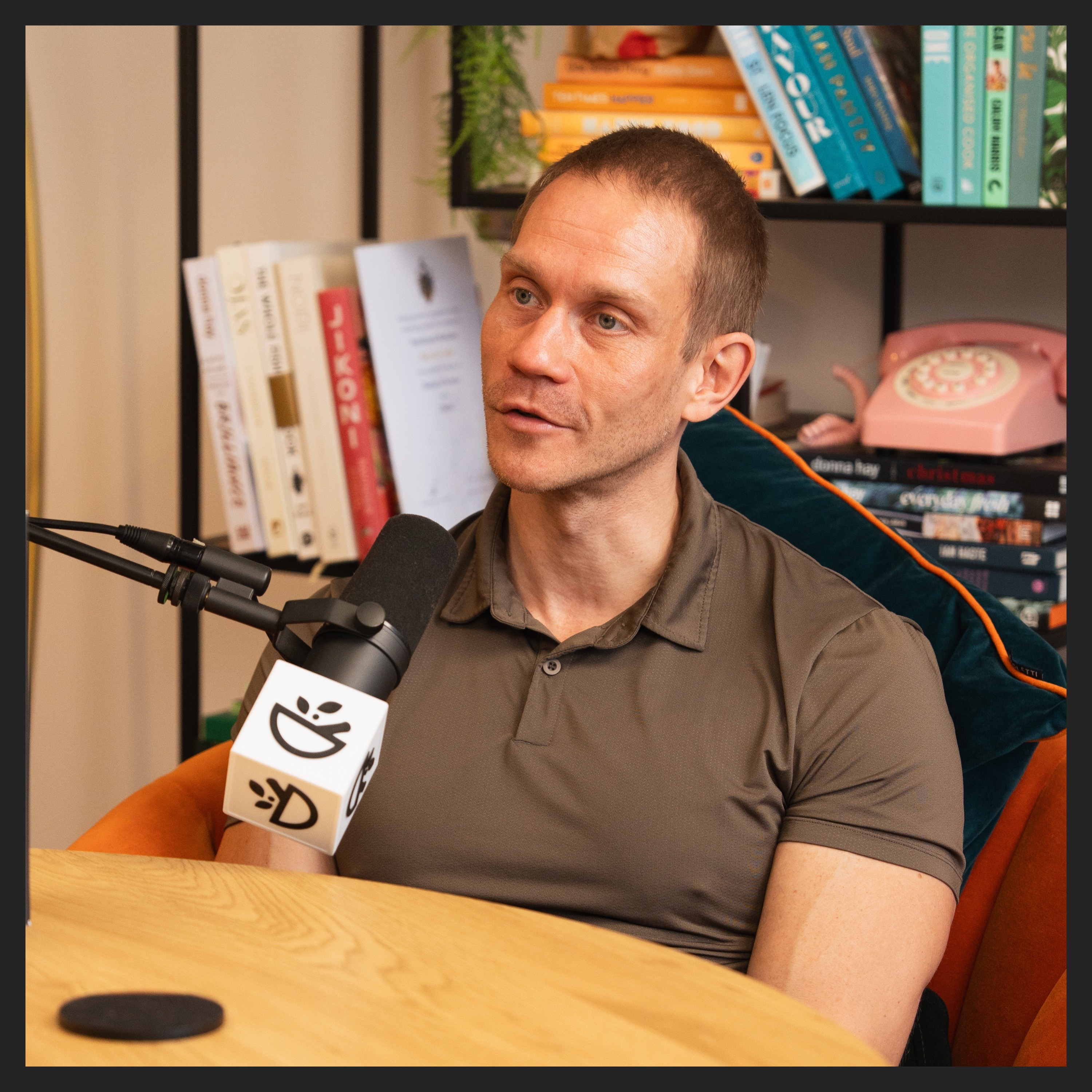
Can ayurveda improve your health with food, herbs and daily routines? | Dr Vijay Murthy
Apr 8, 20262h 11m

7 Habits a neuroscientist swears by to keep your mind sharp at any age | Dr Tommy Wood

One of the biggest myths about brain health is that decline is inevitable as we get older. That at some point our memory fades, our thinking slows down, and there’s not much we can do about it.My guest today argues the opposite.Dr Tommy Wood is a neuroscientist, Professor at the University of Washington, and performance consultant to world-class athletes.He’s published more than 100 scientific papers and has lectured all over the world on brain health, metabolism, physical activity and human performance.He’s also the author of the brilliant new book The Stimulated Mind: Future-Proof Your Brain from Dementia and Stay Sharp at Any Age (Harmony, March 2026).It’s a really practical conversation about small, everyday habits that can keep your mind 🧠 sharper for longer, without needing extreme diets or stacks of nootropics.He walks us through 3 powerful levers to sharpen your mind:How to stimulate it with specific exercises and mental challengesHow to supply it with key nutrientsAnd how to support it by changing your perspective on stress and sleepI’ve already changed a few simple things in my daily routine, and I’ve been sharing it with friends and family because this is something that really matters to most of us: keeping our minds sharp through life. I hope you find this conversation as useful and motivating as I did.If you want specific recipes and meal ideas, we have a whole brain‑healthy collection on the Doctor’s Kitchen app and website to help you put these principles into practice straight away.🎬 Watch the podcast on YouTube here📱 Download The Doctor’s Kitchen app🌐 View full show notes, including guest details, on our website☕️ Try Exhale Coffee here🥗 Join the newsletter and receive a 7 day meal plan📷 Follow on Instagram Hosted on Acast. See acast.com/privacy for more information.

Mar 25, 20261h 58m

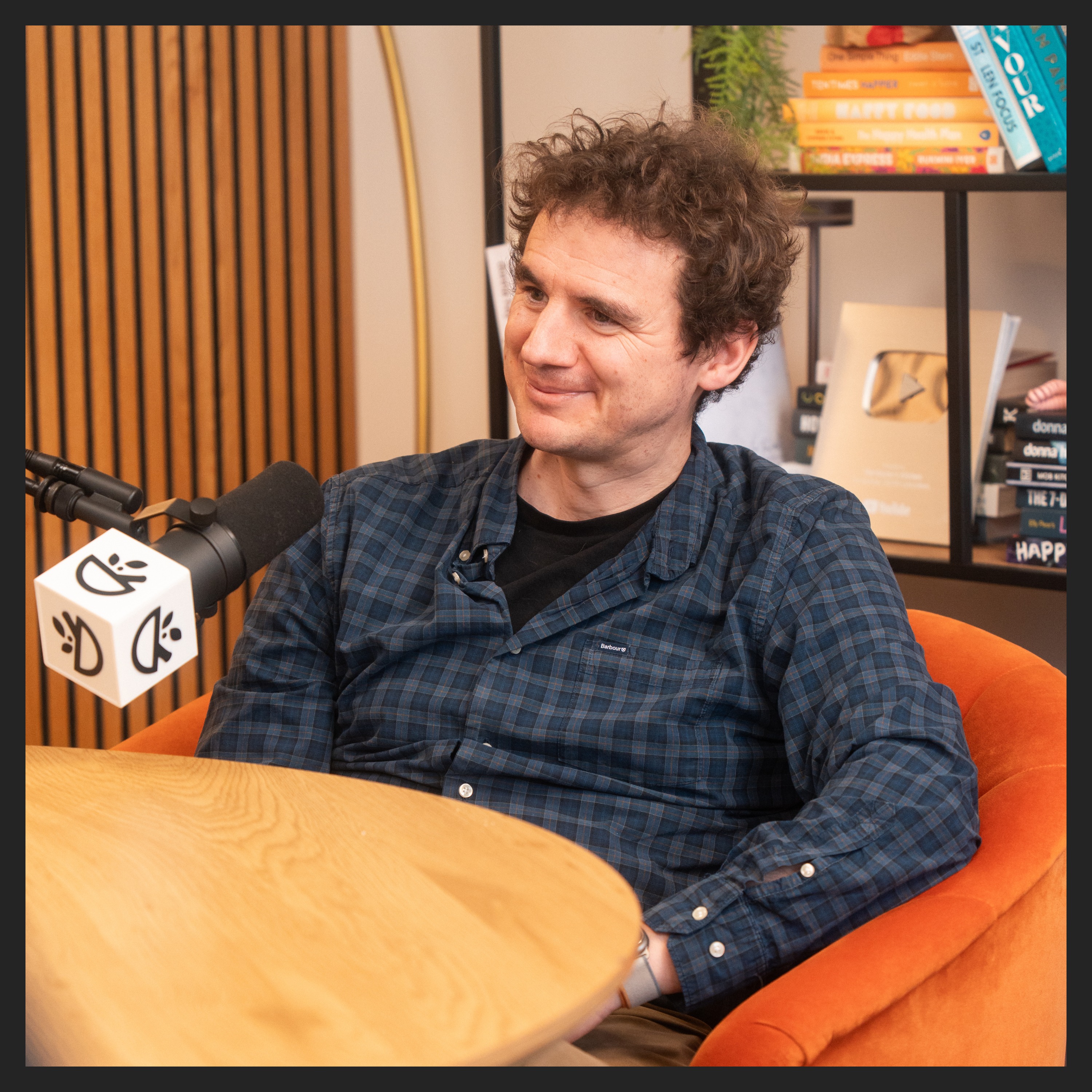
How to use your breath to sleep better, stress less and live longer | James Nestor

We breathe over 20,000 times a day. Those breaths do far more than just keep us alive. They shape your sleep, your focus, your energy, even your blood pressure and long-term risk of disease.That’s over 20,000 opportunities to support your health, every single day.The challenge is that modern life makes it harder to breathe well. We sit hunched over laptops, we’re constantly switched on, we chew softer foods, and many of us mouth-breathe, especially at night. My guest today is on a mission to improve our health through our breath.James Nestor is an award-winning science journalist and author of the bestseller “Breath”. He’s travelled the world to understand how our breathing has changed, and most importantly, what simple, practical steps we can take to improve it.This episode genuinely shifted things for my team and me. I hope it inspires you to make a few small changes too. And if you know a committed mouth breather, send it their way.We cover:The risks of mouth breathing and James’ 10-day experimentWhy nasal breathing makes such a differenceTips for a blocked nose or deviated septumHow to train your diaphragm for easier breathingWhy softer modern diets can affect your airwaysWhether “mewing” is worth tryingEasy breathing habits you can start today🎬 Watch the podcast on YouTube here📱 Download The Doctor’s Kitchen app🌐 View full show notes, including guest details, on our website☕️ Try Exhale Coffee here🥗 Join the newsletter and receive a 7 day meal plan📷 Follow on Instagram Hosted on Acast. See acast.com/privacy for more information.
Mar 11, 20261h 25m

#337 Why Mould Harms Your Health and How to Protect Yourself | Dr Peter Cook PhD

I talk a lot about what we eat for our health. But what about the air we breathe at home?If you or your kids have asthma, constant sniffles, a lingering cough, sinus issues, or you’ve noticed damp patches and that musty smell, this episode could change how you think about your home.As a new dad, I'm personally really interested in how our home environment shapes early immune development. This conversation made me think differently about ventilation, condensation and what really matters.My guest is Dr Peter Cook, a Wellcome Trust Sir Henry Dale Fellow at the MRC Centre for Medical Mycology at the University of Exeter. His research looks at how airborne fungal spores interact with the immune system and drive allergic and asthmatic disease, an area that has been surprisingly neglected.In this episode, we go into:What mould actually is and when it becomes a problemWhat is a safe level of mould?How mould exposure can trigger asthma and allergic diseaseWho’s most at riskWhether mould testing kits are worth your moneyIf dehumidifiers and air purifiers actually workPractical steps you can take this week to reduce your exposure and protect your health🎬 Watch the podcast on YouTube here📱 Download The Doctor’s Kitchen app🌐 View full show notes, including guest details, on our website☕️ Try Exhale Coffee here🥗 Join the newsletter and receive a 7 day meal plan📷 Follow on Instagram Hosted on Acast. See acast.com/privacy for more information.

Feb 25, 202651 min

#336 Whether Antidepressants Actually Work and the Myth of Serotonin Imbalance | Professor Joanna Moncrieff

Today we’re having an uncomfortable but very necessary conversation about antidepressants and the theory that these drugs work for those with depression by correcting imbalanced chemicals in their brain.Our guest to discuss this topic is Joanna Moncrieff, a Professor of Psychiatry at University College London, and works as a consultant psychiatrist in the NHS. She is author of numerous scientific papers including a major review that showed there was little evidence to support the idea that depression is caused by a serotonin abnormality. Her most recent book "Chemically Imbalanced: the making and unmaking of the serotonin myth” is what we’re going to be discussing today.This was a complete eye opener for me. For years I believed in the pharmaceutical washed message that antidepressants worked because of a genuine brain chemical imbalance that we corrected with medications. This is not proven.Today we’ll discuss over-use and misrepresentation of psychiatric drugs in the public sphere, the changing philosophy of mental health and how we got to a point where over 8 million people in the UK use antidepressants.We discuss what serotonin is, how we measure it in the body, why the imbalance theory is inconclusive, whether antidepressants have good evidence that they work and their many side effects.I want to make it clear that this episode is not meant to shame or belittle anyone on medications for mental health, but provide accurate information about how we can safely treat these problems and offer informed consent weighing up the pros and cons of medications like antidepressants. The use of these medications has well recognised withdrawal and dependency effects and should not be stopped without strict supervision of your medical practitioner. We’ve also linked to the Maudsley deprescribing guidelines here in the show notes for practitioners educating themselves on how to do this with their patients.Chemically Imbalanced BookWebsite: https://joannamoncrieff.com/🎬 Watch the podcast on YouTube here📱 Download The Doctor’s Kitchen app🌐 View full show notes, including guest details, on our website☕️ Try Exhale Coffee here🥗 Join the newsletter and receive a 7 day meal plan📷 Follow on Instagram Hosted on Acast. See acast.com/privacy for more information.

Feb 18, 20261h 30m

#335 Saliva Tests, Poop Cameras, Digital Coaches and What the Future of Health Looks Like with Lara Lewington

Even though I’m a skeptic I love health tech. I wear a wearable, I play with red light therapy gadgets and I monitor my bloods more regularly than a lot of my peers. Rather than being overwhelmed with the data, I thrive in it, and I’m able to reasonably weigh up the information from all these inputs because of my experience of being a medical doctor for over 15 years.But with so much health tech interest, the landscape has become confusing and it can be hard to separate health from hype.So we’re chatting to Lara Lewington today who’s covered some of the world’s greatest innovations, presenting the BBC’s flagship technology show, Click and many more. She’s explored Artificial Intelligence in health, the use of home hormone testing and whether there are any devices that can actually help us meditate better.This is a super fun episode where we discuss what tech is available today that can help us eat, sleep and exercise better as well as stress less and prevent disease. I learnt both about the world of breath testing to guide our food choices, an app to help you with jet lag, as well as the potential for intelligent and personalised cancer screening.Hacking Humanity dives into this and a lot more, which is available in all good bookstores.Some of the products discussed include:WhoopOuraOmedDexcom and Abbot CGMsTimeshifter AppEli HealthBrainPatch AIGrail TestingTruecheckEzra🎬 Watch the podcast on YouTube here📱 Download The Doctor’s Kitchen app🌐 View full show notes, including guest details, on our website☕️ Try Exhale Coffee here🥗 Join the newsletter and receive a 7 day meal plan📷 Follow on Instagram Hosted on Acast. See acast.com/privacy for more information.

Feb 11, 20261h 29m

#334 The One Pesticide Everyone is Exposed To and Why It Should Be Banned | Prof Michael Antoniou

Glyphosate is the world’s most widely used weedkiller. It’s found on farms, in parks, and in over 50% of UK urine samples. Today you’re going to find out more about its impact on human health and why it should be banned, from Professor Michael Antoniou.Professor Michael Antoniou is a molecular geneticist and gene engineering expert at King’s College London, whose research explores how agricultural chemicals like glyphosate affect our bodies, our microbiome, and our long-term health.We discuss: 🌿 What glyphosate actually is and how it works by blocking a crucial enzyme in plants and microbes. ⚗️ Why it was deemed safe and why new evidence suggests we may have underestimated its risks. 🧠 The latest research linking glyphosate exposure to gut microbiome disruption, liver disease, and cancer. 🥦 Which foods carry the highest residues and whether washing, peeling, or buying organic makes a real difference. 🧬 How chronic exposure builds up in the body and what steps you can take to reduce your exposure today.Professor implores everyone to support the PAN movement to prevent glyphosate use in towns and across the UK food supply. You can check out the link to help create pesticide free towns here. https://pan-uk.eaction.org.uk/pesticide-free-towns🎬 Watch the podcast on YouTube here📱 Download The Doctor’s Kitchen app🌐 View full show notes, including guest details, on our website☕️ Try Exhale Coffee here🥗 Join the newsletter and receive a 7 day meal plan📷 Follow on Instagram Hosted on Acast. See acast.com/privacy for more information.

Feb 4, 20261h 21m

#333 Why Muscle Is the Organ of Longevity with Dr Gabrielle Lyon

We’ve long been told that health starts in the gut, but what if the key to ageing well begins with your muscles?This week I’m joined by Dr Gabrielle Lyon, physician, author of Forever Strong, and founder of the muscle-centric medicine movement. Gabrielle’s work reframes how we think about muscle not just for strength or aesthetics, but as a powerful metabolic and endocrine organ that drives longevity, energy, and resilience.In this episode we discuss: 💥 Why muscle is the foundation for metabolic health 🥩 How much protein you really need and how to get it right 🏋️ How good muscle health impacts, inflammation and brain function 🧘‍♀️ The mindset shifts that make new habits actually stick and why we need to think about “standards” rather than goalsWhether you’re in your 30s trying to stay active, or in your 60s building strength for life Gabrielle is going to get you pumped about getting pumped! After recording this pod I wanted to run to the gym and start working out with those kettle bells! Dr Lyon's new book - The Forever Strong Playbook - is released on 27th January 2026.🎬 Watch the podcast on YouTube here📱 Download The Doctor’s Kitchen app🌐 View full show notes, including guest details, on our website☕️ Try Exhale Coffee here🥗 Join the newsletter and receive a 7 day meal plan📷 Follow on Instagram Hosted on Acast. See acast.com/privacy for more information.

Jan 28, 20261h 20m

#332 How Eating Local, Organic food Is Best for Environmental Health | Mallika Basu

What we eat isn’t just about taste or health, it’s shaped by a powerful global system that connects farmers, supermarkets, climate, and culture.This week I’m joined by Mallika Basu, food writer, consultant and author of the new book ‘In Good Taste’, to unpack how our everyday food choices link to much bigger issues from biodiversity loss to culture, inequality and the economy.But this is a conversation about sustainable eating from a food lover's perspective.You’re going to find out …🐟 Why I may have to adjust my fish eating habits to avoid or reduce salmon 🍅 How traditional diets are climate friendly, and delicious! 🌱 Whether regen and organic farming is worth itThis is a conversation about how we can all influence the future of food through our choices and our love of cooking.🎬 Watch the podcast on YouTube here📱 Download The Doctor’s Kitchen app🌐 View full show notes, including guest details, on our website☕️ Try Exhale Coffee here🥗 Join the newsletter and receive a 7 day meal plan📷 Follow on Instagram Hosted on Acast. See acast.com/privacy for more information.

Jan 21, 20261h 23m

#331 Should We Avoid Fluoride and Is Mouthtaping Actually Worth It? | Dr Staci Whitman

Your mouth isn’t separate from the rest of your body, it’s a key part of your airway, your microbiome, and even your inflammation levels. In this episode, I’m joined by Dr Staci Whitman, functional dentist, to explore the everyday habits and products that can make a real difference to oral and whole-body health.We talk through mouth taping and why nasal breathing matters for oral health, sleep quality, and overall physiology. Who should avoid mouth taping, and safer options.How chronic mouth breathing affects dry mouth and the oral microbiome, gum health, cavities, bad breath, airway, sleep, and long-term facial/jaw development (especially in kids).Ancestral diets and how that plays a role in jaw development, and the dental impact of modern snack foods. Plus nutrients for dental health like vitamin D, K2, Calcium and vitamin C.And controversially we talk through fluoride in our water and toothpaste. What fluoride is used for and what the controversy tends to be about, and practical oral-health “non-negotiables” that matter alongside fluoride.Dr. Staci Whitman is a board-certified functional and integrative dentist specialising in the oral-systemic connection, how the mouth links to the gut, brain, hormones, and airway health. She’s the founder of Bloom Kids (a leading functional paediatric dental practice), co-founder of the Institute for Functional Dentistry, and co-founder of Fygg, a microbiome-friendly oral care line.🎬 Watch the podcast on YouTube here📱 Download The Doctor’s Kitchen app🌐 View full show notes, including guest details, on our website☕️ Try Exhale Coffee here🥗 Join the newsletter and receive a 7 day meal plan📷 Follow on Instagram Hosted on Acast. See acast.com/privacy for more information.

Jan 14, 20261h 42m

#330 GLP-1s. Everything You Need to Know | Ashley Koff, RD

I don’t think GLP-1 meds are the answer for everyone, but I also don’t think they’re the villain of the story. For many people they can be genuinely life-changing, when they’re used with the right support. So this episode is for anyone who’s made that decision (or is seriously considering it) and wants to do it safely, sustainably, and with as much information as possible. -I can’t stop you from taking these medications, but I can help you be informed: what to ask, what to monitor, what to eat, and how to protect your muscle, gut, and long-term health along the way.Today’s episode is all about one of the biggest health conversations happening right now: GLP-1 medications.I’m joined by Ashley Koff, RD, to give you the straight dope on what’s really going on beneath the surface: why so many of us are struggling with food noise, why some people never reach that “80% full” feeling, and what it means when your metabolic switches (the appetite and satiety systems that should be working in the background) aren’t firing properly.We break down GLP-1s, starting with what happens in an optimally functioning body: the roles of hormones like GLP-1, GIP, PYY and CCK, and how they influence hunger, fullness, blood sugar, and cravings. We also talk through what side effects might be telling you, what to monitor if you do choose medication, and whether supplements have a role — including the so-called “GLP-1 boosters” you’ll see everywhere.Most importantly, this episode is for anyone who wants lasting fat loss and better metabolic health, with or without drugs.Ashley Koff is a registered dietitian and founder of the Better Nutrition Program, and she trains clinicians as course director for UC Irvine’s Integrative & Functional Medicine Fellowship. She’s also the author of the upcoming book ‘Your Best Shot’.🎬 Watch the podcast on YouTube here📱 Download The Doctor’s Kitchen app🌐 View full show notes, including guest details, on our website☕️ Try Exhale Coffee here🥗 Join the newsletter and receive a 7 day meal plan📷 Follow on Instagram Hosted on Acast. See acast.com/privacy for more information.

Jan 7, 20261h 59m

#329 Is My Wife’s 10-step Morning Wellness Routine Worth It?

I’m seeing “perfect” wellness routines everywhere! Red light masks, infrared saunas, ice baths, supplements lined up on the kitchen counter, breathwork, journaling, grounding mats… the list goes on.And yes, my wife has been trying most of them.So today, we’re doing something a bit different. We’re recreating those little “sofa consults” we have at home. We’ll be casually watching TV, and out of nowhere she pauses the show, turns to me dead seriously, and hits me with a question like…“Babe… what are your thoughts on grounding mats?”So the format is simple: she’s going to take us through her wellness routine from morning to night, and after each bit she’ll ask me what I think.I’ll give it a verdict, the why behind it, and a quick takeaway you can actually use, so you can make a choice as to whether you want it in your routine or not.If you liked this episode let me know by leaving a comment on Spotify, or shooting us a message on instagram. I’ll be watching out for them! 🎬 Watch the podcast on YouTube here📱 Download The Doctor’s Kitchen app🌐 View full show notes, including guest details, on our website☕️ Try Exhale Coffee here🥗 Join the newsletter and receive a 7 day meal plan📷 Follow on Instagram Hosted on Acast. See acast.com/privacy for more information.

Dec 31, 20251h 28m

#328 5 things I changed this year because of the podcast | Dr Rupy Aujla

In 2025 we’ve had world experts come into the DK studio, meet the team, sit right here in this room and let me tease their brains, challenge their ideas and help us bring you the most up-to-date, practical advice out there.These guests changed the way I personally eat, the way I move, the way I recover, the way I think and even the way I structure my day.So in today’s episode, I want to share the 5 health habits I changed this year because of this very podcast you're listening to, because I’m on this journey with you.I’ll talk about my changing perspectives on:Red Meat and whether you can safely eat it regularly or not?How to consume more variety of fibreWhy movement snacking is just as important as structured workoutsIf sauna is worth it and what an evidence based protocol looks likeHow to reduce screen time and improve your dopamine levels🎬 Watch the podcast on YouTube here📱 Download The Doctor’s Kitchen app🌐 View full show notes, including guest details, on our website☕️ Try Exhale Coffee here🥗 Join the newsletter and receive a 7 day meal plan📷 Follow on Instagram Hosted on Acast. See acast.com/privacy for more information.

Dec 17, 202557 min

#327 Constipation 101: Everything You Need to Know About Keeping Your Digestive System Working with a Gastroenterologist | Consultant Dr Angad Dhillon

Constipation might not sound like the most glamorous topic, but it’s one of the most common and overlooked health issues in the UK. Around 1 in 7 adults and up to 1 in 3 children experience it, and it’s responsible for thousands of hospital admissions every year.This week I’m joined by Dr Angad Dhillon, Consultant Gastroenterologist and accredited Bowel Cancer Screening endoscopist at Lewisham and Greenwich NHS Trust. With advanced training from St Mark’s Hospital, one of the world’s leading centres for intestinal disorders, Dr Dhillon specialises in complex endoscopy, bowel health, and digestive wellbeing. He also happens to be my best friend from medical school who I’ve literally known over 2 decades!We talk about lesser known constipation strategies, what functional constipation means, how it can be related to other medical issues and what you should be optimising before you reach for a laxative, medications or supplements.Today we explore: 💬 What “normal” bowel habits look like and whether the bristol stool chart is useful 🥦 How to approach constipation with a dietary approach 🧘‍♂️ Why pooping posture, breathing, and stress matter for gut health 🌙 The link between sleep, circadian rhythm, and digestion ⚠️ Red flags that mean it’s time to speak to your doctorDr Dhillon's research work can be found here and give him a follow on social media @the_gut_doctor🎬 Watch the podcast on YouTube here📱 Download The Doctor’s Kitchen app🌐 View full show notes, including guest details, on our website☕️ Try Exhale Coffee here🥗 Join the newsletter and receive a 7 day meal plan📷 Follow on Instagram Hosted on Acast. See acast.com/privacy for more information.

Dec 10, 20251h 50m

#326 The Most Powerful Drug on the Planet (Exercise) and How to Use It Daily | with Professor Andy Galpin, PhD

If exercise were a pill, it would be the most powerful drug on the planet. It protects the brain, lowers the risk of heart disease and Alzheimer’s, reduces stress, boosts energy… and yet, most of us still struggle to fit it in.Today, we’re putting together a practical, evidence-based guide to exercise for everyone. If you’re a busy parent or professional who struggles to find the time to move, we’ll show you the minimum that makes the biggest difference. If you’re older and thinking about healthy ageing, we’ll talk about protecting bone, muscle and independence as well as how to approach going to an intimidating weight section of a gym for the first time.For teens and young people, we’ll cover how movement shapes brain health and sets you up for life. And if you’re already into fitness, we’ll dive into how to break plateaus, track progress, and optimise performance.  This episode will show you exactly how to move for a longer, healthier life.Today I’m joined by Dr Andy Galpin, one of the world’s leading human performance scientists and the person I wish I’d had on speed dial when I first started trying to figure out how to train smart, not just hard.Andy is a Professor at Parker University and Executive Director of the Human Performance Center. He holds a PhD in Human Bioenergetics, has published over 100 peer-reviewed papers, and has worked with some of the most elite athletes on the planet — from Olympic gold medallists to world champions across the UFC, MLB, NBA, NFL, PGA, and military special forces.He’s also the co-founder of several innovative companies, including Absolute Rest, Vitality Blueprint, and BioMolecular Athlete, all dedicated to improving human health, performance, and recovery.Think of this episode like a session with Andy … but for all of us! By the end, you’ll have a clear, evidence-based understanding of how to use exercise to support your health at any stage of life. Whether you’re a busy parent, professional, or already fit and active, Andy helps us understand what most people are missing from their training and how to fill those gaps.We cover: 💪 The exercise priorities for each stage of life, from teenagers to older adults 🧬 How to personalise training using intensity, timing, and recovery data 🦴 Why bone health matters more than you think and what to do about it ⚡ The key markers for long-term fitness and how to track real progressMy hope is that this is one of those conversations that reframes how you think about movement not just for performance, but for longevity, energy, and quality of life.🎬 Watch the podcast on YouTube here📱 Download The Doctor’s Kitchen app🌐 View full show notes, including guest details, on our website☕️ Try Exhale Coffee here🥗 Join the newsletter and receive a 7 day meal plan📷 Follow on Instagram Hosted on Acast. See acast.com/privacy for more information.

Dec 3, 20252h 21m

#325 10 Anti-Inflammatory Foods to Feel Better, Support Your Gut and Cut Your Risk of Disease | Dr Rupy Aujla

Since writing about inflammation in Eat to Beat Illness and my last book Healthy High Protein, I’ve become fascinated by how this one process connects so many of the health issues I’ve seen in thousands of patients over my career.On the one hand, inflammation is brilliant, it helps us fight infections, repair injuries, and clear out damaged or cancerous cells. But when it doesn’t switch off or is constantly triggered, it becomes a slow burn in the background, driving heart disease, cancer, dementia, and even daily struggles like joint pain, gut problems, poor sleep, skin issues, and fatigue.The good news? Food gives us a direct way to influence it. Every time we sit down to eat, we can either fan the flames or gently cool them.In this episode, we explore: 🧬 What inflammation actually is (and the early warning signs of too much) 🥗 The science and benefits of an anti-inflammatory diet 🥑 My top 10 anti-inflammatory foods you can start eating today 🥩 Controversial takes on meat, dairy, and foods to limit 📊 How we measure inflammation, including our new “inflammation score” on the appThis is your practical guide to cooling chronic inflammation and protecting your long-term health, starting with what’s on your plate.🎬 Watch the podcast on YouTube here📱 Download The Doctor’s Kitchen App - Special Black Friday Offer🌐 View full show notes, including guest details, on our website☕️ Try Exhale Coffee here🥗 Join the newsletter and receive a 7 day meal plan📷 Follow on Instagram Hosted on Acast. See acast.com/privacy for more information.

Nov 26, 20251h 16m

#324 Can Multivitamins Help Treat Depression, Anxiety and Prevent Mental Health Issues? | Professor Julia Rucklidge

Coming into this podcast my opinion was that multivitamins are just not worth it. Whether that’s for general wellbeing, cardiovascular health, sleep and especially mental health, I just was not convinced that they did anything at all.But I specifically wanted to speak with Professor Julia Rucklidge, clinical psychologist and Director of the Mental Health and Nutrition Research Lab at the University of Canterbury, because she has a very different opinion.Julia’s groundbreaking research and viral TED Talk have transformed how psychiatrists and mental health practitioners think about nutrition and mental illness, especially the potential of broad-spectrum micronutrients to support mood, focus, and resilience.We explore: 💊 Why “no single ingredient solutions” matter, and when multivitamins might actually help 🧬 How stress, inflammation, and modern farming have changed our nutrient needs🧠 The mechanisms linking nutrients, mitochondria, and neurotransmitters to mood and cognition👩‍🔬 The evidence for micronutrients in ADHD, PMS, Depression and Anxiety🥗 How to choose quality supplements and avoid the hypeIf you’ve ever wondered whether taking a daily multivitamin is worth it or how food and nutrients impact the brain, this episode will challenge your assumptions and expand your understanding of nutrition for mental wellbeing.Julia has made me reconsider my personal perspectives on multivitamins, and I’m excited to dive deeper into this topic on future podcasts and with our internal research team.🎬 Watch the podcast on YouTube here📱 Download The Doctor’s Kitchen app🌐 View full show notes, including guest details, on our website☕️ Try Exhale Coffee here🥗 Join the newsletter and receive a 7 day meal plan📷 Follow on Instagram Hosted on Acast. See acast.com/privacy for more information.

Nov 19, 20252h 34m

#323 Microplastics, Pollution and Your Body: What You Need to Know | Dr. Stephanie Wright

How much plastic are we actually absorbing and what’s it doing to our health?In this eye-opening episode, I’m joined by Dr. Stephanie Wright, one of the UK’s leading scientists in microplastic research, to explore what happens when plastic pollution doesn’t just affect the environment, but our bodies too.We dive into: 🧪 What are micro- and nanoplastics, and how are they getting into our lungs, gut, and even blood? 🌍 The biggest sources of exposure in modern life from tires to tap water and food packaging to clothes as well as the city air I’m breathing in right now 🧬 How plastic particles could be contributing to chronic inflammation, hormone disruption, and affecting fertility 🧼 Whether we can actually detox or eliminate plastics from our body naturally and how the liver, fibre, and exercise may play a role 🔍 What we know so far about plastics and brain health, cancer, immunity, dementia, and morePlus, we cover simple, science-backed strategies to help reduce your exposure from filters and cooking swaps to smarter shopping and clothing choices.Dr Stephanie Wright is an Associate Professor in Environmental Toxicology in the Environmental Research Group at Imperial College London. She received a Ph.D. in Biosciences at the University of Exeter (2015), then completed 2 fellowships at King's College London. She has 15 years’ experience in microplastic research and lead the Microplastics Team. She’s also participated in microplastic working groups for the World Health Organisation and the European Commission.🎬 Watch the podcast on YouTube here📱 Download The Doctor’s Kitchen app🌐 View full show notes, including guest details, on our website☕️ Try Exhale Coffee here🥗 Join the newsletter and receive a 7 day meal plan📷 Follow on Instagram Hosted on Acast. See acast.com/privacy for more information.

Nov 12, 20251h 55m
Dr Rupy Aujla