The Disagreement
Alex Grodd, The Disagreement · Alex Grodd
Show overview
The Disagreement has been publishing since 2024, and across the 2 years since has built a catalogue of 43 episodes, alongside 1 trailer or bonus episode. That works out to roughly 35 hours of audio in total. Releases follow a monthly cadence.
Episodes typically run thirty-five to sixty minutes — most land between 47 min and 59 min — and the run-time is fairly consistent across the catalogue. None of the episodes are flagged explicit by the publisher. It is catalogued as a EN-language News show.
There hasn’t been a new episode in the last ninety days; the most recent episode landed 4 months ago. The busiest year was 2024, with 25 episodes published. Published by Alex Grodd.
From the publisher
Two experts. One contentious topic. A different kind of conversation. Hosted by Alex Grodd.
Latest Episodes
View all 43 episodesIs AI Eroding Human Intelligence?
S1 Ep 41Oz the Mentalist & The Ethics of Deception
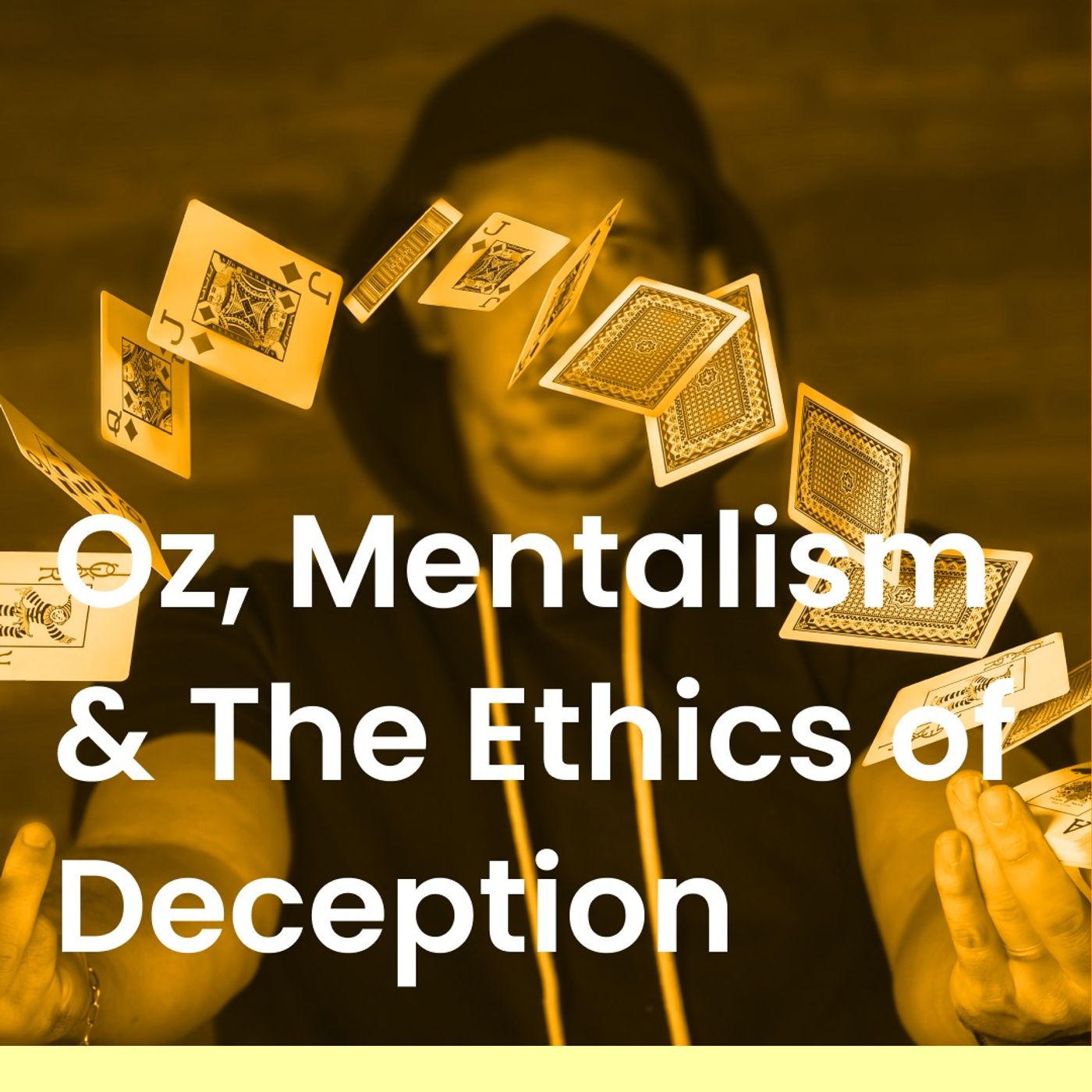
This week’s disagreement is on Oz The Mentalist and the Ethics of Deception. This episode is about magic and mentalism, but, more than that, it’s about the nature of how we form beliefs, determine what is real, what is true, and the social consequences of mass deception. First off: who is Oz the Mentalist? He’s the guy you’ve probably seen in your social media feed, appearing to read the minds of celebrities. He’s performed live at the Golden Globes and appeared on Howard Stern, The View, and 60 Minutes. He’s the guy who guesses the name of a celebrity’s high school crush or their third-grade teacher. Oz doesn’t claim to be psychic. His tagline is: “I don’t read minds, I read people.” He says he has extraordinary powers of perception. On Joe Rogan’s podcast, he compared himself to Jason Bourne—someone who can read micro-expressions, facial tics, and eye movements to uncover whatever is inside your head. That’s what separates mentalism from traditional magic. In magic, everyone knows a trick is happening. With mentalism, performers distance themselves from magic entirely. Oz constantly says he doesn’t do magic tricks. Instead, he says he uses real psychological tools to access people’s thoughts. He’s turned those alleged abilities into a self-help empire, with a viral TED Talk titled “How to Read Minds Without Magic” and a New York Times bestselling book, Read Your Mind. I became fascinated with Oz a few months ago. My son is obsessed with magic, so we started watching his videos together and trying to figure out how the tricks worked. And honestly, I was pretty confused. None of the explanations we came up with made much sense. Then I came across a video from an Australian law student named Stevie Baskin, who came out of nowhere and started posting a five-hour viral video debunking Oz and mentalism. So how does a mentalist guess the name of your third-grade teacher? What kind of intense training lets someone peer inside your head and know exactly what you’re thinking? It turns out the answer is a lot more straightforward than you might think—and I’m sharing it because it’s important context for this conversation. Mentalists use a range of techniques, but one of the most common is something called pre-show. Before the show even begins, the mentalist and the guest agree on the question that will be asked later during the performance. The guest writes down the answer in a notepad. The mentalist might say something like, “Tear it off and put it in your pocket so you can’t change your answer when we’re live.” But it’s not a normal notepad. It’s a special one that secretly records the writing on the sheet underneath. When the guest hands the pad back, the mentalist already knows the answer—before the show even starts. From there, the rest is just acting. There are other variations of this too, involving special cell phone apps or surreptitiously designed websites. It kind of bothered me when I learned that. With the TED Talk and the New York Times bestseller, it felt like Oz had moved beyond entertainment and into something closer to misinformation—and monetizing it. Stevie Baskin agreed to come on the show to discuss the ethics of all of this. And to represent the other side, I wanted someone who actually practices mentalism. So I’m very grateful to mentalist, The Amazing Dr. Scott, for joining us. When not performing mentalism, Dr. Scott AKA Dr. Scott Barry Kaufman is a renowned cognitive scientist and professor at Columbia University. The Guests Steve Baskin is a skeptic, rationalist, and YouTube sensation who is in the midst of earning a law degree. Stevie crafted a five-hour YouTube video critiquing metadeceptions and articulating way mentalists like Oz Pearlman present create moral hazards for everyone. Stevie’s video, Metadception: The Truth About Oz Pearlmen has close to 200k views and has created a stir amongst both fans and critics of mentalism, and the greater mentalist community. Dr. Scott Barry Kaufman is a psychologist, coach, best-selling author, professor, keynote speaker, and mentalist. Dr. Kaufman is a professor of psychology at Columbia University and director of the Center for Human Potential, and is among the top 1% most cited scientists in the world for his research on intelligence and creativity. Dr. Kaufman’s writing has appeared in The Atlantic, Scientific American, Psychology Today, and Harvard Business Review, and he is the author and editor of 11 books, including his most recent book Rise Above: Overcome a Victim Mindset, Empower Yourself, and Realize Your Full Potential. Questions or comments about this episode? Email us at [email protected] or find us on X and Instagram @thedisagreementhq. Subscribe to our newsletter: https://thedisagreement.substack.com/
S1 Ep 40The Case for American Power
Today we’re trying something new on the show – it’s a different kind of book review, where we have a healthy disagreement around the core arguments made in a recently released book. The book is The Case for American Power by Shadi Hamid, a columnist for the Washington Post and host of the Wisdom of Crowds podcast. It’s a fascinating read – Shadi makes a case that you don’t hear very often: that America should be using its power for moral and humanitarian ends. It’s a broad-based appeal but also a specific appeal to those on the left who have become deeply skeptical and disillusioned with American power. So to offer a critique we have brought on someone who is deeply skeptical of American power. Trita Parsi is an Iranian-Swedish-American political scientist, author, and foreign policy expert and is currently the Executive Vice President of the Quincy Institute for Responsible Statecraft. It’s a thought-provoking conversation and serves as an excellent follow-up to Shadi’s previous appearance on our show in April 2024, when he discussed American Power and the role that the United States should be playing on the global stage. The Questions: Does the world need America to use its power to decrease global strife? To what extent and in which circumstances? How do we reconcile past American foreign policy failures with a continued interventionist stance? What are the alternatives to American Power and what gives us reason to believe? The Guests Shadi Hamid is the host of the Wisdom of Crowds podcast, a columnist at The Washington Post, and a senior fellow at Georgetown University’s Center for Muslim-Christian Understanding. Previously, he was a longtime senior fellow at the Brookings Institution and a contributing writer at The Atlantic. Hamid is the author of several books, including The Problem of Democracy and Islamic Exceptionalism: How the Struggle Over Islam is Reshaping the World. Trita Parsi is the co-founder and executive vice president of the Quincy Institute. He is an award-winning author and the 2010 recipient of the Grawemeyer Award for Ideas Improving World Order. He is an expert on US-Iranian relations, Iranian foreign policy, and the geopolitics of the Middle East. He has authored four books on US foreign policy in the Middle East, with a particular focus on Iran and Israel. He has been named by the Washingtonian Magazine as one of the 25 most influential voices on foreign policy in Washington DC for five years in a row since 2021. Questions or comments about this episode? Email us at [email protected] or find us on X and Instagram @thedisagreementhq. Subscribe to our newsletter: https://thedisagreement.substack.com/

S1 Ep 39Live from Harvard: Parents' Rights and K-12 Curriculum
Today, we’re sharing a special live recording of The Disagreement at the Harvard Graduate School of Education*. Our topic: Parents' Rights and K-12 Curriculum. This is our first live recording in a university class, and we are incredibly appreciative of Professor Jim Peyser and his students for having us.This episode was sparked by the judgement in the recent Supreme Court case, Mahmoud v. Taylor (24-297), which ruled in favor of allowing parents to “opt-out” children from lessons that did not align with their religious beliefs. It was a highly controversial ruling and has the potential to reshape U.S. public education on both national and local levels.*A Note: The Harvard Graduate School of Education recently launched the Dialogue Across Differences initiative, which fosters conversations on a wide range of topics from diverse perspectives. Please note that the views and opinions expressed by our guests today are solely their own and do not necessarily reflect those of HGSE or Harvard University.The Questions:To what extent should parents be allowed to opt their children out of K-12 school curriculum and courses?In a pluralistic society, how should decisions about what should—and should not—be part of school curriculum be made and by whom?To what extent is exposing children to views that differ from their religious, cultural, or ideological beliefs an essential component of, or threat to, public education?The GuestsJennifer Berkshire is a writer and co-host of a biweekly podcast on education, policy, and politics, Have You Heard? She teaches a course on the politics of public education at Yale University and, through the Boston College Prison Education Program, is an instructor in a Massachusetts prison. Jennifer is the author of The Education Wars, which examines the impact of the culture wars on the foundation of public education.Naomi Schaefer Riley is a journalist and senior fellow at the American Enterprise Institute. She is the author of several books across a variety of topics, including No Way to Treat a Child: How the Foster Care System, Family Courts, and Racial Activists Are Wrecking Young Lives, and Be the Parent, Please. A lot of Naomi’s work focuses on child welfare, child protective services, foster care, and adoption. Questions or comments about this episode? Email us at [email protected] or find us on X and Instagram @thedisagreementhq. Subscribe to our newsletter: https://thedisagreement.substack.com/

S1 Ep 38How to Disagree About Gaza and Zohran Mamdani
Today, we’re continuing our How to Disagree series with an episode called How to Disagree On Gaza and Zohran Mamdani.A reminder: these episodes feature coaching sessions and real-life disagreements. Our goal is to equip everyone with the skills (and some inspiration) to more productively disagree.Please note: this session was recorded live, on Substack, this summer. And as you know, quite a lot has changed since then…But with the NYC mayoral election today, we thought this was the right time to share this conversation.In this episode, journalist, podcast host and author Anya Kamenetz meets with the New York Times best-selling conflict guru, Amanda Ripley. Anya was struggling with discussing not only the war in Gaza, but also how the war, and divergent information sources, were complicating discussions with a close friend over Zohran Mamdani’s candidacy in the New York City mayor’s race.The session features in-depth coaching from Amanda on the concepts of “looping” an opposing argument and identifying the “understory,” tools we can all use to keep our disagreements healthy. And if you’re listening from NYC, perhaps they can specifically help in conversations unfolding in your own life.The Questions:How do we discuss politics with friends and family who are not only reading different news sources, but who have internalized beliefs different to our own?How do you listen tactically and how can you encourage those in your life to do the same?How can you identify the understory for yourself and your counterpart in a disagreement?The GuestsAnya Kamenetz is a journalist and the author of The Gold Hour on Substack. Her work primarily focuses on the intersection of children, well-being, education, and climate change. She covered education for many years, including for NPR, where she co-created the podcast Life Kit: Parenting. Her last book was The Stolen Year: How Covid Changed Children’s Lives, And Where We Go Now.Amanda Ripley is a New York Times bestselling author, a Washington Post contributing columnist, and the co-founder of Good Conflict, a media and training company that helps people reimagine conflict. She has written three award-winning, nonfiction books about three very different subjects: High Conflict, The Smartest Kids in the World, and The Unthinkable Questions or comments about this episode? Email us at [email protected] or find us on X and Instagram @thedisagreementhq. Subscribe to our newsletter: https://thedisagreement.substack.com/
S1 Ep 37How to Disagree About Gender with a Close Friend (Part II)
Today, we’re doing the second episode in our new series: How to Disagree.A reminder: these episodes feature coaching sessions and real-life disagreements. Our goal is to equip everyone with the skills (and some inspiration) to more productively disagree. On to the episode…You know that feeling when you walk into a room and realize someone’s talking about you? Imagine that on steroids: you tune into a Substack Live to learn your friend is talking about your disagreement in front of an audience! That’s exactly the set up for today’s episode, a follow-up to How to Disagree about Gender with a Close Friend (Part I). In Part II, we get to hear from Larissa Phillips’ friend, “Jane,” and see them bring Bob Bordone’s coaching to life as they navigate their disagreement and a new chapter in their friendship.The Questions:Is it possible to remain close friends after growing apart ideologically?How can you remain curious when you strongly disagree?Are there some topics we should avoid entirely as friends? Is gender one of them? And how did it get this way?The GuestsLarissa Phillips is a columnist for The Free Press whose work focuses on finding community and fostering relationships as a Democrat living in the rural Hudson Valley. She is also the Director and Founder of the Volunteer Literacy Project, teaching basic literacy to adults. Christina Thyssen is a writer, story coach, and professor of writing and literature at the University at Albany. She is the co-founder of Hudson Valley Story Workshops and runs a story slam in Catskill, NY. Christina also teaches writing and storytelling to prisoners. A special thank you to Larissa and Christina for going on this journey with us. It took a tremendous amount of courage. And if you haven’t already, check out Larissa’s excellent article on her experience with us in The Free Press. Questions or comments about this episode? Email us at [email protected] or find us on X and Instagram @thedisagreementhq. Subscribe to our newsletter: https://thedisagreement.substack.com/

S1 Ep 36How To Disagree About Gender with a Close Friend (Part I)
Today, we’re introducing the first episode in a new series: How to Disagree. As we expand our work to model and enable productive disagreement across lines of difference, we are trying something new with “How To Disagree.” Instead of bringing together experts to have a productive disagreement on social or political issues, we’re delving into interpersonal disagreements.Episodes will feature coaching sessions with an individual struggling with a real-life disagreement (with a friend, family member or colleague) working with a world-class conflict resolution expert. Through these sessions, our guests will learn how to approach their particular rift, as well as more general skills and tools on how to more productively disagree. The first in this series is How to Disagree About Gender with a Close Friend, featuring Larissa Phillips. We actually recorded this session with Larissa live on Substack, and are very excited to share a produced version with you. Also, check out Larissa’s excellent article on her experience with us in The Free Press.The Questions:How do we discuss politics with our friends when we don’t see eye to eye?How do we engage one another without trying to persuade?How do we prepare for disagreements on hot button topics like gender?The GuestsLarissa Phillips is a columnist for The Free Press whose work focuses on finding community and fostering relationships as a Democrat living in the rural Hudson Valley. She is also the Director and Founder of the Volunteer Literacy Project, teaching basic literacy to adults. Bob Bordone is a senior fellow at Harvard Law School who has spent the last 25 years teaching negotiation and conflict resolution. He teaches negotiation to individuals and teams with a particular interest in addressing the United States’ polarized climate. Bob recently wrote a book with a neuroscientist called Conflict Resilience: Negotiating Disagreement Without Giving Up or Giving In. Questions or comments about this episode? Email us at [email protected] or find us on X and Instagram @thedisagreementhq. Subscribe to our newsletter: https://thedisagreement.substack.com/

S1 Ep 35AI in Education: A Force for Good?
Recently, First Lady Melania Trump convened the second White House Task Force on Artificial Intelligence in Education. There is simultaneously an incredible amount of excitement around AI in schools and just beneath it, a sort of terror about its potential impacts and all we do not know. We wanted to take a macro approach and examine the current state of AI in education, its promise, the fears, and what the near future may look like.The Questions:Is AI in the classroom a force for good?Can we still produce critical thinkers in an AI-driven classroom?Will AI just be another ed tech flash in the pan?To have this conversation, we brought together two leading eduction experts with nuanced, divergent views on the roles technology, and AI specifically, should play for teachers and students.Eric Westendorf is a former principal who founded the ed tech company LearnZillion, and now is the co-CEO of Coursemojo, which is using AI to enhance in-class learning by supporting teachers in providing the right support for every student.Justin Reich is an Associate Professor in Comparative Media Studies and Director at MIT Teaching Systems Lab, and is the author of a new book, Failure to Disrupt: Why Technology Alone Can’t Transform Education.Two notes on terms. Our guests mention NAEP: the National Assessment of Education Progress. There's also discussion of the Alpha School: a network of US private schools that combines AI-driven adaptive software for core academics with in-person adult “Guides” who act as mentors. It operates in Texas, Florida, Arizona, and California. According to Alpha School, their combination of technology and mastery based learning allows children learn core subjects in just two hours daily. Questions or comments about this episode? Email us at [email protected] or find us on X and Instagram @thedisagreementhq. Subscribe to our newsletter: https://thedisagreement.substack.com/

S1 Ep 34Selective Public High Schools & DEI
Today's disagreement is about US Selective Public High Schools. These schools, also known as “Exam Schools”, are elite publicly funded high schools that have historically relied on a single entrance exam to determine admission. You’ve likely heard of many of them:In Boston, you have Boston Latin, the oldest public high school in the country. Alums include Ben Franklin and Sam Adams. In New York: You’ve got Stuyvesant, whose alums include U.S. Attorney General, Eric Holder, and, of coruse, Timothy Chalamet. New York also has The Bronx High School of Science, whose alums have more Nobel prizes (9) than any other high school in the world. In Northern Virginia, there's Thomas Jefferson (or TJ), established in 1985 and one of the newest selective high schools. It has spent many years rated the #1 High School in the Country by U.S. News and World Report.In the episode, we ask a number of questions: What is the purpose of these schools? Should they exist? Are standardized entrance exams the best path to meritocratic admissions? How concerned should we be about diversity and equity and whether student bodies are representative of their surrounding communities?Ian Rowe is the CEO and cofounder of Vertex Partnership Academies, a virtues-based International Baccalaureate high school in the Bronx. He is also a senior fellow at the American Enterprise Institute. His most recent books is “Agency: The Four Point Plan (F.R.E.E.) for ALL Children to Overcome the Victimhood Narrative and Discover Their Pathway to Power”Stefan Redding Lollinger is the Executive Director of Next100, a multi-issue, progressive policy think tank. He’s a Scholar in Residence at American University and the first Director of a Century Foundation initiative to advance diversity and integration in schools and neighborhoods. Questions or comments about this episode? Email us at [email protected] or find us on X and Instagram @thedisagreementhq. Subscribe to our newsletter: https://thedisagreement.substack.com/

S1 Ep 33Is College Worth It?
Today’s disagreement is about college and its worth-it-ness. Does the traditional college model still make sense in today’s economy? Should we embrace shorter-term skills-based alternatives? And how can institutions balance access, affordability, and workforce readiness in a rapidly changing world?Ryan Craig is a Managing Director at Achieve Partners and co-founder of Apprenticeships for America. Ryan is also the author of Apprentice Nation: How the "Earn and Learn" Alternative to Higher Education Will Create a Stronger and Fairer America.Dr. Bridget Burns is founding CEO of the University Innovation Alliance, a ‘multi-campus laboratory’ for student success in higher education. Previously, Dr. Burns served as an American Council on Education Fellow at Arizona State University and a Senior Policy Advisor and Chief of Staff for the Oregon University System.Episode Notes02:00 - Bridget's Perspective04:15 - Ryan's Counterpoint06:12 - Defining 'Worth It': Beyond Economic ROI09:59 - The Role of Higher Education in Society15:19 - The Need for Accountability and Reform17:14 - The Apprenticeship Dilemma21:04 - College or Chipotle21:32 - The European Model vs. The American System22:59 - The Need for Adaptability and Social Skills25:05 - The Cost and Value of College Education26:17 - The Future of College and Employment33:28 - Steel ManThis episode was recorded live in San Diego at the annual ASU+GSV Summit. You can watch the live stream of it on YouTube. Questions or comments about this episode? Email us at [email protected] or find us on X and Instagram @thedisagreementhq. Subscribe to our newsletter: https://thedisagreement.substack.com/
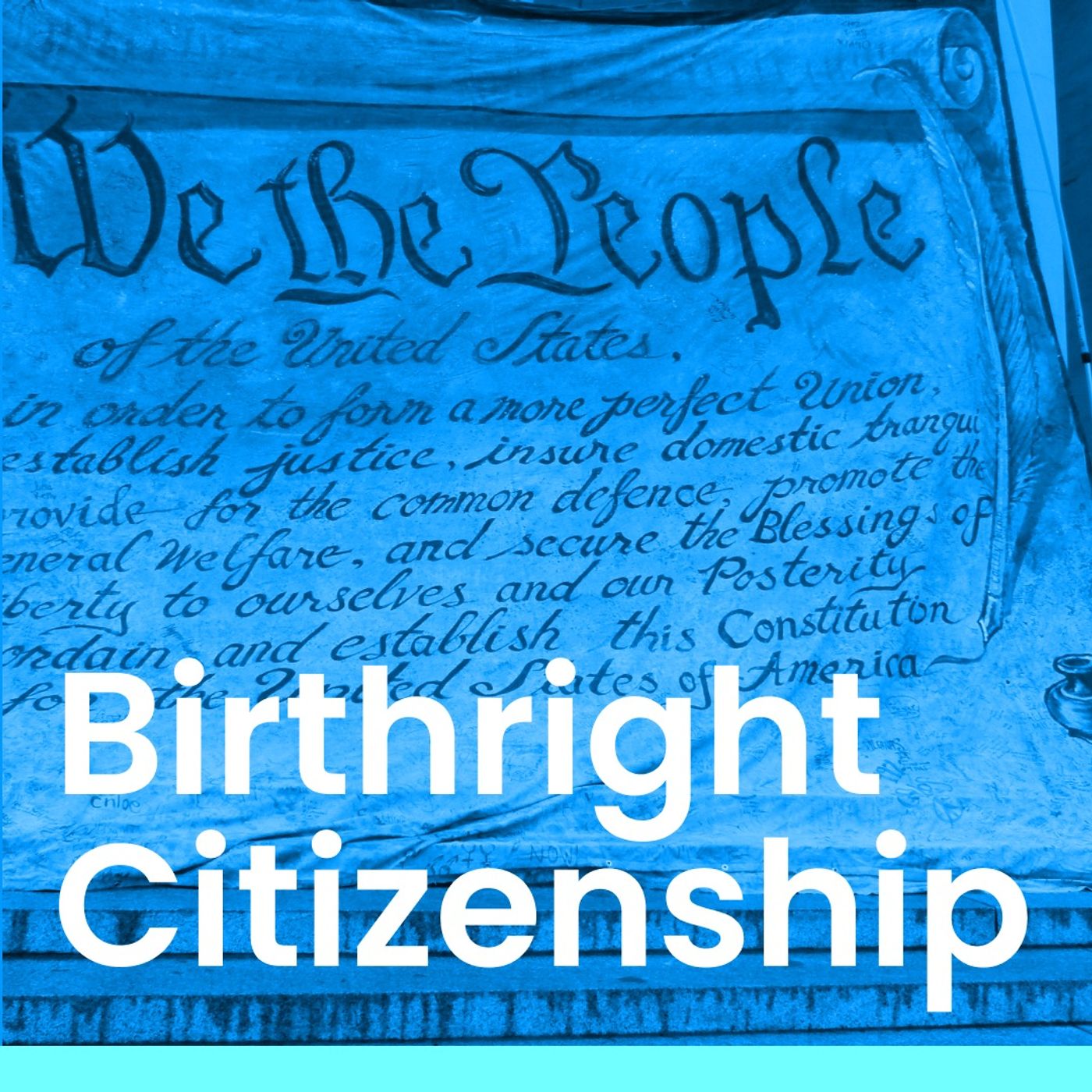
S1 Ep 32Birthright Citizenship
Earlier this year, President Trump signed an executive order aimed at ending birthright citizenship. He has placed this issue at the forefront of his immigration agenda and it is now being taken up by the Supreme Court. To have this conversation, we’ve brought together a constitutional law scholar and a political commentator.Cristina Rodríguez is the Leighton Homer Surbeck Professor of Law at Yale Law School. In 2021, she was appointed by President Biden to co-chair the Commission on the Supreme Court of the United States. Her recent book is called The President and Immigration Law. She’s also the co-host of the new podcast: Unsettled: Immigration in Turbulent Times.Rod D. Martin writes The Rod Martin Report on Substack. He is also the Founder and CEO of Martin Capital. As a tech entrepreneur and venture capitalist, Rod was previously an advisor to Peter Thiel. Rod also served as policy director to Mike Huckabee, the former Governor of Arkansas.We talk a lot about the 14th Amendment in this episode. It was ratified in 1868 to give formerly enslaved people the right to vote. Here’s what it says: “all persons born or naturalized in the United States, and subject to the jurisdiction thereof, are citizens of the United States.” Keep that phrase in mind. “Subject to the jurisdiction thereof.” It’ll come up a lot.Our guests also discuss the Supreme Court cases Elk v Wilkins, Slaughterhouse, and Wong Kim Ark. All you need to know for this episode is: those rulings influenced the interpretation of the 14th Amendment. Last note, this episode is moderated by co-host and co-founder, Catherine Cushenberry. Questions or comments about this episode? Email us at [email protected] or find us on X and Instagram @thedisagreementhq. Subscribe to our newsletter: https://thedisagreement.substack.com/

S1 Ep 31Campus Deportations
Today’s disagreement is about college campus detentions, due process, and free speech.We focus on the two most high-profile cases: Mahmoud Khalil: a green card holder, legal resident, and graduate student at Columbia University who had a leadership role within CUAD, which stands for Columbia University Apartheid Divest; and Rümeysa Öztürk: a graduate student at Tufts University who is a student visa holder. She co-authored an op-ed in the campus newspaper supporting a resolution to divest from Israel. We also briefly touch on the Kilmar Abrego Garcia case and President Bukele’s recent visit to the oval office.Is there a legal basis for these deportations and what are the implications for free speech and due process? What does it mean to be an American? What kind of country do we want to live in? Are these deportations “good for the Jews”?Graeme Wood is a staff writer for The Atlantic and a lecturer in political science at Yale University, where he has taught since 2014. Graeme has been a Press Fellow at the Council on Foreign Relations, a visiting professor at the University of Pennsylvania, and a fellow at the United States Naval Academy.Ilya Shapiro is a senior fellow and director of constitutional studies at the Manhattan Institute. He writes a Substack called Shapiro's Gavel and his new book is called Lawless: The Miseducation of America’s Elites.One note: We had a few issues with audio quality - it’s not up to our normal standards - but it should not significantly impact your listening experience. Alright, take a deep breath, open your mind as far as it’s willing to go, and prepare for a different kind of conversation on campus deportations.Questions or comments about this episode? Email us at [email protected] or find us on X and Instagram @thedisagreementhq. Subscribe to our newsletter: https://thedisagreement.substack.com/ Questions or comments about this episode? Email us at [email protected] or find us on X and Instagram @thedisagreementhq. Subscribe to our newsletter: https://thedisagreement.substack.com/
S1 Ep 30Live @ SXSW EDU: School Choice
In March, we recorded an episode live on stage at SXSW EDU in Austin, Texas. This disagreement is all about ESAs, or Education Savings Accounts. You may have heard of ESAs under a different name, like vouchers or school choice programs. Right now, 18 states have some sort of ESA program in place.The programs are becoming more popular across the country, but should they be? What accounts for the increasing support for ESAs? What risks and benefits do they pose for students and families? Does the rise of ESAs inherently harm our public schools?When we say ESAs, we are NOT talking about 529 plans or other college savings programs. We’re talking about K-12 education. These programs create a government-authorized savings account for families, allowing them to take some quantity of the funding that would have supported their child in public school, and use those dollars in the way they see fit: whether that’s to supplement private school tuition, parochial school tuition, tutoring, special needs services or for other educational purposes.Shaka Mitchell is a Senior Fellow at the American Federation for Children, an advocacy organization in the school choice movement. He has served in leadership roles at high-performing charter school networks, including Rocketship Education and LEAD Public schools in Nashville.Jaime Puente is the Director of Economic Opportunity at Every Texan, an advocacy and public policy organization striving to expand opportunities for all Texans. He currently oversees their work on education. Previously, Jaime served as Legislative Director for members of the Texas House of Representatives.This episode is moderated by The Disagreement’s co-host and co-founder Catherine Cushenberry.Sign up for our newsletter at thedisagreement.substack.com Questions or comments about this episode? Email us at [email protected] or find us on X and Instagram @thedisagreementhq. Subscribe to our newsletter: https://thedisagreement.substack.com/
S1 Ep 29The Future of Gender-Affirming Care & Trans Rights
Today’s disagreement is about transgender health care for young people and the future of the trans rights movement.Gender Affirming Care is a method of treating gender dysphoria by affirming a child’s gender identity and tailoring medical and social interventions around this identity. This might begin with a social transition and often leads to a medical protocol that involves puberty blockers and then cross sex hormones.Almost a year ago, we had a conversation with leading national clinicians, Dr. Jack Drescher and Dr. Erica Anderson about the state of gender affirming care for young people in the United States. If you haven’t listened to that episode, I highly recommend it as a helpful primer for this conversation. Since then, a lot has changed in the conversation about trans care for young people.In April 2024, the Cass report came out in the UK. It is one of the most thorough reviews of the evidence base for gender-affirming care. It also called into question the limits of what we know and don’t know about care for minors. Right now, 27 states have enacted laws to ban or restrict the practice and the supreme court will be ruling on it later this year. And the United States has a new presidential administration who recently issued the executive order: “Protecting Children from Chemical and Surgical Mutilation," which attempts to put forth a national ban on gender affirming care.We ask some important questions around gender affirming care and the trans rights movement. Have trans advocates and medical practitioners overstated the quality of the evidence base for gender-affirming interventions for minors?Brianna Wu is a political commentator and trans rights activist. She is executive director of the progressive Rebellion PAC.Dr. Marci Bowers is a pelvic and gynecological surgeon with more than three decades of experience in healthcare. Dr. Bowers was most recently the president of the World Professional Association for Transgender Health (WPATH). She was the organization's first transgender president.Thank you to Brianna and Marci for coming together to have this critical conversation. It's a difficult topic and as you’ll hear, a difficult conversation. But we need more of this. We need more people willing to come together and have hard conversations out in the open, and we really appreciate you both.This conversation is pretty “in the weeds” when it comes to youth gender medicine and the state of the research. If you have the context, that’s great – you can skip ahead. If you don’t, here is a highly efficient glossary:WPATH is the leading trans health organization in the world. Its “Standards of Care” or SOC - have served as the national guidelines for youth gender medicine in most gender clinics.The Standards of Care have evolved a great deal over time: SOC 6, published in 2001, required multiple psychological assessments and a period of Real Life Experience (RLE), living as the preferred gender, before any medical interventions. The most recent SOC, SOC 8, was published in 2022. It removed many of these requirements which activists have described as “gatekeeping.”The Dutch Protocol, also known as “watchful waiting”, is a more conservative alternative to gender-affirming care. It focuses on providing large amounts of psychological support and monitoring during childhood. If the dysphoria continues to persist, then putting young people on puberty blockers and cross sex hormones in late adolescence.Language around gender identity is constantly evolving. Brianna uses the term FTM (or Female to Male) to describe females who transition. For the same demographic, Marci uses “transmasculine.”We also talk about Hormone Replacement Therapy (HRT) and Facial Feminization Surgery (FFS).Okay, that will hopefully create a solid foundation. Take a deep breath. Open your mind as far as it’s willing to go. And prepare for a different kind of conversation on gender affirming care and the future of the trans rights movement.Recommended Reading and ListeningWPATH Standards of Care Version 8Last year’s episode of The Disagreement about gender-affirming care: https://podcasts.apple.com/si/podcast/12-gender-affirming-care-for-children-and-adolescents/id1735027795?i=1000658885782 Questions or comments about this episode? Email us at [email protected] or find us on X and Instagram @thedisagreementhq. Subscribe to our newsletter: https://thedisagreement.substack.com/
S1 Ep 28The Telepathy Tapes, Autism, and the Paranormal
Today’s disagreement is on The Telepathy Tapes, Autism, and the Paranormal. If you’re not familiar, The Telepathy Tapes is a cultural phenomenon and podcast that launched in Fall 2024. By early January, it was the number one podcast in the country. Today, it’s still in the top ten. Its core thesis is quite provocative: that there are non-verbal autistic young people who possess telepathic powers and are able to read the minds of their parents and teachers.In this episode, we use The Telepathy Tapes as a springboard to ask some big questions about science, skepticism, and the nature of truth. Is telepathy real? How should we evaluate the claims in the podcast? Do these claims adversely affect–even harm–the autistic young people being celebrated?To have this conversation, we’ve brought together a journalist and a religious scholar with very different approaches to understanding the truth.Zaid Jilani is a journalist whose work has appeared in The Intercept, News Nation and Alternet. He writes about politics and culture on his Substack The American Saga.Jeffrey Kripal is the J. Newton Rayzor Chair in Philosophy and Religious Thought at Rice University and the Associate Director of the Center for Theory and Research at the Esalen Institute. Jeffrey is also the author of thirteen books, including most recently: How to Think Impossibly.Before we get started, a note. In The Telepathy Tapes, the nonverbal autistic young people use a controversial method to communicate with the outside world. It’s called “facilitated communication.” There is an adult that helps to facilitate the young person’s communication—usually through some form of touch and holding a letterboard that the young person point to. We get into this in-depth on the podcast.Questions or comments about this episode? Email us at [email protected] or find us on X and Instagram @thedisagreementhq. Subscribe to our newsletter: https://thedisagreement.substack.com/ Questions or comments about this episode? Email us at [email protected] or find us on X and Instagram @thedisagreementhq. Subscribe to our newsletter: https://thedisagreement.substack.com/
S1 Ep 27AI Literacy & Education
This episode was recorded live on stage at EDTECH WEEK in New York City. Like most edtech conferences, there were many conversations about the potential power that AI could play in student learning. Ours was a different kind of conversation. We brought together two experts who both expressed skepticism about the role AI should be playing in education today. While they agreed on many things, there is a highly productive disagreement around whether or not we should be actively teaching AI literacy (or “readiness”) to students in grades K-12.Alex Kotran is the CEO of The AI Education Project (AI Edu), a non-profit devoted to making sure that all students are ready to live, work, and thrive in a world where AI is everywhere. Previously, he was the Director of AI Ethics at H5, a pioneering AI company in the legal services sector.Benjamin Riley is the founder of Cognitive Resonance, a new venture dedicated to improving understanding of human cognition and generative AI. Previously, he founded and served as CEO of Deans for Impact, a nonprofit education organization working to improve teacher training through the use of cognitive science.This episode is moderated by The Disagreement’s cohost and cofounder Catherine Cushenberry.Questions or comments about this episode? Email us at [email protected] or find us on X and Instagram @thedisagreementhq. Subscribe to our newsletter: https://thedisagreement.substack.com/Want to listen to more live conversations from EDTECH WEEK 2024? Watch more here. Questions or comments about this episode? Email us at [email protected] or find us on X and Instagram @thedisagreementhq. Subscribe to our newsletter: https://thedisagreement.substack.com/
S1 Ep 26Abolish the Department of Education?
President Trump campaigned on a pledge to dismantle the DOE and has already made sweeping cuts to its research arm, the Institute of Education Sciences (IES). What role should the federal government play in U.S. education? Where should the Department of Education’s functions live bureaucratically? Should they stay in the DOE or be distributed to other federal agencies? Michelle Dimino is the Education Program Director at Third Way, a national, center-left think tank. Michelle’s research and advocacy focus on improving student outcomes, promoting quality and transparency, and strengthening accountability through pragmatic policy reforms. Neal McCluskey is the director of Cato’s Center for Educational Freedom. He is the author of the book The Fractured Schoolhouse: Reexamining Education for a Free, Equal, and Harmonious Society. Got questions or comments about this episode? Email us at [email protected] or find us on X and Instagram @thedisagreementhq Questions or comments about this episode? Email us at [email protected] or find us on X and Instagram @thedisagreementhq. Subscribe to our newsletter: https://thedisagreement.substack.com/
S1 Ep 25Trans Athletes & Elite Sports
Gender diversity in sports has become a focal point in the culture war and point of disagreement for sports governing bodies. We recorded this episode before the recent executive orders affecting transgender people. But those recent developments have put the political in a new light. Hopefully what you hear feels like a totally different kind of conversation.What is the nature of biological male advantage? What constitutes fairness? How do we reconcile gender identity and underlying biology?Host Alex Grodd moderates a disagreement between sports legal expert Doriane Coleman and sports physicist Joanna Harper. They explore the nuances of sex/gender category definitions, the implications of hormone therapy for gender diverse athletes, and the broader societal impacts of inclusion in female sports categories. Through deep dives into the science, historical context, and ethical considerations, this is a different kind of conversation about fairness, biology, and gender identity in competitive sports.Got questions or comments about this episode? Email us at [email protected] or find us on X and Instagram @thedisagreementhq. Subscribe to our Substack at thedisagreement.substack.com. Questions or comments about this episode? Email us at [email protected] or find us on X and Instagram @thedisagreementhq. Subscribe to our newsletter: https://thedisagreement.substack.com/
S1 Ep 2422: Should you punish your kids?
Destini Ann Davis is a peaceful parenting advocate and influencer with 1.5 million followers on TikTok. She's the author of Very Intentional Parenting, Awakening the Empowered Parent Within.In our Gentle Parenting, episode with Lori Gottlieb and Ryan Allen, we covered a lot of ground, but didn’t dive deeply into the role of discipline and punishment in raising kids. So we're circling back with one of the internet's most influential, gentle parenting thinkers, Destini Ann Davis.This episode is partly Alex being coached by Destini and partly a disagreement about the role that punishment should play in cultivating and exercising authority as a parent. While they agree on a lot, you'll hear some substantive differences in styles, tactics, and core philosophies.What did you think about this episode? Email us at [email protected]. You can also DM us on Instagram @thedisagreementhq. Questions or comments about this episode? Email us at [email protected] or find us on X and Instagram @thedisagreementhq. Subscribe to our newsletter: https://thedisagreement.substack.com/
S1 Ep 2321: Online Sports Betting
In the last couple of years, sports betting has exploded across the United States. The rise of mobile, app-based sports betting is having profound impacts on the nature of sports viewership, fandom, and gambling addiction, particularly amongst young men.Is the rapid ascent of online sports betting creating a public health crisis? Is the online sports betting industry predatory? How should it be regulated?Dr. Harry Levant is the Director of Gambling Policy with the Public Health Advocacy Institute at Northeastern University. Harry is also an Internationally Certified Gambling Counselor and a gambling addict in recovery for more than ten years.Ben Fawkes is a sports betting expert and industry insider. As a consultant and writer, Ben has produced work for CBS Sports, Gannett, and ESPN. Previously, was the Vice President, Digital Content at VSiN, The Sports Betting Network.Show Notes3:16 - Legalization: Benefits and Risks6:44 - Public Health Concerns11:30 - Infrastructure, Addiction and Revenue22:00 - Same Game Parlays32:00 - Advertising and The Impact on Young People36:21 - Sports Gambling and Fandom45:00 - VIP Hosts and Reload Bonuses48:08 - The Need for Regulation55:51 - SteelmanExtra CreditSurge in problem gambling in NJDraftKings CEO rebuffs argument that AI could make sports betting more addictive: ‘There is some onus on the individual’A Psychiatrist Tried to Quit Gambling. Betting Apps Kept Her Hooked.Fanduel network shows an industry bought and paid for by gamblingWhat did you think about this episode? Email us at [email protected]. You can also DM us on Instagram @thedisagreementhq. Questions or comments about this episode? Email us at [email protected] or find us on X and Instagram @thedisagreementhq. Subscribe to our newsletter: https://thedisagreement.substack.com/