
The Deep-Sea Podcast
151 episodes — Page 2 of 4
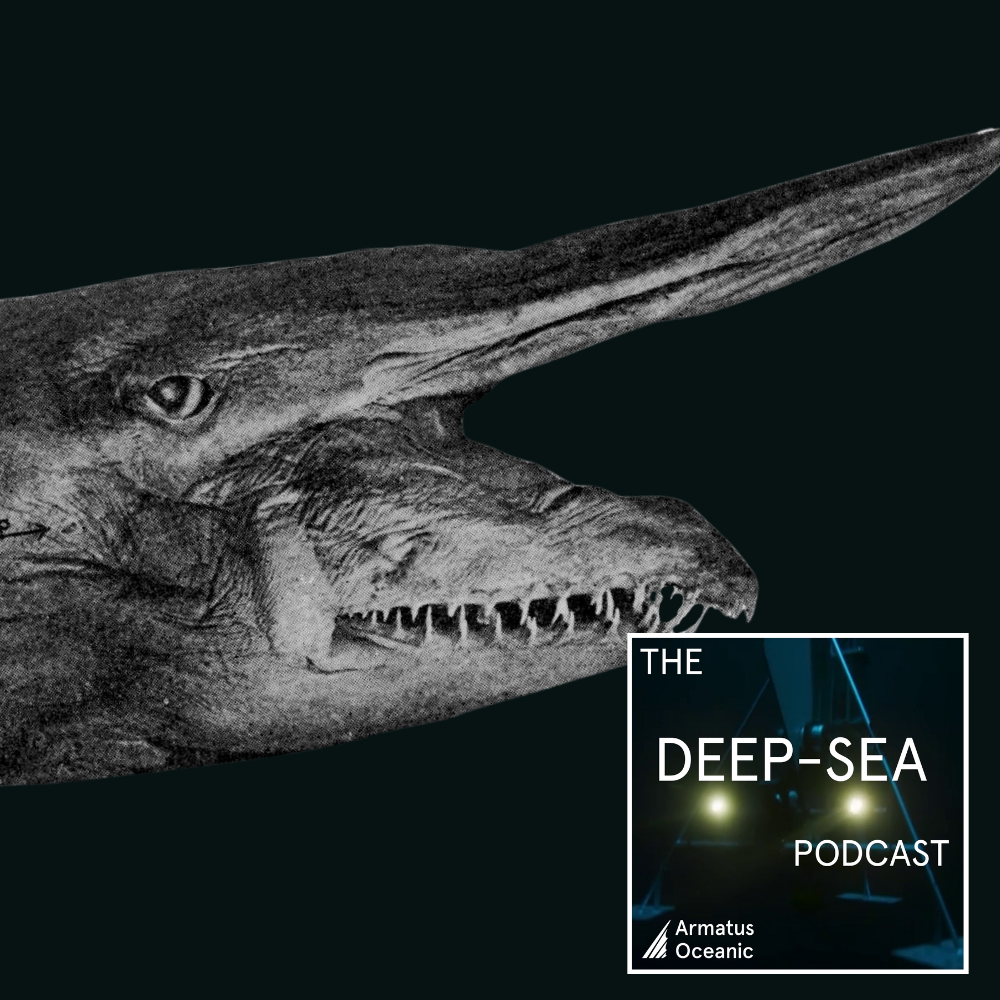
Ep 48Deep-sea sharks with Justin Cordova
We’re back on the elasmobranch train with our latest episode all about deep-sea sharks! We speak with Justin Cordova, co-founder and deputy director of The Rogue Shark Lab all about the fascinating world of deep-sea sharks! What makes them different from their shallow-water relatives? Why do their eyes glow green? How exactly do you get into a career in deep-sea shark research? The Professor is trapped in paradise (somewhere in Fiji) whilst he quarantines before his next big offshore expedition. But he’s not alone - alongside his new pal Roger (the guard gecko) he's quarantining with deep-sea celebrity, Jason 'J-Rod' Rodriguez. The famed SuBastian ROV pilot is joining Alan on this next leg of the expedition to the Tonga Trench. Make sure you're following us to hear all of the updates in our next episode! Andrew is back from his travels and was just as excited about our Lake Baikal episode as us! In this month's Coffee with Andrew segment, he talks us through the unbelievable similarities between deep-ocean and the deep-lake fish of Baikal. Thanks again for tuning in, we’ll deep-see you next time! ------------------------------------------------------------------ Support us by becoming a patron and joining our deep-sea community! We want to say a huge thank you to those patrons who have already pledged to support us: Claudio Zanette | Becca Nicholls | Rebecca Rulnick ------------------------------------------------------------------ NEW MERCH DESIGNS Check out our podcast merch here! Which still includes Alan’s beloved apron. ------------------------------------------------------------------ GET IN TOUCH Email: [email protected] Twitter: @DeepSeaPod, @ArmatusO Facebook: DeepSeaPodcast, ArmatusOceanic Instagram: @deepsea_podcast, @armatusoceanic Keep up with the team on social media Twitter: Alan - @Hadalbloke Thom - @ThomLinley Georgia - @geeinthesea Instagram: Georgia - @geeinthesea Thom - @thom.linley Read the show notes and find out more about us at: www.armatusoceanic.com ------------------------------------------------------------------ FURTHER RESOURCES NEWS Study shows sexual parasitism helped anglerfish invade the deep sea Biological Sunglasses in a Deep-Sea Squid: Pigment Migration in the Retina of Gonatus onyx The huge new paper on the classification of ray-finned fishes (living and fossil) People mentioned Ryan Howard - AUT Squid Squad PhD Candidate Kat Bolstad - AUT Squid Squad leader AUT Squid Squad Website & Twitter Andrew Stewart - Curator of Fishes at Te Papa Museum, New Zealand Justin Cordova - Co-founder of The Rogue Shark Lab Credits Theme – Hadal Zone Express by Märvel Logo image - AMNH Edited by - Georgia Wells #deepsea #deepocean #shark #podcast #science #marinebiology #alanjamieson #thomaslinley #justincordova #sharkweek #megalodon #goblinshark #interview #scicomm
PRESSURISED: 023 – Keeping deep-sea animals with The Monterey Bay Aquarium
bonusOur short and to the point PRESSURISED version of episode 23. If you don't have time for the full episode and want to get right to the science without any of our waffle, this is the place to be! Read the show notes and find the full episode here: https://www.armatusoceanic.com/podcast/023-deep-aquaria Can we safely bring deep-sea organisms to the surface and keep them alive? Certain species, such as the giant isopods and giant Japanese spider crabs have been kept in aquaria in the past but the number of animals we can maintain long-term is quite small. The Monterey Bay Aquarium’s new Into the Deep exhibition has succeeded in keeping animals never before put on public display, some are even new to science. Not only that, but they have even had some success in getting them to reproduce! Figuring out what conditions these animals need and observing them over long periods will allow us to learn huge amounts about animals we usually only get a glimpse of. We talk with aquarists Ellen Umeda and Michelle Kaiser and life-support engineer Brian Maurer about the years of work that went into keeping these animals and giving the public a very personal deep-sea experience. Check out our podcast merch! Which now includes Alan’s beloved apron. Feel free to get in touch with us with questions or you own tales from the high seas on: [email protected] We are also on Twitter: @DeepSeaPod, @ArmatusO Facebook: ArmatusOceanic Instagram: @deepsea_podcast, @armatusoceanic Links Into the Deep: Aquarium YouTube Channel Online exhibition Deep-sea adaptation story with video Bioluminescence story with video Animal information story Exhibition development with life support diagram Credits Theme – Hadal Zone Express by Märvel Logo image - The Deep-Sea Podcast PRESSURISED Logo Edited by - Georgia Wells
PRESSURISED: 047 - The depths of Lake Baikal with Marianne Moore
bonusOur short and to the point PRESSURISED version of episode 47. If you don't have time for the full episode and want to get right to the science without any of our waffle, this is the place to be! Read the show notes and find the full episode here: https://www.armatusoceanic.com/podcast/047-baikal Located in southern Siberia and covered in thick ice for almost half of the year, the colossal Lake Baikal reaches depths of 1600m making it the oldest, and deepest lake in the world. With hydrothermal vents, methane seeps and vast swathes of endemic species, this ancient lake was too tempting not to talk about. We speak with Professor Marianne Moore, a Limnologist who has been working on the lake for over 2 decades. She guides us through its incredible ecosystems and species such as the world's only freshwater seal, deep water insects and foot-long flatworms! We’re really trying to make this project self-sustaining so we have started looking for ways to support the podcast. Here’s a link to our page on how to support us, from the free options to becoming a patron of the show. We want to say a huge thank you to those patrons who have already pledged to support us! Thanks again for tuning in, we’ll deep-see you next time! Check out our podcast merch here! Which now includes Alan’s beloved apron and a much anticipated new design... Feel free to get in touch with us with questions or your own tales from the high seas on: [email protected] We’d love to actually play your voice so feel free to record a short audio note! We are also on Twitter: @DeepSeaPod, @ArmatusO Facebook: DeepSeaPodcast, ArmatusOceanic Instagram: @deepsea_podcast, @armatusoceanic Keep up with the team on social media Twitter: Alan - @Hadalbloke (https://twitter.com/Hadalbloke) Thom - @ThomLinley (https://twitter.com/ThomLinley) Georgia - @geeinthesea (https://twitter.com/geeinthesea) Instagram: Georgia - @geeinthesea Thom - @thom.linley Read the show notes and find out more about us at: www.armatusoceanic.com FURTHER RESOURCES LAKE BAIKAL READING Intro to Lake Baikal and lakes: Mogolov, L.S. 2017. The Soul of Siberia at Risk. Wellesley Magazine. p.16-22. Moore, M.V., S.E. Hampton, L.R. Izmest’eva, E.A. Silow, E.V. Peshkova, and B. Pavlov. 2009. Climate change and the world’s ‘Sacred Sea’ – Lake Baikal, Siberia. BioScience 59:405-417 Thomson, P. 2007. Sacred Sea: A Journey to Lake Baikal, Oxford University Press. 320 p. Vincent, W.F. 2018. Lakes. A Very Short Introduction, Oxford University Press. 146 p. Vents and seeps: Crane, K., Hecker, B. and Golubev, V., 1991. Hydrothermal vents in Lake Baikal. Nature, 350(6316), pp.281-281. Zemskaya, T.I., Sitnikova, T.Y., Kiyashko, S.I., Kalmychkov, G.V., Pogodaeva, T.V., Mekhanikova, I.V., Naumova, T.V., Shubenkova, O.V., Chernitsina, S.M., Kotsar, O.V. and Chernyaev, E.S., 2012. Faunal communities at sites of gas-and oil- bearing fluids in Lake Baikal. Geo-Marine Letters, 32, pp.437-451. Fish: Sideleva, V.G. 2003. The Endemic Fishes of Lake Baikal. Backhuys Publishers. Sideleva, V.G. 2004. Mysterious Fish of Lake Baikal. Science First Hand 3:N2. (Note: ‘black umber’ and ‘white umber’, mentioned in this article, are two endemic varieties of the Siberian grayling Thymallus arcticus.) Sideleva, V.G., 2016. Communities of the cottoid fish (Cottoidei) in the areas of hydrothermal vents and cold seeps of the abyssal zone of Baikal Lake. Journal of Ichthyology, 56, pp.694-701. Seal: Nomokonova, T., Losey, R.J., Iakunaeva, V.N., Emelianova, I.A., Baginova, E.A. and Pastukhov, M.V., 2013. People and seals at Siberia’s Lake Baikal. Journal of Ethnobiology, 33(2), pp.259-280. Watanabe, Y.Y., Baranov, E.A. and Miyazaki, N., 2020. Ultrahigh foraging rates of Baikal seals make tiny endemic amphipods profitable in Lake Baikal. Proceedings of the National Academy of Sciences, 117(49), pp.31242-31248. Environmental threats: Moore, M.V., S.E. Hampton, L.R. Izmest’eva, E.A. Silow, E.V. Peshkova, and B. Pavlov. 2009. Climate change and the world’s ‘Sacred Sea’ – Lake Baikal, Siberia. BioScience 59:405-417. Timoshkin, O.A. 2015. Ecological Crisis on Lake Baikal: Diagnosed by Scientists. Science First Hand 41:N2. Timoshkin, O.A., D.P. Samsonov, M. Yamamuro, M.V. Moore, O.I. Belykh, V.V. Malnik, M.V. Sakirko, A.A. Shirokaya, N.A. Bondarenko, V.M. Domysheva, G.A. Fedorova, A.I. Kochetkov, et al. 2016. Rapid ecological change in the coastal zone of Lake Baikal (East Siberia): Is the site of the world’s greatest freshwater biodiversity in danger? Journal of Great Lakes Research 42:487-497. doi: 10.1016/j.jglr.2016.02.011 PEOPLE MENTIONED Professor Marianne Moore & Marianne’s excellent paper on interdisciplinary work CREDITS Theme – Hadal Zone Express by Märvel Edited by - Georgia Wells
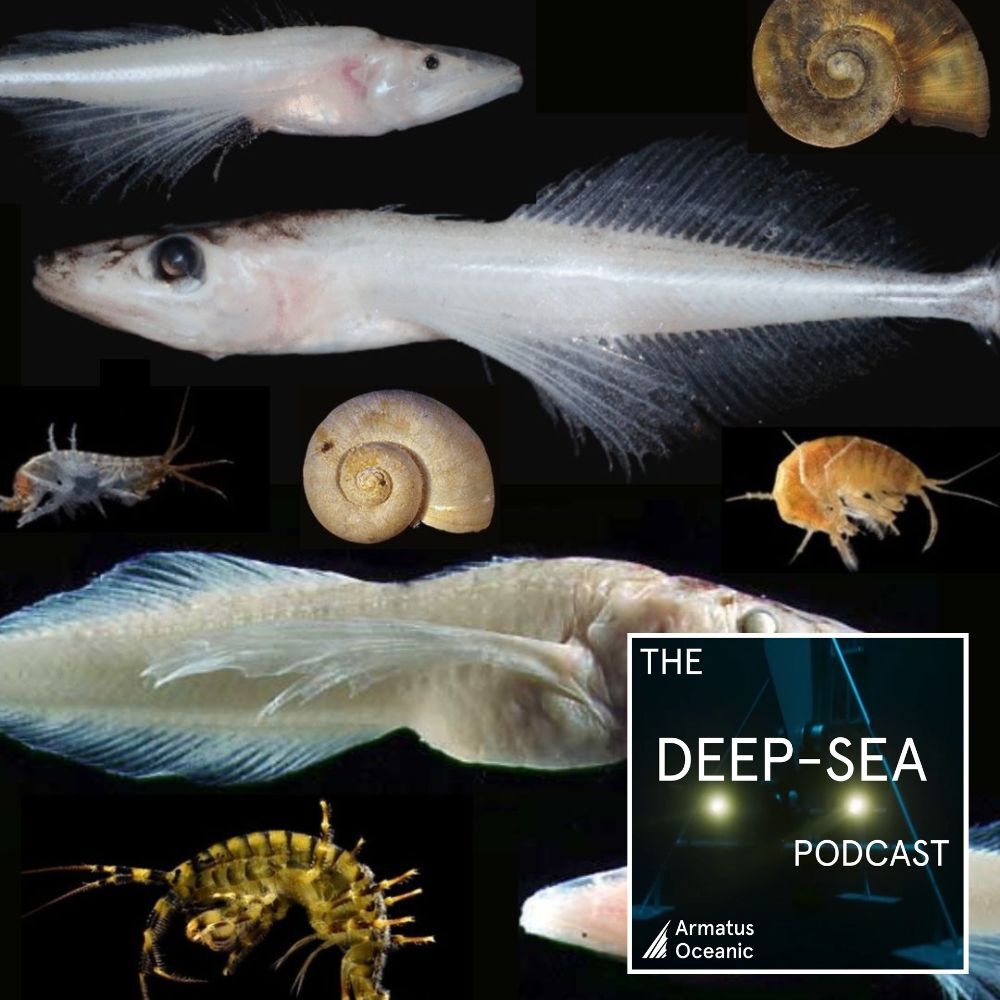
Ep 47The depths of Lake Baikal with Marianne Moore
Located in southern Siberia and covered in thick ice for almost half of the year, the colossal Lake Baikal reaches depths of 1600m making it the oldest, and deepest lake in the world. With hydrothermal vents, methane seeps and vast swathes of endemic species, this ancient lake was too tempting not to talk about. We speak with Professor Marianne Moore, a Limnologist who has been working on the lake for over 2 decades. She guides us through its incredible ecosystems and species such as the world's only freshwater seal, deep water insects and foot-long flatworms! Plus, we hear about the myths and mysteries of the lake: from scientifically testing whether the mafia can use amphipods to effectively dispose of bodies, to whether there really is 1600 tonnes of gold hiding at the bottom of the lake. The Professor is back on land after a succession of crazy adventures which includes writing a paper on backwards swimming in deep sea fish, finding the worlds deepest nudibranch (possibly) plus discovering his friends live in the most metal place ever. There’s no Coffee with Andrew segment this month as he is taking a well deserved break (and is possibly touring the country looking for the strangest milks he can find), but we do hear from Kakani Kajita about the recent release of FathomVerse - the mobile game helping to contribute to deep sea citizen science. Kakani tells us about how it’s doing in its first month of release, and how it’s already making an impact in training deep sea AI models. We’re really trying to make this project self-sustaining so we have started looking for ways to support the podcast. Here’s a link to our page on how to support us, from the free options to becoming a patron of the show. We want to say a huge thank you to those patrons who have already pledged to support us: Elinor Wahl | Andrew Stewart | KJ Quintanilla | Thomas Brattheim Thanks again for tuning in, we’ll deep-see you next time! Check out our podcast merch here! Which now includes Alan’s beloved apron and a much anticipated new design... Feel free to get in touch with us with questions or your own tales from the high seas on: [email protected] We’d love to actually play your voice so feel free to record a short audio note! We are also on Twitter: @DeepSeaPod, @ArmatusO Facebook: DeepSeaPodcast, ArmatusOceanic Instagram: @deepsea_podcast, @armatusoceanic Keep up with the team on social media Twitter: Alan - @Hadalbloke (https://twitter.com/Hadalbloke) Thom - @ThomLinley (https://twitter.com/ThomLinley) Georgia - @geeinthesea (https://twitter.com/geeinthesea) Instagram: Georgia - @geeinthesea Thom - @thom.linley Read the show notes and find out more about us at: www.armatusoceanic.com FURTHER RESOURCES Triton submarines are building a new submarine to visit the Titanic to show that deep sea exploration is safe Robotic Explorers Uncover Unexpected Ancient Origins of Strange Seafloor Formations Deep-sea sponge's 'zero-energy' flow control could inspire new energy efficient designs LAKE BAIKAL READING Intro to Lake Baikal and lakes: Mogolov, L.S. 2017. The Soul of Siberia at Risk. Wellesley Magazine. p.16-22. Moore, M.V., S.E. Hampton, L.R. Izmest’eva, E.A. Silow, E.V. Peshkova, and B. Pavlov. 2009. Climate change and the world’s ‘Sacred Sea’ – Lake Baikal, Siberia. BioScience 59:405-417 Thomson, P. 2007. Sacred Sea: A Journey to Lake Baikal, Oxford University Press. 320 p. Vincent, W.F. 2018. Lakes. A Very Short Introduction, Oxford University Press. 146 p. Vents and seeps: Crane, K., Hecker, B. and Golubev, V., 1991. Hydrothermal vents in Lake Baikal. Nature, 350(6316), pp.281-281. Zemskaya, T.I., Sitnikova, T.Y., Kiyashko, S.I., Kalmychkov, G.V., Pogodaeva, T.V., Mekhanikova, I.V., Naumova, T.V., Shubenkova, O.V., Chernitsina, S.M., Kotsar, O.V. and Chernyaev, E.S., 2012. Faunal communities at sites of gas-and oil- bearing fluids in Lake Baikal. Geo-Marine Letters, 32, pp.437-451. Fish: Sideleva, V.G. 2003. The Endemic Fishes of Lake Baikal. Backhuys Publishers. Sideleva, V.G. 2004. Mysterious Fish of Lake Baikal. Science First Hand 3:N2. (Note: ‘black umber’ and ‘white umber’, mentioned in this article, are two endemic varieties of the Siberian grayling Thymallus arcticus.) Sideleva, V.G., 2016. Communities of the cottoid fish (Cottoidei) in the areas of hydrothermal vents and cold seeps of the abyssal zone of Baikal Lake. Journal of Ichthyology, 56, pp.694-701. Seal: Nomokonova, T., Losey, R.J., Iakunaeva, V.N., Emelianova, I.A., Baginova, E.A. and Pastukhov, M.V., 2013. People and seals at Siberia’s Lake Baikal. Journal of Ethnobiology, 33(2), pp.259-280. Watanabe, Y.Y., Baranov, E.A. and Miyazaki, N., 2020. Ultrahigh foraging rates of Baikal seals make tiny endemic amphipods profitable in Lake Baikal. Proceedings of the National Academy of Sciences, 117(49), pp.31242-31248. Environmental threats: Moore, M.V., S.E. Hampton, L.R. Izmest’eva, E.A. Silow, E.V. Peshkova, and B. Pavlov. 2009. Climate change and the world’s ‘
PRESSURISED: 022 - Live-streaming the deep with Kasey Cantwell
bonusOur short and to the point PRESSURISED version of episode 22. If you don't have time for the full episode and want to get right to the science without any of our waffle, this is the place to be! Read the show notes and find the full episode here: https://www.armatusoceanic.com/podcast/022-dive-streaming One of the most exciting parts of our job is going to places that no one has ever been before and seeing things that no one has ever seen. It turns out, we were making that far harder than it needs to be, we can do all this from home! Several of the big names in deep-sea exploration live-stream (or dive-stream if we’re being cute). With just a few seconds delay, you can see deep-sea exploration as it happens and may be present for very significant finds. You never know what you’re going to find down there. The big players in this space are the Schmidt Ocean Institute, Nautilus Live from the Ocean Exploration Trust and Ocean Exploration/Okeanos Explorer from NOAA. We are lucky enough to chat with Kasey Cantwell, the Operations Chief of the NOAA Ocean Exploration Expeditions and Exploration Division. We talk about the amazing opportunities this new way of doing science presents. From allowing 300 experts to take part, to swapping out your expert team when you find something unexpected and even the physical and societal barriers that can be removed. But it’s not just about getting science done, it’s about sharing these experiences with everyone. Online communities are forming around these streams and illustrations, poetry and memes are just as valid outputs. Check out our podcast merch! Please do send in any pics of you wearing the merch. We find the idea of real people in the actual world wearing this so surreal! Feel free to get in touch with us with questions or you own tales from the high seas on: [email protected] We are also on Twitter: @ArmatusO Facebook: ArmatusOceanic Instagram: @armatusoceanic Read the show notes and find out more about us at: www.armatusoceanic.com Glossary AUV – Autonomous Underwater Vehicle Berth – Beds available onboard a ship basically Manganese nodule – potato shaped balls of metal that form on the seabed, the focus of deep-sea mining ROV – Remotely Operated Vehicle Taxonomist – A specialist in categorising a specific group of species. Telepresence – Live-streaming what you’re doing on the internet Links Start dive-streaming yourself! NOAA Ocean Exploration Schmidt Ocean Institute Nautilus Live Become part of the online community! Livestream Oceanographic Discord Look out for expedition names as hashtags on Twitter Credits Theme – Hadal Zone Express by Märvel Logo image - The Deep-Sea Podcast PRESSURISED Logo
PRESSURISED: 046 - Deep sea rays & skates with Will White
bonusOur short and to the point PRESSURISED version of episode 46. If you don't have time for the full episode and want to get right to the science without any of our waffle, this is the place to be! Read the show notes and find the full episode here: https://www.armatusoceanic.com/podcast/046-rays This month we're talking about the flattest of the elasmobranchs: the bottom-dwelling batoids - the deep sea rays and skates! We’re kicking off our cartilaginous fishes (Chondrichthyes) mini-series with the batoids - the rays and skates! Sharks are often associated with the deep sea, but did you know that batoids have been observed as deep as 3000m? We speak with Will White who researches elasmobranchs across the world and who has described 50 species! He talks us through the differences between sharks rays and skates, and how these species utilise the deep sea. We hear about their fascinating (and hugely varied) reproductive strategies like those that are viviparous (will keep the eggs in their uterus) and others that are oviparous (will lay the eggs). We’re really trying to make this project self-sustaining so we have started looking for ways to support the podcast. Here’s a link to our page on how to support us, from the free options to becoming a patron of the show. Thanks again for tuning in, we’ll deep-see you next time! Check out our podcast merch here! Which now includes Alan’s beloved apron and a much anticipated new design... Feel free to get in touch with us with questions or your own tales from the high seas on: [email protected] We’d love to actually play your voice so feel free to record a short audio note! We are also on Twitter: @DeepSeaPod, @ArmatusO Facebook: DeepSeaPodcast, ArmatusOceanic Instagram: @deepsea_podcast, @armatusoceanic Keep up with the team on social media Twitter: Alan - @Hadalbloke (https://twitter.com/Hadalbloke) Thom - @ThomLinley (https://twitter.com/ThomLinley) Georgia - @geeinthesea (https://twitter.com/geeinthesea) Instagram: Georgia - @geeinthesea (https://www.instagram.com/geeinthesea/) Read the show notes and find out more about us at: www.armatusoceanic.com Links More info on Will and his research Will’s recent article on a new family of deepwater sharks Great eggcase hunt - Sharks Trust Credits Theme – Hadal Zone Express by Märvel Logo Image - The Deep-Sea Podcast PRESSURISED Logo Edited by - Georgia Wells

Ep 46Deep sea rays & skates with Will White
This month we're talking about the flattest of the elasmobranchs: the bottom-dwelling batoids - the deep sea rays and skates! We’re kicking off our cartilaginous fishes (Chondrichthyes) mini-series with the batoids - the rays and skates! Sharks are often associated with the deep sea, but did you know that batoids have been observed as deep as 3000m? We speak with Will White who researches elasmobranchs across the world and who has described 50 species! He talks us through the differences between sharks rays and skates, and how these species utilise the deep sea. We hear about their fascinating (and hugely varied) reproductive strategies like those that are viviparous (will keep the eggs in their uterus) and others that are oviparous (will lay the eggs). It wouldn’t be a Coffee with Andrew segment without a memorable insight into the world of a fish curator - and this month’s segment is no different! This time, Dr Thom asks Andrew about an unexpected factoid in one of Andrew’s publications: ‘Yolk smells and tastes like sweetened condensed milk’. We find out exactly how Andrew knows this. We’re really trying to make this project self-sustaining so we have started looking for ways to support the podcast. Here’s a link to our page on how to support us, from the free options to becoming a patron of the show. We want to say a huge thank you to those patrons who have already pledged to support us: Matthew Gerrard | Jeff Day | Colin Platt Thanks again for tuning in, we’ll deep-see you next time! Check out our podcast merch here! Which now includes Alan’s beloved apron and a much anticipated new design... Feel free to get in touch with us with questions or your own tales from the high seas on: [email protected] We’d love to actually play your voice so feel free to record a short audio note! We are also on Twitter: @DeepSeaPod, @ArmatusO Facebook: DeepSeaPodcast, ArmatusOceanic Instagram: @deepsea_podcast, @armatusoceanic Keep up with the team on social media Twitter: Alan - @Hadalbloke (https://twitter.com/Hadalbloke) Thom - @ThomLinley (https://twitter.com/ThomLinley) Georgia - @geeinthesea (https://twitter.com/geeinthesea) Instagram: Georgia - @geeinthesea (https://www.instagram.com/geeinthesea/) Read the show notes and find out more about us at: www.armatusoceanic.com Links Moku Art Studio virtual exhibition Thom appears on Radio New Zealand Blog-style articles of our interviews Here's a nice paper with a few observations of elasmobranch food falls New parasite just dropped! New shark family! Bioluminescence 300 millions years older than previously thought Fathomverse is now live! More info on Will and his research Will’s recent article on a new family of deepwater sharks Great eggcase hunt - Sharks Trust Andrew’s book mentioned in Coffee with Andrew Credits Theme – Hadal Zone Express by Märvel Logo Image - Matthias Stehmann et al. (2021) Edited by - Georgia Wells
PRESSURISED: 021 - Deep sea images and AI with Kakani Katija
bonusOur short and to the point PRESSURISED version of episode 21. If you don't have time for the full episode and want to get right to the science without any of our waffle, this is the place to be! Read the show notes and find the full episode here: https://www.armatusoceanic.com/podcast/021-ai We have often talked about how difficult it is the get data from the deep sea… but would you believe that the bottleneck to our understanding of the deep ocean, at least as far as visual data, is processing those images? Turning a picture of the deep sea into a list of species, habitat type, sediment type etc. is a time-consuming process that requires a wide range of skilled people. Due to time/funding constrains a lot of valuable information is lost. A team looking at a specific question will have lots of information in their data that other teams could use. A picture is worth a thousand data points. We chat with Dr Kakani Katija, the co-founder of FathomNet, an open-source repository for labelled deep-sea imaging data. The platform is still in beta but it is hoped that it will allow scientists to easily and usefully share their amassed data in a single and easily searchable place. But what about that processing bottleneck? The tech-savvy listener may have noticed that a massive collection of labelled image data is exactly the sort of thing you need to train a Machine Learning or Deep Learning algorithm. Can we automate a lot of the time-consuming image processing and let the experts focus on the new and unusual stuff? It’s at this cutting edge that things get exciting and we may be at the cusp of a marine science renaissance. We also launch our podcast merch! Please do send in any pics of you wearing the merch. We find the idea of real people in the actual world wearing this so surreal! Feel free to get in touch with us with questions or you own tales from the high seas on: [email protected] We are also on Twitter: @ArmatusO Facebook: ArmatusOceanic Instagram: @armatusoceanic Read the show notes and find out more about us at: www.armatusoceanic.com Glossary Artificial Intelligence (AI) – A science dedicated to making machines think in an intelligent way, mirroring a biological brain. Data pipeline – A path that raw data follows to become useful information. Deep Learning – a more complex subset of ML that mirrors the way a brain works Machine Learning (ML) – computers learning to perform a task without being explicitly programmed to do so ML/AI model or algorithm – A model that has been trained on real data and can now process new data itself. Online Repository – A database stored online so that people can access it from anywhere Open Source – A publicly accessible design that people can freely repurpose and adapt. Visual data – photos or video as a form of scientific data Links Our new merch! Kakani’s Twitter FathomNet goodies The FathomNet website – have an explore of the labelled deep-sea critter data FathomNet GitHub – take a peek under the hood or even get involved FathomNet articles with tutorials/explanations Helpful video tutorials Paper NOAA Science Seminar, 8 March 2022 1200-1300 PST (UTC-8) Register now! FathomNet Workshop, 31 March & 1 April 2022 0800-1100 PST (UTC-8) Register now! Internet of Elephants (gamifying processing camera-trap data) Beyond Blue (game) Credits Theme – Hadal Zone Express by Märvel Logo image - PRESSURISED logo
PRESSURISED: 045 - Hagfish with Doug Fudge
bonusOur short and to the point PRESSURISED version of episode 45. If you don't have time for the full episode and want to get right to the science without any of our waffle, this is the place to be! Read the show notes and find the full episode here: https://www.armatusoceanic.com/podcast/045-hagfish What has no jaw, inverted horizontal teeth, saggy skin and can produce litres of suffocating slime when touched? it’s the episode you’ve been waiting for… The hagfish special is here. Dr Thom is back from his stint offshore, and The Professor pretty much now lives in a submarine, but that hasn’t stopped them from finally reuniting to make this special episode all about hagfish. We’ve talked about them a lot on the show, and decided it’s time to pass them the mic. So expect lots of slimy stories, toothy tales and a whole load of hagfish trivia you never knew you needed. There’s lots of updates after so many recent deep sea expeditions, with Thom’s latest cruise discovering many new species and Alan sharing live updates from the sub. Keep up with their latest goings-on via twitter! We speak to the king of the hagfish, Professor Doug Fudge, who has been studying these critters and their (in)famous slime for decades. We ask all the interesting questions like: how do they make so much slime, do they have any predators and why do they look like that? We’re really trying to make this project self-sustaining so we have started looking for ways to support the podcast. Here’s a link to our page on how to support us, from the free options to becoming a patron of the show. Thanks again for tuning in, we’ll deep-see you next time! Check out our podcast merch here! Which now includes Alan’s beloved apron and a much anticipated new design... Feel free to get in touch with us with questions or your own tales from the high seas on: [email protected] We’d love to actually play your voice so feel free to record a short audio note! We are also on Twitter: @DeepSeaPod, @ArmatusO Facebook: DeepSeaPodcast, ArmatusOceanic Instagram: @deepsea_podcast, @armatusoceanic Keep up with the team on social media Twitter: Alan - @Hadalbloke (https://twitter.com/Hadalbloke) Thom - @ThomLinley (https://twitter.com/ThomLinley) Georgia - @geeinthesea (https://twitter.com/geeinthesea) Instagram: Georgia - @geeinthesea (https://www.instagram.com/geeinthesea/) Read the show notes and find out more about us at: www.armatusoceanic.com People mentioned: The famous hagfish vs shark slime video Moku Art Studio virtual exhibition People mentioned More info on Professor Douglas Fudge Fudge’s research lab Follow Doug on twitter More info about Andrew Stewart Dr Vincent Zintzen Credits Theme – Hadal Zone Express by Märvel Logo image - PRESSURISED Edited by - Georgia Wells
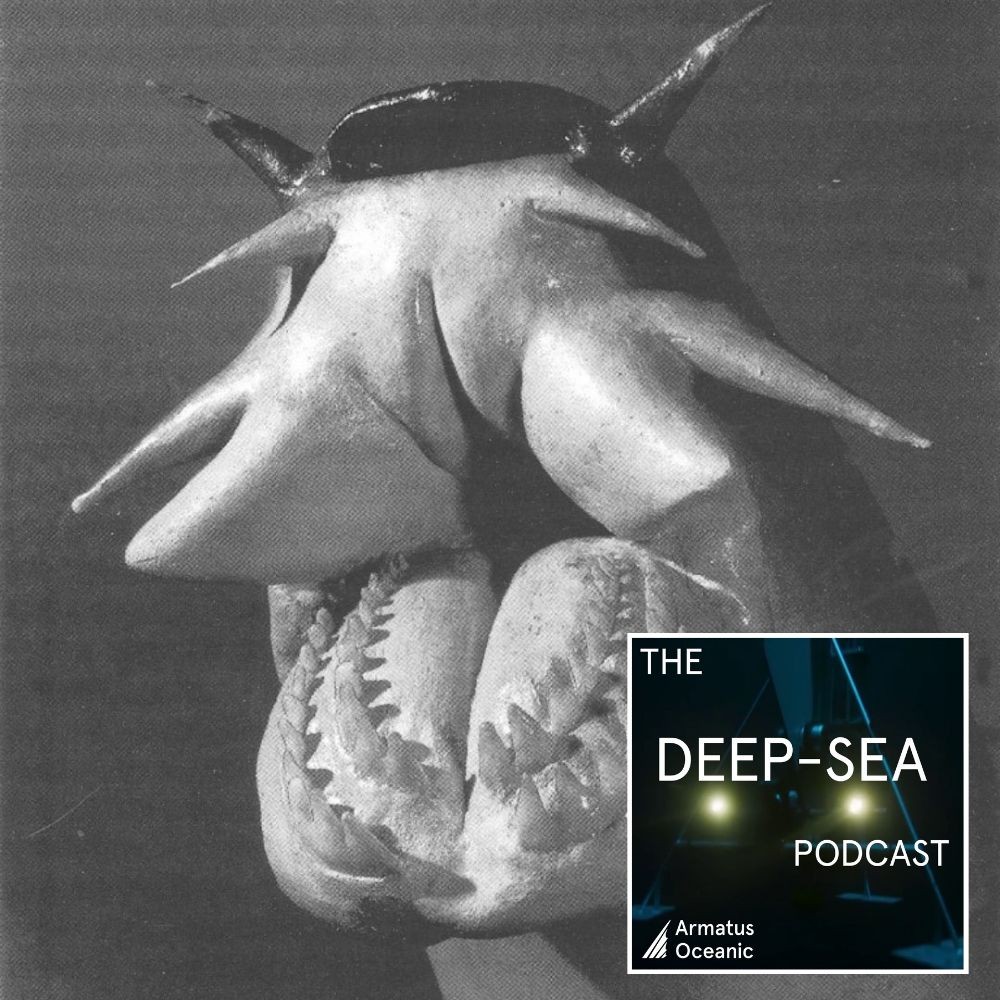
Ep 45Hagfish with Doug Fudge
What has no jaw, inverted horizontal teeth, saggy skin and can produce litres of suffocating slime when touched? it’s the episode you’ve been waiting for… The hagfish special is here. Dr Thom is back from his stint offshore, and The Professor pretty much now lives in a submarine, but that hasn’t stopped them from finally reuniting to make this special episode all about hagfish. We’ve talked about them a lot on the show, and decided it’s time to pass them the mic. So expect lots of slimy stories, toothy tales and a whole load of hagfish trivia you never knew you needed. There’s lots of updates after so many recent deep sea expeditions, with Thom’s latest cruise discovering many new species and Alan sharing live updates from the sub. Keep up with their latest goings-on via twitter! We speak to the king of the hagfish, Professor Doug Fudge, who has been studying these critters and their (in)famous slime for decades. We ask all the interesting questions like: how do they make so much slime, do they have any predators and why do they look like that? Plus, we have another instalment of the fan-favourite: Coffee with Andrew. This time, Andrew talks us through his love of hagfish, how to successfully remove their slime, and why brushing their teeth is super important! Thanks again for tuning in - we’ll be back soon with some cartilaginous-based episodes! -------------------------------------- We’re really trying to make this project self-sustaining so we have started looking for ways to support the podcast. Here’s a link to our page on how to support us, from the free options to becoming a patron of the show. We want to say a huge thank you to those patrons who have already pledged to support us: Shaun Thompson | Maarten van der Meer Thanks again for tuning in, we’ll deep-see you next time! DID YOU KNOW WE SELL MERCH? Check it out here!! And please do send in any pics of you wearing the merch! Feel free to get in touch with us with questions or your own comments on: [email protected] We’d love to actually play your voice so feel free to record a short audio note! Follow us on social media! Twitter: @DeepSeaPod, @ArmatusO Facebook:DeepSeaPodcast, ArmatusOceanic Instagram: @deepsea_podcast, @armatusoceanic Keep up with the team on social media: Twitter: Alan - @Hadalbloke, Thom - @ThomLinley, Georgia - @geeinthesea Instagram: Thom - @Thom.Linley, Georgia - @geeinthesea Read the show notes and find out more about us at: www.armatusoceanic.com Further resources The famous hagfish vs shark slime video Moku Art Studio virtual exhibition Nazca ridge SOI cruise discovers 100 new species NewYonder (Sign up here) or explore their catalogue Don’t forget to use our discount code DEEPSEA20 and get 20% off your first three months of a UK monthly subscription People mentioned More info on Professor Douglas Fudge Fudge’s research lab Follow Doug on twitter Follow Jeff on twitter More info about Andrew Stewart Dr Vincent Zintzen Credits Theme – Hadal Zone Express by Märvel Logo image - AMNH Edited by - Georgia Wells
PRESSURISED: 020 - Love in the deep sea with Craig Young
bonusOur short and to the point PRESSURISED version of episode 20. If you don't have time for the full episode and want to get right to the science without any of our waffle, this is the place to be! Read the show notes and find the full episode here: https://www.armatusoceanic.com/podcast/020-love It’s February, the month of love and there’s love in the deep ocean too. We talk reproductive strategies in the deep sea with Professor Craig Young, Dr Autun Purser and Dr Mike Vecchione. How do you find a mate in the sparsely populated deep ocean? How can egg and sperm meet when you are fixed growing on a rock? How can your babies disperse and find a suitable habitat, especially if you live in a rare habitat like a hydrothermal vent? We find the solutions to all these problems and more. Feel free to get in touch with questions or you own tales from the high seas on: [email protected] We are also on Twitter: @ArmatusO Facebook: ArmatusOceanic Instagram: @armatusoceanic Read the show notes and find out more about us at: www.armatusoceanic.com Glossary Abyssal plain – the wide-open spaces of the deep sea, most of the planet Filter feeder – animal that feeds by filtering the water e.g., sponge Gametes – the reproductive cells, eggs and sperm Gonad – the organ that produces the gametes Hadal trench – the deep-sea trenches more than 6 km deep Hermaphrodite – both male and female simultaneously Sessile – animals that cannot move (opposite of mobile) Links Massive icefish breeding ground paper Ecosystems of the World – Craig has a great chapter on reproduction in this book Paper - Estimating dispersal distance in the deep sea: challenges and applications to marine reserves Paper - Reproduction, Larval Biology, and Recruitment of the Deep-Sea Benthos Paper - Hadal snailfish reproduction Credits Theme – Hadal Zone Express by Märvel Logo image - PRESSURISED logo
PRESSURISED: 044 - Alan takes over
bonusOur short and to the point PRESSURISED version of episode 44. If you don't have time for the full episode and want to get right to the science without any of our waffle, this is the place to be! Read the show notes and find the full episode here: www.armatusoceanic.com/podcast/044-alan-takes-over It finally happened… we brought you an episode which was recorded almost completely offshore. With Dr Thom in the Bounty Trough and the Professor somewhere in the Pacific, this episode is quite the wild card. Whilst Thom has been busy crocheting fishing nets (that’s science folks), Alan was left to take the reins and he decided to go a little off-piste. We bring it back to the good old days with one of Alan’s (in)famous rants. This one is titled: When does the sea become the deep sea, and why it needs to be changed. Expect to hear about the history of why we decided what makes the deep-sea ‘deep’, and why it might not make sense anymore in our modern world. We’d love to hear your thoughts on this and whether you agree with Alan. Finally, we check in with a key individual in the online deep-sea community space: Jeff Day. Jeff’s been on our radar for years with his immense knowledge of deep-sea cephalopods and we thought we’d finally hand him the mic. He talks to us all about his love of deep sea creatures and how he contributes to the field in unconventional ways. We’re really trying to make this project self-sustaining so we have started looking for ways to support the podcast. Here’s a link to our page on how to support us, from the free options to becoming a patron of the show. Thanks again for tuning in, we’ll deep-see you next time! Check out our podcast merch here! Which now includes Alan’s beloved apron and a much anticipated new design... Feel free to get in touch with us with questions or your own tales from the high seas on: [email protected] We’d love to actually play your voice so feel free to record a short audio note! We are also on Twitter: @DeepSeaPod, @ArmatusO Facebook: DeepSeaPodcast, ArmatusOceanic Instagram: @deepsea_podcast, @armatusoceanic Keep up with the team on social media Twitter: Alan - @Hadalbloke (https://twitter.com/Hadalbloke) Thom - @ThomLinley (https://twitter.com/ThomLinley) Georgia - @geeinthesea (https://twitter.com/geeinthesea) Instagram: Georgia - @geeinthesea (https://www.instagram.com/geeinthesea/) Read the show notes and find out more about us at: www.armatusoceanic.com People mentioned: Follow Jeff on twitter Dr Derek Hennen (millipede and centipede taxonomist) The Magnapinna Archive (Youtube and Twitter) Credits Theme – Hadal Zone Express by Märvel Logo image - PRESSURISED Edited by - Georgia Wells
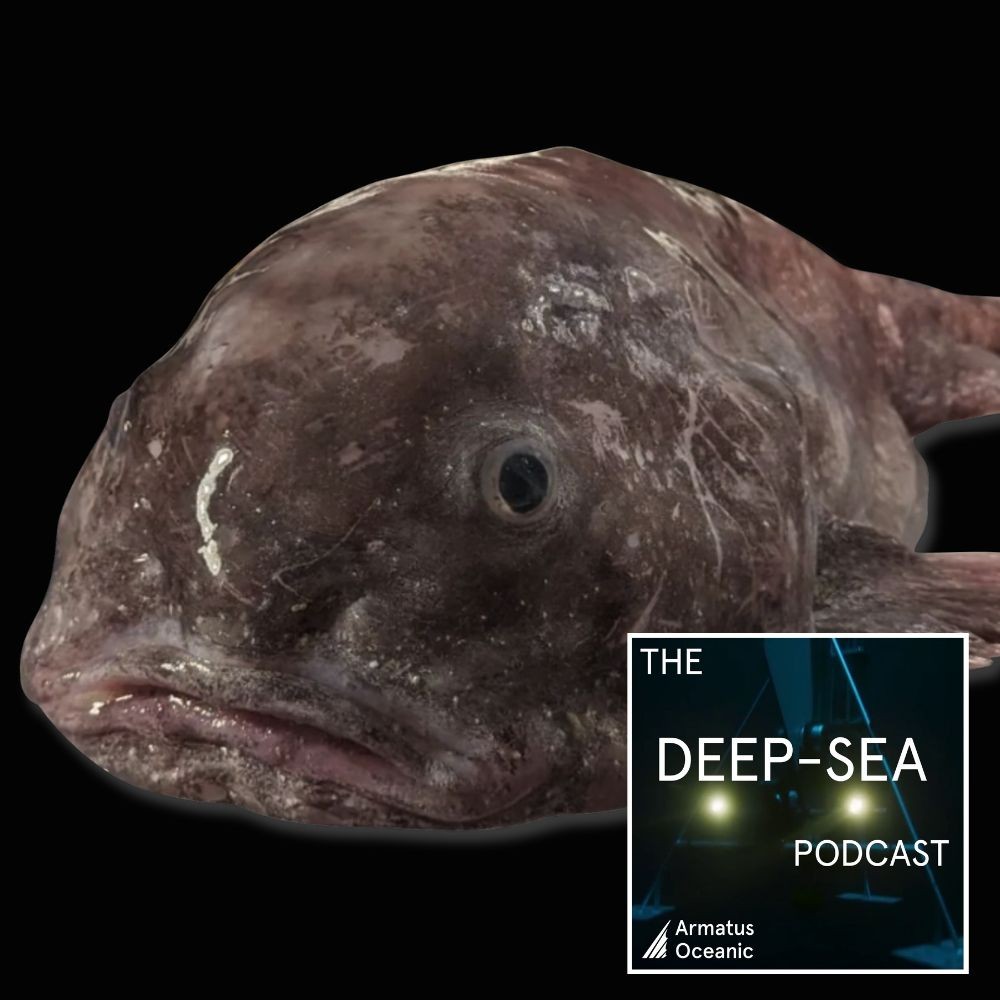
Ep 44Alan takes over
Are you looking for a podcast episode that contains the return of the blobfish, golden crochet hooks and rare deep-sea squid? Well, look no further than this episode of The Deep-Sea Podcast! It finally happened… we brought you an episode which was recorded almost completely offshore. With Dr Thom in the Bounty Trough and the Professor somewhere in the Pacific, this episode is quite the wild card. Whilst Thom has been busy crocheting fishing nets (that’s science folks), Alan was left to take the reins and he decided to go a little off-piste. We bring it back to the good old days with one of Alan’s (in)famous rants. This one is titled: When does the sea become the deep sea, and why it needs to be changed. Expect to hear about the history of why we decided what makes the deep-sea ‘deep’, and why it might not make sense anymore in our modern world. We’d love to hear your thoughts on this and whether you agree with Alan. Dr Thom does make an appearance in this episode, giving us a run-down of how the research cruise is going (SPOILER: The blobfish is back). Plus, we hear about the original blobfish and how exactly it came to be an internet sensation, from the man who was there: new fan favourite, Andrew Stewart. Finally, we check in with a key individual in the online deep-sea community space: Jeff Day. Jeff’s been on our radar for years with his immense knowledge of deep-sea cephalopods and we thought we’d finally hand him the mic. He talks to us all about his love of deep sea creatures and how he contributes to the field in unconventional ways. We’re really trying to make this project self-sustaining so we have started looking for ways to support the podcast. Here’s a link to our page on how to support us, from the free options to becoming a patron of the show. We want to say a huge thank you to those patrons who have already pledged to support us: Jacqueline | Tyler Medeiros | Kevin Gilley Thanks again for tuning in, we’ll deep-see you next time! Check out our podcast merch here! Which now includes Alan’s beloved apron and a much anticipated new design... Feel free to get in touch with us with questions or your own tales from the high seas on: [email protected] We’d love to actually play your voice so feel free to record a short audio note! We are also on Twitter: @DeepSeaPod, @ArmatusO Facebook: DeepSeaPodcast, ArmatusOceanic Instagram: @deepsea_podcast, @armatusoceanic Keep up with the team on social media Twitter: Alan - @Hadalbloke (https://twitter.com/Hadalbloke) Thom - @ThomLinley (https://twitter.com/ThomLinley) Georgia - @geeinthesea (https://twitter.com/geeinthesea) Instagram: Georgia - @geeinthesea (https://www.instagram.com/geeinthesea/) Read the show notes and find out more about us at: www.armatusoceanic.com Links Moku Art Studio virtual exhibition Parasite director Bong Joon-ho is set to begin filming deep sea species for his new film this year A new species of deep-sea mud dragon has been described by Martin Vinther Sørensen New fishery for lanternfish https://phys.org/news/2024-02-deep-sea-fishery-horizon.html Info on the original Mr Blobby People mentioned: Follow Jeff on twitter More info about Andrew Stewart Dr Vincent Zintzen (Filmed the blobfish in situ) Dr Derek Hennen (millipede and centipede taxonomist) The Magnapinna Archive (Youtube and Twitter) Bruce Robison Daniel Moore - Ocean census Kat Bolstead (ALCES Squid Squad) Kerryn Parkinson (Australian Museum) Joe Nelson (Expert in blobfishes) Soundtrack of the month: Tangaroa - Alien Weaponry Spotify & Youtube Credits Theme – Hadal Zone Express by Märvel Logo image - Thomas Linley Edited by - Georgia Wells
PRESSURISED: 019 - Deep sea squid with Mike Vecchione
bonusOur short and to the point PRESSURISED version of episode 19. If you don't have time for the full episode and want to get right to the science without any of our waffle, this is the place to be! Read the show notes and find the full episode here: https://www.armatusoceanic.com/podcast/019-squid As promised in the Christmas special, we call the ‘squid-phone’ – a special line used by scientists globally when they seem something strange and squiddy. On the other end of that line is Mike Vecchione, the expert on cephalopods. We talk giant and colossal squid (to audible groans from Mike); the bigfin squid (Magnapinna), most famous for being the squid with the long trailing arms that’s often used as an example of terrifying deep-sea creatures, but also a species, genus and Family that Mike described and would love more sightings of. We are also on: Twitter: @DeepSeaPod Facebook: @DeepSeaPodcast Instagram: @deepsea_podcast Read the show notes and find out more about us at: www.armatusoceanic.com Credits Theme – Hadal Zone Express by Märvel Edited by - Georgia Wells #deepsea #marinebiologist #marinebiology #podcast #marianatrench #science #magnapinna #colossalsquid #giantsquid #gigantism #scicomm #deepseafish #deepseacreatures
PRESSURISED: 043 - Offshore Stories: Tales of typhoons and science in submarines
bonusOur short and to the point PRESSURISED version of episode 43. If you don't have time for the full episode and want to get right to the science without any of our waffle, this is the place to be! Read the show notes and find the full episode here: https://www.armatusoceanic.com/podcast/043-offshore-stories From being repeatedly thrown off your bed in a storm, to seeing blue whales out of your porthole, working at sea doesn't leave you short of stories. And with Dr Thom and the Professor both heading offshore soon, they thought what better time to share some of their sea stories. From tips on how to hold your pee for 12+ hours, to tales of typhoons, this episode is jam-packed with real-life tales from decades of working offshore. We’re really trying to make this project self-sustaining so we have started looking for ways to support the podcast. Here’s a link to our page on how to support us, from the free options to becoming a patron of the show. We want to say a huge thank you to those patrons who have already pledged to support us: Antony Raymont | Courtney Johnston | Davina Gifford | Sophie Schindler Thanks again for tuning in, we’ll deep-see you next time! DID YOU KNOW WE SELL MERCH? Check it out here!! And please do send in any pics of you wearing the merch! Feel free to get in touch with us with questions or your own comments on: [email protected] We’d love to actually play your voice so feel free to record a short audio note! Follow us on social media! Twitter: @DeepSeaPod, @ArmatusO Facebook:DeepSeaPodcast, ArmatusOceanic Instagram: @deepsea_podcast, @armatusoceanic Keep up with the team on social media: Twitter: Alan - @Hadalbloke, Thom - @ThomLinley, Georgia - @geeinthesea Instagram: Thom - @Thom.Linley, Georgia - @geeinthesea Read the show notes and find out more about us at: www.armatusoceanic.com Credits Theme – Hadal Zone Express by Märvel Logo image - The Deep-Sea Podcast: PRESSURISED Logo Edited by - Georgia Wells
Ep 43Offshore stories: Tales of typhoons and science in submarines
From being repeatedly thrown off your bed in a storm, to seeing blue whales out of your porthole, working at sea doesn't leave you short of stories. And with Dr Thom and the Professor both heading offshore soon, they thought what better time to share some of their sea stories. From tips on how to hold your pee for 12+ hours, to tales of typhoons, this episode is jam-packed with real-life tales from decades of working offshore. In deep sea news: Norway has decided to go ahead with deep sea mining, cold coral reefs are being discovered, and hoards of marine fungi have been found in the twilight zone! But more importantly than all of that: the Professor was awarded an OBE! His sword and noble steed are currently in the post (first class), and we’re hoping they reach him in Perth from the Palace. We’ve also started a new segment with long-time friend of the show, Andrew Stewart who has an interesting hobby of manufacturing cod-liver shark-liver oil. Expect more unexpected stories from Andrew in future episodes! Finally, we want to say thanks again for your support! We have lots of exciting upcoming episodes all about the (in)famous hagfish, deep sea sharks and our favourite: chimera. Stay tuned! We’re really trying to make this project self-sustaining so we have started looking for ways to support the podcast. Here’s a link to our page on how to support us, from the free options to becoming a patron of the show. We want to say a huge thank you to those patrons who have already pledged to support us: Antony Raymont | Courtney Johnston | Davina Gifford | Sophie Schindler Thanks again for tuning in, we’ll deep-see you next time! DID YOU KNOW WE SELL MERCH? Check it out here!! And please do send in any pics of you wearing the merch! Feel free to get in touch with us with questions or your own comments on: [email protected] We’d love to actually play your voice so feel free to record a short audio note! Follow us on social media! Twitter: @DeepSeaPod, @ArmatusO Facebook:DeepSeaPodcast, ArmatusOceanic Instagram: @deepsea_podcast, @armatusoceanic Keep up with the team on social media: Twitter: Alan - @Hadalbloke, Thom - @ThomLinley, Georgia - @geeinthesea Instagram: Thom - @Thom.Linley, Georgia - @geeinthesea Read the show notes and find out more about us at: www.armatusoceanic.com Further resources Just the Zoo of us Podcast with Dr Thom DOSI newsletter to keep up with everything deep sea News Megalodon tooth found in nodule field Norway becomes the first country in the world to approve commercial-scale deep-sea mining. Largest study of ocean dna finds a huge abundance of fungi in the mesopelagic zone. Scientific paper & news article Hagfish genome sequenced Largest cold-water coral reef to date has been found Guest info Andrew’s bio Andrew’s blog on the Gut Stuffer 2000 Soundtrack of the month A Song About an Anglerfish - Hank Green Glossary Cold-water corals - Deep-water corals (or cold-water corals) grow in water temperatures of 4 - 12°C. Unlike shallow water corals, they do not depend on a symbiotic algae (zooxanthellae) for growth and survival, resulting in slower growth. Deep-sea mining - The process of extracting manganese nodules from the deep ocean floor. Hagfish - An eel-shaped jawless fish. Hagfish are marine predators and scavengers. Hull - A hull is the watertight body of a ship. Megalodon - An extinct species of giant shark that lived approximately 23 to 3.6 million years ago. Metagenomes - Genetic material taken from the environment rather than from one individual. OBE - (Order of the British Empire) is a British award rewarding contributions to the arts and sciences, work with charitable and welfare organisations, and public service outside the civil service. Squalene - Squalene is a natural oil that comes from shark liver. Submarine - A submarine (or sub) is a watercraft capable of independent operation underwater. Thrusters - Manoeuvering thrusters (bow thrusters and stern thrusters) are propulsion devices built into, or mounted to, either the bow or stern, of a ship to make it more manoeuvrable. Credits Theme – Hadal Zone Express by Märvel Logo image - Wikicommons Edited by - Georgia Wells
PRESSURISED: 018 - Sound in the deep ocean with David Barclay
bonusOur short and to the point PRESSURISED version of episode 18. If you don't have time for the full episode and want to get right to the science without any of our waffle, this is the place to be! Read the show notes and find the full episode here: https://www.armatusoceanic.com/podcast/018-sound We think of the deep sea as an eerily quiet and spooky place but that isn’t completely true, animal communication, seismic activity, human noise and even the sound of rain and waves from 10 km above. We chat with undersea audio expert Dr David Barclay about the fascinating audio properties of the deep ocean. As we are talking audio data on an audio medium, lets have some fun with a game of ‘what can we grenad-hear’ where Thom tries to guess the deep-sea sound. Feel free to get in touch with us with questions or you own tales from the high seas on: [email protected] Support the show here: https://patreon.com/deepseapodcast We are also on: Twitter: @DeepSeaPod, @ArmatusO Facebook: DeepSeaPodcast, ArmatusOceanic Instagram: @deepsea_podcast, @armatusoceanic Keep up with the team on social media Twitter: Alan - @Hadalbloke Thom - @ThomLinley Georgia - @geeinthesea Instagram: Thom - @ThomLinley Georgia - @geeinthesea Read the show notes and find out more about us at: www.armatusoceanic.com Glossary CTD: Conductivity, temperature and depth sensor Gametes: sex or germ cells. Eggs and sperm Grenadier: another name for a rattail fish Hydrothermal vent: seawater heated by the earth flows out of the seabed Lander: Free-falling or pop-up vehicle. Sinks from the surface and comes up again by dropping ballast Refraction: the change in direction of a wave passing from one medium to another Sound channel: Also called the SOFAR channel, a horizontal layer of water in the ocean at which depth the speed of sound is at its minimum Links David’s other podcast: Sciographie David’s research website Implosion in the Challenger Deep paper Underwater noise during COVID-19: Credits Theme – Hadal Zone Express by Märvel Logo image - The Deep-Sea Podcast PRESSURISED Logo

The Deco-Stop: 003 - Eco-anxiety
bonusTHE DECO-STOP: A DEEPER LOOK INTO THE HUMANS BEHIND DEEP SEA SCIENCE AND TECHNOLOGY. This is our third Deco-Stop episode, and this time we’re focusing on eco-anxiety. We are currently in the midst of an ecological crisis, but eco-anxiety is something of a mental health crisis in response. Many of us who work in this space (and many of us who don’t) are feeling these emotions, including plenty of our listeners who have got in touch to share their experiences. As such, we’ve wanted to make this episode for some time, but during it’s production, it became a far bigger subject than we were ready for. One thing that did become apparent, is that this is a dangerous subject and it is something that can do real harm. In this episode, we share with you some stories of how different individuals have influenced their lives in a direct response to eco-anxiety. Plus, we hear from the perspective of a psychotherapist who specialises in the field of climate & eco-crisis psychology. However, this is not a list of answers, and the priority is your health and safety and as the listener. We hope that this episode offers an insight towards such a big and difficult topic. Whilst it won’t leave you with a complete set of instructions on how to fix the world, we hope you find it comforting that there is a huge number of people who are feeling the same as you are. It’s a lrngthy one, so grab a cup of tea, give your local tree a quick hug, and tune in to this beefy episode of the Deco-Stop. MEET OUR GUESTS CAROLINE HICKMAN Psychotherapist and lecturer at the University of Bath working in the field of climate psychology. Her research focuses on eco-anxiety, distress about the climate and ecological crisis in children and young people. LEARN MORE DAN DE KLERK Co-founder of Nomadic Permaculture, an organisation based in Picton, New Zealand that offers consultancy and courses in how to live a more sustainable lifestyle in harmony with your local community and ecosystem. LEARN MORE BRIAN BERNEMAN Wellness coach and co-founder of Conscious Action, a collective based in Auckland, New Zealand that encourages people to make meaningful and achievable changes in their lives, to help the planet. LEARN MORE DID YOU KNOW WE SELL MERCH? Check it out here!! And please do send in any pics of you wearing the merch! Feel free to get in touch with us with questions or your own comments on: [email protected] We’d love to actually play your voice so feel free to record a short audio note! FOLLOW US ON SOCIAL MEDIA! Twitter: @DeepSeaPod, @ArmatusO Facebook:DeepSeaPodcast, ArmatusOceanic Instagram: @deepsea_podcast, @armatusoceanic Keep up with the team on social media Twitter: Alan - @Hadalbloke, Thom - @ThomLinley, Georgia - @geeinthesea Instagram: Georgia - @geeinthesea LINKS RESOURCES MENTIONED BY DAN Dan’s Nomadic Permaculture course on sustainable food growing Info on the Kaipātiki Project (which Dan also works for) and his Sustainable Life: Design Workshop MENTIONED BY CAROLINE Sally Weintrobe - Psychoanalyst who focuses on climate anxiety and it’s links to neoliberal capitalism and the culture of ‘un-care’ Jay Griffiths - Author who writes about how western children have more mental health issues than children from indigenous cultures Paul Hoggett - Co-founder of the Climate Psychology Alliance and coined the term ‘love miles’ Every other day a climate activist is murdered - news article Climate Psychology Alliance Therapeutic Support Climate Psychology Alliance Climate Cafes CREDITS Theme – Hometime by Harvey Jones Logo image - The Deco-Stop
PRESSURISED: 017 - Going to sea with Larkin
bonusOur short and to the point PRESSURISED version of episode 17. If you don't have time for the full episode and want to get right to the science without any of our waffle, this is the place to be! Read the show notes and find the full episode here: https://www.armatusoceanic.com/podcast/017-going-to-sea We love going to sea, it is probably the best part of the job. That’s where most of our adventures happen, that’s where most of the exciting discoveries and firsts happen and it’s where we meet some of the most interesting people. We want you to have a great time at sea too and not be put off by a bad first experience. Poor packing or a faux pas could spoil the whole experience and we don’t want that. We put together some advice for your first trip. Forgive us if parts seem patronising, they are all things we have seen spoil someone’s trip and with everything else to worry about, it’s easy to forget the simple stuff. We chat with Larkin, a deck-hand turned youtuber about life at sea and sharing that experience through her videos. What is her average day like at sea and how’s the morning commute when your office is a small response vessel chasing a submarine 10,000 m below you? How can you get a celebratory tattoo offshore from an unqualified scientist? “Don’t worry, he’s a doctor, not that sort of doctor but don’t worry about that!” Feel free to get in touch with us with questions or you own tales from the high seas on: [email protected] We are also on Twitter: @ArmatusO Facebook: ArmatusOceanic Instagram: @armatusoceanic Read the show notes and find out more about us at: www.armatusoceanic.com Glossary AB – Able Bodied seamen or deck hands A-frame – type of lifting equipment, usually at the stern Aft – towards the front of the boat Bow – the front of the boat Bridge – Usually at the top of the boat, where it is steered from Bulkhead – the thick metal internal walls of a boat Cabin – where you sleep offshore Deck – the floors on a boat Fore – towards the front of the boat Head – the toilet Mates – Officers under the captain (1st and 2nd mate) Mess – the dining hall on a boat Port – left side of the boat (regardless of which way you are facing), colour coded red Rigger boots – steel toe capped safety shoes Starboard - right side of the boat (regardless of which way you are facing), colour coded green Zodiac – a small and fast inflatable boat My Salty Sea Life Website Instagram YouTube Facebook Larkin’s ‘a day in the life of a sailor’ video. Great prep for your first time at sea. Larkin’s morning commute (a keen eye may spot Alan pottering about in the background) Credits Theme – Hadal Zone Express by Märvel Logo image - The Deep-Sea Podcast PRESSURISED
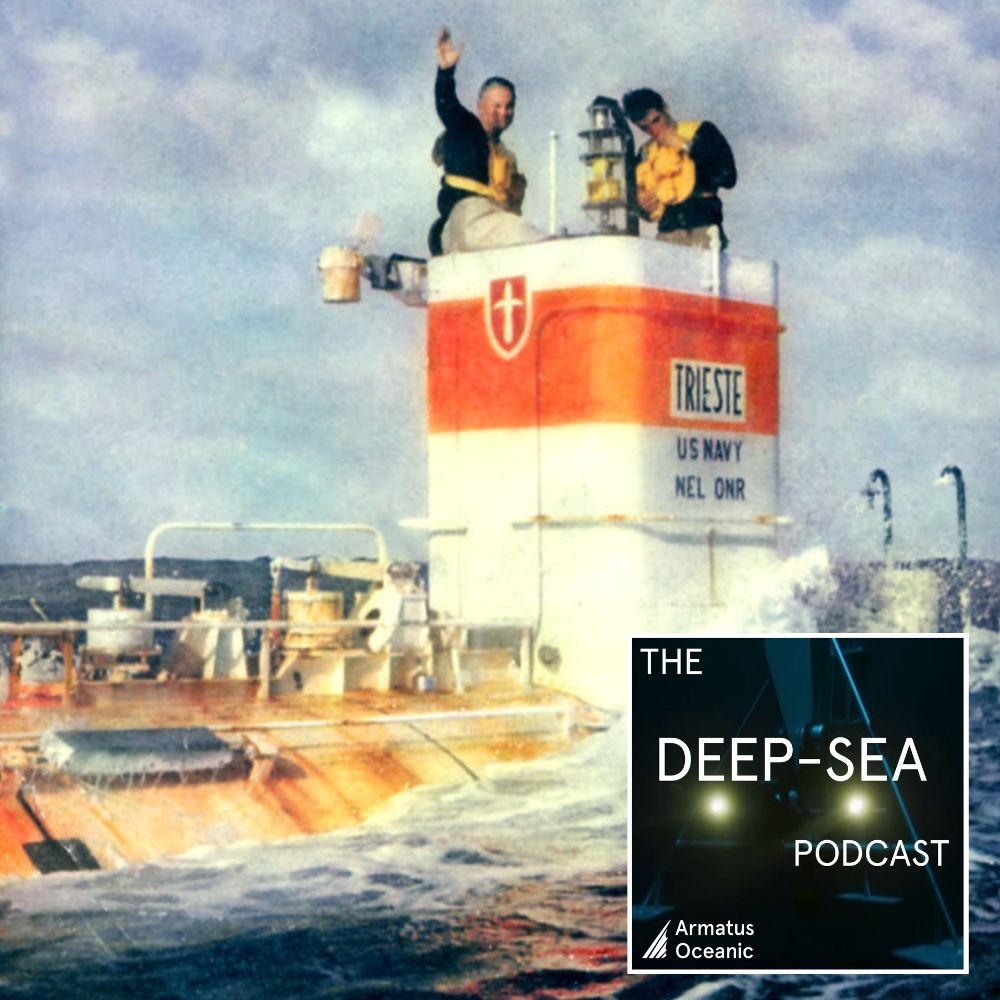
Ep 42The legendary Don Walsh with Rob McCallum
"Exploration is curiosity acted upon." — Don Walsh In this month’s episode, we’re honouring the late great Don Walsh, who sadly left us this month. You may have noticed that we hadn’t heard from Don in a good few months. He had a couple of ops that required some getting over, but that wasn’t going to slow him down. In September he was going through the Northwest Passage, a trip he had attempted 2 previous times but had been scuppered by weather and vessel trouble. Don’s unwavering commitment to deep-sea exploration meant that the monthly sea stories were no longer possible but we weren’t going to let the legendary Don Walsh sneak off without some fanfare, not after everything he’s done for us. We were putting together a Christmas episode where we could share some drinks and stories with Don and give him a proper send-off. While we were sorting out dates that everyone could do, Don passed. 92, nodding off in his favourite chair at the remote home he loved, surrounded by nature. Over the last 3 years it’s been a privilege to have Don recount one of his endless list of stories with us every month, stories that always made us smile. In some attempt to raise a toast to him and all that he’s done for the community, we bring you this Don Special episode. He will be missed. Legend. Thanks again for tuning in, we’ll deep-see you next time! Feel free to get in touch with us with questions or your own comments on: [email protected] We’d love to actually play your voice so feel free to record a short audio note! We are also on: Twitter: @DeepSeaPod, @ArmatusO Facebook: DeepSeaPodcast, ArmatusOceanic Instagram: @deepsea_podcast, @armatusoceanic Keep up with the team on social media Twitter: Alan - @Hadalbloke Thom - @ThomLinley Georgia - @geeinthesea Instagram: Thom - @ThomLinley Georgia - @geeinthesea Read the show notes and find out more about us at: www.armatusoceanic.com Credits Theme – Hadal Zone Express by Märvel Logo image - Life Magazine 1960 Edition
PRESSURISED: 016 - Biodiscovery with Marcel Jaspars
bonusOur short and to the point PRESSURISED version of episode 16. If you don't have time for the full episode and want to get right to the science without any of our waffle, this is the place to be! Read the show notes and find the full episode here: https://www.armatusoceanic.com/podcast/016-biodiscovery We are in desperate need for new bioactive compounds. Super bugs are on the rise as evolution finds a way of thwarting our antibiotics. We are also continually on the hunt for compounds that can fight disease, ease suffering or get your teeth super white. The natural world has been experimenting for millions of years and has come up with solutions far more elegant than we could come up with. The ocean, and in particular the deep ocean, may be the best place to look for new compounds but is this a threat to the ocean? It is often mentioned alongside seabed trawling, climate change and mining as a threat to the deep ocean. Should we call it bioprospecting or biodiscovery and what’s the difference? If most of the world’s ocean belongs to everyone, who owns a discovery? How do we ensure that developed nations, who are better equipped to benefit from a discovery, don’t leave developing nations out? Are companies really patenting naturally occurring compounds? If we find something exciting, what is the process for it becoming the next wonder drug? While they both agree that looking for new compounds in the deep sea sounds good, Alan and Thom are soon stumped by the complexities of actually making that happen in a fair and sustainable way. Luckily, they can call on Professor Marcel Jaspars, head of the Marine Biodiscovery Centre to help us through the practicalities of biodiscovery but also its political and ethical complexities. Feel free to get in touch with questions or you own tales from the high seas on: [email protected] We are also on Twitter: @ArmatusO Facebook: ArmatusOceanic Instagram: @armatusoceanic Read the show notes and find out more about us at: www.armatusoceanic.com Links United Nations Convention on the Law of the Sea The Convention on Biological Diversity The Nagoya Protocol The Deepest of Ironies (paywall) Evolving Perspectives On The International Seabed Area’s Genetic Resources: Fifteen Years After The ‘Deepest Of Ironies’ (paywall) Who owns marine biodiversity? Contesting the world order through the ‘common heritage of humankind’ principle Corporate control and global governance of marine genetic resources Polymers: Secrets from the deep sea Ocean Biodiversity Information System (OBIS) Ocean Tool for Public Understanding and Science (OcToPUS) Song of the Ocean – Global Virtual Performance 2021 Sharing the Benefits of the Ocean (loads of wider reading here) Glossary Benthopelagic - Living and feeding near the bottom as well as in midwaters or near the surface but also the depth zone about 100 metres off the bottom at all depths below the edge of the continental shelf. Endothermy – Animals that regulate their body temperature (we used to call this ‘warm blooded’) Geomagnetic – The Earth’s magnetic field e.g., magnetic north. Mantle – The muscular tube that makes up a squids body. Mesopelagic – Open water fish between about 200 and 1,000 metres (approximately 650 and 3,300 ft) down. SoFAR channel - sound fixing and ranging channel. The SOFAR channel acts as a waveguide for sound, and low frequency sound waves within the channel may travel thousands of miles before dissipating. Vertical migration – Every night, mesopelagic fish come shallower to feed. This is the largest migration on Earth and it happens every day. Credits Theme – Hadal Zone Express by Märvel
PRESSURISED: 041 - Deep diving whales with Nicola Quick
bonusOur short and to the point PRESSURISED version of episode 41. If you don't have time for the full episode and want to get right to the science without any of our waffle, this is the place to be! Read the show notes and find the full episode here: https://www.armatusoceanic.com/podcast/041-whales We all know that Thom and Alan aren’t the biggest fans of ‘air-breathers’ aka. marine mammals like dolphins and whales, but there are a few species that are allowed into the deep-sea club. We hear from Dr Nicola Quick who researches the incredibly elusive beaked whales, a group that likely spends the majority of their time in the deep sea. These interesting whales have been seen diving to depths of 3000 m, which way exceeds the max depth of their more famous cousin, the sperm whale (who usually hang out at around 1500m deep). We’re really trying to make this project self-sustaining so we have started looking for ways to support the podcast. Here’s a link to our page on how to support us, from the free options to becoming a patron of the show. Thanks again for tuning in, we’ll deep-see you next time! Check out our podcast merch here! Which now includes Alan’s beloved apron and a much anticipated new design... Feel free to get in touch with us with questions or your own tales from the high seas on: [email protected] We’d love to actually play your voice so feel free to record a short audio note! We are also on: Twitter: @DeepSeaPod, @ArmatusO Facebook: DeepSeaPodcast, ArmatusOceanic Instagram: @deepsea_podcast, @armatusoceanic Keep up with the team on social media Twitter: Alan - @Hadalbloke (https://twitter.com/Hadalbloke) Thom - @ThomLinley (https://twitter.com/ThomLinley) Georgia - @geeinthesea (https://twitter.com/geeinthesea) Instagram: Georgia - @geeinthesea (https://www.instagram.com/geeinthesea/) Read the show notes and find out more about us at: www.armatusoceanic.com FURTHER RESOURCES MORE INFORMATION ON NICOLA https://www.plymouth.ac.uk/staff/nicola-quick https://scholars.duke.edu/person/nicola.quick/ Nicola’s paper on tagging the deep-diving beaked whales Nicola’s twitter Wider reading Credits Theme – Hadal Zone Express by Märvel Logo image - The Deep-Sea Podcast PRESSURISED GLOSSARY Bounce dives - A series of shorter, shallower dives for beaked whales in between really big, deep dives to >1500 m Cetacean - The group name for whales and dolphins Cuvier's Beaked Whale - One of the most frequently sighted species of beaked whales in the world. They are found in most oceans and seas worldwide and have the most extensive range of all beaked whale species. Epiglottis - The small, movable "lid" just above the larynx that prevents food and drink from entering the windpipe. Foraging - A technical term for ‘finding food’. Mammal - A vertebrate that breathes air, has mammary glands and three inner ear bones. PAMs (Passive acoustic monitoring) - Surveying and monitoring wildlife and environments using sound recorders (acoustic sensors). Pod - The term for a group of cetaceans. VHF antenna - A VHF marine radio antenna is used to transmit and receive VHF marine radio signals enabling communication with other boats, as well as with the shore and other emergency services. Ziphiidae - The family name for beaked whales.
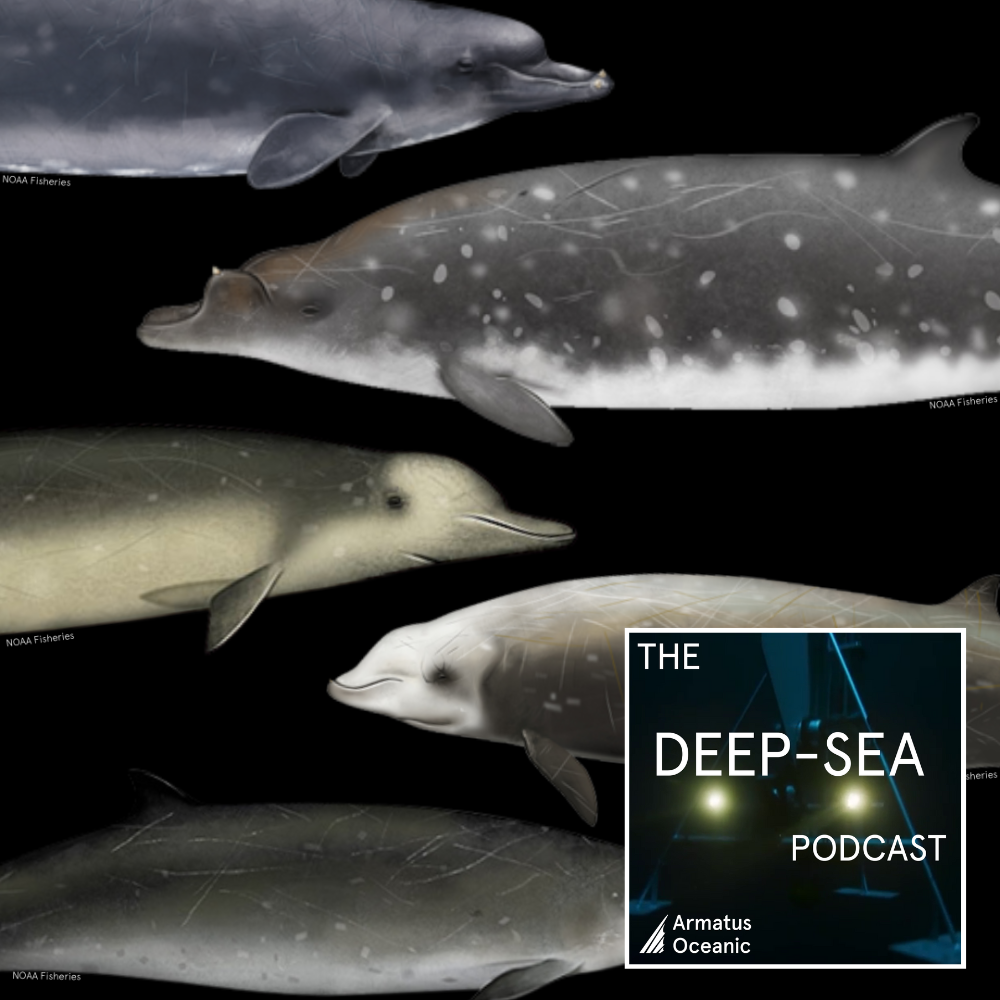
Ep 41Deep diving whales with Nicola Quick
We all know that Thom and Alan aren’t the biggest fans of ‘air-breathers’ aka. marine mammals like dolphins and whales, but there are a few species that are allowed into the deep-sea club. We hear from Dr Nicola Quick who researches the incredibly elusive beaked whales, a group that likely spends the majority of their time in the deep sea. These interesting whales have been seen diving to depths of 3000 m, which way exceeds the max depth of their more famous cousin, the sperm whale (who usually hang out at around 1500m deep). It also turns out that we as humans have something in common with these deep diving critters: the mammalian dive response. We hear from Dr Ryan ‘Beefy’ Beecroft, a sub engineer and keen free-diver, who explains to us what deep diving feels like when you are an air breather. What’s more, the Professor tells the story about the infamous Goblet of Hades. If you manage to see this little piece of history in the background of documentaries, please do send a pic in! We’re really trying to make this project self-sustaining so we have started looking for ways to support the podcast. Here’s a link to our page on how to support us, from the free options to becoming a patron of the show. We want to say a huge thank you to those patrons who have already pledged to support us: Andy Koenig | Trace Ritchey | Harley Pollitt | Alice Thanks again for tuning in, we’ll deep-see you next time! Check out our podcast merch here! Which now includes Alan’s beloved apron and a much anticipated new design... Feel free to get in touch with us with questions or your own tales from the high seas on: [email protected] We’d love to actually play your voice so feel free to record a short audio note! We are also on: Twitter: @DeepSeaPod, @ArmatusO Facebook: DeepSeaPodcast, ArmatusOceanic Instagram: @deepsea_podcast, @armatusoceanic Keep up with the team on social media Twitter: Alan - @Hadalbloke (https://twitter.com/Hadalbloke) Thom - @ThomLinley (https://twitter.com/ThomLinley) Georgia - @geeinthesea (https://twitter.com/geeinthesea) Instagram: Georgia - @geeinthesea (https://www.instagram.com/geeinthesea/) Read the show notes and find out more about us at: www.armatusoceanic.com FURTHER RESOURCES LINKS MORE INFORMATION ON NICOLA https://www.plymouth.ac.uk/staff/nicola-quick https://scholars.duke.edu/person/nicola.quick/ Nicola’s paper on tagging the deep-diving beaked whales Nicola’s twitter Wider reading NEWS Andrew’s hadal coffee blog from back in the day The blue Atacama snailfish has some fanart The quest for the bibby. It seems to be from a RPG project called Snail Morning about hadal snailfish.Twitter & Blog Deep-sea neutrino telescope in the Western Pacific https://www.nature.com/articles/s41550-023-02087-6 https://www.shine.cn/news/metro/2310104693/ Sounds of the deep Seals To Exploit Sparse Deep-sea Prey SOUNDTRACK OF THE MONTH: The Hagfish Incident by Louie Zong Spotify Youtube Context: The incident it is paying tribute to is when a truck carrying Police in Oregon were in a slimy situation on Thursday after a truck carrying 7,500 pounds of live hagfish failed to stop at a construction site and spilled its contents onto the highway and over surrounding cars. “As the tanks fall down, slime will coat your Toyota Preus” News report: https://youtu.be/ctoBivu2NSE?si=oafVp4RgcWevlWbt https://www.nationalgeographic.com/animals/article/hagfish-slime-oregon-highway Credits Theme – Hadal Zone Express by Märvel Logo image - NOAA Fisheries GLOSSARY Bounce dives - A series of shorter, shallower dives for beaked whales in between really big, deep dives to >1500 m Cetacean - The group name for whales and dolphins Cuvier's Beaked Whale - One of the most frequently sighted species of beaked whales in the world. They are found in most oceans and seas worldwide and have the most extensive range of all beaked whale species. Epiglottis - The small, movable "lid" just above the larynx that prevents food and drink from entering the windpipe. Foraging - A technical term for ‘finding food’. Mammal - A vertebrate that breathes air, has mammary glands and three inner ear bones. PAMs (Passive acoustic monitoring) - Surveying and monitoring wildlife and environments using sound recorders (acoustic sensors). Pod - The term for a group of cetaceans. VHF antenna - A VHF marine radio antenna is used to transmit and receive VHF marine radio signals enabling communication with other boats, as well as with the shore and other emergency services. Ziphiidae - The family name for beaked whales.
PRESSURISED: 015 - Space pt 2 - Extreme tech with Evan Hilgemann
bonusOur short and to the point PRESSURISED version of episode 15. If you don't have time for the full episode and want to get right to the science without any of our waffle, this is the place to be! Read the show notes and find the full episode here: www.armatusoceanic.com/podcast/015-space-pt2 We are still exploring the parallels between space and deep-ocean exploration. It feels like technology and access is really accelerating in both spheres. Don calls in to teach us about the amount of water in our solar system and the potential new job title – Planetary Oceanographer. When samples or access to a vehicle is limited, how can we ensure that resources are shared fairly? We have seen it lead to disagreements on ships. With something as singular and precious as a Mars rover, how are its objectives planned? Evan Hilgemann, mechanical engineer and Curiosity Rover driver with NASA’s Jet Propulsion Lab (JLP) joins us to share how a rover is managed. We chat about the parallels between exploring mars and exploring the deep sea, the similar issues we face, what we can learn from each other and most excitingly, where is technology heading on both fronts! These are exciting times. Feel free to get in touch with questions or you own tales from the high seas on: [email protected] We are also on Twitter: @ArmatusO Facebook: ArmatusOceanic Instagram: @armatusoceanic Read the show notes and find out more about us at: www.armatusoceanic.com Glossary Autonomous - Something which can get on with things without human control AUV - Autonomous Underwater Vehicle Distributed intelligence – a very fuzzy term but basically multiple ‘stupid’ elements working together to do complex processing or make complex decisions. Hadal - Areas more than 6000 m deep, mainly the deep-ocean trenches JPL - NASA Jet Propulsion Laboratory ROV - Remotely Operated Vehicle Transect - A quantitative survey of an area. You fly a set path and quantify everything on it. Links Evan’s Twitter: @evanhilgemann Evan’s Newsletter Credits Theme – Hadal Zone Express by Märvel
PRESSURISED: 040 - Submarine canyons with Teresa Amaro
bonusOur short and to the point PRESSURISED version of episode 40. If you don't have time for the full episode and want to get right to the science withut any of our waffle, this is the place to be! Read the show notes and find the full episode here: www.armatusoceanic.com/podcast/040-canyons So everyone has been pretty busy but we finally got round to finishing off our deep sea habitats series with this episode on submarine canyons. We talk with Dr Teresa Amaro, from the University of Aveiro in Portugal about these hugely important habitats in the deep sea and how they influence the fauna of the continental shelf. Thanks again for tuning in, we’ll deep-see you next time! DID YOU KNOW WE SELL MERCH? Check it out here!! And please do send in any pics of you wearing the merch! Feel free to get in touch with us with questions or your own comments on: [email protected] We’d love to actually play your voice so feel free to record a short audio note! FOLLOW US ON SOCIAL MEDIA! Twitter: @DeepSeaPod, @ArmatusO Facebook:DeepSeaPodcast, ArmatusOceanic Instagram: @deepsea_podcast, @armatusoceanic Keep up with the team on social media Twitter: Alan - @Hadalbloke, Thom - @ThomLinley, Georgia - @geeinthesea Instagram: Georgia - @geeinthesea Read the show notes and find out more about us at: www.armatusoceanic.com CREDITS Theme – Hadal Zone Express by Märvel
Ep 40040 - Submarine canyons with Teresa Amaro
So everyone has been pretty busy but we finally got round to finishing off our deep sea habitats series with this episode on submarine canyons. We talk with Dr Teresa Amaro, from the University of Aveiro in Portugal about these hugely important habitats in the deep sea and how they influence the fauna of the continental shelf. Plus, we get to hear the infamous story of when The Professor and Teresa docked in Lisbon during a cruise and Teresa was able to clear out a bar for the whole of the crew. Plus, the deep sea has been all over the news this month with lots of new papers being released. Magnetic bacteria have been found by the (phenomenally named) HYPER-DOLHPIN ROV, mysterious markings on the seafloor turn out to be face-planting fish, and scientists have been training jellyfish to navigate through assault courses (kinda). The Professor’s deep sea research lab have also been busy recently with lots of exciting videos coming out from their landers. Plus, one mystery creature has the whole team stumped. Is it a nudibranch? Or is it something else entirely? We’re really trying to make this project self-sustaining so we have started looking for ways to support the podcast. Here’s a link to our page on how to support us, from the free options to becoming a patron of the show. We want to say a huge thank you to those patrons who have already pledged to support us: Julian Moore | Juli Berwald | Karen Pratt | Susan Casey Thanks again for tuning in, we’ll deep-see you next time! DID YOU KNOW WE SELL MERCH? Check it out here!! And please do send in any pics of you wearing the merch! Feel free to get in touch with us with questions or your own comments on: [email protected] We’d love to actually play your voice so feel free to record a short audio note! FOLLOW US ON SOCIAL MEDIA! Twitter: @DeepSeaPod, @ArmatusO Facebook:DeepSeaPodcast, ArmatusOceanic Instagram: @deepsea_podcast, @armatusoceanic Keep up with the team on social media Twitter: Alan - @Hadalbloke, Thom - @ThomLinley, Georgia - @geeinthesea Instagram: Georgia - @geeinthesea Read the show notes and find out more about us at: www.armatusoceanic.com FURTHER RESOURCES LINKS Kelp lightbulb art exhibition at Te Papa Big eye jellyhead spotted on Alan’s landers Unknown species spotted on Alan’s landers Fish have been smashing their faces into the seabed for a while Fossil spines reveal deep sea's past Revolutionary deep-sea habitat to be available by 2027 Magnetic bacteria in the deep sea Learning in Jellyfish DNA found in filter feeding sponges reveals deep-sea fish community Incise symposium 2023 CREDITS Theme – Hadal Zone Express by Märvel Logo image - NOAA GLOSSARY Canyon - Narrow steep-sided valleys that cut into continental slopes and continental rises of the oceans. Cleft - A divide. Continental shelf - A continental shelf is the edge of a continent that lies under the ocean. It extends from the coastline of a continent to a drop-off point called the shelf break. Holothurian - A sea cucumber. They feed by ingesting sediment to obtain the nutrients. Lander - A piece of deep sea equipment which free-falls to the seafloor and collects data via cameras, collection equipment etc. ROV - Remotely operated vehicle. These are robots, tethered to the surface vessel which are used to explore an area in the deep sea, whilst being operated from the surface.
PRESSURISED: 014 - Space pt 1 - Deep sea of other worlds with Kevin Hand and Casey Machado
bonusOur short and to the point PRESSURISED version of episode 14. If you don't have time for the full episode and want to get right to the science without any of our waffle, this is the place to be! Read the show notes and find the full episode here: www.armatusoceanic.com/podcast/014-space-pt1 The topic for this double episode is, as ever, the deep sea. But this time we are talking about the deep sea… Innnnnn Spaaaaaaaace! It turns out there is deep sea outside of earth in our solar system in the ice-covered moons of the gas giants. How likely are they to contain deep-sea life completely independent from the life that originated on earth? Thom chats with astrobiologist Kevin Peter Hand, author of Alien Oceans: The search for life in the depths of space, and director of NASA’s Ocean Worlds Lab. What are the best candidates for alien life in our solar system? What could that life be like and why does our own deep ocean provide a perfect test bed? It turns out that the early versions of the vehicles which may some day explore these ocean worlds are already in development. Thom chats with Casey Machado, Research Engineer at Woods Hole Oceanographic Institution about the Orpheus AUV, the first generation of such vehicle and a new asset to the exploration of our own deep ocean. Feel free to get in touch with us with questions or your own tales from the high seas on: [email protected] We are also on: Twitter: @ArmatusO Facebook: ArmatusOceanic Instagram: @armatusoceanic Read the show notes and find out more about us at: www.armatusoceanic.com
PRESSURISED: 039 - Mollusc special with Kerry Walton
bonusOur short and to the point PRESSURISED version of episode 39. If you don't have time for the full episode and want to get right to the science without any of our waffle, this is the place to be! Read the show notes and find the full episode here: www.armatusoceanic.com/podcast/039-molluscs Our very special guest this month is the fantatsic Kerry Walton from the Te Papa Museum in New Zealand. Kerry talks us through the weird and wonderful world of marine molluscs, from the deep to the not so deep, and what makes them fascinating to study. We learn about the very interesting Chainmail snail (Chrysomallon squamiferum), or as some call it ‘the scaly-foot snail’ (but we all agree that ‘chainmail snail’ is way cooler). Plus we hear all about the unbelievable species of limpets that survive on baleen from whalefalls, and those that live on human hair in estuaries (?!?!). We’re really trying to make this project self-sustaining so we have started looking for ways to support the podcast. Here’s a link to our page on how to support us, from the free options to becoming a patron of the show. Thanks again for tuning in, we’ll deep-see you next time! DID YOU KNOW WE SELL MERCH? Check it out here!! And please do send in any pics of you wearing the merch! Feel free to get in touch with us with questions or your own comments on: [email protected] We’d love to actually play your voice so feel free to record a short audio note! FOLLOW US ON SOCIAL MEDIA! Twitter: @DeepSeaPod, @ArmatusO Facebook:DeepSeaPodcast, ArmatusOceanic Instagram: @deepsea_podcast, @armatusoceanic Keep up with the team on social media Twitter: Alan - @Hadalbloke, Thom - @ThomLinley, Georgia - @geeinthesea Instagram: Georgia - @geeinthesea Read the show notes and find out more about us at: www.armatusoceanic.com FURTHER RESOURCES LINKS FROM KERRY’S INTERVIEW Kerry Walton’s Research The snail with a bivalve shell Chainmail snail Baleen eating limpet Historic whalefall communities CREDITS Theme – Hadal Zone Express by Märvel Logo image - Dr Chong Chen
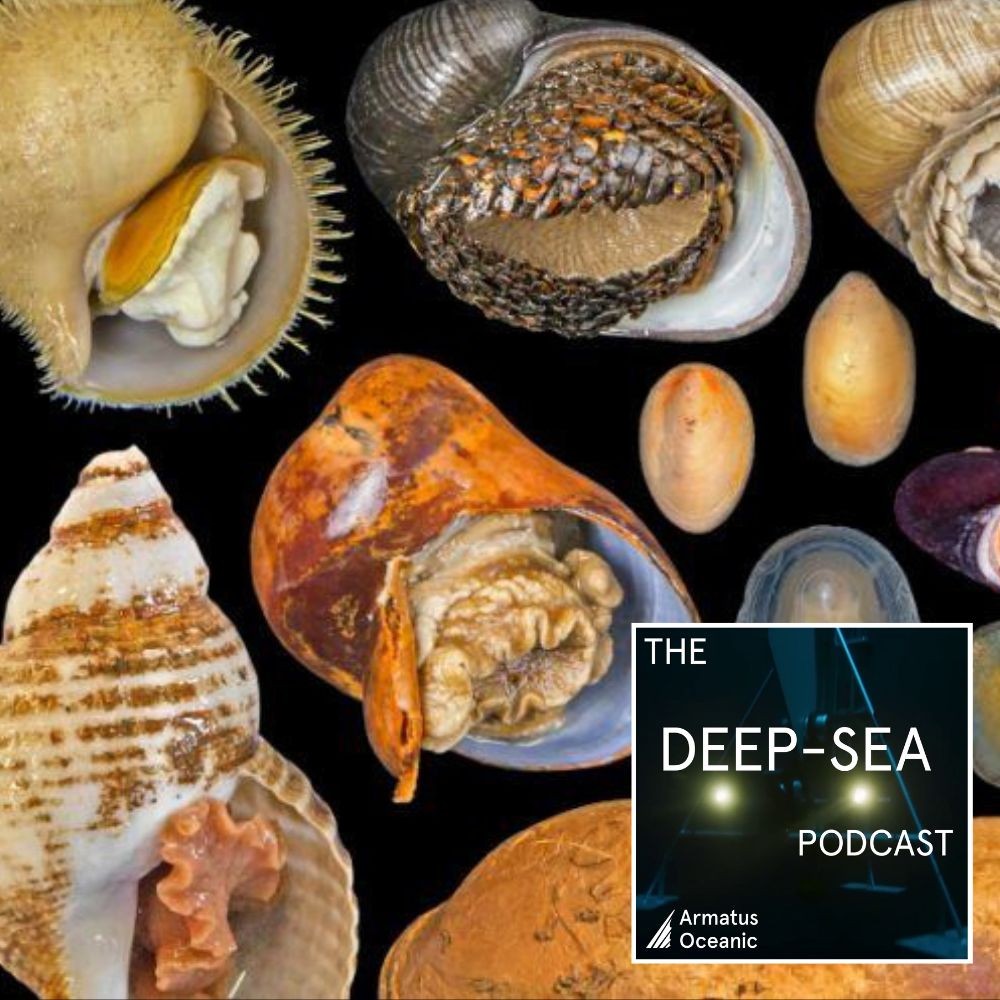
Ep 39039 - Mollusc special with Kerry Walton
What do punk snails, turning 40 and Titipo the Little Train have in common? Thats right! The latest episode of the deep-sea podcast. We might be a little late this month but we’ve packed in as much as we can with this one. We’re covering all the latest deep sea news, including new deep sea habitats, octopus gardens and brand new amphipod species. Plus, we hear from Becca Nicholls about her experiences of working as a woman offshore, and how old superstitions are still very much a thing. Our very special guest this month is the fantatsic Kerry Walton from the Te Papa Museum in New Zealand. Kerry talks us through the weird and wonderful world of marine molluscs, from the deep to the not so deep, and what makes them fascinating to study. We learn about the very interesting Chainmail snail (Chrysomallon squamiferum), or as some call it ‘the scaly-foot snail’ (but we all agree that ‘chainmail snail’ is way cooler). Plus we hear all about the unbelievable species of limpets that survive on baleen from whalefalls, and those that live on human hair in estuaries (?!?!). Friend of the show, Susan Casey has also just released her new book The Underworld in which Dr Thom and the Professor make an appearance! In her newest novel, Susan takes us on a journey through the history of deep-sea exploration, from the myths and legends of the ancient world to the scientists who are just beginning to understand the mind-blowing complexity and ecological importance of the quadrillions of creatures who live in realms long thought to be devoid of life. It’s so great to see this book finally out there after years of hard work. Get yourself a copy here. Want to hear Susan’s episode of the podcast? Check it out here. We’re really trying to make this project self-sustaining so we have started looking for ways to support the podcast. Here’s a link to our page on how to support us, from the free options to becoming a patron of the show. We want to say a huge thank you to those patrons who have already pledged to support us: James Fleming | Charne Lavery | Christopher Rawlins | Shona Riddell Thanks again for tuning in, we’ll deep-see you next time! DID YOU KNOW WE SELL MERCH? Check it out here!! And please do send in any pics of you wearing the merch! Feel free to get in touch with us with questions or your own comments on: [email protected] We’d love to actually play your voice so feel free to record a short audio note! FOLLOW US ON SOCIAL MEDIA! Twitter: @DeepSeaPod, @ArmatusO Facebook:DeepSeaPodcast, ArmatusOceanic Instagram: @deepsea_podcast, @armatusoceanic Keep up with the team on social media Twitter: Alan - @Hadalbloke, Thom - @ThomLinley, Georgia - @geeinthesea Instagram: Georgia - @geeinthesea Read the show notes and find out more about us at: www.armatusoceanic.com FURTHER RESOURCES LINKS FROM KERRY’S INTERVIEW Kerry Walton’s Research The snail with a bivalve shell Chainmail snail Baleen eating limpet Historic whalefall communities FROM THE REST OF THE EPISODE Thom’s appearance in the New Species Podcast Alan’s appearance on the Fish of the Week Podcast Thom’s appearance on the BBC’s Dark Places talk NEWS Exploring the Deep Sea: Ngā Kōrero Webinar Recap (seaweek.org.nz) Caves and tunnels have been found under hydrothermal vents Scientists confirm that octopuses use thermal springs in the deep sea to accelerate brooding time Adorable little midshipmen fry in a depressing story New genus of deep sea crustacean is established SOUNDTRACK OF THE MONTH Titipo the Little Train - Theme Song Youtube CREDITS Theme – Hadal Zone Express by Märvel Logo image - Dr Chong Chen GLOSSARY Baleen - The hair-like filaments found in certain whales which function similarly to teeth, to filter seawater for food. Cephalopod - A member of the mollusc class consisting of squids, octopus, cuttlefish and nautilus. Chirality - Chirality is a property of an item that means it cannot be superimposed on its mirror image, as seen in the left and right hands. Chitinous - Made of chitin (the material that gives strength to the exoskeletons of crustaceans, insects and fungi walls). Commensal relationship - A long-term biological interaction in which members of one species gain benefits while those of the other species are unaffected. Conspecific - Belonging to the same species. Dexterally - Latin for right-turning. Keratin - A structural fibrous protein that forms hair and nails. Mollusc - The second-largest phylum of invertebrate animals, after the Arthropoda. Includes snails, clams, osyters, limpets, octopus, squid etc. Operculum - (In gastropods), it’s the firm structure on a snails foot which acts as a trapdoor to seal the soft body of the snail in it’s shell. Sinisterly - Latin origin for left-turning.
PRESSURISED: 013 - Submarine special
bonusOur short and to the point PRESSURISED version of episode 13. If you don't have time for the full episode and want to get right to the science without any of our waffle, this is the place to be! Read the show notes and find the full episode here: https://www.armatusoceanic.com/podcast/013-submarine-special Thom thought he had the podcast to himself, but it turns out the professor is back after 88 days at sea. It’s time for our submarine, or human occupied vehicle (HOV) if you’re posh, special. First we reunite ‘Vegemite and Haggis’ and talk to submarine pilot Tim Macdonald about his and Alan’s undersea adventures around Australia. Manganese nodule fields, gothic cathedrals, and an undersea UFO. We then speak with Patrick Lahey and Frank Lombardo of Triton Submarines, a bespoke submarine manufacturer, about privately owned submersibles. Initially as luxury pleasure craft but we soon find out that there is a wide range of reasons why someone would want their own sub. Throughout their careers they have had many incredible experiences, like seeing a sixgill shark give birth and communicating with bioluminescent organisms. The podcast wouldn’t be complete without checking in with Don Walsh. He tells us about the large commercial tourist submarines which have now produced more tourist submariners than the US navy. Glossary Autonomous vehicle: A vehicle that doesn’t need a human pilot Globular: Globe-like, spherical Human Occupied Vehicle (HOV): Another term for a submarine Hypoxic: Insufficient oxygen Thrusters: the propellers on an underwater vehicle that allow it to move Links Triton submersibles Atlantis tourist subs
PRESSURISED: 038 - Deep sea jellies with George Matsumoto
bonusOur short and to the point PRESSURISED version of episode 38. If you don't have time for the full episode and want to get right to the science without any of our waffle, this is the place to be! Read the show notes and find the full episode here: www.armatusoceanic.com/podcast/038-jellies The Professor is back on land and Dr Thom is back from Squid Christmas, what a better time to talk about the squishiest of deep sea critters? We talk with George Matsumoto from MBARI all about gelatinous deep sea species. How do we study them? How on earth can we preserve them or even capture their fragile bodies? Plus, we find out exactly what that curious little blue spiky blob was. We’re really trying to make this project self-sustaining so we have started looking for ways to support the podcast. Here’s a link to our page on how to support us, from the free options to becoming a patron of the show. We want to say a huge thank you to those patrons who have already pledged to support us: Jay Thompson | Sam Watson | Lucy Goodwin Thanks again for tuning in, we’ll deep-see you next time! DID YOU KNOW WE SELL MERCH? Check it out here!! And please do send in any pics of you wearing the merch! Feel free to get in touch with us with questions or your own comments on: [email protected] We’d love to actually play your voice so feel free to record a short audio note! FOLLOW US ON SOCIAL MEDIA! Twitter: @DeepSeaPod, @ArmatusO Facebook:DeepSeaPodcast, ArmatusOceanic Instagram: @deepsea_podcast, @armatusoceanic Keep up with the team on social media Twitter: Alan - @Hadalbloke, Thom - @ThomLinley, Georgia - @geeinthesea Instagram: Georgia - @geeinthesea Read the show notes and find out more about us at: www.armatusoceanic.com FURTHER RESOURCES LINKS Our Patreon Megan (@studio_mbj) painted supergiant amphipods feeding on some bait based on one of Alan’s images. MBARI’s website MBARI's internship program MBARI's Deep-Sea Guide MBARI's animals of the deep MBARI’s seminars MORE INFO ABOUT GEORGE MATSUMOTO George’s bio Matsumoto, G.I., L.M. Christianson, B.H. Robison, S.H.D. Haddock, and S.B. Johnson. 2022. Atolla reynoldsi sp. nov. (Cnidaria, Scyphozoa, Coronatae, Atollidae): A new species of coronate scyphozoan found in the eastern North Pacific Ocean. Animals, 12(6): 742. doi.org/10.3390/ani12060742 Matsumoto, G.I., B. Bentlage, R. Sherlock, K. Walz, and B.H. Robison. 2019. “Little Red Jellies” in Monterey Bay, California (Cnidaria: Hydrozoa: Trachymedusae: Rhopalonematidae). Frontiers in Marine Science 6: doi: 10.3389/fmars.2019.00798 Raskoff, K.A. and G.I. Matsumoto. 2004. Stellamedusa ventana, a new mesopelagic scyphomedusae from the eastern Pacific representing a new subfamily, the Stellamedusinae. J. Mar. Biol. Ass. U.K. 84(4274):1-6.DOI:10.1017/S0025315404008884h Matsumoto, G.I, K.A. Raskoff, and D. Lindsay. 2003. Tiburonia granrojo, a new mesopelagic scyphomedusa from the Pacific Ocean representing the type of a new subfamily (Class Scyphozoa, Order Semaeostomeae, Family Ulmaridae, Subfamily Tiburoniiae subfam nov.). Marine Biology. 143 (1): 73-77. DOI:10.1007/s00227-003-1047-2 CREDITS Theme – Hadal Zone Express by Märvel Logo image - PRESSURISED
Ep 38038 - Deep-sea jellies with George Matsumoto
The Professor is back on land and Dr Thom is back from Squid Christmas, what a better time to talk about the squishiest of deep sea critters? We talk with George Matsumoto from MBARI all about gelatinous deep sea species. How do we study them? How on earth can we preserve them or even capture their fragile bodies? Plus, we find out exactly what that curious little blue spiky blob was. We’re really trying to make this project self-sustaining so we have started looking for ways to support the podcast. Here’s a link to our page on how to support us, from the free options to becoming a patron of the show. We want to say a huge thank you to those patrons who have already pledged to support us: Jay thompson Sam watson Lucy goodwin Thanks again for tuning in, we’ll deep-see you next time! Check out our podcast merch here! Which now includes Alan’s beloved apron and a much anticipated new design... Feel free to get in touch with us with questions or your own tales from the high seas on: [email protected] We’d love to actually play your voice so feel free to record a short audio note! We are also on: Twitter: @DeepSeaPod, @ArmatusO Facebook: DeepSeaPodcast, ArmatusOceanic Instagram: @deepsea_podcast, @armatusoceanic Keep up with the team on social media Twitter: Alan - @Hadalbloke (https://twitter.com/Hadalbloke) Thom - @ThomLinley (https://twitter.com/ThomLinley) Georgia - @geeinthesea (https://twitter.com/geeinthesea) Instagram: Georgia - @geeinthesea (https://www.instagram.com/geeinthesea/) Read the show notes and find out more about us at: www.armatusoceanic.com Links: Kat Bolstad and the Squid Squad @ALCESonline on twitter Read about the latest squid-Christmas here: Fascinating finds from NIWA’s annual squid survey | NIWA Megan Jones - artist and friend of the show @studio_mbj on Instagram Fragments from beyond our solar system found in the Pacific: https://www.cbsnews.com/boston/news/avi-loeb-harvard-professor-alien-technology-fragments/ Shot Towers: https://en.wikipedia.org/wiki/Shot_tower Oarfish is spotted which is ‘twice the size of peter crouch’ https://www.dailystar.co.uk/news/weird-news/divers-discover-huge-deep-sea-30467032 Cookie cutters sharks go to town on a swordfish: https://www.instagram.com/tkoffshorefishing/?utm_source=ig_embed&ig_rid=f7ed8cc8-e207-4684-9ddd-099458087401 Dumbo octopus seen to migrate opposite to diel vertical migration in order to find prey: https://phys.org/news/2023-07-deep-sea-imagery-reveal-octopus-behavior.html I have been playing Fathomvers! From Fathomnet. You can get on as a beta tester https://www.fathomverse.game/ Guest links - George Matsumoto MBARI's internship program - https://www.mbari.org/about/careers/internships/ MBARI's Deep-Sea Guide - http://dsg.mbari.org/dsg/home MBARI's animals of the deep - https://www.mbari.org/education/animals-of-the-deep/ social https://www.youtube.com/user/MBARIvideo https://twitter.com/MBARI_news https://www.tiktok.com/@mbari_news https://www.linkedin.com/company/monterey-bay-aquarium-research-institute-mbari-/mycompany/ https://www.instagram.com/mbari_news/ papers Matsumoto, G.I., L.M. Christianson, B.H. Robison, S.H.D. Haddock, and S.B. Johnson. 2022. Atolla reynoldsi sp. nov. (Cnidaria, Scyphozoa, Coronatae, Atollidae): A new species of coronate scyphozoan found in the eastern North Pacific Ocean. Animals, 12(6): 742. doi.org/10.3390/ani12060742 Matsumoto, G.I., B. Bentlage, R. Sherlock, K. Walz, and B.H. Robison. 2019. “Little Red Jellies” in Monterey Bay, California (Cnidaria: Hydrozoa: Trachymedusae: Rhopalonematidae). Frontiers in Marine Science 6: doi: 10.3389/fmars.2019.00798 Raskoff, K.A. and G.I. Matsumoto. 2004. Stellamedusa ventana, a new mesopelagic scyphomedusae from the eastern Pacific representing a new subfamily, the Stellamedusinae. J. Mar. Biol. Ass. U.K. 84(4274):1-6.DOI:10.1017/S0025315404008884h Matsumoto, G.I, K.A. Raskoff, and D. Lindsay. 2003. Tiburonia granrojo, a new mesopelagic scyphomedusa from the Pacific Ocean representing the type of a new subfamily (Class Scyphozoa, Order Semaeostomeae, Family Ulmaridae, Subfamily Tiburoniiae subfam nov.). Marine Biology. 143 (1): 73-77. DOI:10.1007/s00227-003-1047-2 Credits Christmas in July - Millington Snow Miser/Heat Miser Youtube Theme – Hadal Zone Express by Märvel Logo image - Schmidt Ocean Institute
PRESSURISED: 012 - Natural History Collections with James Maclaine and Andrew Stewart
bonusOur short and to the point PRESSURISED version of episode 12. If you don't have time for the full episode and want to get right to the science without any of our waffle, this is the place to be! Read the show notes and find the full episode here: www.armatusoceanic.com/podcast/012-natural-history-collections Natural history collections, huge archives of carefully curated specimens, are an invaluable tool for the scientific community. They are also a place where the public get to interact with active research and meet scientists. Forget what you’d imagine working in a museum to be like, no two days are the same and both the collections and the talented people who work with them are in constant demand. One day your helping design new swimwear based on shark skin, the next settling an argument at a fishing competition. If you’re wondering what jobs are out there in science or just curious to know what goes on behind the scenes at a museum, this episode has some surprises for you. Feel free to get in touch with us with questions or you own tales from the high seas on: [email protected] Read the show notes and find out more about us at: www.armatusoceanic.com Links James taking care of the beetles during lockdown James talking about deep-sea fish. Shark nostril research Cookie-cutter shark bites Museum of New Zealand Te Papa Tongarewa – deep sea video The Fishes of New Zealand
PRESSURISED: 037 - Deep digging with Andrew McCaig
bonusOur short and to the point PRESSURISED version of episode 37. If you don't have time for the full episode and want to get right to the science without any of our waffle, this is the place to be! Read the show notes and find the full episode here: https://www.armatusoceanic.com/podcast/037-deep-digging Alan is somewhere in the middle of the Pacific Ocean and Thom has been dissecting fish left right and centre at Te Papa. What better time to talk about deep-sea digging? After the exciting news last month about the geological cruise that drilled through the Moho (the area where the Earth’s crust meets the mantle), we thought it would be interesting to talk with Andrew McCaig, the co-chief scientist for that expedition. Andrew talks us through the expedition's goals, achievements and the drilling process itself. Why were geologists interested in reaching this area and what exactly is serpentinisation? We’re really trying to make this project self-sustaining so we have started looking for ways to support the podcast. Here’s a link to our page on how to support us, from the free options to becoming a patron of the show. And we want to thank our most recent patrons: Tammy Frank | Martin Pollizotto | Ray M | Nicole Vite-Liebl | Anna P | Eric Thanks again for tuning in, we’ll deep-see you next time! Check out our podcast merch here! Which now includes Alan’s beloved apron and a much anticipated new design... Feel free to get in touch with us with questions or your own tales from the high seas on: [email protected] We’d love to actually play your voice so feel free to record a short audio note! We are also on Twitter: @DeepSeaPod, @ArmatusO Facebook: DeepSeaPodcast, ArmatusOceanic Instagram: @deepsea_podcast, @armatusoceanic Keep up with the team on social media Twitter: Alan - @Hadalbloke (https://twitter.com/Hadalbloke) Thom - @ThomLinley (https://twitter.com/ThomLinley) Georgia - @geeinthesea (https://twitter.com/geeinthesea) Instagram: Georgia - @geeinthesea (https://www.instagram.com/geeinthesea/) Read the show notes and find out more about us at: www.armatusoceanic.com Glossary Archaea - Microorganisms similar to bacteria in size and simplicity, but are very different molecularly. They’re thought to be the ancient intermediate group between bacteria and eukaryotes. Astrophysics - Astrophysics is a branch of space science that applies the laws of physics and chemistry to seek to understand the universe. Atlantis massif - An underwater mountain in the Atlantic Ocean. Core barrel - A plastic tube which collects the rock core from drilling into the sediment. Core samples - A long column of rock obtained by drilling into sediment or rock with a hollow steel tube. Deep biosphere - The expansive ecosystem of microbes which exist deep under the seabed. Derrick (on a ship) - A machine that is used to move things on a ship (similar to a crane). Drill cone - A tool which can crush rocks during the drilling process. Drill pipe - A hollow pipe used in drilling projects. Fault - A fracture or discontinuity in an area of rock because of big movements in the rock. Geochemistry - The study of the chemistry of geological materials such as rock, sediment, soil and water. Goblin shark - A species of deep-sea shark with a retractable jaw. IODP - International ocean discovery program. JOIDES Resolution - A drilling ship used by the IODP. Kaharoa - (RV Kaharoa) Research vessel owned by NIWA in New Zealand. Thom and Alan have conducted many expeditions from this vessel. Lost city hydrothermal field - An area of hydrothermal vents on the Atlantis Massif, in the Atlantic Ocean. Magnetite - Magnetite is a mineral and one of the main iron ores. Moho - Mohorovicic Discontinuity, or "Moho," is the boundary between the crust and the mantle. Narcomedusae - A type of hydrozoan (a gelatinous cnidarian similar to jellyfish). NIWA - (National Institute of Water and Atmospheric Research) based in Auckland, New Zealand. Olivine - The primary component of the Earth's upper mantle, it is a common mineral in Earth's subsurface, but weathers quickly on the surface. Peridotite - is a dense, coarse-grained igneous rock consisting mostly of the silicate minerals olivine and pyroxene. Most of the mantle is made up of this rock. Petrology - The branch of geology which explores the compositions, structures and origins of rocks. Serpentine - Hydrated version of Olivine. Serpentine is a group of minerals that are usually green in colour. Serpentinisation - The process of minerals such as olivine becoming serpentine. Shear zones - A zone in the Earth’s crust or upper mantle that has been deformed due to the walls of rock on either side slipping past each other. Structural geology - The branch of geology which explored the form, arrangement and internal structure of rocks. Sunfish (Mola mola) - One of the largest bony fish in the world. Links Info from the 399 Expedition Andrew McCaig’s University of Leeds bio IODP website Credits Theme – Hadal Zone Exp
Ep 37037 - Deep digging with Andrew McCaig
Alan is somewhere in the middle of the Pacific Ocean and Thom has been dissecting fish left right and centre at Te Papa. What better time to talk about deep-sea digging? After the exciting news last month about the geological cruise that drilled through the Moho (the area where the Earth’s crust meets the mantle), we thought it would be interesting to talk with Andrew McCaig, the co-chief scientist for that expedition. Andrew talks us through the expedition's goals, achievements and the drilling process itself. Why were geologists interested in reaching this area and what exactly is serpentinisation? We also hear from two other crew members onboard the JOIDES Resolution during the 399 expedition, Igneous petrologist, Kuan Yu Lin and marine technician Luan Heywood. Kuan and Luan talk us through their experiences of working onboard the research vessel and why expedition 399 was so special. We also hear from previous guest and great friend of the show, Ashley Rowden (his interview on seamounts can be found in episode 30). We grabbed him quickly before he chaired the deep sea session at the New Zealand Marine Science Society conference and he treated us to a great story of James Cameron’s involvement in a previous conference that Ashley was organising. We’re really trying to make this project self-sustaining so we have started looking for ways to support the podcast. Here’s a link to our page on how to support us, from the free options to becoming a patron of the show. And we want to thank our most recent patrons: Tammy Frank | Martin Pollizotto | Ray M | Nicole Vite-Liebl | Anna P | Eric Thanks again for tuning in, we’ll deep-see you next time! Check out our podcast merch here! Which now includes Alan’s beloved apron and a much anticipated new design... Feel free to get in touch with us with questions or your own tales from the high seas on: [email protected] We’d love to actually play your voice so feel free to record a short audio note! We are also on: Twitter: @DeepSeaPod, @ArmatusO Facebook: DeepSeaPodcast, ArmatusOceanic Instagram: @deepsea_podcast, @armatusoceanic Keep up with the team on social media Twitter: Alan - @Hadalbloke (https://twitter.com/Hadalbloke) Thom - @ThomLinley (https://twitter.com/ThomLinley) Georgia - @geeinthesea (https://twitter.com/geeinthesea) Instagram: Georgia - @geeinthesea (https://www.instagram.com/geeinthesea/) Read the show notes and find out more about us at: www.armatusoceanic.com Glossary Archaea - Microorganisms similar to bacteria in size and simplicity, but are very different molecularly. They’re thought to be the ancient intermediate group between bacteria and eukaryotes. Astrophysics - Astrophysics is a branch of space science that applies the laws of physics and chemistry to seek to understand the universe. Atlantis massif - An underwater mountain in the Atlantic Ocean. Core barrel - A plastic tube which collects the rock core from drilling into the sediment. Core samples - A long column of rock obtained by drilling into sediment or rock with a hollow steel tube. Deep biosphere - The expansive ecosystem of microbes which exist deep under the seabed. Derrick (on a ship) - A machine that is used to move things on a ship (similar to a crane). Drill cone - A tool which can crush rocks during the drilling process. Drill pipe - A hollow pipe used in drilling projects. Fault - A fracture or discontinuity in an area of rock because of big movements in the rock. Geochemistry - The study of the chemistry of geological materials such as rock, sediment, soil and water. Goblin shark - A species of deep-sea shark with a retractable jaw. IODP - International ocean discovery program. JOIDES Resolution - A drilling ship used by the IODP. Kaharoa - (RV Kaharoa) Research vessel owned by NIWA in New Zealand. Thom and Alan have conducted many expeditions from this vessel. Lost city hydrothermal field - An area of hydrothermal vents on the Atlantis Massif, in the Atlantic Ocean. Magnetite - Magnetite is a mineral and one of the main iron ores. Moho - Mohorovicic Discontinuity, or "Moho," is the boundary between the crust and the mantle. Narcomedusae - A type of hydrozoan (a gelatinous cnidarian similar to jellyfish). NIWA - (National Institute of Water and Atmospheric Research) based in Auckland, New Zealand. Olivine - The primary component of the Earth's upper mantle, it is a common mineral in Earth's subsurface, but weathers quickly on the surface. Peridotite - is a dense, coarse-grained igneous rock consisting mostly of the silicate minerals olivine and pyroxene. Most of the mantle is made up of this rock. Petrology - The branch of geology which explores the compositions, structures and origins of rocks. Serpentine - Hydrated version of Olivine. Serpentine is a group of minerals that are usually green in colour. Serpentinisation - The process of minerals such as olivine becoming serpentine. Shear zones - A zone in the Earth’s crust or upper mantle that has been deformed due
PRESSURISED: 011 - Genetics with Heather Ritchie and Johanna Weston
bonusAlan is stranded out in the Pacific and Thom is left to present a show on genetics, a topic so confusing to him it may as well be magic. Luckily, friends of the show are on hand. Dr Heather Ritchie is tricked into co-hosting and we talk to Dr Johanna Weston about the things we can learn about the deep sea from genetic analysis. Feel free to get in touch with us with questions or you own tales from the high seas on: [email protected] Read the show notes and find out more about us at: www.armatusoceanic.com Links ‘The Code’ - INTERNATIONAL CODE OF ZOOLOGICAL NOMENCLATURE The genetic code database – GenBank #deepsea #deepocean #podcast #science #marinebiology #sciencecommunication #scicomm #genetics #giantisopod #deepseacreatures #deepseapodcast #alanjamieson #heatherritchie #johannaweston #newspecies #discovery #pressurised
PRESSURISED: 036 - Crustacean congress special
bonusOur short and to the point PRESSURISED version of episode 36. If you don't have time for the full episode and want to get right to the science without any of our waffle, this is the place to be! Read the show notes and find the full episode here: https://www.armatusoceanic.com/podcast/036-crustacean-congress Our two favourite deep sea scientists reunite over in Wellington, New Zealand for the 10th Annual International Crustacean Conference. We speak with Kareen Schnabel and Rachael Peart about all things crabby, and the intricacies of organising and hosting a scientific conference. We also bumped into an old friend, Tammy Frank to talk about how she was finding the conference, and what she has been up to under the sea recently. Alongside all of the conference fun, we also hear from fellow deep sea science communicator, Henry Knauber, about his scicomm efforts and experiences as an early career researcher of crustaceans. Whilst less science-y this month, we thought it would be a great opportunity to give you an insider look into scientific conferences and their importance to research. We’re really trying to make this project self-sustaining so we have started looking for ways to support the podcast. Here’s a link to our page on how to support us, from the free options to becoming a patron of the show. We want to say a huge thank you to those patrons who have already pledged to support us! Thanks again for tuning in, we’ll deep-see you next time! Check out our podcast merch here! Which now includes Alan’s beloved apron and a much anticipated new design... Feel free to get in touch with us with questions or your own tales from the high seas on: [email protected] We’d love to actually play your voice so feel free to record a short audio note! We are also on Twitter: @DeepSeaPod, @ArmatusO Facebook: DeepSeaPodcast, ArmatusOceanic Instagram: @deepsea_podcast, @armatusoceanic Keep up with the team on social media Twitter: Alan - @Hadalbloke (https://twitter.com/Hadalbloke) Thom - @ThomLinley (https://twitter.com/ThomLinley) Georgia - @geeinthesea (https://twitter.com/geeinthesea) Instagram: Georgia - @geeinthesea (https://www.instagram.com/geeinthesea/) Read the show notes and find out more about us at: www.armatusoceanic.com Links People mentioned Tammy Frank - Professor Nova southeastern university Henry Knauber - Early career researcher and science communicator Keshet Shavit - Winning student talk at the conference for her research on the crystalline structures in the eyes of crustaceans. Helene Tandberg - A notable talk at the conference for her visually stunning use of imagery of jellies. Credits Theme – Hadal Zone Express by Märvel Logo image: PRESSURISED #Podcast #scicomm #Science #MarineBiology #DeepSea #DeepOcean #AlanJamieson #crustacean #crab #discovery #tepapa #newzealand #conference #scientificconference #deepseaspecies #scicomm #deepseacreatures #research #submarine
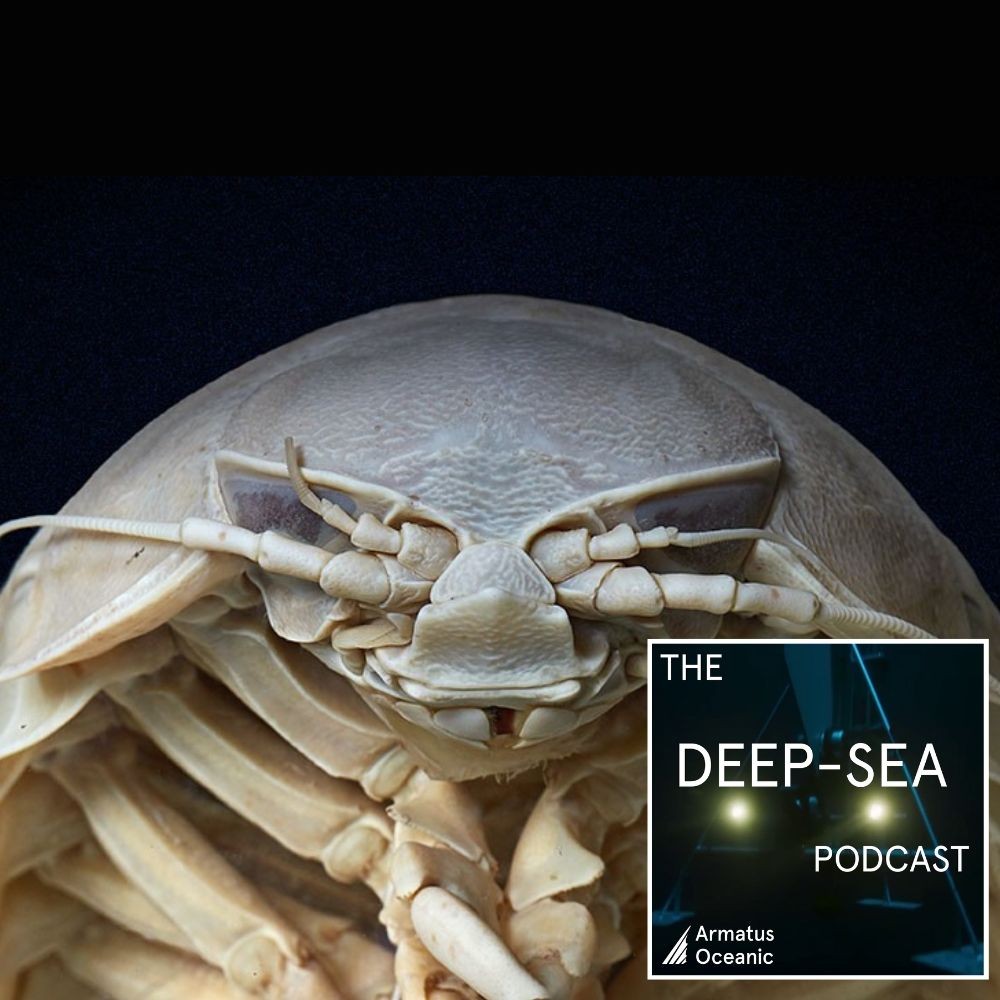
Ep 36036 - Crustacean congress special
With The Professor pacing around a small Mexican apartment, and Dr. Thom immigrating to the other side of the world, this episode is a little fast-and-loose. But, our two favourite deep sea scientists did get to reunite over in Wellington, New Zealand for the 10th Annual International Crustacean Conference. And that’s where our episode is based! We speak with Kareen Schnabel and Rachael Peart about all things crabby, and the intricacies of organising and hosting a scientific conference. We also bumped into an old friend, Tammy Frank to talk about how she was finding the conference, and what she has been up to under the sea recently. Alongside all of the conference fun, we also hear from fellow deep sea science communicator, Henry Knauber, about his scicomm efforts and experiences as an early career researcher of crustaceans. Whilst less science-y this month, we thought it would be a great opportunity to give you an insider look into scientific conferences and their importance to research. We’re really trying to make this project self-sustaining so we have started looking for ways to support the podcast. Here’s a link to our page on how to support us, from the free options to becoming a patron of the show. We want to say a huge thank you to those patrons who have already pledged to support us: Rebecca Cloud Jake Hewitt Ken Stowe Meghan Jones Thanks again for tuning in, we’ll deep-see you next time! Check out our podcast merch here! Which now includes Alan’s beloved apron and a much anticipated new design... Feel free to get in touch with us with questions or your own tales from the high seas on: [email protected] We’d love to actually play your voice so feel free to record a short audio note! We are also on Twitter: @DeepSeaPod, @ArmatusO Facebook: DeepSeaPodcast, ArmatusOceanic Instagram: @deepsea_podcast, @armatusoceanic Keep up with the team on social media Twitter: Alan - @Hadalbloke (https://twitter.com/Hadalbloke) Thom - @ThomLinley (https://twitter.com/ThomLinley) Georgia - @geeinthesea (https://twitter.com/geeinthesea) Instagram: Georgia - @geeinthesea (https://www.instagram.com/geeinthesea/) Read the show notes and find out more about us at: www.armatusoceanic.com Links People mentioned Tammy Frank - Professor Nova southeastern university Henry Knauber - Early career researcher and science communicator Patron Meghan Jones - Scientific art and illustration Keshet Shavit - Winning student talk at the conference for her research on the crystalline structures in the eyes of crustaceans. Helene Tandberg - A notable talk at the conference for her visually stunning use of imagery of jellies. Merel Dalebout - Submarine pilot News First full-sized 3D scan of the Titanic shipwreck captured Why are cave-dwelling eels growing skin over their left eyes? It may be evolution in action. Decades-old question surrounding the start of the tree of life could finally be solved At long last, ocean drillers exhume a bounty of rocks from Earth’s mantle A noodle bar in Taiwan has recently started serving a giant-isopod ramen. Credits Theme – Hadal Zone Express by Märvel Logo image: NHM #Podcast #scicomm #Science #MarineBiology #DeepSea #DeepOcean #AlanJamieson #crustacean #crab #discovery #tepapa #newzealand #conference #scientificconference #deepseaspecies #scicomm #deepseacreatures #research #submarine
PRESSURISED: 010 - Here be Monsters with Tyler Greenfield
bonusOur short and to the point PRESSURISED version of episode 10. If you don't have time for the full episode and want to get right to the science without any of our waffle, this is the place to be! Read the show notes and find the full episode here: https://www.armatusoceanic.com/podcast/010-here-be-monsters-with-tyler-greenfield Tales of monsters persist to this day and there’s no better place to hide them than in the deep sea. We are joined by paleontology student and cryptozoology blogger Tyler Greenfield to look at some of the most famous sea monsters and see if there is any truth to the stories. We discuss megalodon, globsters, plesiosaurs/Nessie and all manner of strange carcasses that wash up from time to time. Feel free to get in touch with us with questions or you own tales from the high seas on: [email protected] Read the show notes and find out more about us at: www.armatusoceanic.com Links Tyler’s fantastic blog Tyler’s cryptozoology paper archive A link to Beebe’s book, Half A Mile Down You can find Tyler on Twitter @TylerGreenfieId Papers on Helicoprion Jaws for a spiral-tooth whorl: CT images reveal novel adaptation and phylogeny in fossil Helicoprion Eating with a saw for a jaw: Functional morphology of the jaws and tooth-whorl in Helicoprion davisii On the Giant Octopus (Octopus giganteus) and the Bermuda Blob: Homage to A. E. Verrill How to tell a sea monster: molecular discrimination of large marine animals of the North Atlantic NOAA’s response to the Mermaids: A body found Fish tales: Combating fake science in popular media Credits Theme – Hadal Zone Express by Märvel (http://marvel.nu/) #deepseamonsters #deepseacreatures #cryptozoology #thebloop #bloop #megalodon #paleoart #mermaids #globsters
PRESSURISED: 035 - Shipwrecks with Leighton Rolley and Lori Johnston
bonusOur short and to the point PRESSURISED version of episode 35. If you don't have time for the full episode and want to get right to the science without any of our waffle, this is the place to be! Read the show notes and find the full episode here: https://www.armatusoceanic.com/podcast/035-shipwrecks To finish up our run of episodes on deep-sea habitats, we’re really excited to bring you this month’s episode on… shipwrecks! But we’re not going to talk about what you expect. We all know what shipwrecks are but do you know how to find them? We talk with Leighton Rolley, an expert in researching, discovering and documenting shipwrecks. And we don’t stop there. Our second guest, Lori Johnston is a microbiologist whose research has focused on the fascinating structures of rusticles: the rusty icicles that hang from shipwrecks like the Titanic. We’re also very happy to hear from Don in this month’s episode with his tale of sailing on the infamous ghost ship, Glub Glub Orlova. We’re really trying to make this project self-sustaining so we have started looking for ways to support the podcast. Here’s a link to our page on how to support us, from the free options to becoming a patron of the show. We want to say a huge thank you to those patrons who have already pledged to support us! Thanks again for tuning in, we’ll deep-see you next time! Check out our podcast merch here! Which now includes Alan’s beloved apron and a much anticipated new design... Feel free to get in touch with us with questions or your own tales from the high seas on: [email protected] We’d love to actually play your voice so feel free to record a short audio note! We are also on Twitter: @DeepSeaPod, @ArmatusO Facebook: DeepSeaPodcast, ArmatusOceanic Instagram: @deepsea_podcast, @armatusoceanic Keep up with the team on social media Twitter: Alan - @Hadalbloke (https://twitter.com/Hadalbloke) Thom - @ThomLinley (https://twitter.com/ThomLinley) Georgia - @geeinthesea (https://twitter.com/geeinthesea) Instagram: Georgia - @geeinthesea (https://www.instagram.com/geeinthesea/) Read the show notes and find out more about us at: www.armatusoceanic.com Glossary Acoustic mapping - A method of mapping the seabed by sending out sound waves and measuring the strength of the sound bouncing back. Autonomous vehicles - (AUV) Are untethered, unmanned robotic vehicles that are able to collect data in the deep oceans. Base theory - A method of using simulations to find the most probable outcome. Hull - The body of a boat or ship Multibeam - A type of sonar used to map the seabed. It emits acoustic waves in a fan shape to get a wider area of data. Rusticles - Icicle shaped rust formations on sunken steel ships Sonar - A technique of using sound waves to measure distances. Links A great article about Lori’s work Lori and Dr Roy Cullimore’s paper on rusticles Credits Theme – Hadal Zone Express by Märvel #Podcast #scicomm #Science #MarineBiology #DeepSea #DeepOcean #AlanJamieson #shipwreck #shipwrecks #discovery #LoriJohnston #LeightonRolley #titanic #britannic #bismarck #microbes #microbialecology #hydrothermalvents #deepseaspecies #scicomm #deepseacreatures
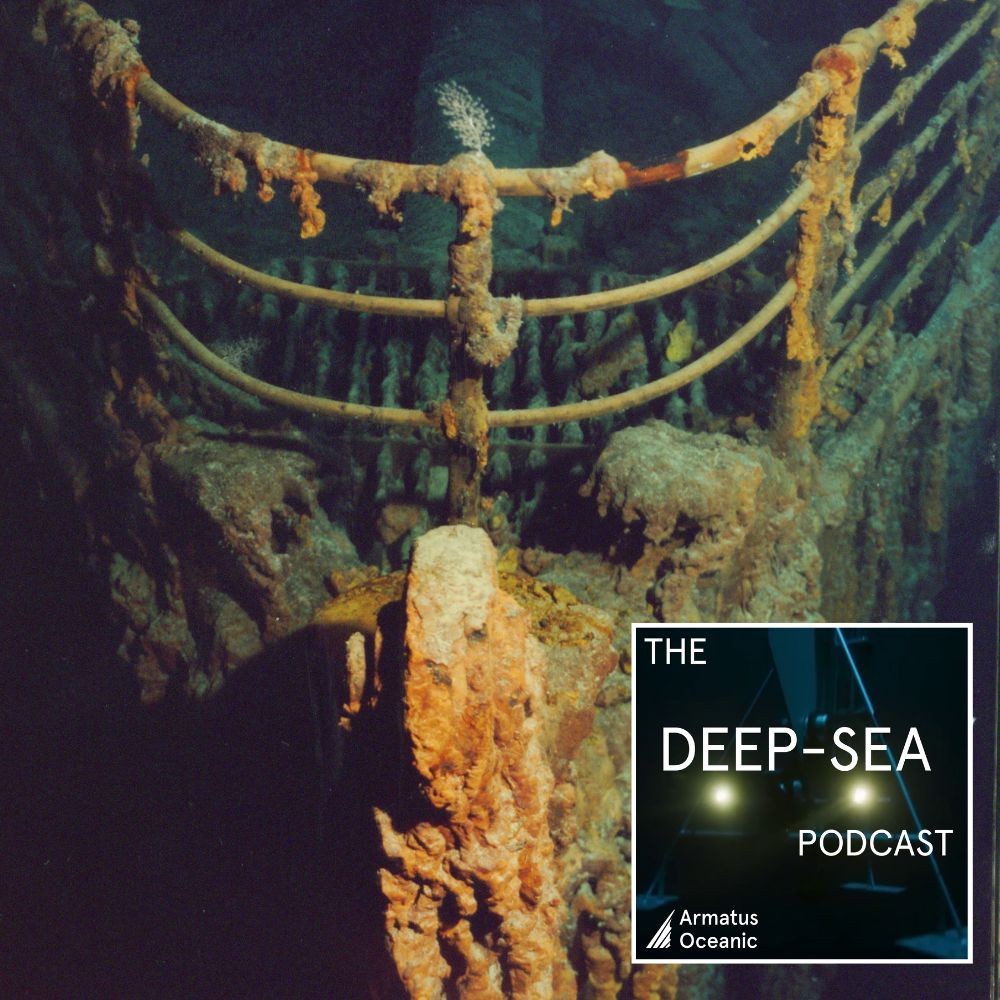
Ep 35035 - Shipwrecks with Leighton Rolley and Lori Johnston
To finish up our run of episodes on deep-sea habitats, we’re really excited to bring you this month’s episode on… shipwrecks! But we’re not going to talk about what you expect. We all know what shipwrecks are but do you know how to find them? We talk with Leighton Rolley, an expert in researching, discovering and documenting shipwrecks. And we don’t stop there. Our second guest, Lori Johnston is a microbiologist whose research has focused on the fascinating structures of rusticles: the rusty icicles that hang from shipwrecks like the Titanic. We’re also very happy to hear from Don in this month’s episode with his tale of sailing on the infamous ghost ship, Glub Glub Orlova. Plus, we learn why Alan shares Darwin's opinion in hating Goose barnacles, or more accurately, one barnacle individually. We’re really trying to make this project self-sustaining so we have started looking for ways to support the podcast. Here’s a link to our page on how to support us, from the free options to becoming a patron of the show. We want to say a huge thank you to those patrons who have already pledged to support us: Arlene Ogston Philip John Pearson Rosa Potter Lexi Harding William Benn Dylan Wesley Taylor Kat bolstad Laura M Smith Scott Carle Thanks again for tuning in, we’ll deep-see you next time! Check out our podcast merch here! Which now includes Alan’s beloved apron and a much anticipated new design... Feel free to get in touch with us with questions or your own tales from the high seas on: [email protected] We’d love to actually play your voice so feel free to record a short audio note! We are also on Twitter: @DeepSeaPod, @ArmatusO Facebook: DeepSeaPodcast, ArmatusOceanic Instagram: @deepsea_podcast, @armatusoceanic Keep up with the team on social media Twitter: Alan - @Hadalbloke (https://twitter.com/Hadalbloke) Thom - @ThomLinley (https://twitter.com/ThomLinley) Georgia - @geeinthesea (https://twitter.com/geeinthesea) Instagram: Georgia - @geeinthesea (https://www.instagram.com/geeinthesea/) Read the show notes and find out more about us at: www.armatusoceanic.com Glossary Acoustic mapping - A method of mapping the seabed by sending out sound waves and measuring the strength of the sound bouncing back. Autonomous vehicles - (AUV) Are untethered, unmanned robotic vehicles that are able to collect data in the deep oceans. Base theory - A method of using simulations to find the most probable outcome. Hull - The body of a boat or ship Multibeam - A type of sonar used to map the seabed. It emits acoustic waves in a fan shape to get a wider area of data. Rusticles - Icicle shaped rust formations on sunken steel ships Sonar - A technique of using sound waves to measure distances. Links A great article about Lori’s work Lori and Dr Roy Cullimore’s paper on rusticles An ancient ocean floor surrounds the Earth's core New deep sea coral reef found Radar satellite data reveals 19,000 previously unknown undersea volcanoes Drake Passage is found to be important for the deep sea Hadal Zone by Žibuoklė Martinaitytė Youtube Bandcamp Credits Theme – Hadal Zone Express by Märvel Logo image: Richie Kohler #Podcast #scicomm #Science #MarineBiology #DeepSea #DeepOcean #AlanJamieson #shipwreck #shipwrecks #discovery #LoriJohnston #LeightonRolley #titanic #britannic #bismarck #microbes #microbialecology #hydrothermalvents #deepseaspecies #scicomm #deepseacreatures
PRESSURISED: 009 - Geology with Heather Stewart
bonusOur short and to the point PRESSURISED version of episode 9. If you don't have time for the full episode and want to get right to the science without any of our waffle, this is the place to be! We are both biologists and a little biased toward the deep-sea critters, but the deep ocean contains a wealth of geological discoveries, after all, it is the geology which creates the deep sea. We have a chat with geologist and explorer (and friend of the show) Heather Stewart about the geology of the deep sea and how we produce maps of the ocean floor. Why do people talk about how little of the ocean has been mapped when we can clearly see it is all mapped on google earth? Feel free to get in touch with us with questions or you own tales from the high seas on: [email protected] Read the show notes and find out more about us at: www.armatusoceanic.com Links A proposal for modesty Here is a great tool where you can see the direct and satellite global data Credits Theme – Hadal Zone Express by Märvel
PRESSURISED: 034 - Deep biosphere with Mandy Joye
bonusOur short and to the point PRESSURISED version of episode 34. If you don't have time for the full episode and want to get right to the science without any of our waffle, this is the place to be! On this month’s episode, we wanted to go deeper and darker than we’ve ever gone before… prepare the enter: the deep biosphere! We talk with Professor Mandy Joye about the vast microbial wonderland which is the deep biosphere. This ecosystem, which exists deep under the seabed, has only recently been discovered and research is just starting to reach some interesting conclusions. We lean about the importance of deep sea microbes and how they cycle through our planet. Professor Alan has been very busy this month with another world record to add to the collection. Not only did Thom and Alan break the world record for the world deepest fish back in 2014 (with a Mariana snailfish (Pseudoliparis swierei) being observed at 8143m in the Mariana trench). But, Alan beat his own record with this new snailfish seen at 8336m in the Izu-Ogasawara trench near Japan! We’re really trying to make this project self-sustaining so we have started looking for ways to support the podcast. Here’s a link to our page on how to support us, from the free options to becoming a patron of the show. Thanks again for tuning in, we’ll deep-see you next time! Check out our podcast merch here! Which now includes Alan’s beloved apron and a much anticipated new design... Feel free to get in touch with us with questions or your own tales from the high seas on: [email protected] We’d love to actually play your voice so feel free to record a short audio note! We are also on Twitter: @DeepSeaPod, @ArmatusO Facebook: DeepSeaPodcast, ArmatusOceanic Instagram: @deepsea_podcast, @armatusoceanic Keep up with the team on social media Twitter: Alan - @Hadalbloke (https://twitter.com/Hadalbloke) Thom - @ThomLinley (https://twitter.com/ThomLinley) Georgia - @geeinthesea (https://twitter.com/geeinthesea) Instagram: Georgia - @geeinthesea (https://www.instagram.com/geeinthesea/) Read the show notes and find out more about us at: www.armatusoceanic.com Glossary Archaea - Microorganisms similar to bacteria in size and simplicity, but are very different molecularly. They’re thought to be the ancient intermediate group between bacteria and eukaryotes. Asgardarchaeota (Asgards)- a type of archaea in which eukaryotes are thought to have first emerged. Astrophysics - Astrophysics is a branch of space science that applies the laws of physics and chemistry to seek to understand the universe. Deep biosphere - The expansive ecosystem of microbes which exist deep under the seabed. Niche - A species' niche encompasses both the physical and environmental conditions it requires (e.g. temperature) and the interactions it has with other species (like predation or competition). Deepwater Horizon - An offshore drilling rig owned by Transocean and operated by BP which exploded in 2010, causing the worst oil spill in American history. Eukaryotes - A organism which is made of cells where the DNA is contained in a nucleus. (All living organisms other than archaea and eubacteria). Flagellated - Having flagella (a slender threadlike structure which allows microorganisms to swim (e.g. bacteria or sperm). Genome - The genome is the entire set of DNA instructions found in a cell. Geochemistry - The study of the chemistry of geological materials such as rock, sediment, soil and water. Intraterrestrials - species living within the earth Metabolism - The conversion of the energy in food to the energy available to run cellular processes. Methanogens - a methane-producing bacterium, especially an archaean which reduces carbon dioxide to methane. NASA - The National Aeronautics and Space Administration is an independent agency of the U.S. federal government responsible for the civil space program, aeronautics research, and space research. Turnover rate - How quickly bacteria reproduce and die. Links Mandy’s lab group website https://joyelab.org/ Mandy collaborated with Jim Toomey on a series of "deep ocean" educational cartoons. Watch a summary of the deep biosphere Watch this cartoon explaining the microbes at hydrothermal vents Alan’s new record for the world's deepest fish After 10 years of discussions, The High Seas Treaty has been agreed upon. Credits Theme – Hadal Zone Express by Märvel Logo image: The Deep-Sea Podcast PRESSURISED #Podcast #scicomm #Science #MarineBiology #DeepSea #DeepOcean #AlanJamieson #discovery #mandyjoye #samanthajoye #biosphere #microbes #microbialecology #coldseeps #archaea #bacteria #fungi #hydrothermalvents #deepseaspecies #scicomm #deepseacreatures
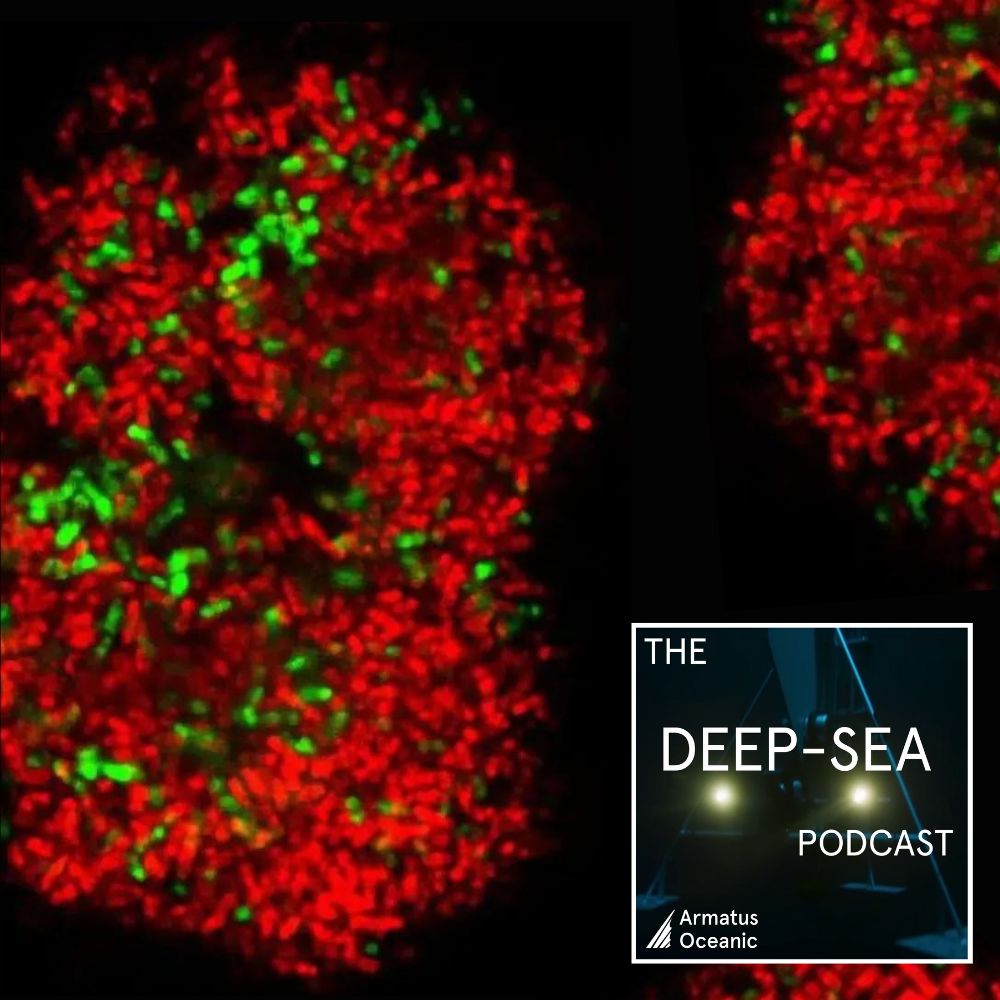
Ep 34034 - Deep biosphere with Mandy Joye
On this month’s episode, we wanted to go deeper and darker than we’ve ever gone before… prepare the enter: the deep biosphere! We talk with Professor Mandy Joye about the vast microbial wonderland which is the deep biosphere. This ecosystem, which exists deep under the seabed, has only recently been discovered and research is just starting to reach some interesting conclusions. We lean about the importance of deep sea microbes and how they cycle through our planet. We also discuss the Deepwater Horizon oil spill, as Mandy was a key researcher in understanding it’s widespread effects on the microbial community in the Gulf of Mexico. Professor Alan has been very busy this month with another world record to add to the collection. Not only did Thom and Alan break the world record for the world deepest fish back in 2014 (with a Mariana snailfish (Pseudoliparis swierei) being observed at 8143m in the Mariana trench). But, Alan beat his own record with this new snailfish seen at 8336m in the Izu-Ogasawara trench near Japan! We’ve also got newly discovered whalefalls, interesting uses for polymetallic nodules and historic oceanic treaty’s being agreed upon in this month in the news! Talk about a busy month, ey! We’re really trying to make this project self-sustaining so we have started looking for ways to support the podcast. Here’s a link to our page on how to support us, from the free options to becoming a patron of the show. Thanks again for tuning in, we’ll deep-see you next time! Check out our podcast merch here! Which now includes Alan’s beloved apron and a much anticipated new design... Feel free to get in touch with us with questions or your own tales from the high seas on: [email protected] We’d love to actually play your voice so feel free to record a short audio note! We are also on Twitter: @DeepSeaPod, @ArmatusO Facebook: DeepSeaPodcast, ArmatusOceanic Instagram: @deepsea_podcast, @armatusoceanic Keep up with the team on social media Twitter: Alan - @Hadalbloke (https://twitter.com/Hadalbloke) Thom - @ThomLinley (https://twitter.com/ThomLinley) Georgia - @geeinthesea (https://twitter.com/geeinthesea) Instagram: Georgia - @geeinthesea (https://www.instagram.com/geeinthesea/) Read the show notes and find out more about us at: www.armatusoceanic.com Glossary Archaea - Microorganisms similar to bacteria in size and simplicity, but are very different molecularly. They’re thought to be the ancient intermediate group between bacteria and eukaryotes. Asgardarchaeota (Asgards)- a type of archaea in which eukaryotes are thought to have first emerged. Astrophysics - Astrophysics is a branch of space science that applies the laws of physics and chemistry to seek to understand the universe. Deep biosphere - The expansive ecosystem of microbes which exist deep under the seabed. Niche - A species' niche encompasses both the physical and environmental conditions it requires (e.g. temperature) and the interactions it has with other species (like predation or competition). Deepwater Horizon - An offshore drilling rig owned by Transocean and operated by BP which exploded in 2010, causing the worst oil spill in American history. Eukaryotes - A organism which is made of cells where the DNA is contained in a nucleus. (All living organisms other than archaea and eubacteria). Flagellated - Having flagella (a slender threadlike structure which allows microorganisms to swim (e.g. bacteria or sperm). Genome - The genome is the entire set of DNA instructions found in a cell. Geochemistry - The study of the chemistry of geological materials such as rock, sediment, soil and water. Intraterrestrials - species living within the earth Metabolism - The conversion of the energy in food to the energy available to run cellular processes. Methanogens - a methane-producing bacterium, especially an archaean which reduces carbon dioxide to methane. NASA - The National Aeronautics and Space Administration is an independent agency of the U.S. federal government responsible for the civil space program, aeronautics research, and space research. Turnover rate - How quickly bacteria reproduce and die. Links Mandy’s lab group website https://joyelab.org/ Mandy collaborated with Jim Toomey on a series of "deep ocean" educational cartoons. Watch a summary of the deep biosphere Watch this cartoon explaining the microbes at hydrothermal vents Goblin shark embryo or toy? Alan’s new record for the world's deepest fish Forgotten subsea cables A polymetallic nodule has been used to estimate historic climate records. Here’s a news article explaining it, and the scientific paper. Circulation slowdown A whalefall has been found by a friend of the show, Kat Bolstad. After 10 years of discussions, The High Seas Treaty has been agreed upon. Metalocalypse: Dethklok - Go Into the Water Youtube Spotify Credits Theme – Hadal Zone Express by Märvel Logo image: Viola Krukenberg #Podcast #scicomm #Science #MarineBiology #DeepSea #DeepOcean #AlanJamieson #discov
PRESSURISED: 007 - Human impact with Albert II, Prince of Monaco
bonusOur short and to the point PRESSURISED version of episode 7. If you don't have time for the full episode and want to get right to the science without any of our waffle, this is the place to be! We impact the deep sea in many ways we don’t realise. Some are deliberate, some are accidental, some we didn’t even notice at the time. We talk about ways we have impacted the deep sea and touch on the huge problem that is marine plastic, a particular problem in the isolated Mediterranean Sea. His serene highness Prince Albert II of Monaco tells us about his experience diving to the deepest point in the Mediterranean, the Calypso Deep and his Beyond Plastic Med initiative. You can submit your own ‘tales from the high seas’ about an experience you have had offshore or pose us a question/comment on: [email protected] Theme – Hadal Zone Express by Märvel (http://marvel.nu/) Links Mercury paper Deep Mediterranean paper Beyond Plastic Med
The Deco-Stop: 002 - Neurodiversity in Science
bonusHere’s our second episode of The Deco-Stop; a deeper look into the humans behind deep-sea science and technology. We’ve done our science dive, and now it’s time to decompress, and discuss tales at sea, career paths and the social & political aspects of deep-sea science. From Steven Hawking to Charles Darwin, neurodiversity and science have been intertwined throughout history. Neurodiversity is a term which refers to the variety in the cognition of the human brain and can include people who are on the autism spectrum, or who have been diagnosed with dyslexia, dyspraxia, and dyscalculia, among others. We wanted to talk on a very human level about the strengths and weaknesses of being neurodivergent in science and to also share with you some personal stories and assistive resources. Thom shares his own journey in the field, alongside many other pioneering colleagues. Living legend, Bob Ballard speaks with us about his perspective on being dyslexic and even attributes his career success (including the discovery of the titanic) to his gift. Friends of the show, Tom Tangye, Sophie McLellan and Cat Morgan also share their experiences of working in the field alongside being neurodivergent. They share how the industry, and the world in general, is changing to be more inclusive and understanding of everyone who thinks differently. We had such a great time making this episode, and we’re so grateful to everyone who spoke with us. Below you’ll find a whole host of resources that have been shared with us, and that we recommend ourselves! Let’s carry on this conversation, with colleagues, friends, and with those outside our inner circles. Be patient with each other, and trust that the world is changing, for the better. We are so excited about creating this space to talk more about the human aspects of deep-sea science, and would love to hear from you about your deep-sea journey! Check out our podcast merch here! Which now includes Alan’s beloved apron and a much anticipated new design... Feel free to get in touch with us with questions or your own tales from the high seas on: [email protected] We’d love to actually play your voice so feel free to record a short audio note! We are also on Twitter: @DeepSeaPod, @ArmatusO Facebook: DeepSeaPodcast, ArmatusOceanic Instagram: @deepsea_podcast, @armatusoceanic Keep up with the team on social media Twitter: Alan - @Hadalbloke (https://twitter.com/Hadalbloke) Thom - @ThomLinley (https://twitter.com/ThomLinley) Georgia - @geeinthesea (https://twitter.com/geeinthesea) Instagram: Georgia - @geeinthesea (https://www.instagram.com/geeinthesea/) Read the show notes and find out more about us at: www.armatusoceanic.com Links Guests featured Bob Ballard, Ocean Exploration Trust -nautiluslive.org Tom Tangye, JNCC -jncc.gov.uk Cat Morgan, Herriott Watt University - Cat's research and Cat's project - EnDISC Resources Dyslexic friendly font (free to download) - (opendyslexic.org) The dyslexic advantage - Brock Eide Fernette Edie (book recommendation by Bob) (dyslexicadvantage.org/book) Grammarly - spellchecking and grammar software (grammarly.com) Otter.ai - Transcribing software (otter.ai) Flux - blue-light reducing app (justgetflux.com) Claro Read - A screen-reading software that uses real voices (texthelp.com) Tips Use pencils (the twisty ones) to help with writing and for emphasis. Fonts that seem to be easier to read - Arial, Calibri, Verdana. Credits Theme – Hometime by Harvey Jones Logo image - The Deco-Stop #Podcast #SciComm #Science #MarineBiology #DeepSea #DeepOcean #AlanJamieson #thomlinley #bobballard #neurodivergent #neurodiversity #adhd #autism #dyslexia #catmorgan #tech #technology #exploration #discovery #offshore #marine
PRESSURISED: 033 - Parasites with Rod Bray
bonusOur short and to-the-point PRESSURISED version of episode 33. If you don't have time for the full episode and want to get right to the science without any of our waffle, this is the place to be! What if your deep-sea habitat was less rocky and more fleshy? That’s right, the time has come to talk all about deep-sea parasites and their fascinating life cycles. We couldn’t think of anyone better to speak with than Dr Rod Bray, a pioneer in deep-sea parasitology research. Rod talks us through the captivating world of parasitic worms and his ongoing research into their ecology. Check out our podcast merch here! Which now includes Alan’s beloved apron and a much anticipated new design... Feel free to get in touch with us with questions or your own tales from the high seas on: [email protected] We’d love to actually play your voice so feel free to record a short audio note! We are also on Twitter: @DeepSeaPod, @ArmatusO https://twitter.com/DeepSeaPod https://twitter.com/ArmatusO Facebook: DeepSeaPodcast, ArmatusOceanic https://www.facebook.com/DeepSeaPodcast https://www.facebook.com/ArmatusOceanic Instagram: @deepsea_podcast, @armatusoceanic https://www.instagram.com/deepsea_podcast/ https://www.instagram.com/armatusoceanic/ Keep up with the team on social media Twitter: Alan - @Hadalbloke (https://twitter.com/Hadalbloke) Thom - @ThomLinley (https://twitter.com/ThomLinley) Georgia - @geeinthesea (https://twitter.com/geeinthesea) Instagram: Georgia - @geeinthesea (https://www.instagram.com/geeinthesea/) Read the show notes and find out more about us at: www.armatusoceanic.com Glossary Cercaria - Offspring of digenean parasites. Chimaera - A group of cartilaginous fish mostly found in deep waters. Competition - A type of symbiosis where both species are harmed. Commensalism - A type of symbiosis where one species benefits and the other is unaffected. Ctenophore - “Comb jelly” marine invertebrates found worldwide. Digeneans - A class of trematodes consisting of parasitic flatworms with two suckers. Ectoparasites - Parasites that live on the skin of the host. Elasmobranch - The subclass of cartilaginous fishes consisting of sharks, skates and rays. Emmensalism - A type of symbiosis where one species is harmed and one is unaffected. Endoparasites - Parasites that live inside the tissues of the host. Facultative symbiosis - A type of symbiosis which is optional; not necessary for survival. Flukes - “Trematoda” is a class of flatworms. They are internal parasites with a complex life cycle requiring at least two hosts. Hydrozoan - A class of cnidaria. They are small predatory animals, most are benthic and involve a polyp stage. Monogeneans - A group of ectoparasitic flatworms commonly found on the skin, gills, or fins of fish. Mutualism - A type of symbiosis where both species benefit. Myxozoa - A group of aquatic parasites which contains some of the smallest animals known to exist. Neutralism - A type of symbiosis where neither species benefit nor are negatively affected. Parasitism - A type of symbiosis where one species benefits and one is harmed. Parasite burden - A measure of the number and virulence of the parasites that a host harbours. Symbiosis - “Living together” two different species living closely together. Teleosts - “Bony fishes”. Tunicate - These are marine invertebrates sometimes called “sea squirts”. Links Rod’s research Rod’s article summarising the state of knowledge of deep-sea parasites in 2020 Credits Theme – Hadal Zone Express by Märvel #Podcast #SciComm #Science #MarineBiology #DeepSea #DeepOcean #AlanJamieson #Rodbray #parasitology #parasites #parasite #fluke #worm #copepod #isopod #helminth #lifecycle #deepseaspecies #symbiotic #Donwalsh #ThomasLinley #newspecies #discovery #scicomm #submarine #biodiversity #deepseacreatures #symbiosis #news #mariana #geology
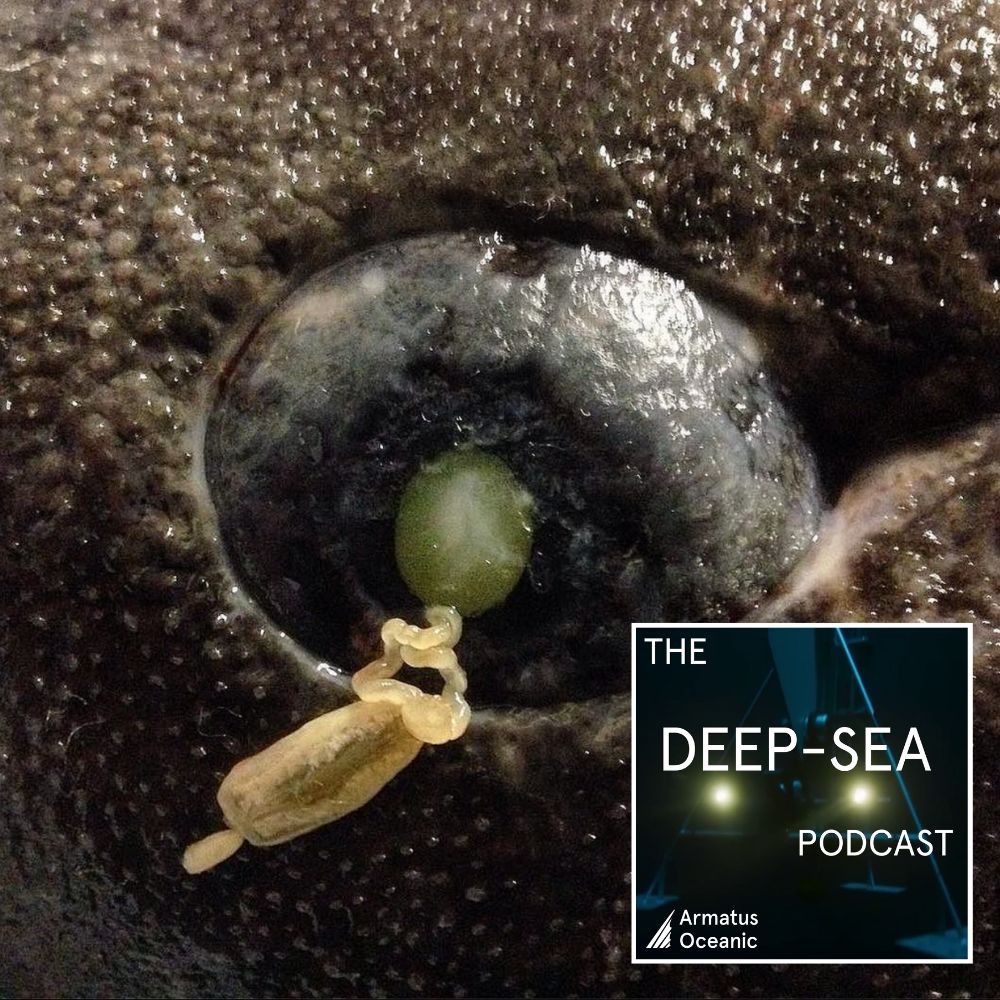
Ep 33033 – Parasites with Rod Bray
What if your deep-sea habitat was less rocky and more fleshy? That’s right, the time has come to talk all about deep-sea parasites and their fascinating life cycles. We couldn’t think of anyone better to speak with than Dr Rod Bray, a pioneer in deep-sea parasitology research. Rod talks us through the captivating world of parasitic worms and his ongoing research into their ecology. Continuing with the parasitic theme, Thom and Alan share their critiques (and also their love for) ‘The Last of Us’, an apocalyptic TV show involving fungal parasitology. The news is somewhat less parasite-y this month with Alan officially extending the depth records for several taxa and there’s a new species of cavefish described! Don also provides a highly unexpected story from his days as Captain of a submarine... Are you now suddenly parasite-obsessed?! Satisfy your cravings with your very own parasitic deep-sea podcast merch featuring our favourite parasite - the tongue-eating isopod, Cymothoa exigua! Check it out here! Feel free to get in touch with us with questions or your own tales from the high seas on: [email protected] We’d love to actually play your voice so feel free to record a short audio note! We are also on Twitter: @DeepSeaPod, @ArmatusO Facebook: DeepSeaPodcast, ArmatusOceanic Instagram: @deepsea_podcast, @armatusoceanic Keep up with the team on social media Twitter: Alan - @Hadalbloke (https://twitter.com/Hadalbloke) Thom - @ThomLinley (https://twitter.com/ThomLinley) Georgia - @geeinthesea (https://twitter.com/geeinthesea) Instagram: Georgia - @geeinthesea (https://www.instagram.com/geeinthesea/) Read the show notes and find out more about us at: www.armatusoceanic.com Glossary Cercaria - Offspring of digenean parasites. Chimaera - A group of cartilaginous fish mostly found in deep waters. Competition - A type of symbiosis where both species are harmed. Commensalism - A type of symbiosis where one species benefits and the other is unaffected. Ctenophore - “Comb jelly” marine invertebrates found worldwide. Digeneans - A class of trematodes consisting of parasitic flatworms with two suckers. Ectoparasites - Parasites that live on the skin of the host. Elasmobranch - The subclass of cartilaginous fishes consisting of sharks, skates and rays. Emmensalism - A type of symbiosis where one species is harmed and one is unaffected. Endoparasites - Parasites that live inside the tissues of the host. Facultative symbiosis - A type of symbiosis which is optional; not necessary for survival. Flukes - “Trematoda” is a class of flatworms. They are internal parasites with a complex life cycle requiring at least two hosts. Hydrozoan - A class of cnidaria. They are small predatory animals, most are benthic and involve a polyp stage. Monogeneans - A group of ectoparasitic flatworms commonly found on the skin, gills, or fins of fish. Mutualism - A type of symbiosis where both species benefit. Myxozoa - A group of aquatic parasites which contains some of the smallest animals known to exist. Neutralism - A type of symbiosis where neither species benefit nor are negatively affected. Parasitism - A type of symbiosis where one species benefits and one is harmed. Parasite burden - A measure of the number and virulence of the parasites that a host harbours. Symbiosis - “Living together” two different species living closely together. Teleosts - “Bony fishes”. Tunicate - These are marine invertebrates sometimes called “sea squirts”. Links Rod’s article summarising the state of knowledge of deep-sea parasites in 2020 Alans research centre (and jobs) New depth records for ctenophores, hydrozoans and tunicates in the hadal zone A latitudinal gradient of deep-sea invasions for marine fishes A paper and news article describing a new fish species discovered in India living in an aquifer New phantom jelly seen The Last of us opening scene on fungal parasites Guns N’ Roses - My Michelle Youtube Spotify Credits Theme – Hadal Zone Express by Märvel #Podcast #SciComm #Science #MarineBiology #DeepSea #DeepOcean #AlanJamieson #Rodbray #parasitology #parasites #parasite #fluke #worm #copepod #isopod #helminth #lifecycle #deepseaspecies #symbiotic #Donwalsh #ThomasLinley #newspecies #discovery #scicomm #submarine #biodiversity #deepseacreatures #symbiosis #news #mariana #geology
PRESSURISED: 006 - Deep-sea mining
bonusOur short and to the point PRESSURISED version of episode 6. If you don't have time for the full episode and want to get right to the science without any of our waffle, this is the place to be! Our world is rapidly changing. As we move away from fossil fuels and our use of electronics increases, demand is climbing for a handful of metals key to the manufacture of modern technology. Mining the deep sea may meet these demands but is probably the most contentious issue the community is facing right now. Is there a net benefit for the deep sea, funding research and understanding, addressing climate change, and encouraging developing nations? Or is the deep sea too fragile and too unknown to be responsibly exploited? We bite off far more than we can chew by taking on this issue in a deep-sea mining special episode. Luckily, we have some guests we can call on to help us understand the issue. Professor Jeffrey Drazen of University of Hawai`i at Manoa explains just what deep-sea mining is and its ecological impacts. We then speak with Michael Lodge, secretary-general of the International Seabed Authority (ISA). The ISA, comprised of 167 member states and the European Union, regulates, and controls all mineral-related activities in the open ocean – that’s the majority of the planet! Subscribe and find out more here: https://www.armatusoceanic.com/podcast/006-deep-sea-mining-special Theme – Hadal Zone Express by Märvel (http://marvel.nu/) Image - Alan Jamieson Links ISA website: https://www.isa.org.jm/ DeepData: https://www.isa.org.jm/deepdata UNESCO report: http://whc.unesco.org/en/news/1535/ #deepseacreatures #deepseamining #deepsea #deepocean #hydrothermalvents #isa #internationalseabedauthority #science #marinebiology #nodules #submarine #scicomm #podcast
PRESSURISED: 032 - Whale falls with Craig smith
bonusOur short and to the point PRESSURISED version of episode 32. If you don't have time for the full episode and want to get right to the science without any of our waffle, this is the place to be! Read the show notes and find the full episode here: https://www.armatusoceanic.com/podcast/032-whale-falls This month is a fun one (maybe not if you love cetaceans) as we’re covering whale falls! That’s right, dead whales and the ecosystems they create on the seafloor. Professor Craig smith joins us to talk all about the stages of decomposition, the key species that whale falls support, and some truly wild tales from the high seas. Keep updated with our latest releases by subscribing to our newsletter here eepurl.com/ihK4Hz Check out our podcast merch here! Which now includes Alan’s beloved apron and a much anticipated new design... Feel free to get in touch with us with questions or your own tales from the high seas on: [email protected] We’d love to actually play your voice so feel free to record a short audio note! We are also on Twitter: @DeepSeaPod, @ArmatusO Facebook: DeepSeaPodcast, ArmatusOceanic Instagram: @deepsea_podcast, @armatusoceanic Keep up with the team on social media Twitter: Alan - @Hadalbloke (https://twitter.com/Hadalbloke) Thom - @ThomLinley (https://twitter.com/ThomLinley) Georgia - @geeinthesea (https://twitter.com/geeinthesea) Instagram: Georgia - @geeinthesea (https://www.instagram.com/geeinthesea/) Read the show notes and find out more about us at: www.armatusoceanic.com Glossary Blubber - The fat of sea mammals. Cadaverine - A compound formed in the decay of animal proteins after death. Cetacean - The scientific name for whales, dolphins and porpoises. Chemoautotrophic - Obtains energy through chemical reactions rather than light. Hagfish - Eel-shaped, slime-producing fish. Hydroxyapatite - A mineral which makes up whale bones. Osedax - A family of “bone-eating” worms which are found feasting on whale bones. Putracene - A compound formed in the decay of animal proteins after death. Purse seine netting - A vertical net ‘curtain’ which can be drawn together to enclose the whale. Sleeper sharks - Family: Somniosidae. Slow-moving sharks which can be seen feeding on whale falls. Stoneley waves - a boundary wave (or interface wave) that typically propagates along a solid-solid interface. Links Craig’s research group Craig's article on whale fall ecology (2003) We released a piece in The Conversation on the Moon Analogy Credits Theme – Hadal Zone Express by Märvel