Selling Books Direct With Shopify: The Minimum Viable Store
The Creative Penn Podcast For Writers
Audio is streamed directly from the publisher (media.blubrry.com) as published in their RSS feed. Play Podcasts does not host this file. Rights-holders can request removal through the copyright & takedown page.
Show Notes
In July 2022, I launched my online shop at www.CreativePennBooks.com. It’s built on Shopify’s eCommerce platform, and in this solo episode, I’ll explain why I built the store, my lessons learned, tips if you want to build your own, and how I intend to expand it over time.
This episode is sponsored by my wonderful patrons. If you find the podcast useful, you can support the show at Patreon.com/thecreativepenn and you'll get discounts on my books and products, plus you can ask your questions in my private monthly Q&A.
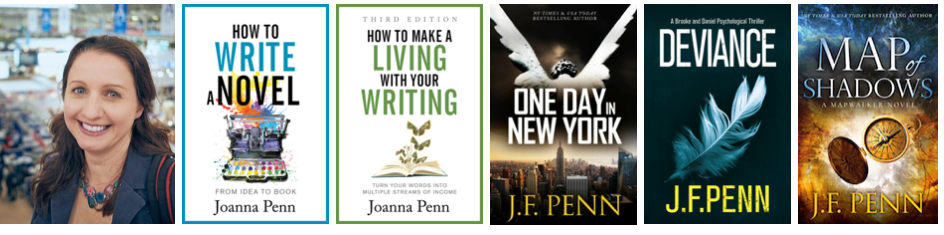
Joanna Penn writes non-fiction for authors and is an award-nominated, New York Times and USA Today bestselling thriller author as J.F. Penn. She’s also an award-winning podcaster, creative entrepreneur, and international professional speaker.
You can listen above or on your favorite podcast app or read the notes and links below. Here are the highlights and the full transcript is below.
Show Notes
- What is selling direct? Why sell direct?
- Why I switched from Payhip to Shopify
- Why a separate store, www.CreativePennBooks.com instead of WooCommerce within my existing sites?
- Why Shopify rather than Kickstarter?
- The Minimum Viable Store approach
- Software and integrations — what else do you need?
- Options for drop-shipping print-on-demand books — Lulu Direct and Bookvault.app and why I made the choice I did
- How does the money work? What are the costs? How do I get paid?
- What about sales tax / VAT?
- How long does the setup take?
- What about support issues? How time-consuming is it?
- What about marketing? How do you get traffic to your store?
- What are my plans for the store?
- Are direct sales for you?
- Free books if you buy direct — and where to find help if you need it
You can find my store at www.CreativePennBooks.com and linked in the menu as Shop and also on every book page.
Imagine this…
You write what you want, with no concern about how an algorithm will treat your release.
You’re in control of the site and your sales pages, with no other ads on your page to distract potential readers.
You release your books in multiple formats, direct to your readers and listeners. You don’t have to store and ship books since they are printed on demand and sent straight to the buyer. Customer service for ebooks and audiobooks is even taken care of by the wonderful team at Bookfunnel.
The customer receives a fantastic product and you get money in your bank account within a day or two, or even within the hour.
You also get the customer’s name, email, and address as well as details about what they bought and when, so you can foster an ongoing relationship.
You can expand your store into different kinds of products through other print-on-demand services — merchandise related to your books, other formats like workbooks, journals, and special editions, online courses, audio extras, coaching, or whatever else you want to sell.
Over time, you build up traffic to your store, and that effort compounds, so you start to make sales every day on a site you control.
You still publish on other platforms and third-party stores, but now you’re truly an independent author.
That’s the dream — and after more than a decade as a full-time author entrepreneur, I feel like I have taken a giant step closer to it by building my direct store, www.CreativePennBooks.com on the Shopify platform.
So, let’s get into the details.
What is selling direct?
Selling direct encompasses many options, but essentially it’s you the author interacting with readers or listeners on your own platform and selling your books and other products in various formats. It usually involves making more profit per sale, getting paid faster, and retaining customer data.
It can be as varied as Kickstarter for a limited edition series of books (as Brandon Sanderson famously did with his $41m campaign); it can be an author selling their hand-bound ‘zine at a local craft fair, or more usually in the indie community, it’s selling ebooks and audiobooks through platforms like Payhip, or developed stores like Shopify, or plugin systems like WooCommerce.
It is part of the ethos of publishing wide, which means not being exclusive to any specific retailer, but of course, you can choose different publishing options by book, by series, by author name, and by format. Many wide authors choose different options for different books over time.
Selling direct doesn’t mean you ONLY sell on your store (unless you want to.)
You can publish wide everywhere else as well as sell on your store, and customers can get your books from their favorite store or from the library or wherever they get books.
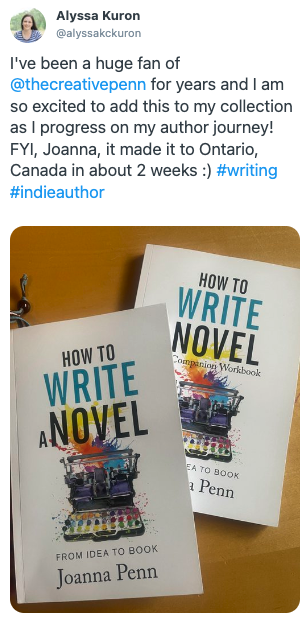
However, you might decide to have direct first and/or direct only products to encourage buyers. I sold How to Write a Novel direct for a month, although it’s available from 13 August 2022 on all stores in all the usual formats. My How to Write a Novel Workbook is only available on my store.
To be clear, you need to own and control your intellectual property rights in order to sell direct.
If you have signed a contract with a publisher for ‘digital rights’ or ebook and/or audiobook rights, you cannot sell your ebooks and audiobooks direct. If you have signed a contract for paperback or hardback or whatever else, you cannot sell your books direct — unless you clear that with your publisher.
Also, if you have opted into KDP Select for ebooks, or signed an exclusive contract with ACX for audio, you cannot sell those ebooks and audiobooks direct. That includes box sets/bundles if you have opted in for the individual books. Some KU authors release ebooks direct first, then withdraw them and put them in KU after the initial sales.
Remember, as an independent author, you are in control. You get to choose what’s right for your book and your author business.
Why sell direct?
The main reasons for selling direct are creative and financial freedom.
You have the freedom to create and sell whatever you like, whenever you like, without fear of the platform owner changing the rules, or shifting the algorithm, or covering your sales page with ads for other books, or deciding they don’t want to publish your book.
You make more money per sale and faster money per sale. It’s in your bank account immediately, or within a few days, instead of months.
You control the site and the customer experience, and you also retain customer data, with the caveat that you abide by all the relevant anti-spam and data protection laws.
It’s also getting easier.
The pandemic accelerated the adoption of online sales from niche stores, so customers are much happier to buy from authors and creatives, and not just on the big brand websites.
In fact, many customers choose to support their favorite creators directly and understand that buying direct helps the authors they love.
Some customers even seek out alternative ways to buy rather than using big brand stores because they want to support a more diverse creative and publishing ecosystem. I frequently get emails asking me for my links for books and other products because people want to buy from me and make sure I get a bigger share of the revenue than the big brands.
Let’s be clear. I love the publishing industry and the companies that enable us to sell our books to as wide an audience as possible. I buy books in multiple formats from multiple places online and off, and I also borrow them from subscription programs. I also appreciate you buying or borrowing my books in any way you choose.
It’s not about limiting options. It’s about expanding them.
I want the entire industry to thrive — but every company is looking out for their own profits first, and selling direct means I get to look out for mine, before giving the other stores a cut of sales.
Why I switched from Payhip to Shopify
I’ve been selling ebooks, audiobooks, and online courses since I started online in 2008. I began with simple WordPress password-protected pages with PayPal payments, then I moved to e-Junkie and then SELZ for selling PDFs, videos, and ebooks until the EU Digital Tax law in 2018 made things more complicated.
I moved to Payhip once they started to process EU tax on behalf of sellers, and integration with Bookfunnel made things easier in terms of delivery and customer service for digital products.
Until July 2022, I used Payhip for ebooks and audiobooks (tutorial here), Teachable for my courses (www.TheCreativePenn.com/learn ) and society6.com/creativepenn for merchandise, like my CREATIVE branded mugs.
I’ve been making direct sales almost every day for years now, but I have always thought that selling print books direct would be a huge pain, so I focused on digital only.
My business principles include freedom of time and location, so I didn’t want to have boxes of books in my house, or be concerned about shipping and all its associated difficulties.
Then in March 2022, I heard author Katie Cross on the 6 Figure Authors podcast talking about using Shopify with Print on Demand. It answered a lot of my questions about the process, and Katie kindly answered more questions personally, and also in this interview on my Creative Penn podcast.
Check out her books at www.KatieCrossBooks.com
I also spoke to patrons of the show, Shaw and Morgana Best, who both helped with other technical questions. Morgana also came on The Creative Penn Podcast to talk about her book, Stop Making Others Rich: How Authors Can Make Bank Selling Direct.
Check out her store at www.MorganaBest.com

I learned that drop shipping print-on-demand books was not an issue after all.
You can use Lulu Direct and/or Bookvault.app to integrate with your Shopify (or WooCommerce) store and they will print and ship books for you. Once I discovered this, I decided to investigate the idea of a store in more detail.
To be clear, Payhip is a fantastic solution for selling direct if you want to sell primarily digital products with minimal setup and minimum fuss with EU digital taxes handled for you.
I still recommend it, and I have a tutorial for setting it up with Bookfunnel here: https://www.thecreativepenn.com/selldirecttutorial/
But Payhip is limited in its functionality in terms of design and also integrations, so if you want multiple brands, multiple products, and integration with drop-shipping print on demand, then Shopify (or WooCommerce) are the way to go.
The Shopify App Store means you have almost unlimited options. Whatever you want to sell or develop, you will likely be able to find ‘an app for that,’ so you can build out a much bigger ecosystem than the smaller stores like Payhip allow for.
Why a separate site, CreativePennBooks.com, and not a WooCommerce plugin or equivalent on my main websites?
Some authors use WooCommerce as a plugin on their existing website, which means they can offer sales from their site without clicking over to another store. Much of the same functionality applies, and given the amount of traffic I get on TheCreativePenn.com, it might have made sense to do it that way.
But I have a few reasons for using a separate store website.
TheCreativePenn.com is an old website.
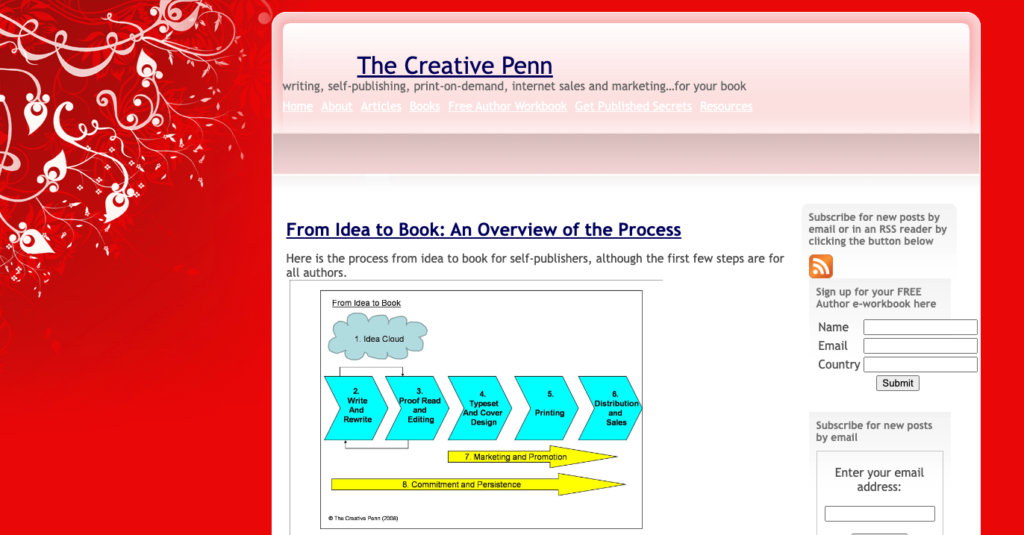
I first built it in 2008 and although I have kept it as streamlined as possible, it has thousands of pages and posts and lots of plugins, and inevitably some old code. I didn’t want to burden it further by using WooCommerce as yet another suite of plugins.
I also have multiple websites. The main ones are TheCreativePenn.com for Joanna Penn, JFPenn.com, and BooksAndTravel.page for J.F. Penn, and I also have CurlUpPress.com for the licensing side. If I went with WooCommerce, I would have to build on every site.
I want one store across all my author brands, where there is no algorithm to worry about and customers can browse and buy across different facets of my creative world, which, let’s face it, is ever-expanding!
Right now at CreativePennBooks.com, you can buy a J.F. Penn thriller, a creative self-help Joanna Penn book, or a mature sweet romance by my mum, Penny Appleton, and it won’t confuse any recommendation algorithm. I will add my pilgrimage memoir, merchandise, and a whole load of new stuff in the coming months (more on that towards the end).
I’ve spent years separating all my brands on my various websites, as well as on the Third Party retailers. This absolutely makes sense for those stores, which rely on their AI algorithms to surface books to browsers.
But (you might have noticed) I am a multi-passionate creative!
I write and create in all kinds of different ways and I have felt increasingly hemmed in by the way we have to contort our creative selves to fit what the platforms want.
A single store with links to everything I make with my intellectual property assets brings my creative offerings together in one place. Those who are interested in one type of book or product may discover I have much more to offer.
I’m now directing traffic from all my other sites and social media platforms to CreativePennBooks.com and customers have the choice to shop for what they want, or since I will continue to publish on the other stores, they can buy or borrow wherever they like.
Why Shopify rather than Kickstarter? (although they are not mutually exclusive)
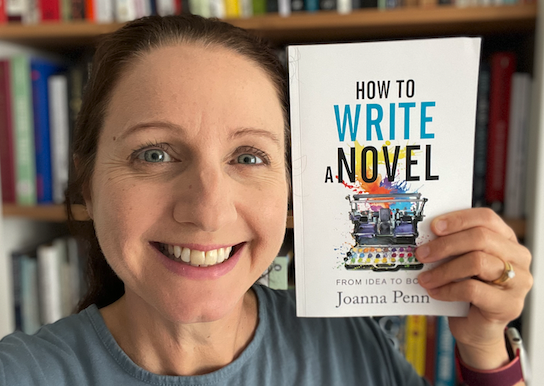
I decided to launch my store at the same time as launching my new non-fiction book, How to Write a Novel, which in hindsight was way too much work all at once. Tip: Don’t do that!
I originally intended to launch How to Write a Novel as a Kickstarter campaign, and even went as far as creating a project plan and going through preliminary options with White Fox for design. I also interviewed Monica Leonelle and Bryan Cohen about their campaigns.
But I felt uneasy about using Kickstarter, an unease I have felt since the early days of crowdfunding. Although the model works well for many authors, it just doesn’t suit me as a creator.
I don’t like ‘launch’ energy. I don’t like hype.
I don’t like being boxed in by promising something to people and then feeling like I have too many ‘bosses’ waiting.
I much prefer the long game, and the evergreen availability of products underpinned by content marketing.
A Kickstarter campaign is bounded by time and all your energy has to go into making that campaign a success, then after you’ve fulfilled that one, you do it again.
Repeated Kickstarters build an audience on their platform and later campaigns can be more successful than earlier ones. It’s a series of ‘spike launches’ that you repeat, sometimes multiple times per year.
Building a store is a very different project. It’s a one-off setup, which takes time upfront to get going, and then you incrementally add to it as you release books or expand into other products.
It’s more like a snowball rolling down the hill, getting bigger over time, which fits my preferred model of content marketing and a slow build over years.
So I have nothing against Kickstarter, and perhaps I might still do one in the future — but I decided to launch How to Write a Novel direct on my own store with an evergreen model.
The Minimum Viable Store
If you look into the possibilities of Shopify or WooCommerce, you quickly realize how powerful they can be — but that is both a blessing and a curse.
Once I decided to build a store, I read some books on Shopify, I listened to podcasts, and I talked to authors already embedded in it who were further down the track. I browsed the Shopify app store and discovered there really is an app for anything you want.
I quickly became overwhelmed.
I’m also not someone who likes to follow online video tutorials for software. I prefer to jump in and play with things. So I started a Shopify account, thinking it would be easy enough since I’ve been doing my own WordPress for years.
But of course, it’s not like WordPress, so I had to learn a new system.
In my previous day job, I spent 13 years as a business consultant, implementing the software package SAP into large and small companies across Europe and Asia Pacific. I specialized in Accounts Payable and Banking and spent much of my time implementing and testing software. Those years taught me many things that have proved useful in my author life.
Relevant here are two things that might also help you.
- Keep software as standard as possible and future upgrades will be less painful and less expensive. I have done this with my WordPress websites since 2008 and it has served me well and kept costs low.
- Control your project scope. If you expand the scope of the project, you will be in a lot of pain and may never finish!
Bearing these principles in mind, I cut everything back to my initial project scope:
Launching a Minimum Viable Store using the most basic aspects of Shopify
Products — I only set up ebooks, audiobooks, and paperbacks. No bundles, no Large Print, no Hardbacks, no merch, no courses, no extras.
I just wanted to replicate my Payhip store, plus add the print-on-demand option for paperbacks, and of course, launch How to Write a Novel into the world.
Setting up Products was the main bulk of my work as I have a huge backlist with a lot of different formats.
I set up 134 different products of varying kinds and then I needed to test all the integrations so that once a customer bought an ebook or audiobook, they would get the right files delivered by Bookfunnel and they were tagged in ConvertKit, and the print books were connected to the right files.
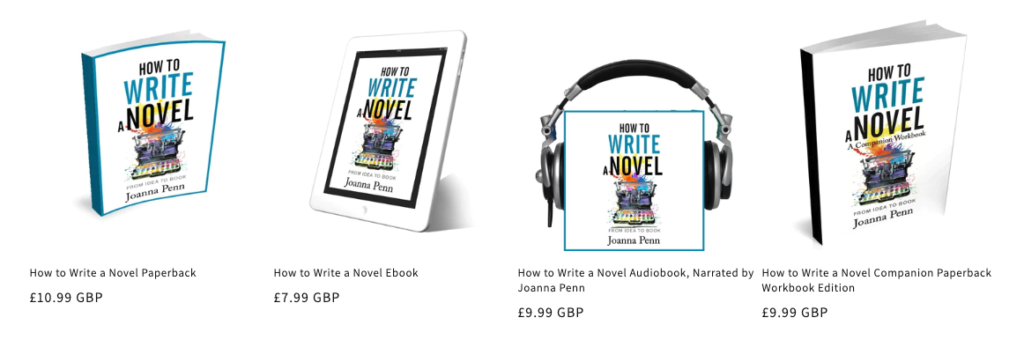
I also spent time making consistent product images.
It’s important that the buyer knows what they are getting, and for the store to look professional, so I wanted to make images that looked all the same.
I used MockUpShots.com to create the raw images, then resized them in canva.com. You can also use BookBrush.com or other image tools.
I then had to set up Collections, which are groups of products based on varying criteria. For example,
How to Write a Novel is a collection, featuring the various formats all on one page.
Ebooks for Authors is also a collection by formats, as is Mapwalker Fantasy Audiobooks.
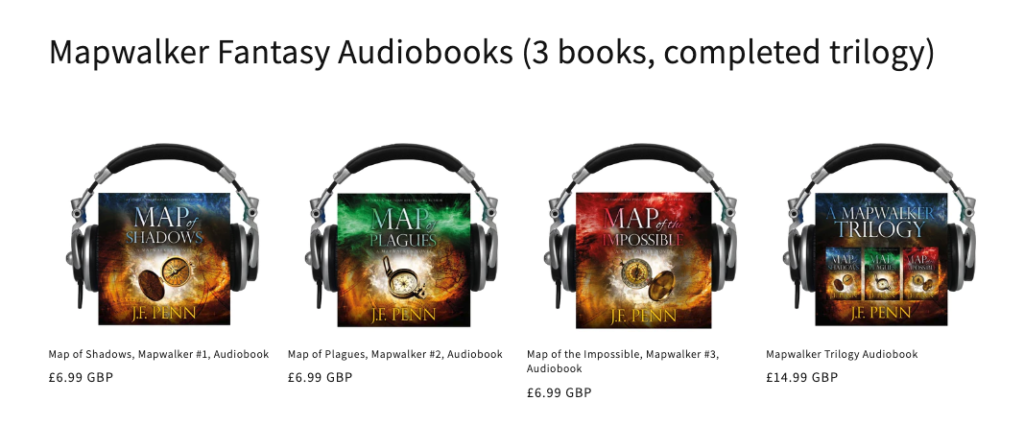
Collections are a key feature and element of the Shopify design. If you take a look at www.CreativePennBooks.com most pages are built using Featured Collections.
Theme — I used Dawn, the standard theme provided as part of the Shopify account. Thanks to a patron of the show, Shaw, for helping me with the design side of things. It works differently from what I’m used to, but the standard theme has been fantastic.
Payments — I set up the basics, Shopify Payments, and PayPal.
Apps — The apps I have at the time of recording are: Bookvault (for POD), ConvertKit (for email integration), Frequently Bought Together (which suggests other products), GDPR/CCPA + Cookie Management, Customer Privacy, and Geolocation.
Taxes and Integrations are covered in more detail below.
I also paid a Reedsy freelancer to set up the tracking for Google Analytics and Facebook, so I can possibly use them later for more targeting advertising based on conversions.
You can optimize ads for sales and conversions if you control the sales page, which makes paid ads much more effective, and potentially cheaper per conversion. I have no immediate plans to do paid ads, but I want the option to use them later.
The goal was to get the store live and launch How to Write a Novel and expand the store later.
I achieved my goal, launching the minimum viable store and the book on 13 July 2022.
If you want to take this route, I suggest you follow the same approach.
What is the minimum you need to do to get started? Then expand from there.
I’d give the same advice to anyone starting out with any kind of business, or becoming an author, or any new venture.
Keep it simple.
Otherwise, it’s easy to become confused and overwhelmed by all the options, and you might give up.
[Note: If you are a new author working on your first book, then finish the book as your priority. Don’t worry about publishing options, marketing, or anything else other than finishing the book! Everything else is secondary.]
Software and integrations: What other services do you need?
For delivering ebooks and audiobooks, set up integration with Bookfunnel, which most indie authors and many readers are already familiar with as we use it to deliver our Reader Magnets, do promos, and more.
Set up the ebook or audiobook within Bookfunnel.
Set up a Delivery Action.
Use a SKU code on the Shopify Product and link that SKU within Bookfunnel. They have easy setup instructions here.
What about print books?
While you can do a special print run, store books at your house or in a warehouse, and then ship them to customers personally, I wanted to do print-on-demand drop shipping, which is basically the same as how Amazon KDP Print and Ingram Spark work.
A customer orders and pays for the book + shipping. The book is printed and sent direct to them by the Third Party printer.
You do not pay lots of money upfront for bulk printing.
You do not have to store books or pay warehouse costs.
You do not have to handle packaging, postage, or shipping.
The two main POD book drop-shipping services are Lulu Direct and Bookvault.app.
Choose whichever service as an App within your Shopify store.
Set up each book on the service.
The ISBN links the Shopify product to the book at the printer, but they also have options for ‘dummy’ ISBNs so you don’t even need your own. It’s just a code linking the product with the printer.
One of the benefits of selling direct is knowing who your customer is and what they bought. I use ConvertKit for my email management and it has easy integration with Shopify.
I have the GDPR/CCPA + Cookie Management, and Customer Privacy apps to adhere to the appropriate data protection rules.
Within ConvertKit, I set up a Rule for each product and assigned a Tag to the customer for the Product they bought, as well as sending an automatic email depending on what kind of product it was.
I want to get a lot more granular with this Tagging and email segmentation, but as part of my Minimum Viable Store approach, I went with the basics and will add to this later.
For payments, you need to integrate with PayPal and Stripe. Both require anti-money-laundering checks if you’re new on the platforms, so make sure you allow enough time for setup.
Why did I use BookVault.app for my print-on-demand books?
Both Katie Cross and Morgana Best recommended Lulu Direct, but my entire backlist of paperbacks and many hardbacks are in 5 x 8 format, which Lulu doesn’t (currently) support.
I was also aware of Bookvault.app after seeing them at a stand at the London Book Fair back in April. I kept one of their leaflets on my desk. Although the printing company behind it, Printondemand-worldwide has been established for over 25 years, the Shopify and WooCommerce integration is a relatively new service.
My choice was to reformat my entire backlist to 5.5 x 8.5 or go with Bookvault.app. I decided on the latter and I’m extremely happy with them.
The print quality is excellent, the pricing is great, and their customer service has been fantastic. (Thanks Alex and Curtis!)
I’m also thrilled that I can do individual color pages. It means that How to Write a Novel bought direct from me has an interior color title page, and I’ll add other color features to books in the future. All interior pages are black and white if you buy from the other stores, although they do have other color options for higher print prices.
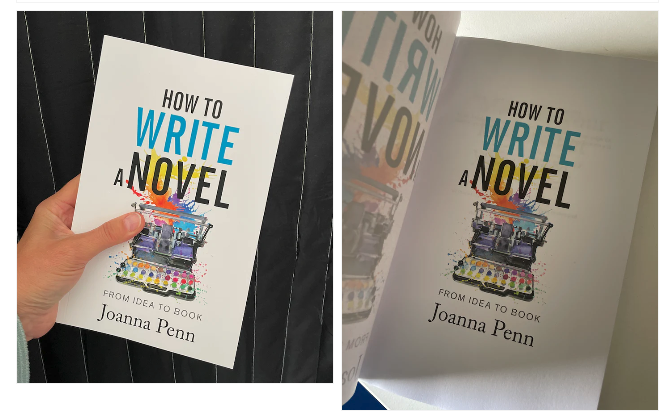
The Bookvault version also has a silken matte cover finish and doesn’t curl up or go wavy like some of the other POD services sometimes do. They have a lot of options for other print-on-demand books, so I’m excited to get more creative with print with future releases.
I tested a lot of their functionality as part of my setup and suggested improvements. The support team responded quickly and helped with all my questions.
Bookvault.app has a setup fee per book, but no charge to change those files in the future. If you have a large backlist, ask for a discount for bulk setup.
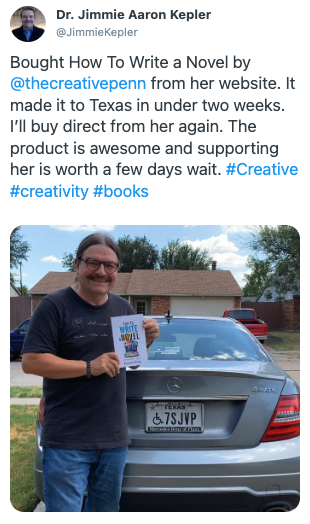
The biggest issue is that they currently only print in the UK (as of August 2022), so if a customer orders from outside the UK, the shipping cost is higher than some services and takes longer than the ‘next day delivery service’ many readers are used to. It can take 10-15 business days for delivery.
However, there are ways to deal with this:
Understand that you are NOT competing with the big brand stores for printing and free, fast delivery.
None of us can compete with the big stores, so don’t even try to.
My books are available in all the usual places, and customers can buy there if they want, or get the book from the library. Whatever they like.
But to encourage direct sales, I remind buyers that by purchasing direct, they are supporting both an independent author, and also an independent book printer. For How To Write a Novel, the customer also gets a premium special print edition that’s different to those offered on other stores. Isn’t it worth a few more dollars and a little longer to wait for that?
Communicate the timeframe for delivery on the product page and on your FAQ page. The paperback edition of How to Write a Novel says, Shipping in the UK, 3-4 days. To US, CA, AU and other countries, it can be 10 business days (2 weeks) for this special edition. Communicate this again in the email that buyers are sent after purchase to avoid support emails.
Based on my feedback and that of other authors, Bookvault is currently investigating printers within the USA and that might be something they develop further based on demand. The more authors who ask, the better! You can contact them through www.bookvault.app
You can also split your sales and use both services. Morgana Best added Bookvault because of the cheaper print prices and now sells UK print books through Bookvault and international print books through Lulu Direct.
What about signed print books?
If you want to sign the book and dedicate it to someone, you can’t drop-ship those. You need the books physically in your hands to sign them, then you have to ship them.
While you can set up a sale for this within Shopify, or with any other payment platform, you’re still going to need the print books in your house, store them and ship them, which is why I don’t do this at the moment.
How does the money work? What are the costs? How do I get paid?
There are some upfront setup costs.
Shopify has several plans and these will no doubt change over time, but it ranges from $29 to $299 per month depending on what level of functionality you need. Yes, I am now an affiliate so you can use my link: www.TheCreativePenn.com/shopify or just go to Shopify.com.
For my Minimum Viable Store, I used it pretty much straight out of the box with no bells and whistles. You can also try it for free and see if you want to continue.
Many authors, like Morgana Best and Katie Cross now use their Shopify store as their main author website, so this removes hosting costs for another site.
To deliver ebooks and audiobooks, Bookfunnel is $20 – $250 per year depending on the size of your backlist and the functionality you require.
Lulu Direct and BookVault.app have minimal setup costs per book, so the total cost will depend on the size of your backlist, number of formats etc.
You can buy premium themes, but I used the standard Shopify theme included with the plan.
My other costs are already costs of my business — my accountant and bookkeeper, Xero for accounting software, ConvertKit for email, as well as the usual bank and transaction fees.
For the print books, you also have to keep your account at the printers topped up in advance. Payment for each order printed is taken from your balance. I top mine up in batches of several hundred pounds so it’s not a massive outlay, especially when you are paid so quickly after the sale.
In terms of income, one of the brilliant things about selling direct is how fast the money gets to your bank account.
Choose the payment methods you want to accept in the settings of your Shopify store. This can include everything from Shopify Payments to PayPal to Amazon Pay, and other options like cryptocurrency.
For my Minimum Viable Store, I set up PayPal, where the money appears almost immediately in my account and I can transfer to my bank account immediately as well as I’ve been using it for years.
I also set up Shopify Payments, which are aggregated and paid to my account within 24-72 hours. You can change these settings based on your requirements.
Set the price for each Product, factoring in your costs and the profit you want to make.
You can set up different country or regional markets with different currencies and you can pay extra to set prices per currency or use their standard exchange rate. The money comes into your bank account in your store currency.
The main cost for ebooks and audiobooks (on top of editing and book cover design, as well as narration) is your Bookfunnel account as above.
So it’s a significant profit for digital products, minus transaction fees (for the basic plan it’s 2.9% + 30c per transaction, and there may also be PayPal and bank fees).
Compare that with 30 – 65% that the third-party stores take from each transaction, or if you’re traditionally published, the cut that the publisher and agent take.
For print products, you obviously need to factor in the cost of printing as well as some exchange rate differences which come into play for overseas shipping.
The shipping is paid for by the customer on top of the price of the book.
As a worked example, Mary buys How to Write a Novel direct.
£10.99 – Book cost
£3.39 – Postage and packaging within the UK
Mary pays: £14.38 on CreativePennBooks.com
I receive that money almost immediately if it’s on PayPal or within a few days through ShopPay.
I have already put some prepaid credit onto Bookvault and they use that credit to offset the printing and shipping.
£3.58 – Printing cost
£3.39 – Shipping cost
Total cost: £6.97
Profit on this sale = £7.41 (around US$9)
There are also fees on PayPal and Shopify which will depend on the plans you use. Assume 2.9% + 30c per transaction, so the fee on this would be around 71p.
Total profit after fees: £6.70 (around US$8)
My books are also available through Amazon KDP Print and Ingram Spark, where I make around £3.40 profit per book, about half of what I make on my own store. And of course, that money doesn’t arrive in my bank account for at least 60 days.
Traditionally published authors may only see a fraction of that profit, for example, 10-20% of net on paperbacks, depending on the contract.
Yes, I could make the printed books cheaper, but this is a business and the whole point is providing a great product for a reasonable price and making a profit!
This way, selling direct is more profitable for print books as well as digital formats. That’s a game-changer, and in the publishing world where profits are being squeezed by subscription programs and ad costs, we need the change the game.
What about tax?
I am not a financial, legal, or tax advisor, so none of this is financial, tax, or legal advice.
Tax settings per product vary by country and, in some places, by state. Your country and the country of the customer will make a difference to the tax situation.
The tax situation definitely put me off ini