PLAY PODCASTS
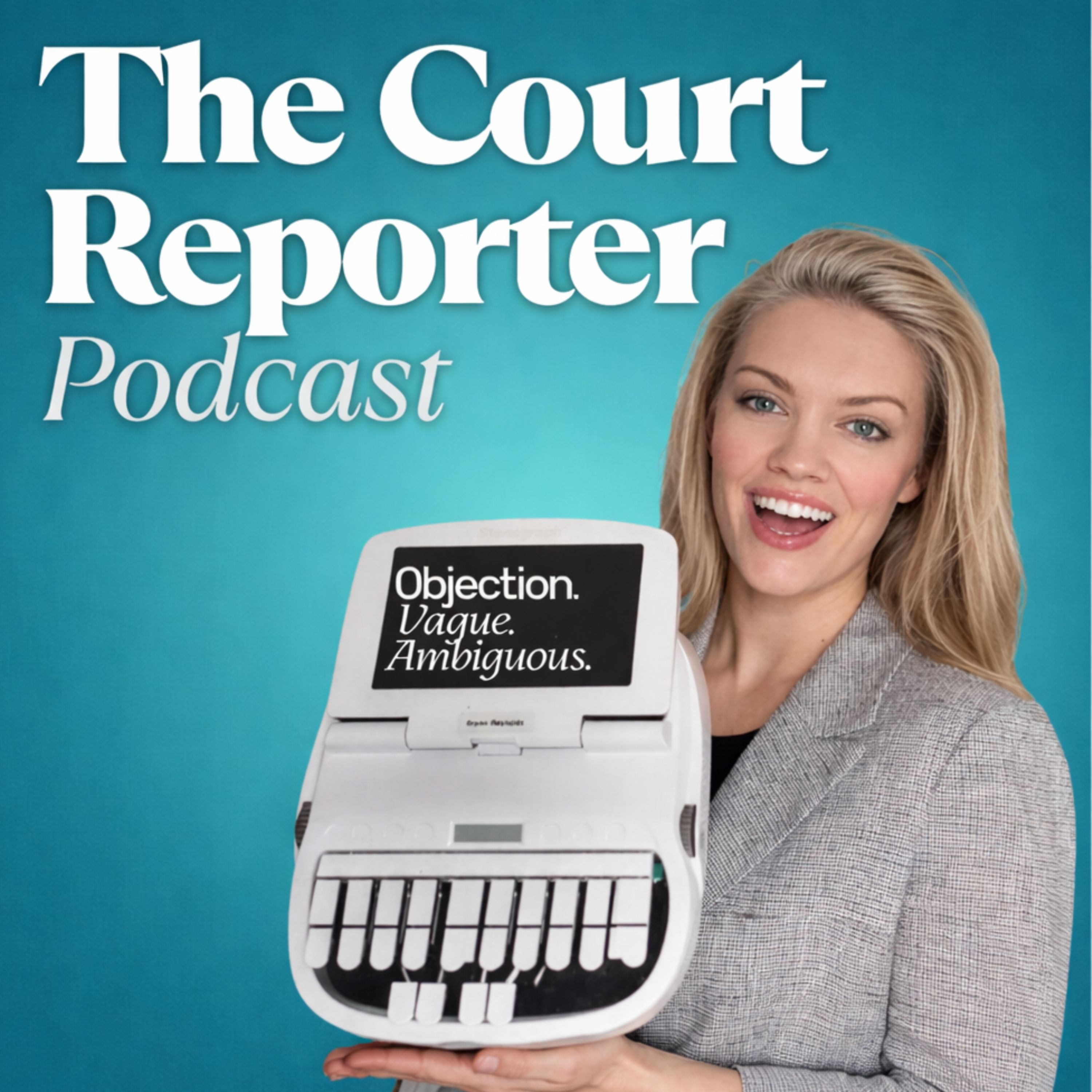
The Court Reporter Podcast

The Court Reporter Podcast

Brynn Reynolds Seymour

89 episodesEN

Show overview

The Court Reporter Podcast has been publishing since 2022, and across the 4 years since has built a catalogue of 89 episodes, alongside 2 trailers or bonus episodes. That works out to roughly 45 hours of audio in total. Releases follow a fortnightly cadence, with the show now in its 21st season.

Episodes typically run twenty to thirty-five minutes — most land between 19 min and 38 min — though episode length varies meaningfully from one episode to the next. None of the episodes are flagged explicit by the publisher. It is catalogued as a EN-language Business show.

The show is actively publishing — the most recent episode landed 1 weeks ago, with 17 episodes already out so far this year. The busiest year was 2024, with 31 episodes published. Published by Brynn Reynolds Seymour.

Episodes
89
Running
2022–2026 · 4y
Median length
27 min
Cadence
Fortnightly

From the publisher

The Court Reporter Podcast is a space for court reporters who want to leverage technology and streamline their workflows, to move from feeling overwhelmed and scattered to clear, confident, and assertive in their work and their lives. Hosted by Brynn Reynolds Seymour, this podcast offers grounded conversations, practical insight, and perspective drawn from real experience inside the courtroom. Each episode explores the mental, professional, and relational challenges court reporters face but rarely talk about openly, from managing stress and self-doubt to communicating effectively with attorneys, advocating for yourself, and creating systems that support clarity and balance. Rather than quick fixes or industry noise, this podcast focuses on thoughtful guidance, mindset shifts, and simple strategies that help you show up with confidence on the record and off. You will hear honest reflections, professional coaching insights, and real-world lessons on time management, boundaries, communication, and leadership within the justice system. If you are a court reporter who wants to trust yourself more, think more clearly, and build a sustainable business without burnout, The Court Reporter Podcast is for you.

Latest Episodes

View all 89 episodes

#89 - I Applied to Be a Digital Reporter… and Didn't Make It

May 7, 202626 min

#88 - From Steno Machine to CEO: How Two Court Reporters Built a 200-Reporter Agency from a Parking Lot

May 1, 202628 min

#87 - Train Your VTM (Virtual Transcript Manager) With Me!

Apr 20, 202623 min

#86 - Expert Testimony, Sugar, and Cortisol: A Conversation with Dr. Robert Lustig
Apr 14, 202621 min

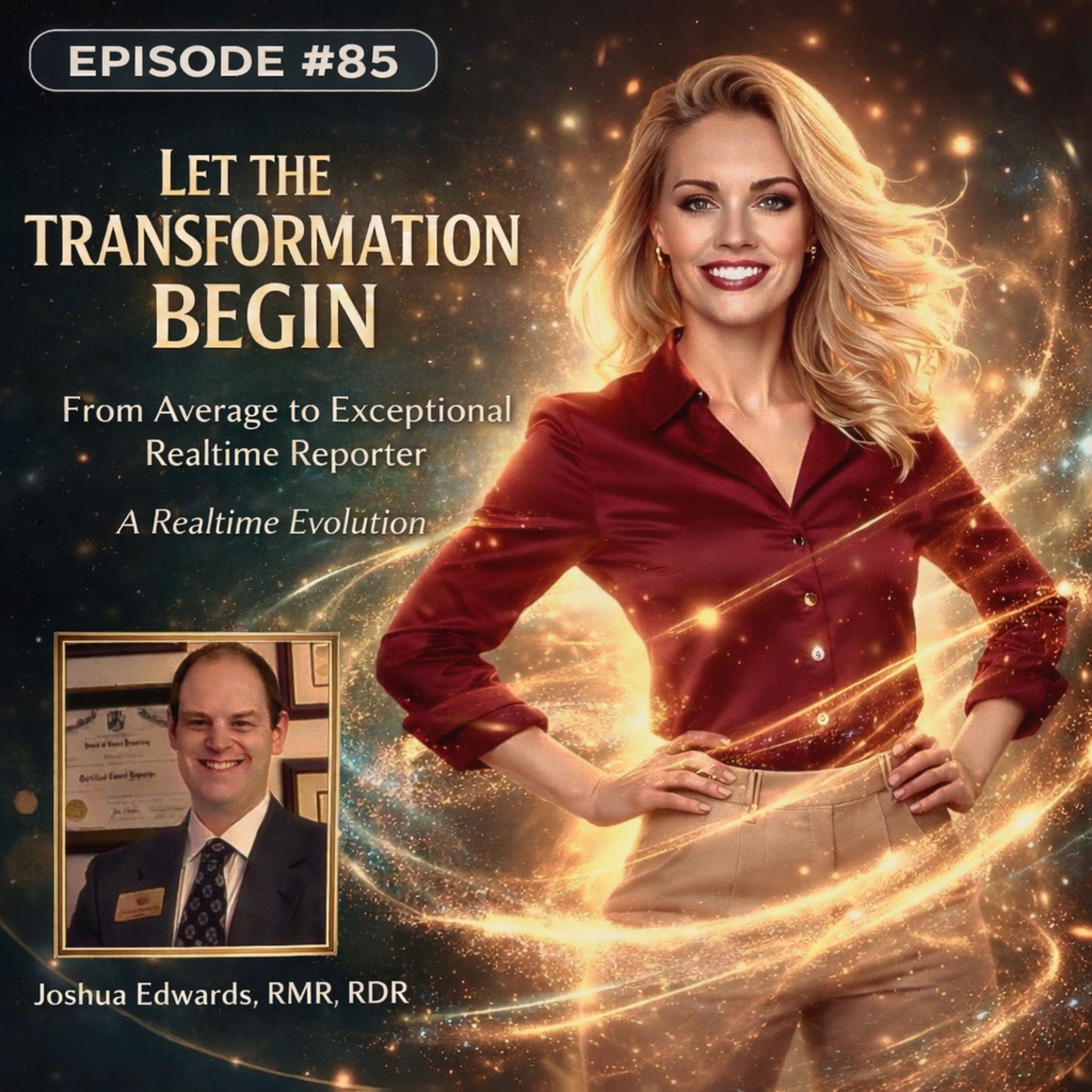
S3 Ep 85#85 - Transforming from Average to Exceptional High-Stakes Realtime Reporter: Session 1 with Joshua Edwards, RMR, RDR

In this episode, I’m taking you behind the scenes of a decision I’ve been talking about for years… but am finally executing.At the start of 2026, I made a commitment to either walk away from this profession or step fully into becoming a high-level, real-time court reporter. No more in-between.So I did something different.I reached out to some of the top real-time reporters in the industry and offered $10,000 for true coaching and accountability. Not casual mentorship, but real structure, real expectations, and real follow-through.Joshua Edwards was the first to say yes.This episode is a raw recording from our first session together. It’s unfiltered, honest, and full of the kinds of conversations that don’t usually get shared publicly… but probably should.We talk about:The hidden gaps between court reporting school and real-world expectationsWhy doing everything manually is slowing you down and causing burnoutThe importance of setting boundaries with agencies (including not acting as a remote technician)The difference between federal and state proceedings in a practical, usable wayWhy so many reporters feel like they’re “missing something”… and what to do about itThe systems, habits, and mindset required to move from average to exceptionalThis is just the beginning.I’m documenting the entire journey as I work toward becoming a real-time reporter, not just for myself, but for anyone else who feels stuck, overwhelmed, or unsure of what they’re missing.If that’s you… you’re not alone.
Apr 4, 202643 min

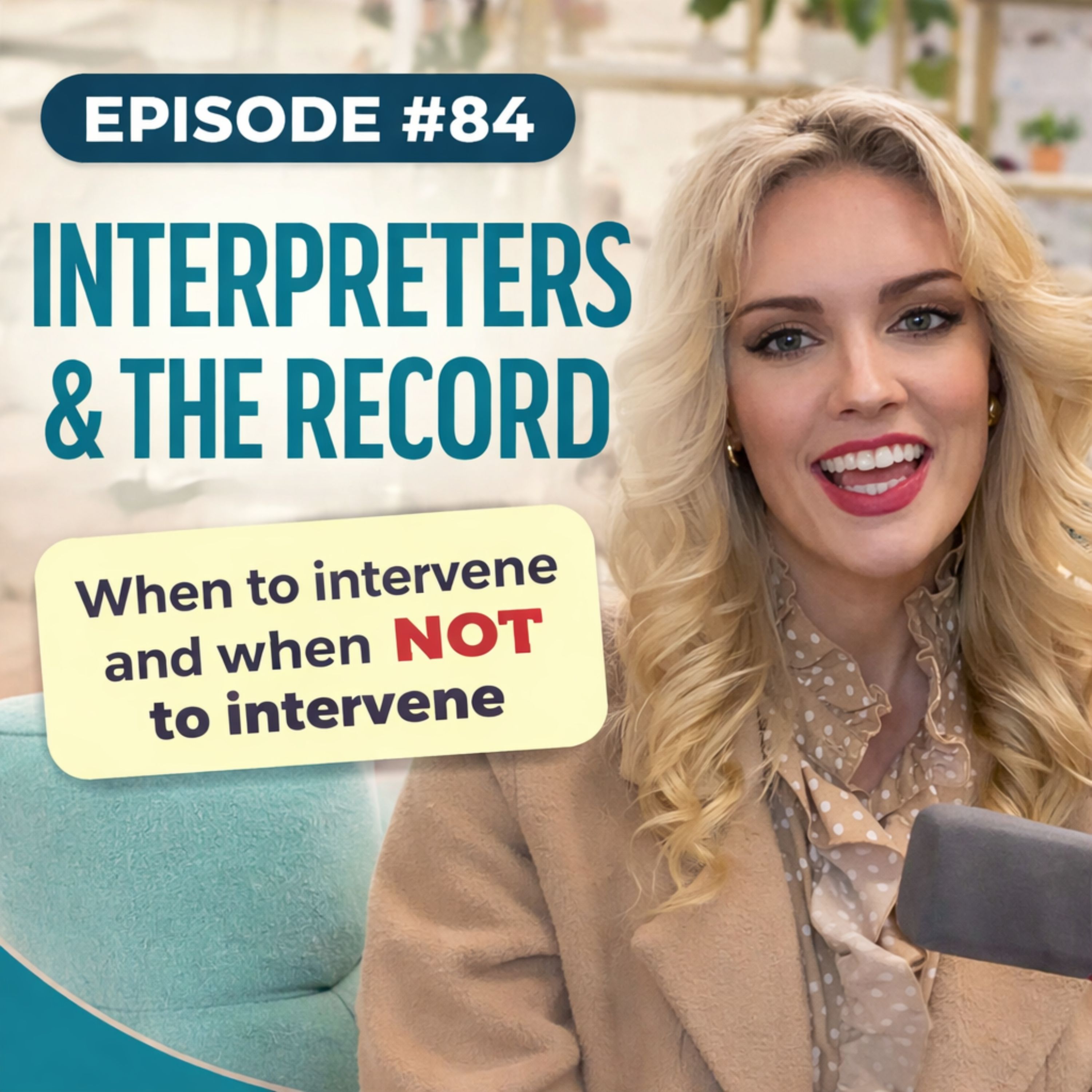
S3 Ep 84Interpreters & the Record: Where the Rules End and Reality Begins

What is the court reporter’s role when something on the record feels… wrong? And how can court reporters and interpreters work together effectively to enhance the record-taking process?In this episode, Brynn explores one of the most nuanced and debated issues in court reporting: working with interpreters (including "underqualified" or reporter-illiterate interpreters). Where is the line between neutrality and responsibility? When should a reporter remain silent, and when is it necessary to speak up?Drawing from real deposition experiences, industry discussions, and state rules across New York, California, Texas, and Illinois, this episode breaks down what the law says and what actually happens in the room.More importantly, it challenges a deeper question:Are we simply capturing the record… or are we responsible for protecting it?🎧 In This EpisodeThe difference between interpretation and verbatim testimonyWhy third-person interpreting creates serious transcript issuesThe real problem with mixing English and interpreted answersWhat state rules actually say about the reporter’s roleA critical distinction between content vs. structure of the recordWhen speaking up may be necessary to preserve clarityWhy this issue points to larger gaps in interpreter and legal training⚖️ Rules & Authorities ReferencedThis episode references the following rules and professional guidance:New York – CPLR § 3113(b) Requires that testimony be recorded verbatim by the deposition officerCalifornia – Court Reporters Board Best Practices States that reporters should not interrupt or correct interpretation and are responsible for capturing, not creating, the recordTexas – Rules of Civil Procedure 203.1 & 203.2 Defines the deposition officer’s role as neutral and limited to recording testimonyIllinois – Supreme Court Rules 206 & 207 Requires the officer to record testimony and certify it as a true recordNational Court Reporters Association (NCRA) Code of Professional Ethics Emphasizes impartiality, professionalism, and maintaining the integrity of the reporting profession🎯 Key TakeawayThere is a critical difference between:Intervening in interpretation (not our role) vs.Intervening when the structure of the record breaks downThis episode explores where that line may exist—and why it matters.🎤 Join the ConversationHave you experienced this in a deposition?Would you speak up… or stay silent?🎙 You can now leave a voicemail directly for the podcast.Visit the Court Reporter Podcast website and click the green microphone button in the bottom right corner to record your message (up to 2 minutes).Longer thoughts? Submit multiple messages.Selected responses may be featured in an upcoming episode.🔗 Connect & ShareIf this episode resonated with you, share it with a fellow court reporter, scopist, or legal professional.This is a conversation our industry needs to have.
Mar 27, 202630 min

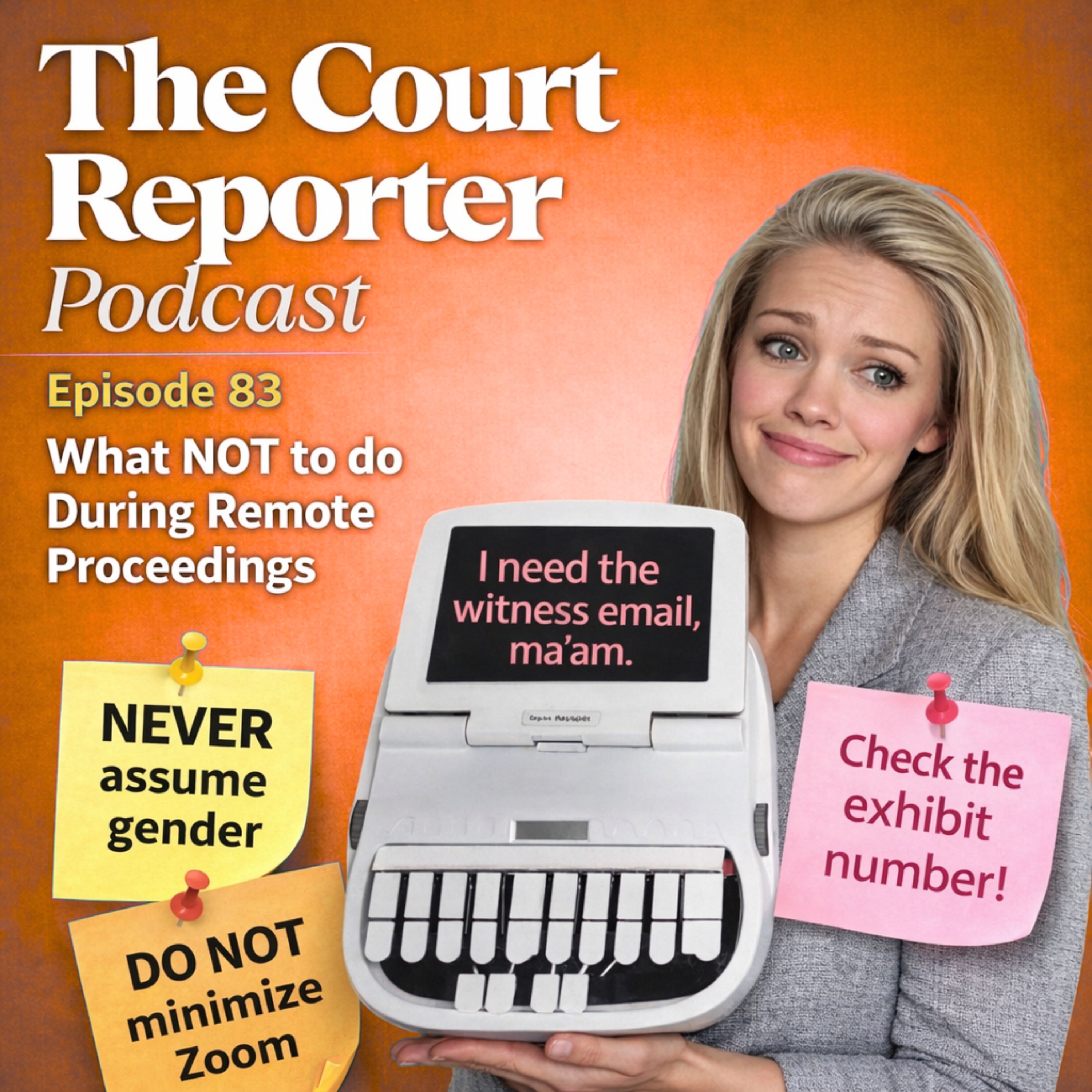
S21 Ep 83#83 - What NOT to do During Remote Proceedings: Mistakes I've Learned Over Zoom

Episode DescriptionYou know what no one tells you about remote depositions?It’s not the big mistakes that trip you up… It’s the small, seemingly harmless ones.The moments where you think you’re being helpful. The times you speak up when you shouldn’t… or stay quiet when you shouldn’t.In this episode, I’m sharing real stories from the field—times I learned the hard way what not to do as a court reporter.From awkward read-and-sign situations… To accidentally overstepping with attorneys… To one simple assumption that humbled me instantly…These are the lessons that don’t always get taught—but absolutely matter when you’re on the job.If you’re a new reporter—or even experienced—this episode will help you avoid the kinds of mistakes that can quietly impact your professionalism, confidence, and relationships with counsel.In This Episode, You’ll Learn:Why you should never bring up read and sign unless it’s mentionedThe “helpful” question that can actually create more work for everyoneHow one small assumption can instantly shift the tone of a proceedingWhat to do when exhibit numbering goes wrong (and why timing matters)The Zoom habit that can make you miss critical moments on the recordHow to stay in your role while still being proactive and professionalKey TakeawayIn court reporting, it’s often the smallest decisions that have the biggest impact.Learning how to navigate those moments with clarity, neutrality, and confidence is what separates someone who is simply “getting through the job”… from someone who is truly in control of the room.Share This EpisodeIf this episode helped you, share it with another court reporter—especially someone who’s just getting started. These are the lessons we usually learn the hard way… but they don’t have to be.Connect With Me🎙️ The Court Reporter Podcast 📩 [email protected] AI oversight bill receives sponsorshipU.S. Rep. Hageman and U.S. Sens. Wicker and Welch introduce

Mar 21, 202620 min

S1 Ep 82#82 - The CEO of the Record (and the Future of the Field)

Court reporting isn’t just about the record—it’s about the business you’re running (or the one that’s running you).In this episode, Brynn Seymour cuts through the industry noise to address the "hidden" side of the profession: the struggle to maintain total accuracy while managing the chaos of being a solo entrepreneur. Most reporters are trained to be brilliant stenographers, but they’re left in the dark when it comes to being CEOs.What we’re covering:The Business Gap: Why the transition from reporter to business owner is failing so many, and how to bridge it.The LA Executive Roundtable: A look inside the upcoming "Tea Party" at the Biltmore—where we’re sitting the "Old Guard" (Veritext/Esquire) across from the "New Tech" (Steno/Filevine) to demand transparency.The Workflow Revolution: A first look at Brynn’s automation system designed to kill the administrative burnout—from goal tracking to automated invoicing.This isn't just a podcast; it’s a call to action. It’s time to stop waiting for the "9-to-5ers" to fix our industry and start building the solutions ourselves.Key Takeaways:Own the Business, Not Just the Seat: Why you need to view your reporting as a high-margin enterprise.Tech as a Teammate: How automation (and our new app) is solving the "admin tax" on your time.The Power of the Room: Why our LA Summit is the most important conversation happening in the industry this year.

Mar 13, 202626 min

Ep 81#81 - Advancing Justice: Creating Sustainable Solutions for Court Reporters

trailer

The court reporting profession is confronted by rapid advancements in artificial intelligence and an alarming rise in reporter burnout. As the mechanisms for capturing and delivering the official record evolve, court reporters find themselves grappling with the immense responsibilities of their roles, often at full capacity. This episode delves into the tensions that have emerged within the industry, as well as the solutions.We advocate for a future where technology and the expertise of court reporters coexist harmoniously, building hybrid models that enhance efficiency without compromising the integrity of the profession. Our mission is to cultivate a collaborative environment that empowers reporters, optimizes administrative workflows, and ultimately upholds the pursuit of justice.Takeaways:The court reporting profession stands at a critical juncture, facing challenges that require our full attention.Advancements in technology and AI, artificial intelligence, are transforming the methods of record capturing and delivery.Court reporters are confronting unprecedented levels of burnout while maintaining the official record's integrity... which will be explored more thoroughly in a future episode!A collaborative approach between stenographers and tech is essential for the profession's sustainable future.The "old" system is deemed unsustainable by many practitioners, necessitating urgent reform to address systemic issues.Leadership and vision are imperative to ensure that the profession evolves while preserving vital expertise.And then, of course, my personal story for the last 5 minutes! :)

Mar 6, 20265 min

Ep 80#80 - Leveraging Technology for Enhanced Court Reporting Practices

Scoping in the Age of AI (Part 2): Workflow Mastery, Coaching, and Avoiding AI "Scopist” Scams.In this episode, we continue the conversation as a Part 2 of Episode 77. Brynn discusses with Rachel Harris about hands-on coaching to streamline scoping and editing, including observing reporters via Zoom plus FaceTime to see exact mouse and keyboard actions, identifying repetitive pain points, and customizing macros, keyboard mappings, and EZ Speaker usage to reduce steps and save time.Rachel shares how she gamified learning shortcuts to avoid the mouse, explains why many reporters were never taught CaseCATalyst capabilities, and suggests a small set of high-impact shortcuts can be “life changing,” while fixes must be tailored to each workflow.Brynn describes pausing her VTM approach to build a more sustainable app focused on dashboards, bookkeeping, billing, deadlines, and transcript tracking.Rachel warns about marketplace confusion and Facebook “scams” involving non–court-reporting-trained “AI/digital” scopists, urging mastery and clear “steno scopist” labeling. Rachel shares where to find her coaching and Scoping International.00:00 Welcome Back Part Two00:24 Hands-on Coaching Setup02:07 Macros And EZ Speakers02:59 Keyboard-Only Scoping05:19 Overcoming the Awkwardness07:12 You're Not Supposed To Know09:08 Five Shortcuts That Matter11:42 Building A VTM App14:19 Scams with "Steno Scopists"19:42 Where AI Fits In23:01 How To Find Rachel23:52 Scoping International And Certs26:22 Favorite Hidden Text Shortcut27:49 Wrap Up And Next Episode28:18 VTM App (New Version)Takeaways:In this episode, we delve into hands-on coaching techniques that enhance scoping and editing processes for court reporters.We emphasize the importance of observing reporters in their natural workflows to identify efficiency improvements.A significant focus is placed on the customization of keyboard shortcuts and macros to streamline repetitive tasks.The conversation highlights the necessity of mastering software tools to alleviate burnout and stress among court reporters.We explore the implications of AI in the court reporting industry and the need for discerning its impact on workflows.Lastly, we discuss the emerging trend of digital scopists and the importance of understanding the foundational skills required for effective scoping.

Feb 27, 202630 min

S2 Ep 79#79 - When the Record Is Ignored: A Real-World Look at Talking Over the Court Reporter

What happens when the court reporter’s voice is ignored?In this episode, we take an honest, grounded look at one of the most exhausting parts of our profession: protecting the record when multiple people are talking over each other despite repeated attempts to speak up. This conversation is for court reporters who have ended a deposition feeling completely drained… not because of the length or the terminology, but because of the behaviors of the participants...We are not here to bash anyone. We are here to talk about reality.🎯 What This Episode CoversWhy court reporting is ranked as one of the most stressful professions (and why we still do it!)The real source of that stress (and it’s not what most people think)The invisible mental labor of managing chaos calmlyThe difference between being “confrontational” and protecting the recordHow boundaries protect both the transcript and your nervous systemWhy this issue is systemic, not personal

Feb 20, 202612 min

Ep 78#78 - The Ghost in the Statute: New York’s Ambiguous Authority Mystery

This wasn’t the episode I planned. I had a script ready, but I threw it out for something more honest.This is a "sprawled on the floor" conversation about the deep insecurities of working in a system—specifically New York's—that feels designed to keep us in the dark. We’re diving into the "New York Glitch": the jurisdictional ambiguity other states don’t have, and the moments I almost walked away from court reporting entirely.If you’ve ever felt like you're walking on thin ice despite your experience or credentials, this is for you.Companies mentioned:New York Career InstitutePlaza CollegeNational Notary AssociationNew York State Unified Court System

Feb 12, 202631 min

Ep 77#77 - Scoping in the Age of AI with Rachel Harris

In this episode, Brynn Seymour and Rachel Harris delve into the evolving landscape of technology in the court reporting industry, addressing the common question:Will court reporters or scopists be replaced by AI? How can scopists and court reporters make sure that they are not falling behind, but keeping up with technology in a safe and secure way? What should court reporters and scopists be focused on now?Listen to this episode to find out!Rachel Harris was featured in the JCR in December of 2025: Life as a professional scopistGain the freedom to work from anywhere. – Be wherever you want to be. Start your career as a scopist today.

Feb 5, 202635 min

Ep 76#76 - Insights from the Bench: A Conversation with Judge Janet Malone

In this episode, I’m joined by Judge Janet Malone for a real conversation about judicial life — the good, the challenging, and everything in between.We talk about what it’s like to juggle the work itself while also running a business, how important it is for court reporters to speak up for accuracy on the record, and why communication and teamwork in the courtroom really matter. Judge Malone also shares her perspective from the bench and how empathy plays a role in the way cases unfold.If you’re a court reporter, attorney, or just curious about how the courtroom really works, you’ll get a lot out of this one.

Jan 22, 20261h 3m

Ep 75# 75 - Voice Writing vs. Steno with Rachel: Translation Friction, AI & Standards

Brynn Reynolds Seymour and Rachel Harris follow the fault lines: a near-split vote, frustrated translation rates, and tools that promise more than they deliver. What happens when mask tech, software shifts, and courtroom culture collide—and the record still has to be right? Step inside the tension to hear where standards hold, where they bend, and what seasoned reporters are watching next.Guest BioRachel Harris is a court-reporting consultant to the Lagos judiciary, where she’s building standards, training judges on effective reporter utilization, and leading projects to retrain voice writers to stenography. A longtime scoping coach, she bridges real courtroom workflows with practical training, helping reporters translate tech into clean, certifiable records.⭐ Leave Us a Review!Enjoyed the episode? Drop a 5-star rating or a quick line about your takeaway—those signals help more reporters and attorneys find the show. Thanks for listening and for supporting the podcast.

Jan 15, 202644 min

S3 Ep 74#74 - Navigating the Confusion of Notary Requirements for Court Reporters

The point of this podcast episode revolves around the complexities and frustrations associated with the notary requirements for court reporters, particularly in the context of the differing regulations across jurisdictions. I delve into my personal experience of preparing for the notary test, which I undertook under challenging circumstances, and reflect on the relevance of the material to my profession. The episode serves as a platform for exploring the broader implications of certification and compliance in our field, while also questioning the necessity of certain regulations that may not correlate with our day-to-day responsibilities as court reporters. I invite listeners to engage in this discourse, fostering a community of shared insights and experiences. Ultimately, we aim to illuminate the pathways toward professional development and clarity within the court reporting profession.Takeaways:This podcast emphasizes the importance of reflective practice in the court reporting profession, urging listeners to consider their roles deeply.Listeners are encouraged to navigate the complexities of notary law and CSR certification with confidence and clarity.The conversation highlights the necessity of movement and action in addressing complaints, thereby facilitating personal and professional growth.The podcast discusses the disconnect between notary law and court reporting duties, questioning the relevance of notary certification for court reporters.It is suggested that the court reporting community advocate for a more coherent licensing system, similar to that of California.Listeners are reminded that one's perspective can be transformed through movement, encouraging proactive engagement with challenges.

Jan 9, 202614 min

S2 Ep 73#73 - The Path Ahead for Court Reporting in 2026

It’s officially 2026.In this New Year kickoff episode, Brynn reflects on what 2025 revealed, celebrates unexpected milestones, and lays out a clear vision for what’s ahead on the Court Reporter Podcast.This episode introduces the podcast’s new season-based format, the core themes for the year, and a transparent look at Brynn’s personal recommitment to growth, including her journey toward the RPR and deeper national-level understanding of the profession.This is not about perfection.It’s about clarity, structure, and doing the work out loud.If you’ve ever felt unsure, overwhelmed, or like you’re just figuring things out as you go, this episode sets the tone for a different kind of year.In This Episode, We Cover:• Why 2026 is the Year of Transformation • A behind-the-scenes look at the podcast’s growth and milestones • What’s changing with the podcast structure and why • The four core principles that define court reporting across all jurisdictions • Brynn’s honest recommitment to pursuing the RPR and true professional mastery • A preview of each season planned for 2026 • Why expertise is more than credentials • What it really means to build confidence, clarity, and authority in this professionWhat’s Coming in 2026:• Ethics, licensure, certification, and professional identity • Assertive communication and confidence on the record • Business systems, burnout reduction, and future-proofing your career • Judicial interviews, community conversations, and national observances • The launch of the Court Reporter Podcast AwardsThis podcast exists to bridge gaps, elevate standards, and support court reporters and litigation professionals navigating real-world challenges with intention.If this episode resonates, stay connected.Sign up for the newsletter at courtreporterpodcast.com to receive updates, episode drops, and invitations to upcoming discussions and accountability sessions.This is the year we do things differently.Join me for finance management accountability sessions! I'll send the schedule via the newsletter which you can join by going to: courtreporterpodcast.com

Jan 1, 202636 min

S2 Ep 72#72 - How to Get on a Court Reporter’s Good Side — Part 3/3

Today we're wrapping up the mini episode series with Tips #8–10 on how attorneys can work best with their court reporters. This is important because they don't seem to teach it much in law school, so hearing directly from a court reporter all the things we want attorneys to know, can be so helpful. Attorneys, this is for you. Listening to this series will put you one step ahead of all of your colleagues.Feel free to email [email protected]!⭐ Leave Us a Review!If this series helped you lead the room and protect the record, please leave a 5-star rating or a short review—even a quick star rating helps more reporters and attorneys find the show.

Dec 16, 20257 min

S2 Ep 71#71 - Attorneys: How to Work with your Court Reporter - Part 2

When the record is on the line, every micro-decision matters. If you wait until the end to request a rough or let crosstalk slide “just this once,” you invite stress, corrections, and a messy review. In this episode, you’ll learn simple moves that keep you impartial, in control, and confident from gavel to goodbye.⭐ Leave Us a Review!If this helped you protect the record, please leave a 5-star rating or short review—even a star rating helps more reporters and attorneys find the show.

Sep 18, 20258 min

S2 Ep 70#70 - For Attorneys: How to Work with a Court Reporter - Part 1

When the record is on the line, even small decisions can make or break accuracy. What you say, when you speak up, and how you confirm the record all affect the clarity of the transcript and the pace of the proceeding. This episode shares the etiquette every attorney needs to know—so you can work with your reporter, not against them, and ensure the record stays clean.In Part 1 of this mini series, host Brynn Reynold Seymour explains why the record is the primary product of any proceeding—and why assumptions can undermine it. This episode addresses the most common mistakes attorneys make, probably unknowingly, when trying to make the record in depositions. Host InsightsBrynn shares how simple attorney habits—clear cues, verbalizing the record, and proactive introductions—make proceedings smoother for everyone and protect the record in high-stakes settings.Resources & MentionsContact: [email protected] & Facebook: @courtreporterpodcastCourt Reporter CEO Mindset Program signup⭐ Leave Us a Review!If this episode brought you value, please leave a 5-star rating and quick review. Your support helps more attorneys and reporters discover the tools and insights they need to succeed. And don’t forget to subscribe—Parts 2 and 3 are coming soon.

Sep 16, 20259 min
© 2024 The Court Reporter Podcast