The Classical Mind
Conversations about the Great Books
Jared Henderson & Wesley Walker · Junius Johnson & Wesley Walker
Show overview
The Classical Mind has been publishing since 2022, and across the 4 years since has built a catalogue of 59 episodes. That works out to roughly 60 hours of audio in total. Releases follow a monthly cadence.
Episodes typically run an hour to ninety minutes — most land between 56 min and 1h 14m — and the run-time is fairly consistent across the catalogue. None of the episodes are flagged explicit by the publisher. It is catalogued as a EN-language Arts show.
The show is actively publishing — the most recent episode landed 2 weeks ago, with 15 episodes already out so far this year. Published by Junius Johnson & Wesley Walker.
From the publisher
Conversations on the Great Books. New episodes on the first Tuesday of every month. www.theclassicalmind.com
Latest Episodes
View all 59 episodesThe Two Towers by J.R.R. Tolkien
The Classical Mind Goes to the Movies: Christopher Nolan's Odyssey
Bonus Episode: The Forge of Friendship
The Lord of the Rings: The Fellowship of the Ring by J.R.R. Tolkien
Bonus Episode: Season 5
A Midsummer Night's Dream by William Shakespeare with Heidi White
The Importance of Being Earnest with Dr. Grace Hamman
Paradiso with Dr. Jonathan Juilfs
Purgatorio with Heidi White
"The Tapestry": A Conversation about a New CiRCE Language Arts/Grammar Curriculum with Buck Holler
In this episode of The Classical Mind, Dr. Junius Johnson sits down with Buck Holler from the CiRCE Institute to discuss "Tapestry," a new writing and grammar curriculum designed to bridge the gap between early elementary studies and the advanced persuasive essays found in The Lost Tools of Writing. Holler explains that for twenty-five centuries, the study of grammar and literature were considered a single, unified discipline, an organic connection that was largely severed during the Enlightenment. By re-integrating these fields, the curriculum moves away from the modern trend of teaching grammar through isolated, "zigzag" sentences and instead grounds linguistic study in the rich soil of full stories, including Aesop’s fables, Arthurian legends, and sacred Scripture. This is a public episode. If you'd like to discuss this with other subscribers or get access to bonus episodes, visit www.theclassicalmind.com/subscribe
The Inaugural Classical Mind Battle of the Books
Round 1: Voting will be open from Monday (3/16) until Monday (3/23) ***Vote Now!***Round 2: Voting will be open from Monday (3/23) until Saturday (3/30)Round 3: The first semi-final round will be Monday (3/30) until Wednesday (4/1); the second semi-final round will be Thursday (4/2) until Saturday (4/4)Round 4 (the final): Voting will be open from Monday (4/6) until Monday (4/13)In this special bonus episode, Fr. Wesley Walker and Dr. Junius Johnson pivot from their usual textual analysis to the “Battle of the Books.” Harnessing the competitive energy of March Madness, they set out to seed the last twelve books discussed on the podcast into a tournament bracket, where the ultimate winner will be decided by listener votes. The seeding process is guided by two primary criteria: the quasi-objective historical influence of the text and the quasi-subjective literary or theological quality of the work. The books included in the tournament are: * Lilith by George MacDonald* Billy Budd, Sailor by Herman Melville* Proslogion by Anselm* The Taming of the Shrew by William Shakespeare* Frankenstein by Mary Shelley* The Aeneid by Virgil* Peter Pan by J.M. Barrie* The Federalist Papers* The Journey of the Mind to God by Bonaventure* Love in the Ruins by Walker Percy* The Castle of Otranto by Horace Walpole* The Communist Manifesto by Karl Marx and Friedrich Engels This is a public episode. If you'd like to discuss this with other subscribers or get access to bonus episodes, visit www.theclassicalmind.com/subscribe
Inferno
In this episode, Father Wesley Walker and Dr. Junius Johnson are joined by Dante scholar Catherine Illingworth to navigate the harrowing depths of Dante’s Inferno. The conversation centers on the profound medieval understanding of sin not merely as a broken rule, but as a fundamental distortion of love and human nature. The hosts and their guest explore how the damned souls, such as Francesca and Paolo in Canto V, consistently refuse to take responsibility for their actions, instead blaming external forces like romantic love for their eternal demise. This introduces the foundational concept that hell is a realm where souls have misordered their affections, elevating earthly desires above their love for God and ultimately choosing their own ruin.The discussion dives deeply into the mechanics of divine justice, specifically the concept of contrapasso, where the physical punishment seamlessly mirrors the internal reality of the sin. Through vivid examples like Capaneus, whose unyielding pride becomes his own internal and eternal torment , and Odysseus, whose final voyage represents the ultimate theological fraud of attempting to achieve salvation through human merit alone, the episode illustrates how sin deforms the human soul. The group also grapples with the modern reader’s severe discomfort with eternal damnation, contrasting contemporary universalist tendencies with Dante’s vision of a highly physical, meticulously structured afterlife where characters literally become the landscape of their own making.Junius has a video on courtly love that may be helpful to understand some of the conversation. Catherine Illingworth studied religion and literature at the Yale Divinity School before pursuing a PhD at UCLA in medieval literature with a specialized focus on Dante. She recently stepped away from the academic world after her young son, George, was diagnosed with a rare neurodegenerative genetic disease. In response to the immense financial barriers preventing children from accessing existing, life-saving gene therapies, she founded the Bradstreet Foundation to help families lacking a commercial pathway for treatment. You can learn more about her vital advocacy work at geneforgeorge.org, and follow her updates on TikTok and Instagram by searching for Catherine Illingworth.Endnotes:* Catherine: “The Waste Land” by T.S. Eliot * Junius: No Exit by Jean-Paul Sartre * Wesley: Unreal, Unearth by Hozier This is a public episode. If you'd like to discuss this with other subscribers or get access to bonus episodes, visit www.theclassicalmind.com/subscribe
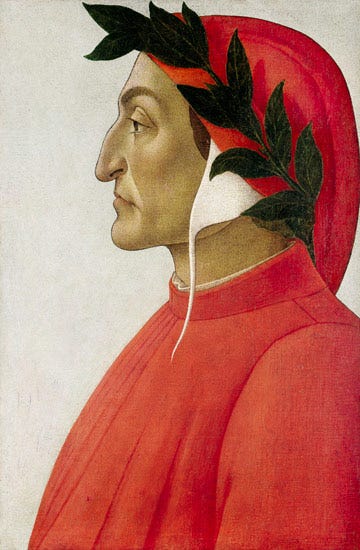
BONUS EPISODE: An Introduction to The Divine Comedy by Dante Alighieri
This bonus episode of The Classical Mind serves as “front matter” to prepare listeners for a three-month reading marathon of Dante Alighieri’s Divine Comedy. Join Wesley and Junius as they explain that the work is a “comedy” not because of humor, but because of its trajectory: it begins in the darkness of Inferno and ends with the “blessed life” and vision of God in Paradiso. The discussion explores the poem’s intricate architecture, consisting of 100 cantos and an interlocking three-line rhyme scheme called terza rima. The hosts emphasize that Dante intentionally wrote the poem to be read using the medieval fourfold method—literal, allegorical, moral (tropological), and eschatological—allowing it to function as both a narrative journey and a transformative spiritual school for the reader.The episode also provides the vital historical and cosmological context required to navigate Dante’s world, from the “funnel” of Hell beneath Jerusalem to the mountain of Purgatory on the opposite side of the globe. The hosts explain how the Earth was viewed as the “cosmic dump” at the absolute bottom of a sphere-shaped universe, putting Satan as far from God as possible. Additionally, they break down the 13th-century political strife between the Ghibellines and Guelphs, noting that Dante’s own exile as a White Guelph deeply colors the text. By synthesizing the theology of Aquinas and Bonaventure with the classical poetry of Virgil, Dante created an “encyclopedia of medieval thought” that remains a high point of the Western canon. This is a public episode. If you'd like to discuss this with other subscribers or get access to bonus episodes, visit www.theclassicalmind.com/subscribe
Lilith
In this episode of The Classical Mind, Fr. Wesley Walker and Dr. Junius Johnson explore George MacDonald’s 1895 fantasy novel, Lilith. The discussion navigates the tension between MacDonald’s occasionally “fumbling” literary style and the profound, “mythopoeic” power of his spiritual vision. The episode also touches on MacDonald’s universalist leanings and his belief that even “evil that is good for you” acts as a redemptive force. Ultimately, the episode highlights how Lilith challenges readers to move beyond a dry love of books to a lived experience of the supernatural reality they represent.We want to keep up the conversation with you! To receive new episodes and support our show, consider becoming a free or paid subscriber.Endnotes: * Junius: Phantastes by George MacDonald* Wesley: Our Next Work: Inferno by Dante Alighieri This is a public episode. If you'd like to discuss this with other subscribers or get access to bonus episodes, visit www.theclassicalmind.com/subscribe
Medieval Exegesis
In this episode of The Classical Mind, hosts Father Wesley Walker and Dr. Junius Johnson dive deep into the fascinating, complex topic of Medieval Exegesis—”specifically how the medievals read the scriptures.”Moving beyond single book analysis, this discussion traces the history of Christian exegesis from the Patristic era (Paul, Origen) to the evolution of the foundational Four Senses of Scripture (literal, allegorical, moral, and anagogical).Discover the critical, often-misunderstood meaning of the Literal Sense and learn how this ancient, nuanced method of biblical interpretation offers powerful intellectual tools for solving modern-day false dichotomies.Endnotes* Junius: The Mystical Ark by Richard of Saint Victor* Wesley: The Selected Spiritual Writings of Hugh of Saint Victor This is a public episode. If you'd like to discuss this with other subscribers or get access to bonus episodes, visit www.theclassicalmind.com/subscribe
Our Top Reads of 2025
In this special year-end bonus episode, hosts Father Wesley Walker and Dr. Junius Johnson take a break from their usual Great Books discussion to share their personal Top 5 favorite books read this year—works that fell (mostly) outside of the main Classical Mind reading list.The Classical Mind is a reader-supported publication. To receive new posts and support our work, consider becoming a free or paid subscriber.JuniusFrankenstein by Mary ShelleyPhantastes by George MacDonaldThe Liberation of Jerusalem by Torquato TassoThe Lord of the Rings by J.R.R. TolkienThe Daevabad Trilogy by S.A. ChakrabortyWesleyThe Meaning of Christian Brotherhood by Joseph Cardinal RatzingerOn Great Fields: The Life and Unlikely Heroism of Joshua Lawrence Chamberlain by Ronald C. WhiteAttack Upon Christendom by Soren KierkegaardEverything Sad is Untrue by Daniel NayeriNietzsche is My Brother by Bridget Edman, O.C.D. This is a public episode. If you'd like to discuss this with other subscribers or get access to bonus episodes, visit www.theclassicalmind.com/subscribe
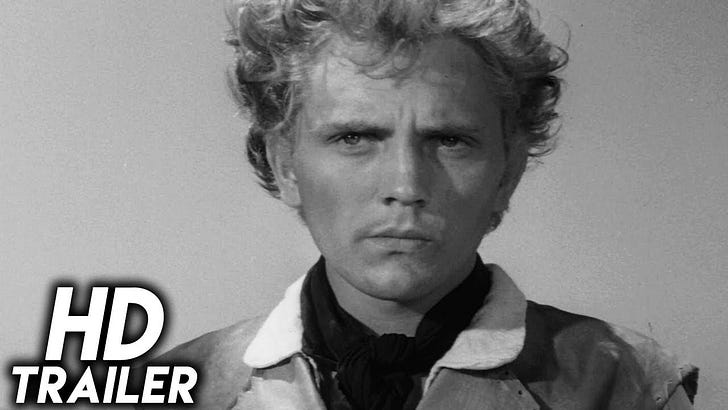
Billy Budd, Sailor
In this episode of The Classical Mind, Junius and Wesley dive deep into Herman Melville’s Billy Budd, Sailor — a haunting naval novella exploring innocence, evil, law, mutiny, and biblical symbolism aboard a British warship during the Napoleonic era.Melville’s final, posthumously published work blends gripping maritime drama with profound moral and theological questions. We unpack what Makes Billy Budd a Great (and Strange) Work, Historical and Naval Context, Biblical Themes, and how memory and myth are related. Endnotes:* Junius: Bartleby, the Scrivener* Wesley: Billy Budd (1962) This is a public episode. If you'd like to discuss this with other subscribers or get access to bonus episodes, visit www.theclassicalmind.com/subscribe
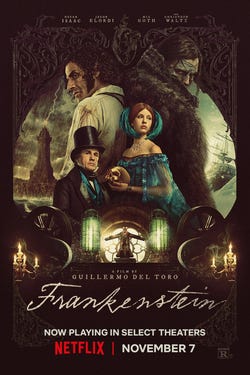
The Classical Mind Goes to the Movies: Frankenstein (2025)
In this episode, Junius and Wesley take on the latest film adaptation of Frankenstein, asking what makes a great adaptation of a classic work — and whether this one succeeds. From Mary Shelley’s 19th-century vision of creation and responsibility to modern cinematic retellings, they explore how filmmakers interpret, distort, and occasionally deepen the original novel’s moral and theological questions. Along the way, they consider what’s lost and what’s gained when literary imagination meets the visual power of film.Be sure to check out the stage adaptation by A.S. Peterson that Junius speaks about a few times in the episode. This is a public episode. If you'd like to discuss this with other subscribers or get access to bonus episodes, visit www.theclassicalmind.com/subscribe
The Proslogion by St. Anselm
In this episode, Father Wesley and Dr. Junius dive deep into St. Anselm’s Proslogion, the short yet monumental work that introduced one of the most enduring and debated arguments in the history of philosophy and theology: the ontological argument for God’s existence.The hosts explore Anselm’s background as monk, abbot, and Archbishop of Canterbury, highlighting his tumultuous life amid royal and papal conflict, his intellectual lineage from Augustine and Boethius, and his place at the dawn of scholasticism. They also reflect on how his prayerful approach to theology—fides quaerens intellectum (“faith seeking understanding”)—blurs the line between philosophical proof and devotional meditation.Endnotes* Junius: The Prayers and Meditations of St. Anselm* Wesley:* “A Gift Exceeding Every Debt” by David Bentley Hart* “Anselmian Apocatastasis: The Fitting Necessity of Universal Salvation in St Anselm’s Cur Deus Homo” by Roberto J. De La Noval This is a public episode. If you'd like to discuss this with other subscribers or get access to bonus episodes, visit www.theclassicalmind.com/subscribe

The Taming of the Shrew
In this episode of The Classical Mind, we take on Shakespeare’s most provocative comedy, The Taming of the Shrew. Junius and Wesley dig into the play’s strange structure—from the unclosed frame of Christopher Sly to the unsettling symmetry between performance and identity. What does it mean that the “prologue” is itself a play? And how does that affect the way we read Katherina’s transformation—or her apparent submission?Along the way, we explore the tension between romantic idealism and pragmatic marriage, trace the medieval roots of love as both commerce and devotion, and consider how Shakespeare’s comedy holds the contradictions of his culture up to the mirror. We talk about mimesis, medieval “speculum” thinking, and why comedy works best when it exposes absurdity rather than preaches morality.The result is part literary diagnosis, part philosophical reflection: a conversation about performance, freedom, and what it means to find truth in the masks we wear.Endnotes This is a public episode. If you'd like to discuss this with other subscribers or get access to bonus episodes, visit www.theclassicalmind.com/subscribe