
The China History Podcast
464 episodes — Page 2 of 10

S9E10 | Finished behind the last place guy
Firstly, hats off to Emma and her 团队 at the CYZ for all their hard work, all season-long. We close out the season 9 with an amusing story from a source, as yet never featured on this long-running educational program, called the Guòtínglù 过庭录. The author was Song literary figure Fàn Gōngchēng 范公偁 who had the misfortune to be born during the exact time when the Northern Song ended and the Southern Song began. In this tale, our young hero Sūn Shān 孙山 heads off to the capital to take the imperial exam. Another villager tagged along who also registered to take the test. One passed the test and the other was Míng Luò Sūn Shān 名落孙山. It's a nice little story infused with some of the best of Chinese culture and a dollop of human decency. That's it for Season 9. I may post a few director's cuts of previous CSP episodes during the off-season. All these CSP episodes will soon be published in the Summer catalog of Earnshaw Books. There will be vocabulary lists, tone marks, and characters. Just sayin. Thanks, everyone and drink plenty of water this summer. Keep yourself hydrated! Learn more about your ad choices. Visit megaphone.fm/adchoices

The History of Chinese Philosophy (Part 18)
For this 18th and final episode in the series, we'll focus on the rival philosophies of Lu Xiangshan 陆象山 and Zhu Xi 朱熹。 We'll also look at more of the philosophy of Wang Yangming. Then we'll end it with a few loose ends and mentions of The Five Elements and Zou Yan's 邹衍 Alchemy. I'll also recommend a book called "The Path." My deepest thanks to all of you who endured all 18 episodes. I hope you found that it was useful and beneficial for your own further study of Chinese Philosophy. Onward to all new material next time. Learn more about your ad choices. Visit megaphone.fm/adchoices

The History of Chinese Philosophy (Part 17)
We're almost at the end. We continue on in Part 17 with Zhu Xi and his philosophy. There will be more discussion about Qi, Han Studies (Han Xue) and the pushback against Neo Confucianism. We begin looking at the final philosopher in this series, Wang Shouren (a.k.a. Wang Yangming). Then we look at the primary difference between the Cheng-Zhu School vs. the Lu-Wang School. Learn more about your ad choices. Visit megaphone.fm/adchoices
S9E09 | First Strike
Season 9 is starting to wind down. For the ninth chengyu of the season, we take Sima Qian's "Record of the Grand Historian" and open to the chapter on Xiang Yu. This time we look at the story of Xiān Fā Zhì Rén 先发制人. In this well-known story from the fall of the Qin Dynasty, we see Xiang Yu and his uncle Xiang Liang seizing the day and the hour to attack Qin forces and bring the dynasty to an end. But before they do that, they first weigh their options by talking with the governor of a local commandery. After one short meeting with this guy, Xiang Liang decides not to wait to see what happens next. He realized 先发制人. Learn more about your ad choices. Visit megaphone.fm/adchoices
The History of Chinese Philosophy (Part 16)
We'll finish off the Five Founders of Neo Confucianism with the last two, the Cheng Brothers: Cheng Hao 程颢 and Cheng Yi 程颐. Then we'll explore Neo Confucianism through the life of Lu Jiuyuan 陆九渊, also known as Lu Xiangshan 陆象山. and Xin Xue 心学, the School of the Mind. Neo Confucianism also gets a new name: Song Xue 宋学 o Song Studies. We'll also introduce Lu Xiangshan's biggest rival in his day and one of the giants of Confucian philosophy, Zhu Xi 朱熹. In the next episode, we'll examine the life and thought of Zhu Xi. Learn more about your ad choices. Visit megaphone.fm/adchoices

The History of Chinese Philosophy (Part 15)
In this episode we begin our look at Neo Confucianism. In English, we called it that. But in Chinese it was referred to in other ways, most commonly as Sòngxué 宋学 (Song Studies) since the foundation was poured during this dynasty. The concept of Qi 气 will also be discussed. Then we'll head straight to The Five Founders of Neo Confucianism: Zhou Dunyi 周敦颐, Zhou Dunyi's Taiji Tu 太极图 Diagram of the Supreme Ultimate, Shao Yong 邵雍 and Zhang Zai, Cheng Yi 程颐, Cheng Hao 程颢, 张载, Yin and Yang, the Five Elements and the Five Constant Virtues. A lot to cover. Enjoy! Learn more about your ad choices. Visit megaphone.fm/adchoices
Introducing "Empires-An Asian Business Podcast"
For the third time on the CHP, I'm featuring another episode from Empires-An Asian Business Podcast, this time featuring India's watch and jewelry giant, Titan. Empires, from Singapore's 1UpMedia is one of the top shows in that region that explores some of the biggest business empires in Asia and the founders who built them. This time Empires features the story of Xerxes Desai and the Titan Company Ltd. They manufacture fashion accessories like jewelry, watches, eyecare, fragrances, fashion accessories, and Indian dress wear. The Jewelry division is the largest contributor to the group, making up nearly 80% of the business, followed by Watches and Wearables at 8-9%. Titan's products are sold through a combination of direct sales and franchising, with nearly 3,000 stores across over 400 towns in India, covering a retail space equivalent to about 60 football fields. Check out Empires on your favorite podcast app. There are so many great podcast shows coming out of Asia. And this is one of them. Enjoy! Apple Podcasts: https://podcasts.apple.com/us/podcast/titan-in-about-time-1-5/id1674467595?i=1000657648597 Spotify: https://open.spotify.com/episode/5RFFgeGbcpMjWdjNAzhT0l?si=fb96ba282b964a4f Learn more about your ad choices. Visit megaphone.fm/adchoices
S9E08 | Owned!
For our eighth CSP offering this season, we open up the Book of Han once again and hear the story behind Jiāo Bīng Bì Bài 骄兵必败. It doesn't always happen this way but the timeline of history is filled with examples of more powerful military forces being defeated on the field of battle by their weaker opponent. Arrogant soldiers must be defeated. Look what happened in Vietnam between 1954 and 1975. When you look into it, even today in our own time, Jiāo bīng bì bài is still happening. On a geopolitical level, this must be one of the hardest lessons to learn. More pugnacious world leaders should consult the Book of Han and ponder these words. Enjoy! Learn more about your ad choices. Visit megaphone.fm/adchoices

The History of Chinese Philosophy (Part 14)
We pick up with the second part of this overview of Daoism with Zhuangzi and his beloved book, "The Zhuangzi." We'll also move beyond Laozi and Zhuangzi and take a look at the rise of Fangshi's 方士 in society, Daoist Thought and Religion, Xuanxue Dark Learning 玄学, Guo Xiang 郭襄, Xiang Xiu 向秀, and the compilation of the Daozang 道藏. I hope this basic overview gives some of you a good jumping-off point to explore more about Daoism the philosophy 道家 and Daoism, the religion 道教. Enjoy! Learn more about your ad choices. Visit megaphone.fm/adchoices

The History of Chinese Philosophy (Part 13)
We've already heard about Confucianism, The Hundred Schools, and the Yi Jing. In this episode, we look at Daoism. The life of Lao Tzu (Laozi) will be introduced along with the book he probably never wrote but which is ascribed to him anyway. This is the Tao Te Ching or Dao De Jing. Laozi was quite a character and by telling his story, it will give you the fundamentals to explore on your own what this philosophic thought is all about. We'll look at the Daoist concept of Wu Wei 无为 and the art of quiescence. We'll close with one of the earliest and greatest interpreters of the Daodejing, Wang Bi. In the History of Chinese Philosophy Part 13, we'll start looking at Zhuangzi and his classic book. Learn more about your ad choices. Visit megaphone.fm/adchoices
S9E07 | You Can Get it if You Really Want (But you must try)
Here's another well-worn favorite from the long list of great chengyu's: 磨杵成针 Mó Chǔ Chéng Zhén. The story behind this Chinese Saying stars none other than (one of China's greatest poets) Li Bai. As a youngster, Li Bai chanced upon an old woman, surnamed Wu, who was intent on accomplishing a seemingly impossible (in Li Bai's eyes) task. Don't let any naysayers deter you. Don't fear the impossible. Listen to this quick story and maybe acquire a little bit of inspiration in what you're trying to accomplish. Thanks everyone for listening. If you'd like to donate to the show, you can at: https://teacup.media/support Learn more about your ad choices. Visit megaphone.fm/adchoices

The History of Chinese Philosophy (Part 12)
The introduction to the Yi Jing (I Ching) The Book of Changes continues into the Han Dynasty. We'll see how The Yi Jing is grouped with the Five Classics 五经 and how the discoveries at Mawangdui shook things up a little as far as Yi Jing scholarship went. Then we'll try and decipher Confucius's Ten Wings. Then we'll close with an intro to the practical usage of the Yi Jing and how it has been rediscovered and embraced in the West. You can buy the two books of the History of Chinese Philosophy series here: https://www.amazon.com/stores/Laszlo-Montgomery/author/B0C8B4MMZS?ref=sr_ntt_srch_lnk_2&qid=1715963841&sr=8-2&isDramIntegrated=true&shoppingPortalEnabled=true Learn more about your ad choices. Visit megaphone.fm/adchoices
The History of Chinese Philosophy (Part 11)
In this Part 11 episode, we begin introducing the content found in Book 2 of the History of Chiense Philosophy, available wherever fine books are sold. We start with an introduction to the Yi Jing (I Ching), The Book of Changes, or the Changes of Zhou. We'll look at the Yi Jing's earliest beginnings, and the main characters associated with its authorship: Fu Xi, Yu the Great, and King Wen of Zhou. Then we'll finish off with an explanation of the Trigrams, Hexagrams and the development of the Yi Jing over time, including the addition of the "Ten Wings" of Confucius Learn more about your ad choices. Visit megaphone.fm/adchoices
S9E06 | The First Cut is the Deepest
Once again, as a regular feature to the CHP, I'm including the latest Chinese Sayings Podcast offering. This one may be a bit of a departure from the average CSP episode. The Chinese Saying for this time is Jiǎn Bú Duàn, Lǐ Hái Luàn-剪不断 理还乱. Many Chinese poetry lovers and aficionados may already be familiar with this line from the 10th-century poem 相见欢. Today's CSP offering is more of a history lesson than an introduction to a chengyu but it's worth it to hear it out to the end. The star of this episode is the final ruler of the Southern Tang Dynasty. Like his kindred spirit emperor Huizong of the Northern Song, Li Yu 李煜 of Southern Tang wasn't much of a ruler. But what he lacked in leadership ability he made up for it with his great literary skills, especially where cí 词 poetry was concerned. Learn more about your ad choices. Visit megaphone.fm/adchoices
The History of Chinese Philosophy (Part 10)
Among the many changes happening in China towards the end of the Han Dynasty was a rise in the popularity of Buddhism. Rivalries began to arise among the three religions as they jockeyed for positions in the halls of power. The seeds of Neo-Confucianism are planted by Tang scholar-officials: Han Yu, Li Ao, and Liu Zongyuan. We also look at the Confucian Daotong Lineage. Learn more about your ad choices. Visit megaphone.fm/adchoices

S9E05 | Had enough yet?
I forgot to upload this one to the CHP feed last week. 不好意思. Here's a good one from the Three Kingdoms Era in which we feature the famous story of Meng Huo, Zhuge Liang, and Qī Qín Mèng Huò 七擒孟获. Some people just can't accept defeat but in the end, they bow to the inevitable. Cao Pi of Wei thought he'd have some fun and employed Meng Huo to harass his enemy in the Kingdom of Han. That didn't go as planned. But Zhuge Liang sure seemed to enjoy it. Learn more about your ad choices. Visit megaphone.fm/adchoices
The History of Chinese Philosophy (Part 9)
Like James Dean, Confucius was much bigger in death than he was in his own lifetime. It wasn't until the Han Dynasty that Confucianism enjoyed a major triumph. This time we'll look at Dong Zhongshu who was so consequential in tying Confucianism and the imperial government into one system. We'll also look at Sima Tan (father of Sima Qian) and the Six Schools, as well as the first explainers of Confucianism: Liu Xin, Wang Chong, and Yang Xiong. I hope you're enjoying this series. Nine more episodes to go. We still have the Yi Jing (Book of Changes), Daoisim, and Song Neo-Confucianism to go yet. Learn more about your ad choices. Visit megaphone.fm/adchoices

The History of Chinese Philosophy (Part 8)
We've already explored the Ru School of Philosophy and the thought of Confucius, Mengzi and Xunzi. This time we look at Legalism and the most important philosophers of this school of thought. We'll look at the lives of Shang Yang, Shen Buhai, Han Fei, and Li Si and how they embraced this controversial political philosophy. Learn more about your ad choices. Visit megaphone.fm/adchoices
The History of Chinese Philosophy (Part 7)
This episode will focus on the life of Mengzi and his philosophy. We'll also introduce Mengzi's legendary mother. Then we'll finish off with another Confucianist great from this era, Xunzi 荀子. Learn more about your ad choices. Visit megaphone.fm/adchoices
Jin Yong and the Wuxia genre. Laszlo chats with author Alice Poon
I had the great pleasure to interview fellow Earnshaw Books author, Alice Poon recently. The occasion was the official release date of her new book, "The Earthly Blaze" (links below). We first discussed the life and work of Zha Liangyong, also known as Louis Cha. But he is more widely known by his pen name, Jin Yong, whose novels have been read and enjoyed by countless numbers of readers around the world. While I had Alice in the studio I also got her to talk about the greater Wuxia 武侠 genre of Chinese fiction and how it has been received in popular culture. The Earthly Blaze Amazon Link: https://www.amazon.com/Earthly-Blaze-Sword-Maiden-Moon/dp/9888843680/ The Earthly Blaze BN Link: https://www.barnesandnoble.com/w/the-earthly-blaze-alice-poon/1144936000 The Earthly Blaze at Earnshaw Books: https://earnshawbooks.com/product/the-earthly-blaze/ Alice's Blog: https://alicewaihanpoon.blogspot.com/ A nice recommended resource for further reading about Jin Yong and Wuxia: https://wuxiasociety.com/jin-yong-novels/ Learn more about your ad choices. Visit megaphone.fm/adchoices

S9E04 | Be like Kong Rong
This Chinese Saying, or at least the story, is rather well-known. The story of young Kong Rong and the bowl of pears. Kǒng Róng Ràng Lí 孔融让梨. This perennial children's favorite has a nice moral lesson to teach. When you see young children exhibiting generosity and kindness, many might recall these kids were just like Kong Rong back in the late 2nd Century. Learn more about your ad choices. Visit megaphone.fm/adchoices
The History of Chinese Philosophy (Part 6)
This time around we will explore the other major Ru philosophers who established rival schools of thought, including Mozi 墨子. Then we'll explore the early life of Mengzi 孟子 (a.k.a. Mencius) and what he meant to Confucianism. Learn more about your ad choices. Visit megaphone.fm/adchoices
The History of Chinese Philosophy (Part 5)
This time we move beyond Confucius to look at some of the other schools of thought that contended with each other during the Spring and Autumn Period of the Zhou Dynasty. This included the School of Names and the Sophists, featuring an amusing story about Deng Xi. We also see how the Confucian classics became a pathway to a career in the government. Learn more about your ad choices. Visit megaphone.fm/adchoices

The History of Chinese Philosophy (Part 4)
The story of Confucius and what he taught continues with an introduction to his disciples. We also look at Confucian core beliefs as well as selected quotes from the Analects. Learn more about your ad choices. Visit megaphone.fm/adchoices

S9E03 | Please allow me to introduce myself
Sima Qian strikes again. This time around we look at the well-known saying, Máo Suì Zì Jiàn 毛遂自荐. I tend to favor those 成语's from the Warring States Period. This one concerns the particularly volatile time in the Warring States during the reign of the aggressive and pugnacious Qin King Zhaoxiang. After a disastrous defeat at Changping in 260 BC, the State of Zhao had to seek urgent assistance from Chu. In this familiar story, we see how Mao Sui, at the time, no one of consequence, steps up to offer his help during a dark hour for Zhao. His value is doubted but Mao Sui proved them wrong. Learn more about your ad choices. Visit megaphone.fm/adchoices

The History of Chinese Philosophy (Part 3)
In this episode, we'll take a look at the early life of Confucius and his service to the State of Lu. We'll also look at a few stories from his life, including the legend of when Confucius met Laozi. The Great Sage's reflections on the ideal ruler will also be examined, and the values he stood for that comprised the core of Confucian ideology. Learn more about your ad choices. Visit megaphone.fm/adchoices

S9E02 | R-E-S-P-E-C-T
This week's Chinese Saying is another good and respectable one that comes to us compliments of the Book of Song. It concerns the Northern Song official and literatus Yang Shi. His two main teachers were the famous Cheng Brothers, Cheng Hao 程颢 and Cheng Yi 程颐. Those two were giants in Neo-Confucian philosophy which flourished during the Song. This episode features Chéng Mén Lì Xuě 程门立雪. It's a story of respect and reverence for those teachers who had a profound effect on the direction of our lives. "Standing in the snow in front of the Cheng's gate." This is another in a very long line of stories that would feel right at home in the "Made Me Smile" subreddit. For anyone who has one or more teachers who made a positive difference in their life, this is a good 成语 to describe your feelings. Learn more about your ad choices. Visit megaphone.fm/adchoices
The History of Chinese Philosophy (Part 2)
This time we will look at some pre-Confucian philosophy during the Zhou Dynasty. Philosophers such as the little-known Yuzi 鬻子 will be introduced. Then we will look at Guan Zhong 管仲 and the concept of the Chinese Gentleman, or Junzi 君子. The rise of the Knights Errant 武侠 and their association with the Ru School 儒家 will also be presented. Then we will look at Duke Huan of Qi and his role as the first great benefactor to scholars and his sponsorship of the Jixia Academy. Transcripts to all eighteen episodes are available on Amazon, Barnes-Noble, and Earnshaw Books. Below are links if you're interested. Amazon Link: https://a.co/d/ahw3oWq Earnshaw Books Link: https://earnshawbooks.com/product/the-history-of-chinese-philosophy-book-1/ Learn more about your ad choices. Visit megaphone.fm/adchoices
Laszlo Chats with Kaiser Kuo
bonusJust in time for Kaiser's birthday today, March 7th, here's a recording of a chat we had a couple of days ago. Nothing too heavy. Laszlo invited Kaiser on to the CHP for a friendly, light-hearted, and respectful conversation about the many merits of Chinese history. Happy Birthday Kaiser, 寿比南山! Learn more about your ad choices. Visit megaphone.fm/adchoices

The History of Chinese Philosophy (Part 1)
Back in 2017, I produced a nine-part series on the history of Chinese philosophy. These were once episodes CHP-184 to 192. In 2021, I removed this series from the CHP lineup of shows and published it as an online course. Since last year the History of Chinese Philosophy series has only been available on my Patreon and CHP Premium. What you're listening to here is an updated and new recording from what first came out seven years ago. In the first of 18 episodes that will be covered in this series, we look at Chinese Philosophy's Ancient Beginnings and early Western understanding of Chinese Philosophy. The lives of the ancient Chinese sage kings will also be explored and why some philosophers held them up as role models for society. We will also look at Karl Jaspers's Theory of the Axial Age. For these first ten episodes, the focus will be on pre-Confucian and Confucian philosophers, Legalism, and how Confucianism developed up to the Tang Dynasty. Transcripts to all eighteen episodes are available on Amazon, Barnes Noble, and at Earnshaw Books. Below are links if you're interested. Amazon Link: https://a.co/d/ahw3oWq Earnshaw Books Link: https://earnshawbooks.com/product/the-history-of-chinese-philosophy-book-1/ Learn more about your ad choices. Visit megaphone.fm/adchoices

S9E01 | The Truth Always Gets Out
For the Season 9 opener, we bring you a good one that takes place in the early years of the Southern Song Dynasty. Qin Hui, the reviled chancellor of Emperor Gaozong is back again, starring in another Chinese Saying, inspired by his historic perfidy. He conspired with his wife, Lady Wang, to have the great hero Yue Fei rubbed out. Their careful conspiracy, discussed in the utmost secrecy in a private spot in their residence, was somehow discovered. This is the story behind Dōng Chuāng Shì Fā 东窗事发. Learn more about your ad choices. Visit megaphone.fm/adchoices
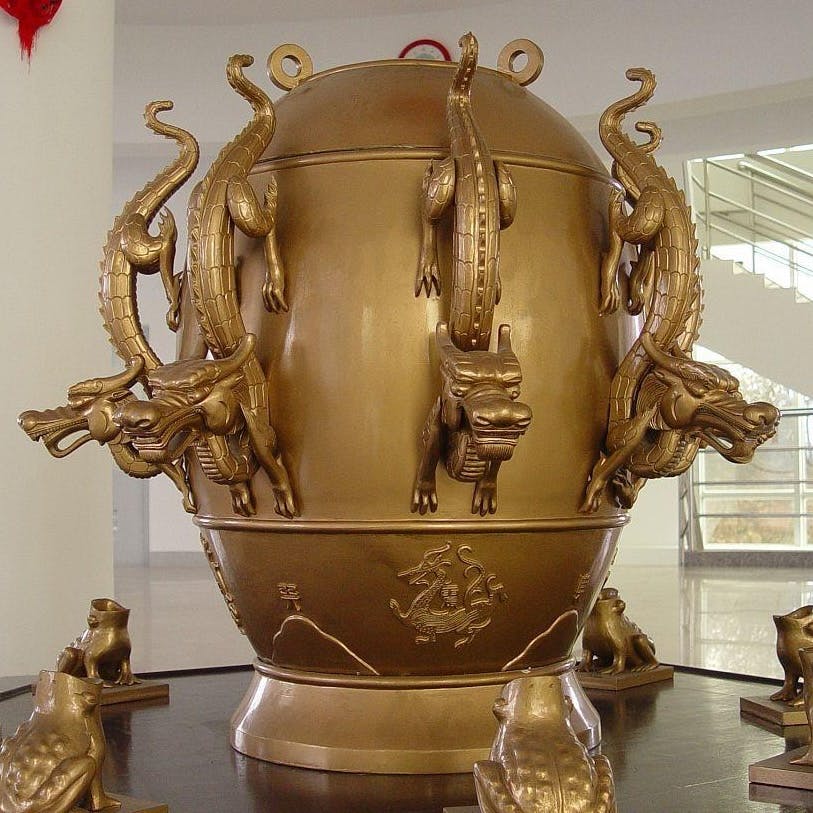
Ep. 343 | The History of Clocks and Timekeeping in China
This is an old topic I thought I'd present now to coincide with the recent release of the interview with the curators of "Clockwork Treasures From China's Forbidden City. Usually, I release new shows on Sundays at 5 AM L.A. Time. Since I'll be launching the first episode of Season 9 of the Chinese Sayings Podcast this Sunday, I figured I'd release this one Thursday, fresh on the heels of the interview. This is a quick and easy episode that traces the beginnings of timekeeping in China and will survey a few of the most notable horologists from Chinese history from the Han to the Qing Dynasties. The achievements of Zhang Heng, Yi Xing, Zhang Sixun, Su Song, and Zhan Xiyuan will be examined. Then we'll finish off with the arrival of the Jesuits and the zimingzhong 自鸣钟 clocks they brought with them. Thanks a bunch for listening.
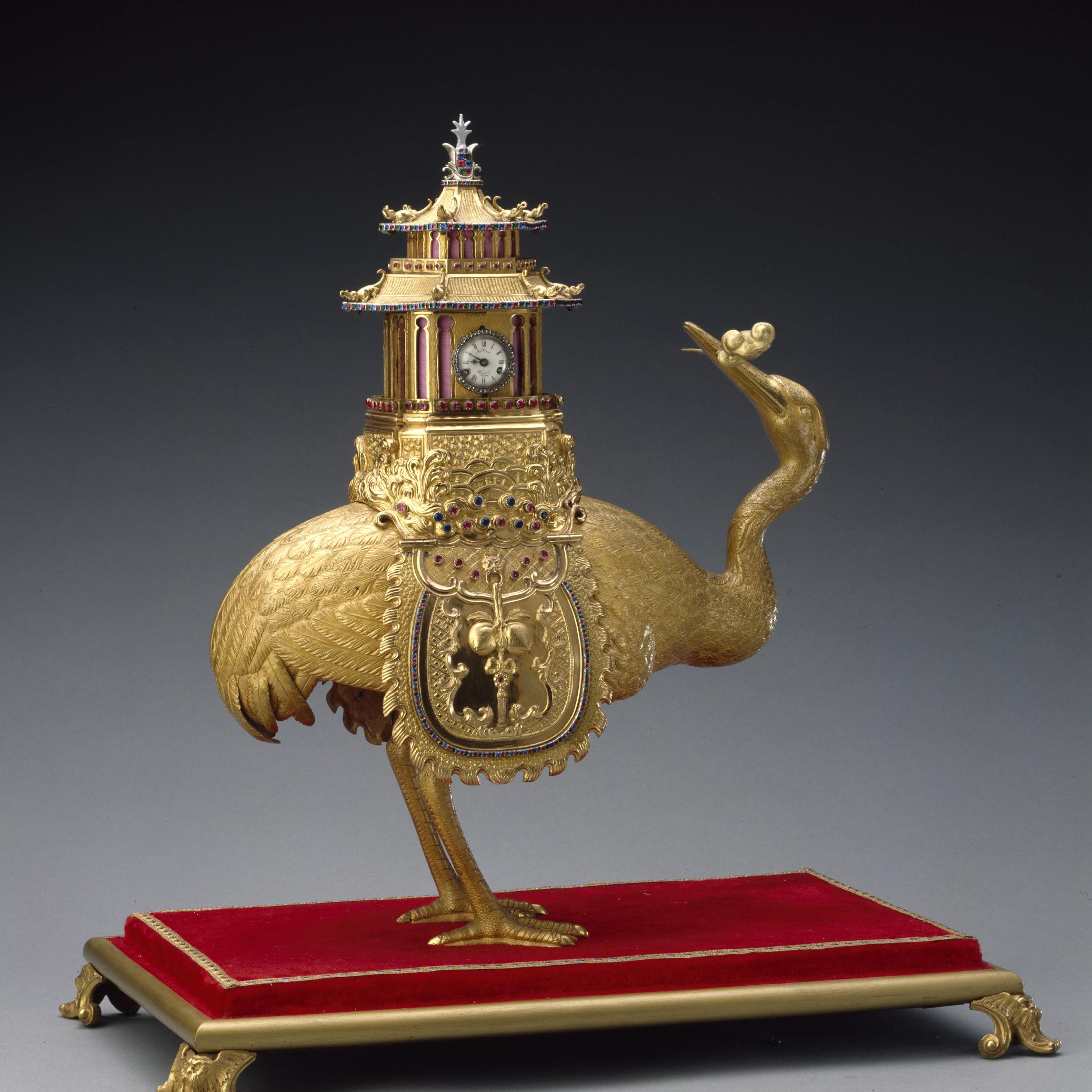
Clockwork Treasures from China's Forbidden City
bonusAfter hearing me talk about it for the longest time now, here's the interview with Tilly Blyth and Abbie MacKinnon at The London Science Museum. We discussed the Zimingzhong: Clockwork Treasures From China's Forbidden City that opened on February 1, 2024. The show will run until June 2, 2024. Learn more about your ad choices. Visit megaphone.fm/adchoices

Ep. 342 | China, East Africa, and Mwalimu Julius Nyerere
Happy Year of the Dragon, 新年快乐,龙年大吉! Just in time for the Lunar New Year here's, here's a look back at the 1960s when Mwalimu Julius Nyerere, the nation of Tanzania, and Mao's China were fully engaged and setting the pace for future Sino-African Relations. This episode is useful in gaining a little context for today's China-Africa big picture. China's relationship with most African nations goes back to 1955. In this episode, the focus will be on PRC-Tanzania relations but from this relationship you can get a halfway decent big picture of the dynamic back in the Mao era. I hope you enjoy it. I'm back from London, all tanned and rested. Be looking for the interview with Tilly Blyth and Abbie MacKinnon recorded lived at the London Science Museum. The China Global South Project https://chinaglobalsouth.com/ Clockwork Treasures from China's Forbidden City https://www.sciencemuseum.org.uk/see-and-do/zimingzhong Learn more about your ad choices. Visit megaphone.fm/adchoices
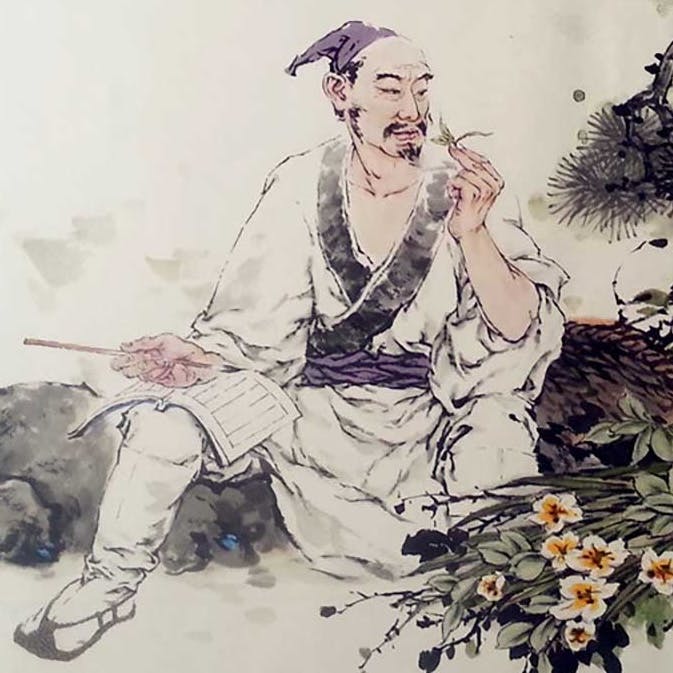
Ep. 341 | The History of Chinese Medicine (Part 5)
In this Part 5 episode, we'll look at the history of Chinese medicine during the Ming and Qing, as well as all the major works that came out of that period. There will be a spotlight on Li Shizhen and his Bencao Gangmu Compendium of Materia Medica. He's one of the most important figures in Chinese medicine, going back to the beginning. Many other big names will be introduced: Wang Kentang, Chen Sicheng, Yang Jizhou, Wang Ji, Jiang Guan, Zhang Jiebin, and Li Zhongzi. Better download the Terms from this episode PDF at the website. Thanks so much for listening. I know this was a rough series to get through.
Bonus Episode, An old favorite of Laszlo's
bonusI wouldn't technically call this a Bonus Episode. We're in between seasons right now. And while Laszlo and Emma are busy brainstorming the chengyu lineup for Season 9, here's a re-recording of one of Laszlo's all-time favorite episodes from the seven-year history of the CSP. How can anyone forget Mr. Nanguo, 南郭先生, who posed as a musician for three years without knowing how to play his instrument? He was a Làn Yú Chōng Shù 滥竽充数. He got the gig because the band only needed one more musician. And it didn't matter who it was. Mr. Nanguo was indiscriminately chosen just to make up the required number. A great story and it comes from the Han Feizi. Season 9 should start, hopefully, by the time the Year of the Dragon rolls around on 2/10/2024. Thanks, everyone. I hope you enjoy this Chinese Saying as much as I do. Learn more about your ad choices. Visit megaphone.fm/adchoices
Ep. 340 | The History of Chinese Medicine (Part 4)
For the 2024 Year-End Closing episode, we continue on with the History of Chinese Medicine during the Sòng. Bi Sheng started a revolution in book printing with his invention of movable type printing. This led to an explosion of new printed titles and wider access to medical texts among the general (urban) populace. During the Song, it became downright respectable to enter the medical profession. Many young people aspiring for a career in officialdom, looked to a career in medicine as either an alternative to working in the government or something to do in addition to serving the emperor. Many advances were made in forensic medicine, pediatrics, and healthy nutrition. And with all the new knowledge and acquisition of new knowledge through interaction with physicians from other cultures, the understanding of human health and how the body operates kept inching forward. In the field of pharmacology, there were also many advances, particularly in the publication of new materia medica texts.

Bonus CSP Episode featuring Emma in the narrator's seat
As promised and advertised, to cap off another winning season of the Chinese Sayings Podcast, we're proud to feature none other than our very own Emma, presenting a special bonus episode. This time we look at another good one: 鹬蚌相争, 渔翁得利. Yù bàng xiāng zhēng, Yú wēng dé lì. This one comes from the Strategies of the Warring States. It tells the story of the Clam, the Sandpiper, and the fisherman, amidst the backdrop of the early 3rd century BC. This chengyu, like many presented before in the CSP, has plenty of relevance in today's world. Thanks, Emma for all your help this season Learn more about your ad choices. Visit megaphone.fm/adchoices
Ep. 339 | The History of Chinese Medicine (Part 3)
The focus in Part 3 will be on the Song Dynasty, the Jin and the Yuan. Looming large in Chinese medicine during this fertile period was Sun Simiao, the 药王 or King of Medicines. We'll look at his life as well as many others: Wang Shuhe 王叔和, more Tao Hongjing 陶弘景, Ge Hong 葛洪, Gong Qingxuan 龚庆宣, Chao Yuanfang 巢元方, and others. If you'll be in London Feb 1-2-3, I'll be there collaborating with the London Science Museum. Details here: https://www.sciencemuseum.org.uk/see-and-do/zimingzhong

S8E10 | Don't Count Me Out Yet
For the second time in a row, we feature the Cao Family of Wei in a Chinese Sayings Podcast Episode. This one concerns a story of someone who made the grade late in life. There are a lot of people in history who all throughout their early years and even into their prime, didn't make much of their life. But come their 50's or 60's they achieve greatness. This time we look at Dà Qì Wǎn Chéng 大器晚成 and the story of Cui Yan and his no-good young relative Cui Lin. February 1, 2024, I'll be in London as part of the opening festivities for an exhibition at the London Science Museum. Details here: https://www.sciencemuseum.org.uk/see-and-do/zimingzhong Thanks everyone for another great season of The Chinese Sayings Podcast. Special episode coming next time featuring Emma. Learn more about your ad choices. Visit megaphone.fm/adchoices
S8E09 | Why Can't We Live Together
So much rancor in this world these days. Here's one that describes the feeling of mutual enmity that existed between two giants of their day, Cao Cao and Sun Quan. During the waning years of the Eastern Han Dynasty, three powerful forces jockeyed for position to see who might push the Liu's off the throne and take over to found a new dynasty. There was no reconciliation in the tea leaves. As far as Cao Cao of Wei and Sun Quan of Wu were concerned, that throne was only big enough for one of them. Here's a story from 208 AD that features a useful Chinese Saying born on the eve of the epic Battle of Red Cliffs. Learn more about your ad choices. Visit megaphone.fm/adchoices
Ep. 338 | The History of Chinese Medicine (Part 2)
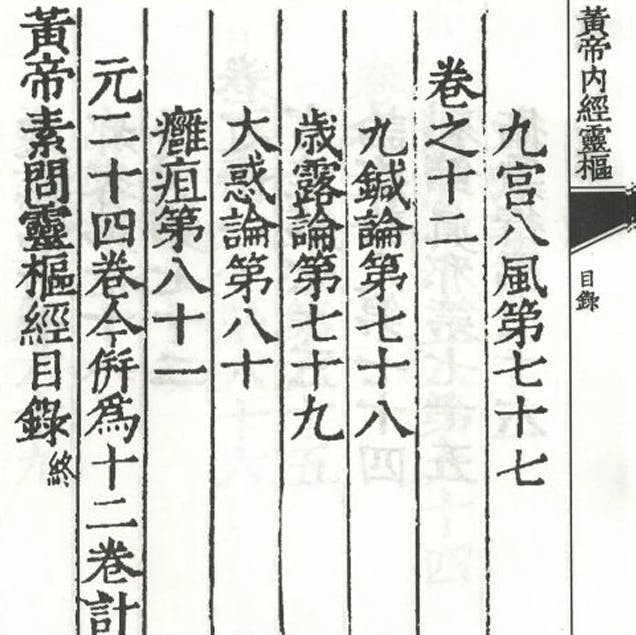
As advertised last time in Part 1, we'll take a look at The Yellow Emperor's Inner Canon, the Huangdi Neijing 黄帝内经, including an explanation of the meridians. I'll also read a few passages from this most important of the ancient medical texts. As we get deeper into the earliest centuries of the development of Chinese medicine you'll gain a sense of how the ancients created a holistic system that encompassed all aspects of the body and spirit and how they sought to maintain harmony and equilibrium throughout. When everything was in balance, a person was healthy and happy. Still, a lot more to come. I hope you'll stick with the series. Learn more about your ad choices. Visit megaphone.fm/adchoices
S8E08 | Let's Stick Together
Once again, for all CHP listeners, I'm featuring the latest episode of the Chinese Sayings Podcast. It's said that we human beings have been called social animals by nature. Some of us love other kinds of people more than others do. But no matter how enamored one might be about another culture, nation, or people, we all tend to stick with our own kind. This 4th Century BC Chinese Saying comes from "The Strategies of the Warring States." and concerns the witty and capable minister to King Wei of Qi and his son King Xuan: Chunyu Kun. King Xuan needed to round up several talented souls to help him manage the Kingdom of Qi, where the stunning and beautiful Shandong Peninsula is located. Answering the king's call, Chunyu Kun gathered a whole bunch of worthy and talented men and schooled the king about how easy it was to find them. This is the story behind Wù Yǐ Lèi Jù 物以类聚. I also mentioned another chengyu that goes along with this episode: yīmíng jīngrén 一鸣惊人. You get that one too, at no extra cost, I might add. Only two more episodes to go for this season. Like last time in Season 7, be looking for un episodio extra especial featuring our hardworking and brilliant 领导 of the 成语研究中心 in Beijing: Emma. Looking forward to seeing some of you in Hong Kong during my few days there. My deepest gratitude for listening. Learn more about your ad choices. Visit megaphone.fm/adchoices
Ep. 337 | The History of Chinese Medicine (Part 1)
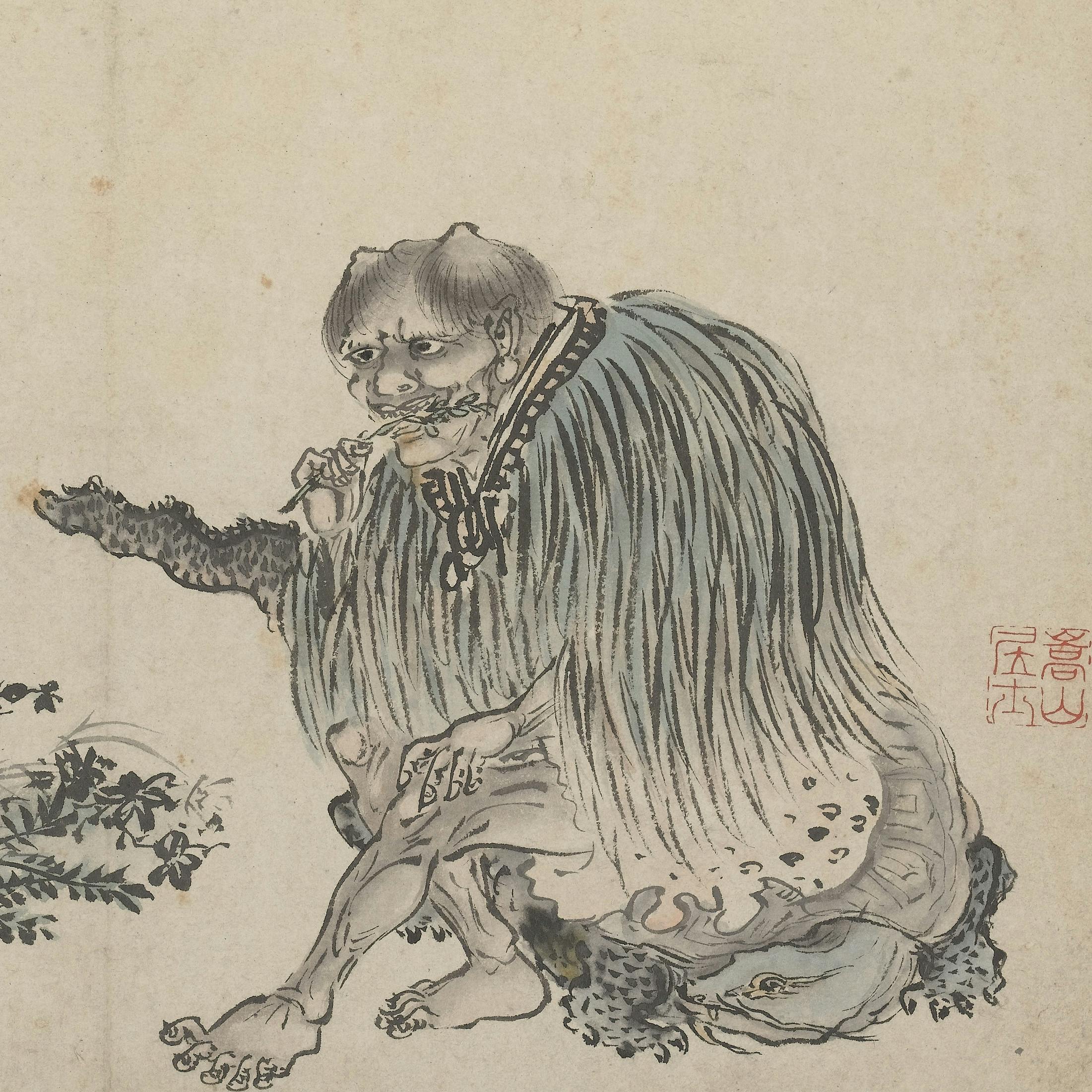
Here we commence a new series, one that will explore the history of Chinese Medicine. In this episode, we'll explore some of the basics and the lives and achievements of China's earliest physicians, the mythical and the ones we know lived. This episode is kind of a warm-up for Part 2 where we'll take a closer look at the Yellow Emperor's Inner Canon (Huangdi Neijing) and Shennong's Materia Medica (or Shennong Herbal). Learn more about your ad choices. Visit megaphone.fm/adchoices

S8E07 | Help!
We're back for the seventh time this season. This time we're happy to feature once again the great Daoist philosopher who never disappoints. This story about the fish in a rut is a rather well-known one from the Outer Chapters of The Zhuangzi, or Second Book of the Dao as it's sometimes called. Zhuangzi himself stars in today's episode: Hé Zhé Zhī Fù 涸辙之鲋. Learn more about your ad choices. Visit megaphone.fm/adchoices

S8E06 | Looks can be deceiving
For the second time this season, we refer to Zuo Qiuming's "Chronicles of Zuo" for another good and useful chengyu. This one takes place in the Spring and Autumn Period and concerns a haughty self-important minister from Jin State stopping for the night at an inn in Ningyi (河南宁邑). He left quite an impression on the innkeeper there but when this simple innkeeper looked more closely at this official, he saw he was Huá Ér Bù Shí 华而不实. Enjoy this ancient story and learn a new Chinese Saying too. Learn more about your ad choices. Visit megaphone.fm/adchoices
Ep. 336 | Guiguzi, The Sage of Ghost Valley
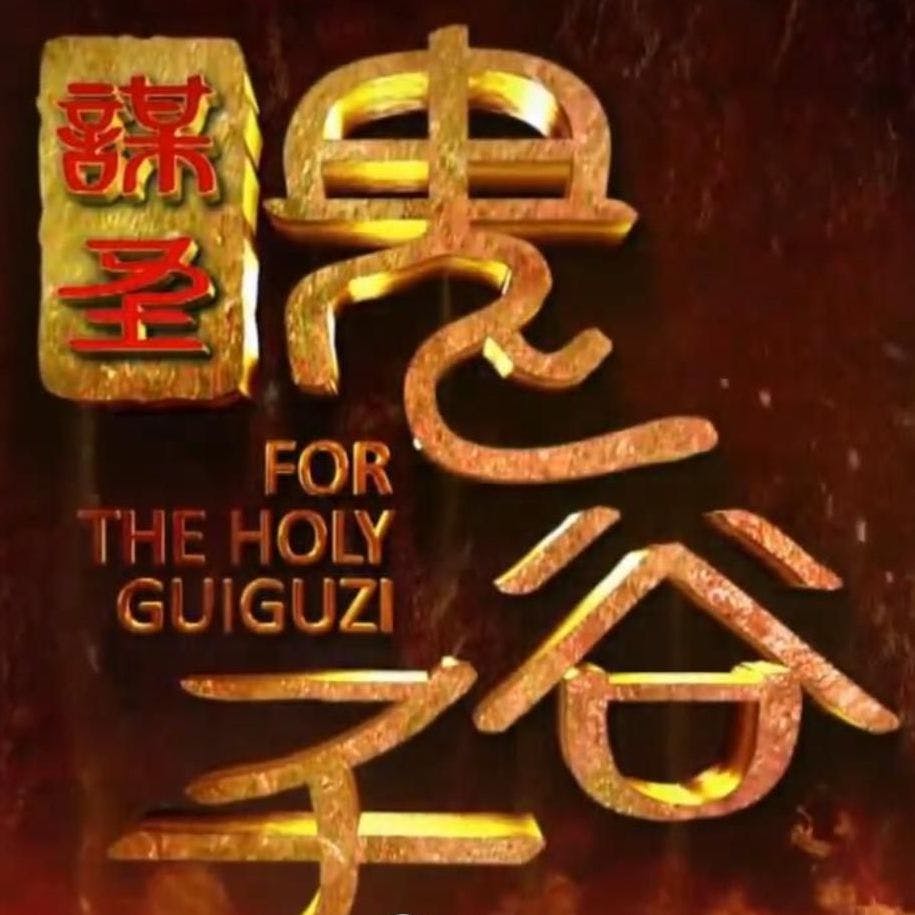
Written into the ancient histories were the big-name Warring States characters Su Qin, Zhang Yi, Sun Bin, and Pang Juan. Sima Qian and others remarked that these four men were all students of Guiguzi 鬼谷子. He's like a lot of figures from Bronze Age China. Guiguzi's name is mentioned in a few important texts. But that's about it. Just his name and the barest of details. Over the centuries, scholars put some flesh on those bones, but the truth remains, there's not much to sink our teeth into as far as Guiguzi the person is concerned. But the stories associated with Guiguzi are good ones and worth a re-telling. Su Qin and Zhang Yi's Vertical and Horizontal Strategies, and the story of Sun Bin, Pang Juan and Sun Bin's Art of War. The Guiguzi is considered China's first work of rhetoric. It's interesting to see how rhetoric developed in Warring States China at the exact same time as Plato and Aristotle in Greece. Somewhere along the way though, The Guiguzi became better known as a military treatise. Thanks everyone for listening. Hui Wu's "Guiguzi, China's First Treatise on Rhetoric, A Critical Translation and Commentary." Find it here: https://a.co/d/9RV6k8U 谋圣鬼谷子 For the Holy Guiguzi video: https://www.youtube.com/watch?v=PvDuSJ8imKg&list=PLy8WDOJkSFFz92BEhcYXmYdm0tWAZXnLw Learn more about your ad choices. Visit megaphone.fm/adchoices
S8E05 | Shock the Monkey
Lovers of all things Song Dynasty will surely recall the story of Qin Hui. He has top billing in this tale concerning the story behind Shù Dǎo Húsūn Sàn 树倒猢狲散. This one has practical applications these days when we see political and corporate leaders fall from grace. When that happens, we often get to view the spectacle of hangers-on and sycophants scattering and heading for the hills, to search once more for someone to suck up to. This Chinese Saying comes in handy when this happens. We all need someone to lean on. Make sure the one you choose has some staying power. Learn more about your ad choices. Visit megaphone.fm/adchoices

Ep. 335 | Qian Xuesen (Part 2)
Once his past attendance at meetings of the Pasadena Communist Party in 1938 come to light, Qian gets caught up in the Red Scare of the 1950s. In this Part 2 episode, we see how the US government accused Qian of being a communist. Despite everything he had done for America and all the R&D that he might further contribute in the decades to come, Qian was deported back to his homeland. And from 1955 until his death in 2009, he went on to do all kinds of great things for the PRC's missile and space programs. Iris Chang, "Thread of the Silkworm" https://www.amazon.com/Thread-Silkworm-Iris-Chang/dp/0465006787 Learn more about your ad choices. Visit megaphone.fm/adchoices
Ep. 334 | Qian Xuesen (Part 1)
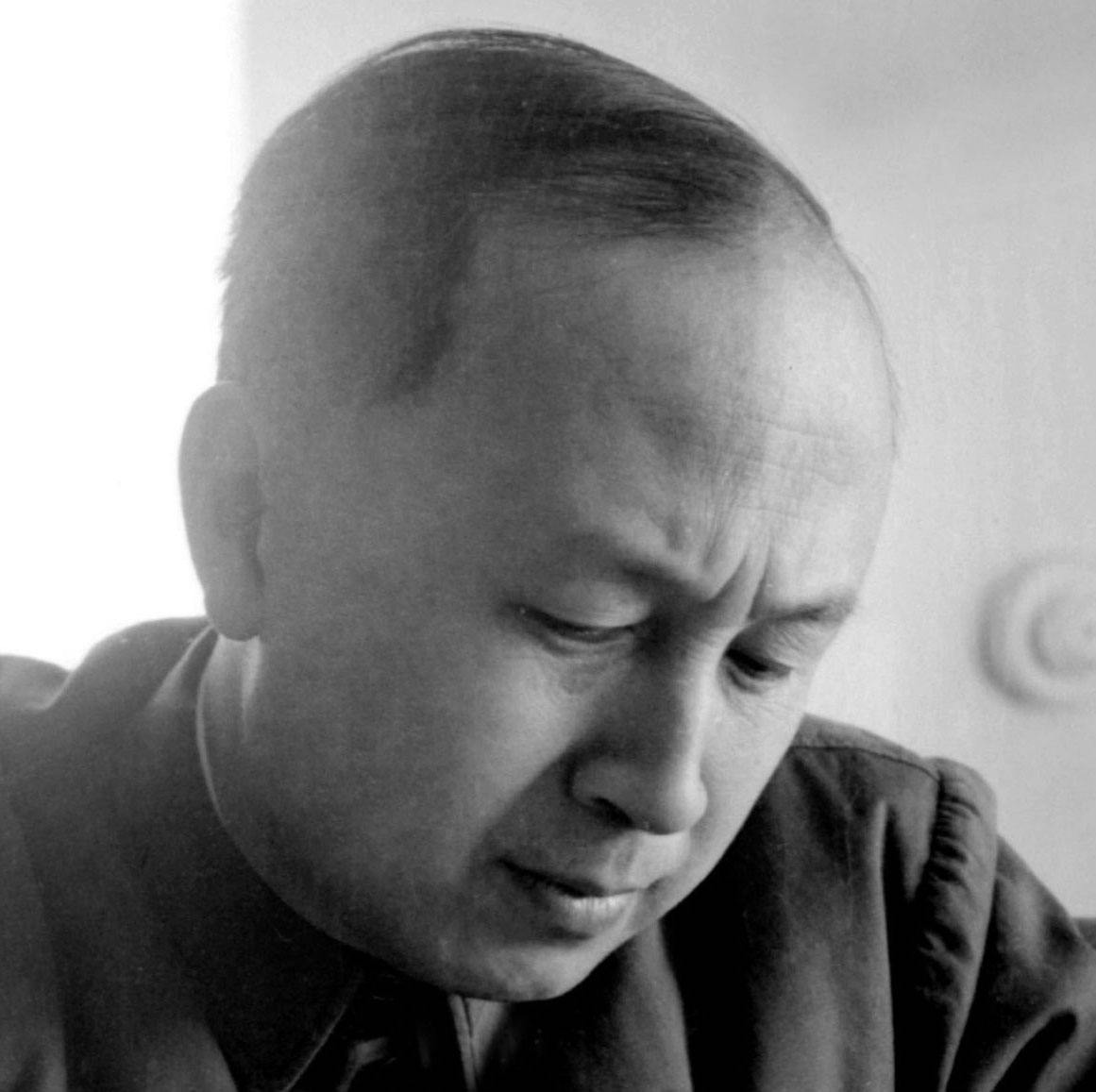
Once again, by popular demand, here's another oft-requested topic. With the recent release of the Oppenheimer film, I thought this story was quite timely. Qian Xuesen is called "The Father of China's Missile and Space Program." What's not as well known is the key role he played in the late 1930s and 40s in the United States rocket and jet propulsion programs. He was there, along with Frank Malina, Weld Arnold, Apollo M.O. Smith, Jack Parsons, and Edward S. Forman, when the Jet Propulsion Laboratory was created. Under the leadership of Theodore von Karman, this team led the effort that launched America's missile and rocket programs. But come 1950 Qian's world will be upended. That's all for Part 2. Iris Chang: Thread of the Silkworm: https://www.amazon.com/Thread-Silkworm-Iris-Chang/dp/0465006787 Learn more about your ad choices. Visit megaphone.fm/adchoices