The B.rad Podcast
690 episodes — Page 10 of 14
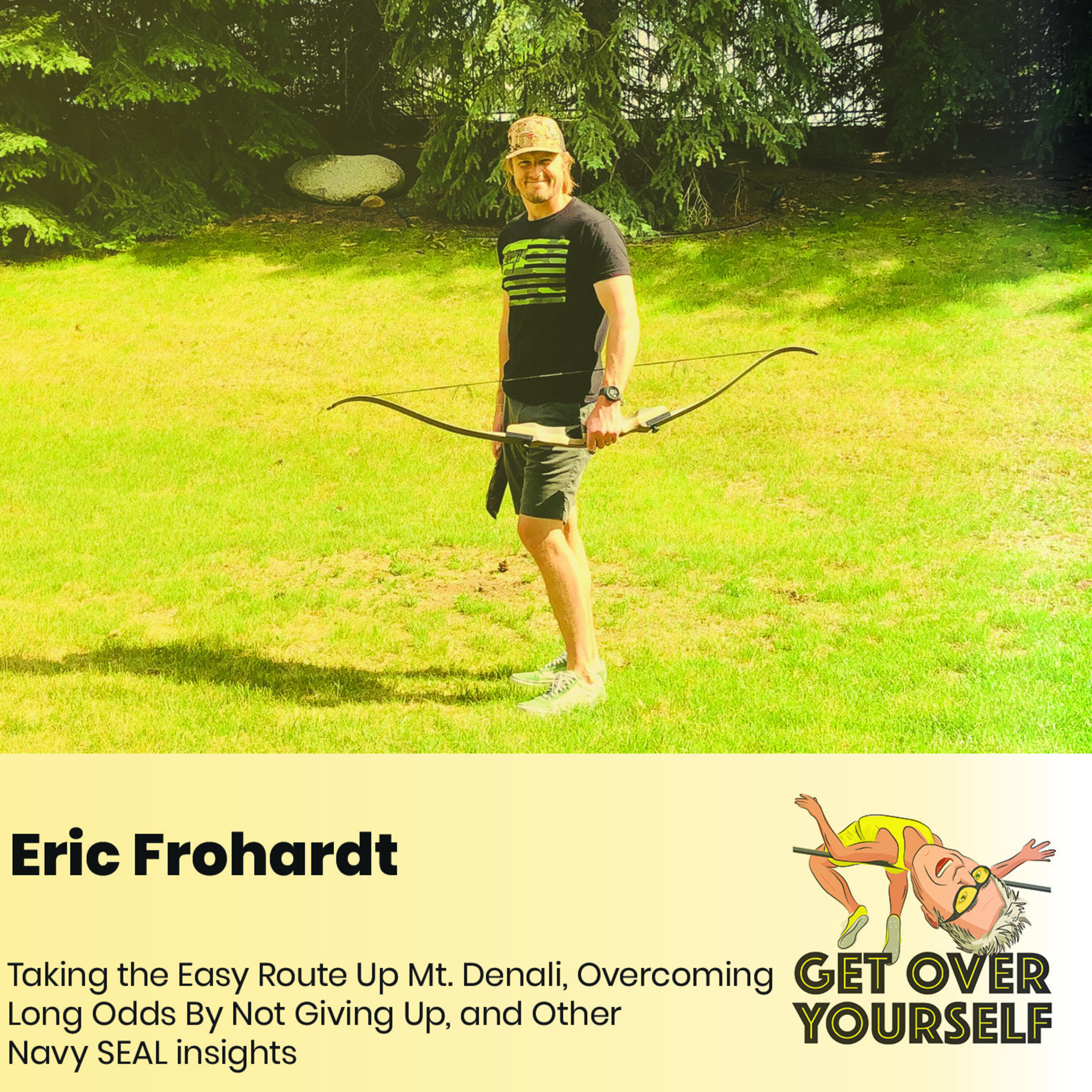
Eric Frohardt: Taking the Easy Route Up Mt. Denali, Overcoming Long Odds By Not Giving Up, and Other Navy SEAL insights
What an amazing journey Eric has been on, tackling incredible challenges with minimal preparation or specific skill sets, but armed with an incredible mindset of positivity and resilience. Let’s go backstage into the world of the legendary Navy SEAL BUDS training program that has the huge dropout rate and the unimaginable “Hell Week” designed to break even the strongest of physical specimens. Eric is an understated guy and makes things sound like no big deal. He describes how he “burned the boat” when he landed in Coronado, CA for BUDS training - he was certain he was going to finish no matter what. Eric went on to a long and storied 12-year career with the SEALS, featuring climbing the highest peak in North and South America with no mountaineering background, climbing El Capitan with just a few days of climbing experience, and jumping out of the airplane on the third flight he ever took in his life! Listen as Eric describes how the Navy has invested millions of dollars in discovering the “winning formula” for a candidate to succeed at the highest and most demanding level of service, but has come up empty to date. I think we can discern the secret from how Eric concludes certain comments in the interview. He offers a low-key, matter-of-fact attitude that certain tasks and goals will be achieved no matter what if you believe it to be so. While on active duty, Eric served at various SEAL Teams. He deployed numerous times to hot spots around the world, in support of the Global War on Terror. He received various medals and commendations in the process. As a SEAL, Eric was trained in the use of various firearms, demolition, explosives, radio and computer communications, combat diving, parachute operations, combat casualty care (first aid), survival in various environments, climbing, hand-to-hand combat and tactical driving. He was also a sniper. While on active duty, Eric also climbed El Capitan, in Yosemite National Park, CA. 2007 Honnold there. He also completed 2 of the 7 summits, Denali and Aconcagua both without the use of supplemental oxygen. Wow! He also co-founded a number of different businesses, most notably the BluCore Shooting Center, an indoor shooting range, gun store and firearms training facility. He is currently the CEO of StrongFirst – a premium strength and fitness education company with a global presence of more than 2,000 instructors. He is also currently involved with a program called Heart Led Leadership, which offers a yearlong intensive behavioral change program for senior leaders.Combining the skills acquired from nearly 12 years of active duty as a Navy SEAL, an entrepreneur and CEO, and a passion for heart led leadership, Eric truly has learned how to manage fear, while delivering consistent excellence. He will have you on the edge of your seat as he shares real-life stories of overcoming impossible odds and team success, and his spellbinding style will keep you engaged as he ties his experiences as a SEAL to experiences in the business world. The Q&A session is also always a highlight. If you want to connect with Eric, check out his Instagram here!Support this podcast at — https://redcircle.com/the-get-over-yourself-podcast/donationsAdvertising Inquiries: https://redcircle.com/brandsSee omnystudio.com/listener for privacy information.See omnystudio.com/listener for privacy information.
Listener Q&A: Endurance Training, Carnivore Diet Experimentation, and Being Strategic About Helping Others ( Breather Episode with Brad)
(Breather) Enjoy some really thoughtful questions from listeners on an incredible variety of topics relating to healthy eating, exercise, and lifestyle. In this breather show, you’ll hear a little bit of my amateur attempt at an Irish accent (by request!) before I dive into some great questions from listeners. I touch on the importance of being strategic when it comes to whom you try to help/convince with lifestyle changes (wait till they are “ready to receive,” says Mia Moore) and the benefits of being reasonable, open-minded, and avoiding the all too common polarization that’s so common today in so many areas of society, including health advice. I also offer a sneak preview of my new triathlon training book called How To Improve Your *Triathlon Time: A Healthy, Balanced Approach to an Obsessive Sport, and share my thoughts on the best ways to experiment with strict carnivore if you are already a high calorie burning endurance athlete. I also talk about the powerful effects of nose breathing and why you should be doing it throughout the day, as well as the importance of taking some deep, diaphragmatic breaths to engage your lower abdomen.That’s all for today, and thanks to everyone who sent in questions! If you’d like to submit a question to be answered in an upcoming show, shoot me an email!TIMESTAMPS:Breath through your nose. [01:29]Maciej says keto lifestyle is not for everyone. We often perceive ourselves to be more open-minded than we really are. [04:08]Mick from Ireland asks about adding pigs’ ears when making bone broth at home. A true bone broth will be gelatinous when refrigerated. [06:36]John Bennett describes the progress is 15-year-old son has made since he, as a weight lifter, has changed his diet and training regimen. [11:22]A note from Patrick Hall mentions Brad’s old book about improving triathlon. Brad is republishing it and it will be on Amazon soon. “How to Improve Your Triathlon Time” [13:46]Dennis in Seattle asks: Do you have a rough template for the season after the two-month aerobic base building period? Make sure you’re ready and start slowly. [14:36]When you decide to go into an extreme restrictive diet like the carnivore diet, you could have a bit of a problem if you are a typical endurance athlete in training. [16:47]Steven Raider is questioning the idea that if you go carnivore it means fruits and vegetables are bad. [21:21]If you are going to try a carnivore diet, be sure to eat the most nutritious and best products. [28:19]All the antioxidant benefits we hear about in the superfoods can be surpassed by fasting. [33:27] LINKS:Brad’s Shopping PageGordo Byrn PodcastEverything is F*ckedDeep NutritionThe Fatburn FixNourish, Balance, Thrive.comForm is Everything Brad Kearns’ Morning RoutineMeats RX.comBourdeaux KitchenAncestral Supplements.com Join Brad for more fun on: Instagram: @bradkearns1Facebook: @bradkearnsjumphighTwitter: @bradleykearnsYouTube: @BradKearnsWe appreciate all feedback, and questions for Q&A shows, emailed to [email protected]. If you have a moment, please share an episode you like with a quick text message, or leave a review on your podcast app. Thank you!Check out each of these companies because they are absolutely awesome or they wouldn’t occupy this revered space. Seriously, Brad won’t sell out to anyone if he doesn’t love the product. Ask anyone.Almost Heaven Sauna: Affordable at-home sauna kits for the ultimate relaxation and hormonal boost on demandBrad’s Macadamia Masterpiece: Mind-blowing, life-changing nut butter blendCAR.O.L bike: Cardiovascular optimized logic stationary bike for a highly effective eight-minute workoutMale Optimization Formula with Organs (MOFO): Optimize testosterone naturally with 100% grassfed animal organ supplementPerfect Keto: The cleanest, purest, most potent ketone supplements and snacksLetsGetChecked: At-home medical testing with great prices, quick results, and no hasslesVuori Activewear: The most comfortable, functional, and fashionable gear, evoking the chill SoCal coastal lifestyleDonations!This free podcast offering is a team effort from Brad, Daniel, Siena, Gail, TJ, Vuk, RedCircle, our awesome guests, and our incredibly cool advertising partners. We are now poised and proud to double dip by both soliciting a donation and having you listen to ads! If you wanna cough up a few bucks to salute the show, we really appreciate it and will use the funds wisely for continued excellence. Go big (whatever that means to you…) and we’ll send you a free jar of Brad’s Macadamia Masterpiece as a thank you! Email to alert us! Choose to donate now, later, or never. Either way, we thank you for choosing from the first two options! :] Support this podcast at — https://redcircle.com/the-get-over-yourself-podcast/donationsAdvertising Inquiries: https://redcircle.com/brandsSee omnystudio.com/listener for privacy information.See omnystudio.com/listener for privacy information.
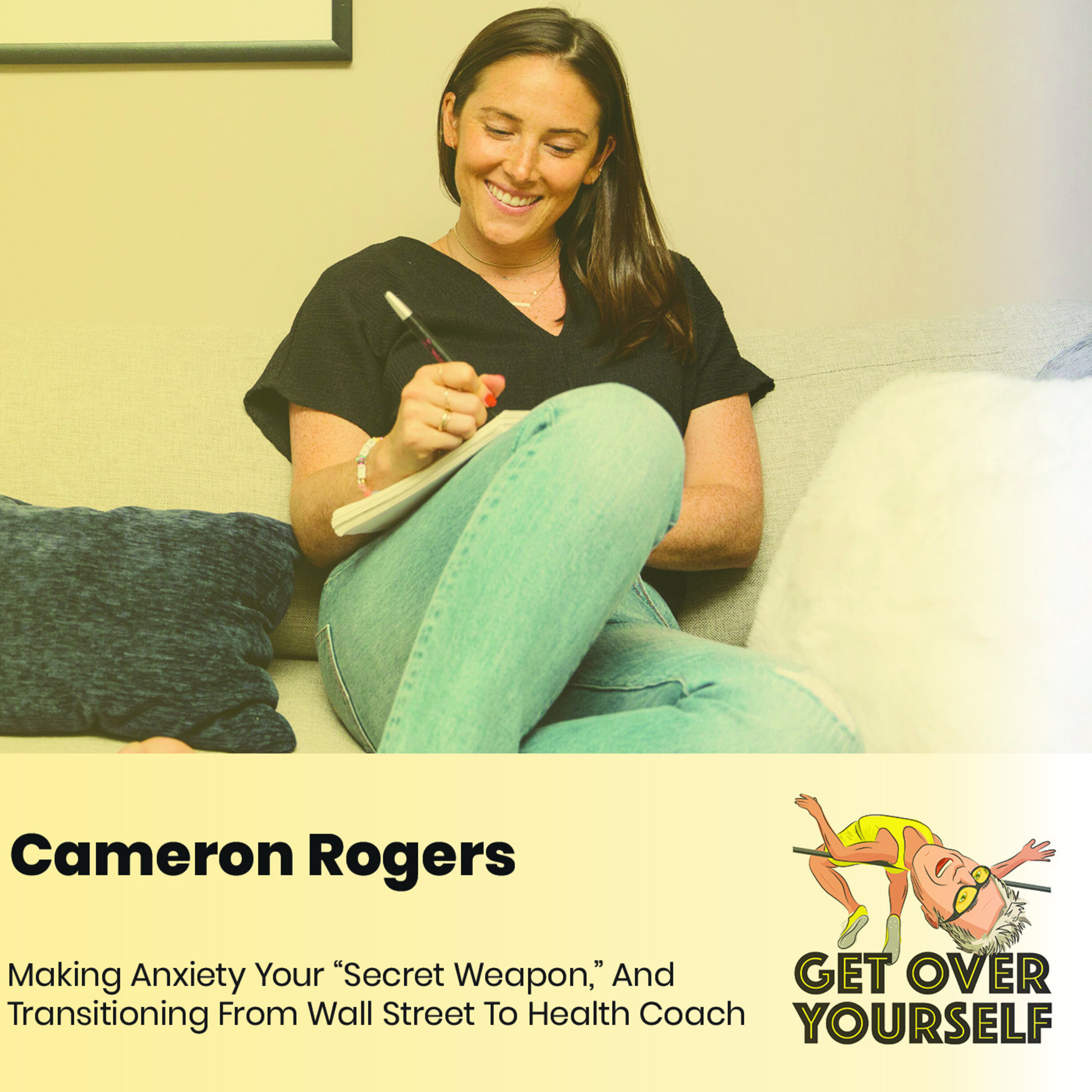
Cameron Rogers: Making Anxiety Your “Secret Weapon,” And Transitioning From Wall Street To Health Coach
Enjoy this interesting interview from popular health coach and Instagram sensation, the Freckled Foodie, aka Cameron Rogers!After working on Wall Street in Sales & Trading for 5 years, Cameron had a life-altering moment, and decided it was time to wave goodbye to the corporate world and pursue the Freckled Foodie full-time. Since then, she’s grown her community, worked with notable companies on creating content, helped dozens of individuals achieve a more healthy and balanced lifestyle through her health coaching practice, and developed her personality as a podcast host on Freckled Foodie & Friends. By doing all of this, she was fortunate enough to be named one of the five entrepreneurs changing New York’s wellness scene by Forbes.In this show, Cameron goes beyond the success story of quitting Wall Street for a career in health to talk about her longtime struggle with anxiety and the coping strategies she has used successfully, and recommends to her clients. A great sound bite is that we must accept anxiety as inevitable, but figure out a way to make anxiety spur action and accomplishment. Cameron also relates an evolved approach to dietary transformation, where she encourages her clients to stay away from the stress of orthorexia by allowing occasional or regular sensible indulgences. Enjoy this interesting and wide-ranging show with Cameron and check out her podcast here!TIMESTAMPS:Cameron Rogers is not only describing her life transition of moving into the world after college, she talks about her dietary strategy that she uses in her coaching others. [01:22]The more Cameron got into cooking, the more she became focused on how her body was impacted by what she ate and drank. [04:32]When seeing a physician about her severe abdominal issues, she learned she had mercury poisoning as a result of some dental work! [06:14]Focusing too much on the food journey led her to realizing her lifelong anxiety struggle was attached to eating. [09:37]How does one manage anxiety? Alcohol is not the solution. [16:50]What recommendations does she give to her clients? She deals with each individually. Once you restrict something, you usually crave it more. [20:08]When she’s working with clients, looking at diet is important, but talking about how one feels when eating, while eating, and after eating are important. Are you actually paying attention to the food you eat? [24:09]Her approach is a bit different from traditional therapy. Cameron calls herself an accountability coach. [26:24]Cameron tells of her journey from her job, to Instagram, to her business model. [31:47]How does she help someone who struggles with the assignments they are given? [39:49]LINKS:Brad’s Shopping PageCameron’s Instagram with 47k followers Cameron’s Tik Tok with 70K followersCameron’s YouTube with 1.7k subscribers Freckled FoodieLow FODMAP dietFreckled Foodie on InstagramFreckled Foodie PodcastJoin Brad for more fun on: Instagram: @bradkearns1Facebook: @bradkearnsjumphighTwitter: @bradleykearnsYouTube: @BradKearnsWe appreciate all feedback, and questions for Q&A shows, emailed to [email protected]. If you have a moment, please share an episode you like with a quick text message, or leave a review on your podcast app. Thank you!Check out each of these companies because they are absolutely awesome or they wouldn’t occupy this revered space. Seriously, Brad won’t sell out to anyone if he doesn’t love the product. Ask anyone.Almost Heaven Sauna: Affordable at-home sauna kits for the ultimate relaxation and hormonal boost on demandBrad’s Macadamia Masterpiece: Mind-blowing, life-changing nut butter blendCAR.O.L bike: Cardiovascular optimized logic stationary bike for a highly effective eight-minute workoutMale Optimization Formula with Organs (MOFO): Optimize testosterone naturally with 100% grassfed animal organ supplementPerfect Keto: The cleanest, purest, most potent ketone supplements and snacksLetsGetChecked: At-home medical testing with great prices, quick results, and no hasslesVuori Activewear: The most comfortable, functional, and fashionable gear, evoking the chill SoCal coastal lifestyleDonations!This free podcast offering is a team effort from Brad, Daniel, Siena, Gail, TJ, Vuk, RedCircle, our awesome guests, and our incredibly cool advertising partners. We are now poised and proud to double dip by both soliciting a donation and having you listen to ads! If you wanna cough up a few bucks to salute the show, we really appreciate it and will use the funds wisely for continued excellence. Go big (whatever that means to you…) and we’ll send you a free jar of Brad’s Macadamia Masterpiece as a thank you! Email to alert us! Choose to donate now, later, or never. Either way, we thank you for choosing from the first two options! :]Support this podcast at — https://redcircle.com/the-get-over-yourself-podcast/donationsAdvertising Inquiries: https://redcircle.com/brandsSee omnystudio.com/listener for privacy information.See omn
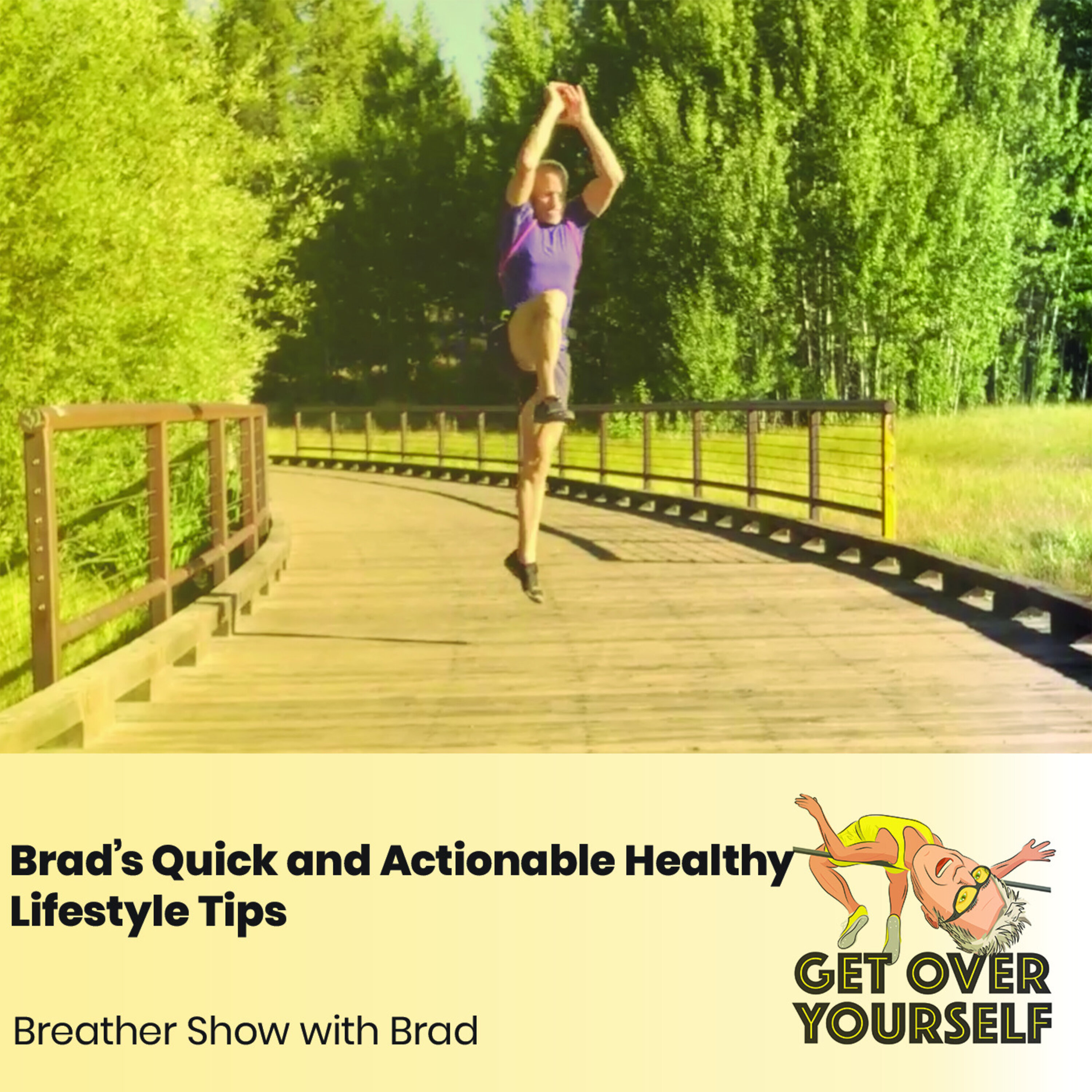
Brad’s Quick and Actionable Healthy Lifestyle Tips (Breather Episode with Brad)
(Breather) This is a great show to share with a friend or loved one to get going on a healthier path without getting too deep into the weeds on the various health topics that are covered in detail in many other episodes. You learn the most important immediate changes you can make to increase energy, improve fat burning, and minimize disease risk factors and why they are so important. In this show I give you some basic assignments in four different areas--here is a sneak preview of everything covered on the show: Diet: Ditch the “Big Three” as your #1 health and disease prevention objective: Refined sugars, grains, and industrial seed oils. Establish a zero-tolerance policy with extreme devotion for at least 21 days to give your body a chance to escape carb dependency and get good at burning stored body fat. Exercise/Movement: Increase all forms of general everyday movement (walking, Morning Movement Routine, yoga/pilates/tai chi, foam rolling, movement breaks from work desk); conduct formal cardiovascular workouts at MAF heart rate or below; perform regular brief, intense strength training sessions with the body under resistance load (body weight, free weights, cords/straps); perform occasional all-out sprints--short duration, long recovery interval, consistent high quality.Sleep/Recovery: Minimize artificial light and digital stimulation after dark, power down from technology with extreme discipline, schedule in solo, reflective timeStress Management: Discover stress-reducing behaviors/activities and prioritize them in daily life: Breathing/meditation, temperature therapy, gratitude practice, cultivating positive attitude/mindset. Enjoy this focused message and perhaps listen to the show every few months to keep focused and motivated to cover the basics of healthy living every day!TIMESTAMPS:Let's start simple with eliminating the toxic modern foods that are directly resulting in excess body fat and accelerated disease risk factors. [01:17]Within the list of meat, fish, fowl, eggs, vegetables, fruits, nuts, and seeds, you have a variety of choices to select from for the healthiest of meals. [03:09]Refined industrial seed oils confuse your body. [05:20]A 21-day commitment to eating only a nutrient-dense diet will teach your body not to depend on the carbs. Reach for a nutritious snack, rather than sugary snacks. [06:05]Move more in everyday life. A heart rate of 180 beats per minute minus your age should be your goal when exercising. [08:38]We also have an obligation to put ourselves under the resistance load and perform brief explosive movements in order to maintain muscle mass. [13:17]Sprinting is one of the best efforts to enhance your fitness. [15:11]Sleep, rest, and rejuvenation are so important in today’s digital world. [18:47]When you awaken at or near sunrise, make a point to expose your eyeballs to direct sunlight. [24:27]Stress management is something we all have to figure out. Take six deep breaths. [25:43]LINKS:Brad’s shopping PageDeep Nutrition The Fatburn Fix Two Meals a DayBrad’s video on sprintingBrad’s morning routineBrad’s Cold TherapyJohn Assaraf Podcast Join Brad for more fun on: Instagram: @bradkearns1Facebook: @bradkearnsjumphighTwitter: @bradleykearnsYouTube: @BradKearnsWe appreciate all feedback, and questions for Q&A shows, emailed to [email protected]. If you have a moment, please share an episode you like with a quick text message, or leave a review on your podcast app. Thank you!Check out each of these companies because they are absolutely awesome or they wouldn’t occupy this revered space. Seriously, Brad won’t sell out to anyone if he doesn’t love the product. Ask anyone.Almost Heaven Sauna: Affordable at-home sauna kits for the ultimate relaxation and hormonal boost on demandBrad’s Macadamia Masterpiece: Mind-blowing, life-changing nut butter blendCAR.O.L bike: Cardiovascular optimized logic stationary bike for a highly effective eight-minute workoutMale Optimization Formula with Organs (MOFO): Optimize testosterone naturally with 100% grassfed animal organ supplementPerfect Keto: The cleanest, purest, most potent ketone supplements and snacksLetsGetChecked: At-home medical testing with great prices, quick results, and no hasslesVuori Activewear: The most comfortable, functional, and fashionable gear, evoking the chill SoCal coastal lifestyleDonations!This free podcast offering is a team effort from Brad, Daniel, Siena, Gail, TJ, Vuk, RedCircle, our awesome guests, and our incredibly cool advertising partners. We are now poised and proud to double dip by both soliciting a donation and having you listen to ads! If you wanna cough up a few bucks to salute the show, we really appreciate it and will use the funds wisely for continued excellence. Go big (whatever that means to you…) and we’ll send you a free jar of Brad’s Macadamia Masterpiece as a thank you! Email to alert us! Choose to donate now, later, or never. Either way, we thank you for choosing from
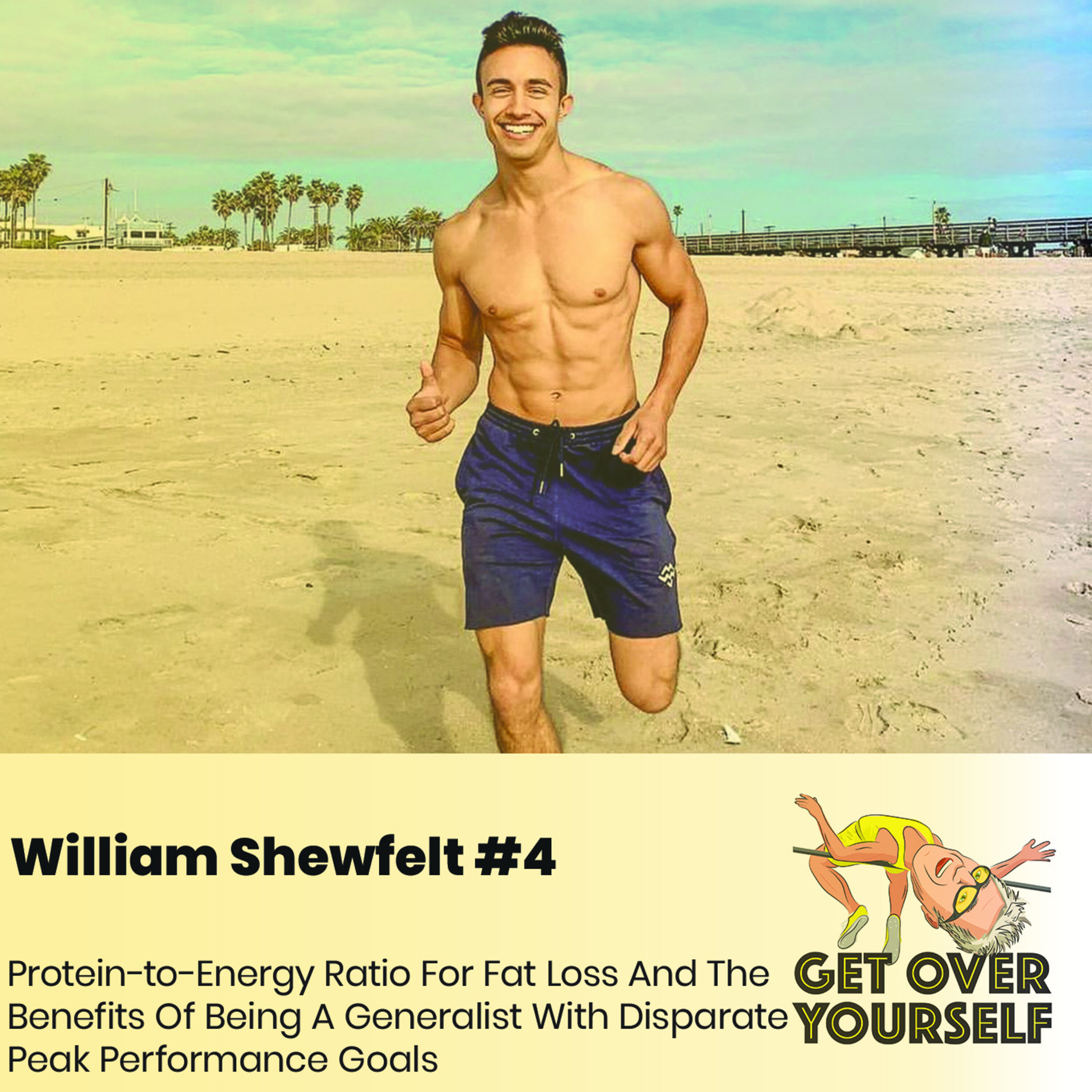
William Shewfelt #4: Protein-to-Energy Ratio For Fat Loss And The Benefits Of Being A Generalist With Disparate Peak Performance Goals
William Shewfelt returns to the show for a historic fourth time to discuss the hot topic of losing excess body fat quickly and efficiently. William has locked into a highly effective strategy that is working for his clients at 21daycarnivoreshred.com. It revolves around prioritizing protein intake (since of course that is the body’s most critical dietary objective) by consuming foods that have a favorable protein-to-energy ratio. Protein also happens to be highly satiating, so you are enjoying delicious meals without deprivation and suffering from calorie restriction diets. Protein also has a high thermic effect, meaning if a significant portion of the protein calories you consume (some studies say up to 20%) are allocated toward metabolizing the protein. As Mark Sisson says often, there is a legitimate argument that you don’t even need to count protein calories, because they are used for building block purposes instead of calorie energy. William is a high energy guy who follows his passions at all times. As you learned from his first Get Over Yourself podcast show, he has an extremely disciplined, methodical, and quantified approach to pursuing goals that he has applied in numerous disparate areas, from writing, online coaching, acting and also his latest passion of music. Listen to his Disfruta single on YouTube! You will love his enthusiasm and youthful energy. Who knows, maybe the protein-to-energy ratio concept will give you the breakthrough you are looking for in fat loss! Read more in his book with Dr. Ted Naiman called The P/E Diet.TIMESTAMPS:How do you drop excess body fat once and for all? [01:44]Catching up with Shewfelt leaves you breathless with diet, coaching, acting, singing, writing. [05:59]The carnivore focus of Will’s diet includes two steaks and 6 eggs yolks in a shake daily. [08:34]What is the protein to energy ratio? [09:26] Protein is a building block, not a calorie burning energy. Focus on your protein requirement. [14:55]It is a huge task to sift through all the diet information to which we are exposed. [23:17]Protein is number one, exercise is number two. Fasting and an 8-hour sleep are there on the list. [24:34]When your mindset has been firmly implanted with the colorful vegetables on your plate, it is hard to absorb the carnivore diet information. [25:33]How is Shewfelt dealing with helping people lose excess body fat as a group? [30:59]It is common when one achieves a goal to celebrate the success, and then fall back. How can we deal with that? [34:57]What is the role of carbohydrates in a healthy athletic person’s diet? [37:23] No one diet is appropriate for everyone. [43:45]When you are able to develop your inner intuition, you are able to prevent yourself from doing too much. [45:34]Reggaeton, is a Latin genre of music that William is into. The same mentality that you use in training, you use in everything else you try. [47:12]How does one turn potential into viable economic opportunity? [53:15]Will describes how he manages to have so many different directions in his life and stay healthy. [01:00:52]LINKS:Brad’s Shopping PageWilliam ShewfeltP/E DietDr. Ted NaimanFatty Popcorn Boy PodcastWill Shewfelt DisfrutaWill Shewfelt Buena Cosa Carnivore Cooking for Cool Dudes Brad’s podcast with Will on Goal-SettingIGF1 and mTOR21 Day Carnivore shredStan Efferding Will to Win podcastJoin Brad for more fun on: Instagram: @bradkearns1Facebook: @bradkearnsjumphighTwitter: @bradleykearnsYouTube: @BradKearnsWe appreciate all feedback, and questions for Q&A shows, emailed to [email protected]. If you have a moment, please share an episode you like with a quick text message, or leave a review on your podcast app. Thank you!Check out each of these companies because they are absolutely awesome or they wouldn’t occupy this revered space. Seriously, Brad won’t sell out to anyone if he doesn’t love the product. Ask anyone.Almost Heaven Sauna: Affordable at-home sauna kits for the ultimate relaxation and hormonal boost on demandBrad’s Macadamia Masterpiece: Mind-blowing, life-changing nut butter blendCAR.O.L bike: Cardiovascular optimized logic stationary bike for a highly effective eight-minute workoutMale Optimization Formula with Organs (MOFO): Optimize testosterone naturally with 100% grassfed animal organ supplementPerfect Keto: The cleanest, purest, most potent ketone supplements and snacksLetsGetChecked: At-home medical testing with great prices, quick results, and no hasslesVuori Activewear: The most comfortable, functional, and fashionable gear, evoking the chill SoCal coastal lifestyleDonations!This free podcast offering is a team effort from Brad, Daniel, Siena, Gail, TJ, Vuk, RedCircle, our awesome guests, and our incredibly cool advertising partners. We are now poised and proud to double dip by both soliciting a donation and having you listen to ads! If you wanna cough up a few bucks to salute the show, we really appreciate it and will use the funds wisely for continu
Expert Insights, Part 3: Health Optimization (Breather Episode with Brad)
This episode is full of life-changing insights from an assortment of experts on the subject of health optimization and biohacking. Sure, we all already know about the importance of building healthy habits, but taking it a step further and learning why your brain prefers to engage in the familiar will leave you more motivated to actually make those necessary changes that optimize your health. And this goes beyond the physical — mental health obviously stills falls under the umbrella of health optimization, and this show will prompt you to ask yourself many thought-provoking questions, like: can I make it through one day with no whining, no complaining, and no excuses? Some other key points covered during this episode:The importance of service. Tom Bilyeu of the popular Impact Theory YouTube channel says: “Work your ass off at something you care very deeply about to get very good, so you can serve not only yourself, but others.”Because the brain tends toward down wiring to save energy, try to be intentional about creating new habits. One of the best things you can do for yourself is create a morning routine you can stick to, as it sets you up to be a more disciplined person throughout the day. Otherwise, you’ll find yourself slipping into old habits.Do your best to protect yourself against EMF exposure. “We don’t know certain effects on humans, but we do know that rates of autism have risen from 1 in 1,000 to 1 in 68 in a very short time, a few generations,” Tommy Wood comments, and chances of developing Alzheimer’s, Dementia, and other cognitive decline conditions are now 1 in 2. Experts believe this is strongly correlated with environmental pollution, particularly EMF, as well as dietary choices (forget about Type 2 Diabetes, watch out for Type 3!). Fast on days you fly. When you’re in a plane, you’re exposed to a lot of EMF. But when you are in a fasted state, your internal antioxidant production is boosted. Also, if you fast and wait to eat until after you’ve arrived at your destination, this will greatly help your body adapt more quickly to the time difference.Protect your personal reputation.Value your time more than your own possessions. Be early. Pete Caroll points out that there is a difference between being early and being on time: Being early demonstrates not just a high regard for yourself, but also for others, while showing that you have discipline and focus. Thanks for listening!TIMESTAMPS:Work your ass off at something you really care about. [01:39]When you build good habits, you free up more energy to work on peak performance. [02:51]Building good habits at bedtime is very important. The same routine helps get optimal sleep. [07:14]Take five deep breaths before responding to a stimulus. [08:06]From 12 to 3:00 AM are the critical hours where the remnants of mammalian hibernation lie for our species. [09:07]Electromagnetic Field exposure and poor diet are of real concern. The brain cells are most sensitive to dysfunction. [10:29]Before plane travel, it’s a good idea to fast and/or do a high-intensity workout before boarding a plane. [13:34]Pete Carroll, the football coach, gives tips for success. One is always to protect the team; two is no complaining, and three is to be early. [17:13]Remember that you will die. Value your time rather than possessions. Put your life up for review. [21:00] LINKS:Brad’s Shopping PageImpact TheoryBrad’s Morning Routine Dr. Ron SinhaDr. Jack Kruse PodcastDr. Joe MercolaTommy WoodBrad’s podcast with Brian Hoyer Brad’s podcast with Gordo Byrn Join Brad for more fun on: Instagram: @bradkearns1Facebook: @bradkearnsjumphighTwitter: @bradleykearnsYouTube: @BradKearnsWe appreciate all feedback, and questions for Q&A shows, emailed to [email protected]. If you have a moment, please share an episode you like with a quick text message, or leave a review on your podcast app. Thank you!Check out each of these companies because they are absolutely awesome or they wouldn’t occupy this revered space. Seriously, Brad won’t sell out to anyone if he doesn’t love the product. Ask anyone.Almost Heaven Sauna: Affordable at-home sauna kits for the ultimate relaxation and hormonal boost on demandBrad’s Macadamia Masterpiece: Mind-blowing, life-changing nut butter blendCAR.O.L bike: Cardiovascular optimized logic stationary bike for a highly effective eight-minute workoutMale Optimization Formula with Organs (MOFO): Optimize testosterone naturally with 100% grassfed animal organ supplementPerfect Keto: The cleanest, purest, most potent ketone supplements and snacksLetsGetChecked: At-home medical testing with great prices, quick results, and no hasslesVuori Activewear: The most comfortable, functional, and fashionable gear, evoking the chill SoCal coastal lifestyleDonations!This free podcast offering is a team effort from Brad, Daniel, Siena, Gail, TJ, Vuk, RedCircle, our awesome guests, and our incredibly cool advertising partners. We are now poised and proud to double
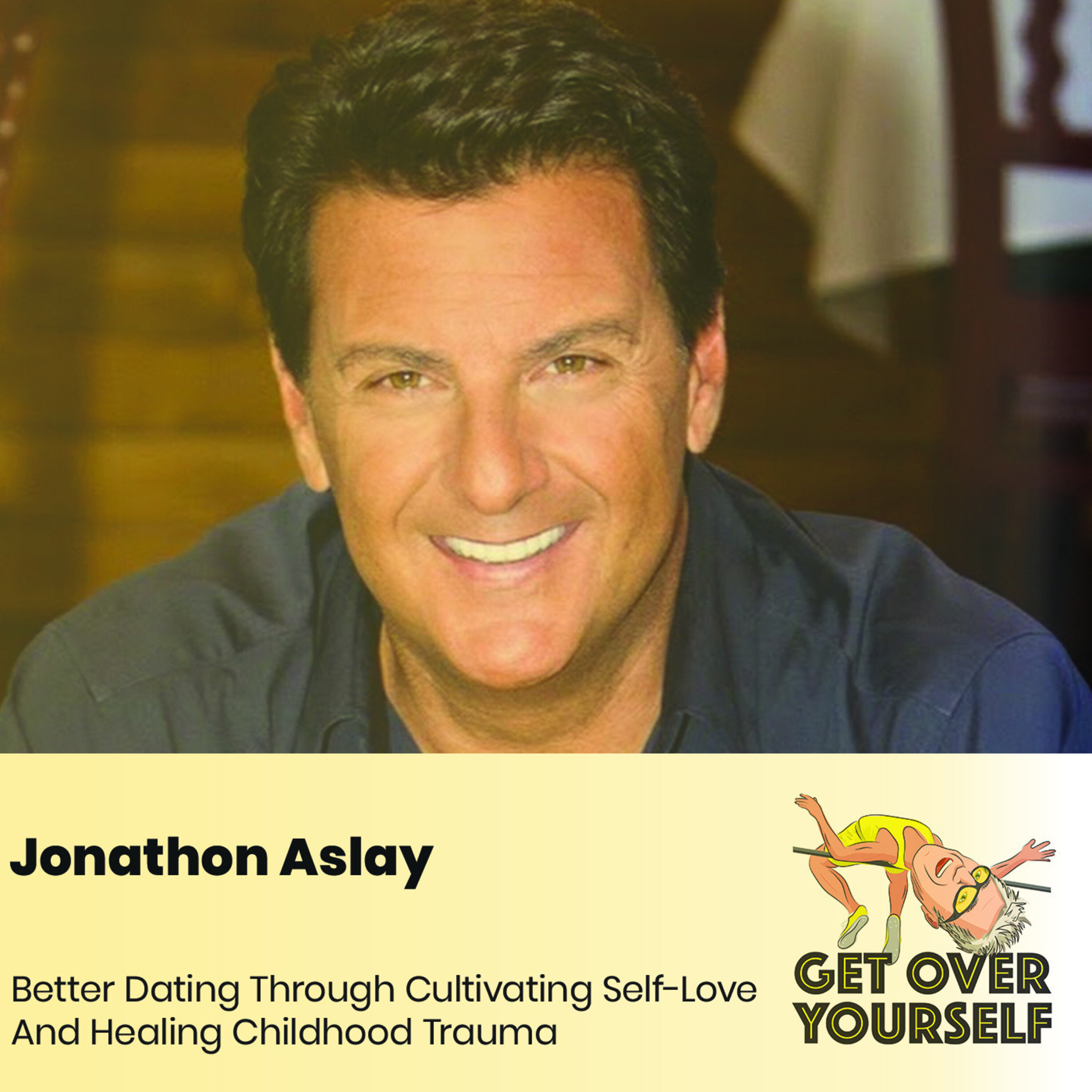
Jonathon Aslay: Better Dating Through Cultivating Self-Love And Healing Childhood Trauma
Get ready for a fast-moving show that will offer you a brand-new perspective on dating, self-worth, and self-love. In this episode, Jonathon Aslay reveals why dating itself can trigger our deepest fears, shares the 4 Pillars of A Successful Relationship, and breaks down the ways in which we can transcend the flawed modern dating scene to have deeper, more meaningful, more successful dates and long-term romantic partnerships. And it starts with the common denominator in all of your failed relationships: you! That’s right, dating success starts with cultivating self-love and healing childhood trauma. Jonathon is the author of What The Heck Is Self-Love Anyway, a book about healing from grief and childhood trauma to cultivate self-love. Jonathon leverages his message to the unique challenges of the modern dating scene. He is a dating coach specializing in mid-life and purposeful dating ― helping clients transcend the usual obsession with chemistry to become more self-aware and understand what Jonathon calls the 4 Pillars of successful relationships: Chemistry, Common Values, Blendable Lifestyles, and Emotional Maturity. Jonathon is the real deal, having overcome an assortment of personal setbacks to rebuild his life and gift his message to others. After losing his 19-year-old son Connor in 2018, Jonathon was forced to acknowledge what he’s suspected all along: that dating strategies are often too one-dimensional to have a meaningful impact. Instead, it’s the act of dating itself that brings out what he feels is the number one emotional health issue facing singles today: a soul-deep lack of self-worth and self-love. Today, Jonathon is on a mission to encourage both men and women to adopt a daily practice of self-help, personal development, and spirituality, so that they may find true inner happiness, purpose, and peace. With these practices, individuals will attract the relationship of their dreams — and Jonathon is here to help along the way.Enjoy listening to this fun, informative (and quite useful!) show with Jonathon, and if you want to connect with him or learn more about his work, check out his website here.TIMESTAMPS:Jonathan Aslay is a dating coach and expert specializing in midlife and purposeful dating. [01:38]Jonathan’s four pillars for successful dating are chemistry, shared values, a blendable lifestyle, and emotional maturity. [03:00]In the dating realm, old memories of “I’m not good enough” or “I’m not lovable” come up. [05:15]After using the dating profile system, Jonathan realized that he was good at interpreting both men’s and women’s profiles and that’s how his business came about. [07:35]The greater issue in dating is not just biology and attraction, it is more a healing of our childhood wounds and traumas. [08:44]Emotional maturity is one of the key pillars of a relationship. If people don’t take responsibility for their choices, they are not emotionally mature. [11:12]The physical connection is nice but to sustain a long-term relationship, you need blendable lifestyles. [16:33]Romance should be reserved for relationships and not just for dating. [18:13]More women than men ask for help from this dating coach. [21:22]In modern times, the way people meet and get together is so different from the past. [23:15]It took Jonathan over 100 failed dates to realize the common denominator in them all was Jonathan himself. [27:23]Self-love means self-worth, self-confidence, self-esteem, self-reliance, self-respect. [23:45]Can we assume that most everyone has some wounds from their childhood upbringing and are lingering? [30:54]We can either look inward or look to blame the outside world. [31:58]Sadly, people are dating myopically….just thinking about what am I getting here? rather than respecting the other’s feelings. [41:18]Ask value-based questions on that first date. [46:38]It is important to be honest and straightforward in communicating how you see the relationship. Are you looking for a partner? Are you just having fun? Benefits? [52:40]It’s not necessarily rejection. It is a misalignment. It is an awareness. [54:09]Biology makes up a small percentage of the other person’s personality. [56:15]Meeting up with a stranger is a challenge, these days. [01:04:41]LINKS:Jonathan AslayJonathan Aslay on YouTubeWhat the Heck is Self-Love Anyway?Getting the Love You Want.AttachedParadox of ChoiceShut Up, Stop Whining and Get a Life.Eight DatesAre You the Right One for Me? Join Brad for more fun on: Instagram: @bradkearns1Facebook: @bradkearnsjumphighTwitter: @bradleykearnsYouTube: @BradKearnsWe appreciate all feedback, and questions for Q&A shows, emailed to [email protected]. If you have a moment, please share an episode you like with a quick text message, or leave a review on your podcast app. Thank you!Check out each of these companies because they are absolutely awesome or they wouldn’t occupy this revered space. Seriously, Brad won’t sell out to anyone if he doesn’t love the product.
Expert Insights, Part 2: Trying To Change Others (Breather Episode with Brad)
Can you truly change others? And what is the price you pay for trying to do so? What if there was an easier way of dealing with that desire we all have to change the behavior, habits, or beliefs of those around us? In this episode, I’ll share the most useful and insightful tips I’ve gathered from various experts and invite you to expand your perspective on the topic of changing others.Best-selling author Mark Manson remarked during his Get Over Yourself show appearance that instead of trying to change others, “You must decide what you are willing to tolerate and not willing to tolerate in your relationships.” Otherwise, you’ll be stuck in a “lose-lose situation” if you continue to try to change someone, or if you yourself end up changing for someone else. Another one of my favorite insights from Mark was his argument that self worth is an “illusion” and that you should best view your life as a series of decisions and actions. Instead, work on cultivating self discipline, because self discipline is the real key to happiness. I also love Mark’s stance on never using other people as a means to an end. Don’t think about what others can do for you, but rather, what you can do to be of service to others. I’m also a fan of the actor Dax Shepard’s podcast Armchair Expert and share a story from one episode about how he handled an issue he was having with his wife, actress Kristen Bell. Annoyed with her habit of reading and responding to emails at night in bed, Dax remarked something along the lines of, ‘Can’t you schedule your time better during the day so you don’t do this at night?’ Well, unsurprisingly, that did not go over well. What did, however, was a different approach, with Dax simply telling her that he needed her full attention. The heart of the issue changed: it was no longer about what he wanted her to do, but instead about what he needed from her, and that made all the difference. I wrap up the show with some great insights from Dave Rossi, who says that, “Attachments in relationships set you up for pain and suffering” and advises us to, “Accept others as they are, and don’t try to change them.” Thanks for listening, and check back for part 3 of this series which will cover insights from experts on how to optimize your health!TIMESTAMPS:Don’t try to change other people. [01:28]Self-worth is an illusion. [02:15]If someone is trying to change you, then you are stuck in a lose-lose situation. [03:37]Learn to express your own needs by doing it in a way where you are not trying to change the other person. [05:06]The conditioned self responds to situations that supersede our power to make choices. [08:48]The highest level of human consciousness would be to never use others as a means to an end. [11:56]Don’t judge people. Don’t try to change people. Accept them for who they are. [14:20]LINKS:Brad’s Shopping PageThe Subtle Art of Not Giving a Fuck Everything is FuckedBrad’s podcast with Mark MansonArmchair ExpertBrad’s Podcast with Dr. Wendy WalshThe Imperative HabitBrad’s Breather Show with Bruce LiptonBiology of Belief PodcastJoin Brad for more fun on: Instagram: @bradkearns1Facebook: @bradkearnsjumphighTwitter: @bradleykearnsYouTube: @BradKearnsWe appreciate all feedback, and questions for Q&A shows, emailed to [email protected]. If you have a moment, please share an episode you like with a quick text message, or leave a review on your podcast app. Thank you!Check out each of these companies because they are absolutely awesome or they wouldn’t occupy this revered space. Seriously, Brad won’t sell out to anyone if he doesn’t love the product. Ask anyone.Almost Heaven Sauna: Affordable at-home sauna kits for the ultimate relaxation and hormonal boost on demandBrad’s Macadamia Masterpiece: Mind-blowing, life-changing nut butter blendCAR.O.L bike: Cardiovascular optimized logic stationary bike for a highly effective eight-minute workoutMale Optimization Formula with Organs (MOFO): Optimize testosterone naturally with 100% grassfed animal organ supplementPerfect Keto: The cleanest, purest, most potent ketone supplements and snacksLetsGetChecked: At-home medical testing with great prices, quick results, and no hasslesVuori Activewear: The most comfortable, functional, and fashionable gear, evoking the chill SoCal coastal lifestyleDonations!This free podcast offering is a team effort from Brad, Daniel, Siena, Gail, TJ, Vuk, RedCircle, our awesome guests, and our incredibly cool advertising partners. We are now poised and proud to double dip by both soliciting a donation and having you listen to ads! If you wanna cough up a few bucks to salute the show, we really appreciate it and will use the funds wisely for continued excellence. Go big (whatever that means to you…) and we’ll send you a free jar of Brad’s Macadamia Masterpiece as a thank you! Email to alert us! Choose to donate now, later, or never. Either way, we thank you for choosing from the first two options! :]Support this podcast at — htt
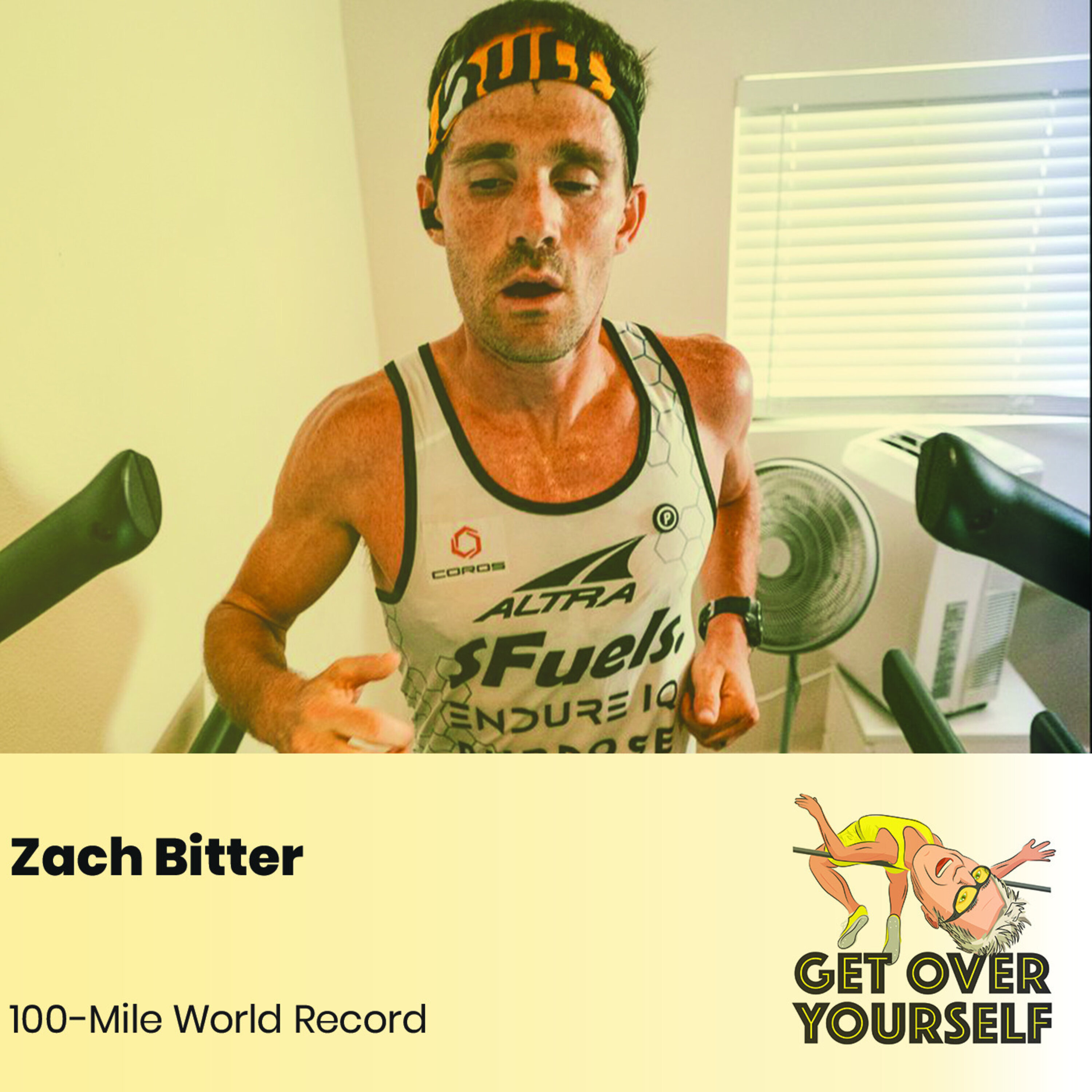
Zach Bitter: 100-Mile World Record
I welcome my old friend Zach Bitter to the show to talk about all things related to peak performance and endurance. Zach is the host of the Human Performance Outliers podcast and is definitely honoring the show title with his amazing ultrarunning performances. He is the world record holder at 100 miles with an astonishing time of 11 hours, 19 minutes, which equates to running 6 min, 48 seconds per mile all day long!Go try running one mile at that pace, and then repeat 100 times! Zach also busted the world record for 100 miles on a treadmill, so don’t complain that you get “bored” after 42 minutes at the gym. Zach has also long been a leader in fat-adapted endurance training, having discovered that a nutrient-dense, low carbohydrate diet helps him recover faster and also gives him a performance edge during ultramarathon competitions because he doesn’t require as many on-board calories as when he was a high carb athlete. Zach was a participant in the FASTER study (Fat Adapted Substrate utilization in Trained Elite Runners) where groundbreaking discoveries were made for the potential of humans to burn fat during exercise at a higher rate than previously thought possible. We get into a bit of science about athletic performance, but the best part of this episode is hearing about Zach’s methodical approach to peak performance and his evolved, process-oriented approach. He loves the challenge of ultrarunning, loves pushing the edges of human endurance performance, but has a healthy competitive disposition and strives to lead a balanced life. Enjoy listening to this super informative show with Zach, and if you’re interested in connecting with him for coaching, check out his website here.TIMESTAMPS:Zach Bitter is a world record holding runner who ran 100 miles in 11 hours and 19 minutes. He’s going to talk about his training diet. [01:50]As Zach got more serious about his ultramarathon training, he learned more about nutrition. [05:25]Even a strong “healthy” young athlete has energy swings that are not good for him. [08:28]There is not just one way to do this dietary journey. [10:31]Look at the individual plan rather than the group plan for diet and training to see what is best for you. [14:59]Zach uses his training as a school teacher in his coaching work. Treat people as individuals, not by throwing them into one group. [20:04]What was happening in the sport of ultra-marathon in 2010 when Zach got into it? The sport has grown massively. [25:27]Zach fills us in on his succession of breaking records with him amazing times. [31:11]Running on a flat track, Zach was averaging 06:47:05 per mile when he broke the world record. [35:12]If you have a bad race, don’t waste time with a pity party. Think about how to use that experience to help me improve for next time. [38:52]In 2011, Zach started to examine his diet and wanted to see if he could enhance his diet to accommodate his difficult workouts. He talks about his race fueling strategies. [42:36]Here in the year 2020, with so much sports nutrition information, we are still seeing many severe gastrointestinal problems in elite athletes. [51:26]The diet transformation had a huge improvement in terms of his recovery. He had swollen ankles. [54:19]Mike McKnight ran a hundred of miles with no calories. [01:03:37]LINKS:Brad’s shopping pageZach BitterZach Bitter CoachingTwo Treadmills, Liquids Only, and a Comedian: Inside Zach Bitter’s 100-Mile Treadmill WRFASTER studyHuman Performance Outliers PodcastUltramarathon ManDr. Sean BakerPhinney and VolekMike McknightJoin Brad for more fun on: Instagram: @bradkearns1Facebook: @bradkearnsjumphighTwitter: @bradleykearnsYouTube: @BradKearnsWe appreciate all feedback, and questions for Q&A shows, emailed to [email protected]. If you have a moment, please share an episode you like with a quick text message, or leave a review on your podcast app. Thank you!Check out each of these companies because they are absolutely awesome or they wouldn’t occupy this revered space. Seriously, Brad won’t sell out to anyone if he doesn’t love the product. Ask anyone.Almost Heaven Sauna: Affordable at-home sauna kits for the ultimate relaxation and hormonal boost on demandBrad’s Macadamia Masterpiece: Mind-blowing, life-changing nut butter blendCAR.O.L bike: Cardiovascular optimized logic stationary bike for a highly effective eight-minute workoutMale Optimization Formula with Organs (MOFO): Optimize testosterone naturally with 100% grassfed animal organ supplementPerfect Keto: The cleanest, purest, most potent ketone supplements and snacksLetsGetChecked: At-home medical testing with great prices, quick results, and no hasslesVuori Activewear: The most comfortable, functional, and fashionable gear, evoking the chill SoCal coastal lifestyleDonations!This free podcast offering is a team effort from Brad, Daniel, Siena, Gail, TJ, Vuk, RedCircle, our awesome guests, and our incredibly cool advertising partners. We are now poised and proud t

Expert Insights Part 1: Love, Relationships, and Parenting (Breather Episode with Brad)
Today, I’ll be sharing some amazingly effective and extremely thought-provoking insights about interpersonal relationships from true experts in their field. From parenting to friendship to how to deal with your partner on days when you have zero patience, there are definite Do’s and Don’ts to consider when it comes to how you communicate and treat the people closest to you.Luckily, I’ve had the pleasure of having relationship expert (and Time magazine’s Co-Person of the year in 2017!) Dr. Wendy Walsh on Get Over Yourself twice (see show #1 here and show #2 here). Wendy is an evolutionary psychologist and a true trailblazer who also hosts her own podcast called Mating Matters. And, like John Gray, Wendy is aware of the contrast between how little we have evolved biologically and how much gender roles have seriously evolved over time. In this show, you’ll learn the three things a man looks for in a woman (big surprise, #1 is youth and beauty) and the three things women look for in a man, as well as why wearing perfume can actually sabotage your chances of attracting a mate! I’ll also touch on why emotional self-sufficiency is key and the four attributes of winning relationships as defined by Wendy, the first one being physical attraction. Turns out nothing can replace having good ‘ol fashioned chemistry with someone! And while most people tend to assume that that “spark” that you and your partner first experience in the beginning of your relationship is simply not sustainable long-term, then you’re in for a big surprise. This show will teach you why Dr. John Gottman says it is possible to preserve that romantic spark between you and your partner years down the line, and the actions you can take to ensure this.I’ll also talk about the (inverse) power of praise when it comes to parenting your children, why it is important to step away from the “helicopter” parenting trend and not coddle your kids too much, as well as the specific thing my son said to me that really opened my eyes and perspective on parenting. You’ll learn what causes children to be “metabolically and medically accelerated” into adulthood and start to develop diseases like Type 2 Diabetes, fatty liver, and high cholesterol, and why downtime is incredibly important. While it is good for your kids to have activities they enjoy doing, it is never a good idea for them to be constantly busy, distracted, and stimulated. Believe it or not, daydreaming and play are not a waste of time, but in fact, the opposite.I wrap up the show by using a golfing metaphor to describe the balance of the parent-child dynamic, and talk about the importance of setting boundaries for your kids, as well as how you can balance letting go of the need to control your children’s lives while also offering unconditional love and support. Thanks for listening, and stay tuned for more expert advice in part 2 of this episode!TIMESTAMPS:This show is about interpersonal relationships starting with Dr. Wendy Walsh who describes what men and women want from one another. [06:11]The roles have changed so much for men and women in today’s society. [09:11]Men’s criteria to look for in a woman is youth and beauty, loyalty, and kindness. [10:40]Women look for resources, intelligence, and kindness. [13:40]What are the four attributes of a winning relationship? [16:35]Studies have shown that the natural scent that a person gives off has much to do with the attraction. [18:24]Learn to express yourself with loving kindness. [19:31]Empathy is number three on the list for making a good relationship. [21:38]Impulse control goes hand in hand with emotional regulation. [22:18]As highly motivated parents, we often push our children to start acting like adults. [22:58]Even in the most affluent populations, people still suffer from FOMO. [24:24]The high stress life of trying to give the kids every opportunity, has accelerated the development of diseases in children that were not appearing in children years ago. [27:18]Take a deep breath, relax, sit back and let your kid discover the world with them in the driver’s seat. [30:31]LINKS:Brad’s Shopping pagePodbeanBradkearns.comPodcast with Dr. Wendy WalshMating MattersCultural Health SolutionsPodcast with Dr. John GrayGottman InstituteMedium.com Ben GreenfieldJoin Brad for more fun on: Instagram: @bradkearns1Facebook: @bradkearnsjumphighTwitter: @bradleykearnsYouTube: @BradKearnsWe appreciate all feedback, and questions for Q&A shows, emailed to [email protected]. If you have a moment, please share an episode you like with a quick text message, or leave a review on your podcast app. Thank you!Check out each of these companies because they are absolutely awesome or they wouldn’t occupy this revered space. Seriously, Brad won’t sell out to anyone if he doesn’t love the product. Ask anyone.Almost Heaven Sauna: Affordable at-home sauna kits for the ultimate relaxation and hormonal boost on demandBrad’s Macadamia Masterpiece: Mind-blowing, life
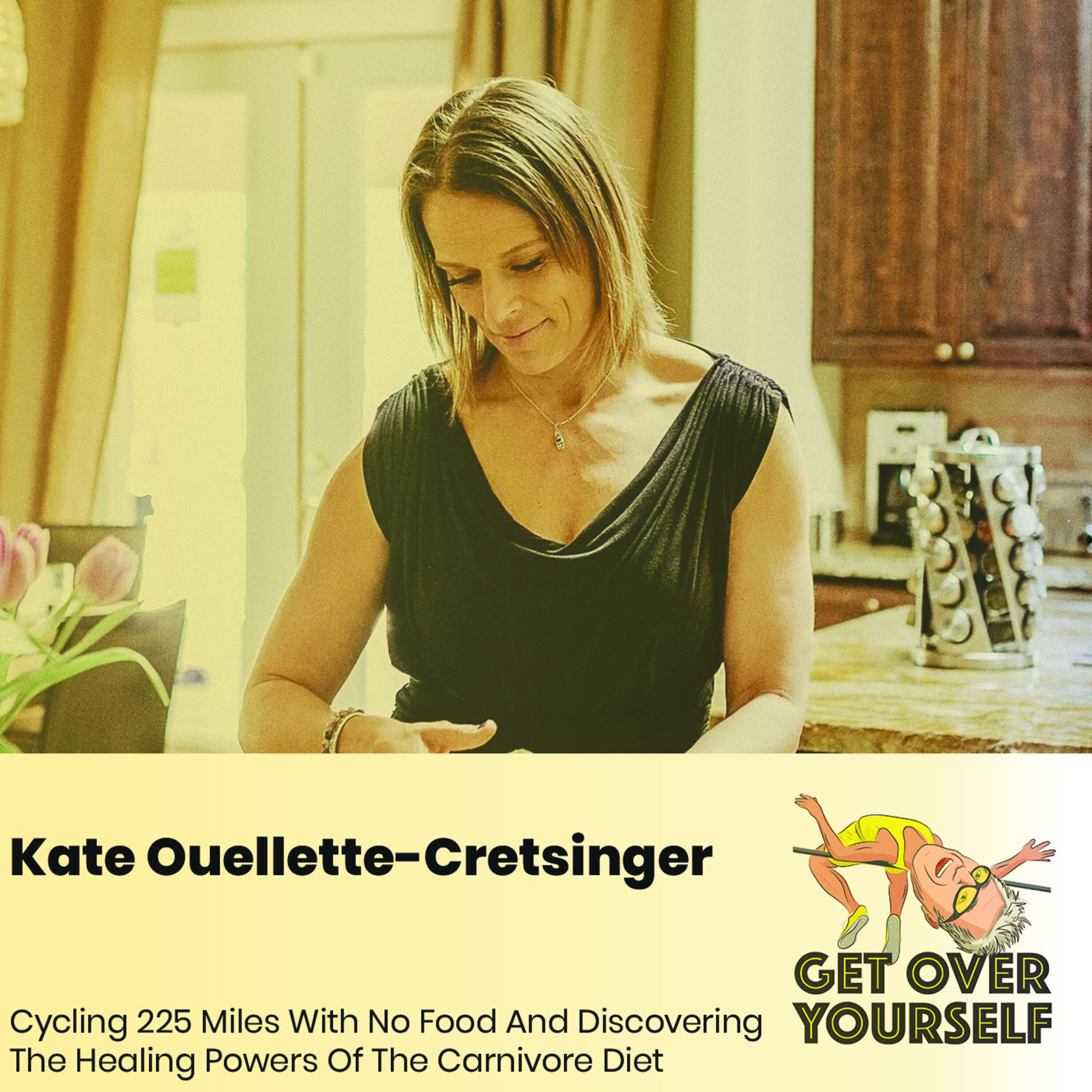
Kate Ouellette-Cretsinger: Cycling 225 Miles With No Food And Discovering The Healing Powers Of The Carnivore Diet
Get ready for an incredible story from K84 Wellness podcast host and nutrition coach Kate Ouellette-Cretsinger from Peterborough, NH. Kate will talk about her long journey into diet optimization, which started with a lifetime of suffering from what we now know is leaky gut syndrome, to discover vegetarian, then keto vegetarian for seven years, and finally, an amazing awakening into the carnivore diet. Kate relates some amazing success stories with the carnivore strategy: her daughter’s managing depression, anxiety and losing 85 pounds in a single year and a client’s success from decades long debilitating illness Crohn’s disease. Kate tried it, and found that she experienced greater mental clarity, as well as an improvement in digestive function. To celebrate the first anniversary of her carnivore eating, Kate dreamed up an incredible solo challenge of riding her bicycle the length of Vermont, from the Canadian border to the Massachusetts border. This was a ride of 225 miles over two days, and 14,500 feet of climbing!Kate also shares stories from her health journey and details what led her to the amazing place she is today. She reflects on the way her diet has changed and the days when she used to drink 8 juices in a single day, assuming that the gas and bloating she was experiencing were normal. She also shares how once she went vegetarian keto, she felt much clearer mentally, started sleeping better, and also just felt lighter as the inflammation in her body began to decrease. She also realized that everything is connected, and that getting rid of the inflammation in her head was the first thing she had to, before all else. “When you get rid of that inflammation in your head, it opens possibilities to other things too,” she says. She started paying attention to what was going on inside her head, the meaning behind the words she was saying, and the stories she was continually telling about herself, including negative self-talk, and began to focus on working on all aspects of her life, and not just the diet part. “I kept working on the internal stuff...and it is hard work to keep changing those thoughts,” Kate comments. However, once she changed the way she ate (particularly with adding in fat) she found that it wasn’t as hard anymore….in fact, it wasn’t hard at all for her to change her thoughts or to be less emotionally reactive and angry. This prompted Kate’s realization that, “A lot of the nutrition that we eat does affect our brain” and the rest is history!Today, Kate advocates for a nutrient dense, carnivore diet for all her clients, and suggests going strictly carnivore for two weeks, (then you can start to slowly incorporate avocado) for those who want to decrease inflammation and identify any potential irritants in their diet. She also makes the convincing case for eating fruit, and says, “Anything that comes off the plant, is what I would suggest to eat.” Another tip from Kate: carefully look through the ingredient list of your supplements, because if you have reactions to a certain ingredient in its whole food form, then it will still bother you if it is incorporated into a pill: “When you have a weak immune system, where you have something that’s bothering it, and then you’re adding [inflammatory foods] in, your body is more susceptible to having these symptoms and sensitivities.” Kate also points out that we are so used to symptoms of inflammation being so common that we think it’s normal, when it is actually far from it: “Anything that is not normal is considered to be autoimmune. Headaches, joint pain….these things that we think are normal, are not normal.” Kate then walks us through the wonderfully detailed nutrient density chart she made for her clients to wrap up the show, so be sure to take advantage and take a few notes!Enjoy this informative show with Kate and learn more at her health coaching website, K84Wellness.com TIMESTAMPS:Brad introduces Kate, a nutrition coach, who has a very interesting story to tell of her dietary transformation. [01:32]Most humans are just surviving, not thriving. [04:30]After an unhealthy childhood, Kate became interested in nutrition when she went to college. [06:06]The Institute of Integrative Nutrition is a prominent online meeting the individual needs of the client. [09:10]Kate works with many chiropractic patients. How does she meet their needs? [10:55]When Kate thought she was eating healthy, she focused on rice and beans, and suffered from gas and bloating. [13:03]When you are dealing with this frantic stressful life, you lose sleep, lose focus, and usually your nutrition goes to pot. The realization of the need for internal healing is the first step. [15:47]Your internal struggles and nutrition are connected. [18:13]We know more about female health. Eating red meat gets rid of PMS. [21:22]What did she notice that had to go in order to heal her gut? [23:10]There is always room for improvement in anything we do. [26:54]Red meat is actually a healthier c
A Circadian Rhythm 24-Hour Tour, Inspired by Dr. Jack Kruse Insights, Part 2 (Breather Episode with Brad)
In this show, on the heels of the 21 insights around the clock, you’ll learn just how destructive excess artificial light is to your health and your overnight restoration, and you’ll also gain a better understanding of the complex interplay between your hormones and the habits that are at the core of your lifestyle.Before we begin, if you happened to miss part 1 or just want to refresh what we covered last week, click here to listen to that episode first. Now, onto part 2! Here are some key points we’ll go over during this episode:Most postmenopausal women find exercise training extremely frustrating as hormone response is altered as they age. In contrast, men usually don’t lose their GH levels until they’ve reached 50-55 years of age, and are also protected by their testosterone levels, which persist throughout life (if they’re not suffering from inflammation that is, because that will directly lower their testosterone levels). GH and testosterone are the key players that work to keep a man’s heart and muscles in shape.What happens when step 20 (the surge of prolactin) is broken in modern humans?This used to be more frequent among diabetics, but, because of our excessive technology use post-sunset, it’s becoming more common in all humans. Artificial lights tend to be super bright and completely interfere with the usual circadian signals from the hormone response, so it’s no wonder that light after sunset reduces the prolactin surge humans are supposed to experience. This is linked to sleep, as chronic lowered prolactin surges are associated with lower growth hormone secretion during the anabolic phases of sleep.One thing that really affects your cardiac and skeletal muscle function is lowered chronic GH secretion, because it directly affects the process of autophagy. This is why heart failure is strongly associated with low IGF-1 and sex steroid hormone levels. When growth hormone is not released in normal amounts, it also decreases our lean muscle mass and increases our fat percentage in all our organs and in our body. This leads to slowly declining organ dysfunction and poor body composition. We can measure this process clinically by looking for falling DHEA and GH/dopamine levels as we age.What happens in normal aging in step 21?Aging is among the most common features found in studies on modern humans when DHEA and GH craters on hormone panels. The loss of the prolactin surge is especially prominent in postmenopausal women. Most women begin to suffer from falling DHEA and GH levels around age 35-40 while they are still in peri-menopause. The higher their HS-CRP levels, the faster they enter peri-menopause and the quicker they enter menopause. They also age faster on a cellular level because their circadian chemical clocks are sped up. As a consequence, their telomeres shorten faster as well. Women have higher levels of leptin for childbearing, so they are more prone to leptin resistant issues than men. This helps explain why older women struggle with cognitive haze, loss of body composition, poor sleep, and increased levels of heart disease after menopause. Many physicians think the losses they suffer are due to the loss of estrogen from ovarian failure, but the loss of growth hormone and progesterone production are far more significant in their physiology. Progesterone is the off switch to anything that is pro-growth. Modern women are usually estrogen dominant even after menopause because of mismatches in circadian biology. Cognitive loss is especially common in post-menopausal women. They also lose on average 1% of their bone mineral density per year from menopause in large part due to the loss of progesterone, not estrogen.Loss of progesterone also corresponds to poor sleep in these women too. Replacing progesterone in women has a major effect on their sleep and bone stock. It also dramatically improves their memories and cognitive function as well.The cost of snacking after dinner and how it affects the circadian cycle:If you choose to eat within 4 hours of sleep, you will never see the prolactin surge you need, because any spike in insulin turns off this critical sleep time release that corresponds to the cellular maximums of the autophagic process for humans. Agouti, the incretin gut hormone, also rises in the blood to higher than normal levels to block leptin from entering the brain.*It appears 12-3 AM are the critical hours at night where the remnants of mammalian hibernation lie for our species. These are the anabolic times for sleep when we are rebuilding our proteins and recycling our cellular contents. They are three of the most important hours in all human biology. If you miss them, you can bet you have several neolithic diseases for sure. Why do you ask? If these three hours are not reached enough during our sleep cycle, autophagy is never optimized and cellular repair does not occur in our cells. This means we are using old broken down parts in our cells as the next day arrives at 6 AM an
Jake Steiner: Rethinking The World Of Prescription Eyewear
Get ready for a life-changing, mind blowing show! Jake has a fascinating and perhaps controversial take that will compel you to rethink the use of prescription glasses to see better. He is the founder of EndMyopia.org, which offers an extensive education on how to improve your eyesight naturally and avoid the pitfalls of relying on glasses - the ultimate “shortcut” that will create lifelong dependency and accelerated decline of visual acuity. In this show, Jake reveals that bad eyesight can cause serious depression, anxiety, limit physical performance, and a number of diet implications as well. Meanwhile myopia is not a “mysterious genetic condition” but rather the machinations of a 100 billion dollar a year lens manufacturing industry (and a lot of lobbying). “Real myopia is the thing that happens after you start wearing glasses,” Jake reveals.This show will ask you to have an open mind, think critically, and perhaps try a different approach where you monitor things like “strain awareness” to give you eyes a bit of a workout every day, instead of throwing your glasses on without a second thought. After all, we work our muscles with exercise and fight hard to stay in shape, why shouldn’t our eyesight be viewed in the same paradigm?Enjoy the show, and learn more about Jake’s educational effort at EndMyopia.org.QUOTES:“People don’t care about eyesight because they don’t realize that you are a different person if you can’t see well without glasses.”“People don’t realize that if you wear glasses, it affects your posture significantly, it affects how you walk, how you look, your social behavior...it’s an extremely integral part of our existence.”Follow me on social media for more great content!Instagram: @bradkearns1Facebook: @bradkearnsjumphighTwitter: @bradleykearnsSponsorsCheck out each of these companies because they are absolutely awesome or they wouldn’t occupy this revered space. Seriously, Brad won’t sell out to anyone if he doesn’t love the product. Ask anyone.Almost Heaven Sauna: Affordable at-home sauna kits for the ultimate relaxation and hormonal boost on demandBrad’s Macadamia Masterpiece: Mind-blowing, life-changing nut butter blendCAR.O.L bike: Cardiovascular optimized logic stationary bike for a highly effective eight-minute workoutMale Optimization Formula with Organs (MOFO): Optimize testosterone naturally with 100% grassfed animal organ supplementPerfect Keto: The cleanest, purest, most potent ketone supplements and snacksLetsGetChecked: At-home medical testing with great prices, quick results, and no hasslesVuori Activewear: The most comfortable, functional, and fashionable gear, evoking the chill SoCal coastal lifestyleDonations!This free podcast offering is a team effort from Brad, Daniel, Siena, Gail, TJ, Vuk, RedCircle, our awesome guests, and our incredibly cool advertising partners. We are now poised and proud to double dip by both soliciting a donation and having you listen to ads! If you wanna cough up a few bucks to salute the show, we really appreciate it and will use the funds wisely for continued excellence. Go big (whatever that means to you…) and we’ll send you a free jar of Brad’s Macadamia Masterpiece as a thank you! Email to alert us! Choose to donate now, later, or never. Either way, we thank you for choosing from the first two options! :]Support this podcast at — https://redcircle.com/the-get-over-yourself-podcast/donationsAdvertising Inquiries: https://redcircle.com/brandsSee omnystudio.com/listener for privacy information.See omnystudio.com/listener for privacy information.
Why I Quit Jogging (Breather Episode with Brad)
In this episode, I will explain what led to my decision to quit jogging, and share how you can maximize your cardiovascular health benefits by making a very modest commitment to cardio. This means that simply putting in a couple of hours a week (at a comfortable pace) is ideal. And what a relief! Yes, it turns out that making a modest commitment to cardio, meaning merely going on a brisk walk, a comfortably paced jog, or just riding your bike around for a bit, is actually the bes way to go, and it’s time to rethink the way you approach cardio, and evolve it into a more creative and challenging routine that also offers much broader fitness benefits. The inspiration for my transition away from jogging first came from a Mark’s Daily Apple titled The Case Against Cardio that really shook things up for endurance athletes who were used to doing hour long runs and hours of biking every week (me!). Reading the article opened my eyes to so much, particularly a few warning signs about my health and body that I had been ignoring. One of them was a spontaneous meniscus tear that I got from simply taking my dog on a walk, which prompted my physical therapist friend who took a look at it to ask me, “What happened?” I couldn’t think of anything, so I researched online, and quickly found an article about how athletic males around 40 years old often experience a spontaneous tear to the meniscus, with no known attribution! Clearly, the accumulation from impact trauma causes cartilage to stiffen, so you’re more susceptible to tears, even when you’re just walking around the street. Fast forward a couple years after this incident. I’m leaning over the kitchen counter to quickly eat some eggs before heading out on a road trip, and then, my back goes out. Now, everyone’s heard someone in their life talk about their back “going out” but I had never actually experienced it, and it was quite shocking to suddenly find myself flat on the floor, gasping for air, and in a lot of pain. This led to 3 days of severe pain on bed rest, and then 5-6 days of barely being able to walk (we’re talking wincing with pain with each tiny step I took). Two weeks would pass before I was even able to do any kind of exercise. But you can escape from the life-long ordeal of constant back pain that most males seem to suffer from, and this episode will highlight the key things that made all the difference for me: ● Engaging in strenuous core exercises● The more you do, the more risk you have● “Run for your life, but not too far, and at a slow pace” ADD VIDEO LINK● Humans are genetically adapted to perform magnificent endurance feats, but the thing is, these are best done once in a while only, with a lot of rest, gentle walking, and other forms of support present● Meet Brad showTIMESTAMPS:Is there something better than jogging? [02:02]Mark’s article about cardio led Brad to question, what does fitness really mean? [05:16]A torn meniscus and a bad back gave Brad a chance to reevaluate how he had been misusing his body. [07:28]The adverse impact of extreme endurance training has become extremely clear. [11:46]Humans are genetically adapted to perform magnificent endurance feats. But the key qualifier here is that these are best done once in a while with a lot of rest and gentle walking and other forms of exercise. [13:55]Leaky gut is when the gut lining is damaged. [18:39]STEADY STATE cardio will damage your heart. Slow down and follow MAF rate. [19:21]It is a challenge to keep the heart rate down in the comfortable zones. [24:53]You can max out your cardiovascular health and disease risk protection factors with a very moderate dedication to cardiovascular exercise. [27:06]If you are going for a total overall fitness competency, anti-aging, being able to have fun and varied active life, then rethink your steady state cardio. [30:27]Brad talks about the importance of his varied exercise routines as opposed to jogging. [31:55]One good thing to add to the fun is to jump into the air engaging in gravity. It’s good for fat burning and strengthening the bones. [41:34] LINKS:Brad’s Shopping PageCase Against CardioMeet Brad after 200 ShowsRun for Your LifeThe Extreme Exercise HypothesisThe Great DanceBorn to RunDr. Peter AttiaPrimal EnduranceRunning on EmptyOne Running Shoe in the GraveCycling to ExtremesPrimal Blueprint PodcastsDr. Art DeVany PodcastThe New Evolution Diet.Brad’s morning routine videoBrad’s stretching videoBrad’s running technique videoYou, The Owner’s Manual Follow me on social media for more great content!Instagram: @bradkearns1Facebook: @bradkearnsjumphighTwitter: @bradleykearnsSponsorsCheck out each of these companies because they are absolutely awesome or they wouldn’t occupy this revered space. Seriously, Brad won’t sell out to anyone if he doesn’t love the product. Ask anyone.Almost Heaven Sauna: Affordable at-home sauna kits for the ultimate relaxation and hormonal boost on demandBrad’s Macadamia Masterpiece: Mind-blowing, life-changing nut bu
Kara Collier: Continuous Glucose Monitoring To Inspire Behavior Modification, Disease Protection, and Health Optimization
Kara is the co-founder and Director of Nutrition for NutriSense, a full-service health education company specializing in the cutting edge health and medical technology of Continuous Glucose Monitoring (CGM). What was previously a surgical procedure to implant a sensor is now a simple patch on the arm that delivers real-time glucose values to your smartphone. This amazing technology transcends the minimal insights offered by a one-time fasting blood glucose value obtained during a routine blood test. Regulating glucose (and consequently, insulin production) over a lifetime is believed to be one of the most important ways to steer clear of epidemic metabolic disease and improve your health and well-being. In this show, Kara will describe the three key blood glucose attributes that are critical to health. Besides striving for a fasting blood glucose value under 100 (Kara wants to see you under 90!), it’s also important to have a tight glucose variability and a strong ability to quickly lower post-prandial (after a meal) glucose back to your baseline in a short time. Perhaps the greatest attribute of Apps like NutriSense is the power and motivation it gives to the user to promote behavior modification. When users apply a patch for a two-week journey into the glucose values, they have a Registered Dietician coach at their service to guide them with 1:1 support. In this show, we discuss some amazing insights provided by the App. Kara reacted quite differently to bananas versus sweet potatoes. Indeed, our genetic particulars and perhaps our gut microbiome goes far beyond the guessing game of the glycemic index and helps you make the best choices. Mia Moore used the CGM to facilitate a remarkable improvement in glucose in only two weeks. Coming on the heels of extreme work hours and less activity, she put the patch and went on a two-week hiking binge and increased daily fasting and ancestral-aligned meals. She moved from a pre-diabetic reading at the doctor’s office (during a hectic work period of less activity) into the exceptional metabolic health category with extremely tight glucose regulation and post-prandial glucose control. I noticed an extreme glucose spike in conjunction with workouts, which is actually expected and desirable. I also obtained the insight that combining high intensity sprint workouts with extensive daily fasting and carnivore-ish low carb intake at meals with being in the advanced age groups while trying to perform these magnificent sprinting/high jump workouts could represent an excess of stressors. Kara provides an excellent description of the so-called, “metabolic insulin resistance” experienced by superfit, low-carb intake athletes. The body produces insulin so minimally that cells become desensitized to insulin signaling. This is not a disease pattern like a high carb, inactive person developing pathological insulin resistance, but there is an argument for strategic intake of nutrient-dense carbohydrates, especially in conjunction with workouts and especially for older dudes trying to push and sometimes exceed their athletic capabilities with tough workouts. Relatedly, you may have noticed the @CarnivoreMD Dr. Paul Saladino touting his strategic binges of honey (technically carnivore, after all) to fine tune insulin sensitivity. If you have concerns about your glucose levels and consequent disease risk factors, getting a CGM going is absolutely essential. If you are metabolically healthy and just looking to optimize your food choices, exercise routines, and insulin sensitivity, you will love the self-quantification and accumulation of insights that you can carry with you over the long term. Enjoy a fascinating show with Kara and learn more about her operation at NutriSense.ioTIMESTAMPS:You can get a patch sensor to put onto your arm for continuous glucose monitoring with a read out directly into your smartphone. [01:35]How did Kara get involved? She saw the need to address metabolic health from an early stage. [05:50]When using these monitors, you get support from dietitians and educational personnel. [07:42]Glucose is influenced by eating carbs or not, and also your activity level, stress, sleep…all these factors. People respond to food uniquely. [11:07]There's a lot of research to show that microbiome composition is a primary determinant of those various glycemic responses. [14:29]What are the goals and main things we are looking for? How high is the glucose getting? [17:11]The connection of glucose levels and cardiovascular is really strong. [23:42]If we have a bunch of fat in a standard American meal, it slows down digestion. Then glucose takes a long time to go through the system. [25:07]The damage is worse on the longest lasting cells and tissues in the body. [29:48]Is there any concern about not getting these occasional glucose spikes? [32:14]For people on a low carb diet, there can be a problem because your body says, “I’m not getting enough carbs, so I have to increase th
A Circadian Rhythm 24-Hour Tour, Inspired by Dr. Jack Kruse Insights, Part 1 (Breather Episode with Brad)
This show covers an incredibly rich and informative article on DrJackKruse.com dealing with how our circadian clock affects our hormone function and all aspects of our biology. We’ll travel around the 24-hour clock and enjoy 21 different insights about hormone and metabolic function from extreme biohacker and anti-aging expert Dr. Jack Kruse. This guy is WAY out there at the extreme edge of health and that’s what makes him someone worth checking into. I understand that he has his critics and second guessers, but he is clearly highly advanced in his thinking, scientific research and life experience as a neurosurgeon.In this episode, he shares how his life turned in 2007 when he injured his knee surgery at 357 lbs and decided to get healthy. He started studying like crazy, reading through thousands of research articles, and landed in the area that claimed, “Obesity is not the result of too many calories, not enough exercise or living a slothful existence. Obesity begins in the eye because of an altered spectrum of light.” No one understands how artificial light is the driving force behind modern neolithic diseases tied to mitochondrial dysfunction. That is Dr. Kruse’s sole focus now: he aims to teach people the world of quantum biology.Dr. Kruse lost 133 pounds in one year and started curing patients at his Nashville clinic to eventually develop his “Leptin Rx Reset,” a protocol that acts as a brain surgery without ever using a blade, completely rewiring the hypothalamus by aligning with our natural circadian rhythms and mastering the “timing” of our evolutionary blueprint. His findings include:The timing of when you eat is more important than what you eat: seeing sunlight in the morning is critical,Snacking or eating “small meals” every 2-3 hours as commonly advocated by conventional medicine all but guarantees life-long obesity.Anyone can lose massive amounts of weight without ever counting a calorie.Rigorous cardio exercises (like long distance running or chronic cardio routines) leads to stem cell reduction and shaves years off the end of your life.Eating fats, which conventional medicine told us to shun, is ideal for Optimal Health.We will have to work through a ton of scientific terms and concepts, but my goal is to do my best to distill the message into simple and actionable takeaways that can improve your health as I go through 21 separate insights from this comprehensive article published at Dr. Jack Kruse’s longevity-focused website, taking you through a 24-hour day. First, ask yourself: How does your day begin, and how does it evolve? Here goes the story of the modern “warm adapted” human circadian cycle. Oh yeah, Dr. Kruse is a huge cold exposure enthusiast and takes his ice baths for up to an hour! We’ll learn about how cold therapy can positively impact metabolism and health, especially for post-menopausal women who feel like they’ve been tripping out!You will hear a lot about a couple of hormones, so I want to define them right out the gate:Leptin, a hormone released from the fat cells located in adipose tissues, sends signals to the hypothalamus in the brain. This particular hormone helps regulate and alter long-term food intake and energy expenditure, not just from one meal to the next.Prolactin is most commonly known as what prompts manuf of breast milk, but has a number of other important metab functions. It also regulates behavior, the immune system, metabolism, reproductive systems, and many different bodily fluids. This makes it a crucial hormone for overall health and well-being, for both men and women.Production of prolactin is controlled by two main hormones: dopamine and estrogen. These hormones send a message to the pituitary gland primarily indicating whether to begin or cease the production of prolactin. Dopamine restrains the production of prolactin, while estrogen increases it.Our brain wakes up with a morning surge of cortisol. That is what turns our brain on at 6am. VIP (vasoactive intestinal peptide) helps do this in long light cycles. VIP is highest at 6am, and lowest at 6pm. Ghrelin is also highest in the morning. Ghrelin is a prominent hunger hormone made in the stomach that has a half-life of one hour. Ghrelin sends a signal directly to our pituitary gland and it influences our metabolism. This is why the circadian cycle in the stomach in the morning is critical to optimal health. Kruse talks about the Leptin Rx reset protocol on his blog. You’ll hear about leptin a lot in this story. It’s the prominent satiety, fat-storage hormone, and its main role is to prime you for reproductive fitness — our most basic and important biological drive. When leptin signaling is efficient between the brain and digestive system, you eat an optimal amount of calories. When leptin signaling is compromised due to assorted adverse lifestyle practices, you don’t get the satiety signal and you tend to store fat rather than burn it. I say ‘signaling’ rather than ‘low and high’ because it’s more
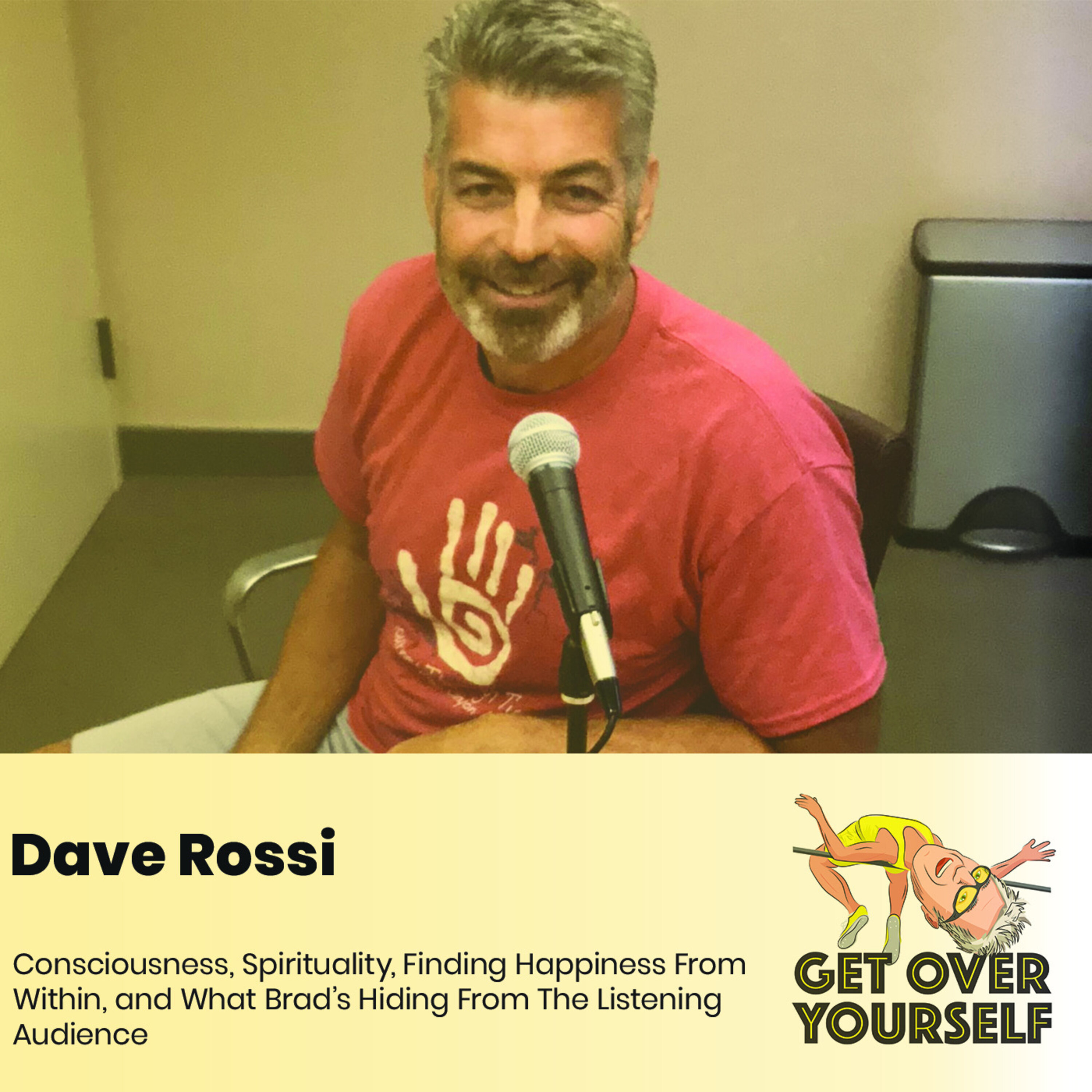
Dave Rossi: Consciousness, Spirituality, Finding Happiness From Within, and What Brad’s Hiding From The Listening Audience
We pick up the dialog after Dave’s interview of me where he asked me what the audience still doesn’t know about Brad Kearns. I stumbled to find an answer but as we continued talking I realized that I tend to be non-confrontational in life and on podcast interviews such that I might be giving my entire unfiltered opinion at all times. Dave makes a great argument that disagreement and respectful debate is healthy and necessary to have an authentic relationship.The show continues at a fast pace to Dave’s breakthrough insights presented in his popular book The Imperative Habit. You’ll learn the importance of accessing the space between stimulus and response to be able to control your response. You’ll learn about the complex interplay between biology and spirituality and the importance of healthy synchronization between them. Great example: jumping in the cold tub to obtain a positive spiritual experience, in the process overriding your biological aversion to experiencing cold water. Dave’s take on happiness is that you simply need to remove the things in life that don’t make you happy, and you will be left with a default state of being of happiness. Dave discusses how to break free from the harmful subconscious programming that I describe in detail on my breather show covering the insights in Dr. Bruce Lipton’s Biology of Belief. We talk about the evolutionary adaptations of the human and how we need to continue to seek opportunities for personal growth in comfortable modern life. Yes indeed, more wild times are enjoyed every time we connect with Dave Rossi for an interview. Grab his book The Imperative Habit on Amazon.TIMESTAMPS:Author of The Imperative Habit is back rethinking the notion that we should attach ourselves to the outcome rather than the journey itself. [01:51]Maybe it’s okay once in a while to get into contention or controversy. [05:11]Listeners are operating at their highest level of consciousness, understanding, and intelligence. [09:17]You can have healthy debates and not have conflict. [14:10]It’s not the event that makes you upset, it is your belief in them that does. [17:29]Depending on your upbringing your emotions will be different. You are programmed between the ages of zero and eight. [20:02]Everything you like has been programmed. [24:59]Happiness as an emotion and happiness as a state of being are two different things. [28:22]You have the power to make choices. When you feel hungry, it doesn’t necessarily mean you have to eat. [30:45]The brain will fool us into thinking something that's true when it, maybe it's not true. [32:23]If you follow the seven habits in Dave’s book, you are going to be able to create an inner stability and not sabotage yourself. [36:45]Gratitude is accepting what I have. [38:14]The more you break your biology, the more you’re going to create reverence for other lives. [41:19]If you let go of the things that make you unhappy, you will be left with happiness. [49:43]LINKS:Brad’s Shopping PageDave RossiThe Imperative HabitPodcast with Dave and BradThe Subtle Art of Not Giving a F**k. Everything is F****dBrad’s Cold TherapyFollow me on social media for more great content!Instagram: @bradkearns1Facebook: @bradkearnsjumphighTwitter: @bradleykearnsSponsorsCheck out each of these companies because they are absolutely awesome or they wouldn’t occupy this revered space. Seriously, Brad won’t sell out to anyone if he doesn’t love the product. Ask anyone.Almost Heaven Sauna: Affordable at-home sauna kits for the ultimate relaxation and hormonal boost on demandBrad’s Macadamia Masterpiece: Mind-blowing, life-changing nut butter blendCAR.O.L bike: Cardiovascular optimized logic stationary bike for a highly effective eight-minute workoutMale Optimization Formula with Organs (MOFO): Optimize testosterone naturally with 100% grassfed animal organ supplementPerfect Keto: The cleanest, purest, most potent ketone supplements and snacksLetsGetChecked: At-home medical testing with great prices, quick results, and no hasslesVuori Activewear: The most comfortable, functional, and fashionable gear, evoking the chill SoCal coastal lifestyleDonations!This free podcast offering is a team effort from Brad, Daniel, Siena, Gail, TJ, Vuk, RedCircle, our awesome guests, and our incredibly cool advertising partners. We are now poised and proud to double dip by both soliciting a donation and having you listen to ads! If you wanna cough up a few bucks to salute the show, we really appreciate it and will use the funds wisely for continued excellence. Go big (whatever that means to you…) and we’ll send you a free jar of Brad’s Macadamia Masterpiece as a thank you! Email to alert us! Choose to donate now, later, or never. Either way, we thank you for choosing from the first two options! :]Support this podcast at — https://redcircle.com/the-get-over-yourself-podcast/donationsAdvertising Inquiries: https://redcircle.com/brandsSee omnystudio.com/listener for privacy information.See omnystudio.
MOFO Mission #10: Don’t Be A Dick! (Breather Episode with Brad)
(Breather) Last but certainly not least, MOFO Mission assignment #10 is perhaps the most compelling of them all: quit being a dick to your partner! Romantic relationships have quite a big effect on hormone levels, and the stress your body experiences because of dysfunctions in your relationship will suppress testosterone, and this can truly make or break your MOFO manhood.The goal is to display emotional self-stability, vulnerability, and kindness, while refraining from behavior like whining, complaining, or indulging in angry outbursts. Remember to remain calm, cool, collected, and clear-thinking as you encounter the daily stresses of life. Assignments:Don’t speak if you have a negative emotional charge, advises John Gray. Learn how to manage your emotions, so you are able to embody what John refers to as the “calm, cool, collected Kung Fu master.” Getting bitchy and whining a lot is actually a sign of low testosterone/testosterone-deficiency.Make time for cave time! When you focus on problem-solving, engaging activities, this helps rebuild testosterone. You can work out, play any kind of game (even a video game!), or try your hand at a home improvement project - anything that gets you away from the situation and any potential arguments that will just make you feel worse and worse over time. Males are not inclined to talk things out incessantly, and instead, are better served when they go off by themselves and engage in testosterone boosting activities.Never argue, defend, or judge. Thank you The Imperative Habit author Dave Rossi for this one! This will just set your relationship down a downward spiral. Indulge your partner in “Venus Talks.” John Gray highlights the importance of letting your partner vent (sometimes for great lengths!) while you listen intently, without offering advice, solutions, or constructive criticism. Of course this can be tough, as males are naturally inclined to jump into problem-solving mode when hearing of any issues, but this is not what females need. They instead need to be listened to and validated, without interruption, regardless of how helpful you think you can be in the moment! Truthfully, the most helpful thing is just to listen. Remember, John Gray once said: “The most masculine thing a man can do is listen.”When you do experience a negative emotional charge, Swallow, Smile, and Suck It Up. Of course this doesn’t mean that you should just smile through everything in life and become a total doormat, but you will feel a lot better when you’re not being super emotionally reactive.TIMESTAMPS:The effect of your romantic relationship has on your testosterone level is profound. [01:30]If you have a negative emotional charge, don’t speak. Take some cave time. [03:51]Never argue, defend, or judge. [04:54]Indulge your partner. Listen intently without offering advice. [05:28]Men and women experience stress, love, and success in different ways through different filters. [07:26]Males have a short memory for conflict and resentment. [12:35]The females want you to solve problems, protect her, and keep her safe. Don’t talk. [15:28]Don’t argue, defend, or judge. [18:04]Indulge your partner in Venus talks. It’s going to take a shift in mindset. [20:25]So the female assignments are to never nitpick because even tiny complaints can add up to be a big problem for the male. [22:58]When the female expresses anger at you, she is touching your weakest spot. She is trying to see if she is safe. [26:31]Brad reviews all ten MOFO assignments. [27:46]LINKS:Brad’s Shopping PageDr. John Gray PodcastDave Rossi PodcastWendy Walsh PodcastThe Way of the Superior ManBrad’s Morning RoutineBrad’s Cold ExposureQUOTES:“One person shifting can cause their relationship to shift.”“Innate hormonal differences between testosterone-dominant males and estrogen-dominant females set us up for pain and suffering when we try to evolve behind our primitive genetic wiring and the dated archetypes of the male breadwinner and the female caretaker.”“Males have a short memory for conflict and resentment, and by simply going away, getting some cave time, and doing testosterone boosting activities, they return to the relationship refreshed and testosterone boosted.”“In modern life, the female’s main threat, that she needs protection from, is your own anger.”Follow me on social media for more great content!Instagram: @bradkearns1Facebook: @bradkearnsjumphighTwitter: @bradleykearnsSponsorsCheck out each of these companies because they are absolutely awesome or they wouldn’t occupy this revered space. Seriously, Brad won’t sell out to anyone if he doesn’t love the product. Ask anyone.Almost Heaven Sauna: Affordable at-home sauna kits for the ultimate relaxation and hormonal boost on demandBrad’s Macadamia Masterpiece: Mind-blowing, life-changing nut butter blendCAR.O.L bike: Cardiovascular optimized logic stationary bike for a highly effective eight-minute workoutMale Optimization Formula with Organs (MOFO): Optimize testosterone n
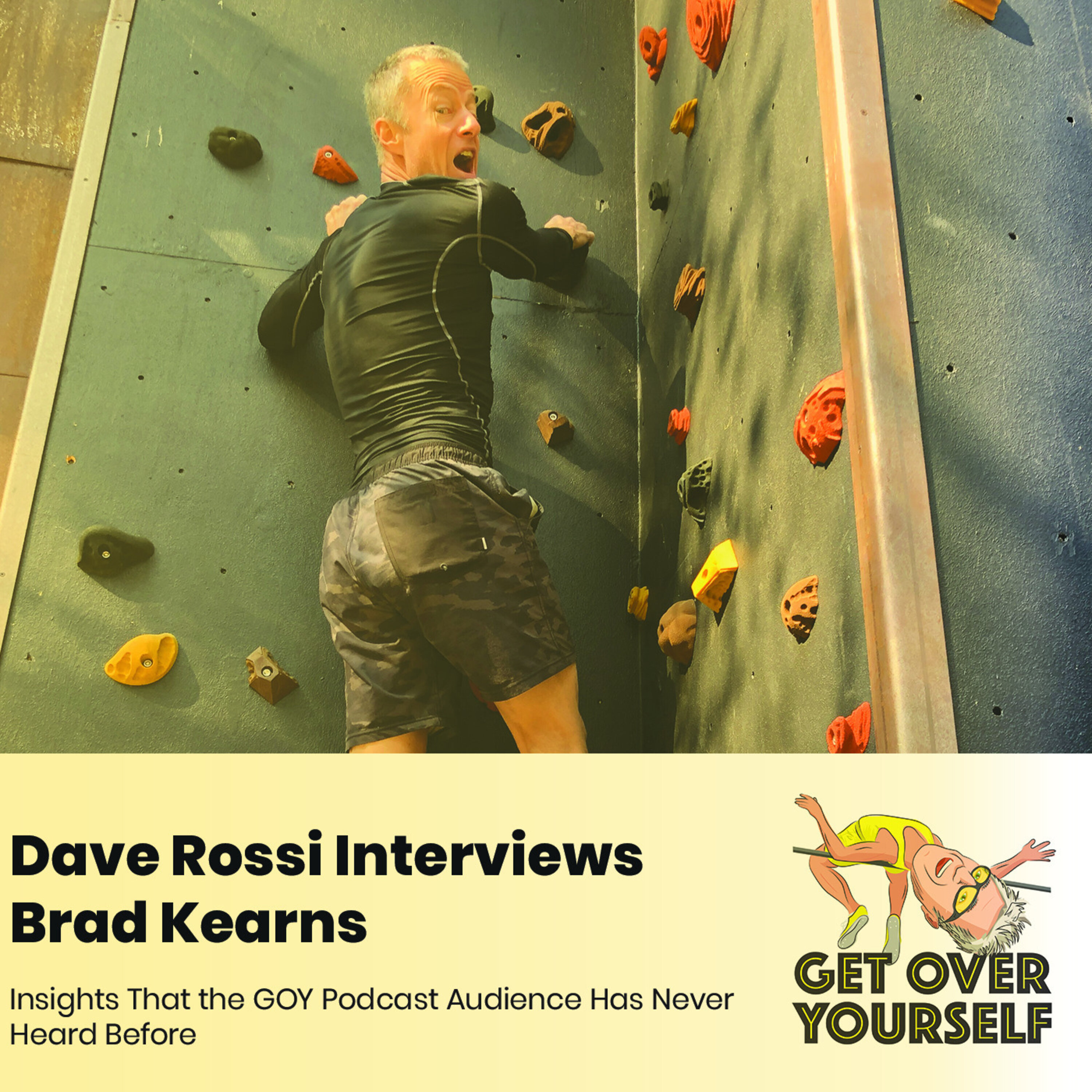
Dave Rossi Interviews Brad Kearns
The tables are turned as Dave Rossi puts me through the ringer with some probing questions that are a refreshing departure from the typical interview questions about one’s life’s work or position on assorted topics of professional expertise. Dave does a great job extracting insights that the podcast audience has never heard before. Here are some highlights from our conversation during this episode: I feel immense gratitude for growing up during the time that I did. The lack of access to the kind of technology kids have today turned out to be such a wonderful gift, because my friends and I were forced to entertain ourselves. There was no sitting back and watching a few episodes on Netflix or going on YouTube all night. We had to be creative and innovative and make our own fun, while kids today have such easy access to...well, everything. And that unfortunately makes them less curious and less inquisitive, which are two of the biggest indicators of intelligence. Dave asks: where does your drive come from? I share that I have learned that I need to be really diligent about making time for downtime. I’ve actually had to work against that go-go-go instinct, and give myself enough time for rest and relaxation.Part of my goal with this show is to open up the dialogue beyond the basics of what constitutes “healthy,” as in questions like, what kind of food is best, what workouts are best, etc., and more towards fundamental things that pertain to health and happiness. I’ve noticed that a lot of people who seem to be thriving in major areas of life, like with their career and health, are actually lacking in some other crucial areas (relationships, connection, personal life), perhaps because all that intense focus is only being utilized for material gain and external validation. Clearly, this is a sad reflection how our culture not only emphasizes success, but also seems to suggest that success = happiness. Dave asks a great question for us all: is your view of yourself as strong as your inner voice’s ability to restrain itself from sabotaging you? I share how I was able to get over myself at a pretty young age, after I rose to the highest heights I could ever dream of, then fell, then rose again, and what that experience taught me. Dave gets really personal, asking: what is a piece of you, that you haven’t shared yet? I admit to him that I try not to burden people with my problems and emotions, while also staying authentic to who I am and my story, and I talk a bit about how my relationship with my partner, Mia Moore, has changed my life.We wrap up with Dave asking me a very thought-provoking question: what advice would I give to an 18 year old Brad? The answer may surprise you…Thanks for listening, and stay tuned for my brand-new show with Dave coming next week!TIMESTAMPS:How did Get Over Yourself podcasts begin? [03:56]The easy access to information now makes us less curious and less inquisitive. [07:26]Where does Brad’s drive come from that keeps him from enjoying downtime? [10:46]Dave thinks Brad’s show has changed as Brad has changed. [14:14]Our culture has put a huge emphasis on go, go, go and do, do, do that it has gotten out of hand. [18:45]Dave asks what is Brad’s motivation about his podcasts? What is changing in Brad? [20:20]A person can struggle from success to crashing and back searching for their self-esteem. [24:31]It’s important to acknowledge your weaknesses and fight this battle every day. [28:20]It’s not up to me what actually happens so I want to do things that matter to me without the emotion of the outcome. (Dave) [35:26]Make the most of every single day because there is no guarantee of tomorrow anyway. [36:48]Parents: You can talk to your kids, if they are willing to listen and set an example but you can’t determine their destiny. [40:20]Is your view of yourself as strong as your inner voice’s ability to restrain itself from sabotaging you? [ 41:57]Brad doesn’t easily reveal his inner self as Dave probes him. [47:52]What advice would Brad give 18-year-old Brad? [53:15]You can keep things fresh and keep things going. [57:52]Everything we do is simply a pursuit of a hormonal experience. [59:29]LINKS:Brad’s Shopping PageThe Imperative HabitDave RossiPodcast with John GrayFollow me on social media for more great content!Instagram: @bradkearns1Facebook: @bradkearnsjumphighTwitter: @bradleykearnsSponsorsCheck out each of these companies because they are absolutely awesome or they wouldn’t occupy this revered space. Seriously, Brad won’t sell out to anyone if he doesn’t love the product. Ask anyone.Almost Heaven Sauna: Affordable at-home sauna kits for the ultimate relaxation and hormonal boost on demandBrad’s Macadamia Masterpiece: Mind-blowing, life-changing nut butter blendCAR.O.L bike: Cardiovascular optimized logic stationary bike for a highly effective eight-minute workoutMale Optimization Formula with Organs (MOFO): Optimize testosterone naturally with 100% grassfed animal organ supplementPerfec
MOFO Mission #9: Slow Down and Reclaim the Lost Art of Downtime (Breather Episode with Brad)
Learning how to really slow down and reclaim the lost art of down time is not just something you do for fun and enjoyment, but something that actually greatly affects the state of your health.Yes, taking time to socialize or to take an after-dinner stroll, making your easy workouts easier, and integrating temperature therapy and foam rolling are all effective activities to boostAssignments:1. Recovery-based training utilizes a different philosophy than ‘consistent’ miles or appearances at the gym. Use intuition and push when you are pumped, and back off when flat. Leave some juice in your tank at all times! Check out my show with Craig Marker to learn about HIIT vs HIRT and why going less hard = less cell destruction. Remember that muscle soreness is NOT a catalyst for growth. Protein synthesis goes to REPAIR instead of growth, so there is really no need to get sore.Take easier, easy days (like doing a positive deadlift on grass or some dynamic stretches). Increase daily movement as a form of recovery. JFW to increase blood circulation and lymphatic function.Introduce Rebound workouts. Validated by HRV to speed recovery, this includes: dynamic stretching, mobility/flexibility drills, foam rolling, and deep breathing exercises that boost blood circulation and oxygen delivery without stressing the body. 2. Brain down time from hyperconnectivityA meditation practice is ideal, or even exercising without a podcast or music!Set up a morning routine that you can stick to. 84% of people reach for the phone most mornings. Instead, walk the dog, gratitude journal, or do elaborate flexibility/mobility stretches or yoga.Set aside time for Deep Work periods where you disconnect. (Listen to my Breather show on Cal Newport). The brain gets more tired managing text and email all day! So focus, get it done, and flip the lid closed!3. Spend Time in NatureUniversity of Michigan professors, the Kaplans, promote their ‘attention restoration theory’ as a way of recovering from what they call “directed attention fatigue” of non-stop information bombardment of modern times promoting sympathetic dominance and eventually, crankiness and irritableness. Nature allows passive engagement of the senses (take it in), triggers a drop in cortisol, BP and HR. Neuroscience professor Michael Merzenich explains that, “Our attraction to the ocean may derive from its lack of physical markers…. Looking over a calm sea is akin to closing our eyes.” Kaplan’s call for engaging with nature fascination is that, the more grand and spectacular the setting, the greater the fascination. Think: Yosemite, Niagara falls, The Grand Canyon, sailing in the ocean, or simply swimming in Tahoe. Any kind of nature is great; even imagery has been to have effect. Invest in a mini fountain, or get a poster/change your screensaver to a nature based image you’re drawn to.4. NappingA 20 minute nap refreshes sodium and potassium pumps in your brain neurons, allowing you to go from literally feeling fried (because the electrical circuitry is depleted) to re-energized.I’m pro napper through training. I turn on App Rainmaker Pro and I’m gone. I find a quiet or sunny spot, disengage; it’s a ritual. Many say they ‘can’t nap’ but that’s likely because of the environment. Dr. David Dinges, a sleep expert at University of Pennsylvania Medical School whose laboratory studies how sleep affects neurobehavioral, cognitive, immune, inflammatory, endocrine, metabolic, and genetic function, estimates that 15-20 percent of the population are highly sensitive, calling them “closet nappers.” Dr. Sara Mednick, a Harvard-trained psychologist currently studying sleep at UC Riverside, and author of Take A Nap, Change Your Life, estimates that up to 50% of the population is genetically predisposed to napping. If you struggle with napping, go easy on yourself: to start, at first, just disengage, go quiet (even to your car or park bench) and rest your head (the key element of a proper nap), even if you don’t fall asleep.5. Frequent tech breaks. This is key as we are only capable of peak focus for a cognitive task for 20 minutes.Take a 1-2 min break every 20 minutes.5 minute movements every hour. I’ve been doing 30 push ups, 10 pullups, 20 and squats since Covid and am in the best shape ever!Do whatever you can to engage the brain differently. Maybe that’s wastebasket hoops, indoor putts, using an outside slackline, chipshot, or other micro-workouts.Take one major mid-day break.Wind down away from the screen in the evenings. 6. Mindfulness practices: consider taking formal classes to learn Tai chi, yoga, and meditation (you can also use apps). Write down lists of what you’re grateful for and appreciate in your life in a journal.7. Temperature therapy: Saunas promote instant relaxation while a cold plunge gives a rebound response. Contrast therapy is also awesome. Mark Sisson goes in the sauna for 10 minutes, then goes 5-7 in the cold, then 5 minutes in the spa. I go back and forth in the winter bet
Wade Lightheart: Bio-Optimization For Humans, Optimizing Digestion and Gut Health, and Applying The Lessons Of Extreme “Formula One” Performers To Everyday Life
Get ready for a high energy guy who’s had an amazing journey from a Mr. Universe dream that took shape as a teenager in the deep backwoods of New Brunswick, Canada, and came true all the way to his landing spot in the bodybuilding epicenter of Venice Beach, CA.Wade Lightheart pushed the limits of physical training, work ethic, and competitive intensity in the most extreme of sports and learned some hard lessons that helped shape a lengthy career in performance optimization and a health and nutrition supplement business with his company, Bio Optimization. After reaching the highest levels of international bodybuilding, Wade completed a contest and his body went to heck. He gained an astonishing 42 pounds in 11 weeks! This launched his quest to align fitness pursuits with health instead of compromise health. Wade realized that we pursue fitness goals for three reasons: aesthetics, performance and health; and that quite often, our pursuit of the first two severely compromises the final one. Long before the emerging topic of gut health became the hot issue of the day, Wade realized that his digestion was trashed, largely on account of chronically excessive protein intake combined with a bodybuilder style starvation diet that lasted too long. This free flowing show also touches on issues like performance-enhancing drugs in sports and how the increasingly sophisticated biohacking strategies of the day are closing the gap between a doped athlete and a clean athlete doing everything right. Wade proved this insight to be true when he returned to bodybuilding after a four-year layoff and performed better than his previous efforts as a less healthy human. You’ll also learn about the three issues that can be causing gut dysfunction and how to quickly home test for them.Learn more about Wade and his operation, including a free 12-week peak performance program at BioOptimizers.com and enjoy his Awesome Health Podcast, including a 2020 interview with me!TIMESTAMPS:Wade talks about how he got into bodybuilding and was inspired by Schwarzenegger’s advice: He said you can achieve anything you want with hard work, self-discipline, and a positive attitude. [05:28]After working for many years on his dream of becoming a champion bodybuilder, Wade was in Mr. Universe contest and immediately thereafter gained 42 pounds in 11 weeks. [09:27]He realized he had built his body from the outside in and he had to learn to build the body from the inside out. [10:59]Many of the bodybuilders eventually end up in some health crisis. [12:51]Wade has learned from his experience and has applied this to his biological optimization formula. [15:33]Athletes are fit, not necessarily healthy. We have sacrificed health in pursuit of performance. [18:03]After Wade was in the contest, what happened that caused his body to blow up? [20:22]The use of performance-enhancing technology is pervasive in the athletic community maybe going back 60 to 70 years. [25:15]When traveling to India for a contest, he connected with like-minded people and started the BiOptimizers development. [32:11]When you're in the midst of a highly engrossing competitive challenge and drugs are part of the game, it's easy to rationalize and join up with the pack to try to stay with the pack instead of get dropped. [34:21]How did Wade learn about the gut microbiome so long before what we know today? [38:47]A hundred million Americans on any given day are suffering from some sort of digestive distress that is either an over-the-counter or prescription medication for digestive related illnesses. [42:39]The USDA allows 50 different chemicals on organic produce and we don’t get to know about genetic modification in many places. [44:11]A person tries to eat healthy, selecting carefully, knowing that there are still problems. There are probiotics available in the stores. How do we know which ones are best? [45:53]A one-degree difference in temperature in a probiotic stream is going to cause a doubling of the activity of that probiotic. You need a prebiotic. [47:00]Wade and his partner have disparate dietary patterns. Is it important what genetic particulars are present when it comes to choosing the best diet? [50:01]Three areas where people run into digestive issues are lack of proper enzymes in the food, being low in hydrochloric acid, and microbiome imbalance. [55:28]Magnesium is the most common deficiency mineral in virtually everybody’s diet. [58:56]LINKS:Brad ‘s Shopping PageBiOptimizersWade LightheartDr. Edward HowellFollow me on social media for more great content!Instagram: @bradkearns1Facebook: @bradkearnsjumphighTwitter: @bradleykearnsSponsorsCheck out each of these companies because they are absolutely awesome or they wouldn’t occupy this revered space. Seriously, Brad won’t sell out to anyone if he doesn’t love the product. Ask anyone.Almost Heaven Sauna: Affordable at-home sauna kits for the ultimate relaxation and hormonal boost on demandBrad’s Macadamia Masterpiece: Mi
MOFO Mission #8: Protect Yourself (Breather Episode with Brad)
One of the consequences of high-tech, modern life is that for the first time in history, we are constantly battling the effects of exposure to estrogenic compounds. While this is an emerging field of scientific study, you may want to be on the safe side, as we are dealing with an assortment of environmental estrogens from a variety of different sources, and make moves to avoid and eliminate the following offenders: Eliminate all plastics touching your food or drink and avoid high estrogenic foods like soy, corn, flax. Use all-natural skin and personal care products, and eco-friendly home cleaners and laundry detergents.Monitor and limit sources of EMF, by doing things like turning Wifi off at night, using an ethernet cable instead, and staying far away from your cell phone. Otterbox phone cases are also helpful, as are grounding mats or sheets or shields.Combat indoor blue light by using things like bug bulbs, Tungsten soft lights, and anything on the yellow/red spectrum (like a salt lamp or candles).If you want to neutralize outgassing from toxic consumer products and stale indoor air, get a houseplant or two! Also, the HEPA filter/deionizer captures 99.9% of particles (outdoor fires, pet, dust, allergens, etc.). Avoiding Estrogens:Plastics: Implement zero tolerance for any plastic touching your food or drink. Nothing is worse than microwaving foods in plastic containers or drinking from disposable plastic water bottles that get heated in the sun. The result? Man cans and cancer. Use stainless steel or glass containers instead.Personal Care products: Be vigilant against chemicals that touch your body like skin care products, cosmetics, perfumes and colognes, and laundry detergent. Use eco-friendly products made without chemicals, such as Dr. Bronner’s castile soap. Almost all sunscreens are pretty offensive, with common ingredients like oxybenzone and octinoxate that are harmful for both your health and the environment. Look for something simple with zinc oxide and try to prioritize using clothing and hats. Remember to expose large skin surfaces, but that it’s ok to protect yourself.Household cleaning products: Antibacterial products are nasty, because they compromise immune function and can make you resistant to antibiotics when you need them for infections or surgeries. Mrs. Meyers Clean Day is a good natural brand with a diverse product line.Food: You shouldn’t be eating soy, corn, or flax anyway, but note that these foods have 100x more phytoestrogens than other plants. For more information, read Anthony Jay’s book Estrogeneration: How Estrogenics Are Making You Fat, Sick, and Infertile, and be sure to check out this great article from BioDynamic Wellness called Top 10 Estrogenics and Ways to Minimize Exposure. TIMESTAMPS:Number 8 of your MOFO mission is called to protect yourself. Eliminate all plastics touching your food or drink. [01:49]Look for eco-friendly skin products and home cleaning products. [02:32]Beware the dangers of the electromagnetic field. [03:11]Protect yourself from light exposure after dark. [07:21]A houseplant has been shown to neutralize the outgassing that comes from toxic consumer products and stale indoor air. [08:44]Getting a HEPA filter to clean your air. [09:14]The exposure to estrogens can throw off your natural healthy balance. [10:51]Drinking out of a plastic water bottle is very unhealthy for you. [12:02]Personal care products are now available in healthy options. [13:49]Household cleaners are another place to pay attention to the eco-friendly need. [15:59]Try to stay away from soy, corn, flax which have 100 times more phytoestrogens. [16:46]Stay away from grains and source grass-fed meat. [18:08]Brad talks about many chemicals that are sprayed on our food that are outlawed in Europe. [18:51]Read carefully the ingredients in your sunscreen. Avoid food that has been artificially colored red. [19:51]Parabens are found in cosmetics and disguised in the ingredient list name. [20:50]Birth controls pills contain harmful chemicals. [22:17]Brad lists nine ways to minimize estrogenic exposure. [23:27]A dry sauna is an excellent way to detox your body. [24:41]Other herbs and botanicals are recommended for detoxing. [25:57]Consider the water you are drinking. [27:24]It’s important to have pasture-raised meats and eggs. [29:27 LINKS:Brad’s Shopping PageOtterBoxPodcast with Brian HoyerPodcast with Tania TeschkeHEPA FilterEstrogeneration: How Estrogenics Are Making You Fat, Sick and InfertileWise Traditions PodcastBiodynamic WellnessDr. Anthony Jay PodcastAlmost Heaven SaunasBeet KvasseBig BerkeyHow to lower high estrogen levels naturallyTop 10 estrogenics and ways to minimize exposureFollow me on social media for more great content!Instagram: @bradkearns1Facebook: @bradkearnsjumphighTwitter: @bradleykearnsSponsorsCheck out each of these companies because they are absolutely awesome or they wouldn’t occupy this revered space. Seriously, Brad won’t sell out to anyone if he doesn’t lov
Dr. John Jaquish: Smashing Fitness Falsehoods, Getting Super Ripped Without Weights, And Pushing The Extremes Of Healthy Living
Get ready for a hard hitting, straight shooting, fearless free-thinking fitness leader that will blow your mind and challenge you to rethink many of the basic notions of fitness, diet, and healthy living.Dr. John is a longtime innovator and thought leader in the biomedical fitness scene, having invented the globally popular OsteoStrong training device to fight osteoporosis. His more recent fitness sensation is the X3Bar, which is revolutionizing the way people think about and perform strength training. His heavy resistance band with attached bar system allows you to work the range of motion with the highest power output (the end of the movement) with the highest resistance. This is the exact opposite of lifting a heavy bar, where you are constrained by the hardest part (e.g., lifting the bar off the floor) of the lift. You’ll hear Dr. John’s full explanation in the show, but essentially, you get a more challenging and complete workout in a much shorter time period.We also talk about Dr. John’s astonishing dietary strategy of eating just once every 48 hours, when he enjoys a full-bore carnivore feast. That’s right, Dr. John is maintaining his muscular, single digit body fat physique (6’0” and 240lbs) with a zero carb diet and a workout protocol of 10 minutes per day, 6 days a week! Yes indeed, this guy is off the beaten track by many miles and it’s incredibly refreshing to open your mind to greater possibilities, challenge bullshit conventional stupidity that’s been proven wrong over and over but we still blindly follow it, and listen to someone who is not afraid to speak his mind at every corner, and back up his seemingly crazy proclamations with extensive scientific research and knowledge base. “We are not meant to exert ourselves with that much intensity for very long,” Dr. John says, pointing out that while most people assume that a lack of motivation is the reason why people can’t go hard with a workout for more than ten minutes, it’s really a lack of glycogen! Meaning, it’s biological, not mental: if your body is screaming at you to stop, listen, and stop. Dr. John shares a story about how, during the last few sets of an hour-long workout he did, his ears started ringing. “I felt awful, so I thought: what is going on here?” Now, Dr. John is certain that this was his body sounding the alarm on what wasn’t working: “This was my body’s way of saying: no, we are not doing this anymore!” Finally, we wrap up with some great advice from his dad, a former NASA engineer: “Don’t think people are going down the right path. Look at the problem, and think of anything else that might address that problem than the way people are doing it, because there might be a better answer.”Enjoy this informative and surprising episode with Dr. John, and check out his new book, Weight Training Is A Waste Of Time.TIMESTAMPS:Brad’s guest today has made many innovations to the fitness culture. He calls out the BS in the fitness industry. [01:39]John makes some pretty strong statements regarding the information we have been given. Are calories important? He eats only one meal every 48 hours. [05:06]It has a lot to do with looking at what happens during fasting. [08:51]Some people, in an attempt to find a diet, try to find a solution that doesn’t require a change. [11:02]John compares the idea of the bears creating diabetes so they can hibernate with what the humans have dealt with. [14:10]Hydrating is another purpose of carbs. [18:59]You only need antioxidants if you are oxidizing. [21:28]What are oxalates? [22:31]John explains his 48-hour fasting theory. [25:22]The larger muscle becomes, the more blood it needs to function correctly. [28:21]The X Three Bar delivers results with weight changing as we move it. [33:00]What do we really want when we exercise? We want to change our bodies. [37:59]Why is this going to have less risk of muscle soreness and damage than doing sets with a heavy bar? [43:31]If you can fatigue the muscle without damaging the muscle, then all of the protein synthesis is appropriated for growth. [46:14]Sometimes the information that is published in exercise science is not accurate. [47:06]After the X Three, you need at least 36 hours to recover. [53:26]The Central Governor Theory defines the point in the middle of the race when your brain tells your body, “That’s enough.”[55:15]Using the X three, the injury risk is low. [59:49]The Osteostrong devices give the benefit of high impact without the risks. {01:00:03]LINKS:X Three BarOsteostrongDr. John JaquishWeight Lifting is a Waste of TimeCentral Governor TheoryQUOTES:“So many things are a gross misinterpretation of research.”Follow me on social media for more great content!Instagram: @bradkearns1Facebook: @bradkearnsjumphighTwitter: @bradleykearnsSponsorsCheck out each of these companies because they are absolutely awesome or they wouldn’t occupy this revered space. Seriously, Brad won’t sell out to anyone if he doesn’t love the product. Ask anyone.Almost Heaven Sa
MOFO Mission #7: Take Control (Breather Episode with Brad)
(Breather) The seventh step to becoming a badass MOFO is to work on overcoming non-stop digital stimulation and distraction, which can only be achieved by focusing, prioritizing, and powering down with unwavering discipline. It means implementing proactive daily rituals (like working out) before even glancing at a screen.This is especially important as looking at your phone/computer/email first thing in the morning activates the shallow, reactive, part of your brain. Talk about starting things off on the wrong foot! How can you expect yourself to be focused and productive when you’ve activated the reactive (and not proactive) part of your brain right after waking up? Answer: you can’t. So, why not at least try to resist the temptation? Instagram will still be there in a few hours, so do yourself a favor, and help yourself out by putting some time into creating (and incorporating) a few winning rituals (that will eventually become habitual) that you can do before you let yourself even look at a screen. Also check out previous shows, like Prevent Tech From Hijacking Your Mind, and the episode with productivity and marketing expert Seth Godin, for more tips on overcoming distraction and productivity. One of the most helpful pieces of advice Seth ever gave me about this subject was simple: “Turn that shit off and get the work done man!” Effective yes, but is this approach easy for everyone to implement? Maybe, but maybe not...what works for one person will not necessarily work as well for you, so in this show, I will outline some very valuable tips you can use to ensure you’re spending your time as efficiently and effectively as possible. Digital distraction is no joke, so here are some methods that will help you work around (and against!) the temptation to scroll down your screen all day long: Facilitate Deep Work. Schedule time for work (first thing in the morning works best for most people) and check out my show covering the book Deep Work for details. Different methods work for different folks, but I found having an accountability partner was a really effective strategy for me. Carve out an hour or two in the morning to just get it done - and then email your accountability partner afterward to say, “I F%^&*ING DID IT TODAY!” You can even email yourself, it’s just the act of having some form of accountability that is most useful. Become Aware of the Cost of Distractibility. How much time do you think distractibility really costs you in a day? I bet we all underestimate how much time we lose when we take that “one-minute break” that turns into an hour. Take some inspiration from Jim Collins, who tracks all of his time on a spreadsheet, as this will provide you with an actual number of how much time it costs you in a day when you lose focus. Being able to quantify how much time you spend working and not working is a great motivator for getting things done and cutting out distractions. Be OK With Being Annoying. Do not allow yourself to feel guilty about not being immediately responsive to people or saying “no” to a lot of things. You may think it’s only going to take you 5 seconds to respond to that text message, but it’s really just opening a can of worms. Put your phone in the other room if you have to, just do whatever you can to make your phone (and whatever else distracts you) not easily accessible. Devote Time to Shut Down Time. Easier said than done, but, it still has got to be done. Do your best to remove any obstacles and temptations from the environment you’re working in. Similar to the ‘put your phone in another room’ method, I’ll sometimes go somewhere where I know there is no Wifi to ensure I won’t get distracted. Don’t Waste Time Waiting For Inspiration. Otherwise, you’ll be waiting a long time. So don’t focus on it, don’t sit around waiting for it to magically materialize. Instead, set yourself up with a morning routine you can actually stick to, and go! Don’t wait for inspiration, just get up in the morning and do not let yourself look at your phone/email/social media until you have gotten a substantial amount of work done. No excuses, no waiting for that serendipitous moment when the light bulb goes off - like Seth said, turn it off, and get the work done!Lastly, really make an effort to save your screen time for the daytime….otherwise, the nighttime blue light exposure will most likely keep you awake all night, leaving you exhausted and trashed for the next day. If you want to be truly focused, you have to make sure your body is functioning well, which is why MOFO Mission #7 is to take control. TIMESTAMPS:MOFO Mission no. 7 is Take Control. [01:23]We must acknowledge the addictive properties of the dopamine hit we get with the ding of our phone. [02:26]One tip from the Deep Work book is to make a solemn vow not to open your messages for the first 90 minutes in a day. [05:05]It is good to have someone you are accountable to who will keep you on track. [05:42]Tracking your creativity time r
Dr. Casey Means: Attacking The Root Cause of Disease With Self-Quantification And Behavior Change
Dr. Casey is a Stanford-trained head and neck surgeon who ditched a promising medical career to plunge into the world of functional medicine and healing disease by attacking the root cause of inflammation. You will love the story of her amazing journey of blending insights from genetic science to observe the shortcomings of western medicine as sick care rather than health care. Dr. Casey describes our current model as “reactionary medicine,” where we play “whack the mole” by attacking the symptoms of various diseases with drugs and surgery. Casey describes the frustration of seeing many patients returning for the same invasive procedures that were caused by lifestyle-driven inflammation. After leaving surgery and getting additional training in functional medicine, Dr. Casey presents a unique, hands-on approach to patient care focused on optimizing lifestyle behaviors that will promote health and prevent disease. The centerpiece is the emerging technology of Continuous Glucose Monitoring (CGM) that she offers to clients as a co-founder of LevelsHealth.com operation. In this show, you’ll learn why metabolic dysfunction is perhaps the most distressing disease condition of modern times. This is represented mainly by an inability to regulate glucose or burn fat efficiently. You’ll be inspired to take personal responsibility for your health, especially through the use of a now-affordable and accessible CGM device, and learn the importance of tight glucose regulation to feel and look your best. TIMESTAMPS:Brad interviews a surgeon who discovered most of her patients needed to improve their lifestyle rather than be under the knife. [01:43]Environmental factors change the expression of our biological blueprint. [05:20]Newer medical ideas expand from “here are these symptoms; here is the treatment.” [07:59]The majority of the diseases that are plaguing our country are diseases that are chronic illnesses based in lifestyle and dietary decisions. [10:23]As an ENT surgeon, Dr. Means realized that most of the cases were inflammatory in nature. [12:41]Is there a profit motive involved in the medical profession that keeps the “Whack-a-Mole” system going? [16:52]Research suggests that those more dietary and lifestyle interventions and healthy maintenance are the highest value. [21:07]The insurance companies share the risk across a large population, some of which will be very ill and some very healthy. [23:35]Symptoms arise from biologic dysfunction. Functional Medicine looks at all the variable functions. [25:24]Every day we make hundreds, if not thousands of small decisions that affect our biological reality. Even how we respond to a stressful email, translates through our hormones to affect our cellular biology. [28:43]There is emerging technology of continuous glucose monitoring which is a powerful behavior modifier. [30:14]The fluctuations in glucose levels may be potentially more harmful than sustained high glucose levels alone. [34:53]Metabolic dysfunction is the root of infertility, erectile dysfunction, anxiety and depression. [37:19]Could one deliver a normal fasting glucose but still be getting into trouble with poor glucose variability? [39:01]What kind of particulars might influence our varied response to white rice? [45:07]After a sprint workout where the glycogen is depleted, what happens when I have an ice cream treat? [48:52] Is the afternoon slump always associated with a blood glucose drop? Is it manageable? [50:46] If two people eat the exact same number of calories per day, the exact same food, but they eat them at different times of the day, they will have a totally different metabolic outcome. [54:44]In our culture, we are eating 150 pounds of refined sugar on average per person per year. [01:03:17]Realize that when you are getting in stressful situations like traffic or at the workplace, you are spiking your glucose just like going down the street to get a Hostess Pie [01:05:16]LINKS:Brad’s Shopping PageDr. Casey MeansLevels HealthDr. Casey’s KitchenFollow me on social media for more great content!Instagram: @bradkearns1Facebook: @bradkearnsjumphighTwitter: @bradleykearnsSponsorsCheck out each of these companies because they are absolutely awesome or they wouldn’t occupy this revered space. Seriously, Brad won’t sell out to anyone if he doesn’t love the product. Ask anyone.Almost Heaven Sauna: Affordable at-home sauna kits for the ultimate relaxation and hormonal boost on demandBrad’s Macadamia Masterpiece: Mind-blowing, life-changing nut butter blendCAR.O.L bike: Cardiovascular optimized logic stationary bike for a highly effective eight-minute workoutMale Optimization Formula with Organs (MOFO): Optimize testosterone naturally with 100% grassfed animal organ supplementPerfect Keto: The cleanest, purest, most potent ketone supplements and snacksLetsGetChecked: At-home medical testing with great prices, quick results, and no hasslesVuori Activewear: The most comfortable, functional, and fashionable ge
MOFO Mission #6: Hit It Hard! ( Breather Episode with Brad)
Challenging your body through a combination of brief, intense, strength training sessions and all-out sprints is this week’s next MOFO Mission assignment, as it will prompt a spike of testosterone and human growth hormone in your bloodstream, which leads to many wonderful adaptive, anti-aging benefits. Another great addition to your exercise regimen are micro workouts: these brief bursts of explosive efforts really add up over time. Here are a few key points you’ll want to remember from this episode:HIIT vs HIRT. Check out Dr. Craig Marker’s article, HIIT vs HIRT, (High Intensity Interval Training vs High Intensity Repeat Training). HIIT workouts don’t include sufficient rest, which is why you feel completely depleted after a HIIT workout. The duration of a HIRT workout is much shorter than you might think: just 10-20 seconds, as this delivers maximum fitness stimulation and minimizes cellular breakdown as described by Dr. Craig Marker (check out my show, Peak Performance Without Suffering, for more details). Try using an X3Bar. I’ve been loving this addition to my workout regimen as it enables a very short workout that is extremely strenuous and recruits a lot of muscle fibers. Whatever strength training you like to do, remember the key is to make sure your workout doesn’t last that long (30 minutes is plenty, even 12 minutes is fine). Check out their site here.Keep it short and sweet. You don’t need to put in hours and hours of work, as a few minutes of explosive effort produces dramatic fitness benefits, especially when it comes to weight-bearing sprinting (and it’s ok if this is something you need to work towards). A proper sprint workout includes a gradual warm up (cardio like jogging, jog-walking, whatever breaks a light sweat and gets your heart rate up), dynamic stretching, technique drills, and the sprints that last 10-20 seconds, with a luxurious rest interval that is 6 times as long as the sprint. Each time you step back to the line, you should feel fully refreshed and energized so you can deliver another peak performance effort. When you notice a breakdown in form or muscle tightness, then you know it’s time to wrap it up and you’ve done a good job: remember that you shouldn’t get sore during strength training sessions. Start doing micro workouts. Micro workouts are a great way of breaking up prolonged periods of stillness while delivering fantastic fitness benefits that really add up over time. To wrap it up: keep hitting it hard with full-body, functional, strength-training exercises, brief, explosive, all-out sprints that include plenty of rest, and micro workouts sprinkled in throughout the day to complete MOFO Mission #6!TIMESTAMPS:MOFO Mission number 6 is Hit It Hard: challenge your body. Brief explosive efforts really add up. [01:33]Brad reviews the previous MOFO assignments noting that there are many well-intentioned people thinking they are doing the best for themselves, who are maybe not. [02:20]Many people really overdo the intensity on a routine basis that leads to injury and breakdown. [04:18]The HIIt Workout (High Intensity Interval Training) can have negative impact without sufficient rest. [06:27]What’s happening inside your body during one of these kick ass workouts is you are not resting. [08:50]We want like a five or six to one ratio of work effort to rest period. [10:40]Weight bearing exercises, when done properly can have truly amazing results. Thirty minutes is plenty. [14:08]When you can work up to weight bearing sprinting, that’s when you have the maximum signaling for fat reduction. [17:24] A very short duration workout will have profound metabolic effects lasting for up to 72 hours after the workout. [19:50]It’s time to leave behind the no pain-no gain notion that has permeated the fitness industry for decades. [22:39] When talking about no or low impact, you can push to higher duration or 10 to 20 seconds. [24:53]Miniature workouts can be done throughout your day with little or no impact on your precious time. [25:46] Keep your fitness contraptions where you can see them and they can remind you to use them. [28:27] LINKS:Brad’s Shopping PageHIIT vs. HIRTX3 BarBrad Kearns Dynamic StretchingDr. Craig MarkerDr. Phil MaffetoneJoe Rogan-Firas ZahabiFollow me on social media for more great content!Instagram: @bradkearns1Facebook: @bradkearnsjumphighTwitter: @bradleykearnsSponsorsCheck out each of these companies because they are absolutely awesome or they wouldn’t occupy this revered space. Seriously, Brad won’t sell out to anyone if he doesn’t love the product. Ask anyone.Almost Heaven Sauna: Affordable at-home sauna kits for the ultimate relaxation and hormonal boost on demandBrad’s Macadamia Masterpiece: Mind-blowing, life-changing nut butter blendCAR.O.L bike: Cardiovascular optimized logic stationary bike for a highly effective eight-minute workoutMale Optimization Formula with Organs (MOFO): Optimize testosterone naturally with 100% grassfed animal organ supplementPerf
John Assaraf: “Innercise” - Unlocking The Power Of Your ‘Trillion Dollar Brain’ With Easy Habit Formation And “Doing A Little Anyway, Even If You Don’t Feel Like It”
Get ready for a powerhouse show with New York Times bestselling author and renowned behavioral and mindset expert John Assaraf! This guy brings his A-game for an hour of power that has the potential to change your life--if you are ready to receive the message that is. “I’m not in the convincing game,” John explains, but he is an internationally recognized brain expert, educator, and 1-on-1 peak performance coach. In this highly energized and motivating show, John covers the content of his new book Innercise: The New Science to Unlock Your Brain’s Hidden Power. You may have seen John on other big time shows like Larry King Live, The Ellen DeGeneres Show, Tim Bilyeu, and Anderson Cooper 360, and you are in for a real treat with this episode. John discusses all aspects of performing at your peak in all areas of life (not just narrow objectives like making money), and how to discard bad habits quickly with “tiny actions” that are not intimidating. This way, you can always, “Do a little anyway, even if you don’t feel like it,” according to John. By doing so, you actually rewire your neural circuits so that your desired behaviors become easy, breezy habits. You become not just a person who is good at setting goals (ahem, raise your hand if you’re in that group) but someone who is good at taking focused action over and over in pursuit of those goals.John comes to you with authenticity and experience, for he has experienced numerous “failures” in life - divorce, poor health habits, and losing and gaining fortunes in business. You will learn about your “Frankenstein brain” and your “Einstein brain” and how to harmoniously integrate the two. John offers some memorable parenting insights about leading by example but not meddling or trying to orchestrate your kid’s path. You’ll learn just a couple “Innercise Habits” provided in the book that can change your life: taking six deep breaths to “calm the circuits.” When you are in a relaxed, wise-minded state, you can then engage “AIA”: Awareness, Intention and Action. If you saw the blockbuster movie, The Secret, you’ll recall John’s astonishing real life vision board story that made it all the way to the big screen. Listen to the end of the show and John will recount the most unlikely story of manifestation come to life that you will ever hear.Enjoy this special conversation with John, and be sure to check out his website and his book, Innercise.TIMESTAMPS:Brad gives a tip right off from his guest: When you are under stress and having a difficult time, take six slow deep diaphragmatic breaths. [03:43]It might be better to broaden your fitness ambitions rather than focus on one thing. [06:39]John talks about how he studies himself around fears, self-image, limiting beliefs, and behavior. [08:16]To have the chance of becoming wealthy, you have to take risks. [10:33]When trying to make changes in our life and don’t like the result, look to see what caused that result. Don’t see it as a failure. [15:40]John separates the two parts of the brain into the Frankenstein brain and the Einstein brain. [16:53]In the book, Innercise, John gives you the actual mental and emotional techniques to integrate those parts of your brain. Here he gives an example how. [20:21]By doing the suggested breathing “Innercise,” you can literally change the cellular makeup in your body. [24:29]In order to program the neural pattern in our brain, it will take from 100 to 365 days for it to become default mode. You teach yourself to override your natural propensity to want to stay in your comfort zone. [26:35]We were taught the process to set goals but we weren’t taught a process to actually make those goals achievable for us. [29:58]There is much distractibility in our environment so we need to deliberately and consciously evolve ourselves so that these distractions don’t control us. [30:60] John used to be 234 pounds and 33% body fat. How did he evolve his way to better fitness? [34:53]If you can’t afford a personal trainer, there are many ways to set up accountability. [41:53]Do we have to have a dire warning from a doctor before we turn things around? [43:55]How does a person leverage all the aspects they want to achieve? [47:47]The problem is making the commitment to the outcome you want. How can you get out the message? [51:09]How does John work with clients? [57:57] Do Visions Boards play an important role in goal setting? [01:00:03]LINKS:Brad’s Shopping PageJohn AssarafInnerciseJim RohnMy Neuro GymBrain-a-thonQUOTES:“Nothing will change until you change.”“Make a commitment to the outcome you want, then follow the ‘how’ that already exists.”“You have to ask yourself: where am I heading, how fast am I going there, and is the destination acceptable to me? If the answer is yes, good - pick up speed, and go faster. But if the answer is no way!, stop. And ask yourself: what has to happen, in order for me to turn around, get on a different train, and go in a different direction? What has to happen in my
MOFO Mission #5: Move Frequently (Breather Episode with Brad)
Isn’t it a relief to know that recent research suggests that increasing all forms of general everyday movement is more beneficial for your health than adhering to a devoted workout regimen? This means that instead of sweating it out at the gym doing the same old, super repetitive routine, you get to enjoy doing a nice variety of movements throughout your day and week, which is not only way less boring, but also way more effective! That’s why MOFO Mission #5 is Move Frequently: because getting in that general everyday movement will make a huge difference in your health.What exactly does general everyday movement entail? More frequent walking, (dynamic) stretching, and incorporating micro-workouts into your day, as well as devoting time to movement based practices like Yoga, Pilates, and Tai-Chi, and calisthenics and flexibility/mobility drills. In this show, I’m breaking down why it is that frequent movement has such an effect on our physiology. Some key points:The compensation theory of exercise/ total energy expenditure theory: A workout regimen makes minimal to zero contribution towards fat reduction goals, because strenuous workouts stimulate your appetite, making you consume more calories and also (consciously and subconsciously) seet out ways to be lazier/less active for the rest of the day.Sitting is the new smoking. Sitting for as little as 20 minutes delivers a measurable reduction in glucose tolerance and an increase in glucose resistance, plus a decrease in cognitive performance. Active couch potato syndrome is very real: just because you’re fit, it doesn’t automatically mean you’re healthy. If you’re not moving frequently, but putting in one hour daily for exercise, you’re not moving enough. This is where the general everyday movement comes in; make time at least for walking, and make strategic choices in your everyday life: park further away from your destination, take the stairs instead of the elevator, etc. A dynamic workplace is the goal. Whatever your situation is, try to make it work. If you don’t have room to do some lunges or squats in your office, just go in the stairwell or hallway if you can, because it’s super important that you create a habit of breaking up the workday to practice some form of movement.TIMESTAMPS:MOFO assignment no. 5 is to move frequently. Recent research in health fitness exercise physiology is suggesting that just increasing all forms of general everyday movement may be more important than a devoted exerciser regimen. [01:43]Total energy expenditure theory is when your body’s metabolic function slows as a reaction to the calories you burn during exercise. [04:15]Sitting is the new smoking. Prolonged periods of inactivity are risk factors for many different diseases. [07:22]It’s important to do some critical thinking regarding what is the best movement formula for you. Your body is designed to move. [10:32]Sitting still for as little as 20 minutes will deliver a measurable reduction in glucose tolerance and an increase in insulin resistance. [12:60]Fidgeting and foam rolling are good things to do on your movement break. [16:36]Brad describes many mini workouts to do throughout the day that are very beneficial. [19:49]A dynamic workplace is a goal whatever your work situation is. [26:00]The fourth pillar of moving frequently is a structured low-level cardiovascular exercise. [29:18]Sticking to the MAF heart rate function, will produce all manner of benefits that can last up to 72 hours. [31:31]A post dinner stroll is high up on the list. Try flexibility drills, get your workplace fit, and don’t forget the cardio. [34:58]LINKS:Brad’s Shopping PageActive Couch Potato SyndromeJoel JamiesonDr. Herman PontzerAndre ObradovicKaty BowmanBrad Kearns Morning RoutineBrad Kearns Dynamic StretchingBrad Kearns Running TechniqueDr. Peter WayneStephen RaderEight Steps to a Pain Free BackHadza PeopleGokhale InstitutePrimal EnduranceDr. Phil MaffetoneFollow me on social media for more great content!Instagram: @bradkearns1Facebook: @bradkearnsjumphighTwitter: @bradleykearnsSponsorsCheck out each of these companies because they are absolutely awesome or they wouldn’t occupy this revered space. Seriously, Brad won’t sell out to anyone if he doesn’t love the product. Ask anyone.Almost Heaven Sauna: Affordable at-home sauna kits for the ultimate relaxation and hormonal boost on demandBrad’s Macadamia Masterpiece: Mind-blowing, life-changing nut butter blendCAR.O.L bike: Cardiovascular optimized logic stationary bike for a highly effective eight-minute workoutMale Optimization Formula with Organs (MOFO): Optimize testosterone naturally with 100% grassfed animal organ supplementPerfect Keto: The cleanest, purest, most potent ketone supplements and snacksLetsGetChecked: At-home medical testing with great prices, quick results, and no hasslesVuori Activewear: The most comfortable, functional, and fashionable gear, evoking the chill SoCal coastal lifestyleDonations!This free podcast offering i
Anna Pinkerton: Overcoming “Inner Brutality” Through Self-Awareness and Curiosity Without Judgement
Anna Pinkerton is a psychotherapist based in the UK who specializes in helping individuals and corporate groups overcome trauma, burnout and breakdown. This show starts out talking about the stresses of the traditional corporate workplace and how bad energy and dysfunctional communication can spread through an organization much like the pandemic virus. As we discuss how business leaders and executives can heal from trauma and improve corporate culture, Anna explains that these techniques and strategies are applicable to every other source of stress and trauma we face in life, especially healing from our own flawed subconscious programming. This is where the show gets deep and meaningful for all of us, even if you aren’t dealing with workplace dysfunction. Anna drops the brilliant insight that before we can achieve any form of life transformation, we must first increase self-awareness and “train oneself to be curious without judgement.” It occurs to me that this is incredibly relevant to the pursuit of diet and fitness goals. We are so used to getting bombarded with information, advice, and rigid programming but we fail to recognize our blind spots that lead us to repeat the same flawed patterns that leave us frustrated, confused and falling short of our goals. You will love many fresh insights and cool new vocabulary terms from Anna, such as the dreaded “inner brutality” - the negative self-talk and self-judgement that is so common that it’s become a normal and customary part of culture. You know, those seemingly trivial comments like, “I’m so stupid I lost my car keys,” all the way over to the deep-seated subconscious beliefs that you’re not good enough, you don’t deserve to be happy or successful, and so forth. Anna reports that 93% of her patients over the course of her 25 year practice have engaged in inner brutality. Learn more at annapinkerton.com and take the 60-second quiz about burnout at AnnaPinkerton.comTIMESTAMPS:Brad’s guest talks about negative self-destructive thoughts. [01:37]Look for reasons, rather than blame. [02:51]There is a crisis of people feeling fried from working at home. [05:25] Is this crisis a case of time management? [08:03]These stressful dynamics might very well predate the pandemic. [10:46]The counselor can evaluate the level of stress by noticing trauma beneath the skin or see how the muscles are held. [12:06]The careful and tactful conversations with corporate leaders are when you can help them separate themselves as people away from the problem. [15:35]The best way to deal with the stress in the workplace is to own your part of it. [19:49]Has the hyperconnectivity and the boundaries of the workplace been broken down by technology? [24:10]Sometime it is difficult to realize that certain triggers affect the dynamics of your life. [27:43]The personal health and self-care piece is big, when you are dealing with stress in the workplace. [30:45] You can’t deal with self-care concerns if you aren’t self-aware. [33:12]It is almost normal in our society that people are cruel to themselves. [35:04]Sometimes a person is not really an asshole, they are acting like one because they need something from you. [36:49]It is said that 90 percent of our thoughts about ourselves in a day are negative. [38:47]We need to learn not to waste time with Inner Brutality. Why waste time in interaction that doesn’t serve me well? [41:08]How does one begin this process of rewiring? [43:18]We tend to give ourselves over to something outside of us in an attempt to feel valuable. [47:24]We don’t realize the impact on our life when we demean ourselves and talk in a derogatory manner towards ourselves. [50:01]What can the listeners do to train their brains to change from Inner Brutality to compatibility compassion? [53:56]LINKS:Brad’s Shopping PageBiology of BeliefAnna PinkertonFollow me on social media for more great content!Instagram: @bradkearns1Facebook: @bradkearnsjumphighTwitter: @bradleykearnsSponsorsCheck out each of these companies because they are absolutely awesome or they wouldn’t occupy this revered space. Seriously, Brad won’t sell out to anyone if he doesn’t love the product. Ask anyone.Almost Heaven Sauna: Affordable at-home sauna kits for the ultimate relaxation and hormonal boost on demandBrad’s Macadamia Masterpiece: Mind-blowing, life-changing nut butter blendCAR.O.L bike: Cardiovascular optimized logic stationary bike for a highly effective eight-minute workoutMale Optimization Formula with Organs (MOFO): Optimize testosterone naturally with 100% grassfed animal organ supplementPerfect Keto: The cleanest, purest, most potent ketone supplements and snacksLetsGetChecked: At-home medical testing with great prices, quick results, and no hasslesVuori Activewear: The most comfortable, functional, and fashionable gear, evoking the chill SoCal coastal lifestyleDonations!This free podcast offering is a team effort from Brad, Daniel, Siena, Gail, TJ, Vuk, RedCircle, our awesome guests, and our in
MOFO Mission #4: Pound the MOFO! (Breather Episode with Brad)
Even the most health conscious people can benefit from a boost in health in the form of a supplement, and find they feel noticeably better once they’ve found a product that really works for their needs. In this episode, I’m breaking down exactly what makes MOFO such a powerful and effective supplement, and explaining why it’s so good at re-energizing you and replenishing depleted cellular energy levels. If you missed the first three missions of the MOFO Assignment, check them out here (#1, #2, and #3) and don’t forget to download your complimentary copy of Becoming A Modern Day MOFO ebook (here).Made from 100% organic, freeze-dried organs from animals raised naturally in New Zealand, MOFO is not just a regular supplement, but in fact, a food supplement designed to optimize male hormone function. While testosterone-boosting drugs will override your body’s internal mechanisms in order to alter hormone levels, the protein, peptides, enzymes, cofactors and molecular bio-directors present in MOFO boost your internal testosterone production in a natural way. It’s as simple and scientific as “like supports like,” but still, many can be skeptical of the idea that consuming animal organs is good for you, as the idea of utilizing the whole animal has never really been a huge part of American culinary culture.That’s why looking into another culture’s cuisine and culinary history is so enriching and enlightening. There is so much to learn and appreciate there. My in-laws make fantastic menudo, a traditional Mexican soup made from tripe and veal bones, and French cuisine is also a great place to look for recipe inspiration as they really use all parts of the animal. Listen to my show with Bordeaux Kitchen author Tania Teschke for more information about ancestral cooking, and check out her book here if you want some really great recipes.But while you may be open to getting adventurous one Friday night and sautéeing some lamb brains in a fancy reduced wine sauce, I don’t know if anyone is that eager to fry up a few testicles or prostate. But these are important organs to consume, especially considering there are some very alarming statistics about male hormone health as we age: for example, did you know that 80% of men over 80 get prostate cancer? This is why utilizing a food supplement like MOFO is so effective - it gets to the root of the issue. Prostate health is best supported by consuming a healthy animal’s prostate, if you have cardiovascular issues, take heart supplements….this applies to each corresponding organ. Take one of the major components of MOFO, heart. Heart is naturally of the richest sources of naturally occuring coenzyme Q10, which supports healthy cardiovascular function, arterial health, and blood pressure, and is also a nutritional and antioxidant powerhouse that boosts mitochondria function. If your mitochondria aren’t functioning well, that leads to not burning fat well, which makes basically every other function in the body more difficult since your body is now not able to process energy cleanly. MOFO, however, will help your body become a clean energy burning machine, thanks to the quality of the ingredients it contains. Liver, another main ingredient in MOFO, is arguably the #1 most nutrient dense food on the planet, and detoxifies (not stores, contrary to popular belief) toxins. Finding a source for grass-fed liver is an integral part of this assignment, as it is one of the most powerful superfoods you can include in your diet. I have been eating frozen raw slices of liver, and there are also many other ways to enjoy it (chicken liver pâté is really affordable and easy to make), but if that’s not your thing, start taking a grass-fed liver supplement, because if it’s not a part of your diet, then you are most likely deficient in Vitamin A.Commit to sticking with this food supplement for 90 days, and see how different you feel. If you want to share your experience with MOFO, please send an email here. TIMESTAMPS:Brad reminds you of the previous mission assignments. [01:24]This MOFO formula is designed to naturally boost your internal testosterone production rather than override the internal mechanisms. [03:34]Organ meats are the most nutrient dense, but overlooked and disrespected element in the modern Western diet. [06:01]Dr. Cate Shanahan’s Four Pillars of Human Nutrition are: fresh foods, meat on the bone, organ meat, and fermented foods like pickles, yogurt, and sauerkraut. [10:09]Try MOFO supplements to allow yourselves to fully replenish and rejuvenate and feel that energy return. [12:46]The Earth’s soil is gradually being depleted so good farming in the future could be scarce. [13:50]Brad talks about the component ingredients inside the product. Testicle, prostate, and heart have many benefits especially for males. [16:15]You need healthy mitochondria to burn the clean burning fuel of fat and ketones and minimize the effects of free radical production that occurs when you are burning dirt
Scott Carney, Author Of The Wedge. Discovering The Space Between Stimulus And Response To Become A More Resilient Human
“Life is all about stress and choices,” says investigative journalist and anthropologist Scott Carney. He discovers how humans can wedge control over automatic physiological responses into the breaking point between stress and biology, so we can reclaim our evolutionary destiny.Today, he’s back on the show to discuss his new book, The Wedge (listen to his first episode here). In his New York Times bestseller, What Doesn’t Kill Us, Carney submerged himself in ice water and learned breathing techniques from daredevil fitness guru Wim Hof. Not only did it give him superhuman levels of endurance, but it quieted a persistent autoimmune illness. At the core of those methods is a technique, called The Wedge, that can give a person an edge in just about any situation. Wedge is a choice that separates stimulus from response, and this applies to anything. In this show, Carney shares the story of the time he climbed Mount Kilimanjaro, shirtless (and in 30 hours!), and then we get into some interesting scientific observations as he explains how you can get access to a whole other part of your biology. He also explores our obsession with food, our overabundance of food, and how it’s destroyed the original purpose of taste, which is to lead us to nutrition and survival. We also touch on the importance of being “open to anything,” and how the lessons that came from his incredible endeavors, as crazy and impossible to accomplish as they sound, can be applied to everyday life, and the importance of pushing the limits and rediscovering our humanity. It’s all really just about developing emotional and sensory resilience. These are the building blocks of human experience. And the coolest thing is Carney is an ordinary guy, not a biohacker or super athlete or guru, and he puts in a plug for chilling and watching Netflix, and to NOT look to gurus, but to instead find your own way. However, he also realizes the importance of pairing the luxuries and comforts of modern life with pushing the limits.“We evolved with a sensory system,” Carney points out. We feel, we think, we sense things. But why do we even have sensations in the first place? Because all the external sensory input we experience is delivering a choice to us: “It’s coming into our body so our minds can make a choice about what that sensation means, and what we can do with it.” All of our experiences get filed away with our “Limbic Librarian.” Then when they happen again, we build these associations, and we can get into dysfunctional relationship dynamics, or get controlled by fears. And while our sensations do mean things, it’s not always what we assume, because they are so linked: “Emotions and sensations are bonded in a very fundamental level of neurology,” Carney explains. So what does Carney attribute his incredible resilience to? A huge part of it is his mindset. He views challenges from the perspective of: “I am participating with the environment, and those sensations are part of me...I am connected to the environment through my nervous system, and my brain gets to decide what I’m doing there.” He searches the globe for people who understand the subtle language of how the body responds to its environment. He confronts fear at a cutting-edge neuroscience laboratory at Stanford, and learns about flow states by tossing heavy weights with partners. He meets masters of mental misdirection in the heat of a Latvian sauna, experiments with breathing routines that brings him to the cusp of transcendence, searches his mind in sensory deprivation tanks, and ultimately ends up in the Amazon jungle with a shaman who promises either madness or universal truth. All of this in service of trying to understand what we’re really capable of. What can we accomplish when there are no true human limits? Enjoy listening to this show and be sure to grab a copy of The Wedge!TIMESTAMPS:Scott Carney is an investigative journalist and anthropologist who discovers how humans can wedge control over automatic physiological responses. [02:07]Life is all about stress and choices and The Wedge is defined as a choice that separates stimulus from response. [06:07]The ability to sense the world comes from way down inside where our animal instincts are. [09:17]Emotions and sensations are bonded at a very fundamental level is our neurology. [14:28]Scott was trying to study his fear neurology. Kettleball Partner Passing can sure be a test. [15:33]You have to maintain that focus when you are in that flow state. [21:27]Seek out adventures of this nature to try to build resilience. [24:03]Climbing Mt. Kilimanjaro with Wim Hof was a nearly impossible challenge. [27:37]Having gone to such extremes of human performance and endurance, Scott has made a change in attitude. [30:45]We tend to put people on a pedestal. [33:20]What is a limbic librarian? It is a way we file different experiences with sensations in our brain. [38:32]Scott writes about the sensations around the intake of food. [46:20]The three main b
MOFO Mission Assignment #3: Eat Ancestral Foods (Breather Episode with Brad)
Assignment #2 of the MOFO Mission was Clean Up Your Act, and now we’re delving deeper into this concept with Assignment #3: Eat Ancestral Foods. Once you’ve ditched toxic food like grains, sugars, and industrial seed oils, it’s time to replace them with ancestral-approved foods and emphasize a nose-to-tail approach. Also consider incorporating superfoods like liver, pastured eggs, grass-fed pasture-raised meats, and oily, cold water fish into your diet. The best way to start this new diet is to establish a zero tolerance policy - these toxic foods really are that addictive. Another important element of this assignment is fasting. Obsessive over-feeding represents the essence of the Standard American Diet - most people’s days revolve around regular meals and constant snacking in order to maintain energy. Contrastingly, an ancestral eating pattern puts fasting front and center as the centerpiece of your diet. A diet can seem restrictive if you focus on what you’re taking out, but what about reframing it to instead focus on what you’re gaining? You get to choose from a wide variety of the most nutrient dense food on the planet, the food that literally fueled human evolution. I’m talking about meat, fish, fowl, eggs, produce like seasonal fruit, nuts and seeds, and certain modern foods that have good health benefits, like organic, whole-milk (never reduced fat!) dairy products and dark chocolate. Dr. Peter Attia says: “Just eat stuff that your great-grandmother could have eaten, and stay away from the stuff that didn’t exist - even back a few generations.” Also, if you suffer from autoimmune or inflammatory conditions, why not try out carnivore? Many devotees of the carnivore diet experienced incredible results after cutting out plants from their diet. Could it be that the antigens/antinutrients present in plants actually do more harm than good? If you’ve got a sensitive system or any underlying conditions, then yes, that does seem to be the case. This diet has gained a ton of attention, and quickly, because of the enormous health and healing benefits followers have experienced. If you suffer from any nagging symptoms of an autoimmune or inflammatory condition, it’s worth just trying out 30 days without plants to see if you feel any positive difference, because the gut microbiome is critical to all aspects of health, including mental health.Try testing out a “carnivore-ish” approach - what I’m doing right now is really just emphasizing the most nutrient dense foods, most notably liver and different organ meats and sardines, as they are true nutrient superstars. And of course, fasting. All aspects of hormonal, immune, and metabolic function work better when you’re fasting, but there are still so many people who don’t know this, and unfortunately have no idea that if they ate less often, they’d get healthier. The health benefits you get from fasting (autophagy, apoptosis, cellular repair and recycling, protein repair and recycling) vastly exceed the benefits you get from any known superfood or dietary/meal pattern. Aim to break your fast at noon, but be careful about not going so long without food that you feel tired or loopy or out of it: Simply sit down to enjoy a meal whenever you naturally feel the actual sensation of hunger, and make sure you are eating in a relaxed environment, and truly enjoying it. Being present in all aspects of your diet - from the planning to the prepping to the actual moment you sit down to enjoy this meal you’ve prepared with such care - actually has a real effect on how well you’re digesting your food. Enjoy tackling MOFO Mission #3 and stay tuned for #4, coming soon!TIMESTAMPS:Make space in your diet for the good stuff by ditching those grains, sugars, sweetened drinks, and industrial seed oils. [01:33]If you have already been on the right track of ditching the junk, you need to consider getting rid of the lower ranked foods in the ancestral categories. [03:02]You may want to investigate fasting as well. It’s really good to have fasting as the centerpiece of your diet. [05:08]When it’s time to eat, you can choose from your favorites of meat, fish, fowl, eggs, vegetables, fruits, nuts, and seeds. [07:05]The emergence of the carnivore movement has produced some amazing testimonials from people who have seen improvement in their health. [09:22]When you are fasting, you are working at your highest human function. [13:17]When you are fasting, you are lowering insulin production. [16:08]Eating well also entails environmental factors. Eat in a stress-free situation. [18:00]Again, it is so important to source the superfoods. Don’t forget the SMASH family of fish from the local sources. [20:45]What is in an ancestral power breakfast smoothie? [21:24]Recovery from your workouts is especially a good time to look at fasting. [23:21]Listen to your appetite. [26:54]LINKS:Brad’s Shopping PageBrad Kearns MOFODr. Art DeVanyDr. Peter AttiaDude SpellingsMark SissonDr. Cate ShanahanAncestral Supplemen
Ashleigh Van Houten: Healthy Goal Setting, Shedding Excess Body Fat, And Eating Nose-To-Tail Carnivore
Ashleigh is an all around ancestral living superstar, a longtime writer, editor, podcast hostess and muscle maven based in Canada. Enjoy this wide ranging conversation about many topics of interest!Regarding fitness goals, Ashleigh describes how she likes to get pretty good at something, then move on to a new challenge to keep things fresh and stimulating. She has disparate accomplishments from winning a bodybuilding contest, double-bodyweight deadlift, finishing a marathon, and competing in CrossFit. It’s interesting to consider how developing broad athletic competency and trying to progress from novice to competent in many areas can be more healthy physically and more rewarding psychologically than becoming obsessed with continued improvement in a narrow area of focus. Ashleigh describes how it’s a good check and balance for the ego to be working to get better on things that aren’t your natural area of expertise.Ashleigh reflects on some of the lessons learned in bodybuilding. Most of us scoff at the extremism in the bodybuilding scene, but in the age of indulgence and excess, it’s worth reflecting on the value of following a strict regimen. After all, Ashleigh reminds us that, “moderation is difficult!” She notes that the success of carnivore and other restrictive diets is due to ease of compliance and lack of decision fatigue. We end our discussion discussing our mutual fascination with the recent emergence of nose-to-tail carnivore eating style as a legitimate strategy to heal nagging health problems and also drop excess body fat efficiently. Ashleigh has been hard at work on an awesome new book called It Takes Guts that will welcome you to the world of eating nose-to-tail animal foods. Enjoy the show and connect with Ashleigh on the Muscle Maven Podcast and on Instagram at TheMuscleMaven.TIMESTAMPS:Ashleigh tells about her journey in the fitness scene. She is really good at a lot of things, instead of being good at just one thing. [03:47]When you put yourself through something really difficult, you can bring that with you in the rest of your life. [11:09]The reference to your bucket list is used here to talk about challenging you to try things that may not be what you're good at. [15:39]Sometimes being focused and disciplined and motivated can also come back to bite you. [17:23]We do better when we have something we are striving for. [20:42]In bodybuilding, we take the body into the extreme level. It can be an interesting mental journey. [21:15]After Ashleigh’s body building experience, she learned it is very tough to recalibrate. {29:20]A person needs to adopt a plan of consistency and patience when trying to shed excess body fat. [31:39]A person on this weight loss journey often will have plateaus or regressions. They need to listen to their bodies and be willing to make changes. [35:20]Does fasting work for some people and not others? Eliminating nutrient deficient processed foods is the first good step for everyone. [38:39]What does eating in moderation really mean? [42:31]Transitioning from poor eating habits to a more healthy lifestyle can be difficult but once there, you have the good habits and don’t even miss the crappy stuff. [45:42]After you have found good metabolic flexibility, there is no need to be worrying about the particulars. By this time, you will have learned to eat according to your appetite and awareness of your body’s needs. [48:24]The benefits of the carnivore diet are discussed here. [49:50]If you are going to kill animals, you should eat all of it nose to tail. The organ meats are the most nutritionally dense parts of the animal. [54:54]The hunt for organ meats can be challenging depending on where you live, but persevere. [59:45]There are many amazing testimonials from people who have added organ meats to their diets. [01:04:00]LINKS:Brad’s Shopping PageIt Takes GutsAshleigh Van HoutenBrad Kearns Morning RoutineThe Keto Reset DietFollow me on social media for more great content!Instagram: @bradkearns1Facebook: @bradkearnsjumphighTwitter: @bradleykearnsSponsorsCheck out each of these companies because they are absolutely awesome or they wouldn’t occupy this revered space. Seriously, Brad won’t sell out to anyone if he doesn’t love the product. Ask anyone.Almost Heaven Sauna: Affordable at-home sauna kits for the ultimate relaxation and hormonal boost on demandBrad’s Macadamia Masterpiece: Mind-blowing, life-changing nut butter blendCAR.O.L bike: Cardiovascular optimized logic stationary bike for a highly effective eight-minute workoutMale Optimization Formula with Organs (MOFO): Optimize testosterone naturally with 100% grassfed animal organ supplementPerfect Keto: The cleanest, purest, most potent ketone supplements and snacksLetsGetChecked: At-home medical testing with great prices, quick results, and no hasslesVuori Activewear: The most comfortable, functional, and fashionable gear, evoking the chill SoCal coastal lifestyleDonations!This free podcast offering is a tea
MOFO Mission #2: Clean Up Your Act! (Breather Episode with Brad)
(Breather) Cleaning up your act requires you identify and then eliminate the things that no longer serve you, and these things could be anything from toxic foods to toxic substances to toxic relationships. It makes sense from a practical standpoint to start with your diet. If the big three toxic modern foods (grains, sugars, and refined industrial seed oils) are foods you still consume in moderation, from time to time, or frequently, then this episode will make you never want to consume those foods again, once your eyes have been opened to the reality of how harmful and addictive they are.Cleaning up your act isn’t just about food though, it also means steering clear of highly negative people and situations that drain you emotionally and drag you down from a place of positivity and gratitude.It definitely takes a lot of discipline to commit to maintaining a “zero-tolerance” policy for all toxic things in your life, but it’s also worth it. Strive for a 3 week-long, total elimination experiment to get yourself off the carbohydrate dependency train. These foods are highly, highly addictive, stimulating the same opioid receptors in the brain that hard drugs do, so it won’t be easy, but you will feel so much better after. I went cold-turkey on the Primal scene 12 years ago and ditched grains immediately, and after a short adjustment period, I realized that the grains weren’t actually what I wanted - it was always the toppings/sauce/etc on top of, or accompanying the grains, that I enjoyed the taste of. Also, watch out for artificial sweeteners, as they trick the appetite center in your brain into thinking it’s getting something sweet, but since you’re not actually consuming anything sweet, your body will start to crave sugar until it gets that fix. Another thing to watch out for are mind altering substances. In the Hacking of the American Mind, Dr. Robert Lustig explains how when we flood the dopamine receptors in the brain, through whatever it is (sugar, grains, drugs, entertainment, pornography, etc) our body requires more and more of whatever it is that gave them that rush.Instead, look for happiness and content through other things: meditation, a comfortably paced aerobic workout, going in the sauna if you have one, cooking a nutrient dense meal and enjoying the process and being present for it - activities like this trigger serotonin pathways, leaving you feeling satisfied and calm.The next important step is working on your relationships. Listen to my shows with John Gray (one, two and three) which are all full of invaluable relationship advice from the expert himself, like, do not speak to your partner if you’re feeling a negative emotional charge. Also, don’t forget to examine what you’re bringing to your relationships - if some, or all of the negativity is actually coming from your side, acknowledge it and deal with it. Negativity only breeds more negativity, which is the last thing you want when you’re trying to clean up your act! Look at your relationships and nurture the ones that put you in a positive, inspired frame of mind, and let go of the ones that don’t do this. It’s all about how you feel ultimately. If you feel drained/like crap after talking to someone, why would you want to keep them in your inner circle? Brene Brown gives great advice for this dilemma: “A few moments of pain from confrontation is better than a week of resentment.”Lastly, think about, and integrate, Deepak Chopra’s 4 Daily Intentions, into your life. I follow them daily, think about them all the time, and think they offer a beautiful framework to follow:1) Joyful, Energetic Body. No toxic foods, people, jobs, substances, habits, etc.2) Loving, Compassionate Heart. Everyone in the world wants the same thing - validation and attention for who they are. Be kind, supportive, and attentive.3) Reflective Quiet, Alert Mind. This is not about maintaining eternal positivity, but rather, going with the flow and accepting things as they come.4) Lightness of Being. Be present. Carrie Sisson wisely says: “Your thoughts are the source of all your pain.”Thanks for listening to assignment #2 of the MOFO Mission!TIMESTAMPS:Dr. Loren Cordain suggests that 71% of the calories in the modern Standard American Diet comes from nutrient deficient toxic foods. [02:29]The addictive properties of sugar stimulate the same opioid receptors in the brain as hard drugs. [04:11]Even in extreme exercise the endorphin rush over and over is addictive. [07:11]The basic drive for men is to solve problems, conquer the environment and be seen as a hero. And for the female it’s to nurture, love, support and connect. [09:32]Emotionally charged discussions kill your testosterone and leave you drained. [12:09]Females need to make an effort to come down off that masculine energy side that you acquired out in the work world. [13:34]When you walk into a room and there’s negative energy in that room, it is contagious. [14:18]Men need to learn to apologize, believe it or
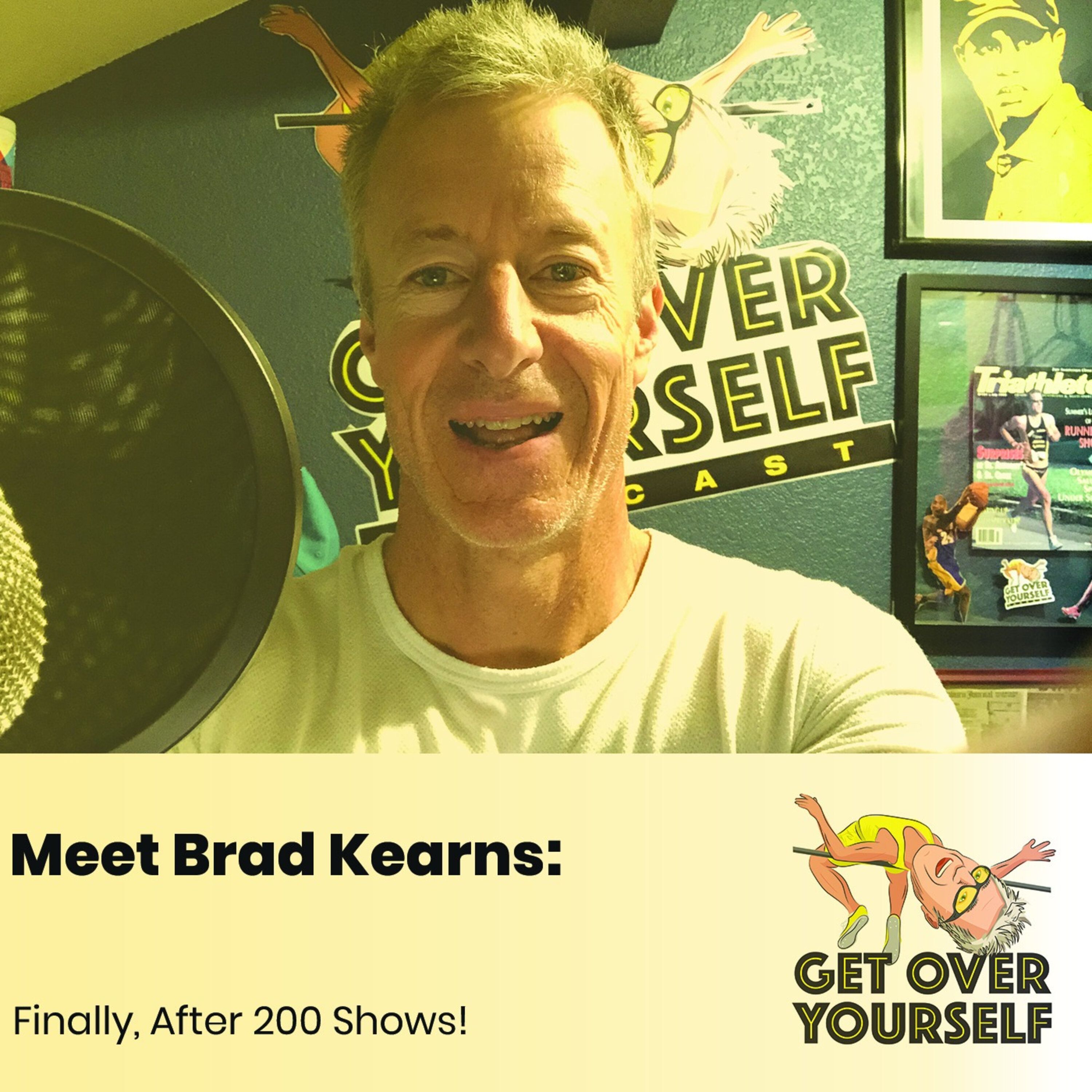
Ep 203Meet Brad Kearns: Finally, After 200 Shows!
I was greatly inspired by Episode 1 of Luke Storey’s fantastic Life Stylist podcast as he took his listeners through his craaaazy life story with great honesty and vulnerability, and it made for such a riveting show right out of the gate. You know this dude is for real as he really goes there and holds nothing back, and he’s really been bringing his A game to the airwaves.I think Luke’s kickoff show has really helped form a connection and an understanding of the person from a distance that carries over into all his other interview shows and all the comments and observations he makes on his podcast. Abel James also did a great job on his website giving rich details about his background and life experience that made him who he is today.I aspire to do the same. Especially since I occasionally get feedback from readers/listeners who wonder about a comment and ask whether I’m either kidding or a cocky obnoxious jerk. So the answer is, if I offend you, I’m definitely kidding.You can see this written message at bradkearns.com/meet-brad and this podcast might be an added bonus value since I get to editorialize about my own life story whenever possible. You’ll learn about my childhood in Los Angeles and immersion into the world of endurance running and then triathlon, and my brief foray into the accounting profession that ended after 11.5 weeks in favor of the pursuit of a crazy dream of becoming a professional triathlete. Then I cover my time as a parent coaching little kids, how I got into speedgolf and high jumping, all while continuing my pursuit of peak performance goals, and finally, the meaning behind the name of the Get Over Yourself podcast.One of the things I am most grateful for as I look back on my life is that I grew up before the digital age. It fostered a love for spending time outdoors, going on adventures, and generally just engaging in non-stop physical activity. Sports were always the centerpiece of my life, and I had the good fortune of not being in an overpressurized environment or having to deal with intense helicopter parenting. My school’s coaching system was hardly strict and regimented, but this actually worked out for the best, as I was able to go on my own path and nurture my passion for sports and competitive intensity.High school days were packed with training. Workouts started super early, and while there was that undeniable intensity that comes with the commitment to training, life was good, and the social aspect of it all made it seem not as rigorous, but something that was really fun. By the time I turned 16, I had qualified for the National Junior Olympics finals in the 1,500 meter category, and by my senior year, I was ninth place in the California State High School Championships in the 1,600 meter category. Yes, I had big dreams of becoming a collegiate Olympic runner then, and off I went to college in Santa Barbara to pursue my passion.It probably comes as no surprise that after years of intense focus on athletic track, I found that a fair amount of my self-esteem and happiness was tied to the results of my workouts and competitive efforts. But being forced to the sidelines in college really changed my perspective. It opened my eyes and allowed me to see that my greatest strengths - focus, discipline, and competitive toughness - could also easily lead to my downfall! But it is so important to see every you go through as an opportunity for learning and personal growth - especially struggles and setbacks. Realizing that I needed to switch gears at the tail end of my college experience could have been a real feeling sorry for myself moment. But I didn’t want to waste time feeling sorry for myself, so I got back on that bike - literally and figuratively.Soon after graduating from UC Santa Barbara with a degree in business and economics, I found myself sitting in rush hour traffic, heading to downtown Los Angeles, where I was working for (at the time) the world’s largest accounting firm. I lasted 11.5 weeks.I set off on a new path, and my days were filled with hours of difficult workouts, napping, eating healthy foods, studying race results, plotting the travel and competitive schedule, and talking training and competitive strategy with my sidekick on the triathlon journey, Andrew MacNaughton. I loved the day-to-day experience of being a professional athlete. The focus I had for my passion gave my life purpose, and even through challenging, frustrating, or exhausting moments, I always carried a sense of deep satisfaction and contentment because I simply enjoyed every step of the process of pursuing my goals and my dreams.At my peak in 1991, I was two-time US national champion and ended the season ranked #3 in the world. But after 45 races (with 15 victories), a seven-race win streak, and 80,000 miles on Pan-Am airlines over my two best years of ’90-’91, I was exhausted and basically required 12 hours of sleep each night. I was completely exhausted, and it was clear that it was time t
Andre Obradovic: Avoiding Excuses and Middle Age Male Muppet Belly Fat
Andre “Dr. Dre” Obradovic is a one-of-kind Australian national treasure and you will love his spicy, sporty positive disposition and no-nonsense approach to goal-setting, lifestyle optimization, and holding yourself accountable for both your attitude and behavior. In this lively show, we cover the benefits of micro-workouts and how to protect against overtraining, and how to stay focused and motivated when your routine is disrupted by quarantine. Andre admits that laziness got in the way of his twice-daily yoga routine, and shares how he quickly made it a habit again within just three days. He also gives some seriously great tips for productivity and explains why he doesn’t even turn his iPhone on until after he’s done training and/or has finished at least a “big chunk” of work. Then we delve into the important topic of how to stave off the accumulation of the unhealthy visceral fat (belly fat) that has inflammatory properties and creates a slippery slope whereby the accumulation of a little belly fat begets the accumulation of more fat. We discuss the ideal sources of motivation and accountability. For example LGN - is it silly, or a great motivator? Should we be more honest and direct with our buddies and training partners to keep each other accountable? Andre is a recovering corporate executive who endured a mid-life crisis and an awakening that led him to become a life coach, endurance training coach, and accomplished amateur triathlete in the 50+ division of half-ironman racing. You will love his no nonsense, no excuses, highly quantified approach but one that’s dispensed with kindness and sensitivity. Learn more about Andre’s coaching offerings and interesting fitness App at https://andreobradovic.com/ TIMESTAMPS: One of the topics of this discussion is LGN (Look Good Naked)! [03:38] Andre talks about how he converted his garage into a gym during the quarantine. [08:32] Micro workouts are a real asset to have around the home. It comes without risk. [10:58] It is important to make a real habit of sticking to an exercise routine. [14:04] Keep the phone charging in your workout area, so when you go to get it, you will be prompted to do a mini-workout. [16:27] Don’t get sore. Sprints should last no longer than 20 seconds. [19:50] When preparing for a race, you don’t need to work at that race pace. [22:33] People in the fifty plus age group need to talk about visceral fat (belly fat). It is inflammatory. [26:20] In the Framingham Study, they discovered that obesity is contagious. [30:35] What holds guys back from getting in better shape? [33:19] How important is it to weigh every day? [40:15] It is great to talk straight. Health is a choice. [45:08] Exercising is great but it is the diet that needs your attention. [50:38] Checking knowledge, not bullshit, and acknowledging your situation is the goal. [52:27] Calories in and Calories out…….It’s a myth. [55:05] It takes four to five weeks to see results. [58:54] What do you do if you have tried everything we have suggested here and see no results? [01:01:19] Is wanting to look good naked a good motivator? [01:06:09 LINKS: Brad’s Shopping Page Andre Obradovic Keto Cooking for Cool Dudes Brad’s morning routine Framingham Study The Fatty Popcorn Boy Saga Follow me on social media for more great content! Instagram: @bradkearns1 Facebook: @bradkearnsjumphigh Twitter: @bradleykearnsSupport this podcast at — https://redcircle.com/the-get-over-yourself-podcast/donationsAdvertising Inquiries: https://redcircle.com/brandsSee omnystudio.com/listener for privacy information.See omnystudio.com/listener for privacy information.
Listener Q&A - Pacing Yourself To Avoid Burnout and Taming The Competitive Ego (Breather Episode with Brad)
(Breather) One great question from Mike about how to return to running after a long layoff opens up a great discussion on the topic of pacing yourself appropriately to avoid the all too common breakdown, burnout, illness, and injury that comes from following the prevailing “no pain, no gain” approach to fitness. The truth is that getting sore after workouts is not a sign of a job well done, but a way to stall your progress and delay recovery time. A revolution is afoot in fitness, thanks to the great work of Dr. Craig Marker (listen to the HIIT vs HIRT Breather show), Joel Jamieson (listen to his interview here), Firas Zahabi (check out this clip on Joe Rogan where Joe trips out on the insight that you should never be sore after workouts), and Dr. Phil Maffetone (listen to his interview here). If you can perform well within your capabilities, you can build and build without the interruption, immune suppression, and cellular breakdown caused by overly stressful workouts. We also hear a great success story from Maciej that will get you inspired to put your ego aside and align your workout behaviors with your stated goals, instead of chasing instant gratification. Thanks to listeners for sharing questions and feedback, and please feel free to communicate with us: [email protected] TIMESTAMPS: Mike Green wants to know the best way to get back into running after hip replacement surgery. You don’t have to suffer. [03:25] You don’t want to introduce muscle soreness as a regular recurring element of your sprinting training program. [07:11] If you can’t hold a deep squat position for 3 or 5 minutes, you need to work on this by practicing lunges and stretching. [16:36] Maciej asks: Could you elaborate on how many workouts per week should be, could be glycolytic.? I'd like to know if you've noticed any changes in your running cadence, uh, or changes in your ego [19:58] Keep trying to become a fat burner rather than a sugar burner. [25:43] LINKS: Brad’s Shopping Page Brad’s running technique Brad’s Running drills Hit vs.Hurt, Dr. Craig Marker Firas Zahabi Eliud Kipchoge Mark’s Daily Apple Vibrams Amazing Feets Follow me on social media for more great content! Instagram: @bradkearns1 Facebook: @bradkearnsjumphigh Twitter: @bradleykearnsSupport this podcast at — https://redcircle.com/the-get-over-yourself-podcast/donationsAdvertising Inquiries: https://redcircle.com/brandsSee omnystudio.com/listener for privacy information.See omnystudio.com/listener for privacy information.
John Gray: Healing Strained Relationships With Increased Self-Awareness, Hopeful New Strategies, And “Fake It Till You Make It!”
Dr. John Gray will once again blow you away with a steady stream of life-changing relationship insights and distinct strategies to get things back on track when your relationship is feeling strained or downright broken. John lays the foundation for discussion by describing his “80/20” relationship principle. This means you should develop self-love and self-sufficiency such that you establish a baseline state of happiness and look to your relationship to make you 20% happier. A dull, strained, or broken relationship is a natural consequence of the stresses of modern life, the rapidly evolving relationship roles in modern culture, and the hormonal differences between men and women that make everything from basic communication to maintaining a romantic spark really difficult. Dr. John explains that it can be really helpful to break free from arguing and blaming by reading a book together. Such as, ahem, Men Are From Mars, Women Are From Venus, Beyond Mars and Venus, or Mars and Venus In The Bedroom. When you can gain self-awareness from a book, it’s easier to acknowledge your mistakes, apologize, and rebuild hope that a new strategy can work where your devoted efforts have failed. For a quick example, Dr. John says women should resist their natural tendency to interrogate a man, as this will agitate them further. On the other hand, men should overcome their natural tendency to avoid lengthy dialogue by probing and questioning your woman to draw out further insights and understanding. Dr. John also contends that when it comes to implementing the recommendations, “Fake it ‘till you make it” is not only okay, it’s 10 times more important and effective for men to do so! “I’m sorry, I was wrong, I overreacted, I was inconsiderate, I was selfish.” It’s not that hard to say, come on men, you can do it! This show is nonstop action, entertainment, and life changing insights, so tune in, and listen again and again, ‘till you get it right! Dr. John’s discussion of his two-year grieving process over the passing of his longtime partner Bonnie gives us some important perspective and inspiration. We are all compelled to do the very best we can every day in life, take nothing for granted, cut out the ego-driven bullshit, and transcend the disturbingly common flawed relationship dynamics that we have come to perceive as normal. As Dr. John said to close a previous show, “If we can’t do it now and model this to our children, what hope do we have for the future of humanity?” Connect with John at MarsVenus.com and also enjoy his daily Facebook Live educational seminar at John Gray on Facebook, where he covers a different topic every day in live Q&A format. TIMESTAMPS: You can heal relationships sometimes, just by laughing at your own mistakes. [04:19] A couple of quick gems to look at are: Women, don’t question men. And men, ask more questions. [07:11] John talks about his grieving process and how he has learned more about himself. [09:53] As men and women, we both have a male and female side. [17:23] Your partner can make you happier but they cannot make you happy. 80% of your happiness comes from within you. [19:45] Men are more affected by a woman’s negative reaction. [22:55] Lithium Orotate is a mineral that does wonders to calm the thoughts. [23:45] The balance of the brain chemicals in your brain affects your hormones, but your hormones affect your brain chemistry. [26:49] Too much testosterone automatically goes into estrogen. Road rage is not caused by too much testosterone! [29:12] Never look a guy in the eye when he is angry. [30:49] It is important to consider the woman’s cycle when knowing how to relate to one another. [33:30] When a woman is emotional, asking her questions will help calm her down. When a man is emotional, it is not a good time to get him to talk. [36:35] What are some of the healing steps to be taken when the relationship has been suffering? [38:00] Sex is controlled by the unconscious mind. [41:13] The key to every relationship is based on a feeling of anticipation that I can get what I need. You need to have hope. [43:30] Most of us just don’t know better. See your mistakes without feeling guilt. [45:36] A good exercise is to write a letter to yourself as if the other person is writing it to you. [49:50] Rather than “I’m sorry if…….’, it’s better to say “I’m sorry. I understand that you were hurt.” [53:10] For men, learning to be apologetic is a skill you can practice. Fake it ‘til you make it! [57:56] Women need to know they are appreciated. Many times, the man thinks he is showing that, but it doesn’t feel that way to her. [58:36] If one person makes a change, there will be a change in the relationship. The letter writing exercise works wonders. [01:06:45] Women actually have 10 times more power to make a relationship better than a man does. [01:10:24] It is really important for men to learn loving behaviors. [01:15:12] LINKS: marsvenus.com Brad’s Shopping Page Lithium Orotate Mars and Venus
Insights On Vulnerability, Empathy, and Shame, From #1 Bestselling Author Brené Brown
(Breather) Brené Brown has spent the past two decades studying courage, vulnerability, shame, and empathy and is the author of five #1 New York Times bestsellers: The Gifts of Imperfection, Daring Greatly, Rising Strong, Braving the Wilderness, and her latest book, Dare to Lead, which is the culmination of a seven-year study on courage and leadership. Brené’s TED talk ― The Power of Vulnerability ― is one of the top five most viewed TED talks in the world with over 35 million views. Today, I’ll be sharing the most eye-opening revelations and life-altering lessons I’ve gained from Brené’s fascinating research and work. Empathy Developing empathy requires that you look into someone’s eyes and reflect their story back to them. But, “empathy is not the default human response.” Brené points out how hard it can be to “understand and accept other people, particularly when they behave disgracefully. You still have to work hard to tell them, ‘I get it.’ No one reaches out to you so that they can be taught how to behave better! They reach out because they believe in your capacity to know your darkness well enough so that you can sit in their darkness with them ― to have empathy for them.” Unfortunately, we have a tendency to flip on the lights. We say, “Don’t worry, it’s not a big deal. Everyone makes mistakes.” However, this is not empathetic. Neither is lecturing them about how lame they are (a good reminder for parents out there). Brené stresses that, “we cannot feel empathy for others beyond the love and compassion we have for ourselves.” Everyone runs into a moment (or two or three or fifty) of having screwed up something in their lives. And when this happens to someone you know and they come to you, Brené advises that, instead of reacting to the situation from a judgemental perspective or making light of it, the most helpful, effective, and empathetic response you can give them is to say, “You can do this. You can take this on.” Brené says you can “climb into the hole with them” but you also need to be sure that you don’t get trapped in that hole with them - you need to be able to get out. Of course you’re going to want to give your love, energy, kindness, and support, but you don’t want to get dragged down by other people’s issues. This is because doing so signifies that you are over-identifying, codependent, etc. Look at it this way: Sympathy is, “I feel bad for you,” not, “I feel with you.” Vulnerability What even is vulnerability? It is: Asking for help, saying, ‘I don’t know” Facing up to difficult situations and decisions Getting promoted and feeling like you’re not sure you’re up for it Getting fired Initiating sex with your partner It is uncertainty, risk, and emotional exposure It is loving someone and knowing that you cannot control if they love you back Vulnerability is actually our most accurate measure of courage. It is not weakness ― that is the biggest myth. Brené says: “In the face of contention, don’t shrink, don’t puff up ― just stand your sacred ground: whole-hearted and empathetic. This is the goal for evolving to your highest self.” Brené then references studies of whole-hearted people, and highlights how they cultivate rest and play. She shares that these whole-hearted people actually “piddle around and waste time a lot.” And around 1/4 of whole-hearted, empathetic people are raised that way with optimal parenting. For the rest, empathy and whole-heartedness is a skill to cultivate. But, modern, messed up cultural dynamics have led us to regard exhaustion as a status symbol, and productivity as a measurement of self-worth (think of triathlete culture, workaholics that we all know or are personally, harried supermoms trying to do everything they can for everyone, helicopter parenting, etc.). Brené’s insights prompt you to rethink the ideas we all have and reprioritize being whole-hearted and taking care of yourself. Another important part of vulnerability is accountability. Brené frames accountability as “authenticity, action, and amends.” A good example is saying, and acknowledging, ‘This is what I did, this is how I’m going to fix it.’ Shame Brené reveals that we always judge in the areas where we ourselves are most vulnerable to shame. Further, we always pick people who are doing worse than we are doing, because we are seeking validation, through the idea that, Well, at least I’m better than this person I am judging. The reason why shame feels bad is because it’s about your character. No wonder shame is strongly correlated with depression and addiction! Contrastingly, guilt can actually be productive and adaptive, because it’s rooted in your behavior. “The shame triggers are your prerequisites for worthiness,” Brené reveals, and these are usually handed down from our upbringing. As my show covering Dr. Bruce Lipton’s book, The Biology of Belief, explains, most of us are still carting around emotional baggage from early childhood programming and this has a serious effect on our bodies, pr
Barb Garrison: Discovering Your Calling And Making An Awesome Career Change, The Right Way
Barb Garrison is a Career & Money Breakthrough Coach and “Job-You-Love” expert at Internal Groove, the company she founded 14 years ago. This is an interesting show about doing some deep reflection to discover your truth and taking action to pursue the highest expression of your talents while making an economic contribution. Barb is walking her talk, having left a high-stress corporate job in LA that was destroying her health and tapping into her natural inclination to coach and mentor others. Soon after her career change, Barb upped the ante and bailed on her lifelong home base of Los Angeles for a quieter, simpler life in Boulder, CO with her husband. In this show, you’ll learn to reflect on your life journey to date and discover themes and patterns that suggest the nature of your true talents and passions. We’ve heard enough blather in the entrepreneurial realm about how you should be a badass and quit your job and go conquer the world. Barb cuts through a lot of the nonsense to explain that you can align your career pursuits with your personality, level of risk tolerance, and also the practical aspects and responsibilities of day to day life. For example, maybe you don’t need to tell the boss to take their job and shove it, but can find a more suitable position within your existing career framework. Barb does this type of coaching and consultation to help burned out, success-driven professionals move on from self-doubt to freedom. Informed by your natural gifts and highest truth, Barb is an expert at designing creative career solutions you might not see on your own. She can be found working one-on-one with clients around the country, in private retreats with those who fly in to work with her, plus teaching from the stage at workshops and leading mastermind groups. Barb is developing an exciting online course that will help you conduct some helpful exercises to discover your truth ― what makes you leap out of bed on Monday mornings! You’ll enjoy a profound insight about the ever-popular email inbox that came to her when she was tasked with taking over the inbox of her recently deceased father. Barb will also address that “elephant in the room” issue of what to do when your stated passion and calling has difficult income prospects. Yes, there are solutions and adaptations that can help propel you forward to a more rewarding career and a more peaceful, meaningful, stress-balanced life. As Barb explains: “I think the first step is getting clear. Many people want to jump to the end result, the final job title. I tell my clients, ‘We’re going to be collecting pieces of the puzzle to put together,’ but what I want them to do is suspend their need to jump to ‘What is the final result?’ Leave that to the side, slowly start collecting pieces of the puzzle, and watch the picture emerge. You can’t skip over the steps.” TIMESTAMPS: It takes a lot of courage to pick up your life and move to a new adventure. [04:46] Barb is a career, money, breakthrough coach, and a job-you-love expert. [08:35] Why is it so difficult to find a balance between chill time and a hectic career life? [10:02] What Barb learned after she had a “hit over the head with a frying pan” awakening in her hectic life is now being applied to her coaching work. [17:43] Many people want to change their job but don’t know where to start. [21:53] What if what you are passionate about doesn’t pay the bills? [24:52] Don’t assume that you have to start your own business. There are ways to negotiate ways in your employment to access your talents and passion. [27:00] So, what happens to the person who feels inspired to move out, and then find it was a poor decision? {31:28] When you look at something you like to do, go deeper and see what it is about that that you like. [37:10] It’s a good idea to start a personal “Freedom Fund.” [40:24] Suspend your need to jump to the final result. [44:37] Sometimes we feel that when our email box is empty and our to-do list is completed, then we’ll have time to start living our real life. [48:11] No matter what choice we make, there are always tools for our toolbox that are being added. [52:13] Hopefully the COVID pandemic has taught us to simplify things, lowering the volume on the noise of the pings and dings from our phones. [55:21] LINKS: Brad’s shopping page Barb Garrison Monday Morning Leap Brad’s podcast with Dr. Goldstein Follow me on social media for more great content! Instagram: @bradkearns1 Facebook: @bradkearnsjumphigh Twitter: @bradleykearnsSupport this podcast at — https://redcircle.com/the-get-over-yourself-podcast/donationsAdvertising Inquiries: https://redcircle.com/brandsSee omnystudio.com/listener for privacy information.See omnystudio.com/listener for privacy information.
How to Lose 8 Pounds Of Body Fat In 6 Weeks, Part 2
(Breather) After learning how to strike a delicate balance between setting and pursuing meaningful tangible goals while adopting a healthy, process-oriented mindset, we cut to the chase with 5 tips that will help you quickly and efficiently reduce excess body fat. Well, it could be six tips with the first one being don’t get started down the slippery slope in the first place! Starting out, it’s important to accept the idea that losing fat is all about lowering insulin production, instead of the flawed and dated concept of eating fewer calories and burning more calories. This has now been scientifically proven to be ineffective per the compensation theory. Here are the five things that helped me, that I detail on this show: 12 noon: I re-established a firm rule of no caloric intake till 12 noon. This helps you bank more fasting hours, but also establishes structure, discipline, and a greater appreciation for meals. Carnivore-ish: Naturally low carb/low insulin, incredibly high satiety and nutrient density, and excellent for fat reduction. Also, any restrictive diet helps you eat less food, less often, and eliminates decision fatigue. Listen to my shows with Dr. Paul Saladino (#1 and #2) and Dr. Shawn Baker to learn more about the carnivore diet. Sprinting and Jumping: My properly conducted sprinting and high jump workouts send a powerful genetic signal to reduce fat, because the penalty for carrying extra weight is so severe in these activities (unlike shuffling along for a marathon.) Make sure your high intensity sessions are brief and explosive and not prolonged and exhausting, or you will trigger compensation theory dynamics. Cold therapy: I believe my morning routine of 4-6 minutes in 34-38F water accelerated fat metabolism because I often experienced a spike in hunger afterward. Since it was way before noon, I ignored it and it would pass in 20 minutes. I have to think this kicked me into accelerated fat burning mode, something emerging research is suggesting. More on this topic soon! Mindful eating: Eat in a calm setting at a relaxed pace. Notice the point at which you are satisfied instead of mindlessly chomping on while you watch TV. If you are going to indulge/celebrate, do so with full attention and appreciation instead of guilt. Hopefully these tips, whether applied exactly or just honored in spirit, will help you on your journey. Let us know if you have questions, comments, feedback by emailing [email protected]. TIMESTAMPS: It will be helpful to narrow the focus to lowering insulin production as the gateway to dropping excess body fat. [05:11] You must get your mindset completely away from “calories in and calories out!” [06:20] Effortless maintenance of ideal body composition comes when you produce an optimally minimal amount of insulin over the course of your lifetime. [09:05] Fasting is one way to lower insulin. [10:36] The other way is to reduce intake of dietary carbohydrates. [11:34] Keto ice cream is now in the stores. [15:48] As individuals, when fasting, there are various ideas about when it works best. [17:47] Brad talks about the benefits of the carnivore eating pattern. [19:39] The most nutrient dense foods are grass fed, pasture raised meats. [23:40] Sprinting, jumping, and explosive movements send a profound signal to your genes and hormones to drop excess body fat. [26:20] Cold therapy has a profound effect on the genetic signaling for fat reduction. [29:44] LINKS: Brad’s Shopping LInk The Obesity Code Brad’s podcast with Dr. Shawn Baker MeatRx.com Brad’s podcast with Dr. Saladino Follow me on social media for more great content! Instagram: @bradkearns1 Facebook: @bradkearnsjumphigh Twitter: @bradleykearnsSupport this podcast at — https://redcircle.com/the-get-over-yourself-podcast/donationsAdvertising Inquiries: https://redcircle.com/brandsSee omnystudio.com/listener for privacy information.See omnystudio.com/listener for privacy information.
Dr. Phil Maffetone: Escaping The Overfat Pandemic
I catch up with a longtime mentor and godfather of fat-adapted endurance training, Dr. Phil Maffetone. We discuss the hot topic of “overfat,” which Phil says is “having excess body fat that impairs health and fitness.” Dr. Phil cites data that 91% of the global adult population can be classified as overfat, despite nearly half that percentage having what is considered normal body weight. Overfat means having, “excess body fat that impairs health and fitness,” according to Dr. Phil. You’ve heard about the inflammatory visceral fat (belly fat) and all the adverse health consequences, and this is what Dr. Phil’s talking about. You want your waist circumference to be less than half your height in inches. Dr. Phil details how to get healthy, which can be summed up by the overarching goal of “getting better at burning fat.” This entails dietary modification (“ditch junk food,” Phil says!) a proper exercise protocol (not chronic), and managing all forms of life stress to avoid the cortisol-gluconeogenesis-sugar addiction patterns. Granted, it’s hard to drop stubborn belly fat, even for well-meaning, diet-conscious fitness enthusiasts. Dr. Phil talks about how we become more carbohydrate intolerant as we age, necessitating a reduction in carb intake. Dr. Phil also covers the role of high intensity workouts, including the interesting insight that as you improve fat burning from diet and aerobic base workouts, you can burn more fat and preserve glycogen even during hard sessions! Learn more at PhilMaffetone.com. TIMESTAMPS: Ninety-one percent of global population is what Dr. Phil calls “overfat.” [03:58] The MAF method is more than just going slow. [06:47] The bottom line is to avoid junk food. Exactly what is junk food? If it is sold in a health food store, is it okay? [09:25] You need to personalize what works for you. [14:33] Over 40 percent of non-obese, normal weight people are still overfat. [16:49] We have survived as a species because of our wonderful immune system. [20:36] If you are sleepy after breakfast, you probably had too many carbohydrates. [24:38] It is easy to measure if you are overfat. Measure your waist and your height. Your waist should be less than half your height. [28:50] As we age, we become more insulin resistant. We need to adjust the carb intake. [33:44] The problem with our sugar addiction is it changes our taste buds. [39:28] Apart from food and exercise, there are other physical stressors that affect us. [43:38] Most of the chronic diseases which are preventable are the downstream effect from overfat. [47:11] “We are going to fix healthcare.” We aren’t looking at the cause. [50:51] Maffetone’s two-week test is a way to confirm the problem of carbohydrate intolerance. [53:37] Since so much our body is water, what kind of fluctuation do we experience from day to day when we are losing weight? [57:05] The brain is getting a steadier source of fuel because you are not so dependent on glucose. [01:00:21] The reduction of insulin triggers a significant balance of the hormones. [01:02:47] Poor brain function, as a result of poor diet, is a greater cause of driving accidents than even alcohol. [01:05:56] Why can’t people understand that sugar is the new tobacco? [01:09:25] We are all individually responsible for our health. [01:13:17] LINKS: Brad’s Shopping Page Phil Maffetone tryLGC.com Revisiting the Overfat Pandemic Healthy Driving Heart Disease and Marathon Runners Follow me on social media for more great content! Instagram: @bradkearns1 Facebook: @bradkearnsjumphigh Twitter: @bradleykearnsSupport this podcast at — https://redcircle.com/the-get-over-yourself-podcast/donationsAdvertising Inquiries: https://redcircle.com/brandsSee omnystudio.com/listener for privacy information.See omnystudio.com/listener for privacy information.
How to Lose 8 Pounds Of Body Fat In 6 Weeks, Part 1 (Breather Episode with Brad)
(Breather) Yes this title sounds familiar to the 2019 show titled, The Fatty Popcorn Boy Saga. I’m alternatively embarrassed but also pleased to report that I have succeeded with a focused effort of fat reduction, and have some insights about mindset and practical tips to share with you. The Part 1 show wrestles with the philosophical aspects of taking on this challenge, while Part 2 covers five helpful tips to make it happen in real life. It’s very easy to slip a bit from your A-game with unbridled celebrations that become too commonplace, as well as mindless eating habits that aren’t aligned with your stated goals. It’s much more difficult to recalibrate and get rid of body fat that was unwanted in the first place. I gained a fresh perspective about the content I communicate in books, podcasts, and videos from fighting a personal battle instead of just being theoretical. The best starting point for a fat reduction effort is to get your mindset right ― do you really want this goal, or are you deep down okay being just okay? Perhaps you are giving yourself permission to celebrate life and use food as a release valve against all the pressure and expectation we face in other areas of daily life? That’s perfectly okay, but you have to have some honest self-assessment so you don’t set yourself up for disappointment. As you embark on the difficult task of dropping excess body fat, it’s important to strike a balance between harnessing the focus, discipline and competitive intensity to kick butt with not attaching your self-esteem or self-image to the outcome. Insights from shows with Mark Manson and Andrew MacNaughton apply here. You also have to recognize the strong influence of environmental factors, as revealed by Framingham Study data that identified social “clusters” for things like obesity, or happiness, that are contagious to three degrees. If one is obese, one’s friend and the friend’s friend are more likely to obese. If you are kickin’ it in Austin with thousands of people visible every morning cruising around the Town Lake trail, the fitness ethos of a community is most definitely contagious. You also need to be able to accept honest feedback from others, while remembering that it’s also a balancing act: you don’t want to let self-limiting beliefs and negative childhood associations run (and ruin) your life, but you still need to let enough constructive criticism in that you can make the necessary changes you need to make. Do your best to align yourself with a beneficial sense of self, or at the very least, a more positive one than you’ve had in the past. This is key when it comes to weight loss because your thoughts really do affect your cellular function, at all times. If this is a new concept to you, check out the book, The Biology of Belief, and the episodes (part 1 and part 2) where I discuss this concept and the power your thoughts (positive and negative) truly have on your body. Getting routine blood work done can potentially aid you immensely throughout your weight loss journey, because truthfully, even if you think you are doing well and are feeling quite healthy, a blood test might change everything. It could expose you to things you had no idea were happening in your body. Here are the top things to look out for when you get bloodwork done: Triglyceride levels: High triglycerides are not a good sign as they indicate the amount of fat circulating in your blood. Dr. Sinha says get this number under 100. HDL (aka good cholesterol): Aim for at least over 40. Triglyceride to HDL ratio: Dr. Cate Shanahan and Dr. Sinha both suggest striving for a 1:1 ratio Vitamin D: Most people are chronically deficient in Vitamin D due to our modern, indoor lifestyles, but it is more important than ever in these times that you boost your immunity by exposing large skin surface areas to sunlight. Sure you can take a supplement, but nothing will be as potent or efficient as the real thing. Inflammatory markers HBA1C If any of these show up irregular in your blood work, take their presence as a sign (and a powerful motivator) that it’s time to lose some weight. Learn from the Fatty Popcorn Boy’s journey and stay focused and positive. Try not to let yourself get too discouraged, don’t be too hard on yourself, and stay tuned for part 2! TIMESTAMPS: Brad understands the weight gain problem. He was not living in a manner that is aligned with his goals as an athlete. [05:44] A tiny bit of unbridled celebration and mindless habits can really quickly send you off your A-game. [07:43] Dropping excess body fat is the number one diet, fitness, and health goal that we share in modern life. [09:42] What are you sacrificing when you give up the pizza and ice cream? [10:50] Don’t attach your self-esteem or your identity to the outcome. [15:38] Your social group, your community have a huge impact on how you live your life. [18:48] Sometimes we need direct unfiltered feedback. [22:17] We form these self-limiting beliefs and negative
The MOFO Life Changing Mission
With the launch of my Male Optimization Formula with Organs (MOFO), I present to all MOFO’s out there a comprehensive lifestyle plan to fight the battle against epidemic testosterone deficiency in hectic modern life. Did you know that the average American male testosterone level has declined at a rate of one percent per year since the 1980s! That’s crazy, and it’s time to fight back. MOFO is a unique supplement made with nutrient-rich animal organs from 100 percent grass-fed cattle from New Zealand. It’s designed to naturally boost your testosterone production, increase daily energy levels, and help replenish your body at the cellular level. However, for a testosterone boosting supplement to have a maximum beneficial impact, you must implement a comprehensive lifestyle plan to avoid the major stressors of modern life and give your body the food, exercise stimulus, rest and recovery, and emotional stability it needs to thrive. This recording could change your life, as it details 10 lifestyle tips that form the foundation for the MOFO movement. Here are the 10 lifestyle objections from your MOFO mission, as reprinted from the MOFO website. I’ll provide further details and inspiration for each item of the assignment. It will take some focus and discipline to correct some of the flawed patterns and bad habits you have fallen into, but everything on this list will feel natural and easy to maintain because it will give you more energy and peace of mind. Sleep is #1: Health, vitality and peak performance all flow downstream from getting outstanding sleep. Minimize artificial light and digital stimulation after dark, perhaps the worst genetic disconnect in modern life. Clean Up Your Act: Ditch toxic foods, toxic relationships, toxic substances, and toxic energy in your life. Summon the courage to face life’s challenges and take action, instead of drift into familiar–but dysfunctional–routines and ruts. Eat Ancestral Foods: Eat sustainably raised animals in a “nose-to-tail” strategy, complemented by nutritious whole foods such as vegetables, fruits, nuts and seeds. Establish a zero tolerance policy for refined grains, sugars, sweetened beverages, industrial seed oils, heavily processed crap, and inferior quality feedlot animals. Emphasize superfoods like grass-fed liver and other organ meats, pastured eggs, oily cold water fish, and fresh local berries. Pound The MOFO!: Take six capsules per day for at least three months to fully replenish and rejuvenate your energy and help optimize male hormone function. This is honoring our ancestors by putting back in, what the modern world has left out. Guaranteed extra bounce in your step or your money back! Move Frequently: JFW—Just F—ing Walk—is the key to healthy fat metabolism and stable daily mood, appetite and energy levels. Take frequent walking/stretching/exercise breaks during the workday. Sprinkle formal movement practices (yoga, Pilates), calisthenics, and flexibility/mobility drills into daily life. Humans are meant to move! Hit It Hard!: Challenge your body with brief, intense strength training sessions and all-out sprints. Explosive efforts will prompt a spike of testosterone and human growth hormone in the bloodstream with tremendous adaptive, anti-aging benefits. A couple formal sessions a week lasting 10-30 minutes is plenty. Also include “micro-workouts” where you haul off a single set of deep squats in your office, or a set of pullups when you walk through the bathroom door. These really add up over time. Take Control: Overcome nonstop digital stimulation and distraction by focusing, prioritizing, and powering down with unwavering discipline. Implement proactive daily rituals, such as morning exercise before you reach for a bloody screen and kick into shallow, reactive brain function. Daily exposure to cold makes you more resilient to all other forms of life stress. Avoid Estrogens: Eliminate all plastics touching your food or drink; use stainless steel or glass containers instead. Ditch soy, flax, and corn-based foods; they have 100x more phytoestrogens than other plants! Use all-natural skin and personal care products, such as castile soap, zinc sunscreens, and eco-friendly home cleaners and laundry detergents. Rest Like A MOFO: Slow down and reclaim the lost art of down time. Try a midday outdoor stroll, a park bench meditation, or afternoon power nap. Rest and recover with the same focus and dedication as your ambitious workouts. Integrate more days off, easy aerobic sessions, foam rolling, breathing practices, and temperature therapy. Quit Being A Dick To Your Wife/Girlfriend: Real MOFO’s display emotional stability, kindness, and vulnerability. Relationship expert Dr. John Gray (Men Are From Mars, Women Are From Venus) says your primary biological drive is to protect your female from danger, but in the modern world her main threat is your own anger and emotional outbursts! Remain calm, cool, collected, and clear thinking amidst the daily stresses of li
Listener Q&A - Toning Down Type-A Approach Over Time, The Dilemma Between “Fun” Workouts That Are Stressful and “Boring” Workouts That Are Restorative, And Balancing Aerobic, Strength, and Sprint Workouts Year-Round (Breather Episode with Brad)
(Breather) This Q&A breather episode exhibits great insights about evolving one’s approach over time from super competitive to enjoying the experience of nature and aging gracefully. Curly writes in about the dilemma of doing super fun endurance feats out in nature versus getting in the gym and doing strength sessions that deliver better hormonal and injury prevention benefits but are boring by comparison. How to balance aerobic base building, high-intensity strength training sessions, and all-out sprints week in, week out, and in the context of an annual training pattern. It’s much easier to slip a bit and lose your A-game with some unbridled celebrations and mindless habits. It’s much more difficult to recalibrate and get rid of body fat that was unwanted in the first place. I gained a fresh perspective on a lot of the content I communicate in books, podcasts, and videos from fighting a personal battle instead of just being theoretical. The best starting point for a fat reduction effort is to get your mind right - do you really want this goal, or are you deep down okay being just okay and giving yourself permission to celebrate life and use food as a release valve against all the pressure and expectation we face in other areas of daily life? As you embark on achieving a tangible goal, it’s important to strike a balance between having the focus, discipline and competitive intensity to kick butt with a process-oriented approach where you don’t attach your self-esteem or self-image to the outcome. Insights from Mark Manson and Andrew MacNaughton apply here. You also have to recognize the strong influence of environmental factors, as revealed by the discovery of “clusters” for things like obesity, or happiness, in the Framingham Study. TIMESTAMPS: Jose is asking about his training goals now that he is not competing any longer. [04:55] Connor Curly is trying to find a balance between running and lifting that makes him feel best. We have to apply restraint to even to things that we enjoy, to act in our long-term best interest. [10:10] Harry has two goals: health and longevity, daily energy in a sedentary job, and getting strong and lean. If you have that aerobic base, you can survive and thrive in high-intensity training sessions, much better. [19:10] Harry, a non-competitive athlete, also asks if he should take a month off of exercise. [29:38] LINKS: Body By Science Brad’s Shopping page QUOTES: "Lifting makes me feel good, but it’s boring; running is super fun but makes me feel bad." (Curly) Support this podcast at — https://redcircle.com/the-get-over-yourself-podcast/donationsAdvertising Inquiries: https://redcircle.com/brandsSee omnystudio.com/listener for privacy information.See omnystudio.com/listener for privacy information.
Tim DiFrancesco: Functional Fitness, Injury Prevention and the Customized Future Of Athletic Training
“Rinse, repeat, and live to fight another day.” These are the prophetic workouts that represent the cutting edge of athletic training and functional fitness. I catch up with former Los Angeles Lakers Strength and Conditioning Coach Tim DiFrancesco to discuss matters of great importance to weekend warriors everywhere: how to get the most out of your body and steer clear of nagging injuries and body breakdown that leaves many people on the sidelines or under the surgery knife before their time. Tim has retired from the grind of the NBA with many great insights and a tremendous database of assessments and exercises that help fitness enthusiasts of all levels correct functional weaknesses to improve performance and heal or prevent injuries. Tim’s best insight from his NBA experience is that champions don’t have any special magic formula, but rather an ability to lock into a winning routine, “nothing earth shattering,” that allows them to maintain an awesome functional fitness baseline. The best athletes establish a comfortable, do-able pattern of the right exercises without overextending themselves and breaking down. Learn more about Tim’s interesting customized approach to client programming at TDAthletesEdge.com. It starts with an assessment of how well you perform basic movements (the same thing he did to NBA draft prospects for the Lakers to see who’s been trained well and who has high injury risks before a multimillion dollar contract decision is made!), and then a consequent prescription of exercises to address areas of injury, pain and discomfort ― making them stronger without over-stressing them. Short of getting some custom programming from an expert, Tim offers listeners a cool Top 5 list of areas of most concern/injury risk, followed by a go-to exercise to improve function. Here is the list: Ankle/plantar fascia/Achilles: Do calf raises (off the edge of a step or any elevated surface) Patellar/quadriceps area near knee: The mighty wall sit is the isometric movement here! Quadriceps/hip flexors: The “Sprinter” exercise where you lay on ground, bring knee to chest, and apply counter pressure with your hand Adductor (groin): The “side laying bottom leg lift” aka the “TD Jane Fonda” move! Hamstrings: Partner-assisted Nordic hamstring curl is the best, or a bridge pose with legs extended out instead of the usual near-to glutes position. This informative show will give you a complete understanding of the cutting edge concepts in functional fitness, injury prevention and peak performance. TIMESTAMPS: Tim DiFrancesco formerly worked with the LA Lakers, now has a cutting-edge fitness program. [04:58] If you're enjoyable to be around, if you add positive energy to the room, how can you lose? [08:39] Feeling strong in what you do physically is a good way to feel empowered emotionally and in everything else. [08:55] How does one optimize minimizing injury risk? [11:52] One important aspect is the degree of difficulty of the regimen. [15:47] The goal is not to crush you. The goal is to see if we can build you up and make you last forever. [19:46] Twelve weeks is a physiological window for you to be able to feel like you’ve put in the right effort. [23:54] It's not just muscles that get strong and more robust and healthier. The common denominator is strengthening. [25:09] An example is the meniscus of the knee. If it has been overtaxed, Tim would NOT have you working through pain. [33:43] Hip replacement surgery is only the last resort. Even surgery for torn meniscus. [38:27] When Tim films a client, what is he looking for as you squat or do a pushup. [45:06] Each client is different but there are some guidelines that are offered here. [51:22] There’s a golf standard hamstring exercise called Nordic hamstring curl. [59:40] LINKS: TD Athletes Edge Instagram: TD Athlete’s Edge Firas Zahabi Zahabi on Joe Rogan podcast Dr. Craig Marker Dr.Phil Maffetone Primal Endurance Mastery Course QUOTES: "Rinse, repeat, and live to fight another day." Support this podcast at — https://redcircle.com/the-get-over-yourself-podcast/donationsAdvertising Inquiries: https://redcircle.com/brandsSee omnystudio.com/listener for privacy information.See omnystudio.com/listener for privacy information.
Insights From Mark Manson’s Books
Breather: “Mindless positivity isn’t practical or helpful for most people,” Mark Manson writes in his first book, The Subtle Art of Not Giving A F*ck. He is, as usual, right on with this observation. Realizing that, “our modern, and maddening, urge to always find happiness only serves to make us unhappier,” Manson communicates clearly and concisely throughout his books about why we need to change the way we look at things like personal identity, hope, shame, and happiness. The reason why Manson’s message works so well is not just the power of the message itself, but the fact that, instead of trying to push the power of positivity onto his readers, he offers an entirely new perspective ― what if everything you thought you knew about happiness and success and yourself was wrong? And what if that was actually a good thing? Here’s the thing: as humans, we are all naturally inclined to feel attached to various parts of ourselves, especially the parts of ourselves that receive praise. Whether you’re a standout student or worker, an amazing athlete, a math genius, or a truly great dancer, it’s important to not fixate on the things about ourselves that we identify with the most. Why? Because Manson argues that identity is an arbitrary facade. He suggests looking at your life as a series of decisions and actions and try to maintain an identity that is defined by as little as possible. Our emotional feeling brain actually rules over our rational, thinking brain. Yet we think, or pretend, that the opposite is true! According to Manson, emotions drive our consciousness, and it is emotion only that can motivate us into action. “Emotions convince your thinking brain that you’re right,” Manson says. When emotions rule over the thinking brain, it can lead to narcissism, addiction, compulsion, self-righteous anger, and so on. This is because a person ruled by their emotions has no independent thought, so they only pursue things that bring them instant gratification. Ultimately the goal is not to suppress your emotional brain, but to get your thinking brain connected to your emotional brain. Manson says do not try to suppress your emotions, but instead, try to convince your feeling brain that you will benefit from whatever decision that you are asking yourself about. A good example of this is when people often fail to succeed with lifestyle changes ― this is because our “feeling brain” feels like we don’t deserve the success. Which leads us to self-worth. “Our self-worth is the sum of our emotions over time. If we can’t equalize, we accept inferiority, shame, and low self-worth,” Manson writes. Interestingly, both high and low self-worth are narcissistic, and self-worth is also an illusion. I know a thing or two about tying your accomplishments and/or abilities to your self-worth, so here’s a funny story from my college days: One day, the lockers got totally looted, so I had no choice but to jog home down a busy boulevard, for a mile and a half….in nothing but a Speedo and swimming goggles (and no shoes!). This was only one day after being the champion of a big tournament ― talk about being taken down a peg! “Your identity will stay your identity until an event changes it,” Manson writes. “It’s a network of value-based narratives that determines our identity.” There are two ways to heal from this: Examine the narratives of your life, and reposition them. Visualize the future you want for yourself, and make that your new identity. Let the feeling brain “try on” your new identity so it can become accustomed to it. This can be difficult, because it signifies that you’re really ready to change. “The stories of our future define our hopes, and the stories of our past define our identity” Manson notes, and he advises we take a look at both of those, so we can straighten them out, and get them right! Catch up with my recent interview with man himself, Mark Manson, here and if you haven’t yet read his books, check out The Subtle Art of Not Giving a F*ck and Everything Is F*cked: A Book About Hope. TIMESTAMPS: It doesn’t work to try to be constantly happy. [04:11] Carefully choose what you give a fuck about and then reject the social pressures. [07:06] Identity doesn’t exist. It is arbitrary. It is a façade. [08:14] Some of the chapter titles of this book are intriguing: Don’t Try, Happiness is a Problem, You are Not Special, etc. [10:37] If you don’t have hope, you are basically headed toward depression and anxiety. [11:14] A quick history of the 20th century gives an idea of what many people have lived through and helps put things in perspective. [13:37] When life gets too comfortable, we have to pick a cause to worry about to give us meaning. [16:18] Our emotional feeling brain actually rules over the rational thinking brain. [17:42] The history of humanity features a major effort to conquer the emotional feeling brain with self-control. [19:50] There's a common notion in spiritual psychology that the affluence and love we ach
Mark Manson: The Subtle Art Of Connecting With Your Emotional Brain, Seeing Yourself With Honesty and Vulnerability, And Connecting The Emotional Brain With The Rational Brain
What an incredible honor and memorable experience to connect with the worldwide #1 bestselling author Mark Manson, author of the runaway sensation The Subtle Art Of Not Giving A F*&k, which has now sold over 12 million copies worldwide and been translated into dozens of languages. Mark also wrote a brilliant follow up book called Everything is Fucked: A Book About Hope and produced a creative audio project for Audible.com called Love Is Not Enough, where he coaches a handful of people immersed in relationship struggles. In this wide-ranging conversation, we discuss Mark’s observation at the end of Love Is Not Enough that relationships success is super simple, we just make it complex and full of pain and suffering ― likely relating to replaying flawed childhood programming or lacking self-awareness. Mark discusses the important first step of acknowledging your weaknesses or blind spots, perhaps with the help of friends, family or experts. We discuss the profound assertion framing the message of Subtle Art that we should, “maintain an identity that is defined by as little as possible, instead seeing your life as a series of decisions and actions.” Mark describes how emotion, even negative emotions like fear, can be powerful catalysts to take action and repeat the action until it becomes habit. He describes his present difficulty with keeping to his workout schedule during quarantine. Mark details the insight in Everything Is F*ucked that the emotional brain actually rules over the logical brain, and how the logical brain convinces us to think otherwise. To avoid “persistent low level narcissism” that seems to be our collective ― default state these days, we must develop healthy communication and interaction between our emotions and logic. Mark also reveals how the unexpected runaway success of his first book caused him to lose his way for a while to the point of feeling depressed and unmotivated for around a year, and how his recalibration helped him develop the theme of the second book to make life all about “creating a string of hope narratives.” Enjoy this valuable and deeply reflective show from one of the leading modern philosophers and top authors. Order both of Mark’s bestselling books here so you can get up to speed! TIMESTAMPS: Love is great. Love is necessary. Love is beautiful. But love is not enough. [12:06] It is simple to break up with someone, but we make it difficult. [13:10] When an athlete retires, it is like an identity crisis. [14:45] To function well in a relationship, get your emotional health in order. [18:37] Recognize your own pattern and what gets triggered. [22:29] Therapists are taught to be very careful about inserting their own ideas in a session. They want you to find your way yourself. [26:37] Being very analytical can be a problem. [31:35] There are two brains…the thinking brain and the feeling brain and they are not good at talking to each other. [34:51] What are some parameters to keep us away from the narcissism that comes as a result? [37:33] Stress is our body’s call to action. [41:18] Some people respond better to positive reinforcement and some people respond better to the negative. [44:35] When Mark’s book took off in popularity, he had a difficult time adjusting. [50:53] LINKS: Brad’s Shopping The Subtle Art of Not Giving a Fuck Everything is Fucked. Mark Manson Who is Mark Manson? Get Over Yourself podcasts Love Is Not Enough QUOTES: “Maintain an identity that is defined by as little as possible, instead seeing your life as a series of decisions and actions.” “It’s important to recognize patterns within yourself.” “When you get your emotional health in order, the outward stuff starts to take care of itself.” “You can’t control the outcome, but you can control how you handle it.” “There are two brains…the thinking brain and the feeling brain and they are not good at talking to each other.” Support this podcast at — https://redcircle.com/the-get-over-yourself-podcast/donationsAdvertising Inquiries: https://redcircle.com/brandsSee omnystudio.com/listener for privacy information.See omnystudio.com/listener for privacy information.
Listener Q&A - MAF Heart Rate Training, Parenting, Minimizing Blue Light, and Controversial Guests (Breather Episode with Brad)
An interesting mix of questions gives an opportunity to sound off on important insights covered in previous shows. First, a cross country skier says hills and altitude causing elevated heart rates can require possibly more dietary carbs? I say find a way to slow down - same for me on the mountain bike! Gabrielle the super mum from Aussie land references the great show about Ashley Merryman and Po Bronson’s insights about effort-based praise in the book Nurtureshock and the epic 2007 New York Magazine article, The Power (And Peril) Of Praising Your Kids, that changed my approach to parenting forever. Gabrielle makes great points about separating specific praise with declarations of love and also being proud of a child’s character instead of achievements. I mention how I’ve had incredibly disparate guests on the show, like vegan advocate Rip Esselstyn and carnivore leaders Dr. Paul Saladino and Dr. Shawn Baker. I reflect that I’m not an “in your face” host getting into controversy with my guests, as I prefer to cultivate an open mind and willingness to appreciate alternate points of view. Obviously, Rip and I have drastically disparate positions on healthy eating, but during our show and with our friendship, I prefer to focus on the incredible work he has done to motivate and inspire people to be healthy, and the common ground that we do share about healthy eating and living. Hopefully if I need to be badass at some point I will step up, we’ll see! Another commenter remembers the great show with boy wonder health expert Matt Maruca, founder of RAOptics.com, and how he is taking Matt’s message to his adult kids and himself. He also notes his excitement for my next venture into food, Brad’s Macadamia Mix, a combination of superfoods blended together to form the most delectable, nutrient rich nut butter. Seriously, this stuff is so delicious you will be eating it straight out of the jar. Stay tuned for that, and keep the questions coming - I love receiving, and reading through such compelling commentary, so email your feedback and any and all questions you have. TIMESTAMPS: Wade, a Nordic skier, has a question about maintaining heart rate. Is a low carb diet approach consistent with the extreme metabolic demands of this athlete? [06:12] Even with altitude and hills, it’s important to continue to maintain the heart rate under the aerobic maximum. [08:39] What is the role of carbohydrates in the lifestyle of a high performing athlete? [10:10] Females need to pay particular heed in order to be fit for reproduction. [14:31] Gabrielle asks about the parenting podcast where the message is: When praising kids, saying you’re proud of them specifically on their achievement is ill-advised. [18:01] Should you tell your daughter she is pretty, when our culture tends to traffic on looks? [19:53] Be careful connecting “I love you” with the talent, rather than the effort, as this damages self-esteem. [22:14] Brad is suggesting we keep an open mind on vegan, vegetarian, carnivore diets. [23:31] John is getting back into triathlon and working on getting competitive while staying healthy. [28:41] LINKS: Brad’s Shopping Page Try LGC Autophagy Dr. Tommy Wood podcast Ashley Merryman podcast Matt Maruca podcast Rip Esselstyn podcast Dr. Paul Saladino Nurture Shock CarnivoreMD MeatRX Quotes: “The essence of modern life is overfeeding of the cells. When your cells are depleted of energy, that’s when your cells start to do better at recycling old material, repairing, rejuvenating, rebuilding, and you become a more efficient human being - the same with fasting. So if you put those two together, you’re achieving the same goals to the extent that it’s possible to overstress the body and stimulate a flight or fight response.” "Don’t pile on too many stress variables particularly if you’re a female - fasting and low carb is just too much." Support this podcast at — https://redcircle.com/the-get-over-yourself-podcast/donationsAdvertising Inquiries: https://redcircle.com/brandsSee omnystudio.com/listener for privacy information.See omnystudio.com/listener for privacy information.
Dr. Anna Cabeca: Optimizing Your Sexual Hormones, Aging Gracefully, And Losing Weight Through De-Stressing
Get ready for a wild ride with the multi-faceted Dr. Anna Cabeca, author of an exciting new book, Keto Green 16 and also The Hormone Fix. Dr. Anna is an OBGYN with a deep interest in holistic health, alternative healing strategies, menopause, sexual health, and pulling yourself out of health destruction and accelerated aging with integrative strategies that emphasize lowering your overall life stress level. This show covers a ton of ground and you will probably have to hit the replay button a few times to get a full appreciation for her insights. Anna talks about andropause and menopause, the do’s and don’ts of hormone replacement therapy, how stress hormones mess things up for us when it comes to sexual health and rate of aging, and how oxytocin ― the so-called “love hormone” that promotes feelings of bonding and connection ― is an all-powerful key to happiness, sexual health and aging gracefully. Lower stress, raise oxytocin and you will be inspired to pursue more oxytocin producing behaviors. When you are dragging ass and don’t feel like doing or being happy, that’s when you might need an intervention. Echoing the message from a previous show with Dr. Michael Platt, Dr. Anna discusses the wide-ranging benefits for both men and women of bio-identical progesterone ― particularly for neuro-protective benefits. Dr. Anna relates how she nearly fell apart as she approached the big 5-0 ― brain fog, mood disturbances, weight gain, PTSD, and acidic pH. She was a hot mess but she turned everything around and then started honing and testing a healing protocol that eventually became the Keto Green 16 program. “Why settle for just normal aging, when our rate of aging is so accelerated? Let’s talk about being that aging couple who stand out from the crowd ― attractive, fit, happy, in love ― living their best life.” Yes, you will enjoy this visit with Dr. Anna and learn some fresh new insights. TIMESTAMPS: Brad introduces Dr. Cabeca who specializes in menopause and sexual health. [04:02] What shall we do about menopause symptoms? Do you want to be normal? [07:12] Regarding lab tests, one needs to do some research. A woman’s testosterone level is often misread as it has been compared with men’s level. [10:49] It takes more than hormones to fix our hormones. We don't want to suppress menopause and andropause any more than we'd want to suppress puberty and our kids. [13:47] How does a male navigate andropause? [15:30] Oxytocin is the most powerful hormone of your body. [18:09] Adrenals are needed to take over when testosterone drops in the example of andropause. [24:51] With PTSD the cortisol production goes up, and the oxytocin goes down and you don’t feel love. [29:01] When women’s progesterone starts to decline, in our thirties, forties, we start getting other symptoms like anxiety, insomnia, irritability, decreased libido. [34:12] Dr. Anna talks about her problems with weight fluctuation and how it related to her hormonal imbalance. [39:37] The foods we eat as well as the people with whom we eat, support our body’s hormonal system. [44:13] In the Keto Green 16 system, they are creating insulin sensitivity, managing cortisol. [47:58] What is expected and what kind of commitment is needed to join the Keto Green Community? [54:29] LINKS: Brad’s Shopping Page Keto Green 16 Andropause Mighty Maca Plus Dr. Anna Cabeca Support this podcast at — https://redcircle.com/the-get-over-yourself-podcast/donationsAdvertising Inquiries: https://redcircle.com/brandsSee omnystudio.com/listener for privacy information.See omnystudio.com/listener for privacy information.