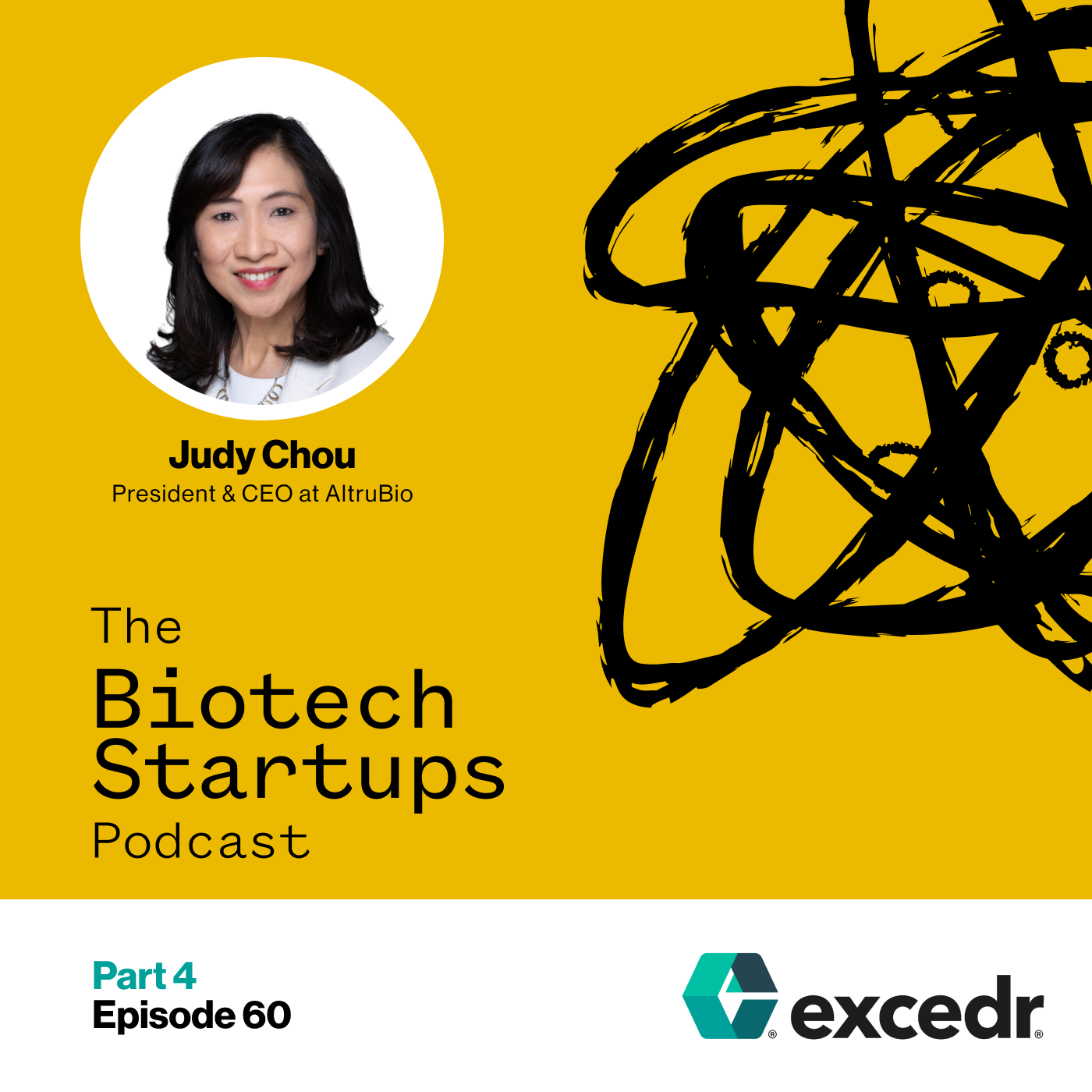
🧬 Big Pharma to Startup: Chasing a Patient‑Centric Future | Judy Chou (Part 4/4)
In this episode of The Biotech Startups Podcast, Dr. Judy Chou shares how she walked away from leading global biotech operations at Bayer to take a risky first‑time CEO role at AltruBio, transforming a struggling predecessor company—alongside a “Genentech mafia” of former colleagues—into a lean, patient‑centric startup built around a novel PSGL‑1 immune checkpoint mechanism aimed at restoring immune balance and breaking the remission ceiling in ulcerative colitis, all while navigating near‑bankruptcy, a 30‑day fundraising sprint that led to a record $225M Series B, launching a translational lab in Taipei, and drawing on formative experiences at Yale and MIT as a young mother and mentee to shape her gritty, values‑driven leadership philosophy.
The Biotech Startups Podcast · Excedr
Audio is streamed directly from the publisher (media.fame.so) as published in their RSS feed. Play Podcasts does not host this file. Rights-holders can request removal through the copyright & takedown page.
Show Notes
“I would say find your passion and stick to it. Don’t define your path by preset steps—just keep aligning your choices with that passion, and in the end you’ll have a story you feel good about and proud of.”
- Leaving Bayer: Why Judy walked away from a major promotion and historic leadership role to pursue work that felt truly aligned with her values.
- Founding AltruBio: How former Genentech executives recruited her to evaluate a failing pipeline, identify PSGL‑1, and build a “Genentech mafia” nucleus for the company.
- PSGL‑1 & immune balance: What makes PSGL‑1 a unique immune checkpoint regulator, how AltruBio’s mechanism differs from anti‑TNF, and why restoring immune homeostasis matters in UC and beyond.
- From near‑bankruptcy to $225M Series B: The 30‑day fundraising sprint that saved the company, and the strategy, execution, and grit behind closing one of the largest Series B rounds in biotech.
- Patient‑centric, lean biotech: Designing more convenient second‑generation molecules, building a lean but senior team, and using translational research in Taipei to own the PSGL‑1 space and expand into multiple indications.
Timestamps: