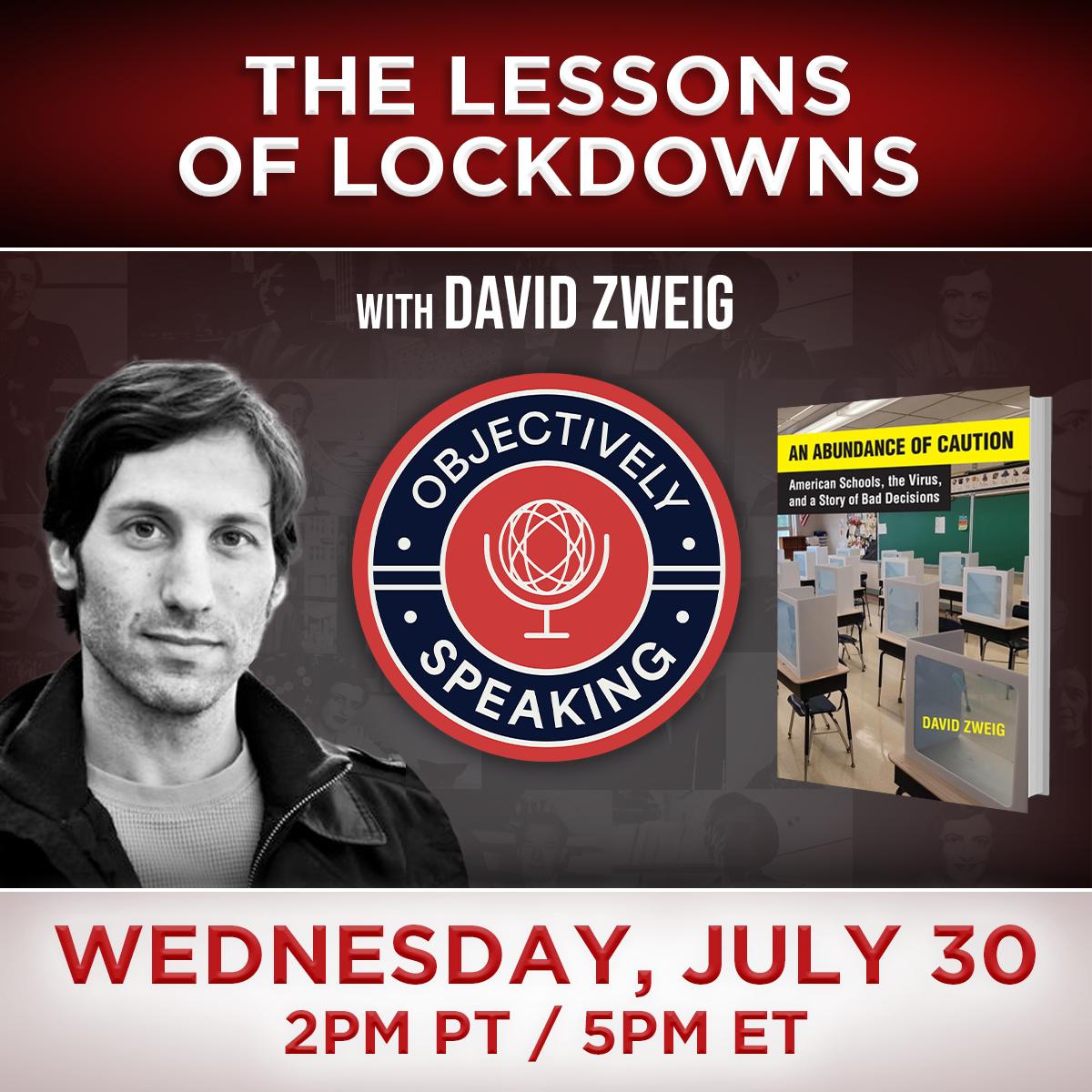
The Lessons of Lockdowns with David Zweig
Join Atlas CEO Jennifer Grossman for the 263rd episode of Objectively Speaking, where she interviews journalist David Zweig about his book "An Abundance of Caution: American Schools, the Virus, and a Story of Bad Decisions,” which offers a devastating account of the decision-making process behind one of the worst American policy failures in a century—the extended closures of public schools during the pandemic. David Zweig is a writer, musician, and freelance journalist whose articles have appeared in a variety of publications, including The Atlantic, The New York Times, The Wall Street Journal, The Free Press, and, most often, his newsletter, Silent Lunch. Zweig has testified twice before Congress as an expert witness on school policies during the pandemic, and his investigative reporting on pandemic policies has been cited in numerous Congressional letters and a brief to the Supreme Court.
The Atlas Society Presents - Objectively Speaking
Audio is streamed directly from the publisher (episodes.castos.com) as published in their RSS feed. Play Podcasts does not host this file. Rights-holders can request removal through the copyright & takedown page.
Show Notes
Join Atlas CEO Jennifer Grossman for the 263rd episode of Objectively Speaking, where she interviews journalist David Zweig about his book "An Abundance of Caution: American Schools, the Virus, and a Story of Bad Decisions,” which offers a devastating account of the decision-making process behind one of the worst American policy failures in a century—the extended closures of public schools during the pandemic.
David Zweig is a writer, musician, and freelance journalist whose articles have appeared in a variety of publications, including The Atlantic, The New York Times, The Wall Street Journal, The Free Press, and, most often, his newsletter, Silent Lunch. Zweig has testified twice before Congress as an expert witness on school policies during the pandemic, and his investigative reporting on pandemic policies has been cited in numerous Congressional letters and a brief to the Supreme Court.