
The Ancient World
184 episodes — Page 4 of 4

Episode 34 – Democracy and Republic, Part 2
“The Athenians, when ruled by tyrants, were no better in war than their neighbors, but freed from tyrants they were far superior. This shows that when they were constrained they let themselves be defeated, since they were working for an overlord, but when they were freed each one was keen to do the deed for himself.” – Herodotus Delivered from Spartan destruction, the Athenians were forced to defend their new democracy against the Thebans and Chalsidians. Shocked by a horrific crime, the Romans followed the guidance of Brutus, exiled Tarquin the Proud and declared their first Republic. Learn more about your ad choices. Visit megaphone.fm/adchoices

Episode 33 – Democracy and Republic, Part 1
“He added the Athenian people, who had formally not been in the center of things, to his own party, changed the names of the tribes and increased their number. He made ten tribal commanders instead of four and distributed demes into the tribes ten at a time. Once he had got the people on his side he had the upper hand over his rivals.” – Herodotus on Cleisthenes Darius enlisted Greek tyrants in his Scythian campaign, then extended Persia’s dominion to the foot of Mount Olympus. Spartan intervention put an end to Hippias’ oppressive rule. Inspired by Cleisthenes’ bold ideas, the Athenians rejected both tyranny and foreign domination, and restructured their polis into the world’s first democracy. Learn more about your ad choices. Visit megaphone.fm/adchoices
Episode 32 – Things Fixed, Things Moving
“Black is your path, Agni, changeless, with glittering waves! When like a bull you rush eager to the trees. With teeth of flame, wind-driven, through the wood he speeds, triumphant like a bull among the herd of cows, With bright strength roaming to the everlasting air: things fixed, things moving quake before him as he flies.”- Rigvedas, Book 1, Hymn LVIII Darius retraced Cyrus’s footsteps to expand Persian control of Vedic India. Hipparchus met a bloody end at the hands of a jealous rival. Tarquin kept Rome’s military and infrastructure sound while alienating both rich and poor. Learn more about your ad choices. Visit megaphone.fm/adchoices
Episode 31 – Land of Imposters
“After I became king, I fought nineteen battles in a single year and, by the grace of Ahura Mazda, I overthrew nine kings and I made them captive…As to these provinces which revolted, lies made them revolt, so that they deceived the people. Then Ahura Mazda delivered them into my hand; and I did unto them according to my will.” – Darius I, Behistun Inscription Darius spent years reconquering the rebellious territories of the Persian Empire. Peisistratos was successful in passing his Athenian tyranny down to his sons, Hippias and Hipparchus. Cleomenes set his sights on Spartan domination of the Greek mainland. Learn more about your ad choices. Visit megaphone.fm/adchoices
Episode 30 – The Lost Army
“So Darius son of Hystaspes was made king, and the whole of Asia, which Cyrus first and Cambyses after him had conquered, was subject to him…and everything was full of his power. First he made and set up a carved stone, upon which was cut the figure of a horseman, with this inscription: ‘Darius son of Hystaspes, aided by the excellence of his horse, and of Oebares his groom, got possession of the kingdom of Persia.'” – Herodotus Cambyses successfully conquered Egypt, but forays beyond its frontiers met with frustration and disaster. The promise of Lydian gold lured Polycrates to a gruesome death in Sardis. Bardiya briefly wrestled the Persian Empire from his brother, only to lose it to a conspiracy of nobles led by Darius. Learn more about your ad choices. Visit megaphone.fm/adchoices
Episode 29 – A More Perfect Empire
“Remember this lesson well: Whenever you can, act as a liberator. Freedom, dignity, and wealth—these three together constitute the great happiness of humanity. If you bequeath all three to your people, their love for you will never die.” – Cyrus the Great (quoted by Xenophon) Servius Tullius laid the foundation for the Roman Republic, but his dubious claim to the throne led to his violent overthrow by Tarquin the Proud. Cyrus the Great governed his vast empire with wisdom and temperance before meeting his end along Persia’s volatile eastern frontier. Cambyses II’s Egyptian designs were aided by a high-level betrayal in the court of Ahmose II. Learn more about your ad choices. Visit megaphone.fm/adchoices
Episode 28 – When the Mede Came
“In winter, as you lie on a soft couch by the fire, Full of good food, munching on nuts and drinking sweet wine, Then you must ask questions such as these: ‘Where do you come from? Tell me, what is your age? How old were you when the Mede came?’” – Xenophanes of Colophon The return of Harpagus to Anatolia signaled the end of Ionian Greek freedom. After securing his third tyranny, Peisistratos brought stability and prosperity to Athens. Fresh from a series of Eastern conquests, Cyrus II used propaganda and military might to overthrow Nabonidus and claim his third Near Eastern empire. Learn more about your ad choices. Visit megaphone.fm/adchoices

Episode 27 – Count No Man Happy
“But in every matter it behooves us to mark well the end: for oftentimes God gives men a gleam of happiness, and then plunges them into ruin.” – Solon of Athens Peisistratos’ first two attempts at tyranny were thwarted by the Athenian eupatridae. The Spartans cultivated a reputation as the most fearsome warriors in Greece. Prophesied to destroy a mighty empire, King Croesus of Lydia led Anatolian forces against the Persians and Medes, but the unconventional strategies of Cyrus brought him to a bitter end. Learn more about your ad choices. Visit megaphone.fm/adchoices

Episode 26 – The Last Kings of Babylon
“So it was that the Persians, who had once been the slaves of the Medes, became their masters.“ – Heroditus Nebuchadnezzar II turned Babylon into the most magnificent city of the ancient world, but the Chaldean line dissipated in his wake. Nabonidus’ fervent devotion to the moon god, Sin, served to spark a war and drive the Babylonian king into self-imposed Arabian exile. The military and political skills of Cyrus, and a high-level Median betrayal, enabled the Persians to win the empire of Astyages. Learn more about your ad choices. Visit megaphone.fm/adchoices

Episode 25 – The Voyage of Solon
“Ahmose became a lover of the Hellenes; and besides other proofs of friendship which he gave to several among them, he also granted the city of Naucratis for those of them who came to Egypt to dwell in; and to those who did not desire to stay, but who made voyages thither, he granted portions of land to set up altars and make sacred enclosures for their gods. Their greatest enclosure and that one which has most name and is most frequented is called the Hellenion, and this was established by the following cities in common: –of the Ionians Chios, Teos, Phocaia, Clazomenai, of the Dorians Rhodes, Cnidos, Halicarnassos, Phaselis, and of the Aiolians Mytilene alone.“ – Heroditus After his overthrow of Apries, the pharaoh Ahmose II increased Egyptian prosperity by centralizing and facilitating Greek trade at Naucratis. King Alyattes used Lydia’s vast mineral wealth to maintain a powerful army and mint the world’s first coins. Thales and the philosophers of the Milesian school introduced rationality and scientific inquiry into their studies of the cosmos. Learn more about your ad choices. Visit megaphone.fm/adchoices
Episode 24 – A Wolf Among Hounds
“I freed those here who suffered unseemly enslavement and feared the tempers of their masters. I did this by harnessing force and justice together with power, and I carried through my promises. I wrote statues alike for those of high and of low social status, fitting straight justice for each. If someone other than I had taken the goad, some ill-intentioned and greedy man, he would not have been able to control the people. For had I been willing to do what pleased the opposing party then, or what the others planned for them, this city would have lost many men. That is why I made a stout defense all round, turning like a wolf among many hounds.” – Solon of Athens The leaders of Rome, Carthage and Greece relied on strength, wisdom and cunning to navigate the turbulent political waters of the early sixth century Mediterranean. The delicate balance struck by Solon allowed Athena to prosper, while also unleashing the popular forces that would define the city’s future. Learn more about your ad choices. Visit megaphone.fm/adchoices

Episode 23 – Captives of Babylon
“So they took the king and brought him up to the king of Babylon at Riblah in the land of Hamath, and he pronounced judgment on him. Then the king of Babylon killed the sons of Zedekiah before his eyes. And he killed all the princes of Judah in Riblah. He also put out the eyes of Zedekiah; and the king of Babylon bound him in bronze fetters, took him to Babylon, and put him in prison till the day of his death.” – Jeremiah 52 After eliminating the last Assyrian holdouts, King Nebuchadnezzar II of Babylon warred against Egypt over control of the Levant. Repeated Judean defiance resulted in the sacking of Jerusalem. Cyaxares of Medea found his Anatolian designs curtailed by the powerful kingdom of Lydia. Learn more about your ad choices. Visit megaphone.fm/adchoices

Episode 22 – The Fifth Generation
“But when earth had covered this generation also, Zeus the son of Cronos made yet another, the fourth, upon the fruitful earth, which was nobler and more righteous, a god-like race of hero-men who are called demi-gods, the race before our own, throughout the boundless earth. Grim war and dread battle destroyed a part of them, some in the land of Cadmus at seven- gated Thebe when they fought for the flocks of Oedipus, and some, when it had brought them in ships over the great sea gulf to Troy for rich-haired Helen’s sake: there death’s end enshrouded a part of them. But to the others father Zeus the son of Cronos gave a living and an abode apart from men, and made them dwell at the ends of earth. And they live untouched by sorrow in the islands of the blessed along the shore of deep swirling Ocean, happy heroes for whom the grain-giving earth bears honey-sweet fruit flourishing thrice a year, far from the deathless gods…” – Hesiod, Works and Days During the eighth and seventh centuries BC, the Archaic Greeks struggled with tyranny, warfare and social division. But their creativity in matters of art, politics, warfare and religious practice foreshadowed the coming brilliance of the Classical Age. Learn more about your ad choices. Visit megaphone.fm/adchoices
Episode 21 – For the Sake of Distant Days
“Nineveh is laid waste: who will bemoan her? Whence shall I seek comforters for thee?” – Nahum 3:7 Ashurbanipal spent the end of his reign establishing a library of Mesopotamian knowledge and culture. Twenty years after his death, internal discord and powerful enemies combined to seal the fate of the Neo-Assyrian Empire. Learn more about your ad choices. Visit megaphone.fm/adchoices

Episode 20 – The House of Succession
In the mid-seventh century BC, Nubia and Assyria struggled for control over Egypt before the kingdom regained independence under the pharaoh Psamtik I. King Gyges of Lydia drove the Cimmerians from western Anatolia and sent Greek mercenaries to reinforce the pharaoh’s armies. Ashurbanipal spent decades warring against the Empire’s enemies, including his older brother in Babylon, but his total destruction of the ancient kingdom of Elam sowed the seeds of Assyria’s downfall. Learn more about your ad choices. Visit megaphone.fm/adchoices

Episode 19 – The Destruction of Sennacherib
“The city and its houses, from its foundations to its walls, I destroyed, I devastated, I burned with fire. The wall and outer wall, temple-tower of brick and earth, temples and gods, and many as there were, I razed and dumped into the Arahtu-Canal. Through the midst of the city I dug canals, flooded its site with water, and the very foundations thereof I destroyed. I made its destruction more complete than by a flood. That, in days to come, the site of the city, its temples and gods, might not be remembered, I completely blotted it out with floods of water, and made it like a meadow.” – Sennacherib of Assyria In the early seventh century BC, Sennacherib wrestled with Judean defiance, Urartian resurgence and Elamite invasion, but his destruction of the ancient city of Babylon led to his demise. His son, Esarhaddon, warred against the Nubian pharaoh Taharqa to extend Assyrian domination into lower Egypt. Learn more about your ad choices. Visit megaphone.fm/adchoices

Episode 18 – The Three Pillars
In the west, Phoenician mastery of the Mediterranean was challenged by widespread Greek colonization. Rome’s first kings established the boundaries and institutions of the early state. In the Near East, Sennacherib was confronted with the return of a Chaldean usurper to the Babylonian throne. Learn more about your ad choices. Visit megaphone.fm/adchoices
Episode 17 – The Fall of Israel
“Then the King of Assyria came up throughout all the land, and went up to Samaria, and besieged it for three years. In the ninth year of Hoshea, the King of Assyria took Samaria.” – II Kings 18:4 Toward the end of the eighth century BC, the Kushite priest-kings of Napata reunified Egypt under Nubian rule. Sargon II continued to extend Assyrian domination over the Near East, even as Elamite armies bolstered Chaldean resistance in Babylonia. And a desperate gambit by King Hoshea resulted in the destruction of the ancient state of Israel. Learn more about your ad choices. Visit megaphone.fm/adchoices

Episode 16 – The Assyrian
“And Pul, the King of Assyria, came against the land.” – II Kings, 15:19 In 745 BC, Tiglath-pileser III reformed the administrative and military structure of the Neo-Assyrian Empire, and led the armies of Assur in a virtually-unbroken string of regional conquests. Learn more about your ad choices. Visit megaphone.fm/adchoices

Episode 15 – Holding Action
During the first half of the eighth century BC, Egypt, Babylonia and Assyria all struggled against the forces of entropy and decline. In the absence of the Aramean threat, Israel and Judah resumed their perpetual struggle. Urartu expanded its regional influence at the expense of a weakened Assyria. Learn more about your ad choices. Visit megaphone.fm/adchoices

Episode 14 – In the Midst of the Seas
“I received the tribute of the kings of the seacoast – namely, the lands of the peoples of Tyre, Sidon, Byblos, Mahallatu, Maizu, Kaizu, Amurru and the city of Arvad, which is in the midst of the seas – silver, gold, tin, bronze, a bronze vessel, multicolored linen garments, a large female monkey, a small female monkey, ebony, boxwood, and ivory of sea creatures. They submitted to me.” – Ashurnasirpal II of Assyria Under constant pressure from Assyria, Phoenician merchant fleets aggressively expanded their influence into Sardinia, North Africa and the Tartessian coast of southern Spain. In the central Mediterranean, they bore witness to the cultural resurgence of Archaic Greece, and the growing power of the Etruscan kingdoms of Italy. Learn more about your ad choices. Visit megaphone.fm/adchoices
Episode 13 – Civil War
“My brother Ashur-danin-apli, in the time of Shalmaneser, his father, acted wickedly, bringing about sedition, rebellion, and wicked plotting, caused the land to rise in revolt, prepared for war, brought the people of Assyria, north and south, to his side, and made bold speeches, brought the cities into the rebellion and set his face to begin strife and battle.” – Shamshi-Adad V of Assyria Shalmaneser III’s campaigns brought unrivalled wealth and power to Assyria, but internal discord tore the empire apart toward the end of his long reign. Warfare, religious strife, and bloody usurpation continued to roil the volatile states of Syria and Caanan. Meanwhile, the new kingdom of Urartu began to challenge Assyria’s role as sole regional superpower. Learn more about your ad choices. Visit megaphone.fm/adchoices
Episode 12 – Legacies of East and West
The Olmec of Mesoamerica and the Chavin of Peru laid strong cultural foundations that would influence regional civilizations down through the first European encounters with the New World. The longest-lasting Chinese Dynasty, the Zhou, bore witness to eras of unity and conquest, the devolution of power to feudal lords, and the chaos of the Warring States Period. Learn more about your ad choices. Visit megaphone.fm/adchoices
Episode 11 – The Rise of Assyria
“I slew 14,000 of their warriors with the sword. Like Adad, I rained destruction on them. I scattered their corpses far and wide, and covered the face of the desolate plain with their wide-spreading armies. With my weapons I made their blood to flow down the valleys of the land. The plain was too small for their bodies to fall; the wide countryside was used to bury them. With their corpses I spanned the Orontes as with a bridge.” – Shalmaneser III of Assyria In the early centuries of the first millennium BC, Egypt, Babylonia and the Neo-Hittite states struggled to regain their footing, while Israel, Judah, Aram and Phoenicia continued jockeying for regional power. In 853 BC, the threat of Neo-Assyrian invasion compelled the disparate kingdoms to join forces at the Battle of Qarqar. Learn more about your ad choices. Visit megaphone.fm/adchoices

Episode 10 – Picking Up The Pieces
At the dawn of the first millennium BC, the collapse of the great Near Eastern powers allowed the cultures of Canaan to flourish. While the Phoenicians embarked on a bold new era of maritime expansion, the Hebrews and Arameans carved out new Iron Age kingdoms that would have a lasting impact on the region. Learn more about your ad choices. Visit megaphone.fm/adchoices
Episode 9 – The Other 99 Percent
“Regarding what you wrote me before: ‘Enemy ships were observed at sea!’ If it is true that ships were observed, reinforce yourself. Where are your troops and chariots? Are they not with you? If not, who will deliver you from the enemy? Surround your cities with walls and bring your troops and chariots into them. Watch out for the enemy and reinforce yourself well!” – The King of Alashiya, writing to King Hammurabi of Ugarit The Sea Peoples cut a swath of destruction from Greece to Egypt, while wars, internal conflicts and hostile desert tribes ravaged the civilizations of Mesopotamia. It’s the end of the world as we know it, and I feel…like an extended break! Learn more about your ad choices. Visit megaphone.fm/adchoices
Episode 8 – Look Upon My Works
“…And on the pedestal these words appear: ‘My name is Ozymandius, King of Kings, Look on my works, ye Mighty, and despair!’ Nothing beside remains. Round the decay Of that colossal wreck, boundless and bare The lone and level sands stretch far away.” – Shelley, Ozymandius The Kassites restored and preserved the ancient culture of Babylon while defending its frontiers against the growing Assyrian threat. The conflict between Egypt and Hatti over control of Caanan culminated in the Battle of Kadesh. Learn more about your ad choices. Visit megaphone.fm/adchoices

Episode 7 – Between Lions and Men
“As there are no pacts of faith between lions and men, nor do wolves and lambs have spirit in kind,…nor for us two will there be oaths;… Recollect your every skill. Now the need is very great to be a spearman and brave warrior.” – Achilles, the Iliad The Mycenaean Greeks melded their warrior ethos with Minoan artistry to rule over an Aegean empire extending to the shores of ancient Troy. The Aryans, distant relatives of the Mitanni, imported their Vedic culture into Northern India by chariot and sword. Meanwhile, China’s Shang Dynasty, after ousting the corrupt Xia to build a mighty Bronze Age kingdom, saw the Mandate of Heaven pass to the Zhou. Learn more about your ad choices. Visit megaphone.fm/adchoices
Episode 6 – The New Kingdoms
After expelling the Hyksos, the rulers of Egypt’s 18th Dynasty led their New Kingdom in an unprecedented drive for territorial expansion. In Syria and the Levant, they were forced to contend with powerful new states forged by the Hurrians and the Hittites. Learn more about your ad choices. Visit megaphone.fm/adchoices
Episode 5 – Blind-sided
“I was asleep upon my bed, having become weary…like a snake of the necropolis. As I came to, I awoke to fighting, and found that it was an attack of the bodyguard. If I had quickly taken weapons in my hand, I would have made the wretches retreat with a charge! But there is none mighty in the night, none who can fight alone.” – Amenemhet I In the turbulent period between 2,000 and 1,500 BC, Egyptian rulers were not the only ones caught off guard. After rising to new heights, Minoan Crete, Hammurabi’s Babylon and Middle Kingdom Egypt all fell victim to disaster and foreign invasion. Learn more about your ad choices. Visit megaphone.fm/adchoices
Episode 4 – The Pyramid Builders
“From the heights of these pyramids, forty centuries look down on us.” – Napoleon Bonaparte The power of Egypt’s Old Kingdom rulers was reflected in their awe-inspiring monuments. The Harappan civilization of the Indus River Valley traded across Central Asia, the Near East and beyond. In the Far East, Great Yu controlled the waters and founded the first Chinese dynasty, the Xia. Learn more about your ad choices. Visit megaphone.fm/adchoices

Episode 3 – “Wherever I Went, Let Him Go!”
“Now any king who wants to call himself my equal, wherever I went, let him go!” – Sargon the Great In 2,334 BC, Sargon of Akkad forged the world’s first empire and created a legend that would inspire Near Eastern rulers for millennia. The Third Dynasty of Ur built its smaller but more centralized structure on Akkadian foundations. Learn more about your ad choices. Visit megaphone.fm/adchoices
Episode 2 – Circles and Labyrinths
Contemporary with early Sumer and Egypt, the Norte Chico thrived along the Peruvian coast, while the Neolithic Britons built their mysterious stone circles. The first European civilization, the Minoans of ancient Crete, exerted a strong cultural influence over the eastern Mediterranean. Learn more about your ad choices. Visit megaphone.fm/adchoices
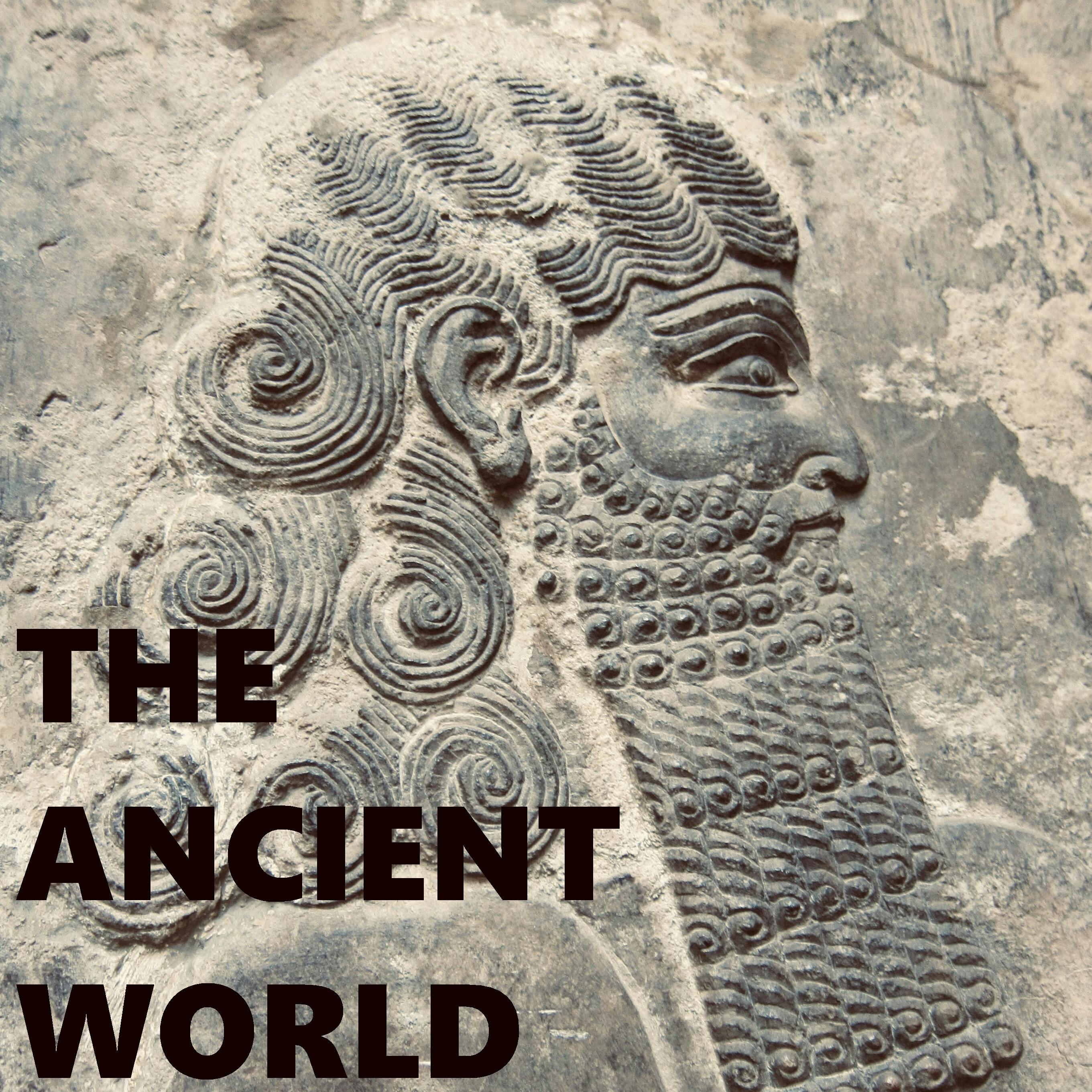
Episode 1 – “Climb the Stone Staircase”
“Climb the stone staircase, more ancient than the mind can imagine” – The Epic of Gilgamesh The Sumerians of Mesopotamia, the Elamites of the Persian plateau, and the Egyptians of the Nile River valley were among the first civilizations to emerge in the ancient world. Learn more about your ad choices. Visit megaphone.fm/adchoices