
The American Story
181 episodes — Page 3 of 4

Ep 81Honor and Oblivion
Only devoted students of history have heard of him, but in the years leading up to the American Declaration of Independence, John Dickinson, next to Benjamin Franklin, was probably the most famous American. He was renowned as a champion of American rights and liberty. His writings during this period did more than any others to defend and define the American Cause. But one decision would cast Dickinson from fame into obscurity.

Ep 80Sergeant York
Sergeant York, the highest-grossing movie of 1941, opened in American theaters in July and was still playing after the attack on Pearl Harbor on December 7. A biographical film starring Gary Cooper as the WWI hero Alvin York, it would receive 11 Oscar nominations and win two. Young men went directly from watching the movie in theaters to the enlistment offices, to sign up for the war that had just come to America. And the hero who inspired them to join the fight was a man of peace.
Ep 79Proclamation: American New Year 1863
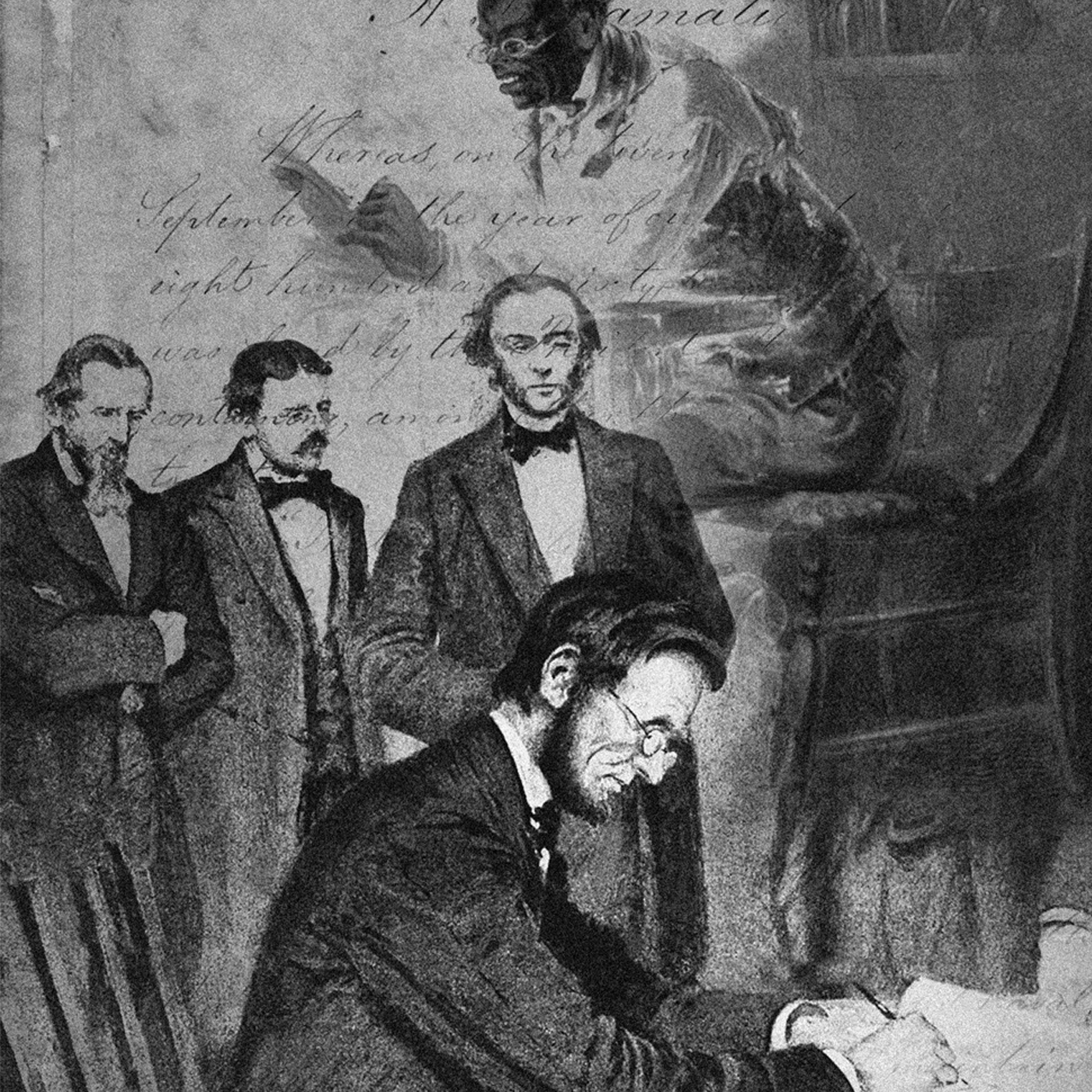
On New Year's Day 1863, President Lincoln signed the proclamation he had promised a hundred days before. Lincoln understood better than anyone the constitutional challenges to emancipation. He took the greatest care to draft the proclamation in terms that could be defended before the highest court in the land. Then in the last weeks of his life, he "left no means unapplied" to getting the Thirteenth Amendment, abolishing slavery, approved by Congress.

Ep 78Silver Markers on a Pew: American New Year 1942
January 1, 1942 had been set aside by President Roosevelt as a Day of Prayer. He had good reason for doing this; it was a dark time. The Japanese had attacked Pearl Harbor just a few weeks before. Then Hitler declared war on the United States. America was suddenly at war with the greatest military powers in Europe and in Asia. British Prime Minister Winston Churchill was Roosevelt's guest at the White House for strategic discussions. They spent a memorable, and very American, New Year's Day together.
Ep 77The Fate of Liberty: American New Year 1777
From August to the last week of December, as David McCullough writes, "1776 had been as dark a time as those devoted to the American Cause had ever known." As the year ended, despite the stunning and historic victory at Trenton the day after Christmas, there was good reason to fear that Washington's army would dissolve and with it any hopes for the American Cause. Washington pleaded with the men to stay on another month. The fate of liberty depended on them.

Ep 76Victory or Death: American Christmas 1776
By summer 1776, the most powerful navy in the world was conveying the greatest British expeditionary force in history across the ocean to suppress the American rebellion. George Washington's ragtag Continental Army seemed no match for this great force. They suffered one defeat after another. Winter was coming on. Enlistments would expire at the end of the year. On December 20, Washington wrote Congress: "10 days more will put an end to the existence of this army."

Ep 75John Wayne
John Wayne began life as Marion Morrison in Winterset, Iowa. After his family made its way to L.A., and an injury sidelined him from USC football, he began working full-time as a prop man for movie studios. His natural strength, good spirit, good looks, and determination carried him through nearly a decade of B-movies before he became a star. Thirty-five years after his death, he was still listed as one of America's five favorite movie stars; he became "indivisibly associated with America itself."

War and Peace
Among the countless millions of human events postponed, rescheduled, or cancelled in the long hard year 2020, one was a gathering scheduled for an eight square mile volcanic island in the Pacific Ocean. The gathering was to be a "Reunion of Honor" commemorating the 75th anniversary of the Battle of Iwo Jima.

S1 Ep 73Relics and Reverence
Abigail Adams recorded that when her husband and Thomas Jefferson visited Shakespeare's birthplace, Jefferson fell upon the ground and kissed it and John Adams cut a chip from Shakespeare's chair. Jefferson and Adams both revered Shakespeare, as did Abigail, and they all understood how necessary it was for a free people to revere what deserves reverence. As this story shows, they also understood that true reverence needs to be complemented by good humored irreverence.

S1 Ep 72To Give or Not To Give . . . Thanks
Every president since Lincoln has issued a Thanksgiving proclamation every year, but on September 25, 1789, when the U.S. House of Representatives had only been operating for about six months, not everyone was sure that Thanksgiving was a good idea.

S1 Ep 71Thank God for being an American
P.G. Wodehouse was one of the best writers in the English language in the 20th century and the funniest. He wrote nearly 100 delightful books, each one of which in perfectly orchestrated sentences, can make you fall laughing out of your beach chair. He became an American citizen in 1955, wrote an autobiography titled "America, I like you." Read anything Wodehouse. You won't regret it.

S1 Ep 70For the Troops
USO stands for United Service Organizations, and it is a beautiful gem of American history and American civic life. It was created in early 1941, when America had not yet entered World War II, but could feel the day coming when it must. Since then they have been working to support our service members from enlistment to deployment and through transitioning back to their communities.

S1 Ep 69Bullets for Ballots: 1860 (3 of 3)
Until the election of 1860, the truths proclaimed in the Declaration of Independence had been the ground of American civic friendship, above all the central truth that all men are created equal. Fidelity to this most American idea held the country together through many divisions since 1776. The Confederate States rejected that idea. America had lost the foundation for civic peace. Ballots gave way to bullets.

S1 Ep 68Ballots for Bullets: 1800 (2 of 3)
The election of 1800 in America came after a decade of bitter and extreme party strife. Each side accused the other of aiming to overthrow the Constitution and preparing the way for tyranny. There was no precedent, including the experience of 1776, for resolving such differences without appealing to bullets. But ballots prevailed and power was transferred peacefully between uncompromisingly hostile political rivals for the first time in human history.

S1 Ep 67Bullets and Ballots: 1776
Americans are being reminded how fragile and precious an achievement it is to establish the legitimate authority of government through peaceful and free elections. But there would be no ballots without the bullets of 1776. We hold elections in America because, as the Declaration of Independence says, we think "the just powers of government are derived from the consent of the governed." But what divided the American people from the British Crown and Parliament in 1776 could not be decided by a vote alone.

S1 Ep 66One for the Road
Streets and roads are very different animals. Willie Nelson sang, "I just can't wait to get on the road again." No one ever sang, "I just can't wait to get on the street again." Songs about country roads hold spacious truths because whether they are red dirt roads or roads with seven bridges, country roads are rich with the mysteries of life.

S1 Ep 65Like a Soldier
Marlene Dietrich was born in Berlin in 1901. In 1930, her performance in the film The Blue Angel made her a star. She moved to Hollywood, starred in six films, one of which earned her an Oscar nomination. Many more films would follow. She refused lucrative contracts from Nazi Party officials to be the leading film star of the Third Reich, became an American citizen in 1939, and devoted herself to doing all she could for American troops during World War II.

S1 Ep 64First Man of the Universe
Benjamin Franklin ran away at seventeen with barely a penny in his pocket. Through hard work and his own genius, he made a life for himself in the printing trade, and was able to retire at the age of 42. He then spent the next 42 years of his life, from 1748 to 1790, pursuing his scientific and philosophic inquiries and doing all he could—and this was a very great deal—to benefit his city, state, country, and world. By the time of his death, he was one of the most famous people in the world.

S1 Ep 63Catching Excellence
The son of an Italian immigrant, Vincent Thomas Lombardi was born in Brooklyn on June 11, 1913. He played guard in the famed Seven Blocks of Granite offensive line of Fordham University in the 1930s before going on to become one of the greatest coaches of all time in any sport. His name is synonymous with winning. His steadfast spirit inspired the nation.

S1 Ep 62Apples of Gold in Pictures of Silver
The Declaration's great American proclamation that "all men are created equal" and the first three words of the Constitution—"We the People"—are profoundly connected. The relation between these two ideas—equality and consent—is the vital center of American political freedom.

S1 Ep 61The Real American Revolution
We are not born understanding what it means to be an American, understanding the idea of political freedom, or knowing about the American Revolution. We have to learn these things. If we don't, the American Revolution, political freedom, and Americans will vanish from the earth.

S1 Ep 60Ninety Percent Mental
Great American philosopher, Lorenzo Pietro Berra, more commonly known as Yogi Berra, was a baseball legend. As a player with the New York Yankees, he won Ten World Series championships, with 18 All-Star games, three Most Valuable Player Awards, 358 home runs and 1,430 runs batted in, which earned him a place in the Hall of Fame. After his playing career, he was one of a handful of managers to reach the World Series in both leagues. But Yogi Berra is best known for —Yogi-isms.

S1 Ep 59As Time Goes By
One of the most popular films in Hollywood history, "Casablanca" seems to be composed of one famous line after another. For over 75 years, it has inspired us to stand up and sing in defiance of tyranny and on behalf of the cause of freedom.

S1 Ep 58The Course of Human Events
Billy Fiske was "the first U.S. citizen to join the Royal Air Force and the first American pilot killed in action during the war in Europe" in World War II. He was a New Yorker who had lived some years in Europe and who had won Olympic gold medals in the sport of bobsledding. He was a graduate of Cambridge University, and he told his British friends in the 1930s as they all could see the storm gathering in Europe, that if war came, "I want to be in it with you–from the start."

S1 Ep 57Known but to God
More than 4 million visitors come to the Arlington National Cemetery every year from across America and around the world and, unless they have their own personal visit to make, the thing they most want to do is to climb the hill to the high ground of the Memorial Amphitheater and visit the Tomb of the Unknown Soldier.

S1 Ep 56Gettysburg
What makes Gettysburg America's most hallowed ground? A delegation of Russian historians at the height of the Cold War seemed to know, when American historians had forgotten.
S1 Ep 55This Was a Man
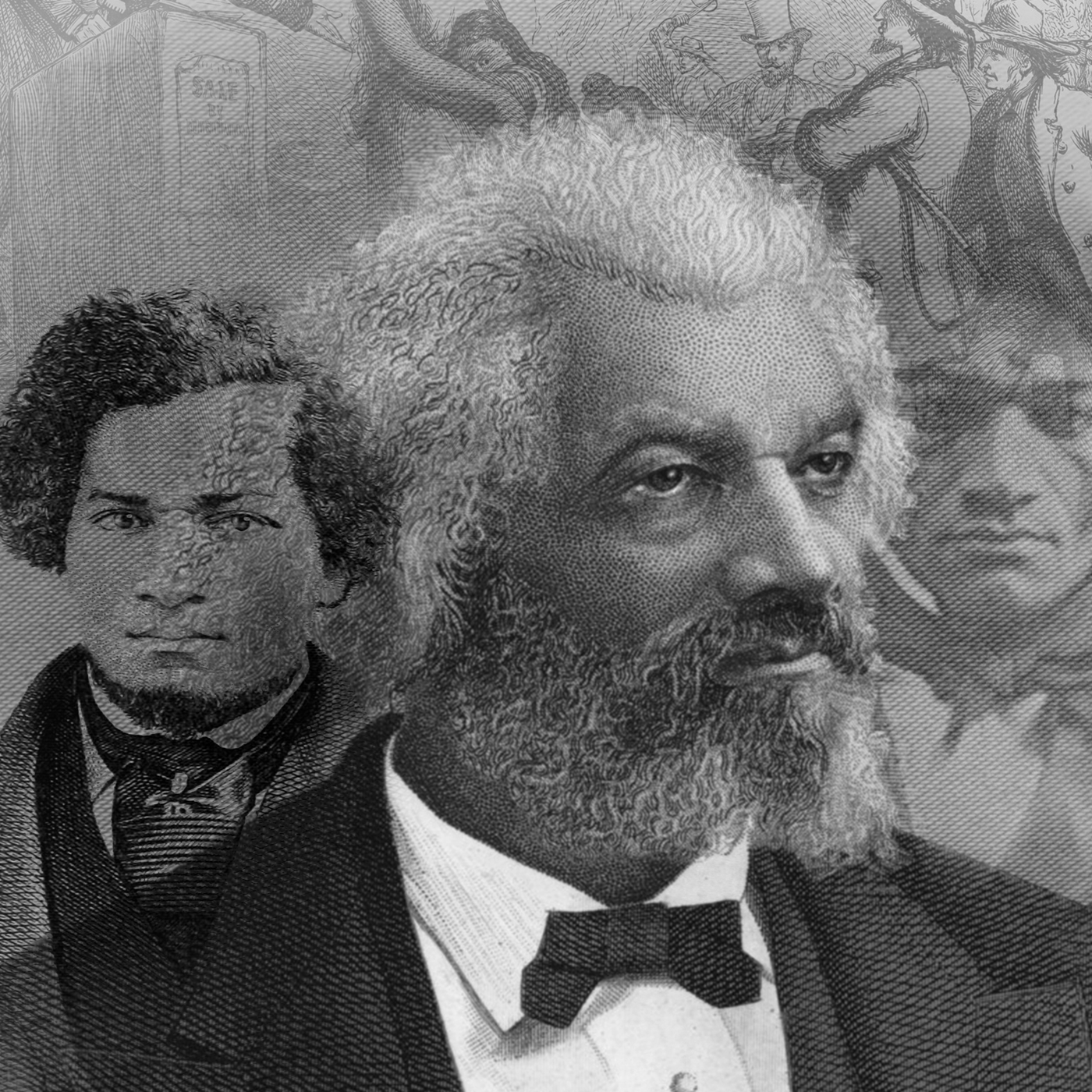
Frederick Bailey was born into slavery in 1818. With determination, courage, some help from others, and good luck, he managed to escape to freedom when he was 20 years old. He made his way to Massachusetts, gave himself a new name, Frederick Douglass, started working as a free man and very soon gave a triumphant first speech to an abolitionist group, which launched him on a career as an anti-slavery speaker and writer.

S1 Ep 54Man's Best Friend
America takes pride in being a land of opportunity—for everyone, including those who suffer the impairments of nature, accident, or tragedy. For those with disabilities, local communities can be supportive. Smart technology can assist. Government can do some things to give them a hand up. Above all, there is the spirit and determination of the individual. And for the blind, there are — guide dogs.

S1 Ep 53Dedication
An old friend of mine has written a book, a very good and deeply learned book, about America. The book is about those truths and the blessings that flow from them, that extend across and bind together generations of Americans in noble civic friendship.

S1 Ep 52Pony Express to GPS
In 1861, the young Mark Twain set out on a great American adventure, a stagecoach ride from St. Joe, Missouri to Carson City in Nevada Territory. Today, he would ride in an SUV guided by a factory-installed GPS system. The adventure would be even greater!

S1 Ep 51Independence Forever!
Thomas Jefferson and John Adams celebrate their last Fourth of July.

S1 Ep 50An Ace You Can Keep
Most of us understand the language of poker, even if we've never played. We know what a "poker face" is, what it means to be "all in" or to "have an ace up your sleeve." Since Kenny Rogers's 1978 hit song "The Gambler," millions of Americans have been singing about poker. It is very much a game of the American West. It has the frontier spirit in it, and it is somehow about life and death and everything in between.

S1 Ep 49American Names
A poem comes to a poet, and he sends it orphaned out into the world, to take its chances. It never knows who or what it might inspire or how it might become part of the world it has stepped into. Stephen Vincent Benet sent his poem, "American Names," out into the world in 1927. Years later the first line inspired a hit song for a new movie. The last line became the title of a best-selling book, then of a song and a movie. All this and more, unexpectedly, from a couple of lines from an orphaned poem.

S1 Ep 48The Club
The Literary Club of Cincinnati was founded on October 29, 1849 and is—as far as I know—the oldest continuously operating Literary Club in America. Members come from all professions and persuasions; what brings them together is their abiding regard for the written word. Attending one of their Monday evening gatherings reminds one how essential private clubs and "associations" have always been to American democracy.

S1 Ep 47How Sleep the Brave
Back in that spring and summer of 1775, when he was just seven years old and the War for Independence swirled around him and his family, John Quincy Adams remembered, "[my mother] taught me to repeat daily after the Lord's prayer [the Ode of Collins] before rising from bed."

S1 Ep 46Hallowed Ground
It's true that memory rests lightly on Los Angeles. But turn east from Sepulveda Boulevard just north of Wilshire onto Constitution Avenue, and you immediately recede from the goings and comings of the eternal present and enter a sanctuary of remembrance.

S1 Ep 45Last Hand
It is hard to know where facts give way to legend in the case of Wild Bill; but some of the things he did in truth, as a frontiersman and lawman, may have exceeded the legends or at least deserved to become legends. The case of Wild Bill seems custom made for the immortal and mystifying words of the editor of the Shinbone Star, in the classic John Ford film "The Man Who Shot Liberty Valence": "This is the West, sir. When the legend becomes fact, print the legend."

S1 Ep 44"Make Cakes!"
During peak hours, in the 300 block of Brand Boulevard in the city of Glendale, in what is called "Metropolitan Los Angeles," you might see a line of eager people making their way into Porto's Bakery & Café. You might see a similar scene in Buena Park, Burbank, Downey, or West Covina. Porto's is a many-splendored gift to the Southland. And it's not just the empanadas; it's the spirit of freedom and enterprise. Rosa and Raul Porto and their children brought this gift to America from Cuba a lifetime ago.

S1 Ep 43Fingertip Memories
Helen Keller was 14 years old when she first met the world-famous Mark Twain in 1894. They became fast friends for life. Keller, who was deaf and blind, loved to listen to Twain tell his stories by putting her fingers to his lips. As she said of Twain, "He knew that we do not think with eyes and ears, and that our capacity for thought is not measured by five senses. He kept me always in mind while he talked, and he treated me like a competent human being. That is why I loved him."

S1 Ep 42The Man of Steel
Faster than a speeding bullet, more powerful than a locomotive…The Man of Steel fights a never-ending battle for truth, justice, and the American way.

S1 Ep 41Our Greatest Poet
When you read Abraham Lincoln, you somehow become more than yourself, you become better. And his words want to be read aloud, too. Start with the Second Inaugural—so beautiful—and the Gettysburg Address—his short ones. They are American poems.

S1 Ep 40Number 42
Each year on April 15, all players in Major League Baseball turn in their regular uniforms and wear one adorned with the number 42. On no other day does any player wear that number; it has been permanently retired. This custom, unique in North American professional sports, has been adopted to honor a man who not only changed a sport, but helped change a country.
S1 Ep 39El Pueblo y el Hombre
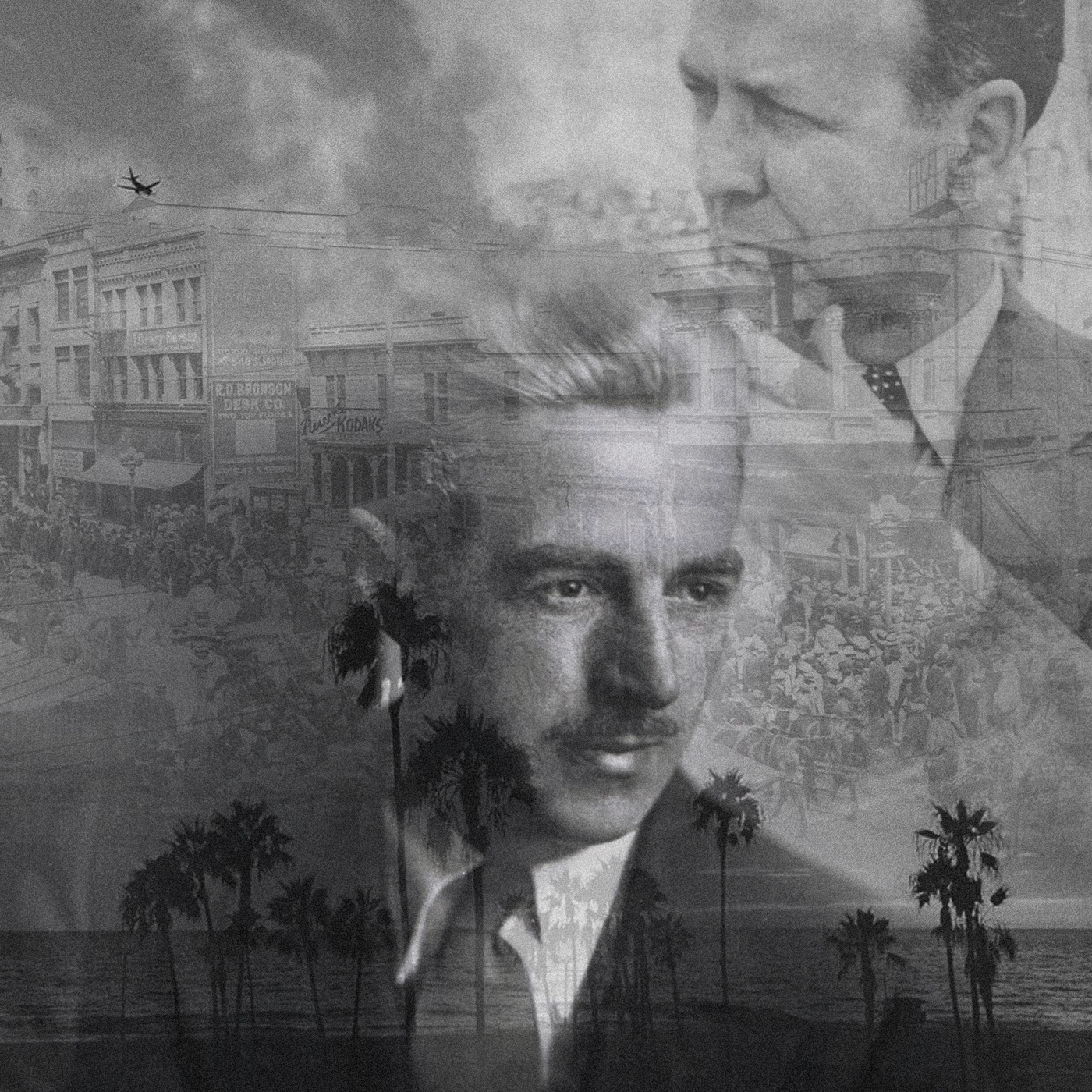
The detective hero, and the detective novel, are not an American invention. But a few authors like Dashiell Hammett and Raymond Chandler made them as American as apple pie. The attitude of Chandler's hard-edged, soft-hearted, wise-cracking hero and the atmosphere of Chandler's Los Angeles were as unmistakably American as Humphrey Bogart, who played Marlowe in the 1946 film version of Chandler's The Big Sleep.

S1 Ep 38Of Birds and Potatoes
If you need a little poetry in your life—and who doesn't?—Billy Collins can be a good place to start. Collins writes unblushingly to attract new readers to poetry and to encourage those who have given up to come back. And he is famously funny. So much so that, because he reads his poems so amusingly and his readings have been so successful and well-attended, he has been called—not always as a compliment—a "stand-up poet."

S1 Ep 37Michael Patrick Murphy
This episode is about an American warship that carries on the name and the work of an American warrior. The ship and her crew operate in more than 48 million square miles of the Pacific and Indian Oceans. The area is more than 14 times the size of the continental United States; it includes 36 maritime countries, 50% of the world's population, and the world's 5 largest foreign armed forces.

S1 Ep 36On the Way to BB's
If you are walking down Broadway in St. Louis on your way to BB's Jazz, Blues, and Soups, you will awaken to many American memories, among them a poem you probably already knew.

S1 Ep 35Standin' on a Corner
Things happen to a town, and then it's never the same. Or it's the same in some new way. Whatever it was before, it's hard to think of it now without the new thing. Like the Parthenon in Athens or the Statue of Liberty in New York. It comes along and suddenly forever it is part of the identity of the town it came into. In the case of this town, it was a song. Or a few lines from a song.

S1 Ep 34Bravest of the Brave
When you visit the historic Mound Cemetery in Marietta, Ohio, the guidebook informs you that, in addition to the ancient burial mound, the cemetery "contains more Revolutionary War officers' graves than any other graveyard in the United States."

S1 Ep 33Charlie Brown
There is more of Charlie Brown in most of us than there is Abraham Lincoln or Michael Jordan. We identify with his failures and suffer with him. But it isn't just his failures. Charlie Brown is resilient. He never quits. Despite setbacks and moments of despair, he is at heart an optimist — and one of America's greatest success stories.

S1 Ep 32Beautiful Goodness
As a Captain of Volunteers in the Black Hawk War, the 23-year old Abraham Lincoln managed in a desperate moment to keep some hard-bitten men—who had elected him—from committing murder. They had chosen him as captain because he was the best man among them, the one most worthy of their esteem. Lincoln earned it in no small part by outrunning, outboxing, and outwrestling them, but they knew, when they listened to the better angels of their natures, that there were much more important reasons to esteem him.