The Adrenaline Zone
71 episodes — Page 2 of 2
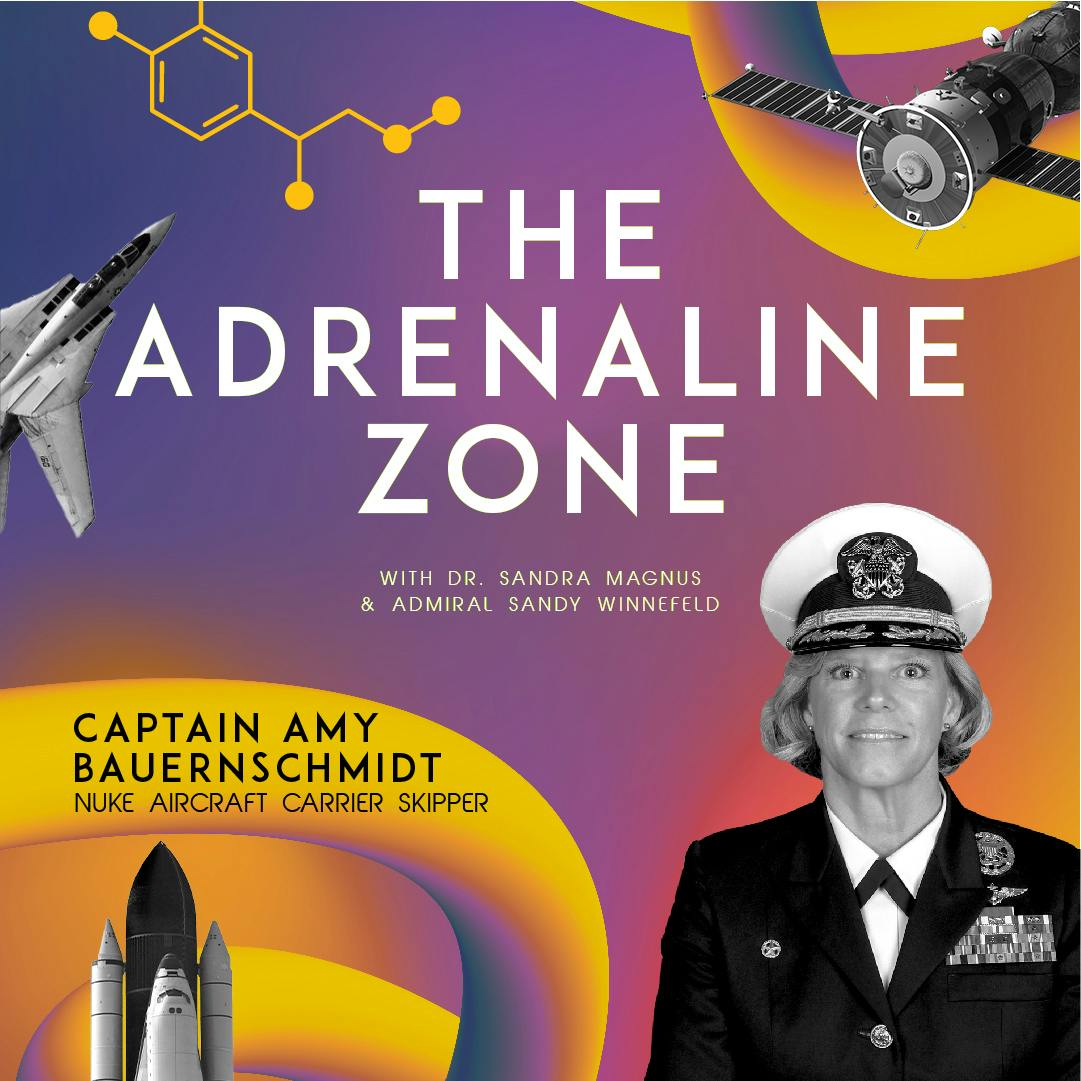
S2 Ep 20Nuke Aircraft Carrier Skipper with Captain Amy Bauernschmidt
On today’s episode of The Adrenaline Zone, Sandy and Sandra welcome Captain Amy Bauernschmidt, the first woman to ever serve as the Executive Officer and then as the Commanding Officer of a U.S. Navy aircraft carrier. Amy starts the conversation by taking us all the way back to her beginnings and telling us about her journey of becoming a naval aviator. During the time she spent at the Naval Academy, Amy got a chance to go through different types of training and see many aspects of the Navy. Since being a naval aviator allows you to explore a lot of possible pathways after squadron command, one of them being entering the pipeline to become a carrier CO, Amy decided to pursue this path and become the first woman to command an aircraft carrier.Next, Amy talks about different leadership challenges, from commanding USS San Diego as preparation before switching to USS Abraham Lincoln to studying naval aviation and getting nuclear power training. She says these experiences were challenging, but extremely beneficial to her career. Then, she opens up about the major risks that can occur when commanding an aircraft, emphasizing the importance of mutual support and understanding in a navigation team. To put it in her words, ‘it is all on the Commanding Officer's shoulders, but you're never doing any of it alone’. Finally, Amy shares her experience of being a woman in the Navy and the first woman to command an aircraft carrier. She believes that the stakes have changed for women and that she is really optimistic about where the Navy is going with women.The Finer Details of this Episode: Becoming a naval aviator and then the first woman to command a US aircraft carrier The USS. San Diego as preparation for USS Abraham Lincoln Studying naval aviation and getting a nuclear power training The importance of mutual support in a team Leading 5000 people towards the same goal The experiences and recognition of women in the Navy Quotes:“One piece of advice I was given by some at the time, folks that had completed command was, 'Hey, think about what comes after that.'”“It’s the folks above you that understand the expectations and the standards that ensure that as you grow up, and you get higher and higher qualifications, that you are getting done exactly what needs to be done for, frankly, in one of the most dangerous places in the world, which is the flight deck of an aircraft carrier, but it's also amazing.”“Yes, it is all on the Commanding Officer's shoulders, but you're never doing any of it alone. And I do have an incredible navigation team and incredible reactor team and incredible air department team.”“I think leadership is hard because it is people and not everyone is motivated by the same thing, not everyone responds in the same way. And when you're talking about 5000 people, it's a lot of people to try to move in a direction.”“Come to my ship, you will see the next generation, and you will have absolutely no concerns whatsoever about where this country is going because they're incredibly amazing human beings.”Links:The Adrenaline Zone HomepageThe Adrenaline Zone on InstagramThe Adrenaline Zone on TwitterThe Adrenaline Zone on TikTokAmy Bauernschmidt on LinkedIn
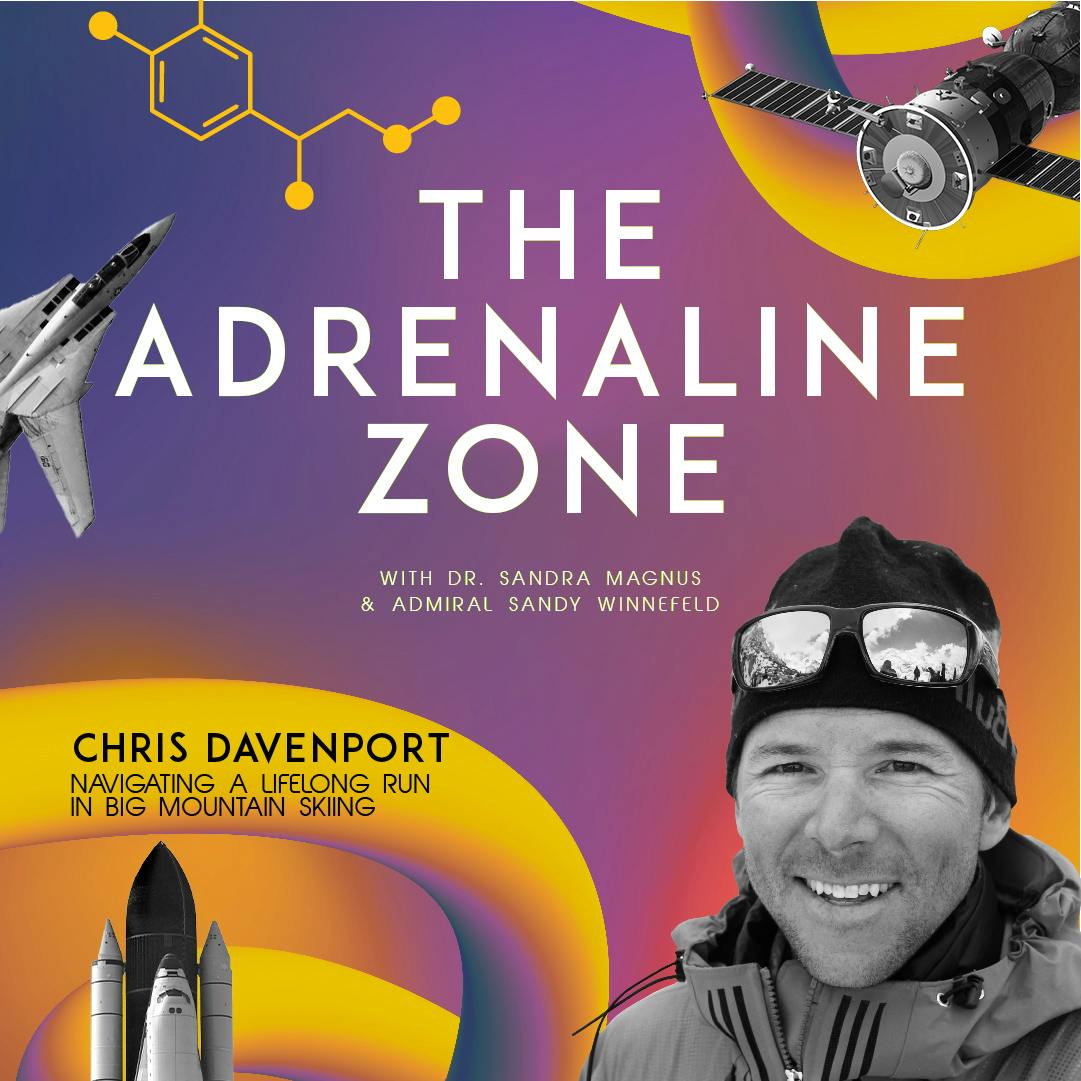
S2 Ep 19Navigating a Lifelong Run in Big Mountain Skiing with Chris Davenport
On today’s episode of The Adrenaline Zone, Sandy and Sandra interview two-time World Champion skier and lifelong outdoor enthusiast, Chris Davenport. Widely recognized as one of the top skiers in the world, he is the first person to ski all fifty-four of Colorado’s 14,000-foot peaks in less than one year. Chris starts the conversation by talking about his earlier skiing experiences. As he recounts, he was exposed to all the joys of being outdoors very early on so the passion for outdoor activities was instilled in him at a young age. Then, Chris discusses the potential risks and challenges that sports like skiing involve. According to him, the trick is to get smart at handling risk.Next, Chris talks about the "goosebump" moment that all ski athletes experience – the feeling of looking down a huge mountain, seeing a big crowd cheering you on, and observing the surroundings. Believe it or not, Chris still gets butterflies in his stomach in moments like these which is one of the many indicators of his love for skiing and ski racing. Then, Chris discusses one of his biggest accomplishments, becoming the first person to ski fifty-four mountains in one year. He even wrote a book about it, called Ski The 14ers, where he told a story about this once-in-a-lifetime adventure. Finally, Chris proceeds to talk about the importance of efficient equipment for skiers. He also opens up about his current projects and activities. He’s still very much spreading his passion for skiing and teaching others to understand the language of the mountains.The Finer Details of this Episode: Pursuing a childhood passion as a career The racecar driver analogy and learning to mitigate risks Understanding the language of the mountains Skiing fifty-four mountains in one year The importance of efficient ski equipment Turning skiing into a career Quotes:“Part of the reason I loved doing this sport and continue to love being out in the big mountains is I love looking at it holistically: How do we get the best possible outcome from the thing that we're trying to do, whether it's climbing a mountain or skiing back down a mountain? And what are the things that could trip us up trying to identify those potential risks, and then figure out how we mitigate them.”“The goal of getting to the top or skiing back down is almost secondary to the experience of just being out there. So, when I think about it that way, and I go out and just put one foot in front of the other in the mountains, I'm just always having a good time, it's sort of managing expectations is what it is. You keep those expectations low, you generally exceed them, and then that's a good thing.”“You could be a world champion, you can be an Olympic champion, you can have all this experience. But you still get those butterflies when you're in the gate, because you care, you love it so much. You want to do your best.”“Skiing down is so much fun. It's so free and can be intense, but in a good way.”“I've had such a wonderful career. It's been so blessed. And I really love giving back nowadays in a number of different ways.”Links:The Adrenaline Zone HomepageThe Adrenaline Zone on InstagramThe Adrenaline Zone on TwitterThe Adrenaline Zone on TikTokChris Davenport WebsiteSki The 14ers Book
S2 Ep 18Swimming with Sharks and Loving It with Dr. Jess Cramp
On today’s episode of The Adrenaline Zone, Sandy and Sandra welcome Dr. Jess Cramp, a marine biologist and shark researcher. Jess is also the founder of Shark Pacific, which is a non-profit organization for studying and protecting sharks. Jess kicks off the episode by telling us about her exciting journey from quitting a high-paying job to beginning an adventure of her lifetime –sharks’ preservation. She also opens up about her childhood and how it helped her learn she should always listen to her gut and pursue her passions.Jess debunks some popular shark myths and then shares the details of her day-to-day job activities, from catching and tagging sharks to tracking their movement and protecting them. She says that despite popular belief, sharks are not necessarily dangerous and won’t probably even come close to you while you’re diving, especially if you don’t have any bait on you. Then, Jess proceeds to talk about the importance of preventing overfishing, which is currently the greatest threat to sharks. Finally, Jess points out the true impact of preservation measures and why it’s important to advocate for shark protection.The Finer Details of this Episode: Leaving a stable job to make a change in the world Discussing the first (and the most important) shark experience Debunking popular shark myths The importance of preventing overfishing and protecting sharks Quotes:“There were a bunch of grey reef sharks circling me and following me. And I wasn’t filled with terror. I thought it was the most incredible experience just to have these sharks just so curiously following me. And then, as serendipity would have it, there was a marine biologist on the boat. And we had been talking a bit about the plight of sharks, and I've learned a bit about it as well. But it, I suppose, clicked for me that, yeah, it's something that maybe I could do.”“I think most folks think that my life entails shark swimming and beautiful clear water, and yes, it does do that from time to time. But the majority of my time is spent on fishing deck boats, large and small. And that is because I'm tracking the movement patterns of sharks, and in order to do that, I need to catch the animals and place the tag on them. And so that mostly happens from a boat.”“Just to get back to your main question of how dangerous are they. My favorite answer? It depends. If you're just out diving, you're very lucky a shark could even come up to you. In fact, most of the footage that you see on nature documentaries, and in particular, with people interacting with sharks, they generally have bait. And if they come up and check you out on a dive, you're very lucky. And so, I always considered that, instead of us being afraid, we should be actually quite thankful that we do get the opportunity to see them in the wild without bait.”“The short answer is you read the situation like you do in any job. You know when it's looking risky, and you make a call based on all available factors, such as how far do I have to swim back to shore, or is there a boat right here? Or am I alone? Is there another person? Do I have anything to poke a shark away with? You get a little space, and you make a call based on your experience and situation.”“I'm not a huge fan of the hand feeding operation. It's just not necessary to experience that interaction. To experience a positive interaction with sharks, I don't think it's necessary to hand feed them, and when people are touching them, putting their hands all over them, I'm not a huge fan of that. They are wildlife and should be respected as such.”Links:The Adrenaline Zone HomepageThe Adrenaline Zone on...
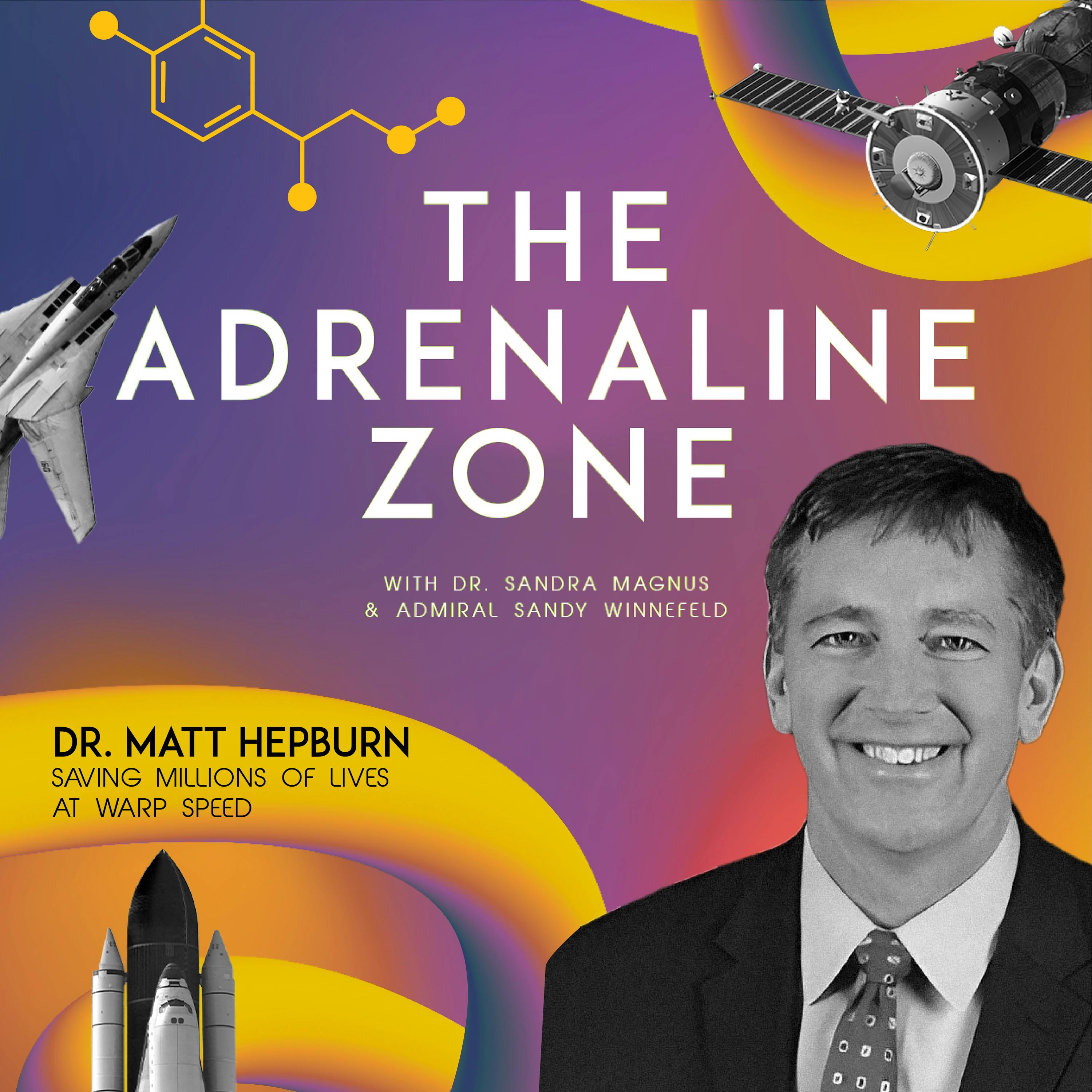
S2 Ep 17Saving Millions of Lives at Warp Speed with Dr. Matt Hepburn
On this week’s episode of The Adrenaline Zone, Sandy and Sandra are joined by former army doctor and infectious disease physician Matt Hepburn, who led the COVID-19 vaccine development effort with Operation Warp Speed. Matt opens their conversation by sharing how his parents instilled in him a sense of service to others and his country that led him to a career in military medicine, taking him from the ROTC in college to working across the US government. He speaks in detail about his work with DARPA and its philosophy of taking risks to encourage breakthrough innovations before discussing how Operation Warp Speed also balanced risk with a commitment to safety to make COVID vaccines available as soon as possible. Matt then discusses the challenge and rewards of bringing together different cultures of expertise from medicine and the military to work on the COVID response and his role as translator between those two worlds.Next, Matt gives insight into the logistical challenges of distributing the COVID vaccines and explains that the team’s military elements were instrumental in this respect as they have great experience and skill in operational planning. Not only that, but he points out that military leadership teaches you to make decisions in the face of uncertainty and take action where others might hesitate, something that was crucial given the unpredictable development of the pandemic. Then Matt discusses the difficulty of effectively getting the vaccine message out to the public and how fear and sensationalism can distort perceptions—but he also sees the hope in this situation and the opportunity for people to take more responsibility for their own health. He also addresses what the future might look like with COVID and how the government is dealing with the new monkeypox outbreak while fighting against the public’s pandemic fatigue. And finally, Matt reflects on the importance of risk takers in the effort against COVID and his hope that such people are encouraged to keep going against criticism because society needs those who are willing to take a leap in the face of uncertainty.The Finer Details of this Episode: Balancing innovation, risk, and speed in a pandemic The logistical challenges of distributing vaccines Making decisions in the face of uncertainty Politicization and public perception Dealing with the monkeypox outbreak Quotes:“It’s been an incredibly rewarding career because the mission or the purpose is to serve those who serve us. So I think we have a solemn obligation to protect those that are in harm’s way and to take care of their families as well. And I think one of the best ways to do that is offer them world-class health care.”“The mantra of DARPA is ‘breakthrough innovation for national security.’ The DARPA leadership had, I think, the prescience and does have the prescience to say that pandemics, outbreaks of biological threats are national security, one of our greatest national security threats and challenges. But if we truly want to be breakthrough, you have to take risks.”“A lot of people, especially, you know, in large organizations, are very hesitant. They want, they need more information. ‘Well, we need more data. We’re not going to make this decision. We’re going to postpone this, we’re going to postpone that.’ And I think military leadership really teaches you, you’ve got to act. And you’re gonna act on limited information, you’re going to have as much at the time, but you have to act.”“You can’t motivate people by fear. You know, a lot of people said, ‘Well, why don’t we prepare for pandemics?’ Well, people don’t want to prepare, you know, and that’s an issue that we’re dealing with now. And like, how do we prepare for the future?”Links:<a...
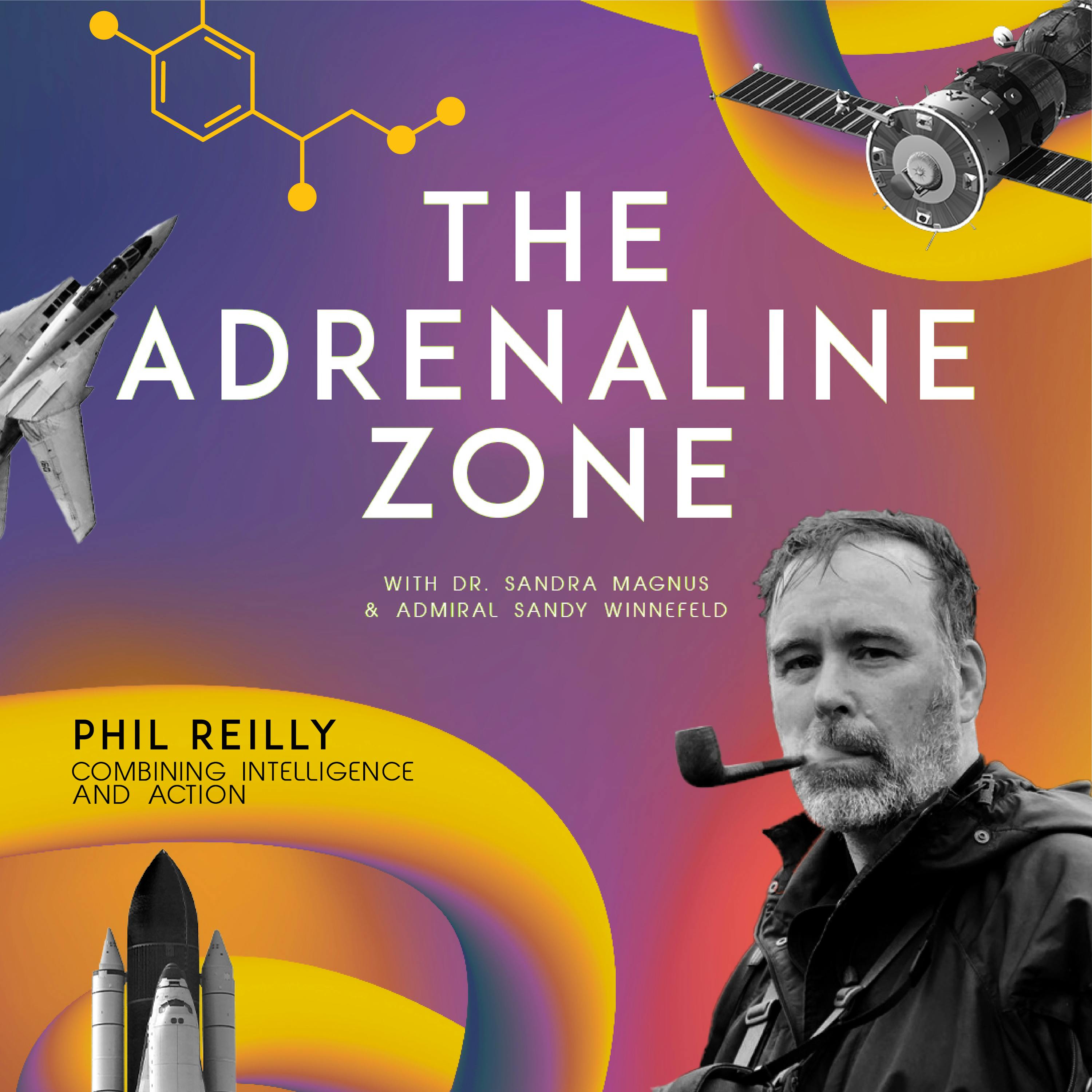
Ep 16Combining Intelligence and Action with Phil Reilly
Sandy and Sandra’s guest this episode is Phil Reilly, a former CIA paramilitary officer who was the first American on the ground in Afghanistan in the wake of the 9/11 attacks. Phil starts by explaining a little about the history and organization of the CIA and how the paramilitary fits into it. He also talks about the tough vetting process to get into the CIA and how recruits are analyzed to determine which area they’ll be placed in. Phil then shares his own journey to the CIA, including his time on a HALO team as a Green Beret, his choice between the Navy or the Agency, and his paramilitary and operational training. He also shares some details of his experiences in Central America in the 80s and with operating under an alias persona, something that would likely not be possible in our age of ubiquitous technical surveillance and global connectivity.Next, Sandy asks Phil to discuss his experience on the ground in Afghanistan after the 9/11 attacks. Phil explains that he was chosen to be on the Jawbreaker team that was picked just two or three days after the attacks and discusses the team’s mission to prepare the way for US military boots on the ground. He also talks about some of the risks and concerns they had to deal with and his personal feelings on responding to a direct attack on US soil. Then he discusses how the environment changed after he returned as the Chief of Station of Kabul, especially in relation to the Afghan people and their relationship with the US troops, before addressing his feelings on how the US military’s presence in Afghanistan ended. And finally, Phil points out some of the benefits of a career in the CIA, including having a real mission and getting to see the world.The Finer Details of this Episode: The paramilitary’s role in the CIA Military experience and CIA training Phil’s experiences in Central America The post-9/11 mission in Afghanistan The benefits of a career in the CIA Quotes:“If you go down to a JSOC unit, a special mission unit of the United States Government today and put a hundred guys in a room and say, ‘Who here’s been in CIA?’ you may not get a hand raised. But if you go to ground branch, and you ask how many people served in the US military, a hundred percent of the hands will be raised.”“You’re going to also get the operational training as a case officer, as a collector of intelligence, of being able to go out and spot assess, develop, and recruit foreign sources for CIA, so you are dual-hatted. Paramilitary may be your primary focus, but you also have the case officer skills, so that is all trained, and you’re provided that training at the farm.”“The mission was straightforward. Get to the Northern Alliance, bring them to our side, and prepare the way for the introduction of US military boots on the ground, as well as collect intelligence on Al-Qaeda, the perpetrators of the events of 9/11.”“I tell people, young people, that you’re never going to be a millionaire working for the United States Government, regardless of what branch you go to. But if you want to see the world, you want to have a real mission, be able to go do a lot of different things, then join CIA.”Links:The Adrenaline Zone HomepageThe Adrenaline Zone on InstagramThe Adrenaline Zone on TwitterThe Adrenaline Zone on TikTok Freedom Consulting Group
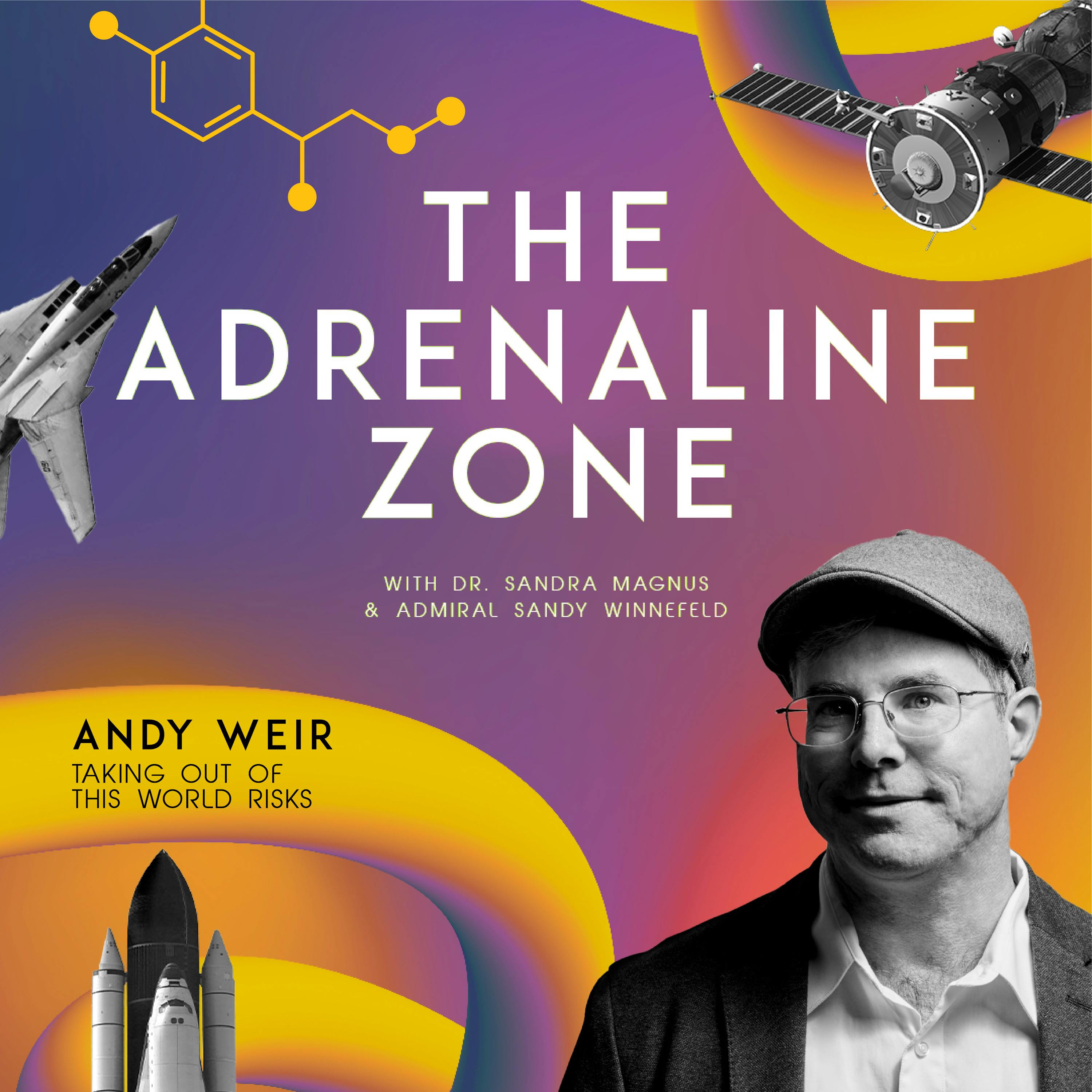
Ep 15Taking Out of This World Risks with Author Andy Weir
Sandra and Sandy are excited to welcome Andy Weir, renowned author of Project Hail Mary and, more famously, The Martian, to the podcast. Before he became a self-published, best-selling author, Weir spent two decades working as a software engineer, and it wasn’t until he was laid off that he actually got to pursue writing as more than just a hobby. And so The Martian was born. After creating weekly blog posts to share his work, thousands of his fans requested he publish it on Amazon - and the rest, as they say, is history.In no time, The Martian was a bestseller, and on its way to becoming a massively popular movie. Since completing The Martian, Weir has kept his eyes trained on worlds beyond ours. Project Hail Mary and Artemis really hone in on space as a character, and Weir acknowledges as much when he talks about his books’ structure. As a beloved author in the world of science fiction, the pressure is on now that he’s writing his next book. His advice for himself? He’s taking the same tip he gives to budding writers: Just put pen to paper. After all, you actually need to write to consider yourself a writer. The Finer Details of This Episode: Andy’s experience writing gaming software Starting his blog The onset of the internet and self-publishing Closing quick book and film deals The writing process for the The Martian and Artemis Advice for budding writers Quotes: “Many people don't think of writing as risky. But those who have tried to get the attention of editors and publishers know the crushing disappointment from endless rejections and unflattering critiques.”“I just started writing on the side for fun, you know, I would write short stories, or I made web comics and stuff like that. And that was my hobby. And then as the internet got more and more prevalent, I ended up with more and more readers. And eventually, I wrote the Martian.”“It's very easy to self publish with Amazon, and I did that. And then it started really selling on Amazon and became a Kindle best seller, and then kind of a best seller in books in general.”“So I had 3000, expert fact checkers; all of them would check every claim I made. If I made any mistakes, they were on it right away, which was great so that The Martian came out being extremely accurate, except for a few violations of physics that I did on purpose for narrative purposes.”“The film deal and the book deal came together four days apart.”“So I was basically told by everyone, ‘Don't get excited. They're not actually going to make the movie, but enjoy the money that you get…’ So I zeroed in on the book and just did not even pay attention to the movie process.”“Once they start shooting a film, they won't cancel in the middle, except for extreme circumstances, because it's cheaper. Even if they regret starting the process. It's cheaper for them to finish the film.”“I have to tell you that The Martian, that movie is the only one that made me feel homesick for space.”“I got 70,000 words in… before I realized that it sucked. It was just this meandering plot that wasn't going anywhere… It was painful to shut that down.”“It's easy to think a story is perfect when it's in your head. But when you start putting it on paper, that's when you start running into the problems and that's when you start solving the problems.”Links: The Adrenaline Zone HomepageThe Adrenaline Zone on InstagramThe Adrenaline Zone on Twitter<a...
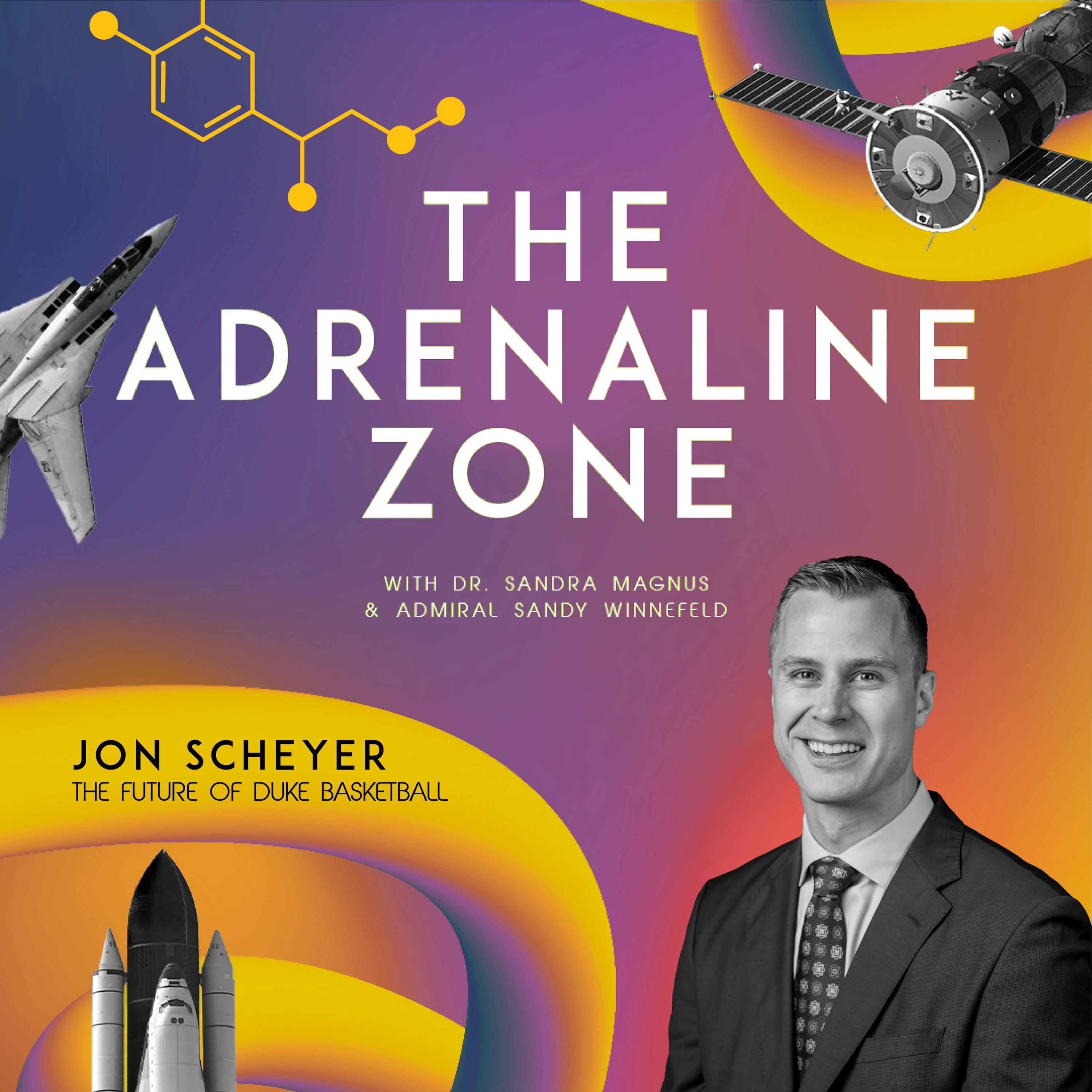
S2 Ep 14Perseverance, Competitiveness, and Character: The Future of Duke Basketball with Coach Jon Scheyer
Jon Scheyer, former professional player and newly anointed head coach at Duke, joins the conversation with Sandra and Sandy today. He provides us with a sneak peak into the world of collegiate basketball, Coach K’s diligent and personal prep work, and his vision for the storied Duke basketball program. As long as he can remember, Scheyer has been competitive; maybe too much so, if you ask his mother. So it’s no surprise that he went on to have an illustrious career. From record breaking high school player and Duke recruit to international professional player and now the youngest head coach in Division 1, Scheyer attributes his success to his strong competitive edge. He’s also one of the lucky few who had the chance to learn from and work with living legend, Mike Krzyzewski. Believing in the power of preparation, Coach K gave his all to the Duke program, and Coach Scheyer hopes to now do the same. At the end of the day though, following in the big footsteps of Coach Mike Krzyzewski is no light task. Scheyer’s response to the critics and online hate? He says he has a short memory. He simply moves on and gets to work - a model approach that will benefit his players and program immensely for years to come.The Finer Details of This Episode: His competitive perseverance His high school and collegiate basketball career Scheyer’s life changing eye injury Playing basketball abroad Coach K and the power of preparation Coaching at Duke Battling adversity Quotes: “He's not only the youngest coach in Division One, which puts him in the spotlight, but he's had his work cut out for him and his first few months, backfilling a raft of departing talent and molding Duke's longstanding program to his vision.”“When it came to free throws or the work on the court, that never was an issue for me.”“I was supposed to be playing NBA Summer League with the Miami Heat. I was in the hospital in Chicago, getting heavy doses of steroids trying to get my eyesight back. So it really knocked me back.”“I felt like when my injury happened, it was my opportunity to help others reach the goal that I just missed out on. And so it's been a pleasure for me this year. We had five players drafted in the NBA.”“He is a machine when it comes to his daily preparation, after a game, before practice, whatever it may be.”“Now in the world we live in with social media, our games are on ESPN. You're 18 years old, and you get criticized. That's a different feeling. It's not a high school game anymore.”“It's good to have a bad memory, right? Like a pitcher who gives up a homerun. Move on.”Links:The Adrenaline Zone HomepageThe Adrenaline Zone on InstagramThe Adrenaline Zone on TwitterThe Adrenaline Zone on TikTokJon Scheyer on Instagram
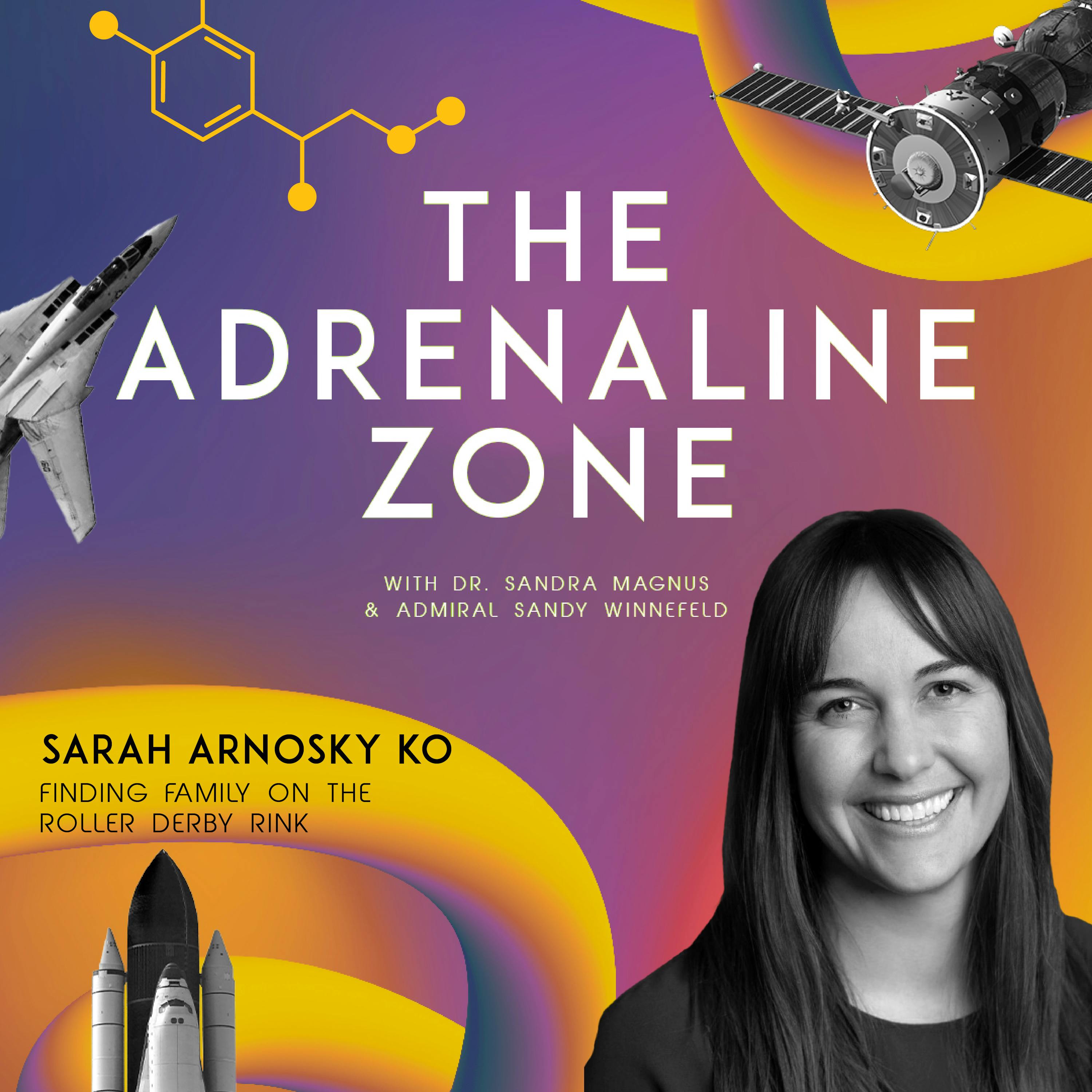
S2 Ep 13Finding Family on the Roller Derby Rink with Sarah Arnosky Ko
For her day job, Sarah Arnosky Ko is vice-president of Greater St. Louis Incorporated, where she helps bring the business community together in the Gateway City. But in her spare time, she’s known as Bricktator, a star player for the St. Louis-based Arch Rival Roller Derby team. Today, she joins Sandy and Sandra to give us all the lowdown on how roller derby works, what drew her to it, and why the sport is growing in popularity around the globe.First up, Sarah tells us about the origins of roller derby, way back in the 1930s, and explains how the sport works, including how you score points and what a jammer is. She also shares some of her experiences of traveling for competitions and coaching, and talks about roller derby’s global growth trajectory as a sport that seems to naturally intrigue people. That includes Sarah, and she shares the story of how she got drawn into roller derby after watching a match and becoming fascinated by the powerful women playing it.She also gives us some inner details about roller derby, including the significance of the skaters’ names, how they communicate on the rink, and how they deal with risks and injuries. And, for those who, like Sarah, find themselves interested in becoming a skater, Sarah explains the training newcomers undergo, emphasizes the welcoming atmosphere roller derby provides, and reassures Sandra that there’s no upper age limit to becoming a skater! And finally, Sarah tells us what she and the team do to psyche themselves up for, and wind down, from a tournament (and lets us in on roller-derby afterparties as well as the secret of zombies-versus-robots competitions).The Finer Details of this Episode: The mechanics of roller derby Roller derby’s growth Sarah’s travels with the sport Skater names, secret codes, rules, and risks How to get started in roller derby How the team psyches up and winds down Quotes:“It takes everyone on the team to score points because it is hard. You are literally throwing your body in between other bodies, trying to get past them or to stop them. And so it really is something where you have to be fearless in order to really be successful in this sport.”“One of the favorite places I never expected to go was a city in Spain called A Coruña, which is in northern Spain. It’s green, it was beautiful, and it was on the ocean. And we really got to swim in the ocean after games as our, quote, ice bath, you know, because it was a little bit cold. But every time we go someplace, we really get to experience a little bit of what it has to offer.”“The speech that you really get is like, this is fun, we will be your family. And it’s really not a matter of if but when you get hurt in some capacity, right? Like, we have people around you that can support you. But know that roller derby is rad. And we’re excited you’re here.”“At the end of the tournament, there’s often an afterparty, and we always like to have themes for our clothing. And so, as a team, we’ll go out all decked out in, like, outer-space outfits, or we’ve even had ‘dads on vacation,’ where we have our cargo shorts and button-up shirts for our afterparty. So we really like to, you know, after we work hard, we go have some fun, too.”Links:The Adrenaline Zone HomepageThe Adrenaline Zone on InstagramThe Adrenaline Zone on TwitterThe Adrenaline Zone on TikTokArch Rival Roller Derby Homepage
S2 Ep 12The Wild Risks of Fighting Wildfires with Kate Dargan Marquis
On today’s episode of The Adrenaline Zone, Sandra and Sandy are joined by Kate Dargan Marquis, who has made a career out of the complex and dangerous business of wildland firefighting. Kate kicks things off by discussing the structure of roles in the wildland firefighting world, the situations they respond to, and the training involved, including constant heat conditioning. She then steps back in time to share how she got into firefighting by volunteering as a smokejumper in the summer before college—one of very few women at the time—before discussing some of the challenges she’s faced more recently at the high level of the firefighting business. In particular, she talks about the tensions between reducing environmental impact and protecting lives and how that will be the central problem for firefighting in the next twenty to thirty years as climate change continues.Kate then moves on to discuss the cycle of wildland fire and how the teams respond, describing in detail the processes that unfold on a bad fire day. She also addresses how risks are mitigated, from the uniforms that firefighters wear to the equipment they carry and how training focuses on awareness that fire can become unmanageable in an instant (especially since fires are burning more severely than they used to). This unprecedented fire behavior is taking a toll on today’s firefighters, and the group discusses mental health in the wildland fire community, including the rise in suicide rates and how firefighting is a less rewarding job than it once was. However, Kate notes that leaders and departments in the community are now acknowledging these issues and taking steps to help its members get support and treatment. And finally, Kate discusses her journey as a woman in the male-dominated world of firefighting and gives some advice for those interested in getting into this risky but valuable profession.The Finer Details of this Episode: Wildland firefighting roles and training Risks and tensions in the firefighting business The cycle of wildland fire and how teams respond Risk, the unexpected, and mental health issues Kate’s experience as a woman in the firefighting world Quotes:“Imagine the sun is setting over the Pacific. It’s a massive fire out there. It’s a line almost a mile long of fire engines threading their way up the mountainside in the twilight and massive flames on the hill behind us, and it’s like, oh, this is so for me. I’m doing it.”“When it comes down to the choice of prescribed fires or burnt homes, people will always say, ‘I’m not willing to take that risk.’ And so, it’s theoretical when we’re talking about it legislatively, but when it gets to communities, and they feel like they’re threatened, they want the firefighters there.”“They’re out there for weeks at a time, repeatedly being deployed to large fires for lengthy periods of time, not able to get home, not able to rest. And I want to go back to the smoke environment that they’re operating in. Like, they’re not on assisted breathing. They’re breathing difficult environment toxins for weeks at a time. It’s a very real problem, and certainly diagnosed PTSD illnesses and suicide rates are way up in the wildland fire community.”“I think if you talk to a lot of women who succeed in male-oriented professions, a lot of them have a similar story. If you can make it through the first years and find your footing, you know, if you can survive those first few years of figuring it out, you probably develop a respect and a camaraderie with those others.”Links:The Adrenaline Zone HomepageThe Adrenaline Zone on Instagram<a...
S2 Ep 11Catching the Biggest Wave with Pro Surfer Jamie Mitchell
On this episode of Adrenaline Zone, “Sandy” and Sandra welcome big wave surfer, Jamie Mitchell to the podcast to talk about his late start in surfing, the risk in big-wave surfing, and climate change. He opens up the episode by recalling his childhood growing up in Coffs Harbour in Australia and how he has been a fish out of water since he could remember - reading the ocean and its currents is almost second nature to him now. Although he surfed every once in a while as a child, he was predominantly a long distance paddle boarder; it wasn’t until his mid 30’s that he really found an affinity for surfing.Now after having much success in the industry and having traveled the world in search of the perfect swell, Mitchell is familiar with the risk associated with the sport. He’s even had to take courses on breathing underwater and how to maintain composure under extreme duress. He notes that he’s survived some of his accidents thanks to this preparation. The group go on to discuss Mitchell’s philanthropic work partnering with Surfline and creating Seven Crossings to combat and raise awareness for climate change. Drawing this episode to a close, Winnefeld and Magnus ask about how he prepares to surf. His answer? Beyond checking his equipment, he doesn’t really do anything special. After all, he knows that any attempts to create control in the face of Mother Nature are largely futile.The Finer Details of this Episode: Growing up in Coffs Harbour in Australia Jamie’s late start surfing The risk in big wave surfing Chasing the perfect swell Paddleboard racing Partnering with Surfline Preparing to surf Quotes:“Australia's Jamie Mitchell is one of the small cadre of big-wave surfers who faces these risks routinely. Not only is he an amazing surfer, he is arguably the best long distance paddling competitor ever, having won that 32 mile Molokai to Oahu race 10 straight years.”“I've said it before, it's like running and jumping off a six story building, trying to hold your breath and then having a crocodile deathroll you under the water while you're trying to get to the surface. You know, I mean, like, it's like a car crash on the water.”“If I didn't have the knowledge of how to understand just taking sips of air, relax, I think I would have panicked and died. I really do.”“So it's just this really intense mental endurance race, and I thrive in those situations. I think I was born to be in those situations, you know, and I loved it. Once I started winning, I got addicted to it, and I just wanted to get to two. Then I wanted to get three.““It's interesting that it's half mental and half physical out in Hawaii, and you, like the ancient Islanders, you're reading tides, currents, and that. If you don't do that, well, that's your competitive edge, because most of the guys are in pretty good shape.”“I actually started a company with a friend of mine, Zach Porter, called Heavy Water Surf, and we're actually working with Surfline, creating more opportunities for big-wave surfing, you know. So that's all about to come to fruition in the next month or so.”“We just put out a six part webisode series on my YouTube channel that shows each day that we did it. I paddled five days. I paddled over 170 miles over five days. And yeah, we just tried to raise awareness for those guys.”“You don't get complacent, but you get comfortable in that space that you're in. And then I think once you're comfortable and you've got that experience, you can really excel at what that is that you put your mind to.”“There's something about the salt water and the ocean that is just very therapeutic. And even being 30 feet underwater in shark infested waters, there's something about it that's still therapeutic.”Links:<a...
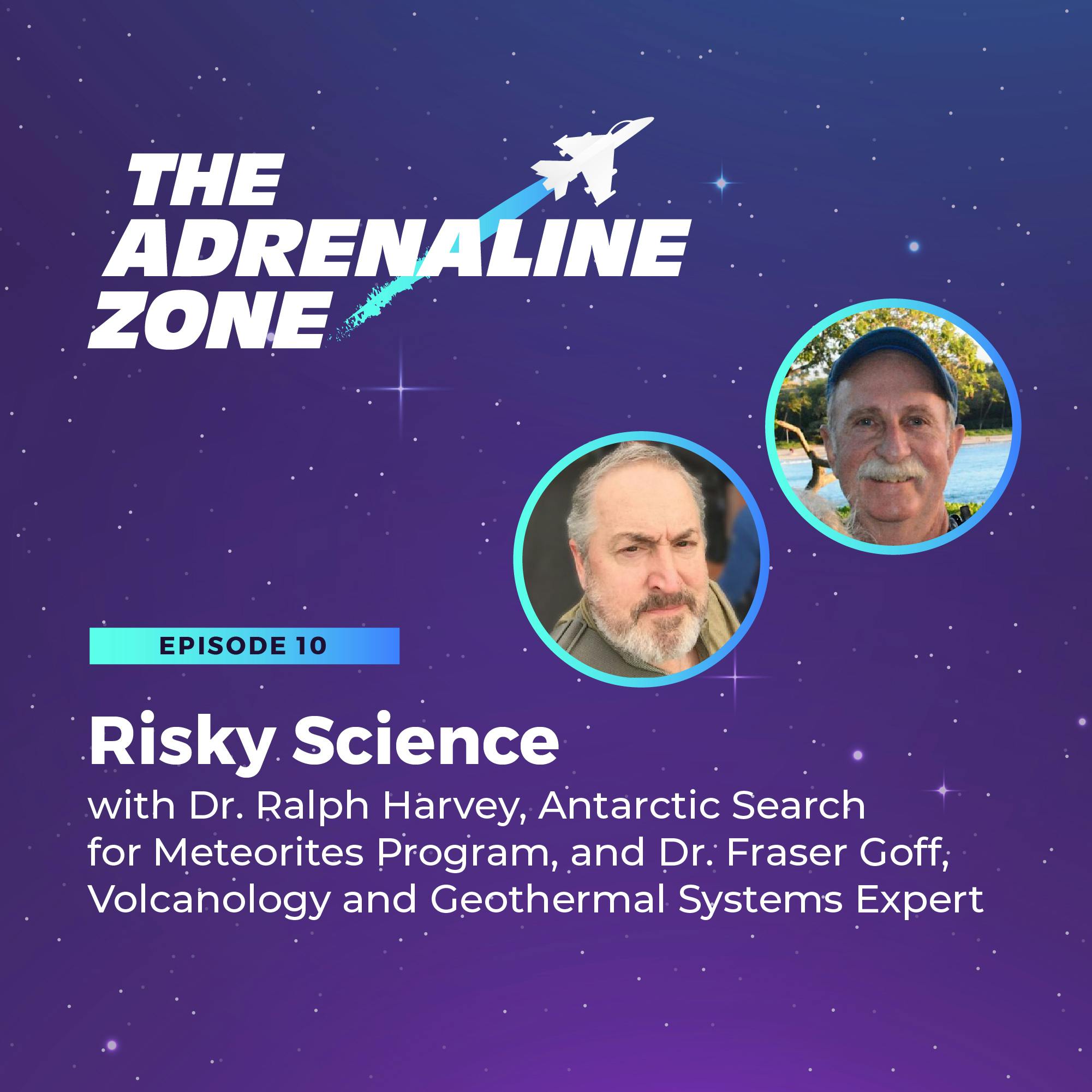
S1 Ep 10Risky Science with Dr. Ralph Harvey, Antarctic Search for Meteorites Program, and Dr. Fraser Goff, Volcanology and Geothermal Systems Expert
On this episode of The Adrenaline Zone, hosts James “Sandy” Winnefeld and Sandra Magnus are joined by Dr. Ralph Harvey of the Antarctic Search for Meteorites Program, and Dr. Fraser Goff, Volcanology and Geothermal Systems Expert. Between them, Dr. Harvey and Dr. Fraser have seen some of the most dangerous places on the planet, albeit in very different ways. While Dr. Harvey spends weeks on end patrolling the desolate Antarctic landscape in search of Martian meteorites, Dr. Fraser takes expeditions into the mouths of active volcanoes, where molten rock and poisonous gasses from beneath the Earth’s crust pose substantial dangers. Although they face significantly different risks, their approaches to managing those risks are remarkably similar. Both men rely on a combination of well-crafted procedures, careful planning, proper equipment, and a trained team to help mitigate potential dangers. They’ve had their fair share of close calls, but each brush with danger is a chance to learn, and to go into the next venture better prepared. These contrasting tales of fire and ice demonstrate some of the universal principles of risk management. No matter the situation, planning and preparedness are foundational to maintaining safety. Dr. Ralph Harvey Schmidt Ocean Institute Dr. Fraser Goff Sandra Magnus Sandra Magnus - Twitter This episode is sponsored by Dunkin' If you enjoyed this episode of The Adrenaline Zone, hit the subscribe button so you never miss another thrilling conversation, and be sure to leave a review to help get the word out to fellow adrenaline junkies.
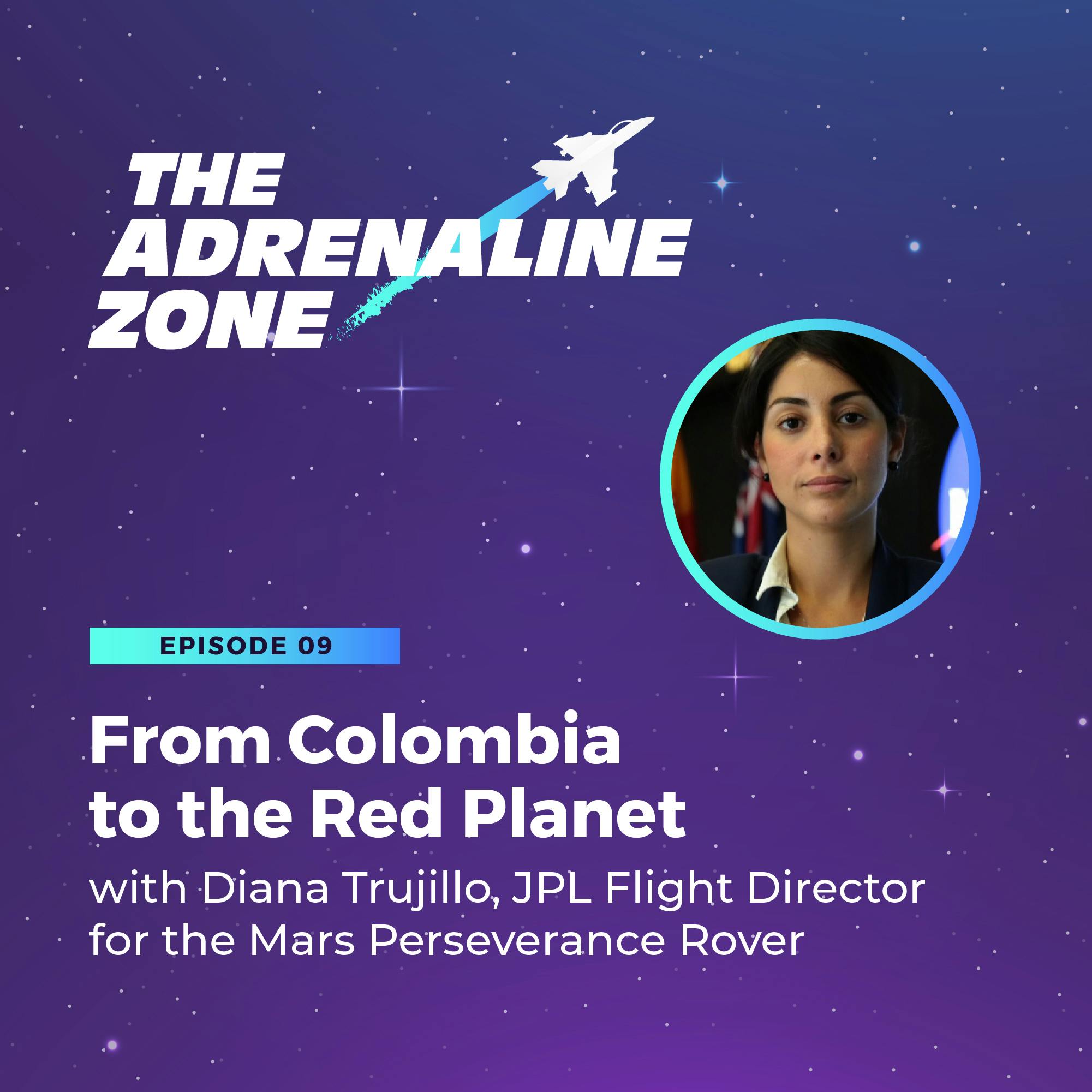
S1 Ep 9From Colombia to the Red Planet with Diana Trujillo, JPL Flight Director for the Mars Perseverance Rover.
On this episode of The Adrenaline Zone, James “Sandy” Winnefeld and Sandra Magnus are joined by Diana Trujillo, JPL Flight Director for the Mars Perseverance Rover. Diana was born in Colombia and her journey to becoming the flight director for the Perseverance mission involved quite a bit of her own perseverance. She started school while still speaking very little English, but her intelligence was immediately apparent, and her commitment to her studies catapulted her to a degree in aerospace engineering. STEM careers have been, like so many industries, historically dominated by men. Pursuing a leadership role at NASA as an ethnic minority woman would have seemed a fruitless endeavor to many in Diana’s shoes, but her determination to accomplish difficult tasks knows no bounds. Diana now seeks to be a role model who can inspire others to pursue their own passions. With no English and just $300 in her pocket, Diana risked it all to pursue an education and career in engineering, but her own perseverance allowed her to rise to the occasion and become an inspiration to women and girls all over the world. Diana Trujillo Diana Trujillo - Twitter NASA NASA - LinkedIn Sandra Magnus Sandra Magnus - Twitter This episode is sponsored by Dunkin' If you enjoyed this episode of The Adrenaline Zone, hit the subscribe button so you never miss another thrilling conversation, and be sure to leave a review to help get the word out to fellow adrenaline junkies.
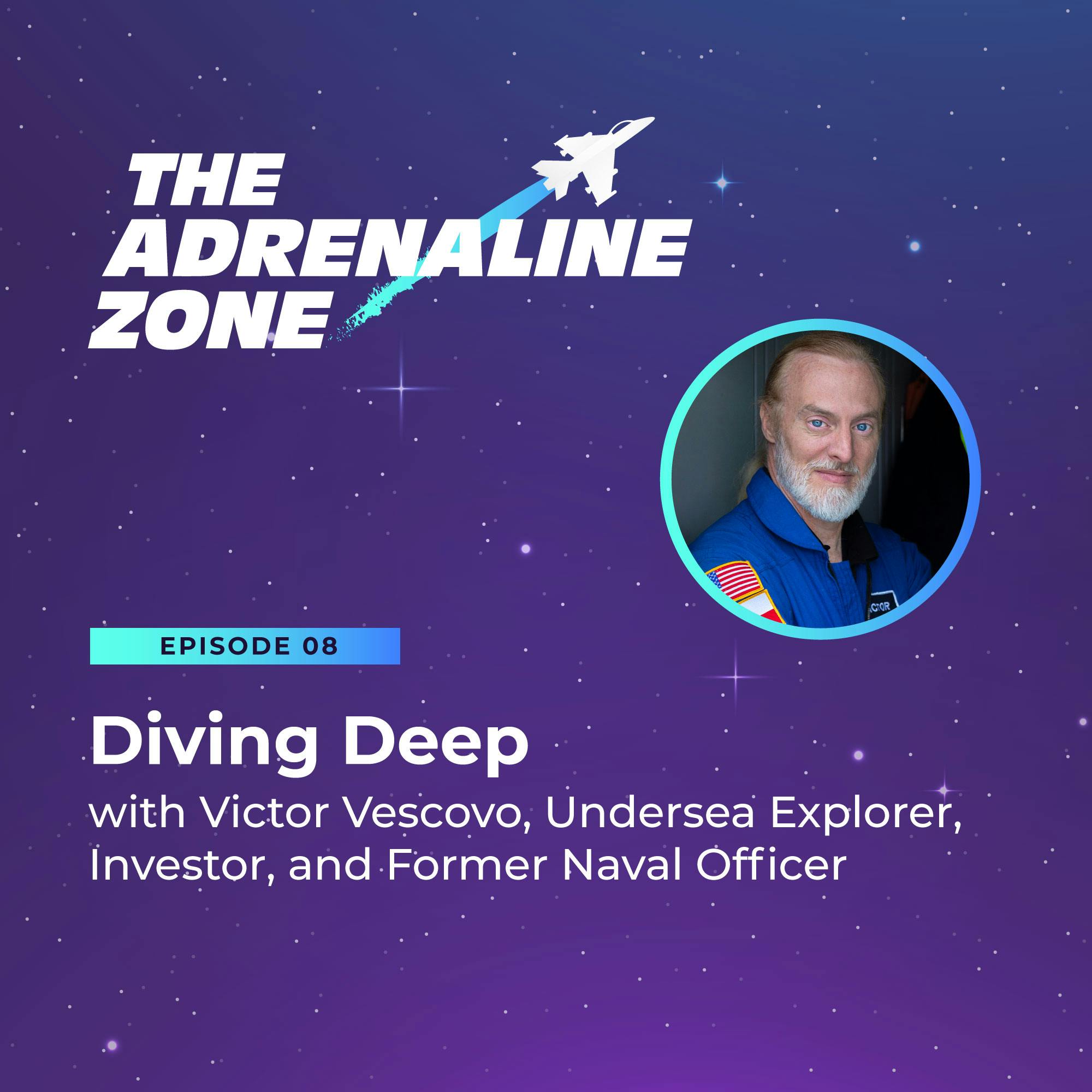
S1 Ep 8Diving Deep with Victor Vescovo, Undersea Explorer, Investor, and Former Naval Officer
On this episode of The Adrenaline Zone, hosts James “Sandy” Winnefeld and Sandra Magnus are joined by Victor Vescovo, Undersea Explorer, Investor, and Former Naval Officer. Victor has tackled risk in just about every form, putting his life on the line in the military, and risking huge financial losses as a private equity investor. His latest endeavor, and the one he’s most excited about, is his journey to the bottom of the ocean. Time after time, Victor has traveled miles down into the ocean, with just a titanium shell and glass between him and pitch-black ocean depths. Every square inch of water presses against his vessel with thousands of pounds of force, and light is incapable of reaching thousands of meters down below the surface. Taking on such a hostile environment requires careful planning, and with proper safety procedures in place and a well-engineered submersible, the risk of something going wrong is well mitigated. With good preparation, diving to the bottom of the ocean can be less dangerous than mountain climbing, another passion of Victor’s. Sometimes extreme environments pose more mental risk than physical danger. Victor Vescovo Victor Vescovo - LinkedIn Victor Vescovo - Twitter Caladan Oceanic Sandra Magnus Sandra Magnus - Twitter If you enjoyed this episode of The Adrenaline Zone, hit the subscribe button so you never miss another thrilling conversation, and be sure to leave a review to help get the word out to fellow adrenaline junkies.
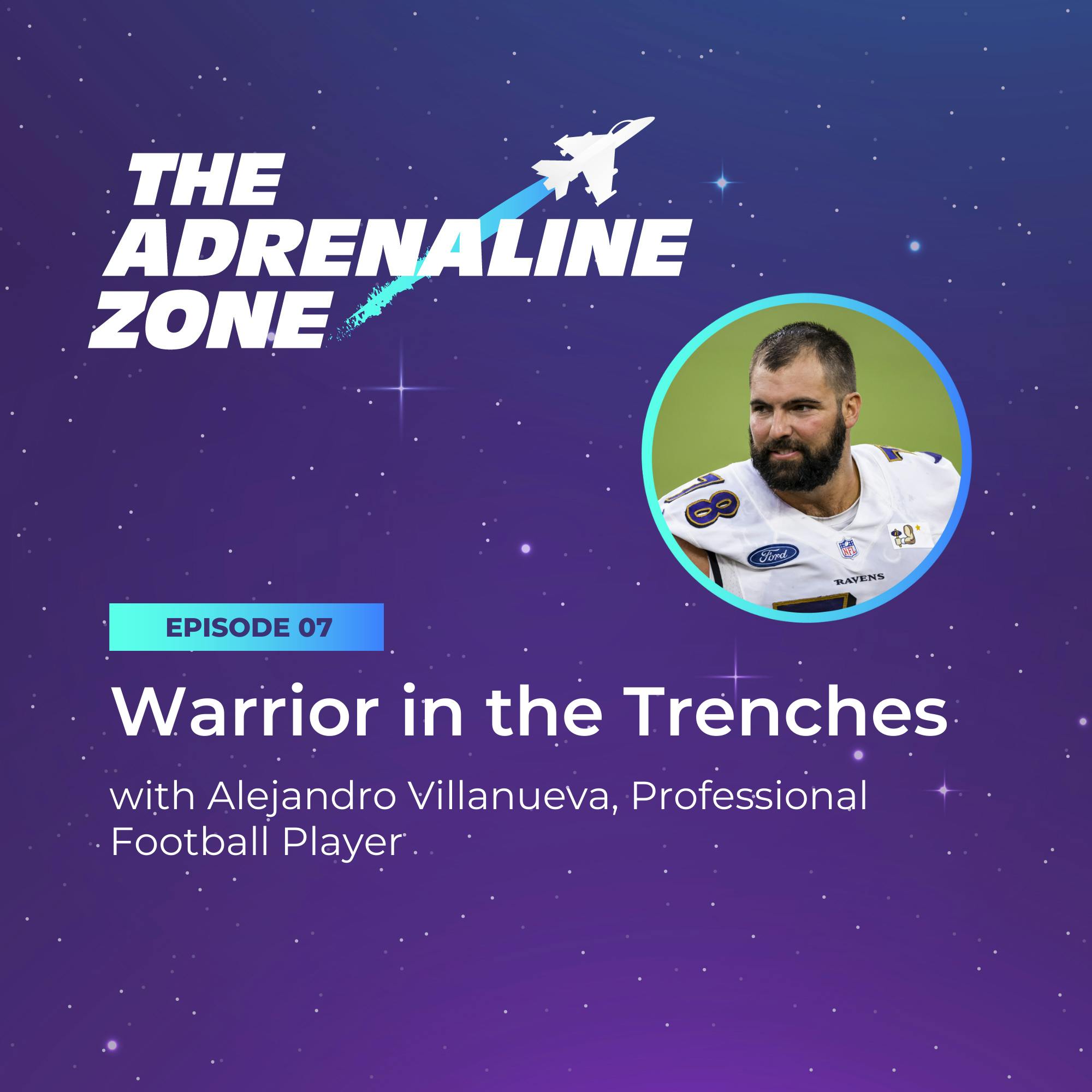
S1 Ep 7Warrior in the Trenches with Alejandro Villanueva, Professional Football Player
On this episode of The Adrenaline Zone, hosts James “Sandy” Winnefeld and Sandra Magnus are joined by Alejandro Villanueva, Professional Football Player and former Army Ranger. Many young men dream of the opportunity to play in the NFL, and spend their whole lives training to become a professional athlete. For Alejandro, a career in football was an unexpected means to achieving a very different dream: earning his MBA. After graduating from West Point, becoming an Army Ranger, and completing several tours in Afghanistan, Alejandro still had his sights set on higher education, but he needed a way to pay for schooling. Rather than taking out loans or spending years putting money away, he decided to give life as an NFL offensive tackle a try. What started as a plan to play for just one year and earn enough money for business school became a seven-year-long career. He played for both the Pittsburgh Steelers and the Baltimore Ravens; and in that seven-year period, Alejandro did in fact earn an MBA from Carnegie Mellon University. Alejandro’s ambition was matched only by his courage to pursue his ambitions at all costs. Reward only comes to those willing to risk it all for success. Alejandro Villanueva Pittsburgh Steelers Pittsburgh Steelers (LinkedIn) NFL NFL (LinkedIn) US Army US Army (LinkedIn) Sandra Magnus Sandra Magnus (Twitter) This episode is sponsored by Dunkin’.If you enjoyed this episode of The Adrenaline Zone, hit the subscribe button so you never miss another thrilling conversation, and be sure to leave a review to help get the word out to fellow adrenaline junkies.
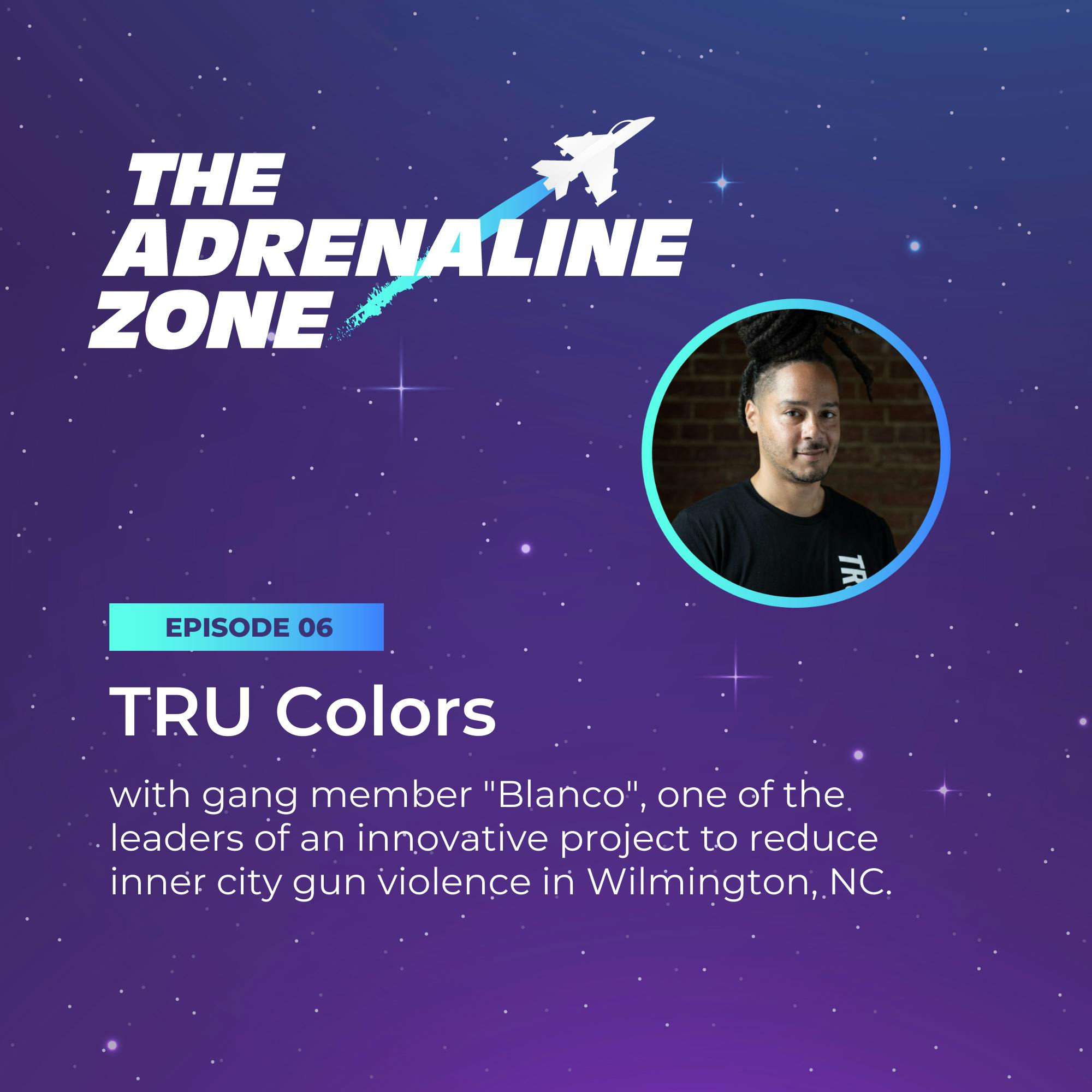
S1 Ep 6TRU Colors with gang member “Blanco”, one of the leaders of an innovative project to reduce inner city gun violence in Wilmington, NC.
On this episode of The Adrenaline Zone, hosts James “Sandy” Winnefeld and Sandra Magnus are joined by gang member “Blanco”, one of the leaders of an innovative project to reduce inner city gun violence in Wilmington, NC. Blanco grew up in Wilmington, North Carolina, in a neighborhood that didn’t offer much in the way of economic opportunity. Like many of his peers, Blanco saw gang initiation as the most viable path towards community, safety, and opportunity. He became involved with a gang by the time he was a teenager. One day, out of the blue, Blanco got a phone call from a man looking to start a brewery. He wanted to employ Blanco, as well as several members of rival gangs. The risks running through Blanco’s mind were numerous. Could this be a police setup? Was he going to be arrested? Even if this was legitimate, was it really safe to work side by side with members of rival organizations? Despite the obvious risk, Blanco accepted the offer. Through his work at TRU Colors, Blanco is opening new opportunities for success for future generations—giving them a better chance for success than was previously possible in disenfranchised communities. Blanco TRUColors TRUColors - LinkedIn TRUColors - Instagram Sandra Magnus Sandra Magnus - Twitter This episode is sponsored by Dunkin’.If you enjoyed this episode of The Adrenaline Zone, hit the subscribe button so you never miss another thrilling conversation, and be sure to leave a review to help get the word out to fellow adrenaline junkies.

S1 Ep 5Under the Bright Lights with Tim McGraw, Actor and Country Music Singer
On this episode of The Adrenaline Zone, hosts James “Sandy” Winnefeld and Sandra Magnus are joined by Tim McGraw, prolific actor and country music star, to talk about some of the emotional risks associated with being a performing artist. Early in his life, Tim had visions of pursuing professional sports, and even joining the military. His love for music eventually won out, however, and he dropped out of college to move to Nashville to try and make it as a songwriter. Tim’s performances can be nerve-wracking for him, putting his most vulnerable side on display for thousands of fans, night after night. The reward, though, is immeasurable. The magic that ensues when Tim and the crowd are locked in is worth the risk. It compels him to give his all for each and every show. That dedication also extends to his acting career, where Tim is constantly giving his all for the sake of a good performance. Allowing their emotional vulnerability to be captured on camera might be a deterrence for some, but Tim’s commitment to his art makes these emotional risks well worth the effort. Tim McGraw Tim McGraw 1883 Sandra Magnus This episode is sponsored by ZOA Energy.If you enjoyed this episode of The Adrenaline Zone, hit the subscribe button so you never miss another thrilling conversation. Be sure to leave a review to help get the word out to fellow adrenaline junkies.

S1 Ep 4Pinstripes with Sarah Thomas, NFL Official
On this episode of The Adrenaline Zone, hosts James “Sandy” Winnefeld and Sandra Magnus are joined by Sarah Thomas, an NFL official who became the first woman to officiate in a Super Bowl. She shares her story of breaking the gender barrier in a male-dominated industry, and the many risks that entailed. Like many officials, Sarah was herself an athlete. She began playing softball and basketball when she was very young, and even went to college on a basketball scholarship. Upon graduation, she began playing basketball in a recreational men’s basketball league but was subsequently expelled from the league for being a woman. It was the first time Sarah had stopped playing sports in over 20 years. In search of something to fill her athletics-shaped hole, she accompanied her brother to a local football officials’ meeting one evening. That meeting would set her on a path that would lead her all the way to the Super Bowl. Sarah’s journey was not without hardship. Being the first woman in her field, Sarah had made herself vulnerable and endured plenty of uncomfortable situations on her way to going where no woman had gone before. Moving towards this glass ceiling was risky, but Sarah shattered it with all the confidence in the world. Sarah Thomas NFL 360 Total Rehab Keppler Speakers Sandra Magnus This episode is sponsored by ZOA Energy. If you enjoyed this episode of The Adrenaline Zone, hit the subscribe button so you never miss another thrilling conversation, and be sure to leave a review to help get the word out to fellow adrenaline junkies.
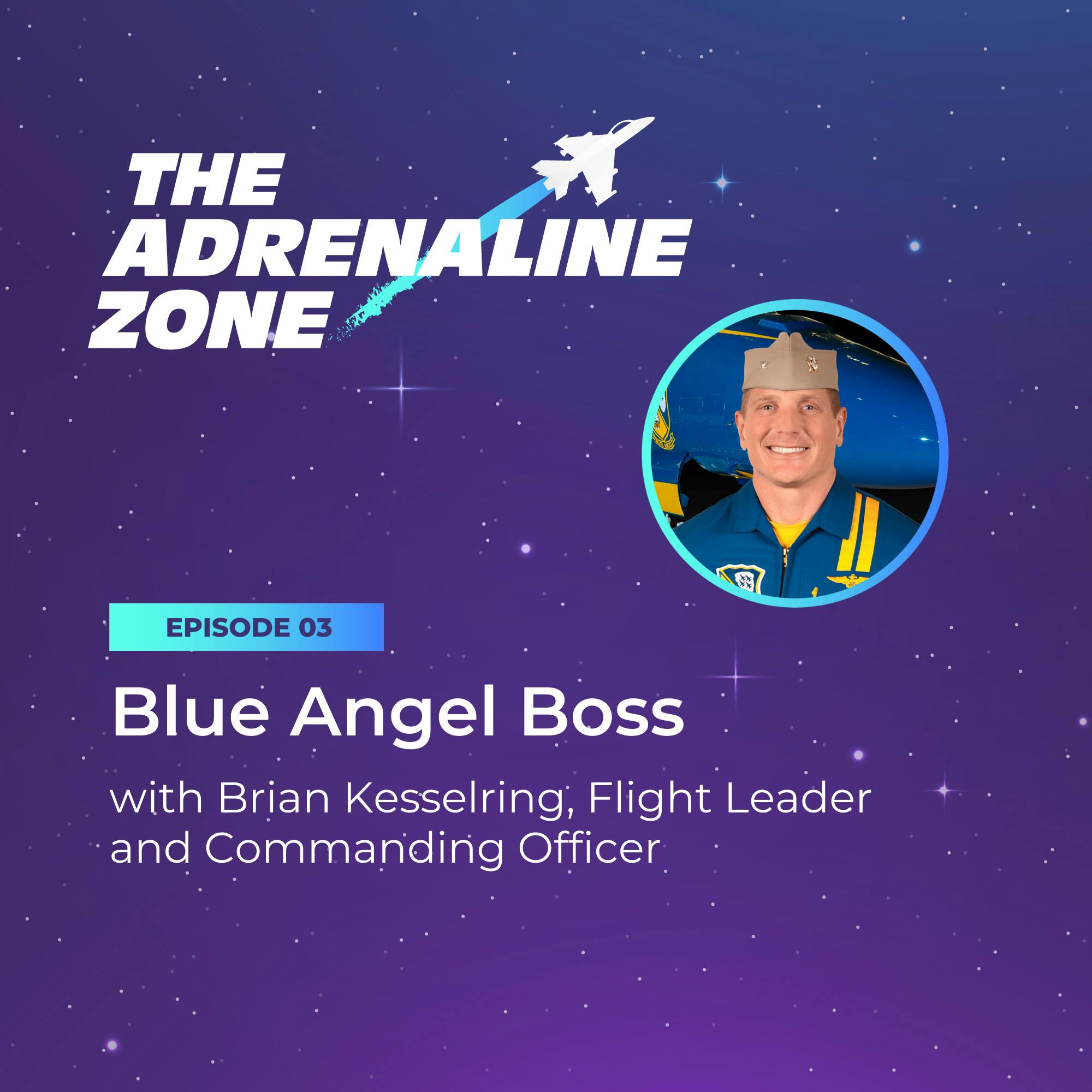
S1 Ep 3Blue Angel Boss with Brian C. Kesselring, Flight Leader & Commanding Officer
On this episode of The Adrenaline Zone, hosts James “Sandy” Winnefeld and Sandra Magnus are joined by Captain Brian C. Kesselring, Commanding Officer and Flight Leader of the Blue Angels. Brian has been passionate about flying since he was six years old, flipping through aviation magazines in his hometown of Fargo, North Dakota. He started cultivating that passion early, working night jobs to pay for flight school in college and eventually logging over 4,000 hours of flight time before joining the Blue Angels. The airshows Brian leads are a masterclass in synergy and teamwork. Brian’s talent and experience as a pilot are just one piece of a puzzle that involves his fellow Blue Angels and their robust ground crew. Individual talent is not enough. To pull off the complex maneuvers demanded of him, Brian’s individual skill must dissolve into the combined efforts of his team. In this sense, managing the risks of these spectacular airshows involves not just personal responsibility but trust and dependence on the whole team. To this end, Brian demands constant communication and rigorous practice from his fellow pilots. With mutual trust and respect for their peers’ talents, the Blue Angels create a whole that is greater than the sum of its parts. Brian C. Kesselring Blue Angels Blue Angels - Twitter Blue Angels - LinkedIn US Navy Sandra Magnus Sandra Magnus - Twitter This episode is sponsored by ZOA Energy. If you enjoyed this episode of The Adrenaline Zone, hit the subscribe button so you never miss another thrilling conversation, and be sure to leave a review to help get the word out to fellow adrenaline junkies.
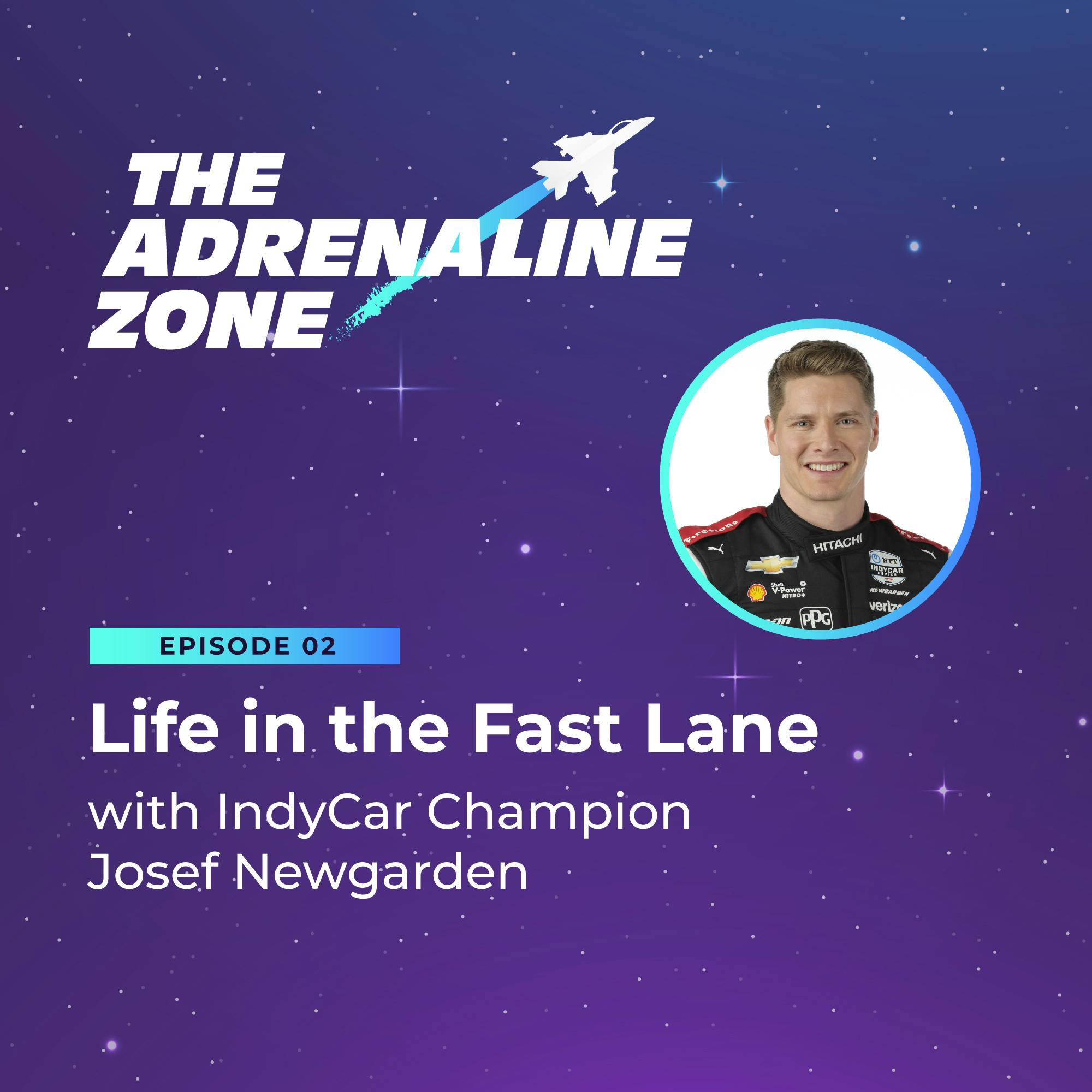
S1 Ep 2Life in the Fast Lane with Josef Newgarden, IndyCar Champion
On this episode of The Adrenaline Zone, hosts James “Sandy” Winnefeld and Sandra Magnus welcome Josef Newgarden, IndyCar driver and two-time IndyCar Series Champion. They discuss some of the ways Josef’s training has helped him develop better instincts in high-risk situations. Josef began racing competitively at the relatively young age of 13. His dad would take him on trips to Indianapolis to compete in go-kart races, and it was here that he developed his love for competitive driving. Josef attributes much of his success as an IndyCar driver to the training and coaching he sought early in his career. While it taught him many of the basics that make driving an IndyCar unique, it offered him something much more valuable as well. Years of practice and focused training have allowed Josef to develop the instincts necessary to compete at such a high level. These instincts bypass his conscious thought, letting him react to split-second scenarios faster than he should be able to. His instincts are an essential tool in mitigating many of the risks of driving a racecar at breakneck speeds every week. They are not a product of chance, but of Josef’s discipline and dedication to his training. Josef Newgarden Twitter - @josefnewgarden LinkedIn - Josef Newgarden Racing Team Penske LinkedIn - Team Penske LinkedIn - Sandra Magnus This episode is sponsored by ZOA Energy. If you enjoyed this episode of The Adrenaline Zone, hit the subscribe button so you never miss another thrilling conversation, and be sure to leave a review to help get the word out to fellow adrenaline junkies.
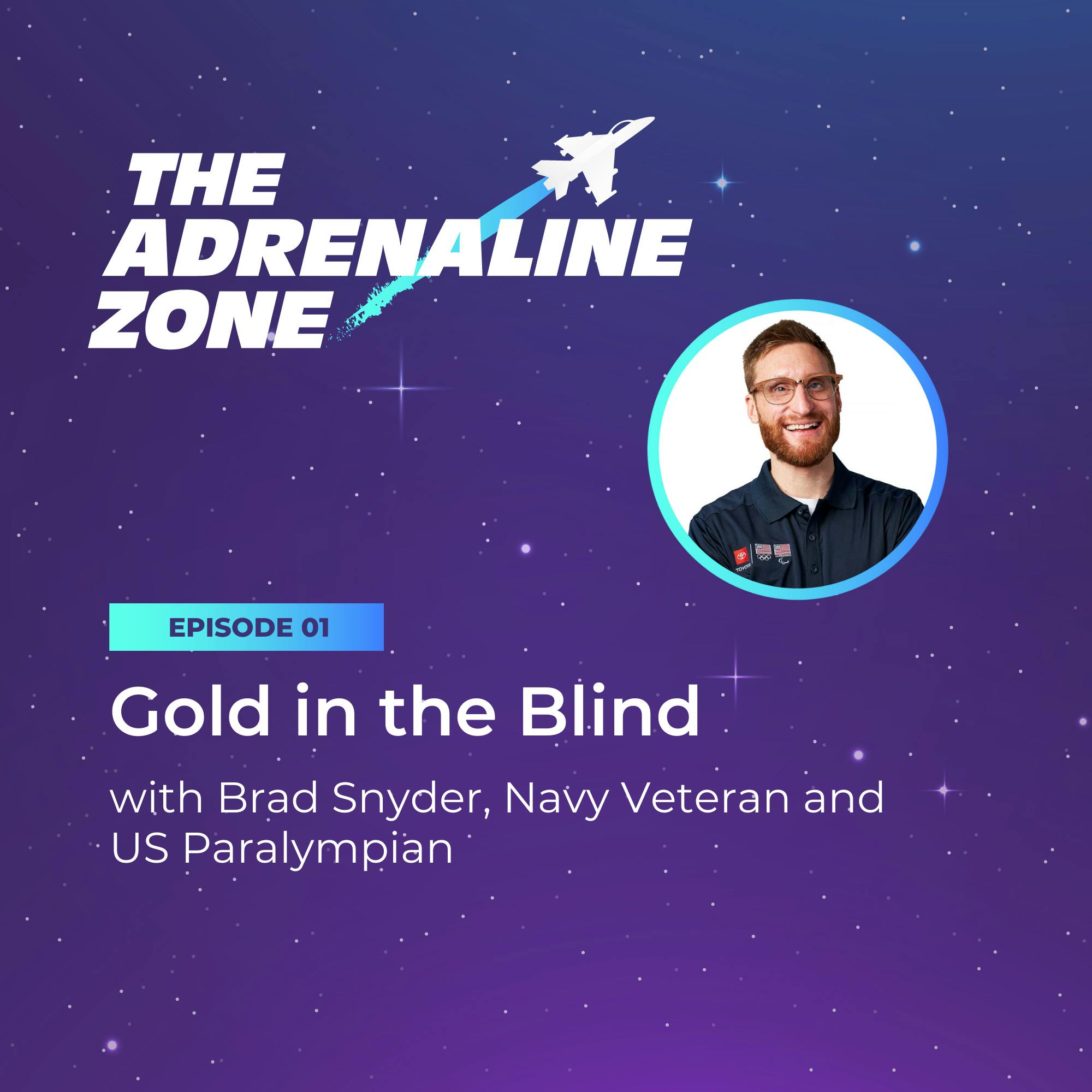
S1 Ep 1Gold in the Blind with Brad Snyder, Navy Veteran and US Paralympian
On this episode of The Adrenaline Zone, hosts James “Sandy” Winnefeld and Sandra Magnus speak with Brad Snyder, former EOD Officer and US Paralympian, about responding to the consequences that sometimes accompany risk. Brad is certainly no stranger to risk. After graduating from the Naval Academy in 2006, he became an EOD Officer in Afghanistan, often responsible for defusing notoriously dangerous IEDs. Even careful planning and extensive risk-mitigation tactics can’t guarantee safety, and Brad was injured by an IED explosion in 2011, which left him blind. Such a catastrophic injury would lead most people to seek a more stable and comfortable lifestyle. Brad responded by tackling this newfound challenge head-on. He continued to confront risk, albeit in a different form. Having already proven himself a capable swimmer at the Naval Academy, Brad began representing the USA as a Paralympic athlete. He has since garnered over a half-dozen medals, most of them gold, at multiple Paralympics. Brad’s journey testifies both to the dangers that many risks pose and to the rewards that come from persevering through their adversity. - Brad Snyder - https://www.bradsnyder.us/ - Brad Snyder - https://www.linkedin.com/in/bradsnyderusa/ - US Paralympics - https://www.teamusa.org/Tokyo-2020-Paralympic-Games - US Paralympics - https://www.linkedin.com/company/united-states-olympic-and-paralympic-committee/ - US Navy - https://www.navy.mil/ - Sandra Magnus - https://www.linkedin.com/in/sandra-magnus-70754a16/ This episode is sponsored by ZOA Energy.If you enjoyed this episode of The Adrenaline Zone, hit the subscribe button so you never miss another thrilling conversation, and be sure to leave a review to help get the word out to fellow adrenaline junkies.
Welcome to the Adrenaline Zone
trailerMost people spend their lives avoiding risk. A select few attack it. They dive head first into the zone where physical, intellectual, reputational, and financial risks fuel their actions, test their resolve, and fulfill their dreams. Every week The Adrenaline Zone podcast explores the action-packed lives of people who seek out challenges most wouldn’t consider. Buckle up and hold on as we interview these deep divers, high fliers, and fast drivers to find out how it feels to live life in The Adrenaline Zone.