
The 365 Days of Astronomy
451 episodes — Page 7 of 10

EVSN - Six-Exoplanet System in Resonance, Challenges Formation Theories
From January 27, 2021. It's a day ending in 'y', and planetary formation theories are once again being challenged. This time the challenge comes from a six-planet system with five planets in resonance. Plus a cloudless Jupiter, TRAPPIST-1, volcanoes, and some science of the weird. We've added a new way to donate to 365 Days of Astronomy to support editing, hosting, and production costs. Just visit: https://www.patreon.com/365DaysOfAstronomy and donate as much as you can! Share the podcast with your friends and send the Patreon link to them too! Every bit helps! Thank you! ------------------------------------ Do go visit http://www.redbubble.com/people/CosmoQuestX/shop for cool Astronomy Cast and CosmoQuest t-shirts, coffee mugs and other awesomeness! http://cosmoquest.org/Donate This show is made possible through your donations. Thank you! (Haven't donated? It's not too late! Just click!) ------------------------------------ The 365 Days of Astronomy Podcast is produced by the Planetary Science Institute. http://www.psi.edu Visit us on the web at 365DaysOfAstronomy.org or email us at [email protected].

Space Stories - Second Landing
Hosted by Dr. Pamela Gay. A gentle fancy for the Christmas Season—an oft-told tale with a wistful twistful of Something that left the Earth with a wing and a prayer. Earlier today, I had the stark realization that at the core of many Christmas stories is a core of sorrow or longing that must somehow be transformed into joy. Scrouge must learn charity. Ralphie longs for a bb gun and is betrayed by his joy. George is on the brink of suicide when his Guardian Angel intercedes. John McClane just needs to keep his wife alive (yes, Die Hard is a Christmas movie). Over and over, the holiday spirit can only enter on the wings of struggle. This realization came to me as I looked for an old school (aka public domain) science fiction story to narrate for tomorrow's episode of 365 Days of Astronomy. The first story I came across (which I'll personally share tomorrow), was Arthur C Clarke's, "The Star" and it was too dark for that family-friendly podcast. Instead, I read "Second Landing," by Floyd Wallace. This story originally appeared in Amazing Science Fiction Stories. Read it here: https://www.gutenberg.org/cache/epub/24958/pg24958-images.html Written in 1960 by Floyd L. Wallace, this story is weirdly timeless and felt utterly necessary for this moment. Aliens learn of Earth from our broadcasts, and they fear we are on the verge of destroying ourselves with the bomb. To say more would be to reveal the plot. I invite you to listen here and find hope in a world of too much darkness. Merry Christmas. We've added a new way to donate to 365 Days of Astronomy to support editing, hosting, and production costs. Just visit: https://www.patreon.com/365DaysOfAstronomy and donate as much as you can! Share the podcast with your friends and send the Patreon link to them too! Every bit helps! Thank you! ------------------------------------ Do go visit http://www.redbubble.com/people/CosmoQuestX/shop for cool Astronomy Cast and CosmoQuest t-shirts, coffee mugs and other awesomeness! http://cosmoquest.org/Donate This show is made possible through your donations. Thank you! (Haven't donated? It's not too late! Just click!) ------------------------------------ The 365 Days of Astronomy Podcast is produced by the Planetary Science Institute. http://www.psi.edu Visit us on the web at 365DaysOfAstronomy.org or email us at [email protected].

Space Stories - Solstice: When the Sun Stands Still
Hosted by our Director, Avivah Yamani! What does "solstice" really mean? In this episode, we unpack the Sun's yearly turning point, the seasonal flip between hemispheres, and the ancient sky-architecture of Stonehenge, from June solstice sunrise to December solstice sunset. We've added a new way to donate to 365 Days of Astronomy to support editing, hosting, and production costs. Just visit: https://www.patreon.com/365DaysOfAstronomy and donate as much as you can! Share the podcast with your friends and send the Patreon link to them too! Every bit helps! Thank you! ------------------------------------ Do go visit http://www.redbubble.com/people/CosmoQuestX/shop for cool Astronomy Cast and CosmoQuest t-shirts, coffee mugs and other awesomeness! http://cosmoquest.org/Donate This show is made possible through your donations. Thank you! (Haven't donated? It's not too late! Just click!) ------------------------------------ The 365 Days of Astronomy Podcast is produced by the Planetary Science Institute. http://www.psi.edu Visit us on the web at 365DaysOfAstronomy.org or email us at [email protected].
Deep Astronomy - The Largest Galaxy in the Universe: IC 1101
https://www.youtube.com/watch?v=UE8yHySiJ4A Hosted by Tony Darnell. From Sep 21, 2012. This video was done by request from a Space Fan. Hope it's what you had in mind. IC 1101 is over one billion light years away in the constellation Virgo, just over the border from Serpens. https://en.wikipedia.org/wiki/IC_1101 We've added a new way to donate to 365 Days of Astronomy to support editing, hosting, and production costs. Just visit: https://www.patreon.com/365DaysOfAstronomy and donate as much as you can! Share the podcast with your friends and send the Patreon link to them too! Every bit helps! Thank you! ------------------------------------ Do go visit http://www.redbubble.com/people/CosmoQuestX/shop for cool Astronomy Cast and CosmoQuest t-shirts, coffee mugs and other awesomeness! http://cosmoquest.org/Donate This show is made possible through your donations. Thank you! (Haven't donated? It's not too late! Just click!) ------------------------------------ The 365 Days of Astronomy Podcast is produced by the Planetary Science Institute. http://www.psi.edu Visit us on the web at 365DaysOfAstronomy.org or email us at [email protected].
Astronomy Cast Ep. 775: The Hydrogen 21-cm Line
https://www.youtube.com/watch?v=2uvcumUc6Gc Hosted by: Fraser Cain ( @frasercain ) and Dr. Pamela L. Gay ( @CosmoQuest ) Streamed live on Dec 15, 2025. Atomic hydrogen is the raw material for stars, but there's a problem. It's cold & dark, but it can do a very rare trick, releasing a photon in a very specific wavelength, known as the 21 centimeter line. And thanks to this wavelength astronomers have mapped out star forming regions across the Milky Way, the Universe and into the Dark Ages! This forbidden transition of Hydrogen has led to the mapping of galaxy rotation, a cool classroom application of quantum mechanics, and weirdly no Nobel prize. In this episode, Fraser and Pamela take a look at this line's out-of-proportion awesomeness! This show is supported through people like you on Patreon.com/AstronomyCast In this episode, we'd like to thank: Andrew Poelstra, BogieNet, Brian Cagle, Burry Gowen, David, David Rossetter, Ed, Gerhard Schwarzer, Jason Kwong, Jeanette Wink, Michael Purcell, Sergey Manouilov, Siggi Kemmler, Sérgio Sancevero We've added a new way to donate to 365 Days of Astronomy to support editing, hosting, and production costs. Just visit: https://www.patreon.com/365DaysOfAstronomy and donate as much as you can! Share the podcast with your friends and send the Patreon link to them too! Every bit helps! Thank you! ------------------------------------ Do go visit http://www.redbubble.com/people/CosmoQuestX/shop for cool Astronomy Cast and CosmoQuest t-shirts, coffee mugs and other awesomeness! http://cosmoquest.org/Donate This show is made possible through your donations. Thank you! (Haven't donated? It's not too late! Just click!) ------------------------------------ The 365 Days of Astronomy Podcast is produced by the Planetary Science Institute. http://www.psi.edu Visit us on the web at 365DaysOfAstronomy.org or email us at [email protected].
Travelers in the Night Eps. 359E & 360E: One in 100,000 & Finding Spacerocks
Dr. Al Grauer hosts. Dr. Albert D. Grauer ( @Nmcanopus ) is an observational asteroid hunting astronomer. Dr. Grauer retired from the University of Arkansas at Little Rock in 2006. travelersinthenight.org From October 2025. Today's 2 topics: - Friday the 13th appears to continue to be a lucky day for the human race. When astronomers first discovered Apophis in 2004 it appeared possible that this 3 million ton, 1,200 foot diameter asteroid traveling at 8 mi/s could impact our planet creating a crater a several miles diameter and more than a half mile deep. Additional observations over the years have eliminated this possibility as Apophis streaks by closer than the communications satellites on that lucky Friday the 13th. Further, current calculations have reduced the chances of Apophis colliding with Earth in the next 100 years to about one in 100,000. However, over the millennia Apophis is likely to strike the Earth as does one it's size once every 100,000 years or so. - Finding a meteorite that has traveled billions of miles through space to reach it's present location is exciting. It might even be worth real money. We've added a new way to donate to 365 Days of Astronomy to support editing, hosting, and production costs. Just visit: https://www.patreon.com/365DaysOfAstronomy and donate as much as you can! Share the podcast with your friends and send the Patreon link to them too! Every bit helps! Thank you! ------------------------------------ Do go visit http://www.redbubble.com/people/CosmoQuestX/shop for cool Astronomy Cast and CosmoQuest t-shirts, coffee mugs and other awesomeness! http://cosmoquest.org/Donate This show is made possible through your donations. Thank you! (Haven't donated? It's not too late! Just click!) ------------------------------------ The 365 Days of Astronomy Podcast is produced by the Planetary Science Institute. http://www.psi.edu Visit us on the web at 365DaysOfAstronomy.org or email us at [email protected].
Astroman - Tips for Effective Science Communication
Episode 12. "ASTROMAN: the Dark Sky Guardian" is a podcast channel that aims to explore popular science in multiple disciplines and research on interdisciplinary approaches, such as sustainability, dark-sky protection, astrophotography, space exploration, astronomy innovation, inclusive science communication, and STEAM Education by integrating science and arts. Exodus CL Sit, also known as the ASTROMAN, is a transmedia astronomy educator, popular science author, STEAM educator, and science communicator in Hong Kong. He is recently the National Astronomy Education Coordinator (Chair of Hong Kong, China) of the International Astronomical Union and President of Starrix. He was also an International Committee Member of the Dark Sky International, regularly organizing public lectures at the Hong Kong Space Museum and the Hong Kong Science Museum. He was also the author of a popular science book "Decoding the Starry Night: A Guide to Stargazing and Astrophotography". We've added a new way to donate to 365 Days of Astronomy to support editing, hosting, and production costs. Just visit: https://www.patreon.com/365DaysOfAstronomy and donate as much as you can! Share the podcast with your friends and send the Patreon link to them too! Every bit helps! Thank you! ------------------------------------ Do go visit http://www.redbubble.com/people/CosmoQuestX/shop for cool Astronomy Cast and CosmoQuest t-shirts, coffee mugs and other awesomeness! http://cosmoquest.org/Donate This show is made possible through your donations. Thank you! (Haven't donated? It's not too late! Just click!) ------------------------------------ The 365 Days of Astronomy Podcast is produced by the Planetary Science Institute. http://www.psi.edu Visit us on the web at 365DaysOfAstronomy.org or email us at [email protected].

EVSN - Asteroid Destruction, Brown Dwarf Formation & Getting Science From Dust
From February 11, 2020. Today's show starts with a mighty YORP. It turns out the YORP effect may spin asteroids to death in dying star systems. We also look at how the formations of giant planets and brown dwarf stars differ, and a new way to get science from dust. We've added a new way to donate to 365 Days of Astronomy to support editing, hosting, and production costs. Just visit: https://www.patreon.com/365DaysOfAstronomy and donate as much as you can! Share the podcast with your friends and send the Patreon link to them too! Every bit helps! Thank you! ------------------------------------ Do go visit http://www.redbubble.com/people/CosmoQuestX/shop for cool Astronomy Cast and CosmoQuest t-shirts, coffee mugs and other awesomeness! http://cosmoquest.org/Donate This show is made possible through your donations. Thank you! (Haven't donated? It's not too late! Just click!) ------------------------------------ The 365 Days of Astronomy Podcast is produced by the Planetary Science Institute. http://www.psi.edu Visit us on the web at 365DaysOfAstronomy.org or email us at [email protected].

Actual Astronomy - PiFinder
Hosted by Chris Beckett & Shane Ludtke, two amateur astronomers in Saskatchewan. [email protected] Today we have a guest joining us, Richard Wolf-Jacobson who is the founder of BB Labs/ PiFinder which is a new type of finder device. https://www.pifinder.io/ Before we get going Richard, can you tell us about where you are / observe / how you got started in Astronomy, what your interests are and what equipment you use? * What is a Pi Finder? * How does it work? / How do you set it up? * Do you need to attach anything to your AltAz or Dec Axis? * What is plate solving..isn't that just for imagers? * How accurate is it? * What camera is in the device? Can someone do anything with the images? Do they get exported out to one's phone? * How did you come up with the PiFinder * I see it is Open Source - what makes it open source? How can people modify it? Can someone roll their own? * What databases are in there? Can someone add their own? Can it interface with SkySafari or other softwares? * What formats does it come in or is it one size fits all? * Can one change from a back view to a side view to take it from a refractor to a dob. *Does it interface with Smart Phone? * How does it perform in the cold? * How small a scope can it go onto? * What are your future plans? We've added a new way to donate to 365 Days of Astronomy to support editing, hosting, and production costs. Just visit: https://www.patreon.com/365DaysOfAstronomy and donate as much as you can! Share the podcast with your friends and send the Patreon link to them too! Every bit helps! Thank you! ------------------------------------ Do go visit http://www.redbubble.com/people/CosmoQuestX/shop for cool Astronomy Cast and CosmoQuest t-shirts, coffee mugs and other awesomeness! http://cosmoquest.org/Donate This show is made possible through your donations. Thank you! (Haven't donated? It's not too late! Just click!) ------------------------------------ The 365 Days of Astronomy Podcast is produced by the Planetary Science Institute. http://www.psi.edu Visit us on the web at 365DaysOfAstronomy.org or email us at [email protected].

UNAWE Space Scoop - What's the Shape of a Supernova?
https://spacescoop.org/en/scoops/2528/whats-the-shape-of-a-supernova/ Rewritten & recorded by your editor, Richard Drumm. When you imagine an explosion in space, a supernova is usually what first comes to mind. But astronomers are still quite puzzled by some of the details of these cosmic fireworks. The typical supernova we often picture is really the end of a massive star's life. And a very dramatic ending at that! During its existence, a star keeps its spherical shape through a very delicate balance between: - the outward pressure created by the core's nuclear heat, what we call the radiation pressure, and - the gravity that compresses the star toward its center of mass. We call this balance a state of hydrostatic equilibrium. We've added a new way to donate to 365 Days of Astronomy to support editing, hosting, and production costs. Just visit: https://www.patreon.com/365DaysOfAstronomy and donate as much as you can! Share the podcast with your friends and send the Patreon link to them too! Every bit helps! Thank you! ------------------------------------ Do go visit http://www.redbubble.com/people/CosmoQuestX/shop for cool Astronomy Cast and CosmoQuest t-shirts, coffee mugs and other awesomeness! http://cosmoquest.org/Donate This show is made possible through your donations. Thank you! (Haven't donated? It's not too late! Just click!) ------------------------------------ The 365 Days of Astronomy Podcast is produced by the Planetary Science Institute. http://www.psi.edu Visit us on the web at 365DaysOfAstronomy.org or email us at [email protected].

Ask A Spaceman - Ep. 262: Does the Universe Have Extra Dimensions?
Large Extra Dimensions! Hosted by Dr. Paul M. Sutter. What do extra dimensions have to do with the strength of gravity? What is a tower of gravitons? How can we detect extra dimensions even if we can't perceive them? I discuss these questions and more in today's Ask a Spaceman! Support the show: http://www.patreon.com/pmsutter All episodes: http://www.AskASpaceman.com Watch on YouTube: http://www.youtube.com/PaulMSutter Read a book: https://www.pmsutter.com/books Keep those questions about space, science, astronomy, astrophysics, physics, and cosmology coming to #AskASpaceman for COMPLETE KNOWLEDGE OF TIME AND SPACE! Big thanks to my top Patreon supporters this month: Justin G, Chris L, Alberto M, Duncan M, Corey D, Michael P, Naila, Sam R, Joshua, Scott M, Rob H, Scott M, Louis M, John W, Alexis, Gilbert M, Rob W, Jessica M, Jules R, Jim L, David S, Scott R, Heather, Mike S, Pete H, Steve S, Lisa R, Kevin B, Aileen G, Steven W, Deb A, Michael J, Phillip L, Steven B, Mark R, Alan B, Craig B, Richard K, Stephen J, Joe R, David P, Justin, Tracy F, Ella F, Thomas K, James C, Syamkumar M, Homer V, Mark D, Bruce A, Tim Z, Linda C, The Tired Jedi, Lode D, Bob C, Red B, Stephen A, James R, Robert O, Allen E, Michael S, Reinaldo A, Sheryl, David W, Chris, Michael S, Erlend A, James D, Larry D, Karl W, Den K, Edward K, Craig M, Scott K, Vivek D, Barbara C, Brad, Azra K, Steve R, Koen G, and Narrative Dude! We've added a new way to donate to 365 Days of Astronomy to support editing, hosting, and production costs. Just visit: https://www.patreon.com/365DaysOfAstronomy and donate as much as you can! Share the podcast with your friends and send the Patreon link to them too! Every bit helps! Thank you! ------------------------------------ Do go visit http://www.redbubble.com/people/CosmoQuestX/shop for cool Astronomy Cast and CosmoQuest t-shirts, coffee mugs and other awesomeness! http://cosmoquest.org/Donate This show is made possible through your donations. Thank you! (Haven't donated? It's not too late! Just click!) ------------------------------------ The 365 Days of Astronomy Podcast is produced by the Planetary Science Institute. http://www.psi.edu Visit us on the web at 365DaysOfAstronomy.org or email us at [email protected].
Astronomy Cast Ep. 142: Plate Tectonics
http://www.astronomycast.com/archive/ From June 15, 2009. The surface of the Earth feels solid under your feet, but you're actually standing on a plate of the Earth's crust. And that plate is slowly shifting across the surface of the Earth. Over geologic timescales, plate tectonics has totally resurfaced our planet, bringing continents together, and tearing them apart. We know we have plate tectonics here on Earth, but what about other worlds in the solar system? We've added a new way to donate to 365 Days of Astronomy to support editing, hosting, and production costs. Just visit: https://www.patreon.com/365DaysOfAstronomy and donate as much as you can! Share the podcast with your friends and send the Patreon link to them too! Every bit helps! Thank you! ------------------------------------ Do go visit http://www.redbubble.com/people/CosmoQuestX/shop for cool Astronomy Cast and CosmoQuest t-shirts, coffee mugs and other awesomeness! http://cosmoquest.org/Donate This show is made possible through your donations. Thank you! (Haven't donated? It's not too late! Just click!) ------------------------------------ The 365 Days of Astronomy Podcast is produced by the Planetary Science Institute. http://www.psi.edu Visit us on the web at 365DaysOfAstronomy.org or email us at [email protected].

Travelers in the Night Eps. 357E & 358E: 40 Years & Tiny Spacecraft
Dr. Al Grauer hosts. Dr. Albert D. Grauer ( @Nmcanopus ) is an observational asteroid hunting astronomer. Dr. Grauer retired from the University of Arkansas at Little Rock in 2006. travelersinthenight.org From October 2025. Today's 2 topics: - Looking at the stars on a clear dark night, far from the artificial air glow humanity creates, have you ever wondered what it would be like to travel in truly deep interstellar space? 40 years after their launches in 1977, your representatives, the twin Voyager 1 and Voyager 2 spacecraft are in the vast space between the stars in our Milky Way galaxy. Aboard each Voyager is a Golden Record time capsule which is expected to last billions of years. This message from all of humanity is inscribed with greetings from Earth as well as sounds, images, and a decoding key which will enable any intelligent aliens which find a Voyager to discover who made it and where it came from. - To reach the vicinity of the nearest star, 24 trillion miles away, in less than 20 years, an interstellar space probe would have to travel at a substantial fraction of the speed of light. Newton's laws of motion, published 300 years ago, predict that the greater the mass of an object the greater is the force required to increase its velocity. In order to alleviate the need for the virtually unaffordable amount of energy required to accelerate a normal sized spacecraft to a speed of 20% of the speed of light, the Breakthrough Starshot program has funded the creation of 'Sprite' , the world's smallest spacecraft. We've added a new way to donate to 365 Days of Astronomy to support editing, hosting, and production costs. Just visit: https://www.patreon.com/365DaysOfAstronomy and donate as much as you can! Share the podcast with your friends and send the Patreon link to them too! Every bit helps! Thank you! ------------------------------------ Do go visit http://www.redbubble.com/people/CosmoQuestX/shop for cool Astronomy Cast and CosmoQuest t-shirts, coffee mugs and other awesomeness! http://cosmoquest.org/Donate This show is made possible through your donations. Thank you! (Haven't donated? It's not too late! Just click!) ------------------------------------ The 365 Days of Astronomy Podcast is produced by the Planetary Science Institute. http://www.psi.edu Visit us on the web at 365DaysOfAstronomy.org or email us at [email protected].

NOIRLab - An Extra Long Gamma Ray Burst
Astronomers have observed the longest-ever gamma-ray burst — a powerful, extragalactic explosion that lasted over seven hours. Rapid follow-up observations with the U.S. Department of Energy-fabricated Dark Energy Camera and the International Gemini Observatory provided crucial information about the possible origin of this extraordinary event and the galaxy that hosts it. Bios: - Rob Sparks is in the Communications, Education and Engagement group at NSF's NOIRLab in Tucson, Arizona. - Jonathan Carney is a graduate student at the University of North Carolina at Chapel Hill, where he studies time-domain astronomy with a focus on tidal disruption events. His research spans the full pipeline of transient discovery and characterization, from developing machine learning models for the forthcoming Argus Array to conducting follow-up observations with NOIRLab telescopes. https://carneyjo.github.io/ We've added a new way to donate to 365 Days of Astronomy to support editing, hosting, and production costs. Just visit: https://www.patreon.com/365DaysOfAstronomy and donate as much as you can! Share the podcast with your friends and send the Patreon link to them too! Every bit helps! Thank you! ------------------------------------ Do go visit http://www.redbubble.com/people/CosmoQuestX/shop for cool Astronomy Cast and CosmoQuest t-shirts, coffee mugs and other awesomeness! http://cosmoquest.org/Donate This show is made possible through your donations. Thank you! (Haven't donated? It's not too late! Just click!) ------------------------------------ The 365 Days of Astronomy Podcast is produced by the Planetary Science Institute. http://www.psi.edu Visit us on the web at 365DaysOfAstronomy.org or email us at [email protected].

EVSN - Never Trust a Volcano & Other Geology Tales
From December 3, 2025. The world we live on today has undergone dramatic change since it first formed, and time hasn't necessarily been kind. Earth has gained some weight (and a Moon) after a chance collision. A leaky gut led to some confusing internal structures. Here on the surface, mountains keep finding new ways to pop off and destroy surroundings. But scientists are helping us understand all these factors. Learn how in this episode of EVSN, and also hear about our latest tales from the launch pad. We've added a new way to donate to 365 Days of Astronomy to support editing, hosting, and production costs. Just visit: https://www.patreon.com/365DaysOfAstronomy and donate as much as you can! Share the podcast with your friends and send the Patreon link to them too! Every bit helps! Thank you! ------------------------------------ Do go visit http://www.redbubble.com/people/CosmoQuestX/shop for cool Astronomy Cast and CosmoQuest t-shirts, coffee mugs and other awesomeness! http://cosmoquest.org/Donate This show is made possible through your donations. Thank you! (Haven't donated? It's not too late! Just click!) ------------------------------------ The 365 Days of Astronomy Podcast is produced by the Planetary Science Institute. http://www.psi.edu Visit us on the web at 365DaysOfAstronomy.org or email us at [email protected].

Guide To Space - NASA Wants To Bring A Chunk Of Comet Back To Earth. Collaboration with Everyday Astronaut
https://www.youtube.com/watch?v=CtVKAQMNjY4 Hosted by Fraser Cain & Tim Dodd. From Feb 27, 2018. NASA is going to decide between a comet sample return mission or a helicopter on Titan. Which mission should it be? [Spoiler alert! NASA went with the Dragonfly mission.] Tim's video: https://www.youtube.com/watch?v=JkS2dP7eiEU We've added a new way to donate to 365 Days of Astronomy to support editing, hosting, and production costs. Just visit: https://www.patreon.com/365DaysOfAstronomy and donate as much as you can! Share the podcast with your friends and send the Patreon link to them too! Every bit helps! Thank you! ------------------------------------ Do go visit http://www.redbubble.com/people/CosmoQuestX/shop for cool Astronomy Cast and CosmoQuest t-shirts, coffee mugs and other awesomeness! http://cosmoquest.org/Donate This show is made possible through your donations. Thank you! (Haven't donated? It's not too late! Just click!) ------------------------------------ The 365 Days of Astronomy Podcast is produced by the Planetary Science Institute. http://www.psi.edu Visit us on the web at 365DaysOfAstronomy.org or email us at [email protected].
Cheap Astronomy - Implausible Engineering, Episode 6: Lasting the Distance
Hosted by Steve Nerlich. Immortality is hard work. Episode 6a: Staying Switched On It's difficult to achieve immortality unless you also achieve invulnerability, since even if you don't age or get sick you can still die from a natural disaster, or a murder, or whatever. Indeed, the longer you live the more likely some unexpected calamity may come your way. So, if your only immortal up until the point that something goes wrong and you die, then you're not really immortal. Episode 6b: Hopping Universes. The day is coming when our Universe starts winding down towards heat death and our by-then close-to- immortal descendants will need to find a fresh young Universe to continue in. After all, here we living in a Universe that apparently popped of nowhere, quite literally, since the whole idea of a Universe is that it contains spacetime, so whatever nothingness that it did pop out of had neither space nor time dimensions. We've added a new way to donate to 365 Days of Astronomy to support editing, hosting, and production costs. Just visit: https://www.patreon.com/365DaysOfAstronomy and donate as much as you can! Share the podcast with your friends and send the Patreon link to them too! Every bit helps! Thank you! ------------------------------------ Do go visit http://www.redbubble.com/people/CosmoQuestX/shop for cool Astronomy Cast and CosmoQuest t-shirts, coffee mugs and other awesomeness! http://cosmoquest.org/Donate This show is made possible through your donations. Thank you! (Haven't donated? It's not too late! Just click!) ------------------------------------ The 365 Days of Astronomy Podcast is produced by the Planetary Science Institute. http://www.psi.edu Visit us on the web at 365DaysOfAstronomy.org or email us at [email protected].
Deep Astronomy - A Glimpse Into The Early Universe Ep. 1
https://www.youtube.com/watch?v=nUyT46ZQYsc Hosted by Tony Darnell. From Feb 6, 2025. JWST Discovers Planet Formation in the Conditions of the Early Universe! Journey with the James Webb Space Telescope to the star cluster NGC 346, a vibrant region of star birth and potential planet formation. This image offers a glimpse into the early universe, where stars formed under conditions very different from our own Milky Way. See how JWST's infrared vision reveals protoplanetary disks - swirling clouds of gas and dust around young stars - defying previous models of planet formation. Witness the evidence that planets can form in environments with fewer heavy elements than previously thought, expanding our understanding of how planetary systems like our own come to be. This stunning image, a mosaic of data collected by JWST's NIRCam instrument, represents a breakthrough in our understanding of the cosmos. Discover the potential for new worlds and the endless possibilities that await as we continue to explore the universe. We've added a new way to donate to 365 Days of Astronomy to support editing, hosting, and production costs. Just visit: https://www.patreon.com/365DaysOfAstronomy and donate as much as you can! Share the podcast with your friends and send the Patreon link to them too! Every bit helps! Thank you! ------------------------------------ Do go visit http://www.redbubble.com/people/CosmoQuestX/shop for cool Astronomy Cast and CosmoQuest t-shirts, coffee mugs and other awesomeness! http://cosmoquest.org/Donate This show is made possible through your donations. Thank you! (Haven't donated? It's not too late! Just click!) ------------------------------------ The 365 Days of Astronomy Podcast is produced by the Planetary Science Institute. http://www.psi.edu Visit us on the web at 365DaysOfAstronomy.org or email us at [email protected].
Astronomy Cast Ep. 774: How Does Bad Science Happen?
https://www.youtube.com/watch?v=l2kddFmnF5o Hosted by: Fraser Cain and Dr. Pamela L. Gay. Streamed live on Nov 8, 2025. Scientific expertise is under attack on all fronts with concerns coming from politicians and the public. While most of this is unwarranted and politically motivated, there can be germ of truth. Bad science does happen, but how? How is it that papers that very few believe still make it through peer review and to publication? Why do professors at prominent universities get quoted saying things that seem to be fiction? In this episode, we consider the case for letting potentially impossible things make it to publication. This show is supported through people like you on Patreon.com/AstronomyCast In this episode, we'd like to thank: Andrew Poelstra, BogieNet, Brian Cagle, Burry Gowen, David, David Rossetter, Ed, Gerhard Schwarzer, Jason Kwong, Jeanette Wink, Michael Purcell, Sergey Manouilov, Siggi Kemmler, Sérgio Sancevero We've added a new way to donate to 365 Days of Astronomy to support editing, hosting, and production costs. Just visit: https://www.patreon.com/365DaysOfAstronomy and donate as much as you can! Share the podcast with your friends and send the Patreon link to them too! Every bit helps! Thank you! ------------------------------------ Do go visit http://www.redbubble.com/people/CosmoQuestX/shop for cool Astronomy Cast and CosmoQuest t-shirts, coffee mugs and other awesomeness! http://cosmoquest.org/Donate This show is made possible through your donations. Thank you! (Haven't donated? It's not too late! Just click!) ------------------------------------ The 365 Days of Astronomy Podcast is produced by the Planetary Science Institute. http://www.psi.edu Visit us on the web at 365DaysOfAstronomy.org or email us at [email protected].

Travelers in the Night Eps. 355E & 356E: Moon Water & Interplanetary Sand Traps
Dr. Al Grauer hosts. Dr. Albert D. Grauer ( @Nmcanopus ) is an observational asteroid hunting astronomer. Dr. Grauer retired from the University of Arkansas at Little Rock in 2006. travelersinthenight.org From September 2025. Today's 2 topics: - The lunar roving, battery powered, 4 wheel drive "Moon Buggy" allowed astronauts on Apollo 15, 16, and 17 to travel 8 mph on the lunar surface with a maximum range of approximately 4.7 mi. Some of the rocks that these space travelers brought back, from the tiny area they were able to visit on the Moon, contained volcanic glass beads with trace amounts of trapped water inside of them. - When the Japanese spacecraft Hayabusa visited the near Earth asteroid Itokawa in 2005 it found this 2000 foot by 800 foot elliptical world to have a variety of surface features. Instead of being a solid object like some asteroids, Itokawa is a rubble pile of boulders and pebbles held together by its tiny gravity. The total volume of pebbles seems to be comparable to the volume of large rocks and boulders which make up Itokawa , however, the depths of the pebbles or their concentration in the center remains unknown. Given this uncertainty, this asteroid appears to be made up of a million times more small particles than larger ones. We've added a new way to donate to 365 Days of Astronomy to support editing, hosting, and production costs. Just visit: https://www.patreon.com/365DaysOfAstronomy and donate as much as you can! Share the podcast with your friends and send the Patreon link to them too! Every bit helps! Thank you! ------------------------------------ Do go visit http://www.redbubble.com/people/CosmoQuestX/shop for cool Astronomy Cast and CosmoQuest t-shirts, coffee mugs and other awesomeness! http://cosmoquest.org/Donate This show is made possible through your donations. Thank you! (Haven't donated? It's not too late! Just click!) ------------------------------------ The 365 Days of Astronomy Podcast is produced by the Planetary Science Institute. http://www.psi.edu Visit us on the web at 365DaysOfAstronomy.org or email us at [email protected].

December Sky Guide for Equatorial Region
Hosted by our Director, Avivah Yamani. Today we have sky guide for the rest of December 2025, specifically curated for observers in the equatorial region with Indonesia as the based of location. While the recent dazzling Full Moon and Supermoon gave us a brilliant start, the celestial show continues with powerful planetary meetings and the most spectacular meteor shower of the year! We've added a new way to donate to 365 Days of Astronomy to support editing, hosting, and production costs. Just visit: https://www.patreon.com/365DaysOfAstronomy and donate as much as you can! Share the podcast with your friends and send the Patreon link to them too! Every bit helps! Thank you! ------------------------------------ Do go visit http://www.redbubble.com/people/CosmoQuestX/shop for cool Astronomy Cast and CosmoQuest t-shirts, coffee mugs and other awesomeness! http://cosmoquest.org/Donate This show is made possible through your donations. Thank you! (Haven't donated? It's not too late! Just click!) ------------------------------------ The 365 Days of Astronomy Podcast is produced by the Planetary Science Institute. http://www.psi.edu Visit us on the web at 365DaysOfAstronomy.org or email us at [email protected].

EVSN - Cotton Candy Super Puffs, the Warped Milky Way Galaxy & Conference Chaos
From March 3, 2020. Hosted by Suzie Murph. This week's news is weird. Cotton candy exoplanets called "SuperPuffs" may have rings, the Milky Way Galaxy may have been warped by a major collision, and conference COVID cancellations and uncertainty are overwhelming the news this week. We've added a new way to donate to 365 Days of Astronomy to support editing, hosting, and production costs. Just visit: https://www.patreon.com/365DaysOfAstronomy and donate as much as you can! Share the podcast with your friends and send the Patreon link to them too! Every bit helps! Thank you! ------------------------------------ Do go visit http://www.redbubble.com/people/CosmoQuestX/shop for cool Astronomy Cast and CosmoQuest t-shirts, coffee mugs and other awesomeness! http://cosmoquest.org/Donate This show is made possible through your donations. Thank you! (Haven't donated? It's not too late! Just click!) ------------------------------------ The 365 Days of Astronomy Podcast is produced by the Planetary Science Institute. http://www.psi.edu Visit us on the web at 365DaysOfAstronomy.org or email us at [email protected].
Actual Astronomy - Observer's Guide - December
Hosted by Chris Beckett & Shane Ludtke, two amateur astronomers in Saskatchewan. [email protected] - Dec 3-4 – Moon 0.8° N of Pleiades (Occults stars in Virginia) Carbon Star U Lyr best tonight - Dec 4 – Full Moon in Taurus - Dec 7 – Jupiter 4° South of Moon Mercury Greatest Elongation 21° from Sun in morning Sky Endymion sunset rays visible on Moon - Dec 7-8 Moon and M44 - Dec 8 – 16 Psyche at Opposition 9.4 magnitude Asteroid 16 Psyche is a large, metal-rich asteroid, thought to be the exposed core of a protoplanet, located between Mars and Jupiter. It is composed of a high concentration of nickel and iron and is estimated to be worth an astronomical amount of metal. Scientists are studying it to learn more about the formation of Earth's core and other rocky planets, and a NASA mission is currently underway to explore it. - Dec 10 – Moon Occults Regulus 2am - Dec 13 – Geminid Meteor Shower – up to 150 ZHR on morning of the 14th. - Dec 21 – Ursid meteor Shower – 10 zhr - Dec 22 Moon Occults Pluto at 4pm EST - Dec 23 Carbon Star Z Psc best tonight - Dec 24 Comet 24P Schaumasse visible tonight Marie called it again…we have yet another bright comet…8.5 magnitude by mid month, moon leaves sky on 11/12th - Dec 25 Saturn Ring Tilt -0.76 - Dec 26 – Lunar X near crater Werner visible - Dec 27 — Saturn, Neptune and Moon congregate in evening sky. Lunar Straight Wall visible - Dec 29 – Jeweled Handle Visible On Moon - Dec 31 – Moon 0.9° N of Pleiades Carbon Star T Lyn best tonight We've added a new way to donate to 365 Days of Astronomy to support editing, hosting, and production costs. Just visit: https://www.patreon.com/365DaysOfAstronomy and donate as much as you can! Share the podcast with your friends and send the Patreon link to them too! Every bit helps! Thank you! ------------------------------------ Do go visit http://www.redbubble.com/people/CosmoQuestX/shop for cool Astronomy Cast and CosmoQuest t-shirts, coffee mugs and other awesomeness! http://cosmoquest.org/Donate This show is made possible through your donations. Thank you! (Haven't donated? It's not too late! Just click!) ------------------------------------ The 365 Days of Astronomy Podcast is produced by the Planetary Science Institute. http://www.psi.edu Visit us on the web at 365DaysOfAstronomy.org or email us at [email protected].
Awesome Astronomy - December Part 1: Icy Telescopes & Martian Lightning
Paul Hill and Dr. Jenifer "Dr. Dust" Millard host. Damien Phillips, John Wildridge and Dustin Ruoff produce. This episode it is a new bananza with discussion of the Thirty Metre Telescope, shenanigans on Mars, asymmetrical supernovae and more trouble in the world of cosmology. There is a Xmas Telescope buying guide as well as our monthly skyguide! We've added a new way to donate to 365 Days of Astronomy to support editing, hosting, and production costs. Just visit: https://www.patreon.com/365DaysOfAstronomy and donate as much as you can! Share the podcast with your friends and send the Patreon link to them too! Every bit helps! Thank you! ------------------------------------ Do go visit http://www.redbubble.com/people/CosmoQuestX/shop for cool Astronomy Cast and CosmoQuest t-shirts, coffee mugs and other awesomeness! http://cosmoquest.org/Donate This show is made possible through your donations. Thank you! (Haven't donated? It's not too late! Just click!) ------------------------------------ The 365 Days of Astronomy Podcast is produced by the Planetary Science Institute. http://www.psi.edu Visit us on the web at 365DaysOfAstronomy.org or email us at [email protected].

Ask A Spaceman - Ep. 261: What are Black Dwarfs?
What happens to a white dwarf when it cools off? How long does it take? Do they just stay black forever, or will something more interesting happen to them someday? I discuss these questions and more in today's Ask a Spaceman! Support the show: http://www.patreon.com/pmsutter All episodes: http://www.AskASpaceman.com Watch on YouTube: http://www.youtube.com/PaulMSutter Read a book: https://www.pmsutter.com/books Keep those questions about space, science, astronomy, astrophysics, physics, and cosmology coming to #AskASpaceman for COMPLETE KNOWLEDGE OF TIME AND SPACE! Big thanks to my top Patreon supporters this month: Justin G, Chris L, Alberto M, Duncan M, Corey D, Michael P, Naila, Sam R, Joshua, Scott M, Rob H, Scott M, Louis M, John W, Alexis, Gilbert M, Rob W, Jessica M, Jules R, Jim L, David S, Scott R, Heather, Mike S, Pete H, Steve S, Lisa R, Kevin B, Aileen G, Steven W, Deb A, Michael J, Phillip L, Steven B, Mark R, Alan B, Craig B, Richard K, Stephen J, Joe R, David P, Justin, Tracy F, Ella F, Thomas K, James C, Syamkumar M, Homer V, Mark D, Bruce A, Tim Z, Linda C, The Tired Jedi, Lode D, Bob C, Red B, Stephen A, James R, Robert O, Allen E, Michael S, Reinaldo A, Sheryl, David W, Chris, Michael S, Erlend A, James D, Larry D, Karl W, Den K, Edward K, Craig M, Scott K, Vivek D, Barbara C, Brad, Azra K, Steve R, Koen G, and Narrative Dude! Hosted by Dr. Paul M. Sutter. We've added a new way to donate to 365 Days of Astronomy to support editing, hosting, and production costs. Just visit: https://www.patreon.com/365DaysOfAstronomy and donate as much as you can! Share the podcast with your friends and send the Patreon link to them too! Every bit helps! Thank you! ------------------------------------ Do go visit http://www.redbubble.com/people/CosmoQuestX/shop for cool Astronomy Cast and CosmoQuest t-shirts, coffee mugs and other awesomeness! http://cosmoquest.org/Donate This show is made possible through your donations. Thank you! (Haven't donated? It's not too late! Just click!) ------------------------------------ The 365 Days of Astronomy Podcast is produced by the Planetary Science Institute. http://www.psi.edu Visit us on the web at 365DaysOfAstronomy.org or email us at [email protected].
Astronomy Cast Ep. 773: What Would You Do With $1 Billion For Astronomy?
https://www.youtube.com/watch?v=MI7BBHAhdSo Hosted by: Fraser Cain and Dr. Pamela L. Gay. Streamed live on Nov 9, 2025. We are powerless fans of space exploration. But what if some fool gave us the authority and funding to make our space dreams a reality? Someone asked us what we'd do with a billion dollars. What missions? Which telescopes? But what if we had more? 100 Billion! A trillion! All the monies! You keep asking, and this week we answer you! Come hear what Fraser and Pamela would do if they were given complete control over $1billion that had to be used for astronomy. This show is supported through people like you on Patreon.com/AstronomyCast In this episode, we'd like to thank: Andrew Poelstra, BogieNet, Brian Cagle, Burry Gowen, David, David Rossetter, Ed, Gerhard Schwarzer, Jason Kwong, Jeanette Wink, Michael Purcell, Sergey Manouilov, Siggi Kemmler, Sérgio Sancevero We've added a new way to donate to 365 Days of Astronomy to support editing, hosting, and production costs. Just visit: https://www.patreon.com/365DaysOfAstronomy and donate as much as you can! Share the podcast with your friends and send the Patreon link to them too! Every bit helps! Thank you! ------------------------------------ Do go visit http://www.redbubble.com/people/CosmoQuestX/shop for cool Astronomy Cast and CosmoQuest t-shirts, coffee mugs and other awesomeness! http://cosmoquest.org/Donate This show is made possible through your donations. Thank you! (Haven't donated? It's not too late! Just click!) ------------------------------------ The 365 Days of Astronomy Podcast is produced by the Planetary Science Institute. http://www.psi.edu Visit us on the web at 365DaysOfAstronomy.org or email us at [email protected].

Travelers in the Night Eps. 353E & 354E: Peaceful Star & Martian Debris
Dr. Al Grauer hosts. Dr. Albert D. Grauer ( @Nmcanopus ) is an observational asteroid hunting astronomer. Dr. Grauer retired from the University of Arkansas at Little Rock in 2006. travelersinthenight.org From September 2025. Today's 2 topics: - The Sun is our very own well behaved star. It rises and sets in our sky every day and powers and makes possible all life forms on planet Earth. A new appreciation for our Sun is growing as we learn more about other suns and their families of planets. The Trappist-1 system of 7 planets orbits a dim M type red dwarf star about 40 light years away in the constellation of Aquarius. Recently, Dr. Manasvi Lingam and Dr. Abraham Loeb of Harvard University have calculated the likelihood that planets orbiting red dwarf stars are able to possess an atmosphere conducive to life. - Martian Trojan asteroids have stable orbits around the Sun, leading and trailing the red planet by 60 degrees, where the Sun's and Mars's gravity are balanced. For some time astronomers have considered it unlikely that these asteroids wandered in from the asteroid belt. Recently, Dr. David Polishook of the Weizmann Institute of Science in Israel led a group of researchers who published a paper in the journal Nature Astronomy which sets forth evidence that a group of 7 Martian Trojan Asteroids were blasted from the Martian surface when a large asteroid impacted the red planet early in the history of the solar system. We've added a new way to donate to 365 Days of Astronomy to support editing, hosting, and production costs. Just visit: https://www.patreon.com/365DaysOfAstronomy and donate as much as you can! Share the podcast with your friends and send the Patreon link to them too! Every bit helps! Thank you! ------------------------------------ Do go visit http://www.redbubble.com/people/CosmoQuestX/shop for cool Astronomy Cast and CosmoQuest t-shirts, coffee mugs and other awesomeness! http://cosmoquest.org/Donate This show is made possible through your donations. Thank you! (Haven't donated? It's not too late! Just click!) ------------------------------------ The 365 Days of Astronomy Podcast is produced by the Planetary Science Institute. http://www.psi.edu Visit us on the web at 365DaysOfAstronomy.org or email us at [email protected].
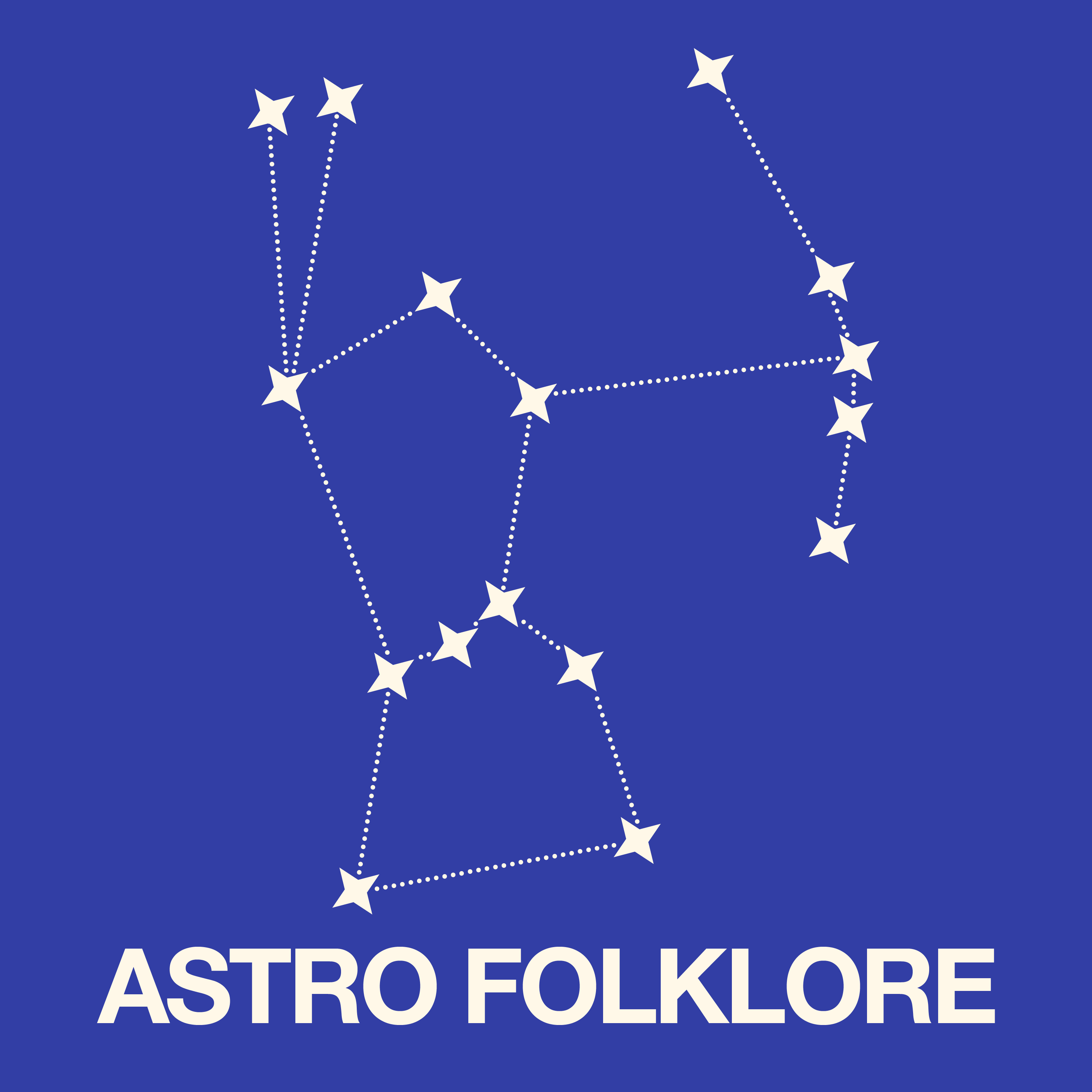
Folklore - Tokuzou's Star: When the Northern Star Moved
Hosted by our Director, Avivah Yamani. In Japanese folklore Tokuzou was a great mariner from Osaka who relied on Polaris (as we europeans call it), the North Star for navigation at sea. Then one night his wife saw that it had shifted out of place and she was afraid that her husband wouldn't be able to find his way back home! We've added a new way to donate to 365 Days of Astronomy to support editing, hosting, and production costs. Just visit: https://www.patreon.com/365DaysOfAstronomy and donate as much as you can! Share the podcast with your friends and send the Patreon link to them too! Every bit helps! Thank you! ------------------------------------ Do go visit http://www.redbubble.com/people/CosmoQuestX/shop for cool Astronomy Cast and CosmoQuest t-shirts, coffee mugs and other awesomeness! http://cosmoquest.org/Donate This show is made possible through your donations. Thank you! (Haven't donated? It's not too late! Just click!) ------------------------------------ The 365 Days of Astronomy Podcast is produced by the Planetary Science Institute. http://www.psi.edu Visit us on the web at 365DaysOfAstronomy.org or email us at [email protected].

EVSN - Another Potential Dark Matter Particle Isn't Found
From April 21, 2021. Researchers looked for a slowdown in black hole rotational speeds due to the collection of ultralight bosons, but they found nothing, eliminating the hypothetical particle from the list of possible dark matter particles. Plus, neutrino hunting, neutron stars, and a space hurricane. We've added a new way to donate to 365 Days of Astronomy to support editing, hosting, and production costs. Just visit: https://www.patreon.com/365DaysOfAstronomy and donate as much as you can! Share the podcast with your friends and send the Patreon link to them too! Every bit helps! Thank you! ------------------------------------ Do go visit http://www.redbubble.com/people/CosmoQuestX/shop for cool Astronomy Cast and CosmoQuest t-shirts, coffee mugs and other awesomeness! http://cosmoquest.org/Donate This show is made possible through your donations. Thank you! (Haven't donated? It's not too late! Just click!) ------------------------------------ The 365 Days of Astronomy Podcast is produced by the Planetary Science Institute. http://www.psi.edu Visit us on the web at 365DaysOfAstronomy.org or email us at [email protected].
H'ad Astra Historia - The 2026 Doggett Prize, Part 1
Episode 207. Today's guest: Professor Thomas Hockey, with the University of Northern Iowa, is the recipient of HAD's 2026 LeRoy E. Doggett Prize, which is awarded biennially to an individual who has significantly influenced the field of the history of astronomy by a career-long effort. In our interview, we'll hear about his background and explore some of his many achievements. This is the first of multiple episodes presenting our interview with him. H'ad astra historia is the official podcast for the Historical Astronomy Division of the American Astronomical Society. We're here to share stories from and about the people who study the stars, planets, and the cosmos. We'll be hearing from individuals who not only study the history of astronomy, but also those who lived it, who were "in the room" during pivotal events within the last 50 years or so. podcast music: "Frost Waltz" Kevin MacLeod (incompetech.com), licensed under creative commons: by attribution 4.0 license (http://creativecommons.org/licenses/by/4.0/) Podcaster: Loretta Cannon (an AAS affiliate via Rose City Astronomers) is a science-and-word-nerd who really likes outer space and the people who study it. She quite enjoys working as HAD's podcaster, sharing astronomy stories to you. We've added a new way to donate to 365 Days of Astronomy to support editing, hosting, and production costs. Just visit: https://www.patreon.com/365DaysOfAstronomy and donate as much as you can! Share the podcast with your friends and send the Patreon link to them too! Every bit helps! Thank you! ------------------------------------ Do go visit http://www.redbubble.com/people/CosmoQuestX/shop for cool Astronomy Cast and CosmoQuest t-shirts, coffee mugs and other awesomeness! http://cosmoquest.org/Donate This show is made possible through your donations. Thank you! (Haven't donated? It's not too late! Just click!) ------------------------------------ The 365 Days of Astronomy Podcast is produced by the Planetary Science Institute. http://www.psi.edu Visit us on the web at 365DaysOfAstronomy.org or email us at [email protected].
Cheap Astronomy - Implausible Engineering: Building A Telescope Big Enough To See Aliens
Hosted by Steve Nerlich. From October 14, 2024. Episode 5 — Too much is never enough. Cheap Astronomy's vision for space exploration: build whopping-big telescopes and send the robots. We've added a new way to donate to 365 Days of Astronomy to support editing, hosting, and production costs. Just visit: https://www.patreon.com/365DaysOfAstronomy and donate as much as you can! Share the podcast with your friends and send the Patreon link to them too! Every bit helps! Thank you! ------------------------------------ Do go visit http://www.redbubble.com/people/CosmoQuestX/shop for cool Astronomy Cast and CosmoQuest t-shirts, coffee mugs and other awesomeness! http://cosmoquest.org/Donate This show is made possible through your donations. Thank you! (Haven't donated? It's not too late! Just click!) ------------------------------------ The 365 Days of Astronomy Podcast is produced by the Planetary Science Institute. http://www.psi.edu Visit us on the web at 365DaysOfAstronomy.org or email us at [email protected].
Deep Astronomy - The Amazing Orion Nebula As Seen By Hubble & Spitzer Space Telescope
https://www.youtube.com/watch?v=_BOqF2XknOc From Jan 12, 2018. Hosted by Tony Darnell. Like this content? Please consider becoming a patron: https://www.patreon.com/profile/creators?u=2493405 On January 11, 2017 the Spitzer and Hubble Space Telescope missions released an amazing flythrough of the Orion Nebula, or M42. Never before have we had such a detailed look at this naked eye object in two wavelengths. Using actual scientific imagery and other data, combined with Hollywood techniques, a team at the Space Telescope Science Institute in Baltimore, and the Caltech/Infrared Processing and Analysis Center (IPAC) in Pasadena, California, has created the best and most detailed multi-wavelength visualization yet of this photogenic nebula. [Editor's note: You really do want to click on the YouTube link above.] We've added a new way to donate to 365 Days of Astronomy to support editing, hosting, and production costs. Just visit: https://www.patreon.com/365DaysOfAstronomy and donate as much as you can! Share the podcast with your friends and send the Patreon link to them too! Every bit helps! Thank you! ------------------------------------ Do go visit http://www.redbubble.com/people/CosmoQuestX/shop for cool Astronomy Cast and CosmoQuest t-shirts, coffee mugs and other awesomeness! http://cosmoquest.org/Donate This show is made possible through your donations. Thank you! (Haven't donated? It's not too late! Just click!) ------------------------------------ The 365 Days of Astronomy Podcast is produced by the Planetary Science Institute. http://www.psi.edu Visit us on the web at 365DaysOfAstronomy.org or email us at [email protected].
Astronomy Cast Ep. 772: 2025 Gift Guide
https://www.youtube.com/watch?v=panahVzZ6nw Hosted by: Fraser Cain and Dr. Pamela L. Gay. Streamed live on Nov 9, 2025. It's time once again for our annual gift giving guide. We've got recommendations for books, movies, TV shows, games and of course astronomy gear to satisfy the space nerds in your family. The Christmas season is almost upon us, and with it comes excuses to inject science into the lives of those you love... or ask for them to give you that book, lens, or art print you already know you'll love. In this episode, Fraser and Pamela share the things they think would make good gifts for nerds like us. This show is supported through people like you on Patreon.com/AstronomyCast In this episode, we'd like to thank: Andrew Poelstra, BogieNet, Brian Cagle, Burry Gowen, David, David Rossetter, Ed, Gerhard Schwarzer, Jason Kwong, Jeanette Wink, Michael Purcell, Sergey Manouilov, Siggi Kemmler, Sérgio Sancevero We've added a new way to donate to 365 Days of Astronomy to support editing, hosting, and production costs. Just visit: https://www.patreon.com/365DaysOfAstronomy and donate as much as you can! Share the podcast with your friends and send the Patreon link to them too! Every bit helps! Thank you! ------------------------------------ Do go visit http://www.redbubble.com/people/CosmoQuestX/shop for cool Astronomy Cast and CosmoQuest t-shirts, coffee mugs and other awesomeness! http://cosmoquest.org/Donate This show is made possible through your donations. Thank you! (Haven't donated? It's not too late! Just click!) ------------------------------------ The 365 Days of Astronomy Podcast is produced by the Planetary Science Institute. http://www.psi.edu Visit us on the web at 365DaysOfAstronomy.org or email us at [email protected].
Travelers in the Night Eps. 351E & 352E: Active Asteroid & Flying Mud Balls
Dr. Al Grauer hosts. Dr. Albert D. Grauer ( @Nmcanopus ) is an observational asteroid hunting astronomer. Dr. Grauer retired from the University of Arkansas at Little Rock in 2006. travelersinthenight.org From August & September 2025. Today's 2 topics: - When it was first spotted by astronomers at Space Watch on Kitt Peak, 2008 GO98 appeared to be one of many outer main belt asteroids moving through the night sky. 9 years later when my Catalina Sky Survey teammate Greg Leonard observed it with our 60 inch telescope on Mt. Lemmon it had a coma and a tail like a comet. Active asteroids like 2008 GO98 have asteroid orbits but sometimes show cometary activity which could be caused by a collision with another object and/or by thermal fracturing and ice sublimation caused by the slight warming they obtain from sunlight. - 75% of asteroid hunter's discoveries are called C type asteroids. They are dark, have a high abundance of carbon, consist of clay and silicate rocks, and may have a composition which is up to 22% water. Recently Dr. Phillip A. Bland of Curtin University in Australia and Dr. Bryan Travis of the Planetary Science Institute in Tucson, Arizona published an article in the on line journal Science Advances describing their numerical simulations of the evolution of the progenitors of the C type asteroids. We've added a new way to donate to 365 Days of Astronomy to support editing, hosting, and production costs. Just visit: https://www.patreon.com/365DaysOfAstronomy and donate as much as you can! Share the podcast with your friends and send the Patreon link to them too! Every bit helps! Thank you! ------------------------------------ Do go visit http://www.redbubble.com/people/CosmoQuestX/shop for cool Astronomy Cast and CosmoQuest t-shirts, coffee mugs and other awesomeness! http://cosmoquest.org/Donate This show is made possible through your donations. Thank you! (Haven't donated? It's not too late! Just click!) ------------------------------------ The 365 Days of Astronomy Podcast is produced by the Planetary Science Institute. http://www.psi.edu Visit us on the web at 365DaysOfAstronomy.org or email us at [email protected].
The Cosmic Savannah Ep. 76: First Ever Live Show Debut at Astronomy Olympics
Hosted by Dr. Jacinta Delhaize, Dr. Tshiamiso Makwela & Dr. Daniel Cunnama. Watch the whole show on YouTube! [Editor's note: Start at 20:28 where the audio starts with some rocking marimba action! The last 5 minutes here are more tunes from the marimba band.] https://www.youtube.com/live/Dgw6mz5bTG4?si=xAr-fa0GvLwpT-pc This week, join us for a special live episode from the 2024 IAU General Assembly in Cape Town, South Africa, featuring black hole simulations expert Dr. Nicole Thomas and winner of the 2011 Nobel Prize for Physics Prof. Brian Schmidt. Cape Town born Dr. Nicole Thomas returns to The Cosmic Savannah four years after previously featuring in episodes 9 and 14 as a PhD student. She shares with us the story of her illustrious academic career around the world since then, including a postdoctoral research position in the UK at the Institute of Computational Cosmology, University of Durham and now a prestigious Jim Buckee Fellowship at the International Centre for Radio Astronomy Research, University of Western Australia. Nicole explains to us her latest research on using state-of-the-art supercomputer simulations to understanding the havoc that supermassive black holes wreak on galaxies. She does this by trying to model how the Universe works using our current understanding of physics and comparing her results to images of the real Universe taken with South Africa's MeerKAT telescope. She hints that she looks forward to applying these simulations to the findings of the upcoming SKA telescope! Next, Nobel Laureate Prof Brian Schmidt, a Distinguished Professor at the Australian National University joins the team on stage. Brian takes us back to the night of the 4th of October 2011 when he received a call from Sweden telling him he had won the Nobel Prize. Brian received the prize, alongside two other people, for having discovered the accelerating expansion of the Universe. He discusses what life has been like after such a monumental achievement, including his experiences as Vice-Chancellor of the Australian National University. Finally, he tells us about his plans to get back to doing research and reveals what he thinks the next big astrophysical breakthroughs will be using the SKA telescope under construction in South Africa and Australia. We've added a new way to donate to 365 Days of Astronomy to support editing, hosting, and production costs. Just visit: https://www.patreon.com/365DaysOfAstronomy and donate as much as you can! Share the podcast with your friends and send the Patreon link to them too! Every bit helps! Thank you! ------------------------------------ Do go visit http://www.redbubble.com/people/CosmoQuestX/shop for cool Astronomy Cast and CosmoQuest t-shirts, coffee mugs and other awesomeness! http://cosmoquest.org/Donate This show is made possible through your donations. Thank you! (Haven't donated? It's not too late! Just click!) ------------------------------------ The 365 Days of Astronomy Podcast is produced by the Planetary Science Institute. http://www.psi.edu Visit us on the web at 365DaysOfAstronomy.org or email us at [email protected].

EVSN - Active Black Hole's Surge in Brightness Due to Magnetic Flip
From May 10, 2022. A luminous black hole already classified as an active galactic nucleus brightened suddenly in recent ground and space observations, and the cause may be due to a sudden flip in the magnetic poles. Plus, community science, rockets, Ingenuity, and an interview with Dr. Cathy Weitz from Planetary Science Institute. We've added a new way to donate to 365 Days of Astronomy to support editing, hosting, and production costs. Just visit: https://www.patreon.com/365DaysOfAstronomy and donate as much as you can! Share the podcast with your friends and send the Patreon link to them too! Every bit helps! Thank you! ------------------------------------ Do go visit http://www.redbubble.com/people/CosmoQuestX/shop for cool Astronomy Cast and CosmoQuest t-shirts, coffee mugs and other awesomeness! http://cosmoquest.org/Donate This show is made possible through your donations. Thank you! (Haven't donated? It's not too late! Just click!) ------------------------------------ The 365 Days of Astronomy Podcast is produced by the Planetary Science Institute. http://www.psi.edu Visit us on the web at 365DaysOfAstronomy.org or email us at [email protected].
Actual Astronomy - Mark Radice's Recent Astronomy Adventures
Hosted by Chris Beckett & Shane Ludtke, two amateur astronomers in Saskatchewan. [email protected] Our friend Mark Radice joins us to talk about his recent trip to Namibia where he helps run astronomy tours at a ranch. Great fun observing with guests and celestial sights including: - Alpha Centauri double star - 47 Tucanae – simply stunning - Comet SWAN (couldn't see Lemon) - Milky Way constellations - NGC 253 galaxy; M8 Lagoon; Tarantula Nebula - Saturn - Neptune - Moon - Sirius and Pup We've added a new way to donate to 365 Days of Astronomy to support editing, hosting, and production costs. Just visit: https://www.patreon.com/365DaysOfAstronomy and donate as much as you can! Share the podcast with your friends and send the Patreon link to them too! Every bit helps! Thank you! ------------------------------------ Do go visit http://www.redbubble.com/people/CosmoQuestX/shop for cool Astronomy Cast and CosmoQuest t-shirts, coffee mugs and other awesomeness! http://cosmoquest.org/Donate This show is made possible through your donations. Thank you! (Haven't donated? It's not too late! Just click!) ------------------------------------ The 365 Days of Astronomy Podcast is produced by the Planetary Science Institute. http://www.psi.edu Visit us on the web at 365DaysOfAstronomy.org or email us at [email protected].

Guide To Space - What Will It Take To Stay Healthy In Space? Practical Artificial Gravity
https://www.youtube.com/watch?v=SHfUbNRO-3A From Mar 14, 2018. One of the biggest problems of spaceflight is the total lack of gravity. Here are some proposals that could generate artificial gravity through rotating spacecraft. Sign up to my weekly email newsletter: https://www.universetoday.com/newsletter We've added a new way to donate to 365 Days of Astronomy to support editing, hosting, and production costs. Just visit: https://www.patreon.com/365DaysOfAstronomy and donate as much as you can! Share the podcast with your friends and send the Patreon link to them too! Every bit helps! Thank you! ------------------------------------ Do go visit http://www.redbubble.com/people/CosmoQuestX/shop for cool Astronomy Cast and CosmoQuest t-shirts, coffee mugs and other awesomeness! http://cosmoquest.org/Donate This show is made possible through your donations. Thank you! (Haven't donated? It's not too late! Just click!) ------------------------------------ The 365 Days of Astronomy Podcast is produced by the Planetary Science Institute. http://www.psi.edu Visit us on the web at 365DaysOfAstronomy.org or email us at [email protected].

Ask A Spaceman Ep. 260: What's the Big Deal with the Weak Force?
Hosted by Dr. Paul M. Sutter. How did we discover the weak nuclear force? Why is it so strange compared to the other forces? What do mirrors have to do with all of this? I discuss these questions and more in today's Ask a Spaceman! Support the show: http://www.patreon.com/pmsutter All episodes: http://www.AskASpaceman.com Watch on YouTube: http://www.youtube.com/PaulMSutter Read a book: https://www.pmsutter.com/books Keep those questions about space, science, astronomy, astrophysics, physics, and cosmology coming to #AskASpaceman for COMPLETE KNOWLEDGE OF TIME AND SPACE! Big thanks to my top Patreon supporters this month: Justin G, Chris L, Alberto M, Duncan M, Corey D, Michael P, Naila, Sam R, Joshua, Scott M, Scott M, Louis M, John W, Alexis, Gilbert M, Rob W, Jessica M, Jules R, Jim L, David S, Scott R, Heather, Mike S, Pete H, Steve S, Lisa R, Kevin B, Aileen G, Steven W, Deb A, Michael J, Phillip L, Steven B, Mark R, Alan B, Craig B, Mark F, Richard K, Stephen J, Joe R, David P, Justin, Tracy F, Ella F, Thomas K, James C, Syamkumar M, Homer V, Mark D, Bruce A, Tim Z, Linda C, The Tired Jedi, Lode D, Bob C, Red B, Stephen A, James R, Robert O, Allen E, Michael S, Reinaldo A, Sheryl, David W, Chris, Michael S, Erlend A, James D, Larry D, Karl W, Den K, Edward K, Catherine B, John M, Craig M, Scott K, Vivek D, Barbara C, Brad, Azra K, Steve R, and Narrative Dude! We've added a new way to donate to 365 Days of Astronomy to support editing, hosting, and production costs. Just visit: https://www.patreon.com/365DaysOfAstronomy and donate as much as you can! Share the podcast with your friends and send the Patreon link to them too! Every bit helps! Thank you! ------------------------------------ Do go visit http://www.redbubble.com/people/CosmoQuestX/shop for cool Astronomy Cast and CosmoQuest t-shirts, coffee mugs and other awesomeness! http://cosmoquest.org/Donate This show is made possible through your donations. Thank you! (Haven't donated? It's not too late! Just click!) ------------------------------------ The 365 Days of Astronomy Podcast is produced by the Planetary Science Institute. http://www.psi.edu Visit us on the web at 365DaysOfAstronomy.org or email us at [email protected].
Astronomy Cast Ep. 771: Comet Tails
https://www.youtube.com/watch?v=whMphW1Tb5I Hosted by: Fraser Cain and Dr. Pamela L. Gay Streamed live on Nov 8, 2025. With the arrival of the comet 3I/Atlas (Asteroid Terrestrial-impact Last Alert System), the world is getting a crash course in comets, their behavior, and of course their tails. Today we're going to talk about comets and their tails, why they exist, how they grow, why they can be different colors and how they can be sometimes point AT the Sun. Comets are one of the most animated and ephemeral targets for astronomy. From night to night they can change in shape and color, and every nuance tells us something. In this episode, we decode blue tails, green cores, forward-facing plumes, and other weird and awesome details observed with these icy visitors. This show is supported through people like you on Patreon.com/AstronomyCast In this episode, we'd like to thank: Andrew Poelstra, BogieNet, Brian Cagle, Burry Gowen, David, David Rossetter, Ed, Gerhard Schwarzer, Jason Kwong, Jeanette Wink, Michael Purcell, Sergey Manouilov, Siggi Kemmler, Sérgio Sancevero We've added a new way to donate to 365 Days of Astronomy to support editing, hosting, and production costs. Just visit: https://www.patreon.com/365DaysOfAstronomy and donate as much as you can! Share the podcast with your friends and send the Patreon link to them too! Every bit helps! Thank you! ------------------------------------ Do go visit http://www.redbubble.com/people/CosmoQuestX/shop for cool Astronomy Cast and CosmoQuest t-shirts, coffee mugs and other awesomeness! http://cosmoquest.org/Donate This show is made possible through your donations. Thank you! (Haven't donated? It's not too late! Just click!) ------------------------------------ The 365 Days of Astronomy Podcast is produced by the Planetary Science Institute. http://www.psi.edu Visit us on the web at 365DaysOfAstronomy.org or email us at [email protected].
Travelers in the Night Eps. 349E & 350E: Trappist-1 Planets & Brute
Dr. Al Grauer hosts. Dr. Albert D. Grauer ( @Nmcanopus ) is an observational asteroid hunting astronomer. Dr. Grauer retired from the University of Arkansas at Little Rock in 2006. travelersinthenight.org From August 2025. Today's 2 topics: - The Trappist-1 planetary system located about 40 light years away in the constellation of Aquarius consists of a small red dwarf star and 7 Earth sized planets. By carefully studying changes in the planet's transit timings and the shape of the dip in the host star's brightness as each planet transits across it, astronomers have been able to measure the orbital period, radius, and approximate mass for each of the 7 planets. - Recently my Catalina Sky Survey teammate Richard Kowalski discovered 2017 MB1, a 0.4 mile diameter asteroid with the Catalina Sky Survey Schmidt telescope on Mt. Bigelow, AZ. Two hours and 11 minutes later it came into a set images I obtained with the 60 inch telescope on Mt. Lemmon, AZ. After I reported it, the new object was tracked by telescopes in Arizona, New Zealand, Slovenia, Kansas, Australia, Hungary, France, and Brazil. We've added a new way to donate to 365 Days of Astronomy to support editing, hosting, and production costs. Just visit: https://www.patreon.com/365DaysOfAstronomy and donate as much as you can! Share the podcast with your friends and send the Patreon link to them too! Every bit helps! Thank you! ------------------------------------ Do go visit http://www.redbubble.com/people/CosmoQuestX/shop for cool Astronomy Cast and CosmoQuest t-shirts, coffee mugs and other awesomeness! http://cosmoquest.org/Donate This show is made possible through your donations. Thank you! (Haven't donated? It's not too late! Just click!) ------------------------------------ The 365 Days of Astronomy Podcast is produced by the Planetary Science Institute. http://www.psi.edu Visit us on the web at 365DaysOfAstronomy.org or email us at [email protected].
ASTROMAN - Dark Sky Astrophotography in Dark Sky Regions
Episode 11. "ASTROMAN: the Dark Sky Guardian" is a podcast channel that aims to explore popular science in multiple disciplines and research on interdisciplinary approaches, such as sustainability, dark-sky protection, astrophotography, space exploration, astronomy innovation, inclusive science communication, and STEAM Education by integrating science and arts. Exodus CL Sit, also known as the ASTROMAN, is a transmedia astronomy educator, popular science author, STEAM educator, and science communicator in Hong Kong. He is recently the National Astronomy Education Coordinator (Chair of Hong Kong, China) of the International Astronomical Union and President of Starrix. He was also an International Committee Member of the Dark Sky International, regularly organizing public lectures at the Hong Kong Space Museum and the Hong Kong Science Museum. He was also the author of a popular science book "Decoding the Starry Night: A Guide to Stargazing and Astrophotography". We've added a new way to donate to 365 Days of Astronomy to support editing, hosting, and production costs. Just visit: https://www.patreon.com/365DaysOfAstronomy and donate as much as you can! Share the podcast with your friends and send the Patreon link to them too! Every bit helps! Thank you! ------------------------------------ Do go visit http://www.redbubble.com/people/CosmoQuestX/shop for cool Astronomy Cast and CosmoQuest t-shirts, coffee mugs and other awesomeness! http://cosmoquest.org/Donate This show is made possible through your donations. Thank you! (Haven't donated? It's not too late! Just click!) ------------------------------------ The 365 Days of Astronomy Podcast is produced by the Planetary Science Institute. http://www.psi.edu Visit us on the web at 365DaysOfAstronomy.org or email us at [email protected].

EVSN - JWST's Picture Album of Baby Stars, Planets, Moons & More
From November 5, 2025. In this episode, we look at some of our latest discoveries about the formation of star systems, including planets and moons, and the growth of black holes. We also take a closer look at our brightening skies, and the missions set to make things worse. We also cover the latest tales from the launch pad. We've added a new way to donate to 365 Days of Astronomy to support editing, hosting, and production costs. Just visit: https://www.patreon.com/365DaysOfAstronomy and donate as much as you can! Share the podcast with your friends and send the Patreon link to them too! Every bit helps! Thank you! ------------------------------------ Do go visit http://www.redbubble.com/people/CosmoQuestX/shop for cool Astronomy Cast and CosmoQuest t-shirts, coffee mugs and other awesomeness! http://cosmoquest.org/Donate This show is made possible through your donations. Thank you! (Haven't donated? It's not too late! Just click!) ------------------------------------ The 365 Days of Astronomy Podcast is produced by the Planetary Science Institute. http://www.psi.edu Visit us on the web at 365DaysOfAstronomy.org or email us at [email protected].
Cosmic Perspective - Veteran of 5 Space Shuttle Missions, Capt. Robert "Hoot" Gibson
Hosted by Andy Poniros. Info: Author, fighter pilot, test pilot, & veteran of 5 Space Shuttle missions, Captain Robert "Hoot" Gibson discusses his books, as well as his fighter pilot experiences in the Vietnam war, & his Space Shuttle missions... Including piloting the 1st untethered astronaut spacewalk, mission STS-41B & his perilous top secret mission STS-27R. Intro Music: "A Moment in Space History", Andy Poniros Outro Music: "Funk 2001", Larry Benigno Organization: Cosmic Perspective Radio We've added a new way to donate to 365 Days of Astronomy to support editing, hosting, and production costs. Just visit: https://www.patreon.com/365DaysOfAstronomy and donate as much as you can! Share the podcast with your friends and send the Patreon link to them too! Every bit helps! Thank you! ------------------------------------ Do go visit http://www.redbubble.com/people/CosmoQuestX/shop for cool Astronomy Cast and CosmoQuest t-shirts, coffee mugs and other awesomeness! http://cosmoquest.org/Donate This show is made possible through your donations. Thank you! (Haven't donated? It's not too late! Just click!) ------------------------------------ The 365 Days of Astronomy Podcast is produced by the Planetary Science Institute. http://www.psi.edu Visit us on the web at 365DaysOfAstronomy.org or email us at [email protected].

UNAWE Space Scoop: Lonely Planet — The Hungriest Exoplanet
https://spacescoop.org/en/scoops/2524/lonely-planet-the-hungriest-found-in-space/ Hosted by Richard Drumm, our editor. You've probably heard of exoplanets. Planets that orbit stars other than our Sun. But did you know that there are objects with a mass similar to a planet that float free in space, that don't orbit a star? These lonely wanderers are called rogue planets. Recently, a team of astronomers discovered a very special one in the southern constellation Chameleon. The rogue planet is named Cha (for Chameleon) 1107-7626 and is located about 620 light-years away. It has a mass of 5 to 10 times that of Jupiter and is still growing! We've added a new way to donate to 365 Days of Astronomy to support editing, hosting, and production costs. Just visit: https://www.patreon.com/365DaysOfAstronomy and donate as much as you can! Share the podcast with your friends and send the Patreon link to them too! Every bit helps! Thank you! ------------------------------------ Do go visit http://www.redbubble.com/people/CosmoQuestX/shop for cool Astronomy Cast and CosmoQuest t-shirts, coffee mugs and other awesomeness! http://cosmoquest.org/Donate This show is made possible through your donations. Thank you! (Haven't donated? It's not too late! Just click!) ------------------------------------ The 365 Days of Astronomy Podcast is produced by the Planetary Science Institute. http://www.psi.edu Visit us on the web at 365DaysOfAstronomy.org or email us at [email protected].
Exoplanet Radio - Epsilon Indi Ab: A Twin of Jupiter
Hosted by Tony Darnell. From August 17, 2024. An international team of astronomers has directly imaged this exoplanet, one of the coldest ever seen. The team observed Epsilon Indi Ab using the coronagraph on Webb's Mid-Infrared Instrument. Only a few tens of exoplanets have ever been directly imaged by space- and ground-based observatories. These observations are ushering in a completely new era in exoplanet research. We've added a new way to donate to 365 Days of Astronomy to support editing, hosting, and production costs. Just visit: https://www.patreon.com/365DaysOfAstronomy and donate as much as you can! Share the podcast with your friends and send the Patreon link to them too! Every bit helps! Thank you! ------------------------------------ Do go visit http://www.redbubble.com/people/CosmoQuestX/shop for cool Astronomy Cast and CosmoQuest t-shirts, coffee mugs and other awesomeness! http://cosmoquest.org/Donate This show is made possible through your donations. Thank you! (Haven't donated? It's not too late! Just click!) ------------------------------------ The 365 Days of Astronomy Podcast is produced by the Planetary Science Institute. http://www.psi.edu Visit us on the web at 365DaysOfAstronomy.org or email us at [email protected].
Astronomy Cast Ep. 770: The Ethics of Mars Exploration
https://www.youtube.com/watch?v=14QKJkt3cIE Streamed live on Nov 3, 2025. Hosted by: Fraser Cain and Dr. Pamela L. Gay. It is arguable that humanity now has the technological ability to live on Mars. It would be done at enormous expense and sacrifice, and there are some tricky problems that we haven't solved yet. Although we could live on Mars, should we? There is a famous quote from Jurassic Park: "Your scientists were so preoccupied with whether or not they could, they didn't stop to think if they should." This concept is played out across the sciences, and in planetary exploration, it requires us to ask, all because we can launch humans toward Mars, should we? This show is supported through people like you on Patreon.com/AstronomyCast In this episode, we'd like to thank: Andrew Poelstra, BogieNet, Brian Cagle, Burry Gowen, David, David Rossetter, Ed, Gerhard Schwarzer, Jason Kwong, Jeanette Wink, Michael Purcell, Sergey Manouilov, Siggi Kemmler, Sérgio Sancevero We've added a new way to donate to 365 Days of Astronomy to support editing, hosting, and production costs. Just visit: https://www.patreon.com/365DaysOfAstronomy and donate as much as you can! Share the podcast with your friends and send the Patreon link to them too! Every bit helps! Thank you! ------------------------------------ Do go visit http://www.redbubble.com/people/CosmoQuestX/shop for cool Astronomy Cast and CosmoQuest t-shirts, coffee mugs and other awesomeness! http://cosmoquest.org/Donate This show is made possible through your donations. Thank you! (Haven't donated? It's not too late! Just click!) ------------------------------------ The 365 Days of Astronomy Podcast is produced by the Planetary Science Institute. http://www.psi.edu Visit us on the web at 365DaysOfAstronomy.org or email us at [email protected].
Travelers in the Night Eps. 347E & 348E: Life's Parts & 2 Headed Space Worm
Dr. Al Grauer hosts. Dr. Albert D. Grauer ( @Nmcanopus ) is an observational asteroid hunting astronomer. Dr. Grauer retired from the University of Arkansas at Little Rock in 2006. travelersinthenight.org From July & August 2025. Today's 2 topics: - 24 hours a day, 16,600 feet above sea level in the high dry desert of northern Chile, the 66 antennas of 1.4 billion dollar Atacama Large Millimeter/submillimeter Array or ALMA receives signals located between the infrared and radio portions of the electromagnetic spectrum. The waves that ALMA receives have a length which is about the same as the thickness of a dime. The pattern of present and missing wavelengths in these signals contains the characteristic spectral signatures of the complex molecules that form the basis of living organisms. - Humans are moving towards a day when there are space colonies in orbit, on the Moon, and the planet Mars, places where the force of gravity ranges between zero and 38% of what we experience every day. What effect will such different environments have on the regeneration of liver, skin, and other human body organs? We've added a new way to donate to 365 Days of Astronomy to support editing, hosting, and production costs. Just visit: https://www.patreon.com/365DaysOfAstronomy and donate as much as you can! Share the podcast with your friends and send the Patreon link to them too! Every bit helps! Thank you! ------------------------------------ Do go visit http://www.redbubble.com/people/CosmoQuestX/shop for cool Astronomy Cast and CosmoQuest t-shirts, coffee mugs and other awesomeness! http://cosmoquest.org/Donate This show is made possible through your donations. Thank you! (Haven't donated? It's not too late! Just click!) ------------------------------------ The 365 Days of Astronomy Podcast is produced by the Planetary Science Institute. http://www.psi.edu Visit us on the web at 365DaysOfAstronomy.org or email us at [email protected].

Space Stories - Cradles in the Cosmic Mist: Meeting the Nebula
Hosted by Avivah Yamani, our Director. From latin "nebula" to stellar nurseries & ghostly shells, this episode dives into emission, reflection, dark, planetary nebulae and supernova remnants. These are the cosmic clouds at the start of star life and at the end of star life. Cradles and echoes of starlight, all in one story! We've added a new way to donate to 365 Days of Astronomy to support editing, hosting, and production costs. Just visit: https://www.patreon.com/365DaysOfAstronomy and donate as much as you can! Share the podcast with your friends and send the Patreon link to them too! Every bit helps! Thank you! ------------------------------------ Do go visit http://www.redbubble.com/people/CosmoQuestX/shop for cool Astronomy Cast and CosmoQuest t-shirts, coffee mugs and other awesomeness! http://cosmoquest.org/Donate This show is made possible through your donations. Thank you! (Haven't donated? It's not too late! Just click!) ------------------------------------ The 365 Days of Astronomy Podcast is produced by the Planetary Science Institute. http://www.psi.edu Visit us on the web at 365DaysOfAstronomy.org or email us at [email protected].

EVSN - Strong Evidence Found That Muons Deviate From Standard Model
From April 14, 2021. Fermilab released the first results of their Muon g-2 experiment this week, and the fundamental particles don't behave as predicted by the Standard Model of particle physics. Plus, dust, more dust, Martian water (again), and a review of Packing for Mars by Mary Roach. We've added a new way to donate to 365 Days of Astronomy to support editing, hosting, and production costs. Just visit: https://www.patreon.com/365DaysOfAstronomy and donate as much as you can! Share the podcast with your friends and send the Patreon link to them too! Every bit helps! Thank you! ------------------------------------ Do go visit http://www.redbubble.com/people/CosmoQuestX/shop for cool Astronomy Cast and CosmoQuest t-shirts, coffee mugs and other awesomeness! http://cosmoquest.org/Donate This show is made possible through your donations. Thank you! (Haven't donated? It's not too late! Just click!) ------------------------------------ The 365 Days of Astronomy Podcast is produced by the Planetary Science Institute. http://www.psi.edu Visit us on the web at 365DaysOfAstronomy.org or email us at [email protected].