
The 365 Days of Astronomy
452 episodes — Page 6 of 10
Travelers in the Night Eps. 855 & 856: Planetary Defense & Big One
Dr. Al Grauer hosts. Dr. Albert D. Grauer ( @Nmcanopus ) is an observational asteroid hunting astronomer. Dr. Grauer retired from the University of Arkansas at Little Rock in 2006. travelersinthenight.org From June & July 2025. Today's 2 topics: - In 2016 NASA created the Planetary Defense Coordination Office to manage the mission of finding, tracking, and studying asteroids and comets which could pose an impact threat to our home planet.The NASA documentary "Planetary Defenders" provides an excellent over view and can be streamed on the internet: https://www.youtube.com/watch?v=jOb2DQWvDvc - My Catalina Sky Survey teammate Vivian Carvajal was asteroid hunting in the constellation of Cepheus with our small but mighty Schmidt telescope on Mt. Bigelow, Arizona when she discovered 2025 JB1.Fortunately on its current path there is zero probability that 2025 JB1 will impact our home planet in the foreseeable future. Further asteroid hunters continue to search for any other large asteroids which might impact Earth so that mitigation efforts would be effective. We've added a new way to donate to 365 Days of Astronomy to support editing, hosting, and production costs. Just visit: https://www.patreon.com/365DaysOfAstronomy and donate as much as you can! Share the podcast with your friends and send the Patreon link to them too! Every bit helps! Thank you! ------------------------------------ Do go visit http://www.redbubble.com/people/CosmoQuestX/shop for cool Astronomy Cast and CosmoQuest t-shirts, coffee mugs and other awesomeness! http://cosmoquest.org/Donate This show is made possible through your donations. Thank you! (Haven't donated? It's not too late! Just click!) ------------------------------------ The 365 Days of Astronomy Podcast is produced by the Planetary Science Institute. http://www.psi.edu Visit us on the web at 365DaysOfAstronomy.org or email us at [email protected].

NOIRLab - Mysterious Metallic Cloud Discovered Orbiting Mystery Object
Sweeping winds of vaporized metals have been found in a massive cloud that dimmed the light of a star for nearly nine months. This discovery, made with the Gemini South telescope in Chile offers a rare glimpse into the chaotic and dynamic processes still shaping planetary systems long after their formation. In this podcast, Dr. Nadia Zakamska describes the discovery of this object, stemming from a mysterious dimming of a star, to the analysis of the gas cloud. Bios: - Rob Sparks is in the Communications, Education and Engagement group at NSF's NOIRLab in Tucson, Arizona. - Dr. Nadia Zakamska was born and raised in Russia and received a Masters degree from Moscow Institute of Physics and Technology. She came to the United States in 2001 to pursue graduate education in Astrophysics in Princeton University. After her Ph.D., she was a postdoctoral researcher at the Institute for Advanced Study in Princeton and at Stanford University before moving to the Johns Hopkins University for a faculty position in 2011. She is now a professor in the Department of Physics and Astronomy, with a wide range of research interests across many areas of astrophysics. She lives in Baltimore with her husband and four children. NOIRLab social media channels can be found at: https://www.facebook.com/NOIRLabAstro https://twitter.com/NOIRLabAstro https://www.instagram.com/noirlabastro/ https://www.youtube.com/noirlabastro We've added a new way to donate to 365 Days of Astronomy to support editing, hosting, and production costs. Just visit: https://www.patreon.com/365DaysOfAstronomy and donate as much as you can! Share the podcast with your friends and send the Patreon link to them too! Every bit helps! Thank you! ------------------------------------ Do go visit http://www.redbubble.com/people/CosmoQuestX/shop for cool Astronomy Cast and CosmoQuest t-shirts, coffee mugs and other awesomeness! http://cosmoquest.org/Donate This show is made possible through your donations. Thank you! (Haven't donated? It's not too late! Just click!) ------------------------------------ The 365 Days of Astronomy Podcast is produced by the Planetary Science Institute. http://www.psi.edu Visit us on the web at 365DaysOfAstronomy.org or email us at [email protected].

EVSN - Galaxy Mergers Trigger Black Hole Growth
From May 21, 2020. Join us today as we discuss the impressive work by an undergraduate student who figured out how galaxy mergers influence the growth of supermassive black holes. We talk about a gigantic galaxy found in the early universe. And finally, we look at amazing images of a planet being formed around a distant star. We've added a new way to donate to 365 Days of Astronomy to support editing, hosting, and production costs. Just visit: https://www.patreon.com/365DaysOfAstronomy and donate as much as you can! Share the podcast with your friends and send the Patreon link to them too! Every bit helps! Thank you! ------------------------------------ Do go visit http://www.redbubble.com/people/CosmoQuestX/shop for cool Astronomy Cast and CosmoQuest t-shirts, coffee mugs and other awesomeness! http://cosmoquest.org/Donate This show is made possible through your donations. Thank you! (Haven't donated? It's not too late! Just click!) ------------------------------------ The 365 Days of Astronomy Podcast is produced by the Planetary Science Institute. http://www.psi.edu Visit us on the web at 365DaysOfAstronomy.org or email us at [email protected].
Guide To Space - What Did Cassini Teach Us? Remembering Cassini and Saying Goodbye
https://www.youtube.com/watch?v=-Alz4UXGqLk From March 8, 2017. In just a few months, NASA's Cassini spacecraft is going to die, crashing into the planet Saturn. Let's look back across the mission's history. What were the highlights? What did we learn? Team: Fraser Cain - @fcain / [email protected] Karla Thompson - @karlaii Chad Weber - [email protected] Ask me my favorite object in the Solar System, especially to see through a telescope, and my answer is always the same: Saturn. Saturn is this crazy, ringed world, different than any other place we've ever seen. And in a small telescope, you can really see the ball of the planet - you can see its rings. We've added a new way to donate to 365 Days of Astronomy to support editing, hosting, and production costs. Just visit: https://www.patreon.com/365DaysOfAstronomy and donate as much as you can! Share the podcast with your friends and send the Patreon link to them too! Every bit helps! Thank you! ------------------------------------ Do go visit http://www.redbubble.com/people/CosmoQuestX/shop for cool Astronomy Cast and CosmoQuest t-shirts, coffee mugs and other awesomeness! http://cosmoquest.org/Donate This show is made possible through your donations. Thank you! (Haven't donated? It's not too late! Just click!) ------------------------------------ The 365 Days of Astronomy Podcast is produced by the Planetary Science Institute. http://www.psi.edu Visit us on the web at 365DaysOfAstronomy.org or email us at [email protected].
Cheap Astronomy - Dear CA Ep. 129: More Rocks
A podcast about rocks, big and small. Dear Cheap Astronomy – What's Psyche really like? Psyche is an asteroid in the asteroid belt and apparently a very metal rich one, which makes it a prospecting target for budding asteroid miners. Pysche is also a spacecraft, launched on October 13, 2023. We're recording this episode about one month after launch when it's already over 15 million km from Earth – and its destination? Yep, Psyche – the asteroid. Dear Cheap Astronomy – How is Mars Sample Return mission going? Here at Cheap Astronomy we've often said that landing on Mars is one thing – getting off it again is quite another. But this is the intention of the Mars Sample Return mission – which has already commenced insofar as the Perseverance rover is currently collecting samples for it – some of which have dropped for later retrieval, while others remain stored within the rover. We've added a new way to donate to 365 Days of Astronomy to support editing, hosting, and production costs. Just visit: https://www.patreon.com/365DaysOfAstronomy and donate as much as you can! Share the podcast with your friends and send the Patreon link to them too! Every bit helps! Thank you! ------------------------------------ Do go visit http://www.redbubble.com/people/CosmoQuestX/shop for cool Astronomy Cast and CosmoQuest t-shirts, coffee mugs and other awesomeness! http://cosmoquest.org/Donate This show is made possible through your donations. Thank you! (Haven't donated? It's not too late! Just click!) ------------------------------------ The 365 Days of Astronomy Podcast is produced by the Planetary Science Institute. http://www.psi.edu Visit us on the web at 365DaysOfAstronomy.org or email us at [email protected].
Deep Astronomy - Discoveries of Webb Space Telescope Ep 3: The Flares of Sagittarius A*, Our Galaxy's Black Hole
https://www.youtube.com/watch?v=d7FAg_AYXaw From April 14, 2025. Astronomers using the JWST have made direct observations of the black hole at the center of our galaxy: Sagittarius A*. These observations are possible because the Webb Space Telescope can peer through the dust at the center of our galaxy using infrared light. These observations surprised astronomers. We've added a new way to donate to 365 Days of Astronomy to support editing, hosting, and production costs. Just visit: https://www.patreon.com/365DaysOfAstronomy and donate as much as you can! Share the podcast with your friends and send the Patreon link to them too! Every bit helps! Thank you! ------------------------------------ Do go visit http://www.redbubble.com/people/CosmoQuestX/shop for cool Astronomy Cast and CosmoQuest t-shirts, coffee mugs and other awesomeness! http://cosmoquest.org/Donate This show is made possible through your donations. Thank you! (Haven't donated? It's not too late! Just click!) ------------------------------------ The 365 Days of Astronomy Podcast is produced by the Planetary Science Institute. http://www.psi.edu Visit us on the web at 365DaysOfAstronomy.org or email us at [email protected].
Astronomy Cast Ep. 781: Awakening Black Holes
https://www.youtube.com/watch?v=PpZRjII8qkc Hosted by: Fraser Cain (@frasercain) and Dr. Pamela L. Gay (@CosmoQuest) Streamed live on Feb 2, 2026. One long standing mystery in astronomy were the quasars. Incomprehensible energy blasting out of a point-like source, billions of light years away. We now know these are actively feeding supermassive black holes, which can turn off and on in a startlingly short period of time. Today: When black holes awaken! Our Universe is filled with sleeping monsters. And sometimes, whether we want it or not, they wake up hungry. In this episode, we take a look at the science behind how and why black holes of all sizes can go from nothing to the triggers of massive high-energy power release. This show is supported through people like you on Patreon.com/AstronomyCast In this episode, we'd like to thank: Burry Gowen, Eric Lee, Jeanette Wink, Michael Purcell, Andrew Poelstra, David, David Rossetter, Ed, Gerhard Schwarzer, Jason Kwong, Joe McTee, Sergey Manouilov, Siggi Kemmler, Sergio Sancevero Image credit: LOFAR/Pan-STARRS/S. Kumari et al. We've added a new way to donate to 365 Days of Astronomy to support editing, hosting, and production costs. Just visit: https://www.patreon.com/365DaysOfAstronomy and donate as much as you can! Share the podcast with your friends and send the Patreon link to them too! Every bit helps! Thank you! ------------------------------------ Do go visit http://www.redbubble.com/people/CosmoQuestX/shop for cool Astronomy Cast and CosmoQuest t-shirts, coffee mugs and other awesomeness! http://cosmoquest.org/Donate This show is made possible through your donations. Thank you! (Haven't donated? It's not too late! Just click!) ------------------------------------ The 365 Days of Astronomy Podcast is produced by the Planetary Science Institute. http://www.psi.edu Visit us on the web at 365DaysOfAstronomy.org or email us at [email protected].
Travelers in the Night Eps. 853 & 854: Tardigrade & Weird Planet, Exotic Life
Dr. Al Grauer hosts. Dr. Albert D. Grauer ( @Nmcanopus ) is an observational asteroid hunting astronomer. Dr. Grauer retired from the University of Arkansas at Little Rock in 2006. travelersinthenight.org From June, 2025. Today's 2 topics: - In the search for life on Mars, Europa, Titan, and elsewhere in the universe astro-biologists are scouring the Earth for creatures tough enough to flourish under really difficult conditions. So far the leading species are the Tardigrades commonly known as water bears or moss piglets. - Data are consistent with the hypothesis that the planet K2-18b is a Hycean planet with a warm liquid water ocean teaming with life and a thin hydrogen rich atmosphere containing methane and other molecules containing carbon. Scientists in an opposing camp point out what we might be observing is a rocky world with a hot life killing atmosphere. We've added a new way to donate to 365 Days of Astronomy to support editing, hosting, and production costs. Just visit: https://www.patreon.com/365DaysOfAstronomy and donate as much as you can! Share the podcast with your friends and send the Patreon link to them too! Every bit helps! Thank you! ------------------------------------ Do go visit http://www.redbubble.com/people/CosmoQuestX/shop for cool Astronomy Cast and CosmoQuest t-shirts, coffee mugs and other awesomeness! http://cosmoquest.org/Donate This show is made possible through your donations. Thank you! (Haven't donated? It's not too late! Just click!) ------------------------------------ The 365 Days of Astronomy Podcast is produced by the Planetary Science Institute. http://www.psi.edu Visit us on the web at 365DaysOfAstronomy.org or email us at [email protected].
Equatorial Sky Guide For February
Hosted by Avivah Yamani, our Director. February 2026 is packed for stargazers at the equator, with a dusk-time planet parade, dark New Moon skies for astrophotography, and the year's first "Ring of Fire" annular solar eclipse on February 17 (visible from Antarctica). Catch beautiful Moon pairings with Antares, Saturn, the Pleiades, and Jupiter, and join the Globe at Night campaign to help measure light pollution in your area. We've added a new way to donate to 365 Days of Astronomy to support editing, hosting, and production costs. Just visit: https://www.patreon.com/365DaysOfAstronomy and donate as much as you can! Share the podcast with your friends and send the Patreon link to them too! Every bit helps! Thank you! ------------------------------------ Do go visit http://www.redbubble.com/people/CosmoQuestX/shop for cool Astronomy Cast and CosmoQuest t-shirts, coffee mugs and other awesomeness! http://cosmoquest.org/Donate This show is made possible through your donations. Thank you! (Haven't donated? It's not too late! Just click!) ------------------------------------ The 365 Days of Astronomy Podcast is produced by the Planetary Science Institute. http://www.psi.edu Visit us on the web at 365DaysOfAstronomy.org or email us at [email protected].

EVSN - JWST Makes Sense of the Early Universe
From January 28, 2026. In this episode we look at highlights from the latest American Astronomical Society Meeting. An accidental theme came out: with each new telescope and each improved instrument we can look more closely at our Universe - we can and do learn more and understand more even about the things we thought we knew best. In this episode, Rubin Observatory brings rapidly rotating asteroids, and JWST peers at objects thriving in the first 2 billion years of our universe. Observatory after observatory brings us new science. We've added a new way to donate to 365 Days of Astronomy to support editing, hosting, and production costs. Just visit: https://www.patreon.com/365DaysOfAstronomy and donate as much as you can! Share the podcast with your friends and send the Patreon link to them too! Every bit helps! Thank you! ------------------------------------ Do go visit http://www.redbubble.com/people/CosmoQuestX/shop for cool Astronomy Cast and CosmoQuest t-shirts, coffee mugs and other awesomeness! http://cosmoquest.org/Donate This show is made possible through your donations. Thank you! (Haven't donated? It's not too late! Just click!) ------------------------------------ The 365 Days of Astronomy Podcast is produced by the Planetary Science Institute. http://www.psi.edu Visit us on the web at 365DaysOfAstronomy.org or email us at [email protected].
Actual Astronomy - February Observer's Calendar
Hosted by Chris Beckett & Shane Ludtke, two amateur astronomers in Saskatchewan. [email protected] This month we talk about the Moon occulting Regulus, Saturn and Neptune pairing up while Mercury is visible in the evening sky and occulted by the Moon for some. The Zodiacal light also becomes visible in February and we give you the details on seeing lunar features and some of the best Deep Sky objects plus the Carbon and Double Stars to see at this month. Feb 1 - Full Moon - 26 Aur Coulorful Double Feb 2 - Regulus occulted by Moon for Most NA 8:50pm EST Feb 3 - Zodiacal Light becomes visible this month in W evening skies when Moon isn't in sky. Feb 6 - Carbon Star W Orion best this evening Feb 7 h3945 CMa, a Colorful Double well placed Feb 9th Last Quarter Moon - Gegenschein high in S at midnight for next 2 weeks NGC 1502 Well placed at the end of Kemble's Cascade Feb 10th - Antares 0.7 degrees N of Moon - Not here in NA! - Lunar Curtis X visible Feb 17 - New Moon / Young Crescent Moon visible in W after Sunset - Annular Eclipse…for Antarctica Feb 18 - Venus 1.7 degrees S of Moon and Mercury .1 degrees N of Moon, Occultation for S USA. Feb 19 - Mercury at greatest Elongation 18-degrees from Sun in evening sky. Feb 23 - Hipparchus Ray - 20 Gem Colorful double star - Carbon Star UU Aur best Feb 24 First Quarter Moon & PLEIADES - Magnus Ray visible and Mons Pico & Beta Feb 25th - Lunar Straight Wall Visible - 38 Gem colorful Double Feb 26th - Mercury 5-degrees N of Venus Feb 27th - Jupiter 4-degrees S of Moon - Not here - NGC 2403, NGC 2392 & NGC 2237 Well Placed Feb 15 - Saturn .9 degrees S of Neptune - NGC 2362 Well placed this evening We've added a new way to donate to 365 Days of Astronomy to support editing, hosting, and production costs. Just visit: https://www.patreon.com/365DaysOfAstronomy and donate as much as you can! Share the podcast with your friends and send the Patreon link to them too! Every bit helps! Thank you! ------------------------------------ Do go visit http://www.redbubble.com/people/CosmoQuestX/shop for cool Astronomy Cast and CosmoQuest t-shirts, coffee mugs and other awesomeness! http://cosmoquest.org/Donate This show is made possible through your donations. Thank you! (Haven't donated? It's not too late! Just click!) ------------------------------------ The 365 Days of Astronomy Podcast is produced by the Planetary Science Institute. http://www.psi.edu Visit us on the web at 365DaysOfAstronomy.org or email us at [email protected].
Awesome Astronomy - The End of British Astronomy?
Paul Hill and Dr. Jenifer "Dr. Dust" Millard host. Damien Phillips, John Wildridge and Dustin Ruoff produce. We discuss the British Government's vandalism of UK physics and astronomy. In better news we celebrate the refunding of NASA and the up coming Artemis II mission… will Paul finally get excited? We've added a new way to donate to 365 Days of Astronomy to support editing, hosting, and production costs. Just visit: https://www.patreon.com/365DaysOfAstronomy and donate as much as you can! Share the podcast with your friends and send the Patreon link to them too! Every bit helps! Thank you! ------------------------------------ Do go visit http://www.redbubble.com/people/CosmoQuestX/shop for cool Astronomy Cast and CosmoQuest t-shirts, coffee mugs and other awesomeness! http://cosmoquest.org/Donate This show is made possible through your donations. Thank you! (Haven't donated? It's not too late! Just click!) ------------------------------------ The 365 Days of Astronomy Podcast is produced by the Planetary Science Institute. http://www.psi.edu Visit us on the web at 365DaysOfAstronomy.org or email us at [email protected].

Ask A Spaceman Ep. 265: Does Antimatter Fall Up?
Hosted by Dr. Paul M. Sutter. What is the weak equivalency principle? How was antimatter discovered and why is it the perfect thing to put gravity to the test? What did the CERN experiment discover? I discuss these questions and more in today's Ask a Spaceman! Support the show: http://www.patreon.com/pmsutter All episodes: http://www.AskASpaceman.com Watch on YouTube: http://www.youtube.com/PaulMSutter Read a book: https://www.pmsutter.com/books Keep those questions about space, science, astronomy, astrophysics, physics, and cosmology coming to #AskASpaceman for COMPLETE KNOWLEDGE OF TIME AND SPACE! Big thanks to my top Patreon supporters this month: Justin G, Chris L, Alberto M, Duncan M, Corey D, Michael P, Naila, Sam R, Joshua, Scott M, Rob H, Scott M, Louis M, John W, Alexis, Gilbert M, Rob W, Jessica M, Jules R, Jim L, David S, Scott R, Heather, Mike S, Pete H, Steve S, Lisa R, Kevin B, Aileen G, Steven W, Deb A, Michael J, Phillip L, Steven B, Mark R, Alan B, Craig B, Richard K, Joe R, David P, Justin, Tracy F, Ella F, Thomas K, James C, Syamkumar M, Homer V, Mark D, Bruce A, Tim Z, Linda C, The Tired Jedi, Bob C, Stephen A, James R, Robert O, Allen E, Michael S, Reinaldo A, Sheryl, David W, Chris, Michael S, Erlend A, James D, Karl W, Den K, Edward K, Scott K, Vivek D, Barbara C, Brad, Azra K, Steve R, Koen G, and Scott N! We've added a new way to donate to 365 Days of Astronomy to support editing, hosting, and production costs. Just visit: https://www.patreon.com/365DaysOfAstronomy and donate as much as you can! Share the podcast with your friends and send the Patreon link to them too! Every bit helps! Thank you! ------------------------------------ Do go visit http://www.redbubble.com/people/CosmoQuestX/shop for cool Astronomy Cast and CosmoQuest t-shirts, coffee mugs and other awesomeness! http://cosmoquest.org/Donate This show is made possible through your donations. Thank you! (Haven't donated? It's not too late! Just click!) ------------------------------------ The 365 Days of Astronomy Podcast is produced by the Planetary Science Institute. http://www.psi.edu Visit us on the web at 365DaysOfAstronomy.org or email us at [email protected].
Astronomy Cast Ep. 780: When Asteroids & Comets Attack!
https://www.youtube.com/watch?v=sIVunut4Dgk Hosted by: Fraser Cain (@frasercain ) and Dr. Pamela L. Gay (@CosmoQuest ) Streamed live on Jan 26, 2026. We live in a cosmic shooting gallery. It's not a matter of "if" but "when"! Dinosaurs, blah, blah, blah. You know the drill. But seriously, folks, it's raining rocks & ice out there! How seriously should we take it? What happens when a variety of different objects hit the Earth? Different kinds of objects affect Earth very differently when they impact. Let's discuss what makes an impactor more or less dangerous. This show is supported through people like you on Patreon.com/AstronomyCast In this episode, we'd like to thank: Burry Gowen, Eric Lee, Jeanette Wink, Michael Purcell, Andrew Poelstra, David, David Rossetter, Ed, Gerhard Schwarzer, Jason Kwong, Joe McTee, Sergey Manouilov, Siggi Kemmler, Sergio Sancevero We've added a new way to donate to 365 Days of Astronomy to support editing, hosting, and production costs. Just visit: https://www.patreon.com/365DaysOfAstronomy and donate as much as you can! Share the podcast with your friends and send the Patreon link to them too! Every bit helps! Thank you! ------------------------------------ Do go visit http://www.redbubble.com/people/CosmoQuestX/shop for cool Astronomy Cast and CosmoQuest t-shirts, coffee mugs and other awesomeness! http://cosmoquest.org/Donate This show is made possible through your donations. Thank you! (Haven't donated? It's not too late! Just click!) ------------------------------------ The 365 Days of Astronomy Podcast is produced by the Planetary Science Institute. http://www.psi.edu Visit us on the web at 365DaysOfAstronomy.org or email us at [email protected].
Travelers in the Night Eps. 851 & 852: Scientists Views Odds of Aliens & Landing On Mars
Dr. Al Grauer hosts. Dr. Albert D. Grauer ( @Nmcanopus ) is an observational asteroid hunting astronomer. Dr. Grauer retired from the University of Arkansas at Little Rock in 2006. travelersinthenight.org From May & June, 2025. Today's 2 topics: - In a recent paper published in Nature Astronomy entitled "Surveys of the scientific community on the existence of extraterrestrial life" Dr. Peter Vickers and his team of 10 co-authors report the results of their survey of the lead authors for the past 10 years in the top three astro-biological journals. These researchers sought to measure if their sample group of scientists thought it likely that: 1) simple life, and/or 2) life more complex than terrestrial bacteria, and/or 3) Intelligent life comparable or superior to human beings exists outside of Earth. For more: https://cosmoquest.org/x/365daysofastronomy/2014/07/24/july-24th-are-we-alone/ - The good news is a Mars landing by human colonists and their equipment seems technically feasible given a large budget of cash and grit. We've added a new way to donate to 365 Days of Astronomy to support editing, hosting, and production costs. Just visit: https://www.patreon.com/365DaysOfAstronomy and donate as much as you can! Share the podcast with your friends and send the Patreon link to them too! Every bit helps! Thank you! ------------------------------------ Do go visit http://www.redbubble.com/people/CosmoQuestX/shop for cool Astronomy Cast and CosmoQuest t-shirts, coffee mugs and other awesomeness! http://cosmoquest.org/Donate This show is made possible through your donations. Thank you! (Haven't donated? It's not too late! Just click!) ------------------------------------ The 365 Days of Astronomy Podcast is produced by the Planetary Science Institute. http://www.psi.edu Visit us on the web at 365DaysOfAstronomy.org or email us at [email protected].

Space Stories - Perihelion & Aphelion
Hosted by our Director, Avivah Yamani. Earth swings closest to the Sun at perihelion and farthest at aphelion, words that apply to every planet orbiting the Sun. Learn how Kepler's laws reveal an elliptical orbit, why Earth moves faster at perihelion, and why seasons come from Earth's tilt, not distance. We've added a new way to donate to 365 Days of Astronomy to support editing, hosting, and production costs. Just visit: https://www.patreon.com/365DaysOfAstronomy and donate as much as you can! Share the podcast with your friends and send the Patreon link to them too! Every bit helps! Thank you! ------------------------------------ Do go visit http://www.redbubble.com/people/CosmoQuestX/shop for cool Astronomy Cast and CosmoQuest t-shirts, coffee mugs and other awesomeness! http://cosmoquest.org/Donate This show is made possible through your donations. Thank you! (Haven't donated? It's not too late! Just click!) ------------------------------------ The 365 Days of Astronomy Podcast is produced by the Planetary Science Institute. http://www.psi.edu Visit us on the web at 365DaysOfAstronomy.org or email us at [email protected].

EVSN - Mystery of Mars' Recurring Slope Lineae Possibly Solved
From February 8, 2021. A new theory has been proposed that could answer the question of what causes recurring landslides on Mars: small-scale ice melting just below the surface may leave the regolith vulnerable to wind. Plus, a look at some of Earth's ancient climate changes, a gamma-ray source, puffy galaxies, and this week's What's Up. We've added a new way to donate to 365 Days of Astronomy to support editing, hosting, and production costs. Just visit: https://www.patreon.com/365DaysOfAstronomy and donate as much as you can! Share the podcast with your friends and send the Patreon link to them too! Every bit helps! Thank you! ------------------------------------ Do go visit http://www.redbubble.com/people/CosmoQuestX/shop for cool Astronomy Cast and CosmoQuest t-shirts, coffee mugs and other awesomeness! http://cosmoquest.org/Donate This show is made possible through your donations. Thank you! (Haven't donated? It's not too late! Just click!) ------------------------------------ The 365 Days of Astronomy Podcast is produced by the Planetary Science Institute. http://www.psi.edu Visit us on the web at 365DaysOfAstronomy.org or email us at [email protected].
Guide to Space - Thanks To Gaia We Now Know Exactly Where 1.7 Billion Stars Are In The Milky Way
https://www.youtube.com/watch?v=lxgdcG_NQyA Hosted by Fraser Cain. And a happy robin. From May 3, 2018. The European Space Agency just dropped an enormous amount of data onto the scientific community. The location and position of 1.7 billion stars in the Milky Way. We've added a new way to donate to 365 Days of Astronomy to support editing, hosting, and production costs. Just visit: https://www.patreon.com/365DaysOfAstronomy and donate as much as you can! Share the podcast with your friends and send the Patreon link to them too! Every bit helps! Thank you! ------------------------------------ Do go visit http://www.redbubble.com/people/CosmoQuestX/shop for cool Astronomy Cast and CosmoQuest t-shirts, coffee mugs and other awesomeness! http://cosmoquest.org/Donate This show is made possible through your donations. Thank you! (Haven't donated? It's not too late! Just click!) ------------------------------------ The 365 Days of Astronomy Podcast is produced by the Planetary Science Institute. http://www.psi.edu Visit us on the web at 365DaysOfAstronomy.org or email us at [email protected].
Awesome Astronomy - 3 Days to Lose LEO
Paul Hill and Dr. Jenifer "Dr. Dust" Millard host. Damien Phillips, John Wildridge and Dustin Ruoff produce. So it looks like Low Earth Orbit is not just crowded but a disaster waiting to happen trapping humanity on this planet for a very long time… https://www.esa.int/Space_Safety/Space_Debris/Space_debris_by_the_numbers https://arxiv.org/abs/2512.09643 We've added a new way to donate to 365 Days of Astronomy to support editing, hosting, and production costs. Just visit: https://www.patreon.com/365DaysOfAstronomy and donate as much as you can! Share the podcast with your friends and send the Patreon link to them too! Every bit helps! Thank you! ------------------------------------ Do go visit http://www.redbubble.com/people/CosmoQuestX/shop for cool Astronomy Cast and CosmoQuest t-shirts, coffee mugs and other awesomeness! http://cosmoquest.org/Donate This show is made possible through your donations. Thank you! (Haven't donated? It's not too late! Just click!) ------------------------------------ The 365 Days of Astronomy Podcast is produced by the Planetary Science Institute. http://www.psi.edu Visit us on the web at 365DaysOfAstronomy.org or email us at [email protected].
Cheap Astronomy - Dear CA #128: Persistent Claims
Still looking. Hosted by Steve Nerlich. Dear Cheap Astronomy – Is there anything new on Planet 9? Well, not really and there is some growing skepticism about whether it's really there. Nonetheless, its original proponents, Mike Brown and Konstantin Batygin, still stick to their guns on the matter, though both agree Planet 9's existence must be considered speculative until it is actually observed. Dear Cheap Astronomy – Is Nemesis really out there? Continuing the theme of hypothetical solar system bodies, Nemesis was proposed to be a small, dim and hence difficult to spot companion star of the Sun. Its existence was proposed in 1984 on the basis of a perceived 27 million year cycle in mass extinction events, where anything cyclical gets people thinking about orbits – and with a 27-million-year periodicity, you need a pretty big orbit. We've added a new way to donate to 365 Days of Astronomy to support editing, hosting, and production costs. Just visit: https://www.patreon.com/365DaysOfAstronomy and donate as much as you can! Share the podcast with your friends and send the Patreon link to them too! Every bit helps! Thank you! ------------------------------------ Do go visit http://www.redbubble.com/people/CosmoQuestX/shop for cool Astronomy Cast and CosmoQuest t-shirts, coffee mugs and other awesomeness! http://cosmoquest.org/Donate This show is made possible through your donations. Thank you! (Haven't donated? It's not too late! Just click!) ------------------------------------ The 365 Days of Astronomy Podcast is produced by the Planetary Science Institute. http://www.psi.edu Visit us on the web at 365DaysOfAstronomy.org or email us at [email protected].
Astronomy Cast - Questions: Relativity, Relativity & More Relativity
From October 23, 2008. Hosted by Fraser Cain & Dr. Pamela Gay. Everyone loves a theme. And this week we've collected together some of your questions about relativity. More light speed spacecraft, twin paradoxes, and the mixing up of gravity, time and mass. If you've got a question for the Astronomy Cast team, please email it in to [email protected] and we'll try to tackle it for a future show. Please include your location and a way to pronounce your name. - What would happen if you're traveling close to light speed through the solar system — would you mess it up? - If I watched my friend accelerate close to speed of light, will I see him get younger or age slower? - Can parts of the Universe be traveling back in time? - What form does relativistic mass increase take? - Why don't photons have mass? - Twin paradox: Why is the "stay at home" twin's frame of reference preferred? - Does gravity equal time? - How can the state of an electromagnetic wave change when the wave exists outside of time? - How do we know the speed of light constant? Could it be different in different part of the universe? We've added a new way to donate to 365 Days of Astronomy to support editing, hosting, and production costs. Just visit: https://www.patreon.com/365DaysOfAstronomy and donate as much as you can! Share the podcast with your friends and send the Patreon link to them too! Every bit helps! Thank you! ------------------------------------ Do go visit http://www.redbubble.com/people/CosmoQuestX/shop for cool Astronomy Cast and CosmoQuest t-shirts, coffee mugs and other awesomeness! http://cosmoquest.org/Donate This show is made possible through your donations. Thank you! (Haven't donated? It's not too late! Just click!) ------------------------------------ The 365 Days of Astronomy Podcast is produced by the Planetary Science Institute. http://www.psi.edu Visit us on the web at 365DaysOfAstronomy.org or email us at [email protected].
Travelers in the Night Eps. 849 & 850: Europa Clipper & Who Owns A Space Rock?
Dr. Al Grauer hosts. Dr. Albert D. Grauer ( @Nmcanopus ) is an observational asteroid hunting astronomer. Dr. Grauer retired from the University of Arkansas at Little Rock in 2006. travelersinthenight.org From May, 2025. Today's 2 topics: - NASA's Europa Clipper was launched October 14, 2024 on a mission to conduct a detailed study of Jupiter's Moon Europa. The space craft will travel some 1.8 billion miles and should reach Jupiter in April 2030. This mission will begin to tell us if life as we know it can occur relatively close to home. - Since there is a world wide market for meteorites some of which can be sold on line, for millions of dollars, the question of ownership becomes important. We've added a new way to donate to 365 Days of Astronomy to support editing, hosting, and production costs. Just visit: https://www.patreon.com/365DaysOfAstronomy and donate as much as you can! Share the podcast with your friends and send the Patreon link to them too! Every bit helps! Thank you! ------------------------------------ Do go visit http://www.redbubble.com/people/CosmoQuestX/shop for cool Astronomy Cast and CosmoQuest t-shirts, coffee mugs and other awesomeness! http://cosmoquest.org/Donate This show is made possible through your donations. Thank you! (Haven't donated? It's not too late! Just click!) ------------------------------------ The 365 Days of Astronomy Podcast is produced by the Planetary Science Institute. http://www.psi.edu Visit us on the web at 365DaysOfAstronomy.org or email us at [email protected].

Cosmic Savannah Ep 78: Back Under the Stars - A New Dawn
Hosted by Dr. Jacinta Delhaize, Dr. Tshiamiso Makwela, Dr. Daniel Cunnama & François Campher. At long last…we're back!!! The Cosmic Savannah is entering an exciting new era as we transition into a video podcast! In this episode, we kick off that journey and invite you to join us as we venture even deeper into the cosmic ocean—exploring the universe, sharing new perspectives, and connecting with the people who bring astronomy to life. Exciting times lie ahead, and we're thrilled to have you along for the ride. In this episode, the team also reflects on the past 12 months, and in particular on the International Astronomical Union's General Assembly – a massive astronomy conference that was held in Cape Town one year ago. The Cosmic Savannah intern Kaashifa Saloojee makes her microphone debut as she speaks with special guest Kevin Govender. Kevin was the Chair of the IAU GA National Organising Committee and is the Director of the Office of Astronomy for Development (OAD), based in Cape Town. With a background in Nuclear Physics, Kevin first became involved in astronomy in 2006 when he managed the Collateral Benefits Programme at the South African Astronomical Observatory (SAAO). This work ultimately led to his appointment as the inaugural Director of the OAD in 2011. We've added a new way to donate to 365 Days of Astronomy to support editing, hosting, and production costs. Just visit: https://www.patreon.com/365DaysOfAstronomy and donate as much as you can! Share the podcast with your friends and send the Patreon link to them too! Every bit helps! Thank you! ------------------------------------ Do go visit http://www.redbubble.com/people/CosmoQuestX/shop for cool Astronomy Cast and CosmoQuest t-shirts, coffee mugs and other awesomeness! http://cosmoquest.org/Donate This show is made possible through your donations. Thank you! (Haven't donated? It's not too late! Just click!) ------------------------------------ The 365 Days of Astronomy Podcast is produced by the Planetary Science Institute. http://www.psi.edu Visit us on the web at 365DaysOfAstronomy.org or email us at [email protected].

EVSN - Martian Volcanoes Once Chose Violence
From April 28, 2022. An analysis of images taken by the Spirit rover of olivine-rich rocks in Gusev crater has revealed a much more violent volcanic origin than originally thought and one that likely occurred early in Mars's history. Plus, balloon science, more Mars, more volcanoes, pretty Hubble images, and What's Up (a supernova!). We've added a new way to donate to 365 Days of Astronomy to support editing, hosting, and production costs. Just visit: https://www.patreon.com/365DaysOfAstronomy and donate as much as you can! Share the podcast with your friends and send the Patreon link to them too! Every bit helps! Thank you! ------------------------------------ Do go visit http://www.redbubble.com/people/CosmoQuestX/shop for cool Astronomy Cast and CosmoQuest t-shirts, coffee mugs and other awesomeness! http://cosmoquest.org/Donate This show is made possible through your donations. Thank you! (Haven't donated? It's not too late! Just click!) ------------------------------------ The 365 Days of Astronomy Podcast is produced by the Planetary Science Institute. http://www.psi.edu Visit us on the web at 365DaysOfAstronomy.org or email us at [email protected].

Space Scoop - A Thrilling Radio Message From A Nearby Red Star
https://spacescoop.org/en/scoops/2529/a-thrilling-radio-message-from-a-nearby-red-star/ Hosted by our editor, Richard Drumm. About 130 light-years away from Earth there's an early M-Dwarf star called StKM 1-1262. Let's call it 1262… It's actually a common, ordinary star, the most common of stars, in fact. It's a red dwarf! They're also called 'Flare Stars' because they flare up frequently. Tempestuous little buggers! Not long ago astronomers got an exciting radio message of a sort from this star. What did the message say? Just listen! We've added a new way to donate to 365 Days of Astronomy to support editing, hosting, and production costs. Just visit: https://www.patreon.com/365DaysOfAstronomy and donate as much as you can! Share the podcast with your friends and send the Patreon link to them too! Every bit helps! Thank you! ------------------------------------ Do go visit http://www.redbubble.com/people/CosmoQuestX/shop for cool Astronomy Cast and CosmoQuest t-shirts, coffee mugs and other awesomeness! http://cosmoquest.org/Donate This show is made possible through your donations. Thank you! (Haven't donated? It's not too late! Just click!) ------------------------------------ The 365 Days of Astronomy Podcast is produced by the Planetary Science Institute. http://www.psi.edu Visit us on the web at 365DaysOfAstronomy.org or email us at [email protected].
Awesome Astronomy - Panto 2025: Cometh the Comet, Comet the Ralph
Paul Hill, Ralph Wilkins and Dr. Jenifer "Dr. Dust" Millard host. Damien Phillips, John Wildridge and Dustin Ruoff produce. It's time for our annual review of the year, a look forward to next year and of course the Panto!…and the return of an old face! We've added a new way to donate to 365 Days of Astronomy to support editing, hosting, and production costs. Just visit: https://www.patreon.com/365DaysOfAstronomy and donate as much as you can! Share the podcast with your friends and send the Patreon link to them too! Every bit helps! Thank you! ------------------------------------ Do go visit http://www.redbubble.com/people/CosmoQuestX/shop for cool Astronomy Cast and CosmoQuest t-shirts, coffee mugs and other awesomeness! http://cosmoquest.org/Donate This show is made possible through your donations. Thank you! (Haven't donated? It's not too late! Just click!) ------------------------------------ The 365 Days of Astronomy Podcast is produced by the Planetary Science Institute. http://www.psi.edu Visit us on the web at 365DaysOfAstronomy.org or email us at [email protected].

Ask A Spaceman Ep. 264: Just How Weird is the Quantum Eraser?
Hosted by Dr. Paul M. Sutter. How does the double-slit experiment work? What does it teach us about reality and measurement if we try to mess with the experiment after it's already started? How does quantum complementarity guide us with how to think about it? I discuss these questions and more in today's Ask a Spaceman! Support the show: http://www.patreon.com/pmsutter All episodes: http://www.AskASpaceman.com Watch on YouTube: http://www.youtube.com/PaulMSutter Read a book: https://www.pmsutter.com/books Keep those questions about space, science, astronomy, astrophysics, physics, and cosmology coming to #AskASpaceman for COMPLETE KNOWLEDGE OF TIME AND SPACE! Big thanks to my top Patreon supporters this month: Justin G, Chris L, Alberto M, Duncan M, Corey D, Michael P, Naila, Sam R, Joshua, Scott M, Rob H, Scott M, Louis M, John W, Alexis, Gilbert M, Rob W, Jessica M, Jules R, Jim L, David S, Scott R, Heather, Mike S, Pete H, Steve S, Lisa R, Kevin B, Aileen G, Steven W, Deb A, Michael J, Phillip L, Steven B, Mark R, Alan B, Craig B, Richard K, Stephen J, Joe R, David P, Justin, Tracy F, Ella F, Thomas K, James C, Syamkumar M, Homer V, Mark D, Bruce A, Tim Z, Linda C, The Tired Jedi, Bob C, Stephen A, James R, Robert O, Allen E, Michael S, Reinaldo A, Sheryl, David W, Chris, Michael S, Erlend A, James D, Larry D, Karl W, Den K, Edward K, Craig M, Scott K, Vivek D, Barbara C, Brad, Azra K, Steve R, Koen G, and Scott N! We've added a new way to donate to 365 Days of Astronomy to support editing, hosting, and production costs. Just visit: https://www.patreon.com/365DaysOfAstronomy and donate as much as you can! Share the podcast with your friends and send the Patreon link to them too! Every bit helps! Thank you! ------------------------------------ Do go visit http://www.redbubble.com/people/CosmoQuestX/shop for cool Astronomy Cast and CosmoQuest t-shirts, coffee mugs and other awesomeness! http://cosmoquest.org/Donate This show is made possible through your donations. Thank you! (Haven't donated? It's not too late! Just click!) ------------------------------------ The 365 Days of Astronomy Podcast is produced by the Planetary Science Institute. http://www.psi.edu Visit us on the web at 365DaysOfAstronomy.org or email us at [email protected].
Astronomy Cast Ep. 779: Milankovitch Cycles
https://www.youtube.com/watch?v=rTFbrCIkrfU Streamed live on Jan 12, 2026. Hosted by: Fraser Cain (@frasercain ) and Dr. Pamela L. Gay (@CosmoQuest ) Humans live short lives, and from our perspective the seasons are something that come and go with perfect regularity. But astronomers know the terrible truth! And that there are cycles that slowly shift over tens of thousands of years, shifting the cycles and the Earth's climate. Today we'll talk about the Milankovich Cycles! The Earth's orbit, tilt, and other physical attributes aren't quite as constant as you might think! Come learn how long-term changes do and don't affect our climate. This show is supported through people like you on Patreon.com/AstronomyCast In this episode, we'd like to thank: Burry Gowen, Eric Lee, Jeanette Wink, Michael Purcell, Andrew Poelstra, David, David Rossetter, Ed, Gerhard Schwarzer, Jason Kwong, Joe McTee, Sergey Manouilov, Siggi Kemmler, Sergio Sancevero We've added a new way to donate to 365 Days of Astronomy to support editing, hosting, and production costs. Just visit: https://www.patreon.com/365DaysOfAstronomy and donate as much as you can! Share the podcast with your friends and send the Patreon link to them too! Every bit helps! Thank you! ------------------------------------ Do go visit http://www.redbubble.com/people/CosmoQuestX/shop for cool Astronomy Cast and CosmoQuest t-shirts, coffee mugs and other awesomeness! http://cosmoquest.org/Donate This show is made possible through your donations. Thank you! (Haven't donated? It's not too late! Just click!) ------------------------------------ The 365 Days of Astronomy Podcast is produced by the Planetary Science Institute. http://www.psi.edu Visit us on the web at 365DaysOfAstronomy.org or email us at [email protected].
Travelers in the Night Eps. 847 & 848: Ultra Distant Comet & C.2024 E1 (Wierzchos)
Dr. Al Grauer hosts. Dr. Albert D. Grauer ( @Nmcanopus ) is an observational asteroid hunting astronomer. Dr. Grauer retired from the University of Arkansas at Little Rock in 2006. travelersinthenight.org From May 2025. Today's 2 topics: - My Catalina Sky Survey teammate Hannes Gröller was asteroid hunting in the constellation of Ursa Major with the University of Arizona 90 inch Bok telescope on Kitt Peak when he discovered a faint moving object surrounded by a tiny gas and dust cloud called a coma. May 19, 2028 comet C/2025 D1 (Groeller) reaches its closest point to the Sun some 14.1 times the Earth-Sun distance and thus sets the record for the comet which stays furtherest from the Sun.After rounding the Sun comet C/2025 D1 (Groeller) will head back into truly deep space perhaps never to return. - On March 3, 2024 my Catalina Sky Survey teammate Kacper Wierzchos was asteroid hunting with our 60 inch telescope on Mt. Lemmon, Arizona when he spotted a fuzzy object in the constellation of Draco. After Kacper reported his discovery to the Minor Planet Center, observers in Arizona, New Mexico, and Tenerife confirmed it to be a comet and it was given the name C/2024 E1 (Wierzchos). Kacper's discovery has a hyperbolic orbit indicating that after coming slightly closer to the Sun than the planet Venus on January 21, 2026 it will be ejected from the solar system never to return. We've added a new way to donate to 365 Days of Astronomy to support editing, hosting, and production costs. Just visit: https://www.patreon.com/365DaysOfAstronomy and donate as much as you can! Share the podcast with your friends and send the Patreon link to them too! Every bit helps! Thank you! ------------------------------------ Do go visit http://www.redbubble.com/people/CosmoQuestX/shop for cool Astronomy Cast and CosmoQuest t-shirts, coffee mugs and other awesomeness! http://cosmoquest.org/Donate This show is made possible through your donations. Thank you! (Haven't donated? It's not too late! Just click!) ------------------------------------ The 365 Days of Astronomy Podcast is produced by the Planetary Science Institute. http://www.psi.edu Visit us on the web at 365DaysOfAstronomy.org or email us at [email protected].
ASTROMAN - Lunar Eclipse
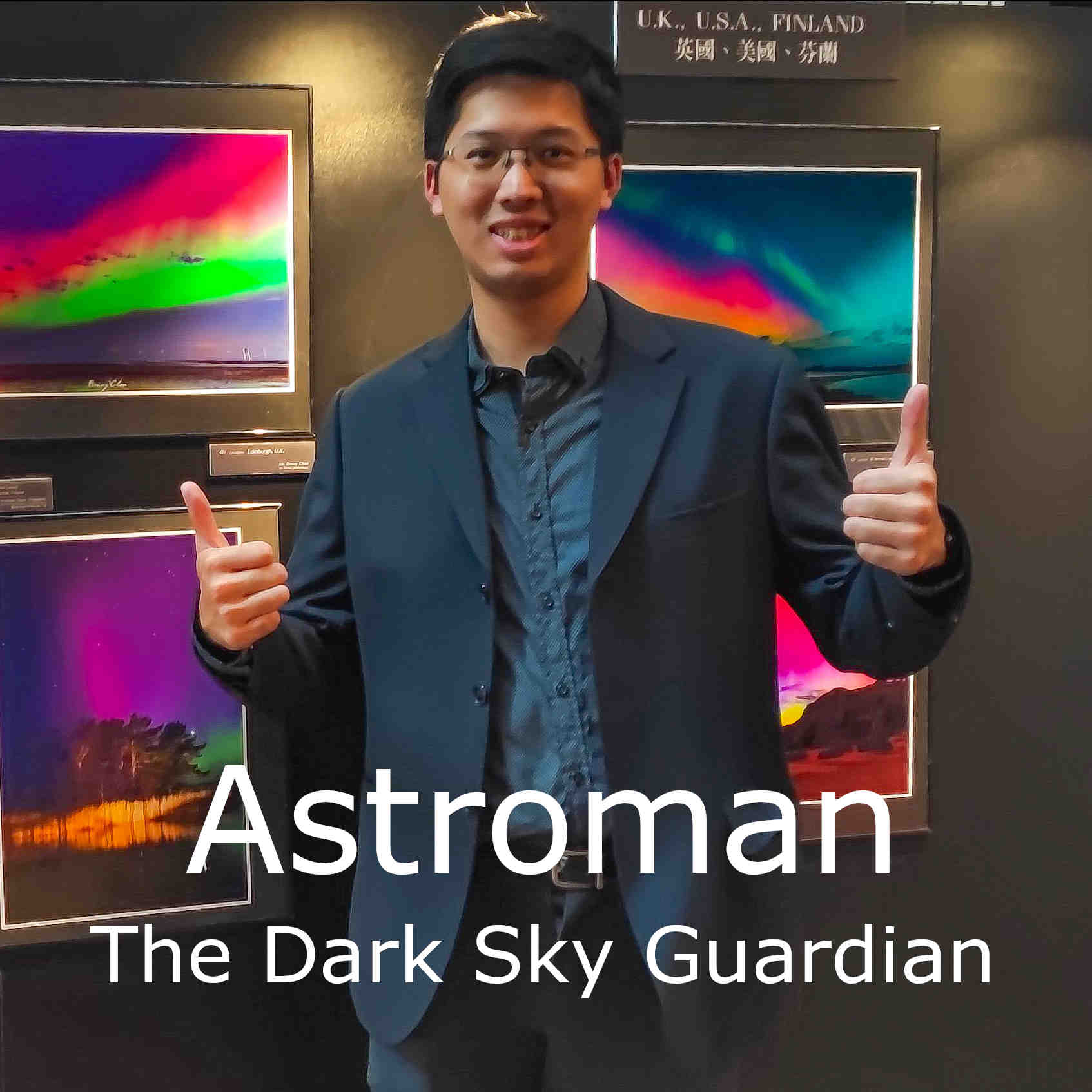
Dive into the wonders of the lunar eclipse! ASTROMAN breaks down the 2026 total "Blood Moon" in Asia, offering tips for skywatchers and the science behind the shadow. "ASTROMAN: the Dark Sky Guardian" is a podcast channel that aims to explore popular science in multiple disciplines and research on interdisciplinary approaches, such as sustainability, dark-sky protection, astrophotography, space exploration, astronomy innovation, inclusive science communication, and STEAM Education by integrating science and arts. Exodus CL Sit, also known as the ASTROMAN, is a transmedia astronomy educator, popular science author, STEAM educator, and science communicator in Hong Kong. He is recently the National Astronomy Education Coordinator (Chair of Hong Kong, China) of the International Astronomical Union and President of Starrix. He was also an International Committee Member of the Dark Sky International, regularly organizing public lectures at the Hong Kong Space Museum and the Hong Kong Science Museum. He was also the author of a popular science book "Decoding the Starry Night: A Guide to Stargazing and Astrophotography". We've added a new way to donate to 365 Days of Astronomy to support editing, hosting, and production costs. Just visit: https://www.patreon.com/365DaysOfAstronomy and donate as much as you can! Share the podcast with your friends and send the Patreon link to them too! Every bit helps! Thank you! ------------------------------------ Do go visit http://www.redbubble.com/people/CosmoQuestX/shop for cool Astronomy Cast and CosmoQuest t-shirts, coffee mugs and other awesomeness! http://cosmoquest.org/Donate This show is made possible through your donations. Thank you! (Haven't donated? It's not too late! Just click!) ------------------------------------ The 365 Days of Astronomy Podcast is produced by the Planetary Science Institute. http://www.psi.edu Visit us on the web at 365DaysOfAstronomy.org or email us at [email protected].

EVSN - Astronomy Answers: What's That Light?
From January 7, 2026. In this episode, we're pleased to say we get to focus on science, as we bring you hot Jupiters, a tear-drop shaped Jupiter massed… something…? - and news of objects getting torn apart and other objects getting merged together as our universe lights up our night. We've added a new way to donate to 365 Days of Astronomy to support editing, hosting, and production costs. Just visit: https://www.patreon.com/365DaysOfAstronomy and donate as much as you can! Share the podcast with your friends and send the Patreon link to them too! Every bit helps! Thank you! ------------------------------------ Do go visit http://www.redbubble.com/people/CosmoQuestX/shop for cool Astronomy Cast and CosmoQuest t-shirts, coffee mugs and other awesomeness! http://cosmoquest.org/Donate This show is made possible through your donations. Thank you! (Haven't donated? It's not too late! Just click!) ------------------------------------ The 365 Days of Astronomy Podcast is produced by the Planetary Science Institute. http://www.psi.edu Visit us on the web at 365DaysOfAstronomy.org or email us at [email protected].
Actual Astronomy - OzSky With Clint Reading
Hosted by Chris Beckett & Shane Ludtke, two amateur astronomers in Saskatchewan. [email protected] In this podcast (Episode 519) we talk with a special guest & long-time listener Clint Reading (from Nebraska, formerly from Idaho) about his astro-tourism trips to OzSky which is a biannual event for amateur astronomers from the northern hemisphere to have the opportunity to see the southern skies. We learn how to prepare for an astronomy trip to Australia, what to bring to get the most out of a week under the southern stars and how you can take advantage of these events. This is part of our New Years resolution to have more listener guests since there are so many of you doing astronomy activities that Shane and I can only dream of. Introduction: So welcome to the show Clint! We've been chatting for years so it's great to speak in person. Can you tell us a little about where you are and how you became interested in astronomy? How have you progressed through the hobby? Are you in any clubs? Are you visual, imaging, both? What equipment are you using? You've had some interesting adventures I recall you went to Lowell a couple years back to a public event, how was that? Main Show: Let's talk about your trip down south to OzSky (not to be confused with Ozzfest) So where is OzSky and what is it exactly? What is OzSky exactly? How is it organized? days/nights? Speakers? Cost? Other amateurs? How did you plan for the trip? What did you take for equipment and observing guides? What equipment do they provide? Day trips? Conclusion: Does anyone have anything to add? Thanks for joining us today Clint, we really appreciate it. Clear skies! We've added a new way to donate to 365 Days of Astronomy to support editing, hosting, and production costs. Just visit: https://www.patreon.com/365DaysOfAstronomy and donate as much as you can! Share the podcast with your friends and send the Patreon link to them too! Every bit helps! Thank you! ------------------------------------ Do go visit http://www.redbubble.com/people/CosmoQuestX/shop for cool Astronomy Cast and CosmoQuest t-shirts, coffee mugs and other awesomeness! http://cosmoquest.org/Donate This show is made possible through your donations. Thank you! (Haven't donated? It's not too late! Just click!) ------------------------------------ The 365 Days of Astronomy Podcast is produced by the Planetary Science Institute. http://www.psi.edu Visit us on the web at 365DaysOfAstronomy.org or email us at [email protected].
Cheap Astronomy - Dear CA Ep. 127: Mystery Physics
Hosted by Steve Nerlich. Well… Cheap Astronomy confirms some mysteries are still mysteries! Dear Cheap Astronomy – Is warp drive looking any more possible? Well, no, insofar as it looks about as possible as it ever did, which is to say, it's probably impossible, but at the same time, it's best to never say never. As we've covered before, the nature of space-time precludes the possibility of faster than light travel simply because light travels as fast as it is possible to travel in space-time. Dear Cheap Astronomy – What is X-17? X-17 is a mysterious and somewhat hypothetical particle. Somewhat hypothetical means there is a bit of evidence for its existence, although it's more a case of there being evidence of something unusual, rather than definitive evidence of a new particle that does something unusual. We've added a new way to donate to 365 Days of Astronomy to support editing, hosting, and production costs. Just visit: https://www.patreon.com/365DaysOfAstronomy and donate as much as you can! Share the podcast with your friends and send the Patreon link to them too! Every bit helps! Thank you! ------------------------------------ Do go visit http://www.redbubble.com/people/CosmoQuestX/shop for cool Astronomy Cast and CosmoQuest t-shirts, coffee mugs and other awesomeness! http://cosmoquest.org/Donate This show is made possible through your donations. Thank you! (Haven't donated? It's not too late! Just click!) ------------------------------------ The 365 Days of Astronomy Podcast is produced by the Planetary Science Institute. http://www.psi.edu Visit us on the web at 365DaysOfAstronomy.org or email us at [email protected].
Deep Astronomy - Discoveries of the Webb Space Telescope: Webb's First Deep Field
https://www.youtube.com/watch?v=WvdZpZuz-WQ Hosted by Tony Darnell. From Feb 13, 2025. The deep fields taken by the Hubble Space Telescope are now legendary. Astronomers used the most complicate and expensive instrument ever put into space to stare at nothing, a very risky move, but one that paid off. What happened when we did the same thing with the James Webb Space Telescope? We've added a new way to donate to 365 Days of Astronomy to support editing, hosting, and production costs. Just visit: https://www.patreon.com/365DaysOfAstronomy and donate as much as you can! Share the podcast with your friends and send the Patreon link to them too! Every bit helps! Thank you! ------------------------------------ Do go visit http://www.redbubble.com/people/CosmoQuestX/shop for cool Astronomy Cast and CosmoQuest t-shirts, coffee mugs and other awesomeness! http://cosmoquest.org/Donate This show is made possible through your donations. Thank you! (Haven't donated? It's not too late! Just click!) ------------------------------------ The 365 Days of Astronomy Podcast is produced by the Planetary Science Institute. http://www.psi.edu Visit us on the web at 365DaysOfAstronomy.org or email us at [email protected].
Astronomy Cast Ep. 778: Dyson Swarms
https://www.youtube.com/watch?v=cySk8O0iVjU Hosted by: Fraser Cain (@frasercain ) and Dr. Pamela L. Gay (@CosmoQuest ) Streamed live on Jan 5, 2026. Freeman Dyson asked a fascinating question. What would it look like if a civilization was using all the energy coming from their star? And what form would this take? This introduced the concept of a Dyson Sphere, or more realistically, a Dyson Swarm surrounding a star. But if you're skeptical about the concept, you're in good company. This show is supported through people like you on Patreon.com/AstronomyCast In this episode, we'd like to thank: Burry Gowen, Eric Lee, Jeanette Wink, Michael Purcell, Andrew Poelstra, David, David Rossetter, Ed, Gerhard Schwarzer, Jason Kwong, Joe McTee, Sergey Manouilov, Siggi Kemmler, Sergio Sancevero With special guest star Stella! We've added a new way to donate to 365 Days of Astronomy to support editing, hosting, and production costs. Just visit: https://www.patreon.com/365DaysOfAstronomy and donate as much as you can! Share the podcast with your friends and send the Patreon link to them too! Every bit helps! Thank you! ------------------------------------ Do go visit http://www.redbubble.com/people/CosmoQuestX/shop for cool Astronomy Cast and CosmoQuest t-shirts, coffee mugs and other awesomeness! http://cosmoquest.org/Donate This show is made possible through your donations. Thank you! (Haven't donated? It's not too late! Just click!) ------------------------------------ The 365 Days of Astronomy Podcast is produced by the Planetary Science Institute. http://www.psi.edu Visit us on the web at 365DaysOfAstronomy.org or email us at [email protected].
Travelers in the Night Eps. 845 & 846: Mighty Schmidt & Bright Nights
Dr. Al Grauer hosts. Dr. Albert D. Grauer ( @Nmcanopus ) is an observational asteroid hunting astronomer. Dr. Grauer retired from the University of Arkansas at Little Rock in 2006. travelersinthenight.org From April 2025. Today's 2 topics: - On a single February night my Catalina Sky Survey teammate Jacqui Fazekas reported the discovery of 5 Earth approaching objects using our small but mighty Schmidt telescope on Mt. Bigelow, Arizona.Rest assured that on any given night there are asteroid hunters on the look out for seriously dangerous space rocks. - One little known and infrequently observed phenomenon in the natural night sky are "bright nights" during which observers have reported being able to read a book when both the Sun and Moon are both well below the horizon. We've added a new way to donate to 365 Days of Astronomy to support editing, hosting, and production costs. Just visit: https://www.patreon.com/365DaysOfAstronomy and donate as much as you can! Share the podcast with your friends and send the Patreon link to them too! Every bit helps! Thank you! ------------------------------------ Do go visit http://www.redbubble.com/people/CosmoQuestX/shop for cool Astronomy Cast and CosmoQuest t-shirts, coffee mugs and other awesomeness! http://cosmoquest.org/Donate This show is made possible through your donations. Thank you! (Haven't donated? It's not too late! Just click!) ------------------------------------ The 365 Days of Astronomy Podcast is produced by the Planetary Science Institute. http://www.psi.edu Visit us on the web at 365DaysOfAstronomy.org or email us at [email protected].

NOIR Lab - Fast Spinning Asteroids From the Rubin Observatory
As part of the NSF–DOE Vera C. Rubin Observatory First Look event in June 2025, Rubin announced that it had observed thousands of asteroids cruising about our Solar System, about 1,900 of which have been confirmed as never-before-seen. Within the flurry, a team of astronomers has discovered 19 super- and ultra-fast-rotating asteroids. One of these is the fastest-spinning asteroid larger than 500 meters (0.3 miles) ever found. In this podcast, Dr. Sarah Greenstreet discusses these fast spinning asteroids and what makes the Rubin Observatory ideal for discovering these types of objects. Bios: - Rob Sparks is in the Communications, Education and Engagement group at NSF's NOIRLab in Tucson, Arizona. - Sarah Greenstreet is a tenure-track assistant astronomer at the NSF National Optical-Infrared Astronomy Research Laboratory (NOIRLab) and an affiliate assistant professor in the University of Washington's Department of Astronomy. She is also a member of the Rubin Observatory Community Science Team and has served as the Lead for the Rubin Observatory Solar System Science Collaboration's Near-Earth Objects and Interstellar Objects Working Group for the past seven years. Prof. Greenstreet's research program broadly focuses on orbital dynamics, characterization, and impacts of small bodies across the Solar System, with a particular focus on the rarest and most unusual asteroids. To learn more about her research, please visit her website: www.sarahgreenstreet.com. We've added a new way to donate to 365 Days of Astronomy to support editing, hosting, and production costs. Just visit: https://www.patreon.com/365DaysOfAstronomy and donate as much as you can! Share the podcast with your friends and send the Patreon link to them too! Every bit helps! Thank you! ------------------------------------ Do go visit http://www.redbubble.com/people/CosmoQuestX/shop for cool Astronomy Cast and CosmoQuest t-shirts, coffee mugs and other awesomeness! http://cosmoquest.org/Donate This show is made possible through your donations. Thank you! (Haven't donated? It's not too late! Just click!) ------------------------------------ The 365 Days of Astronomy Podcast is produced by the Planetary Science Institute. http://www.psi.edu Visit us on the web at 365DaysOfAstronomy.org or email us at [email protected].

EVSN - When Science Results Rhyme: Exoplanets, Supernovae, and Relativity
From December 25, 2025. In this week's episode, we look at planets younger than fossils, celebrate relativity repeatedly working as expected, and peer at previously only theorized 1st generation stars using JWST. We celebrate the completion of the construction of the Nancy Grace Roman Space Telescope, and look in on all the recent launches. All this and more is coming to you right here, and right now! We've added a new way to donate to 365 Days of Astronomy to support editing, hosting, and production costs. Just visit: https://www.patreon.com/365DaysOfAstronomy and donate as much as you can! Share the podcast with your friends and send the Patreon link to them too! Every bit helps! Thank you! ------------------------------------ Do go visit http://www.redbubble.com/people/CosmoQuestX/shop for cool Astronomy Cast and CosmoQuest t-shirts, coffee mugs and other awesomeness! http://cosmoquest.org/Donate This show is made possible through your donations. Thank you! (Haven't donated? It's not too late! Just click!) ------------------------------------ The 365 Days of Astronomy Podcast is produced by the Planetary Science Institute. http://www.psi.edu Visit us on the web at 365DaysOfAstronomy.org or email us at [email protected].
January Sky Guide for Equatorial Region
Hosted by Avivah Yamani. January 2026 is a packed month for equatorial skywatchers! Catch the Quadrantid meteor shower peak on the new year and Jupiter steals the spotlight at opposition. We've added a new way to donate to 365 Days of Astronomy to support editing, hosting, and production costs. Just visit: https://www.patreon.com/365DaysOfAstronomy and donate as much as you can! Share the podcast with your friends and send the Patreon link to them too! Every bit helps! Thank you! ------------------------------------ Do go visit http://www.redbubble.com/people/CosmoQuestX/shop for cool Astronomy Cast and CosmoQuest t-shirts, coffee mugs and other awesomeness! http://cosmoquest.org/Donate This show is made possible through your donations. Thank you! (Haven't donated? It's not too late! Just click!) ------------------------------------ The 365 Days of Astronomy Podcast is produced by the Planetary Science Institute. http://www.psi.edu Visit us on the web at 365DaysOfAstronomy.org or email us at [email protected].
Awesome Astronomy - Soundgarden Wins at Astrophysics
Paul Hill and Dr. Jenifer "Dr. Dust" Millard host. Damien Phillips, John Wildridge and Dustin Ruoff produce. So it turns out Soundgarden nailed astrophysics in 1994. We explore latest thinking on Little Red Dots, Globular Custers, oldest supernovae, No-ceans on Titan as well as our monthly skyguide and moon guide. We've added a new way to donate to 365 Days of Astronomy to support editing, hosting, and production costs. Just visit: https://www.patreon.com/365DaysOfAstronomy and donate as much as you can! Share the podcast with your friends and send the Patreon link to them too! Every bit helps! Thank you! ------------------------------------ Do go visit http://www.redbubble.com/people/CosmoQuestX/shop for cool Astronomy Cast and CosmoQuest t-shirts, coffee mugs and other awesomeness! http://cosmoquest.org/Donate This show is made possible through your donations. Thank you! (Haven't donated? It's not too late! Just click!) ------------------------------------ The 365 Days of Astronomy Podcast is produced by the Planetary Science Institute. http://www.psi.edu Visit us on the web at 365DaysOfAstronomy.org or email us at [email protected].

Ask A Spaceman - Ep. 263: Does Free Will Exist?
What is causal determinism? What are some of the ways that physics can permit free will? What does emergence have to do with all of this? I discuss these questions and more in today's Ask a Spaceman! Support the show: http://www.patreon.com/pmsutter All episodes: http://www.AskASpaceman.com Watch on YouTube: http://www.youtube.com/PaulMSutter Read a book: https://www.pmsutter.com/books Keep those questions about space, science, astronomy, astrophysics, physics, and cosmology coming to #AskASpaceman for COMPLETE KNOWLEDGE OF TIME AND SPACE! Big thanks to my top Patreon supporters this month: Justin G, Chris L, Alberto M, Duncan M, Corey D, Michael P, Naila, Sam R, Joshua, Scott M, Rob H, Scott M, Louis M, John W, Alexis, Gilbert M, Rob W, Jessica M, Jules R, Jim L, David S, Scott R, Heather, Mike S, Pete H, Steve S, Lisa R, Kevin B, Aileen G, Steven W, Deb A, Michael J, Phillip L, Steven B, Mark R, Alan B, Craig B, Richard K, Stephen J, Joe R, David P, Justin, Tracy F, Ella F, Thomas K, James C, Syamkumar M, Homer V, Mark D, Bruce A, Tim Z, Linda C, The Tired Jedi, Bob C, Stephen A, James R, Robert O, Allen E, Michael S, Reinaldo A, Sheryl, David W, Chris, Michael S, Erlend A, James D, Larry D, Karl W, Den K, Edward K, Craig M, Scott K, Vivek D, Barbara C, Brad, Azra K, Steve R, Koen G, and Scott N! Hosted by Dr. Paul M. Sutter. We've added a new way to donate to 365 Days of Astronomy to support editing, hosting, and production costs. Just visit: https://www.patreon.com/365DaysOfAstronomy and donate as much as you can! Share the podcast with your friends and send the Patreon link to them too! Every bit helps! Thank you! ------------------------------------ Do go visit http://www.redbubble.com/people/CosmoQuestX/shop for cool Astronomy Cast and CosmoQuest t-shirts, coffee mugs and other awesomeness! http://cosmoquest.org/Donate This show is made possible through your donations. Thank you! (Haven't donated? It's not too late! Just click!) ------------------------------------ The 365 Days of Astronomy Podcast is produced by the Planetary Science Institute. http://www.psi.edu Visit us on the web at 365DaysOfAstronomy.org or email us at [email protected].
Astronomy Cast Ep. 777: The Eddington Limit
https://www.youtube.com/watch?v=uijiic8crBQ Hosted by: Fraser Cain (@frasercain ) and Dr. Pamela L. Gay (@CosmoQuest ) Streamed live on Dec 29, 2025. How big can a star get? This is a calculation made by one of the original pioneers of modern astronomy, Sir Arthur Eddington. And it's named after him, the Eddington Limit. Now, astronomers are finding examples of giant black holes early in the Universe, calling into question some of Eddington's assumptions. Let's explore this fascinating concept! Why are stars sphere-ish? Why do blackholes not eat everything? Why do pulsating stars pulsate? It all comes down to work done by Eddington at the beginning of the last century, and today we're going to look back at Eddington's work and all its applications in modern Astronomy. This show is supported through people like you on Patreon.com/AstronomyCast In this episode, we'd like to thank: Andrew Poelstra, BogieNet, Brian Cagle, Burry Gowen, David, David Rossetter, Ed, Gerhard Schwarzer, Jason Kwong, Jeanette Wink, Michael Purcell, Sergey Manouilov, Siggi Kemmler, Sérgio Sancevero We've added a new way to donate to 365 Days of Astronomy to support editing, hosting, and production costs. Just visit: https://www.patreon.com/365DaysOfAstronomy and donate as much as you can! Share the podcast with your friends and send the Patreon link to them too! Every bit helps! Thank you! ------------------------------------ Do go visit http://www.redbubble.com/people/CosmoQuestX/shop for cool Astronomy Cast and CosmoQuest t-shirts, coffee mugs and other awesomeness! http://cosmoquest.org/Donate This show is made possible through your donations. Thank you! (Haven't donated? It's not too late! Just click!) ------------------------------------ The 365 Days of Astronomy Podcast is produced by the Planetary Science Institute. http://www.psi.edu Visit us on the web at 365DaysOfAstronomy.org or email us at [email protected].
Travelers in the Night Eps. 843 & 844: Possible Impactor & Global Meteor Network
Dr. Al Grauer hosts. Dr. Albert D. Grauer ( @Nmcanopus ) is an observational asteroid hunting astronomer. Dr. Grauer retired from the University of Arkansas at Little Rock in 2006. travelersinthenight.org From April 2025. Today's 2 topics: - On 27 December 2024 the Atlas group in Chile discovered an object now known as 2024 YR4 which appeared to have a significant chance of impacting Earth 22 December of 2032. The most recent data indicates the chance that 2024 YR4 impact Earth is about 1 in 25,000. These data indicate our moon has about a 1 in 700 chance to be impacted by this space rock. Even so astronomers are preparing for 2028 when 2024 YR4 will again come within the range of our instruments. Current data indicates 2024 YR4 will miss the Moon by less than 1,000 miles on 2032 December 22 giving astronauts there a Merry Christmas. - As the Earth travels in its orbit around the Sun it collides with objects called meteoroids traveling through space. These tiny members of the solar system range in size from dust grains to objects a meter in diameter. By becoming part of the GMN's network, your data will help to discover and document meteor showers, aid in identifying the parent cometary objects, and in some cases help to identify locations to search for meteorites. We've added a new way to donate to 365 Days of Astronomy to support editing, hosting, and production costs. Just visit: https://www.patreon.com/365DaysOfAstronomy and donate as much as you can! Share the podcast with your friends and send the Patreon link to them too! Every bit helps! Thank you! ------------------------------------ Do go visit http://www.redbubble.com/people/CosmoQuestX/shop for cool Astronomy Cast and CosmoQuest t-shirts, coffee mugs and other awesomeness! http://cosmoquest.org/Donate This show is made possible through your donations. Thank you! (Haven't donated? It's not too late! Just click!) ------------------------------------ The 365 Days of Astronomy Podcast is produced by the Planetary Science Institute. http://www.psi.edu Visit us on the web at 365DaysOfAstronomy.org or email us at [email protected].

Awesome Astronomy - December Part 2 Yeeting Your Office Into a Flamepit
Paul Hill & Dr. Jenifer "Dr. Dust" Millard host. Damien Phillips, John Wildridge and Dustin Ruoff produce. In this chatty news episode 164 we chat about more Artemis mission shenanigans and how the Russians have wrecked their only human rated launch pad. We've added a new way to donate to 365 Days of Astronomy to support editing, hosting, and production costs. Just visit: https://www.patreon.com/365DaysOfAstronomy and donate as much as you can! Share the podcast with your friends and send the Patreon link to them too! Every bit helps! Thank you! ------------------------------------ Do go visit http://www.redbubble.com/people/CosmoQuestX/shop for cool Astronomy Cast and CosmoQuest t-shirts, coffee mugs and other awesomeness! http://cosmoquest.org/Donate This show is made possible through your donations. Thank you! (Haven't donated? It's not too late! Just click!) ------------------------------------ The 365 Days of Astronomy Podcast is produced by the Planetary Science Institute. http://www.psi.edu Visit us on the web at 365DaysOfAstronomy.org or email us at [email protected].

EVSN - Double Dose of Planetary Pandemonium
From October 9, 2020. Join us as we take a look back to two weeks' worth of planetary stories, including solar system research on a binary trans-Neptunian object, diamonds in meteorites, the stratification of Titan's lakes, and how Jupiter affected Venus' habitability. Plus we go farther into space and see how super flares affect the chances for life on exoplanets and find an exoplanet with vaporized metal in its atmosphere. We've added a new way to donate to 365 Days of Astronomy to support editing, hosting, and production costs. Just visit: https://www.patreon.com/365DaysOfAstronomy and donate as much as you can! Share the podcast with your friends and send the Patreon link to them too! Every bit helps! Thank you! ------------------------------------ Do go visit http://www.redbubble.com/people/CosmoQuestX/shop for cool Astronomy Cast and CosmoQuest t-shirts, coffee mugs and other awesomeness! http://cosmoquest.org/Donate This show is made possible through your donations. Thank you! (Haven't donated? It's not too late! Just click!) ------------------------------------ The 365 Days of Astronomy Podcast is produced by the Planetary Science Institute. http://www.psi.edu Visit us on the web at 365DaysOfAstronomy.org or email us at [email protected].
Actual Astronomy - Observer's Calendar for January
Hosted by Chris Beckett & Shane Ludtke, two amateur astronomers in Saskatchewan. [email protected] This month in episode 516 we talk about the many things to see in the night sky including, carbon stars, double stars, 24P Schaumasse is a Comet that just cracks 8th magnitude making it visible in binoculars. We also detail how people can explore Jupiter through a telescope followed by many NGC and Messier Objects you can see in the winter sky. Jan 1 - Struve 627 in Orion Colorful Double Star Primary Star (A component): Yellow, golden-yellow, pale orange, or sometimes just white. Companion Star (B component): Bluish, blue-green, lilac, or pale green. Jan 2 - 40 Harmonia at opposition a large S-type (silicate) asteroid located in the inner region of the Main Asteroid Belt between Mars and Jupiter. Discovery: It was discovered on March 31, 1856, by German-French astronomer Hermann Goldschmidt. Naming: It is named after Harmonia, the Greek goddess of harmony and peace, to mark the end of the Crimean War. Size: It has a mean diameter of approximately 111.3 kilometers (69.1 miles), making it larger than 99% of all known asteroids. Orbit: Harmonia orbits the Sun every 3.42 years (approx. 1,250 days) with a relatively low eccentricity of 0.046, meaning its path is nearly circular. Rotation: It completes one full rotation on its axis every 8.91 hours Jan 3 - Full Moon - Quadrantid Meteors ZHR = 120 in Evening for NA observers - Moon interferes They are named after Quadrans Muralis, a 19th-century constellation that is no longer officially recognized. Constellation Origin: Lalande created the constellation to honor the mural quadrant, a large wall-mounted scientific instrument he and his nephew used at the observatory of l'École Militaire in Paris to measure star positions. Location: It was situated in the northern sky between the modern constellations of Boötes, Draco, and Hercules, near the "handle" of the Big Dipper (Ursa Major). Decline: In 1922, the International Astronomical Union (IAU) omitted Quadrans Muralis when it formalized the official list of 88 modern constellations, reassigning its stars to neighboring constellations Jan 5 - Sig Orionis colorful double star Sigma Orionis AB: This is the brightest component of the system and is a very close binary that appears as one star in most amateur telescopes. It is actually a triple system itself (Aa, Ab, and B). The primary stars (Aa and Ab) are highly massive, very hot blue stars that orbit each other every 143 days. The outer component (B) orbits the inner pair every 157 years. Sigma Orionis C, D, and E: These are additional companion stars that are farther from the AB pair and can be observed with small-to-medium sized telescopes, making the system appear as a beautiful quartet or quintuple system. Component D is magnitude 6.62 and is about 13 arcseconds from the AB pair. Component E is magnitude 6.66 and is approximately 41 arcseconds away. This star is notable as the prototype of the rare "helium-rich" stars. Jan 6 - Regulus 0.5-degrees South of Moon Jan 8 - 24P Schaumasse Comet just cracks 8th magnitude, at Mag. 7.9 it is firmly a Bino comet Jan 10 - Last Quarter - Jupiter at Opposition - mag. -2.5, 46 arc seconds in Gemini GRS looks nice and Orange/Red NEB and SEB are prominent How to best observe? Powers/Filters/Bino viewers Book rec. Jupiter and How to Observe It by John McAnally - NGC 1851 well placed but I'd need to dig a trench to see it - Carbon Star RV Monoceros Jan 11 -Follow Arcturus into daylight this week - M79, M42, M43, M78 well placed Jan 12 - Lunar Curtis X visible Jan 14 - Antares 0.6-degrees N of Moon - not for us - NGC's 1807 and 1817 well placed Jan 15 - NGC 1514 well placed Jan 17 - NGC 2169 well placed Jan 18 - New Moon Jan 23 Saturn, Neptune 4-degrees S of Moon - 44 Nysa at Opposition M=8.8 Largest and brightest of Nysian Family of Asteroids It was discovered by Hermann Goldschmidt on May 27, 1857, and named after the mythical land of Nysa in Greek mythology - M3, M5 well placed Jan 26 - First quarter - Lunar Straight Wall - Eyes of Clavius Jan 28 - Jeweled Handle on Moon Jan 31 - Jupiter 4-degrees S of Moon - Crater Baily We've added a new way to donate to 365 Days of Astronomy to support editing, hosting, and production costs. Just visit: https://www.patreon.com/365DaysOfAstronomy and donate as much as you can! Share the podcast with your friends and send the Patreon link to them too! Every bit helps! Thank you! ------------------------------------ Do go visit http://www.redbubble.com/people/CosmoQuestX/shop for cool Astronomy Cast and CosmoQuest t-shirts, coffee mugs and other awesomeness! http://cosmoquest.org/Donate This show is made possible through your donations. Thank you! (Haven't donated? It's not too late! Just click!) ------------------------------------ The 365 Days of Astronomy Podcast is produced by the Planetary Science Institute. http://www.psi.edu Visit us on the web at 365DaysOfAstronomy.org or email us at
Had Astra Historia - The 2026 Doggett Prize, Part 3
Episode 209. Today's guest: Professor Thomas Hockey, with the University of Northern Iowa, is the recipient of HAD's 2026 LeRoy E. Doggett Prize, which is awarded biennially to an individual who has significantly influenced the field of the history of astronomy by a career-long effort. In this episode, we'll not only conclude our discussion of his most recent book, but we'll also talk about some rather fun and interesting topics. H'ad astra historia is the official podcast for the Historical Astronomy Division of the American Astronomical Society. We're here to share stories from and about the people who study the stars, planets, and the cosmos. We'll be hearing from individuals who not only study the history of astronomy, but also those who lived it, who were "in the room" during pivotal events within the last 50 years or so. Podcast music: "Frost Waltz" Kevin MacLeod (incompetech.com), licensed under creative commons: by attribution 4.0 license (http://creativecommons.org/licenses/by/4.0/) Podcaster: Loretta Cannon (an AAS affiliate via Rose City Astronomers) is a science-and-word-nerd who really likes outer space and the people who study it. She quite enjoys working as HAD's podcaster, bringing astronomy stories to you. We've added a new way to donate to 365 Days of Astronomy to support editing, hosting, and production costs. Just visit: https://www.patreon.com/365DaysOfAstronomy and donate as much as you can! Share the podcast with your friends and send the Patreon link to them too! Every bit helps! Thank you! ------------------------------------ Do go visit http://www.redbubble.com/people/CosmoQuestX/shop for cool Astronomy Cast and CosmoQuest t-shirts, coffee mugs and other awesomeness! http://cosmoquest.org/Donate This show is made possible through your donations. Thank you! (Haven't donated? It's not too late! Just click!) ------------------------------------ The 365 Days of Astronomy Podcast is produced by the Planetary Science Institute. http://www.psi.edu Visit us on the web at 365DaysOfAstronomy.org or email us at [email protected].
Had Astra Historia - The 2026 Doggett Prize, Part 2
Episode 208. Today's guest: Professor Thomas Hockey, with the University of Northern Iowa, is the recipient of HAD's 2026 LeRoy E. Doggett Prize, which is awarded biennially to an individual who has significantly influenced the field of the history of astronomy by a career-long effort. In today's episode, our focus is mainly on his more significant books. H'ad astra historia is the official podcast for the Historical Astronomy Division of the American Astronomical Society. We're here to share stories from and about the people who study the stars, planets, and the cosmos. We'll be hearing from individuals who not only study the history of astronomy, but also those who lived it, who were "in the room" during pivotal events within the last 50 years or so. Podcast music: "Frost Waltz" Kevin MacLeod (incompetech.com), licensed under creative commons: by attribution 4.0 license (http://creativecommons.org/licenses/by/4.0/) Podcaster: Loretta Cannon (an AAS affiliate via Rose City Astronomers) is a science-and-word-nerd who really likes outer space and the people who study it. She quite enjoys working as HAD's podcaster, bringing astronomy stories to you. We've added a new way to donate to 365 Days of Astronomy to support editing, hosting, and production costs. Just visit: https://www.patreon.com/365DaysOfAstronomy and donate as much as you can! Share the podcast with your friends and send the Patreon link to them too! Every bit helps! Thank you! ------------------------------------ Do go visit http://www.redbubble.com/people/CosmoQuestX/shop for cool Astronomy Cast and CosmoQuest t-shirts, coffee mugs and other awesomeness! http://cosmoquest.org/Donate This show is made possible through your donations. Thank you! (Haven't donated? It's not too late! Just click!) ------------------------------------ The 365 Days of Astronomy Podcast is produced by the Planetary Science Institute. http://www.psi.edu Visit us on the web at 365DaysOfAstronomy.org or email us at [email protected].

Astronomy Cast Ep. 776: The Matter - Antimatter Dichotomy
https://www.youtube.com/watch?v=kGY4t683Xro Hosted by: Fraser Cain ( @frasercain ) and Dr. Pamela L. Gay ( @CosmoQuest ) Streamed live on Dec 22, 2025. Shortly after the big bang there were almost exactly the same amounts of matter and antimatter in the Universe, but there was just enough of a difference that we live in a matter-dominated Universe. But it didn't have to be that way! Explaining this mystery has been one of the great mysteries in astronomy, and today we'll see if there's been any progress! Why is the Universe the way it is? Specifically, why is it made mostly of matter? This is the question we'll look at today! This show is supported through people like you on Patreon.com/AstronomyCast In this episode, we'd like to thank: Andrew Poelstra, BogieNet, Brian Cagle, Burry Gowen, David, David Rossetter, Ed, Gerhard Schwarzer, Jason Kwong, Jeanette Wink, Michael Purcell, Sergey Manouilov, Siggi Kemmler, Sérgio Sancevero We've added a new way to donate to 365 Days of Astronomy to support editing, hosting, and production costs. Just visit: https://www.patreon.com/365DaysOfAstronomy and donate as much as you can! Share the podcast with your friends and send the Patreon link to them too! Every bit helps! Thank you! ------------------------------------ Do go visit http://www.redbubble.com/people/CosmoQuestX/shop for cool Astronomy Cast and CosmoQuest t-shirts, coffee mugs and other awesomeness! http://cosmoquest.org/Donate This show is made possible through your donations. Thank you! (Haven't donated? It's not too late! Just click!) ------------------------------------ The 365 Days of Astronomy Podcast is produced by the Planetary Science Institute. http://www.psi.edu Visit us on the web at 365DaysOfAstronomy.org or email us at [email protected].
Travelers in the Night Eps. 841 & 842: Moon Fragment & Tesla Recovered
Dr. Al Grauer hosts. Dr. Albert D. Grauer ( @Nmcanopus ) is an observational asteroid hunting astronomer. Dr. Grauer retired from the University of Arkansas at Little Rock in 2006. travelersinthenight.org From March 2025. Today's 2 topics: - Astronomers have yet to discover any long lasting natural object, beside our Moon, which orbits the Earth, however, occasionally, a small space rock enters into a temporary dance with our home planet. - My Catalina Sky Survey teammate Greg Leonard was asteroid hunting in the constellation of Hydra with our Schmidt telescope on Mt. Bigelow, Arizona when a fast moving unknown point of light passed through a set of his images. After Greg reported his observations to the Minor Planet Center for the next 10 days it was tracked by observatories in Arizona, Italy, Hawaii, Australia, and Argentina. Citizen scientist H. A. Güler analyzed these data. The Minor Planet Center published the discovery of the near Earth asteroid 2018 CN41. The discovery was deleted when the object turned out to be a Falcon Heavy Rocket Upper stage with a Tesla roadster attached. We've added a new way to donate to 365 Days of Astronomy to support editing, hosting, and production costs. Just visit: https://www.patreon.com/365DaysOfAstronomy and donate as much as you can! Share the podcast with your friends and send the Patreon link to them too! Every bit helps! Thank you! ------------------------------------ Do go visit http://www.redbubble.com/people/CosmoQuestX/shop for cool Astronomy Cast and CosmoQuest t-shirts, coffee mugs and other awesomeness! http://cosmoquest.org/Donate This show is made possible through your donations. Thank you! (Haven't donated? It's not too late! Just click!) ------------------------------------ The 365 Days of Astronomy Podcast is produced by the Planetary Science Institute. http://www.psi.edu Visit us on the web at 365DaysOfAstronomy.org or email us at [email protected].