
TED Talks Education
137 episodes — Page 3 of 3

A new equation for intelligence | Alex Wissner-Gross
Is there an equation for intelligence? Yes. It's F = T ∇ Sτ. In a fascinating and informative talk, physicist and computer scientist Alex Wissner-Gross explains what in the world that means.
Why massive open online courses (still) matter | Anant Agarwal
2013 was a year of hype for MOOCs (massive open online courses). Great big numbers and great big hopes were followed by some disappointing first results. But the head of edX, Anant Agarwal, makes the case that MOOCs still matter -- as a way to share high-level learning widely and supplement (but perhaps not replace) traditional classrooms. Agarwal shares his vision of blended learning, where teachers create the ideal learning experience for 21st century students.
The magic of Fibonacci numbers | Arthur Benjamin
Math is logical, functional and just ... awesome. Mathemagician Arthur Benjamin explores hidden properties of that weird and wonderful set of numbers, the Fibonacci series. (And reminds you that mathematics can be inspiring, too!)
The pursuit of ignorance | Stuart Firestein
What does real scientific work look like? As neuroscientist Stuart Firestein jokes: It looks a lot less like the scientific method and a lot more like "farting around ... in the dark." In this witty talk, Firestein gets to the heart of science as it is really practiced and suggests that we should value what we don't know -- or "high-quality ignorance" -- just as much as what we know.
Why I fell in love with monster prime numbers | Adam Spencer
They're millions of digits long, and it takes an army of mathematicians and machines to hunt them down -- what's not to love about monster primes? Adam Spencer, comedian and lifelong math geek, shares his passion for these odd numbers, and for the mysterious magic of math.
How to escape education's death valley | Sir Ken Robinson
Sir Ken Robinson outlines 3 principles crucial for the human mind to flourish -- and how current education culture works against them. In a funny, stirring talk he tells us how to get out of the educational "death valley" we now face, and how to nurture our youngest generations with a climate of possibility.
Grit: The power of passion and perseverance | Angela Lee Duckworth
Leaving a high-flying job in consulting, Angela Lee Duckworth took a job teaching math to seventh graders in a New York public school. She quickly realized that IQ wasn't the only thing separating the successful students from those who struggled. Here, she explains her theory of "grit" as a predictor of success.
Our failing schools. Enough is enough! | Geoffrey Canada
Why, why, why does our education system look so similar to the way it did 50 years ago? Millions of students were failing then, as they are now -- and it’s because we’re clinging to a business model that clearly doesn’t work. Education advocate Geoffrey Canada dares the system to look at the data, think about the customers and make systematic shifts in order to help greater numbers of kids excel.
My story, from gangland daughter to star teacher | Pearl Arredondo
Pearl Arredondo grew up in East Los Angeles, the daughter of a high-ranking gang member who was in and out of jail. Many teachers wrote her off as having a problem with authority. Now a teacher herself, she's creating a different kind of school and telling students her story so that they know it's okay if sometimes homework isn't the first thing on their minds.
3 rules to spark learning | Ramsey Musallam
It took a life-threatening condition to jolt chemistry teacher Ramsey Musallam out of ten years of "pseudo-teaching" to understand the true role of the educator: to cultivate curiosity. In a fun and personal talk, Musallam gives 3 rules to spark imagination and learning, and get students excited about how the world works.
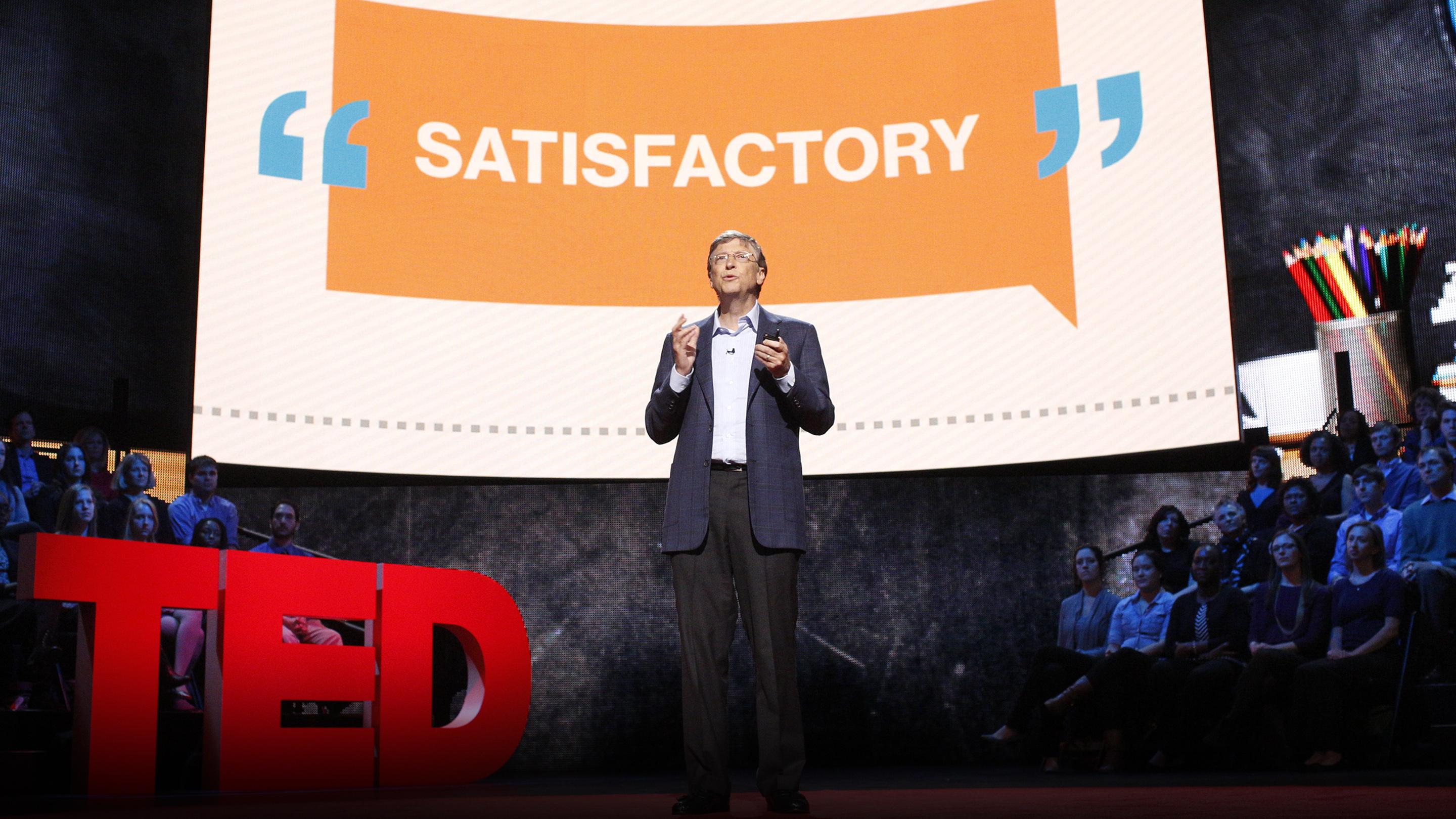
Teachers need real feedback | Bill Gates
Until recently, many teachers only got one word of feedback a year: "satisfactory." And with no feedback, no coaching, there's just no way to improve. Bill Gates suggests that even great teachers can get better with smart feedback -- and lays out a program from his foundation to bring it to every classroom.

Learn to read Chinese ... with ease! | ShaoLan
For foreigners, learning to speak Chinese is a hard task. But learning to read the beautiful, often complex characters of the Chinese written language may be less difficult. ShaoLan walks through a simple lesson in recognizing the ideas behind the characters and their meaning -- building from a few simple forms to more complex concepts. Call it Chineasy.

Every kid needs a champion | Rita Pierson
Rita Pierson, a teacher for 40 years, once heard a colleague say, "They don't pay me to like the kids." Her response: "Kids don't learn from people they don't like.'" A rousing call to educators to believe in their students and actually connect with them on a real, human, personal level.
4 pillars of college success in science | Freeman Hrabowski
At age 12, Freeman Hrabowski marched with Martin Luther King. Now he's president of the University of Maryland, Baltimore County (UMBC), where he works to create an environment that helps under-represented students -- specifically African-American, Latino and low-income learners -- get degrees in math and science. He shares the four pillars of UMBC's approach.
A girl who demanded school | Kakenya Ntaiya
Kakenya Ntaiya made a deal with her father: She would undergo a traditional Maasai rite of passage, female circumcision, if he would let her go to high school. Ntaiya tells the fearless story of continuing on to college, and of working with her village elders to build a school for girls in her community, changing the destiny of 125 young women.
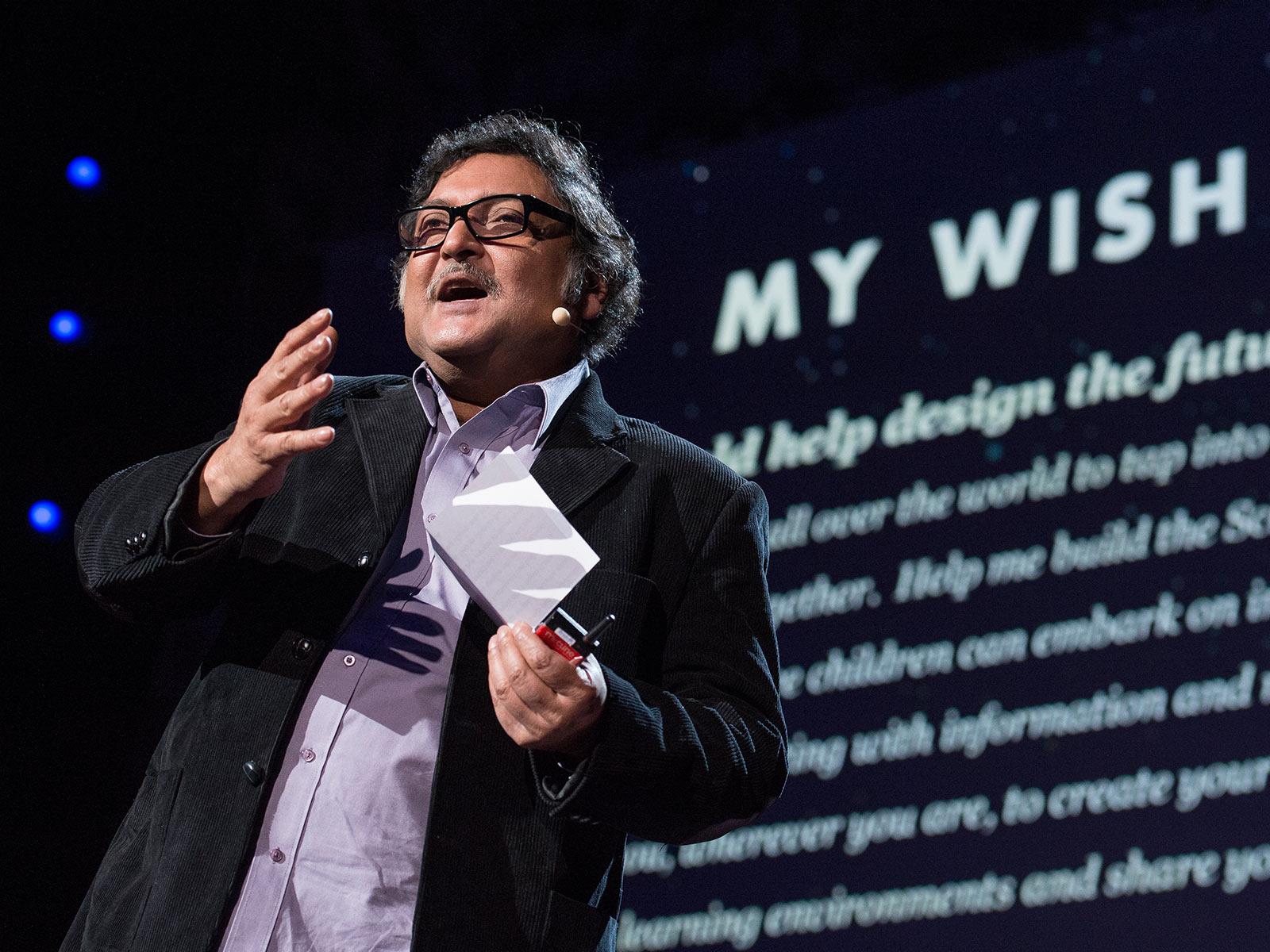
Build a School in the Cloud | Sugata Mitra
Onstage at TED2013, Sugata Mitra makes his bold TED Prize wish: Help me design the School in the Cloud, a learning lab in India, where children can explore and learn from each other -- using resources and mentoring from the cloud. Hear his inspiring vision for Self Organized Learning Environments.
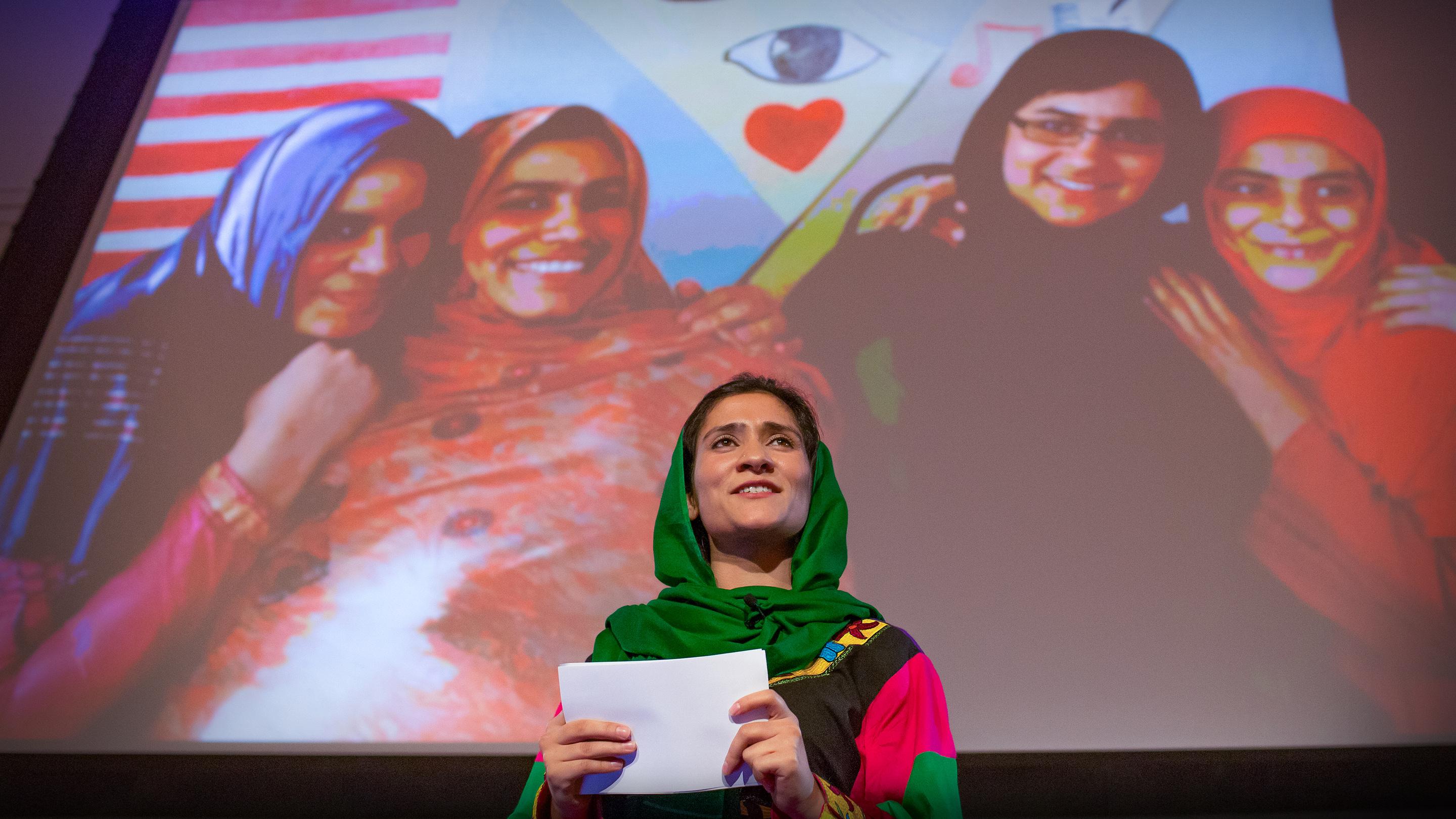
Dare to educate Afghan girls | Shabana Basij-Rasikh
Imagine a country where girls must sneak out to go to school, with deadly consequences if they get caught learning. This was Afghanistan under the Taliban, and traces of that danger remain today. 22-year-old Shabana Basij-Rasikh runs a school for girls in Afghanistan. She celebrates the power of a family's decision to believe in their daughters -- and tells the story of one brave father who stood up to local threats.

Hey science teachers -- make it fun | Tyler DeWitt
High school science teacher Tyler DeWitt was ecstatic about his new lesson plan on bacteria (how cool!) -- and devastated when his students hated it. The problem was the textbook: it was impossible to understand. He delivers a rousing call for science teachers to ditch the jargon and extreme precision, and instead make science sing through stories and demonstrations.
Let's teach kids to code | Mitch Resnick
Coding isn't just for computer whizzes, says Mitch Resnick of MIT Media Lab -- it's for everyone. In a fun, demo-filled talk Resnick outlines the benefits of teaching kids to code, so they can do more than just use new tech toys but also create them.
Kids need structure | Colin Powell
How can you help kids get a good start? In this heartfelt and personal talk, Colin Powell, the former U.S. Secretary of State, asks parents, friends and relatives to support children, starting before they even get to primary school, through community and a strong sense of responsibility.
Your brain on video games | Daphne Bavelier
How do fast-paced video games affect the brain? Step into the lab with cognitive researcher Daphne Bavelier to hear surprising news about how video games, even action-packed shooter games, can help us learn, focus and, fascinatingly, multitask.
The tragedy of orphanages | Georgette Mulheir
Orphanages are costly and can cause irreparable damage both mentally and physically for its charges -- so why are they still so ubiquitous? Georgette Mulheir gravely describes the tragedy of orphanages and urges us to end our reliance on them, by finding alternate ways of supporting children in need.

What I've learned from my autistic brothers | Faith Jegede Cole
Faith Jegede tells the moving and funny story of growing up with her two brothers, both autistic -- and both extraordinary. In this talk from the TED Talent Search, she reminds us to pursue a life beyond what is normal.
Talk nerdy to me | Melissa Marshall
Melissa Marshall brings a message to all scientists (from non-scientists): We're fascinated by what you're doing. So tell us about it -- in a way we can understand. In just 4 minutes, she shares powerful tips on presenting complex scientific ideas to a general audience.
The self-organizing computer course | Shimon Schocken
Shimon Schocken and Noam Nisan developed a curriculum for their students to build a computer, piece by piece. When they put the course online -- giving away the tools, simulators, chip specifications and other building blocks -- they were surprised that thousands jumped at the opportunity to learn, working independently as well as organizing their own classes in the first Massive Open Online Course (MOOC). A call to forget about grades and tap into the self-motivation to learn.
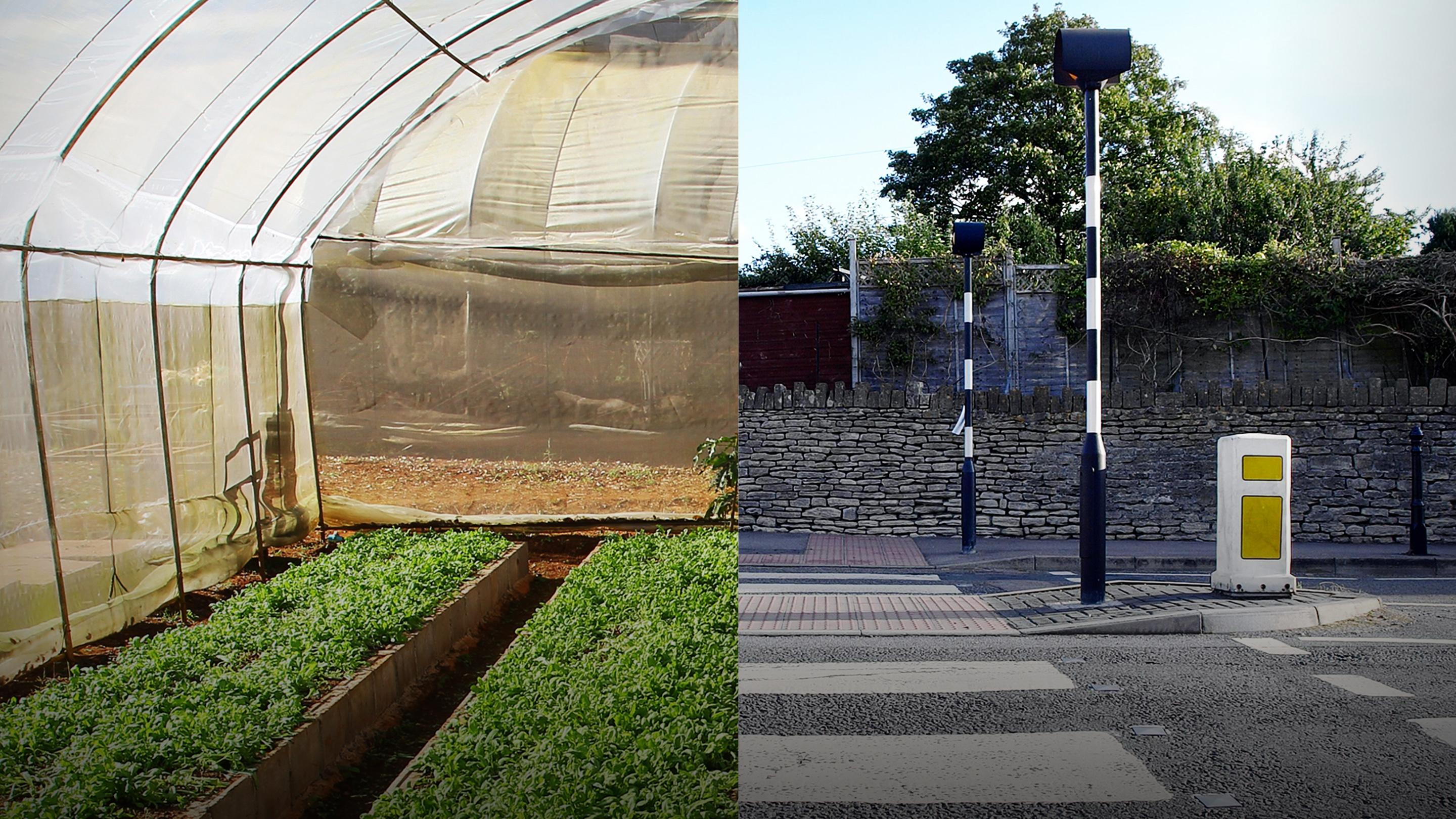
How we can eat our landscapes | Pam Warhurst
What should a community do with its unused land? Plant food, of course. With energy and humor, Pam Warhurst tells at the TEDSalon the story of how she and a growing team of volunteers came together to turn plots of unused land into communal vegetable gardens, and to change the narrative of food in their community.
What we're learning from online education | Daphne Koller
Daphne Koller is enticing top universities to put their most intriguing courses online for free -- not just as a service, but as a way to research how people learn. With Coursera (cofounded by Andrew Ng), each keystroke, quiz, peer-to-peer discussion and self-graded assignment builds an unprecedented pool of data on how knowledge is processed.
A teacher growing green in the South Bronx | Stephen Ritz
A whirlwind of energy and ideas, Stephen Ritz is a teacher in New York's tough South Bronx, where he and his kids grow lush gardens for food, greenery -- and jobs. Just try to keep up with this New York treasure as he spins through the many, many ways there are to grow hope in a neighborhood many have written off, or in your own.
Every city needs healthy honey bees | Noah Wilson-Rich
Bees have been rapidly and mysteriously disappearing from rural areas, with grave implications for agriculture. But bees seem to flourish in urban environments -- and cities need their help, too. Noah Wilson-Rich suggests that urban beekeeping might play a role in revitalizing both a city and a species.
Reinventing the encyclopedia game | Rives
Prompted by the Encyclopaedia Britannica ending its print publication, performance poet Rives resurrects a game from his childhood. Speaking at the TEDxSummit in Doha, Rives takes us on a charming tour through random (and less random) bits of human knowledge: from Chimborazo, the farthest point from the center of the Earth, to Ham the Astrochimp, the first chimpanzee in outer space.
The 100,000-student classroom | Peter Norvig
In the fall of 2011 Peter Norvig taught a class with Sebastian Thrun on artificial intelligence at Stanford attended by 175 students in situ -- and over 100,000 via an interactive webcast. He shares what he learned about teaching to a global classroom.
The electric rise and fall of Nikola Tesla | Marco Tempest
Combining projection mapping and a pop-up book, Marco Tempest tells the visually arresting story of Nikola Tesla -- called "the greatest geek who ever lived" -- from his triumphant invention of alternating current to his penniless last days.

Archaeology from space | Sarah Parcak
In this short talk, TED Fellow Sarah Parcak introduces the field of "space archaeology" -- using satellite images to search for clues to the lost sites of past civilizations.
Why is 'x' the unknown? | Terry Moore
Why is 'x' the symbol for an unknown? In this short and funny talk, Terry Moore gives the surprising answer.
What's left to explore? | Nathan Wolfe
We've been to the moon, we've mapped the continents, we've even been to the deepest point in the ocean -- twice. What's left for the next generation to explore? Biologist and explorer Nathan Wolfe suggests this answer: Almost everything. And we can start, he says, with the world of the unseeably small.
Feats of memory anyone can do | Joshua Foer
There are people who can quickly memorize lists of thousands of numbers, the order of all the cards in a deck (or ten!), and much more. Science writer Joshua Foer describes the technique -- called the memory palace -- and shows off its most remarkable feature: anyone can learn how to use it, including him.
Massive-scale online collaboration | Luis von Ahn
After re-purposing CAPTCHA so each human-typed response helps digitize books, Luis von Ahn wondered how else to use small contributions by many on the Internet for greater good. In this talk, he shares how his ambitious new project, Duolingo, will help millions learn a new language while translating the web quickly and accurately -- all for free.