Tech Life
377 episodes — Page 4 of 8
Tackling e-waste around the world
Shiona McCallum reports from Kenya on ways people there are tackling e-waste and helping to recycle electronic products. It is one of the fastest growing streams of waste, with an estimated 50 million tonnes produced globally every year. Also in this episode Alasdair Keane has been finding out about a project to make the internet available in more languages and we hear about a community in India using step trackers to campaign for better sanitation.

Searching for the Tech Factor
We join the search for tomorrow's innovators at a global competition in Portugal. Who will win ? Listen and find out. Also, why do some AI chatbots perform better using the English language ? And new signings are heading to one of the world's most popular football video games.Photo: Competition finalists, Lisbon, November 2023.

Tech Life goes to Nairobi
This special edition of Tech Life comes from Nairobi, in Kenya. We visit an agri-tech hackathon, where high tech ideas for reducing the vast amount of wasted crops in Africa are being put forward. We have a tour of the Basi-Go E-bus charging depot, and hear their vision for bringing the electric vehicle revolution to the streets of Nairobi. Market traders tell us how their lives have been transformed by the M-Pesa mobile money system - and we head to Nairobi Garage start up to meet the next generation of fin tech founders, and hear their plans for bringing new products and services to the booming population of young people across Africa.((PIC CREDIT: Presenter Shiona McCallum meets trader Lydia in Nairobi's famous Maasai market)

Speaking out against teen sexual harassment on Instagram
Arturo Béjar is a former director of engineering at Facebook and was responsible for its protect and care team. He shares his concerns with Tech Life. Also, we get the view from South Korea on making artificial intelligence tools safe. And how to sniff out forest fires - with the help of an AI nose.PHOTO CREDIT: Arturo Béjar

Artificial intelligence in the classroom
A professional body for computing in the United Kingdom says schools should teach children how to use AI from the age of 11. Do you agree ? We ask where it is happening already. Also, politicians and experts discuss AI safety at a big global summit. Health tech helps epilepsy diagnosis in the Caribbean. And we test the tech that takes the crunch out of chewing.PHOTO CREDIT: PonyWang, Getty Images.
This episode could have been an email
From summarising video calls to making presentations in minutes, Microsoft is launching an AI copilot on some of its apps and Tech Life have been for a preview. But will it change how we work or present new challenges? We also speak to the tech entrepreneur, Miron Mironiuk, who is collaborating with Pope Francis to teach children tech skills. And we meet 21 year old Luke Farritor who has won $40,000 unscrambling ancient texts that were left unreadable after the eruption of Mount Vesuvius. Presenter: Shiona McCallum(Picture: a video call taking place on line Getty/Mayur Kakade)

Spotting fake news online
BBC disinformation reporter Shayan Sardarizadeh talks to Tech Life about the spread of false information online during times of conflict, and how he verifies social media posts. An expert on electric cars answers your questions about EVs. We send our reporter out to sea to find out how tech can help marine conservation. And say hello to some old friends - Sonic the Hedgehog and Super Mario. (Photo: Man holds a yellow warning symbol in front of a laptop. Credit: Getty Images)

The carbon footprint of AI
Researchers estimate that the AI industry could consume as much energy annually as a country the size of the Netherlands by 2027. We take a look at the details and ways of reducing electricity demand. Also, we talk to one of Africa's leading technology entrepreneurs about how he sees AI helping the continent and how workers can adapt to it. And how do you persuade an unwanted wildlife creature not to mess up your garden ? One man trained his home camera system to solve the problem. (Photo: Electricity pylons. Credit: Igor Borisenko/Getty Images)
Where are we on the road to EV?
Shiona McCallum takes Tech Life on the road to find out more about electric vehicles and the challenges of rolling them out globally. Monica Miller is in Singapore experiencing some of the new cars on the block and Alasdair Keane joins Nissan's Formula E team in France. (Picture: Shiona McCallum plugging in an EV)
Be My AI: When innovation and privacy clash
An AI-powered tool helped blind people make sense of the world - then ran into privacy concerns. Be My AI user, the BBC's Sean Dilley, in Washington DC, tells us what happened next. A rare interview with the boss of Spotfiy, Daniel Ek, who tells us there is a place for AI in music making. Plus, reporter Marc Cieslak tells us about second thumbs and brain hacking, as he explores the mind boggling world of neural interface technology.(Photo: A blind man using a mobile phone. Credit: Agrobacter/Getty Images)
The world focusses on facial recognition
Simon Gordon, founder of Facewatch, a British facial recognition company and Fraser Sampson, the UK's Biometrics and Surveillance Commissioner discuss the growing use of facial recognition tech. Dr. Cosmas Zavazava, Director of the ITU’s Telecommunication Development Bureau, tells us about how much of the world remains offline. And Tom Singleton reports on how a digital payment scheme, set up by the UNCDF, is proving to be a lifeline for people exposed to extreme weather in the Pacific Islands.(PHOTO CREDIT: A young man captured by a facial recognition system. Credit: Izusek. Copyright: Getty Images)

The health tech changing lives in Africa
There's a new testing kit for life-threatening diseases in sub-Saharan Africa. We hear about the technology from the project leader and some of those involved in Uganda and Kenya. Also in Tech Life, we report on lab grown diamonds in India. And posting photos of flooding on social media could help experts predict where it might happen next. (Photo: Composite image with a globe and medical staff looking at a tablet. Credit: Getty Images)
Battery tech goes super miniature - and tear powered
Associate Professor Lee Seok Woo, from NTU, in Singapore, tells us how a Tom Cruise film inspired him to create a battery, powered by tears, that's so small it could be fitted to a contact lens. Ben Derico reports from San Francisco on why Chatbot detectors are mistakenly accusing people for whom English is a second language of cheating in exams. Analyst Ben Wood, from CCS Insight, brings us up to speed on Apple's latest product plans. And journalist Jack Thompson guides us through the farming revolution in Senegal, being powered by WhatsApp voicenotes.
Charting the true cost of AI
This week, the academic Kate Crawford tells us how she travelled the world to find the true cost of AI. Reporter Chris Vallance updates us on a watermark system - developed by Deepmind, Google's AI arm - which aims to show whether an image was generated by a machine or designed by a human. Mansoor Hamayun, Co-Founder and CEO of Bboxx tells us about the company's smart cooking valve, designed to protect lives - and trees - in Rwanda. We speak to Fu’ad Lawal, the founder of Archivi.ng,and archivist Grace Abraham, about why the key to Nigeria's tech future may lie in digitsing newspapers from its past.(Picture credit: an imagined digital landscape, by Andriy Onufriyenko, for Getty images)
Why do smart speakers get facts wrong?
Have you ever turned to a smart assistant on your phone or a speaker to catch up on the progress of a big sports match? During the Women's Football World Cup one popular device failed to recognise the women's semi-final as a football match. We explore why, and other biases that exist in AI. We also answer another listener question to explore AI in drug and vaccine discovery, and meet the people in Malaysia and Japan who are among Wikipedia’s top editors. (Photo by Cameron Spencer/Getty Images: Goal picture from the World Cup semi-final match between Australia and England at Stadium Australia on August 16, 2023)
Tech taught me
The internet is full of ways to learn, from quick life hacks to new skills. On Tech Life we meet the teacher in Nigeria trying to share IT skills on TikTok to help people get jobs in tech and we hear from people all over the world on what they've learned online. Also in this episode, we speak to the boss of the online moderation company, Sama, who've faced claims from employees that they were traumatised by work reviewing graphic online content. And what next for digital health care in Rwanda after uncertainty at the company Babylon.Photo: Gerald Anderson/Anadolu Agency via Getty Images. Young people learn future technologies at a robotics and coding workshop in Nairobi, Kenya

Fighting forest fires with technology
Juan Lavista Ferres, chief data scientist at Microsoft's AI For Good Lab, tells Tech Life how artificial intelligence can help predict wildfires.Driverless cars are popping up on streets around the world. But not everyone welcomes them, and some protestors in San Francisco have turned to 'coning'. What's that ? We have a special report. China is considering a limit on the amount of time children can spend on smartphones. You've been telling us what you think about the benefits and problems of children spending time on the devices.Manu Chopra speaks to Tech Life about using technology to reduce poverty in India.And what's the difference between a sentence written by a human and a machine ? We've been looking at some of the answers for you.(Picture credit: Getty Images)

The cost of data
Have you thought about the cost of storing data from your phone or tablet ? We examine what cloud storage costs you financially, and its impact on the environment. In Kenya, a huge cyber-attack targets the government's online services. We hear from some of those affected. Facebook has reached three billion users around the world. We ask what people like about it ? And we have a report on delivering rental cars in Germany, but without any drivers. (Picture credit: Getty Images)
X marks the spot
Zoe Kleinman and Shiona McCallum talk about X, the new name for Twitter, as Elon Musk continues making changes at the firm. What will the rebrand mean and where does the platform go next? We also try the eye scanning ‘orb’ that's been created to verify crypto payments. And we’re behind the scenes at CERN in Switzerland and talk to the creator of the AI League game that is accompanying the FIFA Women’s World Cup(Image: A worker begins removing the sign at Twitter HQ (Justin Sullivan / Getty)
The new world AI is making
DeepMind founder Mustafa Suleyman reflects on the AI revolution - and tells us he left the UK for Silicon Valley because it remains the top place for tech talent. But Canada is trying to lure some of those highly skilled migrants away - immigration lawyer Pavan Dhillon explains how. Dr Grace Livingstone joins us from Uruguay to tell us why plans for a Google data centre there are so controversial. And - as AI version of Johnny Cash goes viral - Matt Griffiths from the charity Youth Music tells us why AI is being embraced by young creatives.(PHOTO: Futuristic digital render with surreal cyber space and big sun, by Getty Images)
The changing social media landscape
Meta - the owner of Facebook - has launched Threads, a text-based social media app. Tech Life's correspondent in San Francisco tells us about the launch. And we look at the development of social media with Brooke Erin Duffy, an associate professor in the Department of Communications at Cornell University in the United States. Also in Tech Life, we hear from the chief executive of Nextdoor, who has global ambitions. Where does technology and the law meet ? A question being discussed in Nairobi, Kenya. And artificial intelligence reaches lawn tennis at Wimbledon. PHOTO CREDIT: Dado Ruvić, Reuters.
Elon Musk's Twitter: More changes and more competition
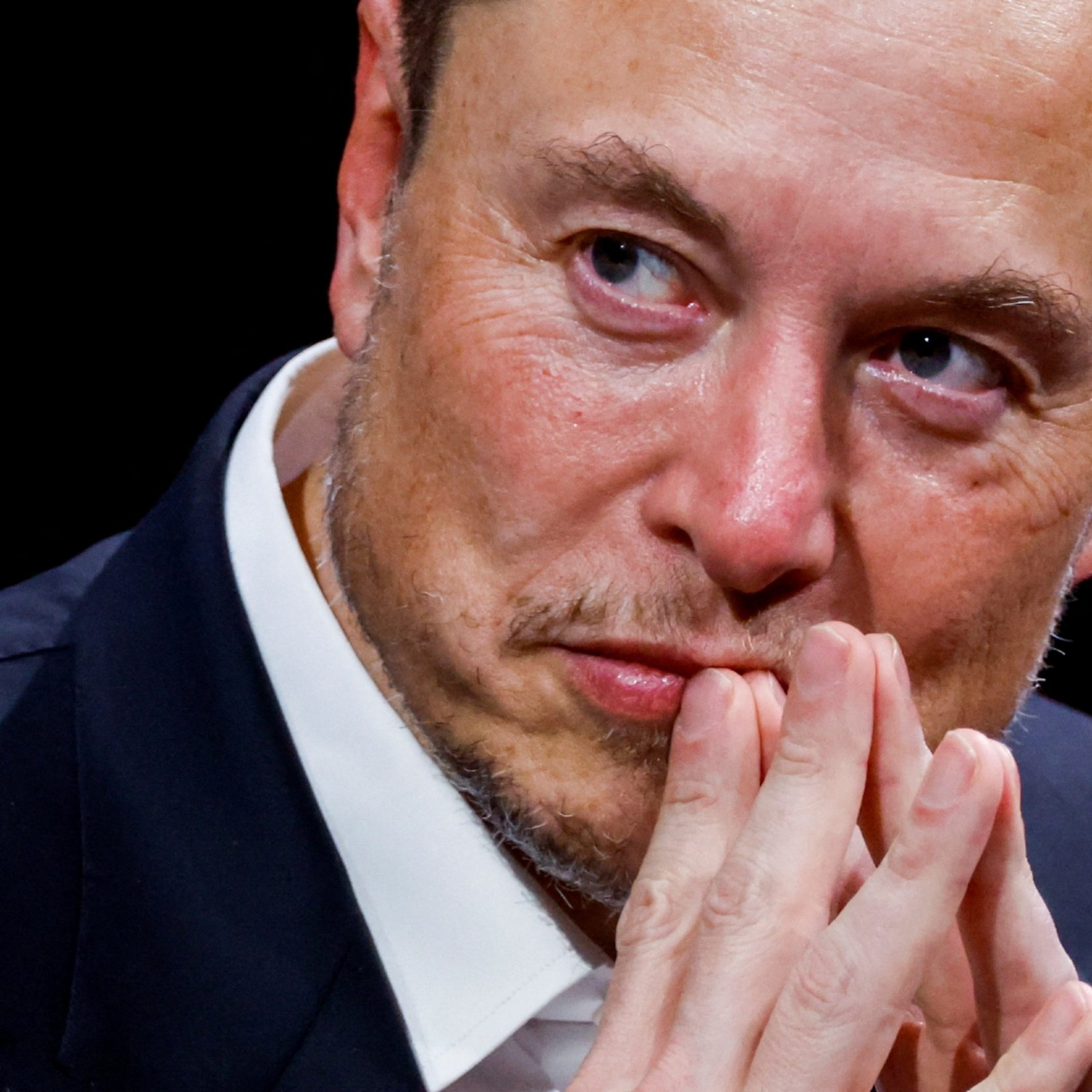
Bruce Daisley, a former European vice president of Twitter, talks to Tech Life. We report on scammers using artificial intelligence, bots and books to cash-in. An international firm is measuring clicks and keyboard strokes to make work more productive. And the boss of the global software giant Adobe makes the positive case for artificial intelligence.PHOTO CREDIT: Gonzalo Fuentes, Reuters.
Can artificial intelligence be a force for good?
Scientist, best-selling author and entrepreneur, Gary Marcus talks to Tech Life about the forthcoming global summit looking at AI for good, and the need for regulation. We examine the Wagner Group's use of social media in Africa. How do you encourage teenage girls to take up tech and engineering jobs ? And prize-winning school pupils on making driving cars safer.(PHOTO CREDIT: BBC. Shiona McCallum meets Gary Marcus on the banks of the Thames, in London,)
Have we had enough of podcasts?
Technology consultant Ann Charles on the future of podcasting after Spotify ditches some of its highest profile - and highest paid - broadcasters. Tom Nunlist, senior analyst at Trivium China, on how the authorities in Beijing are trying to regulate AI. And Alasdair Keane reports from Berlin's Green Tech Festival.(PHOTO CREDIT: Getty images. A teenager listens to a podcast)
The EU takes action on AI
This week Zoe Kleinman travels to Strasbourg, France to meet Margrethe Vestager, the woman leading the EU's attempts to regulate AI. Reporter Tom Gerken has been following the protest has caused Reddit to effectively fall silent. Chris Vallance meets the team trying out 3D printing as a way to rebuild schools destroyed in the war in the Ukraine. And Amazon tell us what they're doing to combat fake online reviews - and we ask a consumer group to review their initiative.(PHOTO: Margrethe Vestager and Zoe Kleinman at the European parliament, Strasbourg, France, copyright BBC).
Apple's big bet on virtual reality
Tech Life goes to Apple Park at Cupertino, California, for the launch of the Vision Pro Mixed Reality headset. Zoe speaks to analyst Leo Leo Gebbie, app developer Emma Partlow, and north America technology reporter James Clayton, and asks is this a breakthrough moment for virtual reality? Will the headset's price put people off? Has Apple finally had another Iphone moment or, under boss Tim Cook, has it lost the ability to make products that change the world?(PHOTO CREDIT: By Loren Elliott Credit: Reuters Location: Cupertino, Ca, United States)
The drama about AI in Hollywood
Film-maker Justine Bateman on why she and her Hollywood colleagues fear AI will take their jobs. Drug safety campaigner Dominic Milton Trott on why he's taken his message to the darknet. And Shiona McCallum talks to the Romanian-American computer scientist Ion Stoica about AI, gender equality and what it's like being a billionaire
What's the deal with chips?
Tech Life explores the chips found in everyday tech, and why governments are competing to make them. We hear how scientists in New Zealand are turning underground broadband cables into a source of earthquake detection. Also in this programme how simulation tech is helping a South African HIV organisation reach more people and how AI could transform your next work out.(Photo: Jim Wilson/Getty An employee holds a silicon wafer with chips etched into it)
Is Elon Musk's Twitter harming global political free speech?
The founder of Wikipedia, Jimmy Wales, tells us Elon Musk’s Twitter is making it harder for the internet to be open and free. Plus Shiona McCallum profiles Linda Yaccarino, the platform’s new CEO, with insight from Claire Atkinson, of Insider, whose known her for 20 years. Also: Sam Murunga, from BBC Monitoring, in Nairobi, on why TikTok is in trouble in Senegal. And Ben Derico reports on why voice actors are worried about the threat to their profession from AI.(Photo: Supporters of Turkish President check their phone to look at early presidential election results in front of the Justice and development Party (AKP's) headquarters, 14 May, 2023. Credit: Ozan Kose/AFP/Getty Images)
A warning about AI from a founding father of the IT age
The inventor of the first Apple computer Steve "Woz" Wozniak tells us of his fears that AI will supercharge scams. BBC education correspondent Hazel Shearing reports on whether chatbots could help you pass your exams. Bhaskar Chakravorti Dean of Global Business at The Fletcher School, Tufts University, says chatGPT "mania" is distracting from all the other useful things AI could do. And tech reporter Alasdair Keane is in Liverpool, for Eurovision, for a tour of the tech powering an international song contest.(Photo Credit: Co-founder of Apple Steve Wozniak attends the Digital X 2022 event by Deutsche Telekom on September 13, 2022 in Cologne, Germany. Photo by Andreas Rentz/Getty Images).
Is digital life booming in Rio?
With the first Web Summit taking place in Brazil, Tech Life explores digital transformation in South America and India. We speak to some of those on the cusp of digital change and to the CEO of Salesforce India, Arundhati Bhattacharya. Also in this episode, would you confess your biggest secrets to the internet? We find out why lots of people are through the social account Fesshole and Alasdair Keane explores some of the tech being trialled at the coronation of King Charles. (Photo: A marching band during the opening night of Web Summit Rio 2023. Credit: Stephen McCarthy/Getty Images)
'I sacrificed my soul': A Facebook moderator's story
This week, an update on the legal battle between Meta and former Facebook moderators in Kenya. One of them, Trevin Brownee, tells our reporter Chris Vallance that reviewing the most extreme content on the internet cost him his "human side." We ask what's the human cost of keeping the internet safe, and what do we owe those who do that work for us? Also this week, the weird and wonderful sounds of quantum computers in action. Professor Winfried Hensinger, who heads the Sussex Ion Quantum Technology Group and is the director of the Sussex Centre for Quantum Technologies, explains how they could change the world. And Professor Stephen Brewster, of the University of Glasgow’s School of Computing Science, and his colleague Ammar Al-Taie, on the difficulties of getting driverless cars to understand the complex and subtle interactions between cyclists and drivers.(Photo: Kenyan lawyer, Mercy Mutemi (seated 4th R) along with fellow counsel follow proceedings during a virtual pre-trial consultation with a judge and Meta's legal counsel. She appeared on behalf of 43 former content moderators for Facebook who filed a complaint in Kenya against Meta, Facebook's parent company. Credit: Tony Karumba/AFP/Getty Images)
Is AI racing ahead too fast?
As Google's boss, Sunder Pichai, says he doesn't fully understand its AI products, tech investor Ian Hogarth tells us it's time for a public debate on the technology's future. Reporter Michael Kaloki joins us from Nairobi to explain how the legal battle between Facebook and its Kenyan moderators is intensifying. Alasdair Keane meets the amateur composer crafting the sound of all human knowledge for Wikipedia. And our Click colleague Lara Lewington tells us about the tech entrepreneur devoting his time - and money - to finding ways to extend healthy human life.(Picture credit: Getty Images)
Kidfluencers: Do we share too much about kids online?
Tech Life looks into the world of Kidfluencers, and asks if too much of children's lives are shared online to make money. We speak to those involved in the industry in India. We also hear how cyber is playing a role in the war in Ukraine and we speak to Bolor Erdene Battsengel about digital life in Mongolia.
How to make sure the whole world benefits from AI
Martha Lane Fox reflects on her 30 years in tech, including her front row seat in Elon Musk's takeover of Twitter, how she remains one of very few high profile women in the industry, and why we need to make sure the whole world shapes the debate on AI. Chenai Chair, from the Mozilla Foundation, joins us from Zimbabwe to explain the work they are doing to make sure minority languages are included in digital services. India business correspondent Nikhil Inamdar tells us about his experience seeing an app which is helping people in poor areas claim vital welfare payments. And Spencer Kelly, from our sister programme, Click, tells us what he found out about the future of food in his trip to the markets and laboratories of Singapore.(Photo: Martha Lane Fox (L) and Shiona McCallum (R), in London)

Putting Google's AI chatbot Bard to the test
The search giant is rolling out its challenger in the artificial intelligence arms race, competing against the Microsoft-backed Chat GPT. We take it for a spin, while also looking into the issue of internet shutdowns following a government-backed communications blackout in the state of Punjab in India.Image credit: Arnd Wiegmann/Reuters
ChatGPT: Where will we use AI chatbots next?
With more announcements about AI chatbot GPT4, we hear how it will be further integrated into Microsoft and speak to Duolingo about how they hope it will help users learn languages. We also explore the fallout in India and South Africa from the US failure of Silicon Valley Bank and our Tech Reporter, Alasdair Keane, speaks to Alpine F1’s Pierre Gasly and Esteban Ocon on how tech and data is keeping pace with Formula 1 innovation.(Image: Getty/NurPhoto)
WhatsApp: We speak to boss, Will Cathcart
Shiona McCallum is at Meta's London HQ to chat to WhatsApp boss, Will Cathcart. We explore their response to the UK's Online Safety Bill and ask about the future of payments through the app. Also in this episode the latest with TikTok as the platform tries to reassure governments it is taking data security seriously and could the sky be full of drones? We speak to one company who think they'll be doing more deliveries soon.Image: Getty/NurPhoto
Why are some governments worried about TikTok?
We look at why some governments are worried about TikTok. We hear about pregnancy discrimination in tech and an expert tells us about the future of noise.(Image: The TikTok logo. Credit: Getty Images)
Big Tech's big legal headache
The US Supreme Court is hearing claims that big tech firms such as Google and Twitter should be considered the publishers of the harmful content that appears on their platforms. Dr. Mary Anne Franks, president of the Cyber Civil Rights Initiative, tells us how it could change the way the internet works everywhere in the world. A year on from the Russian invasion of Ukraine we speak to one of the country's thousands of tech workers about how she has adapted to living and working in a time of war - and the government tells us the tech sector has kept growing, despite the destruction and loss of life. We find out about how some internet users in South Africa have had to become night owls because of the soaring cost of mobile data. And how users can ride a virtual reality jet-ski - just by thinking about it.(Photo: Attorney Eric Schnapper speaks to the press outside the US Supreme Court following oral arguments in Gonzalez v Google, a landmark case about whether technology companies should be liable for harmful content their algorithms promote, 21 February, 2023. Credit: Drew Angerer/Getty Images)

Apple workers accuse firm of 'union busting'
One employee tells the BBC the tech giant has been attempting to 'scare' staff. The firm says it continues to 'make enhancements to our industry-leading benefits as a part of the overall support we provide to our valued team members.' We'll also hear from the African Tech Summit taking place in Kenya. And we learn how a small team of visual effects artists created the look of the stunning Oscar contender - Everything, Everywhere All at Once - using laptops in their bedrooms.Image credit: Reuters/ Joshua Roberts
The AI search race is on
Three big players in internet search have announced plans to integrate AI but can Google and Baidu rival Microsoft's team-up with ChatGPT? We also explore how old pictures and video are being shared online as from the earthquake in Turkey and Syria. And why officials in the UK and US have named seven Russian men as being behind some of the most infamous cyber crime groups of recent years.(Photo: Microsoft Bing search demonstration at its launch event. Credit: Jason Redmond/AFP)

Sacked Twitter staff take on Elon Musk
Several workers are launching legal action against Twitter. It follows a round of mass lay-offs at the social media firm last year. We also hear about a BBC investigation which has uncovered Egyptian police using dating apps to hunt LGBTQ people. And how a social video trend is reigniting interest in early 2000s digital cameras.(Photo: A mobile phone showing Elon Musk's face on the screen. Credit: Dado Ruvić/Reuters)
Can Ticketmaster 'shake off' the bots?
Shiona McCallum explores what can be done about online bots targeting ticket sales. It’s after Ticketmaster apologised to Taylor Swift fans who missed out on attending her Eras tour, they say they were the target of a cyber-attack by bots. We also delve into VR and AR experiences and learn about the company in India using discarded fishing nets to produce plugs and sockets.(IMAGE:Taylor Swift meets fans in Toronto. Wesley Lapointe / Getty)
MRNA: The tech that transforms cancer treatment?
The boss of Moderna, Stephane Bancel, tells us about how MRNA technology could transform the treatment of cancer. But will the personalised treatment plans it could create only be available in richer nations? Our global health correspondent, Naomi Grimley, provides analysis. Also this week we hear more from the exhibitors at the CES tech show. Analyst Paolo Pescatore tells us what he thinks the event says about the state of global tech. And the founder of Cameo, which took off in the pandemic, on how businesses that thrived in lockdown can survive in the very different world we find ourselves in in 2023.(Image: Messenger RNA techobnology, two Strands of mRNA on abstract background illustration. Credit: Getty Images)
Tech Tent goes to CES
Tech Tent is in Las Vegas, in the US, for CES, one of the world' s biggest and most important tech shows. We discuss the future of VR, and the ethics of AI - and meet the exhibitors hoping they've invented the next big thing. And Silicon Valley reporter James Clayton joins Zoe to take the temperature of the industry after a bumpy year in 2022.(Photo: Attendees at CES. Credit: Robyn BECK/AFP)
Tech predictions for 2023
Shiona McCallum and Joe Tidy invite the BBC's tech experts in Africa, Asia, America and Europe to make their predictions for how tech will shape 2023. From gaming to chip wars, and VR to AI they tell you what to look out for in the year ahead, wherever in the world you are.
The Tech Tent Christmas quiz
The technology news team review the year in the form of a quiz. Paul Carter and Liv McMahon take on Nick Kwek and Alasdair Keane to see who remembers most about the best - and worst - tech news moments of 2022. And all four face the ultimate test: can they tell which is the genuine Christmas story, loved for decades - and which has been conjured up in an instant by AI?
The law catches up with Sam Bankman-Fried
Sam Bankman-Fried is arrested and charged days after telling our reporter Joe Tidy he was confident he would avoid prosecution. We discuss the question Joe asked Sam - has he killed crypto? Also this week: the dismayed reaction of the global charities that sat on Twitter's now disbanded Trust and Safety Council. As China goes to the World Trade Organisation over the USA's restrictions on its semi-conductor industry, we ask if there is any end in sight to the so-called chip wars. And, the actor Andonis Anthony on what is it like bringing a video game character to life.(Photo: FTX founder Sam Bankman-Fried (C) is led away handcuffed by officers of the Royal Bahamas Police Force in Nassau, Bahamas, 13 December 2022. Credit: Mario Duncanson/AFP/Getty Images)
ChatGPT: The AI chatbot everyone is talking to
How do you feel about talking to a computer? New AI chatbot, ChatGPT, passed one million users in just a week but what are its potential uses and limitations. We also hear from tennis icon, Billie Jean King on why she thinks tech will change the way tennis is played. Plus, with Apple extending its self-service repair to a number of European Countries, how do you feel about repairing your iPhone at home? We hear from someone who gave it a go.(Photo: A man using a laptop talks to a chat bot. Credit: Blue Planet Studio/Getty Images)