Streamlined Solopreneur: Helping Solopreneurs Take Time Off Worry-Free
591 episodes — Page 4 of 12

S2 Ep 440How are you Protecting Your Time?
The summer had one lasting effect I didn’t notice until recently: I made my schedule pretty open for anyone who wanted to meet. I didn’t want them to be limited to my limited availability, so I tried to be as open as possible. But over the last 2 weeks —really since my episode with Conny, I realized that I’ve let everyone else control my calendar.I’ll take a meeting with almost anyone bc I feel they are the best way to form relationships, but I’m not vetting those people. I’m not creating boundaries for my meetings either. I even have a calendar that’s totally open for friends — but I’ve sent it to more than friends.If you’re a busy solopreneur — especially a parent or someone with other obligations — this can kill productivity.So how do we fix it? That’s what we’re talking about today.One Big Problem: I’m not guarding my timeOne Small Fix: Cal.comFeedback: Working with a VAGet your free automations database at https://streamlined.fm/freebieTop TakeawaysYou need to control your own calendar instead of letting other people control it.That means asking yourself when you can block time off for no meetings, how many meetings you want to take in a day, and what’s the criteria for if you take a meeting or not.Cal.com is an excellent tool for creating a system that will manage your calendar for you.Show NotesCal.comSubmit feedback Simplify your tech stack at https://streamlined.fm/tools ★ Support this podcast ★
S2 Ep 439How to Actually Sell Stuff Using Social Media with Katie Brinkley
My love-hate[but mostly hate] relationship with social media is well documented. It feels like a time-suck where you get into arguments with people who don’t care about anything you say. People tell me it’s great to grow your business…I just don’t see it. But Katie Brinkley has changed that for me. She elevates CEOs to become thought leaders and disruptors in their industries. And she does it mostly through social media. By the end of this episode, she’ll give you strategies for choosing the right social networks, posting (3-4 times per week max), as well as how to waste less time and make more sales. Want to hear a longer, ad-free version of this episode where Katie and I talk about brand social media vs. personal social media? Become a member of Streamlined Solopreneur Accelerated. Top TakeawaysSelect the Right Platforms: Focus on one or two platforms where your target audience is most active. Remember each platform has its own culture.Prioritize Genuine Engagement: Spend time connecting and commenting on others' posts to build relationships. Engagement is more impactful than frequent posting without interaction.Use Hashtags Strategically: Identify and engage with hashtags your ideal clients are using. This approach helps you connect more effectively with your target audience.Show NotesKatie Brinkley Stampede Social on InstagramManychatThe Social Shift Simplify your tech stack at https://streamlined.fm/tools ★ Support this podcast ★
S2 Ep 438How to go from chaos to peace as a busy solopreneur with Conny Graf
It’s easy for people who live unconstrained lives to give advice. “Just meditate for 2 hours each morning.” “Hustle.” “Get rid of anything that doesn’t bring you joy.” The truth is that most people have some constraints to live by. Whether it’s kids, work, or other obligations, we can’t just drop everything to follow the latest guru. That’s why I like Conny Graf’s approach. Conny has many credentials, but the one I like best is “certified clutter-clearing practitioner.” And today, she’s going to tell you how you can reasonably declutter your life to turn chaos into peace.Want to hear a longer, ad-free version of this episode where I talk about the chaotic day leading up to this interview? Become a member of Streamlined Solopreneur Accelerated. Top TakeawaysChaos is when you have too many things going on, a cluttered environment, and a packed calendar that leads to stress and lack of focus. Recognize the early warning signs that you're slipping into chaos, like feeling agitated or nervous.Be intentional about your priorities and learn to say no more often. Not everything is equally important - focus on the "glass balls" in life like family and relationships. Give yourself grace when you can't be at your best.Declutter your physical spaces a little bit each day. Create designated spots for things like shoes and papers. Optimize your environment to support your daily activities and prevent stuff from piling up.Finding peace is an ongoing journey, not a destination. Make small adjustments over time, reflect on what's working and what's not, and continuously optimize your life and business. Focus on progress, not perfection.Show NotesConny GrafAligning Your Values to Set the Right Goals with Tanya Alvarez Simplify your tech stack at https://streamlined.fm/tools ★ Support this podcast ★
S2 Ep 4374 Ways to Market Without Social Media with Emily Aborn
Do you hate social media as much as I do? Some experts will tell you that you need social media to market, but that’s increasingly not true. Gone are the heady days of Twitter, where you can tweet a link and people would actually see it. That’s why I brought on Emily Aborn, a Content Copywriter, Speaker, and Podcast Host. She’s also a wealth of information on how to market by making sure you have a great product, and much like her, a ton of personality. Want to hear a longer, ad-free version of this episode where Emily and I discuss the importance of a strong personal brand? Become a member of Streamlined Solopreneur Accelerated. Top TakeawaysHaving a high-quality product or service that solves your target audience's problems is the foundation of effective marketingCollaborating with others in your industry can help expand your reach and build trust with new audiences. Focusing on marketing strategies that align with your strengths, interests, and values can lead to more authentic and effective marketing efforts.Show NotesEmily AbornForget The Funnel Stop doing "Sales" and Start Having Conversations with Nikki RauschLeveraging GuestingPodmatchContent With Character Podcast Simplify your tech stack at https://streamlined.fm/tools ★ Support this podcast ★
S2 Ep 436Just Launch the Dang Program Already
I made an unexpected $300 over a weekend in September. And I know that doesn’t sound like a lot — but it’s money I didn’t have, that I have now. That is the power of launching messy — something my friend Stacey encouraged me to do, and what I want to talk about today in a solo episode with some freshly minted segments:One Big Problem: How to get over the fear of making something perfect before launching itOne Small Fix: Using Tella.tv to easily create videos as a way to update my productFeedback: Send yours in at https://streamlinedfeedback.comTop TakeawaysOvercoming Perfectionism: Don't let the pursuit of perfection prevent you from launching your product. Follow the advice of creating a minimum viable product (MVP) and iterate from there. This helps you get real feedback and make improvements based on actual user experience.Soft Launching: Consider soft launching your product to a small group of users. This approach allows you to gather essential feedback and make necessary adjustments before a full-scale launch. Offer early access discounts as an incentive for early adopters.Find the right tool for the job: I got so caught up in making it perfect, that I overlooked the real value of Podcast Navigator: advice and access. With Tella, I’m able to easily provide both to my customers.Show NotesPodcast NavigatorTella (00:00) - Welcome! (01:32) - The Big Problem: Launching (08:50) - The Small Fix: Tella.TV (12:04) - Feedback: Submit Yours Today! Simplify your tech stack at https://streamlined.fm/tools ★ Support this podcast ★

S2 Ep 435How Important is a Good Home Studio, Really? with Junaid Ahmed
I’ve been thinking a lot about the notion of starting simple (or messy) vs. starting perfect. And while I definitely fall more on the side of “start messy and iterate,” there are a few places where you shouldn’t skimp. A good home studio is one of them, which is why I brought on my friend Junaid. He’s a “Home Studio Architect,” and he’s a wealth of knowledge. We talk about why you need at least good audio, how to improve your setup without breaking the bank, and the absolute non-negotiables. By the end of the episode, you’ll know exactly what you need to sound more authoritative with your content.Want to hear a longer, ad-free version of this episode where Junaid and I talk about our specific setups? Become a member of Streamlined Solopreneur Accelerated. Top TakeawaysStart Small with Video Quality: Don't let the barrier of high-end equipment stop you from creating content. Your smartphone is good enough to start.Lighting is Key: Optimizing your studio lighting can make a big difference. Understand the roles of key lights, fill lights and backlights. Experiment with different setups until you find what works best for you.Invest in a Good Microphone: For podcasting and video recording, audio quality is most important. You can find a great mic for $100-250, depending on your budget.Show NotesJunaid Ahmed7 Stages of Home Studio EvolutionWant to be a Better speaker? Do THESE things with Mike PacchioneMastering iPhone Video ProductionYour First Podcast SetupWhat's on my Desk? Simplify your tech stack at https://streamlined.fm/tools ★ Support this podcast ★
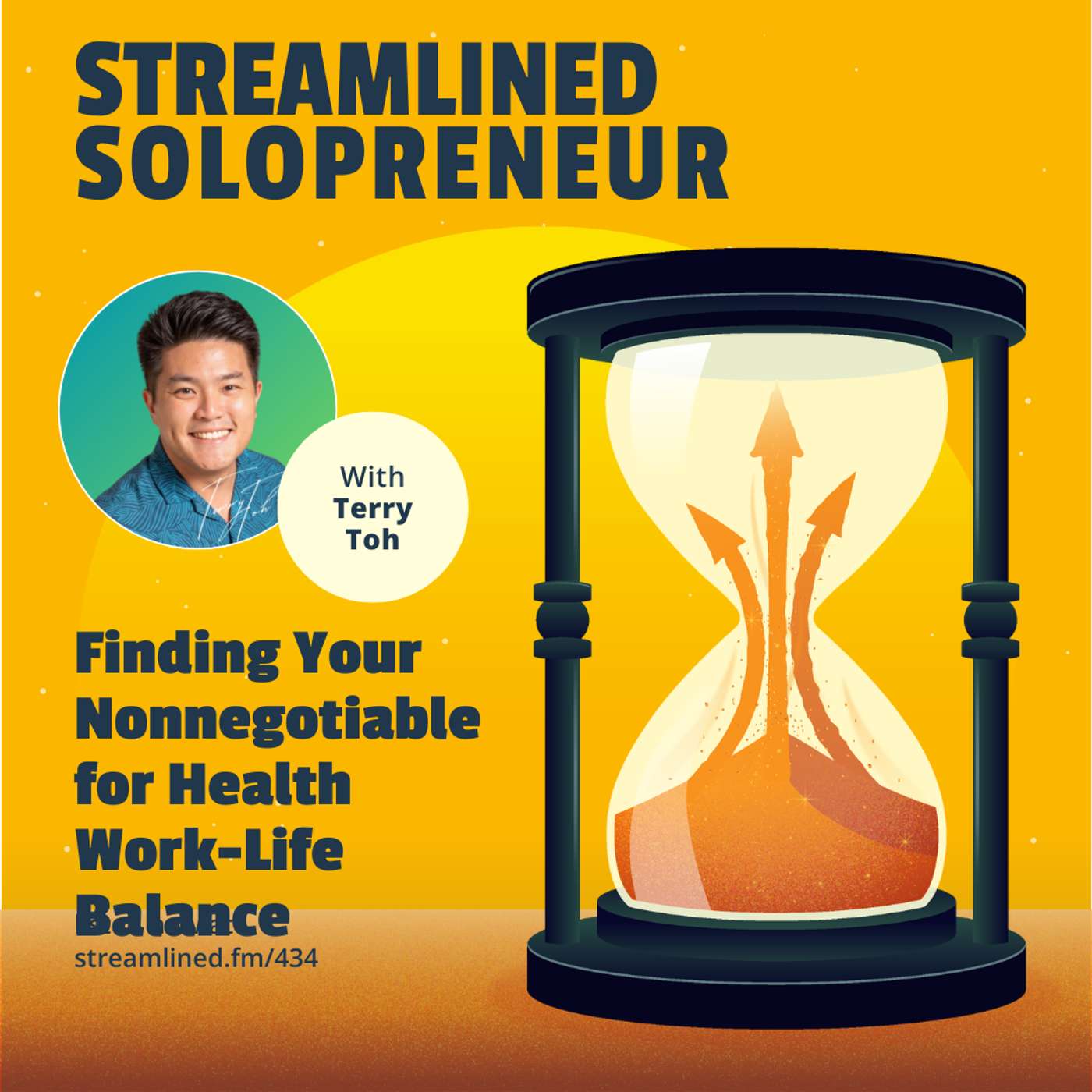
S2 Ep 434Finding Your Non-Negotiable for Health Work-Life Balance with Terry Toh
Recently my friend Justin asked on X, “How do you define success?” I said, “Can I knock off for a day at will to spend time with my family?”The world constantly tells us we need to hustle to be successful – but that can’t be true. If you’re a parent, for example, hustle is just not an option. That’s why I’ve brought on Terry Toh. Terry helps business owners successfully run their side business while maintaining a full-time job. But as you’ll see, much of what he has to say can apply to busy solopreneur who may have other obligations – like family, volunteer work, or other interests outside of work. It’s all about finding your non-negotiable. Want to hear a longer, ad-free version of this episode where Terry and I talk about Silicon Valley Hustle Culture? Become a member of Streamlined Solopreneur Accelerated. Top TakeawaysDefine what success means to you personally. It's not just about money, but spending time on what matters most to you. Regularly check in with yourself as priorities change.Identify your single top priority and 2-3 key non-negotiables at any given time. Intentionally make progress on these each day before moving on to less critical tasks.Watch for personal signs that you're doing too much and nearing burnout, such as revenge bedtime procrastination or being irritable with your kids. Build in breaks and support.Show NotesTerry TohTerry on XTerry on LinkedinAligning Your Values to Set the Right Goals with Tanya AlvarezThe Checklist Manifesto Simplify your tech stack at https://streamlined.fm/tools ★ Support this podcast ★
The Importance of Episode Segments (Bonus!)
bonusEver wonder how to make your podcast stand out in a sea of content? After a serendipitous conversation at Podcast Movement 2024, I uncovered a game-changing strategy that could revolutionize your approach. Spoiler alert: It involves segments.I'll break down why rethinking your podcast structure can make a big difference. We'll explore how segments can help you give more value to your audience, make your show more accessible, and even repurpose content more effectively. Plus, I'll share different segment ideas that work for both interview and solo episodes, ensuring you never run out of compelling content.Want to hear a longer, ad-free version of this episode where I talk about a cool new opportunity, and building community? Become a member of Streamlined Solopreneur Accelerated. And check out my other podcast, https://podcastworkflows.comTop TakeawaysImplement Segments in Your Podcast: To create a more engaging show, think about incorporating segments. Just like how late-night shows have defined parts, segmenting your podcast can make it more consumable and structured. You can dedicate parts of your episode to different topics or formats, such as opening monologues, interviews, and specific segments tailored to your audience's interests.Structure for Solo Episodes: If you're worried that solo episodes might become stale, develop a clear structure. For instance, discuss a main topic, then showcase an interesting tool related to that topic, and finish with an automation tip. This keeps the solo content engaging and valuable.Balancing Personal and Professional Content: For busy solopreneur parents, combining personal experiences with actionable business advice can create a relatable and impactful podcast. Consider dedicating a segment to how you manage parenting alongside your entrepreneurial duties. Simplify your tech stack at https://streamlined.fm/tools ★ Support this podcast ★
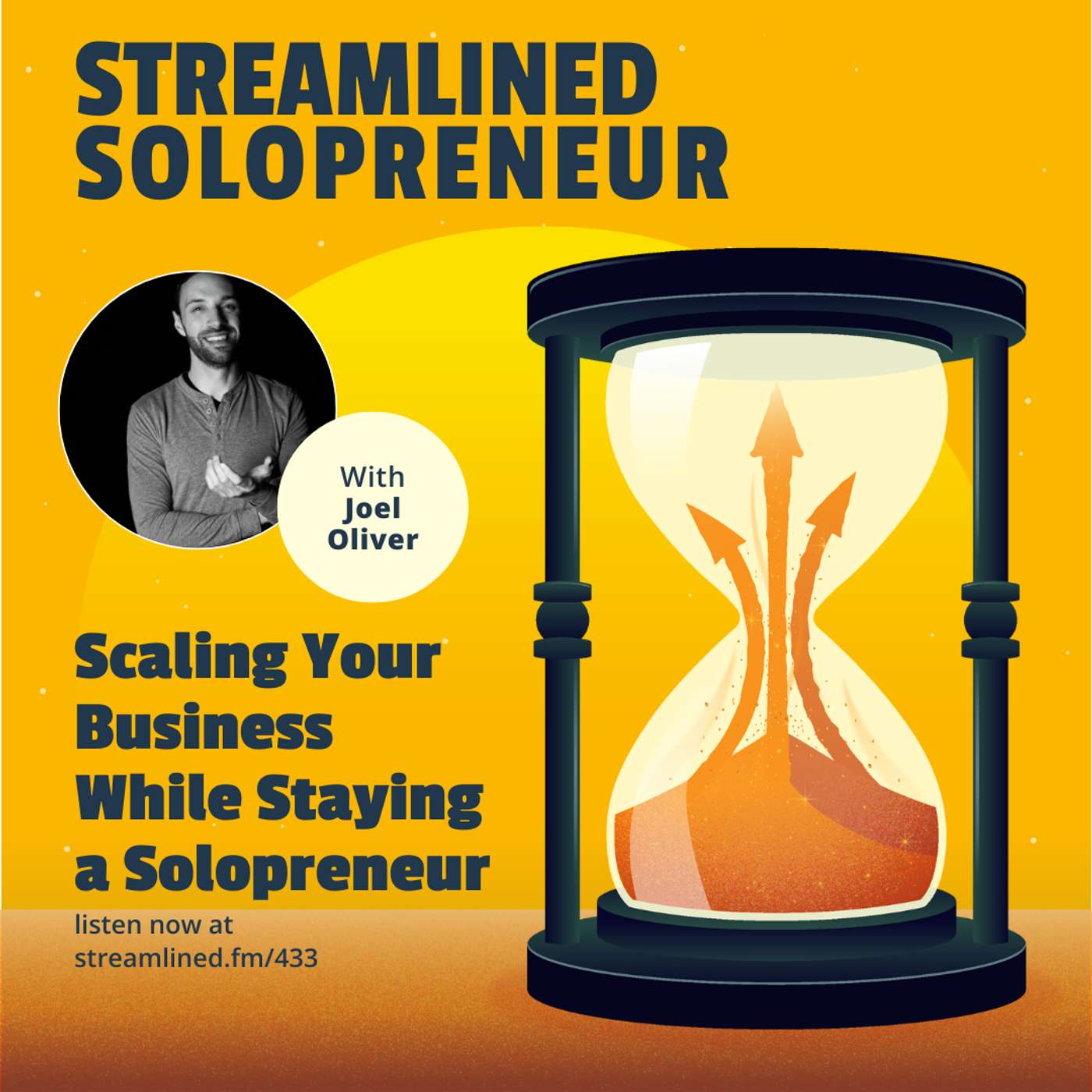
S2 Ep 433Scaling Your Business While Staying a Solopreneur with Joel Oliver
If you’re anything like me, you probably think about ways you can appreciably scale your business. Part of streamlining, after all, is taking things off your place. That’s why I brought on Joel Oliver. Joel is the editor for all of my podcasts, including this one. I’ve been with him since he was a freelance editor, and now he’s grown to have a team of editors to help him work on more shows. Listen in as we discuss structuring the business to stay a solopreneurship, while also creating processes that seamlessly hand off tasks to team members. We’ll talk about everything from picking tasks to delegate, to training! Want to hear a longer, ad-free version of this episode where Joel and I talk about what it's like editing my process and adding video? Become a member of Streamlined Solopreneur Accelerated. Top TakeawaysDelegate to Scale: As a solopreneur, it's crucial to delegate tasks that are not central to your core business functions. This frees up time to focus on strategic activities and growth.Creating systems and processes is vital for effective delegation. Use checklists and workflow systems to ensure tasks are completed consistently and to a high standard. This approach helps maintain quality control and accountability among team members.Mindset of Letting Go: Letting go of tasks and trusting others to handle them is a significant mindset shift for solopreneurs. Show NotesJoel OliverDescriptSometimes You Need to Fire Everyone and Start from Scratch with Jordan Eaton Talkroute: Visit streamlined.fm/talkroute for 20% off your first yearSimplify your tech stack at https://streamlined.fm/tools ★ Support this podcast ★
S2 Ep 432Was Skipping Summer Camp Worth It?
It’s the end of the summer and the end of our experiment to keep our kids home instead of sending them to summer camp. So today I’m going to answer 3 questions: 1. How did it go (including giving it a grade)2. Was it worth it? (and if yes, would it have made it **not** worth it) 3. Will we do it again? In Accelerated, I talk about why I want to create a more scalable business while remaining a solopreneur, and we do a time-tracking check-in. Sign up to get ad-free, extended episodes early over at https://streamlined.fm/joinTakeawaysKnow your schedule & build in time for unknowns. I felt overwhelmed because I didn’t have any margin in my schedule- Save some extra money. I know we saved money by not spending it, but that’s different from having extra money in the bank. Having kids home means having to entertain them —so have a budget for that!- Cherish the time you have time. I’m reminded that as another kid enters full-time school, they are now out of the house for most of their waking hours each week. Talkroute: Visit streamlined.fm/talkroute for 20% off your first yearSimplify your tech stack at https://streamlined.fm/tools ★ Support this podcast ★
S2 Ep 431Mastering Visual Storytelling in Presentations with Emily Schneider
I think failing to give a good presentation is an incredibly missed opportunity. You have everything: a captive audience, borrowed credibility, and a place to deliver your message your way. But there are a lot of places where your presentation can fall down. Most people will focus on not capturing the audience quickly enough, or pacing. Maybe not rehearsing. But what about your slides? The actual visual part of your presentation. The visual storytelling is as important as the words you deliver. Not enough context? Your audience is lost. Too much text? Your audience is too busy reading to hear your message. That’s why I decided to have Emily Schneider on the show. She’s a visual storyteller, and her canvas is PowerPoint presentations. Intrigued? I was too. Want to hear a longer, ad-free version of this episode where I take Emily’s advice and roast my own recent talk slides? Become a member of Streamlined Solopreneur Accelerated. Top TakeawaysStart with the Audience: Understand who your audience is and what you want them to think, feel, and do by the end of your presentation. This is crucial for making a meaningful impact.Craft a Compelling Story: Begin with the end in mind and structure your presentation around a clear storytelling arc. Focus on the challenge, benefits, and reinforcing the main message.Balance Images and Words: Use simple words or short sentences, and stylize your slides to naturally guide your audience through your story. This approach is effective not just for live presentations but also for pitch decks and emailed presentations.Show NotesEmily Schneider4 Simple Tips for Impactful PresentationsThe Go GiverWant to be a Better Speaker? Do THESE Things with Mike Pacchione Talkroute: Visit streamlined.fm/talkroute for 20% off your first yearGet started with Clariti for just $1 your first month with code SOLO2024Simplify your tech stack at https://streamlined.fm/tools ★ Support this podcast ★

S2 Ep 430Working Through my Product Ladder
Do you have offerings for people at any level of their journey? That’s the importance of having a well-defined product ladder. A product ladder provides multiple offerings at different price points and levels of engagement to meet potential customers where they are at.Today I’ll talk about how I have struggled with this in my own business, with offerings that didn’t clearly communicate how I help my specific target audience of busy solopreneurs with podcasts.Then, I give you a walk through (walk-up?) of my Product Ladder!Want to hear my poke holes in my product ladder and give a general update on Podcast Navigator and my business? You can become a member over at https://streamlined.fm/joinTop TakeawaysAs a solopreneur, it's important to have multiple offerings at different price points to avoid putting all your eggs in one basket. Some offerings should be scalable and not require a lot of your time.Your product ladder should clearly communicate how you help your specific target audience and micro-segments achieve their goals. Be focused rather than trying to be everything to everyone.Map out your product ladder from low-priced "assistance" offerings like courses, to mid-priced "accountability" offerings like group coaching, to high-priced "acceleration" offerings like done-for-you services. Have something for customers at every stage.Your core offering that you want to sell the most should be in the middle of your product ladder. For me, that's my Podcast Navigator tool.Constantly evaluate and refine your product ladder based on customer feedback and your business goals as a solopreneur. Don't be afraid to make adjustments as you gain more clarity.Show NotesPodcast NavigatorMy Home Page, where most of product liveChris Lema’s blog post on Product Ladders Talkroute: Visit streamlined.fm/talkroute for 20% off your first yearGet started with Clariti for just $1 your first month with code SOLO2024Simplify your tech stack at https://streamlined.fm/tools ★ Support this podcast ★
S2 Ep 429Reclaiming Control: Navigating the Hosted vs. Self-Hosted Dilemma
Are you feeling overwhelmed by the endless options for hosting your online business? The decision between a hosted platform like Squarespace or a self-hosted solution like WordPress can be daunting, especially for solopreneurs juggling multiple responsibilities.And while the conversation feels like it's been done to death, I was recently reminded that even seemingly simple platforms can shut you down for no reason.There are a lot of merits to going with a hosted platform. But there's also a lot of danger. Let's explore.Want to hear a longer, ad-free version of this episode where I talk about my experience choosing the wrong platforms, and how I’m trying to fix it? Become a member of Streamlined Solopreneur Accelerated.Top TakeawaysHosted vs. Self-Hosted is a lot like renting vs. owning a house. There are safeties in place, but you can't do as much, and you run a higher risk of being kicked off a platform you don't own.No matter what you choose, portability and how it impacts your ability to truly own and control your online presence is important. Worse than needing to change platforms is being completely unable to.Research is key. Look at features, sure, but make sure you can export, use your own payment accounts, and look at the terms of service. You might even reach out to support to ask them questions about what types of projects are allowed.Show NotesWhy an apartment is better than a house for most creatorsMatt Medeiros on XMemberfulConvertKit Get started with Clariti for just $1 your first month with code SOLO2024 ★ Support this podcast ★
S2 Ep 428How Solopreneurs can Optimize Their Taxes with Rachel Stas
When I first started my business, I was 14 years old. My income was pretty light, and my expenses were even lighter. Heck – I didn’t even pay for hosting. I hosted my few client websites on a web server in my bedroom (don’t tell my old ISP). But even then, I knew the importance of keeping track of my income and expenses, which I did in an Excel sheet. I’ve always had an interest in accounting, which I thought served me well. Then I hired Rachel Stas. She made some fantastic changes to my business that ended up saving me money AND lowered my tax bill. And while everyone is different, I know the advice she gives today will be great for any solopreneur*. Want to hear a longer, ad-free version of this episode where Rachel and I talk about my business, and I ask her specific questions about my books? Become a member of Streamlined Solopreneur Accelerated. Top TakeawaysForming an LLC alone does not provide tax benefits. While incorporation is an important aspect of running a business, you also need to file as the right type of entity (like an S Corp), to help lighten your tax load.Track all business income and expenses from day one in a spreadsheet or separate bank account. Don't rely on memory or mix business and personal finances.Don’t deduct for the sake of deducting, and be cautious with what you deduct. Some things, like a home office, might offer short-term gains for long-term pain. Finally, I believe that investing time upfront to properly track finances and get professional accounting help pays off in the long run in taxes saved and peace of mind. Don’t wait until your business gets big to implement good accounting practices.Show NotesRachel Stas TaxWhy Solopreneurs Need to Time TrackPodcast Growth Audit Check out Podcast Workflows here or wherever you get your podcastsGet started with Clariti for just $1 your first month with code SOLO2024 ★ Support this podcast ★
S2 Ep 427Why and How I’m Fixing my Newsletter
My newsletter has gone through a lot of changes over the years, but something that's been steadfast is promoting the latest episode of this podcast at the beginning of the week. And that made perfect sense when both the newsletter and this podcast talked about largely the same thing.But now this show talks about running a solo business generally, while the newsletter is supposed to focus on podcast processes and systems.They both make the same promise, but the audiences are different.I've tried splitting the baby, so to speak, by promoting the episode, and then something behind-the-scenes look at that episode.But it doesn't work. You know...don't talk to more than one audience, yada yada.As a result, the newsletter isn't growing the way I'd like. And that’s what we’re talking about today.Top TakeawaysI need to make my newsletter’s value proposition clear. Right now, it’s trying to attract and talk to two different audiences.As a result, it’s not a “recommendable” newsletter. People with great newsletters (like Chenell Basilio and Justin Moore) have great newsletters with a clear focus, so people know who to recommend them to.The new format of the newsletter will drive home my promise: to improve your podcast processes. And while I may recommend Streamlined Solopreneur sometimes, it will not be the focus of any newsletter. Get started with Clariti for just $1 your first month with code SOLO2024 ★ Support this podcast ★
S2 Ep 426Generating Predictable Income Joining Affiliate Programs with Justine Galea
I remember the first time I got an affiliate payout. I didn’t even know it was coming. The money just showed up in my account. “What is this from?” Then an email followed. A hosting company I had written a blog post about paid my affiliate commission for the last 2 months. Since then, I’ve been stumbling through, clumsily trying to make affiliate income an appreciable part of my income – but it’s never worked as well as I hoped. So I brought in an expert: my friend Justine. She’s been doing affiliate programs forever and currently leads ConvertKit, as well as consults through her own business, Brilliant Affiliate. She’s the perfect person to talk to. Justine not only sets me straight, but she offers a TON of fantastic actionable advice for how to make the most of affiliate programs, how to find the right ones, and how they can live harmoniously (and even help) with sponsorships.Top TakeawaysAffiliate programs provide a way to earn passive income by referring customers to products/services you recommend. Look for ones that pay well.Target your affiliate content to the right people – people who are low in the funnel, and are weighing their options between your recommended product and competitors.Balance affiliate income with sponsorships - affiliates are more passive/long-term while sponsorships are good for timely campaigns. But being a good affiliate can also help you land sponsored campaigns from the same company! Show NotesJustine GaleaJustine on TwitterConvertKitPodcasting Tools Sponsors: Check out Liquid WebGet started with Clariti for just $1 your first month with code SOLO2024Ready to get Unstuck? Visit https://streamlined.fm/unstuck for 33% off. ★ Support this podcast ★
S2 Ep 425The Philosophies Behind Choosing the Right Tools (Without Breaking the Bank) with Sarah St John
A common thread on the show this year has been the push and pull of finding the right tools while also balancing our time and money as solopreneurs. A while back I invited my friend and fellow podcaster Sarah St John onto the show. She’s the host of the Frugalpreneur podcast, and at first, I thought we’d share podcasting war stories. But then everything went wrong. We were having both hardware and software issues. So once we got everything squared away, I thought we could refocus the conversation. See, I have a tech background, and sometimes forget that troubleshooting and working with tech isn’t everyone’s cup of tea. So we decided to dive deep into managing your tech stack without spending a fortune. We share our top tips and personal experiences on how to choose the right tools, avoid unnecessary expenses, and leverage platforms like AppSumo for amazing lifetime deals. Whether you're a tech newbie or a seasoned pro, this episode is packed with actionable advice to help you streamline your business operations and save money. Top TakeawaysEvaluate Your Current Tools: Regularly check if your tools are still meeting your needs.Consider the Cost of Switching: Weigh the benefits of switching tools against the effort required.Balance Convenience and Cost: Ensure the cost of a tool is justified by its value.Show NotesSarah St JohnCaardSkoolCaptivateDescript System.ioSendFoxTidyCalCastmagicCapshoPodiumPodsqueezeStreamYard RiversideTransistorObsidianNotionEcamm LiveCal.comWordPressSwitchy Sponsors: Check out Liquid WebGet started with Clariti for just $1 your first month with code SOLO2024Ready to get Unstuck? Visit https://streamlined.fm/unstuck for 33% off. ★ Support this podcast ★

S2 Ep 424Why Solopreneurs NEED to Time Track
I remember the first time after my wife and I started dating that a mutual friend of ours became pregnant. I was the first one to find out and got to relay the message to her."Amy's pregnant," I said. My wife then asked a series of questions: "When is she due? What is she having? How is she feeling?" I had the same answer to every question: "I don't know."All I knew was that Amy was pregnant. My wife later went out and found this information for both of us. All these details were crucial to being a more present and supportive friend.So why am I telling you this? if you are running a business, especially a solo business where your time is so important, and you are not time tracking, it's kind of like knowing just the bare minimum.You might know you completed a project, but you should really know how long you spent on it, where you are spending most of your time, and how you can use this data to improve your business.So in today’s episode, you’ll learn about the importance of time tracking for solopreneurs. Time tracking is not just about noting down hours; it's about understanding where your time goes, improving efficiency, and making informed business decisions.Top TakeawaysStart Simple: Begin with basic time-tracking methods like pen and paper or simple apps. The key is to start noting down where your time goes, even if it's just approximate.Use the Right Tools: I recommend using tools like Timery (which sits on top of Toggl), Timing, and RescueTime. These tools can help automate the process and provide detailed insights into how you spend your time.Categorize and Tag Tasks: Break down your tasks into projects and use tags for more granular tracking. This helps in understanding which specific activities are taking up most of your time and allows for better analysis.Regular Reviews: Review your time tracking data regularly—weekly, monthly, and quarterly. This helps in identifying trends and making necessary adjustments to improve efficiency.Automate Where Possible: Use shortcuts and automation tools like Stream Deck and focus modes on iOS to start and stop timers automatically. This reduces the manual effort involved in time tracking. Sponsors: Check out Liquid WebGet started with Clariti for just $1 your first month with code SOLO2024Ready to get Unstuck? Visit https://streamlined.fm/unstuck for 33% off. ★ Support this podcast ★
S2 Ep 423Your Next 1000 Leads: How To Consistently Attract Prospects Into Your Business with Jennie Wright
Just this morning I watched an incredibly interesting video that sent me down a rabbit hole. A 19-year-old kid was arm wrestling against a massive bodybuilder – and won, pretty easily. Thinking this could be rigged or fake, I looked at other matches this fellow – Maxim appears to be his name – competed in. And he won…a lot. See, while he is very strong (just not as big as the other guys), Maxim has great technique. What does this have to do with lead generation? Well, as you’ll hear from Jennie Wright, you don’t need a massive list to build your business. You don’t need to be smarmy. You don’t need to be showy. You just need to have good technique – and forge good relationships.Top TakeawaysConsistency is key in lead generation. Create a plan that aligns with your end goal and focuses on activities that will give you the best results within your available time and resources.Leverage other people's audiences by appearing as a guest on podcasts, speaking at summits, and participating in bundles. This is an effective way to grow your credibility and reach new potential leads.Nurture your leads authentically by setting expectations, providing value, and building trust. Avoid being too salesy, and focus on creating genuine relationships with your audience.Show NotesJennie Wright Sponsors: Check out Liquid WebGet started with Clariti for just $1 your first month with code SOLO2024Ready to get Unstuck? Visit https://streamlined.fm/unstuck for 33% off. ★ Support this podcast ★

S2 Ep 422Organizing Your Digital Life (using Obsidian?) with Mike Schmitz
Perhaps the most important lesson I learned over and over again running a business is that it’s never about the tool – it’s about the solution to a particular problem. So while I recruited Mike Schmitz to talk about Obsidian, what we actually talked about was much, much deeper. Personal Knowledge Management (PKM) is much more about defining your approach, and intentionality and making time for the important things in your life. All of this creates balance, and space, for you to do your best work.Mike also shares his 5 C's of his "creativity flywheel" for capturing ideas and creating valuable output, which is fantastic. If you're feeling overwhelmed by information and struggling to turn your ideas into reality, this episode will give you a framework to tame the chaos. Tune in for practical tips and inspiration to upgrade your PKM and productivity!Top TakeawaysObsidian is powerful but requires intentional use to get value from it. Simply dumping notes in is not enough - you need a system.Having a philosophy, vision, and values guides what projects and information to focus on. Start with the end in mind.Use apps intentionally by "hiring" them for specific jobs. Don't try to do everything in one app. Pick the best tool for each job.Show NotesMike SchmitzWiki-style Offline note-taking AppIntentional Life ChartPKM Stack5 Cs of CreativitySteal Like an ArtistWhat I Learned From BJ NovakObsidianMind NodeFocused PodcastBookworm PodcastUgmonkPractical PKM Sponsored by Liquid WebJoin my FREE Newsletter, Podcast Workflows ★ Support this podcast ★
S2 Ep 421How to Create a Winning Content Calendar with Kaitlyn Merola
Tell me if this sounds familiar: you know you need to publish a blog post, video, or newsletter, but you have no idea what you’re going to talk about. And this isn’t the first time it’s happened. You definitely have ideas, but you can’t think of anything at the moment. That’s why you need a content calendar – and why I’ve brought on Kaitlyn Merola to tell us all about them. We're going DEEP on how to plan, organize, and execute on your content and social plan using a centralized content calendar. Here’s what we’ll cover:👉 What exactly is a content calendar (and how it’s different from a social calendar) 👉 Determining the right content cadence (why more != better)👉 Repurposing content across channels (maximize that ROI!)👉 Mapping content to the buyer's journey (awareness, consideration, sales)👉 Plus, in Accelerated, we talk about the role of AI in content creation (spoiler: not what you think!)Whether you're a solopreneur in a content feast or a content famine, this is for you!Top TakeawaysA content calendar is a central place to plan, organize, and track all your content efforts across different channels. It helps provide direction and alignment for your content strategy.For SEO purposes, prioritize quality over quantity - publishing one high-quality blog post per week is often sufficient rather than lower-quality posts daily.Map your content to the buyer's journey stages (awareness, consideration, decision) to ensure it serves the right purpose at each stage.Show NotesKaitlyn MerolaMove Marketing Sponsored by Liquid WebJoin my FREE Newsletter, Podcast Workflows ★ Support this podcast ★
S2 Ep 420Why We’re Not Doing Summer Camp (and How it’s Affecting my Business)
If you have kids and you’re a solopreneur, you know how tough summer care could be — especially if you have small children. Today, I'm diving into why my wife and I decided to skip summer camp for our kids and how this big decision is changing how I’m structuring my business for the summer.Discussion Topics:Financial and Family Considerations: The high cost of summer camp motivated my wife and me to find a solution that allows us to save nearly $10,000 while providing more quality family time.Flexible Scheduling: My wife and I adjusted our schedules so one of us is always available to care for our kids, which highlights the importance of managing work flexibility as a solopreneur.Temporary Chaos: I anticipate that managing my kids full-time will lead to some chaotic and stressful days, but it's a worthwhile trade-off for the family time we cherish.Support Network: Leveraging support from family, friends, and babysitters is crucial to our adjusted childcare strategy, emphasizing the value of a strong support network.Deep Work Planning: I plan to maximize productivity by scheduling meetings on specific days and blocking off consecutive hours for focused work, illustrating the importance of proactive scheduling.Temporary Shift in Priorities: Recognizing that the summer period is temporary, I remind solopreneurs to take advantage of this time to make memories with their kids and cherish the flexibility our work allows. Sponsored by Liquid WebJoin my FREE Newsletter, Podcast Workflows ★ Support this podcast ★
S2 Ep 419Solopreneur’s Guide to SEO in 2024 with Lauren Gaggioli
One day in March I started getting regular inbound requests from my coaching form – I had no idea why. When I looked into it, it turns out that I was ranking at #2 on Google for “Podcast Coach.” Not to sound like a broken record…but I had no idea why. I didn’t feel like I was doing anything special. I didn’t do keyword research. I didn’t write content in a certain way. So I wanted to learn more. That’s why I sat down with SEO pro Lauren Gaggioli to get the real truth about search engine optimization in 2024. We cover a bunch of stuff from why quality human-written content will ALWAYS beat AI-generated stuff to the long-game SEO strategy that keeps paying off for years.Plus, I get Lauren's real talk on whether social media is even worth it for driving traffic in 2024. Her perspective will not surprise you. If you're a solopreneur, blogger, or content creator feeling lost with SEO, you need to hear what Lauren has to say. Stop wasting time on strategies that don't work and start optimizing intelligently!Top TakeawaysSEO is about appealing to Google's bots and making your website discoverable for relevant search queries. BUT…Google prioritizes quality, human-written content over AI-generated or keyword-stuffed content.SEO is a long-term investment, and it's essential to commit to it for at least 12 months to see meaningful results. While social media can be useful for engagement, SEO is more effective for driving targeted traffic and revenue.Researching low-difficulty, high-relevance keywords and focusing on answering the questions your target audience asks is crucial for SEO success.Show NotesLauren GaggioliImperfect action will get you thereThe Marshmallow TestKeyword difficulty is more important than volumeMangools Sponsored by Liquid WebJoin my FREE Newsletter, Podcast Workflows ★ Support this podcast ★
S2 Ep 418Make Your Website a Team Member with Monica Pitts
Context is everything. It’s easy to think that if you have a salesperson who’s actively frustrating potential clients to the point where they never consider hiring you, you’d fire that salesperson. But what if your website is doing it? Would you fire your website? You should. That’s why I’m SO excited to have Monica Pitts on the show today. She’s going to tell us how we can save HOURS per month by making our website a member of our team (sound familiar?). We spoke for over two hours – and you’re getting the best parts of it. We cover everything from mindset to automation, and of course, we cover tools. Top TakeawaysYour website doesn’t need to just be a brochure site – it can actually take work off your plate. This is why you need to treat it like an employee, not just a static asset. Be cautious about relying too heavily on third-party automation tools like Zapier. Consider native integrations first for faster processing and a better user experience.A website is crucial for your business. It offers a reliable source of information compared to social media platforms and serves as a long-lasting marketing approach. Social Media is great to show people you’re alive, but you need a website to attract customers.Show NotesMonica PittsGravity FormsFormidable FormsConvertKitActive CampaignGreat Things Require Time Why You're Leaving Money on the Table with Email Automation with Kronda Adair Sponsors: Check out Liquid WebMemberful: Get your free trial for at memberful.com/streamlined ★ Support this podcast ★
S2 Ep 417Forget the Tools: Focus on Mindset with Rashelle Isip
I know this is going to sound like an Italian stereotype, but my mother makes the best chicken cutlets. They are thin cuts of chicken, perfectly breaded and seasoned, and taste amazing hot and cold. I’d watch her in hopes of learning how to make them as well (or at least close to it). She’d tell me things like, “You just know how much breading to use,” and “cook them until they look right.” What she didn’t do was walk into the kitchen and get paralyzed over which pan to use, or the perfect wooden spoon for the job. She’d get right to work. As solopreneurs, it’s easy to fall into the trap of “this tool will get me back on track,” but it’s often your mindset that needs adjusting first. That’s why today I’m talking to Rashelle Isip, The Order Expert. Much like me, she helps business owners be more productive and less stressed. But while I’m an implementer, she focuses more on mindset and taking a look at everything going on in her clients’ lives. Top TakeawaysTake a step back to evaluate the systems in place and reassess how they impact daily routines and overall life. This is crucial to putting the right system in place, and not just copying someone else’s, which won’t work for you.When adopting new tools, approach them with curiosity and intentional limitation to assess their effectiveness in streamlining systems, getting organized, and maintaining focus.Maintain a positive mindset, adapt to unexpected setbacks with flexibility, and remember to be forgiving and gentle with yourself when things don't go according to plan.Show NotesRashelle IsipThe Green Zone Conversation Book Sponsors: Check out Liquid WebMemberful: Get your free trial for at memberful.com/streamlined ★ Support this podcast ★
S2 Ep 416Rebranding my YouTube Channel
There's an old adage in construction that you should measure twice and cut once. The idea being that cutting is a permanent action. If you cut a piece of wood, you can't put it back together. So you should measure where you're cutting, make sure you're measuring it right, and double-check your work before you take that permanent action.Now on the Internet, things aren't necessarily as permanent. Sure. Things that are online could be online forever. But as far as setting up a YouTube page or a podcast or a website, well, you can change them pretty easily. I just kinda made a decision and I ran with it. And now I'm kind of regretting that decision.But because nothing is permanent on the Internet, I am rectifying that.Top Takeaways:When rebranding your YouTube channel, focus on creating a clear and specific mission for your content. This will help the YouTube algorithm understand and recommend your content to the appropriate audience.Regularly review your analytics to see which videos are performing well and update those thumbnails and descriptions to optimize visibility. The title and thumbnail have the biggest impact on click-through rates.Consider the performance of your top videos and use that information to guide your content strategy. If specific topics or types of content are consistently performing well, consider creating more content around those topics to leverage your existing success. Sponsors: Check out Liquid WebMemberful: Get your free trial for at memberful.com/streamlined ★ Support this podcast ★
S2 Ep 415Can AI Change What and How We Repurpose With Greg Wasserman
I’m currently reading Stories that Stick by Kindra Hall. In it, she mentions that “story” has become such a common term that people use it for everything, even if it’s not a story. I feel the same thing has been done to the term “repurposing.” See, when you repurpose something in the real world, you take it, you make changes to it, and you give it new life. You don’t just lop a piece off of it and say you’ve repurposed it. But that’s what many people consider repurposing today. “I’m going to clip 1 minute of this 60-minute conversation and call it repurposed.” That’s why I’m excited to have Greg Wasserman on the show today. He helps us reframe repurposing, and talks about how AI can help us repurpose properly – and while I don’t agree with everything he says, I like exploring different ideas. Top TakeawaysRepurposing content isn’t just turning current content into other content. It’s taking conversations and turning them into content, products, and more. Get creative! Greg uses his coaching calls and repurposes them into courses. How can you take conversations you’re having and leverage them to get something tangible for your business? When it comes to leveraging AI, consider your creative comfort. Some people are more comfortable writing. Some feel better talking it out. Integrate AI into your current and best process! Show NotesGreg Wassermanlu.maDiscovering What Customers Really Want with Georgiana LaudiWhy Podcast Interviews are a Content Goldmine with Tom SchwabGrammarlyCastmagic.io Sponsors: Check out Liquid WebMemberful: Get your free trial for at memberful.com/streamlined ★ Support this podcast ★
How I Built It is now Streamlined Solopreneur!
trailerAfter 8 years, I'm changing the name of this podcast from How I Built It to Streamlined Solopreneur. Here's why. You can learn more at https://streamlined.fm ★ Support this podcast ★
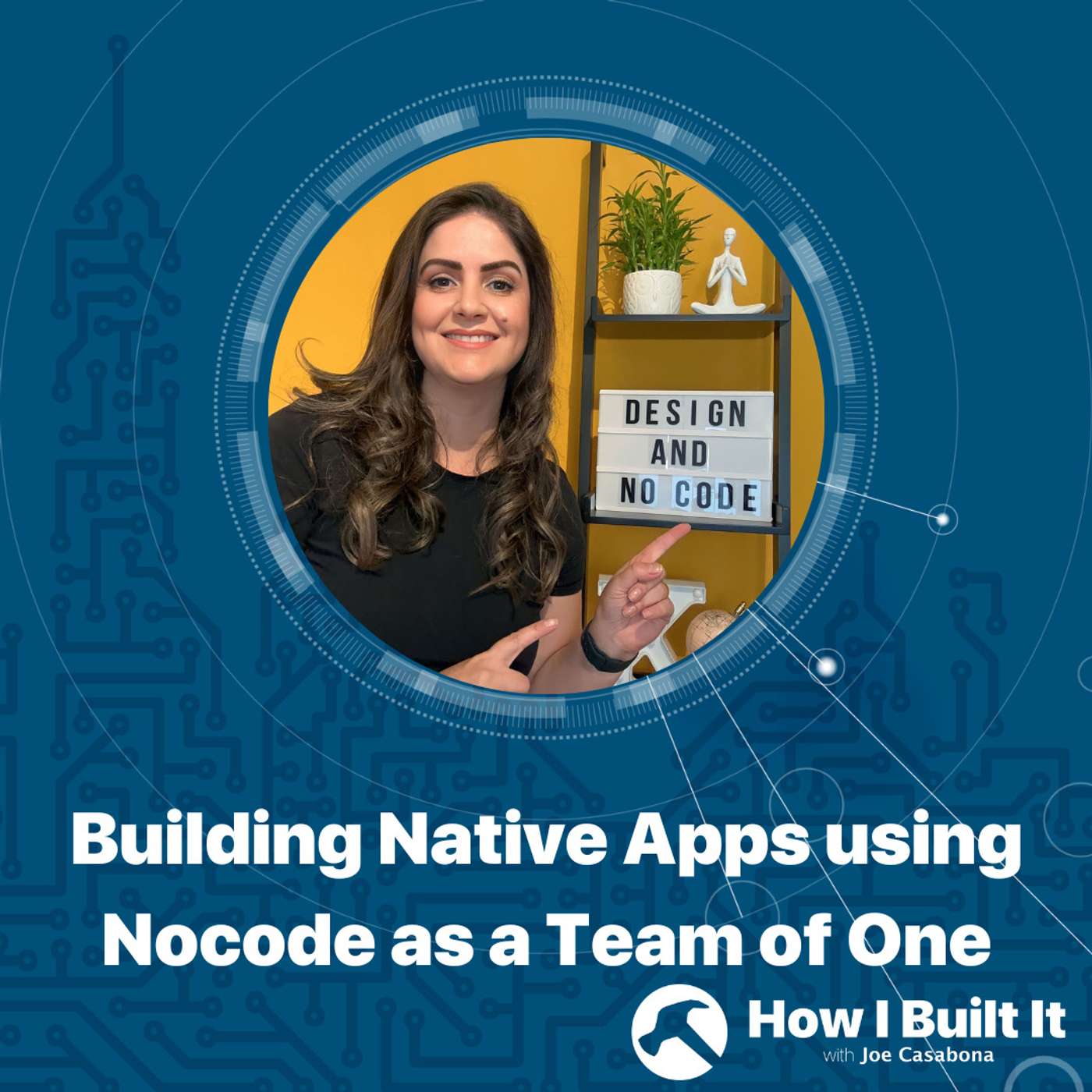
S1 Ep 414Building Native Apps using Nocode as a Team of One with Karla Fernandes
The first documented parachute jump happened in the late 1700s, when André-Jacques Garnerin just from balloons at “only” 2000 feet. He no doubt prepared for this moment, testing his parachute and doing everything he could to mitigate risk. Today, skydiving is a sport and a recreational activity, with a lot of safety measures and technology to further mitigate risk. Why am I telling you this? Because human beings are, by and large, risk-averse…so doing everything we can to reduce it is incredibly important. When it comes to launching a business, it, much like skydiving, is much less risky than it was 200 years ago. Part of that is the ability to create applications – and therefore launch software-based businesses – without code. That’s exactly what Karla Fernandes is going to talk to us about today. And she should know. She’s launched over a dozen native apps, without writing a single line of code. Top TakeawaysWhen evaluating business ideas, prioritize those that solve user problems and gauge interest through pre-sales and feedback from friends, ensuring a user-centric approach and viability.Use no-code tools for faster product development, which allow you to validate, test, and iterate quickly.With no code solutions, you can test multiple product ideas simultaneously without significant investment, helping to hedge your bets and validate ideas quickly and affordably.Show NotesKarla FernandesMillion Dollar Weekend by Noah KaganNative App: FigmaBravo StudioAirtable Sponsors: Check out Liquid WebMemberful: Get your free trial for at memberful.com/streamlined ★ Support this podcast ★
From Doubt to Determination: Pushing Through the Podcasting Dip [Podcraft]
bonusToday we have a good old fashioned feed drop from my friends at The Podcast Host, and their show, Podcraft. What really makes someone a successful podcaster? Is it a certain number of episodes, downloads, or reviews? Is it whether content creation has become their full-time job? Or could it be because they’ve been recognised with a prestigious award?That's what they'll discuss on this episode, and every episode this season. I hope you enjoy! Check out Podcraft wherever you listen. Simplify your tech stack at https://streamlined.fm/tools ★ Support this podcast ★
S1 Ep 413My Be Everywhere Strategy was an Incredible Failure (Which is Good)
I love shuffling poker chips. In fact, I love playing poker…but there’s a fallacy in gambling that can get you into a lot of trouble. It’s the fallacy of sunk cost. Basically, you think you should continue what is ultimately a losing battle because you’ve already invested some amount of money in the pot.The same thing can be applied to lots of stuff. Have you ever finished a book or a movie you didn’t like just because you started it? That’s the fallacy of sunk cost.And I’m happy to say that 4 months into 2024, I successfully avoided that fallacy with something that, in January, I was all-in on: my “Be Everywhere” Strategy.Show NotesMy Experiment with Substack and Being “Everywhere”Taking a bet on Substack’s Network Effect with Nathalie LussierWhy I’m Killing my MembershipPodcast Workflows Sponsors: Check out Liquid WebMemberful: Get your free trial for at memberful.com/streamlined ★ Support this podcast ★

S1 Ep 412Discovering What Customers Really Want with Georgiana Laudi
I remember touring a Murano Glass factory on my honeymoon to Italy. Basically as soon as we stepped foot into the place, a man giving us the tour had us pegged. So when it came time to sell us something, he didn’t just ask us if we wanted to buy some glass art. He painted us a picture of a unique conversation piece that we can put in our home, to help us remember this time at the beginning of our marriage. To turn into a family heirloom for when we have kids and grandkids. He wasn’t selling us glass. He was selling us a vision of our future. And it worked like gangbusters. So how can we do that for our customers? That’s what Georgiana Laudi is here to talk to us about. She is the co-author of Forget the Funnel, a book that had a profound effect on my business – and today, we’re talking all about jobs to be done, research, and capturing the voice of our customers. Top TakeawaysUnderstand the "Jobs to Be Done": Customers aren't buying products themselves, but rather the solutions the products offer. Identify the specific jobs your product or service helps customers accomplish. Capture the Voice of the Customer: Conduct customer interviews to capture actual language and patterns from customer conversations. Continuous Customer Research: Regularly conduct foundational research every 6-12 months and ensure it's continually validated based on industry shifts. Show NotesGeorgiana LaudiGeorgiana on Forget the FunnelWhat are Jobs to be Done?Demand Side SalesForget the FunnelHow to be a Scrappy Researcher (to Actually Sell Products) with Becky Pierson DavidsonCopyhackersForget the Funnel Podcast Sponsors: Check out Liquid WebMemberful: Get your free trial for at memberful.com/streamlined ★ Support this podcast ★
S1 Ep 411Tools Check-in: What am I using so far in 2024?
My grandfather came to the United States from Italy in 1949 and worked in New York City for much of his life — primarily in construction. For as long as I can remember, he had this big, metal toolbox. And when he passed away, he gave it to me, and I still have and use it to this day.Pop had that toolbox for decades. When he found something that worked for him, he held on to it and took care of it. There’s a hammer in there that has to be as old as I am.And when you think about it, the hammer is a pretty good analogy for our digital tools. It’s a basic device, but there are countless variations, purpose-built for specific tasks. Much like a task manager or notes app, you mostly know what you’re getting — but you may want something a little more specialized for your needs.While you don’t want to change tools all the time, it is good to evaluate your toolset from time to time. So I thought I’d check in and share the tools I’m using.Show NotesTools Check-in: What am I using so far in 2024?Tools for Podcasters (Podcast Workflows)When Do You Burn All of Your Processes Down and Start Over?My Stream Deck: How I’ve Configured it for Maximum Productivity and ProductionBecome a MemberTools mentioned: NotionRiverside.fmDescriptScreenFlowiZotopeCastmagicThings 3Bear NotesFantasticalCalendlyMimestreamTimeryArcChatGPTRaycast Sponsored by Liquid WebJoin my FREE Newsletter, Podcast Workflows ★ Support this podcast ★

S1 Ep 410Rethinking Our Relationship with Time and Money with Khe Hy
I abhor hustle culture. Telling someone to work a full-time job, then go home and work more all for some goal that keeps changing is, in my opinion, how to lead an empty life. I’m worried that, even in 2024, we continue to fetishize making money and hustling. So I decided to take it to Khe Hy. Khe, if you don’t know, worked hard – as he puts it, he hustled for 10 years of his life. He worked on Wall Street, becoming the equivalent of a junior partner in a law firm, and earning a 7-figure salary. But he left that job, and he’s built a life he enjoys. But he makes it very clear: sometimes you do need to hustle. Life is full of seasons – and recognizing that seasonality is important. We cover a ton of topics in our short time. Top TakeawaysThere are seasons to life. It’s important to recognize that and adjust for the season you’re in. If you’re working to eventually gain more time, ask yourself if you can cut some costs and gain that time now. Sure, someone could pay you $10,000 for 5 hours of data entry – but do you want to do data entry, or would you rather have those 5 hours free?There’s a difference between revenue and profit. Most people share top line revenue, but what are they really taking home?Show NotesKhe HyRevenue Hub's interview with Tiago AraújoRadReadsThe magic of doing $10,000 per hour workAre you a Post-Achievement Professional? Sponsors: Check out Liquid WebGo to http://porkbun.com/HowIBuiltIt24 to get $1 off your next desired domain name at Porkbun! ★ Support this podcast ★

S1 Ep 409Aligning Your Values to Set the Right Goals with Tanya Alvarez
What do you want your life to look like? Last week I talked about how not being intentional is kind of like driving a car without the GPS. But goal setting without knowing what you want – that’s a bit like driving a car without having a destination in mind. Well, today, Tanya Alvarez is going to help us figure out the destination – you can think of her as your own GPS. And much like that Google Maps car, she’s well-traveled and has a ton of experience to back up her advice – from funding her first startup with credit cards to completing a Half Ironman and traveling to 42 countries, she’s done it all. And now she wants to help you do it too, by sharing her system for prioritizing your goals.Top TakeawaysTake the time to define and rank your personal values. Understand how these values shape your goals and prioritize them to ensure alignment with your desired outcomes.View your goals as hypotheses and break them down into manageable time frames. This approach provides flexibility for adjustments while promoting focused and effective work periods.When faced with multiple business ideas or tasks, evaluate them based on effort, impact, and activity categories. This can help you understand your capacity and prioritize tasks effectively.Show NotesTanya Alvarez Sponsors: Check out Liquid WebGo to http://porkbun.com/HowIBuiltIt24 to get $1 off your next desired domain name at Porkbun! ★ Support this podcast ★
S1 Ep 408Why I’m Killing my Membership
Not being intentional in your business is a bit like getting in your car and driving without the GPS. Sure…you generally know where you’re going. But what if a road is closed? What if there’s avoidable traffic? A GPS can help you navigate around those things.When you’re intentional about your business, you go from wandering aimlessly, taking any work that makes ends meet, to setting and achieving your goals. And today, I’m going to talk about how I’m being more intentional in my business, and why that decision has led me to end my membership.Top TakeawaysTake the time to identify tasks that provide the best returns on your time investment. Focus on work that aligns with your income goals and brings you closer to achieving your business objectives.Take control of your schedule by tracking your time and evaluating the effectiveness of your tasks. Use tools like time tracking apps to make data-driven decisions and maximize your productivity.Reflect on your business goals and values, and make decisions that align with them. Ensure that your business endeavors are in sync with what matters most to you and contribute to your overall happiness and success. Sponsors: Check out Liquid WebGo to http://porkbun.com/HowIBuiltIt24 to get $1 off your next desired domain name at Porkbun! ★ Support this podcast ★
S1 Ep 407Why Every Business Owner Needs a Podcast with Krystal Proffitt
Do you really need social media to build a following? To build expertise? To be successful? It’s something I’ve been thinking about a lot. I think lots of creators are too. The rote advice that you see from the ultra successful people just doesn’t work for most of us. And it doesn’t have to. What if I told you there was a better way. As it turns out, today’s guest, my friend and Amazon best selling author of the book start a binge-worthy podcast, Krystal Proffitt, agree: starting a podcast is a great way to build your business. In today’s conversation, we talk about why podcasting is the best way to build expertise and trust, why there aren’t too many podcasts, and how you can start a successful one. Plus, in the pro show, we talk all about how to do interviews the right way. Top TakeawaysPodcasts are a great, intimate way to get your content in the hands of your ideal audience. And, as Seth Godin put it, they are the generous act of showing up. You differentiate your podcast by making sure your audience feels seen and heard. This could (and should) be through relatable stories, and by engaging with them through feedback. The first thing you should think about, before you every consider which mic to buy, is what’s your message? Without a message, you don’t have a podcast. Show NotesKrystal ProffittMy interview with Krystal on Podcast AutomationAmy Porterfield Sponsors: Check out Liquid WebGo to http://porkbun.com/HowIBuiltIt24 to get $1 off your next desired domain name at Porkbun! ★ Support this podcast ★
S1 Ep 406Solopreneurs Need to Sell Strategy as a Service with Maggie Patterson
During the pandemic, we were told one thing seemingly over and over again: You need to start a membership. You need a community. That’s the only way you can scale your business. And to be honest, I fed into it. I believed that a membership was the key to stop trading for hours for dollars. But the truth is I was trading more hours for fewer dollars. See, what most solopreneurs don’t realize (what I didn’t realize for a long time) is that you’re always trading hours for dollars. That’s what work is. The key difference is how many hours you're trading for how many dollars. And that’s what Maggie Patterson is here to talk to us about today. See, when the pandemic ended, we both noticed something: many of those people who were preaching the importance of basing your business off a community or membership were going back to one thing: services. Because when you do services right, you can make a lot of money. Today, Maggie, who has over 15 years of experience successfully selling client services, tells us the key to unlocking more income: selling strategy. Top TakeawaysIt’s important to understand what kind of business you want to run. 1-to-1 business is a lot different from a 1-to-many business. And they require different strategies.The key is in pricing. Don’t just price on gut feeling. Tether it to some reality (like how much money you need to make to pay yourself, and run the business), and then listen for feedback. The market will tell you if you’re priced correctly. Too many solopreneurs give the strategy away for free in their proposal. They say exactly what they’re going to do. Instead, hold paid strategy sessions (sometimes called Discovery projects) where you get paid to truly understand the scope, and give the client something tangible. Show NotesMaggie PattersonReverse Salary CalculatorThe Best Advice I Never Took Sponsored by Liquid WebJoin my FREE Newsletter, Podcast Workflows ★ Support this podcast ★
S1 Ep 405Taking a bet on Substack’s Network Effect with Nathalie Lussier
Choosing the right platform can feel like an impossible task sometimes. There are so many options, from services to creating your own website and owning everything – how do you choose? Well, Nathalie Lussier and I have both been around the block. She owns a popular WordPress-based LMS called AccessAlly, and I’ve tried dozens of platforms for memberships, including ones I’ve built myself. So it was interesting timing when we both decided to start publishing on Substack in late November/early December. Today, we’re going to trade notes, going over why we decided to move there, what migration was like, and what we like and dislike about the platform. For members, we’ll discuss our timing to move within the context of a bigger controversy surrounding Substack. Top TakeawaysSocial Media for promoting and growing your work has been going downhill for a while now. But Substack has built in a number of features, like Notes and Recommendations, to incentivize sharing while also staying on the platform. One of Substack's best features is its interoperability. You can easily import email lists, content, and even paying subscribers through Stripe. And moving is easy too. Everything you can import, you can also export. The best way to leverage Substack’s network effect is to find your tribe – people who you can work with to restack, recommend, and follow on Notes. Just like any social network, don’t discount the “social” part. Show NotesThe Momentum MemoAccessAllyHow Knowing Your Customers Lets You Charge More with Nathalie Lussier Sponsored by Liquid WebJoin my FREE Newsletter, Podcast Workflows ★ Support this podcast ★
S1 Ep 404What’s Missing From Your Process?
One of my favorite Disney+ shows is Loki. It’s a truly fascinating look at time travel, predetermined events, and controlling your own destiny.And now I’m going to give you a major (if not very simplified) spoiler, if you haven’t seen it.In the finale, Loki masters the ability to “time slip,” or transport to any time, any place, in any timeline (for all intents and purposes, a timeline is a parallel universe). This also allows him to relive events over and over again.So as all of existence faces eradication, he can take as much “time” as he wants to learn how to save everything and everyone, on every timeline.He continuously, over thousands of years, learns everything he needs to learn, and practices, through trial and error, to improve his process, and his odds of saving everything and everyone.And while we don’t have thousands of years, or the ability to time travel, we do have the ability to take a step back and consider the question, “What’s missing?”Read the full article here Sponsored by Liquid WebJoin my FREE Newsletter, Podcast Workflows ★ Support this podcast ★

S1 Ep 403Great Things Require Time
It was Christmas Eve, and I was waiting in line for bagels.As someone who grew up in New York now living close to Philly, I’m admittedly a snob about the quality of the bagels I eat. But there’s a bagel shop not 5 minutes from my house that makes the best bagels I’ve ever had outside of NY/NJ.And they offer preorders for Christmas Eve. It’s become a bit of a tradition in our house to get those bagels and do a Christmas Eve brunch.They also have a select stock for people on a first come first serve basis. People who preorder can buy from this stock. The many preorders combined with the select stock creates a long line. After-all, these bagels are superb.So we waited.And during that wait, there were some people who complained about the wait1.But no one left the line or cancelled their order. After all, if all they wanted was bagels, they could have gone to the grocery store a few doors down and buy bagels immediately.But those are not even good bagels. And we wanted great bagels.See, there’s a dirty little secret that no one wants to hear these days:Great things require time. And they’re worth the wait.Read the full article hereIn the PRO show, I explain how I plan for conferences, and how I measure direct ROI from events. Join here. Sponsored by Liquid WebJoin my FREE Newsletter, Podcast Workflows ★ Support this podcast ★
S1 Ep 402My Experiment with Substack and Being “Everywhere”
I sweat bullets over finding the right tools. Some might say I am an Overthinker.And that is an asset to me. But occasionally, it causes crippling analysis paralysis. I’ve spent every day of this very young year, thinking about the implementation for my membership, even though I know the simplest solution is to use Substack. And last week, I would have told you that’s the end of the story. But it’s not.So today, I’m going to tell you about a journey that led me to Substack and grossly overcomplicating my publishing process. And why that could be a good thing.For members, we discuss how I’m managing multiple publishing places, why “Be Everywhere” is so important to me, and my goals for this experiment. Sponsored by Liquid WebJoin my FREE Newsletter, Podcast Workflows ★ Support this podcast ★
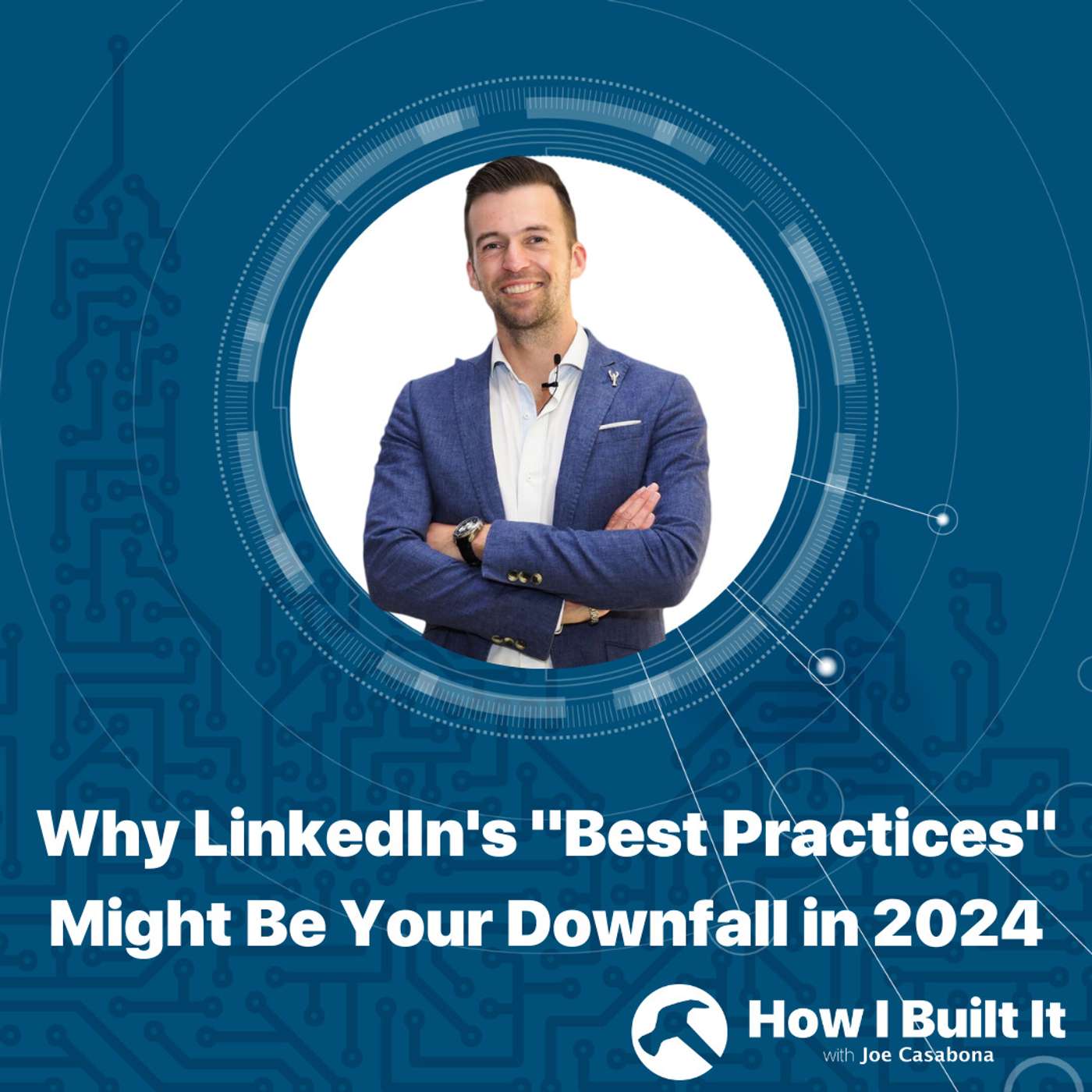
S1 Ep 401Why LinkedIn's "Best Practices" Might Be Your Downfall in 2024 with Matt Clark
It was a wild year for social media in 2023. Twitter turned into X. Meta launched Threads. And LinkedIn started off the year as a promising platform for engagement and growth before tweaking the algorithm and tanking all of that. Matt Clark, founder of The Virtual Edge, host of the Rainmaker Show, and expert in sales argues that we shouldn’t treat LinkedIn like a social media platform because it’s not one. It’s a professional networking platform. That means we need to treat it more like a networking event if we want to make the most of it. And today, he’s going to tell us how. In the subscribers-only show, Matt and I talk more about building a lifestyle before you build your business. We touch on how people like Alex Hormozi oversimplify how they do things in order to push how "easy" it is to build a business. We also talk about the difference life choices we've made, and how our businesses support that — and what you should consider as well! Top TakeawaysLinkedIn wants you to be intentional. That means you need to know WHO you’re talking to, and HOW you help them. Make sure your profile is optimized for your client. Do some research to figure out their biggest problem, and how you can fix it for them. If you don’t know where to start, run a poll. This will re-engage your connections. Ask 3-4 questions that are targeted to your ideal client. Then for the people who DO engage, follow up and ask to get on a quick call.Show NotesMatt ClarkMatt on LinkedinStop doing “Sales” and Start Having Conversations with Nikki RauschWhy You Need to be on LinkedIn if You’re a Creator with Kathleen CelminsHow to be a Scrappy Researcher (to Actually Sell Products) with Becky Pierson DavidsonPower vs. ForceLeonardo Da VinciChris LemaSponsored by: Liquid Web Sponsored by Liquid WebJoin my FREE Newsletter, Podcast Workflows ★ Support this podcast ★

S1 Ep 400My 2024 Yearly Theme
The word 'Control' evokes various thoughts and emotions, many of which are negative. Control is often associated with an excessive desire to dominate or dictate every aspect of a situation.The bad guys in movies and in real life desire control at almost any cost. Emperor Palpatine in Star Wars said the only way to improve life in the galaxy was for him to seize control. Thanos said the only way to save the universe was to control the population by controlling the infinity stones.Countless dictators and wannabe dictators have justified taking control because they’re the only ones who can save us.It sounds micro-managy, almost authoritarian when you say, “I want to be more controlling.”But Control at the right scale is super important. If you don’t control your car, bike, or other vehicle, for example, you will end up hurting yourself or someone else.In thinking about my next yearly theme, a recent conversation I had with my therapist was top of mind. I told her that I didn’t feel like I was in control of anything. Not my health. Not my money. Not my time or schedule.That's why my 2024 Yearly Theme is *The Year of Control.*For members, we discuss the themes I didn’t choose, how the membership will work in 2024, and the direction of the podcast in general. You can join here. LinksMy 2024 Yearly ThemeFavorites of 2023Cortex 2024 Yearly Themes Sponsored by Liquid WebJoin my FREE Newsletter, Podcast Workflows ★ Support this podcast ★
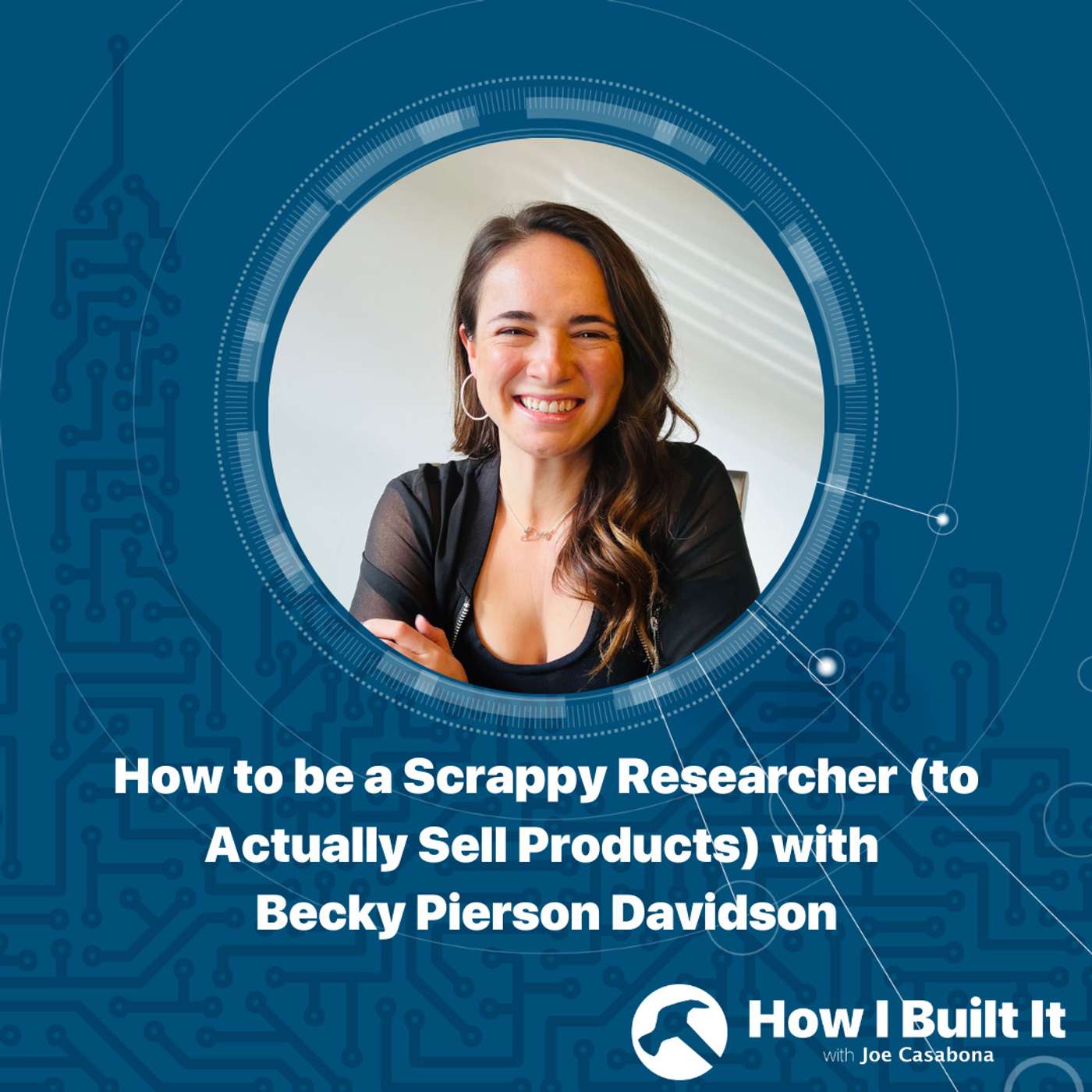
S1 Ep 345How to be a Scrappy Researcher (to Actually Sell Products) with Becky Pierson Davidson
Over the last few weeks, you’ve heard from multiple guests about the importance of research – Dappz talking about calculated risks and doing research for the actual calculation. Nikki Rausch talking about speaking your potential customer’s language. Adriana tells us to do research when we’re guesting on a podcast. But that begs the question: how? How do we make sure we’re doing the right kind of research to yield helpful information – especially if we’re not a huge company? We need to do scrappy research – which is why I brought in my friend, Becky Pierson Davidson. She’s an educator, speaker, and community-driven product strategist who’s focused on helping people like us simplify our customer journey, improve retention, and increase customer LTV. And she’s got the receipts, working with diverse clients, including personal brands, fortune 500 companies, creative service agencies, and startups.So I thought there was no better way to close out the year than to talk to her about scrappy research. Top TakeawaysResearch prevents you from building the wrong thing. Launches that flop are usually launches that have no research backing them up. Don’t just build something for you. It’s not about you. Sure, some people will tell you to dog food your own product – but your business won’t survive if you’re the only customer. You want quantitative and qualitative research. Look at all of your analytics, see what content performs well, but also survey your audience, and have real conversations with potential customers. You only need 5 to find a problem to solve. Show NotesBecky Pierson DavidsonBecky on InstagramBecky on LinkedinGet $100 off Journey Makers Live with code FRIENDOFJOESteve Woodruff "King of Clarity"Sponsored by: Sensei Sponsored by:Sensei: Save 20% FOR LIFE with code JOECASABONAJoin my FREE Newsletter, Podcast Workflows ★ Support this podcast ★

S1 Ep 344You're Using AI All Wrong with Bryan McAnulty
A few weeks ago, I ruffled some feathers on social media. I said, “Telling people you wrote your book with AI is like telling people you ran a marathon with your car.” Wow. People took umbrage with that statement. And while I stand by what I said, I thought it would be a good idea to talk to an AI expert. So I reached out to Bryan McAnulty of Heights Platform to see me (or everyone else) straight. And you know what he told me? We’re all doing it wrong. We shouldn’t use AI as a proxy for Google. We should use it as an actual assistant. And for that, we need to give it a ton of context.Top TakeawaysInstead of thinking of AI as a tool, think of it as an instrument. You need to learn how to play it and personalize it to play your kind of music. In the long run, you won’t be able to use AI to cheat, because what makes your content unique is your personal experiences. Since AI works on how you train it, You can have as many AI assistants as you want. It doesn’t just have to be one.Show NotesBryan McAnultyObsidianSmart ConnectionsCopilotCortex PodcastAll the News from Open AI's First Developer ConferenceHeights PlatformCreator ClimbSponsored by: Sensei Sponsored by:Sensei: Save 20% FOR LIFE with code JOECASABONAJoin my FREE Newsletter, Podcast Workflows ★ Support this podcast ★
S1 Ep 343How to be Prepared (and Reach More People) as a Podcast Guest with Adriana Baer
Imagine that you’re going to give a talk on a topic you know really well. You spend time on the presentation, rehearse it 100 times, dial in the slides, and you’re feeling great. You get the conference, deliver the talk, and you think you nailed it. But when you ask for questions, one person raises her hand and says, “Nous ne parlons pas anglais.”That’s right. You just delivered your talk in English, and the entire audience speaks French. You made an assumption that you knew that audience. And the conference host made that same assumption. Now the effects, or embarrassment, may not be as strong if you guest on a podcast, but they can cut against your credibility, and potentially waste your time…and the audience’s time. That’s why you need to be prepared. And that’s exactly what public speaking coach (and fantastic guest) Adriana Baer is going to talk to us about today. We chat about everything from research to storytelling, and she even has a few bonus tips. Be sure to stick around until the end for a special bundled deal we’re offering. Top TakeawaysPodcast guesting is a gift. While the rest of the world lives in 5 second sound bites, podcasts give us the time and space to flex our expertise.To be an effective podcast guest, you need to do your research. Understand who you’re talking to, and how you can help them. You need to tell good stories – you do that but having some prepared, but also by actively listening to the host. Show NotesAdriana BaerWhy Podcast Interviews are a Content Goldmine with Tom SchwabThe Digital Storytelling Aspect of PodcastingThe Solopreneur's Gift GuideSponsored by: Sensei Sponsored by:Sensei: Save 20% FOR LIFE with code JOECASABONAJoin my FREE Newsletter, Podcast Workflows ★ Support this podcast ★
S1 Ep 342Stop doing "Sales" and Start Having Conversations with Nikki Rausch
Recently, I sat down to dinner with my family when the doorbell rang. It was a door-to-door HelloFresh salesman, who wanted to make dinner easier for us (while ironically preventing me from eating dinner). I immediately got frustrated for two reasons: It was dinner time and the interruption was unwelcomedI had already told this guy’s partner “no” several hours earlier. It was a conversation that not only was unwelcome but was already flat-out rejected once before. This sort of tactic is what gives sales a bad name, and why folks like us hate sales. But today’s guest, Nikki Rausch, is here to tell us that’s not at all how sales should work – and what we should do instead. Top TakeawaysSales isn’t a one-way street. It’s a collaborative conversation that you have permission to enter into. And you get permission by asking. The person you’re speaking to has their own language – you need to tailor your offer to meet their needs and use their language. Never make assumptions! You can’t further a relationship without asking questions. Assumptions are driven by limiting beliefs. Questions lead to concrete answers.Show NotesNikki RauschWhat Prepared Plumbers Can Teach You About Winning BusinessThe Selling Staircase: Mastering the Art of RelationshipMastering the Sales ConversationSponsored by: Sensei Sponsored by:Sensei: Save 20% FOR LIFE with code JOECASABONAJoin my FREE Newsletter, Podcast Workflows ★ Support this podcast ★
S1 Ep 341Turning the Table: How do I Find the Right Lead Magnet for my Podcast with Zach Swinehart
Social media advice these days reminds me a bit of the parable of the Emperor with no Clothes. See, it's easy for anyone to display how smart and successful they are. They say things like, "Here's your content strategy for 2024: Post three times on X daily, post one thread on X daily. Create three LinkedIn posts per day and one LinkedIn carousel per week." People read that and think, "That's easy to understand," without realizing that just posting content is not a strategy at all. I often think about how people perceive me and my show because I consider myself a successful podcaster. But I also feel conflicted – I don't feel I've done a good job of leveraging this show to grow my audience. So, I've decided to have my friend, Zach Swinehart, come on to talk about how I can improve my conversions for this show.However, it almost feels a bit like the emperor has no clothes. Am I putting myself out there? Am I letting myself be too vulnerable? I guess you’re about to find out.Top TakeawaysWhen it comes to determining your lead magnet, you should test a few to see which resonates.When you're testing calls to action or lead magnets in a podcast, you should try a few different spots with a few different links.Know who you're talking to and try to understand your audience by looking at their pain points and objections.Show NotesDouble Your Email List Growth Rate in 29 minutesCheck out the full interview over on Zach's podcast, Full Time CreatorPersonalization is the Path Forward with Brennan DunnSponsored by: Sensei Sponsored by:Sensei: Save 20% FOR LIFE with code JOECASABONAJoin my FREE Newsletter, Podcast Workflows ★ Support this podcast ★
S1 Ep 345Should We Use AI to Write for Us? (Debate with Alastair McDermott)
bonusHow much help is too much help? When do you go from the actual worker to the visionary? And where does AI fit into all of this? Over on LinkedIn, I said using AI to write your book is like using a car to run a marathon. People took issue with that. So my friend Alastair MeDermott and I decided to have a good old fashioned debate. You’ll hear a nuanced discussion around:How to think about AI assistance in writing and content creationWhere AI can help versus replace in the creative processHow iterative prompting can shape the AI outputWhether AI will ever replicate truly original human ideasThe importance of the human editorial eye in approving AI-generated contentWhat we potentially stand to lose in fully outsourcing creative work to machinesIf you’re feeling uncertain about how to responsibly and effectively leverage AI tools like ChatGPT in your business and content creation, don’t miss this lively exchange of perspectives. Tune in now to help shape your own ethical framework.Check out Alastair's podcast over at https://therecognizedauthority.com/ Simplify your tech stack at https://streamlined.fm/tools ★ Support this podcast ★