Streamlined Podcaster: Tips to Help Solo Podcasters Save Time and Create Great Content
176 episodes — Page 2 of 4
S5 Ep 72Speeding Up the Content Creation (and Ideas) Process — Live Coaching Call
Want to know how to create killer podcast content without spending all your time writing scripts? In this live coaching call, I sit down with Alex Standiford, host of the Partnership podcast and founder of Siren Affiliates, to tackle this common podcasting challenge head-on.We dive deep into strategies for generating fresh content ideas, from repurposing blog posts, to, getting feedback, and targeting specific niches. I also share my [not so] secret weapon for conducting captivating interviews using a three-act story structure that keeps listeners hooked.Whether you're a seasoned podcaster or just starting out, this coaching call is packed with actionable tips and insights to help you create engaging content more efficiently. Don't miss out on this value-packed discussion!Do you want some one-on-one time with me like this? You can book a Public Coaching Call here: https://joec.pro/public-coachingTakeawaysConsider using a fat outline for podcast episodes, combining scripted elements with ad-libbing for a more natural delivery.Repurpose blog posts as podcast episodes to save time on content generation.Incorporate case studies and interviews to provide valuable insights and engage with listeners.Create niche-focused episodes to cater to specific audiencesLeverage LinkedIn for audience engagementStructure interviews with a setup, conflict, and resolutionKeep interviews focused and actionable ★ Support this podcast ★
S5 Ep 71How I Prepped 9+ Piece of Content in 4.5 Hours
In preparation for a recent vacation, I recorded and wrote a bunch of content to schedule in my absence.Today, I want to share with you how I churned out 9+ pieces of content over the course of 4.5 hours.For more content like this, join my mailing list: https://podcastworkflows.com/joinHere’s the output:3 YouTube videos3 podcast episodes from those videos1 blog posts1 live stream1 short form videoAudio of live stream republished to a podcast feedAnd here are the tools I used:Ecamm LiveElgato PrompterLogic ProScreenflowiZotope RXCapsho / CastmagicTransistor / RSS.com ★ Support this podcast ★
S5 Ep 703 Things to Get the Most Out of Podcast Movement 2024
Podcast Movement is the biggest industry podcast (at least in the USA), and nearly every recognizable name in podcasting will be there. It's also a great place to meet fellow podcasters — it's one of the best networking opportunities. If you're going, or thinking about going, there are a few ways to make the most of your experience. And that's what today's "3 Things in Podcasting" covers! If you're going to be there, let me know! (00:00) - - Intro (03:38) - - Find Podcasters to Collaborate With (06:26) - - Find brands and companies to partner with (11:28) - - Find ONE way to improve your podcast ★ Support this podcast ★
S5 Ep 69What Are Show Notes (and do you need them)?
If you’ve been listening to podcasts for a long time, the idea of show notes is intuitive. It’s the text that accompanies a podcast episode. It usually has some description about the episode and links mentioned in the episode.This is CRUCIAL real estate for you to convert listeners into a more engaged audience. So today, we’ll discuss what are show notes, why you need them, and how to format them. To learn more, and save 12+ hours per week on your podcast, join my FREE mailing list at https://podcastworkflows.com/joinMain Takeaways: The main function of show notes is twofold: get people to listen to your episodes, and make it easy for listeners to find the resources you mention during the showYour format matters! You should provide a great description, a primary CTA, takeaways, and resources, in that order. That way you hook listeners and keep them reading. You must create a frictionless experience. It's hard enough to get listeners to take action. Any additional steps make it that much harder, so meet them where they are: in the app they're listening. Show Notes! What Are Show Notes (and do you need them)?More Thoughts on Why You Need Detailed Show Notes (00:00) - - Intro (01:45) - - What are show notes? (04:03) - - Why you should have show notes (07:12) - - How You Can Do Show Notes (09:34) - - Formatting Show Notes (11:20) - - Do you need show notes? (13:00) - - Answering Feedback (15:19) - - You must create a frictionless experience ★ Support this podcast ★
S5 Ep 68What's Up with YouTube and Podcasting (3 Things)
In a shift in focus for 3 Things in Podcasting, I'm going to look at industry news and try to align it with a trend so that you can better improve (and optimize) your podcast processes. There's been a lot in the news lately about stats and YouTube, and video podcasting in general — so that's what we'll look at today: how you should approach video for your podcast. LinksI’m seeing YouTube Music appear in my podcast host stats. Why?How do YouTube stats work for podcasters?Podcast hosting company changes (00:00) - - Intro (02:28) - - Switching Podcast Hosts (08:37) - - Podcasters who use Video (13:21) - - How You Should Approach YouTube for Your Podcast ★ Support this podcast ★
S5 Ep 67The Seven Deadly Sins of Podcasting (and how to avoid them)
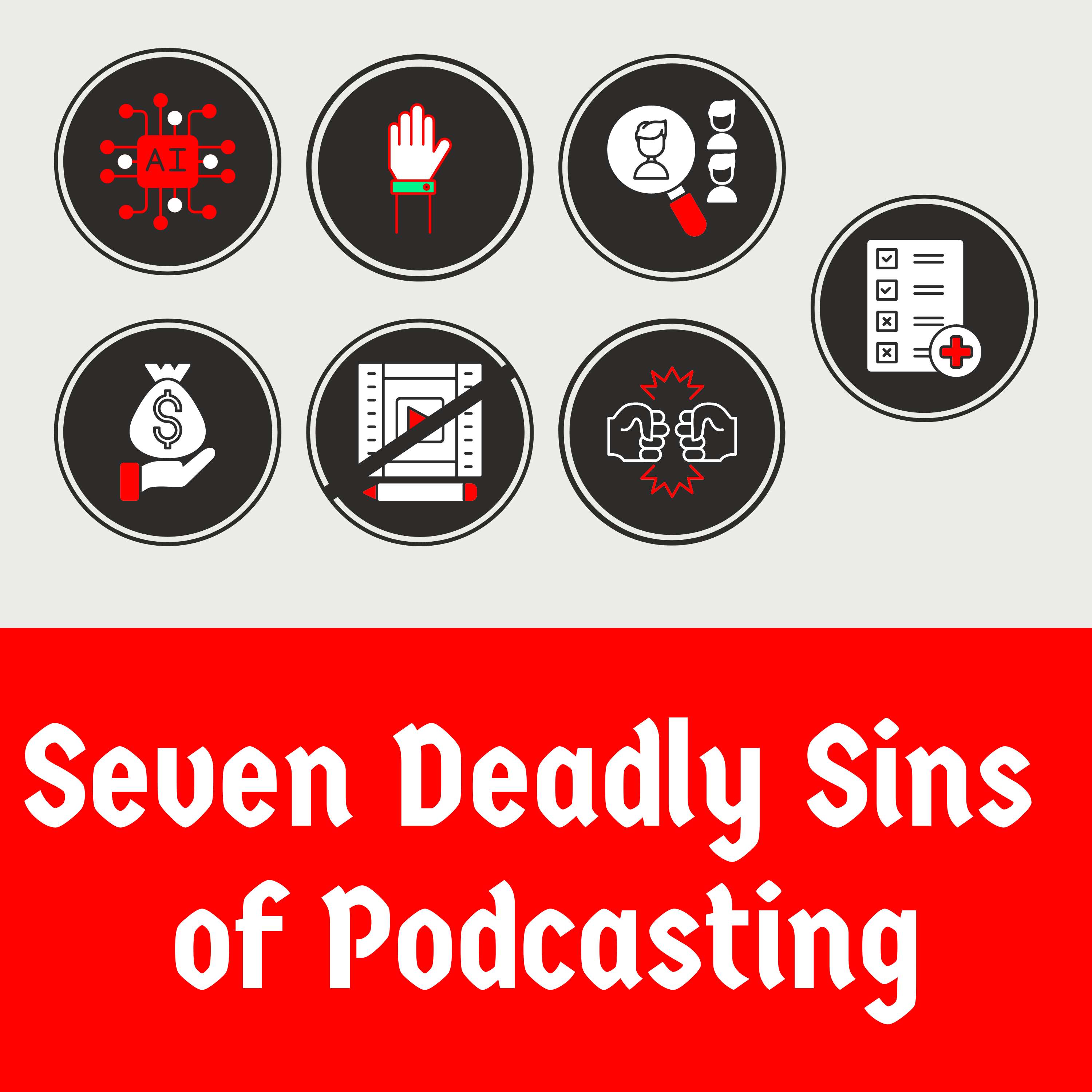
As I was watching the movie Se7en, I had a very strange thought: are your bad podcasting habits leading you down a path of (podcast) destruction? The movie is about the Seven Deadly Sins of the soul...but it got me thinking about how they might apply to podcasting. What “podcasting sins” are so great that they’ll lead to podfade (the unceremonious death of a podcast).How do the Seven Deadly Sins (Lust, Gluttony, Greed, Sloth, Wrath, Envy, and Pride) translate to the world of podcasting. Let's take a look. Want to read the entire article, and join the free mailing list? Head over to https://podcastworkflows.com/sins (00:00) - Intro (02:25) - Lust: Chasing Fads (08:37) - Gluttony: A Show for Everyone (12:45) - Greed: Revenue Above Audience (17:12) - Sloth: Not Editing Your Podcast (24:26) - Wrath: Controversy for Clicks (29:11) - Envy: Chasing Downloads (33:45) - Pride: Doing Everything Yourself (39:08) - You got this! ★ Support this podcast ★
S5 Ep 68Podcasts Replace School Bells (3 Things in Podcasting)
Top story for me this week is schools in NYC replacing the bell with 60 second podcast episodes! "ABF Creative, the award-winning producer of Kids & Family podcasts, is proud to announce its innovative 'Mini Pods’ initiative in partnership with education technology company SonarCloud. This initiative replaces traditional school bells with 60-second educational podcasts, currently in over 120 New York City public schools, with plans to expand to Chicago and Los Angeles in the upcoming school year."Plus, how to do an interview podcast while also establishing your authority, and the Seven Deadly Sins of podcasting. Want to save 12+ per week with your podcast? Sign up for my free newsletter: https://podcastworkflows.com/join Show NotesMini Pods educational podcasts drive funding for classroomsHow to Showcase Expert Guests Without Sacrificing Your AuthorityThe Seven Deadly Sins of Podcasting (00:00) - Intro (01:24) - NYC School Replace bells with podcasts (06:24) - How to do interviews and establish authority (12:34) - The Seven Deadly Sins of Podcasting ★ Support this podcast ★
S5 Ep 66How to get Feedback From Your Listeners
Have you ever been in a situation where someone wants something from you, but they won't come out and ask for it? They'll hint at it, tip toe around the issue, or just hope you figure it out based on the look they give you. My kids do that all the time. A common problem I hear among podcasters is “no one shares the show/leaves reviews/sends in feedback.” I always ask the same follow up: “Are you asking for it?” It’s the same lesson I give my kids. Don’t ask don’t get.That's why today, we're going to look at the best way to ask (and enable) your audience for feedback. Want more content like this? The best way to do it is to subscribe to my free newsletter over at https://podcastworkflows.com/join Top Takeaways: Ask early. That's early in the episode, and earlier than you need the feedback. You want to maximize the amount of times your audience hears the ask so they take action. Ask often. Repeat your ask multiple times throughout an episode. It might feel like too much, but trust me, it's not. Ask everywhere. Don't just ask on your podcast. Ask you mailing list, your social media following, and any other place you have an audience. Make it easy. Set up an easy to remember URL, and check everywhere you ask! Read the article here ★ Support this podcast ★
S5 Ep 65Spotify Adds Comments | 3 Things in Podcasting
Feeling overwhelmed by the constant changes in the podcasting world? You're not alone. With new tools and trends emerging every day, it can be challenging to keep your workflow streamlined and your audience engaged. That's why I do 3 Things in Podcasting — and this week was uncharacteristically busy following a holiday. Here are the links: YouTube’s Growth As A Podcast Power Player Revealed What Gear, Software & Setups Do (500+) Podcasters Use in 2024? Announcing The 2024 Ear Worthy Indie Podcast AwardsComments on Podcasts Gives Creators and Listeners More Ways To EngageFirst, we'll take a look at a survey of podcasting gear and software. Then we'll shine a spotlight on the inaugural Ear Worthy Indie Podcast Awards, a celebration of the unsung heroes of the podcasting world.Finally, we'll look at Spotify's game-changing move to introduce comments on podcast episodes. Imagine the possibilities of fostering a deeper connection with your audience and receiving invaluable feedback in real-time. Explore the potential implications of this newfound interactivity and discover how you can leverage it to take your podcast to new heights. (00:00) - Intro (00:35) - Youtube #1 Listening App? (03:17) - The Blue Yeti is the Most Popular Podcast Mic (12:26) - First Annual Ear Worthy Independent Podcast Awards (15:16) - Spotify added Comments to Podcasts (19:41) - That's It! ★ Support this podcast ★
S5 Ep 645 Changes You Can Make to Grow Your Podcast Today
Does it feel like your podcast isn’t growing no matter what you do? You’re busting your butt trying to grow your podcast. You’re creating good content, promoting it on social media, asking your guests to share, and telling anyone who will listen about it. But nothing seems to be working.What if you could make a few small changes and see an increase in your listenership? I’m not talking a huge shift in your content, hiring a team, or putting tons of time and money into ads. Those things CAN help — but only if you already have a good foundation to attract the right listeners to your podcast.What I’m talking about is the fundamentals. That's what we'll talk about today. Get your own podcast audit at podcastgrowthaudit.comLinksYour Podcast Needs a Mission StatementWant to Increase Podcast Downloads? Change Your Tagline!The most and least crowded podcast categories ★ Support this podcast ★
S5 Ep 62Should Your Podcast Have Seasons (or Just Breaks)?
Should my podcast have seasons? It's a common question, and honestly, I think there's a lot more nuance than people realize. That's certain true of me...at least until the last time I was asked. My answer was “yes, probably.” There are a lot of reasons to have seasons. However, a friend of mine, Doc Rock, has a more tempered answer. He said that seasons should serve a purpose.That’s when I realized he and I were using the term “Season” differently. While Doc was differentiating between seasons and breaks, I was not.Let’s take a look at when seasons make sense, the difference between seasons and breaks, and the importance of planning for the long-term success of your podcast.Read the full article here ★ Support this podcast ★
S5 Ep 63Content Sawdust, NYTimes Paywalls Podcasts, Why Podcasts Fail (3 Things)
We're diving into the art of repurposing content with the "sawdust" approach, exploring the New York Times' bold move to put many of its podcasts behind a paywall, and dissecting the key reasons why podcasts fail. Whether you're looking to maximize your content's potential, understand industry shifts, or avoid common pitfalls, this episode has got you covered. Let's get started!Shadow Clock Zoomed-In Moment | "For the Love of Baseball"New York Times to Move Podcasts Behind PaywallWhy Podcasts Fail (00:00) - Intro (00:21) - Creating Sawdust from Your Content (04:24) - NYTimes to Paywall Podcasts (09:19) - Why Podcasts Fail (14:44) - That's It! ★ Support this podcast ★
S5 Ep 61Answering YOUR Questions Around Creating an Engaging Podcast
It's another Q&A Episode! I gather some question from listeners, particularly focusing on the length and frequency of episodes, content creation, and branding. I tackle:Episode Length: There is no ideal length for a podcast episode; it should be as long as necessary to adequately cover the topic. Short, complete episodes are better than long, rambling ones.Content Creation: Confidence in having enough content comes from choosing a topic within your expertise. Answering one question per episode can help maintain focus and provide valuable content.Frequency: For new podcasters, weekly episodes are ideal, but bi-weekly can also work. Monthly episodes are not recommended unless the podcaster already has a large audience.Branding: A branded podcast should be hosted on the brand's website to leverage SEO benefits. However, the podcast name should be something people are searching for, rather than the brand name itself.Sponsorship: For branded podcasts, it's advisable to avoid competitor sponsorships. Initially, focus on driving traffic to the brand rather than seeking sponsors.Want to submit a question? Fill out the Feedback Form (00:00) - Welcome! (01:42) - Finding enough to talk about (05:28) - Integrating the podcast with your brand (11:36) - How often should you publish episodes? (14:09) - How long should episodes be? (15:29) - Wrapping up ★ Support this podcast ★
S5 Ep 60Libsyn + YouTube, Making Money, Trailer Swaps (3 Things)
3 Things in Podcasting for June 21st, 2024: Libsyn Adds YouTube API SupportLibsyn has integrated with YouTube's new podcast API, allowing creators to easily publish video versions of their podcasts directly to YouTube. This is a major development for video podcasters.When to Start Monetizing Your PodcastContrary to popular belief, you don't need massive download numbers to monetize a podcast. I argue that you should plan for monetization before even launching, through methods like sponsorships, product sales, affiliates, or memberships - don't just rely on CPM advertising.Advice on Podcast Trailer SwapsI share great tips from Kieran McRae on creating effective 30-60 second podcast trailers for swapping with other shows to cross-promote audiences.Libsyn adds YouTube video support if you’re in it to just make money don’t do it.Kieran MacRae (@KieranMacRae) on XJoin the mailing list Write in and give feedback (00:00) - Introduction (00:24) - Libsyn Adds YouTube API Support (03:36) - When Should You Think About Making Money with Your Podcast? (09:35) - Grow Your Podcast with Trailer Swaps (13:19) - That's It ★ Support this podcast ★
S5 Ep 59Podcast Ad Nauseam, Podroll, and Listening on 1.5x (3 Things in Podcasting)
It's another 3 Things in Podcasting! In today's episode, I cover: Sounds Profitable's Ad Nauseum report - I share my biggest takeaways and insights from this fascinating deep dive into how people listen to podcast ads and what we can do to improve them.RSS.com and Transistor.fm's new Podroll feature - Discover how this cool community feature makes podcast discovery easier and why I hope to see more hosts and apps support it.The debate: Should podcasts only be listened to at 1X speed? - I weigh in on this hot take and share my thoughts on how listening speed affects content consumption.1. Sounds Profitable Ad Nauseam Report2. RSS.com and Transistor add Podroll: - What is Podroll?- RSS.com's announcement | Transistor's announcement3. Should you listen to podcasts on more than 1x? (00:00) - Intro (00:58) - Sounds Profitable Ad Nauseam Report (17:15) - RSS.com and Transistor add Podroll (20:53) - Should you listen to podcasts on more than 1x? ★ Support this podcast ★
S5 Ep 583 Things in Podcasting (VideoDub, Anchor, and Starting Right)
I'm trying a new series on this channel where I cover 3 things in podcast from the past week. Let me know on Twitter (@jcasabona) or via email ([email protected]) what you think! 3 things Danny Brown would do different if starting a podcast today. Neil Veglio’s take on Spotify for Podcasters Riverside’s VideoDub Bonus: RSS.com rolls out LIT Chapters00:00 Introduction and Episode Overview00:32 Three Things I'd Do Differently If I Started Podcasting Today05:20 Neil Veglio's Take on Spotify for Podcasters10:53 Riverside's New Video Dub Feature13:06 Honorable Mention: Live Podcasting with rss.com ★ Support this podcast ★
S5 Ep 57Coaching Call: Growing a Podcast Focused on Non-Profits
It's time for a live coaching call! Today, I'm sitting down with Joseph and Kelsey from Greater Than Zero Percent, a podcast dedicated to sharing the incredible stories of nonprofits around the world.They're struggling with gaining engaged listeners, so that's primarily what we focus on. Want to book your own coaching call? - Go here to do a live one like Joseph and Kelsey: https://calendly.com/jcasabona/podcast-consultation-live- Go here if you want to keep the call private: https://calendly.com/jcasabona/podcast-coachingWe're diving deep into tips for podcast positioning, creating valuable social content, boosting engagement through a newsletter, and converting those clicks into real business opportunities! We also explore how to front-load interviews with impactful content — looking at the best way to hook, and keep, new listeners. If you feel like you're spinning your wheels trying to grow your show, this coaching call could be hugely helpful! ★ Support this podcast ★
S5 Ep 56Should I Really Use Dynamic Ads for Mid-roll Sponsors?
I wouldn’t call myself an avid Jurassic Park fan. I was a little shy of 8 when it came out, and being a young boy I did enjoy dinosaurs…and man did those dinosaurs look real at the time.There are a few scenes I remember vividly from the movie. One is the scene where they’re in the car, the water rippling as the T-Rex approaches. The other is a commonly memed (is that right?) scene of Jeff Goldblum’s character, Dr. Ian Malcom, saying this:“Your scientists were so preoccupied with whether or not they could…they didn’t stop to think if they should.”What does this have to do with podcast ads? Today, I'm exploring if I was so preoccupied with whether or not I could use Dynamic Ads, I never stopped to think if I should. Show NotesRead the ArticleSubmit feedback ★ Support this podcast ★
S5 Ep 55The Tools for Podcasters Guide is Live!
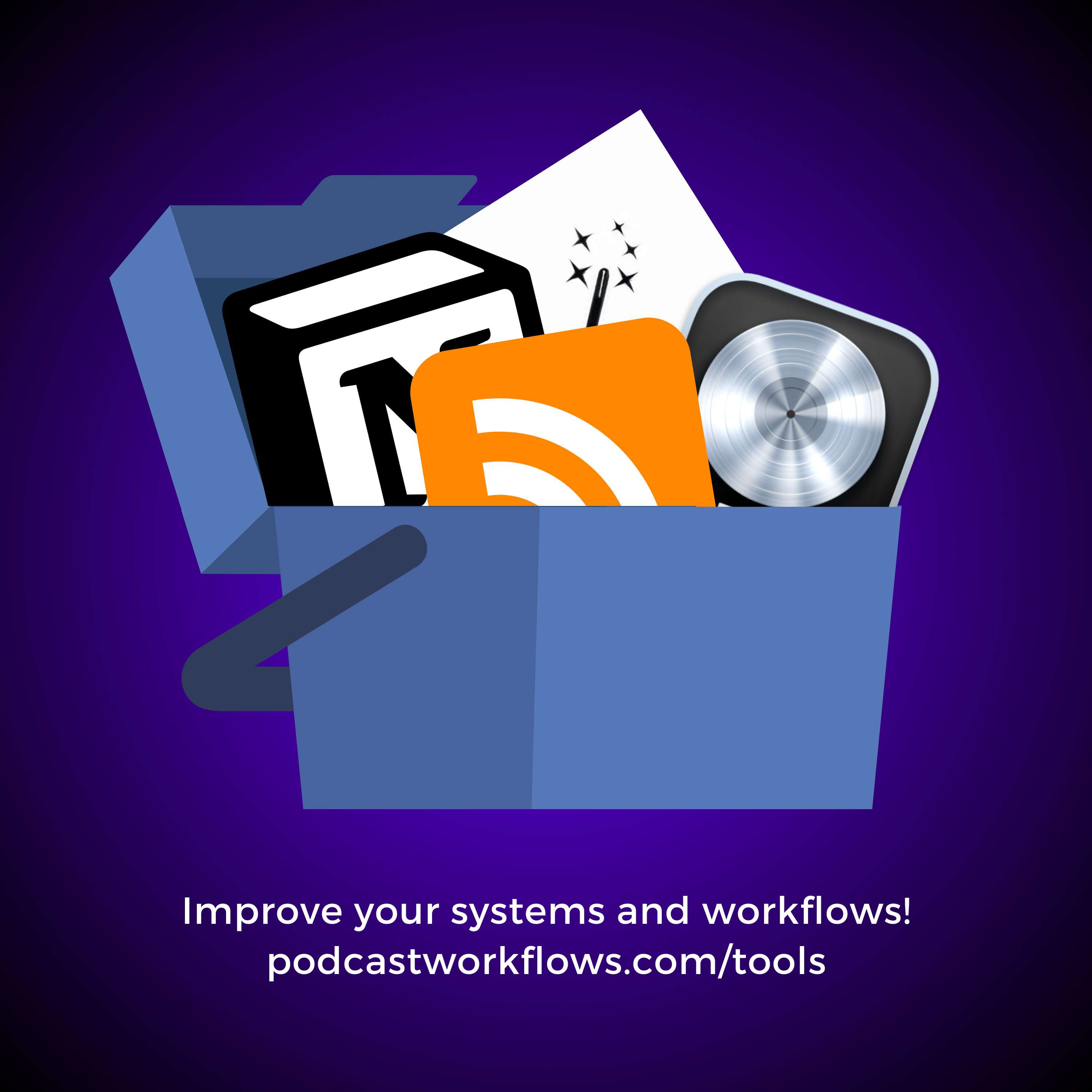
When I came up with the idea for Podcast Workflows — nearly a year ago at CEX 2023 — one of the aspects of the site was to have a “Tools” page — something that could showcase the tools used in the deep dives I was doing.But I didn’t want to rush it. I wanted to focus on the content and see where the site went. Well, I'm happy to announce that the Tools Guide is finally live! Show NotesCheck out the GuideRead the announcementSubmit feedbackSwitchyKadence ★ Support this podcast ★
S5 Ep 54What Makes Good Podcast Artwork in 2024?
One of my favorite scenes from Scrubs happens in Season 3, Episode 1. Sarah Chalke’s character, Dr. Elliot Reid, is sitting on her bed, reflecting on the fact that she gets walked all over at work — and she decides to do something about it. With Tom Petty’s American Girl playing, she wrecks her room. She changes her look. She goes back to the hospital much more confident and as a result, she’s much more respected.The confidence in her appearance matched the confidence she wanted to convey to her colleagues and patients.I hate my podcast artwork.I think a lot has changed in the space since my show launched —so I decided to explore what makes good podcast artwork in 2024. Read the full article here Join the mailing listBecome a member ★ Support this podcast ★

S5 Ep 53The Digital Storytelling Aspect of Podcasting
A family walks into a talent agency, and says, “Have we got the act for you…”If you’re familiar with this opening to a joke, you may have had a visceral reaction to it — either you think it’s hysterically funny, shamefully disgusting, or both. It’s the opening to the joke, The Aristocrats, and if you have a weak stomach, I don’t suggest you look it up.See, the point of this joke isn’t actually the punchline, which is right in the title. The point is to see how long you can improv a shocking, disgusting, offensive story.You can think about it as a secret handshake among comedians, that became not so secret after a 2005 documentary came out about it.It going me thinking about the importance of telling a story.This week, I got to speak to my friend Nick Benson’s college classes about Digital Storytelling.Don’t worry, I didn’t tell The Aristocrats.Instead, I spoke to them about why storytelling is so important in any content you create, especially podcasting.Read the article here: https://podcastworkflows.com/podcast-storytelling/ ★ Support this podcast ★
S5 Ep 52Thinking About Spotify, Exclusivity, Call Her Daddy, and Joe Rogan
Spotify has made a couple of big announcements this month. First, their second-biggest show, Call Her Daddy, ended exclusively rights. While the show will still be a Spotify show, it will be widely distributed (though video will still be exclusive to Spotify).Then, the following weekend, the same thing is happened with The Joe Rogan Experience (JRE). It will soon be available on other platforms, after being completely exclusive to Spotify for the past 3+ years.JRE’s renewal was also apparently a massive deal monetarily. It’s got me thinking a lot about podcasting and what’s in store for us. ★ Support this podcast ★
S5 Ep 51What I Learned Doing a Daily Podcast
As I write this, I feel stuck between two idioms. The first is, “Shoot for the moon, and you’ll land among the stars.”The second is, “he’s always swinging for the fences.”The former has a positive connotation. If you aim high, even if you fall short, you’ll still do something great. The latter can be negative. You’re constantly trying to hit a home run (and striking out) when a single will do.Last year I was pretty set on doing a daily podcast. I loved the idea of combining that with a mini podcast to create a fantastic back catalog of podcasting tips for anyone at any stage of podcasting.It also allowed me to experiment and really understand what goes into creating a daily show.The short: it’s a lot of work. I’m going to share everything I learned with you. Then you can decide if I was shooting for the moon to land among the stars, or swinging for the fences and striking out.Read the full article here ★ Support this podcast ★
S4 Ep 50Give Your Listeners the Gift of Clear Audio with Riverside
Back when I started my podcast, if I wanted clear, uncompressed audio that didn’t have that random robot voice you’d get from an unstable connection, I’d need to do a few things:Use Skype + eCamm Recorder (RIP) to record my audio cleanly.Send my guest clear instructions on how to record their audio with either Quicktime on the Mac, or Voice Recorder on Windows.Walk through the process with my guest to make sure they’re getting clean audio (that is, audio with no echo).Still record a backup, just in case.Give my guests a place where they could upload the audio.Painstakingly sync the audio when I combined them in GarageBand or Audacity.Things are different now. Now, we have Riverside.Check out the full article here. ★ Support this podcast ★
S4 Ep 49Should We Stop Repurposing Content (and Start Repurposing Ideas)?
At the beginning of 2023, it seemed that the maxim “repurpose your content” reached a fever pitch. More agencies are offering repurpose services, and we see lots more people posting the same content across multiple platforms. More people (myself included) are keeping video on for their podcasts to create clips from podcasts. With AI tools, that became easy. Feed one format into an AI and it spits out a different format. ★ Support this podcast ★
S4 Ep 48How to get More Comfortable Behind the Mic
On my wedding day, I was standing inside the church, in front of the altar, welcoming the 200+ guests we had invited as they came in and found their seats.My friend Alex came up to me at some point at said, “Joey — you look so calm and comfortable. On my wedding day, I was a nervous mess.”It’s true. I was feeling great on my wedding day; I didn’t feel those nerves because I was used to being in front of people, and unlike some talks I gave, this was a friendly audience, ready to help us celebrate.That experience reminds me of a question I got while speaking at a conference back in 2019: “How do you get more comfortable speaking into the microphone.” I loved it because while I often focus on the technical aspects of creating a podcast, there can be a real issue with getting comfortable recording, especially if you’re doing a solo show. So my answer: get your reps in.Read the full story here: https://podcastworkflows.com/how-to-get-more-comfortable-behind-the-mic/ ★ Support this podcast ★
S4 Ep 47Upgrade’s Short Form Strategy is Worth Trying
Upgrade is one of my favorite podcasts to listen to for Apple and tech industry news. I think they have some of the most measured takes and don’t fall victim to hyperbole.One interesting thing about Upgrade and many (if not all) of the shows on that podcast network, Relay.fm, is that the hosts don’t see each other. They keep the video off, even for them.Read the full story here: https://podcastworkflows.com/upgrades-short-form-strategy-is-worth-trying/ ★ Support this podcast ★
S4 Ep 46Voxalyze: The Google Analytics of Podcast Stats
One thing that’s as sure as the sunrise during the Christmas season is that kids and adults alike will look at the gifts under their tree and wonder what’s inside. They’ll stare at the box, hoping to find the answer without opening it.Before the gifts are open, they can be anything. It’s left up to our imagination.Podcast stats can feel a lot like that sometimes. That’s why today’s helpful podcaster tool is Voxalyze. I like to call it the Google Analytics of Podcasting.Read the full story here: https://podcastworkflows.com/voxalyze/ ★ Support this podcast ★
S4 Ep 45Can Short Form Video Help Podcasters?
There’s a reason that movies have teaser trailers. That TV shows have short “hits.” “Tonight, on a very special Blossom,” came from somewhere.They are designed to create buzz, and entice viewers to go and watch the entire movie or episode when it comes out. And while they are a tried and true method for TV and movies, do they…or something analogous…work for podcasts?Read the Entire Article HereSubscribe to Podcast Advent ★ Support this podcast ★
S4 Ep 44Your Podcast Needs a Mission Statement
Anyone can make a podcast, right? Just pull up a microphone, hit record, then publish it out to the world. While it can be that easy, it’s not always that straightforward, particularly if you’re looking to use your podcast as a source of revenue. If you’re not considering who you want to reach and what would actually help them, you’re just a person on a mic shouting into the void. With just a little attention to your intentions, you won’t just have a tuned-in, active audience, but you’ll also have an easy pitch for sponsors and affiliates.Read the full article hereSign up for Podcast Advent ★ Support this podcast ★

S4 Ep 43Workflow Recommendation: American History Tellers
A recent favorite podcast of mine is American History Tellers from Wondery. After finding History Daily back in April, I followed host Lindsay Graham’s work more closely — I was already a fan of him from American Elections: Wicked Game and 1865. One of the great things History Daily does is a “Saturday Matinee” episode, where they publish a full episode of another podcast. And in October of this year, he used that slot to promote the latest American History Tellers series on the Salem Witch Trials.But while I strongly recommend podcast swaps, that’s not the workflow recommendation I have.Read the full article hereSign up for Podcast Advent ★ Support this podcast ★
S4 Ep 42Descript is the Swiss Army Knife of Podcasting
Batman’s utility belt. The Doctor’s Screwdriver from Doctor Who. Tommy Pickles’ toy Screwdriver1. These things could get our heroes out of whatever pinch they found themselves in.They were a tool for any occasion. And that’s what Descript is for Podcasters.Read the full article hereSign up for Podcast Advent ★ Support this podcast ★

S4 Ep 41What's Your Christmas Song? (It's Podcast Advent!)
I am one of the unholy people who commits the seasonal crime of listening to Christmas music too early. I get the itch around early November, but exercise restraint until a week before Thanksgiving.Every year, I set aside some time to review and update both of my lists: the family-friendly one, and my personal list — a combination of classics and slightly more vulgar songs from my youth. This year, I came to a realization…Read the full article here*Sign up to have Podcast Advent delivered to your inbox* ★ Support this podcast ★
S4 Ep 40Can long podcasts compete with short attention spans?
I actually think there are two misconceptions here. The first is we have shorter attention spans. TikTok increased its video length to 10 minutes, and the sweet spot for YouTube appears to be 12-20 minutes. People’s attention spans are short when they don’t care about the content. But when it’s good content, we can capture their attention.And Podcasters can absolutely leverage short-form content, with just a little extra effort. They can keep the camera on while they record their podcast, and with some planning, make clear, succinct points to the camera…then repurpose those clips on social. OR after they record an episode, they can recap it in short form video OR audio.Plus, episodes can be less than 5 minutes — and daily short podcasts are increasing in popularity. ★ Support this podcast ★
S4 Ep 39Sometimes you need to record twice
I had a rough weekend a while back, my friends. One Thursday I started to feel sick with the plague my children brought home from school. And I thought I had successfully avoided it.Still, I was feeling well enough to write scripts for one of my solo episodes before resting up. I figured I'd record it on Saturday...after I did rest.And I did. But it was a disaster. I was rambling, coughing, getting winded, and stopping...a lot. It was not quality content.I could have just released that, knowing I had an arbitrary deadline of Monday at 2am ET. But episodes like this —long, no single focus, hard to find a clear story — needed to be tight and helpful. This was not.So I decided to take Sunday and rest some more, hoping Monday would see me with more energy and stamina.Which it did! I re-recorded the entire episode and released it later than usual...but in much better shape.You don’t always need to hit your arbitrary deadlines. And while most of this show is dedicated to helping you build a system to not be in the same position I was…well, sometimes it doesn’t work out.When that happens, it’s better to take a moment and prioritize quality content over a deadline most people won’t notice you missed. ★ Support this podcast ★
S4 Ep 38Find Your Bottle Neck
One of my least favorite things in the whole world is traffic. Mostly because traffic without a big causal event (like an accident, or road work) has always been super confusion to me. It seems like there no traffic, then traffic for NO reason, then all of a sudden it's gone. But the truth is, traffic is usually not due to one big event. It's a bunch of little things that add up to one big bottleneck. Your podcast process can be similar. Here's how to prevent the bottleneck. ★ Support this podcast ★
S4 Ep 37How Friends Grew Their Viewership (and How You Can, Too)
I'm a huge Friends fan. Like...watch the whole series multiple times per year. Did you know they did something in Season 1 to grow their viewership 25%? Season 1, Episode 16 was called, “The One with Two Parts, Part 1,” it was the first of a crossover event with two other NBC shows.Before landing the role of Phoebe on Friends, Lisa Kudrow was a waitress named Ursula on NBC’s hit show Mad About You, also set in NYC. The show wrote them as twin sisters, and Ursula was introduced to the Friends audience in Episode 16 when Joey started dating her. Helen Hunt and Leila Kenzle, who played the main characters on Mad About You, also make an appearance, mistaking Phoebe for Ursula at Central Perk, a common hangout in Friends.But it doesn’t stop there. At the end of Episode 16, Rachel falls and hurts her ankle. Episode 17 opens with her and Monica at the Hospital, where they meet two young doctors, played by George Clooney and Noah Wyle, the stars of ER. The results of that cross-over event? The most-viewed episode before that arc had 26M views and guest-starred Morgan Fairchild as Chandler’s mom. After that, the average viewership was 29.8M per episode. What can podcasters learn from this? Get in front of other people’s audiences. The Friends team knew that pulling in Mad About You and ER cast would bring the fans. After all – they were similar shows (daily lives of young people in big cities), at similar times, on the same network. You can replicate this strategy 2 ways:Going on other people's podcasts as a guestDoing podcast swaps, where you and another podcast plug each other shows I did each of these and grew my own show from 33,000 monthly downloads to 72,000 monthly downloads in 10 months. Not bad, right? Now it's your turn. Write back and let me know: what are 2-3 podcasts you can work with on a podcast swap? ★ Support this podcast ★
S4 Ep 36The best way to answer “Who are you and what do you do?
I want you to think about the times you make introductions to people. Maybe you’re introducing a coworker to your spouse, or a friend from one area of your life to a friend in another area of your life. You likely say something like, “Bob, this is Jean. Jean, Bob. Bob is one of the best copywriters I know! And Jean is fantastic at graphic design.”What you don’t do is say, “Bob, Jean. Jean. Bob. Now tell each other what you do,” because they’d both be caught off-guard. If you ask me, “What is the worst question podcasters commonly ask their guests,” you’ll get one, unequivocal answer from me:So tell us who you are and what you do.And while I’ve spoken about [why podcasters shouldn’t ask that question], if you go on podcasts, chances are you’re getting it.So how, as a podcast guest, do you turn that into a way to stand out?Let’s start with what not to do first. Perhaps the worst answer you can give is a rehash of your bio. It’s likely that the host already told people who you are, reading a provided bio or recording an intro after your interview. Plus, people can just read your bio. Instead, what you want to do is deliver value right out of the gate. What I try to do is tell a story that clearly illustrates how I help people — which means I need to know the topic and audience ahead of time. If we’re talking about podcast sponsorship, I’m telling people about how podcasting saved my business. If we’re talking about workflows, I’m telling people how I knew something needed to change when I completely burned out in 2020. This does a couple of things:It helps people learn a little bit more about me without me just rereading my bio.It makes people emotionally invested in my story. The people I help can empathize with stories I tell.It illustrates the kind of transformation I can do for them. So how can you do this? The answer is tell a story. I write [all about digital storytelling here]. Your goal is to tell a story of transformation, make the listener the hero, and position yourself as the guide. You want to communicate to the listener that:I see youI’ve been where you wereI know the way outI can help you Why does this matter? Because a great podcast interview can do a lot of things for you. It can grow your authority. It can get people onto your mailing list and reach new clients. It can be a gold mine for creating your own content. But a bad one is basically just wasted time. It won’t be good for the podcast, and it won’t be good for you. But if you start strong, win over the audience early, and steer the conversation in the direction you need it to go in, it can be a huge boon for you in both the short- and long term. ★ Support this podcast ★
S4 Ep 35What Platform Should You Use for Memberships?
Let’s talk about memberships….specifically the platforms. In the last few years, setting up a membership has gone from “hire a developer to build a custom site” to “I barely need a dedicated website anymore.” So let’s look at a few options that are good for podcast memberships. Memberful. They are really trying to corner the market on podcast memberships, and they’re doing a good job. Rich features, lots of integrations, and is free to start. The only drawback in my eyes is the price: $0 + 10% transaction fee or $25/mo + 4.9% transaction fee. Both transaction fees are higher than you should pay. Patreon, on the other hand, pretty much only charges you if you make money. They are also the first major membership platform for creators and have added lots of great features, including private podcast feeds. LemonSqueezy + Transistor.fm : This one takes a little bit of duct tape to work perfectly, but since you can sell subscriptions (and a members-only newsletter) with LemonSqueezy, you can use a tool like Zapier or Make to connect those purchases to a podcast host that supports private podcasts, like Transistor. When someone purchases via LemonSqueezy, you can have Zapier create a private subscriber. ConvertKit has ConvertKit Commerce, but if you're considering this route, be aware: it's only really good for a premium newsletter. One of the many WordPress membership plugins. I’d be remiss if I didn’t mention WordPress…but to be honest, I wouldn’t recommend starting with it. If you’d like to see an in-depth comparison, my friend Chris did one. ★ Support this podcast ★
S4 Ep 34Membership Perks: Low Effort, High Value
Membership…that is, charging a listener monthly for bonus content…is a great way to make money with your podcast. But you need to be cautious. It’s tempting to offer a TON of bonuses to make the membership seem more valuable.But what if no one…or even worse…ONE person…signed up. If one person signs up, you’re on the hook for all of those extras.Instead, take this approach:First, test the waters. Ask your mailing list or listeners what they want to see more of. Don’t ask them if they would pay (most people will say yes to theoretical spending). Just ask what they want to see more of. Guage response. If no one responds, focus on building your audience first. But if a good number of people respond, it’s time to start thinking about your perks.Start with low-hanging fruit. I like to call those things low effort, high reward. In my membership, it’s an extra 10-minute conversation with my guests that’s for members only. It’s removing ads. It’s an extra video or episode. These are raw, but they are behind-the-scenes looks that only they get. Come up with 2-3 of these perks that won’t take you a TON of time. Then email the people who responded with a special price. If you want to price it at $6/mo, offer it to them at $5/mo for a limited time. Tell them you’ll even extend it to friends and coworkers. See how many people buy in. Then announce it to the world — your mailing list, on your podcast, on social media. And make sure you deliver. Low effort and high reward perks make it easier for you to do that. ★ Support this podcast ★
S4 Ep 33Breaking Down The Breakdown: A Grand Experiment in Branded Podcasts
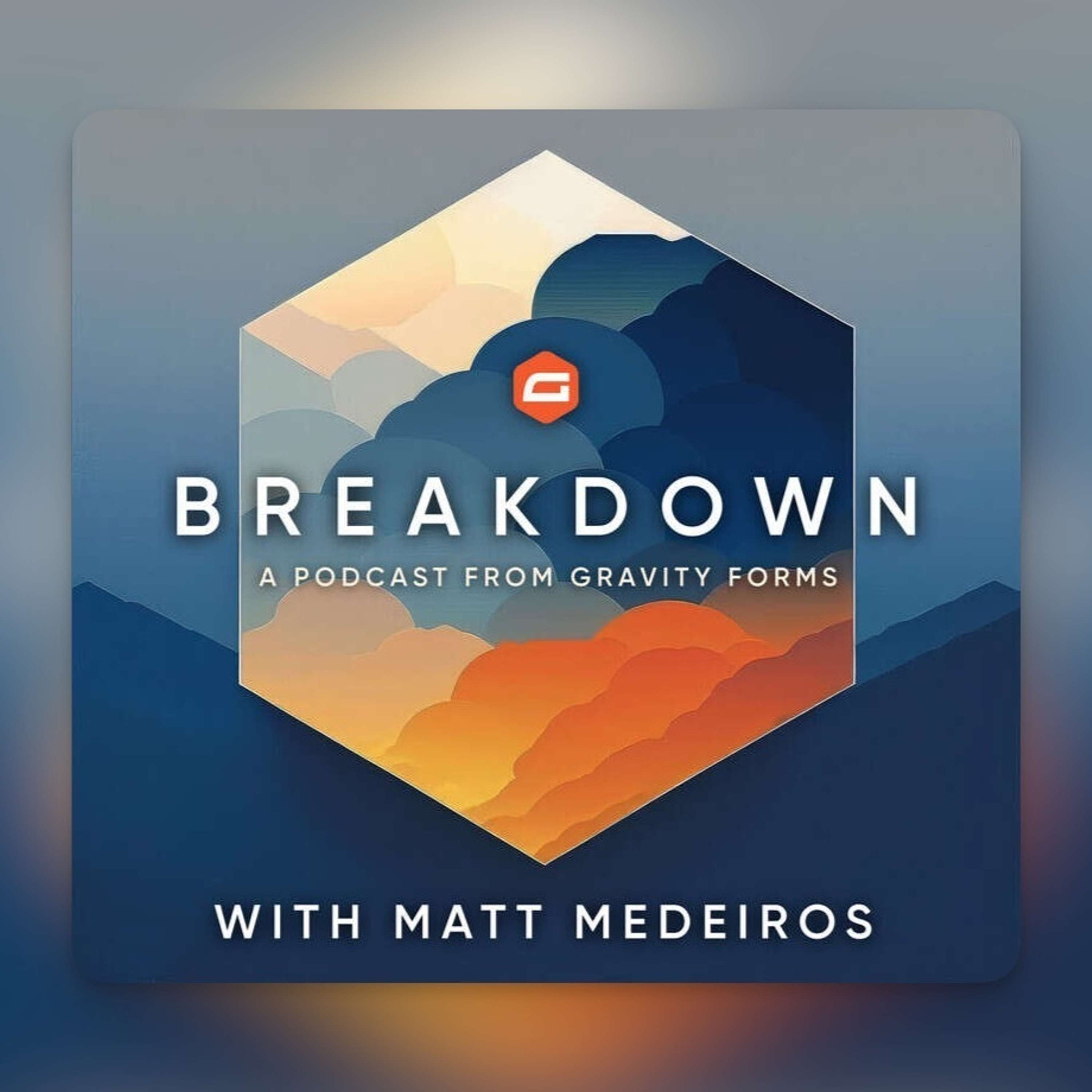
“You either die a hero, or you live long enough to see yourself become the villain.” Aaron Eckhart’s version of Harvey Dent said that in Christopher Nolan’s penultimate Batman film, The Dark Knight.Since its release in 2008, that quote has been referenced and misappropriated to fit situations because, let’s be honest, it’s a cool quote.Well, you can add another reference to the pile because it’s the first quote that came to mind when I thought about prolific podcaster Matt Medeiros: “You either podfade or you podcast long enough to try every format.”Matt has certainly been around the block. He had perhaps the first popular WordPress business podcast, The Matt Report. He has a short-form news podcast called The WP Minute. Finally, he has a locally focused podcast, We Are Here, celebrating businesses from South Coast, MA.And now he hosts Breakdown, a podcast by the popular forms plugin, Gravity Forms, for Gravity Forms users and web builders.Even though podcasting has been around for a while, most brands are just now coming around to their importance as part of a greater content strategy.I wanted to capture Breakdown’s story as it’s starting. It’s easy to say after it’s worked that it was the right decision. We’re still at the point where Matt and the Gravity Forms team are experimenting. And that’s a great thing for brands and podcasters alike to see.IN THIS EPISODENo matter how many downloads your podcast gets, it can be an integral part of your overall content strategy.Create case studies from interviews you publish on your podcast — whether you’re a brand or a solopreneur.Be open to experiments. You never know what will resonate with your audience.Read the full article here: https://podcastworkflows.com/branded-podcast-case-study/ ★ Support this podcast ★
S4 Ep 32Creating Short Form Videos
I’ve decided – with a push from my new video editor, Zach – to create short-form videos for episodes. This required me to do a couple of things.The first is actually recording video. I’ve toyed with this in the past, and with other podcasts, but I’ve never done it consistently for How I Built It.Part of it was that I never thought straight interviews were compelling videos. But the other part was I didn’t think the effort for short form was worth it.It still might not be. But now I’m willing to try. More on that in a minute.The other thing I needed to do was update my guest notes. I made it pretty clear in the notes that it was an audio-only podcast – so I updated that to say “Video will be recorded, but only for social media.”This wasn’t crucial, but courteous, as some folks want to make sure they’re camera-ready.So what’s my strategy?Right now, I’m mostly testing. I’ll post 3-4 videos per week on TikTok, X (neé Twitter), Instagram, and YouTube Shorts and see what happens.I also made a discovery about TikTok as it relates to podcasting. I’ve added a new video for members of the Foundry and will be more open about my experiments there.For now, I’d love to know if you have a short-form video strategy. If so, respond to this email and let me know! ★ Support this podcast ★
S4 Ep 31Share Your Journey
Earlier this year, I had 2 conversations that really shaped how I view making content moving forwardThe first was Tim Stoddart of Copyblogger. He’s a prolific writer, a fantastic business owner, and super down-to-earth.He told me he doesn’t like the term “build in public.” He prefers to say, “Share your journey.”I love this because you’re not giving people a blueprint to follow (despite what the Thread Bois says).You’re telling people what you’re doing, and what’s working for YOU.Then I did a deep dive on Justin Jackson and John Buda’s Build in Public podcast.They shared their own journey of building a SaaS in a crowded market in 2018. And the podcast took off.I’m definitely focusing on long-form content more. But when I’m stuck, especially when I want to deliver for my members, I’m going to share my journey.Do something. Tell people you did it. Tell people how you did it.Rinse.Repeat.Unless you’re literally doing nothing, you’ll always have something to share. ★ Support this podcast ★
S4 Ep 30Grow Your Podcast with These 5 Steps
Here are 5 things you can do to grow your podcast:1. Get a Decent Mic. You don’t need to spend $400, but you should use a decent USB mic. I recommend the ATR-2100x2. Don’t just record and release. Too many people just record a Zoom call and release it as a podcast. Listeners expect more than that these days.3. Do a little research. Don’t go in cold. If you’re interviewing someone, do some background work on them and don’t have them introduce themselves — get right to the heart of the interview. If it’s a solo show, fact-check yourself and have an outline.4. Make it easy to share episodes. Have an easy-to-remember URL, and have the share buttons on the episodes page! Help people help you!5. Make helpful social media posts. Don’t just point a link to the episode. Create useful content on the platform, then link to the episode for more context.Each of these shows your listeners that you've decided to go the extra mile and put a little more effort into your show for them. ★ Support this podcast ★
S4 Ep 29Use Dynamic Content for Timely CTAs
Today I want to talk to you about DAI, or Dynamic Ad Insertion. DAI is a way for you to automatically insert ads (or any audio clip) into your already produced podcast episodes. There are lots of services that allow this, like Transistor and Buzzsprout, which makes it super easy. The way it works is this:You upload your episodesYou upload the audio clip you want dynamically insertedYou mark whether it’s a pre-roll, post-roll, or mid-roll ad You can also (based on the service) set an expiration date, or manually turn it on or off. This allows you to do a few things, but the two I’m using it for are:Selling a limited run ad-campaign (so a 30 day mid-roll on specific episodes)Dynamically changing my call to action depending on the time of year. I got the latter idea from my guest Sam Munoz . Most of the year, I’m promoting my newsletter (this very newsletter, in-fact). But when there's some time-based event or special, I’ll be promoting that instead, without have to re-edit every episode. What do you think of DAI? Can you see it being useful for your podcast? ★ Support this podcast ★
S4 Ep 28Everything That Goes Into Making a Daily Podcast
There’s a myth that if you do something for 21 days, it becomes a habit. I say it’s a myth because it’s been debunked. Several times.The truth is, no matter how long a habit takes you to form, the more complicated it is, the more easily broken it is.So producing a podcast is likely not a habit you’re forming. It’s work you’re doing, as efficiently as possible, without sacrificing content. But listening to a podcast, that can be a habit.It’s why I often tell my clients and students that you don’t need a weekly show, but a monthly show can be a tough sell if you want to be part of someone’s routine.So as I work on the next deep dive, I thought I’d share what I’ve learned about how to produce a daily podcast, and where I can improve.👉 IN THIS EPISODEA daily podcast can be an incredible authority-building asset for youPick a format and topic that lends itself to your business goalsBatching content is a super important aspect of a daily podcastRead the full article here: https://podcastworkflows.com/daily-podcast-process/ ★ Support this podcast ★
S4 Ep 27Stop Using Zoom to Record Your Podcast
In an episode of the now-retired show Podcast Pontifications, Evo Terra drops a truth bomb for all the “record to tape” or “record and release” podcasters:But if you look at the larger universe of podcasting, which is now millions of podcasts strong, you’ll see that podcast listeners are voting for the kinds of shows that take more time and care than can be put into a linear record and release style of podcast.He was talking about people who record a show and then release it as is (known as record and release, or record to tape). But from that ailment comes another symptom: people using Zoom to record.You need to stop using Zoom.Similar to Evo’s point above, listeners today more than ever expect quality. They want you to sound like you’re in the room with your guest.And that’s easier than ever with great tools like Riverside.fm, which records everyone’s audio locally, and separately. No weird robot video from bad internet connections here.This is important because bad audio can erode trust, which could stifle your podcast’s growth, and your ability to establish expertise.One of the reasons I feel my show grew quickly is because I’ve added a commitment to the best possible audio quality from the very beginning.If you’re not sure where to start, I strongly recommend Riverside.fm. It’s affordable, well-made, and the most reliable of the tools I’ve used. ★ Support this podcast ★
S4 Ep 26The Perfect Way to Describe Your Podcast (and get more listeners)
Does anyone know you so well, they can describe you in a single sentence?When I was at Craft + Commerce, Mike Pacchione gave some great advice for when you tell stories:When describing someone, use a single sentence that instantly tells the listener who they are. Here’s an example:My dad always told people, “Joe would argue with Jesus Christ if he came off the cross.”You probably think I’m…opinionated, to put it nicely.You should do the same thing with your podcast, and episodes.What would that look like?If I’m describing my show How I Built It , I might say, “You get free coaching sessions from the best creators.”I can then extend that out to specific episodes. “You get one coaching session from Mike on Public Speaking,” for example.For this show, I can say, "Bite-sized tips to help you improve your podcast process."As you figure out the best one-liner for your podcast, keep your show’s mission in mind.The one-liner can be based on the mission, or even define it. ★ Support this podcast ★
S4 Ep 25Do Short-form Teaser Videos on TikTok
One way to grow your podcast audience is to leverage the audience you have on other platforms. Short-form video can be a particularly effective medium here because many of those platforms, like TikTik, prioritize discovery over followers. So here's what you do: 1) Record a short-form video (vertical, 60 seconds long) taking about one thing from a recent podcast interview or episode. I try to do this right after I record the episode so it's fresh in my mind. 2) Upload it to TikTok, Instagram Reels (which can also post to your Stories and Facebook), and YouTube Shorts. 3) Include a CTA and link to subscribe to your podcast or newsletter so they don't miss the episode. This will add 5-10 minutes per episode, but if it doesn't right, can funnel people to your show and create new fans. ★ Support this podcast ★
S4 Ep 24Listener Donations: Make it Easy!
One low barrier for entry these days is asking for donations from listeners. It likely won’t be a huge money maker at first, but it’s an easier sell than a membership. When a listener really enjoys your content, they can send you a few bucks.So what are some platforms that make it as easy as possible for listeners to donate? Here are three: Buy Me a Coffee : Popular among podcasters, Buy Me A Coffee allows you to create a profile, connect a Stripe account, and start accepting donations (usually in $5 intervals) super fast. ConverKit: ConvertKit is the ESP for creators, as evidenced by the fact that they have a ton of features to help creators. That includes a “tip jar” on a custom domain for people to send you money – on the free plan GiveWP : If you use WordPress for your website, GiveWP is a fantastic option. It’s free, you can set your own donation levels, and everything neatly integrates with your WordPress site.Once you select your donation platform, you can add it to your show notes (a big benefit of GiveWP is embedding the form on the show notes page), make it your CTA, or include it in your newsletter. ★ Support this podcast ★