
Stoic Coffee Break
293 episodes — Page 1 of 6
S1 Ep 292Interview With Ori Halevy: Comedian and Comedy Writer
In this episode I sit down and talk with comedian and comedy writer Ori Halevy. Ori, originally from Israel, is prominent in the large English speaking comedy in Berlin. We had a fun conversation talking about philosophy, comedy, anxiety, and why you need to laugh at life. You can find him on instagram at https://instgram.com/orihalevy_bigoldjew and https://instagram.com/epicomedyberlinA transcript of the audio will be posted on the podcast website at https://stoic.coffee. Hosted on Acast. See acast.com/privacy for more information.
S1 Ep 291Finding Your Genius: Flipping Your Flaws Into Features
Do you think that you have strengths and weaknesses? What if I told you that you don’t? Today I want to talk about how strengths and weaknesses are all a matter of perspective and context."Strive for excellence, not perfection, because we often find excellence in our imperfections."—Harriet Braiker Hosted on Acast. See acast.com/privacy for more information.
S1 Ep 290Laughing With The Stoics: Finding Humor on the Path to Virtue
Do you think that Stoics are too serious and all business? Do you think that if you adopt Stoic principles that you can’t have fun? Today I want to talk about humor and some of the misconceptions of Stoicism.“It’s better for us to laugh at life than to cry over it.”— SenecaWhen you picture a Stoic, you might imagine someone with the emotional range of a sloth, but surprise! The Stoics weren't the ancient world's equivalent of grumpy cat. They actually had quite a bit to say about living "according to nature," and let's be real, what's more natural than snorting milk out of your nose from laughing too hard? Exactly.So, how does humor fit into Stoicism?The Stoics often talked about achieving eudaimonia, also translated as ‘good spirit’, which for the Stoics is about reducing negative emotions, and cultivating positive emotions. Since we are emotional creatures, we aren’t expected to not have emotions, and for me, having a good laugh certainly helps me get closer to having a ‘good spirit’.Absurdity of LifeBecause stoicism is about trying to see the world for exactly what it is, we can laugh at the absurdities of life. Seneca was all about chuckling at life's curveballs when he said, "Fortune is like that drunk friend who tries to help but ends up knocking over the lamp." Life is unpredictable, so why not have a laugh when things go sideways? When you think about it, this is what Amor Fati is all about. It’s about not just accepting everything that happens in life, but loving everything that comes our way, and what better way is there to love everything that comes your way when you find humor in even the darkest times?When we take things too seriously, we often get stuck ruminating and stressing out over things that are small or even imagined. When we get stuck in this mindset, our thinking becomes more narrow as response to stress, which it makes it hard for us to make better decisions. In these situations, often times the best thing we can do is laugh about it. Lightening our mood helps us relax which in turn helps us think more positively and be more open to possibilities. The Stoics recognized that joy is not the same thing as being frivolous. They understood that joy is part of a well-rounded life. The Stoics themselves practiced self-deprecating humor in order to not take themselves or life too seriously. Epictetus was known to have a very dry and ironic wit. You can totally picture Epictetus cracking a smile and reminding us that just because we're after virtue, doesn't mean we can't enjoy a good meme. When talking about death, he once said, “I have to die. If it is now, well then I die now; if later, then now I will take my lunch, since the hour for lunch has arrived - and dying I will tend to later.”It was reported that Chrysippus literally died from laughing at the sight of his intoxicated donkey trying to eat figs. Marcus Aurelius, the emperor of Rome, once cracked, "I get up in the morning because the universe isn't done with me; also, someone has to feed the ducks." Keeping yourself grounded with a little self-mockery is very much in line with Stoic principles.Keep PerspectiveLaughter helps us to keep things in perspective. When we are in good spirits, we are better able to see things as they are, or imagine how they could be. When things don’t go the way we want, we’re better able to roll with things, focus on what went right, and move forward in a more positive direction. When we are stressed or pessimistic, then we’re more likely to catastrophize, only see the downsides, and wallow in why things didn’t work out.Seneca gives us some good instruction on keeping a humorous outlook when comparing the serious and sullen Heraclitus the more cheerful Democritus. He wrote:“We ought therefore to bring ourselves into such a state of mind that all the vices of the vulgar may not appear hateful to us, but merely ridiculous, and we should imitate Democritus rather than Heraclitus. The latter of these, whenever he appeared in public, used to weep, the former to laugh: the one thought all human doings to be follies, the other thought them to be miseries. We must take a higher view of all things, and bear with them more easily: it better becomes a man to laugh at life than to lament over it. Add to this that he who laughs at the human race deserves better of it than he who mourns for it, for the former leaves it some good hopes of improvement, while the latter stupidly weeps over what he has given up all hopes of mending.”Laughter is the Best MedicineWhen comes to health, laughter is truly good medicine. With the pace of the modern world, we’re all under a lot of stress, which is detrimental to our long term health. Since stress hormones, those released for our ‘fight or flight’ instincts are meant to get us out of short term danger, such as escaping from a saber toothed tiger, we’re not meant to operate under this type of duress for long periods. Exposure to these hormones over longer periods increas
S1 Ep 289Interview with Mark Tuitert: Olympic Gold Medalist Speed Skater and Stoic Author
This week's episode is an interview with Mark Tuitert, an Olympic gold medalist speed skater and Stoic author. We sat down in his home outside of Amsterdam and had a wonderful conversation about discipline, handling stress, forgiving parents, and about his new book The Stoic Mindset. I hope you enjoy this episode as much as I enjoyed the conversation. You can find out more about Mark Tuitert at https://marktuitert.nlYou can also watch the interview on YouTube.Episode Transcript:Erick: Hello friends, my name is Erick Cloward and welcome to the Stoic Coffee Break. The Stoic Coffee Break is a weekly podcast where I take aspects of Stoicism and do my best to break them down to the most important points. I share my experiences, both my successes and my failures, and hope that you can learn something from them all within the space of a coffee break.This week's episode is an interview with Mark Tuitert. Mark is an Olympic gold medalist speed skater. He's from the Netherlands, which is where I'm living at the moment. And Luckily, his agent contacted me just as I moved here, and I was able to go down to his house and do an interview with him. And he just is working on a book right now called The Stoic Mindset, which should be coming out in the US and Canada and the UK in April.We sat down, we talked about stoicism, we talked about his Olympic career, and we talked about how he was able to use stoicism to help him overcome a lot of challenges and eventually end up winning a gold medal in the Vancouver Olympics. So I had a really great interview with Mark, really enjoyed sitting down and chatting with him.(I did mangle his name at the beginning of the podcast interview, but since then I've learned how to pronounce it properly.) I hope you enjoy this interview with Mark Tuitert.So hello everybody, today is my first live interview for the Stowe Coffee Break podcast. I'm here with Mark Tuitert so we're actually here in the Netherlands. I just happened to be here when we got contacted by him and it, so this worked out. So this is my first time actually doing a live interview and filming it.So hopefully this will go well.Mark: Do we actually have a coffee break? Here we go. Or a tea. Erick: So for me, this is rather exciting because like I said, this is this is all new. And. I guess let's just jump right into it. First off, why don't you go ahead and introduce yourself to my audience?Mark: My name is Mark Tuitert.I was an Olympic speed skater and speed skating here in Holland is a pretty big sport. So I was a professional athlete between my 18th and well, 34, 34 years old. And after that, I have now my own company, I'm a motivational speaker, I write books mainly also about Stoicism I'm a big and avid fan of the Stoics.So yeah, for me, I'm a father of two. I love music. I love sports. I love life. But I've had some challenging situations as an athlete, as an Olympic athlete. And I still work for television sometimes I go to the Olympics and do commentary. Erick: Oh nice nice. So you're your agent sent me over a copy of your latest book. You want to talk a little bit about that?Mark: Yeah. Sure. Yeah, The Stoic Mindset. Yes I always used a lot of wisdom From philosophy during my sports career. So within my career I I had to deal with a lot of pressure being an Olympic athlete. I missed out on two Olympics actually in 2002 and 2006 by various reasons. We can dive into that later probably.And that were really challenging times for me. So I had to deal with overtraining with. My parents in a divorce situation with pressure of sports, with pressure of well, the public here in Holland, speed skating is a big sport. So you have a lot of pressure. You can earn money with it, of course, but on the other side, missing two Olympic games was for me a tough situation because I've been training for four years for the one Olympics in 2002 in Salt Lake City training for four years for the Olympics in 2006 in Turin and I missed out on those.So for me, I had one chance to train for Vancouver another four years. And during that time I read a lot and I really was intrigued by the meditations of Marcus Aurelius, by the sayings of Seneca, of Epictetus, and I really, during my career as I got older and a little bit wiser, I used these. texts and philosophy, philosophical ideas to yeah, not only be, be a better person or make wiser choices. And that helped me a lot. Leading up to the Olympics in 2010. For me, that was the pinnacle of my career, probably last chance. Mm-Hmm, . I I could start on an Olympic games and two or three weeks right before these games.I did everything I could within my control to be the best athlete I can be. And I had to dive deep for that in my whole life. And yeah, for me, that was life changing. So, what, what my mindset was right before these Olympic Games, I think was really stoic. I don't judge my parents for what they do.I don't look at competitors, what they do. I don't worry about the journalists, what they
S1 Ep 288Starting Stoicism
Are you new to Stoicism and want to know where to get started in learning about it and how to apply it in your life? Then this episode is for you. One of the things that I appreciate about Stoicism is that it’s very practical philosophy, and there are a lot of ideas and principles that have stood the test of time because they work in helping you live a good life. There are also misconceptions about what stoicism is and what it isn’t so today I’m going to walk you through the basics of what stoicism is, and how you can start applying it in your life immediately.“The first rule is to keep an untroubled spirit. The second is to look things in the face and know them for what they are.”— Marcus AureliusStoicism is an ancient philosophy that originated in Athens, Greece, then moved into Rome as it gained popularity. It was founded by Zeno of Citium, a merchant who found himself in Athens after surviving a shipwreck. While trying to figure out what to do next, he frequented a bookseller in Athens. He came across the writings of Xenophone, a Greek historian and military strategist, and in them read about Socrates. He was so inspired be what he read, that he asked the bookseller where he could find someone like Socrates to teach him philosophy. At that moment, Crates of Thebes, a Cynic philosopher, just happened to be passing the shop. The bookseller pointed to Crates and told Zeno that Crates was such a man, and Zeno became his student.As Zeno began to learn more about Socrates, Plato, Aristotle, and the other philosophies, he began to develop his own ideas about how to apply philosophy and live a good life. One of the main points about Stoicism is that it’s primary goal is not to answer the big questions about life such as why we exist and where we go when we die, but rather how to have a good and peaceful life by living a life of virtue. It’s a practical philosophy that can be applied in all aspect of life.Control“You have power over your mind — not outside events. Realize this, and you will find strength.”— Marcus AureliusOne of the first and most important teachings of Stoicism is that we need to understand what we have control over and what we do not have control over. The reason why this is so important is that most of our stress and frustration in life comes from trying to control things that we do not have any control over. When we focus on the things we can control, we’re able to make progress, and gain a sense of peace in our lives.When we try to control what we can’t, we waste a lot of time and energy without making much progress. We can find ourselves getting angry, upset, or depressed because we’re trying to control something we can’t control, or often because we’re trying to control someone else or their behavior. On the flip side, when we don’t take control of the things that we do have control over, then we allow ourselves to become victims, and miss opportunities to create real change in our lives. So that begs the question: What do we actually have control over? The Stoics teach us that the only thing we really have control over is our thinking, and our choices. In short, our will. Everything else is outside of our control. We don’t have control over nature, other people, or even our own bodies. For example, you can’t control the weather, what other people think of you, or if you get cancer. They are are just things that happen, and not things you have any control over. What you do have control over is how you respond to the things that happen. You can choose to wear a raincoat when it rains. You can choose not to let what others think about you bother you. You can follow your doctors instructions in treating an illness. All you have control over are the choices you make about how you want to respond.Suggested Episode: Two Sides of the Same CoinJudgments“Very little is needed to make a happy life; it is all within yourself, in your way of thinking.”—Marcus AureliusAnother reason that the Stoics teach us that we have control over our thinking is because the way that we think influences how we feel and how we respond to the things that happen to us. The emotions that we feel are caused by the thoughts we think, or the judgments we make, about the things that happen to us. Whether we feel calm or distressed in a situation is caused by what we think about the situation.For example, let’s say you have two people heading to the same office, and they both miss the bus for work. The first person gets upset and yells at the bus. Whereas the second person shakes it off, laughs about it, and sits down on the bench and waits calmly for the next bus. Why does one person handle the situation angrily when the other is able to relax and go on with the day? Shouldn’t they both act the same since they both missed the bus?It’s because of their thinking. In the first case, the angry bus rider is thinking how unfair it is that he missed is bus. He fumes about the fact that he’s going to be late, and is
S1 Ep 287287 - Interview With Constantin Morun from Unleash Thyself
Erick: Hello friends, my name is Erick Cloward and welcome to the Stoic Coffee Break. Stoic Coffee Break is a weekly podcast where I take aspects of Stoicism and do my best to break them down to the most important points. I share my experiences, both my successes and my failures, and hope that you can learn something from them all within the space of a coffee break.So this week's episode is an interview with Constantin Morin, and Constantin has a podcast called Unleash Thyself. And Constantin and I had a great conversation a couple of weeks ago and he's just a really warm and very insightful guy and I really enjoyed the conversation with him. We had talked before that as well and I really appreciated his insights into developing the type of person that you want to become and getting over those internal blocks that keep you from reaching your full potential. So his podcast again is, is called Unleash Thyself and I highly recommend it. Like I said, Constantin was, is a great guy and we just had such a wonderful conversation. So I hope that you enjoy this conversation with him and we'll see you at the end of the podcast.Constantin: Hello. Hello everyone. We have with us today Constantin Morun from the Unleash Thyself podcast.We're about to have a beautiful conversation around many, many amazing topics that are important in today's day and age and one that's very dear to my heart and for those that are able to see this in video format, I have a sign to my right here that says follow your heart. And what it really means to me is essentially not just following what's in your heart, but starting with knowing what's in there and allowing it to come up.And I also equal that to finding your why, finding your purpose, finding what it is that you want to be doing and then pursuing it. Like that's the last thing you'll do in your life so that you can ideally find joy, fulfillment, success, abundance, and whatnot. And I know Erick, you and I had a beautiful conversation last week on this topic and so many others.So I thought, why not start there? Maybe we'll, we'll start with you and say, well, how has your journey led to this point and how are you seeing this idea of potentially following your heart further down? whatever paths you decide to go on. Erick: Yeah. So the last, uh, year for me has been, wow. I mean, actually, yeah, basically the last two years, but especially this last year has been, uh, massive amounts of changes.So I'm currently in Florida right now and I don't have a house and I don't have a car and I got rid of most of my possessions. I have some things in my brother's place. Uh, Bicycle, keyboard, guitar, some clothes, old yearbooks, pictures, those kinds of things, but just a few bins over there and. What I have with me is a, a checked baggage, a carry on bag, and my backpack, and that's all that I have, and it feels very freeing to be in this situation.One of the things that I did find interesting was that even though I've gotten rid of all of this stuff, My level of happiness, levels of anxiety that are part of everyday life haven't changed much from when I did own a house and I did have all of these things. And so I was talking the other day with, uh, so I'm staying with my friend Shana here in Florida, and we're talking to a good friend of hers who is just Went through a really, really nasty divorce and her ex was talking about, she was telling me about how he is always looking for things outside of himself to find his happiness, you know, he bought this new big truck, you know, that he was hoping, you know, so we could be like, I'm, you know, this big manly man kind of thing and all of these things that he does and he's so miserable and he, he tries so hard to have all of these things outside of him to make him happy.And, you know, he's always, You know, he goes out of his way to make other people unhappy, thinking that by diminishing their happiness, it will make him somehow happier and have control over them. And it was just fascinating because I, you know, as I was talking to this gal and I just mentioned how, you know, the external doesn't necessarily change the internal.It can be helpful for sure. If you're in a really bad situation, like if you're in a war zone and you get out of a war zone, that can be incredibly healing for sure. But for the most part, so much of our external doesn't change our internal. So I'm just as happy as I was before, I have just as much anxiety about what I'm going to do with my life as I did before, but I definitely feel a bit freer because I don't have all of these things that I have to worry about, and that right there has been, been really, really good for me and very healthy for me, um, but I still, like I said, I still worry about what I'm going to do with my future and where I'm going to go, so I'm.Yeah. I'll be flying out to Amsterdam next week, which will be very interesting and very exciting. So I'm really looking forward to that. I'm going to move
S1 Ep 286286 - Remember Death
How often do you think about your death? Do you go through your life just ignoring it and thinking that it’s always a long way off? Today I want to talk about why considering your death each day can make your life richer, fuller, and happier.“You could leave life right now. Let that determine what you do and say and think." — Marcus AureliusOne of the most important things that the Stoics teach is to be aware of death, that we too will die one day. The term the Stoics use is Memento Mori, remember death. The Stoics want us to remember that every day could be our last so that we use the time we have the best we can. Memento Mori is not about being morbid or macabre, but rather appreciating the fact that we are alive at this moment, and that we need to savor each moment we have because it could be our last. It means that instead of wishing for things to be different, we should accept things as they are and appreciate them. It also means that we should look for things to be grateful for right now. We need to find contentment now rather than waiting for it to come to us in the future after some event or accomplishment.Mortality“To live in this world, you must be able to do three things: to love what is mortal; to hold it against your bones knowing your own life depends on it; and, when the time comes to let it go, to let it go." — Mary OliverMemento Mori is there to remind us that we need to face reality. We need to accept that we will all die one day, and as much as we might want to ignore that fact, it is not something that we can escape. The sooner we come to terms with our own mortality, the less we fear death, and the better we can live in the present.One day, when I was about 40, I had just gotten out of the shower and was trimming my beard. As I was looking at my face in the mirror and I noticed the wrinkles on my face standing out a bit more. I remember having this rush of fear and anxiety about how I was getting older, and that I would die one day. I realized that I had never put too much thought into the fact that I would die. Like most people, I just went about my daily life as if death was something I could just ignore. I realized that I needed to face my own mortality because it was something that would come whether I liked it or not.Over the next few months, I would occasionally take some time and think about my death. I thought a lot about what it might be like after I leave this life. I thought about some of the things that I wanted to accomplish before I left this world. I worked on getting comfortable with the fact that I would have to face my death at some point. The more comfortable I got with death, the less fear I had about dying. This is not to say that I’m looking forward to it or seeking it out, but it no longer causes me the anxiety I felt when I was first confronting my own mortality. Live Now"Let us prepare our minds as if we’d come to the very end of life. Let us postpone nothing. Let us balance life’s books each day. … The one who puts the finishing touches on their life each day is never short of time." — Seneca"The trouble is, you think you have time." — BuddhaSo why is it important that we learn to face up to our own mortality? Remembering death sharpens our senses. It helps us to be more present in our daily lives because we can spend less time living for the future because it’s possible that we might not have one. When we recognize that all the plans and goals that we have may never come to pass, we learn to not let our happiness be dependent on things that we’ll accomplish or get in the future. Facing up to your death helps you live more urgently. Memento Mori helps to prioritize the things that matter and the things that don’t. It reminds that we shouldn’t put off the things we want to do but try to do them as soon as we can. We often live with the idea that we’ll get to it someday, as if we had all the time in the world. The Stoics tell us to get busy with the business of living. Don’t waste time on things that don’t matter.Will it Matter?"Remembering that I'll be dead soon is the most important tool I've ever encountered to help me make the big choices in life. Because almost everything — all external expectations, all pride, all fear of embarrassment or failure - these things just fall away in the face of death, leaving only what is truly important." — Steve JobsWhen we take the time to remember death, we can develop a bigger and more helpful perspective about life. For example, if we ask ourselves, will this matter in 100 years? 1000 years? Things that may seem important in the moment, can seem trivial in the long run. The minor inconveniences that annoy and distress us in our daily lives can be laughed off when we think about them in a long enough timeframe because everything you do will probably not even be remembered in 100 years, and probably not even in 5 or 10 years.In Meditations, Marcus Aurelius says, “Alexander
S1 Ep 285285 - Ambition or Contentment
One of the key aspects of stoicism is to be content with what we have. So how does this balance with ambition? If you are content, does that mean that you shouldn’t be striving to accomplish your goals? Today I want to talk about how stoicism can help you accomplish your goals while still finding contentment in your daily life."The whole future lies in uncertainty: live immediately."— SenecaOne question that I get from time to time is how do balance ambition with the stoic teaching of contentment? Meaning, if we’re supposed to be content with how our life is and accept it for exactly what it is, how do you work hard and achieve the goals you want to accomplish in your life?This is an interesting paradox to consider, because it seems like they are in opposition of one another. If you are content with what you have, does that mean that you become apathetic? If you are striving to accomplish your goals, does that mean that you are discontent with what you have?Contentment"Make the best use of what is in your power, and take the rest as it happens."— Epictetus First, let’s dig into the definitions for each of these things. What does it mean to be content? Does it mean that you simply accept life as it is? Does it mean that you’re docile and just let life happen? Often people think that contentment means that we are happy with life as it is and don’t want things to change. But that’s the thing, life will change. As soon as we are content with life as it is at a particular moment, things change. We can’t just be content with life as it is in one static moment because that moment will not last. We need to learn to be content with life as an ever changing process. We need to learn to flow with life as it comes.Contentment comes from an acceptance and appreciation of what is, of all things in your life whether you consider them positive or negative. Finding contentment means that we accept life and all its changes and recognize that we have the power to choose how we want to view the events that happen. It means that you choose your perspective and outlook and you don’t let external events and circumstances be the driver of your mood.Ambition“Concentrate on what you have to do. Fix your eyes on it. Remind yourself that your task is to be a good human being; remind yourself what nature demands of people. Then do it, without hesitation, and speak the truth as you see it. But with kindness. With humility. Without hypocrisy.”— Marcus AureliusNow let’s talk about ambition. Let’s go with the definition that ambition means that you have specific goals that you are striving to accomplish. It could be that you want excel in your career or you are trying to master a skill. Maybe you want to improve yourself in some way. Does mean that you aren’t content with the way things are?Where ambition leads to discontent is when we become dependent on the outcome. When we set our happiness upon achieving our goal is where we find the conflict with stoicism. The problem is not that you are discontent with the way things are and are trying to change them. The problem is when we focus on the outcome of our striving, then we set ourselves up for several kinds of unhappiness. The first is that when we set our happiness on achieving the goal, then it is likely that we won’t be happy while we are striving for our goals because it is still out of our reach. We have decided that we can’t be happy until we get what we want, and you’ve given away your control. You’ve placed your sense of well being outside of yourself. Since the stoics remind us to focus on what you can control, you can only control your perspective and the choices that you make in the present moment. Another pitfall of setting our happiness on the outcome is what happens if we fail to reach our goal? What if we give it everything we have and still fail? If your happiness is outcome dependent then you are allowing your happiness be dependent on something outside of your control.Another problem with being dependent on the outcome is that when we actually achieve our goal, then we are often happy for a time, but then we find that happiness fades. Our level of happiness fades to the level it was before we achieved our goal. This is known as the hedonic treadmill. We work hard to get the bonus or the new house only to find that after a while we are just as happy or unhappy as we were before. Process"Don’t seek for everything to happen as you wish it would, but rather wish that everything happens as it actually will—then your life will flow well."— EpictetusSo how do avoid the pitfalls of striving for our ambitions? How do we find contentment without becoming complacent?When we learn to focus on the process of what we are doing, then we are able to find contentment in it. We work on being happy with our growth and how we are doing something rather than just achieving something. We find joy in learning how to master something. We find contentment in our ow
S1 Ep 284284 - Q & A - Daily life, God, Difficult People, and Politics
Hello friends, my name is Erick Cloward and welcome to the Stoic Coffee Break. The Stoic Coffee Break is a weekly podcast where I take an aspect of Stoicism and do my best to break it down to its most important points. I share my experiences, both my successes and my failures, and hope that you can learn something from them all within the space of a coffee break. So this week's episode is going to be a little bit different. I've been traveling quite a bit. I am now in Amsterdam. And so I put a post out on social media a couple of weeks ago. I guess about a week or so ago, that I'm going to do a question and answer episode. This is the first time I've done this, but I thought it might be interesting to give it a go. So, I had some people on social media ask me some questions, I also asked some of my friends for their questions about Stoicism and just kind of about life and philosophy in general, and we'll see how this goes. So the first question that I got was, what are some common mistakes people make when trying to practice Stoicism, and how can I avoid them? So, the first mistake that most people think about stoicism is that stoicism is about repressing your emotions. That it's not showing any emotions when you are dealing with something that you're struggling with. And this is really not the case. Stoicism is about emotional awareness. It's about making sure that you are in touch with your emotions in a way that allows you to manage them better.That you have control over your emotions and yourself rather than letting your emotions control you and this comes with, really working on your awareness about yourself awareness about the way that you think. The way that your emotions come because of the things that you think because remember when you are struggling with an emotion. Emotions are created by the thinking that you have, and that your thoughts are the things that lead to emotions and it also can create a feedback loop because emotions can impact your thinking.So for example, if someone says something that you consider to be rude, it's your opinion of what they said that makes it rude. It's your opinion that causes the emotions that you feel about what they said. And by recognizing that it's your opinion that is causing the emotions, you get to choose how you let those emotions impact you and the actions that you take. So that for me is probably. One of the most common mistakes that people make it when they start to practice stoicism, you're not cutting off emotions. You're just becoming more aware of them so that you can actually do something about them and manage them rather than having them control you. So the next question is, how did you discover stoicism or what made you start studying it? So, I first heard about Stoicism from Tim Ferriss. He mentioned the book, The Guide to the Good Life: The Art of Stoic Joy by William B. Irvine. And he said it was a book that changed his life. And Tim reads lots of books, makes lots of recommendations. And for me, when Tim says, hey, this is a book that changed my life, it caught my attention.And I also was curious about the title. Or the subtitle, The Art of Stoic Joy. Because to me, I only knew stoic as somebody who is, you know, very rigid and very emotionless. And so stoic joy was something that I liked the contradiction, so I thought I'd give it a read. So I got the book, and I read through it, and there were a lot of good ideas in it, but it didn't quite click the first time.And I knew that there was something more to it, because as I listened to Tim's podcast, I would hear again and again, hey, you know, talking about stoicism, talking about stoicism. So I got the audio book and for about two or three months, I listened to it on the way to and from work. It was like a 15 minute commute.And I kept having a lot of these aha moments every time I would be listening to it. And it was at that point that it really started to click for me. And I just kept having these moments where I'd be like, wow, that is an amazing idea. I never thought of that. I never knew that the world worked this way. So at that point, I bought the daily journal that Ryan Holiday has, and this was back in 2017. And just at the beginning of 2018, so I could write it in the new year. And I started journaling, and my New Year's resolution was to start a podcast. And I wasn't sure what I wanted to start a podcast on, I had all kinds of ideas. And I figured since I was learning about Stoicism, I would just do a podcast on Stoicism and it was supposed to be just a practice podcast. I would just practice making a podcast and I would talk about Stoicism because I needed a topic to talk about. And then things kind of took off and here we are today. Next question is, what is the best way to practice Stoicism on a daily basis? I think there are a lot of ways that you can practice Stoicism, but there are a few things that I've always found
S1 Ep 283283 - Interview With Entrepreneur Gavan Wilhite
I'm sorry there is no transcript for this episode. I ran it through the usual service I use and it came out so poorly, that it wasn't worth putting up here. This weeks episode is an interview with Gavan Wilhite. Gavan has been an entrepreneur for over a decade and has had a few successes and a few misses. His most successful exit was when his company AltSpaceVR was purchased by Microsoft. We discuss how to use stoicism in entrepreneurship and person life to manage emotions, take risks and follow your personal principles. I hope you enjoy this interview as much as I enjoyed making it. You can find more information on Gavan at https://wilhite.io---Hello friends! Thanks for listening. Want to take these principles to the next level? Join the Stoic Coffee House Community! Stop by the website at stoic.coffee where you can sign up for our newsletter, and buy some great looking shirts and hoodies at the Stoic Coffee Shop. Like the theme song? You can find it here from my alter ego. :)Find me on instagram, twitter, or threadsLastly if you know of someone that would benefit from or appreciate this podcast, please share it. Word of mouth is the best way to help this podcast grow. Thanks again for listening. Hosted on Acast. See acast.com/privacy for more information.
S1 Ep 282282 - Timeless Principles For Handling a Changing World
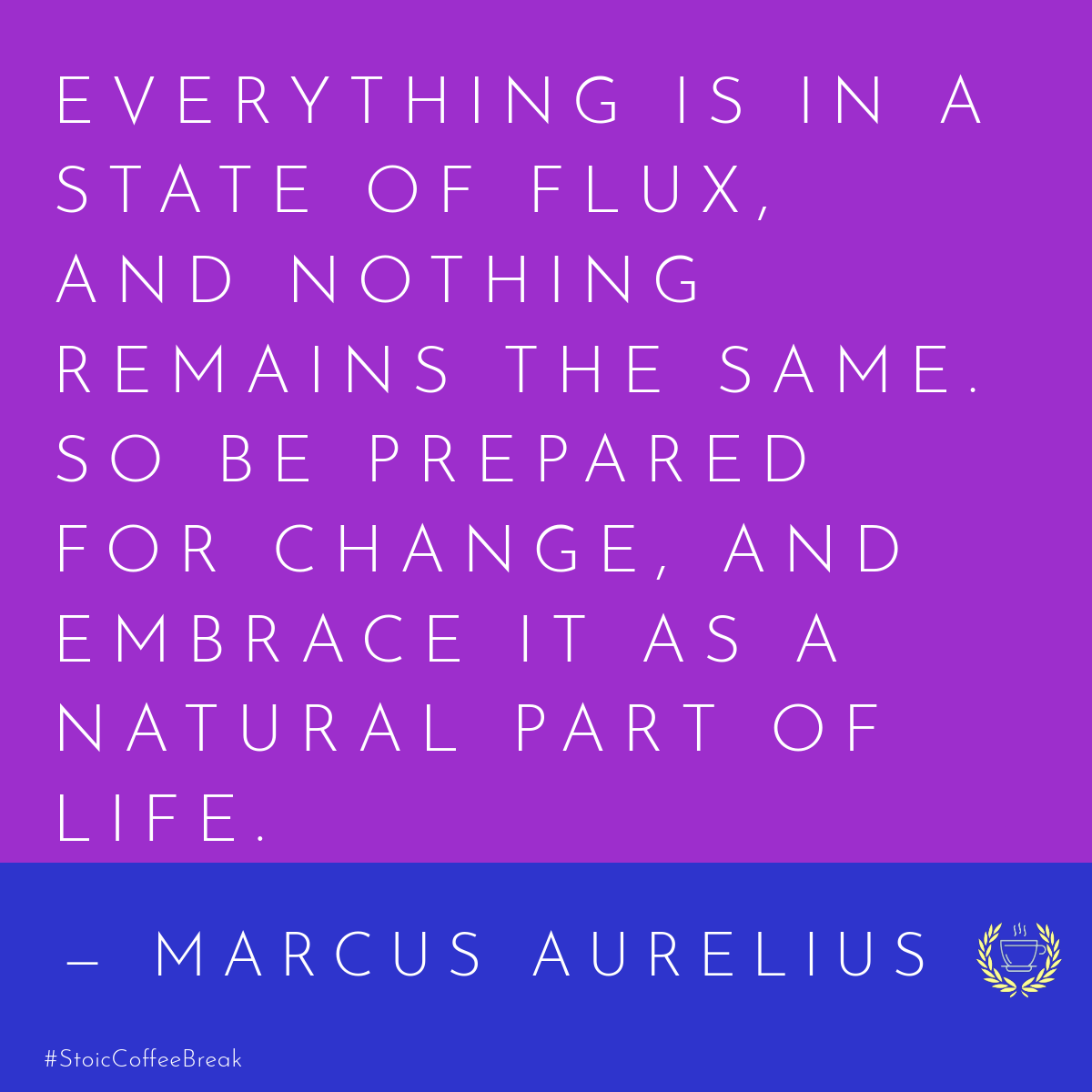
Far too often we’re focused on the things that change in this world and in our lives. But what are the things that don’t change? Today I want to talk about things we can build on that can help us through the ever flowing tide of changes that happen in our lives. "Everything is in a state of flux, and nothing remains the same. So be prepared for change, and embrace it as a natural part of life." — Marcus AureliusWhat Doesn’t Change?The other day I was listening to Tim Ferriss’ podcast and he was interviewing Morgan Housel, a personal finance expert who just finished up his book called Same as Ever: A Guide to What Never Changes. In the interview, Morgan tells a story about how a CEO was chatting with Warren Buffet, arguably the greatest investor of all time. The CEO was asking him back in 2009 if America would be able to recover from the financial crisis. Warren turned to the CEO and asked him, “Do you know what the best selling candy bar was in 1962?”The CEO responded, “No.” Warren said, “Snickers. Do you know what the best selling candy bar is right now?” The CEO responded again, “No.” Warren said, “Snickers.”Now, this story is emblematic of Warren Buffet’s investing philosophy: find the things that don’t change and invest in those. Far too often investors are betting on what think will change in the future. Because there are so many factors in our lives and the world that impact how things will turn out, humans are not great at predicting the future.The reason this story struck me is because this is very much how I view stoicism. Stoicism for me is about focusing on the things that don’t change, so that you can handle the things that do. Stoicism is not a set of rigid prescriptions that you need to follow. It is not dependent on a charismatic leader handing down dictates of how you should live. It is based on tested and timeless principles and ideas that have lasted through the ages and can be applied to every aspect of your life. So today, I want to go over some of the principles that I find useful in my own life, and hope that you can find them as useful as I do.Understanding What is Within Our Control"The only thing we can control is our own actions." — Epictetus In our daily lives, we encounter situations that are beyond our control, like traffic jams, bad weather, or the actions of other people. Because they are outside of our control, the more we try to control them, the more we stress out and create unnecessary anxiety. Instead of fretting over these, Stoicism teaches us to focus on our reactions to the things that are outside of our control. For instance, we can use the time in a traffic jam to listen to a podcast or audiobook, turning a frustrating situation into a productive one. We can enjoy and appreciate the storms or heat waves that nature brings our way. We can improve our communication skills and our patience when others make choices that impact our lives in a negative way. Accepting Change as Inevitable“Change is the only constant in life." — Heraclitus Change, whether it's in a job, relationship, or environment, is inevitable. The more we try to resist change, the harder we make things on ourselves. Change is going to happen whether we like it or not and we have the choice to embrace it or resist it. If we look at change as the thing that makes life interesting and worth living, then we stop fearing it, and embrace it. Seeking Growth Over Comfort“What stands in the way becomes the way." — Marcus Aurelius Challenges are not roadblocks, but pathways to personal growth. If there were no challenges in your life, you would never grow. The way to get better at something is working through it. Avoiding challenges doesn’t teach you how to get better at something. If you are constantly avoiding anything that is challenging or uncomfortable, then you are passing up opportunities to grow. This is why courage is one of the foundational stoic virtues because it take courage to forsake comfort seek growth.Practicing Gratitude"It is not the man who has too little, but the man who craves more, that is poor.” — Seneca Much of our unhappiness comes from our feelings of what we think is lacking in our lives. We think that by changing our circumstances we’ll be happier. We often think about how much happier we’ll be when we get the house or the car or the new gadget that we want. Our whole consumer culture and the marketing behind it is based on making you believe that your life will be so much better if you go out and acquire all these new and shiny things. But the thing is, our our circumstances and possessions don’t change who we are as a person. Sure, some circumstances are more comfortable than others, but we can’t always change our circumstance, and our possessions are mere objects and in the longer arch of our lives we are simply borrowing them since we can’t take them with us when d
S1 Ep 281281 - Self-Discipline is Self-Care
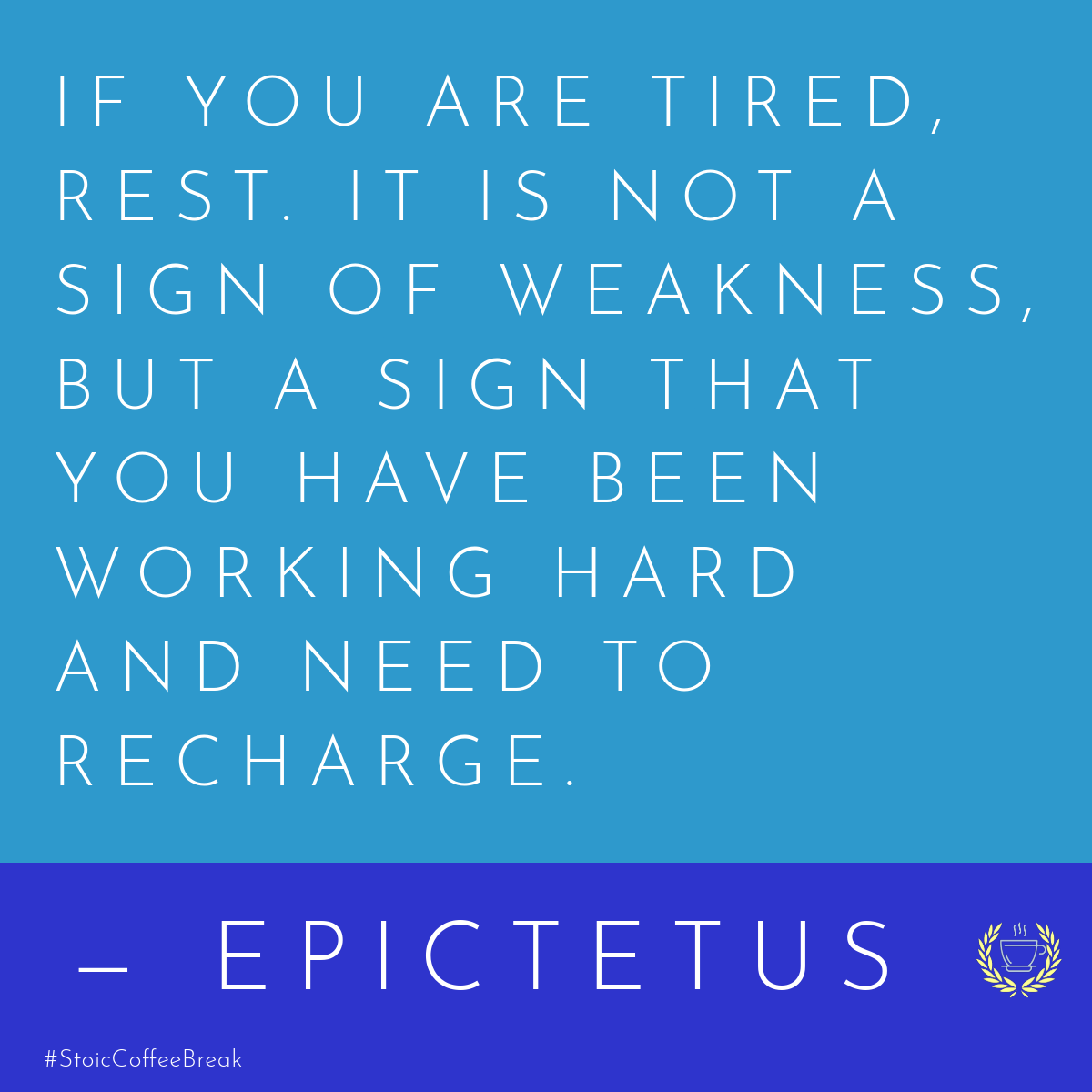
What do you think of when you hear the term “self-care”? Do you think of indulgences like triple chocolate ice cream or a bottle of wine? When you think of self-discipline, do you think of depriving yourself of the things you enjoy? Today I want dig a little deeper and think about what self-care really means and why it’s important for us to take time out and pay some attention to ourselves.“The mind must be given relaxation. It will rise improved and sharper after a good break. Just as rich fields must not be forced to produce a crop year after year, so constant work on the anvil will fracture the force of the mind.”— SenecaThe Stress of LifeLife can be very stressful. There are so many things that we need to take care of. Between work, family, school, social life, hobbies and other activities there are a lot of things vying for our time and attention. Add to that the complexity of modern life, societal stress and political divisiveness, life can often feel overwhelming. We often feel burned out and feel like we don’t have the energy to work on anything else outside of work, or family. When we get into this kind of rut, life can often feel like we’re just stuck in the same loop day after day. We never feel like we really have time to work on some of the goals outside of work that we might want to accomplish. This is often why so many people get home from work and all they want to do is just chill out and watch Netflix then head to bed. Others end up distracting themselves with video games, social media, as well alcohol or other substances to help distract them in hopes of reducing their stress.Over the past few years though it’s become part of the zeitgeist to recognize burnout and to work on self-care. As people find that they aren’t handling the stresses of modern life very well, they’re finding ways to be deliberate about carving out downtime and activities that help them relax and rejuvenate. OverindulgenceOften people use self-care as an excuse to overindulge or to do things that aren’t necessarily good for them, and might even have the opposite effect. It’s even become popular on social media for people to post about how they’re indulging in something and calling it “self-care”. Drinking too much, eating unhealthy foods, binge eating, or buying things you don’t need are all habits that people justify with the term “self-care”. The problem with these habits is that they only bring short term pleasure. They don’t provide the rest and rejuvenation that is truly need. They also don’t address underlying issues and often cause long term problems.Self-Care is Self-Discipline “Rest and self-care are so important. When you take time to replenish your spirit, it allows you to serve others from the overflow. You cannot serve from an empty vessel." — Eleanor BrownnSo, I want to propose the idea that self-care is more than just indulging ourselves in things that make us feel better in the moment, but rather that self-care is when we do what is good for us in the long term. It’s about taking care of ourselves so that we are better equipped to handle the other more demanding parts of our lives. It’s about knowing when and how to rest and recover so that we can push hard when we need to while avoiding burnout. A prime example of understanding why rest is so important is when you’re building muscle. When you lift weights you’re actually breaking down your muscles, and your body then rebuilds the muscles. Your body needs a certain amount of stress in order to get stronger, but it’s in the rest periods between workouts that your body rebuilds the muscles. Life is very much the same way. We need stressors and challenges to grow, but we also need to rest so that can face those challenges at our best.Know ThyselfSelf-awareness is the start of any change in your life. It takes time and effort not only to be self-aware but also to actually do something about the things that you learn about yourself through that awareness. You need to understand why you do the things you do. Are you drinking too much to avoid some emotional pain? Are you playing hours of video games each night to stave off loneliness? If you’re unaware of your own thoughts, motivations, habits, and behaviors, you are unable to change. You cannot change from a place of ignorance. The reason self-awareness is a core part of self-care is that in order to choose things that help you to take care of yourself, you need to know yourself. It’s not just about knowing what to avoid, but about understanding the things that you should pursue. You need to know what is actually helpful for you so you can live your life in a way that helps you thrive. Self-awareness is the first step to developing self-discipline.Self-DisciplineDeveloping self-discipline is a form of self-care because it helps you prioritize your own needs, values, and goals. Self-discipline is not about denying yourself pleasure or forcing yourself to do things you don't want
S1 Ep 280280 - Interview With Author Ryan Bush
Ryan Bush is the author of Designing the Mind and Become Who You Are. We sat down and had an interesting conversation about an understanding self esteem and the positive case for depression.You can find more information at his website designingthemind.org---Hello friends! Thanks for listening. Want to take these principles to the next level? Join the Stoic Coffee House Community! Stop by the website at stoic.coffee where you can sign up for our newsletter, and buy some great looking shirts and hoodies at the Stoic Coffee Shop. Like the theme song? You can find it here from my alter ego. :)Find me on instagram, twitter, or threadsLastly if you know of someone that would benefit from or appreciate this podcast, please share it. Word of mouth is the best way to help this podcast grow. Thanks again for listening. Hosted on Acast. See acast.com/privacy for more information.
S1 Ep 279279 - Not True But Useful
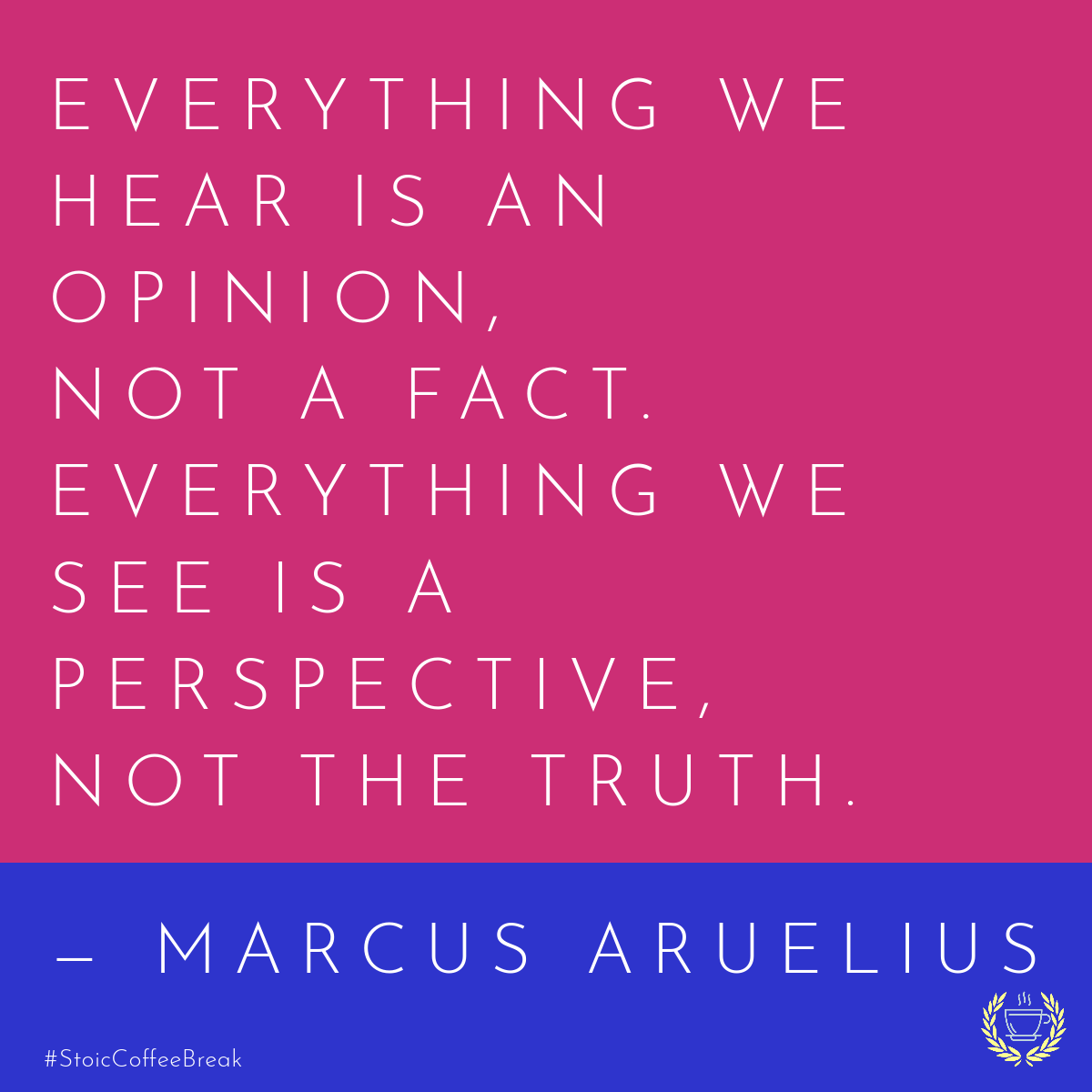
Can you hold beliefs that are not true, but are useful? know that I talk a lot on here about trying to get as close to the truth as possible. But are there times when it is useful to believe something even if you’re not sure of it yourself?“Everything we hear is an opinion, not a fact. Everything we see is a perspective, not the truth.”— Marcus AureliusA few weeks ago I was listening to Derek Sivers who was a guest on Tim Ferriss’ podcast. They talked about a few ideas that I found very interesting and fit right along with stoicism and how our perspectives can shape how we view the world. The overarching idea is called “Useful, Not True”, in that our perspective on something doesn’t have to be true, as long as it’s useful. In a way it’s a bit about self-deception, which is a little ironic after last weeks episode about how to be a little better about knowing when you are being lied to, and how to be little more honest. But self-deception is something that we all do, and as long as you are aware of what you are doing, there are times when you can believe something that may not be true, but is still useful. Derek listed off a few ideas and I want to discuss each of them here. You can also find them here: https://tim.blog/2023/04/23/derek-sivers-transcript/"Men are disturbed not by things, but by the views which they take of them."— Epictetus1. Almost nothing is objectively true.Things in the physical world are generally things that can be considered objectively true. It is not something that you have to believe in. It is something that is true no matter what anyones opinion is about it. Things like, my water bottle is made of metal and plastic, the sun is a giant flaming ball of gas, and I am speaking right now are things that are objectively true. Now, on the other side of that there are lots of things that people treat as if they are true, but are not. Some examples of thing that are not true: My country is the greatest. Family is everything.AI is the future. That person is offensive.I would be more successful if I were smarter or better looking.All of these things are just beliefs or opinions that we hold. They are not objectively true. "We suffer more often in imagination than in reality."— Seneca It is our own opinions that disturb us. Take away these opinions then, and resolve to dismiss your judgment about an act as if it were something grievous, and your anger is gone.”— Marcus Aurelius2. Beliefs are placebos. You’ve got to believe whatever works for you.This is what the stoics mean talk about the importance of our perspectives. It is our perspective on something that informs how we will feel and act. Let’s say for example that there is a traffic jam. One person might think the traffic jam is bad and get pissed off and angry about it and feel like the universe is getting in their way. Another might see it as some time to relax on a busy day, and sing along with the songs on the radio. Which belief is true? Neither. Either belief is just as valid, but most people would agree that the second one is certainly more useful. Any time you say, “I believe…” whatever comes after that is something that is not true. Unless it is something that is evidence based or objectively true, it is simply our perspective. For example, I would never say that I believe in my water bottle because it objectively exists.So why would we believe in something, even if we know that it is not objectively true? Because it can be something that helps you be better and accomplish something in the world. For example, Fred Rogers who created and starred in Mr. Roger’s Neighborhood believed that kindness was the most important virtue in the world and that we should all be kind to one another. Was he wrong in believing this because it is not objectively true? I don’t think so. Even though I can’t prove that we should all be kind to each other as an objectively true thing, I choose to believe it because I feel better when I’m kind to someone, and when others are kind to me.Another example of believing in something that cannot be proven but is useful is believing in an afterlife. For some people, they have a belief in an afterlife because to think that there is nothing after this life is something that is terrifying for them. While I have no idea what happens after we die, I can understand why people want to believe there is something after we die. If that’s something that keeps you going and lessens the distress in your life, then I think it can be useful, even if it’s not true or knowable. A prime example of how you can choose a belief that works for you is from Zeno of Citium, the founder of stoicism. He washed up in Athens after his ship was lost at sea and he lost all of his cargo. While trying to figure out what to do next, he spent some time at a bookshop. He was so taken by the teachings of Socrates that he asked the book seller where he could find someone like him to
S1 Ep 278278 - The Truth About Lying
Do you lie? Do you believe that everyone lies? Why are some lies acceptable? Why should we allow people to lie without repercussions? Today I want to talk about the different kinds of lies and deceptions, and what we can do to be a bit more honest, and a little more aware when others are trying to deceive us.“We tell lies, yet it is easy to show that lying is immoral.”— EpictetusWhy do we lie?For most people, we lie because it gets us what we want. When we lie, it implies that we either want to gain something by deceit, or that we know what is best for the person and have the right to impose our will on them. Sometimes we lie because it greases the social wheels and avoids conflict. Like when we tell someone that their hair looks great even when it doesn’t, it’s because we don’t want the other person to feel bad. We’re keeping the social situation from getting uncomfortable or awkward. When someone asks how we are doing and we say we’re doing fine, even when aren’t, it’s because we don’t really want to talk about it.In other cases we lie to avoid punishment or to somehow avoid the consequences of telling the truth. In my own life, I often lied to my father to avoid getting beaten because of something that he disapproved of. I would lie at church so that I didn’t get in trouble with the bishop. In either case, telling the truth was something that was not rewarded, so like any self-preserving person I would simply tell them what I thought they wanted to hear.Sometimes we lie to inflate our importance and impress others. We may embellish a story that we tell to others to get them to like us or think more highly of us. We may make our accomplishments on our resume sound more impressive than they really are so that we can get that job that we want.Sometimes we lie to manipulate or control others. By deceiving others we may get them to do what we want. We see this in political rallies all the time. There are some politicians who will simply say what they think others will want to hear even if they know they aren’t true. Whether that’s demonizing others with differing politics or those that are weaker or have no political power, they say things that will get others riled up because when people are upset about something they’re easier to control. We Want to Believe“Liars are the cause of all the sins and crimes in the world.”— EpictetusSo why do we fall for lies? Why do we believe some people even when they don’t have the facts on their side?For the most part, we fall for lies because as humans we want to believe other people. Society runs smoother and generally works better when we assume that others are telling the truth. The benefits of believing that others are communicating honestly outweighs the cost of being deceived from time to time. Also, most lies that people tell are usually inconsequential and cause little or no harm.Because we generally believe others, or at least want to believe others, it makes us particularly gullible, and targets for those who are good at deceiving others. Timothy Levine, a professor at the University of Alabama at Birmingham and author of Duped: Truth-default Theory and the Social Science of Lying and Deception writes: “People are typically honest unless they have a specific reason to communicate deceptively, and people tend to believe others unless suspicion, skepticism, or doubt is actively triggered”. Another big problem is that we all like to think that we are able to know when people are lying to us. But in study after study, we’re not that good it. We tend to believe people that sound confident and self-assured, even if they are misleading us. One of the most interesting aspects of deception is when we look at it through the lens of the Dunning-Kruger effect. The Dunning-Kruger effect is a cognitive bias where someone overestimates their knowledge and abilities in an area, but lack the metacognition to recognize their own incompetence. They will speak with strong opinions as if they’re an expert, yet they really know very little. When it comes to deception, this has an effect on both sides. Because we tend to trust others when starting out, when someone speaks confidently we tend to believe them. And on the receiving end, because we think we are experts at knowing when people lie to us, we overestimate our own ability to know when others lie to us. Future Liars… um… Leaders“False words are not only evil in themselves, but they infect the soul with evil.— Plato“The men the American people admire most extravagantly are the most daring liars; the men they detest most violently are those who try to tell them the truth.”— H. L. MenckenSusan Cain, in her book Quiet: The Power of Introverts in a World That Can’t Stop Talking talked about how she was in an information session for prospective Harvard Business School students. They were told that they should “speak with conviction…even if you believe something only 55%, say it as if your beli
S1 Ep 277277 - Embracing the Unexpected: How to Handle Life's Plot Twists Like a Stoic
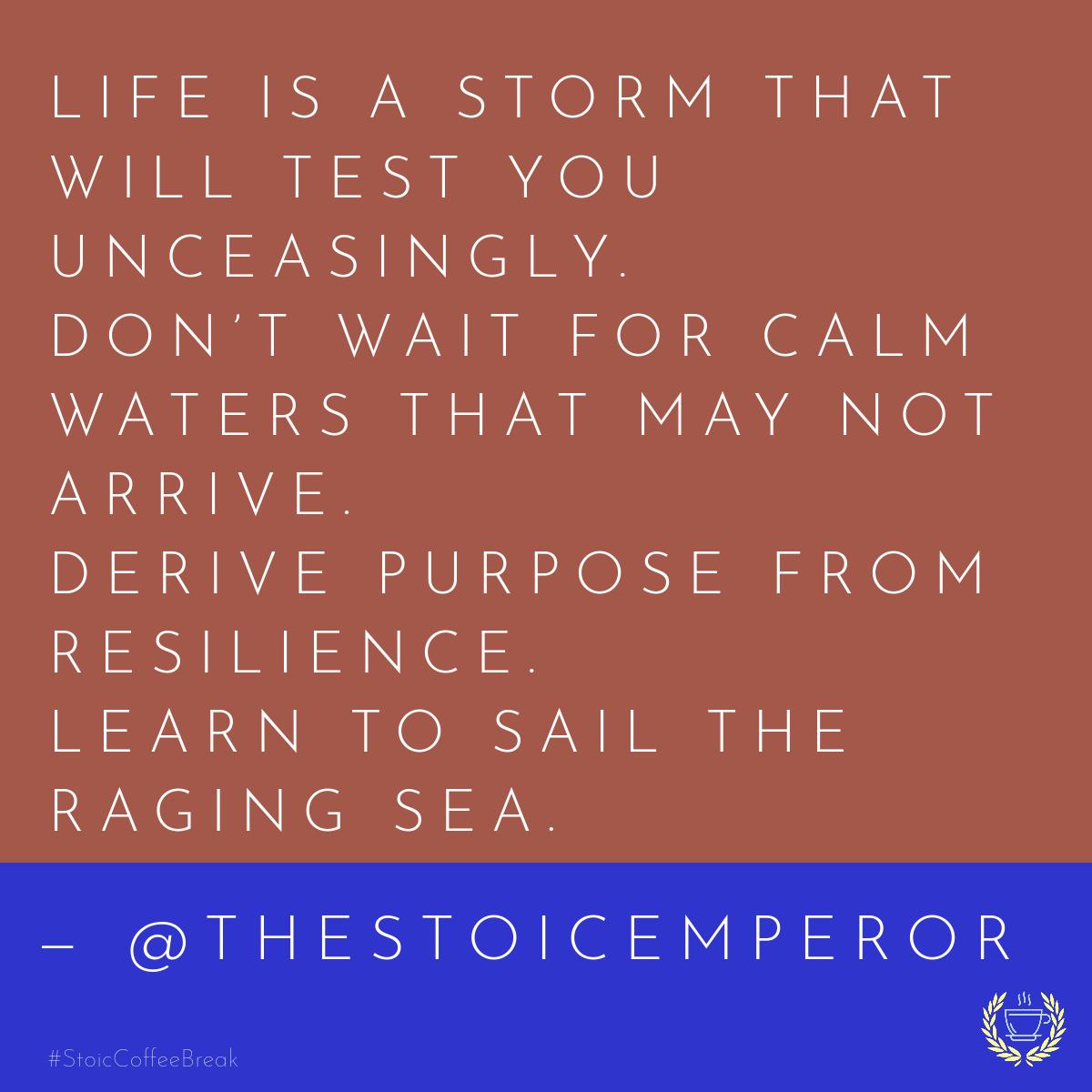
Do you fear the unexpected? Do you stress out when life throws you a curveball? Today I want to talk about how to handle, appreciate, and even look forward to the unexpected events that life brings your way.“All greatness comes from suffering.”— Naval RavikantUnexpectedLife is full of surprises. When we think that we’ve got things figured out and that things are going our way, something or someone pops up and throws a monkey wrench into our day to day that disrupts our lives and sends us spinning. Things like getting laid off, getting in a car accident, or even a critical diagnosis are all parts of daily life that we think will never happen to us, until they do. When these things happen to us we may get angry or stressed out, or feel like life is unfair. But the thing is, the unexpected challenges that happen often end up being the best things to happen to us. They might send our lives in a completely different direction. We might meet others who impact our life in a deep way. We could even discover our life’s purpose. The challenge is that it’s hard to see any of this when you’re in the middle of it. It is only through hindsight that we can go back and see the connections of the events that lead us to where we end up. Lessons “Life is a storm that will test you unceasingly. Don’t wait for calm waters that may not arrive. Derive purpose from resilience. Learn to sail the raging sea. — @TheStoicEmperor (twitter)There are those that think that the universe or god is sending you what you need to learn. That the challenges that happen in your life are happening because you need it. I don’t hold to this idea. Mainly, because it assumes some sort of intelligence that is making choices for what you need to learn in life. If this were the case, if every struggle that came someone’s way was a lesson for them, it would be given to them in a way that they would have taken the opportunity to learn and grow from it. I have seen time after time in the lives of people I know, and even in my own life, that when hard things come along, the lessons are more often than not just ignored. For me, I see that the challenges that come up in our lives are opportunities for us to take or reject. It is always our choice how we want to deal with them. The universe is indifferent. We can love the things that come our way, or hate them, but it doesn’t change that the fact that we have these challenges. The only thing that we can control about the unexpected things that happen to us is our attitude about them and how we want to deal with them.Control“I’m not a coward I've just never been testedI'd like to think that if I was I would passLook at the tested and think there but for the grace go IMight be a cowardI'm afraid of what I might find out”— Mighty Mighty BosstonesThe main reason why the unexpected is so uncomfortable is that it feels like a loss of control. Because it was not what we’re were expecting, it’s most likely something that we haven’t prepared for, so it can disrupt our sense of stability and security.It can be hard to let go of the way things were before the unexpected event occurred. We are comfortable with how things are and find ourselves resisting the changes that we have to make. Unexpected events force us out of our comfort zone.Often, it can be difficult to adjust to a new situation or circumstance. It can even reach the point where it feels overwhelming and stressful. We may not have the skills we need to navigate some unexpected events. We feel out of our depth and unsure of what to do. Because we had expectations of how we thought things should be, when unexpected events happen, it can cause us to feel uncertain about the future. We get stuck in the idea that tomorrow will be the same as today.But nothing in life stays the same. Nothing is certain. Life is change.Wars, disasters, illness, accidents, losing a job, and breakups are just a few unexpected things that we have no control over. These things are life changing and in the moment, the uncertainty can feel overwhelming.But this is when we need to remember the only things we can control is our perspective on the events that happen in our lives, and how we want to respond to them. In short, our will. To hate the unexpected is to hate life because in truth, everything that happens is unexpected. Positives“The truth is that our finest moments are most likely to occur when we are feeling deeply uncomfortable, unhappy, or unfulfilled. For it is only in such moments, propelled by our discomfort, that we are likely to step out of our ruts and start searching for different ways or truer answers.” —M. Scott PeckSo what are the positive side of unexpected things that happen to us?They can shake things up and lead to new opportunities or experiences. Often our lives are just going along and we fall into ruts or are stagnating. We may not seek out the things that we need to grow. We may be always seeking comfort or saf
S1 Ep 276276 - The Zen of Zeno: Exploring the Art of Stoic Patience
Are you a patient person? Do you pay attention in your life or are you just rushing through your day? Today I want to talk about how patience is one of the most important attributes you need to live a full life, and reach your goals."A man who is a master of patience is master of everything else." — EpictetusFastWe live in a world of instant gratification. We’re used to getting almost anything we want easily and quickly. When you buy something on amazon, you get it just a day or two. You want to see a movie, listen to that certain song all you have to do is open your phone or your computer. Want a date or to order dinner? There’s an app for that. But when it comes to personal growth or achieving our goals, often things don’t move that quickly. We may learn something and want to improve ourselves, but we are creatures of habit and changing behaviors and well worn thought patterns is not something we can just decide and change instantly. While I wish it were just as easy opening the menu of an app and choosing a few options, it takes consistency, and to be consistent takes patience. Patience“Man conquers the world by conquering himself.” — Zeno of CitiumPatience is something that needs to be practiced and cultivated. Our world is all about instant gratification and trying to get your attention all day long. They even have a term for it - the attention economy. Your attention is so important that they are willing to do whatever they can to get your attention. The more that apps and advertisements have your attention, the more likely you are to buy whatever it is that they are selling.Impatience "Patience is power. Patience is not an absence of action; rather it is 'timing' - it waits on the right time to act, for the right principles and in the right way." — Fulton J. SheenImpatience is a non-acceptance of reality. When we are impatient, we are expressing our frustration with reality for what it is and wishing that it was something else. We are registering out discontent with the now and want it to be something different than what it is. When we are patient, we have a strong sense of awareness. We are present where we are. We give the now - where we are, what we are doing, and what we want to accomplish our full attention. If you wonder why the quality of your work is not where you want it to be, notice how much attention you pay to what you are doing. Years ago I decided that I wanted to learn to play the cello. I got myself a nice cello, hired a teacher, practiced a minimal amount of time each day, and dutifully showed up for my lessons each week. While I made some progress, I felt frustrated because I wasn’t progressing as fast as I thought I should. I assumed that because I already knew a lot about music that my previous skills would help me to be proficient in a short amount of time. But after a year, I quit. Looking back on it years later, I realized that I was too impatient. I had expectations of where I thought I should be after a certain amount of time. When I didn’t hit those expectations, I found excuses about why I wasn’t making the progress I wanted. Excuses like, “I was just too busy to practice like I needed to”, or “Maybe the cello is just not my thing”. In reality, it was simply that I needed the patience to put the time and attention to my practice to get to the level that I wanted to be at. Procrastination Patience is not procrastination. Procrastination is about doing anything other than what you are actually trying to accomplish. It’s about distracting yourself from the task at hand, because there is some feeling of discomfort attached to what you are trying to get done. Patience is the opposite of procrastination. Patience is about taking your time with what you are doing so you give it your full and undivided attention. Patience is about sitting with the uncomfortable so that you can accomplish what you set out to do. Falling Behind"Patience is a form of wisdom. It demonstrates that we understand and accept the fact that sometimes things must unfold in their own time." — Jon Kabat-ZinnOne of the reason why many of us struggle with patience is that we feel like we are falling behind. In each culture there are often markers of what means to be successful. We may see others around us making some kinds of achievements and feel like there is something wrong with us when we aren’t as successful as our peers. We may have also created expectations around ourselves and where we should be, and if we’re not there we start to feel like we are failing. We begin to feel stress, which ultimately leads to us not getting things done on time, or at the level that we know we can. Do it WellWhen we choose patience over rushing, then we do whatever it is we are working on better. Whether we are washing dishes, weeding the garden, or coding an application, when we choose to be mindful and give it our attention, the quality will almost
S1 Ep 275275 - A Courageous Mind
Do you live in fear? Are there things in your life that you are afraid to try? Today I want to talk about why courage is the foundational virtue of stoicism, and how to develop a courageous mind."Courage is not the absence of fear, but rather the assessment that something else is more important than fear." — Franklin D. RooseveltCourageOne of the four virtues of Stoicism is courage. For me, this is the most important virtue. There are a lot of things in this world that cause us fear or anxiety. Most of these things are not things that can actually physically harm us, but still trigger the same physiological response in our body. Courage enables you to face and overcome adversity, which is a prerequisite for living virtuously. It takes courage to practice the three other virtues of wisdom, temperance, and justice because these virtues require you to reign in your ignorance, control your desires, and act against injustice in the world. Without courage, it would be difficult or even impossible to practice these other virtues consistently.But first, let’s define courage. According to the dictionary, courage is:“The state or quality of mind or spirit that enables one to face danger, fear, or vicissitudes with self-possession, confidence, and resolution; bravery.”When we dig a little deeper we find that courage comes from the Latin word “cor”, which means heart. In one of its earliest forms, courage meant to “speak one’s mind by telling all one’s heart”. Over time it has changed to its current definition, but I really like the idea that courage in our words and our actions is about what is really in our hearts. So now that we’ve established a basic definition of courage, let’s talk about why I consider courage to be the foundational virtue, meaning it helps us to live the other 3 virtues.Wisdom“To make good decisions, you need wisdom. To gain wisdom, you need experience. You get experience by making bad decisions.” There are many facets of courage, and if you ever want to read an interesting dialogue on courage, I recommend Plato’s Laches in which Socrates and several other discuss the nature of courage. Within that dialogue they talk about how courage is not just enduring something, but is also about doing so wisely, which I thought was great because it helps to show how the virtues are interconnected. To gain wisdom in our lives we need to be willing to step up and make choices. If we stand back and don’t take any actions in our lives and we aren’t willing to take risks, then we never gain experience. It is through trying and failing that we learn, and accumulate wisdom in our lives. It takes courage to step up and be willing to fail.JusticeThe universe is not fair in the way that most people think it should be, and justice is not something that is built into the world. This is why justice is one of the 4 virtues. Justice is something that we need to advocate for. It is through our courage that we stand up for fairness, rationality, and the equal application of the law to all that we are able to get closer to having a more just society. TemperanceIt takes courage to moderate ourselves. Whether that is moderating our emotions, how much we eat or drink, or our other desires, it takes courage to reign in the darker parts of ourselves. Courage is the core of self-discipline. It is the thing that helps us make better choices for ourselves.Courage itself is a moderating virtue. Courage helps us to balance fear, not eliminate it. Fear is a useful emotion, but like all emotions it needs to be managed. If we have too little fear, then we’re likely to be overconfident and reckless. Whereas if we have too much fear, then we are paralyzed and are unable to take action. The Courageous Mind“The tranquility that comes when you stop caring what they say. Or think, or do. Only what you do.” — Marcus Aurelius"Courage is resistance to fear, mastery of fear - not absence of fear." — Mark TwainNext I want to talk about the idea of the “courageous mind”. The courageous mind is one that is able to act according to reason and wisdom, rather than giving in to fear, anger, or other emotions. When you cultivate a courageous mind, then you are able to see and manage the emotions that may arise when you are in challenging or stressful situations. Cultivating the ability to be dispassionate at important moments can help you to make choices that are not only beneficial, but also avoid ones that you may regret later. The courageous mind is one that is able to remain calm and objective in difficult situations. A courageous mind is one that is able to see the big picture and act accordingly. In this way, courage is not just about being physically brave, but also about being mentally and emotionally brave. ResponsibilityWhen we develop a courageous mind, we step up and take responsibility for our own actions, rather than blaming others or making excuses. This type of courage is often called "mora

S1 Ep 274274 - Interview with Hannah Gaber for the Jew-ish Podcast
Listen to Jew-ish on SpotifyListen to episode 181 - Askers and GuessersHere's the transcript for this episode. Sorry if there are some bad translations. I tried to fix as many as I could. :) -----[00:00:09] Erick: Hello, friends. My name is Erick Cloward and welcome to the Stoic Coffee Break. The Stoic Coffee Break is a weekly podcast where I take an aspect of stoicism and do my best to break it down to its most important points. I talk about my experiences, my successes and my failures and I hope that you can learn something from them and make your life just a little bit better. So this week's episode is an interview that I did with Hannah Gabber. Now, Hannah is the host of a podcast called Jewish and she contacted me because she really liked my episode about askers and guessers. So she comes from an ask culture and I come from a guest culture. And so we sat down, I had a conversation about that. We talked about my life about how I left the church and fell into stoicism and kind of, it's a wide range of conversation. It was a lot of fun. Hannah is really smart. She's very funny and I recommend that you give her a podcast to listen again and that one is called Jewish and I will have a link to it in the show notes I will also have a link to the Askers and Guessers episode, which was episode 181. So you can go back and listen to that and kind of refresh your brain on what it is to live in a ask culture or a guest culture. I hope you enjoy this conversation as much as I enjoyed having it with Hannah. Erick: Asking doesn't need to be a bludgeon. There doesn't need to be a cudgel that you use against people. And that's what a lot of people have a hard time with directness. They think that it's using it as a weapon because you can be direct and you can still be kind. But some people are just going to be offended no matter what because it is a direct question. But if you can ask any question with a bit of compassion and a bit of kindness wrapped around it and let them know just saying, hey, you know, the reason why I'm asking this is because this is something I really need to understand about us. Otherwise it's going to cause a lot of problems going forward. [00:02:07] Hannah: Meet Erick Cloward. He's the host of one of my absolute favorite podcasts and very important part of my morning ritual. The stoic coffee break. I discovered the show during the depths of COVID when all of us were searching for something to look towards. I didn't realize it at the time, but he'd been recording for a while and I wasn't that far through his back catalog before I came across his sign off episode. So I finished all the episodes that were available to me and then I unsubscribed, but there really wasn't anything out there like it. So after gosh, probably over a year I decided, forget it. I'll just start from the beginning and listen to all of the episodes again. I went back to the show and there were all these new episodes, I began gobbling up the back catalog and I eventually came across an episode about asking versus guessing cultures. Erick has talked a lot on the show about being raised in Utah and growing up in the Mormon church and his less than always happy family history. But in his short form show, we don't really get to hear a ton about his actual journey out of those places and into the places of exploration and philosophy that he tries to inhabit. Now, when I heard the asking versus guessing cultures episode, just light bulbs going off in all directions. I saw reflections of myself in it. I saw reflections of people I've known over the years of interactions that I maybe didn't really understand in any case. Uh I got cheeky and stalked him on the internet till I found his email. And I reached out and said, hey, I'm nobody. But do you want to come on my show? And in characteristic uh stoic generosity, he was like uh sure. So I present to you Erick Cloward of the Stoic Coffee Break, which I will link in the show notes. Did you find that a lot of people came across the stoic coffee break during the pandemic? Yeah. Um, because you started it before that.[00:04:05] Erick: Yeah, I started it back in 2018. Uh Actually January 4th 2018, I remember because I, I had made a new year resolution. I was going to start a podcast and I had tried starting one before and it was about music soundtracks because I just, I love music soundtracks, you know. Um, and I, I made an episode or two but it just, it, I didn't like it. It was, didn't sound good. I was just, I sounded terrible in my voice and all the things I was super hyper critical about it. But then I realized that it was going to probably cost quite a bit to actually license the music to be able to play it or because I didn't know anything about, you know, is this commentary covered under fair use or any of those kind of things. So I was just like, I don't want to deal with all that. But yeah, my ex partner made me promise that I would do at least 100 episodes b
S1 Ep 273273 - The Four Types of Problems
Do you know that some problems are simple, while others are complicated, complex, or chaotic? Do you know the difference between them? Today I want to talk about how understanding the different types problems can help you face up to your challenges more effectively."We must not let the impressions carry us away so that we are not in control of ourselves, but we must receive them in such a way as to be in control of ourselves." — Epictetus Types of ProblemsA few weeks ago I was listening to Tim Ferriss’s podcast and he was interviewing Albert Brooks who is a columnist for The Atlantic and a professor at Harvard who writes and researches happiness. Now I’ve been reading Albert’s column in The Atlantic for years, so I was really looking forward to the conversation. They went over a lot of different topics and ideas, but there was one that they briefly talked about that caught my attention because I didn’t quite understand it. In the episode Albert talks about how his father taught him about complex and complicated problems, and that far too often, because we don’t understand the difference, we waste a lot of time and energy trying to solve problems in the wrong way. When we can understand what type of problem we’re dealing with, then we can start to apply the appropriate type of solution.As I began thinking and researching about these ideas so that I could understand the distinctions, I came across some articles that talked about what is called the Cynefin (pronounced “ku-nev-in”) framework which was developed by Dave Snowden in 1999 while working for IBM. The more I read about this framework, it really helped me understand several types of problems, and how to approach each of them. So let’s dive in and discuss the four main types of problems.Simple ProblemsFirst, we have simple or obvious problems. Simple problems are those where we can easily understand the problem, all issues are easily known, and relationship between cause and effect is clear and obvious. There are well established solutions, and any issues are easily resolved. This would be something like if you were baking cookies, you would need to get the ingredients from the store, follow a recipe, and bake the cookies for a set amount of time, and there you have your cookiesComplicated ProblemsComplicated problems are ones that, while they may be difficult and challenging, they are solvable or tractable. It means that there is an absolute solution to them, and they can be completed. A clear example of some complicated problems would be something like building a bridge, manufacturing a phone, or getting a college degree. There may be a lot of steps involved, and lots of moving parts, but the steps can be mapped out and followed, and the goal is quantifiable and can be reached. Generally, if it is a problem that can be solved, and it is not simple, then it is probably complicated. Complex ProblemsComplex problems are problems that have no known solutions, just best attempts. Complex challenges are creative problems, with many unknown, unpredictable moving parts. When you work on complex problems you often won’t know if your solution is effective until a strategy actually works, and even then there maybe tradeoffs that don’t show themselves right away. Complex problems are dynamic, and there will probably be lots of failure as you try different solutions.Examples of complex challenges are things like creating a loving relationship, running a campaign, or ending poverty. Complex problems are not problems that can usually be solved, but are problems that are managed on a continuing basis. They are fluid and ever changing, so the solution is always evolving. Complex problems are often confused with complicated problems, and people try to solve them using the same methods as solving complicated problems, which usually ends up failing and often making things worse than they were before.Chaotic ProblemsThe last main type of problem is chaotic problems. Chaotic problems are usually ones of circumstances that are out of your control. In these circumstances it is usually important to respond quickly, and the goal is usually to establish order or stability.Examples of chaotic problems would be emergencies such as a car crash, natural disasters like tsunamis or earthquakes, or chaotic environments like getting caught in a mob of people. There is not a lot of time to sit and think about a solution, and circumstances are often unpredictable or in a state of flux. While chaotic problems are very reactionary, certain aspects can be prepared for, though they are always just best guess scenarios and are subject to change as the situation unfolds. Creating an emergency or crisis plan can help mitigate some aspects of a chaotic situation. For example, firefighters think through as many contingencies as possible and train for things to go wrong so that they know how to keep calm and respond effectively when they do.What’s the Problem?“
S1 Ep 272272 - Drop Your Opinions, Live Your Principles
Do your opinions get in your way? Do your strong opinions cause issues in your relationships? What would happen if you weren’t so attached to your opinions? Today I want to talk about why we should be willing to let go of attachments to our opinions and how doing so can help you live a happier life.“Everything we hear is an opinion, not a fact. Everything we see is a perspective, not the truth.”— Marcus AureliusPerspectives“Be disentangled from all perceptions. They are not you.”— Brian ThompsonThe stoics talk a lot about how our opinions are one of the things that cause us the most stress in our lives, and that we can, at any point, choose to not have an opinion about something. Now what exactly does this mean? I mean, the stoics seemed to have some pretty strong ideas about what life is about and how to live. Is this is ironic? Does it mean the stoic are wrong?When the stoics talk about having an opinion on something, they recognized that an opinion is just our perspective on something. It is not something that is a fact. The problem is that we often treat them like facts, and get so attached to them that we’re willing to end friendships, and exclude people from our lives because they don’t hold the same opinions as we do.Judgments"It is not things themselves that disturb people, but their judgments about those things."— Epictetus First, lets talk about the different kinds of opinions that we have, and some of the downsides to each of them.Opinions are often judgments that we have about something. Usually these are based on some experience we have which cause us to form an opinion around something. While taking time to judge things properly is important, we need to be careful that we don’t make sweeping judgments or fall into black and white thinking. For example, we might see some bad behavior by someone and make a judgement that they are a bad person without knowing the whole context of a situation. Beliefs“Opinion is the enemy of reason. We prefer the plausible to the true.”—EpictetusBeliefs are simple strongly held opinions. It is not something that is based on facts, because if it were based on facts, then it wouldn’t be something that you would need to believe in. Often, we will justify our opinion on something by claiming that it is something that we “believe”, but this doesn’t make it any less of an opinion, or immune from scrutiny. In fact, I think that it’s highly important that we examine the things that we claim as beliefs. Any time someone claims that they “believe” something, just remember that they are simply sharing their opinion. Principles“Very little is needed to make a happy life; it is all within yourself in your way of thinking.” — Marcus AureliusI also want to differentiate between something that is a principle versus something that is an opinion. Generally speaking, a principle is a fundamental, foundational value that guides our actions. An opinion, on the other hand, is a specific idea or view about something that may or may not be based on a principle. In other words, a principle is like the foundation of a house, while opinions are the different rooms and decorations that can change over time. You may hold a principle of treating others with kindness, but have opinions about what kindness means in different situation. We may also have opinions that do not necessarily reflect any deeper principles, such as having an opinion about whether pineapple belongs on pizza, which of course it does.Another key differentiation of principles and opinions is that principles tend to be focused on things that are in our control, like our own thoughts and actions, while opinions might be more focused on things that are outside of our control, like what others think or do. Opinions“The first rule is to keep an untroubled spirit. The second is to look things in the face and know them for what they are.”— Marcus AureliusSo why do people hold onto and defend their opinions so strenuously?Often, people defend their opinions because they are afraid of being wrong or looking foolish. The insecurity that comes from being wrong about something can drive people to defend their opinions, even if their opinion is unhelpful, damaging, or downright wrong. Another reason why people feel such a strong attachment to their opinions that they want to feel certain about how they view the world. The world is a complex and confusing place that is not easy to understand or make sense of. For some, ambiguity and uncertainty are very uncomfortable, and so they look to find answers that make sense to them to reduce their anxiety. Often these ideas are not well thought out, but they speak to the persons preconceived ideas of how things are, so they latch onto them. Another key idea in Stoicism is to recognize the role that emotions play in shaping our opinions. When we're attached to an opinion, it's often because we're feeling a strong emotion like anger, fear, or pride. I
S1 Ep 271271 - Cultivating Connection: Stoic Insights on Loneliness
Do struggle with loneliness? Have the last few years of lockdowns and isolation been hard on you? Today I want to talk about loneliness, why it’s something that shouldn’t be ignored, and why it’s important for us to reach out and connect to others.“We are waves of the same sea, leaves of the same tree, flowers of the same garden.”—SenecaLonelyThe last few years have been a struggle for many of us. With the pandemic having made it necessary to curtail so much of social life, many of us have struggled to get our footing back and reconnect with our friends and community. As someone who is naturally extroverted, the pandemic was really hard on me and I know that I slipped into a bit of a depression. It’s taken effort over the past year to try and get myself out of the house and spend time with friends and family. More recently though, I’ve ended up facing a more stark loneliness. About a month ago my ex partner moved out, and I’m living alone for the first time since 2011. And even back then, I had my kids with me part time, so I was only alone for part of each week. Living alone in a house where I’m used to almost always having someone around has been far harder than I expected. Not having someone around to chat with and share both the mundane as well as the fun things of life feels very empty at times. Having no one else around for such long stretches makes it too easy to get lost in the darker parts of my mind. The house I live in is far too large for a single person, which makes it feel even more empty.As I’ve been dealing with this loneliness, I’ve been doing my best to get comfortable with it. I know that this is not a forever situation. I know that once I sell my house and do some traveling, I’ll face other kinds of loneliness as I find myself in new places and have to make new friends. I accept that it’s a part of my life right now, and I’m taking steps be comfortable with it, as well as reaching out to friends and family to meet up and spend time together. So it was interesting that last week I stumbled on an article in the Atlantic that talked about how last May, the Surgeon General Vivek Murthy published an advisory about a growing epidemic of loneliness and isolation. According to the report, even before COVID, around 50% of American adults reported substantial levels of loneliness. Over the past two decades Americans have spent far less time engaging with family, friends, and people outside of their homes, with just 16% of people saying they felt attached to their local community.Then the pandemic hit and pushed the accelerator on our loneliness.Among my friends it was really challenging for those of us who are extroverts. Since we feel regenerated by spending time with others, not being able spend time with others felt like being deprived of a central part of living. For me, weeks began to blur and feel like they were just repeats of the week before. Cabin fever set in, and even though I would go for walks through the woods near my home, what I missed was spending time and connecting with people. As the lockdowns continued, and the rates of infections skyrocketed, feelings of isolation felt even more pronounced. Many of my friends who are introverts even talked about how at first they thought it such a relief because they prefer to be less social. But over time, they realized that even though they prefer their alone time, they missed social connections from work and other activities. According to the surgeon general, when people are disconnected, they have a significantly higher risk of developing heart disease, dementia, depression, and stroke. Research has also shown that loneliness creates anger, resentment, and even paranoia. When you are disconnected from others, you also have less empathy and tolerance for others because you aren’t exposed to other opinions and ideas. Friendships help us support each other even when we disagree on things.Research over the last few decades have shown in multiple studies that one of the key predictors of living and longer and healthier life is how connected we are to our fellows humans. Having a strong friend group and support system is right up there with eating healthy and not smoking as far as predicting longevity. Community is one of the healthiest things you can have in your life.We Need Connection to SurviveI remember when I watched Castaway with Tom Hanks, and thinking about how loneliness would be one of the hardest parts of being stranded out on deserted island. If you haven’t seen the movie, I’m going to give you a few spoilers, but they help illustrate my point. Tom Hanks plays a FedEx employee who gets stranded on an island in the South Pacific for 4 years after his planes crashes in due to a violent storm. To deal with the loneliness, Hanks’ character, Chuck Noland, creates a friend out of a volleyball, and names him Wilson, after the brand of volleyball.When I first saw how they brought in the character of Wilson, I recog
S1 Ep 270270 - Benefit of the Doubt
Do you give others the benefit of the doubt? When other people disappoint you do you cut them some slack? Today I want to talk about why it’s important to give people some grace, and how it can make you happier with yourself.“Everywhere, at each moment, you have the option: to accept this event with humility; to treat this person as they should be treated; to approach this thought with care, so that nothing irrational creeps in.”—Marcus AureliusMy StoryOne of the things that went wrong in my last relationship was that I was not very good about giving my ex-partner the benefit of the doubt. When we would have arguments I would often take what she said and twist it into something that was done to hurt me. I would often assume that actions she did that took that I didn’t care for would done out of spite or meanness.She often complained that I didn’t give her the benefit of the doubt. That I was so sure what she meant by what she said or what she did, and unfortunately, it was usually that I assumed the worst, and gave everything a negative spin. And to be honest, she was correct. Now, the reason why we reached this state of affairs was because of me. Having grown up in a culture where I had to conform to fit in, whenever things got challenging, I would always try to figure out what I thought was the right thing to say was so that I didn’t get into trouble. This meant that rather than telling the truth about what I thought about something, I would try to figure out the answer that would please the other person, in this case, my ex-partner. But the thing is, when you live this way, you erode trust with other people, especially those closest to you. When you are constantly lying about how you feel and what you think, it makes it challenging if not impossible for someone to trust you.What happens in this situation is that the person who has to pretend to be something they’re not feels resentful because they feel like they can’t be themselves. The person that is being lied to is resentful because they feel like they pretender doesn’t trust them, and that they cannot trust the pretender. To put it mildly, this creates a very unhealthy relationship dynamic. Even if you love the other person deeply, and you want things to work, this kind of dynamic doesn’t foster trust on either side. I know this is a bit of tangent, but I want you to understand where I’m coming from so that when I dive into what things you can do to be more graceful with people, you can understand how I got to place where I really had to make an effort to work on this. I’ve talked to other people who’ve grown up in similar situations and they’ve talked about how they’ve had similar relationship issues. I hope that by sharing some of these things, that if you see yourself in a similar situation, you might be able to learn from my mistakes.Road to RuinWhat happens when we don’t give others the benefit of the doubt is that we can ruin relationships. It erodes trust because other people feel like they can’t make mistakes around us. Because we assume the worst of them, they feel like they can’t be vulnerable around us. It means that they can’t have a bad day around us when they aren’t at their best. When we don’t give others the benefit of the doubt, it also makes them less willing to want to give us some grace when we’re not at our best. This may not even be a conscious act on their part, but more that they start to become protective of themselves. When others, especially those who are close to us, feel like they cannot be vulnerable around us they put up emotional barricades to keep us out because we aren’t safe.Projection“It is our own opinions that disturb us. Take away these opinions then, and resolve to dismiss your judgment about an act as if it were something grievous, and your anger is gone.”—Marcus AureliusOne reason why we may not give others the benefit of the doubt is that we are so sure what we know what the the other person really means by something they do or say. We assume that our judgement about them is correct, regardless of what they do or say to explain themselves or their actions. And really this is just us projecting our thoughts and opinions on someone else. In my case, I would project what I thought my ex partner thought of me onto every word and action. Not what she really thought of me, but I what I assumed she thought of me. Since we can never truly know what others think of us, I would assume what she thought of me, and unfortunately, because I was so hard on myself and didn’t think that I was all that great of a person, I just assumed that she felt the same way. I was so sure that I knew the truth it didn’t matter how much she protested and tried to tell me what she really thought.Grace“The art of being wise is the art of knowing what to overlook.”— William JamesSo why is it important that we give others the benefit of the doubt? We are all fallible and make mistakes in our lives. Just as w
S1 Ep 269269 - Getting Unstuck
Are you stuck in life? Do you feel like you can’t break out of the rut you’re in? Today I want to talk about why we get stuck and offer some ideas of how to get unstuck.“What upsets people is not things themselves, but their judgements about these things.” — EpictetusGetting stuck in a rut is a fairly common occurrence in modern life. To be honest, it’s often been a curse throughout the ages. Because we are all creatures of habit, we often find something that works, then we cling to it because, while it may not be the best thing for us, it’s safe, and if we’re working in a creative realm we often have all kinds of fears and anxieties that pop up and make it challenging to move forward.The reason that I’m doing an episode on this topic is that I struggle with this every week. I wish that I could say that creating an episode each week was easy and that the ideas just flowed from my mind and through the microphone, but they don’t. Each week is a challenge that I face as I come up with an idea, find information and quotes to help illustrate the points that I’m trying to make, and sit down synthesis all these ideas into a good episode for you.As I’ve mentioned many times before, almost every episode that I put out is usually something that I’m working through in my personal life. As I work to try and solve the problems that I deal with, sitting down and creating an episode is a way for me to find some solutions, and do my best to share them with you. So why do we get stuck? What is it that keeps up from progressing forward in our lives?Lack of ResourcesSometimes we are stuck because have a lack of resources to make progress. That could mean that we don’t the funds to accomplish our goals. We may not have the right equipment or tools to complete a project. We may not have the opportunities for the education we need.Often the resource we lack most of is time. We may simply have too many other commitments and lack the time to be able to achieve what we want. I’ve run into this many times myself and have gone through periods of my life where I reduce the number of things I’m working on at any given time so that I don’t burn out.Other PeopleWe may be dependent on someone else. Sometimes other people are in positions that block us from being able to accomplish what we want. This could be anyone from a manager to even someone in your family. Probably the most challenging is when it comes from a partner. So, last week I sent out an email to all the people on my email list and asked them what their biggest challenge was when it came to self improvement. There were a lot of different answers, but one that came up more frequently than I expected was dealing with partners who were not interested in personal growth, and they felt like they were at odds with them in their efforts to improve themselves.UnknownSometimes we get stuck because we don’t know what to do. We may be trying something new, and because it’s new, we don’t know what steps are needed to move us forward. For example, as I’m working on turning the podcast into a full time job, I’m very unsure of what to do. Coaching, masterminds, creating courses, and learning how to market them is something that is way outside of my comfort zone, and there are plenty of times when I have no idea what to do next. In my case, there is certainly not a dearth of information, but rather there is too much information. I don’t know what next steps I should take because there are so many opinions of how to make this successful. BurnoutOften we’re stuck in a rut because we’re just simply burnt out. We might be over scheduled. We might be just trying to take on too much. We might have other obligations or people that have demands on our time that we don’t have the courage to step up and say no to. Burnout is something that is very real, and often times it takes us crashing and burning to recognize that’s what’s going on in our lives, and this will often force us to take step back and start to care for ourselves a little better.Fear“The limit is not the sky. The limit is the mind.”— Wim HofI think the biggest reason that we get stuck in our lives is fear. Fear is the primary driver of so many of our actions, that we may not even be truly aware of it. But the thing is that fear is caused by our own minds. Most of the things that we are afraid of are things that we just imagine might cause us some kind of pain, but in most cases the only pain we ever feel is our own distress, not any real physical harm.There are different kinds of fear that can keep up from moving forward. First and foremost is the fear of failure. We can get so fixated on not being able to meet certain expectations, that we fail to even get started on a project or we refuse to put ourselves out there. This fear can also be driven from several places such as our fear of being judged by others, especially when we sensitive to external validation from others. Rather than even trying, we just avoid
S1 Ep 268268 - Creation is the Purpose of Life
What do you think the purpose of life is? Do you ever wonder why we’re here? Today I want to talk about some ideas of what we’re supposed to do with the one life that we have.So while I normally talk about something that is directly a stoic teaching, I want to veer off in a different direction on something that has been rattling around in my head for a while. I hope you enjoy this weeks departure. There are a lot of challenges in this life. Probably the hardest is to understand what is our purpose in life. I think from the earliest days of mankind, every human being has wondered, “Why am I here?” Every religion, mystic, philosophy, even science has tried to answer this question, and we still have no conclusive answer. There has been no divine being or alien visit to come down and tell us all why we are alive on this planet. To be honest, I don’t know either. But the more I think about, the I’ve come to the conclusion that we are here to create. To Create Is Human“Creativity involves breaking out of established patterns in order to look at things in a different way." — Edward de BonoFrom the dawn of time, human beings are driven to create. From a purely biological sense, we spend a lot of time and energy making sure that we can survive long enough to make it to adulthood and procreate. Besides breathing, eating, drinking, and sleeping, sex is one of the strongest biological drives we have. From the outset, next to survival, the first biological impulse is to create a new life.Once we have the basics of life, we set out to create things. We build houses and roads, and towns and cities. When you think about it, all of our jobs are either to create something, to aid in the creation of something, or to help in the maintenance of something that has been created.From there, we try to understand the world around us. We tell stories and draw things real and imagined. Write sonnets, songs, and symphonies. Build cars, bridges, skyscrapers, and spaceships. If we can imagine it, we try to create it. It’s our willingness to try things that are silly and even stupid that help us to move forward as a species. It’s this ability to think of things that might be outrageous or ridiculous that lead us to pursue crazy ideas in physics, and other sciences that lead to amazing things. It is our creativity that leads us to try things that at first seem outrageous, but later prove to be incredible breakthroughs and advances for humanity.Nature is Creation Nature itself is all about creation. The fact that seeds form trees and plants with the right conditions to create forests and food, such a wide variety of animal and other organic life on this planet. I live in Oregon, where it seems like if there is some kind of land that is not cultivated, nature will fill it in with weeds, ivy, or blackberry bushes. RedefineOne of the first things I want to do is redefine what it means to be creative. One of the things that I find most interesting when I talk with people about being creative is that many people consider themselves to be uncreative people. And I think this is wrong. Everyone is creative in their own way. I think we need to redefine creativity from a narrow scope of artistic endeavors to a wider scope of anything that helps improve the world. Planting and tending a garden is creation. Building out your company’s computer network or developing and inclusive HR policy can be itself a creative act. Being a good parent who raises resilient kids can be a creative act. Being a teacher that helps kids think and become the leaders of the future is a creative act. Creative Solutions"Creativity is just connecting things. When you ask creative people how they did something, they feel a little guilty because they didn't really do it, they just saw something. It seemed obvious to them after a while." — Steve JobsCreation is not just about creating art, but about creating in everyday life. Ideas to help fix problems in the world are acts in creation. There are a lot of problems in the world, and in order to solve these problems, we need innovative solutions. We won’t be able to address the problems of tomorrow with the same solutions that we have had in the past or present. We’ll have to solve them by thinking in ever more creative ways that build upon or even possibly completely disregard previous knowledge, ideas, and solutions.Now, the reason I think we should all try to create something artistic is that creating art can help us learn to think of things in different ways. It allows us to shift our perspectives and see things from different viewpoints that we might not have ever considered. It gives us practice of creating things that did not exist before. It stretches our minds to see things that are not obvious, to see details in things that we might have missed before. It helps us meld disparate ideas and technologies that we otherwise might not have tried i
S1 Ep 267267 - Conquering Victimhood with a Stoic Mindset
Are you a victim? Do you put yourself in the role of a victim rather than owning up to and taking responsibility for yourself? Today I want to talk about why we fall into the role of victim and how we can step up and be responsible for ourselves.“An ignorant person is inclined to blame others for his own misfortune. To blame oneself is proof of progress. But the wise man never has to blame another or himself.”— EpictetusLife HappensThere are a lot of things that happen to us in life. As the stoics have told us time and again, there are very few things that we control. In short, we control our thoughts, our choices, and our actions, and that’s about it. So if we control so little, doesn’t that make us the victim of the circumstances that we have no control over? When things go wrong, can’t we just blame it on the universe? Other people? The government? Sure. We can always do that. We can put the blame for our unhappiness on someone else. It is always a choice that we can make. But, if we want to actually be happy, grow, and make progress in our lives, blaming others is a waste of time. The sooner we move out of the role of victim, the more likely we are to create happiness, and actually accomplish the things that we want to in our lives. So why do we allow ourselves to become the victim in so many ways? Why would we let go of the power we have and put ourselves in a place of weakness?Alibi“People think that if they complain about life, life or the world might change. But of course this does not happen. You cannot change Nature and its laws. It is what it is. No amount of complaining, resentment or mourning will help. Accept, let go and move on.”— The Ancient SageOne of the main reasons that we fall into the role of victim is that it gives us an alibi for failing at something. Often we try to make ourselves feel better by making the reason for our failure something or someone else. If the reason for failing is external to us, then we feel like less of a failure because it was due to something else that we do not have control over.Coming up with excuses also removes the pressure from having to make changes and actually do something about the situation we find ourselves in. If we can place the blame outside ourselves and find some other reason other than ourselves for why we failed, then we don’t have to change. Change is hard and we will look for all kinds of reason to not have to put in the work to improve. I know that in the past that I would fall into this way of behaving. Much of that had to do with growing up in the church and the turbulent home life I had growing up. In both cases, if I had a good excuse for why I had done something then often things went more smoothly and I didn’t get in as much trouble as if I had just owned up and taken responsibility for my actions. If I could come up a good enough excuse, there was good chance I could escape punishment for my actions. This bad habit took a long time to become aware of and even longer to remove from my way of operating. But just like everyone, I sometimes fall into coming up with excuses for my not so great behavior. It takes a lot of effort to change this kind of behavior, especially when it worked so well in the past.AttentionAnother reason why we will play the role of a victim is that it brings us attention. Most of us want to be noticed by others, and playing the victim, we have something that sets us apart without having to put much work into it. Rather than putting effort into something and receiving attention for our actions, our self victimization allows us to feel important with little work. There are people who continuously cast themselves in the role of the victim for whatever life brings their way. Every new setback is something to complain about and to tell others about how unfair their life is and garners even more attention. SympathySecondarily to garnering attention, playing the victim can garner sympathy from others. When we are the victim and are in a position of weakness, it plays on the sympathies of others. On the whole, people like to help others who are in need, and this exploits the natural tendency that most people have to helps others. Garnering sympathy makes us a feel like we are loved and that people care for us, but again, it can easily be used to manipulate others into getting us what we want. The sympathy we get from others in our victimhood also becomes a way of validating our feelings and our sense of righteousness. The more validation we get, the more we feel like we don’t have to make any changes to our behavior. Because we feel like we are “right” in our feelings of being a victim, we continue on on this role without ever really questioning ourselves. Growing up I remember a relative who always had something wrong with them. Their spouse and other family members were always doing everything for them because their wide ranging ailments were used as excuses to not have to do
S1 Ep 266266 - Finding Balance: The Paradox of Pain and Pleasure
Do you think that life should be all pleasure and no pain? This week I want to talk about the balance between pain and pleasure and why if you want more pleasure, you may have to add more pain to your life.“If one oversteps the bounds of moderation, the greatest pleasures cease to please.”—EpictetusThe Paradox of Pain and PleasureA few weeks ago, I had an episode called Suffer Well, and in that episode I talked about how we should be willing to put ourselves in pain deliberately because it teaches us how to deal with unexpected suffering. I also talked about how exposing ourselves to the right amount pain helps us grow, become more confident in ourselves, and find purpose in our lives. This week, I want to explore the link between pleasure and pain from a slightly different angle. Last week I was listening to a two part episode on Hidden Brain, which is one of my favorite podcasts to listen to. The episodes, The Paradox of Pleasure and The Path to Enough talked about research into the connection between pain and pleasure and how if we are only pursuing pleasure, we can actually end up causing ourselves a lot of pain. In the episodes, Dr Anne Lembke, who is Chief of the Stanford Addiction Medicine Dual Diagnosis Clinic at Stanford University, talks about how because pain and pleasure are colocated in the brain, when we experience pleasure and get a dopamine hit, the brain automatically tries to balance it out. Think of it like a seesaw, that as soon as you push on one side, the brain starts pushing on the other side to achieve balance, or what is called homeostasis. This is why when you indulge in something pleasurable, such as taking drugs, drinking alcohol, eating sugar, or even checking social media, your brain is constantly trying to balance things out. This is why we get a hangover, come down effects from things like drugs and alcohol, and reduced pleasure from social media.This balancing act in our brains is why many people find pleasure when they do painful things. As I talked about in Suffer Well, when I’m out cycling and stressing my legs I notice that when I get home and I’m relaxing after my shower, I have this pleasurable buzzed feeling from the endorphins that my body produces after I exert myself. This is the same phenomenon as a “Runner’s High”, but on wheels. Almost any physical activity can generate similar effects. I know that I feel better after a walk, lifting weights, or even just 20 minutes of yoga. Another example where pain can cause pleasure is when people who like to eat really spicy food talk about the pleasurable high that kicks in after eating something spicy. It’s because the body kicks in pleasure to help balance out the pain that you feel.I like to think of this like Newton’s Third Law of Motion, which states, “For each action, there is an equal and opposite reaction”. It appears that for pain and pleasure in our brains, this is also the case. The more we pursue pleasurable things, the more we create a dopamine deficit, and the more we do things that are challenging and at times painful, we are rewarded with a natural dopamine increase.Addiction“A person who has built his life around pleasure is bound to be disillusioned. Hedonism is not sustainable, and it leaves a person empty. We are not meant to experience sustained pleasure. Therefore, to cope with the drab routine of daily existence, one must find meaning somewhere.”— @TheAncientSageWhile most people apply temperance to alcohol, we need to consider that almost anything can become an addiction. In fact, the researcher, Anna Lembke, talks about her own addiction that disrupted her life in a fairly dramatic way. And you might be surprised at what it was: romance novels. She became enthralled with the erotic portions of romance novels to the point where she would read until 3 or 4 in the morning even though she had to be at work early in the morning. She found herself reducing her time spent with family and friends. To keep others from knowing what she was reading, she bought a kindle. She was losing connection with the real world and escaping to fantasy in the pages of erotica.Other addictions that are mentioned in episode include dugs, online gambling, pornography, shopping, food, video games, and even social media. We have so much instant pleasure at our fingertips we can easily find ourselves addicted without even really being conscious of what is happening. Because our brains are always trying to keep homeostasis, after a certain point, those pleasurable things can actually start to cause us harm.ToleranceWhere we really start to run into issues with pleasure that when you keep doing something on the pleasure side, and you get that dopamine hit, then your brain tries to balance it out by reducing the pleasure you get from it. That means in order to get the same amount of pleasure you had from the previous hit, you have to have more. You can build up a tolerance to almost anything pleasurable, to the point
S1 Ep 265265 - The Road to Growth: Why the Journey Matters More Than the Destination
Why do you set goals? Why is it important for you to accomplish those goals? Today I want to talk about why we should try to accomplish goals, even we never achieve them.“That which we desire lies across an ocean of hard won knowledge.”— @TheStoicEmperor (twitter)AchievementBecause we live in an achievement driven culture we often feel like if we don’t achieve certain things that we are falling behind. Whether that’s getting a college degree, making a certain amount of money, or achieving a certain amount of fame, there are always areas where we may feel like we’re not accomplishing what we think we should. But, let’s stop and think for a moment. Is there anything in this world that we actually have to accomplish? If you think about it from the most basic level, the only thing you really need to accomplish in this world to be a successful human is basic survival. Everything else is just things that we choose to do. There is nothing that we actually have to do. So if that’s the case, why do anything?Because part of being a human being is to learn and grow. It’s fundamental to our nature. It’s hardwired into us. I mean, just look at a baby. They can’t help but learn and grow. They’re always curious about everything and trying to learn and understand anything they come in contact with. They’re always making noise as they figure out how to speak. Curiosity, learning, and improvement are very natural things. Process vs. Outcome“Give yourself fully to your endeavors. Decide to construct your character through excellent actions and determine to pay the price of a worthy goal. The trials you encounter will introduce you to your strengths.”—EpictetusHave you ever had a time when you accomplished an important goal? Maybe you worked hard for a promotion at work, or you got a car that you had always dreamed of only to find that you were happy about it in the moment, but a few weeks or months later, you were at the same level of happiness as before you achieved you goal? This is because far too often we get stuck on the outcome, of thinking that the actual achieving the goal that will make us happy. In study after study, scientists have found that even when they achieve some goal, people find that their happiness only lasts for a short period of time, then they find themselves at the same level of happiness as before they achieved it. This is called the Hedonic Treadmill, meaning that in order to sustain the same happiness, we have to keep achieving even more because we are never satisfied. So if this is the case, if we are not happier after we achieve out goals, then why should we even try to achieve or accomplish anything more? Why not just coast along and do the minimum in life? We work to achieve our goals not for the outcome of the goal, but because of the person we will have to become in order to achieve that goal. We go after goals because of the growth and change that will happen when we try to accomplish them. The work that we put in to achieve those goals stretches us in ways that otherwise would not occur in our everyday life. The skills we have to learn and the processes we have to put in to place will help us become a better person. The journey to a goal is far more important than the goal itself. A goal is something to give us a direction.Man on the MoonIn 1969, the US landed the first manned craft on the moon. This goal had been started years earlier when President John F. Kennedy challenged NASA to put a man on the moon before the Russians did. While part of the reason for this goal was to prove military superiority over the Russians, Kennedy also knew that to land a man on the moon was an audacious goal. In a speech to Rice University in 1962, Kennedy said:“We choose to go to the Moon... We choose to go to the Moon in this decade and do the other things, not because they are easy, but because they are hard; because that goal will serve to organize and measure the best of our energies and skills, because that challenge is one that we are willing to accept, one we are unwilling to postpone, and one we intend to win.”Kennedy knew that work needed to get a man on the moon would be the organizing principle behind great advances in humanity. The technology that would have to be created to accomplish such a goal would need to be invented. He knew that discoveries in mathematics, engineering, material science, and many other fields would need to happen before we able to successfully have anyone striding on the lunar soil. He knew that even if we failed, the progress that we as a society would make in trying to reach the goal would be incredible.From that one goal, we now have all kinds of amazing technology. Things like improved fireproof gear that was created for astronauts is now standard in fire departments around the world. Other inventions that are in wide use include water filtration systems used to purify water, freeze dried food, camera technology for telescopes t
S1 Ep 264264 - Personal Maintenance
Are you always looking for the lazy solution? Do you try to find “one and done” solutions to the problems in your life? Today I want to talk about how most progress is not just about knowing what to do, but about doing it consistently.“How do you move forward? One step at a time. How do you lose weight? One kilo at a time. How do you write a book? One page at a time. How do you build a relationship? One day at a time. In a world obsessed with speed, never forget things of real worth and value take time.”— ThibautPersonal MaintenanceThe other day I was talking with my therapist and she mentioned how some of the issues that I’ve been struggling with were things that I knew and could do, but are things that I needed to be better about continually applying what I already know. As we discussed it a little further, the thought occurred to me that most things in our lives are not about a big breakthrough idea, but the consistent application of things we already know. It’s about personal maintenance. This kind of maintenance is something that we all need to do, but is not easy to because it feels like they’re just small things that we have to do over and over again. But, it’s kind of like showering - it might be annoying that we have to do it regularly, but if you don’t you really notice it.But we often just want the easy solution or we want something that we just do once and never have to do again. There are very few things in life that are just one time things that once they’re done you never have to work on them again. As I was working on this episode, I struggled to think of anything in life that falls into that category. I mean take for example, when you have a kid. When the is born it’s not like that’s the end of it. In fact, that’s just the beginning of a whole endeavor of bringing up a kid to adulthood. When we have this kind of mindset, then it makes it challenging to make progress because we’re too focused on just getting through whatever it is that we want. This creates a feeling of impatience because we place our satisfaction on the end goal. When we get too focused just getting through to the end of what we are doing, then we are often unhappy while we’re doing it. We want the outcome so bad, that we miss the journey. When we can learn to appreciate the process of what we’re doing then we can really enjoy it, and since life is all about the process of living, we can apply it to anything in life. Never Done“Progress is not achieved by luck or accident, but by working on yourself daily.”— EpictetusI think the biggest thing that comes to mind is that we are never done with personal improvement. You never reach a place in your life where you can say that you are done growing, learning, or improving. And for me this is a beautiful thing. I love the idea that we always have space to grow and to learn. In fact, when I was a teenager and the Mormon’s talked about how when you die and go to heaven, if you have been righteous enough that you’ll be perfect and be like god. This always troubled me because I realized that if I knew everything and was perfect, I would get bored because I have such thirst for learning. This was actually terrifying for me. I get a dopamine hit when I learn something new and interesting. When I have those moment when something clicks for me on an interesting idea, it’s like a rush. It’s honestly a big driver for why I do this podcast. Doing > AchievingBecause we live in a goal oriented and achievement based culture, we need to be careful with making our happiness dependent on our accomplishments. When we set our worth based on outcomes, we are putting our happiness and worth on things outside of our control. This could be something as basic as needing to own a certain size of house or model of car as a symbol to show others our value.Often, we get stuck in the idea that we need to be achieving and accomplishing things in order to feel like we are a productive human. And while accomplishing our goals is good, our goals should be the things that we aim at because they are the things that will help us create processes in order for us to grow. But let me state this clearly, we don’t need to accomplish anything to be a good human. We use goals to set a direction for us because we know in the process of trying to achieve that goal, we will grow and learn. Now, just because I said we don’t need to accomplish anything to be a good human, most of us feel better about ourselves and about our lives when we are contributing to something. We don’t have to have massive achievements. We just need to be contributing to something in some way. We want to feel useful. Big Effort, Little Maintaince“A journey of a thousand miles begins with a single step.” — Lao TzuSometimes we do need to take big actions to get things to where they need to be. That may be a project at work, a personal breakthrough, or some other big a change in your life like getting ma
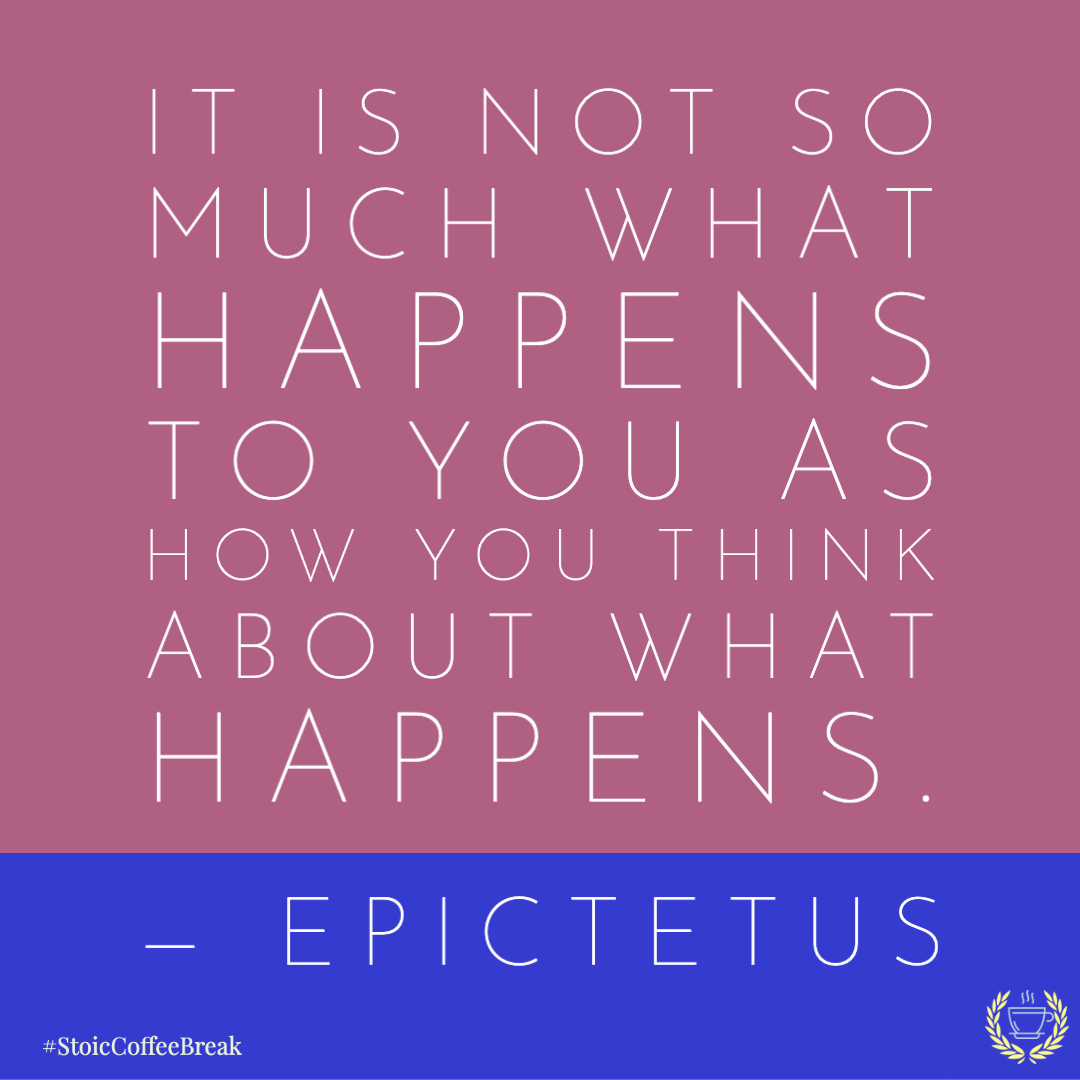
S1 Ep 263263 - No Self
Do you think of yourself as a “self”? What if we had no part of us that was an enduring self? How would that change how you acted in the world? Today I want to talk about the idea of how we would view the world different if there was no self.Who Am “I”?“It is not so much what happens to you as how you think about what happens.”― Epictetus“Your happiness depends on three things, all of which are within your power: your will, your ideas concerning the events in which you are involved, and the use you make of your ideas.”—EpictetusHow do you think about yourself? Meaning, when you refer to the “I” that is you, what do you think of? I know for me, and a good number of people, we think of this “I”, the “me” part of us, as our core, as the pilot of our bodies and our consciousness. This is the “I” is also referred to as the ego, and we consider is a core part of our identity.The reason that I’m talking about this idea is that this morning I stumbled on an article (https://bigthink.com/the-well/eastern-philosophy-neuroscience-no-self) that claims that the self as most of us think about it does not exist. At first, I was skeptical, but as you well know, I’m always curious to take in other perspectives and if there is something useful that I can add to my world view. The author, Chris Niebauer is a neuropsychologist, and he does a pretty job of convincing me that there might not be a “self” in the way that we know it. Thinking of the “I”, the pilot that is us the navigates us through the world is pretty consistent in the western world. But in the eastern world, in traditions such as Buddhism, Taoism, and others, they hold the idea that there is no self and that what we think of as the “I” or ego, doesn’t actually exist. The self is just an illusion. The self then is a phenomenon that happens because of the process of thinking. That without thinking, the self does not exist. I think the best line in the article is when he says, “The self is more like a verb than a noun”, meaning that unless the mind is thinking there is no self. The self is a process, and only exists when thoughts are happening. As a side note, this might explain why we have around 60,000 thoughts a day, as the mind is in a constant cycle of reinforcing the self.He points out that neuroscience has made tremendous progress in the last few decades as far as mapping out what parts of the brain handle which tasks. We know where the language centers are. We know which areas of the brain handle recognizing faces or the emotions of others, but there is no place in the brain where the “self” resides. Split BrainNiebauer also talks about different experiments and incidents that have happened throughout the last century have taught us much about brain is creating our sense of self on the fly, that it is not something that is permanent and fixed. Where they made some real progress in this area was working with patients who had suffered from severe epilepsy. These patients had the corpus callosum, which is the communication layer between the two hemispheres, severed, so that they now live with what is called a “split brain”. In doing this, the patients no longer suffered from debilitating seizures, but their hemispheres no longer communicated properly. This allowed scientists to perform some fascinating experiments. They would give instructions to the right side of the brain by showing them cards with instructions to just one eye. The right brain is the acting portion, and so when they would show them cards with actions such as “stand” or “laugh”, the patient would stand or laugh. But when they would ask them why they stood or laughed, the left brain, which is the “interpreter”, would answer the question. Since the left side had no knowledge that the original instruction that came the right side of their brain, it would try to explain things by using what information it did have, and would make something up in an effort to make sense of what was going on. No-Self“You have power over your mind — not outside events. Realize this, and you will find strength.”— Marcus AureliusSo what exactly does this mean? According to the author it means that there is no single self or pilot that is in control of us. The left hemisphere is constantly interpreting what it thinks is going on and gives meaning to it on the fly, which guides our actions. This interpreting process is what tells us in real time what we like or don’t like, if someone else is angry or sad. In other words, unless this interpreter is giving meaning to something, there is no self that is acting or piloting us. The other part that was interesting to me, is that the left brain was wrong, but was convinced that it was right. Even those of us with normal brains will try to make sense out of what we are experiencing and come up with an explanation. We hold onto that explanation and believe it to be correct, but we can see through those experiments that it is just a perspec
S1 Ep 262262 - The Inverse Law Of Desire
Do you struggle with getting the things that you want in you life? Are you unhappy because you are unable to achieve the success you want in life? Today I want to talk about an idea call the Inverse Law of Desire, and how it may be keeping you from accomplishing your goals in life."We humans are unhappy in large part because we are insatiable; after working hard to get what we want, we routinely lose interest in the object of our desire. Rather than feeling satisfied, we feel a bit bored, and in response to this boredom, we go on to form new, even grander desires."— William B. IrvineWe all have desires in our lives. These may be material items, achievements, or personal accomplishments. Maybe you want to have a partner or family or start your own business. Whatever it is, we all have something that we’re working for. But what if I told you that your desire might just be the thing that is getting in the way?Inverse Law of Desire"Desire is a contract that you make with yourself to be unhappy until you get what you want."— Naval RavikantThere’s an interesting phenomenon from the Tao Te Ching that I like to call “The Inverse Law of Desire”. It’s about how when we really want something, it can backfire on us and cause us more distress. The more you desperately want something, the more you feel the lack of it. The more you desire to be rich, the more acutely you’ll feel the lack of money you have. The more desperately you want to feel loved and accepted by others, the lonelier you’ll feel, regardless of who is around you and how much they support you. The more you desperately to cling to someone you love, the more likely you are to drive them away from you. I think a good example of this is in the realm of dating. When you’re out on a date and you’re trying to be funny, the more likely it is that you won’t be funny. The more you can relax and not try to impress your date, the more likely you’ll enjoy yourself and have a good time.The reasoning behind this inverse law is that when we desire something too strongly, what we actually want is the outcome, which is something that we can’t control. On the opposite side, when we are willing to accept negative experiences, the less negative they seem. It actually becomes a positive experience. The easier you can accept when something goes wrong, the easier it is to learn from it and move past it. If you want to learn more about how to accept negative experiences, you should listen to episode 260 - Suffer Well.Contentment"I am happy because I want nothing from anyone. I do not care for money. Decorations, titles or distinctions mean nothing to me. I do not crave praise. The only thing that gives me pleasure, apart from my work, my violin and my sailboat, is the appreciation of my fellow workers." — Albert EinsteinSo how do we get better at making sure our desires don’t sabotage us? By learning to find contentment with what we have. People often think that if you are content, then you will not strive to achieve anything, that you will simply be apathetic and never accomplish anything in your life. This is a false paradox. Contentment is a state of mind that is not dependent on external circumstance. Contentment is a choice, and is completely under your control. It is the ultimate self sufficiency because you are happy and content under any conditions. Your happiness is not dependent upon things that are external to you. When you have mastered this, ironically, it becomes much easier to improve your external circumstances. This is why we need to learn to be content with what we have. When we can recognize and appreciate exactly where we are, then we are happy. We see that we don’t need anything more to make our lives complete. When we do this, then anything we strive for beyond our current state is because we choose it. We are able choose to do something from a place where we are already happy, rather than out of a place of stress and discontent.This is something that I’m struggling with right now. As I’m pivoting from being a software developer to building a community around this podcast, it has been challenging. I created a 30 day challenge course in last month about developing self-discipline that went pretty well the first round, but as I’m preparing for the next round next week, I’m finding it harder to attract students. At times, I can feel myself getting discouraged and want to quit because I really want this to succeed . The stress around not achieving the success that I want starts to seep over into my mood and impact my daily life. I have to work to be aware of this and remember that my life is still in a good place. I’m healthy, my kids are doing well, and even though there is a lot going on in my life, I’m doing okay. I also remind myself that in this big change that I’m making progress, I’m learning how to market my course and to get better on social media. Passion About the Process"Very little is need
S1 Ep 261261 - What Others Think
Do you worry about what others think of you? Does it keep you from doing or saying things that you would like do? Today I want to talk about thinking errors and projection and how we can use stoic ideas to clean up our thinking.“There is only one way to happiness and that is to cease worrying about things which are beyond the power of our will.” — EpictetusA lot of what we do in our lives is geared towards what we imagine others think about us. We act certain ways, wear certain clothes, or buy certain things because we think that we will somehow gain approval or fit in with some certain kind of group by doing so.But if we really think about it, we really don’t know what others are actually thinking about us. We are really just making assumptions and guessing based on our life experience and our own thoughts about ourselves. What Others Think About UsAbout a year ago, I did an episode about self acceptance which I consider one of my best and most important episodes. If you want to go back and listen to it, it’s episode 218. The reason that it was such an important episode for me is that I had learned some hard lessons about how I was not very accepting of myself. Because of this, I had low self esteem, and I felt like I was just not a very good person. At that time, I decided to figure out what it was that was so awful about me. I did an exercise where I made a list of everything that I didn’t like about myself. I realized that if I was going to work on self acceptance, I really needed to understand what I wasn’t accepting about myself. After I wrote down everything I didn’t like about myself, I realized that about half the items on the list weren’t things I didn’t like about myself, but were actually things that I thought others didn’t like about me. To be clear, these were not things that others had told me they didn’t like about me, they were stories that my mind made up. As part of that practice I discarded those things because they didn’t fit my criteria. But it was a powerful lesson about how our minds will make up stories to keep things consistent. Meaning, if you believe that you are an awful person, your mind will try to find proof to back it up. It will catalog everything you do that you feel reflects negatively on you as proof of your belief. If it is unable to find things, it will begin to reinterpret things in such a way so that it helps to prove you right. Because our minds seek to make sense of the world and create the consistency that it needs, our thoughts about ourselves are incredibly important. In fact, how we think about ourselves is far more important than what anyone else thinks about us. Who we think we are, guides our choices, which leads to the kind of life we have. We take actions because we think they are in line with who we are as a person. Our minds try to help us stay consistent with our identity.For example, when I was religious, I said and did things that in hindsight I really wasn’t sure I believed in, but I repeated them because it’s what I was told was the truth about the world. Because I had a certain identity, I acted in accordance with that identity. Once I started questioning things, I chose my own belief system that felt more aligned with being the kind of person I wanted to be. So why do we we get caught up so much in what other people think of us? There are a number of reasons.Social CreaturesWe are social creatures and we thrive when we are part of a community. We are built to connect with other people and other people are a mirror of ourselves. It is through other people that we get to know who we are. For example, how do we know if we are a kind person if we have no one else to be kind to? Because we want to fit in with our community, we are constantly trying to be aware of social cues and body language. But, it is all a guess on our side. We may think we know what a certain look or sigh means, but we can easily misinterpret things, and since we really do not have direct knowledge of what most people think of us, we make assumptions. We fill in the gaps because we don’t know what someone else might think of us. The problem with filling in the gaps is that we tend to assume that others think like we do. So if we don’t really like ourselves, we assume that others won’t like us either. We may even treat them poorly simply because we assume they dislike us, based upon our own assumptions. They may have done nothing for us to be able to make a clear judgment about how they feel about us, so we’re really just guessing.You Spot It, You Got It“Whenever you are about to find fault with someone, ask yourself the following question: What fault of mine most nearly resembles the one I am about to criticize?”— Marcus AureliusIn psychology, there is a term called projection. The idea behind projection is that often people will accuse others of something that they are struggling with. For example, if someone is cheating on a partner, they
S1 Ep 260260 - Suffer Well
Do you give up on things because they’re hard? How willing are you to suffer for the things that you truly want in your life? Today I want to talk about how to get what you want, and why it’s important to learn how to suffer well."Suffering becomes beautiful when anyone bears great calamities with cheerfulness, not through insensibility but through greatness of mind." — SenecaLife is SufferingThe first principle in Buddhism is that life is full of suffering. It is something that we cannot avoid. But, once we accept that life is full of suffering, it makes it so the suffering isn’t so bad. The idea that there should not be suffering, actually leads to more suffering, because we waste time and energy on what we think should be, rather than what actually is. When we accept that life is full of suffering, it is acceptance of reality.We can see the importance of suffering in religious traditions. Jesus is said to have fasted in the desert for 40 days and 40 nights before he began to preach. The Buddha spent many years fasting and putting himself through physical hardship to reach enlightenment. Shamans in many cultures must endure physical trials before they are considered worthy to guide others. Prophets and teachers were not considered worthy unless they have suffered. In our time, so much of our lives are centered around seeking comfort, but what if we took the time in our lives to practice suffering well? What if rather than avoiding uncomfortable things, you embraced them? What if rather than seeking comfort in your life, you sought out things that were hard, things that made you suffer by choice? The reason I was thinking about this topic is that yesterday I went out for my longest bike ride for the season yet. It was just under 30 miles and was quite challenging because I haven’t been out riding as regularly as I’d like to. As I was out straining and climbing the hills south of my home, I was thinking about how I had missed riding, and how much I loved pushing myself to see how much faster and stronger I could get. I thought about how much I was willing to suffer to become a better rider. For a little backstory, I started cycling back in 2003. I was living in Minnesota at the time, and I was not in very good shape. I had been overweight for a number of years, mostly out of laziness. I wasn’t in very good health and had all kinds of digestive issues because my diet was very unhealthy. One Sunday afternoon, I watched the Ironman triathlon that takes place in Hawaii every year. This was the first time I’d ever watched it, and I was entranced. Watching the stories of the participants and what it took to get there was pretty intense, and very inspiring. Here were people who were willing to sacrifice and suffer to see how hard they could push themselves.It reminded me of how intense wrestling practices had been in high school. I remembered how I looked forward to that intensity because even though it was hard. On the mat, I learned how to push myself further that I thought I could. I learned that even when I thought I was done, I could pull a little more out of me.So on that day in 2003, watching those triathletes push their limits, I decided that I needed to get off my ass and get back in shape. I decided that I would start training for triathlons. I began attending spin classes at my gym. I hit the treadmill. I even started swimming laps, which was something I had never really liked. At first, it was really hard. I would finish up spin classes completely drenched in sweat. My pace on the treadmill and my lap times in the pool were embarrassingly slow. But I kept at it. I decided that I was going to be a triathlete, and that was that. It was worth suffering for. A little over a year later, I did my first triathlon. It was a short course, so nothing near as hard as a full Ironman. I had also lost a lot of weight, and was in the best shape of my life since high school wrestling. After that I found that I was drawn more to cycling than triathlons, so I changed my focus. Nonetheless, I still appreciated the struggle and was happy to suffer a few times a week in the saddle. There’s just something incredible feeling about pushing yourself to those limits. Now please note, I’m not saying this to toot my own horn. Over the past 10 years, I let my riding fall by the wayside. I could have carved out time for it, but I found excuses for why I didn’t get out and ride. Even this week, I could have ridden at least one more day, but came up with some excuse of why I should skip it. It’s challenging, and sometimes I don’t feel like I have it in me to suffer that much. Sometimes it’s only after I’m done that I appreciate the struggle.Resilience“Pain is neither intolerable nor everlasting if you bear in mind that it has its limits, and if you add nothing to it in imagination.” —Marcus AureliusSo why is it important to suffer for something?When we suffer for something we learn to
S1 Ep 259259 - Enemies
Do you have enemies? Are there people that you don’t like? Are there people who don’t like you? May there is someone who makes your life more difficult? Today I want to talk about the importance of having people in our lives that challenge us.“There are only two people who can tell you the truth about yourself - an enemy who has lost his temper and a friend who loves you dearly.”— AntisthenesOne of the hardest things for us as social creatures is to deal with our enemies. Now when I use the word enemy in this episode, I mean everyone from people in our social circles that we don’t like, to romantic or business rivals, and everything in between. There are plenty of people that we probably don’t like and plenty that may not like us.And believe it or not, it’s a good thing to have enemies. Enemies“Your friends will believe in your potential, your enemies will make you live up to it.”— Tim Fargo“Pay attention to your enemies, for they are the first to discover your mistakes.”— AntisthenesOne of the hardest things for us to do is to be honest with ourselves. Our mind likes to play tricks on us, so we will often change how we remember things so that it put us in a better light. We will change our interpretation of things so that when we make mistakes, that we still come out looking good. We will fudge reality so that we are still the good guy in a story, even if we have done things that, deep down, we know were not things that aligned with our principles. Our friends will let things slide and often let us get by with not being our best or taking the best course of action. They may be more likely to comfort us and say the things we want to hear. They might not call us out when we backslide or try to weasel out of owning up to our mistakes. If our friends approve of everything we do and let us get away with everything, we would never improve. We should seek out those who tell us when we’re not holding up our principles. We should listen to those who are honest enough to call us out. This is why having enemies is important. Enemies will not let us forget the things that we have done. When we make mistakes or screw up, they are the first to point them out and call us out when we don’t act according to our principles and values. Our enemies are the ones that challenge us to live up to what we say we will do and call us out when we don’t. They will find our smallest flaws and are not afraid to point them out. This is why our enemies can be our best friends. This can be very frustrating and we might even get angry about it, but it can be the fastest way to see if we are living up to our principles.The Truth“If evil be spoken of you and it be true, correct yourself, if it’s a lie, laugh at it.”— EpictetusRecently, I found out that an old friend of mine that I used to be closed to quite dislikes me now. At first I was upset and thought they were being unfair because they disliked me for some of my behavior in past that had nothing to do with them. But as I was talking to a mutual friend they pointed out the fact that I had actually done these things in the past, and rather than complain about them not liking me, I needed to step up and do better. While I didn’t like to own up to my past behavior, they were not wrong. Some of my behavior in the past wasn’t great. I realized that how they perceived me was not under my control. There is nothing I can to do change the past, nor little I can do to directly change their opinion of me. The only thing I can do is to be the person that I want to be. I have no control over what others think of me, only my choices and the actions I take. If this person dislikes me, and I’m holding to my principles and values, then they are not the kind of person I want to be around. Hold To Your Principles“You have enemies? Good. That means you’ve stood up for something, sometime in your life.”— Winston ChurchillNow, just because someone is unhappy with something that we do doesn’t mean that they are right and that we need to change to make them happy. There are times when we will do things that others may not like, but it’s the right thing to do. We need to have the courage to be ourselves regardless of what other people think of us. We need to build our character and follow our principles in such a dedicated manner that the choices we make and the actions we take are aligned with who we want to be. If we constantly change our choices and actions based upon what others might think, then we really need to take a look at ourselves and make sure that we know what our core principles and beliefs are. When we live by building our character and not worry about what other think of us, we rarely need to apologize for how we act. If someone is upset with us because they don’t like something we have done or said, we should see if we have done something against our principles.If we find that we haven’t lived up to our standards when dealing with other people, we should be qu
S1 Ep 258258 - Nothing Endures But Change
How do you handle change? Does it overwhelm you? Do you try to ignore it or do you embrace it? Today I want to talk about understanding change and how we can use stoicism to help us through some rocky times.“Nothing endures but change.”— Heraclitus“There are two of the most immediately useful thoughts you will delve into. First that things cannot touch the mind: they are external and inert; anxieties can only come from your internal judgement. Second, that all these things you see will change almost as you look at them, and then will be no more. Constantly bring to mind all that you yourself have already seen changed. The universe is change: life is perspective.”— Marcus AureliusChangeChange is the only constant in the universe and is something that everyone has to deal with in life. There is simply no way to avoid it. Life is change. When you stop changing, you’re dead. As much as we like variety in life, most of us enjoy stability or the sameness of life. This is why we don’t get up and move every day. We like finding a place to live, people to be friends with, stores that we regularly shop at. There is a certain comfort that comes with familiarity. We see this in all areas of our lives. When we go to the store, we like to know where the things are that we want and get frustrated when things are moved to a new aisle. We will often buy the same brand of shoe year after year because we like the fit or the look. We go to the same restaurants or bars because we feel comfortable with the decor, the staff, and the food. When it comes to work we will often stay at jobs we don’t like because the amount of changed involved feels like it will be too much. Looking for a new job, learning new skills, and possibly moving can seem daunting and cause us to not take action. Starting your own company or working for yourself may be a dream that never gets fulfilled simply because there is too much change involved. When it comes to people, we have friendships that last for years because they bring us connection and community. We will often hold onto not so great friendships simply because we have had them for a while. People may stay in romantic relationships even when both partners are unhappy simply because making that big of change is too scary. There’s a comfort with what we know, and even if we may not feel that close anymore, there’s a familiarity that is not easy to let go of. We like things to stay the same.We always have the opportunity to make changes and choose different things in our lives. This is something that many of us don’t really think much about. We forget that at any time we can decide to change our lives. Often it isn’t until something big happens to knock us out of our comfort zone that we try something new, and that’s often because we have no choice. Adrift“The truth is that our finest moments are most likely to occur when we are feeling deeply uncomfortable, unhappy, or unfulfilled. For it is only in such moments, propelled by our discomfort, that we are likely to step out of our ruts and start searching for different ways or truer answers.“— M. Scott PeckThe reason that I’m discussing this topic this week is because my life has been hit with a lot of changes over past year. My kids are out of the house and living their own lives. They’re doing a great job being adults, and I’m proud of them, but I’m not longer a caregiver in that sense any more. My romantic relationship of almost 10 years came to an end and it’s been a struggle to process it and move on. I was laid off from work a few months ago and even though my skills are usually in high demand, I haven’t even gotten a first interview. On top of that I’m selling my house because I don’t need this much space for one person. I’ve also decided to move to Europe after I get my house sold, though I’m still unsure where I’ll end up. Talk about massive changes.This last weekend I went camping at a regional Burning Man music and art festival. For me, events like this are always a place for reflection and processing hard things in my life. It’s a space to get away from daily life and slow down. It was a hard weekend in some ways because I realized how adrift I felt. So many of core parts of my life have shifted in such dramatic ways that at times I feel overwhelmed. I took the time this weekend to reconnect with friends and really think about my next steps in life. So, with that said, I want to talk about some of the things that I learned over the past few months about how to deal with with big changes in our lives in the most effective way.First, I want to talk about some of the challenging emotions that we face when we have big changes that happen in our lives. Fear“Fear is the basis of all suffering. Both desire and anger are manifestations of fear. Fear itself is a creation of your mind. It does not exist independently. Since it is a fabrication, you don’t have to fight it. Just understand it. Unders
S1 Ep 257257 - Face Your Fears
Are you afraid to take risks? Do you continually play it safe? Are you living a life that is comfortable but unchallenging? Today I want to talk about how we can push ourselves to take more risks and live life more fully.While we wait for life, life passes. —SenecaOur brains are always looking to keep us safe in any situation. It’s part of the reason why we have evolved as a species and why we are the dominant species on the planet. Because our brains catalog things that can cause us harm, we are able to avoid situations that would be detrimental to our safety, and we survive.But survival is not the same thing as thriving. We might be able to feed ourselves, take care of our basic needs, but this is not the same thing as living a great life. A great life, to me, is one where we are able to take our skills, talents, and ambitions and live a life where we continually become better versions of ourselves. We use our talents to make the world a little better.PurposePeople often wonder what the purpose of life is, and to be honest, I think the purpose of life is figure out what makes a good life for you, then live that. This is challenging because it takes a willingness to explore. It takes a willingness to be uncomfortable and try new things, and what makes a good life at one time in your life will be very different at another time in your life. FearsIt can ruin your life only if it ruins your character. Otherwise it cannot harm you — inside or out. — Marcus AureliusSo what is it that holds us back from taking more risks in our lives?Simply put, it’s fear. There are lots of fears that hold is back from doing what we really want. There’s the fear of rejection of others including family, friends, and society. Being accepted in our peer group or community is something that we all want, and doing things that might bring down the judgment of others or could get us ostracized can be incredibly scary.There’s fear of failure, that if we try something that we’re not good at that we could fail and be embarrassed by that failure. We may also feel like we have wasted time when we put energy into something but still fail at it.Fear of Change. When things stay as they are then we feel comfortable and we know what to expect. When we step up to try something new and different, things will change. We may disrupt the way our lives are going, and even if we know in the end it will be better, change is uncomfortable.Fear of loss of security. Often we are afraid to take risks because we don’t want to be financially insecure. Sometimes the things that we want to pursue mean that we have to change careers or put up funding that may impact our finances. But with all of these different fears, there is just one thing in common. Each of them is created by a thought in our mind. Fear is generated because we are afraid of something uncomfortable. Whether that’s the disapproval of others or having to live a more meager lifestyle while we pursue what we really want, these are just emotions attached to thoughts based on our perspective. What others think of us can really cause no harm. We can really get by on far less than we are used to if that’s what it takes for us to pursue our dreams.Back Up PlanSet aside a certain number of days during which you shall be content with the scantiest and cheapest fare, with coarse and rough dress, saying to yourself the while, “Is this the condition that I feared?” —SenecaA good example of giving into fear is that many of us, and I include myself in this group, end up following our back up plan. We give in to our fears and we decide that rather than pursue our dreams and desires, we do something that’s safe. In my case, I got a degree in business and ended up in software development. Now don’t get me wrong, there is nothing wrong with being in software and I haven’t had a terrible life from it, but it’s far from acting or singing or writing music which is what I really wanted to do when I graduated from high school.And the thing is, most of us end up spending just as much time and energy on our back up plans as we would have needed to make our original plans work. I spent just as much time behind the computer as I would have spent running lines or auditioning for musicals if I’d had the courage to follow the path I really wanted.I’m sure that if you looked at areas where you have shied away from and not taken risks, you’ll find that if you had put in the same amount of energy as you do your day job, you’d probably be quite successful at it. Memento MoriYou are scared of dying—and, tell me, is the kind of life you lead really any different than being dead?— SenecaSo how can stoicism help you get better at tasking risks?The stoics are very big about reminding us of our own mortality. I mean we’re all going to die and that’s something that we all have to accept. Once do accept that, and accept the fact that you could leave life at any moment, you realize that since you o
S1 Ep 256256 - Developing Optimism
Are you a pessimist? Do you see the glass as half empty? Do you often get depressed when you think about the state of the world? Today I want to talk about how stoicism can help make you an optimist.Very little is needed to make a happy life; it is all within yourself, in your way of thinking.— Marcus AureliusHave you ever noticed how most of the movies about the future of mankind are usually post-apocalyptic? Meaning that they are generally about the end of the world, or at least the world as we know it. It’s easy to think about how things can go wrong. It’s easy to think about the things that can go wrong because there are more things that can go wrong than can go right. Being a pessimist is easy. On the other hand, finding the way that things can go right takes perseverance and dedication. It takes a willingness to believe that things can go right. It takes effort. Working in software and working on complex interdependent systems, one of the things that most developers would agree on is the fact that getting things to work properly is hard. Breaking things is easy. Things not working is far easier than getting things to work the way that we want them to. So the reason I brought this up is that often when we think about the future, we tend to take a dark view of where things are heading, and I think that it’s easy to develop a pessimistic view of where humanity is heading. I know that I have a tendency to do this, and I want to change my perspective because I think that it would serve me better for my daily happiness, and help me to make choices and take actions that could be more beneficial in the areas where I do have influence.A few weeks ago I was listening to a podcast with Kevin Kelly. Now Kevin Kelly, among many other things, is the founder of Wired magazine, and has lived quite an interesting life. Rather than going off to college after high school, he wandered around Asia for 10 years. He’s written a sprawling sci-fi graphic novel, a book about vanishing cultures in China, and started the Long Now Society which is focused on developing long term policy for survival of the human race. Most recently he released a book that was all about the lessons he wished he’d known when he was younger.But even with all this impressive stuff on his resume, there was something he said that really stuck with me. He talked about the fact that even with all the doom and gloom and challenges that are facing in the world, that he’s still very optimistic about the future. He said he wasn’t naive or blind to the challenges we face, but that he deliberately chooses to be an optimist. He said that it helps to make his every day life better, and that we as a society need people in this world that keep driving us forward with a better vision of the world. He said that a big part of why he is an optimist is that we have as a species created lots of improbable things. The fact that we have created so many complex things that actually work is due to optimism. Complex things are improbable, meaning that complex things are more likely not to work, and the fact that we make them work and work well is pretty incredible. It says a lot for us as a species. It means that we can work together to create some pretty amazing stuff that makes life better for a large numbers of people.He went on to make the argument that life is always going to have challenges and that there is simply no way to have a perfect world. Utopia is something that never will be possible. He framed his idea as “protopioa” which he defines as a culture where we recognize that life is full of challenges and that often there are trade offs for the solutions that we come up with. Often time those solutions create even more challenges, but even so, they are still worth it because the open up more options. So why do I bring up all these things and how does stoicism fit in to all of this? For me, this is a clear example of how choosing your perspective on life can make all the difference in the world. Because he specifically decides to view life through an optimistic lens, Kevin is able to see things in a way that supports his world view. He looks at the world around him, and find evidence that there are reasons to be optimistic, in spite of the challenges ahead. It gave me pause. I started to think about if I would classify myself as an optimist or a pessimist. I realized that I’m clearly on the pessimistic side of the line, and that’s something that I would like to change. I know that much of it for me comes from my past and far too often I assume the worst will happen as a safety mechanism. If the worst happens, then I’m prepared for it. So I started thinking about how I could work on changing that because I’d rather be hopeful about life and about humanity. Seeing the down side to everything leads you to that direction and you start seeing everything through that lens. I think it’s too easy to get lost in the dark.
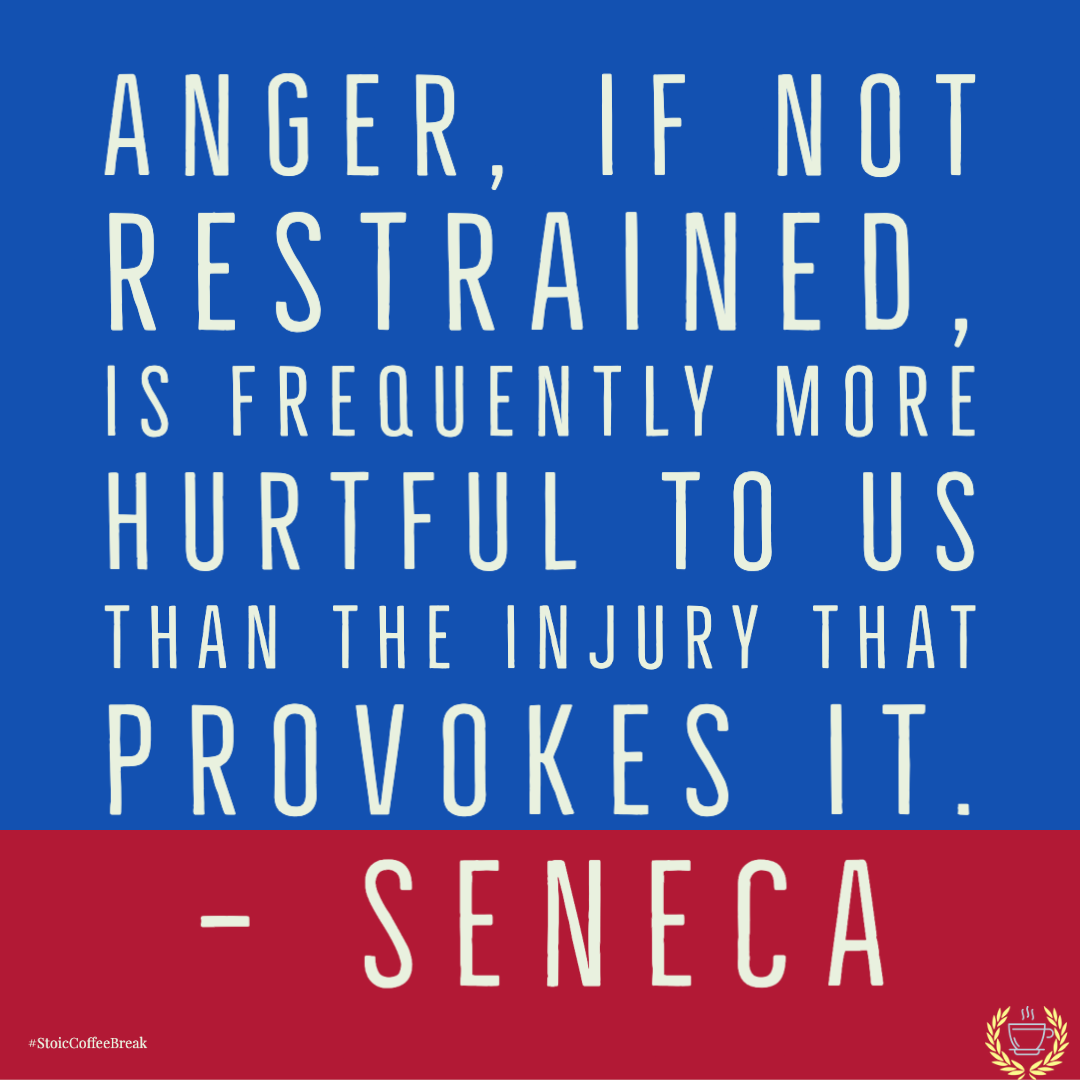
S1 Ep 255255 - The WISER Model
How well do you manage your emotions? Do you feel like you’re on top of things or do you feel like you let situations get under your skin? Today I want to talk about a model I came across that can be a useful tool for managing your emotions, and handling situations like a stoic."Anger, if not restrained, is frequently more hurtful to us than the injury that provokes it." — SenecaThe Harvard Study of Adult Development, is a longitudinal study that was started in 1938. Researchers followed the same cohort for more than eighty years to gather information about quality of life. Every few years the participants were interview and subjected to a physical to track both mental and physical health.The Good Life, a book by Robert Waldinger & Marc Schulz based on the data from the Harvard study, and were able two important conclusions: First, was that those who handled the emotions better by facing them head on and not trying to repress or ignore them, generally reported a higher quality of life and better memories of the past. Second, it is incredibly challenging for people to change their emotional responses. They found that it didn’t come down to willpower or intelligence, but rather their awareness of their coping patterns. In studying those that managed their emotions in a healthy fashion, they found that there was a similar pattern amongst them. They call this the WISER model, and I’m going to explain it here.WatchWhen a strong emotion comes along, the first thing we need to do is engage our awareness. Usually our first reaction is based on an impulse and not a clear understanding of the full situation. When we give ourselves some space to get curious and just observe what’s going on, and see how we’re feeling, we can get a fuller picture of what’s really happening.Waldinger and Schulz write, “Thoughtful observation can round out our initial impressions, expand our view of a situation, and press the pause button to prevent a potentially harmful reflexive response.” Interpret"It is not events that disturb people, it is their judgments concerning them." — EpictetusOnce we have some more information, we need to interpret what we learned from observation. Often, situations are ambiguous and we jump to all sorts of conclusions. By asking what assumptions we made about the situation, we can quickly see were we misinterpreted what someone said or meant, or see what meaning we gave to something.SelectThe Select stage is where we make a choice of what we want to do about the situation. This step should be a thoughtful and deliberate choice, and not reactive or impulsive. This is where we try to slow things down so that we can make choices that are inline with our values, and that have a better long term outcome."The key,” according to Waldinger and Schulz, “is to try to slow things down where you can, zoom in, and move from a fully automatic response to a more considered and purposeful response that aligns with who you are and what you are seeking to accomplish.”EngageOnce you have made a choice, it’s time to put it into action. This part is can be challenging because it may mean that you have put yourself in an uncomfortable but necessary situation. But if you have taken the time to make a deliberate choice, this will be easier to do than if you are acting reflexively and will have better outcome than just ignoring the situation.Reflect"The chief task in life is simply this: to identify and separate matters so that I can say clearly to myself which are externals not under my control, and which have to do with the choices I actually control." — EpictetusThe last step is to reflect on how things went. Did our plan work out as expected? Why or why not? What could we have done that might have been more effective? Taking the time to think about how things went helps inform us of how we can better handle things in the future. Even if we handle a situation well, this is a good step to take because it helps us to reinforce our good choices, as well as find even more room for improvement.Conclusion Dealing with strong emotions in the heat of the moment is not easy, and is something that we all need to work on. For me, I really like having an acronym that helps me walk through a useful process. When we’re struggling in the moment, it’s always helpful to have another tool at the ready. So go out and be a little Wiser.---Hello friends! Thanks for listening. Want to take these principles to the next level? Join the Stoic Coffee House Community! Stop by the website at stoic.coffee where you can sign up for our newsletter, and buy some great looking shirts and hoodies at the Stoic Coffee Shop. Like the theme song? You can find it here from my alter ego. :)Find me on instagram, twitter, or threadsLastly if you know of someone that would benefit from or appreciate this podcast, please share it. Word of mouth is the best way to help this podcast grow. Thanks again for listeni
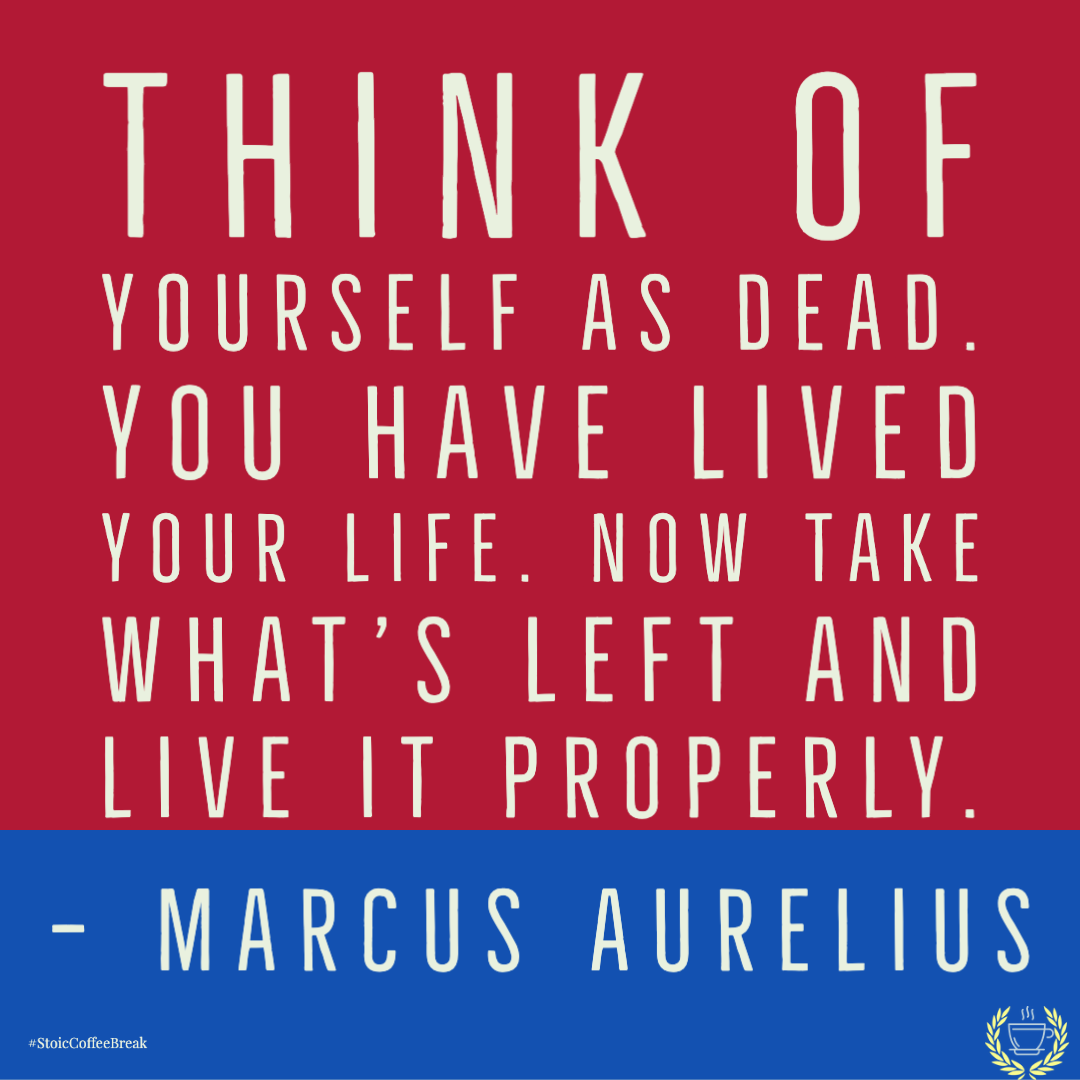
S1 Ep 254254 - Think Of Yourself As Dead
Does your past weigh heavy on you? Do you let your past mistakes keep you from making the changes you want in your life? Today I want to talk about how changing our perspective on the past can help us make better choices for the future. “Remind yourself that the past and future are ‘indifferent’ to you, and that the supreme good, and eudaemonia, can only exist within you, right now, in the present moment.”— Donald J. RobertsonWhen we think about our lives and the passage of time, we often think of our past as the cause, and the present is the effect of that past. We hold onto the idea that we are a product of all the past events that have happened to us. But what if this wasn’t quite true?If we follow the idea that present is caused by the past, and that each of us is a result of our past, it means that we are being driven into the present and future by what happened in the past. Because the past is unchangeable, then it means that we have little or no ability to choose our future. This is a form of determinism, or that idea that our lives are predetermined by the past and we have no free will. We are like machines that are at the effect of past events. For example, there are people who suffered trauma as children who will often excuse their current bad behavior on the things that happened to them in the past. They just throw up their hands stating that this is just the way they are and the cannot change. But if this were the case, then every person that was abused as a child would behave badly and it would not be their fault. And even more to the point, if we believe that the cause of current bad behavior was childhood abuse, then that would mean that everyone who was abused as a child would turn out to be an abusive person as an adult. As we can see, this is simply not the case. There are plenty of people in this world that have had terrible childhoods, yet grow up to be kind, responsible, and productive members of society. The only reason past events have any influence on the present or the future is because of the meaning that we give to those events. Nothing is determined by those events. We let the meaning that we give past events have on our current choices. Order of Time“Yesterday is history, tomorrow is a mystery, but today is a gift. That is why it is called the present.”— Master OogwayThe Order of Time, by Carlo Rovelli, is a book about quantum gravity, which is the field in science trying to reconcile quantum physics and general relativity. The topic is very complex and deep, and I won’t go too much into right now, but there was an idea that really shifted my perspective on our progression through time. The way that Rovelli explains it, is that most of us think that our past determines our future. That the events that happened in the past create the future. A basic cause and effect paradigm that makes sense to our linear brains. But in understanding quantum gravity, it appears that rather than causing the future, the past is just an echo or a record of present moments flowing behind us.The way I like to visualize this is that it’s like we are on a boat on a lake, and as we’re cruising along, we’re creating a wake. The present is the boat moving towards the future, and the past is like the wake behind a boat. We can see the influence of the present on the past, but the past, the wake, has little influence the future. This is what it means to live in the present moment. We can let go of the past events because we recognize that once something is in the past, only what we do in the present has any influence on the next present moment. It means that the choices and decisions that we are making, whether we’re fully conscious of them or not, are under our control and our responsibility. It also means that at any moment in the present we can decide to make a choice that is not tethered to the past. Past Doesn’t Equal Future“The past is a guidepost, not a hitching post." — L. Thomas HoldcroftOften we blame the past for why we act a certain way. But just because something happened some way in the past does not mean that it has to be the same in the present or the future. Simply put, the past is not a predictor of the future.So why is this idea so important? I like the idea that each present moment is a fresh instance of time that is not so tightly bound to the past. It means that at any moment you can make a different or better choice is very powerful. It means that even if you had a certain belief or a way of thinking or behaving in the past, it does not determine who you are that this moment or who you will be in the future. Each moment is a new one to start over. Now obviously, this doesn’t change or negate what happened in the past. Just because you decide to make new choices doesn’t mean that your past choices just disappear. You still have to work within the circumstances that you find yourself in. But it does mean that you can be someo
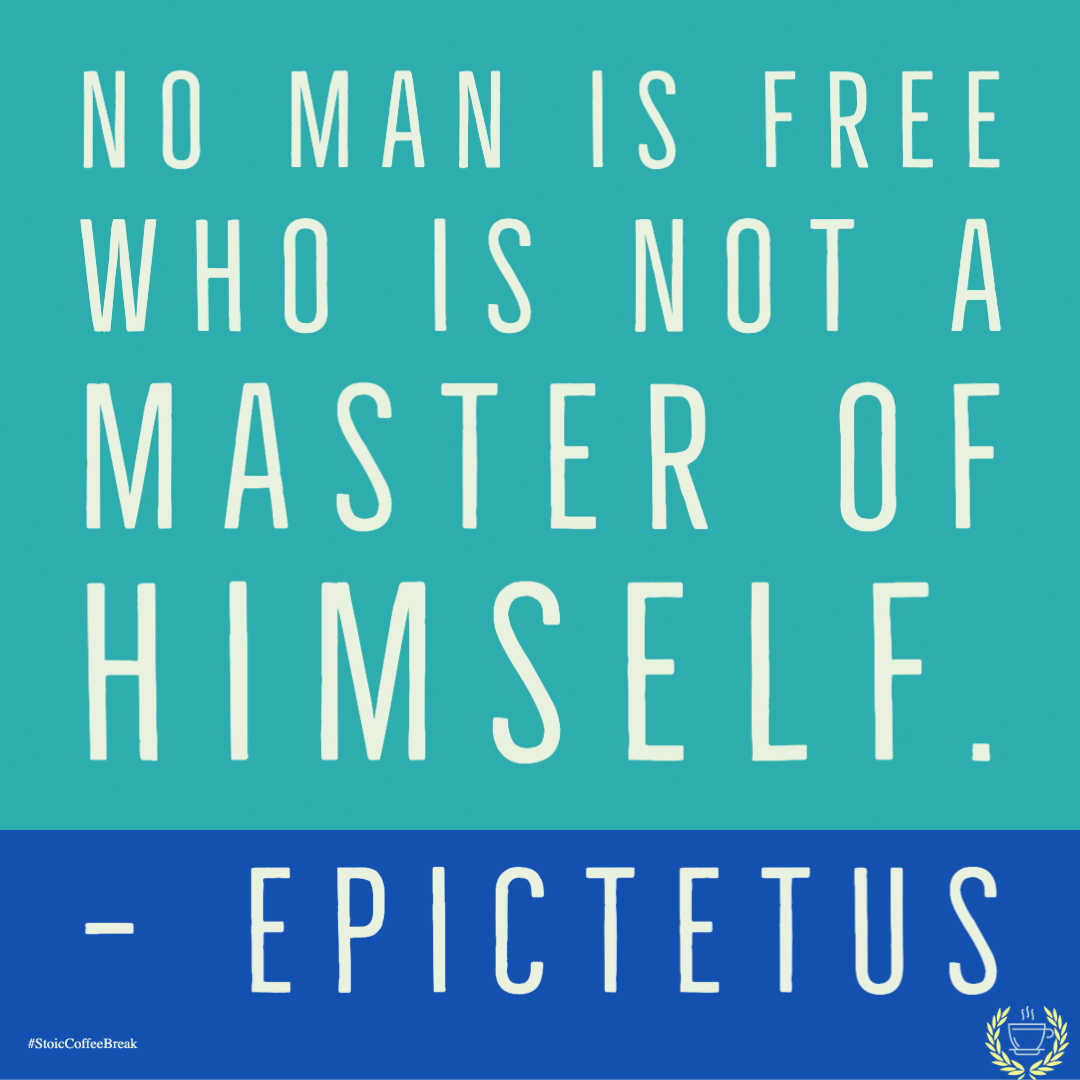
S1 Ep 253253 - Digging Deep: Uncovering Your Unconscious Motivations
Do you always act the way you want to? Do you struggle to accomplish what you set out to do? Do you find it challenging to make choices that are in line with what you think you want? Today I want to talk about learning to understand why often make choices and do things that don’t line up with that we think we really want. "No man is free who is not a master of himself." — EpictetusA few months ago, I read a book called Existential Kink by Carolyn Elliot, which is a great book about embracing and accepting your shadow self. I’ve talked about it on the podcast before, and one of the most interesting ideas that I got from that book is this idea:“Having is evidence of wanting.”— Carolyn ElliotWhat this means is that we need to recognize that even though we might say that we want some other kind of result in our lives, we usually get what we actually want. Usually, these actual desires are things that we are unaware of. Simply put, we have lots of unconscious desires and goals that drive our lives.We may end up dating the same kind of person, even though we failed in relationships with this type of person in the past. We might want to eat healthier or drink less alcohol, but we end up eating same bad things or drinking more than we had planned. We skip the gym even though the effort to get there wouldn’t be that difficult. We have the same arguments with our partners, even though we say we don’t like to argue. What I’m getting at, is that what if we are making choices to get the exact thing that really want, but we are just unconscious of what we really want?“Until we make the unconscious conscious, it will rule our lives and we will call it fate.”— Carl JungA common example of this is for people that grow up in a chaotic and unstable home. They might have hated it and have a desire for a more stable home life once they’re out on their own. They want a partner that is calm, secure, and stable, but find themselves dating people that are more chaotic, similar to what they grew up with. They might find their behavior very confusing because it’s not what think they want. So why would someone continue to add chaos back into their life, when what they’re craving is stability?For many people in this situation, they find a stable home life to be very challenging because it’s not what they’re used to. They don’t understand the rules of the game. Dating someone that is more like what they’re used to allows them to feel comfortable because it’s familiar. They are used to the excitement of a chaotic home. If they’re used to the adrenaline rush of uncertainty, then a stable home life can feel exceptionally boring. Throwing their world back into chaos might be the only way for them to feel what they consider “normal”. The unconscious goal in this case is familiarity, which is more important than stability. Another example of where our conscious goals and unconscious goals diverge is when we get angry at someone. Usually when we get angry, it feels like it’s just an instantaneous or automatic reaction, and like something we don’t have control over. Later, after we cool down, we’re disappointed with ourselves because of our behavior. We may say that we didn’t mean to get angry. But I think that this is a kind of dishonest mental revisionism of what actually happened. We did mean to get angry, otherwise we would not have. Think about it this way. We all have people that we would never display this kind of anger towards. We are able to control it. Whether that is because we respect them enough or because we would suffer some other kind of consequence like losing a job or there’s a fear of violence from them, we can choose to hold back our anger. So why would we hold back in one instance and lash out in another? It’s because in each of these cases, the goals are different. When we lash out, our goal is to try and control the other person. When we keep our anger in check, it is to avoid consequences of a confrontation. We are just unaware of or dishonest about our real goals. Until we are aware what our real goal is we will keep repeating the same behaviors and creating the same results.So how do we get to know what these unconscious goals are? How do we figure out what we really want?Work Backwards"The first and greatest victory is to conquer yourself." — PlatoIn episode 231, I discussed a model of thinking, and basically, we can use it to break it down what’s really going on in any situation. I’ll quickly summarize the model here but I recommend going back to that episode for a more in depth discussion. Basically, there are circumstances, which are the factual elements, and usually things that we can we can’t control. Then we have our thoughts about those circumstances. Those thoughts create our emotions. Those emotions drive what actions we choose, and our actions create the results we get. Now, one of the best ways to understanding our unconscious goals, or why we
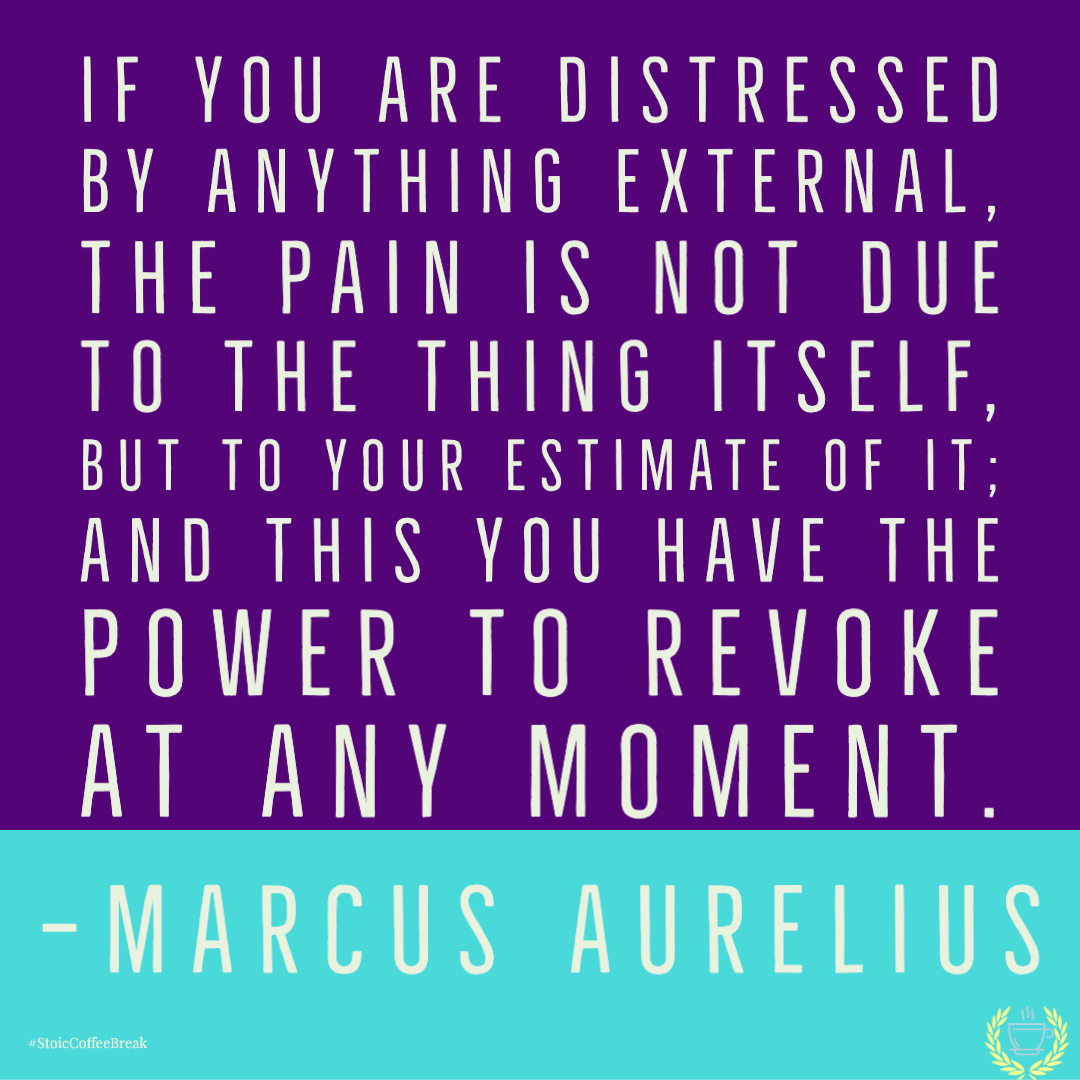
S1 Ep 252252 - Overwhelmed
Do you get overwhelmed with the challenges of life? When life gets to stressful do you shut down and bail out? Today I want to talk about why we let things overwhelm us and what can we do to stay on track.“If you are distressed by anything external, the pain is not due to the thing itself, but to your estimate of it; and this you have the power to revoke at any moment.”— Marcus Aurelius Life is challenging. Some times we feel overwhelmed at the situations we have in life. When this happens we may shut down and retreat. We may give up on things that are important to us that are not even directly tied to the situation that may be causing stress in our lives. This can include areas such as work, relationships, or hobbies. Many people might see this and think that the "obvious" solution is that this is a failure of planning, as in, you might have unrealistic timelines or expectations of how much you can actually get done. When you fail to meet those expectations, you get frustrated and burned out.But before we look at tactics, let's think a little deeper, shall we?First, I want you to know that you are not alone. Anyone involved in a creative endeavor runs into this issue. And by creative endeavor I mean creating anything, and that also includes creating a better life. We have great intentions, high aspirations, and plenty of talent, and yet, we get sidetracked, spiral out, and shut down.I know that I have a pretty familiar pattern: I make plans when I’m in a good headspace. I feel excited and am looking forward to working on my goals. Then something stressful hits in my life, and pretty soon I find myself retreating and backing off from a lot of things in life. I’ve done this several times with my podcast. Things in my personal life would be falling apart, then I would shut down the podcast. Sometimes, I would try working on another project, only to find that I even then I still would feel overwhelmed and just give up.The worst part about this pattern is that I would feel like a failure on multiple fronts. I would feel like a failure because of the issue in my personal life, then I would feel like a failure because I wasn’t working on my podcast or music or learning 3D programming. So why do we do this? Why do allow stress from one part in our life deep six other things in our lives?Self SabotageI think the first thing we need to come to terms with is that sometimes, we’re looking for a way out. When I feel overwhelmed and let myself burnout, it is often because, deep down, at some level, it's what I really want. I want to give up. Sometimes, life is hard and letting outside events overwhelm me is an easy way to blame an outside event for failing to achieve what I set out to do.Now, you might be thinking to yourself, “I would never do that! I really want to succeed, but there was just too much other shit going on."Let me let in you on something: Everyone has too much other shit going on. Kid's plays and soccer games. Partners and friends who need your time and attention. And there are the basics such as, you know, keeping up with work. That's not to mention taking time for ourselves such as exercise, hobbies, and rest.Simple put, life is busy.Plenty of people have done amazing things while still managing all this extra shit. If you really want to accomplish your goal, then you wouldn't let anything stop you. Let me put it this way. If one of your projects was something you needed to complete because if you didn't you would die, do you think you would let those outside things overwhelm you?I don't think so. I think you'd finish it come hell or highwater and push all those external things to the side. If there is something that you truly want to do in life, then any external excuse for quitting, is just that - an excuse. Ultimately, I find that I sometimes let myself just get overwhelmed because it's easier than pushing through, and I can point to a "reason" why it wasn't my fault that I failed. But if I'm honest with myself, I know, deep down, I'm quitting because I just don't want to do the hard work. It's hard to admit to something like this, especially when you know you are quite capable, but owning up to it is the first step in taking responsibility for your choices. You have the right to choose to not do something. You don’t need a reason outside of yourself. Now, not everything we feel burned out on is due to self-sabotage. Sometimes we really do want to reach some goal but we’re pushing ourselves too hard and we end up ignoring other aspects of our lives. Stoicism is about equanimity, it’s about finding balance so that we can work efficiently and effectively. So let’s dig into some ways that you can help find that balance, and avoid burning out. Facing Up to Your EmotionsI think the biggest piece of the puzzle that can cause us to feel overwhelmed is that we may be in situations that are emotionally challenging and we don’t want to face them. When somethi
S1 Ep 251251 - Conversation with Brian from the LOTS project
A wide ranging conversation with Brian, the host of the LOTS project. You can find out more information about Brian and living off the grid at https://thelotsproject.com/---Hello friends! Thanks for listening. Want to take these principles to the next level? Join the Stoic Coffee House Community! Stop by the website at stoic.coffee where you can sign up for our newsletter, and buy some great looking shirts and hoodies at the Stoic Coffee Shop. Like the theme song? You can find it here from my alter ego. :)Find me on instagram, twitter, or threadsLastly if you know of someone that would benefit from or appreciate this podcast, please share it. Word of mouth is the best way to help this podcast grow. Thanks again for listening. Hosted on Acast. See acast.com/privacy for more information.
S1 Ep 250250 - When Life Has Other Plans
When life throws you curveballs, how do you handle them? Do you freak out? Do you roll with it? Do you look at it as an opportunity or a disaster? Today I want to about how to keep a perspective on life that helps you keep on moving when things don’t go as planned.We must be willing to let go of the life we planned so as to have the life that is waiting for us.— EpictetusFirst, I want to apologize for not getting last weeks episode out. As you know I’ve been struggling with pretty severe insomnia over the last few months and last week I just hit a wall. I had the episode about 85% finished, but was so wiped out that It was a struggle to just get to the end of the week. The irony of it was that the episode was about dealing with feeling overwhelmed. I was going to make it this weeks episode, but given some big events that happened for me this last week, I felt it was more pressing to talk about how we handle the unexpected twists that life throws our way.CongratulationsOne of my favorite things that has taken place in Portland over the past 12 years was the World Domination Summit. For those of you who don’t know what it was, it was kind of like a TED conference with all kinds of interesting speakers, classes, and experiences for people who want to live differently in the world. It was founded by Chris Guillebeau, who lives here in Portland. He’s the author of several books and writes a blog about travel and living an unconventional life. A few weeks ago, I was reading one of his posts called “Congratulations On Your New Life”, that really stuck with me. He talked about how a few years ago he was speaking at a conference and someone who was asking a question mentioned that they had just lost their job, and rather than offering condolences, he felt like he needed to take another route. He congratulated them. Since that time, this is usually the response he offers when someone talks about something that is causing a big transition in life, such as losing a job or ending a relationship. Now this may seem a little harsh to some people, but Chris mentioned that most times when he followed up with the other person, that even if they were a little shocked at first, when they took the time to think about it, they really didn’t like the job or could see that they were better off out of the relationship. In a way, this event was a favor and an opportunity to make a change in their life that they probably wouldn’t have done were it not for this happening.CurveballThe obstacle in the path becomes the path. Never forget, within every obstacle is an opportunity to improve our condition. — Ryan HolidayThis last week, as I mentioned, was exhausting. I decided to take off Friday to see if I could get caught up on some sleep. Even though I knew that I could sleep in, I still only got about 5 hours of sleep. I was able to get a short nap in later that afternoon, but soon after waking up received a call from the owner of the company I work for. He let me know that due to financial constraints, he had to cut my project and was letting me go. I thanked him for letting me know and we talked through next steps of making the transition smoother for the other developers who would be taking up the slack for some of my minor projects.At the end of the call, he thanked me for handling things professionally and not making it a difficult call. I told him there was no reason make things difficult. He was simply doing what he needed to for his company. For me, it was an interesting moment. There was no real stress about the whole thing. It was just matter of fact like “this is just a thing that happens in life”. I felt very relaxed and stoic about it, and after the called was over I laughed about the fact that my first thought on hearing the news was that now I’d finally be able to caught up on sleep. Life HappensDon’t Panic! — Douglas AdamsSo what do you when life throws unexpected things your way? Do you panic? Do you look at all the downsides? The first and most important thing we can do in any situation is to do our best to stay calm. Part of the stoic teaching of Amor Fati, is that we love everything that happens to us, and that our reaction to anything will not really change what happens. In the case of getting laid off, being rude to my now former boss, would not have changed the situation, and would have only made things worse. In fact, by the end of the call, he asked if, when he had more funding available in the future, I was open to working as consultant to finish the development of the software I had been working on. I told him that I was certainly open to it if my situation in the future made it possible to do so.No One to BlameTo accuse others for one's own misfortunes is a sign of want of education; to accuse oneself shows that one's education has begun; to accuse neither oneself nor others shows that one's education is complete. —EpictetusAnother important thing we can do is not get caught
S1 Ep 249249 - Strong Body for a Strong Mind
Do you take care of your body? To you treat it like a temple? Do you exercise it and strengthen it as much as your mind? Today I want to talk about how important it is to treat your body as good as, if not better than your mind.It is impossible to live a pleasant life without living wisely and well and justly, and it is impossible to live wisely and well and justly without living a pleasant life. And the wise man needs to take care of his body just as a farmer takes care of his land.— Epictetus The stoics teach us that it is our mind and our perspective which creates our reality, and on this show I talk a lot about understanding our thinking so that we can be the kind of people that we want. We spend a lot of time focusing on the mind. But the other day I was thinking about some of the changes I’ve made to my physical environment that have made a big impact on my life, so today I want to talk less about the mind and more about the body.It is necessary to care for the body, not for its own sake, but because it is the abode of the soul.— Musonius Rufus One of the most important things that we need to remember is that we experience the world physically, that is, through our bodies. It is through the senses that we perceive the world. If we didn’t have a body and senses, there would be no way to experience or interact with the world. The brain is reliant upon the input that it receives from the body. To neglect the body means that we experience the world in a less than optimal way. The state that our body is in can have a very large impact on our perceptions of the world. If you’re tired or feeling unwell physically, it colors how you view the world. It can have a big impact your mood. It can also lead to poor decision making, which is why we are better served by making important decisions when we are well rested.Physical HealthI maintain that the first step to freedom is to take care of one's health. If a man is diseased in body, his mind will also be diseased.— SenecaI think that a good number of mental health issues can trace their source to physical health issues. If you aren’t taking care of your body, if you are eating only junk food or not getting the proper nutrition your body needs, it can make it challenging for you to think clearly.If your body is not in good condition, then you are already starting at a disadvantage. This doesn’t mean that you need to become a gym rat and spend every free moment working out. It does mean that you eat a healthy diet, exercising every day, and getting enough sleep. It also means that we seek help if we have substance abuse issues with alcohol or drugs.AlcoholOver the past few months I’ve made number of changes that have impacted my life in a very positive way. The first major change was that over a month ago, I stopped drinking alcohol. I found that I was using it to avoid having to deal with difficult emotional situations and emotions. It had also became an almost nightly habit, though I found that I was drinking more on nights when I was particularly stressed. It also made me more impulsive and less able to manage my emotions and my temper.SugarAround the same time, I decided to change my diet because I was having digestive issues fairly regularly. I stopped eating refined sugars, and replaced them with fresh fruits and vegetables. I’ve paying attention to things that don’t sit well, and avoid them. At times it has felt a bit restrictive, but then one night when I was out for dinner I decided to splurge on chocolate cake, and while it tasted delicious, I suffered for the next two days as my body processed all that sugar. I had put on weight during the pandemic from drinking soda every day, as well as having desserts fairly often. Just removing alcohol and sugar from my diet has made a quite a difference. I’ve lost 8 pounds in last month. I had made other changes to my diet, but did not lose any weight until I removed them. I have been feeling much more mentally aware. I have a lot less problems with my digestive system, and I just feel better overall. I feel like I’m clean on the inside.ExerciseThe last big change I’ve made is that I’ve been doing 20 minutes of yoga or stretching every morning, as well as a minimum of 20 minutes of more strenuous exercise during the day such as waking, cycling, or rowing. Because a of healing shoulder injury I have not been lifting any weights, but with these exercise I find that I am building muscle. As I lose more weight I can also feel some of the formerly flabby areas of my body starting to tighten up. I also feel more awake and find that my mind and thinking have been much clearer. My mood is improved and I handle stress significantly better.SleepIn study after study, science has shown that sleep is one of the keys to good health. I know that when I don’t get enough sleep over an extended period, I’m more prone to catching colds or developing a sinus infection. Unfortunately, sleep is an area where I have be
S1 Ep 248248 - Interview With Author Crystal Jackson
Life is full of challenges that can knock you down, but the question is, are you going to stay down? As a romance novelist, Crystal Jackson might seem an odd choice for a guest on a podcast about stoicism, but Crystal has seen her fair share of hard knocks, and has some great lesson to share. We talk about how sometimes, the greatest challenges in our lives are also the greatest teachers.You can find more from Crystal here: https://www.crystaljacksonwriter.com/---Hello friends! Thanks for listening. Want to take these principles to the next level? Join the Stoic Coffee House Community! Stop by the website at stoic.coffee where you can sign up for our newsletter, and buy some great looking shirts and hoodies at the Stoic Coffee Shop. Like the theme song? You can find it here from my alter ego. :)Find me on instagram, twitter, or threadsLastly if you know of someone that would benefit from or appreciate this podcast, please share it. Word of mouth is the best way to help this podcast grow. Thanks again for listening. Hosted on Acast. See acast.com/privacy for more information.
S1 Ep 247247 - There Are No Problems, Only Choices
The stoics teach us that our perspective on life is one of the most important things that we can control. It’s our perspective that informs how we approach everything. Today I want to talk about a powerful way to look at the world using stoic principles that can help us become more resilient, and better able to handle stresses in our lives.If you are distressed by anything external, the pain is not due to the thing itself, but to your estimate of it; and this you have the power to revoke at any moment.— Marcus AureliusWhat if there were no problems in your life? I don’t mean that you don’t have things that are challenging, but what if, rather than fretting about something and framing it as a problem, you could just look at something as a choice to be made? I’ve been thinking a lot this week about an idea of how to approach challenges in life. It’s very different than how I currently see things, and this podcast is an attempt to try and solidify these ideas into a kind of operational framework.But what if we decided that nothing was ever a problem? That every situation you came upon didn’t carry a judgment of being good or bad? Is there a way to look at each situation as an opportunity to just make choices?ProblemsWhen I have things in my life that I’m struggling with, I view it as a problem. This creates a whole kind of frame around it, and makes it kind of an object in my mind, and makes it something that I can focus on. And though this can be helpful for being able to focus attention on something, when I cast it in the role of being a problem, it immediately has a negative connotation to it. I attach worries to it. I can ruminate it on it to an unhealthy degree. At times, this worrying about the future can be stressful and even overwhelming. This kind of worry is not helpful, wastes tremendous amounts of energy, and colors my mood in the present. So today I’m going to show you how to use some key stoic principles to help you change your perspective, worry less, and make better decisions.Making ChoicesThere’s an old saying that I try to remember when I get stuck in making decisions.Good decisions come from wisdom.Wisdom comes from experience.Experience comes from making bad decisions.The more choices we are willing to make, the better we get at making them. So how do we get ourselves to make more choices without feeling overwhelmed? What can we do to help us make better decisions and take actions that help us move in the direction we want?Amor FatiNever let the future disturb you. You will meet it, if you have to, with the same weapons of reason which today arm you against the present.— Marcus AureliusThe first principle I want to talk about is Amor Fati. Amor Fati means “to love your fate”, which means to love everything that happens to us. This is often a hard concept to truly embrace. I think that most of us are happy to embrace the good things that happen to us and just try to tolerate everything else. But there are a few reasons why loving your fate is one of the best things that you can do to let go of worry. The first reason to love everything that happens to you is because it is happening to you. The fact that you love it or not doesn't change that it has has happened or is happening to you. You loving or hating is just your reaction based on your judgment of it. So, since it's happing anyway, why not love it?Second, if you can love everything that happens to you then everything is an advantage. Nothing is a disadvantage or something that you can’t learn from. Since everything is an opportunity for you, you become anti-fragile. A simple example. If you are short, love the fact that you are short. Don't lament that you aren't tall, because it's a waste of time and cannot be changed. Then, find all the advantages life gives you for being short, and use them. For you Game of Thrones fans, Tyrion Lannister is a great example of someone playing to their strengths. Or, let’s say a tornado comes along and destroys your home. You can stress out about everything that you’ve lost, get mad at the universe or god, and allow yourself to feel terrible. Or, you get to see it as an opportunity to build a new house. You can see it as a signal that living in that particular city or town may not be a good option, and move somewhere else.Or, let's say your partner breaks up with you and breaks your heart. You can hate them and feel like they ruined your life. You can be bitter and hurt. Or, you can understand that there are reasons that the relationship didn’t work out. You can appreciate all the good things, think about what you've learned. You can go into your next relationship a bit wiser.No OpinionYou always own the option of having no opinion. There is never any need to get worked up or to trouble your soul about things you can't control. These things are not asking to be judged by you. Leave them alone.― Marcus Aurelius,One way that we can reduce the number of “problems” in our
S1 Ep 246246 - What Do You Deserve?
Last weeks podcast got a quite a few responses and questions. Some of them turned into some back and forth discussions about some of the ideas, so I want to dig into them a little deeper.DeserveThe first question was from a listener who asked: “What if instead of looking at human existence as, "you don't deserve anything", we instead look at it as “you deserve exactly what you receive?”Now, I understand that "you don't deserve anything" seems kind of harsh, but it is what I meant. When you say that you deserve something, it means that you feel entitled to it, that it is something owed to you, and I truly believe that nothing is owed to you in this life. If life were fair, we would all be born with the same advantages, but we all know we are not. Think about it from a very basic level. The universe or god doesn’t owe anyone anything, even from they day we’re born. If this were the case, then things like infants dying in childbirth wouldn’t happen. The reason that fewer children die in childbirth now than say 100 years ago, is because we have worked as a society to improve healthcare, as well as the whole process of giving birth. This did not happen because we wished the universe would let more children survive childbirth. It happened because people over generations took actions to improve healthcare. We decided as a society that it would be better for all of us if more children survived.Some may think this attitude is cynical, but I think it’s far from it. I think the fact that we have created societies and worked to improve the health of everyone is an amazing achievement of humanity. In the Bhagavad Gita it says:"You have the right to work, but for the work's sake only. You have no right to the fruits of work. Desire for the fruits of work must never be your motive in working."(Note, this does not refer to legal obligations. Work here means the work of living, of doing good in the world.)Nothing is ever owed or guaranteed to you in this life. Live your life in a way that you find honorable not because of some great reward, but rather because you want live honorably and in a way that you're proud of. So to circle back around let's take what the listener said, "you deserve exactly what you receive". This would mean that if someone got cancer, they somehow deserved it. If someone got screwed over in a business deal, they somehow deserved it. To me, this attaches a moralistic judgment around the person. "They must have done something to deserve it!"We do this because want to believe that life is fair, and it is not. Life happens, and we want to make sense of it. We see an effect and try to assign a cause, a motivation, a reason for it. We especially do this to ourselves. When we fail at something like a relationship, we often blame ourselves thinking we deserve what we are getting. We may be in a relationship that is not healthy for us, but we may think it's what deserve so we hold on even though we're miserable, because it's what we think we deserve. Epictetus warned of this when he said, "An ignorant person is inclined to blame others for his own misfortune. To blame oneself is proof of progress. But the wise man never has to blame another or himself." What this means is that when we blame others or ourselves, it is because we had expectations that were not met. If we can understand that, then we can deal with "what is", rather than getting upset about what "should be".This listener then responded saying that they were leaning towards the idea that the universe gives us was we need to learn. I know that many people feel this way, but that begs the question: who or what determines what we need? Is there some god/universe/intelligence giving us these things for us to learn?I'm of the mind that life just happens. I think there are plenty of opportunities for us to learn if we decide to take them. Plenty of people do not take them. This is why the stoics were so insistent on understanding the things you have control over - your thoughts, your choices, and your actions. In short, your will.The only way that you can learn something from an experience is because you choose to do so. Because you give some kind of meaning to an experience that helps you learn from it. This means you have to make an effort and choose to learn and grow. It doesn't just happen.Two people can go through a car wreck and have two totally different outlooks on what happened. One can come out and think it was the worst thing that ever happened because it almost killed them. The other can see it as a life affirming event that reminded them of the shortness of life so they are grateful for every moment they have left.Ryan Holiday says: "The obstacle in the path becomes the path. Never forget, within every obstacle is an opportunity to improve our condition." For me, this means there’s is always the opportunity to learn from any experience, but we have to step up take it. You have to develop a m
S1 Ep 245245 - Whining or Winning?
Do you think that life is fair? Do you think it’s unfair? Are others “winning” when you are not? Today I want to talk about how fall into a pretty bad way of thinking that reduces our ability to take responsibility for ourselves, and blame our unhappiness on the world outside of us.Complaining about a problem without posing a solution is called whining.— Teddy RooseveltThere is only one way to happiness and that is to cease worrying about things which are beyond the power of our will.— EpictetusFrom time to time I like to hop on the stoicism sub reddit and participate in discussions. I really appreciate is that most people are pretty thoughtful and respectful, and I often learn something new or see things in a new light. But there’s a kind of post that I see on there from time to time which I find is pretty sad. It is usually some who is upset that they are not getting all the things in life they think they deserve. They complain that the job sucks or they’re struggling with school and the teachers are mean and out to get them. Or they’re afraid to talk to someone they’re find attractive and are upset that they can’t get a date. They talk about how how they tried to be stoic, but they still aren’t getting what they deserve. They complain that other people still treat them poorly even though they are trying to be stoic. There is often a lot of blaming of others for their misfortune and lashing out at the world in general.So today’s episode is going to be a little bit of a rant, but I hope that you can bear with me.FairnessDon't be overheard complaining…Not even to yourself.— Marcus AureliusOne of the hardest things for us to wrap our heads around in this world is this:We are entitled to nothing in life. We deserve nothing in this world.Now, I’m sure that might be upsetting to those of us who think that life should be fair. I’ll give you a hint:Life is not fair and never will be.How could it be? There is nothing in the universe that would be able to enforce some external rule of fairness. And if we tried to create a society of absolute fairness, who would be given the task of deciding what is fair? You? Me? As much as I’d like to think that I could be a good arbiter of fairness, I know that because of my own biases and personal failings, I could make a system that I think would be fair that plenty of others would disagree on. We could never get everyone to agree on what the definition of fairness is. As much as we might wish it, fairness is not something intrinsic in the universe. It is not a natural law like gravity. It is something that we have to create on our own as a society.Interestingly enough, I think this is proven out because one of the core virtues of Stoicism is that of Justice. What that means to me is that we need to help bring justice to the world because it is not already a natural or intrinsic part of the world.What’s ironic is that most people I see complain about the fact that world isn’t fair, are those that want the world to bend in a way that benefits them. If this were to happen, wouldn’t that make it so that world was again unfair because it benefits them and not someone else?CharacterDon't demand that things happen as you wish, but wish that they happen as they do happen, and you will go on well.— EpictetusAnother part of this post that I wanted to talk about is the idea that if you act virtuously then everything will work out for you exactly the way that you want it. That people around you will change who they are simply because you are trying to be a good person. That because you “act” like a good person, then everything will simply come to you because you deserve it. This is never going to be the case.Let me spell it out clearly for you: You don’t deserve anything. Just because you want or think you deserve something doesn’t matter. You can think that all you want. Just because you are nice doesn’t mean that you should get to date someone you find attractive. Just because you act virtuous doesn’t mean that other people will be nice to you or not try to take advantage of you. Or that good things won’t happen to bad people (of course who are you to decide if they are bad people?).The reason that you act virtuously is not so that others will change for you. It is so that you act in a way that you feel good about. That you are living a life that you are proud of. Life will happen to you regardless of your character. Having a good character does not mean that everything will go your way. In fact, I would argue that you if you think that you deserve something because you think you have good character, you probably don’t. I think that someone with good character would recognize that they don’t deserve anything by just thinking that they are a good person. You cultivate virtue, and build your character because it’s something you want. You want to be a good person not so that you get something or you earn something. You cultivate virtue because
S1 Ep 244244 - Interview with John Chancey of Knowledge Brews Supreme
This weeks episode is an interview I did with Dr. John Chancey of the Knowledge Brews Supreme podcast. It was really fun to dive into all kinds of interesting philosophical topics with John. He's sharp, warm, and fun. I hope you enjoy this as much as I enjoyed chatting with John.---Hello friends! Thanks for listening. Want to take these principles to the next level? Join the Stoic Coffee House Community! Stop by the website at stoic.coffee where you can sign up for our newsletter, and buy some great looking shirts and hoodies at the Stoic Coffee Shop. Like the theme song? You can find it here from my alter ego. :)Find me on instagram, twitter, or threadsLastly if you know of someone that would benefit from or appreciate this podcast, please share it. Word of mouth is the best way to help this podcast grow. Thanks again for listening. Hosted on Acast. See acast.com/privacy for more information.
S1 Ep 243243 - All the Feels: How to Ride the Emotional Waves
Are you afraid of your feelings? Do you avoid, numb, or shut down your emotions? How much stress and anxiety do you create trying to avoid uncomfortable emotions? Today I want to talk about the power of emotions, and how to reduce your suffering by feeling your emotions all the way through.Too many people believe that everything must be pleasurable in life. — Robert GreeneEmotions are powerful forces in our lives. They are the drivers of the actions we take. Those actions lead to the results get in our lives. The better we are at managing our emotions, the more control we have over our lives, and more likely we are to achieve the things that we want to in our lives.What are Emotions?Emotions are complex mental states that are often a result of the interaction between our physical responses to external stimuli and our own thoughts, beliefs, and memories. Physical stimuli such as a perceived threat, pleasant touch, or intense sound can trigger a physiological response in the body, such as an increased heart rate, sweating, or changes in hormone levels. These physiological changes can influence our emotions, as our brain perceives and interprets these physical sensations and maps them to an emotional state. At the same time, our own thoughts, beliefs, and past experiences can shape how we perceive and respond to these stimuli, creating a feedback loop between our thoughts, emotions, and physical sensations.When we have a strong emotional response to something, it is not just a thought in our minds, but something we also feel in our body. It’s this physical dimension which often makes emotions so scary. Our brains perceive a physical threat, and reacts as if there is the possibility of actual physical harm, even if we know rationally that we’ll be just fine. VibrationsIf you were to describe what an emotion felt like to an alien, you probably describe it as something like a vibration that you feel in your body. Some of those vibrations feel nice and pleasant, and others feel negative or distressing. But really, it is more or less a vibration that comes as the result of the thoughts in your mind, and the physical circumstances around you.So why is it important to understand and manage your emotions? I want to propose the idea that most of the suffering in the world comes not from just physical pain and injury, but through emotional pain and anguish. And that suffering is made worse because we try so hard to avoid uncomfortable or painful emotions, and it is this avoidance which causes more suffering than the emotion we’re trying to avoid in the first place.Feeling our emotions is also just part of being human. When we learn how to actually feel our emotions when they come, and not avoid or suppress them, we get to experience the full range of being human. If we don’t feel sadness or grief, then it also limits our ability to feel happiness and joy. For me, this is part of what the stoics mean when they talk about living according to nature. We all feel emotions, which means they are part of our nature, and repressing or ignoring them is not living in alignment with nature.AvoidanceWe are more often frightened than hurt; and we suffer more in imagination than in reality. — SenecaOne of the interesting things about humans is that we will go out of our way to avoid painful or uncomfortable emotions. And it’s this avoidance which causes us to suffer far longer and deeper than if we just felt the original emotions in the first place. We often cause more damage than the emotions themselves. When we try to avoid the emotions we’re feeling, we will often distract ourselves with activities that either numb what we’re feeling, or keep us focused on something else. Alcohol, drugs, food, sex, or porn, are just a few of the things we use for numbing ourselves. We may overindulge in other activities that keep our minds off of feeling the emotions we have. Working extended hours, binge watching Netflix, and even spending too much time in the gym can distract us from processing and feeling emotions we’re uncomfortable with.AddictionsAn inability to regulate emotions can lead to substance abuse as a form of self-medication to manage difficult emotions. Addiction and emotional suppression are often interconnected, as individuals who struggle with emotional regulation and coping may turn to substance abuse or other compulsive behaviors as a means of numbing or avoiding their emotions. On the other hand, chronic substance abuse can result in further suppression of emotions, as it alters brain chemistry and interferes with a person’s ability to experience and regulate their emotions. This creates a vicious cycle, where substance abuse and emotional suppression reinforce each other, making it difficult for individuals to break the cycle of addiction and regain control over their emotions. Effective addiction treatment often involves addressing the underlying emotional and psychological issues, as well as addressing