START
123 episodes — Page 3 of 3
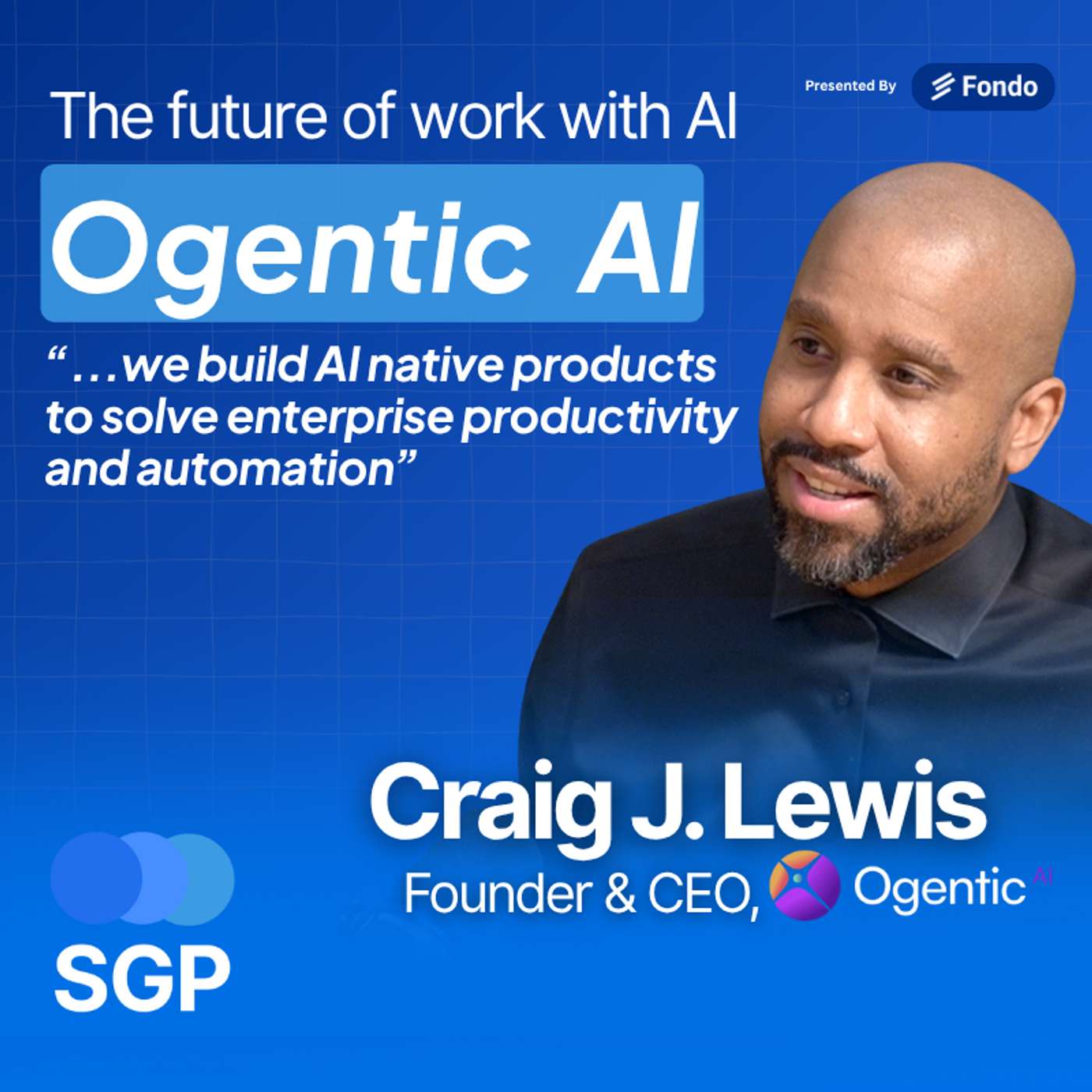
Ep 24Craig J. Lewis | 750K Contractors Paid, $25M Raised, MassChallenge Board - From Gig Wage to Ogentic AI
Craig Lewis is the Founder & CEO Ogentic AI, builder of Zing—an AI-native enterprise browser that turns intent → action in a secure, workflow-native workspace. Before Ogentic, he founded Gig Wage (750k contractors paid, ~$1B moved, $25M+ raised) and learned payroll inside ADP. That operator muscle fuels Ogentic’s pace: incorporated in June, alpha in July, beta in August. He also serves on the governing board at MassChallenge and angels actively.In this episode, Craig shares velocity advice like: ship before perfect (feedback > stealth), build pro-human AI (human-in-the-loop), and treat fundraising like sales (expect 19 no’s, optimize investor–founder fit, when it’s right—TTFM). He outlines the back-office stack that keeps your startup in good shape and his board philosophy: offer perspective, not prescriptions. If you’re building enterprise AI—or just want to move in weeks, not quarters—this one’s for you.Key Topics Covered:Ogentic AI focuses on enterprise productivity and automation.Building a strong back office is crucial for startups.Fundraising is a numbers game; persistence is key.Feedback is essential for product development.AI will replace some jobs but also create new ones.Having a technical co-founder can accelerate growth.Navigating the fundraising landscape requires understanding investor fit.MassChallenge supports entrepreneurs in solving global challenges.The future of work will involve augmenting human capabilities with AI.Startups should find their niche in the AI market.Chapters(00:00) The Rise of Ogentic AI(13:37) Building a Strong Back Office(17:02) Navigating Fundraising Challenges(19:14) The Role of MassChallenge(23:12) AI and the Future of Work(27:40) Fundraising in the AI EraWhere to find Craig J. Lewis:Linkedin: https://www.linkedin.com/in/mrfutureofworkX: https://x.com/CraigJamalLewis Instagram: https://www.instagram.com/craigjlewisWhere to find Ogentic AI: Website: https://ogenticai.comLinkedIn: https://www.linkedin.com/company/ogenticaiX: https://x.com/ogenticai Instagram: https://www.instagram.com/ogenticaiWhere to find David Phillips:X: https://x.com/davjLinkedIn: https://www.linkedin.com/in/davjphillipsBrought to you by:Fondo — All-in-one accounting for startups: https://fondo.com
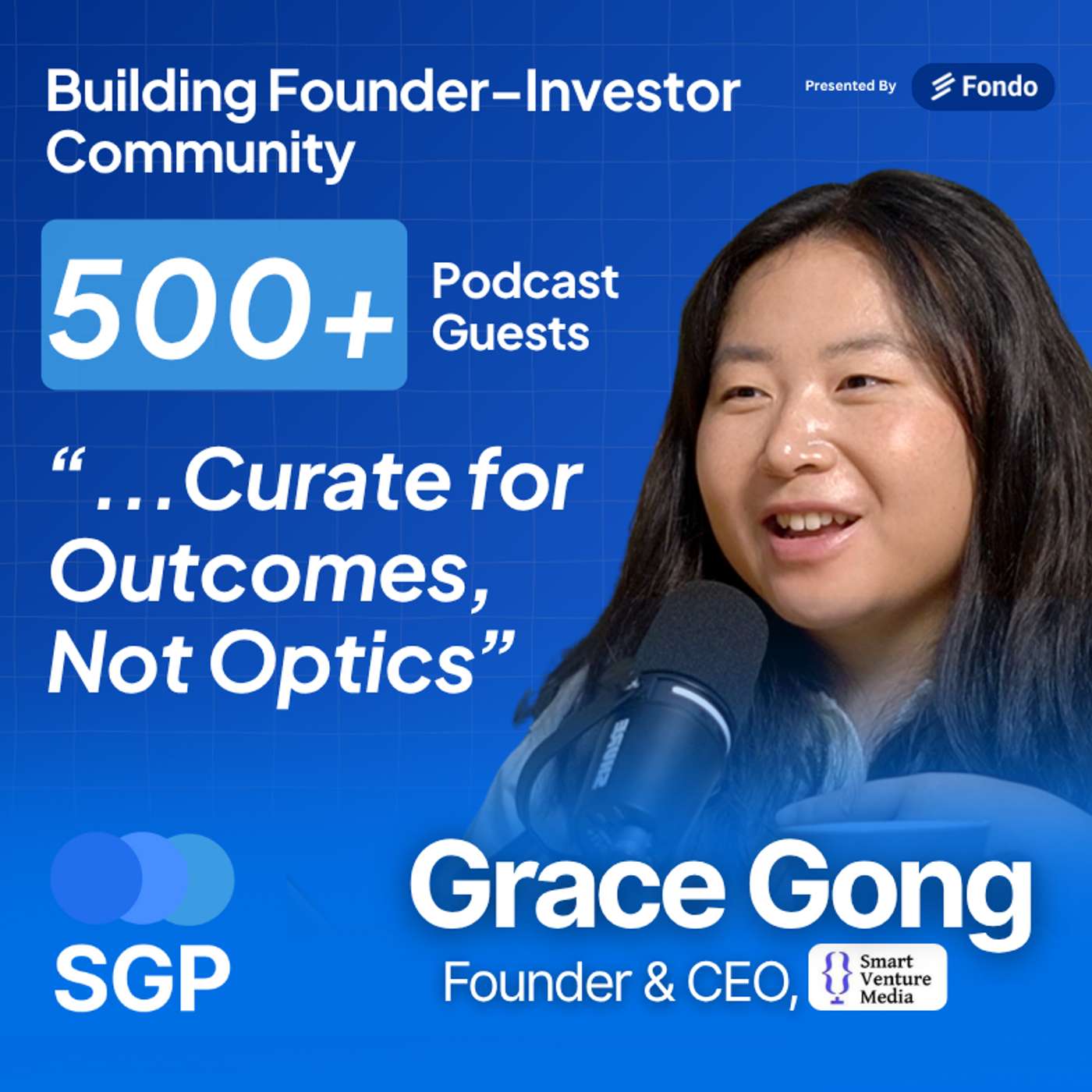
Ep 22Grace Gong | Lessons on Building Founder–Investor Community: Curate for Outcomes, Not Optics
Grace Gong is the Founder & CEO of Smart Venture Media, podcast host, angel investor, and author. She’s interviewed 500+ founders, investors, and operators on her podcasts, then parlayed that network into a high-signal community: curated founder–VC dinners, conferences (including the Smart AI Summit), and rooms where intros turn into customers and checks. The flywheel started during the pandemic with 5 pm Friday Zooms—and evolved into tightly curated IRL events supported by sponsors and operators.In this episode, Grace outlines a practical approach to community-building: curate for outcomes, not optics (every seat should benefit from every other seat). Her angel filter doubles as her invite list. Online → IRL is the sequence: earn trust digitally, concentrate it offline. For founders aiming to stand out without burning cash, this is a clear primer on turning audience into deal flow.Key Topics Covered:Building community has to happen organically.Engaging with entrepreneurs can lead to unexpected opportunities.Sales and storytelling are crucial skills for success in VC.Offering value to others is key to building relationships.The people you meet at events can significantly impact your journey.Planning events requires meticulous attention to logistics.Creating a curated experience enhances networking opportunities.AI is transforming the media landscape and how we build companies.Networking is essential for both founders and investors.Continuous learning and adaptation are vital in the fast-paced tech world.Chapters(00:00) Building Community: The Organic Approach(02:50) Journey into Venture Capital: From Real Estate to VC(05:44) Insights from Interviews: Lessons Learned in VC(08:53) Angel Investing: Key Considerations(11:51) Creating Value: The Importance of Community(15:02) Event Planning: From Small Gatherings to Large Conferences(17:59) The Smart AI Summit: Curating Experiences(20:54) Future of Media: Building with AI(23:48) Final Thoughts and Online PresenceWhere to find Grace Gong & Smart Venture Media:Linktree: https://linktr.ee/gracegong115Where to find David Phillips:X: https://x.com/davjLinkedIn: https://www.linkedin.com/in/davjphillipsBrought to you by:Fondo — All-in-one accounting for startups: https://fondo.com
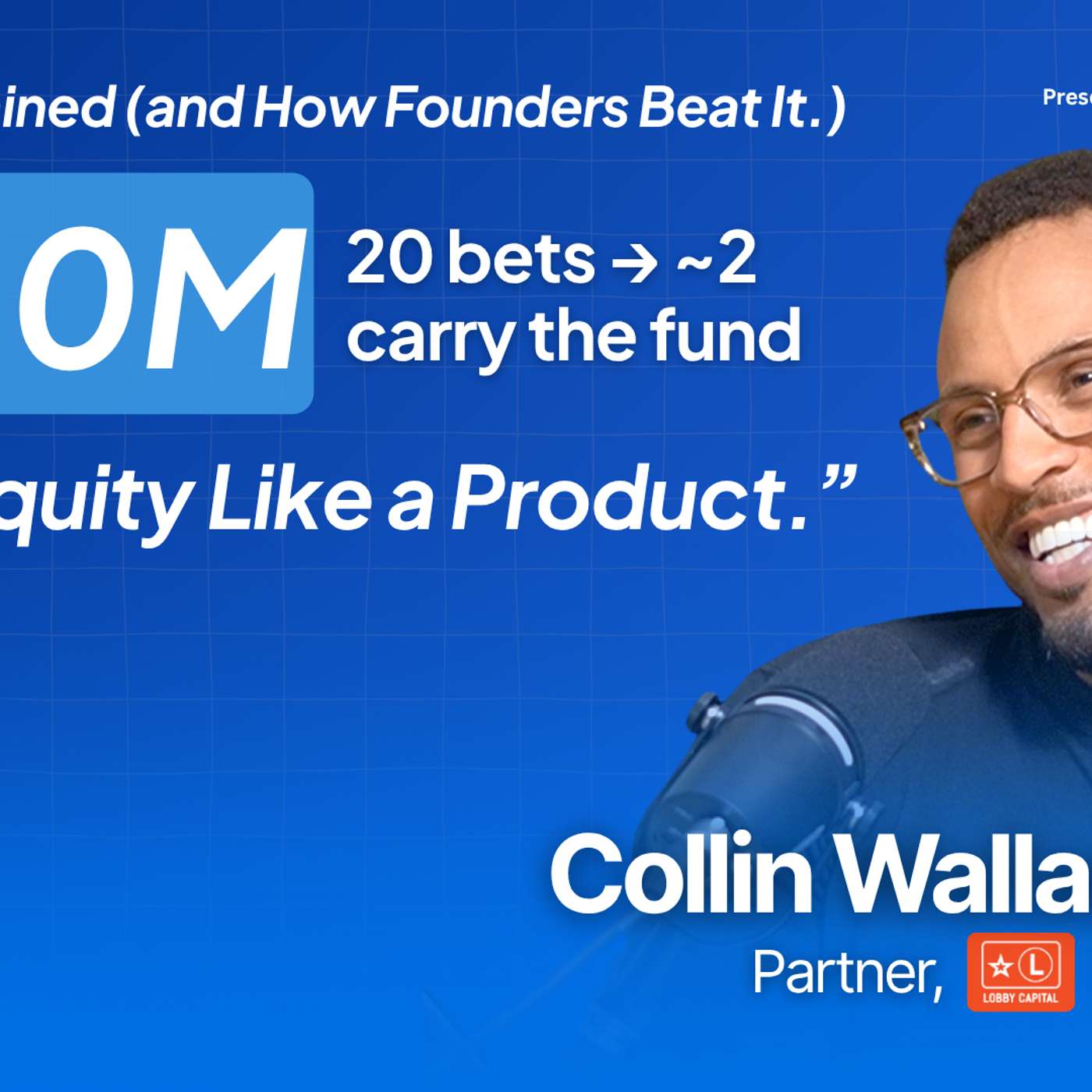
Ep 21Collin Wallace: Inside venture funds, why billion-dollar outcomes make sense - and how founders stack the odds
Collin Wallace is a partner at Lobby Capital with 20+ years as an engineer, inventor, operator, and investor. Before Lobby, he was Managing Director of Techstars Silicon Valley, launching the first two Bay Area accelerator programs with JPMorgan and eBay. He founded FanGo (Techstars S10)—acquired by Grubhub in 2011, where he became Head of Innovation (OrderHub + pre-IPO patents)—and later co-founded ZeroStorefront (YC W19), acquired by Thanx in 2022. Collin advises the Roelof Botha & Huifen Chan Innovation Program, co-teaches Startup Garage at Stanford GSB, has run two YC Demo Day Funds, and has invested in 80+ startups (e.g., Payjoy, Landed, Mosaic Voice, Postscript, Vellum).In this episode, Collin gives founders some great advice: you’re running two businesses (product for customers, equity for investors). Fund math in concentrated portfolios means ~2 of ~20 bets must carry returns; with dilution to ~10% at exit, winners need multi-billion-dollar potential. Sequence your proof: Pre-seed = prove value; Seed = prove people pay (repeatably); Series A = scale what’s already repeatable. Don’t scale misses (the Steph Curry test). And match capital to your vehicle - venture is rocket fuel: perfect for rockets, destructive for "pickup trucks".Key Topics Covered:Running a startup involves selling to customers and investors.Different VCs have varying expectations based on fund size and strategy.Founders should tailor their pitches to the specific needs of investors.Understanding investor dynamics can improve fundraising success.Successful founders diverge from conventional thinking in their industries.Ambition and hustle are key traits for founders.Expectations change significantly after receiving funding.Consistency and repeatability are crucial for scaling a startup.Community engagement can foster innovation and collaboration.The back office is essential but often seen as a distraction.Chapters(00:00) Introduction to Colin Wallace and His Journey(02:14) The Shift in Growth Expectations for Startups(05:03) Understanding Investor-Fit and Fundraising Dynamics(11:12) The Importance of Founder Attributes(17:15) Navigating the VC Landscape and Expectations(21:03) Post-Funding Realities for Founders(22:40) Understanding Seed Capital and Series A Expectations(25:19) The Evolution of Funding: Series B and C(29:05) Coaching the Next Generation of Founders(32:09) Building the Back Office: The Unsung Hero(35:42) Community Building and Inclusive EventsWhere to find Collin Wallace:Linkedin: https://www.linkedin.com/in/collin-wallace/ X: https://x.com/pithyprof Website: https://lobby.vc/people/collin-wallace/ Where to find Lobby Capital:Linkedin: https://www.linkedin.com/company/lobby-capital/ X: https://x.com/lobby_vcWebsite: https://lobby.vc/Where to find David Phillips:X: https://x.com/davjLinkedIn: https://www.linkedin.com/in/davjphillipsBrought to you by:Fondo — All-in-one accounting for startups: https://fondo.com
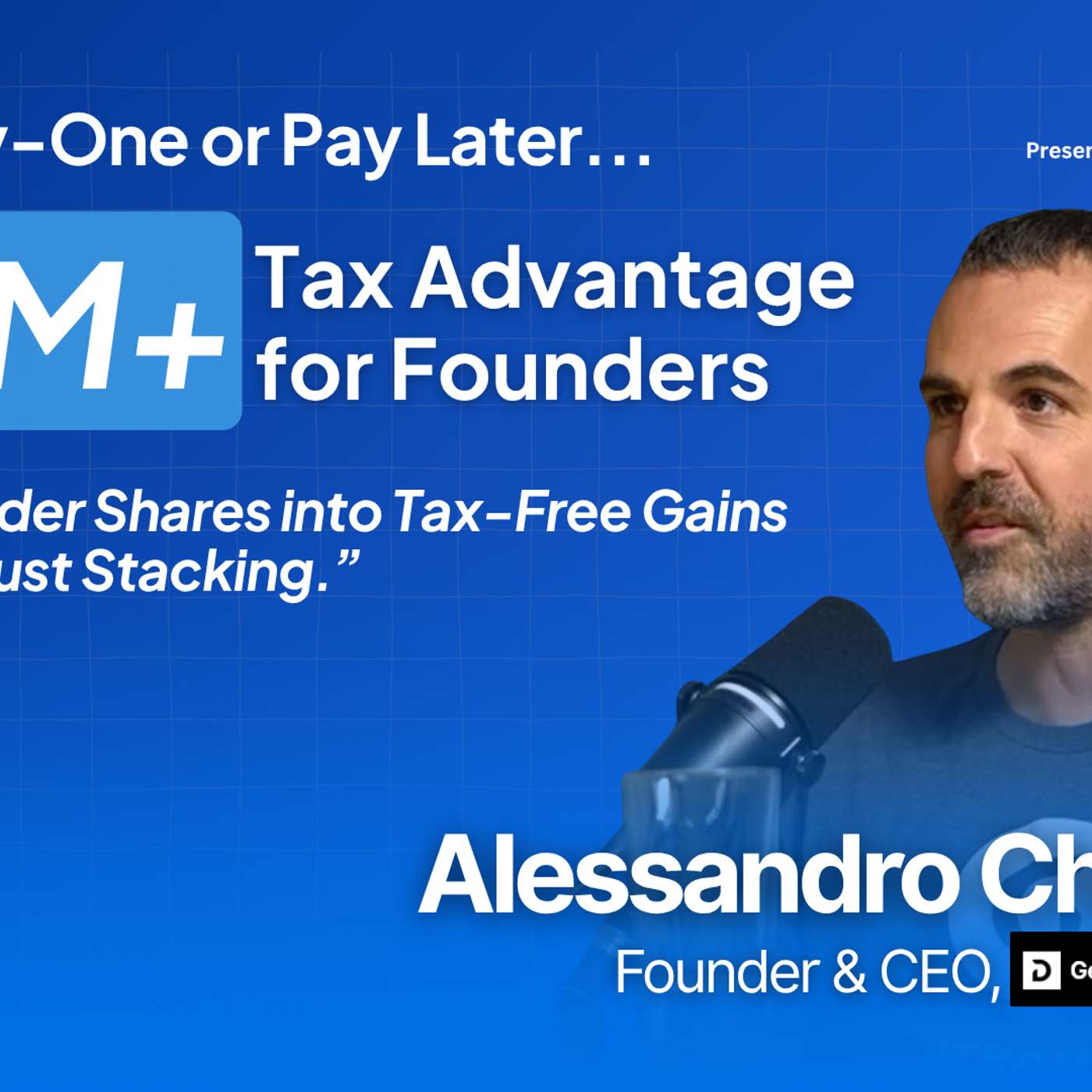
Ep 20Alessandro Chesser: Turn Founder Shares into Tax‑Free Gains with QSBS Trust Stacking
Alessandro Chesser is the founder and CEO of Dynasty, a startup focused on making Qualified Small Business Stock (QSBS) trust stacking accessible to founders. Before launching Dynasty, he led sales at Carta from the early days to roughly $300M in ARR, gaining hands-on insight into equity workflows, 409A dynamics, and how distribution is built around real, recurring needs. Dynasty offers a subscription service—$1,500 per year for up to four family trusts—that includes trust creation, annual administration, and tax return filing, turning a traditionally bespoke, high-cost process into something founders can set up early in their journey.In this episode, we unpack the mechanics and timing that make—or break—QSBS outcomes. We cover the core tests (acquiring shares before $50M in assets, five-year hold, qualified C-corp status), state-level differences (New York recognizes QSBS; California does not), and why early planning can start both the QSBS and long-term capital gains clocks while avoiding later surprises. Chesser talks about trust stacking—gifting shares into multiple family trusts so each may pursue its own QSBS exclusion—and notes practical guardrails and expert advice for dong it right. Beyond the tax planning, Chesser shares go-to-market lessons from Carta and Dynasty: using the network effect (e.g., certificates signed), creating urgency with must-do workflows (like 409A), iterating growth levers monthly, hiring decisively, and using social + creator partnerships instead of traditional cold outbound. The result is clear: tactical advice for founders on when to exercise, when to gift, how to document, and how to avoid the common QSBS pitfalls discussed in the conversation.Key topics covered- QSBS allows startup shareholders to sell up to $15 million tax-free.- Most startups qualify for QSBS, but there are specific criteria.- Holding shares for at least five years is crucial for QSBS eligibility.- The new rules under the big beautiful bill change QSBS eligibility timelines.- Dynasty helps founders maximize QSBS benefits through trust stacking.- Early exercise of stock options can prevent alternative minimum tax issues.- Filing an 83B election is essential for QSBS qualification.- Social media is a powerful tool for startup growth and marketing.- Building partnerships with influencers can enhance visibility and credibility.- The cost of setting up trusts for QSBS is significantly lower with Dynasty.In This Episode, We Cover(00:00) Introduction to QSBS and Its Importance(06:35) Understanding QSBS Eligibility and Benefits(13:08) The Role of Dynasty in Maximizing QSBS Benefits(16:29) Alessandro's Journey and the Birth of Dynasty(18:36) Growth Strategies and Lessons from Carta(27:14) Leveraging Social Media for GrowthWhere to Find Alessandro Chesser:LinkedIn: https://www.linkedin.com/in/alessandro-chesser-84763748X: https://x.com/SandroChessWhere to Find Dynasty:Website: https://www.getdynasty.comLinkedIn: https://linkedin.com/company/getdynastyX: https://x.com/getdynasty_comWhere to Find David Phillips:X: https://x.com/davjLinkedIn: https://www.linkedin.com/in/davjphillipsBrought to you by:Fondo — All-in-one accounting for startups: https://fondo.com
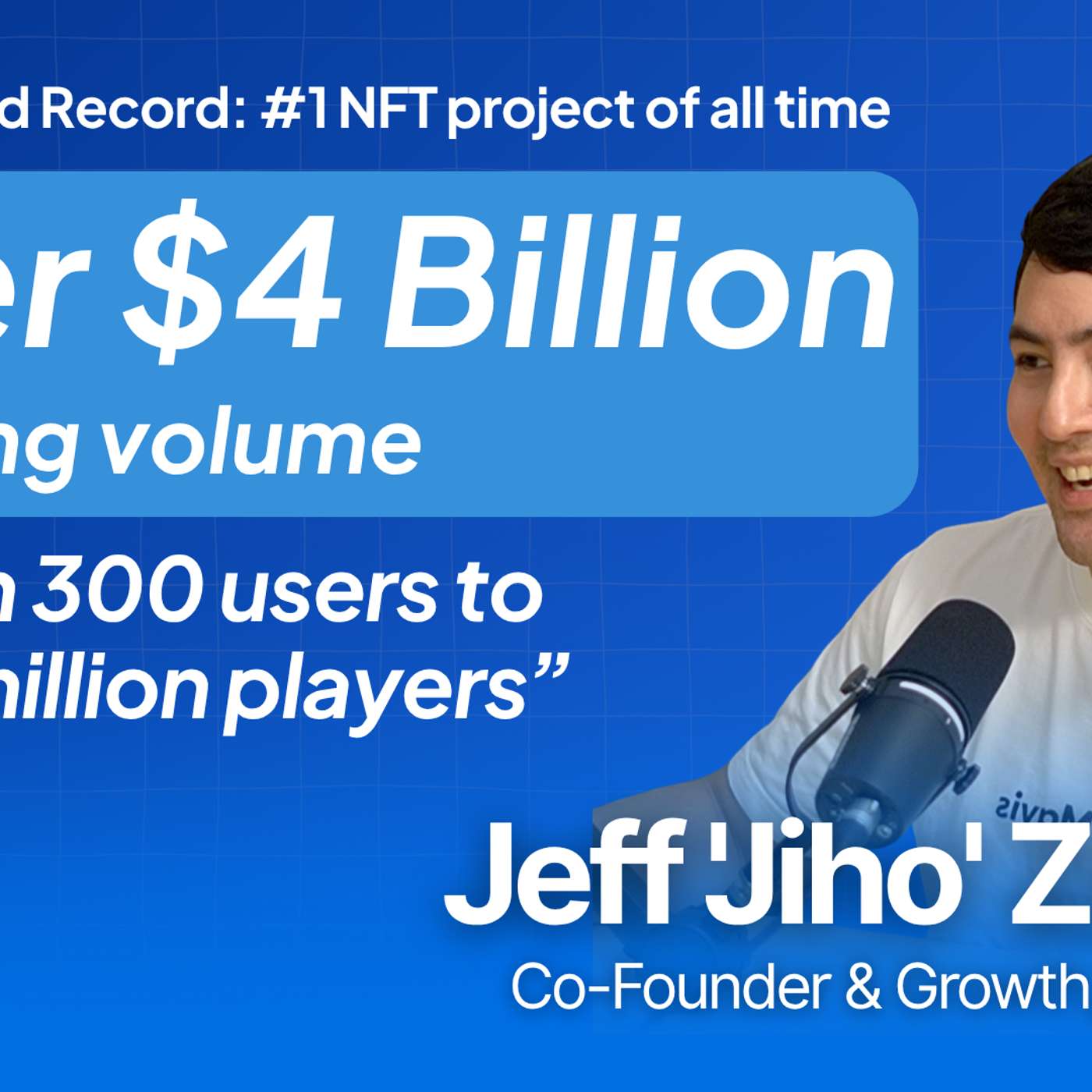
Ep 19Jeff ‘Jiho’ Zirlin: From 300 Users to $4B+ in Trading Volume, The Story Behind Axie Infinity’s Meteoric Growth
Jeff ‘Jiho’ Zirlin is a co-founder of Sky Mavis, the team behind Axie Infinity and the Ronin blockchain. At the forefront of Web3's most groundbreaking experiments, Jeff helped transform Axie from a small crypto-native community into a cultural phenomenon that onboarded millions to blockchain technology. With over $4 billion in NFT trading volume - earning a Guinness World Record - Axie didn't just talk about bringing people to crypto; it actually did it. Beyond Axie, Jeff pioneered the Ronin blockchain, which now hosts 70+ games and has proven that purpose-built infrastructure can unlock exponential growth for crypto applications.In this episode, we trace the evolution of Web3 gaming from its origins in the CryptoKitties community to today's institutional adoption cycle. The conversation explores how manual onboarding and white-glove user acquisition laid the foundation for viral growth. Jeff shares the pivotal moments that shaped Axie's trajectory: tokenizing experience points, creating the "play-to-earn" model that democratized crypto mining, and the strategic decision to build their own blockchain when existing infrastructure couldn't scale. We also examine the current state of crypto gaming, the shift from retail mania to Wall Street adoption, and why the next wave of innovation might create entirely new cultural mediums rather than just new ways to make money.Key topics covered:The CryptoKitties Mafia: How a December 2017 viral game spawned the founders of Axie, OpenSea, and the modern NFT ecosystemManual onboarding at scale: From personally gifting Axies to Binance angels to hitting 2 million usersThe biological insight: Why CryptoKitties failed (no death = exponential breeding) and how ecosystem balance became Axie's core principle300 users was "#1": How being the largest crypto game with just 300 players became a marriage proposal line - and a growth trajectoryTokenizing the game economy: The moment players asked to buy experience points and accidentally invented play-to-earn"You can't build your startup on another startup": Why Loom Network's failure forced Sky Mavis to create Ronin blockchainThe Ronin Effect: Deploying at 30,000 users, scaling to 2 million in six months - and the infrastructure playbook now powering 70+ gamesThe Uniswap wealth effect: How every Axie player unexpectedly received $4,000, creating a growth catalyst nobody predictedWhy gaming onboards better than DeFi: More people game than trade - and nostalgia beats complexity when introducing scary new technologyFrom Binance to NYSE: This cycle's institutional meta and why crypto gaming hasn't figured out Wall Street yetThe new Renaissance: How fractional reserve banking created the actual Renaissance, and why crypto's lasting impact will be cultural, not financialLoyalty programs vs. helicopter money: Evolving from infinite money glitches to targeted behavioral incentives70+ economic experiments: From AI-powered tanuki battles to on-chain "Runescape" - why only one or two need to workThe cypherpunk optimism: Why crypto offers a more definite, grounded vision for the future than AI or roboticsWhere to find...Jeff 'Jiho' Zirlin:Instagram: https://www.instagram.com/axieinfinityX: https://x.com/Jihoz_AxieLinkedIn: https://www.linkedin.com/in/jeffzirlinSkymavis:Website: https://skymavis.comInstagram: https://www.instagram.com/axieinfinityX: https://x.com/skymavishqLinkedIn: https://www.linkedin.com/company/skymavisAxie Website: https://axieinfinity.com/Instagram: https://www.instagram.com/axieinfinityX: https://x.com/AxieInfinityLinkedIn: https://www.linkedin.com/company/axieinfinityRoninWebsite: https://roninchain.comInstagram: https://www.instagram.com/axieinfinityX: https://x.com/ronin_network LinkedIn: https://x.com/ronin_networkDavid Phillips:Website: www.fondo.comInstagram: https://www.instagram.com/axieinfinityX: https://x.com/davjLinkedIn: https://www.linkedin.com/in/davjphillipsIn This Episode, We Cover(00:00) From 300 to thousands of Users: The Binance Effect(17:41) Community-Driven Growth: The Role of Guilds(18:38) Experimentation as a Growth Strategy(19:52) Challenges and Advantages in Crypto Growth(20:03) Learning Through Gaming: Onboarding to Crypto(21:27) The Uniswap Airdrop: A Catalyst for Growth(22:18) Onboarding and Scaling in Crypto Gaming(23:17) The Ronin Network: A Solution for Scalability(24:40) The Evolution of Ronin and Its Community(25:10) Expanding the Ronin Ecosystem: New Games and Innovations(27:02) Economic Experiments in Crypto Gaming(28:56) The Cultural Renaissance of Crypto(30:14) Future Innovations in Web3 Gaming(31:36) Optimism for the Future of CryptoBrought to you by:Fondo — All-in-one accounting for startups: https://tryfondo.com

Ep 18Parthi Loganathan: Beyond Cold Outbound - How Letterdrop Transforms Intent Signals Into Revenue Opportunities
Parthi Loganathan is the founder and CEO of Letterdrop, a Y Combinator-backed startup that helps B2B companies build pipeline by focusing on the warmest leads and people who are actually in market. Since launching Letterdrop, he's helped companies move beyond saturated email and cold calling tactics to identify prospects who want to talk and send them highly tailored messaging. The platform analyzes public conversations, CRM data, and sales calls to segment buyers and enable personalized outreach without relying on high-volume approaches.In this episode, we explore the fundamental shift happening in B2B sales as traditional cold outbound becomes less effective and companies invest in higher-effort tactics to stand out. The conversation covers the evolution from Letterdrop's origins as an SEO tool to its current focus on conversation intelligence, driven by market changes from ChatGPT's emergence. Parthi shares insights about the three essential components of effective outbound messaging, why customer conversations represent untapped content goldmines, and his firsthand experience being demoed by an AI sales agent. We also examine his predictions about AGI's timeline and the philosophical question facing all founders: do you build for today's market or tomorrow's technological reality?Key topics covered:Why cold email reply rates dropped 40% in 2024 and the shift away from "spam your TAM" tacticsThe reality that only 2-3% of your market wants to purchase at any given timeThree components of effective outbound: solid observation, poking the P0 problem, and value-first offersLetterdrop's strategic pivot from SEO tools to conversation intelligence as ChatGPT emergedHow customer and prospect conversations contain unique content that competitors can't replicateThe founder journey from Google product manager through multiple micro-SaaS startups to YCReal experience with an AI AE conducting demos better than human salespeopleWhy "marinating" in a single problem space beats jumping between different marketsThe philosophical choice between building Cursor (for today) versus Anthropic (for the future)AGI timeline predictions and whether UBI will arrive before widespread job displacementWhere to find Parthi Loganathan:Linkedin: https://www.linkedin.com/in/parthiloganathan/X: https://x.com/parthi_loganWhere to find Letterdrop:Website: https://letterdrop.com/Linkedin: https://www.linkedin.com/company/letterdrop/X: https://x.com/letterdropcoPodcast: https://open.spotify.com/show/43bSCi3FcFaJ28H7qEK59X?si=2f6afe15cea342eaWhere to Find David Phillips:X: https://x.com/davjLinkedIn: https://www.linkedin.com/in/davjphillips/In This Episode, We Cover(00:00) Introduction to LetterDrop and Its Mission(02:52) The Evolution of Outbound Sales Strategies(06:11) Crafting Effective Outbound Messages(09:09) Parthi's Journey as a Founder(12:02) Leveraging Social Conversations for Sales(14:59) Creating Content from Customer Conversations(17:55) Back Office Operations for Startups(20:49) The Role of AI in Sales(23:38) The Future of Work: AGI and UBI(26:46) Closing Thoughts and Future QuestionsBrought to you by:Fondo — All-in-one accounting for startups: https://tryfondo.com
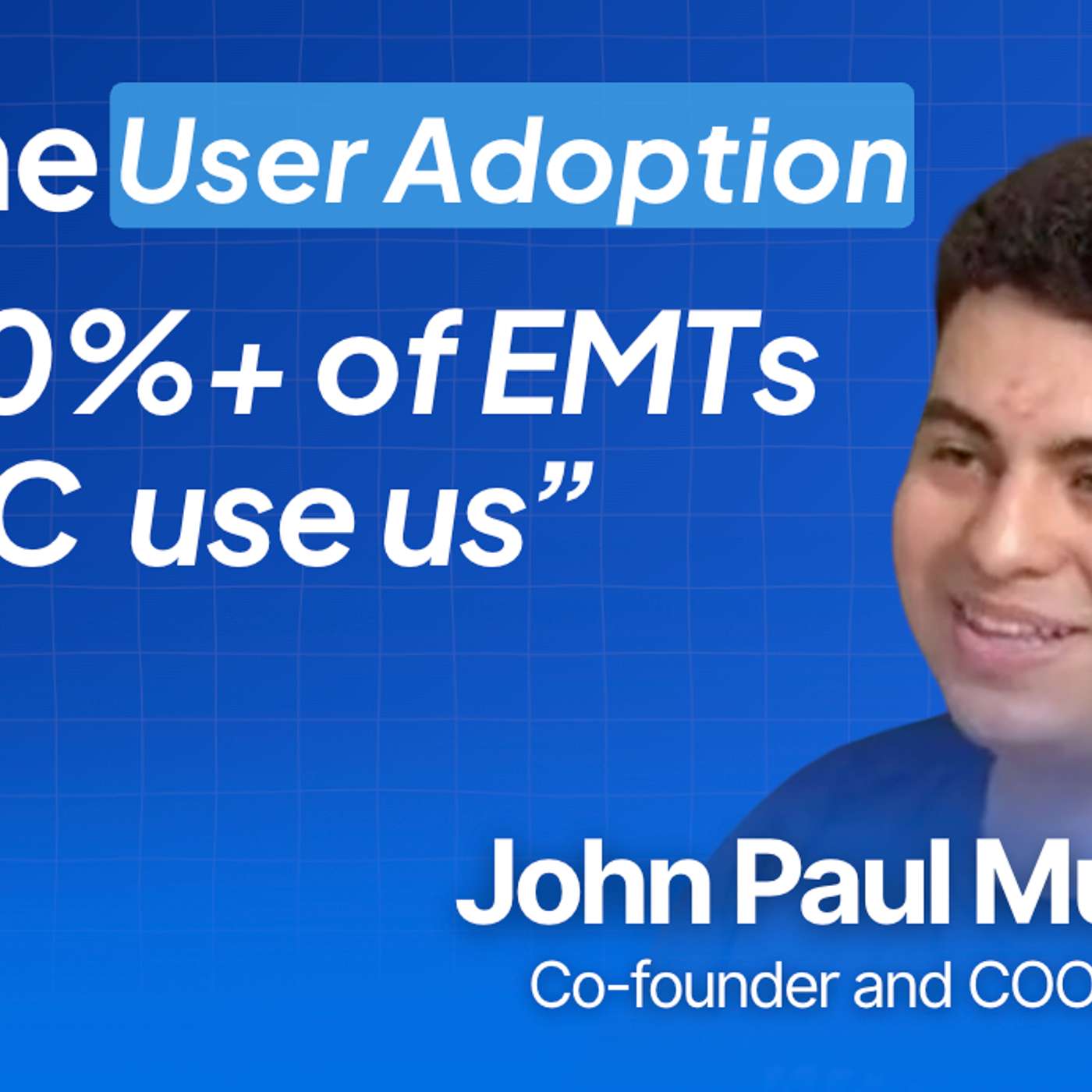
Ep 17John Paul Mussalli: How One EMT's Scrappy Prototype Evolved Into an AI Tool That Won Over 20% of NYC's EMTs
In this episode, I sat down with John Paul Mussalli, the co-founder and COO of CareSwift, a Y Combinator-backed startup building AI-powered software to streamline documentation for EMT workers. JP and his cofounders brings a unique blend of technical expertise and entrepreneurial drive to the healthcare technology space, having previously worked across diverse fields from real estate automation to web development. Since co-founding CareSwift, he's helped scale the platform to serve over 2,000 EMTs in New York City alone, generating more than 90,000 automated reports. Beyond product development, JP leads go-to-market strategy and is currently pursuing EMT certification himself to deepen his understanding of the industry's challenges.In this episode, we explore the journey from scrappy prototype to venture-backed startup and the critical lessons learned along the way. Key topics covered:How a ChatGPT prototype evolved into a venture-backed healthcare AI platformThe hidden costs of poor EMT documentation: $1,800 per error and 11% industry revenue lossWhy 25% of New York's EMTs organically adopted CareSwift without marketingCritical incorporation mistakes that can delay funding and how to avoid themThe strategic decision to expand from narrative reports to full documentation workflowWhy domain expertise matters when building AI for specialized industriesNavigating regulatory compliance and the founder stack for healthcare startupsThe reality of Y Combinator: 996 work culture and rapid iteration cyclesFrom 15-20 minute reports to 2-minute automated workflows saving hours per shiftWhy sometimes a bug in Apple Mail can redirect your entire startup journeyWhere to find John Paul Mussalli - Linkedin: https://www.linkedin.com/in/jpmussalli/- X: https://x.com/jpm1126Where to find CareSwift:- Website: https://careswift.ai/- Linkedin: https://www.linkedin.com/company/careswift/Where to Find David Phillips:- X: https://x.com/davj- LinkedIn: https://www.linkedin.com/in/davjphillips/In This Episode, We Cover(00:00) Introduction to CareSwift and Its Founders(02:54) The Birth of CareSwift: Addressing EMT Challenges(06:09) Impact of CareSwift on EMT Efficiency(09:01) Navigating the Startup Journey: Lessons Learned(09:35) Navigating Startup Structures and Legalities(12:14) The Journey Through Y Combinator(15:06) Daily Life as a Founder in Y Combinator(17:13) Building a Founder Stack: Tools and Resources(18:57) Future PlansBrought to you by:Fondo — All-in-one accounting for startups: https://tryfondo.com
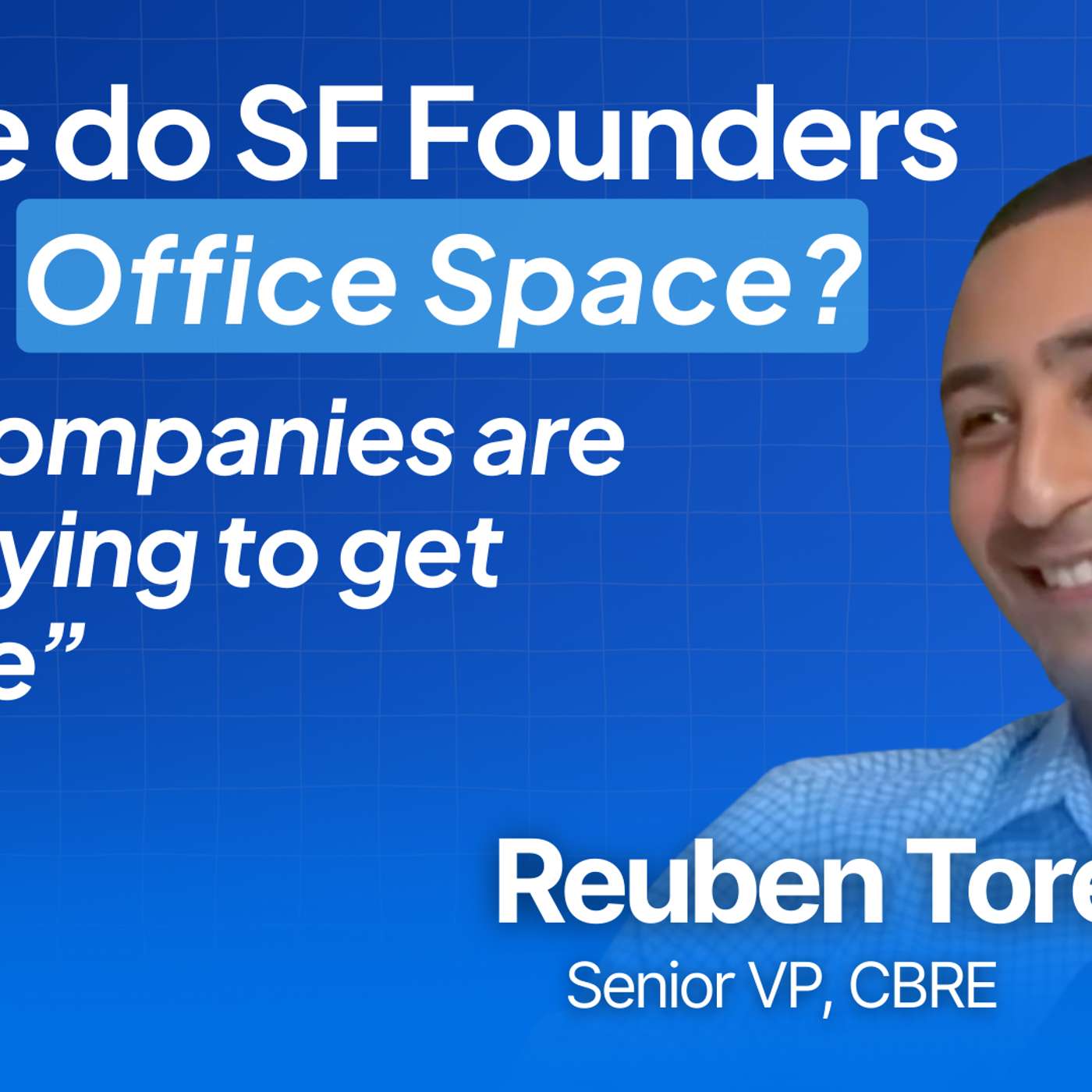
Ep 16Reuben Torenberg: Inside SF's Office Market Comeback: Deals, Trends & AI Company Growth
Reuben Torenberg is a Senior Vice President at CBRE, the world's largest commercial real estate services firm. Reuben specializes in helping startups in San Francisco navigate the complex and rapidly changing office leasing landscape. Since joining CBRE in 2014, he's represented some of the biggest names in tech - including Airbnb, Coinbase, Cruise, and Dropbox - and is widely known as the go-to broker for early-stage startups and growth-stage companies alike. Beyond real estate, Reuben is also a community builder, having founded SF Hoops and SF Links, two of the city's most exclusive and founder-heavy social sports leagues.In this episode, we explore the dramatic transformation of San Francisco's commercial real estate market and the evolving dynamics between landlords, tenants, and the broader tech community. The conversation delves into current market trends in both office and retail spaces, examines how AI companies are reshaping demand patterns, and discusses the critical importance of community building in the tech industry through initiatives like SF Hoops. We also dive deep into pricing strategies, emerging market opportunities, and provide a comprehensive outlook for businesses seeking space in San Francisco.Topics covered:Why SF's commercial real estate recovery is finally here after 5 years of declineHow AI companies are driving massive demand and changing the market dynamicsWhere to find the best deals: neighborhood analysis and sweet spot sizing (10-20K sq ft)Why rents are rising and landlords are getting more confident by the dayBuildings selling at 80% discounts and what it means for new opportunitiesThe return-to-office mandate trend and its impact on space demandLower SoMa as the last frontier for deeply discounted office spaceRetail space conversion opportunities in Union SquareWhy you should secure space now vs. waiting for better dealsPricing breakdown: what 10, 25, and 50-person companies should budgetHow to navigate the search process and when to use a broker& Much moreWhere to Find Reuben Torenberg:CBRE: https://www.cbre.comX: https://x.com/RTorenberg021LinkedIn: https://www.linkedin.com/in/reuben-torenberg-b985b646Where to Find SF Hoops:https://sfhoopsleague.comhttps://x.com/SFHoopsleagueWhere to Find David Phillips:X: https://x.com/davjLinkedIn: https://www.linkedin.com/in/davjphillips/In This Episode, We Cover(00:00) Current Trends in San Francisco Commercial Real Estate(02:53) Navigating the Market: Opportunities and Challenges(05:54) The Shift in Office Space Demand(08:43) Retail Space and Its Transformation(11:55) Landlord Strategies and Market Dynamics(14:52) The Rise of SF Hoops: Networking Through Sports(17:59) Future Outlook: What to Expect in the Coming MonthsBrought to you by:Fondo — All-in-one accounting for startups: https://tryfondo.com
Ep 15Stephen Llevano: The Founder Journey, Startup Surprises, and Takeaways for Every Founder
Stephen Llevano is the founder and CEO of Capabuild, a software platform designed for restoration contractors who work on insurance jobs. Capabuild helps these businesses manage compliance, streamline field documentation, and create accurate estimates — fast.In this episode, Stephen shares the full story behind Capabuild: how it started, what he got wrong early on, and the key insights that helped turn it into a real business. One of the biggest takeaways? The power of watching customers work in their real environment — instead of relying on what they say they need.We dive into how observing contractors in the field led to unexpected product decisions, how Capabuild evolved its pricing model after early pushback, and what it takes to build trust in a traditional, change-resistant industry.Stephen also shares his thoughts on building for overlooked markets, supporting local service businesses, and why long-term traction comes from delivering real operational value — not chasing trends or vanity metrics.If you’re building software for non-obvious industries or trying to unlock early traction, this episode is packed with practical, hard-earned wisdom.Check out Capabuild:https://www.capabuild.app/https://apps.apple.com/us/app/capabuild/id1642228115https://play.google.com/store/apps/details?id=com.capabuild.app&pcampaignid=web_shareThis episode is brought to you by:Fondo — Automate your accounting and unlock up to $500k from the IRS: tryfondo.comWhere to find Stephen LlevanoX: https://x.com/StephenLlevanoLinkedIn: https://www.linkedin.com/in/stephen-llevano/Where to Find David PhillipsX: https://x.com/davjLinkedIn: https://www.linkedin.com/in/davjphillips/TakeawaysConnecting directly with customers as a founder is crucial for product successObserving customers in their actual work environment reveals true needs beyond feedbackPricing strategies must evolve based on real customer insights and market dynamicsBuilding a startup requires more time and emotional investment than initially expectedThe insurance industry is shifting, creating new opportunities for adaptive contractorsPersonal relationships often drive initial customer acquisition and business developmentDeep market understanding is essential for navigating industry complexitiesOperational efficiency directly impacts a contractor's ability to serve clients effectivelySupporting local service businesses creates stronger community economic foundationsEvery entrepreneurial experience offers valuable learning opportunities worth embracingChapters(00:01) The Entrepreneur's Journey(03:03) Identifying Market Opportunities(05:55) Building the First Version of Capabild(08:51) Customer Acquisition and Pricing Strategies(11:57) The Evolution of Capabuild(20:56) Operational Challenges and Solutions(23:51) Future of the Industry and Capabild's Mission
Ep 14Saving Startups Millions, R&D Credit Deep Dive, and Breaking Down the Big Beautiful Bill: Jake Wedig
Jake Wedig is the Director of Tax at Fondo, where he helps startups navigate complex tax legislation and maximize their tax benefits. With deep expertise in startup tax strategy, Jake specializes in R&D tax credits, Section 174 compliance, and helping growing companies optimize their tax positions while managing cash flow challenges.In this conversation, Jake breaks down the recent changes in tax legislation that every startup founder needs to know about, particularly the game-changing provisions in the One Big Beautiful Bill and how startups can leverage R&D tax credits to get substantial cash back on their development investments.We explore the challenges that Section 174 has created for startups and dive into practical strategies for navigating these changes, including when amending tax returns makes sense and how to leverage bonus depreciation and Section 179 deductions. Jake also explains the powerful long-term benefits of Qualified Small Business Stock (QSBS) for founder wealth optimization.Key topics covered:How the One Big Beautiful Bill creates new tax optimization opportunities for startupsMaximizing R&D tax credits for substantial cash returns on development investmentsNavigating Section 174's impact on R&D expense deductions and cash flow managementStrategic use of amended returns to recover from unexpected tax positionsLeveraging bonus depreciation and Section 179 for immediate equipment deduction benefitsUnderstanding QSBS benefits and the five-year holding period requirementsThe importance of proactive tax planning partnerships between startups and advisorsStaying ahead of evolving tax legislation to capture emerging opportunitiesAnd much moreBrought to you by:Fondo — Automate your accounting and unlock up to $500k from the IRS: https://tryfondo.comWhere to find Jake WedigLinkedIn: https://www.linkedin.com/in/jacob-wedigWhere to Find David PhillipsX: https://x.com/davjLinkedIn: https://www.linkedin.com/in/davjphillips/In This Episode, We Cover(01:42) Understanding the New Tax Bill(03:31) R&D Tax Credits and Their Importance(07:51) Impact of Section 174 on Startups(13:05) Amending Returns and Cash Flow Considerations(16:38) The Role of Tax Advisors for Startups(30:55) Bonus Depreciation and Section 179(35:23) Qualified Small Business Stock (QSBS) Benefits
Ep 13Nathan Latka: Bootstrapping to $2M ARR, Turning Down $6.5M, and Funding 500+ Startups
Nathan Latka is the founder and CEO of Founderpath, a fintech platform that has deployed nearly $200 million in non-dilutive capital to 500+ software companies. He’s also the creator of GetLatka, a massive SaaS database built off the back of his top-ranked Latka podcast, where he’s interviewed thousands of founders. Nathan’s entrepreneurial journey began at 18 with the launch of Heyo, a Facebook fan page SaaS tool he bootstrapped to $2M in ARR before raising venture capital and eventually exiting.In this conversation, Nathan shares hard-earned lessons from building and exiting companies, explains why most founders don’t understand the true cost of raising VC, and offers a compelling case for why debt and secondaries can be a smarter option. We also explore:How he bootstrapped Heyo to $2M ARR before raising VCThe $6.5M exit offer he had to turn down (and regrets)What most founders misunderstand about venture capitalHow GetLatka became the #1 ranked SaaS benchmarking databaseWhy the future belongs to tiny teams with huge revenueThe three AI trends shaping SaaS company formationHow FounderPath prices startup equity daily—instantly enabling secondariesWhy hooks and attention matter more than everAnd much moreBrought to you by:Fondo — Automate your accounting and unlock up to $500k from the IRS: https://TryFondo.comWhere to Find Nathan LatkaX: https://x.com/NathanLatkaInstagram: https://www.instagram.com/nathanlatka/LinkedIn: https://www.linkedin.com/in/nathanlatka/Podcast: Latka PodcastSaaS Database: https://getlatka.comBook: How to Be a Capitalist Without Any CapitalWhere to Find David PhillipsX: https://x.com/davjLinkedIn: https://www.linkedin.com/in/davjphillips/In This Episode, We Cover(00:00) Intro to Nathan and FounderPath(01:30) The story behind Heyo and bootstrapping to $2M ARR(03:50) Raising venture and losing optionality(05:30) The $6.5M offer and why his board said no(07:10) Lessons from a slow death and how to move on(08:15) Why Nathan started the Latka podcast(09:30) Building GetLatka to 3,000+ daily organic clicks(11:00) The power of hooks and attention in modern SaaS(12:45) Inside FounderPath: non-dilutive capital for SaaS(14:30) How venture debt differs from traditional VC(16:15) Why secondaries are healthy, not harmful(18:00) How FounderPath prices startup equity daily(20:10) Big trends: tiny teams, chat-based dashboards, attention > techReferencedGetLatka – https://getlatka.comFounderPath – https://founderpath.comHeyo (archived) – https://en.wikipedia.org/wiki/HeyoHow to Be a Capitalist Without Any Capital (Book) – https://www.amazon.com/How-Be-Capitalist-Without-Capital/dp/0525534440ZoomInfo – https://www.zoominfo.comTechstars – https://www.techstars.comG2 Crowd – https://www.g2.com
Ep 12Selling Before You’re Ready: How Early Stage Founders Close Their First Customers
Ajith Govind and Avinash Joshi are the co-founders of Cactus, an AI copilot for solopreneurs such as private chefs and caterers, helping them streamline admin tasks and grow their business. Brian Kuan, Community Manager at Vanta, hosted the conversation. Together, we explore early-stage sales, building trust, and the YC network's unique power to catalyze startup momentum. In this episode, we discuss:Why founder-led sales is irreplaceableLeveraging Bookface and social media for early tractionBuilding trust with SMBs and solopreneurs outside your networkCold outreach tactics that actually workedWhy you should launch even a half-baked productThe underestimated power of urgency in early salesStories behind onboarding first customers at Fondo and CactusThe emotional moments that proved they were building something impactfulHow fundraising and selling are deeply intertwinedMuch moreBrought to you by:Fondo — All-in-one accounting for startups: https://fondo.comWhere to Find David PhillipsX: https://x.com/davjLinkedIn: https://www.linkedin.com/in/davjphillips/Where to Find the Guests:Brian Kuan (Vanta, W18)LinkedIn: linkedin.com/in/briankuanAjith Govind (Cactus, X25)X: x.com/itsajith747LinkedIn: linkedin.com/in/ajith-govindAvinash Joshi (Cactus, X25)X: x.com/avinashjoshiLinkedIn: linkedin.com/in/joshi-avinashWhere to Find the CompaniesCactus: x.com/oncactusai | LinkedInFondo: fondo.comVanta: x.com/TrustVanta | LinkedInIn This Episode, We Cover(00:00) Introductions and what each company does(03:12) How Fondo found its first customer through a cold DM to Sam Parr(05:40) How Cactus began by solving a personal need with personal chefs(09:05) Using Bookface to unlock growth(13:00) Tips for selling to startups and SMBs(16:45) How product-led growth and founder empathy drive traction(20:18) Balancing building with selling as a founder(25:12) Founder-led sales vs. traditional sales teams(28:00) How trust is built—especially outside your network(32:40) Lightning Round: first big sales wins, boldest cold DMs, best YC perks(38:35) Sales tactics they wish they knew on Day 1(41:00) Fundraising urgency and investor psychologyReferencedSam Parr (The Hustle): https://www.thehustle.coPostHog: https://posthog.comBookface (YC Internal Network): https://www.ycombinator.comBrex: https://www.brex.comChristina Cacioppo (CEO, Vanta): LinkedInMarketplace Capital: https://marketplacecapital.vcYC Demo Day: https://www.ycombinator.com/demo-day
Ep 11From Overpriced to Undervalued: Why Now is the Time for Startups to Get in on SF's Real Estate Deals
Reuben Torenberg is a First Vice President at CBRE, the world’s largest commercial real estate services firm. Reuben specializes in helping startups in San Francisco navigate the complex and rapidly changing office leasing landscape. Since joining CBRE in 2014, he's represented some of the biggest names in tech — including Airbnb, Coinbase, Cruise, and Dropbox — and is widely known as the go-to broker for early-stage startups and growth-stage companies alike. Beyond real estate, Reuben is also a community builder, having founded SF Hoops and SF Links, two of the city’s most exclusive and founder-heavy social sports leagues.In this episode, we dive into the state of commercial real estate for startups in 2025, including:Why SF is now a tenant’s market — and what that means for startupsHow to find cheap, high-quality office space (and avoid costly mistakes)How much space your startup really needs at each stageWhy brokers are free for tenants — and why every founder should use oneWhere the best startup neighborhoods are in SF right nowHow coworking has evolved — and why it's a smart move for teams <10What landlords are offering in TI (tenant improvement) allowances todayHow much to offer below list — and why you should always send multiple proposalsThe return of Class A space and what’s happening in Mission Bay, Hayes Valley, and Jackson SquareMuch moreBrought to you by:Fondo — All-in-one accounting for startups: https://tryfondo.comWhere to Find Reuben TorenbergCBRE: https://www.cbre.comX: https://x.com/RTorenberg021LinkedIn: https://www.linkedin.com/in/reuben-torenberg-b985b646/Where to Find David PhillipsX: https://x.com/davjLinkedIn: https://www.linkedin.com/in/davjphillips/In This Episode, We Cover(00:00) Intro to Reuben and CBRE(01:30) From sports to real estate: Reuben’s career path(03:15) Lessons from Custom Spaces and early startup deals(04:50) Major tenants Reuben’s worked with: Airbnb, Coinbase, Cruise(06:30) How SF Hoops became a startup founder hub(08:05) SF Links and the evolution of social networking for tech(09:40) How startups actually find space in SF(11:00) What tenant brokers do and why they’re free(13:00) Square footage per employee and planning for growth(15:00) COVID's impact: SF market shift explained(17:30) Class A space demand and the "flight to quality"(19:45) Leasing terms, TI allowances, and negotiation tips(23:00) Market insights from Q1 2025: 2.9M sq ft leased(25:15) Hottest neighborhoods: Mission Bay, Jackson Square, and beyond(28:00) Best advice for founders raising and scaling: flexibility, furnished space, subleases(30:00) Budgeting by headcount: ballpark lease costs for 5, 10, and 25-person teams(32:00) Final takeaways and next stepsReferencedCBRE San Francisco Office Market Report Q1 2025 (search: “CBRE SF Q1 2025 report”)LoopNet — Office space listingsIndustrious — Premium coworkingMindspaceCanopyWeWorkOpenAI HQ in Mission BayMission Rock Development — Home to Visa and the Warriors
Ep 10He Built Mafia Wars to $10M a Day and Now Makes Bets on 130+ Startups
Roger Dickey is a serial entrepreneur and prolific angel investor with over 130 startup investments under his belt. From humble beginnings coding games as a kid to building Mafia Wars at Zynga—a game that reached a $300 million annual run rate—Roger has scaled multiple companies and exited to giants like Zynga, Home Depot, and private equity. He's also pioneered the "search lab" approach to company building, a structured yet high-velocity process for launching and validating startup ideas. In this episode, we cover:Roger’s early obsession with coding and gamesHow Dope Wars turned into a breakout Facebook game successThe origin and explosive growth of Mafia Wars at ZyngaBuilding a startup that scaled to $100K/day in revenueThe matrix method for startup idea generationWhy distribution, not code, is today’s biggest moatWhy he believes in going deep on one growth channelLessons learned from two successful search labsThe importance of knowing when a product isn't workingWhat he's exploring now across SaaS, games, and socialMuch moreBrought to you by:Fondo – Accounting for startups: https://www.tryfondo.comFind the transcript at: https://www.tryfondo.com/podcast (or wherever you're hosting it)Where to Find Roger DickeyX: https://x.com/rogerdickeyLinkedIn: https://www.linkedin.com/in/rogerdickey/Essay – Lessons from 2 Search Labs: https://medium.com/@rogerdickey/lessons-from-2-search-labs-fe07d0bc0fb4Where to Find David PhillipsX: https://x.com/davjLinkedIn: https://www.linkedin.com/in/davjphillips/In This Episode, We Cover(00:00) Intro and Roger's startup credentials(01:04) Roger’s coding origin story and first “viral” product(05:01) How Dope Wars exploded on Facebook(10:45) Building and scaling Mafia Wars at Zynga(16:00) Product-led growth mechanics and viral loops(21:00) Inventing and reinventing distribution(25:35) How Roger structured his “search lab” process(31:00) Metrics and mindset for early-stage validation(34:55) CAC, LTV, and cracking the S-curve of growth(38:47) Scaling a $100K/day construction tech startup(44:10) The role of deep focus vs. testing across channels(48:05) What Roger’s building next and how he’s thinking about itReferencedLessons from 2 Search Labs (Roger Dickey on Medium): https://medium.com/@rogerdickey/lessons-from-2-search-labs-fe07d0bc0fb4Mafia Wars: https://en.wikipedia.org/wiki/Mafia_WarsDope Wars (original inspiration): https://en.wikipedia.org/wiki/Drug_Wars_(video_game)Y Combinator Demo Day: https://www.ycombinator.comDropbox Growth Story: https://www.dropbox.com/business/resources/growth-storyStripe Founder Story: https://stripe.com/blog/stripe-series-a
Ep 9Fresh Blood in Old Insurance: How Vouch Built a Business Revolutionizing Startup Coverage
Travis Hedge is the co-founder and Chief Revenue Officer of Vouch, an insurance platform purpose-built for high-growth technology companies. After growing up around a family-owned insurance agency in Columbus, Ohio, Travis spent his early career at Nationwide Insurance and SVB Capital, where he saw firsthand the gaps in insurance for startups. He co-founded Vouch in 2018, and in just a few years, the company has scaled to nearly 6,000 customers. In our conversation, we dive into:How Travis’s third-grade dream of becoming an insurance agent turned into a mission-driven startupThe critical moment that pushed him to found VouchThe importance of founder-led sales and getting your first 20 customersWhy partnerships alone won't get you early tractionHow Vouch built a full-stack insurance platform versus being a digital brokerThe go-to-market lessons learned from Utah to nationwide expansionHow early hiring mistakes shaped Vouch’s sales strategyHow Travis thinks about demand generation and balancing inbound and outboundWhy domain expertise is essential in evaluating AI vendorsThe inflection points that changed how Vouch scaledHow AI will reshape insurance but not eliminate the human elementMuch moreBrought to you by:Fondo — All-in-one accounting for startups: https://tryfondo.comWhere to Find Travis HedgeWebsite: https://vouch.usX: https://x.com/The_HedgeFundLinkedIn: https://www.linkedin.com/in/travishedge/Where to Find David Phillips (Host)X: https://x.com/davjLinkedIn: https://www.linkedin.com/in/davjphillips/In This Episode, We Cover(00:00) Introduction to Travis and Vouch(01:20) Travis’s early inspiration from his family's insurance business(05:00) Lessons from Nationwide and SVB Capital(10:30) The painful moment that sparked Vouch’s creation(14:00) Building a startup insurance platform from scratch(19:00) Getting the first 20 customers without relying on partners(23:00) Lessons in early hiring and go-to-market team building(27:00) How demand gen strategy evolved(33:00) AI’s real role in insurance and go-to-market(38:00) Big revenue and customer milestones(43:00) How Vouch now serves both seed-stage startups and late-stage scale-ups(47:00) How insurance mistakes can cost startups millions(51:00) The best time for founders to get insurance(56:00) Closing thoughts and Travis’s advice to foundersReferencedY Combinator (YC): https://www.ycombinator.comRibbit Capital: https://www.ribbitcap.com/SVB Capital: https://www.svb.com/svb-capitalOpendoor: https://www.opendoor.com/Root Insurance: https://www.joinroot.com/Nationwide Ventures: https://nationwideventures.com/Amplemarket (AI Sales tool): https://amplemarket.com/Goodhart's Law: https://en.wikipedia.org/wiki/Goodhart%27s_law
Ep 8Amazon's New Nemesis: How a 21-Year-Old Hit $1M ARR By Gaming Big Tech Engineering Interviews
Roy Lee is the 21-year-old founder and CEO of Interview Coder a breakout startup that has taken the internet by storm. In one year, Roy went from having his Harvard acceptance rescinded to building an AI tool used by thousands of aspiring developers to land jobs at companies like Amazon, Meta, and TikTok. His story — marked by risk-taking, resilience, and relentless building — has captivated millions on social media and sparked a firestorm of controversy in academia and Big Tech alike.In this episode, we cover:Why Roy's Harvard acceptance was rescinded, and how he bounced backHow a year of isolation turned into a coding bootcamp of oneWhy community college is underrated — and how it shaped Roy’s founding teamHow Interview Coder went from MVP to $10K MRR in a few monthsThe Amazon interview video that triggered a firestorm at ColumbiaHow going viral led to threats of expulsion — and Roy’s strategic responseWhy Roy believes controversy is essential for attentionHow the Z Fellows program changed his trajectoryA sneak peek into Roy’s new startup: PikeMuch moreBrought to you by:Fondo — All-in-one accounting platform for startups. Bookkeeping, taxes, and cash back from the IRS: https://trifondo.comWhere to Find Roy LeeX: https://x.com/im_roy_leeLinkedIn: https://www.linkedin.com/in/roy-lee-swe/Website: https://www.interviewcoder.co/Where to Find David PhillipsX: https://x.com/davjLinkedIn: https://www.linkedin.com/in/davjphillips/In This Episode, We Cover(00:00) Welcome and intro(01:05) Roy's Harvard saga and forced gap year(03:00) Learning to code in isolation(05:10) Attending community college and meeting co-founders(07:00) Transferring to Columbia and launching Interview Coder(08:00) Building a viral-first product in 4 days(10:20) The MVP, tech stack, and early traction(12:00) Using the tool to land offers from Amazon, Meta, and more(13:30) Turning open source into $10K MRR(15:00) The infamous Amazon video and Columbia’s response(17:30) Leveraging virality to fight institutional pressure(19:30) Controversy and creator growth strategy(20:40) Getting into Z Fellows and its impact(22:00) Roy’s new startup: Pike(23:30) What's next and where to follow alongReferencedInterview Coder: https://www.interviewcoder.coZ Fellows: https://zfellows.comRoy’s Amazon interview post: Roy’s X ProfileLeetCode: https://leetcode.comCursor (AI code editor): https://www.cursor.shClaude (AI assistant by Anthropic): https://www.anthropic.com/index/claude
Ep 7Three Startups, $70M Raised, and One Successful Exit
Jay Reno is the founder and CEO of PointHound, a free platform helping hundreds of thousands of people earn and redeem credit card points for maximum value—often unlocking free business class flights. But Jay’s journey started long before PointHound. He previously founded Feather, a furniture subscription startup that redefined how millennials furnish their homes. Under Jay’s leadership, Feather scaled to $15M in annual recurring revenue, raised over $70M in funding, and was ultimately acquired in 2022.In this conversation, Jay and David dive deep into the full founder arc—from early failures to scaling a venture-backed operation—and everything he's applying to his new startup. They discuss:How Jay lost his life savings on his first company—and what he learnedThe origin story behind Feather and the cold email that changed his lifeHow Feather scaled from a duct-taped operation to $15M in ARRThe operational challenges of running a semi-vertical logistics businessWhy the pandemic forced a complete shift in strategyWhat it’s like raising capital when everything looks perfect—but still isn’t easyHow to build loyalty and change consumer behavior with timeWhy most people are wasting their credit card points—and what to do insteadHow PointHound helps anyone fly business class for freeThe cards Jay wishes he used while running FeatherWhat Jay learned going through YC… twiceMuch moreBrought to you by:Fondo — Your all-in-one accounting platform for startups. Bookkeeping, taxes, and R&D credits, on autopilot. https://tryfondo.comPointHound — Redeem credit card points for free flights. No guesswork, just travel. https://pointhound.comFind the transcript at: Startup Growth PodcastWhere to Find Jay RenoX: @jayjrenoLinkedIn: linkedin.com/in/jayjrenoWebsite: https://pointhound.comWhere to Find David PhillipsX: @davjLinkedIn: linkedin.com/in/davjphillipsIn This Episode, We Cover(00:00) Introduction and welcome(01:22) Jay’s first founder punch with his grocery delivery startup(03:06) Early lessons from failure and jumping into Feather(04:43) Starting Feather and how the West Elm deal happened(06:55) Applying to YC from a pizza shop Wi-Fi(08:59) Feather’s scrappy early operations—manual delivery and DIY logistics(13:14) Raising a $3.5M seed and hitting 7% week-over-week growth(19:46) Operating out of a chaotic Dumbo retail space(22:34) Discovering a B2B growth channel and building a team(26:48) The surprising difficulty of raising a Series A(30:22) Closing a $30M warehouse line to unlock scale(33:20) How COVID froze growth and forced strategy shifts(36:02) Selling Feather to Vesta in 2022(37:03) Jay’s time in VC and why he returned to building(38:53) The pain of points mistakes and the birth of PointHound(40:20) The best (and worst) credit cards for startups(41:51) Making points redemption 10x easier and smarter(43:40) Getting PointHound’s first users through Reddit and Bookface(45:32) Final thoughts and where to find JayReferencedFeather: https://feather.comY Combinator (YC): https://www.ycombinator.com645 Ventures: https://645ventures.comBrex Card: https://www.brex.com/cardAmex Business Gold: https://www.americanexpress.com/en-us/business/credit-cards/business-gold-cardCapital One Spark Miles: https://www.capitalone.com/small-business/credit-cards/spark-milesBookface (YC network): https://bookface.ycombinator.comReddit r/Churning: https://www.reddit.com/r/churning/
Ep 6He Bought a College to Fix Higher Ed — Tade Oyerinde’s $100M Vision
Tade Oyerinde is the founder and chancellor of Campus, a revolutionary online community college reimagining access to higher education. Starting with viral dorm-room startups, Tade’s journey took him from building UniRoulette and CampusWire to acquiring an accredited college and launching Campus. Today, Campus serves over 2,000 students, employs 240+ staff, and has raised $100M+ in venture capital, all while helping students graduate debt-free.In this conversation, Tade shares the winding path to building Campus, including:Building viral products from a college dormPivoting away from unsustainable growth and recognizing false signalsLearning the limitations of synchronous social platformsDiscovering the adjunct professor pay gap—and turning it into a wedgeThe insight that top professors teach at community colleges tooWhy he acquired a college instead of starting one from scratchBuilding custom education software from the ground upRaising capital from Sam Altman, Jason Citron, and General CatalystWhy Campus prioritizes human support over AIMuch more🔑 Key TakeawaysViral ≠ Valuable: Tade learned early that virality alone doesn’t lead to retention or sustainable business models.Adjuncts are the secret weapon: Many top professors are adjuncts—underpaid and overlooked—yet open to better platforms.Perception ≠ quality: Community colleges often offer courses from the same professors as elite schools, but carry social stigma.Build infrastructure, not integrations: Campus runs fully on internally built tools for instruction, administration, and student support.Debt-free college is viable: Through Pell Grants and optimized economics, 86% of Campus students pay $0 out-of-pocket.Support at scale is human-powered: Every 50 students are supported by a real advisor, counselor, or coach—not AI.Raising was milestone-driven: Capital was unlocked at each inflection point—acquisition, accreditation, first students, scaled cohorts.Skepticism is a superpower: Having experienced the hype-crash cycle before, Tade built Campus with deliberate, durable conviction.Brought to you by:Fondo — The all-in-one accounting platform for startups: https://www.fondo.comWhere to Find Tade OyerindeLinkedIn: https://www.linkedin.com/in/tadeoyerindeWebsite: https://www.campus.eduWhere to Find David Phillips (Host)X: https://x.com/davjLinkedIn: https://www.linkedin.com/in/davjphillipsIn This Episode, We Cover(00:00) Intro to Tade and the Campus vision(01:35) The Tade origin story: homeschool, aerospace, and building UniRoulette(03:45) Going viral and raising a seed round in London(05:55) The retention issue with synchronous social apps(07:15) Pivoting into mobile apps for universities(09:35) Building CampusWire and avoiding enterprise sales(11:05) Cold emailing 1M professors to grow(12:45) How COVID created a head-fake spike(14:20) Discovering the adjunct pay gap(15:35) The insight that UCLA profs teach at community colleges too(16:25) Why community college students weren’t retaining(18:10) Walking away from CampusWire to start Campus(19:45) Meeting Ralph Wolff, and the plan to buy a college(21:10) How Tade raised to acquire an accredited school(23:05) The challenge of buying a college as a dropout(24:40) Getting the first students and launching Campus(26:10) Making college free via Pell Grants(27:40) The impact of improving retention on gross margins(29:10) Building all the software from scratch(30:10) Campus’ live class model and top professors(31:05) Hiring a full-time human for every 50 students(32:10) Lowering CAC from $15K to sustainable levels(33:50) Unlocking funding across inflection points(35:10) What’s next for CampusReferencedUniRoulette (inspired by ChatRoulette): https://en.wikipedia.org/wiki/ChatrouletteThe Social Network (Film): https://www.imdb.com/title/tt1285016/Clubhouse liquidity challenges: https://www.nytimes.com/2021/07/11/style/clubhouse-app-decline.htmlAndreessen Horowitz's investment in Clubhouse: https://a16z.com/2021/01/24/investing-in-clubhouse/CampusWire (Tade's previous startup): https://www.campuswire.com/General Catalyst: https://www.generalcatalyst.com/UC San Diego Transfer Admissions: https://admissions.ucsd.edu/transfer/FAFSA Application (for Pell Grants): https://studentaid.gov/h/apply-for-aid/fafsa
Ep 5From Data Engineer to Meme King: How MEMES Make MILLIONS
In this episode of the Startup Growth Podcast, I sit down with Jason Levin, the founder and CEO of Memelord Technologies. Jason shares his unconventional path—from creating YouTube videos as a kid and ghostwriting for founders to authoring Memes Make Millions and launching a software that empowers companies like HubSpot and Coinbase to create viral memes. Discover how he leveraged newsletter hacks, guest posts, and cold DMs to build an organic growth engine and why starting small can lead to massive success.Timestamps & Key Topics:(00:00) – Introduction: David introduces the episode and welcomes Jason.(00:49) – Origin Story: Jason recounts his early journey—from making YouTube videos at age 11 to mastering creative software in middle school.(03:00) – Book Inspiration: Learn how a controversial lyric sparked the idea behind Memes Make Millions.(04:00) – Transition to Software: Discover how Jason pivoted from ghostwriting to developing meme software that now drives billions of impressions.(11:00) – Growth Hacks: Insight into how a simple newsletter (“meme alerts”), strategic guest posts, and cold DMs fueled his growth.(21:00) – Pricing & Iteration: Jason explains his playful pricing strategy (6.9/month) and the value of early user feedback.(29:00) – Evolving the Product: New features like SMS/Telegram alerts, AI-powered captions, and face swapping innovations.(33:00) – Final Thoughts: Jason’s parting advice on staying true to your creative vision and the power of humor in branding.Key Takeaways:Embrace Your Passion: Transform early creative interests into scalable business ideas.Organic Growth Wins: Use persistent, human-driven strategies—like newsletters and cold DMs—to build an engaged audience without relying solely on paid ads.Start Small, Iterate Quickly: A low initial price attracts early adopters and sets realistic expectations for continuous improvement.Focus on Revenue: Prioritize metrics like Monthly Recurring Revenue (MRR) over follower counts to gauge true business success.Guest Information & Resources:Jason Levin Socials:X (Twitter): @iamjasonlevinLinkedIn: Jason LevinInstagram: @iamjasonlevinMemelord Technologies: Visit memelord.tech for more details on his innovative software.Brought to you by tryfondo.com: This episode is proudly sponsored by tryfondo.com – the easy accounting solution that helps startups get their bookkeeping done, file taxes, and claim up to $500k in tax credits effortlessly. Check them out for founder-friendly financial services!
Ep 4How Kush Patel Built a $25 Million Business from Scratch—And How You Can Too
Kush Patel is the co-founder of App Academy, a pioneering coding bootcamp that introduced the income share agreement (ISA) model to tech education. With a background in finance and a deep passion for unlocking access to opportunity, Kush helped scale App Academy from a modest, bootstrapped startup into a $25 million revenue business with global reach. In this episode, we dive into Kush's entrepreneurial journey, from launching the first free cohort on Hacker News to transforming lives through coding education. We discuss:How growing up with an entrepreneurial father shaped Kush’s mindsetHis transition from hedge fund finance to tech entrepreneurshipThe origin story behind App Academy and why the ISA model was revolutionaryHow Kush scaled the company from 20 students to thousands worldwideThe challenges of transitioning from in-person education to online learningWhy bootstrapping gave App Academy a competitive edgeLeadership lessons from growing a team from zero to over 100 employeesHis current focus as Board Chair and why he’s investing in personal growth and healthMuch moreBrought to you by:Fondo — The best all-in-one accounting platform for startups: https://www.tryfondo.comWhere to Find Kush PatelLinkedIn: https://www.linkedin.com/in/kush-patel-3490994b/Where to Find the HostX: https://x.com/davjLinkedIn: https://www.linkedin.com/in/davjphillips/In This Episode, We Cover:(00:21) Entrepreneurial inspiration from family.(04:49) Coding bootcamp's innovative launch.(09:46) Selecting students for coding class.(12:49) Income share agreements in education.(15:19) Launching and iterating contracts.(19:04) Growth channels for App Academy.(23:02) In-person coding bootcamp launch.(27:17) Continuous product improvement strategies.(30:39) Hiring for high potential talent.(35:09) Online education challenges and opportunities.(36:11) Online education community building.(42:11) Freemium model and brand equity.(44:39) Product funnel management strategies.(49:29) Bootstrapped company growth success.(51:35) Building a sustainable business.Referenced:App Academy: https://www.appacademy.io/Hacker News: https://news.ycombinator.com/Income Share Agreement (ISA): https://en.wikipedia.org/wiki/Income_share_agreementTwilio (Early hiring partner): https://www.twilio.com/Massdrop: https://drop.com/The Coding Bootcamp Market Landscape: https://www.coursereport.com/reports
Ep 3From $0 to $165M: How Harsh Patel Built and Sold 3 Companies (and What He’d Do Differently)
Harsh Patel is a repeat founder, investor, and board member who has built and sold multiple companies, including MakerSquare, Hack Reactor, and Galvanize, which had a $165 million exit. With experience scaling businesses from zero to one, finding product-market fit, and navigating M&A, Harsh has seen it all.In this conversation, we discuss:The hardest part of startup growth: Going from nothing to product-market fitHow Harsh hacked early distribution to get first customersThe rapid scale and exit of MakerSquare in under a yearWhat made Hack Reactor grow from $1M to $8M in revenue so quicklyHow to know when to sell your startupThe future of crypto and AI, and why meme coins might be the next big thingWhy Harsh believes company equity will eventually live on the blockchainAnd much more!Brought to you by:Fondo — The #1 accounting platform for startups. Get bookkeeping, taxes, and tax credits handled: TryFondo.comWhere to Find Harsh PatelX (Twitter): @HarshOnInternetLinkedIn: https://linkedin.com/in/harshpatel1Website: https://hpatel.comWhere to Find Dav J PhillipsX (Twitter): @davjLinkedIn: https://linkedin.com/in/davjphillipsIn This Episode, We Cover(00:00) Welcome and introduction(02:15) The challenge of finding product-market fit(06:40) Harsh’s first startup experiences in second grade and beyond(14:20) How he got the first users for MakerSquare using Quora(22:10) Scaling MakerSquare to $1M revenue in 8 months and selling(30:45) Growth lessons from Hack Reactor’s rapid scale to $8M revenue(41:00) Why Hack Reactor sold to Galvanize and what changed(50:35) Turning around Galvanize and selling for $165M(1:02:10) How startups might raise money through on-chain tokenized equity(1:14:00) Crypto, meme coins, and the future of decentralized businesses(1:22:30) Final thoughts and lessons for foundersReferenced in This EpisodeMakerSquare acquisition by Hack Reactor: TechCrunchHack Reactor and Galvanize $165M exit: ForbesQuora's role in early startup growth: QuoraPump.fun: The rise of meme coins and tokenized businesses: Pump.funTrump launching a meme coin and its regulatory implications: BloombergThe future of AI in startups: OpenAI
Ep 2From cold email to his 2 startups getting acquired for $100M+
Brought to you by...Fondo: Your all-in-one accounting platform for startups. Get your books closed, taxes filed, and cash back from the IRS. - https://www.tryfondo.com/In this podcast episode, I had the pleasure of speaking with Chris Bakke, who shared his journey from working in private equity to finding success in the tech startup world. He described how his experience in private equity was challenging and often felt like a grind, which led him to seek a more fulfilling career in technology. This transition taught him the importance of hard work and resilience, especially when facing tough tasks that may seem unglamorous at first.Chris emphasized that the key to his success was not just about having a great product but also about persistence and adaptability. He learned that building a business requires a lot of cold outreach and networking, which can be exhausting but ultimately rewarding. His insights highlight that maintaining mental health and motivation is crucial when navigating the ups and downs of entrepreneurship, as it can lead to significant achievements and personal growthTimestamp(0:00) - Intro(0:17) - Origin Story: Growing Up and Early Career(0:48) - Transition from Private Equity to Tech Startups(3:03) - Lessons from Private Equity: The Importance of Scrappiness(8:21) - Building Interviewed: The Idea and Early Customers(12:01) - Sales Process: From Cold Emails to Conferences(35:05) - Acquisition by Indeed: The Negotiation Process and InsightsHost Links:https://x.com/davjhttps://www.linkedin.com/in/davjphillips/Guest Links:https://x.com/ChrisJBakkehttps://www.linkedin.com/in/bakk3/
Ep 1Trailer
https://www.tryfondo.com/