START
123 episodes — Page 2 of 3
START pod: Nikolas Keller, CEO & Co-Founder, Walter "AI Employee for Manufacturing Operations"
START pod: Gohar Tamrazyan, CEO & Co-Founder, Pavoot - "AI Event Manager for Customer Events"
START pod: Chris Bakke, Founder with exits to X, Indeed, and Zillow
START pod: Teddy Li, Co-Founder, Prepse: “Train smarter. Sell better.”
START pod: Moody Abdul, CEO & Co-Founder, Klarify "AI Agent for Therapists"
START pod: Naman Bansal & Shreyans Jain, Cofounders, Manicule: "AI Native Developer Relations"
START pod: Nicolò Magnante, CEO & Co-Founder, Superlog "Observability that installs itself and fixes the bugs it finds"
START pod: Manav Modi, CEO & Cofounder, AgentPhone “Phone numbers for AI Agents”
START pod: Samuel Mirpuri, Co-Founder, flowscope “Their agents learn your business. Then automate it.”
START pod: Michael Egan, CEO & Co-Founder, CodeCanary: “Find and fix bugs from session replays with AI”
START pod: Jeff Liu, CEO & Co-Founder, FinalDose "Programmable DNA drug destroying all cancers, unlocking 80% of targets"
START pod: Payton Case, Co-Founder & CEO, Dispatch: “Satellites for Manufacturing in Space.”
START pod: Ansel Dias, Founder & CEO, AutoFAB: “Building a distributed 3D-printing network. Local microfactories, one platform, zero inventory”
START pod: Pedro Nobre, Co-Founder, Cajal: “Scaling Formal Verification for Scientific Discovery”
START pod: Alisa Rae, Founder & CEO, Lucent: “AI that watches every session replay to catch bugs and surface insights automatically.”
🎧 START pod: Ben Collins, CEO & Co-Founder, Woz: “The plugin that cuts your AI costs in half”
🎧 START pod: Ines Boutemadja, CEO & Co-Founder, Klaimee: "Liability insurance for AI Agents"
🎧 START pod: Aakash Mahalingam, CEO & Co-Founder, Canary: “AI writes your code. Canary tests it”
🎧 START pod: Kathryn Wu, Co-Founder, Openmart: “Openclaw for sales”
🎧 START pod: Arvid Gollwitzer, Co-Founder, Anto Bio: “A Foundation Model for Microbial Communities”
🎧 START pod: Matthew Ruiters, CTO & Co-Founder, HYBRD: "coaching agents for athletes"
🎧 START pod: Amit Yadav, Founder & CEO, Fern: “Real-Time AI Co-Pilot for Sales and Beyond.”
🎧 START pod: Ruben Harris, CEO & Co-Founder, OutRival: “Outbound AI Agents for Education, Insurance, and Travel"
🎧 START pod: Jack Brown, Founder, Lark: “The E2E testing layer for AI-driven development.”
🎧 START pod: Natalie Aresta-Katz, Cofounder & CEO, Regbase: “Tracking global laws, grants and consultations”
🎧 START pod: Adil Mania, Founder & Host, Silicon Mania: “Make Tech Fun Again”
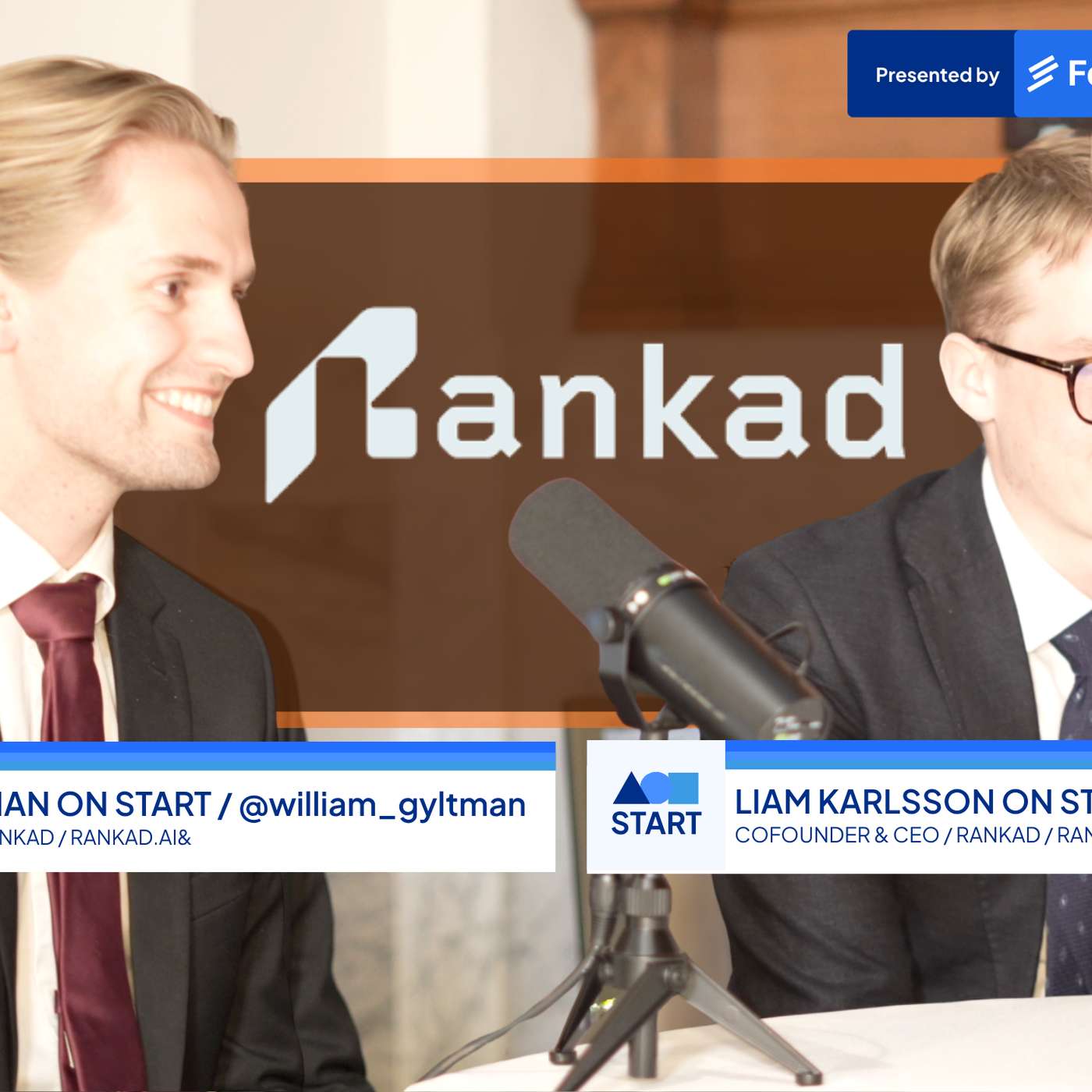
Ep 59🎧 START pod: Liam Karlsson & William Gyltman, Co-Founders of Rankad.ai "Turn AI visibility into revenue. On autopilot."
Liam Karlsson had no clue why his SEO clients were losing traffic while rankings heldThen his 57-year-old mom asked ChatGPT for new running shoesNike answer. Bought the shoe. Was super happy. Google was never part of that customer journey...That was the seed of Rankad.aiHe pitched Co-Founder William Gyltman. They went all inTrack and grow brand visibility across ChatGPT, Perplexity, Gemini, and Copilot. Enter your domain, 30 seconds later you're in the app. AI agent optimizes your site directlyLiam Karlsson & William Gyltman, Co-Founders, Rankad.ai at The Residency Demo Day 🎙️ Fondo START pod w/ David J. Phillips (full ep in comments)00:25 “We’re helping companies earn more money in AI search” 02:34 AI search is moving fast: new models, algorithms, protocols 03:05 A new source of income beyond Google traffic 03:31 AI search is growing fast, but has not outrun Google yet 05:34 Enter your domain and get inside the app in about 30 seconds 05:52 Visibility, competitor, and company data inside one platform 06:07 AI gives optimization tasks based on scan data 06:15 The agent executes tasks on your site 09:41 SEO rankings held, but traffic still disappeared 09:47 Liam’s mom used ChatGPT to buy running shoes 10:00 “That was like the seed of Rankad”
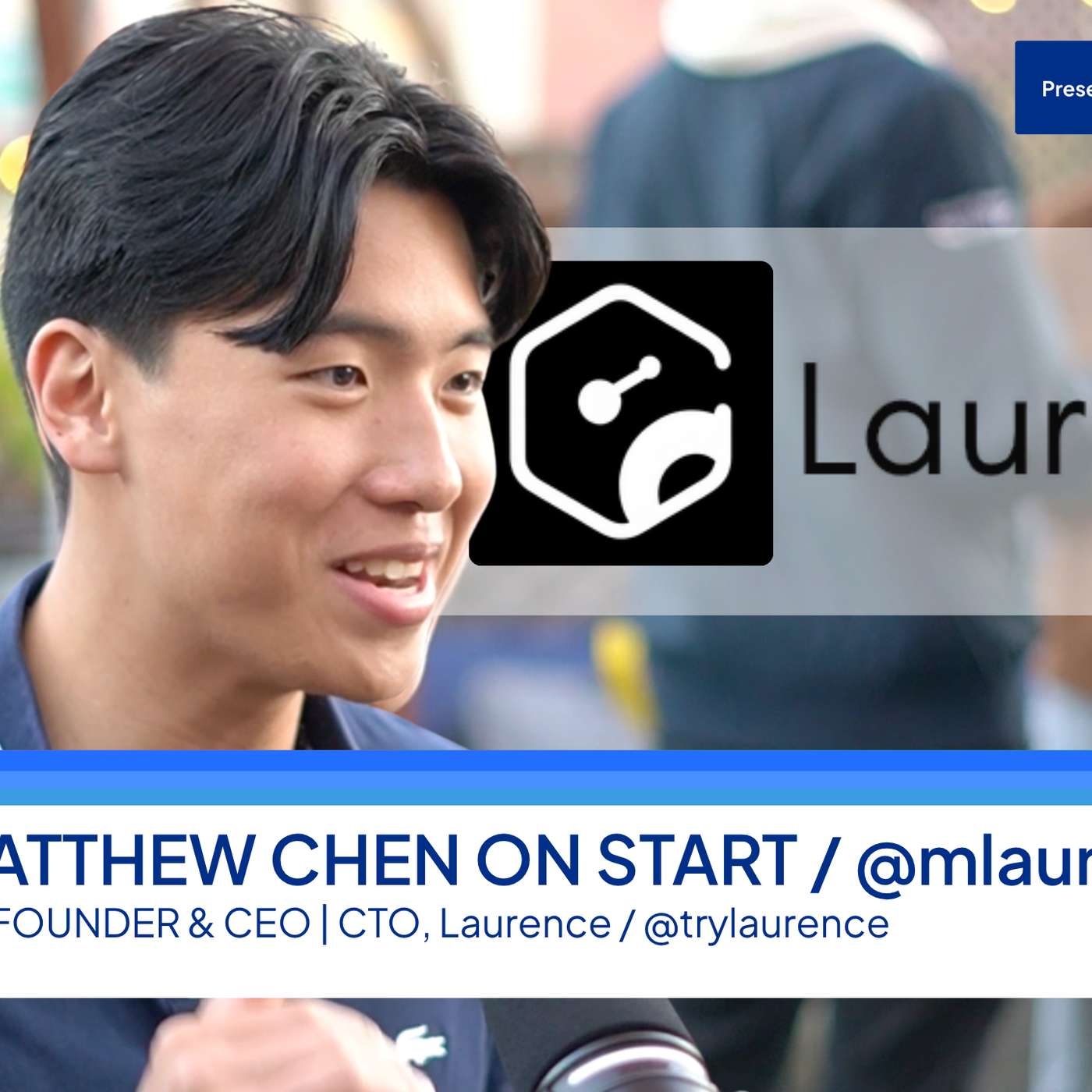
Ep 58🎧 START pod: Matthew Chen, Founder & CEO, Laurence "Autonomous performance marketing"
Amazon sellers do not have a data problem.They have a decision problem.They already have the clicksThe conversionsThe impressionsThe keyword historyWhat they do not have is a system that knows what to do with it.So brands pay agencies $5,000 to $50,000 a month - and still lose money on adsMatthew Chen built Laurence to change that.A quantitative system for Amazon advertising.Built for continuous decision-making under profit constraints.Using existing ad copy, reinforcement learning, and custom models to run ads on autopilot.When confidence is high, it actsWhen data is sparse, it borrows signal from similar keywordsThe result: about 40% better performance for customers.Amazon is the wedge.Autonomous performance marketing is the bigger vision.🎧 START pod: Matthew Chen, Founder & CEO, Laurence "Autonomous performance marketing"00:23 What Laurence does02:12 How the company found the wedge02:47 The customer quote that changed the company03:15 The flaw in the standard Amazon ad model05:25 The move from Amazon to the wider internet06:12 How Laurence uses transformers today
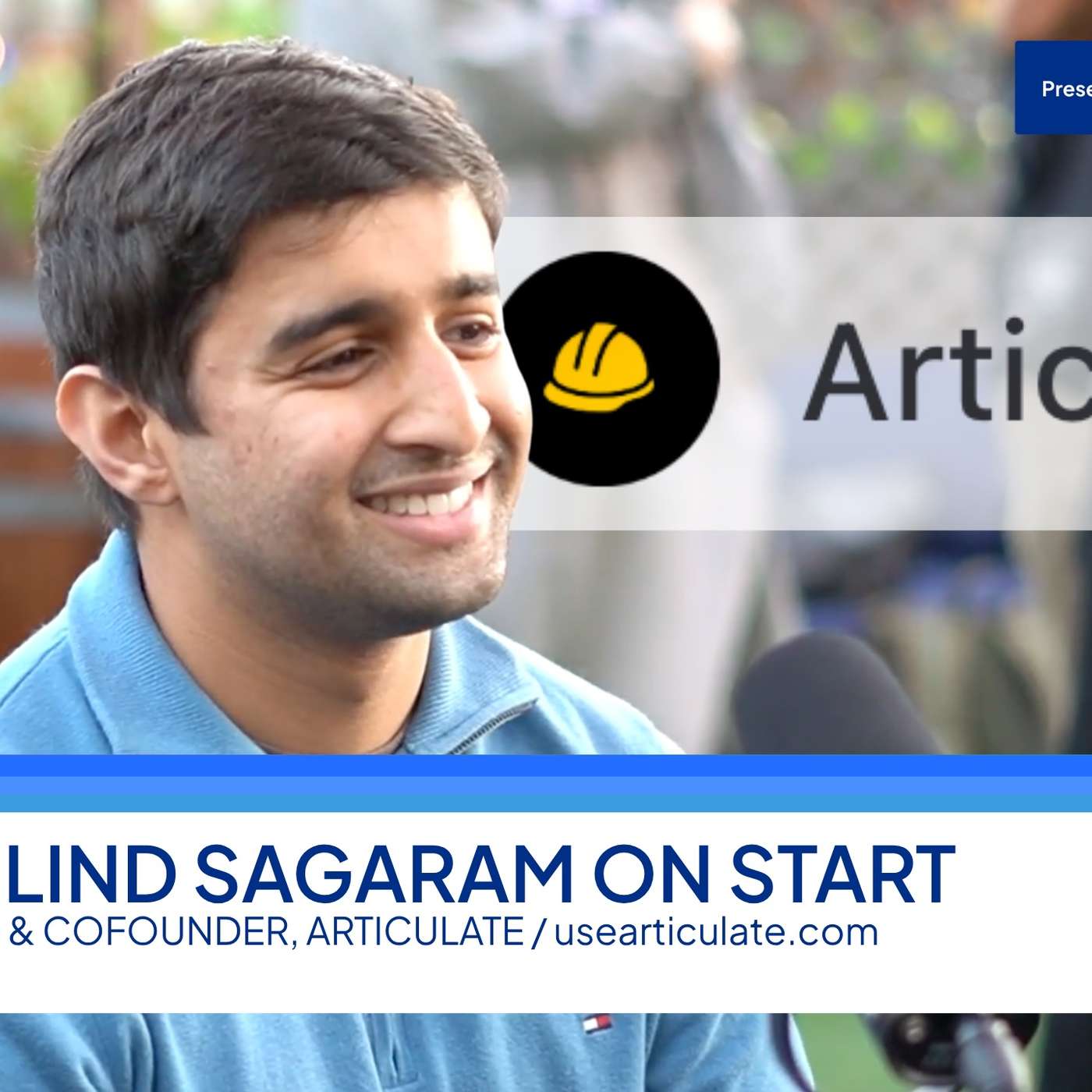
Ep 57🎧 START pod: Milind Sagaram, Co-Founder & CEO, Articulate "Speeding Up Construction with AI"
Construction doesn't fail on the jobsite. It fails in the drawings. The jobsite just reveals itProject managers spend half their time scanning plans page by page for conflicts between disciplines. Plumbing through steel beams. Electrical into HVACThey still miss most of it. Millions in rework when caught in the fieldMilind Sagaram built Articulate to catch these issues before construction startsAI reads the PDFs. Finds clashes across architectural, structural, and MEP sheets. Generates draft issue reports automaticallyThe surprise: construction teams aren't resistant. They want it more than anyone expected🎙️ Milind Sagaram, Co-Founder & CEO, Articulate / Helonic.com on Fondo START pod 00:18 AI for finding drawing issues before construction starts02:24 The old workflow: manual plan review02:45 The consequence: rework and delays03:00 Small issues, massive downstream cost03:27 Copilot, not replacement04:04 Why AI belongs in construction04:39 What surprised him about selling into the industry05:59 Who Articulate sells to
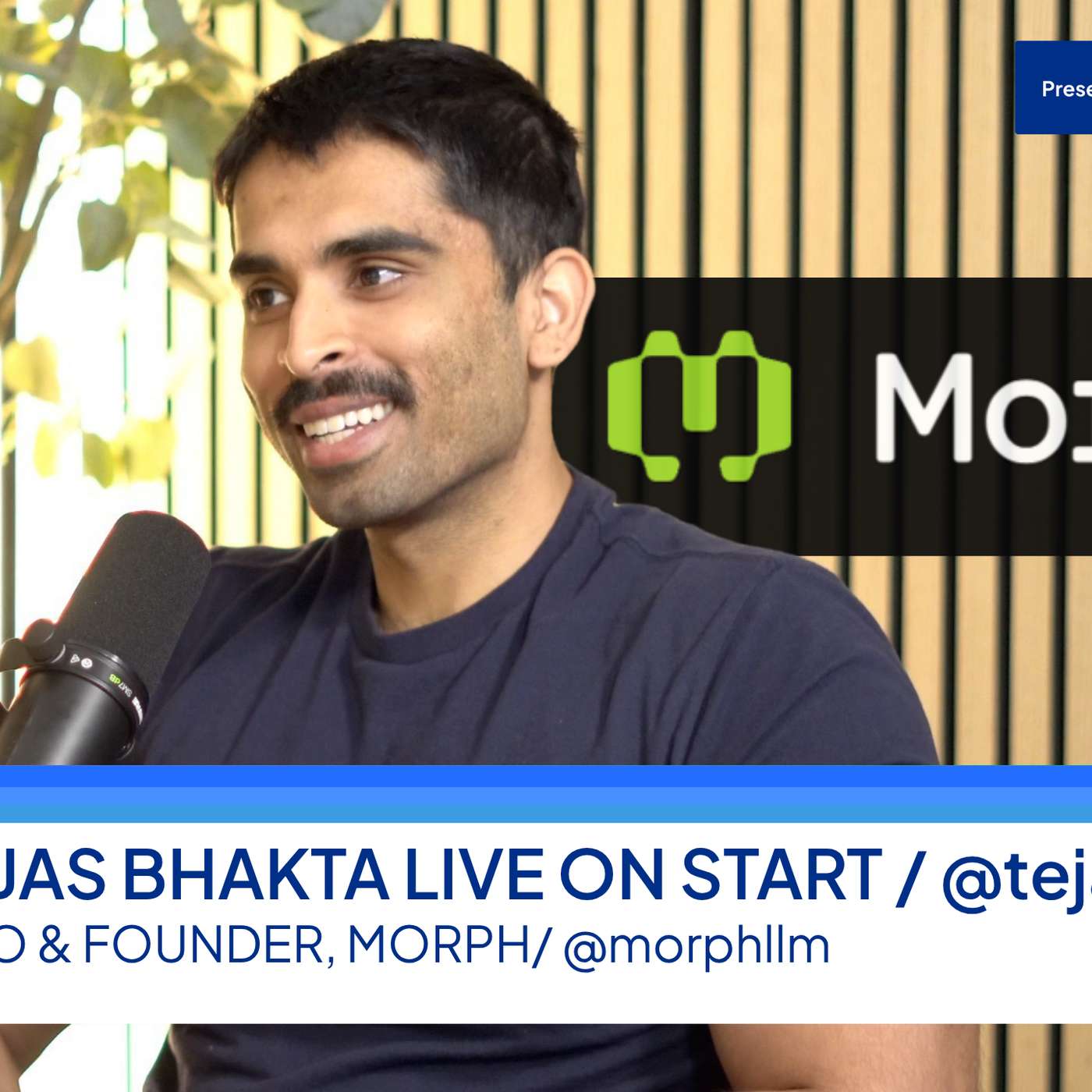
Ep 56🎧 START pod: Tejas Bhakta, Founder & CEO , Morph "Subagents and tools that improve coding agents"
Agents don’t need bigger models. They need better tools.Morph trains coding subagents.Not for humans. For frontier models.Fast Apply edits at 10,000 tokens/sec. WarpGrep handles code and log search.Both keep the main model’s context cleanBecause when context gets too large, performance drops.Now Morph is pushing coding subagents even faster.One newer model runs at 33,000 tokens/sec: https://docs.morphllm.com/sdk/components/compact🎙️ Tejas Bhakta, Founder & CEO, Morph01:30 Fast Apply + WarpGrep02:26 Context fills up around 100k02:38 Keep the main model context clean03:31 “You can’t scale human attention 100x”07:28 Founders are missing how to value human attention08:30 New model at 33,000 tokens/sec10:08 Better, faster, and cheaper than the frontier
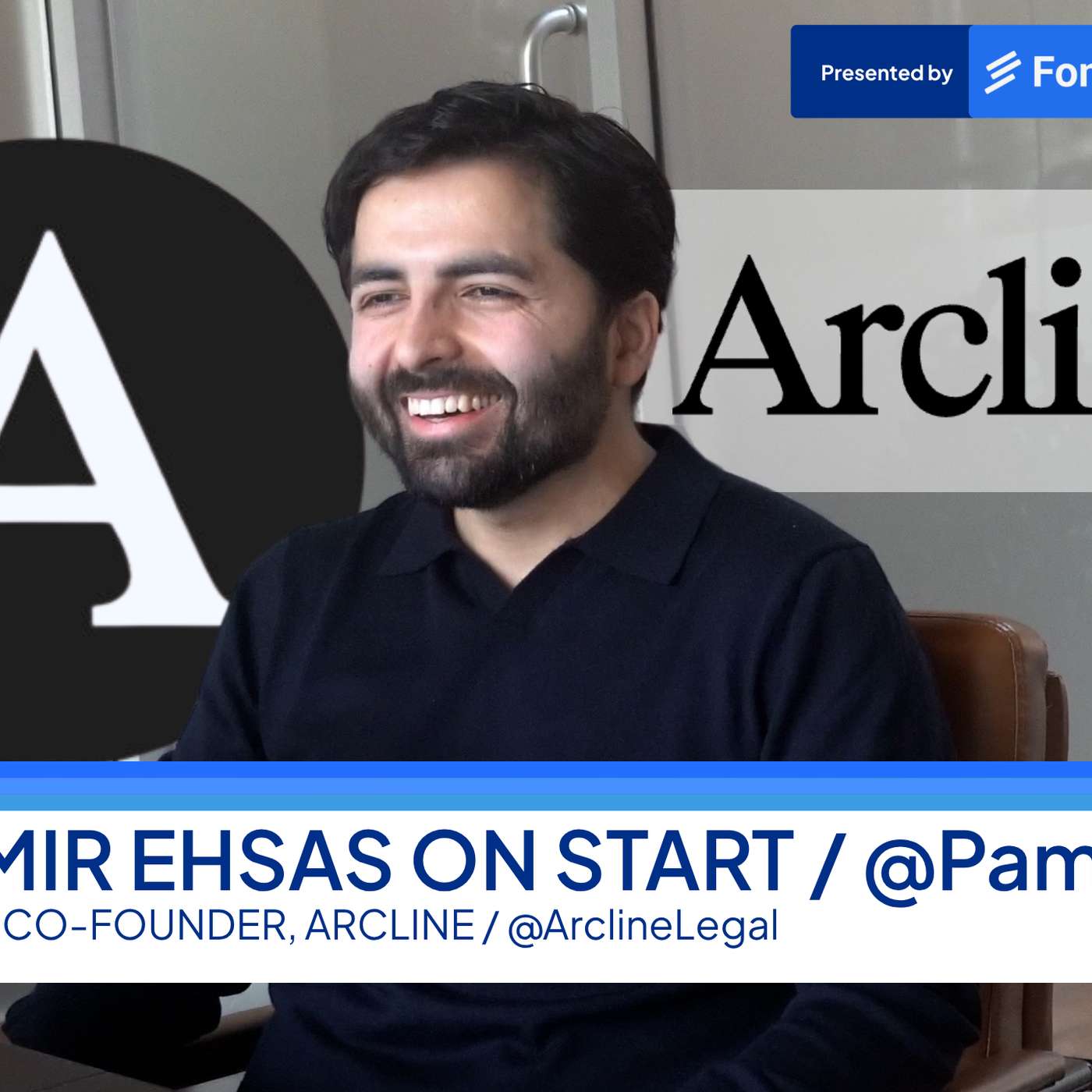
Ep 55🎧 START pod: Pamir Ehsas, CEO & Co-Founder, Arcline "AI-native legal services for startups"
Pamir Ehsas spent years as outside counsel serving startups. He saw the same problem on repeatSimple legal work took weeks. Pricing was opaque. Lawyers kept starting from scratch instead of using AISo he built Arcline. AI generates the first draft. Elite lawyers from the best firms, and schools (Harvard, Oxford etc.) do the final revisionUp to 80% of the work gone. Same-day turnaround (Try getting that from a traditional law firm) 50+ venture-backed startups already onboard when this ep was recordedMost legal AI tries to replace the lawyer. Pamir replaced the busywork02:09 “Fondo, but for legal” / AI-native legal for startups03:12 Sold AI to law firms first; then pivoted to end users04:52 Why Arcline uses experienced lawyers, not junior lawyers05:43 Faster, higher-quality work — including complex matters07:00 Big Law was slow; incentives were broken07:36 Why going direct creates the data loop to improve AI08:34 AI does the grunt work; lawyers create trust11:08 What startups actually come to Arcline for12:26 The long-term vision: legal advice at your fingertips
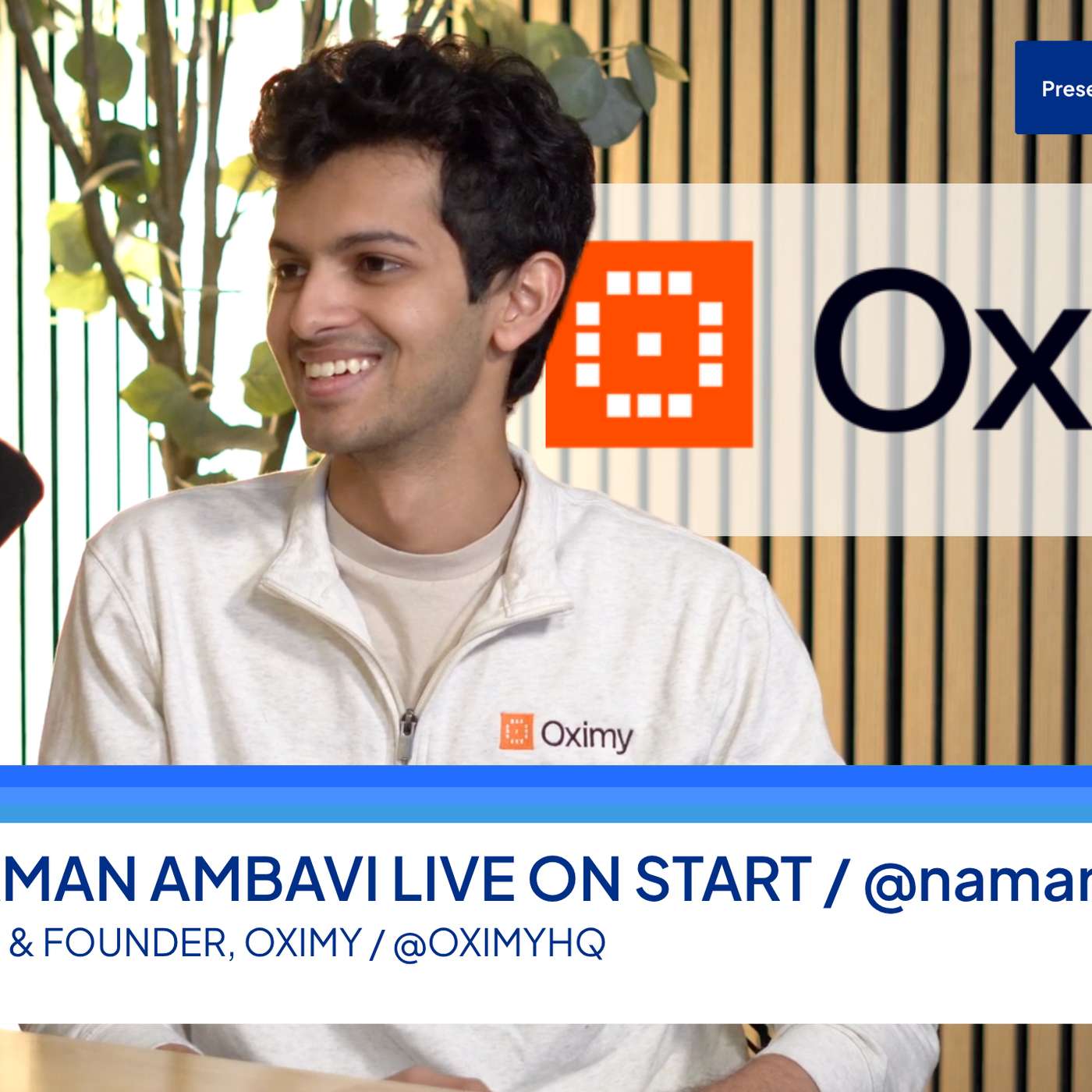
Ep 54🎧 START pod: Naman Ambavi, Founder & CEO, Oximy "See and control all AI activity across your enterprise"
An employee used his corporate Gemini account to generate fake receipts for reimbursementsNot because he was lying. He just didn't have the real onesThat's when the CISO realized they needed OximyAsk an enterprise how many AI tools they use. They say 10. The real number is probably 40+Most of the risk isn't malicious. People just want to get things done faster. So customer lists end up on free tools with no DPAThe first instinct is to block everything. But people bypass restrictions anywayThe real question: how do you say yes to AI without losing control?That's Oximy. A control layer for enterprise AI adoption. Track usage, manage spend, enforce governance🎙️ Naman Ambavi, Founder & CEO, Oximy on Fondo START pod00:19 — What Oximy helps enterprises understand and manage02:24 — From India to the Bay, and the thesis behind Oximy03:29 — Track adoption, cost, and risk controls03:52 — “They say they’re using not more than 10… the number goes roughly over 40”04:22 — Compliance, retraining risk, and why oversight matters05:10 — Most misuse starts with harmless intent06:23 — The gap between Silicon Valley and corporate America07:35 — How to say yes to AI without losing control10:25 — Why the pain shows up most clearly at 1,000+ employees12:59 — Why banning AI is the first instinct — and why it doesn’t last
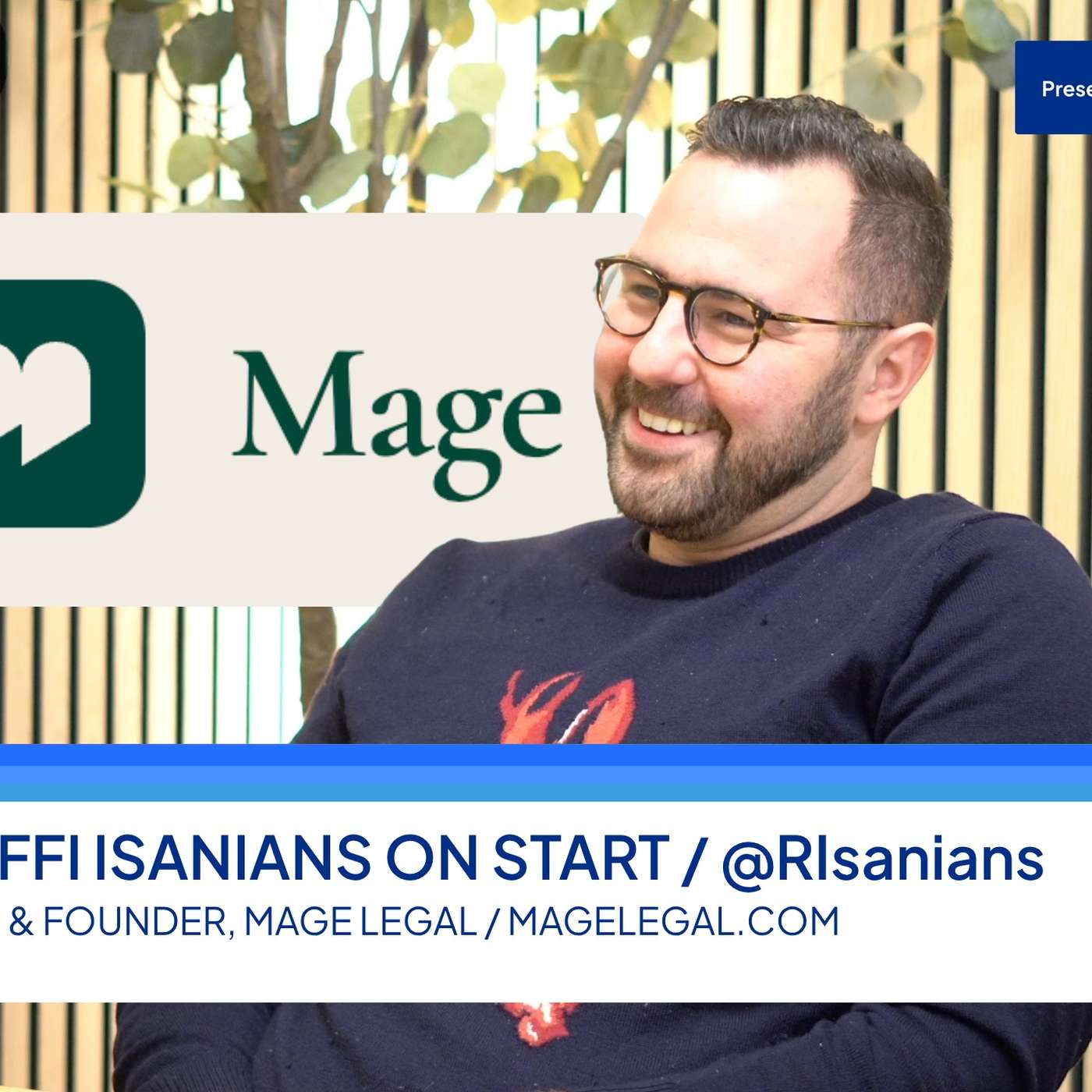
Ep 53🎧 START pod: Raffi Isanians, Founder & CEO, Mage Legal "Automatic AI M&A Legal Diligence"
Attorneys are trained to spot issues. That’s literally what law school teaches.Show them your product, and the first thing they’ll say is: “the margin is off on this.”Every hour they spend learning software is an hour they’re not billing.Raffi Isanians knows that because he lived it.Kirkland. Gunderson. Years inside private equity and venture work.That’s why Mage Legal has a simple standard: if a lawyer opens the product with no instructions and can’t figure it out, "we’re failing"Comprehensive AI coverage across the entire data room:red and yellow flags, diligence memos, disclosure schedules, redline comparison. 1,500 documents in tens of minutes. All async.05:15 - Puts a TOS into ChatGPT 3.5, comes back 85-90% there06:20 - Every hour learning a tool is an hour not billed08:37 - The product worked, nobody wanted it09:00 - YC partner on the two-year window09:53 - AI is an F1 engine in a world of bicycles13:00 - Clients are pushing AI adoption, not the lawyers15:19 - The goal is zero behavior change17:00 - 1,500 documents, diligence memos, tens of minutes18:22 - One good associate now does the work of six30:56 - Engineers simplify, lawyers complicate33:00 - 11PM, picture of his daughter, back to work40:34 - Simple enough to use with zero instructions
Ep 52🎧 START pod: Lucas Ngoo, Co-founder & CEO, Cortex AI "The Real World Is the Next Training Ground for Embodied AI"
The internet was the training set for intelligenceNobody has built the equivalent for the physical worldPreviously, Lucas Ngoo co-founded Carousell, scaled it past $1B Now at Cortex AI he's collecting the data robotics labs need to train foundation modelsCameras, VR headsets, glasses on factory workers, retail workers, everyday people. Recording real-world manipulation work (Maybe tens of millions, even hundreds of millions of hours)Not building the robot. Not training the model. Collecting what goes in2026: scale data in a big way 2027+: start rolling robots out, 90% teleoperation, 10% autonomyWhile humans step in, the system keeps learningThat's the flywheel toward full autonomy01:38 Cortex as the data layer for general-purpose robotics02:19 Why text data doesn’t transfer cleanly to the real world02:51 Recording day-to-day human manipulation work03:23 “Tens of millions” to “hundreds of millions of hours” of data06:37 Cortex’s role: “We are really the data piece”07:28 When humanoids become part of everyday life08:00 2026 as the year data scales08:13 90% teleoperation, 10% autonomy08:37 Data flywheel toward full autonomy08:55 Synthetic data + real-world data reinforcing each other
Ep 51🎧 START pod: Gavin Brennen, Cofounder, Lance "The Future of Hospitality"
Some hotel software is still DOS-based. Sometimes pen and paper (that's why guests are waiting 45 mins to get towels)Gavin's dad has worked at Marriott for the last nine years. When he showed Gavin the old software, that was the sparkLance builds AI agents that answer calls, handle back office operations, run sales workflows & moreStarted with voice, got inside the hotels, and realized how much more they could automateWith coding agents one engineer acts like fiveBig contracts need custom solutions. Now they can deliver🎙️ Gavin Brennen, Co-Founder, Lance (YC W26) on Fondo START pod01:02 The reality of hotel software01:53 The insight that sparked the company02:01 A better way to handle guest requests02:46 Why Lance had to build desktop agents03:08 The centralized dashboard layer04:00 Why hotel problems are highly custom04:32 One engineer can now act like five05:51 “Go all in”
Ep 50Nikhil Reddy, CEO & Cofounder, Arzule "Gong for ecosystem driven growth"
Direct sales reply rates are going down. AI spam is making it worseNikhil Reddy saw the shift early: as trust matters more, partnerships become a real revenue channelProblem is most partnership teams are still running on spreadsheets. They don't know where to focus. Attribution across emails, events, and co-marketing is a messArzule uses CRM data, market signals, and ecosystem signals to help partnership teams discover and prioritize the partnerships that actually drive revenueTwo people building it. Already working with companies generating over $400M in ARRApplied late to YC's fall batch, never even got a reply. Applied again for winter, got in, and their group partner told them to pivot the next day. That became Arzule🎙️ Nikhil Reddy, Co-Founder & CEO, Arzule on the Fondo START pod01:09 What Arzule does and who it's for02:24 Direct sales is dying. Trust is taking over02:43 Pivoting mid-batch from multi-agent coordination to partnerships03:12 Why partnership teams are finally getting their moment03:54 The data layer: CRM signals, ecosystem signals, company-specific inputs04:09 Why attributing revenue to partnerships is so hard05:24 Affiliate links, rev-share, bounties, and contracts in one platform06:03 What onboarding looks like for larger customers07:02 Start analyzing everything early, even if it feels relationship-driven07:48 Tracking signals like new partnership hires and market expansion08:28 Revenue attribution as the core of predictable partnerships09:26 Applied late, got no reply, applied again, pivoted the day after getting in10:02 Move fast and pick something you want to do for 10 years
Ep 49JJ Maxwell, CEO & Founder, Pillar (trypillar.com) "Your App's Copilot"
Setting up a single trigger in Zendesk takes 30 clicksWith Pillar it takes one sentenceJJ Maxwell built an open source copilot you build into your app. Users talk to it in natural language and it drives the app for themThe problem: products can do a lot but users don't always know what's there. So they ask support. Or they churnBefore Pillar, JJ built a creator ad marketplace with about 40,000 creators. Then spent two years on another product through YC W24. About $30M on the platform, real users, decent growth. Pivoted anyway. As soon as he lost belief it was gonna work, he ripped the bandaid offWeb MCP is already rolling out. Companies trying to stop agents from taking actions are fighting a losing battle🎙️ JJ Maxwell, Founder & CEO of Pillar (trypillar.com) on the Fondo START pod01:56 What Pillar is: a copilot that’s easy to build into your app02:19 Why users ask support or churn when product complexity hides value03:05 “30 clicks” in Zendesk becomes a sentence03:39 Why AI can do this now: models are better at reasoning and chaining actions04:19 What implementation looks like: wrap existing frontend code and tool calls05:25 Why teams can often get Pillar working in about a day06:09 The Double journey, real traction, and the decision to pivot11:00 Web MCP and why agent-ready software is coming12:23 Why companies may not be able to stop agents from taking actions forever

Ep 36Julian Weisser | The Solo Flippening: How 1-in-3 Startups Broke the Co-Founder Myth
The script has been the same for decades: find a co-founderInvestors demanded it. Accelerators screened for it. The narrative became so entrenched that founders started pairing up out of obligation, not alignment.Julian Weisser, founder of SOLO and ODF, has a name for this phenomenon: co-founders of convenienceAnd he's proving they're not just unnecessary-they're often the reason companies fail.This week, Julian released 'The State of Solo Founding' report: "Today, solo founding is considered odd. Soon it will be the default. This report features exclusive Carta data alongside commentary from solo founders who have raised over $250M and the investors who backed them."The comprehensive tracks solo founder rates across thousands of startups, the headline finding is historic: for the first time, over one-third of new startups are solo-founded (That's 36% in 2025, up from under 25% in 2019)👉 Download the report here: https://solofounders.com/report👉 Apply to the Solo Founders Program today. A three-month, in-person residency for 6 ambitious solo founders. Next cohort starts Jan. 23, 2026: solofounders.com/program(00:44) Why the report matters now(02:17) The data: 24% → 36%, first year over 1-in-3(04:32) 3 forces: AI, visible wins, collapsing narrative(06:00) Investor POV(07:30) Org design insight: cutting the middle layer(09:47) Download report: http://solofounders.com/report(11:01) ODF26: half the cohort flipped to solo(12:33) Inside SOLO(14:30) Why coworking doesn't work for startups(16:37) Outcomes: $1M ARR in 2 months & more(17:19) Follow @solofounding & @joinodfWhere to find Julian Weisser:X: https://x.com/julianweisserLinkedIn: https://www.linkedin.com/in/julianweisserWebsite: https://weisser.ioWhere to find SOLO: X: https://x.com/solofoundingLinkedIn: https://www.linkedin.com/company/solo-foundersWebsite: https://solofounders.comWhere to find ODF:X: https://x.com/joinodfLinkedIn: https://www.linkedin.com/company/solo-foundersWebsite: https://joinodf.comNewsletters: Texts with Founders: https://textswithfounders.comMultitudes: https://multitudes.weisser.ioWhere to find David Phillips:X: https://x.com/davjLinkedIn: linkedin.com/in/davjphillipsBrought to you by: Fondo — All-in-one accounting for startups @ fondo.com
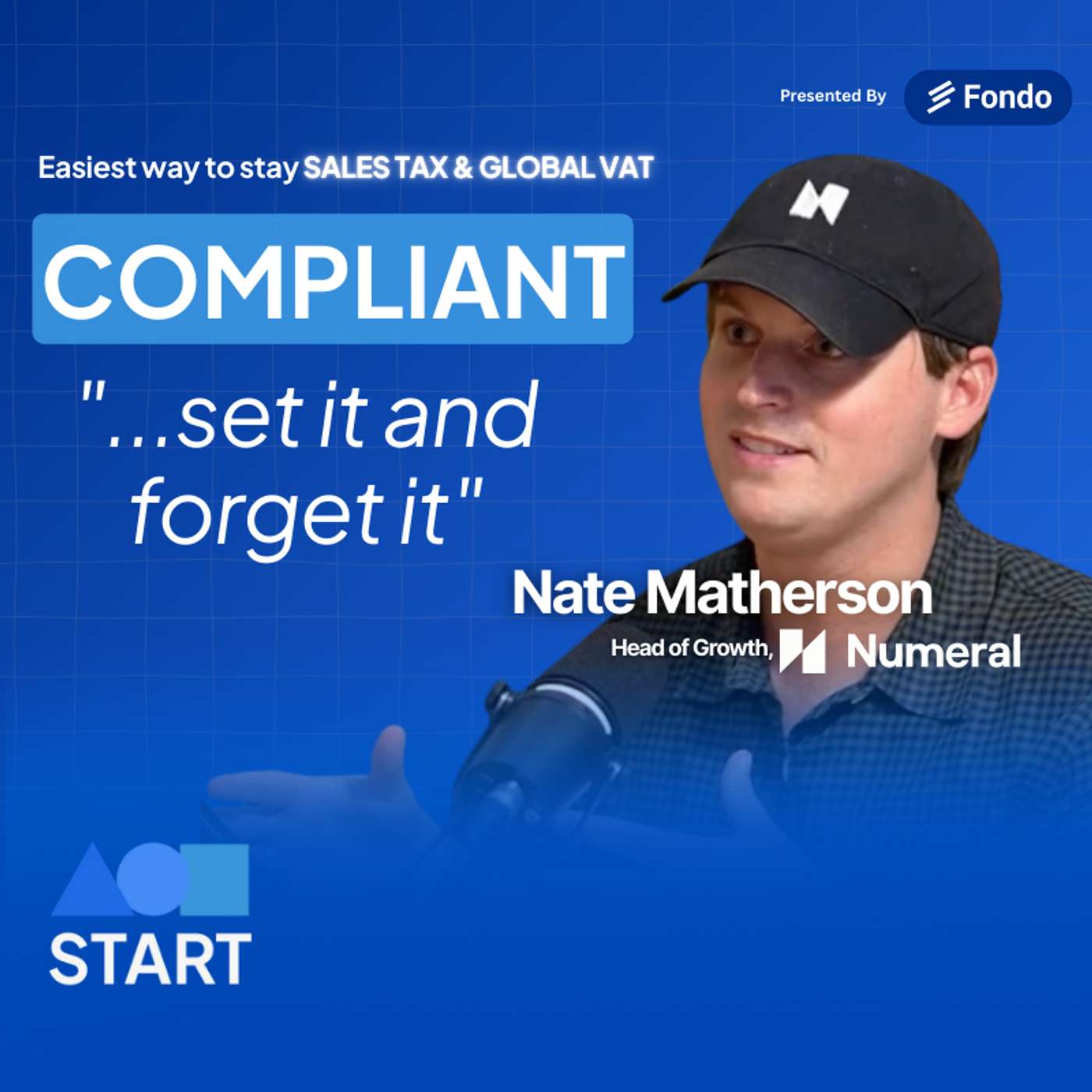
Ep 35Nate Matherson | Set It, Forget It—Scaling to 2,000+ Customers at Numeral
Nate Matherson has spent 10+ years as a founder. He's built companies and even exited. After that first exit, he started angel investing in dozens of companies, then launched a fund.Numeral was one of his early bets. He sent Numeral's CEO Sam an email. By the end of the day, he was working there as Head of Growth. Now he's helping scale the YC-backed sales tax platform serving over 2,000 customers.Nate's seen what happens when founders don't think about sales tax. "They actually found out that they owed about a half million dollars in sales tax… the buyer subtracted that off what would have gone to the founders."When Nate was a founder, he'd log into Stripe and that sales tax dashboard was lit up like a Christmas tree. Numeral does free nexus studies and monitoring — takes five minutes to set up, plugs into Stripe and Rippling, then runs itself.They launched their SaaS product recently, and their whole concept is set it and forget it. They actually love it when customers don't log in. Some of Nate's new learnings? "When I was a founder, I was always pretty good at marketing. I was just marketing not-so-great products, which made marketing a lot harder." At Numeral, with the right product at the right time, everything clicked.And he knows: great products make marketing easy. Timing makes it effortless.Key Topics Covered[00:10] $500K sales tax bill found during due diligence[01:10] What is nexus and how it triggers[01:51] From founder to angel to fund manager to operator[04:02] 10+ years building, angel investments, vc fund[05:27] Numeral: e-commerce to SaaS journey[08:12] States that tax SaaS + global VAT complexity[08:40] "Set it and forget it"[10:37] Free nexus study + monitoring in 5 minutes[11:24] What's working in growth [13:28] Great products make marketing easy, timing makes it effortless[14:25] Nate's investing rule per batchFollow Nate Matherson:X: @NateMathersonLinkedIn: linkedin.com/in/natemathersonFollow Numeral:X: @numeralYouTube: youtube.com/@numeraltaxWebsite: numeral.comLinkedIn: linkedin.com/company/numeralhqFollowDavid Phillips:X: https://x.com/davjLinkedIn: https://www.linkedin.com/in/davjphillipsBrought to you by: Fondo — All-in-one accounting for startups: fondo.com
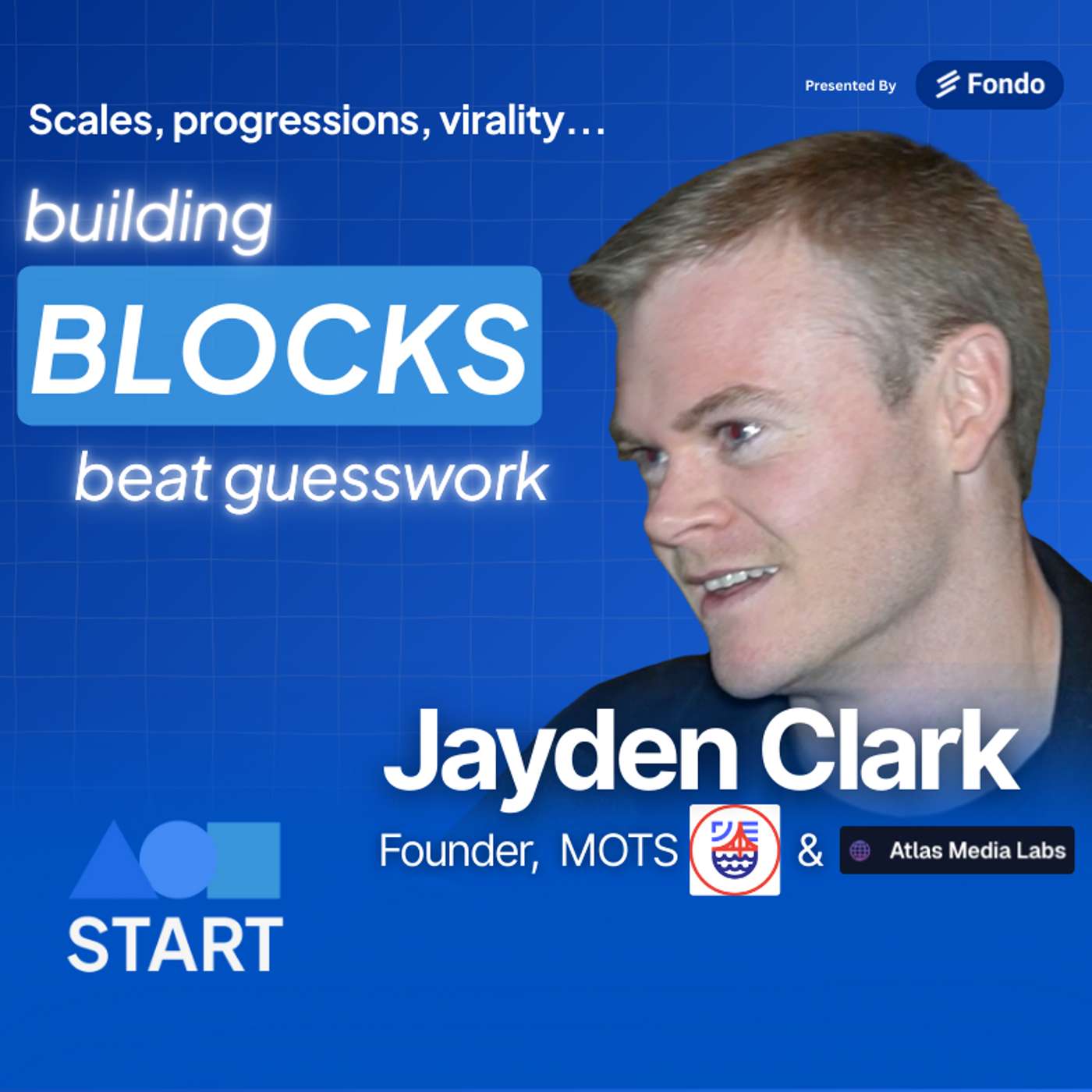
Ep 34🎧 Startup Growth Podcast, Ep. 32 Jayden Clark | Moments to Flywheels: Founders Engineering Repeatable Reach
Jayden Clark didn’t abandon music. He re-scored it for distribution. After music school, a hedge fund tour, and a B2B SaaS sprint, he launched MOTS—short, sharp episodes designed to be both of the moment and built to last a quarter. His north star isn’t “go viral.” It’s “be clear.”The insight is disarmingly pragmatic: structure is not the enemy of creativity—it’s the amplifier. Lists compress cognition. A beginning–build–end gives every clip a runway and a landing. When a five-replies-deep roast on X unexpectedly detonated, MOTS podcast already had the scaffolding to catch the surge. That’s the signature move: follow a consistent weekly cadence, then publish “emergency episodes” when the culture pops. The result is a feed that feels alive without feeling random.Key Topics CoveredCareer path: SF Conservatory → hedge fund → B2B SaaS → MOTS + Atlas Media LabsJazz formulas = content formulas: two-five-one progressions, building blocks, beginning-middle-endWhy lists work: digestibility, structure, pattern-matching"Neither timely nor timeless": weekly SF tech culture + emergency current-thing episodesEmergency episode #1: Brian Chesky's bench press The viral ratio: Meta Ray-Bans clip → five-tweets-deep → Theo's reply → Seth's "roast" GIF"16 hours of screen time": the competitive advantageDistribution strategy across Twitter, YouTube, Apple, SpotifyTimestamps:00:20) "neither timely nor timeless"(00:51) Keeping the music alive(02:10) SF Music → hedge fund → SaaS → pod(03:20) Jazz improvisation: a content strategy(03:42) Building blocks & two-five-one progressions(04:35) How to make content easily digestible(04:53) The @theo ratio backstory(06:46) @sethsetse viral quote-tweet(07:17) Emergency pods vs. weekly episodes(07:22) Emergency Pod #1: @bchesky's bench press(09:42) Where to find @mots_podWhere to find Jayden Clark:X: @creatine_cycleLinkedIn: linkedin.com/in/jayden-clark-75991a1aaWhere to find MOTS Podcast:X: @mots_podYouTube: @motspodLinkedIn: linkedin.com/company/mots-podWhere to find Atlas Media Labs:Website: atlasmedialabs.comWhere to find David Phillips:X: https://x.com/davjLinkedIn: https://www.linkedin.com/in/davjphillipsBrought to you by: Fondo — All-in-one accounting for startups: fondo.com
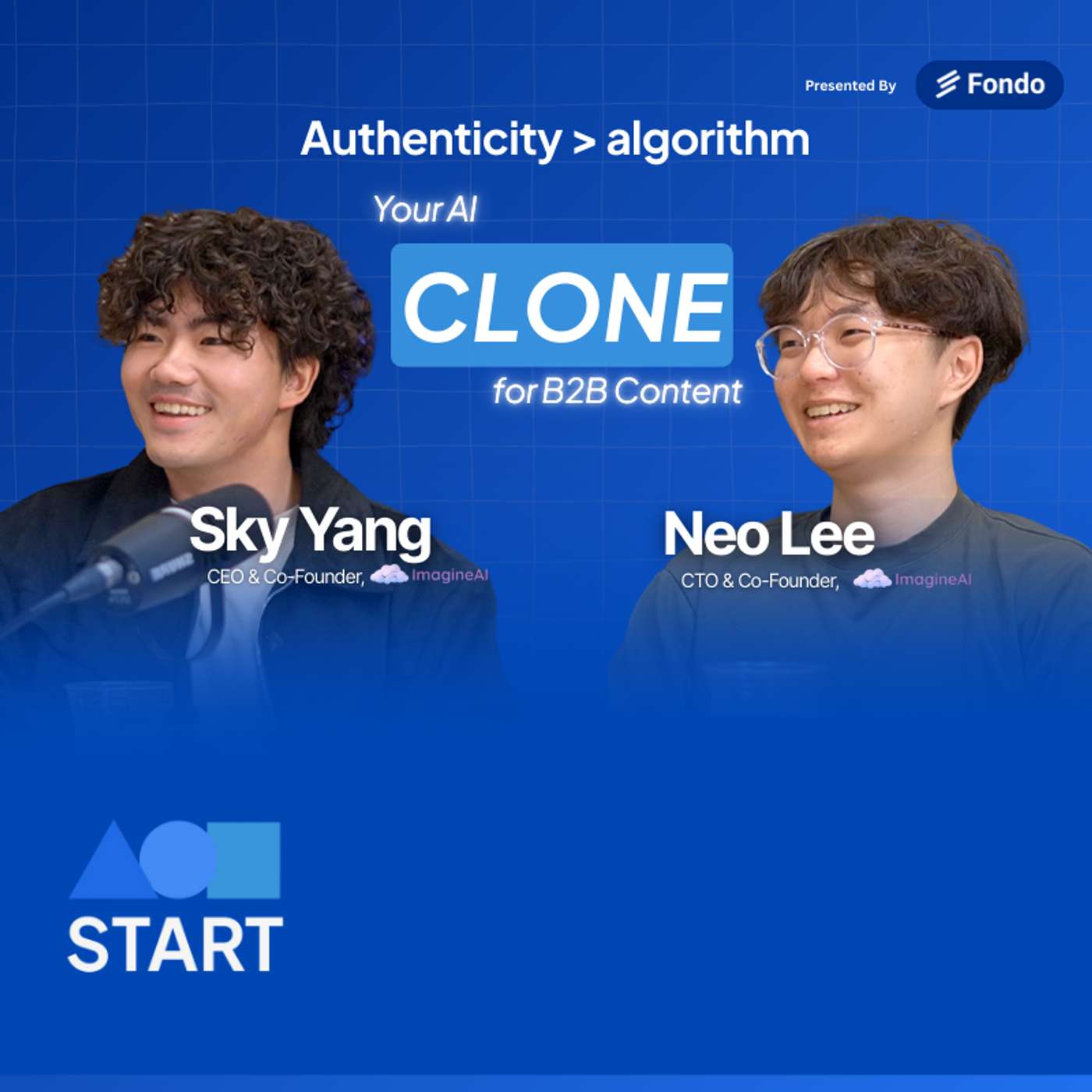
Ep 33Sky Yang & Neo Lee | Content-Market Fit > Product-Market Fit: Why B2B Founders Are Getting Cloned
Sky Yang (CEO) & Neo Lee (CTO) are Co-founders of Imagine AI, an AI-powered content engine that clones B2B founders—replicating their voice, context, and backstory to create scalable personal brands. Before Imagine AI, Sky was elected student body president at UCSD by 32,000 students at age 19, then secured $150 million in state funding for university housing through coalition-building and advocacy in DC, Sacramento and at the UC Board of Regents. He co-founded "Break the Outbreak," a nonprofit that delivered PPE across 18 states and 53 cities during COVID, earning commendations from Senator Dianne Feinstein and Congressman Eric Swalwell. Neo transferred from UCSD to Berkeley, then dropped out to build. He met Sky freshman year at a beach event—asking "Are you Skygodkingdom?"—before they went skydiving together and Neo cut Sky's hair in the woods after COVID.Their catalyst was realizing founders were building in public on X but deals were happening on LinkedIn. After meeting advisor Gustaf, they pivoted distribution strategy to focus on where B2B founders actually live and transact. Sky calls this "content-market fit"—a state where your content hits your target customer every single time, creating scalable, repeatable inbound motion. They were fully booked from their first week post-YC launch, landing Series B customers. One founder messaged urgently, jumped on a 15-minute call, and paid on Stripe immediately. They recruited over Halloween weekend instead of partying. They hosted a yacht party with $10 billion in collective GDP (320 capacity, 750+ on waitlist). Neo's philosophy: "The product is just amplifying what we already are. Just be authentic." Sky's vision references Westworld: "Your agents will interact with each other instead of humans."Key Topics Covered:· What Imagine AI is: a chat-first AI clone with high-fidelity persona creation, subject matter expert interviews, and content engineering to hit content-market fit· From X to LinkedIn: pivoting distribution to where B2B deals actually happen; Gustaf's advice on market selection· Sky's origin arc: Chengdu → LA → Bay Area → UCSD student body president → $150M state funding advocacy → Break the Outbreak nonprofit· Neo's journey: UCSD → Berkeley dropout → "Skygodkingdom" beach encounter → haircut in the woods → building startups pre-Imagine AI· Content-market fit framework: when your content hits your customer every single time—scalable, repeatable motion with high-intent top-of-funnel inbound· Week-one hypergrowth: fully booked post-YC launch, Series B customers, 15-minute Stripe close during conference, recruiting over Halloween· Authenticity over algorithm: amplification not fabrication; the product shapes around you, not the other way around· Building clones that replicate voice, context, backstory, heuristics, and cognition· The $10B GDPyacht party: 320 founders, 3 DJs, 750 waitlist—building community as cultural moment· The 'Westworld' thesis: AI agents interacting on your behalf· Building in public as 2025 narrative: why founders do great work but nobody knows; solving discovery through personal brand at scale· Design philosophy: one infinite content motion thread vs. scattered posts; AI handles artifacts, humans make strategic decisionsChapters:01:21 - The origin story: "Are you Skygodkingdom?"02:00 - Neo cuts Sky's hair in the woods02:36 - Sky's journey: Youngest student body president at UCSD04:20 - Securing $150M in state funding for student housing06:28 - The nonprofit during COVID06:40 - How Imagine AI started: solving their own problem07:15 - Launching on YC and getting booked solid08:00 - Using their own product for personal branding09:08 - What is "content-market fit"?10:08 - The future: AI clones11:09 - The $10 billion GDP yacht party in SF12:11 - Where to find Sky, Neo, and Imagine AIWhere to find Sky Yang:LinkedIn: https://www.linkedin.com/in/skyyangX: https://x.com/skygodkingdomWhere to find Neo Lee:LinkedIn: https://www.linkedin.com/in/neo-lkyX: https://x.com/neo_lkyWhere to find Imagine AI:Website: https://www.imagineai.meX: https://x.com/imagineagiLinkedIn: https://www.linkedin.com/company/ai-imagineWhere to find David Phillips:X: https://x.com/davjLinkedIn: https://www.linkedin.com/in/davjphillipsBrought to you by:Fondo — All-in-one accounting for startups: fondo.com
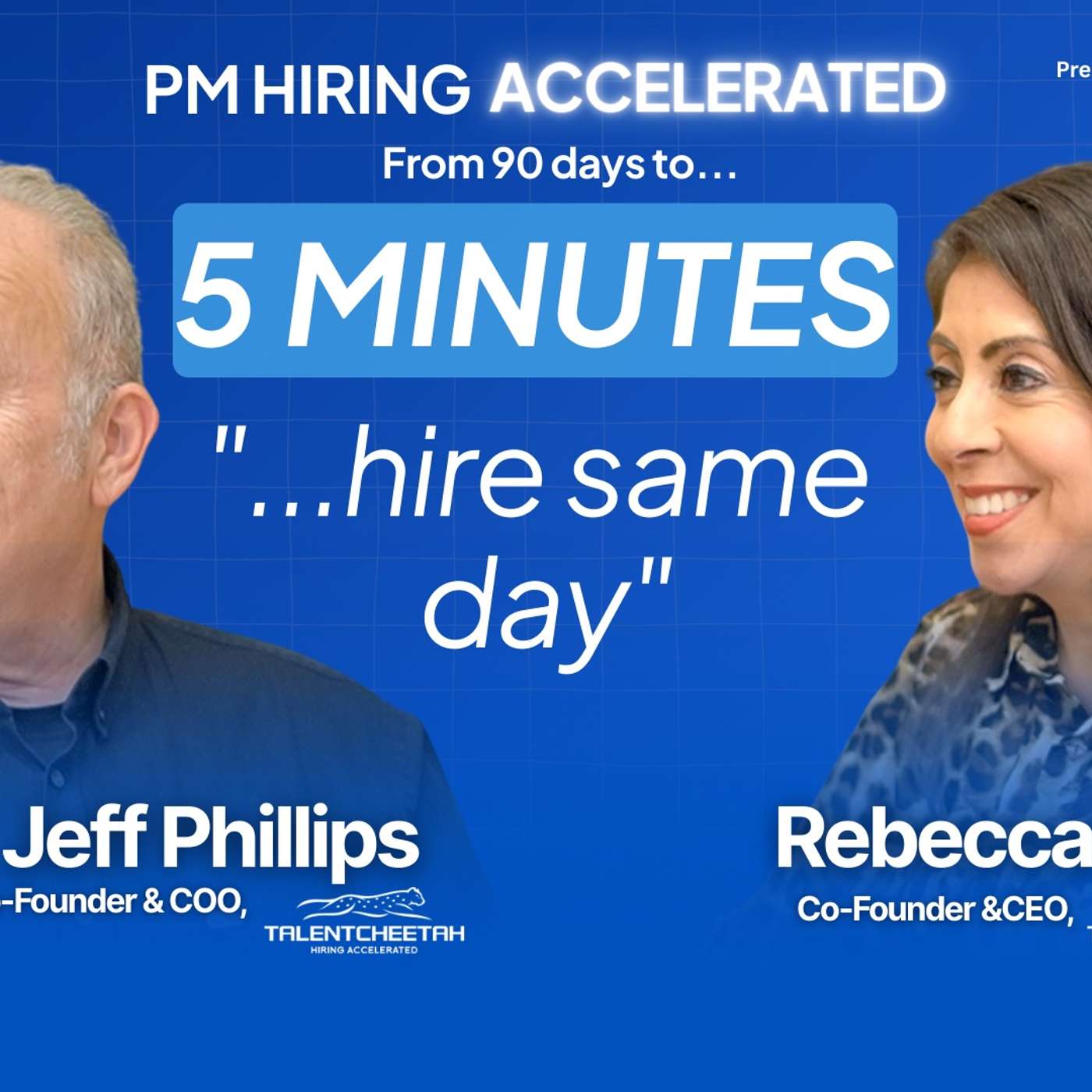
Ep 32Rebecca Medina & Jeff Phillips | How Talent Cheetah Cut PM Hiring from 90 Days to 5 Minutes with Transparent Pricing
Rebecca Medina and Jeff Phillips built an AI-powered talent marketplace that's disrupting recruitment with transparent pricing, direct negotiation, and same-day PM hires for SMBs.Rebecca Medina had the network. She had decades of Big Tech experience. She had the credibility. But when she needed project management help on a client engagement as an independent consultant, none of it mattered."Even with my network of project managers, I couldn't find the right person fast enough," Rebecca recalls. "And it created a big problem for the company because we weren't able to scale as quickly as we wanted."That pain point became Talent Cheetah.Five years later, Rebecca and her co-founder Jeff Phillips have built an AI-powered talent marketplace connecting pre-vetted project managers with SMBs. They've scaled to 300 PMs across 34 US states. They've even partnered with the Project Management Institute. But the metric that matters most: the Bureau of Labor Statistics says it takes 90 days to hire a technical project manager. Talent Cheetah does it in minutes—with same-day hiring possible.In this episode, Medina and Phillips break down the recruitment model that turns recruiting on its head: transparent pricing that exposes hidden markups, lower take rates than traditional agencies, direct PM-to-company negotiation, and real-time hiring through AI matching.Their core unlocks: many traditional staffing firms charge companies a significantly higher rate than what PMs actually earn—often without disclosing the difference to either side; cultural fit matters just as much as credentials (project management exists on a broad spectrum — the skills needed vary widely across industries, company sizes, and stages of growth.); and past execution remains the strongest predictor of future performance. Their 25-point vetting process includes one pivotal test: candidates must be able to produce legitimate professional references—if you can't find even one after years in the field, you're not ready for the platform.In this conversation, they reveal just how much AI is automating routine PM artifacts (like meeting notes, risk logs, and timelines) while increasing the premium on leadership and communication; how their intentional U.S.-based strategy competes on quality and transparency in an industry racing to the bottom on cost; and how Talent Cheetah is opening doors for underrepresented groups in project management; why fractional engagements (such as part-time PM support for short durations) are suddenly viable when traditional agencies can't deliver them well.Key Topics CoveredThe pain point origin: Rebecca's consulting crisis when her network couldn't deliver PM talent fast enoughThe 90-day problem: Bureau of Labor Statistics average vs. Talent Cheetah's minutes-to-same-day matchingExposing the hidden markup: traditional agencies bill $x/hour, pay PMs $x/hour, keep $x secret from both partiesNo posting fees: free to post unlimited jobs (vs. ZipRecruiter/Indeed/LinkedIn pay-per-post), no sign-up fees for PMsThe 25-point vetting process: professional references, credential validation, and candidates who wait yearsThe reference test: some applicants can't find anyone to vouch for them after 12-24 monthsFour-year minimum: experience requirement (not just title) focused on herding cats and managing projectsUS-based strategy: competing on quality, transparency, and credential familiarity instead of global price competitionPMP vs. experience: why certification proves framework knowledge but not execution capabilityDirect negotiation: PMs and companies set rates transparently, eliminating hidden recruiter markupsAI-powered matching: real-time algorithm surfaces top 3 PMs, with 297 more to browseCultural fit dynamics: startup PMs vs. Big Tech PMs require different personalitiesExpanding beyond PMs: network architects, developers, product managers using same vetting frameworkPMI partnership: hiring bonanzas and visibility programs in San FranciscoWhite glove service: helping first-time contractors negotiate rates and structure engagementsAI's impact on PMing: automating artifacts while amplifying leadership and communication needsFractional engagements: 10-hour/week arrangements that traditional agencies can't serveTransparent pricing model: complete visibility vs. hidden markups, lower take rates than Robert Half/Adecco/Tech SystemsChapters:(01:55) Origin story: Talent Cheetah(03:16) What makes Talent Cheetah different: Speed as the #1 differentiator, same-day hiring possible(04:05) US-based strategy: competing on quality and credential familiarity(06:08) Supporting underrepresented groups: veterans (logistics → PM transitions) and women in tech(07:33) Serving both sides: job search help for PMs, FAANG-quality talent for clients(08:43) White glove service: flexible involvement based on needs, negotiation help included(09:16) How it works: 30-second account creation, under-5-minute posting, real-time AI matching(10:15) Platform scale: 300 PM
Ep 31Julian Weisser | 'The Flippening': Why Solo Founders Are Becoming the Default
Julian Weisser is the Founder and CEO of Solo Founders, a three-month residency program in San Francisco where founders live and work together while maintaining full authorship of their companies. He's also the CEO of On Deck Founders (ODF), a program that over seven years and 26 cohorts has helped over 1,000 people start companies that have collectively raised more than $2 billion. As an angel investor with more than 150 portfolio companies including Levels, Astroforge, and MagicSchool, he's seen patterns in what actually predicts startup success versus what investors claim they're looking for. He writes the Texts with Founders newsletter sharing bite-sized practical wisdom for entrepreneurs and publishes Multitudes, a newsletter exploring founder psychology and startup strategy.In this episode, Weisser breaks down the denominator delusion: solo-founded companies were more likely to succeed than co-founded ones, but nobody talked about it because when you look at the total number of successful companies, co-founded businesses eclipse solo successes—while hiding how many unsuccessful co-founded companies exist in the denominator. His core unlocks: two-thirds of startups die from co-founder disputes before reaching product-market fit or running out of money, being solo is far better than 99% of potential co-founders, and authorship (the desire to express yourself and put your vision into the world) matters more than contortionism (twisting your company to match what investors want to see). The flippening already happened in ODF 26—over half chose solo. In this conversation, he breaks down why MagicSchool's Adil Khan (a former high school principal with no startup experience) succeeded solo, how "co-founders of convenience" kill companies before they reach potential, what makes the Solo Founders residency feel like having "five co-founders while building your own company," and why mimicking trends accrues value to memes instead of founders.Key Topics Covered:The denominator delusion: why solo success rates are higher but invisible in the narrative.Two-thirds die early: co-founder disputes kill startups before product-market fit or funding issues.Co-founders of convenience: rushing into partnerships because investors demand it.Invalid constraints: questioning beliefs (like needing school/work co-founders) that prevent great companies.ODF's evolution: expanding who can start companies and who they can start them with.The flippening moment: over 50% of ODF 26 chose solo after the program.Authorship vs. contortionism: building authentically vs. pattern-matching for investors.Solo Founders residency: six to seven founders per cohort, living/working together for three months.Chapters:(00:11) The denominator delusion: why solo-founded companies are more likely to succeed(02:53) How ODF expanded the co-founder search beyond school and work connections(07:05) The flippening: when solo becomes the default instead of the exception(09:27) Why two-thirds of startups die from irreconcilable co-founder disputes, not lack of product-market fit(10:02) Best practices for co-founding: avoiding assumptions and pre-mortems(14:03) How early founders decide to go solo (most don't even consider it initially)(17:42) ODF 26 results: over half chose to build solo(18:48) Founder characteristics across boom cycles: more mimicry and trend-chasing than ever(20:21) Mimicry vs. authorship(22:33) The growth narrative trap: why $100B outcome fixation from massive funds limits great companies(25:09) The Solo Founders residency: three months, "five co-founders"(30:13) The space: own rooms, common areas, office on ground floor, 6am-3am usage(33:27) Who applies: half bootstrapped and sold companies(36:46) Authorship as the defining traitWhere to find Julian Weisser:X: https://x.com/julianweisserLinkedIn: https://www.linkedin.com/in/julianweisserWebsite: https://weisser.ioWhere to find SOLO: X: https://x.com/solofoundingLinkedIn: https://www.linkedin.com/company/solo-foundersWebsite: https://solofounders.comWhere to find ODF:X: https://x.com/joinodfLinkedIn: https://www.linkedin.com/company/'odf'Website: https://joinodf.comNewsletters: Texts with Founders: https://textswithfounders.comNewsletter (Multitudes): https://multitudes.weisser.ioWhere to find David Phillips:X: https://x.com/davjLinkedIn: linkedin.com/in/davjphillipsBrought to you by:Fondo — All-in-one accounting for startups: fondo.com
Ep 30Allen Naliath | Sam Altman + Garry Tan Cold Asks, Win Conditions You Control & Why Friday Stops at 99%
Allen Naliath is the Founder and CEO of Friday, a Chrome extension that integrates AI email management directly into Gmail. Two years ago at Stanford, he struggled with the confidence to ask for what he wanted. So he engineered a solution: a 30-day rejection challenge where he had to hear "no" once per day or start to ask for increasingly audacious requests. The problem: people kept saying yes. He escalated strategically—waiting by a golf cart to ask Sam Altman to sign his laptop, and cold-asking Garry Tan to add him on LinkedIn during a Stanford talk. Garry's response: "Is this a Psyop?" He added him anyway. That connection led to YC. Today, Friday processes emails via predicted action buttons—users press enter repeatedly to archive, reply, or unsubscribe. Allen personally onboards every user to inbox zero in 10 minutes, even with 18,000 unread emails.Naliath's catalyst was advice from a founder mentor: "If you want to work on startups when you graduate, don't even apply to Apple and Google. If you have no plan B, plan A has to work." His core insight: most people's win condition depends on the other person saying yes. He reframed it so yes and no are both wins—the win condition is in his control just by asking. That philosophy runs through Friday's design: it doesn't put email on full autopilot (which "induces anxiety"), it gets users 99% of the way. Friday started as a hackathon project, evolved into a mobile text assistant, then became a Chrome extension after realizing Gmail integration was faster than building feature parity. The average person spends two hours per day in email; Friday users get through 30 emails in 60 seconds.Key Topics Covered:- Rejection challenge: daily "no" requirement, mindset shift from fear to relief- Win condition reframe: "Yes and no are both wins. The win condition is in my control just by asking."- Cold approaches: Sam Altman golf cart ambush, Garry Tan LinkedIn add during Stanford talk- Friday evolution: hackathon project → mobile assistant → Gmail Chrome extension- Anti-autopilot philosophy: "That induces anxiety. It gets you to 99%—you stay in control."- Predicted action buttons: archive, reply, unsubscribe—all one-keystroke approvals- Voice matching: Friday drafts replies that sound like you, including dash preference- 10-minute inbox zero: personal onboarding using auto-archive rules for old emails- Chat feature: "Look him up online, find his email in my inbox, draft an intro."Chapters:(00:33) The rejection challenge that rewired his confidence(02:08) Sam Altman signed his laptop(03:35) Changing you win-condition to be in your control(04:25) Asking for things that are "hard to get"(05:20) Meeting Silicon Valley Legends(06:05) "Is this a Psyop?" - how a cold LinkedIn ask to Garry Tan led to YC(07:03) Dropping out of Stanford: "If you have no plan B, plan A has to work."(09:23) Friday DEMO: how enter-enter-enter clears 30 emails in 60 seconds(13:45) The inbox zero system: snooze what matters, archive the rest, empty daily(15:13) Why Friday stops at 99%: "Full autopilot induces anxiety—you need control."(17:36) Chat-powered bulk actions: "Look him up online, find his email, draft an intro."(19:21) Make every day feel like FridayWhere to find Allen Naliath:X: https://x.com/AllenNaliathLinkedIn: https://www.linkedin.com/in/allennaliathWhere to find Friday:Company X: https://x.com/fridaymailCompany Website: https://www.friday.soCompany LinkedIn: https://www.linkedin.com/company/fridaymailWhere to find David Phillips:X: https://x.com/davjLinkedIn: linkedin.com/in/davjphillipsBrought to you by:Fondo — All-in-one accounting for startups: fondo.com
Ep 29Lindsay Amos | Old vs. New Media, Exclusive vs. Embargo & Why Founder Brands Win Early
Lindsay Amos is the Founder of Amos Communications, a boutique firm for founder-led marketing and PR. From 2018 to 2024, she ran communications at Y Combinator, where she coached thousands of startups and wrote YC's handbook on startup PR. Before that, she worked in comms at Square and Meta, giving her a 360° view of how stories move from boardrooms to bylines to buyer behavior. Today, she advises founders on landing real news (not ads), building durable founder brands, and operating across a media landscape that's shifted from legacy gatekeepers to creator-led growth channels. She also co-created The To-Do List Summit, a workshop bootcamp teaching early-stage teams the tactical basics of comms, video, events, and community, and she writes a Substack on startup storytelling and strategy.Amos's catalyst was living both media eras: nine months shepherding a single Wired story about Square moving into a new office versus today's "algorithms plus authenticity" environment. Her core unlocks: lead with the what (then earn the why), tie every pitch to a macro trend your audience already cares about, and default to exclusives over embargoes until you're big enough to run a press gauntlet. New media isn't a replacement for traditional outlets; the best founders run both lanes—because audiences follow people first, products second. In this conversation, she breaks down how to pick the right channel, prep for tough interviews, avoid blacklist behaviors, and time transparency (share the "personal hell" after you've won, to teach—not spiral).Key Topics Covered:- What "news" actually is: a hook plus a macro trend your customer already thinks about.- Founder brand vs. company brand: why audiences follow people first (and how to use it).- Exclusive > embargo (early): how editors green-light stories and why timing matters.- Practical media ops: avoid Friday pitches, follow up once, don't text or Signal reporters.- Content that converts: entertaining, educational, or perspective—never just ads.- Cinematic launches: when video helps, when it's sizzle; why distribution still wins.- New media shift: reporters → Substack/podcasts; find where your audience actually is.- The To-Do List Summit: teaching founder-led marketing when agencies aren't the answer.Chapters:(01:58) Old media → new media(05:26) Why founder-on-camera works—and when it doesn't.(08:59) Playing the LinkedIn game, Substack, and sustaining the channels you'll keep.(11:10) "Personal hell" as narrative fuel—share it after the win.(21:58) Defining a real news hook; anchoring to macro trends (IRL + wellness example).(25:48) Exclusive vs. embargo: how reporters decide what to cover.(26:53) Pitch etiquette that keeps you off blacklists (days, follow-ups, warm intros).(32:32) Founder brand > company brand (early) and the three content modes.(36:33) The To-Do List Summit: workshops over thought leadership; hands-on playbooks.Where to find Lindsay Amos:X: https://x.com/lindsayaamosLinkedIn: https://www.linkedin.com/in/lindsayamos, https://www.linkedin.com/company/amoscommsWebsite: https://www.amoscomms.comSubstack: https://lindsayamos.substack.comTo-Do List Summit: https://x.com/todolistsummitWhere to find David Phillips:X: https://x.com/davjLinkedIn: linkedin.com/in/davjphillipsBrought to you by:Fondo — All-in-one accounting for startups: fondo.com

Ep 28Joe Holberg | Bootstrapped, Beat 30x-Funded Rivals, Acquired: Now He's Running for Mayor
Joe Holberg is the Founder & former CEO of Spring, a workplace financial wellness platform that began D2C, pivoted to employer-paid, and became a top-rated U.S. offering for three consecutive years, serving 25,000+ users. He bootstrapped from 2015 to 2018, raised a $1M seed, and sold Spring to Mariner Wealth Advisors in 2023, remaining through early 2025. Before Spring, he taught with AmeriCorps on Chicago’s West Side and built CS education at Google. A first-generation college graduate who once slept in his car to finish school, Joe is now a declared candidate for the 58th Mayor of Chicago.Holberg’s catalyst was seeing financial confusion across backgrounds—even among peers with professional-class parents. Early Spring had universal interest but low willingness to pay; the unlock was changing the buyer (HR) and making a firm pricing decision: “Pricing isn’t science—it’s a decision.” In this conversation, he discusses building Spring, the B2B pivot, lessons from pricing and sales, and his views on city governance, housing supply, business climate, and tech-literate leadership. This episode presents his perspective and experiences as a founder and candidate.Key Topics Covered:What Spring was: outcomes-oriented financial wellness delivered as a workplace benefit.D2C → B2B: universal desire vs. $20/mo friction; employers fund, employees benefit.Pricing lessons: fewer options, clearer value, faster decisions.Builder arc: bootstrapping (2015–2018), $1M seed, top-rated product, 2023 acquisition; stayed through early 2025.Sales scrappiness: writing a book to establish credibility with HR leaders.Entering politics: motivations, background across economic circumstances, and emphasis on tech literacy.Chicago context (as framed by the guest): population and business trends; collaboration vs. adversarial postures.Governance mechanics: mayor/city council dynamics; CPS school board changes; housing supply constraints.Campaign posture: outsider experience and how he frames his narrative as a candidate.Chapters:(00:36) Spring’s origin — addressing financial education gaps observed across income levels.(01:43) Early arc — glow-stick hustle; first-gen college; sleeping in the car; AmeriCorps; Google; leaving to build.(04:21) “Credibility book” — unconventional sales asset for HR conversations.(06:14) The pivot — strong demand, low D2C conversion; employer-paid model.(08:43) Building years — 2015 start, 2018 $1M seed, solo grind → top-rated 3 years, 25k+ users; 2023 acquisition; through early 2025.(12:39) Pricing "aha" — choosing and owning a price to accelerate qualified deals.(14:37) Why enter politics — empathy across the income spectrum; need for tech-aware governance.(20:02) Entering the arena — outreach, mentorship, and announcing candidacy.(24:23) Status quo (guest’s view) — resident/business trends; collaboration with builders.(27:22) How Chicago governance works — mayor vs. council; CPS board; housing supply.(30:55) Voter expectations — vision, ideas, results.(32:32) Closing themes — affordability, fiscal considerations, and civic participation.Where to find the Joe Holberg: X: @holbergjLinkedIn: linkedin.com/in/joeholbergWebsite: joeforchicago.comWhere to find David Phillips:X: @davjLinkedIn: linkedin.com/in/davjphillipsDisclosure / Non-Endorsement Note:The views expressed by the guest are their own and do not reflect the views of David J. Phillips, Fondo or the Startup Growth Podcast. Appearance on the podcast does not constitute an endorsement of any candidate, campaign, or policy proposal. This episode is provided for informational purposes only.
Ep 27Jay Ram | Beyond Evals: Build Environments That Make Agents Better
Jay Ram is Founder & CEO of Hud, the evaluation and RL platform for AI agents. Hud helps startups build RL environments, run fast reward loops, and plug into any RL backend—so teams can cut costs and push last-mile accuracy once they've hit PMF. Before Hud, Jay left a lucrative quant career, shipped an AI prank-calling app that briefly hit #1 on the App Store (≈500k calls), and decided he wanted harder problems and smarter customers. He's a YC W25 alum; Hud is already used by researchers at foundation labs and is expanding into enterprise environments.Jay's catalyst was realizing he didn't want to just talk weekends—he wanted to build. He and his co-founders first tackled computer-use evals for labs. Inside that work, the language shifted: labs asking for "evals" really needed environments—places where you design rewards, iterate, and actually improve model behavior. Today, Jay frames Hud as the "Next.js of RL environments": opinionated lifecycle, backend-agnostic training, and infra that returns signal fast. Early on, use a foundation model; post-PMF, train your own with SFT/RL—that's where environments matter. Looking ahead, he sees post-training speciation: domain-tuned models for finance, accounting, creative tooling, and more—because teams will own more of their stack again.Key Topics Covered:· What Hud is: tools to set up your agent for RL, define tasks, shape rewards, and plug into RFT/other RL backends.· From evals to environments: why scores measure but rewards improve—and how iteration loops change outcomes.· Where it fits: use foundation models early; post-PMF train your own for cost leverage + last-mile gains.· Design + infra: a new category needs opinionated UX and fast results; why lab researchers use Hud for computer-use evals.· Market timing: the "DeepSeek moment" pulled RL from hobbyists into enterprise interest in 2025.· Pre-train vs post-train: scale vs accuracy + domain depth—and why post-training is the real edge.· Future of work: enterprises will own more of the stack; model speciation by domain.· Reality check: agents ace toy DBs, struggle in production; modeling real environments is the unlock.· YC W25 arc: vision matched the original app more than mid-batch; enterprise demand is catching up now.· Finance stack aside: keep ops boring; focus cycles on shipping product (Fondo shoutout in-episode).Chapters:(00:15) Cold open — "We give you all the tools to set up your agent for RL."(00:59) Intro — Jay Ram, Hud, and the origin story(01:41) What Hud does — build RL environments; backend-agnostic (OpenAI RFT, Thinking Machines, etc.)(02:12) Where environments fit — early: foundation models; post-PMF: train for cost + accuracy(02:50) From quant to builder — leaving Wall Street to make things(03:30) The prank-calling app — #1 on App Store; ≈500k calls; why the customers weren't it(04:40) Evals → environments — labs' "eval" asks were really RL environments with rewards(05:40) Evals vs RL — scores vs rewarded steps; how updates happen(07:14) Hard parts — opinionated design + infra speed for researchers and teams(08:08) Before Hud — no toolkit/standards; emerging gymnasium-style efforts vs Hud's opinionated path(09:25) YC W25 — applying, partners (Aaron & Matt), why YC felt like "actual college"(11:05) Vision vs timing — market caught up; enterprises now exploring environments(12:20) Trend — teams rolling their own models post-PMF (SFT/RL)(13:01) Today's fragmented stack — hosting, inference, data; Hud's role in the loop(13:48) The "DeepSeek moment" — hobbyist RL → enterprise interest in 2025(15:57) Future of agents — own the stack, post-training speciation(18:26) Why end-to-end is hard — production data systems need real environments(19:29) Forward-deployed labs — domain hires and environments; how Hud plugs into RFT(20:15) Rapid wrap — it's early; the stack is shifting fastWhere to find Jay Ram:X: @jayendra_ramLinkedIn: www.linkedin.com/in/jay-ram-29003b198/Where to find Hud:X: @hud_evalsWebsite: hud.aiWhere to find David Phillips:X: @davjLinkedIn: linkedin.com/in/davjphillipsBrought to you by:Fondo — All-in-one accounting for startups: fondo.com
Ep 26Kevin Xu | From $35K to $10M: The Alpha Behind Your Next Bet
Kevin Xu is Founder & CEO of Alpha AI, your “AI money friend” that plugs into real-time markets and your portfolio to explain what just happened—and what matters next—inside a simple chat. Before Alpha, Kevin became a WallStreetBets folk hero as turning $35K in a 401(k) into $10M through high-conviction swing trades. He previously founded Fan Hero (YC S13), worked at Stripe (~#300) and Google/YouTube, and appeared in MSNBC Studios’ Diamond Hands on Peacock.Kevin’s catalyst was realizing the products he loved—Google, Wikipedia—were built by real people. That sent him to YC, then Stripe for world-class reps, then into the internet’s finance classroom: Reddit. He posted every win and loss, learned in public, and distilled trading into rules like “If it’s good enough to screenshot, it’s good enough to sell.” After building After Hour to socialize trading, he’s now productizing that edge with Alpha AI: a proactive, personable copilot designed to build money confidence for the next million millionaires.Key Topics Covered: • What Alpha AI is: a chat-first AI money friend with market context + your portfolio, proactive “what just happened” nudges, and customizable character. • From WSB to product: turning public receipts (35K→10M) into a system—floors, catalysts, concentration, disciplined exits. • Earnings humility: why reports are a coin flip; behavior, sizing, and timing are the real edges. • Founder arc: Stanford → YC pivot muscle → Stripe discipline → Google scale → After Hour → Alpha AI. • Culture shift: finance as entertainment/sport; people don’t need courses—they need context at the right moment. • Design over dashboards: one infinite chat thread > scattered tools; AI handles background work, humans make decisions. • Missed GME, learned anyway: thesis right, timing wrong—how to keep momentum without hero trades. • Distribution & trust: followable identities, real screenshots, timely alerts—how credibility compounds. • Building in 2025: attention-maxxing, shipping fast, leaning into new formats (e.g., Sora experiments). • Finance stack mindset: keep ops boring—Fondo for the back office, Brex for cash/cards—so you can ship product.Chapters (00:00) Cold open — “I wanted a cool dream”: realizing real people build the internet (00:59) Intro — Kevin Xu, Alpha AI, and the origin story (01:28) Stanford → YC S13 double-interview; pivot from Alpha Labs to Fan Hero (06:11) Stripe (#~300) → Google/YouTube: seriousness vs. internet-native play (09:00) WallStreetBets culture: memes, transparency, learning in public (12:26) The 401(k) stake: missed HR toggle → $35K starting gun (14:53) Early pandemic plays: APT, CODX; the floor + catalyst lens (17:33) Chasing pops: cruises, Chewy-era stories, and disciplined exits (20:11) The GME almost: all-in October, out in December; lessons on timing (23:33) Million-dollar swing days; detachment and the screenshot rule (25:10) Big 5 finale → $10M peak; why earnings are coin flips (27:15) After Hour: social finance, trust via receipts, real-time notifications (30:50) Alpha AI: proactive context, AI friends as the interface (32:52) Beyond investing: building money confidence; simple company finance stackWhere to find Kevin Xu:LinkedIn: https://www.linkedin.com/in/imkevinxu X: https://x.com/kevinxu Instagram: https://www.instagram.com/founderkevinWhere to find Alpha AI:Website: https://alpha.so X: https://x.com/alpha_ai Instagram: https://www.instagram.com/chatwithalphaWhere to find David Phillips:X: https://x.com/davjLinkedIn: https://www.linkedin.com/in/davjphillipsBrought to you by: Fondo — All-in-one accounting for startups: fondo.com
Ep 25Daivik Goel | From Bootstrap to Batch, Last-Minute YC Submit & Why Fintech Speed Matters
Daivik Goel is Co-founder & CEO of Shor, a global payroll platform for startups. Traditional EOR providers charge around $7,000 per year to manage an employee earning $20,000 per year. Shor uses automation to reduce costs and embeds payroll actions into Slack and WhatsApp through AI agents, so founders can request tax documents or payment updates without opening another dashboard.Daivik and co-founder Avi Konduru submitted their YC application at 7:59 PM, one minute before the deadline. After multiple prior rejections, they got an interview, then a follow-up call, then acceptance. They started YC with a crypto payment idea, pivoted five weeks before demo day to global payroll—a problem they'd worked on two years earlier—and shipped contractor payroll within a week. They've since raised funding and are scaling.Key Topics Covered:• What Shor is: global payroll/EOR rebuilt for startups; automation handles ops, AI teammates deliver docs/actions in Slack/WhatsApp.• From clever to sellable: pivoted inside YC from crypto/fiat rails to payroll where they had access and clear pain.• Cost math that breaks: why legacy EORs charging ~$7k/yr on a $20k salary fail SMB/unit economics—and how Shor attacks the middle.• Ship speed as strategy: prior fintech muscle let them launch contractor payroll in one week (KYC/KYB, payouts, tax flows).• Design → dashboards: move work to the user (chat interfaces), keep humans making decisions, let AI do the background jobs.• Distribution as a moat: serve the massive long tail priced out by incumbents; win on affordability + responsiveness.• YC pragmatism: plain-English interviews beat pitch theater; momentum over mockups.• Execution after Demo Day: demand first, fundraising next, delivery always—scaling compliance/country coverage without losing speed.• Founder operating cadence: daily inches over hype cycles; embrace “pivot hell,” but pick battles you can actually win with customers.• Finance stack mindset: reliability and support matter most when back-office tools fail—opt for vendors who show up.Chapters(00:00) Cold open — the 7:59 PM YC submission(00:37) Intro — Davik & what Shor is (affordable global payroll)(02:51) Waterloo → founder mindset and process discipline(06:05) YC journey and batch dynamics(08:26) First leap without an idea + early GTM lessons(11:56) Marketplaces are hard — takeaways that shaped Shor(14:56) The last-day YC rush & the crypto/fiat idea(24:49) Pivot hell inside YC → choosing global payroll(27:28) Shipping contractor payroll in one week + why now (AI/stablecoins)(29:33) Fundraising wrapped; AI teammates over dashboards; what’s nextWhere to find Daivik Goel:Multilink: https://bento.me/daivikLinkedIn: https://www.linkedin.com/in/daivikgX: https://x.com/DaivikGoelInstagram: https://instagram.com/daivikgoelYouTube: https://m.youtube.com/channel/UCzkRfrCXIrW1v60Wyasgq7QSubstack: https://daivikgoel.substack.comTikTok: https://tiktok.com/@daivikgoelWhere to find Shor:Website: https://tryshor.comX: https://x.com/shor_payLinkedIn: https://www.linkedin.com/company/shorpayInstagram: https://www.instagram.com/shor.pay/YouTube: https://www.youtube.com/watch?v=OF1m1H0arYYBrought to you by:Fondo — All-in-one accounting for startups: https://fondo.com
Ep 23Cody Schneider | Growth Flywheels, Underpriced Attention & Building Graphed's AI Agent for Marketing Analytics
Cody Schneider is the Founder & CEO of Graphed, an AI agent for marketing analytics. Graphed plugs into common data sources, manages the data warehouse, and lets marketers chat with their data to generate on-demand visuals—“stacked bar of new vs. total users week over week,” “add a line of best fit,” and similar prompts. It’s built to handle scale (Cody mentions onboarding ~25M rows of Facebook data) and to avoid rate limits and sluggish queries by owning the warehousing layer.In this episode, Cody outlines a practical path from data sprawl to decisions: skip steep BI learning curves and ticket queues; connect sources and ask in plain English for charts and basic analyses. He also talks about how creative volume now functions as targeting—ship lots of concepts, let algorithms find buyers—and positions Graphed as the way to see what’s working without waiting on a data team. For founders and marketers, it’s a clear primer on turning raw rows into faster feedback loops.Key Topics Covered:• What Graphed is: an AI agent for marketing analytics that connects sources, manages the warehouse, and lets you chat to generate charts and basic analyses. • From tickets to answers: why BI queues and tool learning curves slow teams—and how a chat interface shortens time-to-insight.• Scale as a requirement: handling large datasets (e.g., ~25M rows of ads data) and avoiding rate limits via a managed warehousing layer.• Roadmap preview: proactive weekly Slack briefs that summarize what changed and why (future functionality).• Creative = targeting: in 2025 paid acquisition, high-volume creative acts as the audience filter while algorithms find buyers.• Stacking S-curves: double down on the working channel, then layer the next before growth plateaus.• Arbitrage windows: underpriced media (e.g., creator CPMs ≈ $2; low-cost local streaming TV CPMs) and why illiquid channels create edge.• Unit economics discipline: CAC/ARPU/LTV/payback thinking—losing on month one can be rational if LTV justifies it.• Validation before build: use ads and landing pages to test demand—even before a product exists.• Founder ops stack: practical setup (e.g., Stripe Atlas, Mercury, Carta, Fondo) to keep focus on product and sales.Chapters(00:00) Introduction to Graphed.com(02:12) Cody's Journey at Rupa Health(05:36) Growth Strategies and Metrics(11:19) Paid Advertising Insights(15:10) Exploring Programmatic TV Advertising(18:57) The Vision Behind Graphed.com(21:57) Building a Financial Stack for StartupsWhere to find Cody Schneider:LinkedIn: https://www.linkedin.com/in/codyxschneiderX: https://x.com/codyschneiderxx Where to find Graphed:X: https://x.com/graphed Website: https://www.graphed.comWhere to find David Phillips:X: https://x.com/davjLinkedIn: https://www.linkedin.com/in/davjphillipsBrought to you by:Fondo — All-in-one accounting for startups: https://fondo.com