
Sports CDP Crash Course - Data Talks
149 episodes — Page 2 of 3
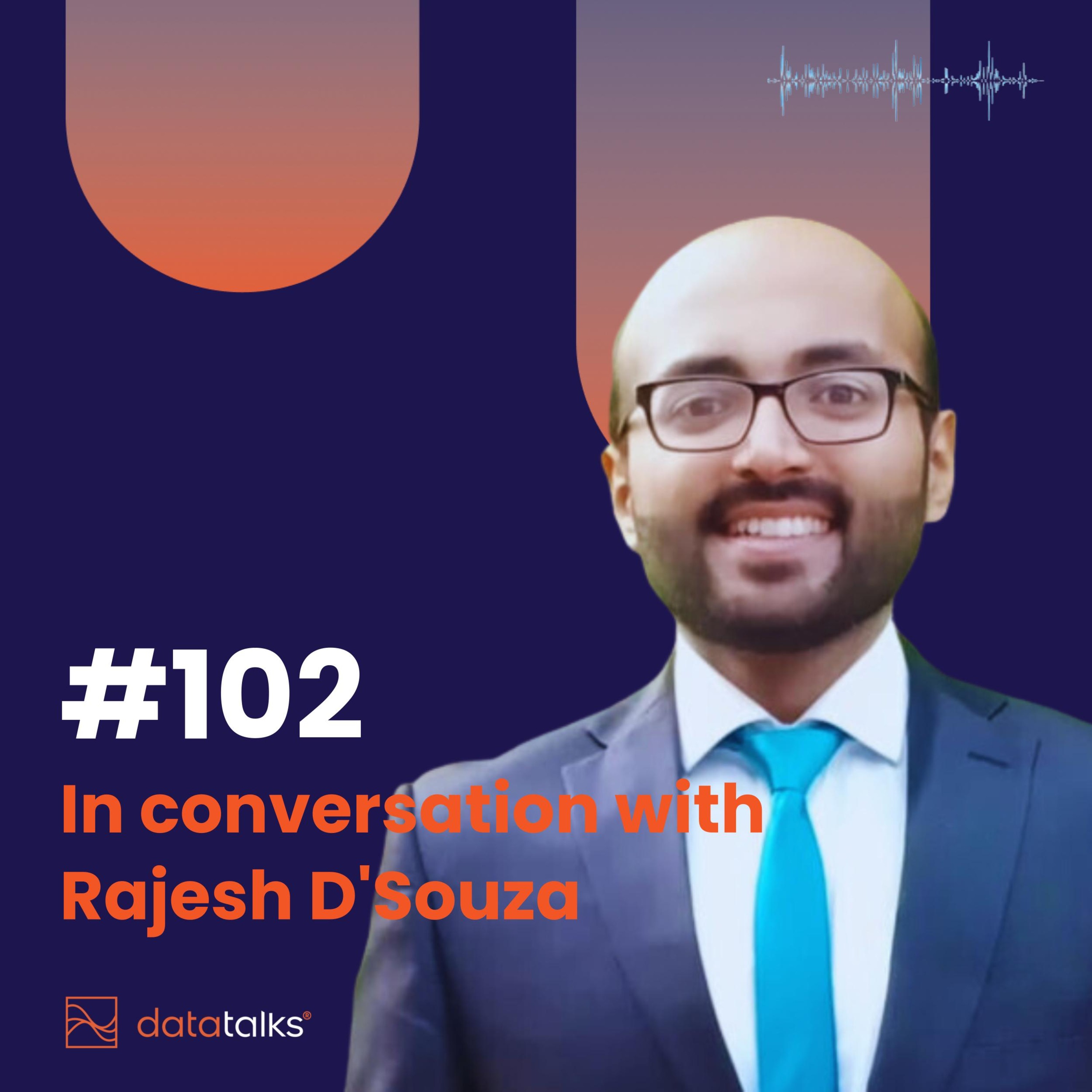
S2 Ep 102#102 Rajesh D'Souza - How AI is transforming the sports industry
In this episode, we dive into the dynamic intersection of sports, AI, and data with Rajesh Dusouza, the Business Development Director at Data Sports Group. With over 20 years of experience in the sports industry, Rajesh shares insights into the transformative role of AI and data technologies, shedding light on their impact on player development, fan engagement, and overall sports management.Rajesh emphasizes the democratization of AI tools, making them accessible to non-technical professionals, and shares success stories of clubs leveraging gamification and moment marketing for increased fan interaction and sponsor engagement. Looking ahead, Rajesh predicts significant advancements in adopting AI and data-driven technologies in the sports industry, with smart stadiums and enhanced fan experiences leading the way.
S2 Ep 101#101 Sports trends that need to stay in 2023
We are officially in the last month of 2023. In anticipation of a new season, 2024, today on the podcast, we will be focusing on Sports Trends to leave in 2023. Every year, new practices, technologies and so on are introduced. While some are here to stay because they provide sports organisations and the communities they operate in a lot of value, others should be retired to never be seen again in 2024. And that is what we will be focusing on in this episode. If you find this helpful episode, remember to leave a review or a comment to let us know. And if we have left out anything, don’t hesitate to give us that feedback, too.But without further ado, here are sports trends to leave in 2023:1. Jumping on trends too quicklyNFTs and Crypto Curriencies have been one of the biggest trends of 2022 and 2023. Although we advocate for embracing new technologies, this should be done with caution. According to the BBC, Major League Baseball, Formula 1, Mercedes-Benz and Cristiano Ronaldo are all facing class action lawsuits over their promotion of failed crypto-exchange FTX. Although we do not know the ins and outs of what went wrong, we know that sports is a game of trust. Fans trust their favourite leagues and athletes and as such, with great power comes great responsibilities. So take your time when working with new technologies. Do your due diligence. Look at the long term impact and not just at the short term rewards.A perfect example of how to proceed with new technologies is how FC Barcelona rejected higher bids from cryptocurrency sponsors and settled for a lower offer from Spotify as a shirt and stadium sponsor. According to Leader Insights, The club has reasons to want to distance itself from cryptocurrency platforms. The club had previously had to cancel an NFT deal with Ownix shortly after announcing it due to crypto fraud allegations involving someone who helped arrange the deal.2. Not managing expectations when trying new technologiesRemember the Metaverse and the promised enhanced fan engaged, according to Robots.net despite the initial excitement and hype surrounding the metaverse, it has largely failed to live up to its lofty expectations. CoinDesk write that The Metaverse Is Struggling to Hold Onto Users and Sports Could Fix That. Although the industry has an opportunity to be pioneers in this technology, something that is rarely associated with the industry, when experimenting with new things, it’s always great to start with a small group and then take it from there. This way, you can save on resources while being innovative.3. Making women’s sports an afterthoughtThere are still clubs who udnerfund their women’s teams and just copy men’s clubs’ strategies in their approach to their women’s clubs. Some clubs even allocate whatever is left over from the budget to the women’s side instead of budgeting according to the needs of the team. This trend needs to stop in 2023. The numbers show that women’s sports is a great investment opportunity so clubs should treat them as such. And women’s teams are very much supported by society especially the younger generation so le’t not make them an afterthought.4. Giving away too many free tickets to women’s gamesWomen’s sports teams often give away a lot of tickets. This is great because it increases accessibility which men’s sports don’t often have, especially at the top leagues. However, there should be a balance. If women’s sports organisations cannot sustain themselves due to low revenue, this puts the entire industry at a danger of perpetuating the status quo that says, women’s sports aren’t worthy becuase they don’t make much money. So let’s find the balance between tickets given away and tickets sold.If you want to find out more on the trends that you should be following in 2024, make sure to listen to our podcast episode next week.

S2 Ep 100#100 Milestone celebration with Lorraine Moalosi
Welcome to a momentous occasion! Today marks our 100th consecutive episode of the Sports CDP Crash Course, and we’re flipping the script to bring you a celebration like no other. Today, the host is our CEO and Founder, Stefan Lavén, but spotlight is on a remarkable individual who’s been the heartbeat of our podcast journey—Lorraine Moalosi.Lorraine is more than just a name; she’s the soul of our podcast. Her dedication is unmatched, and her leadership in Communications and PR at Data Talks has been instrumental in shaping our narrative. As the mastermind behind Data Talks’ “Women in Sports: Beyond the Hashtag” initiative, she is a beacon for positive change and inclusion in the sports data realm. And for our loyal listeners, she’s the voice that guided you through the captivating journey of 99 Sports CDP Crash Course episodes.So, here’s to Lorraine Moalosi, the driving force behind our podcast and a true champion of progress. Join us as we delve into her insights, celebrate the journey so far, and anticipate the exciting road ahead. This 100th episode is not just a milestone—it’s a testament to the power of passion, dedication, and the incredible stories that shape our sports data narrative.

S2 Ep 99#99 The journey of women’s rugby - Karen Ramirez
Join Karen Ramirez in this month’s podcast as she talks about the exciting rise of women’s rugby. From university teams to the Allianz Premiership Women’s Rugby Club tournament launch, Karen explores the game’s journey, emphasizing its impact on communities and players.As we look forward to major tournaments like the Women’s Six Nations Championship and the Women’s Rugby World Cup, Karen highlights how women’s rugby breaks away from its elitist image and makes a positive difference. She shares inspiring stories of trailblazers like Maggie Alphonsi and Zainab Alema, showcasing the game’s diversity and inclusivity.Tune in to learn how women’s rugby is not just a game but a force for positive change on and off the field!
S2 Ep 98#98 Nancy Hensley: How AI transforms sports industry
In this episode of Sports CDP Crush Course, we host Nancy Hensley, a dynamic leader in AI and data-driven technology and a founding member of Mercury 13. This revolutionary ownership group focuses on acquiring majority stakes in women’s football teams across Europe and Latin America. Nancy shares her journey into the sports industry, emphasizing the transformative potential of AI in reshaping how sports are consumed.The discussion explores Mercury 13’s mission to challenge the ownership paradigm in women’s football, advocating for sustainability and profitability. Nancy underscores her commitment to empowering female athletes through data and analytics, promoting a player-centric approach.For more insights and to connect with Nancy, check out her profiles on LinkedIn, and Twitter.
S2 Ep 97#97 Ten common mistakes that clubs make when developing their sports marketing campaigns
Most clubs overcomplicate the process of creating effective sports marketing campaigns while others oversimplify this. Finding the right balance can be a complex task, and mistakes can happen. In this episode we discuss ten common mistakes that clubs may make when developing their sports marketing campaigns:One, some lack clear Objectives: Failing to establish specific and measurable objectives for the marketing campaign can lead to aimless efforts and difficulty in evaluating success. For example for your next campaign, are you focusing more on increasing attendance first and foremost or are you interested in increasing revenue? While these objectives are not mutually exclusive, for some clubs, particularly smaller clubs or women’s clubs who are still developing their audience, it can sometimes be a choice between the two. So before you start your next campaign, think through your objectives and the order in which you will prioritse them.Something to keep in mind also is to avoid an overemphasis on Sales: Putting too much focus on direct sales or promotional offers in every campaign can lead to fan fatigue and reduce the authenticity of the marketing efforts. This is a common mistake that clubs make.Another common mistake that clubs make is neglecting the target audience: Not understanding the preferences, demographics, and behaviors of the target audience can result in campaigns that do not resonate or connect with fans. This mistake usually arises from another mistake - Ignoring Data and Analytics: Failing to use data and analytics to inform decisions and measure campaign performance can result in missed opportunities for optimization. No matter how small your club is, you can still use data to inform all your decisions when it comes to creating campaigns. Check out our platform demo in the description below to see how this can look.Neglecting Fan Feedback: Failing to consider and address fan feedback and suggestions can result in missed opportunities for improvement and fan engagement. Fan feedback can be a whole host of activities. For example, a drop in attendance or purchases is one of the biggest feedback possible. And if there is a tendency towards a drop or an increase in purchases at a certain time of the sports cyle or whenever your club is playing in a specific location, that is all the feedback you need to know that you need to make a change.Another common mistake that clubs making when sending out campaigns isPoor Timing: Launching marketing campaigns at the wrong time can cause them to go unnoticed or overshadowed by other events and promotions. This mistake is made worse by Insufficient Creative Content: Inadequate or uninspiring creative content can fail to capture the attention and interest of the target audience. For example, if you are facing relegation, it is not enough to send out your next campaign with please buy tickets for the next game. You have to use effective storytelling techniques to appeal to your fans.In sum, to create successful sports marketing campaigns, clubs should set clear campaign objectives, avoid an overemphasis on sales, understand their supporters, through the use of data, and take on fan feedback. Avoiding these common mistakes can help clubs better connect with their fans and achieve their marketing goals.

S2 Ep 96#96 Marketing the game: Fans just want to be seen
Did you know that for some sports fans being identified with their favorite team is more important than being identified with their work and social groups, and as important to them as being identified with their religion? Sports provide a sense of belonging and identity for fans who get to experience the highs and lows of the teams winning or losing together. Sports fans are known for their intense loyalty. But I am sure you already know all this of you are working in the sports industry.But did you know that according to a study conducted by Nielsen’s Sports, almost 40% of fans believe that male sports is money-driven. So, there is a disillusionment of sorts taking place. That is why in today’s episode we are focusing on the topic, “Fans just want to be seen” and we have a perfect example case of this.Recently, one of our customers launched a campaign using our platform. The campaign was simply about thanking the fans for their continued support. See, this particular club had broken a lot of records, and they fully understood that this could not have been possible without the fans, and they wanted the fans to know that they knew this and appreciated it. There were no. “buy tickets now” or “buy merch here” CTAs. Just thank you. And do you know what happened next?The club’s fans made six figures worth of purchases, of which a total of 89% was membership renewal. This campaign was the club’s biggest campaign in revenue created since starting to work with us. The moral of the story - fans just want to be seen.So, how can you ensure that your club’s fans are seen and acknowledged?Firstly, give credit where credit is due, just like in the example case we just looked at. Send out thank you campaigns. And get specific. Saying thank you for your support and then slapping someone’s name in the campaign might seem disingenuous. So, specify the moments in which your fans' support was crucial. E.g. maybe you recently won or lost the playoffs and got relegated to a lower league, thank the fans for being there and communicate the significance of their support.Secondly, send out the right offers to the right segments. For example, if you have a membership scheme, why not create exclusive content, discounts and perks that you know your members will appreciate. For non-members, why not tell them a bit about the club and offer them experiences such as meet and greets so that they can become members. Remember, fans don’t want to be used for their money, they want to be seen.Thirdly, stay consistent and transparent. Maintain consistent and transparent communication with fans regarding team decisions, policies, and changes. Even if the news is not positive, honesty and transparency can build trust. Trust is crucial to any relationship, and the fan/club relationship is no exception.Most importantly, remember to maintain an emotional connection with your fans. That is the key to increased loyalty. An emotional connection with fans has many benefits. For example, Emotionally engaged fans are more likely to be actively involved in supporting the team. They attend games, buy merchandise, and share their passion with others, contributing to the club's success both on and off the field. When fans have positive emotional experiences with a club, they are more likely to share their experiences with others. Word-of-mouth marketing and positive testimonials can attract new fans and customers. And finally, clubs with emotionally connected fan bases are more likely to experience long-term success. This is because fan loyalty and engagement are valuable assets that contribute to sustained growth and prosperity.

S2 Ep 95#95 In conversation with David Kiryo - The power of data in fan engagement
In this episode, we sit down with David Kiryo, a Customer success manager at Data Talks, to explore the world of data-driven success in the sports industry. David shares his experiences working with international clubs like PAOK FC, the Dolphins in Australia, Lewes FC in the UK, and Crvena Zvezda in Serbia, helping them achieve exceptional campaign results. He emphasizes the importance of fan engagement and how it goes beyond revenue generation.David discusses the power of Data Talks’ platform, which offers a 360-degree view of supporters, collecting data from various sources in one convenient place. He highlights the benefits of fan engagement strategies that build emotional connections with supporters. From simple giveaways to gamification and interactive campaigns, David explains how appealing to supporters’ emotions can create long-term loyalty and increased revenue.Join us in this engaging conversation as we discover the power of data, fan engagement, and how Data Talks is changing the game for sports clubs and organizations.

S2 Ep 94#94 Inside the sports industry with Karen Ramirez: The importance of coaching off the field
In this episode, Karen Ramirez, the founder of Sporting Sheores, returns as a guest host to focus on the vital role of coaching in sports, both on and off the field.We celebrate Simone Biles’ remarkable comeback, showcasing the importance of mental health in sports. We emphasize the need for athletes to prioritize mental well-being, mirroring the ebbs and flows of sports and life.Join us in recognizing the impact of coaching, resilience, and mental well-being in the world of sports.
S2 Ep 93#93 To give away free tickets or to monetise - That is the question for women's sports clubs
In this episode of "Marketing the Game," we dive into a pressing debate in women's sports: the impact of giving away free tickets. Explore the heartwarming pros, where free tickets can ignite a lifelong passion for the sport and create an electrifying atmosphere in the stadium. But we also navigate the financial reality, delving into concerns like revenue loss and the potential devaluation of the sport. Is there a middle ground that champions athletes, supports growth, and ensures financial sustainability without compromising perceived value? Tune in to explore the complexities and nuances of this important debate in women's sports. Join us as we weigh the options and discuss how to strike a balance that uplifts and empowers. Learn how we've assisted women's sports clubs in navigating this intricate landscape. To find out more, please contact Philip Nordfeldt for the DACH region, Alex Josimovic for APAC, and Palmer Foster for the UK to learn more and get your support.Transcript:Today we continue with our Marketing the Game series. we're exploring a topic that's been sparking debates across the nation – the pros and cons of women's sports clubs giving away free tickets. Let's start with the heartwarming pros that can make you believe in the power of generosity. First and foremost, free tickets can be a game-changer for women's sports clubs. They can fill stadiums with passionate fans, creating an electric atmosphere that players thrive on. Imagine the joy on a young girl's face when she gets her hands on a free ticket. It's not just about that single match; it's about igniting a lifelong passion for the sport. And with this increase in accessibility in women’s sports comes greater exposure, and who doesn’t like greater exposure. Increased fan attendance is not simply just a statistic; it's the beating heart of women's sports. These fans, new and old, become a part of something bigger, and that sense of belonging can be truly magical. And it is this magic that viewers behold in awe when watching the games on their TV screens or mobiles in the comfort of their homes. Never underestimate the power of a full stadium to transform a match from typical to phenomenal.But, as we delve into the cons, we must navigate the tricky waters of financial reality. One of the most pressing cons is revenue loss. Women's sports clubs, often struggling for financial support, can't afford to give away tickets without feeling the pinch both short term and long. Moreover, the issue of perceived value arises. When something is handed out for free, it may inadvertently imply that it has little worth. Can we afford to devalue the hard work and dedication of these athletes? While free tickets may attract larger crowds, they can lead to a lower perceived value of the sport. If something is free, does it mean it's not worth paying for? Furthermore, sponsorship impacts can be a real concern. Sponsors invest in sports for visibility, and if the stands are full of free ticket holders, the value of that visibility can dwindle. However, before we make our final call, let's reflect on the emotional aspect of this debate. Can we truly quantify the impact of inspiring the next generation of female athletes? When young eyes light up at the sight of their idols, it's a moment of pure inspiration. And what about fan engagement? The heart of any sport is its fans, and inviting more people into the fold can strengthen the bond between players and supporters. But here's the argument: rather than giving away tickets, why not find a balance? Women's sports deserve to...
S2 Ep 92#92 Timing plus precision equals magic when it comes to sports marketing
In this episode of our series "Marketing the Game," we delve into the crucial art of timing in sports marketing campaigns. Discover the delicate balance between fan excitement and strategic planning. Explore how well-timed campaigns can boost sales, enhance fan experience, and fill stadiums to the brim. We unveil a useful campaign timing cheat sheet for sports clubs and explore the exciting world of gamification, extending the fun of the game beyond matchday. Learn about Data Talks Sports CDP, a tool that combines timing precision with fan insights to create marketing magic. Don't miss this episode where timing takes centre stage in winning over the hearts of fans on and off the field.

S2 Ep 91#91 Special episode Marketing The Game: The commercialisation of women’s football
At the beginning of the year, in March 2023, the team from Data Talks attended the Women in Football Be Inspired Conference in partnership with Barclays at Wembley Stadium. Lorraine Moalosi, our Head of Communications and PR joined a panel discussion entitled, "Marketing the game: commercializing women's football". She was joined by Lyndsey Clark, Marketing Specialist at UEFA, Misha Sher, the Global Head of Sport, Entertainment & Culture at Essencemediacom, Maggie Murphy, the CEO of Lewes FC, and Sara Hunter, Senior Commercial Manager, Women's Football at the FA. This incredible panel was hosted by Lisa Parfitt, Co-Founder of The Space Between Sports and a Director of Women in Football.This was such a relevant discussion that the room was filled with keep audiences from wall to wall wanting to hear more about how to go about "marketing the game". Here's a brief summary of some highlights from the session, provided by Women in Football UK:“Knowing your audience is key,” said Lorraine Moalosi, Head of PR & Communication at Data Talks. The appetite for women’s football has grown exponentially in recent years and Lorraine told the audience: “We need to dream higher and set higher goals – because we know we can achieve them.”Often women’s football is let down by resources, and audience insight data is lacking in the women’s game, which makes it difficult for clubs to analyse audiences. Sara Hunter, Senior Commercial Manager, Women's Football at the FA, admired how companies like Amazon obsess over their customers and believes sport can learn a lot from this.Maggie Murphy, CEO at Lewes FC, recalled how her club brought in their audiences: “We had a target audience of ‘unwelcome women’ – those who might like the game but have never attended a match because they might not feel welcome.” The values of the club and what you stand for are as important as the product on the pitch, she told us.

S2 Ep 90#90 Inside the sports industry with Karen Ramirez: Leading safeguarding initiatives in sports
In this episode of the Data Talks Sports CDP Crash Course Podcast, we’re once again joined by Karen Ramirez, the founder of Sporting Sheroes. As every month, Karen takes the lead as our guest host, delving into the dynamic realm of sports sponsorship.Today Karen is discussing “Leading safeguarding initiatives in sports”. Discover how strong leadership can ensure safety in sports and learn to combat discrimination, racism, and misogyny. We’ll discuss practical steps, like easy complaint processes and support for those affected.Tune in for valuable insights and motivation to drive positive change, addressing crucial societal issues in the sports world.
S2 Ep 89#89 Marketing the game: 50 dynamic strategies for success
Welcome to another episode of our new series “Marketing the Game”, where we delve deeper into the world of sports marketing segmentation to help you better understand the strategies and techniques used to reach your target audience.We’re presenting an extensive list of 50 dynamic segments that can elevate your ROI and drive profitability. Tune in to discover a diverse range of segments, from loyal season ticket holders to engaged social media followers, VIP box seat enthusiasts, and fans of specific players. Whether you’re targeting international supporters, collaborating with local schools, or engaging fitness enthusiasts, we’ve got you covered.Uncover the power of catering to each segment’s unique interests and needs, and witness how personalized marketing can amplify engagement, loyalty, and your sports club’s success.In no particular order:New Season Ticket HoldersSeason Ticket RenewalsVIP Box Seat HoldersSingle Game Ticket BuyersCorporate Suite ClientsFamily Package BuyersStudent Discount Ticket BuyersGroup Ticket BuyersFan Club MembersSocial Media EngagersMerchandise BuyersOnline Store BrowsersEmail SubscribersApp UsersMobile Ticket UsersConcession Stand PurchasersAttendees of Special EventsAway Game Travel Package BuyersInternational FansLocal FansFans of Specific Player(s)Youth Sports Program ParticipantsSchool and College PartnershipsSponsors and PartnersMembers of Youth OrganizationsBirthday Package BuyersSenior Citizen Discount Ticket BuyersFan Survey RespondentsContest and Giveaway ParticipantsNon-Local Fans (Potential Travel Package Buyers)Fans Interested in MemorabiliaFans Interested in Autograph SessionsFitness Enthusiasts (Gym or Health Club Collaborations)Charity and Community Event ParticipantsFans Interested in Game Day ExperiencesFans Interested in Fan Engagement AppsAlumni of Local Schools/CollegesSubscribers to Premium Content (Podcasts, Video Series)Fantasy Sports PlayersSocial Responsibility Supporters (Eco-Friendly Initiatives, etc.)Fans of Rival Teams (Promote Friendly Rivalry Events)Inactive Fans (Engagement Reactivation)Event Ticket Upgraders (From Regular to Premium Seating)Early Access SubscribersFans with Seasonal Preferences (Summer vs. Winter Sports)Event Attendees with ChildrenFans Interested in Behind-the-Scenes ExperiencesFans Interested in Player Meet-and-Greets

S2 Ep 88#88 In Conversation with Ross Simmonds - CEO of Foundation Marketing - 4 Pillars of content marketing
Join us in this episode as we explore the world of content marketing with Ross Simmonds, CEO of Foundation Marketing. Ross shares his journey from a fantasy football blog in university to becoming a leading digital marketing strategist.Ross walks us through the four key pillars of effective content marketing: research, creation, distribution, and optimization. He also provides actionable insights for sports organizations, big or small, to connect with their audiences effectively.Learn the power of “create once, distribute forever” and how it can transform your content strategy. Ross’s diverse client experiences, from SaaS companies such as Canva to FMCG brands like Kit Kat and unconventional businesses like companies that sell dirt, highlight the creativity and innovation that can be applied across industries.Connect with Ross on social media at @thecoolestcool and visit https://rosssimmonds.com/ to explore his work. If you’re ready to take your content marketing game to the next level, don’t miss this episode!
S2 Ep 87#87 Marketing the game: Static segments VS dynamic segments
Welcome to the inaugural episode of our new series ‘Marketing the Game.’ In this episode, we delve into the captivating realm of sports marketing segmentation – a crucial cornerstone for optimizing ROI and achieving KPIs. Join us as we unravel the nuances between static and dynamic segments, spotlighting real-world scenarios where each strategy shines. From crafting tailored campaigns for broad demographics to hyper-personalized engagement based on real-time user behavior, we’ll uncover the power of segmentation in sports marketing. Tune in to grasp the essence of striking a balance between these strategies for a winning marketing playbook. This is your ticket to understanding the heartbeat of sports marketing segmentation. Stay tuned for more in our ‘Marketing the Game’ series!

S2 Ep 86#86 Inside the sports industry with Karen Ramirez - Redefining partnerships in sports sponsorship
In this episode of the Data Talks Sports CDP Crash Course Podcast, Karen Ramirez, the founder and skipper of Sporting Sheroes, takes the reins as our guest host. She delves into the captivating world of sports sponsorship, focusing on evolving partnerships for teams, clubs, and events.Karen explores the intricate relationship between sports and the gambling industry, reflecting on recent developments and debates around advertising bans. She highlights the changing dynamics of sponsorship, particularly in light of societal shifts towards health and well-being. Drawing parallels to the past bans on tobacco advertising, Karen shares her perspective on the potential for the sports industry to align with sponsors who embody shared values. Tune in to gain invaluable insights from Karen Ramirez and join the engaging discussion about the intersection of sports and sponsorship.

S2 Ep 85#85 In conversation with Chris Jonasson - Legitimizing Esports: From game to sport
Join us in this podcast episode as Data Talks Head of Communication Lorraine Moalosi sits down with Chris Jonasson, the General Secretary of the Swedish Esports Federation. With unwavering dedication spanning a decade, Chris has been at the forefront of the movement to establish Esports as a legitimate sport in Sweden. We delve into the remarkable journey undertaken by the non-profit Swedish Esports Federation, which was founded to foster and enhance the Esports landscape in the country.Marking a historic milestone on May 28th, 2023, Sweden officially recognized Esports as a sport, owing much of this achievement to Chris’s tireless efforts. In this conversation, we explore the challenges, triumphs, and pivotal moments that characterized this path-breaking odyssey.Chris offers insights into the Federation’s instrumental role in advocating for Esports, shaping regulations, and uniting the community.

S2 Ep 84#84 AI, data, Web 3.0? Guidelines for approaching these
With data's exponential growth and AI's rise, digitalization is transforming the sports industry. However, many sports organizations are slow to embrace these changes, which can create challenges in an increasingly competitive landscape. We explore the idea of leveraging data to enhance fan experiences, boost ticket sales, secure sponsorships, and generate revenue. While clubs shouldn’t adopt every new trend, we provide several guidelines to help them navigate the technology landscape effectively. By embracing technology and innovation, clubs can create a win-win situation for all stakeholders involved in the sports industry.
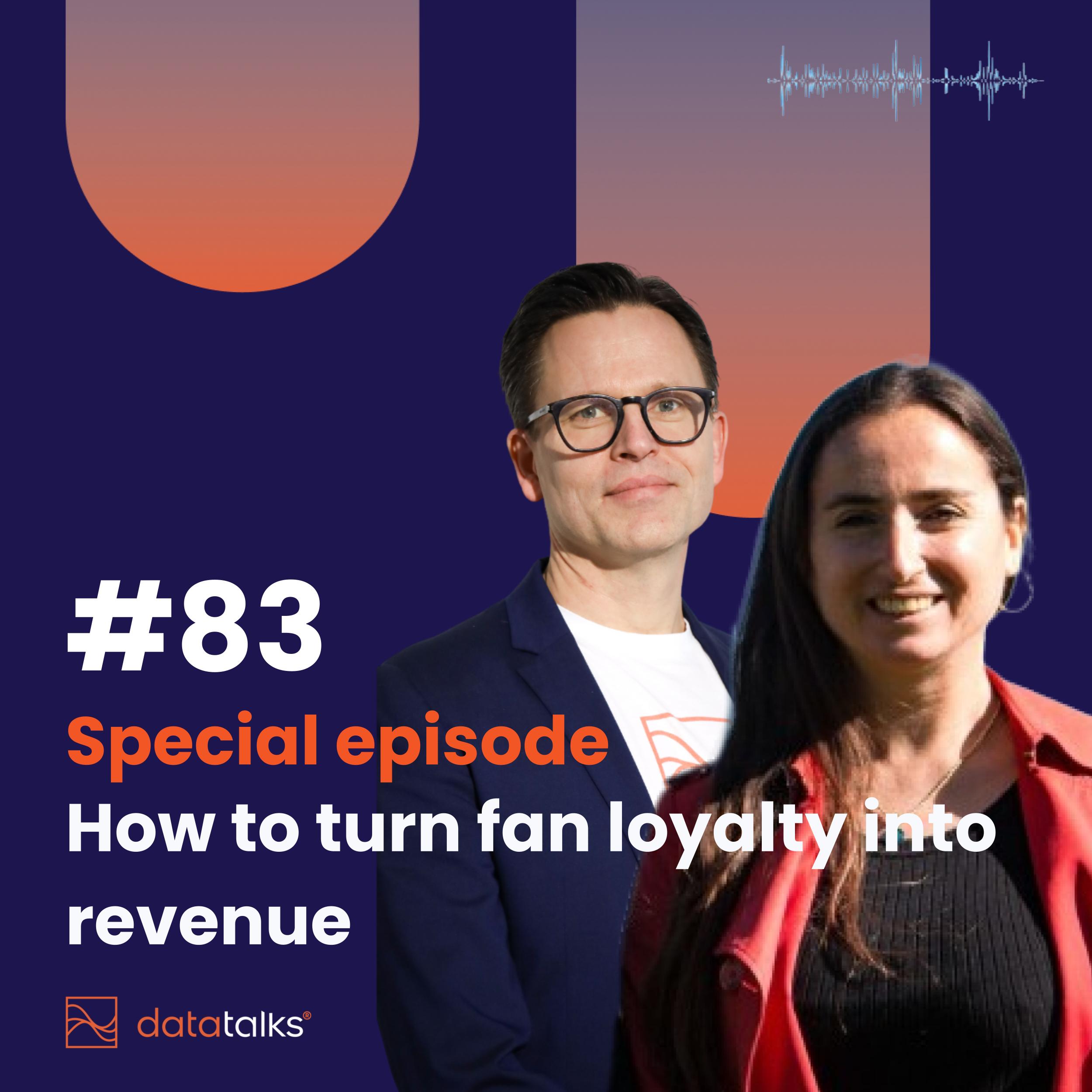
S2 Ep 83#83 Special episode - How to turn fan loyalty into revenue
Join us for a special podcast episode featuring Data Talks founder and CEO Stefan Lavén and Lewes FC commercial manager Stef McLoughlin as they present an exciting technology and data showcase at Sports Pro Live at Kia Oval in London. Gain valuable insights on effectively leveraging supporter data, avoiding common pitfalls that most clubs face, and learn how to create an authentic "person-to-person" connection with your fans. Discover the transformative power of data in enhancing fan relationships and revolutionizing the sports industry. Don't miss this captivating discussion on the future of sports and technology.

S2 Ep 82#82 Inside the sports industry with Karen Ramirez - Commercial challenges at FIFA Women’s World Cup 2023
FIFA Women´s World Cup 2023 is finally here!In this episode, the founder of Sporting Sheroes and our guest host Karen Ramirez highlight the commercial challenges and opportunities surrounding the event. She emphasizes the importance of securing sponsors aligned with the tournament’s values and relatability while cautioning against deals that go against morals.Karen also stresses the need for strategic planning, documenting the journey, and implementing risk and reputational management measures. Despite the hurdles faced, she encourages support for women’s sports and celebrates the incredible athletes participating in the tournament.

S2 Ep 81#81 In conversation with Edem Spio
Join us in this episode as we welcome Edem Spio, co-founder, co-host, and senior producer of the Africa Business of Sport podcast. With a strong background as a director at the Africa Sport Business Group and a strategic advisor at the Golden City Football Club in Johannesburg, South Africa, Edem is an expert in the business of sports.In this conversation, we explore Edem’s passion for women’s sports, with a particular focus on African women’s football. Discover his insights on the global sports recruitment industry and the exciting opportunities it presents.Tune in as we delve into the world of sports business, gaining valuable perspectives from Edem Spio, a dedicated advocate for the advancement of women’s sports in Africa.
S2 Ep 80#80 Commercial activities to focus on during playoffs, season breaks and post-season
This is a continuation of episode 76, and we are discussing strategic optimization of commercial activities throughout the sports club's annual cycle is necessary. By aligning all efforts with the different phases of the annual cycle, clubs can capitalize on opportunities and drive value creation. In episode 76, we discussed the different phases of a sports club’s annual cycle and the type of commercial activities that can be leveraged in those phases to drive revenue, fan engagement and maximize long-term success. We focused only on the pre-season and season. Today we will discuss playoffs, season breaks, and the postseason.

S2 Ep 79#79 In conversation with Emma Clark
In this episode, Lorraine sits down with Emma Clark, a commercial manager and brand agent who took a leap of faith to pursue a career in football. Emma shares her journey from leaving her 10-year career in the travel industry to receiving a full scholarship at Liverpool University. We discuss her experiences in the sports industry, overcoming imposter syndrome, and making an impact in women's sports. You can follow Emma's work on Instagram and LinkedIn, where she shares updates about her work and collaborations, like the one with Nicole in the company Saros, as well as her involvement with the company called RXS Sports.Join us as we delve into Emma's inspiring story and explore the challenges and opportunities in the sports industry.

S2 Ep 78#78 Inside the sports industry with Karen Ramirez: Sponsorship for every athlete
Join our guest host Karen Ramirez for another episode of our podcast as she dives into the world of athlete sponsorship. In this episode, Karen, who is the founder of Sporting Sheroes, explores the idea that there is a sponsor for every athlete, regardless of their sport or level. She talks about the significance of sponsorship agreements, the impact on women in sports, and how athletes can overcome barriers to secure sponsorships. Discover valuable insights on developing sponsorship packages, identifying potential sponsors, and leveraging your unique qualities to attract support. Don’t miss this opportunity to learn how sponsorship can fuel your athletic journey and pave the way for success.

S2 Ep 77#77 Special episode - Leading the development of women´s sports
In this episode of Sports CDP Crash Course, Data Talks’ Head of Communications, Lorraine Moalosi, takes center stage as she moderates a panel discussion on the growth of women’s sports. Recorded live at SportPro Live at Kia Oval, London, on April 25th, this episode brings together influential voices from the industry to shed light on crucial topics that shape the landscape of women’s sports.Joining Lorraine on the panel are two renowned executives, Dawn Airey, Chair of the FA Women’s Super League, and Anna Kessel, Executive Director at Sky Sports. With their extensive expertise and experience, they delve into the pressing challenges faced by governing bodies, leagues, broadcasters, and brands as they commit to the advancement of women’s sports.This dynamic panel discussion offers valuable insights, inspiring stories, and actionable strategies to supercharge the growth of women’s sports. Whether you’re a sports enthusiast, industry professional, or simply passionate about equality, this episode provides a compelling exploration of the challenges and opportunities at the intersection of gender, media, empowerment, and technology in the world of sports.Tune in to this enlightening episode of Sports CDP Crash Course - Data Talks, and join the conversation as we champion the advancement of women’s sports.

S2 Ep 76#76 Commercial activities to focus on during the pre-season and season to maximize success
Transcript: In sports, success is achieved more than just on the field but also off the field. Therefore, strategic optimization of commercial activities throughout the sports club's annual cycle is necessary. By aligning all efforts with the different phases of the annual cycle, clubs can capitalize on opportunities and drive value creation. So in today’s episode, we are discussing the different phases of a sports club’s annual cycle and the type of commercial activities that can be leveraged in those phases to drive revenue, fan engagement and maximize long-term success.So the five phases we are talking about are: pre-season, season, season breaks, playoffs, and post-season. Now of course this looks different depending on the type of sport your club is active in and the region of the world you play in, however, there is plenty that you can take from this episode and apply to your individual case.Let’s talk about the pre-season first, this is the period of time immediately preceding the main play season. In this stage, it is crucial that you set the tone for the season right by getting your fans fired up! Sports clubs must focus on key initiatives such as targeted campaigns for the season. Examples of these can include, birthday campaigns for those celebrating their birthdays on any of the match days. You can give fans who buy tickets and have their birthday on the upcoming match day a voucher to buy merchandise online and/or food and beverages in-stadium.Another example of pre-season targeted campaigns is offering upgrades to your most loyal fans. Not all fans can afford a season ticket. But if you notice that certain fans have been consistently buying general tickets to individual matches, why not offer them an upgrade at a discounted price? Speaking of season tickets, this is the time to run campaigns to the right supporters to ensure that you sell those out as quickly as possible.The key is to ensure that you are laying the groundwork for the most successful season you could possibly have. Now on to the season - this is the longest and most intense part of a club’s annual cycle. During the season, sports clubs have a prime opportunity to capitalize on match-day revenues and maximize sponsor activation. Instead of just dumping tickets on your website and through social media, once again, targeted campaigns are necessary. More so because, once the game is played, you cannot sell tickets to that game ever again. So a missed opportunity here can have huge repercussions on revenue outlook.This is the time to ensure that you are selling out all your tickets. You can do this by:Creating granular segments of fans that you can target with the relevant ticket type - e.g. family tickets, general tickets, VIP ticketsRunning last-minute campaigns to ensure that any empty seats you might have been soldSending out merchandise and food and beverage vouchers to the supporters who have bought ticketsCreating special offers that you send to supporters who are about to churn - that is supporters who have not bought tickets for an extended period of timeApart from ticket sales and food and beverage sales, another revenue stream can be sponsor activation offers and programs. For the highest return-on-investment for your sponsors, you have to:Place the right sponsors in the right stands - e.g. if stand A is where most families are seated, that is where you should place your family-friendly sponsor. This will brand awareness for your sponsor and encourage fans to buy. Never underestimate the power of placing the right message in front of the right audience.Send relevant campaigns to the relevant supporters prior to the game - a typical example of this is running competitions. You encourage fans to buy tickets and engage with your sponsor's content in the hopes
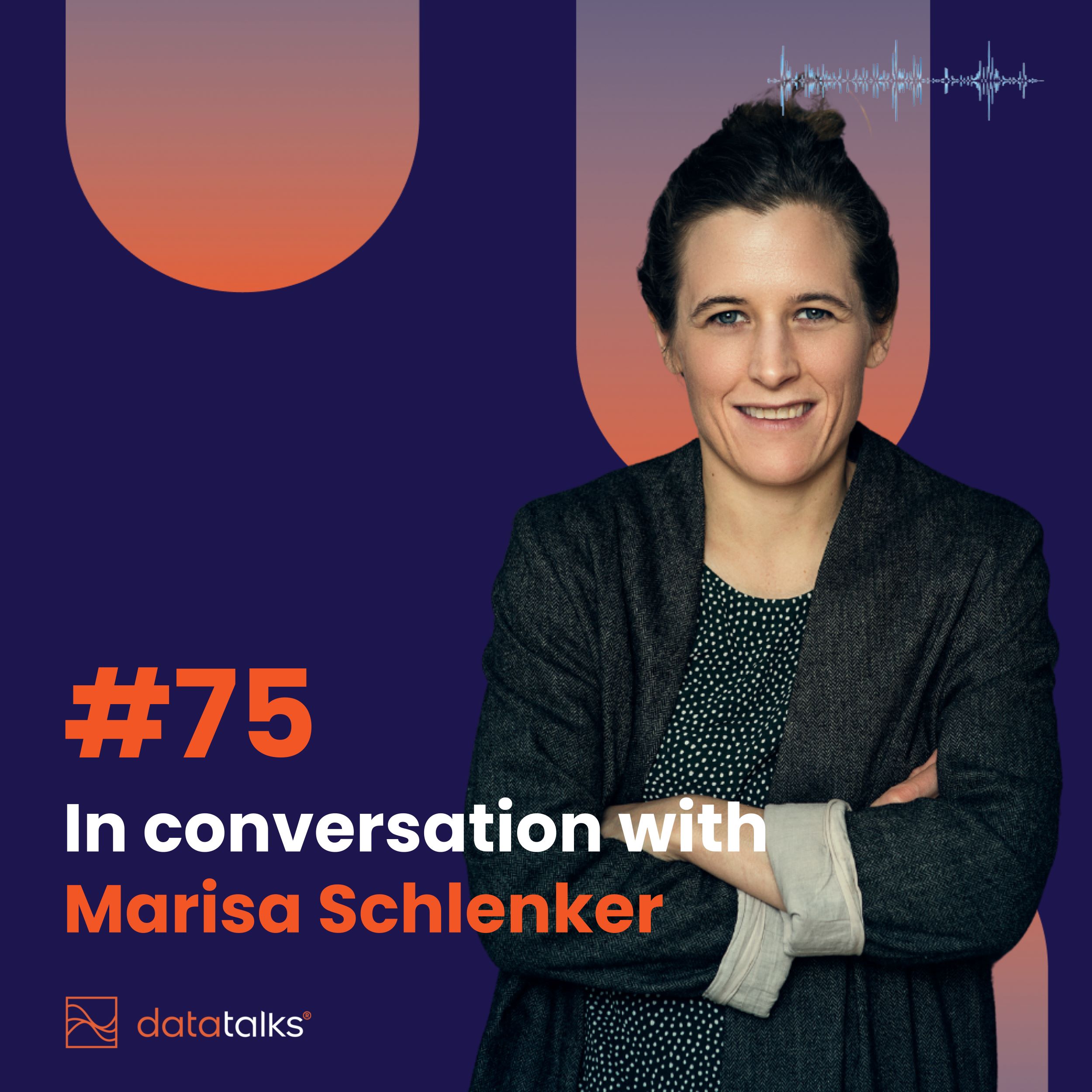
S2 Ep 75#75 In conversation with Marisa Schlenker - Sports as a development tool
Welcome to this week’s episode of our podcast, where we are thrilled to have Marisa Schlenker as our special guest. Marisa is a remarkable individual whose passion for community and its transformative power in the sports industry is truly inspiring.In this episode, we dive deep into Marisa’s journey and explore her unwavering dedication to fostering a sense of belonging and unity within sports communities. With her extensive experience and expertise, Marisa sheds light on the pivotal role that community can play in bringing about real, tangible value and driving positive change within the sports world.As we explore these topics and so much more, Marisa’s passion shines through, inspiring listeners to reflect on the power of community within the sports industry and beyond. This episode is a must-listen for anyone interested in understanding how community-driven initiatives can bring about real change, foster meaningful connections, and create a more inclusive and vibrant sports environment.Marisa Schlenker is a former professional football player with semi-professional and professional playing experience in Sweden, Spain, Germany, and the USA. With 10+ years of experience in the sport for the social development sector, she has worked on a variety of projects and initiatives which position sport as a contributor to sustainable development goals. As a monitoring, evaluation, and learning specialist she has worked with key players in the football for purpose, gender equality, and social activism space including Discover Football, EIR Ggwcup, FARE Network, Yunus Sports Hub, and Common Goal.She is committed to doing her part as a football fan, coach, and player to do more and in an accelerated way around environmental and social sustainability and climate action. As a programme manager at Yunus Sports Hub, she gets to work with and learn from a dynamic and diverse group of young sports social entrepreneurs who are creating positive change in their local communities in and through sport.Here are some links to sports for development resources:1. Sportanddev platform: https://www.sportanddev.org/2. GIZ Learning Hub: https://www.sport-for-development.com/learning-lab3. IOC Young Leaders Learning Hub: https://olympics.com/ioc/sport-and-active-society/young-leaders/learning-hub4. Women Win- The Learning Playground: https://playground.womenwin.org/4. Bridging the Divide in Sport and Sustainable Development: https://www.iir.jpnsport.go.jp/en/sdgs/#page=1Podcast art image credit: EUSA

S2 Ep 74#74 Inside the sports industry with Karen Ramirez: Introduction
We are thrilled to welcome Karen Ramirez as our guest host for this week’s episode, marking the beginning of her monthly updates on current affairs in the sports industry. As the founder of Sporting Sheroes, Karen brings a wealth of knowledge and experience, particularly in sponsorship development for women in sports.In this episode, Karen shares her diverse background spanning various industries and her passion for helping athletes and teams find the right sponsors. She emphasizes the importance of economic empowerment at grassroots levels and the need for diversity in boardrooms and leadership positions. Karen expresses her excitement at having joined the Women in Sports: Beyond the hashtag community and reflects on the ways in which the community has positively influenced her journey, but also discusses the power of podcasts in driving change.You are invited to actively participate in the podcast by suggesting burning topics or questions you want Karen to discuss. Together we can create a dynamic dialogue and drive positive change within the sports industry.Join us as we embark on this exciting journey with Karen Ramirez, our dedicated and passionate guest host, providing valuable insights and updates from the ever-evolving world of sports.
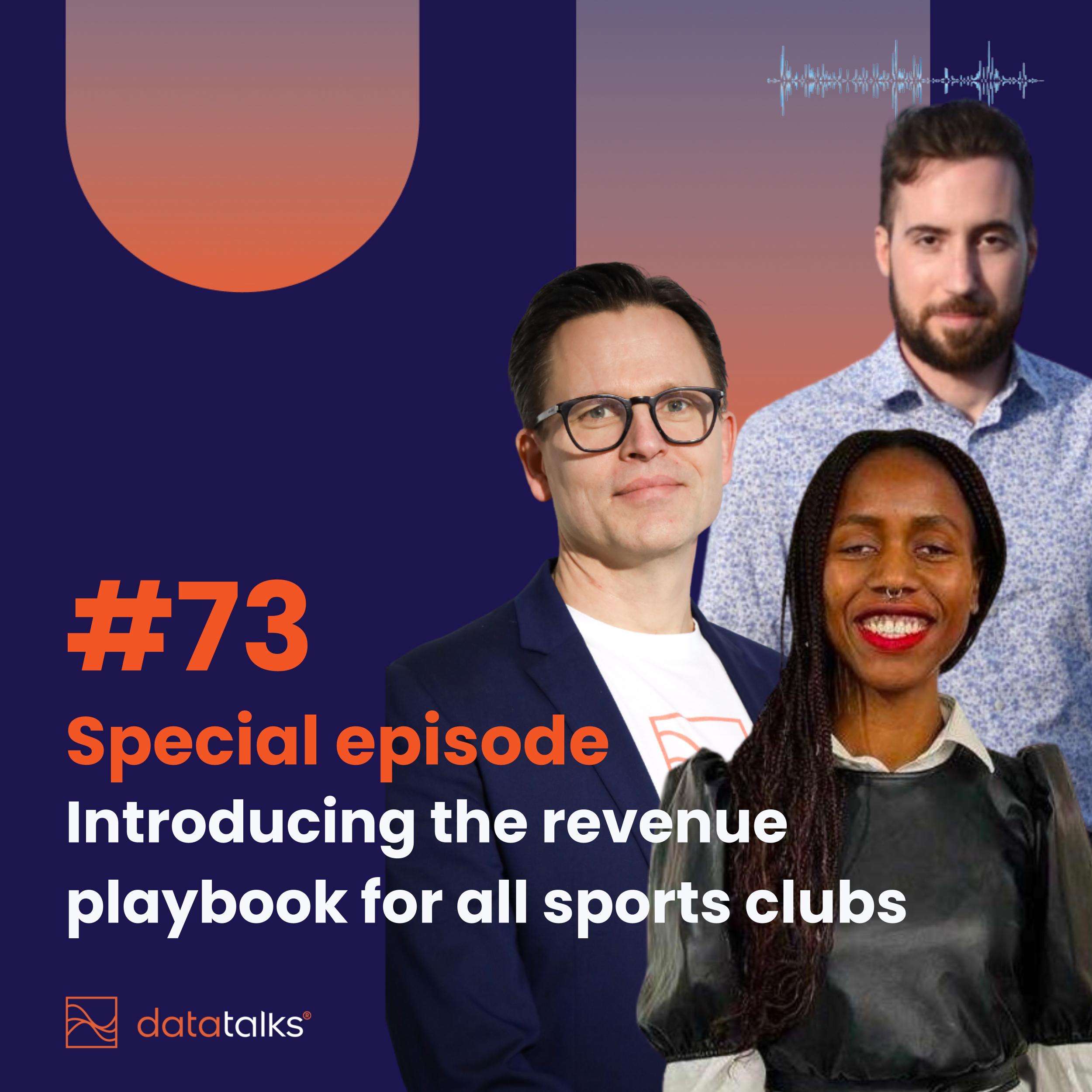
S2 Ep 73#73 Special episode: Introducing the revenue playbook for all sports clubs
Last week we organised a LinkedIn Live event to mark the launch of your eagerly awaited book, “More supporters. Superior sales. Real revenue: 4 Fundamentals of selling tickets and merchandise.In case you missed it, we brought you this week´s special podcast episode, where you can listen to our Head of Communications and PR, Lorraine Moalosi, CEO and Founder Stefan Lavén, and Chief of Growth, Dionysios Zelios, discussing the key takeaways from the book and the key insights from the book, answering questions from viewers, and sharing their extensive experience in sports, tech, growth, and marketing.Lorraine, Stefan and Dionysios joined forces to co-author the book to help all sports clubs sell more tickets and merchandise and negotiate sponsorship agreements of higher value.“More supporters. Superior sales. Real revenue: 4 Fundamentals of selling tickets and merchandise” is now available in digital and print versions here. All proceeds from the book sales go directly to the LvelUp Foundation. This charity in Uganda uses football for child development, specifically focusing on girls. The Foundation provides girls with access to education, health care, and life skills training through football.
S2 Ep 72#72 Measuring campaign monetary performance
Whatever campaigns you run and however way you run them, you always want them to perform well. So whether you are sending out an email campaign for your latest limited edition jersey release or sending an SMS campaign reminding your previous season holders to renew their season tickets for your current season, the hope is always that you will achieve your goal. In order for you to understand the performance of any of your campaigns, you need to have some metrics you can measure.In the first instance, the measurements that people think about are your typical delivery-rate, open-rate, click-through rate, click-to-open rate, unsubscribes, bounces, and complaint rates. These are very good to know because they help you understand the relevance of your messaging because people only open emails they find relevant to them and only unsubscribe if they find what you are saying to be a nuisance more than helpful. Or maybe once again, it’s just simply because they find your messaging irrelevant. If you have too many bounces, that clearly indicates the quality of your supporter database. While these metrics are fantastic to know, you also want to know something even more important: the monetary performance of your campaign. You want to know the number of unique customers and total orders. But you also want to know the Daily breakdown of revenue per Campaign, the total revenue of each campaign, the Daily breakdown of Orders per Campaign, Top 10 Sold Products on Campaigns. But you also want to go deep and know things like Recency Supporter Status before Purchase, Frequency Supporter Status before Purchase, and Monetary Supporter Status before Purchase.Okay, let’s break this down a little bit to give an in-depth understanding of how you can effectively measure campaign monetary performance. This is crucial because you want to identify the campaigns that bring in the most revenue and be able to keep doing it over and over again while increasing your revenue. Because that is the biggest goal: you want to bring your supporters’ average spending to as high a number as possible. That is the only way to increase revenue in a sustainable way. Let’s look at an example, shall we: You want to increase ticket sales for your last three games of the season. That’s your goal, so you send out an email campaign asking your supporters to celebrate the end of the season with you because there is no one better to celebrate with than your fans, right? Once you have sent this out, you will see a spike in ticket sales, but you want to understand which of your supporters responded and engaged the most with your campaign. So you would go into the Campaign Monetary Performance section in your analytics framework on the Data Talks Sports CDP. There you will find all the out-of-the box dashboards with in-depth metrics.And from the dashboards, you will understand that:200 of your supporters bought ticketsAnd a total of 1 000 tickets were bought by your supportersYou will notice that half of these purchases were made within the first couple of hours after you had sent out the campaign.From your dashboards, you will get an understanding that the supporters who bought these tickets belong to your low-spenders segment and that the majority of them were idle and occasional supporters - those who purchase only when there is a special event (such as celebrating the end of the season). You will also be able to see the geographical location of these fans. In this instance, you would find out that the supporters in neighbouring towns would be the ones that are idle and occasional supporters and, therefore, would have been the ones to interact with your campaign.From this one campaign, you would not only understand the monetary performance of your campaign, but you would also understand how to engage your idle and...

S2 Ep 71#71 In conversation with Karen Ramirez (Founder of Sporting Sheroes) - Breaking down barriers for women in sports
In this week’s episode, Lorraine sits down with Karen Ramirez, founder of Sporting Sheroes, an organization that champions women in sports. Karen’s mission is to see more female athletes achieve their full potential, both on and off the pitch.Karen shares her journey of falling in love with sports and why she chose to work with a wide spectrum of ages, starting with grassroots, instead of focusing solely on elite athletes. She also reveals some of the most rewarding experiences she’s had so far.Karen also discusses why the media should give women’s sports greater coverage and what changes within the industry have made her excited about the future of sports, especially for women. Additionally, she touches on why she believes sexism is one of the biggest issues of modern sports and what can be done to combat it.Join us as we delve into the world of women’s sports and the incredible work Karen is doing with Sporting Sheroes. Don’t forget to follow Sporting Sheroes on Facebook, Instagram or Twitter and reach out to Karen through LinkedIn. And if you’re looking to be a part of our fantastic Women in Sports community (which Karen is an active member of), be sure to join Women in Sports: Beyond the hashtag.
S2 Ep 70#70 The 5 KPIs all clubs should be focusing on
Clubs have many goals they need to achieve. Which is why it is important to have key performance indicators (KPIs). These let you know how you are performing against your goals. Are you reaching your goals, all the time or once in a while if at all? In episode 24 we discussed this very topic of KPI and we talked about what they are and why you need them. So this episode is a sequel to episode 24 but this time we will focus on the 5 KPIs all clubs should be focusing on. And in no particular order, these are; 1. Ticket sales 2. Merchandise sales 3. Matchday attendance 4. The value of your sponsorship agreements and finally number 5. The revenue you get from all of the other four KPIs. Let’s dive right in then shall we?So ticket sales is the first KPI. And if you remember in episode 24 we said that your KPIs and goals should be smart meaning that they are specific, measurable, achievable, relevant and time-bound. When setting ticket sales as a KPI, you want to be able to answer questions like how have our ticket sales been in a specific time period. And for all clubs the goal is to increase ticket sales or if you are always at full capacity a 100% of the time (which is impossible), you want to keep those numbers consistent. The reason you want ticket sales as a KPI is that this is the strongest indicator of your fans loyalty and the success of your ticketing campaigns have huge impact on your merchandise sales, sponsorship and matchday revenue.The second KPI is merchandise. Merchandise sales are a good revenue source for any club so of course you want to ensure that you are increasing your merchandise sales. Once again, when tracking this you have to make sure that you have specific goals for a specific period so that you can measure the effectiveness of your merchandise sales.Just because people are buying tickets to your games does not mean that they end up attending the game. No-shows are such a common occurrence in sports that clubs have had to be innovative to tackle this issue. A great example of this is FC Midtjylland who adopted a subscription based ticketing model to discourage no shows. Listen to the discussion that our CEO and Founder Stefan Lavén had with the ticketing manager of FC Midtjylland Martin Jacobsen in episode 49 of the podcast. Matchday attendance is a KPI that you need to keep a close eye on so that you make sure that your stadium is as full as possible.Number 4, you need to keep an eye on the value of your sponsorship agreements. Have your agreements been growing in value in the past two years or so? Which sponsorship have proven to have the highest engagement and/or return on investment in the last 5 years? Which potential sponsors do your supporters have a strong affinity and interest in and how would that possibly impact your sponsorship value in the next 5 years? There are so many KPIs you can track so do it. Track the value of your sponsorship agreements.Last but not least is revenue. Has your revenue increased or decreased in the past season? Are you forecasting it to grow in the future or decrease? How much of your revenue comes from your ticket sales, merchandise sales, matchday purchases and sponsorship agreements? And are all categories...

S2 Ep 69#69 In conversation with Yvonne Harrison (CEO of Women in Football UK) - Women’s football clubs capitalizing on momentum
Our next guest is the CEO of Women in Football UK, an organisation that empowers women, men and non-binary people in the football industry with the knowledge, expertise, and support to create a brighter, more diverse future within football. On top of that, Yvonne Harrison has served as director and advisor to many different organisations within the sports industry, and she is also the founder of StryveUK, a company that exists to help individuals and businesses be better and do better.Yvonne shared her insights on the following topics:the role of a leader in the sports Industry: how to continuously improvekey factors that set successful sports organizations, projects, and individuals apart from the resthow women´s football clubs can capitalize on the current momentum and increased attention.Women in Football UK is a network of professionals working in and around the football industry who support and champion their peers. As mentioned by Yvonne in this episode, the BeInspired Conference was hosted by Women in Football at Wembley Stadium in London on 15 and 16 March this year, with a full focus on the women's game. You can access all the conference sessions in this playlist. You can follow Women in Football UK on Twitter, and please make sure to follow Yvonne on Twitter and LinkedIn.And if you would like to be part of the fantastic Women in the Sports community, please join Women in Sports: Beyond the hashtag
S2 Ep 68#68 In-house vs outsourcing data analysis
In-house vs. outsourcing fan data analysis – are you currently at the crossroads of having to choose between the two? That is, whether your sports organization should collect and analyze fan data yourself (do it in-house) or you should outsource it (let an agency do the job). There are three main challenges that outsourcing fan data analysis can bring about:No one knows your sports organization better than you - some of the knowledge you have in-house has taken years to accumulate and master. And this is something an agency simply cannot replicate. Sure, they can help you analyze your data, but can they really help you draw the necessary conclusions from that data? Or more importantly, give you the insights that truly matter for your sports organization in order to make the right decisions? No matter how much ongoing communication there is between you and your partner, there is simply never enough time for them to truly understand your business as well as you do. Moreover, it is also likely that you cannot share all of your business secrets with them. And as a result, your agency partner risks giving you limited, or worse, the wrong information about your fans. For example, instead of getting the right report in minutes, you get it whenever your consultant has time.Unclear return on investment (ROI) - relying on an agency to do the job for you can end up being costly. Consequently, your return on investment (ROI) is unclear. Even if you set a target for your ROI, it can be difficult to evaluate whether the agency you choose will deliver on it. As mentioned under challenge 1, an agency does not know enough about your business. So they can only rely on the information they have received from you. But then again, even with this information, a high or even just a slightly positive ROI can still not be guaranteed. Because your agency simply does not have enough information and understanding of your business to deliver on your ROI objectives.Exclusively outsourcing fan data analysis is a short-term solution in an ever-changing digital world - sports organizations need to rely on data in order to make informed decisions for their different marketing activities as well as their overall strategy. But this becomes limited when working with an agency instead of owning this process in-house. You risk getting outdated data and insights, since you’re not receiving your data insights in real-time from your outsourcing partner. Being able to act in-house is a huge advantage. Because then you will be able to actually gain the necessary insights you need to be able to:Make informed and more accurate decisions – both for your marketing efforts as well as decisions affecting other parts of your sports organization.Receive full control over your data analysis – from collecting data to analyzing and acting on it.Receive improved results from your marketing efforts – such as increased ROI on your marketing campaigns.Help build digital specialisms internally and foster digital skill sets – enable your teammates to become digital specialists themselves and foster a mindset of working digitally in-house.Grow and scale – thanks to your employees becoming experts themselves, having internal specialism in-house will help your sports organization grow and scale.Increase creativity – thanks to internal specialism, the creativity among your employees will likely increase.Decreased cost – from not having to rely solely on an agency to do the job for you.Increase transparency – since your sports organization has control over the entire ecosystem and process of collecting and analyzing your fan data.Greater control over your brand strategy and execution by itdoing your fan data analysis in-house, you will be able to:Get actionable insights from your fan data much...
S2 Ep 67#67 In conversation with Anna Blixt (Diversity and Inclusion Educator) - Towards a more equal sports industry
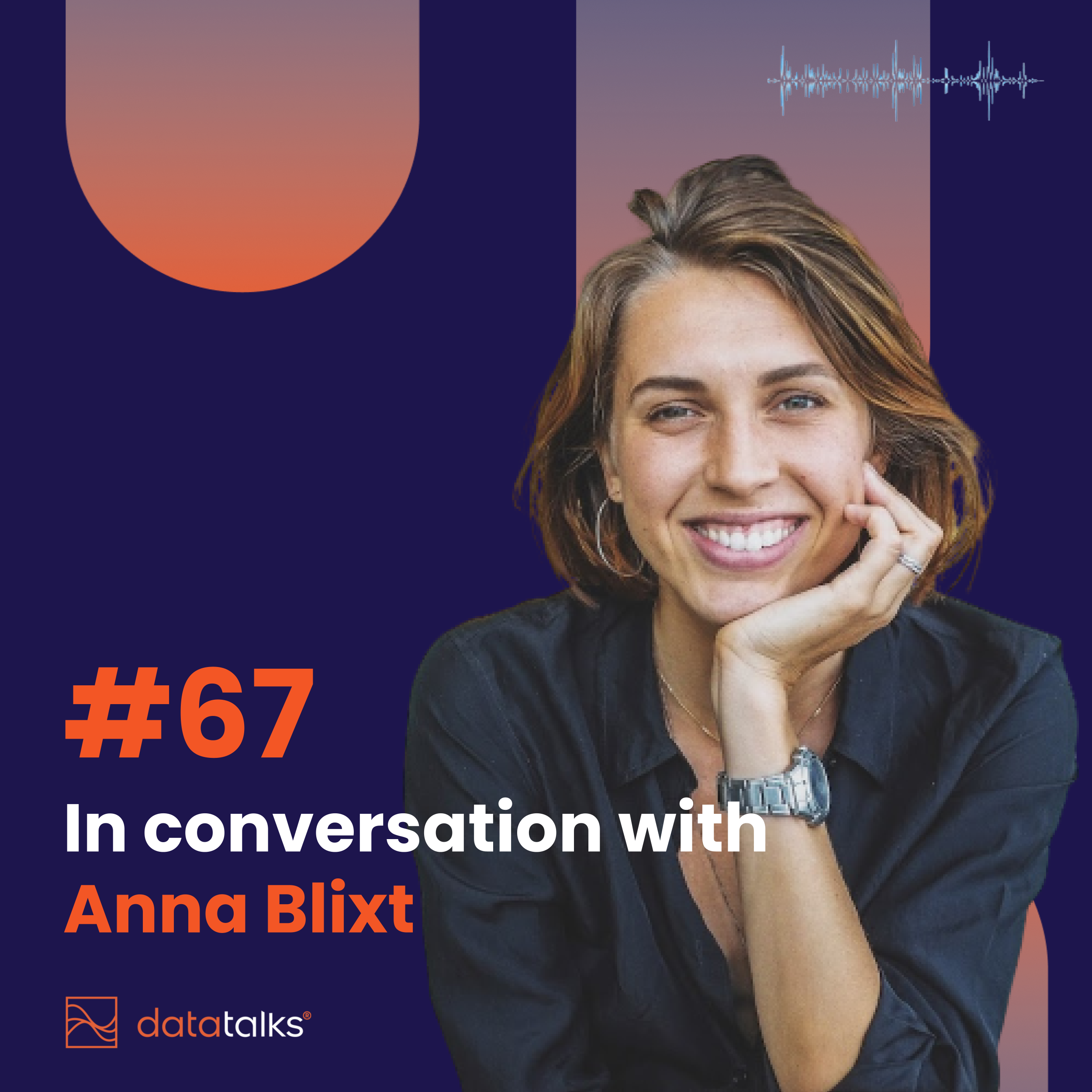
“What story are you writing? Together, we can create a more inclusive working life where more people feel seen, heard, and safe”. These are the words you see when you land on Anna Blixt’s website. Anna Blixt is an expert diversity and inclusion educator and facilitator with a strong passion for improving the work lives of others because she believes that the workplace is the perfect starting point for societal change. Today we get to talk to Anna about the importance of diversity and inclusion in sports.Listen to this episode to learn more about:Anna's story and her involvement in the sports industryThe importance of bringing into the discussion people with different opinions on diversity and inclusion instead of just talking to those who are already in agreementSome of the reasons women/girls drop out of sports at a higher rate than men/boysOpportunities for bringing more diversity and inclusion to the sports industrySome of the positive changes we have seen so far in the sports industryIn this episode, we discuss an awesome project called, Correct the Internet, which friend to the show, Rebecca Snowden, a former New Zealand Fern, is one of the founding partners. If you would like to hear more of Rebecca's thoughts on the women's sports space, check out this episode where she was the guest.
S2 Ep 66#66 Which supporter segments should you be targeting?
Selling out your stadium consistently hinges on you knowing who your supporters are, how they interact with your club, and how you can reach them with your ticketing offers. That is why it is important that you grow your supporter base continuously, collect supporter data with contact information and merge it with your sales data. These are the first 2 fundamentals out of 4, that you should be using to sell out your stadium. The third fundamental, which will be the focus of today’s episode is, find out which supporter segments you should target with your ticketing campaigns.Let’s break down this fundamental into three sections:The finding out part that is, how do you find out which supporter segments you should be targeting The supporter segments themselves, so what these are, and why do you need themAnd lastly, the various ticketing campaigns you can run and which supporter segments you can start withOkay, so the first question is, how do you find out which supporter segments you should be targeting? The simple answer is through the process of segmentation, that is grouping all your different supporters according to the characteristics and attributes they have in common. This could be based on various factors such as demographics, geographics, behavior, and so forth. The most effective way of segmenting is by using technology to find all these commonalities in your supporter data, this is the very reason why the first two fundamentals, grow your supporter data continuously and collect supporter data with contact information and merge it with your sales data are so important. It is nearly impossible to do segmentation without following these first two fundamentals. Lucky for you, the Data Talks Sports CDP has a segment builder that allows you to be very precise in your segmentation. Check out the video linked in the description on what this looks like. Trust me, you want to see this for yourself instead of me describing it to you.So why do you need to know your different supporter segments? Because knowing this will help you tailor your messages and offers to those groups in a way that they will appreciate. For example, you want to send a different message to your season ticket holders than to your single ticket holders. Failing to do this will make your messages and offers irrelevant, which might lead to unsubscribes which are the first sign that you are losing a supporter’s attention. Relevant offers and messages are the single biggest factors that lead to engagement and purchases so you want to get this right.This leads us to our final question, what kind of ticketing campaigns can you send, and to which segments? Again, this depends on the data you have collected so far. But let’s say that your data shows you that:You are not getting enough single ticket sales between a certain age, this is a perfect indicator of the ticketing campaign you should sendOr maybe only about half of your previous season ticket holders have renewed their season tickets for the current season - in this case, it would be time for you to send them a season ticket renewal campaignPerhaps you notice that you have more supporters than buy family tickets, you can be more intentional with them and send them ticketing campaigns to suit their needsHow about all the supporters who spend a lot of money on buying VIP tickets? You can send them the right ticketing campaign toThe gist of the story is, as long as you have merged your supporter’s contact information with your sales data, you can identify the opportunities to leverage to fill out your stadium consistently, and not just at your biggest, high-profile matches.
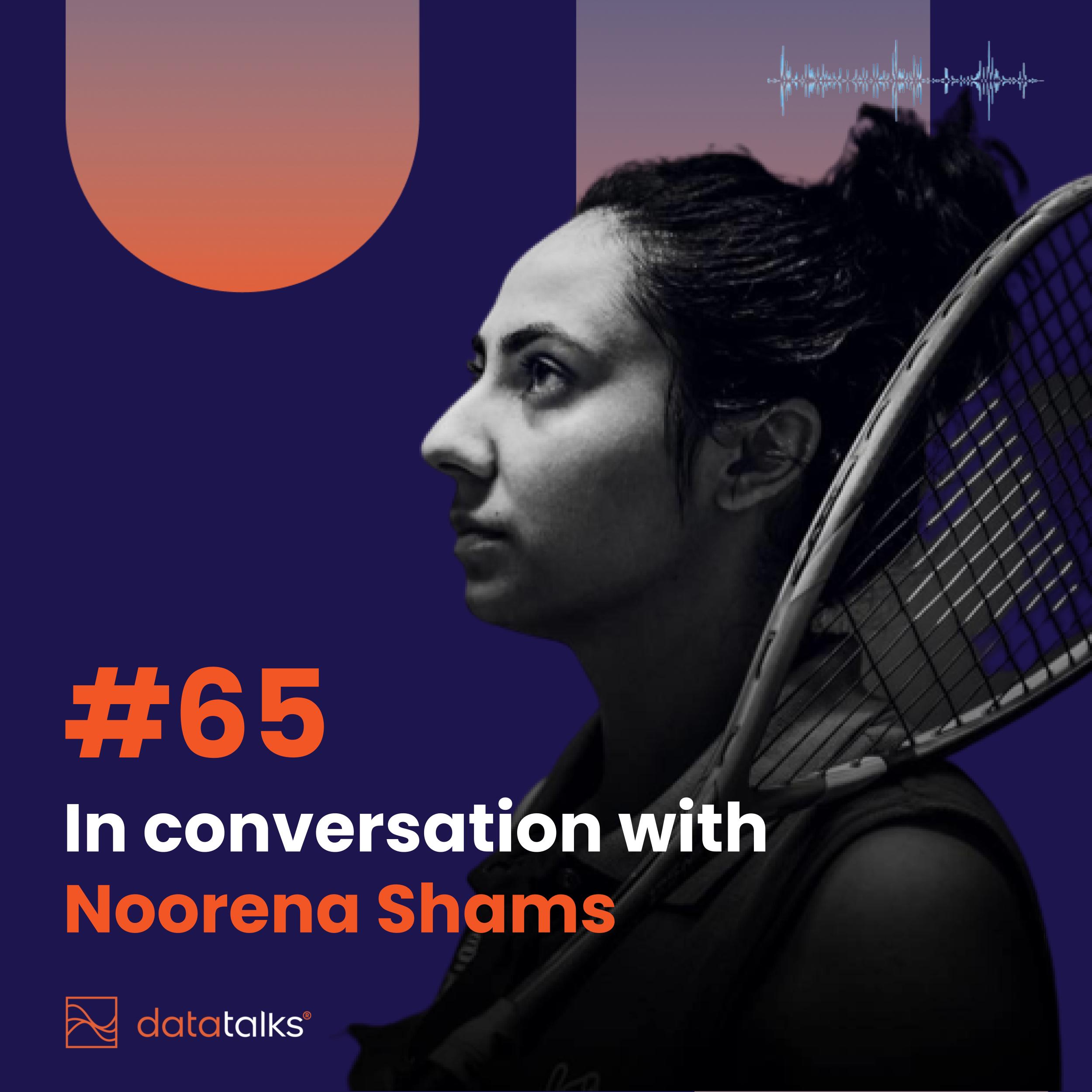
S2 Ep 65#65 In Conversation with Noreena Shams - World #128 Squash player
Our next guest is a Professional Squash Player based in Pakistan who was ranked number 120 in the world by the Professional Squash Association. She is not only an athlete but also an activist. Noorena Shams is the first ever athlete from Pakistan to have spoken at the United Nations Human Rights Council social forum Geneva 2018 for the rights of athletes of South Asia. This is what Noorena has to say about herself:I am a Pakistani athlete and an activist. Professionally I have played squash in different tournaments around the world. I have touched the highest rank of 120. Right now I rank 238 in the world by the Professional Squash Association. I have remained among the 30 Asian squash players during my junior career. I have played cricket and have been a cyclist for a short span of time. I am the youngest member of the sports management committee by the Khyber PakhtunKhwa Government. I am the only athlete to sit on this table. I have been listed among 24 inspirational figures by UNDP Pakistan 2016. I have been voted as one of the 50 influential ladies of Pakistan by The News newspaper 2016. I have been among the 20 game changers listed by the Global Citizen’s Magazine 2018. I am the first ever female international athlete from Malakand Division that includes Dir, Swat, Bajaur, Buner, Chitral, Malakand and Shangla district. As an activist I am the first ever athlete from Pakistan to have spoken at the United Nations Human Rights Council social forum Geneva 2018 for the rights of athletes of south asia. I have spoken at the United Nations Commission on the status of women New York 2017. I have spoken on and off regarding the rights of athletes and women on different platforms including Human Rights Watch head office and others. I have been trying to help many students and athletes financially through my social media presence. I have recently been listed among young activists serving in COVID’19 by the United Nations Youth Envoy.In this episode we talk about:The role the media plays in advancing women's sportsThe importance if allowing everyone to make their own choicesThe hardships that Noorena has gone through in order to play sportsThe impact Noorena would love to have on the sports industry and all generations of womenRemember to follow Noorena on LinkedIn.And if you would like to be a part of a fantastic Women in Sports community, join women in sports: beyond the hashtag

S2 Ep 64#64 The secret weapon to growing your supporter base, continuously - GAMIFICATION
Grow your supporter base continuously Sports clubs are one of the most followed accounts on various social media platforms. That’s because fans are hungry to keep up with their favourite clubs. Fans want to see what their favourite players are up to. A great example of this is how Al-Nassr FC gained over 2.5 million new followers in a matter of hours following the announcement of Cristiano Ronlado’s transfer to the club. This was a 400% increase from the 834 000 followers they had prior to the announcement.Having a huge follower base on social media is great. But do you know what’s even better, turning those followers into known contacts in your database? This will help you understand your supporters better. From their preferences to the ways they engage with your club in terms of purchases and web behaviour, to name but a couple of examples. Once you know your supporters better, you can send them the right ticketing and merchandise offers in a way that they can really appreciate instead of sending out generic offers in the form of standard social media posts.So how can you turn your social media followers into known contacts in your database? Remember I mentioned sending out offers in a way that supporters will appreciate? It’s really vital that however way you choose to grow your supporter base, you ensure that it’s in a way that your supporters will really appreciate. One such proven way of doing so is gamification. Gamification is the application of typical elements of game playing to other areas of activity. Elements such as point scoring, competition with others, and rules of play. This is done as a powerful online marketing technique to encourage engagement with a product or service. In our case, you would be doing this as a way of encouraging your supporters to submit their contact information in exchange for playing the game, so to speak.Gamification is something that fans really appreciate. For example, score predictions are particularly popular. Fans always jump at the opportunity of predicting which team will win and how many goals they will score against the other teams. This builds anticipation, excitement, and friendly competition amongst different fan groups. And it also gives the individual supporters predicting the scores a feeling of intimate involvement and raises the stakes a little bit for them. Meaning that they will be more invested in the game that they predicted the score for hoping that they are correct and sometimes hoping that their fellow fan group members are wrong. This is so powerful that 3 000 supporters of one of our customers’ rushed to predict scores of the club’s upcoming game within a space of 24hrs. This was the very first time that our customer had used this gamification tactic and supporters were filled with much anticipation and excitement. Of the 3 000 that signed up for the score prediction, about 60% were engaging with the club for the first time. Meaning that the club managed to successfully grow its database using gamification.

S2 Ep 63#63 In conversation with Eva Murray (Lead Evangelists EMEA at Snowflake) - Adoption of technology in sports
From working as a consultant in both the private and public sectors in New Zealand to working as a business analyst in the Financial Services Industry and Tableau consulting, Eva Murray is an expert on all things data and working data-driven. And now, as Lead Evangelist at Snowflake, one of Data Talks’ solution partners, Eva helps organizations have more impact with data and drive the adoption of technology to achieve a substantial return on investment, we are more than thrilled to have Eva Murray on the podcast. Here are some of the topics that Eva discussed with the team in today's episode:business opportunities and challenges a Sports Organisation can create by utilizing that dataunique capabilities Snowflake brings to platforms such as Data Talks' Sports CDPData sharing, data clean rooms and data analyticsFind out more about how Data Talks and Snowflake work together here: Data Talks Helps Sports Brands Score More Sales with Snowflake’s Data Cloud
S2 Ep 62#62 International women's day: DigitALL: Innovation and technology for gender equality.
Happy International Women’s day.Today the global world community celebrates the social, economic, cultural, and political achievements of women while also calling on all stakeholders to take action in order to accelerate gender parity. And the theme this year is: DigitALL: Innovation and technology for gender equality.And of course Data Talks being a SaaS company bringing cutting-edge innovation and technology to the sports industry while also advocating and championing the acceleration of women’s sports commercial success, we feel passionate about this year’s theme. At the beginning of the year, we announced our partnership with Lewes FC. Speaking on the partnership, this is what our CEO, Stefan Lavén had to say:“At the heart of Lewes FC is a strong passion for innovation and equality. This is evident in everything they do not least, in how they allocate their resources between their men’s and women’s teams. So of course, Data Talks could not miss out on the opportunity to partner with a club whose ethos reflects ours. With this partnership, Data Talks and Lewes FC have a chance to prove the merit of using data to create unparalleled commercial success, for both men’s and women’s teams.”Today we implore all stakeholders involved in the sports industry to:Set bigger goals for women’s sports organizations and commit to achieving those goals so that we can see an acceleration in attendance at women’s sports gamesBut also an important factor is to embrace innovation and technology in helping women’s sports clubs to achieve their goalsThis was the very reason we went into partnership with Lewes FC. When speaking about the partnership, this is what the CEO of Lewes FC had to say about the partnership:“Football is full of emotion. But when you’re trying to hit targets and make good decisions, you need to be thoughtful and rational. For that, you need good evidence, good data, and good ways of connecting, understanding, and handling data. Data Talks will help us to clean up and streamline the way we handle information internally, which in turn, will help us make good commercial decisions and engage better with our fans, owners, partners, and suppliers. We’re delighted to welcome Data Talks to the Lewes FC team.”Accelerating the commercial success of women’s sports organizations is something that we have been working fiercely with. Because we believe that this is truly the key to reaching gender parity faster, the very reason we are celebrating international women’s day today. We have particularly been focusing on ensuring that women’s sports organizations get more supporters, superior sales, and real revenue through the 4 fundamentals of selling more tickets and merchandise. These four fundamentals are: 1. Grow your supporter base, continuously2. Collect supporter data with contact information and merge it with your sales data3. Find out which supporter segments you should target with your ticketing campaigns4. Send out relevant ticket offerings to those segments in a way that your supporters will really appreciateUsing these 4 fundamentals to sell more tickets and merchandise is crucial especially today when women’s sports are enjoying a lot of publicity. However, just because people are talking about women’s sports clubs and teams online, does not mean that they are actually buying tickets or merchandise from them. And just because FC Barcelona and The Lionesses are setting new attendance records, it does not mean that the average women’s club is seeing record or even full attendance at their games.This, unfortunately, is the sad reality in sports right now. Online hype,...
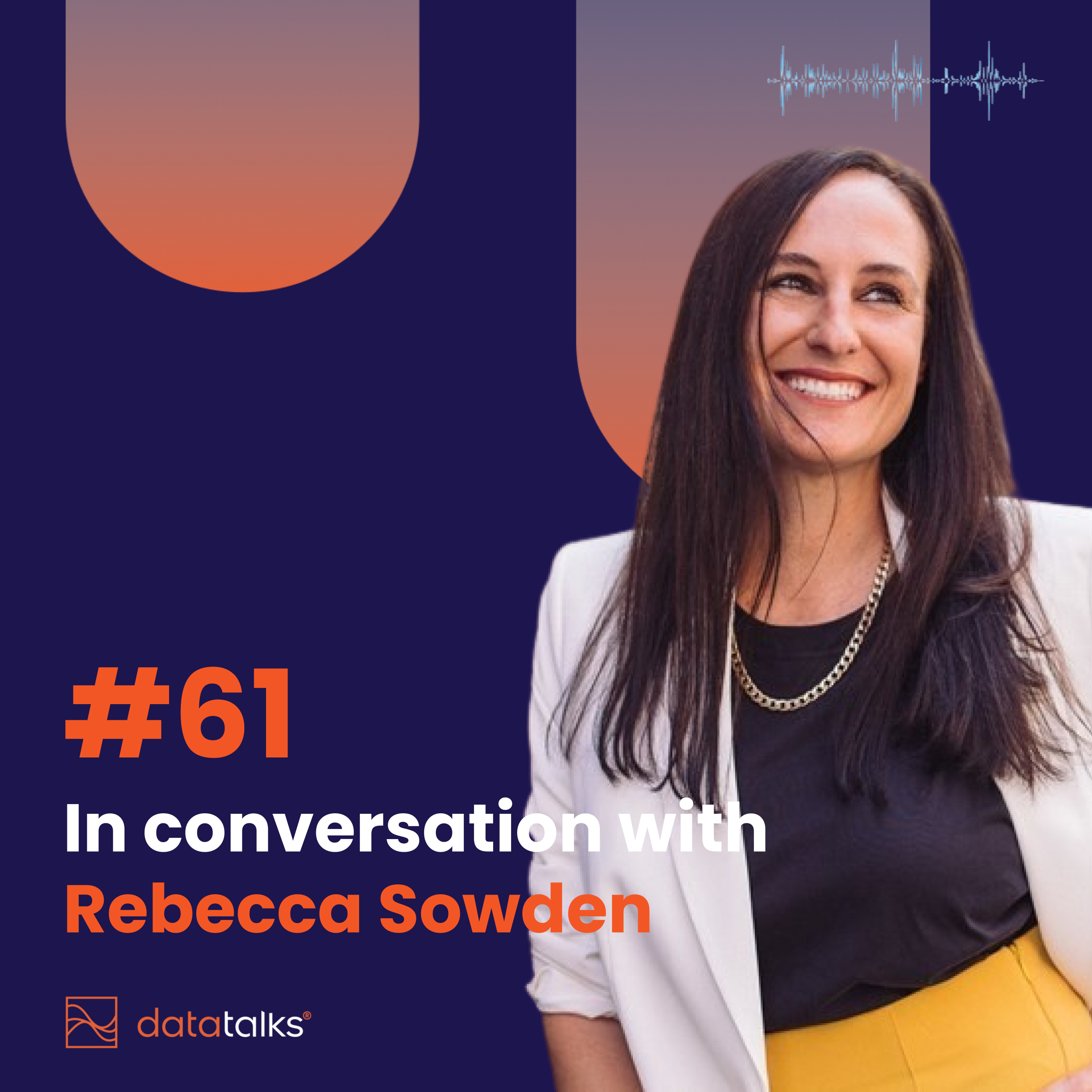
S2 Ep 61#61 In conversation with Rebecca Sowden (Founder of Team Heroine) - Sponsorship and marketing of women's sports
Meet Rebecca SowdenThe Women’s Sports Director at WeAreFearless & the founder of Team Heroine - a platform where they share insight, tools, and inspiration to help brands and rights holders unleash the power of women's sports sponsorship and marketing. Rebecca Sowden has also worked as a Sponsorship Manager and Commercial Marketing Director. She also worked as marketing manager for FIFA where she developed and managed marketing initiatives including the production of TV commercials to drive attendance at the 2008 FIFA U-17 Women's World Cup. Rebecca also works closely with Lewes FC and is one of its ownersIn today's episode we discuss:Sponsorship and marketing in women's sportsChallenges within the women's sports industryThe importance of leveraging the current momentum within women's sportsHow to be a male-ally of women's sportsTranscriptYou are listening to the sports C D P Crash course, your go-to podcast for all things sports related. We talk about how sports clubs and teams can sell more tickets and merchandise than ever before, and how they can negotiate sponsorship agreements of higher. We also champion women's sports and discuss how data and innovation can help bring equality to the sports industry.We have interviewed industry leaders who have worked with the likes of the NFL FC Barcelona, women in football uk, Feba the Davis Cup, just to name a few. So don't miss out. Listen to today's episode. Our next guest is a women's sports director at We Are Fearless and the founder of Team Heroin, a platform where they share insight, tools and inspiration to help brands and right holders unleash the power of women's sports sponsoring and marketing.Rebecca Soen has also worked as a sponsorship manager and commercial marketing director and a marketing manager for FIFA where she developed and managed marketing initiatives, including the production of TV commercials to drive attendance at the 2008 FIFA under 17 Women's World Cup. Rebecca, welcome to the podcast.Thank you for having me. It's such a, it's such an honor because, um, I feel like we've been trying to get this done for such a long time and it's, it's so great that we're finally able to do it. Yeah, no, it's fantastic to connect and looking forward to it. Absolutely. But before we begin, we like to start off our sessions with an icebreaker.Are you ready for that? Oh, we'll see. , what's your favorite quote, expression or motto, and why Is it your. I think I'd have to go with, feel the fear and do it anyway. And I guess I just like to live by that motto myself. Um, obviously produce a lot of content around women's sport and you know, sometimes it's a little bit uncomfortable trying to push a few buttons and, um, start to.Tricky conversation, but I think without that boldness and challenge, we are not gonna drive the game forward quick enough. So yeah, I like to kind of, and work in my own personal life, kind of live by that. And do you have any memories of like any, anything like recent where you've actually felt just petrified or just afraid and you're just like, you know what, I'm just doing.Yeah, I mean I think, um, well personally I was at a Halloween theme park on the weekend, so going a couple of rides, which definitely put me outta my comfort zone. But you know, I think knowing I was gonna be a little bit uncomfortable, but the rewards at the end of it were worth...
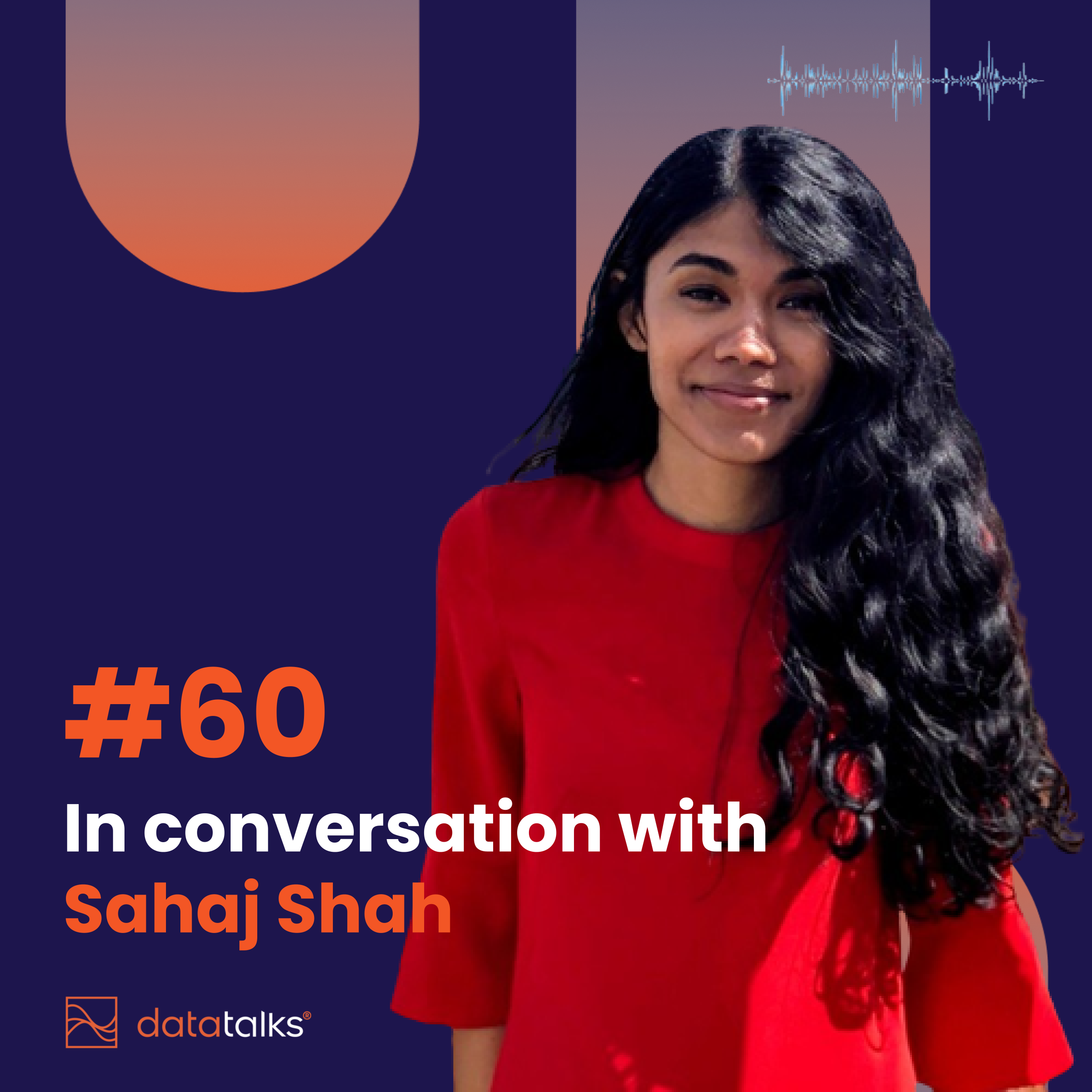
S2 Ep 60#60 In conversation with Sahaj Shah (Sports Pro New Era Class 2022 and Product Designer at Areto Labs)
Our next guest is a Product Designer, with a rather unconventional background. Having completed an MA in Diplomacy with a focus on gender equality, and then working in business development for creative agencies in the Omnicom & BBC networks, Sahaj Shah combines policy and business strategy within her design role in sport. Sahaj recently led Areto Lab’s 2022 research report about online abuse in women’s sports, collaborating with a former NZ Football Fern to produce a 6-step action plan that helps organizations tackle the problem. Sahaj is also a part of the Sports Pro Media New Era program and today we get to talk to her about all of this and more.In this episode we discuss:The importance of keeping athletes safe from online abusewhy communities are crucial for women in sportsThe women in sports: beyond the hashtag initiativethe Sports Pro new era programIf you would also like to join our women in sports: beyond the hashtag community, do so here
S2 Ep 59#59 The secret to creating tangible value for women's sports - community!
Did you know that women’s sports communities are growing faster than men’s? And that this growth follows an industry-wide phenomenon. According to The Sports Innovation Lab report on: “The growth of women’s sports community”:Women’s sports have a community growth score that is 40% higher than the general sports fan community The women’s sports community growth score is trending up year-on-year vs. general sports, which has a downward trendline“Alone We Can Do So Little. Together We Can Do So Much”. This is a quote by Helen Keller. It really communicates the power of community. Think about all the impactful changes throughout history. They might have started with one person but they accelerated in growth when people united and came together in a shared mission. It was with this thought in mind that we at Data Talks launched our very own women in the sports community. Because we understand that community is the secret to creating tangible value for women’s sports.Why is community the secret to creating tangible value for women’s sports? It’s firstly because there is power in numbers. Exactly like Helen Keller noted in her quote.When we first started our Women in sports: beyond the hashtag initiative, we focused mostly on profiling women in sports. This was because we knew how terrible the visibility of women’s sports is. One of the people we profiled was Alba Pardo – the co-founder of Women in Action Sports Network. She too was passionate about making a change in the sports industry. We also profiled:Maria Caicedo Cabrera (Colombia) – the director of America de Cali official sports training school in Bogota. Soleen Al-Zou’bi (Jordan) – Head of Women’s Football & Assistant Technical Director at Jordan Football AssociationLucy Mills (Spain) – Co-Founder READY, Women’s Football Advisor and Board of Directors Lewes FCThe more people we profiled the more we kept on coming back to the fact of there being power in numbers. Simply put, there is power in people coming together with a shared mission. And not only that, But there is power in people taking all the necessary steps to make change happen. But do you know what makes our initiative different? We focus on creating tangible value for both the individual and the sports organizations they work for. And we do this by covering all bases around 5 main areas.Sharing our insights - Based on our experience and industry research on best practices for increasing revenue, selling more tickets and merchandise, and negotiating sponsorship agreements of higher value. We were at the Spobis 22 event in Dusseldorf, Germany, sharing insights on how we can make innovation more inclusive in the sports industry. Catch us at more events in the coming months. Bringing more education - On best practices for greater success. We write blog posts for women in sports specifically on our blog every month. But we are boosting this so that our community has a constant supply of
S2 Ep 58#58 In conversation with Prantik Mazumdar (Founder of Happy Marketer) - Embracing change in the sports industry by going digital and using data
Our next guest is an award-winning entrepreneur, marketer, and investor. He was featured in Campaign Asia-Pacific 40 under 40 2021 as a future-gazing mastermind. He is also the co-founder of Happy Marketer where he helped scale business from zero to $10 million in billings over a decade without a single investment dollar. Prantik Mazumdar has also consulted with global sporting brands and businesses like IMG, ESPN, Fox Sports, and Top Golf. And today he will be sharing with us some insights into the present and future of the sports industry.In this episode we talk about:Sports insights that were shocking 8/10 years ago but have now become a reality and a way of operating in today's sports industry such as new business models that include digital advertising and OTT platformsThe role of technology and data in sportsHow Asia measures up with the global industry when it comes to visibility and representation of women in sports
S2 Ep 57#57 The secret strategy to embracing GDPR in sports today
GDPR in the world of sports – this is definitely not a new topic. GDPR is the toughest privacy and security law in the world and it imposes obligations onto any organization which targets or collects data related to people in the EU. At the center of this law is the protection of personal data. Which is a great thing that all sports organizations should embrace.Prior to GDPR, organizations across different industries could basically collect and process data about users and customers wherever and however they want. Moreover, when they did not have access to such data about the fans themselves, they could simply rely on third-party data to complement their own data.However, the challenge with third-party data is that you usually don’t know where the data originally comes from. This is because the data sets are large and sold through an automated bidding system. This in turn leads us to another obstacle with third-party data: it is usually not compliant with privacy regulations, including GDPR. Consequently, this has led to big players such as Apple removing third-party cookies altogether, forcing sports organizations to go back to the drawing board and figure out ways to have sufficient data about their fans. So how can you do just that while at the same time always ensuring that you are GDPR compliant (as well as complying with other similar data privacy regulations)?There is a secret weapon all sports organizations can leverage to understand fans’ wants and behaviors and that weapon is first-party data. First-party data is information that you can collect from both online and offline sources that belong to you. For example, from sources such as your:Ticketing systemPoint of Sale (POS) systeme-commerce store AppOTT streaming serviceNewsletter and mailing listEvent sign-up sheets5 reasons why first-party data is your secret weapon:It is GDPR-compliant – when done right. What do we mean by “done right”? According to GDPR, your organization can process personal data for one of six main reasons. And one of these six reasons includes when “the data subject gave you specific, unambiguous consent to process the data.” To give you a couple of examples, this could be when your fan opts in to receive your newsletter or subscribes to your OTT platform. Basically, it should be your fan who decides to share their data with you You will be able to build trust and loyalty with your fan base – thanks to transparency and clear communication from your side. Grow your fan base – by building trust in parallel with delivering relevant communication, you can rest assured that you will grow your fan base.However, in order to adopt an efficient and optimized first-party data strategy, your sports organization needs to ensure that all your first-party data is available to you. And the best way to leverage this is to use a customer data platform (CDP). This will ensure that:Collect and centralize your data. By unifying your data, a CDP makes your data available to everyone in your organization that needs it – creating a single source of truth.Analyze and uncover insights from it. Because you have all your data collected and centralized in the CDP, you can now easily gain relevant insights into your supporters’ characteristics, preferences, and behaviors.Act on these insights. A CDP then lets you segment your audience into different groups based on these insights. You can then act on them via different tools, such as a marketing automation tool, CRM, Social Media, etc. Then via these tools, you can deliver messages and experiences on your supporters’ preferred channels and platforms.
S2 Ep 56#56 The secret to finally reactivating passive supporters
We are nearing the end of the first month of 2023! Although every sports organization is different, a common goal for all is to keep supporters engaged and active. Some focus on trying to get new supporters while others focus on keeping their most engaged supporters, engaged. But have you ever thought about reactivating passive supporters? That is, getting supporters that rarely buy your merchandise or tickets to start buying more and attending more games.Or maybe even supporters who are on the verge of churning, that is, those who have literally not bought anything from the club in years, who you and I very well know that it’s only a matter of time before they press the unsubscribe button on your newsletter? There are many different reasons you might have passive supporters. Some might be former Season Ticket holders who haven’t renewed their tickets in a while. Or it could be that they are streaming fewer videos on your OTT platform. The list goes on. However, the good news is that you can easily activate these supporters and even make them loyal. And the key to reactivating your passive supporters is to create offerings that are personal and relevant to each supporter. Meaning that you are only offering your supporters offers you know they will really appreciate.Different supporters have different needs. So how you approach your supporters needs to be adapted to that specific group of supporters. Essentially, you need to tailor your offerings and communication to different supporters. Because only then will your offerings truly resonate with your supporters. So in short, the key to reactivating passive supporters is:Creating offerings your supporters will really appreciate.However, there is a challenge that is stopping sports organizations from creating and delivering these offerings. And until you actually solve this challenge, reactivating your passive supporters will be much more difficult. So let’s take a look at this challenge and then, more importantly, how you can solve it.So far, you know that the key to reactivating passive supporters is to create offerings that are personal and relevant to each supporter. So then the next question is: how exactly do you know what your supporters want?And this is the challenge. You need enough information about your supporters’ specific characteristics, preferences, and behaviors. Only when you know this information will you then be able to create ticketing campaigns that your supporters will really appreciate. Because not knowing this information is like guessing what a supporter wants. And being the forward-thinking sports organization that you are, you know that guessing is not on the roadmap. You want to be certain that you give your supporters exactly what they want and desire. Because only then will you truly be able to activate your passive supporters and transform them into the loyal supporters that they have the potential to become.So what is the solution? How exactly do you get access to the necessary information that you so desperately need from your supporters in order to create offerings that you know they will really appreciate?You will need to convert your supporters into known contacts – with names, email addresses, phone numbers, preferences, and the list goes. Because once you have collected this information about your supporters, you will then be able to merge this data with your sales data. This will then allow you to find out which supporter segments you should target with your campaigns in a way that you know your supporters will really appreciate. Only when you have this information will you be able to reactivate your passive supporters.However, converting your supporters into contacts, although a crucial step, is only the first step. Because once you...

S2 Ep 55#55 In conversation with Kati Packalén (Managing Director - Basketball Finland) - Purpose, passion and human-to-human sports
Meet Kati Packalén - the Managing Director of Basketball FinlandKati was forced to walk away from a 10-year career with one of the biggest companies to come out of the Nordics. As a consequence, she found herself on a journey to seek a path that was more in line with her purpose. That journey led her to her current position as the managing director of Basketball Finland. But before then, Kati Packalén worked as a coach in both competitive and unified basketball and was active within the sports industry. Join us as we discuss all this and more with Kati Packalén.Kati discusses:1. The power of purpose and passion2. The changes she hopes to bring to Basketball Finland3. Leadership and inspiring your team4. The human-to-human (h2h) approach common to all organizations, sports clubs included5. Customer experience and satisfaction measurement
S2 Ep 54#54 An introduction to the "4 fundamentals of selling more tickets"
Some time ago we at Data Talks wanted to truly understand what sports organizations’ biggest pain points were. Serving the sports industry in the best way possible is our biggest passion so of course we would go that extra mile to make sure we really are doing that. And continuing to understand sports organizations’ pain points is something we prioritize. So we wanted to find out what sports organizations’ very top priorities are. Would they like to sell more tickets? Do they want to get more personal with their fans? We were very eager to know what was at the very top of their priority list! So, we devoted a couple of months to market research to dive deeper into the depth of their problems. We spent long hours talking with decision-makers and leaders in the sports industry. We listened to every single one of them to deeply understand how we can support them in what they genuinely need. As a result, we were able to gather some interesting data (because we love data, right?) and would love to share it with you. We firmly believe that this will be a game-changer for many of the sports organizations out there. So, what did you find out from our research after talking to over 100 decision-makers in sports? We found out that most sports organizations want to focus on; filling up their stadium, i.e selling more tickets to their games, selling more merchandise, and being able to negotiate sponsorship agreements of higher value. This just reaffirmed what we believed and understood in the first place, but of course, it is always better to get information directly from the source. The subsequent question then became, how? How can you sell more tickets to your games, and more merchandise and negotiate sponsorship agreements of higher value? We’ve got the solution in hand. Just listen on! You need to: Grow your supporter base, continuously Collect supporter data with contact information and merge it with your sales data Find out which supporter segments you should target with your ticketing campaigns Send out relevant ticket offerings to those segments in a way that your supporters will really appreciate These are indeed what we call the “4 fundamentals of selling more tickets”. These fundamentals are s powerful that they helped our customers generate 6-figure revenues within 2 weeks, rocket their merchandise sales by 91% in a single day, reactivate churned supporters and increase their season ticket sales. Powerful stuff. In fact “these 4 fundamentals of selling more tickets” are so powerful that our CEO and Founder Stefan Lavén will be hosting a live event attended by hundreds of industry executives and decision-makers on the 10th of January at 3 pm CET. If you are a sports executive, or decision maker, or simply work in the sports industry, I encourage you to attend this event. If you do miss out, however, do reach out to us and we will be more than happy to take any questions you might have. Contact Lorraine Moalosi

S2 Ep 53#53 In conversation with Nick Meacham (CEO of Sports Pro Media) - Strategies for a successful career and business in sports
Meet Nick Meacham Nick is a Sports and Media leader with over 20 years of expertise. Nick Meacham is the CEO of Sports Pro Media, a publisher, advisory, and events business driving the digital transformation of global sports. Nick is also the host of the StreamTime podcast and a Senior Independent Director of the British volleyball federation, among many other things. We sat down with Nick to discuss: The strategies behind the success of Sports Pro Media and Nick's career The exciting things happening in sports today Finding the balance between community and commercial goals of sports Challenges and opportunities in women's sports Sports Pro New Era Program and how it's contributing to giving more female leaders a platform FUN FACTS: Nick's favourite quote: Tell me who your friends are and I will tell you who you are Nick's advice to aspiring future leaders: Focus on building relationships